Preprint
Article

This version is not peer-reviewed.

In Silico Study of Natural Polyphenols as Potential Metabolic Modulators in Mitigating Lipotoxicity in Non-Alcoholic Fatty Liver Disease via Thyroid Hormone Receptor Alpha Activation

A peer-reviewed article of this preprint also exists.

Submitted:

28 August 2025

Posted:

29 August 2025

You are already at the latest version

Abstract

Non-alcoholic fatty liver disease (NAFLD) is a metabolic disorder described by the deposition of triglycerides in the liver, which primarily occurs due to insulin resistance and obesity. Thyroid hormone receptor alpha (THRA) is involved in metabolic pathways that promote lipolysis, which can prevent the accumulation of liver fat. As a possible treatment for NAFLD, this in silico study examines the binding interactions between THRA and polyphenols and flavonoids present in fruits and vegetables. Including caffeic acid, curcumin, and chlorogenic acid, the binding affinities of the natural substances to THRA were found comparable to the hormone T3, boosting the THRA-TRAP220 complex, promoting fatty acid oxidation, while decreasing lipid accumulation in the liver.

Keywords: 
;  ;  ;  ;  ;  ;  

1. Introduction

Non-alcoholic fatty liver disease (NAFLD) is a metabolic disorder mainly characterized by the accumulation of triglycerides in the hepatocytes [1,2,3,4,5]. Its progression is associated with insulin resistance and obesity, without the contribution of alcohol as a causative factor [6]. Meta-analysis studies indicate that NAFLD has emerged as the most common chronic liver disease worldwide, estimated to affect 55.4% of population by 2040 [7]. Although NAFLD is usually an asymptomatic disease, it is a leading cause of liver-related morbidity and mortality, commonly in men [8]. NAFLD develops into two pathological conditions; Non-Alcoholic Fatty Liver (NAFL), which is defined by steatosis as first stage of the disease and is detected in the majority of patients, and Non-Alcoholic Steatohepatitis (NASH), which means further liver damage including inflammation and fibrosis [1,3,4]. Chronic inflammation and poor lipid metabolism brought on by obesity and insulin resistance (IR) can cause NAFLD to proceed to NASH and ultimately to cirrhosis, hepatocellular carcinoma (HCC), and mortality. Concerning statistics revealed that among patients with biopsied NAFLD, the prevalence of NASH was 59.1% worldwide [6].
According to the report of the international expert group International Consensus Panel on NAFLD/NASH published in 2023, the term NAFLD (Non-Alcoholic Fatty Liver Disease) is replaced by the new term MASLD (Metabolic Associated Steatotic Liver Disease) as it was deemed more appropriate, because it emphasizes the importance of metabolic parameters in the diagnosis and categorization of the disease [9]. For reasons of consistency with existing reports and the literature reviewed in this study, we retain the term NAFLD (Non-Alcoholic Fatty Liver Disease). This study includes reports published before 2023, when the term NAFLD was in widespread use.
There is compelling evidence that the selective activation of hepatic Thyroid Hormone Receptor Alpha (THRA) effectively prevents fat accumulation in the liver. This finding proposes a novel treatment strategy for NAFLD by enhancing hepatic fat oxidation [10]. THRA, encoded by the THRA gene, is a member of the nuclear receptor super-family and plays a pivotal role in mediating the biological effects of thyroid hormone metabolism [11]. In the liver and kidneys, THRA plays a key role in lipid and glucose metabolism, as well as influencing obesity and diabetes mellitus, affecting the body's overall energy balance [12]. Studies have confirmed the association of NAFLD with other metabolic dysfunctions such as hypothyroidism, most of them mainly regulated by the action of thyroid hormones [13]. Given the above, exploitation of thyroid hormone action and selectivity of thyroid hormone receptors has been repeatedly suggested as a treatment for various health issues [14].
THRA functions as a ligand-dependent transcription factor, activated by 3,5,3′-triiodo-L-thyronine (T3), the biologically active form of thyroid hormone, modulating the expression of genes involved in lipid biosynthesis and fatty acid oxidation [15]. The majority of THRA-associated diseases are attributed to mutations in the Ligand Binding Domain (LBD) of THRA, which impair the binding of T3 [16]. When T3 binds to THRA, the expression of genes involved in fatty acid β-oxidation is increased, while genes involved in lipogenesis and triglyceride deposition in the liver are suppressed. Low T3 levels cause an increase in lipogenesis in the liver, which may aid in the development of NAFLD [13]. T3 induces the interaction of THRA with Thyroid Hormone Receptor-Associated Protein 220 (TRAP220), a key protein in lipolysis. The THRA/TRAP220 complex plays a pivotal role in activating the transcription of genes involved in lipolysis, a critical process for reducing fat accumulation in the liver [17]. Activating this pathway can help reverse NAFLD by decreasing hepatic lipid content and enhancing overall metabolic health. For individuals with impaired T3 production, natural product-based dietary compounds may serve as an alternative to enhance or restore proper thyroid receptor function. These natural compounds that bind to THRA offer a safer and potentially more effective treatment option for NAFLD, with a lower risk of side effects. Despite the potential therapeutic potential, research exploring the role of natural products in modulating the THRA/TRAP220 complex remains limited. Therefore, this study aims to investigate the action of natural compounds contained in peaches as potential ligands for THRA and to evaluate the formation of the THRA/TRAP220 complex, presenting lipolytic properties through the above mechanism.

2. Materials and Methods

The structure of THRA receptor was extracted from AlphaFold database (https://alphafold.ebi.ac.uk/) [18] (Code: AF-P10827-F1) in the pdb format and was introduced in the GalaxyWEB server (https://galaxy.seoklab.org/) [19], together with the agonistic molecule T3 and the natural products for blind docking without specific grid box. The most favorable solutions (with the highest binding affinity) were analyzed using the PyMOL V2.4 program (https://www.schrodinger.com/), focusing on amino acids that were less than 4.5 Å from any atom of the ligand. The liganded THRA conformation was introduced to GalaxyWater-wKGB server (https://galaxy.seoklab.org/cgi-bin/submit.cgi?type=WKGB) [20], leading to corresponding complexes including water molecules. In PyMOL, hydrogen bonds have been identified to occur either with or without co-crystalized water molecules.
Polyphenolic structures and T3 in the canonical SMILES format were extracted from the PubChem database (https://pubchem.ncbi.nlm.nih.gov/) [21], and converted to .pdb files through Open Babel (http://openbabel.org) [22]. Following the complex's final refinement, fully flexible ligand-receptor binding was performed using the particular application Galaxy7TM on the GalaxyWEB server (https://galaxy.seoklab.org/cgi-bin/submit.cgi?type=7TM) [23]. The UCSF Chimera program (https://www.cgl.ucsf.edu/chimera/) [24] was used to visualize the ligand-receptor final complex in the pdb format. THRA-ligand complexes were introduced in the HEX 8.0.0 program (http://hex.loria.fr/) [25] with the identified structured TRAP220 molecule (generated by AlphaFold) in the pdb format for protein-protein docking. Program output provides the optimal solution along with the matching ΔG.
To ensure the reliability of our docking protocol, and based on modern guides for reliable docking methods [26], a validation study was performed in which predicted with the GalaxyWEB algorithm ligand binding poses in docking were compared with experimental THRA-ligand complex structures determined through experimental techniques. In specific, crystal structures (PDB IDs: 1NAV, 2H77, 2H79, 3HZF, 3ILZ, 3JZB, 4LNW, 4LNX, 7QDT) were acquired through UniProt (https://www.uniprot.org/uniprotkb/P10827), providing a structural benchmark for our analysis.
For the docking analysis, the GalaxyWeb software was used, taking the corresponding receptor sequence derived from relevant structures and replacing the natural ligand with the corresponding counterpart in each structure. Specifically, the sequence of each crystal structure was imported into GalaxyTBM (https://galaxy.seoklab.org/cgi-bin/submit.cgi?type=TBM) in order to create the structure of each receptor [27]. Using Open Babel (http://openbabel.org) [22], the construction of the .pdb files of the corresponding ligands was carried out. Then, using Galaxy7TM on the GalaxyWEB server (https://galaxy.seoklab.org/cgi-bin/submit.cgi?type=7TM) [23] the fully flexible docking of the receptors with the corresponding ligands was carried out.
The UCSF Chimera program (https://www.cgl.ucsf.edu/chimera/) [24] was used to compare the crystal structures with the corresponding first (model 1 with highest binding affinity) solutions from the docking algorithm. Using such an analysis, we could assess whether our docking algorithm could accurately reproduce the ligand orientation upon binding for known ligands in the THRA binding pocket.
The online program SwissDock (https://www.swissdock.ch/) [28,29], which is based on the Autodock Vina algorithm [30], and the Glide program of the Schrödinger suite (https://www.schrodinger.com/platform/products/glide/) were used to confirm the binding of the ligands to the THRA receptor. The online program pyDockWEB (https://life.bsc.es/pid/pydockweb) [31] was used to confirm the binding of the THRA-ligand complex to the TRAP220 receptor.
Prime program of the Schrödinger suite (https://www.schrodinger.com/platform/products/prime/) was used to calculate and confirm the binding energy of the ligands with the receptor, following the MM/GBSA (Molecular Mechanics/Generalized Born Surface Area) methodology [32].

3. Results

Comparative analysis between docked and experimental crystal structures showed a high level of agreement, measured through low Root Mean Square Deviation (RMSD) values. The comparison of each crystal structure with the corresponding model from docking protocol is presented in Supplementary Figure 1. The existence of low values for RMSD values reflects that the docking protocol accurately conserves native ligand orientation and important ligand-receptor contact residues determined in experimental structures. This exercise in validation confirms the effectiveness of our computational tool and validates its accuracy in predicting 21 natural compounds' binding behavior in this study. By proving that our tool can reproduce accurately ligand binding conformation determined through experimental techniques, confidence in predictive accuracy of our docking tool for investigating potential modulators of THRA is increased.
The structures of the compounds used in the present study are presented in Figure 1. A total of 21 polyphenol compounds and T3 were studied for their effect on THRA activation.
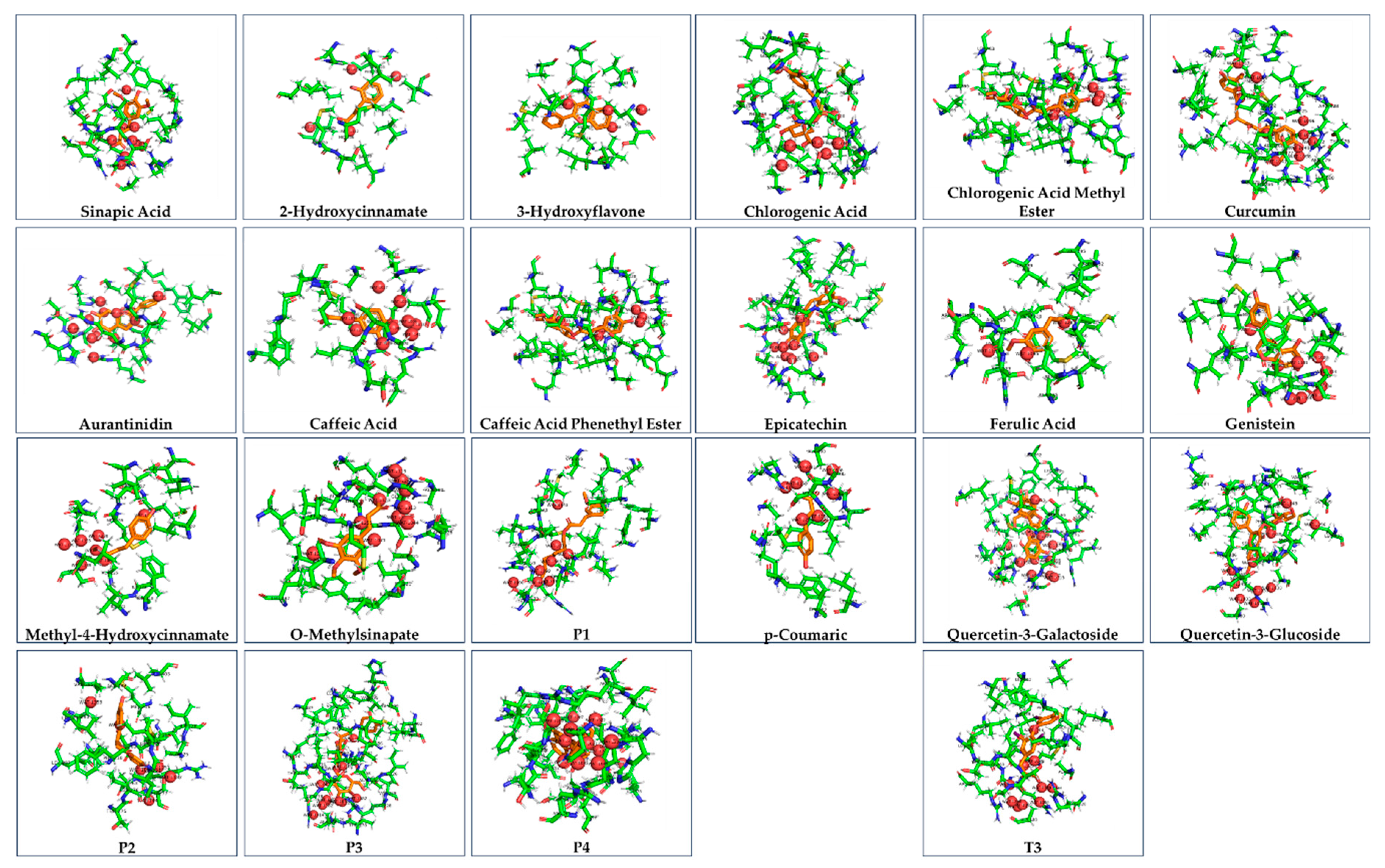
The structures of the bound ligands in the receptor are presented in Figure 2. Green color shows the amino acids, which form strong intermolecular forces with the ligands, which are shown in orange. Red spheres show the water molecules, which participate in hydrogen bonds, enhancing the binding of the ligands to the receptor binding site (PHE218, ILE222, ALA225, MET256, MET259, SER260, ALA263, LEU276, SER277, LEU292, ILE299, VAL395, and LEU403).
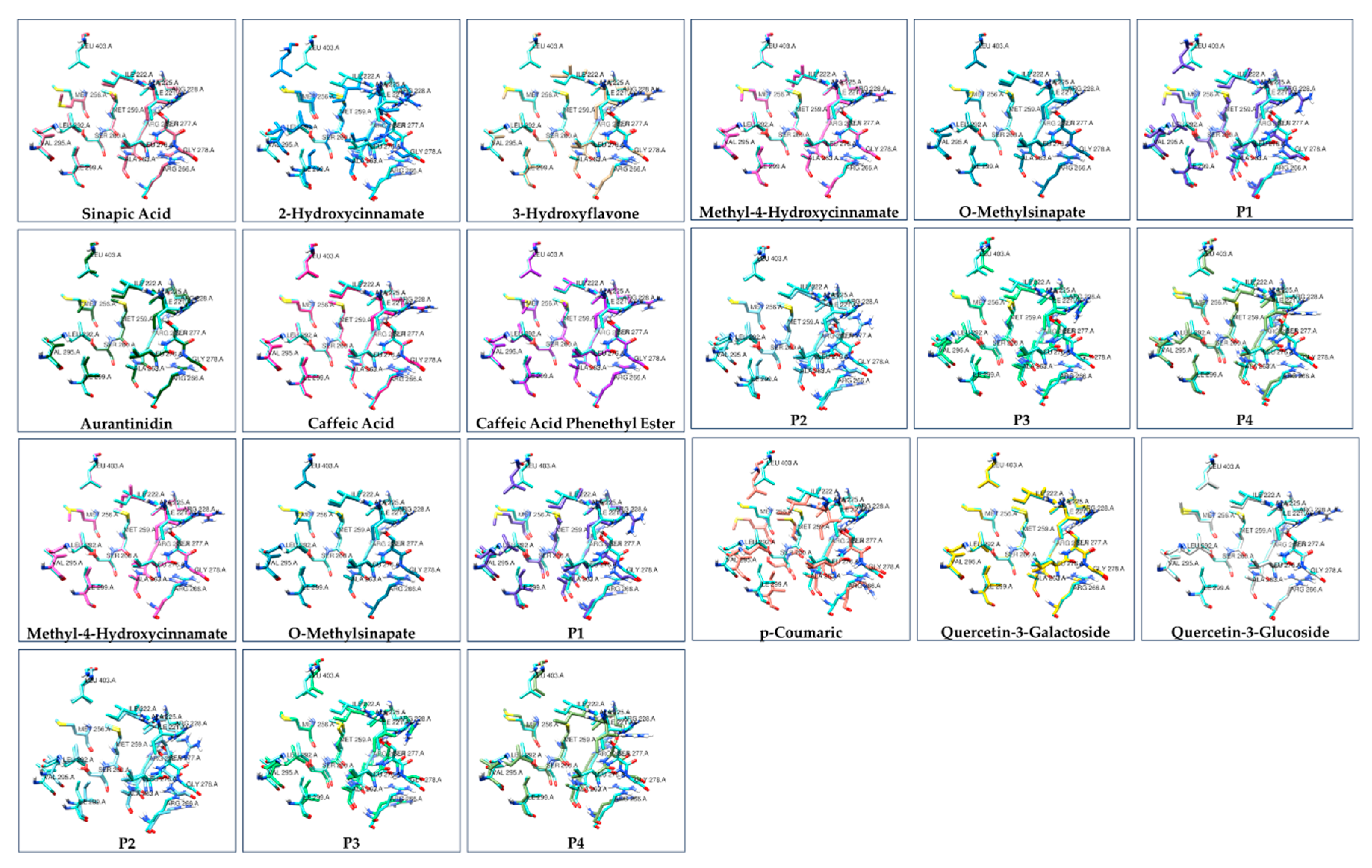
It is important to note that natural compounds bind to the same amino acids that T3 binds to (PHE218, ILE222, ALA225, MET256, MET259, SER260, ALA263, LEU276, SER277, LEU292, ILE299, VAL395, and LEU403) (this fact was also confirmed by the docking experiments through the SwissDock and Glide programs). For this purpose, the amino acid structures in the binding pocket were compared (Figure 3). In this comparison, light blue represents the amino acids as they are found in the T3 binding site (all atoms of T3 interact strongly with the amino acid residues either through hydrogen bonds or van der Waals interactions), while different colors represent the amino acids for each compound. As shown, the compounds lead to a similar arrangement of receptor amino acids in the binding pocket region.
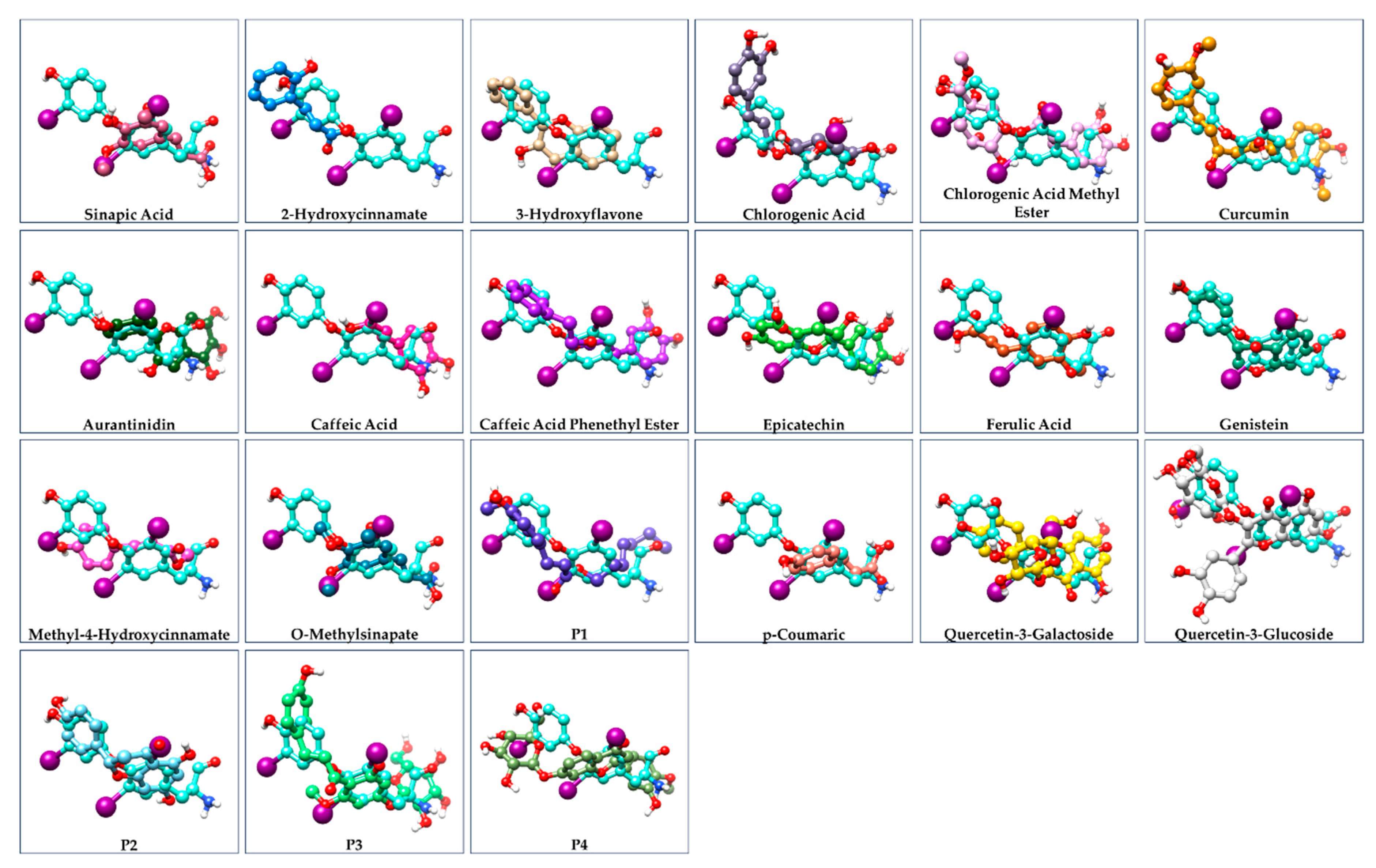
Ιn addition, comparing the binding positions of T3 and natural compounds is important. This analysis suggest that these compounds bind to the same region of the receptor, with their chemical groups oriented in a similar manner to that of T3. The orientation is depicted and in Figure 4. In Supplementary Figure 2 and Figure 3 the corresponding comparison of the results from SwissDock and the Glide program of the Schrödinger suite is performed. In Supplementary Figure 4 compares the binding pocket of THRA with T3 (red spheres) as ligand using GalaxyWEB, SwissDock and Glide Docking methods.
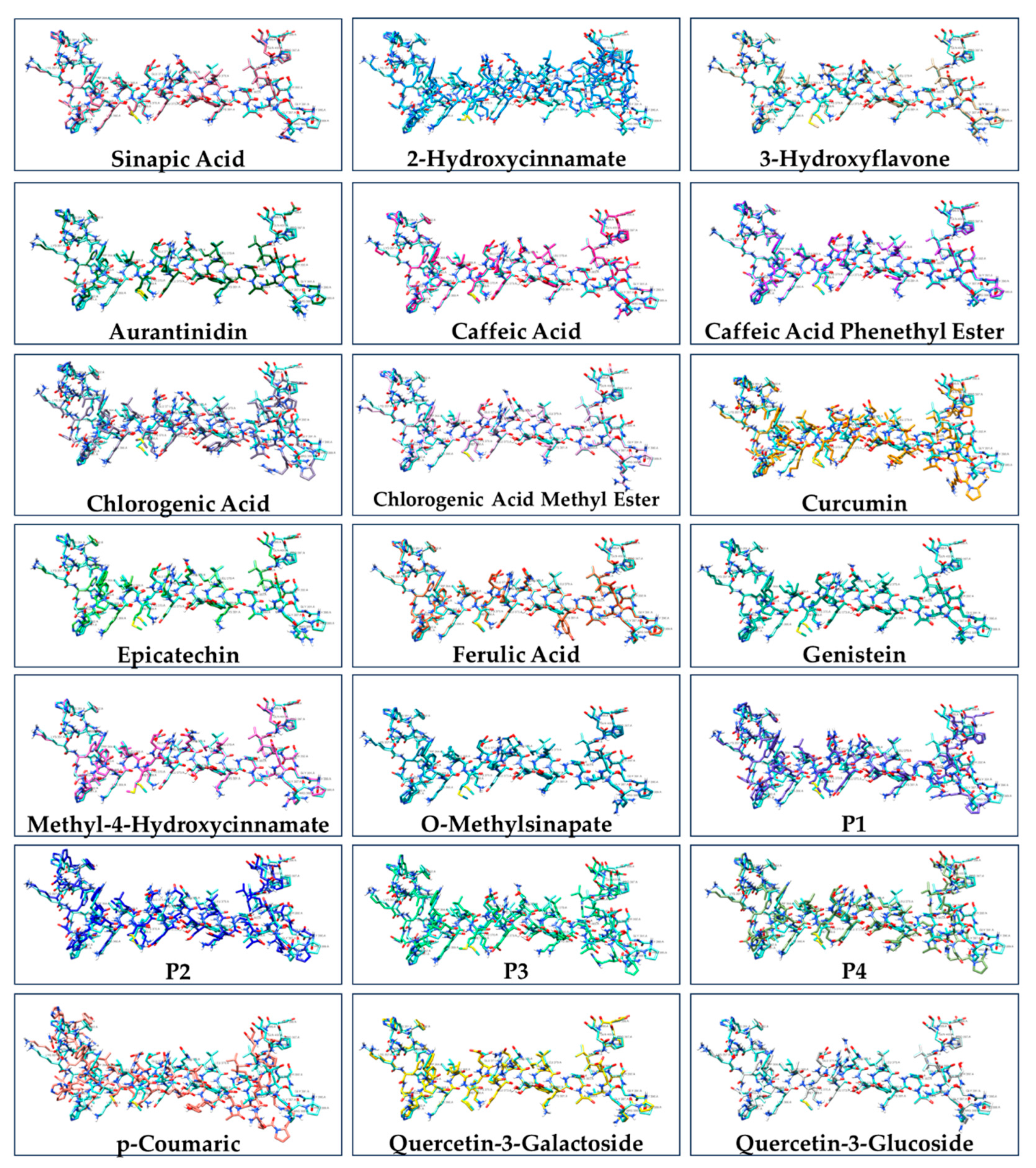
The arrangement of THRA receptor amino acids 350-400, which are located at the C-Terminal of the receptor, is critical for their binding to the TRAP220 receptor. As shown in Table 1, natural compounds bind strongly to the THRA receptor, leading to modifications in its C-Terminal region (Figure 5). The binding of different ligands leads to different modifications of this amino acid region, therefore leading to a modification of the binding capacity of TRAP220 (Table 1). In general, the compounds that led to the binding of THRA to the TRAP220 receptor with a ΔG value < -582.45 Kcal/mol (corresponding to T3; T3 causes the ΤHRA receptor to be modified, which causes it to bind to the TRAP220 receptor. Consequently, ligands with a lower ΔG have a greater influence on activating the signal for the lipolysis process) through the program HEX 8.0.0., show quite promising for the process of reducing NAFLD.

4. Discussion

Thyroid hormone receptor alpha (THRA) plays a major role in lipid and glucose metabolism. Its activity is crucial in prevention of metabolic NAFLD [34,35,36,37,38]. THRA and NAFLD are directly related through the receptor’s activity and its interaction with coactivator protein TRAP220 (Thyroid Hormone Receptor-Associated Protein 220), a factor of the Mediator complex [39]. TRAP220 binds to activated THRA and acts as a transcriptional coactivator, promoting expression of genes regulating fatty acid oxidation, mitochondrial function, and lipid transport [40]. This balance between the production and breakdown of fatty acids in the liver prevents lipid accumulation in the liver, which is a hallmark of NAFLD [40]. The THRA-TRAP220 complex that is formed leads to upregulation of enzymes involved in fatty acid degradation, such as carnitine palmitoyltransferase (CPT1), and activation of genes involved in triglyceride clearance and lipid export from the liver [40]. Through fatty acid β-oxidation in the mitochondria and downregulation of lipid synthesis, progression of NAFLD is prevented [40].
Natural products, especially flavonoids, provide a promising alternative or complementary treatment for NAFLD [41,42,43,44,45,46,47]. Numerous fruits and vegetables contain these polyphenolic chemicals, which are essential for controlling liver function and lipid metabolism [46,47]. Having a low caloric value, fruits and vegetables are an excellent source of vitamins, flavonoids and polyphenols, which act synergistically, enhancing metabolic pathways such as antioxidant protection, energy regulation, detoxification, inflammatory response and hormonal balance [46,47]. Additionally, the significant amount of water in these foods facilitates the body's absorption of water-soluble nutrients, a process aided by plant fibers [41,42,43,44,45,46,47]. Flavonoids are already known for their antioxidant and anti-inflammatory effects; moreover, they have been shown to influence the function of nuclear receptors, including THRA, activating fatty acid β-oxidation pathways and preventing the buildup of triglycerides in the liver [48,49,50]. The intake of the above nutrients through nutrition is a completely harmless solution but also effective way to maximize their absorption and exploitation by the human body against many metabolic disorders, including NAFLD [49]. A group of natural products is suggested in this study as potential anti-NAFLD natural products and THRA has been identified as one of their targets.
Peaches (Prunus persica) are one of the most important cash crops to fruit growers around the world [51]. They are widely cultivated, with global production exceeding 25 million tons per year, mainly from countries such as China, Italy, Spain and Greece. They have been tracked back over 8,000 years and 2000 varieties have been recorded, due to juicy flesh, rich aroma, and high nutritional value [52,53]. Greater abundance in antioxidants and vitamins is found in peach varieties with intense yellow or deep red flesh color. Studies have shown that peaches display a multitude of properties that promote proper health of the body, particularly supporting metabolism [54,55,56]. Vitamins A, C, and E, which are essential for boosting immunity, and dietary fiber are beneficial components of a balanced diet that peaches contain [55,56]. Peaches have been the target of many studies and have been greatly promoted due to abundance of bioactive compounds like flavonoids and phenolic acids, analogues of quercetin, cyanidins and catechins that play a major role in promoting lipolysis in the body [57]. This study examines the protective impact of peaches against non-alcoholic fatty liver disease (NAFLD), alleviating THRA’s action.
From a biochemical perspective, nutrients of peach can influence lipid metabolism and inhibit lipotoxicity by modulating key cellular pathways that regulate fat storage and breakdown, including those regulated by THRA. Methyl 4-hydroxycinnamate, p-Coumaric acid and 2-hydroxycinnamate, as dietary polyphenols with low toxicity, have been proposed as potential drugs for treatment of NAFLD [58]. They enhance the down-regulation of fat accumulation in the liver by activating peroxisome proliferator-activated receptors (PPARs), which work in conjunction with THRA to regulate fatty acid oxidation. Sinapic acid and its derivatives, present in grains and fruits, exhibit strong antioxidant effects, improving mitochondrial function and supporting THRA's role in enhancing lipolysis [59]. O-methylsinapate exhibit great antioxidant activity which indirectly supports THRA's role in lipid metabolism [60]. Chlorogenic acid methyl ester, widely distributed in fruits and many peach species, influences the action of THRA leading to lipolysis by activating AMP-activated protein kinase (AMPK), thereby increasing fatty acid breakdown [61]. Ferulic acid is involved in HSL/perilipin cascade showing great antilipogenetic activity, identified as a key molecule in the amelioration of lipometabolism [62]. Caffeic acid treatment in mouse models after receiving a high-fat diet (HFD) for 8 weeks showed It as deterrent factor in dysregulation of gene expression linked to lipid metabolism [63]. Caffeic acid phenethyl ester and chlorogenic acid, also influence lipid metabolism by reducing fat accumulation and promoting THRA-related pathways for fat oxidation. In vivo studies in mice have shown effects of chlorogenic acid in fat reduction, simultaneously lowering triglyceride in the liver and cholesterol levels in plasma [64]. Curcumin I and curcumin decrease the synthesis of triglycerides in liver by Inhibiting the enzyme HMG COA reductase. Also, these molecules are strong activators of AMPK, enhancing THRA-mediated fatty acid oxidation [65]. 3-Hydroxyflavone and aurantinidin, improve fatty acid breakdown through ameliorating inflammation and have been found to be effective on nonalcoholic fatty liver diseases by modulating enzymes linked to THRA [66]. Epicatechin, mediates fat breakdown by improving THRA-regulated mitochondrial biogenesis [67]. Natural modification of peach flavonoids such as quercetin leads to bioactive derivatives through glycosylation (quercetin-3-glucoside), establishing new pharmacological activities, against liver cancer and NAFLD [68]. Genistein, an isoflavone that excerpts anti-obesity effects, increases the effect of THRA in lipid metabolism, through simultaneous interaction with other proteins, such as AMPK, decreasing triacyl glyceride and cholesterol levels in the liver [69]. The present article explores the anti-NAFLD character of these compounds through metabolic pathways involving THRA.
All compounds presented in this study showed an interesting pharmacokinetic character. Using the online resource SwissADME (www.swissadme.ch), we further calculated some parameters useful for the drugability of the natural compound (Supplementary Table 3). Above natural products have positive pharmacokinetics, and thus, have a high potential for development in drugs. Specifically, molecular weight is at a level allowing for proper absorption and distribution in an organism, and balanced lipophilicity permits membrane permeability with no solubility restriction. In addition, most compounds follow simple pharmacologic evaluation rules, such as Lipinski, Veber and Egan, and thus, have high bioavailability and a potential for successful administration through an oral route [70]. It is worth noting that several of them have no, at least minimum, toxicologic warnings (PAINS, Brenk alerts), and thus, have a low potential for a toxic reaction and a high potential for success in both preclinical and clinic trials [70]. Overall, information confirms that these compounds have a potential for becoming high-potential candidates for development in drugs [70].
It has been found that there is a well-documented binding site for a second T3 molecule in the THRA receptor [71]. The amino acid residues involved in the second binding are amino acids 368-376. According to the findings of our study, TRAP220 binds to amino acid residues 350-400. However, although we performed free docking, the 21 natural compounds as well as the T3 hormone did not bind to the second site, suggesting that other factors may be required for the natural binding (presence of many water molecules). In addition, it is very likely that the binding of TRAP220 due to its high binding affinity to the THRA receptor competes for the second binding site. In vitro experiments could investigate this possibility

5. Conclusions

The results of the present study demonstrate that targeting the THRA pathway with natural products, particularly those abundant in fruits like peaches, offers therapeutic potential for treating NAFLD. These compounds bind to THRA, mimicking the action of the thyroid hormone T3, thereby enhancing its interaction with TRAP220, a key promoter of THRA's transcriptional activity in lipolysis. This mechanism may mitigate lipotoxicity, providing a promising approach for managing hepatic fat accumulation in NAFLD.

Supplementary Materials

The following supporting information can be downloaded at the website of this paper posted on Preprints.org.

Author Contributions

Conceptualization, M.D, A.P.P and E.K.K; methodology, E.K.K and M.D., E.K.K; original draft preparation, E.K.K; supervision, M.D.; project administration, M.D.; writing—review and editing, E.K.K, A.P.P and M.D. All authors have read and agreed to the published version of the manuscript.

Acknowledgments

We would like to thank Schrödinger for providing the free academic version of their software for our research purposes.

Conflicts of Interest

The authors declare no conflicts of interest.

References

  1. Byrne, C.D.; Targher, G. NAFLD: a multisystem disease. J Hepatol 2015, 62, S47–S64. [Google Scholar] [CrossRef]
  2. Friedman, S.L.; Neuschwander-Tetri, B.A.; Rinella, M.; Sanyal, A.J. Mechanisms of NAFLD development and therapeutic strategies. Nat Med 2018, 24, 908–922. [Google Scholar] [CrossRef]
  3. Gofton, C.; Upendran, Y.; Zheng, M.H.; George, J. MAFLD: How is it different from NAFLD? Clin Mol Hepatol 2023, 29, S17–s31. [Google Scholar] [CrossRef]
  4. Pouwels, S.; Sakran, N.; Graham, Y.; Leal, A.; Pintar, T.; Yang, W.; Kassir, R.; Singhal, R.; Mahawar, K.; Ramnarain, D. Non-alcoholic fatty liver disease (NAFLD): a review of pathophysiology, clinical management and effects of weight loss. BMC Endocr Disord 2022, 22, 63. [Google Scholar] [CrossRef] [PubMed]
  5. Younossi, Z.; Anstee, Q.M.; Marietti, M.; Hardy, T.; Henry, L.; Eslam, M.; George, J.; Bugianesi, E. Global burden of NAFLD and NASH: trends, predictions, risk factors and prevention. Nat Rev Gastroenterol Hepatol 2018, 15, 11–20. [Google Scholar] [CrossRef] [PubMed]
  6. Guo, X.; Yin, X.; Liu, Z.; Wang, J. Non-Alcoholic Fatty Liver Disease (NAFLD) Pathogenesis and Natural Products for Prevention and Treatment. Int J Mol Sci 2022, 23. [Google Scholar] [CrossRef]
  7. Teng, M.L.; Ng, C.H.; Huang, D.Q.; Chan, K.E.; Tan, D.J.; Lim, W.H.; Yang, J.D.; Tan, E.; Muthiah, M.D. Global incidence and prevalence of nonalcoholic fatty liver disease. Clin Mol Hepatol 2023, 29, 32–42. [Google Scholar] [CrossRef]
  8. Younossi, Z.M.; Golabi, P.; Paik, J.M.; Henry, A.; Van Dongen, C.; Henry, L. The global epidemiology of nonalcoholic fatty liver disease (NAFLD) and nonalcoholic steatohepatitis (NASH): a systematic review. Hepatology (Baltimore, Md.) 2023, 77, 1335–1347. [Google Scholar] [CrossRef]
  9. Rinella, M.E.; Lazarus, J.V.; Ratziu, V.; Francque, S.M.; Sanyal, A.J.; Kanwal, F.; Romero, D.; Abdelmalek, M.F.; Anstee, Q.M.; Arab, J.P.; et al. A multisociety Delphi consensus statement on new fatty liver disease nomenclature. Hepatology (Baltimore, Md.) 2023, 78, 1966–1986. [Google Scholar] [CrossRef]
  10. Cable, E.E.; Finn, P.D.; Stebbins, J.W.; Hou, J.; Ito, B.R.; van Poelje, P.D.; Linemeyer, D.L.; Erion, M.D. Reduction of hepatic steatosis in rats and mice after treatment with a liver-targeted thyroid hormone receptor agonist. Hepatology (Baltimore, Md.) 2009, 49, 407–417. [Google Scholar] [CrossRef] [PubMed]
  11. Schoenmakers, N. Genetic Causes of Congenital Hypothyroidism. Encyclopedia of Endocrine Diseases 2019. [Google Scholar]
  12. Fernández-Real, J.M.; Corella, D.; Goumidi, L.; Mercader, J.M.; Valdés, S.; Rojo Martínez, G.; Ortega, F.; Martinez-Larrad, M.T.; Gómez-Zumaquero, J.M.; Salas-Salvadó, J.; et al. Thyroid hormone receptor alpha gene variants increase the risk of developing obesity and show gene-diet interactions. Int J Obes (Lond) 2013, 37, 1499–1505. [Google Scholar] [CrossRef]
  13. Vidal-Cevallos, P.; Murúa-Beltrán Gall, S.; Uribe, M.; Chávez-Tapia, N.C. Understanding the Relationship between Nonalcoholic Fatty Liver Disease and Thyroid Disease. Int J Mol Sci 2023, 24. [Google Scholar] [CrossRef]
  14. Zhao, M.; Xie, H.; Shan, H.; Zheng, Z.; Li, G.; Li, M.; Hong, L. Development of Thyroid Hormones and Synthetic Thyromimetics in Non-Alcoholic Fatty Liver Disease. Int J Mol Sci 2022, 23. [Google Scholar] [CrossRef]
  15. Damiano, F.; Rochira, A.; Gnoni, A.; Siculella, L. Action of Thyroid Hormones, T3 and T2, on Hepatic Fatty Acids: Differences in Metabolic Effects and Molecular Mechanisms. Int J Mol Sci 2017, 18. [Google Scholar] [CrossRef]
  16. Paisdzior, S.; Knierim, E.; Kleinau, G.; Biebermann, H.; Krude, H.; Straussberg, R.; Schuelke, M. A New Mechanism in THRA Resistance: The First Disease-Associated Variant Leading to an Increased Inhibitory Function of THRA2. Int J Mol Sci 2021, 22. [Google Scholar] [CrossRef]
  17. Park, S.W.; Li, G.; Lin, Y.P.; Barrero, M.J.; Ge, K.; Roeder, R.G.; Wei, L.N. Thyroid hormone-induced juxtaposition of regulatory elements/factors and chromatin remodeling of Crabp1 dependent on MED1/TRAP220. Mol Cell 2005, 19, 643–653. [Google Scholar] [CrossRef]
  18. Varadi, M.; Bertoni, D.; Magana, P.; Paramval, U.; Pidruchna, I.; Radhakrishnan, M.; Tsenkov, M.; Nair, S.; Mirdita, M.; Yeo, J.; et al. AlphaFold Protein Structure Database in 2024: providing structure coverage for over 214 million protein sequences. Nucleic Acids Res 2024, 52, 368–375. [Google Scholar] [CrossRef] [PubMed]
  19. Seok, C.; Baek, M.; Steinegger, M.; Park, H.; Lee, G.R.; Won, J. Accurate protein structure prediction: what comes next? BIODESIGN 2021, 9, 47–50. [Google Scholar] [CrossRef]
  20. Heo, L.; Park, S.; Seok, C. GalaxyWater-wKGB: Prediction of Water Positions on Protein Structure Using wKGB Statistical Potential. Journal of Chemical Information and Modeling 2021, 61, 2283–2293. [Google Scholar] [CrossRef] [PubMed]
  21. Kim, S.; Thiessen, P.A.; Bolton, E.E.; Chen, J.; Fu, G.; Gindulyte, A.; Han, L.; He, J.; He, S.; Shoemaker, B.A.; et al. PubChem Substance and Compound databases. Nucleic Acids Res 2016, 44, D1202–D1213. [Google Scholar] [CrossRef]
  22. O'Boyle, N.M.; Banck, M.; James, C.A.; Morley, C.; Vandermeersch, T.; Hutchison, G.R. Open Babel: An open chemical toolbox. Journal of Cheminformatics 2011, 3, 33. [Google Scholar] [CrossRef]
  23. Lee, G.R.; Seok, C. Galaxy7TM: flexible GPCR-ligand docking by structure refinement. Nucleic Acids Res 2016, 44, 502–506. [Google Scholar] [CrossRef]
  24. Pettersen, E.F.; Goddard, T.D.; Huang, C.C.; Couch, G.S.; Greenblatt, D.M.; Meng, E.C.; Ferrin, T.E. UCSF Chimera--a visualization system for exploratory research and analysis. Journal of computational chemistry 2004, 25, 1605–1612. [Google Scholar] [CrossRef] [PubMed]
  25. Ghoorah, A.W.; Devignes, M.-D.; Smaïl-Tabbone, M.; Ritchie, D.W. Protein docking using case-based reasoning. Proteins: Structure, Function, and Bioinformatics 2013, 81, 2150–2158. [Google Scholar] [CrossRef]
  26. Bender, B.J.; Gahbauer, S.; Luttens, A.; Lyu, J.; Webb, C.M.; Stein, R.M.; Fink, E.A.; Balius, T.E.; Carlsson, J.; Irwin, J.J.; et al. A practical guide to large-scale docking. Nature Protocols 2021, 16, 4799–4832. [Google Scholar] [CrossRef] [PubMed]
  27. Ko, J.; Park, H.; Seok, C. GalaxyTBM: template-based modeling by building a reliable core and refining unreliable local regions. BMC Bioinformatics 2012, 13, 198. [Google Scholar] [CrossRef]
  28. Bugnon, M.; Röhrig, U.F.; Goullieux, M.; Perez, M.A.S.; Daina, A.; Michielin, O.; Zoete, V. SwissDock 2024: major enhancements for small-molecule docking with Attracting Cavities and AutoDock Vina. Nucleic Acids Research 2024, 52, W324–W332. [Google Scholar] [CrossRef] [PubMed]
  29. Grosdidier, A.; Zoete, V.; Michielin, O. SwissDock, a protein-small molecule docking web service based on EADock DSS. Nucleic Acids Research 2011, 39, W270–W277. [Google Scholar] [CrossRef]
  30. Trott, O.; Olson, A.J. AutoDock Vina: improving the speed and accuracy of docking with a new scoring function, efficient optimization, and multithreading. Journal of computational chemistry 2010, 31, 455–461. [Google Scholar] [CrossRef]
  31. Jiménez-García, B.; Pons, C.; Fernández-Recio, J. pyDockWEB: a web server for rigid-body protein-protein docking using electrostatics and desolvation scoring. Bioinformatics (Oxford, England) 2013, 29, 1698–1699. [Google Scholar] [CrossRef]
  32. Korlepara, D.B.; Vasavi, C.S.; Jeurkar, S.; Pal, P.K.; Roy, S.; Mehta, S.; Sharma, S.; Kumar, V.; Muvva, C.; Sridharan, B.; et al. PLAS-5k: Dataset of Protein-Ligand Affinities from Molecular Dynamics for Machine Learning Applications. Scientific Data 2022, 9, 548. [Google Scholar] [CrossRef]
  33. Allam, A.E.; Assaf, H.K.; Hassan, H.A.; Shimizu, K.; Elshaier, Y.A.M.M. An in silico perception for newly isolated flavonoids from peach fruit as privileged avenue for a countermeasure outbreak of COVID-19. RSC Advances 2020, 10, 29983–29998. [Google Scholar] [CrossRef]
  34. Byrnes, K.; Blessinger, S.; Bailey, N.T.; Scaife, R.; Liu, G.; Khambu, B. Therapeutic regulation of autophagy in hepatic metabolism. Acta Pharm Sin B 2022, 12, 33–49. [Google Scholar] [CrossRef]
  35. Hu, L.; Gu, Y.; Liang, J.; Ning, M.; Yang, J.; Zhang, Y.; Qu, H.; Yang, Y.; Leng, Y.; Zhou, B. Discovery of Highly Potent and Selective Thyroid Hormone Receptor β Agonists for the Treatment of Nonalcoholic Steatohepatitis. J Med Chem 2023, 66, 3284–3300. [Google Scholar] [CrossRef]
  36. Jornayvaz, F.R.; Lee, H.Y.; Jurczak, M.J.; Alves, T.C.; Guebre-Egziabher, F.; Guigni, B.A.; Zhang, D.; Samuel, V.T.; Silva, J.E.; Shulman, G.I. Thyroid hormone receptor-α gene knockout mice are protected from diet-induced hepatic insulin resistance. Endocrinology 2012, 153, 583–591. [Google Scholar] [CrossRef]
  37. Singh, B.K.; Sinha, R.A.; Yen, P.M. Novel Transcriptional Mechanisms for Regulating Metabolism by Thyroid Hormone. Int J Mol Sci 2018, 19. [Google Scholar] [CrossRef] [PubMed]
  38. Zucchi, R. Thyroid Hormone Analogues: An Update. Thyroid 2020, 30, 1099–1105. [Google Scholar] [CrossRef] [PubMed]
  39. Ren, Q.; Sun, Q.; Fu, J. Dysfunction of autophagy in high-fat diet-induced non-alcoholic fatty liver disease. Autophagy 2024, 20, 221–241. [Google Scholar] [CrossRef] [PubMed]
  40. Yuan, C.X.; Ito, M.; Fondell, J.D.; Fu, Z.Y.; Roeder, R.G. The TRAP220 component of a thyroid hormone receptor- associated protein (TRAP) coactivator complex interacts directly with nuclear receptors in a ligand-dependent fashion. Proc Natl Acad Sci U S A 1998, 95, 7939–7944. [Google Scholar] [CrossRef]
  41. Chen, Q.; Wang, T.; Li, J.; Wang, S.; Qiu, F.; Yu, H.; Zhang, Y.; Wang, T. Effects of Natural Products on Fructose-Induced Nonalcoholic Fatty Liver Disease (NAFLD). Nutrients 2017, 9. [Google Scholar] [CrossRef]
  42. Li, J.Z.; Chen, N.; Ma, N.; Li, M.R. Mechanism and Progress of Natural Products in the Treatment of NAFLD-Related Fibrosis. Molecules 2023, 28. [Google Scholar] [CrossRef]
  43. Meroni, M.; Longo, M.; Rustichelli, A.; Dongiovanni, P. Nutrition and Genetics in NAFLD: The Perfect Binomium. Int J Mol Sci 2020, 21. [Google Scholar] [CrossRef] [PubMed]
  44. Wang, L.; Yan, Y.; Wu, L.; Peng, J. Natural products in non-alcoholic fatty liver disease (NAFLD): Novel lead discovery for drug development. Pharmacol Res 2023, 196, 106925. [Google Scholar] [CrossRef]
  45. Xu, J.Y.; Zhang, L.; Li, Z.P.; Ji, G. Natural Products on Nonalcoholic Fatty Liver Disease. Curr Drug Targets 2015, 16, 1347–1355. [Google Scholar] [CrossRef] [PubMed]
  46. Zemel, M.B. Natural Products: New Hope for Nonalcoholic Steatohepatitis? J Med Food 2019, 22, 1187–1188. [Google Scholar] [CrossRef]
  47. Zhu, L.R.; Li, S.S.; Zheng, W.Q.; Ni, W.J.; Cai, M.; Liu, H.P. Targeted modulation of gut microbiota by traditional Chinese medicine and natural products for liver disease therapy. Front Immunol 2023, 14, 1086078. [Google Scholar] [CrossRef] [PubMed]
  48. Cao, P.; Wang, Y.; Zhang, C.; Sullivan, M.A.; Chen, W.; Jing, X.; Yu, H.; Li, F.; Wang, Q.; Zhou, Z.; et al. Quercetin ameliorates nonalcoholic fatty liver disease (NAFLD) via the promotion of AMPK-mediated hepatic mitophagy. J Nutr Biochem 2023, 120, 109414. [Google Scholar] [CrossRef]
  49. Li, L.; Qin, Y.; Xin, X.; Wang, S.; Liu, Z.; Feng, X. The great potential of flavonoids as candidate drugs for NAFLD. Biomed Pharmacother 2023, 164, 114991. [Google Scholar] [CrossRef]
  50. Wang, K.; Tan, W.; Liu, X.; Deng, L.; Huang, L.; Wang, X.; Gao, X. New insight and potential therapy for NAFLD: CYP2E1 and flavonoids. Biomed Pharmacother 2021, 137, 111326. [Google Scholar] [CrossRef]
  51. Liu, H.; Cao, J.; Jiang, W. Changes in phenolics and antioxidant property of peach fruit during ripening and responses to 1-methylcyclopropene. Postharvest Biology and Technology 2015, 108, 111–118. [Google Scholar] [CrossRef]
  52. Williamson, K.; Pao, S.; Dormedy, E.; Phillips, T.; Nikolich, G.; Li, L. Microbial evaluation of automated sorting systems in stone fruit packinghouses during peach packing. International Journal of Food Microbiology 2018, 285, 98–102. [Google Scholar] [CrossRef]
  53. Montero, P.; Sánchez, C.; Romero, J.; Alfaro, P.; Batlle, R.; Nerín, C. Development and application of an active package to increase the shelf-life of “Calanda peach”. NATIONAL RESEARCH COUNCIL-IMCB UNIVERSITY OF NAPLES-DSA AND DIMP 2009.
  54. Abidi, W.; Akrimi, R. Phenotypic diversity of nutritional quality attributes and chilling injury symptoms in four early peach [Prunus persica (L.) Batsch] cultivars grown in west central Tunisia. J Food Sci Technol 2022, 59, 3938–3950. [Google Scholar] [CrossRef] [PubMed]
  55. Drincovich, M.F. Identifying sources of metabolomic diversity and reconfiguration in peach fruit: taking notes for quality fruit improvement. FEBS Open Bio 2021, 11, 3211–3217. [Google Scholar] [CrossRef]
  56. Schweiggert, R.M.; Carle, R. Carotenoid deposition in plant and animal foods and its impact on bioavailability. Crit Rev Food Sci Nutr 2017, 57, 1807–1830. [Google Scholar] [CrossRef] [PubMed]
  57. Bento, C.; Gonçalves, A.C.; Silva, B.; Silva, L.R. Peach (Prunus Persica): Phytochemicals and Health Benefits. Food Reviews International 2022, 38, 1703–1734. [Google Scholar] [CrossRef]
  58. Yuan, Z.; Lu, X.; Lei, F.; Sun, H.; Jiang, J.; Xing, D.; Du, L. Novel Effect of p-Coumaric Acid on Hepatic Lipolysis: Inhibition of Hepatic Lipid-Droplets. Molecules 2023, 28. [Google Scholar] [CrossRef] [PubMed]
  59. Prša, P.; Karademir, B.; Biçim, G.; Mahmoud, H.; Dahan, I.; Yalçın, A.S.; Mahajna, J.; Milisav, I. The potential use of natural products to negate hepatic, renal and neuronal toxicity induced by cancer therapeutics. Biochem Pharmacol 2020, 173, 113551. [Google Scholar] [CrossRef]
  60. Chen, C. Sinapic Acid and Its Derivatives as Medicine in Oxidative Stress-Induced Diseases and Aging. Oxid Med Cell Longev 2016, 2016, 3571614. [Google Scholar] [CrossRef]
  61. Wang, L.; Pan, X.; Jiang, L.; Chu, Y.; Gao, S.; Jiang, X.; Zhang, Y.; Chen, Y.; Luo, S.; Peng, C. The Biological Activity Mechanism of Chlorogenic Acid and Its Applications in Food Industry: A Review. Front Nutr 2022, 9, 943911. [Google Scholar] [CrossRef]
  62. Gao, J.; Gu, X.; Zhang, M.; Zu, X.; Shen, F.; Hou, X.; Hao, E.; Bai, G. Ferulic acid targets ACSL1 to ameliorate lipid metabolic disorders in db/db mice. Journal of Functional Foods 2022, 91, 105009. [Google Scholar] [CrossRef]
  63. Mu, H.N.; Zhou, Q.; Yang, R.Y.; Tang, W.Q.; Li, H.X.; Wang, S.M.; Li, J.; Chen, W.X.; Dong, J. Caffeic acid prevents non-alcoholic fatty liver disease induced by a high-fat diet through gut microbiota modulation in mice. Food Res Int 2021, 143, 110240. [Google Scholar] [CrossRef] [PubMed]
  64. Cho, A.S.; Jeon, S.M.; Kim, M.J.; Yeo, J.; Seo, K.I.; Choi, M.S.; Lee, M.K. Chlorogenic acid exhibits anti-obesity property and improves lipid metabolism in high-fat diet-induced-obese mice. Food Chem Toxicol 2010, 48, 937–943. [Google Scholar] [CrossRef] [PubMed]
  65. Malik, A.; Malik, M. Effects of curcumin in patients with non-alcoholic fatty liver disease: A systematic review and meta-analysis. Can Liver J 2024, 7, 299–315. [Google Scholar] [CrossRef] [PubMed]
  66. Gupta, A.; Jamal, A.; Jamil, D.A.; Al-Aubaidy, H.A. A systematic review exploring the mechanisms by which citrus bioflavonoid supplementation benefits blood glucose levels and metabolic complications in type 2 diabetes mellitus. Diabetes Metab Syndr 2023, 17, 102884. [Google Scholar] [CrossRef]
  67. Mi, J.; Liu, D.; Qin, C.; Yan, X.; Yang, L.; Xu, X.; Nie, G. (−)-Epigallocatechin-3-O-gallate or (−)-epicatechin enhances lipid catabolism and antioxidant defense in common carp (Cyprinus carpio L.) fed a high-fat diet: Mechanistic insights from the AMPK/Sirt1/PGC-1α signaling pathway. Aquaculture 2024, 587, 740876. [Google Scholar] [CrossRef]
  68. Lee, C.W.; Seo, J.Y.; Lee, J.; Choi, J.W.; Cho, S.; Bae, J.Y.; Sohng, J.K.; Kim, S.O.; Kim, J.; Park, Y.I. 3-O-Glucosylation of quercetin enhances inhibitory effects on the adipocyte differentiation and lipogenesis. Biomed Pharmacother 2017, 95, 589–598. [Google Scholar] [CrossRef]
  69. Čižmárová, B.; Tomečková, V.; Hubková, B.; Birková, A. Anti-obesity properties and mechanism of action of genistein. Food and Functional Food Science in Obesity 2023. [Google Scholar]
  70. Daina, A.; Michielin, O.; Zoete, V. SwissADME: a free web tool to evaluate pharmacokinetics, drug-likeness and medicinal chemistry friendliness of small molecules. Scientific Reports 2017, 7, 42717. [Google Scholar] [CrossRef]
  71. Souza, P.C.; Puhl, A.C.; Martínez, L.; Aparício, R.; Nascimento, A.S.; Figueira, A.C.; Nguyen, P.; Webb, P.; Skaf, M.S.; Polikarpov, I. Identification of a new hormone-binding site on the surface of thyroid hormone receptor. Molecular endocrinology (Baltimore, Md.) 2014, 28, 534–545. [Google Scholar] [CrossRef]
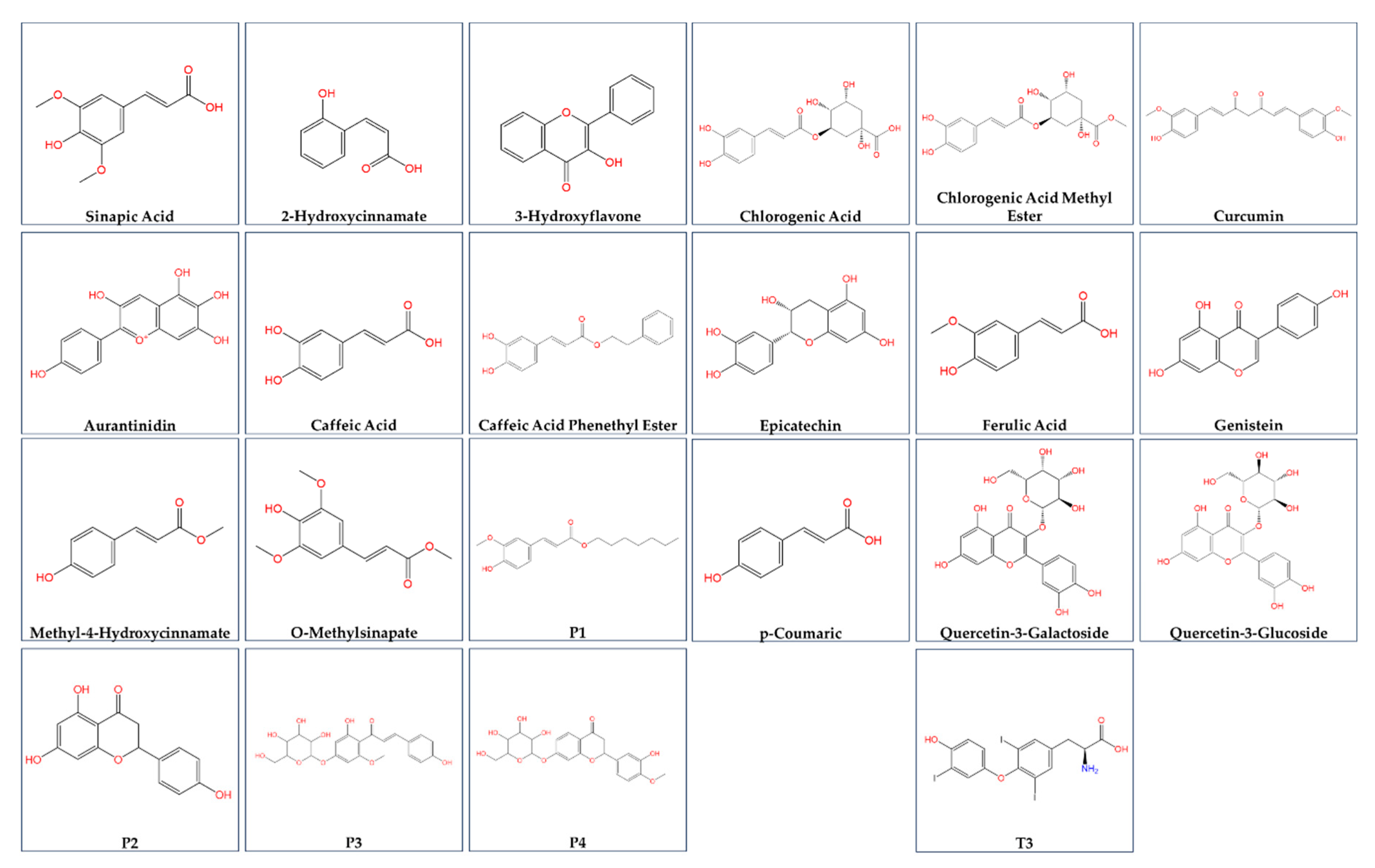
Figure 1. The chemical structures of the natural products used in the present study.
Preprints 174300 g001
Figure 2. The hydrasized binding pocket of THRA receptor with the natural products.
Preprints 174300 g002
Figure 3. Τhe comparison of the amino acid residues and 3D conformation in the binding groove of ΤHRA receptor after binding of the T3 (light blue) and the natural products.
Preprints 174300 g003
Figure 4. Comparison of the three-dimensional structure of T3 with the natural products used in this work. The structures have been extracted from Chimera program as they bind to the THRA binding pocket.
Preprints 174300 g004
Figure 5. Comparison of the three-dimensional conformation of the C-Terminal region of THRA (AA 350-400) after binding of T3 and natural products in the binding pocket.
Preprints 174300 g005
Table 1. The binding strength in kcal/mol of each compound to THRA receptor and the binding strength in kcal/mol of the THRA-Ligand complex to TRAP220 receptor.
Ligand ΔG of binding to THRA (kcal/mol) MMGBSA ΔG Binding Energy (Kcal/mol) of GalaxyWEB model ΔG of THRA-liganded binding to TRAP220 (kcal/mol)
p-Coumaric -7.948 -7.381 -812.60
P4* -17.269 -17.953 -694.70
2-Hydroxycinnamate -5.804 -6.201 -669.50
P2* -12.110 -11.995 -665.11
P1* -10.579 -11.003 -654.50
Caffeic Acid -8.499 -8.421 -651.59
Curcumin -15.491 -16.113 -649.71
Methyl-4-Hydroxycinnamate -7.914 -8.004 -641.87
Chlorogenic Acid -13.616 -13.412 -627.93
Chlorogenic Acid Methyl Ester -15.155 -14.950 -617.52
Quercetin-3-Galactoside -17.321 -17.117 -599.31
Epicatechin -11.952 -12.021 -596.21
Genistein -9.671 -10.423 -595.28
O-Methylsinapate -9.628 -9.527 -588.62
T3 -13.388 -13.216 -582.45
Quercetin-3-Glucoside -15.370 -15.444 -576.29
3-Hydroxyflavone -9.231 -9.785 -570.24
Ferulic Acid -8.980 -9.075 -563.35
Caffeic Acid Phenethyl Ester -12.300 -11.889 -562.89
Sinapic Acid -9.274 -10.004 -559.81
Aurantinidin -14.221 -12.925 -559.73
P3* -18.465 -17.563 -525.58
*Natural products as mentioned in the work of Allam et al. in 2020 [33].
Disclaimer/Publisher’s Note: The statements, opinions and data contained in all publications are solely those of the individual author(s) and contributor(s) and not of MDPI and/or the editor(s). MDPI and/or the editor(s) disclaim responsibility for any injury to people or property resulting from any ideas, methods, instructions or products referred to in the content.
Copyright: This open access article is published under a Creative Commons CC BY 4.0 license, which permit the free download, distribution, and reuse, provided that the author and preprint are cited in any reuse.
Prerpints.org logo

Preprints.org is a free preprint server supported by MDPI in Basel, Switzerland.

Subscribe

Disclaimer

Terms of Use

Privacy Policy

Privacy Settings

© 2025 MDPI (Basel, Switzerland) unless otherwise stated