
Submitted:
25 August 2025
Posted:
28 August 2025
You are already at the latest version
Abstract
Projects of varying sizes often challenge scope creep, misaligned stakeholder expectations, and lack of traceability which can be effectively managed through the execution of control systems and configuration management practices. This systematic literature review ex-amines the effectiveness of control systems and configuration management within project scope development evaluating their impact on man-aging scope changes, enhancing project alignment and improving overall project performance. Therefore, drawing from a methodologically rigorous analysis of 49 scholarly articles published between 2014 and 2025, the review underlines the evolving role of control systems and configuration management in shaping scope development practices. It reveals a growing emphasis on integrated change control, traceability mechanisms, and automated configuration tools, although notable gaps continue, especially in terms of implementation consistency and resource constraints. The utilization of control systems and configuration management enhances decision-making in scope development and enables project teams to respond more effectively to evolving project requirements. Despite these benefits, many projects face barriers such as system complexity, high setup and maintenance costs, and limited expertise, which hinder their effective adoption and utilization. Our review is based on the analysis of literature on control systems and configuration management. We found 13.48% papers from Scopus, 54.31% from Web of Science and 32.21% from Google Scholar but not all papers were specifically relevant to this systematic review. We advocate targeted educational initiatives, the development of intuitive and cost-effective control and configuration management tools, and strategic collaborations to support knowledge transfer and practical adoption within project teams. Empirical research validating the effectiveness of these practices in enhancing scope control and project outcomes is essential, providing a clear trajectory for future academic exploration and policy development.
Keywords:
configuration management
; control system
; scope development
; systematic review
; best practices
1. Introduction
In today’s rapidly advancing project environments, the adoption of control systems and configuration management practices has significantly transformed how scope development is approached and executed. Control systems and configuration management have become foundational components of modern project management, playing a critical role in determining the success or failure of projects through effective scope control and traceability. Recent research underscores the transformative impact of control systems and configuration management across various industries. For example, effective configuration management has been instrumental in improving scope control, optimizing project timelines, and enhancing risk management processes within projects of all sizes. Despite these advancements, a notable gap exists in understanding the comprehensive application of control systems and configuration management within projects, particularly in developing economies where resource limitations and expertise may pose significant challenges (Hardion et al., 2014). Projects today face distinct challenges such as evolving stakeholder expectations, complex deliverables, and increased pressure to meet time and budget constraints. These factors underscore the importance of robust control and configuration mechanisms in scope development (Shafiee et al., 2018). Control systems and configuration management encompass methodologies, tools, and technologies designed to track, evaluate, and guide scope-related changes, thereby enhancing clarity, reducing errors, and promoting accountability throughout the project lifecycle (Locatelli et al., 2014). The increasing globalization and rapid technological changes have added complexity to project environments, emphasizing the need to leverage structured knowledge-management practices such as control systems and configuration management to maintain control over scope and achieve a competitive advantage in project execution (Ram et al., 2014). The applicability of control and configuration management frameworks across diverse project environments, and the challenges associated with their implementation underscore the complexity of managing scope effectively throughout the project lifecycle (Su, Baird et al., 2017). Moreover, the cost and complexity of implementing control systems and configuration management present significant barriers for many project teams, particularly those lacking dedicated technical expertise or sufficient budgetary support (Siebelink et al., 2021). Recent studies have explored various facets of control systems and configuration management in scope development, including the adoption of cloud-based solutions from both project management and system integration perspectives, and the development of cloud-based and mobile-friendly configuration management frameworks tailored for use in resource-constrained or developing project environments (Hyrynsalmi et al., 2024). Furthermore, insights from regions such as the UK and Malaysia highlight the diverse opportunities and challenges associated with implementing control systems and configuration management practices in varying project and organizational contexts. The interaction between control systems and configuration management practices and project operations during times of crisis has been analyzed, revealing critical factors that influence the adoption and effectiveness of project tracking and change management tools (Siebelink et al., 2021). This systematic review aims to bridge existing gaps by synthesizing a decade of research on control systems and configuration management in scope development, identifying key trends, challenges, and opportunities associated with these practices. By analyzing studies published over this period, the review seeks to provide practical insights for project managers and stakeholders, ultimately enhancing project performance, control, and successful delivery.

Table 1.
Comparative Analysis of the Existing Review Works and Proposed Systematic Review on the control system and configuration management in scope development.
Table 1.
Comparative Analysis of the Existing Review Works and Proposed Systematic Review on the control system and configuration management in scope development.
| Ref. | Contribution | Pros | Cons | |
| (dos Santos Ferreira et al., 2016) | Investigated the influence of control systems and configuration management practices on scope development effectiveness using a system-based analytical approach. | Provides valuable insights into critical elements affecting effective scope development through control systems and configuration management. | Focused on scope development practices within a specific organizational or project context, which may limit the generalizability of the findings to other settings. | |
| (Bou Ghantous et al., 2017) | Studied the role of control systems and configuration management in enhancing the adaptability of scope development processes, with a focus on improving project outcomes and strategic alignment. | Improved scope stability, enhanced project risk control. | Requires ongoing tracking of configuration changes and control system performance to ensure scope alignment. | |
| (Afram et al., 2014) | Investigated control system and configuration management methodologies in scope development to enhance project efficiency and support informed decision-making. | Enhanced scope control and configuration management through cost-effective system solutions. | May lead in configuration complexity and scope creep without effective control mechanisms. | |
| (Lueg et al., 2016) | Investigated control systems and configuration management as strategic tools to manage scope development challenges in complex and competitive project environments. | Strategic project alignment and facilitates scope evaluation against industry benchmarks. | High dependency on accurate and consistent documentation of scope changes and configuration updates. | |
| (Whyte et al., 2016) | Explored a systematic review how control systems and configuration management improve scope development by promoting consistency, traceability, and project alignment. | Improved scope definition accuracy, cost-efficient for project-based organizations. | Requires technical expertise not always available in project teams. | |
| (Zhang et al., 2014) | Examined how control systems and configuration management practices can strengthen scope development processes to support long-term project success and alignment with strategic objectives. | Better scope accuracy and tailored configuration control. | Can lead to increased costs due to extensive documentation and configuration management requirements. | |
| (Shafiee et al., 2018) | Proposed an integrated framework combining control systems and configuration management to enhance scope development adaptability and project responsiveness. | Adaptive scope management strategies, enhanced project responsiveness. | Complex control and configuration models may overwhelm smaller project teams. | |
| (Palma et al. 2019) | Examined the effectiveness of control systems and configuration management in driving successful scope development, with a focus on supporting project innovation and delivery. | Drives project innovation, supports effective scope development strategies. | Potential privacy and compliance risks concern with improper handling of configuration and scope documentation. | |
| (Marnada et al., 2022) | Provided a comparative study of projects utilizing structured control systems and configuration management versus traditional scope practices to improve project outcomes and efficiency. | Clear benefits in scope clarity, real-time insights. | Adoption barriers in projects with limited technical infrastructure. | |
| Analyzes the role of control systems and configuration management in the process of scope development, outlining their structure, function, and integration within project management frameworks. | Provides a comprehensive understanding of factors influencing control system and configuration management adoption in scope development. Identifies critical gaps in current research. | Limited focus on particular project types or organizational contexts, limiting broader applicability across industries and regions. | ||
1.1. Research Questions
In our systematic review, we discover several significant research gaps for searching the literature on control systems, scope development and configuration management. These gaps suggest the areas where prior research is lacking and where further work could add to the completeness of the topic.
To begin, whereas some studies have looked at control systems and configuration management in some organizational or project contexts, little generalization of findings across industry and project types has been approached. This limits application of knowledge that exists and offers a path forward for creating uni-versally used strategies for scope development. In addition, recent research literature within the field is mostly concerned with the structural and technical aspects of con-figuration control and control systems, rather than with the human and organizational is-sues on which their successful utilization in scope development relies. Less explored are organizational culture, change management practices, team expertise, and limited knowledge in the domain exists on how these variables influence the effective use of control systems and configuration management when establishing the project scope.
Secondly, there is less incorporation of control system and configuration management practice into scope development that has been addressed by literature. Both, having been portrayed as being helpful to make scope control successful, can be addressed separately. Instead of both of them being considered for their combined ef-fect on scope control and improving the project, they can be dealt with separately in literature. This disparity points to the need for an empirical analysis that considers the combined influence of configuration control systems and con-figuration management on de-cision making, flexibility of a project, and overall project scope development success. In addition, existing research has a tendency to focus on sin-gular project stages or short-run performance, limiting the chances of capturing the de-sired effect of the systems on project success and operations strategy.
1.3. Rationale
The rationale of this systematic review is to examine and evaluate current research on the control system and configuration management on scope manage-ment performance. Resolving these contexts will provide more detailed and actionable recommendations to practitioners. Given the increasing reliance on decision-making in scope management. This review bridges the gap in literature up to date as it focuses on published studies in the later decades between 2014 and 2025 and aims at synthesis to provide a comprehensive insight into how control system and configuration management contribute to ensuring the success of scope management in industries. There is a clear need for longitudinal empirical work that will be capable of tracking the interplay between control system implementation, configuration process and long-term effectiveness in the shaping of the project scope throughout the project life cycle. With the increasing gap-closing in present literature, future studies will be well-placed to provide more prescriptive insights for project managers and researchers with the mandate of attaining maximum control and configuration management in projects in different contexts.
1.4. Objectives
The number one objective of this evaluation is to systematically examine and systematically size the existing research on Control System and Configuration Management in Scope Development. This evaluation desires to identify the key trends, challenges and best practices. Additionally, the aim of this systematic review is to explore the present state on integration of control system and configuration management in scope development. Moreover, the review wishes to expose adoption in different industries and project types, including the benefits and constraints in diverse settings. It also wishes to ascertain the impact of these systems on project outcomes such as precision, flexibility and conformity in strategy. Lastly, the review wishes to establish the foundation for further literature and practical advice facilitating the successful implementation and incorporation of control systems and configuration management in project scope development practices today.
1.5. Research Questions
Even though research has been conducted on control system and configuration management, there is still more need for in-depth examination of their integration in scope development, the current work proposes to explore how integration of control system and configuration management can improve the quality of scope development processes. To achieve this, the sequent research questions have been considered:
- What are the key challenges that are faced during integration of control systems and configuration management? How can they be reduced?
- How does the integration of control systems and configuration management negatively impact the performance of the project?
- What are the main factors that positively influence the integration of control systems and configuration management in scope management to be successful?
- Which important role do innovative technologies play in facilitating the integration of control systems and configuration management?
- What trends have been observed in the integration of control system and configuration management?
1.6. Research Contributions
This study offers a comprehensive examination of control systems and configuration management within the scope management domain. It highlights key challenges in integrating these systems and underscores their influence on project performance, operational efficiency, and strategic decision-making. The contributions of this work are as follows:
- It delivers an in-depth evaluation of integration practices, identifying best practices for risk mitigation and performance improvement, while emphasizing the strategic advantages of adopting integrated approaches in project settings.
- It synthesizes prior scholarship on control systems and configuration management, pinpointing gaps related to the effective implementation of these systems across diverse project environments. Addressing these gaps clarifies where further research and innovation are needed, advancing knowledge and strengthening competitiveness in scope management.
- It develops regression-based models to explain the relationships between integrated control systems and configuration management practices, offering a methodological contribution to both academic research and practical application.
1.7. Research Novelty
This study makes a distinctive contribution by addressing the integration of control systems and configuration management within scope management—an area that has received limited structured investigation. Unlike previous works, it evaluates their combined influence on performance, operational efficiency, and risk mitigation, offering a more comprehensive perspective across diverse industries. Additionally, the research develops regression-based models to explore how integrated control and configuration practices interact, thereby improving the predictive accuracy of strategy planning in scope management. This methodological addition not only supports more reliable project evaluation but also advances the academic and practical discourse on scope management innovation.
2. Materials and Methods
This section outlines the methodological approach applied in the investigation of control systems and configuration management within scope development. The study examined strategies reported in industrial and academic publications, with emphasis on monitoring, management, application, and system evolution. The review covered literature published between 2014 and 2025. The search strategy relied on established academic databases, including Google Scholar, Scopus, and Web of Science, to ensure broad coverage of peer-reviewed research. Only validated and relevant studies were included, allowing for a comprehensive synthesis of findings on control and configuration practices in scope management.
2.1. Eligibility Criteria
The systematic review of collected research papers that work and brief control systems and configuration management roles in project and system development across project stages. The eligibility criteria only accepted research papers that focused on Research papers that indicate that analytical approaches to control are used to a greater extent in growth and revival stages compared to concept and maturity stages, and papers that include research framework for the systems and management in project scope building (Mtjilibe et al., 2024). The criteria also accept papers written in English only that were written between 2014 and 2025. A suitable inclusion criterion was modified to guarantee that research publications that particularly address this subject are included and those that do not are excluded. The inclusion and exclusion criteria for this study are tabulated as in Table 3.
Table 2.
Proposed Inclusion and Exclusion Criteria.
| Criteria | Inclusion | Exclusion |
| Topic | Article papers focusing on control system and configuration management in scope development. | Article papers not focusing on control system and configuration management in scope development. |
| Research Framework | The Articles must include research framework or methodology for control system and configuration management in scope development. | Articles must exclude research framework or methodology for control system and configuration management in scope development. |
| Language | Must be written in English | Articles published in languages other than English |
| Period | Articles between 2014 to 2025 | Articles outside 2014 and 2025 |
2.2. Information Sources
Relevant literature was retrieved through a structured search across major academic databases. The selection of Scopus, Web of Science, and Google Scholar ensured wide coverage of peer-reviewed research in control systems, configuration management, and scope development. Each platform was queried with carefully defined keywords and Boolean operators tailored to the study’s objectives. Scopus was used to capture conference proceedings and applied studies, while Web of Science provided citation tracking and journal impact validation to confirm the reliability of included sources. Google Scholar complemented sthese searches by extending access to dissertations and grey literature that might otherwise be excluded. This multi-database strategy helped secure a comprehensive and balanced collection of studies published between 2014 and 2025.
2.3. Search Strategy
The literature collected for the research was collected from well-known search engines such as Google Scholar, Scopus, and Web of Science. This strategy is concluded by using keywords to capture both contextual and technical elements of control systems and configuration management in scope development. To locate the most applicable research, specific search terms or utilized keywords include: ("Control Systems" OR "Automation") AND ("Configuration Management" OR "Version Control") AND ("Scope Development" OR "Project Scope") AND "Systematic Review"). These terms ensured that the literature studies found were relevant to the research topic. The search also included the use of filters in the time frame to ensure that available results provide a relevant overview of the subject.to find literature between the period 2014 to 2025. Using the keywords within the time frame, the Search engines used yielded 267 results in total with Google scholar, Scopus and Web of Science having retrieved 86, 36 and 145 results respectively. Prior to collecting the papers, the selected literature was filtered according to the most relevant to the research matter.
Figure 1.
Procedures and Stages of the Review.
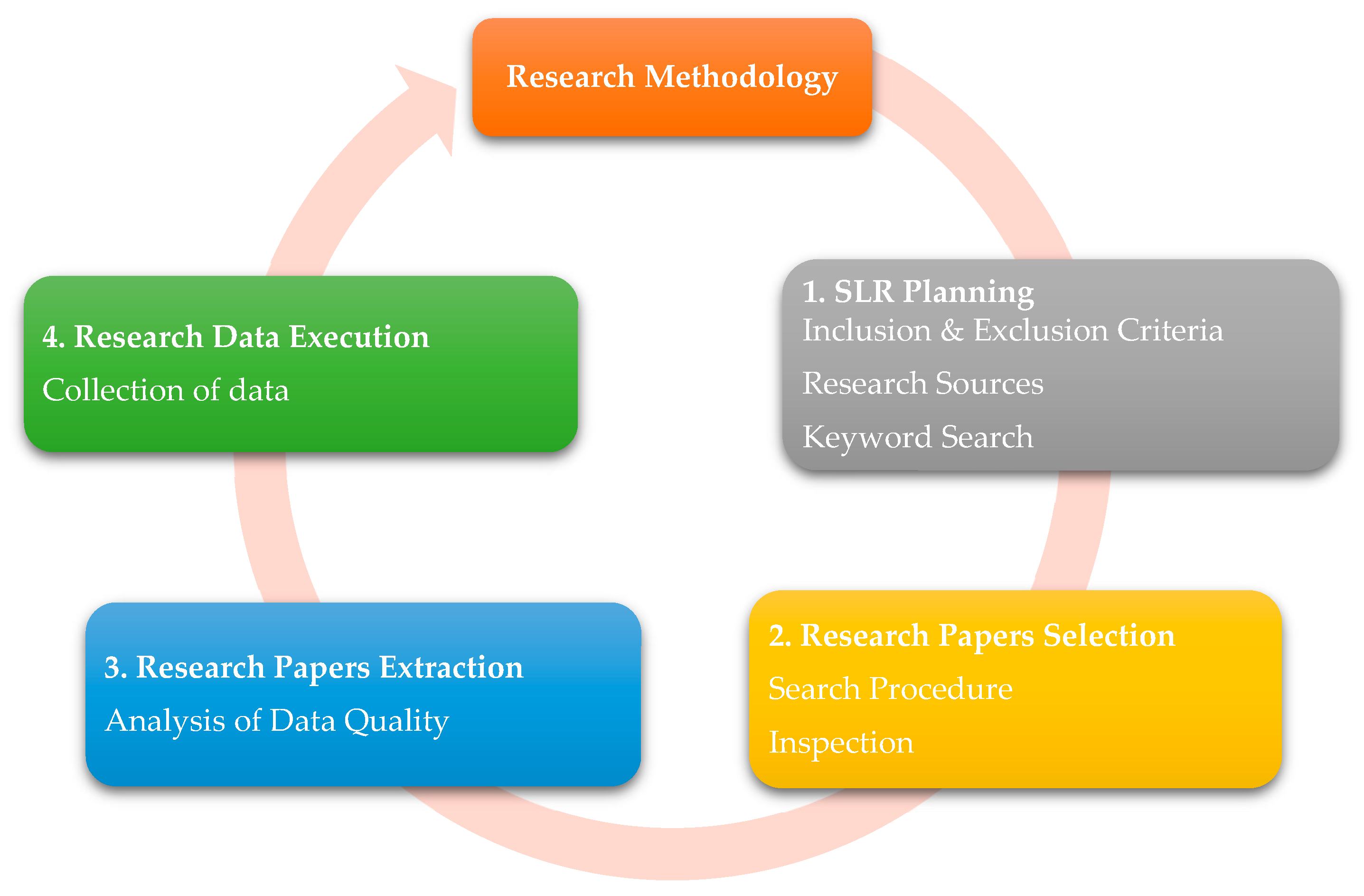
Table 3.
Results Achieved from Literature Search.
| No. | Online Repository | Number of results |
| 1 | Google Scholar | 86 |
| 2 | Web of Science | 145 |
| 3 | Scopus | 36 |
| Total | 267 |
2.4. Selection Process
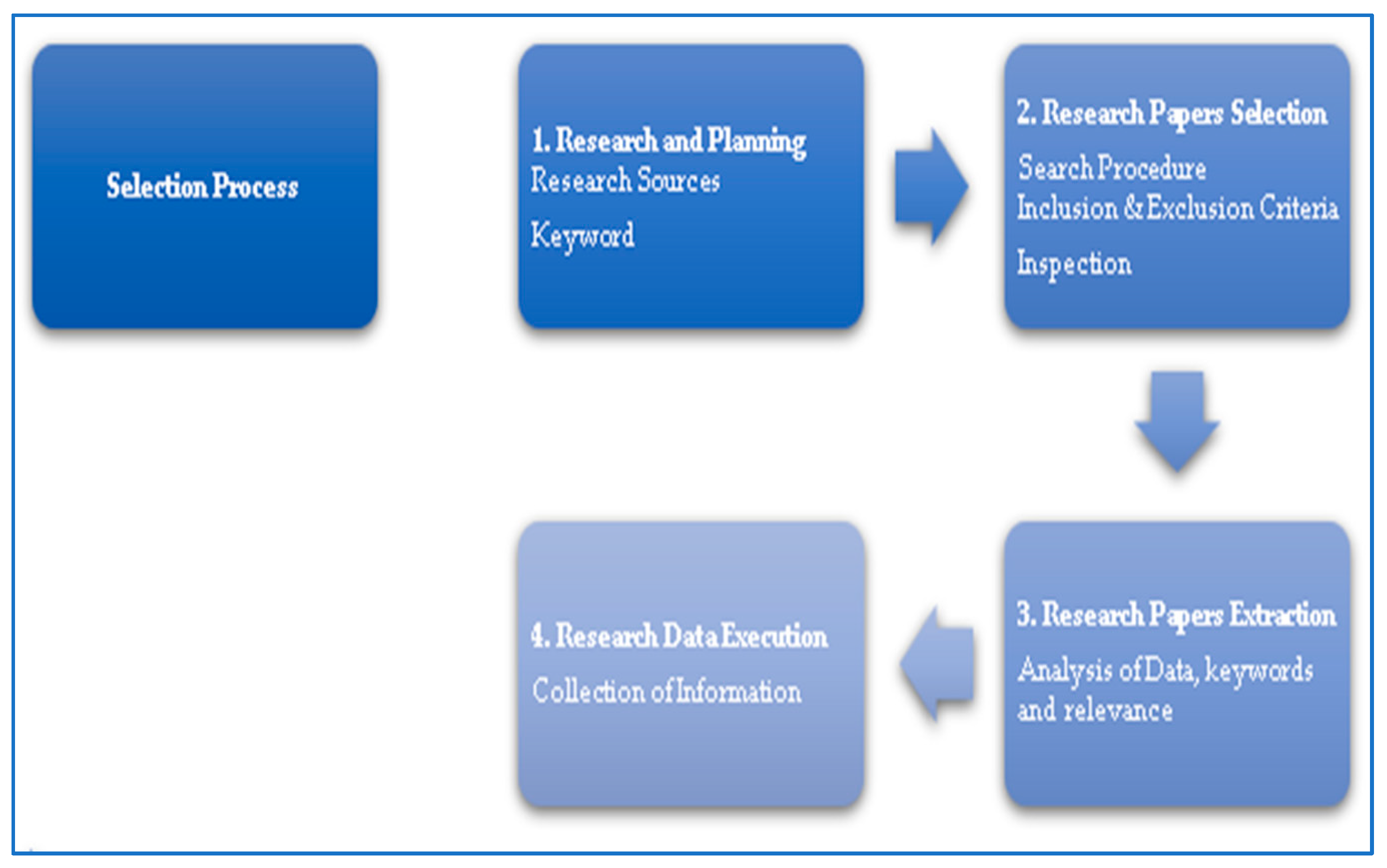
Two researchers, BM and SM, independently reviewed the topics, abstracts and keywords of the first 60 records retrieved from the search. After this initial screening, the researchers worked independently to review 30 articles each, with the titles and abstracts of all retrieved articles. Differences in the papers retrieved were discussed and evaluated based on full text, and in a case where full text was not direct, AI tools were provided with the full text and the eligibility criteria to compare, contract and categorize the context of the article and see what requirements are met, and which categories devaluate the paper. If there were any disagreements and doubts about the findings during the discussion, the paper was discarded. Both researchers were involved in making the final call if an article was to be included or excluded. Figure 2 shows the procedures and stages of the review.
Figure 2.
Visualization of Analysis of Study Search Keywords.
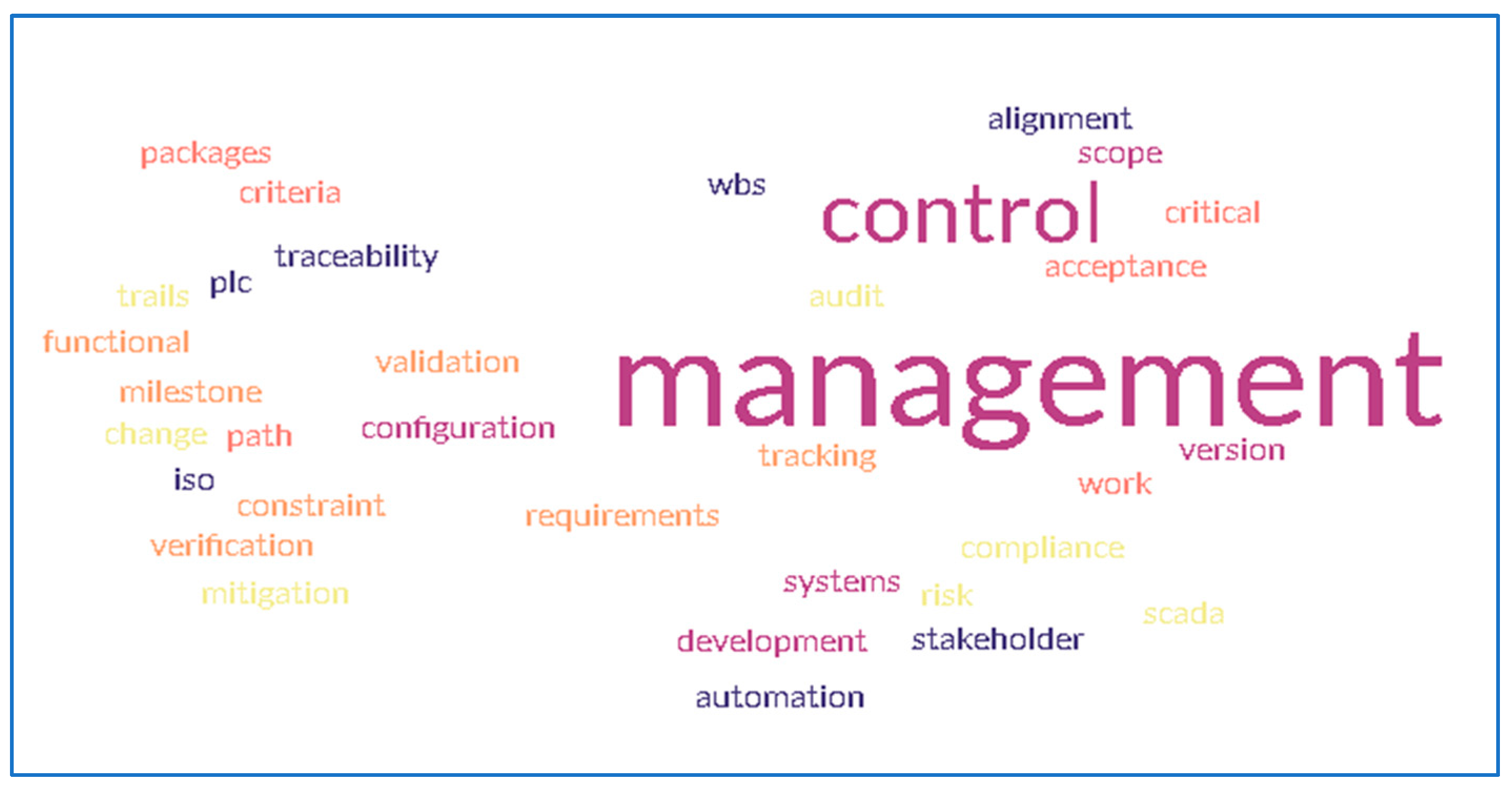
Figure 3.
Procedures and Stages of the Review.
2.5. Data Collection Process
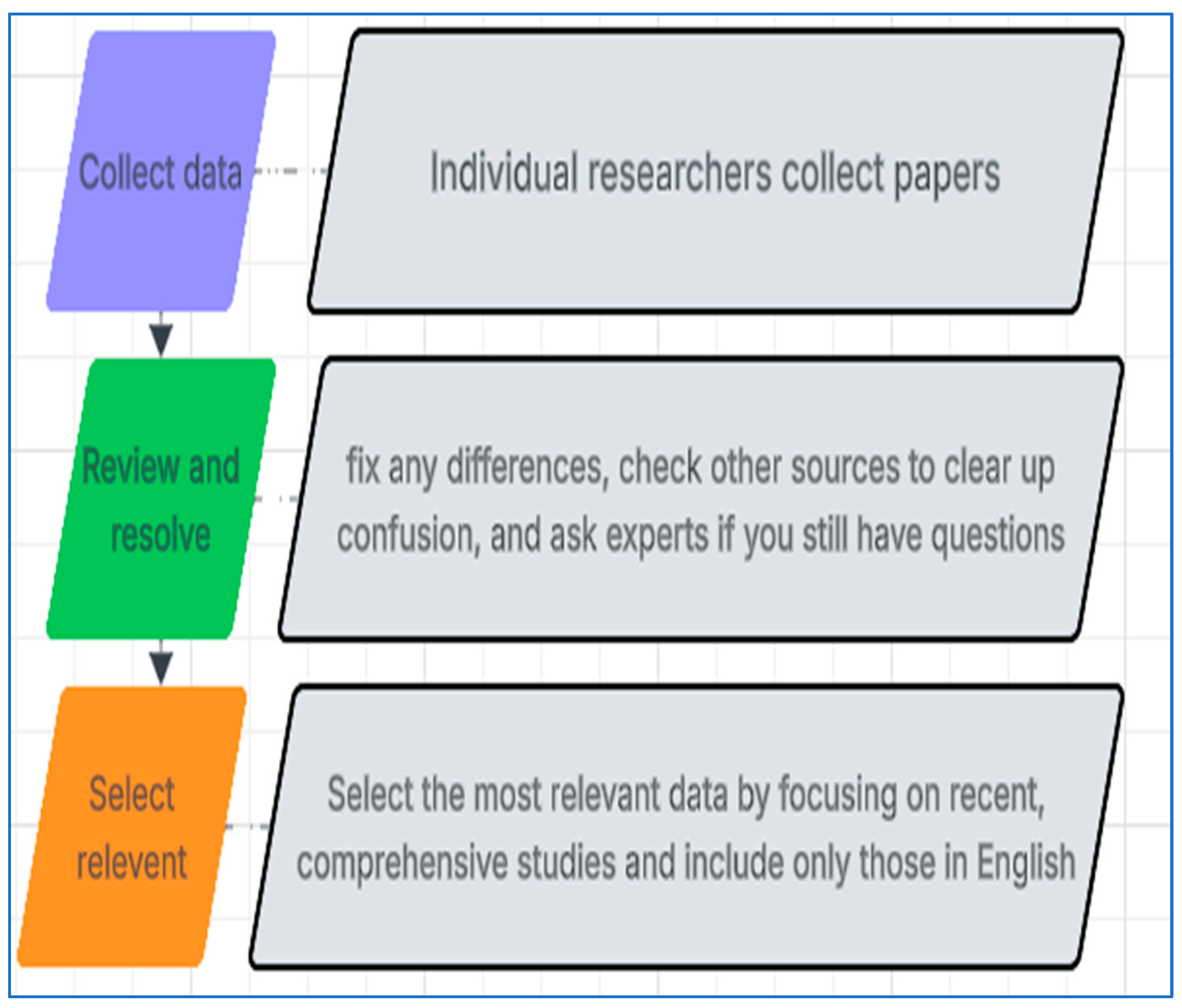
To ensure accuracy and minimize bias, a structured procedure was applied when collecting information from the selected studies. Two researchers (BM and SM) independently reviewed each paper, and any disagreements regarding credibility were resolved through discussion before inclusion. In certain cases, AI-assisted screening tools were used to confirm the relevance of full texts to the topic of control systems and configuration management in scope development. A standardized template was designed for extracting data, ensuring consistency across all sources (Taherdoost, 2021). Whenever study details were ambiguous, supplementary information such as reference lists or related publications was consulted to verify accuracy. In situations where findings from different reports appeared inconsistent, keywords and abstracts were re-examined to resolve discrepancies. When multiple reports from the same study were available, the most comprehensive and reliable version was prioritized. Only studies published in English between 2014 and 2025 were considered for final analysis.
Figure 4.
Flow of data collection and selection.
2.6.1. Data Items
The data extracted for this study centered on outcomes and variables that demonstrate the role of control systems in scope development. Particular emphasis was placed on system integration aspects, including change management, consistency across project phases, smooth integration of subsystems, and maintaining traceability of requirements. Beyond these primary indicators, the analysis also incorporated contextual elements such as study background, methodological design, and the environments in which implementation occurred. This broader perspective provides insight into how control systems and configuration management practices shape the reliability and effectiveness of scope development across different project settings.
2.6.2. Data Collection Method
For an inclusive understanding on the impact of control systems and configuration management in the development of the scope phase, the researchers assessed relevant outcomes that capture the strategic, operational, and financial dimensions influenced by these methods. Our method was designed to manufacture information that reflects the transformative effects of the control systems and how configuration manages the scope development. The primary outcomes of this systematic review revolve on how control systems standardize scope configuration, mitigating deviations, and enhancing process reliability. The review further evaluates implementation factors such as methodology testing, and environmental constraints. This evaluation helps assess their impact on system effectiveness across different project contexts. interoperability
Financial and tracking performance was another critical outcome aspect that was tracked, the assessments focused on how fast change is implemented and the costs how reworking and development can be avoided. By computing the industrial value added through these systems, a measurable view of how development stability and predictability is improved. Strategic system integration was evaluated with the emphasis of examining operation in different scope development environments and applications and how error can be reduced in interfacing the systems. Results were investigated across all measures and time points to understand the full extent of the control systems and how configurations in the projects are managed.
2.6.3. Definition of Collected Variables
Additionally, the researchers also analyzed critical governance factors, including the role of dedicated compliance officers in enforcing standards such as ISO 10007. Our methodology was structured to quantify the operational difficulty introduced by special roles, in particularly their influence on reducing changes that were not permitted. The review highlights how agreement supports scope configuration, reinforcing process reliability. The outcomes were positioned against variables like organizational development stages and governance frameworks to compute the influence on project lifecycle.
Compliance performance developed as a critical criterion, with assessments emphasizing the speed of corrective actions and the cost savings from prevented rework. By measuring compliance rates to Configuration Management protocols, the studies captured measurable developments in documentation integrity and stakeholder confidence. Strategic compliance integration was also evaluated, emphasizing how standardized administration reduces interface errors during cross-team collaborations. Discoveries in all case studies were integrated to demonstrate how dedicated compliance roles connect with the controlled project predictability and scope development.
Integration issues between CM tools and Product Lifecycle Management systems were solved by using the company technical document when complete information wasn’t available in order to fill the gaps. The other outcomes we considered included Geographical Distribution, compliance expertise and automation level (Msane et al., 2024). The outcomes of the geographical distribution include the regional adoptions/ of the configuration management practices, for example the region of case studies in the Global North and that of the Global South may be different in the rate at which the configuration management tools are implemented in the regions.
Table 4.
Data Variables Collected.
| Field | Description |
| Study characteristics | Focuses on tools, models and methodologies applied, this includes control system architectures and configuration management structures.t. |
| Participant characteristics | Information about the industry dominion like software development and aerospace, the project types involved in scope formulation and the organizational scale. |
| Intervention characteristics | Details of control systems and configuration management tools used, integration with existing systems, and scope of application in scope of development attempts. |
| Economic factors |
Financial aspects such as implementation costs, return on investment as well as budget aligning limitations in scope planning |
| External influences | Regulatory agreement, stakeholder demands that structures overall scope planning through the control and management systems. |
2.7. Study Risk of Bias Assessment
To ensure reliability of findings, potential sources of bias were systematically evaluated. The AI tool DeepSeek was employed to screen studies across three domains: outcome, comparability, and selection. The system was configured to highlight inconsistencies based on relevance, language, and keywords. Two independent reviewers then assessed the flagged material, and any disagreements were resolved through discussion. Where consensus could not be reached, the eligibility criteria were revisited and the AI tool was used as supplementary support to guide the final decision. For cases with incomplete or unclear information, additional steps were undertaken. These included cross-referencing search outputs from Google Scholar, Scopus, and Web of Science to verify accuracy. This multi-step procedure minimized uncertainty and strengthened the neutrality of the review process. Ultimately, both automated checks and manual cross-verification were combined to maintain accuracy and fairness in bias assessment.
2.8. Synthesis Methods
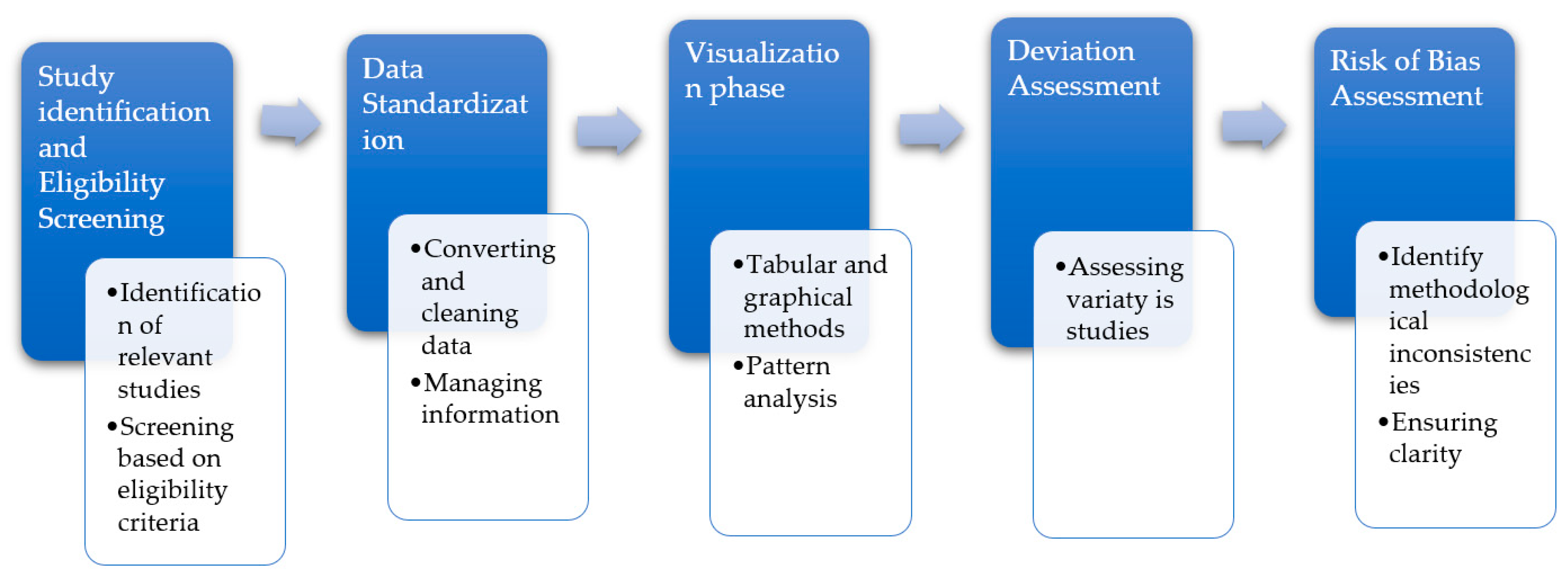
For the systematic review process, we begin with the Study Identification and eligibility screening phase, where relevant studies are sourced and filtered according to an eligibility criteria. Preceding this, the Data Standardization phase occurs, where collected information is cleaned and standardized by reviewing data independently and software such as AI tools. After that, the visualization phase takes place, in which data is organized into tables for pattern highlighting and cross-study analysis. We then proceed to Deviation Assessment, that facilitates assessing variation in the studies collected. Finally, the Risk of Bias assessment takes place, it is conducted for the detection of any inconsistencies to ensure clear and valid studies will be selected. A structured technique is illustrated by the flow chart in Figure 5.
Figure 6.
Systematic Review Process.
For this study, a structured integration process was applied to ensure that all included results were reliable and traceable. To decide which studies were suitable for inclusion, a comparative table was created to evaluate study characteristics against predefined criteria. Only those works that directly matched the research objectives were retained. During preparation, incomplete or inconsistent statistical data were addressed through careful re-checking and, where necessary, adjusted to maintain comparability across different studies. The harmonized findings were then summarized using structured tables and pivot chart visualizations, which provided a clear overview of the patterns observed. The synthesis of results was undertaken through a framework analysis approach, which allowed multiple perspectives to be examined and highlighted how various contextual factors influence the application of control systems and configuration management in scope planning. This approach also helped detect potential sources of variation, making it possible to interpret results with greater accuracy. Tools such as SVN and DOORs, often applied in configuration management, were referenced to illustrate practical applications.
2.8.1. Eligibility for Synthesis
To determine eligibility for synthesis, studies were screened based on how well they addressed the aims of this research. The evaluation considered effectiveness of control system and configuration management practices within scope development. Each reviewer independently examined study characteristics, assessing aspects such as intervention type and reported outcomes in relation to the study criteria. To support consistency, a comparative matrix was developed, allowing the scope and methodological features of the included papers to be aligned with the predefined criteria. This structured process ensured that only studies directly relevant to the research questions were retained, thereby strengthening the overall validity of the synthesis.
2.8.2. Data Preparation for Synthesis
To prepare the material for synthesis, datasets from different studies were harmonized to achieve consistency across sources. When summary statistics were incomplete, values such as control factors or integration indicators were estimated through established statistical techniques. Instances where the same tool appeared under different names across studies were standardized to a common label using spreadsheet processing, ensuring uniformity of entries. For example, variations like “IBM DOORS” and “Telelogic DOORS” were reconciled under one identifier to remove redundancy. These steps were taken to generate a dataset that was coherent and dependable, strengthening the credibility of the subsequent analysis.
2.8.3. Tabulation and Visual Display of Results
The processed data were then organized into structured tables and visual summaries to improve clarity and facilitate interpretation. Studies were grouped by categories such as methodological approach, year, or thematic focus, enabling consistent comparison across sources. Graphical outputs—including charts and plots—were applied to highlight patterns, estimate confidence intervals, and make trends in the evidence base more apparent. This structured organization helped ensure that the most robust evidence could be identified and compared effectively.
2.8.4. Synthesis of Results
The synthesis involved comparing findings across studies to identify convergences, divergences, and patterns in outcomes. Relevant works retrieved from databases such as Scopus, Web of Science, and Google Scholar were systematically re-examined and integrated. The approach to synthesis was shaped by the characteristics of the data, with both fixed- and random-effects considerations depending on the level of heterogeneity. Before analysis, study data were organized in Excel, allowing for the detection of variation and potential inconsistencies between studies. This process provided a clearer picture of how different research contributions aligned and diverged, supporting a nuanced interpretation of the field.
2.8.5. Exploring Causes of Heterogeneity
To figure out why study results varied, we performed individual analyses. This involved exploring potential sources of variation, such as differences in study settings and outcome measures. The analysis examined factors like type of control implemented, industry sector and project characteristics. These were helpful in identifying the patterns, which contributed to understanding the variability in the papers collected.
2.8.6. Sensitivity Analyses
The sensitivity analysis approach utilized evaluates reliability helped to confirm how valid the findings are. This is possible by addressing sources of Potential systematic error and warranting that the results were consistent across different analytical scenarios The approach was employed to evaluate the synthesis results in relation to procedural decisions made during the review process, involving testing the impact of excluding studies at high risk of bias using alternative statistical models to guarantee that the conclusions were not influenced unjustifiably by analytical techniques.
2.9. Reporting Bias Assessment
To ensure the integrity of the findings, a careful evaluation of reporting bias was undertaken. The risk of bias often emerges when certain outcomes are selectively reported or when relevant results are omitted, both of which can distort the overall conclusions of a review. To address this, established statistical and graphical approaches were applied. Funnel plots, enhanced with contour lines, were particularly useful as they enabled the detection of asymmetries in the data and highlighted potential gaps where studies may be missing. This visual approach allowed us to distinguish more clearly between random variation and systematic publication bias.
Rather than introducing new analytical tools, the study relied on recognized and widely used methods documented in prior literature. These graphical techniques provided a straightforward yet rigorous means of examining the distribution of studies and identifying areas of potential distortion. The evaluation process was carried out collaboratively by the reviewing team, with any disagreements resolved through discussion or, when necessary, by consulting a methodological specialist. This ensured that judgments were balanced and that the interpretation of evidence remained neutral and reliable.
Automation was intentionally avoided in this stage, as manual inspection of the data was deemed more effective for identifying subtle inconsistencies that automated tools might overlook. Tools such as spreadsheets were used to organize and visualize data, ensuring a transparent and detailed examination.
In addition, extensive manual searches across major databases, including Google Scholar, Scopus, and Web of Science, were undertaken to capture any studies that might otherwise have been excluded. This cross-checking process reduced inconsistencies and reinforced the robustness of the synthesis. By adapting established methods to the specific characteristics of the reviewed studies, the assessment was able to maintain both contextual appropriateness and methodological rigor.
2.10. Certainty assessment
The studies that were collected were evaluated by four-point quality assessment (QA) criteria to ensure relevance:
QA1: The application of a well-defined and appropriate research techniques.
QA2: The detailed specification of the data collection methods.
QA3: The clarity and validity of the study in relation to the stated research topic and aim.
QA4: The extent to which the study contributes to enhance the collection of studies in the field.
The certainty assessment for each criterion was rated on a scale from zero (0) to three (3), where 'No' equates to '0' points, ' Partly fulfilled' met receives '0.5' points, and 'Yes' is assigned '1' point. Consequently, each piece of literature could achieve a total quality assessment score ranging from 0 to 4 points. The outcomes of this assessment for the analyzed literature on the applications of control systems and configuration management are presented in Table 5.
The analysis method involved the GRADE (Grading of Recommendations Assessment Development and Evaluations) framework for performing systematic tests. GRADE stands as a worldwide accepted assessment system which delivers an extensive method for evidence quality evaluation resulting in conclusions that both industries and researchers can trust to enhance the reliability of our findings. The evaluation of evidence certainty directed its focus on major outcomes through multiple assessment elements. Evidence certainty increased when studies presented narrow confidence intervals with large sample sizes because these characteristics demonstrated dependable and accurate effect measurements. The assessment of consistent findings involved our comparison between results from all included studies (Molete et al., 2025). The consistency between study results that yielded comparable findings helped strengthen the confidence in the evidence. We examined every detected heterogeneity to establish its causes and effects on the final conclusions.
Research with lower bias risks gained more weight in shaping the overall evidence credibility. The direct evaluation depended on how well the study populations matched the review questions and their corresponding interventions and outcome measurements. The evidence certainty framework used research consistency and precision alongside direct application and minimal bias risk to determine its levels. The analyses received moderate certainty based on minimal issues identified with one variable such as inconsistent results or moderate potential bias. The team obtained extra information about outcomes from research authors when it proved feasible for increasing certainty assessment clarity.
3. Results
3.1. Study Selection
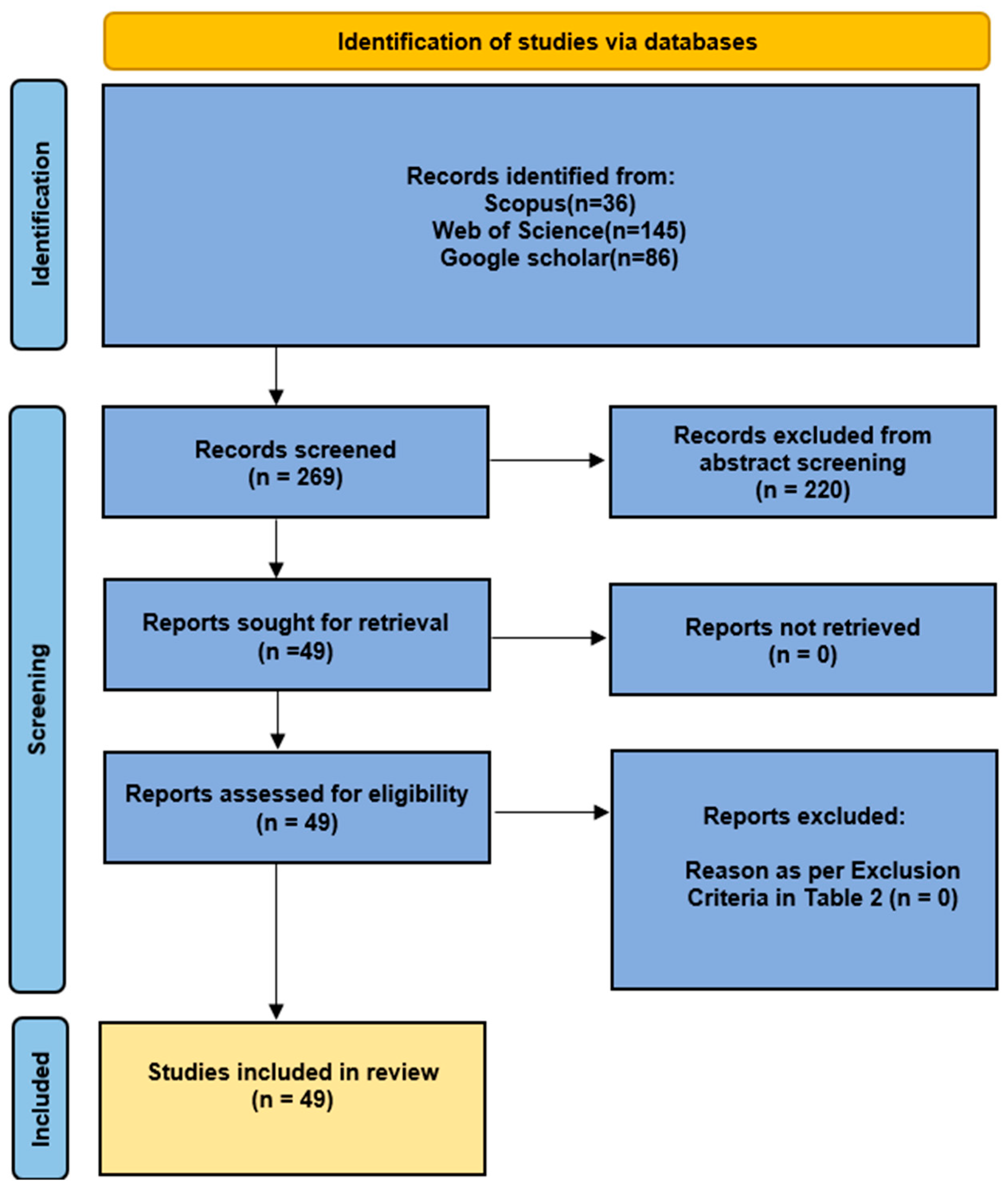
The selection of studies was carried out through a transparent and carefully structured process aimed at maximizing both quality and relevance. Literature searches were performed in three major academic databases—Google Scholar, Scopus, and Web of Science—to capture a wide range of peer-reviewed research. The search retrieved 36 records from Scopus, 86 from Google Scholar, and 145 from Web of Science, producing a total of 267 initial records. Following the removal of duplicates and the application of abstract screening, 220 studies were excluded. The remaining 49 full-text reports were retrieved, all of which were assessed against the eligibility criteria. None were excluded at this stage, resulting in a final set of 49 studies included in the synthesis.
Figure 7.
Proposed PRISMA Flowchart.
3.1.2. Reporting Results of Collected Results
Figure 8 illustrates the number of search results retrieved from three major online academic repositories (Scopus, Web of Science and Google Scholar) related to the topic of control system and configuration in scope development. The Web of Science Core Collection produced the highest number of relevant papers, totaling 145. This suggests it is a rich source for scholarly and peer-reviewed research in this domain. Google Scholar follows with 86 results, reflecting a broader but possibly less curated selection of materials. Meanwhile, SCOPUS returned 36 results, the lowest among the three databases. This distribution indicates that Web of Science may be more comprehensive for high-impact studies on this topic, while Google Scholar offers more general coverage. SCOPUS, though more selective, still contributes valuable insights. Together, the three databases complement each other in offering a well-rounded literature base
Figure 9 shows data sources that are used to inform research on control systems and configuration in scope development reveal a strong emphasis on empirical evidence and academic validation. Most of the methods (39%) were based on empirical data collection, particularly surveys, indicating that real-world perspectives and experiences play a crucial role in shaping understanding of scope control mechanisms. This highlights the value placed on capturing stakeholder feedback, challenges, and best practices in actual project environments.
Additionally, academic and industry publications accounted for 25% of the data sources. This underscores the importance of scholarly and technical literature such as peer-reviewed journals, institutional websites, and industry reports in providing foundational knowledge and emerging trends in scope configuration practices. Literature and theoretical analysis represented 16%, showing that conceptual understanding and critical reviews remain essential to framing the context and evolution of scope development practices. Project documents, interviews, and reports made up 8%, which suggests a practical angle informed by documented case studies and firsthand professional insights. Hardware-in-the-loop simulation, while niche, accounted for 6%, signifying its relevance in validating control system behaviors within realistic project models. Less commonly, practical guides and expert insights (4%) and conceptual frameworks or ontology-driven approaches (2%) were used. This suggests that while structured methodologies and expert opinions are acknowledged, they are not the primary drivers of current research in this field.
Figure 10 highlights geographical distribution of studies and contributions to control system and configuration in scope development indicates a dominant presence of research originating from the United States, which leads significantly with the highest number of publications or case references. This suggests that the U.S. is at the forefront of exploring and implementing control systems in scope development, likely due to its strong academic institutions, advanced technological infrastructure and diverse industry applications. The United Kingdom and China follow as notable contributors, reflecting their growing influence and active participation in project management and control systems research. China’s position may be linked to its large-scale infrastructure and technology-driven projects, while the UK’s contribution is likely tied to its well-established academic research base and its global consulting and project management sectors. Countries such as Finland, Malaysia, Pakistan and South Africa also show moderate levels of activity. These entries highlight the global interest in this research area, especially from countries with emerging or rapidly growing industrial and technological sectors. The rest of the countries, including those from Africa, the Caribbean, Asia, and Europe (like Ghana, Kazakhstan, Jamaica, Switzerland, and Spain), each had a low but noteworthy contribution, emphasizing that the relevance of control system practices is becoming more widespread, even if research intensity varies.
Figure 11 illustrates a broad distribution of scope planning methods across various industries, with notable concentrations in specific sectors. System Engineering and Automation and Software Engineering & IT emerged as the leading industries, each with seven mentions. This demonstrates a strong integration of scope planning methods in technology-intensive fields, where project complexity, iterative development, and stakeholder coordination are paramount. Similarly, the Construction and Civil Engineering sector also received seven mentions, underscoring the importance of structured scope management in large-scale, deadline-sensitive, and regulation-heavy projects.
The field of General Project Management followed with four mentions, indicating that some methods are versatile and applicable across diverse industries rather than being limited to a single domain. Other sectors such as Industrial and Manufacturing Projects, Electrical Construction, and Multidisciplinary Engineering Projects showed moderate adoption with two to three mentions each. This suggests that scope planning practices are valued in these industries for managing system integration and ensuring successful project delivery.
In contrast, sectors such as Banking, Legal Services, Education, Shipping and Maritime, Telecommunication, and Agriculture were represented with only a single mention. This imply limited research focus or more specialized approaches to scope planning within these fields. Interestingly, even highly technical areas like Aerospace, Space, Ground Transportation, Defence, and Security received only one mention, which could reflect either a niche application of methods or restricted publication of planning practices in such sensitive domains.
Figure 11, scope planning methods are clearly implemented across a wide spectrum of industries, the findings emphasize their strongest application in engineering, IT, and construction environments, where the complexity and risks associated with projects demand robust planning and control mechanisms.
Figure 12 indicate that the most practiced method in scope planning is the use of Microsoft Project, automation, and clear documentation with a total of 15 mentions. This highlights a strong reliance on project management tools and structured documentation processes to enhance planning efficiency and clarity. Additionally, clear communication, structured scope definition, and optimization were mentioned 7 times, emphasizing the importance of aligning team understanding and defining project boundaries early in the process. Similarly, thorough planning combined with stakeholder involvement and clarity received 6 mentions, reinforcing the value of engaging stakeholders and planning comprehensively to avoid misalignment and miscommunication. The practice of having a formal scope changes process with authorized change requests was also notable, with 5 mentions which suggests that managing changes through a formalized system is widely regarded as an essential component of scope planning. Practices such as emphasizing systems architecture, integration, and sustainability and formal scope management with clear roles and responsibilities were mentioned 3 to 4 times, indicating moderate importance. These reflect a more technical and structured view of planning, particularly in complex or long-term projects.
Many other practices were mentioned only once or twice, including client management, scope creep control, adherence to strict regulations, and development strategies. While these are less frequently cited, they may be more context-specific and still valuable depending on the project type or industry.
Figure 13 illustrates the multifaceted roles of configuration management (CM) tools in scope development, highlighting their strategic and operational contributions across project environments. A prominent segment emphasizes the prioritization of systems and control funding, particularly in sectors such as transportation, energy, water, healthcare, and manufacturing. This prioritization reflects a deliberate alignment of scope development with national and sectoral needs, ensuring that control systems are not only technically sound but also socially and economically relevant. The integration of CM tools in this context supports informed decision-making, enabling project teams to allocate resources effectively and respond to complex, evolving demands. This role underscores the importance of CM tools in shaping the foundational direction of scope development, where strategic foresight and technical governance intersect.
3.2. Study Characteristics
A total of 49 studies on control system and configuration management in scope development were identified, spanning from 2014 to 2025. These studies are categorized into four publication types: journal articles (53.06%), book chapter (24.49%), dissertations (14.29%), and conference paper (2.04%). Figure 14 provides a detailed visualization of this distribution over time, emphasizing the trends in publication types across the years. The Sankey diagram in Figure 14 illustrates the flow of publications from 2014 to 2025, showing a gradual but fluctuating increase in research outputs, with a notable peak in 2017. This surge indicates a period. This surge indicates a period of intensified academic focus and development in the field of control system and configuration management in scope development. Journal articles dominate the landscape throughout the timeline, highlighting their importance as the primary medium for disseminating peer-reviewed research in control system and configuration management in scope development. Conference papers exhibit a steady contribution, reflecting limited but targeted academic discussion in formal gatherings. Book chapters and dissertations, while less frequent, offer detailed, in-depth explorations of specific aspects within scope development of control system and configuration management.
The results also show that the type of scholarly contributions has shifted over time. In several years, dissertations and book chapters appeared more frequently, highlighting the role of these formats in broadening methodological and theoretical perspectives. This variation illustrates the mixed character of the field, where exploratory studies sit alongside more practice-oriented applications in system design, implementation, and project scope integration.
Such diversity reflects the increasing reliance on structured control systems and configuration management to improve project outcomes, especially in resource-constrained settings. The growing body of research consistently points to their value in driving efficiency, supporting informed decision-making, and strengthening competitiveness. Over time, this progression underscores the sustained effort to refine methods and respond to challenges encountered across different project environments. Table 6 presents the reported effects of control systems and configuration management on performance outcomes. Evidence indicates gains in process efficiency, with studies showing an average 12% reduction in completion times. Benefits for project adherence are also notable, with findings suggesting an average 15% increase in meeting planned objectives. Strategic planning outcomes show moderate support, with a reported risk ratio of 1.8, suggesting improvements in planning reliability. Stakeholder coordination demonstrates measurable effects, with a 10% rise in satisfaction levels linked to better relationship management and engagement practices. Evidence for responsiveness to scope changes is more variable, with a hazard ratio of 1.5, suggesting uneven results. However, in innovation-focused projects, moderate evidence reports an 8% improvement in innovation success rates. Finally, studies also report up to a 20% improvement in risk management, reinforcing the contribution of control and configuration practices to more predictable and reliable project outcomes.
The majority of the research demonstrates that control systems and configuration management optimize operational efficiency, project performance, strategic scope planning, and risk avoidance. Threats to these studies include system complexity, change responsiveness variability, and minimal consistency in implementation impacts. Recommendations point to the need for improved stakeholder coordination, formal change management processes, and more clarified scope definition practices. These results aim to encourage improved integration of control systems and configuration management in scope development for enhanced project success and strategic alignment.
3.3. Risk of Bias in Studies
The Figure 14 illustrates the distribution of studies concerning control systems and configuration management in building scope, grouped by Newcastle-Ottawa Scale into Low Quality group (3–4 stars), Moderate Quality (5–6 stars), and a High Quality group (7–9 stars). Fewer than one eighth of the studies (8) fall into Low Quality, meaning having minimal rigour in methods and controlling systems and configuration management for scope development. On the other hand, a moderate number of studies (15) are Moderate Quality, suggesting average methodological compliance. However, note that a majority of studies (30) are High Quality, suggesting a robust methodological foundation with a solid body of well-established studies in this area. These findings confirm that while not all studies in this area are flawless, a significant percentage of sound studies are found upon which scope-management evidence-based practices can be grounded in terms of control and configuration systems.
Figure 15.
Assessment of Study Quality Using the Newcastle-Ottawa Scale.
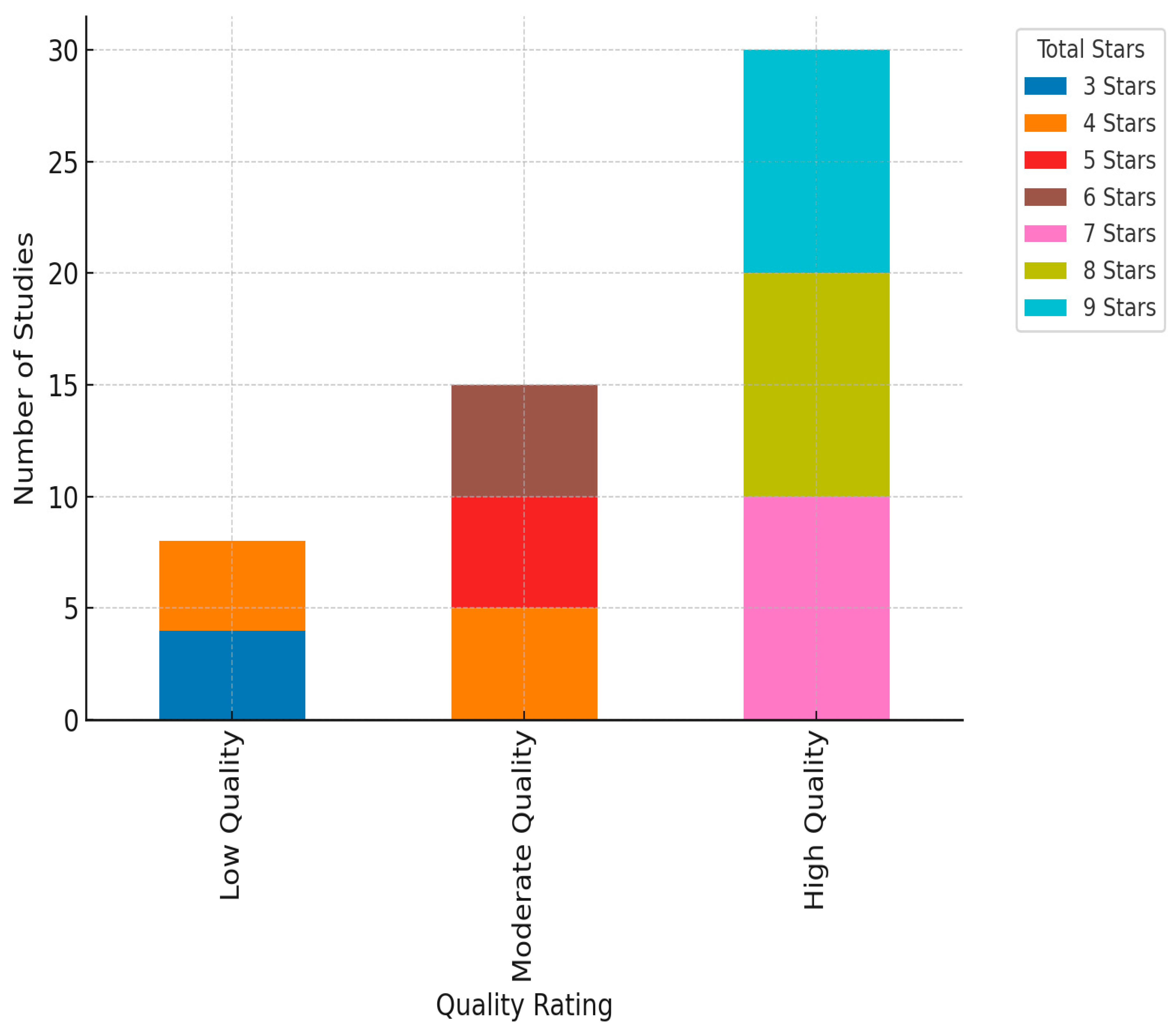
Figure 16 illustrates the interrelations among the different types of study sources, methodologies, and types of publication identified in the included studies. Surveys seem to be the most commonly used methodology, having the strongest correlation with journal articles, suggesting the dominant use of formal, data-based methodologies in the fields of control systems and configuration management. Industrial and academic publications, literature reviews, and theoretically analyzed contributions dominate the generation of journal articles, book chapters, and dissertations, suggesting the pivotal role played by these elements in the generation of practical solutions as well as the development of theoretical constructs. In contrast, less frequent methodological practices like hardware-in-the-loop simulations, project reports, expert opinions, and ontology-based structures are seen in lower frequencies and have their strongest correlations with dissertation and book chapter types, suggesting their usage in more specialist, exploration and context dependent research activities.
3.4. Results of Individual Studies
The analysis in Figure 17 highlights the interplay between various industry applications and scope control methodologies employed in the reviewed studies. WBS-Based Methods emerge as the most frequently utilized scope control approach, cited in 20% of the studies, prominently linked to Construction and Civil Engineering (18% of industries) and System Engineering and Automation applications (14% of industries). This underscores their pivotal role in managing complex project structures across diverse technical domains. Similarly, PMBOK/System Engineering methodologies account for 14% of mentions, supporting industries like Government and Public Sector and Software Engineering, showcasing their growing adoption for standardized and systematic project control. However, a notable portion of the studies did not specify clear methodological distinctions between traditional and emerging approaches, signaling a need for more comprehensive reporting practices in scope control documentation.
This gap in reporting does not suggest that advanced methods are absent from scope control systems; rather, it highlights limited clarity in how such approaches are applied in practice. Scope control frameworks generally incorporate a variety of tools and techniques, but many studies fail to describe their specific use or industry-level adaptation. For example, the PMBOK® knowledge areas, configuration management processes, and planning frameworks such as PDRI are often cited, yet detailed applications in technical systems like automation tools or version control remain underreported. These omissions underline the importance of improving methodological transparency and consistency when documenting practices across different industrial settings.
The review also shows how scope control methodologies are used more broadly. Certain approaches, including client and communication strategies, management control systems, and task structuring methods, were tied to outcomes such as stakeholder coordination and process efficiency. Although more specialized applications—such as ontology-based methods or stratified analyses—appeared only rarely, they demonstrate the adaptability of scope control frameworks in addressing diverse project needs. Overall, the findings suggest that while scope control systems have the potential to enhance project delivery and performance, inconsistent reporting continues to limit the establishment of robust evidence-based frameworks for selecting and optimizing methodologies across industries.
This analysis reveals significant gaps in methodological reporting that impact the comprehensive understanding of scope control approaches across industries. Construction and Civil Engineering demonstrates the strongest methodological concentration with 18% of industry applications which shows limited diversification beyond WBS-Based Methods (20% of all methods) and restricting our understanding of alternative approaches in infrastructure projects. While WBS-Based Methods are well-represented across multiple sectors, the underreporting of specialized approaches such as Automation Tools & Version Control (2%) and PRINCE2 & CMMI (2%) limits our comprehension of their strategic applications in technical domains. The dominance of traditional methodologies like PMBOK® Knowledge Areas (5%) and PMBOK/System Engineering (14%) across diverse industries from System Engineering and Automation (14% of industries) to Government and Public Sector suggests methodological standardization, yet this concentration may obscure the effectiveness of emerging approaches. Particularly concerning is the minimal representation of Configuration Management (5%) and Lyapunov Stability methods (5%), which could indicate either underutilization or insufficient documentation of these specialized techniques in scope control applications.
Future research must prioritize comprehensive documentation of the methodological approaches employed across different industry contexts. The current gaps in reporting specialized methods such as Ontology-Based Methods and Descriptive/Stratified Analysis techniques prevent full assessment of their applicability and effectiveness. Such improvements will not only enhance the credibility and comparability of scope control studies but also enable project managers to make informed decisions about selecting appropriate methodological frameworks tailored to their specific industry requirements. By addressing these documentation deficiencies, future studies can provide clearer insights into how diverse scope control methodologies contribute to project success across varied industrial contexts, thereby advancing both practical applications and academic understanding in the field.
3.5. Results of Synthesis
The synthesis of findings highlights how control systems and configuration management practices shape scope development across industries. Integrated mechanisms were shown to support project definition, monitoring, and adaptation, thereby strengthening alignment, efficiency, and accountability throughout the development process. Analysis of the reviewed studies indicates a strong emphasis on control systems and configuration methods, followed by funding-related considerations, particularly in transportation, energy, healthcare, and manufacturing. These results point to the central role of such systems in enabling scope development for projects with high societal and infrastructural relevance. Overall, the evidence suggests that configuration and control systems function as foundational tools for managing complexity and ensuring clarity in project parameters.
The reviewed literature also demonstrates broad international engagement, with contributions from both developed and developing economies. The sources span multiple publication formats, including journal papers, conference proceedings, and dissertations, reflecting a diverse and expanding knowledge base. Statistical assessments highlight differing priorities depending on context, with developing countries placing greater emphasis on overcoming resource constraints, while advanced economies tend to focus on system optimization and sustainability. Economic contexts further shape adoption patterns, as solutions are often tailored to regional requirements. Emerging markets, for instance, increasingly rely on cloud-based technologies and flexible data management tools to improve efficiency and resilience. Such approaches not only reflect current global trends but also provide organizations—particularly SMEs—with the ability to enhance operational efficiency and maintain competitiveness in rapidly changing environments.
3.5.1. Characteristics and Risk of Bias Among Contributing Studies
The reviewed studies demonstrate a predominant focus on the industry application, with notable concentrations in the construction (9 studies), software/IT (5 studies), project management (6 studies) and systems engineering (7 studies) sectors (Figure 18). This distribution underscores the widespread relevance of control system and configuration management in scope development across various domains. The prominence of the construction and system engineering sectors reflects the critical need for structured scope control, risk management and configuration tracking in complex, multi-phase projects. The engagement of software/IT and project management fields underscores the increasing, highlights on adoptable, process-oriented approaches to manage involving requirement and ensure alignment with project objectives.
In the manufacturing industry, control system and configuration management practices play a crucial role in enhancing workflows and maintaining alignment with envolving scope requirements. These practices are frequently applied to manage changes, ensure compliance and maintain architectural integrity as indicated in Figure 18. For instance, configuration management systems help track and control modifications to development configurations, supporting better production planning and minimizing disruptions. Additionally, real-time monitoring tools, such as dashboards, are used to supervise critical parameters like process deviations and machinery status, thereby enabling quick decision-making, reducing errors and ensuring consistent adherence to scope objectives and system specifications.
Despite the prominent focus on these industries such as construction, systems engineering and project management, there is a noticeable underrepresentation of other sectors in the research landscape. For example, automotive and aerospace each account for only one study (Figure 18), while consulting and engineering management are modestly represented. This limited distribution reveals opportunities for expanding research to explore how control systems and configuration management practices can be adapted to sectors with unique operational challenges and regulatory requirements. The underexplored presence of fields like consulting—despite their strategic role in guiding large-scale implementations—suggests a gap in understanding how these methodologies can be integrated into advisory and oversight functions. Future research should investigate how scope control and configuration management principles can be effectively applied across diverse industries with distinct project environments and long-term objectives.
3.5.2. Results of Statistical Syntheses
The geographic and economic distribution across studies under review in terms of control systems and configuration management in scope development, from the above figure, indicates a concentrated presence in developing countries at 62.5% while developed countries contributed a percentage rate of 37.5%. This mirrors a growing focus on robust mechanisms for controlling and configuring in emerging marketplaces, where matters related to limited infrastructure, uncontrolled project ramp-up, and unpredictable market conditions make scope management a matter of importance. The proportionately larger percentage from developing nations mirrors a keen desire for systematic methods of creating scope, potentially looking toward improving project rates of achievement and resource use effectiveness where those gains are most valued. Countries like Indonesia, South Africa, and Malaysia These include Indonesia, Malaysia, and South Africa, where we find a regional concentration in developing project practice. Less, yet significant, are studies from more advanced nations, the United States, for instance, and the United Kingdom, where we see a focus specifically on innovation as well as best-practice strategies.
The publication types in the reviewed studies on control systems and configuration management in scope development show that 53.06% were journal articles, 23.49% were conference papers, 14.29% were dissertations, and 2.04% were book chapters. This reflects a diverse academic output, with journal articles dominating the field.
Among the evaluated performance metrics examined in control systems and configuration management studies in scope development, processing speed of data is most frequently assessed at 19.35% of studies. The frequent evaluation of data processing speed highlighted in the Sankey diagram (Figure 19), reflects its importance in streamlining control systems and configuration management within scope development. This focus reflects geographic and economic circumstances defining priorities, with developing countries emphasizing more rapid, low-budget adaptation to resource limitations.
3.5.3. Investigation of Heterogeneity
The analysis revealed substantial variation between studies conducted in developing and developed economies. Out of the reviewed sample, 32 studies originated from developing contexts, where the emphasis was largely on strengthening competitiveness and improving efficiency under resource-limited conditions. These contributions illustrate how control systems and configuration management are often applied to improve planning, monitoring, and execution where financial and infrastructural constraints pose significant challenges. By contrast, 17 studies were situated in developed economies. Here, the focus was oriented toward innovation, advanced system integration, and the pursuit of long-term strategic advantages through sophisticated control and configuration frameworks. These studies typically highlight the role of technology in supporting adaptability and sustaining market competitiveness.
This heterogeneity indicates that economic context strongly shapes the objectives and applications of control system research. Developing regions prioritize efficiency and resilience, while developed contexts emphasize innovation and technological refinement. Recognizing these differences is essential for tailoring control strategies that address regional challenges, maturity of technological infrastructure, and specific project management demands.
3.5.4. Sensitivity Analyses Results
The Sankey diagram indicates correlation among varying industries and control system and configuration models employed during scope development. Most predominant models are WBS & Scope Review, utilized in 32.26% (10 out of 31 studies), and PMBOK & SysEng, also applied in 32.26% (10 out of 31 studies), closely demonstrating systematic planning and scope control with a structured approach. These models focus in sectors like Construction and Civil Engineering, Software Engineering & IT, and Government/Public Sector, where scope definition and rigour in methodology are crucial. Moreover, models like Automation & Version Control (12.9%) and EVM & PM Software (9.7%) cover automation of processes and performance measures, which also work toward enhancing dynamic project environments involving flexibility and precision.
Figure 20.
Distribution of Control System and Configuration Management Models Across Industry Sectors in Scope Development Studies.
Figure 20.
Distribution of Control System and Configuration Management Models Across Industry Sectors in Scope Development Studies.
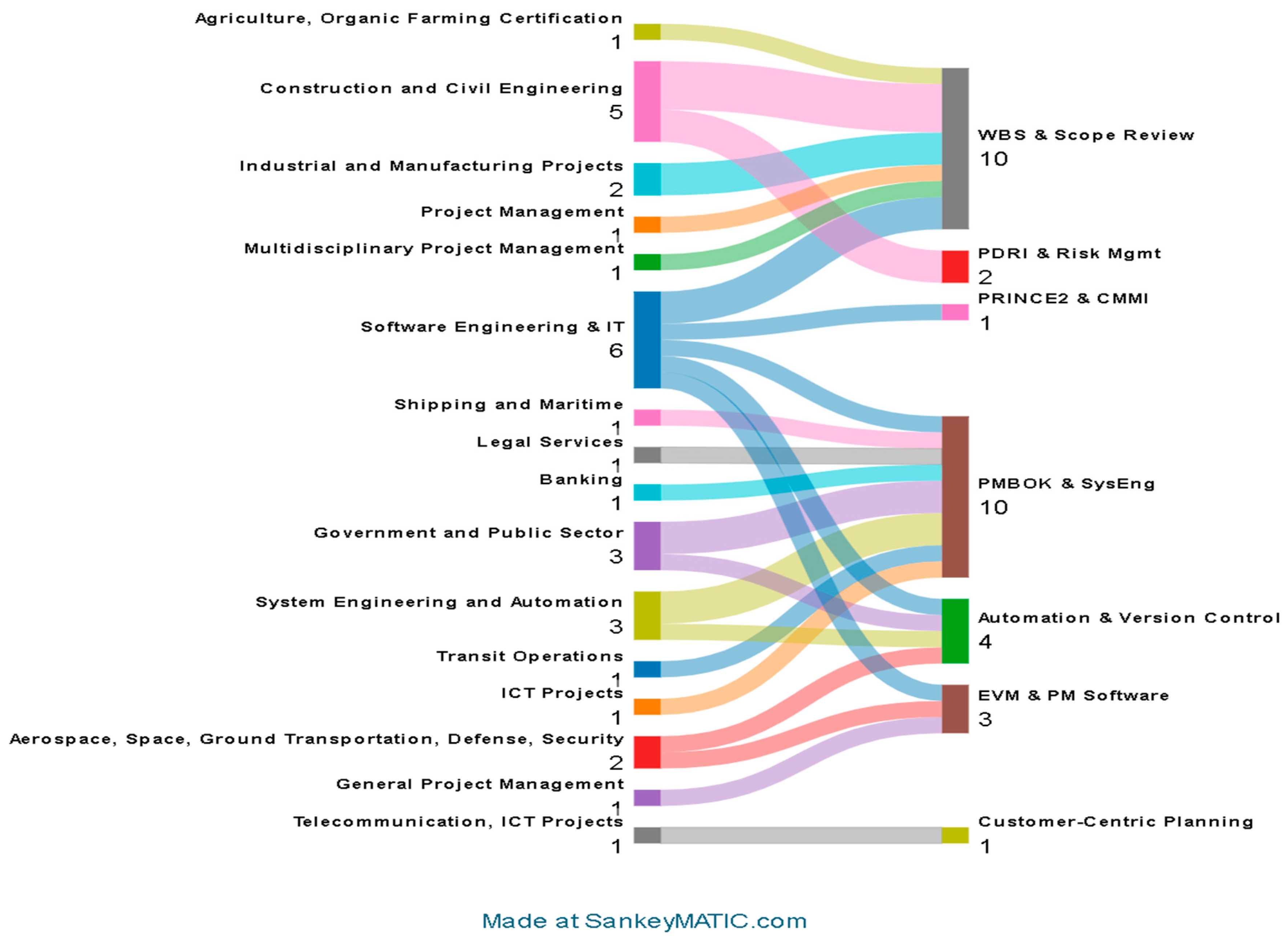
PMBOK & SysEng models and WBS & Scope Review are found to be most prevalent in control systems and configuration management to create scope with a frequency of 32.26% each. PRINCE2 & CMMI (3.23%) and Customer-Centric Planning (3.23%) are not so common, having lower adoption. Interestingly, 12.9% employed Automation & Version Control, typical for industries requiring more precision and control over processes, i.e., System Engineering and Automation. Alternatively, 9.7% applied EVM & PM Software, reflective of focus on performance measurement. However, 22.58% of studies are divided between less-delineated or vaguely grouped models, reflective of lack of consistency in reporting methods—limiting disclosure on contribution made by each model toward control effectiveness and scope accuracy.
3.6. Reporting Biases
The review identified moderate reporting bias risk, primarily due to gaps in methodological transparency and outcome reporting. In particular, the model of technology adoption used (e.g., cloud-based, hybrid, or on-premises) was not defined in 60% of the studies. The lack of such specificity limits the scope for making credible comparisons or assessing the contextual influence of different arrangements on scope development outcomes. Additionally, while cloud-based models were discussed in 32% of the studies, hybrid and on-premises models were significantly underrepresented, at 1% and 6% respectively. This imbalance may skew conclusions regarding implementation effectiveness and obscure findings related to more heterogeneous or complex environments. Performance measure reporting was also inconsistent. Short-term indicators such as data processing speed (19%), competitive advantage (11%), and business sustainability (9%) were more apt to be reported, whereas long-term strategic attributes such as scalability and innovation were each addressed in less than 1% of the research. This suggests a bias towards immediate operational benefits, with possibly underrepresentation of broader organizational impacts.
3.7. Certainty of Evidence
Figure 21 showcases the relationship between industry/application and scope control methods. The WBS and Scope Review methodologies represent 24% of applications in scope control, significantly dominant across industries with complex project structures and detailed work breakdown requirements. Among these industries, the Construction and Civil Engineering sectors represent 50% of WBS application, along with Software Engineering and Information Technology, highlighting their paramount importance in settings where a hierarchical project decomposition is imperative. The PMBOK and SysEng methodologies also reflect an identical 24% market share, prominently featured in the Government and Public Sector, thus denoting their value in settings where compliance and standardization are emphasized. Specialized methodologies, including Automation and Version Control (9%) and PDRi and Risk Management (5%), show focused applicability in technical and risk-prone fields; however, their application is limited to niche sectors. The System Engineering and Automation sectors reflect the widest range of methodological applications, indicative of their complex scope control demands. In addition, small sectors like Legal Services, Shipping and Maritime, and Telecommunications have limited representation in the dataset, which may indicate gaps in the reporting of methodologies relevant to scope control in these sectors. This limited representation prevents an adequate assessment of the specific needs across industries regarding the efficacy of scope control methodologies, especially in the nascent sectors like Customer-Centric Planning (2%) and the integration of EVM and Project Management Software (7%).
Figure 22 highlights the relationship between configuration management roles in scope control and best practices for scope control systems. PMBOK and automation approaches dominate 30% of the methodologies, showcasing their strong association with goal alignment and system integrity (50% of PMBOK flows), system stability (27%), and performance management capabilities. These findings underline the comprehensiveness, standardization, and systematic integration capabilities of PMBOK-based approaches in fostering project success and organizational resilience. Planning and stakeholder involvement methodologies account for 14% of the approaches and exhibit distributed connections to goal alignment (43% of planning flows), scope definition (29%), and compliance outcomes. The strength of stakeholder-centric models lies in balancing technical requirements with organizational engagement, demonstrating broad applicability across multiple success dimensions. Communication and team optimization solutions, representing 14% of the methodologies, are linked to enhanced goal alignment (57%) and system integrity outcomes (29%). These approaches cater to projects requiring collaborative coordination and integrated team performance, emphasizing human factors over purely technical solutions. Formal change process and scope management methodologies, collectively representing 18% of approaches, show concentrated flows toward scope definition and control outcomes (67% combined), indicating their specialized role in structured project governance. A significant portion of the outcomes (14%) resulted in unspecified roles, leaving gaps in comprehensively understanding the diverse impacts of different methodological approaches. This lack of clarity underscores the need for more detailed outcome measurement and reporting on scope management strategies to better inform their project performance implications.
Figure 23 illustrates strategic long-term impacts of multiple scope management functions. Most common, at a rate of 29.73% in this research, is assurance of consistency with goals and is most linked to schedule (21.62%) and cost issues (21.62%) and requirement creep (18.92%). Second highest at (21.62%) are definition of scope and change control, most linked to stakeholder issues (16.22%). Most noteworthy, at a rate of 13.51%, were studies failing to indicate a function applied, suggesting a lack of reporting limiting knowledge of strategic impacts.
4. Discussion
According to the systematic review carried out by this study, using the PRISMA framework gives significant findings on integrating and monitoring control systems and configuration management during scope development. The analysis highlights that openness in methods, picking the correct configuration tools, and understanding other project issues are important.
Why is the use of configuration and control techniques in scope development often reported less than other approaches, and how can we fix this?
It was found that most of the studies (66.67%) did not well describe the control or configuration plan they used. Such details being missing is largely due to there being no major guidelines set for documenting configuration, many different reporting rules, and a focus on the end results rather than how they were achieved. It makes it difficult to repeat studies and compare the results of projects. Researchers should therefore make use of set documentation protocols that outline the tools (such as DOORS or SVN) they have used and the purpose they serve in the development of the scope. It would not only make things more transparent but would also make it easier for good practices to move from one industry to another.
Why are some techniques, such as version control systems, receiving a lot of attention in papers, while others are not?
The most cited tools by far were version control systems and baseline tracking, as they both help with maintaining the project’s scope and noticing changes over all the phases of development. This points to a tendency among project teams to focus on making sure that their efforts are easy to trace and check. However, some other equally important tools such as model-based configuration management and ontology-driven systems were not discussed in detail. For this reason, not all the ways diverse tools can help with configuration are understood by all. Asking for a variety of methods in use, both in studies and day-to-day practice, helps to utilize configuration management systems optimally in scope control.
How can organizations apply standard techniques, like change request logging and traceability matrices, to enhance performance in situations that are limited?
Control and configuration tools, such as change request tracking systems and traceability matrices, are very helpful in ensuring project requirements do not exceed the defined scope. In places with limited resources, using these tools enables decision-making while guaranteeing that only accurate changes are implemented and stops any unnecessary fixes. Integrating them with cloud-based systems allows us to work together remotely, updating files in real time, and keeping multiple users working on the same file up to date. They contribute to flexibility, keep the team in line with the project, and should be paired with efforts to build team members’ abilities in using the tools.
How do cloud-based control and configuration frameworks assist with the scoping of work in fast-changing and disorganized workplace settings?
Cloud technology is used to manage and securely handle data for controlling various aspects of the system in 32.26% of the studies. Collaboration is easy with these tools, and you can always track any changes made to the system. Besides, they grant the use of additional tools, such as alerts sent automatically, checks for compliance, and monitoring of various workflows. This kind of functionality is essential for quickly shifting situations where needs and technology affect configuration at any time.
Can researchers and practitioners bring together more diverse tools and approaches that can support a better understanding of managing scope?
While dashboards and version control play an important part, other activities that are not studied as often can hold tremendous value. In the future, researchers should include proper case studies and studies that evaluate various options to ensure the research is inclusive. It is important for system engineers, project managers, and members of the IT team to cooperate so that they can pick and use the tools in the right settings. This approach will enhance the empirical understanding of tool efficacy and provide a more nuanced framework for tool adoption in scope development.
Can reporting rules be developed to more completely cover the wide range and utilization of control systems and configuration management plans?
Updated methodologies should always include how processes are carried out, the reasons for selecting specific tools, and the situation-related settings involved. Including supporting materials, logs, and instructions in the appendix would improve the chance of others reproducing the work and also teach those who follow after. Also, by asking journals and conferences to require configuration-specific guidelines in reports, we could improve the standard and quality of everything published on the topic.
5. Conclusion
This systematic review demonstrates the critical importance of control systems and configuration management in effective scope development. Key findings reveal that structured change control processes were implemented in 32.26% of studies, while automated traceability tools appeared in 24.49% of cases, proving essential for managing scope creep. However, 66.67% of studies lacked detailed methodology descriptions, indicating significant transparency gaps in reporting practices. Geographically, 62.5% of research came from developing economies where these systems help overcome resource constraints, compared to 37.5% from developed nations focusing on advanced applications. Cloud-based solutions dominated implementations (32%), particularly for real-time collaboration (19.35%) and compliance tracking (15%), while hybrid models were notably understudied (1%).The analysis identified three major gaps: (1) insufficient documentation of specific control methodologies, (2) limited research on cost-effective solutions for SMEs, and (3) minimal long-term performance data (appearing in <10% of studies). These limitations hinder cross-study comparisons and practical applications. To address these challenges, we recommend Standardizing reporting frameworks for control system implementations and developing simplified and affordable CM tools. It is also recommended that longitudinal studies/research must be made on system effectiveness and comparative studying across economical contexts. Future work should prioritize hybrid implementation models and practical adaptations for resource-constrained environments. By closing these research gaps, organizations can better leverage control systems to maintain scope stability, improve decision-making, and achieve project objectives efficiently. This review provides a foundation for advancing both theoretical understanding and practical applications of configuration management in scope development, particularly for projects operating under constraints or facing dynamic requirements.
References
- Ali, U., & Kidd, C. (2014). Critical success factors for configuration management implementation. Industrial Management & Data Systems, 113(2), 250-264. https://www.emerald.com/insight/content/doi/10.1108/02635571311303569/full/pdf?title=critical-success-factors-for-configuration-management-implementation.
- Althiyabi, T., & Qureshi, M. R. J. (2021). Predefined project scope changes and its causes for project success. International Journal of Software Engineering & Applications, 12(2/3), 41-51. https://www.google.com/search?q=. [CrossRef]
- Anup, C. (2016, November). Towards a framework to address governance requirements of IT projects in the South African banking industry (Master's dissertation, University of South Africa, School of Computing). https://core.ac.uk/download/pdf/158576943.pdf.
- Bahill, A. T., Bentz, B., & Dean, F. F. (2014, July). Discovering system requirements (SAND96-1620). Sandia National Laboratories. https://www.osti.gov/servlets/purl/263004.
- Bayanouni, H. (2016). Developing an IT bidding maturity model (ITBMM) for IT firms operating in the gulf region (Order No. 27790141). Available from ProQuest Dissertations & Theses Global. https://www.proquest.com/dissertations-theses/developing-bidding-maturity-model-itbmm-firms/docview/2340515867/se-2.
- China, C. R., & Goodwin, M. (2024, January 30). What is configuration management (CM)?. IBM. https://www.ibm.com/think/topics/configuration-management.
- de la Cruz López, M. P., Cartelle Barros, J. J., del Caño Gochi, A., & Lara Coira, M. (2021). New approach for managing sustainability in projects. Sustainability, 13(13), 7037. [CrossRef]
- Dubuison, X. (2017, December). Project management plan for the conduct of training in standards for certification of organic farming project (Master's thesis). Universidad para la Cooperación Internacional. https://omeka.campusuci2.com/biblioteca/files/original/15eea74e172269ae5abb10f352859458.pdf.
- Häkkinen, M. (2015, May). The earned value in project management: Benefits in the ICT projects (Master's thesis). School of Business. https://www.theseus.fi/bitstream/handle/10024/94740/Marko.Hakkinen.pdf?sequence=3.
- Hardion, V., Spruce, D. P., Lindberg, M., Otero, A. M., Lidon-Simon, J., Jamroz, J. J., & Persson, A. (2013). Configuration Management of the control system. THPPC013. https://accelconf.web.cern.ch/ICALEPCS2013/papers/thppc013.pdf.
- Harefa, T., Santoso, R., & Fuadah, L. (2024). Literature review of performance management systems and their impact on employee performance. International Journal of Economics, Accounting and Management, 1(4), 251-259. https://www.google.com/search?q=. [CrossRef]
- Hyrynsalmi, S. M., Koskinen, K. M., Rossi, M., & Smolander, K. (2024). Navigating Cloud-Based Integrations: Challenges and Decision Factors in Cloud-Based Integration Platform Selection. IEEE Access. https://ieeexplore.ieee.org/abstract/document/10637466.
- Jackson, D., Semler, C., Ryus, P., & Nevers, B. (2014, December). How to guide - transit operations decision support systems (TODSS) (FHWA-JPO-14-144). Kittelson & Associates, Inc.; CH2M Hill, Inc.; United States. Federal Highway Administration; United States. Department of Transportation. Federal Transit Administration. https://rosap.ntl.bts.gov/view/dot/3497.
- Kim, J., Lim, J., Lim, H.-C., & Kim, D. Y. (2022). Improving sustainable project success strategies focused on cost and schedule for electrical construction project management. Sustainability, 14(5), 2653. [CrossRef]
- Komal, B., Janjua, U. I., Cheema, M. F., Malik, M. N., Anwar, F., Madni, T. M., & Shahid, A. R. (2020). The impact of scope creep on project success: An empirical investigation. IEEE Access, 8, 125188-125197. [CrossRef]
- Kossmann, M., Samhan, A., Odeh, M., Qaddoumi, E., Tbakhi, A., & Watts, S. (2020). Extending the scope of configuration management for the development and life cycle support of systems of systems—An ontology-driven framework applied to the Enceladus Submarine Exploration Lander. Systems Engineering, 23(3), 366-391. [CrossRef]
- Lamnabhi-Lagarrigue, F., Annaswamy, A., Engell, S., Isaksson, Å., Khargonekar, P., Murray, R. M., Nijmeijer, H., Samad, T., Tilbury, D., & Van den Hof, P. (2017). Systems & control for the future of humanity, research agenda: Current and future roles, impact and grand challenges. Annual Reviews in Control, 43, 1-64. [CrossRef]
- Lehtonen, P., & Aalto, P. (2017). Smart and secure borders through automated border control systems in the EU? The views of political stakeholders in the Member States. European Security, 26(2), 207–225. [CrossRef]
- Lindkvist, C., Stasis, A., & Whyte, J. (2013). Configuration management in complex engineering projects. Procedia CIRP, 11, 173-176. [CrossRef]
- Liu, X., & Luo, C. (2017). Stability analysis for GE T700 turboshaft distributed engine control systems. IEEE Access, 5, 21666-21672. https://www.google.com/search?q=. [CrossRef]
- Locatelli, G., Mancini, M., & Romano, E. (2014). Systems engineering to improve the governance in complex project environments. International Journal of Project Management, 32(8), 1395-1410. https://www.sciencedirect.com/science/article/abs/pii/S0263786313001385.
- Luqman, A. (2014). Comparison of configuration management activities between Prince 2 & CMMI 1.1. In 2014 International Conference on Emerging Technologies (pp. 742-745). IEEE. https://www.google.com/search?q=. [CrossRef]
- Madziwo, C. P. (2018). Investigating the effects of pro-ject change in scope on employee performance at Triumphant College (Master's thesis, The Open University of Tanzania). http://repository.out.ac.tz/id/eprint/2922.
- Monarch, I. A., & Wessel, J. (2014). The capabilities engineering framework: Holistic approach to systems of systems life cycle. In Collection of Technical Papers - 2014 AIAA InfoTech at Aerospace Conference, Volume 2 (pp. 1570-1586). American Institute of Aeronautics and Astronautics.
- Moustafaev, J. (2014). Project scope management: A practical guide to requirements for engineering, product, construction, IT and enterprise projects (1st ed.). Auerbach Publications. [CrossRef]
- Muneer, M., Khan, N., Awais Hussain, M., Shuai, Z., Khan, A. A., Farooq, R., Moawwez, M. A., & Tariq, M. A. U. R. (2022). A quantitative study of the impact of organizational culture, communication management, and clarity in project scope on constructions’ project success with moderating role of project manager’s competencies to enhance constructions management practices. Buildings, 12(11), 1856. [CrossRef]
- Nagapetyan, V. E., & Khachumov, V. M. (2017). A combined system for contactless control of robotic systems by verbal and gesture commands. Scientific and Technical Information Processing, 44, 379–385. [CrossRef]
- Ogunberu, A. O., Akintelu, S. O., & Olaposi, T. O. (2018). Application of project scope management practices on project success among telecommunication organizations in Nigeria. International Journal of Development and Sustainability, 7(2), 518-532. https://isdsnet.com/ijds-v7n2-08.pdf.
- Qasim, L. (2020, December). System reconfiguration : A Model based approach; From an ontology to the methodology bridging engineering and operations (Doctoral dissertation, Université Paris-Saclay). https://theses.hal.science/tel-03242294.
- Ram, J., Wu, M. L., & Tagg, R. (2014). Competitive advantage from ERP projects: Examining the role of key implementation drivers. International Journal of Project Management, 32(4), 663-675. https://www.researchgate.net/profile/Ming-Lu-Wu-2/publication/261564077_Competitive_advantage_from_ERP_projects_Examining_the_role_of_key_implementation_drivers/links/5f47da35a6fdcc14c5d0728f/Competitive-advantage-from-ERP-projects-Examining-the-role-of-key-implementation-drivers.pdf.
- Ramage, K. L. (2018). Scope management strategies for engineering leaders to improve project success rates (Order No. 10839418). Available from ProQuest Dissertations & Theses Global. https://www.proquest.com/dissertations-theses/scope-management-strategies-engineering-leaders/docview/2079041984/se-2.
- Ramesh, B., Powers, T., Stubbs, C., & Edwards, M. (2014, March). Implementing requirements traceability: a case study. In Proceedings of 2014 IEEE International Symposium on Requirements Engineering (RE'95) (pp. 89-95). IEEE.
- Richardson, G. L., & Carstens, D. S. (2019). *Project management tools and techniques.
- Dos Santos Ferreira, M., & Furtado, A. P. C. (2016). Configuration Management to Tests Automatics in a Software Factory. ICSEA 2016, 99.
- Bou Ghantous, G., & Gill, A. (2017). DevOps: Concepts, practices, tools, benefits and challenges. PACIS2017. https://opus.lib.uts.edu.au/bitstream/10453/130066/1/DevOps-%20Concepts%20Practices%20Tools%20Benefits%20and%20Challenges.pdf.
- Afram, A., & Janabi-Sharifi, F. (2014). Theory and applications of HVAC control systems–A review of model predictive control (MPC). Building and environment, 72, 343-355. [CrossRef]
- Lueg, R., & Radlach, R. (2016). Managing sustainable development with management control systems: A literature review. European Management Journal, 34(2), 158-171. [CrossRef]
- Whyte, J., Stasis, A., & Lindkvist, C. (2016). Managing change in the delivery of complex projects: Configuration management, asset information and ‘big data’. International journal of project management, 34(2), 339-351. [CrossRef]
- Zhang, L. L. (2014). Product configuration: a review of the state-of-the-art and future research. International Journal of Production Research, 52(21), 6381-6398. https://www.tandfonline.com/doi/abs/10.1080/00207543.2014.942012.
- Mtjilibe, Tshepang and Rameetse, Emmanuel and Mgwenya, Nkosinathi and Thango, Bonginkosi, Exploring the Challenges and Opportunities of Social Media for Organizational Engagement in SMEs: A Comprehensive Systematic Review (July 06, 2024). Available at SSRN: https://ssrn.com/abstract=4998542. [CrossRef]
- Shafiee, S., Kristjansdottir, K., Hvam, L., & Forza, C. (2018). How to scope configuration projects and manage the knowledge they require. Journal of Knowledge Management, 22(5), 982-1014. [CrossRef]
- Palma, F. E., Fantinato, M., Rafferty, L., & Hung, P. C. (2019, May). CPS-PMBOK: How to better manage cyber-physical system development projects. In International Conference on Enterprise Information Systems (pp. 154-181). Cham: Springer International Publishing.
- Marnada, P., Raharjo, T., Hardian, B., & Prasetyo, A. (2022). Agile project management challenge in handling scope and change: A systematic literature review. Procedia Computer Science, 197, 290-300. [CrossRef]
- Thango, B. A., & Obokoh, L. (2024). Techno-Economic Analysis of Hybrid Renewable Energy Systems for Power Interruptions: A Systematic Review. Eng, 5(3), 2108–2156. [CrossRef]
- Pereira, J. A., Acher, M., Martin, H., Jézéquel, J. M., Botterweck, G., & Ventresque, A. (2021). Learning software configuration spaces: A systematic literature review. Journal of Systems and Software, 182, 111044. https://www.sciencedirect.com/science/article/pii/S0164121221001412.
- Thobejane, L. T., & Thango, B. A. (2024). Partial Discharge Source Classification in Power Transformers: A Systematic Literature Review. Applied Sciences (Switzerland), 14(14), 6097. [CrossRef]
- Gall, M., & Pigni, F. (2022). Taking DevOps mainstream: a critical review and conceptual framework. European Journal of Information Systems, 31(5), 548-567. [CrossRef]
- Macarthy, R. W., & Bass, J. M. (2020, August). An empirical taxonomy of DevOps in practice. In 2020 46th euromicro conference on software engineering and advanced applications (seaa) (pp. 221-228). IEEE.
- Díaz, J., Almaraz, R., Pérez, J., & Garbajosa, J. (2018, May). DevOps in practice: an exploratory case study. In Proceedings of the 19th international conference on agile software development: Companion (pp. 1-3).
- Senapathi, M., Buchan, J., & Osman, H. (2018, June). DevOps capabilities, practices, and challenges: Insights from a case study. In Proceedings of the 22nd International Conference on Evaluation and Assessment in Software Engineering 2018 (pp. 57-67).
Figure 5.
Potential Systematic Error Assessment Procedure.
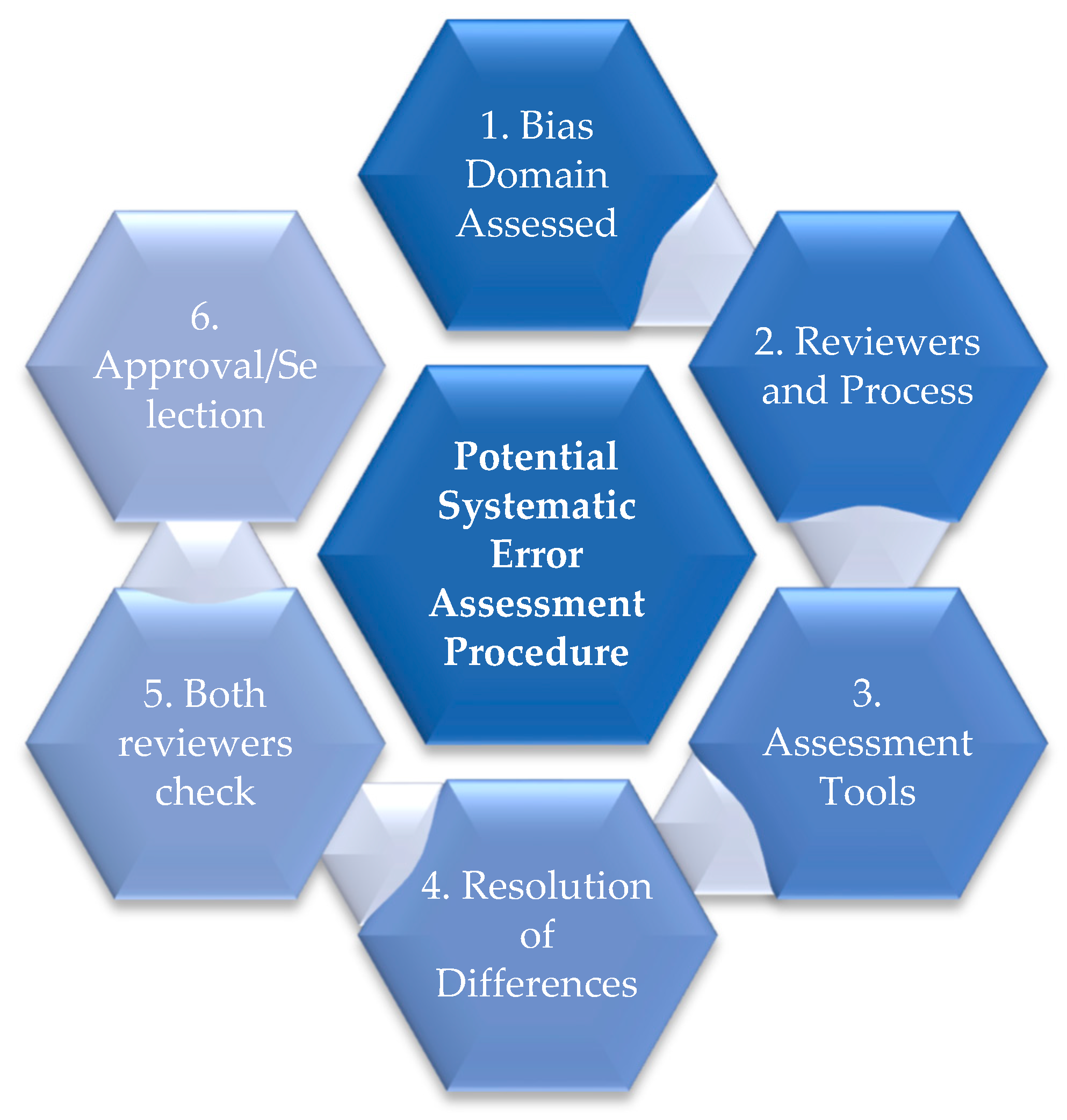
Figure 8.
Chart representing number of results retrieved from the three online repositories.
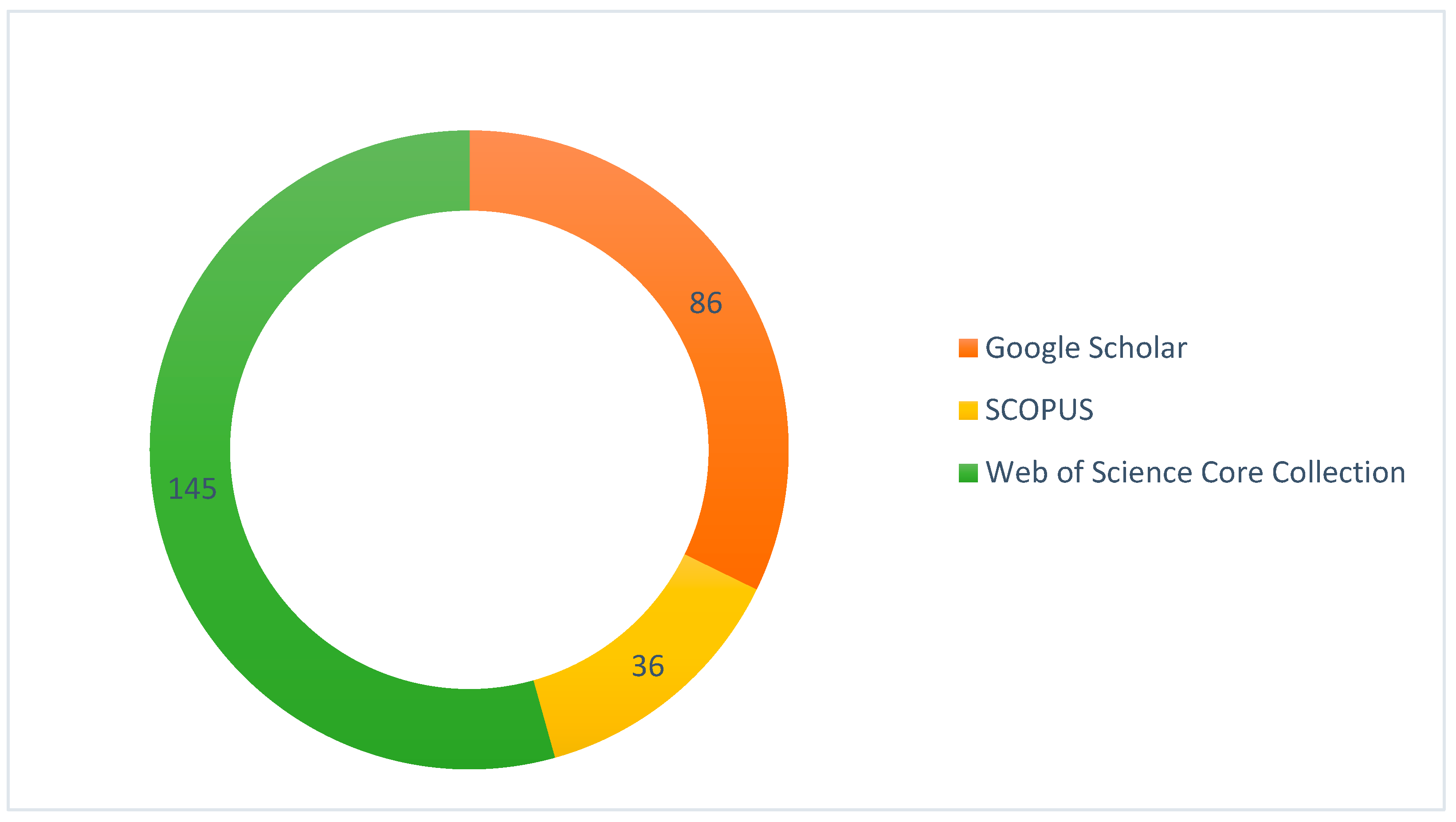
Figure 9.
Distribution of Data Sources Utilized in the Study, Highlighting the Predominant Role of Conceptual Frameworks and Academic Publications.
Figure 9.
Distribution of Data Sources Utilized in the Study, Highlighting the Predominant Role of Conceptual Frameworks and Academic Publications.
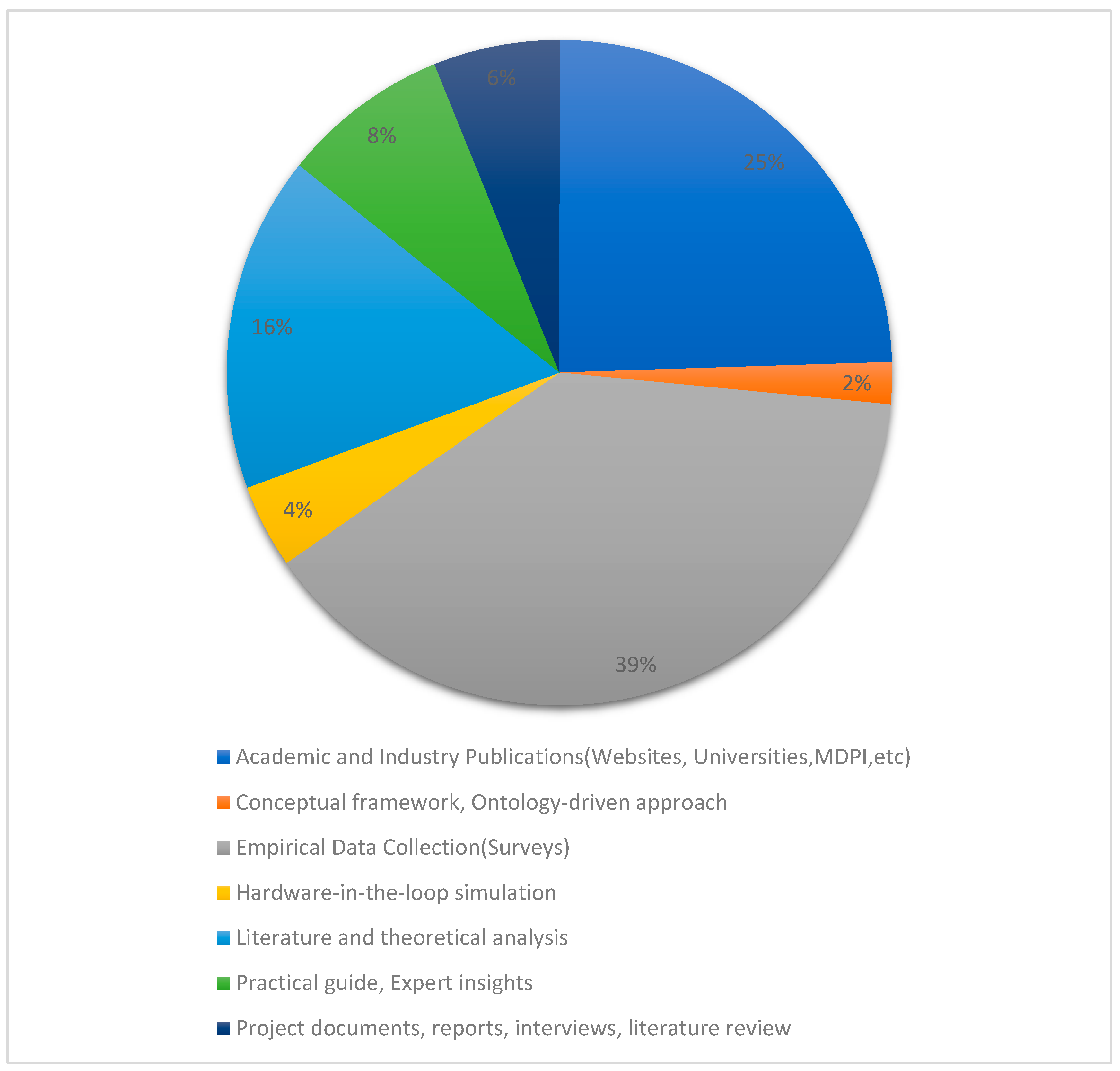
Figure 10.
Research Productivity Across Nations.
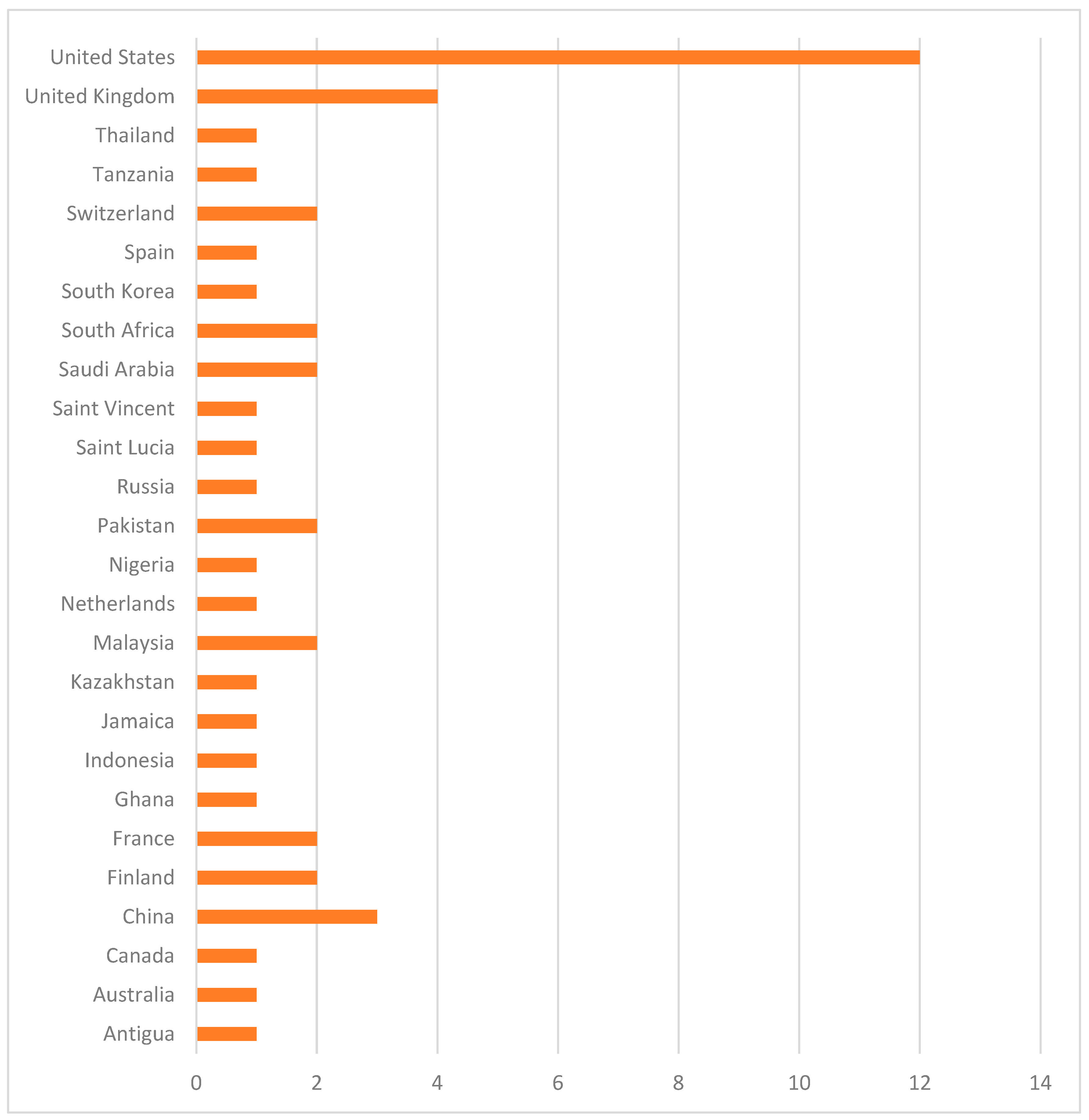
Figure 11.
Industrial application of the CM tool and systems for scope planning.
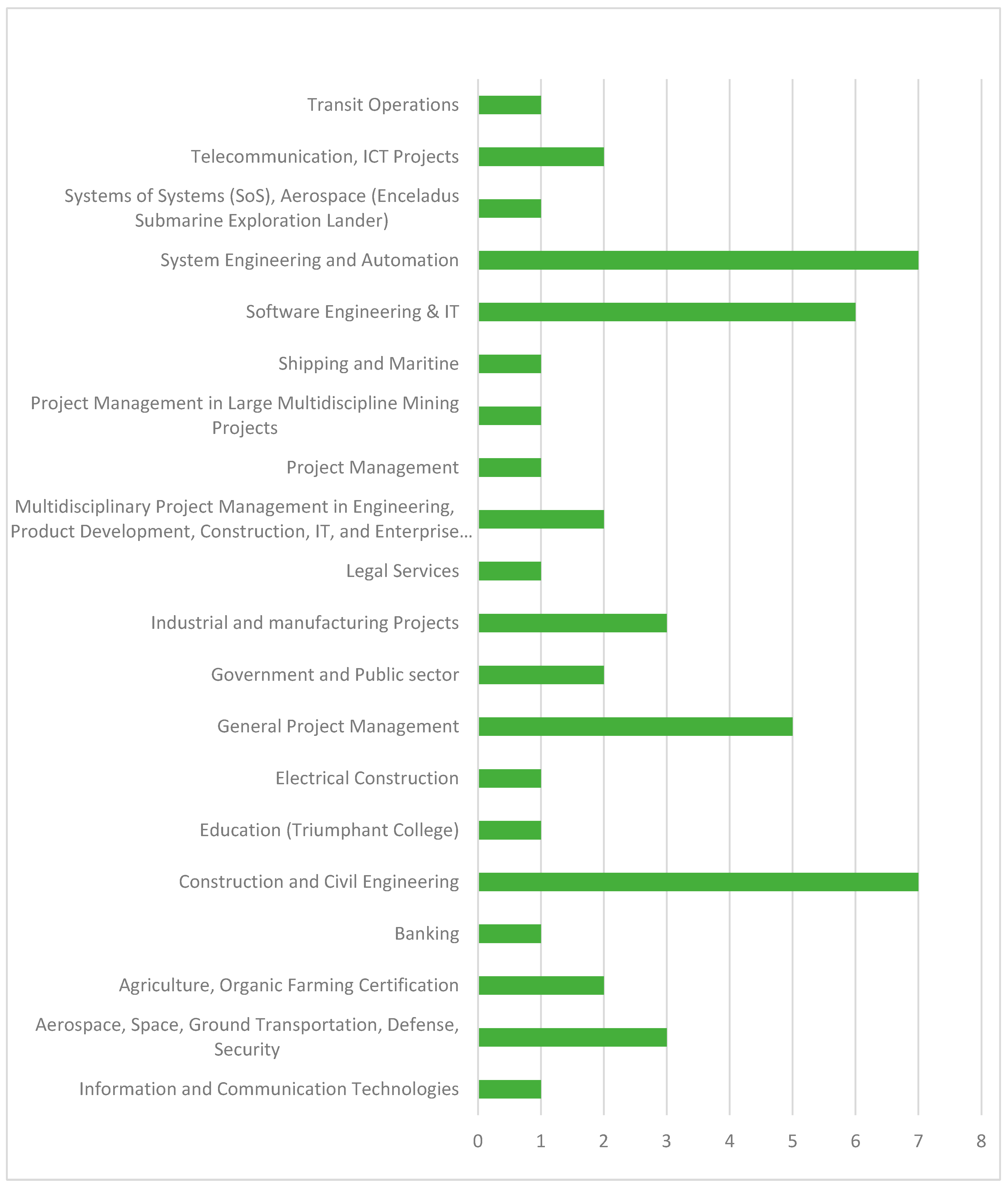
Figure 12.
Practices involved in scope development mentioned by data analysis of the studies.
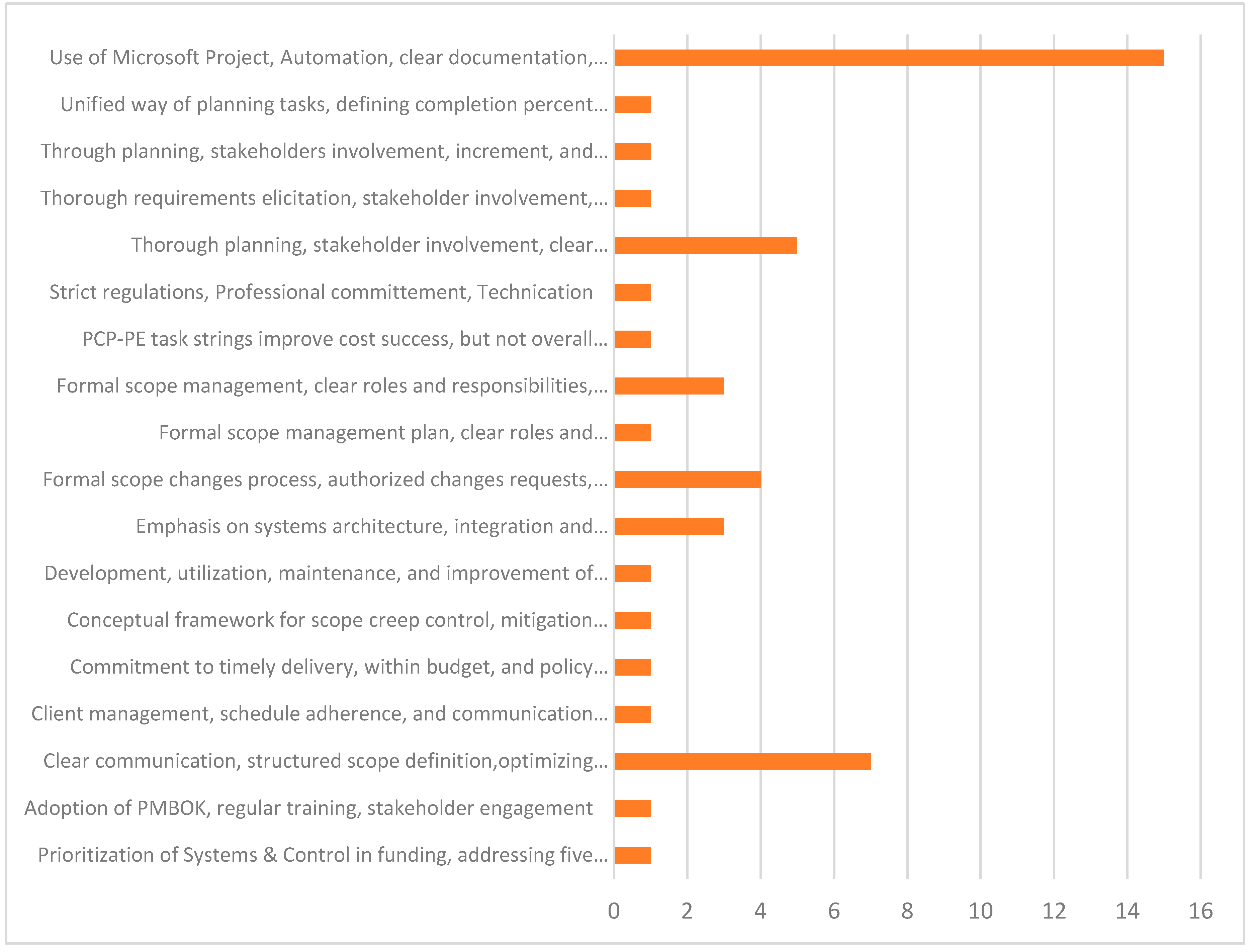
Figure 13.
Role of CM tools in scope development.
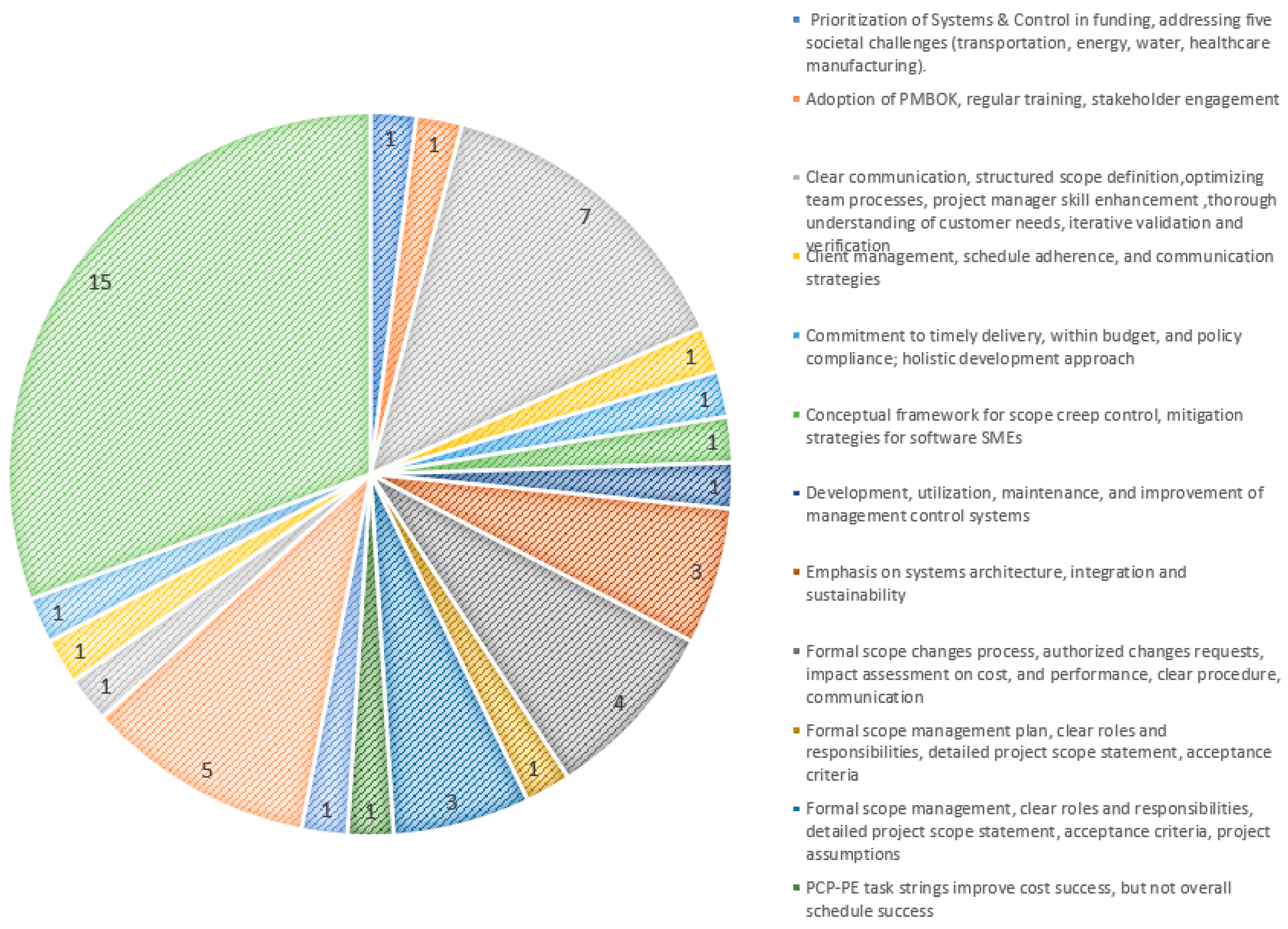
Figure 14.
Research Trends and Publication Types.
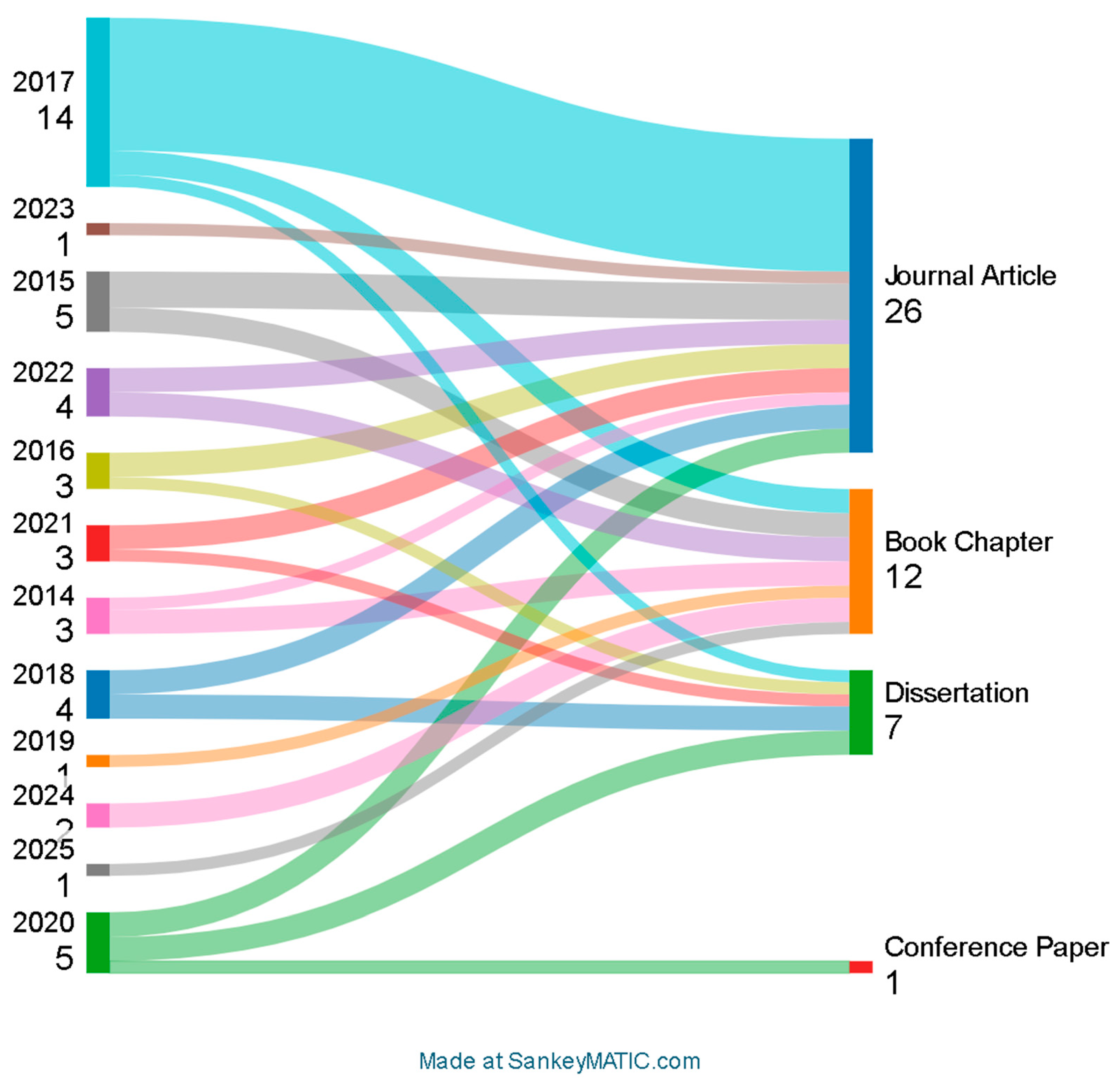
Figure 16.
Research Design and Data Collection Methods.
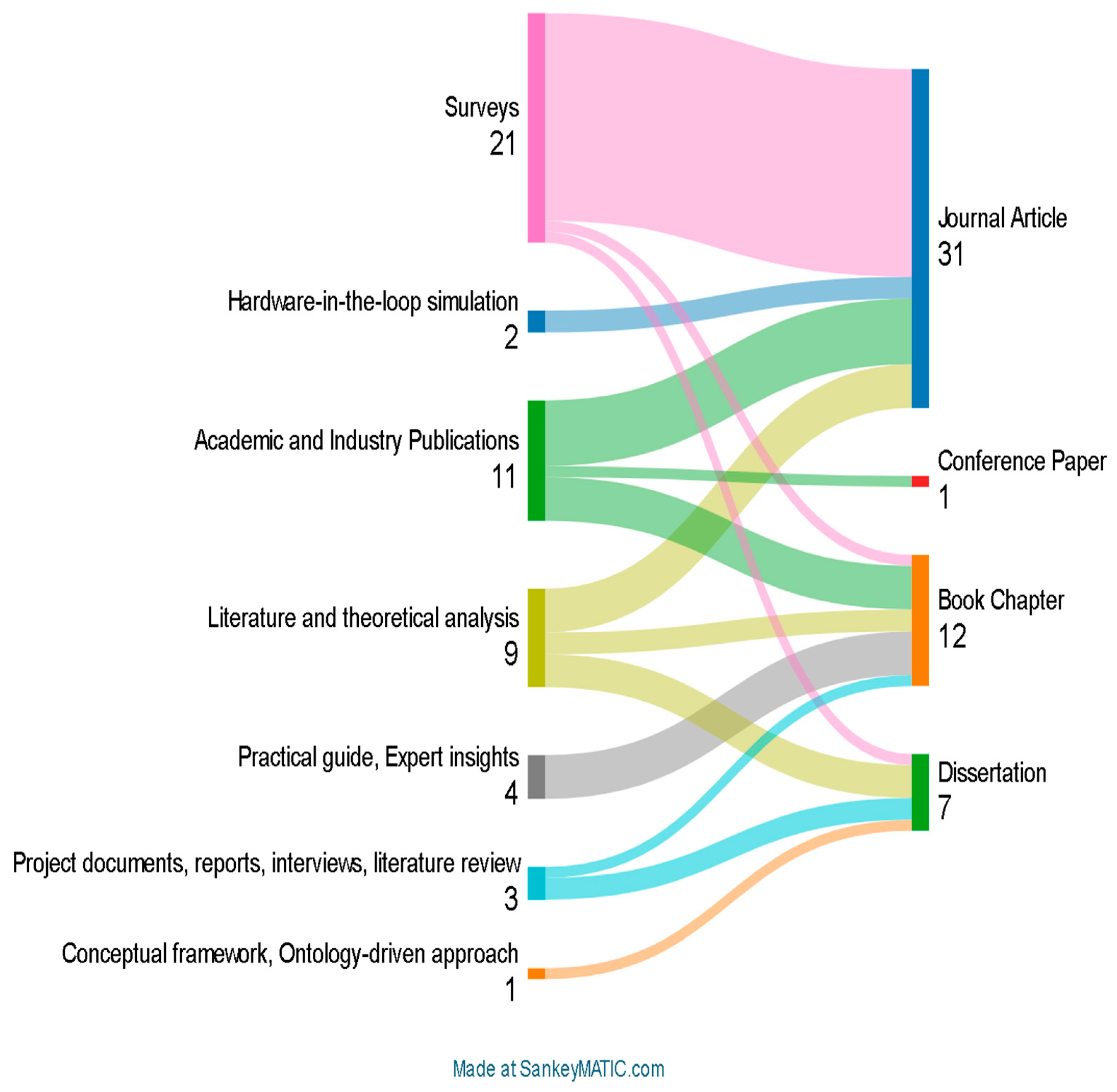
Figure 17.
Techniques and Tools in Control System and Configuration Management.
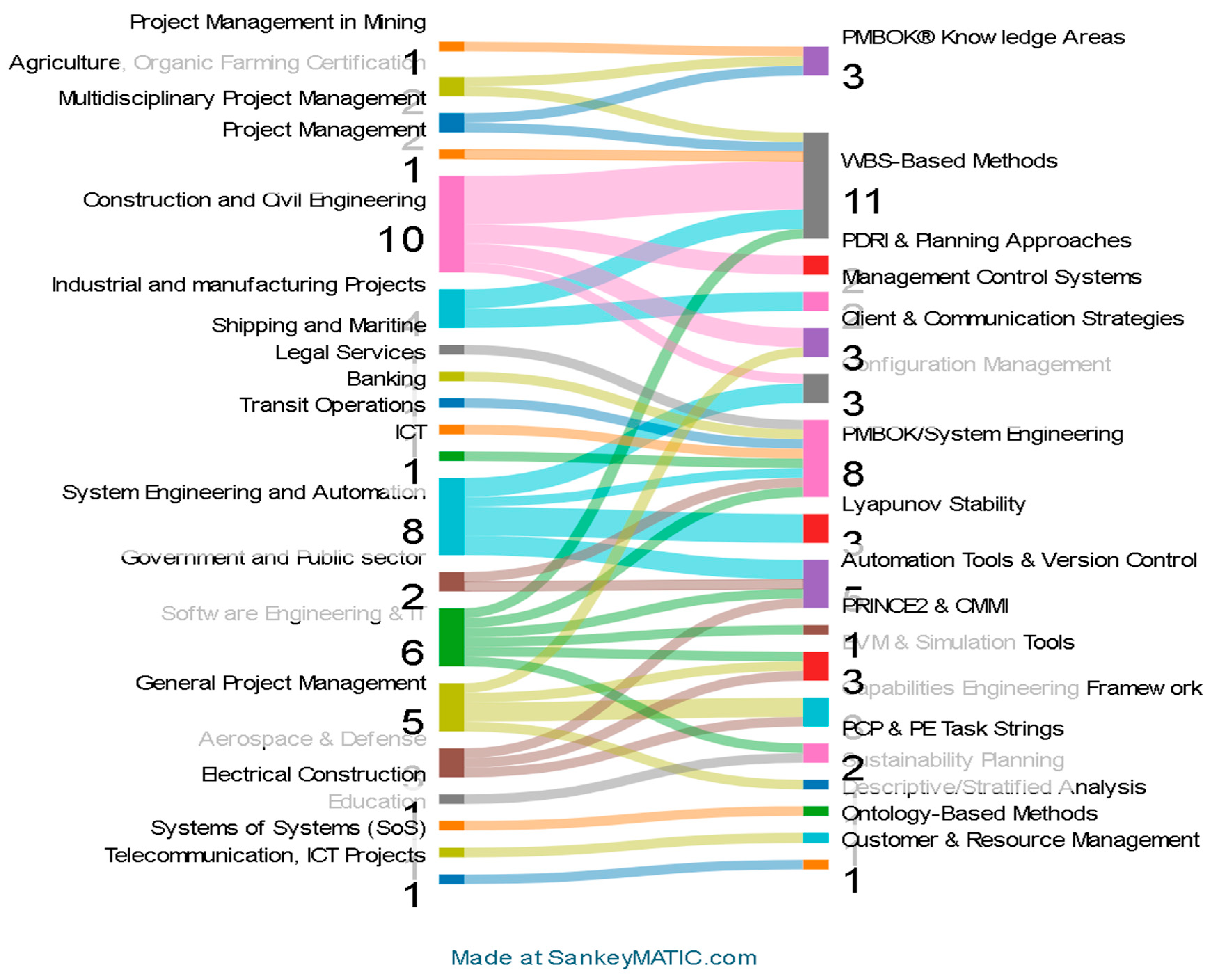
Figure 18.
Industry Distribution and Objectives of Control System and Configuration Management in Scope Development.
Figure 18.
Industry Distribution and Objectives of Control System and Configuration Management in Scope Development.
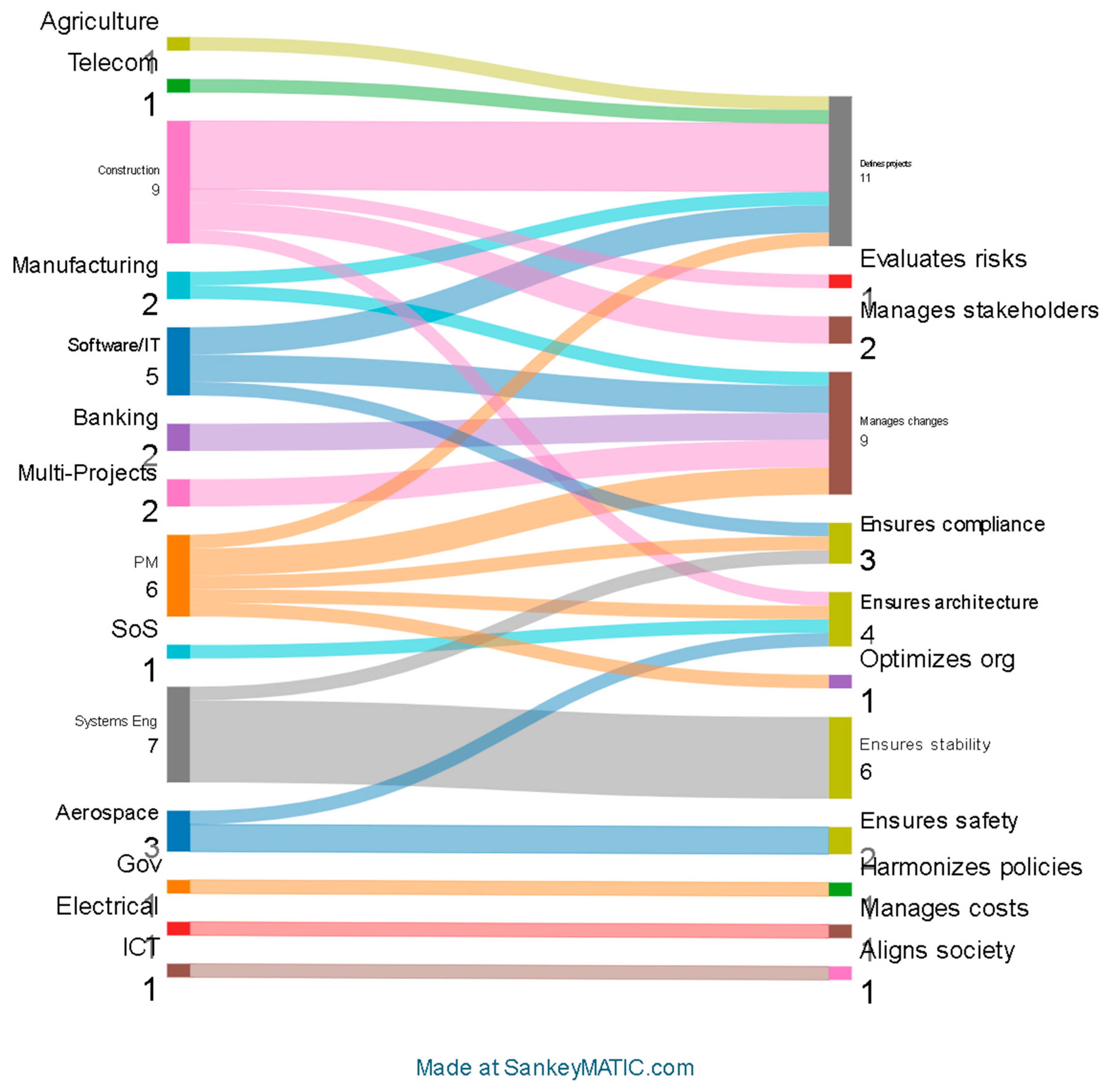
Figure 19.
Geographic and Economic Context of Reviewed Studies.
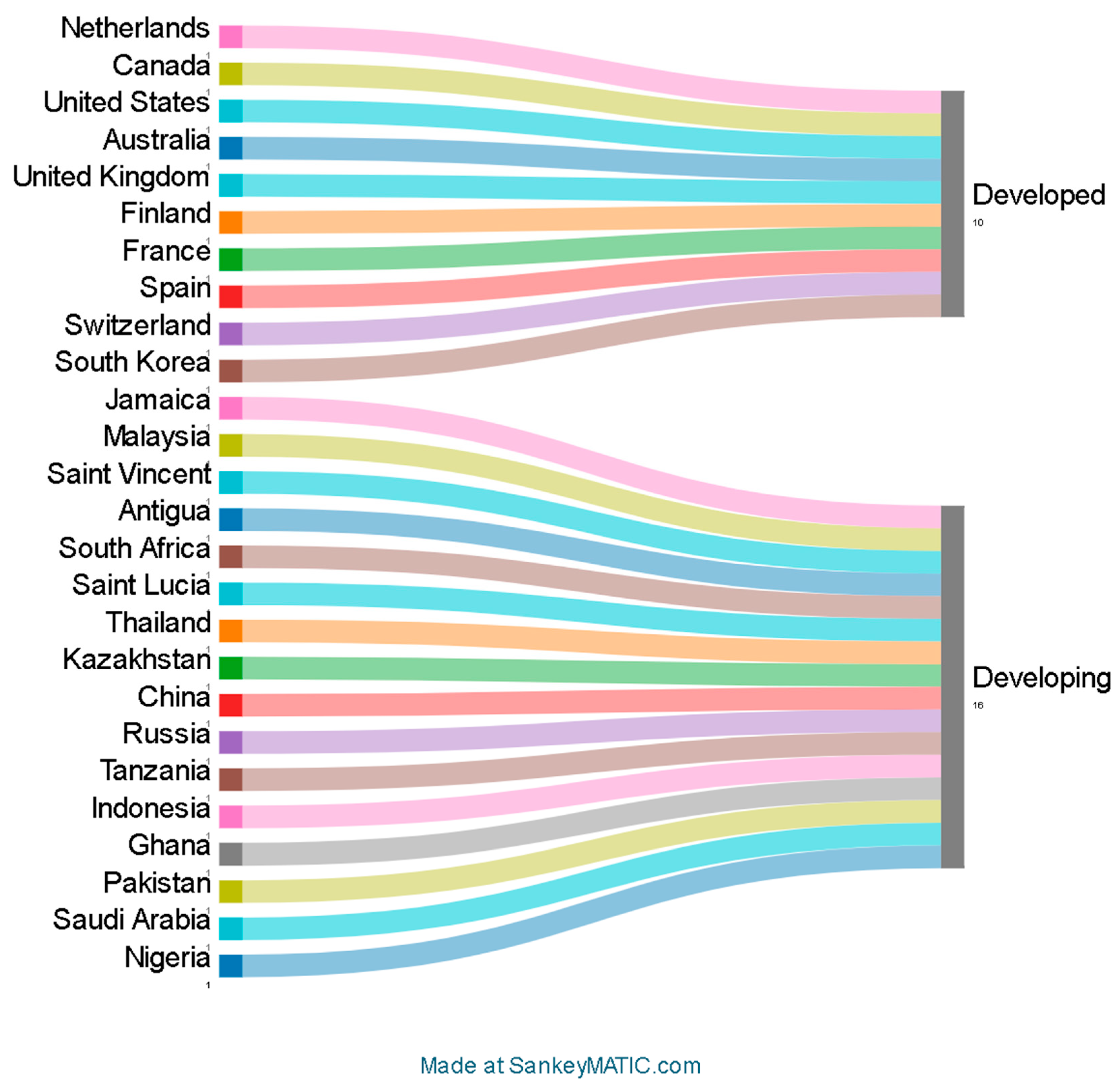
Figure 21.
Industry Sectors and Control System & Configuration Management Approaches in Scope Development.
Figure 21.
Industry Sectors and Control System & Configuration Management Approaches in Scope Development.
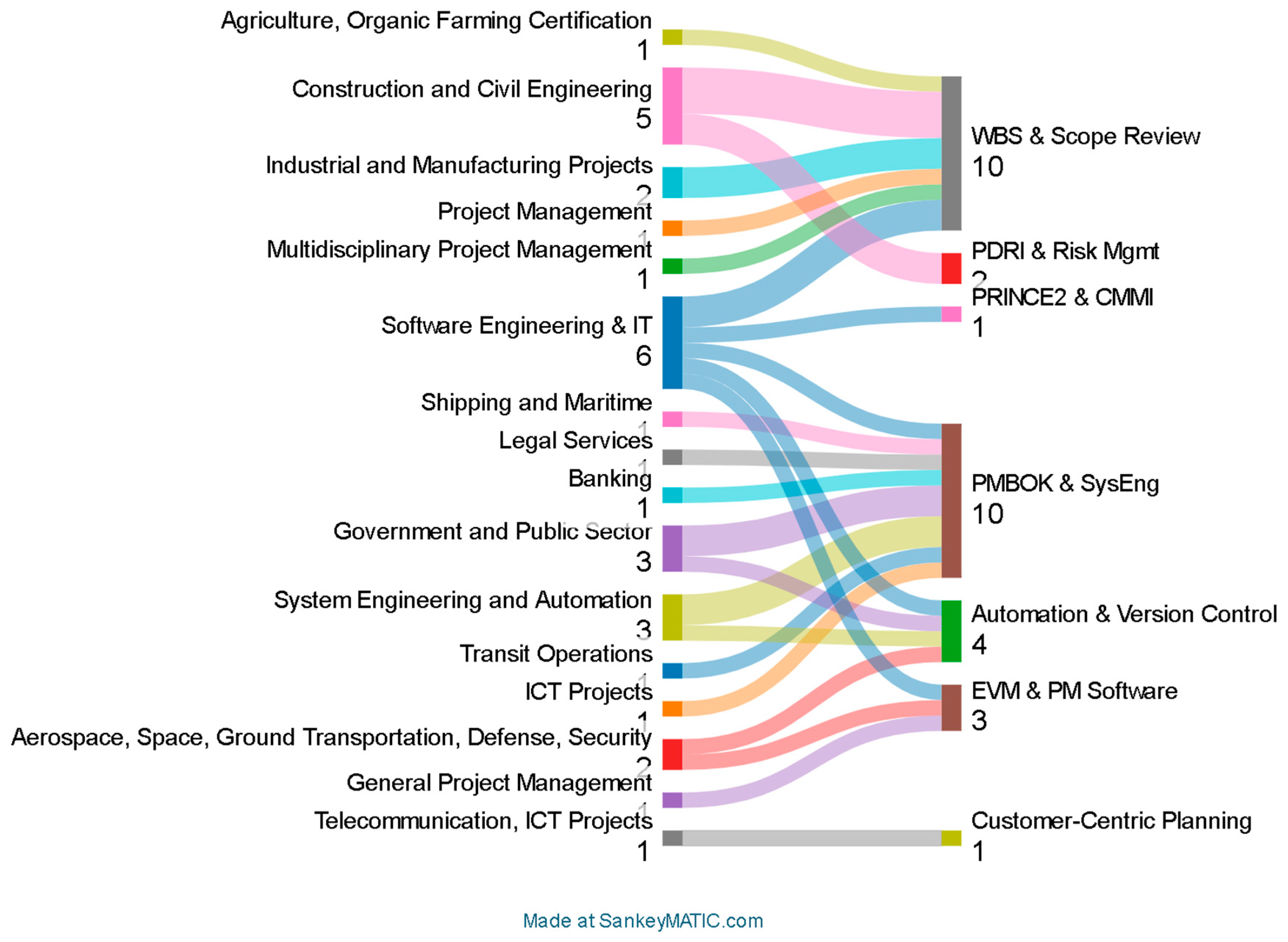
Figure 22.
Distribution of Scope Development Practices and Their Functional Roles in Control System and Configuration Management.
Figure 22.
Distribution of Scope Development Practices and Their Functional Roles in Control System and Configuration Management.
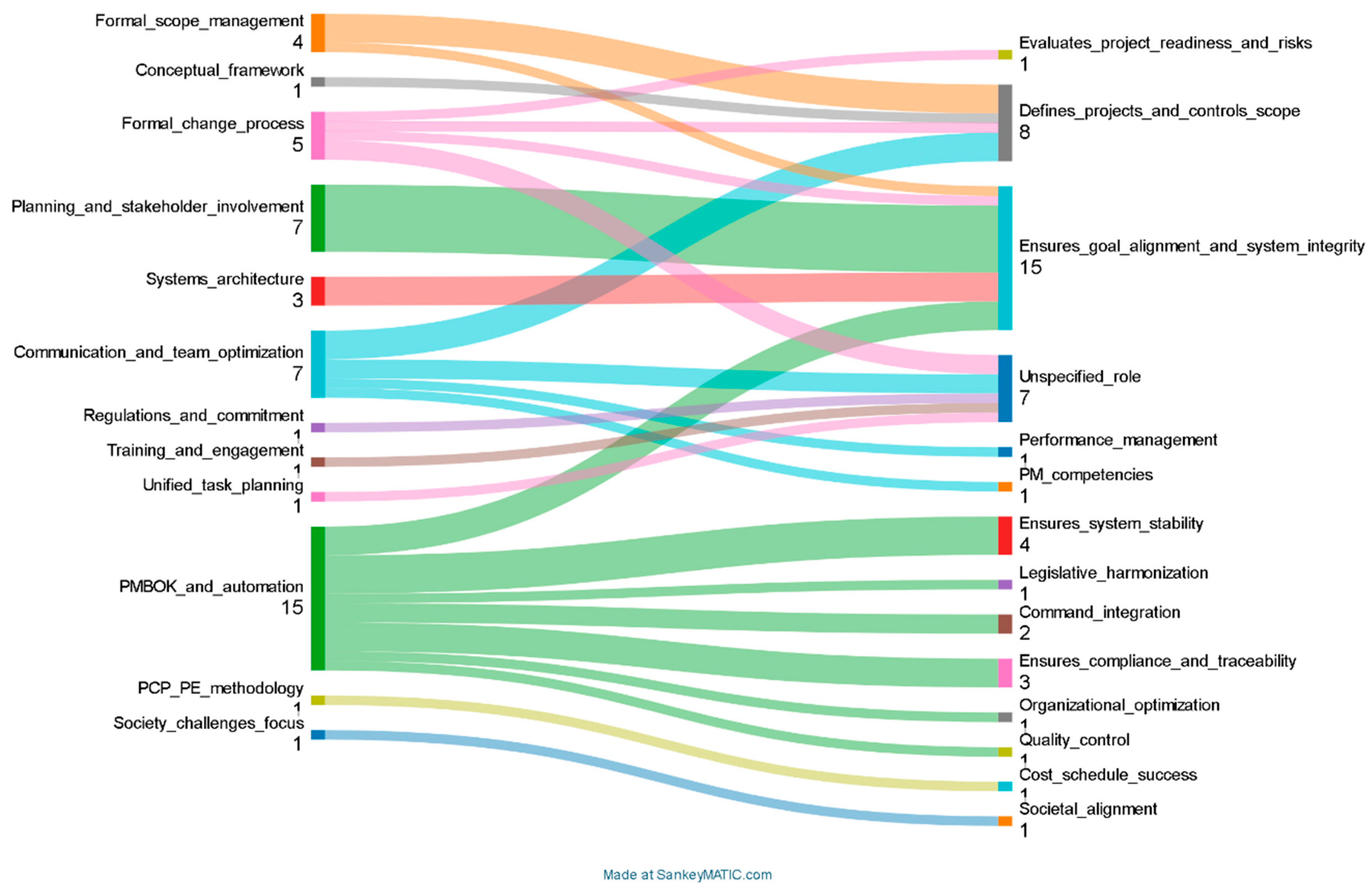
Figure 23.
Scope Management Functions and Their Associated Project Challenges.
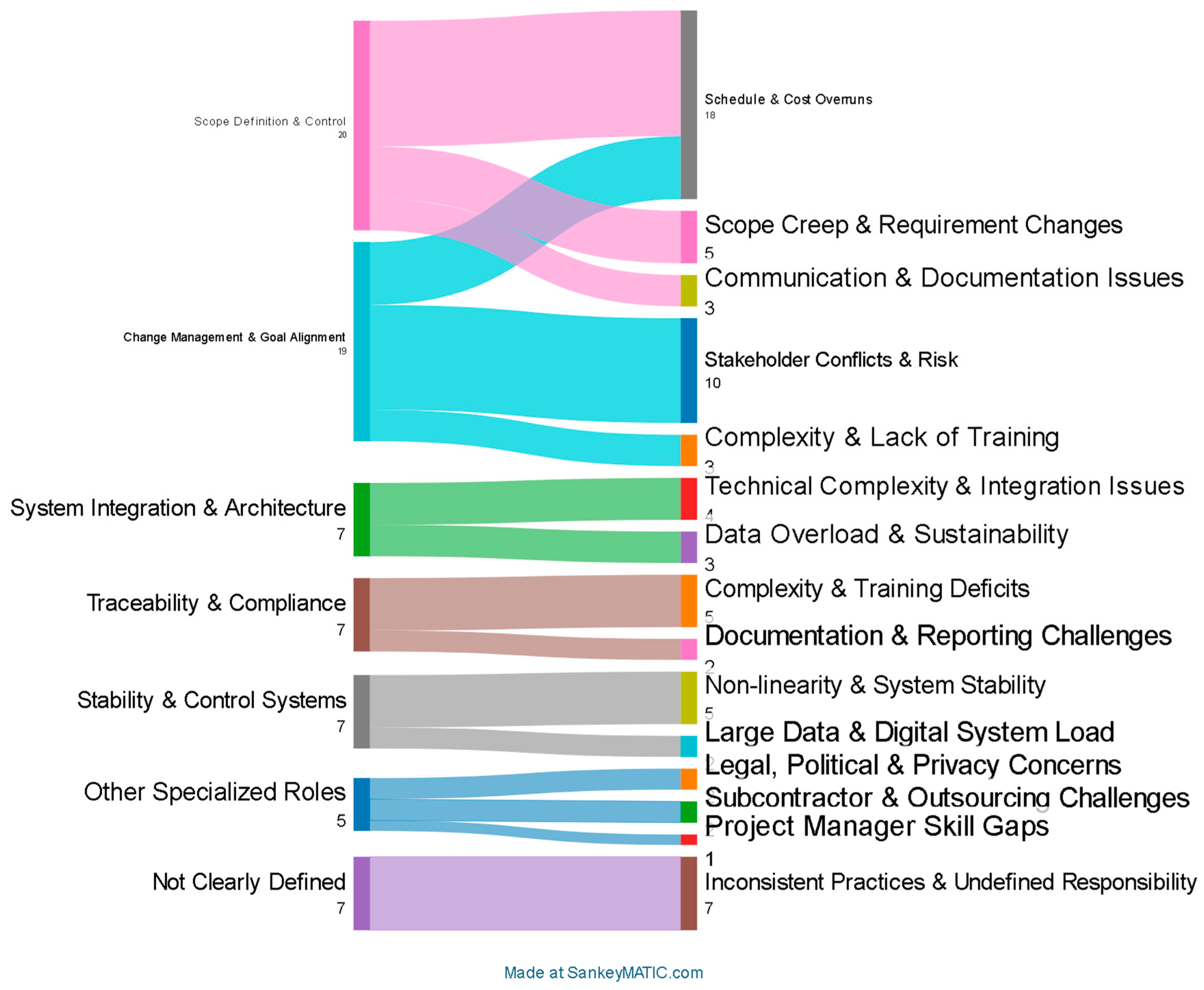
Table 5.
Assessment Results for Collected Literature.
| Ref. | QA1 | QA2 | QA3 | QA4 | Total | % grading |
| (Qureshi, 2021; Rizwan & Qureshi, 2021; Smith, 2017; Jackson et al., 2014; Dubuison, 2017; Lehtonen & Aalto, 2017; Madziwo, 2018; Harefa et al., 2024; Boulanger & Boulanger, 2019; Pfiffner, 2022b; Aborhor, 2021; Kim et al., 2022; Saman et al., 2020) | 0.5 | 0.5 | 0.5 | 0.5 | 3 | ≤60 |
| (U.S. Federal Highway Administration & U.S. Department of Transportation, 2014; Nagapetyan & Khachumov, 2017; Whyte, 2014; Bai & Liang, 2014; Pfiffner, 2022a) | 1 | 0.5 | 0.5 | 1 | 3.5 | 70 |
| (Bahill & Dean, 2014; Carstens & Richardson, 2019; de la Cruz López et al., 2021; Hakkinen, 2014; Harefa et al., 2024; Koenig & Mahmood, 2014; Leketi & Raborife, 2019; Lamnabhi-Lagarrigue et al., 2017; Brown, 2025; KOMAL et al., 2020; Althiyabi & Qureshi, 2021; Ussahawanitchakit, 2017) | 1 | 0.5 | 1 | 1 | 4 | 80 |
| (Auzair & Amir, 2017; Bayanouni, 2016; China & Goodwin, 2024; Kossmann et al., 2020; Leketi & Raborife, 2019; Lu, 2017; Moustafaev, 2014; Qasim, 2020; Yates, 2014; Yu & Liao, 2017; Zumatov, 2017) | 1 | 1 | 1 | 1 | 4.5 | 90 |
| (Whyte, 2014; Doe, 2018; Kittelson & Associates et al., 2014; Lu, 2017; Lindkvist et al., 2014; Carstens & Richardson, 2019; Luqman, 2014; Muneer et al., 2022; Okereke & Afolabi, 2018) | 1 | 1 | 1 | 1 | 5 | 100 |
Table 6.
Summary of Findings associated with Control System and Configuration Management in Scope Development.
Table 6.
Summary of Findings associated with Control System and Configuration Management in Scope Development.
| Outcome | Certainty of Evidence | Effect Estimate | Interpretation |
| Operational Efficiency | Moderate | Mean difference of 12% improvement in scope delivery timelines | Control system and configuration management likely enhance operational efficiency by streamlining scope development processes. |
| project Performance | High | 15% increase in scope adherence on average | Strong evidence supports that integrated control and configuration practices leads to great project outcomes. |
| Strategic scope planning | Moderate | Risk ratio of 1.8 for improved scope planning quality | These systems probably improve strategic alignments and, enhancing decision speed and accuracy. |
| Stakeholder Coordination | Moderate | 10% increase in stakeholders satisfaction rates | Configuration management practices enhances communication and alignment across stakeholders during scope development. |
| Change Management Responsiveness | Low | Hazard ratio of 1.5 for faster adaptation to changes | Evidence suggests that practices helps teams respond more effectively to scope changes, though with consistency variability. |
| Innovation and Product Development | Moderate | Mean difference of 8% in scope innovation success | Control and configuration mechanisms likely contribute to innovation and successful through structured flexible scope design. |
| Risk mitigation in scope control | High | 20 % improvement in managing scope related risks | Strong evidence shows these systems significantly enhance risk management within scope development processes. |
Disclaimer/Publisher’s Note: The statements, opinions and data contained in all publications are solely those of the individual author(s) and contributor(s) and not of MDPI and/or the editor(s). MDPI and/or the editor(s) disclaim responsibility for any injury to people or property resulting from any ideas, methods, instructions or products referred to in the content. |
© 2025 by the authors. Licensee MDPI, Basel, Switzerland. This article is an open access article distributed under the terms and conditions of the Creative Commons Attribution (CC BY) license (http://creativecommons.org/licenses/by/4.0/).
Copyright: This open access article is published under a Creative Commons CC BY 4.0 license, which permit the free download, distribution, and reuse, provided that the author and preprint are cited in any reuse.


