Preprint
Article

This version is not peer-reviewed.

Monitoring and Characterization of the Microbiome of Organic Grapes, Must and Natural Wine During Spontaneous Alcoholic and Malolactic Fermentation

A peer-reviewed article of this preprint also exists.

Submitted:

18 August 2025

Posted:

27 August 2025

You are already at the latest version

Abstract

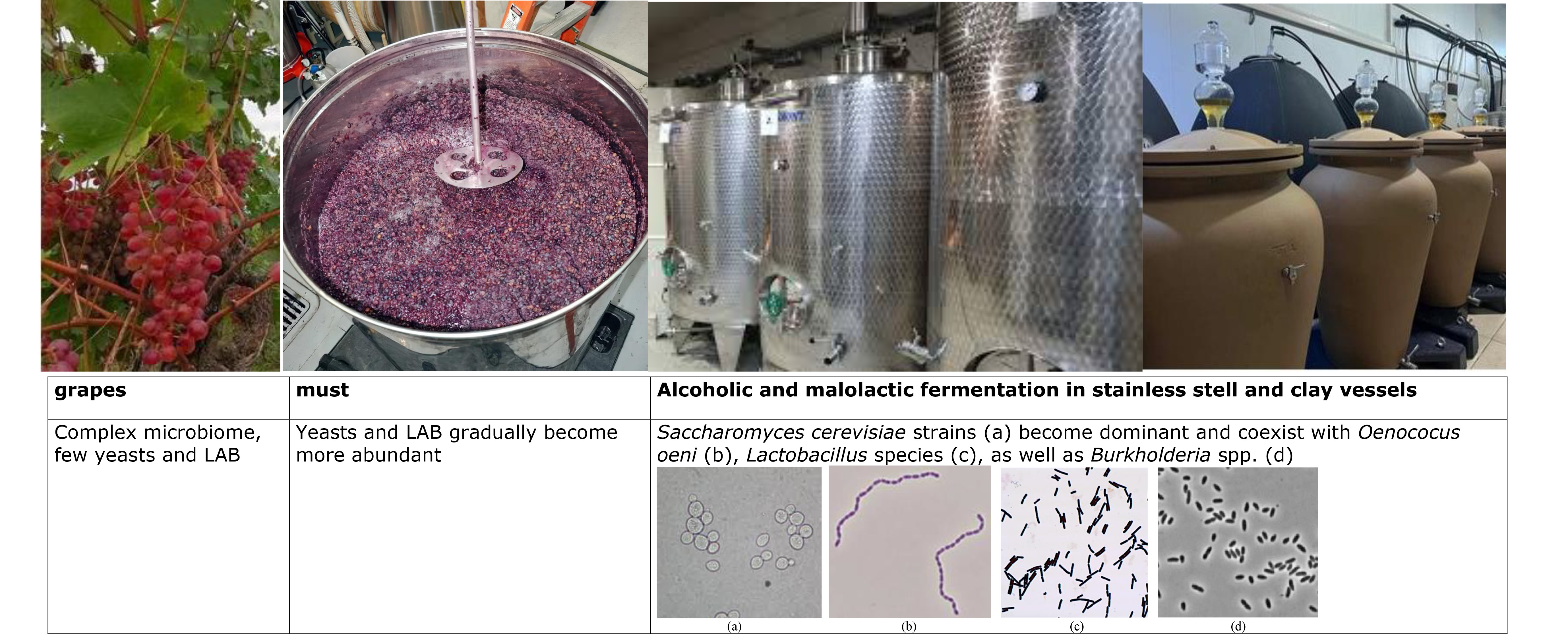
Natural wines represent a new trend in winemaking without use of preservatives and starter cultures, revealing unique quality traits of grapes, wine and terroir, but are susceptible to spoilage or undesirable fermentations. This study aims to highlight the diversity and succession of microbiota of natural wines, from the vineyard (grapes) to mature, fermented wines and the effects of different grape varieties, production stages and equipment. Samples of “Limniona”, “Malagouzia” and “Roditis” grape varieties, initial and fermented must, filtered and unfiltered natural Limniona wines were analyzed in order to enumerate key groups of microorganisms and identify beneficial yeasts and bacteria of alcoholic and malolactic fermentation, respectively, as well as potential marker of off-flavors. Although beneficial fermentation microorganisms (especially Saccharomyces yeasts) were scarce in initial grape, where other contaminants or wild yeasts were present, gradually, as fermentation progresses, there was a prevalence of Saccharomyces cerevisiae strains of increased diversity in matured wine, as well as several lactic acid bacteria (LAB) of malolactic fermentation, mostly Lactobacillus and Oenococcus, and other bacteria from environmental sources, irrelevant to alcoholic/malolactic fermentation or spoilage, like Burkholderia. The type of vessel affected the type of LAB that prevail, with an abundance of Oenococcus in clay vessels, versus Lactobacillus species in stainless steel vessels. Notably, some Lactobacillus species like L. parafarraginis can be linked to off-flavors if they represent a high percentage of the wine microbiota. These findings highlight the importance of understanding, monitoring and controling microbial succession during production stages, in order to prevent sensory faults and ensure stable quality of natural wines.
Keywords: 
;  ;  ;  ;  ;  ;  ;  ;  

1. Introduction

Wine, derived from grapes (Vitis spp. L.), is one of the most significant horticultural products worldwide, renowned for its rich polyphenol composition and associated health benefits [1]. Growing health awareness and increasing demand for natural products have boosted the production of natural wines and vinegars. In 2021, Greece ranked sixth in global grape production, with 193,252 grape farms recorded in 2020 [2]. Indigenous Greek grape varieties have demonstrated superior adaptation to warmer climates compared to international cultivars, highlighting their value in the context of global climate change [3]. Natural wine, characterized by minimal intervention and lacking formal regulation, is increasingly promoted by wine professionals. France’s AVN (Association des Vins Naturels) defines it as wine made from organic or biodynamic grapes without additives, using native yeasts. S.A.I.N.S. ("Sans Aucun Intrant Ni Sulfite ajouté") further prohibits any inputs of sulfites. Vin Méthode Nature, established in 2020 and recognized by the DGCCRF (Direction générale de la concurrence, de la consommation et de la répression des fraudes), offers two certified versions: one without added sulfites and another allowing up to 30 mg/L at bottling, both without addition of any starter cultures [4].
Natural wine can be conceptualized as a socially driven movement involving both consumers and producers, rather than as a strictly regulated form of agricultural production. This phenomenon reflects a broader evolution in consumer preferences, increasingly shaped by concerns related to personal health and environmental sustainability—factors that significantly influence firms’ strategies for quality differentiation [5].
A notable aspect of natural winemaking is the use of indigenous microbial cultures—native yeasts and bacteria associated with alcoholic and malolactic fermentation [6,7,8]. While this practice is often emphasized within the natural wine community, it remains largely peripheral in conventional winemaking and is of limited relevance to most industrial producers. Instead, it constitutes a niche approach primarily adopted by small-scale wineries seeking to differentiate themselves through the unalloyed expression of the terroir and the winery environment into the sensory properties of a natural wine. These native microorganisms of the vineyard ecosystem drive both alcoholic and malolactic fermentations, playing a critical role in shaping natural wine’s aroma and flavor, leading to wines of distinct sensory characteristics [9,10,11].
Advancements in biochemistry and molecular microbiology have significantly enhanced our understanding of fermentation, emphasizing the diversity and functional roles of native microbial populations. While a handful of commercial yeast strains dominate industrial production, indigenous strains naturally thrive in grape-rich environments, offering unique aromatic profiles and stability, particularly under oxygen-limited conditions common in natural winemaking [12,13,14,15].
Alcoholic fermentation transforms natural grape sugars into ethanol and CO₂, defining the wine’s basic flavor profile, whereas malolactic fermentation softens acidity and enhances complexity by converting malic acid into lactic acid [16,17,18]. Although commercial yeast and bacterial starter cultures are widely employed to expedite fermentation and minimize the risk of excessive malolactic fermentation, spontaneous fermentation—driven by naturally occurring microorganisms—remains central to traditional artisanal winemaking and natural wine practices. This sequential process typically begins with the dominance of yeasts during the early fermentation stages, followed by a progressive increase in lactic acid bacteria (LAB) as fermentation advances [19,20,21,22].
Spontaneous fermentation in natural wines initiates with the metabolism of sugars into alcohol and CO2 by different yeasts and gradual transition to LAB dominance after sugar depletion. In contrast, commercial yeast starter cultures are usually used in conventional winemaking to accelerate and stabilize fermentation, by ensuring a dominance of a specific strain of S. cerevisiae throughout the fermentation process. Indeed, the prevalence of beneficial yeasts at adequate population cannot be guaranteed in natural wine fermentation. Thus, the molecular characterization of the types of yeast and bacteria, as well as their populations during natural wine fermentation is critical for understanding the dynamic changes that occur, monitoring wine fermentation at different stages, and detecting potential spoilage organisms, especially under sulfite-free conditions where stability may be challenged [10,23].
In this study, we combined enumeration, isolation and identification of indigenous microbial cultures from different varieties of organic grapes (both white and red grape varieties), as well as must and naturally fermented wine of the local red grape variety “Limnionas” of Thessaly, Greece. Plate count methods were applied to quantify yeast and bacterial populations across various fermentation stages. For microbial identification, Matrix-Assisted Laser Desorption Ionization-Time of Flight Mass Spectrometry (MALDI-TOF MS) was employed, offering rapid and cost-effective species-level identification with potential strain-level differentiation through Main Spectra Projection (MSP) dendrogram clustering. Complementary 16S rRNA gene amplicon sequencing via Next-Generation Sequencing (NGS) enabled comprehensive profiling of bacterial communities, allowing for the tracking of microbial succession during fermentation, detection of spoilage organisms, and identification of beneficial taxa.
Together, these approaches provide deeper insights into the microbial ecology of natural wine fermentation, supporting targeted strain selection, improved fermentation management, and optimization of wine quality, particularly under sulfite-free enological practices.

2. Materials and Methods

2.1. Sample Collection

Samples were collected from Kontozisis Winery, located in the Karditsa region of Central Greece and transported at <5ºC, and stored at -80ºC until processing. The sampling process encompassed key stages of the winemaking process to capture the microbial dynamics and diversity from the vineyard throughout wine fermentation. Specifically, the sampling included organic, unmatured and matured grapes at harvest from three grape varieties and different fields/locan regions (white grape variety “Roditis” from region of Mourko, white grape variety “Malagouzia”, from region of Raches and Damaki, red grape variety “Limniona” from region of Zisi and Polia), initial must from Limniona grapes -a popular local grape variety of the region of Thessaly, Greece- at the beginning of fermentation, Limniona must at the middle of fermentation, and Limniona red wine samples (collected at the end of fermentation) from either stainless steel (inox) or traditional clay fermentation vessels (“pythari”), before or after filtration and bottling, as well as sediment from the clay vessel of Limniona wine. Narural, spontaneous wine fermentations were carried out without starter cultures and no sulfur dioxide (SO₂) was added throughout the fermentation process. This comprehensive sampling allowed for an in-depth analysis of microbial succession and its potential influence on the sensory characteristics of the finished product.

2.2. Sample Analysis

2.2.1. Microbiological Analysis

Bacterial and yeasts counts were performed on each sample in triplicate using the standard plate count method with selective media under specific incubation conditions. The results were expressed as colony-forming units (CFU) per gram of sample. To prepare samples, 10 grams of sample were aseptically homogenized in 90 mL of sterile Maximum Recovery Diluent (MRD, Oxoid, CM0733B). This was followed by tenfold serial dilutions in 9 mL of sterile MRD.
The following groups of microorganisms were analyzed in triplicate for each sample:
(i) presumptive Lactococci [Gram-positive, catalase-negative] were enumerated on M17 agar (Oxoid, CM785) at 37°C, for 48 hours.(ii) presumptive Lactobacilli [Gram-positive, catalase-negative rods] were cultured on acidified MRS agar (pH 5.4; Oxoid, CM361) under a microaerophilic atmosphere (<1% O₂, 10% CO₂) at 37°C, 48 hours (Bactron 300-2, Shel Lab).(2021).
(iii) Yeasts and molds were cultured on Potato Dextrose Agar (Oxoid, CM0139) at 21°C for five days and on Wort Agar (Oxoid, CM0247) at 25°C for five days.
To prevent fungal contamination, cycloheximide (100 μg/mL; Sigma-Aldrich, C7698) was added to both MRS and M17 agar media [24]. After incubation, colonies were counted, and results were reported as the logarithm of mean CFU per gram.

2.2.2. Bacterial Isolation from Selective Media

Representative colonies from MRS, M17, PDA and Wort agar plates were randomly selected, transferred to Nutrient broth, and incubated at 30°C for 24 hours. These colonies were purified by streaking onto Nutrient agar plates, incubating at 30°C for 24 hours, and then transferring individual colonies back to MRS broth for an additional 24 hours of incubation. Purified colonies were preserved in a mixture of Nutrient broth and 5% (v/v) glycerol (Sigma-Aldrich, G7893) at a ratio of 2:1 and stored at -80°C. Before MALDI-TOF MS analysis, each isolate was sub-cultured on TSA (Tryptone Soy Agar) for 24 h at 37 °C.

2.3. MALDI-TOF MS Analysis

Isolates were identified through MALDI-TOF MS using the MALDI Microflex LT system (Bruker Daltonics, Bremen, Germany) [25,26]. A modified mild protein extraction protocol was employed to enhance spectrum quality. Specifically, a single colony from freshly grown isolates was directly spotted onto a 96-spot steel MALDI target plate. Subsequently, 1 μL of 70% formic acid (PENTA) was applied to each target and allowed to air-dry at room temperature. This was followed by the application of 1 μL of a saturated solution of α-cyano-4-hydroxycinnamic acid (HCCA) (Bruker Daltonics, Bremen, Germany), which was co-crystallized at room temperature.
Protein profiles were acquired in linear positive mode with a laser frequency of 20 Hz. Raw spectra were automatically captured using the AutoXecute control software (FlexControl 3.4; Bruker Daltonics, Bremen, Germany) and recorded within the range of 2000–20,000 Da. Identification was performed using the MALDI Biotyper Software, version 4.0, with default settings. Acquired spectra were compared against the reference mass spectral library (6,093 MSPs). External calibration was conducted using the Bruker Bacterial Test Standard (BTS), an extract of E. coli DH5α spiked with RNAase A and myoglobin to extend the upper mass range.
Results were classified according to the modified score values recommended by the manufacturer. A score between 0.000 and 1.699 indicated unreliable identification; 1.700 to 1.999 indicated probable genus-level identification; 2.000 to 2.299 indicated secure genus and probable species-level identification; and scores from 2.300 to 3.000 indicated highly probable species-level identification.
To cluster the most frequently isolated strains, an MSP dendrogram was constructed based on their protein profiles. Each acquired spectrum was subjected to baseline subtraction and smoothing procedures, and subsequently processed using the MALDI Biotyper Offline Classification 4.0 software under default settings for MSP creation.

2.4. NGS-DNA Extraction and Microbial Community Profiling

Microbial community profiling of unfiltered and filtered wine from inox and clay vessels, as well as samples from the sediment of clay fermentation vessel at the end of fermentation was performed using the Ion 16S™ Metagenomics Kit (Thermo Fisher Scientific, Waltham, MA, USA) according to the manufacturer’s instructions, without prior DNA extraction. DNA concentration and purity were assessed using a Qubit™ 4 Fluorometer (Thermo Fisher Scientific). Sequencing targeted the hypervariable regions V2, V3, V4, V6–7, V8, and V9 of the 16S rRNA gene on the Ion GeneStudio™ S5 System (Thermo Fisher Scientific). Two separate PCR reactions per sample were performed with primer pools targeting V2, V4, V8 (Pool 1) and V3, V6–7, V9 (Pool 2), and equal volumes were combined. Libraries were prepared using the Ion Plus Fragment Library Kit™ and Ion Xpress™ Barcode Adapters, purified with AMPure XP beads (Beckman Coulter), and assessed for quality on an Agilent 2100 Bioanalyzer. Libraries were normalized to 50 pM, pooled equimolarly, and sequenced on an Ion 316™ v2 chip using the Ion 400™ sequencing kit, with template preparation on the Ion Chef™ System. Base calling and demultiplexing were performed using Torrent Suite™ Software v4.4.2, and FASTQ files were generated with FileExporter v4.4.0.0. Taxonomic classification was performed using the Ion Reporter™ Metagenomics 16S workflow against the curated Greengenes database (version 13_8) and the MicroSEQ® ID 16S rRNA database. A minimum sequencing depth of 50,000 reads per sample was achieved.

2.5. Statistical Analysis

All experiments for microbial enumeration were performed in triplicate, and results are expressed as mean values ± standard error (SE). Statistical differences among groups were assessed using one-way ANOVA in Microsoft Excel (Office 365). Post hoc comparisons were conducted using Tukey’s Honestly Significant Difference (HSD) test, with significance set at p < 0.05.

3. Results

3.1. Microbial Populations

The microbiological populations cultured on MRS agar, M17 agar, Potato Dextrose agar, and Wort agar from the five prematured grape samples (Roditis, Malagouzia Raches, Malagouzia Damaki, Limnina Zisi, Limniona Polia), matured grapes at harvest, initial must before fermentation, must at different stages of fermentation, samples collected from the traditional clay fermentation vessel at the end of fermentation are presented in Table 1, and Table 2, respectively.
Notably, the populations of either LAB or yeasts were very low in all premature grapes that were tested (Table 1), probably due to their high acidity and lack of fermentable sugars at this stage. In fact, in the Malagouzia premature grapes there were not detactable pupulations of yeasts and LAB. In other grapes varieties, LAB counts on MRS agar ranged from <1 log CFU/g to 1.33±0.28 log CFU/g, while those on M17 agar varied from <1 log CFU/g to 1.39±0.36 log CFU/g. Similarly, yeasts counts on PDA ranged from <1 log CFU/g to 1.50±0.87 log CFU/g, and on Wort agar from <1 log CFU/g to 1.83±1.44 log CFU/g.
Statistically significant differences were observed in microbial populations among the various grape varieties and the different substrates used for enumeration (Table 1). Specifically, on M17 agar, a very significant difference (p < 0.01) was detected between Malagouzia Raches and Limniona Zisis, as well as between Malagouzia Damaki and Limniona Zisis grape samples. Additionally, a significant difference (p < 0.05) was noted between Malagouzia Raches and Limniona Polia, as well as between Malagouzia Damaki and Limniona Polia grape samples. On MRS agar, very significant differences (p < 0.01) were identified between Roditis and all other samples, including Malagouzia Raches, Malagouzia Damaki, Limniona Zisis, and Limniona Polia. Furthermore, on PDA agar, significant differences (p < 0.05) were observed between Malagouzia Raches and Limniona Polia, as well as between Malagouzia Damaki and Limniona Polia grape samples. The region seemed to play some role in the population levels, as in the case of Limniona grapes from Polia, which had measurable populations of Lactobacilli and yeasts, while in Limniona grapes from Zisi region, the corresponding counts in MRS and Wort agar were below 1 log CFU/g (Table 1).
The microbial communities cultured from matured grapes at harvest, initial must prior to fermentation, must at various fermentation stages, and sample collected from the traditional clay fermentation vessel, exhibited significant variations across the different sample types and substrates, with statistical significance observed at both p < 0.05 and p < 0.01 levels (Table 2).
Lactococci on M17 AGAR agar ranged from 4.24±0.06 log CFU/g to 7.49±0.09 log CFU/g, while those on MRS agar varied 4.25±0.07 to 7.68±0.27 log CFU/g. Similarly, Yeasts on PDA agar ranged from 4.28±0.09 log CFU/g to 7.50±0.04 log CFU/g, and those on Wort agar ranged from 4.28±0.07 log CFU/g to 7.65±0.39 log CFU/g.
Statistically significant differences in microbial populations were observed among samples collected at different fermentation stages across all substrates used for enumeration. Microbial populations cultured on M17 agar displayed statistically significant differences (p < 0.01) across all sample comparisons, including grape samples, initial must, fermenting must and unfiltered wine (with sediment). Similarly, populations grown on MRS agar exhibited significant differences (p < 0.01) across most comparisons; however, no statistically significant differences were observed between mature grape samples and initial must, or between mature grape samples and unfiltered wine.
Yeasts enumarated on PDA agar exhibited significant variations (p < 0.01) across all sample types, with the exception of the comparison between grape samples and unfiltered wine, which showed a weaker but still statistically significant difference (p < 0.05). Yeasts cultured on WORT agar also showed significant differences (p < 0.01) in most sample comparisons, although no significant differences were detected between mature grape samples and initial must, between mature grape samples and unfiltered wine, or between initial must and unfiltered wine.

3.2. MALDI-TOF MS Analysis

In total, 72 isolates were submitted to MALDI-TOF MS for identification. The spectral profile of the unknown strains was compared to spectra of reference strains of the spectral 1.754 to 2.223, indicating probable to secure identification at the genus and species level, according to standard MALDI-TOF MS interpretation criteria. The isolated strains were identified as seven distinct species, including both yeasts—Candida lusitaniae, Candida krusei, and Saccharomyces cerevisiae—and bacteria—Bacillus amyloliquefaciens ssp. plantarum, Staphylococcus epidermidis, Serratia marcescens, and Klebsiella aerogenes. The results of MALDI-TOF identification concerning genus and species identification, the number of the isolates classified to each species as well as the score values recorded, are shown in detail in Table 3.
MALDI-TOF MS profiling revealed diverse microbial communities across distinct stages of the winemaking process, with identification scores ranging from 1.754 to 2.298, reflecting variable resolution accuracy. In ripe Limniona grapes, Candida krusei yielded high-confidence scores, while Candida lusitaniae, Staphylococcus epidermidis, and Bacillus amyloliquefaciens were detected with lower reliability. In the initial must, Saccharomyces cerevisiae was identified, although all scores remained below the species-level confidence threshold. In contrast, Serratia marcescens and Klebsiella aerogenes were identified with high-certainty scores. Throughout fermentation and in the unfiltered wine samples, S. cerevisiae dominated; however, it consistently exhibited lower identification scores, highlighting the method’s strength in bacterial discrimination and its limitations in yeast strain-level resolution.
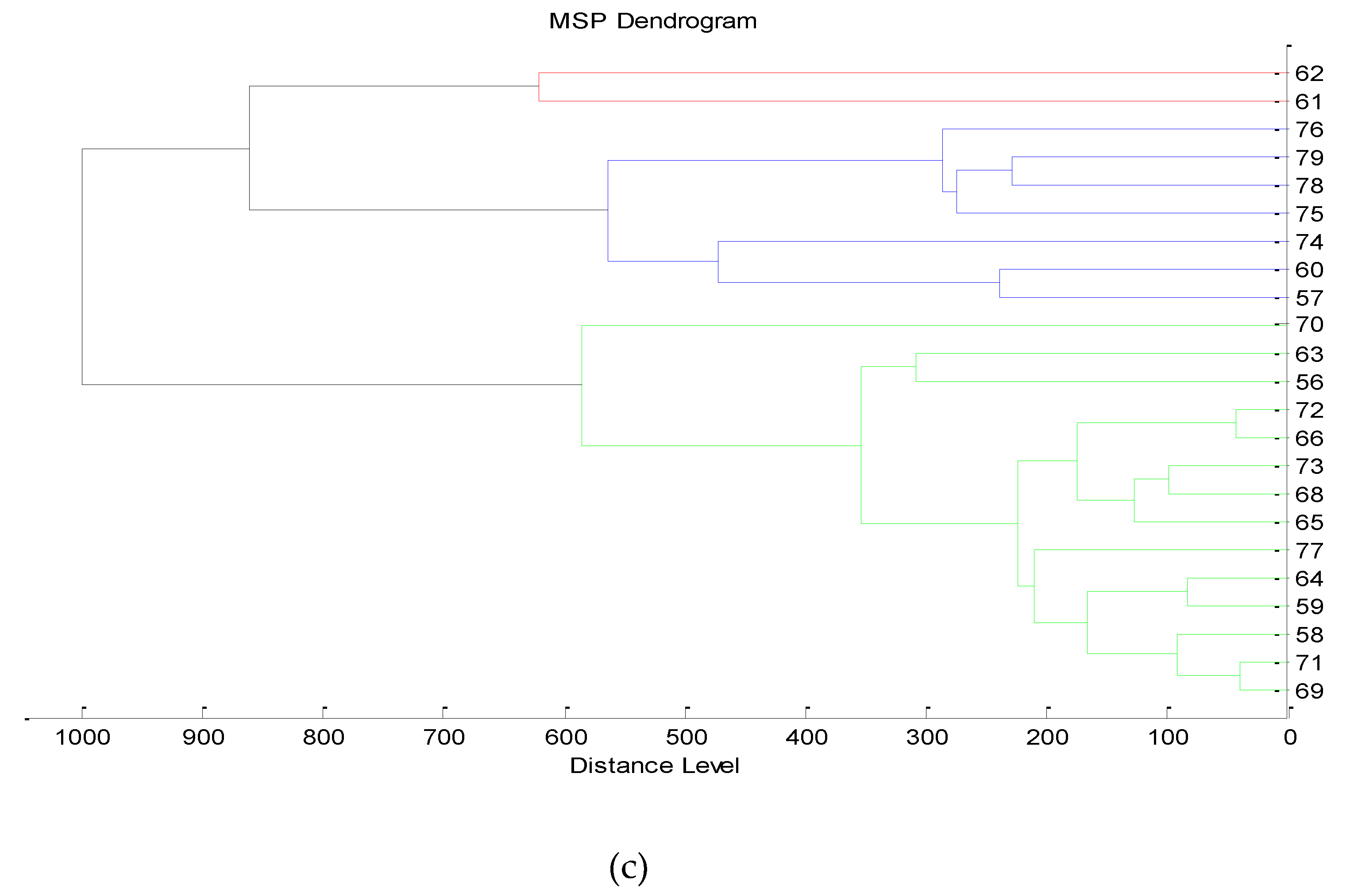
The MSP dendrograms of Saccharomyces cerevisiae isolates across different fermentation stages demonstrate progressive shifts in strain-level diversity. In the initial must (Figure 1a), isolates formed three closely related clusters, indicative of low diversity and the early establishment of a limited number of dominant strains, likely originating from the vineyard environment or winery surfaces. During active fermentation (Figure 1b), diversity increased moderately, with most isolates forming a compact cluster suggestive of a predominant strain, while isolates 47 and 48 exhibited substantial proteomic divergence, indicating the presence of genetically distinct or potentially wild-type variants. In the unfiltered wine sample (Figure 1c), a higher degree of intraspecific variation was observed. Isolates 61 and 62 displayed marked dissimilarity compared to the rest, while the remaining isolates grouped into two well-defined subclusters, reflecting the persistence or emergence of multiple strains during the late stages of fermentation. These findings underscore the dynamic nature of S. cerevisiae populations under fermentative selection pressures.

3.3. Next-Generation Sequencing

High-throughput sequencing of the 16S rRNA gene was employed to characterize the microbial communities associated with the wine samples. This method enabled detailed taxonomic profiling of bacterial populations in unfiltered wine from traditional clay fermentation vessel, wine from traditional clay fermentation vessel, filtered and bottled wine fermented in traditional clay vessel, unfiltered wine from stainless steel (inox) fermentation vessel, filtered bottled wine fermented in stainless steel (inox) vessel, a filtered bottled wine derived from stainless steel (inox) vessel from the previous vintage (2024). Ιn addition to the above wine samples which had no signs of off-flavors, another two bottled wines (of “Limniona” and “Malagouzia” grape variety) from the previous vintage and stainless steel (inox) vessels, with atypical characteristics (off-flavors), were also analysed, in order to identify potential markers of spoilage or undesirable fermentation. These analyses could provide insights into the microbial diversity and the relative abundance of taxa across multiple hierarchical levels, from phylum to genus.
Fermentation in traditional clay vessels results in a distinct microbial profile across different stages of wine production, as revealed by 16S rRNA gene sequencing. In the unfiltered wine sample, Oenococcus oeni was the dominant species (30.6%), indicating early malolactic activity. This was accompanied by several Arcobacter species, including A. venerupis (8.78%), A. defluvii (7.65%), and A. ellisii (2.78%), which may have been introduced from environmental or water-related sources. Wine sample from clay vessel showed a shift toward Pediococcus spp. (22.72%) and Oenococcus oeni (19.48%), reflecting ongoing malolactic fermentation. Burkholderia spp. (16.5%) were also prominent, suggesting an environmental reservoir or an association with the clay material. The presence of Pediococcus parvulus (6.11%), a species known for exopolysaccharide production, may have implications for wine texture and stability. In the bottled wine, lactic acid bacteria became dominant, with Lactobacillus spp. accounting for 29% of the total reads. Notably, L. parafarraginis (25.1%) and L. diolivorans (13.09%) were well represented, likely due to their stress tolerance and role in continued malolactic activity. A small proportion of Oenococcus oeni (1.37%) and Burkholderiaceae (3.14%) persisted, indicating selective survival in the bottled environment.
Table 4. Microbial composition of Limniona wine from traditional clay fermentation vessel using 16S rRNA gene sequencing.
Unfiltered wine from clay vessel Filtered and bottled wine from clay vessel Sediment from clay vessel
Genus Species % of valid reads Genus Species % of valid reads Genus Species % of valid reads
Oenococcus ND 22.72 Lactobacillus ND 29 Oenococcus oeni 30.6
Arcobacter oeni 19.48 Lactobacillus parafarraginis 25.1 Arcobacter venerupis 8.78
Arcobacter ND 16.5 Lactobacillus diolivorans 13.09 Arcobacter defluvii 7.65
Buttiauxella parvulus 6.11 Burkholderiaceae ND 3.14 Buttiauxella warmboldiae 5.21
Arcobacter ND 3 Oenococcus oeni 1.37 Arcobacter ellisii 2.78
Acetobacter ND 2 Citrobacter gillenii 1.7
ND: Not determined.
Table 5 presents the microbial composition of wine samples fermented in stainless steel (inox) vessels, revealing distinct profiles between the wine from the vessel and bottled wine stages based on 16S rRNA gene sequencing. In the wine sample from the vessel, Acetobacter spp. dominated (39%), followed by Burkholderia spp. (23.73%), with minor contributions from Rhizobium spp. (5.30%) and Pseudoalteromonas spp. (3.92%), indicating potential environmental introduction. In the bottled wine, Burkholderia remained prevalent (34%), while Acetobacter decreased to 17%, possibly due to reduced oxygen exposure or antimicrobial treatments. Notably, Oenococcus oeni appeared at 5.53%, suggesting post-fermentation malolactic activity. Low levels of Bacillus (1.91%) and Lactobacillus diolivorans (1.5%) were also detected, likely representing residual or stress-tolerant populations.
In order to compare successful and less successful spontaneous fermentations of natural wine (with either typical-desirable, or atypical-undesirable sensory and especially flavor characteristics) and the corresponding microflora that prevails, the taxonomic composition of microbial communities in wine samples from stainless steel (inox) fermentation vessels of the previous vintage (2024) was assessed using 16S rRNA gene sequencing, revealing a clear dominance of Lactobacillus taxa across all samples (Table 6). In the standard bottled wine with typical sensory characteristics (no off-flavors), Lactobacillus spp. constituted 39% of valid reads, followed by L. parafarraginis (19.19%) and L. diolivorans (14.11%), with minor representation of Oenococcus oeni (1.97%) and Burkholderia spp. (1.68%). The bottled Limniona sample, exhibiting atypical sensory characteristics, displayed a comparable microbial profile, with high abundances of Lactobacillus spp. (30.6%), L. parafarraginis (28.16%), and L. diolivorans (10.17%), along with Burkholderia spp. (2.37%). In contrast, the sample of bottled Malagouzia white wine with sensory deviation was strongly dominated by L. parafarraginis (63.16%), accompanied by Acetobacter spp. (11%), Lactobacillus spp. (2%), and O. oeni (2.07%). These findings suggest that elevated levels of L. parafarraginis, particularly in conjunction with other Lactobacillus species, may be associated with the emergence of atypical sensory profiles, underscoring the potential influence of microbial dynamics on wine stability and sensory quality.
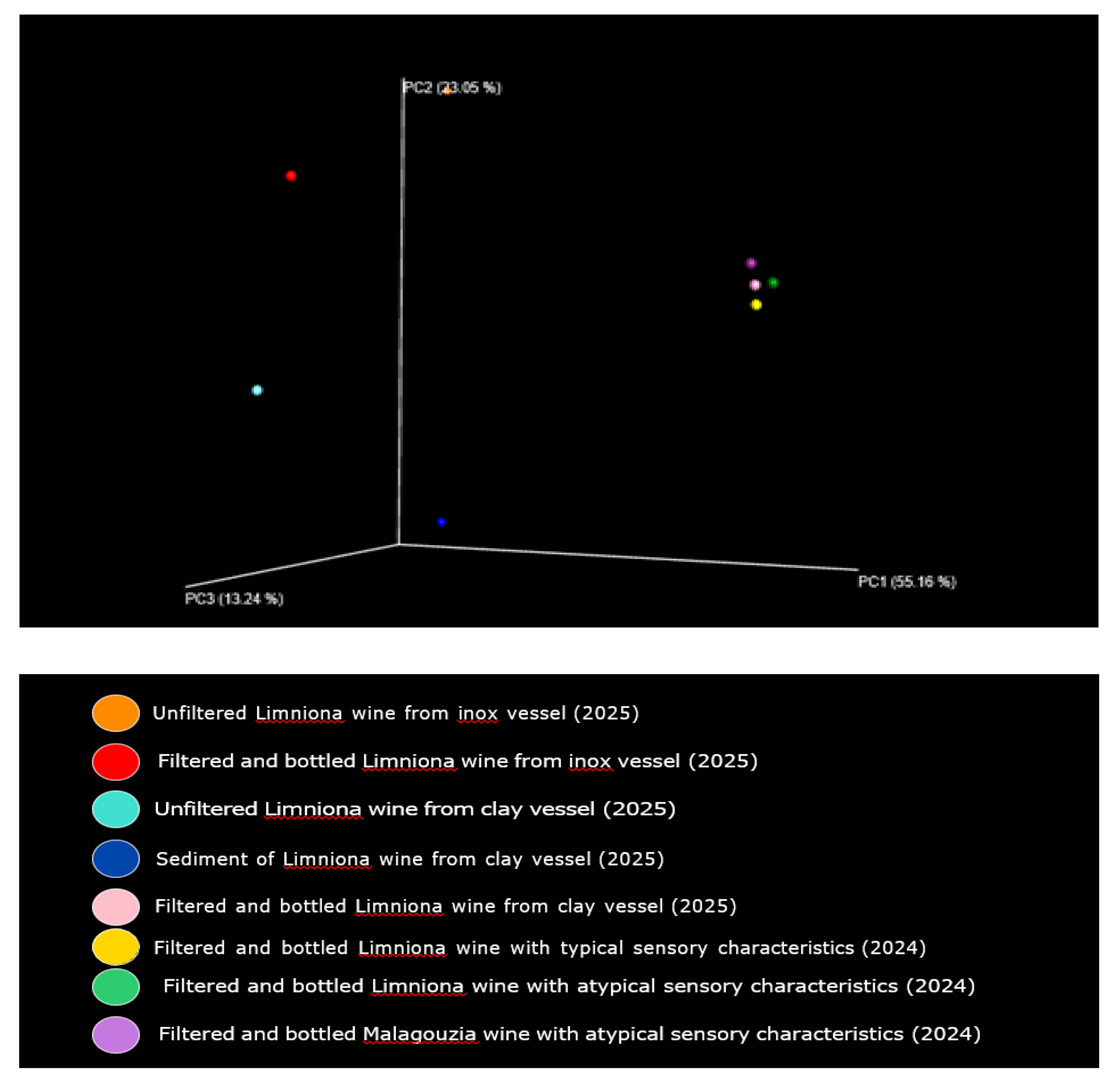
The 3D PCoA plot shown in Figure 2, derived from Bray–Curtis dissimilarity, highlights clear differences in microbial community structure among wine samples, with the first three axes explaining a combined 91.45% of the variation (PC1: 55.16%, PC2: 23.05%, PC3: 13.24%). A tight cluster of samples on the right side of the plot—comprising the green, purple, pink, and yellow points—represents bottled wines, including those with atypical sensory characteristics (Limniona and Malagouzia). Their proximity indicates a high degree of similarity in microbial composition, despite sensory deviations. This suggests that sensory faults may not always correspond to major shifts in the overall microbial community. In contrast, the red (bottled wine from inox vessel), blue (sediment from clay vessel), orange (inox wine), and cyan (clay wine) samples are distinctly separated from the cluster, especially along PC1 and PC2. This reflects substantial microbial divergence, likely driven by fermentation vessel (clay vs. inox) and wine stage (sediment, wine from vessel, bottled). The red and orange samples (from inox) show strong separation, consistent with a different microbial signature influenced by higher oxygen exposure. Similarly, the blue and cyan samples (from clay) appear independently positioned, highlighting the influence of clay vessel microenvironments and sediment-associated microbiota. Overall, the analysis confirms that fermentation environment and processing stage strongly influence microbial diversity, while samples with atypical sensory traits (off-flavors) do not differ drastically in overall microbial communities from other bottled wines of desirable sensory properties

4. Discussion

4.1. Microbial Succession and Community Dynamics During Winemaking: Insights from Selective Media Profiling

Microbial profiling of immature grapes revealed low but detectable microbial counts, with some differences between varieties (Table 1), supporting the idea that grape microbiota are shaped by cultivar traits, vineyard conditions, and environmental exposure [24,25,26,27]. According to Renouf et al. (2007), yeast and lactic acid bacteria (LAB) populations increase notably during ripening, especially at veraison, under the influence of grape variety and vineyard management [28].
Contrary to general assumptions, fermentative Saccharomyces species (e.g., S. cerevisiae) are rarely abundant on intact, healthy grapes and are seldom isolated from undamaged berries or vineyard soils [24,29]. Typically, only 10–10³ CFU/g of yeasts are found on immature berries, increasing to 10⁴–10⁶ CFU/g as ripening progresses [30]. According to Martini, Ciani, and Scorzetti [31], different grape varieties exhibit distinct yeast communities in terms of population size, typically ranging from 1 × 10⁴ to 1 × 10⁶ cells/mL [31]. Similarly, mature grape berries generally support dense microbial populations of 10⁴–10⁶ CFU/g, primarily consisting of yeasts, lactic acid bacteria, and acetic acid bacteria [27].
In our study, among the tested media, Wort and PDA agars supported the highest colony counts, especially in Limniona Polia and Limniona Zisi, suggesting enhanced yeast viability or abundance in these cultivars (Table 1). In contrast, Malagouzia Raches and Malagouzia Damaki showed no detectable growth (<DL) on all agars except Wort agar (Table 1), which can generally be due to grape acidity and skin properties, antimicrobial phenolics, or vineyard treatments limiting microbial colonization [24,28,29,32].
Elevated lactic acid bacteria levels in MRS and M17 agar in Limniona red grape samples, suggest a richer LAB population, potentially influencing malolactic fermentation performance [33]. Notably, Roditis white grapes displayed significantly higher MRS counts, indicating either LAB dominance or selective adaptation to this grape type. These findings highlight how microbial composition varies by grape variety and culture medium, emphasizing the importance of using multiple media in enological microbiological profiling [29].
Microbial enumeration throughout the winemaking process using four selective agars revealed clear shifts in population levels, illustrating the dynamic succession of microbial communities. Counts ranged from 4.2 to 7.7 log CFU/g (Table 2), with statistically significant differences depending on the sample stage and culture medium (p < 0.05, p < 0.01).
As expected, fermenting must yielded the highest microbial counts, reaching 7.68 ± 0.27 log CFU/g on MRS and 7.65 ± 0.39 on Wort agar (Table 2), reflecting the rapid expansion of fermentative yeasts and associated taxa driven by high sugar content, warm temperatures, and anaerobic conditions [24,25,28,34]. Saccharomyces cerevisiae and related fermentative yeasts ultimately prevail during alcoholic fermentation by outcompeting oxidative and non-fermentative species. This dominance is attributed to their high ethanol and stress tolerance, rapid sugar uptake, and superior fermentative capacity under anaerobic conditions [29,30,35].
By contrast, initial must and ripe grape samples exhibited lower microbial levels (4.24 ± 0.06 to 5.35 ± 0.06 log CFU/g) (Table 2), consistent with a diverse but sparse epiphytic community on freshly harvested grapes. S. cerevisiae and LAB are usually scarce on intact berries but increase during processing, mainly from winery-associated contamination [24,28]. Yeast populations on grape surfaces have been observed to vary significantly among cultivars, typically ranging from 104 to 107 cells/mL. This natural variation is influenced by several factors, including vineyard microclimate and terroir, viticultural management practices, and the timing of harvest and grape maturity, all of which affect microbial colonization and growth dynamics [24,25,33,36].
The unfiltered wine samples showed intermediate microbial levels (e.g., 5.11 ± 0.13 CFU/g of yeasts) (Table 2), indicating a decline in viable populations post-fermentation, likely due to nutrient depletion, ethanol accumulation, and other inhibitory conditions [30]. Statistical analysis for presumptive lactococci enumerated on M17 agar, confirmed significant differences among production stages (p < 0.01), while presumptive lactobacilli on MRS agar also showed strong variability—except between grapes and must or grapes and unfiltered wine— suggesting gradual shifts in LAB populations. Yeast counts on PDA agar increased from grape to fermenting must, in a statistically significant manner, although yeast populations declined at the end of fermentation, having little difference in the final (unfiltered) wine compared to initial must. Wort agar displayed a similar pattern, but with no significant differences between grape, must, and final (unfiltered) wine samples, indicating lower selectivity or overlapping yeast viability (Table 2).
Overall, these results support the concept of microbial succession, where the community transitions from diverse, low-abundance epiphytes to a dominant fermentative microbiota during winemaking [33,37]. Moreover, they highlight the importance of using multiple culture media to capture the full spectrum of microbial diversity and reinforce the relevance of microbiological monitoring to optimize fermentation outcomes.

4.2. Microbial Diversity Across Winemaking Stages

While culture-dependent methods remain valuable for isolating and characterizing grape-associated microbes and assessing their metabolic functions in vitro, they capture only a fraction of the total microbiome, overlooking 95–99% of non-culturable organisms [30,37].
MALDI-TOF MS profiling in this study provided important insights into the shifting microbial communities during different stages of the winemaking process, capturing both bacterial and yeast populations. Analysis of 72 isolates led to the identification of seven distinct microbial species, with a range of identification scores highlighting both the capabilities and limitations of the technique (Table 3).
Grapes host a diverse microbiome shaped by environmental conditions, location, grape variety, and vineyard phytochemicals, all of which affect fermentation outcomes and microbial composition [38]. The microbial community present on ripe Limniona grapes included both yeasts and bacteria, such as Candida lusitaniae, C. krusei, Staphylococcus epidermidis, and Bacillus amyloliquefaciens subsp. plantarum, reflecting a complex epiphytic microbiota inhabiting the grape surface. Notably, C. krusei consistently yielded high MALDI-TOF MS scores (>2.0), indicating reliable species-level identification. In contrast, Candida lusitaniae and Staphylococcus epidermidis exhibited scores below 2.0 in several isolates, indicating reduced confidence in species-level identification (Τable 3).
Studies indicate that Saccharomyces cerevisiae is uncommon on healthy grapes, which are primarily colonized by oxidative yeasts like Rhodotorula and alcohol-sensitive species such as Kloeckera apiculata, often dominating the yeast community [39]. Yeasts are ubiquitous in nature, typically forming structured communities within specific ecological niches. In the context of winemaking, the surface of grape berries represents a primary natural reservoir for diverse yeast populations [32]. Kloeckera apiculata is the most frequently isolated native yeast, comprising over 50% of grape skin isolates, followed by Candida species (~30%), alongside Aureobasidium, Cryptococcus, Kluyveromyces, Metschnikowia, Pichia, and Rhodotorula [39]. The sugar-rich grape surface favors oxidative or weakly fermentative yeasts such as Candida, Hanseniaspora, Metschnikowia, and Pichia [39]. Candida species are common members of the natural microflora found on grape berries. In another study, five Candida species -C. valida, C. utilis, C. sorbosa, C. krusei, and C. saitoana- were identified along with four Saccharomyces cerevisiae strains, emphasizing the dominance of Candida among the isolates [38].
According to Koulougliotis and Eriotou [40], Rhodotorula glutinis (27.4%) was the most frequently detected yeast on grape samples, followed by Candida lusitaniae (18.3%) and Cryptococcus laurentii (13.3%) [41]. Candida lusitaniae was also found with related species, including Clavispora santaluciae, C. fructus, and several other Candida spp. [42]. Candida lusitaniae was initially isolated from the gastrointestinal tract of warm-blooded animals (Van Uden & Carmo-Sousa, 1959), and has since been recovered from a variety of environmental and food-related sources, including cornmeal, citrus peel, fruit juices, and milk from cows affected by mastitis [43]. Although GenBank holds grape-associated C. lusitaniae sequences, no peer-reviewed studies have confirmed these findings, suggesting the need for further investigation [40]. Non-Saccharomyces yeasts contribute to ester formation but can also cause spoilage, particularly during early fermentation. Species of Candida are known to oxidize ethanol, producing elevated levels of acetaldehyde, volatile acids, and esters. Ethyl acetate concentrations above 200 mg/L and acetic acid above 0.6 g/L are associated with sensory defects in wine [44].
A survey of grape samples revealed that Staphylococcus spp. constituted 11% of bacterial isolates, alongside Leuconostoc mesenteroides, Micrococcus luteus, Bacillus megaterium, and Lactobacillus paracasei, indicating notable species diversity [27]. Recently, uncommon bacteria such as Citrobacter freundii, Klebsiella oxytoca, Enterobacter ludwigii, Serratia marcescens, Enterococcus spp., and Staphylococcus spp. were detected on grapes and persisted into alcoholic fermentation [45]. Staphylococcus epidermidis, S. equorum, S. hominis, and S. warneri have been isolated from table grapes, confirming the presence of diverse Staphylococcus species in the grape surface microbiota [37,46]. Staphylococcus epidermidis, a common member of the human skin microbiota, is not typically associated with wine fermentation but may appear as a contaminant due to poor hygiene, handling practices, or inadequate equipment sanitation [47].
Bacillus spp. are resilient environmental bacteria capable of surviving extreme conditions via protective structures. Bacillus amyloliquefaciens is a soil-dwelling, bacterium that is widely distributed in natural and agricultural environments is widely applied in agriculture for its antimicrobial enzymes and bioactive compounds [48,49,50]. Bacillus mycoides has been associated with environmental contamination in vineyard regions [48]. In contrast, Bacillus amyloliquefaciens has been isolated from withered grapes, with 41 out of 50 bacterial isolates identified as Bacillus, indicating dominance [49]. Bacillus amyloliquefaciens subsp. plantarum and strain G1, isolated from grapes, show strong biocontrol potential against plant diseases and downy mildew [50,51,52]. Additionally, table grapes have been found to harbor Bacillus megaterium, B. niacini, and B. cereus, highlighting the diversity of Bacillus species present on grape surfaces [38]. Bacillus amyloliquefaciens does not play a beneficial role in wine fermentation, and its presence is primarily associated with environmental contamination. Although not among the most common spoilage organisms in wine, it may contribute to sensory or visual defects under certain conditions [41].
Spontaneous wine fermentation is driven by the indigenous microbiota naturally present on grapes and within the winery environment. At the onset of fermentation, yeasts from the genera Metschnikowia, Candida, Hanseniaspora, Pichia, Lachancea, and Saccharomyces are prevalent. As ethanol increases, Saccharomyces cerevisiae becomes dominant and drives alcoholic fermentation. Non-Saccharomyces yeasts are typically grouped as (1) aerobic species (e.g., Pichia, Debaryomyces, Rhodotorula, Candida, Cryptococcus), (2) weakly fermentative apiculate yeasts (e.g., Hanseniaspora uvarum), and (3) fermentative species (e.g., Kluyveromyces marxianus, Torulaspora delbrueckii). These yeasts appear early, especially H. uvarum in red musts, but often decline due to stress factors and competition from S. cerevisiae. Beyond their impact on wine aroma and composition, non-Saccharomyces yeasts can also affect lactic acid bacteria (LAB). During early fermentation, they may deplete nutrients and produce inhibitory metabolites that hinder LAB growth and malolactic fermentation [37,42]. However, some yeast by-products may also promote LAB activity, highlighting their complex role in microbial dynamics [37,42]. Saccharomyces cerevisiae strains are key to wine quality, with their diversity during spontaneous fermentation impacting flavor and composition. Selected strains are widely used as starters to ensure consistent and successful alcoholic fermentation [38].
In the must of Limniona red grapes, Saccharomyces cerevisiae was identified with low confidence (all isolates <2.0), despite its central role in fermentation, but as fermentation progressed, S. cerevisiae became the dominant species, reflecting selective pressures favoring ethanol-tolerant yeasts (Table 3). Yet, the majority of isolates continued to score below the 2.0 threshold, confirming the technique’s limited strain-level resolution within this species. In the unfiltered wine sample, Saccharomyces cerevisiae was recovered from 23 isolates, with MALDI-TOF MS scores ranging from 1.793 to 2.004. Of these, 21 isolates yielded scores below the species-level confidence threshold of 2.000, suggesting limited strain differentiation and the need for complementary identification methods (Table 3).
These findings are consistent with those of Jeune [53], and they challenge earlier claims by Martini [54] that Saccharomyces cerevisiae is restricted to the winery environment and that winery-associated strains consistently outcompete indigenous yeasts. Additionally, S. cerevisiae strains from 12 Apulian musts showed strong genetic similarity, indicating that vineyard-specific environmental factors (terroir) influence native yeast populations more than grape variety [55].
Bacterial isolates from the initial must and fermenting must, such as Serratia marcescens and Klebsiella aerogenes, scored above 2.2, confirming the method's robustness in bacterial taxonomy. The detection of S. marcescens and K. aerogenes during fermentation further suggests microbial persistence or adaptation despite increasing ethanol concentrations. These opportunistic species, although not typical wine-associated microbes, may originate from winery equipment or grape handling practices [6]. Klebsiella oxytoca and Serratia marcescens have been isolated from grapes but were not detected during the mid and final stages of the fermentation process [46].

4.3. Intraspecific Variation in Saccharomyces cerevisiae

The MSP dendrogram analysis provided enhanced insight into the diversity of Saccharomyces cerevisiae. In the initial must (Figure 1a), clustering patterns indicated low strain diversity, supporting the view that early fermentation stages are typically dominated by a limited number of strains originating from the vineyard or winery environment [7,56]. In contrast, samples from the active fermentation phase (Figure 1b) revealed a dominant strain cluster alongside several divergent isolates [45,46], reflecting the dynamic nature of spontaneous fermentations and suggesting the involvement of wild-type strains [57].
In the unfiltered wine (Figure 1c), a greater diversity of strains was observed, with multiple isolates forming distinct clusters. This pattern aligns with previous findings showing that spontaneous fermentations promote a succession of S. cerevisiae strains, shaped by gradients in ethanol concentration, nutrient and oxygen availability [33,56]. The emergence of proteomically distinct isolates at later stages may reflect adaptive responses of minority strains to environmental stressors or indicate the survival of diverse populations maintained through mechanisms such as biofilm formation or spatial separation [57,58,59,60].

4.4. Taxonomic Profiling and Microbial Diversity in Wine Samples via 16S rRNA NGS

Spontaneous wine fermentation is driven by indigenous microbiota, with species of Metschnikowia, Candida, Hanseniaspora, Pichia, Lachancea (formerly Kluyveromyces), and Saccharomyces dominating the initial stages. As ethanol levels rise, Saccharomyces cerevisiae becomes predominant, completing alcoholic fermentation. Concurrently, malolactic fermentation (MLF), carried out by lactic acid bacteria (Oenococcus, Pediococcus, Lactobacillus, and Leuconostoc), converts malic acid to lactic acid, enhancing the wine's sensory properties and stability. Conversely, acetic acid bacteria (AAB) can negatively impact wine quality by producing acetic acid and other spoilage metabolites [61].
The evolution of microbial and in particular bacterial communities during wine fermentation is marked by dynamic successions that shape both the biochemical profile and sensory characteristics of the final product. Our findings, derived from 16S rRNA gene sequencing, reveal distinct microbial trajectories in traditional clay vessels compared to stainless steel (inox) fermenters, with clear implications for wine stability, quality and the risk of spoilage.
In clay vessels, the fermentation process exhibited a well-structured bacterial succession, transitioning from environmental taxa to communities dominated by lactic acid bacteria (LAB). Oenococcus oeni emerged as the predominant taxon in both early (30.6%) and mid-fermentation (19.5%) stages. This aligns with its well-documented role as the primary driver of malolactic fermentation (MLF), due to its resilience in the acidic, ethanol-rich conditions characteristic of wine [62]. The concurrent detection of Pediococcus spp. (22.7%) in wine sampled in the middle of the fermentation highlights the potential for co-occurrence with O. oeni, although this genus is also associated with wine spoilage through the production of diacetyl, exopolysaccharides, and biogenic amines [63].
By the bottling stage, the microbial profile was dominated by LAB, particularly Lactobacillus parafarraginis (25.1%) and L. diolivorans (13.09%), suggesting the successful completion of MLF and microbial stabilization [55,64]. These species are known for their heterofermentative metabolism, contributing to aromatic complexity but also capable of generating undesirable compounds such as acetic acid and diacetyl when overrepresented [62].
In contrast, fermentations conducted in inox vessels showed early dominance of Acetobacter spp. (39%) and Burkholderia spp. (23.73%), indicating a likely influence of oxygen presence and lack of anaerobic conditions, or surface-related contamination of inox vessels —conditions favorable for the undesirable acetic acid bacteria [65], as well as contamination of equipment of winery environment from soil microorganisms or microorganisms naturally dwelling in healthy grapes like Burkholderia [66], which are not linked to wine spoilage, instead they may contribute to grape bioprotection from fungal pathogens [67]. The continued presence of Burkholderia at 34% in bottled samples suggests a less efficient microbial transition from grape microbiota towards a wine-adapted community, potentially due to the reduced porosity and inert surface of stainless steel, which limits microbial niche development [65].
In bottled wines from previous vintages, LAB remained prominent, particularly L. parafarraginis, which was notably abundant in wines with atypical sensory profiles, reaching 63.16% in Malagouzia and 28.16% in Limniona wine. This overrepresentation raises concerns, as L. parafarraginis is associated with the production of acetic acid and diacetyl, leading to off-flavors such as buttery or vinegary notes [62,63,64,65,66,67,68]. The sporadic presence of Acetobacter and Burkholderia in these wines further supports the possibility of oxidative stress or microbial imbalance contributing to quality deterioration [69].
Our observations are in line with previous research indicating that elevated LAB populations—particularly heterofermentative species—can result in the accumulation of undesirable metabolic byproducts such as acrolein (contributing to bitterness), ethyl carbamate precursors, and "mousy" off-flavors [64,70].
Compared to studies on spontaneous fermentations from six Portuguese appellations, where Proteobacteria accounted for over 60% and Firmicutes were secondary [62], our results suggest a more balanced distribution of these phyla. Notably, Lactobacillus and other Lactobacillaceae dominated fermentations conducted without sulfite additions or starter cultures, reflecting a trend toward indigenous microbial influence in the absence of enological intervention. Previous studies have consistently reported the dominance of O. oeni during MLF, with other LAB genera such as Lactobacillus, Lactococcus, Leuconostoc, and Pediococcus also commonly present in wine ecosystems.
The microbial ecology observed in clay vessels appears to support a more stable and balanced succession. The early dominance of O. oeni and later establishment of LAB with minimal oxidative or spoilage taxa suggests that the porous and micro-oxygenating nature of clay may foster a conducive environment for beneficial microbial development [62]. In contrast, inox fermentation systems exhibited delayed microbial stabilization, with persistent environmental taxa and increased risk of LAB overgrowth, particularly of L. parafarraginis.
These findings underscore the significant influence of vessel type on fermentation microbiota. While clay vessels promote microbial adaptation and succession aligned with traditional wine fermentation trajectories, the inert conditions of inox vessel may impede this process, enhancing susceptibility to spoilage and off-flavor development, especially if sulphites are absent and anaerobic conditions are not fully guaranteed [65,71]. This finding has not been previously reported, to our knowledge, and may point to a preference for clay vessels for the production of natural wines without use of sulphites.

5. Conclusions

The microbial dynamics observed during fermentation in traditional clay vessels highlight the potential of spontaneous fermentation to foster a stable and beneficial microbiota dominated by lactic acid bacteria, particularly Oenococcus oeni, with minimal presence of spoilage-associated taxa. In contrast, stainless steel fermentations exhibited a higher prevalence of oxidative bacteria and environmental contaminants, suggesting that vessel material plays a critical role in shaping microbial succession. The natural progression observed in clay vessels appears more conducive to the development of well-balanced wine microbiota with reduced risk of microbial faults.
A comprehensive understanding of how fermentation vessels influence microbial ecology is essential for optimizing wine quality. To ensure consistent and controlled outcomes, especially in stainless steel systems where microbial instability seems to be more likely, the use of well-characterized O. oeni starter cultures is strongly recommended. Additionally, sanitation protocols must be adapted to vessel characteristics—addressing the porous, micro-oxygenating environment of clay and the inert nature of inox— to minimize contamination and promote beneficial microbial growth. Molecular monitoring techniques such as 16S rRNA gene sequencing can offer early insights into shifts in microbial communities, enabling timely interventions when necessary.
Of particular concern is the management of Lactobacillus parafarraginis, whose overrepresentation in stainless steel fermentations has been associated with excessive heterofermentation and the formation of off-flavors, including acetic acid and diacetyl. Targeted monitoring and control of this species are essential to preserving the sensory integrity of the wine.
Overall, these findings shed light light on the potential challenges and support the value of spontaneous wine fermentation, especially when performed under hygienic conditions with appropriate monitoring and equipment. The gradual prevalence and increased diversity of desirable Saccharomyces cerevisiae strains at the late stages of fermentation, despite their initial scarcity in the must, and the adaptation of beneficial microbiota of malolactic fermentation, especially in clay-fermented wines, allow the expression of unique sensory profiles, which characterize natural wines. When guided by microbial understanding and careful process control, spontaneous fermentation with minimum interventions can serve not only as a viable, but also a desirable approach to producing wines that authentically reflect their origin and terroir.

Author Contributions

formal analysis, methodology, writing—original draft preparation, P.B.; formal analysis, data curation, C.M.; conceptualization, field work, A.T.B., conceptualization, supervision-project administration, review and editing, I.G; All authors have read and agreed to the published version of the manuscript.

Funding

Funding for this research was provided by the Greek Ministry of Agricultural Development and Food under the framework of the EU Rural Development Programme (RDP) 2014–2020, Measure 16 'Cooperation', Submeasure 16.1–16.2 'Establishment and operation of Operational Groups of the EIP-AGRI', co-financed by the European Agricultural Fund for Rural Development (EAFRD) and national resources.

Conflicts of Interest

The authors declare no conflicts of interest.

References

  1. Ilieva, F.; Petrov, K.; Veličkovska, S. K.; Gunova, N.; Dimovska, V.; Rocha, J. M. F.; Esatbeyoglu, T. Influence of autochthonous and commercial yeast strains on fermentation and quality of wines produced from Vranec and Cabernet Sauvignon grape varieties from Tikveš wine-growing region, Republic of North Macedonia. Appl. Sci. 2021, 11, 6135. [Google Scholar] [CrossRef]
  2. Sapardani, E.; Melfou, K.; Chatzitheodoridis, F.; Kontogeorgos, A. Technical and scale efficiency of farms producing grapes for wine. KnE Soc. Sci. 2023, 8, 102–118. [Google Scholar] [CrossRef]
  3. Koufos, G. C.; Mavromatis, T.; Koundouras, S.; Fyllas, N. M.; Theocharis, S.; Jones, G. V. Greek wine quality assessment and relationships with climate: Trends, future projections and uncertainties. Water 2022, 14, 573. [Google Scholar] [CrossRef]
  4. Wei, R.; Wang, L.; Ding, Y.; Zhang, L.; Gao, F.; Chen, N.; Wang, H. Natural and sustainable wine: A review. Crit. Rev. Food Sci. Nutr. Association des Vins Méthode Nature. Vin Méthode Nature: Charte Vin Méthode Nature. 2020. https://www.vinmethodenature.org/. 2023, 63, 8249–8260. [Google Scholar] [CrossRef]
  5. Vecchio, R.; Parga-Dans, E.; Alonso González, P.; Annunziata, A. Why consumers drink natural wine? Consumer perception and information about natural wine. Agric. Food Econ. 2021, 9, 22. [Google Scholar] [CrossRef]
  6. Lappa, I. K.; Kachrimanidou, V.; Pateraki, C.; Koulougliotis, D.; Eriotou, E.; Kopsahelis, N. Indigenous yeasts: Emerging trends and challenges in winemaking. Curr. Opin. Food Sci. 2020, 32, 133–143. [Google Scholar] [CrossRef]
  7. Eller, M. R.; de Almeida, E. L. M.; Campos, L. B.; Montoya, S. G. Wild wines: The state of the art. In Trending Topics on Fermented Foods; Elsevier: 2024; pp. 341–369.
  8. Legodi, L. M.; Lekganyane, M. A.; Moganedi, K. L. M. Morula tree: From fruit to wine through spontaneous fermentation and the potential of deriving other value-added products. Processes 2022, 10, 1633. [Google Scholar] [CrossRef]
  9. Paramithiotis, S.; Stasinou, V.; Tzamourani, A.; Kotseridis, Y.; Dimopoulou, M. Malolactic fermentation—Theoretical advances and practical considerations. Fermentation 2022, 8, 521. [Google Scholar] [CrossRef]
  10. Mendes Ferreira, A.; Mendes-Faia, A. The role of yeasts and lactic acid bacteria on the metabolism of organic acids during winemaking. Foods 2020, 9, 1231. [Google Scholar] [CrossRef]
  11. Devi, A.; Anu-Appaiah, K. A.; Lin, T. F. Timing of inoculation of Oenococcus oeni and Lactobacillus plantarum in mixed malo-lactic culture along with compatible native yeast influences the polyphenolic, volatile and sensory profile of the Shiraz wines. LWT 2022, 158, 113130. [Google Scholar] [CrossRef]
  12. Englezos, V.; Jolly, N. P.; Di Gianvito, P.; Rantsiou, K.; Cocolin, L. Microbial interactions in winemaking: ecological aspects and effect on wine quality. Trends Food Sci. Technol. 2022, 127, 99–113. [Google Scholar] [CrossRef]
  13. Gonzalez, R.; Morales, P. Truth in wine yeast. Microb. Biotechnol. Article in press. 2022. [Google Scholar] [CrossRef]
  14. Goode, J. The Science of Wine: From Vine to Glass, 3rd ed.; Mitchell Beazley: London, UK, 2021. [Google Scholar]
  15. Eller, M. R.; de Almeida, E. L. M.; Campos, L. B.; Montoya, S. G. Wild wines: The state of the art. In Trending Topics on Fermented Foods; Elsevier: 2024; pp. 341–369.
  16. Wei, R.; Wang, L.; Ding, Y.; Zhang, L.; Gao, F.; Chen, N.; Wang, H. Natural and sustainable wine: a review. Crit. Rev. Food Sci. Nutr. 2023, 63, 8249–8260. [Google Scholar] [CrossRef] [PubMed]
  17. Maykish, A.; Rex, R.; Sikalidis, A. K. Organic winemaking and its subsets: biodynamic, natural, and clean wine in California. Foods 2021, 10, 1975. [Google Scholar] [CrossRef]
  18. Hu, S. Natural Wine: The Conundrum; 2020. https://www.researchgate. 2020. Available online: https://www.researchgate.net/publication/347470167_Natural_Wine_The_Conundrum.
  19. Kwofie, M. K.; Bukari, N.; Adeboye, O. Probiotics potential of yeast and lactic acid bacteria fermented foods and the impact of processing: a review of indigenous and continental food products. Adv. Microbiol. 2020, 10, 771–793. [Google Scholar] [CrossRef]
  20. Adesulu-Dahunsi, A. T.; Dahunsi, S. O.; Olayanju, A. Synergistic microbial interactions between lactic acid bacteria and yeasts during production of Nigerian indigenous fermented foods and beverages. Food Control 2020, 110, 106963. [Google Scholar] [CrossRef]
  21. Maicas, S. The role of yeasts in fermentation processes. Microorganisms 2020, 8, 1142. [Google Scholar] [CrossRef] [PubMed]
  22. Franco, W.; Benavides, S.; Valencia, P.; Ramírez, C.; Urtubia, A. Native yeasts and lactic acid bacteria isolated from spontaneous fermentation of seven grape cultivars from the Maule region (Chile). Foods 2021, 10, 1737. [Google Scholar] [CrossRef]
  23. Torres-Guardado, R.; Esteve-Zarzoso, B.; Reguant, C.; Bordons, A. Microbial interactions in alcoholic beverages. Int. Microbiol. 2022, 25, 1–15. [Google Scholar] [CrossRef]
  24. Barata, A.; Malfeito-Ferreira, M.; Loureiro, V. The microbial ecology of wine grape berries. Int. J. Food Microbiol. 2012, 153, 243–259. [Google Scholar] [CrossRef] [PubMed]
  25. Bokulich, N.A.; Thorngate, J.H.; Richardson, P.M.; Mills, D.A. Microbial biogeography of wine grapes is conditioned by cultivar, vintage, and climate. Proc. Natl. Acad. Sci. U. S. A. 2014, 111, E139–E148. [Google Scholar] [CrossRef]
  26. Setati, M.E.; Jacobson, D.; Bauer, F.F. Sequence-based analysis of the Vitis vinifera L. cv Cabernet Sauvignon grape must mycobiome in three South African vineyards employing distinct agronomic systems. Front. Microbiol. 2015, 6, 1358. [Google Scholar] [CrossRef] [PubMed]
  27. Kántor, A.; Mareček, J.; Ivanišová, E.; Terentjeva, M.; Kačániová, M. Microorganisms of grape berries. Proc. Latv. Acad. Sci. 2017, 71, 502–507. [Google Scholar] [CrossRef]
  28. Renouf, V.; Claisse, O.; Lonvaud-Funel, A. Inventory and monitoring of wine microbial consortia. Appl. Microbiol. Biotechnol. 2007, 75, 149–164. [Google Scholar] [CrossRef] [PubMed]
  29. Pretorius, I.S. Tailoring wine yeast for the new millennium: Novel approaches to the ancient art of winemaking. Yeast 2000, 16, 675–729. [Google Scholar] [CrossRef]
  30. Fleet, G.H. Yeast interactions and wine flavour. Int. J. Food Microbiol. 2003, 86, 11–22. [Google Scholar] [CrossRef]
  31. Martini, A.; Ciani, M.; Scorzetti, G.; Scorzetti, G. Direct enumeration and isolation of wine yeasts from grape surfaces. Am. J. Enol. Vitic. 1996, 47, 435–440. [Google Scholar] [CrossRef]
  32. Jolly, N.P.; Varela, C.; Pretorius, I.S. Not your ordinary yeast: Non-Saccharomyces yeasts in wine production uncovered. FEMS Yeast Res. 2014, 14, 215–237. [Google Scholar] [CrossRef]
  33. Bokulich, N.A.; Collins, T.S.; Masarweh, C.; Allen, G.; Heymann, H.; Ebeler, S.E.; Mills, D.A. Associations among wine grape microbiome, metabolome, and fermentation behavior suggest microbial contribution to regional wine characteristics. mBio 2016, 7, e00631–e16. [Google Scholar] [CrossRef]
  34. Ciani, M.; Comitini, F. Yeast interactions in multi-starter wine fermentation. Curr. Opin. Food Sci. 2015, 1, 1–6. [Google Scholar] [CrossRef]
  35. Hierro, N.; González, Á.; Mas, A.; Guillamón, J.M. Diversity and evolution of non-Saccharomyces yeast populations during alcoholic fermentation: Effect of grape ripeness and cold maceration. FEMS Yeast Res. 2006, 6, 102–111. [Google Scholar] [CrossRef] [PubMed]
  36. Fleet, G.H. The microorganisms of winemaking—Isolation, enumeration and identification. In Wine Microbiology and Biotechnology; Fleet, G.H., Ed.; Harwood Academic Publishers: Chur, Switzerland, 1993; pp. 1–25. [Google Scholar]
  37. Belda, I.; Zarraonaindia, I.; Perisin, M.; Palacios, A.; Acedo, A. From vineyard soil to wine fermentation: Microbiome approximations to explain the 'terroir' concept. Front. Microbiol. 2017, 8, 821. [Google Scholar] [CrossRef] [PubMed]
  38. Kántor, A.; Kačániová, M. Diversity of bacteria and yeasts on the surface of table grapes. Sci. Pap. Anim. Sci. Biotechnol. 2015, 48, 149–154. [Google Scholar]
  39. Renouf, V.; Claisse, O.; Lonvaud-Funel, A.L. Understanding the microbial ecosystem on the grape berry surface through numeration and identification of yeast and bacteria. Aust. J. Grape Wine Res. 2005, 11, 316–327. [Google Scholar] [CrossRef]
  40. Ghanbarzadeh, B.; Sampaio, J.P.; Arzanlou, M. Biodiversity of epiphytic yeasts on post-harvest table grapes in markets of Tabriz, Iran. Mycol. Iran. 2019, 6, 101–111. [Google Scholar]
  41. Koulougliotis, D.; Eriotou, E. Isolation and identification of endogenous yeast strains in grapes and must solids of Mavrodafni Kefalonias and antioxidant activity of the produced red wine. Ferment. Technol. 2016, 5, 1. [Google Scholar] [CrossRef]
  42. Drumonde-Neves, J.; Čadež, N.; Reyes-Domínguez, Y.; Gallmetzer, A.; Schuller, D.; Lima, T.; Franco-Duarte, R. Clavispora santaluciae sp. nov., a novel ascomycetous yeast species isolated from grapes. Int. J. Syst. Evol. Microbiol. 2020, 70, 6307–6312. [Google Scholar] [CrossRef]
  43. Kurtzman, C. P.; Fell, J. W. The yeasts, a taxonomic study, Ed.; Elsevier: New York, NY, USA, 1998. [Google Scholar]
  44. Cabañes, F. animals. In Pathogenic Yeasts; Springer: Berlin/Heidelberg, Germany, 2009; pp. 253–279. [Google Scholar]
  45. Campaniello, D.; Sinigaglia, M. Wine spoiling phenomena. In The Microbiological Quality of Food; Woodhead Publishing: Cambridge, UK, 2017; pp. 237–255. [Google Scholar]
  46. Benavent-Gil, Y.; Berbegal, C.; Lucio, O.; Pardo, I.; Ferrer, S. A new fear in wine: Isolation of Staphylococcus epidermidis histamine producer. Food Control 2016, 62, 142–149. [Google Scholar] [CrossRef]
  47. Nisiotou, A. A.; Rantsiou, K.; Iliopoulos, V.; Cocolin, L.; Nychas, G. J. E. Bacterial species associated with sound and Botrytis-infected grapes from a Greek vineyard. Int. J. Food Microbiol. 2011, 145, 432–436. [Google Scholar] [CrossRef]
  48. Becker, K.; Heilmann, C.; Peters, G. Coagulase-negative staphylococci. Clin. Microbiol. Rev. 2014, 27, 870–926. [Google Scholar] [CrossRef] [PubMed]
  49. Maulani, S.; Hosseini, S. M.; Elikaie, A.; Mirnurollahi, S. M. Isolated microorganisms from Iranian grapes and its derivatives. Iran. J. Microbiol. 2012, 4, 25–32. [Google Scholar] [PubMed]
  50. Lorenzini, M.; Zapparoli, G. Epiphytic bacteria from withered grapes and their antagonistic effects on grape-rotting fungi. Int. J. Food Microbiol. 2020, 319, 108505. [Google Scholar] [CrossRef] [PubMed]
  51. Yan, Y.; Liu, S.; Wang, D.; Xue, J.; Guo, D.; Song, X.; Luan, C. Complete genome sequence of Bacillus amyloliquefaciens B15 isolated from grape skin, a strain of strong inhibitory activity against fungi. J. Biotechnol. 2016, 228, 28–29. [Google Scholar] [CrossRef] [PubMed]
  52. Qiao, W.; Kang, X.; Ma, X.; Ran, L.; Zhen, Z. New strain of Bacillus amyloliquefaciens G1 as a potential downy mildew biocontrol agent for grape. Agronomy 2024, 14, 1532. [Google Scholar] [CrossRef]
  53. Guo, J.; Ma, G.; Zhu, H.; Fu, J. Isolation and identification of a Bacillus amyloliquefaciens strain against grape downy mildew and optimization for its liquid fermentation medium. In Advances in Applied Biotechnology; Springer: Heidelberg, Germany, 2015; pp. 409–418. [Google Scholar]
  54. Le Jeune, C.; Erny, C.; Demuyter, C.; Lollier, M. Evolution of the population of Saccharomyces cerevisiae from grape to wine in a spontaneous fermentation. Food Microbiol. 2006, 23, 709–716. [Google Scholar] [CrossRef]
  55. Martini, A. Origin and domestication of the wine yeast Saccharomyces cerevisiae. J. Wine Res. 1993, 4, 165–176. [Google Scholar] [CrossRef]
  56. Cappello, M. S.; Bleve, G.; Grieco, F.; Dellaglio, F.; Zacheo, G. Characterization of S. cerevisiae strains isolated from must of grapes grown in an experimental vineyard. J. Appl. Microbiol. 2004, 97, 1274–1280. [Google Scholar] [CrossRef]
  57. de Ponzzes-Gomes, C. M.; Cadete, R. M.; Soares, M. A.; Barbosa Júnior, A. M.; Rocha, K. K.; de Souza Graça, A.; Rosa, C. A. Isolation of indigenous S. cerevisiae strains from fermented must of wine grapes in a tropical semiarid region of Brazil. Braz. J. Microbiol. 2025, in press.
  58. Romano, P.; Capece, A.; Jespersen, L. Taxonomic and ecological diversity of food and beverage yeasts. In Yeasts in Food and Beverages, 2nd ed.; Querol, A., Fleet, G. H., Eds.; Springer: Berlin, Germany, 2006; pp. 13–53. [Google Scholar]
  59. Liu, P. T.; Lu, L.; Duan, C. Q.; Yan, G. L. The contribution of indigenous non-Saccharomyces wine yeast to improved aromatic quality of Cabernet Sauvignon wines by spontaneous fermentation. LWT–Food Sci. Technol. 2016, 71, 356–363. [Google Scholar] [CrossRef]
  60. Ciani, M.; Comitini, F. Yeast interactions in multi-starter wine fermentation. Curr. Opin. Food Sci. 2015, 1, 1–6. [Google Scholar] [CrossRef]
  61. Fleet, G. H. Wine yeasts for the future. FEMS Yeast Res. 2008, 8, 979–995. [Google Scholar] [CrossRef]
  62. Pinto, C.; Pinho, D.; Cardoso, R.; Custódio, V.; Fernandes, J.; Sousa, S.; Egas, C.; Gomes, A. C. Wine fermentation microbiome: A landscape from different Portuguese wine appellations. Front. Microbiol. 2015, 6, 905. [Google Scholar] [CrossRef]
  63. Bartowsky, E. J.; Borneman, A. R. Genomic variations of Oenococcus oeni strains and the potential to impact malolactic fermentation and aroma compounds in wine. Appl. Microbiol. Biotechnol. 2011, 92, 441–447. [Google Scholar] [CrossRef] [PubMed]
  64. Dicks, L. M. T.; Endo, A. Taxonomic status of lactic acid bacteria in wine and key characteristics to differentiate species. S. Afr. J. Enol. Vitic. 2009, 30, 72–90. [Google Scholar]
  65. Lonvaud-Funel, A. Lactic acid bacteria in the quality improvement and depreciation of wine. Antonie van Leeuwenhoek 1999, 76, 1–4. [Google Scholar] [CrossRef]
  66. Hall, M.E. , and Wilcox, W.F. Identification and frequencies of endophytic microbes within healthy grape berries. Am. J. Enol. Viticul., 2019, 70, 212–219. [Google Scholar] [CrossRef]
  67. Esmaeel, Q. , Jacquard, C., Sanchez, L., Clément, C., & Ait Barka, E. The mode of action of plant associated Burkholderia against grey mould disease in grapevine revealed through traits and genomic analyses. Sci. Rep. 2020, 10, 19393. [Google Scholar] [CrossRef]
  68. Ribéreau-Gayon, P.; Dubourdieu, D.; Donèche, B.; Lonvaud, A. (Eds.) Handbook of Enology, Volume 1: The Microbiology of Wine and Vinifications, 2nd ed.; Wiley: Chichester, UK, 2006. [Google Scholar]
  69. Capozzi, V.; Garofalo, C.; Chiriatti, M. A.; Grieco, F.; Spano, G. Microbial terroir and food innovation: The case of yeast biodiversity in wine. Microbiol. Res. 2011, 166, 675–683. [Google Scholar] [CrossRef]
  70. Parish, M. E.; Fleet, G. H. Wine. In Food Microbiology: Fundamentals and Frontiers; Doyle, M. P.; Klaenhammer, T. R.; Deibel, R. H., Eds.; ASM Press: Washington, DC, USA, 2012; pp. 915–947.
  71. Bae, S.; Fleet, G. H.; Heard, G. M. Lactic acid bacteria associated with wine grapes from several Australian vineyards. J. Appl. Microbiol. 2006, 100, 712–727. [Google Scholar] [CrossRef] [PubMed]
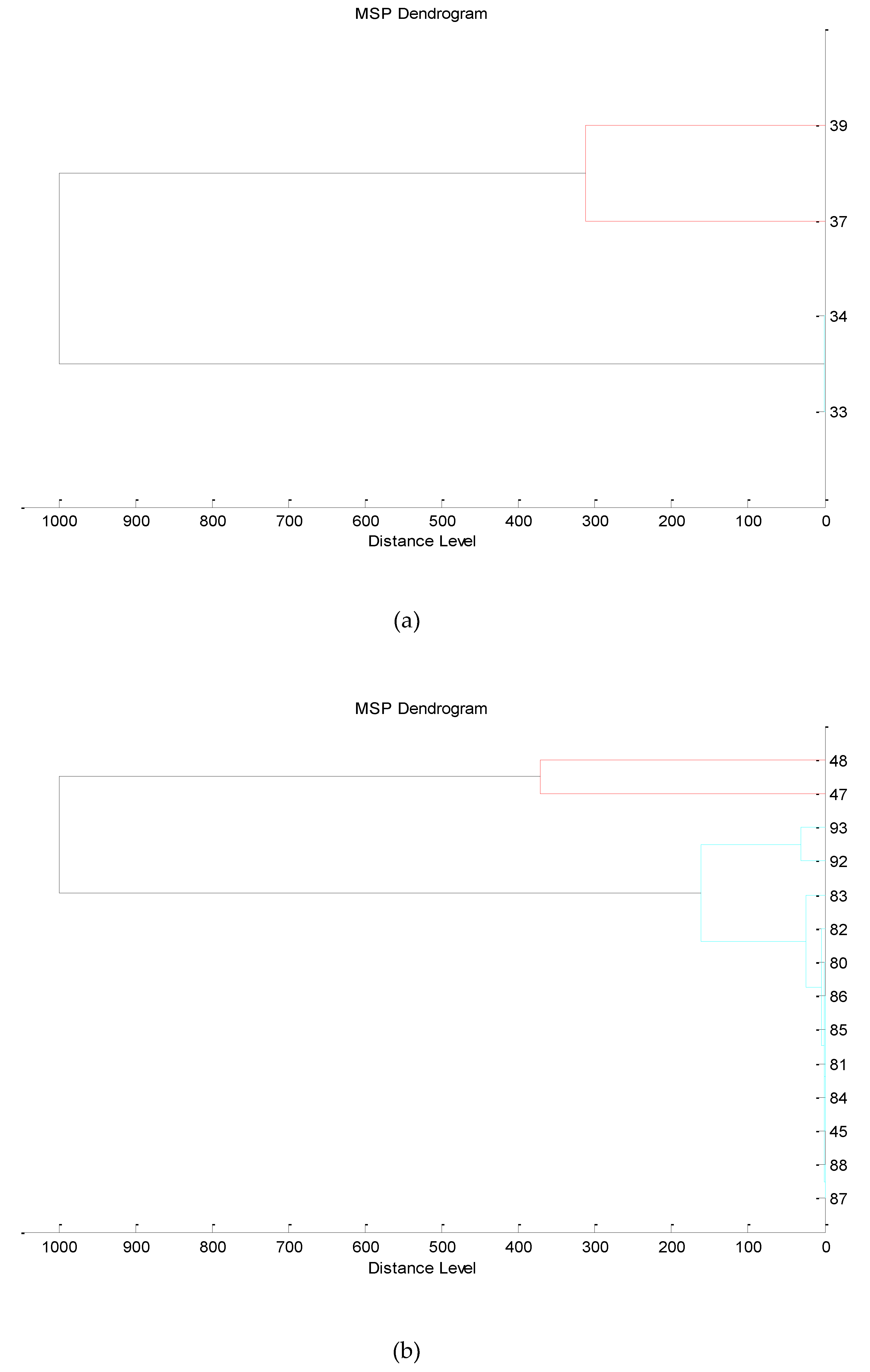
Figure 1. MSP dendrograms of Saccharomyces cerevisiae isolates from different winemaking stages, based on MALDI-TOF MS profiles. (a) Initial must: low diversity, two closely related clusters. (b) Fermenting must: one dominant cluster with distinct isolates (e.g., 47, 48), indicating strain-level variation. (c) Ufiltered wine: higher diversity and complex clustering, suggesting persistence or emergence of diverse strains. Distance levels represent proteomic dissimilarity; lower values indicate greater similarity.
Preprints 172936 g001aPreprints 172936 g001b
Figure 2. Principal Coordinates Analysis (PCoA) of Wine Microbial Communities Based on Bray–Curtis Dissimilarity.
Preprints 172936 g002
Table 1. Mean counts (log CFU/g ± standard deviation) of bacterial groups from five prematured grape samples.
Prematured grape varieties and regions Microbial groups/Substrate
Lactococci (M17 agar) Lactobacilli (MRS agar) Yeasts (PDA agar) Yeasts (WORT agar
Roditis Mourko 1.00±0.29 <DL 1±0.00 1.16±0.27
Malagouzia Raches <DL <DL <DL <DL
Malagouzia Damaki <DL <DL <DL <DL
Limniona Zisi 1.39±0.36 <DL 1.44±0.42 <DL
Limniona Polia 1.10±0.74 1.33±0.28 1.50±0.87 1.83±1.44
Values presented are the mean value ± SD (n = 3). Abbreviation: DL (Below Detection Limit): DL was 1.0 log cfu/g.
Table 2. Mean counts (log CFU /g ± standard deviation) of bacterial groups from sequential sampling stages during the winemaking process, specifically involving the Limniona grape variety.
Sampling stages Microbial groups
Lactococci (M17 agar) Lactobacilli (MRS agar) Yeasts (PDA) Yeasts (WORT agar)
Mature grapes (Limniona) 4.62±0.02 4.59±0.05 5.35±0.06 5.25±0.07
Initial must (Limniona) 4.24±0.06 4.25±0.07 4.28±0.09 4.28±0.07
Fermenting must (Limniona) 7.49±0.09 7.68±0.27 7.50±0.04 7.65±0.39
Wine sample (Limniona) 5.07±0.13 4.95±0.02 5.11±0.13 4.40±0.67
Values presented are the mean value ± SD (n = 3).
Table 3. MALDI-TOF identification results and range of identification score values for 68 isolates from key stages of the winemaking process.
Sample Identification Number of isolates Range of identification score values
Mature grapes (Limniona) Candida lusitaniae 6 1.850-2.084
(2 isolates < 2.000)
Bacillus amyloliquefaciens_ssp_plantarum 3 1.834-1.99
Staphylococcus epidermidis 2 1.934-2.077
(1 isolate < 2.000)
Candida krusei 2 2.043-2.079
Initial must (Limniona) Saccharomyces cerevisiae 4 1.780-1.936
(4 isolates < 2.000)
Serratia marcescens 2 2.131-2.298
Klebsiella aerogenes 1 2.204
Fermenting must (Limniona) Saccharomyces cerevisiae 14 1.754-2.011
(11 isolates < 2.000)
Serratia marcescens 1 2.273
Klebsiella aerogenes 1 2.046
Unfiltered wine (Limniona) Saccharomyces cerevisiae 23 1.793-2.004
(21 isolates < 2.000)
Table 5. Microbial composition of Limniona wine from stainless steel (inox) fermentation vessel using 16S rRNA gene sequencing.
Unfiltered wine from inox vessel Filtered and bottled wine from inox vessel
Genus Species % of valid reads Genus Species % of valid reads
Acetobacter ND 39 Burkholderia ND 34
Burkholderia ND 23.73 Acetobacter ND 17
Rhizobium ND 5.30 Rhizobium ND 6.8
Pseudoalteromonas ND 3.92 Oenococcus oeni 5.53
Bacillus ND 1.91
Lactobacillus diolivorans 1.5
ND: Not determined.
Table 6. Microbial composition of wine samples from Stainless steel fermentation vessel from the previous vintage (2024) with typical and atypical sensory characteristics, using 16S rRNA gene sequencing.
Bottled “Limniona” red wine with typical sensory characteristics Bottled “Limniona” red wine with atypical sensory characteristics Bottled “Malagouzia” white wine with atypical sensory characteristics
Genus Species % of valid reads Genus Species % of valid reads Genus Species % of valid reads
Lactobacillus ND 39 Lactobacillus ND 30.6 Lactobacillus parafarraginis 63.16
Lactobacillus parafarraginis 19.19 Lactobacillus parafarraginis 28.16 Acetobacter ND 11
Lactobacillus diolivorans 14.11 Lactobacillus diolivorans 10.17 Lactobacillus ND 2
Oenococcus oeni 1.97 Burkholderia ND 2.37 Oenococcus oeni 2.07
Burkholderia ND 1.68
ND: Not determined.
Disclaimer/Publisher’s Note: The statements, opinions and data contained in all publications are solely those of the individual author(s) and contributor(s) and not of MDPI and/or the editor(s). MDPI and/or the editor(s) disclaim responsibility for any injury to people or property resulting from any ideas, methods, instructions or products referred to in the content.
Copyright: This open access article is published under a Creative Commons CC BY 4.0 license, which permit the free download, distribution, and reuse, provided that the author and preprint are cited in any reuse.
Prerpints.org logo

Preprints.org is a free preprint server supported by MDPI in Basel, Switzerland.

Subscribe

Disclaimer

Terms of Use

Privacy Policy

Privacy Settings

© 2025 MDPI (Basel, Switzerland) unless otherwise stated