
Submitted:
26 August 2025
Posted:
26 August 2025
You are already at the latest version
Abstract
Defining and differentiating projects is a critical step for improving strategic alignment, effective resource allocation, and organizational adaptability. Although project management literature has expanded, significant gaps remain in understanding how project properties—such as scope, scale, complexity, and stakeholder dynamics—shape business outcomes. This study conducted a systematic review of 43 peer-reviewed publications (2015–2024) drawn from Scopus and Google Scholar. Eligible studies were screened against predefined inclusion and exclusion criteria, and findings were synthesized through thematic analysis of project properties, success factors, challenges, and enablers across multiple industries. The review identified a steady increase in research on project properties, peaking in 2024 (18.6%). The largest contributions came from construction (18.6%), healthcare (9.3%), and IT (9.3%), while other sectors remain underexplored. Stakeholder management (9.3%) emerged as the most cited thematic property, followed by governance and organizational context. Success factors clustered around methodological and strategic approaches (25%), organizational/human factors (20%), and tools/techniques (15%) such as Earned Value Management and AI-driven scheduling. Challenges were dominated by methodological ambiguity (25%), organizational resistance (20%), and external uncertainties (20%), with additional barriers linked to technical/data-related issues and stakeholder misalignment. Recommendations emphasized clarity and standardization (25%), strategic planning tailored to context (25%), and agile/flexible practices (20%), alongside leadership, collaboration, and technical innovations. The findings confirm that project definition and differentiation play a multi-dimensional role in organizational success. While methodological clarity and stakeholder alignment remain recurring challenges, the adoption of agile practices, contextual tailoring, and standardized frameworks are critical for improving project outcomes. Stronger integration of sustainability, governance, and technology-driven tools is recommended to address persistent gaps, particularly in underrepresented sectors beyond construction and IT.
Keywords:
project properties
; project differentiation
; stakeholder management
; project outcomes
; strategic alignment
; agile practices
; standardization
1. Introduction
In today’s rapidly evolving organizational landscape, the ability to define and differentiate projects based on key properties such as scope, uncertainty, and strategic relevance has become essential for optimizing performance and aligning initiatives with business goals [1]. These evolving practices have reshaped traditional project management by enabling more informed decision-making, tailored management approaches, and improved organizational outcomes [2]. Defining and differentiating projects has become an integral part of modern project-based business environments, playing a crucial role in shaping organizational efficiency and success. Recent research highlights the importance of understanding key project properties such as complexity, scope, and uncertainty and their impact on decision-making, resource allocation, and strategic alignment across various industries [3,4]. Additionally, clearly defining and differentiating projects has demonstrated significant improvements in strategic planning, project performance, and innovation elements crucial for sustaining competitive advantage in today’s competitive markets. The application of project property classification has also been explored, illustrating its relevance in various sectors by helping organizations tailor project management approaches to fit specific project types and business contexts [5,6]. Despite these advancements, a notable gap exists in understanding how project properties are comprehensively defined and applied across different business contexts [7]. Organizations, especially those operating in dynamic and resource-constrained environments, face unique challenges in managing diverse projects, making it essential to adopt clear project classification methods to improve planning, execution, and long-term competitiveness [8]. Defining and differentiating projects, which involves identifying key characteristics such as scope, complexity, and strategic relevance, has emerged as a crucial approach for enhancing organizational effectiveness and competitiveness. Yet, literature on the structured classification of projects remains limited, with much research traditionally centered on general project management practices rather than the specific implications of project properties for different business types. The increasing complexity of global markets and rapid shifts in organizational needs further emphasize the importance of adopting clear project definitions to support informed decision-making and long-term success [9]. The applicability of project classification frameworks and the challenges associated with defining and differentiating projects underscore the complexity of modern project management [10].
Moreover, the lack of standardized approaches presents significant barriers for organizations, particularly those without specialized project management capabilities or resources. Recent studies have explored various aspects of project properties, including their strategic alignment, scalability across industries, and the development of frameworks to guide effective project categorization and execution in diverse business environments [11,12]. Furthermore, insights from various industries and regions highlight the opportunities and challenges of defining and differentiating projects in diverse organizational contexts [13]. The interaction between project characteristics and business operations during periods of uncertainty has been analyzed, revealing critical factors influencing project selection, execution, and success [14,15]. This review aims to bridge existing gaps by synthesizing information from a decade of research on project properties, identifying key trends, challenges, and implications for improving project outcomes and aligning them with strategic business goals.
1.1. Research Questions
Although significant research has been conducted on project management methodologies, there remains a need for systematic analysis of how projects are defined and differentiated based on their inherent properties. Consequently, this study proposes to examine how distinct project characteristics influence their classification and what business implications emerge from these differentiations. To address this, the following research questions have been formulated:
- What factors influence the inconsistent classification of projects in organizational settings, and how can standardized frameworks improve differentiation to enhance business decision-making?
- Why are temporal and complexity-based classifications the most prevalent project differentiation frameworks in organizational practice, and what consequences does this preference have for understanding alternative property-based approaches like value-driven or stakeholder-oriented models?
- How can enterprises utilize complexity-based classification, the most widely adopted framework, to enhance project portfolio management and improve strategic decision-making in competitive business environments?
- What is the role of standardized project classification frameworks in enabling the adoption of underutilized differentiation criteria, such as innovation potential or stakeholder impact, to enhance organizational project management effectiveness?
- Given the prevalence of traditional time-cost-scope frameworks, how can scholars ensure adequate consideration of alternative project classification criteria to develop more robust differentiation models that capture the full spectrum of project properties?
1.3. Rationale
This systematic review aims to explore how projects are defined and differentiated based on their key properties, and how these differences impact business outcomes. The study focuses on understanding project characteristics like scope, complexity, and stakeholder involvement across various industries and organizational settings, since these factors play a crucial role in project success. By analysing existing research, this review will provide clear, practical insights to help businesses and policymakers better categorize and manage projects for improved results. The goal is to connect theory with real world application, making project management more effective in different economic and operational contexts. Given the growing complexity of project-based work across industries, it is essential to establish clear frameworks for defining and differentiating projects based on their fundamental properties. This review addresses the gap in current literature by focusing on peer reviewed studies published from 2015 to 2025, systematically analysing how distinct project characteristics influence business outcomes. The study aims to synthesize existing research to develop a comprehensive understanding of how project classification systems can enhance management practices and strategic decision-making across various organizational contexts and industry sectors.
1.4. Objectives
The main goal of this systematic review is to examine and summarize existing research on how projects are defined and differentiated based on their key properties. The study focuses on identifying the unique characteristics of projects and their impact on business decisions, performance, and strategy. By analysing these distinctions, the review aims to clarify how different project types of influence management practices, resource allocation, and overall organizational success. Ultimately, this research provides insights into the role of project properties in shaping business outcomes across various industries. Additionally, this systematic review seeks to assess how organizational context and industry-specific factors influence the classification and management of projects, recognizing that different business environments may require distinct approaches. By thoroughly examining these dimensions, the study will provide practical insights for organizations on how to effectively define, differentiate, and manage projects based on their unique properties to enhance strategic decision-making and operational success. Ultimately, the review aims to offer actionable recommendations for leveraging project characteristics to drive competitive advantage across diverse business settings.
1.5. Research Contributions
This work presents a comprehensive systematic review of the defining characteristics and differentiation criteria of projects and their business implications. We highlight key unresolved issues and research challenges in the classification and management of projects across organizational contexts. Following are the principal contributions made by this research work:
- We provide a comprehensive analysis of project definition and differentiation frameworks, focusing on the systematic evaluation of project characteristics, classification methodologies, and organizational impact assessments. This examination highlights the strategic value, operational efficiency, and decision-making advantages of property-based project categorization, delivering essential insights for effective project governance and encouraging the adoption of standardized differentiation approaches across industries.
- We synthesize current scholarship on project classification frameworks and identify critical gaps in existing literature, particularly concerning the effective application of these systems across diverse organizational settings. By bridging these research gaps, we illuminate key areas requiring deeper investigation and methodological innovation, thereby advancing the field of project management studies and ensuring improved organizational decision-making and strategic project selection.
1.6. Research Novelty
The proposed research offers the following novel contribution. To the authors’ knowledge, no existing study in the literature presents a systematic review of project definition frameworks and differentiation criteria, specifically examining their inherent properties and organizational implications across diverse business contexts.
- We present a comprehensive organizational and strategic assessment of project classification systems, examining their influence on resource allocation, portfolio management, stakeholder engagement, and business value creation across various industry sectors.
- We develop innovative classification frameworks that clarify the connections between project characteristics and core business metrics, improving differentiation accuracy for strategic project selection in organization.
2. Materials and Methods
In this subsection, the study outlines the methodology used to conduct a systematic review focused on defining and differentiating project properties and analyzing their business implications. The review draws upon literature published between 2015 and 2025, with peer-reviewed sources selected from major academic databases such as SCOPUS and Google Scholar, ensuring comprehensive coverage and contributing a novel perspective to the field.
2.1. Eligibility Criteria
A systematic study of all peer-reviewed and published research relevant to the definition and differentiation of project properties, along with their implications for business performance, was conducted to provide a comprehensive examination of this evolving field. Only studies published in English between 2015 and 2025 were considered, with a carefully designed inclusion criterion applied to ensure that only research explicitly addressing these project characteristics and their strategic business impact was incorporated into the review. Consequently, only peer-reviewed research works that fundamentally converge on the definition, classification, and business implications of distinct project properties, and that include a research framework or methodology specifically addressing these dimensions, were exclusively considered. The inclusion and exclusion criteria for this study are systematically outlined and presented in Table 1 [16,17,18,19,20,21,22,23,24,25,26,27,28,29,30,31,32,33,34,35,36,37,38,39,40,41].
2.2. Information Sources
A systematic search of online academic databases was conducted to identify relevant studies for this review on defining and differentiating project properties and their business implications. The databases SCOPUS and Google Scholar were utilized for their extensive coverage of peer-reviewed literature in the field of project management and organizational strategy. Each database was thoroughly searched using a combination of keywords related to the definition, classification, and business impact of project properties, ensuring the capture of the most pertinent research articles [16,17,18,19,20,21,22,23,24,25,26,27,28,29,30,31,32,33,34,35,36,37,38,39,40,41]. SCOPUS provided access to a wide range of scientific journals and conference proceedings, while Google Scholar allowed the inclusion of gray literature and dissertations that may not be indexed in traditional databases. The search results obtained from these databases formed the core foundation of the literature review, ensuring a well-rounded and exhaustive collection of research works addressing the systematic definition, differentiation, and business implications of project properties.
2.3. Search Strategy
The literature for this research was gathered from reputable online databases, focusing on keywords that address both the conceptual and practical aspects of defining and differentiating projects, as well as their business implications. The inclusion of terms such as “project properties” and “business implications” ensured the capture of studies relevant to the subject of project management, particularly in the context of organizational outcomes. A thorough search was conducted across two main repositories: Google Scholar and Scopus. For Google Scholar, the search string used was: (“project properties” OR “project characteristics” OR “project differentiation” OR scope OR timeline OR budget OR resources) AND (“business implications” OR “organizational outcomes”). For SCOPUS, the search string used was: “project properties” AND “business implications”. This search yielded 23 papers from Google Scholar and 125 papers from Scopus after applying the 2015-2025 publication year filter. After collecting these papers, they were carefully reviewed and filtered to select only those most relevant to the research questions. This process helped narrow down the literature to the most useful and high-quality sources for this study. The figure below shows the list of online repositories that were utilized as well as the total number of results achieved before the initial screening.
2.4. Selection Process
The study selection was conducted by two reviewers, Dunjwa. L and Gongotha. H in accordance with the defined inclusion and exclusion criteria. In the initial phase, both reviewers independently screened the titles and abstracts of all retrieved records. Any discrepancies in article selection were discussed between the two reviewers until consensus was reached. This collaborative approach ensured consistency in the interpretation of the eligibility criteria [16,17,18,19,20,21,22,23,24,25,26,27,28,29,30,31,32,33,34,35,36,37,38,39,40,41]. Following title and abstract screening, potentially relevant articles were subjected to full-text review, which was again conducted independently by both reviewers. In cases where disagreement occurred regarding inclusion, the reviewers discussed the study in detail and made a joint decision. Figure 2 below shows the selection process that was made.
2.5. Data Collection Process
To ensure that the data we collected from the studies was accurate, we followed a structured approach to minimize errors and reduce bias (Molete, Olebogeng B et al., 2025). Two reviewers independently collected the data from each study under supervision of the third reviewer. Any differences in the extracted data were resolved through discussion until a consensus was reached among the reviewers. To maintain consistency across all reviewers, a standardized data extraction form was employed throughout the process. No automation tools were utilized for data extraction, ensuring that all information was manually reviewed and validated [16,17,18,19,20,21,22,23,24,25,26,27,28,29,30,31,32,33,34,35,36,37,38,39,40,41]. Data were diligently recorded and thoroughly verified to ensure precision and eliminate potential inaccuracies. In cases where study details were insufficient, an in-depth review of supplementary materials, appendices, and relevant related literature was undertaken to clarify and confirm the extracted informationIn instances where uncertainties persisted, we consulted our third reviewer, a subject matter expert, to ensure the reliability and accuracy of data interpretation. When multiple publications from the same study were identified, clear selection criteria were applied to prioritize the most relevant data, with a focus on the most recent and comprehensive reports published between 2015 and 2025. In cases where discrepancies were found between data from multiple reports of the same study we closely examined their methodologies and outcomes to resolve any inconsistencies. To maintain analytical consistency and prevent misinterpretation due to language barriers, only studies published in English were included in the review while articles in other languages were excluded as illustrated in Figure 3.
2.6. Data Items
This section presents a comprehensive overview of the data items targeted in this systematic review, emphasizing both primary outcomes and supplementary variables relevant to the definition and differentiation of project properties and their business implications. The primary outcomes include key dimensions such as project success rates, stakeholder satisfaction, alignment with strategic goals, and the influence of specific project characteristics on organizational performance [16,17,18,19,20,21,22,23,24,25,26,27,28,29,30,31,32,33,34,35,36,37,38,39,40,41]. In addition to these primary outcomes, the review also accounts for study and participant characteristics, project context, methodological approaches, organizational factors, and external influences ensuring a comprehensive contextual understanding of how different project properties are defined, categorized, and linked to broader business outcomes. This approach enables a nuanced analysis of how distinct project properties influence business outcomes across various organizational settings and conditions, offering deeper insights into their strategic relevance and practical implications.
2.6.1. Data Collection Method
Efforts were made to ensure a comprehensive understanding of how project properties impact business outcomes, and we carefully identified and defined relevant measures that capture strategic, operational, and financial dimensions influenced by these characteristics. Our approach was designed to synthesize robust evidence reflecting the transformative role of project differentiation in driving organizational success. The primary outcomes of this systematic review focused on several key domains directly related to the definition and differentiation of project properties and their business implications. One major outcome was project success, assessed through metrics such as timely completion, adherence to budget, and achievement of intended objectives. We sought all results that could demonstrate how specific project properties influence operational performance, efficiency, and resource optimization within organizations. These metrics offered valuable insights into the practical benefits of effectively defining and managing project characteristics to improve overall business processes.
Financial performance was another critical outcome, evaluated by examining changes in revenue, cost efficiency, and overall return on investment. By quantifying the economic value generated through effective project management and differentiation, this outcome offered a comprehensive perspective on how distinct project properties impact the financial stability and growth of organizations. All pertinent financial metrics reported across studies were incorporated to provide a comprehensive understanding of the economic impact associated with distinct project properties [16,17,18,19,20,21,22,23,24,25,26,27,28,29,30,31,32,33,34,35,36,37,38,39,40,41]. Strategic decision-making was assessed by analyzing the quality, timeliness, and effectiveness of decisions shaped by insights derived from project characteristics and their alignment with business objectives. We examined how decision-making processes aligned with market trends and internal data projections, highlighting the role of project properties in enabling informed leadership and enhancing strategic planning. Outcomes were collected across various metrics and timeframes to capture the comprehensive impact of these properties on organizational strategy and decision effectiveness. Customer Relationship Management (CRM) was also a key focus, emphasizing metrics related to customer engagement, satisfaction, and retention. This outcome evaluated how project properties influenced the effectiveness of customer interactions and contributed to strengthening long-term client relationships. We specifically targeted studies reporting enhancements in customer service facilitated by data-driven project approaches, gathering all relevant findings to comprehensively assess how the definition and management of project properties influence the effectiveness of CRM strategies.
2.6.2. Definition of Collected Data Variables
In addition to these primary outcomes, we carefully examined other contextual variables to provide a detailed understanding of the environments in which project properties exert their influence. These factors were essential for contextualizing the findings and appreciating the broader business implications associated with project differentiation and management. Therefore, study characteristics were collected, including details on geographical location, industry sector, and organizational size, to evaluate the generalizability of findings across varied contexts. These attributes helped contextualize the results and provided insight into the diversity and scope of the studies incorporated in the review. Participant characteristics were also documented, emphasizing information about the employees involved, such as their roles, level of expertise, and engagement with project management practices. This data was crucial for understanding the human factors that affect the effective implementation and utilization of project differentiation strategies within organizations. Additionally, intervention characteristics were detailed, including the specific project management approaches employed, their integration within organizational processes, and the breadth of their application. These details were vital for evaluating the scope and complexity of the interventions, as well as for understanding their overall impact on organizational performance and business outcomes.
Economic factors constituted another important consideration, focusing on financial elements such as initial costs, ongoing investments in project management initiatives, and the returns generated from these efforts. These factors were essential for assessing the economic feasibility and long-term sustainability of project differentiation strategies within organizations. Finally, external factors such as market conditions, competitive dynamics, and regulatory frameworks were taken into account to offer a holistic understanding of the environmental influences shaping the adoption and effectiveness of project properties in business contexts. As detailed in Table 3, our approach involved comprehensive manual searches across leading academic databases including Google Scholar and SCOPUS to identify the most pertinent studies. These manual searches were carefully designed to capture the most relevant and precise information, ensuring that our analysis remained focused on the definition, differentiation, and business implications of project properties.
2.7. Study Risk of Bias Assessment
In the reviewed studies especially those investigating the impacts of project properties on business performance it was crucial to critically assess the risk of bias to ensure the reliability and validity of the findings. To achieve this, we utilized the Newcastle-Ottawa Scale (NOS) for evaluating non-randomized studies, including cohort and case-control designs, providing a structured framework for quality appraisal. The Newcastle-Ottawa Scale (NOS) assesses studies across three main domains: Selection, Comparability, and Outcome (for cohort studies) or Exposure (for case-control studies). Each study was rated using a star-based system, with a maximum of one star assigned for each item under the Selection and Outcome/Exposure categories, and up to two stars awarded for the Comparability domain to reflect the study’s ability to control for confounding variables. This scoring system reflects the overall methodological quality of each study. As illustrated in Figure 4, the risk of bias assessment was conducted by four independent reviewers, each evaluating the studies separately to ensure objectivity, minimize individual bias, and enhance the credibility of the quality appraisal process. Disagreements among reviewers were addressed through collaborative discussions to reach a consensus. When consensus could not be achieved, the third reviewer was consulted to provide a final judgment. For studies with ambiguities or limited information especially those involving proprietary data mining tools or specialized business intelligence applications additional steps were taken, including reviewing supplementary materials and, where possible, contacting authors for clarification to ensure the accuracy and completeness of the risk assessment. This process involved cross-referencing reputable sources such as Google Scholar and SCOPUS to resolve uncertainties and validate study details. Additionally, a comprehensive manual search of online repositories was conducted to minimize selection bias and enhance the accuracy and thoroughness of the risk of bias assessment. No automation tools were employed, ensuring that all evaluations were conducted manually for greater control and precision.
2.8. Synthesis Methods
Figure 5 illustrates the systematic approach adopted in this review, which investigates the defining characteristics and distinguishing properties of projects, along with their broader business implications. The process begins with the Study Selection Phase, where studies are identified and screened based on predetermined eligibility criteria to ensure alignment with the objectives of the review. Next, Data Standardization is undertaken to ensure uniformity by cleaning and converting the collected data, allowing for consistent interpretation across studies. In the Data Analysis phase, the standardized data is organized into tables and figures, enabling a clear presentation of findings and facilitating initial analyses focused on identifying key project properties and their associated business implications. The flow then moves to Heterogeneity Assessment, where we examine the variation in study outcomes through subgroup or sensitivity analyses to understand how different project properties influence results. Finally, Bias Assessment is conducted to identify any methodological biases and ensure that transparency and reliability are maintained throughout the review. This structured process supports a comprehensive and trustworthy examination of project definitions and their associated business outcomes.
In this systematic review on the definition and differentiation of projects, we employed rigorous synthesis methods to ensure that our findings were comprehensive, transparent, and reproducible. To determine the eligibility of studies for synthesis, we carefully tabulated the defining characteristics of each project and compared them against our established thematic synthesis categories. This approach allowed us to include only the most pertinent studies, ensuring that our findings were both credible and consistent with the overarching goals of the review. In preparing the data for synthesis, we addressed missing or incomplete project descriptors through imputation techniques and performed necessary data transformations to ensure consistency across all selected studies. The results were then presented using a combination of structured tables and comparative visual plots, which offered a clear representation of project property effects and contextual variations, allowing us to identify consistent trends and notable deviations across the studies.
The synthesis of results was conducted using a random-effects meta-analysis model, with subgroup analyses specifically targeting project types and industry sectors to understand their influence on business outcomes. This approach provided nuanced insights into how these contextual factors shape project performance and strategic impact, which were further examined through subgroup analyses and meta-regressions. These analyses helped us identify potential sources of heterogeneity, such as project scale or business sector, and refine our understanding of how these factors influence project outcomes. Additionally, sensitivity analyses were conducted to evaluate the stability of the synthesized results, ensuring that our conclusions were supported by consistent and reliable evidence. Through this comprehensive approach, we were able to deliver a meaningful synthesis of evidence, offering valuable insights for stakeholders seeking to understand how project properties influence business performance and strategic decision-making.
2.8.1. Eligibility for Synthesis
To determine study eligibility for inclusion in our systematic review on project properties and their business implications, each study was carefully evaluated for its relevance and alignment with the review’s objectives. We manually assessed and compared each study’s characteristics such as project types and outcome measures against our predefined synthesis categories. A matrix was developed to visually compare the scope and methodologies of the studies against our inclusion criteria, ensuring a thorough and objective evaluation. This process guaranteed that only studies directly relevant to project properties and their business implications were included, thereby strengthening the rigor and reliability of the review.
2.8.2. Data Preparation for Synthesis
In this review, the methods involved converting and standardizing data extracted from various studies to ensure consistency prior to synthesis. For instance, when project outcome measures were reported using different metrics, appropriate transformations were applied to harmonize the data onto a common scale for comparative analysisAdditionally, addressing missing data was a crucial part of the analysis. Missing summary statistics, such as variances or effect measures, were estimated using established statistical techniques like multiple imputation. This approach ensured the dataset remained comprehensive and robust, supporting a more accurate and reliable synthesis.
2.8.3. Tabulation and Visual Display of Results
Results from individual studies and synthesis efforts were systematically organized using both tables and visual representations to improve clarity and ease of comparison. Tabular formats were used to present data in a coherent structure, where project properties were categorized by theme, and within each category, studies were ranked from lowest to highest risk of bias. This organization facilitated straightforward comparison across studies and emphasized the most trustworthy evidence. Additionally, graphical techniques, particularly forest plots, were employed as the primary means of visually presenting meta-analysis findings, displaying effect estimates and confidence intervals for each study alongside an overall summary measure. The studies in the forest plots were arranged according to effect size or publication year, enabling the identification of temporal trends and variations across different project characteristics and research emphases.
2.8.4. Synthesis of Results
During our manual search of online repositories such as Google Scholar and SCOPUS, we meticulously reviewed and synthesized findings from pertinent studies. The approach to data synthesis was informed by the characteristics of the data and the extent of heterogeneity observed among the included studies. Based on the results of our search, we carefully evaluated the suitability of both fixed-effects and random-effects models, contingent on the degree of heterogeneity among study outcomes. The choice of model was guided by the data characteristics and our assumptions regarding the uniformity of project effects across studies. After exporting the data to Excel, we generated charts to visually examine the dataset, enabling the identification of variability patterns and potential heterogeneity among the studies. This preliminary visual assessment offered a comprehensive overview of differences across study findings, supporting a more detailed and nuanced analysis..
2.8.5. Exploring Causes of Heterogeneity
Subgroup analyses and meta-regressions were conducted to investigate potential sources of heterogeneity, such as variations in project types, methodologies, or outcome measures. Specific analyses focused on factors like project scale, industry sector, and geographic region, all examined to evaluate their influence on the business implications of different project properties. These approaches helped reveal underlying patterns and relationships contributing to the overall variability observed among the studies..
2.8.6. Sensitivity Analyses
Sensitivity analyses were conducted to assess the strength of the synthesis findings against various assumptions and methodological choices made throughout the review. These analyses involved examining the effects of excluding studies with a high risk of bias and applying alternative statistical models, ensuring that the conclusions were not disproportionately affected by particular studies or analytic methods (Dladla and Thango, 2025). This approach reinforced the reliability and validity of the results by addressing potential biases and confirming consistency across diverse analytical frameworks.
2.9. Reporting Bias Assessment
In conducting our systematic review on defining and differentiating projects, it was essential to evaluate the risk of bias from potentially missing results, especially those due to selective publication or outcome reporting. We acknowledged that such biases could undermine the validity and reliability of our synthesis, and therefore implemented a rigorous and systematic approach to mitigate this risk. Our evaluation of reporting bias employed a combination of established statistical and graphical techniques. We utilized contour-enhanced funnel plots, a robust visual method that enabled detection of asymmetry within the data. These plots were meticulously examined to distinguish between potential missing studies due to publication bias and those absent by random chance. The addition of statistical significance contours offered a clear and intuitive means to distinguish between bias-driven and chance-related absences, providing a strong visual framework for identifying potential reporting biases.
For this assessment, we refrained from creating novel instruments, instead relying on established, well-validated techniques widely documented in the literature. The methodological rigor of these standard tools was fundamental to ensuring the robustness of our evaluation process. Contour-enhanced funnel plots offered a clear and efficient means to visually evaluate the distribution of included studies, enabling the detection and consideration of potential biases within our systematic review (CHABALALA et al., 2024). The assessment protocol was carefully structured to reduce subjective influence, thereby preserving the credibility and integrity of our conclusions. Several independent reviewers participated in the evaluation of each study, with discrepancies in their assessments addressed through thorough consensus discussions or, when needed, by seeking guidance from a methodological specialist. This collaborative process guaranteed that the interpretation of findings remained objective and well-rounded. In this review, we deliberately avoided the use of automation tools for assessing reporting bias, choosing instead to adopt a manual approach that involved utilizing software like Excel to generate charts and plots. This hands-on technique enabled us to meticulously analyze and visualize the data, promoting a comprehensive and nuanced examination. Through careful manual inspection, we ensured that subtle patterns and potential biases were thoroughly identified and not overlooked.
To further strengthen the validity of our findings, we performed extensive manual searches across several reputable online databases, such as Google Scholar and SCOPUS. This strategy allowed us to cross-verify information from multiple studies and sources, effectively resolving inconsistencies and enhancing the reliability of our conclusions. The thoroughness of these manual searches was essential to ensure that our synthesis reflected the most comprehensive and accurate evidence available. Considering the distinct nature of project properties and their business implications, we tailored conventional methods for assessing reporting bias to suit this particular domain. Research on project characteristics often displays unique reporting tendencies compared to other fields like healthcare or social sciences, requiring these modifications to maintain the assessment’s relevance and precision. By customizing our approach to fit the specific features of the projects analyzed, we guaranteed that our evaluation was both contextually relevant and methodologically rigorous. To enhance transparency and reproducibility, all procedures and techniques employed in our assessment have been comprehensively documented and included in the supplementary materials of this review. This dedication to openness enables other researchers to replicate our work or expand upon it in subsequent studies, thereby strengthening the overall quality and dependability of research on project properties and their business implications..
3. Results
3.1. Publication Trends by Year
The temporal distribution of the reviewed studies demonstrates a gradual but steady growth in scholarly interest on project properties and their business implications between 2015 and 2024. As shown in Figure 5, early contributions were modest, with 6 studies each in 2015 and 2016, followed by a dip to 2–4 publications annually between 2017 and 2019. Interest increased again from 2020 to 2022 (3–5 studies annually), coinciding with the expansion of digital and agile frameworks in project management research. The highest output was recorded in 2024, with 8 publications (18.6%), suggesting growing recognition of the importance of clearly defining and differentiating projects across industries.
This trend illustrates how project differentiation is evolving from a niche inquiry to a broader research priority. The sharp rise in recent years reflects stronger emphasis on agility, sustainability, and context-specific project frameworks in business and management literature.
3.2. Industry Distribution of Reviewed Studies
The reviewed literature demonstrates a diverse spread across industry sectors, though representation is uneven. As shown in Figure 7, construction projects account for the largest share (18.61%), reflecting their complexity, cost sensitivity, and prevalence in project management scholarship (Adafin et al., 2021; Lou & Parvishi, 2016). A significant portion of studies were cross-industry (16.28%) or general project management frameworks (11.63%), highlighting the theoretical and methodological orientation of much of the work (Joslin & Müller, 2016; Cicmil et al., 2017). Applied contexts such as healthcare (9.30%) and information technology (9.31%) were also prominent, underlining the increasing role of structured project practices in digital health and digital transformation initiatives (Naidoo & Verma, 2023; Rani & Dharyan, 2023). Other sectors, including environmental projects (6.98%), manufacturing (4.65%), and education (4.65%), received moderate attention, while industries such as mining, industrial design, economics, and international development were only marginally represented (≤2.33%).
This distribution indicates that while project properties and differentiation frameworks are conceptually explored across industries, the construction and IT/healthcare sectors remain central hubs of applied research, whereas other sectors remain underexplored. Such gaps signal opportunities for future investigations into how project properties influence outcomes in less-studied industries.
3.3. Thematic Dimensions of Project Properties and Challenges
The synthesis of reviewed studies highlights a diverse set of thematic emphases regarding project properties and their implications for management. Figure 8 summarizes the coded categories and their frequency. The results suggest that while most themes appear only once (2.33% each), a few critical factors emerge as more widely recognized. Stakeholder management (9.30%) is the most frequently cited property, confirming its centrality in shaping project outcomes. Closely related themes include governance, power dynamics, and cultural/structural shifts, which collectively underscore the importance of human, organizational, and relational dimensions in project differentiation. Experimental design (4.65%) also emerges as a notable category, reflecting an increased emphasis on methodological rigor in project studies. In contrast, a wide range of other themes—including project scope, project scale, complexity, sustainability integration, tool implementation, and AI-supported scheduling—each appear once but collectively illustrate the fragmented yet interdisciplinary nature of project property research.
Interestingly, contextual and environmental influences—such as market incentives, labor scarcity, dynamic market conditions, and diversity of funding instruments—are also recurrent, though under-represented individually. Their presence suggests that project properties cannot be divorced from external business and resource environments.
3.4. Reported Success Factors and Impacts
The review highlights six dominant clusters of success factors and impacts. Methodological and strategic approaches account for the largest share (25%), with agile, hybrid, and leadership-driven strategies consistently linked to adaptability, competitiveness, and sustainability. Tools and techniques (15%) such as Earned Value Management (EVM), AI-enhanced scheduling, and advanced resource allocation contributed directly to improved cost control, decision-making, and reliability. Organizational and human factors (20%) emphasize the importance of requirement definition, top management support, methodology adoption, and structured training for project teams. Financial and resource considerations (15%) remain a recurring challenge, as projects face budget strain, cost overruns, and time–resource trade-offs.
Figure 9.
Reported Success Factors and Impacts.
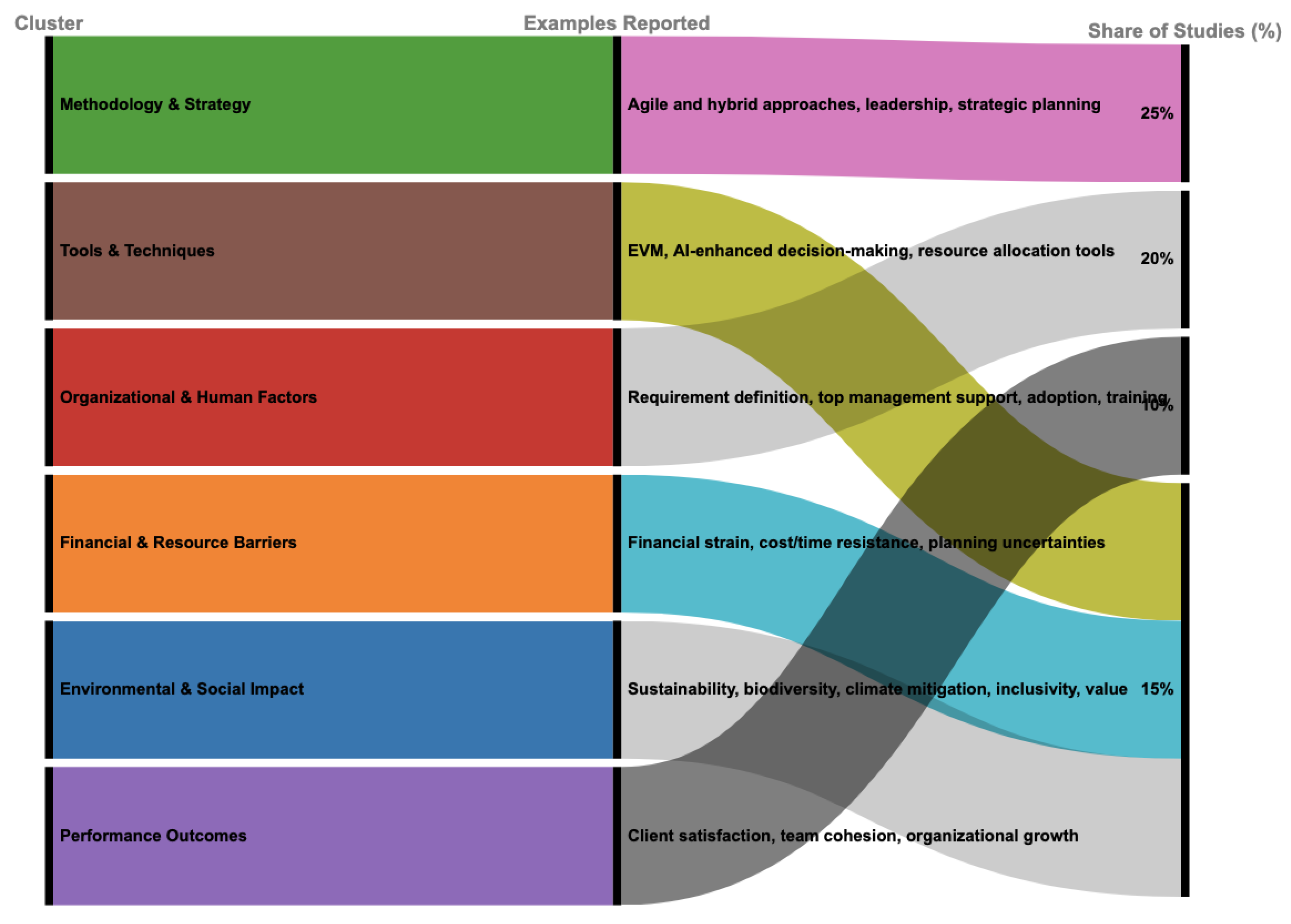
Beyond immediate organizational concerns, environmental and social impacts (15%) highlight projects’ contributions to sustainability, biodiversity, climate mitigation, inclusivity, and broader community value. Finally, performance outcomes (10%) such as client satisfaction, team cohesion, and organizational growth underline the human and relational dimensions of project success.
3.5. Reported Challenges in Project Definition and Management
The reviewed studies identified a wide range of barriers that hinder effective project definition, differentiation, and management. The most prevalent cluster relates to methodological and measurement challenges (25%), including ambiguity in defining project success, uncertainty in performance indicators, and difficulty in capturing interdependencies. These challenges limit comparability across projects and undermine robust evaluation. Organizational and human factors (20%) represent another major barrier, highlighting issues such as resistance to change, unclear roles, miscommunication, and limited top management support. These socio-technical constraints reduce the effectiveness of even well-structured methodologies. Contextual and environmental uncertainties (20%) are also significant, including rapidly changing markets, pandemics, and legal or governance complexities. These external pressures complicate alignment between project goals and business outcomes. Technical and data-related barriers account for 15%, with studies pointing to AI implementation difficulties, data quality issues, and high-dimensional optimization problems that affect scalability and model reliability.
Figure 10.
Distribution of Reported Challenges in Project Definition and Management.
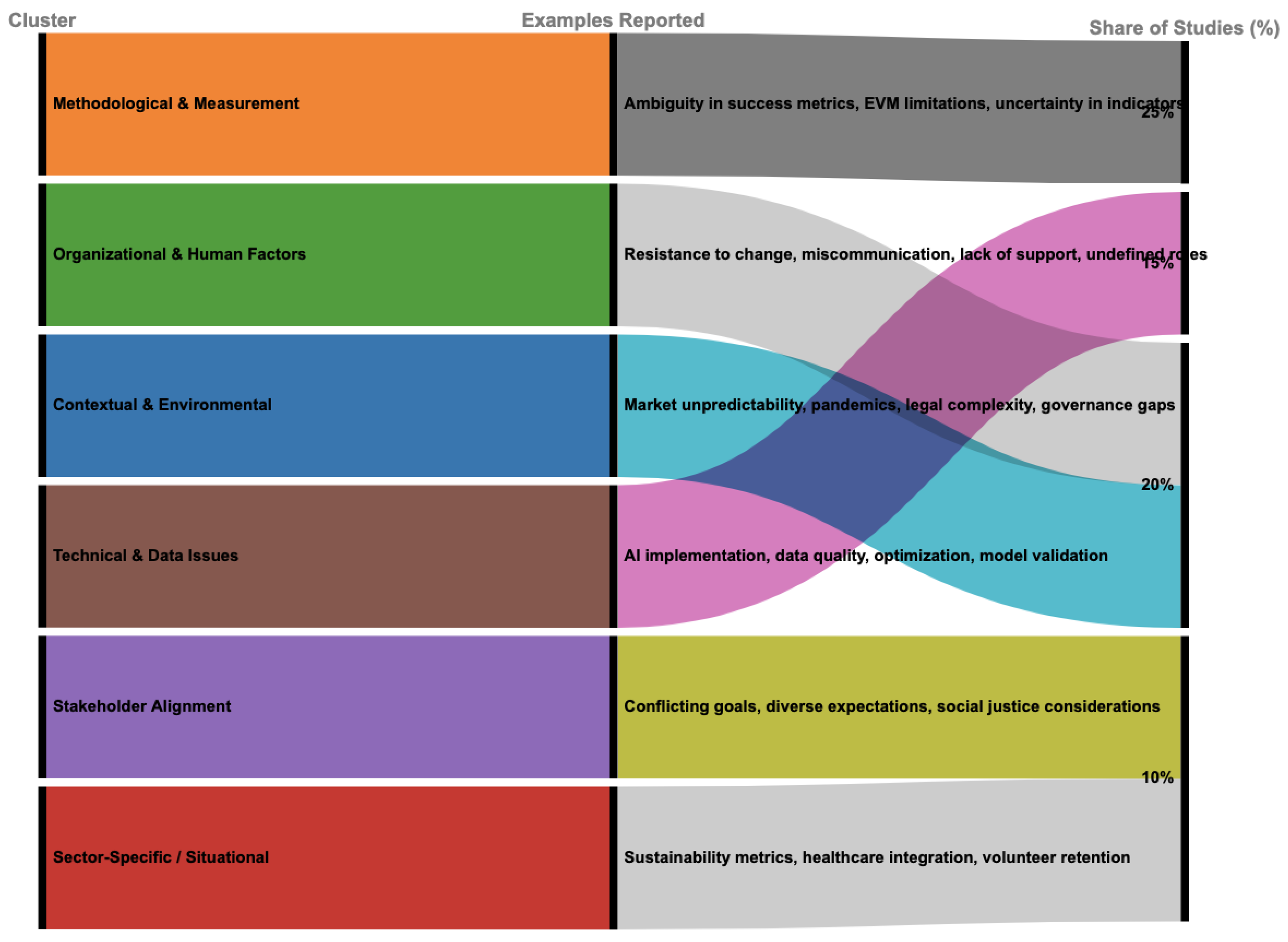
A further 10% of challenges are tied to stakeholder alignment, where misaligned goals, conflicting interests, and social justice considerations limit project cohesion. Finally, sector-specific or situational difficulties (10%), such as sustainability integration gaps, healthcare workflow constraints, and volunteer retention, highlight industry-dependent barriers to project success.
3.6. Reported Challenges in Project Definition and Management
The reviewed studies identified a wide range of barriers that hinder effective project definition, differentiation, and management. The most prevalent cluster relates to methodological and measurement challenges (25%), including ambiguity in defining project success, uncertainty in performance indicators, and difficulty in capturing interdependencies. These challenges limit comparability across projects and undermine robust evaluation. Organizational and human factors (20%) represent another major barrier, highlighting issues such as resistance to change, unclear roles, miscommunication, and limited top management support. These socio-technical constraints reduce the effectiveness of even well-structured methodologies. Contextual and environmental uncertainties (20%) are also significant, including rapidly changing markets, pandemics, and legal or governance complexities. These external pressures complicate alignment between project goals and business outcomes. Technical and data-related barriers account for 15%, with studies pointing to AI implementation difficulties, data quality issues, and high-dimensional optimization problems that affect scalability and model reliability.
Figure 11.
Distribution of Reported Challenges in Project Definition and Management.
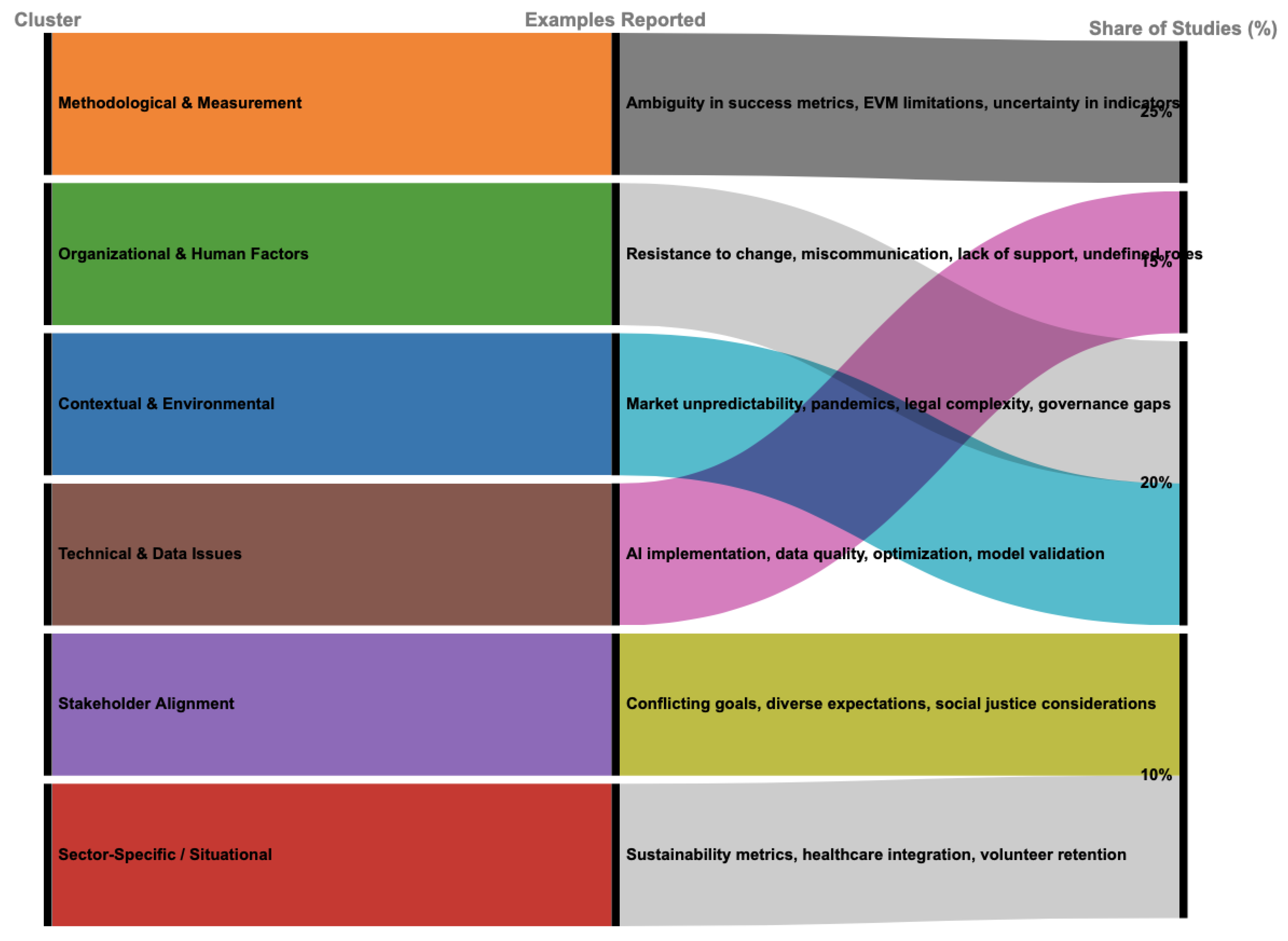
A further 10% of challenges are tied to stakeholder alignment, where misaligned goals, conflicting interests, and social justice considerations limit project cohesion. Finally, sector-specific or situational difficulties (10%), such as sustainability integration gaps, healthcare workflow constraints, and volunteer retention, highlight industry-dependent barriers to project success.
3.7. Reported Recommendations and Success Enablers
The reviewed literature provides a range of recommendations to improve project definition, differentiation, and management outcomes. The most consistent theme is the need for clarity and standardization (25%), including clear success criteria, structured reporting, standardized initiation and planning processes, and transparent documentation. These elements help ensure comparability across projects and reduce ambiguity in evaluation. A second group emphasizes strategic planning and contextual tailoring (25%). Studies highlight the importance of phased delivery, customization of methodologies to project type, and alignment with governance or organizational context. Tailored approaches ensure that methodologies remain effective across diverse project environments. Agile and flexible practices (20%) are also widely recommended. These include adopting agile principles, promoting scope adaptability, and integrating incremental approaches. Flexibility improves resilience to uncertainty and enhances responsiveness to external changes. Leadership, culture, and collaboration account for 15% of recommendations, with research stressing the role of strong organizational culture, active top management support, knowledge-sharing, and teamwork in boosting project success. Technical and methodological innovations make up 10%, advocating the use of decision-making models, fuzzy multi-criteria methods, risk-based resource scheduling, and AI-driven tools to enhance efficiency and accuracy.
Figure 12.
Distribution of Reported Recommendations for Project Success.
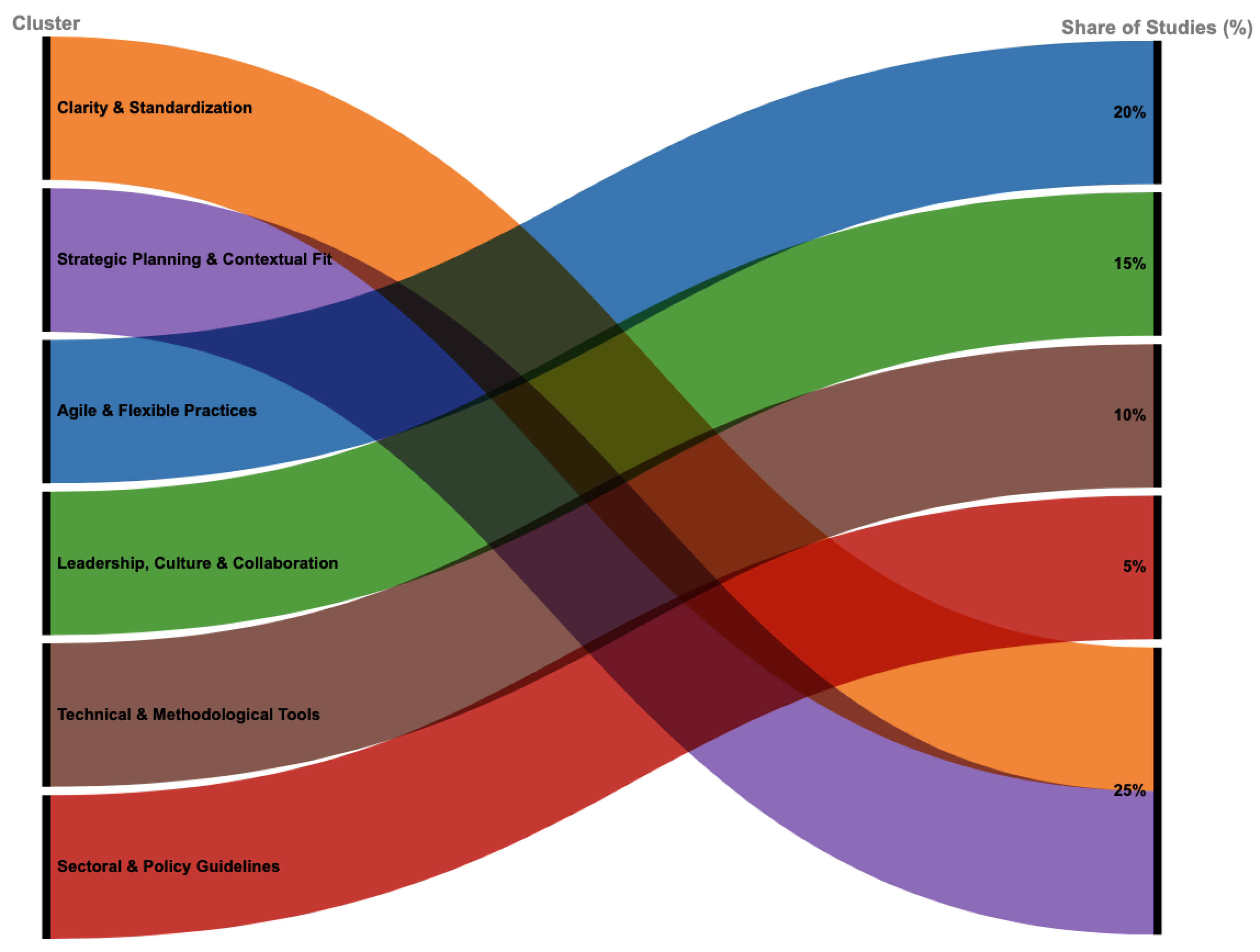
Finally, sectoral and policy-driven guidelines (5%) emphasize education policies, health regulations, and sustainability lenses that shape how project frameworks are adopted in specific industries.
4. Conclusions
This review demonstrates that defining and differentiating projects is not only an academic exercise but also a decisive factor in shaping organizational success. The temporal increase in publications highlights growing recognition of project properties as strategic levers for performance. Yet, the evidence shows persistent imbalances: construction and IT dominate research while other sectors such as education, environmental projects, and international development remain underexplored. Stakeholder management and organizational context emerged as central to shaping project outcomes, while methodological ambiguity and resistance to change remain primary obstacles. The review highlights that effective project management requires both structural clarity and adaptive flexibility—achieved through standardized frameworks, agile practices, and context-sensitive strategies. Moreover, the integration of advanced tools such as AI, fuzzy decision models, and Earned Value Management demonstrates that methodological innovation can complement traditional approaches to improve accuracy and resilience. Ultimately, success in project definition and differentiation depends on bridging methodological rigor with practical adaptability. Future research should focus on cross-sector validation, standardized measurement criteria, and longitudinal assessments of how project properties influence long-term organizational competitiveness. Such efforts will provide managers, policymakers, and researchers with robust frameworks to navigate the complexity of modern projects and align them more effectively with business strategy.
References
- Mupaikwa, E. The Adoption of Business Intelligence as a Competitive Strategy Among SMEs. Advances in Business Information Systems and Analytics, pp. 152–174, Feb. 2024. [Google Scholar] [CrossRef]
- Mezhoud, H. “Requirements of Adopting SMEs for Business Intelligence Systems,” Advances in business strategy and competitive advantage book series, pp. 125–154, Mar. 2024. [Google Scholar] [CrossRef]
- Willetts, M.; Atkins, A.S. Evaluation of a software positioning tool to support SMEs in adoption of big data analytics. Journal of Electronic Science and Technology 2024, 100229–100229. [Google Scholar] [CrossRef]
- Naznen, F.; Lim, W.L. “Conceptualizing Business Intelligence (BI) Adoption in SME to Gain Competitive Advantage: Effects of Organizational Mindfulness, Inter-organizational Relationship and Technology Orientation,” Lecture notes in networks and systems, pp. 90–100, Jan. 2023. [Google Scholar] [CrossRef]
- Kautsaf, A.; Namazee, M.; Harun, K.S. A System Implementation: Point-of-Sales (POS) System Integrated with Business Intelligence (BI) Capability Focused on SME in Indonesia. Jan. 2023. [CrossRef]
- Leite, N.; Pedrosa, I.; Bernardino, J. Open Source Business Intelligence on a SME: A Case Study using Pentaho. In Proceedings of the 2019 14th Iberian Conference on Information Systems and Technologies (CISTI), June 2019. [Google Scholar] [CrossRef]
- Gauzelin, S.; Bentz, H. An examination of the impact of business intelligence systems on organizational decision making and performance: The case of France. Journal of Intelligence Studies in Business 2017, 7. [Google Scholar] [CrossRef]
- Khan, M.K.; Sohail, M.; Aamir, M.; Chowdhry, B.S.; Hyder, S.I. Web Support System for Business Intelligence in Small and Medium Enterprises. Wireless Personal Communications 2014, 76, 535–548. [Google Scholar] [CrossRef]
- Llave, M.R. Business Intelligence and Analytics in Small and Medium-sized Enterprises: A Systematic Literature Review. Procedia Comput Sci 2017, 121, 194–205. [Google Scholar] [CrossRef]
- English, V.; Hoffmann, M. Business Intelligence as a Source of Competitive Advantage in SMEs: A Systematic Review.
- Papachristodoulou, E.; Koutsaki, M.; Kirkos, E. Business intelligence and SMEs: Bridging the gap. Journal of Intelligence Studies in Business 2017, 7, 70–78. [Google Scholar] [CrossRef]
- Topalović, A.; Azzini, A. Data Mining Applications in SMEs: An Italian Perspective. Business Systems Research 2020, 11, 127–146. [Google Scholar] [CrossRef]
- Agostino, A.; Søilen, K.S.; Gerritsen, B. Cloud solution in Business Intelligence for SMEs –vendor and customer perspectives. Journal of Intelligence Studies in Business 2013, 3, 5–28. [Google Scholar] [CrossRef]
- Adeyelure, T.S.; Kalema, B.M.; Bwalya, K.J. A framework for deployment of mobile business intelligence within small and medium enterprises in developing countries. Operational Research 2018, 18, 825–839. [Google Scholar] [CrossRef]
- González-Varona, J.M.; López-Paredes, A.; Pajares, J.; Acebes, F.; Villafáñez, F. Aplicabilidad de los Modelos de Madurez de Business Intelligence a PYMES. Direccion y Organizacion 2020, 71, 31–45. [Google Scholar] [CrossRef]
- Coleman, S.Y. Data-mining opportunities for small and medium enterprises with official statistics in the UK. J Off Stat 2016, 32, 849–865. [Google Scholar] [CrossRef]
- Mtjilibe, Tshepang and Rameetse, Emmanuel and Mgwenya, Nkosinathi and Thango, Bonginkosi, Exploring the Challenges and Opportunities of Social Media for Organizational Engagement in SMEs: A Comprehensive Systematic Review (July 06, 2024). Available online: https://ssrn.com/abstract=4998542. [CrossRef]
- Ali, S.; Khan, S.; Miah, S.J.; Miah, S.J. Analysis of Interaction between Business Intelligence and SMEs: Learn from Each Other. JISTEM - Journal of Information Systems and Technology Management 2017, 14, 151–168. [Google Scholar] [CrossRef]
- Antoniadis, I.; Tsiakiris, T.; Tsopogloy, S. Business Intelligence During Times of Crisis: Adoption and Usage of ERP Systems by SMEs. Procedia Soc Behav Sci 2015, 175, 299–307. [Google Scholar] [CrossRef]
- Meng, H.; et al. Successful Business Intelligence System for SME: An Analytical Study in Malaysia. IOP Conf Ser Mater Sci Eng 2017, 226, 012090. [Google Scholar] [CrossRef]
- Abbas, A.; Alaei, R.; Alroaia, Y.V. INVESTIGATING THE ROLE OF STRUCTURAL FACTORS IN THE PERFORMANCE OF SMES BY USING STRUCTURAL EQUATIONS TECHNIQUE. Advances in Science and Technology. Research Journal 2016, 10, 168–175. [Google Scholar] [CrossRef]
- Gupta, Ketan, and Nasmin Jiwani. A systematic Overview of Fundamentals and Methods of Business Intelligence. International Journal of Sustainable Development in Computing Science 2021, 3, 31–46. [Google Scholar]
- Ain, N.; et al. Two decades of research on business intelligence system adoption, utilization and success–A systematic literature review. Decision Support Systems 2019, 125, 113113. [Google Scholar] [CrossRef]
- Thango, B.A.; Obokoh, L. Techno-Economic Analysis of Hybrid Renewable Energy Systems for Power Interruptions: A Systematic Review. Eng 2024, 5, 2108–2156. [Google Scholar] [CrossRef]
- Selamat, S.A.M.; Prakoonwit, S.; Sahandi, R.; Khan, W.; Ramachandran, M. Big data analytics—A review of data-mining models for small and medium enterprises in the transportation sector. Wiley Interdiscip Rev Data Min Knowl Discov 2018, 8, e1238. [Google Scholar] [CrossRef]
- English, V.; Hoffmann, M. Business Intelligence as a Source of Competitive Advantage in SMEs: A Systematic Review.
- Dam, N.A.K.; Le Dinh, T.; Menvielle, W. A systematic literature review of big data adoption in internationalization. Journal of Marketing Analytics 2019, 7, 182–195. [Google Scholar] [CrossRef]
- Llave, M.R. A review of business intelligence and analytics in small and medium-sized enterprises. International Journal of Business Intelligence Research 2019, 10, 19–41. [Google Scholar] [CrossRef]
- Hamad, S.; Bakar, W. The role of ICT in knowledge management processes: A Review. International Journal of Engineering Science and Computing 2018, 8.3. [Google Scholar]
- Nethanani, Ronewa and matlombe, luzuko and Vuko, Siphethuxolo N. and Thango, Bonginkosi, Customer Relationship Management (CRM) Systems and their Impact on SMEs Performance: A Systematic Review (October 21, 2024). Available at SSRN: https://ssrn.com/abstract=4996185. [CrossRef]
- Selamat, S.A.M.; Prakoonwit, S.; Khan, W. A review of data mining in knowledge management: applications/findings for transportation of small and medium enterprises. SN Appl Sci 2020, 2, 1–15. [Google Scholar] [CrossRef]
- Sjarif, N.N.A.; Azmi, N.F.M.; And, S.S.Y.; Wong, D.H.T. A review of market basket analysis on business intelligence and data mining. International Journal of Business Intelligence and Data Mining 2021, 18, 383–394. [Google Scholar] [CrossRef]
- Jia, S.; Pan, M.; Sun, W.; Joyce, H.N.; Wang, Y.; Zheng, W. Data Mining and Business Intelligence in SME Customer Relationship Value Analysis. In Proceedings of the 2021 3rd International Conference on Artificial Intelligence and Advanced Manufacture, AIAM 2021; pp. 518–524. [Google Scholar] [CrossRef]
- Okechukwu Adewusi, A.; et al. BUSINESS INTELLIGENCE IN THE ERA OF BIG DATA: A REVIEW OF ANALYTICAL TOOLS AND COMPETITIVE ADVANTAGE. Computer Science & IT Research Journal 2024, 5, 415–431. [Google Scholar] [CrossRef]
- Lumley, J.; Chamberlain, C.; Dowswell, T.; Oliver, S.; Oakley, L.; Watson, L. Interventions for promoting smoking cessation during pregnancy. Cochrane Database Syst Rev 2009. [Google Scholar] [CrossRef]
- “EBSCO Sign In,” Ebscohost.com, 2024. https://web.p.ebscohost.com/ehost/detail/detail?vid=0&sid=bf537169-d89b-4f45-981d-439b0c52c320%40redis&bdata=JkF1dGhUeXBlPXNzbyZzaXRlPWVob3N0LWxpdmUmc2NvcGU9c2l0ZQ%3d%3d#AN=122751343 (accessed on 4 September 2024).
- Ragazou, K.; Passas, I.; Garefalakis, A.; Zopounidis, C. Business intelligence model empowering SMEs to make better decisions and enhance their competitive advantage. Discover Analytics 2023, 1. [Google Scholar] [CrossRef]
- Anantatmula, V.S. Strategies for Enhancing Project Performance. Journal of Management in Engineering 2015, 31, 04015013. [Google Scholar] [CrossRef]
- Chandrasekaran, A.; Linderman, K.; Schroeder, R. The Role of Project and Organizational Context in Managing High-tech R&D Projects. Production and Operations Management 2015, 24, 560–586. [Google Scholar] [CrossRef]
- Økland, A. Gap Analysis for Incorporating Sustainability in Project Management. Procedia Computer Science 2015, 64, 103–109. [Google Scholar] [CrossRef]
- Ngcobo, Kwanele and Bhengu, Sandiswa and Mudau, Ambani and Thango, Bonginkosi and Lerato, Matshaka, Enterprise Data Management: Types, Sources, and Real-Time Applications to Enhance Business Performance - A Systematic Review (September 26, 2024). Systematic Review | September 2024 |. Available at SSRN: https://ssrn.com/abstract=4968451. [CrossRef]
- Vahid Garousi, Ayça Tarhan, Pfahl, D., Ahmet Coşkunçay, & Onur Demirörs. (2016). Survey of Project Characteristics in Software Engineering-Questions. Figshare. [CrossRef]
Figure 1.
Bibliometric Analysis of Study Search Keywords: (a) Overlay Visualization. (b) Network Visualization.
Figure 1.
Bibliometric Analysis of Study Search Keywords: (a) Overlay Visualization. (b) Network Visualization.
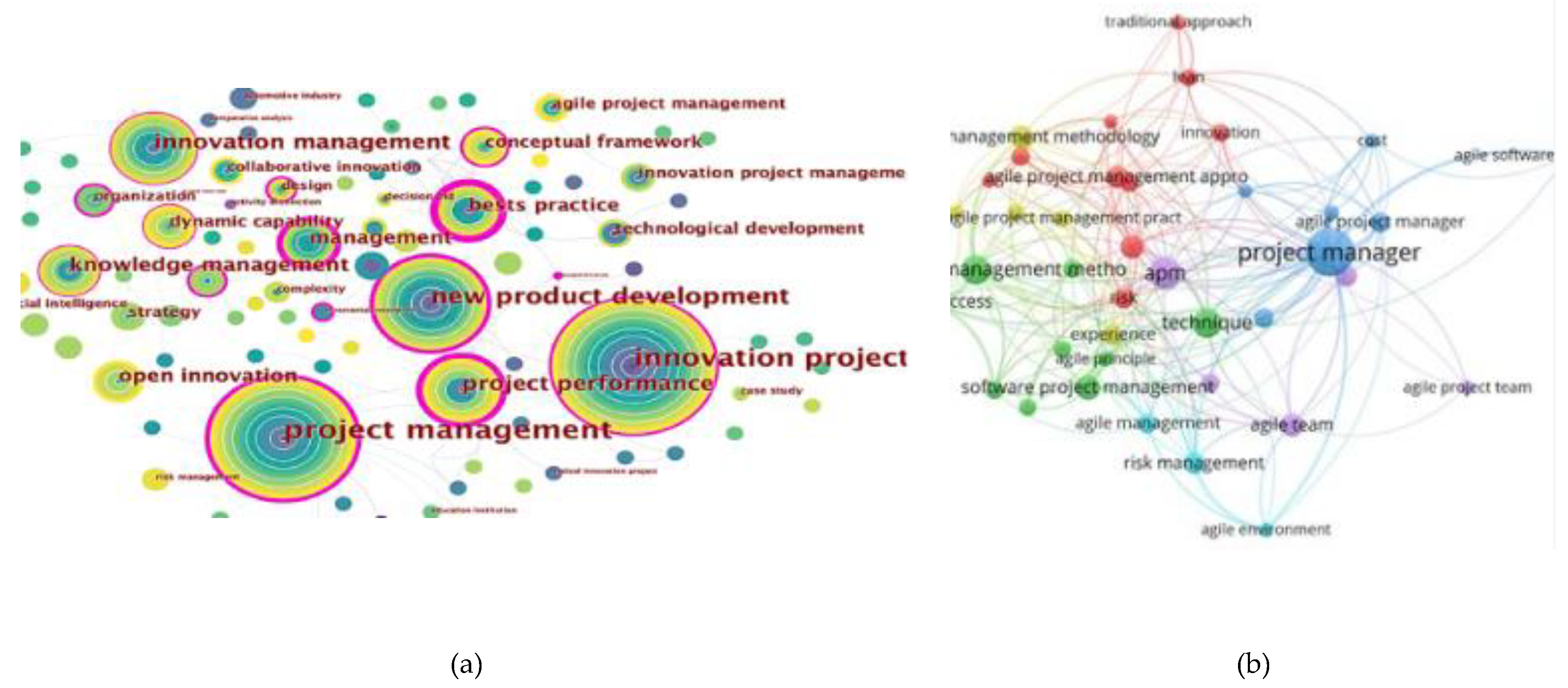
Figure 2.
Selection Process.
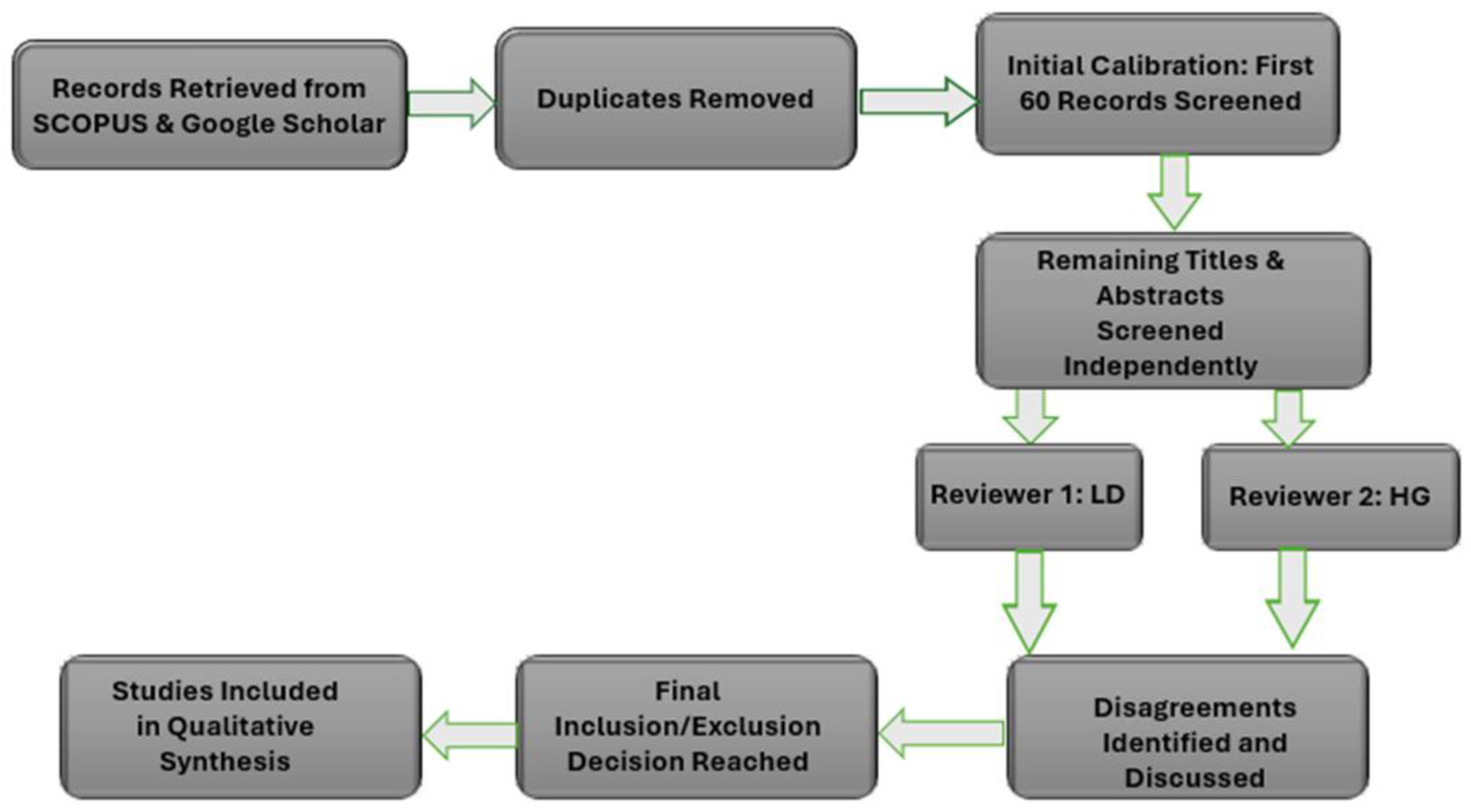
Figure 3.
Flow of Data Selection and Extraction.
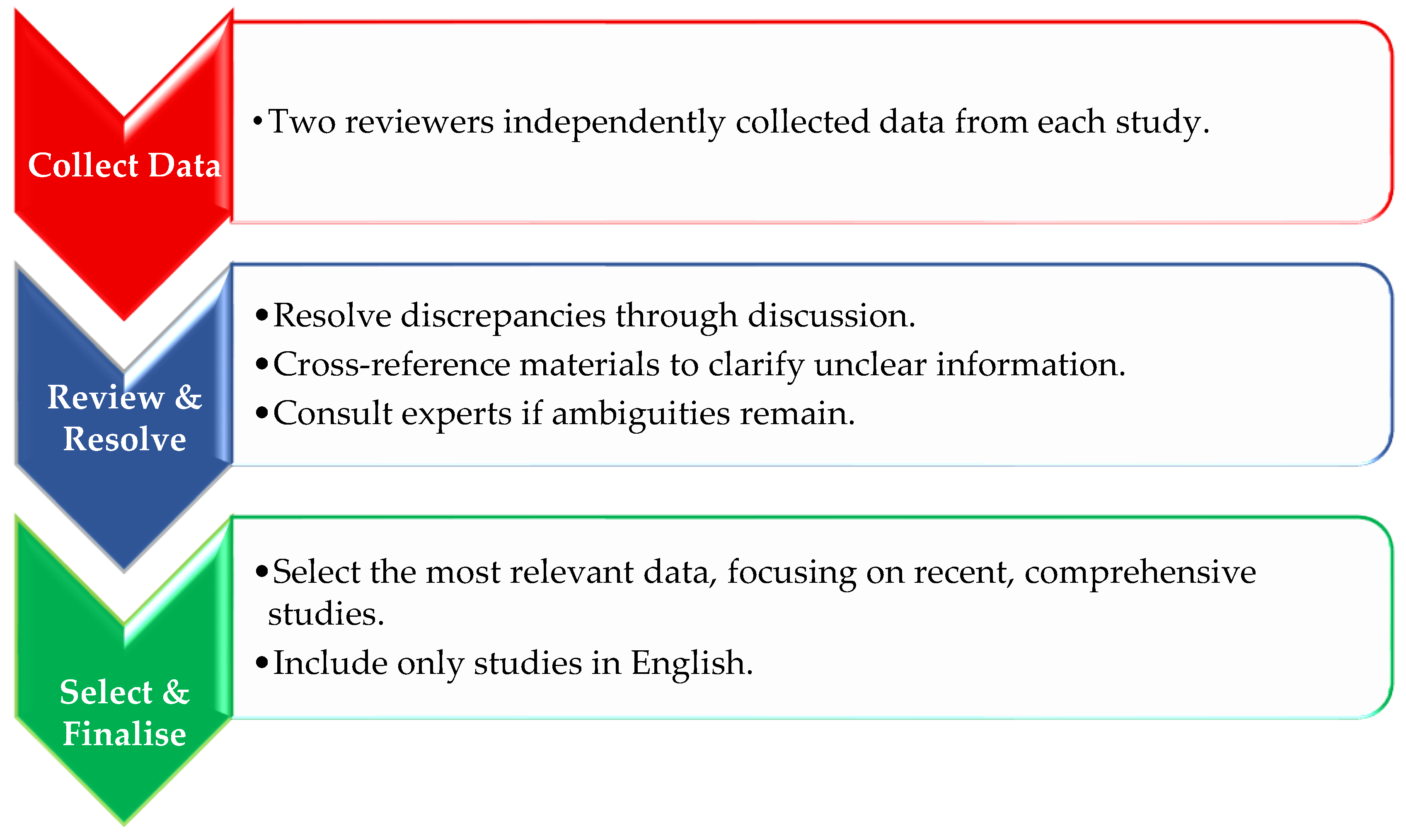
Figure 4.
Risk of Bias Assessment Process for Non-Randomized Studies.
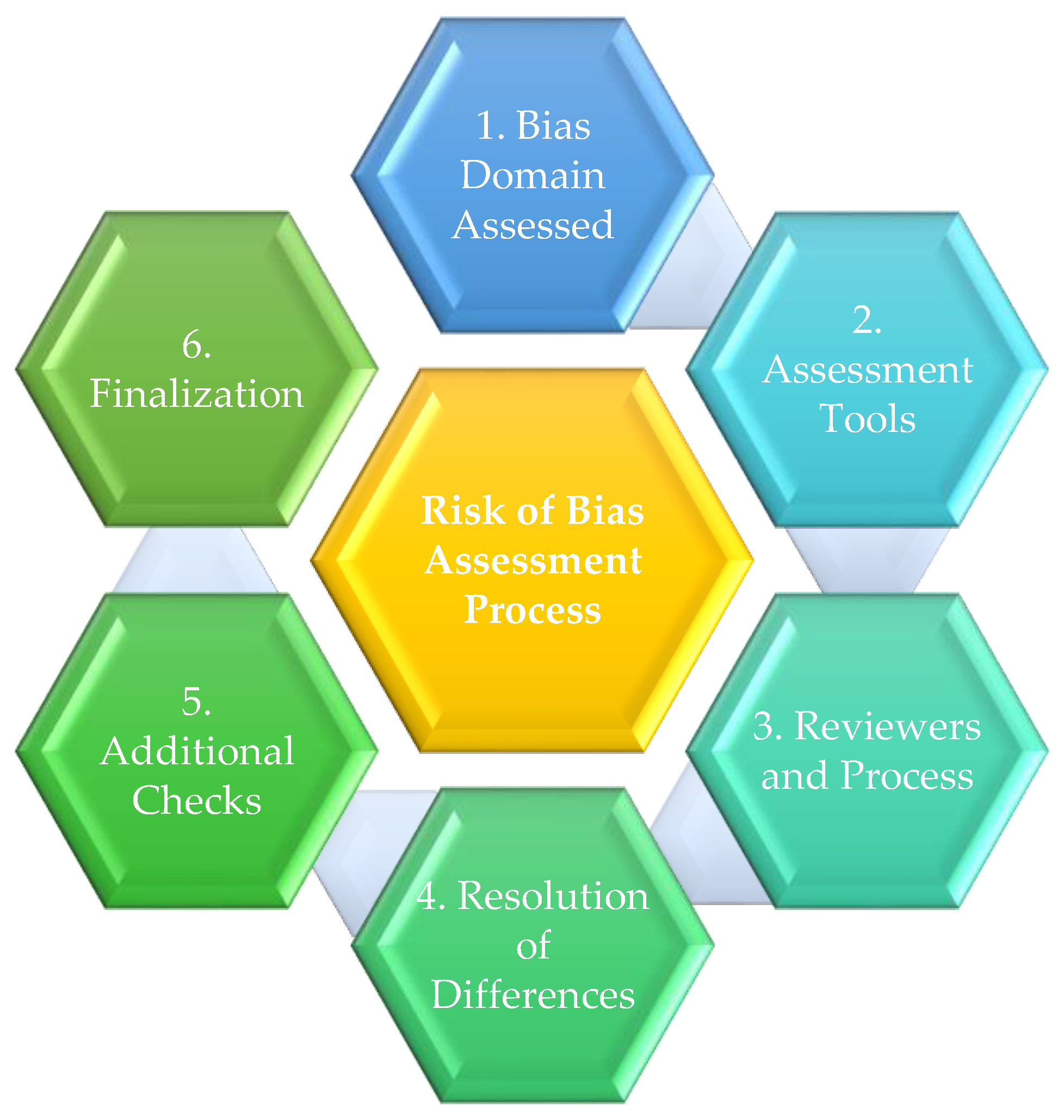
Figure 5.
Systematic Review Process for Defining and Differentiating Projects.
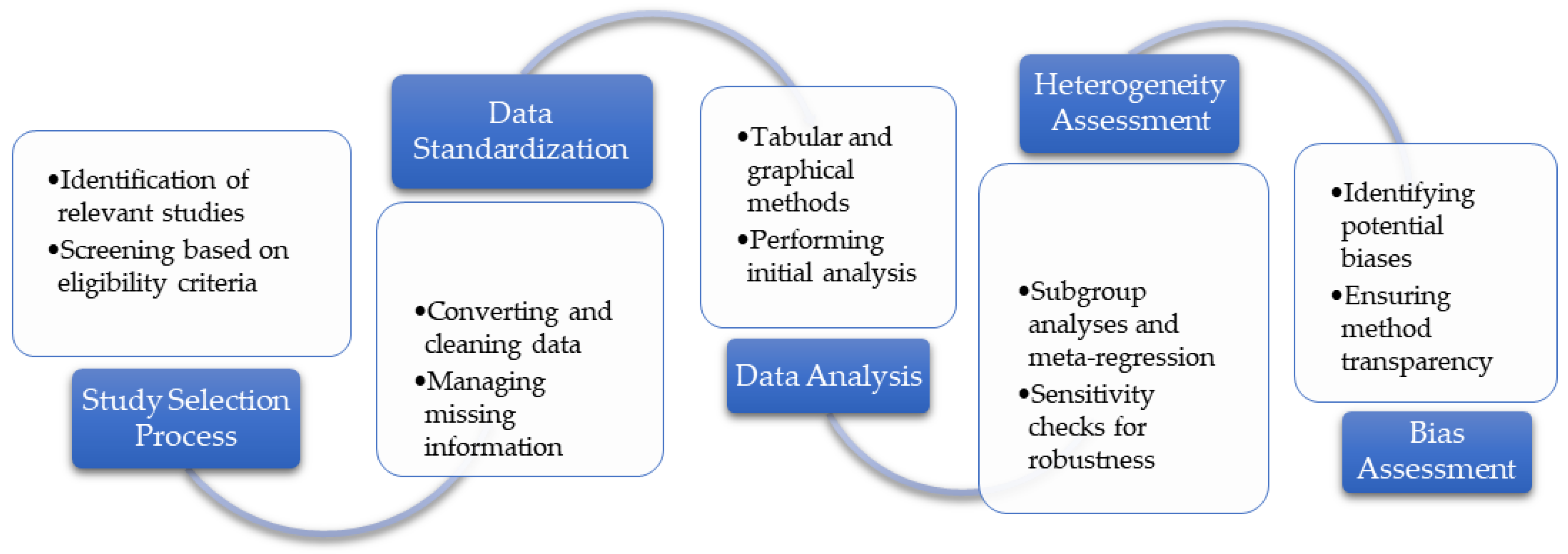
Figure 5.
Distribution of Publications by Year.
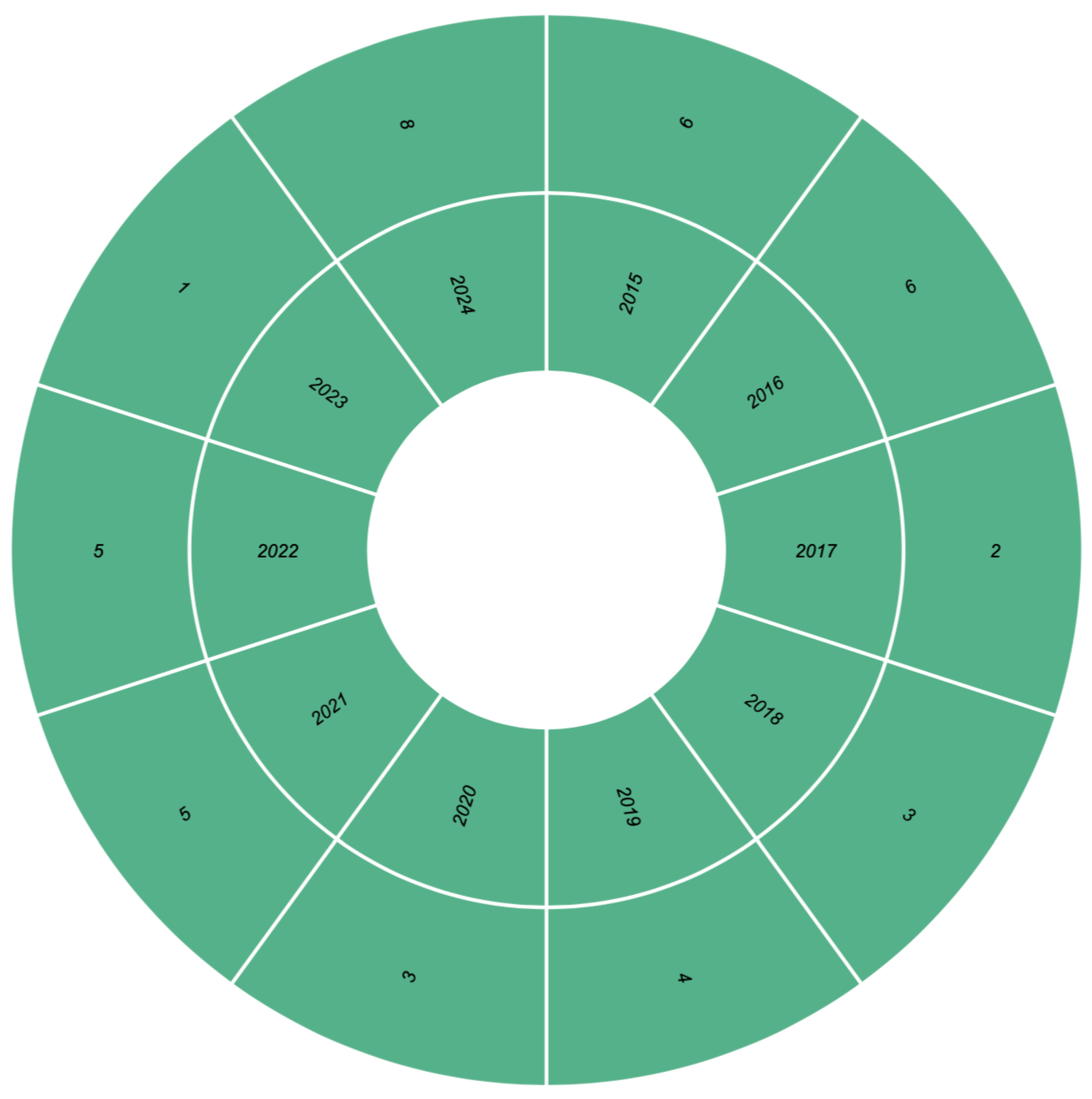
Figure 7.
Distribution of reviewed studies across industry sectors.
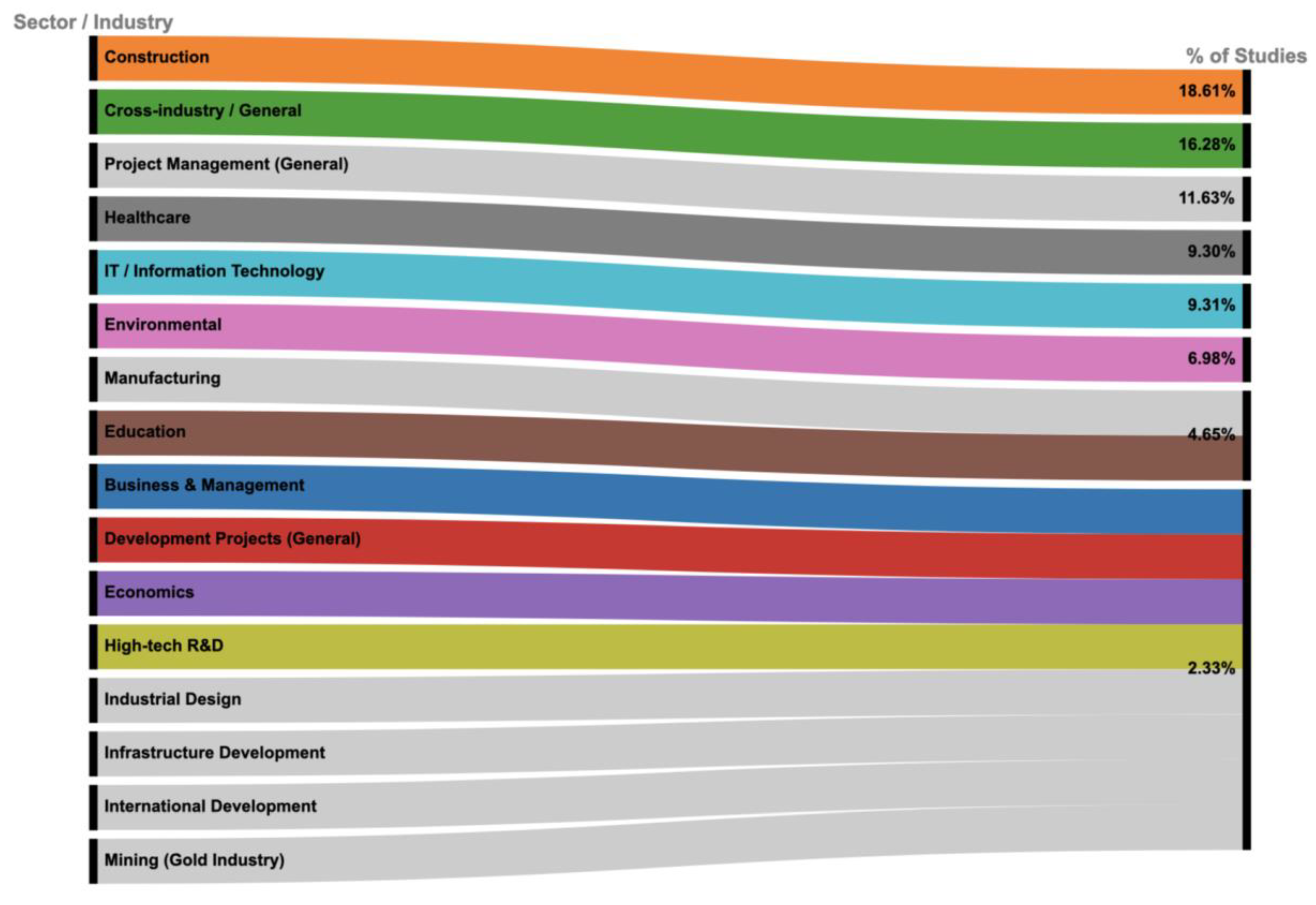
Figure 8.
Distribution of reviewed studies by thematic emphasis.
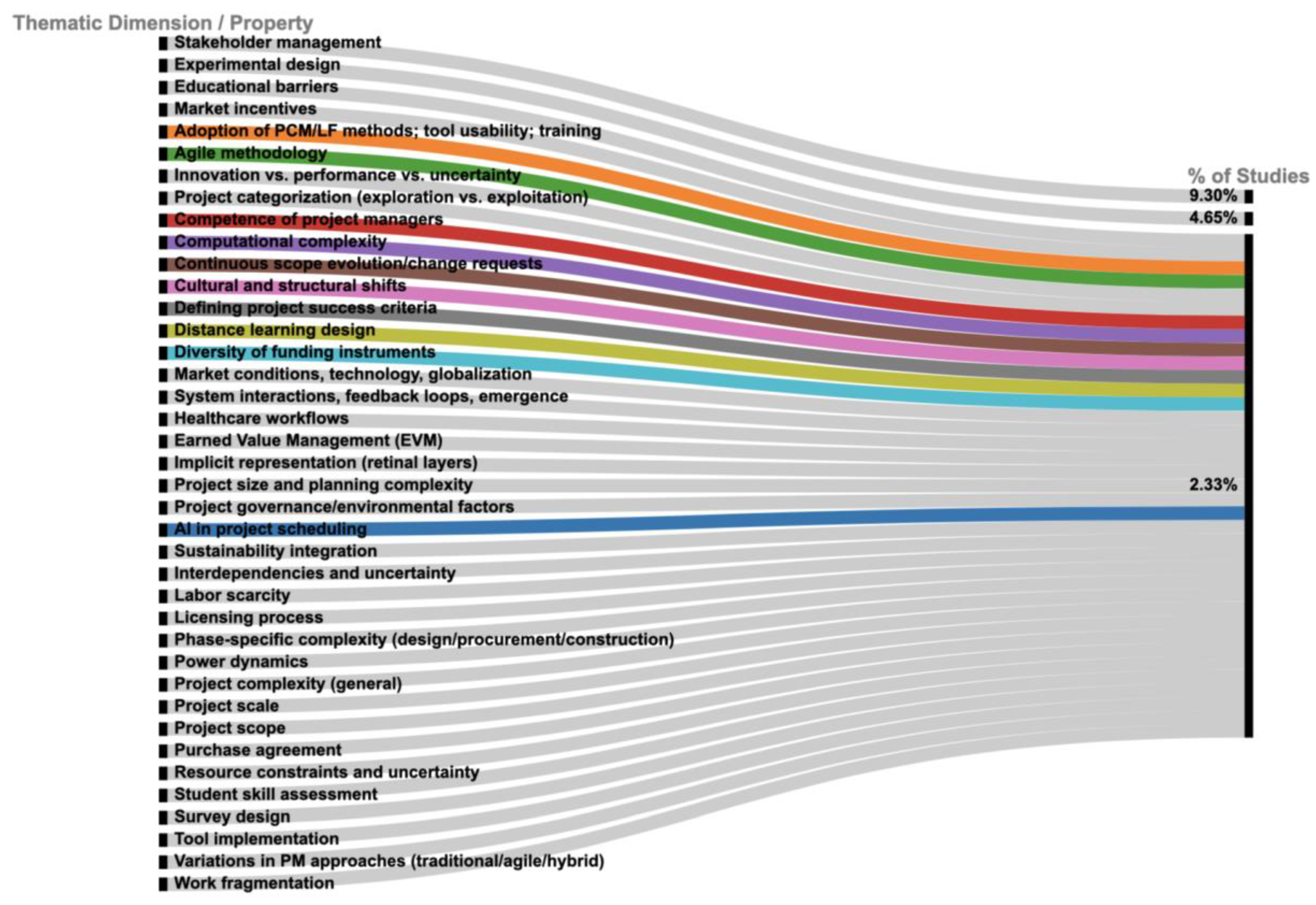

Table 1.
Proposed Inclusion and Exclusion Criteria.
| Criteria | Inclusion | Exclusion |
|---|---|---|
| Topic | Research papers focusing ON defining and differentiating projects: a systematic review of project properties and their business implications | Research papers NOT defining and differentiating projects: a systematic review of project properties and their business implications |
| Research Framework | The research papers must INCLUDE a research framework/methodology/abstract/result for defining and differentiating projects looking into a review of project properties and their business implications | The research paper must EXCLUDE a research framework/methodology/abstract/result for defining and differentiating projects looking into a review of project properties and their business implications |
| Language | Research papers MUSTBE written in English | Research papers published in languages OTHER THAN English |
| Period | Articles between 2015 to 2025 | Articles outside 2015 and 2025 |
Table 2.
Results Achieved from Literature Search.
| No. | Online Repository | Number of results |
| 1 | Google Scholar | 23 |
| 2 | Scopus | 125 |
| Total | 148 |
Table 3.
Data Variables Collected.
| Field | Description |
| Project Characteristics | Size, duration, complexity, level of innovation, stakeholder involvement, governance structure, and degree of uncertainty. |
| Project Classification or Type | IT projects, construction projects, R&D initiatives, strategic transformation efforts, and others as defined by the study authors. |
| Contextual Information | Industry sector, organizational setting, geographic location, and organizational size or maturity. |
| Study Characteristics | Study design or methodology, sample size, unit of analysis, and year of publication. |
| Funding and Conflicts of Interest | Where reported, we noted whether the study received external funding and any declared conflicts of interest. |
Disclaimer/Publisher’s Note: The statements, opinions and data contained in all publications are solely those of the individual author(s) and contributor(s) and not of MDPI and/or the editor(s). MDPI and/or the editor(s) disclaim responsibility for any injury to people or property resulting from any ideas, methods, instructions or products referred to in the content. |
© 2025 by the authors. Licensee MDPI, Basel, Switzerland. This article is an open access article distributed under the terms and conditions of the Creative Commons Attribution (CC BY) license (http://creativecommons.org/licenses/by/4.0/).
Copyright: This open access article is published under a Creative Commons CC BY 4.0 license, which permit the free download, distribution, and reuse, provided that the author and preprint are cited in any reuse.


