

Submitted:
22 August 2025
Posted:
25 August 2025
Read the latest preprint version here
Abstract
This research examines how Japan’s declining coastal fisheries can be revitalized to meet global demands for sustainable fisheries through globally- recognized certification and improvement programs. Despite numerous Marine Stewardship Council (MSC) pre-assessments, no coastal finfish fisheries in Japan have achieved certification. Based on an analysis of MSC assessment results, this study summarizes the identified management measures that must be strengthened for Japanese fisheries to meet international standards. Also, the study further performs in-depth institutional analysis to identify the root causes of these management gaps, revealing structural weaknesses in Japan’s co-management system. Four critical institutional issues were identified as barriers to effective management implementation: the absence of precautionary, coordinated stock-based management objectives; non-inclusive decision-making; weak monitoring and evaluation mechanisms; and misaligned incentives to drive resource depletion. These findings underscore the need to update the co-management framework and extend technical and financial support to coastal fisheries. To advance reform and complement government efforts, locally adapted Fisheries Improvement Program (FIP) or pathway program, supported by multi-stakeholder collaboration can provide a stepwise, cost-effective mechanism to drive the necessary environmental recovery. Certification systems and FIPs can play a central role in this process, but only if localized to embrace coastal and small-scale fisheries, which comprises 70% of Japanese fisheries. Localizing certification and improvement criteria without compromising scientific rigor can enhance feasibility and inclusiveness.
Keywords:
co-management
; fisheries management
; sustainability standards
; Fishery Improvement Project
; small-scale fisheries
; sustainable seafood
1. Introduction
As the global population grows and demand for fishery resources increases, the importance of their sustainability is becoming ever more critical (FAO, 2024). The ongoing UN Decade of Ocean Science for Sustainable Development (2021–2030), emphasize the need for “transformative ocean science” which drives societal and institutional change through transdisciplinary collaboration, stakeholder co-design, inclusive and equitable practices, and the integration of local knowledge into action-oriented solutions(UNESCO-IOC, 2020) Market-driven approaches have been introduced to incentivize producers to voluntarily engage in practices that align with management objectives and support regulations (Melnychuk et al., 2025). The growing appeal of these schemes is largely attributed to the perception that some countries do not provide responsible fisheries management (Gutiérrez et al., 2012; Pérez-Ramírez et al., 2012) or do not accurately report on sustainability (UNEP, 2009;Washington & Ababouch, 2011;Bellchambers et al., 2016), and that additional tools would drive the change to make improvement to a global standard. Although Japan is a developed country, majority of Japanese fisheries are small-scale and multi-species fisheries managed mainly through traditionally developed cooperative-based management; thus it requires a localized approach if improvement to a global standard is to be applied through a market-based approach.
Japan’s fisheries production has been in a severe decline for the past 30 years. In the 2013 growth forecast for fisheries and aquaculture production released by the World Bank, significant growth is expected in India and other parts of Asia, while Japan is the only country predicted to experience negative growth of - 9% by 2030 (World Bank, 2013). When excluding aquaculture from this analysis, it becomes evident that the situation would be even worse for wild-capture fisheries alone with -15.6% growth projected between 2010 and 2030 (Figure 1).
Nevertheless, the same World Bank report indicates that under a scenario where fisheries gradually improve their management, stock health and aquatic ecosystems by 2030, Japan would benefit the most globally with a 34% growth in catch compared to 2004 (Figure 2). This demonstrates the high potential around Japan archipelago, posing a challenge to our resource use. The study reports that if the government, fisheries resource managers, fishers, and local communities take the correct actions, it is possible to improve the productivity of stressed fisheries in many situations (World Bank, 2013). Therefore, it is crucial to understand what specific actions they should take in individual scenarios to restore marine ecosystems and resources in Japan.
This paper examines the potential for improving Japanese coastal fisheries through fisheries sustainability certification and Fisheries Improvement Projects (FIP), based on an analysis of Marine Stewardship Council (MSC) pre-assessment and full assessment results. The study employs the MSC Fisheries Standard as the benchmark for evaluation, as it is widely seen as the most rigorous and credible certification scheme available, closely aligned with the FAO Code of Conduct for Responsible Fisheries and its associated guidelines for ecolabelling of fish and fishery products from marine capture fisheries (FAO, 2009; Gulbrandsen, 2009).
MSC pre-assessments are known to provide valuable insights into areas that require improvement (Rasal et al., 2024). In 2021, Wakamatsu et al. has analyzed Japanese MSC pre-assessments conducted in the past decade by third-party experts, covering various types of coastal fisheries, representing the first collective, evidence-based analysis of Japan’s coastal fisheries against international standards (Wakamatsu and Sakai, 2021). However, this research has not explored the root cause behind why Japan’s historically well-regarded co-management system, has led to the overall failure to meet the MSC’s sustainable fisheries standard.
Using an empirical approach, this study draws from the author’s decade of engagement as an MSC auditor to externally conduct MSC pre-assessments and full assessments (totaling 52 reports) as a member of various MSC assessment teams, as well as some fisheries improvement consulting in Japan. This research examines why Japanese coastal fisheries fail to pass, by identifying commonly observed management practices that contribute to weak Performance Indicators (PIs), based on author’s field observations and stakeholder interviews conducted during assessment processes. Finally, it proposes what and how improvements are needed to achieve sustainable fisheries in Japan.
In section 1 this paper first consolidates the key bottlenecks identified in past MSC pre-assessment and full assessment audits as a gap analysis in terms of current management measures implemented in Japan. Since Wakamatsu et al.(2021) had already summarized the common weak PIs to see if Japanese fisheries qualify MSC certification, translating the identified weak PIs to management performances observed will be useful to understand the needs for future improvements (section 2). Section 3 analyzes the root causes on why these gaps emerge by looking into institutional factors that constitute Japanese co-management system. Key shortcomings observed in the co-management system and limitations of domestic certification system are discussed. In section 4, Lessons from global practices on how these gaps can be filled are introduced to propose effective solutions, including use of certifications and Fishery Improvement Projects (FIPs). Background history of Japanese fisheries governance has been added to provide reference from the historical contexts in institutional issues.
2. Methodology - Gap Analysis of Japanese Coastal Fisheries with MSC Standards from Past Assessments
2.1. MSC Certification Assessment in Japan
The MSC Fisheries Standard v2.0 evaluates fisheries across 28 criteria grouped under three principles: Principle 1 (Stock Status), Principle 2 (Environmental Impact), and Principle 3 (Management System). These principles are intricately interrelated to function in a complementary manner. Notably, Principle 3 is evaluated based on its capacity to support the fulfillment of Principles 1 and 2. The standard requires not only alignment with international agreements like UNCLOS (1982) and the FAO Code of Conduct (1995), but also demonstration that the actual situation in a fishery meets the outcome implied by this intent (Agnew et al., 2014).
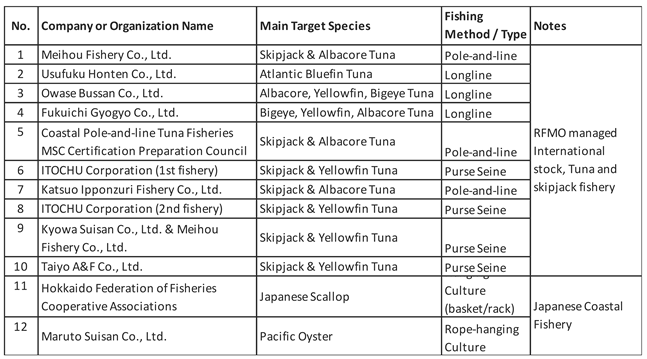
As of now, 12 Japanese fisheries are MSC-certified—10 are tuna/skipjack fisheries managed under both RFMOs and Japanese authorities, while only 2 are coastal fisheries, which are both sedentary shellfish fisheries (oyster and scallop) and certified under MSC’s specific “catch-and-grow” standard. One coastal fishery under domestic management was once certified but subsequently withdrew from the program. As a result, no coastal finfish fishery in Japan is currently certified, although many have undergone preliminary assessments since 2013.

Table 1.
List of MSC-certified fisheries in Japan as of July 2025.
 |
Wakamatsu et al. (2021) analysed 53 pre-assessed fisheries from 2015–2018. They found that 40% did not meet MSC’s stock status requirements (Principle 1), though improvements could be realized through adopting more conservative harvest strategies. In Principle 2, many lacked sufficient data on environmental impacts, including bycatch and habitat effects.
Principle 3 (management system) appeared relatively strong, with only one fishery failed in this principle, thus it was concluded as a strength in fisheries in Japan. Nevertheless, the research further asserts that even in P3, the Japanese pre-assessed fisheries have much room for improvement since the globally MSC-certified fisheries achieved significantly higher scores, particularly in consultation, decision-making, and performance evaluation (PI 3.1.2, 3.2.3, 3.2.4). A detailed examination of how these weaknesses contribute to failures in other principles contributes to future improvement.
2.2. Certification and Improvements Barriers
Between 2013 and 2023, the author participated in 17 MSC fishery pre-assessments covering 66 species across Japan. Most were small-scale, multi-species, multi-gear coastal fisheries under governor-issued permits or common fishery rights. While pre-assessments provided valuable insights, only two fisheries advanced to full assessment, and only one (an oyster fishery) was eventually certified.
Despite past MSC pre-assessments revealing clear opportunities for improvement—particularly for coastal fisheries—progress often stalled due to difficulties in interpreting technical results in English reports for Japanese clients and the absence of a support system for implementing required improvements. While conditions requiring improvement are common globally and intended to foster progress (Hønneland, 2020), in Japanese coastal fisheries, such findings often led to discontinuation of the certification process, with little follow-up on conditions. This is due to an absence of a realistic, localized system that drives fisheries improvements including technical and funding support, supported by government and market cooperation for coastal fisheries. Without an effort to create such a system, even if consumer awareness on MSC increases, it would primarily benefit certified imported or internationally managed fisheries, while Japan’s own fisheries risk being left behind as the world moves towards more sustainable practices.
Internationally, FIPs are expanding, with 341 FIPs operating in 2024, 43% covering the artisanal sector, and small-scale, multi-species fisheries (Levine et al., 2020). FIPs come with a structured and supportive process where fisheries develop a Fisheries Improvement Plan to address specific weaknesses identified from 3rd party assessments, with its feasibility and effectiveness ensured. Given structured support, Japan’s pre-assessed fisheries could be promising FIP candidates. The motivations behind fisheries in Japan applying for pre-assessment varied, but most were driven by the strong will or leadership of individuals in fishery or seafood companies, based on a combination of perceived benefits, such as business opportunities, increased market visibility, ecosystem and long-term sustainability of fisheries and businesses. However, even to begin the preassessments, lack of funding and stakeholder consensus frequently blocked progress. With a stronger support structure for improvement, more fisheries could have pursued certification and improvements.
2.3. Domestic Perceptions and Certification
Within Japan, some argue that MSC standards are poorly suited to the nation’s complex, multi-species fisheries and that the top-down model assumed by MSC doesn’t align with Japan’s co-management system (JFA, 2018). Although this view was denied as there are also small-scale, multi-species MSC certified fisheries globally, high cost of assessments was considered prohibitive to small-scale fisheries (JFA, 2018, Orita, 2019). Other reasons included limited price premiums due to complex domestic distribution, low consumer demand and difficulties assessing multi-layered Japanese fisheries co-management system (Swartz, 2017), (Blandon and Ishihara, 2021).
As an alternative, the Japan Fisheries Association developed the Marine Eco-Label (MEL) Japan, which offers more flexible and less rigorous assessments. While MEL is GSSI certified with its improved standard version 2.2, it allows broader interpretation of requirements by auditors, without robust review process (MEL, 2022). As a result, some fisheries that did not meet MSC standards were certified under MEL without making substantive improvements (Unknown, 2024, 2022). The concept of MEL is to support Japanese coastal fishers so that they are not disadvantaged by foreign certification schemes in markets; however, it does not aim to promote improvements toward sustainable fisheries. Given the prevailing view taken highly by some Japanese academics and industries that Japan’s fisheries co-management is well regarded internationally (Makino & Matsuda, 2005;Gutiérrez et al., 2011) and requires little improvement, limited attention has been paid to assessing its weaknesses so far. As a result, domestically, MEL and MSC certification’s differences are generally perceived in terms of cost and applicability, while recognition that certification as a tool for promoting exports or seafood consumption is dominant (Orita, 2019), rather than a mechanism to improve fisheries sustainability.
2.4. GAP Analysis Results
Audits on Japanese coastal fisheries highlighted shortages in evidence, causing the fisheries to fail against the MSC standard. The results for the Japanese fisheries are summarized below.
Principle 1 - Stock Status.
- Disparity between the provided scientific recommendation for sustainable management (stock assessment and suggested harvest strategies) and the fishery-specific management plan (Resource Management Plan).
- Lack of harvest strategies and rules coordination by stocks among different fishery units for widely distributed (transboundary) fishery resources.
- Internationally shared stock without management coordination (mostly with Korea and China).
- Lack of catch data reporting through logbook, which provides necessary information for stock assessment, such as species and catch size.
Principle 2 - Ecosystem Impacts.
Japan’s fisheries management lacks an ecosystem-based approach, which is essential for ensuring fisheries long-term sustainability. Key gaps include:
- Insufficient reporting and data collection on bycatch and endangered species.
- Limited consideration of ecosystem impacts from bycatch and endangered, threatened, and protected (ETP) species.
- Neglect of the carrying capacity of fishing grounds or habitats, especially in coastal aquaculture and sedentary species fisheries.
- Habitat modifications (e.g., seabed plowing, large artificial reef installations) conducted without adequate ecosystem considerations.
- Over-reliance on stock enhancement without robust scientific backing, potentially falling outside MSC scope.
- Insufficient attention to genetic effects on natural populations.
- Lack of measures for proper gear disposal and reduction of plastic waste.
- Limited attention to the sustainability of bait fisheries.
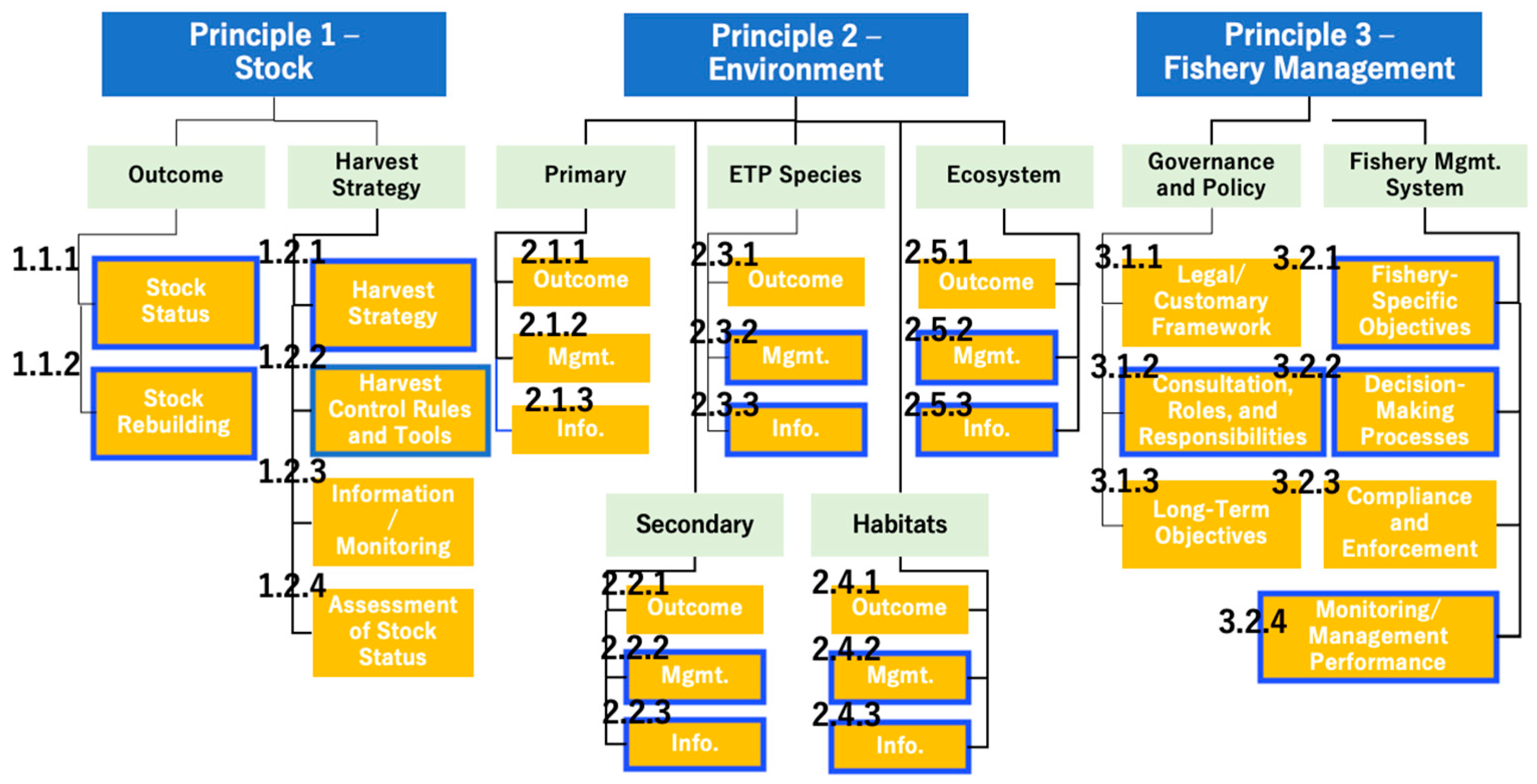
Figure 3.
The 28 Performance indicators from 1.1.1 to 3.2.4 in the MSC Standard in a default tree. Performance Indicators (PIs) that are particularly weak in Japanese coastal fisheries are highlighted in blue frames.
Figure 3.
The 28 Performance indicators from 1.1.1 to 3.2.4 in the MSC Standard in a default tree. Performance Indicators (PIs) that are particularly weak in Japanese coastal fisheries are highlighted in blue frames.
Principle 3 - Management Systems.
Japanese fisheries have historically passed 3.1.1(legal/customary framework) and 3.1.2 (decision-making processes). While PI 3.1.3 (long-term objectives) has been a weak area, the revised Fisheries Act now aligns Japan’s management with MSC’s standard, if implementation goes successful.
- Lack of clear, stakeholder participation mechanism which provides consultation opportunity for all interested and affected parties to be involved.
- Lack of fishery-specific long-term goal that achieves Principle 1 and 2 objectives explicit within the fishery-specific management system.
- Lack of decision-making processes:
- that result in measures and strategies to achieve the fishery-specific objectives.
- that respond to serious and important issues identified in relevant research, monitoring, evaluation and consultation, in a transparent, timely and adaptive manner and take account of the wider implications of decisions.
- with precautionary approach and the use of best available information.
- Lack of accountability and transparency (data and meeting records sharing upon requests)
- Lack of unclear evidence provision on Monitoring, Control and Surveillance system implementation and its enforceability with penalties or right incentives
- Lack of management effectiveness evaluation (Fishery Management Plans, management measures and subsidies, etc.).
The MSC standards are further analyzed through the lens of key components required in fisheries management plans to ensure effective governance. From the aspect of Fishery Management Plan, the 28 PIs can be organized as shown in Figure 4. Principles 3.1.1 to 3.1.3 falls onto overarching management framework which is set by central government as a legal and policy framework. Then 3.2.1 – 3.2.4 are fishery-specific management measures, which includes specific management measures assessed in Principle 1 and 2. It is evident that 3.1.1. and 3.1.2, that Japanese fisheries do better than other global fisheries, are all categorized in overarching governance. The fishery-specific management indicators are the weakness of Japanese fisheries, here they underperform compared to global fisheries. Japan has an excellent governance but has insufficient implementation of the policy.
In principle 1, while bottlenecks were found in stock status (PI 1.1.1), stock rebuilding (PI 1.1.2), and harvest control rules (1.2.2) , it was information and monitoring (PI1.2.3) that had the least number of fails, meaning that although information does exist, the decision-making system (PI 3.2.2) does not allow it to reach the expected management strategy and outcome of stock to the level. This eventually affects the fishery-specific management resulting in improvements needed in long-term objectives (3.1.3), consultation (PI 3.1.2b), fishery specific objective (PI 3.2.1), and management performance and evaluation (PI 3.2.4).
In Principle 2, bycatch species including ETP species, were both weak in terms of information and management, and sometimes performed well for target species but do not sufficiently consider related species and habitats, - this is because of governments’ siloed system. This can be reflected to the insufficient fishery specific management (agreement) reflected in 3.2.1.
In Principle 3, the existence of documented policies and decision-making frameworks provides the appearance that co-management is functioning effectively. This surface-level structure in overarching governance often compensates for overall low scores in Fishery-Specific Management, allowing the principle to barely pass in assessments. However, in-depth pre-assessments reveal that critical implementation gaps lie within the Fishery-Specific Management component. These weaknesses are directly linked to the failures observed in Principles 1 and 2.
3. Analysis - Why These Gaps Emerge: Institutional Factors
3.1. Japanese Co-Management and Resource Management Agreement (RMA)
The gap analysis highlighted a lack of coherence between resource management objectives and policies established by national and prefectural-level governments and fishery-level resource management plans (agreements) formulated by fishermen. This misalignment stems from the absence of a responsible coordinating authority that ensure a science-based decision-making processes.
Co-management involves shared fisheries governance between the government and fishers, but its actual forms vary widely, ranging from government-led to fisher-dominated systems, with differing roles and degrees of responsibility (Pomeroy & Berkes, 1997). A key element of Japan’s management system lied in its principle “resource management by resources users” (Makino & Matsuda, 2005, Fisheries Act, 1901), in which fishermen play the central role in decision-making. Although support from the government and research institutions is available upon fishers’ request, the management decision, including the development of measures, are largely left to fishing communities. Key decision-making bodies include fishery cooperatives, wide-area fishery coordination committees at the prefectural level, and national policy councils and locally established voluntary Fisheries Management Organizations (FMOs) typically organized around specific gear types or target species.
Since 2011, fisheries have been required to formulate their own Resource Management Plans (RMP) under the Resource Management and Fisheries Operation Stability Program. With the enactment of the Revised Fisheries Act in 2018 the RMP was updated as “Resource Management Agreements (RMA)”. The RMP and RMA must be prepared by fishery license-holders in accordance with national or prefectural policy guidance and are submitted to the respective government bodies for approval. Such approval is a prerequisite for enrolment in the fishermen’s mutual aid compensation scheme, which provides financial support for income reductions, covering up to 90% of previous earnings. This scheme is intended to incentivize restrictive management practices while preserving community livelihoods, under the assumption that such plans are well-integrated, science-based, and tailored to local ecological and social contexts. However, in practice, these plans often fall short of these goals.
3.2. Key Issues in Co-Management
- Issue 1. Lack of Science-based Objectives, with Management Measures Coordinated by Stock
Analysis of fisheries that underwent MSC assessments revealed four critical issues with Japan’s current co-management system. The first issue is the lack of well-defined, science-based objectives and measures within management plans. Many plans fail to include explicit numerical targets aligned with sustainable management benchmarks, such as Maximum Sustainable Yield (MSY), integrating science-based sustainable management objective (3.2.1) with measures encompassing official measures (such as TAC, Resources recovery plan) and voluntary measures in place.
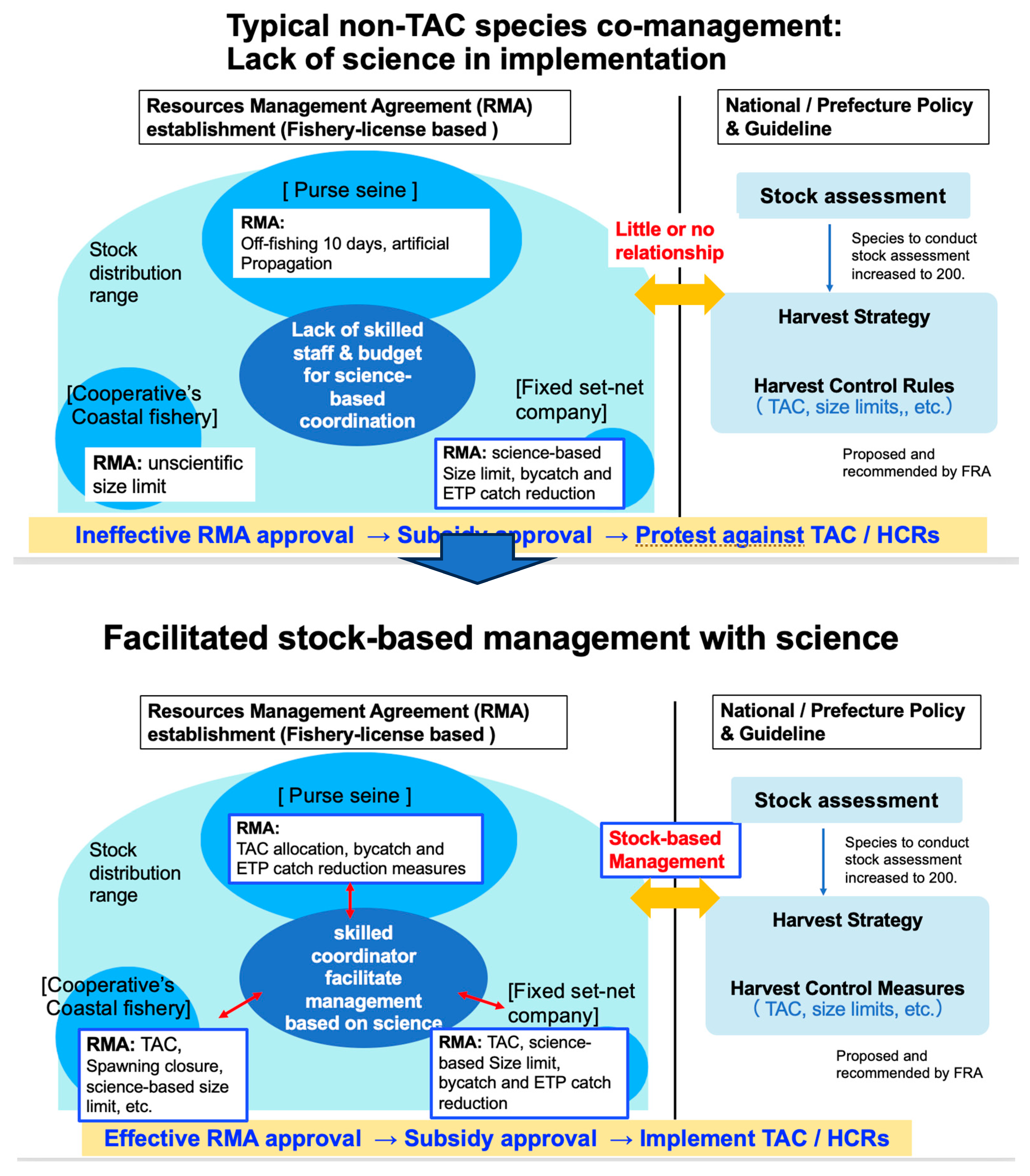
Many of the RMAs are not aligned with official national or prefectural guidelines. Even when stock assessments are available from the Japan Fisheries Research and Education Agency (FRA) for widely distributed stocks, these are rarely reflected for stock-unit management (Figure 5). This deficiency in official management objective setting is partly due to the flexibility embedded in Japan’s TAC and Total Allowable Effort (TAE) system as well, which historically allowed for the inclusion of socioeconomic considerations to lower objectives, rather than localizing approaches for implementation. Although the amended Fisheries Act now require fisheries scientific objectives such as MSY-based targets, establishment of scientific reference points, and IQ, aligning with the policies of FAO sustainable fisheries and MSC, the historical absence of the responsible management system to conduct stock-based management fail to align all fisheries targeting the same stock. To cope with the stagnated implementation of the Act, the Japan Fisheries Agency (JFA) introduced a stepwise approach to gradually implement the MSY target for newly designated TAC species. However, due to strong opposition from fishers, there is still no clear or foreseen timeline for progressing from the current Step 1 (data collection only) to Step 2 (TAC allocation) and to Step 3 (enforcement with sanctions) (personal communication with JFA, 2025). For non-TAC species, the revised Fisheries Act updated the RMPs to RMAs, and set its requirement to be approved by government under the revised Fishery Act Article 125. The number of species subject to official stock assessments are also increased to 200. However, the content of the RMA remains flexible, with approval criteria that are vague and left to be determined by each fishery.
Most frequently observed resource management measures reflected in the past RMPs and current RMAs tends to follow the model templates of the plan format provided by the Fishery Agency to help fulfill requirement to make the plan, such as “10- days off-fishing dates” and “artificial propagation”, or artificial habitat modification such as establishment of fish aggregating concrete blocks for effective fishing, which may seem that the measures are in place, but lacks evidence in long-term resources sustainability. As a result, in the past pre-assessments, harvest strategies and other management measures are not effectively structured to control catches in a way that conserves parental fish populations or help ecosystem sustainability. In some cases, conflicting conservation and development measures are implemented by different fisheries sharing the same stock, making it difficult to achieve effective outcomes. Also, ecosystem-based management is rarely incorporated, due to the siloed administrative structure that separates fishery and habitat from ecosystem policy domains. As the plans can be prepared by any license units, such as individual fishing company or cooperatives irrespective of the stock distribution range, without responsible coordinators’ presence it is hard to make the effective plan /agreement by fisheries alone.
- Issue 2. Decision Making and Stakeholder Participation
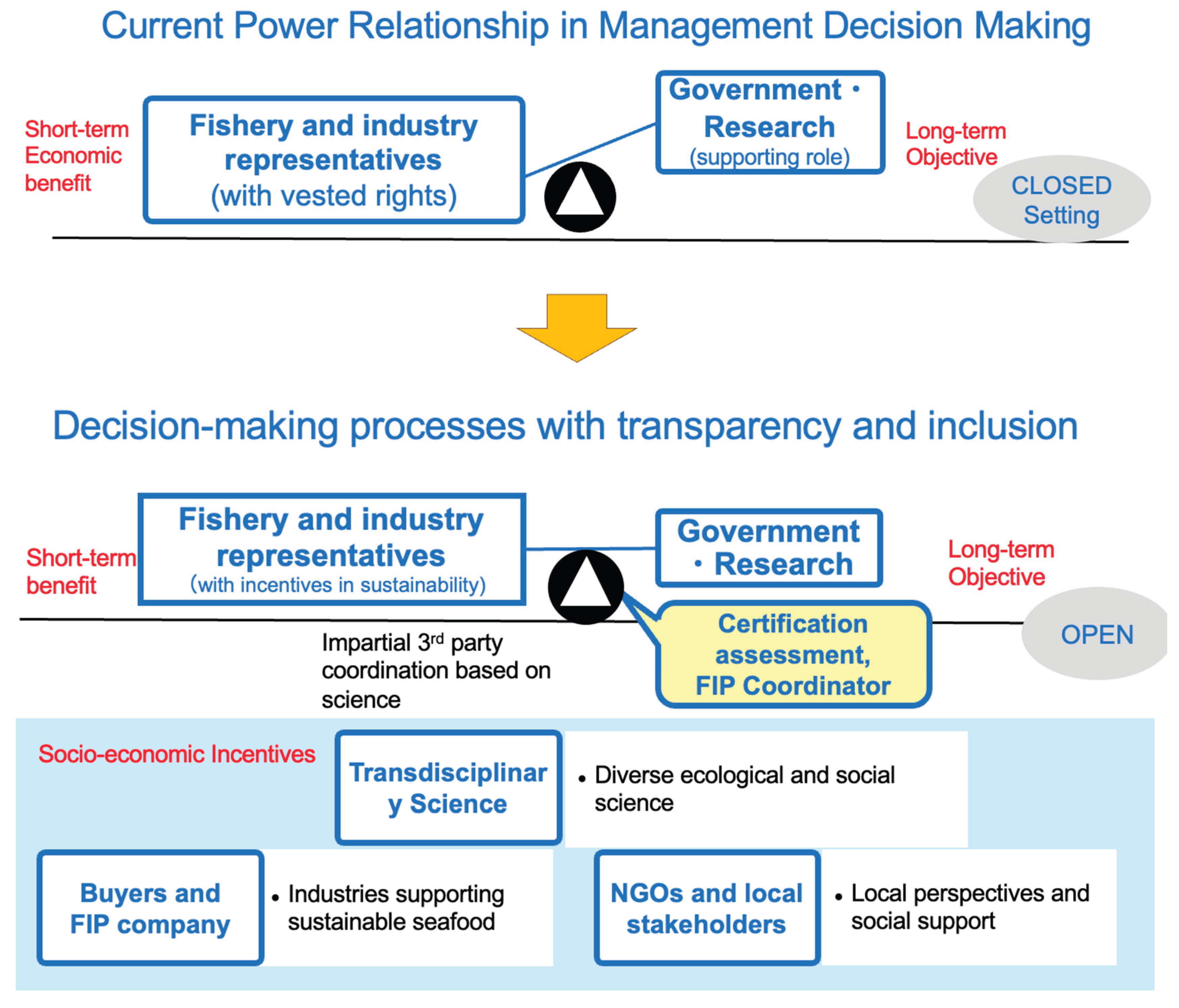
The second issue concerns decision-making and stakeholder involvement. While co-management implies a shared responsibility between government and fishers, in practice, decision-making is centrally delegated to fishing communities (Makino, 2013), without clear guidance on objectives and measures as seen in Issue 1. When government establishes a fisheries management policy or measures, such as TAC, Total TAE in Resources Recovery Plan, fishermen are consulted in advance, and in every objective setting of the measures and even the confirmation of compliance with measures in the RMA, fisheries remain at the center of decision-making. Expert advisors invited to the fisheries policy councils are composed primarily of academics or experts who are acceptable to the fishing industry. This composition limits the inclusion of independent or critical perspectives, hindering the introduction of new knowledge and innovation into the policy process. This dynamic where only limited government-fishermen discussion determines its policy, management measures, and evaluation in closed settings, short-term management objectives that do not cause hardships for fishers are accepted to continuously decrease target objectives by selecting the most conservative choices that prioritize short-term socioeconomic stability. The consensus-driven structure of decision makings in fishery cooperatives, in which internal decisions are rarely contested, further reinforces this tendency.
Scientific institutions, such as FRA, have limited independence and restricted capacity to initiate or fund necessary research. Their role remains supportive rather than directive. The result is a lack of robust data collection and scientific input in management plans, failing to convince precautionary approach incorporated in the decision-making. Until the 2018 law revision, consultation processes excluded citizen groups, NGOs, and external experts. The RMP approvals took place in committees composed of government officials, fisheries cooperative representatives, and affiliated mutual aid insurance entities, without broader stakeholder involvement. As such, the needs of future generations of fishermen, the general public, and marginalized small-scale fishers who support long-term resources sustainability are often unrepresented. This deficiency has been reflected in the history of Japanese fisheries long-term goal settings, where objectives has been set at Blimit in Japanese TAC system, instead of Btarget to achieve MSY as a long-term objective (FRA, 2018).
While the revised Fisheries Act has introduced requirements for disclosure of all fisheries RMAs, chances for external stakeholders and academic research have opened. However, after historical exclusion, number of citizen groups are scarce in Japan.
Effective implementation requires facilitation with an effective guideline to involve necessary stakeholders for science-based, stock-range management integration. However, Hakala et al. (2023) pointed out that Japan’s Fisheries Act and regulations lack specificity and rely heavily on individual managers to balance biological sustainability with the economic well-being of fishing communities. Moreover, in most regions—except for areas like Hokkaido—government personnel, including staff from prefectural fisheries departments, research institutes, and extension officers who work directly with coastal fishers, are rotating different positions every 2–3 years. This generalist-oriented staffing system, which deters to accumulate long-term specialization at local sites, undermines trust-building with fishers, reduces the quality of technical support, and hampers the consistent implementation of long-term management goals. Unless external experts with long-term, specialized capacity in science-based resource management are brought in, maintaining and updating effective management plans are difficult.
Figure 6.
Schematics of the closed, fishers-centered decision making to equitable, sustainability-oriented decision-making process.
Figure 6.
Schematics of the closed, fishers-centered decision making to equitable, sustainability-oriented decision-making process.
- Issue 3: Weak Monitoring and Evaluation Mechanisms
A third systemic issue is the absence of rigorous monitoring and evaluation mechanisms. The confirmation of implementation of the resources management plan are conducted at the compliance council held within national or prefectural government, however, the process lacks clear criteria and often functions as a mere procedural formality. The council members consist of representatives from fisheries cooperative, fisheries cooperative’s mutual aid company, prefectural fisheries department, prefectural fisheries research institute. Determinations are based on the consensus, and the council discussion range is limited to minimal legal compliance check. Locally implemented gear- or species-specific measures developed by FMOs are often not reflected in official plans to simplify the confirmation process. Despite sustainability concerns, plan approvals are granted as long as minimum legal requirements are met, without verifying whether measures are scientifically sound or effectively enforced. The minutes of the council discussion demonstrates that even when apparent concerns with long-term sustainability is noted during the committee discussion, the confirmation process does not have the capacity to respond to the findings from scientific research or consultation with fisheries, to determine further research for evaluate or to recommend effective improvement.
- Issue 4: Misaligned Incentives and Budget Allocation
The final issue relates to misaligned incentives and skewed budget priorities. Income compensation is often provided regardless of whether a fishery demonstrates effective resource management, weakening the incentive to adopt or enforce sustainable practices. This enabled the continuation of fishing operations without practicing genuine management efforts. This institutional arrangement has contributed to resistance against stronger regulatory measures such as Total Allowable Catch (TAC). Meanwhile, Japan’s fisheries budget continues to prioritize infrastructure and operational subsidies over science, training, and coordination. In 2023, only 8% of the budget was allocated to resource assessment and management, compared to 29% allocated to fisheries subsidies for operational stability, 35% for infrastructure and public building / ports construction projects, 11% for strengthening competitiveness through high-tech, high-performance fishing infrastructure investment, with reminder for foreign fishing activities, aquaculture and whaling, capacity building, coastal fishing community revitalization. The lack of investment in fishery-specific advisory services, research, and capacity-building undermines efforts to improve fisheries management.
3.3. RMA – Key Needs for Improvement
Japanese fisheries with sedentary species, such as scallop and oyster with strong local leadership and scientific support have achieved success in MSC certification through their community-based management. However, those targeting widely distributed stocks struggle with coordination and science-based management. The Kyoto Danish Seine fishery, Japan’s first MSC-certified fishery, withdrew from certification due to lack of support for stock-based management, under the pre-reform Fisheries Act.
Ostrom’s foundational work on collective resource governance identifies essential conditions for effective co-management including clearly defined boundaries, participatory decision-making, and robust monitoring (Ostrom, 1990). In many Japanese coastal fisheries’ co-management, these conditions are unmet, particularly for widely distributed species. The result is a system vulnerable to the tragedy of the commons, where lack of coordinated oversight leads to unsustainable exploitation.
The RMPs had not been disclosed until the revision of the Fisheries Act mandated the publication of RMAs in 2020, since they were confidential and kept internally within fishery organizations. The external reviews in the MSC pre-assessment process revealed that in many cases, fisheries had been preparing these not just as a mere formality, but as a procedural requirement to renew licenses / continue the income insurance membership. In some cases, fisheries have well-designed and detailed RMPs, often developed in response to stock collapses or crises following natural disasters.
This limited governmental responsibility for science-based management can be also due to the Japan’s outdated legal definition on fisheries resources originating in the early 6th century, where they were treated as ownerless (res nullius) (Arizono, 2018). Under current Japan’s Civil Code Article 239, marine organisms are still considered ownerless movable property. Consequently, Japan’s fishery management objective historically lied in the social definition of success, such as supporting fishing communities rather than biological definition of success, such as sustainability of stocks (Hakala et al., 2023).
While co-management has been effective in maintaining order and reducing administrative costs under conditions of resource abundance—and has functioned relatively well with lowered management objectives and the goodwill of fishers, it is insufficient to ensure long-term sustainability. Over the past 50 years, the number of fishers in Japan has declined to one-fifth of its previous level, with 40% of them now aged 65 or older. About half of the fishery resources evaluated by RFA remain at low stock levels. In some cases, it imposes a disproportionate burden on specific groups of fishers to conserve resources.
In sum, Japan’s co-management need to be strengthened with essential elements for effective resource management, such as resource-unit–based management with clear science-based objectives, inclusive decision-making, technical guidance for improvement, that are supported by adequate budget and technical staff. Co-management remains an essential framework for covering the diversity of fisheries in Japan. However, it must clearly define key management roles for implementing science-based, ecosystem-oriented management. MSC assessments have highlighted critical gaps in these areas. Beyond delegating responsibility to fishers, it is essential to equip them with the training, expertise, and access to specialists needed to address today’s complex challenges. Given the increasing vulnerability of coastal ecosystems to climate change, updating co-management is vital to safeguarding regional fisheries. External evaluations and support from non-governmental sectors, ensuring adequate scientific input and expert coordination will also strongly support the implementation. As the World Bank report (2013) showed, addressing these institutional and systemic weaknesses is essential to reverse the trend of declining resources.
4. Discussion - How the Gaps Can Be Filled
4.1. Global Practices on Small-Scale, Multi-Species Fisheries
Implementing science-based management in small-scale, multi-species fisheries is inherently challenging and costly. Globally, most countries including the U.S. or Europe—face similar constraints. For instance, over 50% of U.S. fisheries lack integration between stock assessments and management (NOAA, 2024), and over 60% of European fisheries assessed by ICES rely on qualitative evaluations with precautionary management advice due to data limitations (ICES, 2023). Although fisheries management in Western countries used to be predominantly top-down, however, these have been shifted toward co-management approaches that involve wide range of interest holders in equitable decision-making, providing training opportunities to engage them collaboratively.
In the state of Western Australia in Australia, for example, findings from MSC pre-assessment gap analyses prompted a shift away from purely top-down decision-making to government-facilitated stakeholder engagement, especially incorporating fishermen’s voice. Diverse knowledge and perspectives were integrated into a transparent decision-making process, leading to the development of stakeholder engagement guidelines (Government of Western Australia, 2016). To cope with their fisheries being data-limited and multi-species, they introduced regional ecosystem monitoring and centralized data-sharing systems to support all kinds of fisheries to help them obtain MSC certification, reducing the burden on individual fisheries (Bellchambers et al., 2016). Globally, various methods for managing and improving small-scale and multi-species fisheries are being developed and studied, each tailored to specific local contexts (Karr et al., 2017), (Kleisner et al., 2022).
In Japan, where 70% of fisheries are small-scale, coastal, and multi-species, localized and stepwise adoption of global best practices could accelerate sustainability. Strong community organizations already exist and, if guided appropriately, can support data collection and implementation. For example, fisheries within the same stock range must coordinate on TACs or harvest strategies under the RMA. Collaboration among fisheries sharing the same stock can foster self-driven improvements and enhance management effectiveness. Integrating all measures, including spawning site protection and seabed restorations, for example, into a unified framework can accelerate stock recovery. As Melnychuk et al. (2021) found that implementing a broader suite of management measures leads to stronger recovery outcomes, with stock conditions and long-term yields improving as management intensifies. Notably, rebuilding plans with strong governmental mandates were more effective in reducing fishing pressure. Similarly, integrating Ecosystem-Based Fisheries Management (EBFM) with local ecological knowledge and scientific evidence obtained from 3rd party assessments can improve community-led efforts and align them with national objectives—especially if supported by government-led data collection.
As the coastal ecosystem management is fragmented in Japan, and remains a central barrier to international certification, integrating local ecological knowledge with scientific evidence obtained from 3rd party assessments can improve community-led efforts, incorporating Ecosystem-Based Fisheries Management (EBFM). A shift is needed from artificial interventions—such as aquaculture and hatchery-based approaches to prioritize industry’s short-term gains—toward nature-based solutions that are long-term and regenerative.
In the U.S.—a frequent legal model for Japan—has institutionalized ecosystem-based fisheries management through the Magnuson-Stevens Act. Japan still lacks a robust legal foundation to integrate ecological considerations into fisheries policy.
The foundational principles of fisheries economics suggest that sustainable resource use maximizes long-term economic returns (Clark, 1973;Grafton et al., 2007), and that in the absence of effective regulation, fisher behaviour tends to converge toward an overfishing equilibrium—a classic example of the tragedy of the commons (Gordon, 1954;Hardin, 1968). Despite these well-established theoretical insights, Japan’s fisheries governance remains constrained by outdated institutional designs.
4.2. Historical Issues with Institutional Arrangement
Japan’s historical fisheries management experience shows that granting unrestricted fishery rights or treating coastal waters as private property tends to lead to the concentration and monopolization of rights, as well as rigidity in fishing ground use (Makino, 2013). This highlights the need for effective coordination mechanisms and legal base that support it. Also, Japan’s history to establish institutional management framework demonstrated that, achieving a fundamental and transformative redistribution of vested rights in fishery within a democratic system is difficult in the absence of external pressure (Makino, 2013).
In 1947, under General Headquarters, the Supreme Commander for the Allied Powers (GHQ) oversight following the Pacific War, Japan’s Ministry of Agriculture, Forestry and Fisheries (MAFF) reviewed the Meiji-era Fisheries Law and produced the report “Fundamental Issues in Fisheries System Reform” in preparation of modernization. It identified two core problems with the governor-based licensing system: (1) the lack of integrated management across administrative boundaries, and (2) insufficient consideration of coastal fisheries. Hiroyoshi and Sano (1998), in their review of 58 fisheries cases, further emphasized that effective management of widely distributed stocks requires close coordination between government and fishery cooperatives. Regarding ecosystem concerns, past suggestion also existed in adoption of Integrated Coastal Management (ICM) perspective, as the institutional arrangements which centered on fisher-dominated decision-making fail to incorporate the interests of other ecosystem service users. The MAFF’s objectives to ensure food security through protection of primary industries often place industry support above long-term resource sustainability. Limited coordination with the Ministry of the Environment hinders the integration of ecosystem-based approaches into fisheries management.
Due to the dominance of fishers in all decision-making processes, these structural limitations have long been overlooked. A new approach is urgently needed—one that allows for the incorporation of external perspectives.
4.3. Use of FIPs and Certifications as External Review and Facilitation Tools
To increase opportunities to gain external, neutral inputs, the internationally recognized certification schemes and FIPs, which are increasingly widespread globally, can act as one approach for solution. Globally, FIPs have become vital for supporting sustainable fisheries in data-limited settings. They mobilize funding from industry, government, and donors, and provide technical assistance with policy advocacy, leading evidence-based policy making (EBPM). Research shows that FIPs improve the likelihood of avoiding overfishing and reaching sustainability targets (Cannon et al., 2018; Crona et al., 2019). However, long-term success depends on sustained support across sectors. Without such backing, many FIPs—and MSC certification efforts—fail to achieve their goals (Melnychuk et al., 2025;López-Ercilla et al., 2024).
Criticism that Japanese fisheries are incompatible with MSC standards is similar to historical objections to MSY in Japan. As Okamura observed in the context of Japan’s experiences with MSY, the issue lies not in the framework itself but in the lack of efforts to adjust and find its practical application (Okamura, 2023).
MEL certifications highly endorse existing multi-level governance structures and management plans to certify coastal fisheries. However, limited budgets and staffing prevent the assignment of species-specific experts or independent evaluations, resembling second-party certifications. It lacks transparency in authors’ names and backgrounds, and the lack of evidence in assessment remains a hurdle for the certification system to be effective to promote improvements. MSC certification requires collecting and evaluating scientific evidence to assess whether each measure is effectively implemented—making the process more time- and cost-intensive. This deeper level of scrutiny reveals the institutional weaknesses outlined in Section 2. The existence of a framework alone does not guarantee its proper application or impact, which is precisely where independent and evidence-based international certification adds value. However, neither the government nor the fisheries sector alone can bear the full cost of the evaluations and improvements. Each certification scheme has both strengths and weaknesses, and to truly promote sustainable fisheries in Japan, it is necessary to retain the core elements of effective management while adapting the improvement approach locally.
5. Conclusion and Recommendations
While MSC certification remains challenging for Japanese fisheries due to structural management deficiencies, these barriers reflect a need for systemic improvements rather than inherent incompatibility.
Despite the 2018 revision of the Fishery Act, implementation structure has remained weak. The analysis of certification results revealed gaps to address for meeting international standards. Closing the gaps would enable Japanese fisheries to apply international best practices and become competitive in international markets, while promoting long-term sustainability.
Co-creation of well-designed, locally applicable FIPs or improvement pathways with stakeholder collaboration will foster a mechanism that aligns with Japan’s revised Act. However, certifications must be adapted to allow the step-by- step efforts to be recognized, with financial and technical support extended. Localizing certification and improvement criteria without compromising scientific rigor will enable feasible but non-compromised improvement, which eventually benefit government and fisheries sector in the long-term. While not all fishers may be able to engage in improvement efforts, providing a supportive, incentivized framework for motivated actors provide a cost-effective alternative for government to mobilize private sectors to promote environmental recovery and position some fisheries as leaders for growth industry, contributing to policy improvement as well. This creation of transformational system resonates with the recommendation of the United Nations Food Systems Summit 2024, which calls for an urgent shift from fragmented, siloed approaches to a more integrated, systems-based framework (United Nations, 2023).
Strengthening small-scale fisheries evaluation methods through case studies developed by international organizations, as well as through dialogue with local stakeholders will be a key to developing practical, credible improvement systems. Advancing such research and fostering seamless coordination among international initiatives, Japan’s fishing communities, market mechanisms, and policy frameworks could help unlock the potential for Japan’s fisheries sector.
To address the challenge, following specific actions are recommended for each sector:
Table 2.
Key Roles and Recommended Actions for Advancing Sustainable Fisheries Management in Japan.
| Stakeholder Group | Recommended Actions |
|---|---|
| Government | - Establish clear consultation and decision-making guidelines for inclusive coastal management - Increase investment in scientific and coordination capacity for stock-based management - Ensure institutional independence for science-based and ecosystem-based management - Support small-scale, multi-species fisheries through ecosystem monitoring and centralized data systems - Reform legal framework to strengthen co-management with clear roles and responsibilities. |
| Corporations | - Adopt sustainable sourcing policies - Provide funding for improvements via certification and FIPs |
| Fisheries | - Actively participate in transparent, collaborative implementation and consultation processes |
| Consumers | - Support sustainable seafood through purchasing choices |
| Certification Scheme Holders | - MEL: Introduce external reviews to improve assessment neutrality and transparency in all processes. - MSC and MEL: Design locally appropriate improvement pathways integrated with certification in collaboration with stakeholders. - Disseminate awareness that certifications and FIPs are tools to improve sustainability rather than complete sustainability. |
| FIP Coordinators | - Facilitate science-based implementation with equitable stakeholder engagement - Share knowledge through user-friendly, centralized platforms for Japanese stakeholders |
| Financial Institutions & Funders | - Provide sustainability-linked financing - Support grassroots sustainability initiatives |
Declaration of generative AI and AI-assisted technologies in the writing process: During the preparation of this paper the author used ChatGPT 4.0 in order to improve the readability and language of the manuscript. After using this tool, the author reviewed and edited the content as needed and take full responsibility for the content of the published article.
Glossary
| EBFM | Ecosystem-Based Fisheries Management |
| ETP species | Endangered, Threatened, and Protected species |
| FAO | Food and Agriculture Organization of the United Nations |
| FIP | Fisheries Improvement Project |
| FMO | Fisheries Management Organization |
| JFA | Japan Fisheries Agency |
| MEL | Marine Eco-Label Japan |
| MSC | Marine Stewardship Council |
| MSY | Maximum Sustainable Yield |
| RFA | Japan Fisheries Research and Education Agency |
| RMA | Resource Management Agreement |
| RMP | Resource Management Plan |
| TAC | Total Allowable Catch |
| TAE | Total Allowable Effort |
| UNCLOS | United Nations Convention on the Law of the Sea |
| UNEP | United Nations Environment Programme |
| UNESCO-IOC | Intergovernmental Oceanographic Commission of UNESCO |
References
- Agnew, D.J., Gutiérrez, N.L., Stern-Pirlot, A., Hoggarth, D.D., 2014. The MSC experience: Developing an operational certification standard and a market incentive to improve fishery sustainability. ICES Journal of Marine Science 71, 216–225. [CrossRef]
- Arizono, M., 2018. Gyogyou seido kaikaku ni hitsuyou na kihonninshiki no kyouyuu ni tsuite [Sharing common knowledge required for fisheries reform]. The Tokyo Foundation.
- Bellchambers, L.M., Gaughan, D.J., Wise, B.S., Jackson, G., Fletcher, W.J., 2016. Adopting Marine Stewardship Council certification of Western Australian fisheries at a jurisdictional level: The benefits and challenges. Fish Res 183, 609–616. [CrossRef]
- Blandon, A., Ishihara, H., 2021. Seafood certification schemes in Japan: Examples of challenges and opportunities from three Marine Stewardship Council (MSC) applicants. Mar Policy 123. [CrossRef]
- Cannon, J., Sousa, P., Katara, I., Veiga, P., Spear, B., Beveridge, D., Van Holt, T., 2018. Fishery improvement projects: Performance over the past decade. Mar Policy 97, 179–187. [CrossRef]
- Clark, C.W., 1973. The Economics of Overexploitation. Science (1979) 181, 630–634. [CrossRef]
- Crona, B., Käll, S., van Holt, T., 2019. Fishery Improvement Projects as a governance tool for fisheries sustainability: A global comparative analysis. PLoS One 14. [CrossRef]
- FAO, 2024. The State of World Fisheries and Aquaculture 2024: Blue Transformation in Action. Rome.
- FAO, 2009. The Guidelines for the Ecolabelling of Fish and Fishery Products from Marine Capture Fisheries.
- FRA (Japan Fisheries Research and Education Agency), 2018. FRA News 56, Suisan shigen hyouka no genjou to korekara.
- Government of Japan, 1901. Fisheries Act, 1901. Japan.
- Government of Western Australia, D. of F., 2016. Guideline for stakeholder engagement on aquatic resource management-related processes. Government Of Western Australia, Department of Fisheries, Western Australia, AU.
- Grafton, R.Q., Kompas, T., Hilborn, R.W., 2007. Economics of overexploitation revisited. Science (1979) 318, 1601. [CrossRef]
- Gulbrandsen, L.H., 2009. The emergence and effectiveness of the Marine Stewardship Council. Mar Policy 33, 654–660. [CrossRef]
- Gutiérrez, N.L., Hilborn, R., Defeo, O., 2011. Leadership, social capital and incentives promote successful fisheries. Nature 470, 386–389. [CrossRef]
- Gutiérrez, N.L., Valencia, S.R., Branch, T.A., Agnew, D.J., Baum, J.K., Bianchi, P.L., Cornejo-Donoso, J., Costello, C., Defeo, O., Essington, T.E., Hilborn, R., Hoggarth, D.D., Larsen, A.E., Ninnes, C., Sainsbury, K., Selden, R.L., Sistla, S., Smith, A.D.M., Stern-Pirlot, A., Teck, S.J., Thorson, J.T., Williams, N.E., 2012. Eco-Label Conveys Reliable Information on Fish Stock Health to Seafood Consumers. PLoS One 7, e43765. [CrossRef]
- Hakala, S., Watari, S., Uehara, S., Akatsuka, Y., Methot, R., Oozeki, Y., 2023. Governance and science implementation in fisheries management in Japan as it compares to the United States. Mar Policy 155. [CrossRef]
- Hardin, G., 1968. The Tragedy of the Commons. Science (1979) 162, 1243–1248. [CrossRef]
- Hønneland, G., 2020. Marine stewardship council (Msc) certification of arctic fisheries: Processes and outcomes. Arctic Review on Law and Politics 11. [CrossRef]
- ICES, 2023. Data-limited stocks and precautionary approach. International Council for the Exploration of the Sea.
- JFA, 2018. Fisheries White Paper, Heisei 30, Suisan Hakusho Heisei 30 Nendo Ban 231p.
- Karr, K.A., Fujita, R., Carcamo, R., Epstein, L., Foley, J.R., Fraire-Cervantes, J.A., Gongora, M., Gonzalez-Cuellar, O.T., Granados-Dieseldorff, P., Guirjen, J., Weaver, A.H., Licón-González, H., Litsinger, E., Maaz, J., Mancao, R., Miller, V., Ortiz-Rodriguez, R., Plomozo-Lugo, T., Rodriguez-Harker, L.F., Rodríguez-Van Dyck, S., Stavrinaky, A., Villanueva-Aznar, C., Wade, B., Whittle, D., Kritzer, J.P., 2017. Integrating science-based co-management, partnerships, participatory processes and stewardship incentives to improve the performance of small-scale fisheries. Front Mar Sci 4. [CrossRef]
- Kleisner, K.M., Ojea, E., Battista, W., Burden, M., Cunningham, E., Fujita, R., Karr, K., Amorós, S., Mason, J., Rader, D., Rovegno, N., Thomas-Smyth, A., 2022. Identifying policy approaches to build social-ecological resilience in marine fisheries with differing capacities and contexts. ICES Journal of Marine Science 79, 552–572. [CrossRef]
- Levine, M., Thomas, J.B., Sanders, S., Berger, M.F., Gagern, A., 2020. 2020 Global Landscape Review of Fishery Improvement Projects About the authors.
- López-Ercilla, I., Rocha-Tejeda, L., Fulton, S., Espinosa-Romero, M.J., Torre, J., Fernández Rivera-Melo, F.J., 2024. Who pays for sustainability in the small-scale fisheries in the global south? Ecological Economics. [CrossRef]
- Makino, M., 2013. Nihon gyogyou no seido bunseki [Institutional Analysis of Japanese Fisheries]. Kouseisya kouseikaku.
- Makino, M., Matsuda, H., 2005. Co-management in Japanese coastal fisheries: Institutional features and transaction costs. Mar Policy 29, 441–450. [CrossRef]
- MEL, 2022. MEL Fisheries Certification: Conformity Assessment Criteria (Assessment Guidelines) Ver. 2.2.
- Melnychuk, M.C., Lees, S., Veiga, P., Rasal, J., Baker, N., Koerner, L., Hively, D., Kurota, H., de Moor, C.L., Pons, M., Mace, P.M., Parma, A.M., Mannini, A., Little, L.R., Bensbai, J., Muñoz Albero, A., Polidoro, B., Jardim, E., Hilborn, R., Longo, C., 2025. Comparing voluntary and government-mandated management measures for meeting sustainable fishing targets, in: Journal of Environmental Management. Academic Press. [CrossRef]
- NOAA, 2024. Status of Stocks 2023 report states that 208 stock assessments were conducted in FY2023.
- Okamura, H., 2023. Towards sustainable use of fishery resources: maximum sustainable yield and biometrics.
- Orita, K., 2019. MSC ninshou to MEL ninshou no hikaku ni motozuku nihon no suisan ecolaberu seisaku no teigen [Proposed Fishery Ecolabeling policy based on the Comparison of MSC certification and MEL certification]. Tokyo.
- Ostrom, E., 1990. Governing the commons: The evolution of institutions for collective action.. Cambridge university press.
- Pérez-Ramírez, M., Phillips, B., Lluch-Belda, D., Lluch-Cota, S., 2012. Perspectives for implementing fisheries certification in developing countries. Mar Policy 36, 297–302. [CrossRef]
- Pomeroy, R.S., Berkes, F., 1997. Two to tango: the role of government in fisheries co-management. Pergamon Marine Policy 21, 465–480.
- Rasal, J., Melnychuk, M.C., Lejbowicz, A., Montero-Castaño, C., Ferber, S., Longo, C., 2024. Drivers of success, speed and performance in fisheries moving towards Marine Stewardship Council certification. Fish and Fisheries 25, 235–250. [CrossRef]
- Southall, T., 2018. MSC FIP capacity building workshop training material.
- Swartz, W., S.L., S.U.R., & O.Y., 2017. Searching for market-based sustainability pathways: Challenges and opportunities for seafood certification programs in Japan. Mar Policy 76, 185–191. [CrossRef]
- UNEP, 2009. Certification and sustainable fisheries.
- UNESCO-IOC, 2020. UN Decade of Ocean Science for Sustainable Development 2021–2030: Implementation Plan (Version 2).0). Paris.
- United Nations, 2023. Making food systems work for people and planet UN Food Systems Summit +2 Report of the Secretary-General.
- Unknown, 2024. MEL Recertification report Fukushima Fisheries Cooperative mackerels purse seine fisheries. Tokyo.
- Unknown, 2022. MEL Certification Report Rishiri Atka mackerel gillnet fishery.
- Wakamatsu, H., Sakai, Y., 2021. Can the Japanese fisheries qualify for MSC certification? Mar Policy 134. https://doi.org/10.1016/j.marpol.2021.104750. [CrossRef]
- Washington, S., Ababouch, L., 2011. Private standards and certification in fisheries and aquaculture: current practice and emerging issues. FAO Fisheries and Aquaculture Technical Paper 203.
- World Bank, 2013. Fish to 2030: Prospects for fisheries and aquaculture. Washington,DC.
Figure 1.
Projected growth change % in capture fisheries production by regions between 2010-2030. (Source: World Bank, 2016).
Figure 1.
Projected growth change % in capture fisheries production by regions between 2010-2030. (Source: World Bank, 2016).
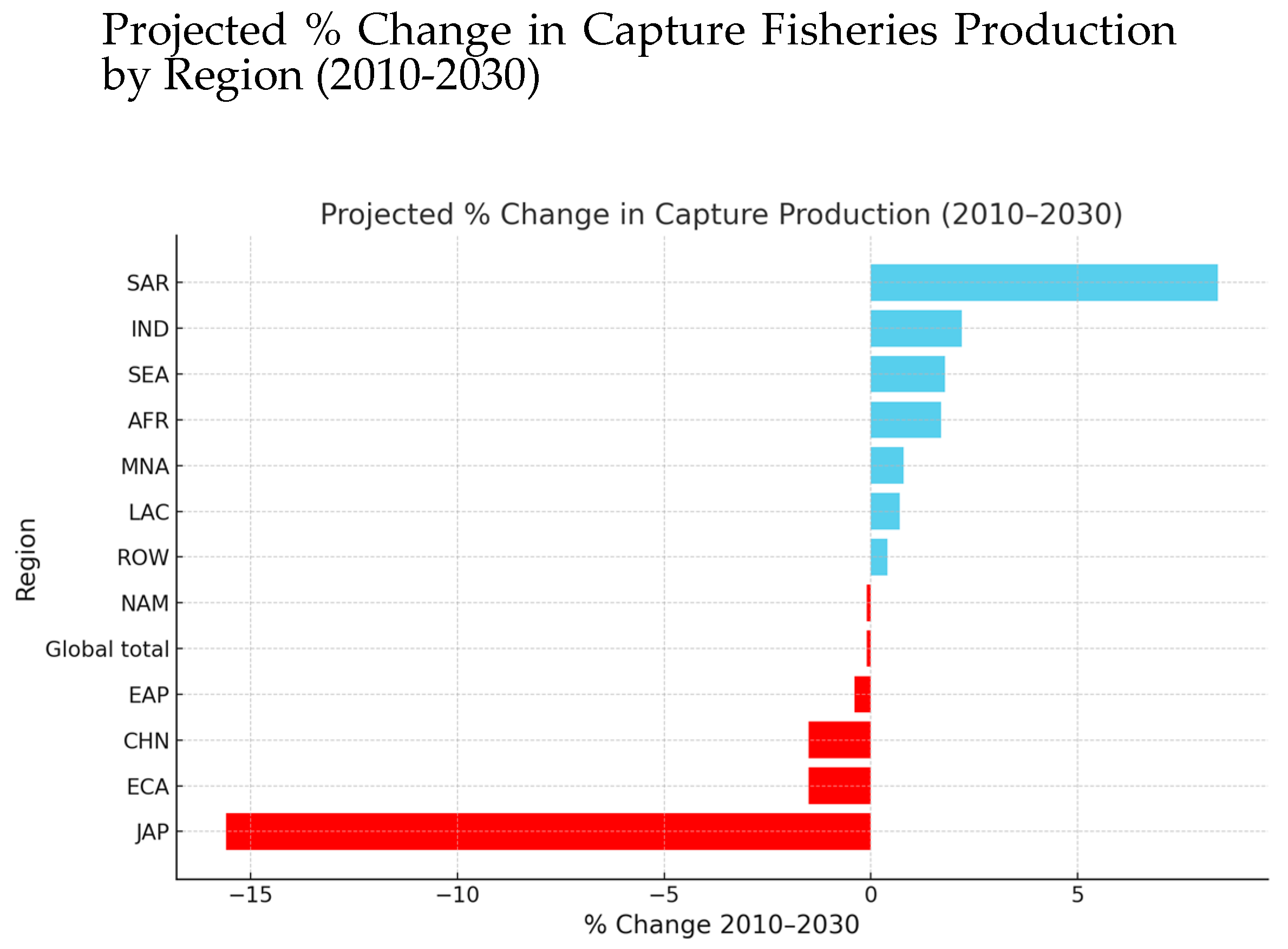
Figure 2.
Projected Changes in Capture Fisheries Production in 2030 under Improvement Scenario (Adapted from Figure 4.7, World Bank, 2016). Note: ECA = Europe and Central Asia; NAM = North America; LAC = Latin America and Caribbean; CHN = China; JAP = Japan; EAP = other East Asia and the Pacific; SEA = Southeast Asia; IND = India; SAR = other South Asia; MNA = Middle East and North Africa; AFR = Sub-Saharan Africa; ROW = rest of the world.
Figure 2.
Projected Changes in Capture Fisheries Production in 2030 under Improvement Scenario (Adapted from Figure 4.7, World Bank, 2016). Note: ECA = Europe and Central Asia; NAM = North America; LAC = Latin America and Caribbean; CHN = China; JAP = Japan; EAP = other East Asia and the Pacific; SEA = Southeast Asia; IND = India; SAR = other South Asia; MNA = Middle East and North Africa; AFR = Sub-Saharan Africa; ROW = rest of the world.
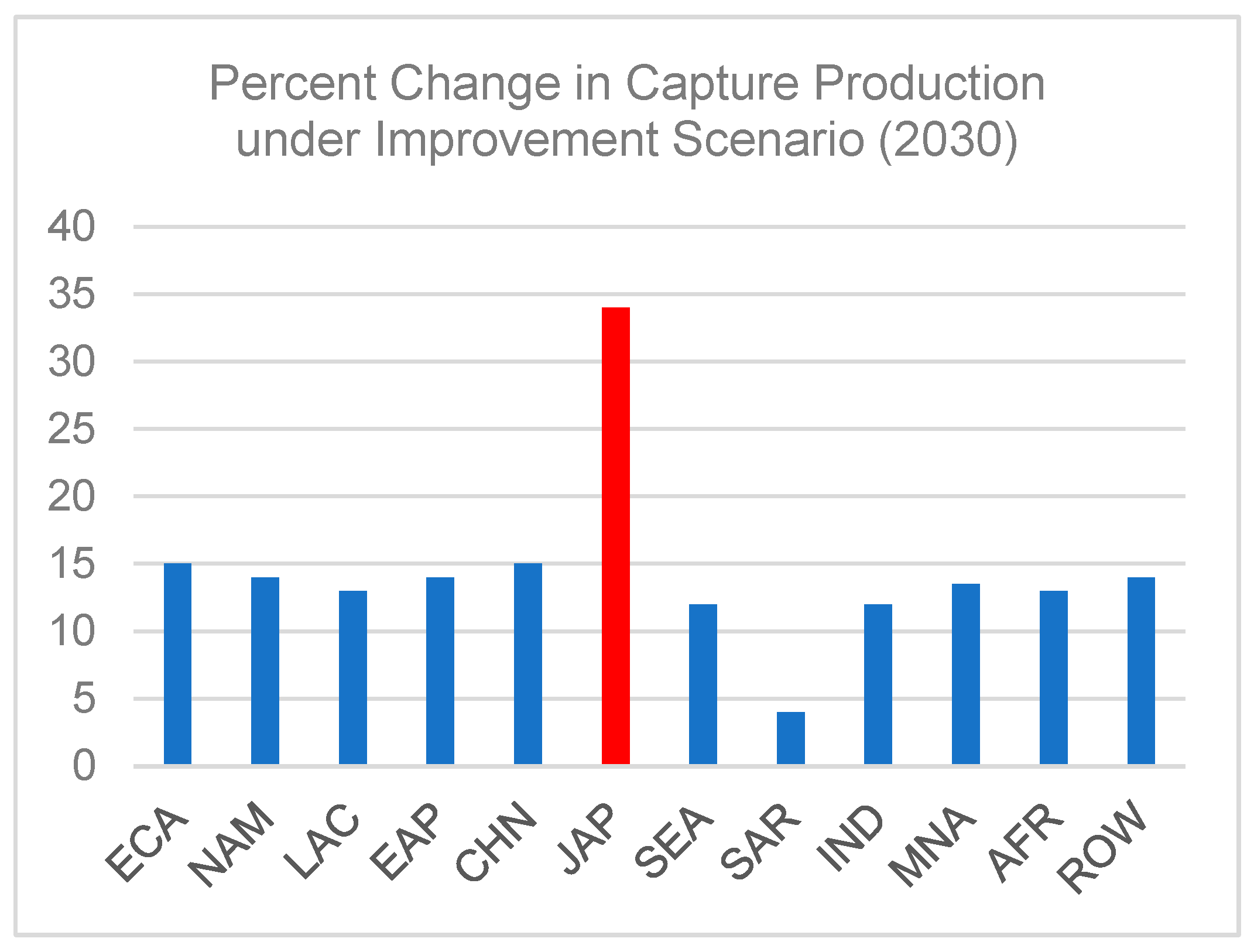
Figure 4.
A reconstructed diagram of MSC assessment indicators, organized as general elements consisting of a fisheries management plan. This figure does not represent the official view of MSC but was used by a trainer during a MSC’s FIP training session to support participants’ understanding (Southall, 2018)). The PI number was added in parenthesis by author to show matching PIs to each element.
Figure 4.
A reconstructed diagram of MSC assessment indicators, organized as general elements consisting of a fisheries management plan. This figure does not represent the official view of MSC but was used by a trainer during a MSC’s FIP training session to support participants’ understanding (Southall, 2018)). The PI number was added in parenthesis by author to show matching PIs to each element.
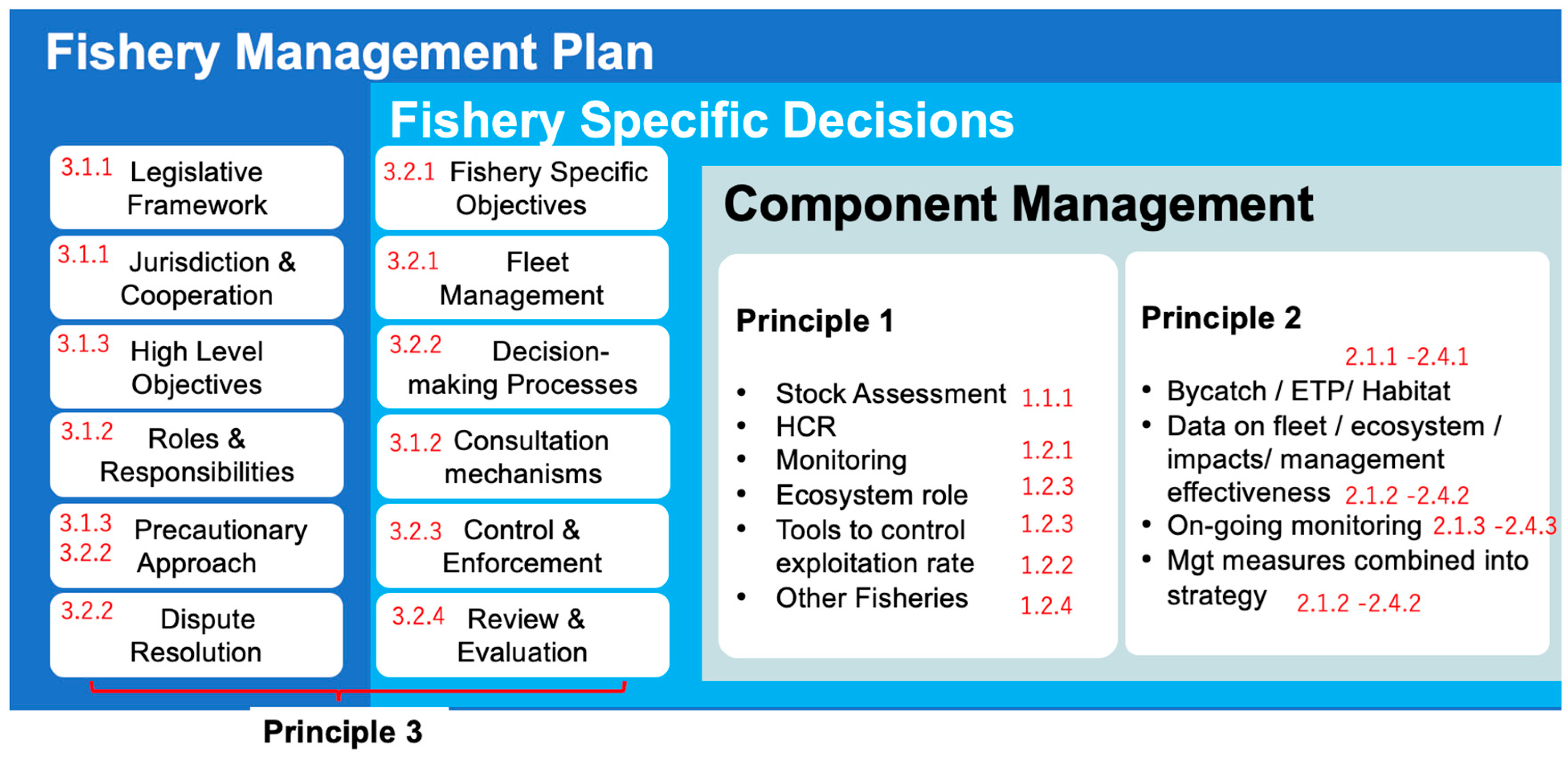
Figure 5.
Schematic diagrams showing a typical non-TAC species’ co-management lacking science and an ideally facilitated stock and science-based co-management.
Figure 5.
Schematic diagrams showing a typical non-TAC species’ co-management lacking science and an ideally facilitated stock and science-based co-management.
Disclaimer/Publisher’s Note: The statements, opinions and data contained in all publications are solely those of the individual author(s) and contributor(s) and not of MDPI and/or the editor(s). MDPI and/or the editor(s) disclaim responsibility for any injury to people or property resulting from any ideas, methods, instructions or products referred to in the content. |
© 2025 by the author. Licensee MDPI, Basel, Switzerland. This article is an open access article distributed under the terms and conditions of the Creative Commons Attribution (CC BY) license (https://creativecommons.org/licenses/by/4.0/).
Copyright: This open access article is published under a Creative Commons CC BY 4.0 license, which permit the free download, distribution, and reuse, provided that the author and preprint are cited in any reuse.


