

Submitted:
21 August 2025
Posted:
22 August 2025
You are already at the latest version
Abstract
Platyhelminthes are a significant cause of organ condemnation across the globe, particularly in Ethiopia. Consequently, a cross-sectional study was conducted from January to May 2024 to identify the Platyhelminthes responsible for organ condemnation and estimate its economic impact in cattle slaughtered at the Nekemte municipal abattoir. Standard ante-mortem and postmortem inspection procedures were employed. A total of 422 cattle were included in the study through systematic random sampling. Among the 422 slaughtered cattle, 59 (14%) exhibited clinical signs in ante-mortem examination, including rough hair coat (3.3%), lameness (2.6%), coughing (2.4%), tick infestation (1.9%), depression (1.7%), branding (1.2%), and blindness (0.9%). Postmortem examinations revealed that 132 (31.2%) cattle were infected by Platyhelminthes parasites. Due to these helminths 92 (21.9%) livers, 52 (12.3%) lungs, and 13 (3.1%) hearts were condemned. The major Platyhelminthes identified were Fasciola spp., hydatid cysts, Cysticercus bovis, and combined infections of Fasciola and hydatid cysts, with prevalence’s of 15.9%, 6.4%, 3.1%, and 5.9%, respectively. A statistically significant difference (P < 0.05) was found in the prevalence of these major Platyhelminthes based on age and body condition. However, no statistically significant difference (P > 0.05) was observed in the sex and origin. The total annual economic loss due to organ condemnation in the study area amounted to 612,470.00 ETB. This study highlights a relatively high prevalence of organ condemnation due to Platyhelminthes infections. Thus, awareness should be raised among cattle owners and abattoir workers regarding the impact of parasites and the importance of safe disposal practices of condemned organs.
Keywords:
cattle
; economic loss
; red offal organ
; Nekemte abattoir
; Platyhelminths
1. Introduction
The livestock sector is a dynamic and vital component of global agriculture, contributing approximately 40% to the global agricultural output and supporting the livelihoods and food security of nearly a billion people (Thornton, 2010). Livestock provide essential resources, including meat and milk, as well as draft power, manure, and transportation services. The country Ethiopia has abundant livestock resources and is ranked first in Africa and fifth globally in terms of livestock population. The livestock population includes over 71 million cattle, 43 million sheep, 54 million goats, 57 million poultry/chickens, 13.33 million equines, and 7 million bee colonies, according to CSA (2023). Despite this vast resource, the sector’s potential is hindered by pervasive animal diseases, malnutrition, inadequate husbandry practices, poor infrastructure, and limited trained personnel (PACE-Ethiopia, 2003). Among these challenges, parasitic diseases particularly, helminthic infections, mainly Platyhelminthes play a significant role in organ condemnation.
Platyhelminthes are among the primary helminthic parasites responsible for organ and carcass condemnations and economic losses in abattoirs worldwide, particularly in developing countries such as Ethiopia. In Ethiopian abattoirs, Fasciola spp., hydatid cysts, Cysticercus bovis, and Paramphistomum have been identified as major causes of organ condemnation in cattle (Assefa et al., 2015; Denbarga et al., 2011; Fekadu et al., 2012). Beyond the condemnation of edible organs, these parasites contribute to significant economic losses by impacting cattle productivity and fertility, resulting in mortality, morbidity, weight loss, slowed growth, poor fertility performance, and reduced physical strength (Elsa et al., 2012).
Conducting abattoir surveys is an effective approach to identifying parasitic diseases of economic and public health significance (Abunna et al., 2010; Sheferaw and Abdu, 2017). These surveys not only enhance disease surveillance for conditions of human and animal health importance but also allow for the examination of animals entering the human food chain for unusual signs, lesions, or specific diseases (Alton et al., 2010). Generally, abattoir surveys are instrumental in understanding livestock disease epidemiology, assessing public exposure to zoonotic diseases, and estimating financial losses from condemned organs and carcasses (Moje et al., 2014).
In Ethiopia, various studies have aimed to document disease conditions observed during ante-mortem and postmortem inspections and to assess the economic impact of organ and carcass condemnations (Denbarga et al., 2011; Assefa et al., 2015; Fekadu et al., 2012; Mulatu et al., 2013). For instance, from the aspects of economic loss, Mesele et al. (2012) reported an annual financial loss of 21,565,849 ETB from condemned organs and carcasses at the Gondar Elfora abattoir, while Fekadu et al. (2012) estimated an annual economic loss of 172,664.09 ETB at Jimma Municipal abattoir. Similarly, Fasil (2009) reported a financial loss of 150,048.98 ETB per year at Gondar Municipal abattoir. Understanding the specific causes of organ condemnation and the associated economic losses is crucial for designing effective control measures, enhancing animal husbandry, and reducing preventable losses (Edwards et al., 1999).
Although multiple studies have examined the prevalence and economic losses due to carcass and organ condemnation in Ethiopian abattoirs, limited research is available on the causes of organ (red offal) condemnation in East Wollega, western Ethiopia. Notably, most studies at Nekemte Municipal Abattoir have focused on specific parasitic diseases, such as fasciolosis, hydatidosis, and Cysticercus bovis, without providing a comprehensive assessment of Platyhelminthes parasites contributing to red offal organ condemnation. Additionally, no citable data currently address the primary Platyhelminthes-related causes of red offal organ condemnation and the associated financial losses in cattle slaughtered at the Nekemte Municipal Abattoir. This study, therefore, aims to identify the primary Platyhelminthes parasites responsible for red offal organ condemnation and to evaluate the economic losses in cattle slaughtered at this abattoir.
2. Materials and Methods
2.1. Study Area
The study was conducted from January 2024 to May 2024 in the Nekemte Municipal abattoir, East Wollega Zone, Oromia region, Western Ethiopia (Figure 1). Nekemte town is located at 331 km from Addis Ababa. It is situated at the latitude of 9°4′ 9571N and a longitude of 36°32′9281E. It found an altitude of 2124 meters above sea level. The mean annual rainfall and average temperature range from 1800-2200 mm and 20-25°C, respectively. The area receives bimodal rainfalls that are long rainy seasons and short rainy seasons. The long rainy seasons occur during the months of June to September, while the short rainy seasons are observed during the months of March, April, and May (EWARDO, 2007).
2.2. Study Population
The study population was cattle presented to the abattoir for slaughter from different districts around the town, like Arjo Gudetu, Uke, Jimma Arjo, Sasiga, Getema, Baldra, Diga, and Nekemte town. 422 study cattle were randomly selected during the study period. Cattle age, sex, breed, body condition, and origin were considered as risk factors and recorded during data collection. The age study cattle was grouped as 3-5 years (young), 6-9 years (adult), and >9 years (old) by using dentation Pace and Wakeman (2003). The body condition of cattle was classified as poor, medium, and good based on Nicholson and Butterworth (1986). Furthermore, both male and female cattle, as well as only local breeds, were incorporated in the study.
2.3. Study Design and Sampling Techniques
A cross-sectional study was conducted from January to May 2024 to identify the primary Platyhelminthes parasites responsible for red offal organ condemnation and to estimate the associated economic losses in cattle slaughtered at the Nekemte Municipal Abattoir. Study cattle were chosen using a systematic random sampling method, with visits made to the abattoir twice weekly throughout the study period. During each visit, cattle were randomly selected for both ante-mortem and postmortem examinations until the total sample size of 422 cattle was achieved.
2.4. Sample Size Determination
The sample size for this study was calculated using the formula provided by Thrusfield (2013), based on an expected prevalence of 50%, a 95% confidence interval, and a 5% desired level of precision.
where N = number of sample size, Pexp = expected prevalence, d 2 = absolute precision, CI = Confidence interval (95%). Using these parameters, the minimum sample size calculated was 384. However, to increase the precision of the study, this number was raised by 10%, resulting in a final sample size of 422 cattle.
1.5. Data Collection Methods
1.5.1. Ante-Mortem Examination
During the ante-mortem inspection, each of the study animals was examined. Sex, origin, breed, age, and body condition scoring of animals have been recorded. Both sides of the animal would be inspected at rest and in motion. Moreover, the general behavior of the animal and signs of disease have been properly registered according to the standard ante-mortem inspection procedures. Judgment was done according to the procedure given by FAO (2011), animals fit for human consumption were allowed for slaughter. The study animals were selected using a systematic random sampling method by considering the age, sex, breed, body condition, and origin of the cattle. During the study period, two visits were made each week, purposefully chosen based on the days with the highest number of cattle slaughtered out of the three slaughter days per week. Cattle were marked with identification codes using a permanent marker on their heads in the pre-slaughter holding area, and the data were recorded. On each selected day, forty cattle were slaughtered, with ten cattle chosen for examination. The first animal was randomly selected, and the subsequent cattle were selected at intervals of four as they entered the slaughterhouse, ensuring systematic sampling. Each selected animal then underwent a detailed postmortem inspection.
1.5.2. Post-Mortem Examination
During postmortem inspection red offal organs such as the liver, lung, spleen, kidney, and heart were thoroughly inspected by visualization, palpation, and incisions to find out about the presence of cysts of parasites (FAO, 2011; Mesele et al., 2012). According to the guideline described by the Ministry of Agriculture, the examination includes a longitudinal incision of the heart from base to apex, two longitudinal ventral incisions of the tongue from tip to root, one deep incision into both sides of the triceps muscles of the shoulder, a deep incision into the external and internal muscles of the masseter parallel to the plane of the jaw, three parallel incisions into the long axes of the neck muscles on both sides, and one extensive incision. The results were recorded according to the organs examined. Judgment was made according to guidelines on meat inspection for developing countries and classified into the following categories of judgment. Approved as fit for human consumption, conditionally approved as fit for human consumption, totally condemned as unfit for human consumption, and partially condemned as unfit for human consumption (FAO, 2011).
2.5. Financial Loss Assessment
The direct financial losses from condemned organs were assessed based on the market value of the organs. This analysis took into account the annual slaughter capacity of the abattoir, market demand, average prices set by the abattoir’s marketing department, and the type of organs rejected. The direct financial loss from organ condemnation was calculated using the following formula (Ogunrinde and Ogunrinde, 1980; Amuamuta et al., 2012).
Whereas ALC = Annual loss from organs condemnation, CSR = Mean annual cattle slaughtered at the Nekemte abattoir, LC = Mean cost of one organ at the Nekemte and P = organ condemnation rate.
2.6. Data Management and Analysis
The collected data was entered into Microsoft Excel and analyzed using SPSS Statistics version 20. Descriptive statistics were employed to summarize the data and expressed in terms of frequency and percentage. Pearson Chi-Square (ꭓ2) was conducted to measure the degree of association between the prevalence of the parasitic diseases and risk factors. A p-value of less than 0.05 (P < 0.05) was considered as the cut-off value for statistical significance difference.
3. Result
3.1. Ante-Mortem Inspection Result
Among the 422 cattle slaughtered at the Nekemte Municipal Abattoir, 59 cattle (14%) exhibited various abnormalities during ante-mortem examination. The primary abnormalities observed included rough hair coat (3.3%), lameness (2.6%), coughing (2.4%), tick infestation (1.9%), depression (1.7%), branding marks (1.2%), and blindness (0.9%) in (Table 1). These findings highlight a range of health issues in cattle prior to slaughter.
3.2. Results Postmortem Examination
In the current study, out of 422 cattle inspected, 132 (31.3%) tested positive for Platyhelminthes parasites. Among these, (15.9%) were positive for Fasciola, (6.4%) for hydatid cysts, (3.1%) for Cysticercus bovis, and (5.9%) showed co-infections of hydatid cysts and Fasciola (Table 2). These results indicate a significant prevalence of Platyhelminthes parasitic infections in slaughtered cattle.
Postmortem examination revealed that certain organs were deemed unfit for domestic markets and human consumption due to parasitic infections. Specifically, the liver, lung, and heart were condemned due to the presence of Fasciola (6.4%), hydatid cysts (3.1%), Cysticercus bovis (3.1%), and a combination of hydatid cysts and Fasciola (5.9%). The highest rate of condemnation due to helminthic parasites was observed in the liver, followed by the lungs and heart in (Figure 2). In all cases, Fasciolia was identified as the most common cause of visceral organ condemnation (Table 3).
The organ condemnation rates associated with different risk factors were examined, with 132 (31.3%) found to have helminthic infections. Among these, 67 (15.9%) livers, 27 (6.4%) lungs, 13 (3.1%) hearts, and 25 (5.9%) combinations of lung and liver were condemned. Adult cattle showed higher condemnation rates compared to young and old animals. Regarding sex, male cattle had higher condemnation rates than females, and cattle in medium body condition were more likely to be condemned than those in good body condition. The highest condemnation rates were observed in Sasiga for liver (19.0%), Uke for lungs (9.5%), Baldra for heart (6.1%), and for both lung and liver (8.2%). A statistically significant difference (p < 0.05) was found in the prevalence of major Platyhelminthes between age and body condition. However, no significant difference (p > 0.05) was observed between the prevalence and the risk factors of sex and origin (Table 4).
Regarding the major Platyhelminthes parasites, the causes of red offal organ/organs condemnation associated with different risk factors were examined. Out of 132 cattle (31.3%) positive for major parasites, 11 young cattle (16.7%), 98 adults (31.6%), and 23 old cattle (50.0%) were affected. The prevalence in medium and good body condition cattle was 92.0% (23 cattle) and 27.5% (109 cattle), respectively. The highest prevalence was found in Baldra (38.8%), followed by Argo Gudatu (38.3%), Sasiga (34.5%), Uke (32.4%), and others. Regarding sex, 32.6% of males and 92.0% of females were infected. Statistically significant differences (p < 0.05) were observed between age and body condition, but no significant differences (p > 0.05) were found between sex and origin (Table 5).
3.3. Results of Direct Economic Loss Assessment
Direct economic loss assessment information was collected from abattoir data record and butchery shops on the mean current price of visceral organs in Nekemte town for liver, lung, and heart, which were 300, 100, and 200 Ethiopian Birr, respectively. The abattoir record from January 2024 to May 2024 revealed that; the mean of one day slaughtered cattle was 20, and the mean of one year slaughtered cattle was 7,300. Hence the annual economic loss due to rejection of organ (red offal) was calculated based on average price per organ (Table 6).
ALC = CSR x LC x P
Whereas ALC = annual economic loss from organs condemnation, CSR = mean annual cattle slaughtered at the Nekemte abattoir, LC = mean cost of each cattle liver/lung/heart at the Nekemte abattoir and P = condemnation rate of cattle liver/lung/heart at the Nekemte abattoir
For liver: ALC = 7,300*300 ETB*0.218 = 477,420 ETB
For lung: ALC = 7,300*100 ETB*0.123 = 89,790 ETB
For heart: ALC = 7,300*200 ETB*0.031 = 45,260 ETB
Total ground cost of all organs = 612,470.00 ETB
4. Discussion
Parasitic diseases, mainly helminthic infections, represent a significant health concern and contribute to considerable economic losses in regions where livestock farming is a central component of agriculture. Developing countries, despite having around two-thirds of the global livestock population, experience disproportionately lower production of meat and milk (FAO, 2011). In the present study, a combination of routine ante-mortem and post-mortem examinations was conducted. Among 422 cattle slaughtered at the Nekemte Municipal Abattoir, 59 (14%) exhibited various abnormalities, including rough hair coat (14, 3.3%), lameness (11, 2.6%), coughing (10, 2.4%), tick infestation (8, 1.9%), depression (7, 1.7%), branding (5, 1.2%), and blindness (4, 0.9%). Ante-mortem examinations revealed that rough hair coat and lameness were the most common abnormalities. These results are higher than findings from Heliso et al. (2020), who reported 3.93% at Wolaita Sodo Municipal Abattior, and Denbarga et al. (2011), who found 1.9% at the Gondar Elfora Abattoir. However, this study was lower than the reports of Alemu et al. (2017), who recorded 16.2% at the Gondar Elfora Abattoir. The increased incidence of rough hair coat in this study could be attributed to stress from transportation, as animals are often brought from distant regions. Lameness, in turn, was likely caused by physical trauma during the loading, transportation, and unloading process, as reported by Regassa et al. (2010).
This study identified fasciolosis, hydatid cysts, and Cysticercus bovis as the primary causes of organ condemnation in cattle slaughtered at the Nekemte Municipal Abattoir. A total of 132 (31.3%) cattle organs were condemned due to platyhelminthic infestations. The condemnation rate in this study was comparable to the findings of Molla et al. (2019) (38.3%) at Ethiopian abattoirs and (Adane and Guadu, 2014) (28.6%) at Gondar Elfora Abattoir. However, it was higher than the report by Ciui et al. (2023) from Bavaria (13.27%) and lower than that of Mathiwos and Morka (2019) (42%) from Enango. This variation can be attributed to differences in disease prevalence across regions.
Of the 422 cattle slaughtered, 67 (15.9%) livers, 27 (6.4%) lungs, and 13 (3.1%) hearts were condemned, along with 25 (5.6%) instances of liver and lung rejection. These results align with studies by Dinsefa and Bedaso (2016) at the Adwa municipal abattoirs. The liver rejection rate in this study is lower than reports by Denbarga et al. (2011) (31.1%) from Gondar, Mohammed et al. (2012) (66.5%) from Kombolcha, and Fekadu et al. (2012) (64.4%) from Jimma, but higher than findings from Mathiwos and Morka (2019) (9.5%) from Enango and from Oryan et al. (2012) (4.2%). The higher rate in the study area is likely due to the presence of swampy areas conducive to fasciolosis and the contamination of animal feed with Echinococcus eggs from dogs, leading to hydatid cysts.
The lung rejection rate of 27 (6.4%) is consistent with Mohammed et al. (2012) (14.3%) from Kombolcha and Mathiwos and Morka (2019) (10%) from Enango, but lower than studies by Mesele et al. (2012) (19.68%) from Gondar, Amuamuta et al. (2012) (25.8%) from Bahir Dar and Fekadu et al. (2012) (46.2%) from Jimma. This variation may be due to differences in feed contamination with Echinococcus eggs. The heart rejection rate (3.1%) in this study is similar to findings by Mathiwos and Morka (2019) (5.25%) from Enango and Mohammed et al. (2012) (5.37%) from Kombolcha, but lower than reports by Dinsefa and Bedaso (2016) (7.9%) and (6%) from Durame. Conversely, it was higher than findings from Wabe et al. (2017) (1%) from Hawassa and Alemu et al. (2017) (0.96%) from Gondar. The lung and liver are the most common sites of hydatid cysts due to their size, blood supply, and availability of oxygen, which favor the migration of Echinococcus larvae.
Chi-square analysis revealed a significant association between organ condemnation and the age and body condition of the cattle (P < 0.05). This result is in agreement with findings by Mohammed et al. (2012) in Kombolcha and Ahmed (2023) in Chiro, but diverges from studies by Mathiwos and Morka (2019) in Enango and Amare et al. (2017) in Gondar, possibly due to variations in sample sizes, immunity, and management systems. No significant association was found between sex and origin of cattle and organ condemnation (P > 0.05), which aligns with the findings of Alemu et al. (2017) in Kombolcha and Ahmed et al. (2019) in Hayik, but contradicts studies done by Alton et al. (2010) in Ontario.
The total direct economic loss due to organ condemnation at Nekemte Municipal Abattoir was 612,470.00 Ethiopian Birr. This result is similar to findings by Melaku et al. (2012) (681,333.87 ETB) and Adane and Guadu (2014) (751,725.00 ETB) at Gondar Elfora Abattoir but lower than economic losses reported by Ahmed et al. (2019) (3,736,231.25 ETB) in Hayik and Sheferaw and Abdu (2017) (3,522,005.00 ETB) in Kombolcha. It was higher than reports from Mesele et al. (2012) (39,490.00 ETB) in Gondar and Fekadu et al. (2012) (172,664.09 ETB) in Jimma. The differences in economic losses are likely due to variations in disease prevalence, annual cattle slaughter volumes, and market prices for organs and carcasses.
5. Conclusion and Recommendations
The current study revealed that the prevalence organ condemnation due to bovine Platyhelminthes parasites was 31.3%. Fasciola, hydatid cyst and Cysticercus bovis were the major Platyhelminthes parasites identified during the study period. These parasites induce considerable public health hazard and economic loss due to total condemnation and trimming of infected organs. Age and body conditions were the most important risk factors for the occurrence of orangs’ condemnation due to these helminthes parasites. Lack of standard meat inspection, poor hygienic conditions for waste disposal, poor sludge and sewage treatment and food associated with undercooked beef consumption were the major risk factors for the occurrence of the disease. The role of societies, public health professionals, and veterinary professionals play a great role to control, prevention, and eradication of the disease.
Based on this study, the following recommendations were forwarded:
- Standard regulations and functional meat inspection procedures should be properly conducted in the abattoir to provide safe and wholesome meat to the consumer.
- Enhance awareness of animal attendants, customers, and abattoir workers about the public health significance of the continuous life cycle of the involved parasites.
- All condemned organs should be safely disposed of, stray dogs and cats must be prohibited from abattoirs and their numbers should be systematically reduced.
- There should be strong and close collaboration between medical and veterinary professionals to reduce the impact of the disease both in humans and animals.
Author Contributions
Seid Kassaw: Methodology, Investigation, Supervision, Conceptualization, Writing – Review and Editing, Writing – Original Draft. Wakjira Tashome: Conceptualization, Data curation, Formal analysis, Investigation, Methodology, Visualization, Writing – Original Draft and Writing – Review and Editing. Ahmed Geto: Conceptualization, Methodology, Formal analysis, Writing – Review and Editing, Writing – Original Draft. Gashaw Molla: Data curation, Formal analysis, Writing – Review and Editing. All authors have approved the final version of the manuscript.
Funding
The authors declare that no funds, grants, or other support were received during the preparation of this manuscript.
Data Availability Statement
The datasets generated during the current study are available from the corresponding author on reasonable request:
Statement of Informed Consent to Participate
Informed consent was obtained through verbal from all individual participants that included in the study.
Consent to Publish
Not applicable
Ethics Approval
This study was conducted in accordance with the ethical guidelines established by the University of Gondar (UoG), Ethiopia. The collection data during ante-mortem examination were carried out with utmost care to minimize pain and risk to the animals. All procedures adhered to animal welfare standards and followed established postmortem protocols. Ethical approval for the study was obtained from the Departmental Ethical Committee of the College of Veterinary Medicine and Animal Sciences, University of Gondar (in September 2023, Ref.No: CVMAS.Sc/ 17.282023).
Conflicts of Interest
The authors have no relevant financial or non-financial interests to disclose.
References
- Abunna, F., Asfaw, L., Megersa, B., Regassa, A. (2010): Bovine fasciolosis: Coprological, abattoir survey, and its economic impact due to liver condemnation at Sodo Municipal abattoir, Southern Ethiopia. Trop Anim Hlth Prod, 42: 289–292.
- Adane, M., Guadu, T. (2014): Bovine hydatidosis: occurrence, economic and public health importance in Gondar ELFORA Abattoir. Euro J App Sci, 6 (2): 11-19. [CrossRef]
- Ahmed, B. (2023): Investigation on major cause of organ condemnation and its economic significance in cattle slaughtered in Chiro Municipal Abattoir, Ethiopia. Anim. Vet Sci 11(4):87-93.
- Ahmed, S., Fentahun, S., Bihonegn, T., Tintagu, T., Alemu, B., Yilak, N. (2019): Study on major causes of organs condemnation and financial loss in cattle slaughtered at Hayik Municipal Abattoir. J Anim Res 9(1): 201-207.
- Alemu A., Deneke Y, Ibrahim N (2017) Major causes of organ condemnation and its financial loss in cattle in Gondar ELFORA abattoir, Ethiopia. Res, 9: 31-40.
- Alton, G., Lpeah, D., Bateman, K., Mc nab, W., Berk, O. (2010): Factors associated with whole condemnation rates in provincially inspected abattoir in Ontario 2001-2007: Implication for food animal syndromic surveillance. BMC Vet Res, 6(42): 78–87.
- Amuamuta, A., Akalu, B., Chanie, M. (2012): Major causes of lung and liver condemnation and financial impact in cattle slaughter at Bahir Dar municpial abattior University of Gondar, Faculty of Veterinary Medicine. African J Basic and Applied Sci, 4(5): 165–171. [CrossRef]
- Assefa, A., Beyene, A., Mulu, M. (2015): Parasitic, bacterial diseases and other abnormalities in abattoirs of tigray region, northern Ethiopia. J Bio Agri and Healthcare, 5(15):177–186.
- Ciui, S., Morar, A., Tîrziu, E., Herman, V., Ban-cucerzan, A., Popa, SA., Morar, D., Imre, M., Olariu-jurca, A. (2023): Causes of post-mortem carcass and organ condemnations and economic loss assessment in a cattle slaughterhouse. Animals, 13: 1–11. [CrossRef]
- Denbarga, Y., Demewez, G., Sheferaw, D., Medicine, V. (2011): Major causes of organ condemnation and financial significance of cattle slaughtered at Gondar Elfora Abattoir, Northern Ethiopia. Global Veterinaria 7(5): 487–490.
- Dinsefa, J., Bedaso, K. (2016): The study of major parasitic causes of organ condemnation and financial losses in cattle slaughtered at Hawassa municipal abattoir, Ethiopia, Cogent. Food and Agriculture, 2(1):120-123. [CrossRef]
- Edwards, S., Christiansen, K., Johnston, A., Mead, G. (1999): Determination of farm-level risk factors for abnormalities observed during post-mortem meat inspection of lambs. Epidemi Infec, 123(25): 109–119.
- FAO. (2011): Food and Agriculture Organization manual of meat inspection for developing countries. FAO. Animal Production and Health.
- Fasil, B. (2009): Major causes of organ condemnation in cattle slaughtered at Gondar ELFORA abattoir.Faculty of Veterinary Medicine, Jimma University,Jimma, Ethiopia, DVM Thesis.
- Fekadu, A., Legesse, E., Tesfaye, D. (2012): The cause, rate and economic implication of organ condemnation of cattle slaughtered at Jimma municipal abattoir, Southwestern Ethiopia. Glob Vet, 9(4): 396–400. [CrossRef]
- Heliso, T., Zekarias, T., Ashebo, A. (2020): Major causes of organ and carcass condemnation and its financial losses in cattle slaughtered at Wolaita Sodo municipal abattior, Ethiopia. Academic J Anim Dise, 9(2):52–59. [CrossRef]
- Mathiwos, M., Morka, A. (2019): Major parasitic causes of organ condemnation and economic loss in cattle slaughtered at Enango municipal abattoir, Western Ethiopia. Int J Res Pharma Biosci, 6(6):17–23.
- Melaku, A., Lukas, B., Bogale, B. (2012): Cyst viability, organ distribution and financial losses due to hydatidosis in cattle slaughtered at Dessie municipal Abattoir. Vet.World, 5(4): 213–218. [CrossRef]
- Mesele, G., Guadu, T., Bogale, B., Chanie, M. (2012): Pathological conditions causing organ and carcass condemnation and their financial losses in cattle slaughtered in Gondar, Northwest Ethiopia. African J Basic and Applied Sci, 4(6): 200–208. [CrossRef]
- Mohammed, N., Hailemariam, Z., Mindaye, S., Medicine, V., Box, PO., Dewa, D. (2012): Major cause of liver condemnation and associated financial loss at Kombolcha Elfora abattoir, South Wollo, Ethiopia. European J Applied Sci, 4(4): 140–145. [CrossRef]
- Moje, N., Abdeta, D., Kebede, S., Terfa, T., Desissa, F., Regassa, A. (2014): Major causes of organs and carcass condemnation in cattle slaughtered at Nekemte municipality abattoir, East Wollega, Ethiopia. Glob Vet, 13(3): 278–284. [CrossRef]
- Molla, D., Nazir, S., Mohammed, A., Tintagu, T. (2019): Parasitic infections as major cause of abattoir condemnations in cattle slaughtered at an Ethiopian abattoir: 10-year retrospective study. J Helmintho, 1–7. [CrossRef]
- Mulatu, M., Mekonnen, B., Tassew, H., Kumar, A. (2013): Bovine hydatidosis in eastern part of Ethiopia. Momona Ethiopian J Sci, 5(1):107–114.
- Nicholson, M., Butterworth, M. (1986): A Guide to Body condition scoring of Zebu cattle. International livestock center for Africa, Addis Ababa, Ethiopia.
- Ogunrinde, A., Ogunrinde, B. (1980): Economic importance of fasciolosis in Nigeria. Trop Anim Health Prod, 12:155–160.
- Oryan, A., Goorgipour, S., Moazeni, M., Shirian, SD. (2012): Abattoir prevalence, organ distribution, public health and economic importance of major metacestodes in sheep, goats and cattle in Fars, southern Iran. Trop Biomed, 29(3): 349–359.
- PACE-Ethiopia (2003): Experiences and the way forward on community based Animal Health Service delivery in Ethiopia. Proceedings of a workshop held in Addis Ababa, Ethiopia.
- Pace, J., Wakeman, D. (2003): Determining the age of cattle by their teeth animal science department institute of food and agricultural sciences (IFAS), USA: Florida,.
- Regassa, F., Molla, A., Bekele, J, (2010): Study on the prevalence of cystic hydatidosis and its economic significance in cattle slaughtered at Hawassa Municipal abattoir, Ethiopia. Trop Anim Health Prod, 42: 977–984. [CrossRef]
- Sheferaw, D., Abdu, K. (2017): Major causes of organ and carcass condemnation and associated financial losses in cattle slaughtered at Kombolcha ELFORA abattoir from 2008-2012 Ethiopia. Ethiopian Vet J, 21(1): 54–66.
- Thrusfield, M. (2013): Veterinary Epidemiology, 3rd ed. UK: Blackwell Publishing.
- Wabe, N., Abraha, A., Alemu, S. (2017): Parasitic and gross pathological cause of cattle organ and carcass condemnation at Hawassa municipal abattoir, Ethiopia. Adv Biol Res, 11(6): 373-381.
Figure 1.
Study area map (Nekemte town).
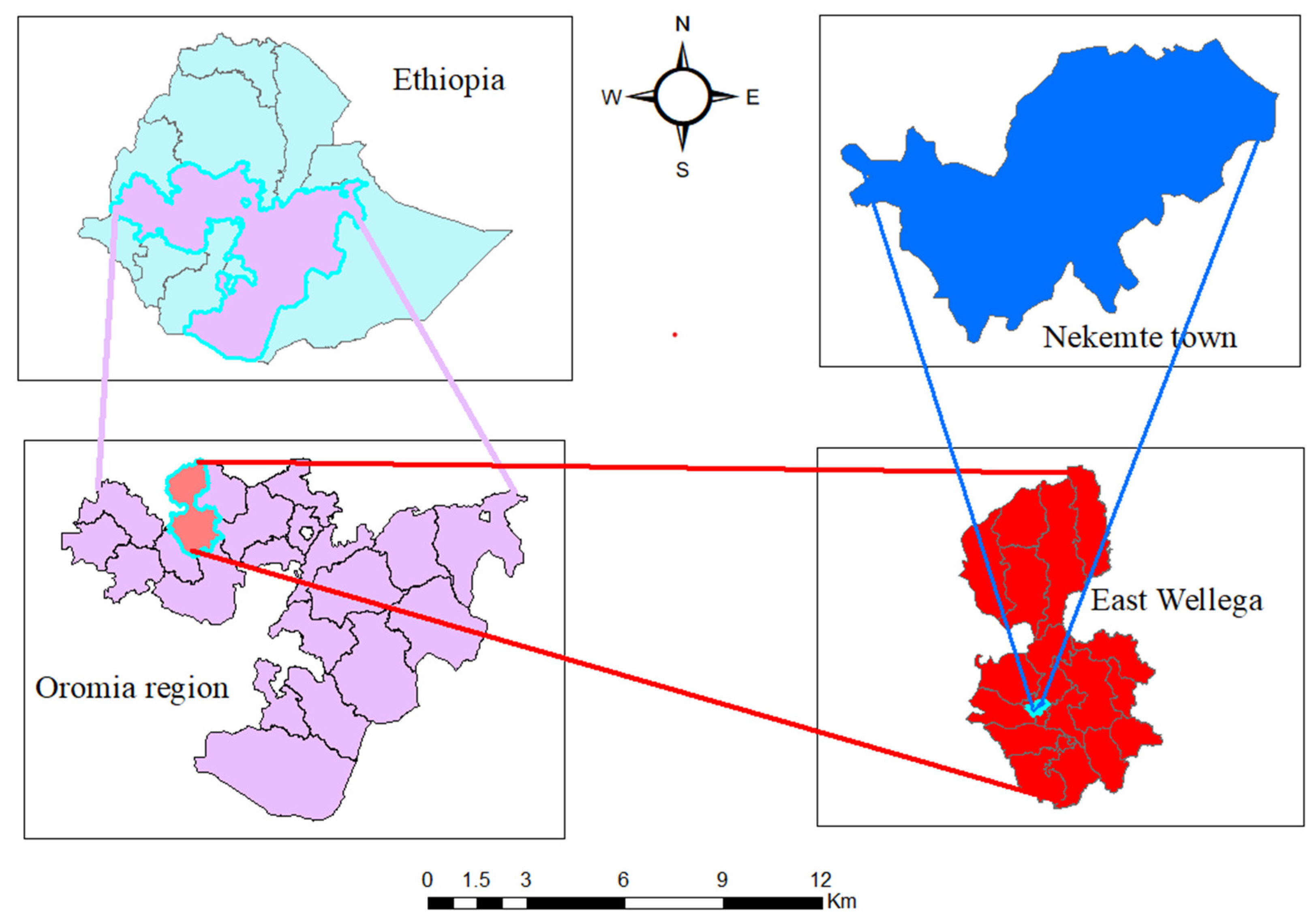
Figure 2.
The major infected and condemned red offal organ due to Platyhelminthes.
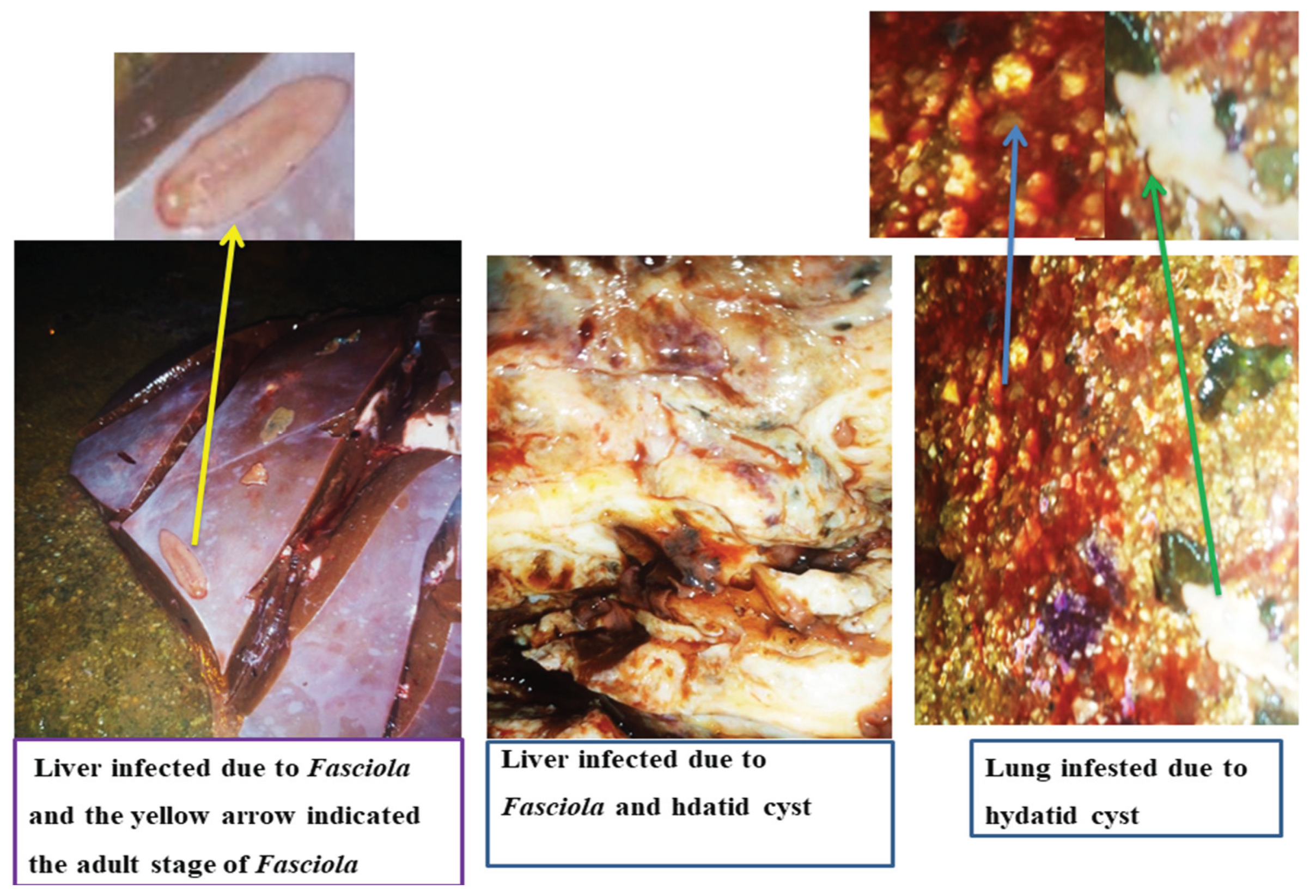

Table 1.
Abnormalities recorded during ante mortem examination.
| Abnormal Conditions recorded | No. of cattle affected | Percentage (%) |
| Tick infestation | 8 | 1.9 |
| Lameness | 11 | 2.6 |
| Depression | 7 | 1.7 |
| Body brand | 5 | 1.2 |
| Coughing | 10 | 2.4 |
| Blindness | 4 | 0.9 |
| Rough hair coat | 14 | 3.3 |
| Total | 59 | 14 |
Table 2.
The overall prevalence of the major Platyhelminthes in the Nekemte municipal abattoir.
| Major Platyhelminthes encountered | No. of Positive Animals | Prevalence (%) |
| Fasciolla | 67 | 15.9 |
| Hydatic Cyst | 27 | 6.4 |
| Cysticercus bovis | 13 | 3.1 |
| Fasciolla and Hydatic cyst Total |
25 132 |
5.9 31.3 |
Table 3.
Summary of organ condemnation due to Platyhelminthes in the Nekemte municipal abattoir.
| Organs | Type Platyhelminthes | No. of organs condemned | Percent (%) |
| Liver | Fasciola | 67 | 15.9 |
| Fasciola and Hydatid cyst | 25 | 5.9 | |
| Total | 92 | 21.8 | |
| Lung | Hydatid cyst | 27 | 6.4 |
| Fasciola and Hydatid cyst | 25 | 5.9 | |
| Total | 52 | 12.3 | |
| Heart | Cysticercus bovis | 13 | 3.1 |
| Total | 13 | 3.1 | |
| Overall total | 157 | 37.2 |
Table 4.
Organs condemnation rates associated with different risk factors.
| Variables | No. of examined | Liver (%) | Lung (%) | Heart (%) | Liver and lung (%) | ꭓ2 | p-value |
| Age | |||||||
| Young | 310 | 5(7.6) | 1(1.5) | 0 | 5(7.6) | 27.2 | 0.001 |
| Adult | 66 | 48(15.5) | 19(6.1) | 11(3.5) | 20(6.5) | ||
| Old | 46 | 14(30.4) | 7(15.2) | 2(4.3) | 0 | ||
| Sex | 3.346 | 0.502 | |||||
| Male | 337 | 55(16.3) | 24(7.1) | 10(3.0) | 22(6.5) | ||
| Female | 85 | 12(14.1) | 3(3.5) | 3(3.5) | 3(3.5) | ||
| Body conditions | |||||||
| Good | 397 | 59(14.9) | 20(5.0) | 5(1.3) | 25(6.3) | 111.71 | 0.000 |
| Medium | 25 | 8(32.0) | 7(28.0) | 8(32.0) | 0 | ||
| Origins | |||||||
| Argo gudatu | 60 | 11(18.3) | 5(8.3) | 3(5.0) | 4(6.7) | 18.5 | 0.913 |
| Diga | 39 | 4(10.3%) | 3(7.7) | 1(2.6%) | 0 | ||
| Baldra | 49 | 9(18.4%) | 3(6.1%) | 3(6.1%) | 4(8.2%) | ||
| Uke | 74 | 10(13.5%) | 7(9.5%) | 3(4.1%) | 0 | ||
| Sasiga | 58 | 11(19.0%) | 3(5.2%0 | 2(3.4%) | 4(6.9%) | ||
| Jimma arjo | 48 | 8(16.7%) | 3(6.2%) | 0 | 3(6.2%) | ||
| Getema | 60 | 11(18.3%) | 3(5.0%) | 1(1.7%) | 0 | ||
| Nekemte town | 34 | 3(8.8%) | 0 | 0 | 2(5.9%) | ||
| Total | 67(15.9%) | 27(6.4%) | 13(3.1%) | 25(5.9%) |
Table 5.
The major Platyhelminthes parasite causes organ (red offal) condemnation associated with different risk factors.
Table 5.
The major Platyhelminthes parasite causes organ (red offal) condemnation associated with different risk factors.
| Major Platyhelminthes (n (%) | ||||||||
| Categories | No. examined | No. positive % | Fasciola % | Hydated cyst % | C.bovis % | Fasciola and hydated cyst % | ꭓ2 | P-value |
| Age | ||||||||
| Young | 310 | 98(31.6) | 5(7.6) | 1(1.5) | 0 | 5(7.6) | 27.2 | 0.001 |
| Adult | 66 | 11(16.7) | 48(15.5) | 19(6.1) | 11(3.5) | 20(6.5) | ||
| Old | 46 | 23(50.0) | 14(30.4) | 7(15.2) | 2(4.3) | 0 | ||
| Sex | ||||||||
| Male | 337 | 110(26.7 | 55(16.3) | 24(7.1) | 10(3.0) | 226.5) | 3.35 | 0.502 |
| Female | 85 | 22(5.21) | 12(14.1) | 3(3.5) | 3(3.5) | 3(3.5) | ||
| Body conditions | ||||||||
| Good | 397 | 109(27.5 | 59(14.9) | 20(5.0) | 5(1.3) | 25(6.3) | 111.7 | 0.000 |
| Medium | 25 | 23(92) | 8(32.0) | 7(28.0) | 8(32.0) | 0 | ||
| Origins | ||||||||
| Argo gudatu | 60 | 23(38.3) | 11(18.3) | 5(8.3) | 3(5.0) | 4(6.7) | 18.5 | 0.91 |
| Diga | 39 | 8(20.5) | 4(10.3) | 3(7.7) | 1(2.6) | 0 | ||
| Baldra | 49 | 19(38.8) | 9(18.4) | 3(6.1) | 3(6.1) | 4(8.2) | ||
| Uke | 74 | 24(32.4) | 10(13.5) | 7(9.5) | 3(4.1) | 0 | ||
| Sasiga | 58 | 20(34.5) | 11(19.0) | 3(5.20) | 2(3.4) | 4(6.9) | ||
| Jimma Arjo | 48 | 14(29.2) | 8(16.7) | 3(6.2) | 0 | 3(6.2) | ||
| Getema | 60 | 19(31.7) | 11(18.3) | 3(5.0) | 1(1.7) | 0 | ||
| Nekemte town | 34 | 5(14.7) | 3(8.8) | 0 | 0 | 2(5.9) | ||
| Total | 422 | 132(31.3 | 67(15.9) | 27(6.4) | 13(3.1) | 25(5.9) | ||
Table 6.
Annual direct economic loss due to organ (red offal) condemnation.
| Types of organs | Total No. organs condemned | Percentages of organs condemned | Average price of each organ (ETB) | Annual slaughter rate | Annual loss estimation (ETB) |
| Liver | 92 | 21.8% | 300 | 7,300 | 477,420 |
| Lung | 52 | 12.3% | 100 | 7,300 | 89,790 |
| Heart | 13 | 3.1% | 200 | 7,300 | 45,260 |
| Total ground cost of all organs | 612,470.00 ETB | ||||
Disclaimer/Publisher’s Note: The statements, opinions and data contained in all publications are solely those of the individual author(s) and contributor(s) and not of MDPI and/or the editor(s). MDPI and/or the editor(s) disclaim responsibility for any injury to people or property resulting from any ideas, methods, instructions or products referred to in the content. |
© 2025 by the authors. Licensee MDPI, Basel, Switzerland. This article is an open access article distributed under the terms and conditions of the Creative Commons Attribution (CC BY) license (http://creativecommons.org/licenses/by/4.0/).
Copyright: This open access article is published under a Creative Commons CC BY 4.0 license, which permit the free download, distribution, and reuse, provided that the author and preprint are cited in any reuse.


