

Submitted:
19 August 2025
Posted:
20 August 2025
You are already at the latest version
Abstract
The Mexican gray wolf (Canis lupus baileyi), native to Mexico and the southwestern United States, has influenced cultural symbolism and rural development through its interactions with human communities. The expansion of livestock ranching, however, led to intense persecution and its eradication from the wild by 1980. A binational conservation program initiated in 1977 focused on captive breeding and reintroduction, with modest recovery reported since 2011. This study employs a qualitative analysis of historical and academic sources to assess the status of wild populations and to document human–wolf interactions in Mexico. Findings indicate coexistence during the pre-Hispanic period, followed by a controversial relationship that culminated in intensified conflicts with livestock ranching by the mid-20th century. Current challenges include limited community involvement, livestock-based land use, and restricted access to information. Understanding these historical dynamics is essential for developing effective conservation and conflict management strategies. The long-term survival of the subspecies depends on coordinated efforts between local communities and government authorities to foster coexistence.
Keywords:
documentation
; historical interpretation
; wild population
; gray wolf
; human-wolf conflicts
; coexistence
; Mexico
1. Introduction
Gray wolves (Canis lupus) have inhabited the ecosystems of America for approximately 70,000 years, having arrived after crossing the Bering Strait from Eurasia [1,2]. Humans arrived around 40,000 years later [3]. Interactions between wolves and human communities have spanned thousands of years, shaped not only by competition, persecution, and fear but also by symbolism, admiration, and, more recently, conservation efforts [4].
In North America, the relationship between wolves and humans has varied across historical periods and territories, shaped by differing cultural perspectives and practices. In pre-Columbian times, numerous Indigenous communities inhabited the region, each with distinct customs, languages, and belief systems, often characterized by a harmonious relationship with nature [5]. Wolves were revered as spiritual beings and symbols of strength, loyalty, and wisdom [6,7]. With European colonization, the continent became a site of cultural transfer, as traditions from diverse European countries were introduced and integrated [8]. The Spanish were the first to bring livestock, initiating the transformation of the landscapes and the formation of new rural communities [9,10]. As agriculture and livestock production expanded, Spanish colonizers encountered wolves in the New World [11,12], marking the beginning of a new phase in the human–wolf relationship.
Despite the expansion of New Spain and the eventual formation of Mexico as an independent nation, wolves continued to inhabit much of their native range. However, the 20th century marked a critical period for the species, as the region underwent rapid rural development, population growth, shifts in land use, and an increased emphasis on livestock production. These changes intensified conflicts between humans and wildlife, particularly large carnivores such as wolves [13,14,15].
1.1. Gray Wolf Conservation in Mexico
The Mexican gray wolf (Canis lupus baileyi) is the smallest, most genetically distinct, and southernmost subspecies of the North American gray wolf [16,17,18,19]. By the 1980s, the subspecies had been eradicated from the wild following decades of persecution and predator control campaigns aimed at protecting livestock [14,20]. Since 1977, the United States and Mexico have implemented a binational cooperative plan to support the recovery of the Mexican gray wolf through captive breeding, to reestablish wild populations [14,21].
In Mexico, the return of the gray wolf to the wild was confirmed on October 11, 2011, when the Mexican government released the first five specimens into the Sierra de San Luis in northwestern Sonora [22]. Although more than thirty years had passed since the last confirmed reports of wild wolves in Mexico, within less than two months, four of the five released wolves had died from poisoning [23]. Subsequent releases also resulted in fatalities due to poisoning and gunshot wounds [23,24]. The reintroduction of wolves also revived controversy, conflict, and a longstanding culture of rejection toward the species.
The International Union for Conservation of Nature (IUCN) has established a series of guidelines for managing human–wildlife coexistence, recognizing the importance of understanding the contextual and historical background of conflicts to enhance conservation efforts [25]. Building on this foundation, the present study documents historical information and integrates interpretations related to human–wolf relationships, and the potential status of wild wolf populations.
This study examines two central questions: (1) How has the relationship between gray wolf populations and human communities changed across different historical periods in the territory that now constitutes Mexico? and (2) What historical factors and actions have contributed to the emergence and persistence of the culture of rejection and the conflicts between wolves and human communities in Mexico?
2. Methodology
Historical records and academic studies on the former distribution of gray wolves and their interactions with humans in Mexico are limited. Nevertheless, the available sources permit interpretation and the construction of a historical narrative [26].
Historical description involves the organized and objective analysis of past references to understand a given phenomenon [27]. This method relies on qualitative comparisons and includes several stages: topic delimitation, source documentation and evaluation, contextualization, and chronological organization [28].
The adaptation of the historical research method was carried out as follows:
- A. Topic Delimitation:
This study focused on the relationship and historical background of the conflict between human communities and the gray wolf population in Mexico.
- B. Source Documentation and Evaluation:
Information was collected through a review of bibliographic sources accessed via governmental and open platforms. Primary sources were obtained from the digital repositories of government agencies and academic institutions. Secondary sources consisted of digital documents with bibliographic identifiers containing relevant information, whereas tertiary sources provided supplementary data related to the topic. Searches were conducted in both Spanish and English using Google, Google Scholar and websites of the Government of Mexico with keywords such as “wolves,” “Mexico,” Canis lupus baileyi, “conflicts,” “relationship,” “population,” and “rural communities.” These keywords were combined with terms related to historical periods or regions, including: “pre-Hispanic,” “Mesoamerica,” “Aridoamerica,” “Oasisamerica,” “colonial,” “New Spain,” “independence,” “reform,” “Porfiriato,” “Mexican Revolution,” and “northern Mexico.” Additionally, bibliographic references cited in the reviewed literature were examined when they provided relevant information.
- C. Chronological Organization:
The historical description was structured into distinct periods based on established references to Mexican history [30,31]:
C.1. Pre-Hispanic Period: covering the time before the conquest of the Aztec Empire in 1521, when various Indigenous empires and communities inhabited the territory;
C.2.New Spain Period: also known as the Hispanic or Colonial Era, spanning from 1521 until Mexican independence (1821), characterized by Spanish colonial rule and cultural mestizaje;
C.3.Republican Transition Period: defined here from 1821 to the end of the Mexican Revolution and the promulgation of the 1917 Constitution, a period marked by political instability, shifting governments, and constitutional reforms;
C.4.Contemporary Republic Period: from 1917 to the present, characterized by political stability, changes in territorial management, institutional development, and rural and urban growth.
D. Contextualization:
Collected information was organized and analyzed to interpret the possible status of the Mexican gray wolf population and to describe the human-wolf relationship across the defined historical periods.
All documents containing relevant data and information were incorporated into the development of the narratives and interpretations. The development of this research has revised the inclusion, screening, and exclusion procedures outlined in the PRISMA 2020 methodology [29]. However, the approach has been adapted to accommodate the defined temporal scope and the requirements of historical interpretation.
Generative artificial intelligence (GenAI) has not been used in this paper to generate text, data, or graphics, or to assist in study design, data collection, analysis, or interpretation.
3. Results
3.1. Analysis of the Pre-Hispanic Period
The Pre-Hispanic period in North America culminated in 1521 with the Spanish conquest of the Aztec Empire, although its origins can be traced back to the establishment of some of the oldest civilizations, such as the Olmecs, around 1200 BCE [31,32]. In Pre-Hispanic anthropological studies, the region’s empires and native peoples are commonly organized and delimited into three territorial zones: Aridoamerica, located in the north and comprised of nomadic communities whose subsistence activities were based on hunting and gathering; Oasisamerica, situated in the north-central region, where some sedentary communities were established, mastering agriculture and exhibiting distinctive cultural expressions; and Mesoamerica, located in southern North America, characterized by diverse habitats, greater availability of natural resources, and the establishment of some of the most advanced communities [33]. Moreover, it is recognized that during the Pre-Hispanic period, there were no pan-Mesoamerican or pan-Aridoamerican empires. Instead, multiple independent communities and empires coexisted, engaging in trade, alliances, competition, conflicts, and occasionally warfare [34,35,36].
The Florentine Codex, formally titled “General History of the Things of New Spain,” was published by Friar Bernardino de Sahagún in 1577. Along with letters and documents authored by the colonizers, it constitutes one of the primary sources of information on the relationship between fauna and Indigenous communities. Book XI, titled “Natural Things,” is among the most significant historical references, providing descriptions of natural components, species names in Nahuatl—the language of the Aztecs and other Mesoamerican communities—and the associated uses and relationships with biodiversity. Notably, the document identifies and names the wolf in Nahuatl as “cuetlachtli” [12], which translates to English as “animal that attacks” [37].
3.1.1. Interpretation of the Possible Status of the Wolf Population
During the Pre-Hispanic period, Indigenous empires and communities were largely concentrated in Mesoamerica, where tropical habitats predominated [5,33]. To the north, the temperate forests, grasslands, and deserts of Aridoamerica and Oasisamerica were sparsely populated, with human communities primarily leading nomadic lifestyles [38]. These regions—Aridoamerica, Oasisamerica, and northern Mesoamerica—comprise the majority of the historical and natural range of Canis lupus baileyi [19,39,40]. Based on current knowledge of the species’ reproductive behavior and ecology [14,39,41], it can be interpreted that the gray wolf population was likely naturally abundant during this period
3.1.2. Interpretation of the Relationship Between Wolves and Human Communities
Various documents and anthropological studies indicate that gray wolves were admired and held symbolic significance for many Indigenous communities [42,43]. Although wolf sacrifices occurred in certain ceremonial rituals [44,45], there is no evidence of a culture of rejection or systematic persecution of wolves, likely because there was no direct competition for food resources. It is widely recognized that Indigenous communities during the Pre-Hispanic period maintained a harmonious relationship with nature [40]. Therefore, it can be interpreted that there was also a relationship of coexistence with wolves.
3.2. Analysis of the New Spain Period
In his second letter, dated October 30, 1520, and addressed to King Charles I, Hernán Cortés reported the presence of wolves and other animals in the New World [11]. Later, the naturalist Francisco Hernández de Toledo confirmed the Nahuatl name “cuetlachtli” and described the wolves of New Spain as similar to those of Spain, though possessing larger heads. He noted that they inhabited warmer regions and were known to attack both livestock and humans [46].
The Spanish brought with them centuries of experience in capturing and hunting wolves when they began the colonization of North America [47]. The expansion of New Spain significantly transformed the landscape through the establishment of towns dedicated to mining, agriculture, and livestock production, particularly in the regions of Aridoamerica and Oasisamerica—areas that had been sparsely populated during the Pre-Hispanic period [30]. European traditions, along with the evangelization process, also reshaped Indigenous perceptions of nature and altered long-standing relationships with the environment [9,48,49]. These changes played a significant role in the emergence of a new, more controversial relationship between human communities and wolves.
Additionally, documents from the New Spain period preserved in the National Archives provide evidence that the Viceroy himself granted permits to Indigenous individuals allowing them to carry weapons for protection against felines and wolves [50]. This historical precedent indicates the existence of institutional regulation of wolf hunting as a defensive measure and reflects the emergence of a culture of rejection toward wolves among Indigenous communities. Furthermore, there is documented evidence of European narratives portraying wolves negatively being adapted into, and eventually adopted by, the Mexican oral tradition [51].
3.2.1. Interpretation of the Possible Status of the Wolf Population
By 1790, northern New Spain remained sparsely populated [52], a condition that helped preserve natural habitats and ensured the availability of food resources for gray wolves within their historical range. Based on current knowledge of the species’ reproductive behavior and its natural tendency to avoid human interaction [41,53,54], it is reasonable to interpret that wolf populations remained abundant in the region during this period.
3.2.2. Interpretation of the Relationship Between Wolves and Human Communities
By 1790, the entire northern region of New Spain was estimated to have slightly more than 600,000 inhabitants, most of whom were concentrated in towns and provincial capitals [52]. Although a culture of wolf rejection was spreading alongside regional development, population densities in the northern territories remained low, and human presence was limited within the core habitats of the wolf’s native distribution [19,52,53]. Thus, historical analysis suggests that while the relationship between wolves and humans was marked by controversy—rooted in negative perceptions and awareness of wolf presence among settlers—actual conflicts were likely infrequent and limited to occasional encounters.
3.3. Analysis of the Republican Transition Period
The period from Mexico’s independence in 1821 to the end of the Mexican Revolution and the adoption of the current constitution in 1917 was marked by civil conflicts between conservative and liberal factions over the country’s form of governance. During this time, a Mexican empire was proclaimed, followed by a short-lived Austro-Hungarian monarchy, and republics were alternately abolished and reestablished. Similarly, various laws and constitutions were repeatedly enacted and later repealed. The divided nation also faced foreign interventions, including the French occupation and the war with the United States, during which Mexico lost more than half of its territory [30,31].
Notably, in 1870, the first Civil Code of Mexico was published, formally recognizing the right to hunt and the use and possession of animals. This code included specific regulations on the appropriation of animals. Two articles are particularly relevant: Article 833 states, “The right to hunt and to appropriate the products of hunting is entirely free on public land”; while Article 852 declares, “Wild animals that escape from the enclosure in which they are held by their owners may be destroyed or seized by anyone” [55] (translated from Spanish to English).
3.3.1. Interpretation of the Possible Status of the Wolf Population
By 1895, the population of northern Mexico had increased to approximately three million—five times its size in 1790 [52]. Although agriculture, livestock farming, and rural settlements were expanding, human population densities within the native range of the Mexican gray wolf remained relatively low [19,52]. Wolves continued to occupy extensive areas of the northern highlands but were virtually absent from the more densely populated southern regions of the country [39,53]. Given established knowledge of the species’ reproductive behavior and its natural tendency to avoid human interaction [14,41,53,54], it is reasonable to interpret that the wolf population remained abundant in northern Mexico during this period.
3.3.2. Interpretation of the Relationship Between Wolves and Human Communities
The expansion of rural communities [52,56] led to increased resource consumption, the conversion of land for agriculture and hunting, and the intensification of livestock farming to meet both national demand and meat export markets [57,58]. As a result, encounters and competition over prey between humans and wolves likely became more frequent, supporting the interpretation of an increasingly conflictive relationship, particularly in the southern regions of the country. In contrast, in the sparsely populated north, interactions were less frequent, and although the relationship remained controversial, direct conflict was limited to occasional encounters.
3.4. Analysis of the Contemporary Republic Period
The promulgation of the 1917 Constitution marked the beginning of a period of political and institutional stability in Mexico. It also initiated significant reforms and activities that shaped the country’s current model of economic development [30,31].
Among these reforms, the agrarian and constitutional changes led to the creation of Ejidos—collectively owned land units designated for settlement and productive activities [59]. These reforms aimed to redistribute land to benefit peasants who had previously lacked access to land ownership [30,31]. Today, approximately 32,000 ejidos exist, collectively covering more than half of Mexico’s national territory [60].
The development of Mexico’s northern territories accelerated in the 20th century, driven primarily by the expansion of livestock farming. For the preceding four centuries since colonization, population growth and economic development had been concentrated mainly in the country’s center, west, and south [61]. Livestock production intensified to meet the demands of a growing national population and for exports to the United States [57,58]. Under these conditions, large carnivores and wildlife diseases increasingly threatened the economic stability of agricultural and livestock producers [13]. By the mid-20th century, natural habitats were rapidly being transformed into productive landscapes, accompanied by rising human populations, intensified hunting, and more frequent interactions between humans and wildlife [61]. During this period, laws were enacted to regulate hunting. The first Hunting Law, passed in 1940, was largely ignored [62]. In 1952, the Federal Hunting Law introduced guidelines for wildlife conservation [63]; however, it proved ineffective due to the absence of detailed regulations. Despite its shortcomings, this law remained in force until 2000, when it was repealed and replaced by the current General Wildlife Law [64].
3.4.1. Interpretation of the Possible Status of the Wolf Population up to the Last Estimate in 1980
Based on available information, it can be assumed that wolves remained abundant until around 1950, when population control and eradication measures promoted by government agencies began to be implemented. Table 1 presents key references and data regarding the status of the Mexican wolf population throughout the 20th century.
3.4.2. Interpretation of the Potential Status of the Wolf Population Following Reintroductions into the Wild
The first five Mexican wolves were released into the wild in Sonora in October 2011 [22]. Subsequent releases continued annually only in Chihuahua [23,68,69,70,71,72]. The Mexican government reported wild births of gray wolves each year from 2014 to 2021 [23,24,69,70,71,72,73], although several deaths among reintroduced specimens were also documented [23,24]. By 2021, approximately forty-five wolves were present in the wild [73]. An updated report was published in July 2025, stating that approximately thirty-five wolves were present in the wild [74].
3.4.3. Interpretation of the Relationship Between Wolves and Human Communities Until 1980
Between 1950 and 1959, the Pan American Sanitary Bureau, in collaboration with Mexican government agencies and livestock producers, promoted campaigns aimed at combating rabies and reducing livestock losses in the states of Baja California, Chihuahua, and Sonora. These efforts included training personnel from the U.S. Fish and Wildlife Service to implement in Mexico the same wolf and coyote control methods used in the United States. One of the most effective materials employed was sodium fluoroacetate, commonly known as Compound 1080. This chemical proved highly efficient in controlling canid populations due to its lethal and persistent effects; after ingestion, the vomit of poisoned animals remained toxic, often killing other scavengers that consumed it [13]. As a result, wolf populations declined significantly, and by 1955, ranchers reported a noticeable reduction in livestock losses compared to pre-1950 levels [13]. In 1955 alone, 12,470 wolves and coyotes were poisoned in the states of Chihuahua and Sonora using Compound 1080 [66].
The widespread and unregulated use of Compound 1080 by ranchers played a key role in the near-eradication of the gray wolf in Mexico [14]. Throughout most of the 20th century, the relationship between humans and wolves was marked by conflict, which intensified due to institutionalized practices and cultural attitudes that encouraged the persecution and rejection of the subspecies.
3.4.4. Interpretation of the Relationship Between Wolves and Human Communities Following Reintroductions to the Wild
Publications issued by Mexican government agencies report details on irregular wolf mortalities, management omissions, and specific challenges within the reintroduction program since its inception in 2011 [23,24]. The documentation of wolf deaths caused by poisoning and firearms, as well as the irregular capture and translocation of specimens and the low life expectancy of reintroduced wolves [23,24], provides sufficient evidence to confirm the persistence of a culture of rejection and validate the ongoing human-wolf conflict in northern Mexico. Additionally, both bibliographic sources [23,24] highlight various omissions and weaknesses in the management and implementation of the reintroduction process.
The findings also demonstrate that the efforts implemented by the Mexican government have effectively ensured legal protection, planned conservation strategies, and the reintroduction of specimens into their native habitats. Figure 1 presents the main historical actions undertaken in Mexico for gray wolf conservation and management.
4. Discussion
Interpretations in historical research are derived from contextual analyses of specific time periods (26). In the case of this study, the findings indicate that the abundance and distribution of gray wolves, as well as their interactions with human communities, have experienced greater variation in the more recent history of Mexican territory.
Villa-R [13] (pp.494–495) explains that the development and expansion of livestock farming in northern Mexico led to a greater availability of food for predators, promoting the growth of wolf and coyote populations. McBride [14] (p.19) also notes that territorial development and habitat transformation increased the availability of prey, which in turn facilitated predation on cattle, donkeys, and horses by wolves. After 1950, institutional eradication campaigns and the use of Compound 1080 were decisive in the accelerated decline of wolf populations, as well as other species such as coyotes (Canis latrans), mountain lions (Puma concolor), bobcats (Lynx rufus), and grizzly bears (Ursus arctos horribilis) [13,14]. Compound 1080 was applied to fresh meat baits and strategically distributed during the winter, when natural prey was scarce and poisoned baits became the only available food source, resulting in a high mortality rate. These baits were placed at multiple stations across different regions, complicating efforts to accurately estimate the number of animals killed by sodium fluoroacetate. In the case of wolves, after consuming the poisoned bait, many returned to their dens, where they ultimately died [13].
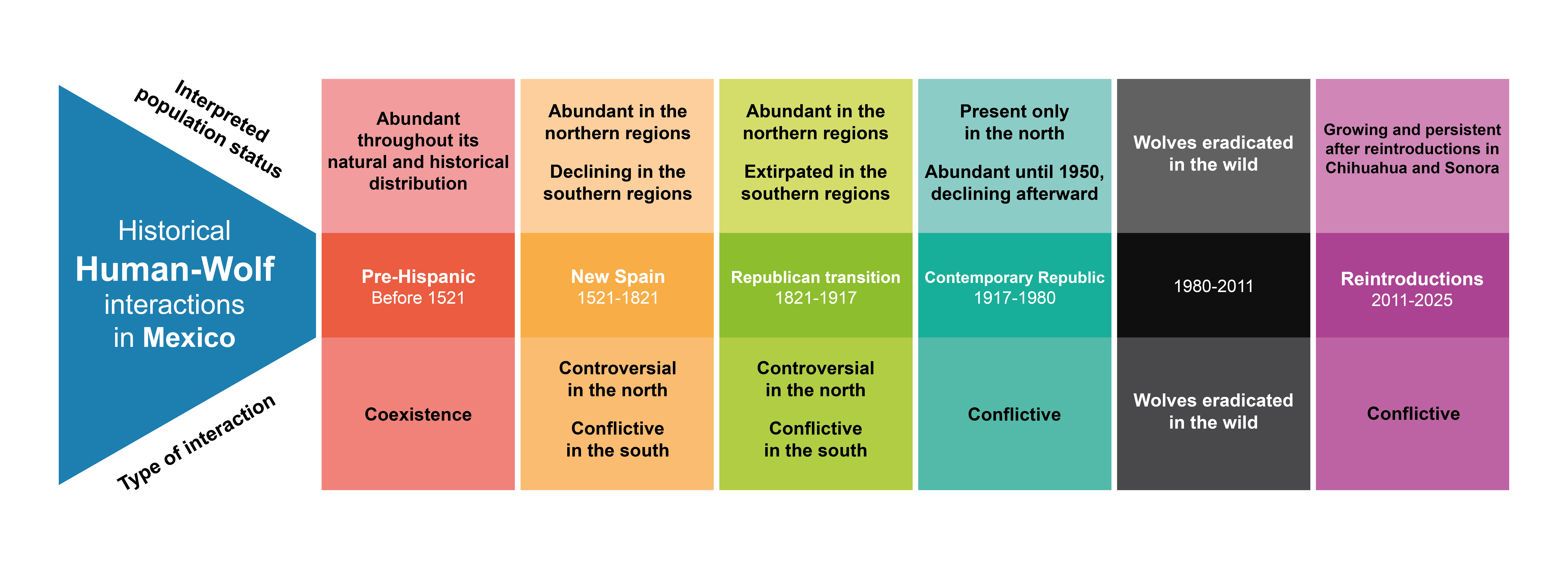
Table 2. shows a summary of the interpretation of the results on the possible population status and the type of human-wolf relationship during different historical periods in Mexico.
Regarding the reintroduced population, the 2025 updated report indicated a decline compared with the wild population reported in the 2021 update [73,74].
4.1. Determining the Status of the Gray Wolf Population and Human Population Density
Young and Goldman [39] noted that, due to geographic features and habitat diversity, while wolves were present throughout their native range, their abundance and population densities were likely lower than those in Canada and the United States, although they acknowledged the lack of precise data. In subsequent years, contrasting reports emerged: by 1950, the Pan American Sanitary Bureau and the U. S. Fish and Wildlife Service recognized that wolf concentrations in northern Mexico were higher than those in the United States and Canada [13]. In 1951, Dalquest, in his doctoral research, reported that wolves were abundant and the population was growing in San Luis Potosí [65]. Additionally, the Pan American Sanitary Bureau reported that by 1962, the wolf population density was approximately one specimen per square kilometer [67]. This analysis is relevant because, in 2009, the Mexican government published the Action Plan for the Conservation of the Mexican Gray Wolf Subspecies; this document begins by stating that, “It is known that in southwestern North America the wolf population was small at the time of the arrival of the first European settlers, which is consistent with the fact that most of the North American plains would hardly have the capacity to support the ungulate populations that would serve as food for large wolf populations, according to inferences from ecologists, biogeographers and paleontologists (SEMARNAP-INE, 2000)” [76] (p.10: translated from Spanish to English). However, the complete bibliographic reference “SEMARNAP-INE, 2000” is not included in the reference list at the end of the document [76] (p.50).
The information reported by the Pan American Sanitary Bureau [67], together with the studies by Villa-R [13] and Dalquest [65], combined with knowledge of the natural behavior of Mexican wolves—such as their tendency to avoid humans, resistance to captivity [14], average annual reproduction of four to six cubs [39], and recognized ability to travel long distances [79]—can be interpreted as indicating that wolves were abundant in Mexico within their historical habitats [19] until approximately 1950. This statement is supported by Woodroffe’s proposal, which identifies a human population density exceeding 10 people per km2 as a critical threshold that precipitates conflicts and declines in large predator populations [80]. Table 3 presents data from northern Mexican states [81], demonstrating that these critical human population densities were not reached until the mid-20th century.
5. Conclusions
Historical interpretation is a process of constructing narratives within specific contexts to understand, argue, and explain the phenomenon under study [26]. The results of this study indicate that gray wolves were naturally abundant until approximately 1950 in the habitats of northern Mexico, which encompassed the majority of their historical distribution. Moreover, the human–wolf relationship has varied throughout the territory’s history, primarily shaped by the expansion of livestock farming. The rapid decline that brought the subspecies to the brink of extinction, however, was largely the result of intensive eradication campaigns and the uncontrolled use of Compound 1080, promoted from the 1950s onward by the Pan American Health Bureau, the United States Fish and Wildlife Service, and ranching communities [13,14,67].
Concerning attacks on humans, Dalquest’s doctoral research [65] reported no incidents of wolf attacks in San Luis Potosí. Villa-R [13] (pp.490–491) described two wildlife attacks on humans—one by a coyote and another by a wildcat—both confirmed to have involved rabid animals. Throughout the 20th century, there were no reports of Mexican wolf attacks on humans in either Mexico or the United States [91]. Since the reintroduction of the subspecies in both countries, no wolf attacks on humans have been reported.
Regarding conservation efforts, Villa-R [13] (p.497) emphasized the urgent need to establish sanctuaries and protected areas for wolves as early as 1960. By 1980, McBride [14] (p.44) acknowledged the persistent conflict between rural communities, ranchers, and wolves over livestock protection, noting that this relationship was unlikely to be resolved through education or legal protection alone. Additionally, McBride [14] highlighted the difficulty of identifying areas completely free of conflict, even in the context of potential subspecies reintroduction. While some protected areas exist by federal decree, initial wolf reintroductions have occurred on private lands with landowner consent [24]. Similar to the Mesoamerican Biological Corridor [92], establishing an Aridoamerican Biological Corridor could enhance the conservation and management of wolf populations, as well as other large mammal species and ecosystems.
The IUCN guidelines emphasize the critical importance of understanding historical interactions to inform management plans and develop more effective conflict mitigation strategies [25]. The historical interpretations presented here contribute valuable insights that can inform future strategies and research aimed at managing human–wolf conflict and the culture of wolf rejection in Mexico.
The return of wolves to the wild represents a significant milestone for conservation science. Nonetheless, ongoing reports of deaths caused by firearms, irregular captures, and poisonings reveal that conflicts and negative attitudes toward wolves persist—primarily in defense of livestock—even though studies report that livestock constitute only about 10% of the diet of reintroduced wolves [24].
In Mexico, as in other regions, the survival of gray wolves ultimately depends on human willingness and governmental capacity to manage the complex challenges of coexistence.
Funding
This research received no external funding.
Data Availability Statement
No new data were created or analyzed in this study. Data sharing is not applicable to this article.
Acknowledgments
The author gratefully acknowledges the academic support provided by the University of Salamanca (Spain) and the University of Guadalajara (Mexico).
Conflicts of Interest
The author declares no conflicts of interest.
References
- Leonard, J.A.; Vilà, C.; Fox-Dobbs, K.; Koch, P.L.; Wayne, R.K.; Van Valkenburgh, B. Megafaunal Extinctions and the Disappearance of a Specialized Wolf Ecomorph. Curr. Biol. 2007, 17, 1146–1150. [Google Scholar] [CrossRef] [PubMed]
- Koblmüller, S.; Vilà, C.; Lorente-Galdos, B.; Dabad, M.; Ramirez, O.; Marques-Bonet, T.; Leonard, J.A. Whole Mitochondrial Genomes Illuminate Ancient Intercontinental Dispersals of Grey Wolves (Canis lupus). J. Biogeogr. 2016, 43, 1728–1738. [Google Scholar] [CrossRef]
- Becerra-Valdivia, L.; Higham, T. The Timing and Effect of the Earliest Human Arrivals in North America. Nature 2020, 584, 93–97. [Google Scholar] [CrossRef] [PubMed]
- Fritts, S.; Stephenson, R.; Hayes, R.; Boitani, L. Wolves and Humans. In Wolves: Behavior, Ecology, and Conservation; Mech, L.D., Boitani, L., Eds.; University of Chicago Press: Chicago, USA, 2003; pp. 289–316. [Google Scholar] [CrossRef]
- Chan, R.P. Una visión del México prehispánico; Instituto de Investigaciones Históricas, Universidad Nacional Autónoma de México: Mexico, 1967. [Google Scholar]
- Fogleman, V.M. American Attitudes Towards Wolves: A History of Misperception. Environ. Rev. 1989, 13, 63–94. [Google Scholar] [CrossRef]
- Fogg, B.R.; Howe, N.; Pierotti, R. Relationships Between Indigenous American Peoples and Wolves 1: Wolves as Teachers and Guides. J. Ethnobiol. 2015, 35, 262–285. [Google Scholar] [CrossRef]
- Elliott, J.H. Empires of the Atlantic World: Britain and Spain in America, 1492-1830; Yale University Press: New Haven, 2006. [Google Scholar]
- Matesanz, J.A. Introducción de la Ganadería en Nueva España 1521–1535. Hist. Mex. 1965, 14, 533–566. [Google Scholar]
- Perezgrovas-Garza, R.A. La ganadería bovina en el México Colonial, Antecedentes históricos y personajes protagónicos de su desarrollo; Universidad Autónoma de Chiapas: Chiapas, México, 2020. [Google Scholar]
- Cortés, H. Segunda Carta de Relación de Hernán Cortés al Emperador Carlos V, Segura de la Frontera. Memoria Política de México, Mexico, 1520. Available online: https://www.memoriapoliticademexico.org/Textos/1Independencia/1520SCR.html (accessed 2025).
- Sahagún, B.D. Historia General de las Cosas de la Nueva España por Fray Bernardino de Sahagún: El Códice Florentino. Libro XI: Cosas Naturales; Gobierno de México, 1577; Available online: https://memoricamexico.gob.mx/swb/memorica/Cedula?oId=cx2gZ3oBeAK3C5yqMmi1 (accessed 2025).
- Villa-R, B. Combate Contra los Coyotes y Lobos en el Norte de México. An. Inst. Biol. 1960, 31, 463–499. [Google Scholar]
- McBride, R.T. The Mexican Wolf (Canis lupus baileyi): A Historical Review and Observations on Its Status and Distribution (Endangered Species Report 8); United States Fish and Wildlife Service/Region 2: USA, 1980. [Google Scholar]
- Robinson, M.J. Predatory Bureaucracy: The Extermination of Wolves and the Transformation of the West; University Press of Colorado: USA, 2005. [Google Scholar]
- Nelson, E.W.; Goldman, E.A. A New Wolf from Mexico. J. Mammal. 1929, 10, 165–166. [Google Scholar] [CrossRef]
- Leonard, J.A.; Vila, C.; Wayne, R.K. FAST TRACK: Legacy Lost: Genetic Variability and Population Size of Extirpated US Grey Wolves (Canis lupus). Mol. Ecol. 2005, 14, 9–17. [Google Scholar] [CrossRef]
- Chambers, S.M.; Fain, S.R.; Fazio, B.; Amaral, M. An Account of the Taxonomy of North American Wolves from Morphological and Genetic Analyses. N. Am. Fauna 2012, (77), 1–67. [Google Scholar] [CrossRef]
- Hendricks, S.A.; Clee, P.R.S.; Harrigan, R.J.; Pollinger, J.P.; Freedman, A.H.; Callas, R.; Wayne, R.K. Re-defining Historical Geographic Range in Species with Sparse Records: Implications for the Mexican Wolf Reintroduction Program. Biol. Conserv. 2016, 194, 48–57. [Google Scholar] [CrossRef]
- Brown, D.E. The Wolf in the Southwest: The Making of an Endangered Species; High-Lonesome Books: Silver City, NM, USA, 2002. [Google Scholar]
- United States Fish and Wildlife Service. Mexican Wolf Recovery Plan, Second Revision; USFWS, 2022; Available online: https://www.fws.gov/sites/default/files/documents/Final-Mexican-Wolf-Recovery-Plan-Second-Revision-2022-signed_508-compliant.pdf(accessed April 11, 2024).
- Comisión Nacional para el Conocimiento y Uso de la Biodiversidad. Comunicado de prensa del 3 de noviembre del 2011: Luego de 30 años, el lobo mexicano se reintegra al norte del país; Comisión Nacional para el Conocimiento y Uso de la Biodiversidad: Mexico, 2011; https://www.gob.mx/conabio/prensa/luegode-30-anos-el-lobo-mexicano-se-reintegra-al-norte-del-pais (accessed 2025).
- Lara-Díaz, N.E.; López-González, C.A.; Coronel-Arellano, H.; Cruz-Romo, J.L. ¡Nacidos libres! En el camino a la recuperación del lobo mexicano. Biodiversitas 2015, 119, 1–6. Available online: https://bioteca.biodiversidad.gob.mx/janium/Documentos/7731.pdf (accessed 2025).
- Comisión Nacional de Áreas Naturales Protegidas. Lobo Gris Mexicano, Crónica de un Regreso Anunciado; Comisión Nacional de Áreas Naturales Protegidas: Mexico, 2016; ISBN 978-607-95500-4-2. [Google Scholar]
- International Union for Conservation of Nature. IUCN SSC Guidelines on Human-Wildlife Conflict and Coexistence; IUCN: Switzerland, 2024. [Google Scholar] [CrossRef]
- White, H. Metahistory: The Historical Imagination in Nineteenth-Century Europe; Johns Hopkins University Press: Maryland, USA, 1973. [Google Scholar]
- Kipping, M.; Wadhwani, R.D.; Bucheli, M. Analyzing and Interpreting Historical Sources: A Basic Methodology. In Organizations in Time: History, Theory, Methods; Oxford University Press, 2014; pp. 305–329. [Google Scholar]
- Sánchez-Molina, A.A.; Murillo-Garza, A. Enfoques metodológicos en la investigación histórica: cuantitativa, cualitativa y comparativa. Debates por la Historia 2021, 9, 147–181. [Google Scholar] [CrossRef]
- Page, M.J.; McKenzie, J.E.; Bossuyt, P.M.; Boutron, I.; Hoffmann, T.C.; Mulrow, C.D. . Moher, D. The PRISMA 2020 Statement: An Updated Guideline for Reporting Systematic Reviews. BMJ 2021, 372, n71. [Google Scholar] [CrossRef] [PubMed]
- Cosío-Villegas, D.; García-Martínez, B.; Lorenzo, J.L.; Bernal, I.; Carrasco, P.; Lira, A.; Florescano, E.; Manrique, J.A.; Villoro, L.; Zoraida-Vázquez, J.; Díaz-López, M.L.; González, L.; Martínez, J.L.; Ulloa, B.; Meyer, L.; Monsiváis, C. Historia General de México (Versión 2000); El Colegio de México A.C.: Mexico, 2017. [Google Scholar]
- Hamnett, B.R. A Concise History of Mexico; Cambridge University Press: England, United Kingdom, 2019. [Google Scholar]
- Clark, J.E. Los Olmecas en Mesoamérica; Citibank México: Mexico, 1994. [Google Scholar]
- Vela, E. Áreas culturales: Oasisamérica, Aridamérica y Mesoamérica. Arqueología Mexicana 2018, 82, 28–29. [Google Scholar]
- Chase, A.F.; Chase, D.Z.; Smith, M.E. States and Empires in Ancient Mesoamerica. Anc. Mesoam. 2009, 20, 175–182. [Google Scholar] [CrossRef]
- Kurnick, S.; Baron, J. Political Strategies in Pre-Columbian Mesoamerica; University Press of Colorado, 2016; Available online: https://library.oapen.org/viewer/web/viewer.html?file=/bitstream/handle/20.500.12657/30082/650018.pdf?sequence=1&isAllowed=y(accessed 2025).
- Castellanos-Mora, A. La Construcción del Territorio en Mesoamérica: Memoria, Cosmovisión, Ideología e Historia. In Configuraciones Históricas de Territorios y Fronteras Prehispánicas y Contemporáneas en Mesoamérica; Valdez-Gordillo, M.E., Ed.; UCA Editores: Tuxtla Gutiérrez, Chiapas, México, 2020; pp. 21–43. [Google Scholar]
- Swadesh, M.; Sancho, M. Los Mil Elementos del Mexicano Clásico: Base Analítica de la Lengua Nahua; Instituto de Investigaciones Históricas de la UNAM: México, 1966. [Google Scholar]
- Kirchhoff, P. Recolectores y Agricultores en el Gran Suroeste: Un Problema de Clasificación. Antropología. Revista interdisciplinaria del INAH 2008, (82), 72–89. Available online: https://revistas.inah.gob.mx/index.php/antropologia/article/view/2897/2798 (accessed 2025).
- Young, S.P.; Goldman, E.A. The Wolves of North America: Part I. Their History, Life Habits, Economic Status, and Control; American Wildlife Institute: USA, 1944. [Google Scholar]
- Navarrete-Flores, A.F.; Cueto-Leytte, M.A.; Armella-Villalpando, M.A.; Yáñez-López, M.L. Lobo Mexicano. Iconografía y Cosmovisión en Mesoamérica; Fundación Armella: México, 2014. [Google Scholar]
- Oliva, G.C.G.; Ceballos, G. Los Mamíferos Silvestres de México; Comisión Nacional para el Conocimiento y Uso de la Biodiversidad and Fondo de Cultura Económica: Mexico City, Mexico, 2005. [Google Scholar]
- Blanco, A.; Rodríguez, B.; Valadez, R. El lobo mexicano (Canis lupus baileyi) en el contexto cultural prehispánico: las fuentes escritas. Rev. Asoc. Mex. Méd. Vet. Esp. Peq. Espec. 2007, 18, 95–106. [Google Scholar]
- Blanco, A.; Valadez, R.; Rodríguez, B. El lobo mexicano (Canis lupus baileyi) en el contexto cultural prehispánico: los restos arqueozoológicos e iconografía. Rev. Asoc. Mex. Méd. Vet. Esp. Peq. Espec. 2007, 14, 95–106. [Google Scholar]
- Valadez, R.; Rodríguez, B.; Cabrera, R.; Cowgill, G.; Sugiyama, S. Híbridos de lobos y perros (tercer acto): hallazgos en la Pirámide de Quetzalcoatl de la antigua ciudad de Teotihuacan (primera y segunda partes). Rev. Asoc. Mex. Méd. Vet. Esp. Peq. Espec. 2002, 13. 165–176, 219–231. [Google Scholar]
- Blanco, A.; Rodríguez, B.; Viniegra, F.; Olmos, K.; Mora, C.; Valadez, R. Cánidos del Templo Mayor de Tenochtitlan. Rev. Asoc. Mex. Méd. Vet. Esp. Peq. Espec. 2006, 17, 217–226. [Google Scholar]
- Hernández, F. Obras Completas. Tomo III, Historia Natural de las Cosas de la Nueva España; Universidad Nacional Autónoma de México: México, 1959. [Google Scholar]
- Artola, M.R. Repoblación medieval y declive del lobo (Canis lupus Linnaeus, 1758) en la costa mediterránea de la península ibérica. Galemys 2020, 32, 31–40. [Google Scholar] [CrossRef]
- Peláez, R.A. La Conquista de la Naturaleza Americana, Vol. 14; Editorial CSIC: España, 1993. [Google Scholar]
- Macías-Cárdenas, F.J. La representación visual y textual del lobo en la España Moderna (siglos XVI y XVII). Universidad de Sevilla, España, 2015. [CrossRef]
- Archivo General de la Nación. Instituciones Coloniales, Real Audiencia, indios (058), Contenedor 31, Volumen 58, Expediente 140, Fojas: 225v–226; Gobierno de México: México, 1760; Available online: https://archivos.gob.mx/guiageneral/# (accessed 2025).
- Valle, N.R. De lobos, zorros y... coyotes: leyendas, cuentos y refranes de la literatura medieval que atravesaron el Atlántico. Medievalia 2014, (46), 84–92. https://revistasfilologicas.unam.mx/medievalia/index.php/mv/article/view/301/306.
- Aranda, H.C. Primer censo de la Nueva España 1790: Censo de Revillagigedo, un censo condenado; Sociedad Mexicana de Geografía y Estadística: México, 2010; Available online: https://www.inegi.org.mx/contenido/productos/prod_serv/contenidos/espanol/bvinegi/productos/censos/poblacion/1790/pcpne2010/LIBRO_REVILLAGIGEDO.pdf (accessed 2025).
- Leopold, A.S. Wildlife of Mexico: The Game Birds and Mammals; University of California Press: California, USA, 1959. [Google Scholar]
- Carricondo-Sanchez, D.; Zimmermann, B.; Wabakken, P.; Eriksen, A.; Milleret, C.; Ordiz, A.; Sanz-Pérez, A.; Wikenros, C. Wolves at the door? Factors influencing the individual behavior of wolves in relation to anthropogenic features. Biol. Conserv. 2020, 244, 108514. [Google Scholar] [CrossRef]
- Biblioteca de la Revista de los Tribunales. Colección de Códigos Civiles Americanos y Europeos, Tomo Primero. Código Civil de Méjico; Editores F, Góngora y Compañía: Madrid, España, 1879. [Google Scholar]
- Ledesma-Uribe, J.J. Las comunidades rurales en México durante el siglo XIX. Rev. Fac. Derecho 1978, 10, 415–440. [Google Scholar]
- Lopes, M.S.A. Revolución y ganadería en el norte de México. Historia Mexicana 2008, 57, 863–910. [Google Scholar]
- Kuntz-Ficker, S.; García de Alba, B.F.; Hausberger, B.; Gutiérrez, F.C.; Mentz, B.; Grijalva, M.M.; Maricha, C.; Ibarra, A.; Jáuregui, L.; Sanchez-Santir, E.; Carmagnani, M.; Riguzzi, P.; Haber, S.; Marino, D.; Zuleta, M.C.; Knight, A.; Cárdenas, E.; Márquez, G.; Tullo, F.H. Historia económica general de México: de la colonia a nuestros días; El Colegio de México A. C.: México, 2010. [Google Scholar]
- Cámara de Diputados de Congreso de la Unión. Artículo 27 de la Constitución Política de los Estados Unidos Mexicanos. Cámara de Diputados del Congreso de la Unión: Mexico, 1917. Available online: https://www.diputados.gob.mx/LeyesBiblio/pdf/CPEUM.pdf.
- Morett-Sánchez, J.C.; Cosío-Ruiz, C. Panorama de los ejidos y comunidades agrarias en México. Agric., Soc. Desarro. 2017, 14, 125–152. [Google Scholar] [CrossRef]
- Baker, R.H. El futuro de la fauna silvestre en el norte de México. Anales Inst. Biol. 1957, 28, 349–357. https://anales.ib.unam.mx/index.php/anales/article/view/1083/1001.
- Retana-Guiascón, O.G. Fauna silvestre de México. Aspectos históricos de su gestión y conservación; Fondo de Cultura Económica y Universidad Autónoma de Campeche: México, 2006. [Google Scholar]
- Diario Oficial de la Federación. Ley Federal de Caza promulgada el 5 de enero de 1952; Diario Oficial de la Federación: México, 1952. [Google Scholar]
- Cámara de Diputados de Congreso de la Unión. Ley General de Vida Silvestre; Cámara de Diputados del Congreso de la Unión de los Estados Unidos Mexicanos: Mexico, 2000; https://www.diputados.gob.mx/LeyesBiblio/pdf/146_200521.pdf.
- Dalquest, W.W. Mammals of the Mexican State of San Luis Potosi; Doctoral Thesis, Louisiana State University: USA, 1951; https://repository.lsu.edu/gradschool_disstheses/7990.
- Baker, R.H.; Villa-R, B. Distribución geográfica y población actuales del lobo gris en México. Anales Inst. Biol. 1959, 30, 369–374. https://anales.ib.unam.mx/index.php/anales/article/view/1142/1287.
- Málaga-Alba, A. Factores epidemiologicos que rigen el control de la rabia. Bol. Ofic. Sanit. Panam., Zona II 1962, 53. https://iris.paho.org/bitstream/handle/10665.2/12507/v53n2p105.pdf?sequence=1.
- Comisión Nacional de Áreas Naturales Protegidas. Logros 2016; CONANP: Mexico, 2016; https://simec.conanp.gob.mx/Publicaciones2020/Publicaciones%20CONANP/Parte%203/Logros%20Institucionales/LOGROS%202016.pdf.
- Comisión Nacional de Áreas Naturales Protegidas. Logros 2017; CONANP: Mexico, 2017; https://www.conanp.gob.mx/LogrosConanp/Logros2017.pdf.
- Comisión Nacional de Áreas Naturales Protegidas. Logros 2018; CONANP: Mexico, 2018; https://www.conanp.gob.mx/LogrosConanp/Logros2018.pdf.
- Comisión Nacional de Áreas Naturales Protegidas. Logros 2019; CONANP: Mexico, 2019; https://www.conanp.gob.mx/LogrosConanp/Logros2019.pdf.
- Comisión Nacional de Áreas Naturales Protegidas. Logros 2020; CONANP: Mexico, 2020; https://www.conanp.gob.mx/LogrosConanp/Logros2020.pdf.
- Comisión Nacional de Áreas Naturales Protegidas. Comunicado de prensa del 11 de octubre de 2021: La CONANP conmemora el décimo aniversario de la primera liberación de lobo mexicano; CONANP: Mexico, 2021; https://www.gob.mx/conanp/prensa/la-conanp-conmemora-el-decimo-aniversario-de-laprimera-liberacion-de-lobo-mexicano?idiom=es.
- Comisión Nacional de Áreas Naturales Protegidas. Comunicado de prensa del 9 de julio de 2025: Conanp obtiene registro de lobo mexicano nacido en libertad en el APFF Campo Verde, Chihuahua; CONANP: Mexico, 2025; https://www.gob.mx/conanp/prensa/conanp-obtiene-registro-de-lobo-mexicano-nacido-enlibertad-en-el-apff-campo-verde-chihuahua?tab=.
- Diario Oficial de la Federación. Norma Oficial Mexicana NOM-059-ECOL-1994, que determina las especies y subespecies de flora y fauna silvestres terrestres y acuáticas en peligro de extinción, amenazadas, raras y las sujetas a protección especial, y que establece especificaciones para su protección; Diario Oficial de la Federación: Mexico, 1994; https://www.dof.gob.mx/nota_detalle.php?codigo=4695637&fecha=16/05/1994#gsc.tab=0.
- Secretaría de Medio Ambiente y Recursos Naturales. Programa de Acción para la Conservación de la Especie Lobo Gris Mexicano (Canis lupus baileyi); SEMARNAT: Mexico, 2009; https://www.conanp.gob.mx/pdf_especies/PACELOBO21agosto2009.pdf.
- Diario Oficial de la Federación. Acuerdo por el que se da a conocer la lista de especies y poblaciones prioritarias para la conservación; Diario Oficial de la Federación: Mexico, 2014; https://dof.gob.mx/nota_detalle.php?codigo=5334865&fecha=05/03/2014#gsc.tab=0.
- Comisión Nacional de Áreas Naturales Protegidas. Logros 2014; CONANP: Mexico, 2014; https://www.conanp.gob.mx/LogrosConanp/Logros2014.pdf.
- Mech, L.D. The wolf: The ecology and behavior of an endangered species; University of Minnesota Press: Minnesota, USA, 1981. [Google Scholar]
- Woodroffe, R. Predators and people: using human densities to interpret declines of large carnivores. Anim. Conserv. 2000, 3, 165–173. [Google Scholar] [CrossRef]
- Instituto Nacional de Estadística y Geografía. Censos y Conteos de Población y Vivienda; INEGI: México, 2025; Accessed 1 January 2025. https://www.inegi.org.mx/programas/ccpv/2010/#tabulados.
- Musiani, M.; Paquet, P.C. The practices of wolf persecution, protection, and restoration in Canada and the United States. BioScience 2004, 54, 50–60. [Google Scholar] [CrossRef]
- Coleman, J.T. Vicious: Wolves and Men in America; Yale University Press: New Haven, USA, 2008. [Google Scholar]
- Perry, R. Wildlife in Britain and Ireland; Croom Helm: London, United Kingdom, 1978. [Google Scholar]
- Hickey, K.R. A geographical perspective on the decline and extermination of the Irish wolf Canis lupus—an initial assessment. Irish Geography 2000, 33, 185–198. [Google Scholar] [CrossRef]
- Rico, M.; Torrente, J.P. Caza y rarificación del lobo en España, investigación histórica y conclusiones biológicas. Galemys 2000, 12 (NE), 167–179. [Google Scholar]
- Chapron, G.; Kaczensky, P.; Linnell, J.D.; Von Arx, M.; Huber, D.; Andrén, H. . Boitani, L. Recovery of large carnivores in Europe’s modern human-dominated landscapes. Science 2014, 346, 1517–1519. [Google Scholar] [CrossRef]
- Ministerio de Agricultura, Alimentación y Medio Ambiente. Censo 2012-2014 de lobo ibérico (Canis lupus, Linnaeus, 1758) en España; MAGRAMA: Madrid, España, 2016; https://www.miteco.gob.es/content/dam/miteco/es/biodiversidad/temas/inventariosnacionales/censo_lobo_espana_2012_14pdf_tcm30-197304.pdf.
- Carpio-Domínguez, J.L. Crimen organizado (narcotráfico) y conservación ambiental: el tema pendiente de la seguridad pública en México. CS 2021, 33, 237–274. [Google Scholar] [CrossRef]
- Global Witness. Missing Voices, The Violent Erasure of Land and Environmental Defenders; Global Witness: 2024. Accessed online 12 January 2025 https://gw.cdn.ngo/media/documents/Missing_Voices_-_Global_Witness_land_and_environmental_defenders_report.pdf.
- Linnell, J.; Andersen, R.; Andersone, Z.; Balciauskas, L.; Blanco, J.C.; Boitani, L.; Brainerd, S.; Breitenmoser, U.; Kojola, L.; Liberg, O.; Loe, J.; Okarma, H.; Pedersen, H.C.; Promberger, C.; Sand, H.; Solberg, E.J.; Valdmann, H.; Wabakken, P. The fear of wolves: A review of wolf attacks on humans. NINA Oppdragsmelding 2002, 731, 1–65. https://digitalcommons.unl.edu/cgi/viewcontent.cgi?article=1026&context=wolfrecovery.
- Hernández, A.C.C.; Ortega-Argueta, A.; Campillo, L.M.G.; Bello-Baltazar, E.; Nieto, R.R. Effectiveness of management of the Mesoamerican Biological Corridor in Mexico. Landscape Urban Plan. 2022, 226, 104504. [Google Scholar] [CrossRef]
Figure 1.
History of the Mexican grey wolf conservation and management [13,14,21,22,23,73,75,76,77,78].
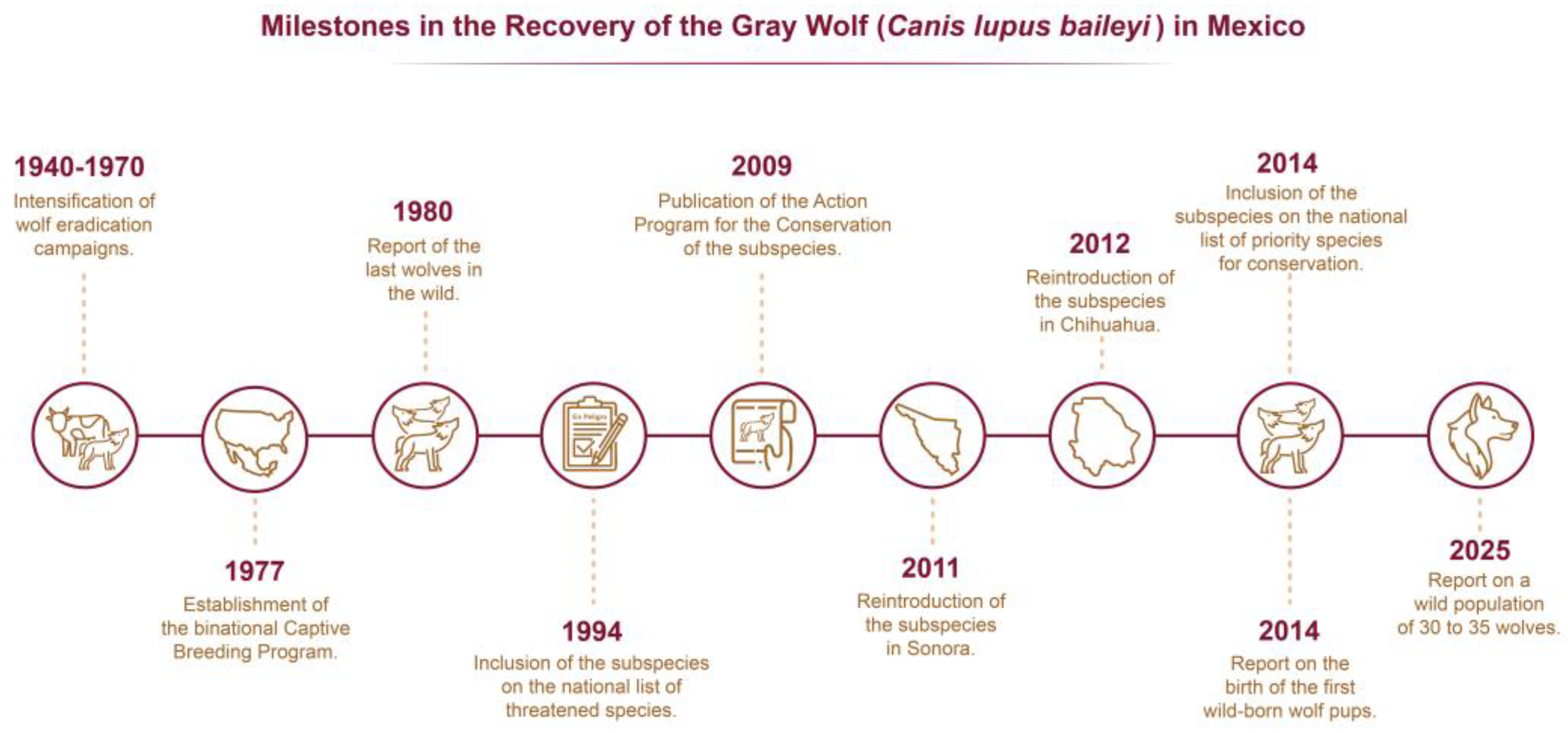

Table 1.
Documentation of the wild gray wolf population in Mexico throughout the 20th century.
| Year | Information provided | Reference |
| 1929 | Wolves were already extinct in the central and southern regions of Mexico but remained relatively numerous in the Sierra Madre Occidental, extending northward to Durango. | [16] |
| 1944 | The wild wolf population had significantly declined, with the remaining wolves persisting mainly in remote mountainous areas of northern Mexico, particularly in the Sierra Madre Occidental and Durango. Although precise data on population size were scarce, it is widely acknowledged that wolves were nearly eradicated from much of their historical range. | [39] |
| 1950 | Studies conducted by the Pan American Sanitary Bureau and the United States Fish and Wildlife Service confirmed that concentrations of wolves and coyotes in northern Mexico were higher than those found in the United States. | [13] |
| 1951 | Wolf populations were present and appeared to be increasing in San Luis Potosí. | [65] |
| 1955 | Following the eradication campaigns, ranchers in Chihuahua and Sonora reported a significant reduction in livestock losses attributed to wolves. | [13] |
| 1959 | Wolves had been exterminated from habitats in eastern, central, and southern Mexico; however, they persisted in the Sierra Madre Occidental and the mountainous regions of eastern Chihuahua and western Coahuila, albeit with clear evidence of declining populations. | [53] |
| 1959 | The wolf population in western Mexico was decimated, having been eradicated from livestock-raising regions, with the remaining wolves confined to remote areas of the Sierra Madre Occidental. | [66] |
| 1962 | The Pan American Sanitary Bureau’s bulletin, which detailed rabies control efforts, reported that the gray wolf population density within its natural range in Mexico was approximately one specimen per square kilometer. The bulletin also acknowledged that the agency employed wolf poisoning as a strategy to reduce the species’ population density, aiming to minimize livestock losses and mitigate the risk of rabies outbreaks. | [67] |
| 1978 | It was estimated that just over fifty breeding pairs of wolves remained throughout Mexico. | [14] |
| 1980 | The remaining wild population was estimated to number fewer than fifty wolves, confined to the Sierra Madre Mountains between Chihuahua and Durango, with warnings that the species faced imminent extinction. | [14] |
Table 2.
Historical interpretation of the Human-Wolf population and interactions in Mexico.
| Historical Period | Time span | Interpreted population status | Type of interaction |
| Pre-Hispanic | Before 1521 | Abundant throughout its natural and historical distribution. |
Coexistence |
| New Spain | 1521–1821 | Abundant in the northern regions; Declining in the southern regions. |
Controversial in the north; Conflictive in the south. |
| Republican Transition | 1821–1917 | Abundant in the northern regions; Extirpated in the southern regions. |
Controversial in the north; Conflictive in the south. |
| Contemporary Republic |
1917–1980 | Present only in the north; Abundant until 1950, declining afterward. |
Conflictive |
| 1980–2011 | Wolves eradicated in the wild | ||
| 2011–2025 | Growing and persistent after reintroductions in Chihuahua and Sonora |
Conflictive | |
Table 3.
Human population density near 10 h/km2 in northern Mexican states. Approximate population density of 10 people per km2 in the northern states of Mexico. Densities were calculated using historical data from population censuses and territorial extents reported by the National Institute of Statistics and Geography of Mexico [81]. The calculation of human population density includes both urban and rural populations. In all cases, population densities close to or exceeding 10 inhabitants per square kilometer were reached after 1950. The letter “h” is used to represent humans.
Table 3.
Human population density near 10 h/km2 in northern Mexican states. Approximate population density of 10 people per km2 in the northern states of Mexico. Densities were calculated using historical data from population censuses and territorial extents reported by the National Institute of Statistics and Geography of Mexico [81]. The calculation of human population density includes both urban and rural populations. In all cases, population densities close to or exceeding 10 inhabitants per square kilometer were reached after 1950. The letter “h” is used to represent humans.
| State | Year reached |
Human density |
Human population / State Area |
| Baja California | 1970 | 12 h/km2 | 870 421 h / 70 113 km2 |
| Baja California Sur | 2020 | 11 h/km2 | 798 447 h / 73 677 km2 |
| Chihuahua | 1990 | 10 h/km2 | 2 441 873 h / 247 087 km2 |
| Coahuila | 1980 | 10 h/km2 | 1 557 265 h / 151 571 km2 |
| Durango | 1980 | 10 h/km2 | 1 182 320 h / 119 648 km2 |
| Nuevo Leon | 1950 | 11 h/km2 | 740 191 h / 64 555 km2 |
| San Luis Potosi | 1950 | 11 h/km2 | 718 167 h / 62 848 km2 |
| Sinaloa | 1950 | 11 h/km2 | 635 681 h / 58 092 km2 |
| Sonora | 1990 | 10 h/km2 | 1 823 606 h / 184 934 km2 |
| Tamaulipas | 1950 | 9 h/km2 | 718 167 h / 79 829 km2 |
| Zacatecas | 1960 | 11 h/km2 | 817 831 h / 75 040 km2 |
Disclaimer/Publisher’s Note: The statements, opinions and data contained in all publications are solely those of the individual author(s) and contributor(s) and not of MDPI and/or the editor(s). MDPI and/or the editor(s) disclaim responsibility for any injury to people or property resulting from any ideas, methods, instructions or products referred to in the content. |
© 2025 by the authors. Licensee MDPI, Basel, Switzerland. This article is an open access article distributed under the terms and conditions of the Creative Commons Attribution (CC BY) license (http://creativecommons.org/licenses/by/4.0/).
Copyright: This open access article is published under a Creative Commons CC BY 4.0 license, which permit the free download, distribution, and reuse, provided that the author and preprint are cited in any reuse.


