

Submitted:
18 August 2025
Posted:
19 August 2025
You are already at the latest version
Abstract
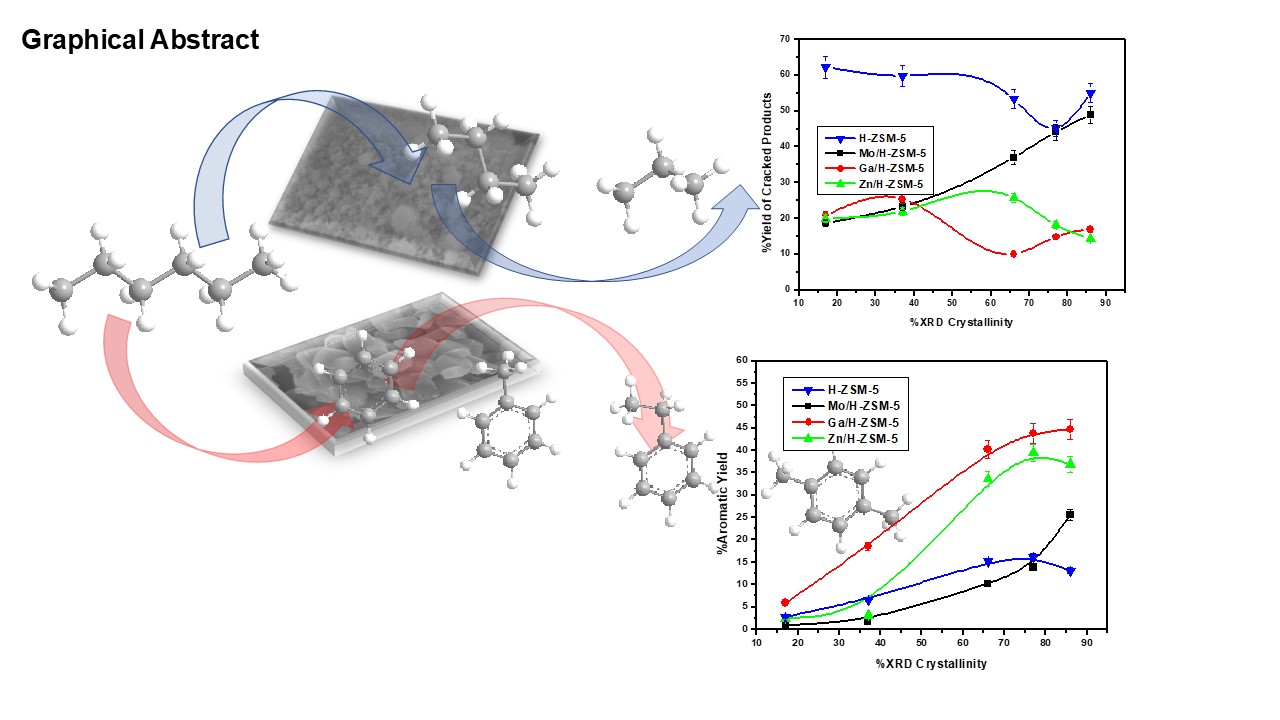
Aromatic compounds are a major component of the chemical industry, and hence the aromatization reactions of light hydrocarbons have attracted significant interest. In this study, we investigate the influence of the crystallinity of the H-ZSM-5 zeolites on the aromatization of n-hexane. The aromatization of n-hexane was studied over H-ZSM-5 Ga/H-ZSM-5, Zn/H-ZSM-5, and Mo/H-ZSM-5 catalysts, with H-ZSM-5 having different %XRD crystallinity between 17 and 86%. The SiO2/Al2O3 ratio was kept constant at 35. The 2wt.% metal-modified H-ZSM-5 catalysts were prepared by the incipient impregnation method and calcined at 500 °C. Aromatization reactions were carried out at 500 °C. BET, FTIR XRD, SEM, NH3-TPD, and XRD were used for the characterization of the catalysts in a preliminary attempt to correlate the structure and catalytic behaviour. The results on the effect of the percentage of XRD crystallinity (from 17 to 86%) of H-ZSM-5 on the activity of H-ZSM5 modified by loading 2 wt.% of metal showed that the conversion of n-hexane increased with %XRD. The Ga/H-ZSM-5 and Zn/H-ZSM-5 catalysts with% XRD greater than 30% were more aromatic selective than the Mo/H-ZSM-5 catalysts. Mo/H-ZSM-5 catalysts were more selective to cracked products due to the absence of the dehydrogenation activity possessed by gallium and zinc metals.
Keywords:
n-hexane
; aromatics
; H-ZSM-5
; crystallinity
; Ga/H-ZSM-5
; Zn/H-ZSM-5
; Mo/H-ZSM-5
1. Introduction
Aromatic compounds are key ingredients in the chemical industry and have widespread applications, including in the pharmaceutical, paint, polymer, and petroleum industries. However, the supply of aromatics, primarily benzene, toluene, and xylene (BTX), cannot meet the continually increasing market demand. Furthermore, this group of compounds is also used as chemical feedstocks to make plastics, fibres, resins, etc. They are mostly obtained by reforming naphtha or distilling coal tar. Several commercially viable processes for the conversion of low light alkanes (C2–C6) into BTX have been developed with industrial interest. For example, Cyclar (BP-UOP), M-2 forming (Mobil) [5] and Aroforming (IFP/SALUTEC). The aromatization of alkanes involves a dual-function catalysts that have dehydrogenating and acid properties to that catalyze the transformation of light alkanes into aromatics [1,2]. H-ZSM-5 zeolite proved to be the best catalyst for the aromatization of alkanes. Due to its strong acidity and narrow acid strength, H-ZSM-5 contributes to simplified kinetic analysis, shape-selective effects, and well-defined pore sizes that favour formation of BTX due to the molecular sieving characteristics [3,4,5]. Catalytic activity of H-ZSM-5 in a variety of reactions can be tailor-made by varying Si/Al ratios during synthesis or after synthesis by desilication or dealumination processes [6,7]. This will affect the acidity character of the zeolite sample and will further influence the catalyst activity and its product selectivity. The conversion of alkanes into aromatic compounds involves several mechanistic steps that are facilitated by the Lewis and Brønsted acid sites [8,9]. The dehydrogenation and cracking activities of the catalysts must be considered during the preparation of H-ZSM-5 catalysts [10,11]. These activities can be altered by varying the crystallinity of H-ZSM-5 zeolites and loading metal promoters that enhance the Lewis character of the catalysts. The introduction of metal species into H-ZSM-5 increases the rate and selectivity of aromatization reactions by inhibiting the rapid occurrence of the cracking side reaction, leading to the loss of carbon in undesired products [12]. A significant increase in the activity of aromatization of light alkanes over metal modified has been thoroughly reported, with Ga/H-ZSM-5 and Zn/H-ZSM-5 showing better performance [13]. The effect of %XRD crystallinity of H-ZSM-5 on propane aromatization has been extensively investigated. Nicolaides et al. [14,15,16] reported the high conversion of propane and the high selectivity of BTX for highly crystalline H-ZSM-5 zeolite catalysts.
Since there has been little research on the influence of H-ZSM-5 zeolite crystallinity on the aromatization of n-hexane, this study investigates the influence of XRD crystallinity on the activity and selectivity of metal-modified H-ZSM-5 zeolite in the aromatization of n-hexane. Furthermore, the molybdenum-modified H-ZSM-5 catalysts will be compared with the zinc- and gallium-modified H-ZSM-5 catalysts.
2. Experimental
2.1. Material Used
Ammonium heptamolybdate (NH4)6Mo7O24.6H2O, gallium nitrate Ga(NO3)3.8H2O (Sigma-Aldrich 99.9% purity), and zinc nitrate Zn(NO3)2.6H2O (Sigma-Aldrich, 98% purity) and n-hexane (Sigma-Aldrich, ≥ 99% purity).
2.2. Preparation of H-ZSM-5 Zeolite Catalysts
The H-ZSM-5 zeolites were synthesized by a hydrothermal treatment method [ref] varying the synthesis temperature between 90 and 150 oC to obtain samples of different percentage crystallinity. The Si/Al ratio was kept constant at 35. The MFI structure and percentage of the H-ZSM-5 zeolite was confirmed by powder-XRD. In a 75 ml of distilled water, 17.9 g of NaOH and 2.98 g of Al(OH)3 are mixed and heated until a clear solution is obtained. The template solution is made by dissolving 29.7 g of tetrapropylammonium bromide (TPABr) in 75 ml of distilled water. To prepare a slurry of fumed silica, 80.4 g of Degussa Aerosil 200 were mixed with 650 ml distilled water. With a blender, the mixture was mixed until a smooth jellylike consistency was consistently achieved. The sodium aluminate mixture and template mixture were then added to the silica slurry while being vigorously stirred. The mixture was placed in an autoclave fitted with a Teflon vessel of 1 litre capacity. Under stirring conditions, the contents were allowed to crystallize for 72 hours at a specific temperature. A deionized water wash followed the hydrothermal treatment to remove bromide and hydroxide from the autoclave contents. This was detected by using a silver nitrate solution. Afterward, the product was dried at 120 °C for 16 hours and calcined at 630 °C for 3.5 hours to remove the template. The resulting product is Na-ZSM-5. A 1M NH4Cl solution was dissolved in calcined Na form of zeolite at room temperature for 1 hour under stirring conditions to obtain the NH4-ZSM-5 form of the zeolite. The contents were washed with distilled water and further calcined at 530 oC for 3 hours to obtain the acidic form of the zeolite i.e. H-ZSM-5.
2.3. Catalyst Preparation
The preparation of Mo/HZSM-5, Ga/H-ZSM-5 and Zn/H-ZSM-5 catalysts involved the impregnation of H-ZSM-5 (with various percentage XRD crystallinity) using the incipient wetness impregnation method with solutions of ammonium heptamolybdate (NH4)6Mo7O24·H2O, gallium nitrate Ga(NO3)3.8H2O and zinc nitrate Zn(NO3)2.6H2O respectively, at appropriate concentrations. The samples were then dried overnight at 120 °C and calcined at 500 °C for 6 hours.
2.4. Catalyst Characterization
The physiochemical textural properties of the H-ZSM-5 and metal-modified H-ZSM-5 zeolite catalysts were analyzed by physical nitrogen adsorption/desorption using a Tristar Micromeritics 3300 series instrument at -196 °C. Prior adsorption-desorption measurement a sample was degassed with helium at 400 oC for 4 hours. FTIR spectra were collected using Bruker Tensor 27 FT-IR spectrometer operating with a maximum resolution of 4 cm-1. The spectra were recorded in the range between 4000 and 400 cm-1 at room temperature. Powder XRD diffractogram were carried out in the 2θ range of 5 to 90 ° in 0.021 ° steps using a Bruker AXS D8 diffractometer. The diffractometer was equipped with a Vantec-1 detector, and using Cu-Kα radiation (40 kV, 40 mA). The NH3-TPD experiments were carried out in a U-shaped quartz tubular reactor. The samples were treated with helium gas flowing at 40 ml/min at 500 °C for 1 hour. The reactor was subsequently cooled 100 °C under helium atmosphere. The adsorption of ammonia was performed at 100 C for 1 hour using a mixture of ammonia in helium (4% NH3 balance helium) at flow rate to 40 ml/min to achieve saturation. The NH3-TPD profiles were obtained by measuring the amount of ammonia desorbed relative to the temperature, using a thermal conductivity detector under helium at a flow rate of 40 ml/min and temperature was ramped from 100 to 700 °C at a rate of 10 °C/min.
2.5. Catalytic Tests
The conversion of n-hexane as the evaluation reaction was performed in a fixed-bed quartz tubular reactor with an internal diameter of 13 mm and reactor length of 300 mm. A sample of 0.5 g of catalyst was loaded into a reactor and pre-treated with nitrogen for 1 hour at 500 °C flowing at a rate of 10 ml/min. The purpose of the pre-treatment was to remove all the absorbed impurities and the moisture from the catalyst. Finally, the catalyst was exposed to the mixture of pure n-hexane and nitrogen gas in a 1: 5, with nitrogen flowing at a rate of 10 ml/min. The products were analyzed using an online HP 5730A gas chromatograph equipped with an FID detector and a packed column (6m x 3 mm).
3. Results and Discussion
3.1. Catalyst Characterization
The influence of %XRD crystallinity on the physicochemical properties of the synthesized H-ZSM-5 zeolites samples was investigated using nitrogen adsorption measurements. The H-ZSM-5 samples with different %XRD crystallinity were obtained by varying the crystallization temperature between 90 and 150 °C. XRD spectra of calcined H-ZSM-5 with high %XRD crystallinity exhibit sharp diffraction peaks that are indicative of the ZSM-5 zeolite framework (MFI). The intensity of the diffraction peaks decreases with decreasing synthesis temperature to achieve a less crystalline ZSM-5 zeolite sample. Samples with low %XRD crystallinity (17 and 37%) have shown less intense diffraction peaks that are associated with the ZSM-5 framework but appear to be broad, which signifies the presence of the amorphous character of the material. This could be attributed to the inability of the precursor material to be incorporated into the template (TPABr) to yield an MFI structure [17].
The FTIR spectra of the synthesised HZSM-5 with different %XRD crystallinity were recorded in the range of 4000-400 cm−1. The bands appearing at approximately 800, 1100 and 1225 cm−1 are characteristic of SiO4 tetrahedron units and show that the asymmetric stretching vibration frequencies at 1225 and 1100 cm−1. The external asymmetric stretching vibration near 1225 cm−1 is due to the presence of structures containing four chains of five-member rings arranged around a two-fold screw axis, which is indicative of the well-crystallized ZSM-5 structure. The absorption band of approximately 1100 cm−1 is attributed to the internal asymmetric stretching vibration of the Si–O–T linkage (where T is Si or Al). Absorption at 800 cm−1 is assigned to the symmetric stretching of the external linkages, and the absorption at 550 cm−1 is attributed to a structure-sensitive vibration caused by the double five-membered rings of the external linkages that are not present in the less crystalline samples (i.e., 17 and 37% H-ZSM-5 samples).
To acquire textural information from the in-house synthesized H-ZSM-5 zeolite samples, the surface areas of the BET and the micropore volumes were measured using nitrogen adsorption analysis. The results of the influence of %XRD crystallinity on the adsorption properties of H-ZSM-5 samples are shown in Table 1.
It is worth noting that the BET surface areas increased with an increase in %XRD crystallinity. BET surface areas below 300 m2/g were observed for samples containing %XRD crystallinity below 60%. The low BET surface areas are due to the amorphous nature of the samples. An increase in surface area was observed for %XRD crystallinity from 66 and 86% and surface areas were between 335 and 408 m2/g. The total pore volume also increased from 0.158 to 0.231 cm3/g. The BET surface area and pore volumes of ZMS-5 depend on the quality and nature of ZSM-5. It should be noted that the crystallinity of H-ZSM-5 at the synthesis temperature affects the formation of ZSM-5. At low %XRD crystallinity, only amorphous material was obtained, as highlighted by the XRD pattern shown in Figure 1. The formation of H-ZSM-5 was pronounced as the crystallinity increased from 37 to 60%. This can be characterized by the presence of sharp peaks of ZSM-5 observed at 2theta angle values below 10o and between 22 and 23o. It is also worth noting that the crystallinity of the sample affects both the surface areas and the pore volumes of the ZSM-5. At lower percentages of relative XRD crystallinity (i.e. amorphous samples) the surface area and pore volumes possess low values, and the %XRD crystallinity increased and an increase in both surface area and pore volume was observed. This suggests that at high% XRD crystallinity, the pores of the zeolite are well developed. It should also be noted that the addition of the metals at 2wt.% loading has shown that they have no significant effect on the structure of the H-ZSM-5 zeolite samples with different crystallinity.
Figure 1.
XRD patterns of the H-ZSM-5 with different percentages of XRD crystallinity.
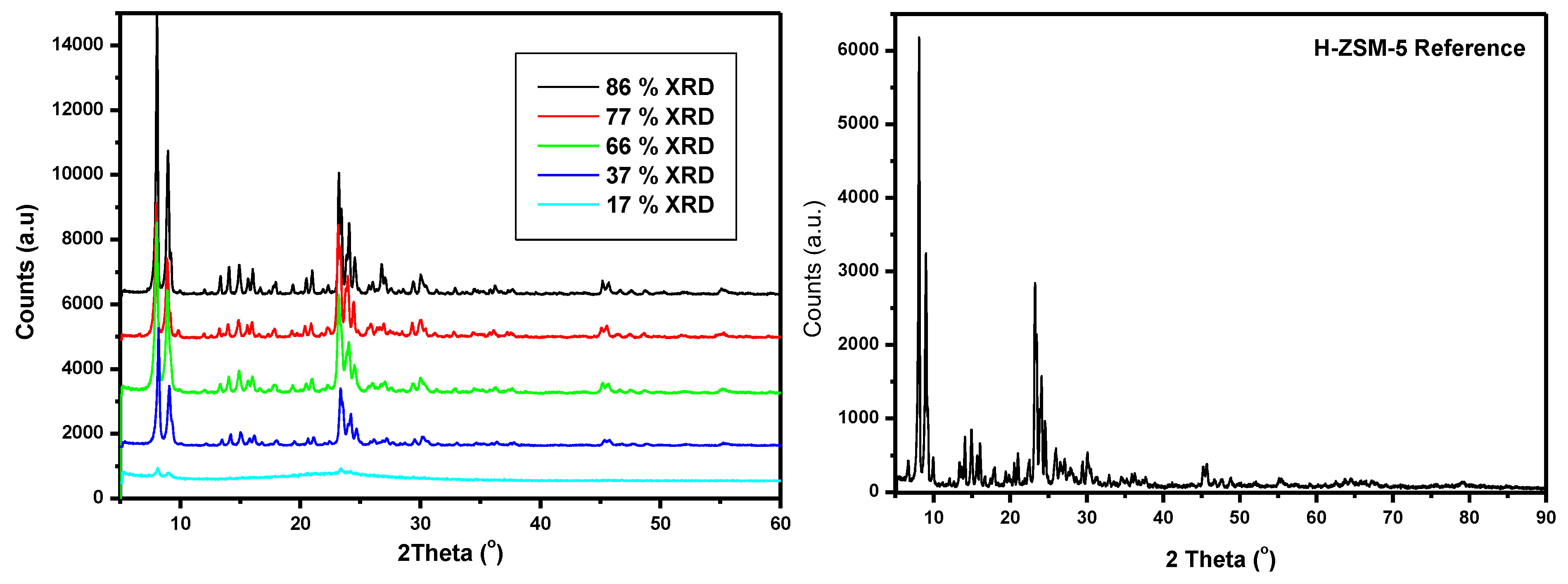
Figure 2.
FT-IR spectra of the HZSM-5 with different %XRD crystallinity.
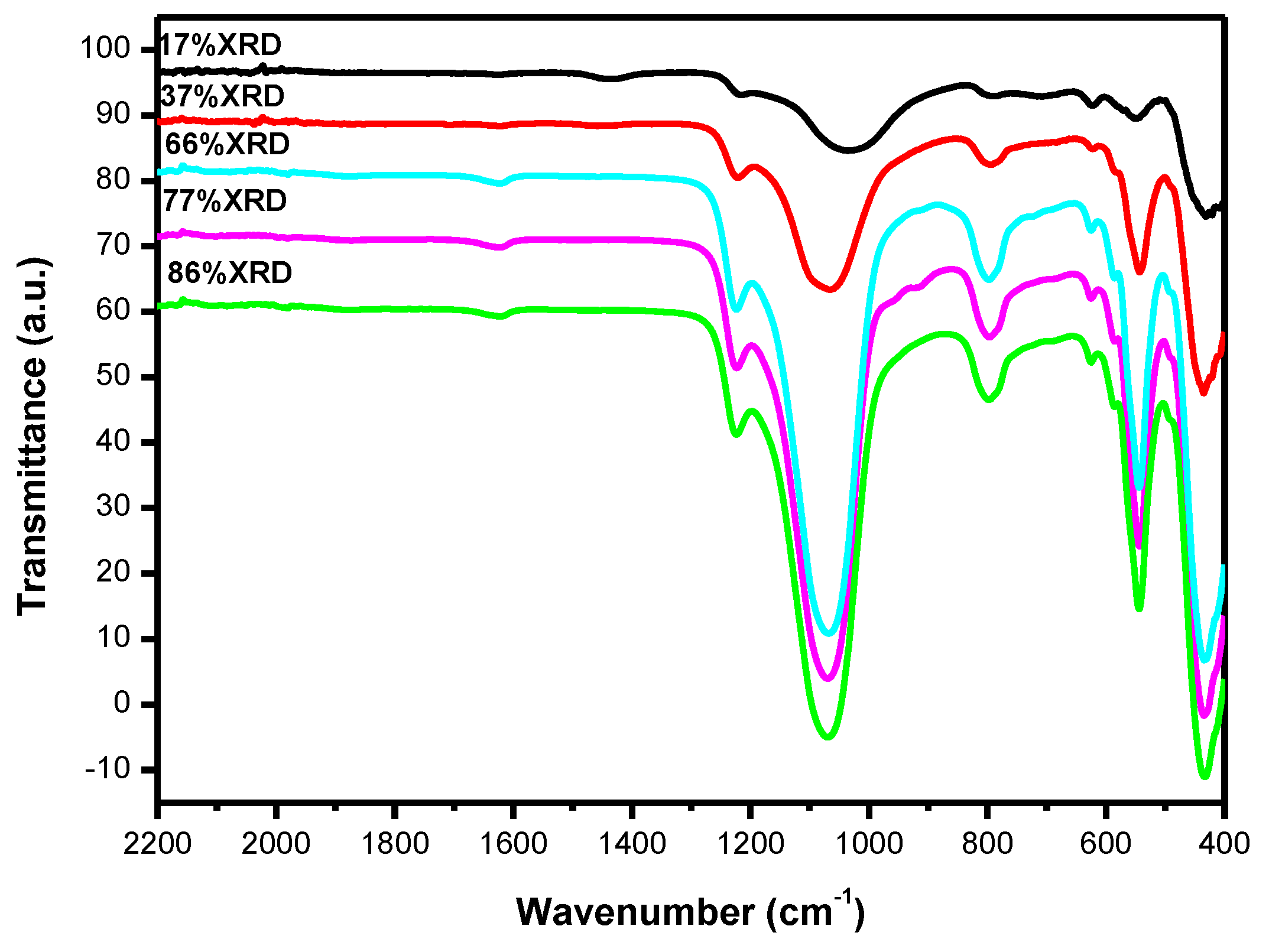
Figure 3.
N2 adsorption/desorption isotherms of H-ZSM-5 zeolite catalysts with different %XRD crystallinity.
Figure 3.
N2 adsorption/desorption isotherms of H-ZSM-5 zeolite catalysts with different %XRD crystallinity.
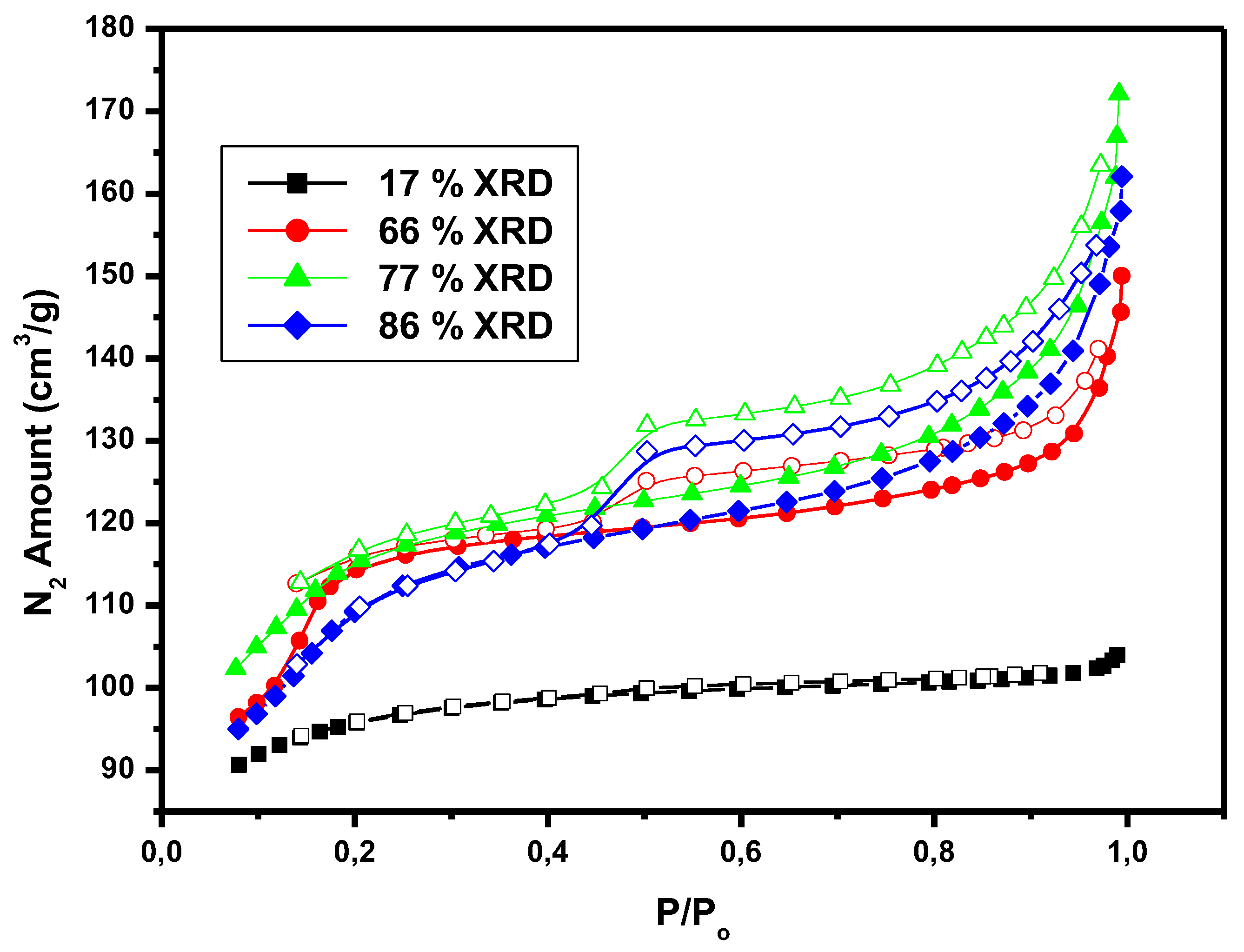
The N2-adsorption isotherms of ZSM-5 have higher relative pressures and no distinct hysteresis loop; typical for a microporous material without significant mesoporosity. The nitrogen adsorption-desorption isotherms of samples with lower %XRD crystallinity possess a type IV isotherm which is indicative of the presence of mesopores. This is due to the amorphous nature of the samples with low %XRD crystallinity. Therefore; the presence of mesopores and inherent micropores was observed in ZSM-5. Highly crystalline H-ZSM-5 zeolite samples (61; 77 and 86 %XRD) zeolites configured to a type I isotherm; which is typical of a microporous material. An H4-type hysteresis loop is present at P/Po higher than 0.4; indicating that capillary condensation has occurred and that the mesopores are narrow slit-shaped[18,19]; most likely due to spaces between crystal particles. At %XRD crystallinity between 66 and 86% a decrease in H4-type hysteresis was observed; suggesting that there was a decrease in the mesoporosity character and more micropores were formed. The results suggest that the synthesis temperature affects the physiological properties; the porosity of the ZSM-5 zeolite. The impregnation of the H-ZSM-5 with respective metals at 2 wt% led to an insignificant decrease in the both the surface area and the total pore volume as shown in Table 2. This suggest the metal particles are located within the pores of the H-ZSM-5 zeolite
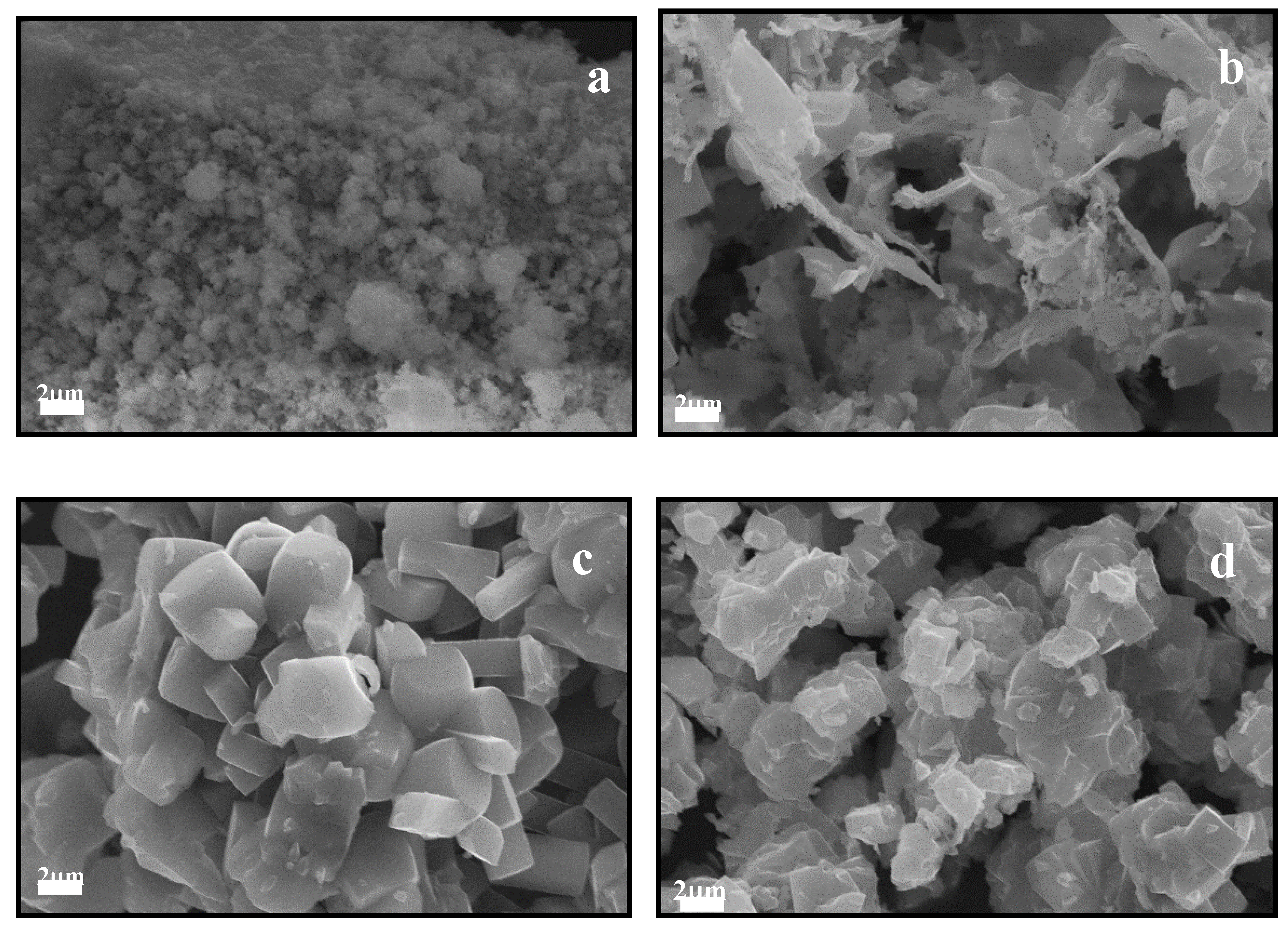
SEM micrographs of H-ZSM-5 samples with different percentages of XRD crystallinity are shown in Figure 3. The synthesized samples had different crystal morphologies, from ellipsoidal to very uniform size distributions, and do not contain other crystalline impurities. Electron micrographs convincingly show that the size and morphology of the crystals depend on the synthesis temperature, which has the effect of varying the crystallinity of zeolite [20]. The zeolite samples with low %XRD crystallinity were found to be amorphous, therefore, which shows they are less crystalline and those with high %XRD were more crystalline particles that are well defined and uniform.
Figure 3.
SEM images of the H-ZSM-5 zeolite catalysts with different percentages of XRD crystallinity. (a) 17%XRD, (b) 37%XRD, (c) 77%XRD, (d) 86%XRD.
Figure 3.
SEM images of the H-ZSM-5 zeolite catalysts with different percentages of XRD crystallinity. (a) 17%XRD, (b) 37%XRD, (c) 77%XRD, (d) 86%XRD.
The results of the effect of %XRD crystallinity of the acidity character of the HZSM-5 zeolite samples were studied using ammonia TPD, ammonia adsorption was carried out at 100 °C and subsequently, desorption was performed from 100 to 700 °C in a helium environment, the results are presented in Figure 5. It is evident that changes in the synthesis condition to alter the crystallinity of H-ZSM-5 influence the distribution of the acid sites. The H-ZSM-5 TPD profile has two peaks, one at low temperature (LT) 220 °C representing ammonia desorption from weak Lewis’s acid sites and the other at high temperature (HT) 490 °C, which is related to ammonia desorption from strong Brønsted acid sites. The significant change in the concentration of the Brønsted acid sites with the variation of %XRD crystallinity of the H-ZSM-5 samples. The intensity of the HT peak decreased with a decrease in the XRD crystallinity, while the peak at the LT region grew. The TPD profiles of samples with %XRD crystallinity greater than 37% show high-intensity HT peaks that are indicative of a high concentration of Brønsted acid sites. It should be noted that at 86% XRD crystallinity, there is a shift in the desorption temperature of the HT peak to 455 oC.
3.2. Catalytic Activity Results
The effect of the percentage of XRD crystallinity of H-ZSM-5 on the catalytic conversion of n-hexane has been investigated in molybdenum, gallium and zinc modified H-ZSM-5 catalysts with 2% metal loading. Catalysts with %XRD crystallinity ranging from 17 to 86% and with Si/Al ratio = 35 were investigated. The crystallinity of H-ZSM-5 samples has been believed to influence catalytic activity and product selectivity of metal-modified H-ZSM-5 zeolites catalysts. The aromatization of n-hexane was carried out at 500 °C with nitrogen flowing at a rate of 10ml/min through the n-hexane-containing saturator. The results on the influence of %XRD crystallinity on the catalytic conversion of n-hexane over H-ZSM-5, 2wt%Ga/H-ZSM-5, 2wt%Zn/H-ZSM-5 and 2wt%Mo/H-ZSM-5 catalysts with different %XRD crystallinity are presented in Figure 6. For the unmodified H-ZSM-5 zeolite catalysts, the sample with 66% crystallinity exhibited the highest catalytic conversion of above 80% and show good catalytic stability than other unmodified H-ZSM-5catalysts. Addition of 2wt.% metal lead to an increase in n-hexane conversion for the catalyst with crystallinity of 77 and 86%, with 86% showing high conversion for all metal modified catalysts. For Ga/H-ZSM-5 and Zn/H-ZSM-5 catalysts at 86% crystallinity show conversion above 90% and were more stable than Mo/H-ZSm-5 catalyst which exhibited conversion in the 80% region. Catalysts with low %crystallinity showed to less catalytical stable at their conversion decreased with increase in time on-stream.
The effect of the percentage XRD crystallinity on the catalytic conversion of n-hexane is shown in Figure 7, for a time on stream of 5 h. From the results, we observed that the %XRD crystallinity of H-ZSM-5 affects both the catalytic conversion of n-hexane and the formation of aromatic compounds. The catalytic conversion of n-hexane increased linearly with the increase in %XRD crystallinity of zeolites for the unmodified H-ZSM-5 catalysts reaching a maximum conversion of above 75% for samples with crystallinity greater than 60%. Samples with a low percentage of XRD crystallinity below 30% yielded low catalytic conversions of n-hexane. Samples with low% XRD crystallinity are expected to show low n-hexane conversions due to low acid sites as shown by the TPD results. The presence of acid sites in the H-ZSM-5 is significant to facilitate the cracking of hexane to shorter hydrocarbons which are the main intermediates for the formation of aromatic compounds [21,22]. For the molybdenum loaded samples with high %XRD crystallinity (i.e., 66-86%) we observed a slightly exponential increase of n-hexane conversion from 45 to 80%. For gallium and zinc modified H-ZSM-5 samples, we observed a linear increase in the catalytic conversion of n-hexane from 17 to 60% crystallinity and followed stabilization at high crystallinity, obtaining conversions greater than 90%. The crystallinity of H-ZSM-5 is classified as a function of the acidity of the catalysts of the H-ZSM-5 zeolites. This increase in activity with %XRD is attributed to the high concentration of Brønsted acid sites present in H-ZSM-5 samples with high crystallinity. The number of Brønsted acid sites increases with the increase in %XRD crystallinity. Therefore, an increase in n-hexane conversion with% XRD crystallinity can be attributed to the increase in acidity of the H-ZSM-5 catalysts. The high aromatic selectivity which is observed in all H-ZSM-5 catalysts with a high percentage XRD crystallinity can be attributed to the availability of Brønsted acid sites that are prominent in the samples with high crystallinity compared to those with a low percentage XRD crystallinity. High aromatic selectivity and catalytic conversion of n-hexane were observed for Zn/H-ZSM-5 and Ga/H-ZSM-5 samples. This shows the significance of zinc and gallium in the catalytic system; the two metals have the inherent character of facilitating the dehydrogenation activity of the catalyst [23]. The presence of zinc and gallium species can facilitate the dehydrogenation of n-hexane to hexene, leading to the high percentage conversion of n-hexane into aromatic compounds; thus, we observe high aromatic selectivity for Ga/H-ZSM-5 and Zn/H-ZSM-5 catalysts. This high aromatic selectivity is evident in the sample with highly crystalline H-ZSM-5 zeolite samples.
The product distribution over H-ZSM-5, 2%Ga/HZSM-5, 2%Zn/H-ZSM-5 and 2%Mo/H-ZSM-5 catalysts of different percentages of XRD crystallinity are shown in Figure 8 below.
Figure 6. This is expected since the percentage yield is a function of both selectivity and conversion. Samples with high %XRD crystallinity show a wide gap between the aromatic yields and cracked product yields. We observed a linear increase in the aromatic yield with an increase in percentage XRD crystallinity, while a decrease in cracked products was simultaneously observed with an increase in %XRD crystallinity. These results are observed only for gallium and zinc samples. On the contrary, a different picture is observed for molybdenum samples. There is a linear increase in the cracked and aromatic products with an increase in% XRD crystallinity, with cracked products being the dominant compounds reaching values close to 50% yield for crystalline samples. The aromatic yield was found to be below 25%. The aromatic yield for samples with %XRD crystallinity greater than 30% was observed to range from 40 to 45%, with the 86%XRD sample being the highest for Ga/H-ZSM-5 catalysts. For the Zn/H-ZSM-5 catalysts, we observed a low aromatic yield below 5% for samples with %XRD crystallinity below 30%. However, an increase in the aromatic yield was observed reaching an optimum aromatic yield of 39% at 77%XRD crystallinity followed by a slight decrease at 86%XRD crystallinity. Low aromatic yields below 25% are observed for Mo/H-ZSM-5 samples. This result points out that at low percentage crystallinity more olefins are produced in the reaction mixture that are not converted into the desired yields, and thus we observe low aromatic yields. This can be attributed to the low catalytic activity that is due to the low number of Brønsted acid sites present in the catalyst. The increase in the aromatic yields and the decrease in the cracked products with percentage crystallinity can be attributed to the high concentration of olefins that are produced in the reaction mixture, which further undergoes secondary reactions and are converted into aromatic compounds via oligomerization, cyclization, and then dehydrogenation reactions.
The results of the distribution of BTX products of the zeolite catalysts H-ZSM-5, Ga/H-SM-5, Zn/H-ZSM-5 and Mo/H-ZSM-5 zeolite catalysts with 2 wt%. metal loaded at 500 °C for the H-ZSM-5 samples with a high percentage of XRD crystallinity ranging from 17-86% are presented in Table 2.
The results show that the distribution of these aromatic products is affected by the choice of the metal loaded on H-ZSM-5 for the aromatization of n-hexane. The yields of the individual aromatic compounds increase with %XRD crystallinity for Ga/H-ZSM-5 samples. The percentage yield of toluene increased with the percentage of XRD crystallinity from 10% to 15% yield at 86%XRD crystallinity, while benzene increased and reached an optimum point of 9.8% at 77%XRD. This decrease can be attributed to the alkylation that could be taking place between the C2 compounds and benzene at the Brønsted acid sites, which are prominent in samples with high %XRD crystallinity. The alkylation of benzene might contribute to the increase in the yields of toluene and ethylbenzene. However, a different behaviour was observed for the m,p-xylene yields, which decreased from 8.5 to 5.4% with an increase in %XRD. Different aromatic product distributions from Ga/H-ZSM-5 samples were observed for Zn/H-ZSM-5. The dominance of toluene over other aromatic products decreased with an increase in %XRD crystallinity. The yield of benzene increased with %XRD and stabilized at 10%. We also observed a drop in %yield of ethylbenzene, m,p-xylene, and o-xylene reaching low values of 5.5, 3 and 3.8% respectively at 86%XRD. This drop can be attributed to the formation of crystalline material in the mouths of H-ZSM-5 pores during the crystallization process during the synthesis of H-ZSM-5 zeolites [24]. This crystalline material blocks the diffusion of methyl and ethylbenzene compounds through the channels of H-ZSM-5 [25,26]. Another reason may be due to dealkylation occurring in alkylbenzene compounds, which increases the yield of benzene [28,29]. For Mo/H-ZSM-5 catalysts, there is an exponential increase in the %yield of the individual aromatic compound, with toluene being the dominating product and m,p-xylene being the lowest in yields. The 2%Mo/H-ZSM-5 catalyst with 86%XRD crystallinity possessed high %yields for all aromatic compounds.
4. Conclusions
The effect of the percentage of XRD crystallinity of H-ZSM-5 samples that were modified by loading 2% by weight of metal on the aromatization of n-hexane revealed interesting trends. The conversion of n-hexane increased with an increasing percentage of crystallinity. Samples with %XRD crystallinity below 30% were less active and less selective in the formation of aromatic compounds regardless of the metal loaded on HZSM-5. Aromatization of n-hexane over H-ZSM-5 samples with a higher percentage XRD crystallinity increased the conversion of n-hexane. Conversions between 80 and 90% were obtained for Zn/H-ZSM-5 and Ga/H-ZSM-5 catalysts. The aromatic yield was within the 40 to 50% band for both catalysts. The conversion of n-hexane over Mo/HZSM-5 reached 80% for the 86%XRD sample but showed a low aromatic yield when compared to the high yield of cracked products. The aromatization reaction is not entirely dependent on the %XRD crystallinity of H-ZSM-5 but the metal species (i.e., Ga, Zn) loaded on the H-ZSM-5 zeolite are considered to balance cracking and dehydrogenation activity.
Acknowledgments
We thank the National Research Foundation (NRF) for their financial support in this project.
References
- Smiešková, E. Rojasová, P. Hudec, L. Šabo, Applied Catalysis A: General 268 (2004) 235–240.
- Bhan, W. Nicholas Delgass, Catalysis Reviews 50 (2008) 19–151.
- J. Jae, G.A. Tompsett, A.J. Foster, K.D. Hammond, S.M. Auerbach, R.F. Lobo, G.W. Huber, Journal of Catalysis 279 (2011) 257–268.
- X. Jia, W. Khan, Z. Wu, J. Choi, A.C.K. Yip, Advanced Powder Technology 30 (2019) 467–484.
- S.M. Csicsery, Zeolites 4 (1984) 202–213.
- Y. Fang, F. Yang, X. He, X. Zhu, Frontiers of Chemical Science and Engineering 13 (2019) 543–553.
- I.B. Dauda, M. Yusuf, S. Gbadamasi, M. Bello, A.Y. Atta, B.O. Aderemi, B.Y. Jibril, ACS Omega 5 (2020) 2725–2733.
- M.W. Schreiber, C.P. Plaisance, M. Baumgärtl, K. Reuter, A. Jentys, R. Bermejo-Deval, J.A. Lercher, Journal of the American Chemical Society 140 (2018) 4849–4859.
- X. Zhao, Y. Chu, G. Qi, Q. Wang, W. Gao, X. Wang, S. Li, J. Xu, F. Deng, Chem. Commun. 56 (2020) 12029–12032.
- T.E. Tshabalala, Aromatization of N-Hexane over Metal Modified H-ZSM-5 Zeolite Catalysts, 2009.
- Q. Zhang, X. Liu, S. Hu, G. Ye, X. Zhou, W. Yuan, AIChE Journal n/a (2021) e17355.
- M. Xin, E. Xing, X. Gao, Y. Wang, Y. Ouyang, G. Xu, Y. Luo, X. Shu, Industrial & Engineering Chemistry Research 58 (2019) 6970–6981.
- T.E. Tshabalala, M.S. Scurrell, Catalysis Communications 72 (2015).
- C.P. Nicolaides, N.P. Sincadu, M.S. Scurrell, Catalysis Today 71 (2002) 429–435.
- C.P. Nicolaides, N.P. Sincadu, M.S. Scurrell, in: E. van Steen, M. Claeys, L.H.B.T.-S. in S.S. and C. Callanan (Eds.), Recent Advances in the Science and Technology of Zeolites and Related Materials, Elsevier, 2004, pp. 2347–2352.
- C.P. Nicolaides, N.P. Sincadu, M.S. Scurrell, in: E. Iglesia, J.J. Spivey, T.H.B.T.-S. in S.S. and C. Fleisch (Eds.), Natural Gas Conversion VI, Elsevier, 2001, pp. 333–338.
- C.S. Cundy, P.A. Cox, Microporous and Mesoporous Materials 82 (2005) 1–78.
- T. Horikawa, D.D. Do, D. Nicholson, Advances in Colloid and Interface Science 169 (2011) 40–58.
- Huang, C.H. Bartholomew, B.F. Woodfield, Microporous and Mesoporous Materials 184 (2014) 112–121.
- K.S. Triantafyllidis, L. Nalbandian, P.N. Trikalitis, A.K. Ladavos, T. Mavromoustakos, C.P. Nicolaides, Microporous and Mesoporous Materials 75 (2004) 89–100.
- X. Su, W. Zan, X. Bai, G. Wang, W. Wu, Catalysis Science & Technology 7 (2017) 1943–1952.
- N. Viswanadham, G. Muralidhar, T.S.R.P. Rao, Journal of Molecular Catalysis A: Chemical 223 (2004) 269–274.
- Q. Li, F. Zhang, J. Jarvis, P. He, M.M. Yung, A. Wang, K. Zhao, H. Song, Fuel 219 (2018) 331–339.
- M.S. Beheshti, M. Behzad, J. Ahmadpour, H. Arabi, Microporous and Mesoporous Materials 291 (2020) 109699.
- Wang, J. Xu, G. Qi, Y. Gong, W. Wang, P. Gao, Q. Wang, N. Feng, X. Liu, F. Deng, Journal of Catalysis 332 (2015) 127–137.
- S.K. Saxena, N. Viswanadham, Applied Materials Today 5 (2016) 25–32.
- J. Deischter, K. Schute, D.S. Neves, B.E. Ebert, L.M. Blank, R. Palkovits, Green Chemistry 21 (2019) 1710–1717.
- J. Wang, J. Jiang, X. Wang, S. Pang, Y. Sun, X. Meng, M. Li, R. Ruan, A.J. Ragauskas, Fuel 278 (2020) 118322.
Figure 5.
Ammonia TPD profiles of synthesized H-ZSM-5 zeolite catalyst with different %XRD crystallinity.
Figure 5.
Ammonia TPD profiles of synthesized H-ZSM-5 zeolite catalyst with different %XRD crystallinity.
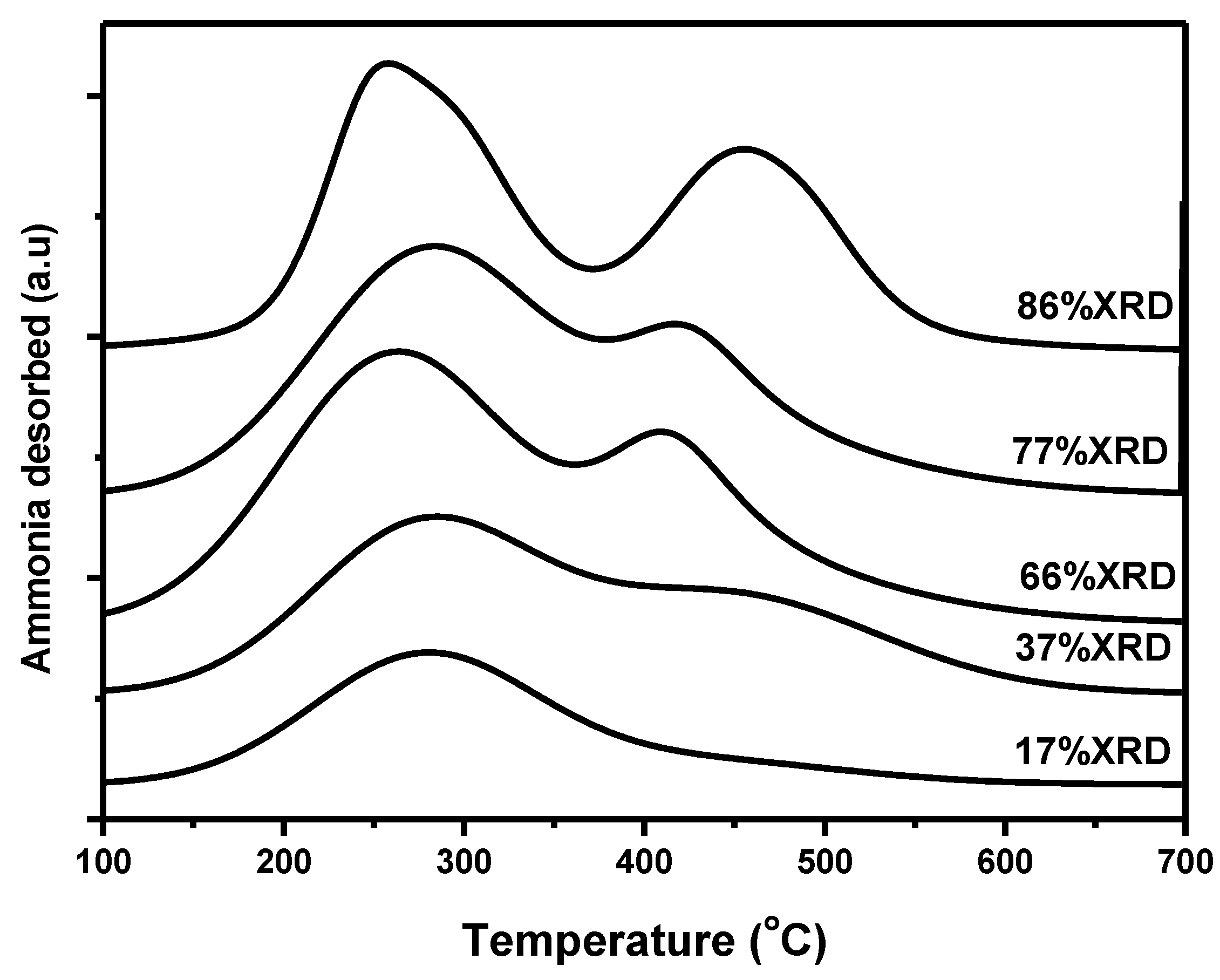
Figure 6.
Catalytic conversion of n-hexane on stream for 12 hours over (a) unmodified H-ZSM-5, (b) Ga modified H-ZSM-5, (c) Mo modified H-ZSM-5, and (d) Zn modified H-ZSM-5. The XRD crystallinity of HZSM-5 catalysts were varied between 17and 86 %.
Figure 6.
Catalytic conversion of n-hexane on stream for 12 hours over (a) unmodified H-ZSM-5, (b) Ga modified H-ZSM-5, (c) Mo modified H-ZSM-5, and (d) Zn modified H-ZSM-5. The XRD crystallinity of HZSM-5 catalysts were varied between 17and 86 %.
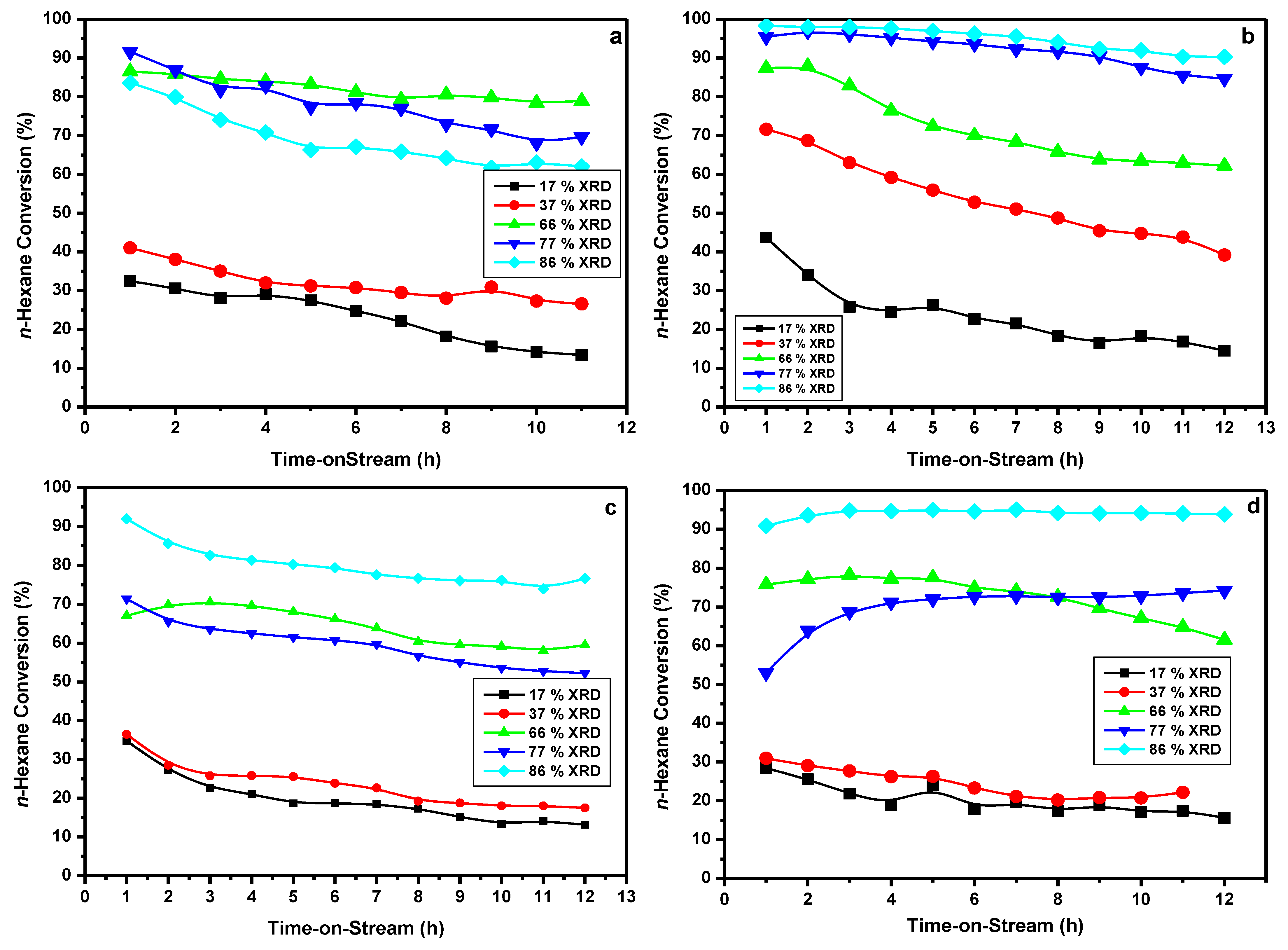
Figure 7.
Conversion of n-hexane and aromatic selectivity over H-ZSM-5, Mo/H-ZSM-5, Ga/H-ZSM-5 and Zn/H-ZSM-5 catalysts of different %XRD crystallinity at 500 °C taken at a time-on-stream of 5 hours.
Figure 7.
Conversion of n-hexane and aromatic selectivity over H-ZSM-5, Mo/H-ZSM-5, Ga/H-ZSM-5 and Zn/H-ZSM-5 catalysts of different %XRD crystallinity at 500 °C taken at a time-on-stream of 5 hours.
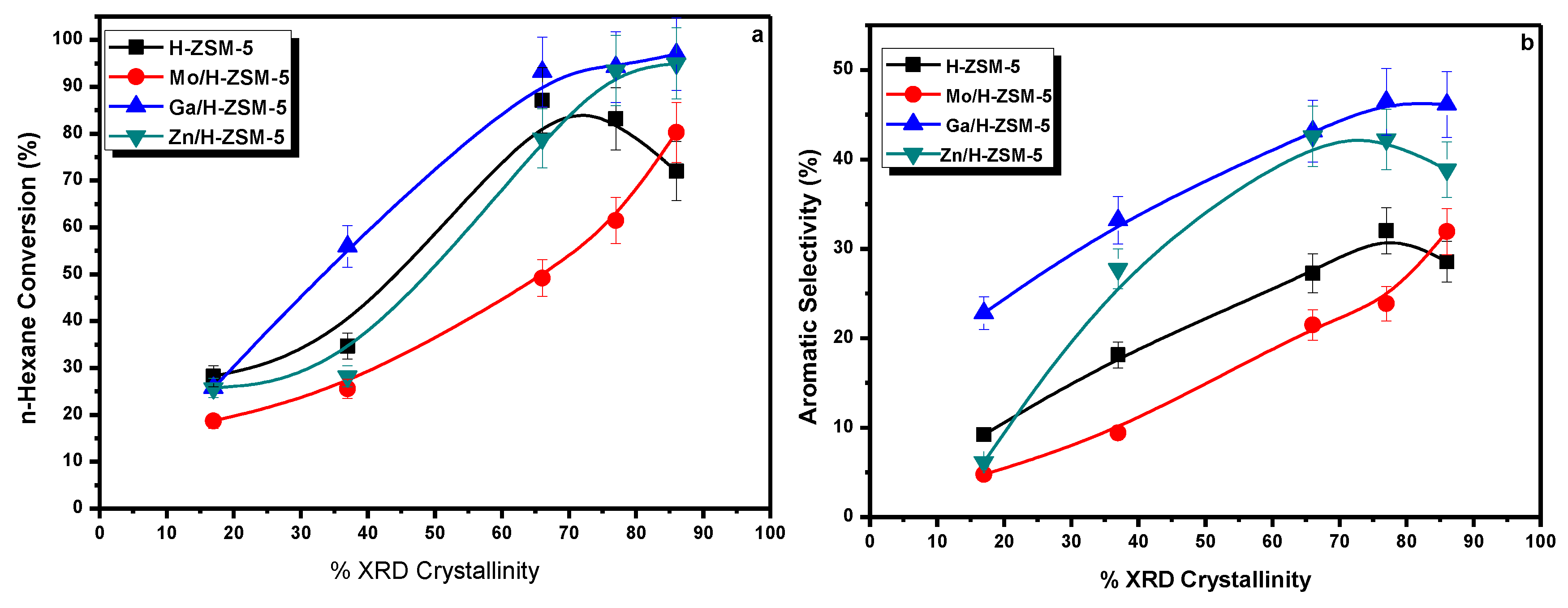
Figure 8.
The effect of percentage crystallinity on the cracking (a) and aromaticity (b) of n-hexane over H-ZSM-5 and 2 wt.% metal modified zeolite samples (i.e. Mo/H-ZSM-5, Ga/H-ZSM-5 and Zn/H-ZSM-5) taken at time-on-stream for 5 hours at 500 oC.
Figure 8.
The effect of percentage crystallinity on the cracking (a) and aromaticity (b) of n-hexane over H-ZSM-5 and 2 wt.% metal modified zeolite samples (i.e. Mo/H-ZSM-5, Ga/H-ZSM-5 and Zn/H-ZSM-5) taken at time-on-stream for 5 hours at 500 oC.
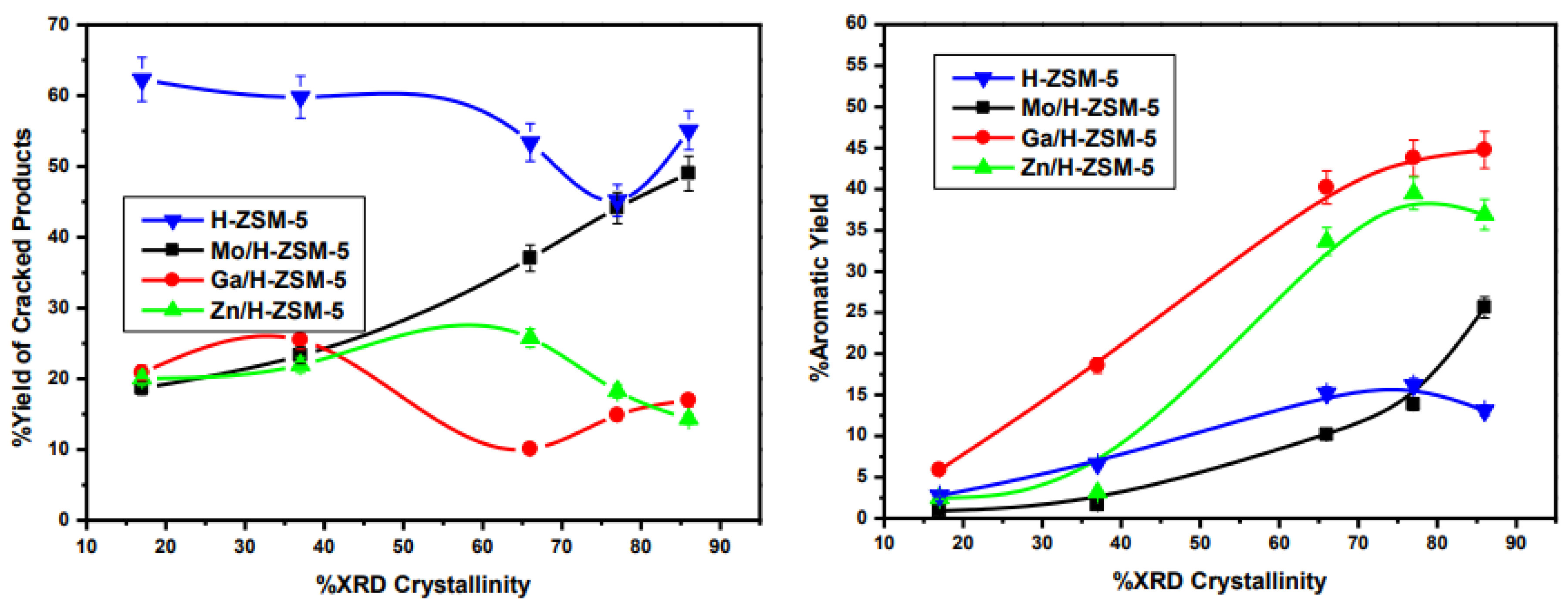

Table 1.
BET surface areas and pore volumes of H-ZSM-5 catalysts with different %XRD crystallinity.
| %XRD Crystallinity | Specific Surface Areas | Pore Volume | Total Pore Volume(cm3/g) | |||
|---|---|---|---|---|---|---|
| SBET (m2/g) |
SEXT (m2/g) |
VMicro (cm3/g) |
VMeso (cm3/g) |
|||
| 17 | 165 | 89 | 0.099 | 0.078 | 0.177 | |
| 37 | 224 | 105 | 0.110 | 0.049 | 0.158 | |
| 66 | 335 | 144 | 0.103 | 0.080 | 0.183 | |
| 77 | 382 | 152 | 0.166 | 0.055 | 0.211 | |
| 86 | 408 | 183 | 0.183 | 0.048 | 0.231 | |
Total Pore Volume
Table 2.
Effect of% XRD crystallinity on the aromatic product distribution when comparing samples with high %XRD crystallinity.
Table 2.
Effect of% XRD crystallinity on the aromatic product distribution when comparing samples with high %XRD crystallinity.
| Catalysts | %XRD Crystallinity |
%Conversion |
Product Yield (%) | ||||
|---|---|---|---|---|---|---|---|
| Benzene | Toluene | Et-Benzene | o-Xylene | m,p-Xylene | |||
| H-ZSM-5 | 17 | 27.5 | 1.3 | 0.74 | 0.53 | 0.04 | 0.14 |
| 37 | 31.2 | 1.8 | 2.3 | 1.4 | 0.17 | 0.95 | |
| 66 | 83.8 | 4.1 | 3.4 | 2.7 | 1.6 | 1.3 | |
| 77 | 77.4 | 2.1 | 6.4 | 4.8 | 1.6 | 1.3 | |
| 86 | 66.3 | 1.6 | 4.8 | 4.2 | 1.8 | 0.70 | |
| Ga/H-ZSM-5 | 17 | 25.7 | 1.6 | 2.1 | 1.8 | 0.32 | 0.17 |
| 37 | 55.9 | 4.6 | 7.4 | 4.4 | 2.05 | 2.3 | |
| 66 | 93.2 | 8.2 | 10.0 | 7.6 | 5.9 | 8.5 | |
| 77 | 94.2 | 9.9 | 13.3 | 6.2 | 6.6 | 7.7 | |
| 86 | 97.0 | 8.2 | 15.5 | 9.0 | 6.7 | 5.4 | |
| Zn/H-ZSM-5 | 17 | 24.6 | 1.3 | 0.69 | 0.17 | 0.02 | 0,00 |
| 37 | 22.7 | 2.8 | 1.12 | 0.37 | 0.05 | 0.00 | |
| 66 | 79.0 | 9.5 | 13.3 | 6.6 | 3.3 | 0.9 | |
| 77 | 93.5 | 11.1 | 12.1 | 7.5 | 5.7 | 6.1 | |
| 86 | 95.0 | 11.7 | 9.8 | 5.5 | 3.8 | 3.0 | |
| Mo/H-ZSM-5 | 17 | 17.6 | 0.38 | 0.42 | 0.26 | 0.02 | 0.02 |
| 37 | 21.5 | 0.24 | 0.71 | 0.48 | 0.04 | 0.15 | |
| 66 | 49.2 | 1.5 | 4.1 | 2.5 | 1.2 | 1.0 | |
| 77 | 61.5 | 1.9 | 5.7 | 3.8 | 1.3 | 1.1 | |
| 86 | 80.3 | 5.3 | 10.6 | 6.0 | 2.0 | 1.7 | |
Disclaimer/Publisher’s Note: The statements, opinions and data contained in all publications are solely those of the individual author(s) and contributor(s) and not of MDPI and/or the editor(s). MDPI and/or the editor(s) disclaim responsibility for any injury to people or property resulting from any ideas, methods, instructions or products referred to in the content. |
© 2025 by the authors. Licensee MDPI, Basel, Switzerland. This article is an open access article distributed under the terms and conditions of the Creative Commons Attribution (CC BY) license (http://creativecommons.org/licenses/by/4.0/).
Copyright: This open access article is published under a Creative Commons CC BY 4.0 license, which permit the free download, distribution, and reuse, provided that the author and preprint are cited in any reuse.


