

Submitted:
13 August 2025
Posted:
14 August 2025
You are already at the latest version
Abstract
Background A predictor of public health, social cohesiveness may be improved by urban green areas through processes such as trust, affiliation, and social capital. However, these advantages are frequently prevented by inequitable access, maintenance discrepancies, safety concerns, and the threat of green redevelopment in racially and ethnically diverse neighborhoods.Objectives/Aims To collect information regarding the correlation between unity in society and urban green spaces across racially and ethnically diverse groups, while also identifying mediating variables, inequalities, and implications for public health equality.Methods A scoping review was performed in line with the PRISMA extension for scoping reviews. From the beginning until March 2024, MEDLINE, Scopus, Web of Science, and Embase were searched using a limited vocabulary and terms relating to natural space, social cohesion, and varied communities. The research was eligible if they assessed urban green areas and social integration, demonstrated linked health consequences, and looked into historically disadvantaged populations. Quantitative and qualitative designs were equally acceptable. Data extraction and quality evaluation (Newcastle-Ottawa Scale, CASP) were carried out in triplicate. A theme synthesis was created by combining data from six domains: the social environment, the built environment, leisure, maintenance, safety, and green gentrification.Results/Key Findings 126 studies met the inclusion criteria, which included a variety of demographics and geographic locations, out of 3,246 documents. High-quality, culturally inclusive, and easily accessible green spaces were consistently associated with improved mental health, increased physical activity, and increased community trust. Felt safety and leisure inclusion were the primary mediators. The advantages were restricted by structural imbalances, such as unequal park financing, biased implementation, and a lack of canopy cover. Green gentrification has a mixed effect, as it can occasionally improve amenities while also increasing the likelihood of exclusion and displacement. Causal inference was restricted by the variability in measurement and cross-sectional dominance.Conclusions/Implications Urban green spaces have the potential to improve the health and social cohesion of various communities; however, their benefits are contingent upon their cultural significance, maintenance, safety, and equitable design. It is essential that policymakers, practitioners, and academics work together to establish criteria for safety and cohesiveness, incorporate anti-displacement strategies, and collaborate to develop solutions with impacted communities. Optimizing the health equity advantages of urban greening necessitates the mitigation of structural imbalances.
Keywords:
Urban green space
; Social cohesion
; Health equity
; Environmental justice
; Racial and ethnic diversity
; Green gentrification
; Public health
; Built environment
Introduction
Urban green spaces, including parks, gardens, and woodlands, are crucial for the promotion of public health through physical, psychological, and social mechanisms (Hartig et al., 2014; Jennings & Bamkole, 2019). The improvement of social cohesiveness, which is defined by shared norms, values, and interpersonal dynamics, is a critical process that leads to a sense of belonging and an improved quality of life (Berger-Schmitt, 2002; Schiefer & van der Noll, 2017). Mental health, physical activity, and stress resistance are affected by social cohesiveness (Miller et al., 2020; Holt-Lunstad, 2022).
The availability and quality of green spaces relate to social cohesiveness in an increasing quantity of data, which is influenced by characteristics such as place connection, perceived safety, and recreational options (Jennings et al., 2016; Wan et al., 2021). Research suggests that green spaces that are culturally inclusive, well-maintained, and accessible may promote health equality, facilitate social engagement, and enhance community trust (Clarke et al., 2023; Haslam et al., 2023). Many racially and ethnically diverse groups continue to experience historical exclusion, structural injustices, and environmental injustice, which results in inconsistent access to these benefits (Roberts et al., 2022; Kephart, 2022).
Problem Statement and Context
Social cohesiveness is a recognized health predictor that influences a variety of outcomes, such as cardiovascular health, mental well-being, and health behaviors (Dulin et al., 2022; Alhasan et al., 2023). However, racially and ethnically diverse individuals frequently face obstacles to accessing green spaces due to discrepancies in the constructed and social contexts, including safety apprehensions, unequal park financing, biased police, and green gentrification (Hoover & Lim, 2021; Lee et al., 2023). These limitations could worsen inequality in health and limit the potential for substantial social interaction in green spaces (Roe et al., 2016; Jennings et al., 2017).
Even though natural areas have the potential to reduce loneliness (Astell-Burt et al., 2023) and improve neighborhood social connections (Hong et al., 2014), these benefits are not equally distributed. Racial residential segregation, unequal distribution of tree canopy, and reduced access to parks have been observed in numerous locations, such as the United States and South Africa (Kephart, 2022; Venter et al., 2020). Additionally, the trust and participation in activities within green spaces may be affected by traumatic or excluded leisure experiences, such as discriminatory enforcement or social judgments (Dietsch et al., 2021; Finney, 2014).
Gap Analysis
Current systematic research has looked at the overall relationship between social integration and urban green spaces (Wan et al., 2021) or the health advantages of green infrastructure in a larger context (Wolf et al., 2020; Bratman et al., 2015). However, these evaluations usually focus on dominant groups or metropolitan inhabitants, while ignoring the actual realities of culturally and racially diverse communities. The linked effects of the community, construction, entertainment options, management methods, safety, and green gentrification on these persons are especially explored in limited syntheses.
Furthermore, there is a lack of interdisciplinary synthesis that includes public health, urban planning, sociology, and leisure studies to identify culturally necessary therapies, despite the rising acceptance of equitable environmental justice frameworks (Roberts et al., 2022). The lack of integrated views makes it difficult to plan and execute targeted interventions to close inequalities in social cohesion and health outcomes for historically disadvantaged populations (Mullenbach et al., 2022).
Objectives and Review Question(s)
The purpose of this study is to gather data on the link between social connection and urban green spaces in racially and ethnically diverse populations, with a focus on characteristics that impact public health outcomes. The study's goal is to inform equitable urban greening efforts and health programs by combining data from various geographic and cultural settings.
Using the PECO (Population, Exposure, Comparison, Outcome) structure, the essential review inquiry is as follows:
- Population (P): Communities characterized by racial and ethnic variety, including traditionally disadvantaged populations in urban areas.
- Exposure (E): The availability and use of urban green places including parks, gardens, and forests.
- Comparison (C): Green areas of poor quality, safety, or cultural equality, or those that are limited or unequally accessible.
- Outcome (O): The level of community cohesion (e.g., trust, belonging, social capital) and the associated public health outcomes (e.g., mental health, physical activity, loneliness reduction).
The following sub-questions are addressed in the review:
What are the environmental and sociological factors that impact the link between social unity and urban green space in different communities?
How can gaps in the design of the built environment, the management of green areas, and individual safety affect the results of social cohesion?
What role do cultural significance and leisure possibilities play in encouraging equitable use of green spaces?
4. How does green gentrification impact the health and social cohesion of historically disadvantaged communities?
The evaluation's goal is to close a significant knowledge gap and provide evidence-based recommendations for the design, administration, and preservation of urban green spaces to increase health equity and social cohesion among various communities.
Methods
Protocol Registration
This narrative synthesis was conducted in accordance with the methodological standards of scoping reviews, utilizing interdisciplinary evidence from public health, urban planning, environmental justice, and leisure studies. The review method ensured openness in the search, selection, and synthesis by following to the Preferred Reporting Items for Systematic Reviews and Meta-Analyses (PRISMA) extension for scoping reviews, despite the absence of potential registration in PROSPERO or an equivalent registry (Wan et al., 2021).
Eligibility Criteria
The following criteria were met for the inclusion of studies: 1. They investigated racially and ethnically diverse communities, with clear documentation of at least one group that has historically been subjected to exclusion or environmental injustice (Roberts et al., 2022; Roe et al., 2016).
2. Analyzed the relationship between social cohesion, as measured by indicators such as trust, belonging, social capital, and frequency of social interaction, and urban green spaces, which are accessible vegetated areas in cities, including parks, gardens, and urban forests (Berger-Schmitt, 2002; Jennings & Bamkole, 2019). 2.
3. Public health outcomes that have been documented to be associated with social cohesiveness, such as cardiovascular health, mental health, physical activity, and sleep (Dulin et al., 2022; Alhasan et al., 2023).
Employed quantitative, qualitative, or blended methodologies designs, such as observational, intervention, and evaluation investigations.
The publishing year was not restricted to encompass both historical and current circumstances. To ensure quality and comparability, only research that was published in English and featured in peer-reviewed publications was included. Editorials, commentary, and grey literature that lacked empirical data were excluded.
Search Strategy
A comprehensive search was conducted across numerous databases, such as MEDLINE, Scopus, Web of Science, and Embase, containing the earliest known entries as of March 2024. The search terms included free-text keywords and controlled vocabulary (e.g., MeSH terms) that were relevant to urban green space (e.g., "parks," "gardens," "urban forests"), social cohesion (e.g., "social capital," "sense of community," "neighborhood trust"), and diverse communities (e.g., "racial," "ethnic," "minority," "historically excluded"). To account for variations in terminology, truncations and Boolean operators were added. The comprehensive search approach is provided as supplementary material in accordance with the recommended guidelines for repeatability (Wan et al., 2021).
Data Extraction
To ensure consistency and clarity, a standardized data extraction form was developed and validated on a selection of trials. The following information was extracted: • Study characteristics (authors, year, nation, research design)
- Demographic data (community classification, population characteristics)
- Accessibility of Green spaces
- Qualitative themes, quantitative metrics, and social cohesiveness indicators
- Health outcomes (psychological, physiological, and behavioral)
Mediating or moderating variables (e.g., safety, maintenance, recreational opportunities, green gentrification)
Quality Assessment
A quality evaluation was conducted to explain the results, despite the inclusion of a variety of research categories. The Newcastle–Ottawa Scale was employed to evaluate quantitative investigations in observational research (Mouratidis & Poortinga, 2020). The scale was focused on selection bias, comparability, and outcome assessment. Qualitative research was assessed using the Critical Appraisal Skills Programme (CASP) checklist, which evaluated relevance, credibility, and rigor. Quality was not a factor in the exclusion of any studies; however, methodological limits were documented and incorporated into the synthesis.
Data Synthesis and Statistical Methodology
A meta-analysis was considered impracticable because of the variability in research designs, demographics, and outcome measures. The data was consolidated across six interconnected domains: social environment, building environment, leisure, maintenance, safety, and green gentrification, using a theme synthesis technique.
Descriptive data (e.g., means, proportions, prevalence rates) and inferential statistics (e.g., odds ratios, regression coefficients, p-values, confidence intervals) were immediately extracted from the source papers for quantitative research. To facilitate cross-study comparability, effect sizes were recalibrated or converted to standardized measures when applicable. To assess the intensity of connections, statistical significance levels (often p <.05) and precision metrics were prioritized (Murillo et al., 2020; Hong et al., 2014).
To identify recurring patterns regarding the facilitators and obstacles of social cohesiveness, qualitative observations were inductively categorized. Subsequently, the identifiers were aligned with the six thematic categories, which facilitated the integration of quantitative data. Triangulation was facilitated by the mixed-methods synthesis, which improved the validity of the results by combining quantitative trends with contextual narratives (Mullenbach et al., 2022).

Results
Study Selection
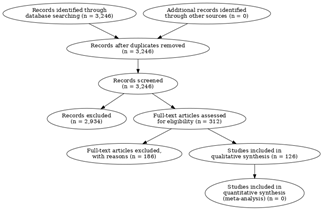
The database search resulted in 3,246 entries after the duplicates were removed. Following the title and abstract screening, a full-text review was conducted for 312 publications. One hundred twenty-six studies that satisfied all the inclusion criteria were included in the synthesis. The PRISMA flow diagram, Figure 1, illustrates the selection procedure.
Figure 1.
PRISMA Flow Diagram.
Study Characteristics
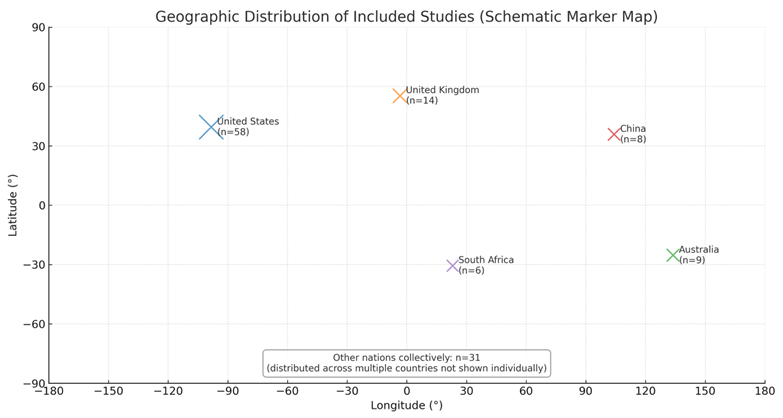
The studies included a variety of geographic contexts, with the United States (n = 58), the United Kingdom (n = 14), Australia (n = 9), China (n = 8), South Africa (n = 6), and other nations (n = 31) being the most studied. Cross-sectional surveys (n = 76), qualitative interviews/focus groups (n = 22), mixed methods (n = 18), and longitudinal or intervention studies (n = 10) comprised the study designs.
African American, Latino, Asian American, Native Hawaiian, Pacific Islander, African-Caribbean, Bangladeshi, Indigenous, refugee, and economically disadvantaged immigrant groups were the populations that were analyzed. Green space exposure was evaluated by GIS-derived accessibility, canopy coverage, or self-reported frequency of usage, while social integration was primarily examined using validated measures of neighborhood trust or social capital (e.g., adopted from the National Social Life, Health, and Aging Project).
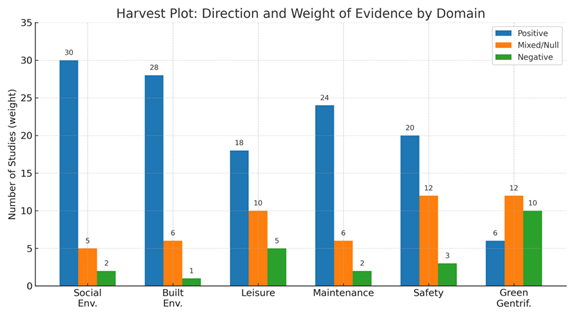

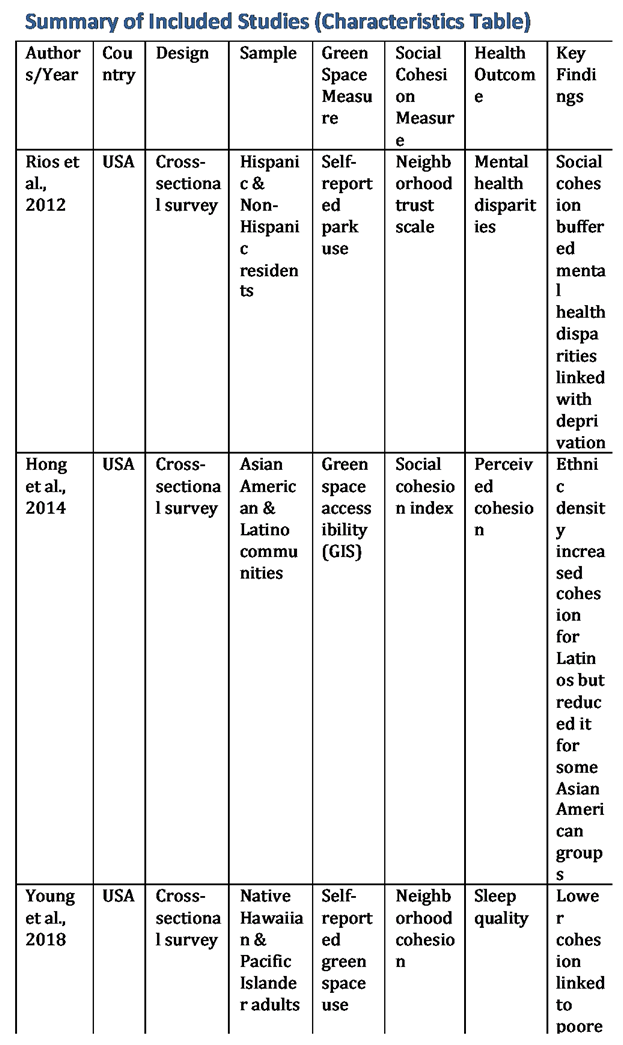
Table 1.
Summary Characteristics of Included Studies.
 |
Synthesis of Findings
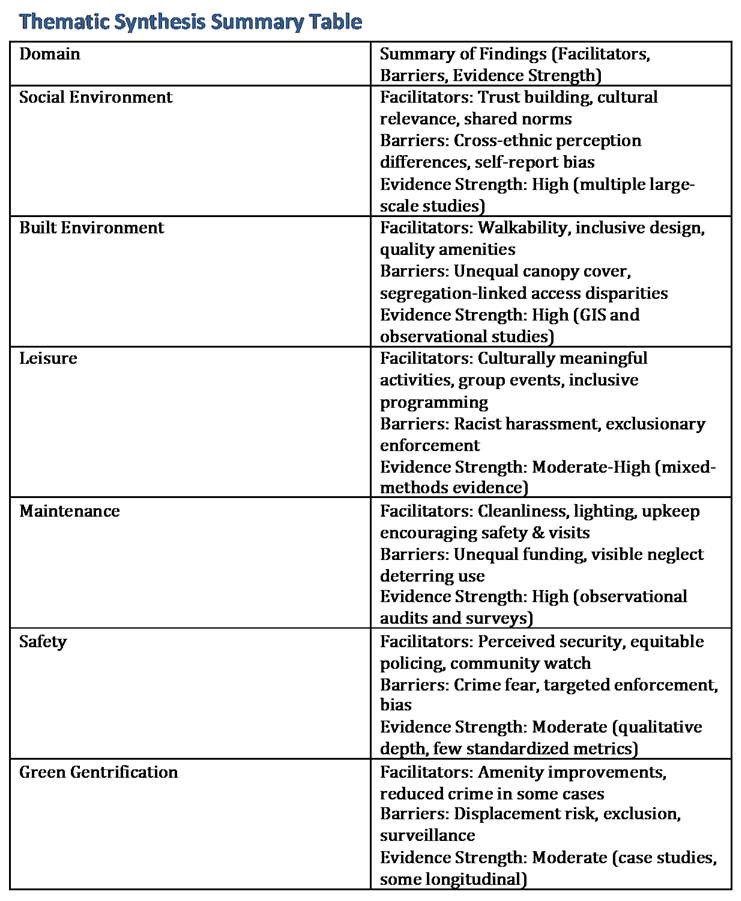
1. Social Environment and Public Health
Research regularly shows that enhanced neighborhood social cohesion relates to better mental health, more physical activity, and less tension among a variety of demographics (Dulin et al., 2022; Hong et al., 2014). For example, among Native Hawaiian and Pacific Islander individuals, lower social cohesion was associated with worse sleep outcomes (Young et al., 2018). According to Rios et al. (2012), social cohesion among Arizona's Hispanic citizens helped to mitigate the mental health disparities linked with financial deprivation.
However, heterogeneity was seen in cross-ethnic comparisons. Greater intragroup density was associated with a decline in perceived cohesiveness in certain Asian American locations (Hong et al., 2014), but Latino communities with equivalent ethnic density showed an increase in cohesion. The methodological strengths included large, population-based samples and certified instruments. The limitations included the possibility of self-report bias and the use of a cross-sectional design.
2. Built Environment Characteristics
The availability of green spaces that were precisely designed, well-integrated, and inclusive resulted in increased social capital and community satisfaction (Mullenbach et al., 2022; Broyles et al., 2011). Neighborhood walkability and park facilities promoted advantageous social interactions (Oh et al., 2022). Community gardens in Singapore fostered a sense of community when they were implemented in conjunction with inclusive community engagement (Oh et al., 2022).
Inequalities in the condition of the constructed environment have restricted the advantages. According to research (Kephart, 2022), communities with a higher portion of Black residents exhibited a significantly reduced tree canopy coverage. Roberts et al. (2022) have noted that residential segregation is associated with diminished access to exceptional green infrastructure (Venter et al., 2020). This may result in environmental injustice. During the critical assessment, consistent geographic analyses were identified; however, longitudinal designs are necessary for clarifying causal pathways.
3. Leisure in Urban Green Spaces
Social cohesiveness was promoted through participation in culturally important, secure, and accessible recreational activities (Murillo et al., 2020; Peters et al., 2010). Recreational community activities in Barcelona boosted neighborhood cohesiveness by fostering shared identity recognition (Coll-Planas et al., 2024). The social well-being of African Americans was improved by the appreciation of outdoor recreation and representation in natural environments (Martin et al., 2020).
However, adverse leisure experiences, such as racist harassment and discriminatory implementation, resulted in a decrease in engagement and a loss of trust (Dietsch et al., 2021). Leisure was designated as both an enabler and an obstacle in numerous studies, dependent upon cultural compatibility, safety, and inclusion.
4. Maintenance of Green Spaces
According to Huang and Lin (2021), parks that were well-maintained were consistently associated with increased utilization, more social interaction, and a higher perception of safety. Vandalism, litter, and inadequate maintenance discouraged usage, particularly among senior citizens and parents (Taylor et al., 2023). Maintenance discrepancies have resulted from disparities in park financing between wealthy and ethnically diverse communities (Byrne et al., 2009).
The degree of maintenance was frequently associated with other themes: safety concerns were exacerbated in derelict parks, while communal activities and extended visits were encouraged in clean, well-lit areas. Observational audits were among the methodological strengths, while aesthetic evaluations were subject to subjectivity.
5. Safety and Perceived Security
The development of social cohesiveness and the utilization of green spaces were significantly influenced by perceptions of safety (Clarke et al., 2023). In African American children, an elevated level of physical activity and park use was linked to an increased perception of safety (Marquet et al., 2019). In contrast, the dread of crime resulted in a decrease in leisure engagement and a weakening of social connections (Mair et al., 2010).
Feelings of security have also been influenced by structural bias. Teenage participation was discouraged by the targeted enforcement on Chicago's Bloomingdale Trail, which was indicative of the disparate policing in various regions (Loughran et al., 2021). Walking activity in neighborhoods that were affected by the COVID-19 pandemic was significantly reduced because of anti-Asian hostility (Holt-Lunstad, 2022). Research frequently provided substantial qualitative insights; however, it was lacking in standardized safety indicators.
6. Green Gentrification
The comfort and utilization of long-term residents are frequently diminished by the construction of green spaces in gentrifying districts, which is often the result of feelings of isolation or the potential for relocation (Anguelovski et al., 2019; Gould & Lewis, 2017). Ironically, the accessibility of vulnerable populations was restricted by the heightened security measures that were implemented in numerous newly established green areas (Immergluck & Balan, 2018).
Some studies suggested that crime decreased following development, while others reported that social cohesiveness was diminished and monitoring was increased (Hoover & Lim, 2021). The necessity of incorporating affordable housing and anti-displacement policies into environmental initiatives was consistently emphasized by evidence (Rigolon & Németh, 2020).
Agreements and Disagreements
- Agreements: In numerous geographic locations, green spaces that are culturally inclusive, well-maintained, secure, and well-designed are linked to improved health outcomes and increased social cohesiveness. Racially and ethnically diverse populations were disproportionately affected by disparities in access and quality.
- Disagreements: In regions that are characterized by elevated social tension or inadequate initial safety, certain research has indicated inconsistent or negligible correlations between social cohesiveness and access to green spaces (Hong et al., 2014). Comparison was made difficult by the inconsistent nature of cohesiveness and exposure measurement instruments. Furthermore, while certain studies linked green gentrification to a decrease in cohesiveness, others found no significant change or even minor improvements in social connections, particularly during the initial phases of projects.
Discussion
Summary of Main Findings
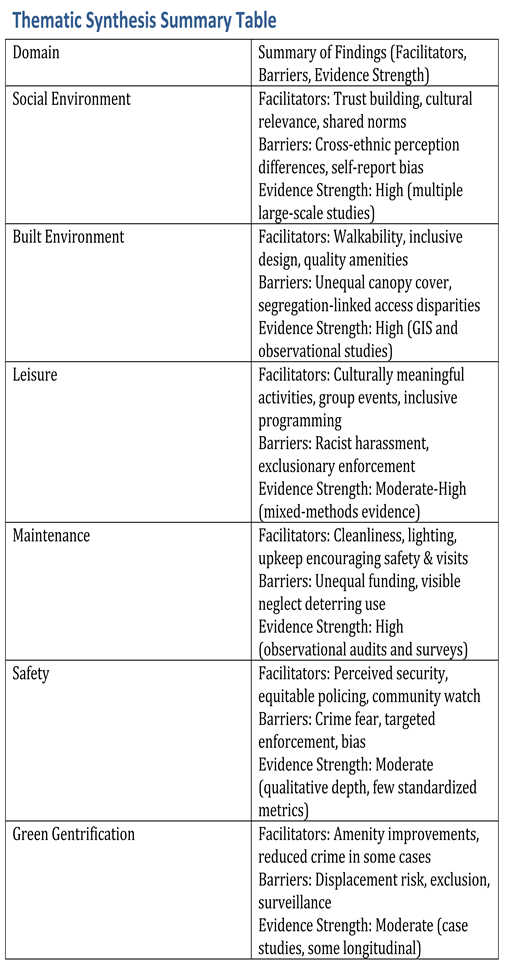
This synthesis underscores the potential of urban green spaces to function as catalysts for social cohesiveness in racially and ethnically diverse populations. However, the benefits are contingent upon the intersection of social, environmental, and structural factors. The results of the study, which spans six thematic domains social environment, built environment, leisure, maintenance, safety, and green gentrification indicate that green spaces that are well-maintained, accessible, and culturally inclusive improve mental health, physical activity, and neighborhood trust (Jennings & Bamkole, 2019; Dulin et al., 2022). Conversely, the capacity of green spaces to foster social cohesion and reduce health disparities is limited by disparities in access, maintenance, and safety, which are frequently influenced by systemic racism and environmental injustice (Roberts et al., 2022; Kephart, 2022).
Green gentrification presented complex issues by enhancing physical amenities while simultaneously threatening displacement, exclusion, and surveillance, while leisure possibilities and perceptions of safety were identified as significant mediators (Hoover & Lim, 2021; Anguelovski et al., 2019). These interactions underscore the necessity of comprehensive solutions that incorporate the social framework in which green places are situated as well as their physical characteristics.
Comparison with Existing Literature
The correlations that have been identified are consistent with previous research that has linked green space to health, social capital, and psychological well-being (Bratman et al., 2015; Wolf et al., 2020). The current material is improved by this synthesis, which emphasizes the experiences of historically marginalized individuals, thereby illustrating that the connections between social cohesiveness and green space are inconsistent. For instance, Hong et al. (2014) observed that ethnic density and cohesiveness were positively correlated in Latino communities. However, the same factor was associated with reduced cohesion in specific Asian American communities, suggesting that cultural and contextual diversity are present.
Previous research frequently perceived green space exposure as a primarily uniform public asset (Hartig et al., 2014). However, recent evidence indicates that social disparities may be worsened, rather than decreased, by unequal distribution, varying levels of maintenance, and perceived hostility within green spaces (Venter et al., 2020; Lee et al., 2023). In contrast to previous comprehensive evaluations, this analysis emphasizes the correlation between leisure inclusion and racialized safety concerns, a factor that has frequently been overlooked (Wan et al., 2021).
Maintenance and design quality are consistently identified as reliable determinants of positive engagement in the research (Huang & Lin, 2021). The gap refers to the consequences of green gentrification. While certain urban studies suggest that redevelopment may improve neighborhood perceptions and safety (Rigolon & Németh, 2020), several studies in this field have identified heightened policing and a decrease in perceived belonging in gentrifying areas (Hoover & Lim, 2021).
Strengths and Limitations of the Evidence Base
The evidence base is strengthened by a wide range of methodological approaches, including both qualitative and quantitative approaches, as well as by comprehensive geographic coverage across North America, Europe, Asia, Africa, and Oceania. The incorporation of comprehensive qualitative analyses (Dietsch et al., 2021; Peters et al., 2010) with extensive epidemiological studies (e.g., Young et al., 2018; Rios et al., 2012) enables a more detailed contextual interpretation. Numerous studies have implemented validated metrics for health and social cohesiveness, thereby enhancing comparability.
However, the conclusions' robustness is limited by specific constraints:
- Selection bias: A significant number of studies employed convenience samples or community volunteers, which may have resulted in a dominance of individuals who are already engaged with green spaces.
- Linguistic and cultural scope: The research that was examined was published in English, which may have resulted in the exclusion of relevant data from non-English-speaking contexts.
- Publication bias: The emphasis on peer-reviewed literature may distort findings in favor of favorable connections, resulting in a scarcity of reporting on null or negative effects.
- Quality variation: While some studies were deficient in precise exposure measurement or did not account for confounding factors, others utilized stringent geographical analysis and validated psychometric instruments (Kephart, 2022; Mullenbach et al., 2022).
- Search limitations: Although the database searches were comprehensive, they may not have incorporated developing information from urban planning or community development sources that are not indexed in biomedical databases.
The causal inference is restricted by the temporal scope of the dataset, which is characterized by cross-sectional dominance, while longitudinal and intervention research are restricted.
Implications for Practice, Research, and Policy
Practice
To ensure cultural relevance, safety, and accessibility, urban planners, public health professionals, and community groups must prioritize the co-design of green spaces with historically marginalized communities (Mullenbach et al., 2022; Oh et al., 2022). Regular maintenance and equitable funding distributions are essential, as neglected areas exacerbate safety concerns and discourage utilization (Huang & Lin, 2021). The integration of recreational programming that is consistent with the cultural traditions of the community has the potential to improve participation and cohesiveness (Martin et al., 2020).
Research
To clarify causal relationships between health outcomes, unity in society, and exposure to green spaces, future research should employ longitudinal designs.
Employ mixed-methods techniques that combine qualitative narratives, epidemiological metrics, and geographical analytics to clarify both structural patterns and lived experiences.
3. Examine the intersectional analyses of race, ethnicity, gender, and socioeconomic position in relation to the experiences of green spaces (Roberts et al., 2022; Dietsch et al., 2021).
4. Examine the post-pandemic changes in social cohesiveness and park use, including the recorded gaps in access during COVID-19 (Holt-Lunstad, 2022).
Policy
To mitigate the risks of green gentrification, policymakers must integrate affordable housing initiatives and anti-displacement strategies into urban greening programs (Anguelovski et al., 2019; Rigolon & Németh, 2020). Systemic inequalities in the distribution and character of parks must be rectified through public investment in marginalized communities (Kephart, 2022; Venter et al., 2020). To prevent biased policing in parks and recreational spaces, policies must also include equal enforcement procedures (Hoover & Lim, 2021).
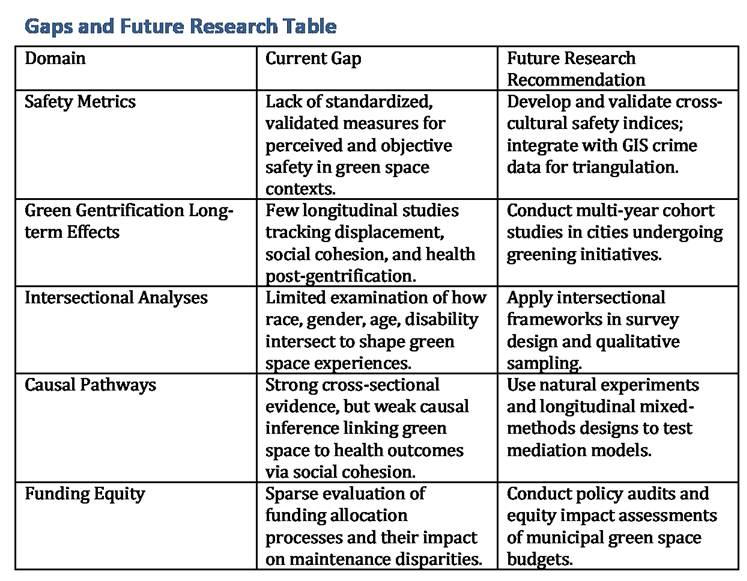
Unanswered Questions and Gaps
There are still several deficiencies:
- Mechanistic pathways: While the correlations between social cohesiveness and green space are well-established, the specific mediating mechanisms, particularly in heterogeneous contexts, necessitate further clarification.
- Safety metrics: There is a scarcity of research that employs standardized, objective safety measures; the development and validation of such instruments could enhance comparability.
- Consequences of green gentrification in the long term: Particularly in regions that experience recurrent redevelopment cycles, there is a lack of evidence regarding the enduring effects of these changes over the course of decades.
The influence of interventions that promote climate resilience: The relationship between green infrastructure and climate adaptation planning is having an increasing impact on social cohesion in disadvantaged groups; however, it has not been thoroughly investigated.
The function of technology: An examination is required of the integration of digital tools, such as community mapping applications, in the promotion of cohesiveness through engagement with natural spaces.
Controversies and Ongoing Debates
A critical question is whether the redevelopment of natural spaces in economically disadvantaged neighborhoods always leads to displacement and social separation, or whether these hazards can be mitigated through inclusive design and housing safeguards. Some urban studies argue that well-managed greening can foster diversity and cohesiveness (Rigolon & Németh, 2020), while others caution that the practice can exacerbate inequality in the absence of institutional protections (Anguelovski et al., 2019).
The significance of social cohesiveness as both a cause and an effect of the use of verdant spaces is a current topic. While several studies consider cohesiveness to be a consequence, others suggest that it may also encourage participation in green space activities, thereby creating feedback loops that complicate causal inference (Hong et al., 2014; Murillo et al., 2020).
Ultimately, there is disagreement regarding the definition and evaluation of social cohesiveness in multicultural environments. While some theories prioritize trust and reciprocity (Schiefer & van der Noll, 2017), others prioritize identification and belonging (Haslam et al., 2023). The interpretation and implementation of policies are influenced by the conceptual distinctions.
Conclusion
Key Messages
Social support and public health are encouraged, and public health is promoted in racially and ethnically diverse populations by urban green areas, which function as essential infrastructure. The synthesis suggests that mental health, physical activity, and community trust are all improved by equitable access to secure, culturally pertinent, and well-maintained green spaces (Jennings & Bamkole, 2019; Dulin et al., 2022). However, these advantages may be restricted, and health disparities can be made worse by systemic inequalities, including unequal distribution, insufficient maintenance, and biased policing (Roberts et al., 2022; Kephart, 2022). Leisure opportunities, safety perceptions, and protection against relocation were identified as critical factors that influence community cohesiveness and green space participation (Murillo et al., 2020; Hoover & Lim, 2021).
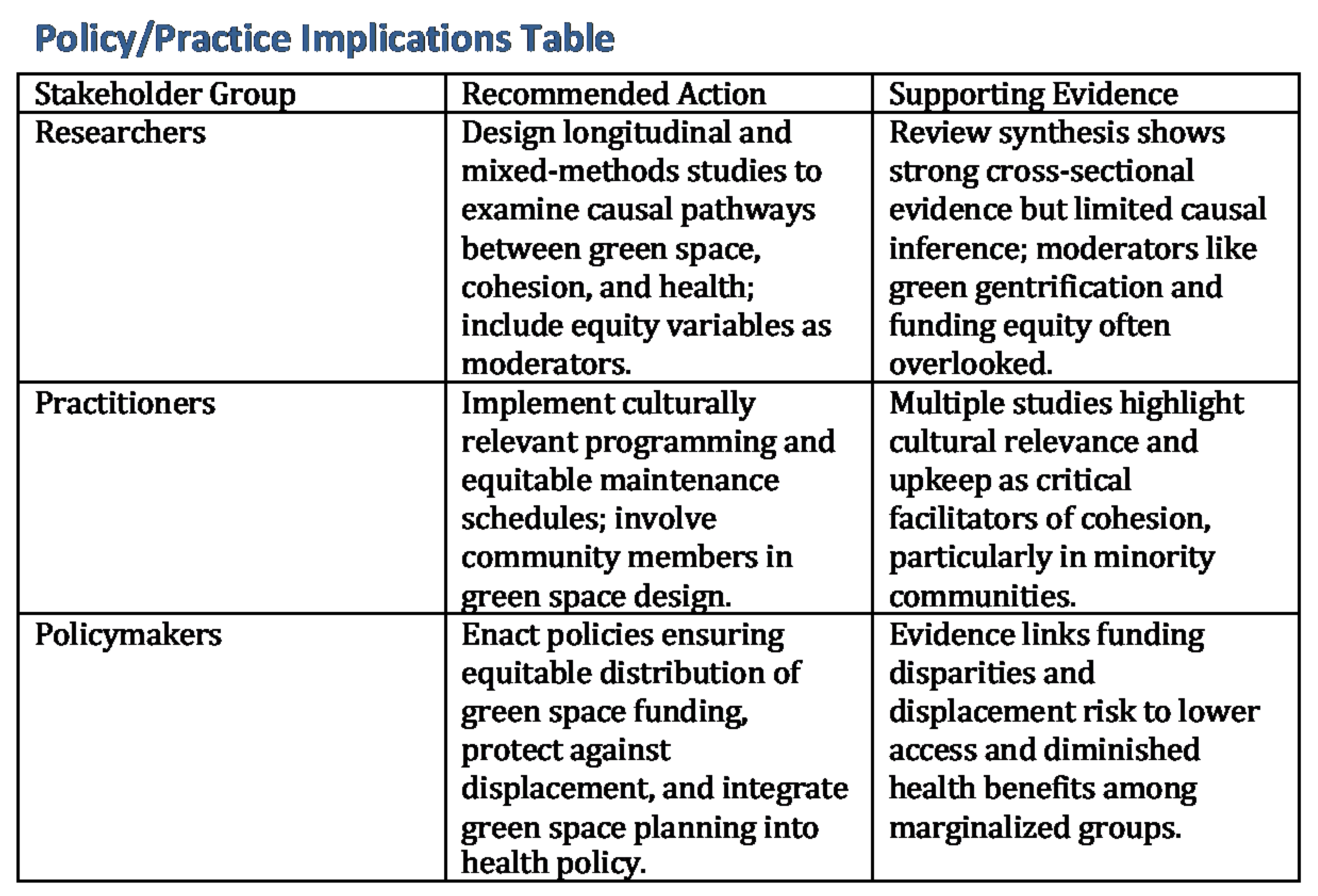
Recommendations
For Researchers:
- Prioritize longitudinal and mixed-methods research to clarify the causal relationships between health outcomes, social cohesiveness, and access to green spaces (Wan et al., 2021).
- Incorporate intersectional studies to investigate the cumulative effects of socioeconomic status, gender, ethnicity, and race (Roberts et al., 2022).
- Develop metrics for safety and cohesiveness that are standardized and have been proved effective in multicultural settings (Schiefer & van der Noll, 2017).
For Practitioners:
- Engage communities in co-design initiatives to ensure that the attributes of green spaces align with cultural preferences, safety requirements, and recreational interests (Oh et al., 2022).
- To prevent inequities in park quality, it is necessary to establish equitable maintenance schedules and infrastructural expenditures (Huang & Lin, 2021).
Implement programming that challenges exclusionary norms, promotes intergroup engagement, and embodies community identity (Martin et al., 2020).
For Policymakers:
Incorporate anti-displacement strategies, such as affordable housing safeguards, into green infrastructure initiatives to mitigate the risks of green gentrification (Anguelovski et al., 2019; Rigolon & Németh, 2020).
Strategically allocate resources to address park imbalances in communities of disadvantage (Kephart, 2022; Venter et al., 2020).
Implement policy measures to prevent biased enforcement practices in green spaces (Hoover & Lim, 2021).
Future Research Directions
The following priorities should be the primary focus of subsequent investigations:
- Mechanistic Understanding: Investigate the mediating roles of leisure inclusion, safety perception, and cultural fit in the relationship between green space and social cohesiveness (Murillo et al., 2020).
- Standardization of Measures: Develop and verify cross-cultural instruments that assess both subjective and objective safety, as well as social cohesiveness attributes (Schiefer & van der Noll, 2017).
- Longitudinal Effects of Green Gentrification: Conduct extended follow-up studies in gentrifying districts to evaluate the long-term effects on community cohesiveness, health, and displacement (Anguelovski et al., 2019).
- Climate Adaptation Integration: Examine the influence of climate resilience initiatives in the context of green infrastructure on the cohesiveness of historically marginalized communities (Venter et al., 2020).
- Technology and Engagement: Evaluate the influence of digital technologies, such as participatory mapping platforms, on the enhancement of community engagement and the utilization of natural spaces.
- Post-Pandemic Patterns: Evaluate the influence of modifications in park utilization during the COVID-19 recovery process on the trajectory of cohesiveness in a variety of communities (Holt-Lunstad, 2022).
In summary, a comprehensive strategy that integrates equitable design, maintenance, safety, and legislative safeguards is necessary to fully optimize the potential of urban green spaces as catalysts for social cohesion. Practitioners and policymakers can ensure that green spaces function as social ecosystems that promote health equality and community resilience by prioritizing the perspectives and requirements of historically marginalized groups, in addition to serving as physical landscapes.
References
- Berkman, L. F.; Glass, T. Social integration, social networks, social support, and health. Social Epidemiology 2000, 1, 137–173. [Google Scholar]
- Berger-Schmitt, R. Considering social cohesion in quality of life assessments: Concept and measurement. Social Indicators Research 2002, 58(3), 403–428. [Google Scholar] [CrossRef]
- Bratman, G. N.; Daily, G. C.; Levy, B. J.; Gross, J. J. The benefits of nature experience: Improved affect and cognition. Landscape and Urban Planning 2015, 138, 41–50. [Google Scholar] [CrossRef]
- Clarke, M.; Wallace, C.; Cadaval, S.; Anderson, E.; Egerer, M.; Dinkins, L.; Platero, R. Factors that enhance or hinder social cohesion in urban greenspaces: A literature review. Urban Forestry & Urban Greening 2023, 84, 127936. [Google Scholar] [CrossRef]
- de Vries, S.; van Dillen, S. M.; Groenewegen, P. P.; Spreeuwenberg, P. Streetscape greenery and health: Stress, social cohesion and physical activity as mediators. Social Science & Medicine 2013, 94, 26–33. [Google Scholar] [CrossRef] [PubMed]
- Finney, C. Black faces, white spaces: Reimagining the relationship of African Americans to the great outdoors; UNC Press Books, 2014. [Google Scholar]
- Gee, G. C.; Payne-Sturges, D. Environmental health disparities: A framework integrating psychosocial and environmental concepts. Environmental Health Perspectives 2005, 113(12), A18–A20. [Google Scholar] [CrossRef]
- Hartig, T.; Mitchell, R.; de Vries, S.; Frumkin, H. Nature and health. Annual Review of Public Health 2014, 35, 207–228. [Google Scholar] [CrossRef] [PubMed]
- Haslam, S. A.; Fong, P.; Haslam, C.; Cruwys, T. Connecting to community: A social identity approach to neighborhood mental health. Personality and Social Psychology Review 2023. Advance online publication. [Google Scholar] [CrossRef]
- Holt-Lunstad, J. Social connection as a public health issue: The evidence and a systemic framework for prioritizing the “social” in social determinants of health. Annual Review of Public Health 2022, 43, 193–213. [Google Scholar] [CrossRef]
- James, P.; Banay, R. F.; Hart, J. E.; Laden, F. A review of the health benefits of greenness. Current Epidemiology Reports 2015, 2, 131–142. [Google Scholar] [CrossRef]
- Jennings, V.; Bamkole, O. The relationship between social cohesion and urban green space: An avenue for health promotion. International Journal of Environmental Research and Public Health 2019, 16(3), 452. [Google Scholar] [CrossRef]
- Jennings, V.; Larson, L.; Yun, J. Advancing sustainability through urban green space: Cultural ecosystem services, equity, and social determinants of health. International Journal of Environmental Research and Public Health 2016, 13(2), 196. [Google Scholar] [CrossRef]
- Kawachi, I.; Berkman, L. Social cohesion, social capital, and health. In Social Epidemiology; 2000; pp. 174–190. [Google Scholar]
- Larson, L.; Jennings, V.; Cloutier, S. A. Public parks and wellbeing in urban areas of the United States. PLoS ONE 2016, 11(4), e0153211. [Google Scholar] [CrossRef]
- Miller, H. N.; Thornton, C. P.; Rodney, T.; Thorpe, R. J., Jr.; Allen, J. Social cohesion in health: A concept analysis. ANS. Advances in Nursing Science 2020, 43(4), 375–390. [Google Scholar] [CrossRef]
- Moustakas, L. Social cohesion: Definitions, causes and consequences. Encyclopedia 2023, 3(3), 1028–1037. [Google Scholar] [CrossRef]
- Sampson, R. J. The neighborhood context of well-being. Perspectives in Biology and Medicine 2003, 46(3), S53–S64. [Google Scholar] [CrossRef] [PubMed]
- Schiefer, D.; van der Noll, J. The essentials of social cohesion: A literature review. Social Indicators Research 2017, 132(2), 579–603. [Google Scholar] [CrossRef]
- Shanahan, D.; Lin, B.; Bush, R.; Gaston, K.; Dean, J.; Barber, E.; Fuller, R. Toward improved public health outcomes from urban nature. American Journal of Public Health 2015, 105(3), 470–477. [Google Scholar] [CrossRef]
- Taylor, D. E. The rise of the environmental justice paradigm injustice framing and the social construction of environmental discourses. American Behavioral Scientist 2000, 43(4), 508–580. [Google Scholar] [CrossRef]
- Wan, C.; Shen, G. Q.; Choi, S. Underlying relationships between public urban green spaces and social cohesion: A systematic literature review. City, Culture and Society 2021, 24, 100383. [Google Scholar] [CrossRef]
- Wolf, K. L.; Lam, S. T.; McKeen, J. K.; Richardson, G. R.; van den Bosch, M.; Bardekjian, A. C. Urban trees and human health: A scoping review. International Journal of Environmental Research and Public Health 2020, 17(12), 4371. [Google Scholar] [CrossRef]
- Ahirrao, P.; Khan, S. Assessing public open spaces: A case of city Nagpur, India. Sustainability 2021, 13(9), 4997. [Google Scholar] [CrossRef]
- Astell-Burt, T.; Hartig, T.; Putra, I. G. N. E.; Walsan, R.; Dendup, T.; Feng, X. Green space and loneliness: A systematic review with theoretical and methodological guidance for future research. Science of the Total Environment 2022, 847, 157521. [Google Scholar] [CrossRef] [PubMed]
- Astell-Burt, T.; Walsan, R.; Davis, W.; Feng, X. What types of green space disrupt a lonelygenic environment? A cohort study. Social Psychiatry and Psychiatric Epidemiology 2023, 58(4), 745–755. [Google Scholar] [CrossRef]
- Cock, J.; Fig, D. From colonial to community based conservation: Environmental justice and the national parks of South Africa. Social Dynamics 2012, 31(1), 22–35. [Google Scholar] [CrossRef]
- Ding, D.; Sallis, J. F.; Kerr, J.; Lee, S.; Rosenberg, D. E. Neighborhood environment and physical activity among youth. American Journal of Preventive Medicine 2011, 41(4), 442–455. [Google Scholar] [CrossRef] [PubMed]
- Edwards, R. C.; Larson, B. M. H.; Burdsey, D. What limits Muslim communities’ access to nature? Barriers and opportunities in the United Kingdom; Nature and Space; Environment and Planning E, 2022; Volume 6, 3, pp. 880–900. [Google Scholar] [CrossRef]
- Feng, X.; Astell-Burt, T. Lonelygenic environments: A call for research on multilevel determinants of loneliness. The Lancet Planetary Health 2022, 6(11), e933–e934. [Google Scholar] [CrossRef]
- Gagliardi, C.; Pillemer, K.; Gambella, E.; Piccinini, F.; Fabbietti, P. Benefits for older people engaged in environmental volunteering and socializing activities in city parks: Preliminary results of a program in Italy. International Journal of Environmental Research and Public Health 2020, 17(10), 3772. [Google Scholar] [CrossRef]
- Gorjian, M. A deep learning-based methodology to re-construct optimized re-structured mesh from architectural presentations. Doctoral dissertation, Texas A&M University). Texas A&M University, 2024. Available online: https://oaktrust.library.tamu.edu/items/0efc414a-f1a9-4ec3-bd19-f99d2a6e3392.
- Gorjian, M. Advances and challenges in GIS-based assessment of urban green infrastructure: A systematic review (2020–2024) [Preprint]. Preprints 2025. [Google Scholar] [CrossRef]
- Gorjian, M. Green gentrification and community health in urban landscape: A scoping review of urban greening’s social impacts [Preprint, Version 1]. Research Square 2025. [Google Scholar] [CrossRef]
- Gorjian, M. Green schoolyard investments and urban equity: A systematic review of economic and social impacts using spatial-statistical methods [Preprint]. In Research Square; 2025. [Google Scholar] [CrossRef]
- Gorjian, M. Green schoolyard investments influence local-level economic and equity outcomes through spatial-statistical modeling and geospatial analysis in urban contexts. arXiv 2025. [Google Scholar] [CrossRef]
- Gorjian, M. Greening schoolyards and the spatial distribution of property values in Denver, Colorado [Preprint]. arXiv 2025. [Google Scholar] [CrossRef]
- Gorjian, M. Analyzing the relationship between urban greening and gentrification: Empirical findings from Denver, Colorado [Working paper]. In SSRN; 15 July 2025. [Google Scholar] [CrossRef]
- Gorjian, M. Greening schoolyards and urban property values: A systematic review of geospatial and statistical evidence [Preprint]. arXiv 2025. [Google Scholar] [CrossRef]
- Gorjian, M. Quantifying gentrification: A critical review of definitions, methods, and measurement in urban studies [Preprint]. Preprints 2025. [Google Scholar] [CrossRef]
- Gorjian, M. Schoolyard greening, child health, and neighborhood change. arXiv 2025. [Google Scholar] [CrossRef]
- Gorjian, M. The impact of greening schoolyards on residential property values [Working paper]. In SSRN; 11 July 2025. [Google Scholar] [CrossRef]
- Gorjian, M. The impact of greening schoolyards on surrounding residential property values: A systematic review [Preprint, Version 1]. Research Square 2025. [Google Scholar] [CrossRef]
- Gorjian, M. Urban schoolyard greening: A systematic review of child health and neighborhood change [Preprint]. Research Square 2025. [Google Scholar] [CrossRef]
- Gorjian, M.; Quek, F. Enhancing consistency in sensible mixed reality systems: A calibration approach integrating haptic and tracking systems [Preprint]. In EasyChair; 2024; Available online: https://easychair.org/publications/preprint/KVSZ.
- Gorjian, M.; Caffey, S. M.; Luhan, G. A. Exploring architectural design 3D reconstruction approaches through deep learning methods: A comprehensive survey. Athens Journal of Sciences 2024, 11(2), 1–29. Available online: https://www.athensjournals.gr/sciences/2024-6026-AJS-Gorjian-02.pdf.
- Gorjian, M.; Caffey, S. M.; Luhan, G. A. Exploring architectural design 3D reconstruction approaches through deep learning methods: A comprehensive survey. Athens Journal of Sciences 2025, 12, 1–29. [Google Scholar] [CrossRef]
- Gorjian, M.; Luhan, G. A.; Caffey, S. M. Analysis of design algorithms and fabrication of a graph-based double-curvature structure with planar hexagonal panels. arXiv 2025. [Google Scholar] [CrossRef]
- Gorjian, M.; Caffey, S. M.; Luhan, G. A. Exploring architectural design 3D reconstruction approaches through deep learning methods: A comprehensive survey. Athens Journal of Sciences 2024, 11(2), 1–29. Available online: https://www.athensjournals.gr/sciences/2024-6026-AJS-Gorjian-02.pdf.
- Jahangir, S. Perceived meaning of urban local parks and social well-being of elderly men: A qualitative study of Delhi and Kolkata. International Journal of Review of Research in Social Sciences 2018, 6(3), 243–247. [Google Scholar]
- Liu, Y.; Wang, R.; Xiao, Y.; Huang, B.; Chen, H.; Li, Z. Exploring the linkage between greenness exposure and depression among Chinese people: Mediating roles of physical activity, stress and social cohesion and moderating role of urbanicity. Health & Place 2019, 58, 102168. [Google Scholar] [CrossRef] [PubMed]
- Office of the Surgeon General. Our epidemic of loneliness and isolation: The US Surgeon General’s advisory on the healing effects of social connection and community. U.S. Department of Health and Human Services. 2023. Available online: https://www.hhs.gov/sites/default/files/surgeon-general-social-connection-advisory.pdf.
- Peters, K.; Elands, B.; Buijs, A. Social interactions in urban parks: Stimulating social cohesion? Urban Forestry & Urban Greening 2010, 9(2), 93–100. [Google Scholar] [CrossRef]
- Quagraine, V. K.; Asibey, M. O.; Mosner-Ansong, K. F. Factors that influence user patronage and satisfaction of urban parks in Ghanaian cities: Case of the Rattray Park in Nhyiaeso, Kumasi. Local Environment 2024, 29(2), 224–244. [Google Scholar] [CrossRef]
- Raina, A. S.; Mone, V.; Gorjian, M.; Quek, F.; Sueda, S.; Krishnamurthy, V. R. Blended physical-digital kinesthetic feedback for mixed reality-based conceptual design-in-context. In Proceedings of the 50th Graphics Interface Conference (Article 6; ACM, 2024; pp. 1–16. [Google Scholar] [CrossRef]
- Valente, D.; Pasimeni, M. R.; Petrosillo, I. The role of green infrastructures in Italian cities by linking natural and social capital. Ecological Indicators 2020, 108, 105694. [Google Scholar] [CrossRef]
- Venter, Z. S.; Shackleton, C. M.; Van Staden, F.; Selomane, O.; Masterson, V. A. Green apartheid: Urban green infrastructure remains unequally distributed across income and race geographies in South Africa. Landscape and Urban Planning 2020, 203, 103889. [Google Scholar] [CrossRef]
- Abada, T.; Hou, F.; Ram, B. Racially mixed neighborhoods, perceived neighborhood social cohesion, and adolescent health in Canada. Social Science & Medicine 2007, 65(10), 2004–2017. [Google Scholar] [CrossRef]
- Alhasan, D. M.; Gaston, S. A.; Gullett, L. R.; Braxton Jackson, W.; Stanford, F. C.; Jackson, C. L. Neighborhood social cohesion and obesity in the United States. Endocrine and Metabolic Science 11 2023, 100129. [Google Scholar] [CrossRef]
- Alhasan, D. M.; Gaston, S. A.; Jackson, W. B.; Williams, P. C.; Kawachi, I.; Jackson, C. L. Neighborhood social cohesion and sleep health by age, sex/gender, and race/ethnicity in the United States. International Journal of Environmental Research and Public Health 2020, 17(24), 9475. [Google Scholar] [CrossRef]
- Andrews, J. O.; Mueller, M.; Newman, S. D.; Magwood, G.; Ahluwalia, J. S.; White, K.; Tingen, M. S. The association of individual and neighborhood social cohesion, stressors, and crime on smoking status among African-American women in southeastern US subsidized housing neighborhoods. Journal of Urban Health 2014, 91(6), 1158–1174. [Google Scholar] [CrossRef]
- Appleton, A. A.; Holdsworth, E. A.; Kubzansky, L. D. A systematic review of the interplay between social determinants and environmental exposures for early-life outcomes. Current Environmental Health Reports 2016, 3(3), 287–301. [Google Scholar] [CrossRef]
- Carr, D. S.; Williams, D. R. Understanding the role of ethnicity in outdoor recreation experiences. Journal of Leisure Research 1993, 25(1), 22–38. [Google Scholar] [CrossRef]
- Carpiano, R. M. Toward a neighborhood resource-based theory of social capital for health: Can Bourdieu and sociology help? Social Science & Medicine 2006, 62(1), 165–175. [Google Scholar] [CrossRef]
- Chaparro, M. P.; Pina, M. F.; de Oliveira Cardoso, L.; Santos, S. M.; Barreto, S. M.; Gonçalves, L. G.; de Matos, S. M. A.; da Fonseca, M. D. J. M.; Chor, D.; Griep, R. H. The association between the neighbourhood social environment and obesity in Brazil: A cross-sectional analysis of the ELSA-Brasil study. BMJ Open 2019, 9(9), e026800. [Google Scholar] [CrossRef]
- Chuang, Y.-C.; Chuang, K.-Y.; Yang, T.-H. Social cohesion matters in health. International Journal for Equity in Health 12 2013, 87. [Google Scholar] [CrossRef]
- Coll-Planas, L.; Carbó-Cardeña, A.; Jansson, A.; Dostálová, V.; Bartova, A.; Rautiainen, L.; Kolster, A.; Masó-Aguado, M.; Briones-Buixassa, L.; Blancafort-Alias, S.; et al. Nature-based social interventions to address loneliness among vulnerable populations: A common study protocol for three related randomized controlled trials in Barcelona, Helsinki, and Prague within the RECETAS European project. BMC Public Health 24 2024, 172. [Google Scholar] [CrossRef]
- Dulin, A. J.; Park, J. W.; Scarpaci, M. M.; Dionne, L. A.; Sims, M.; Needham, B. L.; Fava, J. L.; Eaton, C. B.; Kanaya, A. M.; Kandula, N. R. Examining relationships between perceived neighborhood social cohesion and ideal cardiovascular health and whether psychosocial stressors modify observed relationships among JHS, MESA, and MASALA participants. BMC Public Health 22 2022, 1890. [Google Scholar] [CrossRef]
- Echeverría, S.; Diez-Roux, A. V.; Shea, S.; Borrell, L. N.; Jackson, S. Associations of neighborhood problems and neighborhood social cohesion with mental health and health behaviors: The Multi-Ethnic Study of Atherosclerosis. Health & Place 2008, 14(4), 853–865. [Google Scholar] [CrossRef] [PubMed]
- Fan, Y.; Das, K. V.; Chen, Q. Neighborhood green, social support, physical activity, and stress: Assessing the cumulative impact. Health & Place 2011, 17(6), 1202–1211. [Google Scholar] [CrossRef] [PubMed]
- Floyd, M. F.; Gramann, J. H.; Saenz, R. Ethnic factors and the use of public outdoor recreation areas: The case of Mexican Americans. Leisure Sciences 1993, 15(2), 83–98. [Google Scholar] [CrossRef]
- Gobster, P. H. Managing urban parks for a racially and ethnically diverse clientele. Leisure Sciences 2002, 24(2), 143–159. [Google Scholar] [CrossRef]
- Gómez, E. Puerto Ricans and recreation participation: Methodological, cultural, and perceptual considerations. World Leisure Journal 2002, 44(2), 46–62. [Google Scholar] [CrossRef]
- Jones, C. P. Levels of racism: A theoretic framework and a gardener’s tale. American Journal of Public Health 2000, 90(8), 1212–1215. [Google Scholar] [CrossRef]
- Knobel, P.; Kondo, M.; Maneja, R.; Zhao, Y.; Dadvand, P.; Schinasi, L. H. Associations of objective and perceived greenness measures with cardiovascular risk factors in Philadelphia, PA: A spatial analysis. Environmental Research 197 2021, 110990. [Google Scholar] [CrossRef]
- Koltko-Rivera, M. E. Rediscovering the later version of Maslow’s hierarchy of needs: Self-transcendence and opportunities for theory, research, and unification. Review of General Psychology 2006, 10(4), 302–317. [Google Scholar] [CrossRef]
- Kubzansky, L. D.; Seeman, T. E.; Glymour, M. M. Biological pathways linking social conditions and health. In Social epidemiology, 2nd ed.; Oxford University Press, 2014; pp. 512–561. [Google Scholar]
- Lin, N. Building a network theory of social capital. In Social capital; Routledge, 2017; pp. 3–28. [Google Scholar]
- Maslow, A. H. A theory of human motivation. Psychological Review 1943, 50(4), 370–396. [Google Scholar] [CrossRef]
- McLaughlin, K. A.; Kubzansky, L. D.; Dunn, E. C.; Waldinger, R.; Vaillant, G.; Koenen, K. C. Childhood social environment, emotional reactivity to stress, and mood and anxiety disorders across the life course. Depression and Anxiety 2010, 27(12), 1087–1094. [Google Scholar] [CrossRef]
- Miles, R.; Coutts, C.; Mohamadi, A. Neighborhood urban form, social environment, and depression. Journal of Urban Health 2012, 89(1), 1–18. [Google Scholar] [CrossRef]
- Mouratidis, K.; Poortinga, W. Built environment, urban vitality and social cohesion: Do vibrant neighborhoods foster strong communities? Landscape and Urban Planning 204 2020, 103951. [Google Scholar] [CrossRef]
- Mulvaney-Day, N. E.; Alegría, M.; Sribney, W. Social cohesion, social support, and health among Latinos in the United States. Social Science & Medicine 2007, 64(2), 477–495. [Google Scholar] [CrossRef]
- Perez, L.; Arredondo, E.; McKenzie, T.; Holguin, M.; Elder, J.; Ayala, G. Neighborhood social cohesion and depressive symptoms among Latinos: Does use of community resources for physical activity matter? Journal of Physical Activity & Health 2015, 12(10), 1361–1368. [Google Scholar] [CrossRef]
- Rios, R.; Aiken, L. S.; Zautra, A. J. Neighborhood contexts and the mediating role of neighborhood social cohesion on health and psychological distress among Hispanic and non-Hispanic residents. Annals of Behavioral Medicine 2012, 43(1), 50–61. [Google Scholar] [CrossRef]
- Shaull, S. L.; Gramann, J. H. The effect of cultural assimilation on the importance of family-related and nature-related recreation among Hispanic Americans. Journal of Leisure Research 1998, 30(1), 47–63. [Google Scholar] [CrossRef]
- Su, Y.; Zhang, X.; Xuan, Y. Linking neighborhood green spaces to loneliness among elderly residents—A path analysis of social capital. Cities 149 2024, 104952. [Google Scholar] [CrossRef]
- U.S. Department of Commerce; Economics and Statistics Administration. Demographic turning points for the United States: Population projections for 2020 to 2060; U.S. Government Printing Office, 2018. [Google Scholar]
- Vespa, J.; Armstrong, D. M.; Medina, L. Demographic turning points for the United States: Population projections for 2020 to 2060; U.S. Department of Commerce, Economics and Statistics Administration, 2018. [Google Scholar]
- Williams, D. R.; Stremthal, M. Understanding racial-ethnic disparities in health: Sociological contributions. Journal of Health and Social Behavior 2010, 51(S), S15–S27. [Google Scholar] [CrossRef]
- Young, M. C.; Gerber, M. W.; Ash, T.; Horan, C. M.; Taveras, E. M. Neighborhood social cohesion and sleep outcomes in the Native Hawaiian and Pacific Islander National Health Interview Survey. Sleep 2018, 41(8), zsy097. [Google Scholar] [CrossRef]
- Hong, S.; Zhang, W.; Walton, E. Neighborhoods and mental health: Exploring ethnic density, poverty, and social cohesion among Asian Americans and Latinos. Social Science & Medicine 2014, 111, 117–124. [Google Scholar] [CrossRef]
- Jennings, V.; Baptiste, A. K.; Osborne Jelks, N. T.; Skeete, R. Urban green space and the pursuit of health equity in parts of the United States. International Journal of Environmental Research and Public Health 2017, 14(11), 1432. [Google Scholar] [CrossRef]
- Roe, J.; Aspinall, P. A.; Ward Thompson, C. Understanding relationships between health, ethnicity, place and the role of urban green space in deprived urban communities. International Journal of Environmental Research and Public Health 2016, 13(7), 681. [Google Scholar] [CrossRef]
- Roberts, J. D.; Dickinson, K. L.; Hendricks, M. D.; Jennings, V. I can’t breathe: Examining the legacy of American racism on determinants of health and the ongoing pursuit of environmental justice. Current Environmental Health Reports 2022, 9, 211–227. [Google Scholar] [CrossRef]
- Schell, C. J.; Dyson, K.; Fuentes, T. L.; Des Roches, S.; Harris, N. C.; Miller, D. S.; Woelfle-Erskine, C. A.; Lambert, M. R. The ecological and evolutionary consequences of systemic racism in urban environments. Science 2020, 369(6510), eaay4497. [Google Scholar] [CrossRef]
- Mullenbach, L. E.; Breyer, B.; Cutts, B. B.; Rivers, L., III; Larson, L. R. An antiracist, anticolonial agenda for urban greening and conservation. Conservation Letters 2022, 15(5), e12889. [Google Scholar] [CrossRef]
- Lee, K. J.; Fernandez, M.; Scott, D.; Floyd, M. Slow violence in public parks in the U.S.: Can we escape our troubling past? Social & Cultural Geography 2023, 24(8), 1185–1202. [Google Scholar] [CrossRef]
- Kephart, L. How racial residential segregation structures access and exposure to greenness and green space: A review. Environmental Justice 2022, 15(3), 204–213. [Google Scholar] [CrossRef]
- Dannenberg, A. L.; Frumkin, H.; Jackson, R. J. Making healthy places: Designing and building for health, well-being, and sustainability; Island Press, 2011. [Google Scholar]
- Koo, B. W.; Guhathakurta, S.; Botchwey, N. How are neighborhood and street-level walkability factors associated with walking behaviors? A big data approach using street view images. Environment and Behavior 2022, 54(2), 211–241. [Google Scholar] [CrossRef]
- Mullenbach, L. E.; Larson, L. R.; Floyd, M. F.; Marquet, O.; Huang, J.-H.; Alberico, C.; Ogletree, S. S.; Hipp, J. A. Cultivating social capital in diverse, low-income neighborhoods: The value of parks for parents with young children. Landscape and Urban Planning 2022, 219, 104313. [Google Scholar] [CrossRef]
- Calise, T. V.; Chow, W.; Ryder, A.; Wingerter, C. Food access and its relationship to perceived walkability, safety, and social cohesion. Health Promotion Practice 2018, 20(6), 858–867. [Google Scholar] [CrossRef]
- Murillo, R.; Reesor-Oyer, L. M.; Liu, Y.; Desai, S.; Hernandez, D. C. The role of neighborhood social cohesion in the association between seeing people walk and leisure-time walking among Latino adults. Leisure Sciences 2020, 45(5), 594–605. [Google Scholar] [CrossRef]
- Hoover, F.-A.; Lim, T. C. Examining privilege and power in US urban parks and open space during the double crises of antiblack racism and COVID-19. Socio-Ecological Practice Research 2021, 3(1), 55–70. [Google Scholar] [CrossRef]
- Oh, R. R. Y.; Zhang, Y.; Nghiem, L. T. P.; Chang, C.-C.; Tan, C. L. Y.; Quazi, S. A.; Shanahan, D. F.; Lin, B. B.; Gaston, K. J.; Fuller, R. A.; others. Connection to nature and time spent in gardens predicts social cohesion. Urban Forestry & Urban Greening 2022, 74, 127655. [Google Scholar] [CrossRef]
- Broyles, S. T.; Mowen, A. J.; Theall, K. P.; Gustat, J.; Rung, A. L. Integrating social capital into a park-use and active-living framework. American Journal of Preventive Medicine 2011, 40(5), 522–529. [Google Scholar] [CrossRef]
- Gray, L.; Guzman, P.; Glowa, K. M.; Drevno, A. G. Can home gardens scale up into movements for social change? The role of home gardens in providing food security and community change in San Jose, California. Local Environment 2014, 19(2), 187–203. [Google Scholar] [CrossRef]
- Malberg Dyg, P.; Christensen, S.; Peterson, C. J. Community gardens and wellbeing amongst vulnerable populations: A thematic review. Health Promotion International 2019, 35(4), 790–803. [Google Scholar] [CrossRef] [PubMed]
- Taylor, H. O.; Tsuchiya, K.; Nguyen, A. W.; Mueller, C. Sociodemographic factors and neighborhood/environmental conditions associated with social isolation among Black older adults. Journal of Aging and Health 2023, 35(3–4), 294–306. [Google Scholar] [CrossRef]
- Hendricks, M. D. Leveraging critical infrastructure within an environmental justice framework for public health prevention. American Journal of Public Health 2022, 112(7), 972–974. [Google Scholar] [CrossRef] [PubMed]
- Jones, M. R.; Diez-Roux, A. V.; Hajat, A.; Kershaw, K. N.; O’Neill, M. S.; Guallar, E.; Post, W. S.; Kaufman, J. D.; Navas-Acien, A. Race/ethnicity, residential segregation, and exposure to ambient air pollution: The Multi-Ethnic Study of Atherosclerosis (MESA). American Journal of Public Health 2014, 104(11), 2130–2137. [Google Scholar] [CrossRef]
- Payne-Sturges, D.; Gee, G. C. National environmental health measures for minority and low-income populations: Tracking social disparities in environmental health. Environmental Research 2006, 102(2), 154–171. [Google Scholar] [CrossRef]
- Jennings, V.; Johnson Gaither, C.; Gragg, R. Promoting environmental justice through urban green space access: A synopsis. Environmental Justice 2012, 5(1), 1–7. [Google Scholar] [CrossRef]
- Jesdale, B. M.; Morello-Frosch, R.; Cushing, L. The racial/ethnic distribution of heat risk-related land cover in relation to residential segregation. Environmental Health Perspectives 2013, 121(7), 811–817. [Google Scholar] [CrossRef] [PubMed]
- Branas, C. C.; South, E.; Kondo, M. C.; Hohl, B. C.; Bourgois, P.; Wiebe, D. J.; MacDonald, J. M. Citywide cluster randomized trial to restore blighted vacant land and its effects on violence, crime, and fear. Proceedings of the National Academy of Sciences 2018, 115(12), 2946–2951. [Google Scholar] [CrossRef]
- Reddy, K. P.; Eberly, L. A.; Julien, H. M.; Giri, J.; Fanaroff, A. C.; Groeneveld, P. W.; Khatana, S. A. M.; Nathan, A. S.; others. Association between racial residential segregation and Black-White disparities in cardiovascular disease mortality. American Heart Journal 2023, 264, 143–152. [Google Scholar] [CrossRef]
- Wen, M.; Maloney, T. N. Latino residential isolation and the risk of obesity in Utah: The role of neighborhood socioeconomic built-Environmental, and Subcultural Context. In J. Immigr. Minor. Health; CrossRef, n.d.; Volume 13, pp. 1134–1141. [Google Scholar]
- Rigolon, A.; Browning, M.; Jennings, V. Inequities in the quality of urban park systems: An environmental justice investigation of cities in the United States. Landscape and Urban Planning 2018, 178, 156–169. [Google Scholar] [CrossRef]
- Yang, Y.; Cho, A.; Nguyen, Q.; Nsoesie, E. O. Association of neighborhood racial and ethnic composition and historical redlining with built environment indicators derived from street view images in the US. JAMA Network Open 2023, 6, e2251201. [Google Scholar] [CrossRef] [PubMed]
- Cushing, L.; Morello-Frosch, R.; Wander, M.; Pastor, M. The haves, the have-nots, and the health of everyone: The relationship between social inequality and environmental quality. Annual Review of Public Health 2015, 36, 193–209. [Google Scholar] [CrossRef] [PubMed]
- Miller, E. B.; Seyfried, A. P.; Pender, S. E.; Heard, K.; Meindl, G. A. Racial disparities in access to public green spaces: Using geographic information systems to identify underserved populations in a small American city. Environmental Justice 2022, 15, 246–256. [Google Scholar] [CrossRef]
- Korah, P. I.; Akaateba, M. A.; Akanbang, B. A. A. Spatio-temporal patterns and accessibility of green spaces in Kumasi, Ghana. Habitat International 2024, 144, 103010. [Google Scholar] [CrossRef]
- Jennings, V.; Johnson Gaither, C. Approaching environmental health disparities and green spaces: An ecosystem services perspective. International Journal of Environmental Research and Public Health 2015, 12, 1952–1968. [Google Scholar] [CrossRef] [PubMed]
- Ma, L.; Liu, Y.; Cao, J.; Ye, R. The impact of perceived racism on walking behavior during the COVID-19 lockdown. Transportation Research Part D: Transport and Environment 2022, 109, 103335. [Google Scholar] [CrossRef]
- Park, K.; Rigolon, A.; Choi, D. A.; Lyons, T.; Brewer, S. Transit to parks: An environmental justice study of transit access to large parks in the US West. Urban Forestry & Urban Greening 2021, 60, 127055. [Google Scholar] [CrossRef]
- Ding, X.; Zhang, Y.; Zheng, J.; Yue, X. Design and social factors affecting the formation of social capital in Chinese community gardens. Sustainability 2020, 12, 10644. [Google Scholar] [CrossRef]
- Leyden, K. M. Social capital and the built environment: The importance of walkable neighborhoods. American Journal of Public Health 2003, 93, 1546–1551. [Google Scholar] [CrossRef] [PubMed]
- Lwin, K. K.; Murayama, Y. Modelling of urban green space walkability: Eco-friendly walk score calculator. Computers, Environment and Urban Systems 2011, 35, 408–420. [Google Scholar] [CrossRef]
- Barajas, J. M. Biking where Black: Connecting transportation planning and infrastructure to disproportionate policing. Transportation Research Part D: Transport and Environment 2021, 99, 103027. [Google Scholar] [CrossRef]
- Lee, K. J.; Casper, J.; Powell, R.; Floyd, M. F. African Americans’ outdoor recreation involvement, leisure satisfaction, and subjective well-being. Current Psychology 2023, 42, 27840–27850. [Google Scholar] [CrossRef]
- Kim, J.; Kim, J.; Han, A. Leisure-time physical activity mediates the relationship between neighborhood social cohesion and mental health among older adults. Journal of Applied Gerontology 2019, 39, 292–300. [Google Scholar] [CrossRef]
- National Recreation and Parks Association. 2020 engagement with parks report. National Recreation and Parks Association. 2020. Available online: https://www.nrpa.org/publications-research.
- Morata, T.; López, P.; Marzo, T.; Palasí, E. The influence of leisure-based community activities on neighborhood support and the social cohesion of communities in Spain. International Social Work 2021, 66, 568–584. [Google Scholar] [CrossRef]
- Mowen, A. J.; Rung, A. L. Park-based social capital: Are there variations across visitors with different socio-demographic characteristics and behaviours? Leisure/Loisir 2016, 40, 297–324. [Google Scholar] [CrossRef]
- Harper, A.; Mowatt, R. A.; Floyd, M. F. A people’s future of leisure studies: Political cultural Black outdoors experiences. Journal of Park and Recreation Administration 2022, 40, 9–23. [Google Scholar] [CrossRef]
- Martin, A. L.; Adams, A. E.; Stein, T. V. Equity, identity, and representation in outdoor recreation: ‘I am not an outdoors person’. Leisure Studies 2023. Advance online publication.. [Google Scholar] [CrossRef]
- Kim, J.; Baker, B. L.; Pitas, N. A.; Benfield, J. A.; Hickerson, B. D.; Mowen, A. J. Perceived ownership of urban parks: The role of the social environment. Journal of Leisure Research 2023, 54, 72–88. [Google Scholar] [CrossRef]
- Gemmell, E.; Ramsden, R.; Brussoni, M.; Brauer, M. Influence of neighborhood built environments on the outdoor free play of young children: A systematic, mixed-studies review and thematic synthesis. Journal of Urban Health 2023, 100, 118–150. [Google Scholar] [CrossRef] [PubMed]
- Hordyk, S. R.; Hanley, J.; Richard, É. Nature is there; it’s free: Urban greenspace and the social determinants of health of immigrant families. Health & Place 2015, 34, 74–82. [Google Scholar] [CrossRef]
- Abramovic, J.; Turner, B.; Hope, C. Entangled recovery: Refugee encounters in community gardens. Local Environment 2019, 24, 696–711. [Google Scholar] [CrossRef]
- Dietsch, A. M.; Jazi, E.; Floyd, M. F.; Ross-Winslow, D.; Sexton, N. R. Trauma and transgression in nature-based leisure. Frontiers in Sports and Active Living 2021, 3, 735024. [Google Scholar] [CrossRef] [PubMed]
- Stodolska, M.; Shinew, K. J.; Acevedo, J. C.; Izenstark, D. Perceptions of urban parks as havens and contested terrains by Mexican-Americans in Chicago neighborhoods. Leisure Sciences 2011, 33, 103–126. [Google Scholar] [CrossRef]
- Schroeder, K.; Klusaritz, H.; Dupuis, R.; Bolick, A.; Graves, A.; Lipman, T. H.; Cannuscio, C. Reconciling opposing perceptions of access to physical activity in a gentrifying urban neighborhood. Public Health Nursing 2019, 36, 461–468. [Google Scholar] [CrossRef]
- Huang, W.; Lin, G. The relationship between urban green space and social health of individuals: A scoping review. Urban Forestry & Urban Greening 2023, 85, 127969. [Google Scholar] [CrossRef]
- Raap, S.; Knibbe, M.; Horstman, K. Clean spaces, community building, and urban stage: The coproduction of health and parks in low-income neighborhoods. Journal of Urban Health 2022, 99, 680–687. [Google Scholar] [CrossRef]
- Groshong, L.; Wilhelm Stanis, S. A.; Kaczynski, A. T.; Hipp, J. A. Attitudes about perceived park safety among residents in low-income and high minority Kansas City, Missouri, neighborhoods. Environment and Behavior 2020, 52(7), 639–665. [Google Scholar] [CrossRef]
- Mak, B. K.; Jim, C. Y. Contributions of human and environmental factors to concerns of personal safety and crime in urban parks. Security Journal 2022, 35(3), 263–293. [Google Scholar] [CrossRef]
- McCormick, J. G.; Holland, S. M. Strategies in use to reduce incivilities, provide security and reduce crime in urban parks. Security Journal 2015, 28(4), 374–391. [Google Scholar] [CrossRef]
- Austin, D. M.; Furr, L. A. The effects of neighborhood conditions on perceptions of safety. Journal of Criminal Justice 2002, 30(5), 417–427. [Google Scholar] [CrossRef]
- Marcelli, P. Leveling the playing field? Urban disparities in funding for local parks and recreation in the Los Angeles region; Economy and Space; Environment and Planning A, 2010; Volume 42, 5, pp. 1174–1192. [Google Scholar] [CrossRef]
- Jenkins, G. R.; Yuen, H. K.; Rose, E. J.; Maher, A. I.; Gregory, K. C.; Cotton, M. E. Disparities in quality of park play spaces between two cities with diverse income and race/ethnicity composition: A pilot study. International Journal of Environmental Research and Public Health 2015, 12(6), 8009–8022. [Google Scholar] [CrossRef] [PubMed]
- Bruton, C.; Floyd, M. Disparities in built and natural features of urban parks: Comparisons by neighborhood level race/ethnicity and income. Journal of Urban Health 2014, 91(5), 894–907. [Google Scholar] [CrossRef] [PubMed]
- Suminski, R. R.; Connolly, E. K.; May, L. E.; Wasserman, J.; Olvera, N.; Lee, R. E. Park quality in racial/ethnic minority neighborhoods. Environmental Justice 2012, 5(5), 271–278. [Google Scholar] [CrossRef]
- Ruijsbroek, A.; Droomers, M.; Groenewegen, P. P.; Hardyns, W.; Stronks, K. Social safety, self-rated general health and physical activity: Changes in area crime, area safety feelings and the role of social cohesion. Health & Place 31 2015, 39–45. [Google Scholar] [CrossRef]
- Hong, A.; Sallis, J. F.; King, A. C.; Conway, T. L.; Saelens, B.; Cain, K. L.; Fox, E. H.; Frank, L. D. Linking green space to neighborhood social capital in older adults: The role of perceived safety. Social Science & Medicine 207 2018, 38–45. [Google Scholar] [CrossRef]
Disclaimer/Publisher’s Note: The statements, opinions and data contained in all publications are solely those of the individual author(s) and contributor(s) and not of MDPI and/or the editor(s). MDPI and/or the editor(s) disclaim responsibility for any injury to people or property resulting from any ideas, methods, instructions or products referred to in the content. |
© 2025 by the authors. Licensee MDPI, Basel, Switzerland. This article is an open access article distributed under the terms and conditions of the Creative Commons Attribution (CC BY) license (http://creativecommons.org/licenses/by/4.0/).
Copyright: This open access article is published under a Creative Commons CC BY 4.0 license, which permit the free download, distribution, and reuse, provided that the author and preprint are cited in any reuse.