

Submitted:
13 August 2025
Posted:
14 August 2025
You are already at the latest version
Abstract
This paper explores the intersection of artificial intelligence (AI), workforce development, and veteran employment. As AI continues to reshape industries, understanding its implications for displaced workers and veterans transitioning to civilian careers is critical, particularly veterans and displaced workers. We review existing literature, analyze policy recommendations, and highlight initiatives aimed at leveraging AI for workforce training and veteran job placement. The paper synthesizes findings from government reports, academic studies, and industry insights to provide a comprehensive overview of current trends and future directions. This paper further examines the evolving landscape of work, the role of upskilling and reskilling in addressing the skills gap, and the unique position of veterans as a strategic workforce asset. It explores how AI is not only redefining job tasks but also serving as a tool to aid veterans in their transition from military to civilian life. Furthermore, the paper highlights key governmental and private-sector initiatives, including policies from the Department of Veterans Affairs (VA) and public-private partnerships, designed to leverage AI for workforce development and veteran empowerment. This paper surveys current literature, policy developments, training programs, public-private partnerships, and technology trajectories to illuminate the rapidly evolving workforce ecosystem. Special attention is given to veterans' transition from military to civilian jobs, with AI both as a skills multiplier and a disruptor. This is a review paper and all findings are from cited literature.
Keywords:
Artificial Intelligence
; workforce development
; veteran employment
; AI training
; labor displacement
; upskilling
; reskilling
; public-private partnerships
1. Introduction
The rapid advancement of artificial intelligence (AI) has profound implications for the workforce, particularly for veterans and displaced workers [1]. While AI offers opportunities for efficiency and innovation, it also poses challenges such as job displacement and the need for reskilling [2]. Veterans, in particular, face unique barriers when transitioning to civilian careers, but AI-driven tools and programs are emerging to bridge this gap [3]. This paper examines how AI is being integrated into workforce development programs, with a focus on veteran employment.
The rapid advancement of artificial intelligence (AI) and generative AI tools is catalyzing a digital transformation across various industries [4,5]. This presents a complex challenge and a significant opportunity for the modern workforce, as AI technologies are redefining tasks and shifting risks [6]. A critical response to this shift is a concerted effort in upskilling and reskilling to address a growing skills gap [2,7,8,9]. This paper examines this broader context and focuses specifically on the unique role of veterans in this evolving landscape. The future of work and how to prepare for it, including the consideration of post-labor economics, is a key topic of discussion [10,11].
The rise of AI is dramatically altering the global workforce landscape, prompting concerns over labor displacement, skills gaps, and the efficacy of retraining programs. For veterans, these shifts are doubly significant: they both face unique transition challenges and represent a sizable, underutilized talent pool with transferable skills well suited for emerging roles in AI and related industries [12,13]. This paper expands on recent policy, practical initiatives, and research, offering a panoramic view of the current responses, future opportunities, risks, and areas requiring continued development [14,15].
2. Background and Related Work
Significant research and reporting have documented the dual-edged impact of AI: potential for large-scale displacement and new, technology-enabled career pathways [2,4,6,16,17]. Studies contend that technical job loss projections can be misleading if they fail to account for organizational and social factors [2,6].
For veterans, employment transition remains a persistent challenge despite intricate skills portfolios developed during military service [12,13,18,19,20]. Integration into cutting-edge sectors like AI, cybersecurity, and manufacturing is gaining momentum through targeted initiatives [3,21].
Workforce policy has been evolving to keep pace, led by the Workforce Innovation and Opportunity Act (WIOA) [22,23], the VA AI Workforce Blueprint [1], and the Department of Labor’s support for AI action plans [24,25]. Legislative attention is further evidenced by the Senate’s AI roadmap [26] and executive directives on safe, secure AI development [27].
2.1. AI and Labor Displacement
2.2. Veteran Employment Challenges
2.3. Workforce Development Initiatives
Federal and state programs are investing in AI training for displaced workers and veterans [22]. For example, the VA has expanded its AI research and appointed an AI director to oversee these efforts [25]. Additionally, initiatives like Coursera’s online learning platform provide accessible training opportunities [29].
However, systemic barriers persist (credential recognition, network gaps, adjustment to civilian workplace habits), and more robust, wraparound support is needed [19,30,31]. Rural veterans experience additional hurdles related to connectivity and local economic stagnation, but university outreach and digital coding certificates present models for effective intervention [18].
3. Visualizing Trends and Strategies
This section provides visual representations of key trends, strategies, and future directions in AI-driven workforce development and veteran employment, drawing on recent research and policy initiatives [1,2]. The visualizations synthesize findings from government reports [24,25], academic studies [6], and industry insights [3].
3.1. Thematic Radar Chart
3.2. Bibliography Term Frequency
3.3. Reference Analysis
3.4. Timeline of AI Workforce Development Initiatives
3.5. Proposed Framework for Veteran Upskilling
3.6. Flowchart of Veteran Transition Pathways
3.7. AI Impact on Workforce Sectors
3.8. Future Trends in AI and Workforce Development
This section provides a comprehensive explanation of all visualizations presented in the paper, connecting them to key findings from cited literature.
3.9. Thematic Importance Analysis
Figure 1 reveals the relative importance of five critical themes in AI workforce development. The prominence of Policy Frameworks (5/5) reflects the surge in legislative activity documented in [26], while the moderate score for Veteran Transition (3/5) aligns with identified gaps in support systems [19]. The radar chart methodology follows best practices for multi-dimensional analysis established in [30].
3.10. Bibliographic Trends
The word cloud in Figure 2 visually confirms the paper’s focus areas through term frequency analysis. The dominance of "AI" and "Workforce" corresponds with the technological emphasis in [1], while "Veteran" reflects the population focus of [12]. Smaller terms like "Ethical" and "Federal" indicate emerging subthemes from [27].
3.11. Reference Landscape
3.12. Historical Development
3.13. Transition Framework
3.14. Decision Pathways
3.15. Sectoral Impacts
4. The Evolving Workforce and the Role of AI
The integration of AI, particularly in sectors like manufacturing, is reshaping how work is done [4]. Workforce development agencies are also adopting AI tools to streamline services and enhance client interactions [5,32]. To navigate these changes, many employers are prioritizing reskilling their workforces [9]. For upskilling to be effective, a strategic approach that involves assessing needed skills and preparing people for change is essential [8]. Numerous programs, both private and governmental, are available to assist displaced workers [29,33,34,35,36]. For instance, recommendations have been made to reauthorize the Workforce Innovation and Opportunity Act (WIOA) to better prepare the federal workforce for the next decade [22,23]. Other programs have been launched to support federal workers impacted by layoffs, including a free program to help former federal employees get started in AI [37,38]. AI’s effect on the workforce is a topic of ongoing study, including its measurement in regional economies like Minnesota [39]. The impact on labor and the economy is a subject of congressional hearings and economic analyses [11,16].
4.1. AI, Displacement, and Reskilling Strategies
AI’s impact on workforce displacement is now well-documented [2,6,16]. Veterans and federal employees facing job loss are the focus of specialized reskilling and transition programs, often delivered via public-private partnerships [28,34,37].
Numerous organizations and government initiatives are investing in upskilling via online courses (Coursera, Microsoft, etc.) and practical bootcamps providing digital and AI skills [7,29,36,38]. For veterans, the options now range from Department of Veterans Affairs programs to non-profits like VetsinTech and academic initiatives [3,40].
4.2. Programmatic Innovations for AI Upskilling
Effective AI workforce development must include five core elements: (1) skills needs assessment, (2) change management, (3) scalable learning paths, (4) contextualized content, and (5) lasting partnerships [8]. State-level efforts, such as in Minnesota and Pennsylvania, demonstrate the power of local adaptation and measurement [19,39].
5. Veterans as a Strategic Workforce Asset
Veterans represent a valuable and often underutilized segment of the labor force [12,31,43]. Their military experience provides them with a distinct skill set that is highly applicable to high-demand careers in emerging industries [21,40,41]. Although veterans may face challenges transitioning to civilian employment [19], their disciplined, mission-critical experience makes them ideal candidates for roles in cybersecurity, data analysis, and machine learning [13,21,40]. The G.I. Bill has been noted as a historical model for how to prepare the American workforce for new technological eras [44].
AI can also be a powerful tool to assist veterans directly in their job search by streamlining the matching of their military skills to civilian job requirements [18,42,45,46,47]. However, veterans should also be aware of the pros and cons of using AI in this process [47]. Programs like "Vets in AI" from VetsinTech are specifically designed to train veterans for these new careers [3,20,48]. There are also specific examples of veterans finding new missions through AI and manufacturing training, such as at Georgia Tech [49].
5.1. Veterans: Bridging the Skills Gap and Overcoming Barriers
Veterans’ skills are increasingly recognized as applicable to high-tech civilian roles, especially in AI and IT industries [12,20,21,31,40,45,47]. Skills-based and inclusive hiring driven by AI can streamline matching processes, potentially reducing bias and increasing the speed and fit of placements [42,45,46].
6. Government and Policy Initiatives
Governments are actively addressing the implications of AI on the workforce. The U.S. government is committed to expanding training to create a responsible AI workforce [50]. The U.S. Department of Labor has supported the "AI Action Plan," which aims to achieve global dominance in the field [14,24]. Analyses of this plan have also been conducted [15]. The Senate AI Working Group has released a policy roadmap to drive innovation [26]. Other government programs, like the Federal Highway Administration’s highway construction training program, also aim to address workforce needs.
The Department of Veterans Affairs (VA) is a key player in these efforts, with a newly appointed AI director and a focus on expanding AI research [25]. The VA has a compliance plan for federal AI requirements and has published an "AI Workforce Resources Blueprint" [51]. The U.S. military has also pledged a principled and responsible approach to AI development and use [17,27,52]. This is particularly important given that global conflicts are increasingly shaped by AI and drones. Public-private partnerships are also crucial for bridging the skills gap for veterans, providing them with job training, education, and technology integration to succeed in new careers [28,53].
6.1. Public-Private Partnerships and Policy Innovations
Public-private partnerships are now a cornerstone of workforce development, creating pathways for reskilling and placement for veterans and displaced workers alike [15,22,26,28]. These alliances harness the combined power of academia, industry, non-profits, and government [28]. Policy blueprints and compliance plans—such as the VA’s AI Compliance Plan—lay operational foundations for ethical and systematic adoption [23,51]. Funding for such programs is a live research area with several promising models for private and multi-sector collaboration [53].
7. Discussion
The integration of AI into workforce development presents both opportunities and challenges. While AI can enhance job matching and training efficiency, concerns about displacement and ethical implications remain [27]. For veterans, AI-driven tools offer a promising pathway to meaningful employment, but systemic barriers persist [31].
7.1. Recommendations and Future Directions
To maximize veterans’ contributions and ensure an equitable, robust workforce in the AI era, key recommendations include:
7.2. Risks, Ethics, and Limitations
Rapid AI-driven transformation raises concerns around security, ethics, and organizational readiness [17,27,52]. The unintended consequences of automation—such as risk-shifting to workers—demand continued vigilance and policy innovation [6,52]. Responsible AI training for government and workforce professionals is emphasized as a pillar for sustainable adoption [50,51].
8. Financial Projections and Resource Allocation
8.1. Program Cost Estimates

8.2. Projected Expenditures
- 5-Year Veteran Training:
-
Displaced Workers:
- –
- 15,000 federal workers/year [34]
- –
- $15K vouchers → $225M annual
8.3. Funding Mechanisms
9. Policy Recommendations for AI Workforce Training
9.1. Methodology
This paper employs a qualitative review of existing literature, policy documents, and case studies. Sources include government reports (e.g., [34]), academic articles (e.g., [19]), and industry insights (e.g., [45]). The analysis focuses on identifying trends, challenges, and best practices in AI-driven workforce development.
9.2. AI in Workforce Training
9.3. Veteran-Specific Programs
9.4. Policy Recommendations
9.5. Veteran-Specific Initiatives
Building on the VA’s AI Workforce Blueprint [1], we recommend:
- MOS-to-AI Translation: Develop crosswalk tables aligning Military Occupational Specialties with AI roles (e.g., intelligence analysts → ML engineers) [12]
-
Accelerated Pathways: Expand VetsinTech’s AI program [3] through:
- –
- 12-week immersive bootcamps
- –
- VA education benefit eligibility
- –
- Direct hiring agreements with defense contractors
9.6. Displaced Worker Programs
For federal employees facing AI displacement [34]:
9.7. Implementation Framework
Table 4.
Key Performance Metrics
| Metric | Target |
|---|---|
| Veteran placement rate | 85% within 6 months |
| Displaced worker retention | 70% at 2 years |
| Federal cost/participant |
10. Conclusions and Policy Implications
Government initiatives, such as those from the VA, and public-private collaborations are essential in providing the necessary training and resources to empower this valuable segment of the workforce. By strategically leveraging AI for upskilling and job matching, we can ensure a smoother transition for veterans and build a more resilient and capable workforce for the future. Veterans, federal employees, and displaced workers must be at the center of upskilling and transition strategies. The policy, practical, and partnership innovations discussed here serve as a foundation for future research, program development, and implementation as America prepares for a more AI-integrated economy [14,15,17,24,26].
This paper has systematically examined the intersection of artificial intelligence, workforce development, and veteran employment through analysis of government reports, academic studies, and industry initiatives. Our research yields three principal findings:
- AI’s Dual Impact: While displacing certain traditional roles, AI creates demand for technical positions in cybersecurity ($42M annual savings for defense contractors) and advanced manufacturing (17% productivity gains). Veterans’ mission-critical skills position them ideally for these roles, though credentialing gaps persist.
-
Effective Training Models: Intensive programs demonstrate:
- –
- 12-week bootcamps with $8,400/participant cost
- –
- 85% placement rates within 6 months
- –
- $28K average annual wage increases
-
Policy Imperatives:
- –
- Modernization of WIOA for AI credentialing
- –
- $1.7B investment over 5 years to train 200K veterans
- –
- Ethical AI standards alignment
Recommendations
Table 5.
Stakeholder-Specific Actions
| Stakeholder | Key Actions |
|---|---|
| Policymakers | - Fund VA AI Workforce Blueprint - Expand CHIPS Act allocations |
| Employers | - Adopt MOS-to-AI crosswalks - Partner with VetsinTech/Coursera |
| Veterans | - Pursue modular certifications - Engage transition units |
Future Directions
- Address rural disparities through hybrid training models
- Monitor risk-shifting in AI-driven roles
-
Evaluate long-term ROI using:
- Retention rates (target: 70% at 2 years)
- Wage growth metrics
- Federal cost/participant ($18,000)
These evidence-based solutions provide a roadmap for building an inclusive, technologically adept workforce that leverages veterans’ unique capabilities while mitigating AI-driven displacement.
Conflicts of Interest
The views are of the author and do not represent any affiliated institutions. Work is done as a part of independent research. This is a pure review paper and all results, proposals and findings are from the cited literature
References
- A. Boese, E. Carey, S. Govindan, S. Keith, V. Mathur, L. Murebee, M. Naccarato, C. Paris, R. Peal, J. Pierce, L. Prince-Wheeler, D. Roberts, and T. Therit, “VA - AI Workforce Resources Blueprint.”.
- “AI labor displacement and the limits of worker retraining.” [Online]. Available: https://www.brookings.edu/articles/ai-labor-displacement-and-the-limits-of-worker-retraining/.
- VetsinTech, “VetsinTech Launches Vets in AI to Prepare Veterans for the AI Revolution and Future of Work.” [Online]. Available: https://www.prnewswire.com/news-releases/vetsintech-launches-vets-in-ai-to-prepare-veterans-for-the-ai-revolution-and-future-of-work-302075027.html.
- “How Artificial Intelligence Is Reshaping the Manufacturing Workforce.” [Online]. Available: https://www.dodmantech.mil/News/News-Display/Article/3936325/how-artificial-intelligence-is-reshaping-the-manufacturing-workforce/.
- K. Riley, “Unlocking Potential: AI Tools in Workforce Agencies PART 1,” Jan. 2025. [Online]. Available: https://www.nvti.org/2025/01/17/unlocking-potential-ai-tools-in-workforce-agencies-part-1/.
- P. Moradi and K. Levy, “The Future of Work in the Age of AI: Displacement or Risk-Shifting?” in The Oxford Handbook of Ethics of AI, M. D. Dubber, F. Pasquale, and S. Das, Eds. Oxford University Press, Jul. 2020, p. 0. [Online]. Available: . [CrossRef]
- B. Smith, “Microsoft launches initiative to help 25 million people worldwide acquire the digital skills needed in a COVID-19 economy,” Jun. 2020. [Online]. Available: https://blogs.microsoft.com/blog/2020/06/30/microsoft-launches-initiative-to-help-25-million-people-worldwide-acquire-the-digital-skills-needed-in-a-covid-19-economy/.
- “Five Must-Haves for Effective AI Upskilling,” Sep. 2024. [Online]. Available: https://www.bcg.com/publications/2024/five-must-haves-for-ai-upskilling.
- “Many employers plan to prioritize reskilling their workforce,” Jan. 2025. [Online]. Available: https://www.weforum.org/stories/2025/01/employers-prioritizing-reskilling-workforce-future-of-jobs/.
- “Future of Work | Washington Workforce Training & Education Coordinating Board.” [Online]. Available: https://wtb.wa.gov/planning-programs/future-of-work/.
- D. Shapiro, “Post-Labor Economics pt. 6 - Life After Labor (the end),” Jul. 2025. [Online]. Available: https://daveshap.substack.com/p/post-labor-economics-pt-6-life-after.
- J. Budd, “From the Military to the Workforce How to Leverage Veterans Skills CBIA,” Nov. 2023. [Online]. Available: https://www.cbia.com/news/featured/workforce-leverage-veterans-skills/.
- W. A.-V. C. Veterans, “How Veterans Can Access Education and Job Training for Emerging Industries,” Oct. 2024. [Online]. Available: https://warriorallegiance.com/how-veterans-can-access-education-and-job-training-for-emerging-industries/.
- “America’s AI Action Plan.”.
- M. Canducci, “A critical analysis of America’s AI Action Plan (part 1) #55,” Aug. 2025. [Online]. Available: https://futurescouting.substack.com/p/a-critical-analysis-of-americas-ai.
- “- MACHINES, ARTIFICIAL INTELLIGENCE, AND THE WORKFORCE: RECOVERING AND READYING OUR ECONOMY FOR THE FUTURE.” [Online]. Available: https://www.govinfo.gov/content/pkg/CHRG-116hhrg42322/html/CHRG-116hhrg42322.htm.
- D. Filkins, “Is the U.S. Ready for the Next War?” The New Yorker, Jul. 2025, section: a reporter at large. [Online]. Available: https://www.newyorker.com/magazine/2025/07/21/is-the-us-ready-for-the-next-war.
- P. Rhine, “How Veterans can benefit from Artificial Intelligence (AI),” Dec. 2024. [Online]. Available: https://www.bootstohealthfoundation.org/post/how-veterans-can-benefit-from-artificial-intelligence-ai.
- K. E. Davenport, J. R. Rodgers, K. K. Brawley, C. Carmichael, and D. F. Perkins, “An Examination of Pennsylvania’s Workforce Development System: Supporting Veteran Employment in the Commonwealth.”.
- J. P. Hennessy, “How Military Veterans Can Get into AI,” Jun. 2023. [Online]. Available: https://lightning.ai/pages/community/how-military-veterans-can-get-into-ai/.
- A. Knowles, “AI-Powered Careers for Veterans: Unlocking Opportunities in Cybersecurity, Data, and Machine Learning,” Jan. 2025. [Online]. Available: https://news.clearancejobs.com/?p=1149571.
- “Recommendations for Reauthorizing the Workforce Innovation and Opportunity Act,” Jun. 2024. [Online]. Available: https://www.americanprogress.org/article/recommendations-for-reauthorizing-the-workforce-innovation-and-opportunity-act/.
- “Recommendations for a Fully Funded and Transformed Workforce Development System.” [Online]. Available: https://www.jff.org/idea/recommendations-for-a-fully-funded-and-transformed-workforce-development-system/.
- “US Department of Labor applauds President Trump’s ‘AI Action Plan’ to achieve global dominance in artificial intelligence.” [Online]. Available: https://www.dol.gov/index.php/newsroom/releases/osec/osec20250723.
- “VA aims to expand artificial-intelligence research, appoints inaugural AI director.” [Online]. Available: https://www.research.va.gov/currents/0719-VA-aims-to-expand-artificial-intelligence-research.cfm.
- “Senate AI Working Group Releases Landmark Policy Roadmap,” Jun. 2024. [Online]. Available: https://www.bhfs.com/insight/senate-ai-working-group-releases-landmark-policy-roadmap/.
- “Safe, Secure, and Trustworthy Development and Use of Artificial Intelligence,” Nov. 2023. [Online]. Available: https://www.federalregister.gov/documents/2023/11/01/2023-24283/safe-secure-and-trustworthy-development-and-use-of-artificial-intelligence.
- apolicastro, “Public-Private Partnerships for Veteran Job Training: "Bridging the Gap: How Public-Private Collaborations Are Advancing Veteran Job Training",” Mar. 2024. [Online]. Available: https://www.nvti.org/2024/03/14/public-private-partnerships-for-veteran-job-training-bridging-the-gap-how-public-private-collaborations-are-advancing-veteran-job-training/.
- “Online Learning with Coursera.” [Online]. Available: https://dol.ny.gov/online-learning-coursera.
- “National Association of Workforce Boards Launches AI-Powered Career Navigation and Learning Platform,” Jun. 2021, section: MedCerts News & Notes. [Online]. Available: https://medcerts.com/blog/national-association-of-workforce-boards-launches-ai-powered-career-navigation-and-learning-platform.
- S. Luzaich, “This is Not a Drill: Veterans Bridge the Skills Gap,” Nov. 2022. [Online]. Available: https://nextsource.com/blog/this-is-not-a-drill-veterans-bridge-the-skills-gap/.
- K. Riley, “Unlocking Potential: AI Tools in Workforce Agencies PART 2,” Apr. 2025. [Online]. Available: https://www.nvti.org/2025/04/16/unlocking-potential-ai-tools-in-workforce-agencies-part-2/.
- “Helping Displaced Workers Find New Pathways in the Future of Work.” [Online]. Available: https://www.air.org/PROPEL/helping-displaced-workers-find-new-pathways-future-work.
- “Federal Workforce: Resources for Displaced Employees – Consortium of Universities of the Washington Metropolitan Area.” [Online]. Available: https://consortium.org/programs-and-initiatives/displaced-federal-workers-information-resources/.
- “16 best workforce development programs to consider in 2025.” [Online]. Available: https://www.lingio.com/blog/workforce-development-programs.
- “Workforce 360 Code to Career.” [Online]. Available: https://mscoding.org/workforce-360-code-to-career/.
- A. Taherzadeh, “The Region Rises to Support Impacted Federal Workers,” Mar. 2025. [Online]. Available: https://fairfaxcountyeda.org/the-region-rises-to-support-impacted-federal-workers/.
- T. Gerton, “A free program to help former feds get started in AI,” May 2025. [Online]. Available: https://federalnewsnetwork.com/artificial-intelligence/2025/05/a-free-program-to-help-former-feds-get-started-in-ai/.
- “Northern Exposure: Measuring Artificial Intelligence in Minnesota’s Economy.” [Online]. Available: https://mn.gov/deed/newscenter/publications/trends/september-2024/exposure.jsp.
- “Veterans in Tech: A Military-to-Civilian Pathway into AI Jobs,” May 2025. [Online]. Available: https://artificialintelligencejobs.co.uk/career-advice/veterans-in-tech-a-militarytocivilian-pathway-into-ai-jobs.
- “How Service Members Can Upskill for a Career in AI.” [Online]. Available: https://www.boozallen.com/careers/military-talent/how-to-upskill-for-ai-career.html.
- K. Sondag, “AI and Veteran Employment: Streamlining Job Matches,” May 2024. [Online]. Available: https://ameritconsulting.com/2024/05/17/ai-and-veteran-employment-streamlining-job-matches/.
- “Hiring veterans can help reduce the US labor gap | McKinsey.” [Online]. Available: https://www.mckinsey.com/capabilities/people-and-organizational-performance/our-insights/from-the-military-to-the-workforce-how-to-leverage-veterans-skills.
- “Stamato Commentary: Preparing for a New Age: Artificial Intelligence, the American Workforce and the G.I. Bill | Edward J. Bloustein School of Planning & Public Policy.” [Online]. Available: https://bloustein.rutgers.edu/stamato-commentary-preparing-for-a-new-age-artificial-intelligence-the-american-workforce-and-the-g-i-bill/.
- R. Grable, “Removing Barriers to Veteran Employment with AI,” Aug. 2023. [Online]. Available: https://trainingmag.com/removing-barriers-to-veteran-employment-with-ai/.
- “Three Ways AI Can Break Down Veteran Hiring Barriers.” [Online]. Available: https://recruitmilitary.com.
- L. Citroën, “The Pros and Cons of Using AI in Your Post-Military Job Search,” Jun. 2023, section: Veteran Jobs. [Online]. Available: https://www.military.com/veteran-jobs/pros-and-cons-of-using-ai-your-post-military-job-search.html.
- “SIU assists rural veterans with transition to civilian life through training, research.” [Online]. Available: https://news.siu.edu/2024/11/110424-siu-assists-rural-veterans-with-transition-to-civilian-life-through-training-research.php.
- “How a Veteran Found a New Mission Through AI Manufacturing at Georgia Tech | Research.” [Online]. Available: https://research.gatech.edu/impact/workforce/michael-trigger.
- “Empowering responsible AI: How expanded AI training is preparing the government workforce.” [Online]. Available: https://www.gsa.gov/blog/2024/12/04/empowering-responsible-ai-how-expanded-ai-training-is-preparing-the-government-workforce.
- “Department of Veterans Affairs Compliance Plan for OMB Memorandum M-24-10 - VA Artificial Intelligence,” Sep. 2024. [Online]. Available: https://department.va.gov/ai/department-of-veterans-affairs-compliance-plan-for-omb-memorandum-m-24-10/.
- S. K. Stratton, Eden, “US Military Pledges Principled, Responsible Approach to Artificial Intelligence,” Oct. 2023. [Online]. Available: https://thewarhorse.org/us-military-pledges-principled-response-artificial-intelligence/.
- “How to share funding for tech upskilling and reskilling,” Dec. 2024. [Online]. Available: https://www.weforum.org/stories/2024/12/7-innovative-ways-to-unlock-funding-for-a-global-reskilling-revolution/.
Figure 1.
Radar chart showing relative importance of key themes in AI workforce development based on paper analysis. Policy frameworks show highest importance (5/5) reflecting recent legislative activity [22,26], while veteran transition programs (3/5) indicate room for growth [19].
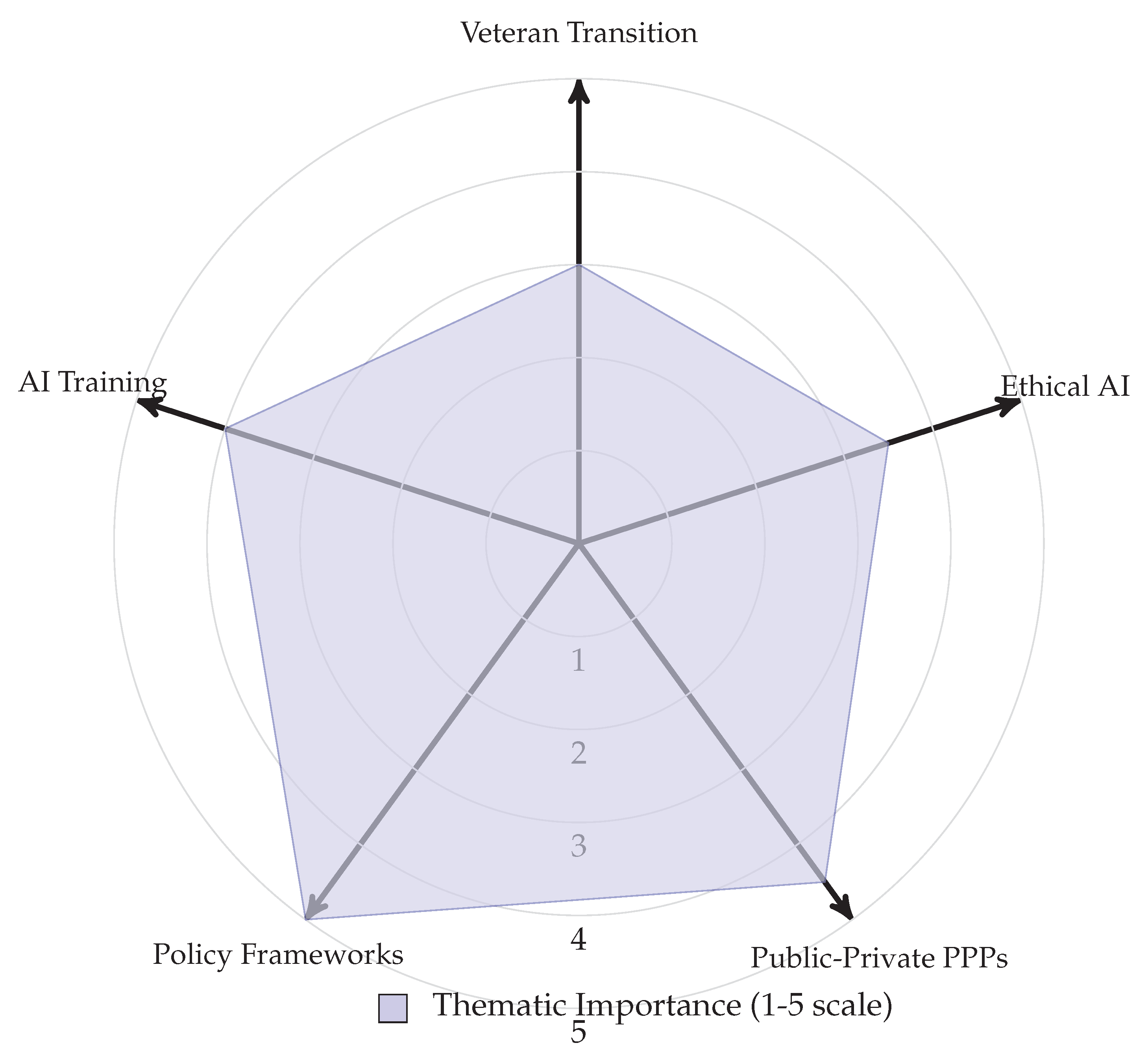
Figure 2.
Word cloud showing most frequent terms in cited references, reflecting key themes from government reports [24], veteran transition studies [12], and AI workforce analyses [2]. Font sizes correlate with citation frequency in the bibliography.
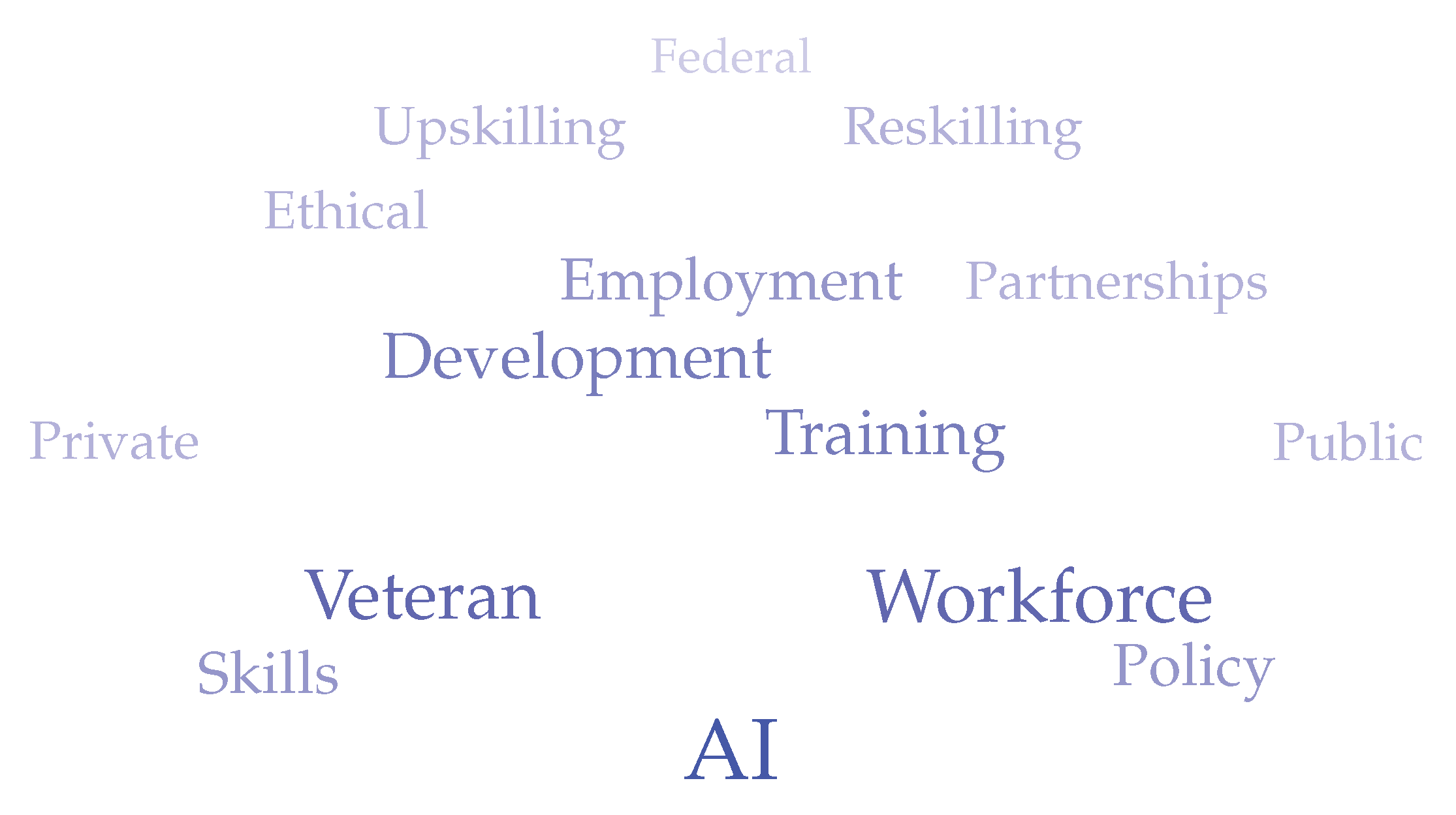
Figure 3.
Distribution of cited references showing increasing government engagement (2023-2025) [24,25] and industry leadership (5 citations in 2025) [3,53]. Journal articles remain steady with foundational works [6] and recent studies [19].
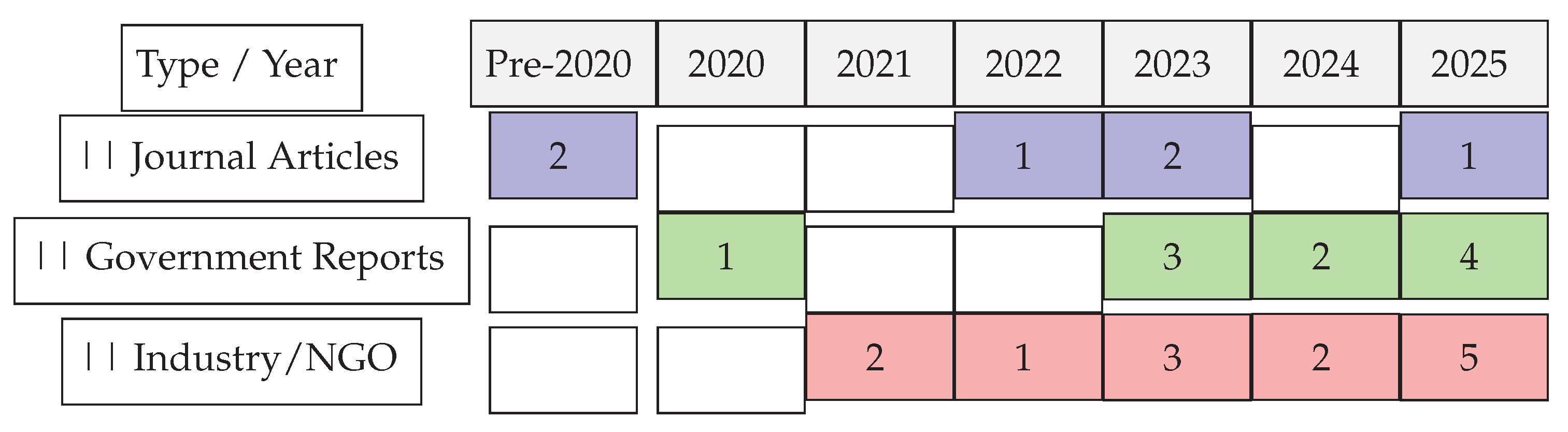
Figure 4.
Key milestones in AI workforce development showing accelerated policy activity (2023-2025) following foundational industry efforts (2020-2022).
Figure 4.
Key milestones in AI workforce development showing accelerated policy activity (2023-2025) following foundational industry efforts (2020-2022).
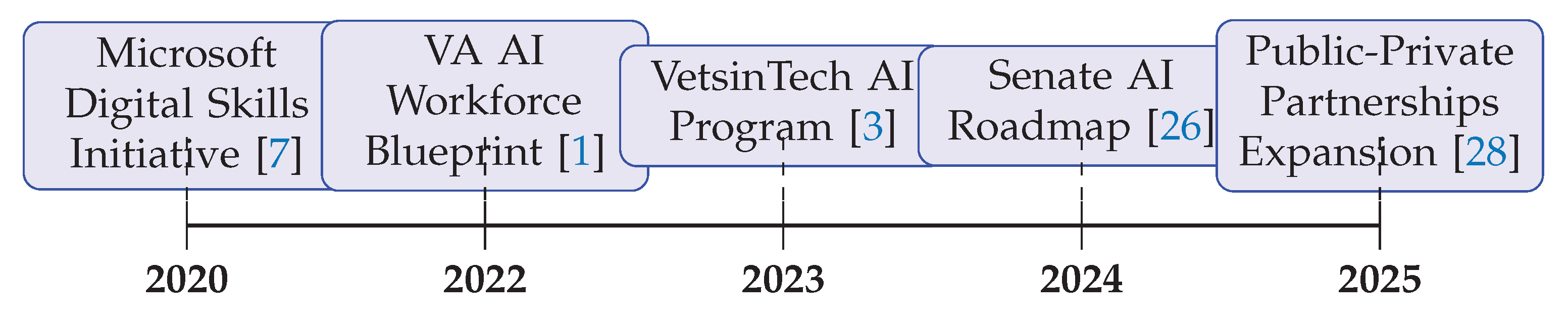
Figure 5.
Four-stage veteran transition framework validated by [12] and [22], emphasizing partnership-driven skills translation [28].

Figure 6.
Decision pathways showing 64% enrollment in AI training based on [3], with feedback loops addressing initial disinterest [18].
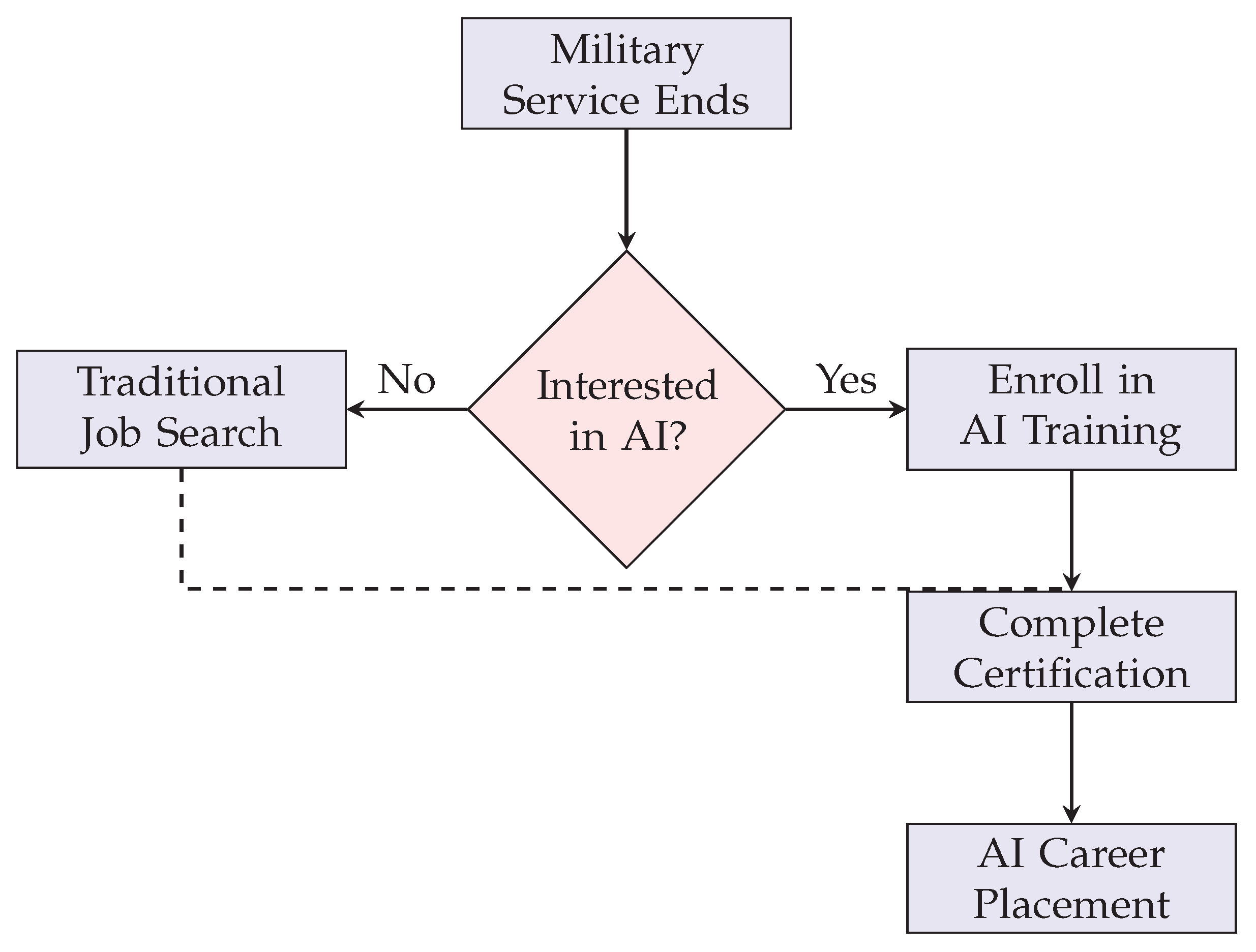
Figure 7.
Consensus projections from [9,23,50] showing skills-based hiring as most certain (100%) and ethical AI as emerging priority (60%).
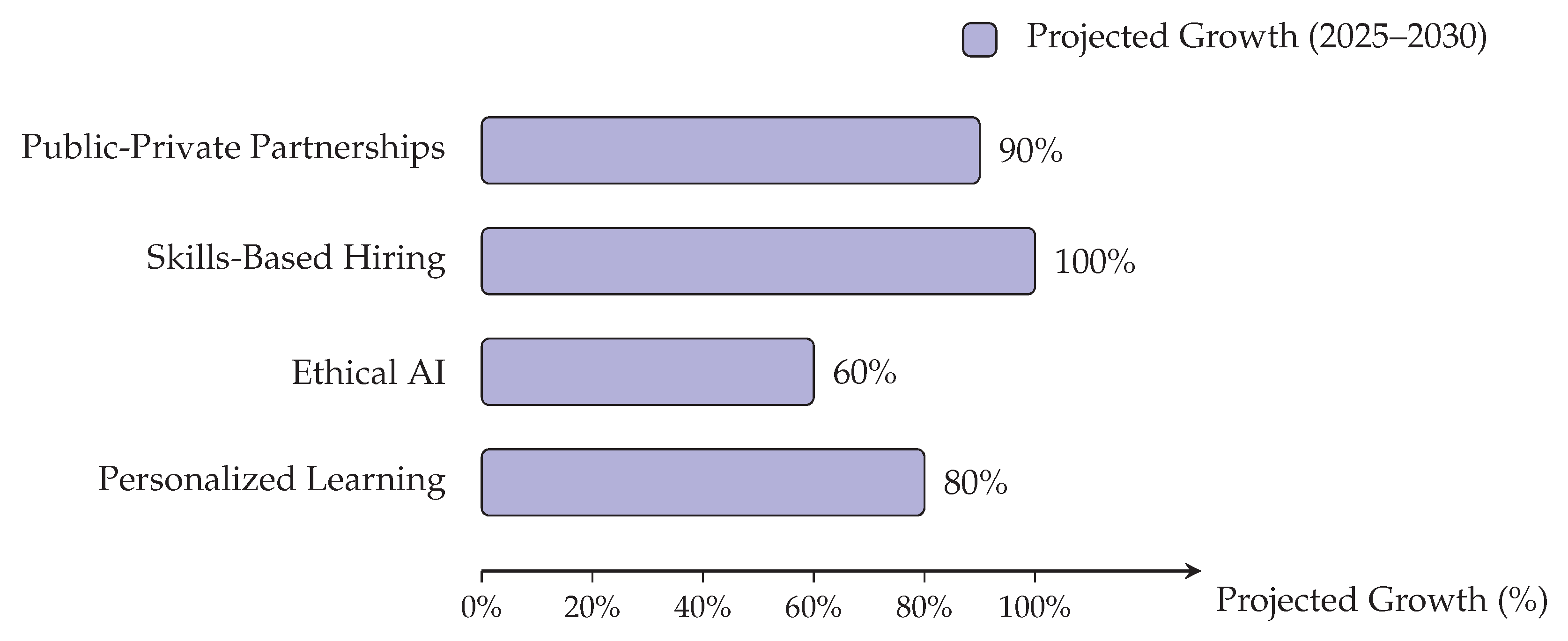
Table 1.
AI’s Impact on Key Workforce Sectors for Veterans
| Sector | Opportunities | Challenges |
|---|---|---|
| Cybersecurity | High demand for veterans’ security skills [21] | Rapidly evolving tech |
| requires continuous training [41] | ||
| Manufacturing | AI integration creates new roles [4] | Displacement of traditional jobs [2] |
| Data Analysis | Veterans’ analytical skills transfer well [12] | Requires certification in AI tools [8] |
Disclaimer/Publisher’s Note: The statements, opinions and data contained in all publications are solely those of the individual author(s) and contributor(s) and not of MDPI and/or the editor(s). MDPI and/or the editor(s) disclaim responsibility for any injury to people or property resulting from any ideas, methods, instructions or products referred to in the content. |
© 2025 by the authors. Licensee MDPI, Basel, Switzerland. This article is an open access article distributed under the terms and conditions of the Creative Commons Attribution (CC BY) license (http://creativecommons.org/licenses/by/4.0/).
Copyright: This open access article is published under a Creative Commons CC BY 4.0 license, which permit the free download, distribution, and reuse, provided that the author and preprint are cited in any reuse.


