

Submitted:
12 August 2025
Posted:
12 August 2025
You are already at the latest version
Abstract
The work presented in this document explores the integration of blockchain technology with Unmanned Aerial Vehicles (UAVs) and InterPlanetary File System (IPFS) to enhance the security, efficiency, and transparency of aerial image transfer, with a special interest in the field of agriculture and smart farming. By utilizing blockchain properties, the presented work aims to provide a renewed perspective on aerial data transmission, ensuring data security while optimizing operational efficiency. This manuscript focuses on developing a secure transmission platform using blockchain to encrypt and log each image captured by the UAV. It also aims to improve data distribution for applications like environmental monitoring and emergency response. This document outlines specific technological specifications, operational details, and performance requirements, emphasizing a structured approach supported by resources like the ARDrone 2.0 from Parrot, a Java-based blockchain implementation and an IPFS client. Each of these technologies are combined in an innovative manner so that they create a framework with enhanced security based on decentralization, redundancy and openness.
Keywords:
Unmanned Aerial Vehicle (UAV)
; blockchain
; InterPlanetary File System (IPFS)
1. Introduction
Usage of technology for optimization in agricultural outputs is becoming more popular all the time, as it has been proven that investment in technology for this application domain is extremely useful [1]. The work presented here focuses on the integration in the usage of Unmanned Aerial Vehicles (UAVs) in olive oil production combined with distributed software technologies like blockchain [2] and Interplanetary File System (IPFS, [3]), so that it can be checked with detail how their integration and usage results in sharing information collected from the olive trees with enhanced security, redundancy and accountability.
1.1. Current Usage of UAVs in the Olive Oil Industry
Unmanned Aerial Vehicles (UAVs), or drones, are increasingly used in the olive oil industry for various applications. While their most typical usefulness lies on enabling farmers to monitor olive groves with high-resolution aerial imagery, the multimedia information collected by them can be used and distributed for a plethora of different purposes. UAVs help in assessing tree health, identifying stress due to pests, diseases, or water deficiency, and managing irrigation more efficiently. They also assist in mapping and surveying land, optimizing the layout of groves and planning harvests. Additionally, UAVs can be equipped with multispectral cameras to analyze plant health and detect early signs of problems [4]. This technology improves yield prediction, enhances resource management, and reduces operational costs, contributing to more sustainable and efficient olive oil production.
1.2. Current Usage of Blockchain in the Olive Oil Industry
Blockchain technology is increasingly being integrated into the olive oil industry to enhance transparency, traceability, and trust in the supply chain. As far as this application domain is concerned, it can be regarded as a distributed ledger containing every record of interchanged information enhanced with cryptographic algorithms that improve security and auditability of the gathered data. By leveraging blockchain, producers can provide consumers with detailed information about the origin, quality, and production processes of their olive oil. This ensures authenticity and helps combat fraud, such as mislabeling and adulteration. Additionally, smart contracts automate transactions and ensure fair payments to farmers. Blockchain facilitates efficient tracking of each batch from farm to shelf, reducing the risk of counterfeiting. Environmental sustainability efforts are also supported, as blockchain can verify organic and sustainable practices [5]. Overall, blockchain enhances the integrity and efficiency of the olive oil supply chain.
1.3. Current Usage of Distributed Systems Technologies in the Olive Oil Industry
Distributed systems technologies are increasingly being utilized in the olive oil industry to enhance efficiency, traceability, and quality control. As mentioned, blockchain technology is being adopted to ensure transparency and authenticity in the supply chain, allowing consumers to verify the origin and quality of olive oil, regardless of its limited integration with other hardware or software technologies that can complement its usability. In addition to that, Internet of Things (IoT) devices monitor environmental conditions, such as soil moisture and weather, to optimize olive cultivation and harvesting processes. Distributed data storage systems IPFS enable secure, decentralized data management, facilitating better decision-making and collaboration among producers, distributors, and retailers [6]. Advanced analytics and machine learning algorithms are used to predict crop yields, detect diseases early, and improve production practices. These technologies collectively contribute to higher quality olive oil outputs, reduced costs, and increased consumer trust [7].
1.4. Paper Contributions
With all the previous considerations, it becomes evident that combining devices of significant mobility like UAVs, a blockchain framework to provide additional security, and distributed system able to replicate and further distribute the information provide is a desirable development. The work presented in this manuscript introduces several key innovations in the integration of blockchain technology with UAV operations and IPFS:
- Secure Transmission Platform (STP): The development of a Secure Transmission Platform that leverages blockchain technology to encrypt and log each image captured and transmitted by the UAV ensures protection against unauthorized access and data tampering, enhancing data security in aerial operations.
- Efficiency Optimization: By exploring innovative data compression techniques and optimizing blockchain transaction speeds, the developed work aims to improve data transmission efficiency. This optimization is crucial for supporting real-time or near-real-time image analysis and decision-making processes in applications such as environmental monitoring and emergency response.
- Versatile Application: The project aims to demonstrate the practical applications of the integrated UAV-blockchain-IPFS STP in ana application domain that can be replicated in other ones including environmental monitoring, urban planning, and disaster management. This showcases the versatility of the technology and its potential to address real-world challenges in diverse industries.
- Interdisciplinary Collaboration: By emphasizing the consideration of ethical and privacy aspects in UAV operations and data management, the presented research work promotes interdisciplinary collaboration between unmanned hardware, distributed systems and wireless communications. This holistic approach enriches the project with new perspectives and challenges, driving additional innovations at the intersection of drone technology and blockchain.
These innovations collectively contribute to advancing the fields of UAV technology and blockchain integration, paving the way for enhanced security, efficiency, and transparency in aerial data transmission processes.
1.5. Paper Structure
This scientific paper is divided as follows: an introduction with the main topics that have been researched on has already been provided. Section 2 offers a comprehensive study on the State of the Art with regards to UAV usage in olive oil industry and how UAVs integrate with other technologies. Section 3 presents the solution design and the components that have been used to create the system that provides the information related to olive trees in a secured, decentralized manner. Section 4 presents the implementation works that have been carried out and shows the overall appearance of the tested system. Section 5 offers conclusions and advances on the future works that could be used to enhance the developed system. Author contributions and bibliographical references close the manuscript.
2. Related Works
Considering the amount of interest in the usage of UAVs and distributed, Cyber Physical Systems in the field of agriculture, it comes as no surprise the fact that there is a significant amount of literature with regards to these technologies. However, the specific use case and general usability that is provided by our solution has yet to be matched in the context put forward in this manuscript.
2.1. Study of the State of the Art
Arena et al. [8] introduce BRUSCHETTA, an Internet of Things (IoT) blockchain-based framework developed to certify the Extra Virgin Olive Oil (EVOO) supply chain. By leveraging blockchain technology and IoT sensors, BRUSCHETTA provides innovative procedures for the certification process by providing a comprehensive traceability system that tracks the entire journey of EVOO production, from the initial plantation stages to the final retail distribution. The offered framework offers numerous advantages, including the ability to ensure fine-grained traceability of EVOO, enhance transparency for end-users by granting access to a tamper-proof history of the product via smartphones, maintain quality standards through IoT sensors dedicated to quality control, and meet the requirements set by European laws in the food industry. Despite these significant benefits, the implementation of BRUSCHETTA does not make use of images obtained from UAVs, so at its current state BRUSCHETTA is not able to use UAV to the advantage of the framework that is put forward.
Conti et al. [9] propose a comprehensive traceability system for EVOO using Near-Field Communication (NFC) technology, allowing consumers to access product information via smartphones. The methodology involves developing an application for each stage of the food chain, claiming to enable customization and easy system updates. Along with this easy customization, system updates, and integration with different supply chains. The use of NFC technology enhances consumer confidence by providing detailed information on product quality, fostering loyalty. However, disadvantages may include the initial setup costs and the need for NFC-enabled smartphones. In addition to that, while NFC technology is capable of providing significant amounts of information regardless of its short range, it typically is not able to provide imagery of the locations where NFC-based sensors are placed.
Gupta et al. [10] describe VAHAK, a Blockchain-based Outdoor Delivery Scheme using UAV for Healthcare 4.0 Services. VAHAK leverages Ethereum Smart Contracts and IPFS for secure and efficient delivery of medical supplies. It addresses challenges such as latency, network bandwidth, and storage costs by utilizing 5G-enabled TI for communication and storing hash keys on the Blockchain. VAHAK offers advantages like ultra-low latency, ultra-high reliability, and improved scalability compared to traditional approaches. It ensures real-time tracking of deliveries, secure data storage, and efficient communication among stakeholders. The usage of IPFS is in line with the work that has been done in these research activities as it guarantees a further layer of decentralization that is available in the other proposals, as well as the utilization of UAVs as tools to collect data. However, the application domain where this proposal has been developed is vastly different from the one (olive tree farming and olive oil production) that is being put forward in this manuscript.
Kechagias et al. [11] discuss the practical application of an Ethereum-based distributed application for enhancing traceability in the food supply chain, focusing on a Greek table olives producer. They mention how use of blockchain technology ensures immutable data recording, enhancing data integrity and authenticity, and describe how blockchain enables quick issue identification, promoting product safety and quality, crucial for maintaining producer reputation. The study highlights the benefits of blockchain, such as improved supply chain management and reduced food fraud, while also acknowledging challenges like implementation costs. Overall, the research demonstrates the potential of blockchain in enhancing traceability and transparency in the olive industry, emphasizing the need for further development to optimize blockchain-based systems and address limitations in implementation, particularly for small-scale producers and low-income countries. Unfortunately, the built system relays on packaging information rather than having direct information from the olives themselves or the olive trees. Imagery or UAVs are also not present in the works that have been carried out.
Bean Ayed et al. [12] discuss the integration of innovative technologies in the agri-food sector, focusing on DNA-based traceability of olives from fruit to oil. It highlights the importance of utilizing advanced technologies such as IoT, blockchain, big data, artificial intelligence and nanotechnologies to enhance productivity, ensure product quality, optimize trade markets, and promote sustainability in agriculture. The study emphasizes the significance of these technologies in meeting the challenges posed by factors like the global population growth and the impact of the COVID-19 crisis on the agri-food industry. The authors describe how these technologies offer numerous benefits such as increased productivity, cost savings, and market expansion, there are also drawbacks to consider. Overall, the paper underscores the transformative potential of integrating innovative technologies in the agri-food industry, but the scope that the paper is oriented to differs from the one that is provided by our manuscript, in the sense that DNA-based traceability is mentioned as a critical topic, but there is no significant mention to, for example, UAVs.
Mercuri et al. [13] introduce Devoleum, which is an agri-food sector startup, that delves into the potential of blockchain technology to enhance transparency and sustainability in global supply chains. By utilizing blockchain, Devoleum aims to improve traceability, security, and information integrity while reducing transaction costs and time associated with intermediaries. The study highlights how blockchain can drive the development of sustainable business models by leveraging its decentralized and immutable nature. The advantages of blockchain technology in this context are clearly stated, and include increased transparency, trust-building with customers, and reduced transactional costs. However, limitations of the study lie in the operational status of Devoleum as a start-up and not yet fully incorporated. In addition to that, the study that is presented here does not mention at all the existence of UAVs in smart farming, and how they can be used in the context of olive oil production.
Bistarelli et al. [14] research work describes the utilization of the *-chain framework for modeling and implementing supply chain management systems, using the olive oil supply chain as a case study. The framework integrates a graphical editor and a Domain-Specific Graphical Language (DSGL) to design supply chain models, which are then translated into smart contracts for blockchain implementation. The advantages of the *-chain platform include its ability to represent complex supply chain processes, generate optimal solidity code, and provide a user-friendly interface for domain experts. However, there is no mention about how UAVs could be used to gather information from the olive trees or the olives themselves before being harvested. No overall mention is done on sensing equipment so that it can be understood how information can be collected.
Haque et al. [15] introduce a similar approach to enhancing the efficiency and security of the oil supply chain through the integration of blockchain technology and smart contracts. As it has been described before in previous proposals, the authors leverage blockchain's decentralized and immutable nature, the system aims to address key issues such as trust, third-party interference, end-to-end monitoring, and data security. Advantages of this approach include enhanced data security, real-time data updates, customer access to information, and the elimination of intermediaries controlling oil prices. However, challenges may arise in terms of implementation complexity, scalability, regulatory compliance, and the need for widespread adoption. As in previous cases, while sensors (and Wireless Sensor Networks) are mentioned as sources of data, no consideration is taken to the usage of UAVs to collect information.
Violino et al. [16] present a Full Technological Traceability System (TTS) for EVOO production, focusing on the implementation of an electronic traceability prototype in a small Italian farm. The system utilizes blockchain technology and QR codes to track the production process from olive tree to EVOO bottle, ensuring product authenticity and consumer safety. Advantages of the TTS include enhanced transparency, improved product quality, and increased consumer trust through secure information sharing. The system also offers economic benefits by potentially attracting more consumers willing to pay for traceable products. However, challenges such as initial implementation costs, technological complexity, and the need for widespread adoption may hinder its full-scale integration in the olive oil production chain. UAVs are mentioned as a tool only as a future work, so they have yet to be implemented under this system.
Abenavoli et al. [17] depict the implementation of a traceability system for olive oil production in Calabria, focusing on tracking and tracing products throughout the supply chain. The study emphasizes the use of web service-based technology, such as a web application on a cloud server, to centralize information and improve collaboration among stakeholders. Amng other features, the described system includes real-time data access, notification messages for quality control, and improved transparency in the production process. The developed software enables efficient monitoring of critical phases like harvesting, processing, and distribution, enhancing product quality and safety. However, potential disadvantages may include initial implementation costs, training requirements for users, and the need for continuous updates to maintain system effectiveness. In addition to the latter, while the software technology that is effectively used as middleware is described with thorough detail, there is next to no information about what kind of hardware devices (sensing equipment, UAVs) would be used to collect information straight from olives or olive trees. Further decentralization done at the upper layers of the system (i.e. using IPFS or a comparable technology) is not mentioned either.
Ktari et al. [18] present a case study on an Agricultural Lightweight Embedded Blockchain System applied to the olive oil industry. The system establishes a secure supply chain involving farmers, oil manufacturers, quality control companies, and transporters, utilizing private and public blockchain networks. By implementing the system on Raspberry Pi and Arduino boards, the researchers demonstrate the feasibility of an embedded blockchain system with low power consumption. The use of smart contracts ensures transparent and traceable transactions throughout the supply chain. The system enhances data security, confidentiality, and trust among stakeholders. However, the complexity of the system and the need for multiple platforms may pose challenges. Unlike other proposals that have been mentioned before, there is an explicit description of the sensors that are used to collect information. Unfortunately, UAVs are not mentioned as data sources, nor an application layer distribution system resembling IPFS seems to have been used.
2.2. Open Issues
As it has can be seen, there are a significant number of solutions that have been put forward to integrate several key technologies onto smart farming platforms. However, there are still significant open issues that have been found that demand additional work to be tackled in a successful manner. A summary of the open issues that have been found is displayed in Table 1:
It can be claimed by the authors of this manuscript that the solution that we put forward is tackling to a significant extent the common issue of the underusage of UAVs in smart farming, especially in the context of EVOO. It is shown in this manuscript how UAVs, from the hardware point of view, and IPFS, from the application one, can be integrated to create a framework where data can be collected and used in a much more decentralized and secure manner.
3. Solution Design
This manuscript aims to show an innovative integration between UAVs, blockchain and IPFS in the application domain of olive trees and olive oil industry taking shape as the Secure Transmission Platform (STP) that embeds blockchain technology into the image transfer process of the UAV. This platform aims to encrypt and log every image captured and transmitted, thereby safeguarding against unauthorized access and data tampering while also enabling a new level of auditability and transparency in UAV data management. To ensure the platform feasibility, it will encompass comprehensive planning around distribution technologies, blockchain architecture, and seamless integration with the drone’s existing communication systems. To underpin the development work and ensure its success, a detailed specification of technological, operational, and performance aspects has been outlined. This includes the hardware capabilities of the ARDrone 2.0 from the Parrot manufacturer [19], the usage of blockchain, and the implementation of a client able to connect and upload information to an IPFS-based network.
As it can be seen in Figure 1, the STP has been created with three different prominent subsystems:
- The UAV used to collect the images from the olive trees being monitored. A base station connected to the UAV via an 802.11 Wi-Fi interface facilitates the seamless transfer of the images collected by the UAV onto a hardware device. This hardware device acts effectively as the entry point to the blockchain network, ensuring that the data is securely and accurately logged. Additionally, the same hardware is shared with the IPFS network, providing a decentralized and distributed storage solution. This dual use of hardware not only enhances the efficiency of the system but also ensures the integrity and accessibility of the collected data, thereby optimizing the monitoring process and improving data management within the blockchain framework.
- The blockchain network, which is used to obtain the UAV images from the olive trees, ensures the integrity and security of the collected data by adding them as timestamped entries in Base64 format onto a Java-developed blockchain. This process not only preserves the chronological order of the images but also provides an immutable record, enhancing the traceability and verification of the agricultural monitoring data. The use of Base64 encoding facilitates the efficient storage and transmission of the images within the blockchain, while the Java-based implementation offers robust performance and compatibility with various systems and applications.
- The IPFS network enhances the system's decentralization and security. Each of the hardware devices that contains the blockchain node is equipped with an IPFS client, enabling a seamless switch to the IPFS network. This integration allows the interchange information from the blockchain to be formatted as a JSON array of objects written onto a file. This file is then distributed across the IPFS network, creating a second layer of decentralization. By leveraging IPFS, the system significantly improves data transparency and security. The decentralized nature of IPFS ensures that the data are not stored in a single location, reducing the risk of data loss or tampering. This dual-layer approach, combining blockchain and IPFS, provides robust data integrity, making the entire monitoring process more resilient and trustworthy. Additionally, the use of JSON arrays for data formatting enhances the readability and interoperability of the data, facilitating easier access and analysis by various stakeholders. This comprehensive system design underscores the importance of advanced technologies in creating secure and transparent data management solutions.
Each of the critical components of the system will be described with further detail in the following subsections of this manuscript.
3.1. UAV Description
For the purpose of image collection, the ARDrone 2.0 from the UAV manufacturer Parrot has been chose to perform the flight operations (Figure 2). The ARDrone 2.0 is equipped with a dual-camera system designed for image acquisition. The primary camera, mounted on the front of the UAV, can capture high-definition still images and recording videos with a resolution of 720p (1280x720 pixels) using the H.264 standard, which ensures efficient video compression and high-quality output. In addition to the frontal camera, the UAV features a secondary vertical camera located underneath the UAV. This secondary camera provides an alternative viewing angle, making it useful for tasks that require detailed ground observation and navigation assistance. Powering the ARDrone 2.0 is a 1000 mAh lithium-polymer battery, which provides a substantial flight duration of up to twelve minutes on a single charge. This battery capacity allows for extended periods of operation, essential for capturing extensive image and video data during flight missions. The combination of these advanced imaging capabilities and the reliable power supply makes the ARDrone 2.0 a versatile tool for various applications, including environmental monitoring, agricultural assessments, and surveillance tasks. Its dual camera system and efficient battery life ensure that users can gather high quality visual data effectively, supporting a wide range of professional and research activities.
3.2. Blockchain Develoment and Description
In the context of this paper, the integration of blockchain technology plays a pivotal role in enhancing the security, efficiency, and transparency of aerial image transfer processes. It aims to leverage the unique properties of blockchain, such as decentralization, immutability, and transparency, to address critical challenges in data security, integrity, and management inherent in contemporary UAV operations. Its usage is of critical importance due to the following reasons:
- Secure transmission protocol: One of the key applications of blockchain technology in this UAV project is the development of a secure transmission protocol that embeds blockchain into the image transfer process. This protocol aims to encrypt and log every image captured and transmitted by the UAV, ensuring protection against unauthorized access and data tampering. By utilizing blockchain's decentralized and immutable nature, the protocol enhances the security of data transmission, making it resistant to unauthorized manipulation or interception.
- Data integrity and transparency: Blockchain technology enables the creation of a tamper-proof and transparent record of all image transfers, ensuring data integrity throughout the process. Each transaction is securely recorded on the blockchain, providing an auditable trail of image transfers and ensuring that the data remains unchanged and verifiable. This level of transparency and auditability enhances trust in the data being transmitted and received, crucial for applications requiring accurate and reliable information.
- Efficiency and Real-Time Analysis: In addition to security and transparency benefits, blockchain integration also focuses on optimizing data transmission efficiency to support timely analysis and real-time decision-making processes. By exploring innovative data compression techniques, optimizing blockchain transaction speeds, and creating a blockchain-based application that supports high-throughput, low-latency operations, research works aim to enable real-time or near-real-time image analysis and decision-making. This emphasis on efficiency ensures that the UAV system can process and transmit data quickly and effectively, enhancing its operational capabilities in various sectors.
- Versatile Applications and End-User Engagement: Through practical application and engagement with end-users, the performed research works aim to demonstrate the versatility and potential of the integrated UAV-blockchain-IPFS STP in addressing real-world challenges across different application domains that might or might not be strictly related to agriculture or olive tree farming. By showcasing the technology's practical applications and engaging with potential end-users to map out specific use cases, the project aims to highlight the system's capabilities and opportunities for addressing diverse operational needs.
As mentioned, the blockchain that has been used at this point is a Java development that has made transparent from the very beginning what kind of cryptographic algorithms have been used in this regard. The choice of Java as the programming language to develop the code to control the flight of the UAV, manage the blockchain and handle the files using IPFS offers numerous advantages that make it an ideal choice for this multifaceted project. Java is recognized for its robustness, security, and portability, essential features for applications that require a high degree of reliability and operational flexibility in various environments. One of the main reasons for selecting Java is its virtual machine (JVM), which allows Java code to run consistently on different platforms without the need for any modifications. This "write once, run anywhere" ability is particularly valuable in UAV and blockchain projects, where software may need to operate on multiple operating systems and hardware configurations. In addition, Java provides a runtime environment that automatically manages critical aspects such as memory management and garbage collection, helping to prevent memory leaks and other issues that could compromise system stability and efficiency during prolonged and critical operations [20].
Java also stands out for its robust type of system and focus on object-orientation, making it easier to structure code and maintain it in the long term. These features are essential to design a clear and modular code for controlling drones, where safety and clarity in status management are a priority. Object orientation makes it possible to encapsulate drone behaviors and blockchain operations into separate objects, simplifying debugging, testing, and future expansion of code. In addition, the extensive developer community and extensive library of APIs and frameworks available for Java, such as Spring and Hibernate, offer invaluable resources to accelerate development and ensure the integration of complex and specialized functions. These libraries and tools facilitate everything from cryptography to network communication and file management, crucial components for the effective management of blockchain and IPFS [21]. Java is also preferred in enterprise environments for its commitment to security, which is critical when it comes to the transmission and storage of sensitive data over blockchain. Built-in security features and constant security updates help protect against external vulnerabilities and ensure the integrity of managed and transmitted data.
Finally, the use of Java in interaction with IPFS for file handling on the blockchain benefits from Java usefulness when handling large volumes of data and perform network operations efficiently. Java ability to integrate native systems and manage data-intensive processes ensures that files are handled efficiently, maintaining data integrity and accessibility in a globally distributed system. All these characteristics make Java a sound strategic and technical choice for the development of a system involving emerging and critical technologies such as drones and blockchain, ensuring efficient, secure, and maintainable development in the long term.
3.3. IPFS Description
IPFS, or Interplanetary File System, is a technology that complements blockchain by offering a decentralized storage system. Its use in combination with blockchain is particularly advantageous because it allows large volumes of data to be handled efficiently and economically, addressing a significant challenge in traditional blockchain networks due to their full-replication nature and associated costs. In a conventional blockchain system, directly storing large amounts of data can be costly and impractical. However, using IPFS, the blockchain can simply store a reference to the data (usually a cryptographic hash) while the entire data is stored in IPFS. Not only does this significantly reduce storage costs on the blockchain, but it also optimizes the speed and scalability of transactions. Another key benefit of IPFS in the context of blockchain is data persistence. Once a file is uploaded to IPFS, it is distributed over a peer-to-peer network, which means that as long as there are nodes on the network that maintain a copy of the file, it will remain accessible. This adds an extra layer of security and censorship resistance, as data is not dependent on a single server or location and is virtually immune to tampering. Additionally, IPFS enhances the reliability and availability of data, ensuring that it can be retrieved even if some nodes go offline.
Moreover, IPFS can help solve some of the scalability issues that current blockchains face when handling the loading of data off the main chain. By offloading data storage to IPFS, blockchain-based applications can operate more efficiently while maintaining the integrity and security of the network. This separation of data storage and transaction processing allows for more streamlined and faster blockchain operations, supporting more complex and data-intensive applications. Overall, the integration of IPFS with blockchain technology provides a robust solution for managing large datasets in a decentralized, secure, and cost-effective manner, paving the way for more advanced and scalable blockchain applications. As mentioned in the previous subsection, the implementation of IPFS has been carried out for this platform in two different ways: on the one hand, a client has been installed to connect to the IPFS global network so that images can be shared among all the members of such networks and chances of manipulation are further diminished. On the other hand, a Java development has been developed to connect the IPFS node with the images that are being formatted in the blockchain with the IPFS network itself.
3.4. Solution Development
The code has been structured in a series of major software components related with the blockchain development. In order to clearly define the code, the relationships among classes, their attributes and methods, Figure 3 displays a class diagram with all the information.
The code that has been generated has been done so partially based on what is described in [22]. In addition to that, further developments done as part of the implementation of the research works have been uploaded onto GitHub [23]. The algorithm used in this Java implementation is Proof-Of-Work, due to the fact that it provides additional security based on energy usage, whereas the application where we make use of such algorithm is expected not to demand too high computational resources that would have a spike in energy consumption as a result.
3.4.1. Block Class
The Block class is a crucial component of the blockchain system designed to handle and secure image data. It models an individual block within a blockchain, where each block contains specific data from an image, plus cryptographic references to other blocks in the chain. This structure is essential to ensure the integrity and traceability of data throughout the entire chain. Its functionality could be summed up in two major steps.
- Initialization and Block Creation: When a new block is created, the image information (data and name) is passed to it, along with the hash of the previous block. This ensures that each block is linked to the block that precedes it, thus forming a continuous and immutable chain. The timestamp captured during block creation helps record when the block was added to the chain, providing temporal context that is vital for auditing and verification operations.
- Hash Calculation: The SHA-256 algorithm is used to generate a hash from the combination of the previous hash, the timestamp, and the image data. This hash acts as a unique digital signature of the block, ensuring that any alterations in the block's data are detectable. This is an essential part of the security provided by blockchain, as any change to a block will require the recalculation of all hashes of subsequent blocks, which is computationally prohibitive and serves as a strong deterrent against tampering.
By including the name and image data directly in the block, the design allows the blockchain to not only secure typical financial or transaction information, but also handle multimedia data effectively. This is especially useful in applications where the authenticity and provenance of images are critical, such as in digital rights management or in documenting conditions in environmental or urban monitoring applications such as ours.
3.4.2. Blockchain Class
The Blockchain class is used to manage a list of blocks, which as mentioned before, are the fundamental structures where data is stored securely and sequentially in the blockchain system. This class plays a crucial role in the creation of the blockchain and its ongoing maintenance, ensuring that data is aggregated in an immutable and transparent manner. A step-by-step summary of this kind is as follows:
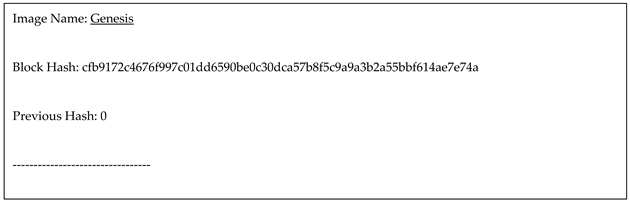
- Blockchain Initialization: When the Blockchain class is instantiated, it is initialized with a genesis block. This is the first block on the chain and is automatically created with a previous dummy hash of "0" to mark the start of the chain. The genesis block is essential because it establishes the root of the blockchain from which all subsequent blocks will be linked.
- Add Blocks to the Chain: A method is provided to add new blocks to the blockchain. Every time a new block is created, for example, after the capture of a new image or transaction, this block is added to the end of the chain. The new block stores the hash of the last block in the chain, cryptographically linking them. This ensures that any modification to a previous block would invalidate all subsequent blocks, protecting the chain against tampering.
- Chain Access: The blockchain can be accessed using a method that returns the entire blockchain. This is useful for verifications, audits, and for applications that need to validate the integrity of the entire chain or extract historical data.
This class reflects how blockchain uses principles of immutability and sequentially to ensure the integrity of stored data. Each new block depends on the previous block, creating a permanent and verifiable historical record of all data added to the chain.
3.4.3. BlockchainUtil Class
In this BlockchainUtil class, a method called saveBlockchainToFile has been implemented, which allows us to store the blockchain data in a file. This method is crucial to ensure that blockchain information can be preserved, audited, and reviewed beyond the current execution environment. This class consists of:
- Archival Blockchain Data Storage: Data persistence management is facilitated using the saveBlockchainToFile method. In this method, you receive as parameters a Blockchain instance, which contains all the blocks, and a filename, which specifies the path of the file where you want to save the blockchain.
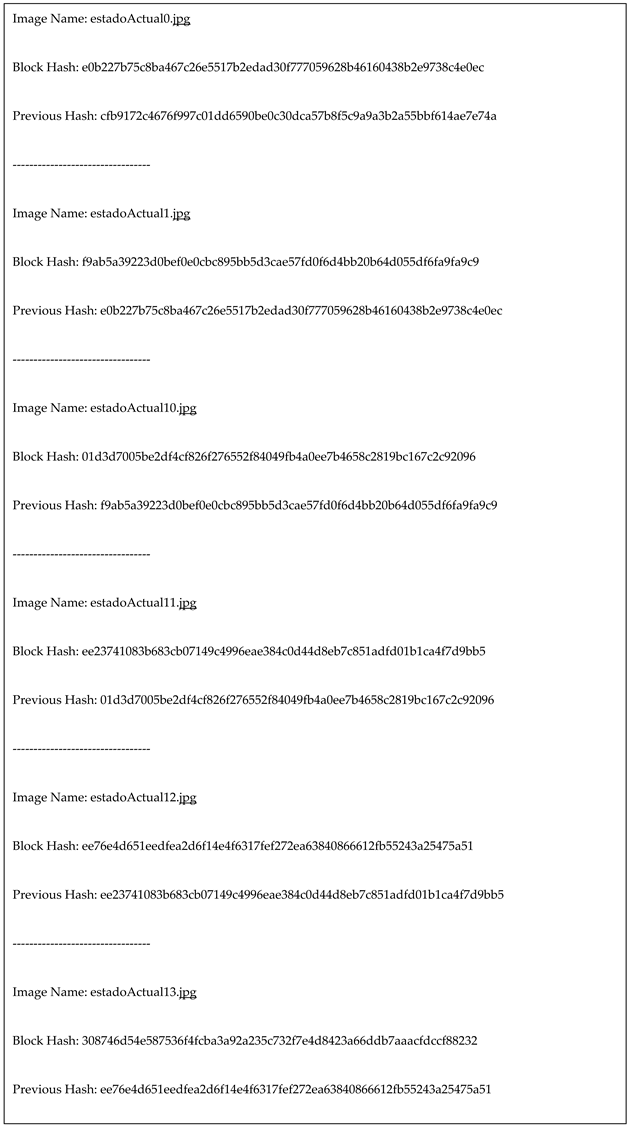
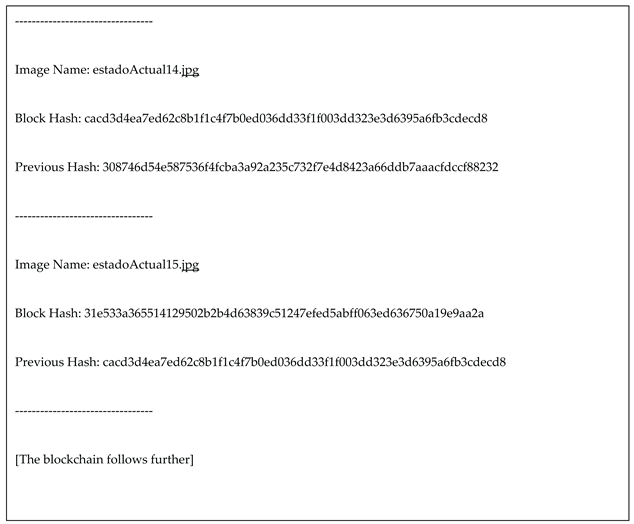
- Data Writing Process: When invoked, the method opens a BufferedWriter linked to the specified file. It is iterated over each block within the provided chain. For each block, the name of the image, the hash of the block, and the hash of the previous block are written to the file. Each block is visually separated by dashed lines to facilitate the readability of the resulting file.
This class provides a means to ensure the persistence of blockchain data, facilitating backup and recovery operations. Additionally, the generated file can serve as a form of auditing and verification of the blockchain's status at any given time.
3.4.4. ImageUtil Class
In this class, a static method called encodeFileToBase64Binary has been implemented, which is responsible for converting image files into a text string in Base64 format. This method is necessary for the manipulation of images within our blockchain, especially when they need to be securely integrated into the blocks of the chain. To encode these files the steps are:
- Read Bytes: The method Files.readAllBytes allows for reading all bytes of a file located at a specified path. This is achieved by using the method Files.readAllBytes, which takes a Path object as an argument, representing the converted path.
- Base64 encoding: These bytes are then encoded into a Base64 string using the encodeToString method of the Base64.getEncoder() encoder. Base64 is an encoding method commonly used to convert binary data into ASCII text strings.
The encodeFileToBase64Binary function is essential in the context of our blockchain as it allows images to be securely integrated within blocks, without altering the binary nature of the data.
3.4.5. Main Class
The principal coordination for image processing and integration with the blockchain takes place in the Main class. The operations that are being carried out are as follows:
- Directory Configuration: At the start of the main method, the base paths for images and results are set. The existence of the results folder is verified and, if it is not present, it is created.
- Dataset Processing: For each dataset specified in an array, it is processed. The start of this process is notified in the console for each dataset.
- Image Management and Blockchain: Within each dataset, image files are listed and processed. Each image is converted to Base64 format using a specific method of the ImageUtil class. With the image data already processed, a new block is created on the blockchain, which includes the image information along with the hash of the previous block in the chain. This newly created block is added to the blockchain.
- Blockchain Persistence: Once all images in a dataset have been processed and recorded on the blockchain, the entire state of the blockchain is saved in a file within the results folder.
This main class acts as the operational core of the blockchain Java project, handling both the transformation of data (images to Base64) and the integration and persistence of these in the blockchain. Proper directory management and careful exception handling are essential to the robustness and reliability of the system. This class ensures that data are not only processed securely but also stored in a way that allows for future retrieval and verification, making this system a powerful solution for critical data management.
3.4.6. Results
After executing the developed code, data are stored in different blocks with their own hash output, as shown in the following results. Note that the previous hash displayed in each of the blocks is matching the hash than the block that cam before has as their own block hash.
4. Solution Testing
In this section, field tests for collecting images using the UAV are discussed in detail. These tests have been conducted to gain an understanding of the dynamics of image capture and transmission in real-world environments. This understanding has been critical for refining the consensus algorithm and the structure of the blockchain system designed to secure these images. Various factors such as the efficiency of the UAV camera settings, the stability of image capture under different flight conditions, and the effectiveness of data transmission to a secure storage solution have been evaluated. Insights gained from these tests were crucial in developing a blockchain that ensures the integrity and privacy of the images. Following the tests, the programming and implementation of the blockchain were carried out. A secure and efficient blockchain architecture was developed, capable of handling the storage and encryption of large volumes of image data captured by UAVs. This architecture was designed to provide a tamper-proof mechanism for storing image hashes on the blockchain, thereby enabling the verification of image authenticity and origin without exposing the actual data.
This integrated approach of combining advanced drone technology with robust blockchain security aimed to set a new standard in the field of secure aerial image capture and storage, paving the way for future applications in various industries such as agriculture, land surveying, and urban planning.
4.1. Image Collection via UAV
Here, it is described how images were collected using the UAV, specifically using the code developed for that purpose as described before. This code played a crucial role in controlling the drone operations, including flight paths and camera settings, to ensure that the image capture met the experiment's specific requirements. The entire process of image collection using drones was conducted in strict compliance with the current regulations in Spain as stipulated by the Spanish Aviation Safety and Security Agency (AESA). This compliance ensured that all UAV operations during the image collection phases adhered to the legal standards and safety protocols required for aerial activities within the country.
The images have been taken in the autonomous community of Castilla la Mancha, specifically in Maqueda, a village in the province of Toledo in Spain. Its location can be seen in Figure 4:
The capabilities of the code enabled precise control over various drone functions such as altitude adjustments, speed settings, and camera positioning. These functionalities were vital for obtaining the images. This application not only demonstrated the efficiency of the UAV integrated camera system but also highlighted the code's reliability in managing complex commands for flight and image capture. Incorporating this code into the drone's operational framework was essential for the effective collection of images, facilitating consistent and controlled captures that were crucial for the later phases involving blockchain technology and securing the image data. For the correct development of this Project, a total of 282 images have been taken. An example of these images is Figure 5.
Afterwards, they were distributed in directories as shown in Figure 6.
During the process of collecting images with the UAV, a significant challenge encountered was the UAV's limited battery life, which could have severely restricted data collection in a single session. This issue was effectively mitigated by securing several additional batteries. This preparation allowed for a significant extension of the drone's operational time. By swapping out depleted batteries with fresh ones as needed, all necessary images were collected in a single trip, ensuring comprehensive coverage of the area of interest and optimizing the data collection process for efficiency and productivity.
4.2. Image Coding and Integration Onto the Blockchain
The initial step involves specifying the paths from which the code will obtain the images and the path where the resulting files will be stored (see Figure 7).
The process begins with verifying the existence of specified paths, ensuring that the datasets required for processing are accessible. For each dataset identified, a new instance of a Blockchain class is created. Upon initialization of this class, a genesis block—a special block that marks the beginning of any blockchain—is automatically appended to the chain. This foundational block is crucial as it establishes the origin point from which all subsequent blocks are linked. Following the initialization of the blockchain instance, the system process the dataset, specifically focusing on image files. Each image in the dataset is loaded into an array, preparing them for the next stage of processing. The key task here involves converting each image into a Base64 encoded string. Base64 encoding is a technique used to convert binary data, which can include text or media such as images and audio files, into a string of ASCII characters. This encoding helps in handling complex data over systems that reliably handle text. By using a set of 64 characters—comprising uppercase letters (A-Z), lowercase letters (a-z), digits (0-9), and special symbols (commonly '+' and '/'), with '=' used as padding at the end—the binary data of the images is transformed into a text format. This text format is especially useful for transmitting the binary data over channels that only reliably support text content, such as when embedding image data directly into HTML or CSS files or when storing complex data in XML or JSON format. The Base64 coding process is as follows:
- Byte splitting: Binary data is divided into three-byte blocks, adding up to 24 bits.
- Conversion to 6-bit units: Each 24-bit block is then divided into four 6-bit units.
- Mapping to Base64 Characters: Each 6-bit unit is used as an index for a Base64 character array. Since 2^6 = 64, each 6-bit unit maps perfectly to a single character in the Base64 set.
- Padding: If the number of bytes of the data is not a multiple of three, the last one or two bytes are encoded by adding additional bits of padding (zeros) to form a full block of 24 bits. Then, one or two = characters are added to the end of the encoded string to indicate that padding has been applied.
After encoding the images, a block is generated and subsequently added to the blockchain (see Figure 8).
Subsequently, the results are saved in the "results" folder, appearing as in Figure 9.
The generated files appear as follows: the first block corresponds to the genesis block, while the subsequent three blocks correspond to the first three images in the dataset. This correspondence is evident as the names match those in the dataset folder 1 (Figure 10).
Once again, the significance of the blockchain is confirmed by verifying that the hashes of the contiguous blocks match each other.
4.3. Information Visualization via IPFS
After the blockchain has been established, as outlined in the previous sections, the integration of IPFS into the project is implemented. This addition is aimed at introducing an additional layer of decentralization, which is crucial given the nature of the blockchain being used. In this specific project, the blockchain files are stored on the same device that supplies the images, which inherently lacks decentralization. Thus, the incorporation of IPFS not only enriches the system with the benefits of a decentralized framework but also improves the overall integrity and accessibility of the data. To be able to display our files in the IPFS application, a Java program is used to which the previously generated files are passed as parameters and can later be viewed in the IPFS application, as displayed in Figure 11. Since the purpose of this manuscript is to decentralize the created blockchain and enable file viewing from IPFS, it was necessary to specify the paths where the files are located and ensure access to the IPFS desktop application. As previously mentioned, this Java program has been collected from the GitHub directory of one of the authors [23].
With the desktop application running, the Java program initiates its operations seamlessly. When the code is executed, a directory named "results" is developed, which is designated to store the generated files in an organized manner. These files are added sequentially to ensure systematic data management. Additionally, the main function of the Java program performs a crucial task by retrieving the IP address. This is accomplished by querying the configuration settings of the IPFS desktop application, ensuring that the Java program can effectively communicate with the IPFS network. This retrieval process is essential for establishing a connection and facilitating the subsequent data transfers and interactions between the Java application and the IPFS network, thereby enabling a smooth and efficient workflow.
Once the files are uploaded to IPFS, the desktop application shows them (Figure 12):
Each of the files has obtained an identifier known as CID (Content Identifier), as shown in Figure 13. This identifier is generated through a cryptographic hash function. Again, this way of creating the CID reaffirms basic aspects of blockchain: integrity, deduplication, decentralized access.
When each of the CIDs is searched in the application, further details are shown.
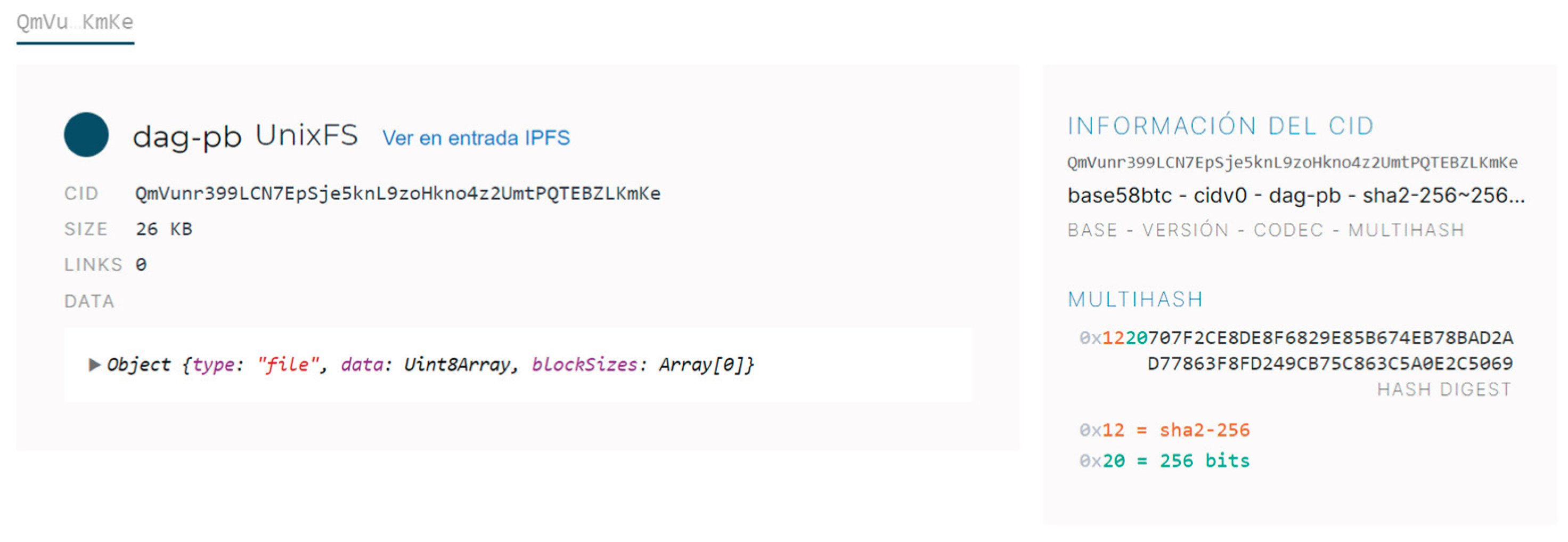
In a more detailed manner, when breaking down the information that appears in Figure 14, the following can be seen:
- dag-pb UnixFS: Indicates that the object is stored using the UnixFS (Unix File System) format over the DAG-PB (Directed Acyclic Graph - Protocol Buffers) protocol. UnixFS is a file format used in IPFS to handle files and directories, while DAG-PB is a format for structuring data in IPFS.
- CID: "QmVunr399LCN7EpSje5knL9zoHkno4z2UmtPQTEBZLKmKe" is the Content Identifier of the file. The CID is a unique representation that identifies data in IPFS based on its content.
- Size: The file is 26 KB in size, which represents the space the file occupies within IPFS.
- Links: Shows that there are 0 links, indicating that this file has no sub-files or links to other nodes within the IPFS structure.
- Data: Details are provided about the data type, which in this case is a file, along with a representation in a byte array (Uint8Array).
- CID Information: This section breaks down the CID of the archive into its fundamental components, providing details on how the CID is coded and structured:
1. Base58btc: The CID is encoded in Base58btc, which is a common way to encode CIDs in IPFS.
2. cidv0: CID version 0 is used.
3. dag-pb: Use the dag-pb format for the data.
4. SHA2-256/256...: Indicates that the SHA-256 algorithm is used for data hashing, ensuring that any changes to the file's contents result in a new CID.
- 7.
- Multihash: Details how the hash of the content is constructed:
1. 0x1220: Indicates the type of hash and the length of the hash digest.
2. 77F2CE8DE8F6829E85B674E7B8AD2A...: It is the hash digest of the content.
3. 0x12 = sha2-256: Confirms that the hashing algorithm used is SHA-256.
4. 0x20 = 256 bits: Shows that the hash is 256 bits in length.
With these steps the decentralization of the files of any blockchain network is therefore further ensured and reinforced.
5. Conclusions and Future Works
In this paper, the interaction among wireless communications, blockchain technology and IPFS, applied specifically to UAV operations, has been deeply investigated. This study has highlighted the critical importance of secure and efficient data integration in the context of aerial imagery data transfer. The implementation of a blockchain-based transmission protocol has proven to be an effective approach to ensuring the security and integrity of transmitted data, which is critical in real-time monitoring and analytics applications. The development of the proposed system has made it possible to validate the hypothesis that blockchain technologies can significantly improve the security of wireless communications in critical operations. By encrypting and recording in an immutable manner each image captured and transmitted, it has been possible to protect against unauthorized access and manipulation, while increasing the transparency and traceability of drone data management processes. The implementation of advanced data compression and blockchain transaction speed optimization technologies have resulted in tangible improvements in the efficiency of data transmission. This is particularly relevant in UAV applications, where the ability to process and transmit data quickly and reliably can be critical for real-time decision-making. During the execution of the experiments, it was observed that the use of wireless systems, integrated with blockchain and IPFS, provides a robust platform for the validation of the integrity and authenticity of the data collected by drones. However, challenges related to latency and the ability to handle large volumes of data in real-time were identified, underscoring the need to continue optimizing the system architecture.
One of the first future works could consist of addressing the scalability of the blockchain network. This could include researching and implementing solutions such as sharding or sidechaining, allowing for a higher number of transactions per second. Given the increasing generation of data by UAVs, the ability to quickly process large volumes of information becomes crucial. A more agile and efficient network would not only improve the performance of the current system but could also facilitate the adoption of the technology in broader and more diverse applications. Along these lines, the development of specific data compression algorithms for images captured by drones would allow a significant optimization of bandwidth usage. This is especially relevant for real-time or near-real-time applications, where efficiency in data transmission can be just as critical as data security. Integrating such algorithms with blockchain technology would greatly expand the operational capabilities of the system. Expanding the system's use cases into new industries and applications is another key aspect for the future of the project. Investigating how this technology could be applied, for example, in environmental monitoring, disaster management, or precision agriculture, would not only demonstrate the versatility and potential impact of the solution but could also open new avenues of research and collaboration. This multidisciplinary approach would enrich the research works with new perspectives and challenges, driving additional innovations at the intersection of UAV technology and blockchain. Finally, the consideration of ethical and privacy aspects in UAV operation and data management is critical. Developing a strong ethical framework for the use of this technology, ensuring that the privacy and rights of people in the affected areas are respected, would strengthen the social acceptance and long-term sustainability of the project. These steps seek not only to improve the functionality and security of the proposed system but also to expand its applicability, promote interdisciplinary collaboration, and ensure its viability and ethics in the future.
All in all, the integration of blockchain and IPFS with wireless communications in the context of UAV operations represents a significant step towards protecting sensitive data and improving operational efficiency. This approach offers a new paradigm for the safe and efficient transmission of aerial data, establishing a solid framework for future technological advances in wireless communications and drone data management. It is our opinion that this research activities have not only contributed to the existing academic body but have also established a clear path for the practical exploitation of these technologies in a wider range of industrial and commercial applications.
Author Contributions
Jorge Cabañas provided the bulk of the implementation and testing work of the solution, Jesús Rodríguez-Molina provided the Introduction and State of the Art of the paper and the IPFS-related programming, Margarita Martínez-Núñez put forward the paper structure and Juan Garbajosa gave a general review of the paper, highlighted what contributions should be taking place and offered conclusions and future works.
Conflicts of Interest
The authors declare no conflicts of interest.
References
- Khan, N.; Ray, R.L.; Sargani, G.R.; Ihtisham, M.; Khayyam, M.; Ismail, S. Current Progress and Future Prospects of Agriculture Technology: Gateway to Sustainable Agriculture. Sustainability 2021, 13, 4883. [Google Scholar] [CrossRef]
- Nakamoto, S. Bitcoin: A Peer-to-Peer Electronic Cash System; 2008.
- Benet, J. IPFS - Content Addressed, Versioned, P2P File System. arXiv 2014, arXiv:1407.3561. [Google Scholar] [CrossRef]
- Abbas, A.; Zhang, Z.; Zheng, H.; Alami, M.M.; Alrefaei, A.F.; Abbas, Q.; Naqvi, S.A.H.; Rao, M.J.; Mosa, W.F.A.; Abbas, Q.; et al. Drones in Plant Disease Assessment, Efficient Monitoring, and Detection: A Way Forward to Smart Agriculture. Agronomy 2023, 13, 1524. [Google Scholar] [CrossRef]
- Ongena, Guido & Ravesteyn, Pascal & van Hilten, Mireille. Blockchain for Organic Food Traceability: Case Studies on Drivers and Challenges. Frontiers in Blockchain 2020, 3. [CrossRef]
- Rülicke, L. , Fehrle, F., Martin, A. et al. Exploring decentralized data management: a case study of changing energy suppliers in Germany. Energy Inform 2024, 7, 8. [Google Scholar] [CrossRef]
- Thomas van Klompenburg, Ayalew Kassahun, Cagatay Catal, Crop yield prediction using machine learning: A systematic literature review. Computers and Electronics in Agriculture 2020, 177, 105709. [CrossRef]
- Arena, A.; Bianchini, A.; Perazzo, P.; Vallati, C.; Dini, G. BRUSCHETTA: An IoT Blockchain-Based Framework for Certifying Extra Virgin Olive Oil Supply Chain. Sensors 2019, 19, 3257. [Google Scholar]
- Conti, M. EVO-NFC: Extra Virgin Olive Oil Traceability Using NFC Suitable for Small-Medium Farms. Agriculture 2022, 12, 265. [Google Scholar] [CrossRef]
- Gupta, R.; Shukla, A.; Mehta, P.; Bhattacharya, P.; Tanwar, S.; Tyagi, S.; Kumar, N. VAHAK: A Blockchain-based Outdoor Delivery Scheme using UAV for Healthcare 4. 0 Services. 2021.
- Kostas Peppas, Dimitrios Vlachos, and Dimitrios Kogias. Title: "An Ethereum-Based Distributed Application for Traceability in the Food Supply Chain: The Case of Greek Table Olives." Journal: Foods 2023, 12, 1–20. [CrossRef]
- Ben Ayed, R.; Hanana, M.; Ercisli, S.; Karunakaran, R.; Rebai, A.; Moreau, F. Integration of Innovative Technologies in the Agri-Food Sector: The Fundamentals and Practical Case of DNA-Based Traceability of Olives from Fruit to Oil. Plants 2022, 11, 1230. [Google Scholar] [CrossRef] [PubMed]
- Mercuri, F.; Dellacorte, G.; Ricci, F. Blockchain Technology and Sustainable Business Models: A Case Study in the Agri-Food Sector. Sustainability 2021, 13, 5619. [Google Scholar] [CrossRef]
- Bistarelli, S.; Faloci, F.; Mori, P.; Taticchi, C. Olive Oil as Case Study for the *-Chain Platform. In Proceedings of the DLT 2022: 4th Distributed Ledger Technology Workshop, Rome, Italy, 20 June 2022. [Google Scholar]
- Haque, B.; Rahman, M.; Islam, M.; Hossain, M. SmartOil: Blockchain and Smart Contract-Based Oil Supply Chain Management. IET Blockchain 2021, 1, 95–104. [Google Scholar] [CrossRef]
- Violino, S.; Paoletti, G.; Cini, E.; Pallottino, F.; Costa, C. Full Technological Traceability System for Extra Virgin Olive Oil: A Case Study in Italy. Foods 2020, 9, 624. [Google Scholar] [CrossRef] [PubMed]
- Abenavoli, L.M.; Cuzzupoli, F.; Chiaravalloti, V.; Proto, A.R. Traceability system of olive oil: a case study based on the performance of a new software cloud. Agronomy Research 2016, 14, 1247–1256. [Google Scholar]
- Ktari, J.; Frikha, T.; Chaabane, F.; Hamdi, M.; Hamam, H. Agricultural Lightweight Embedded Blockchain System: A Case Study in Olive Oil. Electronics 2022, 11, 3394. [Google Scholar] [CrossRef]
- Air Parrot v2.0 documentation. [online]. Available at: https://www.parrot.com/assets/s3fs-public/2021-09/ar.drone2_user-guide_uk.pdf. [Accessed: 15 - Jul- 2024].
- Quora, "What is the Java Virtual Machine (JVM)? How does it enable platform independence in Java programming," [Online]. Available at: https://www.quora.com/What-is-the-Java-Virtual-Machine-JVM-How-does-it-enable-platform-independence-in-Java-programming. [Accessed: May-04-2024].
- The Knowledge Academy, "What is Robust Meaning in Java - Explained in Detail," [Online]. Available at: https://www.theknowledgeacademy.com/blog/robust-meaning-in-java/. [Accessed: May-04-2024].Wqeqwe.
- Kass. Creating Your First Blockchain With Java. Part 1. Accessed: Aug. 31, 2020. [Online]. Available: https://medium.com/programmersblockchain/create-simple-blockchain-java-tutorial-from-scratch6eeed3cb03fa.
- Rodriguez, J. , "TFMCabanas," GitHub. [Online]. Available at: https://github.com/jrodrimo/TFMCabanas. [Accessed: June-20-2024].
Figure 1.
Deployed platform from the hardware and software points of view.
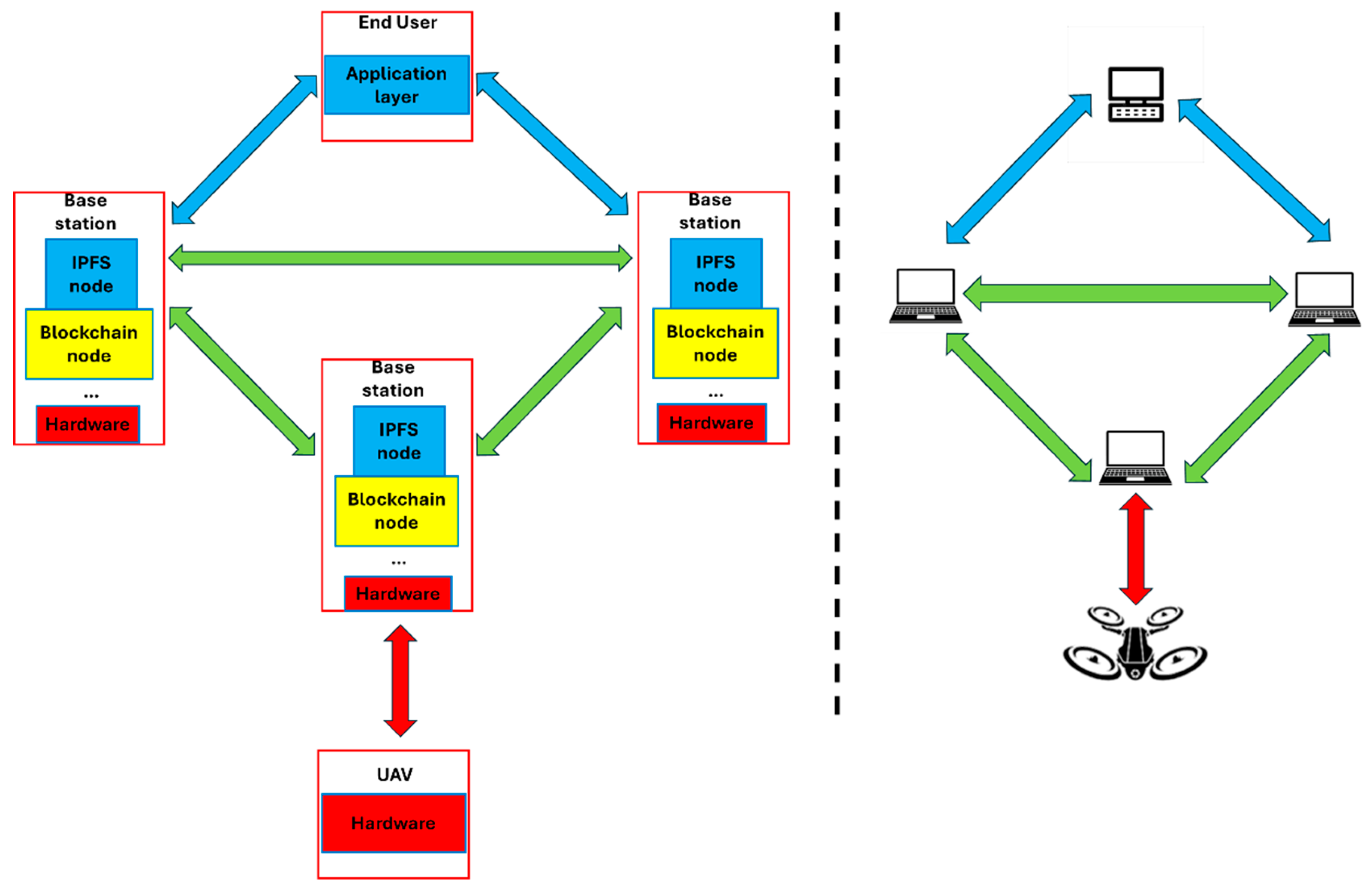
Figure 2.
ARDrone Parrot 2.0, as depicted in [19].
Figure 2.
ARDrone Parrot 2.0, as depicted in [19].
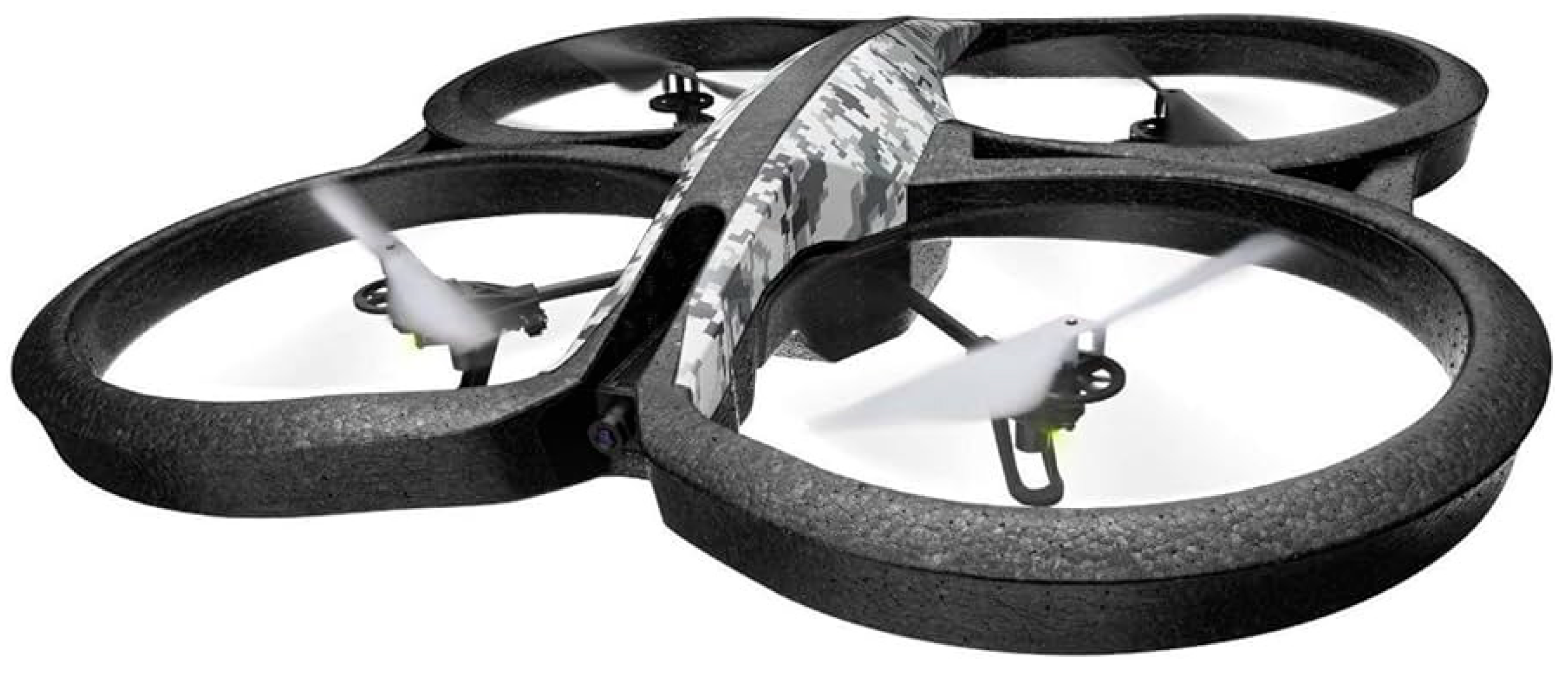
Figure 3.
UML class diagram from the blockchain Java development.
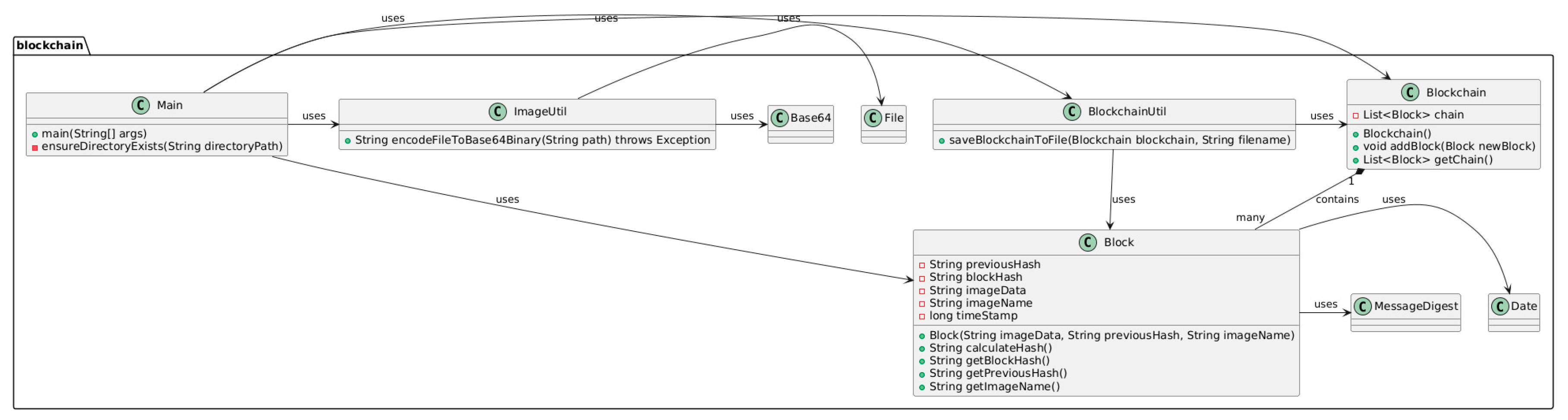
Figure 4.
Maqueda location.
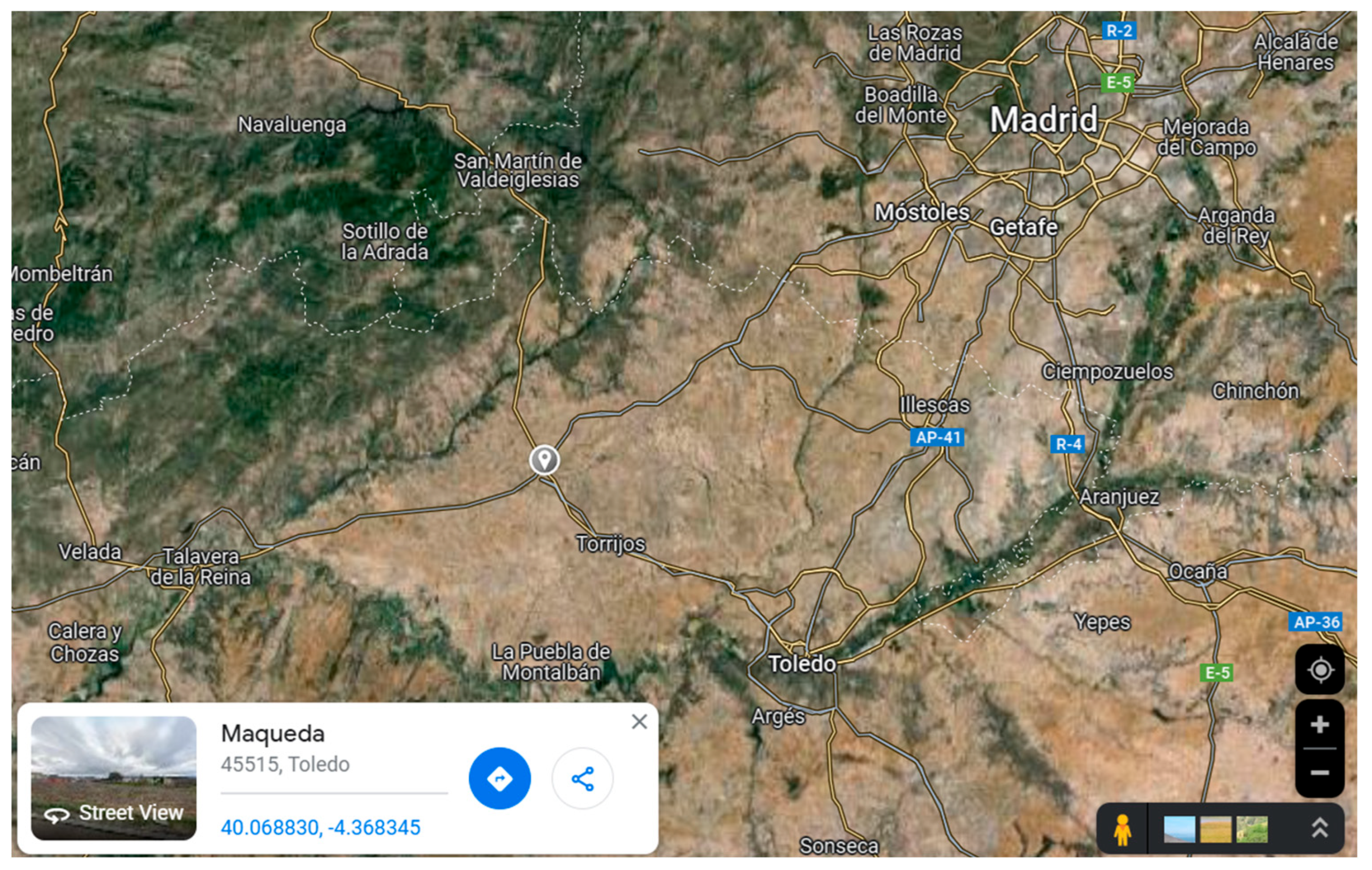
Figure 5.
Example of image to be processed.
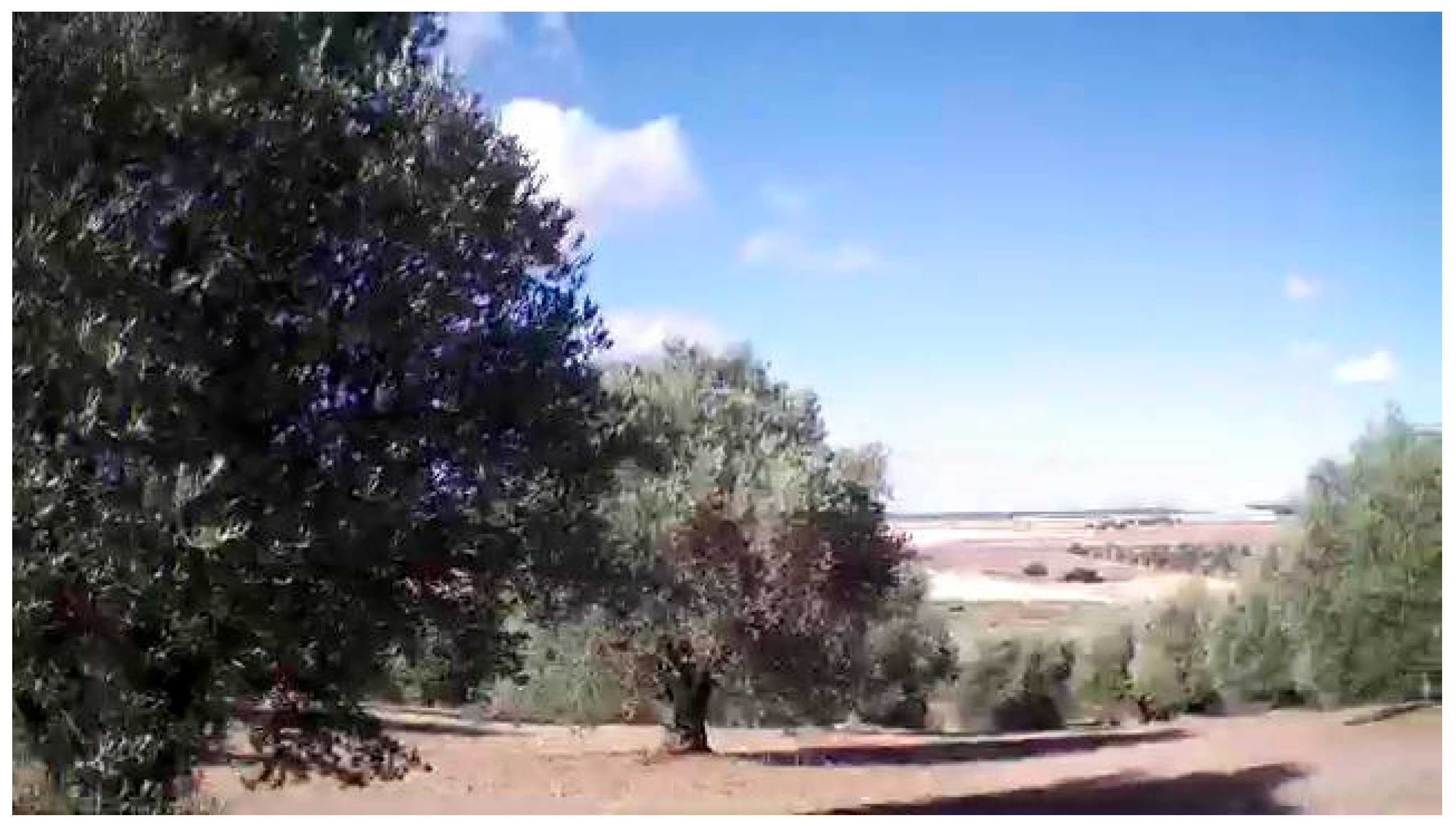
Figure 6.
Images Distribution.
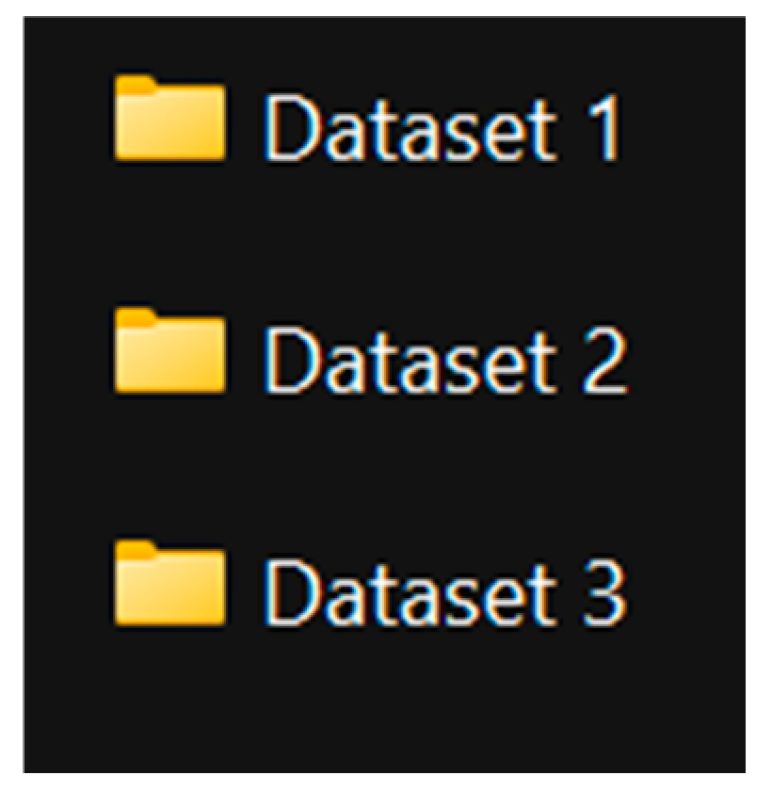
Figure 7.
Directory Check.

Figure 8.
Image Coding and block generation.

Figure 9.
Blockchain generated files.
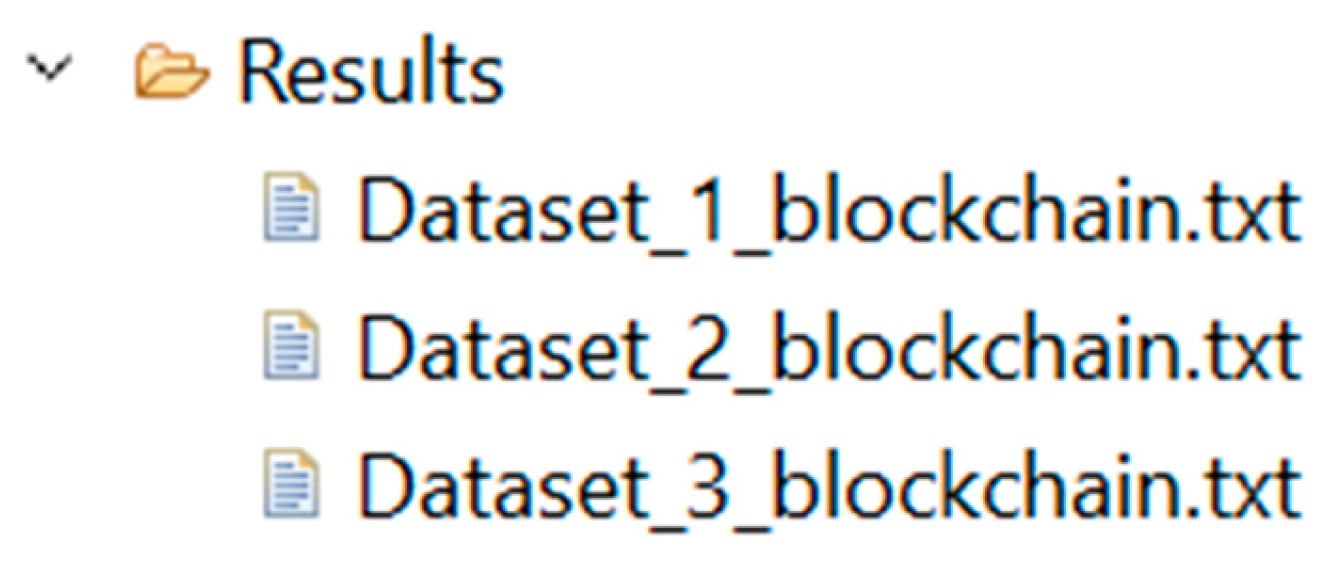
Figure 10.
Original files (top) and block appearance (bottom).
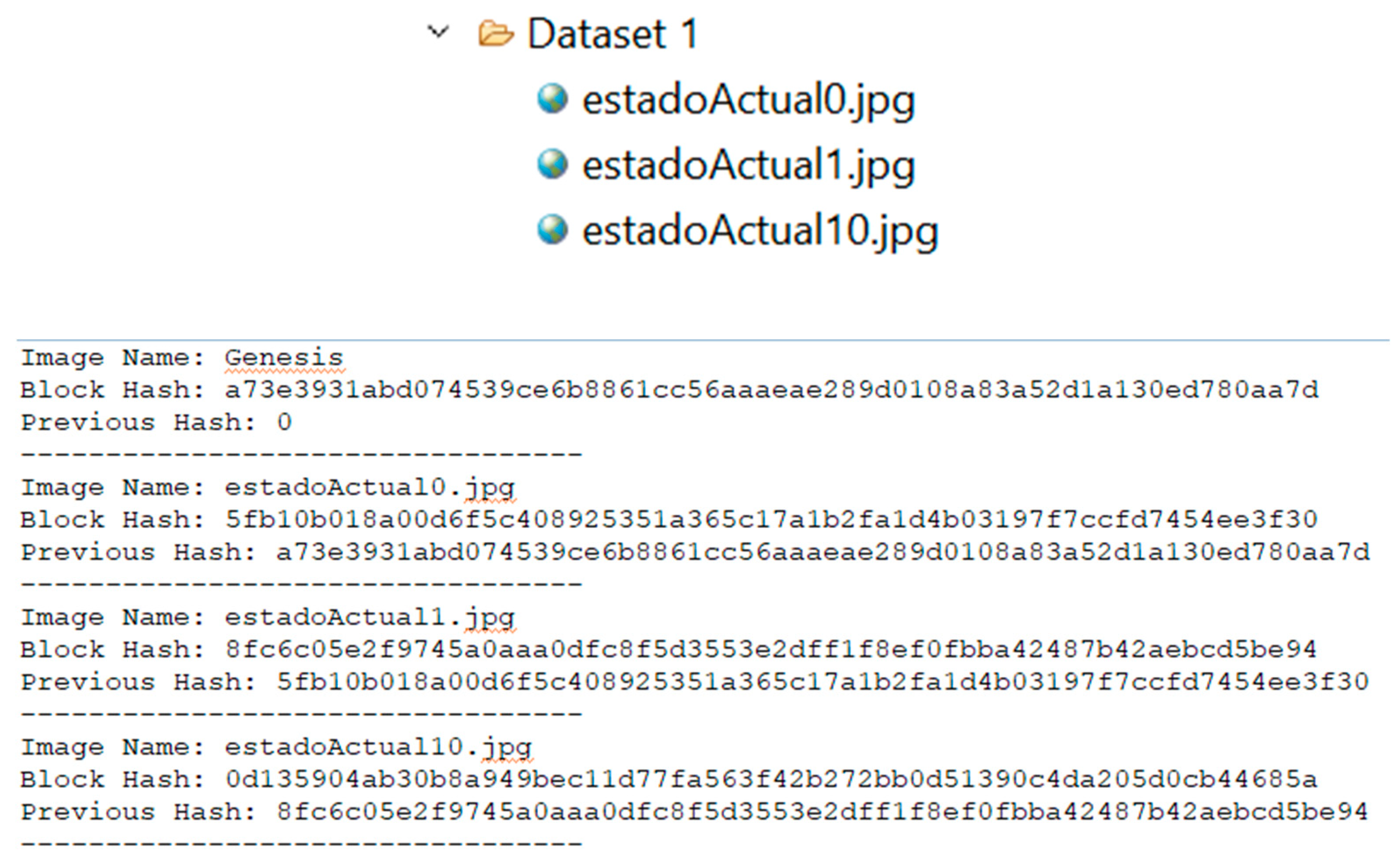
Figure 11.
IPFS Address configuration.
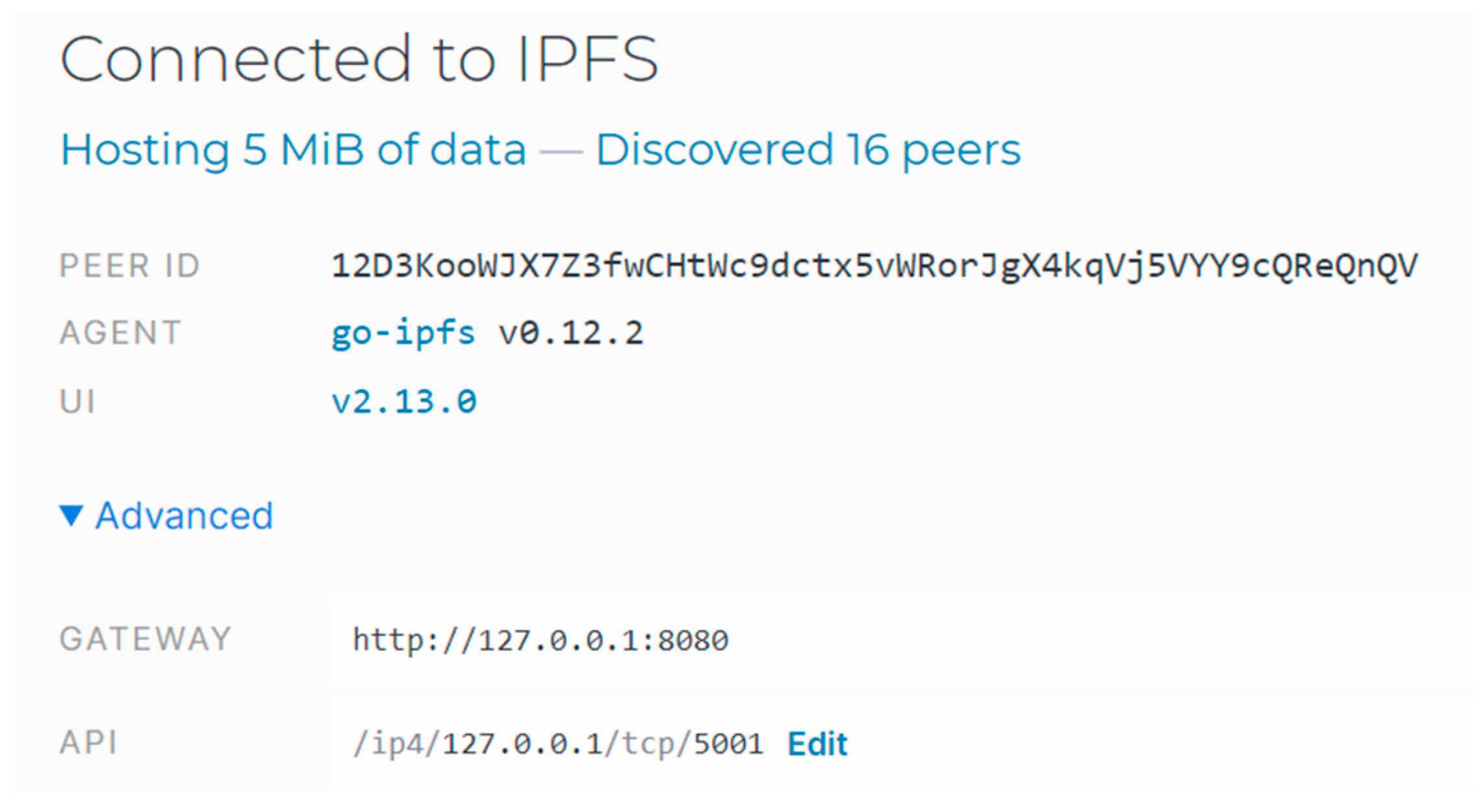
Figure 12.
IPFS results (I).
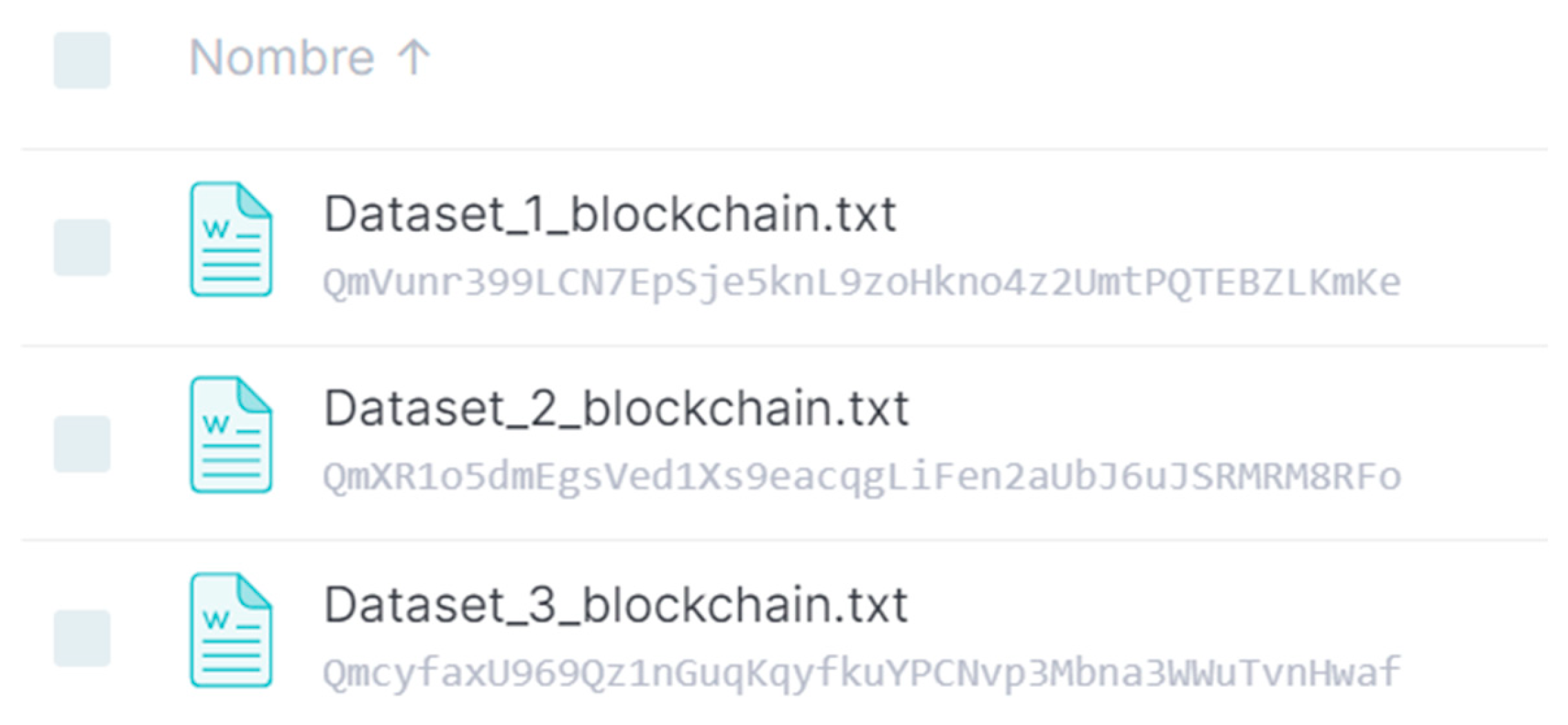
Figure 13.
IPFS results (II).
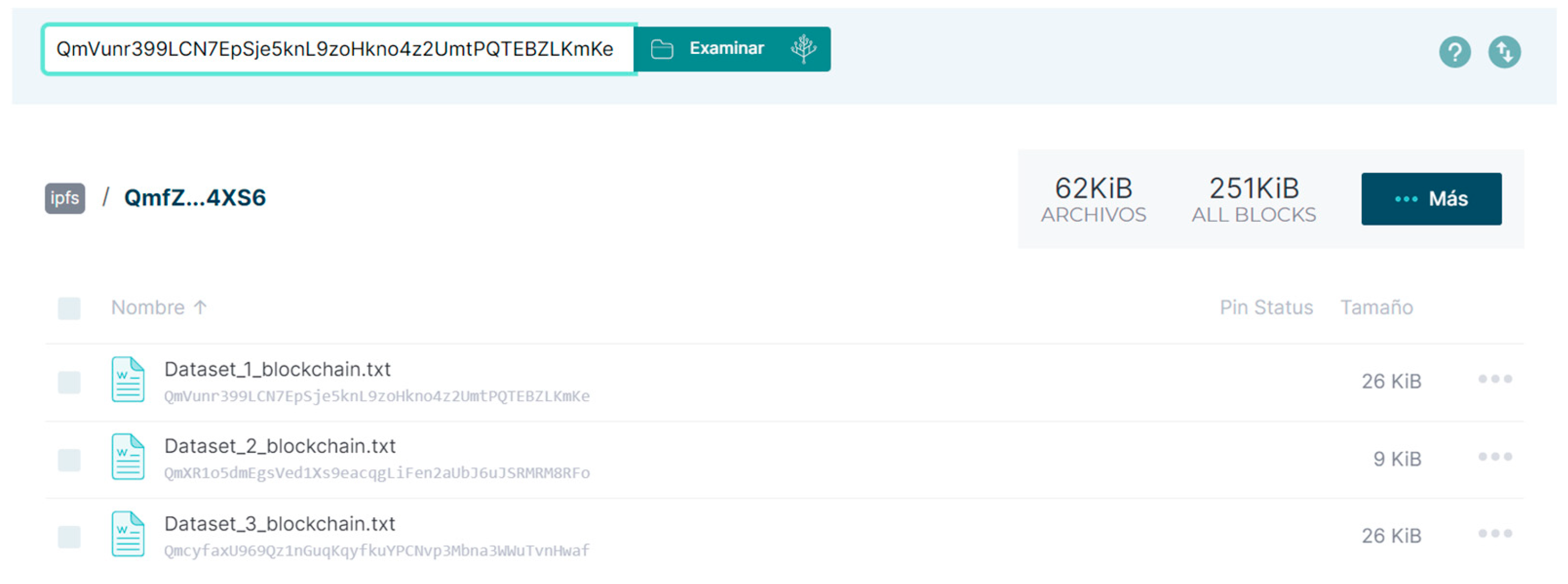
Figure 14.
IPFS results (III).

| Research work | Advantages | Disadvantages |
|---|---|---|
| Arena et al. [8] | Access to a tamper-proof history of the product via smartphones, IoT sensors for quality control, and meet the requirements set by European laws | Usage of UAVs or application layer distribution (IPFS-like solution) is not considered |
| Conti et al. [9] | NFC provides detailed information on product quality fostering loyalty | No imagery or application layer distribution (IPFS-like solution) |
| Gupta et al. [10] | Ultra-low latency, ultra-high reliability, improved scalability. Usage of IPFS guarantees a further layer of decentralization | Scope differs from the one that is provided by our manuscript |
| Kechagias et al. [11] | Traceability and transparency, particularly for small-scale producers and low-income countries | Relays on packaging information rather than olives trees |
| Bean Ayed et al. [12] | Underscores the transformative potential of integrating innovative technologies in the agri-food industry | Scope differs from the one that is provided by our manuscript |
| Mercuri et al. [13] | Increased transparency, trust-building with customers, and reduced transactional costs | Usage of UAVs or application layer distribution (IPFS-like solution) is not considered |
| Bistarelli et al. [14] | Represents complex supply chain processes, generates solidity code, and provides a user-friendly interface | Usage of UAVs or application layer distribution (IPFS-like solution) is not considered |
| Haque et al. [15] | Real-time data updates, customer access to information, and the elimination of intermediaries | Usage of UAVs or application layer distribution (IPFS-like solution) is not considered |
| Violino et al. [16] | Blockchain technology and QR codes to track the production process from olive tree to EVOO bottle | Usage of UAvs is left for future works. Application layer distribution (IPFS-like solution) is not considered |
| Abenavoli et al. [17] | De facto middleware monitoring critical stages of olive oil production | Usage of UAVs or application layer distribution (IPFS-like solution) is not considered |
| Ktari et al. [18] | Blockchain throughout supply chain. Usage of Smart Contracts | Usage of UAVs or application layer distribution (IPFS-like solution) is not considered |
Disclaimer/Publisher’s Note: The statements, opinions and data contained in all publications are solely those of the individual author(s) and contributor(s) and not of MDPI and/or the editor(s). MDPI and/or the editor(s) disclaim responsibility for any injury to people or property resulting from any ideas, methods, instructions or products referred to in the content. |
© 2025 by the authors. Licensee MDPI, Basel, Switzerland. This article is an open access article distributed under the terms and conditions of the Creative Commons Attribution (CC BY) license (http://creativecommons.org/licenses/by/4.0/).
Copyright: This open access article is published under a Creative Commons CC BY 4.0 license, which permit the free download, distribution, and reuse, provided that the author and preprint are cited in any reuse.


