

Submitted:
04 August 2025
Posted:
12 August 2025
You are already at the latest version
Abstract
Pelvis and trunk counter-rotation are key factors in pitching, where energy or momentum is transferred from the lower extremities through to the throwing hand. Axial pelvic-trunk separation (PTS) angle, calculated by subtracting trunk position from pelvis position, is known to effect throwing arm kinematics. Perhaps altering stride length and drive leg propulsion influences axial PTS which may increase risk of throwing arm injury. Therefore, this retrospective analysis investigated stride length influences on; i) transverse PTS and ii) sequencing (trunk-to-pelvis transverse angular velocity ratio, otherwise known as the proximal plyometric effect (PPE)) during fastball pitching. Secondary analysis of 19 healthy-skilled, competitive pitchers motion capture data previously collected and post-processed was undertaken to test the a-priori hypotheses that ±25% changes from desired stride length, respective of over-stride (OS) and under-stride (US), impacted PTS angle and PPE. The experimental design was a blinded randomized crossover design where pitchers threw 2 simulated games at ±25% changes from desired stride length. Comparisons at hallmark events and phases revealed significantly different transverse pelvis and trunk kinematics between stride length conditions, influencing pelvic-trunk separation and proximal plyometrics. Peak pelvic-trunk separation near stride-foot contact mediated greater PPE ratios earlier in the pitching delivery that may regulate trunk angular velocity relative to the pelvis at ball release. Conversely, PTS concomitant with high PPE ratios near ball release may be compensatory for reduced drive leg propulsion observed during the generation phase, that could impact trunk-throwing arm momentum exchanges.
Keywords:
biomechanics
; baseball pitching
; stride length
; trunk rotation
1. Introduction
Baseball pitchers are at greater risk for overuse injury because they throw more in one game at higher metabolic cost than their teammates. Throughout the baseball pitching cycle movements progress up from the feet and lower extremities, through the trunk and throwing arm, and culminate at ball release. Insufficient rest between pitching outings may increase susceptibility to musculoskeletal stress to their shoulder and elbow that consequently results in significant injury. This retrospective study is part of a comprehensive single cohort full-body biomechanical analysis that is investigating how coordinated lower extremity biomechanics are altered in response to changes in stride length, influencing the link-segment-model and kinetic chain that potentially induce compensatory overhand throwing mechanics in the baseball pitching delivery that predispose players to increased risk of throwing arm injury.
Our previous findings suggest longer strides have a detrimental physiological cost yet may be beneficial mechanically in mitigating throwing arm stress, whereas shorter strides evoke inefficient pitching mechanics in preparing the throwing arm for maximal external shoulder rotation prior to ball release. Significant changes in physiological, momentum, performance and temporal profiles, temporal, ground reaction, and lower extremity dynamics, have subsequently been reported, augmenting the initial findings [1,2,3,4,5,6,7,8,9]. The findings from each study were independent because they differ in their research question, hypothesis, analytic methods, and conclusions yet the findings are complementary in supporting how coordinated 3D lower extremity biomechanics are altered in response to changes in stride length, influencing the kinetic chain that potentially induce compensatory throwing mechanics and predispose pitchers to greater risk for injury.
However, pelvis and trunk counter-rotation are key factors in pitching, where energy or momentum is transferred from the lower extremities through to the throwing hand [10,11,12]. Axial pelvic-trunk separation (PTS) angle, calculated by subtracting trunk position from pelvis position, is known to effect throwing arm kinematics. Perhaps altering stride length and drive leg propulsion influences axial PTS which may increase risk of throwing arm injury. Therefore, this retrospective analysis investigated stride length influences on; i) transverse PTS and ii) sequencing (trunk-to-pelvis transverse angular velocity ratio, otherwise known as the proximal plyometric effect (PPE)) during fastball pitching. Altered stride length and drive leg propulsion [6] could influence axial PTS which may increase risk of throwing arm injury.
This retrospective analysis centers on the a-priori that hypotheses stride length influences; i) transverse PTS and ii) sequencing (trunk-to-pelvis transverse angular velocity ratio, otherwise known as the proximal plyometric effect (PPE)) during fastball pitching to augment previous findings. As a result, throwing arm injury risks can be exacerbated by stride length compensation.
2. Materials and Methods
This research was a retrospective analysis of previously collected and post-processed motion capture data from the original single-cohort of 19 healthy and skilled competitive pitchers from collegiate and high school seasonal travel programs from across Western New York [13]. The scope of this investigation focused on testing the a-priori hypotheses that ±25% changes from desired stride length, respective of over-stride (OS) and under-stride (US), impacted PTS angle and PPE.
The protocols for the subject recruitment, motion capture, and data post-processing have been previously elsewhere [1,2,3,4,5,6,7,8,9,13]. In brief, a blinded randomized within-group crossover time-series design was utilized, where pitchers threw 2 simulated games at ±25% changes from desired stride length. Participants were randomly assigned using permuted-block randomization and stratified by intervention via the web site http://www.randomization.com, to commence with either the over-stride or underside sequence. After 72 hours rest pitchers were crossed over to the alternate condition (Figure 1).
Typical biomechanical assessment involved 3D motion capture of human movement where trajectories and times series data were abstracted, and performance indices computed. The global coordinate system was referenced by +X (mediolateral axis in the direction of third base), +Y (axis in the direction of home plate), and +Z (vertical axis), as shown in Figure 2.
The ± 25% change from desired stride length was designed to challenge throwing mechanics. Areas over the force platforms were marked to indicate drive foot and stride foot placement for both under- and over-stride conditions, where participants were encouraged to contact the targets during the simulated games. Ample time was provided prior to motion recordings to acclimatize pitchers to the OS or US conditions. Stride was visually monitored; kinematic data was inspected throughout testing and were expressed in meters as well as normalized as a percentage of body height. In addition, the velocity of each ball thrown was tracked with a radar gun and the information instantaneously relayed back to the pitcher to ensure fastballs were thrown maximally at 100% effort.
The fastest two pitches in the first and last inning (4 pitches) were used for analysis. The rationale for comparing the two highest velocity throws was because ball velocity trends during games is commonly used to assess exertion and performance, where fatigue is thought to be associated with increased workload (number of innings and throws) and diminished peak ball velocity. No significant changes in velocities between the two conditions nor between innings for both average and maximum velocity when we looked at competitive effects were observed [3]. However, fatigue may not always present as ball velocity decrements because of compensatory throwing biomechanics aid in maintaining peak ball velocity.
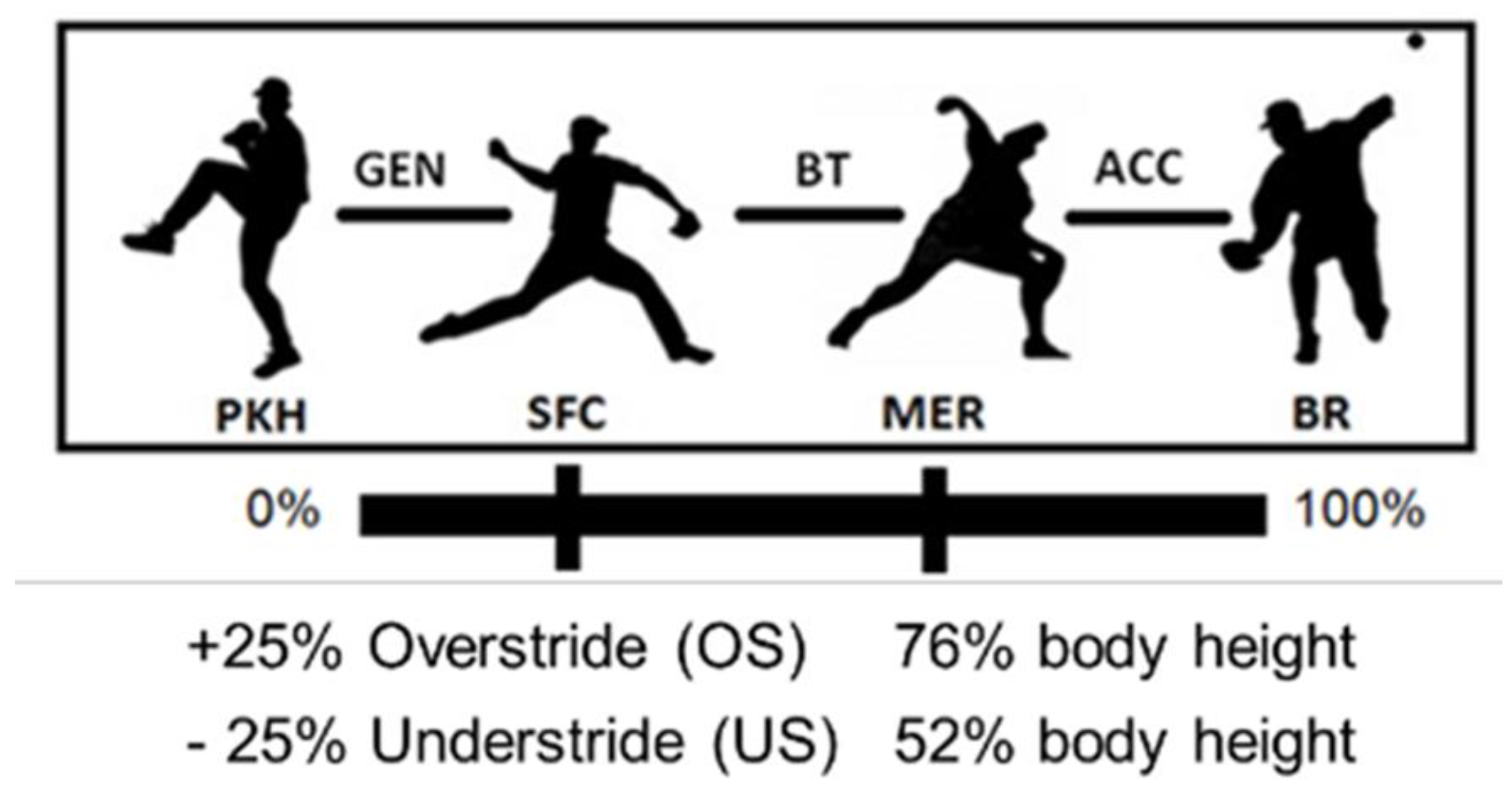
Spatiotemporal parameters identified from kinematic data and the pitching cycle, as shown in Figure 4, was time normalized to 100%, with peak knee height (PKH) coincident with 0% and ball release (BR) terminating at 100%. Hallmark events included stride foot contact (SFC), maximal external rotation (MER) and three phases were defined between hallmark events:
- (i)
- Generation (GEN) Phase: from PKH to SFC
- (ii)
- Brace-Transfer (BT) Phase: between SFC to MER, and
- (iii)
- Acceleration (ACC) Phase: from MER to BR.
Figure 3.
Time normalized pitching cycle and hallmark events.
Separation angles were calculated throughout the entire pitching cycle referencing pelvic position to the trunk. Mathematical formulas were used as follows to determine:
a. Pelvic-Trunk Separation Angle (PTS) = Pelvis ϴ - Trunk ϴ
b. Proximal Plyometric Effect (PPE) = Trunk ω /Pelvis ω
Statistical Analysis
Statistical analyses were performed using SPSS 19 (SPSS Inc., Chicago, IL, USA) utilizing paired t-tests for planned comparisons of PTS and PPE ratios between the two stride conditions at hallmark events and phases. Statistical significance, determined a priori, was set at p≤ 0.05 for all statistical tests. Cohen’s d effect sizes to describe standardized mean differences were calculated for significant findings, and denoted as trivial (<0.2), small (0.2-0.49), moderate (0.5-0.79), and large (>0.8) effects.
3. Results
Mean stride length measures for respective over-stride and under-stride conditions were previously reported to be at 0.76 ± 0.07 and 0.52 ± 0.08 %body-height, requiring pitchers minimally adjust their throwing mechanics from the mean desired stride length (1.24 ± 0.17m and 0.67 ± 0.09 %body-height) [1,4]. The ± 25% stride conditions differed statistically from the desired stride [3]. The 24% difference in stride between the conditions (normalized as a percentage of body height) falls between 50–80% of the body height (as measured during the warm-up) and is representative of collegiate and professional pitchers [14,15,16,17,18,19,20]. Therefore, comparison of the influence of over- and under-stride outcomes may be sensitive to genuine throwing conditions.
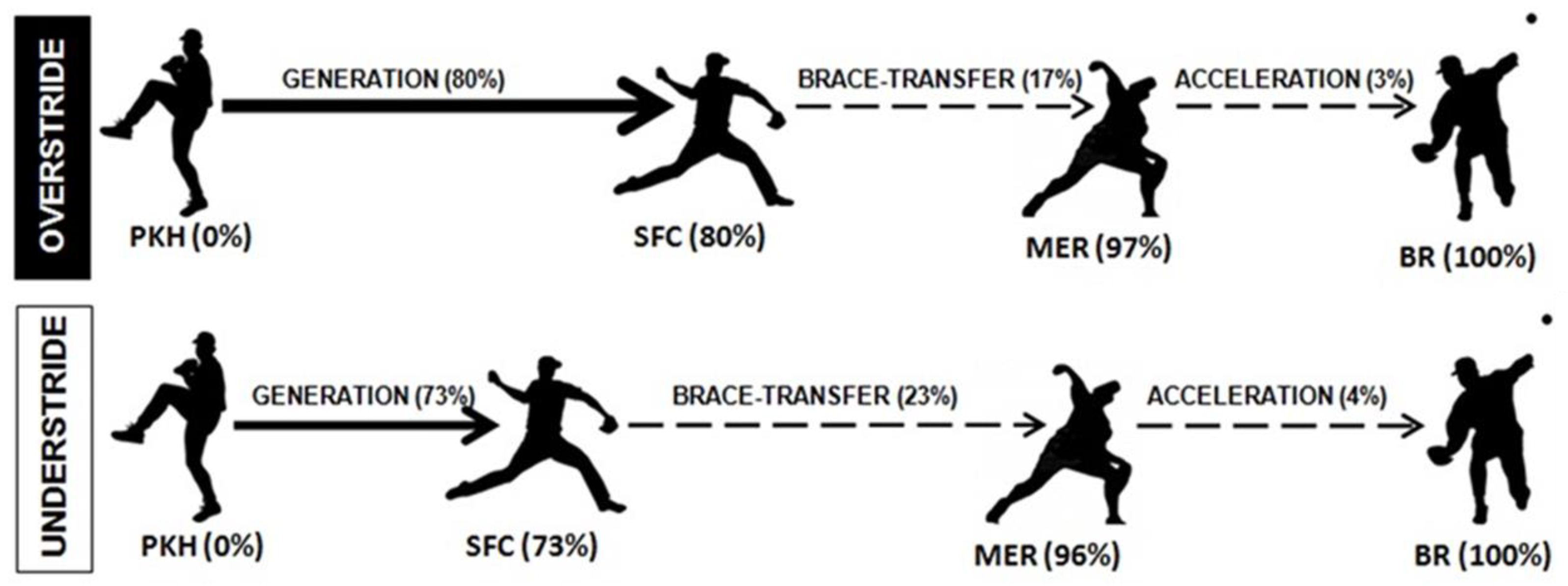
Figure 4 and Table 1 depicts out of phase timing of pitching events relative to stride length normalized to percent time. The time from PKH-SFC (generation) was statistically longer for OS and significantly shorter from SFC – MER (brace transfer) compared to US. MER and BR were no different between groups, indicating equivalent stretch-response times for the throwing arm.
Figure 4.
OS elicited greater generation phase and reduced brace-transfer phase times. These temporal effects impact kinetic chain sequences and momentum relationships despite ball velocities maintained [4].
Figure 4.
OS elicited greater generation phase and reduced brace-transfer phase times. These temporal effects impact kinetic chain sequences and momentum relationships despite ball velocities maintained [4].
As reported elsewhere (3), ball velocity performance indices remained unchanged over innings accrued (mean fastball velocity 123.5±7.98 km/h vs. 122.7 ±7.19 km/h and mean change-up velocity 109.1 ±10.1 km/h vs. 106 ±9.09 km/h) despite the ±25% stride adjustment, indicating the potential for compensation respective over- and under-stride conditions.
Transverse Plane Kinematics
Greater pelvic internal rotation throughout GEN (P≤0.001), as well as during BT (P≤0.05), corresponded with increased angular velocities during GEN (P≤0.001) with longer strides (Table 2). Similarly, trunk internal rotation at GEN (P≤0.001), SFC (P≤0.05) and during BT (P≤0.05) was greater for increased strides. Internal rotation velocity for the trunk was greater for increased strides during GEN (P≤0.001) and at SFC (P≤0.05). Shorter strides revealed greater maximal pelvic angular velocity (P≤0.001) after SFC and greater magnitudes of internal trunk rotation at MER (P≤0.05).
Peak internal trunk rotation velocities were statistically higher (P≤0.05) with the shorter strides, which occurred at 90% in the pitching cycle or close in proximity to MER (Table 3) Over-stride revealed greater pelvic and trunk internal rotation during GEN, at SFC, and during BT. GEN internal rotation velocities for the pelvis and trunk were greatest for Over-stride. Under-stride indicated higher internal rotation velocity at MER. Overall peak internal rotation velocity for the pelvis was greater for under-stride than over stride. No significant differences in peaks were found for the trunk.
Event from Table 4, at PKH, separation angles increased with US, which is indicative of greater transverse pelvic counter-rotation relative to the trunk which rotates in the opposite direction, away from home plate (P≤0.05). With OS, the pelvis was positioned further ahead of the trunk, revealing greater separation earlier at SFC (P≤0.05) and during GEN (P≤0.001). Although peak separation magnitudes during the brace transfer phase were no different between stride conditions, onset occurred at 4% in the pitching cycle (immediately after SFC) with OS and later at 12% with US, well after SFC. Despite equivalent peak separation angles, greater proximal plyometric effects were observed during BT (P≤0.05) with OS, whereas US demonstrated greater effect throughout ACC (P≤0.05), with greater peaks evident at BR (P≤0.05).
Pelvic-trunk separation (PTS) and proximal plyometric effects (PPE) were both affected by the ±25% changes in stride length (Figure 5). Higher separation angles (-) were observed at PKH with US (P≤0.05), whereas pelvis position with OS was further ahead of the trunk, with greater separation (+) observed during the GEN phase (p≤0.001) and at SFC (p≤0.05). Proximal plyometric effects were higher with OS during BT (P≤0.05) whereas US evoked greater effect throughout ACC (p≤0.05), with greater peaks evident at BR (p≤0.05).
4. Discussion
Owing to the breadth of motion capture data collected, our results have been partitioned into constituent temporal, momentum, ground reaction, lower extremity kinematics and dynamics, physiologic cost, and ball velocity performance publications. Our early work first demonstrated that stride length is integral for SFC timing, best exemplified by SFC onset times at 73% and 80% in the time normalized pitching cycle with respective under and over strides [4]. Significant changes in temporal, physiological, ground reaction, momentum, and performance profiles have subsequently been reported.
The aim of the study was to show how pitchers when altering their stride length influence transverse pelvis and trunk kinematics, thereby impacting the inter-relationship between pelvic-trunk separation and proximal plyometrics. Compensated ± 25% stride lengths influenced pelvic trunk biomechanics, evident by changes in global pelvic and trunk kinematics at hallmark events (peak magnitudes at PKH, SFC, MER, BR) and their respective onsets within the corresponding phases of the pitching cycle (GEN, BT, ACC). Pitching with longer strides saw overall proximal segmental kinematics begin earlier in the pitching cycle, with significantly higher magnitudes observed. Peak transverse angular velocities were also significantly different between stride conditions. Consequently, transverse pelvic-trunk kinematics during GEN (from PKH to SFC) was influenced by stride length, evident by greater internal rotation kinematics (rotation toward home plate) and earlier onset in the pitching cycle with OS, whereas pelvic-trunk internal rotation increased and started later with US, near MER.
Proximal internal rotations at SFC were significantly higher with OS while pelvic-trunk displacements were no different between conditions (Table 2). The increased displacements at SFC resulted in internal trunk rotation velocities nearly 200°/s faster with the longer strides, whereas US saw trunk angular velocities increase to 450°/s during the brace-transfer phase (SFC to MER) and achieved greater peak internal rotation velocities at MER. Thereafter, during the ACC phase (prior to BR), internal rotation displacements were similar between conditions (Table 2). Because the shorter stride lengths contributed to increasing BT duration, this provided ample time for transverse pelvis and trunk acceleration. Greater internal pelvic-trunk rotation following SFC may be to compensate for reduced total body forward momentum during generation from PKH to SFC [2,5]. Perhaps greater peak pelvic and trunk internal rotation velocities from Table 3 expressed later in the delivery when pitching with shorter stride lengths are the underlying mechanics responsible for the equivalent peak ball velocities being observed between conditions [3]. The increased transverse pelvic-trunk mechanics elicited by shorter stride lengths may mediate increased throwing arm kinetics which predispose the elbow and shoulder to increased risk for injury. By increasing pelvic internal rotation range of motion at SFC, throwing arm kinetics may be reduced [11,12]. Others reported transverse trunk kinematics may influence internal elbow valgus moments, as evidenced by early onset of internal trunk rotations (prior to SFC) which correlated with increased elbow valgus moments [21,22]. In light if these findings, our results appear contradictory. On the one hand overstride corresponds with early onset of internal pelvic rotation and trunk rotation (prior to SFC) yet it has been associated with respective decreases [11] and increasing throwing arm kinetics [21]. The shorter strides, however, resulted in greater pelvic and trunk rotation away from home plate following SFC which respectively exacerbates or decreases throwing arm kinetics [11,21].
When transverse trunk kinematics further throwing arm horizontal abduction the forearm “lags” further behind the upper arm as a result of its inertia, which is considered the primary mechanism responsible for increasing shoulder and elbow kinetics [10,23]. Throwing arm “lag” relative to stride length variation may best be interpreted through transverse momentum analyses, by examining throwing arm transverse angular momentum relative to total body momentum (reflecting trunk momentum) [2,5,24]. The summed products of throwing arm segments’ angular velocities and transverse rotational inertias depict the overall throwing arm momentum, which is known to be affected by horizontal abduction velocity16. Horizontal abductor velocities when affected by internal trunk rotation velocities, demonstrate variation in trunk-throwing arm momentum transfers by impacting momentum proportionality between the throwing arm and trunk [2,5]. As evidenced by momentum compensation ratios (MCR), momentum proportions in the transverse plane during BT were affected by stride length, where greater MCRs with longer strides were observed, exemplifying a greater percentage of total body momentum being occupied by the throwing arm [2,5]. Reduced trunk transverse momentum relative to throwing arm depicts reduced throwing arm “lag” which is thought to aid in advancing the throwing arm toward home plate when pitching with longer strides [2,5]. Shorter strides demonstrated greater peak rates of internal trunk rotation and lower MCR, with no improvement in ball velocity [2,5]. Consequently, pitchers with short strides reduce throwing arm momentum proportions relative to the trunk, which may be indicative of inefficient and potentially injurious momentum transfers prior to acceleration [10,25] whereby increased throwing arm “lag” and kinetics are expected in relation to greater transverse trunk and pelvic velocities [10,11,21,26].
Pelvic-trunk separation and proximal plyometric effects were both affected by changes in stride length. Longer strides resulted in greater separation (pelvis and trunk counter rotate in opposite directions) which occurred earlier in the pitching delivery, with peaks within 4% time from SFC. Conversely, shorter strides revealed peak pelvic-trunk separation at approximately 12% after SFC. The timing of peak separation is critical. Near SFC allows for efficient energy transfer to the throwing arm. Despite non-significant pelvic-trunk separation magnitudes, greater pelvic internal rotation ahead of the trunk during GEN prepared peak separation occurred near SFC with longer strides. Early pelvic-trunk separation mediated greater proximal plyometric effect ratios earlier in the pitching delivery (SFC to MER), which may regulate trunk angular velocity relative to the pelvis at BR. Shorter strides resulted in pelvic-trunk separation to occur later along with a greater than 3-fold increase in the trunk to pelvic angular velocity ratio at BR, denoting a greater peak proximal plyometric effect with reduced strides. High PPE ratios late in the pitching cycle may be to compensate for the reduced drive leg propulsion observed during the generation phase (peak knee height to stride foot contact) [6].
Pelvic-trunk separation, known as the “Serape Effect”, refers to the diagonal orientation of the abdominal core musculature, involving the rhomboids, serratus anterior, and internal and external obliques linking the left shoulder to the right hip and vice versa [27]. The leading (stride) hip opposite to the throwing shoulder pre-stretch that prepares proximal plyometric responses assisting throwing arm acceleration [28]. Proximal plyometric effect ratios may be useful to evaluate contralateral stretch-shortening across core musculature, where augmented trunk angular velocity with respect to the pelvis later in the pitching cycle may determine an adaptive change in lower body biomechanics, such as a reduction in stride length.
In the context of the pitching delivery, perhaps altering stride influences coordinated throwing-side oblique muscle and contralateral (opposite side) pelvic internal rotators, which is integral for generating power. These muscles work synergistically to transfer energy from the lower body to the upper body, ultimately contributing to the speed and effectiveness of the throw. Increased trunk angular velocities were evident by the higher proximal plyometric effect ratios during ACC and Br with US which is thought to compensate for the shortened GEN phase and augmented by the extended propulsive efforts during the Brace Transfer phase (double support as seen with short stride pitching). Greater pelvic external rotation at SFC (latent peak pelvic-trunk separation) and increased trunk internal rotation (higher proximal plyometric effect during ACC) were evident during US. Higher angular transverse trunk velocities during ACC have been associated with increased shoulder and elbow centrifugal forces, which is thought to be mediated by the throwing arm “lagging” further behind because of increased horizontal shoulder abduction and forearm rotational inertia [29]. Increasing throwing arm lag is thought to exacerbate inter-segmental joint distraction and has been implicated a variety of throwing arm pathologies [29]. Latent pelvic rotation and delayed pelvic and trunk peak angular velocities are also known injury risk factors shown to increase shoulder and elbow kinetics, which supports the need to ascertain safety ranges in stride length to prevent unsafe pelvic-trunk kinematics [11,21,26].
Considerations and limitations
Stride length is pitcher specific and fluctuates as games progress and throughout the season owing to many factors that can either be related to orthopedics, pitch type, physiologic, and central/peripheral fatigue. Stride length has been shown to vary between 50-80% body height among collegiate and professional pitching populations [14,15,16,17,18,19,20,30] by as much as 3.5% body height between fastball and curveball deliveries [31,32]. Therefore, this interval was integrated in our research design, where manipulating desired stride length by ±25% body height was determined a-priori. The intent was to ensure a 5% difference in stride (normalized to body height) challenged throwing mechanics whereby consequent compensatory biomechanical adaptations can be examined, which align with previous studies. Individual desired stride lengths were determined during the warmup that preceded the simulated game conditions. The 25% difference ensured a minimum six-inch difference from the desired stride length in both directions and fell within this range.
The order in which participants were assigned to throw at ± 25% desired stride length was randomized. A simple AB cross-over design (common in early phase studies) was utilized because the advantage is that each subject serves as their own control, a smaller number of participants are required, and outcome responses can be contrasted with greater precision given the same number of subjects. The 72-hour washout period adhered to Major League Baseball’s safety protocols for 60 or more accumulated pitches per day. Instantaneous radar velocity feedback (Jugs Sports, Tualatin, OR) was used as a control, to ensure balls were consistently thrown maximally.
The disadvantage was the inability to compare desired stride length data with the ± 25% stride conditions. To enable comparison with desired stride length, more complicated crossover designs are necessary, perhaps the same desired stride length condition being administered in multiple different periods (e.g. ABAC or ABCABC designs) or to deploy a parallel-group design (ABC) requiring larger samples. In light that different profiles were evident, this may serve as the basis for future investigators utilizing more complex research design methods to substantiate these kinetic changes with desired stride length profiles.
The absence of a pitching mound may question validity of the study, yet stride length has been shown to be relatively consistent among skilled amateurs when throwing from a mound or level ground [33,34]. Evidence suggest throwing from a level surface may increase injury risk (throwing arm kinetics) especially at longer distances 8 and therefore we believe our research paradigm is relevant for examining kinematic and kinetic characteristics that may be considered important in preventing injuries.
Pelvic kinematics and trunk angular displacements are consistent with previous mound studies with similar pelvic-trunk separation angles [15,26,31,33]. Notably, peak ball velocities between mound and our results were equivalent, which strengthens applicability of our flat ground model to describe stride length impacts on compensatory adaptations [10,15,18,24,25,26,31].
Because this study is part of a comprehensive single cohort full-body biomechanical analysis, the findings are complementary in that stride length may be an important contributor during the pitching delivery, where coordinated 3D lower extremity biomechanics are altered in response to changes in stride length influencing the kinetic chain. Power-flow up the link-segment-model which is thought to regulate angular joint mechanics through to the trunk, shoulder, elbow, wrist, and hand may potentially predispose players to increased risk of throwing arm injury. These findings have implications on training, performance, and throwing arm injury prevention.
5. Conclusions
Stride length alters pitching biomechanics [1,2,3,4,5,6,7,8,9] and timing of peak pelvic-trunk separation and trunk angular velocity relative to the pelvis. Peak pelvic-trunk separation (PTS) near SFC mediated greater PPE ratios earlier in the pitching delivery (SFC to MER) that may regulate trunk angular velocity relative to the pelvis at BR. Conversely, PTS concomitant with high PPE ratios near ball release may be compensatory for reduced drive leg propulsion observed during the generation phase, that could impact trunk-throwing arm momentum exchanges [2,5].
When combined with recent evidence, this may provide additional evidence-based criterion that can be used to optimize stride length, evaluate lower body fatigue and prevent upper extremity injury among baseball pitchers. The knowledge gained offers new insight on compensatory stride length adaptation owing to cumulative physical exertion and workload on respective drive and stride leg dynamics throughout the pitching cycle.
Author Contributions
Conceptualization, RLC; Methodology, DKR and RLC; Formal analysis, RLC and DKR, investigation, D.B. and L.S.; writing—original draft preparation, DKR; writing—review and editing, RLC; All authors have read and agreed to the published version of the manuscript.
Funding
This research was funded by the Mark Diamond Research Fund (Sp11-03) through the University at Buffalo, for graduate student research expenses.
Institutional Review Board Statement
This research was approved by the Institutional Review Board of the University at Buffalo (CYIRB DHHS Registration Number IRB00004088, issued in 2012),.
Informed Consent Statement
All participants who took part in the study provided their informed consent.
Data Availability Statement
Data is unavailable due to privacy restrictions.
Acknowledgments
Jugs Sports Inc, Tualatin, OR, USA provided the professional radar unit. The authors have reviewed and edited the output and take full responsibility for the content of this publication.
Conflicts of Interest
The authors declare no conflicts of interest. Mark Diamond Research Funding and Jugs Sports Inc had no role in the design of the study; in the collection, analyses, or interpretation of data; in the writing of the manuscript; or in the decision to publish the results.
Abbreviations
The following abbreviations are used in this manuscript:
| PTS | Axial pelvic-trunk separation |
| PPE | Proximal plyometric effect |
| OS | Over-stride |
| US | Under-stride |
| PKH | Peak knee height |
| SFC | Stride foot contact |
| MER | maximal external rotation |
| BR | ball release |
| GEN | Generation Phase |
| BT | Brace-Transfer Phase |
| ACC | Acceleration Phase |
References
- Crotin, R. L., Kozlowski, K., Horvath, P., and Ramsey, D. K. (2014). “Altered stride length in response to increasing exertion among baseball pitchers.” Med Sci Sports Exerc., 46(3), 565-571.
- Ramsey, D. K., Crotin, R. L.*, White, S., (2014). Effect of stride length on overarm throwing delivery: A linear momentum response. Hum Mov Sci. 38, 185-196.
- Crotin, R. L., and Ramsey, D. K. (2015). “Stride length: A Reactive Response to Prolonged Exertion and its Effect on Ball Velocity Among Baseball Pitchers.” Int J Perform Anal Sport., 15(1), 254-267.
- Crotin, R. L., Bhan, S., and Ramsey, D. K. (2015). “An inferential investigation into how stride length influences temporal parameters within the baseball pitching delivery.” Hum Mov Sci., 41.
- Ramsey, D.K., and Crotin, R.L.* (2016) “Effect of Stride Length on Overarm Throwing Delivery: Part II: An Angular Momentum Response”. Hum Mov Sci., 46, 30-38.
- Ramsey DK. and Crotin RL. Stride length: The Impact on Propulsion and Bracing Ground Reaction Force in Overhand Throwing. Sports Biomech. (2019) 18:5, 553-570.
- Crotin R, Ramsey D. Grip Strength Measurement in Baseball Pitchers: A Clinical Examination to Indicate Stride Length Inefficiency. International Journal of Sports Physical Therapy 2021;16(5):1330-1337.
- Ramsey DK and Crotin RL. Stride Length Impacts on Sagittal Knee Biomechanics in Flat Ground Baseball Pitching. Applied Sciences. Special Issue: Applied Biomechanics: Sport Performance and Injury Prevention II. 2022; 12(3):995.
- Crotin RL and Ramsey DK. An Exploratory Investigation Evaluating the Impact of Fatigue-Induced Stride Length Compensations on Ankle Biomechanics among Skilled Baseball Pitchers. Life. 2023; 13(4):986.
- Aguinaldo AL, Buttermore J, Chambers H. Effects of upper trunk rotation on shoulder joint torque among baseball pitchers of various levels. J Appl Biomech. 2007;23(1):42-51.
- Wight J, Richards J, Hall S. Influence of pelvis rotation styles on baseball pitching mechanics. Sports Biom. 2004;3(1):67-83.
- Dowling B, Knapik DM, Luera MJ, Garrigues GE, Nicholson GP, Verma NN. Influence of Pelvic Rotation on Lower Extremity Kinematics, Elbow Varus Torque, and Ball Velocity in Professional Baseball Pitchers. Orthop J Sports Med. 2022;10(11):23259671221130340. Published 2022 Nov 29. [CrossRef]
- Crotin, Ryan Lewis. A kinematic and kinetic comparison of baseball pitching mechanics influenced by stride length. State University of New York at Buffalo ProQuest Dissertations & Theses, 2013. 3565735.
- Elliot, B., Grove, J. R., and Gibson, B. (1988). Timing of the lower limb drive and throwing limb movement in baseball pitching. Int J Sports Biomech, 4(1), 59-67.
- Elliott, B., Grove, J., Gibson, B., and Thurston, B. (1986). A three-dimensional cinematographic analysis of the fastball and curveball pitches in baseball. Int J Sport Biomech, 2, 20-28.
- Escamilla, R. F., Barrentine, S. W., Fleisig, G. S., Zheng, N., Takada, Y., Kingsley, D., and Andrews, J. R. (2007). Pitching biomechanics as a pitcher approaches muscular fatigue during a simulated baseball game. Am J Sports Med, 35(1), 23.
- Escamilla, R. F., Fleisig, G. S., Barrentine, S. W., Zheng, N., and Andrews, J. R. (1998). Kinematic comparisons of throwing different types of baseball pitches. J Appl Biomech, 14, 1.
- Fleisig, G. S., Bolt, B., Fortenbaugh, D., Wilk, K. E., and Andrews, J. R. (2011). Biomechanical comparison of baseball pitching and long-toss: implications for training and rehabilitation. J Orthop Sports Phys Ther, 41(5), 296.
- Fleisig, G. S., Kingsley, D. S., Loftice, J. W., Dinnen, K. P., Ranganathan, R., Dun, S., and Andrews, J. R. (2006). Kinetic comparison among the fastball, curveball, change-up, and slider in collegiate baseball pitchers. Am J Sports Med, 34(3), 423.
- Guo, L. Y., Lin, W. Y., Tsai, Y. J., Hou, Y. Y., Chen, C. C., Yang, C. H., and Liu, Y. H. (2010). Different Limb Kinematic Patterns during Pitching Movement Between Amateur and Professional Baseball Players. J Med Bio Eng, 30(3), 177-180.
- Aguinaldo A, Chambers H. Correlation of throwing mechanics with elbow valgus load in adult baseball pitchers. Am J Sports Med. 2009;37(10):2043.
- Oi T, Takagi Y, Tsuchiyama K, et al. Three-dimensional kinematic analysis of throwing motion focusing on pelvic rotation at stride foot contact. JSES Open Access. 2018;2(1):115-119. Published 2018 Feb 21. [CrossRef]
- Crotin RL, Ramsey DK. Injury Prevention for Throwing Athletes Part I: Baseball Bat Training to Enhance Medial Elbow Dynamic Stability. Strength Cond J. 2012;34(2):79.
- Lin HT, Su FC, Nakamura Dowling B, Knapik DM, Luera MJ, Garrigues GE, Nicholson GP, Verma NN. Influence of Pelvic Rotation on Lower Extremity Kinematics, Elbow Varus Torque, and Ball Velocity in Professional Baseball Pitchers. Orthop J Sports Med. 2022;10(11):23259671221130340. Published 2022 Nov 29. [CrossRef]
- Fleisig GS, Andrews JR, Dillman CJ, Escamilla RF. Kinetics of baseball pitching with implications about injury mechanisms. Am J Sports Med. 1995;23(2):233.
- Dun S, Fleisig GS, Loftice J, Kingsley D, Andrews JR. The relationship between age and baseball pitching kinematics in professional baseball pitchers. J Biomech. 2007;40(2):265-270.
- Logan G, McKinney W. The serape effect. In: Anatomic Kinesiology (3rd ed.). A. Lockhart, ed. Dubuque, IA: Brown. 1970:287-302.
- Santana JC. The serape effect: A kinesiological model for core training. Strength Cond J. 2003;25(2):73. M, Chao EYS. Complex chain of momentum transfer of body segments in the baseball pitching motion. J Chinese Inst Eng. 2003;26(6):861-868.
- Stodden DF, Fleisig GS, McLean SP, Andrews JR. Relationship of biomechanical factors to baseball pitching velocity: within pitcher variation. J Appl Biomech. 2005;21(1):44-56.
- Fleisig GS, Kingsley DS, Loftice JW, et al. Kinetic comparison among the fastball, curveball, change-up, and slider in collegiate baseball pitchers. Am J Sports Med. 2006;34(3):423.
- Grantham WJ, Byram IR, Meadows MC, Ahmad CS. The Impact of Fatigue on the Kinematics of Collegiate Baseball Pitchers. Orthopaedic Journal of Sports Medicine. 2014 vol. 2 no. 6. [CrossRef]
- Fleisig GS, Bolt B, Fortenbaugh D, Wilk KE, Andrews JR. Biomechanical comparison of baseball pitching and long-toss: implications for training and rehabilitation. J Orthop Sports Phys Ther. 2011;41(5):296.
- Nissen CW, Solomito M, Garibay E, Õunpuu S, Westwell M. A Biomechanical Compar-ison of Pitching From a Mound Versus Flat Ground in Adolescent Baseball Pitchers. Sports Health: A Multidisciplinary Approach. 2013;5(6):530-536.
- Badura J, Raasch W, Barber M, Harris G. A kinematic and kinetic biomechanical model for baseball pitching and its use in the examination and comparison of flat-ground and mound pitching: a preliminary report. Paper presented at: Engineering in Medicine and Biology Society, 2003. Proceedings of the 25th Annual International Conference of the IEEE, 2003.
Figure 1.
Two-sequence crossover design (AB/BA) separated by a 72-hour rest washout.
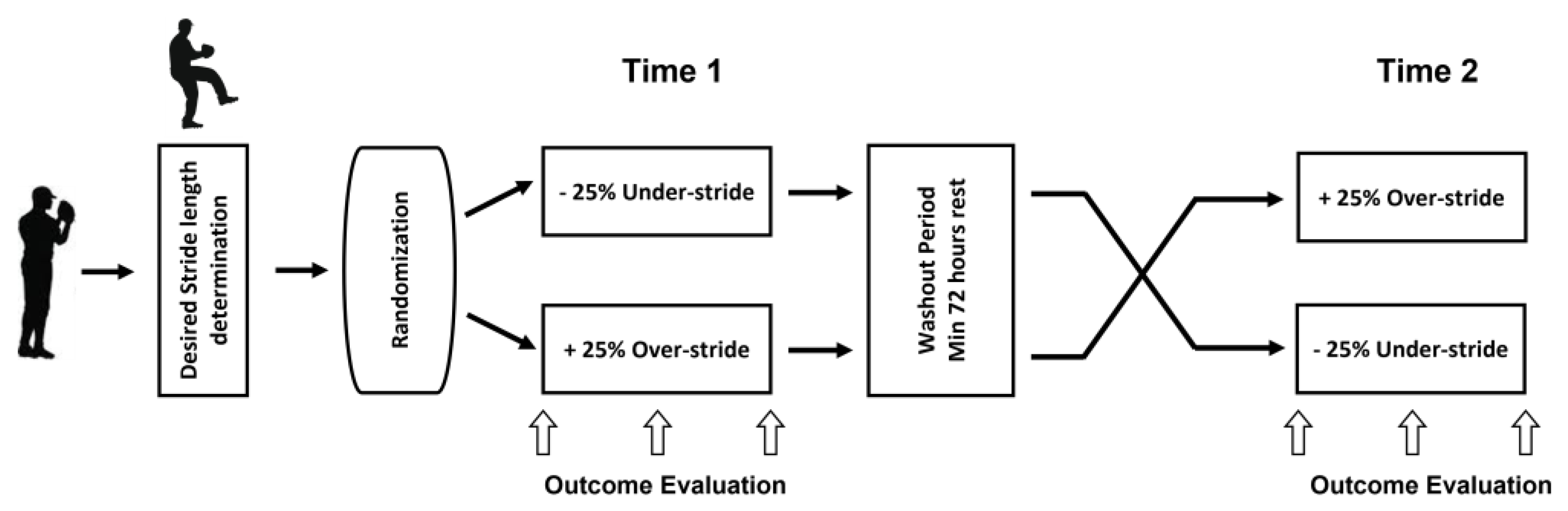
Figure 2.
Global coordinate system in pitching about XYZ integrated with two force plates (FP1 and FP2) and the capture volume origin.
Figure 2.
Global coordinate system in pitching about XYZ integrated with two force plates (FP1 and FP2) and the capture volume origin.
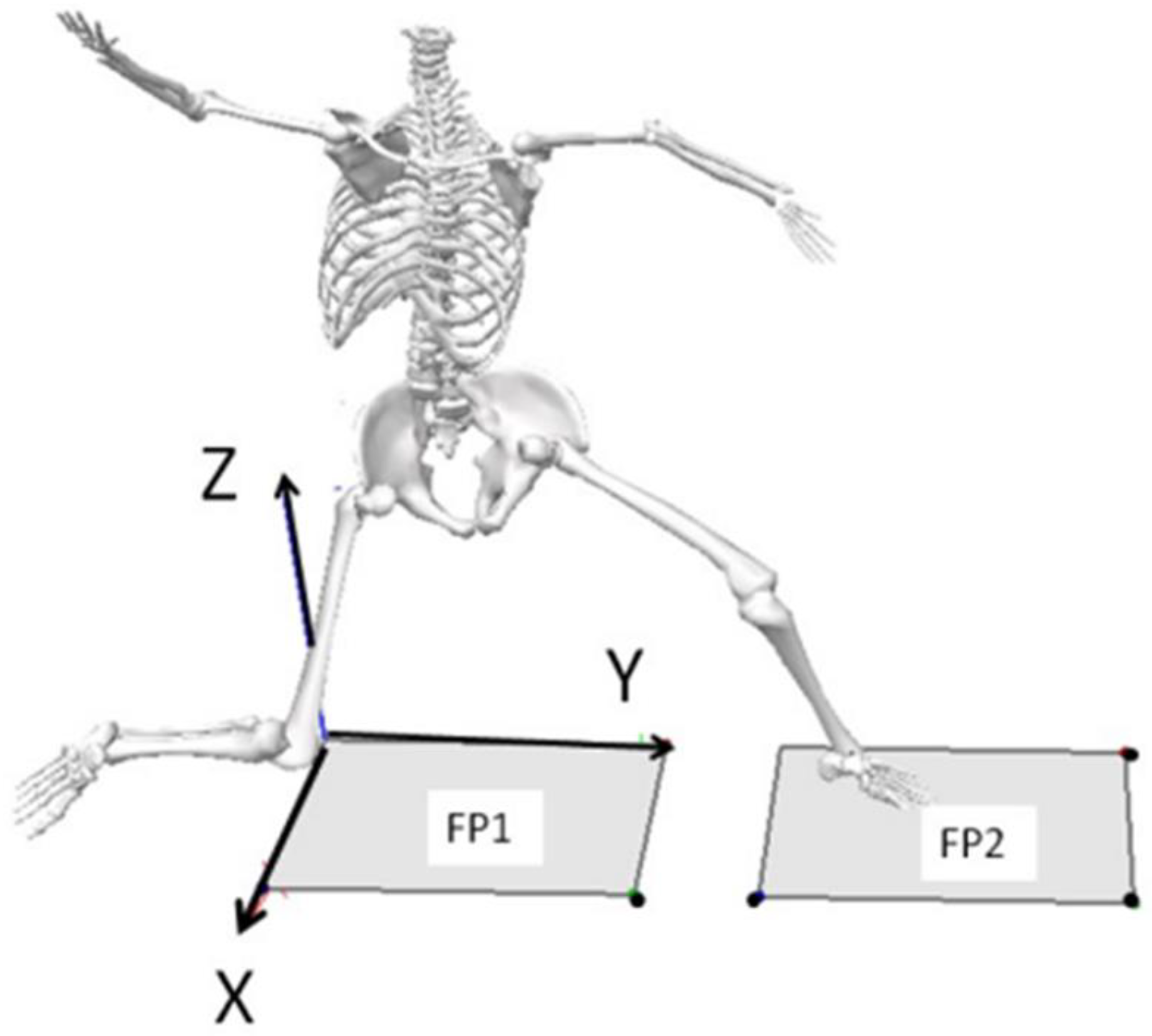
Figure 5.
A) Pelvic-Trunk Separation. B) the Proximal Plyometric Effect between under-stride (US) and over-stride (OS) conditions. Pelvic Separation Behind Trunk (-) and Pelvic Separation Ahead of Trunk (+).
Figure 5.
A) Pelvic-Trunk Separation. B) the Proximal Plyometric Effect between under-stride (US) and over-stride (OS) conditions. Pelvic Separation Behind Trunk (-) and Pelvic Separation Ahead of Trunk (+).
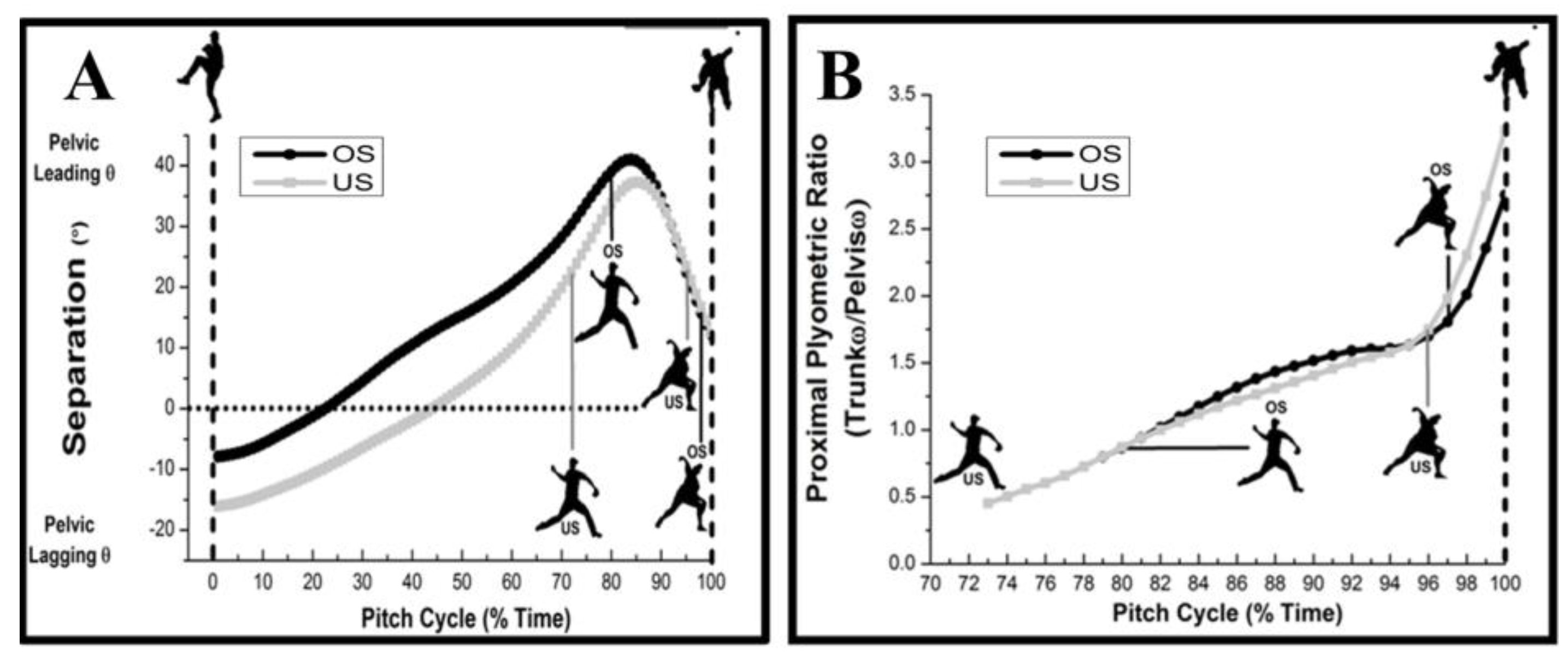

Table 1.
Stride Length Compensations Effecting Normalized Timing of Phase.
| STRIDE LENGTH |
Generation PKH to SFC (% Time) |
Brace-Transfer SFC to MER (% Time) |
Acceleration MER to BR (% Time) |
| OVERSTRIDE | 79.95 (2.79)** | 16.95 (3.18)** | 3.10 (1.39) |
| UNDERSTRIDE | 73.25 (4.68) | 23.20 (4.84) | 3.55 (1.46) |
Table 1: Mean (SD) for normalized times. PKH, Peak Knee Height; SFC, Stride Foot Contact; MER, Maximal External Rotation, BR, Ball Release; GEN, Generation Phase (PKH-SFC); BT, Brace-Transfer Phase (SFC-MER); ACC, Acceleration Phase (MER-BR). Significant differences (p≤0.001)**.
Table 2.
Transverse Kinematics.
| PKH | SFC | MER | BR | GEN | BT | ACC | ||
|
Pelvis Angle (°) |
OVER-STRIDE |
-115.9 (36.5) |
-61.0** (21.1) | 1.74 (7.53) |
7.79 (7.87) |
-103.6** (16.1) | -27.3* (19.8) | 5.87 (1.79) |
|
UNDER-STRIDE |
-112.7 (38.8) |
-85.2 (15.0) |
1.88 (12.1) |
10.7 (10.7) |
-110.9 (9.63) |
-44.5 (28.2) |
7.72 (2.71) |
|
|
Pelvis Velocity (°/s) |
OVER-STRIDE |
-13.8 (35.5) |
417.7 (90.1) |
283.1 (120.2) |
92.7 (92.7) |
118.8** (88.9) | 461.6 (71.3) |
157.6 (58.6) |
| UNDER-STRIDE | 9.44 (56.4) |
302.6 (166.9) |
357.4 (146.1) |
95.0 (126.2) |
73.3 (53.7) |
506.0 (99.0) |
203.1 (93.0) |
|
| TrunkAngle (°) | OVER-STRIDE | -108.7 (27.6) |
-99.9* (25.3) | -15.8 (7.82) |
-2.96 (6.28) |
-114.8** (3.41) | -60.7* (27.4) | -7.29 (3.95) |
| UNDER-STRIDE | -106.9 (28.5) |
-116.5 (13.1) |
-17.8 (12.4) |
2.02 (8.93) |
-116.5 (1.67) |
-79.9 (31.6) |
-5.45 (6.42) |
|
|
Trunk Velocity (°/s) |
OVER-STRIDE | -13.7 (30.7) |
334.4* (191.9) | 474.9* (105.3) | 255.1 (86.6) |
30.3** (64.0) | 621.2 (123.9) |
333.7 (67.1) |
| UNDER-STRIDE | -9.94 (38.5) |
141.9 (185.1) |
601.3 (149.3) |
307.3 (114.4) |
4.46 (20.5) |
562.8 (235.4) |
444.3 (105.0) |
Mean (SD) for internal (+) and external (-) rotation displacements (degrees) and angular velocities (degrees/sec) of the pelvis and trunk at normalized events and phases. Significant differences indicated (p≤0.001)** and (p≤0.05)*. PKH, Peak Knee Height; SFC, Stride Foot Contact; MER, Maximal External Rotation, BR, Ball Release; GEN, Generation Phase; BT, Brace-Transfer Phase; ACC, Acceleration Phase.
Table 3.
Peak Transverse Kinematics.
|
Pelvis Internal Rotation |
% TIME |
Trunk Internal Rotation |
% TIME |
|||
|
Peak Angular Velocity (°/s) |
OVER-STRIDE | 584.1** (62.7) |
85.4 (8.71) |
OVER-STRIDE | 797.0* (82.5) |
89.8 (3.78) |
| UNDER-STRIDE | 658.9 (73.3) |
87.5 (3.47) |
UNDER-STRIDE | 851.0 (94.2) |
90.3 (2.43) |
Peak angular velocities and normalized time at peaks for pelvic and trunk internal rotation (+). Significant differences indicated (p≤0.001)** and (p≤0.05)*.
Table 4.
Pelvic-Trunk Separation and the Proximal Plyometric Effect.
| PKH | SFC | MER | BR | GEN | BT | ACC | ||
|
Separation Angle (°) |
OVERSTRIDE | -7.89* (26.7) | 38.9*(9.40) | 17.5 (10.5) |
10.7 (8.92) |
11.2**(13.5) | 33.4 (8.04) |
13.2 (2.16) |
| UNDERSTRIDE | -16.1 (30.0) |
25.3 (24.1) |
20.0 (10.3) |
10.9 (16.1) |
-1.45 (11.2) |
31.7 (4.89) |
14.7 (3.17) |
|
|
Proximal Plyometric Effect (Trunkω/Pelvisω) |
OVERSTRIDE | 1.53 (1.18) |
0.77 (0.39) |
1.81 (0.51) |
2.75* (0.28) | 1.34 (1.76) |
1.53* (0.69) | 2.23* (0.41) |
| UNDERSTRIDE | 1.36 (2.10) |
0.53 (0.34) |
1.75 (0.73) |
3.37 (0.22) |
1.53 (1.96) |
1.05 (0.40) |
2.40 (0.60) |
|
| Angle | % time | Ratio | % Time | |||||
|
Peak Separation (°) |
OVERSTRIDE | 41.2 (5.38) |
84.1 (6.13) |
Peak Plyometric Ratio (Trunkω/Pelvisω) |
OVERSTRIDE | 2.75* (0.28) | 98.0 (1.25) |
|
| UNDERSTRIDE | 37.3 (7.83) |
85.4 (7.84) |
UNDERSTRIDE | 3.37 (0.12) |
98.6 (1.15) |
|||
Mean (SD) for pelvic-trunk separation angles and the proximal plyometric effect at normalized events and phases. Significant differences indicated (p≤0.001)** and (p≤0.05)*. PKH, Peak Knee Height; SFC, Stride Foot Contact; MER, Maximal External Rotation, BR, Ball Release; GEN, Generation Phase; BT, Brace-Transfer Phase; ACC, Acceleration Phase.
Disclaimer/Publisher’s Note: The statements, opinions and data contained in all publications are solely those of the individual author(s) and contributor(s) and not of MDPI and/or the editor(s). MDPI and/or the editor(s) disclaim responsibility for any injury to people or property resulting from any ideas, methods, instructions or products referred to in the content. |
© 2025 by the authors. Licensee MDPI, Basel, Switzerland. This article is an open access article distributed under the terms and conditions of the Creative Commons Attribution (CC BY) license (http://creativecommons.org/licenses/by/4.0/).
Copyright: This open access article is published under a Creative Commons CC BY 4.0 license, which permit the free download, distribution, and reuse, provided that the author and preprint are cited in any reuse.