
Submitted:
09 August 2025
Posted:
11 August 2025
You are already at the latest version
Abstract
This study examined Study Mode, a newly introduced feature in GPT-5, which transformed ChatGPT from a direct-answer provider into an interactive, pedagogically informed tutor. Study Mode encouraged active cognitive engagement by guiding learners through stepwise explanations, targeted prompts, and personalized pacing. Technical analysis (RQ1) identified its core modules—interactive dialogue, scaffolded concept progression, embedded practice, and adaptive personalization—which were structured to foster genuine understanding. Practical applications (RQ2) were illustrated through case studies in game theory, accounting, probability theory, and discrete mathematics, showing their versatility in reinforcing foundational skills, facilitating advanced topic mastery, and connecting abstract concepts to real-world contexts. Student feedback (RQ3) indicated high satisfaction with its clarity, accessibility, and ability to provide sustained, on-demand academic support comparable to continuous tutoring availability. The findings suggested that Study Mode from ChatGPT served as an effective, adaptable complement to formal instruction, and it showed high potential for using AI-based chatbots as learning tutors in education.
Keywords:
GPT-5
; study mode
; ChatGPT
; OpenAI
; large language models (LLMs)
; artificial intelligence in education
; intelligent tutoring systems
; educational technology
; active learning
; education
1. Introduction
Artificial Intelligence (AI) has rapidly emerged as a significant force in education [1,2]. Conversational agents such as ChatGPT, built on large language models (LLMs), enable human-like dialogue and real-time learner support through natural language processing and machine learning [2,3,4]. Empirical studies indicate that AI tutors can help students learn at their own pace, sustain motivation, and receive on-demand guidance and feedback, thereby creating more personalized learning environments [2,3,5,6].
Moreover, research showed that AI-based tutoring systems could promote active learning, increase engagement, and improve efficiency [7], offering potential solutions to persistent challenges such as limited personalized feedback in conventional e-learning contexts [5].
On the other hand, the rapid adoption of AI in classrooms has generated both enthusiasm and concern. Teachers and students increasingly employ these tools for tasks such as writing assistance, brainstorming, and study support [8,9,10]. Proponents describe them as tireless personal tutors capable of enhancing self-efficacy and learning motivation [2], whereas critics warn of risks including overreliance, superficial learning, and diminished critical thinking skills [2,11]. These divergent perspectives highlight a central challenge: ensuring that AI supports authentic learning rather than serving merely as a shortcut to answers.
The Generative Pre-trained Transformer (GPT) series has advanced rapidly, progressing from GPT-3’s capacity for coherent long-form generation to GPT-3.5’s contextual dialogues in ChatGPT, and GPT-4’s gains in reliability, reasoning, and multilingual performance [2,12].
By 2025, GPT-5 introduced enhanced contextual understanding and multi-turn instruction-following [13], with OpenAI beginning to configure ChatGPT for explicit educational use. A prominent function is Study Mode [14], as shown in Figure 1, designed to shift the model’s role from answer provision toward active facilitation of the learning process through methods such as Socratic questioning, scaffolding, and adaptive feedback. This development reflects a broader evolution in LLM deployment — from general-purpose knowledge delivery to pedagogically informed tutoring, aiming to reduce passive answer consumption and align AI interactions with evidence-based teaching strategies. This study is guided by the three research questions:
RQ1: What are the core functional features of Study Mode in GPT-5?
RQ2: How can GPT-5’s Study Mode be applied in real-world educational contexts through practical examples?
RQ3: How do students experience and perceive the effectiveness of GPT-5’s Study Mode in supporting their learning?
2. RQ1: Study Mode in GPT-5
2.1. Design Philosophy and Pedagogical Rationale
The primary objective of Study Mode [14] is to promote genuine understanding rather than answer retrieval. Unlike the default chat mode, where a student’s question may yield a complete solution immediately. Study Mode structures responses so the learner engages with intermediate steps, receives targeted prompts, and participates in guided practice, as shown in Figure 2. This approach reflects well-established tutoring strategies, such as scaffolding, Socratic questioning, and formative feedback, and is supported by research showing that active engagement leads to deeper retention.
2.2. Core Functional Features
Based on educator input and iterative design, Study Mode incorporates several interdependent modules providing a coherent tutoring experience [14].
- (1)
- Guided, Interactive Dialogue
The AI uses Socratic questioning and hint-giving to help students discover answers themselves. Prompts are phrased to stimulate reasoning (e.g., “What might be the first step here?”), with supportive feedback when errors occur. This sustained dialogue encourages active cognitive participation rather than passive reading.
- (2)
- Scaffolded Explanations
Explanations are delivered in structured steps, progressing from fundamental concepts toward more advanced applications. Each step is contextualized with earlier material, managing cognitive load while strengthening conceptual links.
- (3)
- Embedded Practice and Feedback
Study Mode integrates knowledge checks—such as short quizzes, practice problems, or paraphrasing tasks—within the tutoring exchange. Immediate, constructive feedback reinforces correct reasoning and addresses misconceptions without discouraging the learner.
- (4)
- Personalization
Responses adapt dynamically to the learner’s skill level, pace, and prior interactions. When context allows, the system recalls previous topics covered in the same session and adjusts the complexity of tasks accordingly.
- (5)
- Mode Toggle
Students can turn Study Mode on or off at any point during a conversation, allowing them to switch between guided learning and direct-answer modes based on their immediate goals.
3. RQ2: Ways to Use Study Mode Inspired by Students
Study Mode in GPT-5 is designed to adapt to diverse academic contexts, offering structured guidance, interactive questioning, and scaffolded progression through complex topics. To illustrate how these features operate in practice, this section presents some examples inspired by a college student’s use case [14].
3.1. Example 1: Learning Game Theory
Parker Jones, a student interested in decision sciences, initiated a Study Mode session to understand Game Theory comprehensively. He asked the AI to act primarily as an instructor, following a high-level plan while allowing for questions as needed [14].
The AI responded by presenting a layered roadmap—from foundational definitions to advanced applications—divided into sequential phases (Figure 3).
For example, Phase 1 introduced strategic interaction, rational agents, and assumptions of classical game theory, followed by an explanation of different game types (cooperative vs. non-cooperative, simultaneous vs. sequential, zero-sum vs. non-zero-sum). The interaction also incorporated clarifying questions (e.g., “Is pure chance part of Game Theory?”) (Figure 4) to differentiate between probability theory and strategic decision-making.
Throughout the session, Study Mode demonstrated its core instructional behaviors:
- (1)
- Guided Sequencing – The AI maintained a structured progression, ensuring mastery of fundamental concepts before moving to advanced topics like Bayesian games or mechanism design.
- (2)
- Interactive Clarification – Socratic prompts were used to challenge misconceptions, followed by tailored examples such as rock-paper-scissors to connect theory with familiar contexts.
- (3)
- Personalized Pacing – The AI adapted to Parker’s request to “stay in teaching mode” while providing opportunities for deeper inquiry at his discretion.
- (4)
- Cognitive Scaffolding – Concepts were introduced incrementally, with immediate feedback and real-world analogies to facilitate retention.
By the end of Phase 1, Parker had a clear conceptual framework and was prepared to analyze his first formal game model, demonstrating how Study Mode transforms abstract theory into personally relevant, applicable knowledge.
This example encapsulates Study Mode’s value for higher education: the ability to act as a dynamic, adaptive tutor that guides students from novice-level understanding to advanced application, while maintaining a balance between explanation, interaction, and learner control.
3.2. Example 2: Reviewing Accounting Fundamentals
Praja Tickoo, an undergraduate business student, engaged GPT-5’s Study Mode to revisit the foundational material from ACCT 1010 (Introduction to Accounting) in preparation for the subsequent ACCT 1020 course [14]. At the outset, GPT-5 conducted a brief needs assessment, prompting the student to specify their preferred type of support, target performance goals, and any areas of perceived weakness. This preliminary diagnostic phase reflects Study Mode’s adaptive design, ensuring that subsequent instruction aligns with the learner’s objectives and prior knowledge (Figure 5).
Once the scope was defined, GPT-5 structured the session into sequential chapters based on the student’s uploaded notes. For each chapter, the AI initiated the review by previewing the key concepts and immediately engaging the learner with targeted questions, such as recalling the basic accounting equation or identifying the three primary types of financial activities.
Rather than providing direct answers immediately, the AI awaited the student’s response, refining and expanding upon it where necessary. This interactive questioning mirrors the pedagogical approach of live classroom instruction, where the instructor actively solicits student participation to diagnose misconceptions and reinforce conceptual clarity (Figure 6).
Throughout the session, Study Mode exhibited several instructional behaviors distinct from earlier GPT models:
- (1)
- Active Questioning of the Learner – The AI explicitly required students to answer questions before delivering explanations, prompting them to articulate definitions, recall formulas, and apply concepts in their own words.
- (2)
- Iterative Refinement – GPT-5 provided incremental scaffolding, nudging the student toward more precise accounting terminology and conceptual accuracy.
- (3)
- Encouragement of Self-Regulated Learning – The AI prompted the student to set specific review goals for each session, select the sequence of topics based on perceived weaknesses, and reflect on progress after each chapter. This process fostered metacognitive awareness, enabling the learner to monitor understanding, adjust strategies, and take greater ownership of the learning process.
By requiring the student to retrieve and articulate knowledge actively, GPT-5’s Study Mode leveraged retrieval practice principles, which are empirically linked to stronger long-term retention. The dynamic interplay between questioning, learner-generated responses, and corrective explanation created a simulation of a classroom environment, positioning GPT-5 not merely as an information source but as an interactive tutor fostering deeper engagement with the material.
3.3. Example 3: Understanding Bayes’ Theorem
Nolan Windham, a student seeking to strengthen his understanding of probability theory, used GPT-5’s Study Mode to develop an intuitive and applied comprehension of Bayes’ Theorem [14]. At the outset, the AI conducted a short diagnostic by asking Nolan about his mathematical background, prior exposure to conditional probability, and intended application of the theorem. This initial exchange allowed the AI to adapt the level of explanation and examples to match Nolan’s knowledge base and learning objectives (Figure 7).
The instructional process was highly interactive. Rather than providing the complete solution directly, GPT-5 guided Nolan through a sequence of structured questions, progressively reconstructing the theorem from fundamental principles. For instance, when explaining how Bayes’ Theorem connects two conditional probabilities, the AI contextualized each component through a medical testing scenario, prompting Nolan to define the events A and B in his own words. This ensured that abstract notation was grounded in a concrete situation.
When Nolan requested a visual representation, GPT-5 incorporated a numerical diagram based on a 10,000-person sample, asking him to calculate intermediate quantities—such as the number of true positives—before completing the diagram (Figure 8). This design reinforced the computational steps and linked them directly to the probabilistic reasoning underlying Bayes’ Theorem.
Throughout the session, Study Mode displayed three distinctive instructional features particularly relevant to this type of topic:
- (1)
- Subject Alignment with Mathematics, Statistics, and Science Topics – Study Mode is particularly effective for subjects where stepwise reasoning, symbolic notation, and applied problem-solving are essential to mastery.
- (2)
- Active Problem-Solving – The AI required the learner to carry out intermediate calculations and define key terms before revealing the complete solution, ensuring active cognitive engagement rather than passive reception.
- (3)
- Integration of Know How and Why – The instruction balanced procedural accuracy (“how” to calculate) with conceptual clarity (“why” each step works), enabling the learner to apply the theorem meaningfully beyond rote memorization.
By the conclusion of the exercise, Nolan not only reconstructed Bayes’ Theorem but also understood its practical interpretation in real-world diagnostic contexts. This example illustrates how Study Mode can merge computational rigor with conceptual depth, particularly in domains where layered reasoning is critical.
3.4. Example 4: Revisiting Discrete Mathematics Through Conceptual Anchoring
Cecily Chung, a senior computer science student, used GPT-5’s Study Mode to relearn the core topics from her first-year Discrete Mathematics course, which she recalled as particularly challenging [14]. GPT-5 initiated a brief calibration phase at the outset, asking Cecily to clarify her learning objectives, identify previously complex topics, and describe her preferred learning style. This diagnostic step enabled the AI to shape the lesson plan according to her needs, laying the foundation for a personalized review sequence (Figure 9).
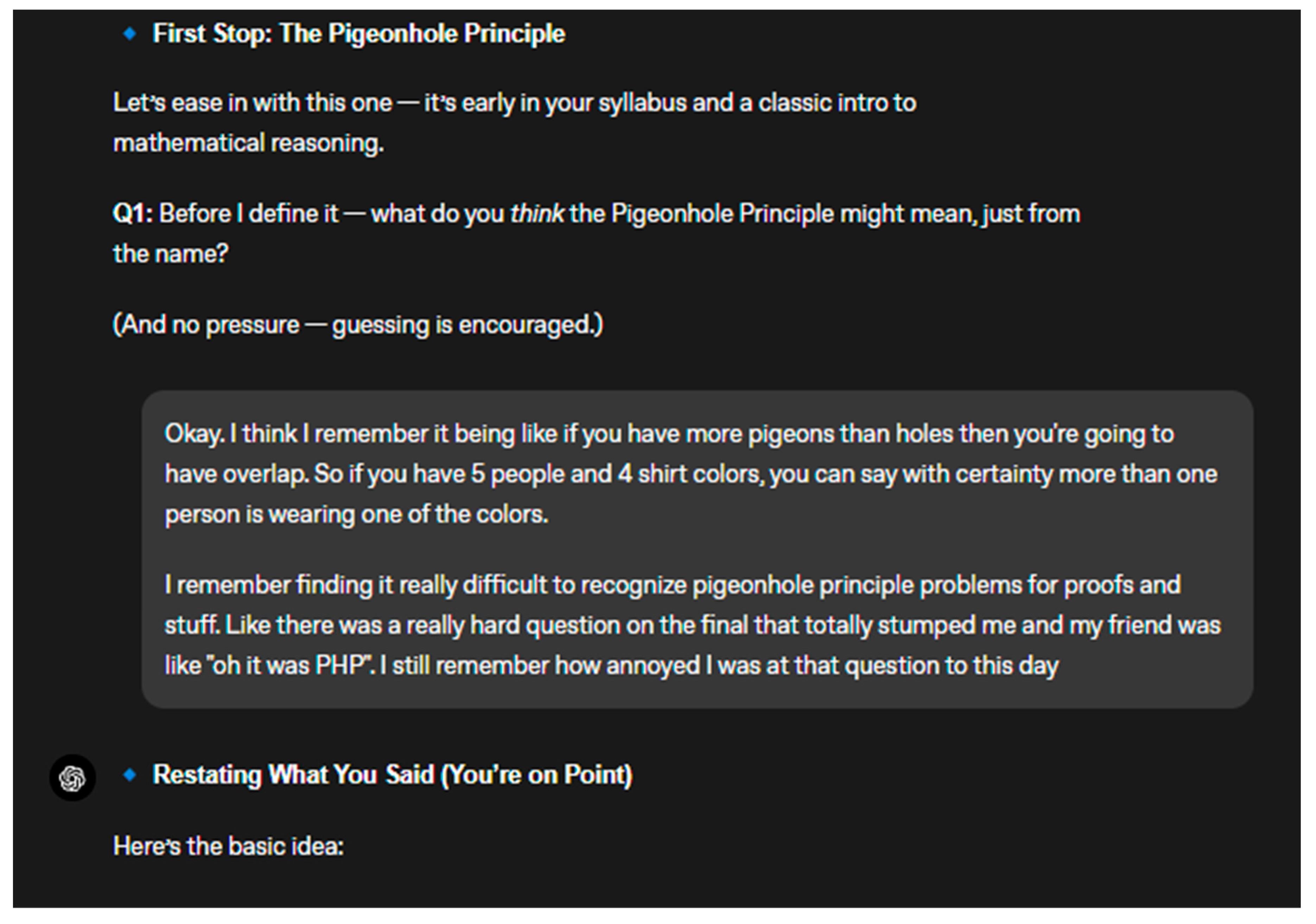
The session began with the Pigeonhole Principle, which was selected as an accessible entry point to rebuild her mathematical reasoning skills. Before introducing any formal definition, GPT-5 prompted Cecily to explain what she thought the concept might mean based solely on its name. Her response—drawing on a real-life analogy of shirt colors and people—provided a starting point for the AI to restate her explanation, confirm its accuracy, and connect it to the formal statement of the principle (Figure 10).
Study Mode in this case displayed several noteworthy features:
- (1)
- Conceptual Anchoring through Pre-Definition Guessing – By inviting the learner to hypothesize the meaning of a term before providing its formal definition, GPT-5 activated prior knowledge and created a reference point for new information.
- (2)
- Incremental Formalization – The AI progressively moved from Cecily’s informal example to the canonical phrasing of the Pigeonhole Principle, bridging intuitive understanding with precise mathematical language.
- (3)
- Applied Reasoning in Context – Immediate application followed definition, with GPT-5 posing a short reasoning task (e.g., determining if 13 people must share a birth month) to reinforce the principle’s logic and encourage explanation in the learner’s own words.
By structuring the interaction this way, GPT-5 simulated a Socratic classroom dialogue in which the student’s initial ideas were validated, refined, and tested through application. This sequence allowed Cecily to recall the principle and internalize its use in problem-solving, demonstrating how Study Mode can rebuild confidence and conceptual fluency in mathematical topics.
4. RQ3: Student Experiences with Study Mode
Early user feedback from college students suggested that Study Mode could be a flexible, on-demand learning companion. Students described the tool as comparable to extended “office hours”, but available at any time, with clear explanations, paced appropriately, and responsive to repeated questions.
College student A:“The best way I’d describe it is a live, 24/7, all-knowing ‘office hours.’”
College student B:“Study mode did a great job breaking down dense material into clear, well-paced explanations.”
College student C:“I put study mode to the test to tutor me on a concept I have attempted to learn many times before: sinusoidal positional encodings. It was like a tutor who doesn’t get tired of my questions. After a 3-hour working session, I finally understood it well enough to feel confident.”
These accounts indicated that learners valued Study Mode for its accessibility, clarity, and persistence—qualities that could be difficult to match in traditional instructional contexts. For some students, the opportunity to engage in extended, uninterrupted sessions appeared to support mastery of challenging topics that had previously resisted understanding.
5. Conclusions
This study examined GPT-5’s Study Mode as an AI-driven tutoring function, focusing on its technical design, potential applications, and learner perceptions.
In response to RQ1, the analysis showed that Study Mode was grounded in pedagogically informed principles such as scaffolding, Socratic questioning, embedded formative assessment, and personalization. Unlike default response modes, it structured interaction to encourage active cognitive engagement, progressively guiding the learner through conceptual development and application rather than presenting complete solutions immediately. This architecture represented a deliberate shift from answer provision toward facilitation of learning processes.
Addressing RQ2, multiple student-inspired scenarios demonstrated how Study Mode operated across various academic domains, from decision sciences and accounting to probability theory and discrete mathematics. In each case, the system adapted to learners’ prior knowledge, adjusted pacing, and integrated conceptual and procedural knowledge. These examples highlighted its flexibility in supporting foundational skill reinforcement, advanced topic exploration, and the ability to integrate real-world analogies, diagnostic questioning, and stepwise reasoning into a coherent learning experience.
For RQ3, early user feedback indicated that learners valued Study Mode’s accessibility, clarity, and persistence. Describing perpetual “office hours” underscored its role as a responsive and patient learning companion. Students reported being able to engage with challenging material for extended periods, ask repeated questions without hesitation, and develop confidence in their understanding—conditions that were often difficult to replicate in traditional educational settings.
Overall, the findings suggested that GPT-5’s Study Mode had the potential to function as an effective, adaptable supplement to formal instruction. Its design aligned with evidence-based teaching strategies while offering the immediacy and personalization of AI interaction. Future research should investigate long-term learning outcomes, potential integration with institutional learning management systems, and strategies to mitigate risks such as overreliance or reduced independent problem-solving. By addressing bedagogical opportunities and practical considerations, Study Mode could contribute meaningfully to the evolving role of AI in education.
References
- W. C. Choi, I. C. Choi, and C. I. Chang, ‘The Impact of Artificial Intelligence on Education: The Applications, Advantages, Challenges and Researchers’ Perspective’, Preprints, Jan. 2025. [CrossRef]
- V. Jain, I. Singh, M. Syed, S. Mondal, and D. R. Palai, ‘Enhancing educational interactions: A comprehensive review of AI chatbots in learning environments’, in 2024 11th international conference on reliability, infocom technologies and optimization (trends and future directions)(ICRITO), IEEE, 2024, pp. 1–5.
- W. C. Choi and C. I. Chang, ‘A Survey of Techniques, Design, Applications, Challenges, and Student Perspective of Chatbot-Based Learning Tutoring System Supporting Students to Learn in Education’, 2025, Preprints.org. [CrossRef]
- Adeshola and A. P. Adepoju, ‘The opportunities and challenges of ChatGPT in education’, Interact. Learn. Environ., vol. 32, no. 10, pp. 6159–6172, 2024.
- T. Ait Baha, M. El Hajji, Y. Es-Saady, and H. Fadili, ‘The impact of educational chatbot on student learning experience’, Educ. Inf. Technol., vol. 29, no. 8, pp. 10153–10176, 2024.
- W. C. Choi, J. Peng, I. C. Choi, H. Lei, L. C. Lam, and C. I. Chang, ‘Improving Young Learners with Copilot: The Influence of Large Language Models (LLMs) on Cognitive Load and Self-Efficacy in K-12 Programming Education’, in Proceedings of the 2025 International Conference on Artificial Intelligence and Education (ICAIE), Suzhou, China, 2025.
- M. D. L. Roca, M. M. Chan, A. Garcia-Cabot, E. Garcia-Lopez, and H. Amado-Salvatierra, ‘The impact of a chatbot working as an assistant in a course for supporting student learning and engagement’, Comput. Appl. Eng. Educ., vol. 32, no. 5, p. e22750, 2024.
- C. Agnew, ‘How is ChatGPT impacting schools, really? Stanford researchers aim to find out’. [Online]. Available: https://news.stanford.edu/stories/2025/07/chatgpt-open-ai-impact-schools-education-learning-data-research.
- C. I. Chang, W. C. Choi, and I. C. Choi, ‘A Systematic Literature Review of the Opportunities and Advantages for AIGC (OpenAI ChatGPT, Copilot, Codex) in Programming Course’, in Proceedings of the 2024 7th International Conference on Big Data and Education, 2024.
- C. I. Chang, W. C. Choi, I. C. Choi, and H. Lei, ‘A Systematic Literature Review of the Practical Applications of Artificial Intelligence-Generated Content (AIGC) Using OpenAI ChatGPT, Copilot, and Codex in Programming Education’, in Proceedings of the 2024 8th International Conference on Education and E-Learning, 2024.
- C. I. Chang, W. C. Choi, and I. C. Choi, ‘Challenges and Limitations of Using Artificial Intelligence Generated Content (AIGC) with ChatGPT in Programming Curriculum: A Systematic Literature Review’, in Proceedings of the 2024 7th Artificial Intelligence and Cloud Computing Conference, 2024.
- W. C. Choi, C. I. Chang, I. C. Choi, and L. C. Lam, ‘A Review of Large Language Models (LLMs) Development: A Cross-Country Comparison of the US, China, Europe, UK, India, Japan, South Korea, and Canada’, Preprints, Apr. 2025. [CrossRef]
- W. C. Choi and C. I. Chang, ‘ChatGPT-5 in Education: New Capabilities and Opportunities for Teaching and Learning’, Preprints, Aug. 2025.
- OpenAI, ‘Introducing Study Mode’. [Online]. Available: https://openai.com/index/chatgpt-study-mode/.
- OpenAI, ‘Introducing Study Mode in ChatGPT’. 2025. [Online]. Available: https://www.youtube.com/watch?v=XDYilxy1dn8.
Figure 1.
ChatGPT-5’s Study Mode.
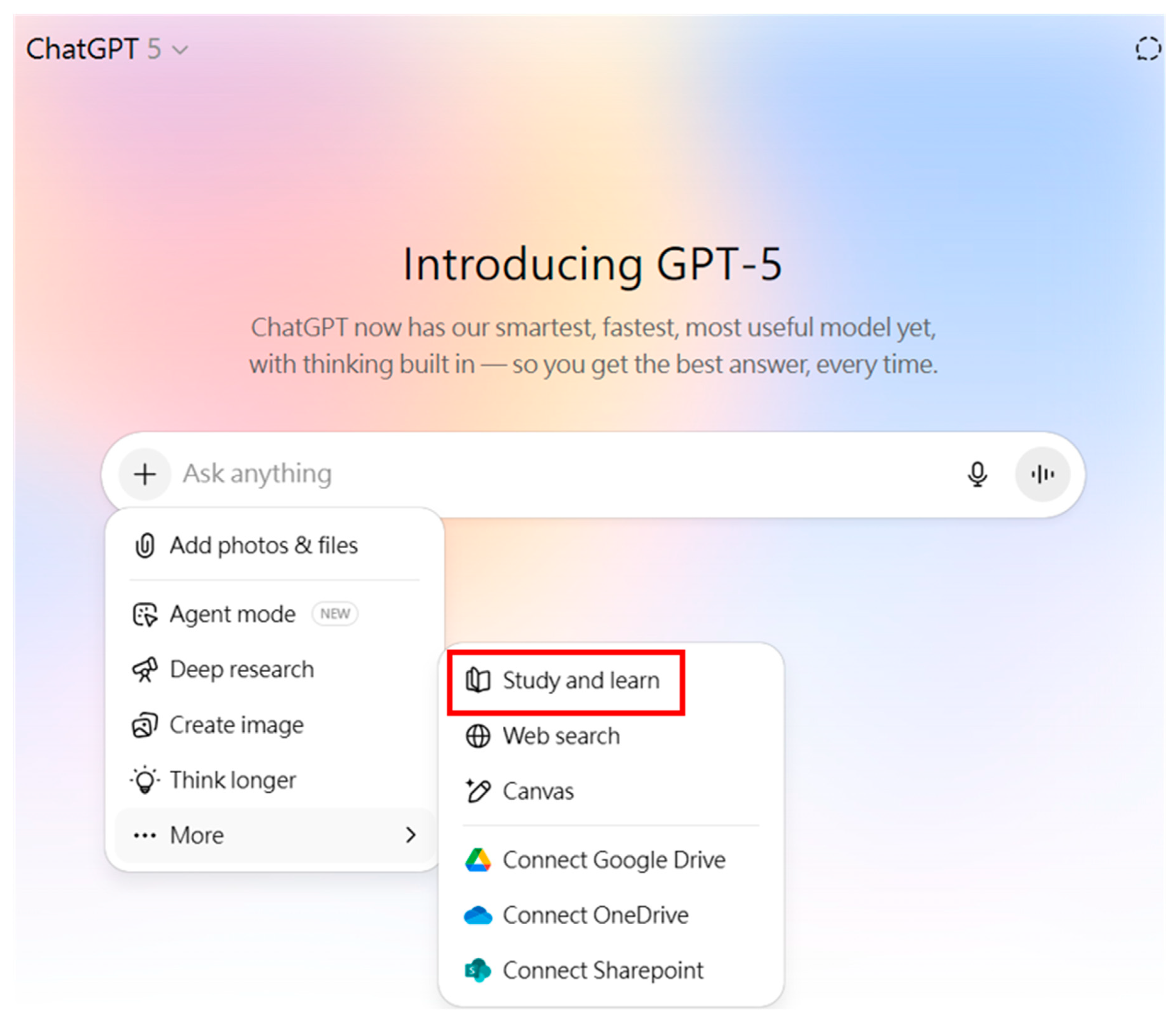
Figure 2.
ChatGPT-5’s Study Mode Enabling Step-by-Step Interactive Tutoring [15].
Figure 2.
ChatGPT-5’s Study Mode Enabling Step-by-Step Interactive Tutoring [15].
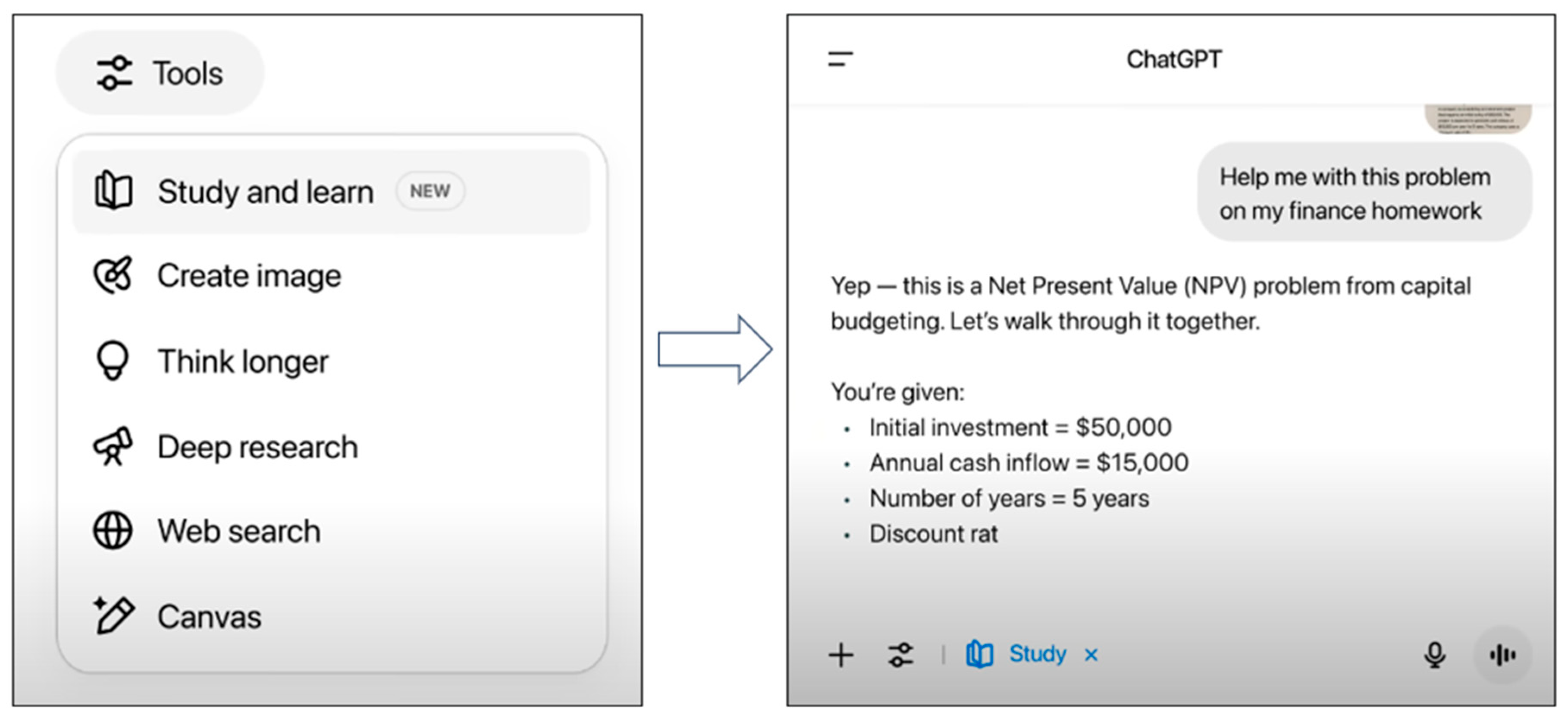
Figure 3.
Screenshot of the Roadmap presented by GPT-5 in Study Mode [14].
Figure 3.
Screenshot of the Roadmap presented by GPT-5 in Study Mode [14].
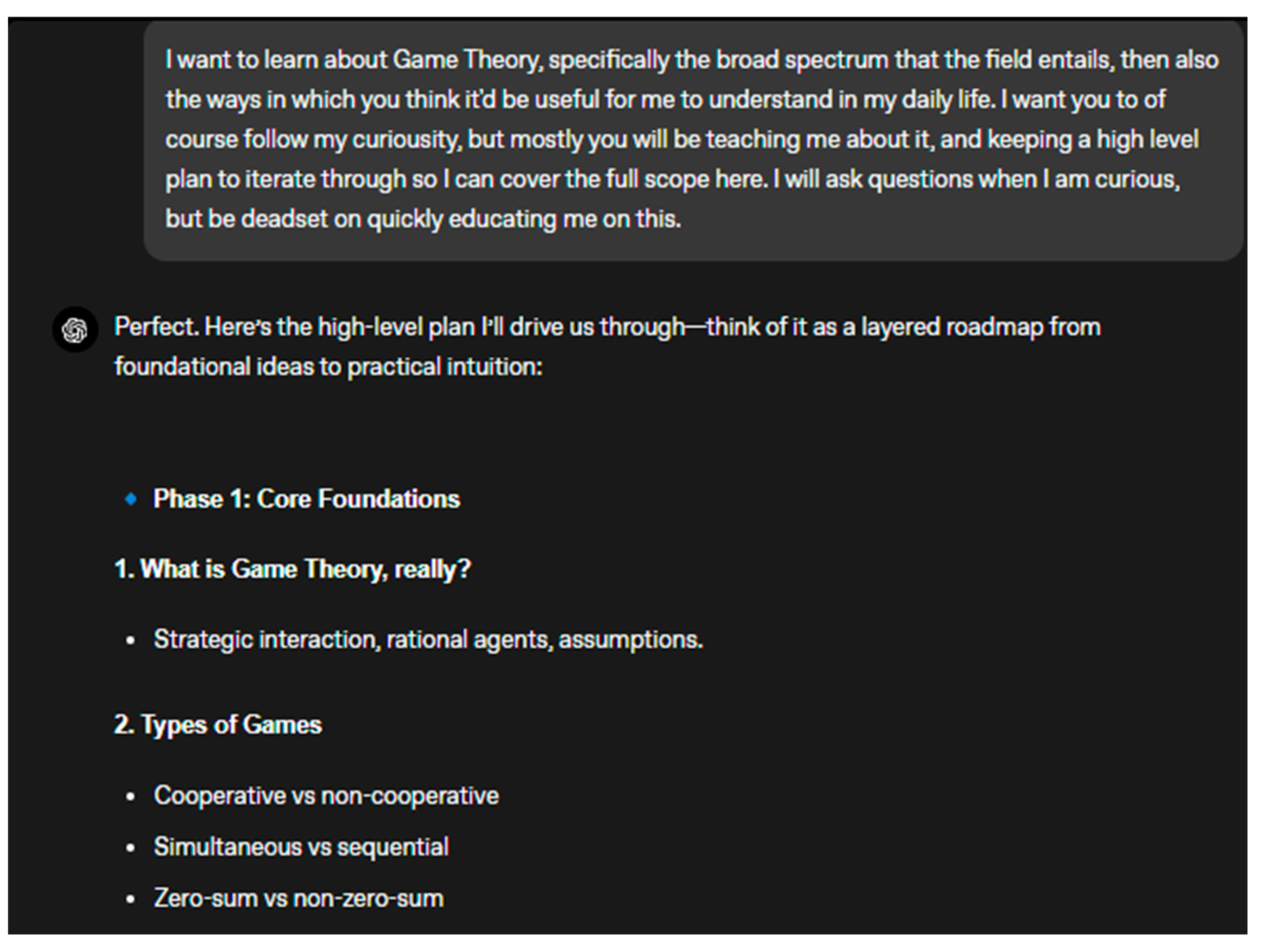
Figure 4.
Screenshot of In-Session Dialogue Clarifying the Role of Chance in Game Theory [14].
Figure 4.
Screenshot of In-Session Dialogue Clarifying the Role of Chance in Game Theory [14].
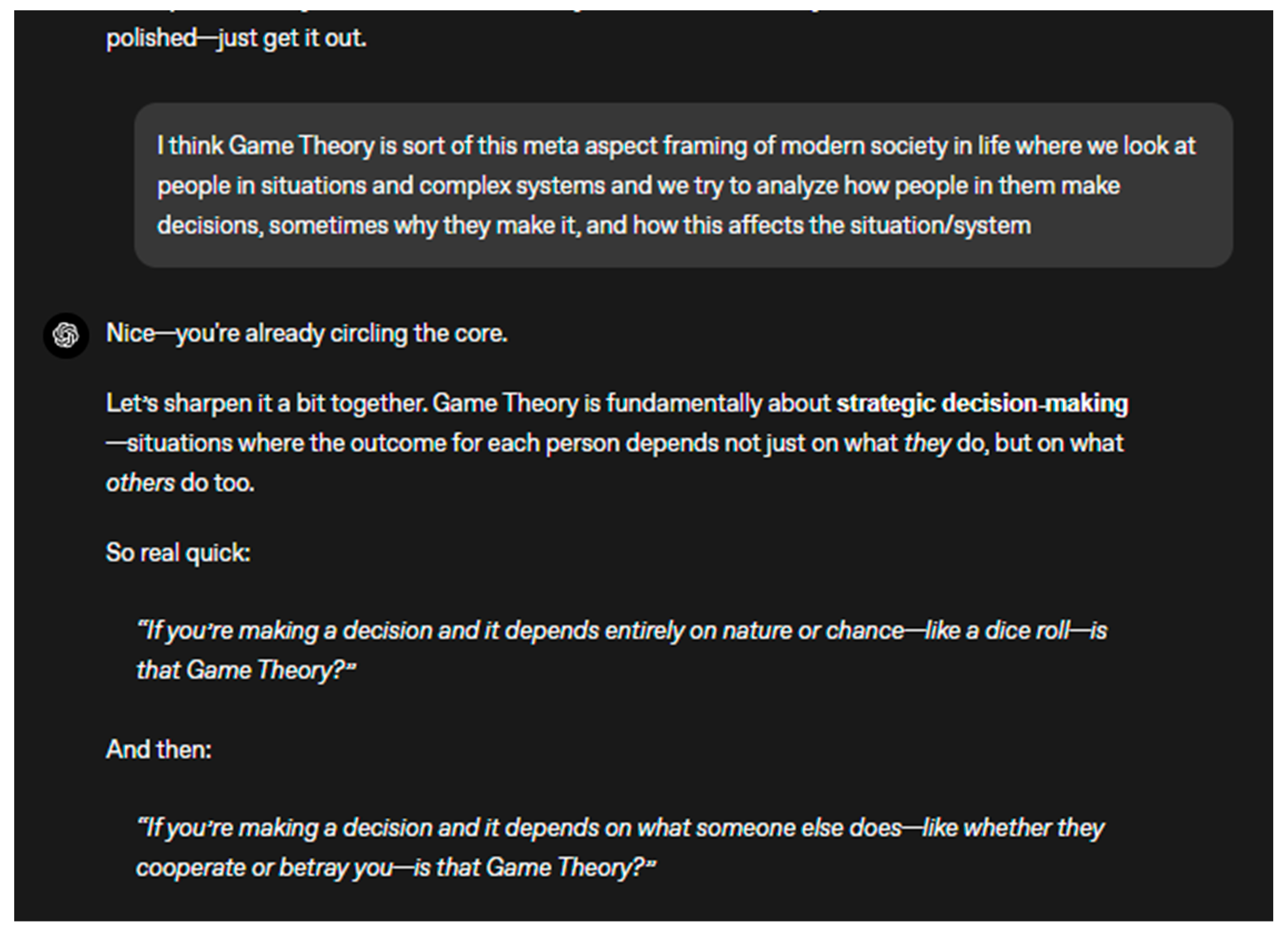
Figure 5.
Initial Diagnostic Exchange in Study Mode for Accounting Review [14].
Figure 5.
Initial Diagnostic Exchange in Study Mode for Accounting Review [14].
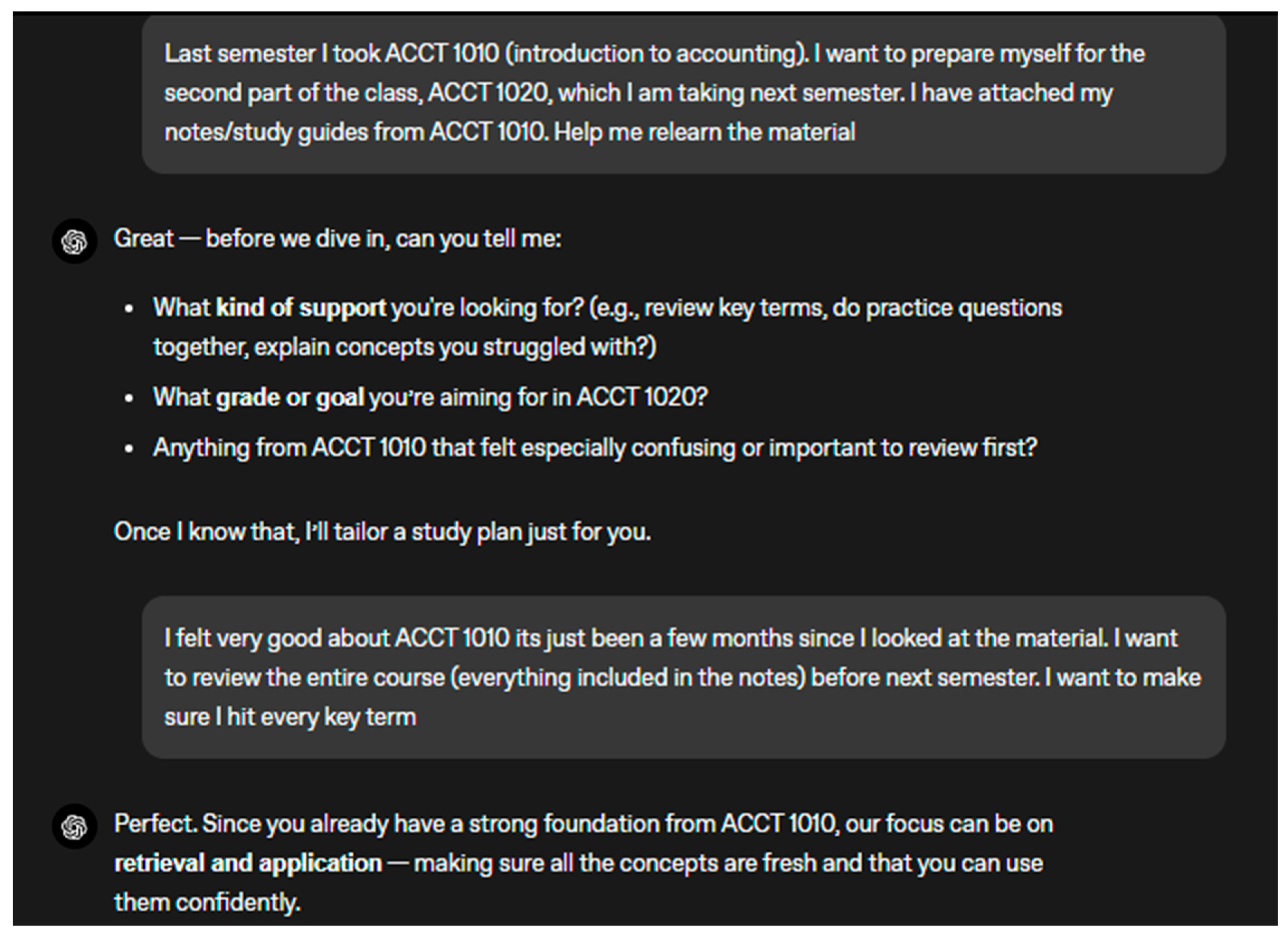
Figure 6.
Example of Interactive Questioning to Elicit Student-Generated Definitions [14].
Figure 6.
Example of Interactive Questioning to Elicit Student-Generated Definitions [14].
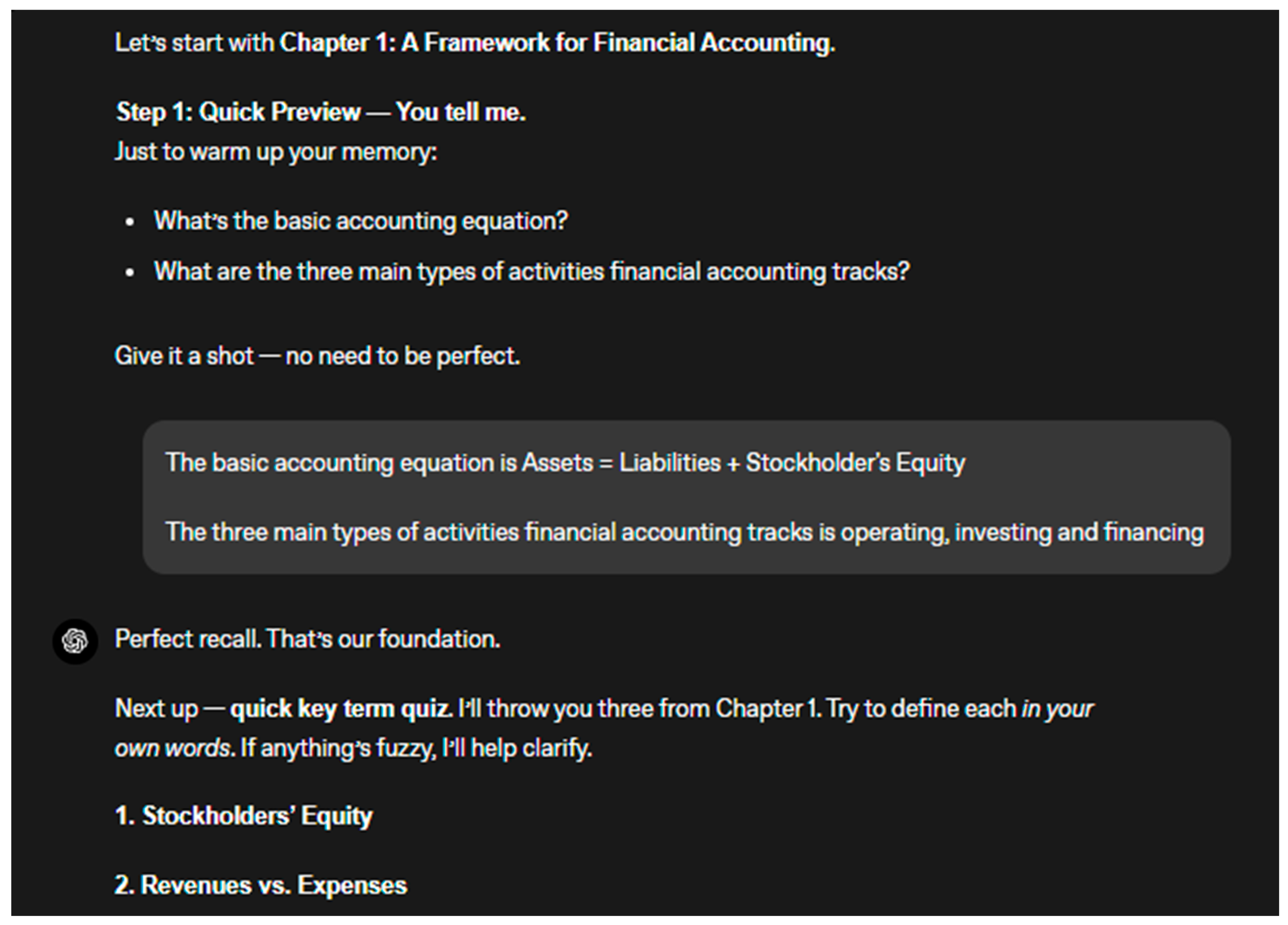
Figure 7.
Diagnostic dialogue on Bayes’ Theorem in Study Mode [14].
Figure 7.
Diagnostic dialogue on Bayes’ Theorem in Study Mode [14].
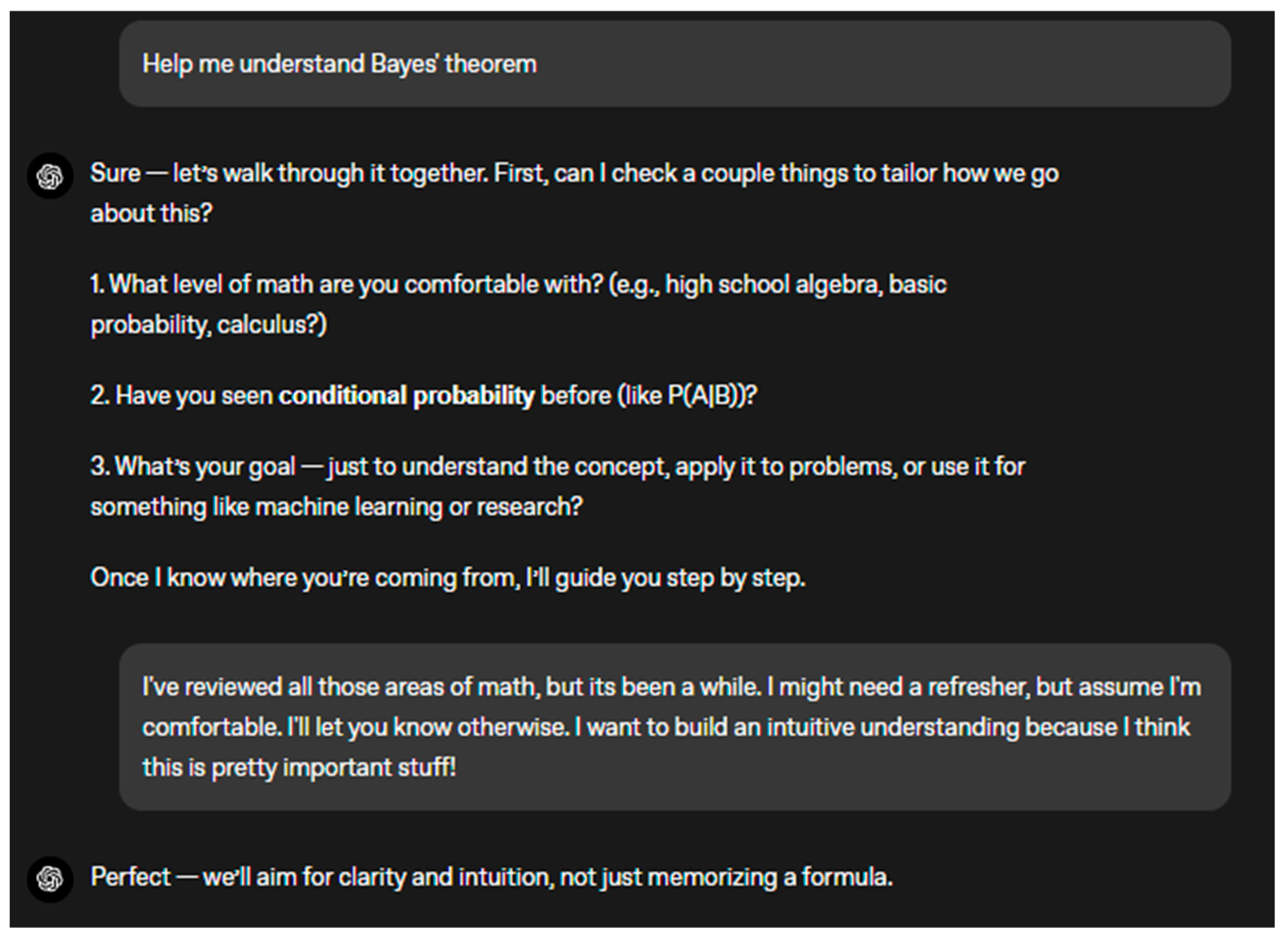
Figure 8.
Numerical Diagram Activity for the Medical Testing Example [14].
Figure 8.
Numerical Diagram Activity for the Medical Testing Example [14].
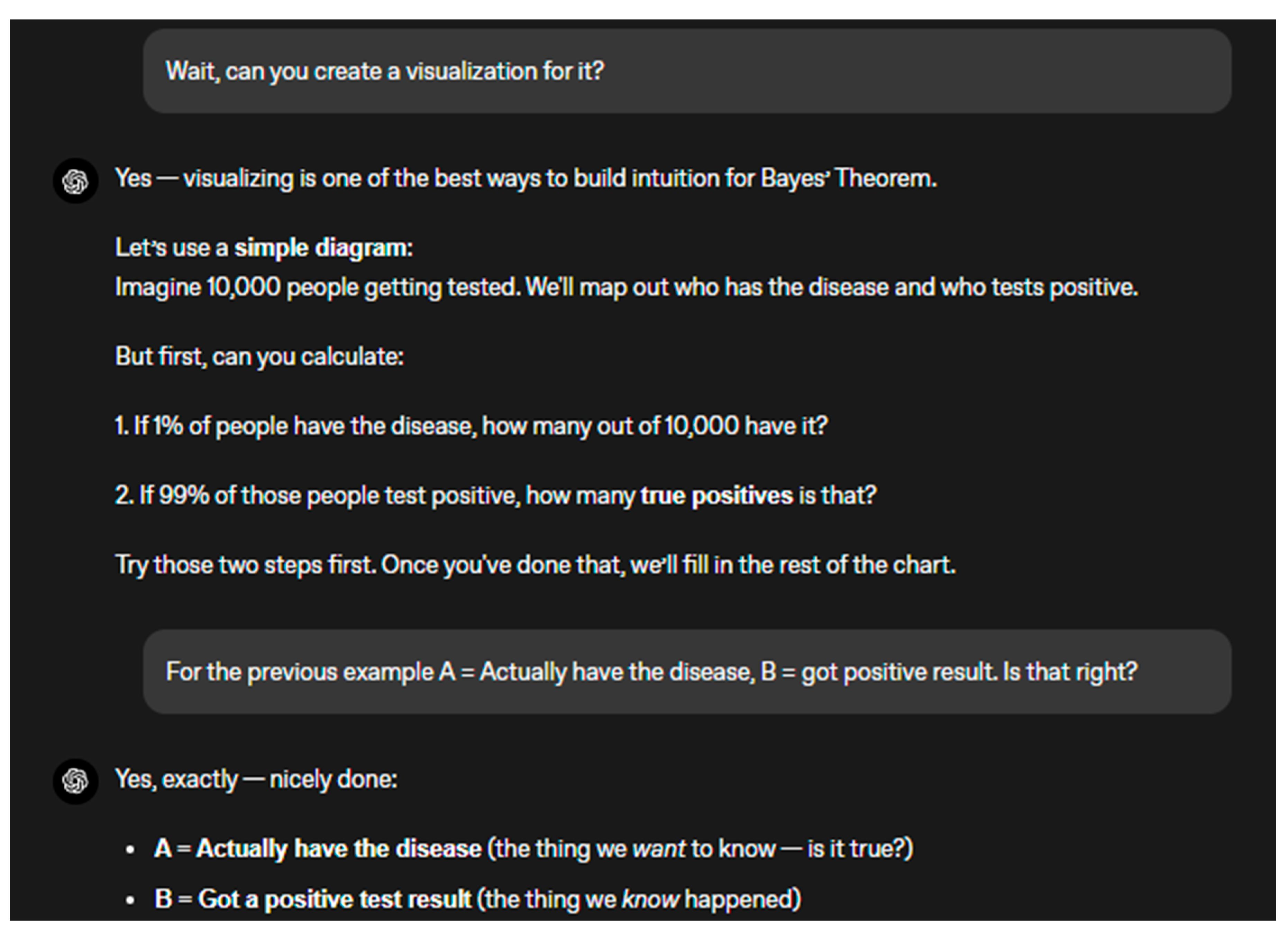
Figure 9.
Initial Calibration Phase in Study Mode for Discrete Mathematics Review [14].
Figure 9.
Initial Calibration Phase in Study Mode for Discrete Mathematics Review [14].
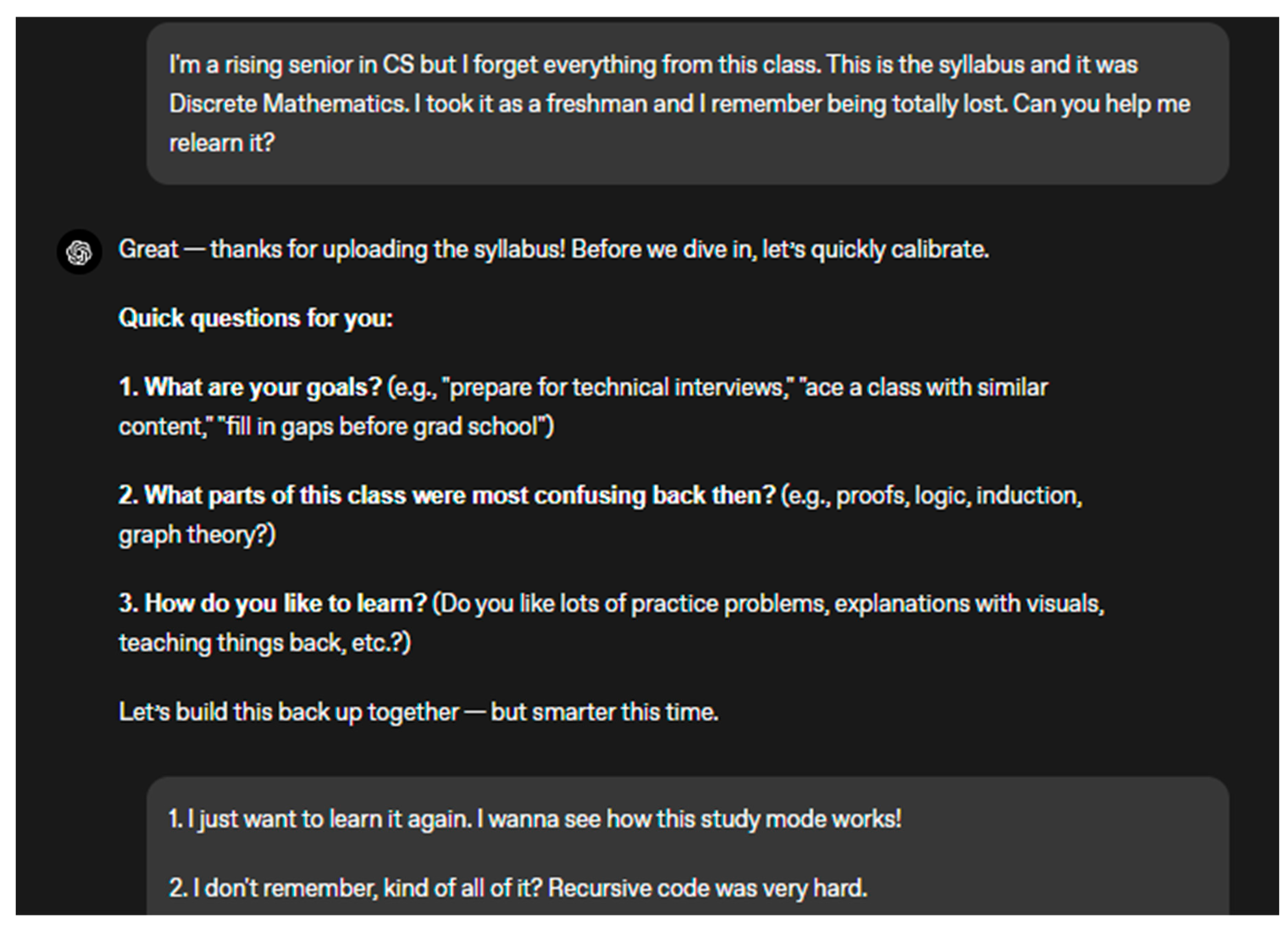
Figure 10.
Interactive Explanation and Application of the Pigeonhole Principle [14].
Figure 10.
Interactive Explanation and Application of the Pigeonhole Principle [14].
Disclaimer/Publisher’s Note: The statements, opinions and data contained in all publications are solely those of the individual author(s) and contributor(s) and not of MDPI and/or the editor(s). MDPI and/or the editor(s) disclaim responsibility for any injury to people or property resulting from any ideas, methods, instructions or products referred to in the content. |
© 2025 by the authors. Licensee MDPI, Basel, Switzerland. This article is an open access article distributed under the terms and conditions of the Creative Commons Attribution (CC BY) license (http://creativecommons.org/licenses/by/4.0/).
Copyright: This open access article is published under a Creative Commons CC BY 4.0 license, which permit the free download, distribution, and reuse, provided that the author and preprint are cited in any reuse.


