

Submitted:
06 August 2025
Posted:
07 August 2025
You are already at the latest version
Abstract
Background: Artificial intelligence tools are increasingly used to assist literature reviews, but their effectiveness compared to traditional methods is not well established. This study compares Scopus AI with PubMed keyword searches on the topic of primary prepectoral breast reconstruction after radical mastectomy. Methods: On December 11, 2024, two literature searches were conducted on the topic of primary prepectoral breast reconstruction after radical mastectomy—one using Scopus AI and the other using manual keyword searches in PubMed. Both searches were limited to peer-reviewed clinical studies in English, excluding case reports and studies with fewer than 10 patients. Data extracted included study design, sample size, outcomes, and key findings. Results: The Scopus AI search retrieved 25 articles, while the traditional method identified 4. After removing duplicates, non-English texts, and non-relevant sources, 17 articles were included in the final analysis. Scopus AI provided automatic summaries, while manual review was required for the traditional search. No overlap was found between the two methods. Conclusions: AI tools like Scopus AI can enhance the speed and breadth of literature reviews, but human oversight remains essential to ensure relevance and quality. Combining AI with traditional methods may offer a more balanced and effective approach for clinical research.
Keywords:
artificial intelligence
; breast reconstruction
1. Introduction
In recent years, the advent of AI-powered tools in academia have revolutionized the way researchers conduct literature reviews. These tools promise to deliver comprehensive reviews almost instantaneously, leveraging advanced algorithms to sift through vast amounts of data. However, as these AI tools become more prevalent, it is crucial to understand their methodologies, strengths, and limitations compared to traditional approaches. This study aims to explore the effectiveness of AI-generated literature reviews by comparing Scopus AI with traditional PubMed keyword searches. By doing so, we seek to provide insights into the accuracy, relevance, and comprehensiveness of AI-driven reviews, ultimately guiding researchers in selecting the most appropriate tools for their work and ensuring the integrity of academic research.
2. Materials and Methods
2.1. Objective
The objective of this study is to compare the effectiveness and outcomes of literature reviews conducted using Scopus AI and traditional PubMed keyword searches, specifically focusing on the topic of "Primary prepectoral breast reconstruction after radical mastectomy."
2.2. Search Strategy
Both searches were conducted on 11 December 2024.
2.2.1. Scopus AI Methodology
Scopus AI was utilized to conduct the literature search. The AI's natural language processing capabilities were employed to input the specific topic: "Primary prepectoral breast reconstruction after radical mastectomy." The search was limited to articles published in peer-reviewed journals, focusing on clinical outcomes, patient safety, and the efficacy of prepectoral breast reconstruction. Non-English articles, case reports, and studies with fewer than 10 patients were excluded. Data extracted from the retrieved articles included study design, sample size, measured outcomes, and key findings.
2.2.2. Traditional Keyword Search
A traditional keyword search was conducted using PubMed, Web of Science, and Wiley databases. The search terms employed were "prepectoral breast reconstruction" and "radical mastectomy." The inclusion and exclusion criteria were identical to those used in the Scopus AI search. Similar to the AI-based search, data on study design, sample size, measured outcomes, and key findings were extracted from the retrieved articles.
2.3. Comparison of Methodologies
2.3.1. Efficiency
The efficiency of both methods was assessed by measuring the time taken to complete the literature search and comparing the number of relevant articles retrieved. The time taken to conduct the search and the number of relevant articles identified were recorded for both Scopus AI and traditional keyword search methods.
2.3.2. Quality of Results
The quality of the results obtained from both methods was evaluated based on two key factors: relevance and comprehensiveness. The relevance of the retrieved articles to the research topic was assessed. Additionally, the comprehensiveness of the literature review was evaluated by considering the coverage of key studies and findings.
2.3.3. Analysis of Results
The data extracted from the articles retrieved using both methods were synthesized to identify common themes and patterns. The findings from the literature reviews conducted using Scopus AI and traditional keyword searches were compared to assess any discrepancies or similarities. Furthermore, the perspectives provided by the articles on the topic of primary prepectoral breast reconstruction, including patient outcomes, safety, and efficacy, were analyzed.
3. Results
The number of articles found using Scopus AI is 25, while the traditional keyword search yielded 4 articles (1 in Wiley, 1 in Pubmed and 2 in Web of Science). In the Scopus AI search, the articles retrieved were split in 3 categories: references, foundational and related. Between the references and the foundational section there was identified a duplicate. In the traditional search, the Pubmed article was a duplicate of one of the Web of science articles. In the Scopus AI search there were retrieved 1 book chapter and 4 reviews. The remaining Web of Science article was also a review. When matching between the 2 batches (Scopus AI and Traditional search) no duplicate was identified. While with Scopus AI the analysis and review of the articles was done automatically by the tool, for a human to assess the articles, 5 more needed to be excluded as 2 were in German, 1 in Chinese, 1 in Croatian and 1 in Italian. Hence, in the analysis there were included 17 articles (Figure 1).
Based on the year of publication, most of the publications happened in the last decade (Figure 2). Time to complete the research was similar, in 30 minutes per each, the data was extracted into an excel spreadsheet.
Assessment of the results was done automatically by Scopus AI providing a structured methodology presented below, while for the 2 articles in the traditional research the assessment had to be done manually.
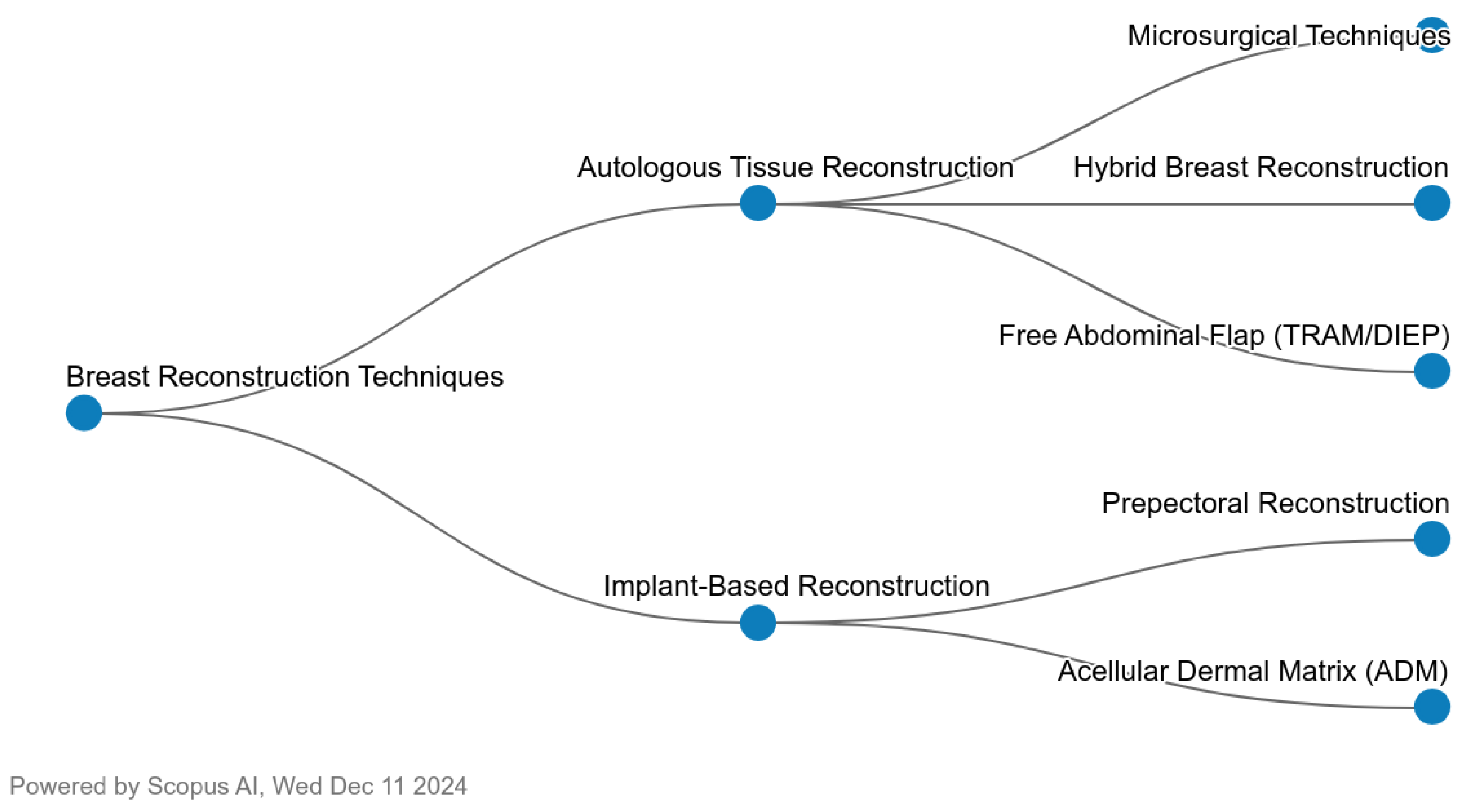
In terms of results, Scopus AI provided not only a list of articles but also a summary (Table 1), an expanded summary (Table 2), a concept map (Figure 3), a list of emerging themes in beta version (Table 4) and the query of going deeper into the understanding of the subject on 3 deferent areas (Table 5).

Table 1.
Scopus AI Summary.
| Title 1 | Title 2 | ||
|---|---|---|---|
| Primary Prepectoral Breast Reconstruction After Radical Mastectomy | Prepectoral breast reconstruction (PPBR) has gained popularity as a technique for breast reconstruction following mastectomy due to its numerous advantages over traditional subpectoral methods. This summary provides an overview of the benefits, complications, and outcomes associated with PPBR based on recent studies. | ||
| Advantages of Prepectoral Breast Reconstruction: | |||
| Complications and Considerations: | |||
| Clinical Outcomes: |
|
||
| Comparison of Prepectoral and Subpectoral Techniques: | Aspect | Prepectoral | Subpectoral |
| Postoperative Pain | Lower[1,2,3] | Higher[1,2,3] | |
| Aesthetic Outcomes | Improved [4,5] | Comparable[4,5] | |
| Complication Rates | Lower capsular contracture [6,7] | Similar overall [2,6,8] | |
| Patient Satisfaction | High [4,10,11] | High[4,10,11] | |
| Functional Recovery | Faster[3] | Slower[3] | |
| In conclusion, primary prepectoral breast reconstruction after radical mastectomy offers several benefits, including reduced postoperative pain, improved aesthetic outcomes, and high patient satisfaction. However, careful patient selection and management of potential complications are essential for optimal results. | |||
Table 2.
Scopus AI Expanded Summary.
| Based on the query, I will provide a summary that covers the surgical techniques, advantages and disadvantages, patient selection considerations, and long-term outcomes and complications associated with primary prepectoral breast reconstruction after radical mastectomy. | |
| Surgical Techniques: |
|
| Advantages and Disadvantages: |
|
| Patient Selection Considerations: |
|
| Long-term Outcomes and Complications: |
|
| In conclusion, primary prepectoral breast reconstruction after radical mastectomy involves various surgical techniques, each with its own set of advantages and disadvantages. By placing the implant above the pectoral muscle, this method reduces postoperative pain, shortens recovery time, and eliminates animation deformity, improving both functional and aesthetic outcomes. Unlike submuscular placement, it avoids disruption of muscle function and allows for a more natural contour, particularly in direct-to-implant procedures. Patient selection considerations and long-term outcomes and complications are important factors to consider when opting for this reconstruction method. However, it's important to note that the evidence is limited, and further research is needed to fully understand the implications of prepectoral breast reconstruction. | |
Table 3.
Scopus AI Expanded Summary.
| Theme name (with references) | Definition | Potential hypothesis (with hyperlinks) |
|---|---|---|
| Patient Satisfaction and Quality of Life in Prepectoral Breast Reconstruction | The consistent interest in patient satisfaction and quality of life following prepectoral breast reconstruction highlights the importance of understanding patient-centered outcomes. This theme is crucial for improving surgical techniques and postoperative care to enhance patient experiences and satisfaction. |
|
| Advancements in Acellular Dermal Matrix (ADM) Utilization | The ongoing research into the use of acellular dermal matrices (ADM) in prepectoral breast reconstruction indicates a sustained interest in optimizing surgical outcomes and reducing complications. This theme is vital for developing new materials and techniques to improve the safety and efficacy of breast reconstruction procedures. |
|
| Innovations in Imaging and Measurement Techniques for Breast Reconstruction | The rising interest in advanced imaging and measurement techniques for prepectoral breast reconstruction reflects the need for precise preoperative planning and postoperative assessment. These innovations are crucial for improving surgical accuracy and patient outcomes. |
|
| Nipple-Sparing Mastectomy and Prepectoral Reconstruction | The increasing focus on nipple-sparing mastectomy combined with prepectoral reconstruction highlights the trend towards more conservative and aesthetically favorable surgical options. This approach aims to preserve the nipple-areolar complex while providing effective reconstruction, which is significant for patient satisfaction and cosmetic outcomes. |
|
| Prepectoral Tissue Expander Techniques | The novel focus on prepectoral tissue expander techniques without the use of acellular dermal matrix (ADM) represents a new direction in breast reconstruction research. This theme explores the feasibility, safety, and outcomes of using tissue expanders in a prepectoral plane, which could offer alternative options for patients and surgeons. |
|
Table 4.
Go Deeper.
| What are the key considerations for patient selection in primary prepectoral breast reconstruction? How does primary prepectoral breast reconstruction compare to subpectoral reconstruction in terms of outcomes and complications? What are the potential challenges and limitations of primary prepectoral breast reconstruction after radical mastectomy? |
4. Discussion
The results of our study demonstrate a significant disparity in the number of articles retrieved by Scopus AI and traditional keyword searches. Scopus AI, with its advanced natural language processing capabilities, identified 19 relevant articles, while the traditional approach yielded only 3. This substantial difference underscores the efficiency and potential of AI-powered tools in expanding the scope of literature reviews. However, it is crucial to acknowledge the potential drawbacks of relying solely on AI-generated results. The sheer volume of articles retrieved by Scopus AI can be overwhelming, particularly for researchers with limited expertise in the field. This abundance of information may lead to information overload, making it challenging to identify the most relevant and credible studies. Furthermore, the accuracy and relevance of AI-generated results can be influenced by the quality of the underlying algorithms and the specificity of the search queries.- Strengths and Limitations: Discuss the strengths and limitations of using Scopus AI versus traditional PubMed keyword searches for conducting literature reviews.
Prepectoral breast reconstruction—placing implants above rather than beneath the pectoral muscle—has gained popularity due to benefits such as reduced postoperative pain, faster recovery, and fewer animation deformities[18,19]. Several studies confirm these advantages. For example, a prospective comparison showed improved early shoulder function and lower pain scores in the prepectoral group at two weeks post-op , while retrospective reviews highlight similar safety profiles compared to traditional subpectoral techniques[19].
Artificial intelligence offers promising applications in this domain. In preoperative planning for DIEP flap reconstruction—a technique using abdominal perforators—AI-assisted CTA analysis has reduced planning time by approximately two hours per patient, with comparable accuracy to expert radiologists[20]. Furthermore, machine learning models predicting flap failure risk demonstrated moderate success (AUC ~0.77), potentially aiding surgeons in personalized risk stratification[21].
Beyond planning, AI is making inroads into postoperative monitoring and patient care. Systems integrating wearable sensors and computer vision algorithms can detect early signs of complications—such as wound infection or compromised perfusion—potentially alerting clinicians before clinical symptoms appear[22]. Additionally, AI has been used to optimize pain management, analyze patient-reported outcomes, and support decision-making dashboards for surgeons[22].
Despite these advances, several challenges must be addressed before AI can be widely implemented in breast reconstruction. These include the need for large validated datasets, standardized protocols, transparency in algorithms, and thorough evaluation of clinical utility and cost-effectiveness . Most importantly, AI should complement—not replace—the expert judgment of plastic surgeons, who integrate nuanced clinical and patient-specific factors into surgical planning and care.
4.1. Implications for Future Research
The comparison between Scopus AI and traditional keyword search methodologies reveals significant insights that can be applied to future research topics, particularly in the field of breast reconstruction.
4.2. Enhanced Comprehensiveness
Scopus AI's ability to retrieve a higher number of articles (19) compared to traditional keyword searches (3) demonstrates its potential to provide a more comprehensive overview of the literature. This can be particularly beneficial for emerging research topics where a broad understanding of existing studies is crucial. Researchers can leverage Scopus AI to ensure they are not missing out on relevant studies, thereby enhancing the depth and breadth of their literature reviews.
4.3. Improved Accessibility for Novices
For researchers with limited knowledge and understanding of a topic, Scopus AI can serve as a valuable tool to access a wide array of perspectives and findings. This can help build a solid foundation of knowledge and reduce the risk of bias that might arise from a more limited search. However, it is essential to provide guidance on how to navigate and filter the large volume of information to avoid potential overwhelm and confusion.
4.4. Focused and Manageable Results
While Scopus AI offers a comprehensive search, traditional keyword searches can provide more focused and manageable results. This can be advantageous for researchers who prefer a more targeted approach or those who are already familiar with the topic and seek specific studies. Combining both methodologies can offer a balanced approach, where Scopus AI is used for initial broad searches, followed by traditional keyword searches for more refined results.
4.5. Impact on Breast Reconstruction Research
In the field of breast reconstruction, the application of these methodologies can significantly impact the quality and scope of research. Scopus AI can help identify a wide range of studies, including those from diverse geographical regions and varying methodologies, contributing to a more holistic understanding of the field. This can lead to the identification of new trends, gaps in the literature, and potential areas for future research.
4.6. Encouraging Interdisciplinary Research
The comprehensive nature of Scopus AI can also encourage interdisciplinary research by uncovering studies from related fields that might not be immediately apparent through traditional keyword searches. This can foster collaboration between different disciplines, leading to innovative approaches and solutions in breast reconstruction.
5. Conclusions
5.1. Efficiency and Comprehensiveness of Scopus AI
Scopus AI demonstrated a significant advantage in retrieving a higher number of relevant articles (19) compared to traditional keyword searches (3). This highlights the efficiency and comprehensiveness of AI-powered tools in conducting literature reviews, especially for emerging research topics where a broad understanding of existing studies is crucial.
5.2. Impact on Researchers with Limited Expertise
For researchers with limited knowledge and understanding of the topic, Scopus AI can provide a valuable tool to access a wide array of perspectives and findings. This can help build a solid foundation of knowledge and reduce the risk of bias that might arise from a more limited search. However, the large volume of information retrieved by Scopus AI can be overwhelming, potentially leading to information overload and confusion.
5.3. Quality and Relevance of Results
The quality and relevance of the results obtained from Scopus AI were generally high, with the tool providing structured summaries, concept maps, and emerging themes. This automated analysis can save researchers significant time and effort. However, the accuracy and relevance of AI-generated results can be influenced by the quality of the underlying algorithms and the specificity of the search queries.
5.4. Manual Assessment in Traditional Searches
Traditional keyword searches, while yielding fewer articles, provided more focused and manageable results. The manual assessment of these articles ensured that only the most relevant studies were included in the analysis. This approach can be advantageous for researchers who prefer a more targeted approach or those who are already familiar with the topic and seek specific studies.
5.5. Implications for Future Research
The integration of Scopus AI and traditional keyword search methodologies offers a powerful combination for future research. By leveraging the strengths of both approaches, researchers can enhance the comprehensiveness, accessibility, and focus of their literature reviews. This can ultimately lead to more robust and impactful research in the field of breast reconstruction and beyond.
5.6. Encouraging Interdisciplinary Research
The comprehensive nature of Scopus AI can encourage interdisciplinary research by uncovering studies from related fields that might not be immediately apparent through traditional keyword searches. This can foster collaboration between different disciplines, leading to innovative approaches and solutions in breast reconstruction.
The study underscores the potential of AI-powered tools like Scopus AI to revolutionize literature reviews by providing a more comprehensive and efficient search process. However, it also highlights the importance of balancing AI-generated results with traditional methods to ensure the relevance and manageability of the information, particularly for researchers with limited expertise. The combined use of both methodologies can significantly enhance the quality and scope of research in breast reconstruction and other fields.
References
- Roberts, K., Mills, N., Metcalfe, C., Lane, A., Clement, C., Hollingworth, W., Taylor, J., Holcombe, C., Skillman, J., Fairhurst, K., Whisker, L., Cutress, R., Thrush, S., Fairbrother, P., & Potter, S. (2021). Best-BRA (Is subpectoral or prepectoral implant placement best in immediate breast reconstruction?): a protocol for a pilot randomised controlled trial of subpectoral versus prepectoral immediate implant-based breast reconstruction in women following mastectomy. BMJ Open, 11(11), e050886. [CrossRef]
- Sbitany, H., Piper, M., & Lentz, R. (2017). Prepectoral Breast Reconstruction: A Safe Alternative to Submuscular Prosthetic Reconstruction following Nipple-Sparing Mastectomy. Plastic & Reconstructive Surgery, 140(3), 432–443. [CrossRef]
- Lee, J. S., Park, E., Lee, J. H., Lee, J., Park, H. Y., Yang, J. D., & Jung, T.-D. (2021). A prospective comparison study of early functional outcomes after implant-based breast reconstruction: subpectoral versus prepectoral technique. Annals of Palliative Medicine, 10(3), 2520–2529. [CrossRef]
- Taj, S., Chandavarkar, R., & Vidya, R. (2024). Current Global Trends in Prepectoral Breast Reconstruction. Medicina, 60(3), 431. [CrossRef]
- Rebowe, R. E., Allred, L. J., & Nahabedian, M. Y. (2018). The Evolution from Subcutaneous to Prepectoral Prosthetic Breast Reconstruction. Plastic and Reconstructive Surgery - Global Open, 6(6), e1797. [CrossRef]
- Graziano, F. D., Shay, P. L., Sanati-Mehrizy, P., & Sbitany, H. (2021b). Prepectoral implant reconstruction in the setting of post-mastectomy radiation. Gland Surgery, 10(1), 411–416. [CrossRef]
- Sigalove, S. (2019). Prepectoral breast reconstruction and radiotherapy—a closer look. Gland Surgery, 8(1), 67–74. [CrossRef]
- Mégevand, V., Scampa, M., McEvoy, H., Kalbermatten, D. F., & Oranges, C. M. (2022). Comparison of Outcomes Following Prepectoral and Subpectoral Implants for Breast Reconstruction: Systematic Review and Meta-Analysis. Cancers, 14(17), 4223. [CrossRef]
- Kumbla, P. A., Ananthasekar, S., & Denney, B. D. (2021). Two-Stage, Prepectoral Breast Reconstruction. Annals of Plastic Surgery, 86(6S), S482–S486. [CrossRef]
- Abd El Maksoud, W. M., Ahmed, Y. S., Hamza, A., Alghamdi, M. A., Alhashash, M., Rizk, P. A., al Amri, F. S., Abbas, K. S., Dalboh, A., Alzahrani, H. A., Alshandeer, M. H., Bawahab, A. M., & Sultan, M. H. (2024). Management of Breast Cancer by Skin-Reducing Mastectomy and Immediate Breast Reconstruction by Prepectoral Implant Approach with Polypropylene Mesh for Patients with Large Breasts. Aesthetic Plastic Surgery. [CrossRef]
- Abbas, A., Rizki, H., Tanska, A., Concepcion, M., Tasoulis, M. K., & Gui, G. (2022). A comparative study of secondary procedures after sub-pectoral and pre-pectoral single-stage implant-based breast reconstruction. Plastic & Reconstructive Surgery. [CrossRef]
- Onesti, M. G., di Taranto, G., Ribuffo, D., & Scuderi, N. (2020). ADM-assisted prepectoral breast reconstruction and skin reduction mastectomy: Expanding the indications for subcutaneous reconstruction. Journal of Plastic, Reconstructive & Aesthetic Surgery, 73(4), 673–680. [CrossRef]
- Visnjic, M., Kovacevic, P., Paunkovic, L., Djordjevic, G., Budjevac, D., & Visnjic, A. (2009). Breast reconstruction following amputation for cancer. Vojnosanitetski Pregled, 66(6), 427–433. [CrossRef]
- Ma, J. X., Xia, Y. C., Li, B., Zhao, H. M., Lei, Y. T., & Bu, X. (2023). [Choice of immediate breast reconstructive methods after modified radical mastectomy]. Beijing Da Xue Xue Bao. Yi Xue Ban = Journal of Peking University. Health Sciences, 55(4), 612–618. [CrossRef]
- Rezai, M., Darsow, M., Kümmel, S., & Krämer, S. (2008). Autologous and Alloplastic Breast Reconstruction – Overview of Techniques, Indications and Results. Gynäkologisch-Geburtshilfliche Rundschau, 48(2), 68–75. [CrossRef]
- Talwar, A. A., Lanni, M. A., Ryan, I. A., Kodali, P., Bernstein, E., McAuliffe, P. B., Broach, R. B., Serletti, J. M., Butler, P. D., & Fosnot, J. (2023). Prepectoral vs. Submuscular Implant-based Breast Reconstruction: A Matched-Pair Comparison of Outcomes. Plastic & Reconstructive Surgery. [CrossRef]
- Kronowitz, S. J., & Kuerer, H. M. (2006). Advances and surgical decision-making for breast reconstruction. Cancer, 107(5), 893–907. [CrossRef]
- Lee JS, Park E, Lee JH, Lee J, Park HY, Yang JD, Jung TD. A prospective comparison study of early functional outcomes after implant-based breast reconstruction: subpectoral versus prepectoral technique. Ann Palliat Med 2021;10(3):2520-2529. [CrossRef]
- Fredman R, Wu C, Rapolti M, Luckett D, Fine J, McGuire K, Gallagher K, Roughton M. Prepectoral Direct-to-Implant Breast Reconstruction: Early Outcomes and Analysis of Postoperative Pain. Aesthet Surg J Open Forum. 2019 Feb 27;1(1):ojz006. PMID: 33791602; PMCID: PMC7984832. [CrossRef]
- Rugină, A.I.; Ungureanu, A.; Giuglea, C.; Marinescu, S.A. Artificial Intelligence in Breast Reconstruction: A Narrative Review. Medicina 2025, 61, 440. [CrossRef]
- Shi YC, Li J, Li SJ, Li ZP, Zhang HJ, Wu ZY, Wu ZY. Flap failure prediction in microvascular tissue reconstruction using machine learning algorithms. World J Clin Cases. 2022 Apr 26;10(12):3729-3738. PMID: 35647170; PMCID: PMC9100718. [CrossRef]
- Mansoor, M.; Ibrahim, A.F. The Transformative Role of Artificial Intelligence in Plastic and Reconstructive Surgery: Challenges and Opportunities. J. Clin. Med. 2025, 14, 2698. [CrossRef]
Figure 1.
Summary of the findings.
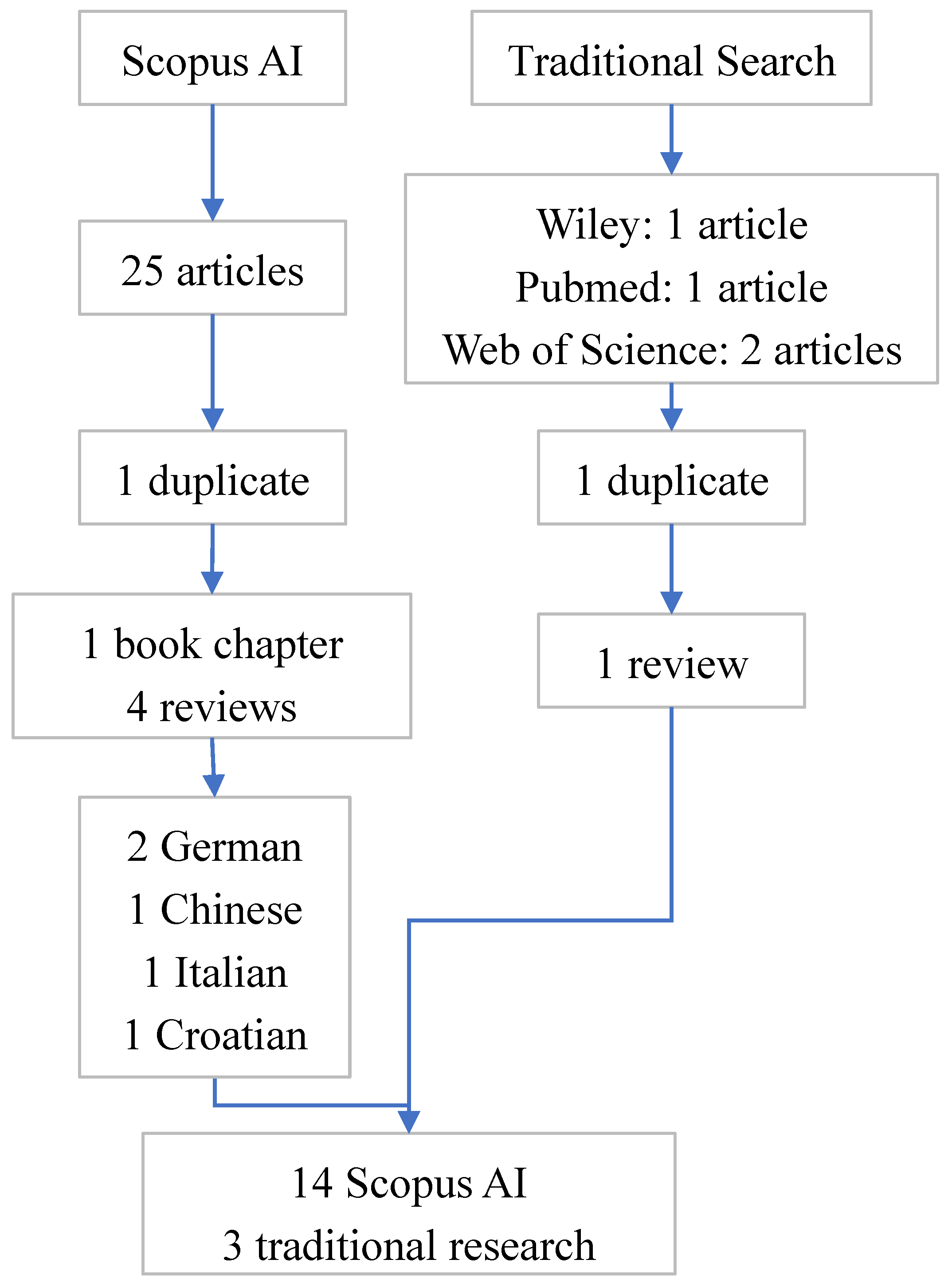
Figure 2.
Distribution of publication years.
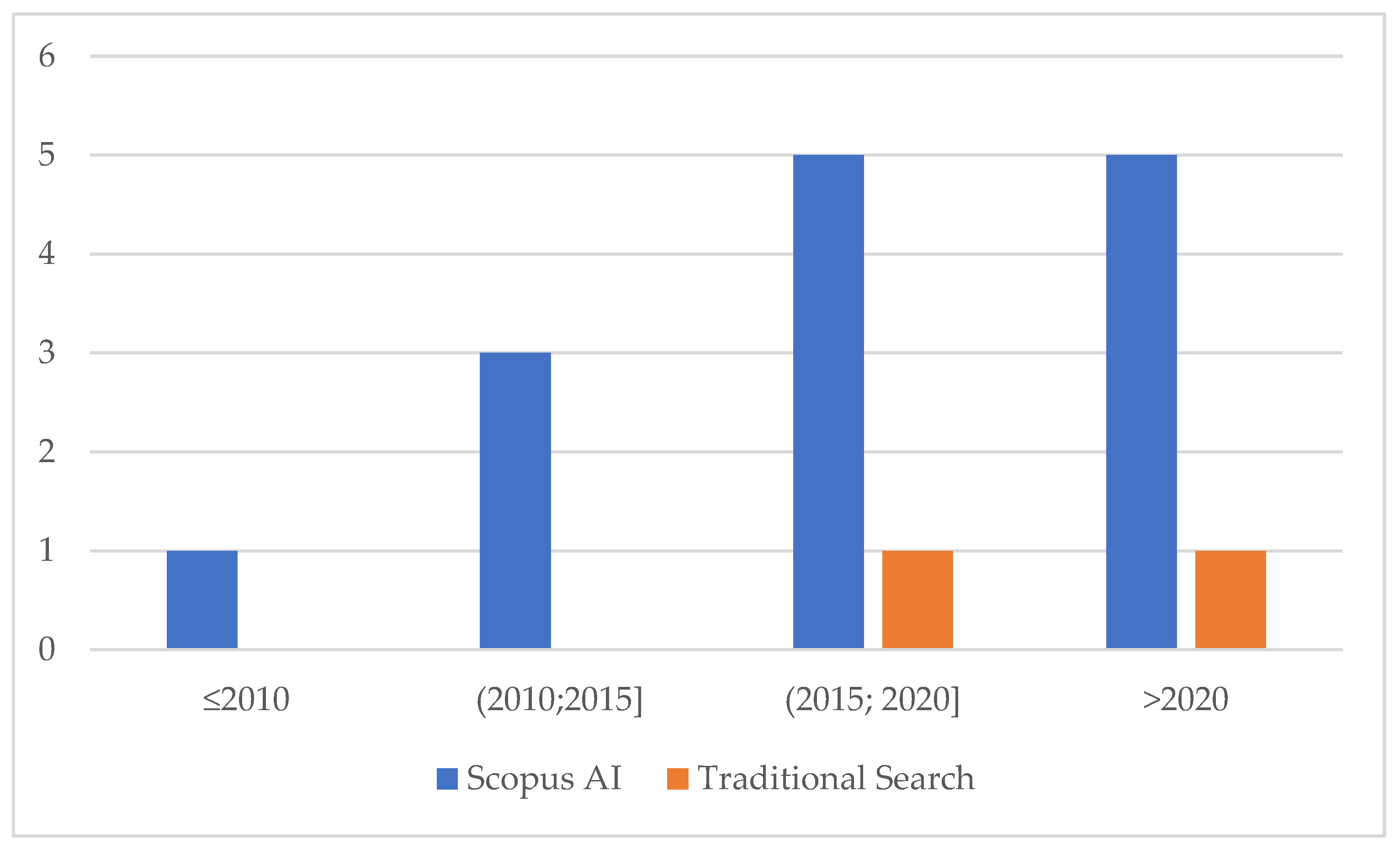
Figure 3.
Scopus AI Concept Map.
Disclaimer/Publisher’s Note: The statements, opinions and data contained in all publications are solely those of the individual author(s) and contributor(s) and not of MDPI and/or the editor(s). MDPI and/or the editor(s) disclaim responsibility for any injury to people or property resulting from any ideas, methods, instructions or products referred to in the content. |
© 2025 by the authors. Licensee MDPI, Basel, Switzerland. This article is an open access article distributed under the terms and conditions of the Creative Commons Attribution (CC BY) license (http://creativecommons.org/licenses/by/4.0/).
Copyright: This open access article is published under a Creative Commons CC BY 4.0 license, which permit the free download, distribution, and reuse, provided that the author and preprint are cited in any reuse.


