

Submitted:
10 May 2025
Posted:
12 May 2025
You are already at the latest version
Abstract
Substantial research interest has been shown over the last decade in the management of burn injuries. The aim of this bibliometric analysis was to identify and evaluate the most cited articles that have significantly advanced the field of burn injury management. The 100 most cited articles published from January 2014 to September 2024 was collated using the Web of Science database. The full text of each article was meticulously analyzed for descriptive parameters including subject matter, journal of publication, authorship, institutional affiliation, country of origin and year of publication. The 100 most cited articles had an average of 203 citations, with the most cited article reaching 754 citations. The subjects ranged from enhancing functional and cosmetic outcomes to metabolic support, fluid management, and infection prevention and management. These articles were distributed across 59 source journals, with 44% of articles having been published in just ten prominent journals. While bibliometric analyses do not accurately gauge scientific merit, this study illuminates the significant contributions to burn management over the past decade and provides valuable insights into research trends in the field.
Keywords:
Burn
; Surgery
; Bibliometric
; Citation
; Publication
1. Introduction
Burns can be associated with extensive soft tissue injuries and contribute to significant morbidity and mortality. Research on the management of burns has garnered significant interest over the last decade, as demonstrated in Figure 1. However, identifying the articles that have significantly impacted and advanced the field remains challenging. While the aim of academic research is the generation of robust literature with high level of evidence, only a minority of publications substantially contribute to the existing body of scientific knowledge.
The importance of articles published in a particular domain is echoed in the quantity of citations received from peers. Citations serve as an acknowledgement by the authors to colleagues for previous published endeavors in that academic domain. The more times an article is cited, the greater the presumed significance of the article in that particular academic domain. In this context, a bibliometric analysis can be a valuable tool for identifying impactful studies. Therefore, this study focuses on the 100 most cited articles published in the field of burn management from the past decade, aiming to provide insight into significant advancements and key contributions.
2. Materials and Methods
The Web of Science database (Clarivate, Philadelphia, USA) was utilized to perform a comprehensive search and collate articles in the field of burn management published between January 2014 to September 2024 with the highest number of citations. Three authors independently conducted the search using the keyword "burn” to identify all articles in the English language. Articles unrelated to the field of burn management were excluded after a thorough review of the full text of each article. A preliminary list of articles was compiled by combining the results from all three authors. Discrepancies were resolved through a consensus conference of all authors, culminating in the final list of 100 articles relevant to the field of burn management with the highest number of citations. The methodology was based on the approach previously described by Joyce et al [1]. Each article was systematically analyzed to extract descriptive data, including the topic, the journal and publication year, the authors, institutional affiliations and country of origin. This study was conducted in accordance with the World Medical Association Declaration of Helsinki and the Good Clinical Practice guidelines.
3. Results
In the past decade, the 100 most cited papers in the field of burn management as demonstrated in Table 1, received an average of 203 citations with a standard deviation of 117 citations. The article with the most citations garnered 754 citations, while the article with the least citations had 107 citations.
The top 100 articles with the highest citations in burn management in the past ten years were distributed across 59 source journals. Table 2 demonstrates the prominent ten journals with impact factors ranging from 2.0 to 98.4, that contributed to 44% of these articles. Further analysis of this list demonstrates that 60% of these articles constituted “review articles” and 66% of these articles were available “open access”. Elsevier and Springer Nature published 53% of these articles. Funding was a significant feature, with 20% of the articles receiving financial support from the National Institutes of Health (NIH), USA and a further 20% of the articles receiving financial support from the United States Department of Health and Human Services.
Authorship analysis revealed that seven authors contributed to 29% of the 100 most cited articles in burns management from 2014 to 2024 as demonstrated in Table 3. A gender predilection was noted, with only 23% of contributions from female authors. Geographically, 42% of the articles originated from European authors, followed by 28% from North American authors and 23% from Asian authors, as demonstrated in Fig 2. Contributions came from a variety of disciplines, with plastic & reconstructive surgeons and general surgeons making equal contributions to the literature on burn management. Additional contributions were notes from trauma surgeons, pain and rehabilitation physicians and academics or researchers in basic science and pharmacotherapy.
4. Discussion
This bibliometric analysis of burn management has identified the 100 most cited articles published over the past decade in English language literature. Our findings offer valuable insights into significant advancements in this field and highlight key contributions and trends. This list includes major randomized control trials, systematic reviews, and clinical consensus guidelines that contribute an integral knowledge base for the burn surgeon.
Wound care and dressing innovations were a prominent theme that was noted in 17 of the top 100 most cited articles, particularly focussed on rapid healing and prevention of infections [43,76,98]. The most cited article, with 754 citations, is a review of natural and synthetic polymers for wounds and burns dressing published in the International Journal of Pharmaceutics 2. Polysaccharides (alginates, chitin, chitosan, chondroitin, heparin), proteoglycans and proteins (collagen, eggshell membrane, fibrin, gelatin, keratin, silk fibroin) are natural polymers used in wounds and burns management because of their biocompatibility, biodegradability and similarity to macromolecules recognised by the body. Synthetic polymers, such as tissue-engineered skin, have been utilised in regenerative medicine for the treatment of severe skin defects or partial-thickness burn injuries.
Critical care management of burns was another prominent theme. The article with the most citations (404) in this domain explored intensive care unit acquired weakness (ICUAW), a de novo form of muscle weakness, in a substantial number of patients admitted to the ICU with severe burns and other trauma 7. Other articles in this theme examined fluid resuscitation of critically ill burns patients, nutrition and metabolism as well as prevention and management ICU and hospital acquired concurrent infections 5, 62, 71. Another major area of research was the use of virtual reality for pain management. The article with the most citations (200) in this domain was a comprehensive literature review that explored the use of virtual reality as a distraction tool to alleviate pain and distress during medical procedures such as burns debridement and dressing change 36. Other publications on this theme explored the use of virtual reality for pain and anxiety management in the paediatric burn population 69, 70.
This study sheds light on advances since the initial work by Joyce et al that explored the 100 most influential articles in the field burn management from 1945-2013 [1]. Historically, the prominent publications were limited to 27 source journals featuring Annals of Surgery, Journal of Trauma, Injury, Infection and critical care, Lancet, Burns and New England Journal of Medicine [1]. In the past decade, impactful work has been distributed across a broader range of journals, reflecting the rise of open-access publishing and increased digitisation of research. Prominent publications spanned 56 source journals featuring Critical Care, Burns & Trauma and Burns, with ongoing contribution from Lancet and Annals of Surgery to prominent burns literature.
The 100 most influential articles in burns from 1945 to 2013 ranged from 104 citations (least cited) to 746 citations (most cited) [1]. This is similar to the 100 most cited articles from 2014 to 2024, which ranged from 105 (least cited) to 754 (most cited). However, this is not similar to bibliometric analyses in other fields during the same period, such as hand surgery, which ranged from 47 (least cited) to 179 (most cited) [103].
While journal impact factor is often used as a measure of quality, it does not necessarily determine the journal’s contribution to the list of top 100 articles with the most citations. The impact factor is a measure the quality of academic journals within an academic domain and is derived by dividing the number of citations from a journal by the number of articles published in that journal over two years [102]. Most of these metrics have significant limitations in that they attribute greater significance to work in academic domains with a larger audience. For example, Lancet (impact factor 98.4) appeals to the wider medical audience, while journals such as Annals of Surgery (impact factor 10.1) and Burns & Trauma (impact factor 6.3) enjoy a smaller subspecialised readership, yet both have contributed substantially to the burn’s literature.
This study has numerous limitations that are inherent to all bibliometric analyses. Citations were utilized as a substitute to comprehend the impact and scientific merit of published articles. Citations may reflect an author's recognition of the study's relevance to their research. However, it should be noted that publications from 2023-2024 were not included in this list due to insufficient time for citation accumulation. While citation bias and self-citation can exaggerate bibliometric results, non-English articles can have limited visibility. Despite these limitations, this bibliometric analysis offers a snapshot of impactful research in burn management. It highlights key advancements and provides researchers, surgeons, and allied health professionals with a curated reference of influential studies to inform practice and future investigations.
5. Conclusions
This bibliometric analysis provides an insightful overview of the 100 most cited articles in burn management from 2014 to 2024. These articles reflect significant advancements and key contributions across diverse areas including wound care, critical care management and pain relief innovations. By highlighting the most impactful research, this study serves as a valuable resource for surgeons, researchers and allied health professionals, offering insights into the foundational work shaping modern burn care. While bibliometric analysis has inherent limitations, it remains a valuable tool for comprehending the evolution of scientific progress in this field.
Author Contributions
Conceptualization, A.N.; methodology, A.N. and J.A.; software, J.A.; formal analysis, A.N. and J.A.; investigation, A.N. and J.A.; resources, A.N.; data curation, A.N. and J.A.; writing—original draft preparation, A.N.; writing—review and editing, R.W., P.B. and L.D.; visualization, J.A.; supervision, R.W., P.B. and L.D.; project administration, A.N. All authors have read and agreed to the published version of the manuscript.
Funding
This research received no external funding.
Institutional Review Board Statement
The study was undertaken in accordance with the Declaration of Helsinki and adhered to Good Clinical Practice guidelines. Ethical review and approval was not applicable owing to lack of involvement of human or animal subjects.
Informed Consent Statement
Not applicable.
Data Availability Statement
The authors declare that data will be available upon request.
Conflicts of Interest
The authors declare no conflicts of interest.
Abbreviations
The following abbreviations are used in this manuscript:
| NIH | National Institutes of Health |
| ICUAW | Intensive Care Unit Acquired Weakness |
References
- Joyce, C. W.; Kelly, J. C.; Sugrue, C. , A bibliometric analysis of the 100 most influential papers in burns. Burns 2014, 40, 30–7. [Google Scholar] [CrossRef] [PubMed]
- Mogosanu, G. D.; Grumezescu, A. M. , Natural and synthetic polymers for wounds and burns dressing. Int J Pharm 2014, 463, 127–36. [Google Scholar] [CrossRef] [PubMed]
- Jeschke, M. G.; van Baar, M. E.; Choudhry, M. A.; Chung, K. K.; Gibran, N. S.; Logsetty, S. , Burn injury. Nat Rev Dis Primers 2020, 6, 11. [Google Scholar] [CrossRef]
- Rowan, M. P.; Cancio, L. C.; Elster, E. A.; Burmeister, D. M.; Rose, L. F.; Natesan, S.; Chan, R. K.; Christy, R. J.; Chung, K. K. , Burn wound healing and treatment: review and advancements. Crit Care 2015, 19, 243. [Google Scholar] [CrossRef]
- Jault, P.; Leclerc, T.; Jennes, S.; Pirnay, J. P.; Que, Y. A.; Resch, G.; Rousseau, A. F.; Ravat, F.; Carsin, H.; Le Floch, R.; Schaal, J. V.; Soler, C.; Fevre, C.; Arnaud, I.; Bretaudeau, L.; Gabard, J. , Efficacy and tolerability of a cocktail of bacteriophages to treat burn wounds infected by Pseudomonas aeruginosa (PhagoBurn): a randomised, controlled, double-blind phase 1/2 trial. Lancet Infect Dis 2019, 19, 35–45. [Google Scholar] [CrossRef]
- Finnerty, C. C.; Jeschke, M. G.; Branski, L. K.; Barret, J. P.; Dziewulski, P.; Herndon, D. N. , Hypertrophic scarring: the greatest unmet challenge after burn injury. Lancet 2016, 388, 1427–1436. [Google Scholar] [CrossRef] [PubMed]
- Hermans, G.; Van den Berghe, G. , Clinical review: intensive care unit acquired weakness. Crit Care 2015, 19, 274. [Google Scholar] [CrossRef]
- Wang, Y.; Beekman, J.; Hew, J.; Jackson, S.; Issler-Fisher, A. C.; Parungao, R.; Lajevardi, S. S.; Li, Z.; Maitz, P. K. M. , Burn injury: Challenges and advances in burn wound healing, infection, pain and scarring. Adv Drug Deliv Rev 2018, 123, 3–17. [Google Scholar] [CrossRef]
- Kim, H. S.; Sun, X.; Lee, J. H.; Kim, H. W.; Fu, X.; Leong, K. W. , Advanced drug delivery systems and artificial skin grafts for skin wound healing. Adv Drug Deliv Rev 2019, 146, 209–239. [Google Scholar] [CrossRef]
- Qin, S.; Xiao, W.; Zhou, C.; Pu, Q.; Deng, X.; Lan, L.; Liang, H.; Song, X.; Wu, M. , Pseudomonas aeruginosa: pathogenesis, virulence factors, antibiotic resistance, interaction with host, technology advances and emerging therapeutics. Signal Transduct Target Ther 2022, 7, 199. [Google Scholar] [CrossRef]
- Krausz, A. E.; Adler, B. L.; Cabral, V.; Navati, M.; Doerner, J.; Charafeddine, R. A.; Chandra, D.; Liang, H.; Gunther, L.; Clendaniel, A.; Harper, S.; Friedman, J. M.; Nosanchuk, J. D.; Friedman, A. J. , Curcumin-encapsulated nanoparticles as innovative antimicrobial and wound healing agent. Nanomedicine 2015, 11, 195–206. [Google Scholar] [CrossRef]
- Smolle, C.; Cambiaso-Daniel, J.; Forbes, A. A.; Wurzer, P.; Hundeshagen, G.; Branski, L. K.; Huss, F.; Kamolz, L. P. , Recent trends in burn epidemiology worldwide: A systematic review. Burns 2017, 43, 249–257. [Google Scholar] [CrossRef] [PubMed]
- Portela, R.; Leal, C. R.; Almeida, P. L.; Sobral, R. G. , Bacterial cellulose: a versatile biopolymer for wound dressing applications. Microb Biotechnol 2019, 12, 586–610. [Google Scholar] [CrossRef] [PubMed]
- Mofazzal Jahromi, M. A.; Sahandi Zangabad, P.; Moosavi Basri, S. M.; Sahandi Zangabad, K.; Ghamarypour, A.; Aref, A. R.; Karimi, M.; Hamblin, M. R. , Nanomedicine and advanced technologies for burns: Preventing infection and facilitating wound healing. Adv Drug Deliv Rev 2018, 123, 33–64. [Google Scholar] [CrossRef]
- Mulcahy, L. R.; Isabella, V. M.; Lewis, K. , Pseudomonas aeruginosa biofilms in disease. Microb Ecol 2014, 68, 1–12. [Google Scholar] [CrossRef]
- Li, X.; Liu, L.; Yang, J.; Yu, Y.; Chai, J.; Wang, L.; Ma, L.; Yin, H. , Exosome Derived From Human Umbilical Cord Mesenchymal Stem Cell Mediates MiR-181c Attenuating Burn-induced Excessive Inflammation. EBioMedicine 2016, 8, 72–82. [Google Scholar] [CrossRef]
- Tavakoli, S.; Klar, A. S. , Advanced Hydrogels as Wound Dressings. Biomolecules 2020, 10. [Google Scholar] [CrossRef]
- Lee, H. J.; Jang, Y. J. , Recent Understandings of Biology, Prophylaxis and Treatment Strategies for Hypertrophic Scars and Keloids. Int J Mol Sci 2018, 19. [Google Scholar] [CrossRef]
- Vanhorebeek, I.; Latronico, N.; Van den Berghe, G. , ICU-acquired weakness. Intensive Care Med 2020, 46, 637–653. [Google Scholar] [CrossRef]
- Abdullahi, A.; Amini-Nik, S.; Jeschke, M. G. , Animal models in burn research. Cell Mol Life Sci 2014, 71, 3241–55. [Google Scholar] [CrossRef]
- Hobman, J. L.; Crossman, L. C. , Bacterial antimicrobial metal ion resistance. J Med Microbiol 2015, 64 (Pt 5) Pt 5, 471–497. [Google Scholar] [CrossRef]
- Preiser, J. C.; van Zanten, A. R.; Berger, M. M.; Biolo, G.; Casaer, M. P.; Doig, G. S.; Griffiths, R. D.; Heyland, D. K.; Hiesmayr, M.; Iapichino, G.; Laviano, A.; Pichard, C.; Singer, P.; Van den Berghe, G.; Wernerman, J.; Wischmeyer, P.; Vincent, J. L. , Metabolic and nutritional support of critically ill patients: consensus and controversies. Crit Care 2015, 19, 35. [Google Scholar] [CrossRef] [PubMed]
- Bano, I.; Arshad, M.; Yasin, T.; Ghauri, M. A.; Younus, M. , Chitosan: A potential biopolymer for wound management. Int J Biol Macromol 2017, 102, 380–383. [Google Scholar] [CrossRef] [PubMed]
- Arno, A. I.; Gauglitz, G. G.; Barret, J. P.; Jeschke, M. G. , Up-to-date approach to manage keloids and hypertrophic scars: a useful guide. Burns 2014, 40, 1255–66. [Google Scholar] [CrossRef] [PubMed]
- Madaghiele, M.; Demitri, C.; Sannino, A.; Ambrosio, L. , Polymeric hydrogels for burn wound care: Advanced skin wound dressings and regenerative templates. Burns Trauma 2014, 2, 153–61. [Google Scholar] [CrossRef]
- Balk, R. A. , Systemic inflammatory response syndrome (SIRS): where did it come from and is it still relevant today? Virulence 2014, 5, 20–6. [Google Scholar] [CrossRef]
- Shpichka, A.; Butnaru, D.; Bezrukov, E. A.; Sukhanov, R. B.; Atala, A.; Burdukovskii, V.; Zhang, Y.; Timashev, P. , Skin tissue regeneration for burn injury. Stem Cell Res Ther 2019, 10, 94. [Google Scholar] [CrossRef]
- Lachiewicz, A. M.; Hauck, C. G.; Weber, D. J.; Cairns, B. A.; van Duin, D. , Bacterial Infections After Burn Injuries: Impact of Multidrug Resistance. Clin Infect Dis 2017, 65, 2130–2136. [Google Scholar] [CrossRef]
- Jull, A. B.; Cullum, N.; Dumville, J. C.; Westby, M. J.; Deshpande, S.; Walker, N. , Honey as a topical treatment for wounds. Cochrane Database Syst Rev 2015, 2015, CD005083. [Google Scholar] [CrossRef]
- Etulain, J. , Platelets in wound healing and regenerative medicine. Platelets 2018, 29, 556–568. [Google Scholar] [CrossRef]
- Monstrey, S.; Middelkoop, E.; Vranckx, J. J.; Bassetto, F.; Ziegler, U. E.; Meaume, S.; Teot, L. , Updated scar management practical guidelines: non-invasive and invasive measures. J Plast Reconstr Aesthet Surg 2014, 67, 1017–25. [Google Scholar] [CrossRef] [PubMed]
- Norbury, W.; Herndon, D. N.; Tanksley, J.; Jeschke, M. G.; Finnerty, C. C. , Infection in Burns. Surg Infect (Larchmt) 2016, 17, 250–5. [Google Scholar] [CrossRef]
- Chua, A. W.; Khoo, Y. C.; Tan, B. K.; Tan, K. C.; Foo, C. L.; Chong, S. J. , Skin tissue engineering advances in severe burns: review and therapeutic applications. Burns Trauma 2016, 4, 3. [Google Scholar] [CrossRef] [PubMed]
- Greenhalgh, D. G. , Management of Burns. N Engl J Med 2019, 380, 2349–2359. [Google Scholar] [CrossRef] [PubMed]
- Oudemans-van Straaten, H. M.; Spoelstra-de Man, A. M.; de Waard, M. C. , Vitamin C revisited. Crit Care 2014, 18, 460. [Google Scholar] [CrossRef]
- Indovina, P.; Barone, D.; Gallo, L.; Chirico, A.; De Pietro, G.; Giordano, A. , Virtual Reality as a Distraction Intervention to Relieve Pain and Distress During Medical Procedures: A Comprehensive Literature Review. Clin J Pain 2018, 34, 858–877. [Google Scholar] [CrossRef]
- Cauwels, A.; Rogge, E.; Vandendriessche, B.; Shiva, S.; Brouckaert, P. , Extracellular ATP drives systemic inflammation, tissue damage and mortality. Cell Death Dis 2014, 5, e1102. [Google Scholar] [CrossRef]
- Nielson, C. B.; Duethman, N. C.; Howard, J. M.; Moncure, M.; Wood, J. G. , Burns: Pathophysiology of Systemic Complications and Current Management. J Burn Care Res 2017, 38, e469–e481. [Google Scholar] [CrossRef]
- Peng, W.; Li, D.; Dai, K.; Wang, Y.; Song, P.; Li, H.; Tang, P.; Zhang, Z.; Li, Z.; Zhou, Y.; Zhou, C. , Recent progress of collagen, chitosan, alginate and other hydrogels in skin repair and wound dressing applications. Int J Biol Macromol 2022, 208, 400–408. [Google Scholar] [CrossRef]
- Randall, C. P.; Gupta, A.; Jackson, N.; Busse, D.; O'Neill, A. J. , Silver resistance in Gram-negative bacteria: a dissection of endogenous and exogenous mechanisms. J Antimicrob Chemother 2015, 70, 1037–46. [Google Scholar] [CrossRef]
- Marshall, C. D.; Hu, M. S.; Leavitt, T.; Barnes, L. A.; Lorenz, H. P.; Longaker, M. T. , Cutaneous Scarring: Basic Science, Current Treatments, and Future Directions. Adv Wound Care (New Rochelle).
- Marino, D.; Luginbuhl, J.; Scola, S.; Meuli, M.; Reichmann, E. , Bioengineering dermo-epidermal skin grafts with blood and lymphatic capillaries. Sci Transl Med 2014, 6, 221ra14. [Google Scholar] [CrossRef] [PubMed]
- Alven, S.; Aderibigbe, B. A. , Chitosan and Cellulose-Based Hydrogels for Wound Management. Int J Mol Sci 2020, 21. [Google Scholar] [CrossRef] [PubMed]
- Augustine, R.; Rehman, S. R. U.; Ahmed, R.; Zahid, A. A.; Sharifi, M.; Falahati, M.; Hasan, A. , Electrospun chitosan membranes containing bioactive and therapeutic agents for enhanced wound healing. Int J Biol Macromol 2020, 156, 153–170. [Google Scholar] [CrossRef] [PubMed]
- Bassetti, M.; De Waele, J. J.; Eggimann, P.; Garnacho-Montero, J.; Kahlmeter, G.; Menichetti, F.; Nicolau, D. P.; Paiva, J. A.; Tumbarello, M.; Welte, T.; Wilcox, M.; Zahar, J. R.; Poulakou, G. , Preventive and therapeutic strategies in critically ill patients with highly resistant bacteria. Intensive Care Med 2015, 41, 776–95. [Google Scholar] [CrossRef]
- Nisar, P.; Ali, N.; Rahman, L.; Ali, M.; Shinwari, Z. K. , Antimicrobial activities of biologically synthesized metal nanoparticles: an insight into the mechanism of action. J Biol Inorg Chem 2019, 24, 929–941. [Google Scholar] [CrossRef]
- Ono, S.; Imai, R.; Ida, Y.; Shibata, D.; Komiya, T.; Matsumura, H. , Increased wound pH as an indicator of local wound infection in second degree burns. Burns 2015, 41, 820–4. [Google Scholar] [CrossRef]
- Porter, C.; Tompkins, R. G.; Finnerty, C. C.; Sidossis, L. S.; Suman, O. E.; Herndon, D. N. , The metabolic stress response to burn trauma: current understanding and therapies. Lancet 2016, 388, 1417–1426. [Google Scholar] [CrossRef]
- Shanmuganathan, R.; Karuppusamy, I.; Saravanan, M.; Muthukumar, H.; Ponnuchamy, K.; Ramkumar, V. S.; Pugazhendhi, A. , Synthesis of Silver Nanoparticles and their Biomedical Applications - A Comprehensive Review. Curr Pharm Des 2019, 25, 2650–2660. [Google Scholar] [CrossRef]
- Ahuja, R. B. , ISBI PRACTICE GUIDELINES FOR BURN CARE: Editorial. Burns 2016, 42, 951–952. [Google Scholar] [CrossRef]
- Rose, T.; Verbeken, G.; Vos, D. D.; Merabishvili, M.; Vaneechoutte, M.; Lavigne, R.; Jennes, S.; Zizi, M.; Pirnay, J. P. , Experimental phage therapy of burn wound infection: difficult first steps. Int J Burns Trauma 2014, 4, 66–73. [Google Scholar]
- Gentile, P.; De Angelis, B.; Pasin, M.; Cervelli, G.; Curcio, C. B.; Floris, M.; Di Pasquali, C.; Bocchini, I.; Balzani, A.; Nicoli, F.; Insalaco, C.; Tati, E.; Lucarini, L.; Palla, L.; Pascali, M.; De Logu, P.; Di Segni, C.; Bottini, D. J.; Cervelli, V. , Adipose-derived stromal vascular fraction cells and platelet-rich plasma: basic and clinical evaluation for cell-based therapies in patients with scars on the face. J Craniofac Surg 2014, 25, 267–72. [Google Scholar] [CrossRef] [PubMed]
- Hakkarainen, T.; Koivuniemi, R.; Kosonen, M.; Escobedo-Lucea, C.; Sanz-Garcia, A.; Vuola, J.; Valtonen, J.; Tammela, P.; Makitie, A.; Luukko, K.; Yliperttula, M.; Kavola, H. , Nanofibrillar cellulose wound dressing in skin graft donor site treatment. J Control Release 2016, 244 (Pt B), 292–301. [Google Scholar] [CrossRef]
- Rosenberg, L.; Krieger, Y.; Bogdanov-Berezovski, A.; Silberstein, E.; Shoham, Y.; Singer, A. J. , A novel rapid and selective enzymatic debridement agent for burn wound management: a multi-center RCT. Burns 2014, 40, 466–74. [Google Scholar] [CrossRef] [PubMed]
- Morsi, N. M.; Abdelbary, G. A.; Ahmed, M. A. , Silver sulfadiazine based cubosome hydrogels for topical treatment of burns: development and in vitro/in vivo characterization. Eur J Pharm Biopharm 2014, 86, 178–89. [Google Scholar] [CrossRef]
- He, P.; Zhao, J.; Zhang, J.; Li, B.; Gou, Z.; Gou, M.; Li, X. , Bioprinting of skin constructs for wound healing. Burns Trauma 2018, 6, 5. [Google Scholar] [CrossRef]
- Monavarian, M.; Kader, S.; Moeinzadeh, S.; Jabbari, E. , Regenerative Scar-Free Skin Wound Healing. Tissue Eng Part B Rev 2019, 25, 294–311. [Google Scholar] [CrossRef]
- Shahrokhi, S.; Arno, A.; Jeschke, M. G. , The use of dermal substitutes in burn surgery: acute phase. Wound Repair Regen 2014, 22, 14–22. [Google Scholar] [CrossRef]
- Ju, H. W.; Lee, O. J.; Lee, J. M.; Moon, B. M.; Park, H. J.; Park, Y. R.; Lee, M. C.; Kim, S. H.; Chao, J. R.; Ki, C. S.; Park, C. H. , Wound healing effect of electrospun silk fibroin nanomatrix in burn-model. Int J Biol Macromol 2016, 85, 29–39. [Google Scholar] [CrossRef]
- Walker, P. F.; Buehner, M. F.; Wood, L. A.; Boyer, N. L.; Driscoll, I. R.; Lundy, J. B.; Cancio, L. C.; Chung, K. K. , Diagnosis and management of inhalation injury: an updated review. Crit Care 2015, 19, 351. [Google Scholar] [CrossRef]
- Bahramsoltani, R.; Farzaei, M. H.; Rahimi, R. , Medicinal plants and their natural components as future drugs for the treatment of burn wounds: an integrative review. Arch Dermatol Res 2014, 306, 601–17. [Google Scholar] [CrossRef]
- Lewis, S. R.; Pritchard, M. W.; Evans, D. J.; Butler, A. R.; Alderson, P.; Smith, A. F.; Roberts, I. , Colloids versus crystalloids for fluid resuscitation in critically ill people. Cochrane Database Syst Rev 2018, 8, CD000567. [Google Scholar] [CrossRef] [PubMed]
- Hu, Z.; Yang, P.; Zhou, C.; Li, S.; Hong, P. , Marine Collagen Peptides from the Skin of Nile Tilapia (Oreochromis niloticus): Characterization and Wound Healing Evaluation. Mar Drugs 2017, 15. [Google Scholar] [CrossRef]
- Hadisi, Z.; Nourmohammadi, J.; Nassiri, S. M. , The antibacterial and anti-inflammatory investigation of Lawsonia Inermis-gelatin-starch nano-fibrous dressing in burn wound. Int J Biol Macromol 2018, 107 (Pt B), 2008–2019. [Google Scholar] [CrossRef]
- Ter Horst, B.; Chouhan, G.; Moiemen, N. S.; Grover, L. M. , Advances in keratinocyte delivery in burn wound care. Adv Drug Deliv Rev 2018, 123, 18–32. [Google Scholar] [CrossRef]
- Bittner, E. A.; Shank, E.; Woodson, L.; Martyn, J. A. , Acute and perioperative care of the burn-injured patient. Anesthesiology 2015, 122, 448–64. [Google Scholar] [CrossRef]
- Dai, C.; Shih, S.; Khachemoune, A. , Skin substitutes for acute and chronic wound healing: an updated review. J Dermatolog Treat 2020, 31, 639–648. [Google Scholar] [CrossRef]
- Shan, Y. H.; Peng, L. H.; Liu, X.; Chen, X.; Xiong, J.; Gao, J. Q. , Silk fibroin/gelatin electrospun nanofibrous dressing functionalized with astragaloside IV induces healing and anti-scar effects on burn wound. Int J Pharm 2015, 479, 291–301. [Google Scholar] [CrossRef]
- Arane, K.; Behboudi, A.; Goldman, R. D. , Virtual reality for pain and anxiety management in children. Can Fam Physician 2017, 63, 932–934. [Google Scholar]
- Jeffs, D.; Dorman, D.; Brown, S.; Files, A.; Graves, T.; Kirk, E.; Meredith-Neve, S.; Sanders, J.; White, B.; Swearingen, C. J. , Effect of virtual reality on adolescent pain during burn wound care. J Burn Care Res 2014, 35, 395–408. [Google Scholar] [CrossRef]
- Clark, A.; Imran, J.; Madni, T.; Wolf, S. E. , Nutrition and metabolism in burn patients. Burns Trauma 2017, 5, 11. [Google Scholar] [CrossRef]
- Jeschke, M. G.; Pinto, R.; Kraft, R.; Nathens, A. B.; Finnerty, C. C.; Gamelli, R. L.; Gibran, N. S.; Klein, M. B.; Arnoldo, B. D.; Tompkins, R. G.; Herndon, D. N.; Inflammation; the Host Response to Injury Collaborative Research, P., Morbidity and survival probability in burn patients in modern burn care. Crit Care Med 2015, 43, 808-15.
- Huang, C.; Dong, L.; Zhao, B.; Lu, Y.; Huang, S.; Yuan, Z.; Luo, G.; Xu, Y.; Qian, W. , Anti-inflammatory hydrogel dressings and skin wound healing. Clin Transl Med 2022, 12, e1094. [Google Scholar] [CrossRef] [PubMed]
- El Ayadi, A.; Jay, J. W.; Prasai, A. , Current Approaches Targeting the Wound Healing Phases to Attenuate Fibrosis and Scarring. Int J Mol Sci 2020, 21. [Google Scholar] [CrossRef] [PubMed]
- Hampson, P.; Dinsdale, R. J.; Wearn, C. M.; Bamford, A. L.; Bishop, J. R. B.; Hazeldine, J.; Moiemen, N. S.; Harrison, P.; Lord, J. M. , Neutrophil Dysfunction, Immature Granulocytes, and Cell-free DNA are Early Biomarkers of Sepsis in Burn-injured Patients: A Prospective Observational Cohort Study. Ann Surg 2017, 265, 1241–1249. [Google Scholar] [CrossRef] [PubMed]
- Stoica, A. E.; Chircov, C.; Grumezescu, A. M. , Nanomaterials for Wound Dressings: An Up-to-Date Overview. Molecules 2020, 25. [Google Scholar] [CrossRef]
- Hultman, C. S.; Friedstat, J. S.; Edkins, R. E.; Cairns, B. A.; Meyer, A. A., Laser resurfacing and remodeling of hypertrophic burn scars: the results of a large, prospective, before-after cohort study, with long-term follow-up. Ann Surg 2014, 260, 519-29; discussion 529-32.
- Li, Y.; Zhang, J.; Shi, J.; Liu, K.; Wang, X.; Jia, Y.; He, T.; Shen, K.; Wang, Y.; Liu, J.; Zhang, W.; Wang, H.; Zheng, Z.; Hu, D. , Exosomes derived from human adipose mesenchymal stem cells attenuate hypertrophic scar fibrosis by miR-192-5p/IL-17RA/Smad axis. Stem Cell Res Ther 2021, 12, 221. [Google Scholar] [CrossRef]
- Baradaran-Rafii, A.; Eslani, M.; Haq, Z.; Shirzadeh, E.; Huvard, M. J.; Djalilian, A. R. , Current and Upcoming Therapies for Ocular Surface Chemical Injuries. Ocul Surf 2017, 15, 48–64. [Google Scholar] [CrossRef]
- Hop, M. J.; Polinder, S.; van der Vlies, C. H.; Middelkoop, E.; van Baar, M. E. , Costs of burn care: a systematic review. Wound Repair Regen 2014, 22, 436–50. [Google Scholar] [CrossRef]
- Hassanshahi, A.; Hassanshahi, M.; Khabbazi, S.; Hosseini-Khah, Z.; Peymanfar, Y.; Ghalamkari, S.; Su, Y. W.; Xian, C. J. , Adipose-derived stem cells for wound healing. J Cell Physiol 2019, 234, 7903–7914. [Google Scholar] [CrossRef]
- Sharma, N.; Kaur, M.; Agarwal, T.; Sangwan, V. S.; Vajpayee, R. B. , Treatment of acute ocular chemical burns. Surv Ophthalmol 2018, 63, 214–235. [Google Scholar] [CrossRef]
- Gold, M. H.; Berman, B.; Clementoni, M. T.; Gauglitz, G. G.; Nahai, F.; Murcia, C. , Updated international clinical recommendations on scar management: part 1--evaluating the evidence. Dermatol Surg 2014, 40, 817–24. [Google Scholar]
- Rousseau, A. F.; Prescott, H. C.; Brett, S. J.; Weiss, B.; Azoulay, E.; Creteur, J.; Latronico, N.; Hough, C. L.; Weber-Carstens, S.; Vincent, J. L.; Preiser, J. C. , Long-term outcomes after critical illness: recent insights. Crit Care 2021, 25, 108. [Google Scholar] [CrossRef]
- Sheikh, F. A.; Ju, H. W.; Lee, J. M.; Moon, B. M.; Park, H. J.; Lee, O. J.; Kim, J. H.; Kim, D. K.; Park, C. H. , 3D electrospun silk fibroin nanofibers for fabrication of artificial skin. Nanomedicine 2015, 11, 681–91. [Google Scholar] [CrossRef]
- Fairbairn, N. G.; Randolph, M. A.; Redmond, R. W. , The clinical applications of human amnion in plastic surgery. J Plast Reconstr Aesthet Surg 2014, 67, 662–75. [Google Scholar] [CrossRef]
- Murray, R. Z.; West, Z. E.; Cowin, A. J.; Farrugia, B. L. , Development and use of biomaterials as wound healing therapies. Burns Trauma 2019, 7, 2. [Google Scholar] [CrossRef]
- Oryan, A.; Alemzadeh, E.; Moshiri, A. , Burn wound healing: present concepts, treatment strategies and future directions. J Wound Care 2017, 26, 5–19. [Google Scholar] [CrossRef]
- Lantieri, L.; Grimbert, P.; Ortonne, N.; Suberbielle, C.; Bories, D.; Gil-Vernet, S.; Lemogne, C.; Bellivier, F.; Lefaucheur, J. P.; Schaffer, N.; Martin, F.; Meningaud, J. P.; Wolkenstein, P.; Hivelin, M. , Face transplant: long-term follow-up and results of a prospective open study. Lancet 2016, 388, 1398–1407. [Google Scholar] [CrossRef]
- Ramirez, M. S.; Bonomo, R. A.; Tolmasky, M. E. , Carbapenemases: Transforming Acinetobacter baumannii into a Yet More Dangerous Menace. Biomolecules 2020, 10. [Google Scholar] [CrossRef]
- Lambden, S.; Creagh-Brown, B. C.; Hunt, J.; Summers, C.; Forni, L. G. , Definitions and pathophysiology of vasoplegic shock. Crit Care 2018, 22, 174. [Google Scholar] [CrossRef]
- Bai, Y.; Han, Y. D.; Yan, X. L.; Ren, J.; Zeng, Q.; Li, X. D.; Pei, X. T.; Han, Y. , Adipose mesenchymal stem cell-derived exosomes stimulated by hydrogen peroxide enhanced skin flap recovery in ischemia-reperfusion injury. Biochem Biophys Res Commun 2018, 500, 310–317. [Google Scholar] [CrossRef]
- Mehta, Y.; Gupta, A.; Todi, S.; Myatra, S.; Samaddar, D. P.; Patil, V.; Bhattacharya, P. K.; Ramasubban, S. , Guidelines for prevention of hospital acquired infections. Indian J Crit Care Med 2014, 18, 149–63. [Google Scholar]
- Malbrain, M.; Langer, T.; Annane, D.; Gattinoni, L.; Elbers, P.; Hahn, R. G.; De Laet, I.; Minini, A.; Wong, A.; Ince, C.; Muckart, D.; Mythen, M.; Caironi, P.; Van Regenmortel, N. , Intravenous fluid therapy in the perioperative and critical care setting: Executive summary of the International Fluid Academy (IFA). Ann Intensive Care 2020, 10, 64. [Google Scholar] [CrossRef]
- Hui, Q.; Jin, Z.; Li, X.; Liu, C.; Wang, X. , FGF Family: From Drug Development to Clinical Application. Int J Mol Sci 2018, 19. [Google Scholar] [CrossRef]
- Zhang, Y.; Zhu, Y.; Gupta, A.; Huang, Y.; Murray, C. K.; Vrahas, M. S.; Sherwood, M. E.; Baer, D. G.; Hamblin, M. R.; Dai, T. , Antimicrobial blue light therapy for multidrug-resistant Acinetobacter baumannii infection in a mouse burn model: implications for prophylaxis and treatment of combat-related wound infections. J Infect Dis 2014, 209, 1963–71. [Google Scholar] [CrossRef]
- Li, J. Y.; Ren, K. K.; Zhang, W. J.; Xiao, L.; Wu, H. Y.; Liu, Q. Y.; Ding, T.; Zhang, X. C.; Nie, W. J.; Ke, Y.; Deng, K. Y.; Liu, Q. W.; Xin, H. B. , Human amniotic mesenchymal stem cells and their paracrine factors promote wound healing by inhibiting heat stress-induced skin cell apoptosis and enhancing their proliferation through activating PI3K/AKT signaling pathway. Stem Cell Res Ther 2019, 10, 247. [Google Scholar] [CrossRef]
- Ali, S. S.; Morsy, R.; El-Zawawy, N. A.; Fareed, M. F.; Bedaiwy, M. Y. , Synthesized zinc peroxide nanoparticles (ZnO(2)-NPs): a novel antimicrobial, anti-elastase, anti-keratinase, and anti-inflammatory approach toward polymicrobial burn wounds. Int J Nanomedicine 2017, 12, 6059–6073. [Google Scholar] [CrossRef]
- Lee, K. C.; Dretzke, J.; Grover, L.; Logan, A.; Moiemen, N. , A systematic review of objective burn scar measurements. Burns Trauma 2016, 4, 14. [Google Scholar] [CrossRef]
- Guo, J.; Nguyen, A.; Banyard, D. A.; Fadavi, D.; Toranto, J. D.; Wirth, G. A.; Paydar, K. Z.; Evans, G. R.; Widgerow, A. D. , Stromal vascular fraction: A regenerative reality? Part 2: Mechanisms of regenerative action. J Plast Reconstr Aesthet Surg 2016, 69, 180–8. [Google Scholar] [CrossRef]
- Stanojcic, M.; Abdullahi, A.; Rehou, S.; Parousis, A.; Jeschke, M. G. , Pathophysiological Response to Burn Injury in Adults. Ann Surg 2018, 267, 576–584. [Google Scholar] [CrossRef]
- Roldan-Valadez, E.; Salazar-Ruiz, S. Y.; Ibarra-Contreras, R.; Rios, C. , Current concepts on bibliometrics: a brief review about impact factor, Eigenfactor score, CiteScore, SCImago Journal Rank, Source-Normalised Impact per Paper, H-index, and alternative metrics. Ir J Med Sci 2019, 188, 939–951. [Google Scholar] [CrossRef]
- Neriamparambil, A.J.; Antony, J.; Wijenayake, L.J. , The 100 most cited articles in hand surgery from 2012-2022: a bibliometric analysis. AJOPS 2024, 7. [Google Scholar] [CrossRef]
Figure 1.
Substantial increase in the number of publications in the field of burn management over the past decade.
Figure 1.
Substantial increase in the number of publications in the field of burn management over the past decade.
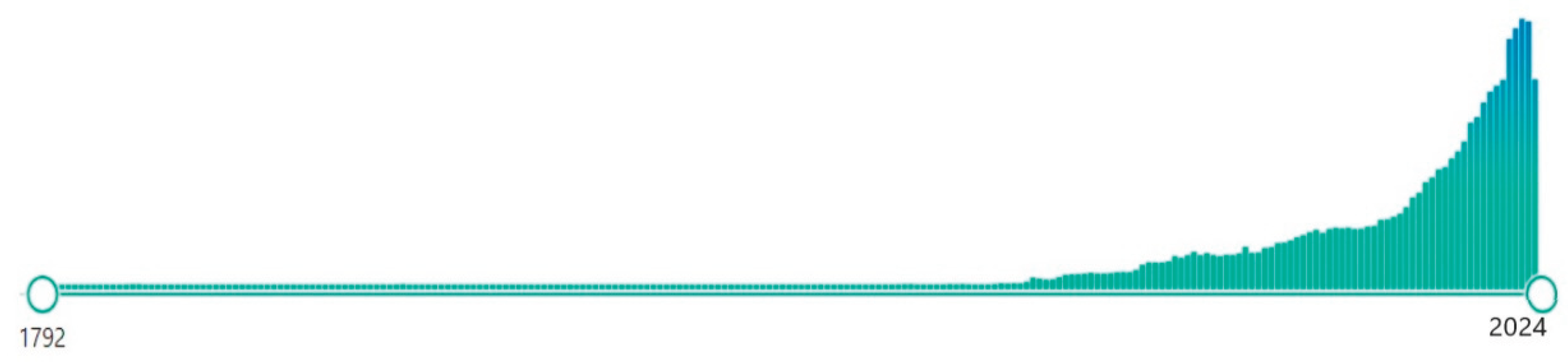
Figure 2.
Geographic distribution of authorship (based on continent) that contributed to the list of top 100 articles with most citations in burn management from 2014 to 2024.
Figure 2.
Geographic distribution of authorship (based on continent) that contributed to the list of top 100 articles with most citations in burn management from 2014 to 2024.
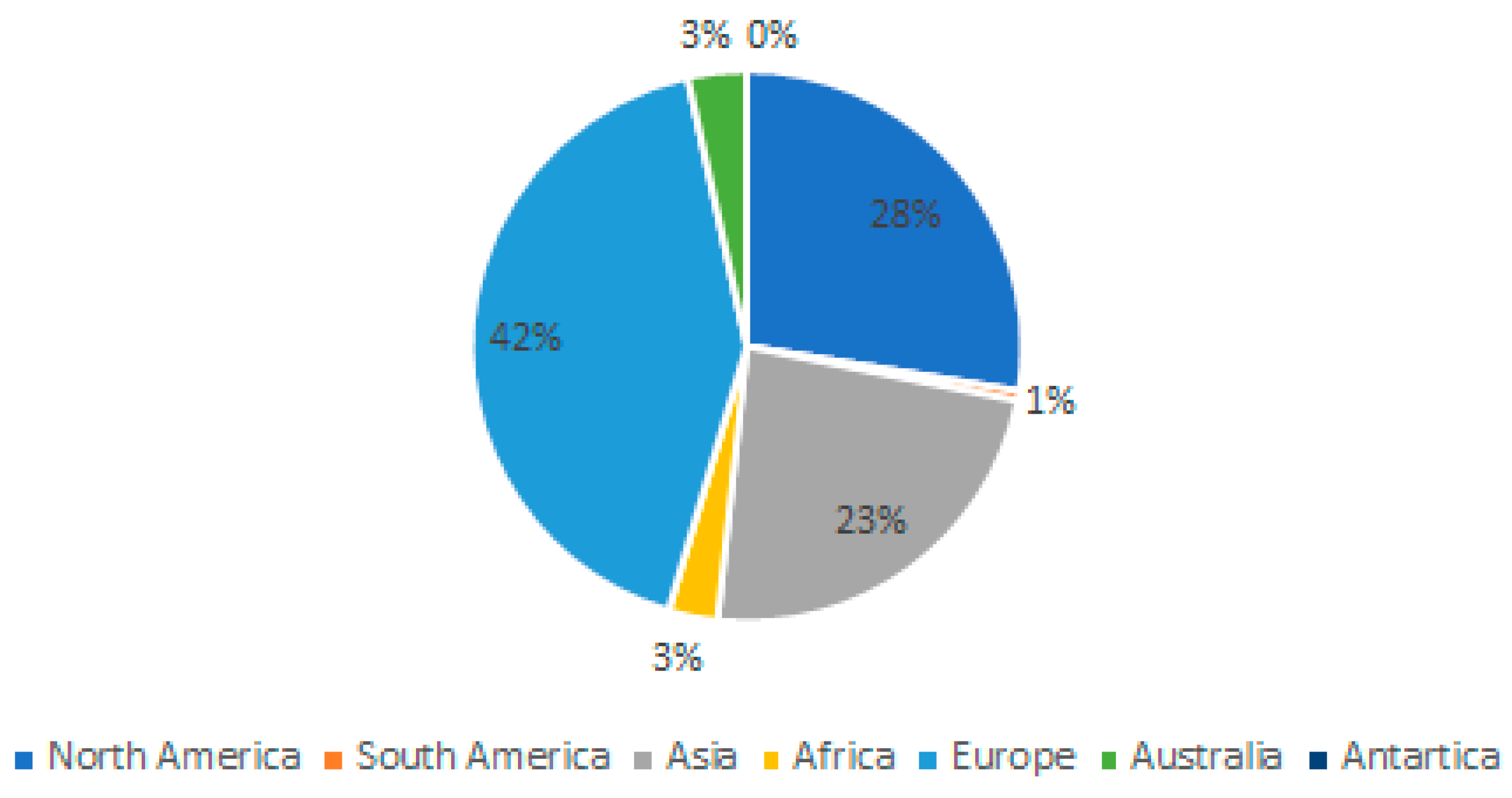

Table 1.
The top 100 articles with highest citations in burn management from 2014 to 2024.
| Rank | Reference | Citations |
| 1 | Mogosanu and Grumezescu [2] | 754 |
| 2 | Jeschke and colleagues [3] | 647 |
| 3 | Rowan and colleagues [4] | 562 |
| 4 | Jault and colleagues [5] | 496 |
| 5 | Finnerty and colleagues [6] | 413 |
| 6 | Hermans and colleagues [7] | 404 |
| 7 | Wang and colleagues [8] | 381 |
| 8 | Kim and colleagues [9] | 378 |
| 9 | Qin and colleagues [10] | 364 |
| 10 | Krausz and colleagues [11] | 364 |
| 11 | Smolle and colleagues [12] | 347 |
| 12 | Portela and colleagues [13] | 340 |
| 13 | Jahromi and colleagues [14] | 339 |
| 14 | Mulcahy and colleagues [15] | 329 |
| 15 | Li and colleagues [16] | 328 |
| 16 | Tavakoli and colleagues [17] | 308 |
| 17 | Lee and colleagues [18] | 301 |
| 18 | Vanhorebeek and colleagues [19] | 294 |
| 19 | Abdullahi and colleagues [20] | 292 |
| 20 | Hobman and colleagues [21] | 270 |
| 21 | Preiser and colleagues [22] | 260 |
| 22 | Bano and colleagues [23] | 255 |
| 23 | Arno and colleagues [24] | 232 |
| 24 | Madaghiele and colleagues [25] | 227 |
| 25 | Balk [26] | 223 |
| 26 | Shpichka and colleagues [27] | 220 |
| 27 | Lachiewicz and colleagues [28] | 219 |
| 28 | Jull and colleagues [29] | 218 |
| 29 | Etulain [30] | 212 |
| 30 | Monstrey and colleagues [31] | 212 |
| 31 | Norbury and colleagues [32] | 204 |
| 32 | Chua and colleagues [33] | 203 |
| 33 | Greenhalgh [34] | 202 |
| 34 | Oudemans-van Straaten and colleagues [35] | 201 |
| 35 | Indovina and colleagues [36] | 200 |
| 36 | Cauwels and colleagues [37] | 195 |
| 37 | Nielson and colleagues [38] | 186 |
| 38 | Peng and colleagues [39] | 178 |
| 39 | Randall and colleagues [40] | 178 |
| 40 | Marshall and colleagues [41] | 177 |
| 41 | Marino and colleagues [42] | 173 |
| 42 | Alven and colleagues [43] | 171 |
| 43 | Augustine and colleagues [44] | 170 |
| 44 | Bassetti and colleagues [45] | 170 |
| 45 | Nisar and colleagues [46] | 169 |
| 46 | Ono and colleagues [47] | 169 |
| 47 | Porter and colleagues [48] | 167 |
| 48 | Shanmuganathan and colleagues [49] | 162 |
| 49 | Ahuja and colleagues [50] | 161 |
| 50 | Rose and colleagues [51] | 159 |
| 51 | Gentile and colleagues [52] | 157 |
| 52 | Hakkarainen and colleagues [53] | 156 |
| 53 | Rosenberg and colleagues [54] | 153 |
| 54 | Morsi and colleagues [55] | 153 |
| 55 | He and colleagues [56] | 152 |
| 56 | Monavarian and colleagues [57] | 151 |
| 57 | Shahrokhi and colleagues [58] | 151 |
| 58 | Ju and colleagues [59] | 150 |
| 59 | Walker and colleagues [60] | 147 |
| 60 | Bahramsoltani and colleagues [61] | 143 |
| 61 | Lewis and colleagues [62] | 142 |
| 62 | Hu and colleagues [63] | 142 |
| 63 | Hadisi and colleagues [64] | 140 |
| 64 | Ter Horst and colleagues [65] | 140 |
| 65 | Bittner and colleagues [66] | 138 |
| 66 | Dai and colleagues [67] | 137 |
| 67 | Shan and colleagues [68] | 137 |
| 68 | Arane and colleagues [69] | 135 |
| 69 | Jeffs and colleagues [70] | 135 |
| 70 | Clark and colleagues [71] | 134 |
| 71 | Jeschke and colleagues [72] | 134 |
| 72 | Huang and colleagues [73] | 133 |
| 73 | El Ayadi and colleagues [74] | 130 |
| 74 | Hampson and colleagues [75] | 130 |
| 75 | Stoica and colleagues [76] | 124 |
| 76 | Hultman and colleagues [77] | 124 |
| 77 | Li and colleagues [78] | 123 |
| 78 | Baradaran-Rafii and colleagues [79] | 121 |
| 79 | Hop and colleagues [80] | 121 |
| 80 | Hassanshahi and colleagues [81] | 120 |
| 81 | Sharma and colleagues [82] | 119 |
| 82 | Gold and colleagues [83] | 119 |
| 83 | Rousseau and colleagues [84] | 118 |
| 84 | Sheikh and colleagues [85] | 118 |
| 85 | Fairbairn and colleagues [86] | 118 |
| 86 | Murray and colleagues [87] | 117 |
| 87 | Oryan and colleagues [88] | 117 |
| 88 | Lantieri and colleagues [89] | 116 |
| 89 | Ramirez and colleagues [90] | 115 |
| 90 | Lambden and colleagues [91] | 114 |
| 91 | Bai and colleagues [92] | 114 |
| 92 | Mehta and colleagues [93] | 113 |
| 93 | Malbrain and colleagues [94] | 112 |
| 94 | Hui and colleagues [95] | 112 |
| 95 | Zhang and colleagues [96] | 110 |
| 96 | Li and colleagues [97] | 109 |
| 97 | Ali and colleagues [98] | 109 |
| 98 | Lee and colleagues [99] | 107 |
| 99 | Guo and colleagues [100] | 107 |
| 100 | Stanojcic and colleagues [101] | 105 |
Table 2.
Source journals contributing most frequently to the top 100 articles with most citations in burn management from 2014 to 2024.
Table 2.
Source journals contributing most frequently to the top 100 articles with most citations in burn management from 2014 to 2024.
| Journals | Impact Factor | Number of Articles |
| CRITICAL CARE | 8.8 | 7 |
| BURNS & TRAUMA | 6.3 | 6 |
| BURNS | 3.2 | 5 |
| INTERNATIONAL JOURNAL OF BIOLOGICAL MACROMOLECULES | 7.7 | 5 |
| LANCET | 98.4 | 4 |
| ADVANCED DRUG DELIVERY REVIEWS | 15.2 | 4 |
| INTERNATIONAL JOURNAL OF MOLECULAR SCIENCES | 4.9 | 4 |
| STEM CELL RESEARCH & THERAPY | 7.1 | 3 |
| JOURNAL OF PLASTIC, RECONSTRUCTIVE AND AESTHETIC SURGERY | 2.0 | 3 |
| ANNALS OF SURGERY | 10.1 | 3 |
Table 3.
Authors contributing most frequently to the top 100 articles with most citations in burn management from 2014 to 2024.
Table 3.
Authors contributing most frequently to the top 100 articles with most citations in burn management from 2014 to 2024.
| Author | Gender | Department | Institution | Country | Number of articles |
| Jeschke, Marc | Male | Burns | Ross Tilley Burn Center; Sunnybrook Research Institute | Canada | 8 |
| Herndon, David | Male | Burns | Shriners Hospital; University of Texas | USA | 4 |
| Finnerty, Celeste C. | Female | Burns | Shriners Hospital; University of Texas | USA | 4 |
| Moiemen, Naiem | Male | Burns, Plastic Surgery | University Hospital Birmingham; Scar Free Foundation Burns Research Centre | UK | 4 |
| Van den Berghe, Greet | Female | Intensive Care | University Hospital of Leuven; Hasselt University | Belgium | 3 |
| Gibran, Nicole S. | Female | Burns, General Surgery | UW Medicine Regional Burn Center, Harborview Medical Center | USA | 3 |
| Chung, Kevin K. | Male | Academic | The Education University of Hong Kong | People’s Republic of China | 3 |
Disclaimer/Publisher’s Note: The statements, opinions and data contained in all publications are solely those of the individual author(s) and contributor(s) and not of MDPI and/or the editor(s). MDPI and/or the editor(s) disclaim responsibility for any injury to people or property resulting from any ideas, methods, instructions or products referred to in the content. |
© 2025 by the authors. Licensee MDPI, Basel, Switzerland. This article is an open access article distributed under the terms and conditions of the Creative Commons Attribution (CC BY) license (http://creativecommons.org/licenses/by/4.0/).
Copyright: This open access article is published under a Creative Commons CC BY 4.0 license, which permit the free download, distribution, and reuse, provided that the author and preprint are cited in any reuse.


