
Submitted:
04 August 2025
Posted:
05 August 2025
Read the latest preprint version here
Abstract
Pastoralist socio-ecological systems in Africa, Asia, and Latin America are undergoing profound transformation under climate stress, with adaptation processes shaped by gendered power relations. This systematic review analyses 35 empirical studies pub-lished between 2013 and 2025, following PRISMA 2020 guidelines and the SWiM pro-tocol to synthesise qualitative, quantitative, and mixed-methods evidence. Gender is treated as a structuring force in adaptation, shaping labour, resource access, authority, and knowledge recognition. The results demonstrate that women’s workloads have in-creased, often without concurrent gains in authority or resource control, while institu-tional and cultural norms continue to restrict formal participation. Nevertheless, in-formal networks and collective strategies enable some women to navigate constraints, with outcomes contingent on social location and governance context. Adaptation in-terventions have sometimes reinforced exclusions, but also fostered negotiated agency, particularly under matrilineal systems or inclusive planning. The review concludes that equitable adaptation requires recognition of diverse knowledge, including indig-enous expertise, attention to intersecting exclusions, and reform of underlying power relations. These insights inform the development of adaptation policies that are re-sponsive to the lived realities of pastoralist communities.
Keywords:
adaptation governance
; adaptive capacity
; gendered agency
; climate change adaptation
; indigenous knowledge systems
; intersectionality
; pastoralist socio-ecological systems
; power relations
1. Introduction
Pastoralist socio-ecological systems (SES) in the Global South are undergoing major transformation due to intensifying climate variability, livelihood disruption, and institutional neglect [1]. Historically shaped by ecological mobility and collective governance, these systems now contend with recurrent droughts, erratic rainfall, land fragmentation, and heightened competition over scarce resources [2]. While pastoralist communities have long demonstrated resilience through adaptive movement and robust indigenous knowledge systems, their capacities are increasingly eroded by tenure insecurity, extractive development, and persistent exclusion from climate governance frameworks [3].
Critically, adaptation to climate change is not uniformly experienced within pastoralist SES [4]. Gender powerfully mediates pathways of adaptation, shaping how individuals and groups access and respond to climate risk [5]. In many pastoralist contexts, men continue to occupy privileged positions in domains of formal mobility, governance, and decision-making, while women are responsible for care labour, food security, and, increasingly, livelihood diversification through informal and subsistence production [6,7]. Yet, these roles are not static. Climate-induced stress has prompted significant reorganisation of responsibilities, with women absorbing expanded labour and resource burdens as male migration and evolving livelihood strategies reshape household economies [8,9]. Furthermore, although research on gendered transformations in pastoralist SES is expanding, the literature remains fragmented and predominantly descriptive [10,11]. Many studies operationalise gender as a binary variable, or synonym for women, thus reinforcing reductive tropes of vulnerability and victimhood [4,12]. Consequently, these approaches frequently neglect the negotiated, intersectional, and dynamic nature of power [13] especially in relation to age, class, and marital status. Moreover, the processes and mechanisms by which adaptation reorganises labour, consolidates or disrupts authority, and shapes the recognition of diverse knowledge systems have not been systematically synthesised.
This systematic review critically assesses how gender shapes adaptation to climate change in pastoralist and agro-pastoralist SES across Africa, Asia, and Latin America, following PRISMA 2020 guidelines and applying the SWiM (Synthesis Without Meta-analysis) protocol. Drawing on 35 studies, gender is approached as a structuring force that organises adaptation processes through power relations, negotiation, and institutional context rather than as a residual demographic variable. The analysis addresses shifts in labour and work, patterns of access to and control over resources, the exercise of authority and decision-making at household and community levels, and the recognition or marginalisation of gendered knowledge systems within adaptation governance. Attention is given to how adaptation is mediated by institutional arrangements, cultural norms, and social hierarchies, and to the ways men and women negotiate authority and access under these conditions. The investigation further interrogates whether adaptation interventions reinforce or challenge structural exclusions, and whether emerging forms of agency signal transformation or accommodation. These aims provide an integrated perspective on the negotiated and evolving character of gender relations in adaptation, while the synthesis identifies conceptual, empirical, and practical gaps that can inform strategies that are equitable and contextually grounded.
2. Materials and Methods
This review follows the PRISMA framework to ensure transparency and replicability in study identification, screening, and inclusion [14]. It also applies the Synthesis Without Meta-analysis (SWiM) approach, aligned with PRISMA Items 14 and 21, to synthesise a methodologically diverse body of evidence [15]. SWiM was selected due to variation in study design, outcome types, and analytical focus in the included articles. Findings were grouped into four conceptual domains reflecting key dimensions of gendered adaptation in pastoralist SES. Thematic grouping and vote counting were used to track directional change across studies. This approach enhances transparency, limits reporting bias, and supports contextual specificity.
2.1. Search Strategy and Selection
A comprehensive search was conducted in April 2023 in Web of Science and Scopus, covering 2013–2022. Search terms combined keywords searches with Boolean operators and truncation (e.g., “climate change adaptation,” “resilience,” “coping”) and gender (e.g., “gender,” “women,” “men,” “masculinities”) with a focus on pastoralist systems. Grey literature was excluded to ensure peer-reviewed quality. Grey literature was excluded to ensure peer-reviewed quality. Inclusion criteria required studies to: (1) report empirical data; (2) focus on adaptation in pastoralist or agro-pastoralist SES; and (3) present gender-disaggregated findings or explicit gender analysis.
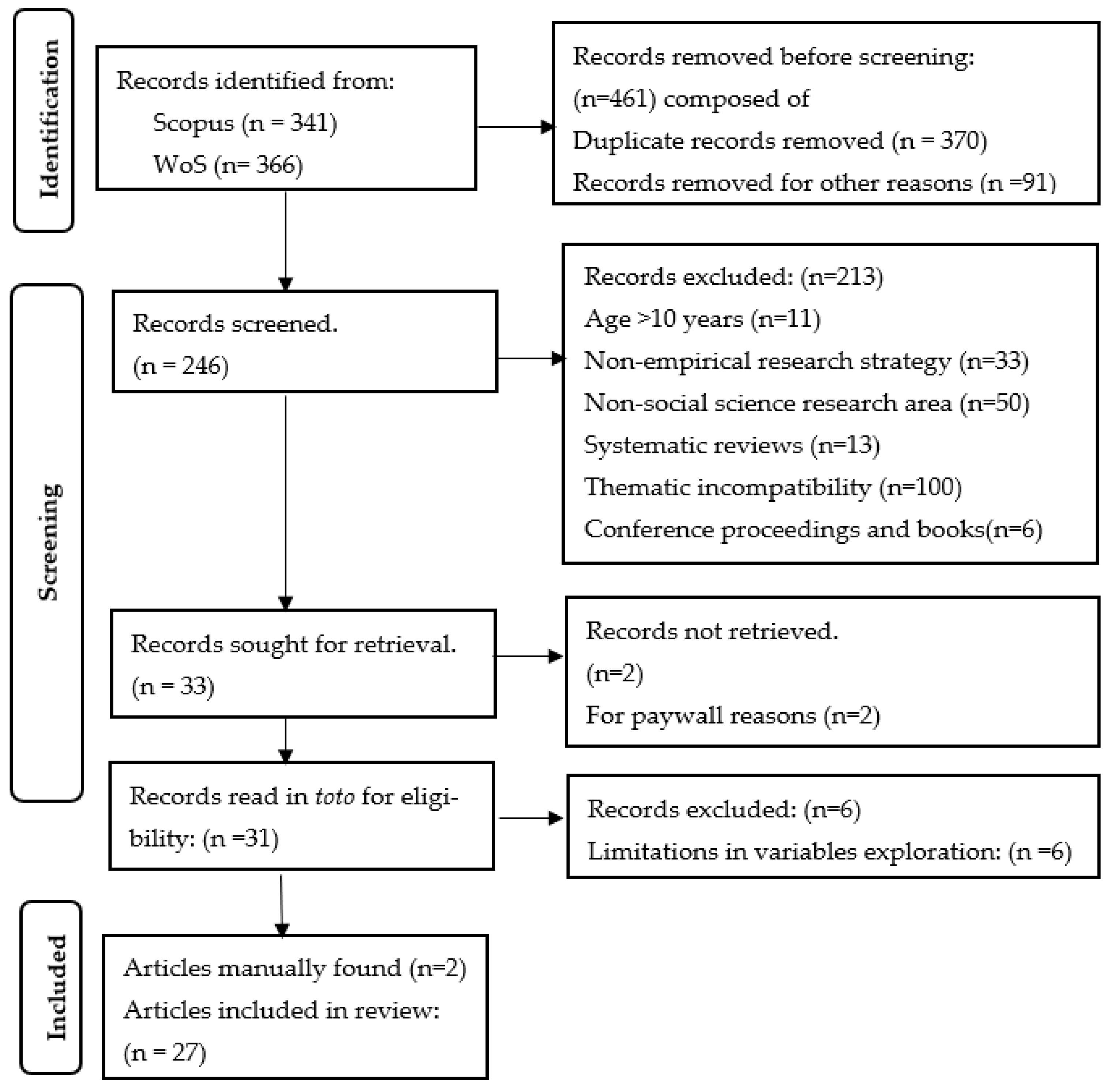
From 707 initial articles, 27 were retained after screening titles, abstracts, and full texts by the author. However, since much time had lapsed since the initial search, an updated search in April 2025 (covering 2023–2025) yielded 68 articles, with 8 meeting inclusion criteria. Figure 1(Articles from 2023-April 2025) and Figure 2 (Articles from 2013-2022) illustrate the PRISMA-based selection process. Thirty-five studies met the inclusion criteria and were analysed for this review (see Appendix A1 for the matrix of included studies and the accompanying Codebook detailing variable definitions and coding rules).
2.2. Data Extraction and Study Characteristics
All retrieved records were screened in two stages. In the first stage, two reviewers independently screened titles and abstracts to assess potential relevance against the predefined inclusion criteria. Records deemed potentially eligible were retrieved in full text for the second stage. In the second stage, the same two reviewers independently assessed full-text articles for eligibility. Any disagreements at either stage were resolved through discussion, and when consensus could not be reached, a third reviewer adjudicated. No automation tools were used in the screening process; all screening was conducted manually using a standardised eligibility form.
Using the standardised form, the researcher extracted bibliographic details, location, design, sample, key variables, gender and adaptation findings, and noted limitations. The 35 studies span diverse regions: primarily East Africa (Kenya, Ethiopia, Tanzania), with cases from West Africa, North Africa, Southern Africa, Asia and South America. Most were community-level field studies in rural agri-pastoralist or pastoralist contexts, often using mixed methods. Some studies used quantitative designs, including quasi-experimental evaluations and surveys on gender-disaggregated vulnerability. Appendix Table S1 presents each study’s design and focus. Common focal areas included labour divisions, resource access, decision-making, and knowledge systems. These domains aligned with established gender relations dimensions and guided our synthesis structure
2.3. Quality Appraisal
Each study was appraised for methodological rigour and relevance to the synthesis, though none were excluded solely on quality. Qualitative research was evaluated using SRQR criteria, and quantitative components were assessed for sampling bias, measurement validity, and confounder control. Mixed-methods studies were reviewed for integration. Although contextually rich, the evidence was constrained by case-specific, cross-sectional designs and regional sampling bias. Common limitations included small samples and recall bias. One quasi-experimental study lacked qualitative triangulation. Still, the 35 studies offer critical insights on gendered adaptation. Reporting bias was considered qualitatively (e.g., selective outcome emphasis, absent null results). No formal quantitative assessment was feasible.
2.4. Synthesis without Meta-Analysis Approach
The synthesis followed SWiM guidelines to organise findings from a methodologically diverse body of evidence [15]. A SWiM-guided narrative approach was selected because substantial heterogeneity in study designs, measures, and contexts precluded statistical meta-analysis. In line with PRISMA Item 14, findings were grouped under four domains: labour, resources, decision-making, and knowledge, enabling transparent comparison across studies. A standard descriptive format was applied. Thematic findings were summarised for qualitative studies, while vote-counting was used for quantitative studies to reflect directional trends and significance. This involved noting whether outcomes increased, decreased, or remained unchanged, and whether patterns were statistically supported or repeated.
Following PRISMA Item 21, the synthesis logic, grouping rationale, and prioritisation were documented to reduce reporting bias. Findings corroborated across studies or methods were prioritised; divergent cases were retained for contextual specificity. No effect sizes or heterogeneity metrics were reported due to the qualitative nature of most outcomes. The synthesis balances contextual distinctiveness with coherence.
2.5. Synthesis Process
Findings were coded into four domains, with many studies contributing to multiple areas. Within each domain, evidence was grouped by sub-topic (e.g., land rights, financial or communal resources under “Access to Resources”). When findings differed across studies, the researcher explored potential reasons by comparing study contexts (geography, socio-cultural setting). This narrative exploration of heterogeneity is reported alongside the results for each domain. Given the predominantly qualitative nature of outcomes, patterns and outliers were described narratively rather than analysed statistically. Within each domain, study findings were summarised in terms of reported changes (increase, decrease, redistribution, stability), direction of association with adaptation processes, and the contextual mechanisms described by authors. For quantitative findings reported in individual studies, the original effect measures (e.g., percentages, odds ratios) were retained as presented and used descriptively to complement the qualitative synthesis. We re-examined themes after excluding higher risk-of-bias studies and compared patterns across designs/regions; domain-level interpretations persisted.
Within the synthesis methods, no statistical transformations or data conversions were applied because the review primarily integrated qualitative and mixed-methods evidence. Furthermore, we re-examined themes after excluding higher risk-of-bias studies and compared patterns across designs and regions; domain-level interpretations persisted. Data preparation consisted of standardising terminology across studies to align with the four analytical domains, coding findings into thematic categories, and retaining quantitative results exactly as reported in the original sources. Missing or unclear non-outcome variables were coded as “not reported” in line with the coding rules described in the Codebook (Appendix A1).
2.6. Data Presentation
Findings supported by multiple studies or mixed-method confirmation were prioritised. Divergent findings offering critical nuance were retained. While not relying on counting, repetition across studies indicated robustness. Novel or gap-filling findings were included, even if from a single study. All included studies are referenced transparently. Confidence in domain findings was judged narratively based on consistency across studies, methodological diversity, and contextual coherence; GRADE was not applied due to qualitative emphasis.
Summary SWiM tables accompany each domain to improve transparency and traceability. Each table presents the study’s context, design, key findings, and limitations, allowing for side-by-side comparison. They clarify evidence types, distinguishing between small-N ethnographies and large surveys. The number of studies reporting a given pattern is noted (e.g., “in most studies, women’s workload increased…”). No effect sizes are reported, but consistency is described qualitatively (e.g., “widely reported”). The researcher aimed for a rigorous synthesis that transparently shows how conclusions were drawn, in line with SWiM guidance for honest and clear reporting [15].
3. Results
This synthesis draws on 35 studies (2013–2025) on gender and climate adaptation in pastoralist and agro-pastoralist systems across Africa, Asia, and Latin America. Appendix A1 summarises the key features of the articles reviewed here. Twenty used mixed-methods, ten were qualitative, two quantitative, and two longitudinal and one participatory study. Despite contextual variation, the studies converge around four thematic domains that reflect key dimensions of gender relations that shape adaptive capacity. Domains are interlinked, therefore for clarity, findings are synthesised within each domain, with cross-cutting insights discussed thereafter. Each domain is presented with a narrative synthesis and a corresponding table (Table 1, Table 2, Table 3 and Table 4).
3.1. Synthesis Across Thematic Domains.
Findings from included studies were synthesised across the four domains. Each study was coded into one or more domains based on reported outcomes. To manage heterogeneity, SWiM-guided techniques were applied, including vote counting by direction of effect and thematic grouping. Quantitative findings were tallied by directional trend; qualitative themes were aligned across comparable indicators. Divergent findings were retained and interpreted considering contextual factors. Studies with convergent evidence across settings were prioritised, while distinctive cases were included where analytically relevant. Results are presented narratively and supported by summary tables for study-level transparency.
3.1.1. Labour and Work Roles
This domain draws on studies coded for gendered shifts in labour allocation, synthesised through SWiM-aligned thematic grouping. Findings incorporate qualitative narratives and vote-counted patterns in workload redistribution under climate stress.
Climate adaptation is reshaping labour distribution in pastoralist socio-ecological systems (SES), with women increasingly absorbing both productive and reproductive roles. Drought, livelihood diversification, and male out-migration have pushed women into new responsibilities including herding, water collection, and income generation, often without relief from domestic duties ([7,9,16,17]. A recurring trend links environmental shocks to male departures for wage labour, leaving women and older children to manage livestock and agriculture [8]. In northern Kenya, Peru, and the Gambia, this has meant full responsibility for herding alongside unpaid care work [3,18,19], without corresponding gains in decision-making or resource control [11,20]. These shifts have brought physical and social costs, including stress, poor health, and curtailed education for girls, who are often withdrawn from school to support household survival [21,22,23]. These patterns illustrate how gender relations mediate adaptation, often increasing burdens without shifting underlying authority structures.
Nevertheless, some studies point to localised shifts that suggest adaptation does not always reinforce existing hierarchies. In India, collective water harvesting among lower-caste groups involved shared responsibilities between men and women, fostering more equitable responses to scarcity [8]. Within households, a few studies show men performing traditionally female tasks during crises. In Kenya, some men took on childcare and food preparation during periods of hardship, although these efforts were temporary and insufficient to offset women’s expanding workload [24]. Such examples challenge assumptions that adaptation naturally promotes gender equity, revealing the persistence of entrenched norms and unequal power even in the face of environmental strain.
However, traditional roles largely persist even as labour demands grow. In Tanzania and Ethiopia, men pursued wage labour or managed livestock mobility, while women added fuel and water collection to their duties[11,17]. This asymmetrical redistribution of labour often occurs without institutional recognition or support. Yet not all shifts have been detrimental. In India, women gained income and visibility through dairy cooperatives and small businesses, though this expanded their work hours [10]. In Namibia, women developed informal goat markets [25] In Benin and northern Kenya, they engaged in cooperative farming and livestock ventures, blending informal networks with entrepreneurial strategies that supported resilience but remained undervalued [16,20]. These examples illustrate that adaptation can create space for negotiated agency, though outcomes remain shaped by social and institutional conditions.
Throughout the reviewed literature, there is a clear consensus that women’s labour has expanded in scope and intensity under climate adaptation. This has occurred with limited reallocation of other duties or enhancement of decision-making power. While women adapt actively through diversified roles and informal support systems, these efforts are largely constrained by unequal structures that limit the potential for transformative outcomes. Table 1 provides a summary of study-level findings on labour and adaptation.

Table 1.
Labour and Work Roles Results.
| Study | Region | Domain | Findings |
| [26] | Kenya | Shifting gender roles in adaptation | Male out-migration expanded women’s labour to include herding and income generation. |
| [23] | Ethiopia | Labour burdens among adolescents | Girls were withdrawn from school to help with domestic tasks during climate stress. |
| [8] | India | Gendered labour and caste | Women undertook labour-intensive adaptation while control stayed with dominant caste men. |
| [27] | Kenya | Kinship-based labour reallocation | Women used informal work-sharing during droughts, taking on extra provisioning roles. |
| [7] | Tanzania | Gendered adaptation practices | Adaptation increased women’s labour through collective and household roles. |
| [11] | Ethiopia | Household labour division. | Women managed livestock care but only men had influence over adaptation decisions. |
| [19] | Gambia | Youth climate innovation and roles | Young women led climate innovation but remained marginal in formal institutions. |
| [2] | Kenya | Environmental committees and gender | Women attended more meetings, but men retained decision-making authority. |
| [24] | Kenya | Household burden redistribution | Men occasionally helped with food, but domestic burdens remained with women. |
| [17] | Tanzania | Adaptation pressures on work roles | Women travelled farther for water and fuelwood during stress. |
| [9] | Multi-country | Global review of pastoral labour | Women’s labour rose globally without matching decision-making power. |
| [5] | Tanzania | Drought responses and household roles | Climate shocks shifted household labour, burdening women disproportionately. |
| [10] | India | Livelihood transitions and gender | Women joined cooperatives, gaining income but working longer hours. |
| [25] | Namibia | Goat markets and informal economies | Women established covert markets, increasing agency within informal systems. |
| [20] | Benin | Labour in climate-impacted farming | Women’s labour intensified as livestock farming became less viable. |
| [16] | Kenya | Rainfall declines and work roles | Women assumed new forage and water roles as rainfall declined |
| [28] | Tunisia | Labour shifts and environmental interventions | Women’s roles expanded through ecological restoration efforts |
| [21] | Ethiopia | Participatory work roles | Women joined research efforts but had no implementation authority. |
3.1.2. Access to and Control Over Resources
Access to and control over land, water, livestock, and financial assets remain deeply gendered, a pattern reinforced across the reviewed literature. Climatic stress has often deepened these disparities. In northern Kenya, [16] report that declining rainfall has increased women’s burden in sourcing water, requiring longer travel for household use. This labour reflects entrenched roles and limited access to alternatives such as motorised transport or private wells, which are generally controlled by men or wealthier households [11]. Women’s access to critical resources is frequently mediated through male relatives and shaped by patrilineal inheritance and male-dominated governance structures [1,6] These norms constrain women’s capacity to respond autonomously to climate stress, especially during prolonged or acute crises [16].
Findings from Tunisia reinforce the pattern of male dominance over high-value productive resources, despite women’s growing involvement in agriculture and livestock. [16] observe that land and camels remain under male control. Even where joint ownership is formally recognised, men typically retain decision-making authority, reflecting persistent hierarchies [2]. In Ethiopia’s Borana region, men control livestock and rangelands, while women’s access remains indirect [11]. This lack of control undermines women’s bargaining position, despite their central role in sustaining livelihoods [24]. Some women navigate these constraints by leveraging kinship ties or negotiating within marriage to access resources during stress [4,27]. Yet such strategies are precarious and have become harder to sustain under formal land registration regimes and escalating climate risks [29].
Climate-induced scarcities further restrict women’s access through gendered responsibilities within pastoralist socio-ecological systems. In Benin, [20] found that women small-ruminant farmers faced erratic rainfall and pasture degradation, which compromised livestock health and household resilience. In Gujarat and Tanzania, repeated droughts reduced the availability of water and fuel, increasing women’s workload and exposure to health hazards [5,10]. Lacking secure land tenure, mobility, or financial services, women struggled to implement adaptive strategies and remained largely excluded from formal climate responses.
Moreover, some adaptation initiatives have unintentionally reinforced gendered exclusions. In Tunisia, erosion-control efforts prioritising olive tree planting reduced communal rangelands, forcing households to purchase fodder. This benefited men through wage labour while intensifying domestic burdens for women [28]. In Kyrgyzstan, shrinking pastures led men to adopt longer transhumance routes, while women spent more time sourcing fodder near settlements [22] n India, Dalit women face intersecting constraints of caste, class, and gender that limit their engagement in adaptation programmes [8]. In Kenya, male leaders continue to mediate drought relief access, compelling women to rely on kinship networks [27]. Land titling initiatives have often displaced women, although some matrilineal systems offer limited protections [29]. Even targeted tools such as quotas and microfinance have delivered limited structural change [2,30].
In summary, gendered disparities in resource access and control remain entrenched and risk deepening under climate stress. Women pastoralists remain disadvantaged in securing key assets, which curtails their adaptive capacity. Addressing these inequalities requires institutional reform and governance changes that go beyond technical interventions. Table 2 presents the study-level findings.
Table 2.
Access and Control of Resources findings.
| Study | Region | Domain | Findings |
|---|---|---|---|
| [26] | Kenya | Land access disparities | Land access disparities, labour divisions, historical empowerment |
| [8] | India | Caste-mediated resource access | Caste-mediated resource access, intra-household conflicts, collective labour |
| [27] | Kenya | Kinship networks | Kinship networks, gendered resource sharing, drought coping strategies |
| [30] | Ethiopia | Land tenure insecurity | Land tenure insecurity, microfinance impacts, gendered vulnerability |
| [4] | Kenya | Marital instability | Marital instability, generational resource conflicts, women’s collectives |
| [29] | Kenya | Enclosure impacts | Enclosure impacts, women’s networks, land privatization effects |
| [25] | Namibia | Covert networks | Covert networks, market strategies, gendered livestock management |
| [11] | Ethiopia | Gender roles | Gender roles, resource access, decision-making power, drought perceptions |
| [6] | Tanzania | Gender inequalities in resource access | Gender inequalities in resource access, climate information utilization |
| [1] | Kenya | Social differentiation | Social differentiation, adaptation pathways, land tenure |
| [21] | Ethiopia | Gendered resource access | Gendered resource access, market strategies, climate impacts |
| [28] | Tunisia | Gendered labour | Gender shaped resource access, climate exposure, and adaptive capacity. |
| [22] | Kyrgyzstan | Resource access | Gendered views on climate impacts to resources and rural livelihoods. |
| [2] | Kenya | Community resource governance | Quotas raised women’s presence but left key decisions in male hands. |
| [8] | India | Caste-based land access | Dalit women accessed communal land via matrilineal rights despite caste and gender barriers. |
| [20] | Benin | Perceived climate risk and adaptive capacity | Women smallholders saw climate risks but lacked mobility and land to adapt. |
| [5] | Tanzania | Resource scarcity and gender roles | Drought reduced water and fuel access, increasing women’s burdens and restricting mobility |
3.1.3. Decision-Making Power
The authority in adaptation-related decisions at household and community levels is examined in this domain. Pastoralists’ decision-making in remains structured by gendered hierarchies, institutional norms, and intersecting social categories. Although women’s roles in adaptation have expanded, particularly in labour and resource management, their authority over decisions is still constrained. Some settings show partial shifts, often reflecting broader changes in gender norms and patterns of participation.
At the household level, men often retain control over decisions related to resource use, migration, and livelihood diversification, even where women contribute significantly to adaptation. In Ethiopia’s Borana region, [11] found that men directed livestock mobility while women managed domestic finances. In Marsabit, Kenya, [16] reported that 63 percent of male respondents identified as primary decision-makers, whereas women were considered domestic managers. In Tunisia, men held control over decisions related to high-value livestock, while women’s input was limited to minor tasks [28]. Although some households described joint decision-making, women’s roles were typically consultative rather than authoritative [24,26].
A few studies suggest that climate stress has unsettled dominant masculinities, prompting limited shifts in household roles. In Uganda, [31,32] documented that some men took on roles typically associated with women childcare and household provisioning after loss of livestock. These changes challenged masculinities tied to cattle ownership and provider roles. Men reported feelings of social displacement and diminished community standing. In such cases, participation in reproductive work was framed as necessity rather than choice, signalling constrained agency under pressure [4]. Though temporary and situational, such shifts show that gendered authority can be contested during climate crises.
At the community level, adaptation governance remains male-led. In Ethiopia’s Afar region, [33] found that resource allocation decisions were made by male elders, despite women’s significant contributions to coping strategies. In Peru, [18] noted that male leaders were regarded as adaptation experts, marginalising women’s knowledge. In Tunisia, women’s representation in rangeland groups was often symbolic [28]. [23] similarly observed that adolescent girls were excluded from community dialogues in Ethiopia. In India, caste and class further reinforced exclusion. [8] found that Dalit men and women were routinely barred from formal decision-making forums.
Even so, some studies report more enabling institutional contexts. In Colombia, [34] noted that matrilineal inheritance among the Wayuu facilitated women’s participation in herd management. In Namibia, [25] observed that women shaped livestock marketing through informal coalitions. [2] found that gender quotas in Kenya improved women’s visibility in environmental committees, although formal authority remained male-dominated. In some Kenyan communities, matrilineal tenure enabled greater female influence over land allocation during droughts [29]. [19] noted that youth-led initiatives in the Gambia opened space for young women to lead adaptation efforts. Yet even in these settings, tokenism, entrenched norms, and gendered asset hierarchies continued to constrain deeper authority shifts.
Some interventions have aimed to address inequalities in decision-making, though with mixed outcomes. In Tunisia, [28] found that participatory roles often added to women’s workload without expanding their authority. In Ethiopia, [30] reported that microfinance increased women’s financial capacity but did not change decision-making patterns within households. Even when women enter forums, influence is frequently undermined by symbolic participation or persistent social norms. These findings reflect a gap between procedural inclusion and substantive authority.
In sum, most studies conclude that women’s decision-making power remains more limited than men’s at both household and community levels. While quotas and informal coalitions offer some promise, they have yet to drive transformative shifts in power. Exclusion is not uniform; it intersects with age, class, and cultural structures. Some men also experience reduced authority as climate pressures reconfigure livelihood roles.
Table 3.
Gendered authority for decision-making power trends.
| Study | Region | Domain | Findings |
|---|---|---|---|
| [26] | Kenya | Land access disparities | Land access disparities, labour divisions, historical empowerment |
| [23] | Ethiopia | Youth agency | Youth agency, gendered labour burdens, digital innovation |
| [19] | Gambia | Male migration patterns | Male migration patterns, women’s leadership, digital adaptation tools |
| [35] | Ethiopia | Migration | Migration, household splitting, intra-household dynamics |
| [25] | Namibia | Covert networks | Covert networks, market strategies, gendered livestock management |
| [36] | South Africa | Social differences | Social differences, power relations, drought vulnerability |
| [11] | Ethiopia | Gender roles | Gender roles, resources, authority, drought perceptions. |
| [33] | Ethiopia | Gender-differentiated vulnerability | Gendered vulnerability, climate adaptation, traditional governance. |
| [2] | Kenya | Women’s empowerment | Women’s empowerment, drought preparedness, decision-making outcomes |
| [18] | Peru | Gendered herding labour | Gendered herding, social networks, decision-making exclusion. |
| [34] | Colombia | Pastoralist SES | Pastoralism as identity, reciprocity, and resilience beyond animal care. |
| [31] | Uganda | Ethnicity | Ethnicity, labour division, marital stress |
| [32] | Uganda | Seasonality of malnutrition | Seasonality of malnutrition, women’s workload |
3.1.4. Knowledge Systems and Networks
This section explores the role of indigenous and local knowledge systems (IKS) in shaping climate adaptation in pastoralist socio-ecological systems. SWiM-consistent thematic coding was used to analyse gendered patterns of knowledge holding, transmission, and recognition. IKS includes traditional ecological knowledge, informal learning, and adaptive practices related to rangeland monitoring, livestock care, and seasonal mobility [3,32,37]. These systems are shaped by gender, age, and cultural norms and circulate through networks that vary in legitimacy and accessibility.
Across regions, women demonstrated deep environmental expertise grounded in daily interaction with local ecologies. In Kenya, Ethiopia, and Namibia, they tracked forage availability, monitored livestock health, and used oral seasonal calendars to anticipate drought [16,20,25]. In Karamoja, Uganda, women classified malnutrition and linked climatic events to health outcomes [32]. In India, women specialised in seed preservation and soil fertility, while men focused on weather forecasting and commercial crops [38]. Despite these complementary domains, women’s knowledge often remained excluded from formal adaptation planning. In Peru and Tunisia, institutions privileged the expertise of male leaders, disregarding women’s practical contributions to grazing and herd care [18,28] This epistemic exclusion limits the scope and depth of adaptation interventions.
Institutional structures further entrenched these exclusions. In Ethiopia and Kyrgyzstan, male-dominated governance platforms restricted women’s access to training and decision-making spaces [22,37]. However, matrilineal configurations offered alternative pathways. Among the Wayuu in Colombia, women managed herd movements and transmitted knowledge across generations [34]. In matrifocal households in Kenya, women led drought-response practices such as livestock culling and seed selection [26]. In India, lower-caste matrilineal groups used lineage-based entitlements to secure land access [8]. These examples show that institutional arrangements can expand women’s epistemic authority, though such protective effects remain highly context-specific.
In the absence of formal recognition, women relied on informal networks to share adaptive knowledge. In Tanzania, women’s savings groups functioned as sites of drought-related learning [7]. In Turkana, knowledge of wild foods and water sources circulated through kinship ties during crises [27]. In Namibia, women used covert channels to exchange livestock market information, navigating male-controlled trading systems [25]. In Ethiopia, adolescent girls turned to peer learning due to limited digital access, unlike boys who accessed online climate tools [23]. In Gambia, inclusive training helped close this gap and improved women’s access to adaptation knowledge [19]. These networks help compensate for exclusion but remain unrecognised in formal frameworks.
Some cases showed promising integration between IKS and scientific systems. In Kenya, participatory epidemiology incorporated women’s insights into seasonal animal nutrition to improve veterinary outcomes [32]. In Tanzania, local forecasting was embedded into formal planning through deliberative forums [5]. These examples demonstrate that inclusive, co-produced adaptation is possible when institutions acknowledge diverse knowledges. However, such efforts remain rare and often fragile. Without consistent policy support, integration risks reverting to technocratic norms. When gendered knowledges are excluded, adaptation strategies remain partial, and resilience opportunities are missed.
Therefore, both women and men contribute distinct ecological and cultural knowledge to pastoralist adaptation. Women’s expertise in household resource use, forage monitoring, and animal care remains undervalued, while men typically control formal knowledge systems. This gendered asymmetry in epistemic authority reduces the inclusiveness and effectiveness of adaptation planning. Broader institutional factors such as inheritance regimes, governance norms, and matrilineal systems further shape whose knowledge counts. Table 4 presents study-level findings on this theme.
Table 4.
Indigenous and Local Knowledge Systems.
| Study | Region | Knowledge Domain | Gendered Findings |
|---|---|---|---|
| [37] | Ethiopia | Watershed and adaptation training | Male-dominated learning groups limited women’s participation |
| [32] | Uganda | Child malnutrition, seasonal knowledge | Women used nuanced indigenous classifications and causal reasoning |
| [3] | Kenya | Weather forecasting, herd mobility | Elder men dominate forecasting; women contribute to food storage knowledge |
| [38] | India | Seed saving, soil conservation | Women manage seed and soil conservation; male knowledge prioritised in formal systems |
| [18] | Peru | Forage knowledge, institutional exclusion | Male leaders consulted, sidelining women’s expertise |
| [22] | Kyrgyzstan | Pasture use, governance participation | Women and youth excluded from pasture decision spaces |
| [34] | Colombia | Herd migration, cultural knowledge | Women maintain kinship-based adaptation and knowledge transmission |
| [16] | Kenya | Rainfall perception, forage tracking | Women engage in observational monitoring, but excluded from early warning systems |
| [20] | Benin | Climate risk perception | All women recognised climate shifts, but not consulted in planning |
| [7] | Tanzania | Informal adaptation networks | Women exchanged drought knowledge through local groups |
| [27] | Kenya | Crisis-based food and water knowledge | Kin-based systems supported informal knowledge sharing |
| [25] | Namibia | Market intelligence sharing | Women used covert channels to circulate livestock pricing data |
| [23] | Ethiopia | Youth digital access | Boys accessed information digitally; girls relied on social networks |
| [19] | Gambia | Youth innovation programme | Programme expanded girls’ and boys’ climate knowledge and digital inclusion |
| [5] | Tanzania | Local forecasting and planning | Combined local and formal climate knowledge through dialogues |
| [28] | Tunisia | Rangeland and livestock decision-making | Women’s participation in communal rangeland committees was limited and often tokenistic. |
| [30] | Ethiopia | Microfinance and household investment | Microfinance improved women’s liquidity but did not shift intra-household decision-making. |
| [29] | Kenya | Land tenure and customary authority | Matrilineal households retained female land decision roles; formalisation displaced many women. |
| [8] | India | Caste and adaptation planning | Dalit women excluded from adaptation forums due to caste and gender. |
| [4] | Kenya | Marital negotiations and adaptation | Women used marital strategies to influence household adaptation decisions. |
| [16] | Kenya | Household adaptation strategies | Men dominated decision-making; women executed but did not steer strategy. |
Ultimately, the four thematic domains show that adaptation in pastoralist socio-ecological systems is shaped by gendered patterns of labour, authority, access, and epistemic recognition. Women often take on expanded roles in response to climate stress, while some men face reduced authority as livelihoods shift. Yet these redistributions rarely alter underlying power relations. Institutional arrangements such as matriliny and informal coalitions can create openings, but broader exclusions persist, particularly where adaptation initiatives rely on formal systems that sideline diverse knowledge and entrench existing hierarchies. Rather than a simple story of disadvantage, the findings point to negotiated and uneven forms of agency shaped by social location, governance structures, and historical legacies.
3.2. Study Strengths and Limitations
This review’s strength lies in its use of the PRISMA framework and SWiM approach to synthesise a heterogeneous literature on gender and climate adaptation in pastoralist socio-ecological systems. Grouping findings across four domains enabled structured thematic synthesis, while vote-counting and narrative comparison enhanced transparency. Including qualitative, quantitative, and mixed-methods studies allowed triangulation across approaches. Where available, intersectional data (e.g., age, caste) enriched the analysis, though few studies explicitly employed intersectional frameworks. Excluding higher risk-of-bias studies did not alter domain-level interpretations. During appraisal and synthesis, we qualitatively assessed risk of bias due to missing results by noting selective outcome emphasis, incomplete methodological reporting, and absence of null findings in contributing studies. Given the predominantly qualitative evidence and lack of registries for primary studies, no formal quantitative assessment (e.g., funnel plots) was feasible; potential reporting biases are considered in interpreting domain-level patterns.
Confidence in domain-level findings was judged narratively based on (i) consistency and replication across settings, (ii) methodological diversity/triangulation (qualitative, mixed, and any quantitative signals), and (iii) contextual coherence with stated mechanisms. We did not apply GRADE because outcomes were predominantly qualitative and heterogeneous. Overall confidence was considered moderate where patterns recurred across multiple contexts/methods and lower where evidence derived from single-site or method-limited studies.
4. Discussion
This systematic review, conducted using the PRISMA framework and SWiM approach, synthesises evidence from 35 empirical studies to expose how gendered power relations shape adaptation processes in pastoralist socio-ecological systems (SES). The findings disrupt simplistic narratives of vulnerability and resilience, revealing adaptation as a socially negotiated process structured by institutionalised inequality and shaped through context-specific agency. This discussion engages critically with Carr’s [39] resilience theory and Crenshaw’s [13] intersectionality to develop a relational understanding of adaptive capacity.
The feminisation of pastoralist labour, evidenced by women’s expanded roles in livestock management, agro-pastoral farming, and household provisioning [9,11] initially appears congruent with Carr’s conceptualisation of resilience as systemic reorganisation. However, closer analysis reveals this labour shift operates within structural constraints that Carr’s framework inadequately theorises. Despite increased responsibilities, women’s control over critical assets remains restricted by customary tenure systems and state policies privileging male ownership [4]. Microfinance schemes and climate-smart agriculture programmes often instrumentalise women’s labour without addressing underlying tenure inequalities, exemplifying what [8] term “adaptation patriarchy”. These findings challenge Carr’s apolitical resilience models [12,39,40] by demonstrating that labour reorganisation does not inherently enhance systemic resilience when divorced from institutional reform.
Knowledge systems reflect similar inequalities. Women possess vital ecological expertise, particularly in forage management, animal care, and seed selection. Yet formal adaptation processes frequently privilege external technical knowledge and male voices, excluding women from forecasting training and climate planning [3,18]. These exclusions reflect what Crenshaw [13] terms structural intersectionality, where knowledge hierarchies are shaped not only by gender, but also by age, caste, and class. Informal knowledge networks, such as maternal storytelling, women’s seed exchanges, and peer-to-peer learning, continue to play a critical yet unrecognised role in adaptation [25,27]. These informal, gendered knowledge networks function as flexible infrastructures of resilience, yet their exclusion by formal institutions reveals deeper asymmetries in epistemic recognition and unequal access to adaptive authority.
The findings also unsettle binary framings of gender. Intersectional exclusions were observed not only among women, but also among lower-caste men, unmarried youth, and others marginalised in elder-dominated structures [19]. At the same time, matrilineal counter-narratives, such as in Kenya’s Samburu communities where women manage land allocation, illustrate that authority is shaped by institutional variation rather than biological destiny [29]. These patterns invite a synthesis of Crenshaw’s intersectionality with Adger’s [41] agency-vulnerability framing to analyse how overlapping forms of disadvantage mediate adaptive outcomes. Social networks, whether built through kinship, caste, or informal exchange, are not neutral connectors but stratified arenas that shape who adapts, how, and with what resources. In this sense, resilience is not a universally shared outcome, but a differentiated condition patterned by access to social capital and legitimacy.
The findings call for a theoretical approach that does not treat resilience and intersectionality as separate paradigms but instead understands adaptive capacity as a product of their interaction. This article proposes a relational formulation: adaptive capacity emerges through the nexus of gendered power relations, institutional adaptability, and the recognition of situated knowledge systems. Rather than treating capacity as a fixed attribute, this review emphasises how structural position, governance mechanisms, and epistemic legitimacy shape adaptive possibilities. Such a perspective requires substantive shifts in adaptation programming, including legal reforms to secure women’s customary land rights, integration of care work into national adaptation plans, and the co-design of early warning systems with women’s ecological monitoring networks [23].
Thus, this review contributes to climate adaptation scholarship in three ways. First, it reframes adaptation as a socially embedded process shaped by historical and institutional inequalities. Second, it positions intersectionality as essential for analysing how overlapping exclusions mediate adaptation outcomes. Third, it calls for rethinking resilience theory to centre questions of power and justice. Rather than portraying women as passive victims, it recognises their role as adaptive agents navigating complex and unequal environments. These insights are vital for designing strategies that respond to the realities of climate change in diverse pastoralist contexts.
Limitations of the evidence. The evidence base is uneven: most studies are case-specific and cross-sectional, concentrated in East Africa and parts of South Asia; non-English scholarship is under-represented. Sample sizes are often small, quantitative components are limited, and explicit intersectional analyses are rare. These features restrict causal inference, reduce external validity, and may bias the record toward contexts and outcomes that are more visible or measurable.
Limitations of the review processes. The review used dual screening and standardised extraction, but no registered protocol; searches relied on two databases with an updated sweep and excluded grey literature. No meta-analysis was feasible due to heterogeneity, and certainty was judged narratively. These choices enhanced transparency and contextual specificity but limit quantitative aggregation and may miss locally documented interventions.
Implications for practice, policy, and research. Programmes should recognise and resource gendered labour and care, secure equitable access and control over key assets, and co-produce interventions with holders of indigenous and local knowledge. Policy priorities include tenure and inheritance reform, inclusive committee rules, and budgeting for care-related infrastructure. Future research should adopt longitudinal and comparative designs, incorporate explicit intersectionality (age, marital status, class/caste), and evaluate gender-responsive interventions with full reporting of null and mixed results.
Thus, this review contributes to climate adaptation scholarship in three ways. First, it reframes adaptation as a socially embedded process shaped by historical and institutional inequalities. Second, it positions intersectionality as essential for analysing how overlapping exclusions mediate adaptation outcomes. Third, it calls for rethinking resilience theory to centre questions of power and justice. Rather than portraying women as passive victims, it recognises their role as adaptive agents navigating complex and unequal environments. These insights are vital for designing strategies that respond to the realities of climate change in diverse pastoralist contexts.
5. Conclusions
This review shows that gender relations in climate adaptation among pastoralist communities are neither static nor uniformly oppressive, but shaped through ongoing negotiations over labour, resource access, authority, and knowledge. While patriarchal structures constrain formal inclusion, adaptation processes often depend on women’s expanded roles, informal strategies, and ecological expertise. These contributions, though essential to household and community resilience, remain undervalued by formal governance systems. The synthesis reveals that adaptation reconfigures responsibilities more readily than it redistributes power, producing outcomes that are uneven, context-specific, and mediated by intersecting structures such as age, class, and institutional form.
Across 35 studies, the synthesis shows that climate adaptation in pastoralist socio-ecological systems is consistently structured by gendered power relations that redistribute labour, constrain resource control, and limit formal authority, while relying on gendered and often undervalued knowledge systems. These patterns align with prior work that critiques apolitical resilience framings and emphasises the relational nature of adaptive capacity, and they extend this literature by demonstrating how institutional arrangements (e.g., tenure regimes, committee rules, lineage systems) mediate who adapts and who decides across diverse settings. Yet, the findings also identify spaces of possibility: where matrilineal tenure, collective action, or knowledge-sharing networks exist, women negotiate new forms of influence that challenge binary framings of vulnerability and agency. Indigenous knowledge emerges as both a vital resource and a contested domain, with gender shaping whose expertise is legitimised and whose is ignored.
Therefore, rather than relying on instrumental fixes such as quotas or land titling, effective adaptation must address the social foundations of resilience. This requires embedding gendered labour, care work, and local knowledge into adaptation design, while recognising the differentiated constraints faced by younger generations and marginalised subgroups. Gender is not an add-on to adaptation but a structuring force within pastoralist socio-ecological systems. A more just and grounded response to climate change must therefore begin by asking not only who adapts, but who decides, who is recognised, and on what terms.
Supplementary Materials
The following supporting information can be downloaded at the website of this paper posted on Preprints.org, Appendix A1: title. Characteristics of PRISMA SWiM Article Who adapts, who decides: A synthesis of gender and climate adaptation in pastoralist socio-ecological systems.
Author Contributions
This is a single author article.
Funding
This research received no external funding.
Informed Consent Statement
Not applicable.
Registration protocol
Internal protocol not registered; amendments described in Methods (2025 update.
Data Availability Statement
The original contributions presented in this study are included in the article/supplementary material. Further inquiries can be directed to the corresponding author.
Conflicts of Interest
The author declares no conflicts of interest.
Abbreviations
The following abbreviations are used in this manuscript:
| MDPRI | Multidisciplinary Digital Publishing Institute |
| PRISMA | Preferred Reporting Items for Systematic Reviews and Meta-Analyses |
| SWiM | Synthesis Without Meta-analysis |
| SES | Socio-Ecological Systems |
Appendix A
Appendix A.1
This appendix (separate spreadsheet labelled Appendix 1 contains more details and characteristics of the 35 articles reviewed in this article.
References
- Ng’ang’a, T.W.; Crane, T.A. Social differentiation in climate change adaptation: One community, multiple pathways in transitioning Kenyan pastoralism. Environ. Sci. Policy 2020, 114, 478–485. [Google Scholar] [CrossRef]
- Grillos, T. Women’s participation in environmental decision-making: Quasi-experimental evidence from northern Kenya. World Dev. 2018, 108, 115–130. [Google Scholar] [CrossRef]
- Opiyo, F.; Wasonga, O. V.; Nyangito, M.M.; Mureithi, S.M.; Obando, J.; Munang, R. Determinants of perceptions of climate change and adaptation among Turkana pastoralists in northwestern Kenya. Clim. Dev. 2016, 8, 179–189. [Google Scholar] [CrossRef]
- Rao, N. From abandonment to autonomy: Gendered strategies for coping with climate change, Isiolo County, Kenya. Geoforum 2019, 102, 27–37. [Google Scholar] [CrossRef]
- Mtupile, E.E.; Liwenga, E.T. Adaptation to climate change and variability by gender in agro-pastoral communities of Tanzania. Int. J. Environ. Agric. Biotechnol. 2017, 2, 1651–1659. [Google Scholar] [CrossRef]
- Sandstrom, S.; Strapasson, A. Socio-environmental assessment of gender equality, pastoralism, agriculture and climate information in rural communities of northern Tanzania. J. Gend. Agric. Food Secur. 2017, 2, 66–83. [Google Scholar]
- Wangui, E.E.; Smucker, T.A. Gendered opportunities and constraints to scaling up: A case study of spontaneous adaptation in a pastoralist community in Mwanga District, Tanzania. Clim. Dev. 2018, 10, 369–376. [Google Scholar] [CrossRef]
- Rao, N.; Singh, C.; Solomon, D.; Camfield, L.; Sidiki, R.; Angula, M.; Poonacha, P.; Sidibé, A.; Lawson, E.T. Managing risk, changing aspirations and household dynamics: Implications for wellbeing and adaptation in semi-arid Africa and India. World Dev. 2020, 125, 104667. [Google Scholar] [CrossRef]
- Walker, S.E.; Bruyere, B.L.; Solomon, J.N.; Powlen, K.A.; Yasin, A.; Lenaiyasa, E.; Lolemu, A. Pastoral coping and adaptation climate change strategies: Implications for women’s well-being. J Arid Environ. 2022, 197. [Google Scholar] [CrossRef]
- Venkatasubramanian, K.; Ramnarain, S. Gender and adaptation to climate change: Perspectives from a pastoral community in Gujarat, India. Dev. Change 2018, 49, 1580–1604. [Google Scholar] [CrossRef]
- Anbacha, A.E.; Kjosavik, D.J. The dynamics of gender relations under recurrent drought conditions: A study of Borana pastoralists in southern Ethiopia. Hum. Ecol. 2019, 47, 435–447. [Google Scholar] [CrossRef]
- Carr, E.R.; Thompson, M.C. Gender and climate change adaptation in agrarian settings: Current thinking, new directions, and research frontiers. Geogr. Compass 2014, 8, 182–197. [Google Scholar] [CrossRef]
- Crenshaw, K. Demarginalizing the intersection of race and sex: A black feminist critique of antidiscrimination doctrine, feminist theory and antiracist politics. Univ. Chicago Leg. Forum 1989, 1989, 139–167. [Google Scholar]
- Page, M.J.; Moher, D.; Bossuyt, P.M.; Boutron, I.; Hoffmann, T.C.; Mulrow, C.D.; Shamseer, L.; Tetzlaff, J.M.; Akl, E.A.; Brennan, S.E.; et al. PRISMA 2020 explanation and elaboration: Updated guidance and exemplars for reporting systematic reviews. BMJ 2021, 372, n160. [Google Scholar] [CrossRef]
- Campbell, M.; McKenzie, J.E.; Sowden, A.; Katikireddi, S.V.; Brennan, S.E.; Ellis, S.; Hartmann-Boyce, J.; Ryan, R.; Shepperd, S.; Thomas, J.; et al. Synthesis without meta-analysis (SWiM) in systematic reviews: Reporting guideline. BMJ 2020, 368, l6890. [Google Scholar] [CrossRef] [PubMed]
- Galwab, A.M.; Koech, O.K.; Wasonga, O. V.; Kironchi, G. Gender-differentiated roles and perceptions on climate variability among pastoralist and agro-pastoralist communities in Marsabit, Kenya. Nomad. People 2024, 28, 41–71. [Google Scholar] [CrossRef]
- Sangeda, A.; Maleko, D.; Mtengeti, E.J. Socio-economic and ecological dimensions of climate variability and change for agro-pastoral communities in central Tanzania. Livest. Res. Rural Dev. 2013, 11. [Google Scholar]
- Caine, A. Who would watch the animals? Gendered knowledge and expert performance among Andean pastoralists. Cult. Agric. Food Environ. 2021, 43, 4–13. [Google Scholar] [CrossRef]
- Olaniyan, O.F. Adapting Gambian women livestock farmers’ roles in food production to climate change. J. Food Agric. Soc. 2017, 5, 56–66. Available online: https://nbn-resolving.org/urn:nbn:de:hebis:34-2017082853363 (accessed on 12 April 2023).
- Dimon, E.; Toukourou, Y.; Egah, J.; Assani Seidou, A.; Diogo, R.V.C.; Alkoiret Traore, I. Determinants of women small ruminant farmers’ perceptions of climate change impact in Northern Benin. Anim Prod Sci 2025, 65. [Google Scholar] [CrossRef]
- Zecca, F.; Saima, S. Pastoralism and women’s role in food security in the Ethiopian Somali region. Humanit Soc Sci Commun 2025, 12. [Google Scholar] [CrossRef]
- Azarov, A.; Kulikov, M.; Sidle, R.C.; Zaginaev, V. Climate change and its impact on natural resources and rural livelihoods: Gendered perspectives from Naryn, Kyrgyzstan. Climate 2025, 13. [Google Scholar] [CrossRef]
- Presler-Marshall, E.; Yadete, W.; Jones, N.A.; Gebreyehu, Y. Making the unthinkable thinkable: Fostering sustainable development for youth in Ethiopia’s lowlands. Sustainability (Switzerland) 2022, 14, Article 4239. [Google Scholar] [CrossRef]
- Emongor, A.O.; Bikketi, R.; Were, E. Assessment of gender and innovations in climate-smart agriculture for food and nutrition security in Kenya: a case of Kalii watershed. Int. J. Agric. Resour. Gov. Ecol. 2017, 13, 109–137. [Google Scholar] [CrossRef]
- Hazel, A.; Meeks, G.; Bharti, N.; Jakurama, J.; Matundu, J.; Jones, J.H. Opportunities and constraints in women’s resource security amid climate change: A case study of arid-living Namibian agro-pastoralists. Am. J. Hum. Biol. 2021, 33. [Google Scholar] [CrossRef] [PubMed]
- Nunow, A.; Muthama, N.J.; Mwalichi, I.J.; Josiah, K. Comparative analysis of the role of gender in climate change adaptation between Kajiado and Kiambu County, Kenya. J. Clim. Change Sustain. 2019, 28–37. [Google Scholar]
- Omolo, N.; Mafongoya, P.L. Gender, social capital and adaptive capacity to climate variability: A case of pastoralists in arid and semi-arid regions in Kenya. Int J Clim Chang Strateg Manag 2019, 11, 744–758. [Google Scholar] [CrossRef]
- Najjar, D.; Baruah, B. “Even the goats feel the heat:“ Gender, livestock rearing, rangeland cultivation, and climate change adaptation in Tunisia. Clim Dev 2024, 16, 526–539. [Google Scholar] [CrossRef]
- Archambault, C.S. Re-creating the commons and re-configuring Maasai women’s roles on the rangelands in the face of fragmentation. Int J Commons 2016, 10, 728–746. [Google Scholar] [CrossRef]
- Mihiretu, A.; Okoyo, E.N.; Lemma, T. Determinants of adaptation choices to climate change in agro-pastoral dry lands of Northeastern Amhara, Ethiopia. Cogent Environ Sci 2019, 5. [Google Scholar] [CrossRef]
- Ayub, M.; Muhanguzi, F.K.; Boonabaana, B. The effects of climate change on gender roles among agro-pastoral farmers in Nabilatuk district, Karamoja subregion, North Eastern Uganda. Front. Hum. Dyn. 2023, 5. [Google Scholar] [CrossRef]
- Catley, A.; Arasio, R.L.; Hopkins, C. Using participatory epidemiology to investigate women’s knowledge on the seasonality and causes of acute malnutrition in Karamoja, Uganda. Pastoralism 2023, 13. [Google Scholar] [CrossRef]
- Balehey, S.; Tesfay, G.; Balehegn, M. Traditional gender inequalities limit pastoral women’s opportunities for adaptation to climate change: Evidence from the Afar pastoralists of Ethiopia. Pastoralism 2018, 8. [Google Scholar] [CrossRef]
- Forero, O.A.; Rúa Bustamante, C.; Zambrano Ortiz, J.R. Beyond animal husbandry: The role of herders among the Wayuu of Colombia. Hum Ecol 2023, 51, 627–640. [Google Scholar] [CrossRef]
- Camfield, L.; Leavy, J.; Endale, S.; Tefera, T. People who once had 40 cattle are left only with fences: Coping with persistent drought in Awash, Ethiopia. Eur. J. Dev. Res. 2020, 32, 889–905. [Google Scholar] [CrossRef]
- Ebhuoma, E.E.; Donkor, F.K.; Ebhuoma, O.O.; Leonard, L.; Tantoh, H.B. Subsistence farmers’ differential vulnerability to drought in Mpumalanga province, South Africa: Under the political ecology spotlight. Cogent Soc Sci 2020, 6. [Google Scholar] [CrossRef]
- Aregu, L.; Darnhofer, I.; Tegegne, A.; Hoekstra, D.; Wurzinger, M. The impact of gender-blindness on social-ecological resilience: The case of a communal pasture in the highlands of Ethiopia. Ambio 2016, 45, 287–296. [Google Scholar] [CrossRef] [PubMed]
- Bhadwal, S.; Sharma, G.; Gorti, G.; Sen, S.M. Livelihoods, gender and climate change in the Eastern Himalayas. Environ Dev 2019, 31, 68–77. [Google Scholar] [CrossRef]
- Carr, E.R. Resilient livelihoods in an era of global transformation. Glob. Environ. Change 2020, 64, 102155. [Google Scholar] [CrossRef]
- Carr, E.R. Properties and projects: Reconciling resilience and transformation for adaptation and development. World Dev 2019, 122, 70–84. [Google Scholar] [CrossRef]
- Adger, W.N. Social capital, collective action, and adaptation to climate change. Econ Geogr 2003, 79, 387–404. [Google Scholar] [CrossRef]
Figure 1.
Prisma flow diagram for study update with articles 2023-April 2025.
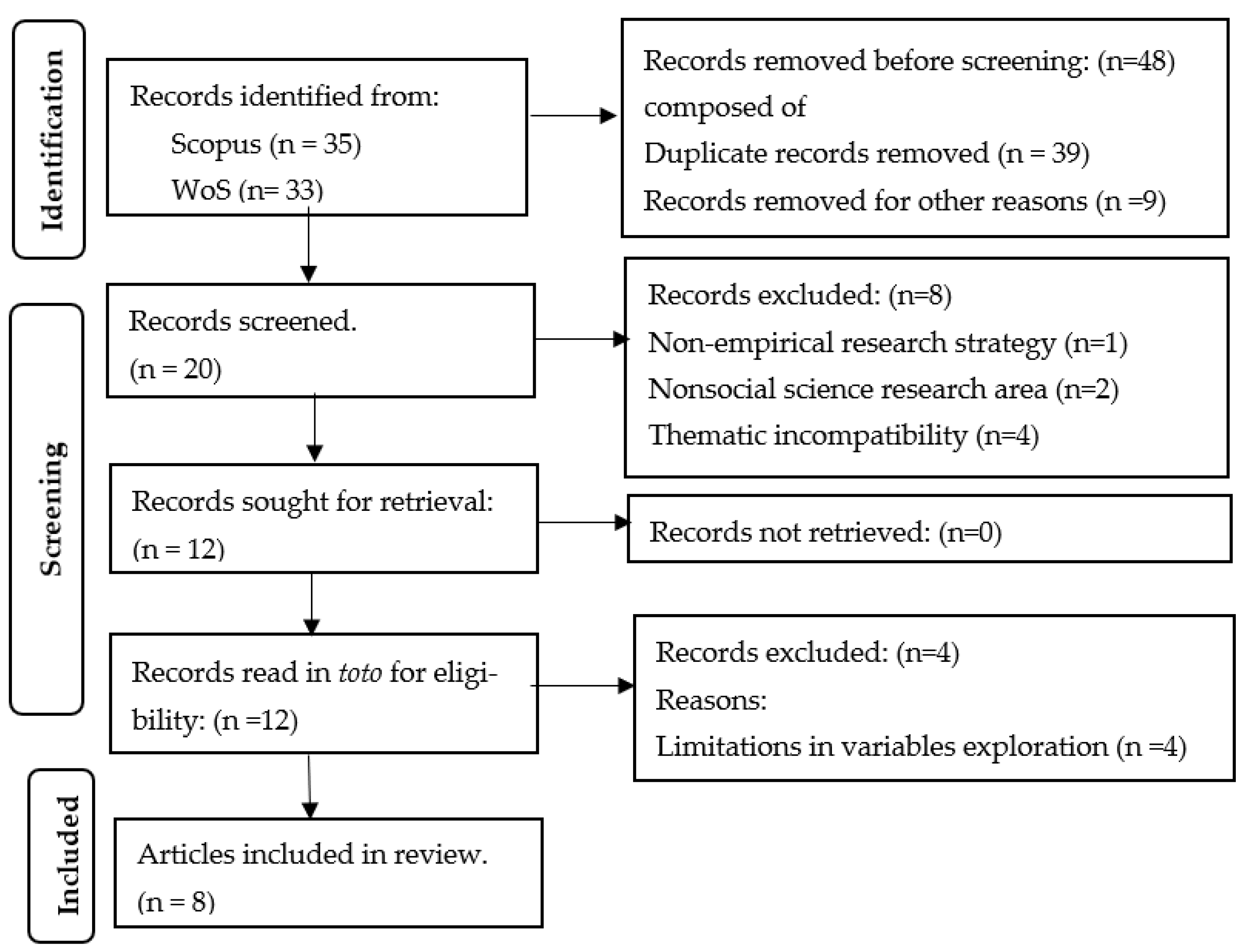
Figure 2.
Prisma flow diagram for articles from 2013-2022. Source Produced by the authors from Page MJ, McKenzie JE, Bossuyt PM, Boutron I, Hoffmann TC, Mulrow CD, et al. [14].
Figure 2.
Prisma flow diagram for articles from 2013-2022. Source Produced by the authors from Page MJ, McKenzie JE, Bossuyt PM, Boutron I, Hoffmann TC, Mulrow CD, et al. [14].
Disclaimer/Publisher’s Note: The statements, opinions and data contained in all publications are solely those of the individual author(s) and contributor(s) and not of MDPI and/or the editor(s). MDPI and/or the editor(s) disclaim responsibility for any injury to people or property resulting from any ideas, methods, instructions or products referred to in the content. |
© 2025 by the authors. Licensee MDPI, Basel, Switzerland. This article is an open access article distributed under the terms and conditions of the Creative Commons Attribution (CC BY) license (http://creativecommons.org/licenses/by/4.0/).
Copyright: This open access article is published under a Creative Commons CC BY 4.0 license, which permit the free download, distribution, and reuse, provided that the author and preprint are cited in any reuse.


