

Submitted:
31 July 2025
Posted:
04 August 2025
You are already at the latest version
Abstract
Inducible forms of chronic urticaria are characterised by an early age of onset and a long duration of disease. In addition, cold and cholinergic urticaria have a risk of developing systemic, sometimes life-threatening, reactions. Determining the pathogenetic mecha-nisms, laboratory and clinical predictors of their development is an open question in the understanding of these diseases. This literature review demonstrates the current known facts that allow to identify patients with cold and cholinergic urticaria in high-risk groups of anaphylaxis development, and, therefore, the possibility to prevent emergency situ-ations and to manage them in time. For cold and cholinergic urticaria, observations of Kounis syndrome - acute coronary syndrome (myocardial infarction or unstable angina) have been described. A series of trials, including the large international multicentre COLD-CE study of anaphylaxis in cold urticaria, have identified early age of urticaria onset, severe clinical symptoms, shortening of the critical temperature threshold, comorbid bronchial asthma, concomitant angioedema and pruritus of the earlobes as warning signs. No such large-scale studies have been conducted for cholinergic urticaria. Among the few high-risk factors for systemic reactions in cholinergic urticaria described in the literature is the occurrence of angioedema. Thus, it is possible to identify a part of patients in the high-risk group already at the stage of initial anamnesis collection, ad-ditional data can be received during the examination. Laboratory biomarkers, clinical predictors, understanding the mechanisms of anaphylaxis by physical triggers or their consequences, optimal options for pathogenetic therapy are still unresolved issues that require further research. The aim of this review is to provide a content analysis of current knowledge about chronic inducible urticarias in order to increase clinicians' awareness and, consequently, reduce the risk of urgent conditions associated with them.
Keywords:
cold urticaria
; cholinergic urticaria
; predictors of anaphylaxis
; physical triggers
; laboratory biomarkers
; therapeutic approaches
1. Introduction
Chronic inducible urticarias (CINDU) are of significant scientific interest due to their onset at an earlier age compared to chronic spontaneous urticaria (CSU), the protracted duration of the disease, the infrequent occurrence of spontaneous remission, and the potential for systemic reactions in certain variants. Protocols for provocative testing and validated questionnaires have been established for CINDU; additionally, there are reports detailing the efficacy of targeted therapies and studies designed to investigate potential predictors of anaphylaxis in cold urticaria (ColdU), which may necessitate subsequent administration of epinephrine auto-injectors to this patient cohort. However, in routine clinical practice, the application of these advancements is often hindered: provocative testing is frequently constrained by appointment time limitations, the necessity for ongoing patient monitoring, and the lack of registration in some countries of certain instruments (notably, the TempTest device for evaluating patients with cold urticaria and heat urticaria). Moreover, the completion of questionnaires demands additional time resources, which are not always available within the everyday practice of an allergist. The implementation of targeted therapies is complicated by the absence of formal guidelines governing the treatment of all types of CINDU. Furthermore, the use of epinephrine is restricted by the lack of registration for this mode of administration in some developing countries. The prevailing challenges, alongside the rising morbidity associated with various forms of CINDU in recent years, as well as data indicating a high incidence of systemic reactions in ColdU and cholinergic urticaria (CholU), underscore the critical need for further investigation into these aspects at this time.
The purpose of this review is to conduct a content analysis of the current knowledge on chronic inducible urticarias and to enhance clinicians' knowledge, thereby reducing the likelihood of urgent complications related to these conditions.
2. Cold and Cholinergic Urticaria
2.1. The Relevance of Investigating of Inducible Urticaria
To date, chronic urticaria constitutes a significant clinical problem. According to data from 2017, the annual incidence of urticaria was reported to be 160 million cases globally [1].
Current clinical guidelines and international consensus documents categorize CINDU into subtypes based on the nature of the provoking trigger [2]. Specifically, exposure to cold is requisite for the manifestation of ColdU, whereas CholU is triggered by increased sweating, often induced by physical exertion [3].
2.1.1. Epidemiology
The majority of researchers estimate the prevalence of CINDU to be approximately 0.5% of the general population [4]. Data pertaining to the epidemiology of specific types of CINDU in global literature remain limited, likely attributable to issues related to hypodiagnosis and a low index of suspicion among primary care specialists regarding CINDU. Currently, an international prospective multicenter registry study, known as CURE (Chronic Urticaria Registry), is underway to elucidate the epidemiological and clinical characteristics, as well as the impact on quality of life among patients with various forms of chronic urticaria [5].
In China, the incidence of CINDU is reported to range from 1.1% of the population, whereas in Germany, it is significantly lower at 0.1% [6,7]. A recent epidemiological study conducted in Moscow covering the period from January 2017 to December 2021 identified 17,715 patients diagnosed with CINDU. Furthermore, there was a discernible trend of annual increase in the incidence of all types of CINDU; specifically, the number of cases of CholU increased more than threefold compared to the data from 2017, while the incidence of ColdU escalated 2.5-fold [8]. In a large-scale study conducted in China involving 3,255 patients with chronic urticaria, the proportion of ColdU within the overall incidence structure was found to be 0.54% (223 patients) [9]. On average, the incidence of ColdU is estimated to reach 0.05% of the general population and 5–30% of all physical urticarias, according to various authors; these rates tend to be higher in countries characterized by cold climates [10,11]. The epidemiological rates for CholU occurrence vary widely, ranging from 0.02% to 11.2% of the population, with some authors noting a correlation between its prevalence and the climate of the respective country studied; specifically, CholU is diagnosed less frequently in tropical regions [12,13,14]. Among all forms of chronic urticaria, CholU is diagnosed in approximately 2–7% of cases [15]. In the aforementioned Moscow study, the incidence of CholU was recorded at 403 individuals (2.28%), while ColdU was observed in 340 individuals (1.92%) [8].
2.1.2. Debut and Duration
Among patients diagnosed with CINDU, there is a notable predominance of females, accounting for up to 74.4–82.7% of cases [16,17]. The only exception to this trend is observed within the CholU cohort, where males are significantly more prevalent; the male-to-female ratio averages 2:1, and may be even more pronounced in certain age groups [14,18]. Conversely, a higher incidence of ColdU is reported among females, with many authors indicating that this occurs 1.5–2 times more frequently than in males [19,20,21].
The symptoms associated with ColdU can manifest at virtually any age; however, they most commonly present during the second to fourth decades of life [22,23]. The age group most characteristic for the onset of CholU is young adults; according to some researchers, up to 20% of patients report experiencing symptoms between the ages of 26 and 28 years [24].
CINDU is characterized by a prolonged duration of illness and a lower frequency of spontaneous remission when compared to CSU [25]. Research conducted by Bal et al. indicated that only one-third of patients achieved remission from urticaria within a five-year period, with the most favorable prognosis observed in patients with symptomatic dermographism and the least favorable outcomes noted in those suffering from ColdU and CholU [26]. Asady’s findings suggest that patients experiencing late-onset CholU (defined as onset after 36 years of age) exhibited a shorter duration of the disease compared to those whose symptoms began prior to this age threshold [27].
In particular, the mean duration of ColdU, as reported in the existing literature, is approximately 6 years [21,22]. Individual studies demonstrate suboptimal outcomes regarding the achievement of spontaneous remission of symptoms within 1 year in patients with ColdU [18,28]. However, there have been documented cases in which ColdU symptoms have persisted for over 20 years [29]. The ability to predict the duration of the course of CINDU is of significant scientific interest. For instance, Deza et al. identified that early age of onset, severe clinical course, and a short critical temperature threshold—the maximum temperature values at which symptoms of ColdU manifest in a specific patient—are predictors of a prolonged course of ColdU [20]. Regarding the duration of CholU, numerous authors also report a multi-year duration of the disease, with an average range of 4 to 7.5 years [17,30]. According to Sibbald, the duration of CholU can range from 3 to 16 years [31]. Rujitharanawong et al. observed in their study that spontaneous remission in CholU occurred in 67% of patients within a time frame of 13 years, while only 12% experienced remission within 1 year [14]. According to Hirschmann, symptoms persisted for more than 10 years in 31% of patients [32].
2.1.3. Frequent Comorbidities
Allergic diseases are frequently noted as the most common comorbidities associated with CINDU. The presence of atopy is reported by most authors to occur in an average of 25% to 50% of ColdU patients [21,33]. Several studies have documented a correlation between the long-term persistence of ColdU symptoms and atopic diseases [34]. In the large multicenter COLD-CE study, concomitant bronchial asthma was associated with a significantly higher incidence of anaphylaxis [35]. Siebenhaar et al. reported elevated serum total immunoglobulin E (IgE) levels in approximately 70% of ColdU patients [36]. CholU is also frequently associated with allergic diseases in up to 57% of cases, among which atopic dermatitis, allergic rhinitis, and bronchial asthma are the most commonly noted conditions [37,38].
CINDU can coexist with CSU and/or other types of CINDU concurrently. Several studies have identified combinations of these conditions, revealing that up to 71% of patients with symptomatic dermographism and up to 25% of patients with CholU exhibit concomitant CSU [14,39]. In a study conducted in Moscow involving 38 patients diagnosed with CholU, concomitant CSU was observed in 15% of the subjects, while other types of CINDU — specifically dermographism and ColdU — were noted in 15% and 12% of cases, respectively [40]. Asady’s analysis of 200 patients with CholU indicated that participants with early-onset CholU (defined as being younger than 36 years of age) were more likely to have concomitant atopic dermatitis, whereas those with late-onset CholU exhibited a higher likelihood of comorbid forms of chronic urticaria [27]. Stepaniuk et al. reported that ColdU most frequently accompanies symptomatic dermographism and CholU in 22% and 10% of cases, respectively [18]. Clinical cases documenting the coexistence of ColdU with solar, aquagenic, and heat urticaria have also been described [41,42,43]. The occurrence of CSU in patients with ColdU ranges from 10% to 13%, which is particularly significant, as this combination in the COLD-CE study was associated with a lower risk of anaphylaxis compared to patients within the ColdU monogroup [35,44]. Numerous authors have highlighted the comorbidity of ColdU and CholU [45,46,47]. In such instances, it is imperative that approved provocation testing protocols are strictly adhered to in order to exclude atypical forms of both ColdU and CholU. Notably, systemic life-threatening reactions have also been documented in cases involving atypical forms of ColdU [48]. Japanese researchers have reported combinations of the typical form of urticaria with its atypical counterpart [49]. The presence of CINDU in a patient diagnosed with CSU serves as a predictor of a longer and more severe disease course, as well as a poorer response to antihistamine therapy [50,51]. Although no large-scale studies have been conducted to analyze the simultaneous combination of two forms of CINDU, all clinical cases described above indicate a long-term persistence of urticaria symptoms in patients presenting with two or more forms of CINDU. Ormerod et al. documented the onset of remission in a patient with concurrent ColdU and CholU only after 26 years [52].
2.2. Pathogenesis
The pathogenesis of CholU and ColdU remains incompletely understood. The mechanism underlying the IgE-mediated activation of mast cells is recognized as a contributing factor in both CholU and ColdU, as supported by passive transfer experiments and the demonstrated efficacy of omalizumab therapy [53]. An autoimmune hypothesis has been proposed, which posits the formation of autoantibodies targeting mast cells within the skin. Gruber et al. were the first to identify IgG anti-IgE and IgM anti-IgE antibodies in their investigation of patients diagnosed with ColdU [54].
Alternative approaches to studying mast cell and basophil activation that do not rely on IgE are of particular interest. In this context, thermoreceptors — members of the cation channel family known as Transient Receptor Potential (TRP) channels — are believed to play a crucial role. These receptors regulate physiological responses to variations in temperature, osmolarity, and pH through the activation of calcium ion influx into cells [55,56].
A recent trend in the pathophysiological investigation of ColdU mechanisms suggests that particularly severe forms of this condition may be classified among diseases associated with mast cell clonality disorders. This hypothesis is supported by observations correlating the severity of ColdU and/or the occurrence of anaphylaxis with elevated tryptase levels and the presence of KIT mutations, most frequently the D816V variant [57].
Current understanding of the pathogenesis of CholU identifies several critical factors, including sensitization to sweat autoantigens, dysregulation of acetylcholine metabolism, functional impairments in sweating, and alterations in vascular wall permeability accompanied by dysfunction in skin innervation [58,59,60,61].
One potential mechanism underlying CholU is the reduction in the expression of the cholinergic receptor M3 (CHRM3) by epithelial cells of the eccrine sweat glands, leading to subsequent acetylcholine-mediated activation of mast cells and the release of acetylcholine [62,63].
In the context of CholU, accompanying pathological processes related to sweating dysfunction have been described, specifically anhidrosis and/or hypohidrosis (Acquired Idiopathic Generalized Anhidrosis — AIGA). These disorders are characterized by a decrease in sweat volume, the development of cutaneous paresthesias, and eruptions during episodes of increased sweating [64]. Histological examinations of skin samples have revealed localized infiltration of mast cells and lymphocytes around the eccrine sweat glands when compared to a cohort of patients with CholU without associated sweating disorders [65].
The combination of CholU with sweating dysfunction has been delineated as a distinct phenotype — CholU with anhidrosis and/or hypohidrosis, which is characterized by a severe disease course; however, increased risks of anaphylaxis have not been documented [62,66].
Despite the extensive study of the etiopathogenesis of ColdU and CholU over the past decade, the mechanisms by which skin mast cells are activated through exposure to physical triggers or temperature increases, as well as the exact processes involving acetylcholine, remain insufficiently elucidated. Consequently, further studies are needed to enhance the understanding of the pathogenetic mechanisms.
2.3. Pathognomonic Characteristics
There are a number of common pathognomonic features associated with the clinical manifestations of ColdU and CholU:
- Symptoms occur exclusively after contact with specific physical or non-physical triggers — such as cold or factors leading to increased sweating [67].
- Urticarial elements persist for a brief duration, typically regressing within one hour.
- Both ColdU and CholU are characterized by the occurrence of angioedema; however, this phenomenon is observed less frequently than in CSU [68].
- Repeated and intense exposure to the aetiological trigger exacerbates the course of ColdU and CholU [54].
- A low threshold level, indicated by the rapid onset of clinical symptoms following exposure to the causative factor, reflects high disease activity in ColdU and CholU [22].
2.4. Anaphylaxis
The significance of the issue of anaphylaxis is underscored by its high incidence; according to the meta-analysis conducted by Prosty et al., the prevalence of anaphylaxis in ColdU is reported to be 21.5% [71]. In cases of prolonged or intense exposure to the provoking factor, it is possible for a generalized cutaneous process to develop, which may be accompanied by angioedema [72]. In severe instances, additional organs and systems may become involved, leading to what is termed systemic reactions characterized by the following clinical manifestations [10,21,23,73,74]:
- Skin and mucous membranes: wheals, angioedema affecting the lips, tongue, oropharynx, larynx, phalanges of fingers, and ear lobes.
- Respiratory system: dyspnea, difficulty breathing, dizziness, hoarseness, and nasal congestion.
- Cardiovascular system: hypotension (potentially leading to collapse), tachycardia, and chest pain.
- Gastrointestinal tract: abdominal pain, nausea, vomiting, diarrhea, and spastic abdominal pain.
- Central nervous system: headache, vertigo, weakness, disorientation, and syncope.
Japanese researchers propose to classify patients with CholU and an increased risk of anaphylaxis into a distinct phenotype — CholU with palpebral angioedema. The characteristic symptoms described in this group include the presence of periorbital edema, comorbid allergic conditions, female sex, and a history of anaphylaxis (observed in more than 50% of the studied population) [75,76].
Such systemic reactions significantly impair the quality of life for affected individuals and may pose a life-threatening risk, necessitating the administration of adrenaline [77].
2.4.1. Common Triggers
The most prevalent triggers for the onset of CholU symptoms are situations that lead to increased sweating:
- physical exertion;
- heightened emotional intensity or stress;
- consumption of hot and/or spicy foods and beverages;
- elevated ambient temperatures;
- utilization of baths or saunas;
- taking a hot shower or bath;
- medical procedures (such as haemodialysis and physiotherapy; administration of medications from the class of M-cholinomimetics);
- active sun exposure or visits to a tanning salon;
The avoidance of causative triggers presents significant challenges for patients diagnosed with ColdU, as provocative etiological factors are prevalent in various aspects of contemporary life. These factors include:
- exposure to low air temperatures;
- bathing in open water, utilizing pools, or showering with cold water;
- ingestion of cold beverages and/or foods;
- contact with cold surfaces or objects within the home and during occupational activities;
- participation in water sports;
- undergoing cryoprocedures;
- prolonged surgical interventions;
An understanding of these trigger factors is fundamentally important not only for the diagnostic process but also for developing recommendations regarding restrictive measures and lifestyle modifications for affected patients [82].
Furthermore, residing in cold climates constitutes an additional risk factor for individuals with CINDU. Notably, clinical manifestations of ColdU are observed not exclusively during the winter months. For instance, the Sibenhaar study indicated that symptoms were present throughout all seasons in 60% of patients; specifically, symptoms were reported in winter, spring, and fall months in 36.7% of cases, while only 3.3% experienced symptoms solely during winter [83]. Additionally, it is noteworthy that seasonal exacerbations of CholU have been documented during the winter months [84].
2.4.2. Occurrence of Systemic Reactions
Since the mid-20th century, cold-induced reactions have garnered significant attention from researchers. In 1986, Wanderer proposed a classification system for ColdU based on the severity of clinical manifestations, derived from an analysis of a cohort comprising 50 patients. The classification is as follows:
- Group I — Local reactions (urticaria and angioedema) confined to the area of contact with cold stimuli.
- Group II — Urticarial elements and/or angioedema with involvement of another organ system, excluding the cardiovascular system.
- Group III — Generalized urticarial elements and/or angioedema accompanied by hypotension, dizziness, syncope, and disorientation.
In this study, the distribution of patients was as follows: Group I comprised 30% of the cohort, while Groups II and III included 32% and 38% of patients, respectively [22]. Currently, there exists some discordance regarding the proposed classification in relation to contemporary global clinical guidelines; specifically, patients categorized in Group II may, in certain instances, be classified within the anaphylaxis group, while those in Group III may even be classified as experiencing anaphylactic shock. Nevertheless, this classification underscores a notable distribution of patients with ColdU who exhibit a greater propensity for severe reactions.
The reported incidence of anaphylaxis in ColdU varies widely, ranging from 4% to 51% across different studies. Most authors indicate that systemic reactions are observed in approximately one-third of patients diagnosed with ColdU (see Table 1).
2.4.3. Risk Factors for Anaphylaxis
The largest international multicenter study investigating ColdU, known as COLD-CE, was conducted across 17 countries and included a total of 551 patients. Anaphylaxis was documented in over one-third of the participants, specifically in 37% of cases [35]. The primary objectives of this analysis were to identify independent risk factors associated with the development of anaphylaxis, which included:
- A previous systemic reaction to stings from webworms;
- The presence of angioedema, particularly involving oropharyngeal and laryngeal symptoms;
- Coexisting bronchial asthma;
- Itching of the earlobes.
The findings indicated that among patients residing in tropical climates, anaphylaxis was more frequently associated with exposure to cold air, whereas in temperate regions, it was more commonly linked to cold water immersion.
Additionally, a separate analysis focusing on a cohort of patients with a documented history of anaphylaxis living in a mild climate revealed several characteristic features: an extended duration of the disease; a higher incidence of generalized skin lesions and angioedema; and a shorter time interval of cold exposure required to elicit symptoms during provocation testing.
The risk of anaphylaxis development is significantly heightened in the presence of pronounced hypothermia. The primary etiological factors contributing to this condition are often attributed to activities such as bathing in open water bodies or swimming pools, the administration of cold infusion solutions, and prolonged surgical interventions. These interventions may involve the maintenance of low air temperatures within the operating room, the treatment of the surgical field with alcohol-containing antiseptic solutions followed by their subsequent evaporation from the skin surface, as well as contact with cold surfaces and medical instruments [88,89,90,91,92].
The manifestation of angioedema affecting the oropharynx and/or larynx is typically associated with the consumption of cold beverages and/or foods [82,93]. Notably, there exists a compelling case report detailing the occurrence of esophageal edema in a patient diagnosed with ColdU during cryoablation [94].
One of the recently published studies has corroborated the significance of the aforementioned risk factors for anaphylaxis while also identifying new ones. Anaphylaxis was observed in 35.9% of patients, among whom a greater proportion exhibited the typical form of ColdU. This cohort was characterized by elevated levels of Immunoglobulin E (IgE) and a higher prevalence of the KIT p.D816V mutation and HαT compared to general population metrics [95].
2.4.4. Kounis Syndrome
Clinical cases of acute coronary syndrome, specifically Kounis syndrome, mediated by allergic inflammatory mediators such as vasoactive substances including histamine, leukotrienes, thromboxane, and proteases, have been extensively documented [96]. Kounis syndrome represents an acute, life-threatening condition characterized by a combination of myocardial infarction or unstable angina, attributable to coronary vasospasm and/or coronary thrombosis instigated by allergic pathogenic mechanisms following exposure to an allergen or trigger. Numerous clinical cases of Kounis syndrome have been reported in patients with ColdU who experienced significant cold exposure, including contact with cold air and immersion in cold water [97,98]. The involvement of mast cells in this pathophysiological process is substantiated by an elevation in serum tryptase levels, with peak concentrations observed 30 to 90 minutes post-onset of symptoms [99].
2.4.5. Exercise-Induced Anaphylaxis
Systemic reactions induced by exercise can manifest as either a form of anaphylaxis associated with ColdU or as a distinct clinical entity known as exercise-induced anaphylaxis (AnIPhE) [103,104,105]. Sheffer et al. delineated AnIPhE as a separate pathological condition from ColdU, highlighting key differential diagnostic features:
- Etiological factors: AnIPhE occurs exclusively as a result of physical activity (e.g., walking, participating in various sports, swimming), whereas systemic reactions in ColdU may arise from an elevation in body temperature due to diverse factors, including physical exertion, exposure to hot environments (such as rooms, climates, baths, or saunas), fever, or the consumption of hot food and beverages.
- Clinical features: AnIPhE is characterized by urticarial elements averaging 10 to 15 mm in size, whereas ColdU typically presents with smaller pinpoint lesions measuring 1 to 3 mm in diameter.
- In some instances, the onset of AnIPhE symptoms may necessitate prior exposure to additional triggers, which may include specific foods, medications, hot weather conditions, or particular phases of the menstrual cycle [106].
Anaphylaxis associated with CholU is particularly perilous due to its multifactorial etiology; reliance solely on the limitation of physical activity may prove insufficient for adequate protection. Symptoms may also manifest during hot baths, periods of stress, medical procedures, or in conditions of elevated ambient temperature [107,108]. Nevertheless, the challenge of conducting differential diagnostic evaluations between these pathologies remains unresolved at present, primarily due to the absence of a well-defined algorithm for clinical management. The elevated risk of systemic reactions in individuals with confirmed CholU has been documented by numerous authors; however, epidemiological data pertaining to this issue are notably limited [109].
In a study involving 38 patients diagnosed with CholU, verified through provocation testing, a history of systemic reactions was observed in 26% of cases [40]. The majority of patients identified physical activity as the most significant trigger for the onset of anaphylaxis, with nearly 90% of participants reporting this association. A significant correlation was established between the presence of angioedema within the CholU symptom complex and the occurrence of anaphylactic reactions. Furthermore, there was a discernible tendency to correlate systemic reactions with a prolonged duration of the provocation test, a characteristic that is also indicative of AnIPhE.
In a separate investigation involving patients with CholU and episodes of anaphylaxis, Vadas et al. emphasized a notable predominance of the female gender (79%). Furthermore, 89% of patients attributed the onset of systemic reactions to intense physical exertion. Symptoms indicative of cardiovascular involvement were reported in 79% of patients. When assessing the severity of anaphylaxis using a standardized severity scale, the majority of patients exhibited a moderately severe or severe course, while only 11% experienced a mild course [74]. Data from other studies also corroborate the heightened risk of anaphylaxis among patients with angioedema, particularly among women [76,110,111].
2.5. Provocation Testing
To establish a definitive diagnosis of ColdU and CholU, it is essential to utilize the results of provocation testing, trigger-associated anamnesis data, and the patient’s personal photographic archives. The «gold standard» for diagnosis comprises provocative tests — specifically, the ice cube test or TempTest for ColdU, and controlled physical activity using a bicycle ergometer or treadmill for CholU [4]. These investigations may also hold significant value in predicting the risk of systemic reactions.
The time interval from the initiation of exposure to a cold trigger to the manifestation of symptoms indicative of a positive reaction is termed the individualized cold stimulation threshold time [112]. In cases where there is anamnestic evidence of severe systemic reactions, it is recommended to evaluate the test after 1 or 3 minutes, as a rapid onset of symptoms is regarded as a predictor of anaphylaxis [23]. In the study conducted by Wanderer, it was observed that 68% of patients experiencing severe systemic reactions and hypotension exhibited positive results on the ice cube test within 3 minutes or less [22]. Similarly, Deza et al. reported that patients exhibiting clinical manifestations of anaphylaxis had a shorter cold stimulation threshold time compared to those without anaphylactic symptoms [20]. Neittaanmäki noted that 14% of patients who achieved rapid test results — defined as less than 30 seconds — exhibited severe symptoms of ColdU [21].
Although the ice cube test is widely regarded as a highly specific diagnostic method (Siebenhaar reported a sensitivity of 85% and specificity of 100%; Holm reported a sensitivity of 53% and specificity of 97%), it is fundamentally a qualitative assessment, as it does not quantify the critical temperature threshold — namely, the maximum temperature values at which ColdU symptoms manifest in an individual patient [113,114]. The potential for threshold provocation testing in patients with ColdU is facilitated by TempTest, a standardized device that accurately determines the critical threshold within a range of ±1°C from 4ºC to 44ºC [115,116]. Variations in critical temperature threshold values are correlated with fluctuations in disease activity [117,118].
The provocative examination of patients with CholU is constrained by the necessity to monitor the patient for a duration of 24 hours following a positive test result, which includes the surveillance of hemodynamic parameters due to the elevated risk of systemic reactions. For the differential diagnosis of CholU and AnIPhE, testing in a hot water bath is considered more advantageous, as a positive result in the absence of physical exertion effectively excludes the diagnosis of AnIPhE in the patient [70,119]. However, the analysis of the time threshold associated with provocation testing in CholU has not been extensively evaluated in large-scale studies. In a cohort study involving 38 patients diagnosed with CholU, a notable trend was observed indicating an increased likelihood of systemic reactions correlating with higher thresholds during the treadmill test [40].
2.6. Therapy
Preventive measures aimed at avoiding cold triggers constitute the foundational approach to therapy in the management of CholU and ColdU [120]. Implementing lifestyle modifications and ensuring that healthcare professionals from various specialties are informed about the necessity of establishing specialized conditions and restrictions — such as maintaining normothermic conditions in operating and diagnostic rooms, avoiding the parenteral administration of cold infusion solutions, and refraining from treating extensive skin surfaces with antiseptic solutions — are of paramount importance when patients with ColdU seek medical attention [121,122]. A comprehensive list of restrictive measures has been developed for both patients with ColdU and healthcare providers across different specialties, including cardiothoracic surgeons, neurosurgeons, obstetricians-gynecologists, oncologists, and general practitioners [112]. Refer to Figure 1.
Approaches to therapy of CholU coincide with the principles of ColdU treatment and are primarily the avoidance of etiologic triggers — intense physical activity, stress, sauna/hot bath, intake of hot food or drinks [4,123]. A list of lifestyle modification interventions, for patients with CholU has now been generated and published [124]. Figure 2.
2.6.1. Antihistamines
Developing a comprehensive therapeutic algorithm based solely on preventive measures is often impractical due to the diverse aspects of a patient’s active life and the individual threshold levels of sensitivity to cold, which may be critically low. Current therapeutic strategies for all inducible forms of urticaria necessitate the administration of antihistamines at therapeutic doses, with the option to escalate to 2- or 4-fold doses in cases of insufficient efficacy [2,4]. Most studies investigating the efficacy of antihistamines in ColdU and CholU indicate that this treatment modality is effective in achieving complete or partial control of urticaria symptoms in the majority of patients.
Magerl et al. reported a complete response in 82% of patients with ColdU following treatment with ebastine at standard doses, corroborated by negative results from the ice cube test [125]. Wanderer et al. observed an increase in the critical temperature threshold and a positive clinical response during treatment with cyproheptadine [126]. Villas Martinez and colleagues conducted a study involving loratadine, cetirizine, cyproheptadine, and ketotifen, reporting that 85%, 28%, 80%, and 80% of patients, respectively, experienced complete regression of ColdU symptoms and an increase in the threshold duration for cold stimulation [127]. Neittaanmaki et al. documented a regression of rashes in 53% and pruritus in 67% of patients receiving cyproheptadine therapy [128]. In a cohort of patients with ColdU, St-Pierre et al. noted an increase in the threshold duration for cold stimulation in 83% of cases during treatment with ketotifen compared to baseline measurements [129]. A meta-analysis conducted by Kulthanan, which encompassed nine randomized trials, demonstrates the efficacy of both standard doses of antihistamines in the management of ColdU and the potential benefit of dose escalation when necessary [130]. For patients who have not achieved adequate control of their urticaria symptoms with antihistamines at therapeutic doses, second-line therapy involving 2- or 4-fold doses of antihistamines may prove effective. Metz et al. illustrated in their analysis that 52% of patients achieved complete control over a 7-day period while undergoing treatment with a 2-fold dose of rupatadine. Similarly, Gimenez-Arnau and colleagues reached a comparable conclusion, noting a decrease in the maximum temperature required for the onset of ColdU symptoms following treatment with 20 mg of rupatadine [131]. In the analysis by Abajian, it was reported that 30% of patients achieved symptom control at a dose of 20 mg of rupatadine, while 50% experienced control at a dosage of 40 mg [132]. In the study conducted by Siebenhaar et al., it was demonstrated that treatment with desloratadine at standard doses is less effective than at 4-fold doses; specifically, desloratadine at 5 mg controlled symptoms in 23% of patients, whereas the 20 mg dose achieved control in 50% [83]. Krause et al. reported the effectiveness of dose escalation for bilastine, with a 2-fold increase resulting in efficacy in 55% of cases and a 4-fold increase demonstrating efficacy in 60% [29]. Conversely, Levnadier et al. did not observe any significant efficacy of misolastine for the treatment of patients with ColdU compared to placebo [133]. Most researchers evaluating the impact of antihistamine therapy have concentrated on the reduction of the critical temperature threshold as measured by TempTest. According to a systematic review conducted by Magerl et al., more than 30% of patients achieve complete control of urticaria symptoms when receiving escalated doses of antihistamines [86].
Non-sedating antihistamines at therapeutic doses may provide effective treatment for a subset of patients with CholU. Dressler et al., in their meta-analysis of placebo-controlled trials involving 316 patients, demonstrated the efficacy of antihistamines compared to placebo; however, the authors acknowledged the limitations imposed by the small sample size [132]. In cases where there is inadequate response to standard doses of antihistamines, symptom control in CholU may be attainable through escalation to 2- or 4-fold doses [134,135,136,137]. However, it is noteworthy that patients exhibiting the CholU phenotype in conjunction with AIGA typically demonstrate a poor response to antihistamine therapy [76,77,138].
The authors emphasize the paramount importance of a personalized approach in the selection of antihistamines and the determination of the appropriate daily dosage for basal therapy. Historically, the strategy of substituting one antihistamine for another to enhance therapeutic efficacy was commonly employed. Despite the reported positive outcomes associated with such personalized selection of antihistamines, there remains a lack of robust scientific evidence supporting this methodology [139]. While antihistamines have demonstrated effectiveness in the management of urticaria, it is noteworthy that even regular administration at high doses does not preclude the occurrence of anaphylaxis during significant cold exposure, nor does it adequately control symptoms in approximately 20% of patients [130]. Various theories have been proposed regarding the etiology of resistance to antihistamine therapy, suggesting involvement not only of H1-histamine receptors but also of H2 and H4 receptors, as well as non-histamine receptors in the pathogenesis. Additionally, the possibility of histamine receptor gene polymorphism contributing to this resistance cannot be excluded [140].
2.6.2. Monoclonal Antibodies
In cases where urticaria exhibits resistance to antihistamine therapy, the use of monoclonal antibodies targeting circulating IgE, such as Omalizumab, presents a viable therapeutic option. Although the application of this treatment is constrained by the absence of official guidelines for all forms of inducible urticaria, the efficacy of Omalizumab has been documented in patients with both CholU and ColdU. The positive outcomes associated with Omalizumab in CholU are currently supported by placebo-controlled studies, as well as prospective and retrospective analyses, including case series [141,142,143]. For instance, a retrospective study conducted by Metz et al. revealed that 62% of patients with CholU achieved complete clinical control, as evidenced by negative results from control provocation testing [144].
The efficacy of Omalizumab therapy in patients diagnosed with ColdU is evidenced by data derived from a placebo-controlled randomized clinical trial, which evaluated the effects of different dosages (150 mg and 300 mg) and obtained positive results four weeks post-initiation of treatment [145]. A comprehensive meta-analysis conducted by Maurer et al. included a cohort of 51 patients, revealing that complete or partial symptom control was achieved in 41 individuals [141]. Currently, the prospect of individualized dosing of Omalizumab and personalized dosing frequency contingent upon therapeutic response is under consideration [146]. Notably, the initial attempt to utilize Omalizumab in CINDU was made in a ColdU patient with systemic reactions and bronchial asthma. As a result of therapy at a dosage of 375 mg over a duration of five months, control of not only the symptoms of ColdU (as indicated by a negative cold test) but also asthma was successfully achieved [147].
At present, clinical investigations into the efficacy and safety of alternative monoclonal antibodies in the treatment of ColdU and CholU are ongoing. Thus, various phases of research regarding the impact on the manifestation of clinical symptoms associated with ColdU and CholU are currently being conducted:
- Dupilumab is a recombinant human monoclonal antibody that specifically inhibits interleukin-4 and interleukin-13 signaling by binding to the IL-4Rα subunit;
- Ligelizumab is a humanized anti-IgE monoclonal antibody;
The results of most clinical trials have been encouraging, with barzolvolimab demonstrating achievement of complete control in 95% of patients with ColdU following the initial administration. Inhibition of KIT may represent a promising avenue for the treatment of urticaria and other conditions mediated by mast cells [150]. Lirentilimumab, an IgG monoclonal antibody targeting sialic acid-binding Ig-like lectin 8 (SIGLEC 8), has demonstrated efficacy in 82% of patients with CholU who exhibit resistance to Omalizumab therapy [151]. Concurrently, Ligelizumab, which exhibited maximum IgE affinity and greater efficacy compared to Omalizumab in phase IIb studies, did not demonstrate superiority in phase III clinical trials [149,152]. Studies investigating rilonacept, an interleukin-1 inhibitor, have not confirmed its efficacy in the treatment of ColdU [153]. There are reports indicating a potential positive effect of etanercept, a tumor necrosis factor-α inhibitor, and anakinra, an interleukin-1 receptor antagonist, in managing ColdU, based on clinical cases demonstrating successful treatment outcomes [154,155]. Lirentilimumab, a humanized IgG monoclonal antibody targeting sialic acid-binding Ig-like lectin 8 (Siglec-8), is regarded as a promising therapeutic option for patients diagnosed with CholU [156]. Izuforant, a selective oral histamine H4 receptor (H4R) antagonist, has shown a high safety profile in patients with CholU; however, it did not exhibit a significant effect on the course of urticaria [157]. (Table 2).
2.6.3. Cyclosporine and Glucocorticoids
Despite the high efficacy profile associated with anti-IgE therapies and other monoclonal antibody options for ColdU and CholU, there are limitations to their official use, as well as evidence indicating a lack of efficacy in certain patients [142,158,159]. In such cases, the utilization of cyclosporine may prove beneficial. Conclusions regarding the efficacy of cyclosporine are derived from an analysis of clinical cases documented in the global literature. However, factors limiting its widespread application include the absence of large-scale clinical trials and the potential for significant drug toxicity [160,161].
Both oral and parenteral systemic glucocorticoids can alleviate exacerbations or achieve control in severe cases of all types of chronic urticaria. Current consensus guidelines recommend that this therapeutic course should not exceed 10 days and that the lowest effective doses should be employed due to the high likelihood of adverse effects [4].
2.6.4. Alternative Therapies
Numerous investigators have explored various pharmacological agents for the treatment of ColdU and CholU; however, these methods have not gained widespread acceptance due to a limited evidence base and concerns regarding safety profiles (Table 3).
There are isolated reports regarding the efficacy of desensitization protocols utilizing autologous sweat in patients with CholU [117]. The potential application of cold tolerance induction methods in the management of ColdU has been documented [173]. Several techniques have been developed that rely on regular skin exposure to a cold trigger. The therapeutic effect is hypothesized to result from the depletion of histamine reserves within mast cells due to continuous cold exposure. However, the treatment involving cold desensitization carries inherent risks, particularly concerning the potential development of anaphylaxis, and may lose its therapeutic relevance in the absence of consistent contact with the cold trigger [90]. Protocols analogous to this approach, which incorporate regular physical exercise for patients with CholU, may also yield beneficial effects [174]. The risks associated with this therapy are comparable to those observed in ColdU, characterized by a heightened risk of systemic reactions and demonstrated efficacy only when conducted on a daily basis.
2.6.5. Epinephrine
Given the significant incidence of systemic reactions associated with ColdU and CholU, it is imperative to prescribe epinephrine hydrochloride as a rapid-relief therapeutic intervention and to educate patients at risk on self-administration techniques for urgent situations [82,175]. In the absence of well-defined criteria for identifying a high-risk group susceptible to life-threatening reactions in individuals with CholU, anamnestic indicators of anaphylaxis, the prolongation of the provocation test time interval, and the presence of angioedema are taken into consideration. A number of clinical predictors for systemic reactions have been identified in ColdU, wherein the administration of epinephrine is warranted even in the absence of prior anaphylaxis [176]. These predictors include:
- Oropharyngeal or laryngeal angioedema accompanied by pruritus of the earlobes;
- Concomitant bronchial asthma;
Figure 3.
Epinephrine administration.
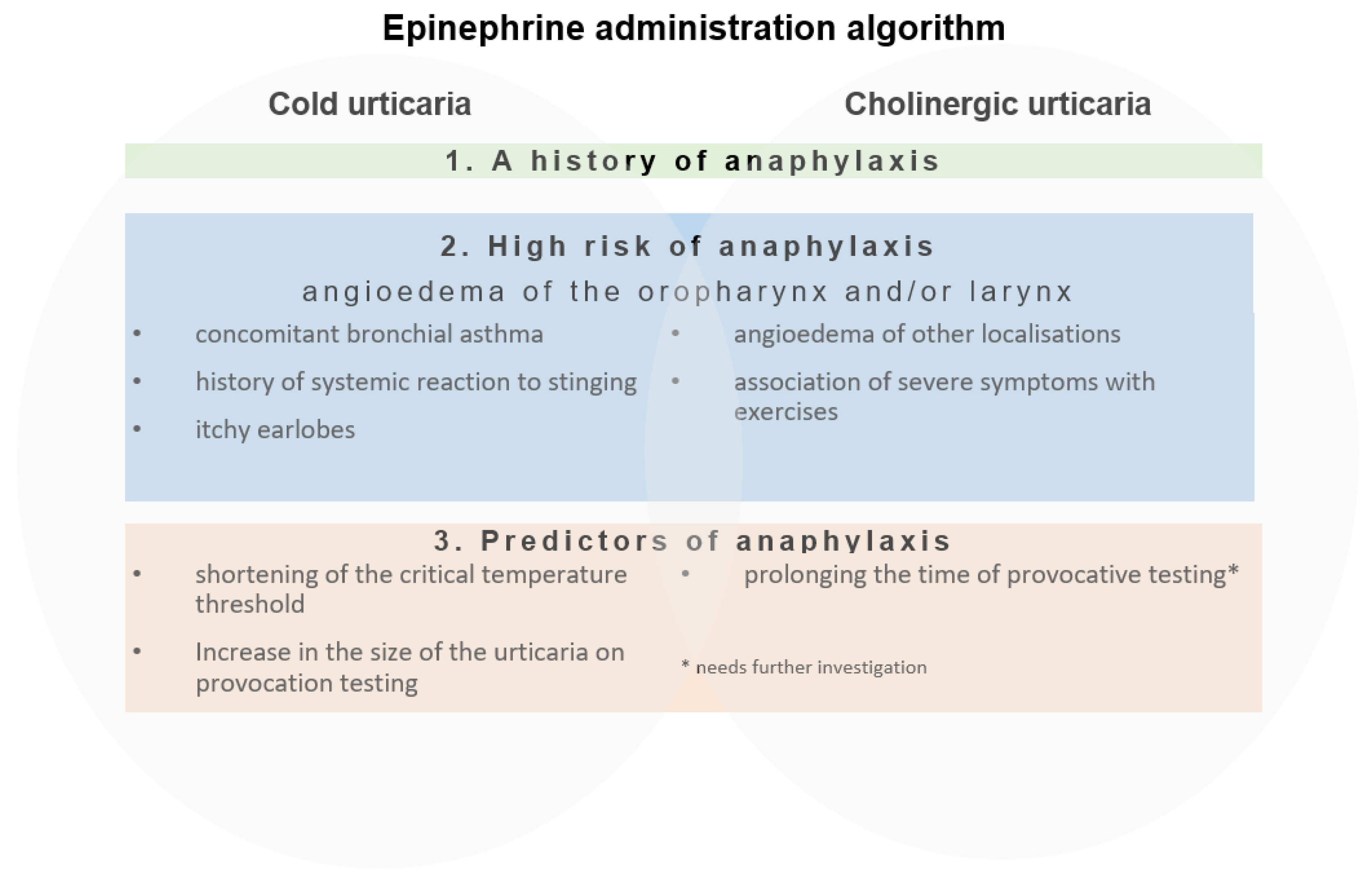
The administration of epinephrine via autoinjector is preferred for the rapid realization of self- and mutual aid [177]. A multicenter study on ColdU reported a low rate of epinephrine prescriptions by specialists, with only 11% of patients receiving recommendations for its use [178]. To date, no similar studies have been conducted for CholU. An additional challenge is the lack of official registration of autoinjectors in some developing countries.
The management of patients at high risk for anaphylaxis due to ColdU and CholU, in addition to the aforementioned issues, is further complicated by the extremely limited information available in guidelines and position papers from various countries. For instance, while consensus documents from the United States and the United Kingdom acknowledge the potential for systemic reactions in patients with ColdU and CholU necessitating epinephrine administration, this issue is not addressed in most other countries [175,179].
In position papers from countries such as Australia and New Zealand (ASCIA), Japan, Brazil, and South Africa, urticaria is merely mentioned as one of the possible symptoms of anaphylaxis. This underscores the necessity for further research and systematic organization of knowledge on this topic, which will serve as a foundation for the development of position documents and their integration into routine clinical practice [180,181,182,183].
3. Conclusions
The potential development of life-threatening reactions in patients with ColdU and CholU is a matter of significant concern. In cases of ColdU, the incidence of anaphylaxis has been reported to range from 4% to 51%, based on studies conducted across various climatic zones [22,35,83,86,87]. Conversely, due to the scarcity of large-scale studies focusing on patients experiencing anaphylaxis in CholU, epidemiological data remain limited; however, the manifestation of systemic reaction symptoms in CholU has been documented by numerous authors [108,109]. Reactions associated with CholU or AnIPhE are characterized by a high prevalence of cardiovascular involvement and a relatively severe progression of anaphylaxis itself [74].
It is fundamentally important to categorize patients at high risk for anaphylaxis into a distinct group by identifying various predictors of life-threatening reactions. Efforts to identify these risk factors have been documented in the global literature. For ColdU, various studies have identified warning signs indicative of potential anaphylaxis, which include early onset of urticaria, severe clinical manifestations, a reduction in the critical temperature threshold, comorbid bronchial asthma, concomitant angioedema, and pruritus of the earlobes [20,22,35]. Among the limited number of risk factors for systemic reactions in CholU reported in the literature, a notable correlation with angioedema has been emphasized [40]. Clinical cases involving Kounis syndrome — a life-threatening symptom complex characterized by acute coronary syndrome (myocardial infarction or unstable angina) — have been documented in patients with both ColdU and CholU [96]. The precipitating factors for these cases included cold water immersion and intense physical exertion [97,101].
Consequently, the vast majority of patients with the studied forms of CINDU develop symptoms during their young adult years, often experience prolonged periods without resolution, and are compelled to limit their social and physical activities. Most significantly, they face increased risks to their lives due to a considerable likelihood of anaphylaxis. Additional exacerbating factors encompass a cold climate, a low rate of confirmed ColdU and CholU diagnoses through provocative testing, the absence of official protocols for epinephrine administration via autoinjectors, and inadequate awareness among healthcare professionals regarding the importance of diagnostic approaches, management strategies, and monitoring for these patient populations.
The results of the aforementioned relationships underscore the significant contribution of comprehensive history-taking in patients with ColdU and CholU. This process allows for the identification of critical markers indicative of a prolonged and/or severe disease course during the initial interview stage. Additionally, provocative testing serves as a potential indicator of the anticipated severity of the condition. A fundamentally important role has been played by the development of type-specific recommendations for lifestyle modifications tailored to these patients, as well as the dissemination of information regarding potential risks to both patients and medical professionals [112,124].
Outstanding questions in the investigation of ColdU and CholU include the identification of laboratory biomarkers that may indicate an increased risk of systemic reactions and the prediction of treatment responses. Furthermore, there is a pressing need for the development of type-specific recommendations applicable to all forms of CINDU. Addressing current challenges, such as hypodiagnosis and the lack of formal avenues for effective therapy, is essential. Moreover, there is a necessity for the establishment of clear clinical diagnostic criteria to identify individuals at increased risk of systemic reactions, which would necessitate the formulation of a new treatment program specifically designed for the management of CINDU.
Author Contributions
Conceptualization, N.P.M., K.A.R., Y.V.Z.; writing — original draft preparation, review and editing, N.P.M., K.A.R., Y.V.Z.; supervision, N.P.M. All authors have read and agreed to the published version of the manuscript.
Funding
The work was carried out within the framework of the Russian Science Foundation, grant No. 25-18-00901.
Institutional Review Board Statement
Not applicable.
Informed Consent Statement
Not applicable.
Conflicts of Interest
Natalia P. Maltseva, Ksenja A. Riabova, and Yury V. Zhernov were employed by the company Fomin Clinic. The remaining authors declare that the research was conducted in the absence of any commercial or financial relationships that could be construed as a potential conflict of interest.
Abbreviations
| AnIPhE | exercise induced anaphylaxis |
| CINDU | chronic inducible urticaria |
| CholU | cholinergic urticaria |
| ColdU | cold urticaria |
| CSU | chronic spontaneous urticaria |
| AIGA | Acquired idiopathic generalized anhidrosis |
| CURE | Сhronic Urticaria Registry |
| IgE | Immunoglobulin E |
| TRP | Transient Receptor Potential |
References
- Peck G, Hashim MJ, Shaughnessy C, MuddasaniS,et all. Global Epidemiology of Urticaria: Increasing Burden among Children, Females and Low-income Regions. ActaDermVenereol. 2021 Apr 22;101(4): adv00433. [CrossRef]
- Federal clinical guidelines. Urticaria. Moscow: Russian Association of Allergists and Clinical Immunologists, Russian Society of Dermatovenerologists and Cosmetologists, 2023. 97.
- Abajian, M. , Schoepke N., Altrichter S., Zuberbier T. et all. Physical Urticarias and Cholinergic Urticaria//Immunol Allergy Clin N Am. 2014.34:73–88. [CrossRef]
- Zuberbier, T. , Hamzah Abdul Latiff A., Abuzakouk M., Aquilina S. etall. The international EAACI/GA²LEN/EuroGuiDerm/APAAACI guideline for the definition, classification, diagnosis, and management of urticaria// Allergy. 2022; 77: 734–766. [CrossRef]
- Weller K, Giménez-Arnau A, Grattan C, Asero R, et all. CURE Investigators. The Chronic Urticaria Registry: rationale, methods and initial implementation. J EurAcadDermatolVenereol. 2021 Mar;35(3):721-729. [CrossRef]
- Shen, M.; et al. Prevalence and patient-reported outcomes of noncommunicable skin diseases among college students in China. JAAD Int. 1, 23–30 (2020). [CrossRef]
- Weller K, Maurer M, Bauer A, Wedi B, et all. Epidemiology, comorbidities, and healthcare utilization of patients with chronic urticaria in Germany. J Eur Acad Dermatol Venereol. 2022 Jan;36(1):91-99. [CrossRef]
- Fomina D., S. , Maltseva N. P., Serdotetskova S. A., Danilycheva I. V et all. Epidemiology of chronic inducible urticaria in Moscow. Russian Journal of Allergy. 2022; 19 (3): 317-327. [CrossRef]
- Li J, Mao D, Liu S, Liu P, et all. Epidemiology of urticaria in China: a population-based study. Chin Med J (Engl). 2022 Jun 5;135(11):1369-1375. [CrossRef]
- Möller A, Henz BM. Cold urticaria. In: Henz BM, Zuberbier T, Grabbe J, Monroe E, eds. Urticaria. Springer; 1998. 69-78 pp. [CrossRef]
- Katsarou-Katsari, A. , Makris, M., Lagogianni, E., Gregoriou, S. et all. (2008). Clinical features and natural history of acquired cold urticaria in a tertiary referral hospital: a 10-year prospective study. Journal of the European Academy of Dermatology and Venereology: JEADV, 22(12), 1405–1411. [CrossRef]
- Godse K, Nadkarni N, Patil S, Farooqui S. Prevalence of cholinergic urticarial in Indian adults. IndianDermatolOnlineJ. 2013;4(1):62–63. [CrossRef]
- Seo J, Kwon J. Epidemiology of urticaria including physical urticaria and angioedema in Korea. Kor J Int Med. 2019;34(2): 418–425. [CrossRef]
- Rujitharanawong C, Tuchinda P, Chularojanamontri L, et al. Cholinergic urticaria: Clinical presentation and natural history in a tropical country. BioMedResInt. 2020;(2020):7301652. [CrossRef]
- K. Kontou-Fili; R. Borici-Mazi; A. Kapp; L. J. Matjevic; F. B. Mitchel (1997). Physical urticaria: classification and diagnostic guidelines: An EAACI position paper. 52(5), 504–513. [CrossRef]
- Silpa-Archa N, Kulthanan K, Pinkaew S. Physical urticaria: prevalence, type and natural course in a tropical country. J EurAcadDermatolVenereol 2011; 25:1194-9. [CrossRef]
- Pereira, A. , Motta A., Kalil J., Agondi R. Chronic inducible urticaria: Сonfirmation through challenge tests and response to treatment // Einstein (Sao Paulo). 2020. N 18. Р. eAO5175. [CrossRef]
- van der Valk, P.G. , Moret G., Kiemeney L.A. The natural history of chronic urticaria and angioedema in patients visiting a tertiary referral centre. Br. J. Dermatol. 146, 110-113 (2002). [CrossRef]
- Stepaniuk P, Vostretsova K, Kanani A. Review of cold-induced urticaria characteristics, diagnosis and management in a Western Canadian allergy practice. Allergy Asthma ClinImmunol 2018;14:85. [CrossRef]
- Deza G, Brasileiro A, Bertolin-Colilla M, Curto-Barredo L, Pujol RM, Giménez-Arnau AM. Acquired cold urticaria: clinical features, particular phenotypes, and disease course in a tertiary care center cohort. J Am Acad Dermatol 2016;75:918-924.e2. [CrossRef]
- Neittaanmäki, H. Cold urticaria. Clinical findings in 220 patients. J Am Acad Dermatol 1985;13:636-644. [CrossRef]
- Wanderer AA, Grandel KE, Wasserman SI, Farr RS. Clinical characteristics of cold induced systemic reactions in acquired cold urticaria syndromes: recommendations for prevention of this complication and a proposal for a diagnostic classification of cold urticaria. J Allergy ClinImmunol 1986; 78:417-423. [CrossRef]
- Mathelier-Fusade P, Aïssaoui M, Bakhos D, Chabane MH, Leynadier F. Clinical predictive factors of severity in cold urticaria. Arch Dermatol 1998;134:106-107. [CrossRef]
- Zuberbier, T. , Althaus C., Chantraine-Hess S., Czarnetzki B.M. Prevalence of cholinergic urticaria in young adults //J Am AcadDermatol. 1994; 31, 6:978–981. [CrossRef]
- Curto-Barredo L, Pujol RM, Roura-Vives G, Gimenez-Arnau AM. Chronic urticaria phenotypes: clinical differences regarding triggers, activity, prognosis and therapeutic response. Eur J Dermatol. 2019 Dec 1;29(6):627-635. [CrossRef]
- Bal F, Kahveci M, Soyer O, Sekerel BE, Sahiner UM. Chronic inducible urticaria subtypes in children: Clinical features and prognosis. Pediatr Allergy Immunol. 2021 Jan;32(1):146-152. [CrossRef]
- Asady, A. , Ruft J., Ellrich A., et al. Cholinergic urticaria patients of different age groups have distinct features // ClinExp Allergy. 2017;47,12:1609–1614. [CrossRef]
- Kozel MM, Mekkes JR, Bossuyt PM, Bos JD. Natural course of physical and chronic urticaria and angioedema in 220 patients. J Am AcadDermatol 2001; 45:387-91. [CrossRef]
- Krause K, Spohr A, Zuberbier T, ChurchMK, MaurerM. Up-dosing with bilastine results in improved effectiveness in cold contact urticaria. Allergy 2013;68:921-928. [CrossRef]
- Magerl, M. , Altrichter S., Borzova E., et al. The definition, diagnostic testing, and management of chronic inducible urticarias ― The EAACI/GA(2)LEN/EDF/UNEV consensus recommendations 2016 update and revision // Allergy. 2016. Vol. 71, N 6. Р. 780–802. [CrossRef]
- Sibbald, RG. Physical urticaria. Dermatol Clin 1984;3:57 – 69. [PubMed]
- Hirschmann JV, Lawlor F, English JS, Louback JB, Winkelmann RK, Greaves MW. Cholinergic urticaria. A clinical and histologic study. Arch Dermatol. 1987 Apr;123(4):462-7. [CrossRef]
- Möller A, Henning M, Zuberbier T, Czarnetzki-Henz BM. Epidemiologie und Klinik der Kälteurtikaria. Epidemiology and clinical aspects of cold urticaria. Hautarzt. 1996 Jul;47(7):510-4. German. [CrossRef]
- Jain SV, Mullins RJ. Cold urticaria: a 20-year follow-up study. J Eur Acad Dermatol Venereol 2016;30:2066-2071. [CrossRef]
- M.Bizjak, M. M.Bizjak, M. Košnik, D. Dinevski, S. Francis Thomsen et all. Risk factors for systemic reactions in typical cold urticaria: Results from the COLD-CE study. V.77, I.7, 2022, p. 2185-2199. [CrossRef]
- Siebenhaar F, Weller K, Mlynek A, et al. Acquired cold urticaria: clinical picture and update on diagnosis and treatment. ClinExpDermatol 2007;32:241-245. [CrossRef]
- Petalas, K. , Kontou-Fili K., Gratziou C. Bronchial hyperresponsiveness in patients with cholinergic urticaria // Ann Allergy Asthma Immunol. 2009. Vol. 102, N 5. Р. 416–421. [CrossRef]
- Altrichter, S. , Koch K., Church M.K., Maurer M. Atopic predisposition in cholinergic urticaria patients and its implications // J EurAcadDermatolVenereol. 2016. N 30. Р. 2060–2065. [CrossRef]
- Liu, L. , Wang, X., Wang, W., Wang, B. & Li, L. Symptomatic dermographism in Chinese population: an epidemiological study of hospital-based multicenter questionnaire survey. Curr. Med. Res. Opin. 38, 131–137 (2022). [CrossRef]
- Maltseva NP, Fomina DS, Serdotetskova SA, et al. Cholinergic urticaria: search for predictors of severity of course and response to therapy // Russian Journal of Allergy. 2023; 20(1): 19-28. [CrossRef]
- Zimmer S, Peveling-Oberhag A, Weber A, Gilfert T, Rady-Pizarro U, Staubach P. Unique coexistence of cold and solar urticaria and its efficient treatment. Br J Dermatol 2016;174:1150-1152. [CrossRef]
- Mathelier-Fusade P, Aissaoui M, Chabane MH, Mounedji N, Leynadier F. Association of cold urticaria and aquagenicurticaria. Allergy 1997;52:678-679. [CrossRef]
- Ohashi T, Kan Y, Takahashi H, Yoneta D, Kase K, Sumikawa Y, Uhara H. Cold urticaria comorbid with heat urticaria: A case report. J Dermatol. 2020 Sep;47(9):e325-e326. [CrossRef]
- Sanchez J, Amaya E, Acevedo A, Celis A, Caraballo D, Cardona R. Prevalence of inducible urticaria in patients with chronic spontaneous urticaria: associated risk factors. J Allergy ClinImmunol Pract2017;5: 464-470. [CrossRef]
- Pitsios C, Vithoulka A, Roumana A, et al. Multiple physical urticarias: report of three cases and review of the literature. Allergy Asthma Proc2003;24:313–7. [PubMed]
- Cheon HW, Han SJ, Yeo SJ, et al. A case of combined cholinergic and cold urticaria. Korean J Intern Med 2012;27(4):478–9. [CrossRef]
- Farnam J, Grant A, Lett-Brown M., Lord R. et all. Combined cold- and heat-induced cholinergic urticarial. J Allergy Cun Immunol. 78:353-7, 1986. [CrossRef]
- Benelli E, Longo G, Barbi E, Berti I. Anaphylaxis in atypical cold urticaria: case report and review of literature. Ital J Pediatr. 2018 Nov 13;44(1):135. [CrossRef]
- Oda Y, Fukunaga A, Tsujimoto M, Hatakeyama M, Washio K, Nishigori C. Combined cholinergic urticaria and cold-induced cholinergic urticaria with acquired idiopathic generalized anhidrosis. Allergol Int. 2015 Apr;64(2):214-5. [CrossRef]
- Curto-Barredo, L. , Archilla, L. R., Vives, G. R., Pujol, R. M., Giménez-Arnau, A. M. Clinical Features of Chronic Spontaneous Urticaria that Predict Disease Prognosis and Refractoriness to Standard Treatment. ActaDerm.Venereol. 98, 641-647 (2018). [CrossRef]
- Kolkhir, P. , Maurer, M. in Urticaria and Angioedema (eds Torsten Zuberbier, Clive Grattan, Marcus Maurer) 77-107. Springer International Publishing, 2021.
- L. Ormerod AD, Kobza-Black A, Milford-Ward A, Greaves MW. Combined cold urticaria and cholinergic urticaria-clinical characterization and laboratory findings. Br J Dermatol. 1988 May;118(5):621-7. [CrossRef]
- Newcomb R., W. , Nelson H. Dermographia mediated by immunoglobulin E. Am. J. Med. 54, 174–180 (1973). [CrossRef]
- GruberBL, BaezaML, MarcheseMJ, AgnelloV, KaplanAP. Prevalence and functional role of anti-IgE autoantibodies in urticarial syndromes. J Invest Dermatol 1988;90:213-217. [CrossRef]
- Cho Y, Jang Y, Yang YD, Lee CH, Lee Y, Oh U. TRPM8 mediates cold and menthol allergies associated with mast cell activation. Cell Calcium 2010;48: 202-8. [CrossRef]
- Medic N, Desai A, Komarow H, Burch LH, et all. Examination of the role of TRPM8 in human mast cell activation and its relevance to the etiology of cold-induced urticaria. Cell Calcium. 2011 Nov;50(5):473-80. [CrossRef]
- Bizjak M, Maurer M, Košnik M, Terhorst-Molawi D, Zver S, Burmeister T, Siebenhaar F. Severe cold urticaria can point to an underlying clonal mast cell disorder. Allergy. 2021 Aug;76(8):2609-2613. [CrossRef]
- Bito, T. , Sawada Y., Tokura Y. Pathogenesis of cholinergic urticaria in relation to sweating // Allergol Int. 2012. Vol. 61, N 4. Р. 539–544. [CrossRef]
- Horikawa, T. , Fukunaga A., Nishigori C. New concepts of hive formation in cholinergic urticaria // Curr Allergy Asthma Rep. 2009. Vol. 9, N 4. Р. 273–279. [CrossRef]
- Dice, J.P. Physical urticarial // Immunol Allergy Clin North Am. 2004. N 24. Р. 225–246. [CrossRef]
- Kobayashi, H. , Aiba S., Yamagishi T., et al. Cholinergic urticaria, a new pathogenic concept: Hypohidrosis due to interference with the delivery of sweat to the skin surface // Dermatology. 2002. Vol. 204, N 3. Р. 173–178. [CrossRef]
- Fukunaga A, Washio K, Hatakeyama M, et al. Cholinergic urticaria: epidemiology, physiopathology, new categorization, and management. Clin Auton Res. 2018;28(1):103–113. [CrossRef]
- Sawada Y, Nakamura M, Bito T, et al. Decreased expression of acetylcholine esterase in cholinergic urticaria with hypohidrosis or anhidrosis. (J Investigative Dermatol. 2014;134:276–279. [CrossRef]
- Munetsugu T, Fujimoto T, Oshima Y, Sano K, Murota H, Satoh T, Iwase S, Asahina M, Nakazato Y, Yokozeki H (2016) Revised guideline for the diagnosis and treatment of acquired idiopathic generalized anhidrosis in Japan. J Dermatol. [CrossRef]
- Fukunaga A, Horikawa T, Sato M, Nishigori C. Acquired idiopathic generalized anhidrosis: possible pathogenic role of mast cells. Br J Dermatol. 2009 Jun;160(6):1337-40. [CrossRef]
- Itakura E, Urabe K, Yasumoto S, Nakayama J, Furue M. Cholinergic urticaria associated with acquired generalized hypohidrosis: report of a case and review of the literature. Br J Dermatol. 2000;143(5):1064–1066. [CrossRef]
- Trevisonno, J; Balram, B; Netchiporouk, E; Ben-Shoshan, M. (2015). Physical urticaria: Review on classification, triggers and management with special focus on prevalence including a meta-analysis. Postgraduate Medicine, 127(6), 565–570. [CrossRef]
- Maurer, M. , Giménez-Arnau, A., Ensina, L., Chu, C., Jaumont, X. and Tassinari, P., 2020. Chronic urticaria treatment patterns and changes in quality of life: AWARE study 2-year results. World Allergy Organization Journal, 13(9), p.100460. [CrossRef]
- Doeglas HM, Rijnten WJ, Schröder FP, SchirmJ. Cold urticaria and virus infections: a clinical and serological study in 39 patients. BrJDermatol. 1986 Mar;114(3):311-8. [CrossRef]
- Montgomery, S.L. Cholinergic urticaria and exercise-induced anaphylaxis // Curr Sports Med Rep. 2015. Vol. 14, N 1. Р. 61–63. [CrossRef]
- Prosty C, Gabrielli S, Le M, Ensina LF, Zhang X, Netchiporouk E, Ben-Shoshan M. Prevalence, Management, and Anaphylaxis Risk of Cold Urticaria: A Systematic Review and Meta-Analysis. J Allergy Clin Immunol Pract. 2022 Feb;10(2):586-596.e4. [CrossRef]
- Gernez Y, Sicherer SH, Wang J. Variability in diagnosis and management of acquired cold-induced urticaria. J AllergyClinImmunolPract 2018;6:1396-1399. [CrossRef]
- Wanderer AA, Hoffman HM. The spectrum of acquired and familial cold-induced urticaria/urticarial-like syndromes. Immunol Allergy Clin North Am 2004;24:259-286. [CrossRef]
- Vadas P, Sinilaite A, Chaim M (2016) Cholinergic urticarial with anaphylaxis: an under recognized clinic alentity. J Allergy Clin Immunol Pract 4:284–291. [CrossRef]
- Fukunaga A, Oda Y, Imamura S, Mizuno M, Fukumoto T, Washio K. Cholinergic Urticaria: Subtype Classification and Clinical Approach. Am J Clin Dermatol. 2023 Jan;24(1):41-54. [CrossRef]
- Washio K, Fukunaga A, Onodera M, Hatakeyama M, Taguchi K, Ogura K, Horikawa T, Nishigori C. Clinical characteristics in cholinergic urticaria with palpebral angioedema: Report of 15 cases. J Dermatol Sci. 2017 Feb;85(2):135-137. [CrossRef]
- Brevik C, Zuckerman M. Cold Anaphylaxis: A Case Report. J Emerg Med. 2021 Feb;60(2):226-228. [CrossRef]
- Confino-Cohen R, Goldberg A, Magen E, Mekori YA. Hemodialysis-induced rash: a unique case of cholinergic urticaria. J Allergy Clin Immunol 1995;96:1002–4. [CrossRef]
- Borzova, E.Y. , Popova K.Y., Kurowski M., et al. Cholinergic urticaria: new aspects of pathogenesis, diagnosis and therapy // Russian Journal of Skin and Venereal Diseases. 2021; 24(3): 211-226. [CrossRef]
- Claudy, A. (2001). Cold urticaria. The journal of investigative dermatology. Symposium proceedings, 6(2), 141–142. [CrossRef]
- Alangari, A. A., Twarog, F. J., Shih, M. C., & Schneider, L. C. (2004). Clinical features and anaphylaxis in children with cold urticaria. Pediatrics, 113(4), e313–e317. [CrossRef]
- González-Díaz SN, Fuentes-Lara EI, De Lira-Quezada CE, Villarreal-González RV, De la Cruz-Cruz RA. Anaphylaxis in Cold Induced Urticaria: A Case Report and Review of The Literature. Iran J Allergy Asthma Immunol. 2022 Feb 6;21(1):98-100. [CrossRef]
- Siebenhaar F, Degener F, Zuberbier T, Martus P, Maurer M. High-dose desloratadine decreases wheal volume and improves cold provocation thresholds compared with standard-dose treatment in patients with acquired cold urticaria: a randomized, placebo-controlled, crossover study. J Allergy Clin Immunol 2009;123:672-679. [CrossRef]
- Shoenfeld, Y. , Harari Z., Sheonfeld Y., Keren G. Cholinergic urticaria. A seasonal disease // Arch Intern Med. 1981. Vol. 141. Р. 1029–1030. [CrossRef]
- Kulthanan K, Tuchinda P, Chularojanamontri L, Kiratiwongwan R. Cold urticaria: clinical features and natural course in a tropical country. Allergy Asthma Immunol Res 2019;11:538-547. [CrossRef]
- Yee CSK, El Khoury K, Albuhairi S, Broyles A, Schneider L, Rachid R. Acquired coldinducedurticaria in pediatric patients: a 22-year experience in a tertiary care center (1996-2017). J Allergy ClinImmunol Pract 2019;7:1024-1031. [CrossRef]
- Metz M, Scholz E, Ferrán M, Izquierdo I, Giménez-Arnau A, Maurer M. Rupatadine and its effects on symptom control, stimulation time, and temperature thresholds in patients with acquired cold urticaria. Ann Allergy Asthma Immunol 2010;104:86-92. [CrossRef]
- Işk S, Arkan-Ayyldz Z, Sozmen SC, Karaman Ö, Uzuner N. Idiopathic cold urticaria and anaphylaxis. Pediatr Emerg Care. 2014 Jan;30(1):38-9. [CrossRef]
- Maciag MC, Nargozian C, Broyles AD. Intraoperative anaphylaxis secondary to systemic cooling in a pediatric patient with cold-induced urticaria. J Allergy ClinImmunolPract 2018;6:1394-1395. [CrossRef]
- Magerl, M. , Pisarevskaja, D., Staubach, P., Martus, P., Church, M. K., & Maurer, M. (2012). Critical temperature threshold measurement for cold urticaria: a randomized controlled trial of H (1) -antihistamine dose escalation. The British journal of dermatology, 166(5), 1095–1099. [CrossRef]
- Karabag Citlak H, Azkur D, Kavas Yildiz Y, Demirel AC, Kot H, Vezir E, Kilic M, Usta Guc B, Kilic M, Yakici N, Kocabas CN, Dibek Misirlioglu E, Civelek E, Orhan F. Cold-induced urticaria in children: A multicenter, retrospective cohort study. Allergy Asthma Proc. 2023 Nov 1;44(6):e36-e43. [CrossRef]
- McManus NM, Zehrung RJ, Armstrong TC, Offman RP. Anaphylaxis Caused by Swimming: A Case Report of Cold-induced Urticaria in the Emergency Department. Clin Pract Cases Emerg Med. 2021 Aug;5(3):307-311. [CrossRef]
- Alrafiaah AS, Netchiporouk E, Ben-Shoshan M. Cold-induced anaphylaxis triggered by drinking cold water. Allergol Immunopathol (Madr). 2024 Mar 1;52(2):45-47. [CrossRef]
- Cordes F, Ellermann C, Ehrchen J, Ullerich H, Eckardt L. Diagnosis and management of cold urticaria in cryoablation of atrial fibrillation: a case report. Eur Heart J Case Rep. 2019 Dec;3(4):1-5. [CrossRef]
- Bizjak M, Korošec P, Košnik M, Šelb J, Bidovec-Stojkovič U, Svetina M, Zver S, Dinevski D, Rijavec M. Cold-induced anaphylaxis: new insights into clinical and genetic characteristics. Front Immunol. 2025 Feb 21;16:1558284. [CrossRef]
- Kounis, N. G. Histamine-induced coronary artery spasm: the concept of allergic angina / N. G. Kounis, G. M. Zavras // Br J ClinPract.1991; 45:121-128. [PubMed]
- Mazarakis A, Bardousis K, Almpanis G, Mazaraki I, Markou S, Kounis NG. Kounis syndrome following cold urticaria: the swimmer’s death. Int J Cardiol 2014;176:e52-e53. [CrossRef]
- Kolotsei LV, Snezhitsky VA, Grib SN, Liskovich TG, et al // Clinical case of allergic acute coronary syndrome (Kounis syndrome) caused by cold urticaria/Journal of Grodno State Medical University. 2021; 19(2):229-235. [CrossRef]
- Sravan A, Tse R, Cala AD. A decline in 2 consecutive postmortem serum tryptase levels in an anaphylactic death. Am J Forensic Med Pathol. 2015;36(4):233-235. [CrossRef]
- Yaegashi T, Nakamura Y, Sakagami S, Saeki T, Omi W, Ikeda K. Acute myocardial infarction following food dependent exercise induced anaphylaxis. Intern Med 2011;50:451 4. 11. [CrossRef]
- Kounis, N.G. , Kounis G.N., Soufras G.D. Exercise-induced urticaria, cholinergic urticaria, and Kounis syndrome //J PharmacolPharmacother. 2016. Vol. 7, N 1. Р. 48–50. [CrossRef]
- Kounis NG, Almpanis G, Tsigkas G, Kounis GN, Mazarakis A. Kounis syndrome following food-dependent exercise-induced anaphylaxis. Intern Med. 2011;50:1451. [CrossRef]
- Hirshmann JV, Lawlor F, English JS, Louback JB, Winkelmann RK, Greaves MW. Cholinergic urticaria: a clinical and histological study. Arch Dermatol 1987;123(4):462–7. [CrossRef]
- Soter NA, Wasserman SI, Austen KF, McFadden ER. Release of mast-cell mediators and alterations in lung function in patients with cholinergic urticaria. N Engl J Med 1980;302: 604 – 8. [CrossRef]
- Volcheck, G.W. , Li J.T. Exercise-induced urticaria and anaphylaxis // Mayo Clin Proc. 1997. Vol. 72, N 2. Р. 140–147. [CrossRef]
- Geller, M. Clinical Management of Exercise-Induced Anaphylaxis and Cholinergic Urticaria. J Allergy Clin Immunol Pract. 2020 Jul-Aug;8(7):2209-2214. [CrossRef]
- Sheffer, AL. Austen KF. Exercise-induced anaphylaxis. J Allergy Clinlmmunol 1980: 66: 106-11. [CrossRef]
- Baadsgaard, O. Lindskov R. Cholinergic urticaria with anaphylaxis induced by exercise or heating. ActaDermVenereol (Stockh) 1984: 64: 344-346. [PubMed]
- Kaplan, AP. Natbony SF. Tawil AP. Fruchter L. Foster M. Exercise-induced anaphylax1s as a manifestation of cholinergic urticaria. J Allergy Clinlmmunol 1981; 68: 319-24. [CrossRef]
- Fukunaga A, Bito T, Tsuru K, Oohashi A, Yu X, Ichihashi M, Nishigori C, Horikawa T. Responsiveness to autologous sweat and serum in cholinergic urticaria classifies its clinical subtypes. J Allergy Clin Immunol. 2005 Aug;116(2):397-402. [CrossRef]
- Mellerowicz EJ, Asady A, Maurer M, Altrichter S. Angioedema frequently occurs in cholinergic urticaria. J Allergy Clin Immunol Pract. 2019;7(4):1355–7.e1. [CrossRef]
- Maltseva N, Borzova E, Fomina D, Bizjak M, Terhorst-Molawi D, Košnik M, Kulthanan K, Meshkova R, Thomsen SF, Maurer M; COLD-CE Steering Committee. Cold urticaria - What we know and what we do not know. Allergy. 2021 Apr;76(4):1077-1094. [CrossRef]
- Siebenhaar F, Staubach P, Metz M, Magerl M, Jung J, Maurer M. Peltier effect-based temperature challenge: an improved method for diagnosing cold urticaria. J Allergy Clin Immunol 2004;114:1224-1225. [CrossRef]
- Holm JG, Agner T, Thomsen SF. Diagnostic properties of provocation tests for cold, heat, and delayed-pressure urticaria. Eur J Dermatol 2017;27:406-408. [CrossRef]
- Magerl, M. , Krause K., Abajian M., Altrichter S. An improved Peltier effect-based instrument for critical temperature threshold measurement in cold- and heat-induced urticarial// Journal of the European Academy of Dermatology and Venereology. 2014. Vol. 29. N. 10. [CrossRef]
- Inuzuka Y, Yamamoto-Hanada K, Saito-Abe M, Ohya Y. Pediatric cold-induced anaphylaxis and evaluation using TempTest. Allergol Int. 2022 Jul;71(3):412-413. [CrossRef]
- Krause, K. , Zuberbier T., Maurer M. Modern approaches to the diagnosis and treatment of cold contact urticarial//Curr Allergy Asthma Rep. 2010.Vol. 10. N. 4.P.243–249. [CrossRef]
- Młynek A, Magerl M, Siebenhaar F, Weller K, Vieira Dos Santos R, Zuberbier T, Zalewska-Janowska A, Maurer M. Results and relevance of critical temperature threshold testing in patients with acquired cold urticaria. Br J Dermatol. 2010 Jan;162(1):198-200. [CrossRef]
- Serdotetskova SA, Danilycheva IV, Fomina DS, Maltseva NP et al. Chronic induced urticaria: classification, modern aspects of diagnosis and therapy // Russian Journal of Allergy. 2023; 20(1): 74-96. [CrossRef]
- Zuberbier T, Aberer W, Asero R, et al. The EAACI/GA2LEN/EDF/WAO guideline for the definition, classification, diagnosis and management of urticaria. Allergy 2018;73:1393-1414. [CrossRef]
- Agbenyefia P, Shilliam LA, Stoicea N, Roth A, Moran KR. Perioperative management of a patient with cold urticaria. Front Med (Lausanne) 2017;4:222. [CrossRef]
- Starsmore L, Durbridge J. Anaesthetic implications of a patient with cold-induced anaphylaxis presenting to the labour ward. Int J Obstet Anesth 2019;37:125-128. [CrossRef]
- Kotera, A. General anesthetic management in two patients with an anaphylaxis history cholinergic urticaria. JA Clin Rep. 2023 Aug 2;9(1):47. [CrossRef]
- Maltseva, N.P. , Ryabova K.A., Zhernov Y.V., Sebekina O.V. Aspects of pathogenesis, differential and modifying approaches in cholinergic urticaria // Russian Journal of Allergy. 2024. 21; 4: 479-491. [CrossRef]
- Magerl, M. , Schmolke J., Siebenhaar F., Zuberbier T. et all. Acquired cold urticaria symptoms can be safely prevented by ebastine. Allergy. 2007; 62: 1465-1468. [CrossRef]
- Wanderer, A. , St Pierre J., Ellis E.F. Primary acquired cold urticaria. Double-blind comparative study of treatment with cyproheptadine, chlorpheniramine, and placebo. ArchDermatol. 1977; 113: 1375-1377. [CrossRef]
- Villas Martinez, F. , Contreras F.J., Lopez Cazana J.M., Lopez Serrano M.C. et all. A comparison of new nonsedating and classical antihistamines in the treatment of primary acquired cold urticaria (ACU). J Investig Allergol Clin Immunol. 1992; 2: 258-262. [PubMed]
- Neittaanmaki, H. , Myohanen T., Fraki J.E. Comparison of cinnarizine, cyproheptadine, doxepin, and hydroxyzine in treatment of idiopathic cold urticaria: usefulness of doxepin. J Am Acad Dermatol. 1984; 11: 483-489. [CrossRef]
- St-Pierre, J. , Kobric M., Rackham A. Effect of ketotifen treatment on cold-induced urticaria. AnnAllergy. 1985; 55: 840-843. [PubMed]
- Kulthanan K, Hunnangkul S, Tuchinda P, et al. Treatments of cold urticaria: a systematic review. J Allergy Clin Immunol 2019;143:1311-1331. [CrossRef]
- Gimenez-Arnau A, Metz M, Scholz E, Ferran M, Torrents A, Izquierdo I, et al. Critical temperature threshold reduction in acquired cold urticaria Patients treated with rupatadine: a randomised, doubleblind, cross-over, placebo-controlled study. Allergy 2009;64:516. [CrossRef]
- Abajian M, Curto-Barredo L, Krause K, Santamaria E, Izquierdo I, Church MK, et al. Rupatadine 20 mg and 40 mg are effective in reducing the symptoms of chronic cold urticaria. Acta Derm Venereol 2016;96:56-9. [CrossRef]
- Levnadier F, Dubertret L, Murrieta Aguttes M, Magnier GPF. Effect of mizolastine vs placebo in acquired cold induced urticaria (ACIU): the cold stimulation time test. J Invest Dermatol 1997;108:823. [CrossRef]
- Dressler C, Werner RN, Eisert L, Zuberbier T, Nast A, Maurer M. Chronic inducible urticaria: a systematic review of treatment options. J Allergy Clin Immunol 2018;141:1726-1734. [CrossRef]
- Zuberbier, T. , Munzberger C., Haustein U., et al. Double-blind crossover study of high-dose cetirizine in cholinergic urticarial // Dermatology. 1996. Vol. 193. Р. 324–327. [CrossRef]
- Wosny, K. , Weller K., Werner A., et al. Antihistamine updosing reduces disease activity in difficult-to-treat cholinergic urticaria patients // J Allergy Clin Immunol. 2016. Vol. 138, N 5. Р. 1483–1485. e9. [CrossRef]
- Koch, K. , Weller K., Werner A., et al. Antihistamine updosing reduces disease activity in patients with difficult-to-treat cholinergic urticaria // J Allergy Clin Immunol. 2016. Vol. 138, N 5. Р. 1483–1485.e9. [CrossRef]
- Nakamizo S, Egawa G, Miyachi Y, et al. Cholinergic urticaria: pathogenesisbased categorization and its treatment options. J Eur Acad Dermatol Venereol 2012;26(1):114–6. [CrossRef]
- Zuberbier, T. The personalized treatment for urticaria. In: Bieber T, Nestle F, eds. Personalized Treatment Options in Dermatology. Berlin, Heidelberg: Springer; 2015. 111-120 pp.
- Metz, M. , Schütz, A., Weller, K., Gorczyza, M., Zimmer, S., Staubach, P., Merk, H. F., & Maurer, M. (2017). Omalizumab is effective in cold urticaria-results of a randomized placebo-controlled trial. The Journal of allergy and clinical immunology, 140(3), 864–867.e5. [CrossRef]
- Maurer, M. , Metz M., Brehler R., et al. Omalizumab treatment in patients with chronic inducible urticaria: a systematic review of published evidence // J Allergy Clin Immunol. 2018. Vol. 141, N 2. Р. 638–649. [CrossRef]
- Gastaminza, G. , Azofra J., Nunez-Cordoba J.M., et al. Efficacy and safety of omalizumab (xolair) for cholinergic urticaria in patients unresponsive to a double dose of antihistamines: a randomized mixed double-blind and open-label placebo-controlled clinical trial // J Allergy Clin Immunol Pract. 2019. Vol. 7, N 5. Р. 1599–1609.e1. [CrossRef]
- Metz, M. , Ohanyan T., Church M.K., Maurer M. Omalizumab is an effective and rapidly acting therapy in difficult-to-treat chronic urticaria: a retrospective clinical analysis // J Dermatol Sci. 2014. Vol. 73, N 1. Р. 57–56. [CrossRef]
- Metz, M. , Altrichter, S., Ardelean, E., Kessler, B., Krause, K., Magerl, M., Siebenhaar, F., Weller, K., Zuberbier, T., & Maurer, M. (2011). Anti-immunoglobulin E treatment of patients with recalcitrant physical urticaria. International archives of allergy and immunology, 154(2), 177–180. [CrossRef]
- Metz M, Schutz A, Weller K et al. Omalizumab is effective in cold urticaria – results of Accepted Article a randomized placebo-controlled trial. J Allergy Clin Immunol 2017; 140(3):864-867. [CrossRef]
- Vieira Dos Santos R, Locks Bidese B, Rabello de Souza J, Maurer M. Effects of omalizumab in a patient with three types of chronic urticaria. Br J Dermatol 2014; 170:469-71. [CrossRef]
- Boyce, JA. Successful treatment of cold-induced urticaria/anaphylaxis with antiIgE. J Allergy Clin Immunol 2006;117:1415-8. [CrossRef]
- Terhorst-Molawi, D.; et al. The anti-KIT antibody, CDX-0159, reduces mast cell numbers and circulating tryptase and improves disease control in patients with chronic inducible urticaria (CIndU). J. Allergy Clin. Immunol. 149, AB178 (2022). [CrossRef]
- Maurer, M.; et al. Ligelizumab for chronic spontaneous urticaria. N. Engl. J. Med. 381, 1321–1332 (2019). [CrossRef]
- Alvarado D, Maurer M, Gedrich R, Seibel SB, Murphy MB, Crew L, Goldstein J, Crocker A, Vitale LA, Morani PA, Thomas LJ, Hawthorne TR, Keler T, Young D, Crowley E, Kankam M, Heath-Chiozzi M. Anti-KIT monoclonal antibody CDX-0159 induces profound and durable mast cell suppression in a healthy volunteer study. Allergy. 2022 Aug;77(8):2393-2403. [CrossRef]
- Sabag, D. A.; et al. Interleukin-17 is a potential player and treatment target in severe chronic spontaneous urticaria. Clin. Exp. Allergy 50, 799–804 (2020). [CrossRef]
- Kolkhir P, Giménez-Arnau AM, Kulthanan K, Peter J, Metz M, Maurer M. Urticaria. Nat Rev Dis Primers. 2022 Sep 15;8(1):61. [CrossRef]
- Bonnekoh H, Butze M, Spittler S, Staubach P, Weller K, Scheffel J, Maurer M, Krause K. Inhibition of interleukin-1 with rilonacept is not effective in cold urticaria-Results of a randomized, placebo-controlled study. Clin Transl Allergy. 2023 Mar;13(3):e12226. [CrossRef]
- Bodar EJ, Simon A, de Visser M, van der Meer JW. Complete remission of severe idiopathic cold urticaria on interleukin-1 receptor antagonist (anakinra). Neth J Med 2009;67:302-305. [PubMed]
- Gualdi G, Monari P, Rossi MT, Crotti S, Calzavara-Pinton PG. Successful treatment of systemic cold contact urticaria with etanercept in a patient with psoriasis. Br J Dermatol 2012;166:1373-1374. [CrossRef]
- Altrichter, S.; et al. An open-label, proof-of-concept study of lirentelimab for antihistamine-resistant chronic spontaneous and inducible urticaria. J. Allergy Clin. Immunol. 149, 1683–1690 (2022). [CrossRef]
- Grekowitz E, Metz M, Altrichter S, Bauer A, Brockow K, Heine G, Lionnet L, Saday KK, Hultsch T, Søerensen OE, Maurer M. Targeting histamine receptor 4 in cholinergic urticaria with izuforant (LEO 152020): results from a phase IIa randomized double-blind placebo-controlled multicentre crossover trial. Br J Dermatol. 2024 May 17;190(6):825-835. Erratum in: Br J Dermatol. 2024 Jun 20;191(1):e1. https://doi.org/10.1093/bjd/ljae157. [CrossRef]
- Sabroe, R.A. Failure of omalizumab in cholinergic urticarial // Clin Exp Dermatol. 2010. Vol. 35, N 4. Р. e127–129. [CrossRef]
- Ghazanfar MN, Sand C, Thomsen SF. Effectiveness and safety of omalizumab in chronic spontaneous or inducible urticaria: evaluation of 154 patients. Br J Dermatol 2016;175:404-6. [CrossRef]
- Marsland AM, Beck MH. Cold urticaria responding to systemic ciclosporin. Br J Dermatol 2003;149:214-215. [CrossRef]
- Sehgal S, Arora V, Gupta L, Khare AK, Vyas K, Mittal A. Cyclosporine in Cholinergic Itch. Indian Dermatol Online J. 2022 Mar 3;13(2):234-236. [CrossRef]
- Fukunaga A, Hatakeyama M, Tsujimoto M, Oda Y, Washio K, Nishigori C (2015) Steroid treatment can improve the impaired quality of life of patients with acquired idiopathic generalized anhidrosis. Br J Dermatol 172:537–538. [CrossRef]
- Ohshima Y, Yanagishita T, Ito K, Tamada Y, Nishimura N, Inukai Y, Iwase S, Sugenoya J, Watanabe D (2013) Treatment of patients with acquired idiopathic generalized anhidrosis. Br J Dermatol 168:430–432.
- Altrichter, S., Wosny, K., & Maurer, M. (2015). Successful treatment of cholinergic urticaria with methantheliniumbromide. The Journal of dermatology, 42(4), 422–424. [CrossRef]
- Ujiie, H. , Shimizu T., Natsuga K., et al. Severe cholinergic urticaria successfully treated with scopolamine butylbromide in addition to antihistamines // Clin Exp Dermatol. 2006. Vol. 31, N 4. Р. 588–589. [CrossRef]
- Sheraz, A. , Halpern S. Cholinergic urticaria responding to botulinum toxin injection for axillary hyperhidrosis // Br J Dermatol. 2013. Vol. 168, N 6. Р. 1369–1370. [CrossRef]
- Tosoni C, Lodi-Rizzini F, Bettoni L, Toniati P, et al. Cinnarizine is a useful and welltolerated drug in the treatment of acquired cold urticaria (ACU). Eur J Derm 2003;13:54-56. [PubMed]
- Feinberg, J.H. , Toner C.B. Successful treatment of disabling cholinergic urticarial // Mil Med. 2008. Vol. 173, N 2. Р. 217–220. [CrossRef]
- Gorczyza M, Schoepke N, Krause K, Hawro T, Maurer M. Patients with chronic cold urticaria may benefit from doxycycline therapy. Br J Dermatol 2017; 176:259-261. [CrossRef]
- La Shell, M.S. , England R.W. Severe refractory cholinergic urticaria treated with danazol // J Drugs Dermatol. 2006. Vol. 5, N 7. Р. 664–667. [PubMed]
- Hani N, Hartmann K, Casper C, Peters T, Schneider LA, Hunzelmann N, Scharffetter-Kochanek K. Improvement of cold urticaria by treatment with the leukotriene receptor antagonist montelukast. Acta Derm Venereol. 2000 May;80(3):229. [CrossRef]
- Antolín-Amérigo D, Vlaicu PC, De La Hoz Caballer B, Cano MS. Anaphylax is like cholinergic urticaria. Can Fam Physician. 2013 Jul;59(7):745-6. [PubMed]
- Kozaru, T. , Fukunaga A., Taguchi K., et al. Rapid desensitization with autologous sweat in cholinergic urticarial // Allergol Int. 2011. Vol. 60, N 3. Р. 277–281. [CrossRef]
- Black AK, Sibbald RG, Greaves MW. Cold urticaria treated by induction of tolerance. Lancet 1979;2:964. [CrossRef]
- Bernstein JA, Lang DM, Khan DA, et al. The diagnosis and management of acute and chronic urticaria: 2014 update. J Allergy Clin Immunol 2014;133:1270-1277. [CrossRef]
- Tomei L, Saretta F, Arasi S, Sarti L, Licari A, Giovannini M, Barni S, Liccioli G, Tallarico V, Piccorossi A, Caffarelli C, Novembre E, Mori F. Cold Anaphylaxis in Children: Italian Case Series and Review of the Literature. Diseases. 2023 Oct 18;11(4):143. [CrossRef]
- Muraro A, Roberts G, Worm M et al. Anaphylaxis: guidelines from the European Academy of Allergy and Clinical Immunology. Allergy. 2014;69(8):1026-1045. [CrossRef]
- Bizjak M, Košnik M, Dinevski D, Thomsen SF, Adrenaline autoinjector is underprescribed in typical cold urticaria patients. Allergy. 2022 Jul;77(7):2224-2229. [CrossRef]
- Sabroe, R.A. , Lawlor, F., Grattan, C.E.H., Ardern-Jones, M.R., Bewley, A., Campbell, L., Flohr, C., Leslie, T.A., Marsland, A.M., Ogg, G., Sewell, W.A.C., Hashme, M., Exton, L.S., Mohd Mustapa, M.F., Ezejimofor, M.C. and (2022), British Association of Dermatologists guidelines for the management of people with chronic urticaria 2021. Br J Dermatol, 186: 398-413. [CrossRef]
- ASCIA (Australian society of clinical Immunology and allergy) https://www.allergy.org.au.
- JSA (Japanese Society of Allergology) https://www.jsaweb.jp/modules/en/index.
- ASBAI (Associação Brasileira de Alergia e Imunologia) https://anafilaxiabrasil.com.br/.
- ALLSA (The Allergy Society of South Africa) https://www.allergysa.org.
Figure 1.
Points to be avoided/performed with great caution by healthcare professionals when managing a patient with cold urticaria. (Adapted from Maltseva N, Borzova E, Fomina D, Bizjak M, Terhorst-Molawi D, Košnik M, Kulthanan K, Meshkova R, Thomsen SF, Maurer M; COLD-CE Steering Committee. Cold urticaria - What we know and what we do not know. Allergy. 2021 Apr;76(4):1077-1094. doi: 10.1111/all.14674).
Figure 1.
Points to be avoided/performed with great caution by healthcare professionals when managing a patient with cold urticaria. (Adapted from Maltseva N, Borzova E, Fomina D, Bizjak M, Terhorst-Molawi D, Košnik M, Kulthanan K, Meshkova R, Thomsen SF, Maurer M; COLD-CE Steering Committee. Cold urticaria - What we know and what we do not know. Allergy. 2021 Apr;76(4):1077-1094. doi: 10.1111/all.14674).
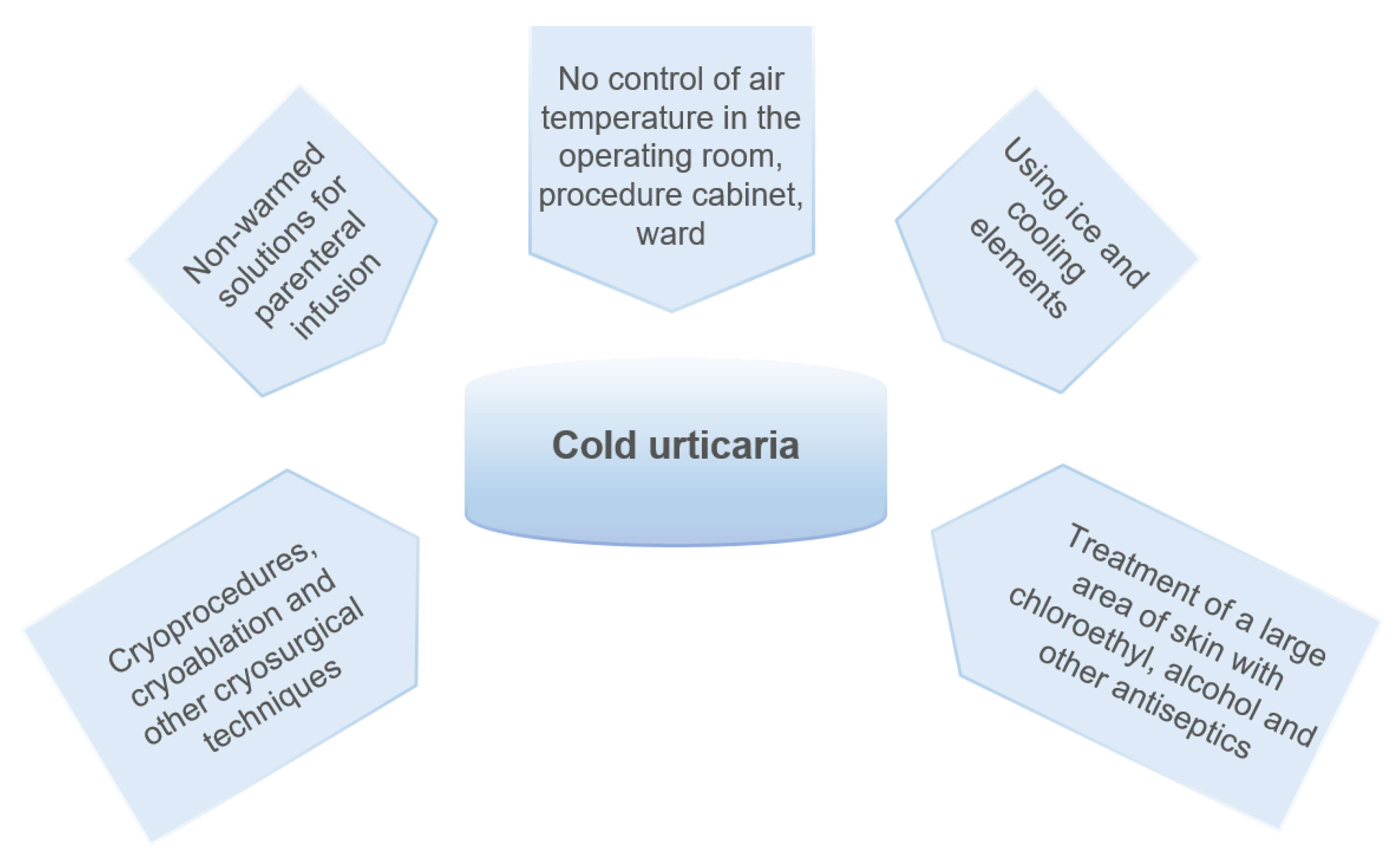
Figure 2.
Key considerations for patients (based on threshold levels) and actions to be undertaken with caution by healthcare professionals when managing patients with Cholinergic Urticaria. (Adapted from Maltseva N.P., Ryabova K.A., Zhernov Y.V., Sebekina O.V. Aspects of pathogenesis, differential and modifying approaches in cholinergic urticaria // Russian Journal of Allergy. 2024. 21; 4: 479-491. doi: 10.36691/RJA16952).
Figure 2.
Key considerations for patients (based on threshold levels) and actions to be undertaken with caution by healthcare professionals when managing patients with Cholinergic Urticaria. (Adapted from Maltseva N.P., Ryabova K.A., Zhernov Y.V., Sebekina O.V. Aspects of pathogenesis, differential and modifying approaches in cholinergic urticaria // Russian Journal of Allergy. 2024. 21; 4: 479-491. doi: 10.36691/RJA16952).
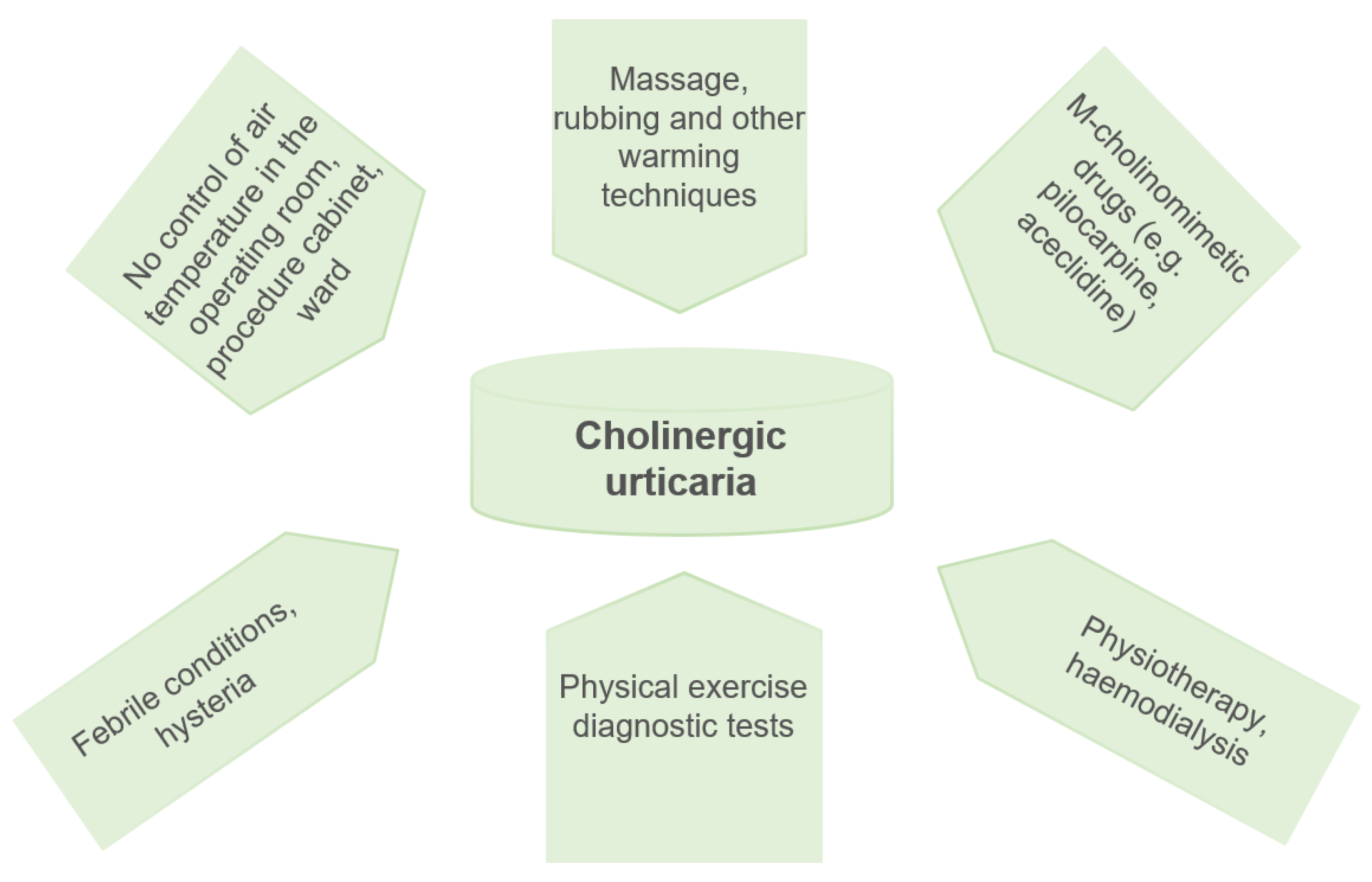

Table 1.
Occurrence of anaphylaxis according to worldwide studies.
| Year of the Study | Country | Author | Number of Patients | Number of Anaphylaxis Cases |
| 2019 | Thailand | Kulthanan85 | 27 | 4% |
| 2004 | USA | Alangari81 | 30 | 37% |
| 1986 | USA | Wanderer22 | 50 | 38% |
| 2016 | USA | Deza20 | 74 | 19% |
| 1985 | Finland | Neittaanmäki21 | 220 | 40% |
| 1986 | Netherlands | Doeglas69 | 39 | 51% |
| 2008 | Greece | Katsarou-Katsari11 | 62 | 29% |
| 2016 | Australia | Jain34 | 99 | 28% |
| 2019 | USA | Yee86 | 415 | 19% |
| 2010 | Germany | Metz87 | 21 | 19% |
| 2009 | Germany | Siebenhaar83 | 30 | 46% |
| 2021 | 17 countries | Bizjak35 | 551 | 37% |
Table 2.
Potential Targeting Molecules Investigated or Currently Under Investigation for the Treatment of Cold and Cholinergic Urticaria. Il-1 ‒ Interleukin-1; Il-4 ‒ Interleukin-4; FcεRI ‒ high affinity receptor for IgE; Siglec 8 ‒ sialic acid-binding immunoglobulin-like lectin 8; KIT ‒ KIT tyrosine kinase receptor; BTK ‒ Bruton’s tyrosine kinase; H4R ‒ histamine 4 receptor.
Table 2.
Potential Targeting Molecules Investigated or Currently Under Investigation for the Treatment of Cold and Cholinergic Urticaria. Il-1 ‒ Interleukin-1; Il-4 ‒ Interleukin-4; FcεRI ‒ high affinity receptor for IgE; Siglec 8 ‒ sialic acid-binding immunoglobulin-like lectin 8; KIT ‒ KIT tyrosine kinase receptor; BTK ‒ Bruton’s tyrosine kinase; H4R ‒ histamine 4 receptor.
| Medication | Target | Urticaria Type | ClinicalTrials.gov Identifier | Status |
| Rilonacept | IL-1β, IL-1α | ColdU | NCT02171416 | Completed |
| Dupilumab | IL-4Rα | ColdU CholU |
NCT04681729 NCT03749148 |
Completed Completed |
| Ligelizumab | FcεRI | ColdU, CholU | NCT04513548 | Terminated |
| Lirentelimab | Siglec 8 | CholU | NCT03436797 | Completed |
| Barzolvolimab | KIT | ColdU, CholU | NCT04548869 | Completed |
| Omalizumab | FcεRI | ColdU CholU |
NCT01580592 NCT05960708 NCT02012387 |
Completed Completed Completed |
| Remibrutinib | BTK | ColdU, CholU ColdU, CholU |
NCT05976243 NCT06865651 |
Recruiting Not yet recruiting |
| BLU-808 | Wild Type KIT | ColdU | NCT06931405 | Not yet recruiting |
| Izuforant | H4R | CholU | NCT04853992 | Completed |
Table 3.
Alternative therapies for cold and cholinergic urticaria.
| Cold Urticaria | Cholinergic Urticaria |
| doxepin 30 | methantelenium bromide164 |
| azathioprine 1 | antihistamine+scopalamine butylbromide165 |
| mycophenolate mofetil1 | botulinum toxin 166 |
| cynnarizine 167 | antihistamine+propranolol+montelukast 168 |
| doxycycline 169 | danazol 170 |
| montelukast 171 | montelukast 172 |
Disclaimer/Publisher’s Note: The statements, opinions and data contained in all publications are solely those of the individual author(s) and contributor(s) and not of MDPI and/or the editor(s). MDPI and/or the editor(s) disclaim responsibility for any injury to people or property resulting from any ideas, methods, instructions or products referred to in the content. |
© 2025 by the authors. Licensee MDPI, Basel, Switzerland. This article is an open access article distributed under the terms and conditions of the Creative Commons Attribution (CC BY) license (http://creativecommons.org/licenses/by/4.0/).
Copyright: This open access article is published under a Creative Commons CC BY 4.0 license, which permit the free download, distribution, and reuse, provided that the author and preprint are cited in any reuse.


