

Submitted:
26 July 2025
Posted:
29 July 2025
You are already at the latest version
Abstract
Inspired by the concept of 'Agent' from artificial intelligence, this paper posits a novel theoretical premise: any viable 'Theory of Everything' (ToE) must first provide a unified descriptive framework for all forms of existence in the Universe, encompassing physical, biological, and artificial intelligence systems. From this premise, we establish three core criteria for evaluating any candidate ToE: (1) the unified description of all phenomena in the Universe; (2) the unification of the four fundamental forces; and (3) the reconciliation of general relativity and quantum mechanics.The primary objective of this paper is to demonstrate the potential of Generalized Agent Theory (GAT) as a candidate ToE by evaluating it against these three criteria. GAT is a theoretical framework of Generalized Agent Theory built upon a unified structure of Agent. Its core consists of Standard Agent Model, an Agent classification system, Polar Intelligent Field Model, and multi-Agent relationship patterns.Through a coherence analysis, this paper demonstrates GAT's alignment with the three criteria. First, its Standard Agent Model offers a unified modeling framework for physical, biological, and AI systems. Second, the theory posits the central hypothesis that the four fundamental forces can be unified into a more primordial 'Intelligent Field'. Finally, GAT attributes the theoretical disparities among classical mechanics, relativity, and quantum mechanics to the differing levels of 'observer' intelligence inherent within each respective framework.In conclusion, Generalized Agent Theory offers a novel pathway for addressing fundamental challenges in physics, presenting itself as a highly promising candidate framework for a 'Theory of Everything'.
Keywords:
theory of everything
; generalized agent theory
; agent
; intelligent field
; observer
1. Introduction
The establishment of a 'Theory of Everything' (ToE) represents a paramount endeavor in modern physics [1]. Although debate continues regarding its precise scope and final form, its core is universally acknowledged to lie in the resolution of two fundamental challenges. The first is the profound theoretical incompatibility between general relativity, which governs macroscopic gravity, and quantum mechanics, which presides over the microscopic world[2]. The second is the persistent failure to unify gravity with the strong, weak, and electromagnetic interactions within a single theoretical framework[3]. Despite nearly a century of effort, traditional theoretical avenues have encountered significant difficulties and appear to have reached a developmental bottleneck[4,5].
Inspired by the core concept of 'Agent' from artificial intelligence, we propose a novel perspective: prior to unifying dynamics (forces) and overarching frameworks, a more fundamental task is to first unify the description of all entities in the Universe—from microscopic particles and macroscopic physical systems to all forms of life, including humans, and even robotic and AI systems. We contend that this should be considered the foremost characteristic of a ToE. Only when all forms of existence can be described within a single, universal model can a unified dynamics applicable to that model logically emerge to unify the four fundamental interactions.
Consequently, drawing from the perspective of intelligence science, we augment the two established goals of physics by introducing a third core criterion. Together, these three form a more complete set of benchmarks for evaluating a 'Theory of Everything':
The first criterion is to achieve a unified object description by establishing a singular theoretical model that encompasses physical systems, living systems, and artificial intelligence (AI) systems.
The second criterion is the unification of the four fundamental forces, achieving a unified description of gravity, the electromagnetic interaction, the strong interaction, and the weak interaction[6].
The third criterion is that the unified theoretical framework must resolve the fundamental theoretical conflict between General Relativity and Quantum Mechanics[7].
This paper aims to demonstrate that our proposed 'Generalized Agent Theory' (GAT) provides an internally coherent candidate framework for satisfying these three criteria. GAT is a unified theoretical framework composed of Standard Agent Model, an Agent classification system, Polar Intelligent Field Model, and multi-Agent relationship patterns. The theory conceptualizes any Agent as a five-module information processing system that evolves between the two poles of 'Absolute Zero Agent' and 'Omniscient and Omnipotent Agent', driven by a primordial 'Intelligent Field'[8.9.10,11,12,13]. This framework exhibits a high degree of internal coherence with the three criteria:
For Unified Object Description: GAT's Standard Agent Model conceptualizes physical, biological, and AI systems as specific types of Agent, thereby satisfying the first criterion.
For Unified Fundamental Interactions: The dynamics of its 'Intelligent Field' form a central hypothesis wherein the four fundamental forces are specialized manifestations of this more primordial dynamic in different contexts, directly addressing the second criterion.
For Unified Theoretical Framework: GAT innovatively attributes the disparities among classical mechanics, relativity, and quantum mechanics to the differing levels of 'observer' intelligence inherent in their respective frameworks, opening a novel path to resolve their conflicts and satisfy the third criterion.
This paper will elaborate on the core tenets of Generalized Agent Theory and demonstrate how it addresses the three core criteria we have established for a 'Theory of Everything'.
2. The Theoretical Framework of Generalized Agent Theory
The theoretical framework of Generalized Agent Theory (GAT) is constructed from four interconnected core components: Standard Agent Model, an Agent classification system, Polar Intelligent Field Model, and multi-Agent relationship patterns[13], as illustrated in Figure 1. Due to space constraints, this section provides only a concise overview of this framework.
2.1. Standard Agent Model
Standard Agent Model provides a minimally complete and irreducible unified structure for the concept of Agent. The model is predicated on the core assumption that any Agent is fundamentally an information processing system whose functional architecture comprises five essential modules: an Information Input module, an Information Output module, a Dynamic Storage module, an Information Creation module, and a Control Module that coordinates the other four, as depicted in Figure 2. The functional capacity of each module is quantified by parameters representing its scale and complexity.
2.2. Agent Classification System
Based on the structure of Standard Agent Model, we have developed two complementary classification systems for Agent.
The first system provides a macroscopic classification, dividing Agent into three fundamental types,as depicted in Figure 3:
- Absolute Zero Agent (α Agent): The theoretical limit where the capability parameters of all five modules are zero.
- Omniscient and Omnipotent Agent (Ω Agent): The idealized state where the capability parameters of all five modules approach infinity.
- Finite Agent: Any real-world Agent whose module capability parameters are neither all zero nor all infinite.
The second system offers a more fine-grained typology. The capability of each of the five modules is quantified into three discrete levels: 0 (null capability), 1 (finite capability, i.e., a value between 0 and infinity), and 2 (infinite capability). The combinatorial possibilities of these states across the five modules yield a classification system of 243 subtypes of Agent (3⁵ = 243), as shown in Table 1.
2.3. Polar Intelligent Field Model
Polar Intelligent Field Model constitutes the dynamical core of Generalized Agent Theory, providing a mathematical framework for Agent evolution. The model maps the five functional capabilities of an Agent onto a five-dimensional capability vector space. This space is defined by two theoretical poles: α Point, corresponding to Absolute Zero Agent, and Ω Point, corresponding to Omniscient and Omnipotent Agent. These poles establish the theoretical boundaries of the capability space.
From this structure, a key dynamical principle can be derived: the existence of any Finite Agent is conceptualized as a dynamic process of evolution and transition between these two poles. Specifically, the trajectory of an Agent within the five-dimensional capability space is driven by two dualistic field forces:
Alpha Decay Field: A degenerative dynamical mechanism that drives an Agent toward α Point, manifesting as a tendency for its capabilities to decay.
Omega Enhancement Field: An evolutionary dynamical mechanism that drives an Agent toward Ω Point, manifesting as a tendency for its capabilities to increase.
The interplay of these two forces determines the evolutionary trajectory and steady-state distribution of an Agent within the capability space, as illustrated in Figure 4.
2.4. multi-Agent Relationship Patterns
The framework of multi-Agent relationship patterns systematically delineates the interaction between any two Agents within GAT. This system provides a quantitative analysis of dyadic Agent relationships along three core dimensions, each based on the functional modules of an Agent , as illustrated in Figure 5 :
- Perception Dimension: Assesses whether each Agent can detect and recognize the other's existence via their respective Information Input modules.
- Communication Dimension: Examines whether the Agents can establish an effective channel for information exchange by interfacing their Information Input and Output modules.
- Interaction Strategy Dimension: Analyzes how each Agent utilizes its Control Module to influence and regulate their mode of interaction, encompassing basic strategies such as hierarchical control, neutral relations, competition, and cooperation.
The various combinations of states across these three dimensions yield a typology of 18 fundamental dyadic relationship patterns, providing a complete theoretical framework for the analysis of complex multi-Agent systems.
3. Coherence Test: Three Criteria for Generalized Agent Theory as a Potential “Theory of Everything”
3.1. Unification of Physical, Living, and AI Systems via Standard Agent Model
Generalized Agent Theory posits that the fundamental constituent unit of the Universe can be abstracted as Agent, which adheres to Standard Agent Model.
This theory provides a novel theoretical framework for a unified description of the evolution and interrelationships of various systems, ranging from non-intelligence to potentially infinite intelligence. Within this framework, a diverse array of entities—ranging from non-intelligent physical systems (e.g., atoms, galaxies), and lifeforms with finite intelligence (e.g., humans, flora, fauna) and artificial intelligence, to theoretically omniscient entities like a "Laplacian Demon," a "Maxwell's Demon," or a philosophical "God," and even the Universe itself—can all receive a unified interpretation.
This establishes a foundation for integrating the research objects of intelligence science, physics, cosmology, biology, and philosophy (as shown in Figure 6).
The Universe: It is regarded as Agent that dynamically evolves between α Point and Ω Point, and is itself composed of Agent. This conclusion stems from a logical analysis of the fundamental characteristics of Ω Agent. By definition, Ω Agent is a theoretically omniscient and omnipotent entity. Therefore, if an agent evolves to this stage, every component of the Universe must be included within its scope of cognition and action. Conversely, any existence independent of this agent would create a logical paradox in its "omniscient and omnipotent" definition. From this, it can be inferred that the Universe itself can be conceptualized as a macroscopic Agent[12].
Philosophical "God" and "Maxwell's Demon"[13]: These are considered theoretical prototypes of Omniscient and Omnipotent Agent (Ω Agent). Their five basic functions—information input, output, storage, creation, and control—are all infinite, consistent with the concepts of "omniscience" and "omnipotence."
Laplacian Demon (Classical Mechanics Observer)[14]: This is defined as an omniscient Agent. It is characterized by infinite information input and storage capabilities, but its information output, creation, and control capabilities are all zero. This ensures its observational acts do not cause any perturbation to the physical system.
Relativistic Observer[15]: This is regarded as a constrained omniscient Agent. Its core characteristic is that its information input capability is limited by the principle of the constancy of the speed of light and the equivalence principle. Similar to a classical observer, its output and control capabilities are typically set to zero to avoid affecting the observed scene.
Quantum Mechanical Observer[16]: This is defined as Finite Agent with information output capability, which is fundamentally different from the previous two. Its key feature is a non-zero and interventionist information output (measurement) that actively influences the system's state—the "observer effect." According to the uncertainty principle and the complementarity principle, all its functions, including input, storage, creation, and control, are finite.
Living Systems[11]: Biological systems such as humans, animals, plants, and microorganisms are Finite Agent with autonomous control capabilities. The varying strengths of their respective information processing functions determine the diverse intelligence levels across different species.
Artificial Intelligence Systems: Computers, AI models, robots, and the like are typical other-controlled Finite Agent, whose control functions are constrained by external (usually human) commands. Their various capabilities also theoretically range from zero to infinity[11].
Typical Physical Systems (e.g., Quarks, Atoms, Stars, Galaxies, Black Holes): As they lack information processing capabilities, they can be defined as Absolute Zero Agent or Alpha Agent. The values of their five basic functions are all zero, and they exhibit no active information processing characteristics, thus possessing no intelligence[11].
3.2. Unification of the Four Fundamental Forces into Intelligent Field (Hypothesis)
According to a core inference of Generalized Agent Theory, all Agent in the Universe—from elementary particles to the Universe itself—are driven by two primordial impetuses: Omega Gravity and Alpha Gravity. These correspond to Omega Field and Alpha Field, respectively, and drive Agent to evolve toward the corresponding Ω Point or α Point. Therefore, the theory posits that these two "intelligent forces" and their associated "Intelligent Field" constitute the most fundamental dynamic mechanism of the Universe.
In the framework of modern physics, the material world is governed by four fundamental interactions: the strong, weak, electromagnetic, and gravitational forces. These are described by their respective quantum fields (the gluon field, W/Z boson fields, electromagnetic field, and gravitational field). Although Quantum Field Theory has successfully unified the first three forces, incorporating gravity into this unified framework to achieve a "Grand Unification" of all four remains a major challenge in physics[18,19].
Generalized Agent Theory offers a novel perspective on this challenge. Since all things described by physics can be regarded as Agent, they must first adhere to the fundamental dynamic laws of the Universe—that is, be governed by Alpha Gravity and Omega Gravity. This logic leads to a profound hypothesis: the four fundamental interactions observed in physics may not be "fundamental" forces in the ultimate sense, but rather are manifestations of these two primordial intelligent forces under different energy scales and interaction scenarios.
The unifying potential of this theory extends beyond physics. From natural selection in zoology to the "invisible hand" in socioeconomics; from the free energy principle and emergent mechanisms in artificial intelligence to the metaphysical pursuits of a "Prime Mover" or "Tao" in philosophy and religion—different disciplines reveal core dynamics that drive the evolution of their subjects. Although these dynamic mechanisms vary in form, their objects of action (life, society, AI, etc.) all conform to the definition of Agent (as shown in Figure 7).
Therefore, we propose a more universal, cross-disciplinary hypothesis: these seemingly unrelated and diverse dynamic mechanisms may, in essence, all be specific manifestations of the two fundamental intelligent fields—Alpha Field and Omega Field—at different systemic levels and degrees of complexity.
As a core inference of Generalized Agent Theory, we have preliminarily identified indirect evidence supporting the existence of these two intelligent fields in nature by analyzing the macro-evolutionary trajectories of terrestrial life over hundreds of millions of years (e.g., humans, dinosaurs, pandas, sharks)[11].
However, it must be emphasized that research into the physical origins, mathematical properties, and the exact mapping relationship between these two intelligent forces and existing physical mechanics is still in a nascent stage of theoretical exploration. Therefore, the concept of "unifying the four fundamental forces within Intelligent Field" currently remains a scientific conjecture awaiting rigorous theoretical construction and experimental verification in the future.
3.3. A Unified Interpretation of the Three Major Physical Theories: A Perspective Based on the Observer Intelligence Spectrum
Modern physics faces fundamental challenges in its quest to unify classical mechanics, relativity, and quantum mechanics. Generalized Agent Theory offers a novel breakthrough by explicitly defining the "observer" in physics as a type of Agent. It proposes that the root cause of the apparent incompatibility among these three theoretical frameworks may not be internal contradictions within the physical laws themselves, but rather the starkly different implicit assumptions they make about the observer's level of intelligence (as shown in Figure 8).
From this perspective, the three pillars of physics can be reinterpreted as being founded upon observers of different intelligence levels [11]:
Classical Mechanics: Its ideal observer is a "Laplacian Demon"-style omniscient Agent. This observer can instantaneously and without perturbation acquire all information about the state of the Universe, which forms the theoretical basis for why the physical laws appear absolutely deterministic.
Relativity: Its observer can be regarded as a constrained omniscient Agent. Its "omniscience" is manifested in the preservation of deterministic physical laws, while the "constraint" arises from the principle of the constancy of the speed of light and the equivalence principle, making its intelligence a hybrid of the infinite and the finite.
Quantum Mechanics: Its observer is a Finite Agent. Compared to the former two, the quantum observer possesses an active information output (measurement) capability, but all five of its functions (input, output, storage, creation, and control) are strictly limited. Quantum phenomena such as the "observer effect," wave function collapse, and the uncertainty principle collectively characterize this observer's inherent limitations in acquiring information and exerting influence.
Based on this "Observer Intelligence Spectrum," Generalized Agent Theory can naturally deduce two theoretical scenarios not yet fully explored in physics. The first sets the observer as an Omniscient and Omnipotent Agent, a scenario where the observer not only knows everything but can also modify the physical laws themselves. The second sets the observer as an Absolute Zero Agent; in such a theoretical universe, no definable physical laws or processes would exist.
This inspires a core thought experiment: in the same physical world, treat the "observer's" intelligence level as a tunable parameter.
- When the observer is at the Absolute Zero Agent level, no physical laws exist in the world.
- When the observer's intelligence is elevated to the Finite Agent level, the world adheres to the probabilistic and uncertain laws of quantum mechanics.
- When its intelligence is further elevated to the constrained omniscient level, the physical description undergoes a "phase transition" from the quantum world to relativistic spacetime.
- When the observer reaches the omniscient "Laplacian Demon" level, physical phenomena further converge to the absolute spatiotemporal picture of classical mechanics.
- If the intelligence level is elevated to Omniscient and Omnipotent, the physical laws of the world become arbitrarily modifiable.
This thought experiment reveals that the three major physical theories are not mutually exclusive but are descriptions of the same physical reality at different levels, under different assumptions about the observer's intelligence. More importantly, this is not purely philosophical speculation; it reframes the long-standing problem of unification in physics into an interdisciplinary issue that can be cross-validated with intelligence science. As research progresses, we may be able to construct an "observer system" with variable intelligence. Through it, we could simulate the physical "phase transitions" induced by changes in observer intelligence in an experimental setting, thereby providing direct experimental evidence for this theory.
4. Conclusions
This paper first proposed three core characteristics that a "Theory of Everything" should possess and provided a systematic introduction to the key elements of Generalized Agent Theory. On this basis, we demonstrated the theory's intrinsic compatibility with these three characteristics, revealing its potential as a candidate for a "Theory of Everything."
We believe that Generalized Agent Theory is not a closed, self-consistent theoretical system, but rather should be regarded as an open, forward-looking, and exploratory research program. At present, many of the theory's key inferences still await experimental verification. Simultaneously, core concepts in physics (e.g., mass, black holes) and key elements in artificial intelligence (e.g., neural networks, large language models) have yet to be deeply integrated into the unified framework of Agent. Despite these challenges, this theory undoubtedly opens up a new cognitive dimension for investigating the fundamental questions of the Universe and provides a set of analytical tools with great potential.
In the 21st century, with the ever-accelerating advancement of artificial intelligence, Generalized Agent Theory may become a significant candidate path in the exploration for a "Theory of Everything." However, we equally believe that neither this theory nor any form of a "Theory of Everything" is by any means the end of scientific inquiry. Its own theoretical system gives rise to more fundamental questions: Why do all things in the Universe uniformly manifest in the form of Agent? Beyond the poles that serve as the starting point (α Point) and endpoint (Ω Point) of evolution, does a broader state space exist? And what is the physical nature and ultimate origin of Intelligent Field?
Therefore, the primary intention behind establishing and exploring Generalized Agent Theory is not to construct a so-called "ultimate theory" or to reach the end of science. On the contrary, in the grand process of humanity's ever-deepening understanding of nature and the Universe, if Generalized Agent Theory can serve as a valuable stepping stone for a more profound and complete theoretical system in the future, then its historical mission will have been fulfilled.
References
- Sugiyama, Y. (2024). Quantumness of the gravitational field: A perspective on monogamy relation. Physical Review D, 110, 045016. [CrossRef]
- Galley, T. D., Giacomini, F., & Selby, J. H. (2023). Any consistent coupling between classical gravity and quantum matter is fundamentally irreversible. Quantum, 7, 1142. [CrossRef]
- Blair, C. D. A. (2024). Unification of Decoupling Limits in String and M Theory. Physical Review Letters, 132, 161603. [CrossRef]
- Rocci, A. (2024). The quantum theory of gravitation, effective field theory approach and asymptotic safety: a comprehensive review. European Physical Journal H, 49, 6.
- Salmon, F. (2025). Unifying physics theories with a single postulate. Results in Physics, 60, 107702. [CrossRef]
- Marchesano, F. (2024). The Standard Model from String Theory: A Modern Perspective. Journal of High Energy Physics, 2024, 123.
- Bose, S., Mazumdar, A., Morley, G. W., Ulbricht, H., Toroš, M., Paternostro, M., Geraci, A. A., Barker, P. F., Kim, M. S., & Millen, J. (2025). Massive quantum systems as interfaces of quantum mechanics and general relativity. Reviews of Modern Physics, 97, 015003.
- Liu, F., Shi, Y., & Wang, B. (2015). World Search Engine IQ Test Based on the Internet IQ Evaluation Algorithms. International Journal of Information Technology & Decision Making, 14(2), 221-237. [CrossRef]
- Liu, F., Shi, Y., & Liu, Y. (2017). Intelligence Quotient and Intelligence Grade of Artificial Intelligence. Annals of Data Science, 4(2), 179-191. [CrossRef]
- Liu, F., & Shi, Y. (2020). Investigating Laws of Intelligence based on AI IQ Research. Annals of Data Science, 7(3), 399-416. [CrossRef]
- Liu, F., Lv, B., & Liu, Y. (2024). From Observer to Agent: On the Unification of Physics and Intelligence Science. Preprints, 2024100479. [CrossRef]
- Feng, L., Lv, B., & Liu, Y. (2025). Agent: A New Paradigm for Fundamental Units of the Universe. Preprints. [CrossRef]
- Liu, F., Lv, B., & Liu, Y. (2025). Generalized Agent Theory from First Principles. Preprints, 202506.0055. [CrossRef]
- Erdman, P. A., Rolandi, A., Catalan, P., Noé, F., & Arrachea, L. (2025). Artificially intelligent Maxwell's demon for optimal control of open quantum systems. Quantum Science and Technology, 10, 015009.
- Fankhauser, J. (2025). Epistemic horizons from deterministic laws: lessons from a Laplacean demon. Synthese, 203, 45.
- Ben-Amots, N. (2025). Implementing Relativistic Rotation, Exponential Rest Mass, and Angular Momentum in Special Relativity. Journal of Physics: Conference Series, 2987, 012019.
- Polychronakos, A. P. (2024). Quantum mechanical rules for observed observers and the consistency of quantum theory. Nature Communications, 15, 3706. [CrossRef]
- Senjanović, G., & Mohapatra, R. N. (2024). Minimal SU(5) theory on the edge: The importance of being effective. Physical Review D, 109, 095009.
- Bose, S., Mazumdar, A., Morley, G. W., Ulbricht, H., Toroš, M., Paternostro, M., Geraci, A. A., Barker, P. F., Kim, M. S., & Millen, J. (2025). Massive quantum systems as interfaces of quantum mechanics and general relativity. Reviews of Modern Physics, 97, 015003.
Figure 1.
The theoretical architecture of Generalized Agent Theory.
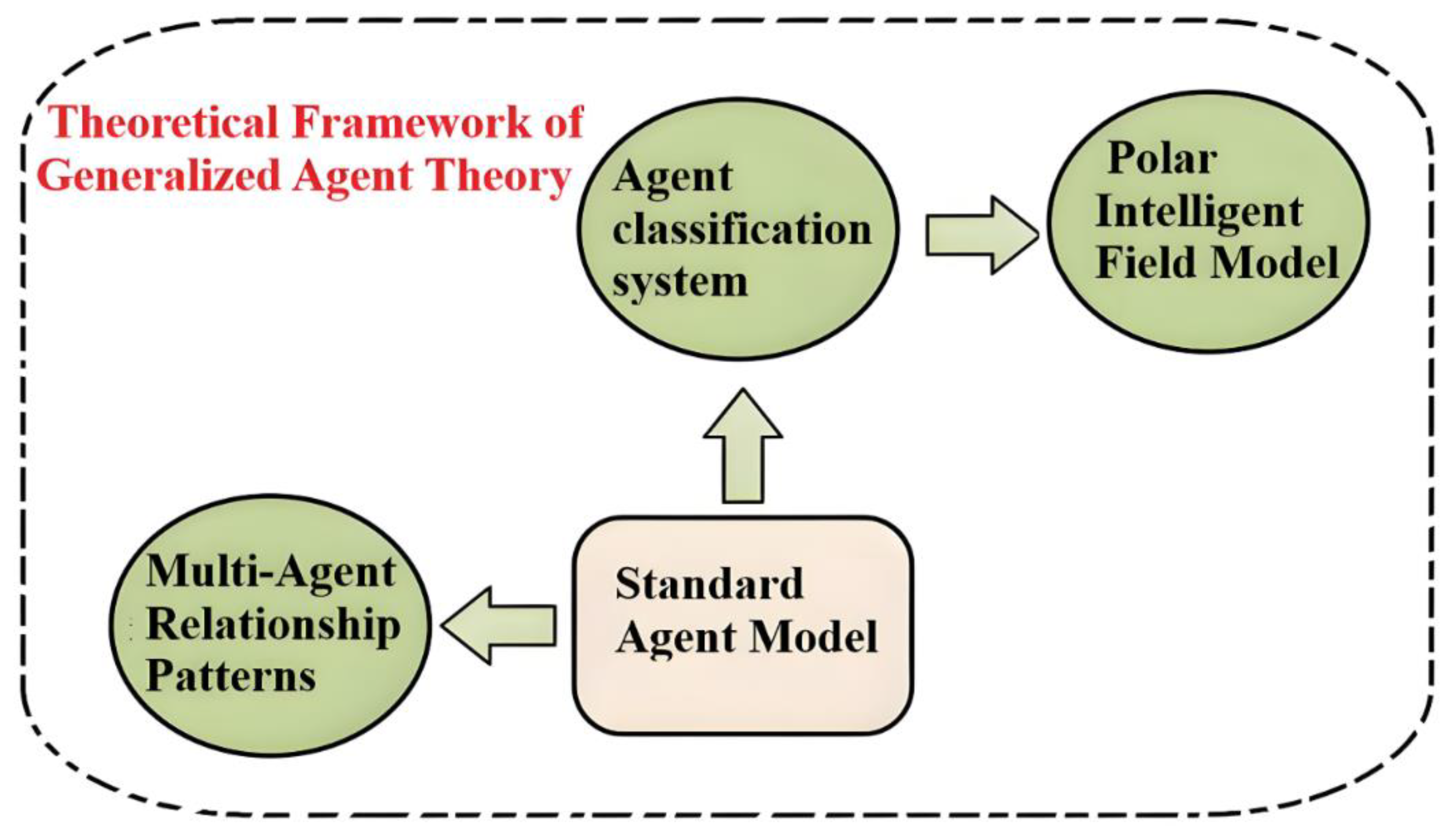
Figure 2.
The functional architecture of Standard Agent Model.
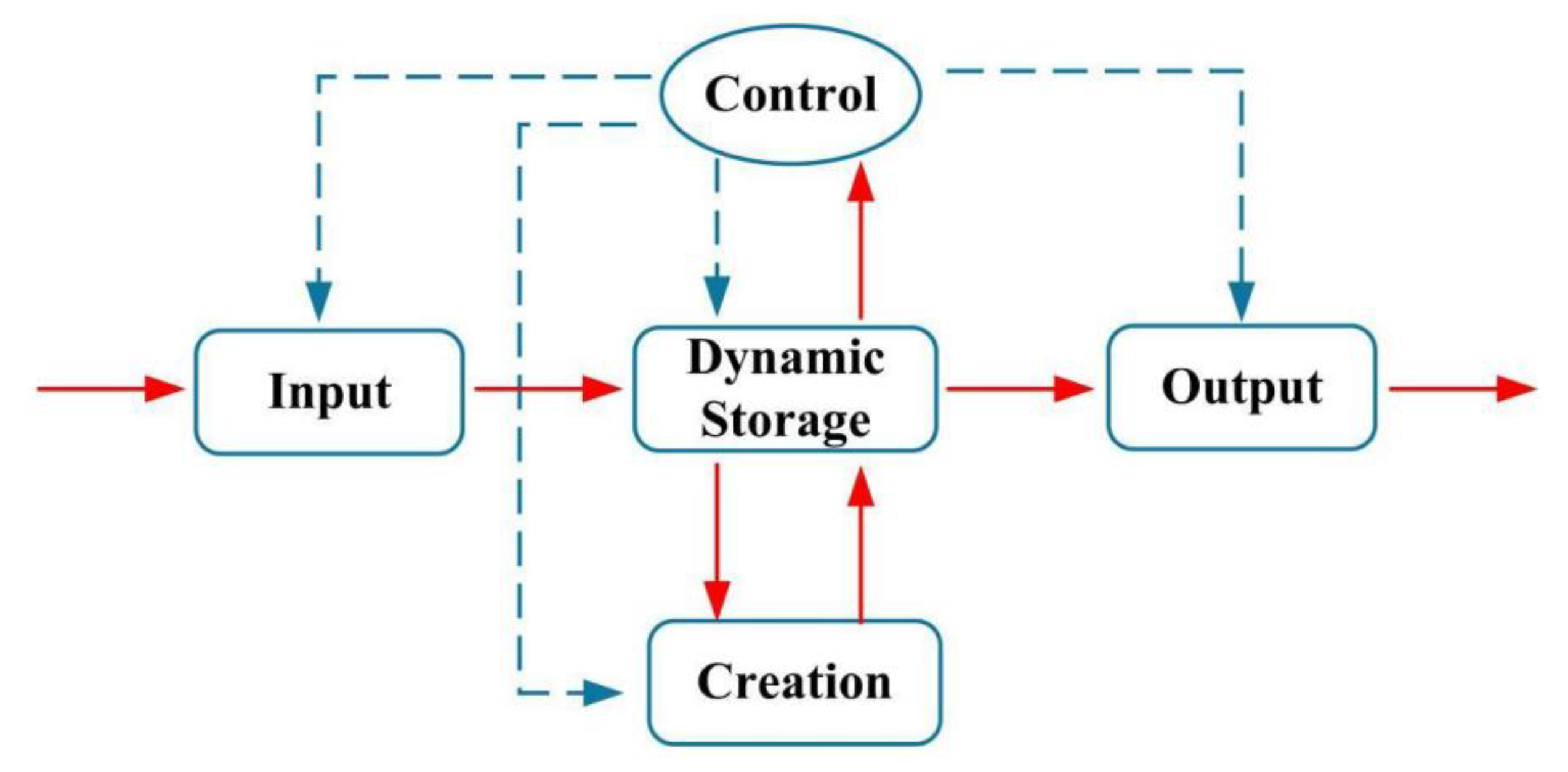
Figure 3.
The three-type macroscopic classification of Agent.
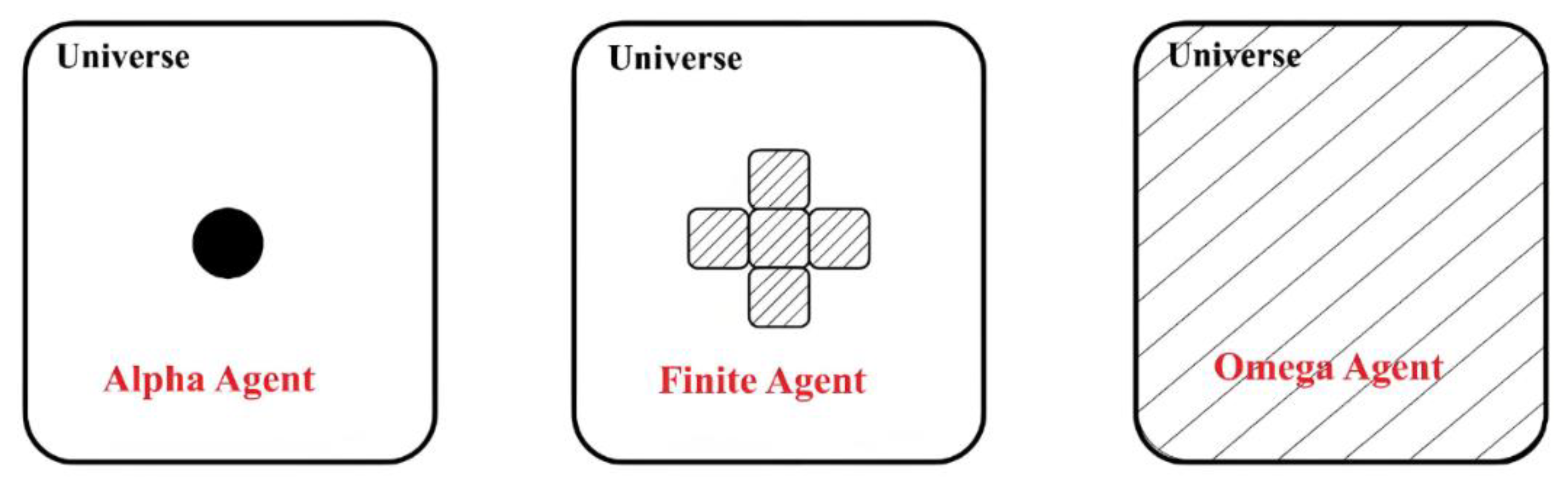
Figure 4.
The dynamical structure of Polar Intelligent Field Model.
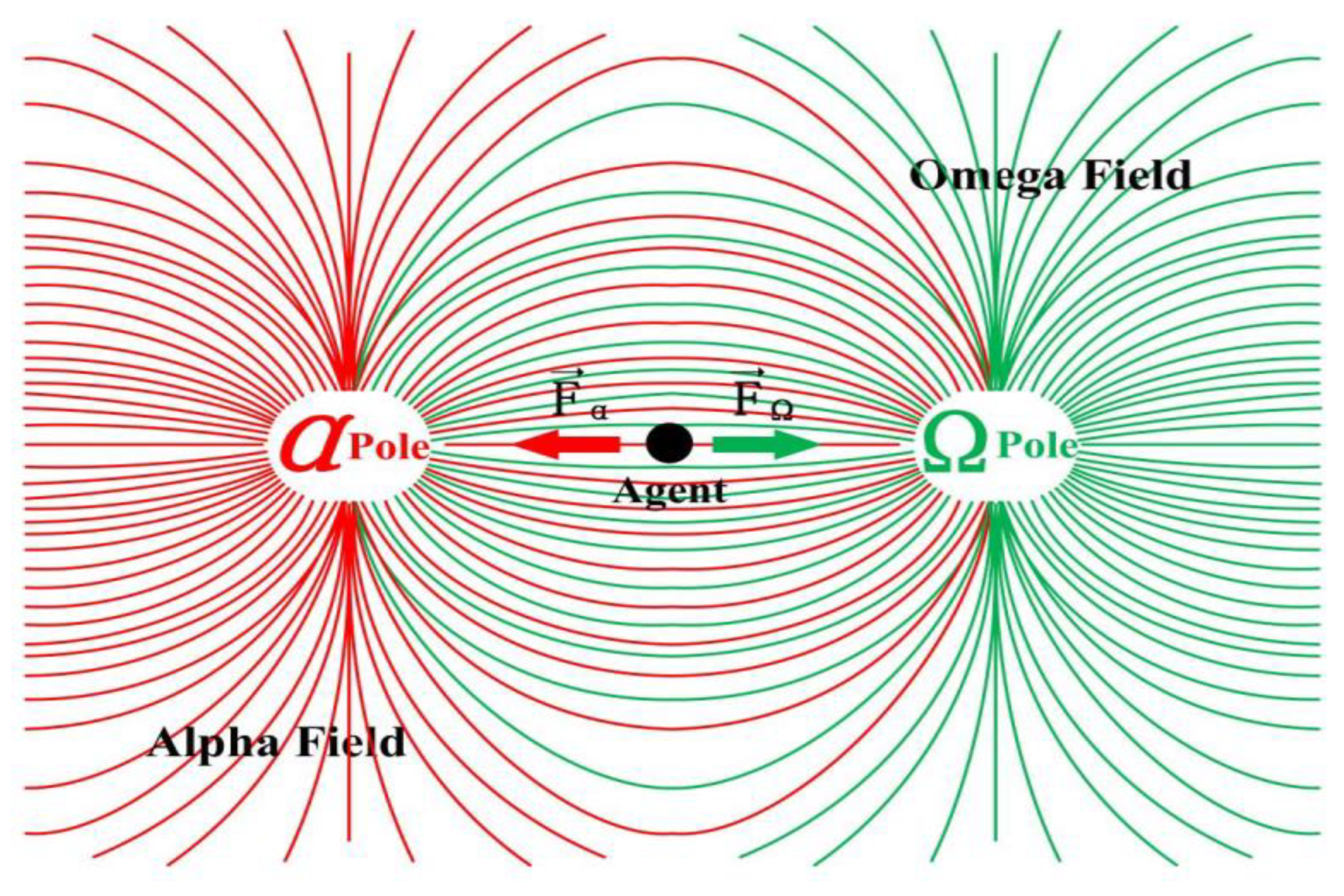
Figure 5.
The 18 fundamental types of the multi-Agent relationship patterns.
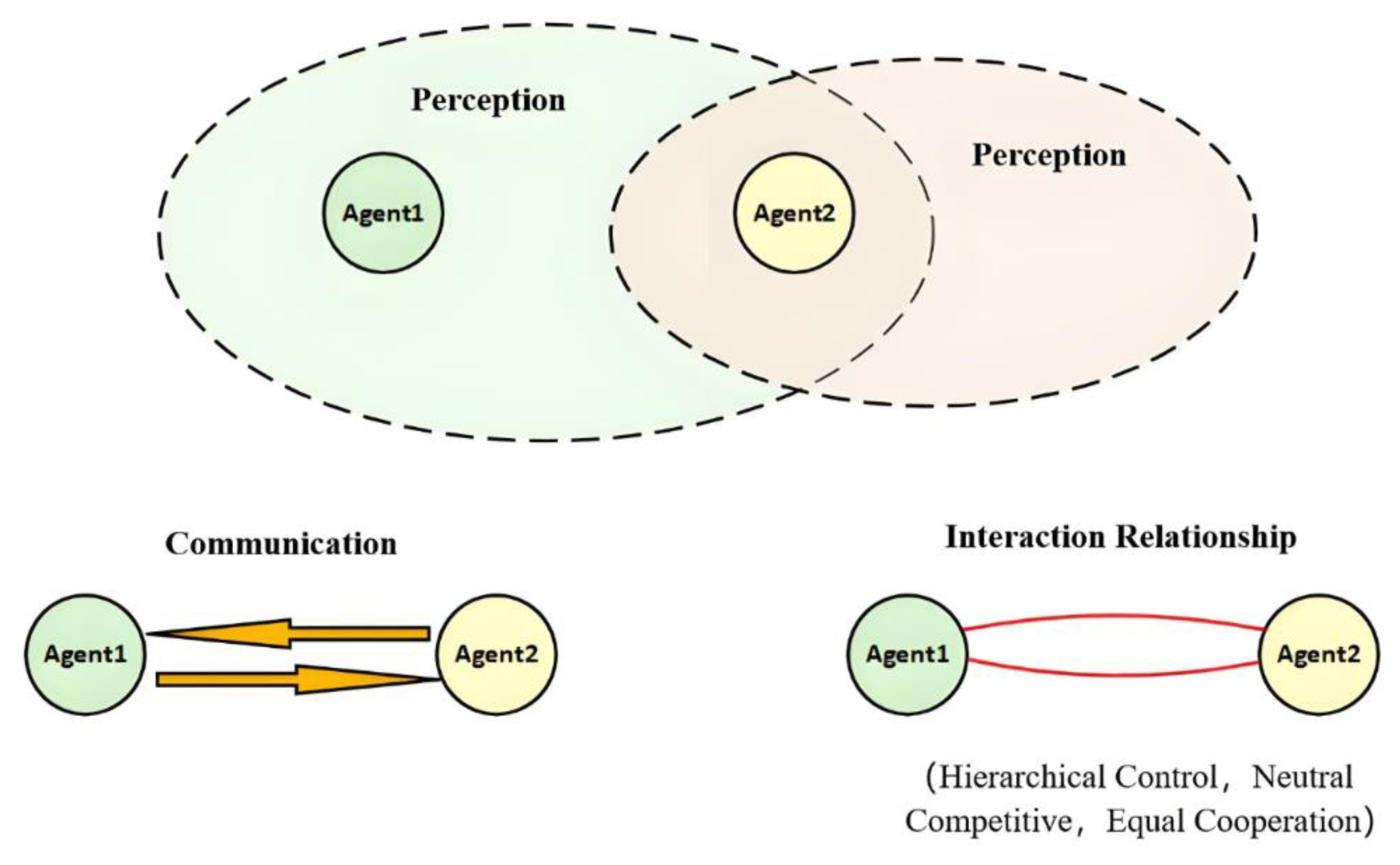
Figure 6.
The Relationship between Agent and the Subjects of Different Disciplines.
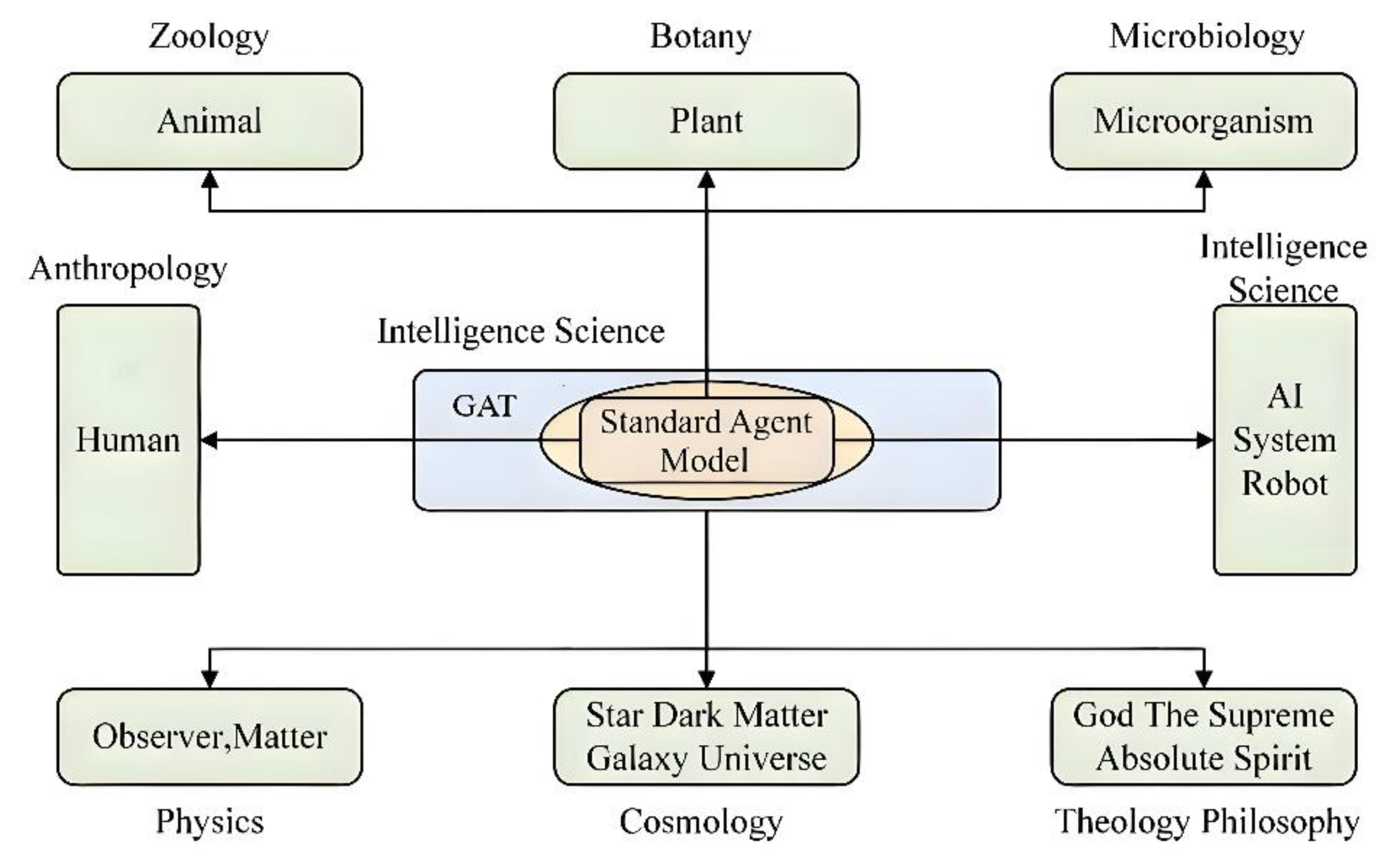
Figure 7.
The Relationship between Intelligent Field and the Dynamic Mechanisms of Different Disciplines.
Figure 7.
The Relationship between Intelligent Field and the Dynamic Mechanisms of Different Disciplines.
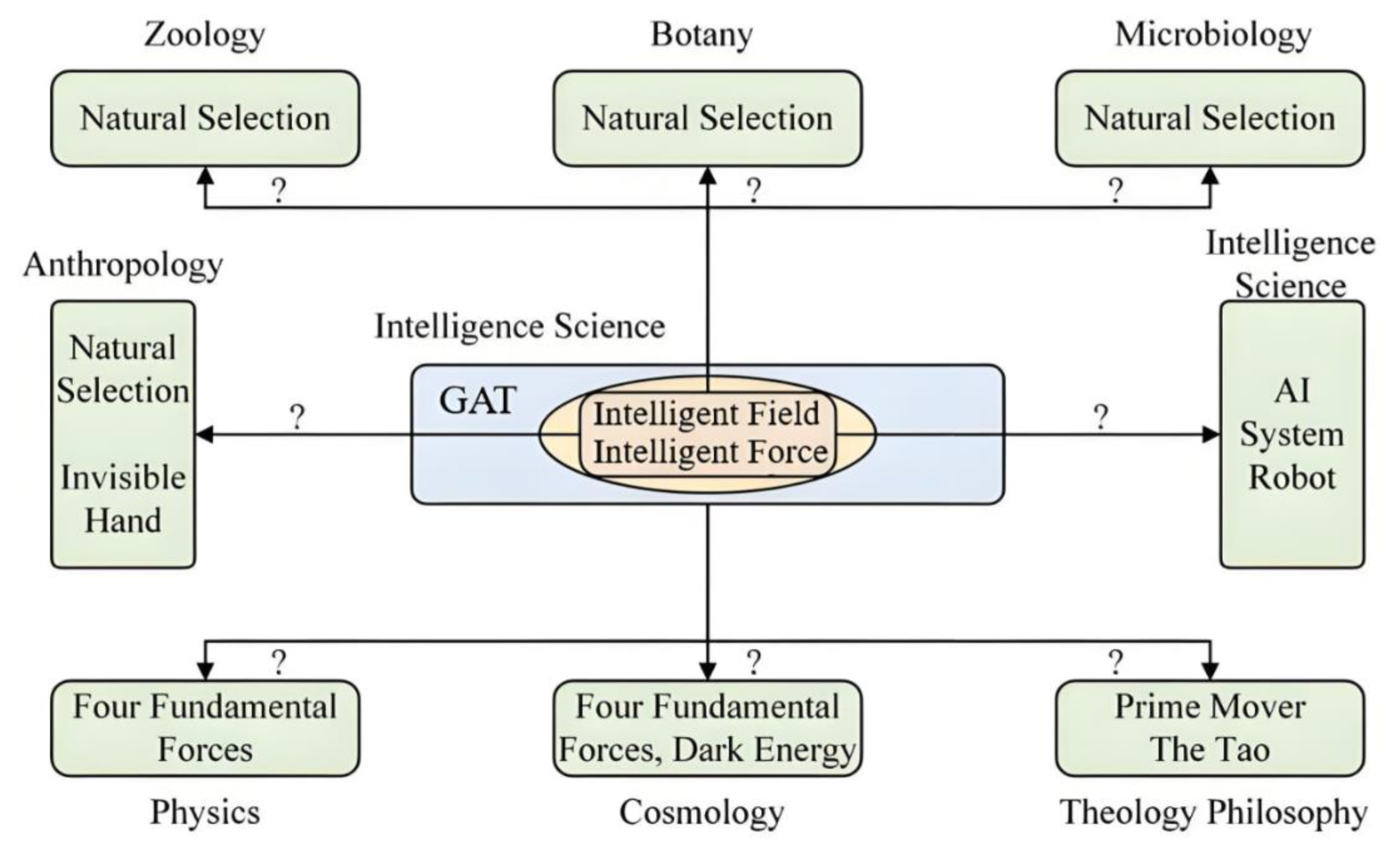
Figure 8.
Physical Theories Corresponding to Observers of Different Intelligence Levels.
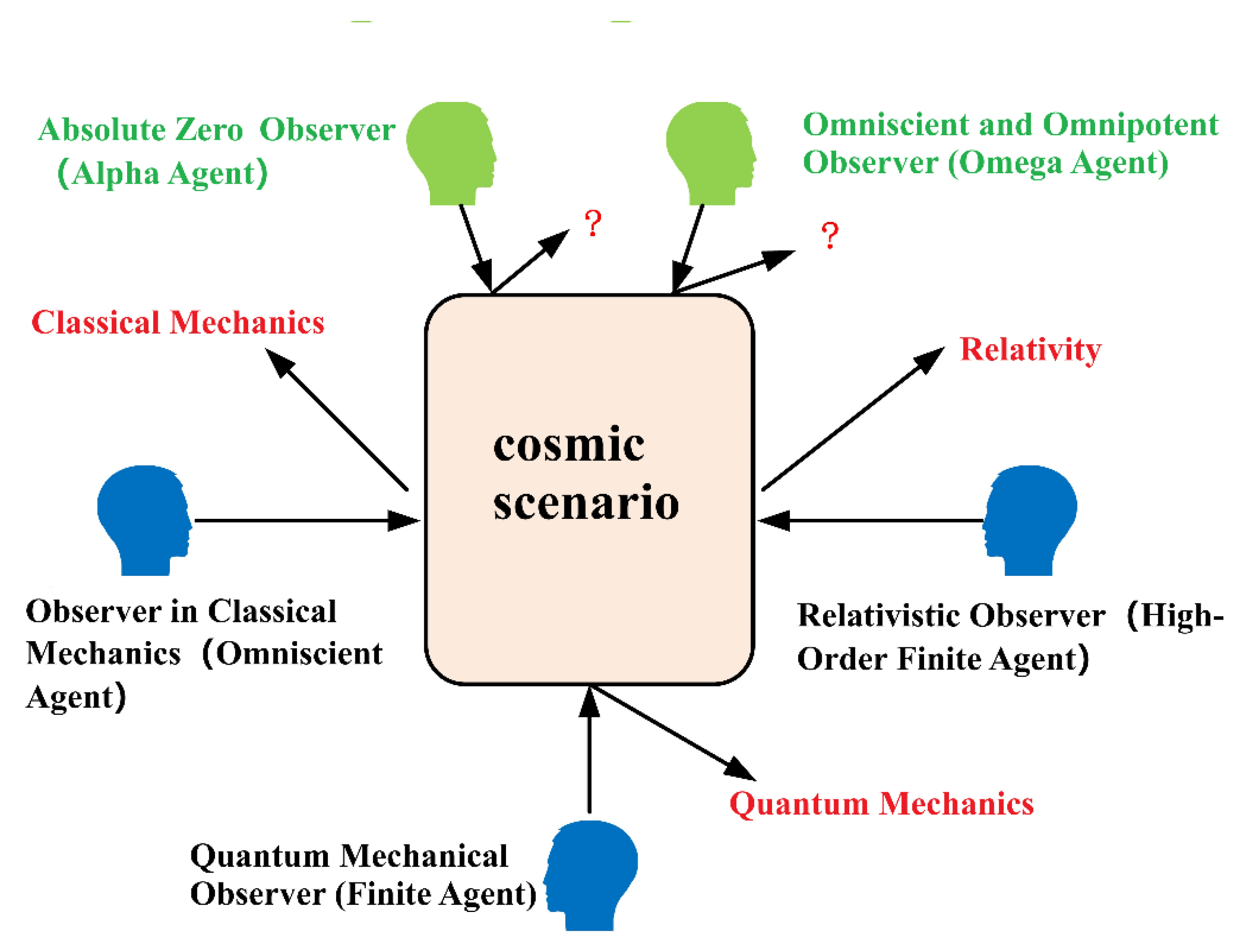

Table 1.
The 243-Subtype Classification System of Agent.
| ID | Control | Creation | Storage | Output | Input |
| 1 | 0 | 0 | 0 | 0 | 0 |
| 2 | 0 | 0 | 0 | 0 | 1 |
| 3 | 0 | 0 | 0 | 0 | 2 |
| 4 | 0 | 0 | 0 | 0 | 0 |
| 。。。 | 。。。 | 。。。 | 。。。 | 。。。 | 。。。 |
| 241 | 2 | 2 | 2 | 2 | 0 |
| 242 | 2 | 2 | 2 | 2 | 1 |
| 243 | 2 | 2 | 2 | 2 | 2 |
Disclaimer/Publisher’s Note: The statements, opinions and data contained in all publications are solely those of the individual author(s) and contributor(s) and not of MDPI and/or the editor(s). MDPI and/or the editor(s) disclaim responsibility for any injury to people or property resulting from any ideas, methods, instructions or products referred to in the content. |
© 2025 by the authors. Licensee MDPI, Basel, Switzerland. This article is an open access article distributed under the terms and conditions of the Creative Commons Attribution (CC BY) license (http://creativecommons.org/licenses/by/4.0/).
Copyright: This open access article is published under a Creative Commons CC BY 4.0 license, which permit the free download, distribution, and reuse, provided that the author and preprint are cited in any reuse.


