

Submitted:
29 July 2025
Posted:
30 July 2025
You are already at the latest version
Abstract
One of the major social issues worldwide is the tobacco dependency and the cigarette smoking (CS) abuse. Given the significant impact of cigarette smoking on human health and disease, exten-sive tobacco use and cigarette smoking abuse are certainly a form of drug addiction and should be considered a serious threat to human health. Notably, healthcare spending attributable to cig-arette smoking is very high. In this regard, a significant number of biomolecules of natural origin have been described as capable of mitigating the adverse effects of cigarette smoking. In this re-view (a) we discuss the impact that the habit of smoking tobacco has on human health and (b) we describe products of natural origin capable of mitigating the cigarette smoke effects. The conclusion of this review article is that the available information strongly sustains a possible use of the anti-inflammatory aged garlic extract (AGE) and its bioactive components for mitigating the detrimental effects of cigarette smoke on human tissues. The key reasons for proposing this appli-cation are that AGE and its key components are potent anti-inflammatory agents, bind Toll-like Receptor-4, inhibit Nuclear Factor-B, inhibit the expression of pro-inflammatory genes, revert apoptosis induced by cigarette smoke in several cellular model systems and are strong inhibitors of Reactive Oxygen Species (ROS) formation.
Keywords:
natural products
; cigarette smoke
; inflammation
; aged garlic extract
1. Introduction
One of the major social issues worldwide is the tobacco dependency and the cigarette smoking (CS) abuse [1]. According to the “WHO global report on trends in prevalence of tobacco use 2000–2030” (16 January 2024, ISBN: 978-92-4-008828-3) [1], although the total number of tobacco users has constantly decreased considering the period 2000-2022, this number is still expected to be very high (around 1.20 billion) by 2030 [1,2]. Given the significant impact of cigarette smoking on human health and disease [3,4,5,6,7,8,9], extensive tobacco use and cigarette smoking abuse certainly are form of drug addiction and should be considered a serious threat to human health [1]. Notably, healthcare spending attributable to cigarette smoking is very high [10,11]. In order to limit the tobacco use, several actions have been considered to help quit smoking [12,13,14,15], such as bans of tobacco advertising [16] and introduction of taxes as a share of cigarette price [17,18]. Despite these initiatives, the habit of smoking tobacco on a consistent basis is still a very significant social problem. In this regard, a significant number of biomolecules of natural origin have been described as capable of mitigating the adverse effects of cigarette smoking "in vitro" on cells and tissues and "in vivo" on complex organisms [19,20,21]. In this review (a) we discuss the impact that the habit of smoking tobacco has on health and the costs for national health systems, (b) we will describe products of natural origin capable of mitigating the adverse effects of cigarette smoking and (c) we will focus our attention on the possible use of aged garlic extract (AGE) and its bioactive components to mitigating the adverse effects of cigarette smoking.
2. Impact of Cigarette Smoke on Human Health
2.1. Smoking and Human Diseases
Smoking causes cancer [22], heart disease [23], stroke [24], lung diseases [9,25], diabetes [26], chronic obstructive pulmonary disease (COPD) [27], and pancreatic diseases [28], as shown in Figure 1. Smoking is a particularly large problem in high-income countries, where preventable diseases and deaths are mainly caused by cigarette smoking [29]. The impact of smoking at the individual level is devastating, considering that the life expectancy of regular smokers is believed to be about 10 years lower than that of non-smokers. [29]. Reducing the number of cigarette smokers could be achieved through the activation of global health campaigns, including the ban on tobacco advertising, the introduction of taxes on cigarettes, the development of plans to help people quitting smoke. All these issues are discussed by Roser (https://ourworldindata.org/smoking-big-problem-in-brief#) [Accessed on May 22, 2025] [29]. For example, many governments have made cigarettes significantly more expensive through a process of incremental taxation. This intervention, causing a reduction in the affordability of cigarettes, is one of the most important, and cost-effective, ways to reduce smoking and improve public health [29].
2.2. Smoking and Cancer
Smoking (and indirect smoking) causes or increases the risk for many types of cancer [30,31,32], including acute myeloid leukemia [33], bladder cancer [34], cervical cancer [35], colorectal cancer [36], esophageal cancer [37], prostate cancer [38], kidney cancer [39], laryngeal cancer and other throat cancers [40], liver cancer [41], lung cancer [42], oral cancer [43], pancreatic cancer [44] and stomach cancer [45].
In this respect, it should be underlined that tobacco smoking is associated in many cases with reduced efficacy or even failure of first-line cancer treatments; this causes incremental costs of the management of cancer patients [46]. In this respect, it is generally accepted the notion that smoking seriously impacts of on health system costs, including those regarding the cancer patients [47,48,49,50,51]. Accordingly, it is imperative that more stringent steps are taken to reduce the huge economic burden of human pathologies (including cancer) linked to smoking.
3. Mechanism(s) of Action of Cigarette Smoking: Inflammation
The cellular and molecular mechanisms responsible for the solid interplay between cigarette smoke (CS) and inflammation have been reviewed by Lee et al. [52]. In this respect, it should be underlined that the identification of cellular, biochemical and molecular effects of CS is a key step for the identification of molecular targets for medical interventions. As a first consideration, we should mention that the several toxins and the trace amounts of microbial cell components present in CS induce chronic inflammation [53,54,55]. In the CS dependent activation of pro-inflammatory genes, several proteins play a crucial role and should be considered as possible biochemical target for therapeutic intervention, among which the Nuclear-factor kB (NF-kB) pathway [56,57], associated with the activation of Toll-like receptor 4 (TLR4) [58,59,60,61,62,63].
Several experimental model systems are available to characterize the effects of cigarette smoke on cultured cell lines and the mitigation of these detrimental effects using natural products. Two are based on the production of “Cigarette Smoke Condensates” (CSCs) [64,65,66] and of “Cigarette Smoke Extracts” (CSEs) [67,68,69] (Figure 2).
Figure 2 reports a pictorial representation of the production of CSC and CSE starting from cigarette burning.
The key step of CSC preparation is the trapping of the cigarette condensate in a 0.22 μm filter pad; then the cigarette smoke particulates are eluted using solvents, such as methanol, dimethyl sulfoxide (DMSO) or ethanol, recovered and transferred to tissue culture medium (CSC) for testing the CSC effects on cultured cells. Description of CSC preparation methods can be found in Kim & Kim [70] and in Mathewson [71]. CSE is an aqueous solution that contains toxic compounds produced by cigarette smoke. Therefore, CSE is useful to determine the effects of cigarette smoke on in vitro cultured cell lines. CSE can be prepared by collecting the smoke from a cigarette as shown in Figure 2. The cigarette smoke is “bubbled” in cell culture medium under a negative pressure generated by a peristaltic pump. The aqueous components are therefore diluted in the cell culture medium, that, at the end of the procedure, is referred as “Cigarette Smoke Extract (CSE). The parameters to be considered are the following: (a) number of the cigarettes; (b) volume of the cell culture medium and (c) flow rate generated by the peristaltic pump. Description of CSE preparation methods can be found in Amel Al-Hashimi et al. [69], Agraval et al. [72], Higashi et al. [73] and Wight [74]. A detailed protocol is available (https://dx.doi.org/10.17504/protocols.io.bnymmfu6; accessed on May 22, 2025).
In addition of using CSC and CSE, the effect of cigarette smoke in vitro can be assessed by direct exposure of cells or cellular tissues to cigarette smoke based on the air-liquid interface exposure [75]. In this respect, Singh et al. presented a perspective view of the challenges and opportunities of “Lung-on-Chip” technologies in studies focusing on cigarette smoking related in vitro inhalation toxicology [76]. With respect to chemical composition of CSC and CSE, several studies are available [77,78,79,80,81]. In this respect, Kim et al. compared the volatile organic compounds (VOCs) of cigarette smoke condensate (CSC) and extract (CSE) samples [82]. CSC sample mainly contained nicotine, nicotyrine and lower relative amount of 1,2,3-propanetriol, triacetate, ethyl chloride and phenol [82]. The main composition of the CSE sample was different and contained acetonitrile, acetone, 2-hydroxy-2-methyl-propanenitrile, and lower amounts of nicotine and nicotyrine [82]. Therefore, considering that the compounds in CSC and CSE are different, the effects (including toxicity) determined using the CSC and CSE might differ. The following chapters summarize the effects of CSC and CSE on biological functions, most of which related to inflammation.
3.1. Cigarette Smoking and Nuclear Factor-kB (NF-kB)
Concerning the effects of cigarette smoking on the NF-kB pathway, Anto et al. found that the CS condensate mediated induction of cyclooxygenase-2 was associated with activation of NF-kB through phosphorylation and degradation of IkappaB(alpha) [56]. The proteasome-linked degradation of IkappaB(alpha) causes the translocation of NF-kB to the nucleus and the transcriptional activation of NF-kB dependent genes [83,84,85,86,87]. Activation of NF-kB by cigarette smoke was also reported by Zhang et al. [88] and by Wang et al. [89]. Accordingly, products from natural world targeting the NF-kB signaling pathway are of great interest and should be considered as potential anti-inflammatory agents for mitigating the effects of cigarette smoking [90,91,92,93]. For instance, Wang et al. reported that ghrelin inhibits interleukin-6 production induced by a Cigarette Smoke Extract (CSE) and this inhibition is based on targeting the NF-kB pathway and [90]. In our own laboratory, we found that the NF-kB inhibitor corilagin attenuates the loss of cellular junctions induced by cigarette smoke in epithelial lung cells [93].
3.2. Cigarette Smoke and Toll-like Receptor-4 (TLR4)
Nadigel et al. have reported that cigarette smoke increases TLR4 and TLR9 expression, thereby inducing increased cytokine production [61]. Interestingly, increased TLR4 expression was found in tissues of mice exposed to acute levels of cigarette smoke, and this was associated with lung inflammation [91,94]. Notably, elevated TLR4 and MMP-1 levels were found in lungs from smokers [94]. In conclusion, there is a general agreement on the fact that cigarette smoking related effects are mediated by activation of TLR-4 [58,59,60,61,62,63,94]. Accordingly, TLR4 inhibitors are expected to attenuate the acute cigarette smoke-induced pulmonary inflammation [94,95]. As a representative and informative example, the TLR4 inhibitor TAK-242 (resatorvid), that was studied by Wang et al. [91], who administered to mice exposed to cigarettes smoke. TAK-242 is a cyclohexane selected for inhibition of TLR4 [96]. It binds to the cysteine residue 747, preventing TLR4 binding with the toll-interleukin-1 receptor (TIR) domain-containing adaptor protein (TIRAP) [97] and downstream signal transduction. In the study by Wang et al. it was found very effective in mitigating the effects of exposure of mice to cigarette smoking. In fact, TAK-242 significantly decreased the accumulation of macrophages, neutrophils, lymphocytes and dendritic cells, and the upregulation of IL-6, IL-8 and TNF-α in BAL fluid and lungs of the cigarette smoke exposed mice [91]. The results of this study demonstrated that the release of various inflammatory mediators is inhibited by TAK-242; Notably, TAK-242 suppressed in lungs the expression of TLR4, MyD88 and the activation of NF-κB [91]. These findings support the concept that TAK-242-mediated inhibition of cigarettes smoke effects is associate to alterations of the TLR4/NF-κB signal pathway. Accordingly, TAK-242 can be proposed as a potent therapeutic agent in the treatment of cigarette smoke induced-pulmonary inflammation.
3.3. Cigarette Smoke and Increased Release of Pro-Inflammatory Proteins
Fully in agreement with the effects of Cigarette smoke on the TLR/NF-kB axis (see chapters 3.1 and 3.2), cigarette smoke regulates the production of pro-inflammatory cytokines and chemokines by several in vitro cellular model systems [53,60,98,99,100,101,102,103]. Induced pro-inflammatory proteins include IL-6, TNF-α, IL-1β, IL-8, G-CSF, GM-CSF, MCP-1. For instance, Mio et al. reported that cigarette smoke induces IL-8 release from human bronchial epithelial cells [98]. Remarkably, cigarette smoke induced the expression of IL-8, but inhibits the release of eotaxin and RANTES release from airway smooth muscle [104].
3.4. Cigarette Smoke and Apoptosis
Several reports are available on the induction of apoptosis with tobacco smoke and related products. Ramage et al studies the induction of apoptosis using A549 lung epithelial cells as in vitro model system [105]. In this study, A549 cells were treated with Tobacco smoke condensate and apoptosis was detected by DAPI staining. In addition, activation of Bax-alpha, an early event in the apoptotic process, was measured; the results demonstrated that tobacco smoke was able to initiates apoptosis in A549 airway epithelial cells and this resulted in a cell detachment and full apoptosis. Cigarette smoke induced apoptosis was also demonstrated in alveolar epithelial cells [106], endothelial cells [107,108] and Raw264.7 cells [109]. Concerning cigarette smoke induced apoptosis, Banerjee et al reported the very interesting observation that it was prevented by black tea in a guinea pig “in vivo” model system, associated with prevention of lung damage [110].
3.5. Cigarette Smoke Induced Formation of Reactive Oxygen Species (ROS)
Cigarette smoke (CS) promotes ROS formation in different ways [111,112]. First of all, ROS, as well as radicals, are intrinsically present in CS [113,114,115]. In addition, CS constituents generate ROS through chemical reactions with biomolecules (quinones, redox-active metals, peroxy acids). For example, benzosemiquinones can penetrate the blood–air barrier, gaining access to the blood circulation, and consistently producing superoxide through quinone redox cycling, forming adducts with biomolecules, such as hemoglobin and albumin [116,117]. Furthermore, CS stimulates cellular ROS sources (NOX, mitochondria, uncoupled eNOS) to enhance ROS production [112,118]. Finally, CS components (such as ethyl vinyl chetone, chrotonaldehyde, acrolein) disrupts the antioxidant system, aggravating ROS generation and functions [112,119,120].
4. Natural Products for the Mitigation of Toxic Biological Effects of Cigarette Smoke
The impact of natural products in preventing some of the more common detrimental effects of cigarette smoke is very high, due to the low cost of these medical interventions, thereby allowing their use in developing low-incom countries. A comprehensive review focusing on the protective effects of medicinal plants against cigarette smoke has been published by Tabeshpour et al. [19]. In this respect, Oriola and Oyedeji reviewed plant-derived natural products as useful agents against common respiratory diseases caused by cigarette smoke [121] (see Figure 1). In this section we will discuss some of the available examples showing the validated use of natural products for protecting cells or tissue against cigarette smoking.
4.1. Silymarin
Silymarin is a flavonolignan extracted from Silybum marianum (milk thistle seeds) reported to exhibit a broad spectrum of biological and pharmacological properties, including antioxidant, antiviral, anticancer, and immunomodulatory activities [122]. Li et al have reported that, in human bronchial epithelial cells “in vitro”, silymarin attenuates inflammation induced by cigarette smoke extract; this effect was found to be based on the simultaneous inhibition of autophagy and ERK/p38 MAPK pathway [122]. In another study the effects of silymarin were analyzed “in vivo”, demonstrating silymarin as a powerful inhibitor of airway inflammation induced by cigarette smoke in mice [123]. Silymarin pretreatment strongly reduced the secretion of TNF-α, IL-1β, and IL-8 in BALF. These results suggest that silymarin attenuated both inflammation and oxidative stress induced by cigarette smoke. The anti-inflammatory effects reported in this study have been also suggested to be based, at least in part, on alteration of the mitogen-activated protein kinases (MAPK) pathway [122].
4.2. Eucalyptol
1,8-cineole (Eucalyptol), a naturally occurring compound derived from botanical sources such as Eucalyptus globulus, Rosmarinus officinalis, and Camphor laurel (Cinnamomum camphora), has been extensively used in traditional medicine, exhibiting several biological properties, including anti-inflammatory, antioxidant, antimicrobial, bronchodilatoryand analgesic effects [124]. Recent evidence has also indicated its potential role in managing conditions such as Alzheimer's disease, neuropathic pain, and cancer [125]. Eucalyptol suppresses lipopolysaccharide (LPS)-induced production of proinflammatory cytokine through an action on NF-κB, TNF-α, IL-1β, and IL-6 and the extracellular signal-regulated kinase (ERK) pathway [125]. Eucalyptol was found to modulate cigarette smoke extract-induced human bronchial epithelial cell damage [126]. Accordingly, Yu et al. reported that treatment with eucalyptol of rats exposed to cigarette smoke (CS) mitigates CS-induced lung injury through suppressing ICAM-1 gene expression [127]. In addition, Kennedy-Feitosa et al. reported that eucalyptol inhibits lung inflammation and oxidative stress and promotes lung repair in mice following cigarette smoke-induced emphysema [21,128].
4.3. Curcumin
Curcumin is an important constituent of turmeric, extensively used in the traditional medicine [129,130]. The interest in the therapeutic potential of turmeric and the relative easy isolation of curcuminoids has led to their extensive investigation [130]. A comprehensive review on the protective effects of curcumin against cigarette smoke-induced toxicity is available [131], and research articles reported that curcumin and liposomal curcumin inhibit cigarette smoke induced senescence and inflammation in human bronchial epithelial cells [132]. This effect is associated with reduction of the expression of cigarette smoke extract-induced inflammatory markers IL-8 and IL-24 in vitro [133] through the modulation the PPARγ-NF-κB signaling pathway [134].
4.4. Taraxasterol
The pentacyclic-triterpene Taraxasterol is extracted from Taraxacum officinalis, and exhibits anti-inflammatory properties [135]. Using lipopolysaccharides (LPS) -stimulated RAW264.7 cell as experimental model system, Taraxasterol was reported suppressing inflammatory cytokines, COX-2, and iNOS expression [136]. Xueshibojie et al. reported that Taraxasterol inhibits cigarette smoke-induced lung inflammation; ROS generation, IL-8 production, NF-κB activation, and TLR4 recruitment into lipid rafts were all CS-induced and inhibited by taraxasterol [137].
4.5. Sulforaphane
Sulforaphane (SFN) is an isothiocyanate that is one of the most abundant bioactive components of Brassicaceae plants (such as broccoli) [138]. Previous studies have reported the antioxidant, antimicrobial, neuroprotective, cardioprotective, and anti-inflammatory activities of SFN [139]. Robust evidence concurrently indicates that the anti-inflammatory activity of SFN is based on NF-κB inhibition [140,141]. Published research results are available demonstrating that sulforaphane protects alveolar epithelial cells against injury caused by cigarette smoke extract and, in a first report, sulforaphane was demonstrated to inhibit, in human epithelial cells treated with cigarette smoke extracts, de novo synthesis of IL-8 and MCP-1 [142]. In another study, SFN was found to exhibit a protective role on alveolar epithelial cells exposed to cigarette smoke extract through an increase of Nrf2 expression [143,144].
4.6. Corilagin
The polyphenol Corilagin is a member of the tannin family and it is extracted from different plants, including Phyllanthus urinaria [145], Dimocarpus longan [146] and Geranium thunbergii [147]. This natural compound has been reported to have beneficial effects in several cardiovascular disorders, hypertension, thrombosis, or atherosclerosis [145]. Zhao et al. have demonstrated that the anti-inflammatory properties of Corilagin is associated with a block of NFκB activation and NFκB nuclear translocation [148]. In addition, Corilagin decreases the production of proinflammatory proteins, such as TNF-α, IL-1β, IL-6, IL-8, iNOS, and COX-2 [148]. Furthermore, Corilagin inhibits ROS production from leukocytes as well as formation of free radicals and lipid peroxidation in mitochondria [149,150]. In the study by Muresan et al. Corilagin was found mitigate the loss of cellular junctions induced in epithelial lung cells by cigarette smoke [93]. For their purpose, they have used Calu-3 cell line grown in air-liquid interface. The results of this study indicated that CS treatment is associated with a loss of cellular junctions in lung epithelium, possibly as a consequence of Cx-4HNE adducts formation; these CS induced alterations were found to be abolished by Corilagin [93].
4.7. Trans-4,4'-dihydroxystilbene
Trans-4,4'-dihydroxystilbene (DHS) is an analogue of the naturally occurring hydroxystilbene resveratrol, present in grape skins, grape juices and red wines. These molecules are widely accepted as very interesting because of their diverse pharmacological attributes [151]. Wang et al. found that 4,4'-dihydroxystilbene ameliorates cigarette smoke-induced progression of chronic obstructive pulmonary disease by inhibiting oxidative stress and inflammatory response [152]. This study demonstrated that DHS is able to attenuate the CS-induced pulmonary alterations by targeting Nrf2 and NF-κB in vitro and in vivo, and could be developed as a preventive agent against pulmonary impairments induced by CS [152].
4.8. Other Example of Natural Products Against CS Effects
Several studies support the concept that natural products from medicinal plants alleviate cigarette smoke-induced acute lung injury. Here are some examples. Liaqat et al. demonstrated that Lavandula stoechas significantly alleviates cigarette smoke-induced acute lung injury via modulation of oxidative stress and the NF-κB pathway [153]. Similarly, Hussain et al. found that Cichorium intybus L. significantly alleviates cigarette smoke-induced effects by lowering NF-κB pathway activation and inflammatory mediators [154]. Inhibition of the NF-kB pathway was also demonstrated as the mechanism of action explaining the anti-inflammatory and anti-oxidant properties of Ipomoea nil (Linn.) roth [155]. Furthermore, examples of reversion of the detrimental effects of cigarette smoke were found using propolis [156], mate tea [157] and grape skin extracts [158].
5. Aged Garlic Extract and Its Bioactive Components: Candidates for Mitigating the Cigarette Smoking Effects
Among a large variety of natural products of biomedical relevance, garlic-based products have recently gained great attention [159,160]. Among these products, AGE (aged garlic extract) is well known and its activity analyzed in detail [161]. AGE is a commercially available preparation obtained by immersing fresh garlic in 15% aqueous ethanol solution over a prolonged period of time (up to 20 months) at room temperature [161,162,163,164,165]. This natural product has been shown to exhibit immunomodulatory and anticancer properties [160,161].
The chemical composition of garlic and AGE has been described by Kodera et al. [166], Borek [167], Ryu et al. [168], El-Saadony et al. [169]. The beneficial effects of garlic have been attributed to several bioactive compounds, including the lipid-soluble allyl sulfur compounds (e.g., diallyl sulfide, diallyl disulfide and diallyl trisulfide) and water-soluble compounds, such as S-allyl-cysteine (SAC), S-allylmercaptocysteine (SAMC) and S-1-propenylcysteine (S1PC) [162,163,164,165,166]. In particular, water-soluble compounds (such as SAC and S1PC) are of interest, considering their high oral bioavailability, favorable pharmacokinetics and tissue distribution, which facilitate their clinical applications [170]. In this review, among the variety of chemical components [166], we focused on SAC and S1PC. These bioactive compounds might be extracted from AGE by unique manufacturing processes [165].
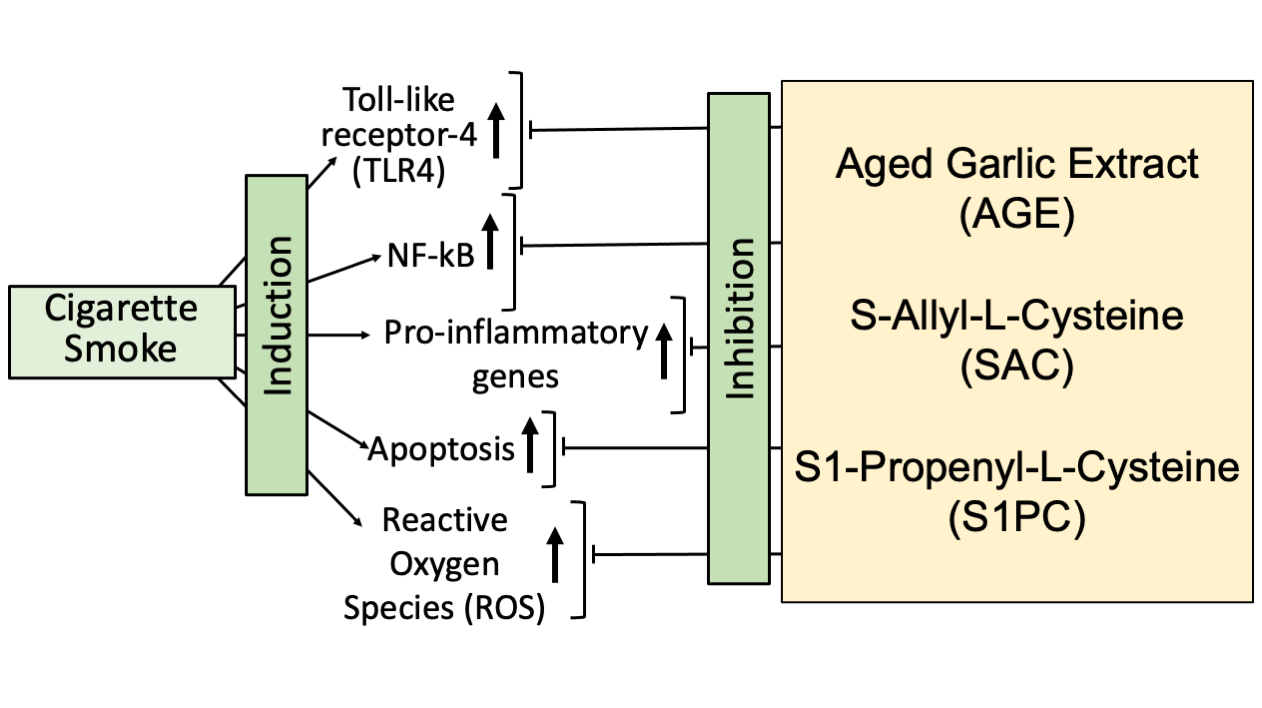
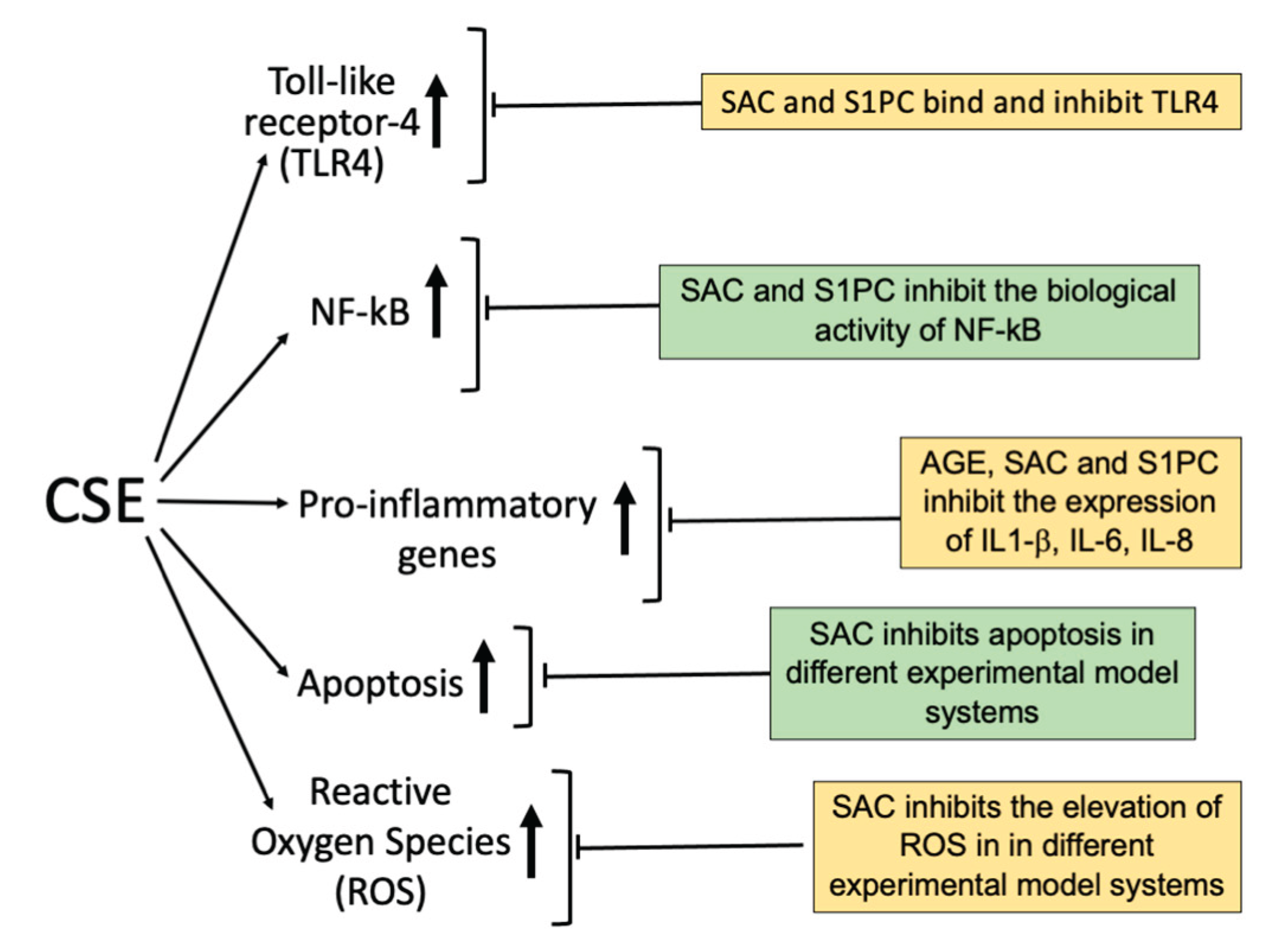
The anti-inflammatory Aged Garlic Extract (AGE) and its major bioactive components might be of great interest for mitigating the effects of cigarette smoking. The key reasons for proposing this application are summarized in Figure 3.
Notably, CS has been shown to induce a chronic inflammation. In this respect, several studies have revealed that AGE and its key components are potent anti-inflammatory agents, both “in vitro” and “in vivo” [171]. Furthermore, CS induced the TLR4/NF-kB pathway (se chapter 3.1 and 3.2). In this respect the AGE component S-allyl-l-cysteine (SAC) and S1-propenyl-l-cysteine bind TLR4 [172,173,174] and inhibit NF-kB [175].
A further consideration concerns the effects of CS on the expression of pro-inflammatory genes. CS induces IL-6, IL-8, IL-1β and several pro-inflammatory genes [60,98,99,100,101,102,103,104].
We and several other research groups have clearly shown that AGE and AGE components SAC and S1PC inhibit the expression of pro-inflammatory genes (such as IL-1β, IL-6, IL-8 and G-CSF) by targeting the TLR4 receptor [172,173,174] and the NF-kB pathway [171,175]. A consideration should also be made concerning the CS-mediated induction of apoptosis [105,106,107,108,109,110], as outlined in chapter 3.4. Notably, Ramage et al. reported that tobacco smoke and related products induce apoptosis in A549 lung epithelial cells [105]. In this respect, reports underlining the effects of garlic compounds on induced apoptosis in several cellular model systems are available [176,177,178,179]. Finally, CS induces Reactive Oxygen Species (ROS) [112,113,114,115] and this is strongly associated with oxidative stress and human diseases [180,181]. In this respect S-allyl-l-cysteine is a strong inhibitor of ROS formation [182,183,184,185].
The industrial interest for AGE and AGE-related products is docuented by the fact that AGE is proposed and commercialized by several pharmaceutical companies, including for example Wakunaga Pharmaceuticals, Ltd (Japan) (Kyolic® Aged Garlic Extract), Evergreen Health Foods (Quest Kyolic Aged Garlic Extract), Shaanxi Tianrun Phytochemical Co., Ltd (Garlic Extract, Allicin), Best Pharmacy.gr (Quest Kyolic Garlic), and Bizen Chemical Co., Ltd (High SAC-Content Garlic). Notably, a Trade Mark for S-1-propenyl-l-cysteine (S1PCTM) has been recently obtained by Wakunaga Pharmaceuticals (registered on July 9, 2024; https://branddb.wipo.int/; accessed on May 7th, 2025).
The industrial impact of AGE and AGE-related products is demonstrated by patents and patent application focusing on these products. For instance, US8187654B2 (Title: Process for preparing aged garlic; Assignee: Blackgarlic Inc) concerns a method of producing aged garlic in which its antioxidation capability is significantly increased as compared to that of raw garlic which is used as a raw material. Methods for preparing aged garlic are described also in US20110293803, CN110623255A, EP1752051A1, as reported by Agostinelli et al. [171].
The possible transfer of the results concerning AGE and AGE-related products from bench to the bedside is supported by the growing number pf clinical trials. For instance, NCT1950646 (The Effect of AGE on the Immune System -EAGESIS II; sponsor University of Florida; last updated 2016-02-26) demonstrated that AGE consumption modulated immune cell distribution, prevented the increase of serum TNF-α and IL-6 concentrations and reduced blood LDL concentration in adults with obesity [186]. A further example is NCT03860350 (Aged Garlic Extract Study – AGE; sponsor Lund University Hospital; last updated 2019-06-11) demonstrating that AGE, supplemented with B vitamins, folic acid and L-arginine retards the progression of subclinical atherosclerosis [187]. Moreover, the same NCT03860350 trial found that AGE reduced IL-6 in females with a low risk of cardiovascular diseases [188]. Relevant to this review, NCT02019368 (A Randomized, Double-blind, Placebo Controlled, Crossover Study to Evaluate the Antioxidant Effect of Aged Garlic Extract in Heavy Smokers; sponsor Hiroshima University; last updated 2015-08-19) compared the oxidative status in heavy smokers with that in non-smokers and determined the antioxidant effect of aged garlic extract (https://clinicaltrials.gov; accessed on July 18, 2025). Based on the information discussed in the present review, further clinical trials are highly warranted.
A final comment concerns the very interesting possibility that the best effects on CS induced alterations occur when natural products are employed in combination. In the study performed by Reis et al., eucalyptol and curcumin used in in combination exhibited the highest efficiency in modulating cigarette smoke extract-induced human bronchial epithelial damage [126]. Therefore, combined use of eucalyptol and curcumin might exhibit therapeutic properties against smoking-induced lung diseases [126]. Moreover, possible combinations using RNA/DNA based drugs and natural products should be in the future considered. In this respect aged garlic extract was recently proposed in combined treatments with microRNA miR-93-5p, previously demonstrated to inhibit TLR4, NF-kB and IL-8 gene expression [189]. This study provided preliminary evidence suggesting that the miR-93-5p-based miRNA therapeutics could be combined with the anti-inflammatory AGE preparation for more effectively inhibition of IL-8 gene expression [189].
6. Conclusions
The conclusion of this review article is that the available information strongly sustains a possible use of the anti-inflammatory aged garlic extract (AGE) and its bioactive components for mitigating the detrimental effects of cigarette smoke on human tissues. The key reasons for proposing this application are the following (summarized in Figure 3): (a) AGE and its key components are potent anti-inflammatory agents, both “in vitro” and “in vivo”; (b) the AGE bioactive components S-allyl-l-cysteine (SAC) and S1-propenyl-l-cysteine (S1PC) bind TLR4 and inhibit NF-kB; (c) AGE and AGE components SAC and S1PC inhibit the expression of pro-inflammatory genes; (d) AGE and AGE components revert apoptosis induced by cigarette smoke in several cellular model systems; (e) S-allyl-l-cysteine is a strong inhibitor of ROS formation. All the biological pathways mentioned in points (a)-(e) are strongly induced by cigarette smoke in several cellular model systems. Experimental project to verify this very interesting possibility are highly warranted, considering the impact of tobacco smoke on the health system (see Figure 1) [3,4,5,6,7,8,9]. It should be considered that healthcare spending attributable to cigarette smoking is very high [10,11] and that several actions have been considered to help quit smoking [12,13,14,15], such as bans of tobacco advertising [16] and introduction of taxes as a share of cigarette price [17,18]. These smoking cessation interventions are important [14,15,16,190], even if difficulty in quitting smoking might be encountered [15,16]. In this context, strategies in preventing or mitigating the effects of tobacco abuse (such as those based on natural products, including aged garlic extracts and AGE components) are of great interest, considering the world-wide distribution of tobacco abuse [1].
Author Contributions
Conceptualization, formal analysis, resources, writing—original draft preparation, writing—review and editing, project administration, A.F. and R.G. All authors have read and agreed to the published version of the manuscript.
Funding
This research received no external funding.
Institutional Review Board Statement
Not applicable.
Informed Consent Statement
Not applicable.
Data Availability Statement
No new data were created or analyzed in this study.; additional information will be shared upon request to the corresponding authors.
Acknowledgments
Not applicable.
Conflicts of Interest
The authors declare no conflicts of interest.
Abbreviations
The following abbreviations are used in this manuscript:
| CS | Cigarette Smoke |
| CSC | Cigarette Smoke Condensate |
| CSE | Cigarette Smoke Extract |
| VOC | Volatile Organic Compounds |
| NF-κB | Nuclear Factor-kappa-B |
| TLR4 | Toll-like Recptor-4 |
| Nrf2 | Nuclear Factor Erythroid 2-related factor 2 |
| IL | Interleukin |
| ROS | Reactive Oxygen Species |
| AGE | Aged Garlic Extract |
| SAC | S-allyl-l-cysteine |
| S1PC | S1-propenyl-l-cysteine |
| SFN | DHS |
| COPD | Chronic Obstructive Pulmonary Disease |
| CF | Cystic Fibrosis |
| BAL | Bronchoalveolar lavage |
| WHO | World Health Organization |
References
- WHO global report on trends in prevalence of tobacco use 2000–2030. Geneva: World Health Organization; 2024. Licence: CC BY-NC-SA 3.0 IGO.
- Dai X, Gakidou E, Lopez AD. Evolution of the global smoking epidemic over the past half century: strengthening the evidence base for policy action. Tob Control 2022;31(2):129-137. [CrossRef]
- Varghese J, Muntode Gharde P. A Comprehensive Review on the Impacts of Smoking on the Health of an Individual. Cureus 2023; 15(10):e46532. [CrossRef]
- Vassallo, R. Diffuse lung diseases in cigarette smokers. Semin Respir Crit Care Med. 2012; 33:533–542. [CrossRef]
- Kondo T, Nakano Y, Adachi S, Murohara T. Effects of tobacco smoking on cardiovascular disease. Circ J. 2019; 83:1980-1985. [CrossRef]
- Durazzo TC, Mattsson N, Weiner MW. Smoking and increased Alzheimer's disease risk: a review of potential mechanisms. Alzheimers Dement. 2014; 10:122-145.
- Sloan A, Hussain I, Maqsood M, Eremin O, El-Sheemy M. The effects of smoking on fracture healing. Surgeon 2010; 8:111–116.
- Liu Y, Lu L, Yang H, Wu X, Luo X, Shen J, Xiao Z, Zhao Y, Du F, Chen Y, Deng S, Cho CH, Li Q, Li X, Li W, Wang F, Sun Y, Gu L, Chen M, Li M. Dysregulation of immunity by cigarette smoking promotes inflammation and cancer: A review. Environ Pollut. 2023; 339:122730.
- Walser T, Cui X, Yanagawa J, Lee JM, Heinrich E, Lee G, Sharma S, Dubinett SM. Smoking and lung cancer: the role of inflammation. Proc Am Thorac Soc. 2008; 5(8):811-5.
- Xu X, Shrestha SS, Trivers KF, Neff L, Armour BS, King BA. U.S. healthcare spending attributable to cigarette smoking in 2014. Prev Med. 2021; 150:106529.
- Gu D, Sung HY, Calfee CS, Wang Y, Yao T, Max W. Smoking-Attributable Health Care Expenditures for US Adults With Chronic Lower Respiratory Disease. JAMA Netw Open 2024; 7(5):e2413869.
- Bancej C, O'Loughlin J, Platt RW, Paradis G, Gervais A. Smoking cessation attempts among adolescent smokers: a systematic review of prevalence studies. Tob Control 2007; 16: e8.
- Torchalla I, Okoli CT, Bottorff JL, Qu A, Poole N, Greaves L. Smoking cessation programs targeted to women: a systematic review. Women Health 2012; 52: 32-54.
- Aveyard P, Begh R, Parsons A. Brief opportunistic smoking cessation interventions: a systematic review and meta-analysis to compare advice to quit and offer of assistance. Addiction 2012; 107: 1066-1073.
- Komiyama M, Takahashi Y, Tateno H, Mori M, Nagayoshi N, Yonehara H, Nakasa N, Haruki Y, Hasegawa K. Support for Patients Who Have Difficulty Quitting Smoking: A Review. Intern Med. 2019; 58(3):317-320.
- Saad C, Cheng BH, Takamizawa R, Thakur A, Lee CW, Leung L, Veerman JL, Aminde LN. Effectiveness of tobacco advertising, promotion and sponsorship bans on smoking prevalence, initiation and cessation: a systematic review and meta-analysis. Tob Control 2025; tc-2024-058903.
- Siddiqi K, Elsey H, Khokhar MA, Marshall AM, Pokhrel S, Arora M, Crankson S, Mehra R, Morello P, Collin J, Fong GT. Framework Convention on Tobacco Control 2030-A Program to Accelerate the Implementation of World Health Organization Framework Convention for Tobacco Control in Low- and Middle-Income Countries: A Mixed-Methods Evaluation. Nicotine Tob Res. 2023; 25(6):1074-1081.
- Lahiri S, Bingenheimer JB, Evans WD, Wang Y, Cislaghi B, Dubey P, Snowden B. Understanding the mechanisms of change in social norms around tobacco use: A systematic review and meta-analysis of interventions. Addiction 2025; 120(2):215-235.
- Tabeshpour J, Asadpour A, Norouz S, Hosseinzadeh H. The protective effects of medicinal plants against cigarette smoking: A comprehensive review. Phytomedicine 2024; 135:156199.
- Hsu CL, Wu YL, Tang GJ, Lee TS, Kou YR. Ginkgo biloba extract confers protection from cigarette smoke extract-induced apoptosis in human lung endothelial cells: Role of heme oxygenase-1. Pulm Pharmacol Ther. 2009; 22(4):286-96.
- Kennedy-Feitosa E, Okuro RT, Pinho Ribeiro V, Lanzetti M, Barroso MV, Zin WA, Porto LC, Brito-Gitirana L, Valenca SS. Eucalyptol attenuates cigarette smoke-induced acute lung inflammation and oxidative stress in the mouse. Pulm Pharmacol Ther. 2016; 41:11-18.
- Sasco AJ, Secretan MB, Straif K. Tobacco smoking and cancer: a brief review of recent epidemiological evidence. Lung Cancer 2004; 45 Suppl 2:S3-9.
- Sparrow D, Dawber TR. The influence of cigarette smoking on prognosis after a first myocardial infarction: a report from the Framingham Study. J Chronic Dis. 1978; 31:425-432.
- Shinton R, Beevers G. Meta-analysis of relation between cigarette smoking and stroke. BMJ 1989; 298:789-794.
- Ryu JH, Colby TV, Hartman TE, Vassallo R. Smoking-related interstitial lung diseases: a concise review. Eur Respir J. 2001; 17(1):122-32.
- Maddatu J, Anderson-Baucum E, Evans-Molina C. Smoking and the risk of type 2 diabetes. Transl Res. 2017; 184:101-107.
- Laniado-Laborín, R. Smoking and chronic obstructive pulmonary disease (COPD). Parallel epidemics of the 21 century. Int J Environ Res Public Health. 2009; 6(1):209-24.
- Edderkaoui M, Thrower E. Smoking and Pancreatic Disease. J Cancer Ther. 2013; 4(10A):34-40.
- Roser M “Smoking: How large of a global problem is it? And how can we make progress against it?” Published online at OurWorldinData.org. 2021.Retrieved from: 'https://ourworldindata.org/smoking-big-problem-in-brief#' [Accessed on May 28, 2025].
- Phua ZJ, MacInnis RJ, Jayasekara H. Cigarette smoking and risk of second primary cancer: a systematic review and meta-analysis. Cancer Epidemiol. 2022; 78:102160.
- Inoue-Choi M, Hartge P, Liao LM, Caporaso N, Freedman ND. Association between long-term low-intensity cigarette smoking and incidence of smoking-related cancer in the national institutes of health-AARP cohort. Int J Cancer. 2018; 142(2):271-280.
- Khani, Y., Pourgholam-Amiji, N., Afshar, M., Otroshi, O., Sharifi-Esfahani, M., Sadeghi-Gandomani, H., Vejdani, M., & Salehiniya, H. Tobacco Smoking and Cancer Types: A Review. Biomedical Research and Therapy 2018; 5(4), 2142-2159.
- Shi H, Shao X, Hong Y. Association between cigarette smoking and the susceptibility of acute myeloid leukemia: a systematic review and meta-analysis. Eur Rev Med Pharmacol Sci. 2019; 23(22):10049-10057.
- Qi K, Cheng H, Jiang Y, Zheng Y. Contribution of smoking to the global burden of bladder cancer from 1990 to 2021 and projections to 2046. Tob Induc Dis. 2025; 23:10.18332/tid/202237.
- Wen Q, Wang X, Lv J, Guo Y, Pei P, Yang L, Chen Y, Du H, Burgess S, Hacker A, Liu F, Chen J, Yu C, Chen Z, Li L; China Kadoorie Biobank Collaborative Group. Association between involuntary smoking and risk of cervical cancer in Chinese female never smokers: A prospective cohort study. Environ Res. 2022; 212(Pt C):113371.
- Bener A, Öztürk AE, Dasdelen MF, Barisik CC, Dasdelen ZB, Agan AF, De La Rosette J, Day AS. Colorectal cancer and associated genetic, lifestyle, cigarette, nargileh-hookah use and alcohol consumption risk factors: a comprehensive case-control study. Oncol Rev. 2024; 18:1449709.
- Islam MO, Thangaretnam K, Lu H, Peng D, Soutto M, El-Rifai W, Giordano S, Ban Y, Chen X, Bilbao D, Villarino AV, Schürer S, Hosein PJ, Chen Z. Smoking induces WEE1 expression to promote docetaxel resistance in esophageal adenocarcinoma. Mol Ther Oncolytics 2023; 30:286-300.
- Yang X, Chen H, Zhang J, Zhang S, Wu YS, Pang J. Association of cigarette use with risk of prostate cancer among US males: a cross-sectional study from NHANES 1999-2020. BMC Public Health 2025; 25(1):608.
- Campi R, Rebez G, Klatte T, Roussel E, Ouizad I, Ingels A, Pavan N, Kara O, Erdem S, Bertolo R, Capitanio U, Mir MC. Effect of smoking, hypertension and lifestyle factors on kidney cancer - perspectives for prevention and screening programmes. Nat Rev Urol. 2023; 20(11):669-681.
- Zuo JJ, Tao ZZ, Chen C, Hu ZW, Xu YX, Zheng AY, Guo Y. Characteristics of cigarette smoking without alcohol consumption and laryngeal cancer: overall and time-risk relation. A meta-analysis of observational studies. Eur Arch Otorhinolaryngol. 2017; 274(3):1617-1631.
- Lee J, Choi JY, Lee SK. Heavy smoking increases early mortality risk in patients with hepatocellular carcinoma after curative treatment. J Liver Cancer 2024; 24(2):253-262.
- Tang FH, Wong HYT, Tsang PSW, Yau M, Tam SY, Law L, Yau K, Wong J, Farah FHM, Wong J. Recent advancements in lung cancer research: a narrative review. Transl Lung Cancer Res. 2025; 14(3):975-990.
- Pérez-Leal M, El Helou B, Roger I. Electronic Cigarettes Versus Combustible Cigarettes in Oral Squamous Cell Cancer Patients: A Systematic Review. J Oral Pathol Med. 2025; 54(4):199-206.
- Subhan M, Saji Parel N, Krishna PV, Gupta A, Uthayaseelan K, Uthayaseelan K, Kadari M. Smoking and Pancreatic Cancer: Smoking Patterns, Tobacco Type, and Dose-Response Relationship. Cureus 2022; 14(6):e26009.
- Li LF, Chan RL, Lu L, Shen J, Zhang L, Wu WK, Wang L, Hu T, Li MX, Cho CH. Cigarette smoking and gastrointestinal diseases: the causal relationship and underlying molecular mechanisms (review). Int J Mol Med. 2014; 34(2):372-80.
- Warren GW, Cartmell KB, Garrett-Mayer E, Salloum RG, Cummings KM. Attributable Failure of First-line Cancer Treatment and Incremental Costs Associated With Smoking by Patients With Cancer. JAMA Netw Open 2019; 2(4):e191703.
- Petrucci CM, Hyland A. Understanding the Financial Consequences of Smoking During Cancer Treatment in the Era of Value-Based Medicine. JAMA Netw Open 2019; 2(4):e191713.
- Warren, GW. Mitigating the adverse health effects and costs associated with smoking after a cancer diagnosis. Transl Lung Cancer Res. 2019; 8(Suppl 1):S59-S66.
- Isaranuwatchai W, de Oliveira C, Mittmann N, Evans WKB, Peter A, Truscott R, Chan KK. Impact of smoking on health system costs among cancer patients in a retrospective cohort study in Ontario, Canada. BMJ Open 2019; 9(6):e026022.
- Arrieta O, Quintana-Carrillo 2, Gabriel Ahumada-Curiel RH, Corona-Cruz JF, Correa-Acevedo E, Zinser-Sierra J, de la Mata-Moya D, Mohar-Betancourt A, Morales-Oyarvide V, Myriam Reynales-Shigematsu L. Medical care costs incurred by patients with smoking-related non-small cell lung cancer treated at the National Cancer Institute of Mexico. Tob Induc Dis. 2015; 12(1):25.
- Nguyen TXT, Han M, Oh JK. The economic burden of cancers attributable to smoking in Korea, 2014. Tob Induc Dis. 2019; 17:15.
- Lee J, Taneja V, Vassallo R. Cigarette smoking and inflammation: cellular and molecular mechanisms. J Dent Res. 2012; 91:142-9.
- Wang H, Chen H, Fu Y, Liu M, Zhang J, Han S, Tian Y, Hou H, Hu Q. Effects of Smoking on Inflammatory-Related Cytokine Levels in Human Serum. Molecules 2022; 27(12):3715.
- Elisia I, Lam V, Cho B, Hay M, Li MY, Yeung M, Bu L, Jia W, Norton N, Lam S, Krystal G. The effect of smoking on chronic inflammation, immune function and blood cell composition. Sci Rep. 2020; 10(1):19480.
- Lugade AA, Bogner PN, Thatcher TH, Sime PJ, Phipps RP, Thanavala Y. Cigarette smoke exposure exacerbates lung inflammation and compromises immunity to bacterial infection. J Immunol. 2014; 192(11):5226-35.
- Anto RJ, Mukhopadhyay A, Shishodia S, Gairola CG, Aggarwal BB. Cigarette smoke condensate activates nuclear transcription factor-kappaB through phosphorylation and degradation of IkappaB(alpha): correlation with induction of cyclooxygenase-2. Carcinogenesis 2002; 23(9):1511-8.
- Kunnumakkara AB, Shabnam B, Girisa S, Harsha C, Banik K, Devi TB, Choudhury R, Sahu H, Parama D, Sailo BL, Thakur KK, Gupta SC, Aggarwal BB. Inflammation, NF-kappaB, and Chronic Diseases: How are They Linked? Crit Rev Immunol. 2020; 40(1):1-39.
- Doz E, Noulin N, Boichot E, Guénon I, Fick L, Le Bert M, Lagente V, Ryffel B, Schnyder B, Quesniaux VF, Couillin I. Cigarette smoke-induced pulmonary inflammation is TLR4/MyD88 and IL-1R1/MyD88 signaling dependent. J Immunol. 2008;180(2):1169-78.
- Karimi K, Sarir H, Mortaz E, Smit JJ, Hosseini H, De Kimpe SJ, Nijkamp FP, Folkerts G. Toll-like receptor-4 mediates cigarette smoke-induced cytokine production by human macrophages. Respir Res. 2006; 7(1):66.
- Sarir H, Mortaz E, Karimi K, Kraneveld AD, Rahman I, Caldenhoven E, Nijkamp FP, Folkerts G. Cigarette smoke regulates the expression of TLR4 and IL-8 production by human macrophages. J Inflamm (Lond). 2009; 6:12.
- Nadigel J, Préfontaine D, Baglole CJ, Maltais F, Bourbeau J, Eidelman DH, Hamid Q. Cigarette smoke increases TLR4 and TLR9 expression and induces cytokine production from CD8(+) T cells in chronic obstructive pulmonary disease. Respir Res. 2011; 12(1):149.
- Pace E, Ferraro M, Siena L, Melis M, Montalbano AM, Johnson M, Bonsignore MR, Bonsignore G, Gjomarkaj M. Cigarette smoke increases Toll-like receptor 4 and modifies lipopolysaccharide-mediated responses in airway epithelial cells. Immunology 2008; 124(3):401-11.
- Yeh HY, Hung SH, Chen SC, Guo FR, Huang HL, Peng JK, Lee CS, Tsai JS. The Expression of Toll-Like Receptor 4 mRNA in PBMCs Is Upregulated in Smokers and Decreases Upon Smoking Cessation. Front Immunol. 2021; 12:667460.
- Hudlikar RR, Chou PJ, Kuo HD, Sargsyan D, Wu R, Kong AN. Long term exposure of cigarette smoke condensate (CSC) mediates transcriptomic changes in normal human lung epithelial Beas-2b cells and protection by garlic compounds. Food Chem Toxicol. 2023; 174:113656.
- Khan D, Zhou H, You J, Kaiser VA, Khajuria RK, Muhammad S. Tobacco smoke condensate-induced senescence in endothelial cells was ameliorated by colchicine treatment via suppression of NF-κB and MAPKs P38 and ERK pathways activation. Cell Commun Signal. 2024; 22(1):214.
- Thaiparambil J, Amara CS, Sen S, Putluri N, El-Zein R. Cigarette smoke condensate induces centrosome clustering in normal lung epithelial cells. Cancer Med. 2023; 12(7):8499-8509.
- Gellner CA, Reynaga DD, Leslie FM. Cigarette Smoke Extract: A Preclinical Model of Tobacco Dependence. Curr Protoc Neurosci. 2016; 77:9.54.1-9.54.10.
- Hirata N, Horinouchi T, Kanda Y. Effects of cigarette smoke extract derived from heated tobacco products on the proliferation of lung cancer stem cells. Toxicol Rep. 2022; 9:1273-1280.
- Amel Al-Hashimi, Shah J, Carpenter R, Morgan W, Meah M, Ruchaya. PJ An In-Vitro Standardized Protocol for Preparing Smoke 1 Extract Media from Cigarette, Electronic Cigarette and 2 Waterpipe. bioRxiv 2024. [CrossRef]
- Kim Y-H, Kim M-S. Development and assessment of a novel standardized method for preparation of whole cigarette smoke condensate (WCSC) for toxicity testing of cigarette smoke. Microchemical Journal 2023; 191, 108914.
- Mathewson, HD. The Direct Preparation of Cigarette Smoke Condensate by High Velocity Impaction. Contributions to Tobacco & Nicotine Research 1966; 3, 430-437.
- Agraval H, Sharma JR, Yadav UCS. Method of Preparation of Cigarette Smoke Extract to Assess Lung Cancer-Associated Changes in Airway Epithelial Cells. Methods Mol Biol. 2022; 2413:121-132.
- Higashi T, Mai Y, Noya Y, Horinouchi T, Terada K, Hoshi A, Nepal P, Harada T, Horiguchi M, Hatate C, Kuge Y, Miwa S. A simple and rapid method for standard preparation of gas phase extract of cigarette smoke. PLoS One 2014; 9(9):e107856.
- Wright, C. Standardized methods for the regulation of cigarette-smoke constituents. Trends in Analytical Chemistry 2015; 66:118–127.
- Li, X. In vitro toxicity testing of cigarette smoke based on the air-liquid interface exposure: A review. Toxicol In Vitro 2016; 36:105-113.
- Singh AV, Maharjan RS, Kromer C, Laux P, Luch A, Vats T, Chandrasekar V, Dakua SP, Park BW. Advances in Smoking Related In Vitro Inhalation Toxicology: A Perspective Case of Challenges and Opportunities from Progresses in Lung-on-Chip Technologies. Chem Res Toxicol. 2021; 34(9):1984-2002.
- Horiyama S, Kunitomo M, Yoshikawa N, Nakamura K. Mass Spectrometric Approaches to the Identification of Potential Ingredients in Cigarette Smoke Causing Cytotoxicity. Biol Pharm Bull. 2016; 39(6):903-8.
- Fresenius RE. Analysis of tobacco smoke condensate. Journal of Analytical and Applied Pyrolysis 1985; 8: 561-575.
- Khattri RB, Thome T, Fitzgerald LF, Wohlgemuth SE, Hepple RT, Ryan TE. NMR Spectroscopy Identifies Chemicals in Cigarette Smoke Condensate That Impair Skeletal Muscle Mitochondrial Function. Toxics. 2022; 10(3):140.
- Liu G, Wang R, Chen H, Wu P, Fu Y, Li K, Liu M, Shi Z, Zhang Y, Su Y, Song L, Hou H, Hu Q. Non-nicotine constituents in cigarette smoke extract enhance nicotine addiction through monoamine oxidase A inhibition. Front Neurosci. 2022; 16:1058254.
- Park JM, Jeong H, Seo YS, Do VQ, Choi SJ, Lee K, Choi KC, Choi WJ, Lee MY. Cigarette Smoke Extract Produces Superoxide in Aqueous Media by Reacting with Bicarbonate. Toxics 2021; 9(11):316.
- Kim YH, An YJ, Jo S, Lee SH, Lee SJ, Choi SJ, Lee K. Comparison of volatile organic compounds between cigarette smoke condensate (CSC) and extract (CSE) samples. Environ Health Toxicol. 2018; 33(3):e2018012-0.
- Sun SC, Ley SC. New insights into NF-kappaB regulation and function. Trends Immunol. 2008; 29:469–478.
- Hacker H, Karin M. Regulation and function of IKK and IKK-related kinases. Sci STKE 2006;2006:re13.
- Chen FE, Huang DB, Chen YQ, Ghosh G. Crystal structure of p50/p65 heterodimer of transcription factor NF-kappaB bound to DNA. Nature 1998; 391:410–413.
- Hoffmann A, Natoli G, Ghosh G. Transcriptional regulation via the NF-kappaB signaling module. Oncogene. 2006; 25:6706–6716.
- Mathes E, O'Dea EL, Hoffmann A, Ghosh G. NF-kappaB dictates the degradation pathway of IkappaBalpha. EMBO J. 2008; 27(9):1357-67.
- Zhang C, Qin S, Qin L, Liu L, Sun W, Li X, Li N, Wu R, Wang X. Cigarette smoke extract-induced p120-mediated NF-κB activation in human epithelial cells is dependent on the RhoA/ROCK pathway. Sci Rep. 2016; 6:23131.
- Wang V, Heffer A, Roztocil E, Feldon SE, Libby RT, Woeller CF, Kuriyan AE. TNF-α and NF-κB signaling play a critical role in cigarette smoke-induced epithelial-mesenchymal transition of retinal pigment epithelial cells in proliferative vitreoretinopathy. PLoS One 2022; 17(9):e0271950.
- Wang H, Yang T, Shen Y, Wan C, Li X, Li D, Liu Y, Wang T, Xu D, Wen F, Ying B. Ghrelin Inhibits Interleukin-6 Production Induced by Cigarette Smoke Extract in the Bronchial Epithelial Cell Via NF-κB Pathway. Inflammation 2016; 39(1):190-198.
- Wang D, Tao K, Xion J, Xu S, Jiang Y, Chen Q, He S. TAK-242 attenuates acute cigarette smoke-induced pulmonary inflammation in mouse via the TLR4/NF-κB signaling pathway. Biochem Biophys Res Commun. 2016; 472(3):508-15.
- Wang L, Meng J, Wang C, Wang Y, Yang C, Li Y. Hydrogen sulfide attenuates cigarette smoke-induced pyroptosis through the TLR4/NF-κB signaling pathway. Int J Mol Med. 2022; 49(5):56.
- Muresan XM, Cervellati F, Sticozzi C, Belmonte G, Chui CH, Lampronti I, Borgatti M, Gambari R, Valacchi G. The loss of cellular junctions in epithelial lung cells induced by cigarette smoke is attenuated by corilagin. Oxid Med Cell Longev. 2015; 2015:631758.
- Geraghty P, Dabo AJ, D'Armiento J. TLR4 protein contributes to cigarette smoke-induced matrix metalloproteinase-1 (MMP-1) expression in chronic obstructive pulmonary disease. J Biol Chem. 2011; 286(34):30211-8.
- Zhang F, Geng Y, Shi X, Duo J. EGR3 deficiency alleviates cigarette smoke-induced pulmonary inflammation in COPD through TLR4/NF-κB/TIMP-1 axis. Biochem Biophys Res Commun. 2025; 763:151741.
- Wang X, Smith C, Yin H. Targeting Toll-like receptors with small molecule agents. Chem Soc Rev. 2013; 42(12):4859-66.
- 97 Takashima K, Matsunaga N, Yoshimatsu M, Hazeki K, Kaisho T, Uekata M, Hazeki O, Akira S, Iizawa Y, Ii M. Analysis of binding site for the novel small-molecule TLR4 signal transduction inhibitor TAK-242 and its therapeutic effect on mouse sepsis model. Br J Pharmacol. 2009; 157(7):1250-62.
- Mio T, Romberger DJ, Thompson AB, Robbins RA, Heires A, Rennard SI. Cigarette smoke induces interleukin-8 release from human bronchial epithelial cells. Am J Respir Crit Care Med. 1997; 155(5):1770-6.
- Levänen B, Glader P, Dahlén B, Billing B, Qvarfordt I, Palmberg L, Larsson K, Lindén A. Impact of tobacco smoking on cytokine signaling via interleukin-17A in the peripheral airways. Int J Chron Obstruct Pulmon Dis. 2016; 11:2109-2116.
- Guo JH, Thuong LHH, Jiang YJ, Huang CL, Huang YW, Cheng FJ, Liu PI, Liu CL, Huang WC, Tang CH. Cigarette smoke promotes IL-6-dependent lung cancer migration and osteolytic bone metastasis. Int J Biol Sci. 2024; 20(9):3257-3268.
- Reynolds PR, Cosio MG, Hoidal JR. Cigarette smoke-induced Egr-1 upregulates proinflammatory cytokines in pulmonary epithelial cells. Am J Respir Cell Mol Biol. 2006; 35(3):314-9.
- Lee KH, Lee CH, Woo J, Jeong J, Jang AH, Yoo CG. Cigarette Smoke Extract Enhances IL-17A-Induced IL-8 Production via Up-Regulation of IL-17R in Human Bronchial Epithelial Cells. Mol Cells 2018; 41(4):282-289.
- Yang SR, Chida AS, Bauter MR, Shafiq N, Seweryniak K, Maggirwar SB, Kilty I, Rahman I. Cigarette smoke induces proinflammatory cytokine release by activation of NF-kappaB and posttranslational modifications of histone deacetylase in macrophages. Am J Physiol Lung Cell Mol Physiol. 2006; 291(1):L46-57.
- Oltmanns U, Chung KF, Walters M, John M, Mitchell JA. Cigarette smoke induces IL-8, but inhibits eotaxin and RANTES release from airway smooth muscle. Respir Res. 2005; 6(1):74.
- Ramage L, Jones AC, Whelan CJ. Induction of apoptosis with tobacco smoke and related products in A549 lung epithelial cells in vitro. J Inflamm (Lond). 2006;3:3.
- Jiao ZX, Ao QL, Xiong M. Cigarette smoke extract inhibits the proliferation of alveolar epithelial cells and induces apoptosis. Sheng Li Xue Bao. 2006; 58(3):244-54.
- Wang J, Wilcken DE, Wang XL. Cigarette smoke activates caspase-3 to induce apoptosis of human umbilical venous endothelial cells. Mol Genet Metab. 2001; 72(1):82-8.
- Messner B, Frotschnig S, Steinacher-Nigisch A, Winter B, Eichmair E, Gebetsberger J, Schwaiger S, Ploner C, Laufer G, Bernhard D. Apoptosis and necrosis: two different outcomes of cigarette smoke condensate-induced endothelial cell death. Cell Death Dis. 2012; 3(11):e424.
- Feng H, Li M, Altawil A, Yin Y, Zheng R, Kang J. Cigarette smoke extracts induce apoptosis in Raw264.7 cells via endoplasmic reticulum stress and the intracellular Ca2+/P38/STAT1 pathway. Toxicol In Vitro 2021; 77:105249.
- Banerjee S, Maity P, Mukherjee S, Sil AK, Panda K, Chattopadhyay D, Chatterjee IB. Black tea prevents cigarette smoke-induced apoptosis and lung damage. J Inflamm (Lond) 2007; 4:3.
- Lin X-X, Yang X-F, Jiang J-X, Zhang S-J, Guan Y, Liu Y-N, Sun Y-H, Xie Q-M. Cigarette smoke extract- induced BEAS-2B cell apoptosis and anti-oxidative Nrf-2 up-regulation are mediated by ROS-stimulated p38 activation. Toxicol Mech Methods 2014; 24:575–583.
- Seo YS, Park JM, Kim JH, Lee MY. Cigarette Smoke-Induced Reactive Oxygen Species Formation: A Concise Review. Antioxidants (Basel) 2023; 12(9):1732.
- Lyons M.J., Gibson J.F., Ingram D.J. Free-radicals produced in cigarette smoke. Nature 1958; 181:1003–1004.
- Shein, M., Jeschke G. Comparison of free radical levels in the aerosol from conventional cigarettes, electronic cigarettes, and heat-not-burn tobacco products. Chem. Res. Toxicol. 2019; 32:1289–1298.
- Bartalis, J., Chan W.G., Wooten J.B. A new look at radicals in cigarette smoke. Anal. Chem. 2007; 79:5103–5106.
- 116, Mitra A., Mandal A.K. Conjugation of para-benzoquinone of cigarette smoke with human hemoglobin leads to unstable tetramer and reduced cooperative oxygen binding. J. Am. Soc. Mass Spectrom. 2018; 29:2048–2058.
- Ghosh, A., Choudhury A., Das A., Chatterjee N.S., Das T., Chowdhury R., Panda K., Banerjee R., Chatterjee I.B. Cigarette smoke induces p-benzoquinone-albumin adduct in blood serum: Implications on structure and ligand binding properties. Toxicology 2012; 292:78–89.
- Chang, K.H., Park J.M., Lee C.H., Kim B., Choi K.C., Choi S.J., Lee K., Lee M.Y. NADPH oxidase (NOX) 1 mediates cigarette smoke-induced superoxide generation in rat vascular smooth muscle cells. Toxicol. In Vitro 2017; 38:49–58.
- Yildiz, L., Kayaoglu N., Aksoy H. The changes of superoxide dismutase, catalase and glutathione peroxidase activities in erythrocytes of active and passive smokers. Clin. Chem. Lab. Med. 2002; 40:612–615.
- Kondo, T., Tagami S., Yoshioka A., Nishimura M., Kawakami Y. Current smoking of elderly men reduces antioxidants in alveolar macrophages. Am. J. Respir. Crit. Care Med. 1994; 149:178–182.
- Oriola AO, Oyedeji AO. Plant-Derived Natural Products as Lead Agents against Common Respiratory Diseases. Molecules 2022; 27(10):3054.
- Li D, Hu J, Wang T, Zhang X, Liu L, Wang H, Wu Y, Xu D, Wen F. Silymarin attenuates cigarette smoke extract-induced inflammation via simultaneous inhibition of autophagy and ERK/p38 MAPK pathway in human bronchial epithelial cells. Sci Rep. 2016; 6:37751.
- Li D, Xu D, Wang T, Shen Y, Guo S, Zhang X, Guo L, Li X, Liu L, Wen F. Silymarin attenuates airway inflammation induced by cigarette smoke in mice. Inflammation 2015; 38(2):871-8.
- Hoch CC, Petry J, Griesbaum L, Weiser T, Werner K, Ploch M, Verschoor A, Multhoff G, Bashiri Dezfouli A, Wollenberg B. 1,8-cineole (eucalyptol): A versatile phytochemical with therapeutic applications across multiple diseases. Biomed Pharmacother. 2023; 167:115467.
- Seol GH, Kim KY. Eucalyptol and Its Role in Chronic Diseases. Adv Exp Med Biol. 2016; 929:389-398.
- Reis R, Orak D, Yilmaz D, Cimen H, Sipahi H. Modulation of cigarette smoke extract-induced human bronchial epithelial damage by eucalyptol and curcumin. Hum Exp Toxicol. 2021; 40(9):1445-1462.
- Yu N, Sun YT, Su XM, He M, Dai B, Kang J. Treatment with eucalyptol mitigates cigarette smoke-induced lung injury through suppressing ICAM-1 gene expression. Biosci Rep 2018; 38(4): BSR20171636.
- Kennedy-Feitosa E, Cattani-Cavalieri I, Barroso MV, et al. Eucalyptol promotes lung repair in mice following cigarette smoke-induced emphysema. Phytomedicine 2019; 55: 70–79.
- Hewlings SJ, Kalman DS. Curcumin: A Review of Its Effects on Human Health. Foods 2017; 6(10):92.
- Nelson KM, Dahlin JL, Bisson J, Graham J, Pauli GF, Walters MA. The Essential Medicinal Chemistry of Curcumin. Journal of Medicinal Chemistry 2017; 60 (5): 1620–1637.
- Fanoudi S, Alavi MS, Mehri S, Hosseinzadeh H. The protective effects of curcumin against cigarette smoke-induced toxicity: A comprehensive review. Phytother Res. 2024; 38(1):98-116.
- Kokkinis S, De Rubis G, Paudel KR, Patel VK, Yeung S, Jessamine V, MacLoughlin R, Hansbro PM, Oliver B, Dua K. Liposomal curcumin inhibits cigarette smoke induced senescence and inflammation in human bronchial epithelial cells. Pathol Res Pract. 2024; 260:155423.
- Patel VK, Kokkinis S, De Rubis G, Hansbro PM, Paudel KR, Dua K. Curcumin liposomes attenuate the expression of cigarette smoke extract-induced inflammatory markers IL-8 and IL-24 in vitro. EXCLI J. 2024; 23:904-907.
- Li Q, Sun J, Mohammadtursun N, Wu J, Dong J, Li L. Curcumin inhibits cigarette smoke-induced inflammation via modulating the PPARγ-NF-κB signaling pathway. Food Funct. 2019; 10(12):7983-7994.
- Ames T., R., Beton J. L., Bowers A., Halsall T. G., Jones E. (1954). The chemistry of the triterpenes and related compounds Part XXIII the structure of taraxasterol ψ-taraxasterol (heterolupeol) and lupenol-I. J. Chem. Soc. 1954; 25: 307–318.
- Jiao F, Tan Z, Yu Z, Zhou B, Meng L, Shi X. The phytochemical and pharmacological profile of taraxasterol. Front Pharmacol. 2022; 13:927365.
- Xueshibojie L, Duo Y, Tiejun W. Taraxasterol inhibits cigarette smoke-induced lung inflammation by inhibiting reactive oxygen species-induced TLR4 trafficking to lipid rafts. Eur J Pharmacol. 2016; 789:301-307.
- Yagishita Y, Fahey JW, Dinkova-Kostova AT, Kensler TW. Broccoli or Sulforaphane: Is It the Source or Dose That Matters? Molecules. 2019; 24:3593.
- Baralić K, Živanović J, Marić Đ, Bozic D, Grahovac L, Antonijević Miljaković E, Ćurčić M, Buha Djordjevic A, Bulat Z, Antonijević B, Đukić-Ćosić D. Sulforaphane-A Compound with Potential Health Benefits for Disease Prevention and Treatment: Insights from Pharmacological and Toxicological Experimental Studies. Antioxidants (Basel) 2024; 13(2):147.
- Song H, Wang YH, Zhou HY, Cui KM. Sulforaphane alleviates LPS-induced inflammatory injury in ARPE-19 cells by repressing the PWRN2/NF-kB pathway. Immunopharmacol Immunotoxicol. 2022; 44(6):868-876.
- Gasparello J, Marzaro G, Papi C, Gentili V, Rizzo R, Zurlo M, Scapoli C, Finotti A, Gambari R. Effects of Sulforaphane on SARS-CoV-2 infection and NF-kappaB dependent expression of genes involved in the COVID-19 'cytokine storm'. Int J Mol Med. 2023; 52(3):76.
- Starrett W, Blake DJ. Sulforaphane inhibits de novo synthesis of IL-8 and MCP-1 in human epithelial cells generated by cigarette smoke extract. J Immunotoxicol. 2011; 8(2):150-8.
- Jiao Z, Chang J, Li J, Nie D, Cui H, Guo D. Sulforaphane increases Nrf2 expression and protects alveolar epithelial cells against injury caused by cigarette smoke extract. Mol Med Rep. 2017; 16(2):1241-1247.
- Jiao Z, Zhang Q, Chang J, Nie D, Li M, Zhu Y, Wang C, Wang Y, Liu F. A protective role of sulforaphane on alveolar epithelial cells exposed to cigarette smoke extract. Exp Lung Res. 2013; 39(9):379-86.
- Hau DK, Gambari R, Wong RS, Yuen MC, Cheng GY, Tong CS, Zhu GY, Leung AK, Lai PB, Lau FY, Chan AK, Wong WY, Kok SH, Cheng CH, Kan CW, Chan AS, Chui CH, Tang JC, Fong DW. Phyllanthus urinaria extract attenuates acetaminophen induced hepatotoxicity: involvement of cytochrome P450 CYP2E1. Phytomedicine 2009; 16(8):751-60.
- Sudjaroen Y, Hull WE, Erben G, Würtele G, Changbumrung S, Ulrich CM, Owen RW. Isolation and characterization of ellagitannins as the major polyphenolic components of Longan (Dimocarpus longan Lour) seeds. Phytochemistry 2012; 77:226–237.
- Okabe S, Suganuma M, Imayoshi Y, Taniguchi S, Yoshida T, Fujiki H. New TNF-α releasing inhibitors, geraniin and corilagin, in leaves of acer nikoense, megusurino-ki. Biological and Pharmaceutical Bulletin 2001; 24(10):1145–1148.
- Zhao L, Zhang SL, Tao JY, Pang R, Jin F, Guo YJ, Dong JH, Ye P, Zhao HY, Zheng GH. Preliminary exploration on anti-inflammatory mechanism of Corilagin (beta-1-O-galloyl-3,6-(R)-hexahydroxydiphenoyl-d-glucose) in vitro. International Immunopharmacology 2008; 8(7):1059–1064.
- Kinoshita S, Inoue Y, Nakama S, Ichiba T, Aniya Y. Antioxidant and hepatoprotective actions of medicinal herb, Terminalia catappa L. from Okinawa Island and its tannin corilagin. Phytomedicine 2007; 14(11):755–762.
- Luo T, Zhou X, Qin M, Lin Y, Lin J, Chen G, Liu A, Ouyang D, Chen D, Pan H. Corilagin Restrains NLRP3 Inflammasome Activation and Pyroptosis through the ROS/TXNIP/NLRP3 Pathway to Prevent Inflammation. Oxid Med Cell Longev. 2022; 2022:1652244.
- Fan GJ, Liu XD, Qian YP, Shang YJ, Li XZ, Dai F, Fang JG, Jin XL, Zhou B. 4,4'-Dihydroxy-trans-stilbene, a resveratrol analogue, exhibited enhanced antioxidant activity and cytotoxicity. Bioorg Med Chem. 2009; 17(6):2360-5.
- Wang T, Dai F, Li GH, Chen XM, Li YR, Wang SQ, Ren DM, Wang XN, Lou HX, Zhou B, Shen T. Trans-4,4'-dihydroxystilbene ameliorates cigarette smoke-induced progression of chronic obstructive pulmonary disease via inhibiting oxidative stress and inflammatory response. Free Radic Biol Med. 2020; 152:525-539.
- Fakhria, A. Al-Joufi, Saira Shaukat, Liaqat Hussain, Kashif ur Rehman Khan, Nadia Hussain, Amal H.I. Al Haddad, Ali Alqahtani, Taha Alqahtani, Maha Abdullah Momenah, Salam A. Ibrahim, Musaddique Hussain. Lavandula stoechas significantly alleviates cigarette smoke-induced acute lung injury via modulation of oxidative stress and the NF-κB pathway. Food Bioscience 2024; 59,103834.
- Hussain N, Ikram N, Khan KUR, Hussain L, Alqahtani AM, Alqahtani T, Hussain M, Suliman M, Alshahrani MY, Sitohy B. Cichorium intybus L. significantly alleviates cigarette smoke-induced acute lung injury by lowering NF-κB pathway activation and inflammatory mediators. Heliyon 2023; 9(11):e22055.
- Zeng LH, Fatima M, Syed SK, Shaukat S, Mahdy A, Hussain N, Al Haddad AHI, Said ASA, Alqahtani A, Alqahtani T, Majeed A, Tariq M, Hussain M. Anti-inflammatory and anti-oxidant properties of Ipomoea nil (Linn.) Roth significantly alleviates cigarette smoke (CS)-induced acute lung injury via possibly inhibiting the NF-κB pathway. Biomed Pharmacother. 2022; 155:113267.
- Barroso MV, Cattani-Cavalieri I, de Brito-Gitirana L, Fautrel A, Lagente V, Schmidt M, Porto LC, Romana-Souza B, Valenca SS, Lanzetti M. Propolis reversed cigarette smoke-induced emphysema through macrophage alternative activation independent of Nrf2. Bioorg. Med. Chem. 2017; 25: 5557-5568.
- Lanzetti M, Lopes AA, Ferreira TS, de Moura RS, Resende AC, Porto LC, Valenca SS. Mate tea ameliorates emphysema in cigarette smoke-exposed mice. Exp. Lung Res. 2011; 37: 246-257.
- Pires KM, Valenca SS, Resende AC, Porto LC, Queiroz EF, Moreira DD, de Moura RS. Grape skin extract reduced pulmonary oxidative response in mice exposed to cigarette smoke. Med. Sci. Monit. 2011; BR187-BR195.
- Imai J, Ide N, Nagae S, Moriguchi T, Matsuura H, Itakura Y. Antioxidant and radical scavenging effects of aged garlic extract and its constituents. Planta Medica 1994; 60:417–420.
- Serrano JCE, Castro-Boqué E, García-Carrasco A, Morán-Valero MI, González-Hedström D, Bermúdez-López M, Valdivielso JM, Espinel AE, Portero-Otín M. Antihypertensive Effects of an Optimized Aged Garlic Extract in Subjects with Grade I Hypertension and Antihypertensive Drug Therapy: A Randomized, Triple-Blind Controlled Trial. Nutrients 2023; 15:3691.
- Ohkubo S, Dalla Via L, Grancara S, Kanamori Y, García-Argáez AN, Canettieri G, Arcari P, Toninello A, Agostinelli E. The antioxidant, aged garlic extract, exerts cytotoxic effects on wild-type and multidrug-resistant human cancer cells by altering mitochondrial permeability. Int. J. Oncol. 2018; 53:1257–1268.
- Liu X, Wang N, He Z, Chen C, Ma J, Liu X, Deng S, Xie L. Diallyl trisulfide inhibits osteosarcoma 143B cell migration, invasion and EMT by inducing autophagy. Heliyon 2024;10:e26681.
- Ferguson DT, Taka E, Messeha S, Flores-Rozas H, Reed SL, Redmond BV, Soliman KFA, Kanga KJW, Darling-Reed SF. The Garlic Compound, Diallyl Trisulfide, Attenuates Benzo[a]Pyrene-Induced Precancerous Effect through Its Antioxidant Effect, AhR Inhibition, and Increased DNA Repair in Human Breast Epithelial Cells. Nutrients 2024; 16:300.
- Bentke-Imiolek A, Szlęzak D, Zarzycka M, Wróbel M, Bronowicka-Adamska P. S-Allyl-L-Cysteine Affects Cell Proliferation and Expression of H2S-Synthetizing Enzymes in MCF-7 and MDA-MB-231 Adenocarcinoma Cell Lines. Biomolecules 2024; 14:188.
- Kanamori Y, Via LD, Macone A, Canettieri G, Greco A, Toninello A, Agostinelli E. Aged garlic extract and its constituent, S-allyl-L-cysteine, induce the apoptosis of neuroblastoma cancer cells due to mitochondrial membrane depolarization. Exp. Ther. Med. 2020; 19:1511–1521.
- Kodera Y, Kurita M, Nakamoto M, Matsutomo T. Chemistry of aged garlic: Diversity of constituents in aged garlic extract and their production mechanisms via the combination of chemical and enzymatic reactions. Exp Ther Med. 2020 Feb;19(2):1574-1584.
- Borek, C. Antioxidant health effects of aged garlic extract. J Nutr. 2001 Mar;131(3s):1010S-5S. [CrossRef]
- Ryu K, Rosen RT. Unique Chemistry of Aged Garlic Extract. Oriental Foods and Herbs, 2003; 19, 258-270.
- El-Saadony MT, Saad AM, Korma SA, Salem HM, Abd El-Mageed TA, Alkafaas SS, Elsalahaty MI, Elkafas SS, Mosa WFA, Ahmed AE, Mathew BT, Albastaki NA, Alkuwaiti AA, El-Tarabily MK, AbuQamar SF, El-Tarabily KA and Ibrahim SA. Garlic bioactive substances and their therapeutic applications for improving human health: a comprehensive review. Front. Immunol. 2024; 15:1277074. [CrossRef]
- Nagae S, Ushijima M, Hatono S, Imai J, Kasuga S, Matsuura H, Itakura Y, Higashi Y. Pharmacokinetics of the garlic compound S-allylcysteine. Planta Med. 1994; 60(3):214-7.
- Agostinelli E, Marzaro G, Gambari R, Finotti A. Potential applications of components of Aged Garlic Extract (AGE) in mitigating pro-inflammatory gene expression linked to human diseases. Exp Ther Med. 2025; 30(1):134.
- Gasparello J, Papi C, Marzaro G, Macone A, Zurlo M, Finotti A, Agostinelli E, Gambari R. Aged Garlic Extract (AGE) and Its Constituent S-Allyl-Cysteine (SAC) Inhibit the Expression of Pro-Inflammatory Genes Induced in Bronchial Epithelial IB3-1 Cells by Exposure to the SARS-CoV-2 Spike Protein and the BNT162b2 Vaccine. Molecules 2024; 29(24):5938.
- Papi C, Gasparello J, Marzaro G, Macone A, Zurlo M, Di Padua F, Fino P, Agostinelli E, Gambari R, Finotti A, Finotti A, et al: Aged garlic extract major constituent S-1-propenyl-l-cysteine inhibits proinflammatory mRNA expression in bronchial epithelial IB3-1 cells exposed to the BNT162b2 vaccine. Exp Ther Med. 2025; 30: 153.
- Elmazoglu Z, Aydın Bek Z, Sarıbaş SG, Özoğul C, Goker B, Bitik B, Aktekin CN, Karasu Ç. S-allylcysteine inhibits chondrocyte inflammation to reduce human osteoarthritis via targeting RAGE, TLR4, JNK, and Nrf2 signaling: comparison with colchicine. Biochem Cell Biol. 2021; 99(5):645-654.
- Geng Z, Rong Y, Lau BH. S-allyl cysteine inhibits activation of nuclear factor kappa B in human T cells. Free Radic Biol Med. 1997; 23(2):345-50.
- Huang XP, Shi ZH, Ming GF, Xu DM, Cheng SQ.S-Allyl-L-cysteine (SAC) inhibits copper-induced apoptosis and cuproptosis to alleviate cardiomyocyte injury. Biochem Biophys Res Commun. 2024; 730:150341.
- Chen P, Hu M, Liu F, Yu H, Chen C. S-allyl-l-cysteine (SAC) protects hepatocytes from alcohol-induced apoptosis. FEBS Open Bio. 2019; 9(7):1327-1336.
- Kalayarasan S, Sriram N, Sureshkumar A, Sudhandiran G. Chromium (VI)-induced oxidative stress and apoptosis is reduced by garlic and its derivative S-allylcysteine through the activation of Nrf2 in the hepatocytes of Wistar rats. J Appl Toxicol. 2008; 28(7):908-19.
- Orozco-Ibarra M, Muñoz-Sánchez J, Zavala-Medina ME, Pineda B, Magaña-Maldonado R, Vázquez-Contreras E, Maldonado PD, Pedraza-Chaverri J, Chánez-Cárdenas ME. Aged garlic extract and S-allylcysteine prevent apoptotic cell death in a chemical hypoxia model. Biol Res. 2016; 49:7.
- Reddy, VP. Oxidative Stress in Health and Disease. Biomedicine 2023; 11(11):2925.
- Liu Z, Ren Z, Zhang J, Chuang CC, Kandaswamy E, Zhou T, Zuo L. Role of ROS and Nutritional Antioxidants in Human Diseases. Front Physiol. 2018; 9:477.
- Gupta P, Dutt V, Kaur N, Kalra P, Gupta S, Dua A, Dabur R, Saini V, Mittal A. S-allyl cysteine: A potential compound against skeletal muscle atrophy. Biochim Biophys Acta Gen Subj. 2020; 1864(10):129676.
- He Y, Xiao L, Zhang J, Zhu Y, Guo Y, Xia Y, Zhao H, Wei Z, Dai Y. Diallyl trisulfide alleviates dextran sulphate sodium-induced colitis in mice by inhibiting NLRP3 inflammasome activation via ROS/Trx-1 pathway. Basic Clin Pharmacol Toxicol. 2024; 135(5):593-606.
- Wang Y, Wang HL, Xing GD, Qian Y, Zhong JF, Chen KL. S-allyl cysteine ameliorates heat stress-induced oxidative stress by activating Nrf2/HO-1 signaling pathway in BMECs. Toxicol Appl Pharmacol. 2021; 416:115469.
- Ruiz-Sánchez E, Pedraza-Chaverri J, Medina-Campos ON, Maldonado PD, Rojas P. S-allyl Cysteine, a Garlic Compound, Produces an Antidepressant-Like Effect and Exhibits Antioxidant Properties in Mice. Brain Sci. 2020; 10(9):592.
- Xu C, Mathews AE, Rodrigues C, Eudy BJ, Rowe CA, O'Donoughue A, Percival SS. Aged garlic extract supplementation modifies inflammation and immunity of adults with obesity: A randomized, double-blind, placebo-controlled clinical trial. Clin Nutr ESPEN. 2018; 24:148-155.
- Budoff MJ, Ahmadi N, Gul KM, Liu ST, Flores FR, Tiano J, Takasu J, Miller E, Tsimikas S. Aged garlic extract supplemented with B vitamins, folic acid and L-arginine retards the progression of subclinical atherosclerosis: a randomized clinical trial. Prev Med. 2009; 49(2-3):101-7.
- Wlosinska M, Nilsson AC, Hlebowicz J, Fakhro M, Malmsjö M, Lindstedt S. Aged Garlic Extract Reduces IL-6: A Double-Blind Placebo-Controlled Trial in Females with a Low Risk of Cardiovascular Disease. Evid Based Complement Alternat Med. 2021; 2021:6636875.
- Gambari R, Papi C, Gasparello J, Agostinelli E, Finotti A. Preliminary results and a theoretical perspective of co-treatment using a miR-93-5p mimic and aged garlic extract to inhibit the expression of the pro-inflammatory interleukin-8 gene. Exp Ther Med. 2025; 29(4):85.
- Onwuzo CN, Olukorode J, Sange W, Orimoloye DA, Udojike C, Omoragbon L, Hassan AE, Falade DM, Omiko R, Odunaike OS, Adams-Momoh PA, Addeh E, Onwuzo S, Joseph-Erameh U. A Review of Smoking Cessation Interventions: Efficacy, Strategies for Implementation, and Future Directions. Cureus 2024; 16(1):e52102.
Figure 1.
Human pathologies associate to cigarette smoking abuse. Picture created using Bio-Render.com (July 16, 2025).
Figure 1.
Human pathologies associate to cigarette smoking abuse. Picture created using Bio-Render.com (July 16, 2025).
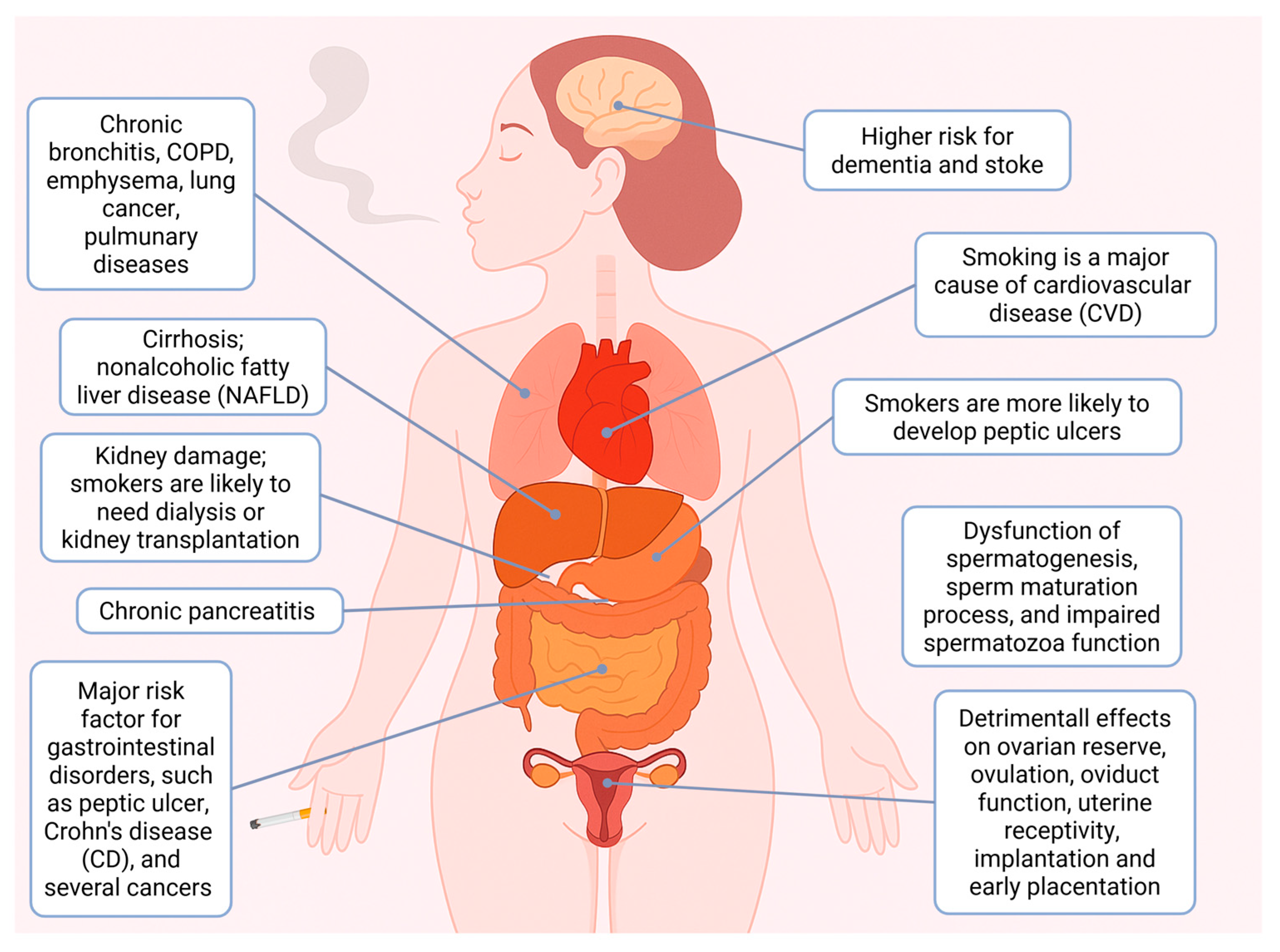
Figure 2.
Scheme outlining the reparation of “Cigarette Smoke Concentrates” (CSCs) and “Cigarette Smoke Extracts” (CSEs), using information taken from Kim and Kim (2023) [70], Higashi et al. (2014) [73] and Wright (2015)[74].
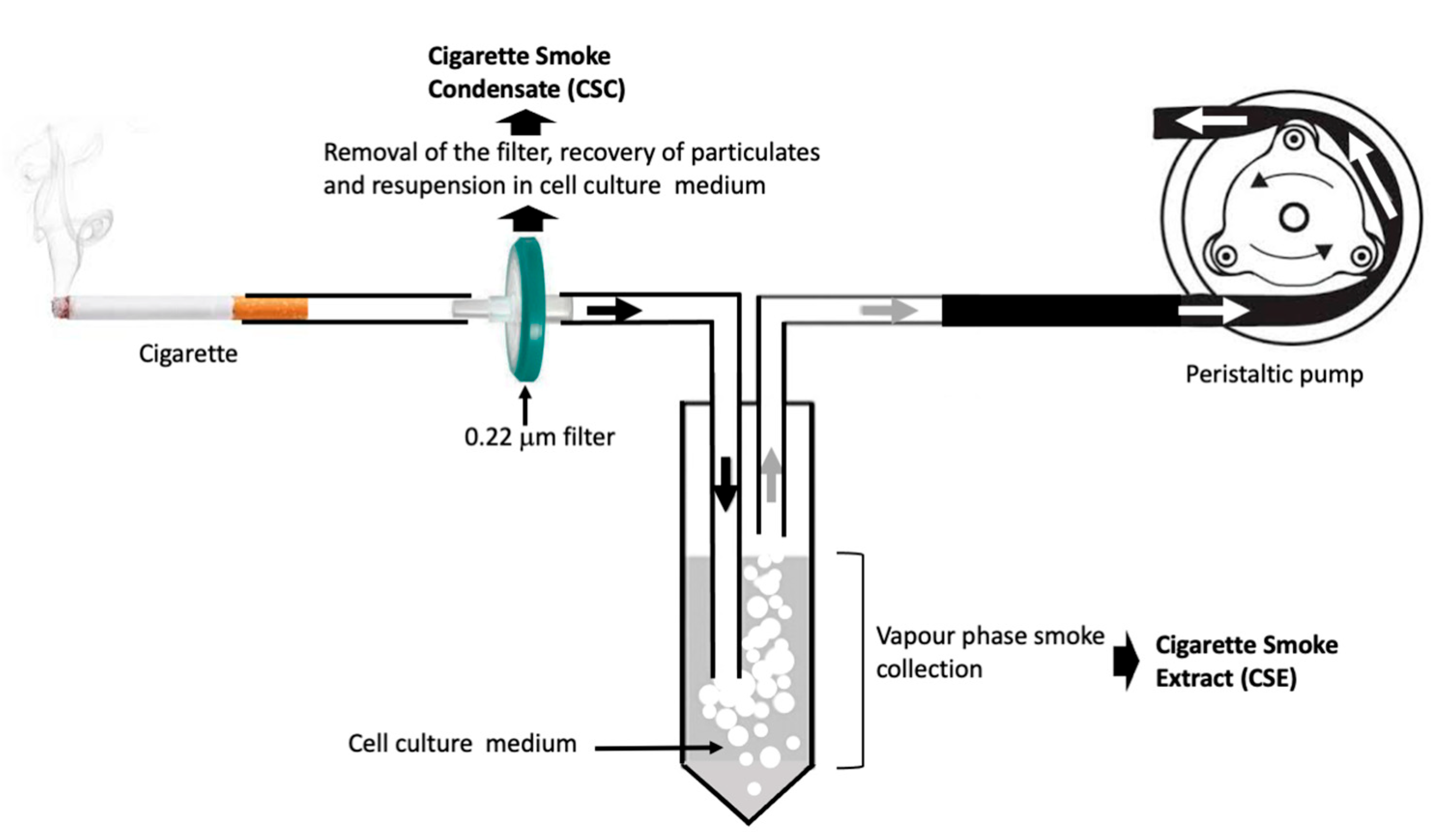
Figure 3.
Biological features of AGE and AGE constituents SAC and S1PC supporting their use for mitigating the effects of cigarette smoke.
Figure 3.
Biological features of AGE and AGE constituents SAC and S1PC supporting their use for mitigating the effects of cigarette smoke.
Disclaimer/Publisher’s Note: The statements, opinions and data contained in all publications are solely those of the individual author(s) and contributor(s) and not of MDPI and/or the editor(s). MDPI and/or the editor(s) disclaim responsibility for any injury to people or property resulting from any ideas, methods, instructions or products referred to in the content. |
© 2025 by the authors. Licensee MDPI, Basel, Switzerland. This article is an open access article distributed under the terms and conditions of the Creative Commons Attribution (CC BY) license (http://creativecommons.org/licenses/by/4.0/).
Copyright: This open access article is published under a Creative Commons CC BY 4.0 license, which permit the free download, distribution, and reuse, provided that the author and preprint are cited in any reuse.


