

Submitted:
22 July 2025
Posted:
24 July 2025
You are already at the latest version
Abstract
Climate change has exacerbated the need for transitional shifts within high-impact sectors, notably maritime transport, which facilitates nearly 90% of global trade. In response, the International Maritime Organization (IMO) has implemented stricter environmental regulations under MARPOL Annex VI which includes, among other things, the designation of Emission Control Areas (ECAs) and Particularly Sensitive Sea Areas (PSSAs). These regulatory instruments have prompted the uptake of new technologies, such as scrubbers, LNG propulsion, and low-sulphur fuels to mitigate emissions in these zones. However, emerging evidence has raised environmental concerns about these solutions which may offset their intended climate benefits. This study investigates the hypothesis that ECAs and PSSAs act as catalysts for maritime environmental advancements through a systematic mapping of 76 peer-reviewed articles. Drawing on data from Scopus and Web of Science, the study analyzes trends in technological advances, publication timelines, geographic research distribution, and the increasing role of decision-support tools for regulatory compliance. Findings show increased academic outputs particularly in China, North America, and Europe, and suggest that achieving effective emissions reduction requires globally harmonized policies, bridging research-practice gaps, and targeted financial support to ensure sustainable outcomes throughout the sector. The study suggests that for ECAs and PSSAs to deliver truly sustainable outcomes, global regulation must be supported by empirical performance assessments, environmental safeguards for compliance technologies, and targeted support for developing maritime regions.
Keywords:
Emission Control Areas (ECA)
; Particularly Sensitive Sea Areas (PSSA)
; systematic mapping
; regulatory compliance
; International Maritime Organization (IMO)
; maritime governance
; MARPOL Annex VI
1. Introduction
The shipping sector, which transports 80% of all goods globally, sits at the core of global trade, hence, there is no question about the industry's economic importance [1]. Systemic changes in many industrial sectors have been sparked by the growing urgency of climate change, and maritime transport is coming under increased scrutiny because of its effects on the environment [2]. Large diesel engines burning heavy fuel oil have dominated maritime shipping for decades and have been found to generate air pollutants including sulphur oxides (SOₓ), nitrogen oxides (NOₓ), and particulate matter (PM) [3]. Previous studies estimate that PM from shipping emissions resulted in approximately 60,000 cardiopulmonary and lung cancer deaths globally per annum, most of which occurred near coastlines in Europe, East Asia, and South Asia [4]. Maritime decarbonization, which aims for the total elimination of carbon emissions by 2050, has been at the forefront of the international maritime agenda since the early 2000s. To achieve this lofty goal, the International Maritime Organization (IMO) established frameworks to mitigate the environmental impacts of shipping under a global greenhouse gas strategy. This includes the introduction of global fuel standards, mid-term decarbonization measures, and various market-based approaches that aim to incentivize the shift towards more sustainable practices [5].
Prior to the introduction of these recent initiatives, the global focus was geared initially towards the protection of the marine ecosystem. These protection mechanisms were under established as regulatory measures under the International Convention for the Prevention of Pollution from Ships (MARPOL). Dubbed as special areas, emission control areas are more general in scope aim to remove SOₓ, NOₓ, and Particulate Matter (PM) from the atmosphere, while particularly sensitive sea areas (PSSA) emerged from a concern due to vessel-source pollution, and require special protection due to their “recognized ecological, socio-economic, or scientific attributes which may be vulnerable to damage by international shipping activities”[6,7]. The IMO is the only body with the authority to designate sites, and they must be proven to be valuable and susceptible to the effects of international shipping [8]. Since 1990, the IMO has established 15 PSSAs. The regulatory framework governing these zones has evolved due to changing patterns. Sulphur content limits in marine fuel have been progressively tightened, with the global cap reduced to 0.50% m/m in 2020 outside ECAs, and a 0.10% m/m limit within ECAs since 2015 [9]. Between 2006 and 2016, four emission control areas under MARPOL Annex VI were established. These regulatory zones were initially established in regions such as the Baltic Sea and the North Sea and have since been extended to other regions such as the United States Caribbean Sea and the North American coastline [7]. The Mediterranean became the fifth ECA as of 1 May 2025, with the Canadian Arctic and the Norwegian Sea both concurrently becoming the sixth and seventh ECAs for NOₓ and SOₓ on 1 March 2026 and 1 March 2027 respectively [10]. This will result in a close to 50% global regional sea coverage being designated ECAs under MARPOL Annex VI.
The introduction of these zones accelerated the adoption of technological and operational innovations in shipping. To comply with these regulations, shipowners have been forced to choose from a variety of methods, each with significant operational, financial, and technical implications. Switching to low sulphur fuels or the use of scrubbers have become the most popular mechanisms employed by shipowners due to the lack of technology support and shore-based infrastructure [11]. Scrubbers, also called exhaust cleaning systems, are of two types: dry and wet. Dry scrubbers use absorbents to remove SOₓ from the exhaust gas, while wet scrubbers are devices that remove SOₓ and other pollutants by washing them with a liquid before the gases are released. These systems are allowed under MARPOL once the SOₓ content released remains within the regulatory limits [12]. Both scrubbers and low sulphur fuels do not require extensive operational intervention and extensive crew restructuring and management and are generally adopted amongst the shipowners. Studies have also shown that alternative fuels, such as LNG, hydrogen, methanol, have the potential to reduce CO2 emissions by upwards of 20% to 100%, depending on the type [13]. Additionally, other strategies like slow steaming and advanced voyage planning, are increasingly being used to reduce emissions and operating costs.
Regional variations in ECA and PSSA compliance result from a number of factors that ultimately impact their efficacy. Enforcement and supervision are two examples of such factors. Research indicates that enforcement asymmetries result from lack of institutional capacity and resources to oversee adherence to maritime regulations [14,15]. As a crucial enforcement tool, Port State Control (PSC) examines ships to make sure they adhere to international agreements [16]. However, there are issues when state-to-state variations in inspection rates and standards are significant. Thus, this gives ships a way to possibly take advantage of these legal loopholes by strategically changing their routes or fuels to save money on compliance fees [17]. The disparity in enforcement capabilities among MARPOL signatories leads to a patchwork of compliance, where flag states may not always exercise stringent oversight, which could lead to a climate of noncompliance [14]. Coupled with this is the added concern about the environmental effects of the mitigating technologies and strategies. Although scrubbers quickly emerged as the solution of choice for many shipowners, states in exercising their authorities under Article 211(3) of the United Nations Convention on the Law of the Sea (UNCLOS), took a counteractive move. As of June 2020, a total of sixteen ports restricted the use of scrubbers. Twelve of these banned open loop scrubbers specifically [18]. Several studies demonstrate that scrubber water contains very high concentrations of pollutants, and implied that the use of scrubbers could potentially even add a new source of metal pollution from ships to the environment [19]. Recognizing this, an increasing number of states have since further imposed strict restrictions or full bans on scrubber water discharge from both open and closed loop scrubbers due to concerns over heavy metals in discharge effluent [20]. Similarly, while LNG has been adopted as a cleaner fuel alternative, it has been found that methane slip may undermine its climate benefits, potentially making it more harmful than conventional marine fuels in the long term [21]. This raises questions about the long-term role of LNG in meeting the industry’s decarbonization goals and highlights the need for life cycle assessments when evaluating fuel alternatives [22,23,24].
The evolving role of ECAs and PSSAs in maritime governance underscores not only the progress made in environmental regulation but also the complexity of the environmental performance of the mitigating technologies and strategies, as well as, ensuring universal adherence to these standards. This study systematically maps existing literature to clarify how ECAs and PSSAs have influenced compliance strategies and driven innovation within the maritime sector, offering critical insights into jurisdictional approaches and identifying areas in need of further research. While the primary aim is descriptive, capturing trends in technological development, regulatory focus and regional disparities, the study is also motivated by an exploratory hypothesis: ECAs and PSSAs act as catalysts for maritime environmental advancements, as evidenced through technological responses, policy evolution, and scholarly discourse. The study assesses the extent to which peer-reviewed literature supports this proposition and seeks to determine whether special areas not only ensure compliance but also act as catalysts for innovation and systemic change. The remainder of this paper is organized as follows: Section 2 outlines the methodology used for data collection, selection, and analysis, including bibliometric and thematic clustering approaches. Section 3 presents the results, including trends in publication output, geographical distribution of research and key thematic clusters. Section 4 offers a critical discussion of the findings in relation to technological development, economic implications, and regulatory governance. Finally, Section 5 concludes the paper by summarizing key insights and offering recommendations for future research.
2. Materials and Methods
In the study we applied the systematic mapping study (SMS) process which enabled the authors to cover a wide range of publications within the focus of the study. SMS allows for the clear identification of research gaps, state-of-the-art research areas and sub-areas through a structured process [25]. Systematic mapping studies provide a structured way of analyzing research reports and while similar to systematic literature reviews, mapping studies differ in terms of how the probe is approached, publications explored and reviewed [26,27]. The process began with the development of focused research questions in support of the main hypothesis. These questions focused on the emission control and particularly sensitive sea areas and the resultant effects of these policies on the shipping sector. Table 1 outlines the research questions used in this study.
The SMS process should be carried out meticulously and transparently according to a prescribed process which aligns consecutive steps with an outcome throughout each phase. The literature analyzed in the study was retrieved from two databases, selected based on their expansive scope and applicability to the domain of study. The strategically selected databases are Scopus and Web of Science, both of which are generally accepted as the most comprehensive multi-purpose data sources [28]. Of the two, Web of Science was first established and emerged as the most influential bibliographic data source; while Scopus, although later established, is now proven to be a reliable source for a wide range of available research across multiple fields [29,30]. The keywords used to conduct the searches were influenced by the research questions probing the study. As such, several combinations of keywords were used, being, “special emission control area AND SECA”, “MARPOL Annex VI AND environmental protection”, “shipping regulations AND technology AND special area”, “particularly sensitive sea area AND PSSA”, and “emission control area AND ECA”.
As depicted in Figure 1, the search yielded an overall total of 358 papers, which were then put through a phased screening process. Following the initial screening, which involved reading of the title, abstract and keywords, a total of 169 studies deemed irrelevant, were removed from the dataset. An additional 39 papers were excluded due to inability to access the full text, leaving a total of 150 papers as potentially relevant to the study. Thereafter, 64 duplicate entries were identified and removed, resulting in a total of 86 unique and potentially relevant papers. At the final stage, a full text review was performed for each paper. To ensure relevance and contextual appropriateness, the papers were screened based on the inclusion of operations within emission control areas or particularly sensitive sea areas. The papers which included regulatory focus, technological content, as well as environmental and operational aspects were also included. To maintain methodological rigour the type of study was also taken into consideration, with a focus on empirical investigations or other quantitative or qualitative studies. Following this review 10 papers were excluded as they were not considered relevant to the focus of the study, leaving a total of 76 relevant papers for analysis.
3. Results
The mapping results are presented according to the research questions. Of the studies, 68 focused on emission control areas, while 8 studies focused on particularly sensitive sea areas (see Table 2). Notably, none of the studies in the study dealt with both emission control areas and particularly sensitive sea areas within a single integrated analysis. Each topic was discussed independently, with no crossover in the same study.
The analysis of the 76 reviewed studies reveals a clear upward trajectory in academic interest surrounding ECAs and PSSAs over the past two decades (see Figure 2). The timeline illustrates a relatively dormant period between 2004 and 2012, with only one to two publications per year. This stagnation reflects the early stages of policy development and limited real-world implementation of ECA and PSSA frameworks during that period.
A gradual increase began in 2013, coinciding with the introduction and enforcement of stricter sulphur emission limits under MARPOL Annex VI. Specifically, this period aligns with the implementation timeline of Resolution MEPC.176(58), adopted in October 2008, which amended Annex VI to reduce allowable sulphur content in marine fuel. Under this amendment, the sulphur cap within designated ECAs was reduced to 0.10% m/m, while the global cap was scheduled to decrease to 0.50% m/m. Although the global sulphur cap did not take effect until later, the 2013–2015 period was marked by compliance preparations, intensified research into technological and economic impacts, and early enforcement measures in existing ECAs such as the Baltic Sea (since May 2005), North Sea (since November 2006), and the North American ECA (August 2011). The number of publications rose steadily from 2014 onward, with notable surges in 2015 and again between 2018 and 2022. The peak in 2022 (12 papers) marks the highest annual output in the dataset, indicating the intensifying focus on compliance strategies, regulatory enforcement, and technology evaluation as the shipping industry braced for full implementation of the IMO 2020 global sulphur cap.
Although there was a temporary decline in 2023, the literature rebounded in 2024, concurrent with discussions about a new PSSA designation in the Arctic and a shift in attention toward institutional governance, regional enforcement disparities, and the integration of ECAs into broader climate regimes. This is followed by a moderate count in 2025 (to date), which reflects sustained engagement, especially around emerging technologies, digital enforcement tools, and evolving policy mechanisms such as carbon pricing and green corridors. This renewed scholarly attention coincides with the adoption of the 2023 IMO Revised Strategy on the Reduction of GHG Emissions from Ships, agreed at MEPC 80 (July 2023). The revised strategy set an enhanced ambition for the sector to reach net-zero GHG emissions by 2050, with indicative checkpoints in 2030 and 2040, and includes specific targets for carbon intensity reduction and uptake of low emission technologies and fuels. It also introduced a combination of technical and economic instruments, such as carbon pricing mechanisms and market-based measures (MBMs). Additionally, the strategy encourages the establishment of green corridors, decarbonized shipping routes between major ports, as testing grounds for scalable emissions reduction frameworks.
The literature also spans a diverse array of academic journals, reflecting the interdisciplinary nature of maritime environmental governance. As illustrated in Figure 3, the highest concentration of publications is found in Transportation Research Part D: Transport and Environment (10 papers) underscoring its central role in publishing work at the intersection of transportation policy and environmental sustainability. Marine Policy (7 papers) also serves as a key outlet for regulatory and governance-focused studies related to maritime emissions and conservation zones. Other journals with notable representation include Marine Pollution Bulletin (4 papers), known for its focus on marine environmental risks and mitigation strategies, and Journal of Cleaner Production and Maritime Policy & Management (2 papers each), which frequently publish techno-economic and operational analyses.
The diverse scope of other journals indicates the breadth of methodological approaches, from atmospheric modelling and life cycle assessment (LCA) to legal analysis and policy evaluation. This distribution reveals that ECA and PSSA research is not confined to a single academic domain but is instead dispersed across transportation, environmental science, technology, law, and engineering. The spread also reflects the growing integration of regulatory discussions into journals with a highly technical focus, highlighting the increasing relevance of emissions control zones in broader environmental and infrastructure discourses.
3.1. Technological Response to Emission Regulations (RQ1)
The introduction of tightening regulations within shipping expectantly results in significant operational, design, and management changes. The findings from the systematic mapping study highlight that since the establishment of ECAs and PSSAs, there have been progressive technological responses and adaptations to meet the new restrictive measures. There was diverse focus within the papers. Only 8 of the papers had a purely technical focus, while 13 included a combined technical and economic analysis, along with other combinations of policy, technical, technological and economic discussions.
3.1.1. Scrubbers
As depicted in Figure 4, the most frequently analyzed technologies or solutions were scrubbers accounting for 19 studies. According to literature, these measures were favoured as they facilitated fast compliance at a relatively low cost. With scrubbers or exhaust gas cleaning systems, shipowners can continue operating on high sulphur fuels and removing sulphur oxides from the exhaust gases before they pollute the air. Many of the studies explored the technical efficiency of scrubbers and their ability to enable compliance with the IMO sulphur regulations. Studies discussed the design of scrubbers, discussing the efficiency of closed loop as opposed to open loop scrubbers. However, the analysis extended into looking at the cost-effectiveness, return on investments and a few on the environmental impacts. It was highlighted that this measure came with a high capital cost but with long term benefits. As such, as mentioned in some studies, these are primarily suitable for large vessels which frequent the emission control areas or multiple ECAs throughout their voyages.
3.1.2. Alternative Fuels
The use of alternative fuels was also mentioned in a significant number of studies. Liquified natural gas (LNG) is used as a compliance strategy in a number of studies, 17 in total. Despite recognized infrastructure limitations and high investment requirements, LNG was popular among newly constructed vessels (Figure 5). Numerous studies also addressed the need for port bunkering facilities. However, it was discovered to have provided notable decreases in SOₓ, NOₓ, and particulate matter. There was also a lot of discussion about switching to cleaner fuels and low-sulphur fuels in eight and six papers, respectively. Because it offered a comparatively lower capital requirement but, on the other hand, resulted in higher operational costs, this was typical of vessels that transited ECA areas. Considered a short-term compliance mechanism, this approach featured in short sea shipping and feeder services with short transits and predetermined routes and schedules. Low sulphur fuels were also considered to be MARPOL Annex VI compliant but were not very effective in contributing to long-term GHG mitigation. Four studies discussed other alternative fuels, such methanol, biodiesel, and ammonia which are mostly evaluated in simulation or pilot contexts as their real-world application is affected by lack of knowledge, technical immaturity, danger risks, and lack of or limited bunkering and safety infrastructure.
3.1.3. Dual-Fuel Engines and Selective Reduction Systems
The use of selective catalytic reduction systems and dual-fuel engines was elaborated in 3 studies each. Other technological measures included unmanned aerial vehicles or drone-based emission monitoring which was in 4 studies and artificial intelligence-based routing in 1 study. Methanol, waste heat recovery and shore power were included in 2 studies. In contrast, the few studies that addressed PSSAs emphasized operational adjustments rather than technological adoption. These included rerouting, speed reductions, and increased navigational awareness, particularly in biodiversity-sensitive zones such as the Tubbataha Reefs or the Bering Strait.
No studies reported the direct adoption of emissions reduction technologies in response to PSSA designation.
3.2. Geographic, Methodological, and Thematic Patterns (RQ2)
3.2.1. Geographic Distribution of Studies
There is significant regional, methodological, and thematic clustering in the literature on ECAs and PSSAs. A proportionate breakdown of studies by region is shown in Figure 6, which emphasizes the concentration of ECA and PSSA research in a small number of jurisdictions. According to the country's policy on domestic ECAs in the Pearl River Delta (2016), Yangtze River Delta (2017), and Bohai Rim (2018–2019), 29% of the studies in the dataset are from China. Policy enforcement, fuel switching tactics, and the use of remote sensing technologies like satellite-AIS systems and unmanned aerial vehicles (UAVs) for emissions monitoring and compliance verification were the main topics of research in this area. In order to assess government-led subsidy schemes and infrastructure retrofitting programs targeted at reducing emissions, Chinese studies generally combine empirical ship-level data with techno-economic modelling. Among the first ECAs designated under MARPOL Annex VI were the North Sea and Baltic Sea regions, which accounted for 24% of studies. Research in this area focusses on the economic effects of strict emissions regulations as well as technological mitigation strategies, such as the use of LNG propulsion technologies and exhaust gas cleaning systems (scrubbers). The modal shift risk, where stringent sulphur caps may unintentionally divert cargo from maritime to road or rail transport, recurs frequently. Thanks to consistent EU funding and data availability, these studies commonly use cost-benefit analyses, optimization modelling, and policy scenario evaluations.
Literature from North America (20%) which covers the U.S. and Canadian ECAs and the Caribbean Sea, primarily address regulatory enforcement, cost mitigation strategies, and compliance behaviour. The Mediterranean Sea, representing 11% of studies, is currently undergoing deliberations for ECA designation. Accordingly, studies in this region are largely predictive and policy-driven, using scenario-based modelling and stakeholder engagement analysis to project the environmental, economic, and political consequences of ECA implementation. These studies underscore the need for regulatory harmonization among EU and non-EU Mediterranean states, reflecting the region’s complex geopolitical fabric. Southeast Asia accounts for 9% of studies, predominantly related to PSSA proposals and governance design. Areas like the Lombok Strait and Tubbataha Reefs are commonly cited as high-priority regions for protection. The Arctic and Bering Strait region, representing 7% of the literature, adds a unique dimension by emphasizing climate vulnerability, indigenous governance structures, and resilience-based maritime policy frameworks. Research from this region is largely normative, addressing the suitability of PSSAs in ecologically critical but politically sensitive regions beyond national jurisdiction.
3.2.2. Methodological Patterns in the Literature
The study shows that empirical and optimization-based methods clearly predominate, especially in research pertaining to ECA, as shown in Figure 7. About one-third (25) of the reviewed papers are empirical studies, making them the largest methodological category. To assess ship-level compliance, emissions trends, and enforcement results, these investigations usually make use of Automatic Identification System (AIS) data, port call logs, and onboard fuel sampling. Remarkably, Chinese research was the first to monitor compliance using remote sensing technologies, such as high-resolution satellite imagery and unmanned aerial vehicles (UAVs). On the other hand, studies conducted in North America and Europe use longitudinal data from emissions inventories and vessel tracking systems. With 18 studies, optimization modelling is the second most common approach, as shown in the figure. These studies examine compliance tactics, technology investments, and financial trade-offs using mathematical programming, route and speed optimization, and multi-objective decision-making frameworks. Decisions regarding the installation of scrubbers, the use of dual-fuel engines, and the best routes for navigation within and around ECAs are among the subjects covered. The PSSA literature is primarily linked to case study methodologies, which are used in 14 studies. These studies examine how policies are implemented, how stakeholders interact, and how institutions have changed. Examples include the regulation of sulphur emissions in the Baltic Sea, the installation of LNG infrastructure in East Asian ports, and the designation of PSSAs in the Bering and Lombok Straits, which are sensitive maritime corridors.
Legal analyses, found in 9 studies, are similarly concentrated in the PSSA literature, where regulatory innovation, normative discourse, and jurisdictional complexity play a central role. These studies interpret international legal frameworks, including MARPOL Annex VI and relevant IMO resolutions, and frequently engage with governance challenges in Areas Beyond National Jurisdiction (ABNJ). A smaller yet emerging strand of the literature (6 studies) employs life cycle assessment (LCA) methodologies to evaluate the full environmental footprint of emission reduction technologies and alternative fuels.
3.2.3. Thematic Patterns in the Literature
Five related thematic clusters that represent changing research priorities can be found in the literature on ECAs and PSSAs. These clusters, which are compiled in Table 3, are influenced by disciplinary influences, methodological philosophies, and region-specific issues. The majority of the reviewed literature focusses on technological interventions. This body of work makes extensive use of key terms like "scrubbers," "LNG," "fuel switching," and "shore power." In areas with strong environmental enforcement regimes, such as the North and Baltic Seas, China, and North America, empirical case studies, techno-economic analysis, and simulation modelling are particularly common.
The application and effectiveness of regulatory tools under MARPOL Annex VI represent yet another recurring theme. This category of studies focusses on ECA enforcement mechanisms, frequently using compliance metrics and real-time tracking technologies to evaluate the effectiveness of port-state control and flag-state behaviour. A key component of this line of work is the incorporation of digital surveillance technologies, such as Automatic Identification Systems (AIS), Unmanned Aerial Vehicles (UAVs), and on-board fuel sampling. This cluster also includes a significant number of legal analyses that look at the uniformity and jurisdictional scope of international enforcement regimes. Scholarship pertaining to PSSA is typically more institutionally orientated, with a focus on stakeholder engagement, designation procedures, and governance innovation. The application of qualitative techniques like discourse analysis, institutional mapping, and policy analysis defines this cluster. Intergovernmental coordination, ecological vulnerability assessments, PSSA designation criteria, and integration into marine spatial planning are common themes. Growing regional interest in flexible, context-specific governance models is reflected in case studies from the Mediterranean, Southeast Asia, and the Arctic.
Novel regulatory and technological paradigms related to maritime decarbonization from the Mediterranean and globally are covered in a more recent and forward-looking body of literature. This cluster is dominated by scenario modelling and policy forecasting techniques, which demonstrate an interdisciplinary shift towards long-term, scalable solutions. The International Maritime Organization's (IMO) changing stance on greenhouse gas emissions and the industry-wide movement towards low- and zero-emissions shipping are closely aligned with this literature. The externalities and system-wide feedback effects of regional environmental regulations are the focus of a critical line of research. Under this theme, studies look into topics like emissions leakage from deliberate route changes to avoid ECAs and modal shifts from sea to land transportation. To measure these effects, cost-benefit analysis and optimization modelling are commonly used.
3.3. Role of Decision Models in Fuel Selection and Compliance Strategy (RQ3)
A key tool in the literature on maritime emissions compliance, especially in ECAs, is decision-support modelling. At least 15 of the 76 reviewed studies use formalized modelling techniques to guide compliance strategies in the face of uncertainty. Real Options Analysis (ROA) is a well-known method in this field that has been used to evaluate the timing of capital-intensive decisions like installing LNG propulsion systems or equipping ships with scrubbers. Based on dynamic factors like anticipated fuel price spreads, anticipated ECA enforcement dates, or anticipated regulatory tightening, ROA offers a framework for delaying or staging investments. This approach recognizes the importance of managerial adaptability in a setting where market and regulatory conditions are constantly changing. Another popular method is Multi-Criteria Decision Analysis (MCDA), which is especially useful when there are several, frequently incompatible goals that need to be reconciled, like technical viability, cost reduction, and emissions reduction. Structured comparisons of alternative technologies or operational configurations are made possible by MCDA frameworks, such as weighted-sum and Pareto-front approaches. These models facilitate integrated decision-making in a variety of domains, including adaptive routing, dual-fuel engine installation, and fuel switching. The most widely used optimization technique for operational planning is Mixed Integer Programming (MIP). Routing, bunkering, and retrofit scheduling problems, where discrete decisions must be made under capacity, time, and emissions constraints, are especially well-suited for MIP models. Granular planning is made possible by these models, which frequently include regulatory thresholds, geographic ECA boundaries, and technical vessel specifications.
Complementing this systems-based overview, Figure 8 illustrates a matrix heatmap detailing the frequency and specificity of modelling approaches across different application areas.
The image demonstrates that MIP is primarily utilized in operational decision-making, ROA in investment timing and uncertainty management, and MCDA in fuel choice evaluations. Although they are less frequently used, game theory and portfolio optimization models aid in the analysis of competitive behaviour and compliance strategy diversification under emissions regulation. The literature on investment planning is where portfolio optimization techniques are most commonly found. Game theory models, on the other hand, shed light on the strategic relationships between businesses subject to emissions regulations.
3.4. Regional Variation in Compliance Challenges (RQ4)
In addition to modelling, the literature finds enduring regional disparities in MARPOL Annex VI implementation and adherence. A radar chart that summarizes the five main aspects of the compliance burden in five important maritime regions is shown in Figure 9. Based on qualitative and quantitative indicators taken from the literature, each axis is given a score on a scale from 1 (low challenge) to 5 (high challenge). The overall burden of compliance is lowest in the European Union. Consistent monitoring and enforcement have been made possible by robust institutional infrastructure, harmonized legal frameworks, and high port-state control capacity. As a result of its developed regulatory framework, the EU scores particularly low for infrastructure and monitoring-related issues. The US, on the other hand, shows moderate levels of challenge. Despite a strong enforcement infrastructure, legal complexity is introduced by the coexistence of federal and state regulations. For example, California's separate emissions regulations can occasionally make it difficult for ships travelling between domestic and foreign waters to comply.
Despite significant investments in technologies like AIS-based tracking systems and UAV surveillance, China poses the greatest challenges for monitoring and enforcement. The uneven distribution of regulatory powers among provinces and the swift execution of national policies, which has at times exceeded local enforcement capabilities, are the causes of this seeming contradiction. There are several systemic issues facing Southeast Asia, especially with regard to monitoring infrastructure and legal clarity. Despite the region's strong interest in green shipping initiatives, effective compliance is hampered by a lack of standardized regulations and a lack of adequate technical infrastructure. Due to its harsh climate, lack of regulatory infrastructure, and high operating costs, the Arctic region presents particular enforcement and financial challenges. This region's strategic significance necessitates creative and collaborative compliance solutions, particularly in light of trans-Arctic shipping and proposed PSSA designations. The absence of internationally standardized enforcement procedures is a recurring theme in the literature. Other regions, especially Southeast Asia and parts of the Global South, suffer from overlapping jurisdictions, inconsistent enforcement, and a lack of institutional capacity, while the US and the EU enjoy the advantages of well-funded and clearly defined enforcement systems. The practical effectiveness of PSSAs in safeguarding delicate marine environments is limited because enforcement mechanisms are frequently optional or symbolic. One of the main obstacles to emissions compliance technologies is still their high cost, particularly for small and medium-sized businesses. While LNG conversion may account for more than 15% of a vessel's overall construction costs, scrubber retrofits can cost anywhere from $3 to $5 million per unit. These investments pose major short-term financial challenges, especially in areas with restricted access to maritime finance, even though they may prove cost-effective in the long run. Because of market volatility and the need for dual-fuel management, even fuel switching, which requires less capital, has operational costs. Route changes and speed reductions are two examples of the logistical compromises frequently required to comply with ECA regulations. Although methods like slow steaming are good at reducing NOₓ, they can interfere with just-in-time port arrival systems and delivery schedules that are time-sensitive.
The stacked column chart in Figure 10 provides a comparative visual of compliance challenges across the five regions.
China has the most challenges mentioned overall, with economic (4 studies) and regulatory (5 studies) concerns taking centre stage. China's phased approach and top-down policy structure lead to implementation asymmetries despite significant investments in surveillance and regulatory rollout. While technological issues are less noticeable (2 studies), probably as a result of large state investments in innovation, operational issues particularly those related to fuel switching and port compliance are also noteworthy. With four studies each cited for technological, economic, and regulatory issues, the EU exhibits a more balanced challenge profile. These results demonstrate a robust legal system, the widespread use of alternative fuels, and intricate member-state coordination. Because of established infrastructure and reliable enforcement methods, operational issues are less commonly mentioned (2 studies). Economic issues predominate in the US (4 studies), which is indicative of the financial strains brought on by strict ECA laws at the federal and state levels. Concerns about technology (3) and operations (3) are also pertinent, especially in relation to the use of scrubbers and LNG compatibility. Because of the clarity of MARPOL's incorporation into U.S. law and the ability of federal agencies to enforce it, regulatory issues (3 studies) are relatively subdued. There is a clear trend in Southeast Asia, where the most commonly mentioned barriers are operational (4) and regulatory (4). These reflect the disparities in port readiness and the region's disjointed legal systems. Two studies indicate that technological readiness is still in its infancy, indicating inadequate infrastructure and nascent shifts towards cleaner maritime technologies. According to one study, technological concerns are the least common in the Arctic, which is in line with the region's limited emissions control infrastructure. However, jurisdictional complexity, delicate ecosystems, and a lack of adequate monitoring tools make regulatory (5) and operational (3) issues the most pressing. There are financial obstacles (2), especially for indigenous fleets and small operators who lack the funding necessary for complete compliance. This comparative study shows that while highly developed maritime regions place a higher priority on cost effectiveness and technological advancements, other regions deal with more fundamental issues related to infrastructure, institutional capacity, and legal consistency.
4. Discussion
The findings of the review confirm the hypothesis that special areas such as emission control areas and particularly sensitive sea areas play a catalytic role in propelling important operational and technological advancements in the shipping sector. One of the clearest findings is the role of ECAs as regulatory triggers for technological change. Consistent with recent research [11,12], the implementation of sulphur caps in ECAs has accelerated the adoption of scrubbers, LNG propulsion, low-sulphur fuels, and other operatlional strategies. These changes have not only resulted in significant reductions in pollutants from vessels but also influenced long-term planning for fleet renewal and retrofits. Due to the timeline of the literature (2004 to 2025), in the discussion on recent state restrictions on certain technological responses due to discovered. Recent bans on open-loop scrubber discharges in several ports and coastal states, have further constrained the use of abatement technologies, pushing shipowners to consider cleaner fuels such as LNG, which as per the review have been widely preferred by shipowners. However, LNG is found to present significant climate risks due to the release of unburned methane during combustion and supply chain handling. As methane has a long-term global warming potential over 80 times that of CO₂, its use may undermine decarbonization efforts [10]. This has spurred the IMO’s recent push toward life-cycle emissions accounting, reflected in new regulatory developments [7], which will also affect the global responses to the new and existing emissions regulations. As such, this has caused an about-turn by shipowners, due to the most popular technological solutions are now deemed partially or wholly disruptive rather than complementary to the globally environmental targets.
Beyond technological change, the review suggests that the introduction of special areas have shaped the trajectory of maritime environmental policy. Although they have helped to global environmental expectations with the expanding emission control zones, several studies have pointed out these instruments have historically been reactive and regionally fragmented. Although these frameworks expand upon the principles embedded in ECAs and PSSAs, they simultaneously raise critical concerns about implementation feasibility. As noted in the literature [38,39], compliance burdens are not evenly distributed. Smaller operators and ports as well as those in developing regions face disproportionate challenges in adapting to complex requirements such as lifecycle emissions tracking and real-time monitoring. Meanwhile, it is suggested [33,40], that even where innovation is incentivized, operational feasibility often lags behind regulatory ambition. This disjunction is further complicated by the increasing breadth and intensity of climate mandates, such as those in the European Union’s Fit-for-55 package and FuelEU Maritime Regulation (Regulation 2023/1805), which go beyond traditional ECA/PSSA structures and incorporate well-to-wake lifecycle accounting, shore power mandates, and GHG intensity reduction thresholds for all European ports. While these initiatives reflect a commendable institutional shift toward net-zero by 2050, they also underscore a widening compliance gap amongst geographic regions.
The study also highlights the increasing role of modelling and decision-support tools in shaping compliance strategies. Literature reveals that techniques such as Mixed Integer Programming (MIP), Real Options Analysis (ROA), and Multi-Criteria Decision Analysis (MCDA) are being used to optimize fuel choices, investment timing, and routing. However, a key insight is the disconnect between technical modelling and on-the-ground realities [31,32]. Regulatory compliance goes beyond technology and is shaped by political, institutional, and behavioural dynamics. Over-reliance on techno-economic presumptions runs the risk of reducing regulatory compliance to a problem of rational choice, hiding the influence of market power disparities, enforcement capability, flag state behaviour, and lobbying dynamics on actual results. This emphasizes the necessity of conducting more interdisciplinary, contextually sensitive research to close the gap between optimization models and real-world implementation. Furthermore, small and medium-sized operators in particular frequently lack the knowledge or data inputs required to use these tools efficiently. Therefore, rather than levelling the regulatory playing field, decision-support frameworks run the risk of enhancing already-existing asymmetries in capacity and influence. More contextualized, multidisciplinary modelling approaches that take qualitative aspects into account are becoming more and more necessary in this context. One approach to bridging this gap is through integrated assessment models that incorporate agent-based simulations, participatory scenario planning, and quantitative optimization with stakeholder engagement.
5. Conclusions
This study has undertaken a systematic review of 76 peer-reviewed articles to assess the evolution and impact of Emission Control Areas (ECAs) and Particularly Sensitive Sea Areas (PSSAs) within the broader framework of maritime environmental governance. The findings strongly confirm the central hypothesis that ECAs and PSSAs have served as catalysts for maritime environmental advancement, driving technological adaptation, influencing regulatory innovation, and shaping scholarly discourse. Regarding the first research question, which asks what kinds of scholarly works have been written about ECAs and PSSAs and where the most important contributions are concentrated. The review reveals a rich and varied body of work that is primarily coming from high-regulation jurisdictions like China, North America, and the European Union. These studies illustrate the multifaceted nature of shipping decarbonization challenges by spanning disciplines such as engineering, economics, environmental science, and law. Regarding the second, question. The response is in the affirmative, especially for ECAs. Scrubbers, LNG propulsion, low-sulfur fuels, and digital emissions monitoring systems are just a few of the technological solutions that have been widely adopted in response to the imposition of sulphur limits. As evidence of their long-term systemic impact, these regulatory mechanisms have not only made immediate emissions reductions easier but have also changed fleet renewal plans and compliance expenditures. PSSAs continue to be crucial for drawing attention to ecological vulnerability and securing conservation-oriented governance in international shipping, despite their less significant operational impact.
Multi-criteria decision-making models, including Mixed Integer Programming (MIP), Real Options Analysis (ROA), and Multi-Criteria Decision Analysis (MCDA), are being used more and more to evaluate the trade-offs associated with sustainable fuel selection and compliance strategy in special emission zones, according to this review. These tools help policymakers and shipowners make difficult decisions about fuel availability, potential for emissions reduction, when to invest, route selections, and regulatory uncertainty. However, because the majority of tools are created in academic settings and do not integrate with operational realities like institutional behaviour, port-state enforcement, or commercial constraints, their impact is still primarily theoretical. These models need to include behavioural economics, co-development with maritime stakeholders, and real-time feedback in order to be more practically relevant. The study finds notable operational, economic, and regulatory differences between global regions when it comes to compliance with MARPOL's emission zone regulations. Developed jurisdictions, like those in North America and Europe, have access to capital, advanced Port State Control (PSC) systems, and digital monitoring tools, which make compliance easier to handle. On the other hand, a "patchwork" of regulatory outcomes results from the lack of enforcement, a lack of personnel, and inadequate infrastructure in many coastal states in the Global South, Southeast Asia, and the Arctic. Due to financial limitations, small and medium-sized ship operators are more likely to rely on temporary compliance strategies like fuel-switching or slow steaming because they can't afford to invest in alternative fuels or retrofit technologies. The financial burdens introduced by global GHG pricing and fuel standards are likely to exacerbate these disparities. A just transition fund has been proposed by the IMO, but it is still unclear how it will be implemented and made available. These results highlight the need for regionally tailored compliance pathways, equitable cost-sharing arrangements, and more inclusive regulatory design.
While this study offers a comprehensive mapping of peer-reviewed literature, it is limited to English-language publications indexed in Scopus and Web of Science, excluding grey literature and non-English regional studies. The categorization of studies may oversimplify interdisciplinary research, and insights into post-2025 regulation remain preliminary due to ongoing implementation. Future studies should broaden their geographic focus, especially to include perspectives from the Global South, and seek comparative and longitudinal evaluations of recently designated areas like the Mediterranean ECA and the Canadian Arctic. The use and compatibility of new digital compliance technologies, like digital twins, blockchain-based emissions tracking, and AI-driven regulation, should also be investigated in research.
The study amplifies that ECAs and PSSAs continue to be essential frameworks for forming an environmentally conscious and climate-resilient future for international shipping as regulations tighten and expectations change.
Author Contributions
Conceptualization, D.A. and U.T.; methodology, D.A; validation, D.A; formal analysis, D.A. and U.T..; writing—original draft preparation, D.A..; writing—review and editing, D.A. and U.T..; visualization, D.A. All authors have read and agreed to the published version of the manuscript.
Funding
This research was funded by the Interreg Central Baltic Programme under grant agreement no. CB0300186 project titled “Reducing CO2 emissions in island ferry traffic”. The views and opinions expressed are those of the author(s) only and do not necessarily reflect those of the granting authority as such the granting authority should not be held responsible for these views and opinions.
Conflicts of Interest
The authors declare no conflicts of interest.
References
- United Nations Conference on Trade and Development. Navigating maritime chokepoints. In Review of Maritime Transport 2024. https://unctad.org/system/files/official-document/rmt2024overview_en.pdf.
- Oloruntobi, O.; Mokhtar, K.; Gohari, A.; Asif, S.; Chuah, L.F. Sustainable transition towards greener and cleaner seaborne shipping industry: Challenges and opportunities. Clean. Eng. Technol. 2023, 13. [Google Scholar] [CrossRef]
- Zhang, Y.; Eastham, S.D.; Lau, A.K.; Fung, J.C.; E Selin, N. Global air quality and health impacts of domestic and international shipping. Environ. Res. Lett. 2021, 16, 084055. [Google Scholar] [CrossRef]
- Corbett, J.J.; Winebrake, J.J.; Green, E.H.; Kasibhatla, P.; Eyring, V.; Lauer, A. Mortality from Ship Emissions: A Global Assessment. Environ. Sci. Technol. 2007, 41, 8512–8518. [Google Scholar] [CrossRef] [PubMed]
- Marine Environment Protection Committee (MEPC 83), 7 to 11 April 2025. Retrieved June 18, 2025, from https://www.imo.org/en/mediacentre/meetingsummaries/pages/mepc-83rd-session.aspx.
- Brun, A. , & Freiholtz, T. (2020). Methods of surveillance and level of compliance for current sulfur regulations within sulfur emission controlled area.
- International Maritime Organization. (2023). List of Special Areas, Emission Control Areas and Particularly Sensitive Sea Areas. In MEPC.1/Circ.778/Rev.4 (pp. 1–2). https://wwwcdn.imo.org/localresources/en/OurWork/Circulars/Documents/MEPC.1-Circ.778-Rev.4%20-%20Special%20Areas%20and%20Emission%20Control%20Areas%20(ECAs)%20under%20MARPOL%20(Secretariat).pdf.
- Roberts, J. Designating Particularly Sensitive Sea Areas in Areas Beyond National Jurisdiction. Ocean Dev. Int. Law 2024, 55, 234–258. [Google Scholar] [CrossRef]
- IMO2020 fuel oil sulphur limit - cleaner air, healthier planet. (n.d.). https://www.imo.org/en/mediacentre/pressbriefings/pages/02-imo-2020.aspx.
- Lloyds Register. (2025). New Emissions Control Areas. Retrieved on 18 June 2025 from https://www.lr.org/en/knowledge/class-news/05-25/.
- Li, M.; Kou, Y.; Luo, M.; Li, L. Switching fuel or scrubbing up? A mixed compliance strategy with the 2020 global sulphur limit. Ocean Coast. Manag. 2023, 244. [Google Scholar] [CrossRef]
- Vedachalam, S.; Baquerizo, N.; Dalai, A.K. Review on impacts of low sulfur regulations on marine fuels and compliance options. Fuel 2022, 310. [Google Scholar] [CrossRef]
- Rony, Z.I.; Mofijur, M.; Hasan, M.; Rasul, M.; Jahirul, M.; Ahmed, S.F.; Kalam, M.; Badruddin, I.A.; Khan, T.Y.; Show, P.-L. Alternative fuels to reduce greenhouse gas emissions from marine transport and promote UN sustainable development goals. Fuel 2023, 338. [Google Scholar] [CrossRef]
- Topali, D.; Psaraftis, H.N. The enforcement of the global sulfur cap in maritime transport. Marit. Bus. Rev. 2019, 4, 199–216. [Google Scholar] [CrossRef]
- Aiken, D.M.; Kotta, J.; Tapaninen, U.P. Exploring the Multifaceted Challenges and Complexities Involved in the Effective Implementation of Maritime Conventions. Sustainability 2025, 17, 478. [Google Scholar] [CrossRef]
- Di Pepe, L. S. (2003). Port State Control as an Instrument to Ensure Compliance with International Marine Environmental Obligations. International Marine Environmental Law: Institutions, Implementation and Innovations, 137, 137.
- van Leeuwen, J. , & van Koppen, C. S. A. Moving sustainable shipping forward: The potential of market-based mechanisms to reduce CO2 emissions from shipping. The Journal of Sustainable Mobility 2016, 3(2), 42-66.
- Osipova, L. , Georgeff, E., & Comer, B. (2021). Global scrubber washwater discharges under IMO’s 2020 fuel sulfur limit. Int. Counc. Clean Transp, 10-12.
- Hassellöv, I. M. (2023). Scrubber technology: Bad news for the marine environment. Regulation of risk: Transport, trade and environment in perspective, 353-368.
- No Scrubs: Countries and Ports where Restrictions on EGCS Discharges apply. (2025, May 28). NorthStandard | Marine Insurance. Retrieved July 9, 2025, from https://north-standard.com/insights-and-resources/resources/news/no-scrubs-countries-and-ports-where-restrictions-on-egcs-discharges-apply.
- Methane slip measurements to reduce reported GHG emissions. (2025, March 20). DNV. https://www.dnv.com/news/2025/methane-slip-measurements-to-reduce-reported-ghg-emissions/.
- Zhao, Y.; Liu, F.; Zhang, Y.; Wang, Z.; Song, Z.; Zan, G.; Wang, Z.; Guo, H.; Zhang, H.; Zhu, J.; et al. Economic Assessment of Maritime Fuel Transformation for GHG Reduction in the International Shipping Sector. Sustainability 2024, 16, 10605. [Google Scholar] [CrossRef]
- Khoo, H. H. , & Tan, R. B. (2024). Trends of Emerging Zero-Carbon Technologies: The Role of the Life Cycle Assessment for Evaluating Carbon Dioxide Reduction Targets. In Towards Net-Zero Carbon Initiatives: A Life Cycle Assessment Perspective (pp. 1-26).
- Li, W.; Hu, Z.; Chen, X. Governmental Functions in Establishing Alternative Marine Fuel Supply Chains in Shipping Decarbonization Governance. Sustainability 2025, 17, 2808. [Google Scholar] [CrossRef]
- Wendler, R. The maturity of maturity model research: A systematic mapping study. Inf. Softw. Technol. 2012, 54, 1317–1339. [Google Scholar] [CrossRef]
- Petersen, K. , Feldt, R., Mujtaba, S., & Mattsson, M. (2008, June). Systematic mapping studies in software engineering. In 12th international conference on evaluation and assessment in software engineering (EASE). BCS Learning & Development.
- Barn, B., Barat, S., & Clark, T. (2017, February). Conducting systematic literature reviews and systematic mapping studies. In Proceedings of the 10th innovations in software engineering conference (pp. 212-213).
- Pranckutė, R. Web of Science (WoS) and Scopus: The Titans of Bibliographic Information in Today’s Academic World. Publications 2021, 9, 12. [Google Scholar] [CrossRef]
- Li, K.; Rollins, J.; Yan, E. Web of Science Use in Published Research and Review Papers 1997–2017: A Selective, Dynamic, Cross-Domain, Content-Based Analysis. Scientometrics 2018, 115, 1–20. [Google Scholar] [CrossRef] [PubMed]
- Zhu, J.; Liu, W. A tale of two databases: the use of Web of Science and Scopus in academic papers. Scientometrics 2020, 123, 321–335. [Google Scholar] [CrossRef]
- Abadie, L.M.; Goicoechea, N. Powering newly constructed vessels to comply with ECA regulations under fuel market prices uncertainty: Diesel or dual fuel engine? Transp. Res. Part D: Transp. Environ. 2019, 67, 433–448. [Google Scholar] [CrossRef]
- Abadie, L. M., Goicoechea, N., & Galarraga, I. Adapting the shipping sector to stricter emissions regulations: Fuel switching or installing a scrubber? Transportation Research Part D: Transport and Environment. 2017, 57, 237–250.
- Acciaro, M. Real option analysis for environmental compliance: LNG and emission control areas. Transp. Res. Part D: Transp. Environ. 2014, 28, 41–50. [Google Scholar] [CrossRef]
- Adland, R.; Fonnes, G.; Jia, H.; Lampe, O.D.; Strandenes, S.P. The impact of regional environmental regulations on empirical vessel speeds. Transp. Res. Part D: Transp. Environ. 2017, 53, 37–49. [Google Scholar] [CrossRef]
- Ahlgren, F.; Mondejar, M.E.; Genrup, M.; Thern, M. Waste Heat Recovery in a Cruise Vessel in the Baltic Sea by Using an Organic Rankine Cycle: A Case Study. J. Eng. Gas Turbines Power 2015, 138, 011702. [Google Scholar] [CrossRef]
- Armellini, A.; Daniotti, S.; Pinamonti, P.; Reini, M. Evaluation of gas turbines as alternative energy production systems for a large cruise ship to meet new maritime regulations. Appl. Energy 2018, 211, 306–317. [Google Scholar] [CrossRef]
- Atari, S. Sustainable Maritime Fleet Management in the Context of Global Sulphur Cap 2020. Transp. Telecommun. J. 2021, 22, 53–66. [Google Scholar] [CrossRef]
- Bilgili, L. An Assessment of the Impacts of the Emission Control Area Declaration and Alternative Marine Fuel Utilization on Shipping Emissions in the Turkish Straits. J. ETA Marit. Sci. 2022, 10, 202–209. [Google Scholar] [CrossRef]
- Brewer, T. A Maritime Emission Control Area for the Mediterranean Sea? Technological Solutions and Policy Options for a ‘Med ECA’. Euro-Mediterranean J. Environ. Integr. 2020, 5, 1–5. [Google Scholar] [CrossRef]
- Brynolf, S.; Magnusson, M.; Fridell, E.; Andersson, K. Compliance possibilities for the future ECA regulations through the use of abatement technologies or change of fuels. Transp. Res. Part D: Transp. Environ. 2014, 28, 6–18. [Google Scholar] [CrossRef]
- Carr, E.W.; Corbett, J.J. Ship Compliance in Emission Control Areas: Technology Costs and Policy Instruments. Environ. Sci. Technol. 2015, 49, 9584–9591. [Google Scholar] [CrossRef]
- Rodríguez, R.C.; Jiménez, J.; Arce, K.A.; Thompson, K.R. An Analysis of Policy Options Available to the International Maritime Organization to Protect the Costa Rica Thermal Dome: Building the Case for a Particularly Sensitive Sea Area. Mar. Policy 2023, 148. [Google Scholar] [CrossRef]
- Chen, J. , Wan, Z., Zhang, H., Liu, X., Zhu, Y., & Zheng, A. Governance of Shipping Emission of SOx in China’s Coastal Waters: The SECA Policy, Challenges, and Directions. Coastal Management 2018, 46(3), 191–209.
- Chen, L.; Yip, T.L.; Mou, J. Provision of Emission Control Area and the impact on shipping route choice and ship emissions. Transp. Res. Part D: Transp. Environ. 2018, 58, 280–291. [Google Scholar] [CrossRef]
- Chłopińska, E., Tatesiuk, J., & Śnieg, J. Scientific Journals Zeszyty Naukowe of the Maritime University of Szczecin Akademii Morskiej w Szczecinie Estimation of global liquefied natural gas use by sea-going ships. Scientific Journals of the Maritime University of Szczecin 2021, 66(138), 28–33.
- Du, J.; Wu, P. Deep reinforcement learning for UAVs rolling horizon team orienteering problem under ECA. Ocean Eng. 2025, 326. [Google Scholar] [CrossRef]
- Jonson, J.E.; Gauss, M.; Jalkanen, J.-P.; Johansson, L. Effects of strengthening the Baltic Sea ECA regulations. Atmospheric Meas. Tech. 2019, 19, 13469–13487. [Google Scholar] [CrossRef]
- Fagerholt, K.; Psaraftis, H.N. On two speed optimization problems for ships that sail in and out of emission control areas. Transp. Res. Part D: Transp. Environ. 2015, 39, 56–64. [Google Scholar] [CrossRef]
- Gao, J.; Wang, S.; Liu, T.; Lei, Z.; Meng, W.; Ma, C. Liner ship speed optimization based on the influence of emission control area in waterway transport system. International Conference on Frontiers of Traffic and Transportation Engineering (FTTE 2022). LOCATION OF CONFERENCE, ChinaDATE OF CONFERENCE; pp. 362–367.
- Gerlitz, L.; Mildenstrey, E.; Prause, G. Ammonia as Clean Shipping Fuel for the Baltic Sea Region. Transp. Telecommun. J. 2022, 23, 102–112. [Google Scholar] [CrossRef]
- Gu, Y. , & Wallace, S. W. (2017). Discussion paper Institutt for Foretaksøkonomi Department of Business and Management Science. Scrubber: a potentially overestimated compliance method for the Emission Control Areas.
- Hillmer-Pegram, K.; Robards, M.D. Relevance of a Particularly Sensitive Sea Area to the Bering Strait Region: a Policy Analysis Using Resilience-Based Governance Principles. Ecol. Soc. 2015, 20. [Google Scholar] [CrossRef]
- Hu, Z.-H.; Liu, T.-C.; Tian, X.-D. Scheduling Drones for Ship Emission Detection from Multiple Stations. Drones 2023, 7, 158. [Google Scholar] [CrossRef]
- Jiang, R.; Zhao, L. Modelling the effects of emission control areas on shipping company operations and environmental consequences. J. Manag. Anal. 2021, 8, 622–645. [Google Scholar] [CrossRef]
- Jiang, R.; Zhao, L. Effects of IMO sulphur limits on the international shipping company's operations: From a game theory perspective. Comput. Ind. Eng. 2022, 173. [Google Scholar] [CrossRef]
- Kanrak, M.; Lau, Y.-Y.; Ling, X.; Traiyarach, S. Cruise shipping network of ports in and around the emission control areas: a network structure perspective. Marit. Bus. Rev. 2023, 8, 372–388. [Google Scholar] [CrossRef]
- Kim, S. Y. (2021). Problems and processes of restricting navigation in particularly sensitive sea areas. In International Journal of Marine and Coastal Law (Vol. 36, Issue 3, pp. 438–463). Brill Nijhoff.
- Kökkülünk, G.; Akdoğan, E.; Ayhan, V. Prediction of emissions and exhaust temperature for direct injection diesel engine with emulsified fuel using ANN. Turk. J. Electr. Eng. Comput. Sci. 2013, 21, 2141–2152. [Google Scholar] [CrossRef]
- Li, C.; Yuan, Z.; Ou, J.; Fan, X.; Ye, S.; Xiao, T.; Shi, Y.; Huang, Z.; Ng, S.K.; Zhong, Z.; et al. An AIS-based high-resolution ship emission inventory and its uncertainty in Pearl River Delta region, China. Sci. Total. Environ. 2016, 573, 1–10. [Google Scholar] [CrossRef]
- Li, L.; Gao, S.; Yang, W. The enforcement of ECA regulations: inspection strategy for on-board fuel sampling. J. Comb. Optim. 2021, 44, 2551–2576. [Google Scholar] [CrossRef]
- Li, L.; Gao, S.; Yang, W.; Xiong, X. Ship’s response strategy to emission control areas: From the perspective of sailing pattern optimization and evasion strategy selection. Transp. Res. Part E: Logist. Transp. Rev. 2020, 133. [Google Scholar] [CrossRef]
- Lin, C.-Y. Strategies for promoting biodiesel use in marine vessels. Mar. Policy 2013, 40, 84–90. [Google Scholar] [CrossRef]
- Lindstad, H.; Eskeland, G.S.; Psaraftis, H.; Sandaas, I.; Strømman, A.H. Maritime shipping and emissions: A three-layered, damage-based approach. Ocean Eng. 2015, 110, 94–101. [Google Scholar] [CrossRef]
- Liu, B.; Wang, Y.; Li, Z.-C.; Zheng, J. An exact method for vessel emission monitoring with a ship-deployed heterogeneous fleet of drones. Transp. Res. Part C: Emerg. Technol. 2023, 153. [Google Scholar] [CrossRef]
- Ma, D.; Ma, W.; Jin, S.; Ma, X. Method for simultaneously optimizing ship route and speed with emission control areas. Ocean Eng. 2020, 202. [Google Scholar] [CrossRef]
- Ma, W.; Ma, D.; Ma, Y.; Zhang, J.; Wang, D. Green maritime: a routing and speed multi-objective optimization strategy. J. Clean. Prod. 2021, 305. [Google Scholar] [CrossRef]
- Methanol and Ethanol as Alternative Fuels for Ship. (n.d.).
- Octavian, A.; Trismadi; Lestari, P. The Importance of Establishing Particularly Sensitive Sea Areas in Lombok Strait: Maritime Security Perspective.CONFERENCE NAME, LOCATION OF CONFERENCE, COUNTRYDATE OF CONFERENCE; p. 012013.
- Okada, A. Benefit, cost, and size of an emission control area: a simulation approach for spatial relationships. Marit. Policy Manag. 2019, 46, 565–584. [Google Scholar] [CrossRef]
- Panasiuk, I.; Lebedevas, S. THE ASSESSMENT OF THE POSSIBILITIES FOR THE LITHUANIAN FLEET TO COMPLY WITH NEW ENVIRONMENTAL REQUIREMENTS. Transport 2014, 29, 50–58. [Google Scholar] [CrossRef]
- Peng, X.; Huang, L.; Wu, L.; Zhou, C.; Wen, Y.; Chen, H.; Xiao, C. Remote detection sulfur content in fuel oil used by ships in emission control areas: A case study of the Yantian model in Shenzhen. Ocean Eng. 2021, 237. [Google Scholar] [CrossRef]
- Ritari, A.; Spoof-Tuomi, K.; Huotari, J.; Niemi, S.; Tammi, K. Emission Abatement Technology Selection, Routing and Speed Optimization of Hybrid Ships. J. Mar. Sci. Eng. 2021, 9, 944. [Google Scholar] [CrossRef]
- Rumac, F.; Glujić, D.; Bernečić, D. The influence of SCR on main engine parameters. Pomorstvo 2022, 36, 113–122. [Google Scholar] [CrossRef]
- Saba, C.S.; Alola, A.A.; Ngepah, N. Exploring the role of governance and institutional indicators in environmental degradation across global regions. Environ. Dev. 2025, 54. [Google Scholar] [CrossRef]
- Sheng, D.; Meng, Q.; Li, Z.-C. Optimal vessel speed and fleet size for industrial shipping services under the emission control area regulation. Transp. Res. Part C: Emerg. Technol. 2019, 105, 37–53. [Google Scholar] [CrossRef]
- Shi, J.; Chen, J.; Wan, Z.; Zhou, S.; Jun, Y.; Shu, Y. The impact of low-sulfur marine fuel policy on air pollution in global coastal cities. Sustain. Horizons 2025, 14. [Google Scholar] [CrossRef]
- Smyth, T.; Deakin, A.; Pewter, J.; Snee, D.; Proud, R.; Verbeek, R.; Verhagen, V.; Paschinger, P.; Bell, T.; Fishwick, J.; et al. Faster, Better, Cheaper: Solutions to the Atmospheric Shipping Emission Compliance and Attribution Conundrum. Atmosphere 2023, 14, 500. [Google Scholar] [CrossRef]
- Sun, Y. , Yang, L., & Zheng, J. Emission control areas: More or fewer? Transportation Research Part D: Transport and Environment 2020, 84.
- Svindland, M. The environmental effects of emission control area regulations on short sea shipping in Northern Europe: The case of container feeder vessels. Transp. Res. Part D: Transp. Environ. 2018, 61, 423–430. [Google Scholar] [CrossRef]
- Guët, A.T.; Monios, J.; Cariou, P. Successful adoption of maritime environmental policy: The Mediterranean emission control area. Mar. Policy 2024, 166. [Google Scholar] [CrossRef]
- Theotokatos, G.; Stoumpos, S.; Bolbot, V.; Boulougouris, E. Simulation-based investigation of a marine dual-fuel engine. J. Mar. Eng. Technol. 2020, 19, 5–16. [Google Scholar] [CrossRef]
- Uría-Martínez, R.; Wang, Z.; Leiby, P.N.; Corbett, J.J. Cost Analysis of Pathways for the U.S. Shipping Fleet to Comply with the IMO 2020 Rule. Transp. Res. Rec. J. Transp. Res. Board 2023, 2678, 674–689. [Google Scholar] [CrossRef]
- Vasilescu, M.-V.; Dinu, D.; Panaitescu, M.; Panaitescu, F.-V.; Negreanu, G.; Vlăduţ, N.; Tazerout, M.; Ertekin, C. Research on Exhaust Gas Cleaning System (EGCS) used in shipping industry for reducing SOx emissions.CONFERENCE NAME, LOCATION OF CONFERENCE, COUNTRYDATE OF CONFERENCE; p. 04002.
- Wang, T.; Cheng, P.; Wang, Y. How the establishment of carbon emission trading system affects ship emission reduction strategies designed for sulfur emission control area. Transp. Policy 2024, 160, 138–153. [Google Scholar] [CrossRef]
- Weng, J.; Han, T.; Shi, K.; Li, G. Impact analysis of ECA policies on ship trajectories and emissions. Mar. Pollut. Bull. 2022, 179, 113687. [Google Scholar] [CrossRef]
- Wu, P.-C.; Lin, C.-Y. Strategies for the Low Sulfur Policy of IMO—An Example of a Container Vessel Sailing through a European Route. J. Mar. Sci. Eng. 2021, 9, 1383. [Google Scholar] [CrossRef]
- Ye, G.; Zhou, J.; Yin, W.; Feng, X. Are shore power and emission control area policies always effective together for pollutant emission reduction? – An analysis of their joint impacts at the post-pandemic era. Ocean Coast. Manag. 2022, 224. [Google Scholar] [CrossRef]
- Zhang, M.; Zeng, X.; Tan, Z. Joint decision of green technology adoption and sailing pattern for a coastal ship under ECAs. Transp. Policy 2023, 146, 102–113. [Google Scholar] [CrossRef]
- Zhang, Q.; Liu, H.; Wan, Z. Evaluation on the effectiveness of ship emission control area policy: Heterogeneity detection with the regression discontinuity method. Environ. Impact Assess. Rev. 2022, 94. [Google Scholar] [CrossRef]
- Zhen, L.; Hu, Z.; Yan, R.; Zhuge, D.; Wang, S. Route and speed optimization for liner ships under emission control policies. Transp. Res. Part C: Emerg. Technol. 2020, 110, 330–345. [Google Scholar] [CrossRef]
- Zhen, L.; Wu, Y.; Wang, S.; Laporte, G. Green technology adoption for fleet deployment in a shipping network. Transp. Res. Part B: Methodol. 2020, 139, 388–410. [Google Scholar] [CrossRef]
- Zhen, L.; Zhang, S.; Zhuge, D.; Wang, S.; Wang, Y. An emission control policymaking model for sustainable river transportation. Transp. Res. Part A: Policy Pr. 2024, 181. [Google Scholar] [CrossRef]
- Zhong, R.; Ghanizadeh, A.R.; Jia, H. Vessel speed optimization study under emission control area region. 7th International Conference on Traffic Engineering and Transportation System (ICTETS 2023). LOCATION OF CONFERENCE, ChinaDATE OF CONFERENCE; pp. 486–492.
- Zhou, F.; Pan, S.; Chen, W.; Ni, X.; An, B. Monitoring of compliance with fuel sulfur content regulations through unmanned aerial vehicle (UAV) measurements of ship emissions. Atmospheric Meas. Tech. 2019, 12, 6113–6124. [Google Scholar] [CrossRef]
- Zhou, Y.; Wang, C. Decisions on ship route, refueling, and sailing speed considering ECA regulation and demand uncertainty. J. Oper. Res. Soc. 2024, 76, 1–20. [Google Scholar] [CrossRef]
- Zhu, Y.; Zhou, W.; Xia, C.; Hou, Q. Application and Development of Selective Catalytic Reduction Technology for Marine Low-Speed Diesel Engine: Trade-Off among High Sulfur Fuel, High Thermal Efficiency, and Low Pollution Emission. Atmosphere 2022, 13, 731. [Google Scholar] [CrossRef]
- Zhuge, D.; Du, J.; Zhen, L.; Wang, S.; Wu, P. Ship emission monitoring with a joint mode of motherships and unmanned aerial vehicles. Comput. Oper. Res. 2025, 179. [Google Scholar] [CrossRef]
- Zis, T. P. V. , & Cullinane, K. The desulphurization of shipping: Past, present and the future under a global cap. Transportation Research Part D: Transport and Environment 2020, 82.
- Pratiwi, E.; Prastyasari, F.I.; Wijayanto, D.; Dinariyana, A.; Saptarini, D. Assessing the Proposed Designation of Nusa Penida and Gili Matra in the Lombok Strait as a Particularly Sensitive Sea Area (PSSA).CONFERENCE NAME, LOCATION OF CONFERENCE, COUNTRYDATE OF CONFERENCE;
- Roberts, J. , Tsamenyi, M., Workman, T., & Johnson, L. The Western European PSSA proposal: A “politically sensitive sea area.” Marine Policy 2005, 29(5), 431–440.
- Uggla, Y. Environmental protection and the freedom of the high seas: The Baltic Sea as a PSSA from a Swedish perspective. Mar. Policy 2007, 31, 251–257. [Google Scholar] [CrossRef]
- nlü, N. (2004). Particularly Sensitive Sea Areas: Past, Present and Future. WMU Journal of Maritime Affairs, 3(2), 159-169.
- Choi, J. Assessing the need for the designation of the Yellow Sea Particularly Sensitive Sea Area (PSSA). Mar. Policy 2022, 137. [Google Scholar] [CrossRef]
- Choi, J. The legal status of Particularly Sensitive Sea Areas (PSSAs): Challenges and improvements for PSSA resolutions. Review of European, Comparative and International Environmental Law 2022, 31, 103–114. [Google Scholar] [CrossRef]
- Detjen, M. The Western European PSSA—Testing a unique international concept to protect imperilled marine ecosystems. Mar. Policy 2006, 30, 442–453. [Google Scholar] [CrossRef]
- Roberts, J. Designating Particularly Sensitive Sea Areas in Areas Beyond National Jurisdiction. Ocean Dev. Int. Law 2024, 55, 234–258. [Google Scholar] [CrossRef]
Figure 1.
Systematic mapping process for the study.

Figure 2.
Yearly distribution of peer-reviewed publications on ECAs and PSSAs from 2004 to 2005.
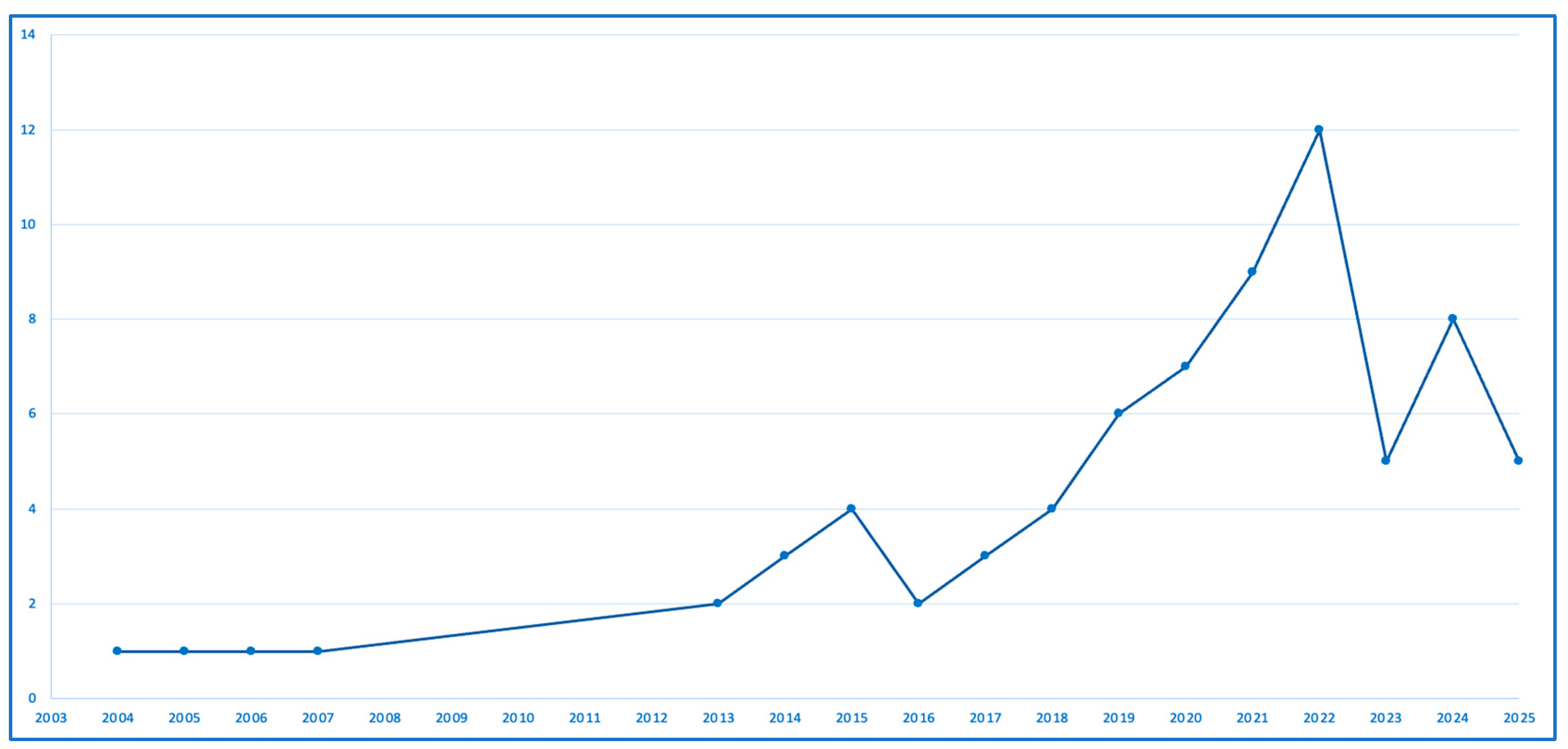
Figure 3.
Distribution of publications by Journal source.
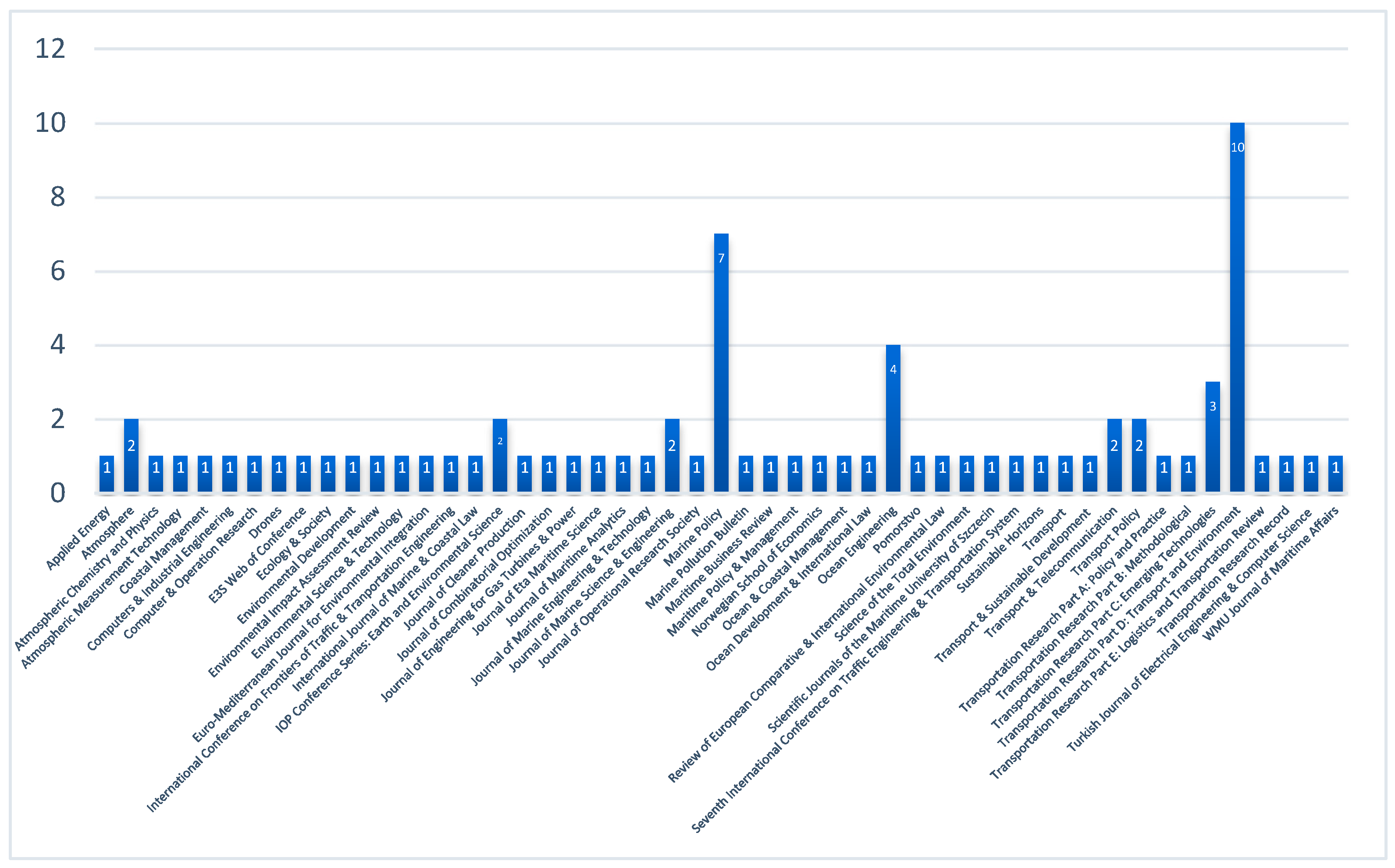
Figure 4.
Technological adaptations reflected in the studies.
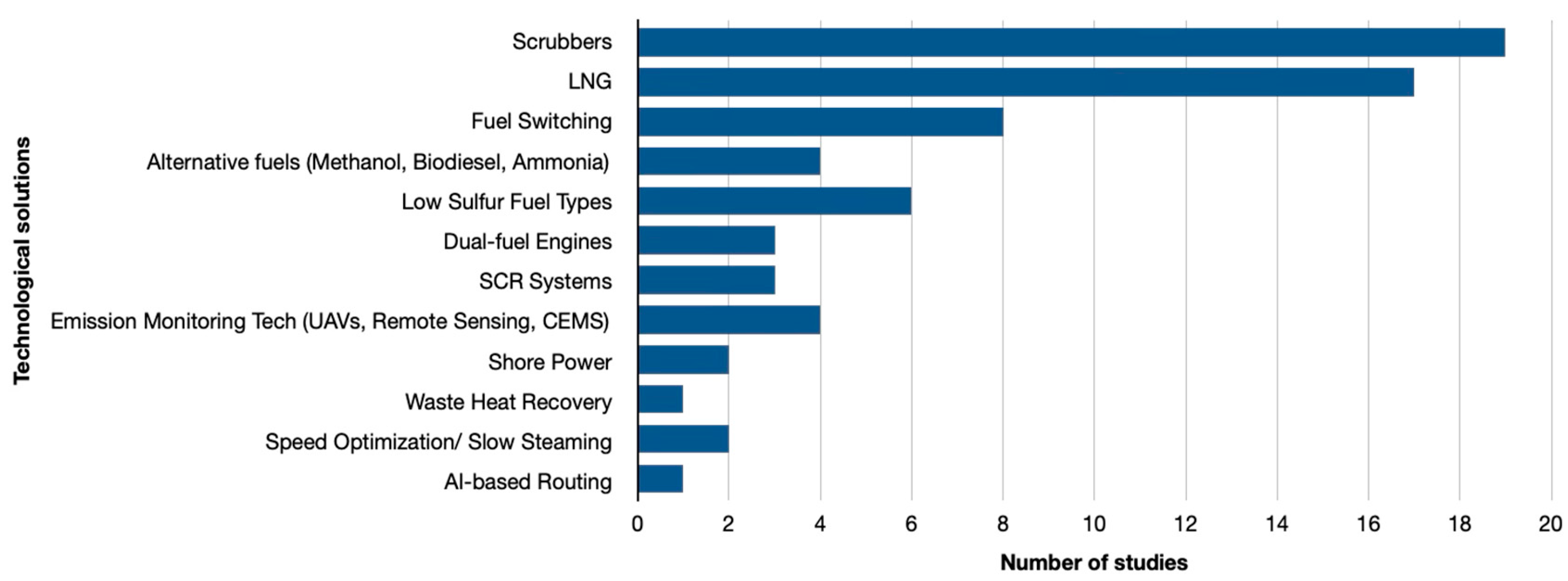
Figure 5.
Technology focus by study type.
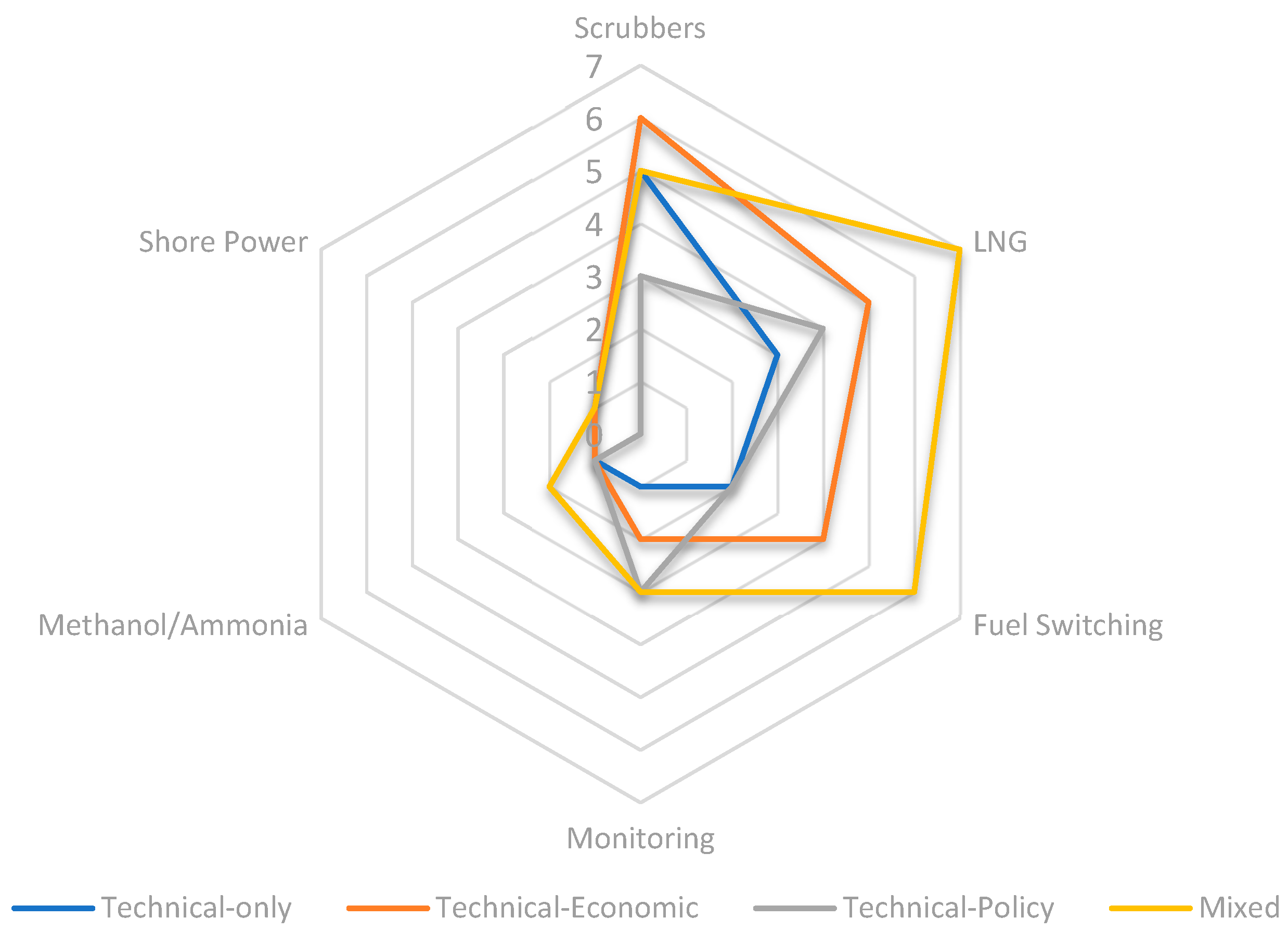
Figure 6.
Geographic focus of the studies.
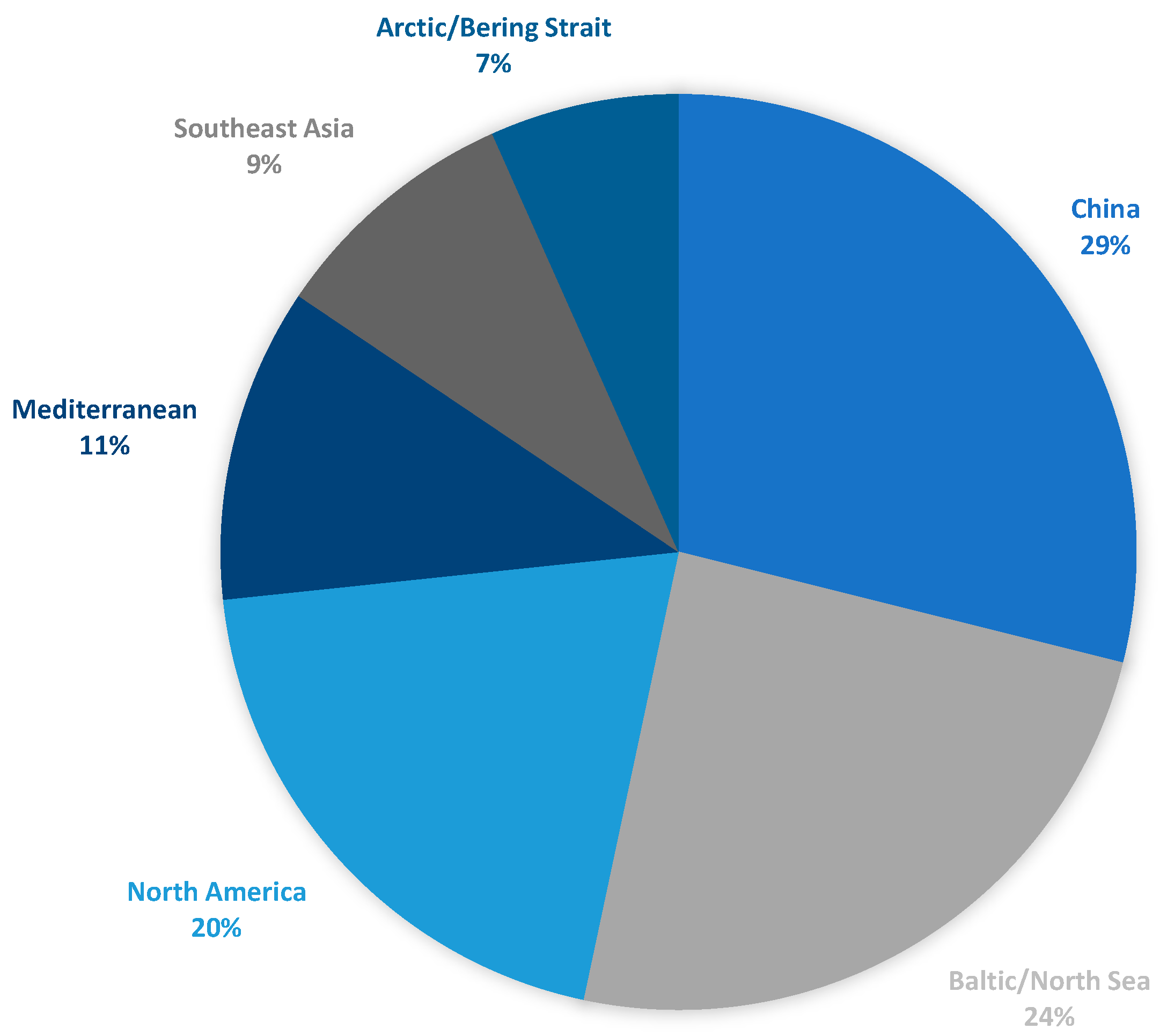
Figure 7.
Methodological patterns from the study.
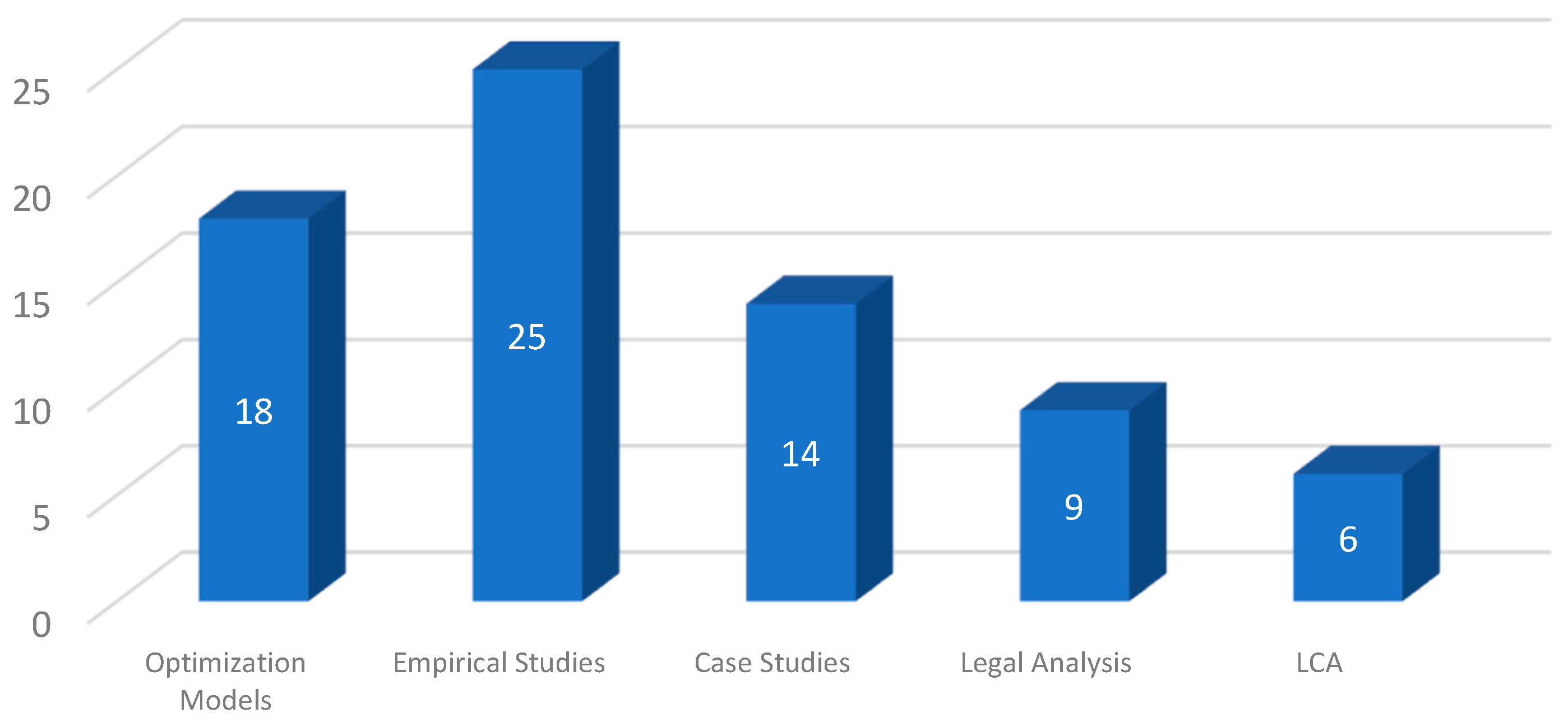
Figure 8.
Heatmap of decision models.

Figure 9.
Regional variation in compliance challenges from the study.
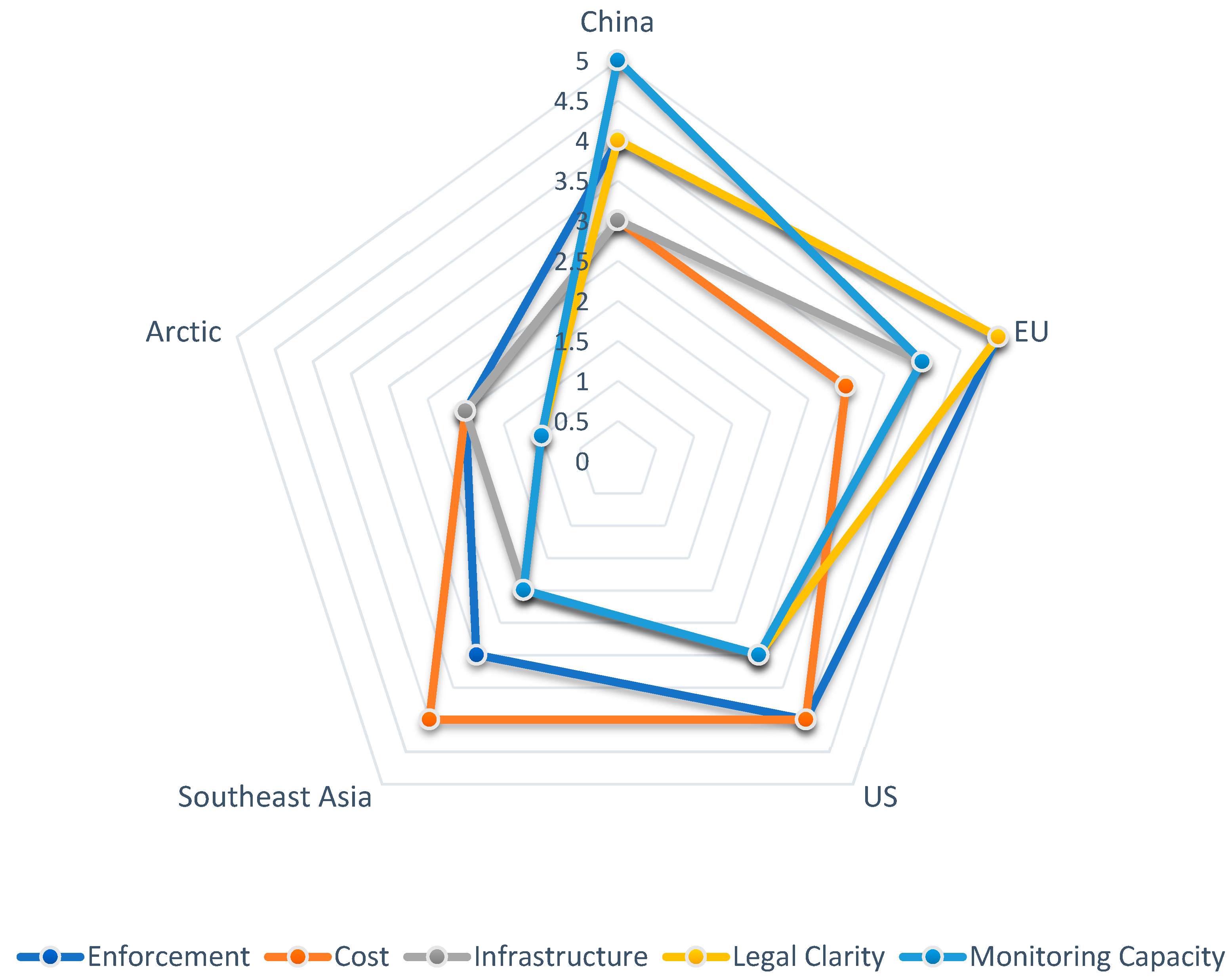
Figure 10.
Stacked column of regional distribution of challenges from the study.
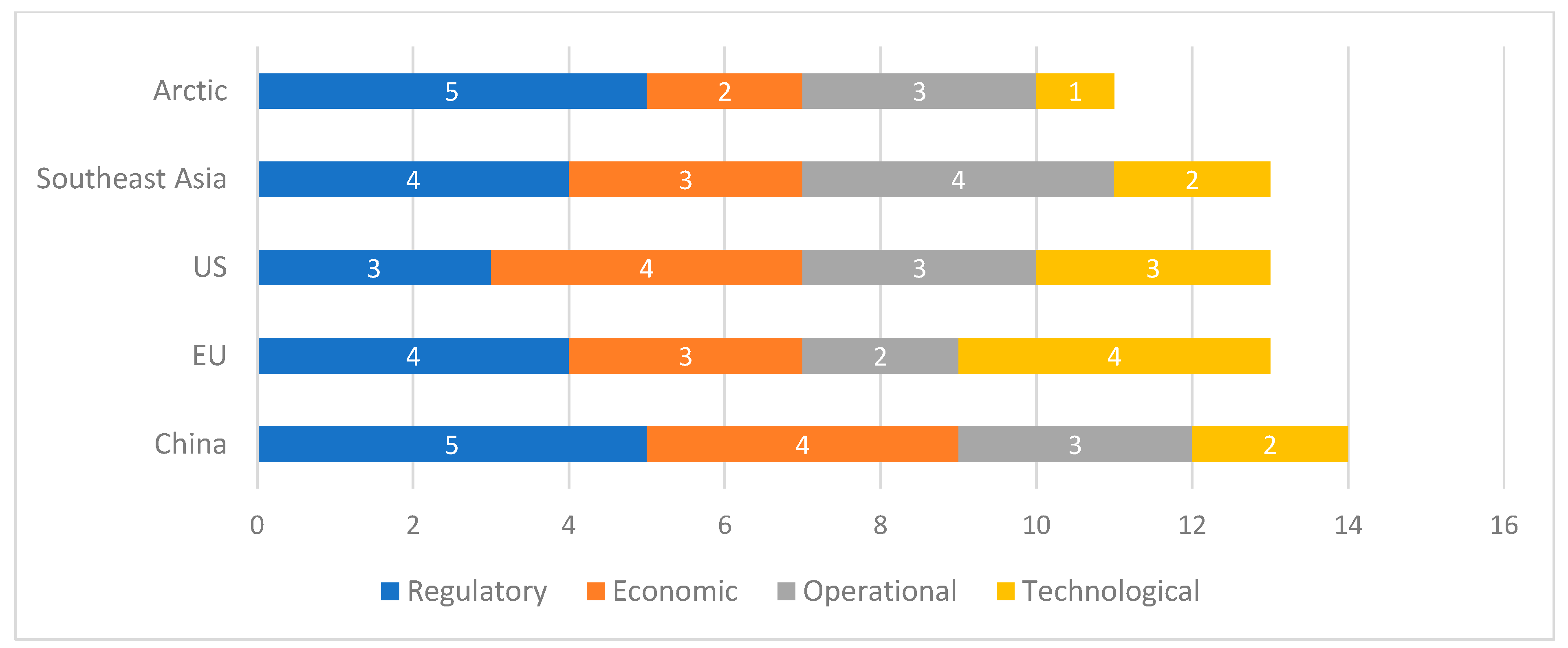

Table 1.
Research questions for the study.
| Nr. | Research Question |
|---|---|
| RQ1 | How have Emission Control Areas (ECAs) and Particularly Sensitive Sea Areas (PSSAs) influenced the development and adoption of low-emission maritime technologies since their implementation? |
| RQ2 | What patterns and trends emerge from the academic literature on ECAs and PSSAs in terms of geographic focus, methodological approaches, and thematic priorities? |
| RQ3 | What role do multi-criteria decision-making models play in supporting sustainable fuel selection and operational strategy compliance within special emission zones? |
| RQ4 | What are the main regulatory, economic, and operational challenges faced by stakeholders in complying with MARPOL's emission zone regulations, and how do these challenges vary across global regions? |
Table 2.
Overview of the literature contained in the study.
| Focus | Studies |
|---|---|
| ECA | [31,32,33,34,35,36,37,38,39,40,41,42,43,44,45,46,47,48,49,50,51,52,53,54,55,56,57,58,59,60,61,62,63,64,65,66,67,68,69,70,71,72,73,74,75,76,77,78,79,80,81,82,83,84,85,86,87,88,89,90,91,92,93,94,95,96,97,98] |
| PSSA | [99,100,101,102,103,104,105,106] |
Table 3.
Thematic overview of the studies.
| Theme | Representative Terms | Primary region(s) of focus |
Methodological Orientation |
Representative Authors/Studies |
|---|---|---|---|---|
| Technological Abatement Solutions |
Scrubbers, LNG, | China, | Simulation modelling, | [31,40] |
| Fuel switching, | Baltic/North Sea, | Techno-economic | ||
| Shore power | North America | analysis | ||
| Regulatory Enforcement and Compliance | ECA enforcement, SECA, IMO strategy, |
Global, China, North America |
Empirical monitoring, legal analysis | [64,94] |
| UAV monitoring, AIS tracking | ||||
| Policy and Governance Innovation | Governance, | Southeast Asia, Arctic, | Qualitative policy | [103,104,106] |
| PSSA designation, | Mediterranean | analysis, stakeholder | ||
| subsidies | mapping | |||
| Unintended Consequences and Systemic Effects |
Modal shift, | Baltic/North Sea, | Optimization modelling, | [48,88] |
| Emissions leakage | North America | Cost-benefit analysis | ||
| Emerging and Cross-Cutting Concepts | Green corridors, | Mediterranean, | Scenario modelling, | [80,84] |
| Carbon pricing, methanol |
Global | Policy forecasting |
Disclaimer/Publisher’s Note: The statements, opinions and data contained in all publications are solely those of the individual author(s) and contributor(s) and not of MDPI and/or the editor(s). MDPI and/or the editor(s) disclaim responsibility for any injury to people or property resulting from any ideas, methods, instructions or products referred to in the content. |
© 2025 by the authors. Licensee MDPI, Basel, Switzerland. This article is an open access article distributed under the terms and conditions of the Creative Commons Attribution (CC BY) license (http://creativecommons.org/licenses/by/4.0/).
Copyright: This open access article is published under a Creative Commons CC BY 4.0 license, which permit the free download, distribution, and reuse, provided that the author and preprint are cited in any reuse.