

Submitted:
22 July 2025
Posted:
24 July 2025
You are already at the latest version
Abstract
The Central Library of Rajarambapu Institute of Technology significantly strengthens academic excellence and supports research activities, directly contributing to the institute's reputation and rankings. This study looks into the impact of the RIT's Central Library on raising institutional rankings through a detailed case study. It explores the library's role in making access to high-quality resources easier, supporting faculty and students in their research, and opening the door for interdisciplinary collaborations. Key metrics, such as library services, resources, utilisation, various activities, and MOUs, are analysed for user satisfaction to improve research, and library users play an important role in institutional ranking systems. The study also highlights best practices, including digital resource integration, library activities, innovative information literacy programs, Hands-on Programs for students and staff and the adoption of advanced technologies like artificial intelligence for personalized learning experiences. The findings underscore the RIT Central Library's strategic role in improving research productivity, upgrading research networks, and improving the overall institutional rankings. This paper provides actionable recommendations for library administrators and institutional policymakers to optimize library services as a tool for institutional growth and competitive advantage.
Keywords:
academic libraries
; ranking
; NAAC
; NBA
; NIRF
; research support
; IQAC
1. Introduction
Libraries are fundamental to higher education institutions, serving as knowledge hubs that enhance academic and research capabilities. They provide access to vast collections of books, journals, and digital resources, fostering a culture of learning and intellectual inquiry. In the context of institutional rankings, libraries play a strategic role in supporting research productivity, faculty development, and student success.
Accreditation bodies and ranking frameworks such as NAAC (National Assessment and Accreditation Council), NBA (National Board of Accreditation), and NIRF (National Institutional Ranking Framework) evaluate institutions based on various parameters, including teaching quality, research output, and infrastructure. A well-resourced and technologically advanced library contributes significantly to these criteria by facilitating research, promoting digital learning, and providing access to high-quality academic content.
This paper explores the contribution of the Rajarambapu Institute of Technology (RIT) Central Library in enhancing the institution’s ranking. It examines how the library’s infrastructure, digital resources, research support services, and user engagement impact academic performance and institutional reputation. By analyzing key library initiatives and their alignment with accreditation requirements, this study highlights best practices that can serve as a model for other academic institutions seeking to improve their rankings through effective library management.
About Rajarambapu Institute of Technology
Kasegaon Education Society’s Rajarambapu Institute of Technology (RIT), Rajaramnagar, is an empowered autonomous institute affiliated with Shivaji University, Kolhapur, and accredited with an NAAC A+ grade. Established in 1983, RIT is located near Islampur, just 7 km from the Pune-Bangalore Highway. Spread across a picturesque 17-hectare campus, the institute features well-developed infrastructure covering 54,000 sq.m. Over the past 41 years, RIT has earned a reputation as a leading technological institute in Western Maharashtra, recognized for its commitment to providing quality education with dedication and discipline. RIT has received NBA accreditation for multiple courses and has been consistently recognized for its excellence in education and innovation. It was ranked in the 101-150 band in the NIRF Innovation Ranking 2023 by the Ministry of Education, Government of India, and secured the 35th position among the top 100 engineering colleges in India (2023). In a survey by Silicon India, RIT was ranked 10th in West India. Additionally, the institute achieved Gold Band Grade A under the OBE Ranking 2023 by R World Institutional Ranking and was certified with an ‘A’ Grade in the India Green Ranking 2023 by World Institutional Ranking. Recognized for its contributions to education, RIT was awarded the title of “Most Reputed Empowered Autonomous Institute” at the Navabharat Education Summit in Mumbai on 29th July 2023. It also ranked within the top 250 institutions in India and secured the second position in Western Maharashtra as per the NIRF rankings. Furthermore, RIT attained Band B in the ATAL Ranking of Institutions on Innovation Achievements (ARIIA) and was rated AAA+ in the West Zone of India’s Best Engineering Colleges 2021 survey by Careers360. The institute has also been honored with prestigious awards, including “Best Infrastructure” (2018) and “Best Knowledge Center” (2020) by the ISTE Maharashtra-Goa Section.
About RIT Central Library
The RIT Central Library is a modern, well-equipped facility that is rapidly developing into one of the finest institutional libraries in Western Maharashtra. Designed with contemporary architecture, it offers a welcoming and resource-rich environment for students and faculty across multiple disciplines. The library boasts an extensive collection, including 1,35,000+ volumes, 40,300+ titles, 27,352 e-books, 33,000+ reference books, and 416 standards, covering engineering, management, and various competitive exams like GATE, TOEFL, and MPSC. With a total investment of ₹5.62 crores, it provides access to high-quality academic materials. Additionally, ₹4.99 lakhs have been allocated for 153+ print journals, while ₹5.26 lakhs have been invested in e-journals, ensuring the latest research and scholarly content is readily available. Through its state-of-the-art infrastructure and diverse resources, the RIT Central Library remains a hub of knowledge and innovation, supporting academic excellence and research within the institute.
2. Objective
- To analyse the role of RIT Central Library in institutional rankings
- To evaluate the library’s impact on research and academic performance
- To explore the contribution of library automation and technology
- To assess user satisfaction and engagement
- To correlate library initiatives with accreditation and ranking frameworks
- To recommend strategies for continuous improvement
3. Literature Review
The literature review explores the role of libraries in supporting institutional rankings by analysing previous studies, theoretical frameworks, and best practices related to academic libraries, research impact, and university rankings.
Cullen (2021) [3] highlights the important role that academic libraries play in enhancing university rankings through their provision of access to research databases, promotion of knowledge dissemination, and support for faculty publications. The analysis emphasises the significant role that well-resourced libraries play in enhancing institutional reputation and research influence. Libraries that embrace digital technologies, open-access resources, and research support services show increased academic output, resulting in improved rankings. Bhattacharya and Sharma (2020) [1] examined the influence of library automation technologies, including RFID, OPAC, and digital repositories, on user experience and institutional effectiveness. The results demonstrate that libraries powered by technology provide effortless access to resources, lessen administrative burdens, and improve user satisfaction. The enhancements correspond with accreditation standards like NAAC and NIRF, thereby positively impacting institutional rankings. Singh and Kaur (2019) [11] highlighted the significance of libraries in accreditation processes such as NAAC and NBA. The investigation revealed that academic libraries improve quality by implementing information literacy programs, remote access to digital resources, and providing research support services. Institutions that implement well-organised library policies and actively engage users tend to achieve superior outcomes in accreditation evaluations. ALA. 2020, The American Library Association emphasizes that academic libraries enhance learning, innovation, and research productivity, which are key factors in institutional rankings. Sardar, HC and Sharma, P.(2023) [11] his study focuses on education continuously to evolve and adapt to the changing needs of society; similarly, to streamline rankings of HEI, the methodologies should also evolve to incorporate a more holistic and inclusive approach that considers not only research but also teaching quality, inclusivity, and the unique contributions of each institution. In their book, Hemade N and Salunke N (2018) [9] give information about guidelines about NAAC and the importance of libraries in NAAC ranking. Taniya Sarkar and Swapna Banerjee (2024) [12], in their study, focus on the Library’s role in providing quality education and research support in any higher educational institutions. The role of libraries in institutional ranking is not limited, but libraries play an important role in the overall ranking.
4. Methodology
This study adopts a case study approach to evaluate the impact of Rajarambapu Institute of Technology (RIT) Central Library on institutional rankings
5. Scope & Limitation
The study focuses on evaluating the impact of Rajarambapu Institute of Technology (RIT) Central Library on enhancing institutional ranking and The study focuses primarily only RIT Central Library and may not generalize to all academic libraries. The analysis is based on available institutional data, user feedback, and ranking frameworks, which may evolve over time.
6. Ranking Agencies
Ranking agencies play a crucial role in evaluating and assessing higher education institutions, schools, and specialized programs.
- NAAC (National Assessment and Accreditation Council), established by the University Grants Commission (UGC), assesses the overall quality of higher education institutions in India. Its evaluation criteria focus on curriculum design, teaching practices, research, infrastructure, and student support.
- NBA (National Board of Accreditation) is responsible for accrediting technical programs, such as engineering and management, under the purview of the All India Council for Technical Education (AICTE). It evaluates programs based on student outcomes, faculty quality, facilities, and industry collaborations.
- NIRF (National Institutional Ranking Framework), introduced by the Ministry of Education, ranks institutions across India based on parameters like teaching, learning resources, research, professional practices, and graduation outcomes.
- ISO (International Organization for Standardization), while not a ranking agency, sets global standards for institutions, particularly in quality management, environmental management, and information security, which are essential for operational excellence.
- ARIIA (Atal Ranking of Institutions on Innovation Achievements) ranks institutions based on their innovation and entrepreneurship activities, promoting a culture of innovation across educational campuses.
- B-School rankings, conducted by agencies like NIRF, Business Today, and QS, focus on business schools and evaluate them based on academic excellence, industry exposure, research, and placement records.
- T-School rankings pertain to technical institutions, evaluating them on similar factors such as academic performance, infrastructure, research output, and industry interaction. Each ranking agency serves a specific purpose but collectively aims to promote quality, accountability, and transparency in higher education, helping institutions improve and giving students valuable insights for their academic and career decisions.
7. Importance of Institutional Ranking
Institutional rankings play a crucial role in shaping the reputation, credibility, and overall growth of higher education institutions. These rankings, conducted by agencies such as NAAC, NBA, and NIRF, provide a standardized evaluation of universities and colleges based on key performance indicators, including research output, faculty qualifications, student outcomes, and infrastructure. A higher ranking reflects academic excellence and attracts numerous benefits for the institution.
- Attracting Students – Institutional rankings serve as a vital factor for prospective students in choosing their academic institution. High-ranking institutions gain greater visibility, attracting talented students from diverse backgrounds.
- Securing Funding – Government agencies, private organizations, and research bodies often allocate funding based on an institution’s ranking. Higher rankings enhance the chances of receiving grants and financial support for research and development.
- Enhancing Reputation – A well-ranked institution gains national and international recognition, reinforcing its reputation among academia, industry, and policymakers. This prestige strengthens its credibility in the global education sector.
- Benchmarking and Continuous Improvement – Institutional rankings provide a benchmark for assessing academic performance and identifying areas for improvement. They help institutions formulate strategies for enhancing teaching quality, research output, and student services.
- Faculty and Staff Recruitment – High-ranking institutions attract skilled faculty members and administrative staff who seek professional growth and opportunities for research collaboration. This, in turn, improves the overall academic environment.
- Collaboration and Partnerships – A strong ranking fosters collaboration with other prestigious universities, industries, and research institutions, leading to student exchange programs, faculty research initiatives, and joint projects.
- Institutional Growth and Global Recognition – Higher rankings position institutions on the global education map, making them attractive to international students and faculty. This enhances diversity and academic exposure.
- Employability and Industry Connections – Employers recognize institutions with strong rankings as hubs of academic excellence, making graduates more employable. A high-ranking institution often enjoys strong ties with industry leaders, facilitating internships, placements, and research funding.
- Policy Influence and Decision-Making – Policymakers and regulatory bodies consider rankings while framing educational policies and funding structures. Institutions with better rankings contribute significantly to shaping national education policies.
- Media and Public Interest – Institutional rankings garner media attention, improving public perception and increasing the institution’s outreach. This enhances brand value and encourages more applications from students and faculty.
Institutional rankings serve as a benchmark for evaluating academic quality and research performance. While they provide a valuable metric for students and stakeholders, institutions must also focus on holistic growth by strengthening academic programs, fostering innovation, and promoting inclusivity to sustain their rankings and reputation in the long run.
8. Important Role of RIT Central Library in Supporting in Rit’s Rankings
RIT library plays a crucial role in enhancing an institution’s academic and research environment, which directly impacts its ranking. Institutes are evaluated based on various criteria, such as research output, faculty expertise, student success, and global reputation. Many of these are directly or indirectly influenced by the quality of their library. Below are the keyways in which RIT Library contribute to institutional rankings:
8.1. Library Automation
The Library is fully automated with KOHA (23.11) integrated library management software, Developed by Katipo Communications Ltd. New Zealand. It is a powerful open-source integrated library system that helps RIT Central Library to manage its huge collection efficiently. It has a extensive range of features like acquisition, cataloguing, circulation, and serials management, all adhering to international standards like MARC21. Koha’s key strengths is its user-friendly interface. The bibliographic information about all resources is made available through Web-OPAC.
8.2. RFID Technology Used in RIT Library
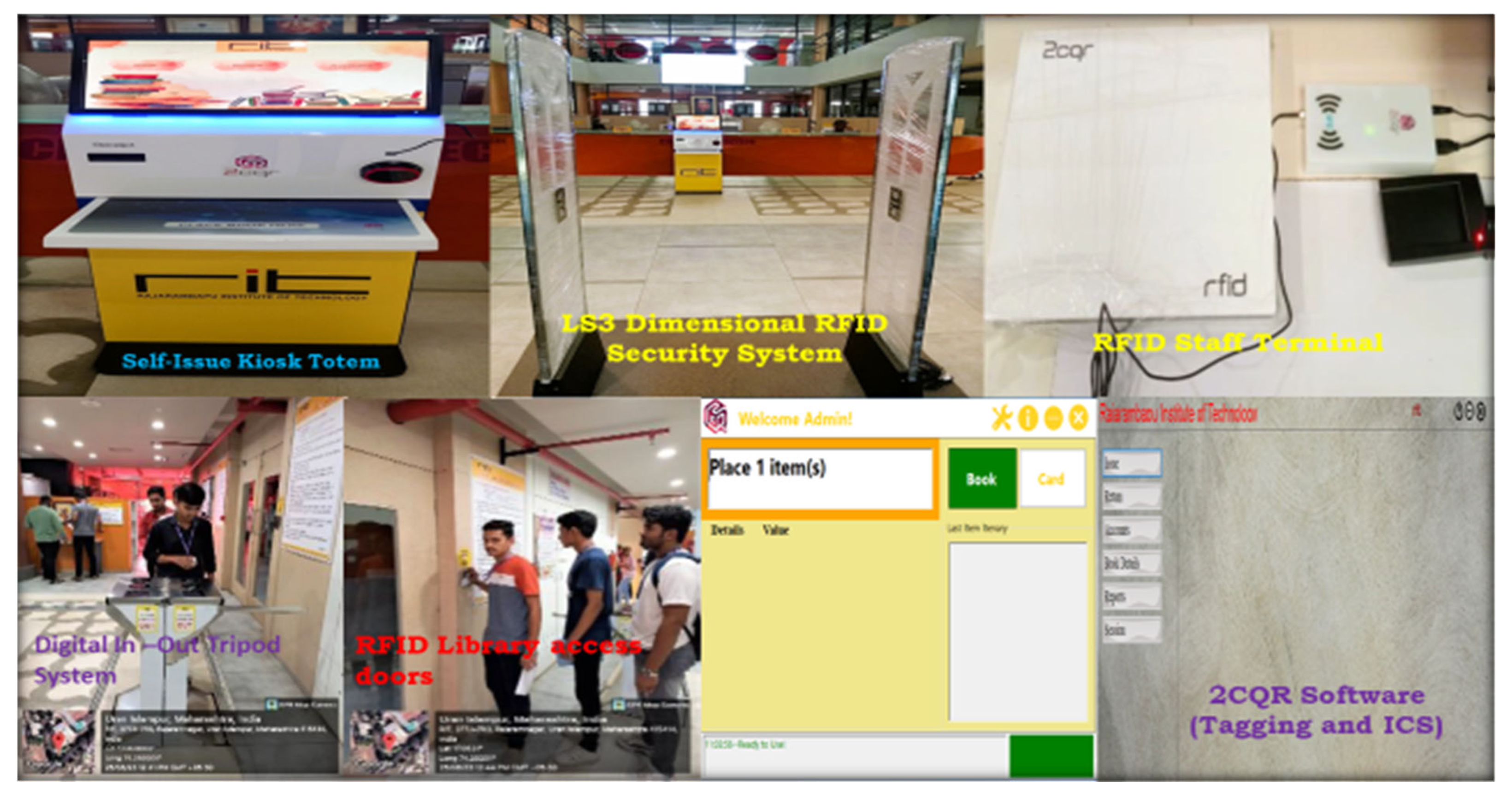
The RIT Central library is fully automated with RFID technology for automatic operations, enhancing efficiency and security. This automation streamlined tasks like circulation and inventory management, tracking footfall, and access control. The libraries automation capabilities improved the library’s overall operations, aligning with its commitment to innovation and user-centric services.
Figure 1.
RFID Technology RIT Central library.
8.3. RIT Library Subscriptions
RIT Library subscribes to various databases annually for faculty and students. These resources are highly beneficial for research scholars, faculty, and students, enhancing the quality of research and academic excellence.
8.3.1 ASCE (American Society of Civil Engineers) provides access to a vast collection of civil engineering research, including journals, conference proceedings, and standards supporting academic and professional growth. It is an essential resource for engineers, researchers, and students.
8.3.2 ASME (American Society of Mechanical Engineers) offers a comprehensive collection of journals, conference papers, and technical standards in mechanical engineering and related disciplines. It plays a vital role in advancing research and innovation in engineering.
8.3.3 IEEE-ASPP (IEEE All-Society Periodicals Package) provides access to various IEEE journals and magazines covering electrical engineering, computer science, and electronics. It is a key resource for cutting-edge technological advancements and research.
8.3.4 ScienceDirect Engineering is a premier database for engineering research. It offers scholarly articles, conference papers, and technical reports across various disciplines, such as mechanical, electrical, and civil engineering. Academics and professionals widely use it.
8.3.5 ScienceDirect Business, Management, and Accounting covers various research articles, case studies, and reports in business strategy, economics, management, and financial studies. It is valuable for researchers, educators, and industry professionals.
8.3.6 SAGE provides high-quality academic content across multiple disciplines, including social sciences, humanities, business, and health sciences. Its peer-reviewed journals are widely recognized for their credibility and impact.
8.3.7 J-Gate Engineering is a gateway to engineering research, indexing thousands of journals from various publishers. It facilitates easy access to scholarly articles, making it a crucial resource for researchers and students.
8.3.8 DELNET Membership (Developing Library Network) provides inter-library loan services, access to thousands of journals, books, and databases, and enhances resource-sharing among member institutions. It is a valuable tool for academic and research libraries.
8.3.9 K-Hub E-Library is a digital knowledge hub offering access to e-books, research articles, and learning resources in various disciplines. It supports students, researchers, and faculty in their academic pursuits.
8.3.10 Magzter is a digital magazine platform that offers a vast collection of magazines across different genres, including technology, business, lifestyle, and education. It provides easy access to the latest publications worldwide.
8.3.11 IIT Madras SHAASTRA is a science and technology magazine from IIT Madras, featuring in-depth articles on innovations, research breakthroughs, and advancements in science and engineering. It caters to students, researchers, and technology enthusiasts.
8.3.12 Grammarly Premium Edu. is an advanced writing assistant that helps students and professionals improve grammar, style, and clarity in academic and professional writing. It is a useful tool for ensuring high-quality written communication.
8.3.13 iThenticate Typeset is a plagiarism detection and research writing tool designed for academic integrity. It helps researchers and scholars verify originality, ensuring compliance with ethical publishing standards.
8.4. RIT Library Budget Expenditure
RIT Library receives a substantial budget each year to procure resources and upgrade its infrastructure with the latest technology. In the financial year 2023-2024, the library spent over ₹67 lakhs on books, e-books, equipment, print journals, and e-journals. A well-planned budget plays a crucial role in enriching library resources and enhancing services for students, faculty, and researchers. Financial allocation is also a key parameter considered by various accreditation and ranking agencies such as NAAC and NBA. Meeting these financial benchmarks ensures the library maintains high standards in academic support. RIT Library consistently fulfills these budget and expenditure criteria, reinforcing its commitment to academic excellence and research development.
8.5. Library Usage by Faculty and Students
The number of library users, including faculty and students, is a crucial factor in accreditation and ranking frameworks such as NAAC, NBA, and NIRF. A high usage rate indicates the effectiveness of library services and their contribution to academic excellence. The RIT Central Library has consistently provided valuable resources, enabling students and faculty to enhance their learning, teaching, and research activities.
The following data represents the per-day usage statistics of the RIT Central Library for the academic year 2023-24:
- Book Issues: A total of 29,000 books were issued to faculty members, while students borrowed 2,96,720 books throughout the year.
- Stack Visitors: Faculty members visited the library stacks 37,085 times, while students recorded 1,20,035 visits to access books and reference materials.
- Reading Hall Usage: The reading hall was extensively used, with students recording a total attendance of 2,86,751 during the year.
- Library Activity Participation: Various library activities witnessed 2,113 student participants, indicating active engagement beyond book borrowing.
The total number of faculty and student visits across all categories was 4,78,556, with an average per-day library usage of 1,691 users (141 faculty + 1,550 students) over 283 working days. These statistics highlight the library’s pivotal role in academic growth, fostering research, and providing a conducive learning environment for the RIT community
8.6. Digital Library
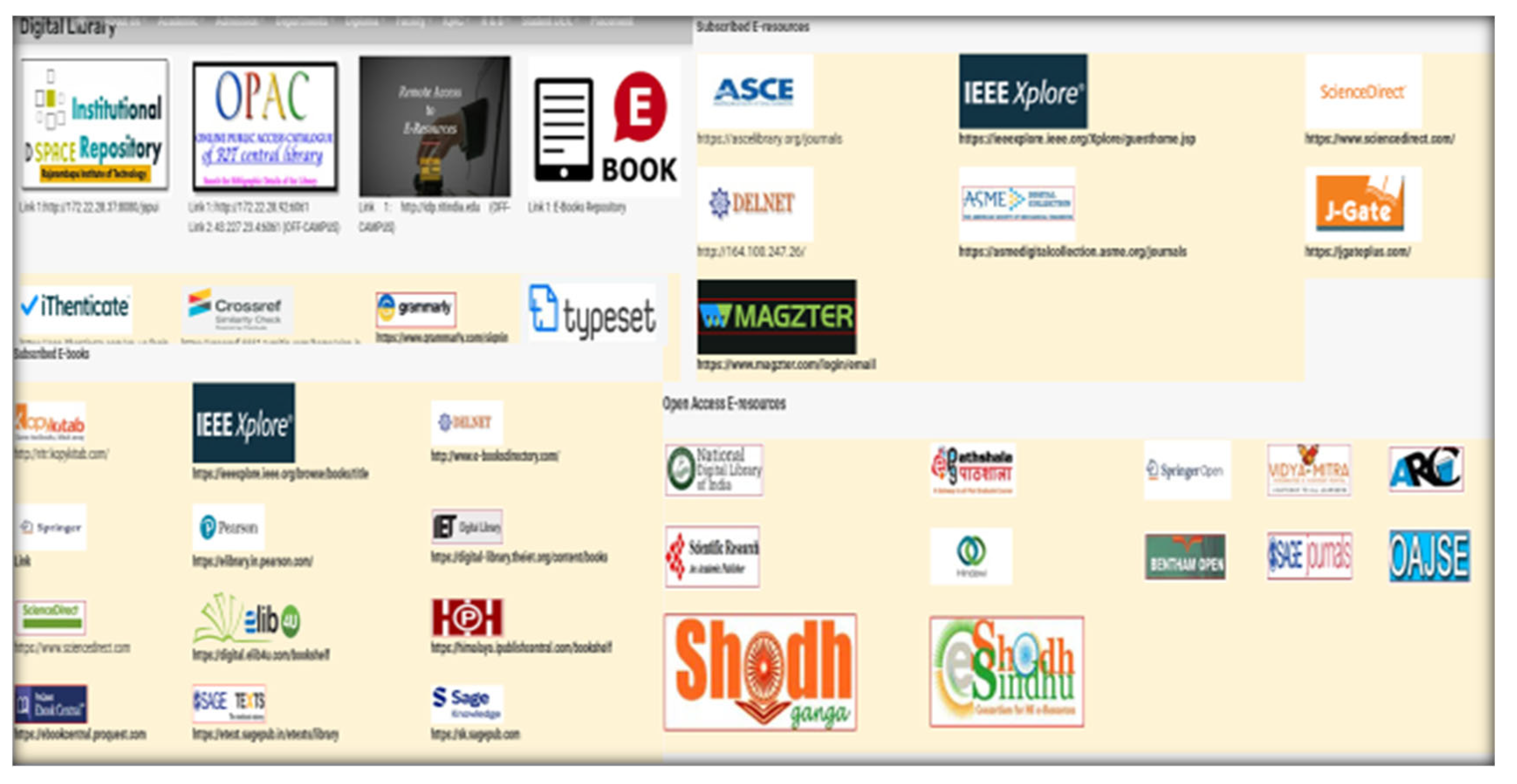
In this digital era, students and faculty require pinpointed and quick information. To cater to this need, RIT library has developed a well-equipped Digital Library with 50 computers to access e-resources such as e-journals, e-books, digitized question papers, syllabuses, etc. Considering copyright restrictions, users can search, browse, download or print an article from an e-journal or a portion from an e-book.
8.6.1 Institutional Repository: The RIT library developed an institutional repository using D-Space software. Users can access it on campus and off campus. It comprises old question papers, syllabuses, online newspapers, dictionaries, dissertations, faculty publications, RIT circulars, a photo gallery, etc.
8.6.2 E-Book Repository: RIT library developed E-Book repository. Users can search or access under one platform for several publishers.
8.6.3 iThenticate: This is an online plagiarism detection software for determining the similarity of text to sources and enhancing the quality of research.
8.6.4 Typeset: Typeset is an innovative platform designed to simplify the process of writing, collaborating, and publishing academic documents for researchers.
8.6.5 Subscribed Databases: IEEE-ASPP, ASME, ASCE, Science Direct, J-Gate, Grammarly, etc. All the databases have on-campus and off-campus access.
All these facilities are beneficial for all users for their research work
Figure 2.
Digital library webpage on Institute website.
8.7. Non-Visual Desktop Access (NVDA)
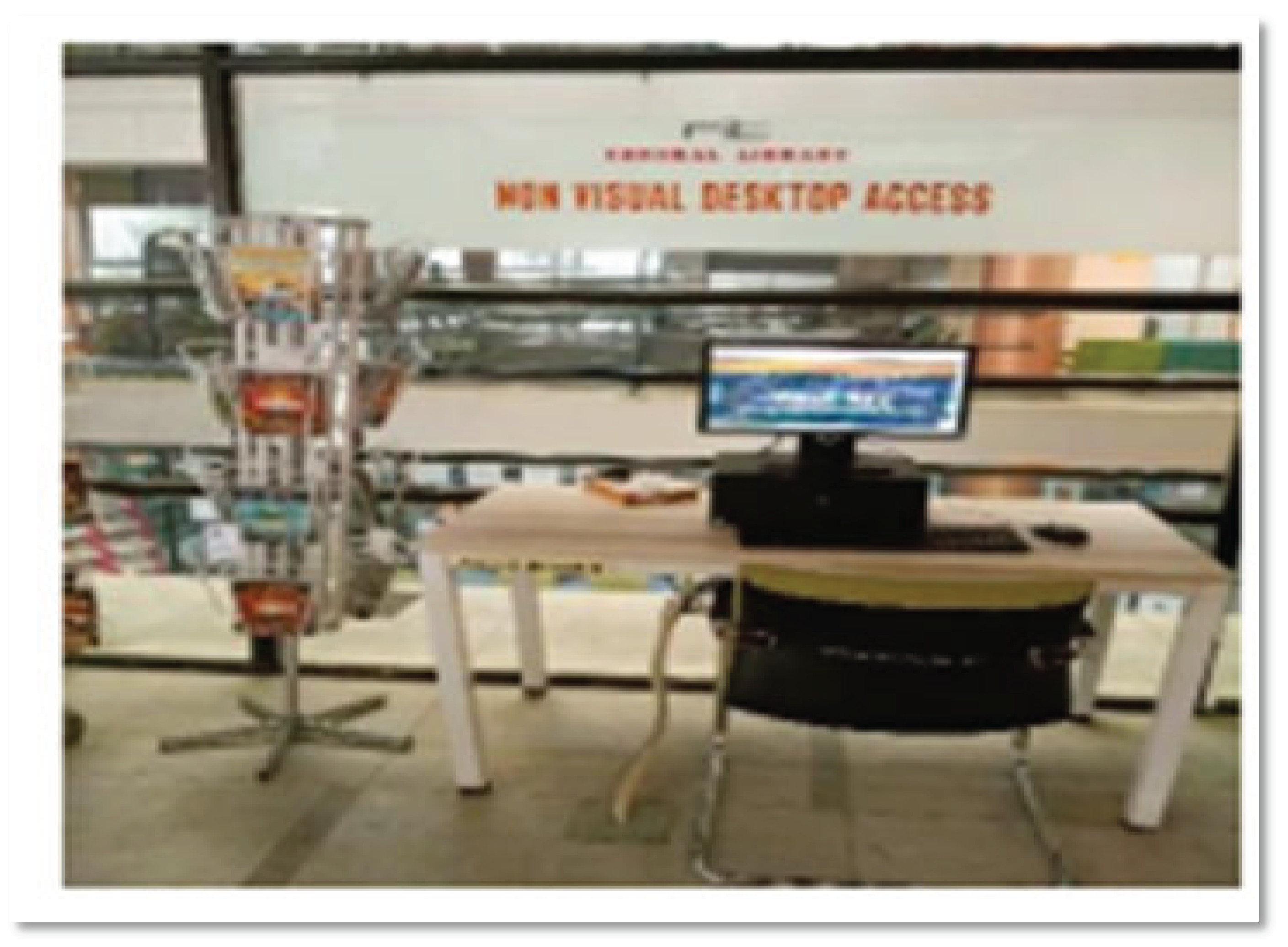
NVDA, (“Non Visual Desktop Access.”) It is a free, open-source screen reader software. It is useful for the people with vision disability on computers. It allows them to interact with their system by having text read aloud to them through a speech synthesizer. This facility is provided by RIT Library.
Figure 3.
NON-VISUAL DESKTOP ACCESS (NVDA) FACILITY.
8.8. RIT Central Library Facilities
The RIT Central Library is dedicated to creating a modern and accessible learning space for students, faculty, researchers, and external users. It offers a range of facilities to support academic success, research activities, and knowledge sharing. One of the library’s key features is its Open Access System, which allows users to freely browse and access books. The Book Bank facility provides long-term borrowing of textbooks to ensure students have essential study materials. The library also has a large reading hall with seating for 500 users and a conference room for discussions, workshops, and group learning. For smooth and efficient operations, the library uses an RFID-based book circulation system, making book transactions quick and easy. The Web-OPAC (Online Public Access Catalogue) enables users to search for and locate books effortlessly. Additional services like photocopying, printing, and scanning are available at minimal costs to assist with research and documentation. To support digital learning, the library has a Digital Library Section, which includes NPTEL video lectures for online education. It also provides access to iThenticate plagiarism detection software, helping students and faculty maintain academic integrity. The library extends its services beyond the institute by offering External Memberships to alumni, external students, industries, and institutions. It also holds institutional memberships with NDLI (National Digital Library of India), British Council Digital Library, and DELNET (Developing Library Network), giving users access to a wide range of e-resources. For a comfortable and secure environment, the library features an air-conditioned reading room, CCTV surveillance, and RFID-enabled access doors with Digital I-Cards. A dedicated server room supports digital resources, while a power backup system ensures uninterrupted library services. With these advanced facilities, the RIT Central Library plays a crucial role in enhancing academic excellence, supporting research, and fostering institutional growth, making it a hub of knowledge and innovation.
8.9. RIT Library Best Practices
RIT Library has introduced several initiatives to foster a strong reading culture among faculty, staff, and students, contributing to both personal development and institutional growth. One such initiative is the Faculty Reading Club Activity, designed to enhance faculty members’ reading habits while promoting stress reduction, knowledge expansion, vocabulary improvement, reasoning, and writing skills. This activity plays a vital role in inculcating a reading culture within the institute. To further encourage engagement with library resources, the Library Best User Award was launched in the academic year 2017-2018. This award recognizes one faculty member, one non-teaching staff member, and one student based on their effective utilization of library resources. The award is presented annually on the occasion of Librarian’s Day, serving as motivation for the entire academic community to make the most of the library’s offerings. Additionally, RIT Library organizes numerous activities and commemorates significant days to engage faculty, staff, and students in reading and knowledge-sharing. These initiatives play a crucial role in upgrading the reading culture by making reading more engaging, interactive, and accessible. They also positively impact the institute’s ranking. Some of the key activities organized by the library include.
- Library Katta
- Half-Day Workshop on “Library and Database Orientation cum Hands-on Session”
- National Webinar on DELNET Resources and Services
- Book Exhibition on the Occasion of National Librarians Day
- Vachan Prerna Din
- Winter Display Book Stacking (Celebration of Christmas)
- Webinar on Mastering the SET NET: Strategies and Tips for Exam Preparation
- Diploma Student Reading Club Competition
- Granthalaya Tumchya Dari Upkram on the Occasion of Marathi Bhasha Gourav Din
- B.Tech. Student Reading Club Competition
- MBA Student Reading Club Competition
- Beyond the Bookshelf: Read-a-Thon on the Occasion of World Book Day
- KOHA Training for Library Staff
- World Environment Day
- Shivrajyabhishek Din
These initiatives undertaken by the RIT Library have significantly contributed to the institute’s academic environment, fostering a habit of lifelong learning and positively impacting institutional rankings.
9. Conclusions
The Rajarambapu Institute of Technology (RIT) Central Library is essential in improving the academic atmosphere, boosting research output, and elevating the institution’s overall rankings. The library plays a crucial role in enhancing faculty and student success through its huge collection, digital resources, advanced automation, and dedicated support services. The incorporation of contemporary technologies like KOHA, RFID, and digital repositories facilitates effortless access to superior information, in accordance with international academic benchmarks. Library initiatives such as the Faculty Reading Club, research support services, and digital learning platforms strongly emphasise the institute’s dedication to academic excellence. The library’s user engagement, as evidenced by high daily usage statistics, underscores its significance in teaching, learning, and inquiry. Furthermore, the strategic alignment of library services with accreditation and ranking frameworks like NAAC, NBA, and NIRF enhances RIT’s standing in both national and global rankings. As we progress, ongoing enhancements in library services, digital advancements, and tailored learning experiences will be crucial for maintaining and boosting the library’s role in supporting institutional development. Through the cultivation of a robust culture of review and the facility of advanced resources, the RIT Central Library will continue to be a fundamental pillar of academic transformation and innovation, securing the institution’s ongoing success in the competitive realm of higher education
References
- Bhattacharya, R. , & Sharma, P. Impact of library automation on user experience and institutional effectiveness: A case study of Indian universities. Library & Information Science Research 2020, 42, 101–113. [Google Scholar]
- Chavan C, Hase V & Ahirrao, M Library Katta: A Best Practice Initiative at Rajarambapu Institute of Technology Central Library for Enhancing Student Engagement and Learning. Reimaging of Libraries: Balancing Tradition and Innovation in a Digital Era 2025, 125–141.
- Cullen, J. The role of academic libraries in institutional rankings: A strategic perspective . Journal of Academic Librarianship 2021, 47, 456–468. [Google Scholar]
- Das, J. M. (2017). Role of academic libraries in higher education: An Indian perspective.
- Dhule, S. The role of libraries in enhancing NIRF rankings: A catalyst for academics and research excellence. International Journal of Creative Research Thoughts (IJCRT) 2024, 12, 942–945. [Google Scholar]
- Hase, V. L. , Dhawle, G. U., & Dahibhate, N. B. Reference and information services in the digital era. Asian Journal of Multidisciplinary Studies 2014, 2, 18–25. [Google Scholar]
- Hase, V. , & Gaikwad, M. Research Productivity of Rajarambapu Institute of Technology, Islampur, (Maharashtra), India: A Bibliometric Analysis. Journal of Engineering Education Transformations 2024, 38. [Google Scholar]
- Hase, Vishwas L. ; Gaikwad, Mahesh N.; and Jadhav, Yuvraj G. Assistant Professor, Dept. of Library and Information Science, “Online Databases Backbone for Teaching and Research: Case Study of Rajarambapu Institute of Technology, affiliated to Shivaji University, Kolhapur, Maharashtra (India)” (2021). Library Philosophy and Practice (e-journal). 6873; Available online: https://digitalcommons.unl.edu/libphilprac/6873.
- Hemade-Salunke, N. , & Salunke, N. (2018). NAAC reaccreditation and college libraries. Dnyansurya Prakashan.
- Kaur, L. The role of libraries in higher education: A literature review. International Journal of Multidisciplinary Research and Development 2021, 8, 1–3. [Google Scholar]
- Sardar, H. C. , & Sharma, P. (2023). Importance of ranking and grading of higher education institutions in India. 10, 12–17.
- Sarkar, T. , & Banerjee, S. Role of libraries in institutional ranking: A case study. Innovative Technology and Applications for Sustainable Library Services I-KOAL 2024, 2024, 199–203. [Google Scholar]
- External Links - SIT. https://silicon.ac.in/external-links/.
- Relationship between Directive Principles of State Policy and Fundamental Rights - Law Optional Notes for UPSC PDF Download. https://edurev.in/studytube/Relationship-between-Directive-Principles-of-State-Policy-and-Fundamental-Rights/c19374b8-6a67-4fa5-9b43-c48073cbb304_t.
- ICFAI Business School, Hyderabad | AACSB Accredited. https://www.aacsb.edu/accredited/i/icfai-business-school-hyderabad.
- TNPSC 369 Combined Engg Services Exam 2023 Job Vacancy Apply Online. https://hardki.com/tnpsc-369-combined-engg-services-exam-2023-job-vacancy-apply-online/.
- Celebrating three ISO certifications: quality, environment and security. https://www.cloudworks.no/en/articles/cloudworks-is-iso-certified.
- (2019). India : An Innovation Cell has been established in HRD Ministry to promote innovative culture in the country. MENA Report, (),.
Disclaimer/Publisher’s Note: The statements, opinions and data contained in all publications are solely those of the individual author(s) and contributor(s) and not of MDPI and/or the editor(s). MDPI and/or the editor(s) disclaim responsibility for any injury to people or property resulting from any ideas, methods, instructions or products referred to in the content. |
© 2025 by the authors. Licensee MDPI, Basel, Switzerland. This article is an open access article distributed under the terms and conditions of the Creative Commons Attribution (CC BY) license (http://creativecommons.org/licenses/by/4.0/).
Copyright: This open access article is published under a Creative Commons CC BY 4.0 license, which permit the free download, distribution, and reuse, provided that the author and preprint are cited in any reuse.


