
Submitted:
21 July 2025
Posted:
22 July 2025
You are already at the latest version
Abstract
Microplastic pollution has emerged as a serious societal concern, posing risks to the environment, human health, and economies. Conventional wastewater treatment processes remove microplastics at various levels from physical removal (primary), biological degradation (secondary), and contaminant-specific removal (tertiary treatment). Nature-based solutions (NbS) offer an ecologically friendly alternative that utilizes nature to wastewater treatment. This study provides an overview of the sources and impacts of microplastic pollution, NbS technologies for microplastic removal, challenges and prospects in utilizing NbS, and the knowledge gaps. Primary sources of microplastics are intentionally produced at microscopic sizes, while secondary sources originate from the disintegration of larger plastic debris. Among the NbS technologies are constructed wetlands (horizontal subsurface flow, vertical flow, surface flow, microbial fuel cells, multistage) with up to 100% efficiency; green infrastructures (bioretention systems, green walls, permeable pavements, retention ponds) with up to 99% efficiency; macrophytes and microphytes with up to 94% microplastic removal rate. Despite the ecosystem services provided by NbS, they are challenged by the decrease in efficiency in removing other contaminants, detection and evaluation of NbS performance, and non-technical factors (operations and maintenance, public acceptance, climate risks, financing). The findings present insights on further research and implications for the successful adoption of NbS to wastewater treatment.
Keywords:
constructed wetlands
; microplastics
; nature-based solutions
; water resource management
; wastewater treatment
1. Introduction
Plastic pollution is one of the major problems the world is facing today. Due to its significant contribution to both human well-being and the economy through various applications, more than 430 million tonnes of plastic are produced annually and are expected to reach 736 million tonnes by 2040 [1]. However, about two-thirds of plastics are short-lived products that soon become waste, with a large portion ending up in rivers, lakes, and oceans. filling the ocean and, often, working their way into the human food chain [2]. This pollution disrupts natural processes, harms wildlife, and contributes to climate change [1]. Microplastics are among the most damaging and long-term contributors to this pollution crisis. Microplastics are polymers with a diameter smaller than 5 mm that pose a growing threat to human and planetary health [1,3]. They come from various sources and processes, which, if not managed properly, microplastic pollution will lead to severe and widespread ecological, health, and economic consequences.
Various levels of treatment processes are utilized to remove microplastics. The removal rates of these processes are summarized in Table 1. The primary treatment focuses on the physical removal of large microplastics, such as fragments and beads, solids, and other floating materials from wastewater [4]. This includes sedimentation, which settles large solids at the bottom of the primary tank, forming primary sludge, coagulation, which destabilizes microplastics, and flocculation, which promotes the clumping of these destabilized particles into larger flocs that can be easily removed through settling [5,6]. This process can remove up to 98.4% of microbeads, 71.8% of fibers, and 62.7% of other microplastics [5,6,7,8]. Secondary treatment focuses on biologically degrading soluble organic compounds and suspended solids that survive the primary treatment such as trickling filters, activated sludge processes, intermittent sand filters, and stabilization ponds [9,10,11]. This stage is particularly effective for removing larger microplastics (2–5 mm), but less efficient on fibers and smaller particles (<500 μm) [12,13]. Particularly, it can remove up to 100% of microbeads and 96.9% or other microplastics, but only up to 57.8% of fibers [5,6,14,15]. Tertiary treatment is an advanced stage that targets the removal of specific contaminants that primary and secondary treatments cannot eliminate. Among the tertiary treatment techniques are microfiltration, ultrafiltration, chemical coagulation, and advanced oxidation processes [5,6,16,17]. These methods include dissolved air flotation, membrane bioreactors, disc filters, and rapid sand filtration [12,17,18,19]. These techniques can remove up to 99.9% microbeads, 57.7% fibers, and 95% other microplastics [12,17,20,21]. Moreover, there are advanced technologies used to remove microplastics, including nanotechnologies, advanced oxidation processes, and hybrid systems that combine different methods, such as membrane bioreactors and ultrafiltration/reverse osmosis, coagulation and ozonation, and constructed wetlands [18,19,22].
Despite the efficiencies of conventional wastewater treatment processes, they also face several limitations, leading to the need for advanced treatment techniques and other alternatives. For instance, residues removed after the treatment process may accumulate in soil and affect terrestrial ecosystems, posing risks to the environment [19]. They can also escape wastewater treatment plants and enter the environment, which can eventually pose environmental and human health risks [23]. Moreover, these technologies may be costly, particularly to communities in developing countries that lack the financing mechanisms and expertise in operating wastewater treatment plants [24].
Another promising alternative is nature-based solutions (NbS) to treat wastewater. NbS are innovative approaches that leverage natural processes to address various socioeconomic and environmental challenges, including the treatment of wastewater. In terms of water management, NbS are effective in managing water quality, reducing flood risks, and addressing droughts through methods like wetland restoration and sustainable agriculture [25]. With an eco-friendly and cost-efficient approach, various NbS technologies are utilized in wastewater treatment [26,27]. Furthermore, NbS are also used to remove microplastics in wastewater and other bodies of water [28].
Several studies discuss the role of NbS technologies in removing microplastics. For instance, Li, et al. [29] evaluated the tolerance and efficiency of different submerged macrophytes for optimization as NbS for operational aquatic microplastic retention practice. Cole, et al. [30] analyzed the efficiency of mussels as biofilters to remove waterborne microplastics in aquatic ecosystems and return them into biodeposits to be further captured and removed. Falkenberg, Cornet and Joyce [28] also utilized mussels to eliminate microplastics and transfer them into biodeposits, which can be transported to other parts of benthic areas, or collected and removed from the environment. In another study, Büngener, et al. [31] analyzed a large pilot-scale green wall as NbS to treat greywater (a mix of water collected from washing machines, toilet showers, kitchen sinks, baths, and synthetic greywater) and its potential for microplastics removal. Moreover, Mancini, et al. [32] investigated the role of an interspersed lagoon surrounded by aquatic plants, a constructed wetland (CW), in retaining microplastics and found that CWs trap microplastics from several sources.
With the growing number of studies in NbS for microplastics removal in wastewater, various literature reviews have already been conducted. For instance, Zhang, et al. [33] presented a comprehensive review of the microplastics removal through CWs and how their accumulation affects the treatment performance for other nutrients such as nitrogen, phosphorus, and carbon. In another review, Ahmad, et al. [34] analyzed different green infrastructure technologies for sustainable stormwater management, such as permeable pavements, CWs, bioretention systems, and stormwater ponds for effectively removing microplastics. Moreover, García-Haba, et al. [35] reviewed the role of sustainable drainage systems, including sedimentation-based systems such as wetlands or ponds, filtration-based systems such as bioretention cells or gardens, and permeable pavements as NbS to microplastic pollution from urban runoff. Meanwhile, Fakhri, et al. [36] reviewed the utilization of bio-based materials, such as bioflocculants, modified biopolymers, and bio-based aerogels, in capturing and eliminating microplastics, with particular focus on mechanisms, effectiveness, practicality, and interactions under various environmental conditions. Most literature either focuses broadly on NBS for wastewater, technological solutions for microplastics, or NbS for microplastics on water resources, but rarely connects them systematically.
This study aims to contribute to the literature by presenting an overview of NbS technologies for the treatment of wastewater containing microplastics. Specifically, the study aims to (1) discuss the sources of microplastic pollution on the bodies of water and its impacts on humans and the environment; (2) review the NbS technologies for microplastic removal; (3) analyze the challenges in adopting NbS technologies and their prospects for utilization; and (4) identify the knowledge gaps, which can serve as a basis for future research directions. The findings also present several insights for policymakers, practitioners, project planners, and local communities on the sustainable implementation of NbS towards achieving SDG 6 (Clean Water and Sanitation), SDG 11 (Sustainable Cities and Communities), SDG 12 (Responsible Consumption and Production), SDG 14 (Life Below Water), and SDG 15 (Life on Land).
2. Sources and Impacts of Microplastic Pollution
2.1. Sources of Microplastic Pollution
Microplastic pollution is a significant environmental issue with various sources contributing to its widespread presence in marine, freshwater, and terrestrial ecosystems (see Figure 1). The sources of microplastics can be categorized into primary and secondary sources. Plastics that are intentionally produced at microscopic sizes (< 5mm) are termed primary microplastics, while small plastic fragments that originate from the disintegration of larger plastic debris are secondary microplastics [37].
The most common source of microplastic pollution from primary sources are clothing and textiles. For instance, microfibers from laundry sewage, fishery activities, and waste textiles dominate other plastic types in more than 65% of samples collected from various water sources such as domestic sewers, surface water, sediments, and effluents of treatment plants [38]. Another source of microplastic pollution is the vehicle tire wear or the plastic fragments from mechanical abrasion of car tires on pavements that are washed by rain, snow melt, and street cleaning into natural and municipal drainage systems [39]. This contributes from one-third to half of microplastics unintentionally released into the soil, aquatic resources, and a small percentage becomes airborne [40]. Personal care, cosmetics, and beauty products are another source, which are usually made up of thermosets, thermoplastics, and silicones used as skin conditioners, emulsion stabilizers, film formers, viscosity regulators, and several other uses [41]. Microplastics are added to different products, including rinse-off (whitening products, hair-coloring and -nourishing products, shampoos, shower gels, and soaps) and leave-on (lotions, makeup, lip care, deodorants, sun care, hair-care, and nail-care products) cosmetics [41].
Microplastics from paints and coatings are another source of pollution that, despite their prevalence, are often excluded from microplastics audits [42]. Paint particles from the land come from damaged or deteriorating coatings on the built environment, roads, and establishments that are transported to the different bodies of water through runoff, wastewater, and atmospheric deposition. On the other hand, paint particles in the ocean come from marine vessels and the blue economy industry [43]. Moreover, plastics that are created through the polymerization of by-products from fossil fuels are liquified at high temperatures and undergo several processes to produce various shapes of plastic products. These processes release microplastics to wastewaters, which will eventually drain down to different bodies of water [44].
In terms of secondary sources, microplastic pollution comes from municipal solid waste (MSW) and landfills. A study revealed a notable concentration of microplastics on the fine fraction of MSW, with the predominance of microplastics smaller than 1 mm (80%), indicating a high tendency to leak from treatment systems and contaminate terrestrial ecosystems, including agricultural soil [45]. Another study found that rainfall concentrates microplastics in the landfill leachates infiltrating the surrounding landfill groundwater [46]. Weathering of plastic wastes in the landfill generates microplastics, which can be transported into the landfill leachate and seep into the soil and groundwater. Without proper protection and management, conventional landfills can be sources of microplastics and other pollutants that are harmful to the surrounding environment, especially groundwater [47]. While recycling of MSW reduces plastic pollution, mechanical recycling processes without wastewater treatment may result in higher emissions of microplastics, posing risks to the surrounding aquatic environments [48].
The combination of weathering and natural hazards is another secondary source of microplastic pollution. Typhoons, hurricanes, monsoons, heavy rains, and flash floods significantly contribute to microplastic pollution through surface runoff and wind transport. Particle redistribution caused by agitated waves and fragmentation under intense abrasion forces is further exacerbated by severe weather conditions that have the potential to scatter larger and more diverse types of microplastics [49]. Meanwhile, microplastics from domestic wastewater, industrial effluents, and stormwater that are treated in municipal wastewater treatment plants contribute to 25% of microplastics in the oceans [50]. The study also found that American and Canadian households dispose of an average of 533 million microfibers annually from laundry into water and wastewater systems [50]. This is supported by another study highlighting that the untreated wastewater from laundry contained 10,029±1421 microfibers per liter and that 1 kg of polyester-cotton blend fabric can generate 336,833 microfibers per wash. These values were reduced to 191.5 ± 109.4 microfibers per liter and 6367 microfibers/kg polyester after treatment, implying an impressive efficiency of 98.09% microfiber removal from wastewater [51]. On the other hand, cotton and wool, and other sources of microplastics such as acrylic, polyester, polyamide, polypropylene, and viscose/rayon were identified in the inflow and outflow samples in textile wastewater treatment plants, which may drain into the sewers and then pollute the receiving bodies of water [52].
2.2. Impacts of Microplastic Pollution
Microplastic pollution has become a challenging societal and environmental issue due to its pervasive presence in various ecosystems and adverse impacts on humans and the environment. For instance, in textile industries, manufacturing processes (e.g., cutting and sewing) contribute to a considerable amount of particulate pollution (fine particles and microfibers) accumulated in a working environment with poor ventilation [53]. They can also enter the human body systems through ingestion of food, including dairy products, honey, salt, seafoods, drinking water, and air, posing severe health risks [52]. Microplastics can affect body systems, such as the cardiovascular, respiratory, neurological, gastrointestinal, immunological, and reproductive systems [54].
Inhalation of microplastic fibers, particularly in working areas with high levels fiber contamination, can lead to respiratory discomfort, which reflects inflammatory responses in the airways and interstitium [55]. Due to their small size, these particles pass through the body’s natural defenses and enter the alveoli in the lungs, which causes respiratory inflammation and tissue damage such as asthma, chronic bronchitis, and even lung fibrosis [53]. Meanwhile, microplastic exposure to the gastrointestinal tract is linked to the ingestion of food and water that are contaminated with microplastics. Initial exposures may cause inflammation, dysbiosis, constipation, as well as alteration in intestinal absorbency, while prolonged exposures may result in chronic inflammation, such as irritable bowel syndrome and inflammatory bowel disease [54]. Microplastics can also spread in the cardiovascular system, which causes cardiac toxicity and leads to inflammation, oxidative stress, and pyroptosis. These may further contribute to heart disease and stroke [56]. Microplastics can also elicit immunological reactions within the body. They can trigger excessive inflammation or change immune responses, causing the body to be more susceptible to infections or autoimmune conditions. These include autoimmune disorders and immunosuppression [53,54]. They can penetrate physiological barriers and bypass the blood–brain barrier, leading to damage in the central nervous system. These damages may result in neurodegenerative diseases such as Parkinson’s, Alzheimer’s, multiple sclerosis, and amyotrophic lateral sclerosis [57]. Moreover, microplastics inhibits the neuroendocrine system, which can affect the production of sex hormones via the hypothalamic–pituitary–gonadal axis and reproductive health, such as impaired spermatogenesis in males as well as dysfunctions in the placenta, uterus, and ovary, in females [54].
Microplastics affect the environment, particularly terrestrial and aquatic ecosystems. Weathering of microplastics through chemical, mechanical, and ultraviolet radiation alters their properties and characteristics, forming finer fragments [58]. These fragments interact with soil components, such as minerals, organic matter, and microorganisms, resulting in different levels of toxicity. While they tend to accumulate in the upper soil layers due to their size, bioturbation caused by earthworms and other organisms carries these particles into the deeper parts of the soil [59]. The contamination of soil with microplastics affects its physical, chemical, and biological properties and influences the functions and structures of soil microflora, causing serious damage to the agricultural soil [60]. Any microplastic pollution in air, water, and soils can eventually be transferred to livestock such as ruminants, aquaculture, and poultry, causing changes in their intestinal microbial population and other internal organs, resulting in biochemical changes, structural destruction, malfunction, and diseases [61]. Microplastics from land- and sea-based activities, particularly in highly populated urbanized and industrialized regions with considerable impact of anthropogenic activities on the environment, can also contaminate mollusks [62]. These mollusks are important pathways for transporting microplastics to larger organisms in food chains such as fisheries and marine mammals that can drastically reduce their population size and, in worst cases, lead to the extinction of vulnerable populations [63,64]. When contaminated mollusks are ingested by these animals, the toxic and mechanical effects of microplastics may result to several problems, such as reduced food intake, suffocation, behavioral changes, and genetic alterations [3].
Microplastic pollution can also impact the socioeconomic conditions of communities. Blue economy industries such as ecotourism and fishing are negatively affected leading to economic losses due to the contamination of marine environments, limitation of several aquatic tourism activities, lower fish catch, and the high costs of clean-up efforts [65]. Beaches contaminated with microplastics may reduce tourist influx and decrease revenue generation [66]. Moreover, microplastic pollution in fishery zones raises concerns over the safety of fisheries and seafood, which potentially impacts both local livelihoods and public health [67]. These concerns and public perception of microplastic pollution as a serious risk have driven political actions and regulatory measures to mitigate and address their environmental, human health, and socioeconomic impacts.
3. Nature-Based Solutions to Wastewater Treatment of Microplastics
The International Union for Conservation of Nature (IUCN) defined NbS as the actions that protect, sustainably manage, and restore natural or modified ecosystems to effectively address challenges in society while providing benefits to both human well-being and biodiversity [68]. As a convenient umbrella concept, NbS encompasses many related concepts such as ecosystem services, natural capital, ecosystem-based adaptation, and ecological engineering [69]. It involves strategies that utilize natural processes and ecosystems to tackle societal challenges such as climate change, biodiversity loss, and water management [69,70]. NbS provides several ecosystem services, including the provisioning, regulating, cultural, and supporting services to humans and the environment [71,72]. Due to its cost-effectiveness and multitude of ecosystem services benefits, various types of NbS technologies are applied to treat wastewater [26] and even in removing microplastics [29]. Among these NbS technologies are constructed wetlands, green infrastructures, macrophytes, and microphytes, as shown in Table 2.
3.1. Constructed Wetlands
Constructed wetlands (CWs) are man-made systems to treat different types of wastewaters such as domestic, agricultural, commercial, and industrial effluents [73]. As an NBS, they mimic the features and functions of natural wetland by utilizing natural materials such as gravel, sand, and their associated microbial assemblages, along with natural biogeochemical and physical processes to treat wastewater [74,75]. The treated water can then be utilized for several uses, including gardening, cleaning, firetrucks, irrigation, or releasing to other bodies of water [27]. Various configurations of CWs exhibit different efficiencies in microplastic removal from wastewater, which are affected by several factors, including the flow type, vegetation, and additional ecological components.
Figure 2.
Sources and utilization of treated wastewater with microplastics using constructed wetlands.
Figure 2.
Sources and utilization of treated wastewater with microplastics using constructed wetlands.
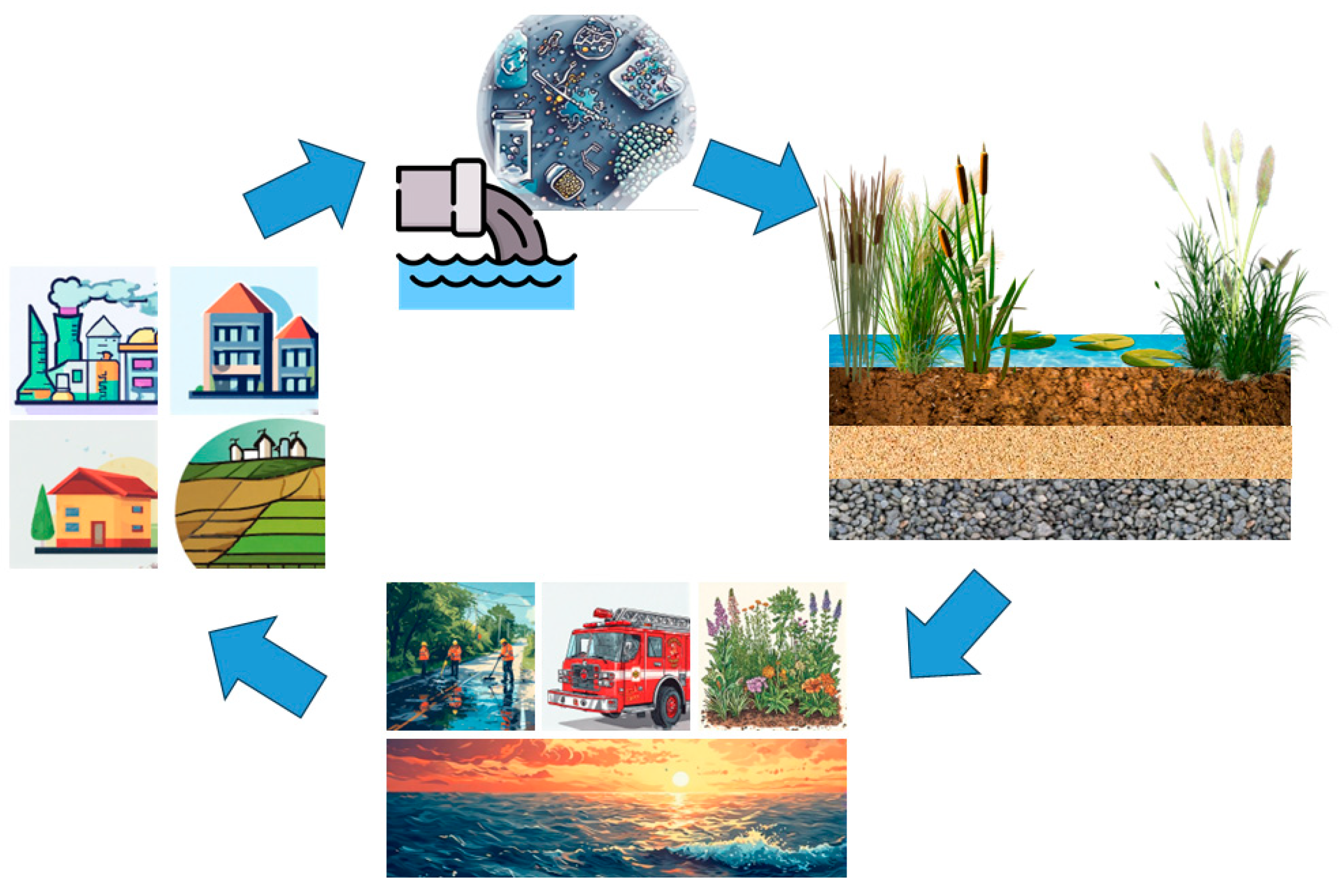
The horizontal subsurface flow CWs is among technologies with the highest microplastic removal efficiencies, often reaching 100% [76]. These secondary or tertiary wastewater treatment technologies consist of a basin filled with a media composed of gravel and sand, and vegetation, where water flows horizontally through the filter media, allowing for filtration and the degradation of microplastics and other organic pollutants by microorganisms. Macroinvertebrates also play a role in the CWs as they can ingest a non-negligible quantity of microplastics and distribute them in the CWs [77]. While horizontal subsurface flow CWs offer a good filter for microplastics, the high accumulation can impair the nutrient cycling, which may significantly impact the water quality, particularly concerning eutrophication of terrestrial and aquatic ecosystems [78].
The vertical flow CWs also demonstrate high removal efficiencies up to 100% of microplastics. These technologies rely on both physical and biological degradation to treat wastewater by passing it vertically through a bed of porous media, typically sand and gravel, and vegetation. In a sand-filled vertical flow CWs, microplastics can be retained at 100% removal efficiency; 96% with gravel as filling material; and up to 99.8% when earthworms are added [79]. For laundry wastewater, this technology can also remove > 95% of microfibers from the influent in addition to 93% removal efficiency for chemical oxygen demand and 94% for turbidity [80].
Surface flow CWs involve water flowing above the surface of a constructed basin, with vegetation rooted in the sediment (gravel and soil) below, where physical, chemical, and biological processes remove pollutants, including microplastics. Compared to other types of CWs, this technology has a lower removal rate at around 81.63% [76]. This is due to microplastics often being retained near the inlet area, with the physical characteristics of microplastics (size, type of polymer) and the substrate affecting the removal performance. In some cases, microplastic concentrations may increase due to atmospheric deposition, highlighting the complexity of microplastic dynamics in these systems [31].
Constructed wetland microbial fuel cells are an innovative technology that integrates the wastewater treatment capabilities of CWs into the clean energy-generating potential of microbial fuel cells. This system utilizes the natural processes of a CWs, specifically the redox gradient between aerobic and anaerobic zones, and the electron transfer capabilities of microorganisms within a microbial fuel cell [81]. In this system, exoelectrogenic bacteria in the anaerobic zone oxidize organic matter, releasing electrons that pass through an external circuit to a cathode, where they are combined with protons and oxygen to produce water and generate electricity. Hence, this approach enhances sustainability while fostering a circular economy by utilizing cleaner energy from biofuels created as byproducts from plants and microbes [82]. Meanwhile, the presence of vegetation, such as Denitratisoma, Sulfuritalea, and Endomicrobium, demonstrated the highest efficiency at 96.7 % with a power density of 14.90 mW m−2, outperforming both unplanted systems and conventional CWs [83]. This offers a double solution addressing the challenges of insufficient electricity and wastewater management through the integration of indigenous plant species.
Multi-stage CWs are systems that treat domestic sewage, agricultural wastewater, and industrial effluents by combining different types of CWs in series to enhance pollutant removal and improve water quality. With the integration of different CWs, the removal process is optimized through sequential treatment stages, which can have removal efficiencies greater than 89% of microplastics [84]. The results of another study showed that these systems can achieve an efficiency up to 94.7% for microplastics, with 2.2 particles/L microplastics and fluoro-rubber particles are not removed in the effluent [85].
3.2. Green Infrastructures
Green infrastructures are another NbS technology to mitigate microplastic pollution by capturing, filtering, and retaining these tiny plastic particles from stormwater runoff, wastewater, and even atmospheric deposition. Besides CWs, green infrastructures include bioretention systems, green walls, permeable pavements, and retention ponds.
Bioretention systems or rain gardens are NbS that can remove microplastics from stormwater runoff by combining physical filtration and adsorption. As illustrated in Figure 3, these systems utilize a multi-layered structure composed of the ponding zone, soil layer (plant uptake, substrate sorption, nitrification zone), internal water storage (denitrification zone), and underdrain [86,87]. The engineered media and plants have properties that attract and bind to microplastics, effectively removing them from the water [88]. To increase their efficiency, some bioretention systems incorporate various locally available and low-cost inorganic/organic materials like biochar, vermiculite, zeolite, fly ash, perlite, biosorbents, and other sorbents [86]. Bioretention systems have shown a microplastic removal rate ranging from 80% to over 99%, which is particularly effective for particles with sizes 20 μm or above [34].
Living green walls are NbS, which are also known as vertical gardens, green walls, living walls, or eco walls. Like CWs, green walls are composed of vegetation, substrates, and irrigation, making them a miniature vertically installed CWs on infrastructure walls, They have the advantages of treating wastewater in various infrastructures requiring no space, making them an ideal NbS for wastewater in urban environments [89]. Among their benefits are improvement in air quality, temperature regulation, building energy efficiency, noise reduction, aesthetic value, and enhancement of overall well-being [31]. When used for wastewater treatment, they can effectively remove microplastics (100-500 μm size range) at a 50-60% removal rate [31]. As illustrated in Figure 4, they can be classified into modular types composed of different plants in containers in the form of trays, vessels, planter tiles, or flexible bags, and carrying the substrate materials, such as soil or mineral granules; and continuous types of living walls that uses permeable screens such as foam or felt layers without soil substrates, both requiring specific supporting structures [89].
Permeable pavements are another NbS designed to store stormwater and then drain it into pipeline networks. They have an added advantage of retaining particular pollutants in urban stormwater [90]. As shown in Figure 5, they consist of a permeable surface layer and an underlying stone reservoir base. The surface layer can be made of various materials like porous asphalt, pervious concrete, or permeable pavers. The subsurface layer, or reservoir, is typically composed of open-graded aggregate, which stores stormwater and allows it to infiltrate into the soil or flow into an underdrain for further reuse. This filtration process can effectively capture microplastics, acting as a sink for microplastics and other particulate pollutants in stormwater runoff. Specifically, the surface layers and geotextiles within the pavement structure can retain microplastics and tire wear particles [91]. Studies show that permeable pavements demonstrate removal efficiencies between 89–96.6%, especially for particles less than 100 μm [34]. This makes permeable pavements a promising tool for mitigating microplastic pollution in urban environments. Moreover, they also offer several benefits as an NbS, like reducing the urban heat, improving air quality, reducing salt usage, enhancing safety through better traction, aesthetics, and increasing property values.
Stormwater retention ponds, or simply retention ponds, act as sinks for microplastics, trapping them within their sediments and preventing them from being transported further downstream. This occurs through a combination of physical processes like settling and sedimentation, as well as biological processes within the pond ecosystem. The ponds also receive higher hydraulic loads than natural water bodies, which can lead to increased microplastic accumulation in the sediments [92]. Retention ponds consist of several key components that work together to collect, store, and filter water. As shown in Figure 6, these ponds include the basin itself (composed of bioretention soil and gravel bed), inlet and outlet structures, an emergency spillway, and surrounding vegetation. Bioretention soil is an engineered soil mix that consists of sand, compost, and topsoil, designed to effectively filter and treat stormwater runoff and wastewater. Retention ponds can store 55–98% of microplastics and up to 85% other sediments [34]. In another study, the average retention was 88% for small microplastics (<500 µm) and 95% for large microplastics (>500 µm), including tire wear materials [93]. Moreover, microplastic characteristics such as weight and size decrease from surface to subsurface soil, while larger sizes are retained mostly near inlets than outlets [94].
3.3. Microphytes and Macrophytes
Microphytes and macrophytes can act as NbS for microplastic pollution by accumulating and potentially removing these particles from aquatic environments. These organisms can trap, absorb, and potentially even degrade microplastics, offering a sustainable approach to wastewater treatment.
Microphytes are microscopic, single-celled, photosynthetic organisms, essentially microscopic algae. They are found in both freshwater and marine environments and play a vital role in aquatic ecosystems. Some microalgae species have shown the ability to capture microplastics through heteroaggregation, where microplastic particles attach to the algal cells, and then can be removed from the water [95]. Once microplastics enter the bodies of water, they are colonized by biofilms through the excretion of extracellular polymeric substances (EPS) from microalgae. The accumulated biofilm increases the density of the microplastics, which are transported to the sediments [96]. As shown in Table 3, Spirulina sp. accumulated the highest amount of EPS (4.59 g), followed by Tetraselmis chuii (3.27 g), Chlorella vulgaris (3.03 g), and Dunaliella salina (2.86 g) [97]. Moreover, Spirulina sp. had the highest efficiency with flocculating 1.397 g of microplastics among other strains, suggesting that Spirulina sp. and Tetraselmis chuii are particularly effective in producing EPS that can be utilized to remove microplastics from the aquatic environment [97]. Meanwhile, another study found that an EPS releasing freshwater blue-green microalgae, Chroococcidiopsis cubana, has 91% microplastics removal efficiency under optimal conditions with a concentration of 89,352 numbers/mL microplastics and a microalgal cell concentration of 2,539,705 cells/mL [98].
Macrophytes, on the other hand, are large aquatic plants that play a crucial role in freshwater ecosystems, serving as habitats, food sources, and influencing water quality. They can be used for wastewater treatment as they can trap microplastics through physical adhesion to their surfaces, facilitated by their morphology and biofilms. They can also adsorb microplastics onto their surfaces and even internalize them, particularly if the particles are small enough or the plant surface is hydrophobic [99]. Table 4 summarizes the efficiency of different macrophytes for microplastic removal. Hydrilla verticillata showed higher retention of polyethylene terephthalate (PET) microplastics (800-1000 µm) in both still and dynamic water conditions, while Mayaca fluviatilis was more effective for smaller PET particles (600-800 µm) due to its higher perimeter-to-area ratio and surface cellulose [100]. In another study, Myriophyllum aquaticum demonstrated a high retention efficiency of 93.38% for microplastics larger than 100 µm under optimized conditions such as flow rate, aeration, and plant density [29]. In floating treatment wetlands, Cyperus papyrus and Pontederia sagittate achieved removal rates of 82.4% and 81.1% in water columns and sediments, respectively, primarily through root retention [101]. Meanwhile, Eichhornia crassipes, commonly known as water hyacinth, is a fast-growing, floating aquatic plant, that can achieve a removal efficiency between 55.3% to 69.1% for polystyrene particles (0.5 to 2 µm) within 48 hours, with root adsorption being the primary mechanism [102]. Moreover, Iris pseudacorus and Lythrum anceps were found to reduce microplastic numbers in water at up to 81.5% and 77.3% respectively, regardless of the size of the pollutants or the type of plants, with roots playing a crucial role in adsorption [103].
Both microalgae and macrophytes show promising potential for microplastic removal in aquatic environments. Spirulina sp. and Tetraselmis chuii are microphytes with highly effective microplastic removal due to their EPS production. On the other hand, Hydrilla verticillata and Iris pseudacorus are the most effective macrophytes through physical retention and adsorption mechanisms. Beyond nutrient removal, these NbS offer numerous benefits in wastewater treatment, including the ability to reduce sunlight penetration, suppress algal blooms, filter pollutants, and support microbial activity. They also provide habitats for beneficial organisms and can contribute to the overall health of the treated water body [104]. These approaches offer a potentially more sustainable solution compared to other traditional wastewater treatment technologies, which may have limitations in terms of cost, energy efficiency, or secondary pollution.
4. Prospects, Challenges, and Policy Recommendations
Nature-based solutions present a promising approach to address microplastic pollution in wastewater. By harnessing natural processes, these solutions offer sustainable, cost-effective, and multifunctional benefits, making them a viable alternative to conventional treatment methods. In terms of environmental sustainability, NbS reduces reliance on energy-intensive and chemical-based methods, promoting ecosystem restoration and biodiversity enhancement [74]. These solutions are cost-efficient as they are particularly advantageous in decentralized and rural contexts where traditional infrastructure and financing mechanisms are limited [27]. In addition to wastewater treatment, NbS technologies provide several co-benefits, such as carbon sequestration, mitigation of the urban heat, improved water security, and other ecosystem services [72].
Despite their benefits, adopting NbS for the treatment of microplastics in wastewater presents several challenges. First, achieving consistently high removal levels across different microplastic sizes, shapes, and polymer types remains a challenge. Once microplastics enter CWs, they accumulate within the ecosystem, affecting the vegetation and microorganisms as well as the cycling of elements such as carbon, nitrogen, and phosphorus [33]. While adsorption-based techniques are promising, conventional adsorbents may not be effective for nanoplastics and can face limitations in capacity, reusability, and adsorption time [105]. Moreover, microplastics removed from wastewater are often transferred to sludge, and the potential for microplastics to be released back into the environment from sludge needs careful consideration [106].
Standardization of methods to detect and quantify microplastics in wastewater and sewage sludge is needed for comparing results across studies and evaluating the effectiveness of different technologies. These remain challenging due to their small size and diverse nature, which complicates the assessment of NbS performance and the development of effective treatment strategies [107].
One of the non-technical challenges is the large land requirement for CWs, particularly in densely populated or land-scarce areas [74]. This is a significant limitation, especially when compared to other wastewater treatment technologies that may require less space. Additionally, NbS, like other wastewater treatment systems, require proper maintenance and operation to ensure their effectiveness. Factors like clogging, fouling, and inadequate biomass density can hinder performance [24]. While studies show that NbS are cost-effective, these systems are usually not income-generating, making them less attractive to investors who are profit-driven. In such cases, the local government usually subsidizes the cost of maintaining the facilities to make them operate continuously and sustainably on a longer-term basis [73].
Climate-related uncertainties, such as the increasing frequency and magnitude of typhoons, flooding, and droughts, can affect the performance of NbS technologies, especially those relying on natural processes [24]. These are particularly relevant to countries with high vulnerability to natural hazards. Another challenge is public perception and acceptance of NbS technologies [108]. When communities perceive NbS as having any negative environmental or societal impact, the implementation of adoption of NbS projects are opposed, especially when they are proposed near one’s residence. Finally, widespread adoption and scaling up of NbS initiatives are hampered by the lack of policy support [26]. This includes insufficient regulations, inadequate enforcement, and a lack of clear guidelines for industries and local governments to reduce microplastic pollution.
Given the prospects and challenges mentioned above, several policy recommendations can be made to effectively adopt NbS for microplastic wastewater treatment. These recommendations aim to facilitate the integration of NbS into existing frameworks for wastewater management, promote research and innovation, and ensure sustainable practices.
- Development of Supporting Policies and Framework. Comprehensive guidelines should be established for the design, planning, implementation, and maintenance of NbS technologies, including the definition of performance metrics for microplastic removal and environmental impact assessments. NbS should be incorporated into existing water quality regulations and standards to ensure they are recognized as viable alternative treatment options alongside conventional methods.
- Promoting Research and Innovation. R&D initiatives focusing on the effectiveness of NbS in microplastic removal must be funded. Pilot projects must be supported, particularly those that demonstrate the feasibility and effectiveness of NbS, providing valuable data for scaling successful models.
- Partnerships and Information and Education Campaign (IEC). Collaboration among government agencies, academic institutions, non-governmental organizations, civil society, and the private sector must be promoted to exchange knowledge, best practices, and resources related to NbS. Citizen science should be conducted to raise awareness about the benefits of NbS for wastewater treatment and the risks of microplastic pollution, engaging various stakeholders in the process.
- Sustainable Financing Mechanisms. Financial incentives, such as grants, subsidies, or tax breaks, must be provided for municipalities and industries that adopt NbS for wastewater treatment. Green financing options must be explored to support the development and maintenance of NbS, ensuring the accessibility of funding for NbS projects.
- Integration of NbS into Urban Planning. Development and urban planners must be encouraged to integrate NbS into land-use planning and infrastructure development.
- Accessibility and Capacity Building. NbS initiatives must ensure to be accessible, particularly for marginalized and underserved populations. Training and capacity-building programs must be provided for local stakeholders, including community members and wastewater treatment operators, to enhance their understanding and skills related to NbS.
5. Conclusions and Future Research Directions
Nature-based solutions are technologies that utilize nature to address societal and environmental problems. Due to cost-efficiency and a human ecological approach, their utilization has been continuously growing, including the application to wastewater treatment containing microplastics. This study extended the academic discourse by presenting an overview of microplastic pollution and its impacts, the role of NbS technologies in microplastic removal, and the prospects and challenges for NbS adoption.
The study found that the primary sources of microplastics are cosmetics and personal care products, plastic manufacturing, fishing and aquaculture, vehicle tire wear, clothing and textiles, and paints and coatings. Secondary sources include the degradation of larger plastics from MSW, improper waste disposal, wastewater, and surface runoff. Microplastic pollution impacts human health, terrestrial and aquatic ecosystems, societies, and economies. Several NbS technologies are utilized to remove microplastics from wastewater. These include the CWs (horizontal subsurface flow, vertical flow, surface flow, microbial fuel cells, multistage) with up to 100% efficiency and green infrastructures (bioretention systems, green walls, permeable pavements, retention ponds) with up to 99% efficiency. Among the microphytes, Spirulina sp. seems to be the most effective in microplastic removal and flocculation, followed by Tetraselmis chuii, Chlorella vulgaris, Dunaliella salina, and Chroococcidiopsis cubana, with efficiency of up to 94%. Moreover, the commonly used macrophytes are Hydrilla verticillata, Mayaca fluviatile, Myriophyllum aquaticum, Cyperus papyrus, Pontederia sagittata, Eichhornia crassipes, Iris pseudacorus, and Lythrum anceps, which can remove up to 93.38% microplastics.
Besides wastewater treatment and microplastic removal, NbS are cost-efficient and provide various ecosystem services. Yet, their widespread adoption is confronted by a number of barriers, such as the decrease in efficiency in removing other wastewater contaminants, standard detection of microplastics, evaluation of NbS performance, and non-technical (operations and maintenance, public acceptance, climate risks, financing) challenges. Hence, several strategies are recommended, including the development of supporting policies and frameworks, promoting research and development, building partnerships, IEC, providing sustainable financing mechanisms, integration of NbS into urban planning, and capacity building.
This paper identified several gaps in the NbS literature for wastewater treatment of microplastics, which serve as a basis for further research. Most of the reviewed studies analyzed the impacts of microplastic pollution and the effectiveness of NbS technologies in the short term. Future studies may look at the long-term impacts of microplastics on humans, the environment, and the sustainability of NbS systems. There are limited studies in other NbS technologies that can be further analyzed, such as riparian buffer strips, aquifer recharge, and urban forest. To increase the value of NbS, the vegetation can be evaluated for further utilization, such as creating biochar, biomass, and other products. Microplastics act as vectors facilitating the development and transfer of antimicrobial-resistant bacteria, which potentially exacerbates the global threat of antimicrobial resistance (AMR). Future studies may consider analyzing the efficiency of different NbS technologies in removing microplastics with antimicrobial resistance in wastewaters. With the compounding risks to human health, the analyses could be extended to evaluate the socioeconomic acceptability of NbS to wastewater treatment of microplastics with AMR. Finally, a real options valuation of NbS can be conducted considering the compounding impacts of technology, social acceptability, and climate risk uncertainties for a more robust decision-making for the adoption of a more human ecological solution to wastewater treatment towards the achievement of SDGs.
Funding
This research received no external funding.
Institutional Review Board Statement
Not applicable.
Informed Consent Statement
Not applicable.
Acknowledgments
The author acknowledges the support from the Department of Community and Environmental Resource Planning (DCERP) of the College of Human Ecology, University of the Philippines Los Baños, and the DCERP CREST Planning Lab.
Conflicts of Interest
The author declares no conflicts of interest.
Abbreviations
The following abbreviations are used in this manuscript:
| AMR | Antimicrobial resistance |
| CW | Constructed wetland |
| EPS | Extracellular polymeric substances |
| IEC | Information and education campaign |
| MSW | Municipal solid waste |
| NbS | Nature-based solution |
| PET | Polyethylene terephthalate |
References
- OECD. Global Plastics Outlook: Economic Drivers, Environmental Impacts and Policy Options; OECD Publishing: Paris, 2022.
- UNEP. Plastic Pollution. 2025.
- UNEP. Microplastics: The long legacy left behind by plastic pollution. 2023.
- Iyare, P.U.; Ouki, S.K.; Bond, T. Microplastics removal in wastewater treatment plants: A critical review. Environmental Science: Water Research & Technology 2020, 6, 2664-2675. [CrossRef]
- Tang, K.H.D.; Hadibarata, T. Microplastics removal through water treatment plants: Its feasibility, efficiency, future prospects and enhancement by proper waste management. Environmental Challenges 2021, 5. [CrossRef]
- Adetuyi, B.O.; Adetunji, C.O.; Olajide, P.A.; Ogunlana, O.O.; Mathew, J.T.; Inobeme, A.; Popoola, O.A.; Olaitan, F.Y.; Akinbo, O.; Oyewole, O.A.; et al. Removal of Microplastic from Wastewater Treatment Plants. In Microplastic Pollution; 2024; pp. 271-286.
- Sari Erkan, H.; Emik, H.H.; Onkal Engin, G. Microplastics in advanced biological wastewater treatment plant of Kocaeli, Turkey: Point source of microplastics reaching Marmara Sea. International Journal of Environmental Science and Technology 2023, 21, 1263-1284. [CrossRef]
- Asadi, A.; Khodadoost, F.; Daglioglu, N.; Eris, S. A systematic review on the occurrence and removal of microplastics during municipal wastewater treatment plants. Environmental Engineering Research 2024, 30, 240366-240360. [CrossRef]
- Kong, W.; Jalalah, M.; Alsareii, S.A.; Harraz, F.A.; Almadiy, A.A.; Zheng, Y.; Thakur, N.; Salama, E.-S. Microplastics (MPs) in wastewater treatment plants sludges: Substrates, digestive properties, microbial communities, mechanisms, and treatments. Journal of Environmental Chemical Engineering 2023, 11. [CrossRef]
- Mareddy, A.R. Technology in EIA. In Environmental Impact Assessment; 2017; pp. 421-490.
- Castelluccio, S.; Alvim, C.B.; Bes-Piá, M.A.; Mendoza-Roca, J.A.; Fiore, S. Assessment of Microplastics Distribution in a Biological Wastewater Treatment. Microplastics 2022, 1, 141-155. [CrossRef]
- Bayo, J.; LÓPez-Castellanos, J.; Olmos, S. Abatement of Microplastics from Municipal Effluents by Two Different Wastewater Treatment Technologies. In Proceedings of the Water Pollution XV, 2020; pp. 15-26.
- Vardar, S.; Onay, T.T.; Demirel, B.; Kideys, A.E. Evaluation of microplastics removal efficiency at a wastewater treatment plant discharging to the Sea of Marmara. Environmental Pollution 2021, 289. [CrossRef]
- Fu, L.S.; Hou, L.; Wang, Y.X.; Li, X.L.; Wang, W.B.; Liang, Q.B. [Effects of Wastewater Treatment Processes on the Removal Efficiency of Microplastics Based on Meta-analysis]. Huan Jing Ke Xue 2023, 44, 3309-3320. [CrossRef]
- Hernández Fernández, J.; Cano, H.; Guerra, Y.; Puello Polo, E.; Ríos-Rojas, J.F.; Vivas-Reyes, R.; Oviedo, J. Identification and Quantification of Microplastics in Effluents of Wastewater Treatment Plant by Differential Scanning Calorimetry (DSC). Sustainability 2022, 14, doi:10.3390/su14094920.
- Soni, V.; Poonia, K.; Sonu; Raizada, P.; Singh, P.; Hussain, C.M. Wastewater Treatment Plants and Microplastic Degradation. In Microplastics; 2024; pp. 279-294.
- Talvitie, J.; Mikola, A.; Koistinen, A.; Setälä, O. Solutions to microplastic pollution – Removal of microplastics from wastewater effluent with advanced wastewater treatment technologies. Water Research 2017, 123, 401-407. [CrossRef]
- Bodzek, M.; Pohl, A. Removal of microplastics in unit processes used in water and wastewater treatment: A review. Archives of Environmental Protection 2023, 48, 102-128. [CrossRef]
- Ahmed, S.F.; Islam, N.; Tasannum, N.; Mehjabin, A.; Momtahin, A.; Chowdhury, A.A.; Almomani, F.; Mofijur, M. Microplastic removal and management strategies for wastewater treatment plants. Chemosphere 2024, 347. [CrossRef]
- Hidayaturrahman, H.; Lee, T.-G. A study on characteristics of microplastic in wastewater of South Korea: Identification, quantification, and fate of microplastics during treatment process. Marine Pollution Bulletin 2019, 146, 696-702. [CrossRef]
- Bayo, J.; López-Castellanos, J.; Olmos, S. Membrane bioreactor and rapid sand filtration for the removal of microplastics in an urban wastewater treatment plant. Marine Pollution Bulletin 2020, 156. [CrossRef]
- Goh, P.S.; Kang, H.S.; Ismail, A.F.; Khor, W.H.; Quen, L.K.; Higgins, D. Nanomaterials for microplastic remediation from aquatic environment: Why nano matters? Chemosphere 2022, 299. [CrossRef]
- Rebi, A.; Raza, T.; Wang, G.; Irfan, M.; Mushtaq, P.; Ali, M.; Narejo, K.R.; Hussain, A.; Khan, M.A.; Zhou, J. Environmental Sink of Microplastics Associated with Wastewater Treatment and Allied Processes. In Fate of Microplastics in Wastewater Treatment Plants; 2024; pp. 122-135.
- Agaton, C.B.; Guila, P.M.C. Success Factors and Challenges: Implications of Real Options Valuation of Constructed Wetlands as Nature-Based Solutions for Wastewater Treatment. Resources 2024, 13. [CrossRef]
- Adeoba, M.I.; Odjegba, E.E.; Pandelani, T. Nature-based solutions: Opportunities and challenges for water treatment. In Smart Nanomaterials for Environmental Applications; 2025; pp. 575-596.
- Jegatheesan, V.; Pachova, N.; Velasco, P.; Trang, N.T.D.; Thao, V.T.P.; Vo, T.-K.-Q.; Tran, C.-S.; Bui, X.-T.; Devanedara, M.C.; Estorba, D.S.; et al. Replicability and Pathways for the Scaling of Nature-Based Solutions for Water Treatment: Examples from the Philippines, Sri Lanka, and Vietnam. In Water Treatment in Urban Environments: A Guide for the Implementation and Scaling of Nature-based Solutions; Applied Environmental Science and Engineering for a Sustainable Future; 2024; pp. 203-224.
- Agaton, C.B. Real Options Analysis of Constructed Wetlands as Nature-Based Solutions to Wastewater Treatment Under Multiple Uncertainties: A Case Study in the Philippines. Sustainability 2024, 16 . [CrossRef]
- Falkenberg, L.J.; Cornet, J.E.; Joyce, P.W.S. Nature-based solutions to the management of legacy plastic pollution: Filter-feeders as bioremediation tools for coastal microplastics. Science of The Total Environment 2024, 956. [CrossRef]
- Li, C.; Shi, Y.; Zhu, W.; Luo, D.; Bai, X.; Krause, S. A low-impact nature-based solution for reducing aquatic microplastics from freshwater ecosystems. Water Research 2025, 268. [CrossRef]
- Cole, M.; Artioli, Y.; Coppock, R.; Galli, G.; Saad, R.; Torres, R.; Vance, T.; Yunnie, A.; Lindeque, P.K. Mussel power: Scoping a nature-based solution to microplastic debris. Journal of Hazardous Materials 2023, 453. [CrossRef]
- Büngener, L.; Galvão, A.; Postila, H.; Heiderscheidt, E. Microplastic retention in green walls for nature-based and decentralized greywater treatment. Environmental Pollution 2024, 363. [CrossRef]
- Mancini, M.; Solari, L.; Colomer, J.; Serra, T. Retention of microplastics by interspersed lagoons in both natural and constructed wetlands. Journal of Water Process Engineering 2023, 56. [CrossRef]
- Zhang, S.; Shen, C.; Zhang, F.; Wei, K.; Shan, S.; Zhao, Y.; Man, Y.B.; Wong, M.H.; Zhang, J. Microplastics removal mechanisms in constructed wetlands and their impacts on nutrient (nitrogen, phosphorus and carbon) removal: A critical review. Science of The Total Environment 2024, 918. [CrossRef]
- Ahmad, T.; Gul, S.; Peng, L.; Mehmood, T.; Huang, Q.; Ahmad, A.; Ali, H.; Ali, W.; Souissi, S.; Zinck, P. Microplastic mitigation in urban stormwater using green infrastructure: A review. Environmental Chemistry Letters 2025, 23, 999-1024. [CrossRef]
- García-Haba, E.; Hernández-Crespo, C.; Martín, M.; Andrés-Doménech, I. The role of different sustainable urban drainage systems in removing microplastics from urban runoff: A review. Journal of Cleaner Production 2023, 411. [CrossRef]
- Fakhri, V.; Hamzehlouy, A.; Janmaleki Dehchani, A.; Moradi, E.; Tavakoli Dare, M.; Jafari, A.; Khonakdar, H.A. Green solutions for blue waters: Using biomaterials to purify water from microplastics and nanoplastics. Journal of Water Process Engineering 2024, 65. [CrossRef]
- Song, J.; Wang, C.; Li, G. Defining Primary and Secondary Microplastics: A Connotation Analysis. ACS ES&T Water 2024, 4, 2330-2332. [CrossRef]
- Xu, Y.; Chan, F.K.S.; Stanton, T.; Johnson, M.F.; Kay, P.; He, J.; Wang, J.; Kong, C.; Wang, Z.; Liu, D.; et al. Synthesis of dominant plastic microfibre prevalence and pollution control feasibility in Chinese freshwater environments. Science of The Total Environment 2021, 783. [CrossRef]
- UNEP. Microplastics: Trouble in the Food Chain. UNEP Frontiers 2016 Report 2016, 33-43.
- Giechaskiel, B.; Grigoratos, T.; Mathissen, M.; Quik, J.; Tromp, P.; Gustafsson, M.; Franco, V.; Dilara, P. Contribution of Road Vehicle Tyre Wear to Microplastics and Ambient Air Pollution. Sustainability 2024, 16. [CrossRef]
- Bikiaris, N.; Nikolaidis, N.F.; Barmpalexis, P. Microplastics (MPs) in Cosmetics: A Review on Their Presence in Personal-Care, Cosmetic, and Cleaning Products (PCCPs) and Sustainable Alternatives from Biobased and Biodegradable Polymers. Cosmetics 2024, 11. [CrossRef]
- Gaylarde, C.C.; Neto, J.A.B.; da Fonseca, E.M. Paint fragments as polluting microplastics: A brief review. Marine Pollution Bulletin 2021, 162. [CrossRef]
- Thuan, P.M.; Nguyen, M.-K.; Nguyen, D.D. The potential release of microplastics from paint fragments: Characterizing sources, occurrence and ecological impacts. Environmental Geochemistry and Health 2025, 47. [CrossRef]
- Deng, L.; Xi, H.; Wan, C.; Fu, L.; Wang, Y.; Wu, C. Is the petrochemical industry an overlooked critical source of environmental microplastics? Journal of Hazardous Materials 2023, 451. [CrossRef]
- Avila-Escobedo, K.P.; Moctezuma-Parra, K.Y.; Alvarez-Zeferino, J.C.; Espinosa-Valdemar, R.M.; Sotelo-Navarro, P.X.; Vázquez-Morillas, A.; Cruz-Salas, A.A. Methodology for Analysis of Microplastics in Fine Fraction of Urban Solid Waste. Microplastics 2025, 4. [CrossRef]
- Ledieu, L.; Phuong, N.-N.; Flahaut, B.; Radigois, P.; Papin, J.; Le Guern, C.; Béchet, B.; Gasperi, J. May a Former Municipal Landfill Contaminate Groundwater in Microplastics? First Investigations from the “Prairie de Mauves Site” (Nantes, France). Microplastics 2023, 2, 93-106, doi:10.3390/microplastics2010007.
- Wan, Y.; Chen, X.; Liu, Q.; Hu, H.; Wu, C.; Xue, Q. Informal landfill contributes to the pollution of microplastics in the surrounding environment. Environmental Pollution 2022, 293. [CrossRef]
- Suzuki, G.; Uchida, N.; Tuyen, L.H.; Tanaka, K.; Matsukami, H.; Kunisue, T.; Takahashi, S.; Viet, P.H.; Kuramochi, H.; Osako, M. Mechanical recycling of plastic waste as a point source of microplastic pollution. Environmental Pollution 2022, 303. [CrossRef]
- Belioka, M.-P.; Achilias, D.S. The Effect of Weathering Conditions in Combination with Natural Phenomena/Disasters on Microplastics’ Transport from Aquatic Environments to Agricultural Soils. Microplastics 2024, 3, 518-538,. [CrossRef]
- Jani, V.; Wu, S.; Venkiteshwaran, K. Advancements and Regulatory Situation in Microplastics Removal from Wastewater and Drinking Water: A Comprehensive Review. Microplastics 2024, 3, 98-123. [CrossRef]
- Mahagamage, M.G.Y.L.; Gamage, S.G.; Rathnayake, R.M.S.K.; Gamaralalage, P.J.D.; Hengesbugh, M.; Abeynayaka, T.; Welivitiya, C.; Udumalagala, L.; Rajitha, C.; Suranjith, S. Mitigating Microfiber Pollution in Laundry Wastewater: Insights from a Filtration System Case Study in Galle, Sri Lanka. Microplastics 2024, 3, 599-613. [CrossRef]
- Akyildiz, S.H.; Bellopede, R.; Sezgin, H.; Yalcin-Enis, I.; Yalcin, B.; Fiore, S. Detection and Analysis of Microfibers and Microplastics in Wastewater from a Textile Company. Microplastics 2022, 1, 572-586. [CrossRef]
- Visileanu, E.; Altmann, K.; Stepa, R.; Haiducu, M.; Miclea, P.T.; Vladu, A.; Dondea, F.; Grosu, M.C.; Scarlat, R. Comparative Analysis of Airborne Particle Concentrations in Textile Industry Environments Throughout the Workday. Microplastics 2025, 4. [CrossRef]
- Abbas, G.; Ahmed, U.; Ahmad, M.A. Impact of Microplastics on Human Health: Risks, Diseases, and Affected Body Systems. Microplastics 2025, 4,. [CrossRef]
- Gaylarde, C.C.; Baptista Neto, J.A.; da Fonseca, E.M. Indoor Airborne Microplastics: Human Health Importance and Effects of Air Filtration and Turbulence. Microplastics 2024, 3, 653-670. [CrossRef]
- Chowdhury, S.R.; Dey, A.; Mondal, S.; Gautam, M.K. Environmental microplastics and nanoplastics: Effects on cardiovascular system. Toxicologie Analytique et Clinique 2024, 36, 145-157. [CrossRef]
- Moiniafshari, K.; Zanut, A.; Tapparo, A.; Pastore, P.; Bogialli, S.; Abdolahpur Monikh, F. A perspective on the potential impact of microplastics and nanoplastics on the human central nervous system. Environmental Science: Nano 2025, 12, 1809-1820. [CrossRef]
- Yang, X.; Zhang, Z.; Guo, X. Impact of soil structure and texture on occurrence of microplastics in agricultural soils of karst areas. Science of The Total Environment 2023, 902. [CrossRef]
- Wolff Leal, T.; Tochetto, G.; Lima, S.V.d.M.; de Oliveira, P.V.; Schossler, H.J.; de Oliveira, C.R.S.; da Silva Júnior, A.H. Nanoplastics and Microplastics in Agricultural Systems: Effects on Plants and Implications for Human Consumption. Microplastics 2025, 4. [CrossRef]
- Igalavithana, A.D.; Mahagamage, M.G.Y.L.; Gajanayake, P.; Abeynayaka, A.; Gamaralalage, P.J.D.; Ohgaki, M.; Takenaka, M.; Fukai, T.; Itsubo, N. Microplastics and Potentially Toxic Elements: Potential Human Exposure Pathways through Agricultural Lands and Policy Based Countermeasures. Microplastics 2022, 1, 102-120. [CrossRef]
- Lackner, M.; Branka, M. Microplastics in Farmed Animals—A Review. Microplastics 2024, 3, 559-588. [CrossRef]
- Pizzurro, F.; Recchi, S.; Nerone, E.; Salini, R.; Barile, N.B. Accumulation Evaluation of Potential Microplastic Particles in Mytilus galloprovincialis from the Goro Sacca (Adriatic Sea, Italy). Microplastics 2022, 1, 303-318. [CrossRef]
- Nabi, G.; Ahmad, S.; Ullah, S.; Zada, S.; Sarfraz, M.; Guo, X.; Ismail, M.; Wanghe, K. The adverse health effects of increasing microplastic pollution on aquatic mammals. Journal of King Saud University - Science 2022, 34. [CrossRef]
- Felline, S.; Piccardo, M.; De Benedetto, G.E.; Malitesta, C.; Terlizzi, A. Microplastics’ Occurrence in Edible Fish Species (Mullus barbatus and M. surmuletus) from an Italian Marine Protected Area. Microplastics 2022, 1, 291-302,. [CrossRef]
- Agaton, C.B.; Ancheta, M.J.J.; Paraiso, K.A.H.; Palomares, Z.F.; Sabo-o, A.J.M. Phenomenological Analysis of The Economic Impacts of a Coastal Disaster on The Tourism Sector of Pola, Oriental Mindoro. BIO Web of Conferences 2025, 176. [CrossRef]
- Ghosh, S.; Sinha, J.K.; Ghosh, S.; Vashisth, K.; Han, S.; Bhaskar, R. Microplastics as an Emerging Threat to the Global Environment and Human Health. Sustainability 2023, 15. [CrossRef]
- Anuar, S.T.; Mohd Ali, A.A.; Cordova, M.R.; Charoenpong, C. Editorial: Baselines, impacts and mitigation strategies for plastic debris and microplastic pollution in South East Asia. Frontiers in Marine Science 2025, 12. [CrossRef]
- IUCN. Global Standard for Nature-based Solutions: A user-friendly framework for the verification, design and scaling up of NbS, First ed.; International Union for Conservation of Nature and Natural Resources (IUCN): Gland, Switzerland, 2020.
- Cassin, J. History and development of nature-based solutions: Concepts and practice. In Nature-based Solutions and Water Security; 2021; pp. 19-34.
- Preti, F.; Capobianco, V.; Sangalli, P. Soil and Water Bioengineering (SWB) is and has always been a nature-based solution (NBS): A reasoned comparison of terms and definitions. Ecological Engineering 2022, 181. [CrossRef]
- Llosa, C.D.L.; Reyes Jr, E.M.; Agaton, C.B.; Cordero-Bailey, K.S.A. Thematic and Multicriteria Analyses of the Readiness, Factors, and Strategies for Successful Implementation of Nature-Based Solutions Initiatives in Victoria, Laguna. Journal of Human Ecology and Sustainability 2024, 2, 8. [CrossRef]
- Agaton, C.B.; Guila, P.M.C. Ecosystem Services Valuation of Constructed Wetland as a Nature-Based Solution to Wastewater Treatment. Earth 2023, 4, 78-92. [CrossRef]
- Agaton, C.B.; Guila, P.M.C.; Rodriguez, A.D.H. Economic Analysis of NbS for Wastewater Treatment Under Uncertainties. In Water Treatment in Urban Environments: A Guide for the Implementation and Scaling of Nature-based Solutions; Applied Environmental Science and Engineering for a Sustainable Future; 2024; pp. 55-81.
- Guila, P.M.C.; Agaton, C.B.; Rivera, R.R.B.; Abucay, E.R. Household Willingness to Pay for Constructed Wetlands as Nature-Based Solutions for Wastewater Treatment in Bayawan City, Philippines. Journal of Human Ecology and Sustainability 2024, 2, 5. [CrossRef]
- Wu, H.; Wang, R.; Yan, P.; Wu, S.; Chen, Z.; Zhao, Y.; Cheng, C.; Hu, Z.; Zhuang, L.; Guo, Z.; et al. Constructed wetlands for pollution control. Nature Reviews Earth & Environment 2023, 4, 218-234. [CrossRef]
- Chen, Y.; Li, T.; Hu, H.; Ao, H.; Xiong, X.; Shi, H.; Wu, C. Transport and fate of microplastics in constructed wetlands: A microcosm study. Journal of Hazardous Materials 2021, 415. [CrossRef]
- Wang, Q.; Hernández-Crespo, C.; Santoni, M.; Van Hulle, S.; Rousseau, D.P.L. Horizontal subsurface flow constructed wetlands as tertiary treatment: Can they be an efficient barrier for microplastics pollution? Science of The Total Environment 2020, 721. [CrossRef]
- Rozman, U.; Klun, B.; Kalčíková, G. Distribution and removal of microplastics in a horizontal sub-surface flow laboratory constructed wetland and their effects on the treatment efficiency. Chemical Engineering Journal 2023, 461. [CrossRef]
- Wang, Q.; Hernández-Crespo, C.; Du, B.; Van Hulle, S.W.H.; Rousseau, D.P.L. Fate and removal of microplastics in unplanted lab-scale vertical flow constructed wetlands. Science of The Total Environment 2021, 778. [CrossRef]
- Sotiropoulou, M.; Stefanatou, A.; Schiza, S.; Petousi, I.; Stasinakis, A.S.; Fountoulakis, M.S. Removal of microfiber in vertical flow constructed wetlands treating greywater. Science of The Total Environment 2023, 858. [CrossRef]
- Kesarwani, S.; Panwar, D.; Mal, J.; Pradhan, N.; Rani, R. Constructed Wetland Coupled Microbial Fuel Cell: A Clean Technology for Sustainable Treatment of Wastewater and Bioelectricity Generation. Fermentation 2022, 9. [CrossRef]
- Jacobs, D.G.; Kachienga, L.O.; Rikhotso, M.C.; Abia, A.L.K.; Traoré, A.N.; Potgieter, N. Assessing the current situation of constructed wetland-microbial fuel cells as an alternative power generation and wastewater treatment in developing countries. Frontiers in Energy Research 2024, 12. [CrossRef]
- Liu, S.; He, L.; Feng, X. Effects of multi-microplastic mixtures on the performance of constructed wetland microbial fuel cells for wastewater treatment. Bioelectrochemistry 2025, 165. [CrossRef]
- Zhou, X.; Zhao, Y.; Pang, G.; Jia, X.; Song, Y.; Guo, A.; Wang, A.; Zhang, S.; Ji, M. Microplastic abundance, characteristics and removal in large-scale multi-stage constructed wetlands for effluent polishing in northern China. Chemical Engineering Journal 2022, 430. [CrossRef]
- Li, Y.; He, J.; Li, Y.; Sun, Z.; Du, H.; Wang, D.; Zhang, P.; Li, H. Abundance, characteristics, and removal of microplastics in the Cihu Lake-wetland microcosm system. Water Science & Technology 2023, 88, 278-287. [CrossRef]
- Vijayaraghavan, K.; Biswal, B.K.; Adam, M.G.; Soh, S.H.; Tsen-Tieng, D.L.; Davis, A.P.; Chew, S.H.; Tan, P.Y.; Babovic, V.; Balasubramanian, R. Bioretention systems for stormwater management: Recent advances and future prospects. Journal of Environmental Management 2021, 292. [CrossRef]
- Laramie, A.R.; Shuster, W.D.; Wager, Y.Z.; Darabi, M. Field assessment of engineered bioretention as microplastics sink through site characterization and hydrologic modeling. Journal of Hazardous Materials 2024, 480. [CrossRef]
- Han, Z.; Xiong, J.; Zhou, J.; Wang, Z.; Hu, T.; Xu, J. Microplastics removal from stormwater runoff by bioretention cells: A review. Journal of Environmental Sciences 2025, 154, 73-90. [CrossRef]
- Addo-Bankas, O.; Wei, T.; Tang, C.; Zhao, Y. Optimizing greywater treatment in green walls: A comparative analysis of recycled substrate materials. Journal of Water Process Engineering 2024, 67. [CrossRef]
- Kong, J.; Jeong, S.; Lee, J.; Jeong, S. Permeable pavement blocks as a sustainable solution for managing microplastic pollution in urban stormwater. Science of The Total Environment 2025, 966. [CrossRef]
- García-Haba, E.; Benito-Kaesbach, A.; Hernández-Crespo, C.; Sanz-Lazaro, C.; Martín, M.; Andrés-Doménech, I. Removal and fate of microplastics in permeable pavements: An experimental layer-by-layer analysis. Science of The Total Environment 2024, 929. [CrossRef]
- Liu, F.; Vianello, A.; Vollertsen, J. Retention of microplastics in sediments of urban and highway stormwater retention ponds. Environmental Pollution 2019, 255. [CrossRef]
- Rasmussen, L.A.; Liu, F.; Klemmensen, N.D.R.; Lykkemark, J.; Vollertsen, J. Retention of microplastics and tyre wear particles in stormwater ponds. Water Research 2024, 248. [CrossRef]
- Ashiq, M.M.; Jazaei, F.; Bell, K.; Ali, A.S.A.; Bakhshaee, A.; Babakhani, P. Abundance, spatial distribution, and physical characteristics of microplastics in stormwater detention ponds. Frontiers of Environmental Science & Engineering 2023, 17. [CrossRef]
- Afonso, V.; Borges, R.; Rodrigues, B.; Barros, R.; João Bebianno, M.; Raposo, S. Are native microalgae consortia able to remove microplastics from wastewater effluents? Environmental Pollution 2024, 349. [CrossRef]
- Gopalakrishnan, K.; Kashian, D.R. Extracellular polymeric substances in green alga facilitate microplastic deposition. Chemosphere 2022, 286. [CrossRef]
- Hadiyanto, H.; Khoironi, A.; Dianratri, I.; Joelyna, F.A.; Christwardana, M.; Sabhira, A.I.; Baihaqi, R.A. Microplastic removal in aquatic systems using extracellular polymeric substances (EPS) of microalgae. Sustainable Environment 2025, 11. [CrossRef]
- Das, P.; Bal, M. Modeling and optimization study for microplastic removal from aquatic medium using Chroococcidiopsis species. Chemical Engineering Science 2025, 304. [CrossRef]
- Mateos-Cárdenas, A.; van Pelt, F.N.A.M.; O’Halloran, J.; Jansen, M.A.K. Adsorption, uptake and toxicity of micro- and nanoplastics: Effects on terrestrial plants and aquatic macrophytes. Environmental Pollution 2021, 284. [CrossRef]
- Wu, M.; Goh, Y.L.; Mowe, M.A.D.; Todd, P.A.; Yeo, D.C.J. The effects of microplastics size and type on entrapment by freshwater macrophytes under vertical and lateral deposition. Journal of Limnology 2025, 84. [CrossRef]
- del Refugio Cabañas-Mendoza, M.; Olguín, E.J.; Sánchez-Galván, G.; Melo, F.J.; Barrientos, M.S.A. Contribution of the root system of Cyperus papyrus and Pontederia sagittata to microplastic removal in floating treatment Wetlands in two urban ponds. Ecological Engineering 2024, 206. [CrossRef]
- Yin, J.; Zhu, T.; Li, X.; Wang, F.; Xu, G. Phytoremediation of microplastics by water hyacinth. Environmental Science and Ecotechnology 2025, 24. [CrossRef]
- Kim, Y.; Park, K.; Bak, J.; Choi, S. Iris pseudacorus and Lythrum anceps as Plants Supporting the Process of Removing Microplastics from Aquatic Environments—Preliminary Research. Horticulturae 2024, 10,. [CrossRef]
- Sayanthan, S.; Hasan, H.A.; Abdullah, S.R.S. Floating Aquatic Macrophytes in Wastewater Treatment: Toward a Circular Economy. Water 2024, 16. [CrossRef]
- Pan, Y.; Gao, S.-H.; Ge, C.; Gao, Q.; Huang, S.; Kang, Y.; Luo, G.; Zhang, Z.; Fan, L.; Zhu, Y.; et al. Removing microplastics from aquatic environments: A critical review. Environmental Science and Ecotechnology 2023, 13. [CrossRef]
- Carnevale Miino, M.; Galafassi, S.; Zullo, R.; Torretta, V.; Rada, E.C. Microplastics removal in wastewater treatment plants: A review of the different approaches to limit their release in the environment. Science of The Total Environment 2024, 930. [CrossRef]
- Sadia, M.; Mahmood, A.; Ibrahim, M.; Irshad, M.K.; Quddusi, A.H.A.; Bokhari, A.; Mubashir, M.; Chuah, L.F.; Show, P.L. Microplastics pollution from wastewater treatment plants: A critical review on challenges, detection, sustainable removal techniques and circular economy. Environmental Technology & Innovation 2022, 28. [CrossRef]
- Devanadera, M.C.; Estorba, D.S.; Guerrero, K.M.; Lecciones, A. Social Acceptability Assessment for Nature-Based Solution for Wastewater Treatment. In Water Treatment in Urban Environments: A Guide for the Implementation and Scaling of Nature-based Solutions; Applied Environmental Science and Engineering for a Sustainable Future; 2024; pp. 83-94.
Figure 1.
Sources and impacts of microplastic pollution.

Figure 3.
Retention System with internal water storage and underdrain.
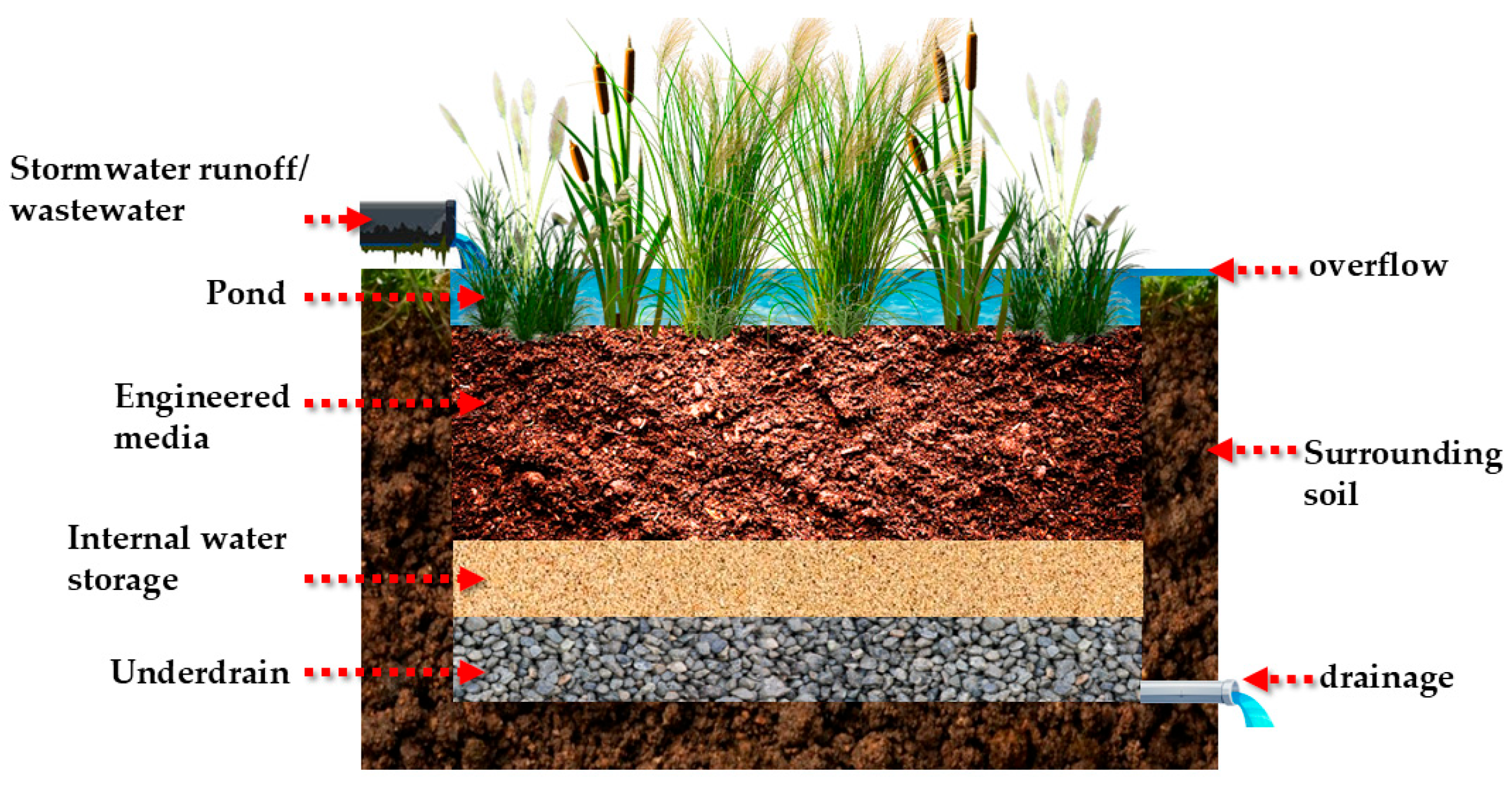
Figure 4.
Modular and continuous types of green walls.

Figure 5.
Illustration of permeable pavements.
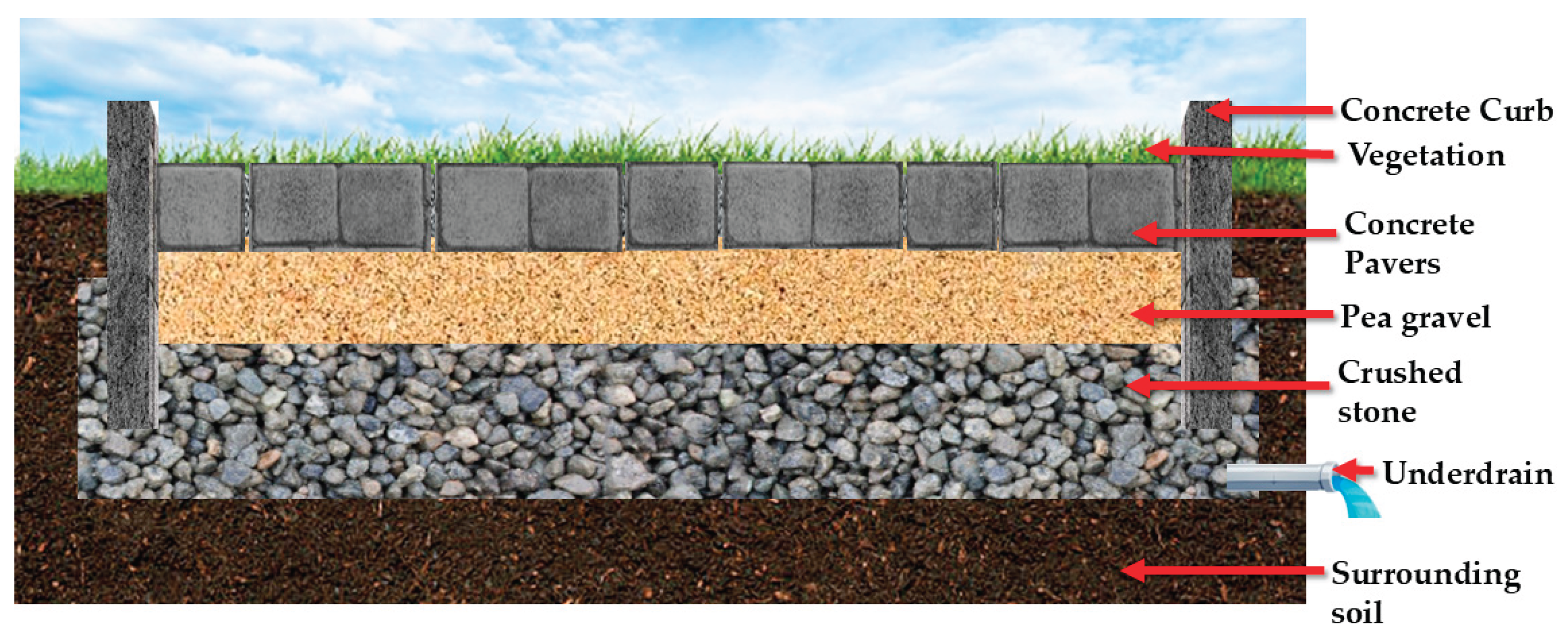
Figure 6.
Illustration of retention ponds.
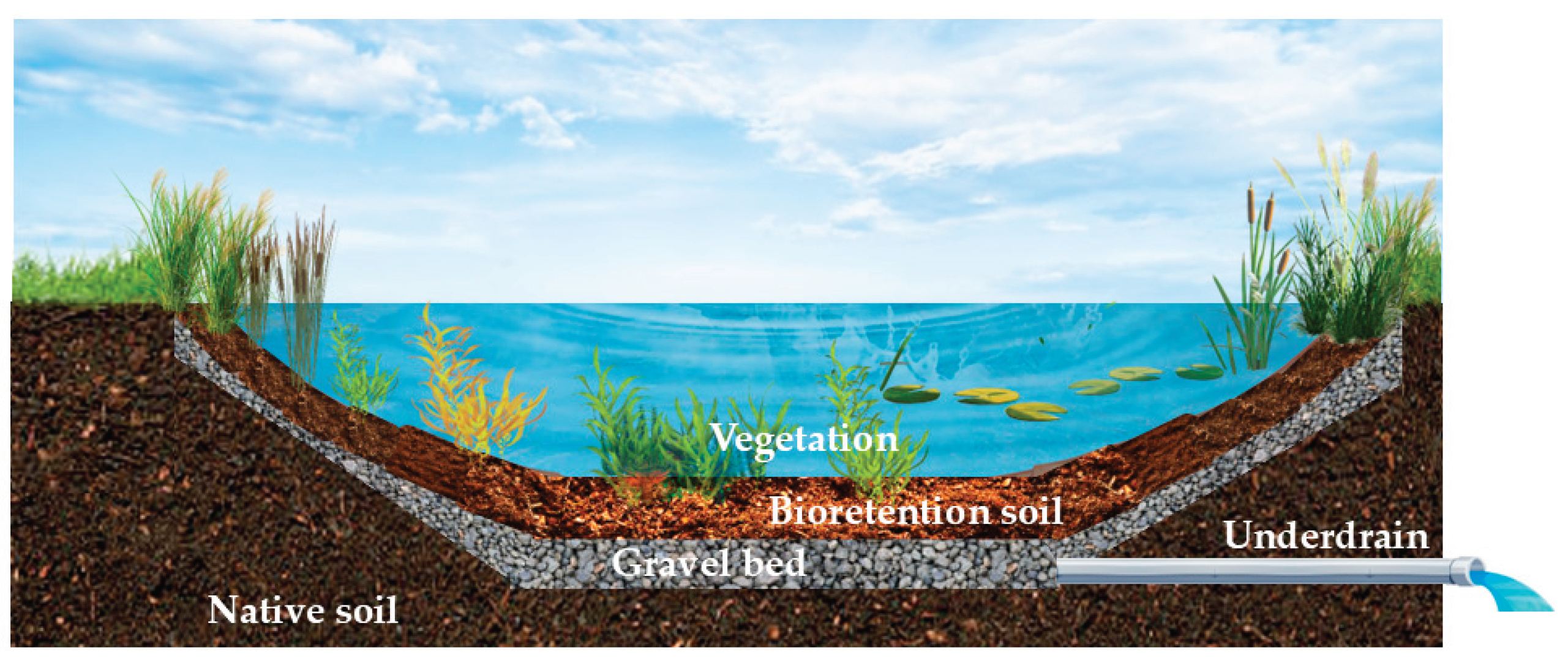

Table 1.
Microplastics removal rate for different levels of wastewater treatment.
| Treatment Technology | Microbeads | Fibers | Other Microplastics |
Sources |
|---|---|---|---|---|
| Primary Treatment | > 98.4% | > 71.8% | > 62.7% | [5,6,7,8] |
| Secondary Treatment | > 100% | > 57.8% | > 96.9% | [5,6,14,15] |
| Tertiary Treatment | > 99.9% | > 57.7% | > 95% | [12,17,20,21] |
Table 2.
Comparison of NbS technologies for wastewater treatment of microplastics.
| Nature-based Solution | Microplastics Removal Rate |
|---|---|
| Constructed wetlands | < 100% |
| Green infrastructures | 50-99% |
| Macrophytes | > 94% |
| Microphytes | > 82% |
Table 3.
Comparison of different microphytes as NbS for wastewater treatment of microplastics.
| Microphytes | Microplastics Removal/ Flocculation |
|---|---|
| Spirulina sp. | Most effective |
| Tetraselmis chuii | Effective |
| Chlorella vulgaris | > 94% |
| Dunaliella salina | Less effective |
| Chroococcidiopsis cubana | > 91% |
Table 4.
Comparison of different macrophytes as NbS for wastewater treatment of microplastics.
| Macrophytes | Microplastic size | Removal Efficiency |
Mechanism |
|---|---|---|---|
| Hydrilla verticillata | 800-1000 µm | High | Leaf surface area |
| Mayaca fluviatilis | 600-800 µm | Moderate | Surface cellulose |
| Myriophyllum aquaticum | >100 µm | 93.38% | Optimized conditions |
|
Cyperus papyrus, Pontederia sagittata |
Various sizes | 82.4%-81.1% | Root retention |
| Eichhornia crassipes | 0.5-2 µm | 55.3%-69.1% | Root adsorption |
|
Iris pseudacorus Lythrum anceps |
Various sizes Various sizes |
81.5% 77.3% |
Root adsorption Root adsorption |
Disclaimer/Publisher’s Note: The statements, opinions and data contained in all publications are solely those of the individual author(s) and contributor(s) and not of MDPI and/or the editor(s). MDPI and/or the editor(s) disclaim responsibility for any injury to people or property resulting from any ideas, methods, instructions or products referred to in the content. |
© 2025 by the authors. Licensee MDPI, Basel, Switzerland. This article is an open access article distributed under the terms and conditions of the Creative Commons Attribution (CC BY) license (http://creativecommons.org/licenses/by/4.0/).
Copyright: This open access article is published under a Creative Commons CC BY 4.0 license, which permit the free download, distribution, and reuse, provided that the author and preprint are cited in any reuse.


