

Submitted:
09 July 2025
Posted:
11 July 2025
You are already at the latest version
Abstract
A parasitological study conducted in the peri-urban area of Bouaké, aims to control the main haemoparasites in cattle. A total of 240 blood samples were taken in 2021 from cattle of different breeds and age groups for the production of blood smears. These blood smears were fixed in 96% methanol for 3 to 5 minutes, then stained with diluted 10% Giemsa for 20 to 30 minutes and observed under a light microscope at immersion objective 100. Four species of haemoparasites specifically caused by ticks were observed: Anaplasma marginale (48.33%), Theileria spp (21.25%), Babesia bigemina (9.58%) and Anaplasma centrale (4.58%). Trypanosoma spp were not encountered. With the exception of B. bigemina, the statistical difference in prevalence was significant at the p-value threshold ≤ 0.05 at the sampling sites. In addition, A. marginale and Theileria spp differed significantly at p-value ≤ 0.05 according to season, with infection levels higher in the rainy season than in the dry season. Among cattle breeds, Theileria spp was more prevalent in the N'dama breed (28.8%). The difference in prevalence for this blood parasite is considered significant at p-value ≤ 0.05 at breed level. Further studies on haemoparasite vectors are needed for more effective integrated pest management.
Keywords:
prevalence
; haemoparasites
; cattle
; Bouaké
; Côte d'Ivoiree
Introduction
In Côte d’Ivoire, the livestock production sub-sector, contributing 4.5% to the agricultural GDP (and only 2% to the national GDP), occupies a marginal position in the Ivorian economy (MIRAH, 2022). Animal production from these livestock systems remains underexploited. The deficits in meat and dairy products are estimated at 55.4% and 87.4%, respectively.
Like the major cities of sub-Saharan Africa, large Ivorian cities are experiencing rapid urbanization. The urbanization rate is 52% (INS, 2022) according to the 2021 general population and housing census. Peri-urban livestock farming occupies a key position in meeting the needs of urban populations for meat, dairy, and poultry products. Numerous food and health constraints limit the development of livestock production. Among these constraints, blood parasites, particularly those of the genera Trypanosoma, Anaplasma, Babesia, and Theileria, occupy a prominent place.
Hemoparasites constitute a major obstacle to the development and improvement of cattle breeding worldwide, particularly in Africa (Roy et al., 2018). Furthermore, hemoparasitoses of cattle can have a negative impact on animal health, the livestock industry and, sometimes, on humans. Parasitic diseases such as babesiosis, thelleriosis and anaplasmosis are widespread in tropical and subtropical regions, including Côte d'Ivoire. Infections can be fatal to livestock but are also known to cause fever, anorexia, jaundice, increased abortion rates and infertility (Abdallah et al., 2019). These hemoparasitoses caused by protozoa (Theileria and Babesia) and bacteria (Anaplasma / Ehrlichia) constitute a serious challenge for the health and welfare of livestock, particularly in tropical and subtropical regions.
To our knowledge, few previous reports illustrate the distribution and microscopic identification of hemoparasites in cattle in the city of Bouaké. In order to improve livestock productivity in peri-urban areas while effectively combating food insecurity and reducing economic losses caused by parasitic diseases, this study was initiated to inventory the different hemoparasites and assess their prevalence in cattle raised in parks located in the peri-urban area of Bouaké.
Materials and Methods
Study Areas
The study is carried out on cattle farms located in urban and peri-urban areas of Bouaké. Bouaké is located in the center of Côte d'Ivoire in the Gbêkê region on the major road and rail axis linking Abidjan to the north of the country (Figure 1).
With a population of 832,371 inhabitants (INS, 2021), Bouaké presents a forest-savannah transition zone (Sudanese-Guinean) characterized by temperatures oscillating around 27°C with differences of the order of 3 to 5°C. Average decadal evaporation varies between 35 and 55 mm during the rainy season and relative humidity fluctuates between 70 and 80%. The rainfall pattern is bimodal, with irregular precipitation reaching an average annual total of around 1,100 mm (Brou et al., 2018). Night parks located in the neighborhoods along the different corridors of the city were visited.
In each site, four farms were chosen for sampling. The sites are as follows:
- ✓
- Site 1 located in the southern corridor (Air France 3, cemetery and Kongodekro);
- ✓
- Site 2 located in the eastern corridor (Olienou, Belleville, and Kouassibilekro);
- ✓
- Site 3 located in the western corridor (Tchelekro, CIDT estate, Adjeyaokro);
- ✓
- Site 4 located in the North corridor (CNRA breeding station, Tollakouadiokro).
Materials
Cattle of all ages, breeds and both sexes belonging to different age classes were sampled as shown in Table 1. Standard equipment for identification of blood parasites was used, which consisted of a light microscope, immersion oil, GIEMSA stain, microscope slides, 95% methanol, lancet, microcapillary tube, microscope slide and gloves.
Methods
The samples were collected in February and October, corresponding to the dry and rainy seasons respectively. For a more representative sample, 60 samples were taken per site. In total, 240 cattle were sampled, including 163 females and 77 males. One hundred and twenty (120) samples were taken during the dry season (February 2021) and 120 during the rainy season (October 2021). The age of the cattle ranged from 1 to 12 months for calves and she-calves, from 13 to 36 months for young bulls and heifers and from 37 months and over for bulls and cows. The distribution of cattle numbers collected at the collection sites is shown in Table 1.
Blood samples were collected from the ear vein. The animal is immobilized and the base of the ear is compressed. A lancet is then used to prick the ear and collect the blood sample. A drop of blood was then placed on one slide and another slide was beveled at a 30° angle. The beveled slide was then brought into contact with the drop of blood, and when it spread by capillary action and slid forward, the smear was applied to clean, dry slides. Smears were fixed in 95% methanol and stained with GIEMSA diluted to 10% in distilled water. The smears were then observed under a light microscope to detect different species of hemoparasites. Microscopic observation was carried out at 100x magnification using immersion oil and the results were recorded. After observing 3/4 of the observable fields, the smears were considered negative if no parasites were detected. All analyses were carried out at the Bouaké Regional Laboratory (LRB), a technical sub-unit of the National Laboratory for Agricultural Development Support (LANADA).
Statistical Analysis
The results were recorded using Excel software. A descriptive analysis was carried out to calculate the prevalences according to the following formula:
The Chi-square statistical test was performed using STATISTICA version 7.0 software to compare the prevalence of the different parameters studied, and the values obtained (percentages) were compared with the 5% threshold.
Results
Parasitic Screening for Blood Parasites
Microscopic examination of the 240 samples revealed that 201 smears were positive for at least one blood parasite. The frequency of cattle infected with at least one blood parasite was 83.75%, while 42.91% of animals were free of any blood parasites. Figure 2 shows the prevalence of the different species of hemoparasites encountered in the study area. A total of 04 species belonging to 03 genera of blood parasites were identified. This is the genus Anaplasma with two species, A. marginale (48.33%) and A. centrale (4.58%); Babesia includes the species B. bigemina with a prevalence of 9.6%; and the genus Theileria. The prevalence of Theileria spp was estimated at 21.25%. Statistical analysis revealed a significant difference (P=0.0001) between the prevalences of these hemoparasites. Hemoparasites of the genus Trypanosoma were not encountered.
Prevalence of Parasites Identified According to the Sex of the Animal
The inventory of hemoparasite species in cattle was also carried out taking into account the sex of the animals. Of a total of 77 male subjects, the species A. marginale, Theileria spp and B. bigemina were the most prevalent. Their respective prevalences were 50.65%, 19.48% and 12.99%. A. centrale represented the lowest prevalence encountered (6.49%), with 5 infected male cattle out of 77 male subjects. Among the 163 females, A. marginale, Theileria spp and B. bigemina were the most numerically dominant species, with respective prevalences of 42.24%, 22.08% and 7.97%. A. centrale had the lowest infectivity (7.97%) in females (Figure 3). Overall, the Chi2 test showed that the presence of parasites was not related to sex (p>0.05).
Prevalence of Parasite Species According to Animal Age Class
Figure 4 shows the prevalence of hemoparasites encountered according to the age class of the cattle sampled. A. marginale infected more cattle identically regardless of their physiological stage followed by Theileria spp. Babesia bigemina and A. centrale weakly infected cattle. The prevalence of A. marginale infection in these categories of cattle was 51.46% in adults, 50.66% in juveniles and 40.32% in young cattle.
Parasite Prevalence According to the Physiological Stage Cattle
All blood parasites identified during this study were found in cows, with high prevalences of over 49.44% for A. marginale, 22.47% for Theileria spp., 7.86% for B. bigemina, and 5.61% for A. centrale. A. centrale was not encountered in heifers and bulls. The prevalence of parasites encountered according to the physiological stage of the cattle sampled are presented in Figure 5.
Seasonal Variation in the Prevalence of Hemoparasites Found in Cattle
The influence of the season on the prevalence of hemoparasites was studied. The diversity of hemoparasite species found in cattle farms in the city of Bouaké during the rainy season and the dry season remains completely identical. Overall, a decreasing trend in the prevalence of all parasites during the dry season was observed (Figure 6) except for A. centrale and B. bigemina. A marginale responsible for bovine anaplasmosis recorded prevalences of 31.67% during the dry season against 65% during the rainy season. Prevalences of 3.33% and 39.17% were recorded during the dry and rainy seasons respectively for Theileria spp.
Variation in the Prevalence of Hemoparasites Encountered Depending on the Sample Collection Site in Cattle
The overall prevalence of hemoparasites encountered in the different sampling sites is presented in Table 2. It appears that A. centrale was not encountered in the southern districts (Air France 3, cemetery and Kongodekro) and the western districts (Tchelekro, CIDT city and Adjeyaokro) of the city. A. marginale was found to be more infectious for cattle with a prevalence of 75% for the eastern districts (Olienou, Belleville and Kouassibilekro), 46.7% in cattle in the northern districts (CNRA station and Tollakouadiokro), 41.7% in the southern districts (Air France cemetery and Kongodekro) and 30% in the western districts (Tchelekro, CIDT city and Adjeyaokro). The prevalence of A. marginale, A. centrale and Theileria spp varied significantly depending on the area (p< 0.05).
Variation in the Prevalence of Hemoparasites Encountered According to the Breed of Cattle Sampled
The influence of breed on the receptivity of hemoparasites was studied in the study area. Table 3 shows the prevalence of hemoparasites encountered according to the cattle breeds encountered. A. centrale and Theileria spp were not found in Méré cattle. A. marginale was encountered in all cattle breeds with prevalences of 51.25% in N’dama cattle, 48.48% in zebu cattle and 39.29% in Méré cattle. Comparison of prevalences according to breed revealed no significant difference for Anaplasma marginale, Anaplasma centrale and Babesia bigemina (p > 0.05). However, the prevalence of Theileria spp varied significantly depending on the breed (p < 0.01) with a high level for N'dama cattle (28.8%) compared to 21.2% for Zebu cattle.
Discussion
The study revealed the presence of hemoparasites of the genus Babesia, Theileria and Anaplasma in cattle farms in the peri-urban area of Bouaké in central Côte d'Ivoire. The presence of these three genera of parasites could be explained by the presence of vectors, particularly ticks, which carry these pathogens. These results corroborate those of Djakaridja et al. (2014) in the Bandama River Valley in central Côte d'Ivoire with similar prevalence rates.
Furthermore, among the 240 blood smears collected, none were positive for parasites of the genus Trypanosoma. The absence of parasites of the genus Trypanosoma could be explained by the absence in the city of Bouaké of islands of forest called "Bois sacré". These sites, which constitute true tsetse landmarks, contributed to maintaining an environment suitable for the survival of these trypanosome vectors. In addition, the samples were taken specifically in the peri-urban area of the city. In 2014, Djakaridja had not obtained parasites of the genus Trypanosoma (T. vivax and T. brucei). In the northern area of Côte d'Ivoire, on the other hand, the presence of parasites of the genus Trypanosoma was demonstrated by Yéo et al. (2017).
Of 240 smears collected, 116 smears were positive for A. marginale, Theileria spp (51), B. bigemina (23), and A. centrale (11).
In work on hemoparasites in the central zone, Djakaridja in 2014, observed 2 species of hemoparasites (B. bovis and Anaplasma marginale). In the northern zone, on the other hand, Yéo et al. (2017), observed in addition to the genus Trypanosoma, the species A. marginale, A. centrale, Babesia bigemina, B.bovis. These two studies do not take into account the presence of Theileira spp in their different investigation zones. In a nearly similar study on hemoparasites of cattle ticks in Benin in 2007, Farougou et al., observed 4 hemoparasites which are Babesia bigemina, Theileria spp, Anaplasma marginale and Anaplasma centrale. These authors concluded their work by designating ticks of the genus Rhipicephalus (Boophilus) as the main vectors of transmission of these blood parasites. Futse et al. (2003) designated ticks as the vector agent of parasites of the genus Anaplasma, a rikettsian pathogen of cattle. Among the pathogens isolated in this study, Anaplasma marginale was the most common. The prevalence of 48% observed in the present study. This prevalence is lower than the rate recorded in the central zone in 2014 by Djakaridja et al. This work had made it possible to isolate A. marginale and B. bovis with respective prevalences of more than 55% and 59% in the central areas of Côte d'Ivoire. Yeo et al. (2017) obtained prevalences of 85%, 51.67% and 93.33% respectively for the localities of Korhogo, M'bengue and Ferkessédougou in the north of Côte d'Ivoire. The prevalences observed in our study were significantly higher than those obtained by Farhan et al. (2012) and Komoin-Oka et al. (2004) in the central area of the humid savannah of Côte d'Ivoire. The observed prevalences would be around 9.71%. The high presence of Anaplasma marginale in this study can be explained by the massive presence of the vector tick Rhipicephalus (Boophilus) in livestock farms in the peri-urban area of Bouaké. This tick was identified by Achi et al. (2012) in livestock farms in northern Côte d'Ivoire. Madder et al. (2007) identified Rhipicephalus (Boophilus) microplus for the first time in southern Côte d'Ivoire. This tick is widely present in the city's livestock farms. The presence of the parasite of the genus Babesia could be explained according to Yeo et al. (2017b), by the presence of the tick species Rhipicephalus (Boophilus) microplus.
Although the sample cattle are present in the peri-urban area of Bouaké, the breeding system adopted in these different farms is of the traditional type. The breeders do not have artificial pastures to feed their cattle. Sokouri et al. (2014) estimated that 5% of breeders have artificial pastures in the northern area of Côte d'Ivoire. To feed their cattle, breeders all turn to the pasture areas scattered in and around homes. In the eastern and western districts of the city, it is not uncommon to see stray cattle grazing in the streets. Peri-urban grazing areas intended for feeding ruminants according to Kouadja et al. (2019), are gradually decreasing due to the rapid urbanization of the city of Bouaké. These grazing areas would represent areas favorable to the transmission of parasitoses according to Djakaridja et al. (2014). For Jorgensen et al. (1992), breeding methods are among the factors most influencing the prevalence of Tick-Transmitted Diseases or TTDs. The high recorded prevalence of A. marginale reflects the wide distribution of ticks, vectors of these parasites. The massive presence of A. marginale on all sites could be explained by a distribution of vector ticks on all the city corridors.
The use of acaricides is strongly recommended for breeders to combat ticks that carry these parasites. The high pressure of acaricides used in tick control in the sampled herds could explain the prevalences obtained. Indeed, regular tick removals carried out with appropriate products can significantly reduce ticks and, consequently, according to Djakaridja et al., (2014). The use of inferior quality acaricides by breeders to combat ticks could explain, according to Yéo et al. (2017b), the prevalences observed as in the departments of Dikodougou and M’bengue in the north of Côte d’Ivoire.
During the present study, prevalences were not impacted by the sex of the cattle sampled. Djakaridja et al. (2014), and Komoin-Oka et al. (2004) made the same observation. For all the hemoparasites encountered, no difference in prevalence according to sex was highlighted. However, for Farougou et al. (2007), sex may constitute a risk factor because females would present a greater receptivity linked to their lower resistance during gestation and lactation.
Unlike A. marginale and Theileria spp, the prevalence of A. centrale and B. bigemina was not influenced by the seasons of sample collection. This could be explained by the dynamics of the different tick vectors of these parasites. Indeed, Knopf et al. (2004) showed that Rhipicephalus (Boophilus) microplus presents a fairly clear seasonality compared to Rhipicephalus (Boophilus). Further studies, particularly on the seasonal dynamics of ticks in the peri-urban area of Bouaké, are necessary for more effective integrated control.
Conclusion
This study confirmed the presence of different species of blood parasites in livestock farms located in the peri-urban area of Bouaké in central Côte d'Ivoire. Babesia bigemina is responsible for babesiosis and Anaplasma marginale and Anaplasma centrale are the etiological agents of anaplasmosis. Anaplasma marginale is by far the most common in the city of Bouaké. A decreasing trend in the prevalence of all parasites during the dry season was observed except for A. centrale and B. bigemina. Parks located in the eastern districts of the city appear to be the most infected by anaplasmosis. Furthermore, all age groups are affected by blood parasites. It is important to undertake rational control measures against ticks, responsible for the transmission of all the parasites encountered. This will reduce parasite loads and improve the profitability of cattle farms in peri-urban areas. These measures must be combined with preventive and curative actions.
References
- Abdullah DA, Ali MS, Omer SG, OlaFadunsin SD, Ali FF, Gimba FI., 2019. Prevalence and climatic influence on hemoparasites of cattle and sheep in Mosul, Iraq. Journal of Advanced Veterinary And Animal Research; 6(4):492–498. [CrossRef]
- Achi YL, Koné P, Stachurski F, Zinsstag J, Betschart B. 2012. Impact des tiques sur des bovins métissés dans le Nord de la Côte d’Ivoire. Bull. Anim. Hlth. Prod. Afr., 60(2): 109-118. URL: http://www.ajol.info/index.php/bahpa/article/view/81734.
- Achi YL, Koné P, Stachurski F, Zinsstag J, Betschart B. 2012. Impact des tiques sur des bovins métissés dans le Nord de la Côte d’Ivoire. Bulletin Animal Health Production Africa 60(2), 109-118. http: //www.ajol.info/index.php/bahpa/article/view/ 81734.
- Barre N. ET Uilenberg G. 2010 : Propagation des parasites transportés avec leurs hôtes : cas exemplaires de deux espèces de tiques du bétail. Revue Scientifique et Technique Office Internationale des Epizooties, 29, 135-147.
- Brou K., Ehounou J-N., Kassin K. E., Dekoula C. S., Yao G. F., N’Goran E. K., Brou Julien Kouakou et Koné B., 2018, « Caractérisation des paramètres agro-climatiques clés de la saison culturale en zone de contact forêt-savane de Côte d’Ivoire » European Scientific Journal, Vol.14, N°36, pp.243-259.
- Djakaridja B, Yao KP, Gragnon BG, AcapoviYao G, Mavoungou JL. 2014. Situation épidémiologique des hémoparasites des bovins dans deux zones d’élevage de la Côte d’Ivoire : cas des anciennes régions des savanes et de la vallée Bandama. Revue Méd. Vét., 165 : 297-303. URL : www.revmedvet.com/2014/RMV165_297_303.
- Farougou S., TassouA.W., Tchabode D.M., Kpodekon M., Boko C., Youssao A.K.I., 2007.Tiques et hémoparasites du bétail dans le nord-Bénin, Revue Médecine Vétérinaire, 2007, 158, 463–467.
- Futse JE, Ueti MW, Knowles DP, Palmer GH. 2003. Transmission of Anaplasma marginale by blood Boophilus microplus: retention of vector competence Sadar area of in the absence of vector-pathogen interaction. Journal of Clinical Microbiology 41, 3829-3834. [CrossRef]
- INS, 2022. Recensement Général de la Population et de l’Habitat 2021. 2021 ;37.
- Komoin-Oka C, Knopf L, N’Depo A, Zinsstag J. 2004. Le parasitisme sanguin des bovins de la zone centre de savane humide de la Côte d’Ivoire. Le parasitisme des ruminants domestiques en Afrique de l’Ouest, cas de la Côte d’Ivoire. Sempervira 11, 60-63. ibrarian.net/navon/paper/SEMPERVIRA_Num_ro_ 11. pdf?paperid=6269885.
- Kouadja G. S., Bakayoko A., N’Guessan K. A., Kouassi N’Gouan C. (2018) : « Modes d’alimentation des ruminants en élevages urbains et périurbains de Bouaké (Côte d’Ivoire) », Fourrages, 233, 55-59.
- Knopf L., Komoin-oka C., N’depo A., and Zinsstag J. 2004 : La productivité du bétail N’Dama/ Parasitisme. In : Le parasitisme des ruminants domestiques en Afrique de l’Ouest, cas de la Côte d’Ivoire. Sempervira, 11, 64-82.
- Jorgensen W.K., Weilgama D.J., Navaratne M. and Dalgliesh R. J. 1992: Prevalence of Babesia bovis and Anaplasma marginale at selected localities in Sri Lanka. Tropical Animal Health and Production, 24, 9-14.
- Madder M, Thys E, Geysen D, Baudoux C, Horak I. 2007. Boophilus microplus ticks found in West Africa. Experimental & Applied Acarology 43, 233-234 (Short communication). [CrossRef]
- MIRAH, 2022. La politique nationale de développement de l’élevage, de la pêche et de l’aquaculture (PONADEPA) 2022- 2026, 185 pages.
- Nyabongo L, Kanduma EG, Bishop RP, Machuka E, Njeri A, Bimenyimana AV et al.,2021. Prevalence of tick-transmitted pathogens in cattle reveals that Theileria parva, Babesia bigemina and Anaplasma marginale are endemic in Burundi. Parasites Vectors; 14:6. [CrossRef]
- Roy BC, Krücken J, Ahmed JS, Majumder S, Baumann MP, Clausen PH, Nijhof AM., 2018. Molecular identification of tick-borne pathogens infecting cattle in Mymensingh district of Bangladesh reveals emerging species of Anaplasma and Babesia. Transboundary and emerging diseases. ;65(2):e231-e242. [CrossRef]
- Sokouri D.P., Loukou N.E., Yapi-Gnaoré C.V., Soro B.,N’Guetta A.S-P. 2014. Analysis of livestock production practices in the northern region of Côte d’Ivoire. International Journal of Current Research, (6), 10: 91089115.
- Yéo N., Gragnon B.G., Karamoko Y.,2020. Hémoparasites chez les ruminants domestiques dans les départements de Korhogo et Sinématiali en Côte d’Ivoire. European Scientific Journal ;16(15) :183-199. [CrossRef]
- Yéo N., Karamoko Y., Soro D., Zouh Bi Z.F., Okon A.J.L., Gragnon B.G., 2017a. Prevalence of Trypanosoma, Babesia and Anaplasma in cattle reared in the North of Côte d’Ivoire. International Journal of Biosciences, Vol. 10, No. 2, pp. 21–28.
- Yéo N., Karamoko Y., Soro D., Zouh Bi Z.F., Traoré S.I., 2017b. Occurrence of Babesia spp in bovine breeding in Poro area (Côte d’Ivoire) International Journal of Agronomy and Agricultural Research (IJAAR) ISSN : 2223-7054 (Print) 2225-3610 (Online) http://www.innspub.net Vol. 10, No. 3, p. 18-25.
Figure 1.
Location of the study area.
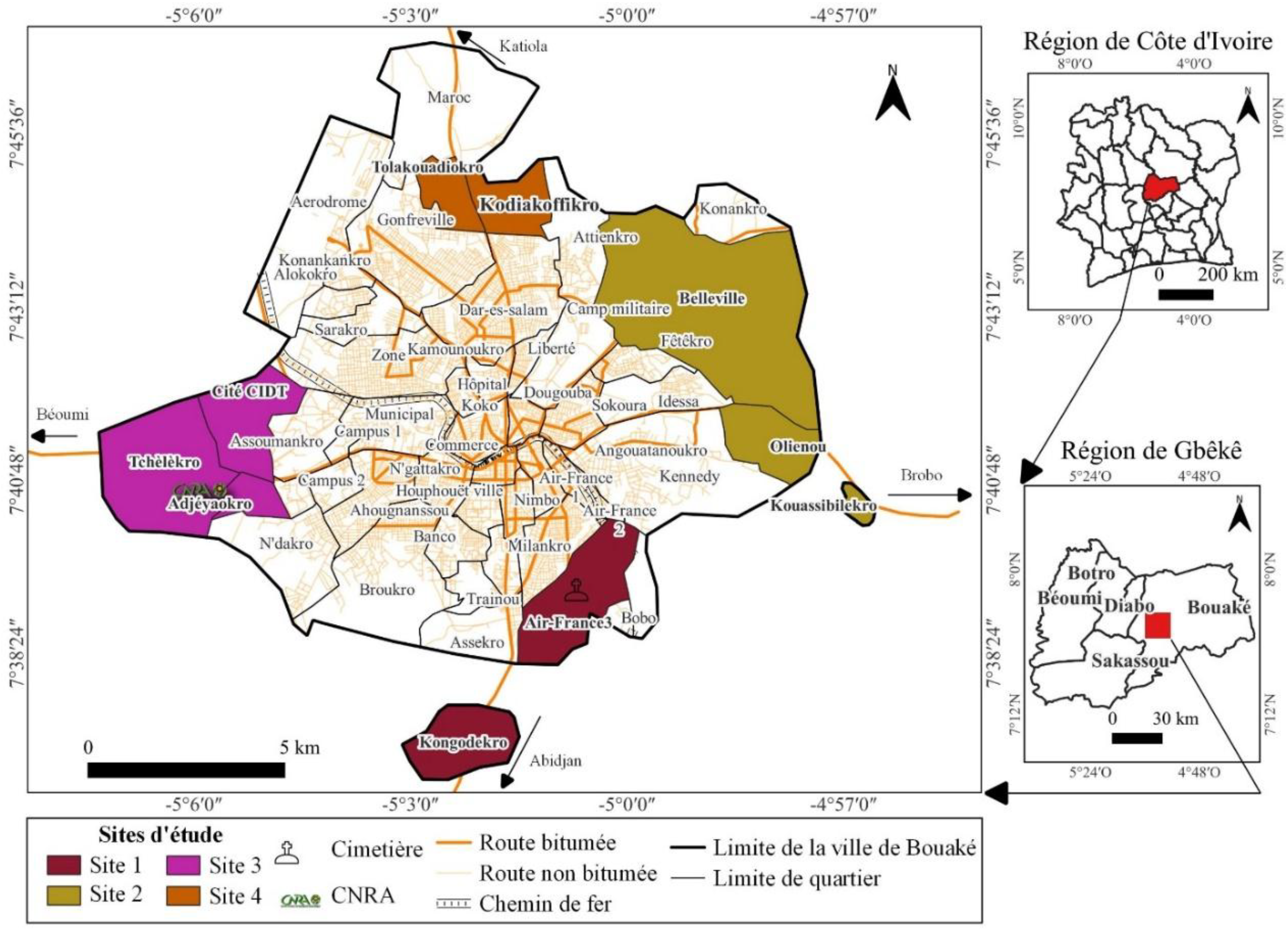
Figure 2.
Prevalence of the different species of blood parasites encountered.
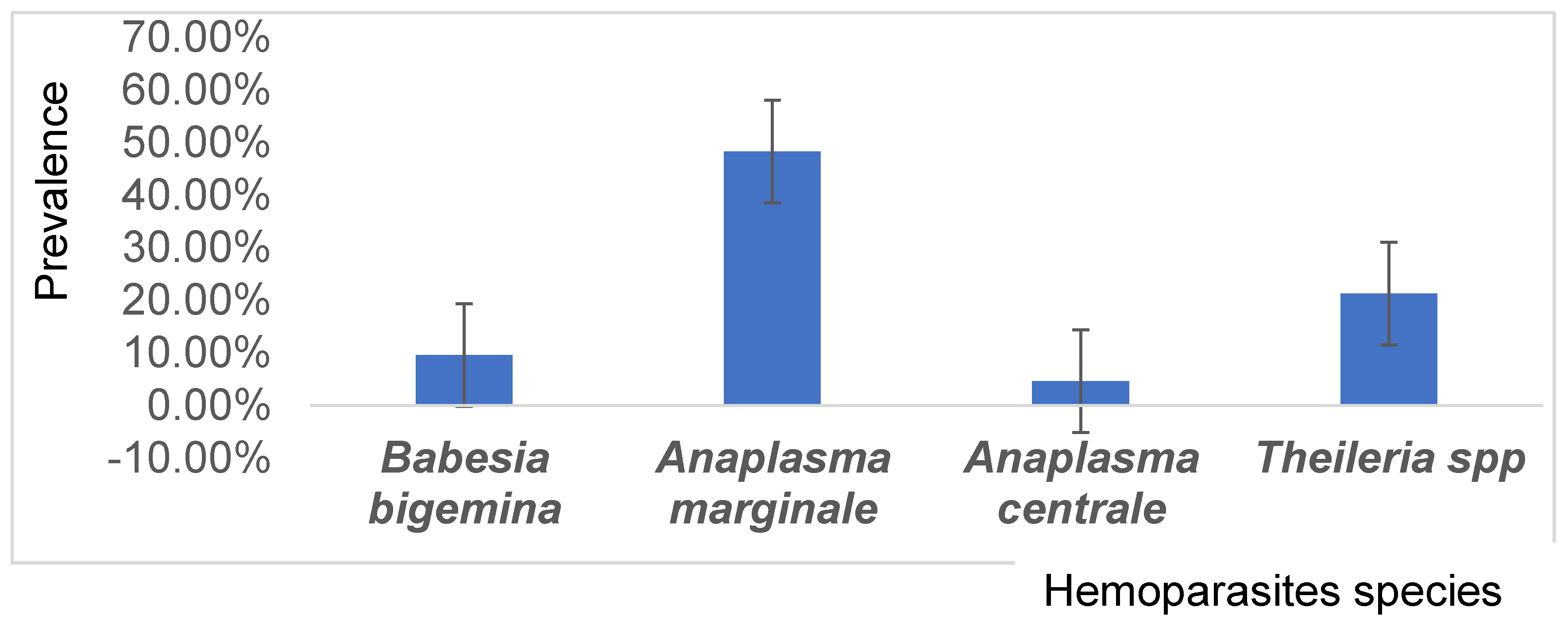
Figure 3.
Variation in parasite prevalence according to the sex of the animal.
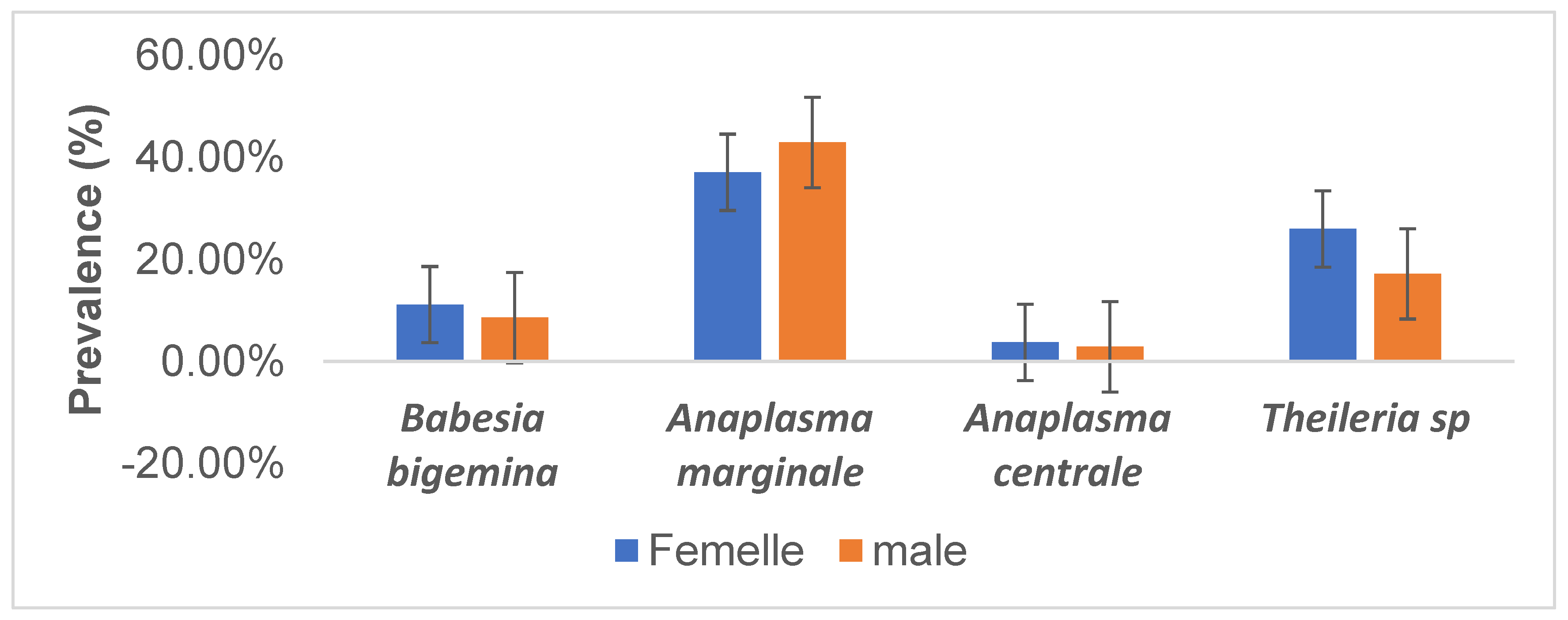
Figure 4.
Prevalence of parasite species according to animal age class.
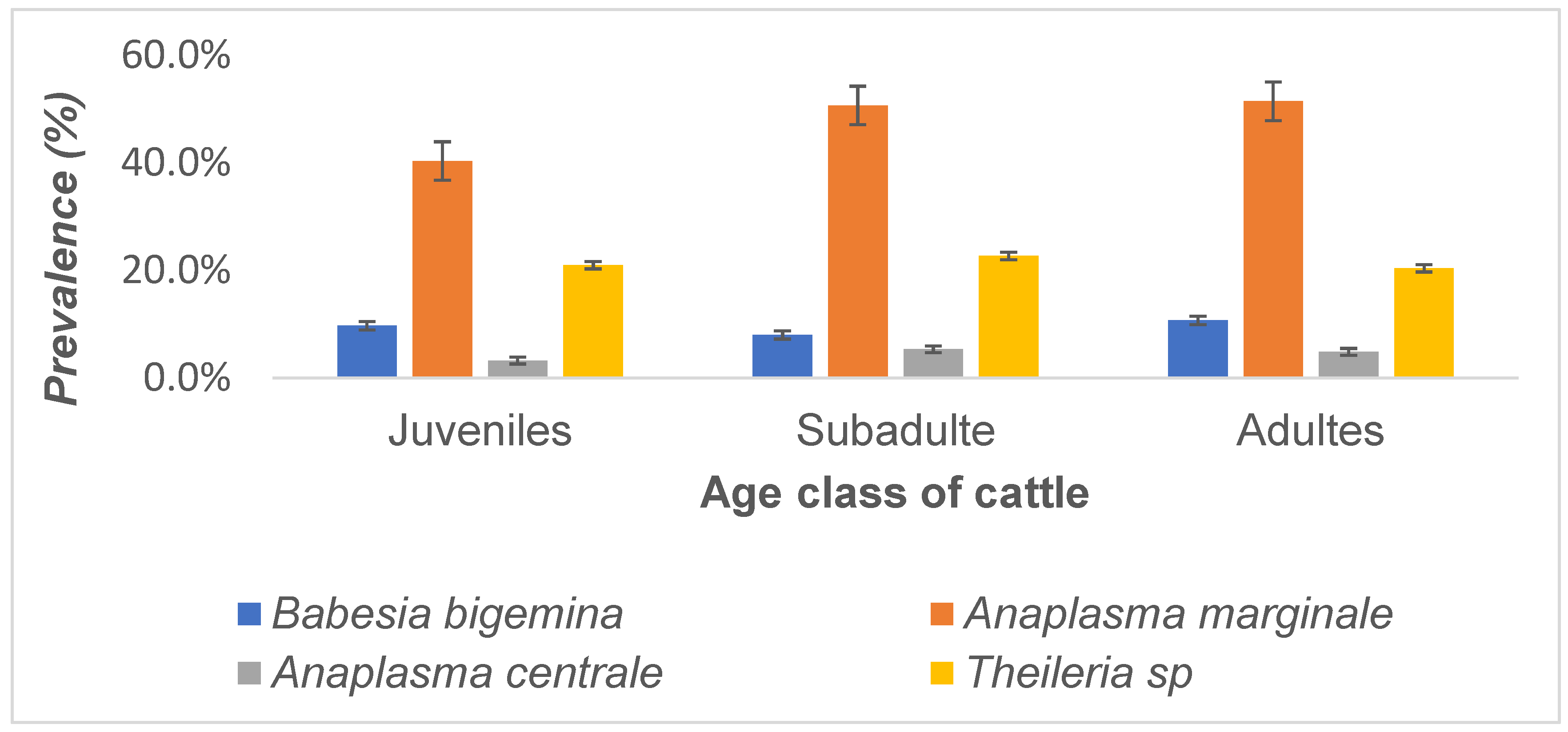
Figure 5.
Variation in parasite prevalence according to the physiological stage of the cattle sampled.
Figure 5.
Variation in parasite prevalence according to the physiological stage of the cattle sampled.
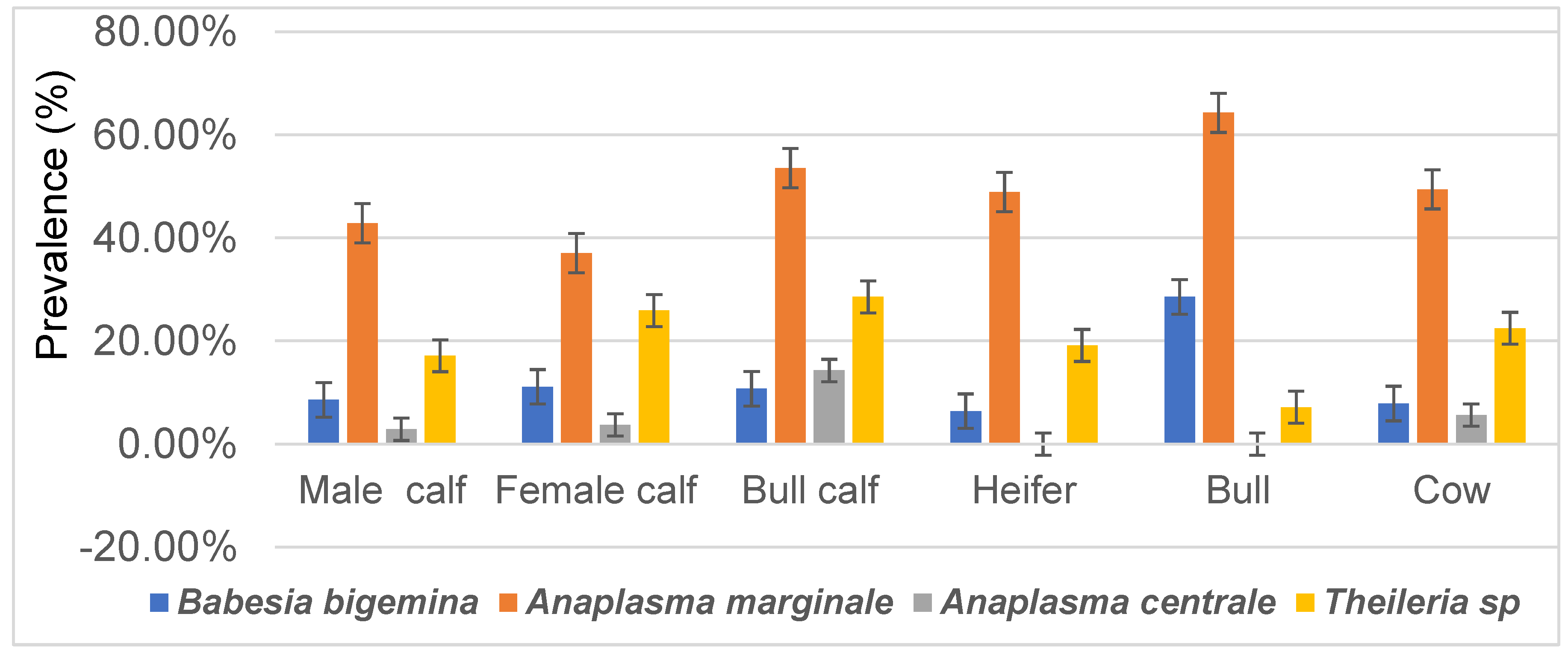
Figure 6.
Variation in parasite prevalence depending on the sampling season.
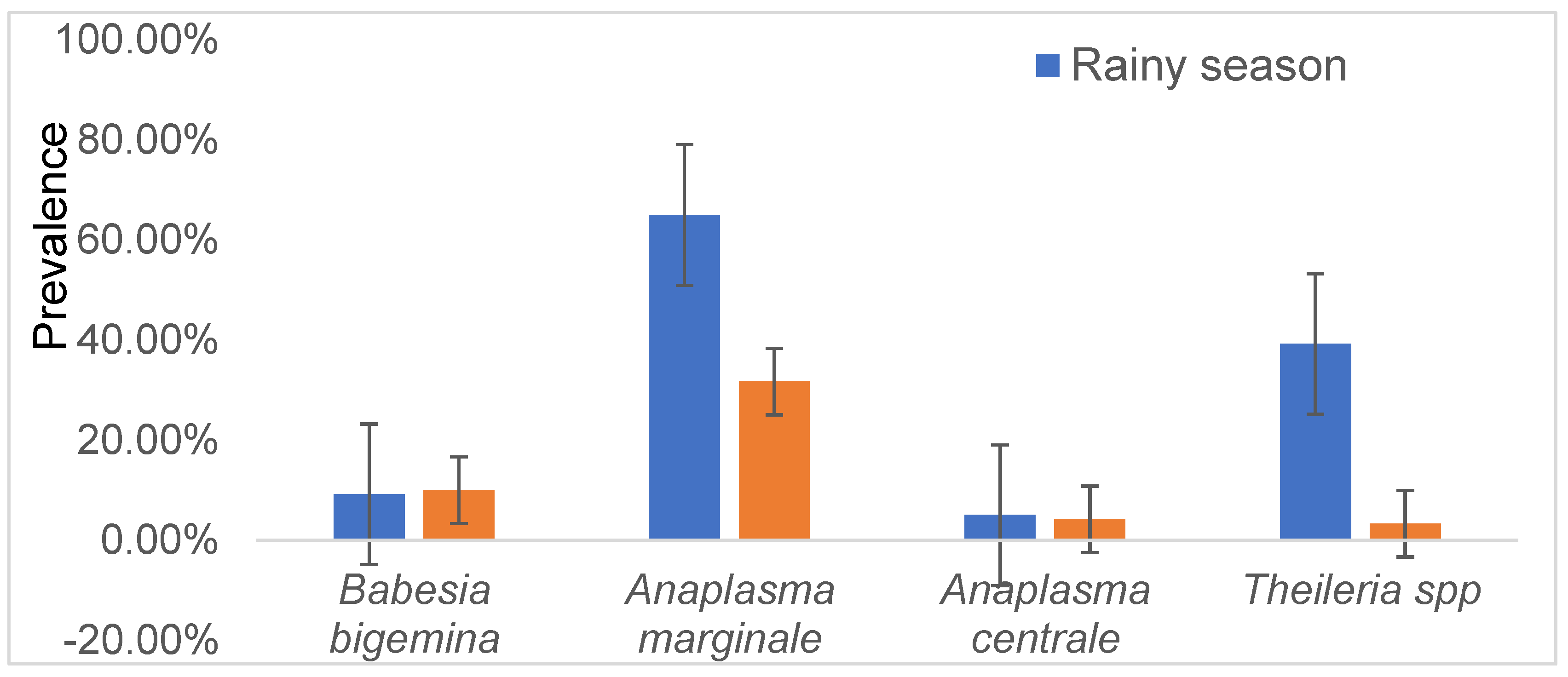

Table 1.
Distribution of the number of cattle collected from the collection sites according to sex, age classes and physiological status of the animals.
Table 1.
Distribution of the number of cattle collected from the collection sites according to sex, age classes and physiological status of the animals.
| Collection Site | Sex | age Classes | Physiological status | ||||||||
|---|---|---|---|---|---|---|---|---|---|---|---|
| M | F | JUV (≤ 1 year) | SAD (1-3 years) | ADU (≥ 3 years) | Vx | Ve | Tn | Gn | Tx | Vc | |
| Southern corridor | 20 | 40 | 14 | 20 | 26 | 9 | 5 | 7 | 13 | 4 | 22 |
| Eastern corridor | 20 | 40 | 10 | 21 | 29 | 6 | 4 | 10 | 11 | 4 | 25 |
| West corridor | 21 | 39 | 22 | 15 | 23 | 14 | 8 | 3 | 12 | 4 | 19 |
| northern corridor | 16 | 44 | 16 | 19 | 25 | 6 | 10 | 8 | 11 | 2 | 23 |
| Total | 77 | 163 | 62 | 75 | 103 | 35 | 27 | 28 | 47 | 14 | 89 |
M: male; F: female; JUV: juvenile; SAD: subadult; ADU: adult; Vx: calf; Ve: female calf; Tn: young bull; Gn: heifer; Tx: bull; Vc: cow.
Table 2.
Variation in the prevalence of hemoparasites encountered according sampling site.
| Hemoparasites species | Prevalence by collection site | Significability | Χ2 | P (%) | |||
|---|---|---|---|---|---|---|---|
| Southern corridor | Eastern corridor | West corridor | Northern corridor | ||||
| B. bigemina | 6,7 %a | 15,0 %a | 6,7 %a | 10,0 %a | NS | 3,222 | 0,00 |
| A. marginale | 41,7% a | 75,0 %b | 30,0 % c | 46,7 %d | *** | 26,296 | 0,00 |
| A. centrale | 0,0 %a | 11,7 %b | 0,0 %c | 6,7 %d | *** | 13,243 | 50,00 |
| Theileria spp | 16,7 %a | 31,7 %b | 6,7 %c | 30,0 %d | *** | 15,014 | 0,00 |
*** : Significant difference; NS : No significant difference The letters a, b and c indicate a significant difference with a p-value less than or equal to 5%.
Table 3.
Variation in the prevalence of hemoparasites encountered depending on the bovine breed sampled.
Table 3.
Variation in the prevalence of hemoparasites encountered depending on the bovine breed sampled.
| Hemoparasites species | Prevalence by cattle breed | Significability | Χ2 | P (%) | ||
|---|---|---|---|---|---|---|
| Méré | N'dama | Zébu | ||||
| B. bigemina | 14,29 %a | 8,75 %a | 9,09 %a | NS | 0,816 | 16,7 |
| A. marginale | 39,29 %a | 51,25 %a | 48,48 %a | NS | 1,192 | 0,00 |
| A. centrale | 0,0 %a | 5,0 %a | 5,30 %a | NS | 1,1533 | 33,33 |
| Theileria spp | 0,0 %a | 28,75 %b | 21,21 %c | *** | 10,245 | 0,002 |
*** : Significant difference; NS : No significant difference The letters a, b and c indicate a significant difference with a p-value less than or equal to 5%.
Disclaimer/Publisher’s Note: The statements, opinions and data contained in all publications are solely those of the individual author(s) and contributor(s) and not of MDPI and/or the editor(s). MDPI and/or the editor(s) disclaim responsibility for any injury to people or property resulting from any ideas, methods, instructions or products referred to in the content. |
© 2025 by the authors. Licensee MDPI, Basel, Switzerland. This article is an open access article distributed under the terms and conditions of the Creative Commons Attribution (CC BY) license (http://creativecommons.org/licenses/by/4.0/).
Copyright: This open access article is published under a Creative Commons CC BY 4.0 license, which permit the free download, distribution, and reuse, provided that the author and preprint are cited in any reuse.


