

Submitted:
09 July 2025
Posted:
10 July 2025
You are already at the latest version
Abstract
Background: This review examined and described existing characteristics of education programs which contributed towards the development of an education program for the improvement of QoL of PLHIV on ART. The research question that guided the study was, “What are the characteristics of existing education programs?” Methods: All studies which directly developed a program were assessed for relevance. Only articles written in English from January 2010 to 2021 were retrieved and no authors were contacted. Studies that did not directly develop a program were excluded. The Boolean words “OR” and “AND” were used in conjunction with the following search keywords/ statements: Program development and HIV; Designing an education program and HIV; Development of a program and HIV and education programs and HIV. Critical appraised checklist tools were employed which are Bowling’s and Pearson checklists. Results: Six themes addressing the review question emerged which are needs assessment, program objectives, theory-based methods and strategies, planning and development of the program, program implementation and program evaluation. From the reviewed articles, all thirteen had needs assessment as an initial step in their program development followed by twelve articles which mentioned program implementation and also twelve articles which had a planning and development of a program step. Out of the thirteen articles eleven conducted a program evaluation while nearly half of the articles had program objectives as their second step in development of a program. Conclusions: The findings of this review demonstrated that in the articles searched and reviewed, there were no programs that adequately addressed QoL. This implies that there is no uniform standard in addressing this phenomenon. However, the result suggests important steps to consider when developing a program. Therefore, for a program to be successful and solid, one needs to consider six themes. It is also evident from the review that similar measured results from existing programs can be used to develop education programs that can contribute towards the improvement of QoL of PLHIV on ART.
Keywords:
integrative literature review
; education programmes
; QoL
; PLHIV
1. Introduction
The improvement of Quality of Life (QOL) of PLHIV is still a vital component of worldwide health initiatives. Although life expectancy for PLHIV has increased dramatically due to medical treatment improvements, People Living with HIV (PLHIV) continue to experience challenges associated with the virus [8,11,21]. However, there remains an indisputable need for holistic QOL programmes that address the issues that negatively impact the well-being of PLHIV. These needs include environment, psychological, spiritual, social, level of independence and physical well-being of PLHIV especially on antiretrovirals (ART) as they are essential for ensuring that PLHIV not only survive but thrive [13,17,24].
Personalized education programmes are thus essential for improving PLHIV general well-being, giving them the skills to properly manage their condition, and facilitating their social integration. Therefore, through a thorough examination of a wide range of studies on existing characteristics of education programmes used globally, this review contributed towards the development of an education programme designed to improve the QOL of PLHIV on ART. Furthermore, it sought to inform the development of a holistic, accessible, and inclusive educational programme that will empower PLHIV to lead fulfilling and healthy lives as well as lead to a change in behaviors.
2. Materials and Methods
This integrative literature review employed Whittemore and Knafl [25] steps which include i) problem identification; ii) literature search; iii) data evaluation; iv) data analysis; and v) presentation of the findings. An integrative review method was considered appropriate in this study as it provided an overview of what is current and the existing gaps in knowledge in the existing programmes which contributed towards the development of an education programme designed to improve the QoL of PLHIV on ART, which was the aim of this review. Additionally, the integrative review method was believed to be the appropriate type of research review for this study due to the fact that it allows for the inclusion of different methodologies from experimental and non-experimental studies and uses data based on both empirical and theoretical work [1,5].
The researchers used a flowchart (Figure 1) to demonstrate the selection process for the articles in this review. Critical appraised checklist for quantitative studies was employed using Bowling’s [6] checklist as shown in Table 2 and the quality appraisal checklist tool for qualitative studies using Pearson [19] in Table 3.
Inclusion and Exclusion Criteria
The literature search step located articles and reports which were relevant to the problem identified under step 1 of this review [25]. A comprehensive search was conducted from January 2010 to July 2021. This was done in the hope that this period will provide relevant articles and recent evidence if they exist. The time period was selected based on the recent scale-up of HIV prevention, treatment, care, and support programmes. These years are also indicative of the ART programmes ' explosive growth both globally and specifically in South Africa. Additionally, there were no restrictions placed with regards to the study design or sample size. In cases where full texts were not available, a librarian was contacted at the University of the Western to retrieve those articles.
All studies which directly developed a programme were assessed for relevance. Only articles written in English were retrieved and no authors were contacted. Studies that did not directly develop or design a programme were excluded (for example, studies which evaluated the developed programmes or studies which outlined the implementation of developed programmes). In additionally, there was no restriction regarding the setting or the country where the studies were conducted. Furthermore, studies with mixed target populations which assessed HIV, other health and chronic conditions were considered due to the scarcity of developed programmes specifically for HIV QoL only.
3. Literature Search
The literature search phase found papers and articles that were pertinent to the issue highlighted in step 1 of this review [25]. We performed a thorough search on the following databases: Sources of information from January 2010 to July 2021 include MEDLINE, PUBMED, EBSCOHost, Scopus, Science Direct, and WHO Global Health Library. This was done with the expectation that this period will provide recent evidence or pertinent papers if they exist. The selection of the time period was based on the recent expansion of HIV prevention, treatment, care, and support programmes. These years are also indicative of the ART programmes' explosive growth both globally and specifically in South Africa. Furthermore, neither the study design nor the sample size were subject to any restrictions. When full texts were not available, a librarian was contacted at the University of the Western to retrieve those articles.
After searching the various databases, a total of 15 714 articles were initially extracted for this review based on their titles and abstracts. However, 5 431 were determined to be duplicates, thus removed. The remaining 10 283 articles were screened by analyzing their titles and/or abstracts based on the applicable search terms. After evaluating these abstracts, 10 235 articles were excluded for not meeting the inclusion criteria, i.e., not focusing on development of a programme. Subsequently, the full text of the 52 remaining articles were examined which led to the exclusion of 35 additional articles leaving a total of 13 original articles as relevant for the literature review. This process is depicted in the flowchart (See Figure 1) under methods and material section.
4. Data Evaluation
According to Whitemore and Knafl [25], evaluating quality of primary sources in the integrative review method where diverse primary sources are included increases the complexity. The purpose of extraction and synthesis of data in this review was to obtain usable information to report findings related to the characteristics of an education programme. For example, from the thirteen (13) articles in this review four used a qualitative approach [9,10,16,22]. Two (2) articles applied the intervention mapping and qualitative approach to develop their programmes [7,18] while other articles only used intervention mapping [12,14,15]. About three (3) articles [3,4,23] used qualitative and quantitative approaches and one article reported using a quantitative approach only [20].
Data extracted from each of the final articles was entered into a spread sheet to visualize what or if any pattern was visible and to obtain an overview of the content of the included articles. This included the following categories: Authors, year of publication, setting, objective, study design, respondents and sample size, data collection, results, conclusion, limitation and recommendations (See Table 4).
The goal of this integrative review was to gather evidence from previous research to obtain a comprehensive understanding of the stated question which assisted the researcher in designing an education programme for the improvement of QoL of PLHIV on ART in the Johannesburg Metropole.
5. Data Analysis
In this review all primary articles were read multiple times to obtain an overview of the content. Thereafter, the reading was centered on the findings from every article, indicating which measures were extracted that were in line with the research question. While articles were compared, several elements were identified. Some of these differed while others were similar. This was coded when patterns were identified.
This stage of the review further conducted a data comparison involving the identification of themes and assembling of the data around the identified themes and/or related subgroups. This is presented in Table 5 below. The final step of this review drew conclusions which involved verifying the identified patterns, relationships and commonalities with the primary source data for accuracy.
6. Findings
The articles yielded six main themes on the characteristics of existing programmes which are, needs assessment, programme objectives, theory based-methods and strategies, planning and development of the programme, programme implementation and programme evaluation. The characteristics of the developed programmes differed in most studies, ranging from general to detailed programme development steps and from those with contents of the programmes included to those without the final contents included. However, the general characteristics at the baseline phase were similar including the final programme development phase. Presented above are the six main themes (See Table 4).
6.1. Demographics of Studies
Out of the thirteen (13) articles used in this review, four (4) were from South Africa, the rest of the articles were from Australia, Estonia, Nigeria, Thailand, USA, Switzerland, another was conducted in several countries in Europe and the last one was without a setting. Eight (8) articles developed programmes for PLHIV [3,7,10,12,15,18,22,23] while four (4) articles developed programmes for other groups and conditions such as orphans and vulnerable children, a family-centered programme, and young adults 15 and above and a programme for people with multiple sclerosis [4,14,16,23]. One (1) article was a theoretical literature with a detailed process on development of a programme [25].
6.1.1. Needs Assessment
A common theme that featured throughout the review was needs assessment. It seems like all the programmes that consisted of needs assessment the programmes were functional. This step of programme development was important to understand the perceptions and needs of the target populations in the various articles in this review. Additionally, from the report of these thirteen articles in this review, needs assessment was conducted to inform future activities within their programmes and to explore whether their programmes would meet the needs of the target population under investigation. These needs from the various target groups in this review guided or influenced the next step of their programme development. This was either identification of the programme objectives or planning and programme development. This needs assessment step is important because it helps programme developers in determining the gaps that are preventing it from reaching its desired goals [25].
6.1.2. Programme Objectives
Programme objectives in this review appeared very early in the programme development phase. This happened between the needs assessment and planning and programme development steps. Although, findings of this review reports that only nearly half of the studies included programme objectives. Furthermore, it was established with this review that three articles contained more than one research objectives [7,14,18].
A study by Corbie-Smith et al. [7] however reports that for a programme to perform it should have programme objectives. It is important to note that having good programme objectives ensure that programme developers gain insights that are relevant, useful and assist in creating strong achievable overall goals of the problem identified. The finding of this review, informs that programme objectives help programme developers to narrow in on the focus of their programmes and key variables, guiding them through the programme development steps [7,14,15,18]. Hence the findings of this review conclude that the omission of these steps in programme development may contribute to a lack of focus or guide through the programme development steps.
6.1.3. Theory-based Methods and Strategies
Theory-based intervention methods and strategies in this review were linked to the learning objectives listed in step 2 [2]. The finding of this review suggests that this step of programme development involved specifying intervention methods and practical strategies for achieving each learning objective (Corbie-Smith et al., 2012). Despite the fact that only (5) studies included this step in the review it does not seem that it is very key and articles which did not have theory-based intervention methods step seem to still perform. However, if this step is included in the programme development steps it may significantly assist in achieving the programme objectives [7,14].
6.1.4. Planning and Development of the Programme
The results of this review reports that this step integrated, the needs assessment, programme objectives, theory-based methods and strategies into a comprehensive programme. The methods and applications chosen in step 3 are merged into the final program, according to a report by Mevissen et al. [14].
According to this study, the linkage group members were consulted over the final program structure, including the Delphi methodologies, the community it was intended for, and service providers [18]. The findings of this review show that this step cannot be taken lightly in programme development as planning reduces the risks of uncertainty. Furthermore, this review found that this step contributes robustly to those that are required to implement the programme [14,18].
6.1.5. Programme Implementation
The findings of this review indicated that this step assists in making a programme work [14]. This review mentioned the use of strategies to adopt and integrate the developed programme into clinical and community settings in order to improve patient outcomes and benefit the health of communities for which they were designed. Furthermore, findings of this review reports that the articles sought to understand the behaviors of healthcare professionals, caregivers, healthcare organizations, healthcare consumers and family members, and policymakers in context as key influences on the adoption, implementation and sustainability of the developed programmes [14, 18. Therefore, from findings of this review it can be concluded that if a programme is poorly implemented, its goals are unlikely to be achieved, or the results will be less significant [18].
6.1.6. Programme Evaluation
This step of the review involved a disciplined and systematic inquiry that was carried out to collect information about the activities, characteristics, and outcomes of programmes they developed and further make judgments about them [14,18,23]. The finding of this review suggests that this was done to improve the effectiveness of programmes, and to inform decisions about future programming [10,18]. Hence, it could be concluded from this review that, this last step is very important as it strengthens the quality of programmes and improves the outcomes for the target population.
7. Discussion
The results of this study looked into the characteristics of existing programmes. Six themes were found in this study which are needs assessment, programme objectives, theory based-methods and strategies, planning and development of the programme, programme implementation and programme evaluation. The result of this integrative literature review suggests important steps to consider when developing a programme. Therefore, for a programme to be successful and solid one needs to consider these six themes or steps. However, the findings suggest that the theory-based intervention methods and strategies step is not always used in successful programmes, even though it has also been implemented successfully. Nonetheless, this study employed all the six steps in this review in developing an education programme for PLHIV on ART in the Johannesburg Metropole.
It is important to keep in mind that, the context in which some of these studies were conducted may not be applicable to other settings. For instance, some of the studies were conducted in Europe, Australia, Switzerland, Netherlands, Thailand, Estonia and USA which have different cultural backgrounds as compared to Nigeria and South Africa where these countries are affected by high levels of different beliefs such as cultural, religion and may affect QoL of PLHIV differently. Despite the different settings and studies conducted on the development of programmes, many of the themes were similar. However, there is a need to develop context specific education programmes which will be in line with the context and culture of a specific region in order to address the QoL in that region. Consequently, one of the characteristics of a good programme is contextualization.
It is also imperative that the strengths need to be noted, weakness and gaps need to be corrected from the results of this review. The review also makes it clear that programmes with similar measured outcomes that already exist, could be leveraged to create education programmes that result in consistent and long-lasting behaviors for PLHIV on ART. Additionally, the development of an education programme could only be achieved if there was a clear understating of existing characteristics which led to the design of a context-based education programme for the improvement of QoL of PLHIV on ART. In conclusion, the characteristics are thus, needs assessment, programme objectives, theory based-methods and strategies, planning and development of the programme, programme implementation and programme evaluation.
8. Study’s Limitations
This integrative literature review has a few limitations. The review demonstrated that there is a dearth of research on existing education programmes in all the databases searched. Thus, the researcher grappled with the challenge of there being a few to noncoherent and generally accepted results on the education programmes within the review. The inclusion of other chronic diseases focusing on the development of programmes assisted in overcoming this limitation. However, the studies in other conditions may not be context specific to education programmes for PLHVI on ART. Furthermore, if the exclusion criteria had been less strict, the nature and results of this review might have been quite different. Nevertheless, the researcher found that all the reviewed articles were of high informational value, focused on the phenomenon of interest and relevant to the aim of the study.
9. Conclusions
The findings of this review demonstrated that in the articles searched and reviewed, there were no programs that adequately addressed QoL. This implies that there is no uniform standard in addressing this phenomenon. However, the result suggests important steps to consider when developing a program. Therefore, for a program to be successful and solid, one needs to consider six themes. It is also evident from the review that similar measured results from existing programs can be used to develop education programs that can contribute towards the improvement of QoL of PLHIV on ART.
10. Recommendations
There is a need to thus explore the possibility of a wide-scale implementation of education programmes for QoL improvement and testing them in real life for usefulness and generalizability globally and in South Africa. Additionally, there is a need to develop a context specific education programme which will be in line with the context and culture of a specific region in order to address QoL in that region considering the fact that the current studies were conducted in Austria, Estonia, USA, Nigeria, Thailand. Hence, the researcher, recommended to develop a specific instrument, as the phenomenon of QoL may have context specific differences when considering the South African culture. Widespread development of education programmes designed to improve QoL of PLHIV on ART is relatively new within the setting and South Africa as a whole, and it is believed by the researcher that studies will emerge in the future which will focus on this specific challenge. Finally, it is also important to note that, negotiating and establishing joint appointments where specialist nurses in practice with HIV research serve as promoters and co-promoters of improvement of QoL and not only with a clinical focus.
Author Contributions
Conceptualization, methodology, M. and DR; validation, DR; formal analysis, M. and DR; investigation, resources, M.; data curation, M. and DR; writing original draft preparation, M; writing review and editing, visualization, M. and DR; supervision, project administration, DR; funding acquisition, M. All authors have read and agreed to the published version of the manuscript.
Funding
Please add: This research was funded by South African Medical Research Council (SAMRC), grant number XXX” and “The APC was funded by XXX”. Check carefully that the details given are accurate and use the standard spelling of funding agency names at https://search.crossref.org/funding. Any errors may affect your future funding.
Institutional Review Board Statement
The study was conducted in accordance with the Declaration of Helsinki and approved by the Ethics Committee of University of the Western Cape, registry number BM17/5/3, approved 10 July 2017.
Data Availability Statement
The original contributions presented in this study are included in the article material. Further inquiries can be directed to the corresponding author(s).
Conflicts of Interest
The authors declare no conflicts of interest.
References
- Anderson, S. R., Clarke, R. L., & Vella, E. M. (2023). A critical review of the integrative review process: Methodological advancements and practical challenges. Research in Nursing & Health, 46(1), 76–89. [CrossRef]
- Bartholomew Eldrigde, L. K., Markham, C. M., Ruiter, R. A. C., Fernàndez, M. E., Kok, G., & Parcel, G. S. (2016). Planning health promotion programs: An Intervention Mapping approach (4th ed.). Wiley.
- Bello, T. K., Gericke, G. J., & MacIntyre, U. E. (2019). Development, implementation, and process evaluation of a theory-based nutrition education programme for adults living with HIV in Abeokuta, Nigeria. Frontiers in Public Health, 7, 30. [CrossRef]
- Bello, T. K., & Pillay, J. (2019). An evidence-based nutrition education programme for orphans and vulnerable children: Protocol on the development of nutrition education intervention for orphans in Soweto, South Africa using mixed methods research. BMC Public Health, 19, 306. [CrossRef]
- Bennett, A. L., Thomas, S. M., & Green, J. E. (2022). Integrative review methods: A guide to best practices in systematic and qualitative synthesis. Journal of Research Methodology, 58(3), 257–275. [CrossRef]
- Bowling, A. (2009). Research methods in health: Investigating health and health services (3rd ed.). Open University Press.
- Corbie-Smith, G., Odeneye, E., Banks, B., Shandor Miles, M., & Roman Isler, M. (2013). Development of a multilevel intervention to increase HIV clinical trial participation among rural minorities. Health Education & Behavior, 40(3), 274–285. [CrossRef]
- González, M. E., et al. (2023). Mental health challenges among people living with HIV in the era of antiretroviral therapy: A comprehensive review. Global Health Research and Policy, 8(1), 10–20.
- Hersche, R., Weise, A., Michel, G., Kesselring, J., Barbero, M., & Kool, J. (2019). Development and preliminary evaluation of a 3-week inpatient energy management education program for people with multiple sclerosis-related fatigue. International Journal of MS Care, 21(6), 265–274. [CrossRef]
- Khumsaen, N., & Stephenson, R. (2017). Beliefs and perception about HIV/AIDS, self-efficacy, and HIV sexual risk behaviors among young Thai men who have sex with men. AIDS Education and Prevention, 29(2), 175–190. [CrossRef]
- Kranzer, K., et al. (2021). Improving quality of life for people living with HIV: Current challenges and opportunities. Journal of HIV and AIDS, 25(1), 15–25.
- Laisaar, K. T., Uusküla, A., Sharma, A., DeHovitz, J. A., & Amico, K. R. (2013). Developing an adherence support intervention for patients on antiretroviral therapy in the context of the recent IDU-driven HIV/AIDS epidemic in Estonia. AIDS Care, 25(7), 863–873. [CrossRef]
- López, M. P., & Martínez, R. J. (2024). Social determinants and their effect on the quality of life of PLHIV: A longitudinal study in Latin America. BMC Public Health, 24(1), 112–120.
- Mevissen, L., Lievegoed, R., Seubert, A., & Jongh, A. D. (2012). Treatment of PTSD in people with severe intellectual disabilities: A case series. Developmental Neurorehabilitation, 15, 223–232. [CrossRef]
- Millard, T., Dodson, S., McDonald, K., Klassen, K. M., Osborne, R. H., Battersby, M. W., Fairley, C. K., & Elliott, J. H. (2018). The systematic development of a complex intervention: HealthMap, an online self-management support program for people with HIV. BMC Infectious Diseases, 18, 615. [CrossRef]
- Naicker, N., de Jager, P., Naidoo, S., & Mathee, A. (2016). Household factors associated with self-harm in Johannesburg, South African urban-poor households. PLOS ONE, 11(1), e0146239. [CrossRef]
- Nguyen, V. M., et al. (2022). Addressing the long-term health and wellness needs of people living with HIV in the post-ART era. Journal of Clinical HIV Research, 15(4), 22–32.
- Nöstlinger, C., Bakeera-Kitaka, S., Buyze, J., Loos, J., & Buvé, A. (2015). Factors influencing social self-disclosure among adolescents living with HIV in Eastern Africa. AIDS Care, 27(sup1), 36–46. [CrossRef]
- Pearson, A. (2004). Balancing the evidence: Incorporating the synthesis of qualitative data into systematic reviews. JBI Reports, 2(2), 45–64.
- Reynolds, J. H., Knutson, M. G., Newman, K. B., Silverman, E. D., & Thompson, W. L. (2016). A road map for designing and implementing a biological monitoring program. Environmental Monitoring and Assessment, 188, 399. [CrossRef]
- Smith, L., & Thompson, J. (2022). The impact of ART on the quality of life of PLHIV: A systematic review. International Journal of HIV/AIDS, 14(2), 52–61.
- Visser, M., Finestone, M., Sikkema, K., Boeving-Allen, A., Ferreira, R., Eloff, I., et al. (2012). Development and piloting of a mother and child intervention to promote resilience in young children of HIV-infected mothers in South Africa. Evaluation and Program Planning, 35(4), 491–500.
- Visser, M., Thurman, T. R., Spyrelis, A., Taylor, T. M., Nice, J. K., & Finestone, M. (2018). Development and formative evaluation of a family-centred adolescent HIV prevention programme in South Africa. Evaluation and Program Planning, 68, 124–134.
- Wang, X., et al. (2021). HIV-related stigma and its impact on the quality of life of PLHIV in urban settings. AIDS Care, 33(7), 857–864.
- Whittemore, R., & Knafl, K. (2005). The integrative review: Updated methodology. Journal of Advanced Nursing, 52, 546–553. [CrossRef]
Figure 1.
Flowchart presenting selection process and final number of selected articles.
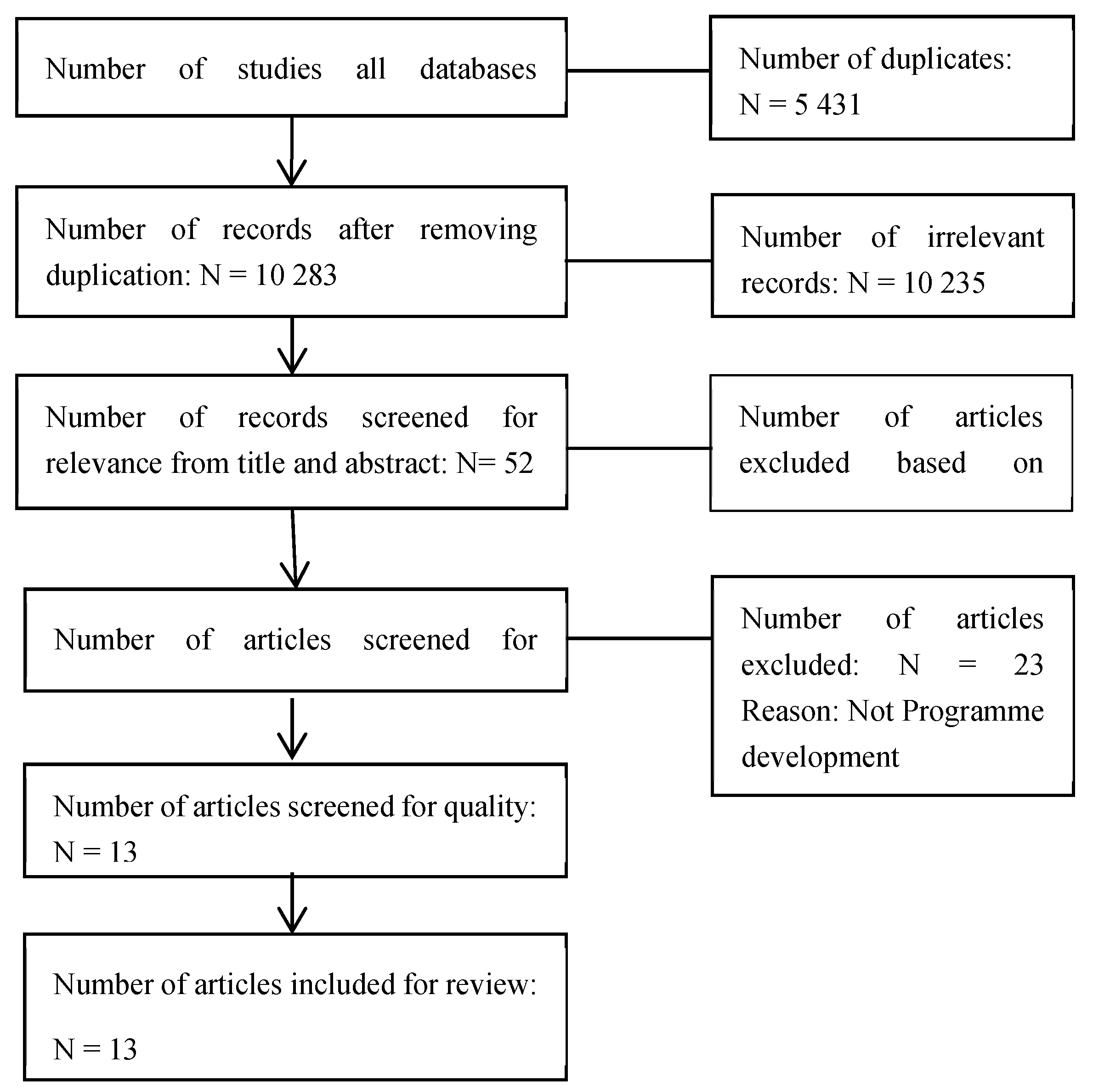

Table 2.
The quality appraisal checklist tool for quantitative studies (Bowling, 2009).
| Author and Year | Visser et al. 2018 | Bello et al., 2019 | Bello & Pillay, 2019 | Reynolds et al. 2016 |
|---|---|---|---|---|
| Criteria: Y (Yes) OR N (No) | ||||
| 1.Aims and objectives clearly stated | Yes | Yes | Yes | Yes |
| 2. Hypothesis/research question clearly specified | Yes | Yes | Yes | Yes |
| 3. Dependent and independent variables clearly stated | Yes | Yes | Yes | No |
| 4. Variables adequately operationalized | Yes | Yes | Yes | No |
| 5. Design adequately described | Yes | Yes | Yes | Yes |
| 6. Method appropriate | Yes | Yes | Yes | Yes |
| 7. Instrument used tested for reliability and validity | No | Yes | Yes | Yes |
| 8. Sample, inclusion/exclusion and response rate described | Yes | Yes | Yes | No |
| 9. Statistical errors discussed | Yes | Yes | Yes | No |
| 10. Ethical consideration | Yes | Yes | Yes | No |
| 11. Was the study piloted | Yes | Yes | No | No |
| 12. Statistical analysis appropriate | Yes | Yes | Yes | No |
| 13. Results reported and clear | No | Yes | Yes | No |
| 14. Results reported related to hypothesis | Yes | Yes | Yes | Yes |
| 15. Limitations reported | Yes | Yes | Yes | No |
| 16. Conclusions do not go beyond limit of data analysis | Yes | Yes | Yes | No |
| 17. Findings able to be generalized | Yes | No | Yes | No |
| 18. Implications discussed | No | No | Yes | No |
| 19. Existing conflict of interest with sponsor | No | No | No | No |
| 20. Data available for scrutiny and re-analysis | No | No | Yes | No |
| Total score for each article | 15 | 16 | 18 | 6 |
Table 3.
The quality appraisal checklist tool for qualitative studies (Pearson, 2004).
| Author and Year | Visser et al. 2012 | Naicker et al., 2016 | Khumsaen & Stephenson, 2017 | Hersche et al., 2019 | Corbie-Smith et al. 2012 | Nostlinger et al. 2015 | Visser et al., 2018 | Bello et al., 2019 | Bello & Pillay, 2019 |
|---|---|---|---|---|---|---|---|---|---|
| Criteria: Y (Yes) OR N (No) | |||||||||
| Is there congruity between stated philosophical perspective and research methodology? | Yes | Yes | Yes | Yes | Yes | Yes | Yes | Yes | Yes |
| Is there congruity between methodology and research question or objective? | Yes | Yes | Yes | Yes | Yes | Yes | Yes | Yes | Yes |
| Is there congruity between methodology and methods used to collect data? | Yes | Yes | Yes | Yes | Yes | Yes | Yes | Yes | Yes |
| Is there congruity between methodology and representation and analysis of data? | Yes | Yes | Yes | Yes | Yes | Yes | Yes | Yes | Yes |
| Is there congruity between methodology and interpretation of results? | Yes | Yes | Yes | Yes | Yes | Yes | Yes | Yes | Yes |
| Is there a statement locating the researcher culturally or theoretically? | No | No | No | No | No | No | No | No | No |
| Is the influence of the researcher on the research, and vice-versa is addressed? | Yes | Yes | Yes | Yes | Yes | Yes | Yes | Yes | Yes |
| Are respondents and other voices are adequately represented? | Yes | Yes | Yes | Yes | Yes | Yes | Yes | Yes | Yes |
| Is the research ethical according to current criteria, evidence of ethical approval? | Yes | Yes | Yes | No | Yes | Yes | No | Yes | Yes |
| Are the conclusions drawn flow from analysis or interpretation of data? | Yes | Yes | Yes | Yes | Yes | Yes | Yes | Yes | Yes |
| Total score for each article | 9 | 9 | 9 | 8 | 9 | 9 | 8 | 9 | 9 |
Table 4.
Summary of Reviewed Articles study.
| No. | Author | Setting | Title of the Study | Type of Programme | Sample, Size and Technique | Data Collection |
Data Analysis | Results | Conclusions/ Recommendations |
|---|---|---|---|---|---|---|---|---|---|
| 1. | Corbie-Smith et al. (2012) |
USA | Development of a Multilevel Intervention to Increase HIV Clinical Trial Participation Among Rural Minorities |
A Multilevel Intervention to Increase HIV Clinical Trial Participation | Sample and size: Service providers who provide direct clinical care or services to PLHIV (N=40) and PLHIV (N=35) Sampling technique: Not stated |
Focus group discussions and individual interviews | Not clearly described | Intervention mapping IM) allowed for a smoother translation of relevant materials from the SP sessions to the PLHIV sessions and vice versa. |
The IM approach yielded a comprehensive multilevel intervention that can be adapted to fit other contexts. Program adaptation can be easily facilitated given the detailed, systematic lay out of each planning step to reach final program materials. IM short courses and intensive seminars are also gaining ground and may be beneficial to public health professionals with limited expertise in this area. |
| 2. | Visser et al. (2012) | South Africa | Development and piloting of a mother and child intervention to promote resilience in young children of HIV-infected mothers in South Africa | Child intervention to promote resilience in young children | Sample and size: HIV-positive mothers (N=45) Sampling technique: Purposive sampling |
Focus group discussion | Thematic analysis | Our focus group interviews revealed another facet of treatment adherence–patients’ lack of knowledge about ART adherence. Patients had been told that not taking their pills as prescribed would lead to resistance, but did not fully understand how resistance developed and how missing one pill or several occasionally, could be a factor in this. Patients who did not feel ill but suffered medication side-effects found it particularly difficult to understand the significance of taking their medications daily. We found that while HIV-related symptoms decreased with time (prior to the intervention), medication side-effects increased, and some patients' adherence worsened. This study also shares similarities with other researchers (Simoni et al., 2008). |
The pilot implementation and formative evaluation of the intervention reported in this study provided insight into the psychosocial needs of children affected by HIV and taught lessons related to mother and child interactions and experiences in the HIV context that can be valuable in other settings, both in Sub-Saharan Africa and elsewhere. |
| 3. | Laisaar et al. (2013) | Estonia | Developing an adherence support intervention for patients on antiretroviral therapy in the context of the recent IDU-driven HIV/ AIDS epidemic in Estonia |
Adherence support intervention | Sample and size: Patients attending the infectious disease department ≥ 18 years of age (N=150) Sampling technique: Convenience sampling |
Focus group interviews and questionnaires | Thematic analysis | Our focus group interviews revealed another facet of treatment adherence patients’ lack of knowledge about ART adherence. Patients had been told that not taking their pills as prescribed would result in resistance, but did not really comprehend how resistance emerged and how occasionally skipping a pill, or several could be a contributing factor. The significance of taking pills every day was particularly difficult to recognize by patients who did not feel ill, but experienced medication side-effects. We observed that adherence in some patients worsened over time as side effects from medicine increased but HIV-related symptoms decreased. Other researchers have also reported this. |
With limited publication data on interventions for ART adherence support for patients receiving ART in Europe, our research contributes to one possible intervention development approach and resulting intervention, currently under evaluation. Intervention mapping strategies provided an excellent framework for applying formative research/elicitation work, existing literature, and multidisciplinary input into the development of an intervention program for PLWH in Estonia, if successful, could be used to advance HIV/AIDS treatment programs both within Estonia and possibly in nearby nations. with similar socioeconomic and HIV epidemic evolution. |
| 4. | Nostlinger et al. (2015) | Europe | Development of a theory-guided pan-European computer-assisted safer sex intervention |
European computer-assisted safer sex intervention |
Sample and size: Men who have sex with men (N=898) and heterosexual (N=651) Sampling technique: Cross sectional study |
Surveys Focus group discussions in-depth interviews Self-reported questionnaire |
Not clearly described | Intervention mapping provided a useful framework for developing a coherent intervention for heterogeneous target groups, which was feasible and effective across the culturally diverse settings. |
This study contributed to the evidence-base of (short-term) effective behavioural sexual health interventions, the first study of its kind in a pan-European setting. As such the intervention may serve as one pillar of effective combination prevention strategies as recommended by UNAIDS. |
| 5. | Naicker et al. (2016) | South Africa | Development and pilot evaluation of a home-based palliative care training and support package for young children in southern Africa |
A home-based palliative care training and support package |
Sample and size: Home based care workers (N=28) Sampling technique: Not stated |
Semi-structured interviews | Thematic analysis | An initial evaluation of the training and support package was positive; showing support for both the content and the structure of the package, as well as the inclusion of stories to help deliver key messages crucial to the provision of palliative care. Since the package was launched there have been widespread calls for its wider dissemination. |
One of the main strengths of the package is it can be used in its entirety or the individual components can be used separately as resources and need dictates. A unique element is the use of stories to facilitate the training; there is a story for each important message to make it easier to understand and remember. The stories could be replaced by other locally relevant stories with the same message and although the package is most valuable as a whole, parts of it can be useful separately. |
| 6. | Reynolds et al, (2016) | Theoretical article | A road map for designing and implementing a biological monitoring program |
Theoretical article | Sample and size: Theoretical article Sampling technique: Not stated |
Theoretical article | Quantitative Approach | Theoretical article | The road map is a guide to the overall process, a reminder to keep the big picture in mind, even when dealing with technical details. It provides a set of benchmarks (steps) that can be used during the design phase to keep projects on track, schedule statistical consultants prepare budgets, and plan program evaluations for existing monitoring projects. It does not address all the underlying technical details of each step; specific guidance can be found in the appropriate literature for each component or task. The road map helps ensure the value of monitoring information, now and in the future, |
| 7. | Khumsaen and Stephenson (2017) |
Thailand | Adaptation of the HIV/AIDS Self-Management Education Program for men who have sex with men in Thailand: an application of the ADAPT-ITT framework |
Self-Management Education Program |
Sample and size: HIV-positive Thai MSM (N=40) and health care providers (N=8) Sampling technique: Not stated |
Focus group discussion | Logistic regression analysis |
Findings suggest that respondents are aware of the problem around stigma (both internal and external stigma) that was interfering with HIV status disclosure in the workplace and at home, particularly as it associates with the impact on HIV treatment, and disease progression. Findings from our theatre test suggest changes to the stages of HIV/AIDS in order to maximize participant understanding. |
The study provides a strong foundation for future research on HIV/AIDS self-management in HIV-positive Thai MSM. This study has the potential to fill a significant need for evidence-based, self-management interventions purposefully designed for PLWH. The development of the HASMEP using a health center-based, phased, emergent study design offers a helpful model for further research adapting evidence-based interventions for vulnerable population. |
| 8. | Mevissen et al. (2017) | Switzerland | Development of Long Live Love+, a school-based online sexual health programme for young adults. An intervention mapping approach |
Online sexual health programme |
Sample and size: Teachers N=14), social workers (N=2), experts on young people sexual health (N=4), experts in intervention mapping (N=3) and public healthcare workers (N=2) Sampling technique: Not stated |
Brainstorming and literature reviews | Not clearly described | Teachers in this study strongly stressed the need for a programme that would be flexible enough to adjust to different classroom circumstances. The involvement of teachers in all steps of the developmental process turned out to be invaluable and often even more valuable than the involvement of young people themselves. The concept of offering their pupils a freshly created sexual health program was met with enthusiasm and positivity from the teachers, who also offered insightful thoughts and suggestions and showed no reluctance to implement the program themselves. On the other hand, students did not express themselves clearly or strongly about what they liked or did not like or what they believed to be significant. |
Intervention Mapping is a useful tool for the systematic development of a multi-component and multi-module school-based online sex education programme. It is crucial to emphasise that LLL+ should not be introduced outside of Dutch secondary schools without first determining if the program is appropriate for the local environment. That is, not all LLL+ techniques may be appropriate in other contexts, and modifications may be required, for instance, with regard to the precise substance of the change objectives (young people in different settings may need different knowledge, skills, or attitudes). |
| 9. | Millard et al. (2018) | Australia | The systematic development of a complex intervention: Health Map, an online self- management support program for people with HIV |
An online self-management program | Sample and size: People with HIV (N=300) and HIV care providers (N=107) Sampling technique: Not stated |
Concept mapping workshops online surveys and interviews | Not clearly described | Grounding the development of Health Map on a clear conceptual base, informed by the research literature and stakeholder’s perspectives, has ensured that the Health Map program is targeted, relevant, provides, transparency and enables effective program evaluation. | The use of a systematic process for intervention development facilitated the development of an intervention that is patient centered, accessible, and focuses on the key determinants of health-related outcomes for people with HIV in with HIV in Australia. The techniques used here may offer a useful methodology for those involved in the development and implementation of complex interventions. |
| 10. | Visser et al. (2018) | South Africa | Development and formative evaluation of a family-centered adolescent HIV prevention programme in South Africa |
Family-centered adolescent HIV prevention programme |
Sample and size: Community workers (N=25) and family-pair groups (N=12) Sampling technique: Not stated |
Focus group interviews | Not clearly described | Results highlighted the need to enhance training content related to cognitive behavioral theory and group management techniques, as well as increase the cultural relevance of activities in the curriculum. Participant attendance challenges were also identified, leading to a shortened and simplified session set. Findings overall were used to finalize materials and guidance for a revised 14-week group programme consisting of individual and joint sessions for adolescents and their caregivers, which may be implemented by community based facilitators in other settings. |
Specifically, future efforts to develop structured, family-centered adolescent HIV prevention programmes in Southern Africa should integrate participatory, multi-stakeholder approaches to curriculum and implementation review. Programme developers should pay special attention to the issues raised in this study, such as the need for an array of strategies to support participant attendance and identify attrition as early as possible, the likelihood that activities included in curricula successfully implemented elsewhere may not be universally well-received or effective, differing responses to elements of the programme targeted towards caregivers and adolescents, and the importance of consulting with facilitator trainees regarding the adequacy of training and related materials. |
| 11. | Hersche et al. (2019) | Netherland | Development and Preliminary Evaluation of a 3-Week Inpatient Energy Management Education Program for People with Multiple Sclerosis–Related Fatigue |
Energy Management Education Program |
Sample and size: occupational therapist (N=3) people with multiple sclerosis (N=12) Sampling technique: Purposefully heterogeneous sampling |
Focus groups | A content analysis | Between March and June 2017, every OT guided every part of the IEME program at least once. In total, they completed 24 individual and 15 group sessions. Based on the record sheets, the OTs reported high treatment fidelity, with the completion of 83% of all described tasks in the manual. |
This study has shown the feasibility of the IEME program in an inpatient setting and the value that respondents attribute to peer exchange. The group intervention with peers is a powerful element in health promotion and is considered a key aspect in the self-management of people with chronic diseases. For this reason, health professionals and rehabilitation institutions should make an effort to guarantee patients the benefit of well-designed group therapies, even if this is an organizational challenge. Based on the findings of this study and the developed materials, it is possible for other rehabilitation centres to implement inpatient education for people with MS-related fatigue and to support an effective knowledge transfer into practice, making sure to share the principles of IEME with multidisciplinary teams to support behavioural change. |
| 12. | Bello et al. (2019) | Nigeria | Development, implementation and process evaluation of a theory-based nutrition education programme for adults living with HIV in Abeokuta, Nigeria | A theory-based nutrition education programme | Sample and size: Adults living with HIV (N=243) Sampling technique: Convenience sampling |
An interviewer administered questionnaire and focus group discussions |
Stata statistical software (release 10, 2007) Thematic analysis |
The qualitative results identified a lack of knowledge on planning varied meals with limited resources. The identified needs, existing guidelines and literature were integrated with appropriate constructs of the Social Cognitive Theory (SCT) and the Health Belief Model (HBM) into the NEP. The NE manual, participant’s work book, flipcharts, and the brochure were tailored to address the identified challenges. |
The respondants’ perceptions of the presentation of the programme showed that the education sessions were informative and interesting. Several factors may have contributed to these positive responses. Experts have confirmed that the facilitator, the mode and the format of NE delivery play a vital role in the effectiveness of the implementation of a NEP. The use of group education which was reported to be easier, cheaper and to require less skill or professionalism than individual counselling (26) could also have contributed to the acquisition of knowledge. |
| 13. | Bello and Pillay (2019) | South Africa | An evidence-based nutrition education programme for orphans and vulnerable children: protocol on the development of nutrition education intervention for orphans in Soweto, South Africa using mixed methods research |
An evidence-based nutrition education programme |
Sample and size: Students (N=520) Sampling technique: Not stated |
Photovoice, photo-assisted focus group discussions and questionnaires |
Data will be analysed using the Release 10, 2007 of Stata Statistical Software and SPSS packages. |
This study provided detailed information on the QoL, food intakes concerning academic performance and general well-being of OVC in an Africa setting. The participatory mixed methods nature of the study provided valuable insights into the drivers and challenges to QoL, AP, and nutritional status of this group. This approach will assist the policymakers’ and other stakeholders in decision making regarding the general well-being of the orphans and vulnerable children |
The involvement of stakeholders (the caregivers/ families of the OVC) in the development of the NEP will enhance programme ownership and good will to support the continuation of the programme even after the study. Training the caregivers/families of the OVC using the educational materials and involving them in the delivery thereof will empower them to continue with the programme even after the study |
Table 5.
Identified themes and number of studies.
| Themes | Studies | |
|---|---|---|
| 1 | Needs Assessment | 13 |
| 2 | Programme objectives | 6 |
| 3 | Theory based-methods and strategies | 5 |
| 4 | Planning and development of programme | 12 |
| 5 | Programme Implementation | 12 |
| 6 | Programme Evaluation | 11 |
Disclaimer/Publisher’s Note: The statements, opinions and data contained in all publications are solely those of the individual author(s) and contributor(s) and not of MDPI and/or the editor(s). MDPI and/or the editor(s) disclaim responsibility for any injury to people or property resulting from any ideas, methods, instructions or products referred to in the content. |
© 2025 by the authors. Licensee MDPI, Basel, Switzerland. This article is an open access article distributed under the terms and conditions of the Creative Commons Attribution (CC BY) license (http://creativecommons.org/licenses/by/4.0/).
Copyright: This open access article is published under a Creative Commons CC BY 4.0 license, which permit the free download, distribution, and reuse, provided that the author and preprint are cited in any reuse.


