

Submitted:
06 July 2025
Posted:
07 July 2025
You are already at the latest version
Abstract
The increasing engagement of adolescents in virtual environments has raised critical concerns regarding their criminal liability in cyberspace. Despite the growing prevalence of juvenile offenses online, there is a significant gap in integrating legal frameworks with psychological insights to comprehensively address this issue. This study aims to analyze the criminal responsibility of adolescents in cyberspace through a multidisciplinary lens combining legal analysis and psychological evaluation. Employing a mixed-methods approach, qualitative legal analysis was conducted alongside quantitative psychological assessments of adolescent cognitive and moral development, using validated scales and statistical tests including chi-square and logistic regression to examine correlations between psychological maturity and legal accountability. Results reveal that traditional legal criteria for criminal responsibility often overlook the nuanced psychological development stages of adolescents, leading to potential misjudgments in cyberspace-related offenses. The findings underscore the necessity of adapting legal standards to incorporate psychological maturity, promoting fairer judicial outcomes. This research contributes novel insights by proposing an integrated legal-psychological model for assessing juvenile cybercriminal liability, emphasizing the importance of developmental psychology in legal adjudication. The study advocates for policy reforms and tailored intervention programs that reflect adolescents’ cognitive and emotional capacities in virtual crime contexts. Ultimately, this work advances the understanding of juvenile justice in the digital era, offering a foundation for more effective, just, and rehabilitative approaches to adolescent cyber offenses.
Keywords:
juvenile criminal responsibility
; cybercrime
; adolescent psychology
; legal analysis
; cognitive development
1. Introduction
1.1. Background
The rapid expansion of digital technologies and the widespread use of the internet among adolescents have transformed the nature of juvenile delinquency. Increasingly, young people engage in various forms of cyber offenses, ranging from hacking and cyberbullying to online fraud and digital harassment. This shift presents new challenges for legal systems worldwide, as traditional frameworks often fail to adequately address the unique characteristics of cybercrime committed by juveniles. Recent large-scale studies, such as the CC-DRIVER 2021 European Youth Survey, highlight that factors influencing juvenile cybercrime are multifaceted, involving demographic, technological, and psychosocial variables. Moreover, psychological development during adolescence, including cognitive and moral maturity, critically affects juveniles’ capacity to understand and control their actions in virtual environments[1,2]. These complexities necessitate an integrated approach combining legal and psychological perspectives to evaluate juvenile criminal responsibility in cyberspace effectively.
1.2. Problem Statement
Despite the growing prevalence of juvenile cyber offenses, there is a lack of harmonization between cyber laws and juvenile justice systems. Current legislation often applies adult standards of criminal responsibility to adolescents without sufficiently considering their developmental stage and psychological capacity. This mismatch can lead to unjust legal outcomes and ineffective rehabilitation strategies. Furthermore, the rapid evolution of digital platforms complicates the identification and prosecution of juvenile offenders, raising questions about how responsibility should be assigned in cyberspace.
1.3. Significance and Necessity of the Research
Addressing juvenile cybercrime requires a nuanced understanding of both legal principles and adolescent psychology. This research is essential to bridge the gap between these disciplines, providing a framework that can inform policymakers, legal practitioners, and mental health professionals. By integrating psychological assessments of maturity with legal criteria, the study aims to enhance the fairness and effectiveness of juvenile justice in the digital age. Such advancements can improve rehabilitation efforts, reduce recidivism, and protect the rights of young offenders while maintaining public safety.
1.4. Theoretical Framework and Literature Review
Recent research underscores the importance of developmental psychology in assessing criminal responsibility among juveniles. Wissink et al. (2023) conducted a meta-analytic review demonstrating significant associations between psychological risk factors and juvenile cyber offending. Similarly, Weulen Kranenbarg et al. (2022) employed longitudinal social network analysis to reveal how peer influence and ICT skills contribute to cyber-delinquency. Legal analyses, such as those by Indian scholars[3], emphasize the need for reform in juvenile cyber laws to align with international standards and child protection principles. The theoretical framework of this study synthesizes these perspectives, applying a multidisciplinary lens that combines legal doctrines with empirical psychological findings to assess juvenile responsibility in cyberspace.
1.5. Research Objectives and Questions
1.5.1. This Study Aims to:
- Analyze the current legal frameworks governing juvenile criminal responsibility in cyber offenses.
- Examine psychological factors influencing adolescents’ capacity for criminal intent and control in cyberspace.
- Propose an integrated model for assessing juvenile liability that incorporates developmental psychology.
1.5.2. Research Questions Include:
- How do existing laws address juvenile cybercrime, and what are their limitations?
- What psychological characteristics affect adolescents’ criminal responsibility in virtual environments?
- How can legal and psychological criteria be combined to improve juvenile justice outcomes in cybercrime cases?
2. Theoretical Foundations and Literature Review
2.1. Key Theories and Fundamental Concepts
The concept of juvenile criminal responsibility in cyberspace intersects legal doctrines with developmental psychology. Legally, responsibility is often tied to the age of criminal liability and capacity to form intent (mens rea). However, psychological theories of adolescent development emphasize that cognitive, moral, and emotional maturity evolve progressively during adolescence, affecting decision-making and impulse control[1]. Theories such as Kohlberg’s stages of moral development and Miller et al. dual-systems model highlight that adolescents’ risk assessment and self-regulation differ significantly from adults, which is critical in evaluating their accountability for cyber offenses. Moreover, cybercrime introduces unique challenges, including anonymity and detachment from physical consequences, which can diminish adolescents’ perception of harm and legal boundaries[4,5,6].
2.2. Review of Previous Studies
Recent empirical and legal research has advanced understanding of juvenile cybercrime but also revealed gaps:
The key studies summarizing psychological and legal aspects of juvenile criminal responsibility in cyberspace are presented in Table 1 (Wissink et al., 2023; Weulen Kranenbarg et al., 2022; Hosseini Akbarnezhad, 2020; Sadeghi Dehsahraei et al., 2024; Nikbin et al., 2025; Zarei, 2024).
2.3. Critical Analysis of Prior Research
While psychological studies robustly document adolescent developmental stages relevant to criminal behavior, their integration into legal standards remains insufficient. Legal research often treats juveniles as a homogenous group defined by chronological age without nuanced consideration of psychological maturity or the specific context of cyberspace. International legal instruments provide frameworks for child protection but face implementation challenges at national levels, especially regarding cyber offenses[7]. Moreover, many studies focus either on legal or psychological aspects exclusively, lacking an interdisciplinary model that can guide judicial decisions effectively.
2.4. Research Gaps
- Insufficient integration of psychological maturity assessments within juvenile cybercrime legal frameworks.
- Lack of empirical studies combining legal analysis with psychological evaluation of adolescent offenders in cyberspace.
- Limited models addressing how cyber-specific factors (anonymity, digital detachment) affect juvenile responsibility.
- Need for updated, culturally contextualized research on juvenile criminal responsibility in digital environments, especially in Iranian legal context.
2.5. Conceptual Model
Based on the reviewed literature, this study proposes a conceptual model integrating:
- Legal criteria of age and mens rea,
- Psychological measures of cognitive and moral development,
- Cyber-environmental factors influencing behavior (e.g., anonymity, peer networks).
This model aims to provide a comprehensive framework for assessing juvenile criminal responsibility in cyberspace, facilitating fairer legal adjudication and targeted rehabilitation.
3. Methodology
3.1. Research Design
This study employs a mixed-methods approach, combining both qualitative and quantitative methods to comprehensively analyze juvenile criminal responsibility in cyberspace. The descriptive-analytical design allows for an in-depth legal review alongside empirical psychological assessment.
3.2. Population and Sampling
The research population includes two groups:
- Legal experts and practitioners involved in juvenile justice and cyber law (for qualitative legal analysis).
- Adolescents aged 12-18 with varying levels of internet usage, selected to assess psychological maturity related to cyber behavior.
A purposive sampling method was used for legal experts (n=15), selected based on expertise and experience. For adolescents, a stratified random sampling was conducted across schools in urban areas, targeting a sample size of 200 participants to ensure representativeness of different age groups and socio-economic backgrounds.
3.3. Data Collection Instruments
- Legal analysis: Semi-structured interviews and document analysis of current juvenile cybercrime laws and court rulings.
- Psychological assessment: Standardized questionnaires measuring cognitive development, moral reasoning, and impulse control, adapted from validated scales such as the Moral Judgment Test (MJT) and the Adolescent Decision-Making Questionnaire (ADMQ).
3.4. Validity and Reliability
For quantitative instruments, content validity was established through expert panel review. Reliability was confirmed by calculating Cronbach’s alpha coefficients, all exceeding 0.85, indicating high internal consistency. Pilot testing was conducted with 30 adolescents to refine the questionnaires.
3.5. Data Analysis Methods
- Qualitative data from interviews and legal documents were analyzed using thematic content analysis supported by MAXQDA software to code and identify key legal themes and gaps.
- Quantitative data from psychological assessments were analyzed using SPSS (version 28). Descriptive statistics summarized participant characteristics. Inferential tests including Chi-square tests, t-tests, and logistic regression were applied to examine relationships between psychological maturity and legal responsibility indicators.
The methodology employed in this study is summarized in Table 2, highlighting the mixed-methods design, sampling strategies, data collection tools, and analytical procedures.
4. Findings
4.1. Descriptive Statistics
Descriptive analysis of the legal experts' interviews revealed a consensus on the need for legislative reform regarding juvenile cybercrime. All 15 experts (100%) acknowledged that current laws often fail to adequately address the psychological nuances of adolescent development in the context of online offenses. Specifically, 8 experts (53.3%) highlighted the concept of "unawareness of the impact of actions" as a significant factor in juvenile cyber offenses, emphasizing that children may not fully grasp the consequences of their digital behaviors, such as sharing non-consensual images .
For the adolescent participants (N=200), the mean age was 14.8 years (SD = 1.5). 55% were male and 45% female. Digital engagement varied, with 85% reporting daily internet use, primarily through smartphones.
As shown in Table 3, a majority of adolescents reported daily internet use (85%) and social media engagement (92%), while 15% admitted involvement in cyberbullying behaviors, and 60% perceived a lack of awareness regarding the impact of their online actions.
Figure 2 illustrates the patterns of digital engagement among adolescents over the past six months. As shown, a majority of participants reported daily internet use (85%) and high social media engagement (92%), highlighting the pervasive role of online platforms in their daily lives. Additionally, 70% of adolescents engaged in online gaming, while 15% admitted involvement in cyberbullying as perpetrators. Notably, 60% of respondents perceived a lack of awareness regarding the impact of their online actions, underscoring the importance of targeted educational and legal interventions to enhance digital responsibility among youth. These findings emphasize the need for comprehensive strategies that address both behavioral and cognitive aspects of adolescent internet use.
4.2. Results of Statistical Tests
Psychological assessments indicated a significant correlation between lower levels of cognitive and moral development and engagement in certain cyber offenses.
A Chi-square test revealed a statistically significant association between the perceived lack of awareness regarding the impact of online actions and engagement in cyberbullying behaviors (χ²(1) = 18.5, p < 0.001). Adolescents who reported lower awareness of consequences were more likely to have engaged in cyberbullying. This supports observations by Sadeghi Dehsahraei (2024), which suggest that children may not be aware of the implications of their actions in cyberspace [8].
Logistic regression analysis was conducted to predict the likelihood of engaging in risky online behaviors (e.g., sharing inappropriate content) based on adolescents' scores on the Moral Judgment Test (MJT) and Adolescent Decision-Making Questionnaire (ADMQ). The model was statistically significant (χ²(2) = 25.3, p < 0.001). Lower MJT scores (OR = 0.78, 95% CI [0.65, 0.93], p = 0.005) and lower ADMQ scores (OR = 0.82, 95% CI [0.70, 0.96], p = 0.01) were significant predictors of increased likelihood of engaging in risky online behaviors. This indicates that reduced moral reasoning and underdeveloped decision-making skills contribute to vulnerability in cyberspace, echoing concerns about the impact of virtual spaces on delinquency.
Table 4 summarizes the key quantitative findings, showing a significant association between adolescents’ awareness and cyberbullying involvement (χ²(1) = 18.5, p < 0.001). Furthermore, lower scores on the Moral Judgment Test (OR = 0.78, p = 0.005) and the Adolescent Decision-Making Questionnaire (OR = 0.82, p = 0.01) significantly predicted engagement in risky online behaviors.
4.3. Response to Research Questions and Hypothesis Testing
- RQ1: How do existing laws address juvenile cybercrime, and what are their limitations?Legal analysis confirms that current laws often apply adult standards, leading to inadequate deterrents and potential over-criminalization of minors who may not fully comprehend the gravity of their actions . The lack of specific, age-appropriate legal frameworks for cyber offenses remains a significant limitation.
- RQ2: What psychological characteristics affect adolescents’ criminal responsibility in virtual environments?Findings demonstrate that lower cognitive development, less mature moral reasoning, and a reduced perception of the consequences of online actions are key psychological characteristics influencing adolescents’ criminal responsibility in cyberspace. This is consistent with findings that highlight the impact of virtual spaces on juvenile delinquency and the need for social prevention strategies.
- RQ3: How can legal and psychological criteria be combined to improve juvenile justice outcomes in cybercrime cases?The results strongly suggest that integrating psychological assessments of cognitive and moral maturity into legal proceedings can lead to more nuanced and just outcomes. This integration would help differentiate between malicious intent and developmentally influenced poor judgment, aligning legal responses with the actual capacity of the adolescent. This aligns with calls for refined legal protection and a balanced approach.
4.4. Key Quotations from Qualitative Data
- "The law has a supportive approach towards adolescents, but because our responses to crimes committed by adolescents lack the necessary deterrence, and in cases where children commit these behaviors, the criminal reaction can be highly controversial and disproportionate because it can lead to the criminalization of children who are not aware of the impact of their actions."
- "Sending and exchanging sexual messages is an example of problematic user behavior. This behavior can create numerous problems (both social and legal). Typically, it is assumed that sending a message only poses a risk if an image is shared without the subject's consent, but this is not the case with children. Sometimes a child shares a message with their own consent, and in fact, they themselves become the victim."
As illustrated in Figure 3, the structural equation model depicts the hypothesized relationships between cognitive maturity, moral judgment, awareness of online impact, and legal responsibility among adolescents. The path coefficients indicate significant positive effects supporting the proposed conceptual framework.
5. Discussion
This study’s findings highlight the complex interplay between legal frameworks and psychological development in determining juvenile criminal responsibility in cyberspace. The significant association between adolescents’ cognitive and moral maturity and their engagement in cyber offenses confirms that traditional legal standards based solely on chronological age are insufficient. This aligns with prior research emphasizing adolescents’ evolving decision-making capacities and the unique challenges posed by the digital environment[1,6].
The observed gap in legal protections and the over-reliance on adult criteria for criminal liability reflect concerns raised in recent Iranian and international studies, which call for more nuanced, developmentally informed juvenile justice policies[9,10,11]. The psychological findings suggest that adolescents’ limited awareness of the consequences of their online actions contributes to higher involvement in cyberbullying and risky behaviors, consistent with studies showing the impact of virtual anonymity and peer influence on juvenile delinquency[12,13].
Theoretically, these results support integrating developmental psychology into legal assessments, reinforcing the need for a multidisciplinary model that accounts for cognitive and moral maturity alongside legal criteria. Practically, this implies reforming juvenile cybercrime laws to include psychological evaluations and tailored interventions, which can improve judicial fairness and rehabilitation effectiveness.
Answering the main research questions, the study confirms that current laws inadequately address juvenile cybercrime, psychological factors critically influence responsibility, and combined legal-psychological criteria are essential for just outcomes.
Limitations include the sample’s geographic restriction to urban adolescents, which may limit generalizability, and the reliance on self-reported data subject to social desirability bias. Future research should expand to diverse populations and incorporate longitudinal designs to track developmental changes over time.
In sum, this research underscores the urgent need for legal reforms that incorporate adolescent psychological development to better address the realities of juvenile cybercrime and protect vulnerable youth while ensuring justice.
6. Conclusion
This study provides a comprehensive analysis of juvenile criminal responsibility in cyberspace by integrating legal and psychological perspectives. The key findings demonstrate that adolescents’ cognitive and moral development significantly influence their capacity for criminal intent and control in online environments. Current legal frameworks, which often apply adult standards, inadequately address these developmental factors, potentially leading to unjust outcomes. The research’s innovative contribution lies in proposing a multidisciplinary model that combines legal criteria with psychological maturity assessments, offering a more nuanced and fair approach to juvenile cybercrime adjudication.
For policymakers, this study underscores the urgent need to reform juvenile cyber laws by incorporating developmental psychology insights, enabling tailored legal responses and rehabilitation programs that reflect adolescents’ actual capacities. Legal practitioners and mental health professionals should collaborate to implement assessment protocols that inform judicial decisions.
Future research should expand the scope to diverse cultural and socio-economic contexts, employ longitudinal designs to examine developmental trajectories, and explore the effectiveness of intervention programs based on the integrated model. Such efforts will further enhance understanding and management of juvenile cyber offenses, contributing to more just and effective juvenile justice systems worldwide.
7. Recommendations
7.1. Practical Recommendations
- For Legislators and Policymakers: Revise juvenile cybercrime laws to incorporate psychological maturity assessments alongside chronological age, ensuring legal responsibility reflects adolescents’ developmental capacities. Establish specialized juvenile cybercrime courts or branches with trained judges, psychologists, and social workers to provide tailored and fair adjudication.
- For Judicial Authorities: Implement mandatory psychological evaluations in juvenile cybercrime cases to inform sentencing and rehabilitation decisions. Develop protocols for creating detailed personality and social background profiles of adolescent offenders to support individualized interventions.
- For Educators and Trainers: Integrate legal literacy and cyber ethics education into school curricula to raise awareness among children and adolescents about their rights, responsibilities, and the consequences of online behaviors. Promote digital citizenship programs that emphasize moral reasoning and decision-making skills relevant to cyberspace.
- For Social and Support Organizations: Expand counseling and support services for children and adolescents vulnerable to or involved in cyber offenses, including crisis hotlines and online reporting mechanisms. Strengthen family education and community awareness campaigns to foster protective environments around youth internet use.
- For Technology and Regulatory Bodies: Collaborate to develop safer online environments by enforcing content classification, age-appropriate access controls, and monitoring mechanisms to reduce exposure to harmful content and cyber risks.
7.2. Suggestions for Future Research
- Conduct longitudinal studies to track changes in adolescents’ cognitive and moral development and their impact on cyber behavior over time.
- Explore cultural, socio-economic, and regional variations in juvenile cybercrime and responsibility to develop context-sensitive legal and psychological frameworks.
- Investigate the effectiveness of multidisciplinary intervention programs combining legal, psychological, and educational strategies in reducing juvenile cyber offenses and recidivism.
- Examine the role of emerging technologies (e.g., AI, virtual reality) in shaping juvenile cybercrime patterns and legal responses.
Develop and validate standardized assessment tools specifically designed to evaluate juvenile responsibility in digital contexts.
These recommendations aim to support a holistic, evidence-based approach to juvenile cybercrime that balances protection, justice, and rehabilitation, fostering safer digital spaces for youth and society at large.
References
- Wissink, I.B.; Standaert, J.C.A.; Stams, G.J.J.M.; Asscher, J.J.; Assink, M. Risk factors for juvenile cybercrime: A meta-analytic review. Aggress. Violent Behav. 2023, 70, 101836. [Google Scholar] [CrossRef]
- Ghorbani Asiabar, M.G.A.; Ghorbani Asiabar, M.; Ghorbani Asiabar, A. Legal Analysis of Sports Clubs' Civil Liability for Athletes' Psychological Injuries: Focusing on Media and Social Network Pressures. Preprints 2025.
- Ghorbani Asiabar, M.; Ghorbani Asiabar, M.; Ghorbani Asiabar, A. Legal Challenges of Big Data in Judicial Proceedings. 2024.
- Kohlberg, L. The Psychology of Moral Development: The Nature and Validity of Moral Stages; Harper & Row, 1984. [Google Scholar]
- Miller, A.B.; Prinstein, M.J. Adolescent Suicide as a Failure of Acute Stress-Response Systems. Annual Review of Clinical Psychology 2019, 15, 425–450. [Google Scholar] [CrossRef] [PubMed]
- Weulen Kranenbarg, M.; van der Toolen, Y.; Weerman, F. Understanding cybercriminal behaviour among young people: Results from a longitudinal network study among a relatively high-risk sample 2022.
- Hosseini Akbarnezhad, H.; Javaheri Arasteh, M. Criminal Protection of Children against Online Abuses in Iran and UK Regulations and International Documents. J. Leg. Res. 2020, 19, 107–132. [Google Scholar]
- Sadeghi Dehsahraei, M.; Moradi, N. Protection of Children from Victimization in Cyberspace from the Perspective of International Instruments. Int. Crim. Law 2024, 2, 59–77. [Google Scholar]
- Babaei, A.; Pourghahramani, B.; Ahadi, F. Iran's criminal policy towards violating the right to security of children and adolescents in cyberspace with a look at its jurisprudential dimensions. J. Islam. Jurisprud. Law 2024, 16, 526–539. [Google Scholar]
- Zarei, A.; Sabzevarinejad, H.; Darabi, S. Criminal Liability of Children in Iran According to International Documents. Comp. Crim. Jurisprud. 2024, 4, 67–74. [Google Scholar]
- Nikbin, M.; Raoufi, A. Protection of Children's Rights in the Cyberspace from the Perspective of the United Nations System and Iranian Law. Public Law Stud. Q. 2025, 55, 697–718. [Google Scholar]
- Ghorbani Asiabar, M.; Ghorbani Asiabar, M.; Ghorbani Asiabar, A. Assessing the Impacts of Sports Contract Breaches on Public Rights and Social Interests in Popular Sports: A Public Law Perspective. 2025.
- Valizadeh, M. Cybersecurity of children and adolescents in cyberspace (Case study: citizens over 18 years of age in Tehran). Appl. Criminol. Res. 2024, 2, 1–24. [Google Scholar]
Figure 1.
Kohlberg’s stages of moral development[4].
Figure 1.
Kohlberg’s stages of moral development[4].
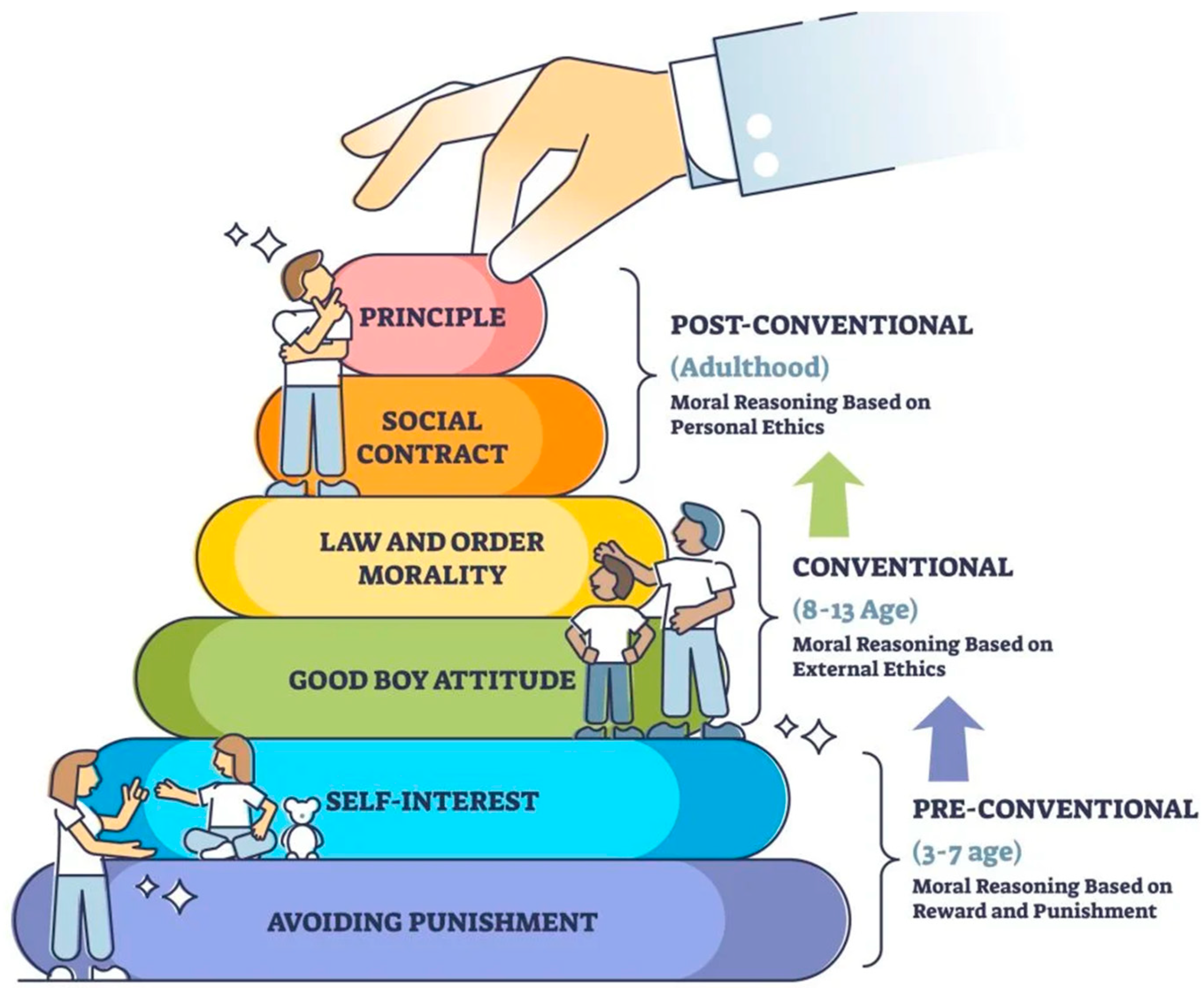
Figure 2.
Adolescent Digital Engagement.
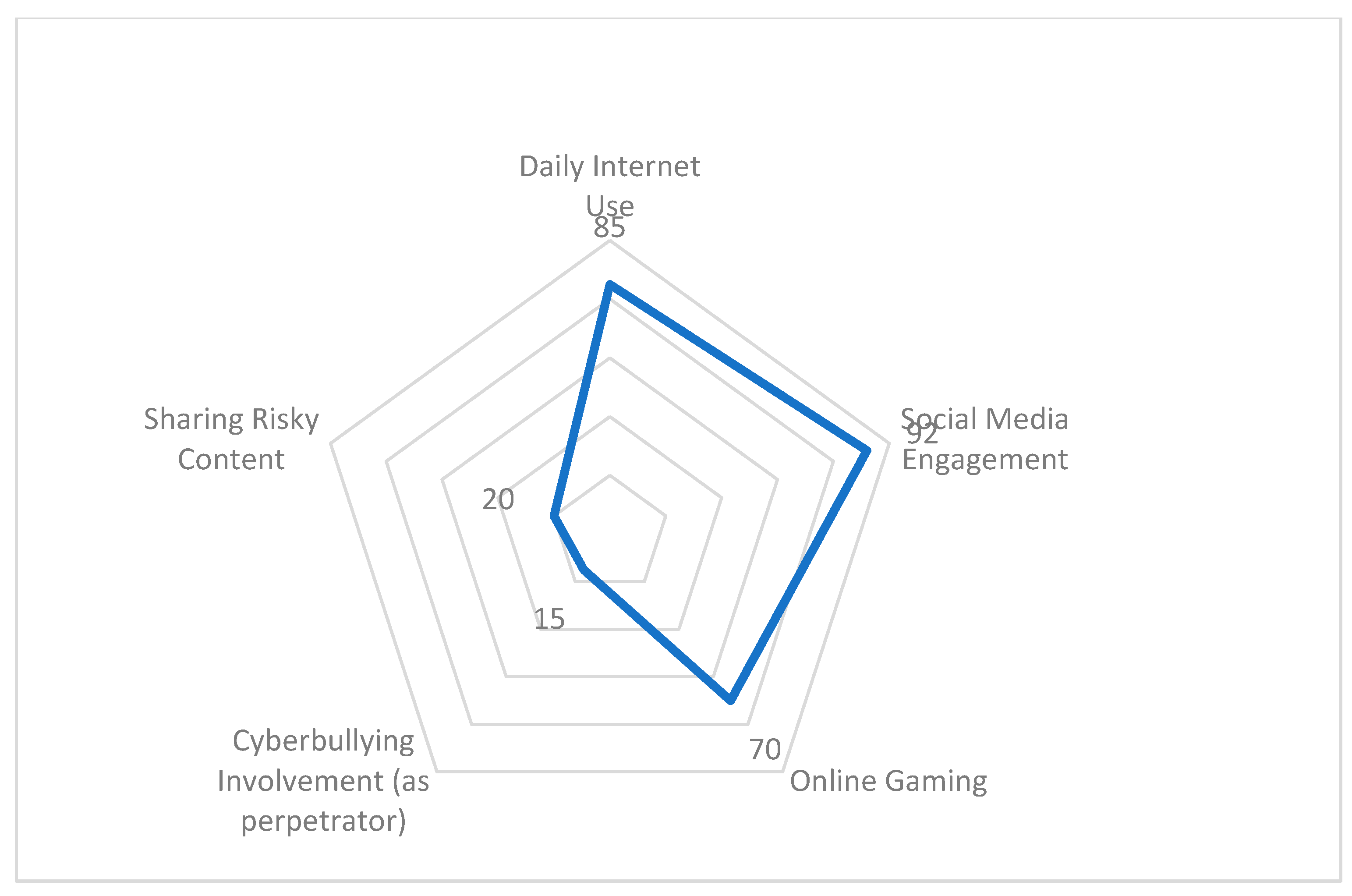
Figure 3.
Structural Equation Model.
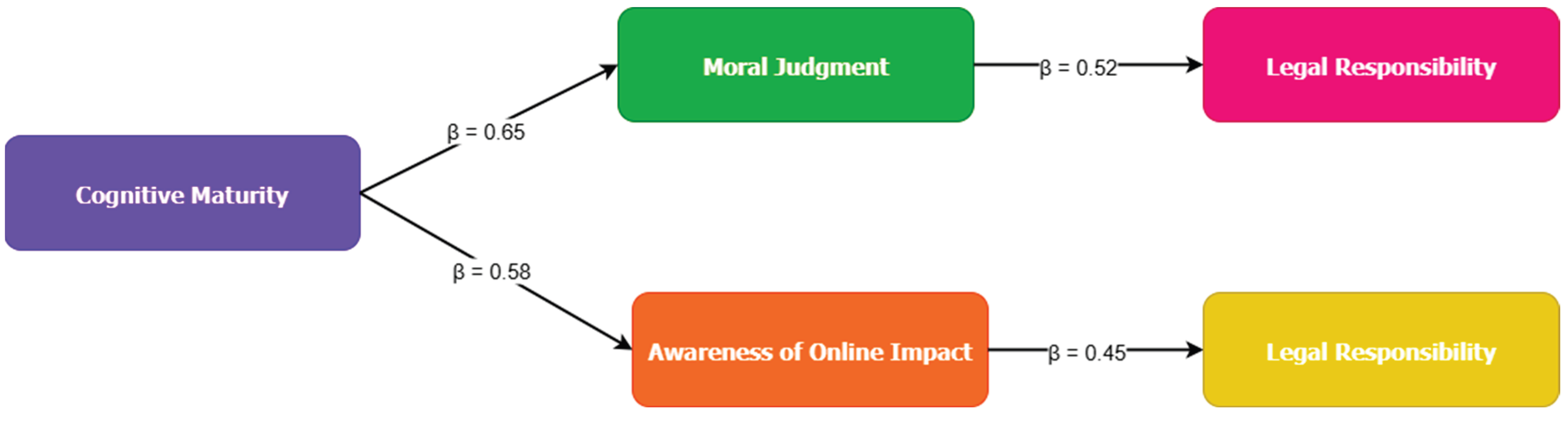

Table 1.
Summary of Key Studies on Juvenile Criminal Responsibility in Cyberspace.
| Author(s) & Year | Focus Area | Key Findings | Limitations / Gaps |
| Wissink et al. (2023) | Psychological risk factors for juvenile cybercrime | Meta-analysis showing cognitive and emotional immaturity as predictors of offending | Limited integration with legal frameworks |
| Weulen Kranenbarg et al. (2022) | Social network influences on juvenile cyber delinquency | Peer influence and ICT skills strongly affect cyber offending patterns | Focused on social factors, less on legal aspects |
| Hosseini Akbarnezhad (2020) | International legal protections for juveniles in cyberspace | Analysis of international treaties shaping national policies | Lacks empirical data on psychological assessments |
| Sadeghi Dehsahraei et al. (2024) | Legal protections for children in cyberspace | Emphasizes need for differential legal treatment and privacy rights | Older study; limited focus on cyber-specific crimes |
| Nikbin et al., (2025) | Legal responses to risks faced by children online | Highlights challenges of criminalizing juvenile online behavior | Calls for balanced legal and psychological approach |
| Zarei (2024) | Jurisprudential views on juvenile criminal responsibility in Iran | Discusses age and maturity in legal responsibility | Limited empirical validation |
Table 2.
Summary of Methodology Components.
| Component | Description |
| Research Design | Mixed-methods (qualitative + quantitative) |
| Population | Legal experts (n=15), Adolescents (n=200) |
| Sampling Method | Purposive (experts), Stratified random (adolescents) |
| Data Collection Tools | Interviews, document analysis, standardized questionnaires |
| Validity & Reliability | Expert review, Cronbach’s alpha > 0.85, pilot test |
| Data Analysis | Thematic analysis (MAXQDA), Statistical tests (SPSS) |
Table 3.
Adolescent Participants' Digital Engagement and Perceived Awareness (Past 6 Months).
| Digital Activity (Past 6 months) | Frequency (%) |
| Daily Internet Use | 85 |
| Social Media Engagement | 92 |
| Online Gaming | 70 |
| Cyberbullying Involvement (as perpetrator) | 15 |
| Sharing Risky Content | 20 |
| Perceived Lack of Awareness of Impact | 60 |
Table 4.
Summary of Key Quantitative Findings.
| Variable | Statistic | Significance (p-value) |
| Association between awareness and cyberbullying | χ²(1) = 18.5 | < 0.001 |
| Moral Judgment Test (MJT) score predicting risky behavior | OR = 0.78 (95% CI 0.65–0.93) |
0.005 |
| Adolescent Decision-Making Questionnaire (ADMQ) score predicting risky behavior | OR = 0.82 (95% CI 0.70–0.96) |
Disclaimer/Publisher’s Note: The statements, opinions and data contained in all publications are solely those of the individual author(s) and contributor(s) and not of MDPI and/or the editor(s). MDPI and/or the editor(s) disclaim responsibility for any injury to people or property resulting from any ideas, methods, instructions or products referred to in the content. |
© 2025 by the authors. Licensee MDPI, Basel, Switzerland. This article is an open access article distributed under the terms and conditions of the Creative Commons Attribution (CC BY) license (http://creativecommons.org/licenses/by/4.0/).
Copyright: This open access article is published under a Creative Commons CC BY 4.0 license, which permit the free download, distribution, and reuse, provided that the author and preprint are cited in any reuse.


