

Submitted:
03 July 2025
Posted:
04 July 2025
You are already at the latest version
Abstract
Hybrid energy systems (HES) have garnered significant interest in recent years because they combine many energy sources to enhance efficiency and dependability. This review article thoroughly examines the most effective design approaches and tactics for improving performance in hybrid energy systems through efficient energy management. The problem encompasses multiple aspects of HES design optimization, such as identifying the most efficient component sizes, choosing the most appropriate technology, and setting up the system. Furthermore, it involves implementing an energy management system (EMS) to maximize the system's overall efficiency. Moreover, the article examines the difficulties, current progress, and potential research prospects.Several countries have adopted new energy plans that promote renewable energy sources due to the growing public awareness of the need to reduce global warming and the massive rise in conventional energy prices. Wind, solar, and hydro are renewable energy sources offering environmental benefits and significant potential for broader use. A hybrid system, which integrates renewable sources with backup units, provides a cost-efficient, eco-friendly, and dependable energy supply that outperforms single-source systems in satisfying diverse load requirements. An essential factor in these hybrid systems is the precise evaluation of the ideal dimensions of the components to guarantee that they sufficiently fulfill all the load requirements while minimizing both the initial investment and ongoing running expenses. This study extensively examines the suitable methods for determining the proper size, as the current body of literature describes. These methods can significantly enhance renewable energy systems' economic feasibility and practicality, promoting their wider adoption.
Keywords:
Hybrid Energy Systems (HES)
; Energy Management Strategies (EMS)
; Renewable Energy Integration
; Optimal System Design
; Sustainable Power Systems
1. Introduction
HES are becoming increasingly acknowledged as a viable method for tackling the issues of energy sustainability, security, and reliability. In order to mitigate the inherent inconsistencies and instability of individual energy sources, it is recommended to construct a hybrid energy system that integrates a variety of renewable and conventional sources, such as solar, wind, hydro, biomass, and storage technologies [1,2]. Optimizing the building and operation of HES is essential for attaining optimal energy efficiency, lowering expenses, and mitigating environmental effects[3]. EMSs are crucial for achieving these goals by actively controlling the operation of various system components to satisfy energy requirements while guaranteeing optimal efficiency and dependability. HES optimization entails the meticulous selection and exact adjustment of multiple components, such as renewable energy generators, energy storage systems, and backup sources, to meet energy needs while minimizing expenses and environmental effects [4]. This evaluates the efficacy of optimization methodologies, including mathematical programming, evolutionary algorithms, and machine learning, in establishing the ideal size and arrangement of HES components [5]. Precise modeling and simulation are crucial for assessing the performance of HES in different operational scenarios and exploring several modeling approaches for renewable energy sources, energy storage systems, and other components of hybrid systems [6]. The strategies encompass physics-based models, data-driven models, and hybrid modeling approaches.These methodologies aim to comprehend the dynamic interactions among system components and evaluate their influence on overall performance. In addition, the study utilizes simulation tools, such as system-level simulations and dynamic modeling, to assess system performance and enhance design parameters [7]. This includes addressing transient occurrences and unpredictability. Internationally, countries are implementing legislation to encourage the uptake of sustainable energy technology, improve energy efficiency, and establish initiatives for preserving resources, acknowledging the significance of the energy industry. Hybrid systems, which integrate renewable and conventional sources, provide a consistent energy supply, particularly in remote areas, thus diminishing reliance on fossil fuels and advancing sustainability. Energy management systems are essential for improving health, safety, and environmental performance and increasing efficiency [8,9]. These systems efficiently regulate and oversee the movement of energy between various sources, storage systems, and loads to maximize the system's performance in real time. An effective strategy for managing energy in an HES involves integrating different control systems, such as rule-based control, model predictive control, and artificial intelligence-based control [10]. These algorithms employ real-time data, weather forecasts, and demand estimations to optimize energy distribution, minimize energy losses, and prolong the lifespan of system components. An all-encompassing control mechanism is crucial for effectively overseeing power distribution in a multi-source energy system.
Figure 1.
General Architecture of a Hybrid Energy System with Energy Management.
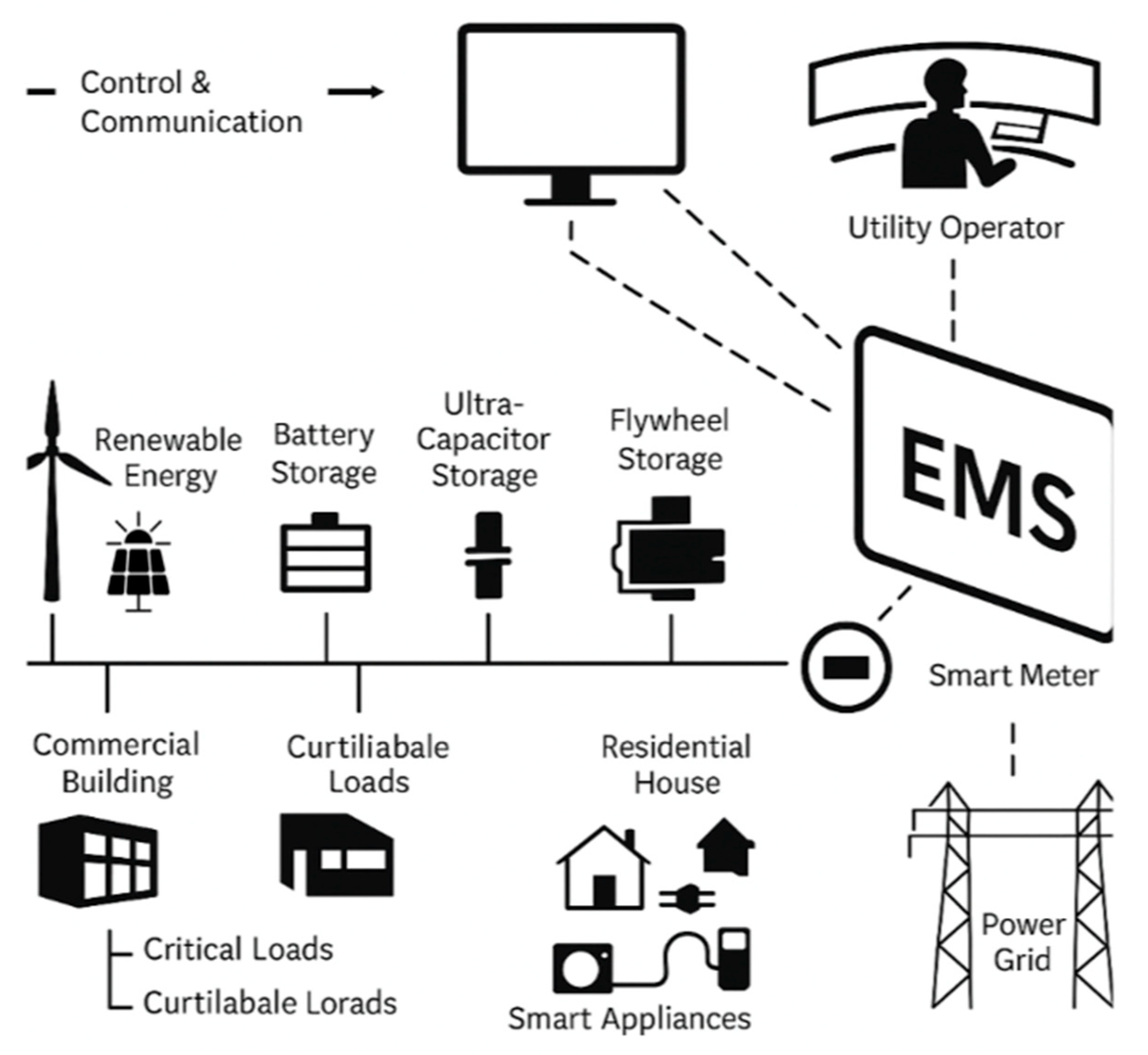
This study utilizes sophisticated energy management approaches to determine the most advantageous arrangement and improve the effectiveness of hybrid energy systems. The project seeks to enhance the understanding of obtaining optimal efficiency and reliability in an HES by analyzing various optimization and modeling methodologies and using fundamental energy management strategies.
2. Optimal Design and Enhancement of Hybrid Energy Systems
The procedures using a novel optimization technique to prove the superiority of the new HES were revised within the literature using mathematical and mechanical engineering tests. Essentially, the goal is to fulfill energy requirements in the most efficient way possible at minimum cost. The techno-economic model and multi-objective optimization are used to address the capital cost, operating cost, reliability, and environmental harm [11]. Figure 2 illustrates the key components of a hybrid energy system architecture, including renewable sources, energy storage, backup power, inverters, and EMS.
A major aspect of hybrid renewable systems is accurate estimation of component sizes so that initial investment and continuous operational costs are minimal [11]. A lot of research has been performed to optimize hybrid renewable energy systems configurations. A complete study conducted by Khan et al. [12] has viewed different modelling that is analysing load profiles, resources and optimum sizing for the hybrid system that contains wind power, solar PV and fuel cells. To enhance the efficiency and reliability of the system, several studies were conducted. We have proposed various control strategies to effectively manage the system components of Rafique, et al. [13] conducted a study; these techniques allow for efficient energy sharing, minimising energy waste, and extending component life. They do this by taking into account data, weather forecasts, and demand predictions. The study by Manas et al. [14] of an off-grid PV-wind hybrid system aims to study the various interactions between the systems by the renewable sources/storage systems/load to enhance system efficiency and also reduce dependency on the grid. Intelligent grids have explored multiple-objective optimisation procedures, including a new load prioritising algorithm, to enhance their versatility and robustness [15].The research was done by Shi, et al. [16], who studied different methods utilising a preference-driven coevolutionary algorithm to optimise HES designs with several competing objectives, including cost, power supply reliability, and pollution. This method persistently adjusts system configurations to achieve Pareto-optimal solutions. For assessing HES's performance under different operational conditions, precise modelling and simulation techniques are critical [17]. They facilitate insight into the dynamic interactions of the system components through various modeling methods, from physics-based models to data-driven models, and through algorithms. Governments across the world are implementing policies that boost the use of renewable energy, etc [18,19]. Hybrid systems mix renewable energy and conventional energy sources to ensure a reliable supply of electricity, especially in off-grid places. HES optimisation consists of appropriately selecting and tuning components to satisfy energy demands while minimising costs and environmental impacts. By using modern models and optimising and controlling energy usage, HES can become better, more reliable, and greener. Ongoing research to enhance the performance of HES, along with changing energy needs, is important.
2.1. Modeling and Simulation of Hybrid Energy Systems Sizing
Modeling and simulation must be accurate to be able to perform evaluation of HES under different operational conditions. This section discusses various modeling methods related to renewable energy sources, energy storage systems, and hybrid system components. The author will discuss physics-based models, data-driven models, and hybrid modeling techniques to understand how different components of the system interact with each other and overall system behavior. Furthermore, a variety of simulation methods are analyzed such as system-level simulation and dynamic modeling, to study system behavior and optimize design parameters while taking into account transient phenomena and uncertainties.Many expert researchers have performed design optimization of hybrid renewable energy systems in the literature. The main goal is to find the most effective arrangement of the power system, which includes the best siting, type, and sizing of generation units at appropriate nodes to cater to load demands at a minimum cost and minimal environmental impacts. A thorough evaluation of the design requires considering the total lifetime costs and emissions of the system, including capital, operational, and maintenance costs. The goal of the optimal hybrid system design is to choose the best combination of generator configurations, types, and sizes for minimum lifetime costs and emissions. The ideal configuration is the hybrid system configuration with the lowest net present value of all the viable choices available. There are many optimization techniques and software for integrating and optimizing real-time systems. Researchers have used different optimization techniques to find the right dimensions of hybrid systems. Table 1 below provides a comparative analysis of the above optimization methods
Research shows that optimization approaches are done to find the right dimension of hybrid renewable energy systems. The efficiency of the methods is a function of application, system size, data, and computation. In the future, research can study the combination of optimization techniques that can generate robust solutions to aid hybrid energy systems that offer solutions to costs, efficacy, and sustainability. By using these methodologies, we may improve the design and operating efficiency of hybrid energy systems, contributing to global energy solutions.
2.2. Commercially Available Software Tools for Hybrid System Sizing
The investigation study deals with how to optimally design hybrid renewable energy systems (HRES). It has been studied quite a lot and has a lot of literature. The main aim of this design problem is to identify the superior configuration of power generation units in terms of location, type, and size for a specific number of nodes of the system [25]. It should suffice to meet energy demand at minimum total system costs. Typically, other HRES are evaluated based on lifetime cost and emissions. Lifetime cost consists of three important costs, namely capital cost, operation cost, and maintenance cost [26]. Furthermore, lifetime costs are adjusted over time. Optimal configuration aims to find the cheapest and cleanest mix of generation technologies. The optimum design or optimum configuration for a system refers to the configuration that has the lowest NPV for all feasible and dispatchable configurations. Renewable energy systems using different sources of energy can be analyzed and simulated specifically using particular software.We can access more renewable energy software from various academic and research institutions. Simulation software tools allow comparing the efficiency of systems, the energy cost of multiple designs to find a suitable, efficient design [27,28]. A widely used tool is HOMER, created by the US National Renewable Energy Laboratory (NREL) .HOMER has models of various devices like PV systems, wind turbines, hydroelectric generators, batteries, diesel generators, fuel-based generators, electrolysis systems, and fuel cells [28]. Programs like HOMER allow system designers to evaluate some or a combination of the following options. First, the system uses energy resources available and their costs. Second, if the grid is connected. For these simulations, the software needs to be given a very detailed set of input parameters with energy resource profiles, techno-economic constraints, storage needs, and management strategies. The specific inputs include the type and characteristics of each component, capital and replacement costs, operation and maintenance expenses, efficiency rates, and expected operational lifetime. Figure 3 indicates the general architecture of this software tool.
According to previous studies, the HOMER software is widely used in renewable energy systems, as mentioned in the literature. Grid-connected and stand-alone systems have been included in the studies. Besides, many researchers have studied the simultaneous connection of conventional systems, such as diesel, with renewable energy systems using HOMER. The Bahramara, S et al. study has employed HOMER to analyze the technical and economic feasibility of stand-alone renewable energy systems, especially in remote and off-grid areas. For instance, researchers have utilized HOMER to optimize configurations involving PV systems, wind turbines, and battery storage, aiming to supply reliable electricity to isolated communities with minimal reliance on fossil fuels. These studies demonstrate HOMER’s capacity to handle complex simulations involving fluctuating renewable energy supply and varying load demands.In addition to off-grid solutions, HOMER has also been extensively applied in evaluating grid-connected renewable systems. These studies typically focus on determining the optimal share of renewable energy that can be integrated into the grid while maintaining system reliability and minimizing costs. For an in-depth literature review regarding the commercially available software tools for the performance evaluation and optimization of hybrid renewable energy systems, see Table 2.
In summary, HOMER has been widely recognized as a powerful tool for modeling and optimizing renewable energy systems in various configurations—stand-alone, grid-connected, and hybrid. The literature consistently highlights its strengths in scenario analysis, cost estimation, and environmental assessment, making it a valuable resource for both academic researchers and energy planners.
3. Energy Management Strategies in Hybrid Renewable Energy Systems
Governments of the world are adopting policies that favor renewable energy technologies as this sector is increasingly seen as strategic. Many countries promote renewables, increase energy efficiency, and formulate conservation plans and legislations. Efforts are being made to ensure a definite supply of power, in incredibly remote areas through the use of hybrid systems. By utilizing more than one source, these systems will reduce fossil fuel dependence. There is a lot of research being done on hybrid systems and their uses which is especially for rural electrification. To deliver all the load with the use of renewable, to minimize the expenditure on diesel, to protect the components, and finally feedback to the grid. It is important to use an efficient EMS. Centralized controllers, often integrated with a SCADA-like monitoring environment, enable the EMS implementation. There are various comprehensive review papers on renewable energy systems detailing hybrid system configurations, sizing methods, storage options, and control methods. Notably, Chauhan and Saini review standalone systems, Bajpai and Dash review standalone hybrid systems, Gu et al.[37] review combined cooling, heating, and power microgrid, and Nehrir et al.[38] Industry review articles explore a range of subjects, including but not limited to Huang et al. on energy management strategies for microgrids, Ye et al. on the role of energy storage in a hybrid microgrid system, and Fernando et al. on industrial heat recovery systems. Different mathematical programs and optimization methods are used for designing and planning energy management strategies as shown in the Figure 4.
The article thoroughly evaluates the approaches that various authors adopt in their studies on energy management systems. Renewable energies are the key resource for power production to meet large-scale electrical energy demands by accessing HRES. The techniques mostly applied by the researchers in this field are standalone hybrid renewable energy systems and grid-connected hybrid renewable systems, as shown in Figure 2. The research study summarises the various methodologies applied for energy management in renewable hybrid systems. The study looks at various standalone and grid-connected hybrid system setups to find out mapping an efficient energy management technique for one type of renewable energy system may not work well for other configurations. Various reviewed studies that evaluate multiple strategies have explored the most effective energy management approaches. This paper extends the above work by zeroing in on important forms of energy management in hybrid renewable energy systems. We first analyse articles that discuss energy management strategies in stand-alone hybrid renewable energy systems, focussing on the specific strategies for each setup. The discussion then revolves around energy management strategies in smart grids, specifically those that incorporate renewable energy sources. The last portion shows research that uses fuzzy logic to devise control strategies that optimise energy flow in hybrid systems.
3.1. Energy Management Utilizing Intelligent Approaches for Standalone Applications
Recent studies analyzed the management of energy of hybrid systems using advanced techniques like genetic algorithms, differential evolution, neural networks, fuzzy logic and neuro-fuzzy. The objective of these strategies is to optimize the efficiency of renewable resources like PV and wind energy to fulfill the required energy demand. Using sizing algorithms, the researchers will minimize the costs associated with the system, since unmet demand and fuel consumption will depend on the uncertain characteristics of the renewable energy source. The most feasible solution for a hybrid power system will be to consider the design parameters of system components and the features of the EMS. This involves finding out the monthly percentages of the charge and discharge of storage units, restricting the start-up and shutting down of generators, and state of charge (SOC) of energy storage. The effectiveness and efficiency of the presented method for hybrid power systems were demonstrated through a comparative analysis with established. The system primarily consists of the PV as well as wind power sources, and also an EMS, which will control the distribution of energy between sources, load, and energy storage devices for stable and secure operation. Two control loops were implemented: a fast loop for energy conversion and a longer loop for energy management. The hybrid system for the introduced EMS integrates power sources from wind, solar, and bioethanol reformers controlled through the useful energy. The EMS achieved the efficiency of the system by taking into account load demand, battery state of charge, and the environmental variables, stabilizing the balancing energy within limits. Wind energy was designated as the priority for electricity generation, for solar power was utilized to supplement it. The was allot of research was conducted to develop energy management strategies for stand-alone hybrid systems employing multiple energy sources through the application of theoretical analyses and experimental investigation. Bursir Khan et al. introduced a framework of distributed energy management systems that utilizes several agents to control microgrid systems with diversified energy resources and loads. The simulation results in the MATLAB/Simulink SimPowerSystems show the system’s high performance. Bruni et al. proposed a power management strategy using neural networks to forecast and manage a hybrid energy system at laboratory scale. Through analyzing the above three energy management strategies, the most efficient capacity of the hybrid energy system comprising renewable sources, the diesel engine and battery bank was evaluated by Upadhyay and Sharma [39]. The optimization techniques used for determining the size of the system were particle swarm optimization, genetic algorithms and biogeography based optimization. Cycle charging method proved to be most effective.Neural networks (NN) are often used to control and regulate hybrid systems, which results in systems with computational intelligence similar to human intelligence in different domains. These systems can quickly adapt to the changing environment and learn to make smart decisions. NN systems are created to mimic human thought processes such as processing of information voice perception forecasting classification and regulation. An NN incorporating solar wind diesel and battery was integrated by Palma Behnket al.[40] in an energy manager of a microgrid. The method was to allot the generating units each an online set point and shortage consumer signal via demand side management for minimizing and satisfying electric load demand. The implementation and testing of precise data demonstrated the cost-effectiveness and power equilibrium of the established management systems. Azmy and Erlich [41] put forth an artificial neural network methodology to enhance the efficacy of proton exchange membrane fuel cells in residence. Hatti and Tioursi proposed a method that utilises quasi-newton-based neural networks which efficiently adjusts settings without the need for a new optimization after every modification of operation conditions. The research article documents the implementation and testing of this new control algorithm and system, which validates both cost-efficiency and power balance of the existing control systems.Basir Khan et al.[42] suggested a distributed energy management approach using multiple agents instead of using a centralized controller. This system enables precise management of single energy sources or loads within a microgrid. The proposed model used non-cooperative game theory for multi-agent cooperation in this energy system. The simulation results showed great performance under various conditions as proven via the Matlab/SimuLink SimPowerSystems environment. Brka et al.[43] proposed a predictive power management strategy for a laboratory energy system in small scale. The system consisted of a simulated renewable source plus a battery and a fuel cell. Neural networks are very often used for the control and management of the hybrid systems owing to their computational intelligence and human-like knowledge. Because of their capability to learn information on their own from examples and provide accurate and timely responses to new input, their popularity in engineering applications has significantly increased. Neural Networks are already being used in industry for management and control of hybrid systems due to their computational intelligence and knowledge of a particular field just like that of a human being. The inherent capability of neural networks to learn information by themselves from examples and respond with exactness and in a timely manner to inputs has led to their use in all branches of engineering. The system aimed to maximize operation and meet the demand of the electric load. Azmy and Erlich [44] suggested that an artificial neural network technique could be applied to enhance the performance of proton exchange membrane fuel cells suitable for use in HOME. The findings revealed that the suggested algorithm efficiently allows for the rapid and straightforward adjustment of FC parameters, resulting in a reduction of all costs of the system and approximation of ideal values. Lin et al.[45] present a technique that uses a Quasi-Newton algorithm-based NN to control a PEMFC energy system. The proposed approach resulted in a dynamic neural network control model capable of effectively managing, stabilizing and identifying tracking errors thereby proving the model efficacy.
3.1.1. Energy Management Based on Linear Programming – Standalone Applications
Optimizing energy management is essential in autonomous hybrid power systems to achieve optimal performance and guarantee a dependable energy supply. This section explores many strategies and approaches to regulate energy in systems, such as PV panels, wind turbines, fuel cells, and other energy storage technologies. Ahmad, Shameem, et al. [46] investigated three power management techniques for a self-contained hybrid power system comprising PV panels, wind turbines, and a proton exchange membrane fuel cell. The study's objective was to improve the efficiency of the fuel cell membrane and provide a steady energy flow in the hybrid system. The third strategy, which utilized excess electricity to power the electrolyzer and replenish the battery, had the most favorable results, with an efficiency of around 85% [46,47]. Ipsakis et al. [48] evaluated the efficacy of two power management strategies that employed hysteresis bands in a hybrid wind, PV, and hydrogen storage system. The evaluation spanned four months and focused on the impact of modifying the hysteresis band gap on the system's overall performance. Kanouni, Badreddine, et al. [49] proposed a power management control method for a self-sufficient PV/battery system. The technique aims to achieve maximum efficiency and dynamic performance by coordinating unidirectional and bidirectional DC-DC converters while considering the battery's state of charge and meteorological conditions [49,50].Ismail et al. [51] conducted a techno-economic assessment of a hybrid system configuration, including PV panels, a battery system, and a microturbine for a small isolated village in Palestine. Their energy management system integrated co-generation, which involved utilizing the microturbine's heat for direct heating applications, decreasing the power production cost [52,53]. Rekioua, et al. [54] developed a very effective power management algorithm for an autonomous hybrid system that integrates PV panels, wind turbines, a diesel generator, and battery storage. Researched a wind/diesel/battery hybrid system that supplies power to rural households and schools in a distant region of North Cameroon conducted by PENDIEU KWAYE [55]. The HOMER has been extensively employed in many global research endeavors to optimize hybrid systems and analyze a hybrid system of PV panels, batteries, and a fuel cell [56,57]. They used TRNSYS software to assess the system's performance and find the most efficient size. Dash and Bajpai [58] utilized a similar approach to study a photovoltaic/fuel cell/battery system ,an energy management strategy for an autonomous hybrid system that integrates renewable energy sources with storage [59]. Their calculations demonstrated the reliable supply of electricity for the hybrid system.Their simulations proved the consistent provision of electricity for the hybrid system.This section presents a range of energy management strategies for independent hybrid power systems. The critical studies analyzed solutions that involved PV systems, wind power, fuel cells, and battery storage. The main focus was on maximizing the efficiency and dependability of these systems. Various approaches, such as hysteresis bands and co-generation, have substantially enhanced system performance. The extensive utilization of HOMER for system optimization highlights its significance in hybrid energy management. In summary, the solutions studied underline the need for efficient energy management to improve the performance of freestanding hybrid power systems.
3.1.2. Energy Management Based on Intelligent Techniques – Standa- Lone Applications
In recent times, numerous research studies have examined the utilization of intelligent techniques for managing energy in hybrid systems. Several strategies include genetic algorithms (GA), differential evolution (DE), neural networks, fuzzy logic, and neuro-fuzzy systems[60,61]. This subsection presents a summary of various research studies, with a more detailed analysis of the use of fuzzy logic in energy management systems, which will be provided later. Abedi et al. [62] introduced a novel method to determine the most influential power management methodology for hybrid power systems comprising multiple energy sources and storage devices. The dispatch strategy aims to optimize the utilization of renewable energy sources, such as PV and wind power, to meet electricity demand [6]. It also prioritizes other sources based on a power management optimization process. The excess energy produced by renewable sources is harnessed to charge energy storage devices, such as an electrolyzer and a battery, using a system of collective charging [63]. Power management optimization is integrated with sizing algorithms to minimize overall costs, unfulfilled loads, and fuel consumption, considering the unpredictable nature of renewable energy sources. A differential evolution approach using fuzzy logic was employed to address the nonlinear multi-objective optimization problem of the hybrid system [64]. The optimal solution included the design parameters of system components and EMS parameters, including the allocation of monthly charges among storage devices, the distribution of monthly discharges among hybrid generators, the constraints on generator start-up and shutdown, and the state of charge of energy storage [65,66].The numerical data for the recommended monthly tilt angle of PV panels and the optimal tower height of wind turbines were compared with the optimal sizing values acquired using pre-defined EMSs without employing the developed EMS optimization method [67]. The results demonstrated the efficacy and capability of the proposed technique for a hybrid power system. Shayeghi, H., et al. [68] developed a theoretical energy management method that forecasts and controls energy use in a wind/diesel/battery hybrid power system based on anticipated future load and resource conditions. This advanced EMS establishes a benchmark for assessing fundamental, practical, non-predictive dispatch methods. The tactics encompass cost-effective discharge, load following, SOC set-point, and complete power/minimum runtime strategies[69]. A comprehensive assessment of the total cost of ownership for fuel and batteries has determined that the proposed EMS is more economically advantageous than other available methods.This analysis highlights the significant potential of intelligent solutions in optimizing energy management for standalone hybrid power systems, ensuring efficient, economical, and reliable energy delivery.
3.1.3. Energy Management by Fuzzy Logic Controllers in Standalone Hybrid Energy Systems
This subsection presents a review of literature on the fuzzy logic-based energy management of stand-alone hybrid energy systems. The goal is to develop and implement a fuzzy controlled strategy to design and build an EMS for DC microgrid systems [70,71]. The researcher did a simulation and control of energy resources and storage with MATLAB/Simulink tools for hybrid energy resources study. The LabVIEW was used to develop EMS with monitoring. The fuzzy logic controller is designed to maximize longevity by optimising the SOC and improving the overall performance of the system while reducing costs [72]. The controller uses two input variables, ΔSOC, which is the battery state of charge, and ΔP, which is the difference between the power demand and the power generated by the microgrid. The output variable is the delta (Δ) of the charging and discharging current of the battery (ΔI) [73]. The functions utilize five membership variables (NB, NS, ZO, PS, and PB) (negative big, negative small, zero, positive small, and positive big). If ΔP is negative, it indicates that the microgrid produces adequately sufficient power for the load demand. Here, the battery is moved to the charging mode if the ΔSOC is negative [74,75]. On the other hand, in case ΔP is positive, the battery operates in the discharge mode. The implementation of the proposed model in MATLAB/Simulink consists of a PV system of a power rating of 5kW, wind turbine of a power rating of 1.5kW, lithium-ion battery of power rating 1.5kW, load of 6.5kW [76]. The simulation result proves that working of proposed system correct. It utilizes fuzzy controller to ensure that battery SOC does not exceed capable level irrespective of power supplied by the microgrid system [77]. The frequency of the main inverter is varied to attain control. If the microgrid system lacks energy and the battery has a low SOC, the inverter frequency will drop below 50 Hz. On the other hand, if the supply is abundant and the battery is highly charged, the frequency will rise above 50 Hz. The frequency when the battery's SOC is almost full. Consequently, it will stop supplying energy to avoid overcharging [78,79]. The researchers emphasized that the proposed FLEMS (Flexible Energy Management System) would utilize more of the microgrid’s available energy capacity than a conventional on/off EMS. The performance of every component in the operation of the hybrid system was demonstrated [80]. Further using optimization techniques the size gets reduced significantly and hence the complete hybrid system earns back the cost in a very short time. A complementary study focused on increasing the heat output and energy distribution of a combined heat and power (CHP) system. The EMS forms the basis to increase the capacity of CHP and boiler efficiently [81]. The system uses a fuzzy logic controller to manage the uncertainties surrounding electrical and heat demand as well as uncertainties connected to fossil fuel price and COE. Therefore, the EMS helps to optimally choose system components in such a way as to minimize the net present value of the whole hybrid system. Dursun, et al. [82] studied an EMS of a stand-alone hybrid power system comprising wind, PV, fuel cell (FC) and battery elements. The EMS operates on the principles of fuzzy logic The main power sources consist of the PV and wind energy systems while the FC plays the role of a secondary power source if the primary sources are not available. The battery unit is used to store excess energy generated and feed transient loads. The main purpose of the fuzzy logic-based EMS utilized in this work was to effectively manage the allocation of power throughout the entire system while simultaneously maintaining the stability of the state of charge (SOC) of the battery. The fuzzy logic controller's input will be taken as the difference between load demand, power generation by renewable sources (PV, W wind) and state of charge of battery. The EMS determines how much power they need to extract from the backup source FC to support to overcome the increased power requirement from the renewable energy sources. When the SOC falls below the desired level, the FC provides additional power to replenish the battery. In contrast, when the SOC reaches or exceeds the intended level. The energy management strategy effectively controls the battery dynamics in respect to existing renewable electricity supply for load demand. Justification for the superiority of fuzzy logic based EMS in study over already published works has been provided by the Maghfiroh et al. [83]. The benefits of this scheme include a fast response time, and operating without dependence on the system’s mathematical model, as well as convenient adaptability to the changing situation during the operation, etc [84]. Berrazouane and Mohammedi [85] devised a cuckoo search algorithm employing a fuzzy logic controller to manage a standalone hybrid power system. The system consists of PV panels, diesel generator and batteries. The battery SOC and net power flow are fed to the fuzzy logic controller [86]. The fuzzy logic controller has three outputs as a result of its processing: The power rating of the PV system The rated power of the diesel generator The battery capacity The outcomes showed that the proposed method outperformed particle swarm optimization based on the fitness performance of the other algorithm. Hosseinzadeh et.al. [87] developed a control system supervised for managing and operating autonomous AC/DC microgrid. The controller has the major duties of maximizing the use of renewable energy sources, keeping an appropriate level of charge, and controlling the power of the DC and AC microgrids.The supervisory controller was formalized using the state machine approach. The proposed controller's efficiency was explicitly demonstrated by the results from the numerical simulations.
3.2. Energy Management Systems in Grid-Connected Hybrid Renewable Energy Systems
This section provides a comprehensive assessment of several articles that have examined grid-connected hybrid renewable energy systems. Each study strongly advocated for an energy management strategy that enables the regulation of energy flow between different energy generation and storage technologies across the grid [88]. The subsequent section provides a review of studies that have examined the combination of renewable energy sources with a smart grid. Additionally, a separate section reviews publications that propose the use of a fuzzy system for energy control. Several of the studied research employed linear programming to execute energy management, while others utilized intelligent methodologies for the same objective. The subsequent sections encompass the research that employed these two methodologies to execute energy management for grid-connected applications. The research that utilize fuzzy logic systems for energy management is reviewed separately, as many of them employ this clever technique for this goal, as noted earlier.
3.2.1. Energy Management Based on Linear Programming – Grid-Con- Nected Applications
Grid-connected applications and linear programming for energy management have become a potential approach to optimizing resource consumption and improving system efficiency. Pioneered creating a demand-side management model specifically designed for the Brazilian [89]. Their inventive strategy was integrating with current metering systems, utilizing a prepaid model with advanced control features to shape user behavior. This model aimed to achieve a fairer distribution of electricity usage among consumers by aligning consumption patterns with the monthly availability of renewable energy [90,91]. It also aimed to address energy scarcity and excessive reliance on diesel generators when renewable energy potential is limited. Several of the studies employed grid-connected applications and linear programming for energy management. Rani and her colleagues [92] suggested a method to smoothly incorporate PV systems into the power grid to consistently and uninterruptedly supply DC loads with electricity. Their suggested energy flow management method aimed to maximize the use of surplus energy by injecting it into the grid at a high-quality level [93]. This technique achieved adequate energy supply and demand balancing by monitoring battery voltage and adjusting operational modes accordingly. Mojumder et al.[94] proposed a pragmatic model to evaluate the impact of vehicle-to-grid systems on enhancing the energy management of small electric power networks. Their thorough assessment prioritized enhancing power generation efficiency across different units and synchronizing input/output power dynamics to reduce operational expenses [95]. Mayoral et al. [96] proposed a hybrid system that combines PV panels, batteries, super-capacitors, and fuel cells, all coupled with the primary grid. Equipped with an advanced controller, this system ensures continuous power supply, maintains steady functioning of various energy sources, and efficiently exports excess energy to the grid [96,97]. The system has proven its ability to satisfy load demands efficiently and seamlessly integrate excess electricity into the grid network by conducting thorough simulations. Finn et.al. [98] investigated the capacity of price-based demand response systems to motivate industrial users to synchronize their electricity consumption with wind-generated power on the grid. This method sought to maximize the use of wind energy resources and reduce stress on the power grid during high demand by taking advantage of low-price periods and introduced a complex energy management approach designed explicitly for microgrids that consist of PV systems, wind turbines, and battery storage, all connected to the primary power grid [99,100]. By utilizing predictions of renewable energy production and up-to-date information on the flow of electricity, this method guaranteed the most efficient energy distribution while successfully adjusting for any variations in the availability and consumption of power.Comodi et al. [101] proposed a new method for determining the appropriate size of PV plants to the grid. Their solution includes the use of micro-gas turbines to improve reliability and efficiency. Their solutions, which were created to minimize the uncertainty of power provided by photovoltaic systems and decrease the use of primary fuel, emphasized the need for proactive energy management to maximize the system's efficiency. Saadat et al.[102] examined the economic and environmental viability of combining hydrogen systems with pre-existing hydroelectric and wind power plants.Their pioneering energy management method utilized hydrogen as an energy transporter, enabling smooth energy storage and conversion to electricity during moments of high demand [103]. Byun et al. [104] thoroughly assessed hybrid systems that include renewable sources, diesel generators, and the current grid infrastructure. Their strategy emphasized using renewable energy sources and battery storage to meet temporary power needs, highlighting the potential for obtaining the best economic and environmental results [104,105]. Furthermore, various other research studies, such as the ones conducted, have employed advanced optimization techniques to optimize the performance and sustainability of grid-connected hybrid systems.
3.2.2. Energy Management Based on Intelligent Techniques – Grid Connected Applications
Energy management in grid-connected applications entails incorporating intelligent methodologies to maximize the utilization of renewable energy sources and improve the dependability and effectiveness of the power system [106]. Recent progress has been made in developing advanced control and optimization techniques to tackle the ever-changing nature of energy supply and demand. This section examines two prominent methodologies that utilize intelligent techniques to optimize energy management in grid-connected systems and reviews the existing research. Gao, et al. [107] suggested a dual-layer coordinated control strategy that combines forecasts and real-time data to accomplish efficient and dependable energy operations. This approach is assessed in independent and grid-connected situations, emphasizing its versatility and efficiency in various operational circumstances. The conducted a study by Bahmani-Firouzi and Azizipanah-Abarghooee [108] in which they proposed an enhanced bat algorithm specifically designed to optimize the capacity of battery storage systems in microgrids. This evolutionary technique has the potential to significantly improve the sustainability of microgrid operations by prioritizing cost efficiency and battery system longevity. These methods emphasize the importance of using intelligent strategies to manage energy systems. This is especially important for optimizing the advantages of renewable energy sources and enhancing grid-connected applications' overall performance and dependability.
3.2.3. Energy Management by Fuzzy Logic Controllers in Standalone Hybrid Energy Systems
Efficient energy management is essential in standalone hybrid energy systems to ensure system stability and optimize operating costs. Intelligent control systems, such as fuzzy logic controllers, are increasingly used to deal with the intricacies of controlling numerous energy sources [70,109]. This section examines a fuzzy logic-based method suggested that seeks to enhance the efficiency of distribution networks by prioritizing cost and stability. Their algorithm regulates the allocation of power from different energy sources to fulfill load requirements, prioritizing renewable sources. This technique involves designing batteries to discharge only when the anticipated load for the next interval is not substantial [110]. This guarantees that batteries are allocated for significant loads, improving system stability and reducing voltage drops. A fuzzy system calculates the required battery energy when renewable sources are insufficient, particularly during off-peak periods [111]. The system utilizes two fuzzy input variables and one fuzzy output variable. The inputs consist of two variables: the time remaining until the next peak and the battery's current charge level, measured as the ratio of available energy to the energy required at the next peak [112,113]. The result is the percentage of the load that the batteries need to fulfill. The first input consists of fuzzy subsets categorized as small, medium, and large. The second input contains small, small, medium, and large subsets. The output variable consists of six subsets: tiny, small, big, medium, large, massive, and very large [114]. The first input covers six hours, whereas the second covers a three times as extensive range. The output range is 100%; combining these inputs resulted in twelve distinct fuzzy rules [115]. There is a significant time interval until the next peak, and the battery's charge level is also high; the batteries will be able to satisfy a large percentage of the output load. In contrast, when the battery's charge level is shallow, the output will be negligible, regardless of the time until the next peak [116]. The regulations are specified in a table that is cited as a reference. The simulations showcased the effectiveness of this method, emphasizing its capability to enhance the efficiency and dependability of independent hybrid energy systems [62,117].
3.3. Energy Management Strategies in Smart Grids Including Renewable Energy Sources
In the past many years, there have been significant changes in the way energy is generated, transmitted and used. For most nations, achieving a reliable and secure source of energy outside fossil fuels is an important goal. To meet this objective, smart grids with renewable energy sources are essential. Smart meters, intelligent sensors, and real-time data exchange of bidirectional energy between energy providers and consumers is needed for smart grids [90,118]. This design helps to control the efficient distribution of energy, giving consumers the power to choose wisely. Although smart grids have several benefits, they could be more manageable; in particular, renewable energy[119]. Excess energy generated during some times at the expense of over crowding distribution networks is causing concern along with intermittence of renewable energy generation at other times (Phuangpornpitak and Tia) [120]. The researchers Alsayegh et al. [121] also found that extensive penetration of renewables can cause grid stability issues such as voltage surges, reliability and stability issues, voltage swings, and harmonics. These problems can be mitigated by using a supervisory control system to oversee, manage, and direct energy flow among these sources. An effective energy management plan is crucial for leveraging renewable energy in smart grids [122]. A plan is effective if all sources within the innovative grid system are provided with the necessary technology (directly or through power electronics interfaces) for interconnection [123]. The proposed scheme must encompass real-time control and automatic regulation . The objective is to enhance power distribution and spur local consumption of various energy sources [124]. Another goal is to lower customer energy costs and enhance reliability. The plan for managing energy will allow for system expansion to enable the incorporation of additional sources or higher capacity of existing sources [125]. Smart meters facilitate real-time and cumulative metering of electricity use. It can be set up to operate with any feed-in tariff or pricing plan. A monitoring and supervision system that regulates electricity flow is another key part of the smart grid. Some examples of such systems are SCADA and ZigBee devices [125,126]. The SCADA system uses a combination of software and hardware for data collection and control communication. It operates as a central controller to manage processes and energy in power grids.The system gathers technical data; if equipment fails, an alarm signal is triggered. It analyzes data and executes required operations to control energy. SCADA systems incorporate essential components such as human–machine interfaces, input/output devices, controllers, networking equipment, and software [127]. Dumitru and Gligor [128] proposed and implemented an energy management system integrated with SCADA for monitoring renewable energy usage by consumers connected to public networks. They demonstrated the effective use of renewable resources through careful management. Batista and colleagues [129] studied ZigBee devices to determine their effectiveness for wireless monitoring and control in smart grids. The findings revealed that these devices can function for long periods without servicing. Aly et al. [130] An energy system using renewables that works with an intelligent house. They used a two-way communication protocol and a GSM modem for effective flow of energy. Their technology effectively managed peak energy consumption periods, generating significant savings on energy bills and thereby proving the strength of renewables in intelligent energy systems [131].
4. Control and Management of Hybrid Renewable Energy Systems
Energy management solutions are important for optimizing hybrid energy systems' HES performance and efficiency. Leveraging these techniques can effectively control and optimize the flow of energy from different sources to storage and load in real time to harness its potential [2,132]. To manage the energy in hybrid energy systems effectively, many control techniques have been proposed such as rule-based control, model predictive control, and artificial intelligence-based control [133]. The utilization of real-time information, along with weather predictions and demand estimates, is harnessed by these algorithms to optimize energy dispatch, minimize losses, and prolong the lifespan of system components [134]. Effective power dispatching in a multisource energy system necessitates the implementation of an overall controlling technique.The main objectives are to follow load variations and maintain the state of charge of battery banks so that power interruption is avoided and battery life is increased [135]. To achieve these goals, the controller must find the suitable online operating modes for every generation subsystem and switch from power control to maximum power conversion. A comprehensive supervisor control was developed for a hybrid system of wind and PV generation subsystems, battery bank and AC Load as outlined in reference [136]. The control objectives of the wind and solar subsystems was achieved using robust sliding-mode control principles. In their study , the authors presented a comprehensive control approach for a hybrid renewable energy system [137]. A controller for pitch angle regulates the wind generation system and the PV unit is controlled by a maximum power point tracking (MPPT) controller. Everything was modeled dynamically. Excess electricity from wind and PV was sent to an electrolyzer for hydrogen production and storage [138,139]. When there is a power shortage, the fuel cell stack uses the stored hydrogen to give power for the electrical demand. The energy management and control subsystem of a grid connected wind/solar hybrid power system has been realized in hardware. The overall system comprises various components, including a programmable logic controller (FBs-40MAT from FATEK), AC multifunction electric power meters, a grid-connection control module, a human-machine interface (HMI), DC electric power meters, and an RS485/TCP converter for controlling and managing multisource operation [140]. For proper operation of hybrid renewable energy systems, effective communication is essential. Modbus RTU is utilized inside and between subsystems, while computer communication is enabled by RS485/TCP converters [141]. Table 3 is a synopsis of the control and management of hybrid renewable energy systems
Implementing complete control and management systems in HRES improves energy efficiency, dependability, and economic feasibility. Through the integration of sophisticated control methodologies and resilient energy management systems, these systems can adjust to fluctuating situations, enhance energy allocation, and facilitate sustainable energy objectives.
5. Challenges and Recent Advancements
Hybrid renewable energy systems combine more than one method of energy generation or storage to give more reliable, renewable energy. Even if they have a lot of abilities, many challenges hinder their great use and efficiency. We need advanced technology solutions to solve these challengesCombining HRES with current power grids is not possible and poses significant challenges. To effectively manage the flow of energy and information in both directions, standardized communication and control protocols need to be developed. HRES coordination with grid is a key requirement to achieve stability and dependability of grid. .
- The intermittency of solar and wind energy requires an efficient Energy Storage System (ESS). But such a system cannot be overused. Most of the time, single ESS technologies cannot achieve a balance between energy density, power density, lifetime, and cost. Hybrid Energy Storage Systems (HESS) are considered a good solution for this problem due to the weight of benefits. Challenges exist in the optimization of HESS configuration and ensuring compatibility of diverse storage technologies. .
- HRES deployment is costly because of high initial capital including renewable energy generators, storage systems and all other required supportive systems cost. The high initial costs of HRES are a significant barrier to adoption. .
- System Sizing and Optimization: Determining the optimal size and configuration of HRES components is complex, involving trade-offs between cost, performance, and reliability. Efficiencies and added costs can arise from either oversizing or undersizing. To solve these challenge, advanced optimization algorithms are getting developed, which are using AI and ML techniques. .
- For the proper functioning of HRES, effective control strategies need to be established for the proper operation and energy management. Recent advancements include the integration of AI for predictive and real-time speed decision-making. The systems need complex controls and strong energy management systems. .
- The safety and reliability of HRES, especially with the integration of different energy storage technology, is a key issue. We need to manage degrading batteries, preventing failures, and consistently functioning on harsh conditions with hybrid renewable energy. .
- The creation, operation and disposal of HRES components must not harm the environment and must be sustainable. The materials developed should be recyclable and the process of manufacture should have a low environmental footprint. And system disposal should be done responsibly during HRES life cycle.
- Several advances have been developed in response to these recent issues.
- AI techniques are used in these systems to enhance decision-making for smart energy management and predicting system behavior.
- Scientists are investigating new materials and technologies to develop new energy storage, such as solid-state batteries that make these systems more efficient, safe, and longer-lasting.
- Efforts are underway to develop standards protocols related to system integration, communication and control for reducing interoperability issues and for facilitating the deployment of HRES. .
- Nations’ governments are launching policies and supplying incentives that reduce the financial hurdles of taking up HRES to promote clean energy transition and strengthen the resilience of nations’ energy grids.
To solve issues with HRES, there should be a strategy that includes technology enhancement, planning, and legislation support. Continuous R&D should enable HRES to unlock its full potential and pave the way for a sustainable future.
6. Conclusion and Recommendations
The growing trend of global energy demand for sustainable energy generation in various locations, such as remote and off-grid regions, has mobilized HRES. Global implementation of HRES is underway to improve energy mixes in off-grid sites. They fulfill energy needs and provide sustainable energy in inaccessible areas. There will be an optimum system of HRES based on a balance between maximum technical performance and maximum economic feasibility. The efficiency of the development of a system must be consistent with demand and must produce the system with minimal overall cost of production of power production. Here are some recommendations to further enhance HRES effectiveness.
- Use advanced techniques and simulation tools for HRES design according to particular requirements and local conditions. Renewable energy system design problems involve selecting appropriate renewable energy sources, accurately sizing components, and integrating storage in case of intermittency issues.
- Design and implement elaborate energy management systems that coordinate various components of HRES. Using tools like PSO and GA can improve system performance and dependability. .
- Use hybrid control strategies that integrate centralized and decentralized approaches for optimal efficiency. The system’s strength is increased by optimizing the energy distribution with the data in the system.
- The purpose of the assessment is to examine the Techno-Economic and Environmental viability and impact of HRES projects. Technical project proposals shall contain the assessment of life cycle costs, rate of return, and expected eco-friendly products.
- Governments and regulatory bodies must formulate enabling policies and incentives for the promotion of HRES. For HRES projects to be commercially attractive to investors and developers, governments and regulators need to implement financial incentives, tariffs, and regulations.
- Provide funding for research and development (R&D) of HRES technologies to improve efficiencies. Also, running development programs for the people will help implement and maintain these systems in the market.
By taking these suggestions into consideration, stakeholders can use HRES effectively for a sustainable, resilient, and equitable energy future.
References
- Olatomiwa, L.; Mekhilef, S.; Ismail, M.S.; Moghavvemi, M. Energy management strategies in hybrid renewable energy systems: A review. Renewable and Sustainable Energy Reviews 2016, 62, 821–835. [Google Scholar] [CrossRef]
- Mishra, P.; Singh, G. Energy management systems in sustainable smart cities based on the internet of energy: A technical review. Energies 2023, 16, 6903. [Google Scholar] [CrossRef]
- Khahro, S.H.; Kumar, D.; Siddiqui, F.H.; Ali, T.H.; Raza, M.S.; Khoso, A.R. Optimizing energy use, cost and carbon emission through building information modelling and a sustainability approach: A case-study of a hospital building. Sustainability 2021, 13, 3675. [Google Scholar] [CrossRef]
- Khan, A.A.; Minai, A.F.; Godi, R.K.; Sharma, V.S.; Malik, H.; Afthanorhan, A. Optimal Sizing, Techno-Economic Feasibility and Reliability Analysis of Hybrid Renewable Energy System: A Systematic Review of Energy Storage Systems’ Integration. IEEE Access 2025. [Google Scholar]
- Alabi, T.M.; Aghimien, E.I.; Agbajor, F.D.; Yang, Z.; Lu, L.; Adeoye, A.R.; Gopaluni, B. A review on the integrated optimization techniques and machine learning approaches for modeling, prediction, and decision making on integrated energy systems. Renewable Energy 2022, 194, 822–849. [Google Scholar] [CrossRef]
- Atawi, I.E.; Al-Shetwi, A.Q.; Magableh, A.M.; Albalawi, O.H. Recent advances in hybrid energy storage system integrated renewable power generation: Configuration, control, applications, and future directions. Batteries 2022, 9, 29. [Google Scholar] [CrossRef]
- Adane, T.F.; Bianchi, M.F.; Archenti, A.; Nicolescu, M. Application of system dynamics for analysis of performance of manufacturing systems. Journal of Manufacturing Systems 2019, 53, 212–233. [Google Scholar] [CrossRef]
- Mohammed, Y.; Mustafa, M.; Bashir, N. Hybrid renewable energy systems for off-grid electric power: Review of substantial issues. Renewable and Sustainable Energy Reviews 2014, 35, 527–539. [Google Scholar] [CrossRef]
- Jeong, S.; Lee, J. Environment and energy? The impact of environmental management systems on energy efficiency. Manufacturing & Service Operations Management 2022, 24, 1311–1328. [Google Scholar]
- Babu, T.S.; Vasudevan, K.R.; Ramachandaramurthy, V.K.; Sani, S.B.; Chemud, S.; Lajim, R.M. A comprehensive review of hybrid energy storage systems: Converter topologies, control strategies and future prospects. Ieee Access 2020, 8, 148702–148721. [Google Scholar] [CrossRef]
- Yazdani, H.; Baneshi, M.; Yaghoubi, M. Techno-economic and environmental design of hybrid energy systems using multi-objective optimization and multi-criteria decision making methods. Energy Conversion and Management 2023, 282, 116873. [Google Scholar] [CrossRef]
- Khan, F.A.; Pal, N.; Saeed, S.H. Review of solar photovoltaic and wind hybrid energy systems for sizing strategies optimization techniques and cost analysis methodologies. Renewable and Sustainable Energy Reviews 2018, 92, 937–947. [Google Scholar] [CrossRef]
- Rafique, S. Energy management systems for prosumers integrated with electric vehicles and distributed energy resources. Macquarie University.
- Manas, M.; Sharma, S.; Reddy, K.S.; Srivastava, A. A critical review on techno-economic analysis of hybrid renewable energy resources-based microgrids. Journal of Engineering and Applied Science 2023, 70, 148. [Google Scholar] [CrossRef]
- Assad, U.; Hassan, M.A.S.; Farooq, U.; Kabir, A.; Khan, M.Z.; Bukhari, S.S.H.; Jaffri, Z.u.A.; Olah, J.; Popp, J. Smart grid, demand response and optimization: A critical review of computational methods. Energies 2022, 15, 2003. [Google Scholar] [CrossRef]
- Shi, Z.; Wang, R.; Zhang, T. Multi-objective optimal design of hybrid renewable energy systems using preference-inspired coevolutionary approach. Solar energy 2015, 118, 96–106. [Google Scholar] [CrossRef]
- Khalil, M.I.K.; Rahman, I.U.; Zakarya, M.; Zia, A.; Khan, A.A.; Qazani, M.R.C.; Al-Bahri, M.; Haleem, M. A multi-objective optimisation approach with improved pareto-optimal solutions to enhance economic and environmental dispatch in power systems. Scientific Reports 2024, 14, 13418. [Google Scholar] [CrossRef]
- Ahmad, T.; Madonski, R.; Zhang, D.; Huang, C.; Mujeeb, A. Data-driven probabilistic machine learning in sustainable smart energy/smart energy systems: Key developments, challenges, and future research opportunities in the context of smart grid paradigm. Renewable and Sustainable Energy Reviews 2022, 160, 112128. [Google Scholar] [CrossRef]
- Lin, Y.; Tang, J.; Guo, J.; Wu, S.; Li, Z. Advancing AI-Enabled Techniques in Energy System Modeling: A Review of Data-Driven, Mechanism-Driven, and Hybrid Modeling Approaches. Energies 2025, 18, 845. [Google Scholar] [CrossRef]
- Li, Y.; Sun, R.; Chen, W. Online trajectory optimization and guidance algorithm for space interceptors with nonlinear terminal constraints via convex programming. Aircraft Engineering and Aerospace Technology 2023, 95, 53–61. [Google Scholar] [CrossRef]
- Grifel, D. Multi-objective optimization using evolutionary algorithms. The Mathematical Gazette 2003, 87, 409–410. [Google Scholar]
- Hossain, N.; Khan, N.A.; Tasneem, Z.; Islam, F.; Ahmed, F. MAS: A Machine Learning Framework for Aerospace Systems. in International Conference on Aerospace System Science and Engineering. 2024. Springer.
- Nagaraj, S.; Hickok, T. Physics Informed Machine Learning (PIML) methods for estimating the remaining useful lifetime (RUL) of aircraft engines. Proceedings of 2024 AIAA DATC/IEEE 43rd Digital Avionics Systems Conference (DASC); pp. 1–7.
- Smith, J.R.; Mastorakos, E. Monte Carlo simulation of emissions and energy model of civil aircraft concepts propelled by hydrogen fuel cells. Proceedings of 2019 AIAA/IEEE Electric Aircraft Technologies Symposium (EATS); pp. 1–25.
- Bourennani, F.; Rahnamayan, S.; Naterer, G. Optimal design methods for hybrid renewable energy systems. International Journal of Green Energy 2015, 12, 148–159. [Google Scholar] [CrossRef]
- Lian, J.; Zhang, Y.; Ma, C.; Yang, Y.; Chaima, E. A review on recent sizing methodologies of hybrid renewable energy systems. Energy Conversion and Management 2019, 199, 112027. [Google Scholar] [CrossRef]
- Klimt, J.; Eiling, N.; Wege, F.; Baude, J.; Monti, A. The role of open-source software in the energy sector. Energies 2023, 16, 5855. [Google Scholar] [CrossRef]
- Tozzi Jr, P.; Jo, J.H. A comparative analysis of renewable energy simulation tools: Performance simulation model vs. system optimization. Renewable and Sustainable Energy Reviews 2017, 80, 390–398. [Google Scholar] [CrossRef]
- Lv, S.; Chen, S.; Wei, Z.; Zhang, H. Power–transportation coordination: Toward a hybrid economic-emission dispatch model. IEEE Transactions on Power Systems 2021, 37, 3969–3981. [Google Scholar] [CrossRef]
- Kumar, A.; Grover, N.; Manna, A.; Kumar, R.; Chohan, J.S.; Singh, S.; Singh, S.; Pruncu, C.I. Multi-objective optimization of WEDM of aluminum hybrid composites using AHP and genetic algorithm. Arabian Journal for Science and Engineering 2022, 47, 8031–8043. [Google Scholar] [CrossRef]
- Ansari, M.S.; Jalil, M.F.; Bansal, R. A review of optimization techniques for hybrid renewable energy systems. International Journal of Modelling and Simulation 2023, 43, 722–735. [Google Scholar] [CrossRef]
- Starke, A.R.; Cardemil, J.M.; Escobar, R.; Colle, S. Multi-objective optimization of hybrid CSP+ PV system using genetic algorithm. Energy 2018, 147, 490–503. [Google Scholar] [CrossRef]
- Salem, S.A.; Abed, K.A.; Moawed, M.A.; Abdelrahman, M. Hybrid Renewable Energy System for Reverse Osmosis Desalination Unit: A Review. Journal of International Society for Science and Engineering 2024, 6, 7–17. [Google Scholar] [CrossRef]
- Ahmed, M.; Mirsaeidi, S.; Koondhar, M.A.; Karami, N.; Tag-Eldin, E.M.; Ghamry, N.A.; El-Sehiemy, R.A.; Alaas, Z.M.; Mahariq, I.; Sharaf, A. Mitigating uncertainty problems of renewable energy resources through efficient integration of hybrid solar PV/wind systems into power networks. IEEe Access 2024, 12, 30311–30328. [Google Scholar] [CrossRef]
- Bhatia, T.; Bharathy, G.; Prasad, M. A Targeted Review on Revisiting and Augmenting the Framework for Technology Acceptance in the Renewable Energy Context. Energies 2024, 17, 1982. [Google Scholar] [CrossRef]
- Piscitelli, R.; Pimentel, A.D. Design space pruning through hybrid analysis in system-level design space exploration. In Proceedings of 2012 Design, Automation & Test in Europe Conference & Exhibition (DATE); pp. 781–786.
- Gu, W.; Wu, Z.; Bo, R.; Liu, W.; Zhou, G.; Chen, W.; Wu, Z. Modeling, planning and optimal energy management of combined cooling, heating and power microgrid: A review. International Journal of Electrical Power & Energy Systems 2014, 54, 26–37. [Google Scholar]
- Nehrir, M.; Wang, C.; Strunz, K.; Aki, H.; Ramakumar, R.; Bing, J.; Miao, Z.; Salameh, Z. A review of hybrid renewable/alternative energy systems for electric power generation: Configurations, control, and applications. IEEE transactions on sustainable energy 2011, 2, 392–403. [Google Scholar] [CrossRef]
- Upadhyay, S.; Sharma, M. A review on configurations, control and sizing methodologies of hybrid energy systems. Renewable and Sustainable Energy Reviews 2014, 38, 47–63. [Google Scholar] [CrossRef]
- Palma-Behnke, R.; Benavides, C.; Aranda, E.; Llanos, J.; Sáez, D. Energy management system for a renewable based microgrid with a demand side management mechanism. Proceedings of 2011 IEEE symposium on computational intelligence applications in smart grid (CIASG); pp. 1–8.
- Azmy, A.M.; Erlich, I. Impact of distributed generation on the stability of electrical power system. In Proceedings of IEEE Power Engineering Society General Meeting, 2005; pp. 1056–1063.
- Khan, M.R.B.; Jidin, R.; Pasupuleti, J. Multi-agent based distributed control architecture for microgrid energy management and optimization. Energy Conversion and Management 2016, 112, 288–307. [Google Scholar] [CrossRef]
- Brka, A.; Al-Abdeli, Y.M.; Kothapalli, G. Predictive power management strategies for stand-alone hydrogen systems: Operational impact. International Journal of Hydrogen Energy 2016, 41, 6685–6698. [Google Scholar] [CrossRef]
- Azmy, A.M.; Erlich, I. Online optimal management of PEMFuel cells using neural networks. IEEE Transactions on Power Delivery 2005, 20, 1051–1058. [Google Scholar] [CrossRef]
- Lin, X.; Zeng, S.; Li, X. Online correction predictive energy management strategy using the Q-learning based swarm optimization with fuzzy neural network. Energy 2021, 223, 120071. [Google Scholar] [CrossRef]
- Ahmad, S.; Hasan, S.M.N.; Hossain, M.S.; Uddin, R.; Ahmed, T.; Mustayen, A.; Hazari, M.R.; Hassan, M.; Parvez, M.S.; Saha, A. A Review of Hybrid Renewable and Sustainable Power Supply System: Unit Sizing, Optimization, Control, and Management. Energies (19961073) 2024, 17. [Google Scholar] [CrossRef]
- Tebibel, H. Methodology for multi-objective optimization of wind turbine/battery/electrolyzer system for decentralized clean hydrogen production using an adapted power management strategy for low wind speed conditions. Energy Conversion and Management 2021, 238, 114125. [Google Scholar] [CrossRef]
- Ipsakis, D.; Voutetakis, S.; Seferlis, P.; Stergiopoulos, F.; Papadopoulou, S.; Elmasides, C. The effect of the hysteresis band on power management strategies in a stand-alone power system. Energy 2008, 33, 1537–1550. [Google Scholar] [CrossRef]
- Kanouni, B.; Badoud, A.E.; Mekhilef, S.; Bajaj, M.; Zaitsev, I. Advanced efficient energy management strategy based on state machine control for multi-sources PV-PEMFC-batteries system. Scientific Reports 2024, 14, 7996. [Google Scholar] [CrossRef] [PubMed]
- Khan, M.Y.A.; Liu, H.; Zhang, Y.; Wang, J. Hybrid AC/DC microgrid: Systematic evaluation of interlinking converters, control strategies, and protection schemes: A review. IEEE Access 2024. [Google Scholar] [CrossRef]
- Ismail, M.S.; Moghavvemi, M.; Mahlia, T. Design of an optimized photovoltaic and microturbine hybrid power system for a remote small community: Case study of Palestine. Energy conversion and management 2013, 75, 271–281. [Google Scholar] [CrossRef]
- Onovwiona, H.; Ugursal, V.I. Residential cogeneration systems: review of the current technology. Renewable and sustainable energy reviews 2006, 10, 389–431. [Google Scholar] [CrossRef]
- Banihabib, R.; Assadi, M. The role of micro gas turbines in energy transition. Energies 2022, 15, 8084. [Google Scholar] [CrossRef]
- Rekioua, D.; Mokrani, Z.; Kakouche, K.; Rekioua, T.; Oubelaid, A.; Logerais, P.; Ali, E.; Bajaj, M.; Berhanu, M.; Ghoneim, S.S. Optimization and intelligent power management control for an autonomous hybrid wind turbine photovoltaic diesel generator with batteries. Scientific Reports 2023, 13, 21830. [Google Scholar] [CrossRef]
- PENDIEU KWAYE, M. Models for the Management and the Development of Hybrid Energy Systems: Case Study of Cameroon. 2017.
- Khan, T.; Yu, M.; Waseem, M. Review on recent optimization strategies for hybrid renewable energy system with hydrogen technologies: State of the art, trends and future directions. International Journal of Hydrogen Energy 2022, 47, 25155–25201. [Google Scholar] [CrossRef]
- Bahramara, S.; Moghaddam, M.P.; Haghifam, M. Optimal planning of hybrid renewable energy systems using HOMER: A review. Renewable and Sustainable Energy Reviews 2016, 62, 609–620. [Google Scholar] [CrossRef]
- Dash, V.; Bajpai, P. Power management control strategy for a stand-alone solar photovoltaic-fuel cell–battery hybrid system. Sustainable Energy Technologies and Assessments 2015, 9, 68–80. [Google Scholar] [CrossRef]
- Bajpai, P.; Dash, V. Hybrid renewable energy systems for power generation in stand-alone applications: A review. Renewable and Sustainable Energy Reviews 2012, 16, 2926–2939. [Google Scholar] [CrossRef]
- Talpur, N.; Abdulkadir, S.J.; Alhussian, H.; Hasan, M.H.; Aziz, N.; Bamhdi, A. A comprehensive review of deep neuro-fuzzy system architectures and their optimization methods. Neural Computing and Applications 2022, 1–39. [Google Scholar] [CrossRef]
- Talpur, N.; Abdulkadir, S.J.; Alhussian, H.; Hasan, M.H.; Aziz, N.; Bamhdi, A. Deep Neuro-Fuzzy System application trends, challenges, and future perspectives: A systematic survey. Artificial intelligence review 2023, 56, 865–913. [Google Scholar] [CrossRef] [PubMed]
- Abedi, S.; Alimardani, A.; Gharehpetian, G.; Riahy, G.; Hosseinian, S. A comprehensive method for optimal power management and design of hybrid RES-based autonomous energy systems. Renewable and Sustainable Energy Reviews 2012, 16, 1577–1587. [Google Scholar] [CrossRef]
- Sayed, E.T.; Olabi, A.G.; Alami, A.H.; Radwan, A.; Mdallal, A.; Rezk, A.; Abdelkareem, M.A. Renewable energy and energy storage systems. Energies 2023, 16, 1415. [Google Scholar] [CrossRef]
- Brindha, S. A robust and adaptive fuzzy logic based differential evolution algorithm using population diversity tuning for multi-objective optimization. Engineering Applications of Artificial Intelligence 2021, 102, 104240. [Google Scholar]
- Khalid, M. A review on the selected applications of battery-supercapacitor hybrid energy storage systems for microgrids. Energies 2019, 12, 4559. [Google Scholar] [CrossRef]
- Mazzola, S. Operation and design optimization for off-grid hybrid microgrids with high RES penetration. 2017.
- Rahim, S.; Ahmad, H. Data-driven multi-layered intelligent energy management system for domestic decentralized power distribution systems. Journal of Building Engineering 2023, 68, 106113. [Google Scholar] [CrossRef]
- Shayeghi, H.; Monfaredi, F.; Dejamkhooy, A.; Shafie-Khah, M.; Catalão, J. Assessing hybrid supercapacitor-battery energy storage for active power management in a wind-diesel system. International Journal of Electrical Power & Energy Systems 2021, 125, 106391. [Google Scholar]
- Gioffrè, D.; Manzolini, G.; Leva, S.; Jaboeuf, R.; Tosco, P.; Martelli, E. Quantifying the Economic Advantages of Energy Management Systems for Domestic Prosumers with Electric Vehicles. Energies 2025, 18, 1774. [Google Scholar] [CrossRef]
- Ibrahim, O.; Bakare, M.S.; Amosa, T.I.; Otuoze, A.O.; Owonikoko, W.O.; Ali, E.M.; Adesina, L.M.; Ogunbiyi, O. Development of fuzzy logic-based demand-side energy management system for hybrid energy sources. Energy Conversion and Management: X 2023, 18, 100354. [Google Scholar] [CrossRef]
- Hettiarachchi, H.; Hemapala, K.U.; Jayasekara, A.B.P. Review of applications of fuzzy logic in multi-agent-based control system of AC-DC hybrid microgrid. IEEE Access 2018, 7, 1284–1299. [Google Scholar] [CrossRef]
- Ibrahim, O.; Aziz, M.J.A.; Ayop, R.; Dahiru, A.T.; Low, W.Y.; Sulaiman, M.H.; Amosa, T.I. Fuzzy logic-based particle swarm optimization for integrated energy management system considering battery storage degradation. Results in Engineering 2024, 24, 102816. [Google Scholar] [CrossRef]
- Zaid, S.A.; Bakeer, A.; Albalawi, H.; Alatwi, A.M.; AbdelMeguid, H.; Kassem, A.M. Optimal fractional-order controller for the voltage stability of a DC microgrid feeding an electric vehicle charging station. Fractal and Fractional 2023, 7, 677. [Google Scholar] [CrossRef]
- Dhanasekaran, Y.; Murugesan, P. Improved bias value and new membership function to enhance the performance of fuzzy support vector Machine. Expert Systems with Applications 2022, 208, 118003. [Google Scholar] [CrossRef]
- Huang, B.; Zheng, S.; Wang, R.; Wang, H.; Xiao, J.; Wang, P. Distributed optimal control of DC microgrid considering balance of charge state. IEEE transactions on energy conversion 2022, 37, 2162–2174. [Google Scholar] [CrossRef]
- Nguyen, T.D. Dual air-gap axial flux permanent magnet machines for flywheel energy storage systems. 2012.
- Vigneysh, T.; Kumarappan, N. Autonomous operation and control of photovoltaic/solid oxide fuel cell/battery energy storage based microgrid using fuzzy logic controller. International journal of hydrogen energy 2016, 41, 1877–1891. [Google Scholar] [CrossRef]
- Asadi, Y.; Eskandari, M.; Mansouri, M.; Savkin, A.V.; Pathan, E. Frequency and voltage control techniques through inverter-interfaced distributed energy resources in microgrids: a review. Energies 2022, 15, 8580. [Google Scholar] [CrossRef]
- Banguero, E.; Correcher, A.; Pérez-Navarro, Á.; Morant, F.; Aristizabal, A. A review on battery charging and discharging control strategies: Application to renewable energy systems. Energies 2018, 11, 1021. [Google Scholar] [CrossRef]
- Biswas, C.; Bhattacharjee, S.; Das, U.; Nandi, C. Energy Management Strategies of a Microgrid: Review, Challenges, Opportunities, Future Scope. Urban Energy Systems: Modeling and Simulation for Smart Cities 2023, 93-118.
- Moradi, M.H.; Hajinazari, M.; Jamasb, S.; Paripour, M. An energy management system (EMS) strategy for combined heat and power (CHP) systems based on a hybrid optimization method employing fuzzy programming. Energy 2013, 49, 86–101. [Google Scholar] [CrossRef]
- Dursun, E.; Kilic, O. Comparative evaluation of different power management strategies of a stand-alone PV/Wind/PEMFC hybrid power system. International Journal of Electrical Power & Energy Systems 2012, 34, 81–89. [Google Scholar]
- Maghfiroh, H.; Wahyunggoro, O.; Cahyadi, A.I. Energy management in hybrid electric and hybrid energy storage system vehicles: A fuzzy logic controller review. IEEE access 2024. [Google Scholar] [CrossRef]
- Ivanov, D.; Sethi, S.; Dolgui, A.; Sokolov, B. A survey on control theory applications to operational systems, supply chain management, and Industry 4.0. Annual Reviews in Control 2018, 46, 134–147. [Google Scholar] [CrossRef]
- Berrazouane, S.; Mohammedi, K. Parameter optimization via cuckoo optimization algorithm of fuzzy controller for energy management of a hybrid power system. Energy conversion and management 2014, 78, 652–660. [Google Scholar] [CrossRef]
- Shezan, S.; Delwar, M.H.; Anowar, M.T.; Islam, M.; Kabir, M.A.; Reduanul, M.H.; Hasan, M. Technological analysis of a solar-wind-battery-diesel hybrid energy system with fuzzy logic controller. International Journal of Research in Engineering and Science (IJRES) 2016, 4, 46–57. [Google Scholar]
- Hosseinzadeh, M.; Salmasi, F.R. Robust optimal power management system for a hybrid AC/DC micro-grid. IEEE Transactions on Sustainable Energy 2015, 6, 675–687. [Google Scholar] [CrossRef]
- Kyriakopoulos, G.L.; Arabatzis, G. Electrical energy storage systems in electricity generation: Energy policies, innovative technologies, and regulatory regimes. Renewable and Sustainable Energy Reviews 2016, 56, 1044–1067. [Google Scholar] [CrossRef]
- Usman, R.; Mirzania, P.; Alnaser, S.W.; Hart, P.; Long, C. Systematic review of demand-side management strategies in power systems of developed and developing countries. Energies 2022, 15, 7858. [Google Scholar] [CrossRef]
- Reddy, K.; Kumar, M.; Mallick, T.; Sharon, H.; Lokeswaran, S. A review of Integration, Control, Communication and Metering (ICCM) of renewable energy based smart grid. Renewable and Sustainable Energy Reviews 2014, 38, 180–192. [Google Scholar] [CrossRef]
- Fan, S.; Li, Z.; Li, Z.; He, G. Evaluating and increasing the renewable energy share of customers’ electricity consumption. IEEE Access 2019, 7, 129200–129214. [Google Scholar] [CrossRef]
- Rani, P.; Parkash, V.; Sharma, N.K. Performance Analysis of Grid-Integrated Solar System Through Interlinking Converter with Control Schemes. in International Conference on Renewable Power. 2023. Springer.
- Rani, T. Design of Nonlinear Sliding Mode Controllers for Different Units of DC Microgrid to Enhance the Power Management. Rajshahi University of Engineering & Technology, 2022.
- Mojumder, M.R.H.; Ahmed Antara, F.; Hasanuzzaman, M.; Alamri, B.; Alsharef, M. Electric vehicle-to-grid (V2G) technologies: Impact on the power grid and battery. Sustainability 2022, 14, 13856. [Google Scholar] [CrossRef]
- Postolov, B.; Iliev, A. New metaheuristic methodology for solving security constrained hydrothermal unit commitment based on adaptive genetic algorithm. International Journal of Electrical Power & Energy Systems 2022, 134, 107163. [Google Scholar]
- Mayoral, E.H.; Reyes, E.D. with Energy Storage Technologies: Issues, Challenges and Mitigations. Electric Power Conversion and Micro-Grids 2022, 87.
- Torres, C.L.S. Contrôle d’une source d’énergie hybride: Pile à combustible-Supercondensateur. Ecole nationale supérieure d'arts et métiers-ENSAM; Centro Nacional de …, 2016.
- Finn, P.; Fitzpatrick, C. Demand side management of industrial electricity consumption: Promoting the use of renewable energy through real-time pricing. Applied Energy 2014, 113, 11–21. [Google Scholar] [CrossRef]
- Kiptoo, M.K.; Lotfy, M.E.; Adewuyi, O.B.; Conteh, A.; Howlader, A.M.; Senjyu, T. Integrated approach for optimal techno-economic planning for high renewable energy-based isolated microgrid considering cost of energy storage and demand response strategies. Energy Conversion and Management 2020, 215, 112917. [Google Scholar] [CrossRef]
- Aslam, S.; Javaid, N.; Khan, F.A.; Alamri, A.; Almogren, A.; Abdul, W. Towards efficient energy management and power trading in a residential area via integrating a grid-connected microgrid. Sustainability 2018, 10, 1245. [Google Scholar] [CrossRef]
- Comodi, G.; Renzi, M.; Cioccolanti, L.; Caresana, F.; Pelagalli, L. Hybrid system with micro gas turbine and PV (photovoltaic) plant: Guidelines for sizing and management strategies. Energy 2015, 89, 226–235. [Google Scholar] [CrossRef]
- Saadat, Z.; Farazmand, M.; Sameti, M. Integration of underground green hydrogen storage in hybrid energy generation. Fuel 2024, 371, 131899. [Google Scholar] [CrossRef]
- Alzahrani, A.; Ramu, S.K.; Devarajan, G.; Vairavasundaram, I.; Vairavasundaram, S. A review on hydrogen-based hybrid microgrid system: Topologies for hydrogen energy storage, integration, and energy management with solar and wind energy. Energies 2022, 15, 7979. [Google Scholar] [CrossRef]
- Byun, J.; Go, J.; Kim, C.; Heo, Y. Reliability, economic, and environmental analysis of fuel-cell-based hybrid renewable energy networks for residential communities. Energy Conversion and Management 2023, 284, 116964. [Google Scholar] [CrossRef]
- Suberu, M.Y.; Mustafa, M.W.; Bashir, N. Energy storage systems for renewable energy power sector integration and mitigation of intermittency. Renewable and Sustainable Energy Reviews 2014, 35, 499–514. [Google Scholar] [CrossRef]
- Rathor, S.K.; Saxena, D. Energy management system for smart grid: An overview and key issues. International Journal of Energy Research 2020, 44, 4067–4109. [Google Scholar] [CrossRef]
- Gao, X.; Lin, H.; Jing, D.; Zhang, X. Multi-Objective energy management of Solar-Powered integrated energy system under forecast uncertainty based on a novel Dual-Layer correction framework. Solar Energy 2024, 281, 112902. [Google Scholar] [CrossRef]
- Bahmani-Firouzi, B.; Azizipanah-Abarghooee, R. Optimal sizing of battery energy storage for micro-grid operation management using a new improved bat algorithm. International Journal of Electrical Power & Energy Systems 2014, 56, 42–54. [Google Scholar]
- Singh, M.; Arora, S.; Shah, O.A. Enhancing Hybrid Power System Performance with GWO-Tuned Fuzzy-PID Controllers: A Comparative Study. International Journal of Robotics & Control Systems 2024, 4. [Google Scholar]
- Krishan, O.; Suhag, S. An updated review of energy storage systems: Classification and applications in distributed generation power systems incorporating renewable energy resources. International Journal of Energy Research 2019, 43, 6171–6210. [Google Scholar] [CrossRef]
- Hossain, M.E. A Rule-based Control Approach Using Neural Network and Optimized Battery Energy Management to Efficiently Integrate Renewable Energy Sources in Data Center. 2025.
- Salkind, A.J.; Fennie, C.; Singh, P.; Atwater, T.; Reisner, D.E. Determination of state-of-charge and state-of-health of batteries by fuzzy logic methodology. Journal of Power sources 1999, 80, 293–300. [Google Scholar] [CrossRef]
- Rahman, A.; Myo Aung, K.; Ihsan, S.; Raja Ahsan Shah, R.M.; Al Qubeissi, M.; T. Aljarrah, M. Solar energy dependent supercapacitor system with ANFIS controller for auxiliary load of electric vehicles. Energies 2023, 16, 2690.
- Surmann, H. Genetic optimization of a fuzzy system for charging batteries. IEEE Transactions on Industrial Electronics 2002, 43, 541–548. [Google Scholar] [CrossRef]
- Wang, L.-X.; Mendel, J.M. Generating fuzzy rules by learning from examples. IEEE Transactions on systems, man, and cybernetics 1992, 22, 1414–1427. [Google Scholar] [CrossRef]
- Rahimi, A.; Zarghami, M.; Vaziri, M.; Vadhva, S. A simple and effective approach for peak load shaving using Battery Storage Systems. Proceedings of 2013 North American Power Symposium (NAPS); pp. 1–5.
- Bassey, K.E. Hybrid renewable energy systems modeling. Engineering Science & Technology Journal 2023, 4, 571–588. [Google Scholar]
- Alotaibi, I.; Abido, M.A.; Khalid, M.; Savkin, A.V. A comprehensive review of recent advances in smart grids: A sustainable future with renewable energy resources. Energies 2020, 13, 6269. [Google Scholar] [CrossRef]
- Sioshansi, F. Smart grid: integrating renewable, distributed and efficient energy; Academic Press: 2011.
- Iweh, C.D.; Gyamfi, S.; Tanyi, E.; Effah-Donyina, E. Distributed generation and renewable energy integration into the grid: Prerequisites, push factors, practical options, issues and merits. Energies 2021, 14, 5375. [Google Scholar] [CrossRef]
- Alsayegh, O.; Alhajraf, S.; Albusairi, H. Grid-connected renewable energy source systems: Challenges and proposed management schemes. Energy Conversion and Management 2010, 51, 1690–1693. [Google Scholar] [CrossRef]
- Ali, A.O.; Elmarghany, M.R.; Abdelsalam, M.M.; Sabry, M.N.; Hamed, A.M. Closed-loop home energy management system with renewable energy sources in a smart grid: A comprehensive review. Journal of Energy Storage 2022, 50, 104609. [Google Scholar] [CrossRef]
- Colak, I.; Kabalci, E.; Fulli, G.; Lazarou, S. A survey on the contributions of power electronics to smart grid systems. Renewable and Sustainable Energy Reviews 2015, 47, 562–579. [Google Scholar] [CrossRef]
- Jia, K.; Yang, X.; Peng, Z. Design of an integrated network order system for main distribution network considering power dispatch efficiency. Energy Informatics 2024, 7, 69. [Google Scholar] [CrossRef]
- Oree, V.; Hassen, S.Z.S.; Fleming, P.J. Generation expansion planning optimisation with renewable energy integration: A review. Renewable and Sustainable Energy Reviews 2017, 69, 790–803. [Google Scholar] [CrossRef]
- Mufana, M.W.; Ibrahim, A. Monitoring with communication technologies of the smart grid. IDOSR Journal of Applied Sciences 2022, 7, 102–112. [Google Scholar]
- Sayed, K.; Gabbar, H.A. SCADA and smart energy grid control automation. In Smart energy grid engineering, Elsevier: 2017; pp. 481–514.
- Dumitru, C.-D.; Gligor, A. A management application for the small distributed generation systems of electric power based on renewable energy. Procedia Economics and Finance 2014, 15, 1428–1437. [Google Scholar] [CrossRef]
- Batista, N.; Melício, R.; Matias, J.; Catalão, J. Photovoltaic and wind energy systems monitoring and building/home energy management using ZigBee devices within a smart grid. Energy 2013, 49, 306–315. [Google Scholar] [CrossRef]
- Aly, H.; Al-Ali, A.; Al-Ali, A.; Malluhi, Q. Analysis of predictive models for revealing household characteristics using smart grid data. Proceedings of 2023 IEEE PES Innovative Smart Grid Technologies Europe (ISGT EUROPE); pp. 1–5.
- Shareef, H.; Ahmed, M.S.; Mohamed, A.; Al Hassan, E. Review on home energy management system considering demand responses, smart technologies, and intelligent controllers. Ieee Access 2018, 6, 24498–24509. [Google Scholar] [CrossRef]
- Maggu, P.; Singh, S.; Sinha, A.; Biamba, C.N.; Iwendi, C.; Hashmi, A. Sustainable and optimized power solution using hybrid energy system. Energy Exploration & Exploitation 2025, 43, 526–563. [Google Scholar]
- Oladosu, T.L.; Pasupuleti, J.; Kiong, T.S.; Koh, S.P.J.; Yusaf, T. Energy management strategies, control systems, and artificial intelligence-based algorithms development for hydrogen fuel cell-powered vehicles: A review. International Journal of Hydrogen Energy 2024, 61, 1380–1404. [Google Scholar] [CrossRef]
- Ukoba, K.; Olatunji, K.O.; Adeoye, E.; Jen, T.-C.; Madyira, D.M. Optimizing renewable energy systems through artificial intelligence: Review and future prospects. Energy & Environment 2024, 35, 3833–3879. [Google Scholar]
- Alramlawi, M.; Gabash, A.; Mohagheghi, E.; Li, P. Optimal operation of hybrid PV-battery system considering grid scheduled blackouts and battery lifetime. Solar Energy 2018, 161, 125–137. [Google Scholar] [CrossRef]
- Al-Quraan, A.; Al-Qaisi, M. Modelling, design and control of a standalone hybrid PV-wind micro-grid system. Energies 2021, 14, 4849. [Google Scholar] [CrossRef]
- Mousavi, Y.; Bevan, G.; Kucukdemiral, I.B.; Fekih, A. Sliding mode control of wind energy conversion systems: Trends and applications. Renewable and Sustainable Energy Reviews 2022, 167, 112734. [Google Scholar] [CrossRef]
- Zou, Y. Modeling, control and maximum power point tracking (MPPT) of Doubly-Fed Induction Generator (DFIG) wind power system; The University of Akron: 2012.
- Teklehaimanot, Y.K.; Akingbade, F.K.; Ubochi, B.C.; Ale, T.O. A review and comparative analysis of maximum power point tracking control algorithms for wind energy conversion systems. International Journal of Dynamics and Control 2024, 12, 3494–3516. [Google Scholar] [CrossRef]
- Wu, Y.-K.; Chang, S.-M. Review of the optimal design on a hybrid renewable energy system. in MATEC Web of Conferences. 2016. EDP Sciences.
- Wu, Y.; Ke, B.; Lee, C. REVIEW OF THE OPTIMAL DESIGN ON A HYBRID RENEWABLE GENERATION SYSTEM BY USING INTELLIGENT COMPUTING METHODS. International Journal of Computational Intelligence in Control 2018, 10, 33–43. [Google Scholar]
Figure 2.
The key components of a hybrid energy system.
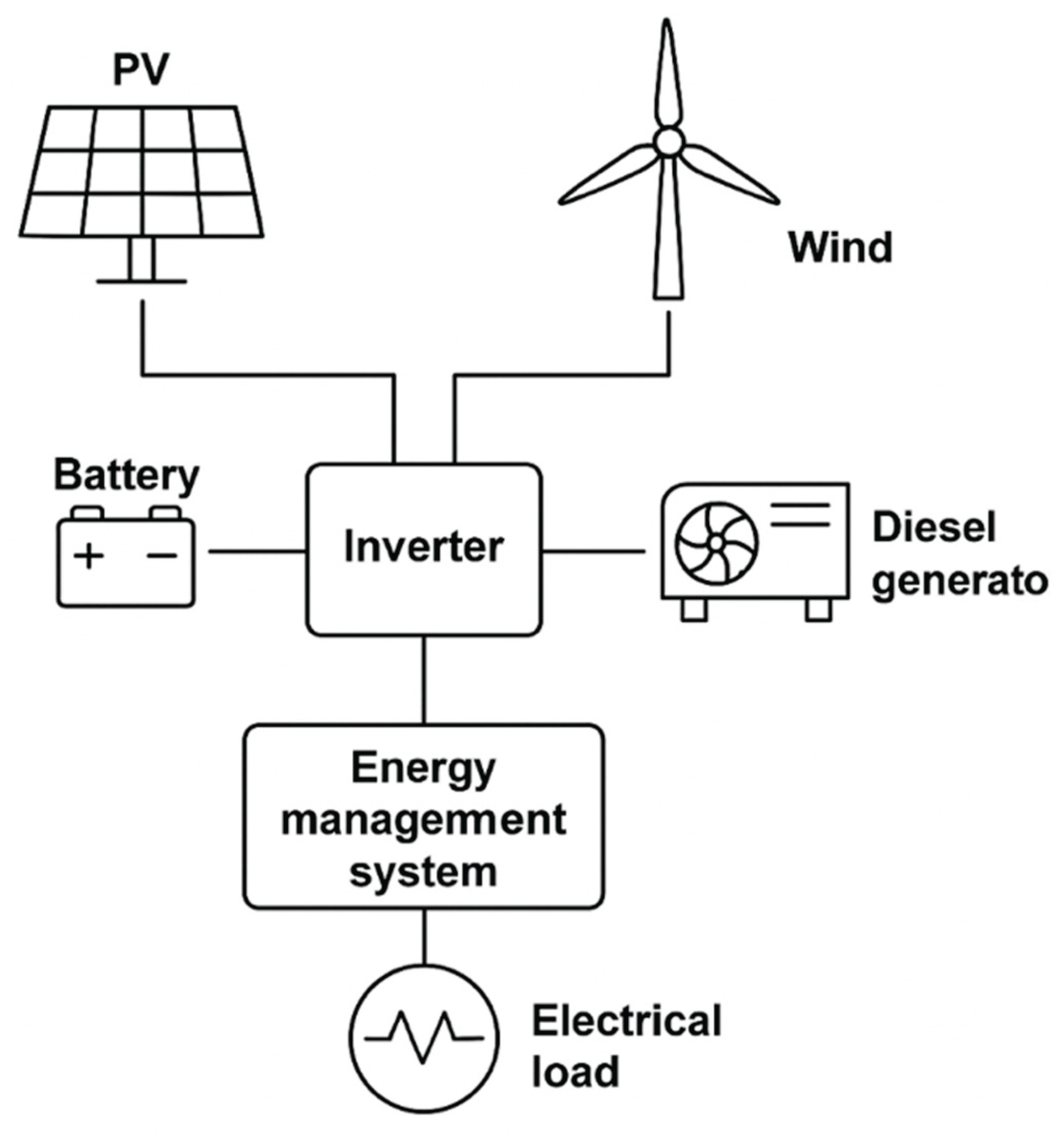
Figure 3.
Commonly used approaches for energy management strategies.
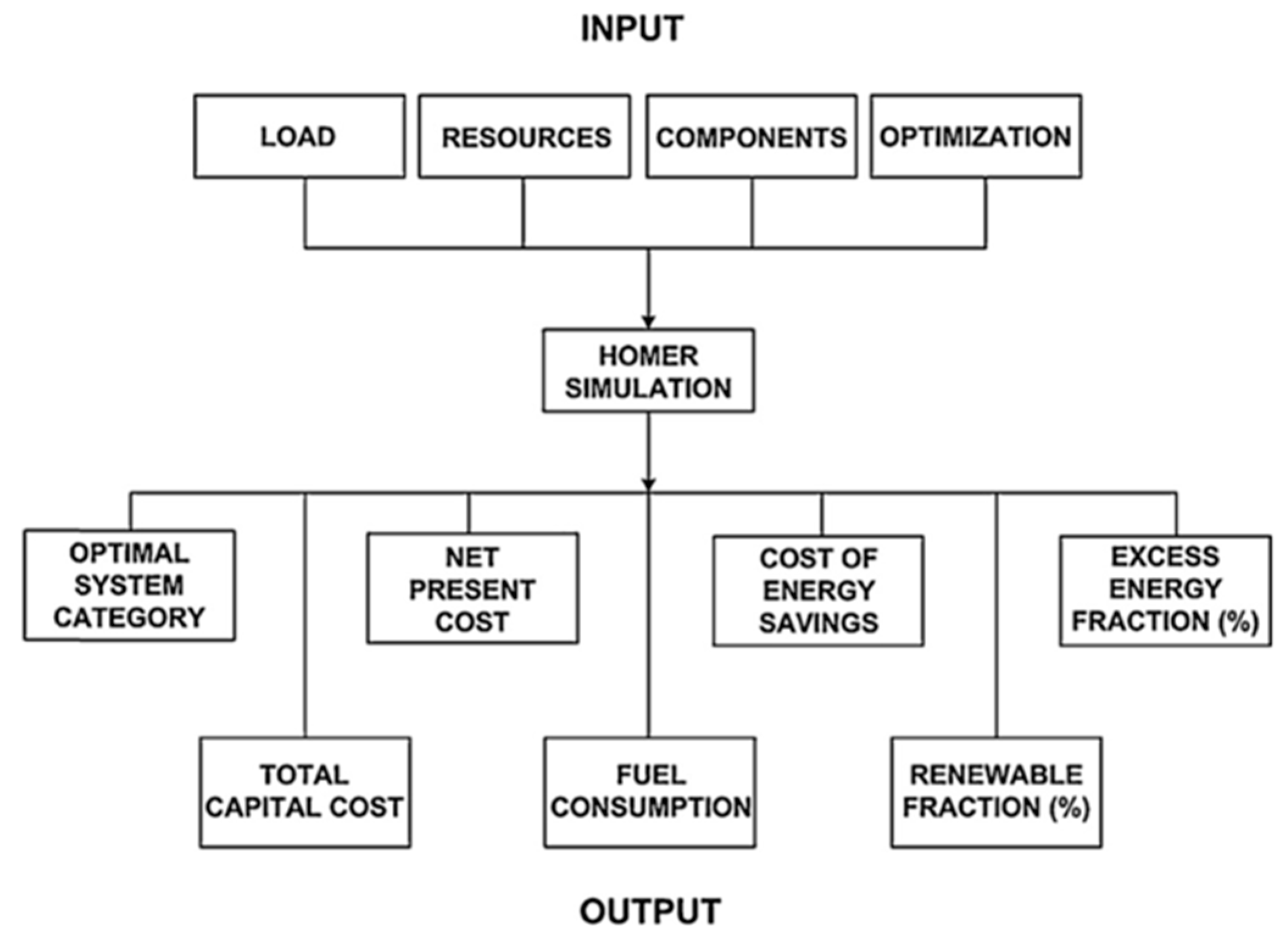
Figure 4.
Commonly used approaches for energy management strategies.
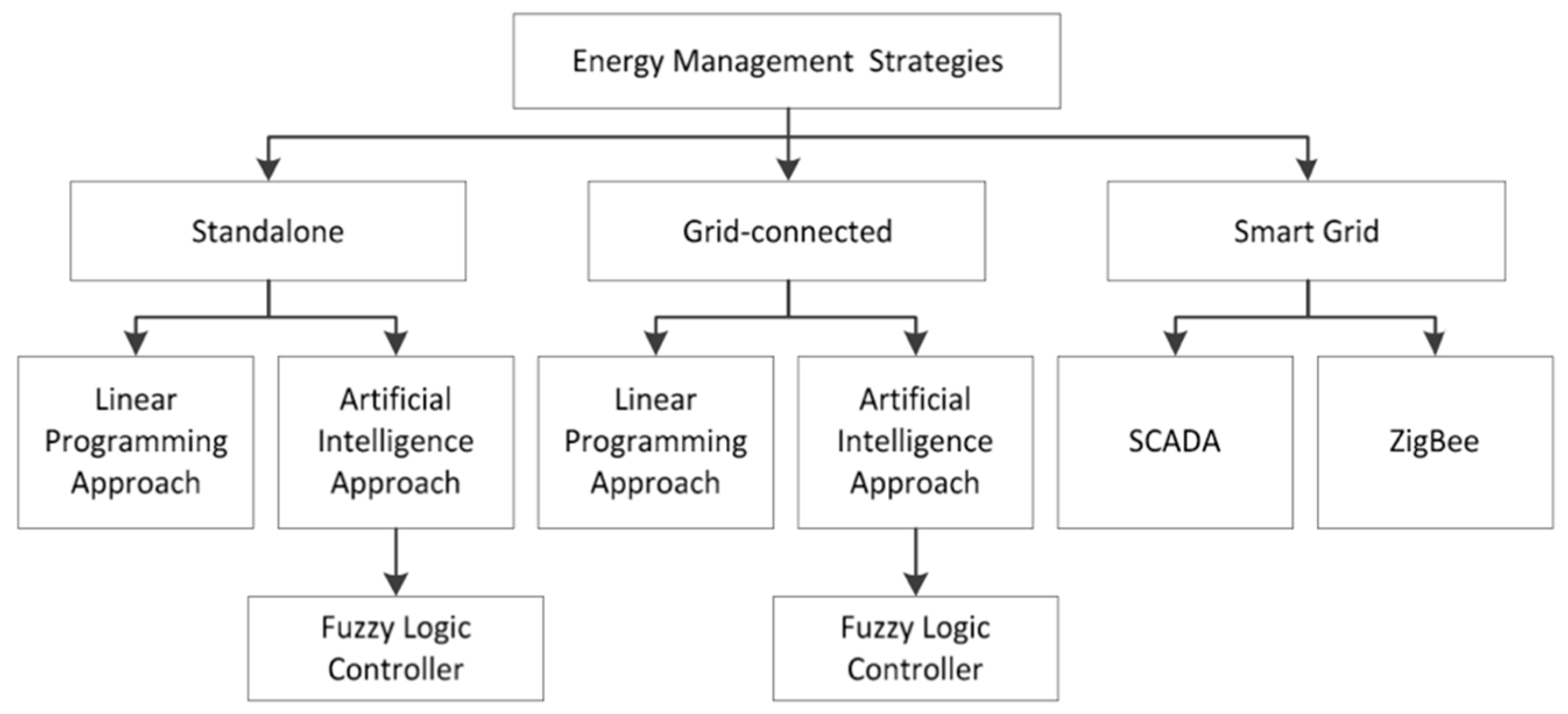

Table 1.
A comparative analysis of optimization approaches Methods.
| Optimization Methodology | Description | Strengths | Limitations | References |
| Mathematical Programming | Uses linear and nonlinear programming to optimize system size and configuration. | Provides precise solutions and handles well-defined constraints. |
Computationally expensive for large-scale aerospace systems. | [20] |
| Evolutionary Algorithms (EA) | Utilizes GA, PSO, and DE to find optimal solutions in design, control, and routing. | Effective for complex, multi-objective problems and large search spaces in aerospace applications. |
Convergence time may be long and results depend heavily on initial population settings. | [21] |
| Machine Learning (ML) | Applies supervised and reinforcement learning for optimization and control. | Adaptive to dynamic conditions, supports real-time optimization and fault detection. | Requires large, high-quality datasets and extensive computational resources. | [22] |
| Hybrid Modeling Approaches | Combines physics-based and data-driven models to improve system performance. | Balances accuracy with efficiency; integrates simulation and empirical data for better prediction. |
Increased model complexity and challenges in integrating different modeling approaches. | [23] |
| Simulation-Based Optimization | Uses Monte Carlo, system dynamics, or stochastic models to simulate system behavior. | Accounts for uncertainty and transient phenomena in flight dynamics and thermal systems. |
Requires extensive simulation time, especially for high-fidelity or large-scale problems. | [24] |
Table 2.
Brief comparison of main approaches applied for the sizing of hybrid renewable energy systems in the literature.
Table 2.
Brief comparison of main approaches applied for the sizing of hybrid renewable energy systems in the literature.
| Energy management approach | Advantages |
Disadvantages |
Remarks / Literature Insights | References |
|---|---|---|---|---|
| Simplex algorithm | Easy to understand | Relatively lower performance for finding the global optimum compared to GA, etc. | Used in early-stage feasibility studies | [29] |
| Linear programming | Structured and fast; well-established | Not suitable for nonlinear systems; inflexible | Common in economic dispatch models | [30] |
| Evolutionary algorithm | Capable of global optimization; suitable for complex, nonlinear systems | Requires significant computational resources and parameter tuning |
Widely applied in HRES optimization |
[31,32] |
| HOMER | Makes it easy to understand the main concepts of a sizing procedure with efficient output figures, it can be downloaded freely | “Black Box” code utilization, first degree linear equations based models for hybrid system components that do not represent the source characteristics exactly | Most cited tool in hybrid system research | [33] |
| Other software tools (HYBRID2, etc.) | The advantage changes from approach to approach | Harder to find literature examples |
Used in advanced and research-grade simulations | [34] |
| Neural networks | Efficient performance in most type of applications, easy to find literature examples | Needs a training procedure |
Emerging in energy demand prediction and smart grid contro | [35] |
| Design space based approach | Easy to implement and understand |
Computational time inefficiency | Useful in sensitivity analysis and educational contexts | [36] |
Table 3.
Summary on system control and Hybrid Renewable Energy Systems.
| Control paradigm | Energy sources considered |
Outcome | References |
|---|---|---|---|
| Load Following (LF) and Maximum Efficiency Point Tracking (MEPT) | PV, wind, FC | Four energy control strategies are proposed and analyzed for the standalone Renewable/Fuel Cell Hybrid Power Source (RES/FC HPS). The concept of the load following (LF) and Maximum Efficiency Point Tracking (MEPT) is used to control the fueling rates. | [136] |
| Rule-based hierarchical control strategy | PV, FC, electrolyzer, battery bank, SC | Proposed an advanced energy management strategy for a stand-alone hybrid energy system. The control strategy is designed to ensure an optimal energy management of the hybrid system. This strategy aims to satisfy the load demands throughout the different operation conditions and to reduce the stress on the hybrid system. |
[46] |
| Master–Slave with Droop Control | PV, wind, battery | The control strategy based on a communication link increases the control complexity and affects the expandability of the HRES. The master-slave control with the droop concept does not require a communication link and provides good load sharing. In addition, the master–slave concept adds features, such as the flexibility, expandability and modularity of the HRES. |
[90] |
| Threshold-based energy diversion strategy | PV, battery, FC | The energy management strategy was based on diverting any excess PV energy into the electrolyzer when the battery is charged to 99.5%. This will protect the battery from overcharging. In this developed strategy, no need for a dump load as the generated energy is matched with the load demand. |
[47] |
| Priority-based sequential control | PV, FC, UC | The purpose of the energy management strategy is to satisfy the load requirement continuously. The priority is to utilize the PV energy and any excess energy is used to generate hydrogen. The excess energy is directed to the ultra-capacitor when the hydrogen storage system is full. The solar system will be shut down if the capacitor is fully charged. |
[77] |
| Forecast-based optimization strategy | PV, battery, FC | The strategy was based on weather forecasts and the objective of the control strategy is to optimize the use of renewable sources to ensure their use while improving the comfort conditions of the house. |
[45] |
| Multi-agent distributed control | PV, wind, micro-hydro power, diesel, battery |
A distributed energy management system architecture based on multi agents was proposed. The purpose is to provide control for each of the energy sources or loads in the micro-grid system. |
[42] |
| Forecast-based predictive control with real-time updates | PV, wind, battery, FC | Forecasting of both the renewable sources as well as loads was carried out prior to implement the proposed strategy. The power management system is continuously updated by updating both the decision time interval and any time lags resulted from hardware sensors. |
[43] |
| Comparative strategy analysis: cycle charging, peak shaving, load following | PV, wind, diesel, battery | Three energy management strategies were checked: cycle charging strategy, peak shaving strategy, load following strategy. The cycle charging strategy was found to be the most effective in comparison with other strategies. | [39]` |
Disclaimer/Publisher’s Note: The statements, opinions and data contained in all publications are solely those of the individual author(s) and contributor(s) and not of MDPI and/or the editor(s). MDPI and/or the editor(s) disclaim responsibility for any injury to people or property resulting from any ideas, methods, instructions or products referred to in the content. |
© 2025 by the authors. Licensee MDPI, Basel, Switzerland. This article is an open access article distributed under the terms and conditions of the Creative Commons Attribution (CC BY) license (http://creativecommons.org/licenses/by/4.0/).
Copyright: This open access article is published under a Creative Commons CC BY 4.0 license, which permit the free download, distribution, and reuse, provided that the author and preprint are cited in any reuse.


