
Submitted:
02 July 2025
Posted:
03 July 2025
You are already at the latest version
Abstract
Background: Ulcerative colitis (UC) is a chronic inflammatory disease that affects the colon, triggering persistent inflammation and ulceration, resulting in a severe impact on patients' quality of life. Currently, the standard diagnostic methods for UC include invasive procedures such as colonoscopy and the use of non-specific inflammatory markers like C-reactive protein, which can be inconvenient or painful and lack specificity. This underscores the need for non-invasive and highly specific biomarkers for UC. MicroRNAs (miRNAs) are small non-coding RNAs, typically 22 nucleotides in length, which are well described as gene expression regulators. Several studies have reported their differential expression in various pathological conditions, including UC. Due to their role in gene regulation and stability in biological fluids, miRNAs present a promising opportunity as biomarkers. This systematic review explores the potential use of miRNAs as diagnostic biomarkers to distinguish between active and inactive ulcerative colitis. Methods: Following PRISMA guidelines and based on inclusion and exclusion criteria, seven studies, encompassing a total of 514 participants (181 with active UC and 116 with inactive UC), were included. Results: Multiple miRNAs exhibiting differential expression between active and inactive UC were identified. Most notably, miR-21, miR-126, miR-146b-5p, and miR-223 exhibited consistent upregulation in active UC, suggesting their potential as diagnostic biomarkers. Supporting these findings is the fact that these miRNAs are involved in inflammatory pathways, further highlighting their relevance to the pathogenesis of UC. Conclusions: This review emphasizes the need for further validation studies with larger cohorts to confirm the utility of miRNAs as diagnostic tools in UC, which could enhance non-invasive disease monitoring and inform therapeutic decision-making.
Keywords:
ulcerative colitis (UC)
; MicroRNAs
; active ulcerative colitis (aUC)
; inactive ulcerative colitis (iUC)
; biomarkers
1. Introduction
Ulcerative colitis (UC) is a chronic inflammatory disorder that affects the colon and rectum. It is distinguished by continuous inflammation without healthy areas between affected regions. This inflammation is confined to the rectum and large intestine, specifically targeting the mucosal layers of the epithelium [1]. A hallmark of UC is the formation of inflammation-induced ulcers in the colon barrier. Symptoms include rectal bleeding, abdominal pain (usually in the lower left quadrant), need to defecate, and bloody diarrhea. Complications that typically arise include colonic issues such as toxic megacolons, perforations, and colitis-associated cancer. Extra-intestinal complications involve arthritis, primary sclerosing cholangitis (PSC), weight loss, anemia, and blood clots (thromboembolism), all of which significantly affect an individual's quality of life. The diagnosis is based on medical history, along with radiographic, histological, and endoscopic examinations [1,2]. Treatment options typically include immunosuppressants, anti-inflammatories, biologics, and surgery for severe cases [3,4,5]. Although its precise etiology is uncertain, UC is thought to have a complex etiology that includes both environmental and genetic variables [6]. Specific data on the global prevalence and incidence of UC are limited. However, inflammatory bowel disease (IBD) in general has a high prevalence in developed or industrialized countries, possibly due to longer life spans with disability, while its incidence appears to be decreasing. Conversely, newly or rapidly industrializing countries are experiencing an increase in incidence. For instance, the annual prevalence of UC per 100,000 persons increased significantly from 5 in 2010 to 98 in 2019 in Japan, and from 158 to 233 in the US during the same period. In the UK, as of December 2018, the prevalence and incidence of UC were reported to be 397 and 15.7 per 100,000 people, respectively, with age being a major factor influencing these trends [7,8,9,10]. Currently, UC diagnosis and monitoring rely on invasive methods like colonoscopy, alongside non-specific biomarkers such as C-reactive protein and erythrocyte sedimentation rate. While fecal calprotectin is more specific, there remains a need for improved biomarkers. MicroRNAs (miRNAs) have emerged as promising biomarkers for a variety of diseases due to their easy accessibility, and high stability, specificity, and sensitivity [11,12,13,14]. They are stable in numerous biological samples, including blood and other body fluids, and can be detected with great sensitivity. MiRNAs are small non-coding RNAs, typically 18-22 nucleotides in length, primarily involved in regulating gene expression, and have been associated with various physiological and pathological conditions, including UC. Their biogenesis involves transcription from DNA into pri-miRNA, processing into pre-miRNA, and finally maturation into miRNA. Their mechanism of action includes interaction with the 3’ UTR of target mRNA, leading to either target degradation or repression. Their presence has been detected in blood, feces, and tissue, and they have been found to be quite stable, making them excellent candidates as non-invasive biomarkers [12,15,16]. Therefore, the purpose of this systematic review is to address the question: "Do miRNAs possess the potential to serve as biomarkers for differentiating ulcerative colitis based on disease state?" This is conducted in line with the PICO ("population", "intervention", "comparison", "outcome") approach.
1. Methods
2.1. Search Strategy and Eligibility Criteria
The search for this systematic review was conducted from inception till 4th September 2024, in line with Preferred Reporting Items for Systematic Reviews and Meta-Analyses (PRISMA) statement guidelines and registered on PROSPERO with registration No CRD42024597537 [17]. Databases utilized included PubMed, Embase and Web of Science. Search terms used included ("mir") OR ("microrna") OR ("mirna") AND ("biomarkers") AND ("ulcerative colitis") OR ("active ulcerative colitis") OR ("inactive ulcerative colitis"). Detailed search strategy is given in Table 1.
Screening of identified records was performed by two independent investigators (P.C.M and A.U.K) by title and abstract first, and later full text screening was carried out. Studies fulfilling the pre-defined inclusion criteria utilizing PICO approach were included as outlined in Table 2.
2.2. Quality Assessment and Critical Appraisal
Quality assessment of each individual study was carried out using the Newcastle–Ottawa Scale (NOS), which is based on three broad criteria the first being the Selection of population being studied, second Comparability checks for variables other than what is being studied and how well these are taken care of, and lastly how accurate are the procures carried out during these studies and are the same for both sets of populations under study. The assessment of all studies is presented in Table 3. The most frequently encountered risk of bias was that associated with control of confounding factors (all studies) and attrition bias (all studies). By adding up all the individual criteria to get the total score for each individual study according to which, five studies (71%) scored (≥56%) classified as “fair” quality with “moderate risk of bias” while two studies (29%) scored (77.77%) were classified as “good” quality having “low risk of bias”.
2.3. Data Extraction
Two reviewers independently extracted data using a standardized form. Information collected included study characteristics (first author, year, country, design), participant details (sample size, age, sex, disease status), and miRNA measurement methods (specimen type, extraction and quantification platforms, normalization techniques). Key findings on differential miRNA expression between active and inactive ulcerative colitis were recorded, along with reported diagnostic implications. Discrepancies were resolved through discussion or third-party consultation.
2.4. Data Synthesis
A narrative synthesis was conducted to evaluate the diagnostic potential of miRNAs in distinguishing active from inactive ulcerative colitis. Studies were analyzed thematically, focusing on consistent miRNA expression patterns, direction of regulation, and association with disease activity markers. Findings were grouped by miRNA identity and clinical context to identify recurring biomarkers and methodological trends.
2. Results
Seven studies have been included by following the search criteria in this systematic review. Studies included a total of 514 participants (Active UC 181, Inactive UC 116). Detailed selection strategy is given in Figure 1. Data extracted from each included study comprised of study characteristics (authors, year, design), participant details (sample size, demographics), miRNA measurement methods and key findings about miRNAs expression pattern in each individual study in different disease states, this information is collected and presented in Table 4 and Table 5.
3. Discussion
The data from the included studies reveal a significant variation in miRNA expression levels that correlate with disease activity in ulcerative colitis. Such findings offer valuable insights into miRNAs as potential diagnostic biomarkers for disease activity and progression in UC. This aligns with several reports that provide evidence of the promising role of miRNAs as diagnostic biomarkers of the development of colitis-associated cancer [18,19,20].
In this systemic review we have highlighted trends and patterns that result from differential expressions of miRNAs in active ulcerative colitis (aUC) and inactive ulcerative colitis (iUC).
In particular, Feng et al. (2012) showed a significant upregulation of miR-21 (14.7-fold) and miR-126 (18-fold) in colonic tissues of aUC vs healthy controls (HC) [15]. In contrast, there were no noticeable alterations in miRNA expression levels when comparing iUC to HC. These findings highlight the potential role of miR-21 and miR-126 as diagnostic biomarkers specifically for active UC. Indeed, miR-21's role in the negative regulation of PDCD4 [21,22], RhoB [21], and NOS-2 induced cellular damaging, while its suppression of PTEN led to PTEN repression an increase of PI3K/Akt activity, cellular pathwways that may be involved in the development of UC. Thus, the overexpression of miR-21 in macrophages could potentially trigger oxidative stress-induced cellular damage, which could be a contributing factor involved in UC pathogenesis [23,24,25,26].
Another study conducted by Coskun et al. (2013) identified a distinct set of differentially expressed miRNAs in aUC and iUC compared to HCs, such miRNAs include miR-20b (↑ P < 0.05) in aUC vs HC, miR-125b-1 (↑ P < 0.01) in aUC vs HC, let-7e (↑ P < 0.05) in iUC vs HC, miR-98 (↑ P < 0.05) in iUC vs aUC and HC [23,24,27,28]. Following up on these results, Van der Goten et al. (2014) expanded the panel of miRNAs with similar expression patterns and observed an increase of miR-21-5p, miR-31-5p, and miR-155-5pin aUC compared to HC [25,29,30,31,32]. To elucidate the functional relevance of these miRNAs, several have been investigated in the context of specific inflammatory signaling pathways. For instance, let-7e seems to be involved in Toll-like receptor (TLR)-associated signaling pathways, while miR-98 targeted pro-inflammatory genes such as MYC and IL-6 [33,34,35,36]. Notably, miR-155 inhibition reduced DSS-induced colonic damage, prevented the development of Th17 cells, and alleviated colitis associated inflammation by inactivating NF-κB signaling [37,38].Studies carried out by Yahong et al. (2018) revealed that miR-199a-5p and miR-223-3p were upregulated in aUC compared to iUC and HCs [38]. Specifically, miR-199a-5p was involved in intestinal barrier dysfunction, whereas the elevated levels of miR-223-3p might contribute to UC pathogenesis by negatively regulating autophagy and IKKα inhibition, which is a potential regulator of inflammation [24,39,40,41].
Interestingly, Peng et al. (2019) [42], reported that miR-146b-5p was overexpressed in serum samples of aUC in comparison to both iUC and HCs. These findings were further supported by El Sabbagh et al. (2023) [43], who confirmed the potential of miR-146b-5p as a biomarker indicative of active disease. Remarkably, multiple studies have identified an overlap in the overexpression of several miRNAs including miR-21, miR-223, and miR-146b-5p suggesting their promise as diagnostic biomarkers for monitoring disease activity in UC.
The consistent overexpression of miR-21, miR-223, and miR-146b-5p across multiple studies highlights their strong potential as diagnostic biomarkers. Moreover, their established roles in inflammatory pathways further support their suitability as targets for clinical research in ulcerative colitis.
4. Conclusion
Collectively these findings emphasize the involvement of specific miRNAs in ulcerative colitis pathogenesis indicating their potential as biomarkers for assessing disease activity. Future investigations involving larger cohorts are essential to further validate the diagnostic potential of miRNAs, and to explore their therapeutic applications which could ultimately enhance the clinical management of ulcerative colitis.
Author Contributions
Conceptualization, A.U.K. and P.S.; methodology, A.U.K.; software, A.U.K.; validation, A.U.K., P.C.M. and P.S.; formal analysis, A.U.K.; investigation, A.U.K.; resources, P.S.; data curation, A.U.K.; writing—original draft preparation, A.U.K.; writing—review and editing, P.C.M. and P.S.; visualization, A.U.K.; supervision, P.S.; project administration, P.S.; funding acquisition, P.S. All authors have read and agreed to the published version of the manuscript.
Funding
This study received no external funding.
Data Availability Statement
No new data were created or analyzed in this study.
Conflicts of Interest
The authors declare no conflicts of interest.
Abbreviations
The following abbreviations are used in this manuscript:
| UC | Ulcerative Colitis |
| aUC | Active Ulcerative Colitis |
| iUC | Inactive Ulcerative Colitis |
| HC | Healthy Controls |
| miRNA | MicroRNA |
| qPCR / qRT-PCR | Quantitative Real-Time Polymerase Chain Reaction |
| NOS | Newcastle-Ottawa Scale |
| PRISMA | Preferred Reporting Items for Systematic Reviews and Meta-Analyses |
| UCDAI | Ulcerative Colitis Disease Activity Index |
| PICO | Population, Intervention, Comparison, Outcome |
| PSC | Primary Sclerosing Cholangitis |
| NF-κB | Nuclear Factor Kappa-light-chain-enhancer of Activated B cells |
| DSS | Dextran Sulfate Sodium |
| PI3K/Akt | Phosphoinositide 3-Kinase/Protein Kinase B |
| PTEN | Phosphatase and Tensin Homolog |
| IKKα | IκB Kinase α |
| TLR | Toll-Like Receptor |
| mRNA | Messenger RNA |
| UTR | Untranslated Region |
References
- Feuerstein, J.D.; Moss, A.C.; Farraye, F.A. Ulcerative Colitis. Mayo Clin Proc 2019, 94, 1357–1373. [Google Scholar] [CrossRef] [PubMed]
- Gros, B.; Kaplan, G.G. Ulcerative Colitis in Adults: A Review. JAMA 2023, 330, 951–965. [Google Scholar] [CrossRef] [PubMed]
- Harbord, M.; Eliakim, R.; Bettenworth, D.; Karmiris, K.; Katsanos, K.; Kopylov, U.; Kucharzik, T.; Molnár, T.; Raine, T.; Sebastian, S.; et al. Third European Evidence-Based Consensus on Diagnosis and Management of Ulcerative Colitis. Part 2: Current Management. J Crohns Colitis 2017, 11, 769–784. [Google Scholar] [CrossRef] [PubMed]
- Kornbluth, A.; Sachar, D.B. Ulcerative Colitis Practice Guidelines in Adults: American College of Gastroenterology, Practice Parameters Committee. American Journal of Gastroenterology 2010, 105, 501–523. [Google Scholar] [CrossRef]
- Rubin, D.T.; Ananthakrishnan, A.N.; Siegel, C.A.; Sauer, B.G.; Long, M.D. ACG Clinical Guideline: Ulcerative Colitis in Adults. American Journal of Gastroenterology 2019, 114, 384–413. [Google Scholar] [CrossRef]
- Gajendran, M.; Loganathan, P.; Jimenez, G.; Catinella, A.P.; Ng, N.; Umapathy, C.; Ziade, N.; Hashash, J.G. A Comprehensive Review and Update on Ulcerative Colitis, Disease-a-Month 2019, 65, 100851. [Google Scholar] [CrossRef]
- Desai, D.; Dhoble, P. Rapidly Changing Epidemiology of Inflammatory Bowel Disease: Time to Gear up for the Challenge before It Is Too Late. Indian Journal of Gastroenterology 2024, 43, 15–17. [Google Scholar] [CrossRef]
- Gorospe, J.; Windsor, J.; Hracs, L.; Coward, S.; Buie, M.; Quan, J.; Caplan, L.; Markovinovic, A.; Cummings, M.; Goddard, Q.; et al. TRENDS IN INFLAMMATORY BOWEL DISEASE INCIDENCE AND PREVALENCE ACROSS EPIDEMIOLOGIC STAGES: A GLOBAL SYSTEMATIC REVIEW WITH META-ANALYSIS. Inflamm Bowel Dis 2024, 30, S00–S00. [Google Scholar] [CrossRef]
- Pasvol, T.J.; Horsfall, L.; Bloom, S.; Segal, A.W.; Sabin, C.; Field, N.; Rait, G. Incidence and Prevalence of Inflammatory Bowel Disease in UK Primary Care: A Population-Based Cohort Study. BMJ Open 2020, 10, e036584. [Google Scholar] [CrossRef]
- Yamazaki, M.; Chung, H.; Xu, Y.; Qiu, H. Trends in the Prevalence and Incidence of Ulcerative Colitis in Japan and the US. Int J Colorectal Dis 2023, 38, 1–13. [Google Scholar] [CrossRef]
- Cioffi, M.; Rosa, A. De; Serao, R.; Picone, I.; Vietri, M.T. Laboratory Markers in Ulcerative Colitis: Current Insights and Future Advances. http://www.wjgnet.com/ 2015, 6, 13–22. [Google Scholar] [CrossRef]
- Condrat, C.E.; Thompson, D.C.; Barbu, M.G.; Bugnar, O.L.; Boboc, A.; Cretoiu, D.; Suciu, N.; Cretoiu, S.M.; Voinea, S.C. MiRNAs as Biomarkers in Disease: Latest Findings Regarding Their Role in Diagnosis and Prognosis. Cells 2020, Vol. 9, Page 276 2020, 9, 276. [Google Scholar] [CrossRef]
- Faruq, O.; Vecchione, A. MicroRNA: Diagnostic Perspective. Front Med (Lausanne) 2015, 2, 154087. [Google Scholar] [CrossRef]
- Iskandar, H.N.; Ciorba, M.A. Biomarkers in Inflammatory Bowel Disease: Current Practices and Recent Advances. Translational Research 2012, 159, 313–325. [Google Scholar] [CrossRef] [PubMed]
- O’Brien, J.; Hayder, H.; Zayed, Y.; Peng, C. Overview of MicroRNA Biogenesis, Mechanisms of Actions, and Circulation. Front Endocrinol (Lausanne) 2018, 9, 388354. [Google Scholar] [CrossRef]
- Bofill-De Ros, X.; Vang Ørom, U.A. Recent Progress in MiRNA Biogenesis and Decay. RNA Biol 2024, 21, 1–8. [Google Scholar] [CrossRef]
- Page, M.J.; McKenzie, J.E.; Bossuyt, P.M.; Boutron, I.; Hoffmann, T.C.; Mulrow, C.D.; Shamseer, L.; Tetzlaff, J.M.; Akl, E.A.; Brennan, S.E.; et al. The PRISMA 2020 Statement: An Updated Guideline for Reporting Systematic Reviews. BMJ 2021, 372. [Google Scholar] [CrossRef]
- Bocchetti, M.; Ferraro, M.G.; Ricciardiello, F.; Ottaiano, A.; Luce, A.; Cossu, A.M.; Scrima, M.; Leung, W.Y.; Abate, M.; Stiuso, P.; et al. The Role of MicroRNAs in Development of Colitis-Associated Colorectal Cancer. International Journal of Molecular Sciences 2021, Vol. 22, Page 3967 2021, 22, 3967. [Google Scholar] [CrossRef]
- Chacon-Millan, P.; Lama, S.; Del Gaudio, N.; Gravina, A.G.; Federico, A.; Pellegrino, R.; Luce, A.; Altucci, L.; Facchiano, A.; Caraglia, M.; et al. A Combination of Microarray-Based Profiling and Biocomputational Analysis Identified MiR331-3p and Hsa-Let-7d-5p as Potential Biomarkers of Ulcerative Colitis Progression to Colorectal Cancer. Int J Mol Sci 2024, 25, 5699. [Google Scholar] [CrossRef]
- Chen, G.; Feng, Y.; Li, X.; Jiang, Z.; Bei, B.; Zhang, L.; Han, Y.; Li, Y.; Li, N. Post-Transcriptional Gene Regulation in Colitis Associated Cancer. Front Genet 2019, 10, 452964. [Google Scholar] [CrossRef]
- Yang, Y.; Ma, Y.; Shi, C.; Chen, H.; Zhang, H.; Chen, N.; Zhang, P.; Wang, F.; Yang, J.; Yang, J.; et al. Overexpression of MiR-21 in Patients with Ulcerative Colitis Impairs Intestinal Epithelial Barrier Function through Targeting the Rho GTPase RhoB. Biochem Biophys Res Commun 2013, 434, 746–752. [Google Scholar] [CrossRef] [PubMed]
- Casado-Bedmar, M.; Roy, M.; Berthet, L.; Hugot, J.P.; Yang, C.; Manceau, H.; Peoc’h, K.; Chassaing, B.; Merlin, D.; Viennois, E. Fecal Let-7b and MiR-21 Directly Modulate the Intestinal Microbiota, Driving Chronic Inflammation. Gut Microbes 2024, 16. [Google Scholar] [CrossRef]
- Coskun, M.; Bjerrum, J.T.; Seidelin, J.B.; Troelsen, J.T.; Olsen, J.; Nielsen, O.H. MiR-20b, MiR-98, MiR-125b-1*, and Let-7e* as New Potential Diagnostic Biomarkers in Ulcerative Colitis. http://www.wjgnet.com/ 2013, 19, 4289–4299. [Google Scholar] [CrossRef]
- Lu, X.; Yu, Y.; Tan, S. The Role of the MiR-21-5p-Mediated Inflammatory Pathway in Ulcerative Colitis. Exp Ther Med 2019, 19, 981. [Google Scholar] [CrossRef] [PubMed]
- Thorlacius-Ussing, G.; Schnack Nielsen, B.; Andersen, V.; Holmstrøm, K.; Pedersen, A.E. Expression and Localization of MiR-21 and MiR-126 in Mucosal Tissue from Patients with Inflammatory Bowel Disease. Inflamm Bowel Dis 2017, 23, 739–752. [Google Scholar] [CrossRef]
- Liu, Z.; Chen, X.; Wu, Q.; Song, J.; Wang, L.; Li, G. MiR-125b Inhibits Goblet Cell Differentiation in Allergic Airway Inflammation by Targeting SPDEF. Eur J Pharmacol 2016, 782, 14–20. [Google Scholar] [CrossRef]
- Valmiki, S.; Ahuja, V.; Puri, N.; Paul, J. MiR-125b and MiR-223 Contribute to Inflammation by Targeting the Key Molecules of NFκB Pathway. Front Med (Lausanne) 2020, 6, 494658. [Google Scholar] [CrossRef]
- Liu, Y.; Zhu, F.; Li, H.; Fan, H.; Wu, H.; Dong, Y.; Chu, S.; Tan, C.; Wang, Q.; He, H.; et al. MiR-155 Contributes to Intestinal Barrier Dysfunction in DSS-Induced Mice Colitis via Targeting HIF-1α/TFF-3 Axis. Aging (Albany NY) 2020, 12, 14966. [Google Scholar] [CrossRef]
- Van Der Goten, J.; Vanhove, W.; Lemaire, K.; Van Lommel, L.; Machiels, K.; Wollants, W.J.; De Preter, V.; De Hertogh, G.; Ferrante, M.; Van Assche, G.; et al. Integrated MiRNA and MRNA Expression Profiling in Inflamed Colon of Patients with Ulcerative Colitis. PLoS One 2014, 9, e116117. [Google Scholar] [CrossRef]
- Yuan, Y.; Deng, S.; Yang, J.; Shou, Z.; Wei, C.; Zhang, L.; Zhu, F.; Gao, F.; Liu, X.; Liu, Y.; et al. Antagomir of MiR-31-5p Modulates Macrophage Polarization via the AMPK/SIRT1/NLRP3 Signaling Pathway to Protect against DSS-Induced Colitis in Mice. Aging 2024, 16, 5336–5353. [Google Scholar] [CrossRef]
- Satoh, M.; Tabuchi, T.; Minami, Y.; Takahashi, Y.; Itoh, T.; Nakamura, M. Expression of Let-7i Is Associated with Toll-like Receptor 4 Signal in Coronary Artery Disease: Effect of Statins on Let-7i and Toll-like Receptor 4 Signal. Immunobiology 2012, 217, 533–539. [Google Scholar] [CrossRef] [PubMed]
- Suojalehto, H.; Toskala, E.; Kilpeläinen, M.; Majuri, M.L.; Mitts, C.; Lindström, I.; Puustinen, A.; Plosila, T.; Sipilä, J.; Wolff, H.; et al. MicroRNA Profiles in Nasal Mucosa of Patients with Allergic and Nonallergic Rhinitis and Asthma. Int Forum Allergy Rhinol 2013, 3, 612–620. [Google Scholar] [CrossRef] [PubMed]
- Guglielmi, G.; Crucitta, S.; Bertani, L.; Ruglioni, M.; Svizzero, G.B.; Ceccarelli, L.; Del Re, M.; Danesi, R.; Costa, F.; Fogli, S. Expression of Circulating Let-7e and MiR-126 May Predict Clinical Remission in Patients With Crohn’s Disease Treated With Anti-TNF-α Biologics. Inflamm Bowel Dis 2024, 30, 441–446. [Google Scholar] [CrossRef] [PubMed]
- Wang, Y.G.; He, Q.; Guo, S.Q.; Shi, Z.Z. Reduced Serum MIR-98 Predicts Unfavorable Clinical Outcome of Colorectal Cancer. Eur Rev Med Pharmacol Sci 2019, 23, 8345–8353. [Google Scholar] [CrossRef]
- Dong, H.Y.; Huang, Z.C.; Zhang, H.L.; Xiao, Z.G.; Liu, Q. Rs13293512 Polymorphism Located in the Promoter Region of Let-7 Is Associated with Increased Risk of Radiation Enteritis in Colorectal Cancer. J Cell Biochem 2018, 119, 6535–6544. [Google Scholar] [CrossRef]
- Cao, Y.Y.; Wang, Z.; Wang, Z.H.; Jiang, X.G.; Lu, W.H. Inhibition of MiR-155 Alleviates Sepsis-Induced Inflammation and Intestinal Barrier Dysfunction by Inactivating NF-ΚB Signaling. Int Immunopharmacol 2021, 90, 107218. [Google Scholar] [CrossRef]
- Xu, M.; Zuo, D.; Liu, X.; Fan, H.; Chen, Q.; Deng, S.; Shou, Z.; Tang, Q.; Yang, J.; Nan, Z.; et al. MiR-155 Contributes to Th17 Cells Differentiation in Dextran Sulfate Sodium (DSS)-Induced Colitis Mice via Jarid2. Biochem Biophys Res Commun 2017, 488, 6–14. [Google Scholar] [CrossRef]
- Ji, Y.; Li, X.; Zhu, Y.; Li, N.; Zhang, N.; Niu, M. Faecal MicroRNA as a Biomarker of the Activity and Prognosis of Inflammatory Bowel Diseases. Biochem Biophys Res Commun 2018, 503, 2443–2450. [Google Scholar] [CrossRef]
- Du, X.; Tian, D.; Wei, J.; Yan, C.; Hu, P.; Wu, X.; Yang, W.; Zhu, Z. MiR-199a-5p Exacerbated Intestinal Barrier Dysfunction through Inhibiting Surfactant Protein D and Activating NF-ΚB Pathway in Sepsis. Mediators Inflamm 2020, 2020, 8275026. [Google Scholar] [CrossRef]
- Wang, S.; Shen, L.; Peng, S.; Tian, M.; Li, X.; Luo, H. Suppression of MiR-199a-5p Alleviates Ulcerative Colitis by Upregulating Endoplasmic Reticulum Stress Component XBP1. bioRxiv 2021, 2021.02.05.430002. [CrossRef]
- Kim, H.Y.; Kwon, H.Y.; Ha Thi, H.T.; Lee, H.J.; Kim, G. Il; Hahm, K.B.; Hong, S. MicroRNA-132 and MicroRNA-223 Control Positive Feedback Circuit by Regulating FOXO3a in Inflammatory Bowel Disease. J Gastroenterol Hepatol 2016, 31, 1727–1735. [Google Scholar] [CrossRef]
- Chen, P.; Li, Y.; Li, L.; Yu, Q.; Chao, K.; Zhou, G.; Qiu, Y.; Feng, R.; Huang, S.; He, Y.; et al. Circulating MicroRNA146b-5p Is Superior to C-Reactive Protein as a Novel Biomarker for Monitoring Inflammatory Bowel Disease. Aliment Pharmacol Ther 2019, 49, 733–743. [Google Scholar] [CrossRef]
- El Sabbagh, E.; Shaker, O.; Kassem, A.M.; Khairy, A. Role of Circulating MicroRNA146b-5p and MicroRNA-106a in Diagnosing and Predicting the Severity of Inflammatory Bowel Disease. Egypt J Chem 2023, 66, 545–551. [Google Scholar] [CrossRef]
Figure 1.
PRISMA Flow Chart for Search Strategy.
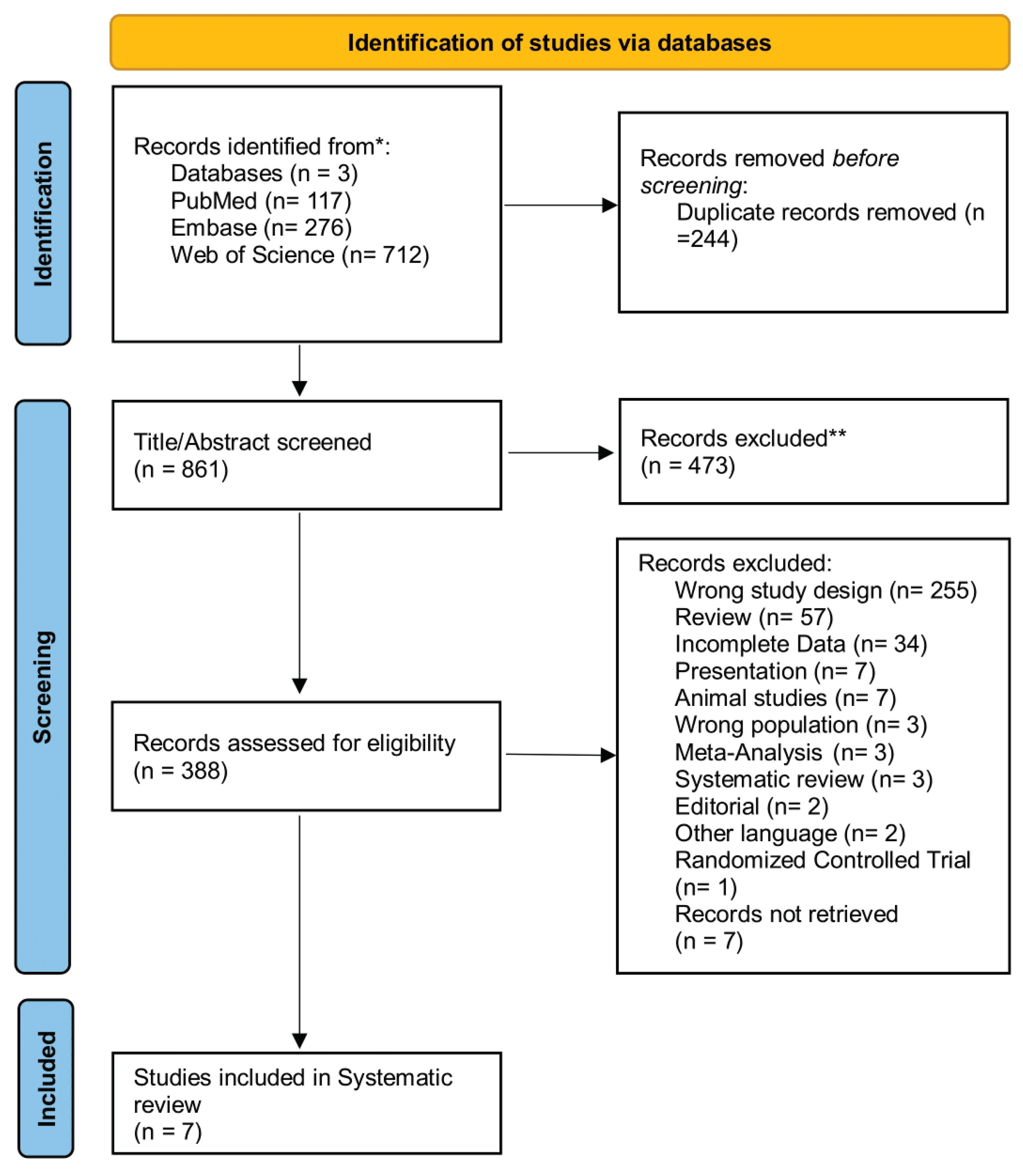

Table 1.
Detailed search strategy.
| Database | Keywords | Results |
|---|---|---|
| PubMed | ("microRNA" OR "miRNA" OR "mir" OR "microRNAs" OR "miRNAs") | 222,472 |
| ("biomarker" OR "biomarkers" OR "diagnostic marker" OR "molecular marker") | 927,326 | |
| ("ulcerative colitis" OR "active ulcerative colitis" OR "inactive ulcerative colitis" OR "remission ulcerative colitis" OR "flare ulcerative colitis" OR "quiescent ulcerative colitis") | 66,276 | |
| #1 AND #2 AND #3 | 117 | |
| Web of Science | microRNA OR miRNA OR mir OR microRNAs OR miRNAs AND biomarker OR biomarkers OR diagnostic marker OR molecular marker AND ulcerative colitis OR active ulcerative colitis OR inactive ulcerative colitis OR remission ulcerative colitis OR flare ulcerative colitis OR quiescent ulcerative colitis | 712 |
| Embase | microRNA OR miRNA OR mir OR microRNAs OR miRNAs AND biomarker OR biomarkers OR diagnostic marker OR molecular marker AND ulcerative colitis OR active ulcerative colitis OR inactive ulcerative colitis OR remission ulcerative colitis OR flare ulcerative colitis OR quiescent ulcerative colitis | 276 |
Table 2.
PICO based inclusion and exclusion criteria.
| Parameters | Inclusion Criteria | Exclusion Criteria |
|---|---|---|
| Population | Adult Individuals with a Confirmed Diagnosis of Ulcerative Colitis and Differentiation based on Disease State | Studies about adult Individuals with non-UC conditions (e.g., Crohn's disease, general IBD, etc.). |
| Intervention | miRNAs as Diagnostic Tool to Assess UC Disease State | Studies that use any other biomolecules as biomarkers. |
| Comparison | N/A | N/A |
| Outcome | miRNAs as Diagnostic Biomarker for Differentiating Active and Inactive UC | No Significant change in miRNA expression level capable of differentiating Active UC from Inactive UC |
Table 3.
Quality assessment of studies based on Newcastle Ottawa Scale (NOS).
| Author, Year | Study Design | NOS Score | ||
|---|---|---|---|---|
| Selection | Comparability | Outcome/Exposure | ||
| Feng et all., 2012 | Case-Control | ✩✩✩✩ | ✩✩ | |
| Coskun et al., 2013 | Cohort | ✩✩✩✩ | ✩ | |
| Van der Goten et all., 2014 | Case-Control | ✩✩✩✩ | ✩ | ✩✩ |
| Schönauen et all., 2017 | Cohort | ✩✩✩✩ | ✩ | |
| Yahong et all., 2018 | Case-Control | ✩✩✩✩ | ✩✩ | |
| Peng et all., 2019 | Cohort | ✩✩✩✩ | ✩ | ✩✩ |
| El Sabbagh et.al., 2023 | Case-Control | ✩✩✩✩ | ✩✩ | |
Study quality was assessed using the Newcastle-Ottawa Scale (NOS), covering Selection (4 stars), Comparability (2 stars), and Outcome/Exposure (3 stars). Scores range from 0 to 9, with ≥7 indicating high quality, 4–6 moderate, and <4 low. Assessments were performed independently, with disagreements resolved by consensus.
Table 4.
General characteristics of included studies.
| Author and Year | Study Design | Sample Type | Sample Size (aUC/iUC/HC) | Gender (M/F) | miRNA Measurement |
|---|---|---|---|---|---|
| Feng et al., 2012 | Case-control | Pinch biopsies | 12/10/15 | 5/7, 4/6, 7/8 | qRT-PCR |
| Coskun et al., 2013 | Cohort | Pinch biopsies | 20/19/20 | 9/11, 6/13, 10/10 | miRNA microarray, qPCR |
| Van der Goten et al., 2014 | Case-control | Colonic mucosal biopsies | 10/7/10 | 6/4, 4/3, 5/5 | miRNA microarray, qRT-PCR |
| Schönauen et al., 2017 | Cohort | Serum and Fecal Samples | 10/8/35 | 4/6, 4/4, 14/21 | qPCR |
| Yahong et al., 2018 | Case Control | Fecal Samples | 41/25/66 | NR | miRNA microarray, qPCR |
| Peng et al., 2019 | Cohort | Serum Samples | 55/45/41 | NR | qRT-PCR |
| El Sabbagh et al., 2023 | Case Control | Blood Samples | 33/2/30 | NR | qPCR |
Table 5.
Summary of Differentially Expressed Circulating miRNAs in Ulcerative Colitis Stratified by Disease Activity.
Table 5.
Summary of Differentially Expressed Circulating miRNAs in Ulcerative Colitis Stratified by Disease Activity.
| Author (Year) | miRNAs Studied | Disease Duration (yrs) mean (range) | Disease Activity Method | Key Findings |
|---|---|---|---|---|
| Feng et al. (2012) | miR-21, miR-126, miR-375 | 1.8 (0.5–4) aUC, 4 (2–6) iUC | UCDAI: 0.9 (0-2) iUC, 8.91 (8-10) aUC | miR-126 (↑18-fold, P < 0.05) in aUC vs HC. miR-21 (↑14.7-fold, P < 0.05) in aUC vs HC. No significant changes in iUC vs HC. |
| Coskun et al. (2013) | miR-20b, -99a, -203, -26b, -98, -125b-1, let-7e | 15/5 aUC, 8/11 iUC | Mayo: 0 (0-1) iUC, 6 (2-12) aUC | miR-20b (↑ P < 0.05) in aUC vs HC. let-7e (↑ P < 0.05) in iUC vs HC. miR-98 (↑ P < 0.05) in iUC vs aUC and HC. miR-125b-1 (↑ P < 0.01) in aUC vs HC. |
| Van der Goten et al. (2014) | miR-21-5p, miR-31-5p, miR-146a-5p, miR-155-5p, miR-650, miR-196b-5p, miR-200c-3p, miR-375, miR-200b-3p, miR-422a | 7.1 (0.6–20.1) aUC, 6.6 (4.0–14.4) iUC | Mayo: 0 (±0.5) iUC, 8 (±1.5) aUC | miR-21-5p, miR-31-5p, miR-146a-5p, miR-155-5p, miR-650, miR-375 (↑) in aUC vs HC. miR-196b-5p, miR-196b-3p, miR-200c-3p (↓) in aUC vs HC. |
| Schönauen et al. (2017) | miR-16, miR-21, miR-155, miR-223 | NR | Mayo: ≤5.27 iUC, >5.27 aUC | miR-21, miR-223 (↑) in iUC vs HC serum. miR-21, miR-155 (↓) in aUC vs iUC serum. miR-16, miR-155, miR-223 (↓) in aUC vs HC feces. miR-155 (↓) in aUC & iUC vs HC feces. |
| Yahong et al. (2018) | miR-199a, miR-223-3p, miR-1226, miR-548ab, miR-515-5p | 6.5 aUC, 11.5 iUC | Modified Mayo: ≤2 iUC, >2 aUC | miR-515, miR-548ab, miR-1226 (↓) in aUC vs HC and iUC vs HC. miR-199a-5p, miR-223-3p (↑) in aUC vs HC and iUC. |
| Peng et al. (2019) | miR-197-5p, miR-603, miR-145-3p, miR-574-3p, miR-34a-5p, miR-323a-3p, miR-141-3p, miR-146b-5p, miR-193b-3p, miR-31-5p, miR-27a, miR-27b, miR-944, miR-204-3p, miR-206, miR-24-1-5p, miR-135b-5p | NR | Mayo: ≤2 iUC, >2 aUC | miR-146b-5p (↑) in aUC vs iUC and HC. |
| El Sabbagh et al. (2023) | miR-106a, miR-146b | NR | Mayo: No specific cut values | No significant change between aUC and iUC. |
aUC = active ulcerative colitis; iUC = inactive ulcerative colitis; HC = healthy controls; UCDAI = Ulcerative Colitis Disease Activity Index; Modified Mayo and Mayo = clinical scoring systems for UC activity; NR = not reported; ↑ = increased expression relative to comparison group; ↓ = decreased expression relative to comparison group; P < 0.05 and P < 0.01 indicate levels of statistical significance reported in the respective studies.
Disclaimer/Publisher’s Note: The statements, opinions and data contained in all publications are solely those of the individual author(s) and contributor(s) and not of MDPI and/or the editor(s). MDPI and/or the editor(s) disclaim responsibility for any injury to people or property resulting from any ideas, methods, instructions or products referred to in the content. |
© 2025 by the authors. Licensee MDPI, Basel, Switzerland. This article is an open access article distributed under the terms and conditions of the Creative Commons Attribution (CC BY) license (http://creativecommons.org/licenses/by/4.0/).
Copyright: This open access article is published under a Creative Commons CC BY 4.0 license, which permit the free download, distribution, and reuse, provided that the author and preprint are cited in any reuse.