

Submitted:
26 June 2025
Posted:
27 June 2025
You are already at the latest version
Abstract
The study, the first to be conducted on a large scale in Poland and the EU countries, aimed to determine the actual mass of BHrecycled (kitchen waste (BK) per capita per year (kg/(capita·year)) and garden waste (BG) per square meter of green area (kg/(m2·year)) in 1150 households that use an active composting unit located in more than 400 municipalities in all the voivodeships in Poland. Each municipality is characterized by individual MSW generation (MSWG) values (the amount of waste generated per capita per year). The MSWG values of the municipality where the household was located were used to group the data of BK and BG. In Poland, the average masses of BK and BG remained within the ranges of 81.02–107.49 kg/(capita·year) and 1.02–2.87 kg/(m2·year), respectively, across the MSWG value. However, there was no clear statistical relationship between MSWG value and BK or BG. The average masses of BK and BG were ca. 97 kg/(capita·year) and ca. 2 kg/(m2·year). These results enable the determination of the total amount of BHrecycled in Poland. By incorporating these findings into waste management, strategies, monitoring, and reporting practices can be improved. Moreover, it promotes compliance with EU recycling targets.
Keywords:
home composting
; recycling rate
; masses of biowaste from individual household
; kitchen waste
; garden waste
1. Introduction
The European Union Directive [1] obliges Member States to systematically increase the proportion of municipal solid waste (MSW) processed for reuse and recycling. The amended Directive 2008/98/EC sets clear targets for minimum quantities for recycling and preparation for reuse. Member States must ensure at least 55% of these quantities by 2025. This target increases to at least 60% by 2030 and at least 65% by 2035. To ensure the comparability of recycling data in all Member States, the European Union has introduced standardised rules for calculating recycling rates. However, achieving the required recycling rates may pose a major challenge for many countries. This is particularly because the revised calculation method uses the total mass of generated MSW (received and collected in a given year) as the denominator and a significant amount of non-recyclable waste. The total mass of generated MSW includes waste classified under Chapter 15, 20 of the list of waste established by Commission Decision [2], except for waste codes 20 02 02, 20 03 04 and 20 03 06. When calculating the mass of waste prepared for reuse and recycling (the numerator of the recycling rate), all municipal waste actually prepared for reuse and recycling is taken into account. The groups of municipal waste most frequently included here are paper, metals, plastics, glass and biowaste. The mass of non-targeted materials that are removed after sorting in the pre-recycling and recycling processes are subsequently not included in the mass of municipal waste reported as recycled [3]. It should be emphasized, that from 1 January 2027, Member States may only count the amount of municipal biowaste as recycled waste if it is collected separately at source, collected together with waste with similar biodegradability and compostability characteristics, or separated and recycled at source [4]. Municipal waste that is recycled “at source" is separated and composted by the waste producers.
In the European waste management, which is based on the principles of the circular economy, biowaste is one of the most important waste streams. These principles include targets for the recycling and preparation for reuse of municipal waste and the mandatory separate collection of biowaste. In the EU-28, biowaste accounts for more than 34% of total MSW generation, making its recycling a crucial factor in achieving the 65% municipal waste recycling target [5]. The efficient and systematic separate collection of biowaste plays a fundamental role in maximising recycling rates and meeting circular economy targets.
Among all municipal waste streams, biowaste is unique in its potential for direct recycling at the household level. Home composting is an effective way to recycle this group of MSW while minimising energy consumption and greenhouse gas emissions associated with waste collection and transport [6,7]. By closing the material loop at source, usually in private gardens or homes, home composting eliminates the need for external waste collection, transport and centralised waste disposal, as well as the associated financial and environmental costs. It is therefore the most sustainable approach to biowaste management.
There are differences in home composting across Europe that are influenced by national policies, public awareness and waste management infrastructure. The prevalence of home composting varies greatly from country to country. In the UK, an estimated 40% of households with access to a garden actively compost at home. In Austria, around 1.5 million tonnes of organic waste was composted at home and in the community in 2009 [8]. In the Netherlands, between 5% and 10% of households compost their organic waste at home. In Sweden, the proportion of households that compost at home was 16% in 2013 [9]. In Germany, households compost around 31 kg of organic waste per capita through home composting [10].
Accurately quantifying the amount of municipal biowaste generated and composted in households (BHrecycled) is crucial for assessing its potential inclusion in the total mass of waste prepared for reuse and recycling. This plays a key role in achieving higher overall recycling rates. To improve the consistency and comparability of data on bio-waste recycling across Member States, the EU has introduced standardised rules for the measurement of BHrecycled. Moreover, accurately measuring the biowaste input to the composting process at source as well as the output is a major challenge when calculating the amount of BHrecycled at household level. This difficulty arises primarily from the need to obtain reliable data from all households in a given country that have reported the presence of an active recycling device, such as a biowaste composter (composting unit).
The EU Commission has established a standardized approach to determining the amount of municipal biowaste recycled at source per active recycling unit. This assessment should be conducted through direct or indirect measurement of the biowaste entering active recycling units (i.e., BHrecycled). With the indirect measurement method, the amount of BHrecycled is estimated based on the morphological composition of MSW. Specifically, this amount is calculated as the difference between the amounts of municipal biowaste waste contained in collected MSW that is generated by households or in areas where waste is separated and recycled at source, and households or in areas with similar characteristics to the characteristics of households or in areas where waste is not separated and recycled at source [4]. However, the indirect measurement method has several limitations. It does not account for: i) variations in household size and type (particularly the number of inhabitants) that use an active recycling unit considering food and kitchen waste, ii) differences in the size and management of gardens and parks affecting the amounts of garden and park waste, and iii) the seasonal variability of municipal biowaste generation. Where feasible, the direct measurement of the amount of biowaste separated and recycled at source should be conducted by or on behalf of public authorities. In cases where this amount is determined by waste producers themselves, to obtain reliable data collection, Member States must ensure that the reported data undergo plausibility checks. This should prevent the reported per capita amount of biowaste separated and recycled at source from exceeding the average per capita amount of municipal biowaste collected by waste operators at the national, regional, or local level. To enhance the accuracy biowaste has been categorized into kitchen biowaste (BK) and biowaste from household green areas (called garden waste) (BG). This classification allows for more precise tracking and reporting of biowaste stream.
To ensure the credibility of the reported data, the studies were conducted to enable direct measurements of the amount of biowaste fed into the composting process at source in as many households as possible. The study aimed to determine the mass of biowaste separated and composted at the source with division into BK per capita per year (kg/(capita·year)) and BG (kg/(m2·year)). So far, there are no large-scale studies and results to determine the total amount (mass) of municipal biowaste that is generated, separated and recycled at source. The studies presented in this manuscript are the first to be conducted on such a large scale in Poland and in the EU countries. The data obtained from these studies serves as a reference for individual municipalities and allows them to more accurately estimate the total amount of municipal biowaste that is generated, separated and recycled at source (TBrecycled). When data is collected from all municipalities across Poland, it becomes possible to determine national amount of TBrecycled. This amount will increase the national recycling rate. By incorporating these findings into waste management strategies, municipalities can improve monitoring and reporting practices and promote compliance with EU recycling targets.
2. Materials and Methods
The study was conducted over an entire calendar year (January to December 2024) and included around 1150 households that use an active recycling unit (home composting) in more than 400 municipalities in all the voivodeships in Poland (Figure 1).
Each municipality is characterized by individual MSW generation (MSWG) values (the amount of waste generated per capita per year). Several categories of MSWG were distinguished (Table 1), and the households that use an active recycling unit (composting unit) were classified according to their respective categories.
In each voivodeship, there are municipalities with different MSWG, as well as with different characteristics such as the standard of living of inhabitants, the municipality's own income, or geographical location. Each voivodeship has a certain number of municipalities (urban, urban-rural, or rural) differing from each other in their characteristics. The use of individual MSWG values of the municipalities to group the masses of BK and BG is the most transparent and reliable approach.
To ensure comprehensive and consistent data collection, direct measurements of the amount of municipal BHrecycled in each household were taken for 7 consecutive days each month over a period of 12 months. Thus, these measurements included all four seasons (winter, spring, summer, and fall) during a complete calendar year. Examples of the composting units used by the participating households are presented in Figure 2.
Before the start of the study, all participating households received detailed guidelines (instructions) to ensure standardised data collection. These instructions covered various aspects crucial for maintaining the consistency and reliability of direct measurements of the amount of BHrecycled. Households were informed about the frequency and methodology of the measurements and how and when they should carry out data collection. A clear distinction was made as to which types of biowaste were eligible for home composting and which were forbidden. In addition, household-specific data was collected. This included the number of residents in the household, the total size and management of the gardens (green areas at the house), and the duration of composting, with BK and BG being assessed separately. Seasonal variations in generation of BHrecycled were also taken into account as households documented the month of measurement to assess the effect of seasonality. Households recorded the storage and collection capacity of their composting systems and noted the mass of kitchen and garden waste. Finally, they documented the predominant types of BHrecycled produced during the specified weeks of measurements. To ensure the reliability of the data, all reported quantities of BHrecycled were subjected to a validation process. If the recorded values deviated substantially from the average, households were asked to check, clarify the reason for that amount, and if necessary, adjust their reported values. This minimized errors and ensured the accuracy of the data set, thereby increasing the credibility of the results.
The households participating in the study were classified in two ways:
- firstly, by considering the amount of BK, three groups were created based on the number of inhabitants: households with 1–2 persons, 3–4 persons, or 5 or more persons;
- secondly, when considering the amount of BG, four groups were created based on the size of green areas around the house: < 200 m2, 200-1000 m2, 1000-2000 m2, and > 2000 m2.
The mass of BHrecycled was classified according to several methods. When considering BK from each household, the results were grouped based on:
- grouping method 1 – the MSWG values, the number of inhabitants in the household, and the season (BK measured in kg/(capita·month)),
- grouping method 2 – the MSWG values and the season (BK measured in kg/(capita·month)),
- grouping method 3 – the MSWG values (BK in kg/(capita·year)).
- When considering BG from each household, the results of the mass were grouped based on:
- variant 1 – the MSWG values, the size of the green areas around the house, and the season (BG in kg/(m2·month)),
- variant 2 – the MSWG values, and the season (BG in kg/(m2·month)),
- variant 3 – the MSWG values (BG in kg/(m2·year).
3. Results and Discussion
The masses of BK were grouped based on the MSWG values and depending on the number of inhabitants in the household and the season (for BK, kg/(capita·month)) (Figure 3). In terms of statistical significance, the results were not clear: no statistically significant differences in the amounts of BK were found between the MSWG values, the season and the number of inhabitants in the household. Similarly, no statistically significant correlations were found between the values MSWG value and the mass of BK separated and composted at source depending on the number of inhabitants and season.
Although the potential differences were not statistically unclear (P > 0.05), the results indicated that, most commonly, greater amounts of BK were separated and composted at source in households with 1–2 inhabitants than in households with a higher number of inhabitants. In households inhabited by 1–2 people (Figure 3a), the BK values varied with no recognizable trend from ca. 3.4 kg/(capita·month) (spring and winter, at MSWG value of 651-700 kg/(capita·year)) to 16.7 kg/(capita·month) (winter, MSWG value of 601-650 kg/(capita·year)). In households inhabited by 3–4 people (Figure 3b), the values of BK varied to a lesser extent across the entire range of MSWG values, ranging between 5.7 kg/(capita month) (winter, MSWG value of 651-700 kg/(capita·year) and 10 kg/(capita month) (spring, MSWG value of 601-650 kg/(capita·year)). Households with more than 5 inhabitants (Figure 3c) tended to separate slightly lower amounts of BK for composting than households with fewer inhabitants, with BK values often being below ca. 8 kg/(capita·month). Overall, the average values of BK were 9.6, 7.9, and 6.6 kg/(capita·month) (equivalent to 115.0, 94.2, 79.8 kg/(capita·year)) in households inhabited by 1–2 persons, 3–4 persons and more than 5 persons, respectively.
The higher mass of BK composted in households inhabited by 1–2 persons could be related to food purchasing and consumption behaviors. One-person households are particularly susceptible to food waste due to the disproportion between the size of the product packaging and individual consumption needs. Perishable products such as vegetables, dairy products or bread are often sold in quantities that exceed the short-term needs of a single consumer. Therefore, these products are more likely to spoil before they can be fully consumed, contributing to an increase in food waste. In contrast, food in multi-person households tends to be turned over more efficiently as products are consumed more quickly, reducing the risk of spoilage and unnecessary discarding. Närvä et al. [11] found that one-person households produced significantly more food waste per capita than households with two or more members. In their study, the total amount of food waste in one-person households reached 75.2 kg/(capita∙year), and was thus significantly higher than that of two- and four-person households (p < 0.001) and three-person households (p < 0.05). Generally, although larger households tend to generate more total food waste, the amount of waste produced per capita is lower compared to smaller households, likely due to more efficient food consumption dynamics and reduced spoilage rates [12,13].
The average mass of BK differed somewhat depending on the MSWG value and the season (Figure 4). Although the differences were statistically unclear (p > 0.05), Figure 4 shows that BK values observed in summer were slightly higher than in other seasons, particularly for MSWG values between 201 and 400 kg/(capita·year). This could be related to an increase in the consumption of fresh produce, e.g. vegetables or fruits, and an increase in waste from spoilt food in the warmer months. In contrast, the lowest composting values occurred in winter for household MSWG values above 500 kg/(capita·year). The average seasonal values were 99.70, 95.14, 104.62, 91.86 kg/(capita·year) in winter, spring, summer and fall, respectively.
The average annual mass of BK remained within a relatively narrow range across the MSWG value, from 81.02 to 107.49 kg/(capita·year) (Figure 5). The average annual mass of BK generated and recycled at source by capita of Poland was ca. 97 kg. The statistical analyses indicated that there was no clear relationship between MSWG value and BK. The lack of a clear trend in the annual mass of BK versus MSWG value suggested that MSWG value did not have a large impact on the mass of BK waste separated and composted at source. Whilst one might expect higher total waste generation to be associated with greater quantities of biowaste, this relationship is not evident here. It is possible that amount of BHrecycled is more strongly influenced by local norms, environmental awareness, or household habits than by the MSWG value in a municipality.
Figure 6 shows the average mass of BG (only those households with declared green areas and composting of BG ) per square meter of green space per month, grouped based on the MSWG value and the seasons. In terms of statistical significance, the results were not clear: no statistically significant differences in the mass of BG were found between the MSWG values. Similarly, no statistically significant correlations were found between the values MSWG value and the mass of BG depending on size of green areas and season. Although the potential differences were not statistically unclear (P > 0.05) the highest mass of BG, up to 0.935 kg/(m2·month) was observed in households with the smallest green areas (< 200 m2) with a decrease with increasing green area. In households with a green area of more than 1000 m², the amount of composted biowaste remains consistently low across all seasons and in most cases did not exceed 0.1 kg/(m2·month). The decrease of mass of BG with an increase in the green area is consistent across all seasons and across MSWG value, and can be attributed to the different waste disposal practises of households with different size of green area. While the total amount of green biowaste generated is higher in households with larger green aeras than with lower ones, the intensity of composting per square meter of green area generally decreases with increasing garden size. Eades et al. [14], for example, found differences between rural and urban households in England. Urban households with smaller gardens compost an average of 0.85 kg/(m² year) compared to 0.30 kg/(m²·year) in rural areas. The inverse relationship between the size of green area and the amount of BG composted per square meter could be related to differences in usage behavior and garden management strategies. Small gardens are often maintained more intensively and used for ornamental purposes, such as lawns, flower beds or small vegetable patches, where mowing, trimming and weeding is very intensive and generate significant amounts of green waste, when recalculated per square meter. These activities are often carried out regularly for aesthetic or recreational reasons, as smaller areas are easier to manage. In contrast, owners of larger gardens can utilise alternative practises that do not generate officially recorded green waste. For example, grass clippings can be left on the property as mulch, and shredded branches or pruned material can be reused directly on site for mulching or as structural cover instead of being collected and composted.
Seasonality remains a clear trend overall, with composting activity concentrated in the vegetative months (spring to fall) when garden maintenance is more frequent (Figure 6).
The mass of BG varied considerably depending on the season and MSWG value. Although the differences were statistically unclear (p > 0.05), the lowest amount of BG, of 0.01-0.16 kg/(m2·month) typically occurred in winter (Figure 7). Households in municipalities with an MSWG values of 251–400 kg/(capita·year) showed the greatest seasonal variation in BG values, with a clear peak in summer (up to 0.34 kg/(m2·month)), reflecting more intensive garden maintenance and BG production during the summer and fall. In contrast, winter composting remains consistently low across all MSWG values, likely due to minimal outdoor plant activity and lower biowaste production. In spring, the mass of BG increases moderately compared to winter, supporting the idea that garden activity gradually resumes after winter. Nevertheless, the average seasonal masses of BG were 0.88, 2.23, 2.89, and 2.22 kg/(m2·month) in winter, spring, summer and fall, respectively.
The average annual masses of BG from the households were grouped based on the MSWG value of the municipality where the household was located however, the statistical analyses indicated that there was no clear relationship between MSWG value and BG (Figure 8). The average annual masses of BG remained within a range across the MSWG value, from 1.02 to 2.87 kg/(m2·year) (Figure 5). The lack of a clear trend in the annual mass of BG versus MSWG value suggested that MSWG value did not have a large impact on the mass of BG. Whilst one might expect the relationship between the amount of BG and the higher total waste generation to be associated with greater quantities of biowaste, this relationship is not evident here. The average annual mass of BG generated and recycled at source per square meter of green space in the household (only those households with declared green areas and composting of BG) in Poland was ca. 2 kg.
The study provides the first comprehensive, large-scale quantification of BHrecyceld in Poland, distinguishing between BK and BG. By collecting empirical data directly from households that actively compost at home, the study fills a crucial gap in the existing literature. The literature data concerning the individual masses of BK and BG or BHrecycled are scarce. A few studies on this topic have looked at the socio-economic aspects of home composting [15,16,17]. Bruni et al. indicated that home composting does not exhibit a comparatively higher possibility of control mechanisms [15]. The authors found that community composting should be integrated into the biowaste management country framework, especially in small towns. In contrast, Loan et al. [16] and Vázquez and Soto [17] stated that home composting is a promising efficient, and sustainable decentralised route for municipal organic waste management. In their study, Vázquez and Soto [17] concentrated on the characteristics of compost quality. Additionally, they showed the amounts of biowaste produced in the household of 126 kg/(capita·year) (380 kg/composting unit·year)), however, they indicated that biowaste included meat and fish leftovers. It should be emphasized that in Polish conditions home composting of meat is forbidden. Thus the values are not comparable. The purpose of the study by Loan et al. [16] was to develop and estimate models of home composting behavior by surveying the respondents in rural areas of a developing city. However, the authors did not provide information on the actual values of biowaste generated, separated and recycled at source in households. In addition, the few other studies on home composting referred only to a specific region of the country (limited area), which does not reflect the average results for the whole country. There were also methodological limitations, as the results were based on estimates and not on direct measurements of the amount of biowaste recycled at source, which means that they cannot be considered as a representative national amount. For example, Sulewski et al. [8] analysed the implementation of a programme to promote home composting in a single municipality near Warsaw (Poland). While the study provided insights into the willingness of residents to participate in composting and utilised cartographic-based methods tools, it was locally focused and did not attempt to quantify the actual quantities of BHrecycled at the household level across Poland. The authors found the annual mass of BK as 153.6 kg/capita, whereas of BG as 0.45 kg/m2, however, the values were achieved based on the estimations, which did not meet the requirements of EU regulations introduced standardised rules for BHrecycled measurement. Rybaczewska-Błażejowska et al. [18] investigated the sustainability of decentralised composting systems in the Łódź Agglomeration (Poland). Their findings highlighted the potential environmental benefits and efficiency gains of decentralised composting initiatives. However, this study, like others before it, was limited to a regional context and cannot be used to national-level monitoring or generate data on home composting that would be compatible with EU-wide reporting requirements.
Based on the results of the average mass of BK and BG, and by knowing the number of households declaring home composting, the number of inhabitants per household, and the size of green areas, the municipalities can determine the amount of BHrecycled. When such data is collected from all municipalities across Poland, it becomes possible to determine national amount of TBrecycled. To determine the overall recycling rate, TBrecycled should be included in the total amount of waste prepared for reuse and recycling. It is important, however, to ensure that this mass is also accounted for in the total amount of municipal waste collected in the country.
Below we present an example of the calculations illustrating the difference in achieved recycling rates, without and with the inclusion of the mass of biowaste composted at source.
The assumptions without taking into account biowaste composted by inhabitants:
- mass of MSW collected – 1000 Mg;
- mass of municipal waste prepared for reuse and recycled – 300 Mg;
- achieved recycling rate – 30%.
- The assumptions with taking into account biowaste composted by inhabitants:
- mass of MSW collected – 1000 Mg + TBrecycled – 100 Mg (total 1100 Mg);
- mass of municipal waste prepared for reuse and recycled – 300 Mg + TBrecycled – 100 Mg (total 400 Mg);
- achieved recycling rate – 36%.
Thus, the amount of TBrecycled increases the national recycling rate.
4. Conclusions
In the present study, the mass of BHrecycled with division into kitchen waste (BK) per capita per year (kg/(capita·year)) and garden waste (BG) per square meter of green area in the household (kg/(m2·year)) (only those households with declared green areas and home composting of BG) were determined in Poland. The annual masses of BK and BG remained within the ranges of 81.02–107.49 kg/(capita·year) and 1.02–2.87 kg/(m2·year), respectively. The average masses of BK and BG were ca. 97 kg/(capita·year) and ca. 2 kg/(m2·year), respectively. Based on the findings of this study, and by knowing the number of households declaring home composting, the number of inhabitants per household, and the size of green areas, the municipalities can determine the amount of BHrecycled. When such data is collected from all municipalities across Poland, it becomes possible to determine national amount of TBrecycled. This amount will increase the national recycling rate. To determine the overall recycling rate, TBrecycled should be included in the total amount of waste prepared for reuse and recycling. It is important, however, to ensure that this mass is also accounted for in the total amount of municipal waste generated in the country.
Funding
This work was supported by the National Fund for Environmental Protection and Water Management [1729/2023].
Abbreviations
The following abbreviations are used in this manuscript:
| MSW | municipal solid waste |
| MSWG | MSW generation values (the amount of waste generated per capita per year) |
| BHrecycled | the amount of biowaste generated, separated and recycled at source in households |
| TBrecycled | the total amount of municipal biowaste that is generated, separated and recycled at source |
| BK | kitchen waste |
| BG | karden waste |
References
- European Parliament and the Council of the European Union. Directive 2008/98/EC of the European Parliament and of the Council of 19 November 2008 on Waste and Repealing Certain Directives; European Parliament and the Council of the European Union: Strasbourg, France, 2018; Available online: http://data.europa.eu/eli/dir/2008/98/oj (accessed on 24 June 2025).
- Decision 2014/955/EU; Commission Decision 2014/955/EU: Commission Decision of 18 December 2014 Amending Decision 2000/532/EC on the List of Waste Pursuant to Directive 2008/98/EC of the European Parliament and of the Council. Official Journal of the European Union L 370/44: Maastricht, The Netherlands, 2014. Available online: http://data.europa.eu/eli/dec/2014/955/oj (accessed on 24 June 2025).
- Waszczyłko-Miłkowska, B.; Bernat, K.; Szczepański, K. Assessment of the quantities of non-targeted materials (impurities) in recycled plastic packaging waste to comply with EU regulations and sustainable waste management. red Sustainability 2024, 16, 6226. [Google Scholar] [CrossRef]
- Commission Implementing Decision (EU) 2019/1004 of 7 June 2019 Laying down Rules for the Calculation, Verification and Reporting of Data on Waste in Accordance with Directive 2008/98/EC of the European Parliament and of the Council and re-pealing Commission Implementing Decision C (2012) 2384. 2019. Available online: http://data.europa.eu/eli/dec_impl/2019/1004/oj (accessed on 24 June 2025).
- EEA. Bio-Waste in Europe–Turning Challenges into Opportunities; Publications Office of the European Union: Luxembourg, 2020; Available online: https://www.eea.europa.eu/publications/bio-waste-in-europe (accessed on 24 June 2025).
- Jalalipour, H.; Binaee Haghighi, A.; Ferronato, N.; Bottausci, S.; Bonoli, A.; Nelles, M. Social, economic and environmental benefits of organic waste home composting in Iran. Waste Manag. Res. 2025, 43, 97–111. [Google Scholar] [CrossRef] [PubMed]
- Oviedo-Ocaña, E.R.; Abendroth, C.; Domínguez, I.C.; Sánchez, A.; Dornack, C. Life cycle assessment of biowaste and green waste composting systems: a review of applications and implementation challenges. Waste Manage. 2023, 171, 350–364. [Google Scholar] [CrossRef] [PubMed]
- Sulewski, P.; Kais, K.; Gołaś, M.; Rawa, G.; Urbańska, K.; Wąs, A. Home bio-waste composting for the circular economy. Energies, 2021, 14, 6164. [Google Scholar] [CrossRef]
- Ermolaev, E.; Sundberg, C.; Pell, M.; Jönsson, H. Greenhouse gas emissions from home composting in practice. Bioresour. Technol. 2014, 151, 174–182. [Google Scholar] [CrossRef] [PubMed]
- Cheng, J.; Yin, R.; Luo, W.; Li, Y.; Wang, L.; Chang, R. . Home composting for onsite treatment of household organic solid waste: a review. Curr. Pollut. Rep. 2022, 8, 395–408. [Google Scholar] [CrossRef]
- Närvä, M.; Alarinta, J.; Wirtanen, G. The amount of food waste and food packages generated in various-sized households with university students. IJSHE 2024, 25, 128–136. [Google Scholar] [CrossRef]
- Gimenez, A.; Ares, G.; Jaeger, S.R. Exploration of individual factors influencing self-reported household food waste in Australia. J. Sens. Stud. 2023, 38, e12881. [Google Scholar] [CrossRef]
- Visschers, V.H.; Wickli, N.; Siegrist, M. Sorting out food waste behaviour: A survey on the motivators and barriers of self-reported amounts of food waste in households. J. Environ. Psychol. 2016, 45, 66–78. [Google Scholar] [CrossRef]
- Eades, P.; Kusch-Brandt, S.; Heaven, S.; Banks, C.J. Estimating the generation of garden waste in England and the differences between rural and urban areas. Resources 2020, 9, 8. [Google Scholar] [CrossRef]
- Bruni, C.; Akyol, C.; Cipolletta, G.; Eusebi, A.L.; Caniani, D.; Masi, S.; Colón, J.; Fatone, F. . Decentralized community composting: Past, present and future aspects of Italy. Sustainability 2020, 12, 3319. [Google Scholar] [CrossRef]
- Loan, L.T.T.; Takahashi, Y.; Nomura, H.; Yabe, M. Modeling home composting behavior toward sustainable municipal organic waste management at the source in developing countries. Resour. Conserv. Recycl. 2018, 140, 65–71. [Google Scholar] [CrossRef]
- Vázquez, M.; Soto, M. The efficiency of home composting programmes and compost quality. Waste Manag. 2017, 64, 39–50. [Google Scholar] [CrossRef] [PubMed]
- Rybaczewska-Błażejowska, M.; Mazurek, D.; Mazur, M. Life cycle sustainability assessment of decentralised composting of bio-waste: A case study of the Łódź agglomeration (Poland). Quaest. Geogr. 2022, 41, 89–105. [Google Scholar] [CrossRef]
Figure 1.
Municipalities in Poland that participated in the study: a) municipalities shown in relation to neighbouring European countries, b) municipalities in Poland classified as urban, urban-rural, or rural.
Figure 1.
Municipalities in Poland that participated in the study: a) municipalities shown in relation to neighbouring European countries, b) municipalities in Poland classified as urban, urban-rural, or rural.
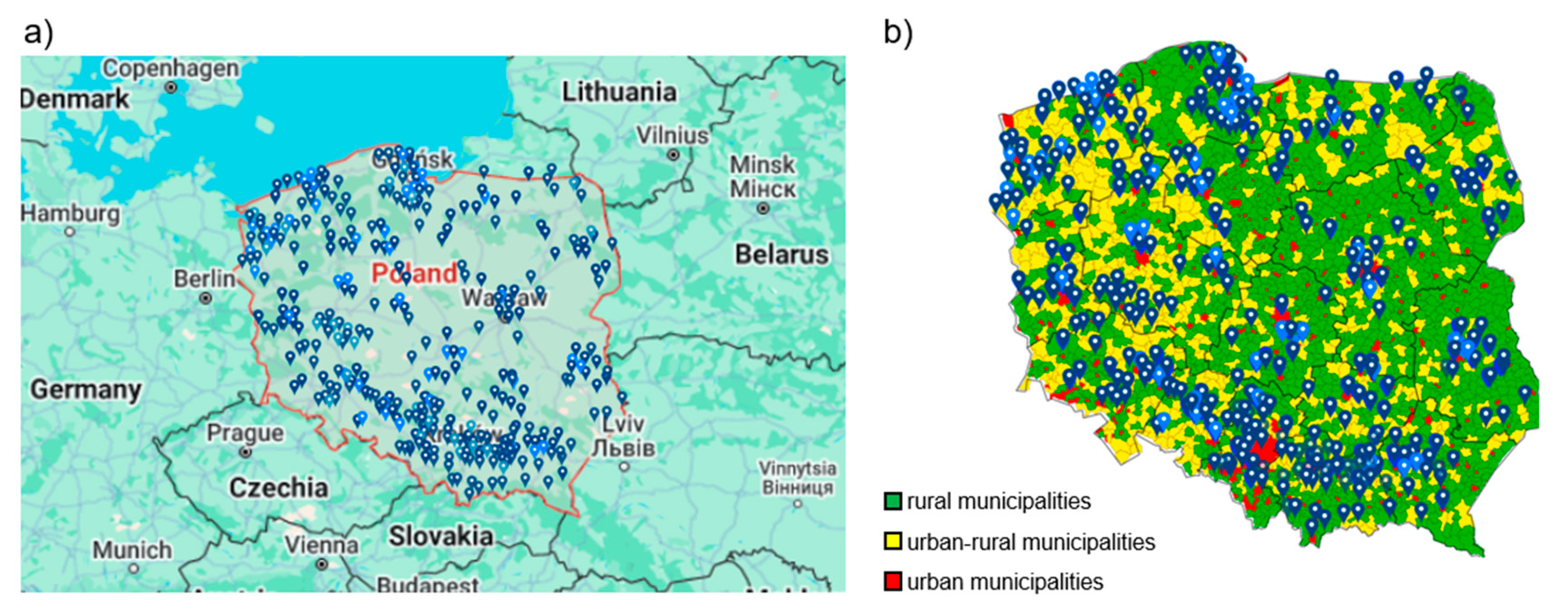
Figure 2.
Examples of home composting units used by the participating households.
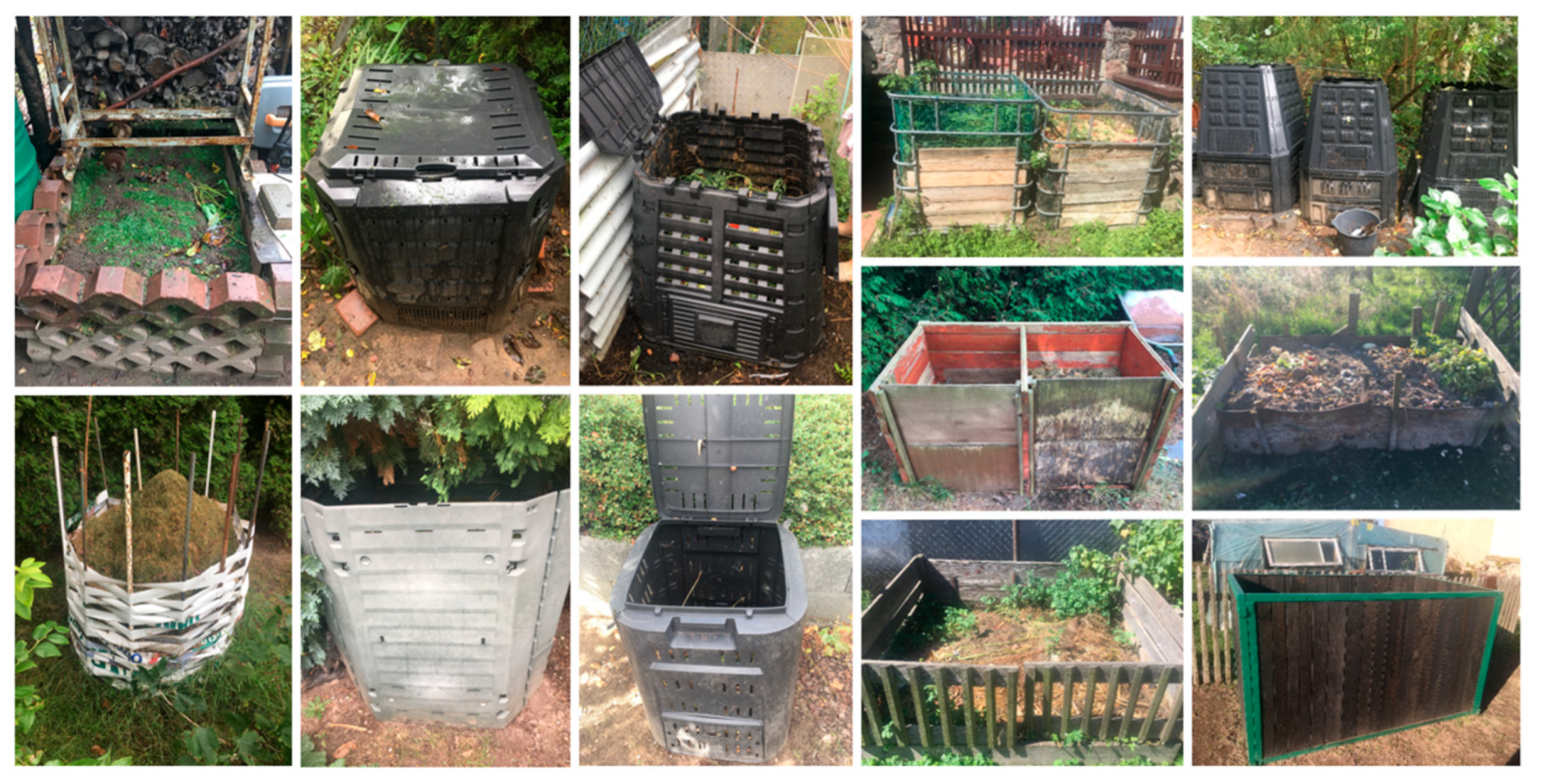
Figure 3.
The average mass of BK separated and composted at the source (kg/(capita·per month)) grouped according to the MSWG value of the municipality where the household was located (horizontal axis), the season (color), and the number of inhabitants in the household: a) 1-2 inhabitants, b) 3-4 inhabitants c) > 5 inhabitants.
Figure 3.
The average mass of BK separated and composted at the source (kg/(capita·per month)) grouped according to the MSWG value of the municipality where the household was located (horizontal axis), the season (color), and the number of inhabitants in the household: a) 1-2 inhabitants, b) 3-4 inhabitants c) > 5 inhabitants.
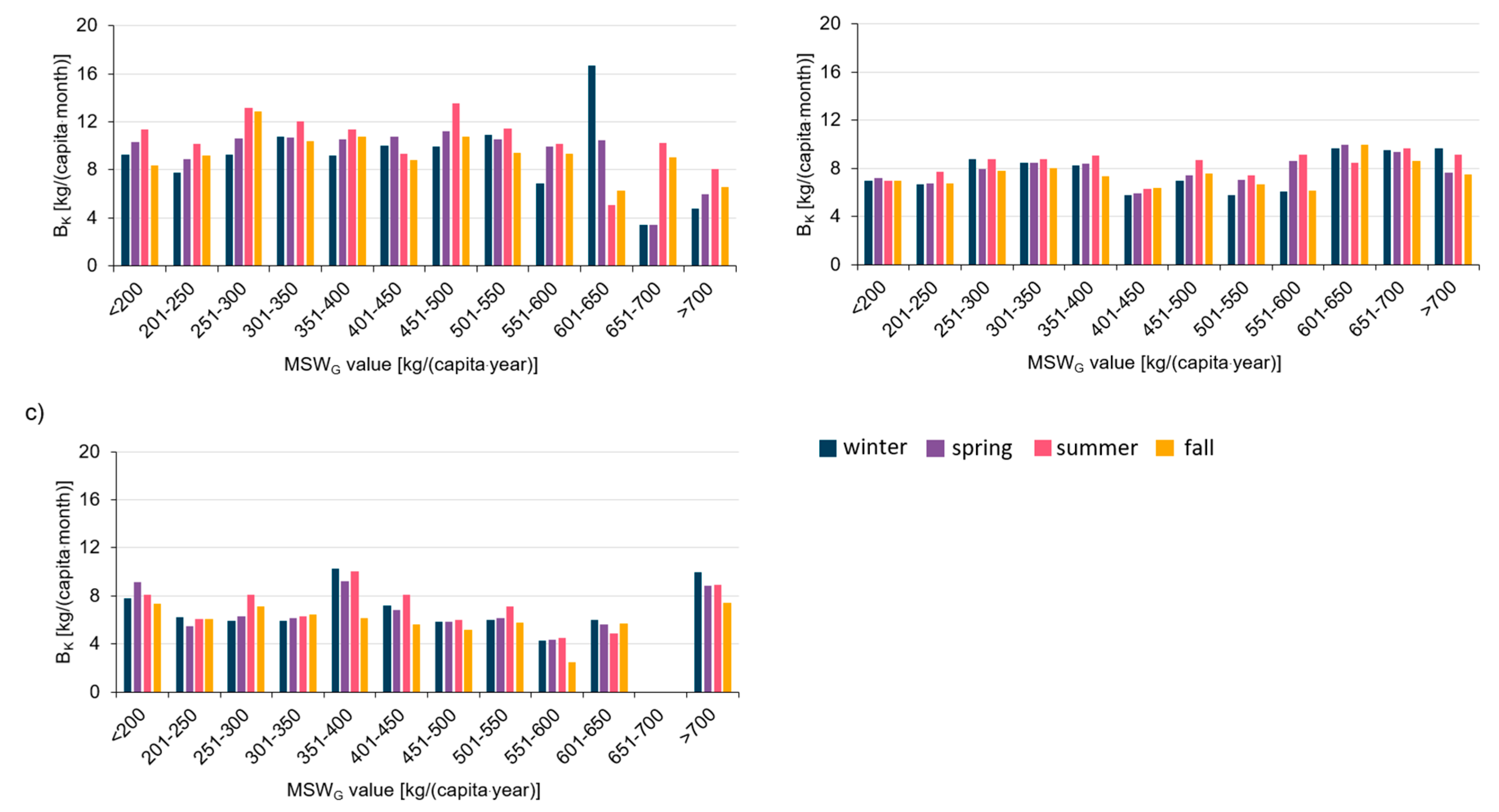
Figure 4.
The average mass of BK separated and composted at the source from the households kg/(capita·month) grouped based on the MSWG value of the municipality where the household was located and depending on the season (a), and the average seasonal mass of BK (b).
Figure 4.
The average mass of BK separated and composted at the source from the households kg/(capita·month) grouped based on the MSWG value of the municipality where the household was located and depending on the season (a), and the average seasonal mass of BK (b).
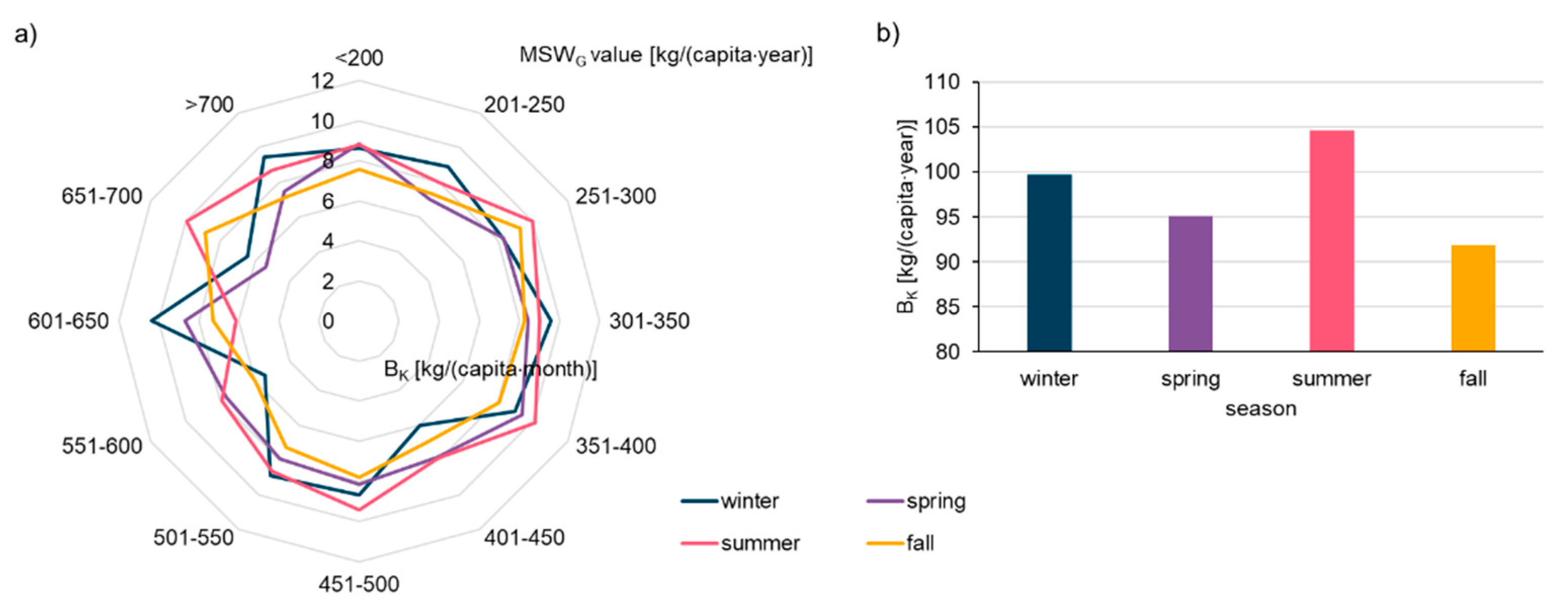
Figure 5.
The average annual mass of BK separated and composted at the source from the households kg/(capita year) grouped based on the MSWG value of the municipality where the household was located; the black dotted line indicates the average).
Figure 5.
The average annual mass of BK separated and composted at the source from the households kg/(capita year) grouped based on the MSWG value of the municipality where the household was located; the black dotted line indicates the average).
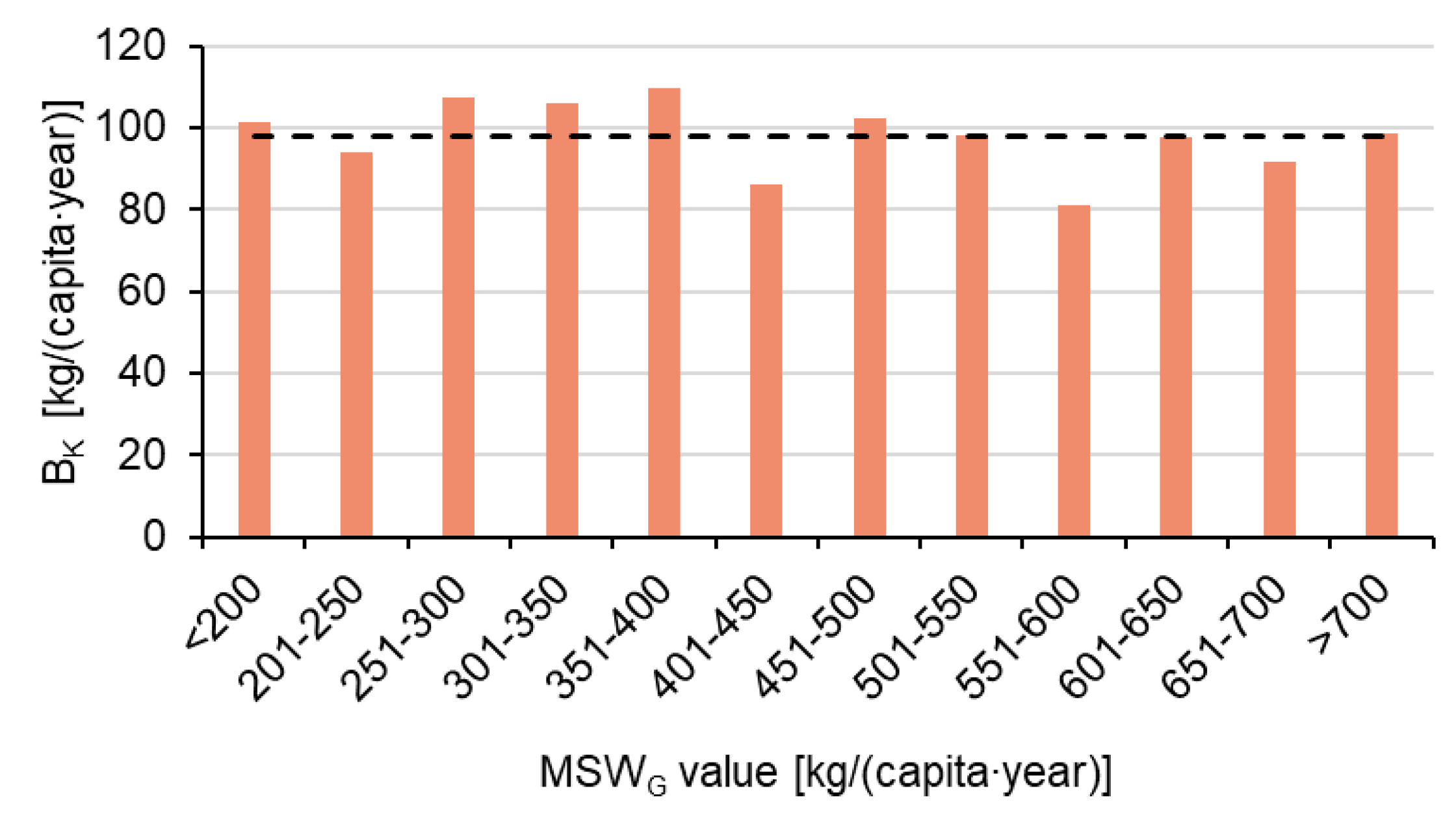
Figure 6.
The average mass of BG separated and composted at the source from household kg/(m2·month) (possessing green area around the house) grouped based on the MSWG value of the municipality where the household was located depending on the season and the size of green area around the house of a) < 200 m2, b) 200-1000 m2, c) 1000-2000 m2 and d) > 2000 m2.
Figure 6.
The average mass of BG separated and composted at the source from household kg/(m2·month) (possessing green area around the house) grouped based on the MSWG value of the municipality where the household was located depending on the season and the size of green area around the house of a) < 200 m2, b) 200-1000 m2, c) 1000-2000 m2 and d) > 2000 m2.
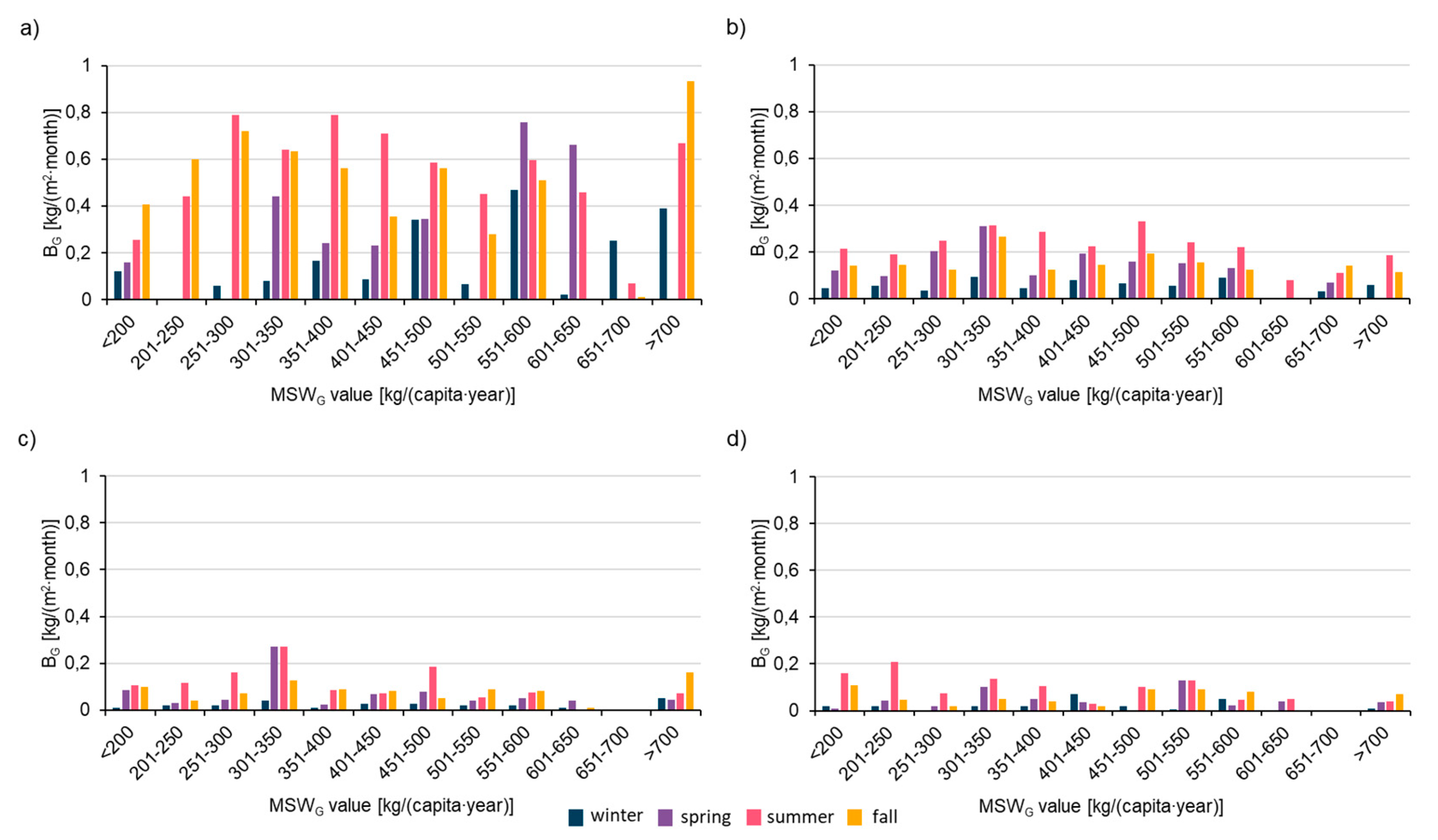
Figure 7.
The average mass of BG separated and composted at the source from the households kg/(m2·month) grouped based on the MSWG value of the municipality where the household was located depending on the season (a), and the average seasonal mass of BG (b).
Figure 7.
The average mass of BG separated and composted at the source from the households kg/(m2·month) grouped based on the MSWG value of the municipality where the household was located depending on the season (a), and the average seasonal mass of BG (b).
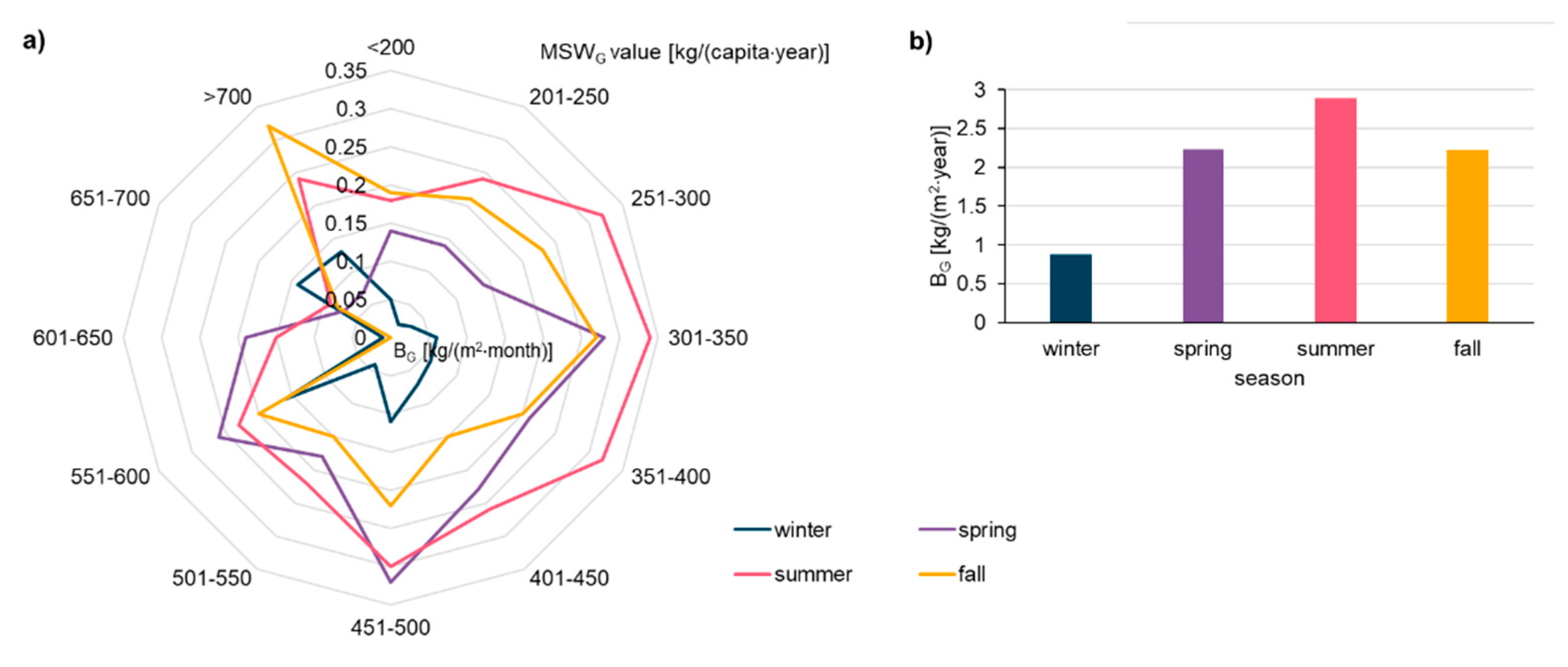
Figure 8.
The average annual mass of BG separated and composted at the source from the households kg/(m2·year) grouped based on the MSWG value of the municipality where the household was located, the black dotted line indicates the average).
Figure 8.
The average annual mass of BG separated and composted at the source from the households kg/(m2·year) grouped based on the MSWG value of the municipality where the household was located, the black dotted line indicates the average).
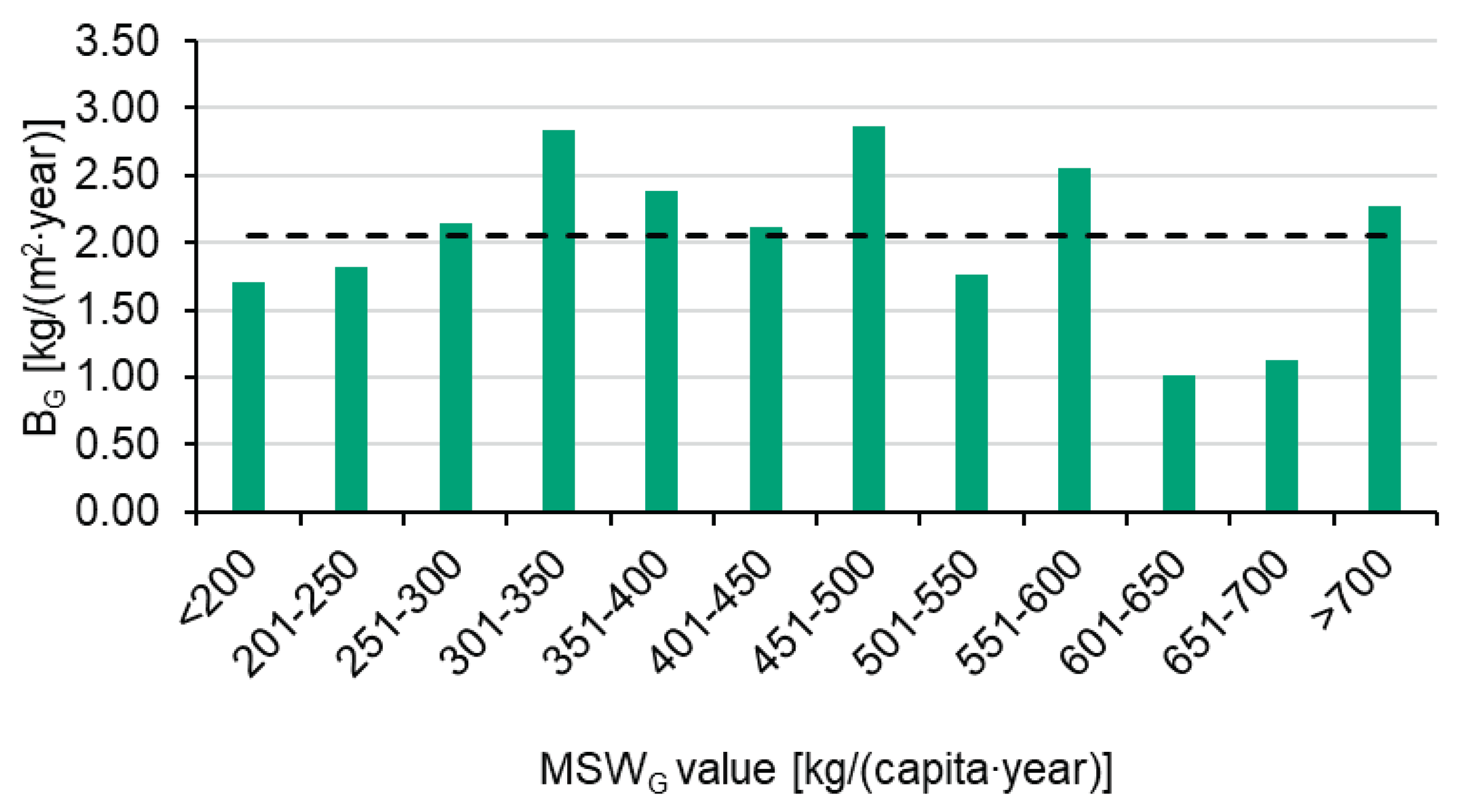

Table 1.
MSWG categories.
| MSWG (kg/(capita·year)) |
| < 200 |
| 201-250 |
| 251-300 |
| 301-350 |
| 351-400 |
| 401-450 |
| 451-500 |
| 501-550 |
| 551-600 |
| 601-650 |
| 651-700 |
| > 700 |
Disclaimer/Publisher’s Note: The statements, opinions and data contained in all publications are solely those of the individual author(s) and contributor(s) and not of MDPI and/or the editor(s). MDPI and/or the editor(s) disclaim responsibility for any injury to people or property resulting from any ideas, methods, instructions or products referred to in the content. |
© 2025 by the authors. Licensee MDPI, Basel, Switzerland. This article is an open access article distributed under the terms and conditions of the Creative Commons Attribution (CC BY) license (http://creativecommons.org/licenses/by/4.0/).
Copyright: This open access article is published under a Creative Commons CC BY 4.0 license, which permit the free download, distribution, and reuse, provided that the author and preprint are cited in any reuse.


