

Submitted:
24 June 2025
Posted:
25 June 2025
You are already at the latest version
Abstract
This research examines the connection between gambling behavior and substance use among youths, with special interest regarding gender difference and the cost of gambling. With a representative sample of 700 high school students aged between ages of 14 and 18 years, the research utilized structured questionnaires to collect information. Respondents indicated their participation on gambling, ranging from slot and scratch cards to internet gambling and sports betting, and their use of psychoactive drugs. Analysis identifies a strong, statistically significant connection between gambling and use of substances, particularly among respondents who use slot gambling or sport betting. For the entire sample, 19.7% gambled and 24% took substances. Use of substances, particularly psychoactive drugs and tobacco use, were much more prevalent among gamblers compared with non-gamblers, and an associated pattern, particularly among males, unveiled much more salient features. Log odds ratio and Fisher’s exact test analysis uncovered much elevated probabilities of use of substances among gamblers, particularly among slot machine users, with odds ratios higher than 2.0 among some female subgroups. Nevertheless, internet gambling could not demonstrate strong associations with use of substances, but there revealed an evident modest positive connection among men users. Data on expenditure unveiled the majority of young persons pay less than €10 monthly on gambling, but there exists a small group with much elevated expenditure. These respondents accounted for the size of the right-skewed distribution and may demonstrate burgeoning signs of harmful gambling. Prevention and detection are highlighted with special interest regarding gender-specific behavior. Recommendations are combined, integrated prevention among young persons within schools and communities, especially regarding gambling and use of substances during youth.
Keywords:
adolescents
; problem gambling
; substance abuse
; gambling expenditure
; gender
; risk behaviors
1. Introduction
In the past decades, the context of teenage behavior has experienced drastic transformations due to advances in technology, changes in culture, and new risks and modes of amusement. Out of the several transformations, gambling and drug use have emerged as intimately related phenomena of great concern, particularly because of their capability to disrupt the mental, cognitive, and social development of young persons. Despite the fact that both of these practices, gambling and drug use, have been examined extensively individually within the fields of public health, psychology, and behavioral economics, there is much to accomplish regarding documents on their relationship, particularly among teenagers and on diverse types of gambling practices. This study sets out to make a contribution towards filling the gap with an exploratory and empirically designed study among high school teenagers of the city and province of Foggia. The key research question informing this study is the following: To what extent are gambling behaviors among adolescents related to the use of psychoactive substances, and to what extent do gender and patterns of expenditure modify this relationship? This question derives from an understanding that adolescence constitutes an especially transitional period of development during which the individual is most open to experimentation with behavior, to peer pressure, and to the formation of habits, some of which may assume pathologic proportions as adults. Analysis of the associations among gambling and substance use among this population, and breaking them out separately among males and females and as a function of expenditure, permits the identification of certain risk profiles and provides information toward the better targeting and effectiveness of prevention measures.
The originality of this article lies in three key aspects. First, it fills a scarcely investigated empirical crosspoint between drug use and gambling among teenagers from Italy, which is a comparatively underelaborated research field within the national context. While foreign studies have been increasingly centered on comorbility between behavioral and substance use addictions (Griffiths, 2005; Derevensky & Gupta, 2011), national research is not extensive and mostly descriptive. Secondly, this research provides a gender-disaggregated analysis, while taking into account the consideration that risk behavior tends to have divergent manifestations among both male and female teenagers, both due to sociocultural and neuropsychological reasons (Zimmer-Gembeck & Helfand, 2008). Thirdly, this research sets forward a spending variable—the level of self-reported monthly expenses on gambling—as a new behavioral indicator, which allows for a more advanced interpretation of compulsive behavior and the potential monetary dimension of addiction. Theoretically, this research extends adolescent behavioral risk theorists (Steinberg, 2008), dual-process theories of behavioral choice, and behavioral addiction theories that not only model gambling and drug use as individual behav-iors, but as expressions of latent cognitive, emotional, and environmental vulnerabilities. These are operationalized as impulse control deficits, sensation seeking, permissive or risk-enhancing environments, and psychosocial stressors potentially driving teenagers towards escapist or reward-based behavior.
A review of the literature notes that drug use of the type common to alcohol, cannabis, and other psychoactive drugs often co-occurs with other dysfunctional behavior, like onset of sexual activity prematurely, academic disaffection, crime, and now gambling. But to this day, the literature has largely dealt with these phenomena within individual silos, studying on the one hand substance use and on the other hand gambling pathology, while only a limited number of investigations have considered the possibility of common risk factors or reciprocal reinforcement of patterns of behavior. Relatively few longituind studies have been undertaken (e.g., Stinchfield, 2000; Vitaro et al., 2001) and suggest gambling may potentially act as a gateway behavior correlating with, or indeed antedating, other drug use, but their direction and causality remain subject to ongoing dispute. Gaps within the literature are particularly evident with respect to quantitative data on populations of teenagers outside Anglo-American countries, and particularly within southern European countries where family configurations, economic settings, and culture with respect to gambling diverge considerably.
In addition, the current digital landscape offers new modalities of gambling—the internet, mobile scratch cards, and gaming-gambling combinations—that complicate adolescent behavioral worlds. Digital modalities not only are more convenient but often are promoted with age-appropriate media, such as influencer messages and social media. Relatively little research, though, has compared gambling behavior within type of game (e.g., slots to internet) or compared substance use patterns among modalities. This article helps to address this gap with an analysis of four definable modalities of gambling: sports betting, scratch cards, internet games, and slot machines. Furthermore, the economic cost of adolescent gambling is not well studied. Economic indicators such as gambling expenditure are commonly utilized within adult population studies to establish the level of gambling pathology (Williams et al., 2012) but are not frequently utilized within adolescent populations. This study fills this methodological gap and includes expenditure data within the investigation to use as a proxy to establish preliminary measures of economic danger behavior potentially linked to compulsivity or dependency. Methodologically, the study relies on a cross-sectional survey among 700 respondents who are between 14 and 18 years old, with a response rate of 97.5%. The questionnaire, both structured and anonymous, includes measures of gambling frequency, type of game, substance use (alcohol and drugs), spend reported, and demographic measures, such as gender. Data analysis deployed Chi-Square tests to find associations, with Fisher’s exact tests as supplements to ensure accuracy, and odds ratios to describe the strength and direction of associations revealed. With this methodological design, robust inferential conclusions are attainable while maintaining fluidity appropriate to an exploratory model.
Preliminary results indicate robust and significant correlations between gambling and substance use among undergraduates, with the connection being particularly strong among male undergraduates and among individuals of two particular gambling groups, slot machine and betting users. No considerable relationship with use of the internet to gamble could be ascertained, a result both contrary to widespread opinion and stimulating future longitudinal research. Overall, expenditure levels are very low but with leptokurtic distribution, and with a small fraction of heavy-spending teenagers potentially particularly at risk of acquiring unproblematic gambling habits. They support the hypothesis of behavioral clustering and underline multidimensional assessment as part of prevention programs designed especially for young individuals.
These findings have scientific, political, and pedagogical value. By identifying specific modalities of gambling with high comorbidities with substance use, this study offers information for targeted policy interventions and prevention campaigns susceptible to gender and behavioral pattern modulation. Further, it offers a template for integrating gambling awareness within general campaigns against substance use, with an awareness of the needs for reaching and impacting effectively, with population-based measures, on the interactive, mutually influencing patterns of adolescent behavior risking harm, as against selectively emphasizing individual ones.
Lastly, this piece contributes to adolescent behavioral health research with an original empirical contribution, as it analyzes comorbidities among gambling, substance use, and spending behavior in a given geographical and culture-specific context. This work contributes to the academic debate on behavioral comorbidity, highlights the need for gender-aware analysis, and reveals practical potential for teachers, clinicians, and policy-makers. Bridging an evident gap within both the Italian and the European academic literature, this research lays the groundwork for other, future works, potentially shedding more light on causal dynamics, long-term trajectories, and intervention tools pertaining to co-occurring behavioral risks among young persons.
The article continues as follows: the second section analyses the scientific literature on the topic, the third section presents the essential characteristics of the dataset used, the fourth section presents the analytical model, the fifth section presents the policy implications, the sixth section contains the conclusions.
2. Literature Review
In accordance with the literature is comorbidity between gambling and other behavioral risks, particularly substance use. Our data replicate this, particularly for male youth and modalities such as slot machines and sporting events, to provide support to File et al.'s (2023) and Gomez et al.'s (2022) conclusions, who particularly emphasize latent comorbidity between behavioral and substance addictions. Psychometric rationale for argument to treat these as overlapping disorders comes also from Gomez et al.'s evidence, who emphasize prevention measures needing to integrate, rather than compartmentalize, themselves. Network clustering to provide support to our theoretical argument comes also from File et al.'s (2023) argumentation that co-occurrence isn't accidental but is the product of common psychology and environmental susceptibility. Support comes to this argument also from Gürbüzer and Gürcan-Yıldırım (2025) who demonstrate bidirectional comorbidity between behavioral and psychological disturbances, to reflect our finding of how gambling and substance use tend to cross-corroborate each other, particularly under pressure or stress. Analogously, Anyanwu et al.'s (2023) and McPhail et al.'s (2025) measures have high dual prevalence—though, respectively, Uganda and Canada—while emphasizing how poor policy enforcement and substance use ratchets up gambling risks. Demir and Bandawe’s (2024) Malawian longitudinal evidence reinforces this argument too, depicting how these tend to become habitual with the passage of time, and needs structural and long-term solutions.
Our research contributes to this global conversation, then, by placing a number on gambling cost related to behavior—an economic variable often overlooked, as well as Azevedo et al. (2023), who mention initiation but not economic participation. This variable comes to the fore, as well, with Chukwuemeka et al. (2024), who are concerned with digital gambling advertising as a behavior change agent. Even with land-based gambling as our concern, as well, the general problem of under-regulation continues, and digital initiation an unlikely but determinantal danger factor. As well, Maksymova et al. (2024) and Boson et al. (2024) are concerned, as protection buffers, not quantified, as our research did not, with self-regulation, strength, and forward vision. This would entail prevention, not merely designed to dampen but enhance psychosocial strength—particularly within schooling. Our gender-specific research not only confirms patterns indicated, as did Buja et al. (2022) and Baslam et al. (2025), with males with high co-occurrence but also establishes strong vulnerabilities among female slot machine users. This aligns with Denoth et al. (2022) who link extremes of BMI with comportments of peril among male teens with potential biological origins. Also, Rizzo et al. (2023) are concerned, as determiners of teen gambling, with impulsivity and sensation-seeking—traits highly prevalent within our high-spender subgroup. Impulsivity as a concern assumes special urgency, as well, with Elchin (2024) and Novruzova (2024) as their work on gambling pathology related to methamphetamine confirms our rationale for impulsivity as a component within teen risk profiles. The neurocognitive and psychosocial roots of addiction are cross-validated with Ngetich et al. (2024) who outline reinforcement learning and maladaptive schemata. Our maladaptive reward behavioral reaction with gambling, particularly among teens who spend much, goes with work, and we thus outline behavioral conditioning procedures within account. Chiorri et al. (2023) and Efrati et al. (2023) additionally relate poor attentional control and maladaptive schemata with digital addiction. Efrati et al.’s work similarly cross-verify teens’ habitual capacity to selfreport problem behavior sustaining validity of research method. These are parallel to Etxaburu et al. (2024), who relate emotional dependency with compulsive buying, and verify our hypothesis of gambling and substance as coping with demands of emotional control. Social features are likewise outlined with Wu et al. (2024) and Miller et al. (2021), who outline peers and digital homophily as exacerbating threat. Peers associations were not monitored as part of study but behavior clustering—specifically among males—predicts same processes. Lack of strong similarity between online gaming and substance use within analysis goes against Gibson et al. (2022), De Freitas et al. (2022), and Chukwuemeka et al. (2024), who solidify digital risks like ad inundation and microtransactions. De Freitas et al. speculate digital overuse may have roots as product of emotional avoidance and impulsivity, and may explain lack of similarity between online gaming and substance use within analysis, as this may evoke increase in measurement granularity. Faílde Garrido et al. (2024) likewise clarify this discourse with distinctions between obsessive and harmonious gaming—a nuance we could not attain with our dichotomous gaming variable.
Our account of gambling as an emotional coping style is similarly endorsed by Diaz-Moreno et al. (2024), Gan et al. (2024), and Gürbüzer and Gürcan-Yıldırım (2025), who associate emotional dysregulation, dysfunctional family, and behavioral addictions. Gideon and Bayray (2025) then specify anxiety and sleeping disorders may co-occur with risk behavior, repeating patterns we find among our spenders group. Likewise, Männikkö et al. (2024) and Macía et al. (2022) associate academic burnout and emotional dependency with problem behavior, supporting the argument gambling and drug use are symptomatic reactions to broader psychosocial stressors. Scalese et al. (2023) then specify energy drink/alcohol mixing intensifies behavioral risk—an element, while not discussed here, very much part of multi-substance prevention agendas. Finally, structural and environmental determinations are once more paramount. Silva et al. (2025), Forero (2024), and Recio-Vivas et al. (2025) remind us connection to family and to school and SES are determiners paramount for teen risk behavior. Their macro-social focus is consistent with an explanation of gambling and drug use as societally conditioned, not individual pathologies. Li et al. (2022) then actually suggest religiosity may buffer effects—advocating an absent but hopeful future focus. Novak et al. (2023), Bozhar et al. (2024), and Chernick et al. (2025) then specify indicators of peers, family, and access to aid consistent with our research and calling for better coordinated detection and support arrangements. Vessey et al. (2023) and She and Li (2025) then suggest bullying, depression, and online victimization may trigger digital and escapist addictions, once more reproducing multi-laminated and overlapping vulnerabilities we find among our teen respondents. Rominger and Subow (2025) do, however, caution not all drug use necessarily is maladaptive—warning context and compulsion must remain paramount to future prevention messages (Table 1).
3. Profiling Adolescent Gambling: Spending Patterns and Risk Indicators
The decomposition of monthly gambling spend among teens reveals clear behavioral patterns, indicating both the ubiquity of low-risk gambling and the existence of a small, high-risk group. Data are condensed into four spend classes with their midpoints and frequencies, and here, there is clear indication of how much teens actually spend on gambling. Most respondents (N = 272) reported spending less than €10 per month, with a class midpoint of €7.5. This group constitutes over 80% of the complete sampling, and this reveals gambling behavior among teens as widespread but, on average, with very little financial expenditure. This is as found with other research demonstrating gambling to often be exploratory or intermittent but, for the great majority, not habitual or problematic (Farhat et al., 2022). However, there is a gradient of increasing expenditure revealed by the data. Sixty-one respondents reported €10 to €50, and twelve reported €50 to €100, per month. Most salient, two respondents reported over €100 per month on gambling, with a class midpoint of €125. While numerically small, there are potentially very much more individuals at risk of gambling harm. Their presence accounts for the skewed distribution revealed within the descriptive measures and raises concern with respect to financial overstretch and the potential development of positive gambling difficulties consistent with previous research on high-risk adolescent gambling profiles (Giannotta et al., 2022). General distribution structure reveals dramatic drop-off in frequency with ever-increasing spend. This right-skewed distribution is consistent with statistical testing identifying strong positive skewness and kurtosis. Data suggest an implied socioeconomic dimension, too; lower spend may suggest limited access to finances, and higher may suggest access to higher financial capital but, alternatively, more problematic behavior patterns. Preceding research among European teens confirms this construal, highlighting the importance of specific modalities of gambling and increased spend as indicators of susceptibility (Benedetti et al., 2023). Overall, therefore, while teen gambling spend is limited, the miniscule percentage of heavy spenders identifies the importance of establishing markers at an early stage. Prevention-oriented education and screening must look not only to measures of gambling frequency but also to levels of reported expenditure as an important predictor of risk (Table 2).
The descriptive statistics provided provide an extensive summary of the variability and central tendencies of teen gambling spend. The mean monthly spend of €14.67 reveals that, on average, teens spend relatively little on gambling. But the mode and the median, both €7.5, suggest a concentration on the lower range. These indicate a gap between mean and median, a sign of right-skewed distribution, where most of the students spend modestly, but there is a subset whose spend far exceeds the others. This rationale is confirmed because the value of the skewness is 3.44, which reveals a strong positive skew, and confirms with advice on interpreting data distributions as skewed within behavioral research (Iacobucci et al., 2025). Kurtosis of 14.57 also reveals a leptokurtic distribution, where the data are sharply peaked with heavy tails. This would imply, while most of the students spend low, the extrema, i.e., some teens who spend more than €100, create the long tail and have great impact on the complete distribution. Such patterns resemble those within gambling and tourism expenditure research pointing to skewed spend behavior and heavy-tailed distributions (Gómez–Déniz et al., 2022). Comparing the standard deviation of €16.69 and the variance of 278.40 reveals much variability within spend behavior. Since the range of 117.5, ranging from minimum spend of €7.5 to a max of €125, also confirms much variability, these reveal there are outliers who diverge much from the common pattern, and most probably are the ones who are found to have higher risks for problem gambling. This type of analysis of outliers has been similarly utilized to find out the subpopulation with risks within larger populace (Puranik et al., 2023). A standard error of only 0.90 only reveals a fairly precise mean estimation, assuming a sufficient number of samples. However, extrema effects have to moderate a reliance on mean only while establishing common experience with teen gambling. Overall, the data reveal while most teens spend very little on gamble, but there are members of the group who have much spend. These statistical associations suggest the need to pinpoint individuals who are high-risk on an early footing and suggest cost, as well as gambling type and frequency, need to be considered when determining gambling behavior among teenagers (Table 3).
Overall, analysis of expenditure data reveals a comparatively low-spending gambling behavior among youth, with the great majority of respondents reporting zero financial contribution. However, the presence of a limited segment with substantially elevated expenditure patterns yields a key area of focus. Not only do these unusual value outliers distort the distributional shape of the information, but they also suggest potential vulnerability to problem gambling. For this rationale, behavioral and expenditure indicators must be integrated within prevention strategies to more effectively identify susceptible youth and provide specific intervention.
4. Interlinked Risks: Gender-Specific Patterns in Adolescent Gambling and Substance Use
This case study explores the relationship between substance use among young people and their propensity to gamble and the expenditure incurred. By placing substance use as the dependent variable and the various types of gambling chosen by the sample as predictors, we want to evaluate the impact on behaviors considered at risk with particular attention to gender differences. A conceptual configuration of the research hypothesis is reported (Figure 1).
The relationship of gambling and substance use among teens becomes evident with close inspection of gender-based distributional data. With the given contingency table, one obtains a clear indication of both gambling behavior and substance use relationship among both female and male students, corroborating main statistical conclusions from the chi-squared tests while adding further complexity to the overall adolescent risk behavior analysis. Out of female students (N = 335), 22 indicated gambling behavior. Out of these, 9 students (40.9%) indicated use of substances compared to 60 (22.7%) among the other 313 non-gambling female students. Although overall prevalence both for gambling and use of substances remain both lower among females, their relative increase among female gamblers to use substances—almost twice their non-gambling equivalents—are signs of an exceptionally strong relationship, confirmed statitically with the given chi-squared test value (χ² = 5.940; p = .015). These are signs within a population long considered lower risk, gambling could act as a gateway or forecaster towards higher susceptibility to use substances (Giannotta et al., 2022). Comparably, male students (N = 320) exhibit much elevated levels of gambling and use of substances. Out of the 107 males who indicated they gamble, near half (50, or 46.7%) similarly indicated use of substances. Amongst non-gambling males (N = 213), only 38 (17.8%) use substances. This stark contrast highlights much more substantive co-occurrence between gambling and use of substances among male teens. Product of the chi-squared test among males (χ² = 29.812; p < .001) confirm as an incredibly strong, statistically significant relationship, pointing to gambling as a strong substance use danger factor among males. These patterns repeat previous reports identifying strong associations between gambling and co-occurring danger behavior, such as use of substances and aggression, particularly among males (Zhai et al., 2020).
In addition, longitudinal research revealed that adolescent gambling activity often develops concurrently with substance use over time, and indicated a pattern of development whereby both behaviors reciprocally facilitated one another during adolescence (Carbonneau et al., 2023). Given the full sample (N = 655), 129 respondents reported gambling, and among them, 59 (45.7%) reported substance use. This is substantially more than among the 526 non-gamblers, who were 98 respondents who used substances (18.6%). These numbers generate an overall chi-squared statistic of 41.763 (p < .001), with additional support for the strength of the relationship between gambling and substance use given among the adolescent population as a whole. These outcomes are consistent with earlier research demonstrating adolescent gambling to often co-occur with substance use and other risk behavior (Buja et al., 2020). Both the gender-disaggregated data and gender-combined results not only strengthen the overall relationship between gambling and substance use but also accentuate the differential size of this connection between gender respondents. Men appear particularly liable to adopt a number of hazardous behavior at once, and prevention programs would do well to emphasize gender-specific prevention plans. Meanwhile, while fewer female respondents indicate gambling, those who do do so with a readily noticeable level of substance use compared to their non-gambling peers, and indicate they must not be excluded from prevention but are, instead, an especially suitable focus of prevention attention. These gender distinctions map to European adolescent populations, where males have consistently much elevated gambling prevalence, but where female individuals who gamble also have much elevated levels of risk behavior (Reynolds et al., 2023). These correspondings demonstrate the value of adding a gender-sensitive focus within prevention and schooling programs. Educational institutions and community prevention services would do well to devise prevention resources and plans to address the co-occurrence of gambling and substance use with special attention to peer pressure, access to gambling modalities, and prodromal behavioral markers of dangerous habits. Overall, these data lend strong support to a multi-dimensional approach to adolescent risk behavior one that respects gender distinctions but shares common vulnerabilities among members of the youth population (Table 4).
Statistical analysis of this work reveals clear evidence of robust linkage between gambling and substance use among teens with some dimension of variation depending on gender and type of gambling behavior. Results indicate that 19.7% of combined sampling engaged in gambling and 24% engaged in substance use. Notably, substance use had been far higher among respondents who engaged in gambling, particularly males and respondents of slot machine and betting. This observation aligns with research indicating same signals among teen populations, with rates of gambling participation being found to coexist with higher rates of substance use and corresponding behavioral problems (Zhai et al., 2020). Chi-squared analysis determined there to have been statistically significant associations between gambling and substance use among both males (χ² = 29.812; p < .001) and female respondents (χ² = 5.940; p = .015) and, overall, (χ² = 41.763; p < .001). Odds ratios confirmed associations, relating gambling to multiplying substance use odds some 1.3 times higher among combined sampling, slightly higher among males (OR = 1.39) compared to among females (OR = 1.07). For individual gambling activity, slot machine participation had largest affiliation with using substances, with users being over 1.5 times more likely to use substances (OR = 1.54; p < .001), and affiliation more robust among female respondents (OR = 2.08). These gendered instances of gambling activity and corresponding danger have been repeated within European research, which determined presence of problem gambling variable depending on type of gambling and elevated, particularly among slot machine and internet betting users (Lombardi et al., 2024). Online gaming, on other hand, revealed no significant affiliation with substance use, potentially because physical and financial instantaneity inherent to traditional gambling poses higher behavioral danger. As to cost of gambling, while majority of respondents indicated minimal cost per month (less than €10), distribution of data had been grossly biased, with evidence pointing to some modest group of respondents had expended much more, potentially indicating preliminary signs of compulsiveness. Overall, these results indicate gender-sensitive multi-dimensional prevention aimed at teens' gambling and substance use. Furthermore, they are concerned with regulatory oversight, particularly monitoring of teen access to high-risk gambling genres like slots (Figure 2).
The relationship between gambling and substance use among adolescent populations reveals dramatic gender-specific patterns, adding further insights into co-occurring risk behavior. Cross-tabulation analysis among both gender groups confirms a dramatic relationship between gambling behavior and substance use, complementing and extending statistical evidence revealed earlier within the study. From 335 female respondents, gambling activity prevalence remained quite low: only 22 respondents gambled. Still, among thesefemale respondents who gambled, 40.9% (9) revealed substance use, two times as much as compared to non-gambling females, among whom only 19.2% (60 among 313) revealed substance use. This virtually doubled increment presents a strong relationship between gambling and substance use, and this relationship manifests among females, despite widespread beliefs concerning their lower proneness to these kinds of behavior. These findings correspond to evidence proving that, while females tend to gamble lower, once, as soon as they do gamble, their proneness to other related to this kind of behavior, like, for instance, substance use, tends to increase (Claesdotter-Knutsson et al., 2022). Despite numbers staying low, the percentage increment presents inherent value, as confirmed by a statistically considerable value of the chi-squared statistic among females (χ² = 5.940; p = .015). These findings confirm, as revealed among female teenagers, gambling may become an early behavioral predictor of substance-related risks. This relationship becomes much more dramatic among males. From 320 males, who participated in this investigation, 107 revealed to gamble, and within this group, substance use additionally appeared among 46.7% (50) respondents. As compared to the aforementioned group, only among 213 males who did not gamble, only 17.8% (38) demonstrated substance use. These numbers imply, as revealed, gambling males were more than two times as prone to use substances as compared to their non-gambling colleagues. This strong contrast is emphasized with an exceptionally strong and highly considerable value of the chi-squared statistic (χ² = 29.812; p < .001), clearly indicating male gambling behavior as an excellent, based on this subject group, predictor. This tendency corresponds to the results of other research, conducted within other culture settings, for instance, Italy, where adolescent males revealed constantly higher rates of both gambling activity participation as well as related to the behavior risk (Tani et al., 2021). Examining the data over the entire range of the 655-student sample, the pattern holds. Of the 129 respondents who gamble, 59 (45.7%) also use substances. For non-gamblers (N = 526), only 98 (18.6%) use substances. This three times higher prevalence further confirms the co-occurrence of use and gambling and reinforces the overall chi-squared significance (χ² = 41.763; p < .001) for the full set. These results signify a strong and statistically significant connection among these behaviors, supporting the conclusion that teen gambling is not an isolated behavior but is part of other kinds of risky behavior (Estévez et al., 2021). Both the gendered nature of these results have key prevention and intervention implication. While males prominently exhibit higher prevalence and higher associations, the high rates of use among gambling female respondents signify prevention measures need to be gender-inclusive and gender-aware. While research reveals gender distinctions have been found to not only vary in terms of prevalence of gambling but also related and deeper roots, i.e., deception and emotional regulation (Guerra et al., 2022), prevention measures must not only aim at one behavior but must both address gambling and use simultaneously, and particularly within the context of school-based programs. Finally, the data emphatically demonstrate teen gambling to have strong connection with use of substances, particularly with males but with great danger among females. These data signify prevention measures need to happen as soon as possible, need to be multi-focal and focused, and need particularly to focus on specific behavioral patterns occurring within each gender group. Research equally highlights the importance of clinical distinctions among males and female to be considered not only with regard to diagnosis but also regarding treatment planning with regard to issues of gambling (Miller et al., 2023) (Table 5).
The contingency data examining the relationship between “Scratch and Win” gambling and narcotic substance use provides further evidence of behavioral comorbidity between substance use and gambling during adolescence. Taking account of gender, this relationship becomes an even more advanced relationship with distinct patterns to account for why some sorts of gambling are linked to perilous behavior among young adults. For female students (N = 335), a total of 97 stated taking part in “Scratch and Win” gambling. Of these, 23 (23.7%) stated taking part in narcotic substance use. For comparison, only 46 of the 238 non-gambling female respondents (19.3%) stated taking part in substance use. While not glaring, this nonetheless constitutes a considerable difference. It identifies the potential of low-risk gambling modalities such as lottery tickets and scratch cards to constitute behavioral markers for other forms of danger, particularly among females. They are often thought to constitute harmless, society-sanctioned gambles, but may themselves constitute preliminary gambles behaviorally towards substance use experimentation (Pisarska & Ostaszewski, 2020). While the level of substance use among females as a group continues to remain lower than among males, the suggestion here is among female adolescents who gamble are more likely to engage in other danger behavior. For male students (N = 320), the relationship is more pronounced. For the 89 males who stated taking part in “Scratch and Win” gambling, 32 (36.0%) stated taking part in narcotic substance use. This constitutes substantially more than the 24.2% (56 out of 231) substance use level among males who did not engage in this form of gambling. This elevated co-occurrence reinforces the larger pattern evident throughout the study: male students are more prone to taking part in various forms of danger behavior, with gambling potentially representing a preliminary behavior gateway or reinforcement to use substances (Scandroglio et al., 2022). This strength of relationship within males underscores the necessity of gendered-specific intervention to account for co-occurring behavior among male adolescents with an eye towards helping to engage and minimize preliminary danger markers. For the full sample size (N = 655), 186 stated taking part in “Scratch and Win” gambling. Of these, 55 (29.6%) said they used narcotics, compared to 102 (21.7%) of the other 469 non-gamblers. This comparison, while moderate-appearing, reveals a highly significant increase in the odds of substance use among persons who engage in this specific type of gambling. As “Scratch and Win,” as routinely promoted, is a straightforward, harmless method of gambling and is available to minors, the fact of an affiliation with substance use carries considerable weight for youth protection and public health policy. These findings confirm gambling behavior—be it of whatever severity of perceived harm—must never be de-emphasized when examining adolescent vulnerability to substance use. Prevention strategies must take account of routinization of “soft” modes of gambling, and teachers and caregivers must be apprised of their specific affiliations with broader patterns of danger-seeking. Gender-specific prevention strategies are similarly of foremost importance: while males may need gender-specific, behavioral prevention, female-gamblers, while fewer, could engage to advantage as far as earlier recognitions and prevention are concerned, to forestall escalation into broader fields of danger (Table 6).
The results of the chi-squared test reported here further clarify the connection between gender, gambling, and substance use, and provide some indication of how these behavior patterns overlap within adolescent populations. Analysis reveals some noteworthy gender-based distinctions within the strength of connection between gambling behavior and consumption of narcotic drugs. For the female subgroup (N = 335), the value of the chi-squared statistic turned out to be 0.83010 with 1 df, and the p-value was 0.368. This suggests there is no statistical significance to the connection between gambling and substance use among female students. Put another way, within this group, gambling behavior—of the “Scratch and Win” variety, say, or other kinds of gambling behavior—the tendency to use narcotic drugs does not seem to be very predictive. This finding matches others found earlier within the set indicating the relatively lower occurrence of both behavior patterns among female members, as well as a less strong connection between both behavior patterns (Claesdotter-Knutsson et al., 2022). For the male subgroup (N = 320), there was a value of the chi-squared statistic of 4.421 with p-value of 0.036, and this indicates there is a statistical significance to the connection between gambling and substance use. This would imply, therefore, among male members, gambling behavior tends to co-occur with narcotic drug consumption. This finding is consistent with larger patterns evident throughout the study, where male adolescents consistently had higher rates both of gambling and substance use, and stronger behavioral associations linking both patterns (Mutsambi, 2024). Considering the entire data set (N = 655) in the aggregate, the combined value of the chi-squared statistic comes to 4.471 with a p-value of 0.034, and this too reaches the threshold level of statistical significance. This tends to support the conclusion, then, that within the adolescent population as a whole, gambling and substance use are not separate and independent behavior patterns. As far as driving the connection, the connection is largely one found among the male members, but as a presence within the combined set, does indicate these are behavior patterns to address within both sexes as part of prevention and awareness measures, with an especially strong need to focus on detection measures and intervention strategies incorporating targeting of high behavior risks (Figure 3).
The analysis of Log Odds Ratios and their respective 95% confidence intervals includes relevant information on strength and significance of the tie between gambling and substance use among young groups, stratified by sex. They form a supplementation of the chi-squared testing with quantitative assessment of size of effects and enhanced understanding of practical strength of associations uncovered. For female students, the Log Odds Ratio is 0.260, and respective 95% confidence interval extends between -0.308 and 0.828. Since the interval includes zero, this indicates the tie between gambling and substance use isn't determined to have statistical significance among females. Fisher’s exact test agrees, with p-value of 0.375—a value very much outside boundary of significance, p < 0.05. These indicate average level of some substance use among female gamers despite absence of strong and steady trend to verify an extant relationship within this population. They agree with other preceding results within the article with weaker associations within females (Mosconi et al., 2024). For male students, the Log Odds Ratio is high, with value of 0.562, and respective interval extends between 0.035 to 1.089. Since the interval does not consist of zero, this indicates a statistically significant tie between gaming and substance use. Fisher’s exact test p-value is precisely 0.050, finding itself within conventional boundary of significance. These agree with preceding statistical testing and solidifies the find to the extent that gambling is strongly related to substance use within male adolescents. Odds of substance use have an appreciable increase when there is gaming, indicating need for concerted prevention measures within this group (DelFerro et al., 2024). For the complete totality sample, the Log Odds Ratio is 0.413 (CI: 0.029-0.796), and p-value is 0.042. This validates an extant, statistically significant tie between gambling and substance use within the adolescent population considered as totality. Data underscore the need to provide special attention to gaming behavior as a signifier of larger patterns of peril, particularly among male students (Table 7).
The table reports nuanced notes on the relationship between internet gaming and substance use among teenagers, gender-disaggregated. For female undergrads (N = 335), 86 engaged in internet gaming. Of these, 14 (16.3%) had had substance use, compared with 55 of 249 non-gamers (22.1%). This means there are slightly lower levels of substance use among female internet gamers. For males (N = 320), there were, on the other hand, 126 who engaged in internet gaming, and there were 40 (31.7%) who had had substance use, much higher than the level of substance use among non-gaming males (24.7%, i.e., 48 of 194). This would mean there is a potential divergence among sexes: internet gaming does not appear to have much of a relationship with substance use among female species—and quite possibly there is a small negative one—the modest positive relationship appears among males. Among the total sample (N = 655), 212 engaged in online gaming, among whom 54 (25.5%) reported substance use. Relatively, only 103 of the 443 non-gamers (23.3%) reported substance use. Although the combined difference is modest (25.5% vs. 23.3%), this would suggest that online gaming is potentially weakly associated with substance use, and this may largely be explained from the male subgroup. These results suggest gender as a key moderating factor for the comorbidity between online gaming and substance use. Even though online gaming is not a particularly strong predictor of substance use in general, prevention measures may need to pay special attention to the elevated susceptibility among men gamers to comorbid risk behavior (Table 8).
The Log Odds Ratio and Fisher’s Exact Test outcomes provide further evidence of the relationship between online gaming and substance use among teens, with gender stratification. This statistical technique not only quantifies strength and direction of connection but also allows an assessment of precision with confidence intervals and measures of significance. For female students, the Odds Ratio is −0.377 (95% CI: −1.023 to 0.269). Its counterpart Fisher’s Exact Test results in a very similar value (−0.376) with a somewhat wider interval (−1.104 to 0.297) and p-value of 0.282. These are signs that the relationship between substance use and online gaming among females isn't significantly different from zero. Observe, too, that both sets of confidence intervals cover zero, confirming an absence of strong connection. This suggests among female students, playing online does not appreciably increase or diminish the odds of substance use. Non-significance here is consistent with preliminary results earlier from the chi-squared test and contingency table analysis, whose suggestion of a weak or absent connection between gambling action and substance use among female teenagers (Miller et al., 2023) now receives supporting evidence. Comparatively, male students have a positive Log Odds Ratio of 0.347 (95% CI: −0.150 to 0.844), and correspondingly, the same from the Fisher’s Exact Test (0.346, CI: −0.183 to 0.873), with p-value of 0.200. While the intervals continue to cover zero, and thus indicate the value isn't significantly different from zero to the level of probability of 0.05, the values do suggest a possible positive connection. These are consistent with preliminary results in the study consistently indicating there is a strong connection between gambling activity and substance use among males (Pisarska & Ostaszewski, 2020). While not found to be significant here, there does, nonetheless, exist an indication, that males using online gaming are potentially slightly more likely to use substances too, and hence, an in-depth analysis within a larger or focused examination. For the entire population, the odds ratios diminish further to 0.121 and 0.120 for the standard and Fisher’s test, and the respective 95% confidence intervals are −0.259 to 0.500 and −0.281 to 0.515. The combined p-value is 0.558, further proving that the connection between online gaming and substance use within the entire adolescent group is not statistically significant. These combined results indicate online gaming, compared to other gambling activities like slot machines or “Scratch and Win,” may not have as strong an association with substance-related risk behavior (Lombardi et al., 2024). As a group, these results contribute to a better understanding of adolescent behavior. While other gambling activities had stronger associations with substance use, online gaming is seen to have lower predictive value of said behavior, particularly among females. For males, the moderate positive tendency draws attention to the need for gender-sensitive screening tools within preventive education. Both non-significant outcomes on the total level also suggest the need to nuance gambling types while designing policy measures and intervention strategies towards adolescent risk behavior reduction (Table 9).
The contingency table examining the relationship between slot machine use and substance consumption among adolescents provides valuable insight into the co-occurrence of these risk behaviors, with clear differences emerging across gender lines. Among female students (N = 335), the vast majority (329) did not engage in slot machine gambling. Of these, 65 (19.8%) reported using substances. In contrast, only 6 female students reported using slot machines, and 4 of them (66.7%) also reported substance use. Although the absolute number of female slot machine users is low, the proportion of substance users among them is remarkably high. This indicates that while few female adolescents participate in slot machine gambling, those who do are at substantially elevated risk of substance use. These figures point to slot machine use as a potential behavioral marker of broader risk patterns, even within lower-risk groups such as females. For male students (N = 320), the sample includes 20 slot machine users. Of these, 11 (55%) reported using substances. Among the 300 male non-users of slot machines, 77 (25.7%) reported substance use. Again, we see a more than twofold increase in the prevalence of substance use among male slot machine users compared to non-users. This trend mirrors that seen among females and supports the broader pattern established throughout the study: gambling behavior, particularly involving high-stakes or highly stimulating formats like slot machines, is strongly associated with substance use among adolescents (Mosconi et al., 2024). When analyzing the total sample (N = 655), 26 students reported using slot machines. Of these, 15 (57.7%) also used substances, compared to 142 out of 629 (22.6%) among non-slot machine users. This stark contrast further supports the idea that slot machine engagement is a high-risk behavior strongly associated with concurrent substance use. These findings highlight the need for targeted interventions addressing specific gambling modalities—such as slot machines—that may pose higher psychological and behavioral risks. Despite their relatively low prevalence among adolescents, their strong correlation with substance use makes them critical focal points for prevention efforts (Table 10).
The contingency table examining slot machine use as a substance use correlate among teens brings some interesting impressions on the co-occurrence of said risk behavior, with clear patterns cropping up beyond gender lines. Amongst female undergrads (N = 335), an appalling majority (329) do not gamble on slot machines. Of these, we had 65 (19.8%) reporting their use of substances. However, only 6 female undergrads reported slot machine use, and 4 of these (66.7%) reported use of substances. While on an absolute basis, very few female teens are slot machine users, among these, the prevalence of substance use is quite, quite high. This would imply, while not very many female teens are slot machine users, very much those who are are much likelier to use substances themselves. This is so with broader research referring to gambling—even low-prevalence variants thereof—a substance use behavioral risk marker amongst female teens (Zhai et al., 2020). For male undergrads (N = 320), we have 20 slot machine users among them, and of these, there are 11 (55%) who reported their use of substances. For the remainder of other 300 slot machine non-users, we have 77 (25.7%) who reported use of substances. Again, we have another doubling more than double of substance use prevalence among slot machine users as against slot machine non-users. Again, as with females, we replicate this pattern and solidify the wider one witnessed throughout the research: gambling, whilst with high-stakes, highly salient configurations like slot machines, predicts substance use strongly among teens. These patterns replicate themselves within cross-European data indicating high odds of gambling—and gambling as an associate to substance use—amongst youth both sides of gender divide (Reynolds et al., 2023). Breaking the entire analysis on the entire set (N = 655) into two, we have 26 undergrads who reported slot machine use. Amongst these, there are 15 (57.7%) who reported their use of substances, with respect to 142 of 629 (22.6%) among non-slot machine undergrads. This stark comparison reinforces, further, the notion slot machine use comprises behavior of some danger with strong associations towards concomitant use of substances. These findings are a signal to concentrate, with special attention, on some modalities of gambling—e.g., slot machines—that may carry higher behavioral and psychological risks. Not very prevalent among teenagers, their strong associations with drug use confer them highest priority as a prevention target (Table 11).
Reported results of the chi-squared test of the associational relationship between slot machine gambling and substance use are statistically significant and robust and confirm prior results within the research indicating gambling and substance use co-occurrence among teens. For female undergraduates (N = 335), value of the chi-squared statistic of 7.928 with 1 df yields a p-value of 0.005. This is a statistically significant result and indicates adolescent female slot machine gamblers are more likely to use substances compared to non-gamblers. Female participation rates are low with respect to slot machine gambling measured with respect to absolute numbers, and while the finding may not reflect an extensive level of slot machine gambling, the statistical significance itself does suggest that where gambling does exist, then this may suggest other related risk behavior. This highlights the need to ensure the participation of females within prevention strategies, particularly as their level of risk could potentially underestimate due to lower participation rates with respect to gambling overall (Lombardi et al., 2024). For male undergraduates (N = 320), slightly higher value of the chi-squared statistic of 8.092 yields a p-value of 0.004. This once again confirms an associational relationship between slot machine gambling and substance use. Male respondents are a larger group of respondents who gamble within the research, and this finding is consistent with prior associations indicating males are more susceptible to use substances as well as gamble (DelFerro et al., 2024). Strength of the associational relationship within this group helps to underpin the need to ensure gender-responsive prevention measures, particularly ones focused on high stimulation gambling form like slot machine gambling. Overall value of the chi-squared statistic for the entire group (N = 655) is 16.895, and the p-value is less than 0.001. This highly significant value confirms, within the entire teen population studied, use of slot machine is very much related with use of substances. Both robustness of the finding within the subgroup and entire group levels both indicate slot machine gambling could potentially serve as key behavioral predictor of risk. These results both underscore the need to continue to monitor specific gambling behavior within teens and to integrate corresponding data within early identification and prevention strategies and particularly prevention measures seeking to lessen co-occurring use of substances (Table 12).
The analysis of Log Odds Ratios and their confidence intervals reveals important insights into the strength and significance of the association between slot machine gambling and substance use across genders. These results are consistent with the broader findings of the study, reinforcing the notion that gambling behaviors—particularly high-stimulation forms like slot machines—are strongly linked with substance consumption in adolescence (Zhai et al., 2020).
For female students, the Odds Ratio is 2.095, with a 95% confidence interval ranging from 0.376 to 3.814. Although the confidence interval does not exclude 1 entirely, the Fisher's Exact Test confirms a statistically significant association, with a log odds ratio of 2.086 (CI: 0.119–4.510) and a p-value of 0.018. This finding is noteworthy, given the relatively low number of female participants who reported using slot machines. Despite their lower prevalence, those who did gamble were significantly more likely to also report substance use. The result underscores that even among female adolescents—traditionally viewed as lower risk for gambling—engagement in certain gambling formats can be a red flag for co-occurring risky behaviors.
Among male students, the Odds Ratio is 1.264 (CI: 0.346–2.182), while the Fisher's Exact Test yields a nearly identical ratio of 1.259 (CI: 0.241–2.305) with a p-value of 0.008. Although slightly lower than for females, the association is still statistically significant. This suggests a robust connection between slot machine use and substance consumption among males, aligning with the broader literature that identifies adolescent males as particularly vulnerable to engaging in multiple risk behaviors concurrently (Zhai et al., 2020).
For the total sample, the Odds Ratio is 1.543 (CI: 0.742–2.343), and the Fisher’s Exact Test produces a nearly equivalent result (1.540), with a confidence interval of 0.669–2.442 and a p-value of < .001. This clearly indicates a statistically significant and meaningful relationship across the overall adolescent population. In sum, these findings highlight the predictive value of slot machine gambling as a marker for substance use, and stress the importance of gender-sensitive, targeted interventions to identify and reduce co-occurring behavioral risks (Table 13).
5. Rethinking Adolescent Risk: A Multilevel Policy Agenda for Gambling and Substance Use
Informed by the findings of this study investigating the connection between gambling behavior among adolescents and substance use, some paramount policy directives emerge and are critical to the development of effective prevention and early intervention practice as a field of public health. They span the domain of schooling, regulation, family participation, school policy, and mental health care, and must be approached as an integrated collection to account for the multidimensional nature of adolescent danger behavior. First among these is incorporation of gambling awareness and prevention with educational-based curricula on adolescent and young adult health. Given that gambling behavior initiates during the adolescent epoch and because the study documents an intense statistical relationship between gambling and substance use, particularly with slot machines and betting on sporting events, schools may no longer afford to disregard gambling as an outside issue, let alone one the exclusive domain of adults. School-based prevention programs must now integrate age-inappropriate material on the risks of gambling, its psychology, and its co-occurrence with substance use. Prevention research identifies optimization with specialized care from trained specialists who are capable of effectively transmitting the material, as observed with the PRIZE program, which effectively trained mental health specialists to enhance adolescent gambling prevention effectiveness (Donati et al., 2022). Prevention programs must also integrate an awareness of gender-specific patterns observed to this study, where an enhanced connection between gambling and substance use operated among male students. Nevertheless, programs must maintain gender inclusiveness among female students, particularly given the observed heightened substance use danger among female gamblers but with lower participation among them—the gender-specific vulnerability echoing past research on adolescent problem gambling among Swedes ( Claesdotter-Knutsson et al., 2022).
Second, there is need to address question of accessibility and availability of gambling to young individuals. Despite illegality not to gamble among adults, respondents to research, nonetheless, indicated participation in gambles of some sorts. This is indication of gap of enforcement or convenience of access to certain websites, particularly online games and on-precinct slot machines. Strengthening age verification procedures, increase surveillance on gambling halls within proximal radius to schools, and set digital controls on gambling websites are some of the paramount measures to limit youth exposure. Agencies need to collaborate with tech companies and betting operators to set interface features with elements of self-exclusion, betting threshold, and behavior warning aimed at young individuals who are experimentation with gambling. Family responsibility and family education are another requirement of policy. From research, there appears to exist minuscule but influential subgroup of individuals who have high monthly gambling cost, which exhibits sign of possibility of financial overstretch and compulsiveness. Policymaking here needs to encourage and incentivize parental monitoring of adolescent expenditure and digital behavior. Community workshops, parental and schooling collaborations, and awareness campaigns to empower parents with information on ways to notice signs and with their youth could do the trick. Parental gambling events have been found to have very strong effects on adolescent gambling behavior, indicating parents' awareness and modeling as strong determinants of prevention (Donati et al., 2023). Frontloading parental awareness on gambling-substance use comorbidity could strengthen open conversations within households, and deal with stigma obstacles to seeking care among teens. Parents themselves indicate need for better guidance and mental resources following adolescent care, an indication of gaps within parental care provision infrastructure (Kelly et al., 2022). Mental services and scholarly support infrastructure are another requirement of policy to address basis on the research. Strong connection between gambling and substance use signals these are signs of other mental/emotional issues like impulsiveness, pressure, or tension. School and community-based mental services need to increase their screening and counseling capacity with trained specialists to notice exposed persons and follow with special aid. Early intervention strategies must necessarily entail confidential counselling, referral procedures to specialist services, and peer-focussed support networks constructed to deal with the overlapping behaviours characteristic of addiction (Figure 4).
Another main policy suggestion is better data collection and regular surveillance of adolescent gambling and substance use. This commentary has demonstrated that despite prevailing regulation, adolescent engagement with harmful behavior continues to remain an issue. Public health agencies need to invest funds in periodic tracking systems meant to track patterns over time, stratified according to gender, age, and gambling type. This would give policymakers the capacity to register shifts in behavior, identify emergent modes of gambling—of the type built into videogames—and adjust their interventions accordingly. Cross-section coordination between schools, public health authorities, and law enforcement agencies, as well, will increase the efficiency and scope of surveillance projects like these. Even parents themselves have accepted adolescent gambling as a normal practice and the necessity to increase their support and resources to combat these issues within homes (Dittman et al., 2025). Media literacy and digital learning emerge as another main policy concern, as well. With digital gambling websites and betting app gamification gaining popularity, teenagers may not have a clear distinction between gaming and gambling. This blurring makes an activity the norm and potentially diminishes awareness of risks associated. Media literacy instruction as part of the curriculum, therefore, helps to align young minds to review content on the internet critically and understand the ways persuasion functions on gambling websites, as well as obtain resistance to misleading communications. Systematic review identifies media literacy instruction as an effective teacher of resistance to media pressure and critical thinking among teens (Suárez-Perdomo et al., 2025). Also, research identifies media literacy-based programs as promising tools to attenuate risk behavior like vaping, with open prospects to generalize them to gambling settings as well (Michaud et al., 2025). Policymakers need to similarly work with advertising watchdogs to diminish youth levels of access to gambling advertisements, particularly during periods of peak adolescent viewership and on websites and media, visited by minors. Research establishes an explicit linkage with heightened elements of gambling severity and use of social media, and accentuates an absolute necessity to set regulations within digital environments as well (Moravec et al., 2025). Cultural and local thought must be given to turning these policy recommendations into practice. Remember, the research took place in Foggia and the region, and while the results are universally transferrable, localized plans may need to account for the specific socio-economic and cultural factors affecting adolescent behavior within communities. For example, societies lacking a sufficient infrastructure to support recreation may find participation within gambling rising merely as an alternative to participation. For these groups, investments within youth facilities, extra-curricular programs, and sport domains could serve as prevention itself by offering alternative and healthier outlets for both socialization and leisure. Lastly, the results suggest the need for an integrated national strategy, one which includes gambling prevention within the context of more common youth welfare and substance abuse initiatives. Rather than taking gambling and substance use as two separate areas, policy would do better to account for their linked nature and deal with both issues within unifying ones. National plans of action could comprise common messaging, complemented funding streams, and unifying service delivery architectures, ones which are mindful of the complex realities of adolescent risk behavior. Policymakers should strive to create a continuum of care, ranging from universal prevention and education to focused intervention and recovery services. Overall, the research outlines the need to rethink current adolescent health policy strategies. By taking account of gambling as both a serious and often overlooked part of youth risk behavior, and taking account of it within context with other features of substance use, policymakers would do better to forge more complete and successful plans to address adolescent well-being. These plans must be developed on the basis of data, gender and socio-economic inclusive, and capable of adapting within the fluid context of gambling within the digital world today. Through multi-level, and multi- and cross- sector initiative, we can ensure measures towards prevention and intervention are timely and successful within today's youth.
6. Conclusions
This study sought to investigate the relationship between gambling and substance use among youth, and to examine, within these processes, the kinds of games, expenditure patterns relating to gambling, and gender. Our results suggest a complicated and multi-dimensional relationship between these risk practices, and how gambling use—more particularly slot use and sports betting—is highly correlated with substance use among youth within the city of Foggia.
Statistical results indicate that gambling-active youth are found to have higher frequencies of substance use, and said relationship is found to be more significant among respondents who are male. While the relationship between substance use and gambling had been determined to have statistical significance in betting, scratch card, and slot machine gambling, and online games did not exhibit a significant relationship. This would mean that some forms of gambling, especially those with an instant monetary reward or those easily accessed within land-based settings, may have a higher potential for behavioral co-occurrence with substance use than online gaming websites.
Gender difference emerged as one of the most salient features of the comparison. Undergraduates who were male had higher rates of gambling and substance use compared to undergraduates who were female. Furthermore, the robustness of the relationship between gambling and substance use also tended to be larger within the male subgroup. However, the analysis also reveals that undergraduates who were female and engaged in some type of gambling, such as slot machines, had rates of substance use high enough to warrant attention, and therefore, the phenomenon cannot be said to refer to one sex but happens with differing levels and patterns.
The study of gambling spend among young adults found that, although the majority of respondents reported relatively low levels of monthy spend, the presence within the group of a small but signifficant number of high spenders would appear to indicate a potential for compulsive or problematic modes of gambling. This highly skewed distribution of spend, with high kurtosis and skewness, highlights the risk that there may be some respondents who are particularly prone to gambling-related harm, even though average spend among respondents as a group is low.
These findings fortify the concern about the onset age of risk behavior among adolescent teens and the need for broadly-based prevention strategies based on evidence. They also question the effectiveness of current measures of regulation to deny youth access to betting, especially within environments—physical and virtual—where there are weak enforcement or poor supervision.
The lack of a robust relationship between substance use and online gaming here does not, therefore, rule out the potential of risks inherent to emergent digital practice, particularly those found within gaming with gambling-style features such as loot boxes and gaming betting. Outcomes must not then be interpreted as an ignoring of danger within digital worlds, but merely as an indication that consumption of online gaming as currently formulated within the sampled populace may not have combined as yet with more traditional patterns of gambling to a degree influencing substance use.
In short, the study contributes insightful empirical data to the literature on adolescent risk behavior, particularly where gambling and substance use behavior intersect. It lays groundwork for future research and for intervention mapping because the study clearly identifies the type of gambling associated with substance use and because gender emerged as a salient influencer of the behavior. With adolescent behavior burgeoning against increasingly complex technologically and societally advanced backdrops, continued vigilance and reactive policy formation will need to remain foremost among measures to promote youth health and development.
The study also poses a challenge to teachers, health professionals, policy-makers, and families. Overcoming these challenges requires an integrated response within educational programs, mass communication on a population level, regulatory reform, and community support. With the diffusion of a culture of prevention, early detection, and suitable behavior, society is better able to address the revealed vulnerabilities and the building of healthier futures for young persons who are threatened.
References
- Akinwale, G.; Ojakorotu, V.; Nwoko, M. N. Influence of Money Script and Substance Abuse on Gambling Behavior Among Emerging Adult in Lagos. Gender and Behaviour 2024, 22(1), 22423–22432. [Google Scholar]
- Anyanwu, M. U.; Demetrovics, Z.; Griffiths, M. D.; Horváth, Z.; Czakó, A.; Bajunirwe, F.; Tamwesigire, I. Problem gambling among adolescents in Uganda: A cross-sectional survey study. Journal of Gambling Studies 2023, 39(2), 971–985. [Google Scholar] [CrossRef] [PubMed]
- Armoon, B.; Griffiths, M. D.; Mohammadi, R. The global distribution and epidemiology of psychoactive substance use and injection drug use among street-involved children and youth: a meta-analysis. Substance Use & Misuse 2023, 58(6), 746–764. [Google Scholar]
- Azevedo, N. P.; Santos, P.; Sá, L. Gambling Disorder among Porto’s University Students. In Healthcare; MDPI, September 2023; Vol. 11, No. 18, p. 2527. [Google Scholar]
- Baslam, A.; Boussaa, S.; Raoui, K.; Kabdy, H.; Aitbaba, A.; El Yazouli, L.; Chait, A. Prevalence of Substance Use and Associated Factors Among Secondary School Students in Marrakech Region, Morocco. Psychoactives 2025, 4(1), 1. [Google Scholar] [CrossRef]
- Benedetti, E.; Lombardi, G.; Cotichini, R.; Cerrai, S.; Scalese, M.; Molinaro, S. Potential risk of gambling products and online gambling among European adolescents. PROCEEDINGS E REPORT 2023, 134, 287–292. [Google Scholar]
- Boson, K.; Vlasman, S.; Berglund, K. Characteristics of non-drinking adolescents: a longitudinal Swedish study. International Journal of Adolescence and Youth 2024, 29(1), 2312861. [Google Scholar] [CrossRef]
- Bozhar, H.; de Rooij, S. R.; Lok, A.; Vrijkotte, T.; Larsen, H. On the edge of the social media landscape: associations with adolescent substance use and moderation by parental rules. Journal of Public Health 2024, fdae290. [Google Scholar] [CrossRef] [PubMed]
- Buja, A.; Mortali, C.; Mastrobattista, L.; De Battisti, E.; Minutillo, A.; Pichini, S.; Pacifici, R. Stimulant substance use and gambling behaviour in adolescents. Gambling and stimulant use. adicciones 2020, 32(4), 273–280. [Google Scholar] [CrossRef]
- Buja, A.; Sperotto, M.; Genetti, B.; Vian, P.; Vittadello, F.; Simeoni, E.; Baldo, V. Adolescent gambling behavior: a gender oriented prevention strategy is required? Italian Journal of Pediatrics 2022, 48(1), 113. [Google Scholar] [CrossRef]
- Carbonneau, R.; Vitaro, F.; Brendgen, M.; Boivin, M.; Côté, S. M.; Tremblay, R. E. Developmental patterns of gambling participation and substance use throughout adolescence in a population birth cohort. Journal of Gambling Studies 2023, 39(1), 137–157. [Google Scholar] [CrossRef]
- Chernick, R.; Sy, A.; Dauber, S.; Vuolo, L.; Allen, B.; Muench, F. Demographics and Use of an Addiction Helpline for Concerned Significant Others: Observational Study. Journal of Medical Internet Research 2025, 27, e55621. [Google Scholar] [CrossRef] [PubMed]
- Chiorri, C.; Soraci, P.; Ferrari, A. The role of mindfulness, mind wandering, attentional control, and maladaptive personality traits in problematic gaming behavior. Mindfulness 2023, 14(3), 648–670. [Google Scholar] [CrossRef]
- Chukwuemeka, G. N.; Onyenekwe, O. N.; Odogwu, C. E.; Ekweonu, C. L. Perception and Exposure of Bet9ja Online Gambling Advertisement Among Nnamdi Azikiwe University Undergraduates. Social Science Research 2024, 10(1). [Google Scholar]
- Claesdotter-Knutsson, E.; André, F.; Fridh, M.; Delfin, C.; Håkansson, A.; Lindström, M. Gender differences and associated factors influencing problem gambling in adolescents in Sweden: Cross-sectional investigation. JMIR Pediatrics and Parenting 2022, 5(1), e35207. [Google Scholar] [CrossRef]
- de Freitas, B. H. B. M.; Gaíva, M. A. M.; Diogo, P. M. J.; Bortolini, J. Relationship between lifestyle and self-reported smartphone addiction in adolescents in the COVID-19 pandemic: a mixed-methods study. Journal of Pediatric Nursing 2022, 65, 82–90. [Google Scholar] [CrossRef]
- DelFerro, J.; Jin, A.; Moscani, G.; Bertuccio, P.; Odone, A. Video slot machine use in adolescence: the role of self-efficacy beliefs, current and expected personal fulfillment at the social and educational level. Addictive Behaviors 2024, 20. [Google Scholar]
- Demir, G.; Bandawe, C. The Interest in Betting, Smoking, Alcohol, and Drugs in Malawi: Changing Trends between 2012-2022. Malawi Medical Journal 2024, 36(1), 30–37. [Google Scholar] [CrossRef]
- Denoth, F.; Biagioni, S.; Baldini, F.; Baroni, M.; Franchini, M.; Molinaro, S. Weight Categories among Male Adolescents Linked to Risky Behaviors: High or Low BMI, Which Is Worse? Adolescents 2022, 2(1), 128–139. [Google Scholar] [CrossRef]
- Diaz-Moreno, A.; Bonilla, I.; Chamarro, A.; Ballabrera, Q.; Gómez-Romero, M. J.; Griffiths, M. D.; Limonero, J. T. Binge drinking among adolescents: the role of stress, problematic internet use, and emotional regulation. PeerJ 2024, 12, e18479. [Google Scholar] [CrossRef]
- Dittman, C. K.; Gossner, M.; Browne, M.; Hing, N.; Rockloff, M.; Russell, A. M.; Lole, L. Sure they Gamble–But At Least They’re Not Being Bullied! A Survey of Parental Perspectives of Adolescent Gambling. International Journal of Mental Health and Addiction 2025, 1–20. [Google Scholar] [CrossRef]
- Donati, M. A.; Boncompagni, J.; Iraci Sareri, G.; Ridolfi, S.; Iozzi, A.; Cocci, V.; Primi, C. Optimizing large-scale gambling prevention with adolescents through the development and evaluation of a training course for health professionals: The case of PRIZE. PLoS One 2022, 17(5), e0266825. [Google Scholar] [CrossRef] [PubMed]
- Donati, M.; Beccari, C.; Sanson, F.; Iraci Sareri, G.; Primi, C. Parental gambling frequency and adolescent gambling: A cross-sectional path model involving adolescents and parents. PLOS ONE 2023, 18. [Google Scholar] [CrossRef] [PubMed]
- Efrati, Y.; Spada, M. M. Self-perceived substance and behavioral addictions among Jewish Israeli adolescents during the COVID-19 pandemic. Addictive behaviors reports 2022, 15, 100431. [Google Scholar] [CrossRef]
- Efrati, Y.; Kolubinski, D. C.; Marino, C.; Spada, M. M. Early maladaptive schemas are associated with adolescents’ substance and behavioral addictions. Journal of Rational-Emotive & Cognitive-Behavior Therapy 2023, 41(3), 690–709. [Google Scholar]
- Elchin, N. I. Association of Impulsivity and Methamphetamine Use in the Development of Gambling Disorders; A Prospective, Single-Center Study. Master's thesis, Khazar University (Azerbaijan)), 2024. [Google Scholar]
- Estévez, A.; Jauregui, P.; Macía, L.; López-González, H. Gambling and attachment: The mediating role of alexithymia in adolescents and young adults. Journal of Gambling Studies 2021, 37, 497–514. [Google Scholar] [CrossRef] [PubMed]
- Etxaburu, N.; Momeñe, J.; Herrero, M.; Chávez-Vera, M. D.; Olave, L.; Iruarrizaga, I.; Estévez, A. Buying-shopping disorder, impulsivity, emotional dependence and attachment in adolescents. Current Psychology 2024, 43(2), 1507–1518. [Google Scholar] [CrossRef]
- Faílde Garrido, J. M.; Dapía Conde, M. D.; Isorna Folgar, M.; Braña Rey, F. Problematic Use of Video Games in Schooled Adolescents: The Role of Passion. Behavioral Sciences 2024, 14(11), 992. [Google Scholar] [CrossRef]
- Farhat, L. C.; Foster, D. W.; Wampler, J.; Krishnan-Sarin, S.; Hoff, R. A.; Potenza, M. N. Casino gambling in adolescents: Gambling-related attitudes and behaviors and health and functioning relationships. Journal of Gambling Studies 2022, 38(3), 719–735. [Google Scholar] [CrossRef]
- File, D.; File, B.; Bőthe, B.; Griffiths, M. D.; Demetrovics, Z. Investigating mental representations of psychoactive substance use and other potentially addictive behaviors using a data driven network-based clustering method. Plos one 2023, 18(10), e0287564. [Google Scholar] [CrossRef]
- Forero, D. D. R. Functional measurement applied to three Colombian societal problems: Drug Sales, Psychoactive Substance Consumption, and Adolescent Sexual Education. Doctoral dissertation, Université de Toulouse, 2024. [Google Scholar]
- Gan, X.; Xiang, G. X.; Jin, X.; Zhu, C. S.; Yu, C. F. How does family dysfunction influence internet gaming disorder? Testing a moderated serial mediation model among Chinese adolescents. International Journal of Mental Health and Addiction 2024, 22(1), 648–665. [Google Scholar] [CrossRef]
- Giannotta, F.; Aslund, C.; Hellstrom, C.; Larm, P. Problem gambling, risk behaviours, and mental health in adolescence: A person oriented study. Journal of Gambling Issues 2022, 2022(49), 90–107. [Google Scholar] [CrossRef]
- Gibson, E.; Griffiths, M. D.; Calado, F.; Harris, A. The relationship between videogame micro-transactions and problem gaming and gambling: A systematic review. Computers in Human Behavior 2022, 131, 107219. [Google Scholar] [CrossRef]
- Gideon, P.; Bayray, A. Exploring anxiety and sleep disorders among Edna Adan university students in Somaliland: associated stressors and insights. BMC psychology 2025, 13(1), 1–9. [Google Scholar] [CrossRef] [PubMed]
- Gomez, R.; Stavropoulos, V.; Brown, T.; Griffiths, M. D. Factor structure of ten psychoactive substance addictions and behavioural addictions. Psychiatry Research 2022, 313, 114605. [Google Scholar] [CrossRef]
- Gómez–Déniz, E.; Dávila-Cárdenes, N.; Boza-Chirino, J. Modelling expenditure in tourism using the log-skew normal distribution. Current Issues in Tourism 2022, 25(14), 2357–2376. [Google Scholar] [CrossRef]
- Griffiths, M. D.; Calado, F. Gambling disorder. In Behavioral addictions: Conceptual, clinical, assessment, and treatment approaches; Springer International Publishing; Cham, 2022; pp. 1–29. [Google Scholar]
- Guerra, A.; Randon, E.; Scorcu, A. E. Gender and deception: Evidence from survey data among adolescent gamblers. Kyklos 2022, 75(4), 618–645. [Google Scholar] [CrossRef]
- Gürbüzer, N.; Gürcan-Yıldırım, D. Behavioral addictions and psychological distress: Insights from psychology students in Eastern Turkey. Humanities and Social Sciences Communications 2025, 12(1), 1–12. [Google Scholar] [CrossRef]
- Hunt, A.; Merola, G. P.; Carpenter, T.; Jaeggi, A. V. Evolutionary perspectives on substance and behavioural addictions: Distinct and shared pathways to understanding, prediction and prevention. Neuroscience & Biobehavioral Reviews 2024, 159, 105603. [Google Scholar]
- Iacobucci, D.; Román, S.; Moon, S.; Rouziès, D. A Tutorial on What to Do With Skewness, Kurtosis, and Outliers: New Insights to Help Scholars Conduct and Defend Their Research. Psychology & Marketing, 2025.
- Kelly, L. M.; Correia, N.; Kearns, M. D.; Lang, S. G.; Yermash, J.; Guigayoma, J.; Becker, S. J. From parenting skills to adolescent treatment needs: Questions elicited by parents of adolescents discharged from residential treatment. Drug and Alcohol Dependence Reports 2022, 5, 100110. [Google Scholar] [CrossRef]
- Li, S. D.; Lu, J.; Chen, Y. The relationship between Christian religiosity and adolescent substance use in China. International journal of environmental research and public health 2022, 19(18), 11233. [Google Scholar] [CrossRef]
- Lombardi, G.; Molinaro, S.; Cotichini, R.; Cerrai, S.; Scalese, M.; Benedetti, E. The cards they're dealt: types of gambling activity, online gambling, and risk of problem gambling in European adolescents. Social Science & Medicine 2024, 363, 117482. [Google Scholar]
- Macía, P.; Estevez, A.; Iruarrizaga, I.; Olave, L.; Chávez, M. D.; Momeñe, J. Mediating role of intimate partner violence between emotional dependence and addictive behaviours in adolescents. Frontiers in psychology 2022, 13, 873247. [Google Scholar] [CrossRef]
- Maksymova, N.; Hrys, A.; Maksymov, M.; Krasilova, Y.; Udovenko, J. Psychological Factors of Overcoming Nonchemical Addictions. The Journal of Nervous and Mental Disease 2024, 212(9), 485–492. [Google Scholar] [CrossRef] [PubMed]
- Männikkö, N.; Palomäki, J.; Parikka, S.; Määttänen, I.; Castrén, S. Establishing Academic Burnout’s Relationship with Problematic Internet Use and Specific Health-Risk Behaviours: A Cross-sectional Study of Finnish Higher Education Students. International Journal of Mental Health and Addiction 2024, 1–20. [Google Scholar] [CrossRef]
- McPhail, A.; Whelan, J. P.; Ginley, M. K.; Pfund, R. A. Relation of Cannabis Use Frequency and Gambling Behavior in Individuals Who Gamble Under the Influence of Cannabis. Journal of Gambling Studies 2025, 1–13. [Google Scholar] [CrossRef] [PubMed]
- Michaud, T. L.; Tamrakar, N.; Samson, K.; Dai, H. D. Decoding vaping: empowering youth through media literacy based e-cigarette educational program. Nicotine and Tobacco Research 2025, 27(3), 475–483. [Google Scholar] [CrossRef] [PubMed]
- Miller, B. L.; Lowe, C. C.; Kaakinen, M.; Savolainen, I.; Sirola, A.; Stogner, J.; Oksanen, A. Online peers and offline highs: An examination of online peer groups, social media homophily, and substance use. Journal of psychoactive drugs 2021, 53(4), 345–354. [Google Scholar] [CrossRef]
- Miller, L.; Mide, M.; Arvidson, E.; Söderpalm Gordh, A. Clinical differences between men and women in a Swedish treatment-seeking population with gambling disorder. Frontiers in Psychiatry 2023, 13, 1054236. [Google Scholar] [CrossRef]
- Moravec, V.; Hynek, N.; Gavurova, B.; Rigelsky, M.; Miovsky, M. From Clicks to Bets: How Social Media Engagement Influences Gambling Severity—Cross-Sectional Research. INQUIRY: The Journal of Health Care Organization, Provision, and Financing 2025, 62, 00469580251318162. [Google Scholar] [CrossRef]
- Moreira, D.; Dias, P.; Azeredo, A.; Rodrigues, A.; Leite, Â. A systematic review on intervention treatment in pathological gambling. International Journal of Environmental Research and Public Health 2024, 21(3), 346. [Google Scholar] [CrossRef]
- Mosconi, G.; Bertuccio, P.; Albertin, I.; Esposito, M.; Polgatti, A.; Taverna, F.; Odone, A. PAVIA study: pervasiveness and associated factors of video slot machine use in a large sample of Italian adolescents. Journal of Gambling Studies 2024, 40(4), 1887–1904. [Google Scholar] [CrossRef] [PubMed]
- Mosconi, G.; DelFerro, J.; Jin, A.; Bertuccio, P.; Odone, A.; Albertin, I.; Vecchi, T. Video slot machine use in adolescence: the role of self-efficacy beliefs, current and expected personal fulfillment at the social and educational level. Addictive Behaviors Reports 2024, 20, 100560. [Google Scholar] [CrossRef] [PubMed]
- Mutsambi, W. Substance use among Adolescents Residing in Perceived Hotspots in Zimbabwe: Prevalence and Correlates. (A Study of Sigola). International Journal of Research and Innovation in Social Science 2024, 8(2), 2012–2026. [Google Scholar] [CrossRef]
- Ngetich, R.; Villalba-García, C.; Soborun, Y.; Vékony, T.; Czakó, A.; Demetrovics, Z.; Németh, D. Learning and memory processes in behavioural addiction: A systematic review. Neuroscience & Biobehavioral Reviews 2024, 163, 105747. [Google Scholar]
- Niskier, S. R.; Snaychuk, L. A.; Kim, H. S.; da Silva, T. T.; de Souza Vitalle, M. S.; Tavares, H. Adolescent screen use: problematic internet use and the impact of gender. Psychiatry investigation 2024, 21(1), 18. [Google Scholar] [CrossRef] [PubMed]
- Novak, M.; Maglica, T.; Radetic Paic, M. School, family, and peer predictors of adolescent alcohol and marijuana use. Drugs: Education, Prevention and Policy 2023, 30(5), 486–496. [Google Scholar] [CrossRef]
- Novruzova, I. E. Association of impulsivity and methamphetamine use in the development of gambling disorders; a prospective, Single-center study. Doctoral dissertation, 2024. [Google Scholar]
- Pisarska, A.; Ostaszewski, K. Factors associated with youth gambling: Longitudinal study among high school students. Public Health 2020, 184, 33–40. [Google Scholar] [CrossRef]
- Puranik, P.; Taghva, K.; Ghaharian, K. Descriptive analysis of gambling data for data mining of behavioral patterns. In Proceedings of the Second International Conference on Innovations in Computing Research (ICR’23); Springer Nature Switzerland; Cham, June 2023; pp. 40–51. [Google Scholar]
- Recio-Vivas, A. M.; Font-Jiménez, I.; Lorenzo-Allegue, L.; González-Pascual, M.; Belzunegui-Eraso, A.; Mansilla-Domínguez, J. M. Influence of social determinants of health on gambling in adolescents. Analysis of the results of the ESTUDES 2022 survey. Journal of Public Health 2025, fdaf046. [Google Scholar] [CrossRef]
- Reynolds, C. M. E.; Hanafin, J.; Sunday, S.; McAvoy, H.; Clancy, L. Odds of gambling among adolescents: a secondary analysis of the cross-sectional European School Survey Project on Alcohol and Other Drugs. The Lancet 2023, 402, S79. [Google Scholar] [CrossRef]
- Reynolds, C.; Hanafin, J.; Sunday, S.; McAvoy, H.; Clancy, L. Odds of gambling among adolescents: a secondary analysis of the cross-sectional European School Survey Project on Alcohol and Other Drugs. The Lancet 2023, 402. [Google Scholar] [CrossRef]
- Rizzo, A.; La Rosa, V. L.; Commodari, E.; Alparone, D.; Crescenzo, P.; Yıldırım, M.; Chirico, F. Wanna bet? Investigating the factors related to adolescent and young adult gambling. European Journal of Investigation in Health, Psychology and Education 2023, 13(10), 2202–2213. [Google Scholar] [CrossRef] [PubMed]
- Rominger, C.; Subow, C. Feel connected to create: Self-reported psychedelic drug users exhibit higher sense of connectedness and better divergent thinking skills compared to non-users. PloS one 2025, 20(4), e0320755. [Google Scholar] [CrossRef]
- Saladino, V.; Mosca, O.; Petruccelli, F.; Hoelzlhammer, L.; Lauriola, M.; Verrastro, V.; Cabras, C. The vicious cycle: problematic family relations, substance abuse, and crime in adolescence: a narrative review. Frontiers in psychology 2021, 12, 673954. [Google Scholar] [CrossRef] [PubMed]
- Scalese, M.; Benedetti, E.; Cerrai, S.; Colasante, E.; Fortunato, L.; Molinaro, S. Alcohol versus combined alcohol and energy drinks consumption: Risk behaviors and consumption patterns among European students. Alcohol 2023, 110, 15–21. [Google Scholar] [CrossRef] [PubMed]
- Scandroglio, F.; Ferrazzi, G.; Giacobazzi, A.; Vinci, V.; Marchi, M.; Galeazzi, G.; Musetti, A.; Pingani, L. Prevalence and Possible Predictors of Gambling Disorder in a Sample of Students in the Healthcare Professions. International Journal of Environmental Research and Public Health 2022, 20. [Google Scholar] [CrossRef]
- She, Y.; Li, L. The association between school bullying involvement and Internet addiction among Chinese Southeastern adolescents: a moderated mediation model with depression and smoking. Frontiers in Psychiatry 2025, 16, 1557108. [Google Scholar] [CrossRef]
- Silva, C. F.; Sá, L.; Beirão, D.; Rocha, P.; Santos, P. Social determinants of primordial prevention on youth: a Portuguese population-based cross-sectional study. Cogent Social Sciences 2025, 11(1), 2474735. [Google Scholar] [CrossRef]
- Șipoș, R.; Văidean, T.; Răpciuc, A. M.; Poetar, C. R.; Predescu, E. Analysing Digital Engagement Patterns: A Machine Learning Investigation into Social Anxiety Among Adolescents with ADHD. Journal of Clinical Medicine 2024, 13(23), 7461. [Google Scholar] [CrossRef]
- Suárez-Perdomo, A.; Garcés-Delgado, Y.; Arvelo-Rosales, C. N. Systematic review on adolescents' construction of media literacy in educational settings. Review of Education 2025, 13(1), e70048. [Google Scholar] [CrossRef]
- Tani, F.; Ponti, L.; Ghinassi, S. Gambling behaviors in adolescent male and female regular and non-regular gamblers: A study of Central Italian adolescents. Journal of Gambling Studies 2021, 37(3), 747–763. [Google Scholar] [CrossRef]
- Vessey, J. A.; Difazio, R. L.; Neil, L. K.; Dorste, A. Is there a relationship between youth bullying and internet addiction? An integrative review. International Journal of Mental Health and Addiction 2023, 21(4), 2450–2474. [Google Scholar] [CrossRef] [PubMed]
- Wu, K.; Li, S. D.; Yang, S. L. Understanding the Mechanisms Mediating the Relationship Between Delinquent Peer Association and Adolescent Drug Use in the Greater China Region. Crime & Delinquency 2024, 00111287241288501. [Google Scholar]
- Zhai, Z. W.; Duenas, G. L.; Wampler, J.; Potenza, M. N. Gambling, substance use and violence in male and female adolescents. Journal of gambling studies 2020, 36(4), 1301–1324. [Google Scholar] [CrossRef] [PubMed]
Figure 1.
Conceptual Framework of the Relationship Between Adolescent Gambling Behavior and Substance Use by Gender.
Figure 1.
Conceptual Framework of the Relationship Between Adolescent Gambling Behavior and Substance Use by Gender.
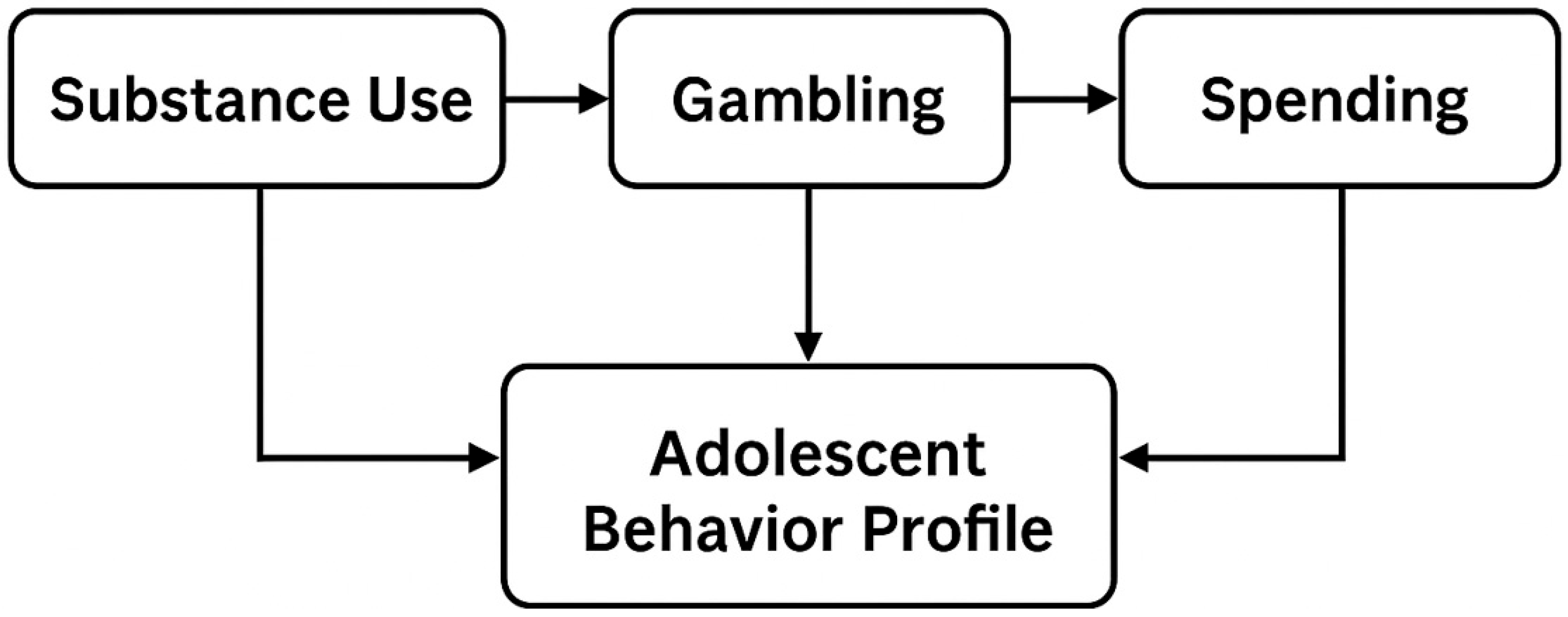
Figure 2.
Integrated Risk Profile: Gendered Associations Between Adolescent Gambling Behaviors, Substance Use, and Expenditure Patterns.
Figure 2.
Integrated Risk Profile: Gendered Associations Between Adolescent Gambling Behaviors, Substance Use, and Expenditure Patterns.
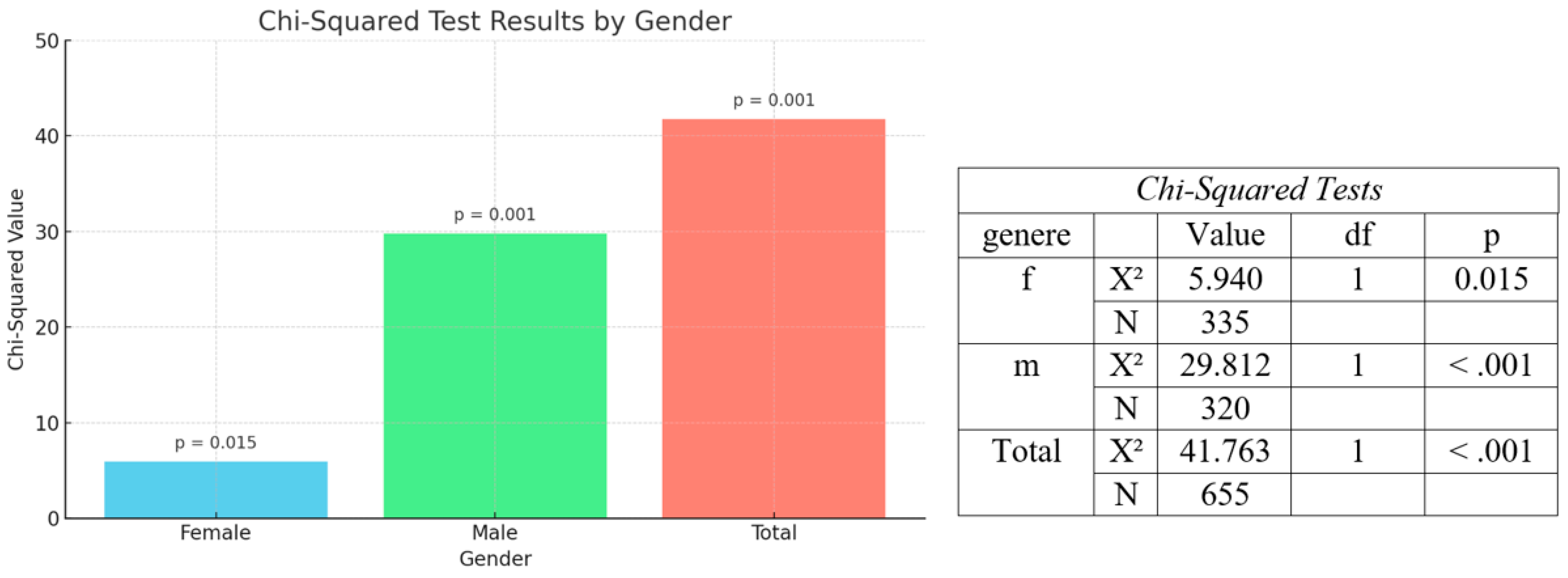
Figure 3.
Gender-Based Chi-Square Analysis of the Association Between Gambling and Substance Use Among Adolescents.
Figure 3.
Gender-Based Chi-Square Analysis of the Association Between Gambling and Substance Use Among Adolescents.
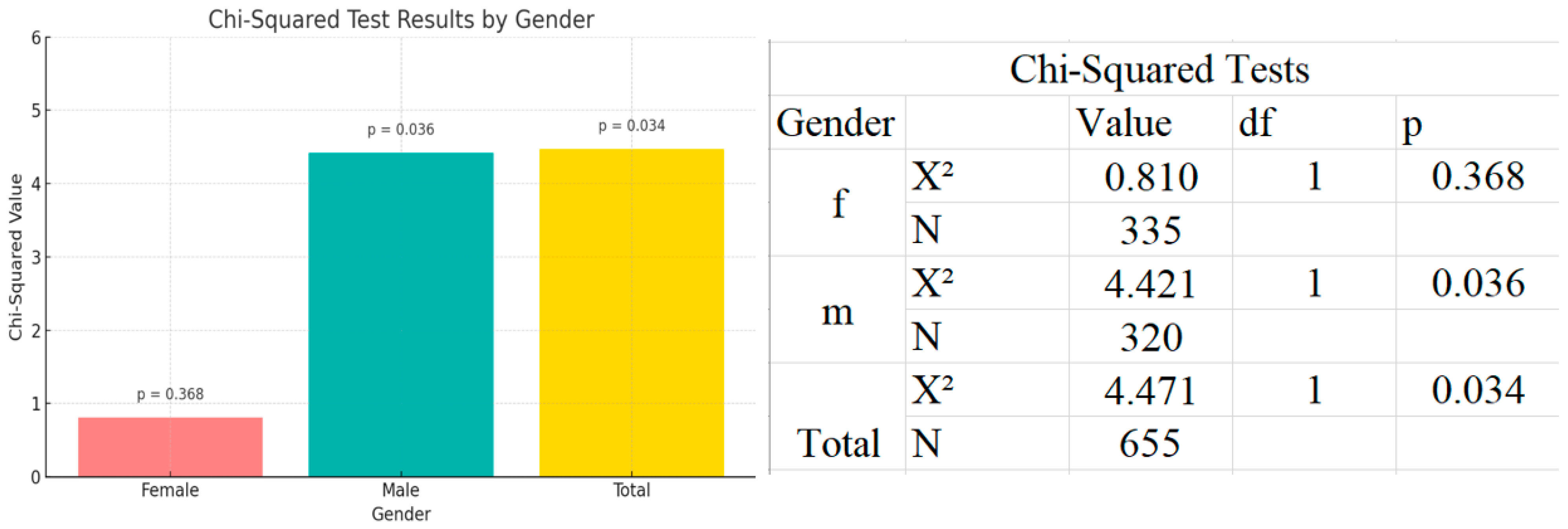
Figure 4.
Conceptual Framework for Multilevel Adolescent Risk Policy: Integrating Gambling and Substance Use Prevention.
Figure 4.
Conceptual Framework for Multilevel Adolescent Risk Policy: Integrating Gambling and Substance Use Prevention.
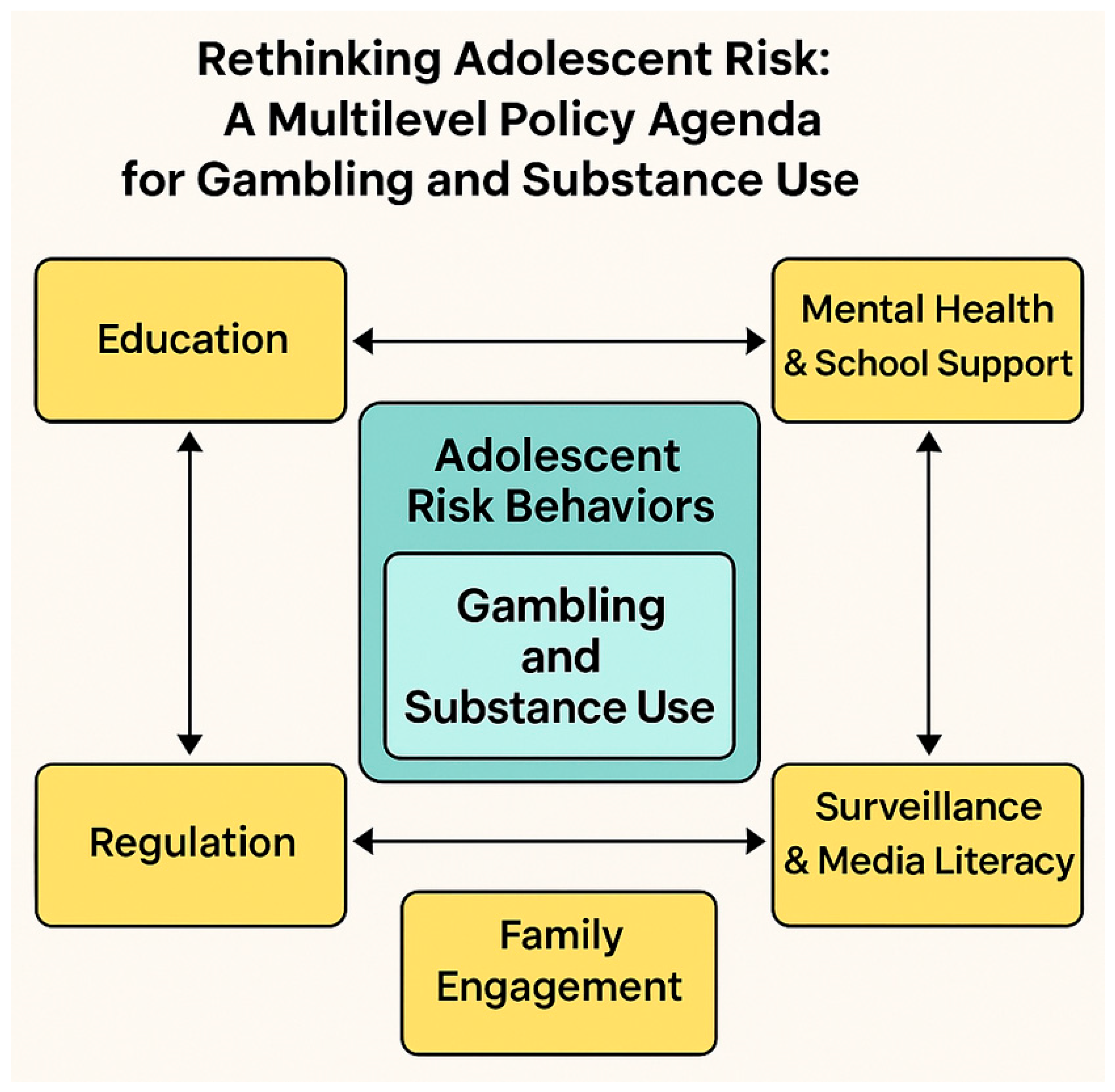

Table 1.
Literature review.
| Macro-Theme | Authors & Year | Methodology | Key Findings | Relation to Our Study |
| Impulsivity & Personality Factors | Akinwale et al. (2024); Elchin (2024); Novruzova (2024); Efrati & Spada (2023); Chiorri et al. (2023) | Cross-sectional; Prospective; Psychometric scales | Impulsivity, maladaptive schemas, and poor attentional control are significant predictors of gambling and substance use. | Confirms that impulsivity may underlie the observed co-occurrence of gambling and substance use in our adolescent sample. Suggests need to integrate personality assessment. |
| Co-occurrence of Gambling & Substance Use | Anyanwu et al. (2023); McPhail et al. (2025); Armoon et al. (2023); Azevedo et al. (2023); File et al. (2023) | Surveys; Meta-analysis; Network analysis | High prevalence of dual engagement in gambling and substance use, especially among youth. | Validates the core correlation in our study between betting/slots and substance use; supports behavioral clustering hypothesis. |
| Gender Differences & Risk Profiles | Buja et al. (2022); Baslam et al. (2025); Denoth et al. (2022); Niskier et al. (2024) | Epidemiological; Survey-based | Males show higher engagement in risky behaviors; females show different behavioral profiles. | Supports our gender-disaggregated analysis: male adolescents showed stronger statistical association between gambling and substance use. |
| Environmental & Social Determinants | Recio-Vivas et al. (2025); Silva et al. (2025); Novak et al. (2023); Forero (2024) | Cross-sectional; National datasets | Socioeconomic conditions, parental education, school attachment, and community norms affect gambling and substance use. | Reinforces our policy recommendation for integrated school and community-based prevention strategies. These factors should be considered in future data collection. |
| Digital Engagement & Online Risk | Gibson et al. (2022); de Freitas et al. (2022); Chukwuemeka et al. (2024); Gan et al. (2024); Vessey et al. (2023) | Systematic review; Mixed methods; Survey | Online gambling and digital media exposure correlate with increased risk, especially when combined with stress, family dysfunction, or peer influence. | Contrasts with our finding that online gaming showed no significant correlation with substance use; future work should consider stress and digital habits as moderators. |
| Family & Peer Influence | Miller et al. (2021); Wu et al. (2024); Bozhar et al. (2024); Saladino et al. (2021); Macía et al. (2022) | Cross-sectional; Longitudinal; Review | Dysfunctional family dynamics, peer delinquency, and loose parental supervision amplify risky behaviors. | Supports our hypothesis that contextual vulnerabilities contribute to co-occurring risk behavior; future data collection should incorporate family/peer variables. |
| Mental Health, Emotional Dysregulation & Coping | Diaz-Moreno et al. (2024); Maksymova et al. (2024); Gürbüzer & Gürcan-Yıldırım (2025); Etxaburu et al. (2024) | Mixed methods; Clinical scales | Emotional dysregulation and anxiety are often root causes of addictive behaviors; emotional dependence exacerbates risk. | Aligns with our interpretation that gambling, particularly slot machine use, may serve a self-regulatory or escapist function among adolescents. |
| Preventive Strategies & Protective Factors | Moreira et al. (2024); Griffiths & Calado (2022); Boson et al. (2024); Li et al. (2022); Chernick et al. (2025) | Systematic review; Observational studies | Prevention requires multi-level intervention: personal, social, institutional. Religion, mindfulness, and school bonding act as protective factors. | Supports our recommendation for integrated and gender-sensitive prevention, and reveals areas (e.g., religiosity, mindfulness) underexplored in our design. |
Table 2.
Frequency Distribution of Adolescent Monthly Gambling Spend Across Spending Tiers.
| Spending Class (€) | Class Midpoint (€) | Absolute Frequency |
| Less than 10 | 7.5 | 272 |
| 10–50 | 30 | 61 |
| 50–100 | 75 | 12 |
| More than 100 | 125 | 2 |
Table 3.
Descriptive Statistics of Monthly Gambling Expenditure Among Adolescents.
| Statistic | Value |
| Mean | 14.67 |
| Standard Error | 0.90 |
| Median | 7.5 |
| Mode | 7.5 |
| Standard Deviation | 16.69 |
| Sample Variance | 278.40 |
| Kurtosis | 14.57 |
| Skewness | 3.44 |
| Range | 117.5 |
| Minimum | 7.5 |
| Maximum | 125 |
Table 4.
Cross-Tabulation of Gambling and Substance Use by Gender Among Adolescents.
| Gender | Gambling | Did Not Use Substances | Used Substances | Total |
| f | FALSE | 253 | 60 | 313 |
| TRUE | 13 | 9 | 22 | |
| Total | 266 | 69 | 335 | |
| m | FALSE | 175 | 38 | 213 |
| TRUE | 57 | 50 | 107 | |
| Total | 232 | 88 | 320 | |
| Total | FALSE | 428 | 98 | 526 |
| TRUE | 70 | 59 | 129 | |
| Total | 498 | 157 | 655 |
Table 5.
Comparative Odds of Substance Use Among Adolescent Gamblers by Gender.
| Gender | Test Type | Log Odds Ratio | 95% CI Lower | 95% CI Upper | p-value |
| Female | Odds Ratio | 1.071 | 0.176 | 1.967 | — |
| Fisher's Exact Test | 1.067 | 0.044 | 2.048 | 0.025 | |
| Male | Odds Ratio | 1.396 | 0.879 | 1.913 | — |
| Fisher's Exact Test | 1.391 | 0.846 | 1.946 | < .001 | |
| Total | Odds Ratio | 1.303 | 0.893 | 1.713 | — |
| Fisher's Exact Test | 1.301 | 0.870 | 1.732 | < .001 |
Table 6.
Association Between “Scratch and Win” Gambling and Substance Use Among Adolescents by Gender.
Table 6.
Association Between “Scratch and Win” Gambling and Substance Use Among Adolescents by Gender.
| Contingency Tables | ||||
| Consumed narcotic substances | ||||
| Gender | Scratch and win | FALSE | TRUE | Total |
| f | FALSE | 192 | 46 | 238 |
| TRUE | 74 | 23 | 97 | |
| Total | 266 | 69 | 335 | |
| m | FALSE | 175 | 56 | 231 |
| TRUE | 57 | 32 | 89 | |
| Total | 232 | 88 | 320 | |
| Total | FALSE | 367 | 102 | 469 |
| TRUE | 131 | 55 | 186 | |
| Total | 498 | 157 | 655 | |
| Note. Each cell displays the observed counts | ||||
Table 7.
Gender-Stratified Log Odds Ratios and Statistical Significance of Gambling–Substance Use Association.
Table 7.
Gender-Stratified Log Odds Ratios and Statistical Significance of Gambling–Substance Use Association.
| Log Odds Ratio | |||||
| 95% Confidence Intervals | |||||
| Gender | Log Odds Ratio | Lower | Upper | p | |
| f | Odds ratio | 0.260 | -0.308 | 0.828 | |
| Fisher's exact test | 0.260 | -0.359 | 0.859 | 0.375 | |
| m | Odds ratio | 0.562 | 0.035 | 1.089 | |
| Fisher's exact test | 0.560 | -0.005 | 1.119 | 0.050 | |
| Total | Odds ratio | 0.413 | 0.029 | 0.796 | |
| Fisher's exact test | 0.412 | 0.007 | 0.812 | 0.042 | |
Table 8.
Cross-Tabulation of Online Gaming and Substance Use by Gender.
| Gender | Online Games | Did Not Use Substances | Used Substances | Total |
| Female | FALSE | 194 | 55 | 249 |
| TRUE | 72 | 14 | 86 | |
| Total | 266 | 69 | 335 | |
| Male | FALSE | 146 | 48 | 194 |
| TRUE | 86 | 40 | 126 | |
| Total | 232 | 88 | 320 | |
| Total | FALSE | 340 | 103 | 443 |
| TRUE | 158 | 54 | 212 | |
| Total | 498 | 157 | 655 |
Table 9.
Gender-Stratified Log Odds Ratios and Significance Tests for Online Gaming and Substance Use Among Adolescents.
Table 9.
Gender-Stratified Log Odds Ratios and Significance Tests for Online Gaming and Substance Use Among Adolescents.
| Gender | Test Type | Log Odds Ratio | 95% CI Lower | 95% CI Upper | p-value |
| Female | Odds Ratio | -0.377 | -1.023 | 0.269 | — |
| Fisher's Exact Test | -0.376 | -1.104 | 0.297 | 0.282 | |
| Male | Odds Ratio | 0.347 | -0.150 | 0.844 | — |
| Fisher's Exact Test | 0.346 | -0.183 | 0.873 | 0.200 | |
| Total | Odds Ratio | 0.121 | -0.259 | 0.500 | — |
| Fisher's Exact Test | 0.120 | -0.281 | 0.515 | 0.558 |
Table 10.
Gender-Disaggregated Association Between Slot Machine Gambling and Substance Use Among Adolescents.
Table 10.
Gender-Disaggregated Association Between Slot Machine Gambling and Substance Use Among Adolescents.
| Gender | Slot Machine Use | Did Not Use Substances | Used Substances | Total |
| Female | FALSE | 264 | 65 | 329 |
| TRUE | 2 | 4 | 6 | |
| Total | 266 | 69 | 335 | |
| Male | FALSE | 223 | 77 | 300 |
| TRUE | 9 | 11 | 20 | |
| Total | 232 | 88 | 320 | |
| Total | FALSE | 487 | 142 | 629 |
| TRUE | 11 | 15 | 26 | |
| Total | 498 | 157 | 655 |
Table 11.
Gender-Based Association Between Slot Machine Gambling and Substance Use Among Adolescents.
Table 11.
Gender-Based Association Between Slot Machine Gambling and Substance Use Among Adolescents.
| Gender | Slot Machine Use | Did Not Use Substances | Used Substances | Total |
| Female | FALSE | 264 | 65 | 329 |
| TRUE | 2 | 4 | 6 | |
| Total | 266 | 69 | 335 | |
| Male | FALSE | 223 | 77 | 300 |
| TRUE | 9 | 11 | 20 | |
| Total | 232 | 88 | 320 | |
| Total | FALSE | 487 | 142 | 629 |
| TRUE | 11 | 15 | 26 | |
| Total | 498 | 157 | 655 |
Table 12.
Chi-Squared Test Results: Association Between Slot Machine Gambling and Substance Use Among Adolescents by Gender.
Table 12.
Chi-Squared Test Results: Association Between Slot Machine Gambling and Substance Use Among Adolescents by Gender.
| Gender | χ² Value | Degrees of Freedom (df) | p-value | Sample Size (N) |
| Female | 7.928 | 1 | 0.005 | 335 |
| Male | 8.092 | 1 | 0.004 | 320 |
| Total | 16.895 | 1 | < 0.001 | 655 |
Table 13.
Log Odds Ratios and Fisher’s Exact Test of Slot Machine Gambling and Substance Use by Gender.
Table 13.
Log Odds Ratios and Fisher’s Exact Test of Slot Machine Gambling and Substance Use by Gender.
| Gender | Test Type | Log Odds Ratio | 95% CI Lower | 95% CI Upper | p-value |
| Female | Odds Ratio | 2.095 | 0.376 | 3.814 | — |
| Fisher's Exact Test | 2.086 | 0.119 | 4.510 | 0.018 | |
| Male | Odds Ratio | 1.264 | 0.346 | 2.182 | — |
| Fisher's Exact Test | 1.259 | 0.241 | 2.305 | 0.008 | |
| Total | Odds Ratio | 1.543 | 0.742 | 2.343 | — |
| Fisher's Exact Test | 1.540 | 0.669 | 2.442 | < .001 |
Disclaimer/Publisher’s Note: The statements, opinions and data contained in all publications are solely those of the individual author(s) and contributor(s) and not of MDPI and/or the editor(s). MDPI and/or the editor(s) disclaim responsibility for any injury to people or property resulting from any ideas, methods, instructions or products referred to in the content. |
© 2025 by the authors. Licensee MDPI, Basel, Switzerland. This article is an open access article distributed under the terms and conditions of the Creative Commons Attribution (CC BY) license (http://creativecommons.org/licenses/by/4.0/).
Copyright: This open access article is published under a Creative Commons CC BY 4.0 license, which permit the free download, distribution, and reuse, provided that the author and preprint are cited in any reuse.


