

Submitted:
24 June 2025
Posted:
24 June 2025
You are already at the latest version
Abstract
This study presents a bibliometric analysis of the literature on sustainability in higher education, supported by a bibliometric analysis of 270 publications indexed in the Web of Science and published between 2014 and 2024. This research used RStudio software, through the Bibliometrix package, for data processing and analysis, aiming to characterize trends, gaps, and main scientific contributions in this field of research and identify the most influential authors, themes, and publications. This approach facilitated the analysis of the main scientific journals, the productivity of authors over time, collaborations between institutions and countries, and the most relevant keywords within the scope of sustainable institutions. The analysis of the results made it possible to identify four main thematic areas, organized into two major axes: one focused on the educational and psychological dimensions of sustainability, and the other focused on the contextual and systemic factors that shape education for sustainability. The results inform a comprehensive picture of current trends, existing gaps, and future lines of research, contributing to the deepening of knowledge regarding integrating sustainability in higher education.
Keywords:
education
; higher education institutions
; sustainable development
; sustainability
; systemic factors
1. Introduction
The demand for sustainable development in contemporary society has grown, driven by various institutional levels that seek to align with global interests and challenges [1]. Thus, this topic has become increasingly important in global discussions, covering its three fundamental pillars of sustainability transversally social, economic, and environmental [2]. Given what has been said, higher education institutions (HEIs) play a crucial role in this transformation [3,4,5]. In this context, the Sustainable Development Goals (SDGs), particularly SDG 4, which promotes "Inclusive and equitable quality education, and the promotion of lifelong learning opportunities for all", emphasize the importance of training citizens capable of facing current and future challenges and encouraging educational models that foster civic responsibility [6,7,8,9].
By aligning themselves with SDG 4, HEIs place themselves at the center of change initiatives aimed at reducing environmental impact and altering social and economic structures. Specifically, this involves the inclusion of educational programs focused on sustainability, effective management of resources, and incorporation of sustainability into their functions [10,11]. Furthermore, there is widespread academic consensus on the importance of studying sustainability in higher education [12,13]. Additionally, the scientific literature also indicates that the results obtained in these studies can serve as important indicators for identifying areas for improvement, especially with respect to interdisciplinary and transdisciplinary interactions [1,14]
Sustainability in higher education should not be seen only as an educational practice but also as a constant process that enables the sustainable development of knowledge in different disciplinary contexts [7,15]. This study aims to identify and analyze the lines of research on sustainability in the scientific literature, as well as their trends, relevance, and impact. Additionally, we seek to identify the themes that integrate sustainability into students' perceptions and all the structural and organizational dimensions of higher education. For this purpose, a bibliometric analysis of the bibliographic content published between 2014 and 2024 available in the Web of Science (WoS) database was performed.
The adopted methodology facilitates the integration of results from several studies, so patterns, trends and gaps in a specific research field can be identified [16,17] Documents were obtained from the WoS database using a set of keywords referred to in the previous literature, namely, the studies by [18,19,20], to illustrate the idea of sustainability in the educational field and to represent global actions in education. Specifically, the keywords selected were “Education for Sustainable Development,” “Higher Education Institutions,” “Sustainability Perception,” “Sustainable Development Perception,” “Students Sustainability Knowledge” and “Sustainable Students.” The systematic review was conducted using RStudio software, following the recommendations of [21,22].
The results obtained in the first analysis were consistent with those of previous studies, e.g., [1,8,10,18,23], reflecting the growing trend of the role of HEIs in promoting content related to sustainable development. Additionally, this trend is substantially concentrated in a group of countries and is practically irrelevant in developing countries. However, one of the main contributions of this research lies in the identification of four major thematic axes, which are later aggregated into two major analytical groups that provide an integrated interpretation of sustainability in higher education. This framework provides an empirical basis that can guide educational policies and institutional decisions, particularly in developing countries.
This article is structured as follows. Next, the materials and methods used are presented, detailing the questions and the research strategy adopted. The third section focuses on the results obtained, presenting the first impressions of their analysis. The fourth section is dedicated to the discussion of the results. Finally, in the conclusions, the main lines of force of the article are presented, as well as its limitations and future directions..
2. Materials and Methods
2.1. Framework of the Research Methods
This study employed a bibliometric literature approach to evaluate trends in scientific publications on sustainability in higher education. This strategy is notable because it facilitates the analysis of a large set of data and its evolution over time. Thus, the characteristics identified in Table 1, in addition to their proven relevance in similar studies previously conducted, e.g., [21,24,25,26], were the main reasons for the choice of this approach. Moreover, it is important to emphasize the need for a systematic review to assess collaboration between academics and identify trends and research opportunities [26,27]. For the present study, an analysis of publications related to the subject under study was performed in the WoS database between 2014 and 2024. For the qualitative and quantitative analysis of the extracted data, RStudio 4.2.2, the Bibliometrix package was used. The choice of this tool was based on its ability, previously demonstrated, in the analysis of this type of data [21,22].
Although bibliometric analysis does not involve a detailed analysis of the substantial results of a study, it can offer a different research perspective. More specifically, it facilitates not only in-depth analyses of publications that summarize the trends, composition, and intellectual structure of a knowledge base [11] but also the identification of links between articles and the identification of domains on the basis of shares, including keywords, co-authorship, and bibliometric links [21]. Thus, within the scope of the present investigation, it is particularly effective in finding answers to the following questions:
RQ. 1 — What trend has been researched in terms of the perceptions of higher education students concerning sustainable development over the years?
RQ. 2 — What are the main sources and most relevant authors in this area of study?
RQ. 3 — What types of studies are most relevant in this field?
RQ. 4—Which countries lead research in this field of research?
RQ. 5 — What are the most used keywords?
Authors such as Almeida [16] and Mora et al. [29] have emphasized the importance of considering steps such as data acquisition, performance analysis, scientific mapping, and visualization as a recommendation of good practices in bibliometric analysis. Thus, for the purpose of the present investigation, the objectives of mapping different methods of analysis, such as trends, selection criteria, and keywords, are in line with the following studies e.g., [30,31].
2.2. Identification, Selection and Collection of Data
To ensure the relevance and robustness of the bibliometric analysis, Figure 1 presents a flowchart summarizing the data collection protocol, including the inclusion and exclusion criteria applied in the selection of relevant studies for analysis. The bibliometric analysis was performed using the WoS platform, which is widely recognized for its quality, reliability, and rigor in the indexing of scientific publications; this guarantees the methodological robustness and scientific relevance of the selected sample [24,32].
The period of analysis from 2014 to 2024 was defined on the basis of the intensification of the academic debate on sustainability in higher education, especially after the definition of the SDGs under the United Nations 2030 Agenda and the signing of the Paris Agreement in 2015. By including works from 2014, we were able to capture publications that preceded or influenced this new global framework, providing a more comprehensive view of the evolution of the subject over time, and 2024 was an option by the authors to include the last complete calendar year.
Authors such as Hallinger and Kovačević [33], Fellnhofer [34] and Djeki, et al., [35], among others, crucially analysed guidelines that helped in the selection of studies, which made it possible to carefully identify the most relevant studies on students' perception of sustainability, ensuring a solid empirical basis for the analysis of trends, patterns and voids in the scientific literature. This process ensured the application of strict inclusion and exclusion criteria, in addition to allowing effective visualization of the research patterns present in the literature.
The WoS survey was conducted in four stages. In the first stage, according to the protocol shown in Figure 1, without applying filters, 1,223 results were obtained by combining the keywords “Education for Sustainable Development,” “Higher Education Institutions,” “Sustainability Perception,” “Sustainable Development Perception,” “Students Sustainability Knowledge” and “Sustainable Students.” In this first stage, it was assumed that the keywords were used by the authors in the title, abstract, and keywords. The criteria were subsequently redefined, with a focus on articles or review articles published in English in the last 11 years (2014-2024), by the publishers MDPI, Elsevier, Springer Nature, Emerald Group Publishing, Taylor & Francis, and Frontiers Media Sa. From this analysis, 669 articles were retrieved. Finally, in the third stage, topics considered not relevant to the present study were eliminated, i.e., all those topics that did not meet the SDG criterion 4 (quality education). This subtraction resulted in a final sample of 270 publications. After the results were exported, the data were analyzed and discussed in the 5th stage. The results were analyzed qualitatively through the analysis of keywords and emerging themes, and quantitatively through the measurement of the productivity and impact of the articles. This methodological combination aimed to identify the main trends and scientific contributions, offering an overview of the subject under study [36].
3. Results
This section aims to present and examine the research findings, providing answers to the questions presented above. The systematization of the data facilitates the identification of the changes observed over time, with a special focus on categories such as the number of publications, geographical evolution, and scientific mapping, offering a clear view of the evolution and conclusions of the study area.
3.1. Descriptive Statistics
The scientific literature mapping study was based on a combination of descriptive statistics, citation analysis, and networks obtained through quantitative data analysis via R Studio software. The employed bibliometrix package, version 4.3.3, is designed for quantitative bibliometric research and allows for the scientific mapping of bibliographic data imported from WoS [22].
The descriptive statistical analysis presented in Table 2 shows that the final sample for analysis consists of 270 research studies, covering a period of 11 years (2014-2024). They were prepared by 717 researchers and were published in 61 different publications. In terms of collaboration, 9.25% of the studies were performed under a single authorship regime, whereas 19.83% of the studies involved international collaboration. The calculation of the co-authorship index per article is determined by the average number of co-authors per article, which in this case is 3.24, suggesting a preference for joint studies over individual studies.
3.2. Analysis of Results
3.2.1. Research Trends
As shown in Figure 2, a growing trend is noticeable in annual publications between 2014 and 2022, with a total of 61 publications registered in that year. In 2023, a reversal of this pattern was observed, with 45 publications, followed by 59 publications in 2024. However, this pattern is not accompanied by the number of citations, which has been increasing continuously, reflecting the growing relevance of this topic in the academic context. This analysis allows us to answer the first research question (RQ. 1 — What trend has been researched in terms of the perceptions of higher education students concerning sustainable development over the years?), and it is evident that, in general, the trend of research over the years is increasing.
3.2.2. Sources
After the presentation and analysis of the publication and citation trends, the most relevant journals were evaluated, considering the h-index and g-index, as well as the number of publications and citations obtained. The same journals are also analyzed by the total number of citations (TCs), by the number of publications (NP), and by the year of publication of the first work on the subject (PY). The fifteen most relevant journals, among the 61 published studies on this topic, are presented in Table 3.
The journal with the greatest number of publications and the greatest relevance is "Sustainability", which, between 2015 and 2024, published a total of 123 studies, with 1373 citations, an h-index of 17, and a g-index of 31. In second place is "Environmental Education Research", which published its first work in this field of investigation in 2017, presenting an h-index of 7, g-indices of 12 and 13 published works. The group of journals that represent 16% of the total sample and 66% of Table 3, all with an h-index of 2, deserves mention. This group includes, for example, "Cogent Business & Management", "Education and Information Technologies," and "Journal of Cleaner Production."
3.2.3. Authors
Table 4 reflects the impact of the authors' publications on the basis of the indicators of the h-index, g-index, total number of citations (TC), number of publications (NP) and year of scientific production start ( PY_start). Here, we can observe the most relevant authors and influence our subject of study.
Of the fifteen authors analyzed, Gericke M. is the one with the highest h-index of 5. With consolidated production since 2014, which implies 11 years of research in this field, this author has accumulated 267 citations and 5 publications, reflecting a significant and recognized contribution. This is followed by a group of 4 authors with an h-index of 3, representing 33% of the total number of authors analyzed. With the beginning of scientific activity between 2019 and 2022, these authors have between 3 and 26 citations, indicating a growing impact in the area. The average number of publications varies between 3 and 5, suggesting that its scientific production is still expanding.
The authors with an h-index of 2 represented 61% of those analyzed. With the number of citations varying between 8 and 82 and the number of publications ranging from 2 to 5, they correspond to a more recent production. The majority of the scientific activity of these authors in the field of sustainability began in 2019. Thus, we conclude that there has been a dynamic and diversified evolution in the field, with a balance between established authors and new researchers. This contributes to the continuous advancement of knowledge about sustainability. This analysis, together with that of subsection 3.2.2, allows us to answer RQ. 2 — What are the main sources and most relevant authors in this area of study?
3.2.4. Main Works and Relevance
Table 5 shows the fifteen most relevant studies in the field of investigation of the present study. Their analysis is indicative and essential for understanding the evolution of knowledge, identifying gaps in the literature, and defining future lines of investigation. The methodology adopted consisted of a summary analysis of the top ten articles, with the number of citations as the evaluation criterion, in particular, more than 50 citations.
A study by Lee et al. [37] revealed that students express a high degree of concern about environmental issues. However, the authors show that this concern does not always translate into sustainable behaviors, suggesting the need for greater integration of sustainable practices in academic activities.
In their study on this topic, Olsson et al. [38] focused on the influence of environmental education on the formation of students’ sustainable awareness. The authors' conclusions show that well-structured curricula, with an integrated approach to sustainability, increase students' predisposition to adopt responsible environmental practices. Al-Kumaim et al. [7] studied the impact of university initiatives on the formation of students’ sustainable mindset. In line with [38], the authors emphasize that universities that integrate ecological practices into their operations and academic programs encourage students to apply these concepts in their personal lives and careers in the future.
In their investigation, Kamenidou et al. [39] assessed students’ degree of knowledge about sustainability and how this perception varies across different study areas. The results indicate that students in courses related to the environmental sciences have a greater level of ecological awareness than do students in management or engineering courses. In the study by Al-Naqbi and Alshannag [19], the relationship between student participation in sustainability programs and their predisposition towards environmental practices in the future was explored. The authors suggest that a practical and participatory approach may be more effective than the simple theoretical transmission of knowledge.
As demonstrated by Ahamad et al. [40], with research focusing on the relationship between students’ perceptions and sustainable consumption, although many students recognize the importance of sustainability, there are still challenges in translating this attitude into more sustainable behaviors. Accordingly, Berglund et al. [41] address the role of pedagogical methodologies in teaching sustainability. These authors concluded that interdisciplinary approaches and active teaching practices significantly increase students' interest in the subject. In agreement with the previous author, the study by Rajapaksa et al. [42], when analyzing the factors that influence the sustainable behaviour of university students, concluded that the existence of sustainable infrastructure in institutions has a direct effect on the adoption of ecological practices by students. In line with this line of investigation, Sarmiento and El Hanandeh [43] explored the relationship between institutional commitment to sustainability and student motivation. The results obtained showed that HEIs that adopt clear sustainability policies register more significant involvement and commitment on the part of students in sustainable practices. Finally, Wamsler [3] focused on changes in students’ perceptions over time. The results obtained indicate that students are more aware of environmental challenges; however, there are still gaps in the practical application of this knowledge. This gap underlines the need for curriculum reform, the adoption of more effective institutional strategies and the promotion of the active involvement of students in sustainable initiatives.
Thus, when the lines of investigation and conclusions of previous studies are compared, three major themes emerge. First, with respect to the relationship between knowledge and sustainable behavior, most studies highlight that, despite growing environmental awareness among university students, this perception is not always translated into concrete actions. Second, regarding the role of educational institutions in promoting sustainability, the articles analyzed here show that universities play a key role in the formation of a sustainable mindset among students. Finally, regarding the importance of active and interdisciplinary pedagogical approaches, the effectiveness of active methodologies, such as interdisciplinary teaching, project-based learning and practical experiences, is widely recognized in the literature.
Question RQ3—What types of studies are most relevant in the field of investigation? — finds the answer in this subsection.
3.2.5. Geographic Distribution
Figure 3 illustrates the scientific collaborations, presenting two main categories: publications from a single country (SCP - single country publications) and collaborative publications between multiple countries (MCP - multiple country publications). China stands out as the country with the largest number of publications, with the majority being SCP. However, despite this indicator suggesting predominantly domestic scientific production, China also has the highest MCP. Among the ten countries with the largest number of publications, five are from Europe, with Spain presenting the largest production in this field, and three countries from Asia, North America, and Oceania complete the group with one country each. Figure 4 shows the absence of any African country.
The preponderance of national scientific production in countries such as China can be attributed to policies to encourage local research. Nevertheless, it is important to note that international collaboration plays a crucial role in the exchange of knowledge, cultures, and methodologies, driving innovation and promoting scientific advancement on a global scale. In this field, countries such as Spain, the United States of America, and Australia demonstrate greater integration of their researchers in collaborative networks. The strengthening of academic networks allows for a greater dissemination of knowledge, resulting in a broader and more significant scientific impact. Figure 4 illustrates scientific collaboration between countries, showing the intensity of the most productive countries through the dark blue color and the red line, which represents the connection between countries on the basis of frequency and cooperation. The predominance of one-off collaborations (lighter blue color) and the absence of correspondence with the countries identified in Figure 3 may suggest less consolidated scientific relationships
The analysis of the geographical distribution of collaborations, illustrated on the map, reveals their scope, which extends from developed economies to developing economies. Again, the low predominance of African nations in this area is noteworthy, which suggests a negligible global exchange of knowledge. On the basis of the conclusions obtained in this subsection, RQ4 is answered: Which countries lead research in this field of research?
3.2.6. Keyword Cloud
Figure 5, where the frequency of the keywords is presented, answers the research question (RQ5), which aims to identify the most used keywords. The highest trend and frequency are represented in the figure by the word size.
The frequency of the terms allows us to conclude that the central concept is education, with 48 occurrences, which highlights the importance of teaching in the investigated context. The emphasis on terms such as attitudes (19), self-efficacy (13), achievement (12) and satisfaction (12) indicates a deepening of the psychological component of learning and academic performance. Pedagogical innovation and teaching methodologies emerge as a second relevant axis, reflected in the terms model (17), perceptions (14), performance (13), and engagement (10). These concepts suggest a growing concern with the effectiveness of teaching strategies and with the need to adapt pedagogical models. The digitalization of education is also evident through the terms technology, online, and gamification (3 to 5 occurrences), indicating a trend towards the use of digital platforms and playful strategies to promote student involvement. The third axis, related to sustainability and environmental education, includes the terms climate-change (7), pro-environmental behavior, environmental-education, and green (4 to 7 occurrences). Finally, the analysis reveals concerns about social and behavioral issues, reflected in terms of gender (10), poverty, and consumer behavior (3 to 10 occurrences). These aspects suggest that the adoption of sustainability cannot be dissociated from socioeconomic factors and inequality in access to environmental education.
4. Discussion
Following previous studies e.g., [1,23], the results obtained in the last ten years identify a gradual increase in the adoption of sustainable initiatives by HEIs. Likewise, the interdisciplinary, multidisciplinary, and transdisciplinary approach to education for sustainable development has been used in some studies e.g., [8,9,18]. However, after analyzing the 270 studies resulting from the bibliometric study, we found that it is possible to classify them into two large groups: Group 1, Educational and Psychological Dimensions of Sustainability in Higher Education, and Group 2, Contextual and Systemic Factors that Shape Education for Sustainability, which are subdivided into four major thematic axes: (i) Psychological Component and Academic Performance; (ii) Pedagogical Innovation and Teaching Methods; (iii) Sustainability and Environmental Education; and (iv) Social Issues and Socioeconomic Behaviour, as detailed in Table 6.is considered satisfactory with adequate support for reliability and convergent validity [67]
The first axis, which includes studies such as those by Al-Kumaim [7], Lee et al. [37], and Rajapaksa et al. [42], suggests that, despite the recognition of the relevance of sustainability by students, this recognition does not always translate into concrete and proactive attitudes. This finding reinforces the need for pedagogical strategies that encourage students' autonomy and confidence in their capacity for sustainable action. On the other hand, the axis related to pedagogical innovation and teaching methodologies shows a growing concern with the effectiveness of educational strategies and the adaptation of traditional teaching models. In this context, investigations such as those by Olsson and Gerecke [38] and, Berglund [41] emphasize the importance of the curriculum structure and the implementation of active methodologies in the development of students' environmental awareness. Additionally, a notable focus on the digitalization of education has emerged, promoting greater student involvement through the use of digital platforms and interactive strategies [44].
Ahamad et al. [40] and Rajapaksa [41] they point out in their publications that the third axis of analysis, relative to sustainability and environmental education, reflects the growing effort to incorporate environmental issues into higher education. However, challenges persist that affect the adoption of sustainable behaviors, including issues of convenience and accessibility. The literature highlights the need for institutional policies that favor the incorporation of sustainability both in the academic curriculum and in university infrastructure [15]. Additionally, social and behavioral dynamics have a significant effect on the adoption of sustainable practices in higher education. Students’ perceptions of sustainability cannot be dissociated from socioeconomic factors, as inequalities in access to environmental education significantly affect student involvement, decisively influencing students’ sustainable attitudes and behaviors [15,45].
The analysis of the frequency of terms used in the literature reveals that the intersection between education, psychology, sustainability, and technological innovation constitutes an essential multidisciplinary approach for the promotion of education for sustainability. The studies indicate that, for higher education to have a significant impact on the training of environmentally responsible citizens, it is crucial to align curricula, teaching methodologies, and institutional policies, supported by effective strategies to promote sustainability.
Studies such as those by Olsson and Gerecke [38] and Wamsler [3] demonstrate an increase in students’ environmental awareness, although challenges remain in the transition from awareness to action. This gap highlights the need for curricular reformulation and more effective institutional strategies to encourage the active involvement of students in sustainable initiatives [41,43]. In this sense, sustainability in higher education must be manifested not only in theory but also in institutional practices, promoting an ecosystem favorable to the behavioral transformation of students [7,37].
Greater involvement of students in extracurricular activities is fundamental for the creation of a sustainable campus [3]. In this context, 19- Al-Naqbi, A.K.; Alshannag [19] and Rajapaksa et al. [42] reinforce the central role of universities in promoting sustainability. This path may involve curricular integration, such as the introduction of specific subjects and active methodologies [39]. Additionally, the implementation of infrastructure and ecological and institutional policies, such as incentives for the use of sustainable transport and recycling programs, may be crucial factors influencing students’ perceptions and sustainable practices, as mentioned previously [40].
In summary, HEIs play a central role in promoting sustainability, not only through the integration of environmental content into curricula but also through the implementation of institutional policies and infrastructure that facilitate the adoption of sustainable practices. For this transformation to be effective, a continuous commitment to pedagogical reform is essential to the active involvement of students and to the creation of an academic environment that promotes the transition from awareness to concrete action for sustainable development.
5. Conclusions
The large number of articles published on the subject under study in 2014 and 2024, with continuous growth in scientific production over the past eleven years, was interrupted only in 2023. This scenario may be associated with a decrease in investment in research between 2021 and 2022 due to restrictions imposed by confinement resulting from the COVID-19 pandemic [7,46]. The analysis revealed a high concentration of publications in the journals "Sustainability", "Environmental Education Research", and "International Journal of Sustainability in Higher Education", which stand out as the most cited, representing, together, more than 70% of the citations of the 15 journals analyzed. Additionally, it is important to note the significant impact of these publications on the h-index and g-index. Thus, its relevance in the academic context is evident. The geographical distribution of publications showed a marked asymmetry in scientific production on sustainability in higher education. According to the data analyzed, although China has the largest number of publications, especially concerning national production, European countries have a significantly greater proportion of international collaborations. Notably, reference to the contribution of developing countries, particularly African countries, to this issue is scarce.
The influence of HEIs in shaping students' perceptions and contributing to sustainable development is widely recognized. However, for this reality to materialize, it is essential that educational institutions more effectively integrate these principles into curricula [6,39,41]. This reality suggests the need for more effective pedagogical strategies to transform theoretical knowledge into sustainable behaviors. Given the limited number of partnerships, it is imperative to encourage collaboration in the academic context [47]. Specifically, the importance of these partnerships for the strengthening of multidisciplinary research and for the capacity building of developing countries needs to be emphasized, contributing to the fight against social inequalities and, in particular, to the promotion of compliance with SDG 4 [6,12,15,48].
The results that were obtained can provide guidance for public decision-makers, highlighting the need to integrate sustainable principles into academic training, as well as to outline strategies to fill the gaps identified in the research. The integration of ecological practices in curricula, infrastructure and institutional policies has a direct effect on the adoption of sustainable behaviors. These strategies increase student involvement and promote better application of sustainability concepts in academic and professional life. Additionally, guidelines are provided to researchers on where to find and publish their investigations. Additionally, four major themes—(i) the psychological component and academic performance, (ii) pedagogical innovation and teaching methodologies, (iii) sustainability and environmental education and (iv) social issues and socioeconomic behavior—are highlighted, which may be subsequently grouped into two large groups. Group 1 — Educational and Psychological Dimensions of Sustainability in Higher Education — includes topics (i) and (ii), whereas Group 2 — Contextual and Systemic Factors that Shape Education for Sustainability — includes topics (iii) and (iv). Guidelines are provided to researchers on the interrelationship and thematic contextualization around sustainability in higher education.
However, the present investigation has several limitations. First, bibliographic analysis, despite its recognition as a method for analyzing bibliographic data, allows only a summarized observation of the results of different studies. Second, WoS was used as the only database. Although this database covers a wide range of studies, it may have more limited coverage across disciplines [11]. Furthermore, it should be noted that the choice of the keyword “Higher Education Institutions” can sometimes give rise to mixed results among students in higher education and secondary education because it is applied differently in different national contexts.
Future studies should integrate other databases that allow exploration of new research trends. Furthermore, the way in which institutions — particularly HEIs in underdeveloped countries — conceptualize sustainable development should also be examined. Additionally, we suggest that studies that demonstrate local and international collaboration in all aspects of sustainability implementation should be conducted..
Author Contributions
Conceptualization, I.L., E.J and L.A.; Formal analysis, E.J. and L.A.; Investigation, I.L., E.J. and L.A.; Methodology, I.L., E.J. and L.A.; Supervision, E.J. and L.A.; Writing – original draft, I.L.; Writing – review & editing, E.J. and L.A. All authors have read and agreed to the published version of the manuscript.
Funding
This research received no external funding.
Institutional Review Board Statement
Not applicable.
Acknowledgments
The paper is derived from data collected for the first author’s thesis at University of Vigo. We would like to thank Carlos Hervés-Beloso for his support during the process, especially for his help in providing resources.
Conflicts of Interest
The authors declare no conflicts of interest.
Abbreviations
The following abbreviations are used in this manuscript:
| HEI | higher education institutions |
| SDG | Sustainable Development Goals |
| WoS | Web of Science |
References
- Wang, J.; Yang, M.; Maresova, P. Sustainable Development at Higher Education in China: A Comparative Study of Students’ Perception in Public and Private Universities. Sustainability 2020, 12, 2158. [Google Scholar] [CrossRef]
- Null, D. C.; Asirvatham, J. College students are pro-environment but lack sustainability knowledge: a study at a mid-size Midwestern US university. Int. J. Sustain. High. Educ 2023, 24(3), 660–677. [Google Scholar] [CrossRef]
- Wamsler, C. Education for sustainability: Fostering a more conscious society and transformation towards sustainability. Int. J. Sustain. High. Educ. 2020, 21, 112–13. [Google Scholar] [CrossRef]
- Ferrer-Estévez, M.; Chalmeta, R. Integrating sustainable development goals in educational institutions. Int. J. Sustain. High. Educ 2021, 19(2), 100494. [Google Scholar] [CrossRef]
- Chankseliani, M.; McCowan, T. Higher education and the Sustainable Development Goals. Alta Educ 2021, 81, 1–8. [Google Scholar] [CrossRef]
- Abo-Khalil, AG. Integrating sustainability into higher education challenges and opportunities for universities worldwide. Heliyonº2024º, Heliyon, Volume 10, Issue 9, e29946. [CrossRef]
- Al-Kumaim, N.H.; Alhazmi, A.K.; Mohammed, F.; Gazem, N.A.; Shabbir, M.S.; Fazea, Y. Exploring the Impact of the COVID-19 Pandemic on University Students’ Learning Life: An Integrated Conceptual Motivational Model for Sustainable and Healthy Online Learning. Sustainability 2021, 13, 2546. [Google Scholar] [CrossRef]
- Giesenbauer, B.; Müller-Christ, G. University 4.0: Promoting the Transformation of Higher Education Institutions toward Sustainable Development. Sustainability 2020, 12, 3371. [CrossRef]
- Acosta Castellanos, P.M.; Queiruga-Dios, A.; Hernández Encinas, A.; Acosta, L.C. Environmental Education in Environmental Engineering: Analysis of the Situation in Colombia and Latin America. Sustainability 2020, 12, 7239. [Google Scholar] [CrossRef]
- Bonilla-Jurado, D.; Zumba, E.; Lucio-Quintana, A.; Yerbabuena-Torres, C.; Ramírez-Casco, A.; Guevara, C. Advancing University Education: Exploring the Benefits of Education for Sustainable Development. Sustainability 2024, 16, 7847. [Google Scholar] [CrossRef]
- Hallinger, P.; Wang, R.; Chatpinyakoop, C.; Nguyen, V.-T.; Nguyen, U.-P. A Bibliometric Review of Research on Simulations and Serious Games Used in Educating for Sustainability, 1997–2019. J. Clean. Prod. 2020, 256, 120358. [Google Scholar] [CrossRef]
- Ruiz-Mallén, I.; Heras, M. What Sustainability? Higher Education Institutions’ Pathways to Reach the Agenda 2030 Goals. Sustainability 2020, 12, 1290. [Google Scholar] [CrossRef]
- Ruiz-Mallén, I.; Heras, M. What Sustainability? Higher Education Institutions’ Pathways to Reach the Agenda 2030 Goals. Sustainability 2020, 12, 1290. [Google Scholar] [CrossRef]
- Gorski, A.-T.; Ranf, E.-D.; Badea, D.; Halmaghi, E.-E.; Gorski, H. Education for Sustainability—Some Bibliometric Insights. Sustainability 2023, 15, 14916. [Google Scholar] [CrossRef]
- Abad-Segura, E.; González-Zamar, M.-D. Sustainable economic development in higher education institutions: a global analysis in the framework of the SDGs. J. Clean. Prodº2021,º 294, 126133. [CrossRef]
- Almeida, L. Risk and Bankruptcy Research: Mapping the State of the Art. J. Risk Financial Manag. 2023, 16, 361. [Google Scholar] [CrossRef]
- Snyder, H. Literature review as a research methodology: an overview and guidelines. J. of Bus. Res. º2019º, 104, 333-339. [CrossRef]
- Leal, S.; Nascimento, J.; Piki, A.; Tekerek, A.; Güzel, A.; Loureiro, A.; Gonçalves, C; Messias. I; Simons, J.; Teunen, L.; e outros. Exploring sustainable development perceptions among higher education students: An empirical study on knowledge, attitudes, and behaviours. Clean. Responsib. Consumpt.º2024º, 14, 100223. [CrossRef]
- Al-Naqbi, A.K.; Alshannag, Q. The status of education for sustainable development and sustainability knowledge, attitudes, and behaviors of UAE University students. Int. J. Sustain. High. Educ. º2018º, 19(3), 566-588. [CrossRef]
- Dagiliūtė, R.; Liobikienė, G.; Minelgaitė, A. Sustainability at universities: Students’ perceptions from Green and Non-Green universities. J. Clean. Prod.º2018º, 181, 473-482. [CrossRef]
- Bhattacharjee, S.; Panja, A.; Kumar, R.; Ram, H.; Meena, R. K.; Basak, N. Municipal solid waste compost: a comprehensive bibliometric data-driven review of 50 years of research and identification of future research themes. Environ. Sci. Pollut. Res. 2023, 30, 86741–86761. [Google Scholar] [CrossRef]
- Aria, M.; Cuccurullo, C. bibliometrix: An R-tool for comprehensive science mapping analysis. J. Informetr. 2017, 11, 959–975. [Google Scholar] [CrossRef]
- Alsaati, T.; El-Nakla, S.; El-Nakla, D. Level of Sustainability Awareness among University Students in the Eastern Province of Saudi Arabia. Sustainability 2020, 12, 3159. [Google Scholar] [CrossRef]
- Almeida, L.; Vieira, E. Technical Analysis, Fundamental Analysis, and Ichimoku Dynamics: A Bibliometric Analysis. Risks 2023, 11, 142. [Google Scholar] [CrossRef]
- Ellili, N.O.D. Bibliometric analysis on corporate governance topics published in the journal of Corporate Governance: The International Journal of Business in Society. Corp. Gov. 2022. [CrossRef]
- Donthu, N.; Kumar, S.; Mukherjee, D.; Pandey, N.; Lim, W.M. How to conduct a bibliometric analysis: An overview and guidelines. J. Bus. Res. 2021, 133, 285–296. [Google Scholar] [CrossRef]
- Dieguez-Santana, K.; Sarduy-Pereira, L.; Ruiz-Reyes, E.; Sablón Cossío, N. Application of the Circular Economy in Research in the Agri-Food Supply Chain: Bibliometric, Network, and Content Analysis. Sustainability 2025, 17, 1899. [Google Scholar] [CrossRef]
- Paul, J.; Lim, W. M.; O’Cass, A.; Hao, A. W.; Bresciani, S. Scientific procedures and rationales for systematic literature reviews (SPAR-4-SLR). Int J. of Consum. Studº2021 45(4), O1-O16. [CrossRef]
- Rosales, J. M.; Álava, S. Z.; Rueda, H. Y.; García, E. B. (2024, May). Qualitative and Quantitative Pathways in Educational Research: A Systematic Review. In Int. Conf. on Manag., Tour. Technolº2024, º (pp. 484-496). Cham: Springer Nature Switzerland. [CrossRef]
- Rosa, M.R.d.; Boscarioli, C.; Freitas Zara, K.R.d. "A systematic review of the trends and patterns of sustainability reporting in universities", Int. J. Sustain. High. Educ º2024º, Vol. 25 No. 3, pp. 556-576. [CrossRef]
- Varadarajan, S.; Koh, J.H.L.; Daniel, B.K. A Systematic Review of the Opportunities and Challenges of Micro-Credentials for Multiple Stakeholders: Learners, Employers, Higher Education Institutions and Government. Int. J. Educ. Technol. High. Educ. 2023, 20, 13. [Google Scholar] [CrossRef] [PubMed]
- Yan, L.; Zhiping, W. Mapping the Literature on Academic Publishing: A Bibliometric Analysis on WOS. Sage Open 2023, 13, 21582440231158562. [Google Scholar] [CrossRef]
- Hallinger, P., & Kovačević, J. (2019). A bibliometric review of research in educational administration: Mapping the scientific literature, 1960 to 2018. Educational Research Review, 89(3), 335–369. [CrossRef]
- Fellnhofer, K. Toward a Taxonomy of Entrepreneurship Education Research Literature: A Bibliometric Mapping and Visualization. Educ. Res. Rev. 2019, 27, 28–55. [Google Scholar] [CrossRef]
- Djeki, Essohanam, Jules Dégila, Carlyna Bondiombouy, and Muhtar Hanif Alhassan. 2022. E-learning bibliometric analysis from 2015 to 2020. Journal of Computers in Education 9: 727–54. [CrossRef]
- Zhao, Jing Yi, and Min Li. 2023. Worldwide trends in prediabetes from 1985 to 2022: A bibliometric analysis using bibliometrix R-tool. Frontiers in Public Health 11: 1072521. [CrossRef]
- Lee, J.; Song, H.-D.; Hong, A.J. Exploring Factors, and Indicators for Measuring Students’ Sustainable Engagement in e-Learning. Sustainability 2019, 11, 985. [Google Scholar] [CrossRef]
- Olsson, D.; Gericke, N.; Chang Rundgren, S.N. The effect of implementation of education for sustainable development in Swedish compulsory schools—Assessing pupils’ sustainability consciousness. Environ. Educ. Res. 2016, 22, 176–202. [Google Scholar] [CrossRef]
- Kamenidou, I.C.; Mamalis, S.A.; Pavlidis, S.; Bara, E.-Z.G. Segmenting the Generation Z Cohort University Students Based on Sustainable Food Consumption Behavior: A Preliminary Study. Sustainability 2019, 11, 837. [Google Scholar] [CrossRef]
- Ahamad, N.R.; Ariffin, M. Assessment of knowledge, attitude and practice towards sustainable consumption among university students in Selangor, Malaysia. Sustain. Prod. Consum. 2018, 16, 88–98. [Google Scholar] [CrossRef]
- Berglund, T.; Gericke, N.; Rundgren, S.-N.C. The implementation of education for sustainable development in Sweden: Investigating the sustainability consciousness among upper secondary students. Res. Sci. Technol. Educ. 2014, 32, 318–339. [Google Scholar] [CrossRef]
- Rajapaksa, D.; Islam, M.; Managi, S. Pro-Environmental Behavior: The Role of Public Perception in Infrastructure and the Social Factors for Sustainable Development. Sustainability 2018, 10, 937. [Google Scholar] [CrossRef]
- Sarmiento, C.V.; El Hanandeh, A. Customers’ perceptions and expectations of environmentally sustainable restaurant and the development of green index: The case of the Gold Coast, Australia. Sustain. Prod. Consum. 2018, 15, 16–24. [Google Scholar] [CrossRef]
- Yang, J.; Peng, M.Y.-P.; Wong, S.; Chong, W. How E-Learning Environmental Stimuli Influence Determinates of Learning Engagement in the Context of COVID-19? SOR Model Perspective. Front. Psychol. 2021, 12, 584976. [Google Scholar] [CrossRef] [PubMed]
- Chen, S.-Y.; Liu, S.-Y. Developing Students’ Action Competence for a Sustainable Future: A Review of Educational Research. Sustainability 2020, 12, 1374. [Google Scholar] [CrossRef]
- Crawford, J.; Cifuentes-Faura, J. Sustainability in Higher Education during the COVID-19 Pandemic: A Systematic Review. Sustainability 2022, 14, 1879. [Google Scholar] [CrossRef]
- Findler, F. Toward a sustainability assessment framework of research impacts: Contributions of a business school. Sustain. Dev. 2021, 29. [Google Scholar] [CrossRef]
- Jorge, E. Exploring the impact of population aging, population density, and GDP on municipal waste generation in European OECD Countries - When do mediation effects matter? . Soc. Sci. Humanit. Open. 2025, 11, 101432. [Google Scholar] [CrossRef]
Figure 1.
Data collection protocol. Source: authors’ elaboration.
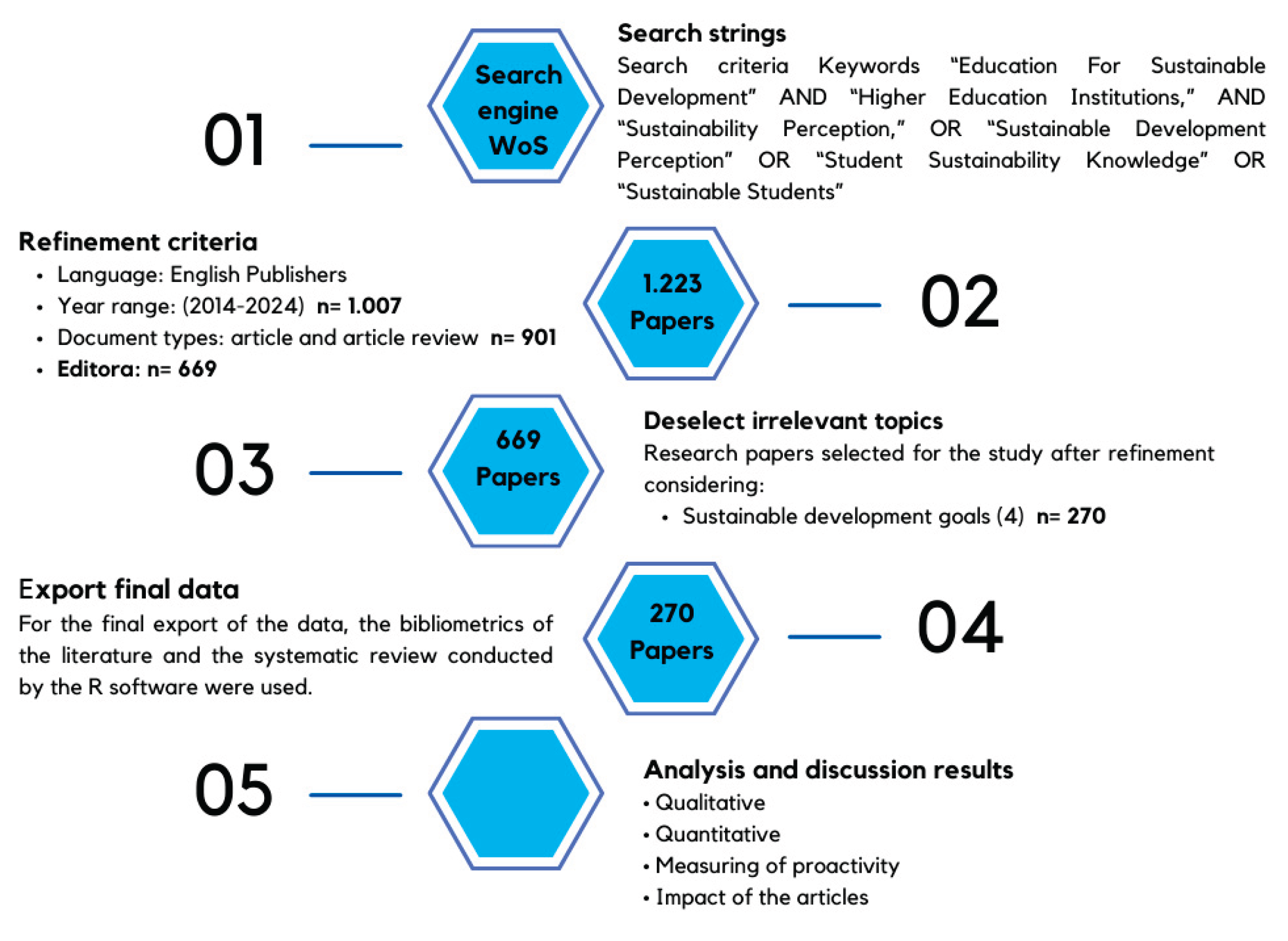
Figure 2.
Annual publications between 2014 and 2024. Source: authors’ elaboration.
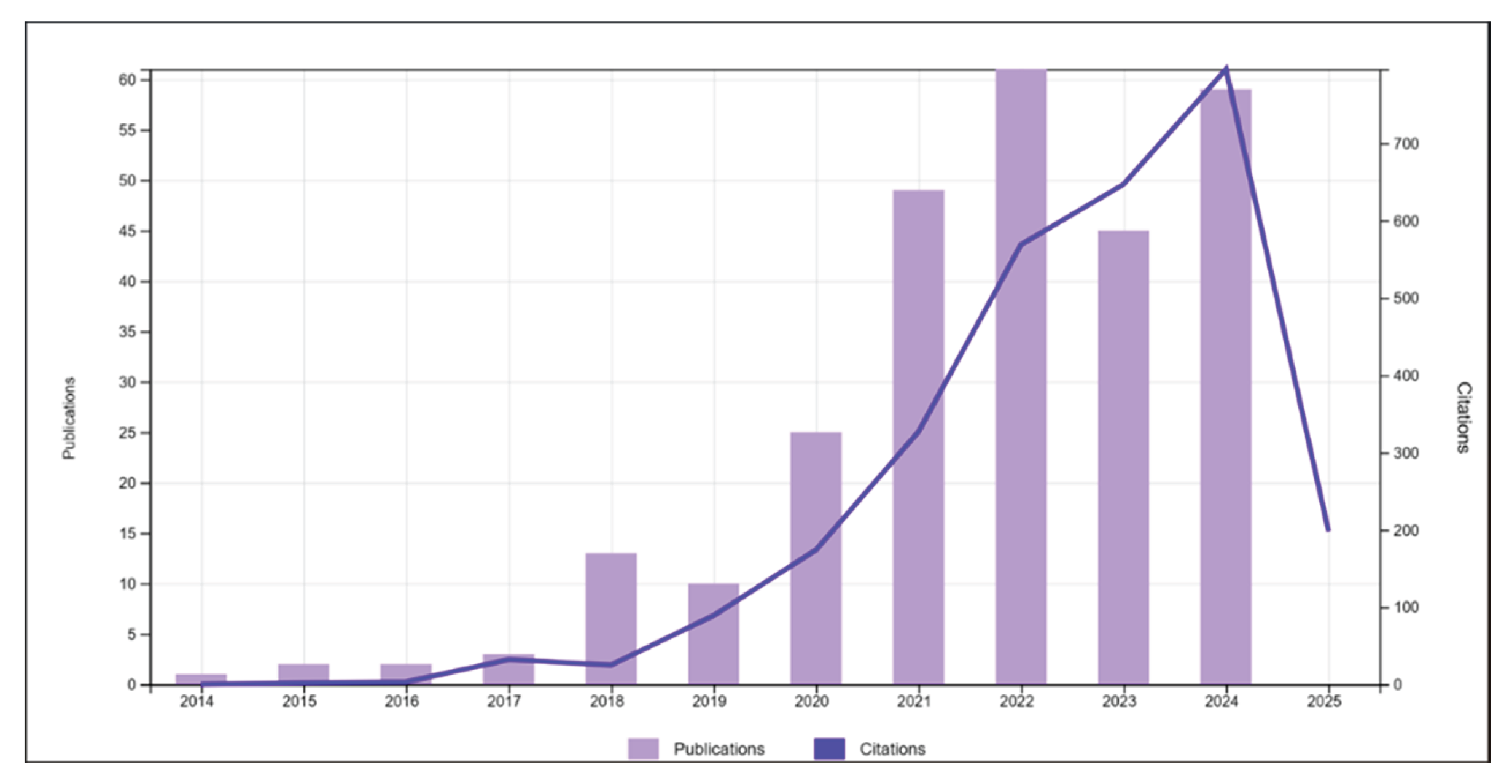
Figure 3.
Scientific collaborations. Source: authors’ elaboration using bibliometric R-studio.
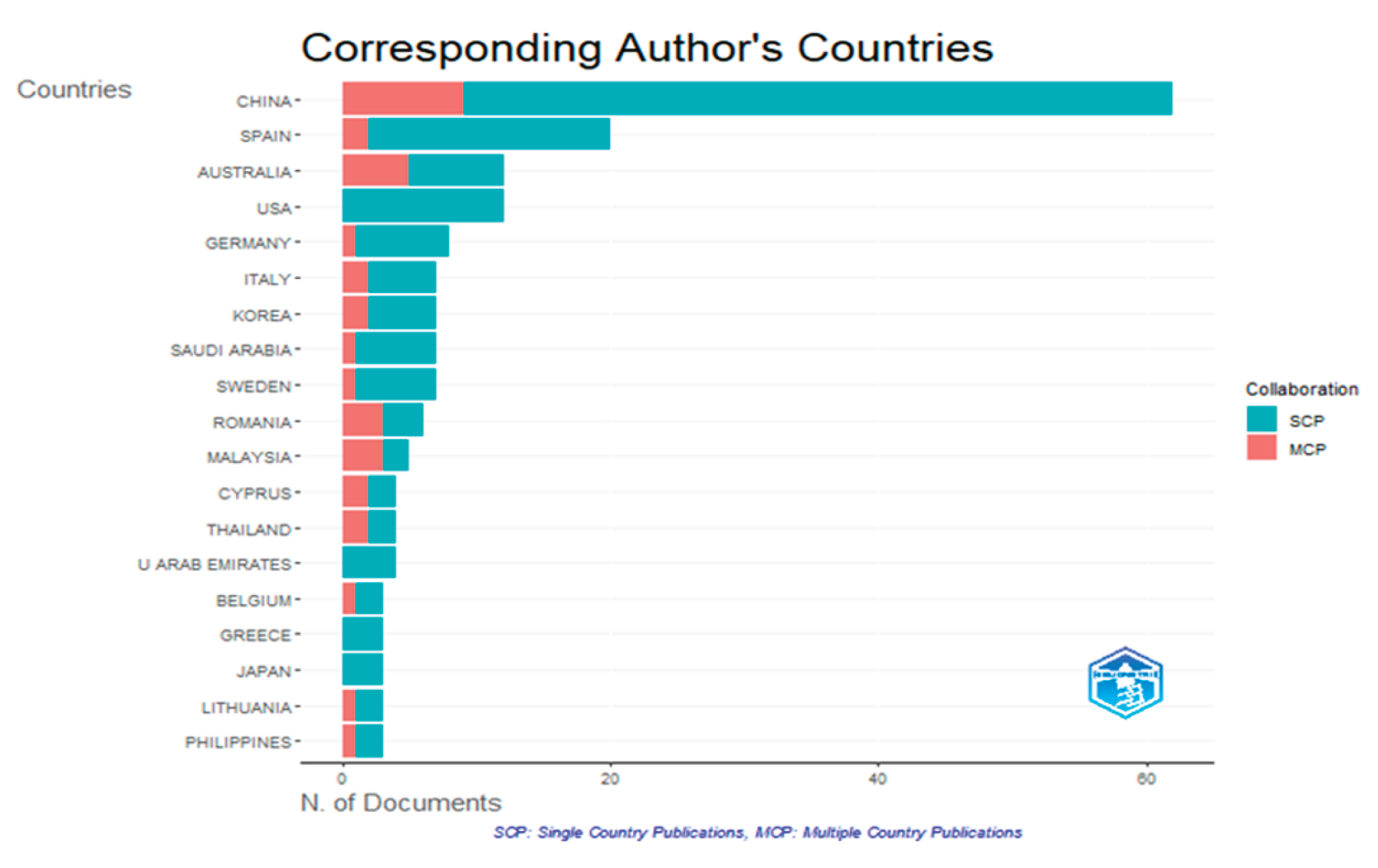
Figure 4.
Geographical distribution of published documents. Source: authors’ elaboration using bibliometric R-studio.
Figure 4.
Geographical distribution of published documents. Source: authors’ elaboration using bibliometric R-studio.
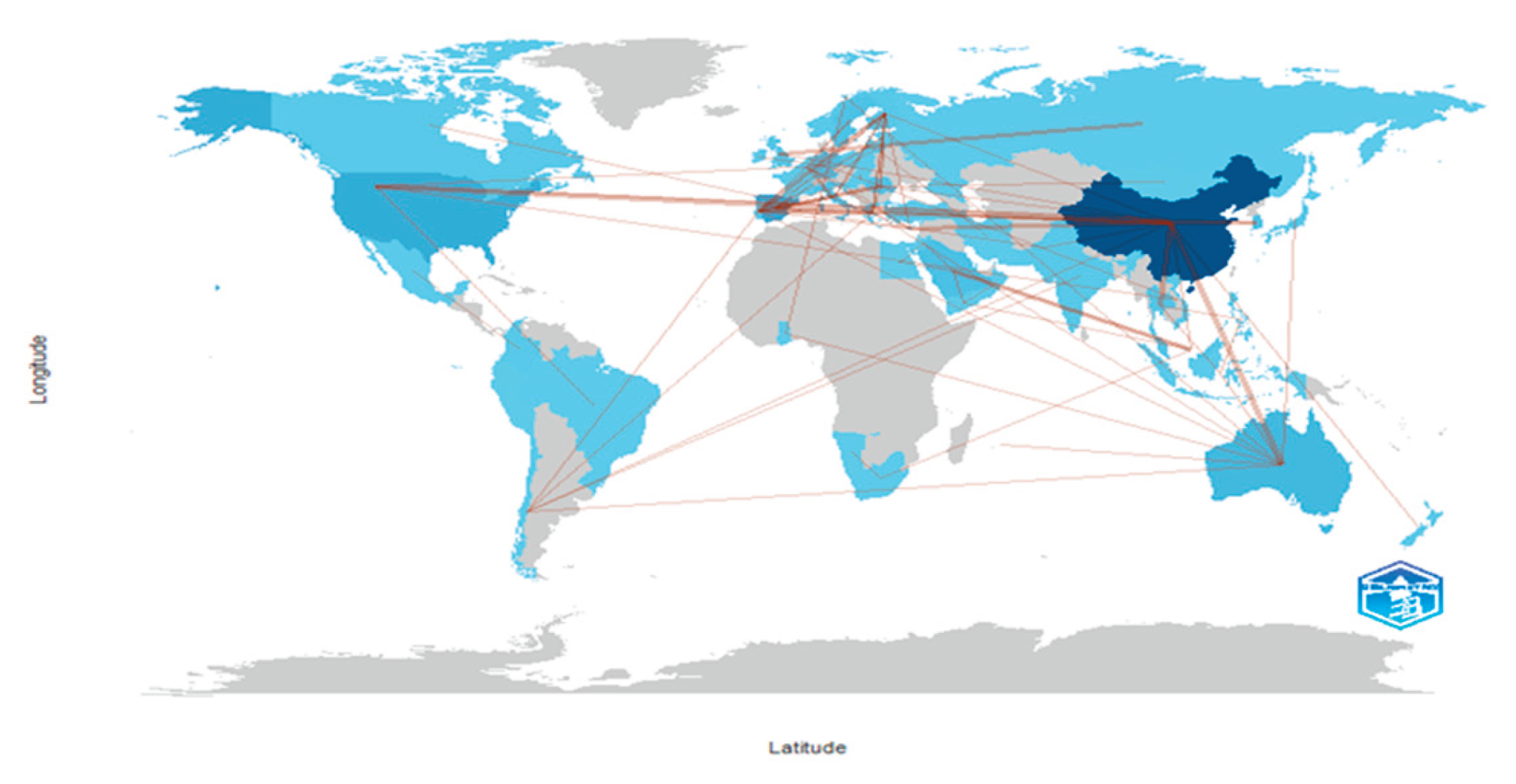
Figure 5.
Geographical distribution of published documents. Source: authors’ elaboration using bibliometric R-studio.
Figure 5.
Geographical distribution of published documents. Source: authors’ elaboration using bibliometric R-studio.
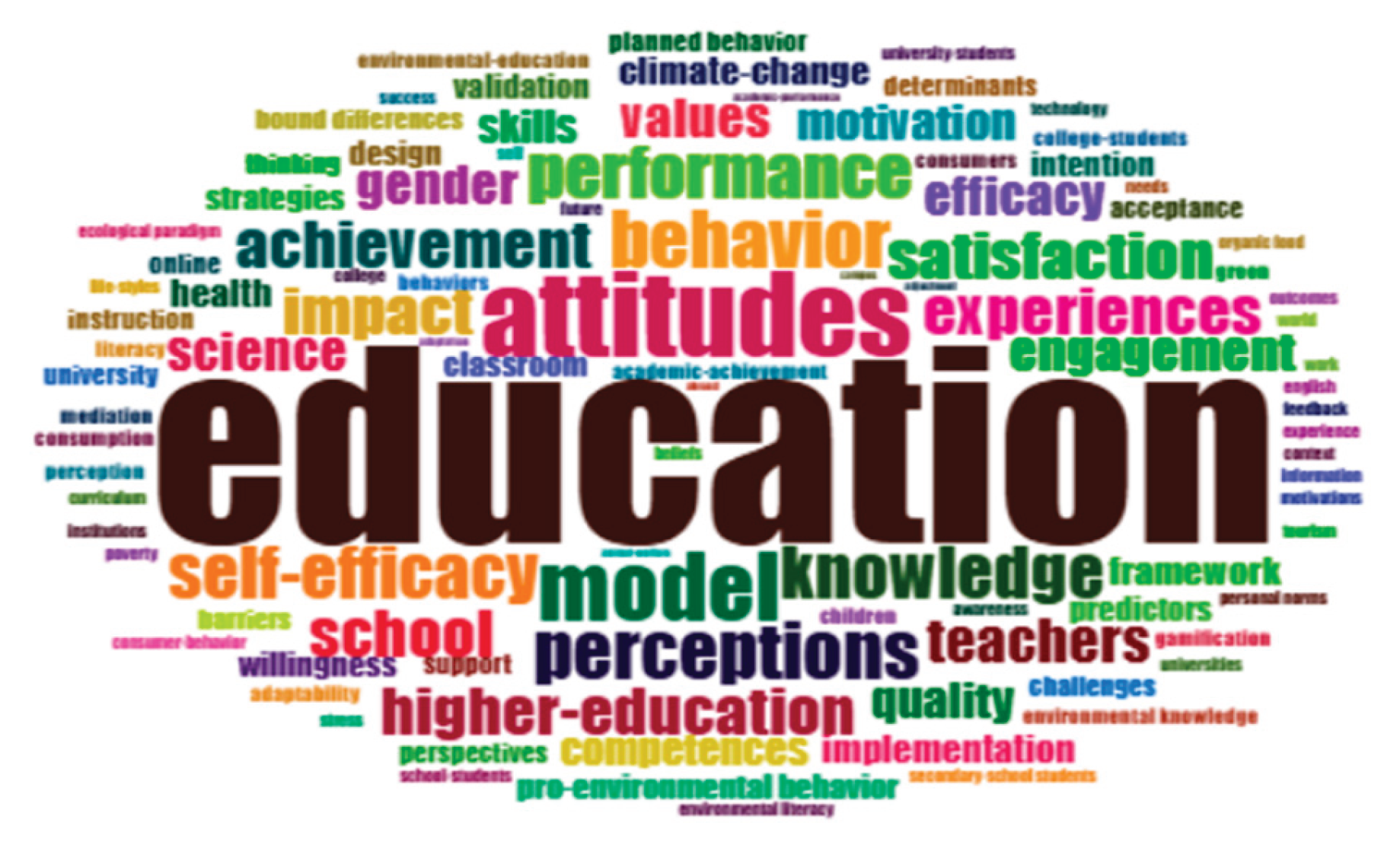

Table 1.
Characteristics of the bibliometric method.
| Characteristics of the systematic bibliometric review1 | Follows a protocol that ensures careful planning |
| Consolidate knowledge in a domain so that future researchers can use state-of-the-art insights | |
| Measures the degree of collaboration between authors | |
| Evaluates the statistical aspects of language and keywords; | |
| It allows the researcher to analyse the citation and cocitation processes; | |
| Contribute to the exploration of scientific references on a given subject | |
| Emerges from data preprocessing rather than following the investigation process | |
| Mede o crescimento de determinadas áreas e o surgimento de novos temas. | |
| To help researchers understand the statistical analysis of articles |
1 Authors’ elaboration adapted from Paul et al. [28].
Table 2.
Descriptive statistics.
| DATA INFORMATION | Results |
| Timespan | 2014:2024 |
| Sources (Journals) | 61 |
| Documents | 270 |
| Annual Growth Rate % | 47.88 |
| Document Average Age | 3.22 |
| Average citations per doc | 10.93 |
| References | 12.969 |
| AUTHORS | |
| Authors | 717 |
| Authors of single-authored docs | 25 |
| Co-Authors per Doc | 3.24 |
| International co-authorships % | 19.83 |
| DOCUMENT TYPES | |
| article | 265 |
| review | 5 |
Source: authors’ elaboration.
Table 3.
Top 15 most relevant journals.
| Element | h-index | g-index | TC | NP | PY |
| Sustainability | 17 | 31 | 1373 | 123 | 2015 |
| Environmental Education Research | 7 | 12 | 158 | 13 | 2017 |
| International Journal of Sustainability in Higher Education | 6 | 12 | 160 | 14 | 2018 |
| Frontiers in Psychology | 5 | 9 | 84 | 9 | 2020 |
| International Journal of Environmental Research and Public Health | 3 | 3 | 42 | 3 | 2021 |
| Cogent Business & Management | 2 | 3 | 11 | 3 | 2022 |
| Education and Information Technologies | 2 | 2 | 15 | 2 | 2022 |
| Education Sciences | 2 | 4 | 17 | 5 | 2021 |
| Heliyon | 2 | 2 | 21 | 2 | 2020 |
| Journal of Applied Research in Higher Education | 2 | 2 | 19 | 2 | 2021 |
| Journal of Cleaner Production | 2 | 2 | 71 | 2 | 2018 |
| Journal of environmental education | 2 | 2 | 124 | 2 | 2016 |
| Research in Science & Technological Education | 2 | 2 | 77 | 2 | 2014 |
| Studies in Educational Evaluation | 2 | 2 | 22 | 2 | 2017 |
| Sustainable Production and Consumption | 2 | 2 | 131 | 2 | 2018 |
Source: authors’ elaboration.
Table 4.
List of 15 most impactful authors.
| Author | h-index | g-index | TC | NP | PY_start |
| Gericke, M. | 5 | 5 | 267 | 5 | 2014 |
| Abdelsalam, H.M. | 3 | 3 | 26 | 3 | 2021 |
| Jiao, S. | 3 | 3 | 25 | 3 | 2022 |
| Pilotti, M.A.E. | 3 | 3 | 26 | 3 | 2021 |
| Zhang, L.J. | 3 | 3 | 48 | 3 | 2021 |
| Anser, M.K. | 2 | 2 | 52 | 2 | 2020 |
| Berglund, T | 2 | 2 | 82 | 2 | 2014 |
| Boeve-de Pauw, J. | 2 | 2 | 65 | 2 | 2021 |
| Bögeholz, S. | 2 | 2 | 14 | 2 | 2020 |
| Chen, S.Y. | 2 | 2 | 51 | 2 | 2020 |
| Chou, S.F. | 2 | 2 | 18 | 2 | 2019 |
| Colomer, J. | 2 | 2 | 43 | 2 | 2020 |
| De Maeyer, S. | 2 | 2 | 19 | 2 | 2021 |
| El-moussa, O.J. | 2 | 2 | 22 | 2 | 2021 |
| Fiebelkorn, F. | 2 | 2 | 8 | 2 | 2021 |
Source: authors’ elaboration.
Table 5.
Fifteen most relevant studies.
| Author (Year) | Journal | DOI | Total Citations | Author (Year) |
| Lee et al. ( 2019) | Sustainability | 10.3390/su11040985 | 143 | Lee et al. ( 2019) |
| Olsson & Gericke (2016) | Journal of Environmental Education | 10.1080/00958964.2015.1075464 | 120 | Olsson & Gericke (2016) |
| Al-Kumaim et al. (2021) | Sustainability | 10.3390/su13052546 | 110 | Al-Kumaim et al. (2021) |
| Kamenidou et al. (2019) | Sustainability | 10.3390/su11030837 | 91 | Kamenidou et al. (2019) |
| Al-Naqbi & Alshannag (2018) | International Journal of Sustainability in Higher Education | 10.1108/IJSHE-06-2017-0091 | 89 | Al-Naqbi & Alshannag (2018) |
| Ahamad et al. (2018) | Sustainable production and consumption | 10.1016/j.spc.2018.06.006 | 74 | Ahamad et al. (2018) |
| Berglund eta al. (2014) | Research in Science & Technological Education | 10.1080/02635143.2014.944493 | 74 | Berglund eta al. (2014) |
| Rajapaksa et al. (2018) | Sustainability | 10.3390/su10040937 | 64 | Rajapaksa et al. (2018) |
| Sarmiento et al. (2018) | Sustainable production and consumption | 10.1016/j.spc.2018.04.001 | 57 | Sarmiento et al. (2018) |
| Olsson et al. (2022) | Environmental Education Research | 10.1080/13504622.2022.2033170 | 50 | Olsson et al. (2022) |
| Goldman D (2018) | Journal of Cleaner Production | 10.1016/j.jclepro.2018.02.176 | 48 | Goldman D (2018) |
| Chen SY, 2020 | Sustainability | 10.3390/su12041374 | 42 | Chen SY, 2020 |
| Walshe N, 2016 | Environmental Education Research | 10.1080/13504622.2016.1221887 | 41 | Walshe N, 2016 |
| Asif T, 2020 | Sustainability | 10.3390/su12073014 | 40 | Asif T, 2020 |
| Liu X, 2020 | Frontiers in Psychology | 10.3389/fpsyg.2020.01945 | 40 | Liu X, 2020 |
Source: authors’ elaboration.
Table 6.
Thematic axes.
| Group | Thematic Axis | Authors | Main Evidence |
| Educational and Psychological Dimensions of Sustainability in Higher Education | Psychological component and Academic Performance | Lee (2019); Al-Kumaim et al. (2021); Rajapaksa et al. (2018); Olsson (2022); Goldman et al. (2018); Walshe (2016); Asif et al. (2020) | The students recognize the importance of sustainability, but there is a mismatch between knowledge and action. Teacher training can improve students' motivation and perception of competence. |
| Pedagogical Innovation and Teaching Methodologies | Olsson & Gericke (2016); Olsson et al. (2022); Berglund et al. (2014); Chen et al. (2020); Liu et al. (2020); Yang et al. (2021) | The inclusion of sustainability in curricula, combined with active methodologies and educational technologies, improves student engagement and performance. |
|
| Contextual and Systemic Factors that Shape Education for Sustainability | Sustainability and Environmental Education | Ahamad et al. (2018); Rajapaksa et al. (2018); Kamenidou et al. (2019); Walshe N, 2016 | The perception of sustainability influences academic choices and environmental behaviours. However, institutional and practical barriers hinder the effective adoption of sustainable habits. |
| Social Issues and Socioeconomic Behaviour | Abad-Segura & González-Zamar, 2021; Chen et al., 2020; Yang et al. (2021) | Socioeconomic factors affect the adoption of sustainability, and technology can help democratize access to environmental knowledge. |
Source: authors’ elaboration.
Disclaimer/Publisher’s Note: The statements, opinions and data contained in all publications are solely those of the individual author(s) and contributor(s) and not of MDPI and/or the editor(s). MDPI and/or the editor(s) disclaim responsibility for any injury to people or property resulting from any ideas, methods, instructions or products referred to in the content. |
© 2025 by the authors. Licensee MDPI, Basel, Switzerland. This article is an open access article distributed under the terms and conditions of the Creative Commons Attribution (CC BY) license (http://creativecommons.org/licenses/by/4.0/).
Copyright: This open access article is published under a Creative Commons CC BY 4.0 license, which permit the free download, distribution, and reuse, provided that the author and preprint are cited in any reuse.


