

Submitted:
19 June 2025
Posted:
19 June 2025
You are already at the latest version
Abstract
Staycations have emerged as a compelling alternative to long-haul travel, attracting visitors through their inclusivity, wallet-friendliness, and eco-consciousness. However, significant gaps remain in theory-based research on its role in resilience, effects on staycation experiences, and stakeholder collaboration for sustainable tourism during crises. Thus, this study investigates how staycations enhance the experiences of staycationers and foster stakeholder collaboration to promote sustainable tourism. A qualitative case study approach, guided by constructivist narrative inquiry, involved in-depth interviews with 21 key stakeholders and a comprehensive analysis of staycation packages from 10 four- and five-star hotels during a crisis. The study draws on stakeholder, collaboration, and social exchange theories, integrated with triple-bottom-line (TBL) principles, to highlight the resilience power of staycations and its contributions to sustainable tourism development. The findings revealed that staycations significantly enhance the sustainability of the industry. Remarkably, stakeholders demonstrated exceptional collaboration, forming an inclusive public-private partnership to address the crisis and advance sustainable tourism development. It emphasises the need for stronger stakeholder collaboration, advocating for a unified approach to destination management over counterproductive competition. Furthermore, a roadmap is proposed for future investigations, focusing on the role of staycations in promoting positive experiences and enhancing stakeholder collaboration for the sustainable development of the tourism industry during crises. The study emphasised the need for further investigation into specific stakeholders to address competitive imbalances during crises, offering insights that serve as a call to action for practitioners and scholars, thereby laying the groundwork for advancing the industry and enhancing destination reputations.

Keywords:
staycation
; crisis
; resilience
; stakeholder collaboration
; sustainability
; roadmap
1. Introduction
Staycation has gained significant relevance during crises and serves as a strategic response to the industry’s pressing challenges. It allows individuals and families to enjoy vacation time without travelling from home, which has proven essential in maintaining economic activity during periods of uncertainty. By encouraging residents to spend their leisure time and financial resources within the communities, staycations provide vital economic relief to local businesses struggling due to reduced tourist arrivals from outside regions. This shift supports local economies and helps sustain their well-being [1,2]. During the COVID-19 crisis, many individuals felt apprehensive about travelling to distant destinations due to health risks. Staycations offered a safer alternative, allowing families to enjoy leisure time in familiar settings while minimising exposure to potential health threats. This approach not only alleviated the anxiety associated with travel but also promoted a sense of security, making it easier for people to engage in recreational activities without the stress of navigating crowded airports or unfamiliar environments [2,3,4]. Furthermore, staycations encourage residents to explore local attractions and services that they might typically overlook, leading to a renewed appreciation for community resources and cultural heritage [1,3].
The rise of staycations has also fostered collaboration among key stakeholders, i.e., government agencies, local businesses, and community organisations. By collaborating on local tourism, stakeholders can create cohesive marketing strategies and enticing packages that showcase community stays. This collaborative effort enhances and attracts visibility among businesses, creating a supportive network that can better withstand external shocks [3,5]. Moreover, stakeholders can pool resources to enhance the staycation experience. For instance, local hotels, restaurants, and attractions can offer joint discounts or create special events that encourage community participation. This collaborative approach improves overall visitor exposure and boosts local morale, as residents feel pride in their community. Engaging with residents through surveys and feedback mechanisms allows stakeholders to understand community preferences better and reflect the demands of the local population [6,7,8].
Staycations also contribute significantly to sustainable tourism development. One of the primary environmental benefits is reducing the carbon footprint associated with reducing local tourism; communities can minimise the environmental impact that often accompanies long-distance travel, such as emissions from transportation. This shift towards local experiences encourages adopting environmentally friendly practices and reduces the natural resources frequently overexploited in popular tourist destinations [1,2]. Furthermore, focusing on local attractions and experiences allows staycationers to play a role in preserving cultural heritage. By emphasising community identity and promoting local traditions, staycations foster pride among residents and encourage sustainable tourism practices that respect and celebrate local customs. It leads to a more enriching experience for visitors, who gain deeper insights into the community’s culture and history [3,4].
The COVID-19 crisis cripples the industry’s development and operations more than any other sector. Since its outbreak, almost all international borders around the world have closed for tourists, transport and accommodation providers are locked, and potential tourists have become confined to their home countries with fewer options for travel [9,10,11]. This acute situation changes the relationship between the industry and sustainability [12]. Of course, working in a crisis world can significantly improve stakeholders’ confidence and well-being, but it should also be considered a chance to think and rethink how the industry responds sustainably. Whether stakeholders loved or hated the pandemic, they did not ignore the negative impacts. Therefore, reasonable stakeholders should adapt to the world rather than persist in adapting it to themselves, and they cannot afford to lose because of the pandemic since it has liberated humankind [13,14]. The pandemic uncovered largely overlooked dynamics, prompting reflection highlighting previously unnoticed ideas and revealing significant potential. Therefore, the pandemic allowed the industry to be compatible with the community and harness it for economic purposes and stakeholders’ well-being [15,16]. It requires the collaboration of scholars and practitioners to work within this framework since it allows for flourishing again. There may also be a shift in how experts market their long-haul tourism since trading with the locals and neighbours is more sustainable than having tourists from distant generating countries [17].
A staycation can be a tool to sustain the industry by focusing on the well-being of the local business and the community itself, and the case in Hong Kong was not exceptional in this regard. Hong Kong is a city that makes staycation relatively simple, and hotels all go after the staycation market on the weekends better than having empty rooms during the pandemic [18]. Therefore, a staycation is one of the hottest means of responding positively to the pandemic. Since Massey introduced the word staycation in 2003, it has been a source of debate on whether it has a pronounced effect on sustainability. The source of the discussion emanated from the exclusion of UN Tourism’s definition of tourism, which is equally mentioned in work psychology [19]. However, scientific studies on whether staycations during the pandemic foster greater care for local surroundings are limited, as staycationers’ experiences, thoughts, and feelings are less explored than those of long-haul tourists. Therefore, the aim is to explore the dynamics of staycation consumption amid the crisis and to examine its implications for a sustainable tourism future, using Hong Kong’s response to the COVID-19 crisis as a compelling case study. Specifically, the following three research questions are addressed: (1) Does staycation boost stakeholder collaboration during a crisis? (2) What impact does staycation has on enhancing the experiences of staycationers? (3) How does staycation encourage sustainable tourism development during crises? Therefore, the study aims to enhance the current body of literature by thoroughly examining the perceptions and evaluations of staycationers’ experiences and stakeholder collaboration for sustainable tourism development.
2. Literature Review
2.1. The Role of Staycation During Crises
The term “staycation” was introduced by Massey in [20] to address the demand for domestic travel options during economic downturns. This concept regarding how tourists modify their behaviours in reaction to risk has been widely examined. A staycation involves visitors choosing their vacation in their community instead of travelling to remote hotspots. This phenomenon has become increasingly popular for several reasons, such as financial savings, convenience, and a revived interest in exploring and appreciating one’s local environment [21]. Staycation has been recognised as an effective solution for numerous destinations, especially during the COVID-19 crisis [21,22]. With international travel restrictions and safety concerns, many individuals sought vacation alternatives closer to home, where they felt secure. This shift reflects a broader trend toward prioritising domestic tourism, as travellers aim to avoid the perceived risks associated with international travel and crowded resorts [21,23]. The increase in staycations has been notably significant following high-profile incidents that raised safety and security concerns in popular tourist destinations [24]. Consequently, many Americans began to prefer local vacations, allowing them to engage with familiar services and environments while minimising exposure to potential risks.
When tourism yields tangible benefits for local communities, the connection between staycations and support for tourism becomes favourable. Local economies can thrive through increased spending on nearby businesses and attractions, which is especially vital during challenging times. During the COVID-19 crisis, staycations provided a safer option for travellers and contributed to local economies by encouraging residents to explore their neighbourhoods and support local enterprises [21]. This dual advantage highlights the significance of staycations as a practical response to crises, fostering community resilience and adaptability. The resilience theory suggests that communities can adjust and flourish in adversity, emphasising the importance of flexibility, resourcefulness, and collective action to overcome challenges [25]. In tourism, resilience is essential for sustaining economic stability and social cohesion during times of crisis. Applying resilience theory to staycations illustrates how local tourism can enhance community strength and adaptability in response to external shocks.
2.1. Staycation’s Role in Stakeholder Collaboration
The stakeholder theory states that organisations shall consider the interests and influences of all stakeholders when making decisions [5,26]. Stakeholders include local businesses, government entities, community organisations, and residents in staycations. Implementing staycation initiatives requires coordination among these groups, facilitating a collaborative environment that can enhance the effectiveness of local tourism strategies. Collaboration among local businesses is a crucial aspect of staycations. They can collaborate on promotional activities and packages to encourage residents to explore their communities. For example, hotels, restaurants, and attractions can create joint offerings that increase visibility and attractiveness for local tourism [6,7]. Moreover, local governments are vital in promoting staycations by facilitating stakeholder partnerships. By providing resources, marketing support, and logistical assistance, government agencies can help create an environment conducive to staycation initiatives [27]. This collaboration can lead to developing policies that support local tourism and stimulate economic recovery during crises.
Community engagement is another essential element of stakeholder collaboration in staycation initiatives. When residents actively participate in local tourism activities, they contribute to their communities’ economic and social well-being. This engagement enhances the sense of belonging and community pride, which are vital for long-term sustainability [28]. Similarly, the social exchange theory suggests that social interactions are motivated by a reciprocal process to optimise rewards and reduce expenses [29]. In the context of staycations, this theory provides insight into how stakeholders perceive and engage in collaborations. The dynamics of exchange relationships among stakeholders can significantly influence the success of staycation initiatives. Reciprocal benefits are central to stakeholder collaboration. Stakeholders are more likely to collaborate when they perceive mutual benefits. For instance, local businesses gain increased patronage through joint promotions, while residents enjoy enhanced leisure options and community experiences [27]. This reciprocal relationship fosters a sense of partnership and encourages ongoing collaboration among stakeholders. Besides, trust and commitment are crucial for successful collaboration. The social exchange theory proposes that trust is formed through consistent interactions and beneficial experiences [30]. In the context of staycations, stakeholders who engage in collaborative efforts and deliver value to each other are more likely to establish long-term partnerships that benefit the community. As stakeholders collaborate to promote staycations, the increased local tourism can enhance community well-being. Residents who participate in local activities support local businesses and experience increased satisfaction and quality of life [28]. This positive feedback loop reinforces the importance of collaboration and investment in local tourism initiatives.
Several case studies illustrate the role of staycation in stakeholder collaboration. In addressing the COVID-19 outbreak, many local governments executed campaigns to promote staycations by partnering with tourism boards and local businesses. These initiatives often included marketing campaigns highlighting local attractions and special offers, effectively pooling resources and expertise [27]. Another example can be found in community-led initiatives that aim to promote local tourism. Residents collaborated with businesses to organise events, like cultural fairs and local food festivals that showcased local offerings and encouraged participation from the community. These events boosted local economies and fostered a sense of community pride and cohesion [28]. Therefore, the role of staycation in stakeholder collaboration is underscored by stakeholder theory and social exchange theory frameworks. Staycation initiatives can enhance economic resilience, promote social cohesion, and support sustainable tourism practices by fostering partnerships among local businesses, government entities, and community organisations. As communities continue to navigate the challenges posed by crises, the collaborative nature of staycations offers a pathway to strengthen local economies and foster a sense of community well-being.
2.3. Staycationers’ Experience During Crisis
Mossberg [31] emphasises the critical role of experience in tourism, suggesting that staycations enable individuals to engage with their immediate environments meaningfully. This view is supported by Chronis and colleagues [32], who argue that local experiences can significantly enhance emotional connections to a place, especially during challenging times. Such connections are vital for individuals seeking solace and familiarity in their immediate surroundings. The psychological impacts of staycations are noteworthy. Atadil and Lu [33] highlight the concept of escapism, wherein individuals seek refuge from daily stressors through localised leisure activities. This notion aligns with Klinger [34] and Schechner [35], who discuss the interplay between reality and fantasy, indicating that staycationers often navigate a blend of both dimensions during crises. Escaping into a curated experience at home or nearby can provide essential relief from external pressures.
Furthermore, Hume [36] and Seregina [37] note that the emotional benefits of staycations can enhance overall well-being, offering a sense of normalcy amid uncertainty. These experiences often serve to mitigate feelings of anxiety and dislocation that can arise during turbulent times. Uriely [38] explores the motivations behind staycations, indicating that personal and social factors play pivotal roles in shaping these experiences. Individuals may choose to staycation for reasons ranging from financial considerations to the desire for community connection. Demographic factors also influence staycation experiences [28]. Quan and Wang [39] and Walls and colleagues [40] examine how different groups approach the concept of staycations. Millennials, in particular, have emerged as a key demographic, with their preferences often shaped by social media and a desire for unique experiences [28]. Bhattacharjee and Mogilner [41] support this assertion, noting that younger generations frequently seek experiences that provide enjoyment and opportunities for personal growth, reflecting a shift in values toward experiential consumption.
The narratives surrounding staycation experiences have garnered attention in the literature as well. Arnould and Price [42] underscore the importance of storytelling in shaping perceptions and experiences, suggesting that the narratives constructed during staycations can significantly influence how individuals perceive and remember these experiences. Duerden and colleagues [43] expand on this idea by suggesting that the stories created during staycations not only enhance the emotional depth of the experience but also contribute to its memorability, thereby enriching the overall impact of the staycation. In conclusion, staycations provide a unique lens to explore individual experiences during crises. By examining both the collaborative efforts of stakeholders and the psychological dimensions of these experiences, it becomes evident that staycations serve as a vital coping mechanism
2.4. Staycations Contribution to Sustainable Tourism Development
Freeman [5] and Hörisch and colleagues [26] stated that organisations should incorporate the views and implications for all parties involved. Stakeholders include local businesses, government entities, community organisations, and residents in staycations. The collaborative engagement of these groups is essential for promoting sustainable tourism development. Local businesses are important to the effectiveness of staycations. By offering tailored services and experiences that cater to residents, businesses can enhance the attractiveness of staycations. Collaborative marketing efforts among hotels, restaurants, and attractions can create attractive packages and encourage residents to explore their local areas [6,7]. It not only boosts local economies but also fosters sustainability by encouraging the deployment of local resources and reducing the carbon footprint associated with long-distance travel. Local governments are crucial stakeholders in promoting staycations and ensuring their sustainability. Governments can implement policies supporting local tourism by facilitating stakeholder partnerships, such as grants for local businesses or promotional campaigns highlighting nearby attractions [4]. These initiatives can help create a supportive environment for staycations, ensuring the economic benefits are widely distributed across the community.
Engaging the community is vital for the success of staycations. When residents actively participate in local tourism activities, they contribute to their communities’ economic and social fabric. This engagement led to stronger social cohesion and collective responsibility for local resources and cultural heritage [1]. Stakeholders prioritising community involvement in staycation initiatives can foster a sense of possession and pride, essential for sustainable tourism development. Staycations provide significant economic benefits by keeping spending within the local community. Research indicates that local tourism can stimulate job creation and support small businesses, often the backbone of local economies [23]. By promoting staycations, communities can mitigate the economic impacts of external crises, such as a decline in international tourism. Moreover, staycations encourage residents to explore and appreciate local attractions, which can lead to increased investment in community resources. As local businesses thrive, they are more likely to reinvest in their communities, contributing to long-term sustainability [1]. This cycle of local spending reinforces the interconnectedness of stakeholders and the importance of collaboration in achieving sustainable tourism outcomes. In addition to economic benefits, staycations support environmental sustainability. By reducing the need for long-distance travel, staycations help lower greenhouse gas emissions and alleviate the environmental burden associated with tourism. Local tourism can promote conservation efforts and responsible resource management as residents appreciate their surroundings more [22]. Engaging stakeholders in sustainable practices is essential for maximising the environmental benefits of staycations. For instance, local businesses can adopt eco-friendly practices, such as sourcing materials locally and minimising waste, while governments can promote policies that encourage sustainability in tourism [4]. This collaborative approach enhances the sustainability of staycations and sets a precedent for responsible tourism behaviour.
The social impacts of staycations are equally significant. Staycations can enhance social cohesion and well-being by fostering community engagement and promoting local culture. When residents participate in local tourism, they preserve cultural heritage and promote local traditions, which are vital for community identity [1]. Furthermore, staycations can empower communities by allowing residents to share their stories and experiences. This engagement can increase awareness of local issues and inspire collective action towards sustainability. Stakeholder collaboration is essential, enabling communities to leverage their strengths and resources for the common good [23]. Staycations represent a promising avenue for sustainable tourism development, particularly when viewed through stakeholder theory. Staycation initiatives can enhance economic resilience, promote environmental sustainability, and strengthen social ties by fostering collaboration among local businesses, government entities, and communities. As communities continue to navigate the challenges posed by crises, the role of staycations in supporting sustainable tourism practices will become increasingly vital.
3. Methodology
It is a qualitative research approach with an exploratory design because of insufficient prior research on the subject [44,45], and qualitative research is usually abundant in detail and grants insights into participants’ experiences with the issue, aligning epistemologically with the reader’s experiences, making it more significant, validity and insights [46,47]. The constructivist philosophical view is applied since it epistemologically helps flexibility in the research process [48]. Ontologically, it emphasises the presence of numerous realities developed within a given context, and methodologically, it facilitates a thorough analysis of facts [44,48]. Therefore, researchers used constructivist narrative inquiry strategies through open-ended interview guidelines with a document consultation methodological framework of the study, which leverages the increasing online platforms where hotels sell their packages for staycationers on their websites. Therefore, data were collected from 10 hotels’ staycation strategies on their websites (6 five-star and 4 four-star hotels), 6 tourism and hospitality professionals, and 15 staycationers using a convenient sampling method based on data saturation. Official documents, magazines, newspapers, scientific studies, and academic articles comprehensively describing the linkage between staycation, crisis, collaboration, and sustainability were reviewed.
After the data were collected, the coding process was managed by the three research enquiries outlined at the introduction, and critical thematic analysis was applied since it is essential to establish a more comprehensive world agenda [49,50,51,52,53]. The focus was on recognising the most frequent staycation-related sustainability during the crisis, how the tourism stakeholders responded, and how the staycationers felt it. Before directly coding the data, the researchers checked all the collected data to get information for coding development. A coding sheet was then prepared with seven broad categories: staycation, crisis, experiences, stakeholder collaboration, socio-cultural sustainability, environmental sustainability, and economic sustainability. Sub-coding was included in the original list as needed by the researchers, and passed back and forth for comparison and refining of the data. In this case, the interview, the website data, and the document consultation were read thoroughly and repeatedly and interpreted to understand the central theme. This process serves as a model for consistency, and the findings were then substantiated with relevant literature.
The ethical issues of anonymity of the face-to-face interviewees and pseudonymity of website content analysis may raise a minimum of two inquiries. The first relates to assigning attribution anonymity and confidentiality claims, and the second is the pseudonymity of hotels’ websites. Interviewees’ consent was requested for anonymity and privacy before their voices were recorded, and only eight were volunteers. Still, notes were taken throughout the interview for others, and their confidentiality was shielded throughout the discussion. Besides, the data is presented anonymously throughout the document. All of the website data used here is publicly available, and it eliminates any concern of anonymity, pseudonymity, and confidentiality.
4. Results
4.1. Demographic Profile of Interviewees
The 21 interviewees’ demographic profiles show a nearly balanced gender distribution, with 9 males and 12 females. Ages range from 21 to 46, predominantly featuring individuals in their 30s. Educational backgrounds vary, with 8 interviewees holding high school/vocational qualifications, 7 possessing bachelor’s degrees, and 6 having master’s degrees. Occupations span from skilled electricians and construction workers to professional roles like tourism officers, hoteliers, and bankers. Notably, one interviewee is unemployed, highlighting the variability among the interviewees.

Table 1.
Demographic profiles of interviewees.
| Interviewees (I) | Gender | Age | Education Level | Occupations |
|---|---|---|---|---|
| 1 | Female | 32 | High School/Vocational School | Merchant |
| 2 | Female | 33 | Bachelor’s Degree | Tourism officer |
| 3 | Male | 21 | High school/Vocational School | Student |
| 4 | Female | 27 | Bachelor’s Degree | Banker |
| 5 | Male | 28 | High School/Vocational School | Electrician |
| 6 | Female | 34 | Master’s Degree | Hotelier |
| 7 | Male | 31 | High School/Vocational School | Real estate |
| 8 | Female | 29 | Bachelor’s Degree | Office worker |
| 9 | Male | 33 | High School/Vocational School | Merchant |
| 10 | Female | 43 | Master’s Degree | Tourism officer |
| 11 | Male | 35 | Bachelor’s Degree | Office worker |
| 12 | Female | 32 | High School/Vocational School | Construction worker |
| 13 | Female | 31 | Bachelor’s Degree | Hotelier |
| 14 | Male | 35 | High School/Vocational School | Personal trainer |
| 15 | Female | 42 | Master’s Degree | Hotelier |
| 16 | Male | 37 | Bachelor’s Degree | Merchant |
| 17 | Female | 29 | High School/Vocational School | Office worker |
| 18 | Male | 36 | Bachelor’s Degree | Tourism officer |
| 19 | Male | 46 | Master’s Degree | Office worker |
| 20 | Female | 27 | High School/Vocational School | Unemployed |
| 21 | Female | 26 | High School/Vocational School | Student |
4.2. Staycation and Stakeholder Collaboration
The 2015 UN Tourism’s sustainable tourism development agenda, linked to the 2030 UN Sustainable Development Goals, encourages a re-evaluation of environmental and social needs in tourism [54]. Despite claims that sustainability research in the industry is underdeveloped [55], many scholars view sustainability as a central issue in previous studies [56]. The COVID-19 crisis has dramatically shaped the industry, with declines of up to 80% [11], prompting researchers to explore new forms of tourism, including staycation and virtual tourism. The Hong Kong Tourism Board (HKTB) initiated a “Holiday at Home” campaign to stimulate local tourism and stakeholder collaboration. The campaign has been accepted and supported by stakeholders who are collaborating to boost the local economy. It initially included three key elements: first, insider guides, featuring over 100 recommended venues and activities; second, a one-stop platform offering more than 10,000 dining, shopping, and entertainment deals across the territory; and third, spend to rescue local tours, which allows staycationers to redeem local tours through their spending. These strategies facilitate short- and long-term recovery from the crisis [57,58].
The board subsidises the trade partners with a series of funding schemes to speed up their recovery process. This initiative started in June 2020, and even today, staycationers can get travel information about where to go, stay, and eat from the campaign website (www.holidayhk.com). The board had a hygiene campaign with the Hong Kong Quality Assurance Agency. These organisations certified stakeholders and created awareness of epidemic prevention for shopping centres, dining establishments, retail stores, accommodations, attractions, inbound travel agencies, and other tourism and hospitality businesses. Though collaboration has many forms, the tourism board, tourism and hospitality industry associations, the city quality assurance agency, development agencies, and the city convention bureaus can be considered a public-private partnership collaboration. The main reason for this collaboration is the crisis. The crisis allows the creation of new forms of governance that encourage sustainability through staycation and partnership. Since tourism in Hong Kong is a mature economic sector, public-private collaboration improves the organisational response to sustainable tourism development that benefits the local community [59,60,61,62]. One tourism expert (I18) stated that:
Service providers are poised to embrace a spirit of collaboration, joining forces with their former competitors to meet the needs of staycationers. In this crisis, the focus shifts from competition to cooperation, highlighting the importance of unity in overcoming challenges and enhancing guest experiences. Hongkongers have a deep passion for travel, and the city’s convenience makes exploration effortless; in just 20 kilometres, you can escape the urban hustle and find yourself at serene beaches or atop scenic peaks. It is time for us to embrace a new perspective. Let us become our tourists and uncover the hidden gems that Hong Kong offers.
This collaboration with other stakeholders of the industry stimulates local spending and speeds up the recovery of the sector, brings a collective solution for the problem, and improves and maximises the sustainability of the destination [57,59,63,64]. Another tourism officer (I2) emphasised that:
I am confident that scholars and practitioners will no longer permit the adverse effects of a crisis to undermine the industry. Practitioners should prioritise their communities and take meaningful actions to support and promote a sustainable lifestyle within the sector. This approach can foster a positive environment for employees, motivating them to contribute even with fewer incentives. I encourage everyone to focus on the silver linings during challenging times and raise awareness among locals to revisit their roots, reconnect with their upbringing, and support their peers working in the industry.
This sentiment reflects the importance of community-focused initiatives in recovery efforts. A hotelier (I13) noted that:
Even before the crisis, busy Hongkongers with families opted to stay at local hotels as a convenient getaway rather than travelling abroad. Now is the perfect moment for everyone to embrace the role of a tourist in our city. After all, a staycation offers a more comfortable escape than navigating uncertainty or remaining at home. This view of the interviewee highlights how staycation is an option for residents, reinforcing the collaboration among stakeholders and the community.
4.3. Staycation and Staycationers’ Experiences
During a crisis, hosts and staycationers share common anxieties about health risks and economic uncertainty [65]. However, Staycations have emerged as an appealing alternative, enabling individuals to savour local experiences without the hassles of international travel. With no cultural differences to navigate, minimal language barriers, and no need for currency exchange, staycations offer a seamless way to explore and enjoy one’s city. This accessibility allows travellers to immerse themselves in beloved local attractions, cuisine, and culture while avoiding the stress associated with overseas trips. In essence, staycations provide a unique opportunity to rediscover the charm of familiar surroundings, making them an ideal choice for relaxation and adventure alike [65,66,67,68,69]. One interviewee (I4) remarked that:
The crisis led to international travel bans, so planning a staycation in Hong Kong has become an appealing alternative. The city’s incredible staycation offers and packages inspire me to discover its stunning nature trails, hikes, and beaches, allowing me to appreciate the beauty I often overlooked. One of the most significant advantages of this experience is the absence of travel chaos. I no longer worry about missing transfers or dealing with the stress of navigating unfamiliar places. Even in the city’s bustling heart, I experience freedom and tranquillity that reduces my stress compared to travelling abroad. Food and drink are instrumental in my staycation as well. I can indulge in delicious meals and refreshing beverages without the anxiety of culinary disappointments that sometimes accompany international trips. Instead, I have discovered delightful flavours I never expected, enhancing my overall experience. Before the pandemic, I visited over eleven tourist destinations across five countries, immersing myself in diverse cultures and natural wonders. However, I often lacked the time to appreciate my city’s unique beauty. This staycation has provided me with the perfect opportunity to explore and celebrate all that Hong Kong offers.
Staycation motivates a strong bond between the staycationers, the community, and other stakeholders in the tourism and hospitality system. Another staycationer (I11) shared:
I had an unforgettable experience at the hotel and within the vibrant community. On my first day, the hotel welcomed me with a delightful Cantonese dinner, a fine wine package and a soothing bath. This thoughtful gesture filled me with joy, allowing me to reflect on my achievements with pride, look to the future with optimism, and fully embrace the present moment. The following evening, the hotel engaged my wife and me in a unique challenge: cooking our first meal together as a married couple in the hotel’s kitchen. It was a wonderful and memorable experience. After our dinner, they played a slow, romantic song that evoked cherished memories, inviting us to dance together in a moment we will always treasure. The next morning brought a delightful surprise as they invited my childhood friend, who holds great significance in my life, to join us for our staycation. Together, we took a heartfelt walk to the Kwun Tong Public Pier, where we met individuals facing homelessness and addiction, all struggling through the crisis. The hotel arranged a small group lunch, allowing us to share experiences about love, work, and our philosophies on life. What truly astonished us was when some people experiencing homelessness presented us with a gift during our discussion, touching my heart deeply. Inspired by their warmth and generosity, we extended our kindness by delivering gifts in return. This experience became one of the most significant aspects of our staycation, reminding us that living for others and dedicating time to a cause greater than ourselves brings profound fulfilment. It allowed us to reconnect with old friends and strengthen our ties to the community.
No significant differences exist in the experience (pleasure) level of those who engaged in the staycation and long-haul travel. However, there was a difference in the activities they were engaged in. It is essential for tourism development in the community [19]. A couple (I14) also reflected:
Previously, we rarely considered staycations since we often travelled, especially during holidays and our wedding anniversary. However, our routines and cultural perspectives have shifted. Now, staycations are undoubtedly an excellent option for us. We have rediscovered Hong Kong’s natural wonders while enjoying stays at local hotels, realising that we do not always need to dream of travelling abroad. Understanding the beauty of our home can be just as fulfilling as any distant getaway. Exploring the hidden gems right at our doorstep feels almost like a fantasy. Lately, I have come to appreciate that there is no place like home.
Such experiences foster trust in local service providers and contribute to the positive experience of the staycationers. The researchers argue that staycation, focusing on emotional attachment with local tourists, is vital for the industry to survive and recover from crises. Therefore, a staycation can be the best solution, requiring little travel and is regarded as more sustainable than many other forms of travel [70].
4.4. Staycation and Sustainable Tourism Development
Studies on staycations’ role in sustainability have highlighted their potential to support local economies while being environmentally friendly. Staycations result in lower carbon emissions than long-haul travel, making them more sustainable [65,66]. Interviews reveal that many participants view staycations as an opportunity to rediscover their home city. The HKTB’s campaign encourages stakeholders to implement sustainable practices, recognising the interconnectedness of tourism’s economic, environmental, and social factors. To this end, the HKTB, the hotel industry, tour operators, and other stakeholders have launched a campaign to attract Hong Kongers to staycationers with different sustainability strategic issues. The following ten hotels are some stakeholders who were deeply engaged in the staycation market and contributed to the industry’s sustainability. They successfully lure staycationers through marketing and public relations by selling their packages fairly. Table 2 reveals staycation tourism packages offered by four- and five-star rated hotels during the crisis. Five-star hotels, including The Peninsula, Four Seasons, and The Ritz-Carlton, offer diverse packages such as “Stay for Love” and “Kids Safari.” Four-star hotels like Hotel ICON and Kowloon Shangri-La provide themed options like “Food-cation” and “Buffet Staycation.”
These acts of sympathy enhance sustainable behavioural change for the community and the staycationers [71]. An interviewee (I8) said that “the visit of staycationers to their community helps them trust their local service providers, believe in humanity, get new insight into the local community, and contribute to the industry’s sustainable development.” By promoting local tourism, staycations serve not only as a means of recovery for the industry post-crisis but also as a catalyst for broader sustainable tourism practices that prioritise community engagement and environmental stewardship. Tourism stakeholders should implement the traditional sustainable strategy economy and unequivocally incorporate the less quantifiable environmental and social sustainability elements. Some stakeholders use sustainability for marketing purposes rather than running a natural, sustainable tourism and hospitality organisation [72]. However, staycation consents to the stakeholders’ travelling slowly, locally, and critically regarding social, environmental, and cultural sustainability. It inspires staycationers to explore nearby areas and remain in a single destination instead of embracing more destinations in their itinerary and snub vehicles in favour of walking. Thus, a staycation is a slow and fantastic race with a moral, ethical, and politically significant sustainable tourism activity [68]. Similarly, an interviewee (I10) also confirmed that:
Most of the city’s residents are increasingly disconnected from their local communities, making staycations a valuable opportunity for self-discovery and reconnection with their roots. As more people venture into the trails and natural spaces around Hong Kong, I have noticed a growing appreciation for their surroundings; even the smallest details, like the rocks beneath their feet, are seen as vital resources. Staycations promote a slower, more sustainable approach to travel within one’s own home. This mindful exploration fosters a deeper connection to the environment and aligns with ethical tourism practices that prioritise community engagement and environmental stewardship. In this way, the philosophy of ‘less is more’ resonates strongly, encouraging individuals to embrace the richness of their local landscapes while contributing to a more sustainable future.
As a result, staycations offer a unique opportunity for visitors to reconnect with their local communities and appreciate the beauty of their surroundings. By embracing sustainable tourism practices, staycationers can contribute to environmental stewardship while fostering a more profound sense of belonging. These experiences enrich personal lives and promote a more ethical and sustainable tourism practice.
5. Discussion and Conclusions
5.1. Discussion
Sustainability of the tourism and hospitality industry has faced intense scrutiny, particularly in the wake of a crisis. This sector’s recovery and sustainable operation hinges on resolving long-haul source markets’ challenges [73]. However, a substantial divide persists in scholarly discourse irrespective of the role of staycations in advancing the TBL of sustainability dimensions of economic efficiency, environmental integrity, and socio-cultural equity. Most studies have predominantly emphasised economic sustainability, often neglecting the vital dimensions of environmental and socio-cultural equity, particularly in local communities [74]. This oversight raises pressing concerns about the fairness of leveraging local culture for tourism without equitable compensation.
A crisis has catalysed a profound re-evaluation of conventional tourism models, presenting a unique opportunity to cultivate a new industry paradigm characterised by collective action and collaborative stakeholder engagement [10,11,16,75,76,77]. As societal norms shift, staycations have emerged as a compelling alternative to traditional travel, allowing individuals to explore domestic destinations while sidestepping the complexities and uncertainties associated with international travel. Beaver [78] aptly defines a staycation as a domestic holiday, reinforcing local engagement and economic support, a notion that resonates deeply during times of crisis. This study adopts and integrates the principles of TBL, stakeholder, and collaboration theories to illuminate the multifaceted role of staycation in promoting sustainable tourism. Stakeholder theory underscores the necessity of ethical management practices considering the diverse interests of all parties involved, such as organisations, customers, employees, and the broader community [12,26,79]. Whereas stakeholders are actors in the system, collaboration is the process of sitting together to discuss common issues to achieve a shared goal [6,7]. The various branches of stakeholder theory, i.e., descriptive, instrumental, normative, and integrative, provide a robust framework for understanding how companies can engage with their stakeholders effectively and achieve their sustainability objectives [80].
Despite the rich theoretical landscape surrounding sustainable tourism development, the distinction between sustainable and unsustainable practices remains critically important. Roper [81] argues that strong sustainability must prioritise environmental and socio-cultural dimensions alongside economic considerations. The crisis had inadvertently led to a sharp decline in international travel, yielding a significant reduction in greenhouse gas emissions and prompting a newfound focus on environmental sustainability. However, this scenario complicates the sustainability dialogue, as the crisis has also induced substantial social and economic losses [12]. Motivations for opting for staycations extend well beyond pandemic-related restrictions. These local holidays bolster local economies, minimise environmental impact compared to long-haul travel, and provide a lower-cost, less stressful alternative to international trips. For instance, a family might choose a staycation to enjoy a weekend at a local resort, supporting nearby businesses and benefiting from reduced travel hassles. Staycations also provide opportunities for wealth redistribution and sustainable growth in underprivileged areas without exacerbating existing issues [82].
In contrast, international visitors often possess higher service expectations and prioritise environmental sustainability [83]. The rise of staycations has prompted hotels to innovate their offerings, crafting diverse packages catering to local consumers. Luxury hotels have transformed into attractive destinations by providing unique amenities such as wellness retreats, gourmet dining experiences, and family-friendly activities. For example, the four and five-star hotels offered a staycation package with spa treatments, cooking classes, and guided local tours, appealing to relaxation seekers and adventure enthusiasts. This strategic shift underscores how staycations can drive economic sustainability by benefiting local businesses and minimising leakage rates within the tourism economy.
While a crisis has reshaped how sustainability relates to the tourism industry, it has simultaneously created fertile ground for recovery and innovation. Nonetheless, there looms a risk that environmental considerations might be sidelined as the industry attempts to regain pre-pandemic momentum. This study highlights two primary challenges of applying stakeholder and collaboration theories in this context. First, while these theories can foster stakeholder cooperation, pressing economic realities may deter organisations from engaging in genuine collaboration. Many may resort to using the rhetoric of collaboration and sustainability for marketing purposes rather than committing to authentic partnerships. Second, the tourism and hospitality sector exemplifies the urgent need to reject “neo-liberal injustice and exploitation” in pursuing sustainable tourism development. The crisis has necessitated a shift towards collective action among stakeholders, compelling them to prioritise cooperation over competition. Government involvement, particularly through public-private partnerships and subsidies, is crucial in facilitating this collective behaviour [10,84]. This inter-organisational and customer relationship forces them to consider and reconsider the TBL of sustainability. However, this is criticised for its focus on controlling the negative aspects rather than enhancing the positive, over-promises, and difficulty measuring the socio-cultural aspects of sustainability [85,86,87]. However, this allows the regulators to differentiate the willing and ethical stakeholders from the others.
Consequently, stakeholders’ economic, socio-cultural, and environmental well-being is paramount for addressing sustainability concerns during this crisis. Staycations present a unique opportunity for stakeholders to collaborate effectively, fostering inter-organisational relationships that enhance their collective sustainability efforts. This collaborative approach enables stakeholders to fulfil their needs while maintaining their communities’ economic, environmental, and socio-cultural integrity. Ultimately, staycations can be a powerful catalyst for responsible travel practices that conserve the environment, preserve local cultural values, and enhance community welfare. By strengthening the synergy among stakeholders in sustainable tourism development, staycations offer a viable and innovative path forward for the industry, particularly in challenging times [88]. For instance, a local hotel partnering with nearby artisans to create exclusive staycation experiences enriches visitors’ experience and supports local craftsmanship, reinforcing the community’s economic resilience. Such initiatives exemplify how staycations can transcend traditional tourism frameworks, fostering deeper connections between staycationers and their local environments.
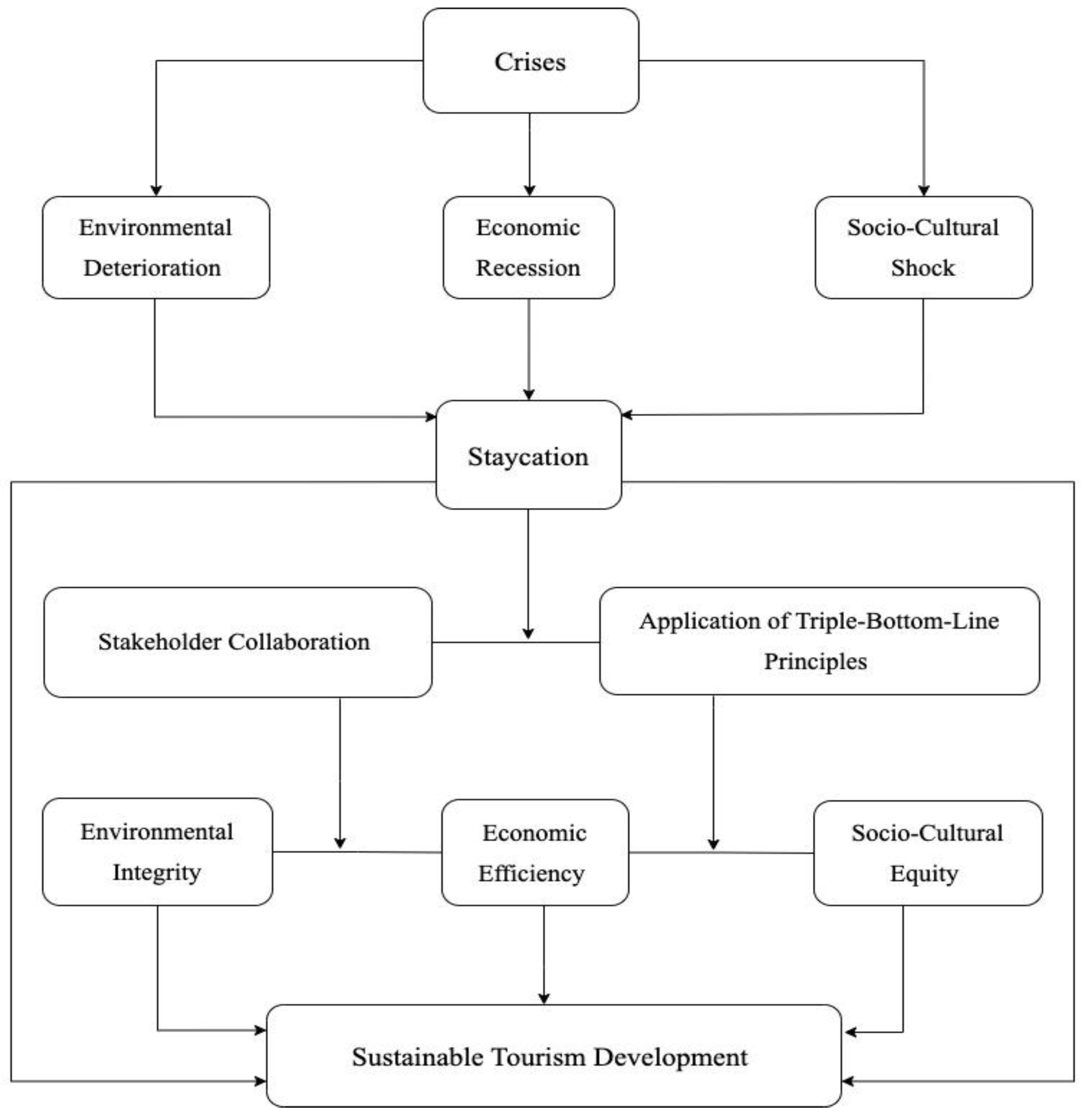
In conclusion, the researchers developed a roadmap that illustrates the relationship between crises and staycations within sustainable tourism development. It identifies three main types of crises: environmental deterioration, economic recession, and socio-cultural shock. These crises highlight the tourism sector’s vulnerabilities and the need for innovative responses. Central to the framework is the concept of staycation, which serves as a mechanism to address these crises. Staycations promote stakeholder collaboration, encouraging various players in the tourism industry to work together. This collaboration is essential for implementing TBL principles, emphasising the balanced consideration of environmental, economic, and socio-cultural factors. The outcomes of integrating staycations into tourism strategies include enhanced environmental efficiency, improved local economic performance, and the preservation of socio-cultural values. Thus, the framework suggests that leveraging staycations during times of crisis can foster collaborative efforts among stakeholders. This approach supports crisis recovery while fostering sustainability and resilience in the industry, ensuring a more balanced and equitable future.
Figure 1.
Roadmap for Staycations Supporting Stakeholder Collaboration and Sustainability in Crises.
Figure 1.
Roadmap for Staycations Supporting Stakeholder Collaboration and Sustainability in Crises.
5.2. Conclusions
The study explored the repercussions of staycation in promoting sustainable tourism development during a crisis and the collaborative responses of stakeholders. A crisis like COVID-19 is a big hit in all spheres of human beings, but it is not a mere loss; instead, it brings opportunities that allow thinking creatively about the type of consumption that underpins the tourism and hospitality industry’s unsustainable ways. Besides, the pandemic reminds us that the industry should not depend only on international tourists but also on a staycation. A staycation can be revitalised for travellers to consume locally, minimise safety issues, travel less, and connect to the community. However, long distances will not stop tourists from travelling after the pandemic. Still, practitioners and academicians need to reorient their focus to bring the local community’s interest to the forefront for the industry’s sustainable development. A staycation can build stakeholder collaboration, which benefits the local community, motivates staycationers to travel more, and contributes to the experience economy at the individual, organisation, and community levels.
The findings disclosed that a staycation is essential during a crisis for stakeholder experience enhancement and collaboration for economic recovery, environmental conservation, and socio-cultural revitalisation. Therefore, this research’s most crucial theoretical investigation is the important role of staycation for stakeholder collaboration and sustainable tourism development. Of course, the TBL helps improve stakeholders’ cooperation and make inclusive decisions. Still, in this crisis, stakeholders do not need fierce competition but collaboration to attract more staycationers. Finally, the study introduces a novel crisis management staycation framework that combines stakeholder, social exchange, and collaboration theories with the TBL principles of sustainable tourism development, which can serve as a springboard for future research. Thus, scholars and practitioners should no longer allow the negative impacts of a crisis to drain the industry, and it would be better if they focused on all the good within the pandemic and should think, feel, speak, and work on it. By doing so, the industry will have vibes of positive energy. Staycation is one of these vibes that build sustainability, motivate positive experiences, and transform the economy at all levels. Therefore, destination marketing organisations shall rethink their engagement and management of the industry to keep sustainable tourism development that centres on the local community, since the present situation will not last long and the future is out there. Above all, all stakeholders need collaboration to sell the city as a single destination at this time of uncertainty rather than competing with one another.
5.2.1. Theoretical Implications
This study reveals valuable insights into stakeholder, social exchange, and collaboration theories in line with the TBL sustainability principles, particularly emphasising the reciprocal relationships that emerge during staycations. By highlighting how positive experiences of staycationers can foster engagement among tourism and hospitality stakeholders, it cultivates a collaborative environment essential for sustainable tourism. The research underscores the necessity of ethical management practices, considering the diverse interests of all parties involved, advocating for a holistic approach that encompasses all three sustainability dimensions rather than focusing solely on a single dimension. By positioning staycations as a catalyst for enhanced stakeholder collaboration and enriched experiences, the study reveals their potential to address various crises, providing a fresh perspective on sustainable tourism development. This theoretical framework further explores how such collaborative efforts can elevate tourism sustainability, effectively bridging gaps in scholarly discourse.
5.2.2. Methodological Contributions
This study employs multiple triangulation techniques to enrich the precision and robustness of the results while addressing the inherent subjectivity in qualitative research [89]. These approaches provide a broader insight into the complex interrelationships among the variables under investigation. First, methodological triangulation involves different data collection methods, specifically through interviews and systematic analysis of staycation packages from four and five-star hotels. This dual approach allows for cross-verification of findings, confirming consistency across different data sources. Second, data triangulation is achieved by collecting data in two phases from different locations within the city. The collected data includes perspectives from staycationers, tourism professionals, and hotel staff from varying economic, social, and professional backgrounds. Such diversity ensures that the findings are not reliant on a single data source, thereby enriching the understanding of customer perceptions, especially in the context of evolving travel behaviours during crises [90]. Third, investigator triangulation involves two researchers independently coding and comparing themes from the collected data. This collaborative analysis mitigates individual biases in interpretation, fostering a more objective understanding of the findings. Finally, theory triangulation incorporates the TBL sustainability principles, social exchange theory, and stakeholder collaboration theory. This theoretical framework provides a thorough perspective for analysing the issues, enhancing the understanding of staycations’ role in supporting sustainable tourism practices.
5.2.3. Practical Implications
Practically, the findings emphasise the significance of staycations as a viable strategy for recovery and innovation in the industry, particularly in crisis contexts. Staycations can drive sustainable practices that benefit communities by promoting local engagement and economic support. Hotels and tourism providers are encouraged to innovate, crafting packages that appeal to local consumers while fostering partnerships with local artisans and businesses. Moreover, the study advocates for the involvement of government and public-private partnerships to facilitate collaboration among stakeholders. This collective approach enhances economic resilience and maintains environmental and socio-cultural integrity. Ultimately, the research provides actionable insights for stakeholders in the industry to leverage staycations as a catalyst for responsible travel practices and long-term sustainability.
6. Limitations and Future Research Directions
This study has limitations that may affect the interpretation, conclusion and applicability of its results, although the researchers have implemented strategies to address the issues. The first limitation is using qualitative methods, specifically interviews and thematic analysis. While these methods provide rich insights, they are inherently subjective and may reflect participants’ biases or experiences. To mitigate this, the researchers ensured a diverse participant pool, including staycationers and tourism and hospitality professionals from various backgrounds. However, future research could further enhance generalizability by incorporating a larger sample size and exploring perspectives from additional regions and socio-economic groups with a quantitative or mixed approach. The second limitation is focusing on specific hospitality industry segments, namely four and five-star hotels. This concentration may overlook the experiences of budget accommodations and alternative lodging options. Thus, future studies shall include a broader spectrum of accommodation types, analysing how staycation practices differ across various market segments.
Thirdly, while the study emphasises the importance of stakeholder collaboration, it does not delve deeply into the challenges of achieving genuine partnerships within the tourism sector. Economic pressures and competitive dynamics may hinder effective collaboration. This study discusses potential barriers but suggests that future research could explore case studies of successful collaborations to identify best practices and frameworks for fostering authentic stakeholder engagement. Lastly, focusing on the immediate impacts of staycations during a crisis may limit understanding of their long-term sustainability implications. While the researchers acknowledged the need for ongoing investigation, we encourage longitudinal studies to assess how staycations influence economic, environmental, and socio-cultural dimensions over time. Future research could also investigate the evolving perceptions of staycationers as the tourism landscape changes, examining how these shifts impact local economies and community well-being.
Author Contributions
Conceptualization, Yechale Geremew and Carina Kleynhans; Data curation, Yechale Geremew; Formal analysis, Yechale Geremew; Investigation, Yechale Geremew; Methodology, Yechale Geremew; Project administration, Carina Kleynhans; Resources, Yechale Geremew and Carina Kleynhans; Software, Yechale Geremew; Supervision, Carina Kleynhans; Validation, Yechale Geremew and Carina Kleynhans; Visualization, Yechale Geremew; Writing – original draft, Yechale Geremew; Writing – review & editing, Yechale Geremew and Carina Kleynhans.
Funding
This research received no external funding.
Institutional Review Board Statement
Not applicable.
Informed Consent Statement
Informed consent was obtained from all subjects involved in the study.
Data Availability Statement
Data can be shared on request.
Conflicts of Interest
The authors declare no conflicts of interests.
References
- Muritala BA, Hernández-Lara AB, Sánchez-Rebull MV. COVID-19 staycations and the implications for leisure travel. Heliyon. 2022 Oct 1;8(10). [CrossRef]
- Handayani A, Widiastuti W, Hermawan A. The tourism sector stakeholder collaboration role in post-covid-19 economic recovery of central Java, Indonesia. Journal of Resilient Economies. 2022 Jul 1;2(1):25-37. [CrossRef]
- Seabra C, Bhatt K. Tourism sustainability and COVID-19 pandemic: Is there a positive side?. Sustainability. 2022 Jul 16;14(14):8723. [CrossRef]
- Uğur NG, Akbıyık A. Impacts of COVID-19 on global tourism industry: A cross-regional comparison. Tourism management perspectives. 2020 Oct 1;36:100744. [CrossRef]
- Freeman, RE. Strategic management: A stakeholder approach. Cambridge university press; 2010 Mar 11.
- Bramwell B, Lane B. Collaboration and partnerships in tourism planning. Tourism collaboration and partnerships: Politics, practice and sustainability. 2000 Dec 31;2(1-19).
- Bramwell B, Lane B, editors. Tourism collaboration and partnerships: Politics, practice and sustainability. Channel View Publications; 2003.
- Pennington-Gray L, Basurto-Cedeno E. Integrated stakeholder-centered tourism crisis. Frontiers in Sustainable Tourism. 2023 Sep 27;2:1209325. [CrossRef]
- Ru H, Yang E, Zou K. Combating the COVID-19 pandemic: The role of the SARS imprint. Management Science. 2021 Sep;67(9):5606-15. [CrossRef]
- Higgins-Desbiolles, F. Socialising tourism for social and ecological justice after COVID-19. InGlobal tourism and COVID-19 2021 Nov 29 (pp. 156-169). Routledge.
- UNWTO. International tourist numbers could fall by 60-80% in 2020. Available online: https://www.unwto.org/news/covid-19-international-tourist-numbers-could-fall-60-80-in-2020 (accessed on 18 June 2025).
- Jones P, Comfort D. The COVID-19 crisis and sustainability in the hospitality industry. International journal of contemporary hospitality management. 2020 Oct 14;32(10):3037-50. [CrossRef]
- Shaw, GB. Maxims for revolutionists (reprint 2017). CreateSpace. 1903.
- Butcher, J. The war on tourism. Spiked Online Magazine, 2020. Available online: https://www.spiked-online.com (accessed on 11 April 2025).
- Higgins-Desbiolles, F. The End of Global Travel, as we know it: An Opportunity for Sustainable Tourism. The Conversation, 2020a. Available online: https://theconversation.com/the-end-of-global-travel-as- we-know-it-an-opportunity-for-sustainable-tourism-133783 (accessed on 28 April 2025).
- Higgins-Desbiolles F. The “war over tourism”: Challenges to sustainable tourism in the tourism academy after COVID-19. Journal of sustainable Tourism. 2020c Aug 4;29(4):551-69. [CrossRef]
- Higham, J. (2020). The sun is setting on unsustainable long-haul and short-stay tourism-regional travel bubbles are the future. The Conversation. Available online: https://theconversation.com/the-sun-is-setting-on-unsustainable-long-haul-short-stay-tourism-regional-travel-bubbles-are-the-future-140926 (accessed on 28 April 2025).
- Wu F, Zhang Q, Law R, Zheng T. Fluctuations in Hong Kong hotel industry room rates under the 2019 Novel Coronavirus (COVID-19) outbreak: Evidence from big data on OTA channels. Sustainability. 2020 Sep 18;12(18):7709. [CrossRef]
- De Bloom J, Nawijn J, Geurts S, Kinnunen U, Korpela K. Holiday travel, staycations, and subjective well-being. Journal of Sustainable Tourism. 2017 Apr 3;25(4):573-88. [CrossRef]
- Massey, T. Sports world doesn’t stop for vacation. The Myrtle Beach Sun-News. 2003.
- Hung NP, Huan MN. Staycation tourism during the COVID-19 pandemic. Inter-Asia Cultural Studies. 2024 Jan 2;25(1):139-55. [CrossRef]
- Jeuring J, Haartsen T. The challenge of proximity: the (un) attractiveness of near-home tourism destinations. InProximity and intraregional aspects of tourism 2018 Oct 18 (pp. 115-138). Routledge. [CrossRef]
- Wong IA, Lin Z, Kou IE. Restoring hope and optimism through staycation programs: An application of psychological capital theory. Journal of Sustainable Tourism. 2023 Jan 2;31(1):91-110. [CrossRef]
- Yesawich, P. Are staycations here to stay. Vacation News. 2010;29:2010.
- Folke, C. Resilience: The emergence of a perspective for social–ecological systems analyses. Global environmental change. 2006 Aug 1;16(3):253-67. [CrossRef]
- Hörisch J, Freeman RE, Schaltegger S. Applying stakeholder theory in sustainability management: Links, similarities, dissimilarities, and a conceptual framework. Organization & environment. 2014 Dec;27(4):328-46. [CrossRef]
- Sigala, M. Tourism and COVID-19: Impacts and implications for advancing and resetting industry and research. Journal of business research. 2020 Sep 1;117:312-21. [CrossRef]
- Moon H, Chan H. Millennials’ staycation experience during the COVID-19 era: mixture of fantasy and reality. International Journal of Contemporary Hospitality Management. 2022 Jun 3;34(7):2620-39. [CrossRef]
- Homans GC. Social behavior as exchange. American journal of sociology. 1958 May 1;63(6):597-606.
- Blau, PM. Justice in social exchange. Sociological inquiry. 1964 Mar 1;34(2). [CrossRef]
- Mossberg L. A marketing approach to the tourist experience. Scandinavian journal of hospitality and tourism. 2007 May 1;7(1):59-74. [CrossRef]
- Chronis A, Arnould EJ, Hampton RD. Gettysburg re-imagined: The role of narrative imagination in consumption experience. Consumption Markets & Culture. 2012 Sep 1;15(3):261-86. [CrossRef]
- Atadil HA, Lu Q. An investigation of underlying dimensions of customers’ perceptions of a safe hotel in the COVID-19 era: effects of those perceptions on hotel selection behavior. Journal of Hospitality Marketing & Management. 2021 Aug 18;30(6):655-72. [CrossRef]
- Klinger, E. Daydreaming: Using waking fantasy and imagery for self-knowledge and creativity. Tarcher; 1991.
- Schechner, R. The future of ritual: Writings on culture and performance. Routledge; 2003 Sep 2. [CrossRef]
- Hume, K. Fantasy and Mimesis: Responses to Reality in the Western World, Methuen Inc., New York, NY, 1984.
- Seregina, A. Exploring fantasy in consumer experiences. InConsumer Culture Theory 2014 Nov 22 (pp. 19-33). Emerald Group Publishing Limited.
- Uriely, N. The tourist experience: Conceptual developments. Annals of Tourism research. 2005 Jan 1;32(1):199-216.
- Quan S, Wang N. Towards a structural model of the tourist experience: An illustration from food experiences in tourism. Tourism management. 2004 Jun 1;25(3):297-305. [CrossRef]
- Walls AR, Okumus F, Wang YR, Kwun DJ. An epistemological view of consumer experiences. International journal of hospitality management. 2011 Mar 1;30(1):10-21. [CrossRef]
- Bhattacharjee A, Mogilner C. Happiness from ordinary and extraordinary experiences. Journal of consumer research. 2014 Jun 1;41(1):1-7. [CrossRef]
- Arnould EJ, Price LL. River magic: Extraordinary experience and the extended service encounter. Journal of consumer Research. 1993 Jun 1;20(1):24-45. [CrossRef]
- Duerden MD, Courtright SH, Widmer MA. Why people play at work: A theoretical examination of leisure-at-work. Leisure Sciences. 2018 Nov 2;40(6):634-48. [CrossRef]
- Creswell JW, Creswell JD. Research design: Qualitative, quantitative, and mixed methods approaches. Sage publications; 2017 Dec 12.
- Stake, RE. Qualitative research: Studying how things work, 2010.
- Stake, RE. The case study method in social inquiry. Educational researcher. 1978 Feb;7(2):5-8. [CrossRef]
- Patton, MQ. Qualitative evaluation and research methods. SAGE Publications, inc; 1990.
- Lewis, J. Qualitative research practice a guide for social science students and researchers, 2003.
- Bramwell B, Lane B. Critical research on the governance of tourism and sustainability. Journal of Sustainable Tourism. 2011 May 1;19(4-5):411-21. [CrossRef]
- Ryan, C. Equity, management, power sharing and sustainability—issues of the ‘new tourism’. Tourism management. 2002 Feb 1;23(1):17-26. [CrossRef]
- Higgins-Desbiolles, F. More than an “industry”: The forgotten power of tourism as a social force. Tourism management. 2006 Dec 1;27(6):1192-208. [CrossRef]
- Tribe, J. The truth about tourism. Annals of tourism research. 2006 Apr 1;33(2):360-81. [CrossRef]
- Tribe, J. Tourism: A critical business. Journal of Travel Research. 2008 Feb;46(3):245-55. [CrossRef]
- Saarinen, J. Beyond growth thinking: the need to revisit sustainable development in tourism. Tourism Geographies. 2018 Mar 15;20(2):337-40. [CrossRef]
- Ertuna B, Karatas-Ozkan M, Yamak S. Diffusion of sustainability and CSR discourse in hospitality industry: Dynamics of local context. International Journal of Contemporary Hospitality Management. 2019 Sep 4;31(6):2564-81. [CrossRef]
- Jones P, Hillier D, Comfort D. Sustainability in the hospitality industry: Some personal reflections on corporate challenges and research agendas. International Journal of Contemporary Hospitality Management. 2016 Jan 11;28(1):36-67. [CrossRef]
- Hong Kong Tourism Board. Newsroom, 2020. Available online: www.discoverhongkong.com (accessed on 12 June 2025).
- Ahmad-Zaluki NA, Campbell K, Goodacre A. Earnings management in Malaysian IPOs: The East Asian crisis, ownership control, and post-IPO performance. The International Journal of Accounting. 2011 Jun 1;46(2):111-37.
- Zapata MJ, Hall CM. Public–private collaboration in the tourism sector: Balancing legitimacy and effectiveness in local tourism partnerships. The Spanish case. Journal of Policy Research in Tourism, Leisure and Events. 2012 Mar 1;4(1):61-83. [CrossRef]
- Bramwell, B. Global tourism (3rd ed.). Burlington, Mass. Elsevier Butterworth-Heinemann, 2005.
- Ansell C, Gash A. Collaborative governance in theory and practice. Journal of public administration research and theory. 2008 Oct 1;18(4):543-71.
- Hall, C. M. Tourism planning: Policies, processes and relationships. Pearson Education, 2008.
- Stone, MT. Community-based ecotourism: A collaborative partnerships perspective. Journal of Ecotourism. 2015 Sep 2;14(2-3):166-84. [CrossRef]
- Graci, S. Collaboration and partnership development for sustainable tourism. InTourism and Sustainable Development Goals 2020 Jun 29 (pp. 232-249). Routledge.
- Hang H, Aroean L, Chen Z. Building emotional attachment during COVID-19. Annals of tourism research. 2020 Jul 21;83:103006. [CrossRef]
- Peçanha, S. The pandemic forced me into an endless staycation: The Washington Post. Available online: https://www.washingtonpost.com/opinions/2020/07/09/pandemic-has-forced-me-into-an-endless-staycation/ (accessed on 14 June 2025).
- Gallion, M. Enjoy Your Staycation. Alaska Business Monthly, 2013, 29(6), 26.
- Molz, JG. Representing pace in tourism mobilities: Staycations, slow travel and the amazing race. Journal of Tourism and Cultural Change. 2009 Dec 1;7(4):270-86. [CrossRef]
- Penn, F. (2009). Your Ultimate Staycation Guide. In Style New York, 2009, 16(7), 167.
- Gössling S, Scott D, Hall CM. Global trends in length of stay: Implications for destination management and climate change. Journal of sustainable tourism. 2018 Dec 2;26(12):2087-101. [CrossRef]
- Sheldon KM, Lyubomirsky S. Achieving sustainable new happiness: Prospects, practices, and prescriptions. Positive psychology in practice. 2004 Jul 30:127-45.
- Stoddard JE, Pollard CE, Evans MR. The triple bottom line: A framework for sustainable tourism development. International Journal of Hospitality & Tourism Administration. 2012 Jul 1;13(3):233-58. [CrossRef]
- Napierała T, Leśniewska-Napierała K, Burski R. Impact of geographic distribution of COVID-19 cases on hotels’ performances: Case of Polish cities. Sustainability. 2020 Jun 9;12(11):4697. [CrossRef]
- Camargo BA, Vázquez-Maguirre M. Humanism, dignity and indigenous justice: The Mayan train megaproject, Mexico. InJustice and tourism 2021 Nov 17 (pp. 239-258). Routledge.
- Hutton, W. Coronavirus will not end globalisation but change it hugely for the better. The Guardian. Available online: https://www.theguardian.com/commentisfree/2020/mar/08/the-coronavirus-outbreak-shows-us-that-no-one-can-take-on-this-enemy-alone (accessed on 6 May 2025).
- Roman M, Niedziółka A, Krasnodębski A. Respondents’ involvement in tourist activities at the time of the COVID-19 pandemic. Sustainability. 2020 Nov 18;12(22):9610. [CrossRef]
- Ateljevic I. Transforming the (tourism) world for good and (re) generating the potential ‘new normal’. Tourism Geographies. 2020 May 26;22(3):467-75. [CrossRef]
- Beaver, A. A dictionary of travel and tourism (1st ed.). Oxford: Oxford University Press, 2012.
- Freeman, R.E., Harrison, J.S., Wicks, A.C., Parmar, B. L., and De Colle. S. Stakeholder theory: The state of the art. Cambridge University Press, 2010.
- Jacob D, Petersen J, Eggert B, Alias A, Christensen OB, Bouwer LM, Braun A, Colette A, Déqué M, Georgievski G, Georgopoulou E. EURO-CORDEX: new high-resolution climate change projections for European impact research. Regional environmental change. 2014 Apr;14:563-78. [CrossRef]
- Roper J. Environmental risk, sustainability discourses, and public relations. Public Relations Inquiry. 2012 Jan;1(1):69-87. [CrossRef]
- Seckelmann, A. Domestic tourism—a chance for regional development in Turkey?. Tourism Management. 2002 Feb 1;23(1):85-92. [CrossRef]
- Bonn A, Gaston KJ. Capturing biodiversity: selecting priority areas for conservation using different criteria. Biodiversity & Conservation. 2005 May;14:1083-100. [CrossRef]
- Cohen AK, Hoyt LT, Dull B. A descriptive study of COVID-19–related experiences and perspectives of a national sample of college students in spring 2020. Journal of Adolescent Health. 2020 Sep 1;67(3):369-75. [CrossRef]
- Onat NC, Kucukvar M, Tatari O. Integrating triple bottom line input–output analysis into life cycle sustainability assessment framework: the case for US buildings. The International Journal of Life Cycle Assessment. 2014 Aug;19:1488-505. [CrossRef]
- Vanclay, F. The triple bottom line and impact assessment: How do TBL, EIA, SIA, SEA and EMS relate to each other?. Journal of Environmental Assessment Policy and Management. 2004 Sep;6(03):265-88. [CrossRef]
- Norman W, MacDonald C. Getting to the bottom of “triple bottom line”. Business ethics quarterly. 2004 Apr;14(2):243-62.
- Mehmetoglu, M. Nature-based tourists: The relationship between their trip expenditures and activities. Journal of Sustainable Tourism. 2007 Mar 15;15(2):200-15. [CrossRef]
- Carter N. The use of triangulation in qualitative research. Number 5/September 2014. 2014 Aug 26;41(5):545-7. [CrossRef]
- Ghorbani A, Mousazadeh H, Akbarzadeh Almani F, Lajevardi M, Hamidizadeh MR, Orouei M, Zhu K, Dávid LD. Reconceptualizing customer perceived value in hotel management in turbulent times: A case study of Isfahan metropolis five-star hotels during the COVID-19 pandemic. Sustainability. 2023 Apr 21;15(8):7022. [CrossRef]
Table 2.
Analysis of Hotel Staycation Packages for Four and Five-Star Hotels.
| No. | Sample Hotels | *Rate | Staycation Package during COVID-19 |
|---|---|---|---|
| 1 | The peninsula | 5 | Stay for love and journey the world |
| 2 | Hotel ICON | 4 | Food-cation and Romantication |
| 3 | Four Seasons | 5 | Children’s adventure, Festive staycation, Friend Gate-away |
| 4 | Mandarin Oriental | 5 | Sweet staycation and the ultimate entertaining experience |
| 5 | Hayatt | 4 | Escape 24 |
| 6 | Kowloon Shangari-La | 4 | Beyond the Horizon Staycation and Buffet Staycation |
| 7 | Murray | 4 | Pawsome staycation and Murray staycation |
| 8 | The Ritz-Carlton | 5 | Kids Safari, I Love You, Sky High Staycation |
| 9 | St. Regis Hotel | 5 | 24-Hour plus staycation, The Ultimate Family, Celebrate for Him or Her and Art of celebration |
| 10 | Rosewood | 5 | City and sea staycation |
Disclaimer/Publisher’s Note: The statements, opinions and data contained in all publications are solely those of the individual author(s) and contributor(s) and not of MDPI and/or the editor(s). MDPI and/or the editor(s) disclaim responsibility for any injury to people or property resulting from any ideas, methods, instructions or products referred to in the content. |
© 2025 by the authors. Licensee MDPI, Basel, Switzerland. This article is an open access article distributed under the terms and conditions of the Creative Commons Attribution (CC BY) license (http://creativecommons.org/licenses/by/4.0/).
Copyright: This open access article is published under a Creative Commons CC BY 4.0 license, which permit the free download, distribution, and reuse, provided that the author and preprint are cited in any reuse.


