

Submitted:
17 June 2025
Posted:
18 June 2025
You are already at the latest version
Abstract
Stray cats act as reservoirs of pathogens and resistance genes, representing a risk to public health, especially in urban and peri-urban areas due to their mobility and, in some cases, the lack of sanitary control. One of the most relevant zoonotic agents is Escherichia coli, a pathogen of the gastrointestinal tract of humans and animals that causes infection/disease and can be transmitted from one species to another. We investigated a total of 169 rectal swabs from feline colonies in the municipality of Benalmadena (province of Málaga, south Spain). The microbiological identification process included bacterial isolation on selective media (XLD), standard biochemical tests and the MALDI-TOF identification system. A total of 68 E. coli strains were thus confirmed (40.23%). Subsequently, an antimicrobial resistance analysis was carried out using automatized methods (Sensititre); each isolate was evaluated by MIC against 15 antimicrobial agents. E. coli strains showed a high percentage of sensitivity. The most relevant finding was the resistance of the strains to azithromycin (100%), as well as a moderate resistance to sulfonamides (25%) and ampicillin (20.6%). The percentage of multidrug resistance (MDR) was found in 13.23% of the strains studied. In relation to the rest of the antimicrobials evaluated, the strains presented high percentages of sensitivity.
It can be concluded that our research represents the first confirmation of commensal Escherichia coli in stray cats in Spain indicating a moderate-high prevalence as well as a low MDR levels. The control of the health status of these animals under a One Health approach is necessary due to their direct impact on public health.
Keywords:
stray cats
; Escherichia coli
; MIC
; azithromycin
; AMR
; MDR
; One Health
1. Introduction
Zoonoses from companion animals, especially cats, can arise in the most unexpected way and have serious consequences [1]. Despite all this, it should be remembered that the probability of human beings acquiring an infectious pathology from a domestic cat well controlled by a veterinarian is low, although this risk increases significantly through contact with stray cats [1].
Pet animals are assumed to be potential reservoirs in transferring antimicrobial resistance (AMR) to humans due to the extensively applied broad-spectrum antimicrobial agents and their close contact with humans [2].
Free-living cats, that live outdoors in public or private urban areas, usually live in colonies, using resources of the human activity to feed or predating a broad biodiversity of animals such as birds, rodents, and reptiles [3,4]. Populations of free-living cats could represent an important threat to public health, being an important factor in the transmission of zoonotic diseases due to the close contact with humans and other pets [5,6]. In fact, previous studies, carried out in different countries, have reported cats as a source of zoonotic infectious and parasitic diseases [3,7,8,9].
In European countries, the number of studies focusing on cats is still very limited, which could result from lower interest in this species compared to dogs, but also logistical challenges such as difficulty in handling and sampling these animals or finding fecal samples [10,11]. Different publications have reviewed the presence of zoonotic pathogens in feline colonies in Europe. Thus, Rosario et al [12] in Spain, made the first description of Salmonella enterica subsp. enterica in feline colonies in Las Palmas de Gran Canarias, and study its impact on public health. In addition, several works in Italy with a strong One Health approach have investigated specifically the presence of Escherichia coli in fecal samples obtained from feline colonies, as well as its AMR phenotype. In fact, Ratti et al [13] and Gargano et al [14], respectively, confirmed the circulation of multidrug-resistant E. coli strains in feral cats as well as E. coli strains producers of ESBL (Extended Spectrum β-Lactamases).
In Europe, veterinary antimicrobial consumption was monitored by the ‘European Surveillance of Veterinary Antimicrobial Consumption (ESVAC)’ project since 2009 until 2023 [15]. Currently, in response of European Regulations a modified version of this program has been in force, named ‘European Sales and Use of Antimicrobials for Veterinary Medicine (ESUAvet)’. This program developed a harmonized approach for collecting and reporting data on the sale and use of antibiotics in animals. However, the monitoring of AMR among animals is not systematic across Europe countries being focused on food-producing animals, and no for companion animals such as dogs and cats [16,17]. In Spain, the ‘Antimicrobial Resistance National Program' [18] has been in force since 2014, and in the period 2025-2027, the PRAN intends to include AMR in companion animals (dogs and cats) in the ‘reduce antibiotics program’. On the other hand, despite the excessive use of antimicrobials in dogs and cats and their frequent contact with humans, the role of these species as potential reservoirs of AMR remains poorly studied and understood [19,20].
In this sense, few studies have focused on the role of stray cats as disseminators of resistance to broad-spectrum antibiotics used in veterinary and human medicine [21]. The emergence and spread of AMR are a global problem that requires a One Health approach [22].
Despite several studies in Spain have reported the role of companion animals as reservoirs of AMR [2,23,24], limited information is available regarding the role and circulation of E. coli and AMR-linked in free-living cats in Spain.
However, stray cats that are in contact with humans and share the urban environment with them, may act as reservoirs of AMR for humans and their pets. In this context, the aim of this study was to investigate the implication of these animals as disseminators of AMR. Thus, we phenotypically assessed the resistance of commensal E. coli isolated from stray cat rectal swabs.
2. Material and Methods
2.1. Sample Collection
This collaborative research work was carried out between the Epidemiology, Preventive Medicine, and Health Policy Unit of the Animal Health Department (Veterinary Faculty, University of Córdoba), the Health and Environment area of the Benalmadena City Council (Málaga province) and the Fenix veterinary clinic located in Benalmadena (Málaga province), a ‘Cat Friendly Silver Level Centre’ Categorized by International Society of Feline Medicine (ISFM).
A total of 169 rectal swabs were collected from cats housed in animal colonies or belonging to shelters located in Benalmadena (Malaga province). These samples were collected at the Fenix clinic at the time of the castration of the animals and from the campaigns carried out on the Malaga province by official institutions for control purposes (Trap-Neuter-Return campaigns) (Figure 1).
All samples preserved in AMIES transport medium were refrigerated at ≤4 ºC and transported to the laboratory of Animal Health Department (University of Cordoba) for microbiological analyses within 24 h of collection.
2.2. Escherichia Coli Isolates Identification
Rectal swabs were pre-enriched in buffered peptone water (BPW; Scharlau, Barcelona, Spain), in 1:10 vol/vol proportion, and incubated at 37 ± 1 ºC for 24 ± 2 h. All the pre-enriched samples were inoculated onto XLD (Xylose Lysine Deoxycholate) agar medium and incubated for 24 hours at 37ºC to identify lactose positive colonies. We must always obtain pure colonies, so if necessary, and if we observe more than one type of colony, those that interest us are taken and replanted in another selective culture plate to separate them. Isolates suspected as E. coli (yellow in XLD medium) were transplanted into brain-heart infusion agar incubated at 37 ºC for 24 h and confirmed as E. coli by biochemical tests including: Gram stain, catalase test, oxidase test and indole production test, before confirming bacteria species by Matrix-Assisted Laser Desorption–Ionization Time-of-Flight Mass Spectrometry (MALDI-TOF) (Bruker Maldi Blotyper).
2.3. Antimicrobial Susceptibility Testing
Antimicrobial susceptibility testing was carried out with antibiotics of importance in public health. Thus, each isolate was evaluated by Minimun Inhibition Concentration (MIC) against 15 antimicrobial agents: aminopenicillins (AMP ampicillin), 3rd-generation cephalosporins (CTX cefotaxime, CAZ ceftazidime), carbapenems (MEM meropenem), quinolones (NA nalidixic acid, CIP ciprofloxacin), macrolides (AZM azithromycin), aminoglycosides (GEN gentamicin, AMK amikazim), polymyxins (CL colistin), sulphonamides (SF sulfamethoxazole), diaminopyrimidines (TMP trimethoprim), amphenicoles (CHL chloramphenicol), tetracyclines (TE tetracycline), and glycylcyclines (TGC tigecycline).
AMR was evaluated using MIC assay in Salmonella/E. coli EUVSEC Plate (Thermo Scientific Sensititre Plate Guide, Madrid, Spain), which included the antibiotics set out in Decision (EU) 2020/1729 on the monitoring of AMR in zoonotic and commensal bacteria. Sensititre plate results were interpreted according classification criteria followed by the Sensititre™ SWIN™ Software System based on CLSI.
When the strain under study showed acquired resistance to at least one agent from three or more antimicrobial classes, it was defined as multidrug-resistant (MDR) [25].
According to the European Medicines Agency (EMA) about ‘Categorisation of antibiotics for use in animals for prudent and responsible use’, the antimicrobial used in this research were classified in four different Categories (Table 1): Category D (“Prudence”), first line of defence; Category C (“Caution”), when Category D antibiotics fail; Category B (“Restrict”), which matches the Highest Priority Critical Important Antimicrobials (HPCIAs) in the Medically Important Antimicrobial (MIA) list, elaborated by the World Health Organization (WHO), (3rd and 4th gen. cephalosporins, quinolones, polymyxins and phosphonic acid derivatives), used when all therapeutic alternatives (D and C) have been exhausted; and finally, Category A (“Avoid”), matching the antimicrobials not authorised (NA) for veterinary use in the MIA list and commonly known as last-resort antibiotics [26]. In the EU, these antimicrobials are also limited to human medicine and not authorised to treat food-producing animals. However, they can be dispensed in exceptional situations in companion animal clinics, following the prescription order [27].
2.4. Statistical Analysis
The Multiple Antimicrobial Resistance index (MAR index) value was determined for all isolates, according to Matos et al. [28], as follows: MAR index = N. º antimicrobials to which E. coli isolates were resistant / N. º antimicrobials tested.
The MAR Index is a measure of a bacterium's resistance to multiple antibiotics. It is calculated as the ratio of the number of antibiotics to which the bacterium is resistant to the total number of antibiotics to which it is exposed. A low MAR index (below 0.2) suggests that the bacteria may have originated in an environment with less exposure to antibiotics, while that a high MAR index (0.2 or higher) indicates that the bacteria may have evolved in an environment where a variety of antibiotics are used [29].
On the other hand, the relationship with resistance to different antibiotics was evaluated using Spearman’s rank correlation coefficient with ‘Corr Procedure’ while considering two levels of resistance—susceptible and resistant—with intermediate isolates being considered resistant for this análisis [29]. As suggested by Heinze and Dunkler [30], manual backward elimination with a p value criterion of 0.157 and without preceding univariable prefiltering was performed to reach the final models which differences were considered significant when p < 0.05.
3. Results
3.1. Escherichia Coli Isolates Identification
From 169 rectal swabs collected (colonies and shelters), a total of 68 commensal E. coli strains (40.23%) were identified by means of standard biochemical tests and confirmed by means the MALDI-TOF identification system. These strains were stored at -20ºC into brain-heart infusion broth with glycerol (15%) until MIC analysis.
3.2. Antimicrobial Susceptibility Testing
E. coli strains showed a high percentage of sensitivity highlighting the results against gentamicin, cefotaxime, ceftazidime, meropenem and colistin (100%) (Table 1). Of all the antimicrobial groups studied, the macrolides group is the one with the highest AMR being the most relevant finding the resistance detected to azithromycin (100%) (EMA, Category C, Caution). Moreover, a moderate resistance rates against sulfonamides (25%) and ampicillin (20.6%) was detected (EMA, Category D, Prudence) (Table 1). Furthermore, two of them (meropenem and tigecycline) belonged to the NA category according to MIA list, as well as to category A according to the EMA categorisation, with the lowest percentage of AMR being found for this type of antibiotics (0.0 and 1.5%, respectively) (Table 1).
Overall, ten different resistant phenotypes, grouped by antibiotic, were found in stray cats E. coli strains (Table 2). The most prevalent were AZM (63.24%) followed by AMP-AZM and AZM-SF (11.76%, respectively) (Figure 2). Nine strains (13.23%) were resistant to more than three antimicrobial groups and thus considered as MDR strains. These nine strains showed resistance patterns to up to eight antimicrobial groups (Table 2).
3.3. Statistical Análisis
In our study, the result of MAR index was 0.6. A MAR index greater than or equal to 0.2 suggests that the bacterium originates from a high-risk source of contamination, where a wide variety of antibiotics are used.
Finally, the correlation between the E. coli isolates resistance to different antimicrobials is showed in Figure 3. A very strong correlation was detected between «tetracycline and trimethoprim» (p value = 1.0), and a strong correlation between «ciprofloxacin and trimethoprim» and «ciprofloxacin and tetracycline» (p values = 0.89, respectively).
4. Discussion
Society's changing attitudes toward animals have led many to oppose control and culling measures, viewing cat ownership as an integral part of urban wildlife in so-called Feline Colonies [31]. This phenomenon is not exclusive to Spain; it is a pervasive reality in all European countries. However, the problems associated with feline colonies are diverse [1]: (i) risks to public health; (ii) social conflict; (iii) traffic accidents and run overs; (iv) animal welfare; (v) incidents on local biodiversity. Therefore, sanitary and veterinarian-supervised management is essential for animal welfare and public health. Thus, colony locations, hygiene, and sanitary controls must be met for approval.
The present study underscores the importance of monitoring AMR and MDR in stray cats, as these animals have the potential to disseminate these resistances throughout the environment, thereby facilitating their transmission to humans and other animals. To address this issue, E. coli has been used as a sentinel bacterium in different official programs focused on food-producing animals [32], as it constitutes part of the normal intestinal microbiota of humans, and warm-blooded animals and reptiles [33]. In this study, nine strains (13.23%) were considered as MDR strains. Similar results were found in a study conducted in stray cats in indonesia [34]. In Europe, few studies have been focused on presence of E. coli and its AMR in stray cats. However, the results obtained in this study are consistent with those reported in other studies conducted in Italy. In Palermo (Sicily, Italy) a phenotypic and genetic characterization study was performed on 75 E. coli strains isolated from rectal swabs or fecal samples obtained from stray cats was carried out [14]. A total of 43% of the strains exhibited resistance to at least one of the eight antimicrobials tested. Regarding their MDR profile, six strains (19%) of the 32 resistant isolates exhibited MDR. On the other hand, a study conducted by Ratti et al. [13], examined the prevalence of ESBL/AmpC-Producing E. coli in pet and stray cats. The study identified 6/97 ESBL/AmpC-Producing E. coli, with two strains belonging to stray cats and four to pet cats. It should be noted that there are more studies focused on pet cats than on stray cats regarding the epidemiological situation of AMR in feline populations, so comparing data on a global level is complicated. However, studies on pet cats serves as basis for understanding their contribution to the epidemiology of AMR.
In a study conducted in East Spain, 72.6% and 34.7% of the E. coli strains, isolated from pet cats, showed AMR and MDR, respectively [24]. But not only in this study, contrary to expected, higher MDR patterns have been observed in pet cats, as seen in South Korea (20.9%) [35], Zimbabwe (25%) [36], Panama (29%) [37], Hangzhou, China (30%), [38], Bangladesh (46.34%) [39], Thailand (62.1%) [40], and Poland (66.8%) [41]. These results demonstrate that the global burden of AMR is evident, as it affects both housed and free-roaming animals equally. Therefore, continuos monitoring of companion animals E. coli antimicrobial susceptibility is imperative. Furthermore, the integration and application of recommendations for appropriate use of antimicrobials in small animal practice should be essential to minimize the emergence of multidrug resistance among E. coli in companion animals.
Concerning the antibiotics to which the strains examined demonstrated the greatest resistance, the percentage observed against azithromycin (100%) is particularly alarming. This antibiotic, which belongs to category C (EMA), is widely used in the treatment of infections in humans and companion animals as an alternative for infectious processes of the upper respiratory tract, genitourinary, oral, and cutaneous systems [42]. Most drugs used to treat respiratory tract disease in cats need daily administration. Azithromycin has a long tissue half-life in cats, and a low dosage is adequate to maintain plasma levels which has led to frequent use of the drug in feline practice [42]. This could be useful in shelter situations where multiple cats need to be treated [42]. The study's high resistance rate contrasts with previous findings in domestic cats, which showed lower resistance rates (i.e. 12.8% in Zimbabwe; less than 5% in Bangladesh; 7.7% in Thailand;) [36,39,43].
Resistance to azithromycin has been previosly described in the Enterobacteriaceae population. In France, emerging resistance to azithromycin in non-typhoidal Salmonella as multidrug-resistant S. enterica serovar Blockley isolated from poultry has been described [44]; in U.K., Nair et al. [45] showed the resistance to azithromycin, entirely due to acquisition of known macrolide resistance genes (mphA, mphB, mphE or mefB) in multiple Salmonella serovars.
In other study conducted among the United States that collected 110,423 samples (106,205 from dogs and 4,218 from cats) to study the resistance of Staphylococci isolates to antibiotics revealed that 65.5% of S. aureus, 78.2% of S. pseudintermedius and 14.7% of S. schleiferi were resistant to azithromycin [46]. Despite the absence of distinción between dog and cat strins in the study, and in contract to E. coli, which is classified as GRAM negative, these bacterial species that are part of the commensal microbiota of the mucous membranes of companion animals. Consequently, it is posible that these bacteria could be transmitting resistance horizontally to other bacteria, such as E. coli.
The high AMR to azithromycin observed in feline colonies can be attributed to a multifaceted combination of microbiological, environmental, and veterinary management factors: (i) repeated or prolonged use of azithromycin in cats; (ii) administration without microbiological diagnosis (empirical use); (iii) the administration of sub-therapeutic doses or incomplete treatments; (iv) horizontal transmission between cats in close contact, which facilitates the dissemination of resistant bacteria between individuals by direct or indirect contact (through surfaces, water, food, etc.); (v) selective pressure by other antibiotics; (vi) presence of acquired resistance genes; (vii) environmental contamination and human contact. In this sense, if the colony is near urban or clinical areas, there may be exposure to multidrug-resistant bacteria from humans or other animals. Some resistant bacteria may be zoonotic and can be transferred in both directions. Furthermore, the continued presence of antimicrobials (such as macrolides) within soil and aquatic ecosystems has been documented in previous studies [47,48]. For instance, azithromycin has been shown to accumulate in non-target species (e.g., caddisfly larvae) living in contaminated waters. This antimicrobial is recognized as an emerging contaminant of concern because of its persistence in the environment, minimal biological degradation, slow microbial breakdown, and/or incomplete removal during wastewater treatment [49].
These circumstances described herein may provide a rationale for the unusually high levels of resistance observed in the present stud, which was conducted on feline colonies maintained under free-ranging conditions. It is hypothesized that the access of these animals to a variety of water sources containing antimicrobial residues could be a contributing factor to the observed resistance (Figure 4). On the other hand, one could hypothesize about the risk of acquiring AMR through the consumption of rodents and birds, as well as through close contact with volunteer caregivers of these feline colonies. The transmission of resistant bacteria between feline colonies and other animals, including humans, is a significant challenge. Implementing measures such as regular veterinary check-ups, sterilization programs, and ensuring adequate hygienic conditions can help reduce the spread of these bacteria. It is also essential to promote responsible practices among caregivers and volunteers who interact with these colonies.
Regarding the following antibiotics following azithromycin, the highest AMR observed were against sulfamethoxazole (25%) and ampicillin (20.6%). Both antibiotics belonged to category D (EMA) and are widely used in human medicine but not authorized in companion animals in Spain [50], thus, a priori no AMR should be found. However, other studies have reported to have the highest AMR to ampicillin in dogs or cats [24,35]. In fact, sulfamethoxazole is always administered in combination with trimethoprim, enhancing its effect and, therefore, showing lower AMR rates than those found in this study, as seen in some AMR programs in European countries [22]. In addition, is remarkable to address that all the strains studied were sensible to cefotaxime, ceftazidime and colistin, HPCIA in human medicine, and to meropenem, a last-resort antibiotic, contrary to the results observed in pet cats in other studies [24,51,52]. The observed outcomes may be attributable, once more, to the shared environment in which domestic cats and humans coexist, given the proximity and frequent interaction between these two species, which exceeds that generally observed between stray cats and humans.
5. Conclusions
It can be concluded that the present research constitutes the first confirmation of E. coli in stray cat colonies in Spain. Stray cats, cohabit and interact with humans and their environment, highlighting the importance of monitoring AMR and MDR trends, as they could pose a direct threat to public health due to the spread of AMR genes. These findings underscore the importance of implementing effective AMR control measures within veterinary practices and feral cat colonies management, given the presence of bacteria resistant to commonly used antimicrobials in humans and animals. Despite the need for further studies, the occurrence of resistant E. coli provides support for the assumption that stray cats may be a sources of AMR. Consequently, the incorporation of these animals into AMR surveillance programs is imperative. Additionally, molecular based methods are required to investigate the types of circulating AMR genes and the role played by E. coli strains in disseminating these genes from pet animals to humans and the environment. For that, other studies about posible presence of resistance genes responsable for the atypical high azithromycin resistance by means real time PCR are necessary.
Author Contributions
Conceptualization, L.G., R.A., A.G., and B.H; methodology, L.G., R.A., A.G., M.A.M., A.R., E.M., M.L., and B.H; formal analysis, L.G., R.A., A.G., M.A.M., A.R., E.M., M.L., and B.H.; investigation, L.G., R.A., A.G., and B.H.; writing original draft preparation, L.G., R.A., A.M., and B.H.; writing, review and editing L.G., R.A., A.M., and B.H.; supervision, L.G., R.A. A.M., and B.H. All authors have read and agreed to the published version of the manuscript.
Funding
This research received no external funding.
Acknowledgments
The authors would like to thank Health and Environment Section (Benalmadena Town Hall, Malaga Province) for help with collecting material.
Conflicts of Interest
The authors declare that they have no known competing financial interests or personal relationships that could have appeared to influence the work reported in this paper.
References
- Fariñas Guerrero, Fernando.; Astorga Márquez, Rafael Jesús. Zoonosis transmitidas por animales de compañía. Una guía de consulta para el profesional sanitario. Zaragoza (España). Editorial Amazing Books. 2019. ISBN.: 978-84-174043-32-4.
- Li, Yanli. ; Fernández, Rubén.; Durán, Inma.; Molina-López, Rafael A.; Darwich, Laila. Antimicrobial Resistance in Bacteria Isolated from Cats and Dogs from the Iberian Peninsula. Front. Microbiol. 2021, 11, 1–12. [Google Scholar] [CrossRef]
- Spain, C.V.; Scarlett, J.M.; Wade, S.E.; McDonough, P. Prevalence of enteric zoonotic agents in cats less than 1 year old in central New York state. J. Vet. Intern. Med. 2001, 15, 33–38. [Google Scholar] [CrossRef] [PubMed]
- Philbey, A.W.; Brown, F.M.; Mather, H.A.; Coia, J.E.; Taylor, D.J. Salmonellosis in cats in the United Kingdom: 1955 to 2007, Vet. Rec. 2009, 164, 120–122. [Google Scholar] [CrossRef] [PubMed]
- Otranto, D.; Dantas-Torres, F.; Mihalca, A.D.; Traub, R.J.; Lappin, M.; Baneth, G. Zoonotic parasites of sheltered and stray dogs in the era of the global economic and political crisis. Trends Parasitol. 2017, 33, 813–825. [Google Scholar] [CrossRef]
- Maggi, Ricardo G. ; Halls, Vicky.; Krämer, Friederike.; Lappin, Micahel.; Pennisi, Maria Grazia.; Peregrine, Andrew S.; … & Wright, Ian. Vector-borne and other pathogens of potential relevance disseminated by relocated cats. Parasit. Vectors. 2022, 15, 2–15. [Google Scholar]
- Gerhold, R.W.; Jessup, D.A. Zoonotic diseases associated with Free-Roaming cats. Zoonoses Public Health. 2013, 60, 189–195. [Google Scholar] [CrossRef]
- Montoya, A.; García, M.; Gálvez, R.; Checa, R.; Marino, V.; Sarquis, J.; Miró, J. Implications of zoonotic and vector-borne parasites to free-roaming cats in central Spain. Vet. Parasitol. 2018, 251, 125–130. [Google Scholar] [CrossRef]
- Halim, A.; Bhekharee, A.K.; Feng, M.; Cheng, X.; Halim, M. Prevalence of zoonotic pathogens in domestic and feral cats in Shanghai, with Special Reference to Salmonella. J. Health Res. 2021, 2, 1–12. [Google Scholar] [CrossRef]
- Salgado-Caxito, M.; Benavides, J.A.; Adell, A.D.; Paes, A.C.; Moreno-Switt, A.I. Global Prevalence and Molecular Characterization of Extended-Spectrum β-Lactamase Producing-Escherichia Coli in Dogs and Cats—A Scoping Review and Meta-Analysis. One Health. 2021, 12, 100236. [Google Scholar] [CrossRef]
- Tateo, A.; Zappaterra, M.; Covella, A.; Padalino, B. Factors Influencing Stress and Fear-Related Behaviour of Cats during Veterinary Examinations. Ital. J. Anim. Sci. 2021, 20, 46–58. [Google Scholar] [CrossRef]
- Rosario, Inmaculada. ; Calcines, María Isabel.; Rodríguez-Ponce, Eligia.; Déniz, Soraya.; Real, Fernando.; Vega, Santiago.; Marín, Clara.; Padilla, Daniel.; Martín, José L.; Acosta-Hernández, Begoña. Salmonella enterica subsp. enterica serotypes isolated for the first time in feral cats: The impact on public health. Comp. Immunol. Microbiol. Infect. Dis. 2022, 84, 1–5. [Google Scholar] [CrossRef]
- Ratti, G.; Stranieri, A.; Penati, M.; Dall’ara, P.; Luzzago, C.; Lauzi, S. Extended-Spectrum Beta-Lactamase Producing Escherichia coli Stray cats from Northern Italy. IJID. 2022, 116, S1–S130. [Google Scholar] [CrossRef]
- Gargano, Valeria. ; Gambino, Delia.; Orefice, Tiziana.; Cirincione, Roberta.; Castelli, Germano.; Bruno, Federica.; … & Casata, Giovani. ¿Can Stray Cats Be Reservoirs of Antimicrobial Resistance? Vet. Sci. 2022, 9, 631. [Google Scholar] [CrossRef]
- European Commission. Regulation (EU) 2021/578 Supplementing Regulation (EU) 2019/6 of the European Parliament and of the Council Regarding Requirements for the Collection of Data on the Volume of Sales and on the Use of Antimicrobial Medicinal Products in Animals; European Commission: Luxembourg, 2021. [Google Scholar]
- Mader, R.; Muñoz Madero, C.; Aasmäe, B.; Bourély, C.; Broens, E.M.; Busani, L.; Callens, B.; Collineau, L.; Crespo-Robledo, P.; Damborg, P. ; Review and Analysis of National Monitoring Systems for Antimicrobial Resistance in Animal Bacterial Pathogens in Europe: A Basis for the Development of the European Antimicrobial Resistance Surveillance Network in Veterinary Medicine (EARS-Vet). Front. Microbiol. 2022, 13, 838490. [Google Scholar] [CrossRef] [PubMed]
- Pinto Ferreira, J. Why Antibiotic Use Data in Animals Needs to Be Collected and How This Can Be Facilitated. Front. Vet. Sci. 2017, 4, 213. [Google Scholar] [CrossRef] [PubMed]
- Plan estratégico 2025-2027 del Plan Nacional frente a la Resistencia a los Antibióticos (PRAN). Mayo 2025. NIPO: 134-25-015-4.
- Guardabassi, L. Pet Animals as Reservoirs of Antimicrobial-Resistant Bacteria: Review. J. Antimicrob. Chemother. 2004, 54, 321–332. [Google Scholar] [CrossRef]
- Damborg, P.; Broens, E.M.; Chomel, B.B.; Guenther, S.; Pasmans, F.; Wagenaar, J.A.; Weese, J.S.; Wieler, L.H.; Windahl, U.; Vanrompay, D.; Guardabassi, L. Bacterial Zoonoses Transmitted by Household Pets: State-of-the-Art and Future Perspectives for Targeted Research and Policy Actions. J. Comp. Pathol. 2016, 155, S27–S40. [Google Scholar] [CrossRef]
- Marchetti, M.L.; Buldain, D.; Castillo, L.G.; Buchamer, A.; Chirino-Trejo, M.; Mestorino, N. Pet and Stray Dogs as Reservoirs of Antimicrobial-Resistant Escherichia coli. Int. J. Microbiol. 2021, 2021, 6664557. [Google Scholar] [CrossRef]
- Marco-Fuertes, Ana. ; Marin, Clara.; Lorenzo-Rebenaque, Laura.; Vega, Santiago.; Montoro-Dasi, Laura. Antimicrobial Resistance in Companion Animals: A New Challenge for the One Health Approach in the European Union. Vet. Sci. 2022, 9, 208. [Google Scholar] [CrossRef]
- Darwich, Laila. ; Seminati, Chiara.; Burballa, Ares.; Nieto, Alba.; Durán, Inma.; Tarradas, Núria.; Molina-López, Rafael A. Antimicrobial susceptibility of bacterial isolates from urinary tract infections in companion animals in Spain. Vet. Rec. 2021, 188, 8–15. [Google Scholar] [CrossRef]
- Marco-Fuertes, A.; Jordá, J.; Marin, C.; Lorenzo-Rebenaque, L.; Montoro-Dasi, L.; Vega, S. Multidrug-Resistant Escherichia coli Strains to Last Resort Human Antibiotics Isolated from Healthy Companion Animals in Valencia Region. Antibiotics. 2023, 12, 1638. [Google Scholar] [CrossRef] [PubMed]
- Magiorakos, A.P.; Srinivasan, A.; Carey, R.B.; Carmeli, Y.; Falagas, M.E.; Giske, C.G.; Harbarth, S.; Hindler, J.F.; Kahlmeter, G.; Olsson-Liljequist, B.; et al. Multidrug-Resistant, Extensively Drug-Resistant and Pandrug-Resistant Bacteria: An International Expert Proposal for Interim Standard Definitions for Acquired Resistance. Clin. Microbiol. Infect. 2012, 18, 268–281. [Google Scholar] [CrossRef]
- World Health Organization (WHO). WHO's List of Medically Important Antimicrobials: a risk management tool for mitigating antimicrobial resistance due to non-human use. Geneva: World Health Organization; 2024.
- European Medicines Agency (EMA). Categorisation of Antibiotics Used in Animals Promotes Responsible Use to Protect Public and Animal Health. Available online: https://www.ema.europa.eu/en/news/categorisation-antibiotics-used-animals-promotes-responsible-use-protect-public-animal-health (accessed on 6 December 2022).
- Matos, A.; Cunha, E.; Baptista, L.; Tavares, L.; Oliveira, M. ESBL-Positive Enterobacteriaceae from Dogs of Santiago and Boa Vista Islands, Cape Verde: A Public Health Concern. Antibiotics. 2023, 12, 447. [Google Scholar] [CrossRef]
- Coragem da Costa, Romay. ; Guerra Cunha, Francisca.; Abreu, Raquel.; Pereira, Gonçalo.; Geraldes, Catarina.; Cunha, Eva.; Chambel, Lélia.; Oliveira, Manuela. Insights into Molecular Profiles, Resistance Patterns, and Virulence Traits of Staphylococci from Companion Dogs in Angola. Animals. 2025, 15, 1043. [Google Scholar] [CrossRef]
- Heinze, G.; Dunkler, D. Five Myths about Variable Selection. Transpl. Int. 2017, 30, 6–10. [Google Scholar] [CrossRef] [PubMed]
- Ley 7/2023, de 28 de marzo, de protección de los derechos y el bienestar de los animales. (B.O.E. N.º 75, miércoles 29 de marzo de 2023).
- European Food Safety Authority. Monitoring AMR in Escherichia coli [Internet]. 2024 [cited 2024 Oct1]. Available from: https://storymaps.arcgis.com/stories/788684f1e7cd48f09238101536577dc4/.
- Tawfick, MM.; Elshamy, AA.; Mohamed, KT.; El Menofy, NG. Gut Commensal Escherichia coli, a High- Risk Reservoir of Transferable Plasmid-Mediated Antimicrobial Resistance Traits. Infect Drug Resist. 2022, 15, 1077. [Google Scholar] [CrossRef]
- Wibisono, FJ.; Widiasih, DA.; Mentari, AO.; Isnaeni, M.; Qurratu’ain, SH.; Jalal, I.; Islam, AF.; Fardinasyah, A.; Nguyen-Viet, H. Multidrug Resistance in Stray Cats of The NorthSurabaya Region, East Java, Indonesia. World Vet J. 2024, 14, 373–379. [Google Scholar] [CrossRef]
- Moon, Bo-Youn.; Md. Sekendar Ali, Dong-Hyeon Kwon, Ye-Eun Heo, Yu-Jeong Hwang, Ji-In Kim, Yun Jin Lee, Soon-Seek Yoon, Dong-Chan Moon, and Suk-Kyung Lim. Antimicrobial Resistance in Escherichia coli Isolated from Healthy Dogs and Cats in South Korea, 2020–2022. Antibiotics. 2023, 13, 27. [CrossRef]
- Matope, Gift. ; Chaima, Kudzai.; Bande, Beauty.; Bare, Winnet.; Kadzviti, Faith.; Jinjika, Farai.; Tivapasi, Musavenga. Isolation of multi-drug-resistant strains of Escherichia coli from faecal samples of dogs and cats from Harare, Zimbabwe. Vet. Med. Sci. 2024, 10, 1–10. [Google Scholar] [CrossRef]
- Núñez-Samudio, V.; Pimentel-Peralta, G.; De La Cruz, A, Landires I. Multidrug-resistant phenotypes of genetically diverse Escherichia coli isolates from healthy domestic cats. Sci Rep. 2024, 14, 11260. [Google Scholar] [CrossRef]
- Teng, L.; Feng, M.; Liao, S.; Zheng, Z.; Jia, C.; Zhou, X.; Nambiar, RB.; Ma, Z.; Yue, M.A. Cross-Sectional Study of Companion Animal-Derived Multidrug-Resistant Escherichia coli in Hangzhou, China. Microbiol. Spectr. 2023, 11, e0211322. [Google Scholar] [CrossRef]
- Rahman, MH.; Siddique, AB.; Zihadi, MAH. ; Ahmed, SMS.; Sumon, MSH.; Ahmed, S. Prevalence and molecular characterization of multi-drug and extreme drug-resistant Escherichia coli in companion animals in Bangladesh. Sci Rep. 2025, 15, 16419. [Google Scholar] [CrossRef] [PubMed]
- Buranasinsup, Shutipen. ; Wiratsudakul, Anuwat.; Chantong, Boonrat.; Maklon, Khuanwalai.; Suwanpakdee, Sarin.; Jiemtaweeboon, Sineenard.; Sakcamduang, Walasinee. Prevalence and characterization of antimicrobial-resistant Escherichia coli isolated from veterinary staff, pets, and pet owners in Thailand. J. Infect. Public Health. 2023, 194-202. [Google Scholar] [CrossRef]
- Rzewusk, Magdalena.; Czopowicz, Micha.; Kizerwetter-Uwida, Magdalena.; Chrobak, Dorota.; Baszczak, Borys.; Binek, Marian. Multidrug Resistance in Escherichia coli Strains Isolated from Infections in Dogs and Cats in Poland (2007-2013). Sci. World J. 2015,. [CrossRef]
- Ruch-Gallie, Rebecca A. ; Veir, Jukia K.; Spindel, Miranda E.; Lappin, Michael R. Efficacy of amoxycillin and azithromycin for the empirical treatment of shelter cats with suspected bacterial upper respiratory infections. JFMS. 2008, 10, 542–550. [Google Scholar] [CrossRef]
- Sattasathuchana, P.; Srikullabutr, S.; Kerdsin, A.; Assawarachan, S.N.; Amavisit, P.; Surachetpong, W.; Thengchaisri, N. Antimicrobial resistance of Escherichia coli in cats and their drinking water: drug resistance profiles and antimicrobial-resistant genes. BMC Vet. Res. 2024, 20, 573. [Google Scholar] [CrossRef] [PubMed]
- Njamkepo, Elisabeth.; Fabre, Laetitia.; Lim, Catherine.; Peteux, Claire.; Le Chevalier Sontag, Lucile.; Larsen, Alice.; Weill, Francois-Xavier.; Le Hello, Simon. Emerging resistance to azithromycin in non-typhoidal Salmonella: the example of a multidrug-resistant S. enterica serotype Blockley strain. I3S Int. Symp. Salmonella and Salmonellosis. 2016. June 6-7-8, 2016 Saint-Malo, France.
- Nair, Satheesh.; Ashton, Philip.; Doumith, Michel.; de Pinna, Elizabeth.; Day Martin. Whole Genome Sequencing for antimicrobial drug surveillance: Prevalence of azithromycin resistance in a U.K. population of Non Typhoidal Salmonella. 2016. I3S Int. Symp. Salmonella and Salmonellosis. June 6-7-8, 2016 Saint-Malo, France.
- Sobkowich, KE.; Hui, AY.; Poljak, Z.; Szlosek, D.; Plum, A.; Weese, JS. Nationwide analysis of methicillin-resistant staphylococci in cats and dogs: resistance patterns and geographic distribution. Am J Vet Res. 2025, 86(3), 1–10. [Google Scholar] [CrossRef] [PubMed]
- Wilkinson, John. L. (et al). Pharmaceutical pollution of the world’s rivers. Proc. Natl. Acad. Sci. (PNAS). 2022, 119, 1–10. [Google Scholar] [CrossRef]
- Huang, Xinyang. ; Toro, Magaly.; Reyes-Jara, Angelica.; Moreno-Switt,Andrea I.; Adell, Aiko D.; Oliveira, Celso J.B.; Bonelli, Raquel R.; Gutierrez,Sebastian.; Alvarez, Francisca P.; de Lima Rocha, Alan Douglas.; Kraychete, Gabriela B.; Chen, Zhao.; Grim, Christopher.; Brown, Eric.; Bellg, Rebecca.; Meng, Jianghong. Integrative genome-centric metagenomics for surface water surveillance: Elucidating microbiomes, antimicrobial resistance, and their associations. Water Res. 2024, 264, 122208. [Google Scholar] [CrossRef]
- Loganathan, B.; Phillips, M.; Mowery, H.; Jones-Lepp, T. Contamination profiles and mass loadings of macrolide antibiotics and illicit drugs from a small urban wastewater treatment plant. Chemosphere. 2009, 75(1), 70–77. [Google Scholar] [CrossRef]
- Agencia Española de Medicamentos y Productos Sanitarios (AEMPS). Centro de Información online de Medicamentos de la AEMPS (CIMA). 2025. https://cima.aemps.es/cima/publico/home.html.
- Zhou, Y.; Ji, X.; Liang, B.; Jiang, B.; Li, Y.; Yuan, T.; Zhu, L.; Liu, J.; Guo, X.; Sun, Y. Antimicrobial Resistance and Prevalence of Extended Spectrum β-Lactamase-Producing Escherichia coli from Dogs and Cats in Northeastern China from 2012 to 2021. Antibiotics. 2022, 11, 1506. [Google Scholar] [CrossRef]
- Nittayasut, N.; Yindee, J.; Boonkham, P.; Yata, T.; Suanpairintr, N.; Chanchaithong, P. Multiple and High-Risk Clones of Extended- Spectrum Cephalosporin-Resistant and Blandm-5-Harbouring Uropathogenic Escherichia coli from Cats and Dogs in Thailand. Antibiotics. 2021, 10, 1374. [Google Scholar] [CrossRef]
Figure 1.
Rectal swab sample collection.
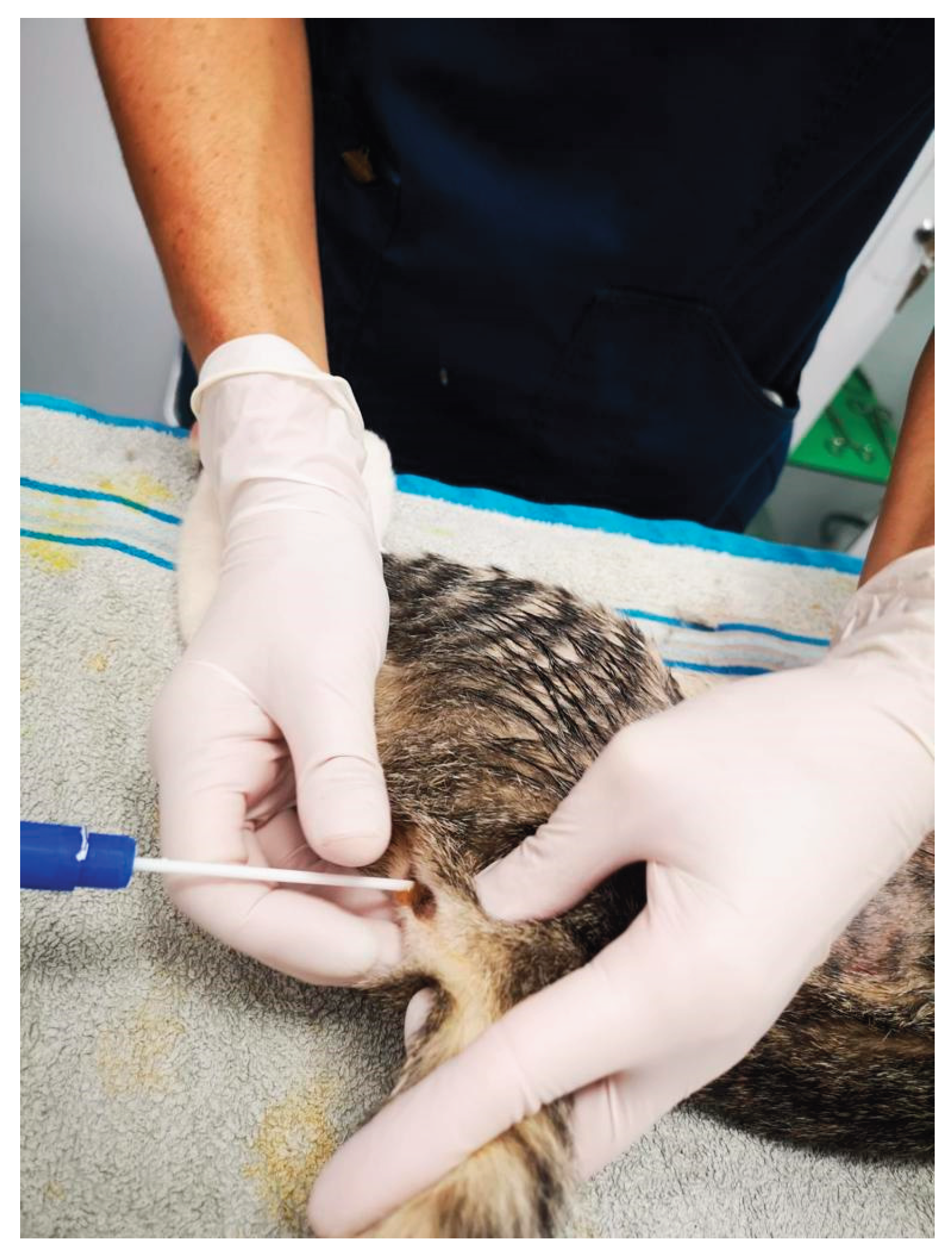
Figure 2.
Resistant and multiresistant phenotypes in stray cat’s commensal Escherichia coli isolates (n=68). AMK, amikacin; CIP, ciprofloxacin; NA, Nalidixic acid; TE, tetracycline; SF, sulfamethoxazole; AMP, ampicillin; AZM, azithromycin; CHL, chloramphenicol; TGC, tigecycline; TMP, trimethoprim.
Figure 2.
Resistant and multiresistant phenotypes in stray cat’s commensal Escherichia coli isolates (n=68). AMK, amikacin; CIP, ciprofloxacin; NA, Nalidixic acid; TE, tetracycline; SF, sulfamethoxazole; AMP, ampicillin; AZM, azithromycin; CHL, chloramphenicol; TGC, tigecycline; TMP, trimethoprim.
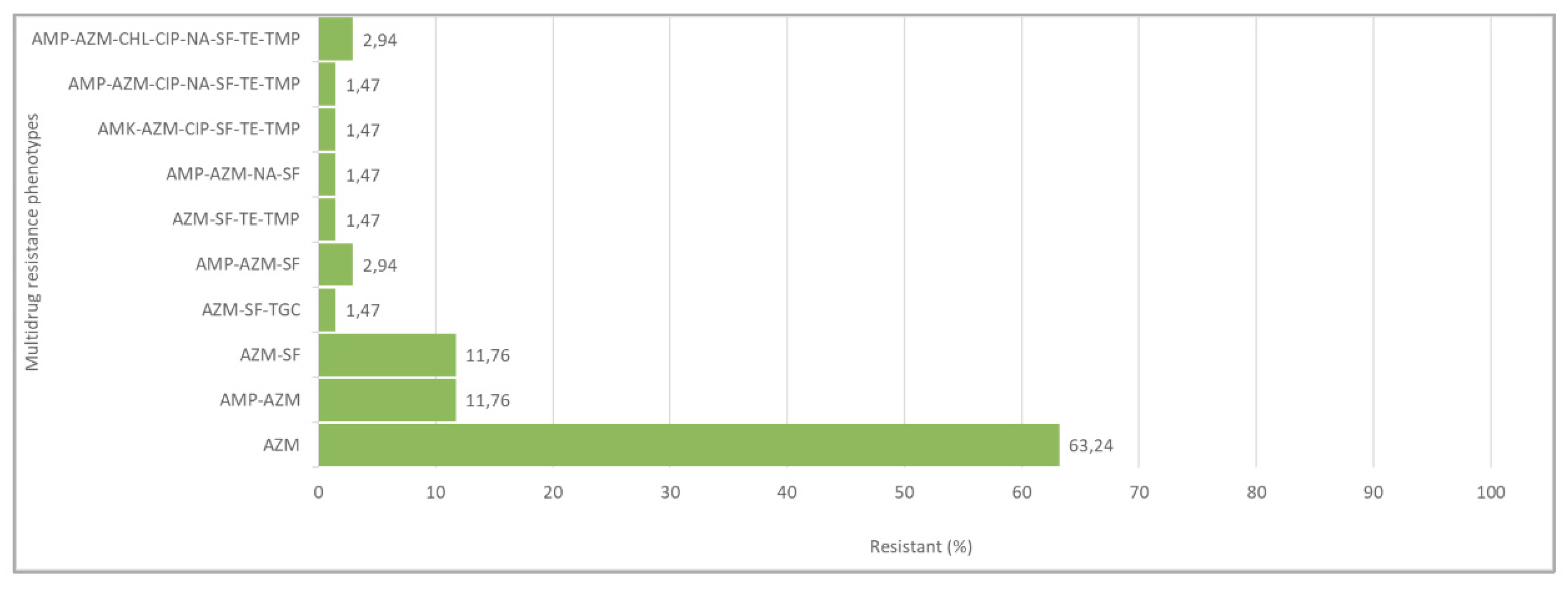
Figure 3.
Spearman correlation between antimicrobial resistances to several antimicrobials. Heat map showing the Spearman p value. White bold numbers indicate statiscally significant correlation between coefficients (p<0.05). Leyend: AMK, amikacin; CIP, ciprofloxacin; NA, Nalidixic acid; TE, tetracycline; SF, sulfamethoxazole; AMP, ampicillin; CHL, chloramphenicol; TGC, tigecycline; TMP, trimethoprim.
Figure 3.
Spearman correlation between antimicrobial resistances to several antimicrobials. Heat map showing the Spearman p value. White bold numbers indicate statiscally significant correlation between coefficients (p<0.05). Leyend: AMK, amikacin; CIP, ciprofloxacin; NA, Nalidixic acid; TE, tetracycline; SF, sulfamethoxazole; AMP, ampicillin; CHL, chloramphenicol; TGC, tigecycline; TMP, trimethoprim.
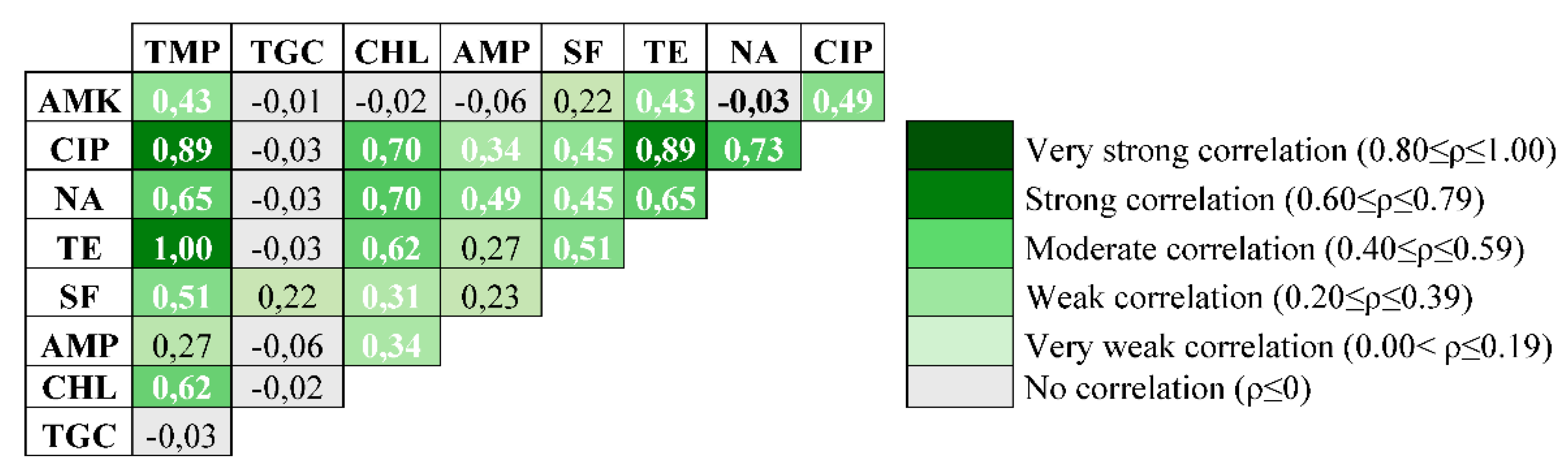
Figure 4.
Shelter for feral cats.
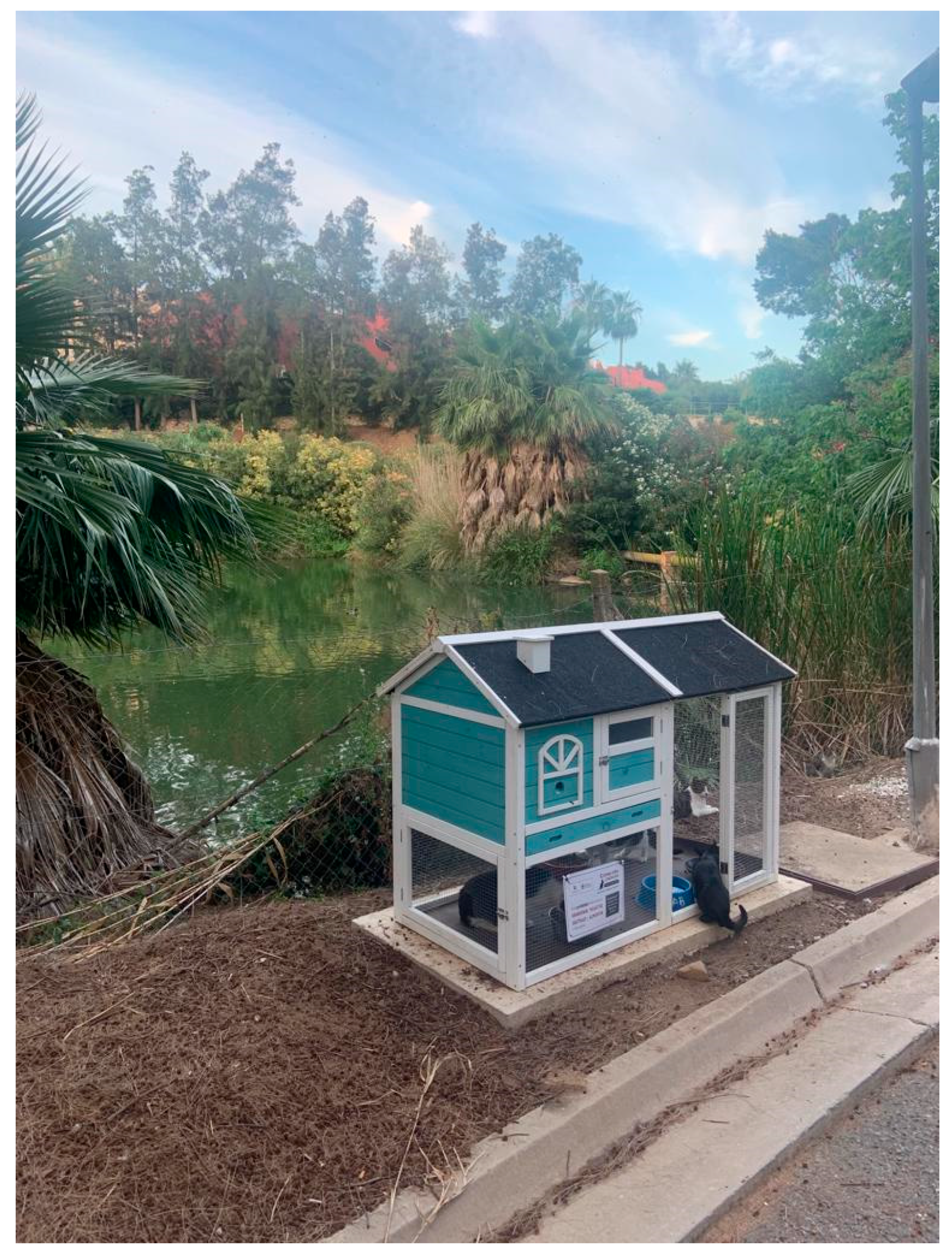

Table 1.
Classification of the 68 commensal Escherichia coli strains based on their response to the 15 antimicrobials (AMA) studied.
Table 1.
Classification of the 68 commensal Escherichia coli strains based on their response to the 15 antimicrobials (AMA) studied.
| AMA Group | AMA | EMA* | N.º Strains and Percentage (%) | |
| S | R | |||
| Aminoglycosides | GEN | C | 68/68 (100) | 0/68 (0) |
| AMK | C | 67/68 (98.5) | 1/68 (1.5) | |
| Cephalosporins | CTX | B | 68/68 (100) | 0/68 (0) |
| CAZ | B | 68/68 (100) | 0/68 (0) | |
| Quinolones | CIP | B | 64/68 (94.1) | 4/68 (5.9) |
| NA | B | 63/68 (92.6) | 5/68 (7.4) | |
| Tetracyclines | TE | D | 63/68 (92.6) | 5/68 (7.4) |
| Sulphonamides | SF | D | 51/68 (75) | 17/68 (25) |
| Aminopenicillins | AMP | D | 54/68 (79.4) | 14/68 (20.6) |
| Carbapenems | MEM | A | 68/68 (100) | 0/68 (0) |
| Macrolides | AZM | C | 0/68 (0) | 68/68 (100) |
| Polymyxins | CL | B | 68/68 (100) | 0/68 (0) |
| Amphenicols | CHL | C | 67/68 (98.5) | 1/68 (1.5) |
| Glycylcyclines | TGC | A | 67/68 (98.5) | 1/68 (1.5) |
| Diaminopyrimidines | TMP | D | 63/68 (92.6) | 5/68 (7.4) |
AMA leyend: GEN, gentamicin; AMK, amikacin; CTX, cefotaxime; CAZ, ceftazidime; CIP, ciprofloxacin; NA, Nalidixic acid; TE, tetracycline; SF, sulfamethoxazole; AMP, ampicillin; MEM, meropenem; AZM, azithromycin; CL, colistin; CHL, chloramphenicol; TGC, tigecycline; TMP, trimethoprim. S, susceptible; R, resistant. Classification criteria followed by the Sensititre™ SWIN™ Software System based on CLSI. *EMA (European Medicines Agency). This column indicates the EMA categorisation of antibiotics used in animals to promote their responsible use in order to protect animal and public health.
Table 2.
Number of commensal Escherichia coli strains isolated from stray cats and their resistant phenotypes.
Table 2.
Number of commensal Escherichia coli strains isolated from stray cats and their resistant phenotypes.
| N of Isolates | AMR Phenotypes | N Antimicrobials |
| 43 | AZM | 1 |
| 8 | AMP-AZM | 2 |
| 8 | AZM-SF | 2 |
| 1 | AZM-SF-TGC | 3 |
| 2 | AMP-AZM-SF | 3 |
| 1 | AZM-SF-TE-TMP | 4 |
| 1 | AMP-AZM-NA-SF | 4 |
| 1 | AMK-AZM-CIP-SF-TE-TMP | 6 |
| 1 | AMP-AZM-CIP-NA-SF-TE-TMP | 7 |
| 2 | AMP-AZM-CHL-CIP-NA-SF-TE-TMP | 8 |
| Total 68 |
N, number; AMK, amikacin; CIP, ciprofloxacin; NA, Nalidixic acid; TE, tetracycline; SF, sulfamethoxazole; AMP, ampicillin; AZM, azithromycin; CHL, chloramphenicol; TGC, tigecycline; TMP, trimethoprim.
Disclaimer/Publisher’s Note: The statements, opinions and data contained in all publications are solely those of the individual author(s) and contributor(s) and not of MDPI and/or the editor(s). MDPI and/or the editor(s) disclaim responsibility for any injury to people or property resulting from any ideas, methods, instructions or products referred to in the content. |
© 2025 by the authors. Licensee MDPI, Basel, Switzerland. This article is an open access article distributed under the terms and conditions of the Creative Commons Attribution (CC BY) license (http://creativecommons.org/licenses/by/4.0/).
Copyright: This open access article is published under a Creative Commons CC BY 4.0 license, which permit the free download, distribution, and reuse, provided that the author and preprint are cited in any reuse.


