

Submitted:
16 June 2025
Posted:
17 June 2025
You are already at the latest version
Abstract
Interior design is closely related to the diversity of the spaces we inhabit on a daily basis. In the educational context, this study aims to analyze how the application of interior design principles can transform university students’ workspaces by evaluating various strategies and elements such as furniture arrangement, lighting, color and ergonomics. Through a review of the literature on environmental psychology and its link to academic performance, as well as surveys applied to university students, it was possible to obtain a deeper understanding of how these factors influence their daily experience and academic outcomes. The findings led to a set of specific recommendations for optimizing university spaces to enhance student well-being, creativity and academic performance.
Keywords:
Student
; interior design
; environmental psychology
Interior space design plays a crucial role in creating environments that promote well-being and human performance. It is essential to distinguish between interior design and interior decoration, as these terms are often used incorrectly. Interior decoration is defined as 'the art of conditioning and decorating interior spaces in architecture' (Real Academia Española, 2024), while interior design is understood as the discipline involved in understanding human behavior to create functional spaces adapted to the needs of the inhabitants and the architecture that contains them. Under this distinction, we can state that interior decoration focuses more on aesthetics and artistic expression, while interior design—used as the central concept in this paper—prioritizes functionality and environmental adaptability.
The term 'environmental psychology' was first used by American psychologist Harold Proshansky in the 1970s, along with William Ittelson and Leanne Rivlin. Environmental psychology is the result of the interaction between people and the spaces they inhabit (Harrouk, 2020). This field studies the relationship between human behavior and the natural and built environment, and how these surroundings can influence emotions and well-being. It is an interdisciplinary field that integrates psychology, architecture, urban planning, design, and sociology to understand how environments shape social interactions (Hernández & Yaryura, 2023).
In the educational context, particularly focusing on university students' workspaces, interior design not only has an aesthetic impact but also a functional one. When misapplied, it can negatively affect productivity, concentration, creativity, and even students' physical and mental health. Furniture arrangement, lighting, color use, and ergonomics are key elements that, when well-applied, can transform study and work environments into more comfortable and effective spaces.
Various studies and prior publications such as "The Impact of Classroom Design on Pupils’ Learning: Final Results of a Holistic, Multi-level Analysis" conducted by Peter Barrett from the University of Salford in the United Kingdom demonstrate, through his SIN model (Stimulation, Individuality, and Naturalness), a framework to organize and study the sensory impact that environments have on students. Within the variations of his results, seven key design parameters emerged that significantly affect academic progress. These were: light, temperature, air quality, ownership, flexibility, complexity, and color (Barrett et al., 2015). Given the proven benefits of these factors, it is concerning that many university spaces intended for study or work are not designed accordingly. Thus, we may assert that students' potential to reach peak performance is often hindered by spatial design factors.
This paper aims to identify which interior design factors influence academic performance and describes a methodological process to establish specific design recommendations for optimizing university workspaces. This is achieved through the identification of studies relevant to educational design and by analyzing survey responses from university students regarding furniture layout, lighting, color, and ergonomics.
Methodology
A survey was conducted with 30 students from various universities in the state of Queretaro, including a range of questions targeting previously mentioned design areas. The first question asked students how they believed interior design impacts their productivity and well-being in an academic setting.
Figure 1.
Influence of Interior Design on Productivity and Well-being. Source: Author’s compilation from Google Forms summary, 2024.
Figure 1.
Influence of Interior Design on Productivity and Well-being. Source: Author’s compilation from Google Forms summary, 2024.
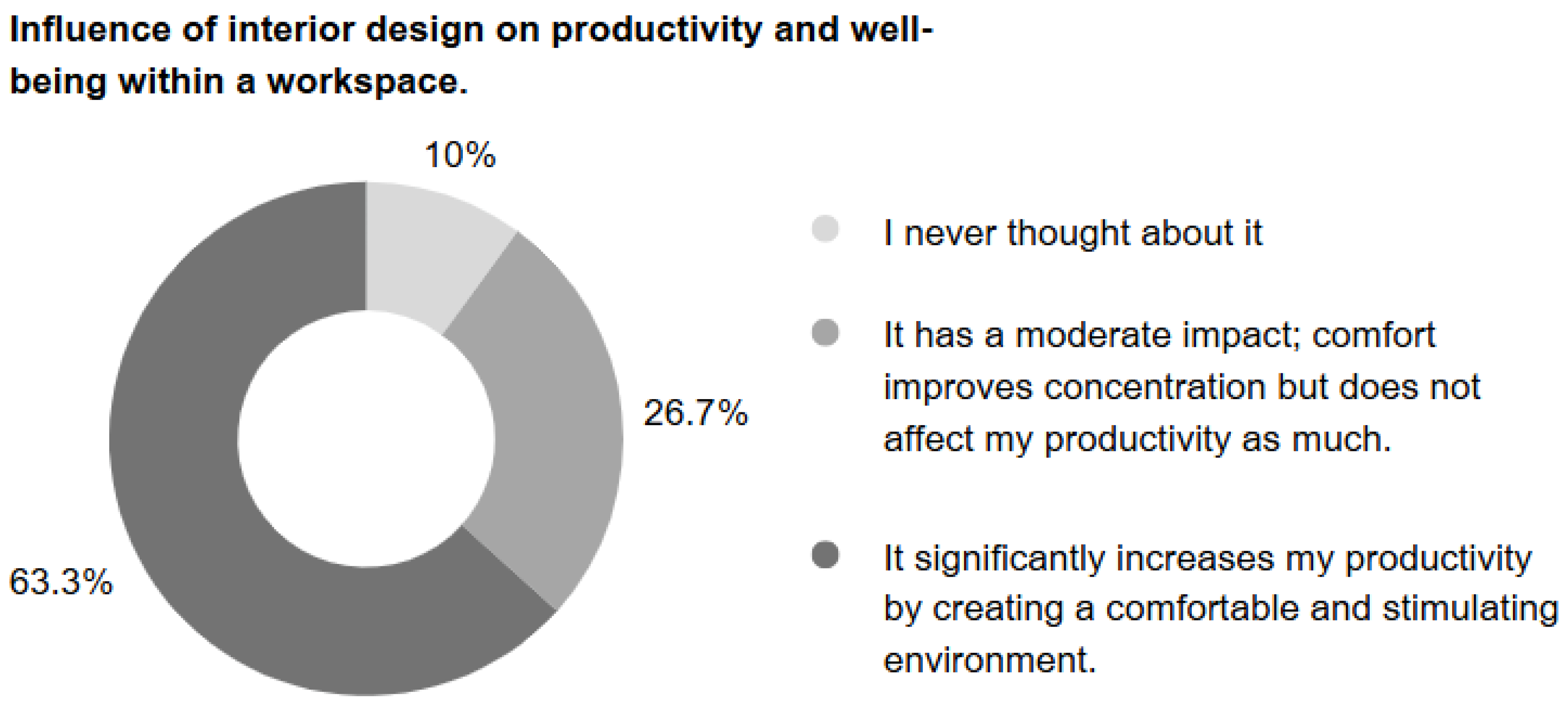
Of the five possible responses, only three were selected, and over 63% of the students affirmed that interior design significantly enhances productivity by creating a comfortable and stimulating environment. This suggests from the outset that most university students recognize the importance of their work setting and the ambiance in which they carry out academic tasks.
The questions that follow were divided by category and compared with existing studies and literature. This comparison enabled the extraction of results used to formulate interior design recommendations for academic and work environments, tailored to university students.
- TOPIC 01: COLOR
Figure 2.
Colors or Textures in the Space that Induce Comfort. Source: Author’s compilation from Google Forms summary, 2024.
Figure 2.
Colors or Textures in the Space that Induce Comfort. Source: Author’s compilation from Google Forms summary, 2024.
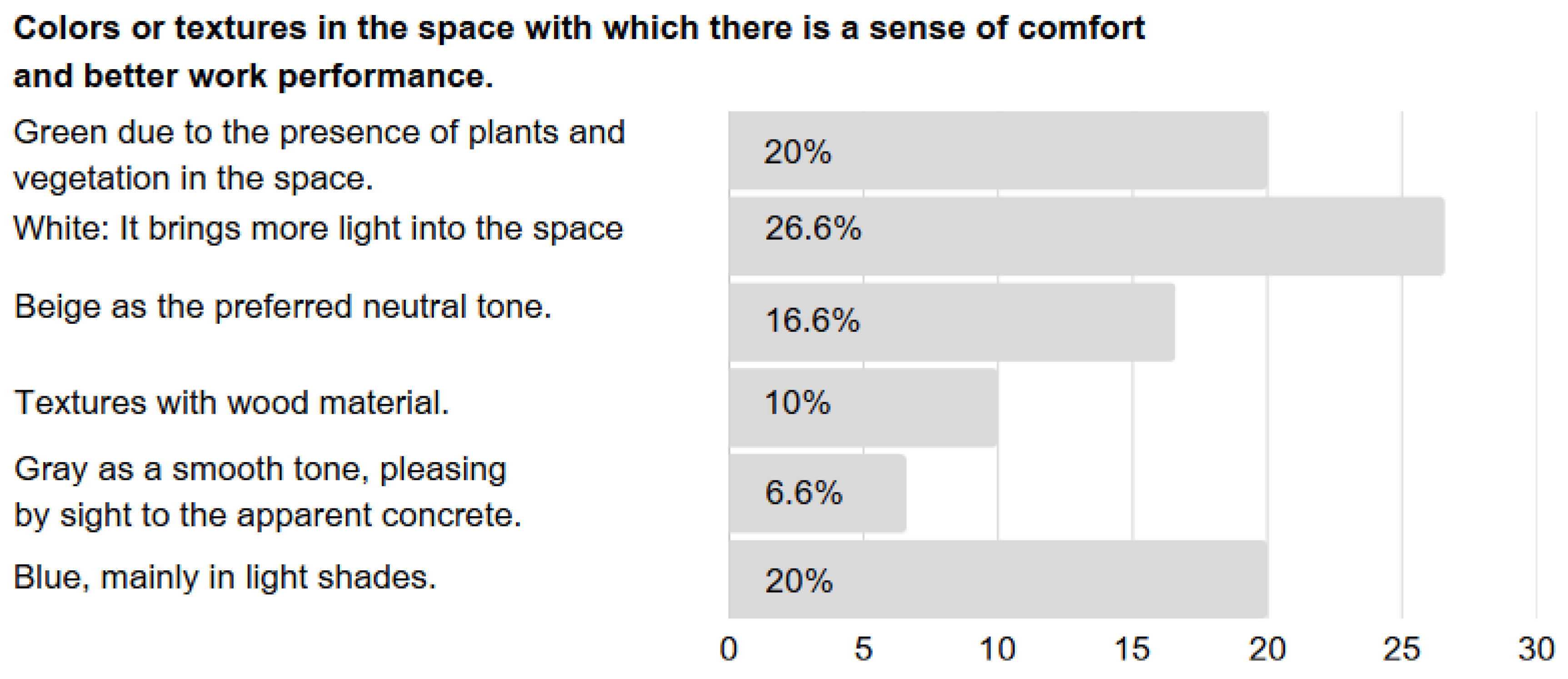
In the survey's only open-ended question, students were asked if any color or texture in their workspace helped them work better or feel more comfortable. Most leaned toward the color white, which they claimed "brightens the space better." Several also indicated that green, especially when associated with natural elements like plants, was highly important, and light blue tones made them feel more relaxed while working.
However, in the article "Cognitive Performance and Emotion Are Indifferent to Ambient Color" by Christoph von Castell from the Psychology Department at Johannes Gutenberg University Mainz, the cognitive and emotional impacts of color were evaluated. Participants completed reasoning, mental rotation, and memory tasks in cabins painted red, pink, or blue, compared to a white control. Results showed no consistent effect of color on cognitive performance, though a small significant improvement in mental rotation occurred with red and pink backgrounds. There were no observed effects on numerical reasoning, visual/verbal memory, or object recognition. Emotional responses also did not vary significantly by color, despite expectations that blue would induce calmness and red excitement (von Castell et al., 2018).
Considering students' comments about green being beneficial only in the context of natural elements like plants, further exploration of biophilic design was warranted. "Biophilic design is the intentional incorporation of natural elements into architectural space due to the benefits they offer to humans" (Rosales & Garcia, 2019).
The study "Are Biophilic-Designed Site Office Buildings Linked to Health Benefits and High Performing Occupants?" by Tonia Gray and Carol Birrell (Australia, 2014) tracked employees for two years following modifications to an office space to include natural elements. Within just three months, workers reported increased collaboration, stress reduction, and greater job satisfaction (Gray & Birrell, 2014).
- Conclusion – Topic 01: Color
The impact of color alone on cognitive performance is not consistent, whereas the presence of biophilic design, such as vegetation, does demonstrate positive changes in well-being and productivity. This emphasizes the importance of nature in work environments beyond the effects of color.
- TOPIC 02: LIGHTING
Figure 3.
Importance of Light Intensity Control. Source: Author’s compilation from Google Forms summary, 2024.
Figure 3.
Importance of Light Intensity Control. Source: Author’s compilation from Google Forms summary, 2024.
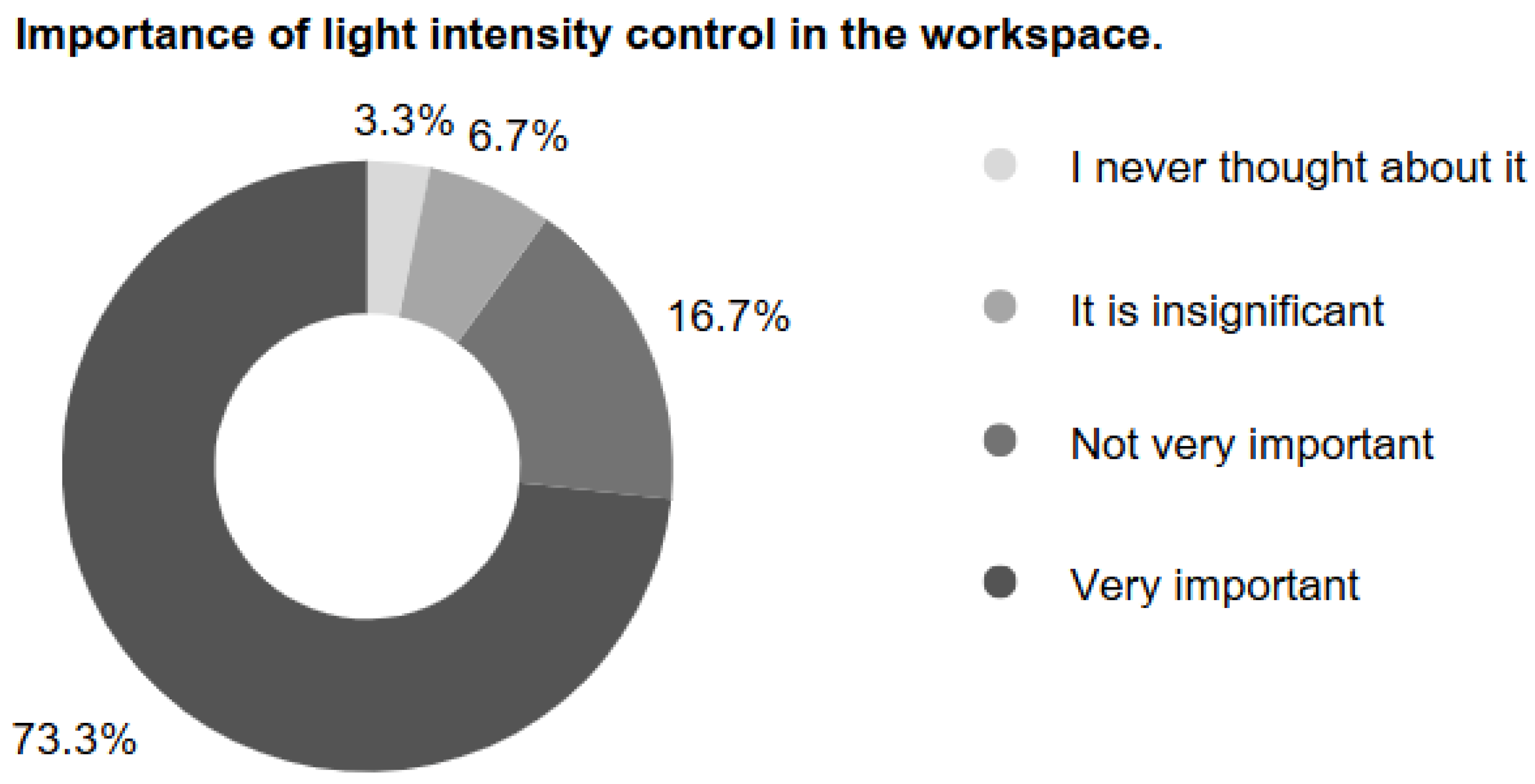
More than 73% of students considered light intensity control a very important factor in their study and work hours. However, the question did not differentiate between natural and artificial light. A follow-up question was posed to gain more clarity.
Figure 4.
Influence of Natural Light on Mood and Productivity. Source: Author’s compilation from Google Forms summary, 2024.
Figure 4.
Influence of Natural Light on Mood and Productivity. Source: Author’s compilation from Google Forms summary, 2024.
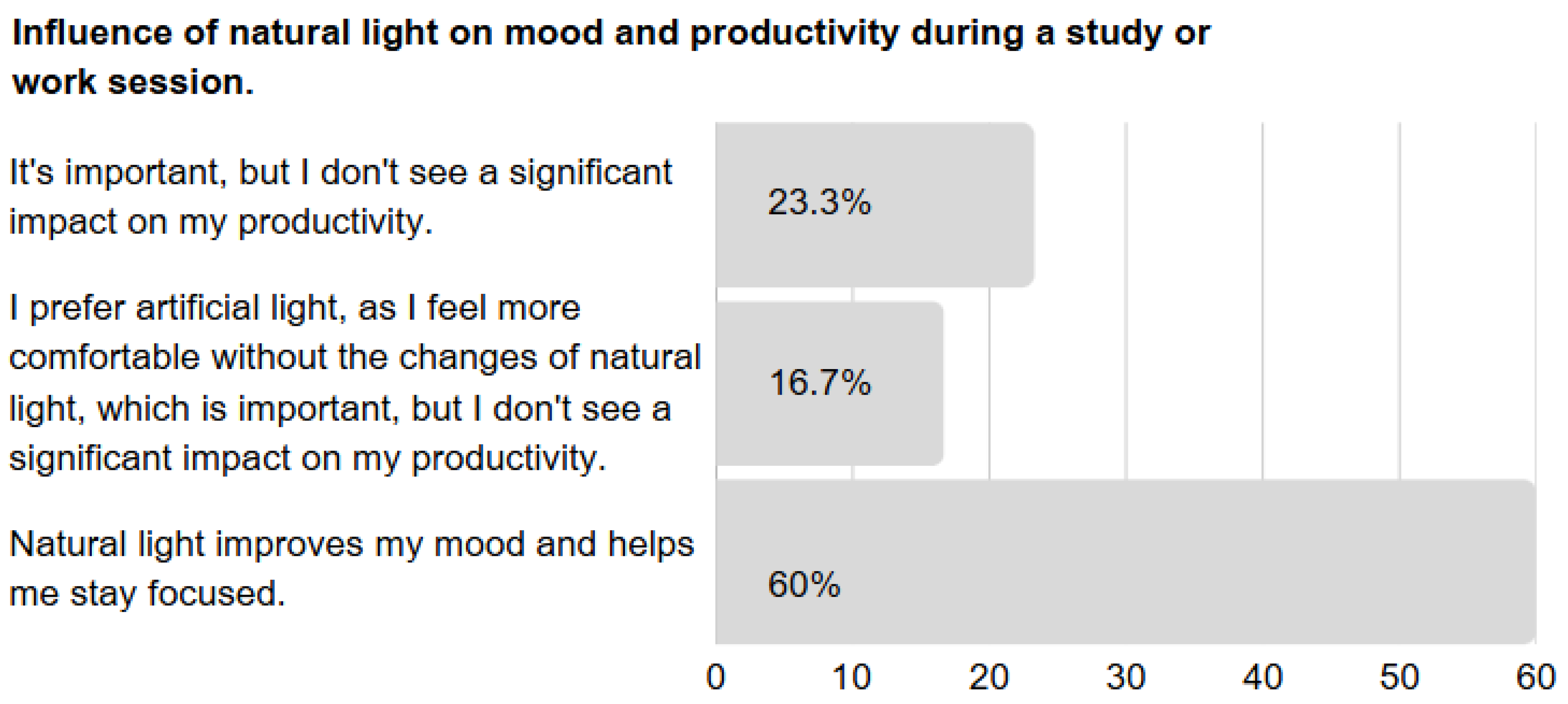
When specifying the influence of natural versus artificial light on mood and productivity, students clearly preferred natural light. Despite natural light involving gradual changes in intensity (unlike artificial light), its benefits appear more appreciated.
In the study "La luz en el espacio docente. Diferencias de percepción entre la luz natural y artificial" by Carmen Jovacho, the affective responses of 521 students to lighting in 17 classrooms were analyzed. Five classrooms had natural lighting, six had artificial, and six combined both. Students associated natural light with feelings of surprise, clarity, tranquility, and liveliness, while artificial lighting induced feelings of uniformity and glare (Jovacho & Castilla, 2018).
- Conclusion – Topic 02: Lighting
Although artificial lighting offers stable illumination, students prefer natural light due to its positive effect on mood and productivity. Natural light fosters a more pleasant environment and better academic performance. Combined with findings on color and biophilic design, this underscores the importance of nature in study environments.
- TOPIC 03: FURNITURE AND ERGONOMICS
Figure 5.
Influence of Posture and Comfort on Concentration and Efficiency. Source: Author’s compilation from Google Forms summary, 2024.
Figure 5.
Influence of Posture and Comfort on Concentration and Efficiency. Source: Author’s compilation from Google Forms summary, 2024.
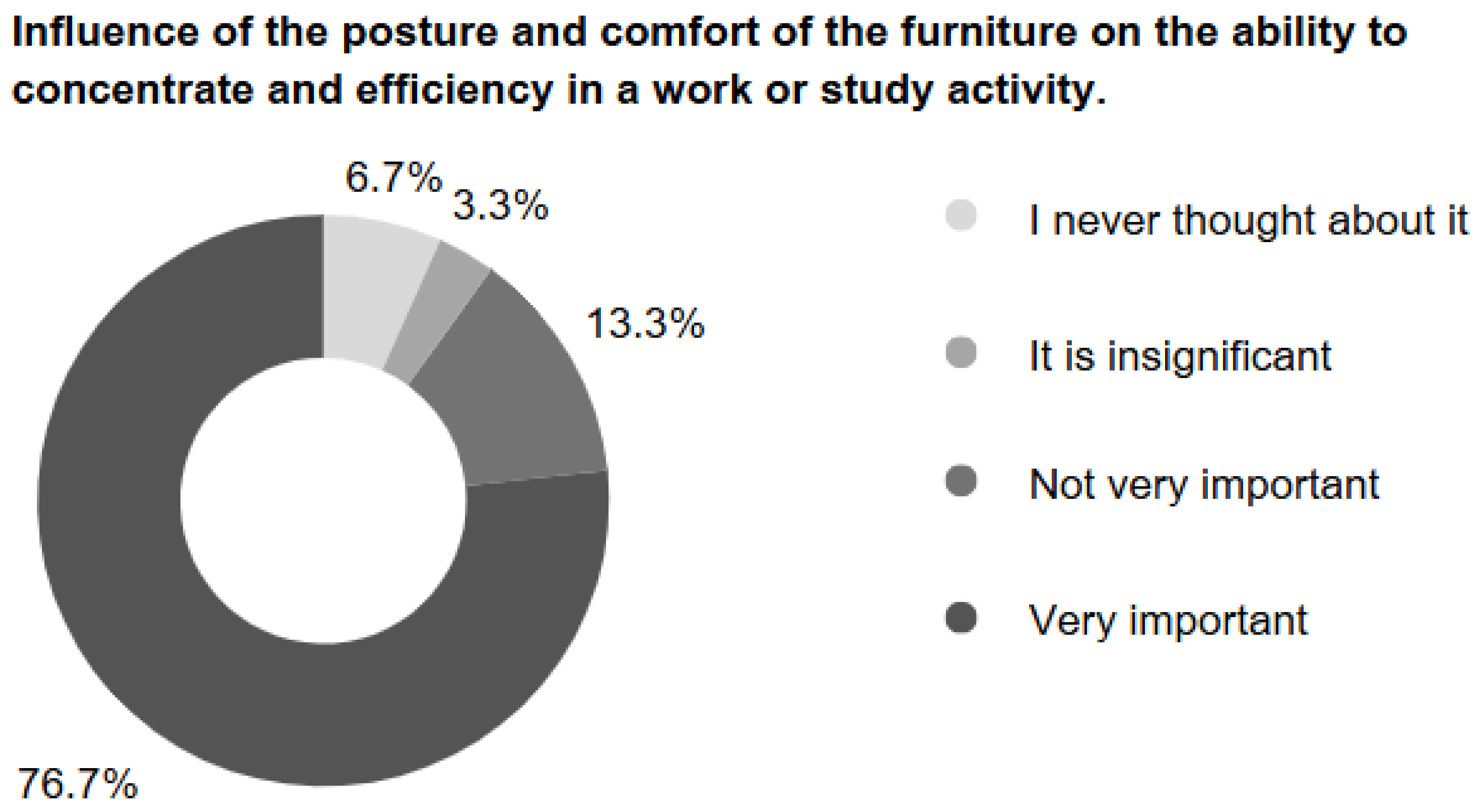
Over 76% of students stated that furniture comfort is crucial for maintaining concentration and being effective in their tasks. The next question: what features make furniture comfortable? This is where ergonomics becomes key. Ergonomics is defined as "The study of the adaptation of machines, furniture, and tools to the person who habitually uses them to achieve greater comfort and efficiency" (Real Academia Española, 2024).
Students were asked to select from a list of eight items (with no selection limit) those they considered essential for a healthy workspace. A healthy workspace is defined as one that provides accessibility based on individuals' abilities, minimizes barriers, and promotes health and disease prevention (Government of Mexico, 2022).
Figure 6.
Essential Elements for a Healthy Workspace. Source: Author’s compilation from Google Forms summary, 2024.
Figure 6.
Essential Elements for a Healthy Workspace. Source: Author’s compilation from Google Forms summary, 2024.
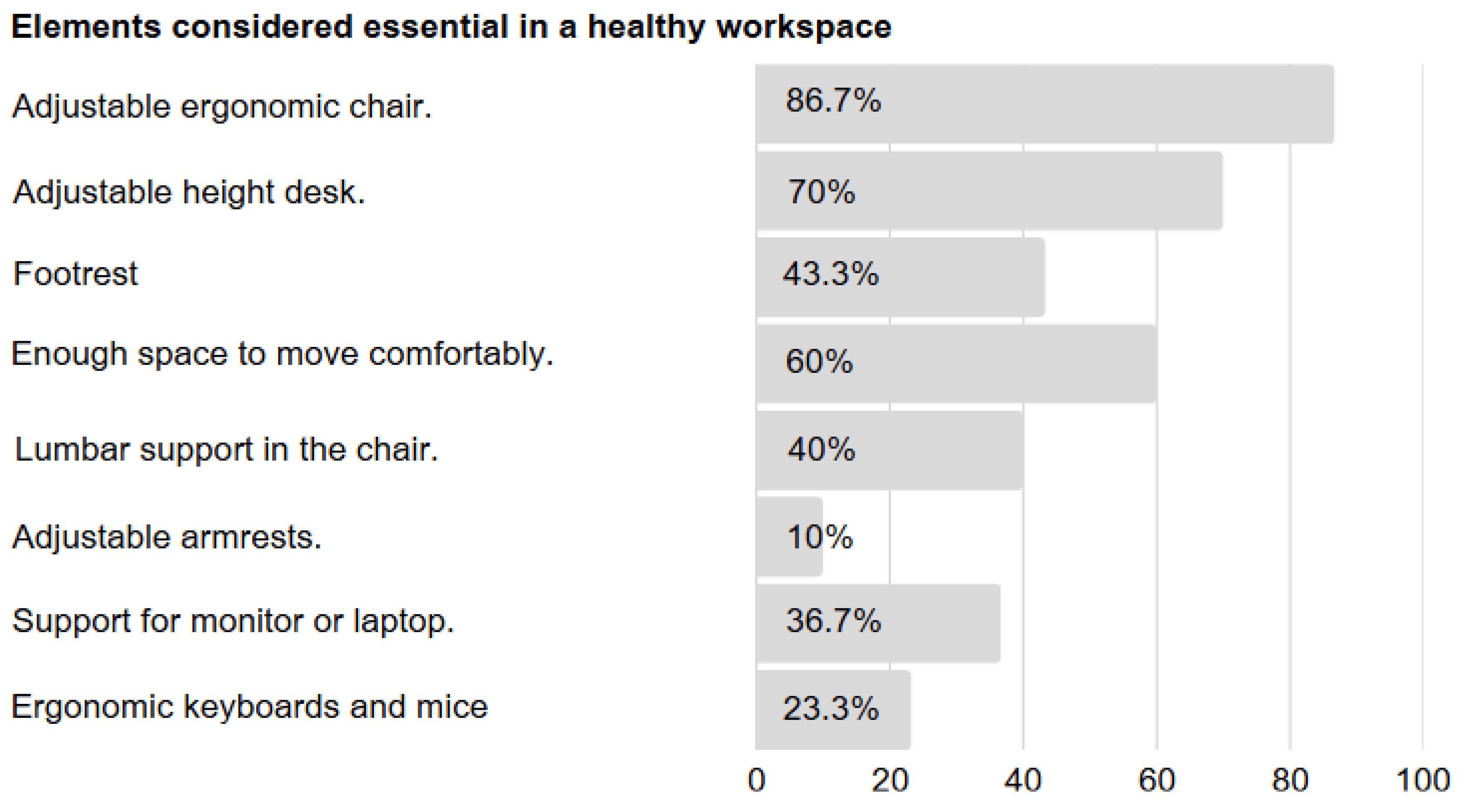
The ergonomic chair was most selected (86.7%), followed by the desk (70%). These are logical given the time students spend sitting and working. What elements of a chair make it comfortable?
According to Rosario Párraga's research in "Diseño ergonómico de aulas universitarias," the key discomfort factors were seat material, backrest shape, and material. Párraga concluded: "University classroom furniture must be adjustable to suit different user measurements and avoid forced postures" (Párraga & García, 2014).
This aligns with the concept of flexible furniture, which can easily change configuration to prevent prolonged forced postures. Students were asked whether they supported or opposed the use of flexible furniture.
Figure 7.
Opinion on Flexible Furniture. Source: Author’s compilation from Google Forms summary, 2024.
Figure 7.
Opinion on Flexible Furniture. Source: Author’s compilation from Google Forms summary, 2024.
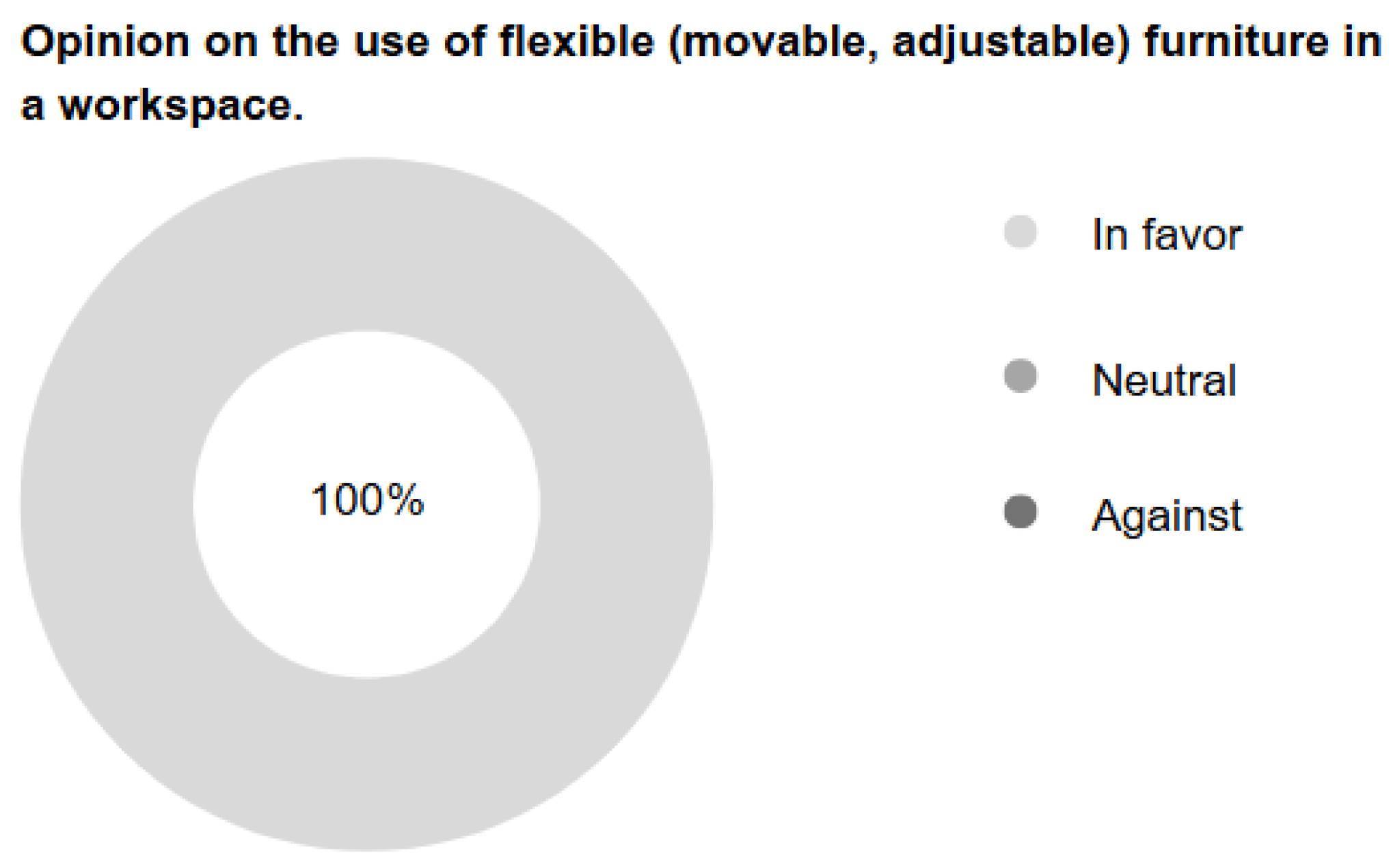
All students (100%) supported trying flexible furniture, confirming their aversion to static, rigid positions during study/work. Flexible furniture enhances spatial organization and allows movement. Audrey Migliani states: "Furniture should be flexible to allow different spatial arrangements, adapting quickly and quietly to curriculum activities" (Migliani, 2020).
Lastly, students were asked which furniture layout best fostered both concentration and interaction during collaborative tasks.
Figure 8.
Influence of Furniture Layout on Concentration and Interaction. Source: Author’s compilation from Google Forms summary, 2024.
Figure 8.
Influence of Furniture Layout on Concentration and Interaction. Source: Author’s compilation from Google Forms summary, 2024.
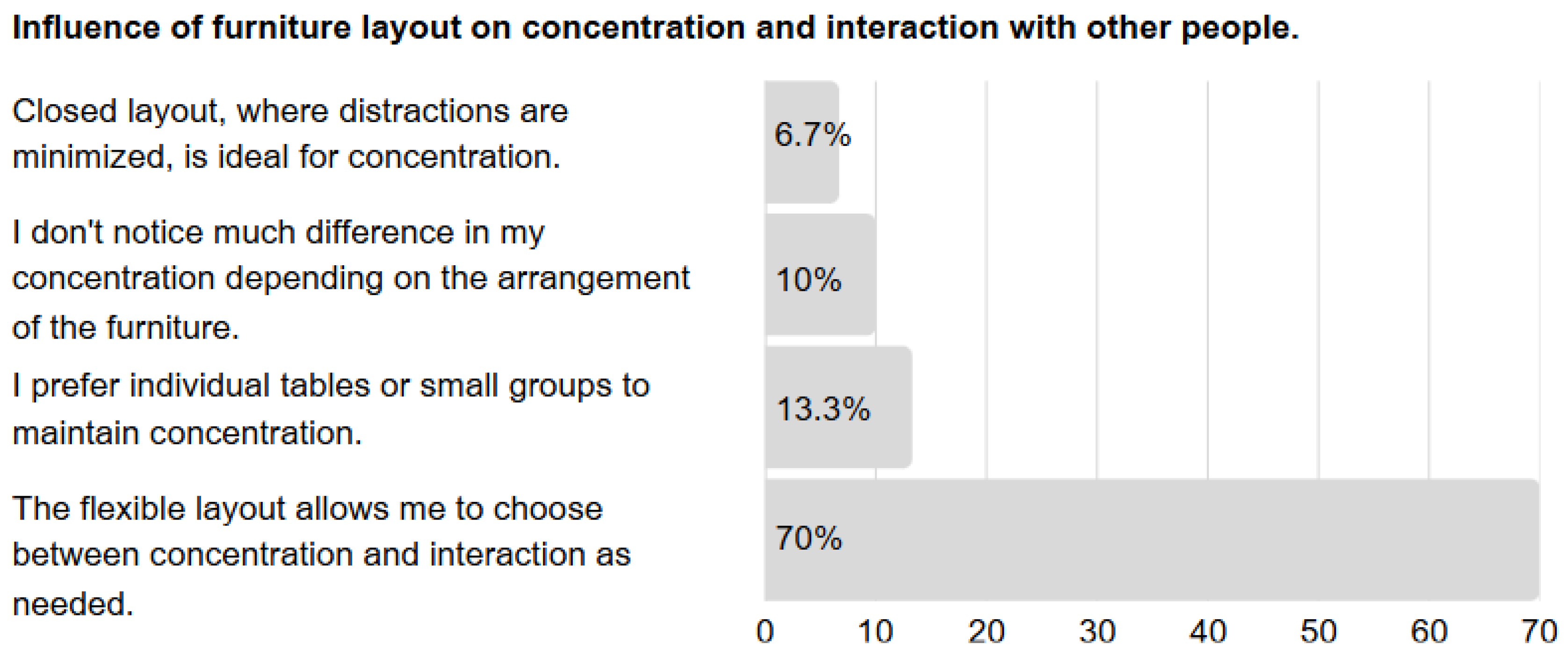
Again, students favored flexible layouts (over 70%) that enabled individual focus or group collaboration over more rigid or isolated configurations.
- Conclusion – Topic 03: Furniture and Ergonomics
Furniture comfort is fundamental for university students. Ergonomics is essential, adapting to their physical needs for comfort and efficiency. Desks and chairs, especially those that consider material and support, are vital in preventing fatigue. Flexible furniture allows students to shift postures and layouts, improving spatial organization and enabling teamwork. Lightweight, movable furniture and adjustable height/rotation features outperform fixed, rigid options, supporting academic success.
- FINAL DESIGN RECOMMENDATIONS
- Incorporate Biophilic Design: Integrate natural elements like plants to enhance emotional well-being, reduce stress, and boost productivity.
- Prioritize Natural Light: Maximize access to natural light to improve mood and study performance.
- Use Suitable Artificial Lighting: When natural light is insufficient, use artificial systems that mimic daylight.
- Design Ergonomic Furniture: Focus on adaptable chairs and desks with quality materials and proper support.
- Implement Flexible and Adjustable Furniture: Choose chairs with adjustable height and rotation to accommodate various activities.
- Use Lightweight and Mobile Furniture: Allow furniture to be easily moved to support collaboration and flexible organization.
- Create Healthy, Accessible Environments: Design inclusive spaces that eliminate physical barriers and promote wellness.
- Design Areas for Both Interaction and Focus: Offer students options for individual concentration and teamwork.
References
- Barrett, P., Davies, F., Zhang, Y., & Barrett, L. (2015). The impact of classroom design on pupils’ learning: Final results of a holistic, multi-level analysis. Building and Environment, 89, 118–133. [CrossRef]
- Gobierno de México. (2022, January). ¿Qué es un entorno de trabajo saludable y seguro? Promoción de la Salud. https://www.gob.mx/promosalud/es/articulos/que-es-un-entorno-de-trabajo-saludable-y-seguro.
- Gray, T., & Birrell, C. (2014). Are biophilic-designed site office buildings linked to health benefits and high performing occupants? International Journal of Environmental Research and Public Health, 11(12), 12204–12222. [CrossRef]
- Harrouk, C. (2020, March 29). Psicología del espacio: ¿Cómo impactan los interiores en nuestro comportamiento? ArchDaily. https://www.archdaily.mx/mx/936153/psicologia-del-espacio-como-impactan-los-interiores-en-nuestro-comportamiento.
- Hernández, L. M. J., & Yaryura, C. (2023). Impacto del diseño de interiores en el proceso creativo de los estudiantes. [Bachelor’s thesis, Universidad Nacional Pedro Henríquez Ureña]. https://repositorio.unphu.edu.do/bitstream/handle/123456789/5302/...
- Jovacho, C., & Castilla, N. (2018). La luz en el espacio docente: Diferencias de percepción entre la luz natural y artificial. [Doctoral dissertation, Universidad Politécnica de Valencia].
- Migliani, A. (2020). Escuelas del futuro: Cómo el mobiliario influye en el aprendizaje. ArchDaily. https://www.archdaily.mx/mx/949162/...
- Párraga, R., & García, T. (2014). Diseño ergonómico de aulas universitarias que permitan optimizar el confort y reducir la fatiga de estudiantes y docentes. Revista de la Facultad de Ingeniería Industrial, 18(2).
- Real Academia Española. (2024). Interiorismo. Diccionario de la lengua española (24th ed.). https://dle.rae.es/interiorismo. /.
- Rosales Pérez, N. de J. (2019). Arquitectura y biofilia: Percepción del espacio laboral universitario. [Master’s thesis, Universidad Autónoma de San Luis Potosí].
- von Castell, C., Stelzmann, D., Oberfeld, D., Welsch, R., & Hecht, H. (2018). Cognitive performance and emotion are indifferent to ambient color. Color Research & Application, 43(1), 65–74. [CrossRef]
Disclaimer/Publisher’s Note: The statements, opinions and data contained in all publications are solely those of the individual author(s) and contributor(s) and not of MDPI and/or the editor(s). MDPI and/or the editor(s) disclaim responsibility for any injury to people or property resulting from any ideas, methods, instructions or products referred to in the content. |
© 2025 by the author. Licensee MDPI, Basel, Switzerland. This article is an open access article distributed under the terms and conditions of the Creative Commons Attribution (CC BY) license (https://creativecommons.org/licenses/by/4.0/).
Copyright: This open access article is published under a Creative Commons CC BY 4.0 license, which permit the free download, distribution, and reuse, provided that the author and preprint are cited in any reuse.