

Submitted:
14 June 2025
Posted:
17 June 2025
You are already at the latest version
Abstract
Toxic metals, dyes, pesticides, fertilizers, and other chemicals found in wastewater are dangerous and non-biodegradable, raising severe issues around the world. Many conventional methods do exist for the treatment including physical, chemical and biological wastewater treatment but due to their drawbacks and the presence of micropollutants in contaminated water, newer technologies need to be devised. Studies on the application of nanoparticles derived from plant-based waste, i.e., lignocellulosic waste in wastewater treatment are growing in number due to their special characteristics including the environment friendliness, high surface area to volume ratio, presence of various functional groups. Examining the latest developments in these nanomaterials that are currently widely used for wastewater treatment is crucial. These nanomaterials are biodegradable, stable and non-toxic hence, provide a better alternative towards the rectification of this global issue. Through these, two tasks are accomplished at once as the waste is being utilized to produce a highly valuable and applicable product. This review provides a thorough analysis of current developments in common lignocellulosic based waste in the synthesis of nanomaterials used for sustainable wastewater treatment.
Keywords:
Lignocellulosic biomass
; Wastewater treatment
; Nanoparticles
; Heavy metals
; Water Contaminants
; Adsorption
1. Introduction
Lignocellulosic biomass (LCB), a renewable and environment-friendly resource, has become increasingly suitable for the production of various composites (Wang et al., 2021). Cellulose, hemicellulose and lignin being its major constituents, it has a pivotal role in providing tensile strength and integrity to the plants (Pathania & Srivastava, 2021). Initially, lignin was often considered a hindrance to industries aiming to extract cellulose and hemicellulose because of its complex and sturdy structure, but with the advent of well-defined pre-treatment strategies, complete valorisation of LCB has become possible (Khan et al., 2024). Additionally, after understanding the true potential of lignocellulose-based waste, for its wide range of industrial applications, the scenario is changing as this approach not only helps protect the environment but also provides a valuable way to utilize waste materials, demonstrating a mutually advantageous situation (Chakhtouna et al., 2024).
The use of nanoparticles (NPs) in various fields has been evolving from around past 50 years. Recent advancements in metal-based, carbon-based, and polymer-based NPs have enticed significant attention as potential adsorbents (Figure 1) (Wani et al., 2023). They can bring about environmental remediation as they are promising candidates for efficient adsorption of toxic pollutants owing to their high surface area and other unique properties (Namakka et al., 2023a). Therefore, biosynthesis from low-cost substrates like lignocellulosic waste, that can be sourced from crops, agricultural waste, and forest residues, provides an alternative and beneficial approach (Mankar et al., 2021).
Water scarcity has become an alarming global issue, especially with the world population projected to increase by 22-34% i.e., around 10 billion by 2050 which will put immense pressure on water supplies, making clean water increasingly scarcer (World Water Development Report, UN 2020). Compounding the problem is the growing presence of diverse contaminants in water sources, including pharmaceuticals, industrial chemicals, hormones, detergents, perfluorinated compounds, caffeine, fragrances, and cyanotoxins (Nishat et al., 2023). In this context, LCB-NPs have garnered considerable attention as an environmentally benign and cost-effective strategy for wastewater treatment. These NPs exhibit the ability to adsorb and remove a diverse array of pollutants, including organic compounds, heavy metals, inorganic species, and pathogenic microorganisms (Othmani et al., 2022; Roy et al., 2021). These are an attractive choice to tackle this issue due to their superior chemical and mechanical stability, large surface area, eco-friendliness, low cost, and excellent adsorption capabilities (Chakhtouna et al., 2024; Sajjadi et al., 2021). Additionally, presence of abundant functional groups, such as thiols, aliphatic hydroxyls, and phenolics, enable easy surface modification, broadening their potential applications (Chauhan, 2020).
Although a variety of wastewater treatment technologies are currently in use, many face limitations related to safety, economic feasibility, environmental sustainability, and adaptability to emerging contaminants. The growing presence of novel pollutants such as microplastics and engineered NPs has further intensified the need for advanced, more efficient water purification strategies. In this context LCB-NPs have emerged as a safe, cost-effective, and environment friendly alternative. These nanomaterials primarily facilitate contaminant removal via adsorption and coagulation mechanisms, leveraging their high surface area and abundant surface functional groups. Their ability to form aggregates with microplastics and NPs enhances their effectiveness in extracting these pollutants from water systems (Khan et al., 2024).
This review extensively delves into the potential of plant-based lignocellulosic nanomaterials (NMs), derived from cellulose, hemicellulose and lignin for a plethora of applications, particularly wastewater treatment, specifically highlighting their capacity to remove heavy metals, dyes and other organic and inorganic pollutants for water purification.
2. Waste-Water Treatment: Contaminants and Current Challenges
Anthropogenic activities including urbanization, industrialization, agricultural practices, hospital effluents are the top contributors for generation of wastewater (Khatri & Tyagi, 2015). Major water contaminants encompass microbiological, organic, and inorganic compounds that originate from diverse sources such as domestic households, agricultural runoff, industrial discharges, and hospital effluents. Among these, industrial wastewater is particularly notorious for containing high concentrations of dyes and heavy metals, which are considered some of the most persistent and hazardous pollutants (Akter et al., 2021). In recent years, the removal of synthetic dyes from contaminated water has emerged as a critical challenge. Due to their complex aromatic structures, high photostability, and thermal resistance, these dyes are highly recalcitrant to biodegradation and tend to persist in the environment (Sharma et al., 2021).
Similarly, contamination of water bodies with heavy metal ions has become a significant environmental and public health concern. These metals are highly toxic, carcinogenic, and xenobiotic in nature, exhibiting poor biodegradability and a strong tendency to bioaccumulate through the food chain. Their presence poses serious threats to both aquatic ecosystems and human health due to their inefficient metabolic elimination and long-term persistence (Ge & Li, 2018). A summary of the environmental and biological impacts of key heavy metals is provided in Table 1.
Currently existing approaches for wastewater treatment include physical, chemical and biological methods (Table 2).
3. LCB: Composition, Nanoparticle Formulation and Applications
The need for a safer ecology and environment has prompted the use of renewable materials, therefore addressing the issue of resource sustainability. Similarly, LCB is an appealing natural resource due to its availability, renewability, recyclability, and low cost. Their good adsorption efficiency has promoted their practical application to manufacture nanomaterials (Brar et al., 2022).
3.1. LCB: Constituents and Structural Overview
LCB, a plant-based biomass, is a flow resource, i.e., a renewable bioresource readily available on Earth in substantial amounts, being a part of all plant residues (Pathania & Srivastava, 2021). This property makes it an interesting source and accounts for various industrial applications. It is primarily composed of cellulose, hemicellulose, and lignin, (Figure 4) with smaller amounts of other substances like pectin, proteins, ashes, and extractives (Ma et al., 2020). The specific composition of LCB can vary depending on the type and source of the material, generally, cellulose makes up about 40-60%, hemicellulose 20-40%, and lignin 10-25% of the total mass i.e., generally cellulose and hemicellulose contribute to the maximum carbohydrate content of LCB (Figure 2) (Kucharska et al., 2018).
3.2. Synthesis of LCB NPs
Synthesis methods are mainly classified into three types, top-down, biosynthesis/green and bottom-up approach, wherein former refers to break down of bulk particles into smaller particles by various methods including, homogenization, sonication, milling, etching, laser ablation, biosynthesis involves the use of plant extracts (a sustainable approach) or direct use of microorganisms and latter refers to synthesis of NPs from basic atoms in an anabolic way via sol-gel, spinning, biosynthesis (Namakka et al., 2023b). Various methods that have been employed for synthesis of LCB-based nanomaterials along with advantages and disadvantages are summarised in Table 3.
Corresponding to this, Tian et.al., 2022 devised an integrated approach of hydrothermal pretreatment coupled with deep eutectic solvent (DES) extraction to separate and upgrade lignocellulose into three NMs: activated nanocarbons (ANCs), lignin-containing cellulose nanofibers (LCNFs), and lignin nanospheres (LNSs) (~200-600nm). Almost 80% of the hemicellulose was solubilized in liquid fractions for future ANC synthesis. Maximum yield of LCNFs and LNSs was achieved through selective lignin extraction and cellulose swelling of DES (Tian et al., 2022). Hartoyo et.al., 2023 synthesized two NMs i.e., non-activated carbon NPs (NAc-CNPs) and lignocellulosic nanofibers (LCNFs) from oil palm trunk based LCB waste. Upon characterization through SEM, FTIR, XRD, PDI, the size was found to be <100nm having regular and smooth outer surface, with lower C content (mass percentage) in LCNFs (14.51%) as compared to NAc-CNPs (68.57%) due to carbonization process in latter. The adsorption capacities were in the range of 63.98-99.55% for different heavy metal ions including Zn, Fe, Pb, and Cu (at 0.1mg dosage) with maximum adsorption by NAc-CNP was for Fe (99.55%) and by LCNF was for Pb (99.36%) (Hartoyo & Solikhin, 2023).
Characterization of Nanoparticles
After the synthesis of NPs their various properties are studied including morphology, size, shape, colloidal properties, thermal and pH stabilities. For this, numerous analytical techniques are employed including, Microscopy (SEM, TEM, FESEM and STM) for morphology analysis, predicting their distribution, cross-linkages, 3D interactions (Ahmad et al., 2024); Fourier transform infrared spectroscopy (FTIR) based on functional groups’ response when exposed to IR radiation (4000 cm−1 and 400 cm−1) for the mid-IR spectral area (Aradmehr & Javanbakht, 2020); UV-vis spectroscopy (200 and 800 nm) for studying the optical properties (Aref & Salem, 2020); X-ray diffraction (XRD) provides information regarding the crystallinity, texture and size of the NP wherein peaks are obtained at various diffracted angles which are further used to discern the size using Debye-Scherrer equation (Jayachandran et al., 2021); Dynamic light scattering (DLS) and Zeta potential, former calculates the diameter of NPs and is used to examine the colloidal properties i.e., polydispersity index (PDI) is calculated (lower the PDI, more is the monodispersity i.e., uniformity), and latter determines surface charge and stability (Khane et al., 2022); Thermogravimetric analysis (TGA) determines the thermal stability and decomposition of the NPS (e.g., degradation of resistant aromatic compounds generally occur after 400֯C) (Botteon et al., 2021); and other techniques like Raman spectroscopy, NMR, X-ray photoelectron spectroscopy (XPS), Brunauer-Emmet-Teller (BET) are also used to characterize NPs (Altammar, 2023). Similarly, in a research study by Ahmad et.al., 2024, CaO-NPs were synthesized using pomegranate peels and characterization results concluded, particle homogeneity and mean particle size in the range of 30-50nm (SEM), with broad peaks obtained at 270nm and 300nm wavelengths (UV-vis spectroscopy), and a strong absorption peak at 3427 cm-1 (FTIR) corresponding to the proper formation of CaO-NPs, as these results were in close agreement with the earlier reports (Ahmad et al., 2024).
NPs synthesized using plant extracts are non-toxic, highly bioavailable, biocompatible, and biologically active. Given the vast potential of NMs that can be developed using plant-derived building blocks i.e., nanolignin, nanocellulose and nanohemicellulose NPs, this section is going to focus on numerous NMs made of lignin, cellulose and hemicellulose, their application in wastewater treatment along with a glimpse of their wide range of applications.
4. Nano-Formulations Based on LCB for Waste-Water Treatment
Despite the availability of a myriad of technologies, their application in wastewater treatment is limited due to several challenges, such as high energy and maintenance requirements, complex operational procedures, and a lack of emphasis on sustainability and the circular economy (Table 2) (Abd Elkodous et al., 2021). Amongst the available techniques, adsorption is widely regarded as one of the most effective, versatile, and reliable methods for removing hazardous contaminants, such as dyes and heavy metal ions (Khan et al., 2019). However, its broader application in wastewater treatment is hindered by reduced efficiency after multiple cycles of use.
Composites of abundant renewable resources found across the planet include organic wastes such as, raw and modified leaves, cannabis, forestry waste, bamboo leaf, walnut shell, coconut shell, banana peel, corn stigmas have effectively been used to remove hazardous substances from municipal and industrial wastewaters (Brar et al., 2022). This is a known fact now that LCB comprises of three major constituents (as described above), based on that, three major nanoformulations can be synthesised using LCB as the raw material. Following sections will be focused on the three major types of LCB NPs i.e., nanocellulose, nano-hemicellulose and nanolignin and their specific roles in wastewater purification and treatment.
4.1. Nanocellulose
It can be broadly categorized into: (1) spherical cellulose nanoparticles (SCN); (2) microfibrillated celluloses (MFC) and cellulose microfibers (CMF); (3) short, needle-shaped nanocrystalline cellulose (NCC), also known as cellulose nanocrystals (CNCs) or nanowhiskers (CNWs); (4) nanofibrillated cellulose (NFC), also referred to as slender cellulose nanofibers (CNFs); (5) bacterial nanocellulose (BNC), which forms another distinct subcategory; and (6) electrospun cellulose nanofibers (ECNF), with CNC and CNF being more common ones due to ease of preparation (by dismantlement of raw cellulose into nano sized materials) whereas latter ones require anabolic synthesis through utilization of simple sugars by bacteria and electrospinning respectively (Barhoum et al., 2020). Since nanocellulose and its derivatives have already been shown to have special and appealing properties, scientific communities have turned their attention towards using these materials either alone or in composite form to remove organic, inorganic, and microbiological contaminants from sewage (Ullah et al., 2020).
Corresponding to that, in a study by Yu et.al., 2020 a mechanically strong hybrid aerogel was prepared by assembling CNFs and carbon-based NMs (carbon-nanotube and graphene nanoplates) through freeze-drying technique and was further applied for adsorption of an acidic (congo red, CR) and a basic dye (methylene blue, MB). Different mass ratios (CNF: Carbon) were tried, out of which 3:1 was found to possess the best adsorption ability. The initial dye concentrations were kept 500mg/L and 2000mg/L, and dye adsorption capacities (followed pseudo-second-order adsorption kinetic) were significantly good i.e., 1166.1 mg/g and 507.1 mg/g respectively. The significant electrostatic interactions between the cationic dye and the negatively charged carboxyl groups on the composite's exterior surface were primarily held responsible for the variations in the aerogel’s adsorptive behaviour toward the two distinct dyes. Furthermore, ethanol was used as a desorbing agent, 79.2% and 78.3% of the MB and CR from CNF–GnP were desorbed, indicating the hybrid material's potential for reuse (Yu et al., 2020). Similarly, Goswami et.al., 2021 prepared a chitosan/nanocellulose (CNC) based adsorbent from sugarcane bagasse using acid hydrolysis method and assessed it for the removal of 100 PPM of initial Cr ions conc., which was successfully reduced to 89-29 PPM in four rounds of removal (Goswami et al., 2021). Additionally, they also tested its ability to separate malachite green dye at an initial conc. of 50 PPM, which was successfully filtered between the ranges of 32-13 PPM, 27-7 PPM and 33-14 PPM at pH= 2, 5, and 9 respectively (Goswami et.al., 2022). Also, Ariaeenejad et.al., 2022 prepared nanocellulose based nano-biocatalyst for the first time from quinoa husk and tested it for the removal of malachite green as well as CR dyes (initial concentrations of 150mg/L), along with its utilization as a nano-carrier for laccase as well (PersiLac1/NC). Initial dye removal efficiencies were 54% and 12% (NC only) which were drastically enhanced to 98% and 60% upon the use of PersiLac1/NC proving it to be a better choice for wastewater purification (Ariaeenejad et al., 2022).
4.2. Nanohemicellulose
Xylan, a significant hemicellulose, has enormous potential to be utilized as a thickener, emulsifier, stabilizer, adhesive, prodrug and drug carrier, magnetite particle carrier, hydrogels, and additives in the production of plastic, paper, or textiles as xylan nanoparticles (XNPs) (Wijaya et al., 2021). Moreover, XNPs have exceptional qualities like anticancer, non-toxicity, non-immunogenicity, biodegradability, and biocompatibility (Fu et al., 2019). These plant-derived materials are commonly used to prepare various composites for the removal of pollutants such as dyes and heavy metals from wastewater. Their effectiveness is attributed to their high structural versatility and strong hydrophilicity, which result from the abundance of hydroxyl groups on their surface (Chakhtouna et al., 2024). In this context, Farghal et.al., 2023 developed chitosan/xylan-coated magnetite (CsXM) NPs, and characterized them using FTIR, SEM, TGA, XRD, BET which displayed a dispersion of octahedral to spherical magnetite NPs with a mean particle size of 11 ± 2.3 nm after biopolymer covering. With 6g/L CsXM, adsorption potential was monitored for three pollutants as mentioned: salicylic acid, CR, and Pb (II) (initial concentration was kept at 50 PPM) which came out to be 64.49%, 62.90%, and 70.35% respectively. Adsorption followed the Freundlich isotherm model and the pseudo-second order kinetic model. This experiment illustrated the multifunctional potential of the NPs to capture various contaminants regardless of their charge (Farghal et al., 2023).
4.3. Nanolignin
LgNPs exhibit outstanding features, such as renewability, sustainability, biodegradability, biocompatibility, and safety and are classified into three broad categories based on their synthesis methods, which include monomer polymerization, physical processing of insoluble polymers, and cross-linking of soluble polymers to generate nanostructured materials (Alqahtani et al., 2020).
In a study by Azimvand et.al., 2018 preparation of LgNPs (~52.7nm) via acid precipitation was done, followed by characterization with SEM and FTIR, and their application to remove Basic red 2 dye. On investigation of the Langmuir isotherm, maximum adsorption capacity was found to be 81.9mg/g when initial dye concentration was kept at 100mg/L in aqueous solution (Azimvand et al., 2018a). Similarly, they also investigated the use of LgNPs (mentioned above) as well as modified LgNP-PAA (polyacrylic acid) formulation for safranin-O removal, obtained adsorption capacities of 99 and 138.88 mg/g on comparison of Langmuir, Freundlich and Temkin adsorption curves (Azimvand et al., 2018b). Sohni et.al., 2023 prepared a 3D reduced graphene oxide hydrogel based on LgNPs (rGO@LNP) from walnut shell waste, characterized using FTIR, XRD, and TGA, furthermore evaluated it for- 1) the removal of Pb and MB from an aqueous solution, 2) the antibacterial property using two bacterial pathogenic strains: K. pneumoniae and E. faecalis via agar well diffusion method. Both results showed that incorporation of LgNPs in rGO enhanced the effect, be it better adsorption or being more bactericidal (Sohni et al., 2023). Recently, Pourbaba et.al., 2024 demonstrated production of LgNPs (~200nm) by hydrotropic treatment having enhanced capability for MB dye removal. Through kinetic modelling analysis the interaction between methylene blue and LgNPs phenolic functional group was suggested to be the major cause of high adsorption capacity of 334.4 mg/g (Pourbaba et al., 2024).
5. Strategies for Waste-Water Treatment Using LCB
There are numerous approaches and mechanisms through which LCB-NPs are exploited for wastewater purification. The section below briefly discusses those approaches which include, adsorption (dyes and heavy metals specifically), disinfection, sensing and advanced oxidation processes (AOPs, including catalysis, photocatalysis).
5.1. Adsorption
One of the most widely used technologies for wastewater remediation but has several disadvantages like insufficient efficiency and specificity as well as a short adsorption regeneration cycle which makes it less cost effective. In a study by Zhai et.al., 2020, a simplified method was devised that included dialysis followed by oxidation using KMnO4 for synthesis of efficiently reusable MnO2 nanodots modified Lg-nanocomposite (MnO2@LNP) with size ranging from 10-30nm. It efficiently eliminated MB from wastewater sample with exceptional adsorption capacity of 806 mg/g at a very rapid rate and 80% dye removal within 5 mins at room temp. was observed (Zhai et al., 2020). Similarly, Thorat et.al., 2021 created an adsorbent based on BC using polyethyleneimine (PEI-BC) and epichlorohydrin was utilized as the cross-linker. The material was characterized using FTIR as well as SEM, analysis, and its effectiveness was further evaluated for the removal of CR & reactive red 120 anionic dyes (stock conc. 1000mg/L). On assessment adsorption isotherm i.e., Langmuir model, the pseudo-second-order model provided a superior fit to the kinetic data and max adsorption capacities (qmax) were found out to be 515.46mg/L and 300.3 mg/L with a dye removal rate of >90%, even after four cycles. This adsorbent was also assessed for its antibacterial activity against E. coli and S. aureus for which 0.25 g/L (lowest adsorbent dosage) could kill >94.5% and 99.9% bacteria resp.; most optimum and effective dosage that eliminated both the organisms to ~99.9% level was 0.75g/L (Thorat et al., 2021).
5.2. AOPs
Catalysis and photocatalysis are considered effective pre-treatment methods for removing various microbiological contaminants from wastewater. They play a crucial role in improving the biodegradability of hazardous and non-biodegradable pollutants (Makhesana et al., 2024). Photocatalysis is a method for accelerating chemical reactions by using light-induced reactions and an appropriate heterogeneous catalyst (Wang et al., 2022). AOPs based on activated persulfates, such as peroxymonosulfate (PMS) and peroxydisulfate (PDS), are widely regarded for their superior chemical oxidation capabilities for treating refractory organic compounds. Similarly, in a study by Dong et.al., 2022 synthesis of magnetic and porous regenerated cellulose (RC)/CNT/Fe3O4 NPs to activate PDS in a green alkaline-urea environment for the removal of bisphenol A (BPA) was done. When compared to CNTs (~64.6%), RC (~0%), or Fe3O4 NPs (~0%), the RC/CNTs/Fe3O4 NPs-PDS system removed 100% of the BPA, following a normal non-radical pathway (Dong et al., 2022).
5.3. Disinfection
In the past decade, nanotechnology-based disinfection methods have gained popularity over conventional treatment approaches due to their enhanced efficiency, broad-spectrum antimicrobial activity, and ability to target resistant pathogens. These methods capitalize on the unique physicochemical properties of NMs to effectively inactivate or eliminate microorganisms in wastewater (Ahmed et al., 2022). In an experimental study by Zhang et.al., 2021 a triple-functional lignocellulose/chitosan/Ag@TiO2 nanocomposite was synthesized for the treatment of water contaminated with dyes, biological pollutants and oil emulsions. High efficiencies were found for each subset of the study, firstly, MB degradation was 96.25% (under UV light) and 96.33% (under visible light); ~98.5% efficiency for oil removal; and lastly elimination of pathogens like E. coli, S. aureus and B. subtilis was 99.97%, 99.98% and 99.98% respectively. Therefore, this nanocomposite was highly exceptional for tackling these three issues (Zhang et al., 2021).
5.4. Sensors
Detecting organic, inorganic, or biological pollutants present at very low concentrations is challenging; therefore, nanosensor-based technologies are increasingly being adopted due to their cost-effectiveness, high sensitivity and selectivity, user-friendliness, and ability to efficiently monitor contaminants (Makhesana et al., 2024). Guo et.al., 2024 synthesized Co, N co-doped biochar (Co-N-C) and green-emitting carbon quantum dots (GCQDs) from wheat straw. The GCQDs selectively sensed metal ions (such as Ag+ and Fe3+), with good sensitivity and a limit of detection (LOD) of 2.4–5.1 μM, using xylan-based oligomers and m-phenylenediamine (m-PDA) to produce stable green luminescence. This sensor also showed excellent catalytic antibiotic dissociation with ~97% degradation rate for tetracycline (Guo et al., 2024).
6. Advancements in LCB NMs Used for Wastewater Treatment: Patented Technologies and Their Status
In recent years, many technologies have emerged to synthesize LCB NM formulations aimed at wastewater treatment. A range of patented inventions, primarily focusing on lignin-based and nanocellulose-based technologies, have been developed, with data from the past five years summarised in Table 4. These inventions target a variety of wastewater contaminants, including heavy metal ions such as Pb, Cu, and As (Hao et al., 2025; Reyes et al., 2024; Xiao et al., 2023), dyes (Jin et al., 2021), and salt ions like ammonium salts (Hao et al., 2025).
Despite the promising potential of LCB NMs in wastewater treatment, their commercial-scale production and real-world applications remain limited. The field is still in its early stages, with no major industry players having established dominance yet.
7. Other Applications of LCB Nanoparticles
LCB-based NPs exhibit immense potential across a diverse array of application domains, including environmental remediation, food packaging, the textile industry, energy conversion, agriculture, and biomedical fields. The following section provides an overview of the major application areas of LCB nanoformulations. A summary of these application domains, along with specific examples is presented in Table 5.
7.1. Food Packaging and Paper Industry:
Hemicellulose-derived NMs, particularly XNPs, have demonstrated promising utility in food packaging due to their excellent oxygen barrier properties, moisture regulation capabilities, and improved food preservation potential compared to conventional plastic wraps (Zhang et al., 2020). These xylan-based films have been shown to outperform other plant-derived films, such as plasticized arabinoxylan, due to their superior mechanical strength (Dey et al., 2022). In a study by Wang et al., 2022, zinc oxide NPs coated with xylan (ZnO@Xylan) were synthesized via a precipitation method. The resulting nanocomposite significantly enhanced the shelf life of cherry tomatoes extending preservation up to 21 days and exhibited potent antibacterial activity, achieving sterilization rates of up to 99% against Escherichia coli and Staphylococcus aureus.
7.2. Biofuel Production:
The inherent recalcitrance of lignocellulosic biomass poses a challenge for its efficient conversion into biofuels. However, the integration of NMs with lignocellulosic substrates has enabled more cost-effective and efficient bioconversion processes, particularly via immobilized enzyme systems (Kaur et al., 2021). Rekha et al., 2023, reported the synthesis of a green nanocatalyst composed of magnetic Fe₃O₄ NPs and Syzygium cumini (java plum) powder. When applied to the separate hydrolysis and fermentation (SHF) process, the catalyst yielded bioethanol production rates exceeding 78% from palmyra peels and 62% from corn cobs.
7.3. Biomedical Applications:
The biocompatibility, low toxicity, and high functionality of LCB NMs make them attractive candidates for biomedical applications. For instance, nanostructures derived from rice straw have demonstrated significant antibacterial efficacy, attributed to the presence of diverse organic compounds and functional groups on their surface (Haque et al., 2023).
7.4. Environmental Applications:
LCB NPs have been employed in a wide spectrum of environmental applications, ranging from the remediation of radioactive waste and oil spills to the detection of toxic chemicals and pathogenic microorganisms. Their use extends to nanoformulations for biofertilizers, nanopesticides, and rare earth metal recovery (Brar et al., 2022). In this context, Hamza et al., 2021 developed a magnetic nanocomposite comprising phosphorylated guar gum and chitosan anchored onto magnetite NPs. The composite exhibited high selectivity for uranium [U(VI)] and neodymium [Nd(III)] ions, with a sorption capacity of approximately 1.16 mmol U/g. Additionally, the material demonstrated strong antibacterial activity, producing zones of inhibition greater than 18 mm against E. coli and Bacillus subtilis.
8. Future Perspectives
Future research on LCB-based NMs for wastewater treatment should focus on the development of scalable, eco-friendly, and cost-effective synthesis methods that align with green chemistry principles, such as enzymatic processing, solvent-free approaches, and low-energy inputs. There is significant potential in engineering multifunctional nanoformulations capable of targeting a broad spectrum of pollutants including heavy metals, dyes, pharmaceuticals, and pathogens through surface functionalization or incorporation of synergistic materials like metal oxides or carbon-based nanostructures. Emphasis should also be placed on the creation of hybrid and smart materials with properties responsive to external stimuli (pH, light, magnetic fields), which can enhance selectivity, reusability, and controlled pollutant capture. Comprehensive toxicity assessments and environmental impact studies are vital to ensure safe deployment, as even biogenic NMs may pose risks if not adequately characterized. Integration of LCB nanotechnologies within a circular bioeconomy framework would enable the valorisation of agricultural and forestry waste, fostering sustainable resource recovery and environmental remediation. Additionally, the fusion of these materials into sensor-based platforms may revolutionize real-time water quality monitoring, especially in decentralized or rural systems.
9. Conclusions
In conclusion, nanoformulations derived from LCB represent a significant advancement in the pursuit of sustainable and efficient wastewater treatment technologies. The unique physicochemical characteristics of LCB such as high surface area, porosity, and abundance of functional groups like –OH, –COOH, –NH₂, and –SO₃H, make it an ideal precursor for the development of NMs with enhanced adsorption, catalytic, and pollutant removal capabilities. Unlike conventional methods that often rely on toxic chemicals and energy-intensive processes, LCB-based nanotechnologies align with green chemistry principles by utilizing naturally available, biodegradable waste and producing minimal environmental byproducts. This dual advantage of waste valorisation and environmental remediation positions LCB NMs as both ecologically and economically beneficial. Furthermore, the ability to tailor LCB into nanocellulose, nanolignin, and nanohemicellulose forms allows for wide-ranging applications across various composite systems such as membranes, hydrogels, aerogels, and functional adsorbents. These systems can be engineered for high selectivity, reusability, and efficiency against a broad spectrum of pollutants, including heavy metals, dyes, pharmaceuticals, and pathogens. As research progresses, the integration of these nanoformulations into scalable, field-deployable water treatment units potentially combined with smart sensing or regenerative capabilities could revolutionize the water purification landscape, especially in resource-limited and decentralized settings. Ultimately, LCB-derived NMs offer not just a cleaner and more effective method for water treatment, but also a path forward in addressing global challenges of pollution, waste management, and water scarcity. Their continued development and adoption could be pivotal in achieving long-term environmental sustainability and improving access to safe water worldwide.
Abbreviations
AOPs, Advanced oxidation processes; BNC, Bacterial nanocellulose; CMF, Cellulose microfibers; CNC, Cellulose nanocrystals; CNF, Cellulose nanofibers; CNW, Cellulose nanowhiskers; CNT, Cellulose nanotubes; CR, Congo red; CRE, Carbapenem resistant Enterobacteriaceae; DP, Degree of polymerization; ECNF, Electrospun cellulose nanofibers; ESBL, Extended spectrum beta-lactamases; FC, Fecal coliforms; G, Guaiacyl propanol; H, p-hydroxyphenylpropanol; HFBs, Human fecal biomarkers; LgNPs, lignin nanoparticles; LCB, Lignocellulosic biomass; MB, Methylene blue; MD, Membrane distillation; MFC, Microfibrillated celluloses; NCC, Nanocrystalline cellulose; NFC, Nanofibrillated celluloses; NMs, Nanomaterials; NOB, Nitrite-oxidizing bacteria; NPs, Nanoparticles; p-TsOH, p- toluenesulfonic acid; PFAs, Perfluoroalkyl substances; PFOS, Perfluorooctane sulfonate; PFOA, Perfluorooctanoic acid; PPCPs, Pharmaceutical and personal care products; PSF, Polyether sulfone; S, syringyl propanol; SCN, Spherical cellulose nanoparticles; SHF, Separate hydrolysis and fermentation; SLRP, Sequential Liquid-Lignin Recovery and Purification process; SPM, Semipermeable membrane; UHPLC-MS/MS, Ultra high-performance liquid chromatography coupled with a time-of-flight mass spectrometry; VOCs, Volatile organic compounds.
References
- Wang, F. , Ouyang, D., Zhou, Z., Page, S. J., Liu, D., & Zhao, X. Lignocellulosic biomass as sustainable feedstock and materials for power generation and energy storage. Journal of Energy Chemistry 2021, 57, 247–280. [Google Scholar] [CrossRef]
- Pathania, D. , & Srivastava, A. K. Advances in nanoparticles tailored lignocellulosic biochars for removal of heavy metals with special reference to cadmium (II) and chromium (VI). Environmental Sustainability 2021, 4, 201–214. [Google Scholar] [CrossRef]
- Khan, P. , Ali, S. , Jan, R., & Kim, K.-M. Lignin Nanoparticles: Transforming Environmental Remediation. Nanomaterials 2024, 14, 18. [Google Scholar] [CrossRef]
- Chakhtouna, H. , Benzeid, H., Zari, N., Qaiss, A. E. K., & Bouhfid, R. Recent advances in eco-friendly composites derived from lignocellulosic biomass for wastewater treatment. Biomass Conversion and Biorefinery 2024, 14, 12085–12111. [Google Scholar] [CrossRef]
- Wani, A. A. , Khan, A. M., Manea, Y. K., & Singh, M. Facile synthesis of layered superparamagnetic Fe3O4-MoS2 nanosheets on chitosan for efficient removal of chromium and ciprofloxacin from aqueous solutions. Journal of Water Process Engineering 2023, 51, 103340. [Google Scholar] [CrossRef]
- Namakka, M. , Rahman, Md. R., Said, K. A. M. B., Abdul Mannan, M., & Patwary, A. M. A review of nanoparticle synthesis methods, classifications, applications, and characterization. Environmental Nanotechnology, Monitoring & Management 2023, 20, 100900. [Google Scholar] [CrossRef]
- Mankar, A. R. , Pandey, A., Modak, A., & Pant, K. K. Pretreatment of lignocellulosic biomass: A review on recent advances. Bioresource Technology 2021, 334, 125235. [Google Scholar] [CrossRef]
- Water, U. N. (2020). Water and climate change. The United Nations World Water Development Report. Retrieved from https://www.unesco.org/en/wwap/wwdr/2020.
- Nishat, A. , Yusuf, M., Qadir, A., Ezaier, Y., Vambol, V., Ijaz Khan, M., Ben Moussa, S., Kamyab, H., Sehgal, S. S., Prakash, C., Yang, H.-H., Ibrahim, H., & Eldin, S. M. Wastewater treatment: A short assessment on available techniques. Alexandria Engineering Journal 2023, 76, 505–516. [Google Scholar] [CrossRef]
- Othmani, A. , Magdouli, S., Senthil Kumar, P., Kapoor, A., Chellam, P. V., & Gökkuş, Ö. Agricultural waste materials for adsorptive removal of phenols, chromium (VI) and cadmium (II) from wastewater: A review. Environmental Research 2022, 204, 111916. [Google Scholar] [CrossRef]
- Roy, A. , Sharma, A., Yadav, S., Jule, L. T., & Krishnaraj, R. Nanomaterials for Remediation of Environmental Pollutants. Bioinorganic Chemistry and Applications 2021, 2021, 1764647. [Google Scholar] [CrossRef]
- Sajjadi, M. , Ahmadpoor, F., Nasrollahzadeh, M., & Ghafuri, H. Lignin-derived (nano)materials for environmental pollution remediation: Current challenges and future perspectives. International Journal of Biological Macromolecules 2021, 178, 394–423. [Google Scholar] [CrossRef] [PubMed]
- Chauhan, P. S. Lignin nanoparticles: Eco-friendly and versatile tool for new era. Bioresource Technology Reports 2020, 9, 100374. [Google Scholar] [CrossRef]
- Khatri, N. , & Tyagi, S. Influences of natural and anthropogenic factors on surface and groundwater quality in rural and urban areas. Frontiers in Life Science 2015, 8, 23–39. [Google Scholar] [CrossRef]
- Akter, M. , Bhattacharjee, M., Dhar, A. K., Rahman, F. B. A., Haque, S., Rashid, T. U., & Kabir, S. M. F. Cellulose-Based Hydrogels for Wastewater Treatment: A Concise Review. Gels 2021, 7, 1. [Google Scholar] [CrossRef]
- Sharma, J. , Sharma, S., & Soni, V. Classification and impact of synthetic textile dyes on Aquatic Flora: A review. Regional Studies in Marine Science 2021, 45, 101802. [Google Scholar] [CrossRef]
- Ge, Y. , & Li, Z. Application of Lignin and Its Derivatives in Adsorption of Heavy Metal Ions in Water: A Review. ACS Sustainable Chemistry & Engineering 2018, 6, 7181–7192. [Google Scholar] [CrossRef]
- Agoro, M. A. , Adeniji, A. O., Adefisoye, M. A., & Okoh, O. O. Heavy Metals in Wastewater and Sewage Sludge from Selected Municipal Treatment Plants in Eastern Cape Province, South Africa. Water 2020, 12, 10. [Google Scholar] [CrossRef]
- Seruga, P. , Krzywonos, M., Pyżanowska, J., Urbanowska, A., Pawlak-Kruczek, H., & Niedźwiecki, Ł. Removal of Ammonia from the Municipal Waste Treatment Effluents using Natural Minerals. Molecules 2019, 24, 20. [Google Scholar] [CrossRef]
- Hu, Y. , Liu, G., Rood, J., Liang, L., Bray, G. A., de Jonge, L., Coull, B., Furtado, J. D., Qi, L., Grandjean, P., & Sun, Q. Perfluoroalkyl substances and changes in bone mineral density: A prospective analysis in the POUNDS-LOST study. Environmental Research 2019, 179, 108775. [Google Scholar] [CrossRef]
- Roa, K. , Oyarce, E., Boulett, A., ALSamman, M., Oyarzún, D., Pizarro, G. D. C., & Sánchez, J. Lignocellulose-based materials and their application in the removal of dyes from water: A review. Sustainable Materials and Technologies 2021, 29, e00320. [Google Scholar] [CrossRef]
- Collin, M. S. , Venkatraman, S. K., Vijayakumar, N., Kanimozhi, V., Arbaaz, S. M., Stacey, R. G. S., Anusha, J., Choudhary, R., Lvov, V., Tovar, G. I., Senatov, F., Koppala, S., & Swamiappan, S. Bioaccumulation of lead (Pb) and its effects on human: A review. Journal of Hazardous Materials Advances 2022, 7, 100094. [Google Scholar] [CrossRef]
- Nakamaru, Y. M. , Matsuda, R., & Sonoda, T. Environmental risks of organic fertilizer with increased heavy metals (Cu and Zn) to aquatic ecosystems adjacent to farmland in the northern biosphere of Japan. Science of The Total Environment 2023, 884, 163861. [Google Scholar] [CrossRef]
- Yan, G. , Gao, Y., Xue, K., Qi, Y., Fan, Y., Tian, X.,... & Liu, J. Toxicity mechanisms and remediation strategies for chromium exposure in the environment. Frontiers in Environmental Science 2023, 11, 1131204. [Google Scholar] [CrossRef]
- Lamba, M. , Graham, D. W., & Ahammad, S. Z. Hospital Wastewater Releases of Carbapenem-Resistance Pathogens and Genes in Urban India. Environmental Science & Technology 2017, 51, 13906–13912. [Google Scholar] [CrossRef]
- Chakhtouna, H. , Benzeid, H., Zari, N., Qaiss, A. el kacem, & Bouhfid, R. Functional CoFe2O4-modified biochar derived from banana pseudostem as an efficient adsorbent for the removal of amoxicillin from water. Separation and Purification Technology 2021, 266, 118592. [Google Scholar] [CrossRef]
- Chettleburgh, C. , Ma, S. X., Swinwood-Sky, M., McDougall, H., Kireina, D., Taggar, G., McBean, E., Parreira, V., Goodridge, L., & Habash, M. Evaluation of four human-associated fecal biomarkers in wastewater in Southern Ontario. Science of The Total Environment 2023, 904, 166542. [Google Scholar] [CrossRef]
- Tamai, S. , & Suzuki, Y. Diversity of Fecal Indicator Enterococci among Different Hosts: Importance to Water Contamination Source Tracking. Microorganisms 2023, 11, 12. [Google Scholar] [CrossRef]
- Mehra, S. , Saroha, J., Rani, E., Sharma, V., Goswami, L., Gupta, G., Srivastava, A. K., & Sharma, S. N. Development of visible light-driven SrTiO3 photocatalysts for the degradation of organic pollutants for waste-water treatment: Contrasting behavior of MB & MO dyes. Optical Materials 2023, 136, 113344. [Google Scholar] [CrossRef]
- Dhiman, S. , Agarwal, S., & Gupta, H. Application of phosphonium ionic liquids to separate Ga, Ge and In utilizing solvent extraction: A review. Journal of Ionic Liquids 2024, 4, 100080. [Google Scholar] [CrossRef]
- Korak, J. A. , Mungan, A. L., & Watts, L. T. Critical review of waste brine management strategies for drinking water treatment using strong base ion exchange. Journal of Hazardous Materials 2023, 441, 129473. [Google Scholar] [CrossRef]
- Sahu, J. N. , Kapelyushin, Y., Mishra, D. P., Ghosh, P., Sahoo, B. K., Trofimov, E., & Meikap, B. C. Utilization of ferrous slags as coagulants, filters, adsorbents, neutralizers/stabilizers, catalysts, additives, and bed materials for water and wastewater treatment: A review. Chemosphere 2023, 325, 138201. [Google Scholar] [CrossRef] [PubMed]
- Iftekhar, S. , Heidari, G., Amanat, N., Zare, E. N., Asif, M. B., Hassanpour, M., Lehto, V. P., & Sillanpaa, M. Porous materials for the recovery of rare earth elements, platinum group metals, and other valuable metals: A review. Environmental Chemistry Letters 2022, 20, 3697–3746. [Google Scholar] [CrossRef]
- Hussain, S. , Awad, J., Sarkar, B., Chow, C. W. K., Duan, J., & van Leeuwen, J. Coagulation of dissolved organic matter in surface water by novel titanium (III) chloride: Mechanistic surface chemical and spectroscopic characterisation. Separation and Purification Technology 2019, 213, 213–223. [Google Scholar] [CrossRef]
- Ghimire, U. , Jang, M., Jung, S. P., Park, D., Park, S. J., Yu, H., & Oh, S.-E. Electrochemical Removal of Ammonium Nitrogen and COD of Domestic Wastewater using Platinum Coated Titanium as an Anode Electrode. Energies 2019, 12, 5. [Google Scholar] [CrossRef]
- Mohapatra, S. , Snow, D., Shea, P., Gálvez-Rodríguez, A., Kumar, M., Padhye, L. P., & Mukherji, S. Photodegradation of a mixture of five pharmaceuticals commonly found in wastewater: Experimental and computational analysis. Environmental Research 2023, 216, 114659. [Google Scholar] [CrossRef] [PubMed]
- Julian, H. , Nurgirisia, N., Qiu, G., Ting, Y.-P., & Wenten, I. G. Membrane distillation for wastewater treatment: Current trends, challenges and prospects of dense membrane distillation. Journal of Water Process Engineering 2022, 46, 102615. [Google Scholar] [CrossRef]
- Raj, S. , Singh, H., & Bhattacharya, J. Treatment of textile industry wastewater based on coagulation-flocculation aided sedimentation followed by adsorption: Process studies in an industrial ecology concept. Science of The Total Environment 2023, 857, 159464. [Google Scholar] [CrossRef] [PubMed]
- Zeng, J. , Qi, P., Wang, Y., Liu, Y., & Sui, K. Electrostatic assembly construction of polysaccharide functionalized hybrid membrane for enhanced antimony removal. Journal of Hazardous Materials 2021, 410, 124633. [Google Scholar] [CrossRef]
- Reisoglu, Ş. , & Aydin, S. Bacteriophage and Their Potential Use in Bioaugmentation of Biological Wastewater Treatment Processes. Sustainability 2023, 15, 16. [Google Scholar] [CrossRef]
- Brar, K. K. , Magdouli, S., Othmani, A., Ghanei, J., Narisetty, V., Sindhu, R., Binod, P., Pugazhendhi, A., Awasthi, M. K., & Pandey, A. Green route for recycling of low-cost waste resources for the biosynthesis of nanoparticles (NPs) and nanomaterials (NMs)-A review. Environmental Research 2022, 207, 112202. [Google Scholar] [CrossRef]
- Ma, Y. , Tan, W., Wang, J., Xu, J., Wang, K., & Jiang, J. Liquefaction of bamboo biomass and production of three fractions containing aromatic compounds. Journal of Bioresources and Bioproducts 2020, 5, 114–123. [Google Scholar] [CrossRef]
- Kucharska, K. , Rybarczyk, P., Hołowacz, I., Łukajtis, R., Glinka, M., & Kamiński, M. Pretreatment of Lignocellulosic Materials as Substrates for Fermentation Processes. Molecules 2018, 23, 11. [Google Scholar] [CrossRef]
- Namakka, M. , Rahman, Md. R., Said, K. A. M. B., Abdul Mannan, M., & Patwary, A. M. A review of nanoparticle synthesis methods, classifications, applications, and characterization. Environmental Nanotechnology, Monitoring & Management 2023, 20, 100900. [Google Scholar] [CrossRef]
- Tian, D. , Shen, F., Hu, J., Huang, M., Zhao, L., He, J., Li, Q., Zhang, S., & Shen, F. Complete conversion of lignocellulosic biomass into three high-value nanomaterials through a versatile integrated technical platform. Chemical Engineering Journal 2022, 428, 131373. [Google Scholar] [CrossRef]
- Hartoyo, A. P. P. , & Solikhin, A. Valorization of Oil Palm Trunk Biomass for Lignocellulose/Carbon Nanoparticles and Its Nanomaterials Characterization Potential for Water Purification. Journal of Natural Fibers 2023, 20, 2131688. [Google Scholar] [CrossRef]
- Fedin, F. A. , Mohan, H., Thomas, S., & Kochupurackal, J. Synthesis and characterization of nanocelluloses isolated through acidic hydrolysis and steam explosion of Gliricidia sepium plant fiber. Biomass Conversion and Biorefinery 2024, 1–13. [Google Scholar] [CrossRef]
- Camargos, C. H. M. , & Rezende, C. A. Antisolvent versus ultrasonication: Bottom-up and top-down approaches to produce lignin nanoparticles (LNPs) with tailored properties. International Journal of Biological Macromolecules 2021, 193, 647–660. [Google Scholar] [CrossRef]
- Samsalee, N. , Meerasri, J., & Sothornvit, R. Rice husk nanocellulose: Extraction by high-pressure homogenization, chemical treatments and characterization. Carbohydrate Polymer Technologies and Applications 2023, 6, 100353. [Google Scholar] [CrossRef]
- Bilatto, S. , Marconcini, J. M., Mattoso, L. H. C., & Farinas, C. S. Lignocellulose nanocrystals from sugarcane straw. Industrial Crops and Products 2020, 157, 112938. [Google Scholar] [CrossRef]
- Chen, L. , Shi, Y., Gao, B., Zhao, Y., Jiang, Y., Zha, Z., Xue, W., & Gong, L. Lignin Nanoparticles: Green Synthesis in a γ-Valerolactone/Water Binary Solvent and Application to Enhance Antimicrobial Activity of Essential Oils. ACS Sustainable Chemistry & Engineering 2020, 8, 714–722. [Google Scholar] [CrossRef]
- Pereira, B. , & Arantes, V. Production of cellulose nanocrystals integrated into a biochemical sugar platform process via enzymatic hydrolysis at high solid loading. Industrial Crops and Products 2020, 152, 112377. [Google Scholar] [CrossRef]
- McMichael, P. , Hoque, M., Santos, F. B. dos, French, V., & Johan Foster, E. Binary mixture of subcritical water and acetone: A hybrid solvent system towards the production of lignin nanoparticles. Reaction Chemistry & Engineering 2024, 9, 226–234. [Google Scholar] [CrossRef]
- Juikar, S. J. , & Vigneshwaran, N. Extraction of nanolignin from coconut fibers by controlled microbial hydrolysis. Industrial Crops and Products 2017, 109, 420–425. [Google Scholar] [CrossRef]
- Ahmad, W. , Kamboj, A., Banerjee, I., & Jaiswal, K. K. Pomegranate peels mediated synthesis of calcium oxide (CaO) nanoparticles, characterization, and antimicrobial applications. Inorganic and Nano-Metal Chemistry 2024, 54, 157–164. [Google Scholar] [CrossRef]
- Aradmehr, A. , & Javanbakht, V. A novel biofilm based on lignocellulosic compounds and chitosan modified with silver nanoparticles with multifunctional properties: Synthesis and characterization. Colloids and Surfaces A: Physicochemical and Engineering Aspects 2020, 600, 124952. [Google Scholar] [CrossRef]
- Aref, M. S. , & Salem, S. S. Bio-callus synthesis of silver nanoparticles, characterization, and antibacterial activities via Cinnamomum camphora callus culture. Biocatalysis and Agricultural Biotechnology 2020, 27, 101689. [Google Scholar] [CrossRef]
- Jayachandran, A., T. r., A., & Nair, A. S. Green synthesis and characterization of zinc oxide nanoparticles using Cayratia pedata leaf extract. Biochemistry and Biophysics Reports 2021, 26, 100995. [Google Scholar] [CrossRef]
- Khane, Y. , Benouis, K., Albukhaty, S., Sulaiman, G. M., Abomughaid, M. M., Al Ali, A., Aouf, D., Fenniche, F., Khane, S., Chaibi, W., Henni, A., Bouras, H. D., & Dizge, N. Green Synthesis of Silver Nanoparticles Using Aqueous Citrus limon Zest Extract: Characterization and Evaluation of Their Antioxidant and Antimicrobial Properties. Nanomaterials 2022, 12, 12. [Google Scholar] [CrossRef]
- Botteon, C. E. A. , Silva, L. B., Ccana-Ccapatinta, G. V., Silva, T. S., Ambrosio, S. R., Veneziani, R. C. S., Bastos, J. K., & Marcato, P. D. Biosynthesis and characterization of gold nanoparticles using Brazilian red propolis and evaluation of its antimicrobial and anticancer activities. Scientific Reports 2021, 11, 1974. [Google Scholar] [CrossRef]
- Altammar, K. A. A review on nanoparticles: Characteristics, synthesis, applications, and challenges. Frontiers in Microbiology 2023, 14. [Google Scholar] [CrossRef]
- Abd Elkodous, M., S. El-Sayyad, G., Abdel Maksoud, M. I. A., Kumar, R., Maegawa, K., Kawamura, G., Tan, W. K., & Matsuda, A. Nanocomposite matrix conjugated with carbon nanomaterials for photocatalytic wastewater treatment. Journal of Hazardous Materials 2021, 410, 124657. [Google Scholar] [CrossRef] [PubMed]
- Amjad Mumtaz Khan, Manea, Y. K., & Nabi, S. A. Synthesis and Characterization of Nanocomposite Acrylamide TIN(IV) Silicomolybdate: Photocatalytic Activity and Chromatographic Column Separations. Journal of Analytical Chemistry 2019, 74, 330–338. [Google Scholar] [CrossRef]
- Barhoum, A. , Jeevanandam, J., Rastogi, A., Samyn, P., Boluk, Y., Dufresne, A., Danquah, M. K., & Bechelany, M. Plant celluloses, hemicelluloses, lignins, and volatile oils for the synthesis of nanoparticles and nanostructured materials. Nanoscale 2020, 12, 22845–22890. [Google Scholar] [CrossRef]
- Ullah, M. W. , Manan, S., Ul-Islam, M., Revin, V. V., Thomas, S., & Yang, G. Introduction to nanocellulose. In Nanocellulose: synthesis, structure, properties and applications 2021; pp. 1-50. [CrossRef]
- Yu, Z. , Hu, C., Dichiara, A. B., Jiang, W., & Gu, J. Cellulose Nanofibril/Carbon Nanomaterial Hybrid Aerogels for Adsorption Removal of Cationic and Anionic Organic Dyes. Nanomaterials 2020, 10, 1. [Google Scholar] [CrossRef]
- Goswami, R. , Mishra, A., Bhatt, N., Mishra, A., & Naithani, P. Potential of chitosan/nanocellulose based composite membrane for the removal of heavy metal (chromium ion). Materials Today: Proceedings 2021, 46, 10954–10959. [Google Scholar] [CrossRef]
- Goswami, R. , Mishra, A., Bhatt, N., & Prasad, B. Chitosan/NC Based Bio Composite Membrane: An Impact of Varying Amount of Chitosan on Filtration Ability for the Malachite Green Dye. Journal of Graphic Era University 2022, 117–132. [Google Scholar] [CrossRef]
- Ariaeenejad, S. , Motamedi, E., & Salekdeh, G. H. Highly efficient removal of dyes from wastewater using nanocellulose from quinoa husk as a carrier for immobilization of laccase. Bioresource Technology 2022, 349, 126833. [Google Scholar] [CrossRef]
- Wijaya, C. J. , Ismadji, S., & Gunawan, S. A Review of Lignocellulosic-Derived Nanoparticles for Drug Delivery Applications: Lignin Nanoparticles, Xylan Nanoparticles, and Cellulose Nanocrystals. Molecules 2021, 26, 3. [Google Scholar] [CrossRef]
- Fu, G.-Q. , Su, L.-Y., Yue, P.-P., Huang, Y.-H., Bian, J., Li, M.-F., Peng, F., & Sun, R.-C. Syntheses of xylan stearate nanoparticles with loading function from by-products of viscose fiber mills. Cellulose 2019, 26, 7195–7206. [Google Scholar] [CrossRef]
- Farghal, H. H. , Nebsen, M., & El-Sayed, M. M. H. Multifunctional Chitosan/Xylan-Coated Magnetite Nanoparticles for the Simultaneous Adsorption of the Emerging Contaminants Pb(II), Salicylic Acid, and Congo Red Dye. Water 2023, 15, 4. [Google Scholar] [CrossRef]
- Alqahtani, M. S. , Kazi, M., Ahmad, M. Z., Syed, R., Alsenaidy, M. A., & Albraiki, S. A. Lignin nanoparticles as a promising vaccine adjuvant and delivery system for ovalbumin. International Journal of Biological Macromolecules 2020, 163, 1314–1322. [Google Scholar] [CrossRef] [PubMed]
- Azimvand, J. , Didehban, K., & Mirshokraie, S. ahmad. Preparation and Characterization of Nano-lignin Biomaterial to Remove Basic Red 2 dye from aqueous solutions. Pollution 2018, 4, 395–415. [Google Scholar] [CrossRef]
- Azimvand, J. , Didehban, K., & Mirshokraie, S. Safranin-O removal from aqueous solutions using lignin nanoparticle-g-polyacrylic acid adsorbent: Synthesis, properties, and application. Adsorption Science & Technology 2018, 36, 1422–1440. [Google Scholar] [CrossRef]
- Sohni, S. , Hassan, T., Khan, S. B., Akhtar, K., Bakhsh, E. M., Hashim, R., Nidaullah, H., Khan, M., & Khan, S. A. Lignin nanoparticles-reduced graphene oxide based hydrogel: A novel strategy for environmental applications. International Journal of Biological Macromolecules 2023, 225, 1426–1436. [Google Scholar] [CrossRef]
- Pourbaba, R. , Abdulkhani, A., Rashidi, A., & Ashori, A. Lignin nanoparticles as a highly efficient adsorbent for the removal of methylene blue from aqueous media. Scientific Reports 2024, 14, 9039. [Google Scholar] [CrossRef]
- Zhai, R. , Hu, J., Chen, X., Xu, Z., Wen, Z., & Jin, M. Facile synthesis of manganese oxide modified lignin nanocomposites from lignocellulosic biorefinery wastes for dye removal. Bioresource Technology 2020, 315, 123846. [Google Scholar] [CrossRef]
- Thorat, M. N. , Jagtap, A., & Dastager, S. G. Fabrication of bacterial nanocellulose/polyethyleneimine (PEI-BC) based cationic adsorbent for efficient removal of anionic dyes. Journal of Polymer Research 2021, 28, 354. [Google Scholar] [CrossRef]
- Makhesana, M. A. , Patel, K. M., & Nyabadza, A. (2024). Applicability of nanomaterials in water and waste-water treatment: A state-of-the-art review and future perspectives. Materials Today: Proceedings 2024. [Google Scholar] [CrossRef]
- Wang, Y. , Li, X., Liu, S., Liu, Y., Kong, T., Zhang, H., Duan, X., Chen, C., & Wang, S. Roles of Catalyst Structure and Gas Surface Reaction in the Generation of Hydroxyl Radicals for Photocatalytic Oxidation. ACS Catalysis 2022, 12, 2770–2780. [Google Scholar] [CrossRef]
- Dong, Y.-D. , Zhang, L.-Q., Zhou, P., Liu, Y., Lin, H., Zhong, G.-J., Yao, G., Li, Z.-M., & Lai, B. Natural cellulose supported carbon nanotubes and Fe3O4 NPs as the efficient peroxydisulfate activator for the removal of bisphenol A: An enhanced non-radical oxidation process. Journal of Hazardous Materials 2022, 423, 127054. [Google Scholar] [CrossRef]
- Ahmed, S. F. , Mofijur, M., Ahmed, B., Mehnaz, T., Mehejabin, F., Maliat, D., Hoang, A. T., & Shafiullah, G. M. Nanomaterials as a sustainable choice for treating wastewater. Environmental Research 2022, 214, 113807. [Google Scholar] [CrossRef] [PubMed]
- Zhang, M. , Shi, Y., Wang, R., Chen, K., Zhou, N., Yang, Q., & Shi, J. Triple-functional lignocellulose/chitosan/Ag@TiO2 nanocomposite membrane for simultaneous sterilization, oil/water emulsion separation, and organic pollutant removal. Journal of Environmental Chemical Engineering 2021, 9, 106728. [Google Scholar] [CrossRef]
- Guo, J. , Zhou, P., Xiao, X., Zhang, C., Huo, K., & Xu, J. Introducing lignocellulose valorization into multifunctional water purification: Metal-ion sensing, antibiotic dissociation, and capacitive deionization. Chemical Engineering Journal 2024, 497, 154490. [Google Scholar] [CrossRef]
- Hao, R. , Gao, J., Wu, M., & Chen, X. (2025). Composite nanofiltration membrane capable of efficiently intercepting ammonium sulfate and ammonium nitrate while adsorbing and removing mercury ions and preparation method thereof (Patent No. US20250073644). North China Electric Power University (Baoding).
- Reyes Contreras, P. I. , Vásquez Garay, F. M., & Araya Hormazábal, I. J. (2024). Adsorbing agent based on lignin-coated, high-selectivity, regenerable and reusable magnetic micro/nanoparticles, for adsorbing heavy metals from wastewater and polluted soil (Patent No. WO2024103192A1). Fund Leitat Chile.
- Xiao, L. , Jia, J., Sun, R., Wang, Q., Ren, Z., & Li, X. (2023). Preparation method and application of lignin-based heavy metal ion adsorbent (Patent No. CN118874421A). Univ Dalian Polytechnic.
- Jin, M. , Zhai, R., Chen, X., Xu, Z., & Wen, Z. (2023). Lignin/manganese oxide composite adsorption material and preparation method and application thereof (Patent No. CN112844324A). Univ Nanjing Sci & Tech.
- Ao, C. , Li, J., Zhong, S., Yuan, L., Zhang, Z., & Zhang, B. (2023). Method for preparing water-stable cellulose aerogel without cross-linking agent and application of water-stable cellulose aerogel (Patent No. CN116675901A). Univ Kunming Science & Technology.
- Deng, Z. , Hu, X., & Zhang, W. (2023). Nanocellulose-based MIL-100-Fe composite aerogel as well as preparation method and application thereof (Patent No. CN117019110A). Univ Tongji.
- Mamane, H. , Gerchman, Y., & Peretz, R. (2021). Process for conversion of cellulose recycling or waste material to ethanol, nanocellulose, and biosorbent material (Patent No. WO2021226094A1). Univ Ramot.
- Zhang, X. , Luo, W., Xiao, N., Chen, M., & Liu, C. Construction of functional composite films originating from hemicellulose reinforced with poly (vinyl alcohol) and nano-ZnO. Cellulose 2020, 27, 1341–1355. [Google Scholar] [CrossRef]
- Dey, N. , Vickram, S., Thanigaivel, S., Subbaiya, R., Kim, W., Karmegam, N., & Govarthanan, M. Nanomaterials for transforming barrier properties of lignocellulosic biomass towards potential applications–A review. Fuel 2022, 316, 123444. [Google Scholar] [CrossRef]
- Wang, H. , Xue, T., Wang, S., Jia, X., Cao, S., Niu, B., & Yan, H. Preparation, characterization and food packaging application of nano ZnO@ Xylan/quaternized xylan/polyvinyl alcohol composite films. International Journal of Biological Macromolecules 2022, 215, 635–645. [Google Scholar] [CrossRef]
- Kaur, P. , Thakur, M., Tondan, D., Bamrah, G. K., Misra, S., Kumar, P.,... & Kulshrestha, S. Nanomaterial conjugated lignocellulosic waste: cost-effective production of sustainable bioenergy using enzymes. 3 Biotech 2021, 11, 1–18. [Google Scholar] [CrossRef]
- Rekha, B. , & Saravanathamizhan, R. Preparation and characterization of biomass-based nanocatalyst for hydrolysis and fermentation of catalytic hydrolysate to bioethanol. Biomass Conversion and Biorefinery 2023, 13, 1601–1612. [Google Scholar] [CrossRef]
- Haque, S. , Singh, R., Harakeh, S., Teklemariam, A. D., Tayeb, H. H., Deen, P. R.,... & Srivastava, M. Green synthesis of nanostructures from rice straw food waste to improve the antimicrobial efficiency: New insight. International Journal of Food Microbiology 2023, 386, 110016. [Google Scholar] [CrossRef]
- Hamza, M. F. , Fouda, A., Elwakeel, K. Z., Wei, Y., Guibal, E., & Hamad, N. A. Phosphorylation of Guar Gum/Magnetite/Chitosan Nanocomposites for Uranium (VI) Sorption and Antibacterial Applications. Molecules 2021, 26, 1920. [Google Scholar] [CrossRef]
- Zhao, M. , Zhou, H., Hao, L., Chen, H., & Zhou, X. A high-efficient nano pesticide-fertilizer combination fabricated by amino acid-modified cellulose-based carriers. Pest Management Science 2022, 78, 506–520. [Google Scholar] [CrossRef] [PubMed]
- Montazeri, M. , & Norouzbeigi, R. Investigation of synergistic effects incorporating esterified lignin and guar gum composite aerogel for sustained oil spill cleanup. Scientific Reports 2024, 14, 13892. [Google Scholar] [CrossRef]
- Shahnaz, T. , Vishnu Priyan, V., Jayakumar, A., & Narayanasamy, S. Magnetic nanocellulose from Cyperus rotundas grass in the absorptive removal of rare earth element cerium (III): Toxicity studies and interpretation. Chemosphere 2022, 287, 131912. [Google Scholar] [CrossRef]
- Xu, J. , Xu, J. J., Lin, Q., Jiang, L., Zhang, D., Li, Z.,... & Loh, X. J. Lignin-incorporated nanogel serving as an antioxidant biomaterial for wound healing. ACS Applied Bio Materials 2020, 4, 3–13. [Google Scholar] [CrossRef]
- Haider, Md. K. , Kharaghani, D., Sun, L., Ullah, S., Sarwar, M. N., Ullah, A., Khatri, M., Yoshiko, Y., Gopiraman, M., & Kim, I. S. Synthesized bioactive lignin nanoparticles/polycaprolactone nanofibers: A novel nanobiocomposite for bone tissue engineering. Biomaterials Advances 2023, 144, 213203. [Google Scholar] [CrossRef]
- Wang, L. , Kang, Y., Zhang, W., Yang, J., Li, H., Niu, M., Guo, Y., & Wang, Z. Preparation of Lignin-Based Nanoparticles with Excellent Acidic Tolerance as Stabilizer for Pickering Emulsion. Polymers 2023, 15, 24. [Google Scholar] [CrossRef]
- Srivastava, M. , Singh, K. R., Singh, T., Asiri, M., Suliman, M., Sabia, H., Deen, P. R., Chaube, R., & Singh, J. Bioinspired fabrication of zinc hydroxide-based nanostructure from lignocellulosic biomass Litchi chinensis leaves and its efficacy evaluation on antibacterial, antioxidant, and anticancer activity. International Journal of Biological Macromolecules 2023, 253, 126886. [Google Scholar] [CrossRef]
- Sun, X. , Li, Q., Wu, H., Zhou, Z., Feng, S., Deng, P., Zou, H., Tian, D., & Lu, C. Sustainable Starch/Lignin Nanoparticle Composites Biofilms for Food Packaging Applications. Polymers 2023, 15, 8. [Google Scholar] [CrossRef]
- Ju, T. , Zhang, Z., Li, Y., Miao, X., & Ji, J. Continuous production of lignin nanoparticles using a microchannel reactor and its application in UV-shielding films. RSC Advances 2019, 9, 24915–24921. [Google Scholar] [CrossRef]
Figure 1.
Types of nanoparticles.
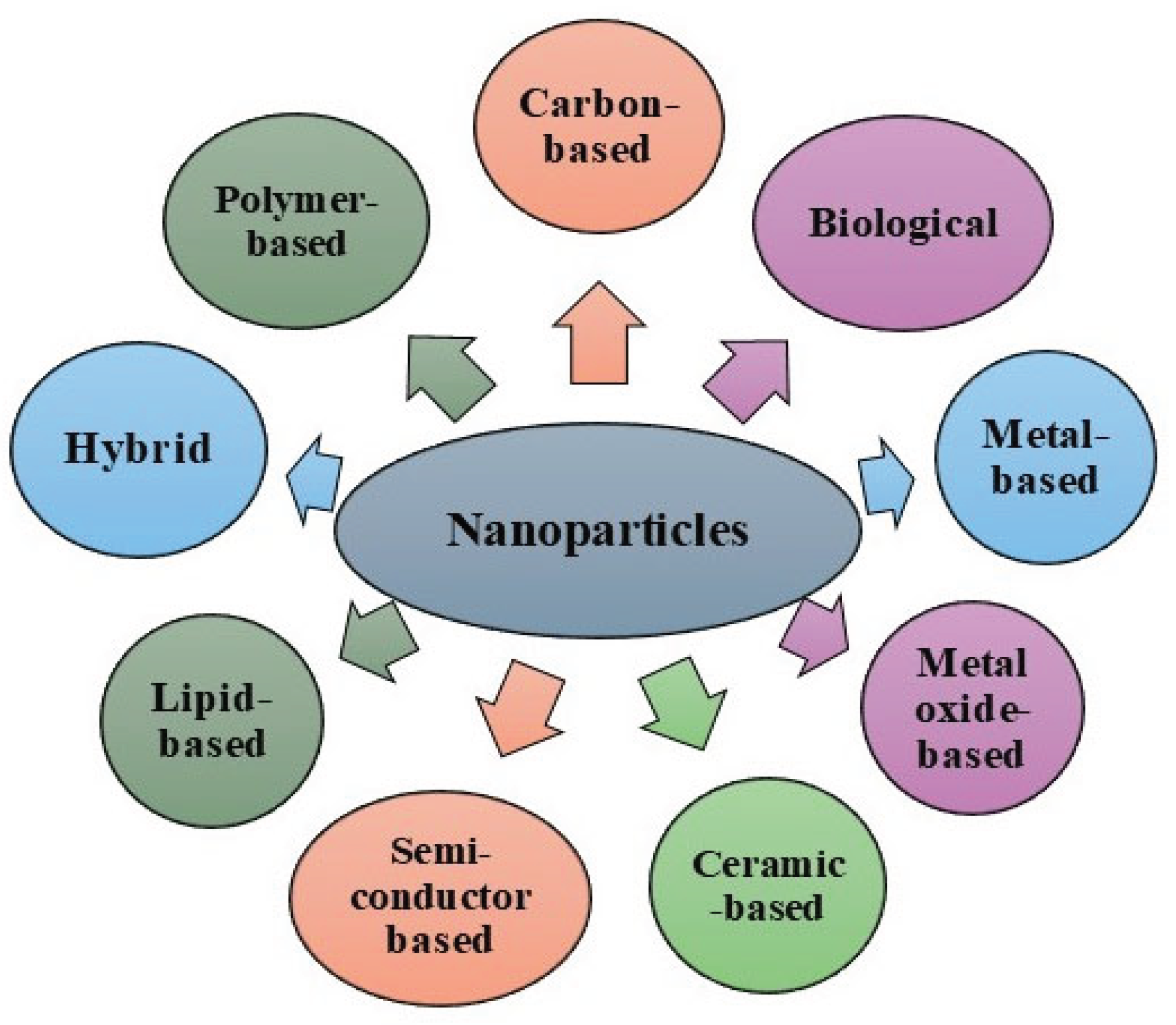
Figure 2.
Plant material as a source of lignocellulose: structure, chemistry and composition of a) cellulose, b) lignin and, c) hemicellulose. (Source: this study, created with chemaxon.com and BioRender.com).
Figure 2.
Plant material as a source of lignocellulose: structure, chemistry and composition of a) cellulose, b) lignin and, c) hemicellulose. (Source: this study, created with chemaxon.com and BioRender.com).
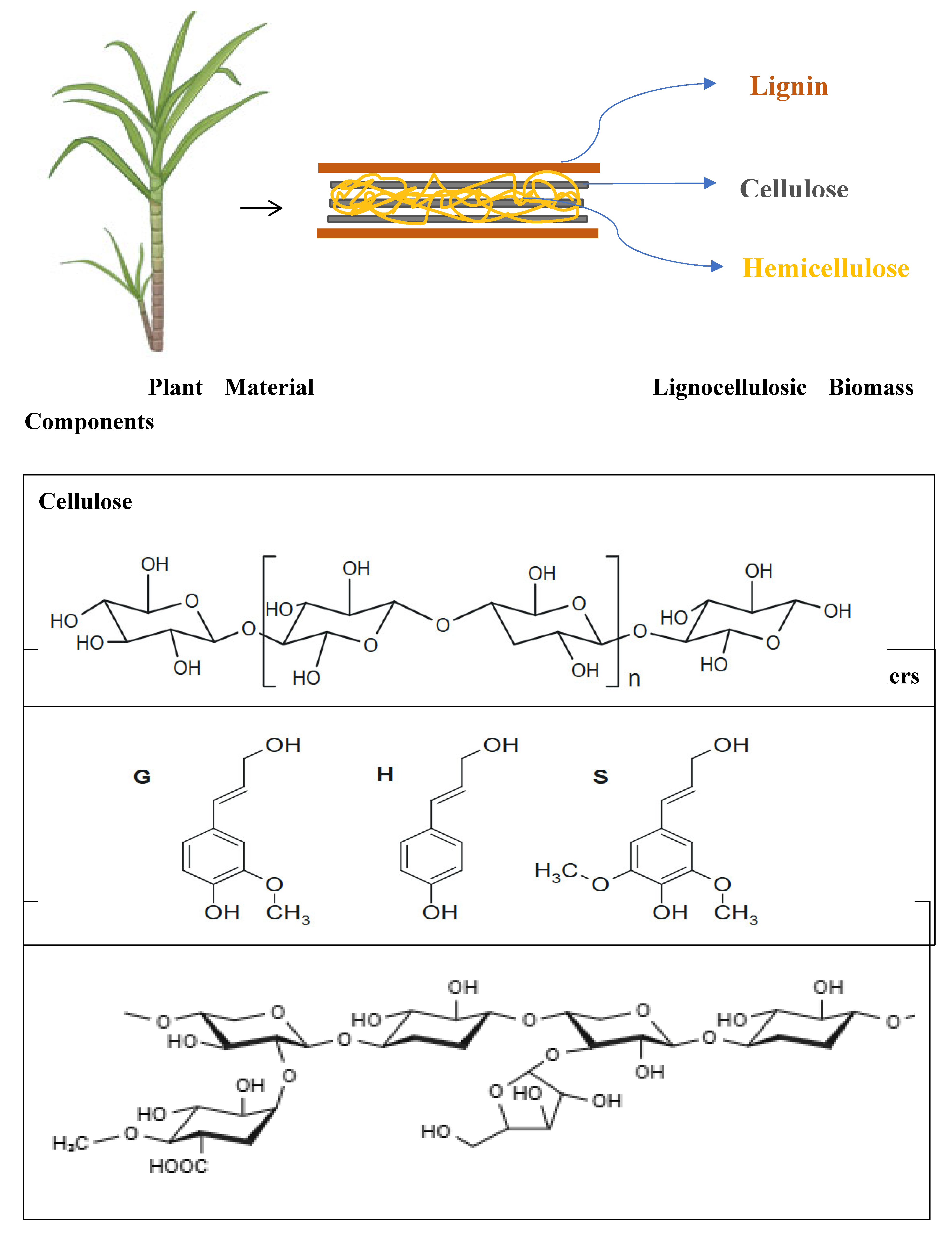

Table 1.
Major wastewater contaminants.
| S. No. | Source | Class of contaminant | Major contaminants | Reference |
|---|---|---|---|---|
| 1. | Agricultural | Organic Pollutant |
Pesticides and fertilizers, stable and persistent, accumulate in wastewater, posing serious threats to human health. Heavy metals, Fe, Zn, Cu, and Pb are most abundant, while others such as Mn, Al, Cr, As, Se, Hg, Cd, Mo, Ni are present in trace amounts. |
(Agoro et al., 2020) |
| Inorganic Pollutant |
N and NH3, excessive nitrogenous compound’s discharge, ammonia is the root cause of various detrimental effects including accelerated eutrophication, algal blooms, and oxygen depletion. | (Seruga et al., 2019) | ||
| 2. | Industrial | Organic Pollutant |
Dyes are major effluents of food, textile, paint and varnishing industries; highly stable and resistant to degradation by microorganisms; severely toxic and recalcitrant xenobiotic compounds. Azo dyes are most toxic; have carcinogenic effects. Azure B, if introduced in the biological system, can affect the nucleic acid content, particularly dsDNA. Polyfluoroalkyl substances (PFAs), by-product/used in manufacturing in various industries including food-packaging, oil-refineries, firefighting, dyes and wax. Main PFAs include perfluoro octane sulfonate (PFOS) and perfluorooctanoic acid (PFOA) which are highly resistant and cause a milieu of diseases comprised of neurological disorders, asthma, cancer (liver, pancreatic adenocarcinoma). |
(Hu et al., 2019; Roa et al., 2021; Roy et.al., 2021; Chakhtouna et al., 2024) |
| Inorganic Pollutant | Heavy metals such as Cr, As & Cd are major industrial effluent contaminants, that are classified as strong carcinogens and teratogens by US EPA, causing kidney dysfunction, osteoporosis, GIT, reproductive organs related cancers. Pb and As cause serious CNS damage, Hg leads to allergies, GIT, reproductive and respiratory tract disorders, Zn and Cu cause hepatic disorders and Ni causes serious dermatitis conditions. | (Pathania & Srivastava, 2021; Collin et al., 2022; Nakamaru et al., 2023; Yan et al., 2023) |
||
| 3. | Hospitals | Microbio-logical |
Pathogenic Microbes, including AMR bacteria i.e., fecal coliforms (FC), carbapenem resistant enterobacteriaceae (CRE), extended spectrum beta-lactamases (ESBL), were found to be around nine orders of magnitude more in hospital wastewater as compared to local sewage waters. | (Lamba et al., 2017) |
| Organic pollutants | Prevalence of pharmaceutical and personal care products (PPCPs) including xenobiotics such as antibiotics, anti-inflammatory drugs, steroids, deodorants, antimycotics, and mosquito repellents in water bodies is increasing, harming aquatic flora and fauna. | (Chakhtouna et al., 2021) |
||
| 4. | Domestic household | Microbio- logical waste | Animal and human fecal matter comprises of enteric pathogens like Enterococcus spp., E. coli which are responsible for communicable disease transmission. Human faecal biomarkers (HFBs) are one of the indicative markers for monitoring pathogen transmission from humans via wastewater. | (Chettleburgh et al., 2023; Tamai & Suzuki, 2023) |
| Organic and Inorganic pollutant | Household wastes including kitchen waste, surfactants i.e., detergents, and excreta, all primarily contain nitrogenous compounds like NH3, PO43−, SO42- as major contaminants. | (Mehra et al., 2023) |
Table 2.
Wastewater treatment methods.
| S. No. | Treatment | Method | Application | Disadvantages | Reference |
|---|---|---|---|---|---|
| 1. | Chemical |
Solvent extraction |
In the chemical and mining industries, as well as in processing fermentation products like antibiotics, amino acids, and steroids. |
Release of volatile organic compounds (VOCs); Use of toxic and flammable solvents; high investment in equipment. |
(Dhiman et al., 2024) |
| Ion exchange |
In medical research, food processing, mining, and agriculture. | High operational and chemical expenses. |
(Korak et al., 2023) |
||
| Neutralization |
Used as a pretreatment method before actual 1֯ and 2֯ treatment of wastewater. | Disposal issues; May lead to production of hazardous by-products; costly. |
(Sahu et al., 2023) |
||
| Adsorption |
For eliminating toxic organic and mineral compounds from contaminated water. | Limited adsorption capacity; requires frequent replacement or regeneration; not suitable for all pollutants. |
(Iftekhar et al., 2022) |
||
| Precipitation |
In metallurgy, pharmaceutical industry, food and beverage industry | Accumulation of a huge amount of sludge; disposal or treatment issues. |
(Hussain et al., 2019) |
||
| Electrochemical oxidation |
It has been employed to reduce oxygen demand and eliminate colour from wastewater. | Generation of byproducts and elevated energy costs. |
(Ghimire et al., 2019) |
||
| Photodegradation |
Broad range applications in wastewater disinfection, pharmaceutical industries and environmental remediation | Formation of potentially toxic and less biodegradable byproducts; high energy demand; limited efficiency in turbid water. | (Mohapatra et al., 2023) | ||
| 2. | Physical | Distillation |
In chemical, brewery, pharmaceutical, cosmetic and oil industries. |
Slow process; high energy requirements; not suitable for non-volatile compounds; efficiency for complex mixtures e.g., azeotropes is less. Membrane distillation (MD) is more sensitive to fouling and scaling. |
(Julian et al., 2022) |
| Sedimentation |
In mineral processing, chemical and petrochemical, food and pharmaceutical industries | Not effective for dissolved compounds; very slow process; effective only when used in conjunction with other methods. | (Raj et al., 2023) |
||
| Membrane filtration | In juice clarification (food and beverage industry), textile and dye industry, biotech and petrochemical sector. | Membrane clogging; requires timely cleaning; thick sludge formation | (Zeng et al., 2021) | ||
| 3. | Biological | Microbial activity | In mining, solid waste management (SWM), biofuel production, air pollution control | Biofilm and fouling issues; longer processing time; sensitivity to environmental conditions; not suitable for all types of recalcitrant pollutants. | (Reisoglu & Aydin, 2023) |
Table 3.
Technologies to synthesize LCB NPs.
| S.No. | NP preparation technologies | NP size (diameter) range (nm) | Yield (%) | Advantages | Drawbacks | Reference |
|---|---|---|---|---|---|---|
| 1. | Steam explosion | ~6 | 51.4 | Eco-friendly; efficient breakdown and scalable method | High energy input; equipment prone to wear and tear; 2֯ byproducts produced | (Fedin et al., 2024) |
| 2. | Ultrasonication | 25-50 | 90±2 | No chemicals used; eco-friendly; fast | Specialized equipment required; limted control on particle size | (Camargos & Rezende, 2021) |
| 3. | High pressure homogenization (HPH) | 10-13 | 19 | Quick and efficient; chemical-free; scalable | Requires high energy; clogging; damage to crystalline structure; heat generation | (Samsalee et al., 2023) |
| 4. | Acid hydrolysis | 10-20 | 40-64 | Monodisperse size distribution | Use of hazardous acids; Residual acid | (Bilatto et al., 2020) |
| 5. | Solvent shifting/ solvent exchange/Anti-solvent precipitation | 250 | 90 | NPs with uniform size distribution; simple and cost-effective process | Time constraints; residual solvent; high solvent consumption | (Chen et al., 2020) |
| 6. | Enzymatic hydrolysis | 20 | 50 | NPs with greater thermal stability and higher aspect ratio | Costly; time consuming | (Pereira & Arantes, 2020) |
| 7. | Sub-critical water | 1.6-128 | 88-92 | Environment-friendly; no residual solvents | Costly; complex; high pressure system required | (McMichael et al., 2024) |
| 8. | Self-assembly | 50 | 93± 4 | No harmful chemicals required; regulated method | Time consuming; post-treatment stabilization required | (Camargos & Rezende, 2021) |
| 9. | Biosynthesis | 1-500 | - | Abundantly available substrate; affordable and ecofriendly approach | Safety risk; slow process | (Brar et al., 2022) |
| 10. | Microbial hydrolysis | 20-250 | 58.4 | Eco-friendly; cost-effective highly specific and selective; | Longer duration; less yield and efficiency; contamination issues; lignin recalcitrance | (Juikar & Vigneshwaran, 2017) |
Table 4.
Patent status of LCB NMs used in wastewater treatment. (Espacenet, Patentoscope).
| S.No. | Patent no. (publication date) | Title | Applicant(s) | Description | References |
| 1. | US20250073644 (2025-03-06) |
Composite nanofiltration membrane capable of efficiently intercepting ammonium sulfate and ammonium nitrate while adsorbing and removing mercury ions and preparation method thereof | North China Electric Power University (Baoding) | A composite nanofiltration membrane fabricated using CNFs and carboxylated carbon nanotubes, further integrated with MXene layers. The membrane is designed to efficiently intercept ammonium sulfate and ammonium nitrate (NH₄⁺ salts) while simultaneously adsorbing mercury (Hg²⁺) ions. The preparation involves vacuum filtration followed by drying, resulting in enhanced selectivity and efficiency for wastewater treatment applications. |
Hao et.al., 2025 |
| 2. | WO2024103192A1 (2024-05-23) | Adsorbing agent based on lignin-coated, high-selectivity, regenerable and reusable magnetic micro/nanoparticles, for adsorbing heavy metals from wastewater and polluted soil; preparation method; and method for removing and quantifying the heavy metal load |
Fund Leitat Chile | Use of lignin coated magnetic micro/NPs to selectively adsorb heavy metals like Cu, Pb, and As, from water or soil. |
Reyes Contreras et al., 2024 |
| 3. | CN116675901A (2023-09-01) | Method for preparing water-stable cellulose aerogel without cross-linking agent and application of water-stable cellulose aerogel |
Univ Kunming Science and Technology | A green synthesis route for producing water-stable cellulose aerogels without the use of chemical cross-linking agents. Utilizing solvent-assisted extraction and physical stripping of biomass, the resulting aerogel exhibits high porosity, excellent water stability, and strong potential for large-scale adsorption of environmental pollutants. |
Ao et.al., 2023 |
| 4. | CN118874421A (2024-11-01) | Preparation method and application of lignin-based heavy metal ion adsorbent | Univ Dalian Polytechnic |
This patent describes the development of a lignin-based adsorbent comprising Fe–Fe₂O₃ nanochains encapsulated within polymer coatings. The formulation exhibits high efficacy in the adsorption and removal of Pb²⁺ from wastewater, positioning it as a potent candidate for targeted heavy metal remediation. |
Xiao et.al., 2023 |
| 5. | CN117019110A (2023-11-10) | Nanocellulose-based MIL-100-Fe composite aerogel as well as preparation method and application | Univ Tongji | A nanocellulose-based composite aerogel integrated with MIL-100-Fe, a metal-organic framework (MOF), synthesized via a green method. The composite exhibits a high surface area, excellent adsorption performance, pH stability, and recyclability, making it an eco-friendly and efficient adsorbent for wastewater treatment. |
Deng Z et.al., 2023 |
| 6. | WO2021226094A1 (2021-11-11) | Process for conversion of cellulose recycling or waste material to ethanol, nanocellulose and biosorbent material | Univ Ramot [IL] and Geraghty Erin [US]. | Low-dose ozone treatment to convert cellulosic waste into ethanol or nanocellulose, with its solid byproduct serving as a biosorbent for wastewater treatment. | Mamane et.al., 2021 |
| 7. | CN112844324A (2021-05-28) | Lignin/manganese oxide composite adsorption material and preparation method and application |
Univ Nnajing Sci & Tech | A cost-effective and energy-efficient method for synthesizing a lignin/manganese oxide composite adsorbent. The material demonstrates high adsorption capacity for dye-contaminated wastewater and is amenable to scale-up, indicating strong applicability for industrial dye effluent treatment. |
Jin et.al., 2021 |
Table 5.
Applications of LCB NPs in a multitude of areas.
| S.No. | Application | Description | References |
|---|---|---|---|
| 1. | Nano pesticides | EB@CPG cellulose-based nano pesticide; non-toxic to seed germination with high insecticidal activity; also utilized as an organic N-fertilizer (boosted plants’ fresh weight by 39.77%). | (Zhao et al., 2022) |
| 2. | Oil-spills clean-up | Guar-gum esterified lignin aerogel with high porosity values (>95%), low density (27.4 mg/cm3) and great absorbing capacity for sunflower oil (32.5g/g) | (Montazeri & Norouzbeigi, 2024) |
| 3. | Recovery and removal of rare earth elements | Magnetic grass nano-cellulose from Cyperus rotundus showed high absorption capacity of 353.04 mg/g for the removal of Ce+3. | (Shahnaz et al., 2022) |
| 4. | Antioxidant | Lignin-incorporated nanogel formulation (extracted from coconut husk) showed strong antioxidant activity i.e., IC50 = 25.7 ppm, reduced ROS level and enhanced wound healing in mice. | (Xu et al., 2021) |
| 5. | Drug-delivery | Curcumin-loaded NP formulation (104nm) with enhanced the stability and effectiveness; increased bioavailability of drug upon oral administration. | (Wijaya et al., 2021) |
| 6. | Tissue engineering | The alkaline phosphatase activity test revealed that LgNP/PCL nanofiber scaffolds significantly promoted osteogenic differentiation in MC3T3-E1 cells compared to clean PCL nanofibers. | (Haider et al., 2023) |
| 7. | Stabilizer and dispersant | LgNPs, having uniform particles and avg size of 41.1 ± 14.5 nm were synthesized. Emulsions (with olive oil) with a 3:7 volume ratio (oil-water) resulted in droplet diameters of 13.99 ± 4.82μm at pH 3.0, which also demonstrated long term storage stability (30days). This showed decorous valorization of kraft lignin. | (Wang et al., 2023) |
| 8. | Antimicrobial activity | Lignin-Zn hydroxide-based NPs derived from Litchi chinensis leaves showed antibacterial (against Bacillus subtilis), antioxidant (IC50= 45.22μg/ml) and in-vitro cytotoxicity (against HepG2 cells with 73.21% cell inhibition at 25.6μg/ml; IC50= 2.58 μg/ml.) | (Srivastava et al., 2023) |
| 9. | Food packaging | Bio-nanofiller composite significantly decreased peroxide value (POV), acid value (AV) and saponification value (SV) therefore showed an oxidative delay in rancidity of soyabean oil. | (Sun et al., 2023) |
| 10. | UV Absorbents | Highly stable lignin-polyvinyl alcohol NPs with ~13nm diameter, enhanced the UV-shielding by 13.3% at 250nm wavelength. | (Ju et al., 2019) |
Disclaimer/Publisher’s Note: The statements, opinions and data contained in all publications are solely those of the individual author(s) and contributor(s) and not of MDPI and/or the editor(s). MDPI and/or the editor(s) disclaim responsibility for any injury to people or property resulting from any ideas, methods, instructions or products referred to in the content. |
© 2025 by the authors. Licensee MDPI, Basel, Switzerland. This article is an open access article distributed under the terms and conditions of the Creative Commons Attribution (CC BY) license (http://creativecommons.org/licenses/by/4.0/).
Copyright: This open access article is published under a Creative Commons CC BY 4.0 license, which permit the free download, distribution, and reuse, provided that the author and preprint are cited in any reuse.


