

Submitted:
11 June 2025
Posted:
13 June 2025
You are already at the latest version
Abstract
Background: The lack of acknowledgment of children as victims of gender-based vio-lence hinders the support they receive. This study is a review of literature that analyzes the psychological impact of gender-based violence on children. Methods: Information was searched for in specialized databases. Articles published in Spanish or English within the last decade that focus on gender violence and childhood were selected. Re-sults: The results of the review indicate that gender violence has significant negative psychological, emotional, and social effects on children exposed to it. Thus, symptoms of internalizing, externalizing, and post-traumatic stress disorder (PTSD) may appear. Additionally, there is a high probability of experiencing difficulties in school, inter-personal relationships, and identity development. These effects may have long-term consequences affecting well-being and development later in life. Discussion: It is crucial to recognize children as direct and significant victims of gender-based violence and promote their protection through psychological, educational, and social support.
Keywords:
gender-based violence
; childhood
; psychological consequences
; externalizing symptoms
; internalizing symptoms
1. Introduction
The World Health Organization [1] defines violence as the intentional use of physical force or power, whether threatened or actual, against oneself, another person, or a group or community that results in or is likely to result in injury, death, psychological harm, developmental disturbance, or deprivation. Thus, gender-based violence is defined as any act of violence committed by a romantic partner, current or former, primarily against women. Gender-based violence is present in many areas of life, both public and private. It manifests in the objectification of women’s bodies and in the physical, psychological, social, and sexual abuse that many women experience daily. These forms of violence are detrimental to victims’ physical and mental health, and in extreme cases, they can result in death. In 1993, the UN General Assembly approved the Declaration on the Elimination of Violence Against Women, and in 1995, the UN included combating violence against women among its objectives. In Spain, the 2019 Macro-survey on the Prevalence of Gender Violence indicates that over half of women over the age of 16 have experienced any form of gender-based violence in their lifetime. Additionally, it is estimated that 1,678,959 children live in households where a woman is a victim of intimate partner violence [2].
Understanding and recognizing violence against women has been a difficult challenge over time because it has been shaped by two fundamental processes, invisibility and naturalization [3,4,5]. The invisibility of gender-based intimate partner violence is strongly linked to the absence of instruments that facilitate its definition, identification, and study as a distinct phenomenon. The naturalization of violence is based on cultural constructions that influence how we interpret reality. Gender stereotypes are an example of this and are prevalent in our society [3,4,5].
When abused women seek shelter, they usually bring their children with them. Traditionally, the focus has been on protecting and supporting women, which is urgently necessary. However, this focus has resulted in children becoming “silent” or “unidentified” victims of domestic violence. The idea that violence occurs only within a couple’s relationship has reinforced the lack of recognition for children as victims of violence, without considering the consequences it has on the entire family. Anderson and Van Ee [6] point out that children are often victims of direct violence in the form of emotional, physical, or sexual abuse by their abusive father. They also note that there is a very limited window in which children evolve from being secondary victims to being directly linked to gender-based violence [7].
In recent decades, there has been a growing interest in the harmful effects of children’s exposure to gender-based violence on their health, learning, and behavior throughout their lives. The United States is increasingly recognizing the harms associated with this type of violence, whether through direct or indirect observation, as a form of child maltreatment. According to data from nationally representative samples, 11% of children in the United States were exposed to gender-based violence in the past year, and 26% have experienced it at least once in their lifetime. Numerous studies have linked childhood exposure to gender-based violence to diminished physical and mental health as well as behavioral problems throughout one’s life. Among the harmful repercussions linked to exposure to this type of violence are post-traumatic stress disorder (PTSD), as well as internalizing and externalizing behaviors, which are the most reported in school-aged children [8].
The bioecological theory of human development [9] provides a better understanding of the negative consequences of gender-based violence. According to this theory, children grow up within interconnected environments that influence their development. Exposure to gender-based violence is a form of adversity that disrupts environments essential to children’s adaptive adjustment, including the functioning of their parental figures. Research has identified the bidirectional processes through which mothers’ exposure to gender-based violence impacts their children’s mental health [10].
However, to date, research has failed to provide a comprehensive model explaining the mechanisms by which gender-based violence negatively impacts children’s growth or why certain children are resilient to such exposure. Most studies focus on factors such as education, maternal mental health, attachment, and child temperament as mechanisms linking exposure to gender-based violence to its impact on children. Despite their importance, these procedures do not address the physiological aspects, particularly those modified during gestation. Additionally, they fail to examine the relationship between physiology, the child’s environment (e.g., poverty), personal parental factors (e.g., mental health and maternal representations), and the child’s individual characteristics (e.g., physiological response to stress). Additionally, most research fails to examine whether IPV uniquely impacts child growth compared to other stressors. This is important because various stressors can influence children’s physiology, mental health, and behavior similarly [11].
Some recent studies [8,12] suggest considering physiological and environmental factors to understand the impact of gender-based violence on children’s development. This type of violence during gestation may affect fetal stress response systems, which can impact an infant’s self-regulation and later emotional performance. Thus, contextual elements such as poverty, maternal mental health, and parenting style can attenuate or exacerbate these impacts. These findings confirm the importance of comprehensive models that incorporate physiological and psychosocial factors to understand how a child may adapt after experiencing gender-based violence.
Based on empirical findings and a developmental psychopathology perspective, this study offers a holistic model detailing how domestic violence affects children’s adjustment by promoting self-regulation during two crucial stages: the prenatal period and the first year of life. The model addresses previous methodological critiques by emphasizing the importance of recognizing the significance of the prenatal period and monitoring children’s progress over time. Additionally, the model is flexible enough to incorporate both variable- and person-based approaches. It recognizes that subgroups of children have different trajectories influenced by varying levels of exposure to violence and early self-regulation skills [11]. The model proposes three main pathways through which intimate partner violence affects children’s development during the prenatal and postpartum periods. These pathways are maternal representations, maternal/fetal physiological stress responses, and maternal mental health. These pathways affect maternal functioning, which influences the child’s parenting behavior and self-regulatory functioning. At the same time, the child develops self-regulatory skills, such as stress response, attachment, and executive functioning, which influence his or her adjustment. Additionally, the model considers ecological and contextual factors, such as poverty, that affect child development [11].
The detrimental consequences of gender-based violence manifest not only during childhood and adolescence but also during adulthood, middle age, and old age. A study found that young people affected by this abuse experienced more psychological problems in adulthood, including depression and suicide attempts. They were also more likely to have health and behavioral disorders, such as changes in eating habits, drug use, sexually transmitted infections, and criminal activity. Additionally, individuals who have experienced or witnessed violence within their households tend to have less secure relationships with their partners, struggle to resolve conflicts, and are more likely to become victims or perpetrators of domestic violence. This has an adverse impact on their relationships and their physical and mental health. These impacts can persist into middle and old age [13].
Exposure to gender-based violence during childhood can lead to the development of violent behaviors, thereby increasing the likelihood of engaging in this type of violence in adulthood. According to research by Ehrensaft et al. [14], the primary predictors of this risk are behavioral disorders, exposure to gender-based violence, and power-based punishment systems [15]. Witnessing gender-based violence during childhood profoundly and permanently impacts children’s mental health, affecting their emotional, cognitive, and social development. This exposure can alter their perception of relationships, generate emotional disorders, and increase the risk of developing problematic behaviors in the future.
This review aims to examine the potential psychological effects that children who experience gender-based violence may develop during childhood. The review aims to clarify how gender-based violence affects children’s psychological development.
2. Materials and Methods
2.1. Inclusion and Exclusion Criteria
For this review (see Table 1), we selected research published in English and made available via open access between 2015 and 2025. To ensure the quality and validity of the information, we included original articles, theses, conference proceedings, and peer-reviewed websites. The research focuses on women and children who have experienced gender-based violence, particularly during childhood. Studies prior to 2015 and those that do not directly address gender-based violence or focus on other forms of child abuse were discarded.
2.2. Literature Search Process
The systematic search of documents carried out on January 17, 2025, was based on the following search string in the used database: “Gender violence” OR “domestic violence” OR “intimate partner violence” (title) AND “child*” (title) AND “psychological consequence*” OR symptom* (title).
The search was conducted in the Web of Science database, which includes the following databases: Science Citation Index Expanded, Social Sciences Citation Index, Arts & Humanities Citation Index, Index Chemicus, Current Chemical Reactions, Conference Proceedings: Science, Conference Proceedings: Social Science & Humanities, Grants Index, MEDLINE, ProQuest Dissertations & Theses, Citation Index, SciELO Citation Index, KCI: Korean Journal Database, and Emerging Sources Citation Index.
3. Results
3.1. Characteristics of the Studies
Figure 1 shows the PRISMA flow diagram, which illustrates the process of identifying the articles and the results obtained. As the diagram shows, thirteen documents were selected for inclusion in the review, all of which are scientific articles.
3.2. Content Analysis of the Articles
The studies referenced in the articles have been conducted in various parts of the world, as shown in Table 2. Most have been conducted in the United States [10,16,17,18,19,20,21,22]. The rest have been conducted in Spain [23], Australia [7], Sweden [24], Tanzania [25], and China [13]. Regarding sample composition, six of the articles analyzed dyads formed by mothers and children [7,19,20,21,23,25]. Two other studies worked with dyads as well [16,18], but included both mothers and fathers or the children’s caregivers. Four articles focused exclusively on information provided by children and adolescents [10,17,22,24]. One study examined middle-aged and elderly individuals [13]. The ages of the participating minors ranged from one to eighteen years; however, this review will focus on data referring to childhood stage (Table 2).
The psychological assessment instruments used are designed to measure specific aspects of emotional, behavioral, and psychological well-being in children, adolescents, and adults. These instruments include tools to evaluate anxiety, depression, trauma, family conflict, violence, stress, and problematic behaviors, among others. These instruments are validated to provide accurate data on mental health and family dynamics. Table 2 shows the instruments used. Scales measuring depression in children included RCMAS [19]; PHQ-9 [22,25]; CES-D [13]; and PAPA [20]. The instruments measuring anxiety were DASS [23], PCL [20], SDQ-P [24], EATQ-R [10], and EQ-P [24]. The instruments measuring posttraumatic stress disorder were IES-R [24], CPSS [7], TSCYC [22,24], TSCC-A [7], and TSI-2-A [7]. The following scales have been found regarding family violence and abuse: CTS [16,18,19]; CTS2 [17,20,23,24]; CTSPC [25]; CDBS [19]; and CREDI [25]. The following scales generally assess child behavior: CBCL [16,17,19,21]; SDQ-P [24]; and YLSI [10]. Finally, scales assessing general psychological disorders, such as the BSI [24] and DASS [23], have also emerged.
As shown in Table 2, six of the studies included have presented a longitudinal design, while the remaining seven have had a cross-sectional design. The longitudinal studies were conducted over periods of six months [19,24], three years [10,17], five years [22], and 25 years [18]. Cross-sectional studies [7,13,16,20,21,23,25] have focused on point measurements, providing insight into the immediate effects of interventions.
3.3. Description of Results
Gender-based violence significantly impacts the mental health and development of children who experience it. According to the reviewed research, exposure to Gender-based violence has been linked to emotional, behavioral, and cognitive changes in children that may occur during or after experiencing Gender-based violence. The most common short-term consequences include internalizing and externalizing behaviors, as well as the onset of post-traumatic stress.
3.3.1. Internalizing Symptoms
Internalizing problems are psychological effects that children experience internally and often do not explicitly manifest. These effects, which can negatively influence their ability to relate to others and their general well-being, include anxiety, depression, and social withdrawal. Some of the most frequent signs of gender-based violence in children are anxiety and irrational fear. This anxiety can manifest in various ways, one of the most common being constant vigilance. Children who have experienced this type of violence tend to be vigilant and overly concerned about the protection and care of themselves or their loved ones. This vigilance can trigger specific phobias, nighttime fears, or avoidance of places or circumstances that remind them of the violence they experienced [13,18,23].
Other serious consequences that can occur include depression and constant sadness. Repeated exposure to this type of violence increases the likelihood that a child will develop depressive symptoms during childhood. These children may exhibit decreased self-esteem, a marked decline in interest in activities they previously enjoyed, and a tendency toward social isolation. Sometimes, they exhibit hopelessness, believing their situation will never change. This affects their motivation and how they approach daily life [22,23,25].
Additionally, children exposed to this type of violence may experience sleep disturbances and repeated nightmares. Accumulated fear and anxiety may result in difficulty falling asleep, frequent nighttime awakenings due to intense nightmares about violent events, and difficulty going to bed without an adult present [18,20,21]. Conversely, difficulty with emotional regulation is another significant consequence. An emotionally unstable family environment affects a child’s ability to manage his or her own emotions. Many children experience sudden mood swings, alternating between calmness and episodes of uncontrollable crying or panic attacks in stressful situations. This complicates their ability to adapt to different situations and can lead to problems in their interpersonal relationships [18,25].
3.3.2. Externalizing Symptoms
While internalizing problems primarily affect a child’s emotional well-being, externalizing problems influence how a child interacts with others. These behaviors may include aggressiveness, impulsiveness, and difficulty managing oneself. This increases the likelihood of problems with social and school adaptation [13,18,23]. One significant consequence of exposure to gender-based violence is an increase in aggressive and defiant behaviors. Studies have shown that children who grow up in violent environments are more likely to exhibit these behaviors, displaying aggressive attitudes toward their siblings, classmates, and caregivers. These behaviors may manifest as physical confrontations, aggressive reactions to disputes, and an increased predisposition to bullying or harassment [7,17,21].
Additionally, children who have experienced gender-based violence often struggle to follow rules and manage their impulses. The absence of positive behavioral patterns and constant stress can result in a lower tolerance for frustration. Consequently, they may respond disproportionately to rules established by adults, exhibiting disobedient or defiant behaviors. Impulsivity may also influence their ability to plan and make decisions [10,24].
Another area affected is school performance. Post-traumatic stress and anxiety can hinder children’s ability to concentrate, which can negatively impact their learning process and school performance. Many children had trouble on concentrating, lack of motivation, and poor performance in school [16]. Additionally, it has been found that children who have experienced gender-based violence have low frustration tolerance. This lack of emotional regulation causes them to respond disproportionately to problems or failures by expressing their frustration through laughter, yelling, or disruptive behavior. Sometimes, this frustration causes them to abandon activities they were initially interested in, out of fear of failing [21,22]. Finally, many children develop resistance to authority. Domestic violence can create a negative perception of authority figures, causing some children to question the rules set by teachers and caregivers. This defiant attitude can hinder their integration into organized settings, such as school, and increase the likelihood of confrontations with adults and peers [16,24].
3.3.3. Post-Traumatic Stress Disorder
In addition to internalizing and externalizing behaviors, exposure to gender-based violence can lead to PTSD, a severe psychological condition that affects a child’s long-term emotional stability. The most common symptoms of PTSD in children who have experienced intimate partner violence include internalizing behaviors such as anxiety, depression, and persistent fear. These children often live in a state of hypervigilance and have a constant perception of insecurity, even in environments that do not pose an immediate threat. Hypervigilance manifests as exaggerated startles and responses to loud noises or certain circumstances. Some children experience sleep disturbances, recurrent nightmares, and intrusive thoughts about the violence they witnessed, which further aggravates their emotional state [7,13,18,20,21]. Another frequent symptom is avoiding memories of the trauma. Some children prefer not to talk about topics related to the violence they experienced or any issue that might cause them to relieve the trauma. This avoidance, which may be the least painful way for them to deal with the conflict, can lead to emotional numbing or denial of the abuse they suffered, as if it never happened. In more severe cases, dissociative episodes may occur, causing them to withdraw completely from their emotions and reality as a protective mechanism to cope with the pain [7,13,18,21].
3.3.4. Post-Traumatic Stress Disorder in Women and Its Impact on Their Children
Apart from the serious consequences that a child with PTSD may experience, it is also important to consider the consequences for the child when the mother suffers from PTSD. Maternal PTSD impacts not only the mother’s emotional well-being, but also her parenting and, consequently, her children’s development. Women who have experienced gender-based violence are highly likely to suffer from PTSD, which significantly affects their ability to care for and relate to their children. Mothers with PTSD may have difficulty providing protection and emotional support to their children because the disorder can lead to emotional absence or difficulty meeting their children’s needs, especially emotional ones. This can lead to an insecure attachment, where the child does not feel, they can turn to their mother for comfort or protection. This can result in problems with self-esteem and the ability to build healthy relationships in the future.
Additionally, they often resort to rigid or restrictive parenting techniques featuring harsh discipline, such as yelling, severe punishment, and inconsistent rules. In other cases, mothers may have difficulty setting appropriate limits, resulting in disorganized parenting, wherein children lack structure and emotional stability [20]. The age of the child also plays a crucial role in how PTSD develops. For younger children, the emotional bond with their mother is essential. Studies have shown that children of mothers with PTSD are more likely to develop emotional and behavioral disorders, even if they have not witnessed the violence directly. Young children rely on their mothers to assess environmental safety, so if a mother is anxious, constantly alert, or emotionally unstable, her child may internalize these reactions as her own. In contrast, older children tend to develop more independent coping mechanisms, allowing them to better regulate their emotions without relying so heavily on their mother’s psychological state [17,20].
3.3.5. Long-Term Consequences
Examining the long-term consequences of childhood psychological gender-based violence has revealed that its effects persist and intensify during adolescence. This indicates that the impact of such violence accumulates over time, affecting the emotional well-being and coping capacity of minors. Constant exposure to psychological violence often causes children to develop deep distrust of their environment, hindering their ability to form healthy interpersonal relationships and manage stress [16]. Studies have found that individuals who experienced gender-based violence in childhood are at a higher risk for depression in middle and later life. Findings indicate that the greater the frequency of exposure to violence, the higher the depression scale scores, suggesting a cumulative relationship of trauma across the lifespan [22].
Moreover, experiencing gender-based violence during childhood can affect one’s ability to manage stress in adulthood, increasing vulnerability to psychological disorders. Individuals who experienced violence during childhood tend to be more sensitive to stressful situations, which can lead to difficulty managing emotions, problems in interpersonal relationships, and an increased risk of anxiety and persistent depressive disorders [22]. Another crucial factor is the transmission of trauma between generations. Adults who experienced violence during childhood are more likely to exhibit violent behaviors in their romantic or family relationships. This is a consequence of normalizing violence as a form of interaction and lacking effective models for healthy conflict resolution [22].
3.4. Risk of Bias
Analyzing the bias in the reviewed studies is a fundamental step in evaluating their methodological quality and the validity of their results (see Table 3). This section examines different types of bias. Upon evaluating the analyzed studies, it was observed that question formulation bias was controlled, and all studies were classified as green, indicating an adequate definition of research questions [7,10,13,16,17,18,19,20,21,22,23,24,25]. This means that the research questions are well-defined, clear, and concise in all of the analyzed studies. Inclusion bias was also satisfactorily addressed in most cases, except for the article by Lv and Li [13], which had slightly defined inclusion criteria.
Several studies marked in yellow exhibit attrition bias, meaning there was a significant loss of participants during the investigation. This could affect the representativeness of the samples and consequently the results [10,14,16,17,19,21,22,23]. Reporting bias occurs when researchers report only certain data and exclude or omit others, which can distort the results. This bias is largely controlled, as several studies appear in green, suggesting that the results were generally reported clearly and transparently. However, some studies still present a risk of bias in communicating their findings [18,21,22,23,24,25].
On the other hand, the following analysis was performed using the STROBE (Strengthening the Reporting of Observational Studies in Epidemiology) table, which is a checklist designed to improve the transparency and quality of reports of observational studies, including cohort, case-control, and cross-sectional studies. The selected articles meet most of the STROBE criteria, except for two: a detailed description of the study setting and justification of the sample size. While each article discusses these sections, some lack precise or sufficient information (see Table 4).
3.5. Bibliometric Data of Review Documents
The impact factors of the journals in which the articles were published were examined to analyze the relevance of the sources used in this review, as shown in Table 5. The articles belong to journals with impact factors ranging from 0.91 to 13.8. The mean impact factor is 7.35. Jama Network has the highest impact factor, and the Journal of Child and Adolescent Trauma has the lowest.
The quartiles are distributed between Q1 and Q2, indicating the high quality of the selected studies. The journals with the highest quartiles are Child Abuse & Neglect, Development and Psychopathology, JAMA Network, Psychology of Violence, and Journal of Child and Adolescent Trauma. In contrast, the journals with the lowest quartiles are the Journal of Family Psychology, Frontiers in Psychology, Behavioral Sciences, and Child & Family Social Work. Additionally, Greene et al. [20] had the highest number of citations, with a total of 84. This is a considerably higher number than the average of 20.62 found in the chosen articles.
The journal in which the most articles included in this review have been published was Child Abuse & Neglect. Thus, most of the journals included in this review belong to the family studies category, reflecting a focus on analyzing and understanding family dynamics.
4. Discussion
Our analysis of the data allows us to conclude that gender-based violence in the family environment has profound and complex consequences for children who witness or experience it [6,8]. Often, gender-based violence is considered an issue between adults, but its impact extends far beyond intimate partner relationships, directly affecting children’s emotional, behavioral, and cognitive development [16,18,20]. Exposure to violence at such a vulnerable stage of life leaves wounds that are not always noticeable at first, but which profoundly affect how children grow and relate to the world [13,23].
One of the most relevant findings of the analyzed studies is the manifestation of internalizing symptoms, such as anxiety, depression, and social withdrawal [22,25]. These symptoms often develop discreetly, without obvious behavioral signs, often resulting in them going unnoticed by family members and educational professionals [18,20]. Though less obvious, these symptoms have significant consequences for the child. Children who remain in a constant state of alertness, experiencing fear in the absence of real threats and losing the ability to enjoy activities they once found pleasurable, reflect the emotional damage caused by growing up in an environment marked by tension and fear [10,23]. Furthermore, the persistence of these symptoms even after the violence has ceased suggests a cumulative effect, indicating that emotional damage can endure long after the violent event has occurred [13].
Conversely, the development of externalizing behaviors in these children is considered an obvious indication of their emotional distress [17,21]. Aggressiveness, conduct problems, and disobedience should not be viewed as merely “bad behavior,” but rather as reflections of a chaotic family environment [7,16]. These children often imitate the behavior patterns learned at home in other settings, such as school or with friends [18]. If they have adopted violence as a way to resolve conflicts, it will be difficult for them to act otherwise without adequate support or intervention [24]. Prolonged exposure to these dynamics can shape their relationships and affect their academic performance, which could impact their educational and social development in the long term [16].
Another concerning aspect is post-traumatic stress disorder (PTSD), which is one of the most severe and long-lasting consequences for children who have experienced intimate partner violence [7,21]. PTSD symptoms such as nightmares, constant vigilance, irrational fear, and intrusive thoughts significantly affect daily life [20,24]. Most alarmingly, these symptoms often occur alongside defiant and aggressive behaviors, which makes identifying and appropriately treating the problem more difficult [18]. These children are not simply “nervous” or “rebellious”; they are minors who react in extreme ways due to the constant fear and stress of their environment [17,20]. The emotional insecurity they have experienced affects their ability to trust their environment and relate to others in healthy ways [22].
The impact of gender-based violence on children cannot be fully understood without considering the role of the maternal figure, especially when she suffers from PTSD as a result of violence [20]. Mothers with PTSD face significant difficulties bonding with their children due to psychological exhaustion, emotional withdrawal, and difficulty establishing clear boundaries [6,25]. This creates an unstable parenting environment that can result in an insecure attachment between mother and child, further increasing the child’s emotional vulnerability [20]. Without a protective and nurturing mother, a child is likely to develop deep insecurities and trust issues [10], which may affect their future social and emotional development. Additionally, a child’s age is relevant: the youngest children, who are completely dependent on their caregivers to interpret the world, are especially sensitive to their mother’s emotional state [17].
The effects of childhood gender-based violence do not disappear with childhood; they continue into adolescence and adulthood [13,22]. Adolescents who have grown up in violent environments often have low self-esteem, difficulty forming healthy relationships, and a distorted view of conflict [16]. These issues can lead them to perpetuate patterns of violence in their intimate relationships, creating a cycle that is difficult to break [18]. Studies clearly demonstrate that childhood violence leaves a deep mark, affecting not only the present but also how people handle emotional challenges and relationships in adulthood [13,20].
4.1. Limitations
One of the most significant limitations of this study is that it is a literature review and the number of analyzed studies was small. Although the article search tried to be exhaustive and detailed, there is still a risk of overlooking relevant knowledge on the subject. Another limitation is that many of the studies analyzed focused mainly on the child’s mother, with little interest in people outside the family, such as teachers, school psychologists, and social workers. Similarly, many of the studies reviewed focused on the maternal figure, neglecting the role of other members of the family. These individuals’ perspectives could have provided a broader, more complete view of the impact of gender violence on minors by addressing contexts such as school and community. Furthermore, this review did not sufficiently address aspects such as sociocultural and economic diversity, which makes it difficult to generalize the conclusions.
4.2. Practical Implications
The Alanna Foundation is one of the most important programs in Spain addressing the consequences of gender-based violence on children. This nonprofit organization has worked with women who have experienced gender-based violence and their children for more than 20 years [26]. Its network of Integral Care Centers for Women and Children are safe places where children who have experienced such situations can begin the process of emotional healing. The centers employ various professionals, including psychologists, social workers, social educators, and therapists, who work with women and children. They carry out various functions within the program, such as providing psychological care to harmed children and focusing on trauma and resilience. They also carry out educational and school reinforcement activities, so academic performance is affected as little as possible. Additionally, there are play and socialization spaces where children can play and socialize with others in a safe environment. Additionally, family workshops are offered to address the mother-child relationship and promote positive care dynamics, while avoiding the reproduction of violent patterns. Results from this program indicate a noticeable improvement in children’s emotional well-being, with a decrease in symptoms such as anxiety, isolation, and aggressiveness. The Alanna Foundation’s work demonstrates the importance of addressing gender violence by focusing not only on protecting women, but also on identifying children as direct victims in need of specialized intervention. The Alanna Foundation’s program can serve as a model for future interventions focused on children in context of domestic violence.
An organization in the United Kingdom carries out important tasks related to providing services to victims of gender-based violence. One of the most prominent is Refuge, an organization that helps thousands of women and children who have experienced gender violence. Refuge’s goal is to help these individuals rebuild their lives without fear and minimize the physical, emotional, and economic consequences they experience [27]. Refuge project provides shelters, known as “refugees,” where those affected can safely escape the aggressor. The shelters offer the necessary tools to help them start a new life. A specialized team works with the children, making them feel accompanied, cared for, and valued. These children have spaces to play and develop their social skills while enjoying the company of their peers. Another interesting project is the Child Witness to Violence Project in the United States. This program helps children up to eight years of age who have experienced traumatic events related to gender violence. Since 1992, a team of social workers, educational psychologists, clinical psychologists, and pediatricians have helped thousands of families [28]. The project offers services such as trauma-focused therapy, family counseling, and school counseling. Through these efforts and others, families experience the many benefits of therapy. Caregivers report that children exhibit fewer problem behaviors, express themselves better about the traumatic experience, and that they are more responsive to children’s needs.
5. Conclusions
The studies included in this review demonstrate that exposure to gender-based violence during childhood has serious and significant consequences. Living in a home where this type of violence occurs can trigger symptoms of anxiety, depression, aggressive behavior, and post-traumatic stress disorder. It is important to note that these effects can impact all areas of a child’s life, including the academic, personal, and social spheres. Therefore, it is important to emphasize the role that a mother’s mental health plays in her child’s recovery. It is essential to treat children as direct victims of gender-based violence and implement prevention strategies and specific treatments.
Author Contributions
Conceptualization, M.R.R. and D.G.-B.; methodology, M.R.R. and D.G.-B.; software, M.R.R. and D.G.-B.; validation, M.R.R. and D.G.-B.; formal analysis, M.R.R.; investigation, M.R.R.; resources, D.G.-B.; writing—original draft preparation, M.R.R.; writing—review and editing, M.R.R. and D.G.-B.; supervision, D.G.-B. All authors have read and agreed to the published version of the manuscript.
Funding
This research received no external funding.
Institutional Review Board Statement
Not applicable.
Informed Consent Statement
Not applicable.
Data Availability Statement
The raw data supporting the conclusions of this article will be made available by the authors on request.
Conflicts of Interest
The authors declare no conflicts of interest.
References
- World Health Organization. World Report on Violence and Health: Summary. WHO 2002. Available from: https://iris.who.int/handle/10665/43431.
- López, R.M.; Fernández, M.C. Gender violence: current situation, advances, and pending challenges in the health system response. Atención Primaria 2024, 56, 102767. [Google Scholar] [CrossRef]
- Corsi, J. Violence against women as a social problem: analysis of consequences and risk factors. Emakunde 2010. Available from: https://www.emakunde.euskadi.eus/contenidos/informacion/gizonduz_dokumentuak/es_def/adjuntos/laviolenciahacialasmujerescomoproblemasocial.pdf.
- Neale, J. The beam and shadow of the spotlight: visibility and invisibility in women’s experiences of domestic violence and abuse. Ethos 2019. Available from: https://ethos.bl.uk/OrderDetails.do?uin=uk.bl.ethos.774223.
- Paixão, G.P.D.N.; Pereira, A.; Gomes, N.P.; De Sousa, A.R.; Estrela, F.M.; Da Silva Filho, U.R.P.; De Araújo, I.B. Naturalization, reciprocity, and marks of marital violence: male defendants’ perceptions. Rev. Bras. Enferm. 2017, 71, 178–184. [Google Scholar] [CrossRef] [PubMed]
- Anderson, K.; Van Ee, E. Mothers and children exposed to intimate partner violence: A review of treatment interventions. Int. J. Environ. Res. Public Health 2018, 15, 1955. [Google Scholar] [CrossRef] [PubMed]
- Mertin, P.; Wijendra, S.; Loetscher, T. Posttraumatic stress symptoms and correlates in women and children from backgrounds of domestic violence. J. Child Adolesc. Trauma 2022, 15, 391–400. [Google Scholar] [CrossRef]
- Howell, K.H.; Barnes, S.E.; Miller, L.E.; Graham-Bermann, S.A. Developmental variations in the impact of intimate partner violence exposure during childhood. J. Inj. Violence Res. 2016, 8, 43–57. [Google Scholar] [CrossRef]
- Bronfenbrenner, U.; Evans, G.W. Developmental science in the 21st century: Emerging questions, theoretical models, research designs and empirical findings. Soc. Dev. 2000, 9, 115–125. [Google Scholar] [CrossRef]
- Clark, H.M.; Hankin, B.L. Exposure to intimate partner violence alters longitudinal associations between caregiver depressive symptoms and effortful control in children and adolescents. Dev. Psychopathol. 2023, 1, 1–11. [Google Scholar] [CrossRef]
- Bogat, G.A.; Levendosky, A.A.; Cochran, K. Developmental consequences of intimate partner violence on children. Annu. Rev. Clin. Psychol. 2023, 19, 303–329. [Google Scholar] [CrossRef]
- Zvara, B.J.; Mills-Koonce, W.R. The role of early caregiving environments in shaping child stress response systems following exposure to interpersonal violence. Child Dev. Perspect. 2024, 18, 38–44. [Google Scholar] [CrossRef]
- Lv, H.; Li, H. Association between exposure to domestic violence during childhood and depressive symptoms in middle and older age: A longitudinal analysis in China. Behav. Sci. 2023, 13, 311. [Google Scholar] [CrossRef]
- Ehrensaft, M.K.; Cohen, P.; Brown, J.; Smailes, E.; Chen, H.; Johnson, J.G. Intergenerational transmission of partner violence: A 20-year prospective study. J. Consult. Clin. Psychol. 2003, 71, 741. [Google Scholar] [CrossRef] [PubMed]
- Martínez, G.A. History of domestic violence in men who perpetrate gender violence. UDC Repository 2016. Available from: https://ruc.udc.es/dspace/handle/2183/18000.
- Capaldi, D.M.; Tiberio, S.S.; Shortt, J.W.; Low, S.; Owen, L.D. Associations of exposure to intimate partner violence and parent-to-child aggression with child competence and psychopathology symptoms in two generations. Child Abuse Negl. 2020, 103, 104434. [Google Scholar] [CrossRef] [PubMed]
- Chen, Y. The effects of child maltreatment and exposure to intimate partner violence on the co-occurrence of anxious/depressive symptoms and aggressive behavior. Child Abuse Negl. 2024, 149, 106655. [Google Scholar] [CrossRef] [PubMed]
- Ehrensaft, M.K.; Knous-Westfall, H.; Cohen, P. Long-term influence of intimate partner violence and parenting practices on offspring trauma symptoms. Psychol. Violence 2016, 7, 296–305. [Google Scholar] [CrossRef]
- Gower, T.; Jouriles, E.N.; Rosenfield, D.; McDonald, R. Physical and psychological intimate partner violence: Relations with child threat appraisals and internalizing and externalizing symptoms. J. Fam. Psychol. 2022, 36, 1106–1116. [Google Scholar] [CrossRef]
- Greene, C.A.; Chan, G.; McCarthy, K.J.; Wakschlag, L.S.; Briggs-Gowan, M.J. Psychological and physical intimate partner violence and young children’s mental health: The role of maternal posttraumatic stress symptoms and parenting behaviors. Child Abuse Negl. 2018, 77, 168–179. [Google Scholar] [CrossRef]
- McDonald, S.E.; Shin, S.; Corona, R.; Maternick, A.; Graham-Bermann, S.A.; Ascione, F.R.; et al. Children exposed to intimate partner violence: Identifying differential effects of family environment on children’s trauma and psychopathology symptoms through regression mixture models. Child Abuse Negl. 2016, 58, 1–11. [Google Scholar] [CrossRef]
- Showalter, K.; Yoon, S.; Maguire-Jack, K.; Wolf, K.G.; Letson, M. Are dual and single exposures differently associated with clinical levels of trauma symptoms? Child Fam. Soc. Work 2020, 25, 439–447. [Google Scholar] [CrossRef]
- Ronzón-Tirado, R.; Redondo, N.; Zamarrón, M.D.; Rivas, M.J.M. Does time heal all wounds? How is children’s exposure to intimate partner violence related to their current internalizing symptoms? Front. Psychol. 2022, 13. [Google Scholar] [CrossRef]
- Pernebo, K.; Fridell, M.; Almqvist, K. Reduced psychiatric symptoms at 6 and 12 months’ follow-up of psychotherapeutic and psychoeducative group interventions for children exposed to intimate partner violence. Child Abuse Negl. 2019, 93, 228–238. [Google Scholar] [CrossRef]
- De Oliveira, C.V.R.; Sudfeld, C.R.; Muhihi, A.; McCoy, D.C.; Fawzi, W.W.; Masanja, H.; Yousafzai, A.K. Association of exposure to intimate partner violence with maternal depressive symptoms and early childhood socioemotional development among mothers and children in rural Tanzania. JAMA Netw. Open 2022, 5, e2248836. [Google Scholar] [CrossRef] [PubMed]
- Alanna Association. Gender violence. 2025. Available from: https://www.alanna.org.es/violencia-de-genero/.
- Refuge. Refuge, the largest UK domestic abuse organization for women. 2017. Available from: https://refuge.org.uk/.
- Child Witness to Violence Project – Boston Medical Center. Boston Medical Center. 2025. Available from: https://www.bmc.org/child-witness-violence-project.
Figure 1.
Flow chart.
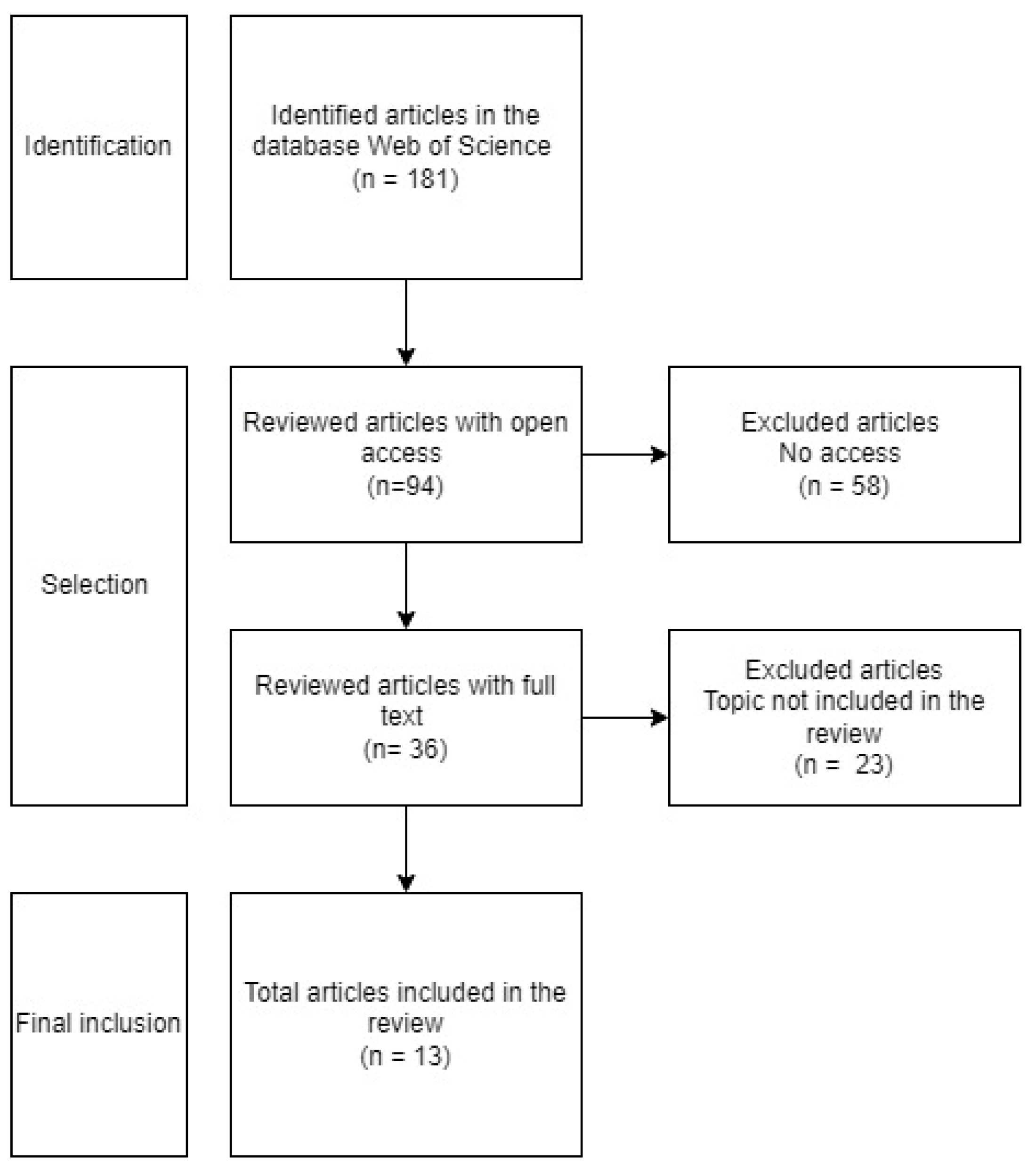

Table 1.
Inclusion and exclusion criteria.
| Inclusion Criteria | Exclusion Criteria | |
|---|---|---|
| Date | Studies published between 2015 and 2025 | Studies published before 2015 |
| Type of document | Original articles | Books, Theses, Web pages, Conferences, Documents not peer-reviewed |
| Language | Articles in English | Articles in any language other than English |
| Accessibility | Open-access studies | Studies with limited access |
| Population | Women who have experienced gender-based violence Children who have experienced gender-based violence |
Children who have suffered child abuse, but not gender-based violence Children who have suffered sexual abuse Women who have suffered gender-based violence but have no children |
| Age | Articles focused on childhood Articles covering other stages, but whose main age focus is childhood |
Articles that do not include childhood |
Table 2.
Classification of articles included in the review.
| Citation | Sample | Procedure | Assessment | Results |
|---|---|---|---|---|
| Capaldia et al. (2020) | 206 children aged 9 to 10 and their female caregivers. Sample drawn from public schools in Oregon, USA, where juvenile delinquency rates are higher than the city average. | Study examining the main associations between gender-based violence and child abuse with externalizing and internalizing behaviors, academic competence, and social competence | -CBCL; Achenbach & Edelbrock, 1983 - CTS; Straus, 1979 |
As child abuse and gender-based violence increase, children’s adjustment in these areas worsens. However, individual abuse has a stronger impact on children than gender-based violence. When they appear at the same time, they influence adolescents more in school performance and children in externalizing behaviors such as aggression and impulsiveness. |
| Chen (2024) | 459 children between the ages of 1 and 3. Sample taken in the U.S. from the second National Survey of Child and Adolescent Well-Being. | Longitudinal study examining how child abuse and gender-based violence affect the development of anxious and depressive symptoms, as well as aggressive behavior. | - CBCL; Achenbach , 1991 - CTSPC; Straus et al., 1998 -CTS2; Straus et al., 1996 |
The emergence of anxious and depressive symptoms and aggressive behavior among children who have suffered abuse and partner violence demonstrate the negative effects of these |
| Clark & Hankin (2023) | 365 children and adolescents between the ages of 7 and 17. Sample drawn from schools in Denver and Colorado | Study assessing how exposure to gender-based violence mediates depressive symptoms and self-regulation in those who have experienced it. | -YLSI; Rudolph & Flynn, 2007 -EATQ-R; Ellis & Rothbart , 2001 |
Children who have experienced gender-based violence have lower scores on self-regulation and higher scores on depressive symptoms. In addition to exposure to this type of violence, individual factors also influence scores on these symptoms. |
| De Oliveira et al. (2022) | 981 mother-child dyads, aged 18 to 36 months. Sample from the Morongo region of Tanzania. | Longitudinal study examining the association between gender-based violence, maternal depressive symptoms, harsh child discipline, and child stimulation with child socioemotional development | -PHQ- 9; Kroenke et al., 1999 - CTSPC; Straus , et al., 1998 -CREDI; McCoy et al., 2017 |
Maternal depressive symptoms may explain the negative association between gender-based violence and children’s socioemotional development. Therefore, clear protocols are needed to help professionals identify this type of violence and make appropriate referrals to protect mothers and children. |
| Ehrensaft et al. (2016) | 243 parents and their children, ages 6 to 18. Random sample from 100 different counties in upstate New York. | A study that analyzes how children’s exposure to gender-based violence affects them and whether the type of upbringing they receive also influences the symptoms. | -CTS; Straus, 1979 |
Children exposed to gender-based violence during childhood are more likely to develop trauma. Intimate partner violence affects parenting, reducing support for the child and increasing negative practices. Positive parenting can act as a protective factor. |
| Greene et al. (2018) | 308 mother-child dyads, aged 3 to 6 years. Sample drawn from the Multidimensional Assessment of Preschoolers Study in the U.S., recruited in pediatric clinics. | Study investigating the relationship between post-traumatic stress disorders in mothers who have suffered gender-based violence and the psychopathology of their children | -CTS- 2; Straus et al., 1996 - PCL; Weathers et al., 1993 -PAPA; Egger et al., 2006 |
Post-traumatic stress disorder experienced by mothers acts as a potential mediator between gender-based violence experienced by mothers and their children’s mental health. They also point to the importance of supporting mothers in their recovery from trauma for their children’s emotional health. |
| Gower et al. (2022) | 535 mother-child dyads, ages 7 to 10. Sample drawn from a large urban area in the southern US. | Study examining the effects of physical and psychological intimate partner violence on children | -CTS; Straus, 1979 -CPIC-Y; Grych, 2000 -RCMAS; Reynolds & Richmond, 1978 -CBCL; Achenbach, 1991 -CDBS; McDonald & Jouriles , 1999 |
Intimate partner violence was linked to anxiety symptoms and disruptive behavior in children, even when physical violence was absent. However, when this type of violence occurred, the consequences were more severe. |
| Lv & Li (2023) | 10,521 middle-aged and elderly individuals. Sample taken from the China Longitudinal Study of Health and Retirement | Study assessing the relationship between experiencing gender violence during childhood and suffering from depression in middle and old age | -CES-D; Radloff, 1977 | Exposure to domestic violence during childhood is associated with a higher likelihood of experiencing depression in middle and old age. Witnessing parental conflict and exposure to corporal punishment were consistently associated with a higher likelihood of experiencing depression later in life. |
| McDonald et al. (2016) | 289 mother-child dyads, ages 7 to 12. Sample drawn from community-based domestic violence agencies in Colorado. | Study examining the differential effects of gender-based violence and family contextual factors on children who experience it | -CBCL; Achenbach & Rescorla, 2001 -CEDV; Edlesonet al., 2008 |
The findings indicate that environmental factors differentially influence the development of post-traumatic stress disorder and other psychopathological symptoms in children exposed to gender-based violence. |
| Mertin et al. (2021) | 50 mother-child dyads. Sample drawn from metropolitan domestic violence services in Adelaide, South Australia. | Study that seeks to evaluate maternal and child emotional functioning in relation to post-traumatic stress symptoms in those who have suffered gender-based violence | -CPSS; Foa et al., 2001 -TSCC -A; Briere , 1996 -TSI -2A; Briere , 2011 |
The emotional responses of older children may tend to reflect their own experiences rather than being a reflection of maternal distress, as seems more likely in children who are younger. |
| Pernebo et al. (2019) | 50 children aged 4 to 13. Sample taken in Sweden from a mental health service that provides interventions. | Study investigating the long-term outcomes of group interventions for children exposed to gender-based violence | -CTS 2; Straus et al., 1996 -SDQ- P; Goodman et al., 2000 - TSCYC; Briere et al., 2001 -EQ- P; Rydell et al., 2003 -BSI; Derogatis & Melisaratos , 1983 -IES-R; Weiss, 2004 |
Children benefit from interventions and reduce symptoms of gender-based violence. Furthermore, children with more severe trauma symptoms benefited the most from the intervention, although maternal psychological problems may have hindered recovery for some of them. |
| Ronzón-Tirado et al. (2023) | 107 mother-child dyads. Sample taken from the Comprehensive Monitoring System for Gender-Based Violence in Spain. | A study that analyzes the effects of gender-based violence, adverse experiences after it ends, and the time it takes for depression and anxiety to appear in children. | -CTS2; Straus et al., 1996 -DASS: Lovibond and Lovibond, 1995 |
There is a high prevalence of depression and anxiety in children who have experienced gender-based violence. Furthermore, experiences of re-victimization and sustained stress also play a role. |
| Showalter et al. (2020) | 580 children between the ages of 3 and 12. Sample taken in the U.S. from a Children’s Advocacy Center. | Study examining whether physical abuse and exposure to gender-based violence are associated with depression, anxiety, post-traumatic stress, dissociation, anger, and sexual concerns | -TSCYC; Briere, 1997 -PHQ-9; Kroenke et al., 1999 |
Physical abuse and gender-based violence are implicated to varying degrees in depression, anxiety, post-traumatic stress, dissociation, anger, and sexual concerns. |
Table 3.
Risk of bias of the studies included in the review.
| Question framing bias (Review design bias) |
Inclusion bias (Inclusion criteria bias) |
Attrition bias (Incomplete outcome data) |
Reporting bias (Selective outcome reporting) |
|
|---|---|---|---|---|
| Capaldia et al. (2020) | ● | ● | ● | ● |
| Chen (2024) | ● | ● | ● | ● |
| Clark & Hankin (2023) | ● | ● | ● | ● |
| De Oliveira et al. (2022) | ● | ● | ● | ● |
| Ehrensaft et al. (2016) | ● | ● | ● | ● |
| Greene et al. (2018) | ● | ● | ● | ● |
| Gower et al. (2022) | ● | ● | ● | ● |
| Lv & Li (2023) | ● | ● | ● | ● |
| McDonald et al. (2016) | ● | ● | ● | ● |
| Mertin et al. (2021) | ● | ● | ● | ● |
| Pernebo et al. (2019) | ● | ● | ● | ● |
| Ronzón-Tirado et al. (2023) | ● | ● | ● | ● |
| Showalter et al. (2020) | ● | ● | ● | ● |
Note. High risk of bias● Uncertain risk of bias● Low risk of bias ●.
Table 4.
Quality report of the articles.
| Capaldia et al. (2020) | Chen (2024) |
Clark & Hankin (2023) | De Oliveira et al. (2022) | Ehrensaft et al. (2016) |
Greene et al. (2018) | Gower et al. (2022) |
Lv & Li (2023) |
McDonald et al. (2016) | Mertin et al. (2021) | Pernebo et al. (2019) |
Ronzón-Tirado et al. (2023) | Showalter et al. (2020) |
|
|---|---|---|---|---|---|---|---|---|---|---|---|---|---|
| Title | ● | ● | ● | ● | ● | ● | ● | ● | ● | ● | ● | ● | ● |
| Abstract | ● | ● | ● | ● | ● | ● | ● | ● | ● | ● | ● | ● | ● |
| Rationale | ● | ● | ● | ● | ● | ● | ● | ● | ● | ● | ● | ● | ● |
| Aim | ● | ● | ● | ● | ● | ● | ● | ● | ● | ● | ● | ● | ● |
| Design | ● | ● | ● | ● | ● | ● | ● | ● | ● | ● | ● | ● | ● |
| Context | ● | ● | ● | ● | ● | ● | ● | ● | ● | ● | ● | ● | ● |
| Sample | ● | ● | ● | ● | ● | ● | ● | ● | ● | ● | ● | ● | ● |
| Variables | ● | ● | ● | ● | ● | ● | ● | ● | ● | ● | ● | ● | ● |
| Sample size | ● | ● | ● | ● | ● | ● | ● | ● | ● | ● | ● | ● | ● |
| Statistical analyses | ● | ● | ● | ● | ● | ● | ● | ● | ● | ● | ● | ● | ● |
| Descriptive data | ● | ● | ● | ● | ● | ● | ● | ● | ● | ● | ● | ● | ● |
| Outcome data | ● | ● | ● | ● | ● | ● | ● | ● | ● | ● | ● | ● | ● |
| Key results | ● | ● | ● | ● | ● | ● | ● | ● | ● | ● | ● | ● | ● |
| Limitations | ● | ● | ● | ● | ● | ● | ● | ● | ● | ● | ● | ● | ● |
| Interpretation | ● | ● | ● | ● | ● | ● | ● | ● | ● | ● | ● | ● | ● |
| Generalization | ● | ● | ● | ● | ● | ● | ● | ● | ● | ● | ● | ● | ● |
Note: High risk of bias● Uncertain risk of bias● Low risk of bias ●.
Table 5.
Bibliometric information of the articles.
| Document | Journal | Category | Impact factor | Quartile | Citations |
|---|---|---|---|---|---|
| Capaldia et al. (2020) | Child abuse & Neglect | Family Studies | 3.4 | Q1 | 12 |
| Chen (2024) | Child abuse & Neglect | Family Studies | 3.4 | Q1 | 65 |
| Clark & Hankin (2023) | Development and Psychopathology | Psychology, Developmental | 3.1 | Q1 | 1 |
| De Oliveira et al. (2022) | Jama Network | Medicine, General & Internal | 13.8 | Q1 | 6 |
| Ehrensaft et al. (2016) | Psychology of Violence | Criminology & Penology | 2.192 | Q1 | 44 |
| Greene et al. (2018) | Child abuse & Neglect | Family Studies | 2.845 | Q1 | 84 |
| Gower et al. (2022) | Journal of Family Psychology | Family Studies | 2.7 | Q2 | 2 |
| Lv & Li (2023) | Behavioral Sciences | Psychology, Multidisciplinary | 2.5 | Q2 | 2 |
| McDonald et al. (2016) | Child abuse & Neglect | Family Studies | 2.293 | Q1 | 39 |
| Mertin et al. (2021) | Journal of Child and Adolescent Trauma | Family Studies | 0.91 | Q1 | 0 |
| Pernebo et al. (2019) | Child abuse & Neglect | Family Studies | 2.569 | Q1 | 8 |
| Ronzón-Tirado et al. (2023) | Frontiers in Psychology | Psychology, Multidisciplinary | 2.6 | Q2 | 0 |
| Showalter et al. (2020) | Child & Family Social Work | Family Studies | 2.386 | Q2 | 5 |
Disclaimer/Publisher’s Note: The statements, opinions and data contained in all publications are solely those of the individual author(s) and contributor(s) and not of MDPI and/or the editor(s). MDPI and/or the editor(s) disclaim responsibility for any injury to people or property resulting from any ideas, methods, instructions or products referred to in the content. |
© 2025 by the authors. Licensee MDPI, Basel, Switzerland. This article is an open access article distributed under the terms and conditions of the Creative Commons Attribution (CC BY) license (http://creativecommons.org/licenses/by/4.0/).
Copyright: This open access article is published under a Creative Commons CC BY 4.0 license, which permit the free download, distribution, and reuse, provided that the author and preprint are cited in any reuse.


