

Submitted:
11 June 2025
Posted:
13 June 2025
You are already at the latest version
Abstract
Adolescence is a crucial stage of development in which numerous habits that will shape future health are established. Participation in physical-sport activity is recognized as a key factor not only for improving physical condition but also for psychological and social well-being. However, its practice tends to decline during this vital stage. In light of this reality, Self-Determination Theory (SDT) emerges as a useful approach to understand and promote quality motivation in sports practice. The aim of this study is to examine, through a systematic review, the effects of interventions based on SDT principles on variables related to motivation and well-being in adolescents. Ten recently published studies were analyzed, with diverse designs and applied in school, family, and clinical contexts. The results reveal that interventions supporting autonomy, reinforcing competence, and fostering interpersonal relationships produce positive effects on self-determined motivation, active engagement, perceived well-being, and the intention to remain physically active. These findings support the importance of designing programs that are sensitive to the motivational context of adolescents, aimed at holistic development and the consolidation of active habits that become sustainable over time.
Keywords:
adolescence
; physical activity
; motivation
; self-determination theory
; psychological well-being
1. Introduction
Adolescence is a critical period during which many habits that influence health in adulthood are formed. Physical and Sport Activity (PSA) are particularly important in this regard, as they play a key role in preventing chronic diseases and promoting psychological and emotional well-being during this critical stage of development. Hallal et al. (2006) explain that although most pathologies related to sedentary lifestyles appear in adulthood, they originate in childhood and adolescence when behavioral patterns form that persist throughout the life cycle. In their systematic review, the authors identify the beneficial effects of physical exercise during adolescence, particularly with regard to improved bone health, increased self-esteem, and reduced depressive symptoms. They also highlight the usefulness of PSA for populations with chronic conditions such as cystic fibrosis, for which an improvement in lung function is observed after PSA implementation. Despite the available evidence, the authors state that there are still no conclusive guidelines on the optimal exercise dosage for this age group due to the methodological heterogeneity of the reviewed studies. Consequently, the authors advocate for promoting DFA from an early age with recommendations tailored to the unique characteristics of adolescence.
For this reason, adolescence has become a critical stage for acquiring health habits that last into adulthood. In this context, physical activity is becoming increasingly relevant due to the alarming decrease in its practice among young people worldwide. Van Sluijs et al. (2021) found that approximately 81% of adolescents do not meet the WHO’s minimum recommendations, with particularly low participation rates among girls. This inactivity often continues into adulthood and is associated with an increased risk of non-communicable diseases, mental health disorders, and obesity. Despite recognizing these risks, public health agendas continue to pay little attention to promoting PSA in this population. The authors emphasize that promoting PSA in adolescents cannot depend on the educational or health sectors alone but must involve various social sectors and institutional structures in a coordinated manner. In other words, multisectoral policies and contextualized strategies that act on the school, social, and urban environments are needed. It is emphasized, in turn, that the more immediate benefits of the practice—such as improved mood, well-being, and social integration—may be more effective in mobilizing adolescents than arguments focused on preventing future illness (Van Sluijs et al., 2021).
Of the various forms of PSA during adolescence, organized sports appear to offer unique benefits for well-being. In a study of over 6,700 New Zealand adolescents, Wilson et al. (2022) found that participants were 66% more likely to report elevated well-being than nonparticipants. This association remained significant even when controlling for total weekly time spent on physical activity, suggesting that the structured context of organized sports, including support from coaches and the opportunity to set shared goals, may have a unique impact on well-being. Additionally, for each additional hour of organized sports per week, the likelihood of perceiving higher well-being increased by 9%. The authors suggest that these benefits may stem from the development of social competencies, strengthened bonds, and experiences of personal achievement and enjoyment. Sport has become a privileged space to promote physical and emotional health, which is why it is important for youth to develop a positive relationship with sports (Wilson et al., 2022).
The protective factor of PSA should also be included. According to Badura et al. (2024), the World Health Organization report emphasizes the significance of physical activity for physical, mental, and social well-being during adolescence. However, the majority of adolescents do not achieve the minimum recommended daily physical activity levels. On average, only 22% of boys and 15% of girls engage in at least 60 minutes of moderate to vigorous activity per day. This gap widens with age and is of particular concern in contexts of greater social vulnerability. Beyond the physical benefits, the report emphasizes that regularly participating in sports fosters self-esteem, social integration, and emotional regulation, playing a pivotal role in developing healthy identities. The report also emphasizes that the social environment, including school, family, and community, plays a crucial role in either encouraging or hindering the active participation of young people. While the report does not explicitly reference Self-Determination Theory, its recommendations align with the theory’s principles. The report emphasizes the importance of creating contexts that reinforce adolescents’ autonomy, competence, and sense of belonging (Badura et al., 2024).
Similarly, Self-Determination Theory (SDT), developed by Ryan and Deci (2000), provides a thorough framework for comprehending human motivation from an integrative standpoint. According to Ryan and Deci, human behavior is driven by a natural tendency toward growth, integration, and well-being. The expression of these tendencies depends largely on the social conditions surrounding the individual. Within this framework, three basic psychological needs (autonomy, competence, and relatedness) are identified, and their satisfaction is essential for personal development, self-regulation, and motivation. SDT argues that when these needs are supported by the environment, motivation becomes more intrinsic and is associated with greater commitment, well-being, and persistence in behavior. Conversely, when these social contexts frustrate these needs, they can generate passivity, demotivation, or psychological discomfort.
In the field of PSA, this theory enables us to analyze not only the presence or absence of motivation but also its nature. It distinguishes between different types of motivational regulation that vary according to the degree of internalization. This understanding of motivation has been successfully applied to areas such as education, health, sports, and work. It has relevant practical implications for designing contexts that foster the holistic development of individuals (Ryan & Deci, 2000). Ryan et al. (2009) describe how the theory distinguishes between intrinsic motivation, which is based on enjoyment and personal interest in the activity, and extrinsic motivation, which varies in perceived autonomy from external regulations to more internalized ones. In a sports setting, the authors point out that self-determination is directly influenced by the social context, particularly the styles of coaches, family members, and peers. Environments that support autonomy, competence, and social connectedness foster more self-determined motivation, which translates to greater persistence, enjoyment, well-being, and subjective vitality. Conversely, controlling environments can decrease engagement and generate demotivation.
The SDT is not presented as a single model, but rather as various sub-theories that provide a better understanding of the nuances of motivation. The most relevant sub-theories include cognitive appraisal theory, which examines how external factors, such as rewards, punishments, and control styles, can strengthen or weaken intrinsic motivation depending on whether they support or thwart autonomy and perceived competence. Another relevant sub-theory is the organic integration theory, which describes a continuum of internalization of extrinsic motivation ranging from fully controlled to more self-determined forms. A third relevant sub-theory is the basic psychological needs theory, which holds that satisfaction of autonomy, competence, and relatedness needs is essential not only for quality motivation but also for psychological well-being. These sub-theories provide the SDT with a broad explanatory framework applicable to diverse contexts, such as sports, health, and personal development (Ryan et al., 2009).
In short, SDT is a well-validated theoretical framework for analyzing motivation in sports. According to Moreno and Martínez (2006), SDT, which was developed by Deci and Ryan, is based on the idea that people are active agents who innately seek personal growth, integration of experiences, and self-direction. The theory identifies three universal basic psychological needs—autonomy, competence, and relatedness—whose fulfillment fosters self-determined motivation, which is associated with well-being, persistence, and enjoyment of physical activity. The authors explain that this type of motivation is not limited to competitive settings but can and should be promoted in physical education, sports, and health programs. Additionally, they emphasize the value of pedagogical strategies that respect autonomy, provide positive feedback, enable choice of activities, and encourage process-oriented rather than outcome-oriented goals. These strategies contribute to improving intrinsic motivation and preventing demotivation. They provide a solid basis for fostering sustainable practice habits over time (Moreno & Martínez, 2006).
2. Methods
The identification and selection of studies was carried out according to the PRISMA 2020 guidelines (Page et al., 2021). Initially, 203 records were identified through the Web of Science database using the following keywords: “Self-determination theory” or “basic psychological needs,” “adolescent” or “teen” or “sport” or “exercise” or “physical activity,” “intervention” or “promotion” or “program.” Since this platform automatically eliminates duplicates, no additional filtering was required.
During the screening phase, we reviewed the titles of the 203 records and excluded 150 because they were not related to the topic of interest. Then, the abstracts of the remaining 53 records were evaluated, and 43 studies were discarded: 25 because they did not address the specific topic of this review, and 18 because they focused on populations other than the one of interest.
Finally, ten studies that met all the established inclusion criteria were included. Page et al. (2021) summarize this process in their article, in which they propose an update to the PRISMA guidelines. You can see the flow chart in Figure 1.
3. Results
2.1. Samples and Procedure of the Articles
The studies included in this scoping review vary greatly in terms of their methodological designs, sample sizes, and application contexts. This diversity enriches our understanding of the impact of SDT on motivation and participation in physical activity among adolescents.
Most of the research adopted quasi-experimental designs with pre- and post-test measures and, in some cases, control groups. For instance, Gil-Arias et al. (2021) implemented a hybrid didactic unit in volleyball that combined the Teaching Games for Understanding and Sport Education models to assess its impact on motivation and the satisfaction of basic psychological needs (BPN). Other studies, such as those by Guijarro-Romero et al. (2023) and Paap et al. (2025), used more rigorous designs, such as cluster-randomized controlled trials (cluster-RCTs), thereby strengthening the internal validity of their findings.
All studies focused on the adolescent population, aged 10-18 years, regarding the samples. Sample sizes varied considerably, ranging from pilot studies with 12 participants (e.g., Strempf et al., 2022) to large-scale investigations with over 1,200 students (e.g., Paap et al., 2025). Some studies included mixed samples, while others, such as those by Murphy et al. (2022) and Walters et al. (2023), focused exclusively on adolescent girls. These studies aimed to address barriers to participation and well-being in this group.
The contexts of application also varied. Seven studies were developed in school settings, primarily in physical education classes. The remaining three studies were conducted in nonformal or community settings. For instance, Lazaridis et al. (2023) implemented an outdoor adventure program over the course of two years, and Ha et al. (2021) combined family workshops with independent activities at home. Similarly, the Smart Fit Girls program (Walters et al., 2023) took place outside of school hours and focused on physical activity and personal development.
Significant variations in the duration of the interventions were observed. Some studies had programs lasting between six and ten weeks, such as those by Murphy et al. (2022) and Gil-Arias et al. (2021), while others lasted up to nine months, as in the family study by Ha et al. (2021). The duration of the intervention is a relevant factor since it may influence the sustainability of the observed motivational and behavioral effects.
In summary, the diversity in methodological designs, sample sizes, characteristics, and implementation contexts provides an enriching perspective on the application of DBT in promoting physical activity among adolescents. However, this diversity poses challenges to directly comparing results and drawing generalizable conclusions. This underscores the importance of considering the particularities of each study in the overall analysis.
3.2. Assessment Instruments
This scoping review includes studies that employed various instruments to evaluate the primary variables associated with SDT. These studies focused particularly on motivation, satisfaction of basic psychological needs (BPN), physical activity, and other variables related to psychological well-being or the educational context. Self-reported questionnaires were primarily used in the adolescent population, though some studies also incorporated objective measures or qualitative approaches.
Regarding the assessment of motivation, one of the most comprehensive instruments was the Behavioral Regulation in Sport Questionnaire (BRSQ), which was used by Llorca-Cano et al. (2025) and allows differentiation between various types of motivational regulation, such as intrinsic, integrated, and identified. The same study used the Interpersonal Behavior Scale to measure perception of teachers’ motivational styles (Pelletier et al., 2007, cited in Llorca-Cano et al., 2025) and an adapted version of the Psychological Need Satisfaction in Exercise Scale (Wilson et al., 2006, cited in Llorca-Cano et al., 2025) to assess BPN.
Furthermore, Gil-Arias et al. (2021) used several validated self-report instruments to evaluate the impact of a hybrid TGfU/SE instructional unit on student motivation in physical education. A specific questionnaire was used to measure the perception of teacher support for the three basic psychological needs: autonomy, competence, and relatedness. Satisfaction with these three needs was assessed using the Spanish version of the NPB satisfaction scale in physical education. Additionally, the PLOC questionnaire measured different types of motivational regulation, including intrinsic, identified, introjected, and external regulation, as well as lack of regulation. Specific scales assessed satisfaction with novelty and variety. Finally, the study included a measure of intention to be physically active in the future. Focus groups were conducted before and after the intervention to complement the design, allow for data triangulation, and provide a richer understanding of the students’ experience.
In the study by Ha et al. (2021), several instruments aligned with the SDT framework were used to assess the effects of a family intervention on children’s physical activity and motor development. The physical activity of children and parents was objectively measured using ActiGraph accelerometers, which allowed for the calculation of joint physical activity (co-PA) thanks to the proximity function. Additionally, fundamental motor skill data were collected using the Test of Gross Motor Development-3 (TGMD-3) and assessed via video by trained personnel. Self-reported questionnaires were administered to measure perceived autonomy support, satisfaction, frustration of basic psychological needs, and health-related quality of life. These instruments, used with both children and parents, enabled a thorough evaluation of the program’s impact on critical aspects of the SDT model.
The work by Guijarro-Romero et al. (2023) applied several validated questionnaires to evaluate the effectiveness of an intervention involving activity bracelets. Autonomy support was measured using the MD-PASS-PA; satisfaction of basic psychological needs was measured using the BPNES; and motivation toward physical education was measured using the PLOC-R. Motivation toward physical activity was assessed using the BREQ-3, as well as specific scales for practice intention (Granero-Gallegos et al., 2014, cited in Guijarro-Romero et al., 2023). The PACE questionnaire was used to estimate habitual physical activity. Data were collected at three time points: pretest, posttest, and six-week follow-up.
In the study by Paap et al. (2025), self-report questionnaires were administered to high school students to evaluate the effectiveness of a web-based intervention aimed at their teachers. Specifically, perceived support for autonomy, competence, and relatedness were measured using a scale adapted from the Perceived Psychological Needs Support Questionnaire. Satisfaction and frustration of basic psychological needs were assessed using the Basic Psychological Need Satisfaction and Need Frustration Scale. Self-determined motivation in physical education and leisure time was assessed using adapted versions of the PLOC. Finally, the Leisure Time Exercise Questionnaire was used to estimate students’ physical activity. All scales were administered before and after the intervention and demonstrated good reliability.
Other studies relied on qualitative methodologies. For instance, Lazaridis et al. (2023) conducted semi-structured interviews with adolescent girls who participated in an outdoor adventure program for two years. This approach allowed them to explore the girls’ experiences phenomenologically. Similarly, Lamoneda-Prieto et al. (2023) analyzed student portfolios and personal documents, including self-evaluations, reflections, and proposals about their experience with physical education.
Regarding the measurement of well-being, two studies focused on the adolescent female population. In the Smart Fit Girls program, Walters et al. (2023) used the Rosenberg Self-Esteem Scale, a Body Image Scale, and the Physical Activity Enjoyment Scale (PACES) to evaluate enjoyment of physical activity. Murphy et al. (2022) incorporated questionnaires on self-esteem and emotional well-being, as well as open-ended questions about the participants’ experience, in an intervention with a playful approach.
In their study, Strempf et al. (2022) used an adapted questionnaire to assess adolescents with obesity’s motivation towards movement (Kohake & Lehnert, 2018, cited in Strempf et al., 2022). Aligned with SDT principles, the instrument measured different types of motivational regulation (i.e., extrinsic, introjected, identified, and intrinsic) before and after physiotherapeutic intervention. Despite the pilot design and small sample size, the results showed an increase in self-determined motivation, particularly identified motivation, indicating a positive impact of the approach.
Overall, the instruments used reflect consistency with SDT principles and demonstrate a general trend toward using adapted and validated tools with the adolescent population. While most studies indicate the use of scales with adequate psychometric properties, details on validation or cultural adaptation are not always explicit. Nevertheless, combining self-reported measures, methods, and objective records provides a comprehensive approach to analyzing motivation, well-being, and physical participation in adolescents.
3.3. Main Results
The studies selected for this scoping review conclude that interventions based on SDT have positive effects on the motivation, engagement, and psychological well-being of adolescents in educational, family, and clinical contexts. Despite the diversity of methodological approaches and application contexts, promoting environments that support autonomy, competence, and social relationships emerges as a common element that fosters the development of healthy, sustained behaviors over time (see Table 1).
Several studies were conducted within the context of physical education, which is a favorable setting for implementing the principles of SDT in schools. For example, Llorca-Cano et al. (2025) evaluated an intervention focused on the teacher’s interpersonal style. They observed that the group that received explicit autonomy support showed significant improvements in basic psychological need satisfaction (BPN), self-determined motivation, and technical-tactical competence. Interest in the subject also increased, contrasting with the absence of changes in the control group and highlighting the influence of the motivational context created by the teacher.
Gil-Arias et al. (2021) developed a complementary didactic proposal, designing a hybrid unit inspired by the TGfU (Teaching Games for Understanding) and Sport Education models. This intervention was associated with increased intrinsic motivation, greater student involvement in learning, and strengthened perceptions of competence and peer relationships. These effects were especially noticeable in girls, who are usually less involved in group sports activities. This finding reinforces the usefulness of participatory and inclusive pedagogical approaches.
Other interventions have focused on modifying motor behavior through external elements, such as technological devices or self-regulation strategies. For instance, Guijarro-Romero et al. (2023) created an intervention program that used activity bracelets to enhance body awareness and effort regulation. This intervention promoted improvements in objective levels of physical activity, as well as in autonomy perception and intention to maintain active behaviors in the medium term. This underlines the motivational value of immediate feedback.
Paap et al. (2025) proposed a different approach, designing an intervention aimed at training some physical education teachers in motivational techniques based on SDT. After the teachers completed the four-week online training, their students perceived greater support for their autonomy, competence, and relationships in class. They also showed increased physical activity levels. These findings reinforce the idea that interventions may indirectly impact students by improving teachers’ pedagogical skills.
Contexts beyond the school environment, such as the family setting, have also been explored. In a study by Ha et al. (2021), the nine-month “Active 1 + FUN” intervention program targeting families with school-aged children was implemented. While no significant changes in physical activity levels, as measured by accelerometry, were observed, improvements in fundamental motor skills and parental support for physical activity were recorded. These results suggest a positive effect on the relationship between parents and children regarding active habits.
Two investigations in the extracurricular sphere focused on the psychosocial well-being of adolescents, particularly girls. Walters et al. (2023) evaluated the Smart Fit Girls program, which combines strength training with psychoeducational sessions. Participants showed significant improvements in body image, both in relation to appearance and weight, as well as increases in self-esteem and enjoyment of exercise. Concurrently, Murphy et al. (2022) conducted an intervention involving active games during recess. They observed that girls who participated more frequently reported less anxiety and depression, greater general well-being, and improved body perception. In both cases, promoting self-efficacy and enjoyment seems to have been a key mechanism.
Using a qualitative approach, some studies examined the experiences of adolescents during the interventions. In Lamoneda-Prieto et al.’s (2023) study, the students’ testimonies reflect a positive perception of the It Grows program, particularly regarding autonomy, gender equality, and participation. While no significant changes in competence perception were observed, greater involvement and group cohesion were noted. Lazaridis et al. (2023) examined the experiences of young people who participated in a two-year outdoor adventure program. Substantial improvements in self-confidence, emotional self-regulation, perceived competence, and quality of social relations were indicated in the interviews, all of which were attributed to the climate of freedom and cooperation that characterized the activities.
Finally, Strempf et al. (2022) conducted a pilot study in a clinical setting. They applied a Dialectical Behavior Therapy (DBT)-based approach to a small group of obese adolescents. Despite the small sample size, participants showed a trend toward greater intrinsic motivation and a more positive perception of personal autonomy following the physical therapy intervention. This suggests that the DBT-based approach may be useful in specific therapeutic contexts.
Overall, the findings of this review suggest that motivational interventions based on DBT positively impact the adolescent population in multifaceted ways. Creating contexts that promote self-determination, whether in the classroom, at home, or in other spaces, improves motivation toward physical activity and contributes to psychological well-being, emotional self-regulation, and the quality of interpersonal relationships.
3.4. Bibliometric Analysis: Quartiles, Impact, and Citations
The articles included in this scoping review were published in high-impact academic journals indexed in internationally recognized databases between 2021 and 2025. Three indicators were considered to evaluate the relevance and quality of the publications: the quartile of the journal in which each article was published, its impact factor, and the number of citations it has received to date (see Table 2).
In general, most of the studies were published in journals classified in the first two quartiles (Q1 and Q2). This reflects the fact that the scientific production included in this review was disseminated in spaces with medium to high visibility and impact. For instance, Ha et al.’s (2021) article, which focused on family intervention, was published in a Q1 journal with an impact factor of 5.6 and a total of 19 citations. It is one of the most recognized publications in the set. Although more recent, the work of Llorca-Cano et al. (2025) also appears in a Spanish journal of educational research included in Q1. Understandably, it has not yet received citations given the short time since its publication.
Five of the included studies were published in Q2 journals, which indicates a high level of editorial quality. Examples include Gil-Arias et al. (2021) with 22 citations and Guijarro-Romero et al. (2023), both published in journals with impact factors ranging from 2.0 to 4.6. These papers have been published in journals related to psychology, education, and sports science and have begun generating interest in the academic community.
Conversely, three articles were published in Q3 journals. This does not necessarily imply lower quality but may reflect more limited visibility in their respective fields. These include studies by Lamoneda-Prieto et al. (2023) and Lazaridis et al. (2023), which take a qualitative approach focused on student perceptions. Though these papers have received few or no citations thus far, their qualitative contributions offer a complementary perspective to the more frequent quantitative analyses found in other studies. The article by Murphy et al. (2022), also in Q3, has received eight citations, suggesting moderate reception within the academic community.
The number of citations varies between 0 and 22. The oldest studies have had the longest run and therefore the greatest measurable impact. It is important to note that the most recent articles, especially those from 2024 and 2025, have not had enough time to accumulate citations, so this indicator should be interpreted with caution.
In summary, the bibliometric analysis confirms that the articles selected for this scoping review were published in recognized, well-positioned journals. This reinforces the robustness of the presented findings and supports the scientific validity of the analyzed interventions.
4. Discussion
The findings of this scoping review reinforce the idea that motivation is not simply a requirement for adolescents to engage in physical activity; rather, it is a complex process conditioned by their social environment. When spaces that encourage autonomy, value individual effort, and promote meaningful relationships are generated, sports become a desired experience rather than an obligation. This dynamic is evident in the interventions of Llorca-Cano et al. (2025) and Gil-Arias et al. (2021), which linked support for autonomy and participatory methodologies to increased intrinsic motivation and student engagement. SDT (Deci & Ryan, 2000) offers a solid theoretical basis for explaining these processes and provides clear guidelines for transforming practice environments into motivational spaces.
One of the most important findings of this review is the indirect influence that adults can have on adolescents’ experiences with sports. Paap et al. (2025) demonstrated that brief teacher training in motivational strategies based on SDT was sufficient for students to perceive greater autonomy support and show increased physical activity levels. These results call into question traditional approaches that hold adolescents exclusively responsible for their lack of motivation and emphasize the influence of teachers, coaches, and families as essential mediators. Indeed, interventions oriented to the family environment, such as that of Ha et al. (2021), also generated improvements in motor skills and parental support perception, reinforcing the idea that adolescents’ physical and emotional well-being cannot be understood without considering their relational context.
The consistency of the results observed in various settings (educational, family, clinical, and extracurricular) highlights the versatility of the SDT model. The format of the intervention does not seem to make a difference; rather, it is the quality of the perceived motivational climate that matters. This has been demonstrated through school-based proposals such as those of Guijarro-Romero et al. (2023), emotional well-being programs such as Smart Fit Girls (Walters et al., 2023), and outdoor experiences such as that of Lazaridis et al. (2023). When adolescents feel autonomous, competent, and connected to others, their level of participation and overall well-being increase. This underscores the need to design interventions that promote movement and generate meaningful, emotionally positive, and socially enriching experiences.
4.1. Practical Implications
The results allow us to identify specific lines of action for designing and implementing interventions that promote physical activity and well-being in adolescents. One of the main conclusions drawn from the reviewed studies is that interventions based on motivational approaches significantly impact psychological and behavioral variables. This underscores the importance of designing programs that go beyond the physical aspects of the activity and consider how it is presented and experienced by adolescents.
In an educational context, several studies emphasize the pivotal role of the teacher’s interpersonal style. Interventions that explicitly support autonomy have improved self-determined motivation, involvement, and interest in the subject, as well as technical-tactical competence (Llorca-Cano et al., 2025). These findings underscore the importance of teachers adopting a facilitating role that prioritizes student involvement in decision-making and the active construction of their learning.
Additionally, proposals such as those by Gil-Arias et al. (2021) support the effectiveness of participatory teaching methodologies. These methodologies enhance teamwork, competence, and class involvement. The effectiveness of this type of intervention is especially evident in groups such as adolescent girls, who are traditionally less involved in group sports. This underscores the inclusive value of these methodologies.
Using technological tools has also become an effective strategy for promoting body care, self-regulation, and effort. According to the study by Guijarro-Romero et al. (2023), the introduction of devices such as activity bracelets has been linked to improvements in the perception of autonomy and the intention to maintain active behaviors. This suggests a high potential to support change processes in young people.
On the other hand, it has been shown that training educational agents can have positive indirect effects. Paap et al.’s (2025) intervention with teachers revealed that improving the perceived motivational environment in the classroom increased the student body’s physical activity levels, even without direct intervention with students.
Similar effects have been recorded in contexts outside the school environment. Interventions such as that of Ha et al. (2021) demonstrate that working with families can strengthen the perception of parental support and promote fundamental motor skills, though this does not necessarily lead to an immediate change in objective levels of activity. Interventions carried out in leisure spaces, such as those proposed by Walters et al. (2023) and Murphy et al. (2022), have been shown to positively impact body image, self-esteem, and emotional well-being, particularly among girls.
Finally, the qualitative approaches examined by Lamoneda-Prieto et al. (2023) and Lazaridis et al. (2023) underscore the importance of the experiential approach and the emotional atmosphere created during the intervention. The adolescents’ shared experiences demonstrate that their perception of freedom, group cohesion, and participation significantly influence their involvement. In the clinical setting, as observed in the pilot study by Strempf et al. (2022), an improvement in intrinsic motivation and perception of autonomy is observed in vulnerable populations, such as adolescents with obesity, when an approach sensitive to the user’s experience is applied.
Taken together, these results demonstrate that the most effective interventions are not merely those that propose movement but rather those that generate positive, personalized, and emotionally meaningful experiences for participants.
4.2. Limitations and Future Research Lines
The results of this scoping review are promising, but it is important to recognize the limitations that affect the robustness of the conclusions. First, the methodological heterogeneity among the included studies makes direct comparisons between the findings difficult. Differences in experimental design (e.g., quasi-experimental, pilot studies, and RCTs), intervention duration, application context (e.g., school, family, clinical, or community), and measurement instruments introduce variability that limits the generalizability of the results.
Additionally, several studies had small or convenient samples, which negatively impact the external validity of their conclusions. For example, Strempf et al. (2022) had only 12 participants, and Walters et al. (2023) used self-selected groups in their non-randomized study. These circumstances prevent the establishment of solid causal relationships and may bias the observed effects, especially regarding psychological variables such as motivation, well-being, and self-efficacy.
Additionally, while most studies are based on validated questionnaires, overreliance on self-reported measures can compromise the objectivity of the data. These tools are rarely combined with more objective records, such as accelerometry or systematic observations. This reduces the accuracy with which actual levels of physical activity or behavioral change are assessed. Another relevant limitation is the underrepresentation of certain groups, such as adolescents with functional diversity and those who do not regularly participate in formal educational contexts. Most interventions have focused on high school students, leaving out other equally relevant adolescent profiles for promoting healthy habits.
Regarding future research proposals, a priority should be to replicate the most promising studies with larger samples and controlled designs. This will increase the internal and external validity of the findings. Additionally, increasing the number of studies with longitudinal follow-up is recommended, as most studies evaluate short-term impact without considering the sustainability of effects over time. Integrating mixed measures (quantitative and qualitative) can provide a more complete understanding of the adolescent experience and the mechanisms that mediate the success of interventions. Finally, the role of informal settings, such as sports clubs, youth associations, and family contexts, where there is great potential for applying the principles of SDT, should be further explored.
5. Conclusions
The results of this scoping review allow us to identify two key ideas that should guide practice and future research in physical sports activities with adolescents. First, the impact of an intervention depends not only on the type of activity proposed but also on the context in which it is carried out and how the experience is structured. Interventions that achieve positive, sustainable results promote active, personalized, and emotionally meaningful participation. Designing environments sensitive to adolescents’ experiences, where they feel free, competent, and connected, is as important as defining the program’s physical content.
Second, this review reinforces the validity of SDT (Deci & Ryan, 2000) as an explanatory and practical framework for interventions. Satisfying basic psychological needs — autonomy, competence, and relatedness — improves motivation toward physical activity and contributes to emotional well-being, self-esteem, and the quality of interpersonal relationships in adolescents. Therefore, future proposals should abandon the prescriptive, performance-focused approach and transition to a more humane, participatory, and motivationally sustainable model. Only then will it be possible to generate changes that last beyond the intervention’s duration.
Author Contributions
Conceptualization, D.B.C. and D.G.-B.; methodology, D.B.C. and D.G.-B.; software, D.B.C. and D.G.-B.; validation, D.B.C. and D.G.-B.; formal analysis, D.B.C.; investigation, D.B.C.; resources, D.G.-B.; writing—original draft preparation, D.B.C.; writing—review and editing, D.B.C. and D.G.-B.; supervision, D.G.-B. All authors have read and agreed to the published version of the manuscript.
Funding
This research received no external funding.
Institutional Review Board Statement
Not applicable.
Informed Consent Statement
Not applicable.
Data Availability Statement
The raw data supporting the conclusions of this article will be made available by the authors on request.
Conflicts of Interest
The authors declare no conflicts of interest.
References
- Badura, P; Eriksson, C; García-Moya, I; Löfstedt, P; Melkumova, M; Sotiroska, K; Wilson, M; Brown, J; Inchley, J. A focus on adolescent social contexts in Europe, central Asia and Canada. Health Behaviour in School‐aged Children international report from the 2021/2022 survey. Volume 7. Copenhagen: WHO Regional Office for Europe; 2024. Licence: CC BY‐NC‐SA 3.0 IGO.
- Gil-Arias, A.; Diloy-Peña, S.; Sevil-Serrano, J.; García-González, L.; Abós, Á. A hybrid tgfu/se volleyball teaching unit for enhancing motivation in physical education: A mixed-method approach. International Journal of Environmental Research and Public Health 2021, 18(1), 110. [Google Scholar] [CrossRef] [PubMed]
- Guijarro-Romero, S.; Mayorga-Vega, D.; Casado-Robles, C.; Viciana, J. Effect of an activity wristband-based intermittent teaching unit in Physical Education on studentsʼ physical activity and its psychological mediators: a cluster-randomized controlled trial. School-fit study. Frontiers in Psychology 2023, 14, 1228925. [Google Scholar] [CrossRef] [PubMed]
- Ha, A. S.; Lonsdale, C.; Lubans, D. R.; Ng, F. F.; Ng, J. Y. Improving children’s fundamental movement skills through a family-based physical activity program: results from the “Active 1+ FUN” randomized controlled trial. International Journal of Behavioral Nutrition and Physical Activity 2021, 18, 1–12. [Google Scholar] [CrossRef] [PubMed]
- Hallal, P. C.; Victora, C. G.; Azevedo, M. R.; Wells, J. C. Adolescent physical activity and health: a systematic review. Sports medicine 2006, 36, 1019–1030. [Google Scholar] [CrossRef] [PubMed]
- Lamoneda Prieto, J.; Rodríguez Rodríguez, B.; Matos Duarte, M.; Smith Palacio, E. Percepciones de los estudiantes sobre la educación física en el programa It Grows: actividad física, deporte e igualdad de género. Retos: Nuevas Perspectivas de Educación Física, Deporte y Recreación 2023, 48. [Google Scholar] [CrossRef]
- Lazaridis, A.; Syrmpas, I.; Krommidas, C.; Digelidis, N. Perceptions and Experiences After Participating in a Two-Year Outdoor Adventure Programme. Physical Culture and Sport 2023, 100(1), 35–46. [Google Scholar] [CrossRef]
- Llorca-Cano, M.; Gallardo-Márquez, F.; Hernández, E. H.; Barrachina-Peris, J.; Moreno-Murcia, J. A. Efectos de una intervención educativa con apoyo a la autonomía en la motivación y competencia académica en educación física. Revista de Investigación Educativa 2025, 43. [Google Scholar] [CrossRef]
- Moreno, J. A.; Martínez, A. Importancia de la Teoría de la Autodeterminación en la práctica físico-deportiva: Fundamentos e implicaciones prácticas. Cuadernos de psicología del deporte 2006, 6(2). [Google Scholar]
- Murphy, J.; Sweeney, M. R.; McGrane, B. The effect of a games-based intervention on wellbeing in adolescent girls. Health Ed, 2022.
- Paap, H.; Koka, A.; Meerits, P. R.; Tilga, H. The Effects of a Web-Based Need-Supportive Intervention for Physical Education Teachers on Students’ Physical Activity and Related Outcomes: A Randomized Controlled Trial. Children 2025, 12(1), 56. [Google Scholar] [CrossRef] [PubMed]
- Page, M. J.; McKenzie, J. E.; Bossuyt, P. M.; Boutron, I.; Hoffmann, T. C.; Mulrow, C. D.; Alonso-Fernández, S. Declaración PRISMA 2020: una guía actualizada para la publicación de revisiones sistemáticas. Revista española de cardiología 2021, 74(9), 790–799. [Google Scholar] [CrossRef] [PubMed]
- Ryan, R. M.; Williams, G. C.; Patrick, H.; Deci, E. L. Self-determination theory and physical activity: The dynamics of motivation in development and wellness. Hellenic Journal of Psychology 2009, 6(2), 107–124. [Google Scholar]
- Ryan, R.; Deci, E. L. La Teoría de la Autodeterminación y la Facilitación de la Motivación Intrínseca, el Desarrollo Social, y el Bienestar. American psychologist 2000, 55(1), 68–78. [Google Scholar] [CrossRef] [PubMed]
- Strempfl, J.; Wutzl, T.; Ün, D.; et al. Impact of self-determination theory in a physiotherapeutic training. Wien Klin Wochenschr 2022, 134, 208–214. [Google Scholar] [CrossRef] [PubMed]
- van Sluijs, E. M.; Ekelund, U.; Crochemore-Silva, I.; Guthold, R.; Ha, A.; Lubans, D.; Katzmarzyk, P. T. Physical activity behaviours in adolescence: current evidence and opportunities for intervention. The Lancet 2021, 398(10298), 429–442. [Google Scholar] [CrossRef] [PubMed]
- Walters, K.; Chard, C.; Castro, E.; Nelson, D. The influence of a girls’ health and well-being program on body image, self-esteem, and physical activity enjoyment. Behavioral Sciences 2023, 13(9), 783. [Google Scholar] [CrossRef] [PubMed]
- Wilson, O. W.; Whatman, C.; Walters, S.; Keung, S.; Enari, D.; Rogers, A.; Richards, J. The value of sport: wellbeing benefits of sport participation during adolescence. International Journal of Environmental Research and Public Health 2022, 19(14), 8579. [Google Scholar] [CrossRef] [PubMed]
Figure 1.
Flow chart diagram following PRISMA indications.
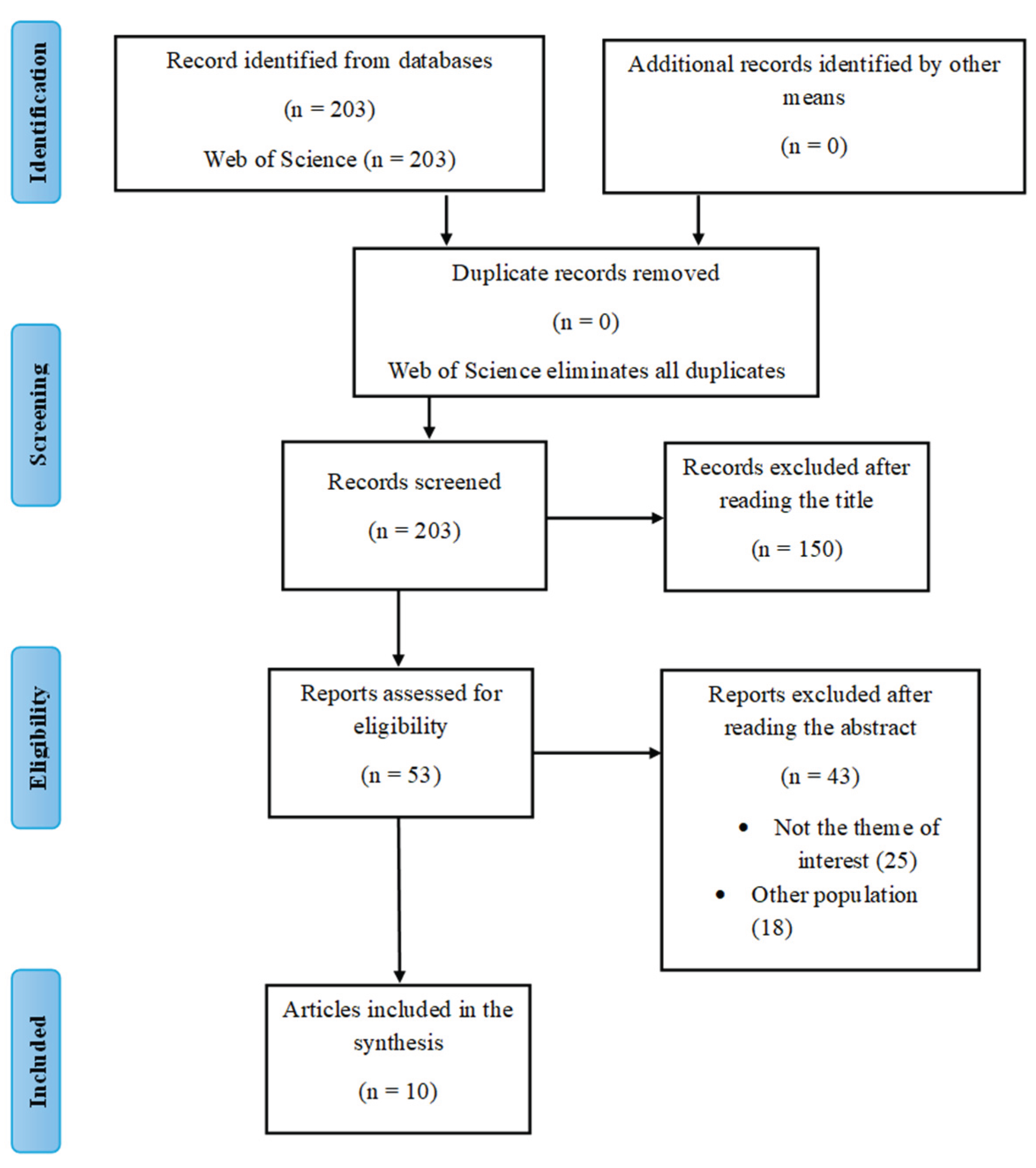

Table 1.
Description of the selected articles.
| Citation | Aim | Sample | Procedure | Assessment | Main Results |
|---|---|---|---|---|---|
| Strempfl et al. (2022) | Evaluate whether a physiotherapy program based on SDT can improve motivation for physical activity in adolescents with obesity. | 12 adolescents with obesity, aged 14 to 18 years (7 completed the intervention). | An 8-week group exercise program combined with home exercises. Physiotherapists applied strategies to support autonomy, competence, and relatedness to nurture intrinsic motivation. | Pre- and post-intervention questionnaires on types of motivation (SDT-based scale), analyzing changes in motivation quality toward movement. | An increase in more internalized motivation (greater identification with the importance of physical activity) was observed. However, there was a high dropout rate (42%). It is suggested to integrate technology to improve adherence in future interventions. |
| Lazaridis et al. (2023) | Explore how a two-year outdoor adventure program influences basic psychological needs satisfaction and motivation in adolescents. | 75 adolescents aged 12 to 14 years (24 participated in interviews). | Extracurricular adventure activities (hiking, outdoor games) conducted over two school years, focusing on fostering autonomy, competence, and relatedness in a natural environment. | Semi-structured interviews at the end of each year, analyzing perceptions of motivation, well-being, and basic psychological needs satisfaction. | Increased perception of autonomy, competence, and relatedness, especially among girls. Improved social well-being and intrinsic motivation due to the non-competitive and natural context. |
| Paap et al. (2025) | Evaluate the effect of an online intervention for PE teachers, based on SDT, on students’ motivation and physical activity levels. | 85 Physical Education teachers and 1,283 students aged 13-14 years (experimental and control groups). | A 4-week web-based training for teachers, teaching strategies to support autonomy, competence, and relatedness, later applied in Physical Education classes. | Pre- and post-intervention questionnaires on students’ perception of support for basic psychological needs, types of motivation, and self-reported physical activity levels. | Significant improvement in students’ perception of support for basic psychological needs and autonomous motivation. No significant short-term changes in objective physical activity levels. |
| Ha et al. (2021) | Evaluate the effectiveness of a family-based SDT program to improve fundamental motor skills (FMS) in children and promote physical activity. | 171 families with primary school children (around 10 years old). | A 9-month program with family workshops, sports equipment distribution, and home activities designed to support autonomy, competence, and relatedness in the family environment. | Various FMS tests, accelerometry to measure physical activity, and motivational questionnaires. | Significant improvements in motor skills in the intervention group. No relevant increases in overall physical activity levels were detected. |
| Lamoneda Prieto et al. (2023) | Explore students’ perceptions of motivation and gender equality after a Physical Education intervention based on SDT and the Sport Education Model (SEM). | 88 students aged 16-17 years (58% female). | 18 Physical Education sessions applying strategies to support autonomy, cooperation, and inclusion, along with school sports events focused on gender equality. | Open-ended questionnaires and group discussions on motivation, participation, and equality. | Greater satisfaction with autonomy, competence, and relatedness, especially among girls. Increased equal participation and improved motivation for Physical Education. |
| Murphy et al. (2022) | Examine the impact of a game-based intervention, grounded in SDT, on well-being and the reduction of anxiety and depression symptoms in adolescent girls. | 85 adolescent girls aged 13 years in a secondary school in Ireland. | A 10-week intervention with voluntary game sessions during recess (0-3 times per week), where students choose the activities. | Pre- and post-intervention questionnaires on mental well-being, anxiety, depression, and self-efficacy. | Significant reduction in anxiety and depression symptoms among frequent participants. Improved well-being and increased perceived self-efficacy. |
| Gil-Arias et al. (2021) | Analyze the effects of volleyball on motivation, basic psychological needs satisfaction, and perceived teacher support, using SDT as a theoretical framework. | 53 secondary school students (Mean age = 15.5 years; 28 girls and 25 boys). | Implementation of a volleyball teaching unit based on the combination of Teaching Games for Understanding and Sport Education (SE) models over multiple sessions (unspecified number). The intervention included stable teams, role assignments (player, referee, coach), adapted competitions, and a focus on tactical understanding. | Pre- and post-intervention questionnaires on perceived support for autonomy, competence, and relatedness, basic psychological needs satisfaction, and types of motivation (autonomous, controlled, amotivation). Focus groups to collect qualitative data on lived experiences. | Significant improvements in perceived teacher support, basic psychological needs satisfaction, and increased intrinsic motivation, especially among girls. Students positively valued cooperation, role variety, and the inclusive environment created by the hybrid methodology. |
| Llorca-Cano et al. (2025) | Analyze the effect of an educational intervention based on teacher autonomy support (according to SDT) on motivation, basic psychological needs satisfaction (BPNS), interest in Physical Education, and academic competence in adolescents. | 142 students aged 12 to 14 years (84 in the intervention group and 58 in the control group). | Implementation of autonomy-supportive teaching strategies over 22 Physical Education sessions, including: offering choices, adapting tasks, using positive language, and encouraging active participation. | Validated questionnaires to measure satisfaction of BPN, types of motivation (autonomous, controlled, amotivation), interest in PE, and perceived academic competence. | The intervention group showed significant improvements in BPNS, autonomous motivation, interest in Physical Education, and perceived academic competence compared to the control group. The effectiveness of autonomy support in the educational context is confirmed. |
| Guijarro-Romero et al. (2023) | Analyze the effects of an intervention using activity trackers, step goals, and educational follow-up on motivational mediators and actual physical activity levels. | 175 compulsory secondary education students (47.5% girls) with a mean age of 13.3 years from two public schools in Granada, Spain, participated. A cluster randomization design was used. | For eight weeks, students participated in physical education classes that included personalized step goal setting, commitment contracts, individual feedback, digital resources (a blog and a WhatsApp group), and autonomous follow-up strategies. An additional six-week follow-up phase was conducted without direct supervision. | The MD-PASS-PA to measure autonomy support; the BPNES to measure satisfaction of basic psychological needs; the BREQ-3 and PLOC-R to measure motivation; and a practice intention questionnaire was used to measure practice intention. Additionally, the level of habitual physical activity was measured using the PACE questionnaire. | The results showed that the intervention group demonstrated significant improvements in several variables compared to the control group: increased perception of autonomy support at the cognitive and procedural levels, greater autonomy and relationship satisfaction, increased autonomous motivation toward physical activity (PA), and improved levels of habitual PA. Furthermore, many of these improvements persisted after a six-week follow-up period, which reinforces the intervention’s long-term effectiveness and sustainability. |
| Walters et al. (2023) | Evaluate the effects of the “Smart Fit Girls” (SFG) program, a 10-week extracurricular intervention, on body image, self-esteem, and enjoyment of physical activity in adolescent girls, using SDT as a theoretical framework. | A total of 590 adolescent girls (intervention group: n = 58; mean age = 12.79; control group: n = 532; mean age = 12.92) from a high school in South Carolina, USA, were included in the study. | For ten weeks, the program included extracurricular sessions combining 20–30 minutes of physical training (mostly strength training) and 60–90 minutes of psychoeducational activities.The intervention created an environment of empowerment and social support among peers (“sisterhood”). | A pre-post design using validated questionnaires was employed to measure body image using the BESAA scale, self-esteem using the Rosenberg scale, and enjoyment of physical activity using the modified PACES scale. | The results showed that girls who participated in Smart Fit Girls experienced significant improvements in body image perception. Slight increases were observed in self-esteem and enjoyment of physical activity. The authors suggest that the program’s limited duration may have influenced these more modest results, particularly regarding self-esteem. |
Table 2.
Table of bibliometric information.
| Article | Impact | Category | Quartile | Citations |
|---|---|---|---|---|
| Gil-Arias et al. (2021) | 4.614 | ENVIRONMENTAL SCIENCES 123456789100/279 | Q2 | 22 |
| Llorca-Cano et al. (2025) | 2.1 | EDUCATION & EDUCATIONAL RESEARCH 123456789179/760 | Q1 | 0 |
| Strempfl et al. (2022) | 1.9 | MEDICINE, GENERAL & INTERNAL 123456789105/329 | Q2 | 1 |
| Ha et al. (2021) | 5.6 | NUTRITION & DIETETICS 12345678914/114 | Q1 | 19 |
| Lamoneda Prieto et al. (2023) | 1.2 | HOSPITALITY, LEISURE, SPORT & TOURISM12345678993/140 | Q3 | 4 |
| Lazaridis et al. (2023) | 1.2 | HOSPITALITY, LEISURE, SPORT & TOURISM12345678993/140 | Q3 | 0 |
| Murphy et al. (2022) | 1.1 | EDUCATION & EDUCATIONAL RESEARCH123456789398/760 | Q3 | 8 |
| Paap et al. (2025) | 2 | PEDIATRICS12345678969/186 | Q2 | 1 |
| Guijarro-Romero et al. (2023) | 2.6 | PSYCHOLOGY, MULTIDISCIPLINARY 12345678956/219 | Q2 | 2 |
| Walters et al. (2023) | 2.5 | PSYCHOLOGY, MULTIDISCIPLINARY 12345678958/219 | Q2 | 1 |
Disclaimer/Publisher’s Note: The statements, opinions and data contained in all publications are solely those of the individual author(s) and contributor(s) and not of MDPI and/or the editor(s). MDPI and/or the editor(s) disclaim responsibility for any injury to people or property resulting from any ideas, methods, instructions or products referred to in the content. |
© 2025 by the authors. Licensee MDPI, Basel, Switzerland. This article is an open access article distributed under the terms and conditions of the Creative Commons Attribution (CC BY) license (http://creativecommons.org/licenses/by/4.0/).
Copyright: This open access article is published under a Creative Commons CC BY 4.0 license, which permit the free download, distribution, and reuse, provided that the author and preprint are cited in any reuse.


