

Submitted:
01 June 2025
Posted:
09 June 2025
You are already at the latest version
Abstract
The Lewis acid, [(η5-C5H5)Fe(CO)2]+, reacted with aminopyridines in dichloromethane under reflux to yield a new family of cyclopentadienylirondicarbonyl complexes of aminopyridine, (η5-C5H5)Fe(CO)2L]+ (where L= 2-aminopyridine, 3-aminopyridine and 4-aminopyridine). The isolated complexes were characterized by FTIR spectroscopy as well as 1H and 13C NMR spectroscopy. FTIR spectral data reveal the presence of the functional groups that correspond to coordinated aminopyridines , the organometallic fragment and the counter ion. According to FTIR, 1H and 13C NMR spectral data, 2-aminopyridine and 4-aminopyridine coordinated to the organometallic fragment through the amino group nitrogen, whereas 3-aminopyridine and 4-aminopyridine coordinated via the pyridine ring nitrogen.
Keywords:
iron half-sandwich
; 2-aminopyridine (2-Apy)
; 3-aminopyridine (3-Apy)
; 4-aminopyridine (4-Apy)
1. Introduction
Aminopyridnines are an important class of compounds that have been extensively utilized in medical and pharmacological applications and in analytical chemistry. For example, 2-aminopyridine is used in production of drugs such as tenoxicam, piroxicam, sulfapyridine, and tripelennamine [1]. Moreover, 2-aminopyridine-tagged oligosaccharides have been used for qualitative and quantitative analysis by high performance liquid chromatography (HPLC) with fluorescence detection [2]. 3-aminopyridine has been used in preparation of 3-pyridylnicotinamide a bidentate ligand in coordination polymers [3,4,5,6]. It is also used in the synthesis of panacidil, an antihypertensive drug. 4-aminopyridine on the other hand is an active therapeutic agent used in treatment of multiple sclerosis or chronic spinal cord injury [1,7].
As ligands in organometallic chemistry, aminopyridines are known to have unique properties such as electronic and steric adjustability, strong σ-donor ability, and weak π-acceptor ability and ability to form stable complexes with most of the transition metals [8,9]. Reports indicate that aminopyridines form metal complexes with transition metal centers, where the ligands exhibit bridging, chelating, or monodentate coordination modes [10,11,12]. Metal complexes of aminopyridines have exhibited catalytic properties [13,14,15,16], antibacterial and anti-fungal activity [17,18,19,20,21,22]. However, the related cationic complexes of the Lewis acid, [(ɳ5-C5H5)Fe(CO)2]+, have seen little or no exploration. Interest in the iron half sandwich aminopyridine complexes arises from the fact that the transition metal iron is required for life and that the known cationic amine complexes of the Lewis acid [(ɳ5-C5H5)Fe(CO)2]+ exhibit properties such as solubility and stability in aqueous media that are desirable for complexes that could be useful for drug discovery and development [23,24,25]. Documented cases of half sandwich complexes with aminopyridine include; [(ɳ5-C5H5)Ru(L)(CH3CN)2]PF6 (where L=aminopyridine) formed by reaction between [(ɳ5-C5H5)Ru(CH3CN)3]+ and 2-Apy [26], [(p-cymene)RuCl2L]: (L=aminopyridine) formed by reaction between [(p-cymene)RuCl2]2 and 2-Apy and 4-Apy [27] and [Ru(η⁶-arene)LCl]⁺ (L=2-Apy) [28]. These complexes have shown potent cytotoxicity against cancer cells [26,27] but their applications have been hampered by challenges like possible toxicity, lower cytoxocity, and the high cost of ruthenium based starting materials [28].
Using the most readily available, cost effective, and physiologically important metals such as iron seems like a sensible approach in this context. Iron(II) half sandwich fragment [(η5-C5H5)(CO)2Fe]+ forms stable complexes of the type [(η5-C5H5)(CO)2FeL]+, (where L=aminoalkane, diaminoalkane, 1-aminopropanol, 4-methoxybenzylamine, 3-minopropyltriethoxysilane, 1,3,5,7-tetraazaadamantane, 1,4-diazabicyclo[2.2.2]octane, 4-aminobenzonitrile, 1,4-phenylenedimethanamine, 1-alkene, triphenylphosphine; methylimidazole hexamethylenetetramine) [23,29,30], [(ɳ5-C5H5)(CO)2Fe(APA)]+ (where APA= n-aminosalicylicacid (n= 3-5), terizidone, linezolid, `prothionamide and ethionamide have been established. The APA complexes exhibited antibacterial activities [31].
The coordination of ligands to metal fragments is known to significantly alter the chemistry of both the ligands and the metal fragment [32]. Moreover, it is also believed to yield three-dimensional molecular shapes which can complement molecular diversity created by purely organic moieties hence presenting an unexplored chemical space which can be employed in a number of fields [33]. Herein we report synthesis and characterization of a novel family of organometallic complexes of the form, [(η5-C5H5)(CO)2FeL]+, (L= X-aminopyridine, X= 2-4 ).
2. Results and Discussion
2.1. Synthesis and Characterization of Aminopyridine Complexes
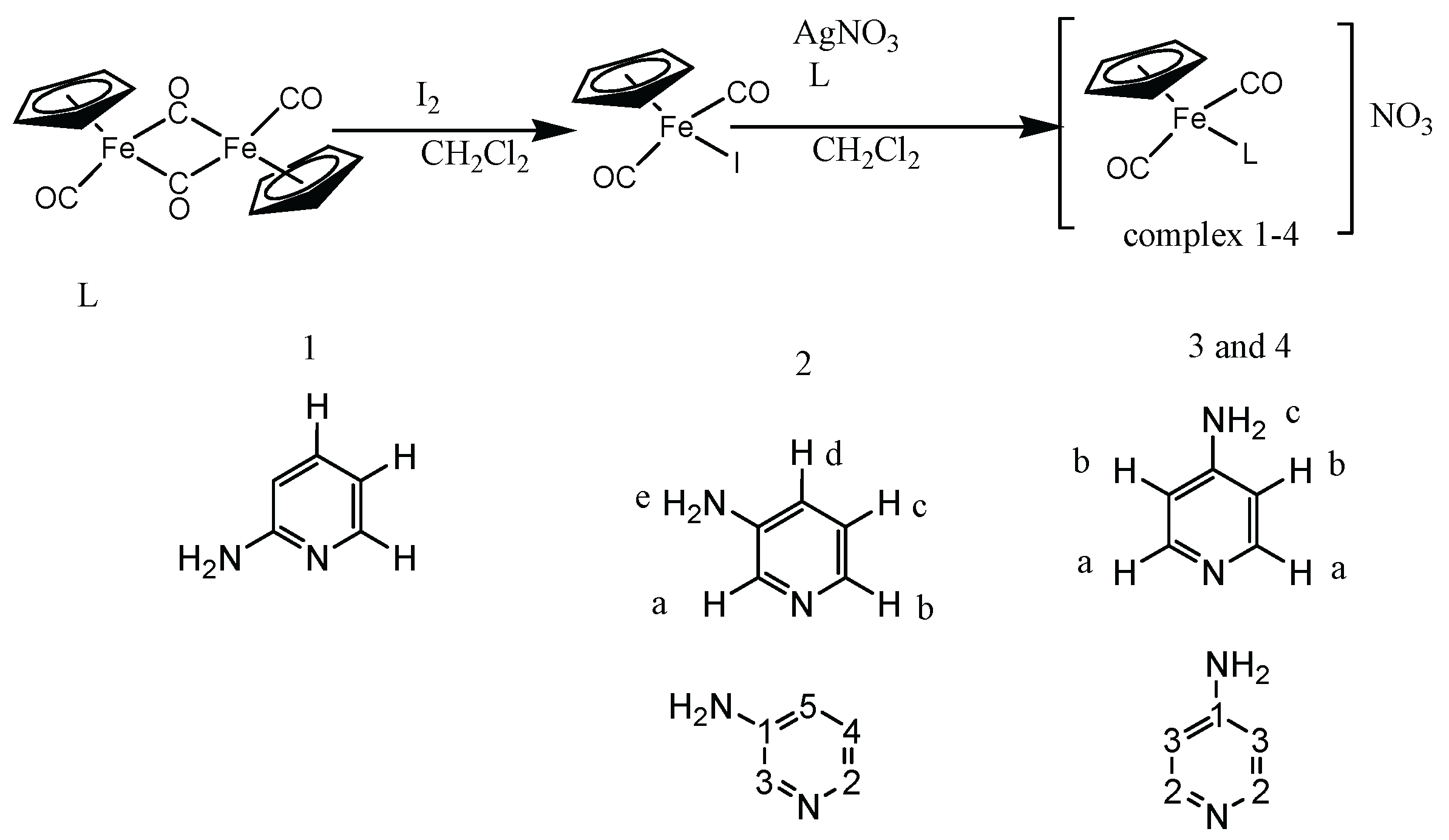
The synthesis of the aminopyridine complexes of the half sandwich moiety, [η5-C5H5Fe(CO)2]+, involved reaction of the aminopyridine ligands with the organometallic fragment under reflux in dichloromethane. The complexes were recovered by either removing the solvent under reduced pressure or precipitation using diethyl ether (see Scheme 1 and Scheme 2). The isolated compounds were thoroughly dried under reduced pressure and characterized by various spectroscopic techniques.
2.2. Spectroscopic Characterization
FTIR spectroscopy was conducted to confirm the success of the synthesis of products and to monitor the reaction. The samples were analyzed in the solid state, pressed directly onto the ATR crystal without further preparation. Infrared spectra were recorded on a Shimadzu IR Tracer-100 spectrophotometer in the range of 4000 - 400 cm-1. The IR spectral data are summarized in Table 1, Table 2, 5, 6 and 9 and compared with those of the free ligand. The band assignments were done by comparison with literature data for related compounds. NMR spectra were recorded on Bruker TopSpin 3.7.0 400 and 600 MHz spectrometers. The spectra were recorded in deuterated dimethyl sulfoxide. Nitrogen-saturated dimethyl sulfoxide was used to prepare solutions for NMR spectroscopy under nitrogen. The 1H and 13C NMR data are summarized in Table 3, Table 4, 7, 8, 10 and 11 and the chemical shift assignments were done by comparison with literature reports. The spectral data of the synthesized complexes provided important indications of the complexes structures.
Table 1 Summarizes the FTIR data for the 2-aminopyridine complex, [(η5-C5H5)Fe(CO)22-Apy]NO3.
It is clear from the table that relative to the free ligand the N-H stretching frequencies (ʋs(NH2), ʋas(NH2)) of the coordinated 2-aminopyridine are shifted to lower wavenumbers by 104 and 100 cm-1, respectively, suggesting that the nitrogen of amino group (NH2) is involved in coordination to the organometallic fragment. This is supported by literature [23,29,31,35,36,42]. Upon coordination, the N-H bond is weakened and the N-H stretching frequencies are lowered. The stronger the metal-nitrogen bond, the weaker is the nitrogen-hydrogen bond and the lower are the nitrogen-hydrogen stretching frequencies [43]. On the other hand, C=N stretch and ring breath vibration modes are very sensitive to coordination of the pyridine ring from the endocyclic nitrogen lone pair of electrons. If coordination takes place through the ring nitrogen lone pair of electrons increase in wave number is expected [42,44,45]. Slight blue shift of 5 and 4 cm-1 respectively indicates that the pyridine ring nitrogen is not directly involved in coordination.
Therefore, the structure consistent with FTIR spectrum is the one proposed below (Figure 1)
Table 2 summarizes the FTIR data for the 3-aminopyridine complex, [(η5-C5H5)Fe(CO)23-Apy]NO3.
Cp=cyclopentadienyl.
It can be seen from the table that the ʋas(NH2) and ʋs(NH2) stretching frequencies of the N-H bonds in the coordinated 3-aminopyridine ligand are shifted by 88 and 68 cm-1 to higher wavenumbers relative to the free ligand in ( 3301 and 3373 cm-1 in the free ligand vs 3369 and 3462 cm-1 in the salt complex). This suggests that the amino group (NH2) nitrogen was not involved in coordination, which is consistent with literature reports [46,47,48]. On the other hand, Blue shifts of 14 and 15 cm-1 in the C=N stretch ring breathing vibration frequencies of the coordinated ligand relative to the free ligand indicates that the ring nitrogen was involved in coordination. This is consistent with literature reports by Büyükmurat & Akyüz, [42] and Lovely and Christudhas [45].
The complex [(η5-C5H5)Fe(CO)2(3-Apy)]NO3 was subjected to proton and 13C NMR spectroscopy an the data are summarized in Table 3 and Table 4, respectively.
The characteristic chemical shift assignable to the five equivalent cyclopentadienyl protons was observed at δ 5.35 ppm. This is in agreement with literature [23,29,35,36,37]. The chemical shift at δ 4.33 ppm was assigned to amino group protons. The chemical shifts for the pyridine protons were observed at δ 6.99-8.20 ppm [44]. The ortho protons were generally shielded relative to the meta protons. When nitrogen of the pyridine ring system is involved in coordination, the ortho protons are shielded while meta protons are deshielded [50,51]. Thus, these results indicate that the nitrogen of the ring system was involved in coordination to the metal centre and corroborates the observed FTIR results. Further, the chemical shifts observed for the pyridine ring protons in the 3-aminopyridine complex are very close to those of the free ligand revealing that the deshielding expected upon σ-coordination of 3-aminopyridine is compensated for by the shielding due to π-back electronic flow to the coordinated 3-aminopyridine molecule. This is in agreement with literature reports by Dhaveethu et al. [44] and Côrte-Real et al. [52].
The chemical shift at 210.1 ppm is due to the coordinated terminal carbonyls. The chemical shift due to the equilibrated carbon atoms of the cyclopentadienyl ring was observed at 88.4 ppm. This is in agreement with literature reports by M’thiruaine et al., [30] and Wanjiru, [36]. Successful coordination through the pyridine ring nitrogen is supported by deshielding of C(1), C(4) and C(5) (148.3, 127.5 and 126 ppm in the complex relative to 143.3, 123.6 and 121.3 ppm in the free ligand ) and shielding C(2) and C(3) ( 129.2 and 128.1 ppm in salt complex relative to 139.8 and 137.3 ppm in the free ligand). C (2) and C(3) appear shielded due to π-back-bonding from two orthogonal metal orbitals to the π-*-orbitals of the 3-Apy moiety. This is in agreement with literature reports by Templeton, [50] and Pal, [51].
Therefore, the structure consistent with FTIR and 1H/ 13C NMR spectra is the one proposed below (Figure 2 )
The organometallic complex, [(η5-C5H5)Fe(CO)2(3-Apy)]NO3, was subjected to counter exchange reaction to give BPh4- analogue, [(η5-C5H5)Fe(CO)2(3-Apy)]BPh4 to improve chances of crystal formation. Table 5 shows the FTIR spectral data of the complex
It can be seen from the tabulated data that the ʋs(NH2 ) and ʋas(NH2 ) stretching frequencies of amino group of the coordinated ligand are shifted to higher frequencies by 120 cm-1 and 88 cm-1 respectively. This suggests that the nitrogen of amino group (NH2) is not involved in coordination to the organometallic fragment. On the other hand the ring breath vibration mode and C=N stretch frequencies in the coordinated ligand are shifted by 12 and 15 cm-1, respectively, to higher wavenumbers relative to the free ligand. These indicate that the ring nitrogen is involved in coordination to the metal center. These observations agree with literature reports [42,44,45]. Therefore, the structure consistent with FTIR spectrum is the one proposed below (Figure 3)
The reaction between the cationic fragment [(η5-C5H5)Fe(CO)2]+ and 4-aminopyridine in dichloromethane resulted in formation of two complexes: a brown solid, complex A and a yellow solid, complex B. The two complexes were characterized by FTIR spectroscopy, 1H and 13C spectroscopy and were found to differ only in the point of coordination of the 4-aminopyridine to the central metal ion.
Table 6 summarizes the FTIR data for the 4-aminopyridine complex, [(η5-C5H5)Fe(CO)24-Apy]NO3(A).
The nitrogen-hydrogen stretching frequencies, ʋas(NH2) and ʋs(NH2), of the amino group was observed at 3337, 3214 cm-1 respectively which agrees with previous literature [46,47,48]. The C=N stretch and pyridine ring breath vibration modes in the coordinated ligand appear blue shifted by 26 and 37cm-1, respectively, relative to the free ligand. This indicates that the pyridine ring nitrogen was involved in coordination. This is consistent with literature reports [40,42].
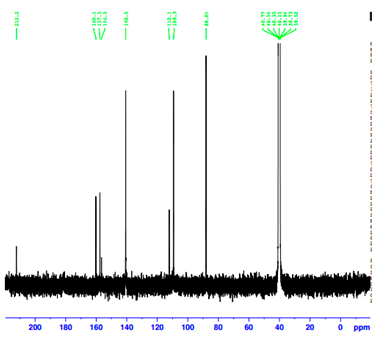
The 4-aminopyridine complex [(η5-C5H5)Fe(CO)2(4-Apy)]NO3, complex, (A) was also characterized by 1H and 13C NMR spectroscopy and the data are summarized in Table 7 and Table 8, respectively.
The chemical shift at δ 5.38 ppm was due to five equivalent cyclopentadienyl protons. This is in agreement with literature reports by M’thiruaine et al., (29). Amino group protons appeared at δ 6.41ppm. The doublet at δ = 7.78 ppm and 6.70 ppm are assignable to ortho and meta pyridine ring protons respectively. This matches what has been reported in the literature [54]. The protons chemical shift observed are close to uncoordinated 4-aminopyridine ligand. Ortho protons are appear shielded by 0.20 ppm due to due to π-back-bonding from two orthogonal metal orbitals to the π-*-orbitals of the 4-Apy moiety while meta protons are deshielded by 0.23 ppm. When nitrogen of the pyridine ring system is involved in coordination the ortho protons are shielded while meta protons are deshielded [40,51].
Chemical shift at δ 212.2 ppm is assignable to terminal carbonyl carbon atoms. This is consistent with established literature [29]. The carbon atom on ortho position greatly shielded by 10 ppm due to π-back-bonding from two orthogonal metal orbitals to the π-*-orbitals of the 4-Apy moiety increasing electron density at these sites while protons on the meta position are deshielded. This indicates that pyridine ring nitrogen is involved in coordination. This is consistent with established literature [40,51,55].
Therefore, the structure consistent with FTIR and 1H/ 13C NMR is the one proposed below (Figure 5)
Table 9 summarizes the FTIR data for the 4-aminopyridine complex, [(η5-C5H5)Fe(CO)2(4-Apy)]NO3(B).
The table shows that the N-H stretching frequency of the coordinated 4-aminopyridine ligand amino group is shifted to lower wavenumbers in the complex by 84 and 90 cm-1 relative to the free ligand suggesting that the nitrogen of amino group (NH2) is involved in coordination to the organometallic fragment. This is in agreement with literature reports [42]. On the other hand, slight blue shifts of 3 and 5 cm-1 observed in the C=N stretch and ring breath mode of the coordinated 4-Apy pyridine ring indicated that the pyridine ring nitrogen was not involved in coordination. This is in agreement with literature reports for related compounds [42,44,45].
Table 10 summarizes the proton NMR data for the 4-aminopyridine complex, [(η5-C5H5)Fe(CO)24-Apy]NO3(B).
From the table, the cyclopentadienylirondicabonyl-4-aminopyridine (Complex A) cyclopentadienyl ring protons were assigned chemical shift at 5.27 ppm which is in agreement with literature [31]. The observed amino group protons down-field shift by 0.69 ppm (6.04 ppm in free 4-aminopyridine vs 6.73 ppm in the complex salt) suggests that coordination of the central metal atom in Fp to the 4-Apy molecule took place at the amino group nitrogen. This is in agreement with a literature report by M’thiruaine et al., [29]. Thus, this shift can be attributed to the deshielding of the amino group proton as nitrogen donates its lone pair to the metal. This observation corroborates the FTIR results and the results from the 13C NMR chemical shift data.
Table 11 summarizes the 13C NMR data for the 4-aminopyridine complex, [(η5-C5H5)Fe(CO)24-Apy]NO3(B).

Table 12.
13C NMR chemical shifts (ppm) of 4-aminopyridine and its organometallic complex, [(η5-C5H5)Fe(CO)2(4-Apy)]NO3, (B).
Table 12.
13C NMR chemical shifts (ppm) of 4-aminopyridine and its organometallic complex, [(η5-C5H5)Fe(CO)2(4-Apy)]NO3, (B).
| Assignment | 4-Apy | [(η5-C5H5)Fe(CO)2(4-Apy)]NO3(B) | ∆ |
|---|---|---|---|
| C(1) | 154.2 | 160.2 | +6.0 |
| C(2) | 149.4 | 156.5 | +7.1 |
| C(3) | 108.8 | 112.2 | +2.4 |
| CCp | - | 88.0 | - |
| CO | - | 212.2 | - |
The data in the table corroborates the FTIR data presented in Table 9. For example, the chemical shift at 212.2 ppm is due to the coordinated terminal carbonyl carbon. The chemical shift due to the equilibrated carbon atoms of the cyclopentadienyl ring was observed at δ 88.0 ppm. This is consistent with established literature report [30]. Carbon atom C (1) is greatly deshielded by 6.0 ppm (152.2 ppm in the free ligand relative to 160.2 ppm in the complex salt) which can be attributed to nitrogen of the amine group donating its lone pair of electrons to the cationic metal fragment. Therefore, the structure consistent with FTIR and 1H/ 13C NMR is the one proposed below (Figure 4)
3. Materials and Methods
3.1. Materials for Synthetic Work
The solvents used, tetrahydrofuran (THF), petroleum ether, diethyl ether, and dichloromethane (DCM) were dried and freshly distilled before use. The ligands, 2-aminopyridine (2-Apy), 3-amniopyridine (3-Apy), and 4-aminopyridine (4-Apy) were used as obtained without further purification. The starting material, dicarbonylcyclopentadienyiron (II) dimer, iodine, anhydrous sodium sulphate, sodium thiosulphate, silver nitrate and anhydrous calcium chloride were obtained from Sigma Aldrich.
3.2. Experimental Methods3.3. General
Preparation of the Lewis acid, [(ɳ5-C5H5)(CO)2Fe]+, and subsequent reactions between Lewis acid and aminopyridines was done under inert atmosphere (dry nitrogen). Nitrogen gas was dried by using concentrated sulphuric (VI) acid (H2SO4). Analytical grade tetrahydrofuran (THF) and diethyl ether were dried and distilled from sodium benzophenone ketyl and stored over sodium wire. Dichloromethane (DCM) was distilled from anhydrous calcium chloride (CaCl2) and used immediately. Infrared spectra were recorded on a Shimadzu IR Tracer-100 spectrophotometer in the range of 4000 and 400 cm-1. Proton and 13-carbon NMR spectra were recorded on Bruker topspin 400 and 600 MHz spectrometers.
3.4. Synthesis of the Iodo Complex [(ɳ5-C5H5)Fe(CO)2I]
The commercially available dimer was used to prepare the starting material, [Fe(η5-C5H5)(CO)2I], in accordance with the literature procedure by King and Stone, [57].
3.5. Synthesis of [(ɳ5-C5H5)Fe(CO)2(2-Apy)]NO3
The iodo complex, [ɳ5-C5H5)Fe(CO)2I], (1.00 g, 3.290 mmol) and AgNO3 (0. 6285 g, 3.700 mmol) were transferred into a Schlenk tube containing 15 ml. of dichloromethane and refluxed under inert atmosphere (nitrogen) for 1.5 hours. The resultant mixture was cooled to room temperature and filtered through a canula. 2-aminopyridine (0.3106 g, 3.300 mmol) was added to the filtrate and the mixture refluxed for 6 hours, with the progress of the reaction monitored by FTIR spectroscopy. A brown solution was formed. When the reaction was deemed complete, the solvent was removed at reduced pressure to yield 0.82g (82%) of a brown solid.
3.6. Synthesis of [(ɳ5-C5H5)Fe(CO)2(3-Apy)]NO3
The iodo complex [ɳ5-C5H5)Fe(CO)2I] (1.00 g, 3.290 mmol) and AgNO3 (0. 6285 g, 3.700 mmol) were transferred into a Schlenk tube containing 15 ml. of dichloromethane and refluxed under an inert atmosphere for 1 ½ hours. The resultant mixture was then filtered after cooling to room temperature. The filtrate treated with 3-aminopyridine (0.3106 g, 3.300 mmol) dissolved in 15 ml. of dichloromethane and the mixture refluxed for 8 hours under inert atmosphere (nitrogen). The progress of the reaction was monitored by FTIR spectroscopy. A brown solution was formed. At the end of the reaction that solvent was removed at reduced pressure to yield 0.86 g (86%) of a dark brown and sticky solid.
3.7. Synthesis of [(ɳ5-C5H5)Fe(CO)2(3-Apy)]BPH4 complex
A mixture of iodo complex [ɳ5-C5H5)Fe(CO)2I] (1.00 g, 3.290 mmol) and AgNO3 (0. 6285 g, 3.700 mmol) transferred into a Schlenk tube containing 15 ml. of THF was refluxed under inert atmosphere for 1 ½ hours after which it was allowed to cool to room temperature. The resultant mixture was then filtered and the filtrate treated with 3-aminopyridine (0.3106 g, 3.300 mmol) dissolved in 15 ml of dichloromethane and then refluxed for 8 hours. The progress of the reaction was monitored by FTIR spectroscopy. When the reaction was deemed complete 1 g (2.922 mmol) of sodium tetraphenylborate was added to the solution and the resultant mixture refluxed for 1hour. Afetr one hour the mixture was allowed to cool to room temperature and the product precipitated by addition of diethyl ether until a yellow precipitate was formed. The mixture was allowed to stand for 20 minutes after which it was filtered to obtain 0.7 g (70%) of yellow solid.
3.8. Synthesis of [(ɳ5-C5H5)Fe(CO)2(4-Apy)]NO3
The iodo complex [(ɳ5-C5H5)Fe(CO)2I] (1.00 g, 3.290 mmol) and the silver salt AgNO3 (0. 6285 g, 3.700 mmol) were transferred into a Schlenk tube containing 15 ml of dichloromethane and refluxed underinert atmosphere for 1½ hours. The resultant mixture was then filtered. 4-aminopyridine (0.3106 g, 3.300 mmol) was added to the filtrate and the mixture refluxed for 8 hours, with the progress of the reaction monitored by FTIR spectroscopy. A brown solid precipitated out of solution on cooling to room temperature. The resultant mixture was filtered to recover a brown residue and yellow filtrate. The residue was washed with several portions of DCM and dried to give 0.53 g of a brown solid (B). The solvent was removed from filtrate at reduced pressure to obtain 0.28 g of a yellow residue (complex A).
4. Conclusions
The cationic complexes of the form, [(ɳ5-C5H5)Fe(CO)2L]+ (where L = 2-aminopyridine, 3-aminopyridne and 4-aminopyridine ) were successfully synthesized and characterized by FTIR, 1H and 13C NMR spectroscopy. FTIR spectra showed absorption peaks for all the major groups in their normal region as found in related complexes. The aminopyridines adopted the unidentate coordination mode. 2-aminopyridine coordinated through the amino group nitrogen, 3-aminopyridine coordinated via the pyridine ring nitrogen, whereas the 4-aminopyridine formed a mixture of two complexes. In one complex the ligand coordinated via amino group nitrogen whereas in the other the ligand coordinated through the pyridine ring nitrogen.
Funding
This research received no external funding.
Institutional Review Board Statement
Not applicable.
Informed Consent Statement
Not applicable.
Data Availability Statement
Not applicable.
Acknowledgments
I am grateful to my supervisors Dr. Evans Changamu and Dr. Katana Chengo for their unwavering guidance, invaluable patience, insightful feedback and continuous encouragement throughout this research process. .
Conflicts of Interest
The authors declare no conflict of interest.
Sample Availability
Samples of compounds are available from the authors.
Appendix A
Figure A1 is FTIR spectra for 2-apy and its complex
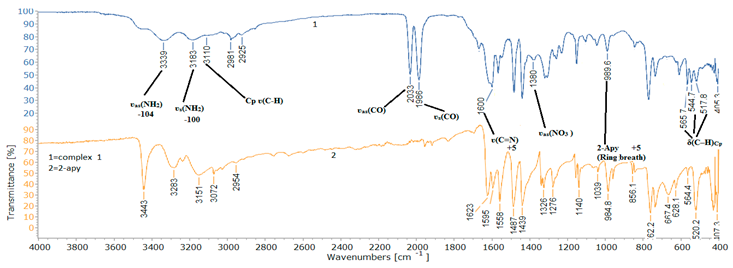
Figure A2 is FTIR spectra for 3-apy and its complex (NO3 counterion)
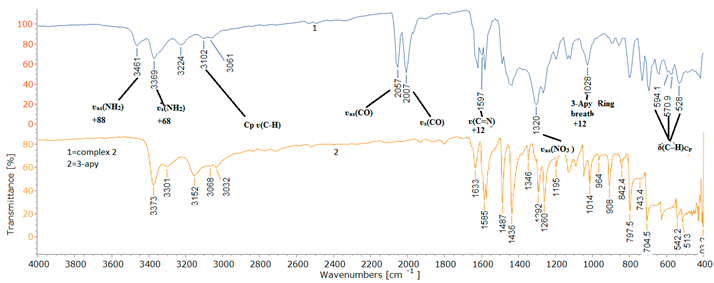
Figure A3 is FTIR spectra for 3-apy and its complex (BPh4 counterion)
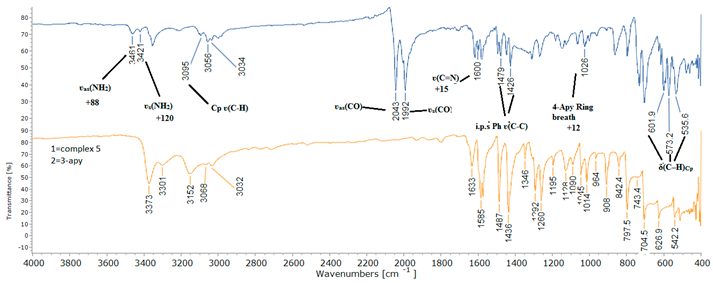
Figure A4 is FTIR spectra for 4-apy and its complex (A=complex 3)
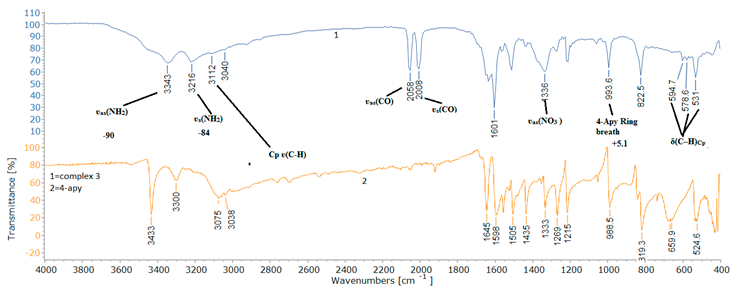
Figure A5 is FTIR specra for 4-apy and its complex (A=complex 4)
Figure A6 is 1HNMR spectrum of 3-aminopyridine complex salt
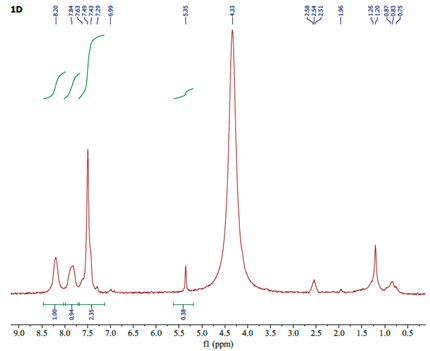
Figure A7 is 1HNMR spectrum of 4-aminopyridine complex salt
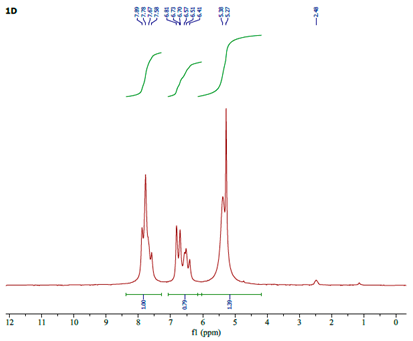
Figure A8 is 13C NMR spectrum of 3-aminopyridine complex salt.
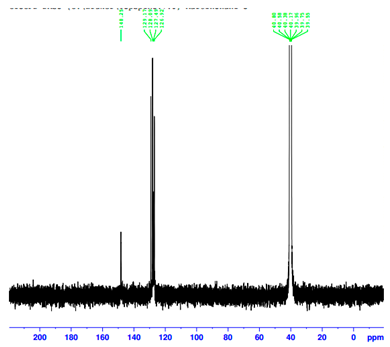
Figure A9 is 13C NMR spectrum of 4-aminopyridine complex salts
References
- Shimizu, S.; Watanabe, N.; Kataoka, T.; Shoji, T.; Abe, N.; Morishita, S.; Ichimura, H. Pyridine and pyridine derivatives. Ullmann’s Encyclopedia of Industrial Chemistry 2000. [Google Scholar] [CrossRef]
- Okamoto, M.; Takahashi, K.-I.; Doi, T.; Takimoto, Y. High-Sensitivity Detection and Postsource Decay of 2-Aminopyridine-Derivatized Oligosaccharides with Matrix-Assisted Laser Desorption/Ionization Mass Spectrometry. Analytical Chemistry 1997, 69, 2919–2926. [Google Scholar] [CrossRef] [PubMed]
- Zheng, X.; Salgia, S. R.; Thompson, W. B.; Dillingham, E. O.; Bond, Stephen. E.; Feng, Z.; Prasad, K. R.; Gollamudi, R. Design and synthesis of piperidine-3-carboxamides as human platelet aggregation inhibitors. Journal of Medicinal Chemistry 1995, 38, 180–188. [Google Scholar] [CrossRef]
- Uemura, K.; Kitagawa, S.; Kondo, M.; Fukui, K.; Kitaura, R.; Chang, H.-C.; Mizutani, T. Novel flexible frameworks of porous Cobalt(II) coordination polymers that show selective guest adsorption based on the switching of Hydrogen-Bond pairs of AMIde groups. Chemistry - a European Journal 2002, 8, 3586. [Google Scholar] [CrossRef]
- Uemura, K.; Kitagawa, S.; Fukui, K.; Saito, K. A contrivance for a dynamic porous framework: cooperative guest adsorption based on square grids connected by Amide−Amide hydrogen bonds. Journal of the American Chemical Society 2004, 126, 3817–3828. [Google Scholar] [CrossRef] [PubMed]
- Kumar, D. K.; Das, A.; Dastidar, P. Supramolecular structural diversities in the metal–organic frameworks derived from pyridylamide ligands: studying the effects of ligating topologies, hydrogen bonding backbone of the ligands and counter anions. CrystEngComm 2007, 9, 548–555. [Google Scholar] [CrossRef]
- Mohammadi, S.; Foroumadi, A. 4-Aminopyridine. In Elsevier eBooks; 2023; pp 393–397. [CrossRef]
- Akyüz, S. The FT-IR spectroscopic investigation of transition metal(II) 4-aminopyridine tetracyanonickelate complexes. Journal of Molecular Structure 1999, 482, 171–174. [Google Scholar] [CrossRef]
- Swiatkowski, M.; Sieranski, T.; Bogdan, M.; Kruszynski, R. Structural Insights into Influence of Isomerism on Properties of Open Shell Cobalt Coordination System. Molecules 2019, 24, 3357. [Google Scholar] [CrossRef]
- Sadimenko, A. P. ChemInform Abstract: Organometallic complexes of Aminopyridines. ChemInform 2011, 42. [Google Scholar] [CrossRef]
- Kalidasan, M.; Forbes, S.; Mozharivskyj, Y.; Kollipara, M. R. Half-sandwich pentamethylcyclopentadienyl group 9 metal complexes of 2-aminopyridyl ligands: Synthesis, spectral and molecular study. Journal of Chemical Sciences 2015, 127, 1135–1144. [Google Scholar] [CrossRef]
- Noor, A. Coordination Chemistry of Bulky Aminopryridinates with Main Group and Transition Metals. Topics in Current Chemistry 2021, 379. [Google Scholar] [CrossRef] [PubMed]
- Duan, X.-E.; Yuan, S.-F.; Tong, H.-B.; Bai, S.-D.; Wei, X.-H.; Liu, D.-S. Metal (Mg, Fe, Co, Zr and Ti) complexes derived from aminosilyl substituted aminopyridinato ligand: synthesis, structures and ethylene polymerization behaviors of the group 4 complexes. Dalton Transactions 2012, 41, 9460. [Google Scholar] [CrossRef]
- Hafeez, M.; Kretschmer, W. P.; Kempe, R. Hafnium trialkyls stabilized by bulky, Electron-Rich aminopyridinates. Zeitschrift Für Anorganische Und Allgemeine Chemie 2012, 638, 324–330. [Google Scholar] [CrossRef]
- Chelucci, G. Metal-complexes of optically active amino- and imino-based pyridine ligands in asymmetric catalysis. Coordination Chemistry Reviews 2013, 257, 1887–1932. [Google Scholar] [CrossRef]
- Thierer, L. M.; Jenny, S. E.; Shastri, V.; Donley, M. R.; Round, L. M.; Piro, N. A.; Kassel, W. S.; Brown, C. L.; Dudley, T. J.; Zubris, D. L. Amino pyridine iron(II) complexes: Characterization and catalytic application for atom transfer radical polymerization and catalytic chain transfer. Journal of Organometallic Chemistry 2020, 924, 121456. [Google Scholar] [CrossRef]
- Yuoh, A. C. B.; Agwara, M. O.; Yufanyi, D. M.; Conde, M. A.; Jagan, R.; Eyong, K. O. Synthesis, Crystal Structure, and Antimicrobial Properties of a Novel 1-D Cobalt Coordination Polymer with Dicyanamide and 2-Aminopyridine. International Journal of Inorganic Chemistry 2015, 2015, 1–8. [Google Scholar] [CrossRef]
- Brađan, G.; Čobeljić, B.; Pevec, A.; Turel, I.; Milenković, M.; Radanović, D.; Šumar-Ristović, M.; Adaila, K.; Milenković, M.; Anđelković, K. Synthesis, characterization and antimicrobial activity of pentagonal-bipyramidal isothiocyanato Co(II) and Ni(II) complexes with 2,6-diacetylpyridine bis(trimethylammoniumacetohydrazone). Journal of Coordination Chemistry 2016, 69, 801–811. [Google Scholar] [CrossRef]
- Chimaine, F. T.; Yufanyi, D. M.; Yuoh, A. C. B.; Eni, D. B.; Agwara, M. O. Synthesis, crystal structure, photoluminescent and antimicrobial properties of a thiocyanato-bridged copper(II) coordination polymer. Cogent Chemistry 2016, 2, 1253905. [Google Scholar] [CrossRef]
- Mohammed, H. S. Synthesis, characterization, structure determination from powder X-ray diffraction data, and biological activity of azo dye of 3-aminopyridine and its complexes of Ni(II) and Cu(II). Bulletin of the Chemical Society of Ethiopia 2021, 34, 523–532. [Google Scholar] [CrossRef]
- J, Jisha. M. Synthesis and characterization of Schiff base complexes of Zr(IV) and Th(IV) complexes of Schiff base derived from furan 3- carboxaldehyde and 3- amino pyridine. International Journal of Emerging Trends in Science and Technology 2017, 4. [CrossRef]
- Guo, L.; Hu, X.; Yang, Y.; An, W.; Gao, J.; Liu, Q.; Liu, Z. Synthesis and biological evaluation of zwitterionic half-sandwich Rhodium(III) and Ruthenium(II) organometallic complexes. Bioorganic Chemistry 2021, 116, 105311. [Google Scholar] [CrossRef]
- M’thiruaine, C. M.; Friedrich, H. B.; Changamu, E. O.; Bala, M. D. Reactions of N-heterocyclic ligands with substitutionally labile organometallic complexes, [(η5-C5R5)Fe(CO)2E]BF4. Inorganica Chimica Acta 2012, 390, 83–94. [Google Scholar] [CrossRef]
- Qi, L.; Luo, Q.; Zhang, Y.; Jia, F.; Zhao, Y.; Wang, F. Advances in toxicological research of the anticancer drug cisplatin. Chemical Research in Toxicology 2019, 32, 1469–1486. [Google Scholar] [CrossRef]
- Mansoori, B.; Mohammadi, A.; Davudian, S.; Shirjang, S.; Baradaran, B. The Different Mechanisms of Cancer Drug Resistance: A Brief review. Advanced Pharmaceutical Bulletin 2017, 7, 339–348. [Google Scholar] [CrossRef] [PubMed]
- Standfest-Hauser, C. M.; Mereiter, K.; Schmid, R.; Kirchner, K. Some binding modes of 2-aminopyridine to ruthenium(ii) fragments. Dalton Transactions 2003, No. 11, 2329. [Google Scholar] [CrossRef]
- Fuster, M. G.; Moulefera, I.; Montalbán, M. G.; Pérez, J.; Víllora, G.; García, G. Synthesis and Characterization of New Ruthenium (II) Complexes of Stoichiometry [Ru(p-Cymene)Cl2L] and Their Cytotoxicity against HeLa-Type Cancer Cells. Molecules 2022, 27, 7264. [Google Scholar] [CrossRef]
- Marszaukowski, F.; Guimarães, I. D. L.; Da Silva, J. P.; Da Silveira Lacerda, L. H.; De Lazaro, S. R.; De Araujo, M. P.; Castellen, P.; Tominaga, T. T.; Boeré, R. T.; Wohnrath, K. Ruthenium(II)-arene complexes with monodentate aminopyridine ligands: Insights into redox stability and electronic structures and biological activity. Journal of Organometallic Chemistry 2018, 881, 66–78. [Google Scholar] [CrossRef]
- M’thiruaine, C. M.; Friedrich, H. B.; Changamu, E. O.; Bala, M. D. Synthesis and characterization of amine complexes of the cyclopentadienyliron dicarbonyl complex cation, [Cp(CO)2Fe]+. Inorganica Chimica Acta 2010, 366, 105–115. [Google Scholar] [CrossRef]
- M’thiruaine, C. M.; Friedrich, H. B.; Changamu, E. O.; Omondi, B. Regioselective reactions of electrophilic iron dicarbonyl cations, [(η5-C5R5)(CO)2Fe]+ (R = H, CH3) with heterofunctional amine ligands. Journal of Organometallic Chemistry 2012, 717, 52–60. [Google Scholar] [CrossRef]
- Chengo, K. Synthesis, Characterization, bioassay and density Functional Theory studies of cationic iron half sandwich complexes of selected heterofunctional active pharmaceutical agents. Doctor of Philosophy Degree (In Applied Chemistry), Kenyatta University, Kenya, 2020. https://ir-library.ku.ac.ke/handle/123456789/21492.
- Khan, T.; Dixit, S.; Ahmad, R.; Raza, S.; Azad, I.; Joshi, S.; Khan, A. R. Molecular docking, PASS analysis, bioactivity score prediction, synthesis, characterization and biological activity evaluation of a functionalized 2-butanone thiosemicarbazone ligand and its complexes. Journal of Chemical Biology 2017, 10, 91–104. [Google Scholar] [CrossRef]
- Dörr, M.; Meggers, E. Metal complexes as structural templates for targeting proteins. Current Opinion in Chemical Biology 2014, 19, 76–81. [Google Scholar] [CrossRef] [PubMed]
- Phiri, Ll. Spectroscopic studies-Cyclopentadienyl iron dicarbonyl ketone complexes. Masters of Science in chemistry, university of Zambia, Zambia, 199. https://oatd.org/oatd/record?record=oai\:dspace.unza.zm\:123456789\%2F274.
- M’thiruaine, C. M.; Friedrich, H. B.; Changamu, E. O.; Bala, M. D. Synthesis and characterization of amine complexes of the cyclopentadienyliron dicarbonyl complex cation, [Cp(CO)2Fe]+. Inorganica Chimica Acta 2010, 366, 105–115. [Google Scholar] [CrossRef]
- Kennedy, W. Synthesis, Characterization And Screening Of Selected Amine Complexes Of The Organometallic Moiety [(ŋ5-C5H5)(CO)(PPh3)Fe]+ For Antibacterial Activity. MA Thesis, kenyatta university, Kenya 2016. https://Https://Ir-Library.Ku.Ac.Ke/Bitstream/Handle/123456789/15344/Synthesis%2c%20characterization%20and%20screening.Pdf?Sequence=1&Isallowed=Y.
- Pilon, A.; Brás, A. R.; Côrte-Real, L.; Avecilla, F.; Costa, P. J.; Preto, A.; Garcia, M. H.; Valente, A. A New Family of Iron(II)-Cyclopentadienyl Compounds Shows Strong Activity against Colorectal and Triple Negative Breast Cancer Cells. Molecules 2020, 25, 1592. [Google Scholar] [CrossRef] [PubMed]
- Sall, A. S.; Tamboura, F. B.; Gaye, M. Spectroscopic studies of some lanthanide(III) nitrate complexes synthesized from a new ligand 2,6-bis-(salicylaldehyde hydrazone)-4-chlorophenol. https://doaj.org/article/29a4704908e941e69cbf3a97d8cf8e8b.
- Mihaylov, M. Y.; Zdravkova, V. R.; Ivanova, E. Z.; Aleksandrov, H. A.; Petkov, P. St.; Vayssilov, G. N.; Hadjiivanov, K. I. Infrared spectra of surface nitrates: Revision of the current opinions based on the case study of ceria. Journal of Catalysis 2020, 394, 245–258. [Google Scholar] [CrossRef]
- Yenikaya, C.; Poyraz, M.; Sarı, M.; Demirci, F.; İlkimen, H.; Büyükgüngör, O. Synthesis, characterization and biological evaluation of a novel Cu(II) complex with the mixed ligands 2,6-pyridinedicarboxylic acid and 2-aminopyridine. Polyhedron 2009, 28, 3526–3532. [Google Scholar] [CrossRef]
- Büyükmurat, Y.; Akalin, E.; Özel, A. E.; Akyüz, S. Calculation and analysis of IR spectrum of 2-aminopyridine. Journal of Molecular Structure 1999, 482, 579–584. [Google Scholar] [CrossRef]
- Buyukmurat, Y.; Akyuz, S. Theoretical and experimental studies of IR spectra of 4-aminopyridine metal(II) complexes. Journal of Molecular Structure 2003, 651–653, 533–539. [Google Scholar] [CrossRef]
- Nakamoto, K. Infrared and Raman spectra of inorganic and coordination compounds; 2008. [CrossRef]
- Dhaveethu, K.; Ramachandramoorthy, T.; Thirunavukkarasu, K. Spectroscopic, Thermal and Biological Studies of Zn(II), Cd(II) and Hg(II) Complexes Derived from 3-Aminopyridine and Nitrite Ion. Journal of the Korean Chemical Society 2013, 57, 712–720. [Google Scholar] [CrossRef]
- Lovely, K.; Christudhas, M. Synthesis, Characterization and Antimicrobial Studies of Co(II), Ni(II), Cu(II) and Zn(II) Complexes of 3-Pyridine Carboxaldehyde and L-Tryptophan. Journal of Chemical and Pharmaceutical Research 2013, 5, 154–159. [Google Scholar]
- Kartal, Z. Synthesis, spectroscopic, thermal and structural properties of [M(3-aminopyridine)2Ni(μ-CN)2(CN)2]n (M(II)=Co and Cu) heteropolynuclear cyano-bridged complexes. Spectrochimica Acta Part a Molecular and Biomolecular Spectroscopy 2015, 152, 577–583. [Google Scholar] [CrossRef]
- Mautner, F. A.; Jantscher, P. V.; Fischer, R. C.; Torvisco, A.; Reichmann, K.; Massoud, S. S. Syntheses, structural characterization, and thermal behaviour of metal complexes with 3-aminopyridine as co-ligands. Transition Metal Chemistry 2020, 46, 191–200. [Google Scholar] [CrossRef]
- Kartal, Z.; Şahi̇N, O. Synthesis, spectroscopic, thermal, crystal structure properties, and characterization of new Hofmann-Td-type complexes with 3-aminopyridine. Turkish Journal of Chemistry 2021, 45, 942–955. [Google Scholar] [CrossRef] [PubMed]
- Büyükmurat, Y.; Akyüz, S. Theoretical and experimental IR spectra and assignments of 3-aminopyridine. Journal of Molecular Structure 2001, 563, 545–550. [Google Scholar] [CrossRef]
- Templeton, J. L. Hexakis(pyridine)ruthenium(II) tetrafluoroborate. Molecular structure and spectroscopic properties. Journal of the American Chemical Society 1979, 101, 4906–4917. [Google Scholar] [CrossRef]
- Pal, S. Pyridine: a useful ligand in transition metal complexes. In InTech eBooks; 2018. [CrossRef]
- Côrte-Real, L.; Robalo, M. P.; Marques, F.; Nogueira, G.; Avecilla, F.; Silva, T. J. L.; Santos, F. C.; Tomaz, A. I.; Garcia, M. H.; Valente, A. The key role of coligands in novel ruthenium(II)-cyclopentadienyl bipyridine derivatives: Ranging from non-cytotoxic to highly cytotoxic compounds. Journal of Inorganic Biochemistry 2015, 150, 148–159. [Google Scholar] [CrossRef]
- Schrock, R. R.; Osborn, J. A. .pi.-Bonded complexes of the tetraphenylborate ion with rhodium(I) and iridium(I). Inorganic Chemistry 1970, 9, 2339–2343. [Google Scholar] [CrossRef]
- Xu, H.; Wolf, C. Efficient copper-catalyzed coupling of aryl chlorides, bromides and iodides with aqueous ammonia. Chemical Communications 2009, 3035. [Google Scholar] [CrossRef]
- Fryzuk, M. D.; Johnson, S. A. The continuing story of dinitrogen activation. Coordination Chemistry Reviews 2000, 200, 379–409. [Google Scholar] [CrossRef]
- King, R. B.; Stone, F. G. A.; Jolly, W. L.; Austin, G.; Covey, W.; Rabinovich, D.; Steinberg, H.; Tsugawa, R. Cyclopentadienyl metal carbonyls and some derivatives. Inorganic Syntheses 1963, 99–115. [Google Scholar] [CrossRef]
Scheme 1.
The reaction scheme for the synthesis of the iodo complex [Fe(η5-C5H5)(CO)2I] and compounds 1–4. Numbering and labeling of the ligands is for NMR purpose.
Scheme 1.
The reaction scheme for the synthesis of the iodo complex [Fe(η5-C5H5)(CO)2I] and compounds 1–4. Numbering and labeling of the ligands is for NMR purpose.
Scheme 2.
This is a reaction scheme for the synthesis of complex 5.
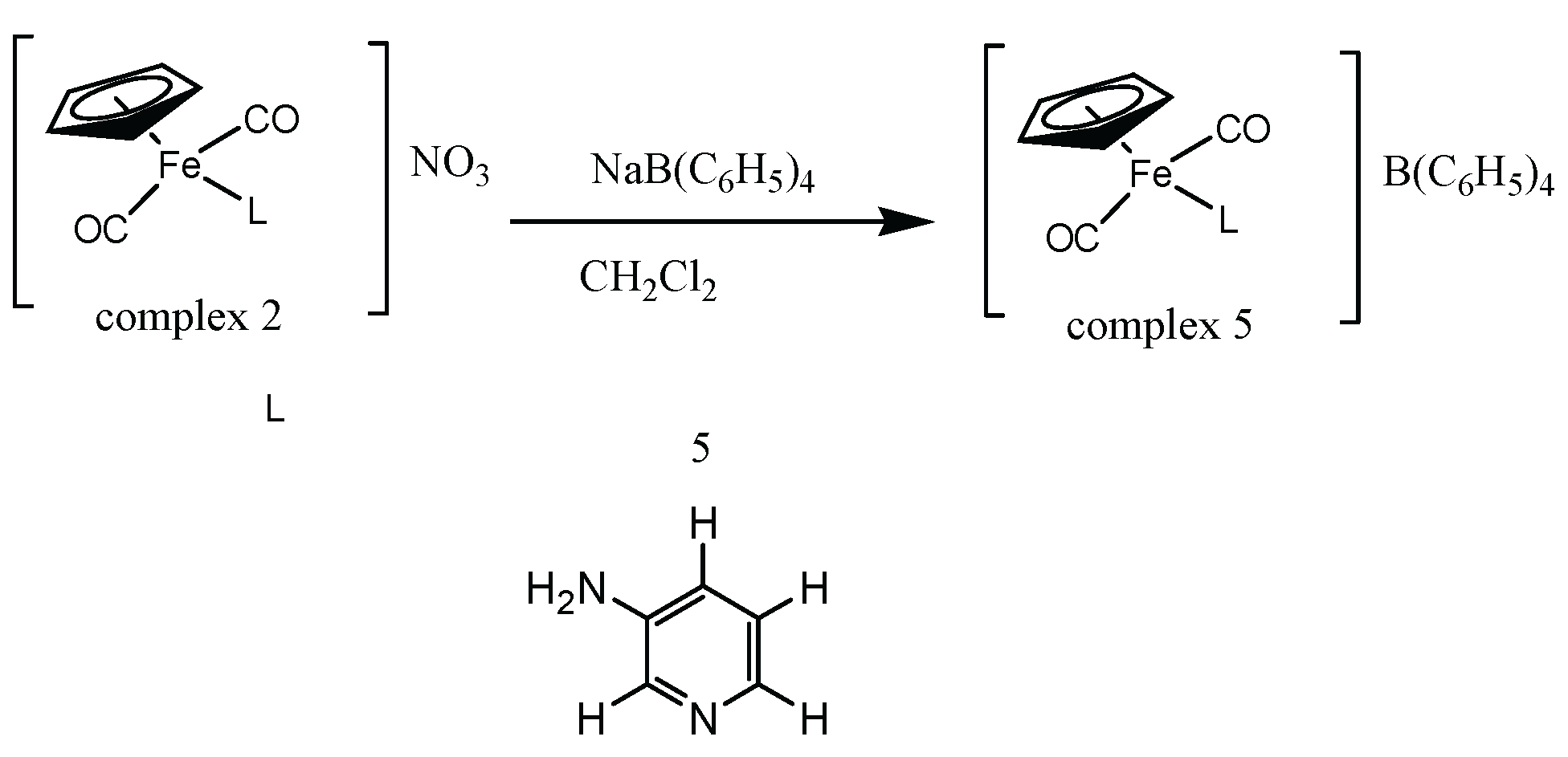
Figure 1.
This a figure of cyclopentadienylirondicabonyl-2-aminopyridine complex.
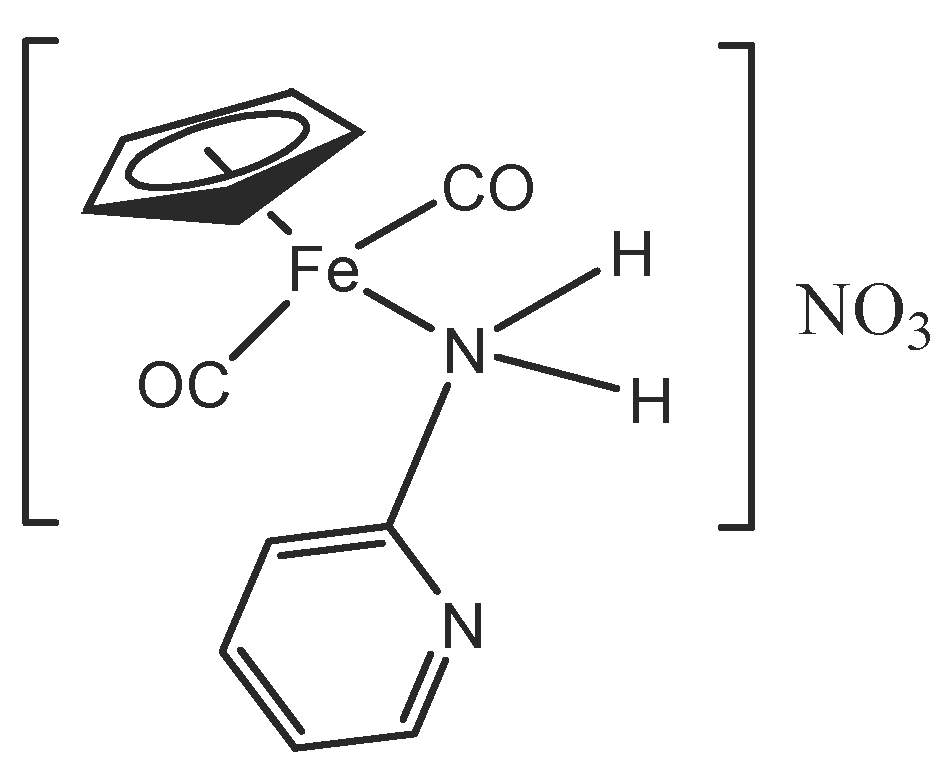
Figure 2.
This a figure of cyclopentadienylirondicabonyl-3-aminopyridine complex.
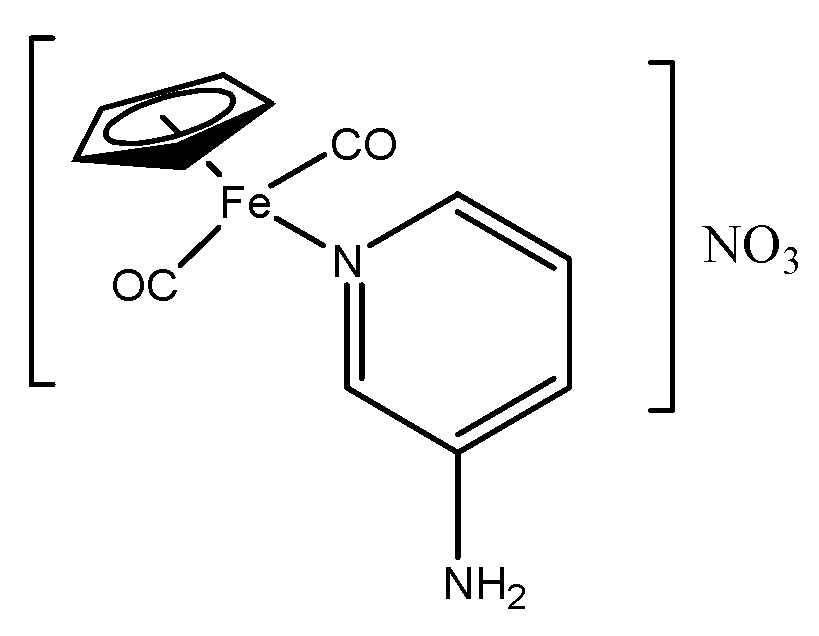
Figure 3.
Proposed structure of the complex [(η5-C5H5)Fe(CO)2(3-Apy)]BPh4.
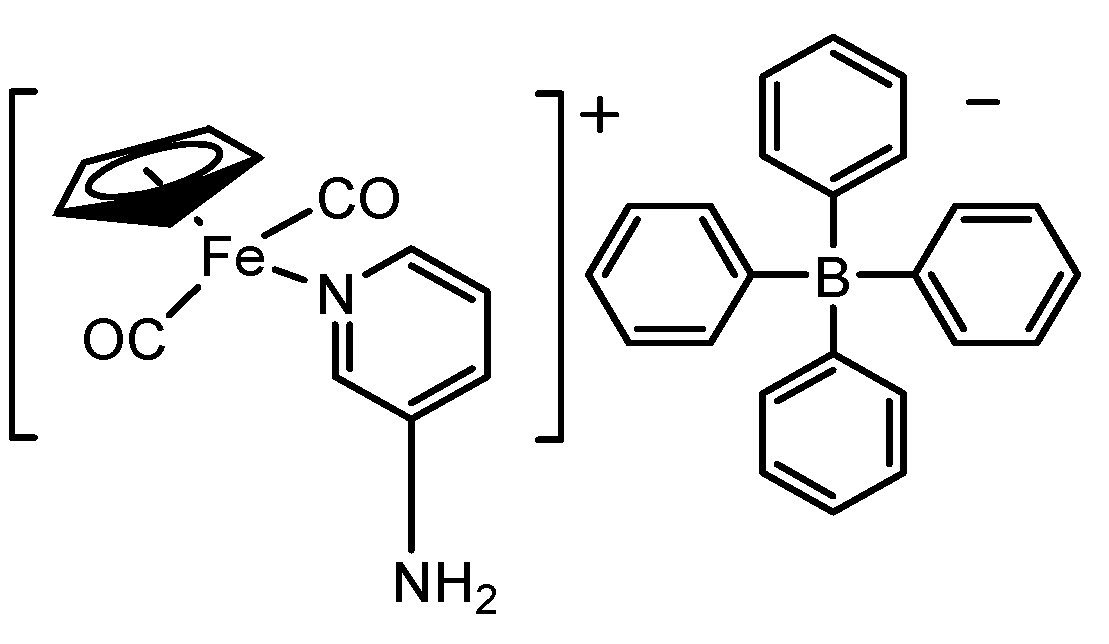
Figure 5.
This figure of cyclopentadienylirondicabonyl-4-aminopyridine complex (A).
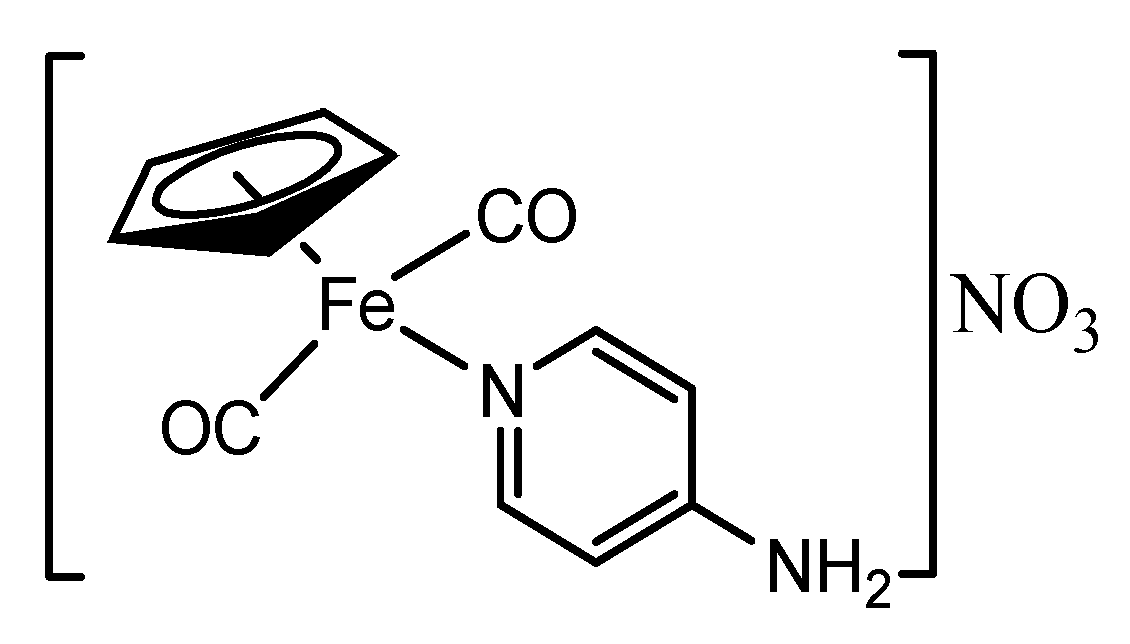
Figure 4.
This figure of cyclopentadienylirondicabonyl-4-aminopyridine complex (B).
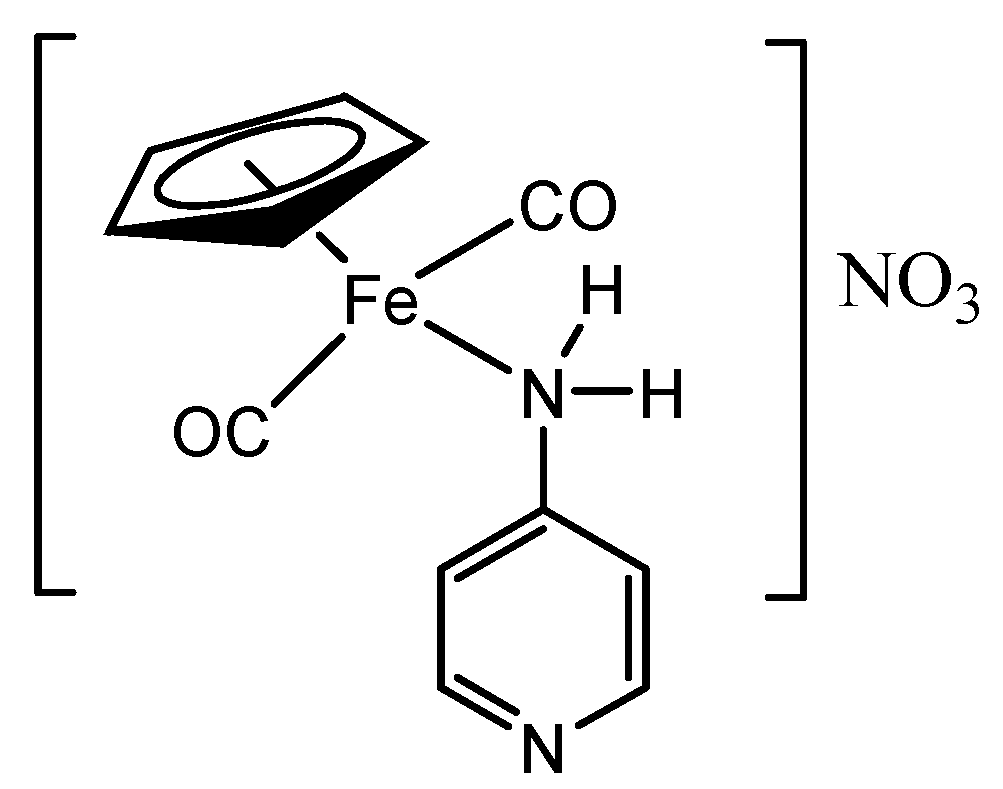
Table 1.
This is a table of FTIR spectral data (cm-1) for 2-aminopyridine and its organometallic Complex [(η5-C5H5)Fe(CO)2(2-Apy)]NO3.
Table 1.
This is a table of FTIR spectral data (cm-1) for 2-aminopyridine and its organometallic Complex [(η5-C5H5)Fe(CO)2(2-Apy)]NO3.
| Compound/Band position | ||||
|---|---|---|---|---|
| Band Assignment | 2-Apy | [(η5-C5H5)Fe(CO)22-Apy]NO3 | Ref | |
| Cp ʋ(C-H) | - | 3110 | - | 34 |
| ʋas(CO) | - | 2033 | - | 31,37 |
| ʋs(CO) | - | 1986 | - | 31,37 |
| ʋs(NH2) | 3283 | 3183 | -100 | 29, 35, 41 |
| ʋas (NH2) | 3443 | 3339 | -104 | 29, 35, 41 |
| ʋ(C=N) | 1595 | 1600 | +5 | 40 |
| 2-Apy(Ring breath) | 985 | 989 | +4 | 41 |
| ʋas(NO3 ) | - | 1380 | - | 38, 39 |
Cp=cyclopentadienyl.
Table 2.
FTIR spectral data (cm-1) for 3-aminopyridine and its organometallic complex [(η5-C5H5)Fe(CO)2(3-Apy)] NO3.
Table 2.
FTIR spectral data (cm-1) for 3-aminopyridine and its organometallic complex [(η5-C5H5)Fe(CO)2(3-Apy)] NO3.
| Assignment | 3-Apy | [(η5-C5H5)Fe(CO)23-Apy] NO3 | Ref | |
|---|---|---|---|---|
| Cp ʋ(C-H) | - | 3102 | 34 | |
|
ʋ(CO) ʋs(CO) |
- - |
2057 2007 |
- - |
23, 29, 30 23, 29, 30 |
| ʋs(NH2) | 3301 | 3369 | +68 | 46-48 |
| ʋas(NH2) | 3373 | 3461 | +88 | 46-48 |
| ʋ(C=N) | 1585 | 1597 | +12 | 45, 49 |
| 3-Apy (Ring breath) | 1014 | 1028 | +14 | 45, 49 |
| ʋas(NO3 ) | - | 1320 | - | 38, 39 |
Table 3.
1H NMR chemical shifts (ppm) of 3-aminopyridine and its organometallic complex [(η5-C5H5)Fe(CO)2(3-Apy)]NO3..
Table 3.
1H NMR chemical shifts (ppm) of 3-aminopyridine and its organometallic complex [(η5-C5H5)Fe(CO)2(3-Apy)]NO3..
| Assignment | 3-Apy | [(η5-C5H5)Fe(CO)23-Apy]NO3 | ∆ |
|---|---|---|---|
| Ha | 8.08 | 8.20 | +0.12 |
| Hb | 7.99 | 7.84 | -0.15 |
| Hc | 7.03 | 7.49 | +0.46 |
| Hd | 6.97 | 6.99 | +0.02 |
| He | 3.89 | 4.33 | +0.44 |
| HCp | - | 5.35 | - |
Table 4.
13C NMR chemical shifts (ppm) of 3-aminopyridine and its organometallic complex [(η5-C5H5)Fe(CO)2(3-Apy)]NO3.
Table 4.
13C NMR chemical shifts (ppm) of 3-aminopyridine and its organometallic complex [(η5-C5H5)Fe(CO)2(3-Apy)]NO3.
| Assignment | 3-Apy | [(η5-C5H5)Fe(CO)23-Apy]NO3 | ∆ |
|---|---|---|---|
| C(1) | 142.5 | 148.3 | +5.8 |
| C(2) | 139.8 | 129.2 | -10.2 |
| C(3) | 137.3 | 128.1 | -9.2 |
| C(4) | 123.6 | 127.5 | +3.9 |
| C(5) | 121.3 | 126.9 | +5.6 |
| Ccp | - | 88.4 | - |
| CO | - | 210.1 | - |
Table 5.
FTIR spectral data (cm-1) for 3-aminopyridine and its organometallic complex, [(η5-C5H5)Fe(CO)2(3-Apy)]BPh4.
Table 5.
FTIR spectral data (cm-1) for 3-aminopyridine and its organometallic complex, [(η5-C5H5)Fe(CO)2(3-Apy)]BPh4.
| Assignment | 3-Apy | [(η5-C5H5)Fe(CO)23-Apy] BPh4 | Ref | |
|---|---|---|---|---|
| Cpʋs(C-H) | - | 3095 | - | 37 |
|
ʋas(CO) ʋs(CO) |
- - |
2043 1992 |
- - |
29, 30, 35, 36 |
| ʋs(NH2) | 3306 | 3421 | +120 | 42,44 |
| ʋas(NH2) | 3374 | 3461 | +88 | 42, 44 |
| 3-Apy Ring breath | 1014 | 1026 | +12 | 44 |
| ʋ(C=N) | 1585 | 1600 | +15 | 44 |
| i.p.s Ph ʋ(C-C) | - | 1479, 1426 | - | 53 |
Cp=cyclopentadienyl. i.p.s Ph= in-plane skeletal C-C stretching modes of the phenyl ring.
Table 6.
FTIR spectral data (cm-1) of 4-aminopyridine and its organometallic complex, [(η5-C5H5)Fe(CO)2(4-Apy)]NO3, (A).
Table 6.
FTIR spectral data (cm-1) of 4-aminopyridine and its organometallic complex, [(η5-C5H5)Fe(CO)2(4-Apy)]NO3, (A).
| Assignment | 4-Apy | [(η5-C5H5)Fe(CO)24-Apy]NO3 (A) | Ref | |
|---|---|---|---|---|
| Cpʋs(C-H) | 3095 | 34 | ||
|
ʋas(CO) ʋs(CO) |
- - |
2038 1976 |
- - |
29, 30 29,30 |
| ʋs(NH2) | 3300 | 3214 | -84 | 46-48 |
| ʋas(NH2) | 3433 | 3337 | -96 | 46-48 |
| ʋ(C=N) | 1598 | 1624 | +26 | 40,42 |
| 4-Apy Ring breath | 988 | 1025 | +37 | 40,42 |
| ʋas(NO3) | - | 1326 | - | 38,39 |
Cp=cyclopentadienyl.
Table 7.
1H NMR chemical shifts (ppm) of 4-aminopyridine and its organometallic complex, [(η5-C5H5)Fe(CO)2(4-Apy)]NO3, (A).
Table 7.
1H NMR chemical shifts (ppm) of 4-aminopyridine and its organometallic complex, [(η5-C5H5)Fe(CO)2(4-Apy)]NO3, (A).
| Assignment | (4-Apy) | [(η5-C5H5)Fe(CO)2(4-Apy)]NO3(A) | ∆ |
|---|---|---|---|
| Ha | 7.98 | 7.78 | -0.20 |
| Hb | 6.47 | 6.70 | +0.23 |
| Hc | 6.04 | 6.41 | +0.37 |
| HCp | - | 5.38 | - |
Table 8.
13C NMR chemical shifts (ppm) of 4-aminopyridine and its organometallic complex [(η5-C5H5)Fe(CO)2(4-Apy)]NO3 (A) .
Table 8.
13C NMR chemical shifts (ppm) of 4-aminopyridine and its organometallic complex [(η5-C5H5)Fe(CO)2(4-Apy)]NO3 (A) .
| Assignment | 4-Apy | [(η5-C5H5)Fe(CO)24-Apy NO3(A) | ∆ |
|---|---|---|---|
| C(1) | 154.2 | 157.5 | +4.3 |
| C(2) | 149.4 | 140.6 | -8.8 |
| C(3) | 108.8 | 109.3 | 0.5 |
| CCp | - | 88.0 | - |
| CO | - | 212.2 | - |
Table 9.
FTIR spectral data of 4-aminopyridine and its organometallic complex [(η5-C5H5)Fe(CO)2(4-Apy)]NO3 (B).
Table 9.
FTIR spectral data of 4-aminopyridine and its organometallic complex [(η5-C5H5)Fe(CO)2(4-Apy)]NO3 (B).
| Assignment | 4-Apy | [(η5-C5H5)Fe(CO)2(4-Apy)]NO3(B) | Ref | |
|---|---|---|---|---|
| Cp ʋ(C-H) | - | 3112 | - | 34 |
|
ʋas(CO) ʋs(CO) |
- - |
2058 2008 |
- - |
29, 35 |
| ʋs(NH2) | 3300 | 3216 | -84 | 31 |
| ʋas(NH2) | 3433 | 3343 | -90 | 31 |
| ʋ(C=N) | 1598 | 1601 | +3 | 40,42 |
| Pyridine Ring breath | 988 | 993 | +3 | 40,42 |
| ʋas(NO3 ) | - | 1336 | - | 38,39 |
Cp=cyclopentadienyl.
Table 10.
1H NMR chemical shifts (ppm) of 4-aminopyridine and its organometallic complex, [(η5-C5H5)Fe(CO)2(4-Apy)]NO3, (B).
Table 10.
1H NMR chemical shifts (ppm) of 4-aminopyridine and its organometallic complex, [(η5-C5H5)Fe(CO)2(4-Apy)]NO3, (B).
| Assignment | 4-Apy | [(η5-C5H5)Fe(CO)24-Apy]NO3(B) | ∆ |
|---|---|---|---|
| Ha | 7.98 | 7.89 | -0.09 |
| Hb | 6.57 | 6.81 | 0.24 |
| Hc | 6.04 | 6.73 | 0.69 |
| HCp | 5.27 |
Disclaimer/Publisher’s Note: The statements, opinions and data contained in all publications are solely those of the individual author(s) and contributor(s) and not of MDPI and/or the editor(s). MDPI and/or the editor(s) disclaim responsibility for any injury to people or property resulting from any ideas, methods, instructions or products referred to in the content. |
© 2025 by the authors. Licensee MDPI, Basel, Switzerland. This article is an open access article distributed under the terms and conditions of the Creative Commons Attribution (CC BY) license (http://creativecommons.org/licenses/by/4.0/).
Copyright: This open access article is published under a Creative Commons CC BY 4.0 license, which permit the free download, distribution, and reuse, provided that the author and preprint are cited in any reuse.


