

Submitted:
05 June 2025
Posted:
06 June 2025
You are already at the latest version
Abstract
Although microplastic pollution has been recognized as one of the major environmental challenges of the 21st century, its toxicological impact on crops, especially vegetables, has until recently attracted limited scientific attention. Vegetables represent a key component of the human diet, making any potential contamination highly relevant to food safety. In recent years, an increasing number of studies have begun to investigate the interactions between microplastics and vegetable crops. This review aims to collect the current knowledge on the sources of microplastics in agroecosystems, the mechanisms of uptake and translocation in plants, and the physiological and biochemical responses induced by micro- and nanoplastics. This work aims to improve the scientific basis for assessing the risk of microplastic contamination by identifying gaps in current understanding and suggesting future research directions.
Keywords:
microplastics
; nanoplastic
; plants
; vegetables
1. Introduction
At the beginning of the 20th century, the first plastic polymer was synthesized. Thanks to durability, technical characteristics, low cost of production and wide availability, the mass use of plastic began, which became the dominant material both in industrial production and in everyday life. However, the excessive use of plastic has caused global plastic pollution, known as synthetic pollution. Accumulation of plastic waste represents one of the biggest challenges facing modern society. Due to various human activities, the amount of plastic waste is constantly increasing, and its pollutants, micro and nanoplastics are continuously accumulating in all parts of the biosphere around the world. The steady increase in the concentration of microplastic (MP) and nanoplastics (NP) continues despite repeated warnings from the scientific community and ethical advocates about the long-term consequences for ecosystems and human health [1].
Since 1950, the production of plastic has been constantly growing, to reach 413.8 million tons in 2023 [2]. Projections indicate that by 2050, plastic production will range from 66 million tonnes per year [3] to as much as 121 million tonnes per year [4], with high and upper-middle income per capita countries significantly reducing plastic pollution, but low-income countries becoming major sources of pollution. [3].
EFSA (European Food Safety Agency) defines microplastics as particles between 0.1 μm and 5 mm in size, while smaller diameter particles are classified as nanoplastics [5]. According to the way of creation, MP are divided into primary and secondary. Primary MP include microscopic particles produced in industry such as plastic pellets, then microbeads that are used in personal hygiene preparations, cosmetics and medicines, as well as synthetic fibers that are released during the production, transport and washing of textiles [6]. Secondary MP are formed by the breakdown of MP over time [7], through decomposition and fragmentation under the influence of environmental factors, such as UV radiation, exposure to water and mechanical forces [8].
Although plastic is considered a global pollutant, much more attention has been paid in initial research to the impact of MP on aquatic ecosystems and aquatic life [9]. In recent years, since 2017, researchers have been paying more and more attention to the impact of MP on terrestrial ecosystems [10], as well as its direct impact on human health due to the entry of microplastics into the food chain. The currently existing amounts of microplastics in terrestrial ecosystems (in all habitats) are constantly increasing due to various sources, such as the constant use of mulch films in agriculture, irrigation, the use of urban waste as municipal compost for fertilizing agricultural crops, the use of wastewater both for irrigation and as organic fertilizer, "releases" from wild landfills that are mostly located in the immediate vicinity of arable fields, or on the arable fields themselves, as well as due to natural flows in nature such as floods, atmospheric intake and the like [10,11,12,13].
Terrestrial plants are affected by a large number of stressors, including micro and nanoplastics (MNPs). Due to the possibility of MNPs entering the food chain through plants, which represents a significant risk for human health, it is very important to study not only the impact of MNPs on living organisms but also their behavior in the environment [1,14].
In addition to the fact that MNPs can enter the food chain through plants, their presence in the soil changes the agroecological conditions in which plants grow. In agroecosystems, where the soil is exposed to intensive agricultural practices, microplastics can affect the physical and chemical properties of the soil, reducing its fertility and nutrient availability. Also, the presence of plastic particles can disturb the microbiological balance in the rhizosphere, which can have consequences on the interactions of plants with beneficial microorganisms. Of particular concern is that vegetable crops, which have short growing cycles and are often grown in greenhouse systems, may be among the first plants through which microplastics enter the food chain [15,16].
The aim of this work is to give an overview of the latest research on the mechanisms of behavior of microplastics in agroecosystems, with a special emphasis on the impact of micro and nanoplastics on one of the most important groups of plants used in human nutrition, vegetable crops.
2. Materials and Methods
In this paper, a review of the literature was carried out in order to collect data on the presence of MNPs in vegetable species. The search involved collecting data on adoption, translocation and potential consequences on plant species, primarily vegetable species.
The search for papers was done in the Scopus platform (Elsevier). When selecting the database, the advantages and disadvantages of currently available databases were considered, and the Scopus platform was chosen because it covers a large number of journals [17].
Based on the search terms "microplastics", "nanoplastics" and "vegetables", search query was created for the Scopus database (Table 1). The search was limited to the last 5 years (from 2020 to April 2025), and a total of 260 papers were obtained. After the introduction of restrictions (Table 1), the number of papers was reduced to 189. However, during the analysis of those papers, another 128 papers were excluded because they did not refer to the presence, uptake and toxic effect of MNPs in vegetables, which was the main goal of this research. Also, papers that provide a literature review on the presence of MNPs in plant species were excluded. In the end, 61 scientific papers were analyzed, based on which data were presented on the current knowledge about MNPs in vegetable species, the mechanisms of MNPs adoption, the conditions on which the adoption of MNPs depends, as well as the toxic effects of MNPs on vegetable species.
3. Microplastics in Agroecosystems
Microplastics and nanoplastics are ubiquitous in the environment. They have been detected in water, soil, air, food and drinking water, indicating that microplastics have entered the food chain, and this represents a significant threat to human health [1].
3.1. Sources of Microplastics in the Soil
Microplastics can enter the soil due to various anthropogenic activities and processes in the environment. It is transmitted horizontally and vertically through the soil. Transmitted horizontally by wind and water, and vertically by water or soil organisms [18]. Degradation processes take place through microbiological or physico-chemical means. The primary sources of MNPs are agriculture [10,11,12,13], waste management [11,12], and atmospheric deposition [10,12], which significantly contribute to the accumulation of these pollutants in terrestrial ecosystems (Figure 1). Understanding the source of origin of MNPs is of great importance in order to establish their impact on the environment and human health.
3.1.1. Agriculture as a Source of Micro and Nanoplastics
One of the most significant sources of MNPs in the soil is agriculture. It is well known that years of unsustainable land use in agriculture have led to a large percentage of the world's land being degraded to a greater or lesser degree [19]. In order to overcome the challenges that today's society faces due to the destruction of soil fertility, various sustainable techniques for increasing soil fertility are proposed. One of the techniques is the application of organic fertilizers, which, in addition to providing nutrition for plants, also increase the content of organic matter in the soil and thus improve the physical, chemical and biological properties of the soil, i.e. soil fertility. On the other hand, with the constant increase in the population and increasing urbanization, the amount of wastewater and municipal waste is also increasing. In order to develop sustainable cities, it is necessary to find a sustainable solution for the ever-increasing wastewater, and one of the solutions is to use the sewage sludge obtained during wastewater treatment as an organic fertilizer to increase soil fertility.
It was established that sewage sludge can significantly increase the content of organic matter in the soil, as well as the most important macroelements, nitrogen and phosphorus [19,20,21,22], and also has a positive effect on the water regime of the soil [23]. However, in addition to all the benefits that sewage sludge has, some negative aspects of its use have also been established. Due to the long-term use of sewage sludge, heavy metals can accumulate in the soil [24,25], which increases the possibility of their uptake by plants and entering the food chain, which poses a risk to human health. Also, heavy metals have a negative effect on the microbiological activity of the soil, reduce the number and diversity of microorganisms in the soil, which all negatively affects soil fertility [25] In addition to the accumulation of heavy metals, recent research has established that the use of sewage sludge as an organic fertilizer leads to the accumulation of microplastics in the soil, where it becomes available to plants, and also acts as a medium that enhances the uptake of heavy metals by plants [10,11,12,13].
In addition to sewage sludge, a significant source of plastic in agricultural soils comes from the use of compost [13]. Namely, it was established that compost can contain microplastics that originate from plant material that is composted, which is not destroyed due to the composting process, and the use of such compost can lead to the accumulation of microplastics in the soil [26].
Plastic mulch films, which are used intensively, especially in vegetable production, are also a significant source of micro and nanoplastics. Mulching is an agricultural technique that has great benefits, not only for the final yield of agricultural crops, but also for the quality of the soil and the fruits themselves. It involves covering the soil with different materials, which reduces water evaporation, thus positively affecting the water regime of the soil and plants, and reduces the need for irrigation, helps control weeds, regulates soil temperature conditions [27], and at the same time reduces the possibility of aeolian erosion. All these are features that enable more sustainable agricultural production with satisfactory yields, which make the mulching process itself popular with farmers. However, during the vegetation itself, due to atmospheric influence, as well as due to human action, the plastic mulch film, which is one of the most commonly used mulch materials, is damaged and smaller fractions are released into the soil [11]. Also, at the end of the growing season, removing plastic films, and especially smaller fragments, is an extremely expensive and laborious job [28] and is often not done, which all leads to the accumulation of plastic fragments (micro and nano) in the soil [27,29], pollution of the agroecosystem with microplastics and the entry of micro and nanoplastics into the food chain [30], which can directly affect people's health.
In order to reduce the negative impact of plastic mulch film on the agroecosystem, biodegradable mulch films have been increasingly used in recent years, which significantly reduce soil pollution with plastic because they decompose under the influence of soil microorganisms [31]. However, even that is not a permanent solution because even biodegradable foils are damaged and plastic particles are released into the soil under the influence of atmospheric precipitation, UV radiation and due to human activity during the growing season [32].
Plastic mulch films are not the only products for which plastic is used. Plastic is also used for the production of greenhouses and low and high tunnels [33], then for making anti-hail nets, packaging for pesticides, ropes for tying plants, nets for supporting plants, irrigation systems [29] and other auxiliary means that are especially used in vegetable production. Also, some pesticides and fertilizers may contain microplastic particles that are added as carriers of active substances or as part of the formulation, which leads to the introduction of microplastics directly into the soil during their application.
3.1.2. Waste Management and Atmospheric Deposits as a Source of Micro and Nano Plastics
Improper and illegal waste disposal [34], "leaks" that occur in wild landfills and poorly controlled legal landfills, as well as atmospheric deposits, in addition to agricultural production, are considered large sources of MNPs in agroecosystems. Once MNPs particles reach the soil surface, thanks to their size and mobility, they accumulate in the surface layers of the soil. The concentration in the soil depends on a large number of factors, such as land use, soil properties, weather conditions, type and size of micro and nanoplastics, as well as human activities [12].
3.2. Influence of Microplastics on Soil Characteristics
MNPs affect the physical, chemical and biological properties of the soil (Figure 2), and thus indirectly affect the growth and development of plants [35]. The presence of MPs can disrupt soil structure, affecting water retention and nutrient availability [36], which can have negative consequences for soil microorganisms, plant nutrition and overall ecosystem health [12]. Also, the presence of MPs reduces the volumetric density and reaction of the soil, affects the change of aggregates in the soil and masks the real carbon content in the soil, which all leads to soil degradation over time, reduces fertility and has a bad effect on the growth and development of plants [37].
Microplastics change soil pH values. The change can go in different directions, but most studies that dealt with the impact of micro and nanoplastics on soil properties concluded that microplastics lower the pH value [38,39,40], thereby increasing soil acidity. A change in pH directly affects the availability of certain nutrients to plants [39], which directly affects plant growth and development. Also, the change in pH value affects the mobility of various pollutants, especially heavy metals [41].
4. Soil - Plant System
4.1. Mechanisms of Microplastics Uptake
As already mentioned, land plants are directly influenced by water, soil and air. For this reason, there is not only one mechanism of uptake of MNPs, but several mechanisms of absorption via roots and leaf surface have been developed [9].
Plants can take up microplastics through their roots through several mechanisms. One of the mechanisms is penetration through Crack - entry mode. Namely, when the root grows, small cracks can form on its surface, especially in the zone of elongation and cell differentiation. These cracks are caused by mechanical stress, growth in solid soil, the activity of microorganisms or even due to interaction with other particles in the soil.
Microplastic particles present in the soil can accumulate in these cracks and passively penetrate into the interior of the roots together with water and dissolved substances. After entering through the cracks, the mentioned particles can move through the apoplast (intercellular spaces) or endodermis, potentially reaching the central cylinder (where the conducting bundles are located), from where they can be transported to the aerial parts of the plant. This mechanism is particularly significant because it allows the entry of MPs even in plants that do not have specialized structures for the intake of larger particles, thereby increasing the risk of their entry into the food chain [43].
The second mechanism refers to the initial contact of MPs in the soil with the plant cell membrane. This contact can be passive (if particles are present in solutions) or active, when the plant reacts to the presence of foreign particles through recognition mechanisms. Yu et al. [41] explained how endocytosis works in the context of microplastics. Namely, when a microplastic particle gets close to the cell membrane, the cell can "recognize" this particle as a substance that needs to be taken in. The cell membrane retracts (invaginates) around the particle and forms a vesicle that then "encloses" the particle within it. After the formation of the vesicle is completed, it separates from the outer part of the cell and enters the cytoplasm. Microplastic particles that enter the cell can be transported to different parts of the cytoplasm, where they can accumulate or even lead to mechanical damage.
In addition to the fact that micro and nanoplastics are taken up through the roots, it was found that plants can also take them up through the leaves. There are two assumed routes of entry MNPs through the leaf, through the cuticle and through the stomata. According to research by Lian et al [44], Luo et al [45] and Sun et al [9] absorption of MNPs by leaves mainly occurs through stomata from the air, reaching the apoplastic pathway before being transported throughout the plant.
To estimate how much is absorbed by plants through the leaves and how it is transported from the leaves to the roots, Sun et al. [9] foliarly treated corn (Zea mays L.) seedlings with two types of plastic (carboxyl-modified polystyrene nanoplastic - PS-COOH and amino-modified polystyrene nanoplastic - PS-NH2), and found that both types of plastic successfully accumulated on the leaf surface. Positively charged PS-NH2 showed greater association with the leaf surface (since the cell walls are negatively charged) compared to negatively charged PS-COOH. Nanoplastics, which are absorbed mainly through stomata into the vascular system of corn, are further transported to the stem through xylem and phloem. However, no significant presence of NPs in the roots was found. They assume that small particles of NPs can easily pass through the vascular bundle to the roots, but larger aggregates of NPs move with difficulty and are therefore absent in the roots, indicating that the translocation of NPs through the plant depends on the size of the particles.
4.2. Reaction of Plants to Microplastics and Nanoplastics
The impact of microplastics on plants has been proven in several works [9,33,44,46,47]. Plants react to the toxic effect of MNPs in different ways, from changes in growth and development phases to changes in morphology, all of which are conditioned by changes at the level of physiological and biochemical processes. All these changes can affect the yield of agricultural crops, hence the need to study this problem.
4.2.1. The Influence of Micro- and Nano -Plastics on Seed Germination
When scientists began to pay attention to the impact of MNPs on terrestrial ecosystems, and terrestrial plants, seed germination was one of the stages of development that they paid more attention to. This is understandable because germination is the first stage of development that affects the other stages, and any stressful conditions during germination can negatively affect the growth and development of plants, and thus the crop yield itself.
Plastic particles can affect seed germination in different ways. Thanks to the high adsorption capacity, microscopic particles can accumulate on the surface of the seed, physically blocking the pores and thus preventing the uptake of water, which is necessary for seed swelling and germination [48]. MNPs does not only affect the physical absorption of water by the seeds, which slows down the swelling and germination process itself, but also negatively affect the biological processes in the seeds [49,50,51,52].
The influence of MNPs on seed germination has been confirmed in a large number of studies [50,53,54,55,56,57,58,59,60,61]. However, in a number of studies, no significant impact of MNPs on germination was found [62,63,64,65,66]. Huang et al [47] explain this by saying that the influence of MNPs on seed germination depends on the type of plastic, the concentration of plastic and the plant species.
4.2.2. Changes in Morphological Features
Under the influence of microplastics, whether in the soil, water or air, various changes occur in the roots and above-ground mass of the plant [46,53,67,68,69].
Lozano et al. [46] found that the impact of MPs on plant properties and physical and biological properties of soil depends more on the shape and type of MPs than on the concentration. Studying the influence of different forms of MPs of different chemical composition on the properties of wild carrots (Daucus carota) and on the properties of the soil, they found that due to the influence of microplastics in the soil, there was an increase in root mass by 46%, and shoot mass by as much as 48% on average. The greatest increase in shoot and root mass was recorded with an increased concentration of MPs in the film type (60%), while MPs in the fiber type affected the smallest increase in shoot (27%) and root (6%) mass. The authors explain this as an indirect effect of MPs through changes in soil properties. Namely, microfibers reduce soil bulk density, which causes an increase in soil porosity and a change in the air regime of the soil (the soil becomes more transparent, "lighter" [70]). It is known that in "lighter" soils it is easier to penetrate and develop the root system, which automatically leads to better utilization of nutrients and water, especially from deeper layers, and all of this leads to the creation of greater biomass and an increase in the mass of both roots and shoots. In addition to this, the possibility of creating a mycorrhizal bond, which is known to have a positive effect on biomass, also increases.
4.2.3. Changes in Physiological and Biochemical Processes
Plants react to the presence of MNPs in the soil through various physiological mechanisms that allow them to adapt to stressful conditions. These responses include changes in water and nutrient absorption, activation of antioxidant systems, and growth regulation [46,54,71,72].
From a biochemical point of view, the response of plants to MPs from the soil can be observed through the activation of antioxidant enzymes, such as superoxide dismutase (SOD), catalase (CAT) and peroxidase (POD), which neutralize reactive oxygen species (ROS) caused by toxic substances. These enzymes help reduce oxidative stress that could damage cellular structures [71]. Likewise, the presence of MPs can cause changes in the primary and secondary metabolism of plants. Plants under stress often produce more secondary metabolites, such as phenolics and flavonoids, which play a role in stress protection. This can increase their resistance to the harmful effects of MPs and the pollutants they carry [73].
Ren et al [74] summarised research on the impact of micro and nanoplastics on vascular plants at the metabolic and molecular level. Based on summarizing a large number of papers, they concluded that the influence of MNPs on vegetative growth and plant reproduction processes can be direct and indirect, but that the mechanisms of influence themselves have not yet been clearly defined and clarified. Plants can adopt MNPs through the roots or through the leaves, as a result of which various physiological and biochemical changes occur in the plants themselves. They especially emphasize the changes in carbon and nitrogen metabolism, which are necessary for the growth and development of plants, as well as the change in the synthesis of amino acids. The presence of plastic particles also caused changes in gene expression, primarily the activation of genes that help plants cope with stress and pathogen attacks. From physiological changes, they focused on summarizing the results on the impact of MNPs on seed or spore germination, photosynthesis, oxidative stress, as well as on the toxic effects of microplastics at the cellular level, all of which affect the health of plants in the long term.
4.3. Microplastics in Vegetables
Vegetable species are one of the most important foods in the human diet, so it is quite understandable that researchers began to pay more attention to this group of plants when it comes to the impact and accumulation of MNPs in vegetable species. In recent years, several studies have appeared that have devoted their attention to this group of plants (Table 2). However, most research uses vegetable species as model plants for research, and very little is devoted to examining how much microplastic is in vegetables already on the market [5].
4.3.1. Type and Form of Microplastics and Nanoplastic in Vegetables
MNPs can be found in the environment in different forms, sizes and chemical compositions. It was established that the phytotoxicity of MNPs depends on these properties [48].
The most common type of MNPs found in vegetable species is polystyrene (PS) [5]. PS-type polymers have been found in the roots of carrot (Daucus carota L.) [75], radish (Raphanus sativus L.) [60], onion (Allium cepa L.) [76], lettuce (Lactuca sativa L) [60], pea (Pisum sativum L.) [77] and tomato (Solanum lycopersicum L.) [78], as well as in the stem of pea [77].
Oliviera Conti et al [79] found the presence of microplastics in peeled carrots, whole lettuce and broccoli, but the type of polymer was not identified. Rajendar et al [80] examined fruits and vegetables purchased at the market and found the presence of plastic in eggplant and potatoes. They found polyethylene (PE) and high-density polyethylene (HDPE) plastic in the eggplant. In potatoes, they found plastic particles in the type of nylon (N). Although vegetable species have been included in research when it comes to testing the toxic effect of NMP, there is very little research that actually examines the presence of NMP in vegetables that are on the market. Most of the research is focused on the mechanisms of uptake of NMP by vegetable species, as well as on the types of reaction of vegetable species to the phytotoxic effect of plastic particles.
Canha et al [81] included lettuce bought in micromarkets in their research and found the presence of MP in lettuce leaves, and the concentration of MP was at the level of MP grown in rural areas. Aydin et al [82] examined the content of MP in fruits and vegetables found in markets, and found the presence of MP in all the examined species. The largest number of particles was found in tomato (44 particles), then in cucumber (43 particles), onion (31 particles), and the least in potatoes (17 particles). In addition to the number of MP particles, they also studied the shape, color and type of MP found in fruits and vegetables. The largest number of samples contained MP particles of black color (45.5% of samples), then gray (17.9% of samples), white (16.5% of samples), blue (7.8% of samples), red (6.1% of samples), and the least green (4.5% of samples). The most common form was a fragment, then a fibril, and the least common form was a film, while in terms of particle size, 86.1% of the samples ranged from 0.1 µm to 1 mm, and 13.9% from 1 to 5 mm. Low-density polyethylene (PE) was found in 60% of the samples, and polypropylene (PP) and polyethylene terephthalate (PET) in 20% of the samples.
4.3.2. Mechanisms of Uptake of Micro and Nanoplastics by Vegetables
Plastic particles primarily enter through the roots in the rhizoderm zone, but are then transported through the xylem [86]. Zytowski et al [33] studied the uptake, translocation and accumulation of different types of NP (PMMA - polymethyl methacrylate and PA - polystyrene) in four vegetable species - three representatives of dicotyledonous plants (pak choi, radish and tomato) and one representative of monocotyledonous plants (asparagus). They found that pak choi adopted fluorescent NP particles through the roots, that they were transported, primarily through the xylem from the roots to the stem and leaves, and that they accumulated in the intercellular space.
In their research, Wang et al [87] also confirmed the uptake of MPs by roots in lettuce (Lactuca sativa L), as well as the translocation of particles within the intercellular space and conducting tissue. Adoption was higher in conditions of higher soil moisture, especially in soil with a higher content of sand and a lower content of clay. Studying the influence of differently charged polystyrene particles of size 80 nm and 1 μm on the growth and development of water spinach (Ipomea aquatica F) (by adding the particles to the water solution in which the plants were grown), Zhao et al [88] established the presence of micro and nano particles in the root, leaf and stem. The highest concentration was in the root, in the rhizodermis and the central (conductive) cylinder, while in the stem and leaf the particles were concentrated in conductive bundles. Zhao et al [89] also worked with water spinach as a model plant to evaluate whether micro (200 nm) and submicro (1 μm) plastic particles of spherical shape are taken up by roots, and for the first time they observed, in addition to submicron particles, 200 nm particles attached to the cell wall of the root conducting tissue. The authors concluded that particles with a size of 1μm led to the deformation of the cells of the cortex vascular tissue, which allowed larger particles (200nm) to be adopted by the roots. They are not only found attached to the cell wall, but also in the intercellular space. The uptake of polystyrene-type plastic particles of different sizes and their translocation into the stem and leaf was established in research by Hua et al [90]. They studied the influence of two sizes of MP (100 nm and 500 nm) on morphological, physiological and biochemical processes in lettuce and found that lettuce adopted particles of both sizes via the roots, translocated them to the stem and leaf via the conduction system, thus proving that this is one of the ways of MP translocation from root to leaf. They also found a large amount of MP on the surface of the roots and after ultrasonic cleaning of the roots, as well as microplastic particles in the gaps of the lateral roots, which confirms the theory that one of the ways of adopting microplastics is the "growing area" of the lateral roots.
That NP are taken up through the roots, after the check, its translocation to the leaves is possible, was confirmed in research by Xu et al [69] and Castan et al [91]as well as Li et al [92], who found that microplastics are translocated not only to the leaves, but also to the flowers and fruits of the cucumber (Cucumis sativus L).
In addition to uptake through the roots, plastic particles can also be absorbed through the leaves, from where they also, like the roots, move to other organs [9,33]. Lian et al [44] investigated the effect of foliar application of nanoplastics on plants. Young lettuce plants were foliarly treated with two solutions of polystyrene NPs (PSNP) 3 times during 21 days. After 21 days, measurements and analyses were made in order to determine whether there were significant changes in the growth and development of plants due to the effect of NP. Properties that were used as an indicator of changes in plant growth showed significant changes due to exposure to NP. Plants exposed to NPs were less developed compared to control plants, dry mass and plant height were significantly reduced at concentrations of 0.1 mhg/L (by 14.3%, i.e. 27.3% of plant height) and 1 mg/L (23.2%, i.e. 24.4%). Also, due to the higher concentration of NPs, there was a significant reduction in the leaf surface and the content of pigments (chlorophyll and carotenoids). The dry mass ratio of shoots and roots, net rate of photosynthesis, water use efficiency and stomal limitation were also significantly reduced. Contrary to all these reductions, exposure to NP significantly improved stomatal conductance and transpiration rate. Overall, exposure of young lettuce seedlings to NP significantly inhibited plant growth. Wang et al [93] also studied the possibility of uptake of microplastics through leaves, and found that after foliar application of microplastic solution there was an accumulation of microplastics in lettuce leaves, indicating the possibility of uptake of microplastics through stomata and cuticle.
Huang et al [47] found that due to the foliar application of polystyrene NP to cucumber (Cucumber sativus L) seedlings, its accumulation occurred in the plant, which resulted in changes in gene expression and metabolic pathways, all of which affected the growth and development of cucumber plants. The effect is particularly pronounced under the influence of different concentrations of NP. In addition to studying the uptake of NP via roots, Zytowski et al [33] also studied the uptake and translocation of NP if applied foliarly. They found that in addition to pak choi (Brassica rapa L. ssp. chinensis) adopting NP through the roots, it also adopted it through the leaves, after which it was translocated through the vascular bundles into the leaf mainly thanks to transpiration.
Ilyas et al [94] found NP uptake through the leaf and its accumulation in the leaf in 4 types of leafy vegetables (pak choi, Chinese flowering cabbage, onion and amaranth). They found that NP particles are mainly located in the epidermal tissue around the stoma, and that they are not in the cuticle (epicuticular wax), which suggests the uptake of nanoplastic through the stoma. Due to the foliar application of MNP particles in different concentrations, Li et al [95] did not find a significant change in the mass of fresh above-ground mass in lettuce, but they found changes in the content of chlorophyll, as well as an increase in soluble proteins and sugars and a reduced concentration of nitrates in lettuce leaves. Jiang et al [96] also found that lettuce took up foliarly applied NPs, via stomata, which translocated to the roots over time.
Zytowski et al [33] found that micro and NP, after entering the plant, accumulates in the intercellular space of the tissue, which indicates that it accumulates in the edible parts of the plant and thus enters the food chain, which poses a danger to human health. Also, Wang et al [87] found the presence of microplastics in almost the entire leaf, which represents a greater potential danger to human health.
4.3.3. Conditions Affecting the Adoption of Microplastics
Phytotoxicity of MNP depends on a large number of factors, such as size and shape of particles, type of microplastic [97], growing conditions [98,99], as well as plant species and length of exposure to microplastics [48].
Gong et al [60] found in their research that the manifestation of the toxic effect of MP depends on the size of the particles, the dose and the plant species that is exposed to the effect of plastic particles. They studied the impact of polystyrene-type NPs and spherical MPs on four plant species (lettuce, radishes, wheat and corn) and found that lettuce is the most sensitive to the toxic effects of MNPs. Of the four tested species, only lettuce showed a statistically significant decrease in the germination index. Under the influence of NP, the germination index decreased by 36%, i.e. 23.8% (low and high dose, respectively) and 29.3%, i.e. 18.2% under the influence of MP (low and high dose, respectively). Also, in lettuce, significant changes were observed in the dry mass of shoot and root, length of root and the ratio of shoot and root. Significant changes in the shoot-to-root ratio, root dry mass and root length were also recorded in corn, as well as in the shoot-to-root ratio in radish.
Zhang et al [100] examined the influence of 6 concentrations of MP (0.0 %, 0.1 %, 0.5 %, 1.0 %, 2.0 %, and 5.0 %) in the type of low-density polyethylene MPs (LDPE-MPs), of different particle sizes (75–2000 μm) on the germination and morphological characteristics of lettuce. They found that significant changes in the morphology of lettuce occurred at medium (0.5% and 1%) concentrations of MP, and that there was a statistically significant reduction in plant height. Also, they monitored changes in relation to the length of exposure to the toxic effect of MP, and found that a statistically significant change in the height of the plant occurred after 20 days of exposure, while after a longer period of exposure (28 days) there was a change in the height of the plant, but this change was not statistically significant. As for the percentage of germination, it has decreased. That reduction was statistically significant compared to the control variant, for all concentrations of MPs, except for the highest concentration (5%). A change in the degree of germination due to the presence of different concentrations (0 g/kg, 1 g/kg, 2 g/kg, 4 g/kg, 8 g/kg and 16 g/kg) of MP was established by Li et al [53]. A significant decrease in the germination rate was found at medium concentrations (2 g/kg and 4 g/kg), and the germination index at all applied concentrations of MP compared to the control. No statistically significant differences were found between seedling mass and radicle length compared to the control, while root fork mass increased statistically significantly at concentrations of 1 to 4 g/kg, and root tip mass at concentrations 1g/kg, 2g/kg, 4 g/kg and 16g/kg.
Examining the uptake and translocation of polystyrene-type NPs (PS-NPs) by water spinach, at different concentrations (0.5 mg/l, 5 mg/l and 10 mg/l) of NPs, Gao et al [101] found that there was no uptake of NPs by the plant after a short-term exposure of the plants to NPs (10 days), but only "hooked" to the rhizodermis of the roots. However, although the NPs were not taken up and translocated in the plant, the high concentration of NPs caused changes in the morphological properties of water spinach. There was a highly significant decrease in the fresh mass of the plant, and a significant decrease in the length of the shoot and roots. The content of chlorophyll a gradually decreased as the concentration of NPs increased, but there were no significant differences, while the content of chlorophyll b also did not change significantly. The activity of SOD (superoxide dismutase) and CAT (catalase) decreased as the concentration of NPs increased, and at the highest concentration the difference was statistically significant, while the activity of POD (peroxidase) was less sensitive to NPs depletion and did not show statistically significant differences.
Wang et al [102] found that different concentrations significantly affect the reduction of plant growth by examining the influence of 6 different concentrations of microplastics on the growth and development of lettuce. Measurements were made after 6, 12 and 18 days, and in all measurements a decrease in plant height, root length, number of leaves and fresh weight of plant and root was recorded, in relation to the control. After 6 days of measuring the activity of SOD (superoxide dismutase), GR (glutathione reductase), MDA (malondialdehyde) and CAT (catalase) in the root, it continuously increased with increasing MP concentration, while after 18 days the activity of these investigated parameters (SOD, CAT, APX, GR, MDA) increased to a concentration of 30mg/l, and then started to decrease. In the leaf, after 12 and 18 days of measurement, the activity of SOD, APX (ascorbate oxidase), GR, continuously increased, while the activity of MDA increased continuously after 12 days, and after 18 days it increased up to a concentration of 40 mg/l, after the check there was a decrease in its activity.
In addition to the type, shape and size of microplastic particles, the uptake of microplastics can also be influenced by soil properties. Meng et al [98] studied the influence of three types of microplastics (PS - polystryrene, ABS - acrylonitrile butadiene styrene, PVC - polyvinylchloride), without additives (MP) and with additives (MPA - BA, PA, VA) in two types of soil with different chemical properties on the mobility and uptake of metals and their individual and joint effects on the microbiological community and the growth and development of radish (Raphanus sativus L.). They found that the presence of MPs, both without additives and with additives, had a significant effect on the growth of radishes. In the soil with a lower pH value, there was a decrease in the germination rate (germination rate - RG), root length and seed germination index (GI - germination index), as well as a decrease in the activity of SOD by 14% and the content of MDA by 17%, while the activity of POD increased by 14%. In soils with higher pH values, SOD and POD activity increased by 4-9%, and root length increased by an average of 10%.
Zhang et al [89], studying 4 different sizes of MNPs, and three different concentrations, on the change in the morphological properties of lettuce, found that the individual effect of different particle sizes, as well as different concentrations of MNPs significantly influenced the increase of fresh and dry above-ground mass of lettuce, while fresh root mass was most influenced by the joint action of different concentrations and different particle sizes. Li et al [103] investigated the effect of two types of microplastics in two different types of soil on the growth and development of pak choi, as well as the behavior of Cd in the soil and its accumulation by the plant in the presence of different types of MPs. They found that polylactic acid (PLA) MPs significantly reduced the fresh weight of the plant (1.77% and 23.26%), shoot length (3.54% and 5.64%), root length (5.65% and 7.75%), as well as chlorophyll content (2.08% and 2.34%), while polyethylene (PE) MPs did not significantly affect the change in morphological characteristics of the plant.
Wang et al [87] examined how, in addition to the size of the microplastic particles, the intensity of uptake and translocation of the particles is influenced by soil moisture and texture. They used lettuce as a model plant, and they studied plant height, leaf length, root length and diameter, chlorophyll index, photosynthetic rate, intercellular carbon dioxide concentration, stomatal conductance, and transpiration rate. Four different soil moistures (5, 10, 15 ml water per 2d) and two different soil structures (ST1 with 23.67 % sand, 24.41 % silt, and 51.92 % clay, ST2 with 44.09 % sand, 30.41 % silt, and 25.50 % clay) were tested, as well as their combinations. Also, in order to determine the absorption and translocation of plastic particles, fluorescent microparticles of size 100 and 200 nm were used, and in order to confirm absorption and determine the potential negative impact of MPs on plants, they used large, unmarked polystyrene plastic particles (100 mesh). They found that the presence of MPs had a negative effect on the growth of both above-ground and underground parts of the plant, and this effect increased with a decrease in the size of the plastic particles. They also found that the absorption of microplastics is significantly higher compared to earlier research that dealt with this issue, and they concluded that the reason for this difference is the length of time the plants are exposed to the toxic effect of microplastics. Namely, in contrast to the research of other authors, Wang et al [87] tested the content of MPs in lettuce plants after 60 days of vegetation, which is approximately the conditions of production.
Mayiam et al [104] also concluded that the length of exposure to microplastics significantly affects the plant's reaction to the presence of microplastics in the soil, who in their research found a positive effect of microplastics on the growth and development of field mustard spinach (Brassica rapa var. perviridis L.) in the initial stages of development. However, with an increase in the number of days of exposure to microplastics, a significant decrease in fresh and dry biomass (38.51% and 15.12%, respectively), as well as the yield of fresh edible part and dry edible part (33.18% and 19.05%, respectively), was found. The influence of the length of exposure to the phytotoxic effect of microplastics on the change in the morphological and biochemical properties of the plant was established by Adamczyk et al [105] studying different concentrations of polybutylene adipate terephthalate (PBAT) plastic on lettuce grown in conditions close to field growing conditions. They measured the observed properties on three occasions, after 4, 8 and 11 weeks of vegetation, and found serious changes in biochemical processes, as well as minor changes in morphological properties. A significant decrease in the shoot height, number of leaves, specific leaf area, and C and N content was recorded at the highest concentration of MPs, while physiological and biochemical processes proved to be more significant indicators of the reaction to the toxic impact of MPs. Namely, the authors found a significant decrease in the concentration of chlorophyll, increased oxidative stress, as well as significant modifications in the plant's defense mechanism.
4.3.4. The Impact of Microplastics and Nanoplastics on Vegetables
Microplastic affects terrestrial plants, including vegetables, in different ways [106]. MNPs can cause changes in seed germination, morphological characteristics, as well as changes in physiological and biochemical processes in vegetable species that directly affect the growth and development of plants.
Bostan et al [107] studied the toxic effect of polyethylene film residues after decomposition on the plot on the growth and development of spinach (Spinacia oleraceae L). They established changes due to morphological features, as well as biochemical processes due to the toxic action of microplastics. A decrease in shoot length (up to 44%), shoot and root fresh mass (63% and 60%, respectively), shoot and root dry mass (54% and 66%, respectively), as well as leaf surface (up to 40%), while root length was significantly increased, was recorded. Exposure to MP particles significantly increased the concentration of proline, free amino acids and soluble sugars, as well as the activity of key antioxidant enzymes (POD, SOD and CAT).
Liu et al [108] studied the influence of two types of MPs (low-density polyethylene - LDPE-MPS and poly (butylene adipate-co-terephthalate) - PBAT-MPS) on the growth and development of pak choi. The plants were grown on soil that had been incubated with these two types of plastic in two concentrations (0.05% and 2%) a year earlier. Shoot fresh weight was significantly inhibited in the presence of PBAT-MPS leading to a decrease in shoot fresh weight by 5.83% and shoot dry weight by 5.79% compared to the control. A high concentration of PBAT-MPS also reduced the concentration of 02- content in the plant, while a high concentration of the second type of MPc used in this research (LDPE-MPs) reduced the chlorophyll content in the leaf. Also, a low concentration of PBAT-MPs significantly increased the content of soluble proteins in the plant.
He et al [109] also determined in their research that the concentration of MP is crucial for the manifestation of a harmful effect in plants. They examined the influence of two types of MP (polyethylene terephthalate - PET and low-density polyethylene - LDPE) of different sizes and different concentrations on the morphological and physiological properties of peppers (Capsicum annuum L.). They found that a concentration of 1% MPs significantly affected the reduction of plant weight, fruit yield and antioxidant enzyme activity in leaves, and increased the MDA content in leaves, while a significantly lower concentration had a significantly milder negative effect on plant growth. The concentration of microplastics also proved to be the factor that most influenced the reduction of plant growth and the shortening of vegetation in the research of Wang et al [38], who studied the joint toxic effect of MPs, of different types (polyethylene - PE and polypropylene - PP) and concentrations (0.1% - PE, PP and 1% - HPE, HPP) and cadmium. The greatest reduction in plant growth was recorded at higher concentrations of microplastics (both types). Increased concentrations of MPs also affected the content of chlorophyll a and b (HPE significantly reduced the concentration of chlorophyll a and b, and HPP significantly reduced the concentration of chlorophyll b, while the concentration of chlorophyll a increased, but this increase was not statistically significant).
Examining the influence of three concentrations (0,02%, 0,2% and 2%) of polylactic acid MP (PLA-MP) on the growth and morphological traits of lettuce, Li et al [110] found that PLA-MP exposure significantly reduced root and shoot length. Zhang et al [111] also examined the influence of plastic particles (polyethylene NPs) on root and shoot traits of lettuce and established a significant decrease in fresh and dry root weight, as well as the shoot weight of lettuce under NP exposure.
A negative effect on the growth and development of plants, as well as a change in physiological biochemical processes was found in their research by Yar et al [112], Li et al [113,114], Hua et al [90], Gao et al [115], Zhang et al [116,118,119,120], Yu et al [117], Chen et al [121], Han et al [122], Pan et al [123].
Contrary to the previous authors, Cai et al [124] did not find statistically significant changes in the morphological characteristics and pigment content of lettuce leaves when lettuce containers were exposed to an increased concentration of MPs in the water solution in which the lettuce was grown. The only statistically significant change in morphological characteristics was found in the number of lettuce leaves when MP were applied at a concentration of 0.05%. Also, contrary to most research, López et al [125] did not find MP particles on broccoli and radish seeds, after the seeds were exposed to a microplastic suspension for 24h, and they concluded that MP does not affect seed germination. Also, the same authors did not find a significant effect of different concentrations of MP on root length and shoot length of broccoli seedlings.
As mentioned earlier, the presence of MPs alters the mobility of heavy metals and can enhance the uptake of heavy metals by plants. Liu et al [126] studied the effect of naturally aged MPs (NAMPsM PE - polyethylene) on the mobility of heavy metals (arsenic and cadmium) in soil, their joint effect on lettuce, soil microorganisms and earthworms. They found that although a low concentration of MPs did not have a negative effect on the growth and development of lettuce, and on the increased uptake of arsenic and cadmium, the combined stress of heavy metals and higher concentrations of microplastics (0.5% and 1%) caused a significant decrease in all parameters of root and shoot growth (roots and shoots biomass, shoots length, root lengths), a decrease in root activity by 28.4–58.4%, which stimulated the secretion of organic acids of low molecular weight (LMVOA) in the rhizosphere, increasing the bioavailability of As and Cd and increasing their absorption and accumulation in roots and shoots.
Studying the influence of soil properties and the type of MPs on the uptake of heavy metals by plants, Meng et al [98] found that in acidic soil there was increased uptake of Cr, Cu, Pb and Zn, and decreased uptake of Cd and Mn, while in alkaline soil the uptake of heavy metals depended on the type of applied MPs. Thus, ABS and PS MP type increased the uptake of heavy metals, and PS with additives (PA) significantly decreased the uptake of heavy metals. Other treatments (PVC type MPs without and with additives, ABS and PS with additives) significantly increased the uptake of As, Ba, Cr, Fe, Ni, Pb and Zn, while the application of these treatments reduced the accumulation of Mn by radish. Wang et al [40] studied the individual effect of three concentrations of polyethylene (PE) MPs (0.1%, 1% and 10%) on the properties of lettuce, as well as the effect of MPs on the mobility and uptake of cadmium, and found that the presence of MPs significantly increased the uptake and accumulation of cadmium. Wang et al [127] also found statistically significantly higher concentrations of cadmium in the leaf of potherb mustard (Brassica juncea var. multiceps) under the influence of different concentrations of MPs. They found that the increase in Cd accumulation increased with the increase in the concentration of MPs.
Changes in the morphological characteristics of lettuce due to the joint action of MPs and heavy metals (As) were also studied by Liu et al [128]. They applied three different concentrations of As in combination with naturally aged MPs (NAMPs) and established an antagonistic effect of MP and heavy metals, because at low and medium concentrations of As there was a decrease in the concentration of As in the shoots and roots of lettuce. Also, at these two concentrations (low and medium) of As in combination with NAMP, the total biomass of lettuce increased (68.9 % and 55.4 %, respectively). At the highest applied concentration of As, a joint toxic effect of As and MP was recorded, which was manifested through a decrease in the above-ground biomass and root mass of lettuce, the concentration of chlorophyll (chlorophyll a and total chlorophyll) in the leaf and a decrease in the quality of lettuce (total content of soluble sugars and proteins). The content of soluble sugars in the leaf was significantly reduced in the treatment in which the medium concentration of As and NAMP was combined.
Wang et al [129] examined the joint toxic effect of Cd and MPs (0.2 µm and 5 µm) applied foliarly and by adding them to a hydroponic solution in which lettuce was grown. Significant differences in Cd accumulation were observed in the roots, regardless of the way MPs were taken up (via roots or leaves), and when MP was applied in both sizes. At the MP size of 0.2 µm and the exposure of the roots to MPs, a statistically significant increase in Cd concentration in the roots was recorded, and in the case of foliar application, there was a significant decrease in the Cd concentration in the roots. When using MP with larger dimensions (5 µm), the accumulation of Cd in the root decreased statistically significantly when applying MP through the roots, and during foliar application it increased significantly.
Dong et al [75] found that due to the combined toxic effect of arsenic and microplastics, plastic particles are not only retained in the intercellular space of carrot roots, as is the case with the individual effect of only MP, but also pass into the cells, and they also found plastic particles in the leaves.
Enhanced uptake and toxic effect of heavy metals in the presence of microplastics was also established by Xu et al [130], Roy et al [131], Men et al [132], Bethanis and Golia [133], Xu et al [134].
Although many authors found an increased toxic effect of heavy metals in the presence of microplastics, Li et al [114] obtained opposite results regarding the morphological characteristics of pak choy. They studied both the individual and combined effects of three different concentrations of MPs (0.5%, 1% and 2% polyethylene type (PE)) and 2 concentrations of cadmium (3 mg/kg and 6 mg/kg) on soil and pak choy properties, and found no significant difference in the mass of above-ground and below-ground biomass between the control variant and all treatment variants. In accordance with the majority of research, these authors found a decrease in chlorophyll content when simultaneously treating plants with increased concentrations of cadmium and MPs.
Similar to the previous authors, Wang et al [135] studied the combined phytotoxic effect of Cd and different types of MP (polyethylene - PE, aged polyethylene - aged -PE, polypropylene - PP, aged polypropylene - aged - PP, biodegradable polybutylene adipate terephthalate - PBAT, polylactic acid - PLA) and found that PE and PP did not have a statistically significant toxic effect on shoot and root mass. Aged PE and PP showed no significant effect on root mass, and PBAT and PLA on shoot mass.
In addition to changes in the absorption of heavy metals, microplastics can affect the increased absorption of other harmful compounds found in the soil, such as antibiotics or pesticides, which can significantly impair food safety. In order to establish the potential consequences of soil pollution with microplastics on food safety in real conditions of agricultural production, where there is a combination of naturally aged microplastics and pesticides in the soil, Ju et al [136] studied the influence of microplastics on the bioaccumulation of individual pesticides (chlorpyrifos - CPF, difenoconazole - DIF), as well as their mixture and their influence on the morphological properties of radish (Raphanus sativus L) in soil containing MPs (polyethylene low densities - LDPE and biodegradable MP, pristine and 1 month old). Pristine LDPE MPs affected a 100% increase in fresh root mass, while in the presence of old MPs (1-month LDPE MPS) the fresh root mass of radish decreased by 40%. In the presence of biodegradable MPs (both pristine Bio-MPs and 1-month Bio-Mps) there was a reduction in fresh root mass by 53% and 59%, respectively. The fresh weight of leaves, as well as the ratio of root to shoot, followed the same trend of change as the fresh weight of roots, but the difference did not show statistical significance. Root diameter and length were significantly higher in the presence of pristine LDPE MPs, LI MPs did not affect leaf length. In combination with pesticides, there was no significant change in morphological characteristics, which indicates that the changes that occurred in radish are mainly due to the presence of MPs. However, by analyzing the content of pesticides in the roots and leaves, it was established that the presence of MPs, especially older MPs, led to an increased accumulation of pesticides by the plant. In the root, a significantly higher concentration was found in the treatment Mix, LDPE+Mix, 1-month LDPE+Mix, and 1-month Bio + CPF treatments, and in the leaf in the treatment Mix, LDPE+Mix, 1-month LDPE+CPF treatment and Bio + CPF.
Uptake of the pesticide imidacloprid (IMI) by Chinese flowering cabbage was enhanced in the presence of positively (PS-NH2) and negatively (PS-COOH) charged polystyrene-type NPs [137]. The concentration in the roots increased with increasing days of exposure, it was maximal after 21 days, after which it started to decrease, which the authors explain by the fact that IMI was translocated from the roots to the aerial mass, where it was followed by the degradation of IMIa. They recorded the same trend of IMIa accumulation in the shoots. Statistically significant changes in morphological properties were recorded during the simultaneous treatment of positively charged, NPS and IMI, as well as during the individual effect of positively charged NPs.
Cui et al [138] studied the influence of MP on the uptake of antibiotics (oxytetracycline) and their joint toxic effect on radishes. They found that only the PVS type of MP enhanced the toxic effect of the antibiotic. Namely, the fresh mass of shoots and roots decreased significantly only under the effect of PVC type of MP, while the joint effect of PVC MP and antibiotics statistically significantly reduced the fresh mass of roots. All three types of MPs (PA, PP and PVC) had a negative effect on the number of radish leaves, and the PVC and PVC and antibiotic treatments had a significant negative effect on the ratio of above-ground and below-ground mass.
5. Conclusions
Microplastics are ubiquitous in the environment. It has been found in water, soil, air and plants, proving that it entered the food chain. In the last 10 years or so, the attention of scientists has shifted to terrestrial ecosystems, and to the impact of MNPs on the terrestrial living world. It has been established that MNPs change the environment, influence changes in the physical, chemical and biological properties of the soil, act in different ways on plants, from phytotoxic effects on seed germination, morphological properties of plants, physiological and biochemical reactions in plants, to stimulating or not significantly affecting the growth and development of plants. Contradictory conclusions found in the literature regarding the impact of MPs on the living world, including on plants, can be explained by the fact that there are several forms of MPs in nature (fibers, foam, films,...), as well as that each MP has a different chemical composition, contains different additives, has a different shelf life, occurs in different concentrations, and also interacts differently with different plant species and different types of soil. [46].
Although more attention has recently been paid to crops and the effect of MPs on them, most of the research is done in laboratory conditions, only certain traits are monitored, where the yield of crops is not at all in the centre of attention of researchers, and not all plant cultures that are used, either for human consumption or as animal feed, are included. Most of the researches that are carried out last much shorter than the plants are realistically exposed to the influence of MNPs during the production process, so these experiments are not enough to draw conclusions. Therefore, extensive experimental research in long-term and realistic outdoor conditions is necessary.
In addition, little research actually deals with MNPs, which are already present in fresh vegetables and other foods on the market, which people consume every day. It is necessary to intensify these researches, because the consumption of food that contains plastic particles is a health risk for people.
Author Contributions
For research articles with several authors, a short paragraph specifying their individual contributions must be provided. The following statements should be used “Conceptualization, Z.S. and V.V.; methodology, Z.S. and M.B; software, Z.S., V.V. and M.B.; formal analysis, Z.S.; investigation, Z.S., M.B. and Z.M.; resources, Z.S. and V.V.; writing—original draft preparation, Z.S. and M.B.; writing—review and editing, V.V., D.R., Z.M. and O.N.; visualization, Z.S., M.B. and V.V.; supervision, Z.S. All authors have read and agreed to the published version of the manuscript.”
Funding
This research was funded by the European Union’s Horizon Europe Project GREENLand —Twinning Microplastic-free Environment under grant agreement number 101079267
Acknowledgments
“During the preparation of this manuscript/study, the author(s) used Napkin IA for the purposes of figure creation. The authors have reviewed and edited the output and take full responsibility for the content of this publication.”
Conflicts of Interest
The authors declare no conflicts of interest
References
- Pastor, K., Isić, B., Horvat, M., Horvat, Z., Ilić, M., Ačanski, M., Marković, M. Omnipresence of plastics: A Review of the Microplastic Sources and Detection Methods. Journal of Faculty of Civil Engineering, 2021, 39, 29-43. [CrossRef]
- Statista. Available online: https://www.statista.com (accessed on 01/04/2025).
- Yan, H., Cordier, M., Uehara, T. Future Projections of Global Plastic Pollution: Scenario Analyses and Policy Implications. Sustainability, 2024, 16, 643. [CrossRef]
- Pottinger, A. S., Geyer, R., Biyani, N., Martinez, C., Nathan, N., Morse, M. R., Liu, C., Hu, S., de Bruyn, M., Boettiger, C., Baker, E. J., McCauley, D. J. Pathways to reduce global plastic waste mismanagement and greenhouse gas emissions by 2050. Science, 2024, 386(6726), 1168-1173. [CrossRef]
- Lazăr, N. N., Calmuc, M., Milea, S. A., Georgescu, P. L., Iticescu, C. Micro and nano plastics in fruits and vegetables: A review. Heliyon, 2024, 10, e28291. [CrossRef]
- Mathew, J. T., Inobeme, A., B. O. Adetuyi, B. O., Adetunji, C. O., Popoola, O. A., Olaitan, F. Y., Akinbo, O., Shahnawaz, M., Oyewole, O. A., K.I.T., E., Yerima, M. B. General Introduction of Microplastic: Uses, Types, and Generation. In: Microplastic Pollution, (Ed) Mohd. Shahnawaz, M., Adetunji, C .O., Dar, M. A., Zhu, D. Springer, Singapore, 2024, pp. 3-21. [CrossRef]
- Wang, J., Liu, X., Li, Y., Powell, T., Wang, X., Wang, G., Zhang, P. Microplastics as contaminants in the soil environment: A mini-review. Sci. Total Environ., 2019, 691, 848-857. [CrossRef]
- Pinlova, B., Nowack, B. From cracks to secondary microplastics - surface characterization of polyethylene terephthalate (PET) during weathering. Chemosphere, 2024, 141305-141305. [CrossRef]
- Sun, H., Lei, C., Xu, J., Li, R. Foliar uptake and leaf-to-root translocation of nanoplastics with different coating charge in maize plants. J. Hazard. Mater., 2021, 416, 125854 . [CrossRef]
- Chia, R. W., Lee, J. Y., Cha, J., Çelen-Erdem, İ. A comparative study of soil microplastic pollution sources: a review. Environ. Pollut. Bioaviolab., 2023, 35(1), 2280526 . [CrossRef]
- Khan, M. R., Tarafder, M. M. A., Priti, M. S., Haque, M. A. Micro-plastics in soil environment: A review. Bangladesh J. Nuc. Agri., 2024, 38 (1):1-19. [CrossRef]
- Nath, S., Enerijiofi, K. E., Astapati, A.D., Guha, A. Microplastics and nanoplastics in soil: Sources, impacts, and solutions for soil health and environmental sustainability. J. Environ. Qual., 2024, 53 (6), 1048-1072. [CrossRef]
- Dogra, K., Kumar, M., Bahukhandi, K. D., Zang, J. Traversing the prevalence of microplastics in soil-agro ecosystems: Origin, occurrence, and pollutants synergies. J. Cont. Hyd., 2024, 266, 104398-104398. https://doiorg/10.1016/j.jconhyd.2024.104398.
- Zhang, L., García-Perez, P., Munoz-Palazon, B., Gonzalez-Martinez, A., Lucini, L., Rodriguez-Sanchez, A. A metabolomics perspective on the effect of environmental micro and nanoplastics on living organisms: A review. Sci.Total Environ., 2024, 932, 172915. [CrossRef]
- Chen, L., Yu, L., Li, Y., Han, B., Zhang, J., Tao, S., Liu, W. Status, characteristics, and ecological risks of microplastics in farmland surface soils cultivated with different crops across mainland China. Sci.Total Environ., 2023, 897, 165331. [CrossRef]
- Wang, Y., Feng, Z., Ghani, M. I., Wang, Q., Zeng, L., Yang, X., Cernava, T. Co-exposure to microplastics and soil pollutants significantly exacerbates toxicity to crops: Insights from a global meta and machine-learning analysis. Sci. Total Environ., 2024, 954, 176490. [CrossRef]
- Chadegani, A.; Salehi, H.; Yunus, M.; Farhadi, H.; Fooladi, M.; Farhadi, M.; Ebrahim, N. A comparison between two main academic literature collections: Web of Science and Scopus databases. Asian Soc. Sci., 2013, 9, 18–26. http://doi.org/10.5539/ass.v9n5p18.
- He, D., Luo, Y., Lu, S., Liu, M., Song, Y., Lei, L. Microplastics in soils: Analytical methods, pollution characteristics and ecological risks. TRAC, 2018, 109, 163-172. [CrossRef]
- Paganini, E., Silva, R. B., Roder, L. R., Guerrini, I. A., Capra, G. F., Grilli, E., Ganga, A. A Systematic Review and Meta-Analysis of the Sustainable Impact of Sewage Sludge Application on Soil Organic Matter and Nutrient Content. Sustainability, 2024, 16(22), 9865-9865. https://doi.or/10.3390/su16229865.
- Rodrigues, M. Â., Sawimbo, A., da Silva, J. M., Correia, C. M., Arrobas, M. Sewage Sludge Increased Lettuce Yields by Releasing Valuable Nutrients While Keeping Heavy Metals in Soil and Plants at Levels Well below International Legislative Limits. Horticulturae, 2024, 10(7), 706. [CrossRef]
- Mostafa, S. M., Gameh, M. A., El Wahab, M. M. A., El Desoky, M. A., Negim, O. I. Environmental negative and positive impacts of treated sewage water on the soil: A case study from Sohag Governorate, Egypt. Egypt. Sugar J., 2022, 19(0):1-11. [CrossRef]
- Barbosa, A. M. S., Faria, R. T., Saran, L. M., Santos, G. O., Dantas, G. F., Coelho, A. P. Impact of treated sewage effluent on soil fertility, salinization, and heavy metal content. Bragantia, 2022, 81, e0222. [CrossRef]
- Tiruneh, A. T., Nkambule, S. J., Murye, A. F. Assessment of the benefits and risks of sewage sludge application as soil amendment for agriculture in Eswatini. Afri. J. Food Agricul. Nutri. Develop., 2024, 24(8), 24229-24260. [CrossRef]
- Rydgård, M., Bairaktar., A., Thelin, G., Bruun, S. Application of untreated versus pyrolysed sewage sludge in agriculture: A Life Cycle Assessment. J. Clean. Prod., 2024, 454, 142249 . [CrossRef]
- Haider, I., Ali, M. A., Sanaullah, M., Ahmed, N., Hussain, S., Shakeel, M. T., Naqvi, S. A. H., Dar, J. S., Moustafa, M., Alshaharni, M.O. Unlocking the secrets of soil microbes: How decades-long contamination and heavy metals accumulation from sewage water and industrial effluents shape soil biological health. Chemosphere, 2023, 342, 140193-140193. [CrossRef]
- Zhang, S., Li, Y., Jiang, L., Chen, X., Zhao, Y., Shi, W., Xing, Z. From organic fertiliser to the soils: What happens to the microplastics? A critical review. Sci. Total Environ., 2024, 919, 170217-170217. [CrossRef]
- Santini, G., Acconcia, S., Napoletano, M., Memoli, V., Santorufo, L., Maisto, G. Unbiodegradable and biodegradable plastic sheets modify the soil properties after six months since their applications. Environ. Pollut., 2022, 308, 119608. [CrossRef]
- Liu, L., Zou, G., Zuo, Q., Li, S., Bao, Z., Jin, T., Liu, D., Du, L. It is still too early to promote biodegradable mulch film on a large scale: A bibliometric analysis. Environ. Technol. Innov., 2022, 27, 102487. [CrossRef]
- Santini, G., Castiglia, D., Perrotta, M. M., Landi. S., Maisto, G., Esposito, S. Plastic in the Environment: A Modern Type of Abiotic Stress for Plant Physiology. Plants, 2023, 12(21), 3717. [CrossRef]
- Khalid, N., Aqeel, M., Noman, A., Rizvi, Z. F. Impact of plastic mulching as a major source of microplastics in agroecosystems. J. Hazard. Mater., 2023, 445, 130455. [CrossRef]
- Kim, M.S., Chang, H., Zheng, L., Yan, Q., Pfleger, B.F., Klier, J., Nelson, K., Majumder, E.L., Huber, G.W. A Review of Biodegradable Plastics: Chemistry, Applications, Properties, and Future Research Needs. ACS Chem. Rev., 2023, 23, 9915–9939. [CrossRef]
- Qin, M., Chen, C., Song, B., Shen, M., Cao, W., Yang, H., Zeng, G., Gong, J. A review of biodegradable plastics to biodegradable microplastics: Another ecological threat to soil environments? J. Clean. Prod., 2021, 312, 127816. [CrossRef]
- Zytowski, E., Mollavali, M., Baldermann, S. Uptake and translocation of nanoplastics in mono and dicot vegetables. Plant Cell Environ., 2025, 48(1), 134-148. [CrossRef]
- Theofanidis, S. A., Delikonstantis, E., Yfanti, V. - L., Galvita, V. V., Lemonidou, A. A., Van Geem, K. An electricity-powered future for mixed plastic waste chemical recycling. Waste Manag., 2025, 193, 155–170. [CrossRef]
- Chen, G., Li, Y., Liu, S., Junaid, M., Wang, J. Effects of micro(nano)plastics on higher plants and the rhizosphere environment. Sci. Total Environ., 2022, 807, 150841. [CrossRef]
- Mou, X., Zhu, H., Dai, R., Lu, L., Qi, S., Zhu, M., Long, Y., Ma, N., Chen, C., Shentu, J. Potential impact and mechanism of aged polyethylene microplastics on nitrogen assimilation of Lactuca sativa L. Ecotoxicol Environ Saf., 2025, 291,117862. https://doi:10.1016/j.ecoenv.2025.117862.
- Chen, J. Y., Li, Y., Liang, X., Lu, S., Zhang, Y., Han, Z, Gao, B., Sun, K. Effects of microplastics on soil carbon pool and terrestrial plant performance. Carbon Res., 2024, 3(1), 37. [CrossRef]
- Wang, L., Liu, W., Zeb, A., Wang, L., Mo, F, Shi, R., Sun, Y., Wang, F. Biodegradable Microplastic-Driven Change in Soil pH Affects Soybean Rhizosphere Microbial N Transformation Processes. J. Agric. Food Chem., 2024, 72(30), 16674–16686. [CrossRef]
- Cheng, Y., Wang, F., Huang, W., Liu, Y. Response of soil biochemical properties and ecosystem function to microplastics pollution. Sci. Rep., 2024, 14:28328. [CrossRef]
- Wang, F., Wang, X., Song, N. Polyethylene microplastics increase cadmium uptake in lettuce (Lactuca sativa L.) by altering the soil microenvironment. Sci. Total Environ., 2021, 784, 147133. [CrossRef]
- Yue, Y., Li, X., Wei, Z., Zhang, T., Wang, H., Huang, X., Tang, S. Recent Advances on Multilevel Effects of Micro(Nano)Plastics and Coexisting Pollutants on Terrestrial Soil-Plants System. Sustainability, 2023, 15(5):4504-4504. [CrossRef]
- Yu, H., Zhang, Z., Zhang, Y., Fan, P., Xi, B., Tan, W. Metal type and aggregate microenvironment govern the response sequence of speciation transformation of different heavy metals to microplastics in soil. Sci.Total Environ., 2021, 752:141956. [CrossRef]
- Li, L., Luo, Y.; Li, R.; Zhou, Q.; Peijnenburg, W.J.G.M.; Yin, N.; Yang, J.; Tu, C.; Zhang, Y. Effective uptake of submicrometre plastics by crop plants via a crack-entry mode. Nat. Sustain, 2020, 3, 929–937. [CrossRef]
- Lian, J., Liu, W., Meng, L., Wu, J., Chao, L., Zeb, A., Sun, Y. Foliar-applied polystyrene nanoplastics (PSNPs) reduce the growth and nutritional quality of lettuce (Lactuca sativa L.). Environ. Pollut., 2021, 280, 116978. [CrossRef]
- Luo, Y., Li, L., Feng, Y., Li, R., Yang, J., Peijnenburg, W.J.G.M., Tu, C. Quantitative tracing of uptake and transport of submicrometre plastics in crop plants using lanthanide chelates as a dual-functional tracer. Nat. Nanotechnol., 2022, 17, 424–431. [CrossRef]
- Lozano, Y. M., Lehnert, T., Linck, L. T., Lehmann, A., Rillig, M. C. Microplastic shape, polymer type, and concentration affect soil properties and plant biomass. Front. Plant Sci., 2021, 12, 616645. [CrossRef]
- Huang, D., Shi. Z., Shan, X., Yang, S. Y., Zhang. Y., Guo, X. M. Insights into growth-affecting effect of nanomaterials: Using metabolomics and transcriptomics to reveal the molecular mechanisms of cucumber leaves upon exposure to polystyrene nanoplastics (PSNPs). Soc. Sci. Res. Net., 2023, 866, 161247 - 161247. [CrossRef]
- Wang, F., Feng, X., Liu, Y., Adams, C. A., Sun, Y., Zhang, S. Micro(nano)plastics and terrestrial plants: Up-to-date knowledge on uptake, translocation, and phytotoxicity. Resour. Conserv. Recycl, 2022, 185, 106503-106503. https://doi.org10.1016/j.resconrec.2022.106503.
- Qiuge, Z., Mengsai, Z., Fansong, M., Yongli, X., Wei, D., Yaning, L. Effect of polystyrene microplastics on rice seed germination and antioxidant enzyme activity. Toxics, 2021, 9, 179. [CrossRef]
- De Silva, Y. S. K., Rajagopalan, U. M., Kadono, H., Li, D. Effects of microplastics on lentil (Lens culinaris) seed germination and seedling growth. Chemosphere, 2022, 303, 135162. [CrossRef]
- Hu, M., Huang, Y., Liu, L., Ren, L., Li, C., Yang, R., Zhang, Y. The effects of Micro Nano-plastics exposure on plants and their toxic mechanisms: A review from multi-omics perspectives.. J. Hazard. Mater, 2023, 465, 133279–133279 . [CrossRef]
- Mészáros, E., Bodor, A., Kovács, E., Papp, S., Kovács, K., Perei, K., Feigl, G. Impacts of Plastics on Plant Development: Recent Advances and Future Research Directions. Plants, 2023, 12(18), 3282. [CrossRef]
- Li, Z., Zeng, X., Sun, F., Feng, T., Xu, Y., Li, Z., Zhang, Z. Physiological analysis and transcriptome profiling reveals the impact of microplastic on melon (Cucumis melo L.) seed germination and seedling growth. J. Plant Phys., 2023, 287, 154039. [CrossRef]
- Kang, M., Liu, Y., Wang, H., Weng, Y.; Gong, D., Bai, X. Physiological Toxicity and Antioxidant Mechanism of Photoaging Microplastics on Pisum sativum L. Seedlings. Toxics, 2023, 11, 242. [CrossRef]
- Serrano-Ruiz, H., Martin-Closas, L., Pelacho, A.M. Impact of buried debris from agricultural biodegradable plastic mulches on two horticultural crop plants: Tomato and lettuce. Sci. Total Environ., 2023, 856, 159167. [CrossRef]
- Bouaicha, O., Tiziani, R., Maver, M., Lucini, L., Miras-Moreno, B., Zhang, L., Trevisan, M., Cesco, S., Borruso, L., Mimmo, T. Plant species-specific impact of polyethylene microspheres on seedling growth and the metabolome. Sci. Total Environ., 2022, 840, 156678. [CrossRef]
- Esterhuizen, M., Vikfors, S., Penttinen, O-P., Kim, Y. J., Pflugmacher, S. Lolium multiflorum germination and growth affected by virgin, naturally, and artificially aged high-density polyethylene microplastic and leachates. Front. Environ. Sci., 2022, 10, 964230. [CrossRef]
- Shi, R., Liu, W., Lian, Y., Wang, Q., Zeb, A., Tang, J. Phytotoxicity of polystyrene, polyethylene and polypropylene microplastics on tomato (Lycopersicon esculentum L.). J. Environ. Manag., 2022, 317, 115441. [CrossRef]
- Wu, X., Hou, H., Liu, Y., Yin, S., Bian, S., Liang, S., Wan, C., Yuan, S., Xiao, K., Liu, B. Microplastics affect rice (Oryza sativa L.) quality by interfering metabolite accumulation and energy expenditure pathways: a field study. J. Hazard. Mater., 2022, 422, 126834. [CrossRef]
- Gong, W., Zhang, W., Jiang, M., Li, S., Liang, G., Bu, Q., Xu, L., Zhu, Z., Lu, A. Species-dependent response of food crops to polystyrene nanoplastics and microplastics, Sci. Total Environ., 2021, 796, 148750. [CrossRef]
- Pignattelli, S., Broccoli, A., Renzi, M. Physiological responses of garden cress (L. sativum) to different types of microplastics. Sci. Total Environ., 2020, 727, 138609. [CrossRef]
- Liu, Y., Jin, T., Wang, L., Tang, J. Polystyrene micro and nanoplastics attenuated the bioavailability and toxic effects of Perfluorooctane sulfonate (PFOS) on soybean (Glycine max) sprouts.J. Hazard. Mater., 2023, 448, 130911. [CrossRef]
- Liwarska-Bizukojc, E. Effect of innovative bio-based plastics on early growth of higher plants. Polymers, 2023, 15, 438. [CrossRef]
- Spanò, C., Muccifora, S., Castiglione, M.R., Bellani, L., Bottega, S., Giorgetti, L. Polystyrene nanoplastics affect seed germination, cell biology and physiology of rice seedlings in-short term treatments: evidence of their internalization and translocation. Plant Physiol. Biochem., 2022, 172, 158–166. [CrossRef]
- Zhang, Q., Zhao, M., Meng, F., Xiao, Y., Dai, W., Luan, Y. Effect of polystyrene microplastics on rice seed germination and antioxidant enzyme activity. Toxics, 2021, 9(8), 179. [CrossRef]
- Lian, J., Wu, J., Xiong, H., Zeb, A., Yang, T., Su, X., Su, L., Liu, W. Impact of polystyrene nanoplastics (PSNPs) on seed germination and seedling growth of wheat (Triticum aestivum L.). J. Hazard. Mater., 2020, 385, 121620. [CrossRef]
- Colzi, I., Renna, L., Bianchi, E., Castellani, M. B., Coppi, A., Pignattelli, S., Loppi, S., Gonnelli, C. Impact of microplastics on growth, photosynthesis and essential elements in Cucurbita pepo L. J. Hazard. Mater., 2022, 423, 127. [CrossRef]
- Zantis. L. J., Adamczyk, S., Velmala, S. M., Adamczyk, B., Vijver, M. G., Peijnenburg, W., Bosker, T. Comparing the impact of microplastics derived from a biodegradable and a conventional plastic mulch on plant performance. Sci. Total Environ., 2024, 935, 173265. [CrossRef]
- Xu, G., Li, Y., Lin, X., Yu, Y. Effects and mechanisms of polystyrene micro- and nano-plastics on the spread of antibiotic resistance genes from soil to lettuce. Sci, Total Environ., 2024, 912, 169293. [CrossRef]
- Lozano, Y. M., Rillig, M. C. Effects of microplastic fibers and drought on plant communities. Environ, Sci. & Techn., 2020, 54(10), 6166-6173. [CrossRef]
- Jia, L. H., Liu, L., Zhang, Y., Fu, W., Liu, X., Wang, Q., Tanveer, M., Huang, L. Microplastic stress in plants: effects on plant growth and their remediations. Front. Plant Sci., 2023, 14, 1226484 . [CrossRef]
- Rong, S., Wang, S., Liu, H., Li, Y., Huang, J., Wang, W., Liu, W. Evidence for the transportation of aggregated microplastics in the symplast pathway of oilseed rape roots and their impact on plant growth. Sci. Total Environ., 2024, 912, 169419. [CrossRef]
- Cui J., Li, X., Gan, Q., Lu, Z., Du, Y., Noor, I., Wang, L., Liu, S., Jin, B. Flavonoids Mitigate Nanoplastic Stress in Ginkgo biloba. Plant Cell Environ., 2024, 48, 1790-1811. [CrossRef]
- Ren, F., Huang, J., Yang, Y. Unveiling the impact of microplastics and nanoplastics on vascular plants: A cellular metabolomic and transcriptomic review. Ecotoxicol Environ Saf, 2024, 279, 116490-116490. [CrossRef]
- Dong, Y., Gao, M., Qiu, W., Song, Z. Uptake of microplastics by carrots in presence of as (III): combined toxic effects. J. Hazard Mater., 2021, 411, 125055. [CrossRef]
- Giorgetti, L., C. Spanò, C., Muccifora, C. S., Bottega, S., Barbieri, F., Bellani, L., Ruffini Castiglion, M. Exploring the interaction between polystyrene nanoplastics and Allium cepa during germination: internalization in root cells, induction of toxicity and oxidative stress. Plant Physiol. Biochem., 2020, 149, 170–177. [CrossRef]
- Kim, D., An, S., Kim, L., Byeon, Y. M., Lee, J., Choi, M. J., An, Y. J. Translocation and chronic effects of microplastics on pea plants (Pisum sativum) in copper-contaminated soil. J. Hazard. Mater., 2020, 436, 129194. [CrossRef]
- Shorobi, F. M., Vyavahare, G. D., Seok, Y. J., Park J. H. Effect of polypropylene microplastics on seed germination and nutrient uptake of tomato and cherry tomato plants. Chemosphere, 2023, 329, 138679. [CrossRef]
- Oliveri Conti, G, Ferrante, M. Banni, M., Favara, C., Nicolosi, I., Cristaldi, A., Fiore, M., Zuccarello, P. Micro- and nano-plastics in edible fruit and vegetables. The first diet risks assessment for the general population. Environ. Res., 2020, 187, 109677. [CrossRef]
- Rajendran, K., Rajendiran, R., Pasupathi, M. S., Ahamed, S. B. N., Kalyanasundaram, R., Velu, R. K. Authentication of Microplastic Accumulation in Customary Fruits and Vegetables. Res. Squ., 2022 (preprint) . [CrossRef]
- Canha, N., Jafarova, M., Grifoni, L., Gamelas, C. A., Alves, L. C., Almeida, S. M., Loppi, S. Microplastic contamination of lettuces grown in urban vegetable gardens in Lisbon (Portugal). Sci. Rep., 2023, 13(1), 14278. [CrossRef]
- Aydın, R. B., Yozukmaz, A., Şener, İ., Temiz, F., Giannetto, D. Occurrence of Microplastics in Most Consumed Fruits and Vegetables from Turkey and Public Risk Assessment for Consumers. Life, 2023, 13(8), 1686. [CrossRef]
- Conti, G. O., Ferrante, M., Banni, M., Favara, C., Nicolosi, I., Cristaldi, A., Fiore, M., Zuccarello, P. Micro- and nano-plastics in edible fruit and vegetables. The first diet risks assessment for the general population. Environ. Res., 2020, 187, 109677. [CrossRef]
- Tympa, L.-E., Katsara, K., Moschou, P.N., Kenanakis, G, Papadakis, V.M. Do microplastics enter our food chain via root vegetables? A Raman based spectroscopic study on raphanus sativus. Materials, 2021, 14, 2329. [CrossRef]
- Dong, Y., Song, Z., Liu, Y., Gao, M. Polystyrene particles combined with di-butyl phthalate cause significant decrease in photosynthesis and red lettuce quality. Environ. Pollut., 2021, 278, 116871. [CrossRef]
- Yu, Z., Xu, X., Guo, L., Jin, R., Lu, Y. Uptake and transport of micro/nanoplastics in terrestrial plants: Detection, mechanisms, and influencing factors. Sci. Total Environ., 2024, 907, 168155. [CrossRef]
- Wang, J., Zhang, S., Xing, H., Yan, P., Wang, J. Soil moisture and texture mediating the micro (nano) plastics absorption and growth of lettuce in natural soil conditions. J. Hazard. Mater., 2025, 482, 136575. [CrossRef]
- Zhao, Y., Du, A., Ge, T., Li, G., Lian, X., Zhang, S., Wang, X. Accumulation modes and effects of differentially charged polystyrene nano/microplastics in water spinach (Ipomoea aquatica F.). J. Hazard. Mater., 2024, 480, 135892. [CrossRef]
- Zhao, Y., Hu, C., Wang, X., Cheng, H., Xing, J., Li, Y., Wang, L., Ge, T., Du, A., Wang, Z. Water Spinach (Ipomoea aquatica F.) Effectively Absorbs and Accumulates Microplastics at the Micron Level—A Study of the Co-Exposure to Microplastics with Varying Particle Sizes. Agriculture, 2024, 14(2), 301. [CrossRef]
- Hua, Z., Zhang, T., Luo, J., Bai, H., Ma, S., Qiang, H., Guo, X. Internalization, physiological responses and molecular mechanisms of lettuce to polystyrene microplastics of different sizes: Validation of simulated soilless culture. J. Hazard. Mater., 2024, 462, 132710. [CrossRef]
- Castan, S., Sherman, A., Peng, R., Zumstein, M. T., Wanek, W., Hüffer, T., Hofmann, T. Uptake, metabolism, and accumulation of tire wear particle-derived compounds in lettuce. Environ. Sci. & Tech., 2022, 57(1), 168-178. [CrossRef]
- Li, Z., Li, Q., Li, R., Zhou, J., Wang, G. The distribution and impact of polystyrene nanoplastics on cucumber plants. Environ. Sci.Pollu. Res., 2021, 28, 16042-16053. [CrossRef]
- Wang, Y., Xiang, L., Wang, F., Wang, Z., Bian, Y., Gu, C., Xing, B. Positively charged microplastics induce strong lettuce stress responses from physiological, transcriptomic, and metabolomic perspectives. Environ. Sci. & Tech., 2022, 56(23), 16907-16918. [CrossRef]
- Ilyas, M., Liu, X., Yang, J., Xu, G. Foliar implications of polystyrene nanoplastics on leafy vegetables and its ecological consequences. J. Hazard. Mater, 2024, 480, 136346. [CrossRef]
- Li, M., Wei, J. H., Wei, B. K., Chen, Z. Q., Liu, H. L., Zhang, W. Y., Zhou, D. M. Metabolic response of lettuce (Lactuca sativa L.) to polystyrene nanoplastics and microplastics after foliar exposure. Environ. Sci. Nano, 2024, 11(12), 4847-4861. [CrossRef]
- Jiang, X., White, J. C., He, E., Van Gestel, C. A., Cao, X., Zhao, L., Qiu, H. Foliar exposure of deuterium stable isotope-labeled nanoplastics to lettuce: Quantitative determination of foliar uptake, transport, and trophic transfer in a terrestrial food chain. Environ. Sci. & Tech., 2024. 58(35), 15438-15449. [CrossRef]
- Zhao, Y. Stimulation versus inhibition: The effect of microplastics on pak choi growth. Appl. Soil Ecol., 2022, 177, 104505. [CrossRef]
- Meng, J., Diao, C., Cui, Z., Li, Z., Zhao, J., Zhang, H., Chen, H. Unravelling the influence of microplastics with/without additives on radish (Raphanus sativus) and microbiota in two agricultural soils differing in pH. J. Hazard. Mater., 2024, 478, 135535. [CrossRef]
- Ahmad, T., Hussain, H., Sabir, A., Irfan, M., Ghafar, A., Jafir, M., Sabir, M. A., Zulfiqar, U., Binobead, M. A., Al Munqedhi, B.M. Impact of Microplastic on Roadside Vegetable Cultivation: A Case Study of Agricultural Farmland. Pol. J. Environ. Stud., 2025, 34(3):2525-2538. [CrossRef]
- Zhang, S., Wang, J., Yan, P., Aurangzeib, M. Middle concentration of microplastics decreasing soil moisture-temperature and the germination rate and early height of lettuce (Lactuca sativa var. ramosa Hort.) in Mollisols. Sci. Total Environ., 2023, 905, 167184. [CrossRef]
- Gao, D., Liao, H., Junaid, M., Chen, X., Kong, C., Wang, Q., Wang, J. Polystyrene nanoplastics' accumulation in roots induces adverse physiological and molecular effects in water spinach Ipomoea aquatica Forsk. Sci. Total Environ., 2023, 872, 162278. [CrossRef]
- Wang, Y., Xiang, L., Wang, F., Redmile-Gordon, M., Bian, Y., Wang, Z., Xing, B. Transcriptomic and metabolomic changes in lettuce triggered by microplastics-stress. Environ. Pollut., 2023, 320, 121081. [CrossRef]
- Li, Q., Yan, J., Li, Y., Liu, Y., Andom, O., Li, Z. Microplastics alter cadmium accumulation in different soil-plant systems: Revealing the crucial roles of soil bacteria and metabolism. J. Hazard. Mater., 2024, 474, 134768. [CrossRef]
- Maryam, B., Asim, M., Li, J., Qayyum, H., Liu, X. Luminous polystyrene upconverted nanoparticles to visualize the traces of nanoplastics in a vegetable plant. Environ. Sci. Nano, 2025, 12, 1273-1287. [CrossRef]
- Adamczyk, S., Zantis, L. J., van Loon, S., van Gestel, C. A., Bosker, T., Hurley, R., Velmala, S. Biodegradable microplastics induce profound changes in lettuce (Lactuca sativa) defense mechanisms and to some extent deteriorate growth traits. Environ. Pollut., 2024, 363, 125307. [CrossRef]
- Cui, Y., Zhang, Y., Guan, M., Fu, Y., Yang, X., Hu, M., Yang, R. The effect of Polyethylene Terephthalate (PET) Microplastic stress on the composition and gene regulatory network of amino acid in Capsicum annuum. Environ. Exp. Bot., 2024, 228, 106029. [CrossRef]
- Bostan, N., Ilyas, N., Saeed, M., Umer, M., Debnath, A., Akhtar, N., Bukhari, N. A. An in vitro phytotoxicity assessment of UV-enhanced biodegradation of plastics for spinach cultivation. Front. Environ. Sci. Eng., 2025, 19(2), 1-15. [CrossRef]
- Liu, J., Han, S., Wang, P., Zhang, X., Zhang, J., Hou, L., Lin, Y. Soil microorganisms play an important role in the detrimental impact of biodegradable microplastics on plants. Sci. Total Environ., 2024, 933, 172933. [CrossRef]
- He, B., Liu, Z., Wang, X., Li, M., Lin, X., Xiao, Q., Hu, J. Dosage and exposure time effects of two micro (nono) plastics on arbuscular mycorrhizal fungal diversity in two farmland soils planted with pepper (Capsicum annuum L.). Sci. Total Environ., 2024, 917, 170216. [CrossRef]
- Li, C., Cao, W., Wu, W., Xin, X., Jia, H. Transcription-metabolism analysis of various signal transduction pathways in Brassica chinensis L. exposed to PLA-MPs. J. Hazard. Mater, 2025, 486, 136968. [CrossRef]
- Zhang, L., Hoagland, L., Yang, Y., Becchi, P. P., Sobolev, A. P., Scioli, G., Lucini, L. The combination of hyperspectral imaging, untargeted metabolomics and lipidomics highlights a coordinated stress-related biochemical reprogramming triggered by polyethylene nanoparticles in lettuce. Sci. Total Environ, 2025, 964, 178604. [CrossRef]
- Yar, S., Ashraf, M. A., Rasheed, R., Farooq, U., Hafeez, A., Ali, S., Sarker, P. K. Taurine decreases arsenic and microplastic toxicity in broccoli (Brassica oleracea L.) through functional and microstructural alterations. BioMetals, 2025, 38, 597–621. [CrossRef]
- Li, Y., Lin, X., Xu, G., Yan, Q., Yu, Y. Toxic effects and mechanisms of engineered nanoparticles and nanoplastics on lettuce (Lactuca sativa L.). Sci. Total Environ, 2024, 908, 168421. [CrossRef]
- Li, M., He, J., Chen, X., Dong, X., Liu, S., Anderson, C. W., Lan, T. Interactive effects of microplastics and cadmium on soil properties, microbial communities and bok choy growth. Sci. Total Environ, 2024, 955, 176831. [CrossRef]
- Gao, M., Xu, Y., Liu, Y., Wang, S., Wang, C., Dong, Y., & Song, Z. Effect of polystyrene on di-butyl phthalate (DBP) bioavailability and DBP-induced phytotoxicity in lettuce. Env. Pollut., 2021, 268, 115870. [CrossRef]
- Zhang, Z., Zhao, S., Chen, L., Duan, C., Zhang, X., Fang, L. A review of microplastics in soil: occurrence, analytical methods, combined contamination and risks. Env. Pollut., 2022, 306, 119374. [CrossRef]
- Yu, Y., Li, J., Song, Y., Zhang, Z., Yu, S., Xu, M., Zhao, Y. Stimulation versus inhibition: The effect of microplastics on pak choi growth. Appl. Soil Eco., 2022, 177, 104505. [CrossRef]
- Zhang, Y., Zhang, C., Jiang, M., Zhou, G. Bio-effects of bio-based and fossil-based microplastics: Case study with lettuce-soil system. Env. Pollut., 2022, 306, 119395. [CrossRef]
- Zhang, T., Luo, X. S., Xu, J., Yao, X., Fan, J., Mao, Y., Khattak, W. A. Dry–wet cycle changes the influence of microplastics (MPs) on the antioxidant activity of lettuce and the rhizospheric bacterial community. J. Soils Sediments, 2023, 23(5), 2189-2201. [CrossRef]
- Zhang, L., Vaccari, F., Bandini, F., Puglisi, E., Trevisan, M., Lucini, L. The short-term effect of microplastics in lettuce involves size-and dose-dependent coordinate shaping of root metabolome, exudation profile and rhizomicrobiome. Sci. Total Environ, 2024, 945, 174001. [CrossRef]
- Chen, J. Y., Niu, S. H., Li, H. Y., Liao, X. D. Xing, S. C. Multiomics analysis of the effects of manure-borne doxycycline combined with oversized fiber microplastics on pak choi growth and the risk of antibiotic resistance gene transmission. J. Hazard. Mater, 2024, 475, 134931. [CrossRef]
- Han, Y., Teng, Y., Wang, X., Wen, D., Gao, P., Yan, D., Yang, N. Biodegradable PBAT microplastics adversely affect pakchoi (Brassica chinensis L.) growth and the rhizosphere ecology: Focusing on rhizosphere microbial community composition, element metabolic potential, and root exudates. Sci. Total Environ, 2024, 912, 169048. [CrossRef]
- Pan, B., Pan, B., Lu, Y., Cai, K., Zhu, X., Huang, L., Mo, C. H. Polystyrene microplastics facilitate the chemical journey of phthalates through vegetable and aggravate phytotoxicity. J. Hazard. Mater, 2024, 480, 135770. [CrossRef]
- Cai, Y., Xu, Y., Liu, G., Li, B., Guo, T., Ouyang, D., Zhang, H. Polyethylene microplastic modulates lettuce root exudates and induces oxidative damage under prolonged hydroponic exposure. Sci. Total Environ, 2024, 916, 170253. [CrossRef]
- López, M. D., Toro, M. T., Riveros, G., Illanes, M., Noriega, F., Schoebitz, M., Moreno, D. A. Brassica sprouts exposed to microplastics: Effects on phytochemical constituents. Sci. Total Environ, 2022, 823, 153796. [CrossRef]
- Liu, Y., Li, B., Zhou, J., Li, D., Liu, Y., Wang, Y., Chen, G. Effects of naturally aged microplastics on arsenic and cadmium accumulation in lettuce: Insights into rhizosphere microecology. J. Hazard. Mater, 2025, 486, 136988. [CrossRef]
- Wang, J., Liu, W., Wang, X., Zeb, A., Wang, Q., Mo, F., Lian, Y. Assessing stress responses in potherb mustard (Brassica juncea var. multiceps) exposed to a synergy of microplastics and cadmium: Insights from physiology, oxidative damage, and metabolomics. Sci. Total Environ, 2024, 907, 167920. [CrossRef]
- Liu, Y., Huang, W., Wang, Y., Wen, Q., Zhou, J., Wu, S., Qiu, R. Effects of naturally aged microplastics on the distribution and bioavailability of arsenic in soil aggregates and its accumulation in lettuce. Sci. Total Environ, 2024, 914, 169964. [CrossRef]
- Wang, Y., Qian, X., Chen, J., Yuan, X., Zhu, N., Chen, Y., Feng, Z. (2023). Co-exposure of polystyrene microplastics influence cadmium trophic transfer along the “lettuce-snail” food chain: Focus on leaf age and the chemical fractionations of Cd in lettuce. Sci. Total Environ, 892, 164799. [CrossRef]
- Xu, X., Peng, C., Shao, X., Gong, K., Zhao, X., Xie, W., Tan, J. Unveiling the impacts of biodegradable microplastics on cadmium toxicity, translocation, transformation, and metabolome in lettuce. Sci. Total Environ, 2024, 957, 177669. [CrossRef]
- Roy R, Hossain A, Sultana S, Deb B, Ahmod MM, Sarker T. Microplastics increase cadmium absorption and impair nutrient uptake and growth in red amaranth (Amaranthus tricolor L.) in the presence of cadmium and biochar. BMC Plant Biol.; 2024, 24(1):608. [CrossRef]
- Men, C., Xie, Z., Li, K., Xing, X., Li, Z., Zuo, J. Single and combined effect of polyethylene microplastics (virgin and naturally aged) and cadmium on pakchoi (Brassica rapa subsp. chinensis) under different growth stages. Sci. Total Environ, 2024, 951, 175602. [CrossRef]
- Bethanis, J., Golia, E. E. Revealing the Combined Effects of Microplastics, Zn, and Cd on Soil Properties and Metal Accumulation by Leafy Vegetables: A Preliminary Investigation by a Laboratory Experiment. Soil Syst., 2023, 7(3), 65. [CrossRef]
- Xu, G., Lin, X., Yu, Y. Different effects and mechanisms of polystyrene micro-and nano-plastics on the uptake of heavy metals (Cu, Zn, Pb and Cd) by lettuce (Lactuca sativa L.). Environ. Pollut., 2023, 316, 120656. [CrossRef]
- Wang, B., Wang, P., Zhao, S., Shi, H., Zhu, Y., Teng, Y., Liu, S. Combined effects of microplastics and cadmium on the soil-plant system: phytotoxicity, Cd accumulation and microbial activity. Environ. Pollut., 2023, 333, 121960. [CrossRef]
- Ju, H., Yang, X., Tang, D., Osman, R., & Geissen, V. Pesticide bioaccumulation in radish produced from soil contaminated with microplastics. Sci. Total Environ, 2024, 910, 168395. [CrossRef]
- Tang, X., Chen, M., Li, M., Liu, H., Tang, H., Yang, Y. Do differentially charged nanoplastics affect imidacloprid uptake, translocation, and metabolism in Chinese flowering cabbage? Sci. Total Environ., 2023, 871, 161918. [CrossRef]
- Cui, M., Yu, S., Yu, Y., Chen, X., Li, J. Responses of cherry radish to different types of microplastics in the presence of oxytetracycline. Plant Physiol Biochem, 2022, 191, 1-9. [CrossRef]
Figure 1.
Source of microplastics and nanoplastics in agricultural soils.
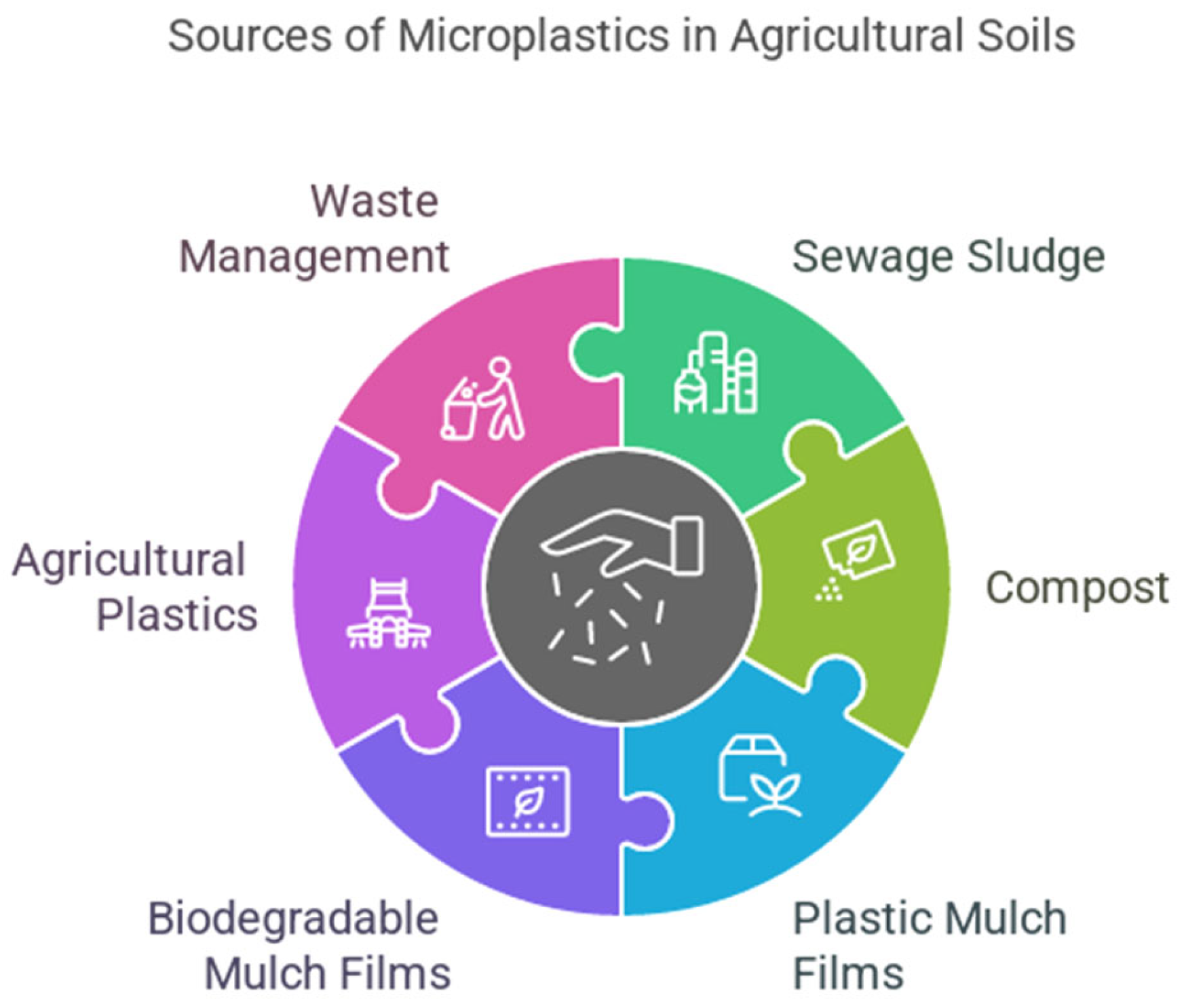
Figure 2.
Influence of MNPs on soil characteristics.
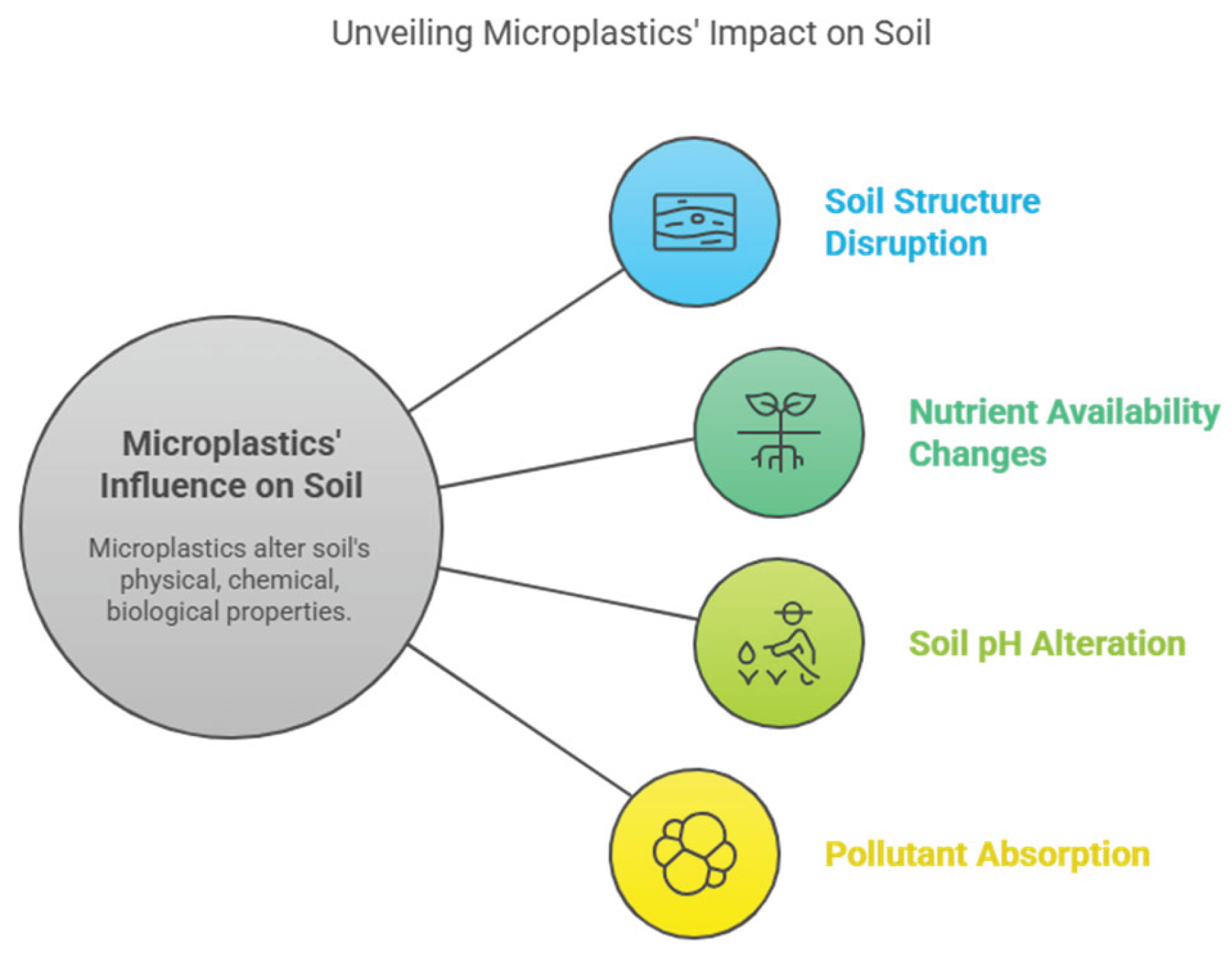

Table 1.
Search queries used for searching in the Scopus database.
| Base | Search Equation | Number of articles |
|---|---|---|
| Scopus | TITLE-ABS-KEY (microplastic OR "micro-plastics" OR nanoplastic*) AND TITLE-ABS-KEY (vegetables) AND PUBYEAR > 2020 AND PUBYEAR < 2026 | 260 |
| Scopus | TITLE-ABS-KEY (microplastic* OR "micro-plastics" OR nanoplastic*) AND TITLE-ABS-KEY (vegetables) AND PUBYEAR > 2020 AND PUBYEAR <2026 AND (EXCLUDE (SUBJAREA, "MEDI") OR EXCLUDE (SUBJAREA, "SOCI") OR EXCLUDE (SUBJAREA, "ENER") OR EXCLUDE (SUBJAREA, "CENG") | 189 |
Table 2.
Articles about micro- and nano- plastics in vegetable species.
| Vegetables | Reference |
|---|---|
| Asparagus (Asparagus officinalis L.) | Zytowski et al [33] |
| Broccoli (Brassica oleracea var. italica Plenck.) | Yar et al [112] López et al [125] |
| Cauliflower (Brassica oleracea var. botrytis L.) | Ahmad et al [99] |
| Carrot (Daucus carota L.) | Dong et al [75] |
| Chinese flowering cabbage (Brassica rapa var. parachinensis) |
Ilyas et al [94] Pan et al [123] Tang et al [137] |
| Cucumber (Cucumis sativus L.) | Aydin et al [82] Huang et al [47] Li et al, 2021 [92] |
| Field mustard spinach (Brassica rapa var. perviridis L.) |
Maryam et al [104] |
| Leaf mustard (Brassica juncea) |
Wang et al [135] |
| Lettuce (Lactuca sativa L) |
Liu et al [126] Zhang et al [111] Wang et al [87] Xu et al [69] Adamczyk et al [105] Zhang et al [120] Jiang et al [96] Cai et al [124] Liu et al [128] Xu et al [130] Li et al [114] Hua et al [90] Li et al [113] Zhang et al [100] Canha et al [81] Wang et al [129] Bethanis and Golia [133] Zhang et al [119] Wang et al. [102] Xu et al [134] Castan et al [91] Wang et al [93] Zhang et al [118] Dong et al [85] Gong et al [60] Lian et al [44] Gao et al [115] |
| Melon (Cucumis melo L) | He et al [109] Li et al [53] |
| Onion (Allium cepa L.) | Ilyas et al [94] Aydin et al [82] |
| Pak choi (Brassica rapa L. ssp. chinensis) |
Li et al [110] Zytowski et al [33] Li et al [114] Ilyas et al [94] Men et al [132] Chen et al [37] Li et al [103] Liu et al [108] Han et al [122] Zhao [97] Yu et al [117] |
| Pepper (Capsicum annuum L.) |
Cui et al [106] |
| Potato (Solanum tuberosum L.) |
Ahmad et al [99] Aydin et al [82] |
| Potherb mustrad (Brassica juncea var. multiceps) |
Wang et al [127] |
| Radish (Raphanus sativus L.) |
Zytowski et al [33] Meng et al [98] Ju et al [136] Cui et al [138] López et al [125] Gong et al [60] Tympa et al [84] |
| Red amarant (Amaranthus tricolor L.) | Roy et al [131] |
| Spinach (Spinacia oleracea L.) | Bostan et al [107] Ahmad et al [99] |
| Tomato (Solanum lycopersicum L.) | Zytowski et al [33] Aydin et al [82] |
| Watter spinach (Ipomea aquatica F.) | Zhao et al [88] Zhao et al [89] Gao et al [101] |
Disclaimer/Publisher’s Note: The statements, opinions and data contained in all publications are solely those of the individual author(s) and contributor(s) and not of MDPI and/or the editor(s). MDPI and/or the editor(s) disclaim responsibility for any injury to people or property resulting from any ideas, methods, instructions or products referred to in the content. |
© 2025 by the authors. Licensee MDPI, Basel, Switzerland. This article is an open access article distributed under the terms and conditions of the Creative Commons Attribution (CC BY) license (http://creativecommons.org/licenses/by/4.0/).
Copyright: This open access article is published under a Creative Commons CC BY 4.0 license, which permit the free download, distribution, and reuse, provided that the author and preprint are cited in any reuse.