

Submitted:
05 June 2025
Posted:
09 June 2025
You are already at the latest version
Abstract
Dengue fever is a viral disease caused by dengue virus which can transmit via the bite of Aedes
aegypti mosquito. Dengue fever is an endemic disease in more than hundred countries. It is a real
problem worries the world where 390 million dengue infections occur every year. A 500,000 of
dengue cases develop to severe and 25,000 deaths. As the failure of chemical insecticides to
combat and control of mosquitoes due to their resistance it was an urgent necessary to search for
an effective natural product can control and combat mosquitoes. Chrozophora oblongifolia is a
herbal and medicinal plant which has many pharmacological activities. In this study, we
evaluated the effect of methanol and acetone leaves extracts of Chrozophora oblongifolia plant
against 3rd instar larvae and adults of Ae. aegypti mosquito using five concentrations of 1000
ppm, 800 ppm, 500 ppm, 250 ppm and 125 ppm. The mortality rates of larvae, pupae and adult
stages resulted during larvae treatment were calculated. Methanol and acetone extracts had lethal
toxic effects on larvae, pupae and adult stages of mosquito. Both extracts showed completely
larval mortality by 100 % at highest concentration of 1000 ppm. Methanol extract revealed more
effect with LC50 339.87 ppm compared to acetone extract with LC50 372 ppm. As the
increasing in the strains number of multi-drug resistant microbes, we tend to find a natural
product to overcome multi-drug resistant microbes. We tested methanol extract of Chrozophora
oblongifolia leaves using three concentrations 10000 ppm, 5000 ppm and 2500 ppm against
pathogenic microbes, the bacteria,Staphylococcus aureus, Escherichia coli and the yeast,
Candida albican. Methanol extract exhibited antimicrobial activity against these pathogenic
microbes. The Minimum inhibition concentration (MIC) against S. aureus and E. coli was 5000
ppm while against C. albicans was 10000 ppm. Our phytochemical analysis of methanol leaves
extract of C. oblongifoli plant by Gas Chromatographic Mass Spectroscopy (GC-MS) indicated
more than twenty chemical compounds. Out of these components, nine prevailing major
compounds are revealed. The major identified compounds had high larvicidal activity against the
larvae of dengue vector, Aedes aegypti mosquito as well as antimicrobial activity against the
pathogenic microbes, S. aureus, E. coli and C. albicans. Based on this current study, it is
suggested that C. oblongifolia plant could be used as a natural insecticide against the dengue
vector Ae. aegypti mosquito as well as a natural antimicrobial agent.
Keywords:
mosquitocidal agent
; Chrozophora oblongifolia
Introduction
Dengue fever is a viral infection disease caused by dengue virus (positive-stranded RNA virus) can be transmitted to humans via the bite of the Egyptian tiger mosquito, Aedes aegypti (1, 2). This type of mosquitoes is highly distributed worldwide and found in subtropical and tropical regions, South America, Southeast Asia and parts of Africa. Ae. aegypti mosquito is active during day and often bites early in the morning and in the evening at dusk but it can bite human at any time of the day. Although, Ae. aegypti transmits dengue fever and many viral diseases, it causes skin irritation in the bite site given annoying condition to human. The risk of transmission of dengue is high in the rainy season. In recent decades, transfer of people between the cities in the endemic country or abroad has increased the number of circulation and outbreaks of dengue virus. Dengue fever is became an endemic disease in more than hundred countries and in 2019, dengue virus could invade more than120 countries (3). Dengue is a real problem worries the world where 390 million dengue infections occur every year and 500,000 of dengue cases develop to severe and 25,000 deaths (4, 5). It is became a public health concern increasing year by year. In the beginning of 2023, the dengue cases are increased and deaths are reported in endemic area with further prevalence in free dengue area. More than 5 million dengue cases and over 5000 dengue- associated deaths are recorded in all six WHO regions. In 2024, the Americas Region had 13,027,747 cases recorded by 50 countries and territories, where 6,906,396 cases were confirmed by laboratory diagnosis and 22,684 cases were described as severe dengue cases with 0.17% and 8,186 were fatal cases with 0.063% (6). In the Kingdom of Saudi Arabia, the dengue fever is started in 1994 with numerous outbreaks in Geddah and Makkah and in 2010, about 710 cases are recorded by the Ministry of Health as well 6512 cases are recorded in 2013 and 3000 of dengue cases reported in 2019 (7). Higher dengue cases recorded in Jeddah following by Jazan and Makkah regions (8). About four billion people in 130 countries have risk of Aedes- borne infections. The typical symptoms of dengue disease are high temperature, nausea, rash, retro-orbital pain, myalgia, and arthralgia. Dengue fever can develop to sever disease characterized by bleeding, extreme low blood pressure, low level of blood platelets and blood plasma leakage (9,10 ). The Appropriate medical care to dengue patients can reduce the mortality rates. Accurate vaccine for dengue is not available yet but the best way for prevention is avoid mosquito bites and control the vector to minimize virus transmission. Plants are basic sources for natural chemical compounds used by human for different biological properties such as antimicrobial, anticancer, antidiabetic, insecticides, cosmetics, dyes, food additives, and drug discovery (11,12, 13, 14 ). Almost misquotes are became resistant to several synthesized insecticides furthermore the chemical insecticides cause harmful side effects to humans, non-target organisms and environment. These aspects encouraged the researchers to search and find natural insecticides (15,16,17).. Many studies found that the bioactive compounds of plant extracts have biological effect to combat and control mosquitoes. (18,19,20,21). The increasing in the strains number of microbial resistance to commercial antimicrobial agents result in increase in the morbidity and mortality rates, so that there was an urgent necessity to find a natural agent has antimicrobial effect able to overcome the problem of multi-drug resistant microbes. The medicinal plant, Chrozophora genus is a plant belongs to the family Euphorbiaceae with 300 genera and nearly 7,500 species. They are annual small shrubby monoecious herbaceous plants with simple, alternate, oval to diamond-shaped, hairy leaves and their fruits are capsules (trilobite) covered in scaly warts. These plants grow in habitats involving sandy soils, stony places, cultivated places, and waste grounds worldwide. They are found in Asia, West Africa, and in the Middle East countries (22, 23). The species, Chrozophora oblongifolia belongs to this family has various biological activities like antioxidants, antimicrobial, antiviral, antidiabetes, antiseptic for wounds, hemorrhoids treatment and also it was reported to increase sex hormone (androgen) in the serum of adult male rats (24). In the current study, we evaluated the biological activity of methanol and acetone leaves extracts of C. oblongifolia on various stages of the dengue virus vector, Ae. aegypti mosquito. Also we tested the methanol leaves extract activity against the pathogenic bacteria, Staphylococcus aureus and Escherichia coli and against the yeast, Candida albicans. The results appeared lethal toxic effects against life stages of the mosquito, Ae. Aegypti as well as against the pathogenic microbes, S. aureus, E. coli and C. albicans. Our phytochemical investigation of methanol leaves extract of C. oblongifoli plant indicated more than twenty chemical compounds. The major prevailing chemical compounds identified by GC- MS analysis exhibited high larvicidal activity against the larvae of dengue vector, Aedes aegypti mosquito as well as antimicrobial activity against the pathogenic microbes, S. aureus, E. coli and C. albicans. It is suggested that C oblongifolia plant could be used as a safe natural insecticide to combat and control of Ae. aegypti mosquito instead of harmful synthesized insecticides to minimize the outbreak of dengue disease as well could be used as a natural antimicrobial agent for treatment and overcome the multi-drug resistant microbes, S. aureus, E. coli and the yeast, C. albicans.
Material and Methods
The Aedes aegypti Larvae were got from Centre of Vector-Borne Diseases in Jazan (Figure 9). larvae allowed to bred in the lab. for six generations in Department of Biology, Faculty of Sciences, Jazan University under optimum conditions of (27±2ºC), RH (70-80%) and (12-12) light-dark. The Adult of mosquitoes were put in (30×30×30cm) wooden cages. The adult was daily supported with cotton pieces soaked in 10.0% sucrose solution for three days. Then, the adult female mosquitoes were allowed to take meal of blood from the pigeon, this is a necessary for eggs laying. A plastic oviposition cup (15×15cm) containing dechlorinated tap water was placed in the cage for facilitate eggs laying. Finally, the egg clusters picked up from the plastic cup and moved into plastic pans (25×30×15cm) filled by three liters of tap water and leftover for 24 hours. Daily the emerged larvae were supplied.
1-Plant collection:
In April 2024, Chrozophora oblongifolia leaves (Family: Euphorbiaceae ) (Figure 1 ) were collected from Al-Hashr Mountain place in the Jazan region of Saudi Arabia (17°26′34.80′′ N, 43°2′34.79′′ E). The plant was identifier at Biology Department, faculty of Sciences, Jazan University, Saudi Arabia, and kept in the herbarium collection according to the guidelines of Tackholm (25) and Boulos (26).
2-Extract preparation for biological effect against Aedes aegypti mosquito.
The collected leaves were washed and put under the shade at room temperature (27–31 °C) for draying up to become a brittle texture. Then the dried leaves was transferred to hammer mill for grinding to make a powder. For extraction, two solvents were used, methanol and acetone. The leaves powder (100 g) were extracted with methanol and acetone separately three times with 300 ml at room temperature. After 24hour, the supernatant of extraction was aspirated and filtered through Whatman filter paper No. 5. and put in evaporator at 40 °C for concentration . Finally we obtained 12.9 g and 9.1 g of semi-solid crude leaves extracts. After that, dried extracts were stored in a deep freezer at - 4 °C for further using.
2.a. Larval Toxicity assay:
Two drops of Tween 80 was put in the extracted crudes to make an emulsifier for testing the extracts toxicity. various concentrations of methanol and acetone leaves extracts were prepared in parts per million (1000 ppm, 800 ppm,500 ppm, 250 ppm, and 125 ppm). Thirty late 3rd instar larvae were dipped in 300 ml plastic cups containing 200 ml of dechlorinated tap water and they were maintained till the emergence of adults under the optimum conditions of 27 ± 2 °C, 70±10% RH, and 12–12 LD. two drops of Tween80 were added in 100 ml water having larvae for control. Larval mortality was reported and the dead larvae and pupae were collected. All experiments were done in triplicates.
2.b. Experimental bioassay:
After the treatment of larvae with extracts , the development of larvae were noted daily until become pupation and adult emergence. Then the estimation were calculated as the following parameters:
Larval mortality was indicated by a failure to respond to mechanical stimulation (27). Larval mortality percent was estimated by using the following equation (28): Larval mortality % = AB/ A× 100 (Where: A = number of tested larvae. B = number of resulted pupa).Percentage of pupation was estimated by using the following equation: Pupation % = A / B × 100 (Where: A=number of resultant pupae. B = number of tested larvae). Pupal mortality was observed by a failure to developing to adult stage. The pupal mortality percent was determined using the following equation: Pupal mortality % = A / B × 100 (Where: A = number of dead pupae. B = number of resulted pupae. Adult emergence estimation: The emerged males and females adults were counted and the adult emergence percent was calculated by using the following equation: Adult emergence % = A / B × 100 (Where: A = number of emerged adults. B = number of resulted pupae).
2.c LC50 and LC90 calculation
The LC50 value which represents the lethal concentration for 50 % larval mortality and the LC90 value which exhibits the lethal concentration for 90 % larval mortality were calculated through linear regression analysis using Microsoft Excel sheet (29).
3. Extract preparation for Antimicrobial Activity
A 2.2 Kg of air-dried leaves of C. oblongifolia plant were extracted in 70 % methanol through maceration method three times for each 6 Liters overnight till complete exhaustion . Then the methanolic extract was filtered and concentrated under reduced pressure to make 400 g of dark brown syrupy.
4. Antimicrobial Activity
Antimicrobial activity of methanol leaves extract of C. oblongifolia was studied against two standard pathogenic bacteria, Staphylococcus aureus and Escherichia coli and one standard pathogenic fungi, the yeast, Candida albicans which were maintained in the microbiology laboratory of the department of Biology, College of Sciences, Jazan University.
4.a. Microbial culture
The two bacterial strains, S. aureus and E. coli were inoculated in nutrient agar at 37 oC for 24 h. The yeast strain, C. albicans was inoculated on YPD agar at 30 oC for 24 h. After 24 h pure colonies for each culture were picked up separately and put in 10 ml of 0.9 % sterile normal saline to make cells suspension and turbidity was matched to the 0.5 McFarlands turbidity standard tubes (1.5 x 10⁸ CFU/mL).
4.b. Antimicrobial assay
The cells of each prepared suspension was spread separately on sterile Muller and Hinton agar (MHA) plates using sterile cotton swab. By using sterile metal borer, the Wells on plates agar were dug. Methanolic extract of C. Oblongifolia leaves was dissolved in DMSO. Then, three concentrations were prepared from this stock were prepared as 10000 ppm,5000ppm and 2,500 ppm. A100µl of extract was added in each corresponding wells. Standard antibiotic disc of Amoxicillin used as antibacterial positive control and Cyclohexamide used as antifungal positive control. The inoculated plates were incubate at 37ᵒC for 24 h. By using measuring ruler, the inhibition zone was measured in millimeters (mm). Minimum inhibition concentration (MIC) was calculated as the lowest concentration showing zone of inhibition. All the experiments were done in triplicates.
5. Gas Chromatographic Mass Spectroscopy (GC-MS) analysis
The methanol extract of C. oblongifolia leaves was analyzed using a Shimadzu QP2010 Gas- Chromatography–Mass. The device employed a fused silica column packed with Elite -5 ms (5% Diphenyl 95% Dimethyl poly siloxane, 30 mm × 0.25 mm × 0.25 μm df). Then the components were separated by using helium as carrier gas at a constant flow of 1 ml/min. A 2 µL of sample extract was injected into the instrument and it detected by the turbo gold mass detector with aid of turbo mass 5.2 software. The oven during GC Process was maintained at 110°C with 2 min holding and the injector temperature was set at 250°C. The temperature of inlet line was 200°C and source temperature was 200°C. Mass spectra were taken at 70 eV, a scan period of 0.5 S and fragment from 45 to 450 Da. The MS detection was done within 48 min. The mass spectrum GC-MS interpretation was performed using the database of National Institute Standard and Technology (NIST and WILEY) spectroscopy which contain more than 62,000 patterns. The spectrum of unknown components was kept in the NIST and WILEY library (30).
Statistical Analysis:
Statistical analysis of the data was performed using One-way analysis of variance. ANOVA was applied to find the differences between the activity of tested extracts using Tucky’s test at 0.005 probability level, where means with P>0.05 are not statistically significant. Statistical analysis was done using SPSS software.
Results
The biological activity of methanolic and acetone leaves extracts of Chrozophora oblongifolia leaves against various stages of the dengue virus vector, Aedes aegypti mosquito at concentrations of (1000 ppm, 800 ppm, 500 ppm, 250 ppm, 125 ppm) had toxic effects.
1.Biological effect of methanolic extract on life stages of Aedes aegypti mosquito
The methanolic extract effects against the 3rd instar larvae of Ae. aegypti showed lethal toxicity effects. A hundred percent of larval mortality was observed at the concentration of 1000 ppm (Table 1, Figure 2). At the concentrations of 800 ppm, 500 ppm, 250 ppm, the larval mortality were 80.00±0.00 %, 72.00±0.00% and 62.00±5.00% respectively. At the low concentration, 125 ppm the larval mortality was 38.00±6.00 % compared to the untreated larvae (control)(Table 1 , Figure 2). The LC50 value of larva mortality was 339.87 (ppm) and LC90 was 830.06 (ppm) ( Table 3, Figure 7) this represented a significant toxicity of methanol extract against larvae. The larva duration at concentration 800 ppm was 6.33±1.00 days while at low concentration 125 ppm was 7.00±0.00 days compared to control (5.00±0.00 days) (Table1). The extract also had effect on pupation rate, at the concentration of 800 ppm, the pupation percent was 20.00±0.00 %, whereas at 125 ppm the pupation increased to 62.00±6.00 %.compared to the control (100.00±0.00 %) (Table 1, Figure 3). Methanolic extract effects on pupae life was observed. At concentration of 800 ppm, the pupal mortality was 33.33±3.00 % this value did not exceed the 50% indicted that there was not significant toxicity showed of extract against pupae life (Table 1, Figure 4). The methanol extract effects on adult emergency and adult mortality also was recorded. At concentration of 125 ppm, the adult emergence percent was 90.00±2.00 % compared to the control (100.00±0.00 %) but at the concentration, 800 ppm, the adult emergence reduced to 67.67±2.00 % (Table 1, Figure 5). A 35.00±0.00 % of adult mortality was showed at concentration of 800 ppm this value did not exceed the 50% indicated not significant toxicity of methanol extract against adult mosquito (Table1, Figure 6).
2.Biological effect of acetone extract on life stages of Aedes aegypti mosquito
Acetone extract against the 3rd instar larvae of Ae. aegypti showed lethal toxicity effects. At the highest concentration (1000 ppm), the larval mortality was 100.00±0.00 % (Table 3, Figure ). At the concentrations of 800 ppm ,500 ppm, 250 ppm and 125 ppm, the larval mortality were 82.00±2.00 %,67.33±2.00 %, 55.00±2.00 respectively (Table 2, Figure 2). At 125 ppm the larval mortality was 34.00±2.00 %% compared to the control (Table 2, Figure 2). The LC50 value of larva mortality was 372 (ppm) and LC90 was 839.30 (ppm) ( Table 2, Figure 8). The duration larva at concentration 800 ppm was 5.33±1.00 days while at low concentration 125 ppm was 6.67±1.00 days compared to control (5.00±0.00 days) (Table 1). Acetone extract also had effect on the rate of pupation, at 800 ppm, A 18.00±0.00 % pupation percent was observed, while at 125 ppm the pupation rate increased to 66.00±2.00 %.compared to the control (100.00±0.00 %) (Table 2, Figure 3). Acetone extract effects on pupae life was done. At concentration of 800 ppm, the pupal mortality was 45.00±5.00 % this value did not exceed the 50% indicted that there was not significant toxicity showed of extract against pupae life (Table2, Figure 4). The extract effects on adult emergency and adult mortality also was observed, where at 125 ppm, the adult emergence percent was 93.33±3.00 % compared to the control (100.00±0.00 %) but at the higher concentration, 800 ppm, the adult emergence reduced to 55.00±3.00 % ( Table2, Figure5 ). The adult mortality was 50.00±5.00 % at concentration of 800 ppm this value represented 50% toxicity of acetone extract against adult mosquito but did not exceed the 50% as a significant toxicity (Table2, Figure 6).

Table 3.
LC50 and LC90 values (ppm) of methanolic and acetone extracts of Chrozophora oblongifolia leaves against larva of Aedes aegypti mosquito.
Table 3.
LC50 and LC90 values (ppm) of methanolic and acetone extracts of Chrozophora oblongifolia leaves against larva of Aedes aegypti mosquito.
| Extract | LC50 | LC90 |
| Methanol | 339.87 (ppm) | 830.06 (ppm) |
| Acetone | 372 (ppm) | 839.30 (ppm) |
3.Antimicrobial activity of methanolic leaves extract of Chrozophora oblongifolia
The methanol extract against Staphylococcus aureus, Escherichia coli and Candida albicans had inhibition growth, where the Minimum inhibition concentration (MIC) against S. aureus and E. coli was 5000 ppm (Table 4, Figure 10 and Figure 11), while against Candida albicans was 10000 ppm (Table 4, Figure 12).
Figure 9.
The effect of Chrozophora oblongifolia Leaves extracts on Aedes aegypti larva: a) untreated larva, b) larva after treatment.
Figure 9.
The effect of Chrozophora oblongifolia Leaves extracts on Aedes aegypti larva: a) untreated larva, b) larva after treatment.

4.GC-MS analysis of methanolic leaves extract of Chrozophora oblongifolia.
The phytochemical analysis of methanol leaves extract of Chrozophora oblongifolia using Gas Chromatographic Mass Spectroscopy (GC-MS) was identified more than twenty chemical compounds. The chemical compounds with their Retention Time (RT), Molecular Formula (MF) and concentration (Peak area %) are tabulated in Table 5. The major prevailing compounds were Hexanedioic acid, bis(2-ethylhexyl) ester (28.18%), Hexanedioic acid, bis(2-ethylhexyl) ester (15.59%), 2,2,4-Trimethyl-3-(3,8,12,16-tetramethyl-heptadeca--3,7,11,15-tetraenyl-cyclohexanol (4.06 % ), Hexadecanoic acid, methyl ester (3.74%), 1,3-Benzenedicarboxylic acid, bis(2-ethylhexyl) ester (3.6 %), Dasycarpidan-1-methanol, acetate (ester) (3.44 %), 9,12,15-Octadecatrienoic acid, 2,3-dihydroxypropyl ester, (Z,Z,Z)- (2.67%), 1,4-Benzenedicarboxylic acid, bis (2-ethylhexyl) ester (1.76%), and 3-Methyleicosane (1.01 %) (Table 5, Figure 13).
Discussion
The Controlling and combating of mosquitoes is considered as an urgent necessity to minimize prevalence of diseases which are transmit by mosquitoes. Dengue fever is one type of diseases transmits by Ae. aegypti mosquito. In the recent years as the resistance of mosquitoes to different industrial insecticides, the researchers tend to find natural insecticides from plant source are harmless and safe to humans and environment for control and combat mosquitoes. The chemical insecticides have undesirable side effects on environment, animal, humans and no-targets organisms (41,42). Also these chemical insecticides can cause carcinogenic, endocrine, and reproductive problems to human (43,44). Many plants have biological effect against mosquitoes with safe manner than the chemical insecticides (45). Around 1200 species of plants have mosquitocidal activity (46). From thousands of years, the natural products from plant origin played a basic role for treatment many diseases in human. The remedies by natural products based on different sources such as terrestrial plants, microorganisms, sea macro and microorganisms, terrestrial invertebrates and vertebrates. Chrozophora genus belongs to family Euphobiaceae are monoecious, shrubby herb and annual plants. The leaves, stems and fruits and whole plant of Chrozophora genus are used as food and traditional medicine for treatment of many diseases. The Chrozophora species have high content of protein and oil with high percentages of fatty acids (47). The Chrozophora oblongifolia is one of the Chrozophora genus plants have biological activity used as antimicrobial, emetics, cathartic and for treatment diverse of ailments (48). The immature fruits of C. oblongifolia are used for treatment of ulcers, blisters, burns and anal fissures (49). In Egypt, C. oblongifolia plant is used in folk medicines for antidiabetic because it has hypoglycemic activity. In Sudan, the stem and leaves extract is used for treatment of the bacterial infection, gonorrhea (50). Methanol extract of C. oblongifolia parts exhibited highest antioxidant, flavonoids and hepatoprotective activities. It is considered as a valuable biological source for drugs enhances fertility (51). In this manuscript, we investigated the methanolic and acetone leaves extracts of C. oblongifolia against 3th larva stars of the dengue vector, Aedes aegypti mosquito as well against the pathogenic microbes, Staphylococcus aureus, Escherichia coli and Candida albicans. Methanol and acetone leaves extracts had variable lethal toxic effects against life stages of Aedes aegypti mosquito at various concentrations. The used extracts had highest mortality percent against larvae at concentration of 1000 ppm by 100 % (Table 1&2 ,Figure 2). At concentration of 1000 ppm, the pupae, adult emergency and adult stages were disappeared due to completed death of larvae. This indicated that both methanol and acetone extract had larvicidal, pupacidal, and adultcidal at 1000 ppm (Table 1&2 ,Figure 2). At the concentrations of 800 ppm, 500 ppm, and 250 ppm, methanol had larval mortality with 80.00±0.00 %, 72.00±0.00%, and 62.00±5.00 % respectively ( Table 1, Figure 2) while acetone extract showed larval mortality by 82.00±2.00 %, 67.33±2.00 % and 55.00±2.00 % respectively ( Table2, Figure2). At low concentration 125 ppm, methanol and acetone extract had not significant effect on larvae because the larval mortality percent did not exceed 50 % ( Table1&2, Figure2). The duration time of acetone extract against larva at 800 ppm showed short time with 5.33±1.00 day (Table 2) compared to methanol extract with 6.33±1.00 day (Table 1). Rates of pupation were increased gradually at the concentrations of 800 ppm,500 ppm, 400 ppm, and 200 ppm due to decreasing in larval mortality at both extracts effect (Tables 1&2, Figure 3). At 800 ppm, both extracts had not significant effects on pupae life because the pupal mortality percent did not exceed 50% (Tables 1&2, Figure 4). At concentration of 800 ppm, Acetone extract had a 50 % percent mortality against adult mosquito by 50.00±5.00% (Table 2, Figure6) compared to methanol extract with 35.00±0.00%. (Table 1, Figure 2). Although the acetone extract represented 50% toxicity against adult mosquito but this value did not exceed the 50% as a significant toxicity against adult mosquito (Table2, Figure6). However methanol extract revealed more effective with LC50 339.87 ppm (Table 3 , Figure7) compared to acetone extract with LC50 372 ppm (Table 3,Figure 8`). The obtained results indicated that methanolic extract had more biological effect compared to acetone extract, this may be due to its polarity with high solubility for extracting various polar compounds such as flavonoids, terpenoids, phenolic compounds and vitamins (52, 53). The microbial resistance to antimicrobial agents is became a critical health problem around the world. In US, two million people acquired bacterial infections in hospitals each year and 70% of cases included strains have resistant to at least one drug (54). So that it was necessary to get a new antimicrobial agent from plant origin able to inhibit and overcome multi-drug resistant microbes to solve microbial resistance of antimicrobial agent and minimize or stop mortality rates. The methanol extract of C. oblongifolia leaves exhibit antimicrobial activity against the pathogenic bacteria, S. aureus and E. coli and the yeast, Candida albicans. The MIC against S. aureus and E. coli was 5000 ppm (Table 4, Figure 10 &11) while against C. albicans was 10000 ppm (Table 4, Figure 12). The flavonoids in plant are known to have antibacterial, antiviral, antifungal and insecticidal activity (55). Many studies are reported that C. oblongifolia has flavonoid compounds, therefore it has antimicrobial activity (56). Our phytochemical analysis of methanol leaves extract of C. oblongifoli plant by GC.MS indicated more than twenty chemical compounds (Table5). Out of these analyzed components, nine prevailing major compounds are revealed (Table 6, Figure 13). The literatures exhibited that the major identified compounds have various biological activities (Table 6). The biological activities of these nine major identified compounds are tabulated in the table 6 as follow, the compounds, Hexanedioic acid, bis(2-ethylhexyl) ester and Hexanedioic acid, bis(2-ethylhexyl) ester have antioxidant and antibacterial activity (31). 2,2,4-Trimethyl-3-(3,8,12,16-tetramethyl-heptadeca--3,7,11,15-tetraenyl-cyclohexanol has antidiabetic effect (32). Hexadecanoic acid, methyl ester has antimicrobial activity (33). The compounds, 1,3-Benzenedicarboxylic acid, bis (2-ethylhexyl) ester and 1,4-Benzenedicarboxylic acid, bis (2-ethylhexyl) ester have anticancer, larvicidal, antibacterial, antifungal, antimutagenic and cytotoxic effect (34,35, 38, 39). Dasycarpidan-1-methanol, acetate (ester) has antioxidant, anti-inflammatory, antibacterial, antimicrobial anticancer, angiogenesis and analgesic property (36). The compound, 9,12,15-Octadecatrienoic acid, 2,3-dihydroxypropyl ester, (Z,Z,Z)- has antioxidant, antimicrobial, anticancer, and anti –inflammatory activity (37). The compound, 3-Methyleicosane has antifungal, antimicrobial, anti-inflammatory, antioxidant and cytotoxic effect. (40). The methanol leaves extract of C. oblongifoli plant exhibited larvicidal effect may be due to it has the compounds, 1,3-Benzenedicarboxylic acid, bis(2-ethylhexyl) ester and 1,4-Benzenedicarboxylic acid, bis (2-ethylhexyl) ester. In additionally the antimicrobial activity of methanol extract against the tested pathogenic microbes, S. aureus, E. coli and C. albicans may be due almost nine prevailing major compounds (Table 6, Figure 13) except the compound,2,2,4-Trimethyl-3-(3,8,12,16-tetramethyl-heptadeca--3,7,11,15-tetraenylcyclohexanol which has antidiabetic effect (Table 6, Figure 13). The major prevailing compounds identified by GC-MS analysis had high larvicidal effect against larvae of dengue vector, Aedes aegypti mosquito as well as antimicrobial activity against the pathogenic microbes, S. aureus, E. coli and C. albicans. It is suggested that C. oblongifolia plant could be used as a safe natural insecticide to combat and control of Ae. aegypti mosquito instead of harmful synthesized insecticides for minimize outbreak of dengue disease as well could be used as a natural antimicrobial agent for treatment and overcome the multi-drug resistant microbes, S. aureus, E. coli and the yeast, C. albicans. Further study can be conducted to isolate and purify the natural larvicidal and antimicrobial compounds from the medicinal plant, Chrozophora oblongifoli.
Conclusion
The viral disease, Dengue fever is became a public health problem worries the world as increasing in the deaths annually. This disease is transmit to human by bites of Aedes aegypti mosquito. Therefore control and combat of Aedes aegypti mosquito is an urgent necessity to minimize prevalence of dengue. The resistant of almost mosquitoes to chemical insecticides and side effects of these chemical compounds tend the researchers to find safe natural insecticides from plant source to control and combat of mosquitoes. In the current study, it concluded that methanol leaves of Chrozophora oblongifolia tree exhibited more effective against Aedes aegypti mosquito life stages compared to acetone extract with LC50 339.87 ppm and LC90 830.06 ppm. Additionally, because present of new strains of multi-drug resistant microbes it became there is an urgent work to find a new antimicrobial agent from plant origin able to overcome the multi-drug resistant microbes. Herein also it concluded that the methanol extract of C. oblongifolia leaves showed inhibition effect on the growth of pathogenic microbes S. aureus, E. coli and C. albicans. The major chemical compounds identified by GC MASS analysis revealed high larvicidal activity against the larvae of the dengue vector, Aedes aegypti mosquito as well as antimicrobial activity against the pathogenic microbes, S. aureus, E. coli and C. albicans It is demonstrated that this Chrozophora oblongifolia plant could be used as a natural insecticide against the dengue vector Ae. aegypti mosquito as well as a natural antimicrobial agent against pathogenic microbes.
Competing Of Interest
The authors are declare no competing interest
Funding
This research was carried out the funding of the Deanship of Graduate Studies and Scientific Research, Jazan University, Saudi Arabia, through Project Number RG24-S054.
Data Availability Statement
Upon request, the appropriate author can supply the data utilized in this investigation.
References
- Centers for Disease Control and Prevention (CDC). (). What is Dengue? 2023. Available: https://www.cdc.gov/dengue/index.html Access on March 29, 2023. [Google Scholar]
- Rodenhuis-Zybert IA, Wilschut J, Smit JM. Dengue virus life cycle: viral and host factors modulating infectivity. Cell Mol Life Sci. 2010;67(16):2773-86. [CrossRef]
- World Health Organization (WHO). Dengue and Severe Dengue; 2023. Available: https://www.who.int/newsroom/fact-sheets/detail/dengue-andsevere-dengue Accessed on March 29, 2023. [Google Scholar]
- Bhatt S, Gething PW, Brady OJ, Messina JP, Farlow AW, Moyes CL, et al. (April 2013). "The global distribution and burden of dengue" (https://www.ncbi.nlm.nih.gov/pmc/articles/PMC36 51993) . Nature. 496 (7446): 504–507. Bibcode:2013Natur.496..504B (https://ui.adsabs.harvard.edu/abs/2013Natur.496..504B) . doi:10.1038/nature12060 (https://doi.org/10.1038%2Fnature12060) . PMC 3651993 (https://www.ncbi.nlm.nih.gov/pmc/articles/PMC3651993) . PMID 23563266 (https://pubmed.ncbi.nlm.nih.gov/23563266).
- Jing Q, Wang M (June 2019). "Dengue epidemiology" (https://doi.org/10.1016%2Fj.glohj.2019.06.002) . Global Health Journal. 3 (2): 37–45. doi:10.1016/j.glohj.2019.06.002 (https://doi.org/10.1016%2Fj.glohj.2019.06.002) . ISSN 2414-6447 (https://search.worldcat.org/issn/2414- 6447).
- Pan American Health Organization. PLISA Health Information Platform for the Americas, Dengue Indicators Portal. Washington, D.C.: PAHO/WHO; 2025 [cited 28 January 2025]. Available from: https://www3.paho.org/data/index.php/en/dengue.html.
- Al-Tawfiq, J.A. , Memish, Z.A., 2018. Dengue hemorrhagic fever virus in Saudi Arabia: a review. Vector-Borne and Zoonot. Dis. 18 (2), 75–81.
- Zaki, A. , Perera, D., Jahan, S.S., Cardosa, M.J., 2008b. Phylogeny of dengue viruses circulating in Jeddah, Saudi Arabia: 1994 to 2006. Trop. Med. Int. Health 13 (4), 584–592.
- "Dengue and severe dengue" (https://www.who.int/news-room/fact-sheets/detail/dengueandseveredengue) . World Health Organization. 17 March 2023. Archived (https://web.archive.or g/web/20240314173620/https://www.who.int/news-room/factsheets/detail/dengue-and-severe-dengue) from the original on 14 March 2024. Retrieved 10 February 2024.
- Kularatne SA (September 2015). "Dengue fever". BMJ. 351: h4661. doi:10.1136/bmj.h4661 (htt ps://doi.org/10.1136%2Fbmj.h4661) . PMID 26374064 (https://pubmed.ncbi.nlm.nih.gov/26374064) . S2CID 1680504 (https://api.semanticscholar.org/CorpusID:1680504).
- Emerald, M. (2024). Medicinal Plants: Therapeutic Potential, Safety, and Toxicity. In: Hock,F.J., Pugsley, M.K. (eds) Drug Discovery and Evaluation: Safety and Pharmacokinetic Assays.Springer, Cham. [CrossRef]
- Lee, J.-E.; Jayakody, J.T.M.; Kim, J.-I.; Jeong, J.-W.; Choi, K.-M.; Kim, T.-S.; Seo, C.; Azimi, I.; Hyun, J.; Ryu, B. The Influence of Solvent Choice on the Extraction of Bioactive Compounds from Asteraceae: A Comparative Review. Foods 2024, 13, 3151. [Google Scholar] [CrossRef] [PubMed]
- Abdallah, H.M.; Kashegari, A.T.; Shalabi, A.A.; Darwish, K.M.; El-Halawany, A.M.; Algandaby, M.M.; Ibrahim, S.R.M.; Mohamed, G.A.; Abdel-Naim, A.B.; Koshak, A.E.; et al. Phenolics from Chrozophora oblongifolia Aerial Parts as Inhibitors of α-Glucosidases and Advanced Glycation End Products: In-Vitro Assessment, Molecular Docking and Dynamics Studies. Biology 2022, 11, 762. [Google Scholar] [CrossRef] [PubMed]
- Pu X, Kitaoka N, Rodr´ıguez-Lo ´ pez CE and Chen S (2024) Editorial: Plant secondary metabolite biosynthesis. Front. Plant Sci. 15:1477551. [CrossRef]
- Croft BA, Brown AWA. 1975. Responsesof arthropod natural enemiesto insecticides.Ann Rev Entomol 20: 285-335.
- Brown AWA. 1986.Insecticide resistance in mosquitoes: pragmatic review. "/ Am Mosq Control Assoc 2:123- 140.
- Hayes JB Jt Laws ER, Jr. 1991. Handbook of pesticide toxicology Volume l. San Diego' CA: Academic Press'.
- Jang, Y.S. , Baek, B.R., Yang, Y.C., Kim, M.K., Lee, H.S., 2002. Larvicidal activity of leguminous seeds and grains against Ae. aegypti and C. pipiens pallens. J. Am. Mosq. Control. Assoc. 18 (3), 210–213.
- Cavalcanti, E.S. , Morais, S.M., Lima, M.A., Santana, E.W., 2004. Larvicidal activity of essential oils from Brazilian plants against Ae. aegypti L. Mem. Inst. Oswaldo Cruz 99 (5), 541– 544.
- Maurya, P. , Sharma, p., Mohan, L., Batabyal, L., Srivastava, C.N., 2009. Evaluation of the toxicity of different phytoextracts ofOcimum basilicum againstAnopheles stephensi and Culex quinquefasciatus. J. Asia-Pacific Entomol. 12, 113–115.
- Kovendan, K. , Murugan, K., Vincent, S., Barnard, D.R., 2012. Mosquito larvicidal properties of Orthosiphon thymiflorus (Roth) Sleesen. (Family: Labiatae) against mosquito vectors, Anopheles stephensi, Culex quinquefasciatus and Aedes aegypti (Diptera: Culicidae).. Asian Pac. J. Trop. Med. 5 (4), 299–305.
- Gupta, R. K. , Dutta, B. (1967): Vernacular names of the useful plants of northwest Indianarid regions. – J Agric Trop Bot Appl 14: 402-53.
- Jaradat, N. , Khasati, A., Abu-Shanab, B. A., Al-Lahham, S., Naser Zaid, A., Abualhasan, M. N., Qneibi, M., Hawash, M. (2019): Bactericidal, Fungicidal, Helminthicidal, Antioxidant, and Chemical Properties of Chrozophora obliqua Extract. – Phytothérapie 18(5): 275-283.
- Muimba-Kankolongo, A.; Ng’andwe, P.; Mwitwa, J.; Banda, M.K. , NonWood Forest Products, Markets, and Trade, in Forest Policy, Economics, and Markets in Zambia2015, Elsevier. p. 67-104.
- Täckholm, V. (1974) Students’ Flora of Egypt. 2nd Edition, Cairo University Publishing, Beirut, 888.
- Boulos, L. Flora of Egypt. Checklist; Al Hadara Publishing: Cairo, Egypt, 1995. [Google Scholar]
- Williams, K. A. , Green, D. W., Pascoe, D., & Gower, D. E. (1986). The acute toxicity of cadmium to different larval stages of Chironomus riparius (Diptera: Chironomidae) and its ecological significance for pollution regulation. Oecologia 70, 362-366.
- Briggs, J. D. (1960). Reduction of adult house-fly emergence by the effects of Bacillus spp. on the development of immature forms. J. Insect pathology. 2 : 418 – 432.
- Finney, D.J. , 1971. Probit analysis, Third ed. Cambridge University Press.
- Mohan B, Nayak JB, Kumar RS, Kumari LS, Ch M, Rajani B. Phytochemical screening, GC-MS analysis of Decalepis hamiltonii Wight & Arn. An endangered medicinal plant. J Pharmaco Phytochem. 2016;5:10-6.
- Kamaruding NA, Ismail N, Sokry N. Identification of Antibacterial Activity with Bioactive Compounds from Selected Marine Sponges. Pharmacogn J. 2020;12(3):493-502.
- Handayani, Virsa. "Insilico screening chemical compounds α-glucosidase inhibitor from Cordia myxa L." International Journal of Research in Pharmaceutical Sciences 10, no. 3 (2019): 2051-2054.
- Shaaban, Mohamed T., Mohamed F. Ghaly, and Sara M. Fahmi. "Antibacterial activities of hexadecanoic acid methyl ester and green-synthesized silver nanoparticles against multidrug-resistant bacteria." Journal of basic microbiology 61, no. 6 (2021): 557-568.
- Javed, M.R.; Salman, M.; Tariq, A.; Tawab, A.; Zahoor, M.K.; Naheed, S.; Shahid, M.; Ijaz, A.; Ali, H. The Antibacterial and Larvicidal Potential of Bis-(2-Ethylhexyl) Phthalate from Lactiplantibacillus plantarum. Molecules 2022, 27, 7220. [Google Scholar] [CrossRef] [PubMed]
- Awad, Noha M., Abdel-Hamied M. Rasmey, Akram A. Aboseidah, Mahmoud Abdel Aziz, and Abdelsamed I. Elshamy. "Chemical Profile, Antimicrobial and Antitumor Activities of the Streptomyces rochei SUN35 Strain." Egyptian Journal of Chemistry 66, no. 13 (2023): 2211-2218.
- Abu-Serag, N. A., N. I. Al-Garaawi, A. M. Ali, and M. A. Alsirrag. "Analysis of bioactive phytochemical compound of (Cyperus aucheri Jaub.) by using gas chromatography–mass spectrometry." In IOP Conference Series: Earth and Environmental Science, vol. 388, no. 1, p. 012063. IOP Publishing, 2019.
- Al-Gara, awi, Neepal Imtair, Nidaa Adnan Abu-Serag, Khansaa Abdul Alee Shaheed, and Zina Khalil Al Bahadly. "Analysis of bioactive phytochemical compound of (Cyperus alternifolius L.) by using gas chromatography–mass spectrometry." In IOP conference series: Materials science and engineering, vol. 571, p. 012047. IOP Publishing, 2019.
- Vasumathi, Dinakaran, Swaminathan Senguttuvan, Jeganathan Pandiyan, Kuppusamy Elumalai, Marimuthu Govindarajan, Karuvi Sivalingam Subasri, and Kaliyamoorthy Krishnappa. "Bioactive molecules derived from Scoparia dulcis medicinal flora: Act as a powerful bio-weapon against agronomic pests and eco-friendlier tool on non-target species." South African Journal of Botany 162 (2023): 211-219.
- HasanMaziz, V. V. S. S. , Nanthiney Devi Ragavan, Charles Arvind, Sethuraman Vairavan, and Chengebroyen Neevashini. "Gc-Ms Analysis And Antibacterial Activity Of Dryopteris Hirtipes (Blumze) Kuntze Linn." Journal of Survey in Fisheries Sciences 10, no. 1S (2023): 3718-3726.
- Miyazawa, Mitsuo, Eri Horiuchi, and Jyunichi Kawata. "Components of the essential oil from Adenophora triphylla var. japonica." Journal of Essential Oil Research 20, no. 2 (2008): 125-127.
- Zhao, Q.; De Laender, F.; Van den Brink, P.J. Community composition modifies direct and indirect effects of pesticides in freshwater food webs. Sci. Total Environ. 2020, 739, 139531. [Google Scholar] [CrossRef] [PubMed]
- Ali, S.; Ullah, M.I.; Sajjad, A.; Shakeel, Q.; Hussain, A. Environmental and health effects of pesticide residues. In Sustainable Agriculture; Springer: Berlin/Heidelberg, Germany, 2021; pp. 311–336. [Google Scholar]
- Uwaifo, F.; John-Ohimai, F. Dangers of organophosphate pesticide exposure to human health. Matrix Sci. Med. 2020, 4, 27. [Google Scholar] [CrossRef]
- Pratiwi, M.A.M. The repellent activity test of rosemary leaf (Rosmarinus officinalis L) essential oil gel preparations influence on Aedes aegypti mosquito. In Proceedings of Journal of Physics: Conference Series; IOP Publishing: Bristol, UK, 2021; p. 012016. [Google Scholar]
- Wong, C.; Crystal, K.; Coats, J. Three molecules found in rosemary or nutmeg essential oils repel ticks (Dermacentor variabilis) more effectively than DEET in a no-human assay. Pest. Manage. Sci. 2020, 77, 1348–1354. [Google Scholar] [CrossRef] [PubMed]
- Roark, R.C. (1947) Some Promising Insecticidal Plants. Economic Botany, 1, 437-445. [CrossRef]
- Ahmed MA. 2014. The investigate the quality Aspect from C. brocchiana seeds, and study their nutritional value, Food Science & Technology Department, College of Agricultural Studies, Sudan University of Science and Technology, Khartoum North, Sudan.
- Galal M, Adam SE. 1988. Experimental Chrozophora plicate poisoning in goats and sheep. Vet Hum Toxicol 30: 447-452.
- El-Ghonemy, A.A. (1993). Encyclopedia of medicinal plants of the United Arab Emirates. (1sted.). Abu Dhabi, UAE: United Arab Emirates University.
- Batanouny, K. (1999). Wild medicinal plants in Egypt. Cairo, Gaza, Egypt: Dept. of Botany,University of Cairo.
- Kamel MR, Nafady AM, Hassanein AM, Haggag EG. 2018. Chrozophora oblongifolia aerial parts: assessment of antioxidant activity, hepatoprotective activity and effect on hypothalamicgonadal axis in adult male rats. J Adv Pharmacy Res 2 (1): 56-62.
- Spigno, G.; Tramelli, L.; De Faveri, D.M. Effects of extraction time, temperature and solvent on concentration and antioxidant activity of grape marc phenolics. J. Food Eng. 2007, 81, 200–208. [Google Scholar] [CrossRef]
- Carrera, C.; Ruiz-Rodríguez, A.; Palma, M.; Barroso, C.G. Ultrasound assisted extraction of phenolic compounds from grapes. Anal. Chim. Acta 2012, 732, 100–104. [Google Scholar] [CrossRef] [PubMed]
- Infectious Diseases Society of America. Statement of the IDSA concerning ‘Bioshield II: Responding to an ever-changing threat’. Alexandria, VA: IDSA; 2004.
- Pereira, V.; Figueira, O.; Castilho, P.C. Flavonoids as Insecticides in Crop Protection—A Review of Current Research and Future Prospects. Plants 2024, 13, 776. [Google Scholar] [CrossRef] [PubMed]
- Adel-sattar, Essam, 2001.Flavonoids from Chrozophora oblongifolia. Bull. Fac. Pharm. Cairo University.
Figure 1.
Morphology of Chrozophora oblongifolia leaves.
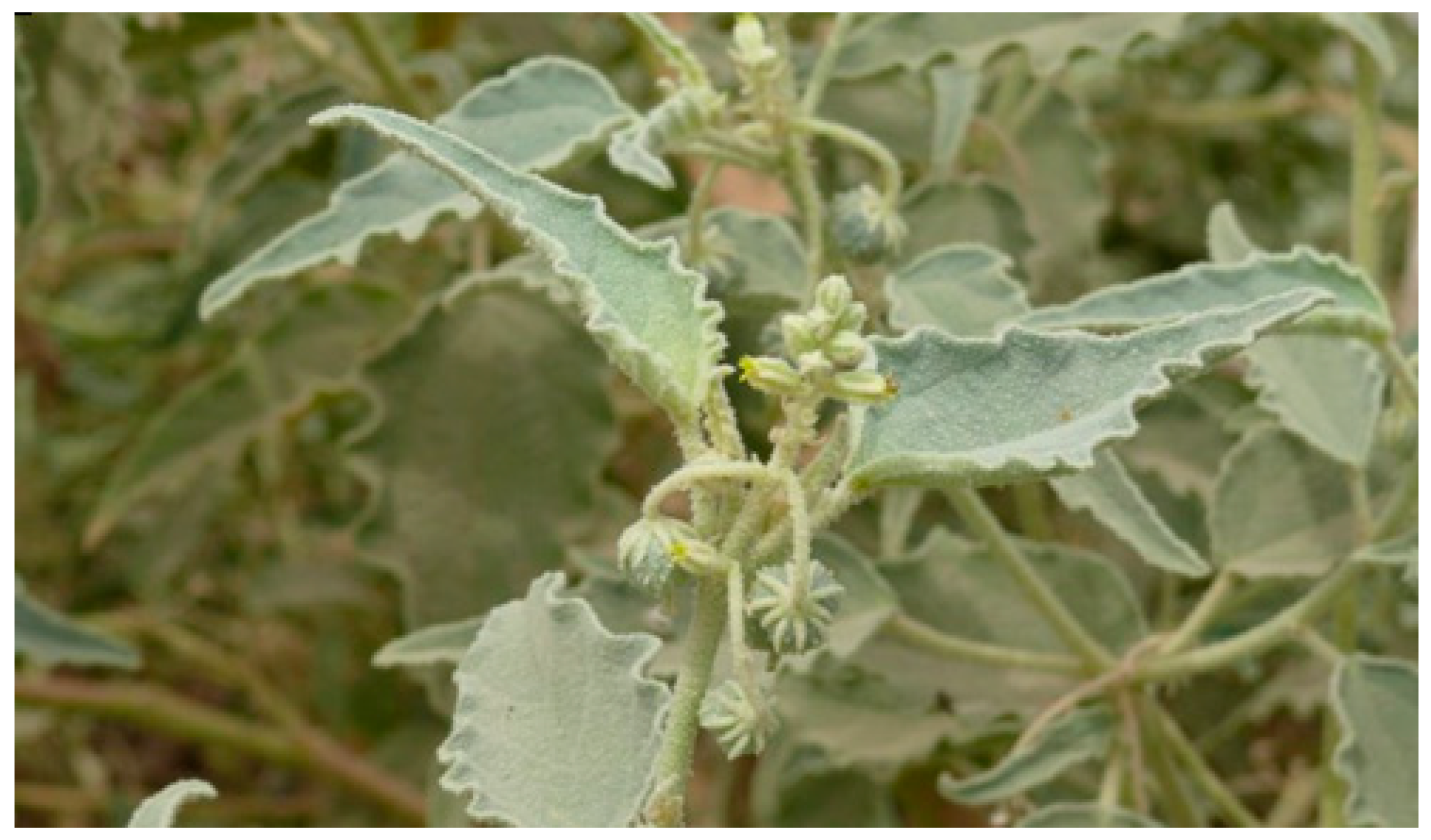
Figure 2.
Biological activity of methanolic and acetone leaves extract of Chrozophora oblongifolia on Aedes aegypti larvae.
Figure 2.
Biological activity of methanolic and acetone leaves extract of Chrozophora oblongifolia on Aedes aegypti larvae.
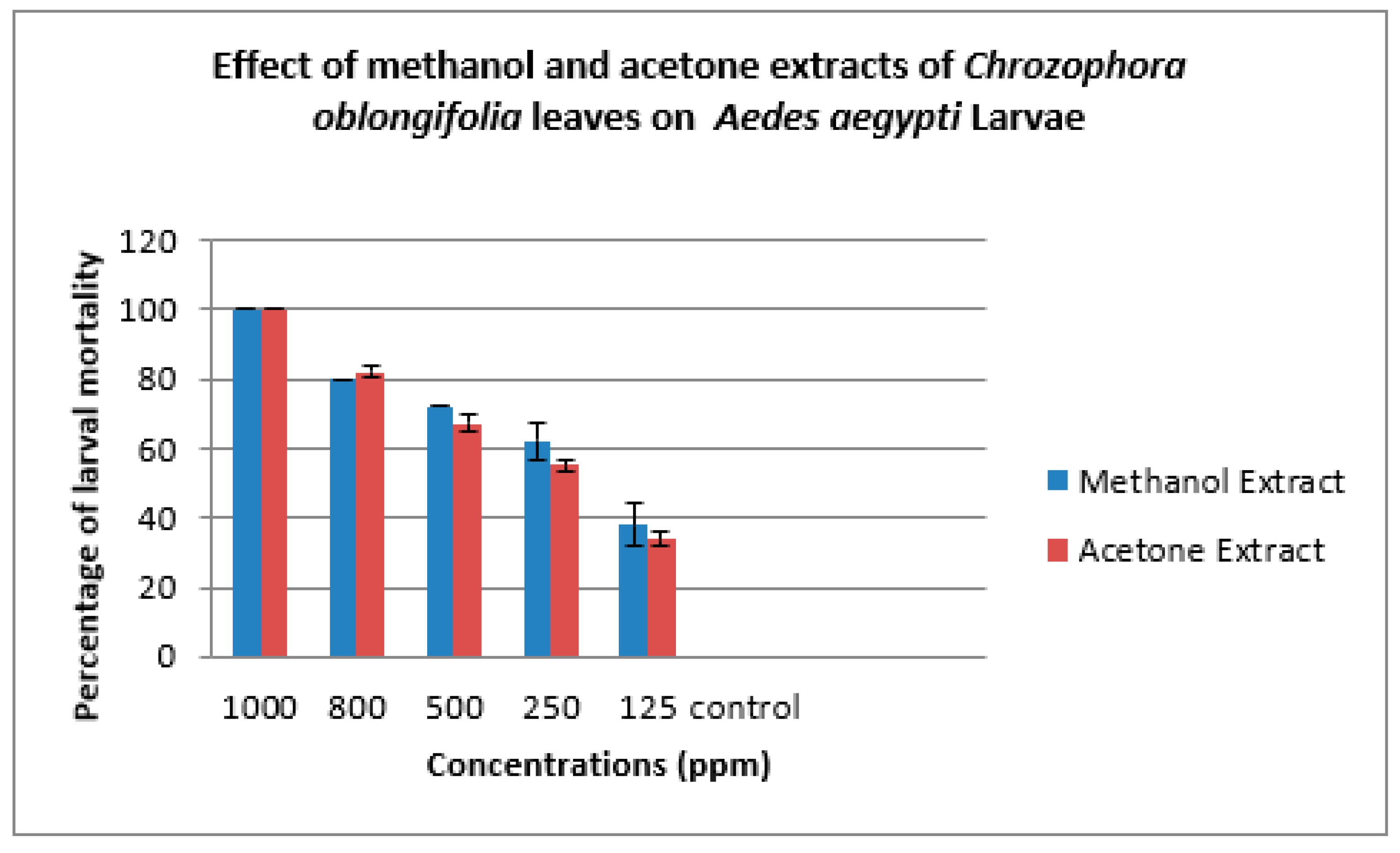
Figure 3.
Biological activity of methanolic and acetone leaves extract of Chrozophora oblongifolia on Aedes aegypti pupation.
Figure 3.
Biological activity of methanolic and acetone leaves extract of Chrozophora oblongifolia on Aedes aegypti pupation.
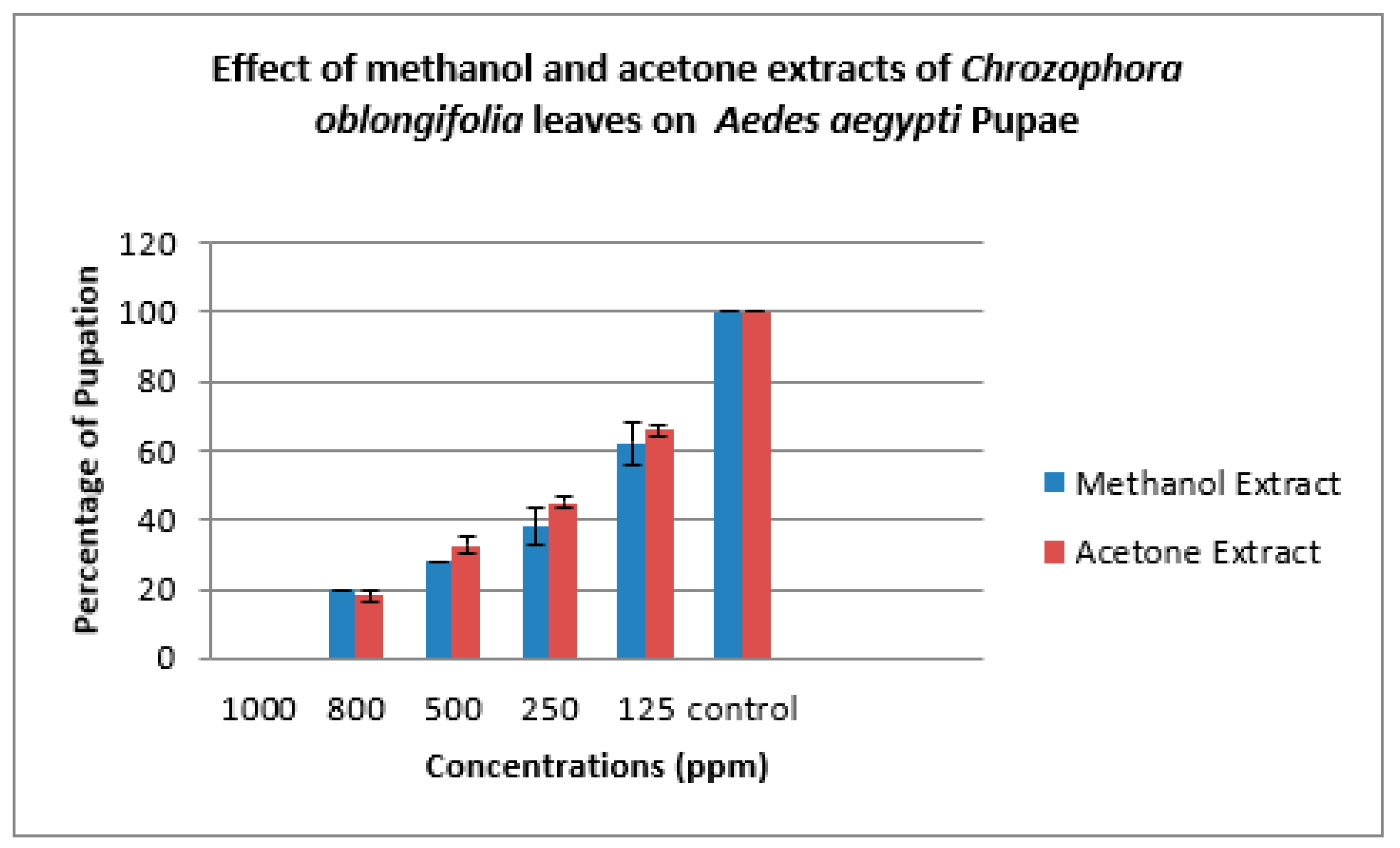
Figure 4.
Biological activity of methanolic and acetone leaves extracts of Chrozophora oblongifolia on Aedes aegypti pupae.
Figure 4.
Biological activity of methanolic and acetone leaves extracts of Chrozophora oblongifolia on Aedes aegypti pupae.
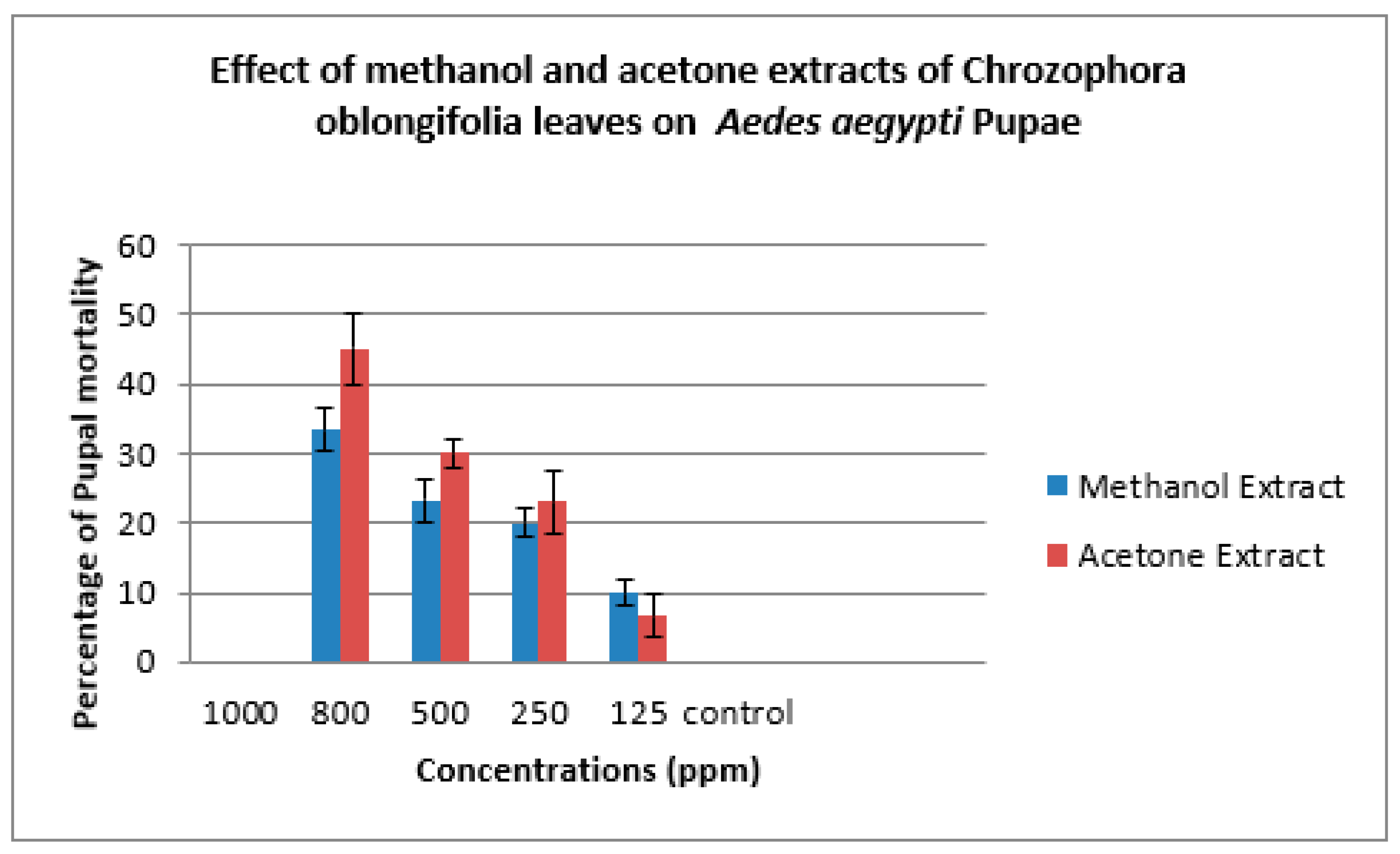
Figure 5.
Biological activity of methanolic and acetone leaves extracts of Chrozophora oblongifolia on Adult Emergence of Aedes aegypti.
Figure 5.
Biological activity of methanolic and acetone leaves extracts of Chrozophora oblongifolia on Adult Emergence of Aedes aegypti.
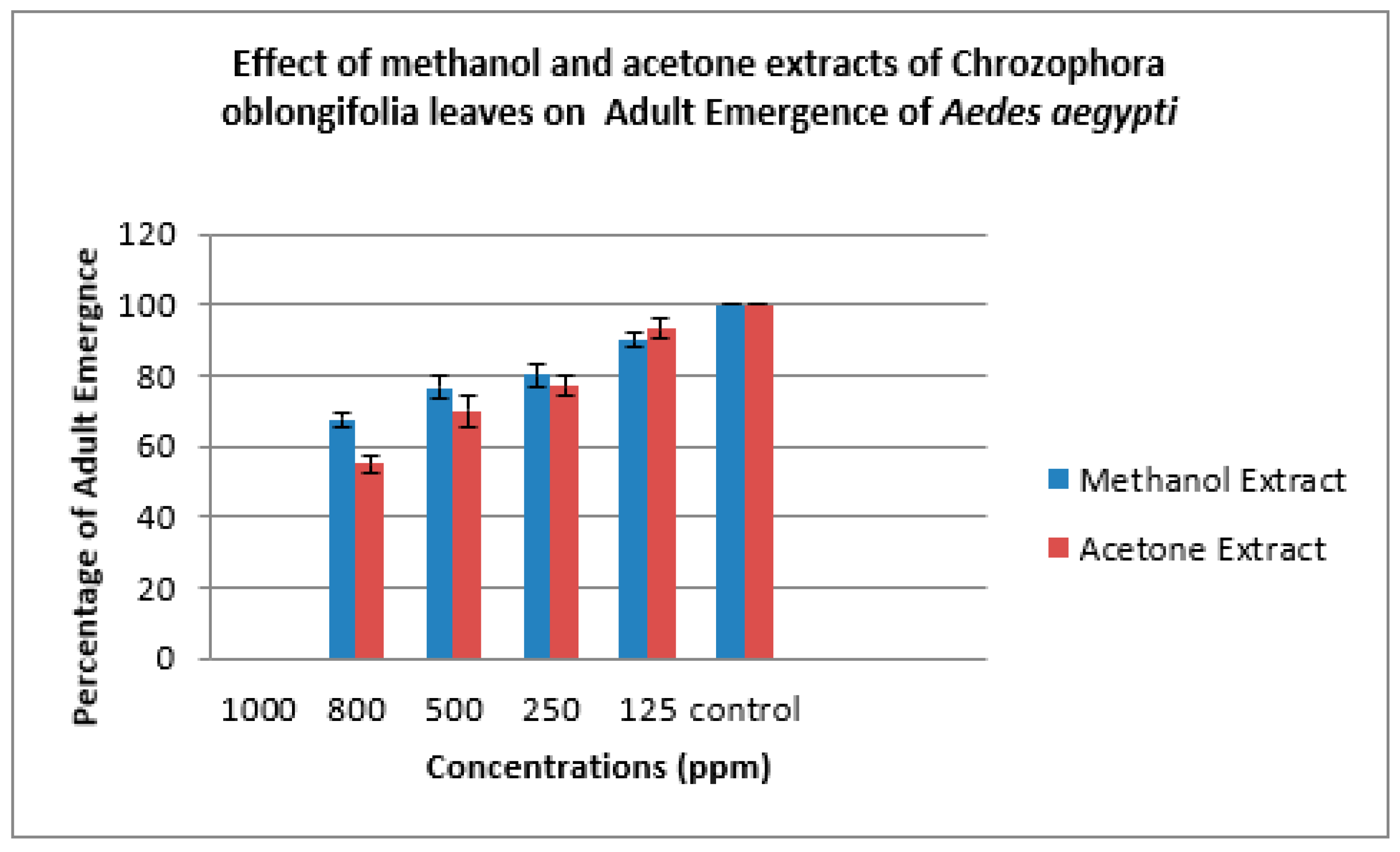
Figure 6.
Biological activity of methanolic and acetone leaves extracts of Chrozophora oblongifolia on Adult of Aedes aegypti.
Figure 6.
Biological activity of methanolic and acetone leaves extracts of Chrozophora oblongifolia on Adult of Aedes aegypti.
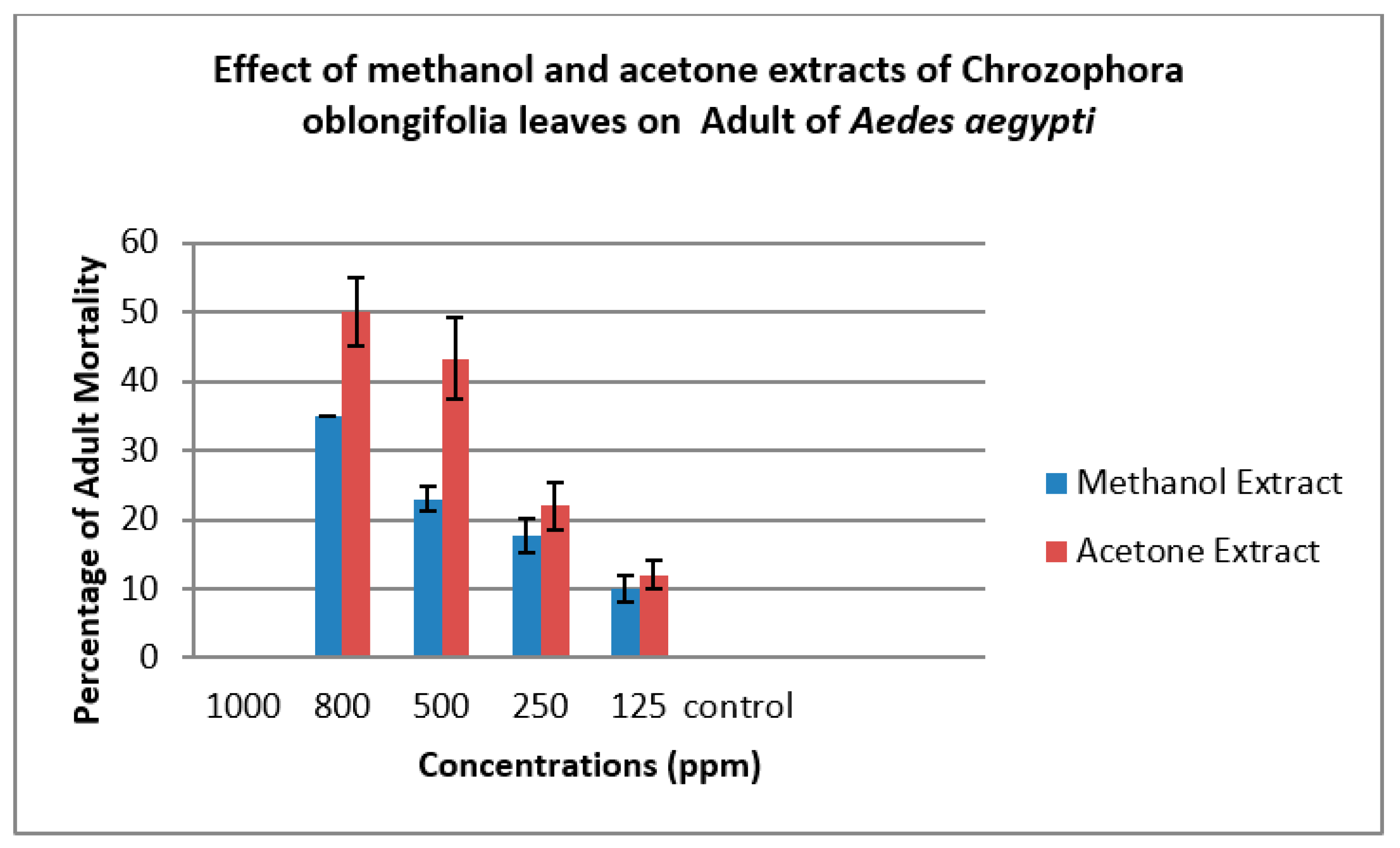
Figure 7.
LC50 and LC90 values (ppm) of methanol leaves extract of Chrozophora oblongifolia plant against larvae of Aedes aegypti mosquito.
Figure 7.
LC50 and LC90 values (ppm) of methanol leaves extract of Chrozophora oblongifolia plant against larvae of Aedes aegypti mosquito.
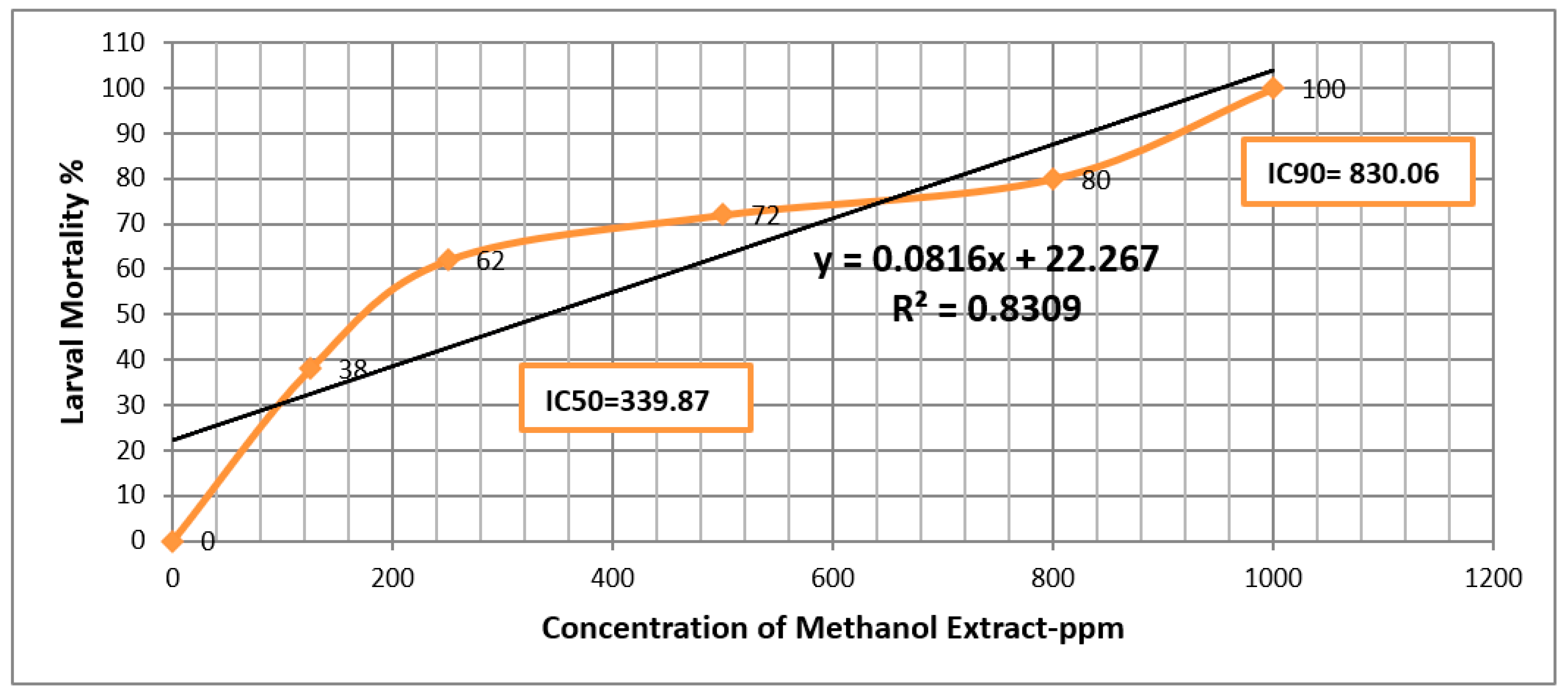
Figure 8.
LC50 and LC90 values (ppm) of acetone leaves extract of Chrozophora oblongifolia plant against larvae of Aedes aegypti mosquito.
Figure 8.
LC50 and LC90 values (ppm) of acetone leaves extract of Chrozophora oblongifolia plant against larvae of Aedes aegypti mosquito.
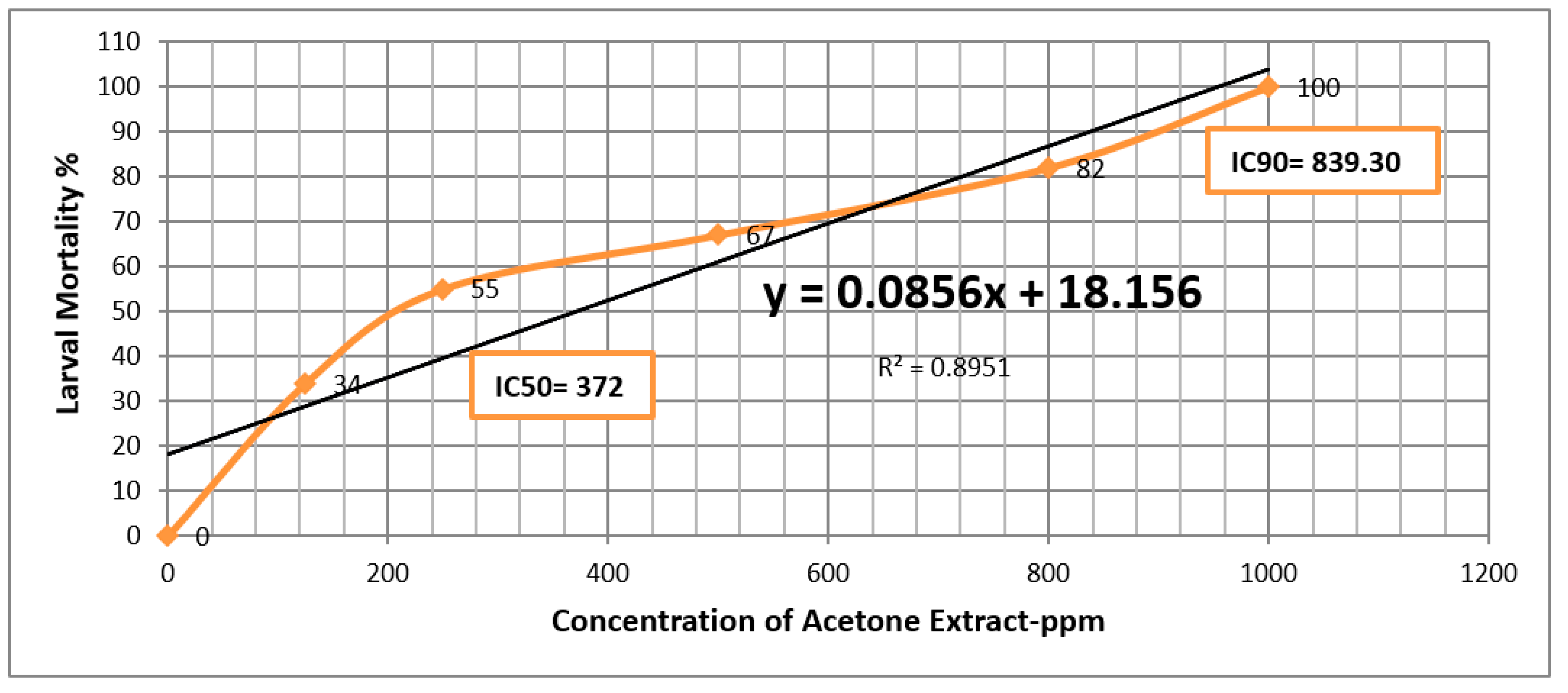
Figure 10.
Antibacterial activity of methanol leaves extract of Chrozophora oblongifolia against Staphylococcus aureus growth.
Figure 10.
Antibacterial activity of methanol leaves extract of Chrozophora oblongifolia against Staphylococcus aureus growth.
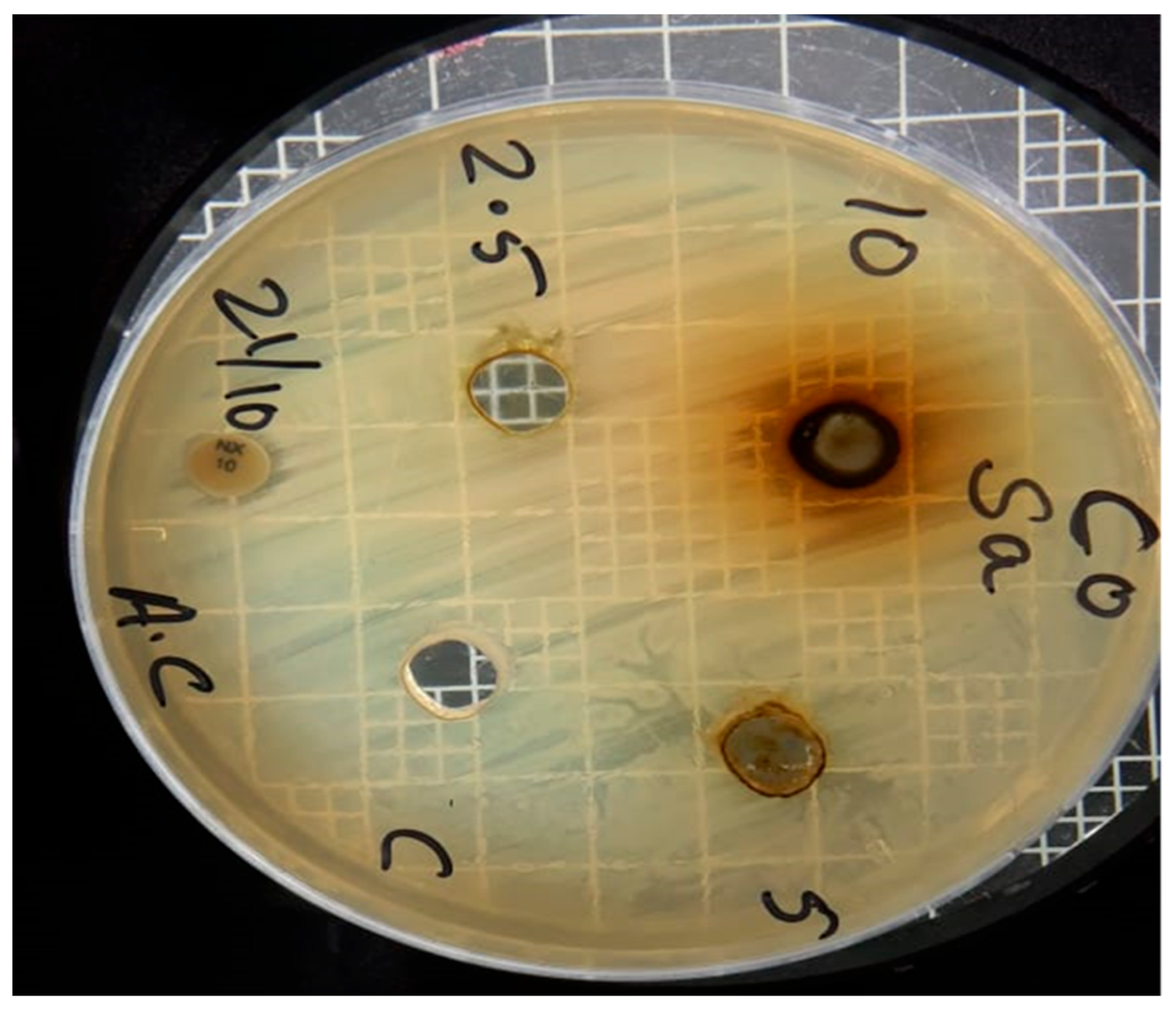
Figure 11.
Antibacterial activity of methanol leaves extract of Chrozophora oblongifolia against Esherichia coli growth.
Figure 11.
Antibacterial activity of methanol leaves extract of Chrozophora oblongifolia against Esherichia coli growth.
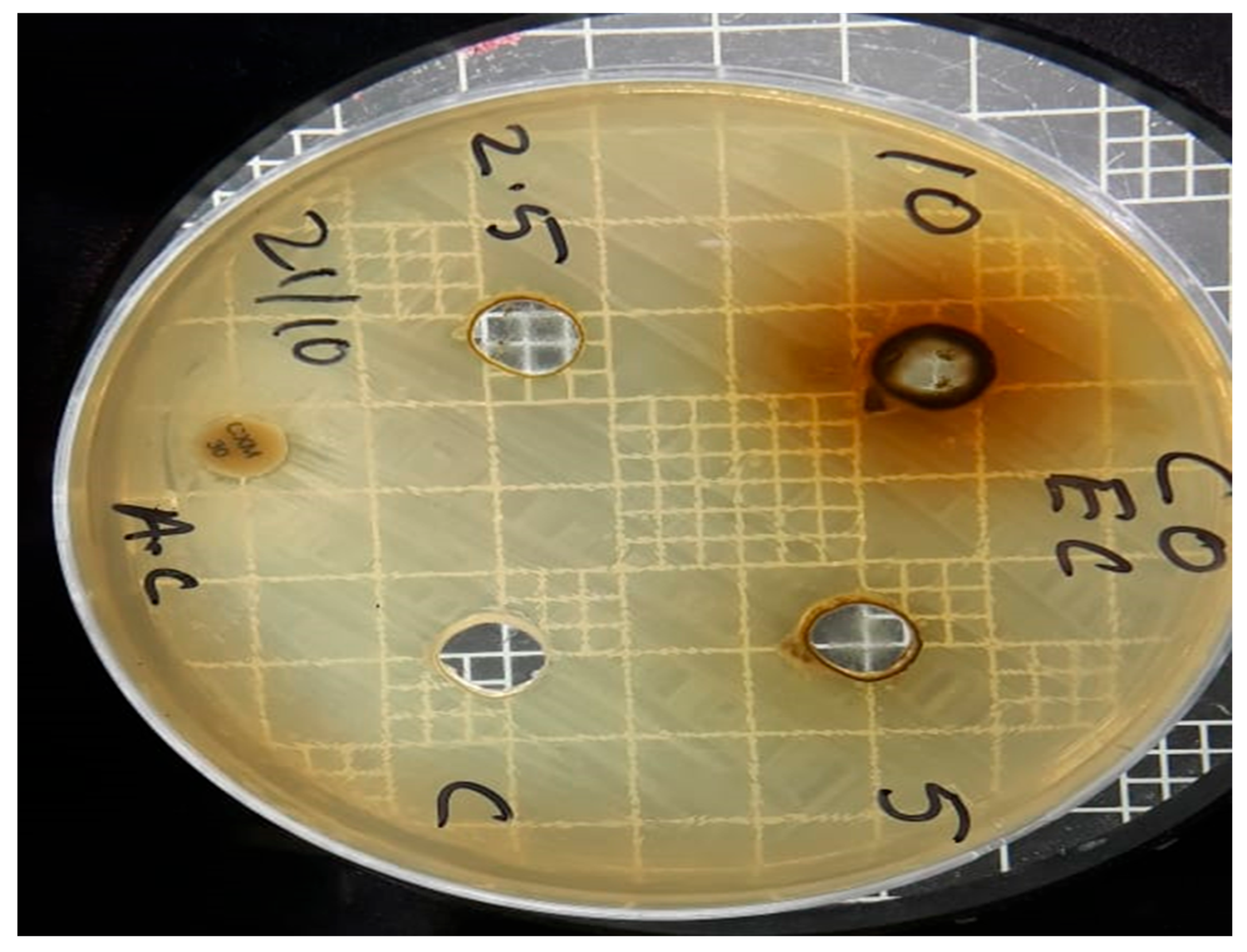
Figure 12.
Antifungal activity of methanol leaves extract of Chrozophora oblongifolia against Candida albicans growth.
Figure 12.
Antifungal activity of methanol leaves extract of Chrozophora oblongifolia against Candida albicans growth.
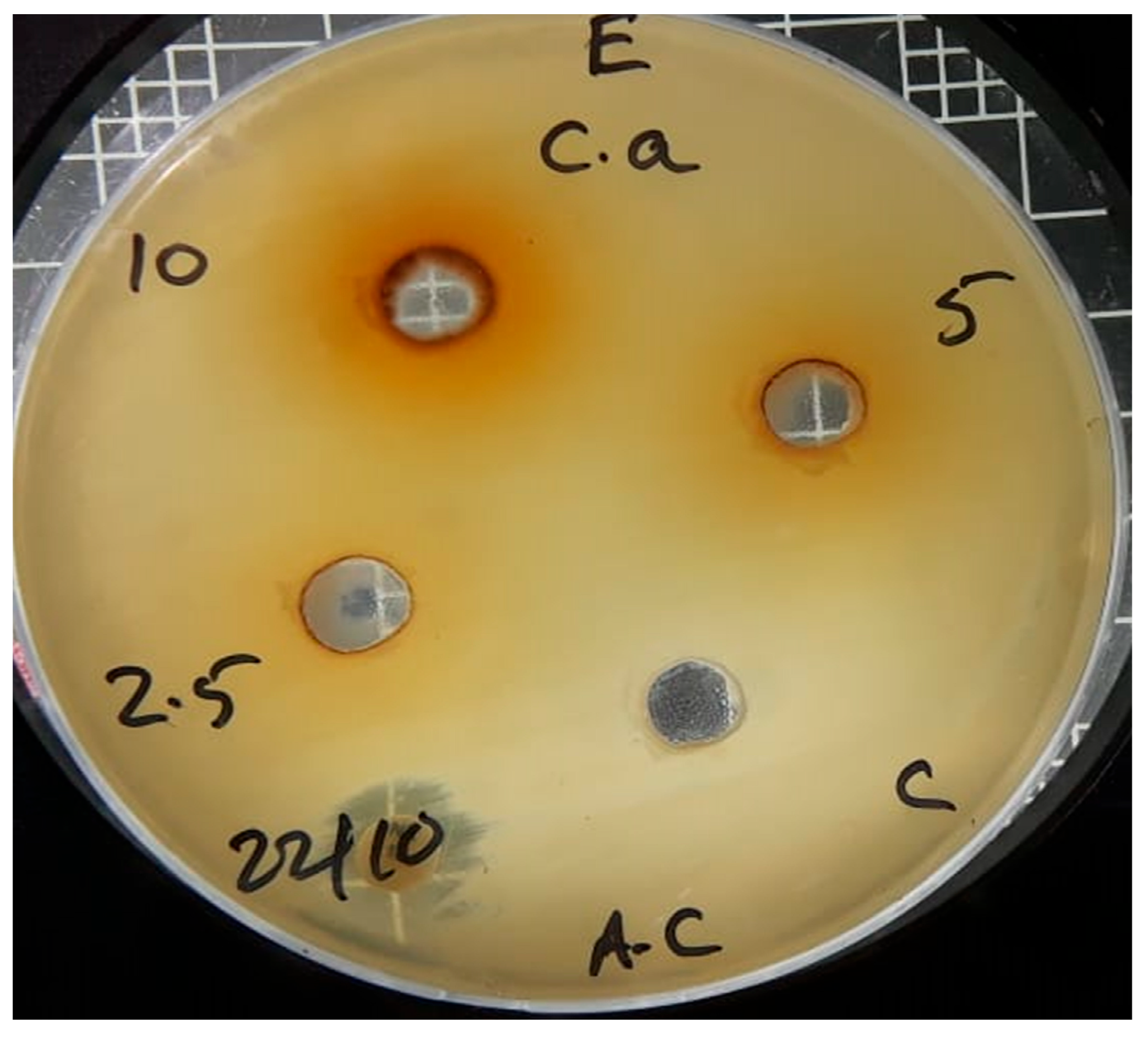
Figure 13.
Structures of major compounds in the methanol leaves extract of Chrozophora oblongifolia identifies by GC-MS.
Figure 13.
Structures of major compounds in the methanol leaves extract of Chrozophora oblongifolia identifies by GC-MS.
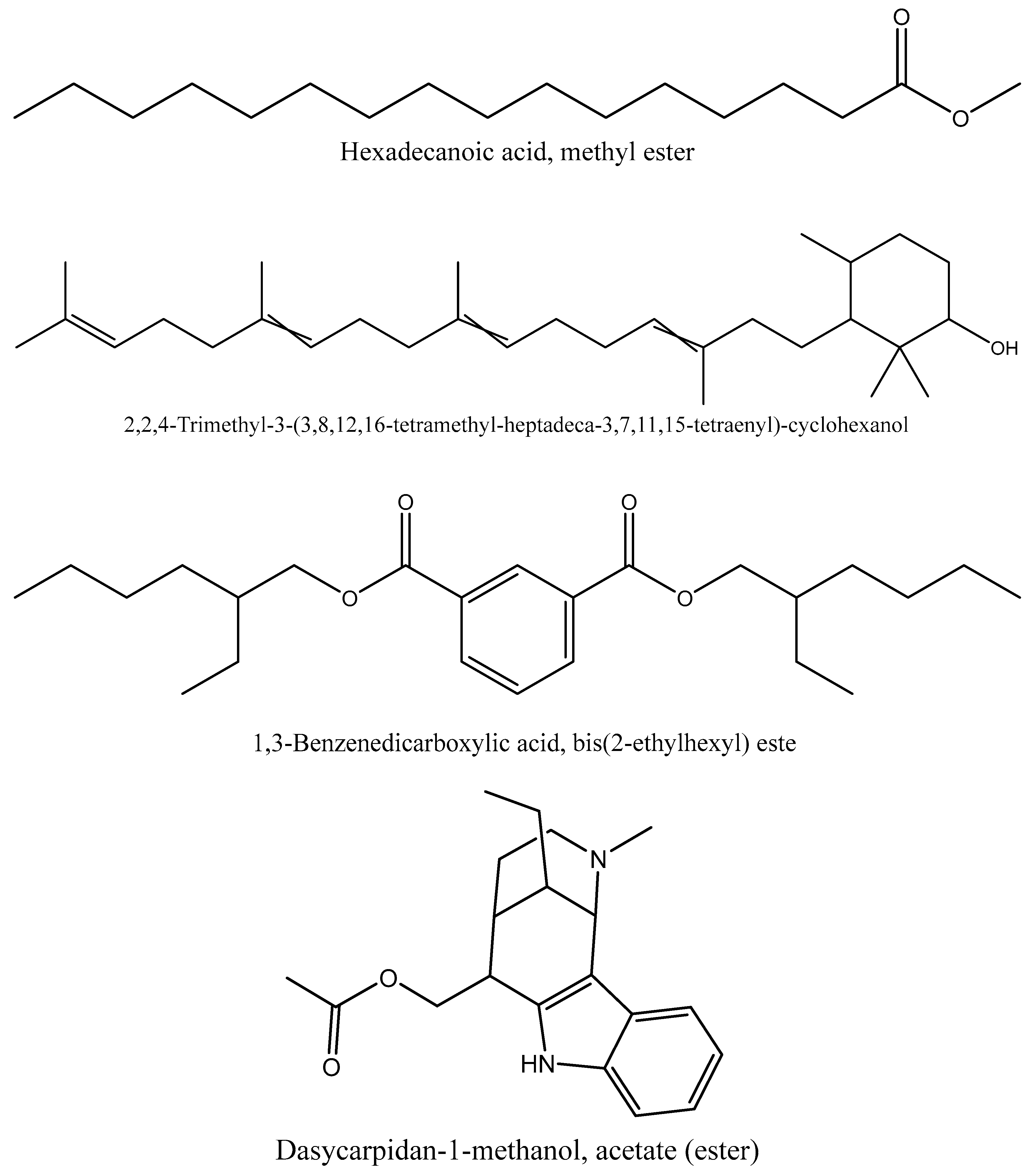
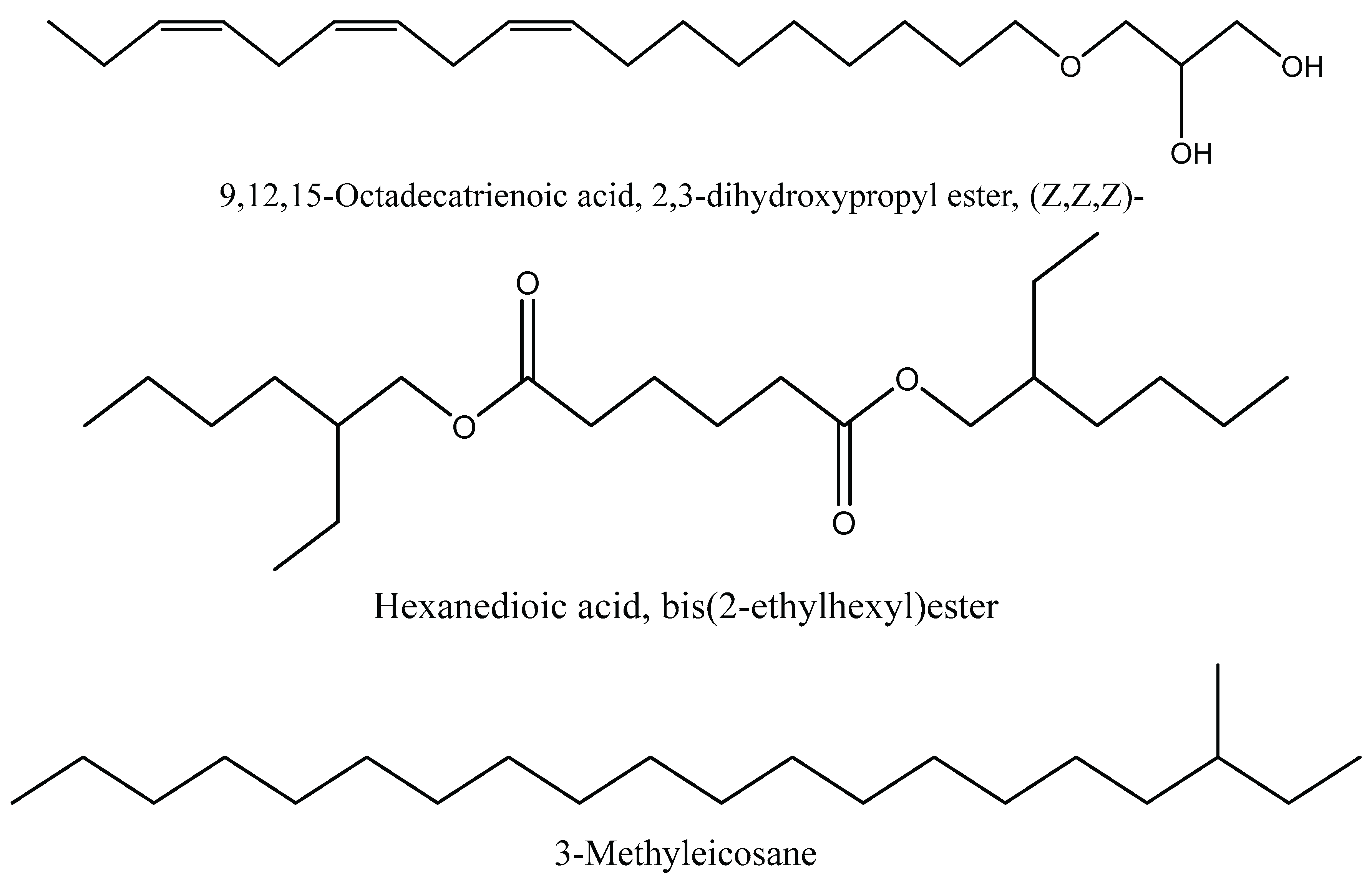
Table 1.
The biological effect of Methanolic and Acetone leaves extract of Chrozophora oblongifolia plant on different stages of Aedes aegypti mosquito.
Table 1.
The biological effect of Methanolic and Acetone leaves extract of Chrozophora oblongifolia plant on different stages of Aedes aegypti mosquito.
| Methanol Extract | ||||||
| Concs. ppm | Larva Mortality% | Larva duration/ days | Pupation% | Pupal Mortality% | Adult Emergency% | Ault Mortality% |
| 1000 | 100.00±0.00 | ---- | ------ | ------ | ------- | ---- |
| 800 | 80.00±0.00 | 6.33±1.00 | 20.00±0.00 | 33.33±3.00 | 67.67±2.00 | 35.00±0.00 |
| 500 | 72.00±0.00 | 7.33±1.00 | 28.00±0.00 | 23.33±3.00 | 76.67±3.00 | 23.00±2.00 |
| 250 | 62.00±5.00 | 6.00±1.00 | 38.0±5.00 | 20.00±2.00 | 80.00±3.00 | 17.67±3.00 |
| 125 | 38.00±6.00 | 7.00±0.00 | 62.00±6.00 | 10.00±2.00 | 90.00±2.00 | 10.00±2.00 |
| Control | 0 | 5.00±0.00 | 100.00±0.00 | 0 | 100.00±0.00 | 0 |
Table 2.
The biological effect of Acetone leaves extract of Chrozophora oblongifolia plant on different stages of Aedes aegypti mosquito.
Table 2.
The biological effect of Acetone leaves extract of Chrozophora oblongifolia plant on different stages of Aedes aegypti mosquito.
| Acetone Extract | ||||||
| Concs. ppm | Larva Mortality% | Larva duration/ days | Pupation% | Pupal Mortality% | Adult Emergency% | Ault Mortality% |
| 1000 | 100.00±0.00 | ------ | ----- | ---- | ------ | ----- |
| 800 | 82.00±2.00 | 5.33±1.00 | 18.00±0.00 | 45.00±5.00 | 55.00±3.00 | 50.00±5.00 |
| 500 | 67.33±2.00 | 6.33±1.00 | 32.67±2.00 | 30.00±2.00 | 70.00±4.00 | 43.33±6.00 |
| 250 | 55.00±2.00 | 6.67±1.00 | 45.00±2.00 | 23.00±4.00 | 77.00±3.00 | 22.00±3.00 |
| 125 | 34.00±2.00 | 6.67±1.00 | 66.00±2.00 | 6.67±3.00 | 93.33±3.00 | 12.00±2.00 |
| Control | 0 | 5.00±0.00 | 100.0±0.00 | 0 | 100.00±0.00 | 0 |
Table 4.
Antimicrobial activity of methanol extract of Chrozophora oblongifolia leaves against Staphylococcus aureus, Escherichia coli and Candida albicans.
Table 4.
Antimicrobial activity of methanol extract of Chrozophora oblongifolia leaves against Staphylococcus aureus, Escherichia coli and Candida albicans.
| Sr no. | Microbial strains | Methanol leaves extract of Chrozophora oblongifolia | ||
| Concentrations (ppm) | ||||
| 10000 | 5000 | 2500 | ||
| 1 | S. aureus | 14 mm | 11 mm | 0 |
| 2 | E. coli | 17 mm | 13 mm | 0 |
| 3 | Candida albicans | 16 mm | 0 | 0 |
Table 5.
Gas chromatography-mass spectrometry analysis (GC-MS) of methanol leaves extract of Chrozophora oblongifolia plant.
Table 5.
Gas chromatography-mass spectrometry analysis (GC-MS) of methanol leaves extract of Chrozophora oblongifolia plant.
| Molecular Formula | Compound Name | Peak Area % | RT |
| C21H44 | 3-Methyleicosane | 1.01 | 11.38 |
| C25H44N2O5S | 2-Myristynoyl pantetheine | 0.51 | 16.92 |
| C13H26O2 | Methyl 10-methylundecanoate | 0.68 | 17.35 |
| C15H30O2 | Tetradecanoic acid, methyl ester | 0.52 | 18.95 |
| C18H24O | Estra-1,3,5(10)-trien-17á-ol | 0.54 | 19.29 |
| C24H46O2 | Cyclopropanedodecanoic acid, 2-octyl-, methyl ester | 0.48 | 19.47 |
| C24H46O2 | Cyclopropanedodecanoic acid, 2-octyl-, methyl ester | 0.51 | 19.68 |
| C17H34O2 | Hexadecanoic acid, methyl ester | 3.74 | 20.37 |
| C21H36O4 | 9,12,15-Octadecatrienoic acid, 2,3-dihydroxypropyl ester, (Z,Z,Z)- | 2.67 | 21.52 |
| C20H26N2O2 | Dasycarpidan-1-methanol, acetate (ester) | 3.44 | 21.96 |
| C22H42O4 | Hexanedioic acid, bis(2-ethylhexyl) este | 15.59 | 22.14 |
| C28H42O2 | 3,4',5,6'-tetra-tert-butylbiphenyl-2,3'-diol | 0.52 | 22.92 |
| C22H42O4 | Hexanedioic acid, bis(2-ethylhexyl) ester | 28.18 | 23.2 |
| C38H74O2 | Oleic acid, eicosyl ester | 0.44 | 23.8 |
| C30H42Cl2N4O3 | 9-(2',2'-Dimethylpropa noilhydrazono)-3,6-dic hloro-2,7-bis-[2-(dieth ylamino)-ethoxy]fluore | 0.47 | 24 |
| C41H64O13 | Digitoxin | 0.48 | 24.14 |
| C24H38O4 | 1,3-Benzenedicarboxylic acid, bis(2-ethylhexyl) este | 3.6 | 24.75 |
| C24H38O4 | 1,4-Benzenedicarboxylic acid, bis(2-ethylhexyl) este | 1.76 | 25.08 |
| C30H52O | 2,2,4-Trimethyl-3-(3,8,12,16-tetramethyl-hep tadeca--3,7,11,15-tetraenyl)-cyclohexanol | 4.06 | 25.4 |
| C44H78O2 | Cholesterol margarate | 0.81 | 25.95 |
| C28H44O4 | 9-Octadecenoic acid, (2-phenyl-1,3-dioxolan-4-yl)methyl ester, cis- | 0.63 | 26.44 |
| C24H30O7 | 9,11,18-Trihydroxy-6,18-epoxypimara-5,8(1 4),15-trien-7-one, 2Ac derivative | 0.53 | 27.47 |
| C26H44O5 | Ethyl iso-allocholate | 0.59 | 28.13 |
Table 6.
The biological activity of nine major prevailing compounds analyzed by GC-MS..
| Sr. no. | Compound | Peak Area % | Biological activity |
| 1 | Hexanedioic acid, bis(2-ethylhexyl) ester | 28.18% | Antioxidant and antibacterial activity (31) |
| 2 | Hexanedioic acid, bis(2-ethylhexyl) ester | 15.59 % | Antioxidant and antibacterial activity (31) |
| 3 | 2,2,4-Trimethyl-3-(3,8,12,16-tetramethyl-heptadeca--3,7,11,15-tetraenyl-cyclohexanol | 4.06 % | Antidiabetic effect (32) |
| 4 | Hexadecanoic acid, methyl ester | 3.74% | Antimicrobial (33) |
| 5 | 1,3-Benzenedicarboxylic acid, bis(2-ethylhexyl) ester | 3.6 % | Anticancer, larvicidal, antibacterial, antifungal, antimutagenic and cytotoxic effect(34, 35) |
| 6 | Dasycarpidan-1-methanol, acetate (ester) | 3.44% | Antioxidant, anti-inflammatory, antibacterial, antimicrobial anticancer, angiogenesis and analgesic property (36) |
| 7 | 9,12,15-Octadecatrienoic acid, 2,3-dihydroxypropyl ester, (Z,Z,Z)- | 2.67% | Antioxidant, antimicrobial, anticancer, and anti –inflammatory activity (37) |
| 8 | 1,4-Benzenedicarboxylic acid, bis (2-ethylhexyl) ester | 1.76% | Antimicrobial and larvicidal (38, 39) |
| 9 | 3-Methyleicosane | 1.01 % | Antifungal, antimicrobial, anti-inflammatory, antioxidant and cytotoxic effect. (40) |
Disclaimer/Publisher’s Note: The statements, opinions and data contained in all publications are solely those of the individual author(s) and contributor(s) and not of MDPI and/or the editor(s). MDPI and/or the editor(s) disclaim responsibility for any injury to people or property resulting from any ideas, methods, instructions or products referred to in the content. |
© 2025 by the authors. Licensee MDPI, Basel, Switzerland. This article is an open access article distributed under the terms and conditions of the Creative Commons Attribution (CC BY) license (http://creativecommons.org/licenses/by/4.0/).
Copyright: This open access article is published under a Creative Commons CC BY 4.0 license, which permit the free download, distribution, and reuse, provided that the author and preprint are cited in any reuse.


