

Submitted:
12 June 2025
Posted:
13 June 2025
You are already at the latest version
Abstract
This article based on a doctoral research develops integrated frameworks for dynamic capabilities(DCAPs), socio structural dynamic network analysis for University Business Incubators(UBIs), their clusters and entrepreneurs. UBIs orchestrate their assets and competencies in creating value and performing their development and transformative roles within their embedded UBI regional innovation system and Entrepreneurial Ecosystem. To achieve this, UBIs continually orchestrate their capabilities while interacting and creating complex structures during collaboration and partnerships with their immediate ecosystem and trans-regional networks. This research investigates UBI capabilities (substantive and dynamic) their changing socio human structures and dynamic networks. A sequential exploratory mixed method is used across traditional UBIs, European Space Agency Business Incubator Centers(ESABIC), Life Science Clusters (MedTech) to determine their essential capabilities (substantive and dynamic), how they respond to socio-triggers and structural changes with their changing network dynamism overtime. An integrated framework with classical computing (machine learning) (ML), AI and Quantum machine learning(QML), Cloud Technologies integration and Agentic AI deployment with LLMs are proposed and implemented for data training and analysis. The framework would be able to assess all UBI forms’ and clusters’ Sustainability, Survivability, Resilience, Adaptability, Dynamic Capabilities using classical and quantum computing. For each UBI form and clusters the Dynamic Social Network Analysis measurements are also implemented and a framework proposed. This research would enhance a combined strategic, structural, business processes management and network analysis for all UBI in different industrial sectors, clusters and regional innovation systems(RIS).
Keywords:
university business incubators(tion)
; social network analysis
; regional innovation systems(ris)
; medtech clusters
; biotech clusters
; space based business incubators
Introduction
UBIs are established to enhance value creation within their Regional Innovation System(RIS) and Entrepreneurial Ecosystem(EE) via their generative and transformative roles(Lee and Osteryoung, 2004; Bathula, Karia and Abbott, 2011; AL-Mubaraki and Busler, 2014).This is accomplished by the continual orchestration of their assets, competencies, capacities(resources)(Teece, 2014; Helfat and Martin, 2015; Teece, 2016a) while collaborating with actors and partners within their EE via social capital(Cooper, Hamel and Connaughton, 2012; Wachira, Ngugi and Otieno, 2016). The Dynamic Capabilities Framework(DCF) instituted a bottom-up approach to the study of dynamic capabilities via the orchestration of Organizational assets, managerial competencies, operational activities and strategy till dynamic capabilities are achieved in enhancing value creation, productivity and increased customer satisfaction(Inan and Bititci, 2015; Teece, 2016b; Heaton, Siegel and Teece, 2019) and this is also applicable to entrepreneurial activities within the University ecosystem(Heaton, Siegel and Teece, 2019) and University Business Incubators(UBIs)(Rasmussen and Borch, 2010; Somsuk, Punnakitikashem and Laosirihongthong, 2010; McAdam, Miller and McAdam, 2016).
Generally, business incubators are made up of valuable service management provisions(VSMPs) i.e., assets, infrastructures and resources and capabilities (Lagos & Kutsikos, 2011). These two components are combined together during the UBIs’ entrepreneurial activities based on their strategies and risks forming different modes of BI which include dynamic, community and regional BI forms for their value proposition (Bruneel, Ratinho, & Clarysse Bart, 2012). This further buttress already established theoretical proposition that there are no same UBIs as their strategies and mechanisms differs due to variation in their embedded RIS and EE(Ng et al., 2019). With their capabilities orchestration comes continual interaction for collaborations and partnerships for regional or trans-regional projects and development. Harris(2021) further stated that during these interactions, ‘complex adaptive structures’ are formed which are continually adjusted due to the triggers and crises (Martinkenaite & Breunig Karl, 2016).
In addition to this, different UBIs are also embedded within clusters agglomerated within RIS and NIS (Cooke, 2001). Typical examples are found in Life science, Automobile and Fintech clusters across Europe. The value chain of these clusters also differ from typical or traditional UBI (digital based) as the product development cycle (e.g., drug development) could take 5-15 years owing to these differences, their dynamic capabilities(DCAPs) also differ including the RIS and EE they are embedded in. Since the dynamic capabilities also changes overtime across the UBI, Clusters and startups lifecycle, it’s expedient to assess their dynamic capabilities with their changing structures caused by the orchestration of their substantive capabilities (initial capabilities at inception) and dynamic networks. In this vein, this research develops firstly a conceptual framework to aid UBIs and their clusters’ Dynamic Capabilities, Dynamic Socio- Human Structures and Networks and thereafter integrates these components (DCAPs, SST and DSNA) with an architectural framework, trained data collected via mixed methods using Machine Learning models. UBI processes’ automation via Agentic AI, Ethical, Responsible AI, Resilience Development and Socio Structural Structures with triggers are also proposed. To achieve this, mini-projects were developed for each UBI form (Traditional UBI, MedTech and Biotech Clusters, ESABIC, Networked UBI and Fintech) with socio-structural analysis based on Strong Structuration Theory(SST), DSNA and DCAPs also integrated.
Research questions were developed for each UBI form based on: what specific capabilities (substantive and dynamic) are required for each UBI form to enhance their entrepreneurial activities and value creation; what actors and networks of interactions, relationships and linkages are required to facilitate these DCAPs orchestration; what socio-human structures exist or occur during the orchestration of these DCAPs and how do UBIs adjust to changes to these structures. The next section describes the methodology in detail.
Materials and Methods
It has been established from past DCAPs studies that DCAPs assessments require a multi-dimensional approach (Zahra, Abdelgawad, & Tsang, 2011), a mixed method(sequential exploratory) is proposed for this research because of its benefits of combining qualitative and quantitative techniques.This study uses identical and purposeful sampling with qualitative technique employed in the first stage with in-depth interviews with UBI managers, cluster heads(lifescience-MedTech), Space Based business incubation centers(ESABIC-European Space Agency Business Incubation Centers). In-depth interviews followed by quantitative techniques with survey, predictive machine learning for data analysis with Dynamic Social Analysis and SST QNS (Quadripartitie Nework Structure) (Greenhalgh & Stones, 2010) were conducted for each (Traditional) UBI, ESABIC and MedTech Cluster,while Quantitative technique was employed for Biotech Cluster and Fintech UBI. An algorithm was also developed for Networked UBI formation(Dyad UBI) (Taiwo & Provodnikova, 2025).
For the (Traditional) UBI, managers were interviewed and data collected from four UBIs to understand the various DCAPs that enhance their entrepreneurial activities and value creation (Lee & Osteryoung, 2004). The UBI managers were selected from different RIS (municipal,old industrial and peripheral) and EE across Africa and Europe. Figure 1 shows the survey output for the UBI capabilites across their lifecycle.
The Lifescience cluster(MedTech) are based on the agglomeraton of RIS components and actors which include CRO(Clinical Research Officers), Academia, Universities Incubators and Technology Transfer Offices(TTO),Startups and Spinoffs,Entrepreneurs, Policies and Compliances from Regional Government with Infrastructure support systems, business and economic logic entities’(Suppliers, Buyers, Producers and Developers and Users) with competition and rivalry that fosters continual value creation and operational excellence. MedTech based value chain aso extends across R&D, Innovation and Development, Approval andValidation, Reimbursements, T2M(Time-to-Market) and End User acceptanc eand Impact. A Meta model was used for the conceptual framework development.
Thematic analysis was conducted on these extant literatures and this resulted into three models based on the extant MedTech literatures that covered: MedTech Clusters, MedTech UBI Capabilities. These models are then merged to develop the conceptual and platform frameworks. A MedTech Cluster executive in Western Europe was interviewed and sets of data were collected thereafter to further develop the quantitative technique.
Figure 2, Figure 3 and Figure 4 shows the breakdown of the models,the meta model and the ensuing framework
The resulting MedTech capabilities are shown below.
For the ESABICs methodology, two University Based ESABICs in Europe were interviewed(Central and Northern Europe)and their capabilities were analyzed based on multi-level analysis(MLA) i.e., individual(entrepreneurial level),organizational, networks(regional and trans-regional). Figure 5 shows the details of the ESABICs’ dynamic capabilities.
The collected data for UBIs, MedTech Clusters, with other UBI forms ( Biotech Clusters, ESABICs, Fintech) are trained using Machine Learning(ML), socio-structural and dynamic social network analysis were also applied. Extracts from the qualitative stage are ingrained into the Integrated Platform framework.
AI, Cloud Technologies with Classical and Quantum Computing
This research is also buoyed with the application of Machine Learning(ML) for dynamic capabilities data training, variable importance evaluation to a target variable and predictive analysis. The R language with a web-based Auto ML application( initiated with R) is used. Multinomial, Regression and component analysis models were used during the data training. Cloud technologies services and resources (AWS SageMaker, AWS Compute,S3 buckets) were also employed for the DCAPs training and a SaaS sampled platform is being developed.
Ethical, Responsible and Explainable AI are proposed in the framework as guide for developing trust, safety, ethics, transparency during data training. Quantum Machine Learning( QML) applications are also suggested as it enhances secured and faster data training compared to classical machine applications. The Quantum concept is based on qubits and the concepts of superposition and entanglement ( ‘Bra’ and ‘Ket’) with the notion that 0 and 1 can simultaneously occur compared to the classical computing using bits( O and 1). Quantum Crytography has been alleged to have the highest security level and this could be applied to sensitive data records especially in user based applications like Medicine(drug development and precision medicine,Cybersecurity(Cryptography) and Finance(Stock Exchange). PennyLane from Xanadu or Amazon Braket could be used for programing Quantum Circuits and Models such as Fourier Transforms,QAVA,VQC
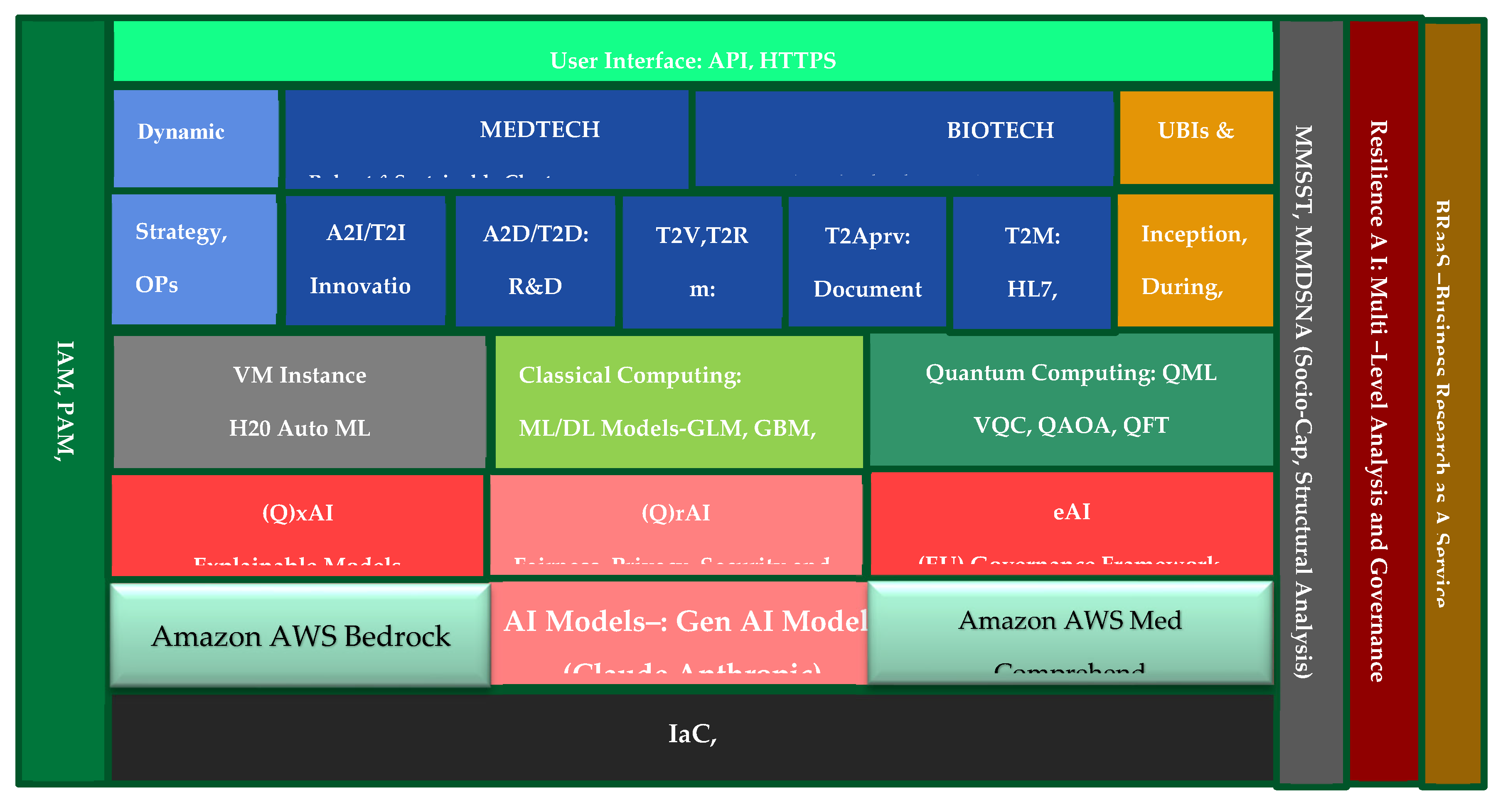
Figure 6 below shows the High-level Architecture used during the data training and Figure 7 shows the proposed Integrated Platform Framework
An integrated framework for DCAPs,SST Socio human triggers and Analysis, DSNA is shown in Figure 7 above and 19 below. Using extant literatures across RIS, EE, UBIs, MedTech and Biotech Clusters, Networked UBIs, ESABICs, Fintech, Resilience, Innovation Hubs(IHs) open coding were applied with patterns and themes discovered across 6,000 plus codes that ensued. These were aggregated with the ensuing quantitative results to develop the integrated study, conceptual and platform frameworks as shown in the Figure 7 and Figure 19.
Discussions and Conclusions
Based on the methodology DCAPs capabilities were identified for all the UBI forms. For Traditional UBIs DCAPs are required across the UBI lifecycle from the UBI and startups creation inception (motivation, risk taking, opportunity recognition), during business incubation, for adjustment and adaptation to market and environmental(resilience, perseverance, regional transformation adaptation), survivability, sustainability and UBI Metrics ( ROI, ROE,Regional Developmental Contribution), the data collected via the quantitative survey were trained with ML and different classical computing models like GLM,GBM,VAR (Vector Auto Regression), XRT, Deep Learning.
The output validation, training and prediction metrics from the trained data include(mean square errors) RMSE, RMSLE, MSE, MAE, logloss, AUC, mean residual deviance and the accuracy of the trained data(R2). In training the data, the survey dataset is ingested as .CSV file to the Auto ML platform(H2O ML) and splitted by percentage(e.g., 75% to 25%) for training and test data. The model is thereafter built by selecting the target variable from the list of dynamic capabilities variables. For the training of the UBI, Networked UBI, MedTech and Biotech Clusters, business sustainability, entrepreneurship climate, product innovation, adaptation to crisis(biz development changes) were selected as targeted variables response column and trained with other variables. Next is the model building and AutoML running after which a prediction is made. From the output, variable importance for all capabilities can be evaluated. This compared the importance of each variable to the targeted variable. The significance of the trained model is the ability to predict performance of future data when collected overtime.
Some of the models automatically selected for training include: GLM, GBM, XRT, DRF, Deep Learning,VAR(Autovar.nl). Training was also performed on cloud resources using AWS Sage Maker(with select, build, analyze, predict and deploy model). The output of training for each of the UBI forms are shown in Figure 8 (including AWS SageMaker, typical AutoML on Azuremarketplace and PennyLane Quantum computing interface).
The Integrated Platform framework as shown in Figure 7 (for dynamic capabilities alone) and Figure 19 (for dynamic capabilities, Socio structure triggers and changes and dynamic social network DCAPs, socio structural analysis, resilience, adaptation, AI development and the infrastructure(cloud,IaC,SaaS) is divided into four sections for easier understanding.
Section A shows the DCAPs results for MedTech, Biotech, UBI and Network UBI showing the substantive and dynamic capabilities. Based on the DCF(dynamic capabilities framework), the DCAPs must be orchestrated together with the organizational assets, competencies, operations, resources, strategies and social networks for collaboration and partnerships formation.
This would include: Project management processes and methodologies, product development, lean management, performance measurements with OKR and KPIs, lifescience clusters value chain processes,standards and compliances from R&D, Innovation,approval,reimbursement,T2M and End-User Impact and Acceptance.
This layer will also include standards and compliances for Medical Data Records(MDR), risk management,quality management documentation standards e.g., HL7,validation, approvals(CFRPart 11,FDA,CSV,GxP), Reimbursement(DiGAV, ANS, MedCO). These are all integrated together to ensure the realisation of the Dynamic Capabilities( top order). For example Robust and Sustainable Ecosystem capabilities is a top order or dynamic capabilities of MedTech Clusters and their UBIs as explained earlier(Figure 4). To achieve this, it involves the continual generation of highly innovative ideas from the Universities and UBIs, support for new startups, high startups survival rate, flexible resources and project selection criteria, the leverage on regional infrastructure and support, collaboration and partnerships with firms, university pedigree in research, flexible IP strategy and patenting etc. To achieve this, it requires collective innovation and idea commercialization that fosters continual University spinoffs, a gradual development of an ecosystem that fosters entrepreneurial activities.In addition to this, Clusters and UBIs are to setup OKRs ( Obejective key results) and or KPIs’( Key Performance Indices) for these capabilities and they need to be measured overtime together with the business processes that facilitate their attainment. Figure 21, Figure 22 and Figure 23 shows typical (UBI) MedTech Cluster process for attaining the Robust and Sustainable Entrepreneurial Ecosystem( highly innovative ideas from University, support for new startups and flexible startups selection criteria. These processes are developed for Agentic AI automation integration and foundational model development. The AI agents tasks and activities are listed for each process. In achieving this a RAG(Retrieval Augmented Generation),knowledge Graph and database is used. The UBIs or Clusters’ related strategic, business management, knowledge base and partnerships documentations and processes are collected together in a database and this can be retrieved based on RAG and LLMs via Gen AI and an Agent function call based on the business process activities and tasks.
Section B integrates the SST for the socio human structural analysis based on socio triggers and changes on a MLA(multi-levelanalysis) for RIS,EE,SST specific and all the UBI forms(Traditional UBI,ESABIC,MedTech and Biotech Clusters). The detailed analysis of the SST socio-human triggers and changes across UBI forms and their embedded RIS include triggers uncertainties,challenges,risks and crises across each UBI forms value chain (Taiwo & Provodnikova, 2025). Section B details how UBIs and their clusters should adjust to various socio-human triggers and changes within their EE and RIS. Socio-structural triggers framework was developed based on SSTQNS, Adaptability, Resilience, Dynamic Social Network Analysis(DSNA) as shown in Figure 20. AI Foundational models for each of these triggers and changes based on the UBI or clusters’ processes are developed for resilience AI agents, SST triggers and adaptive capabilities across all UBI forms as shown in Figure 23a,b and Figure 24.
Other parts of section B include the UBI Resilience, Adaptation, Intelligent Automation using Agentic AI automation for UBI business processes and DSNA. The dynamic social network analysis could also be integrated using R Studio in AWS and Azure or via an API call from R interface to AWS or Azure R studio.
Resilience and Adaptive framework and typical AI agents that can be used are created for all UBI forms( Traditional UBIs,ESABICs,Networked UBI,MedTech and Biotech Clusters and their UBIs). Their respective value chains are taken into considerations while creating the framework.
For example, Resilience must be created across the MedTech clusters and their UBIs value chain from R&D, Innovation, Product Development, Reimbursement, Approval,Validation,T2M(Time to Market) and User End Impact and Acceptance. All these layers are explained in detailed in earlier articles by the authors (Taiwo & Provodnikova, 2025).
Foundational models are developed for each of the capabilities and could be integrated into the UBIs business processes using (ro)bots,agents and human collaborations.
A repository or UBI knowledgebase for risk, crisis, market analysis, strategic due dilligence, UBI’s normative expressions, legitimation, significance (as UBI’s policies, regulations,compliances, branding, mission,vision) is created. Based on Agentic AI function call and RAG the SST Trigger processes,tasks and activities are implemented using Cloud based resources and services, AI, ML and Intelligent Automation(Agentic AI Automation) as highlighted in Figure 23 and Figure 24 and section C.
A typical RAG created using Neo4j is shown in Figure 25 and Figure 26 (only used as an example). In this case, documents based on different clusters(Nano,Transport) are combined in a knowledge database and GenAI prompt using OpenAIGPT-4 was used to implement some tasks and process which included: Clusters classification and differentiation and Clusters’ capabilities etc.
Section C defines the Infrastructure,platform access, model training and AI applications. Cloud models like AWS Bedrock, Claude Anthropic, OpenAIGPT4 for developing foundational models,agentic AIs for automating UBI process and RAG( Retrieval Augmented Generation) with typical UBI Knowledge Base).
Auto ML web-based applications or instances from AWS, Azure or Google market places could be used for the data training as well as with models (Regressions and Classification) like Linearized Model, Boost Machine, Random Forest, Deep Learning,Clustering,Component Analysis,Naives Bayes,VAR( AutoVAR). Accessibiltiy could be via HTTPS, API, RBAC with IAM,PAM for cloud based resources and services. The integrated platform would be on SaaS(Software as a Service).
For better visualization, PowerBI can be integrated with the platform or any of the interfaces via an API call.
Section D depicts the academic and research framework developed for business consultancy with clusters, UBIs, Networked UBIs, ESABICs, Fintech and other European Cluster Heads and Regional Governments.
In conclusion, this study has proposed an integrated platform framework that could aid UBI forms and clusters’ assessment of their essential capabilities that fosters entrepreneurial activities and enhance continual value creation. In addition to this, the platform would also aid faster business process management and adaptability to changes and crisis. Resilience development across the UBI’ value chain is also included with dynamic social network analysis based on their contnual interaction with regional and trans-regional networks.
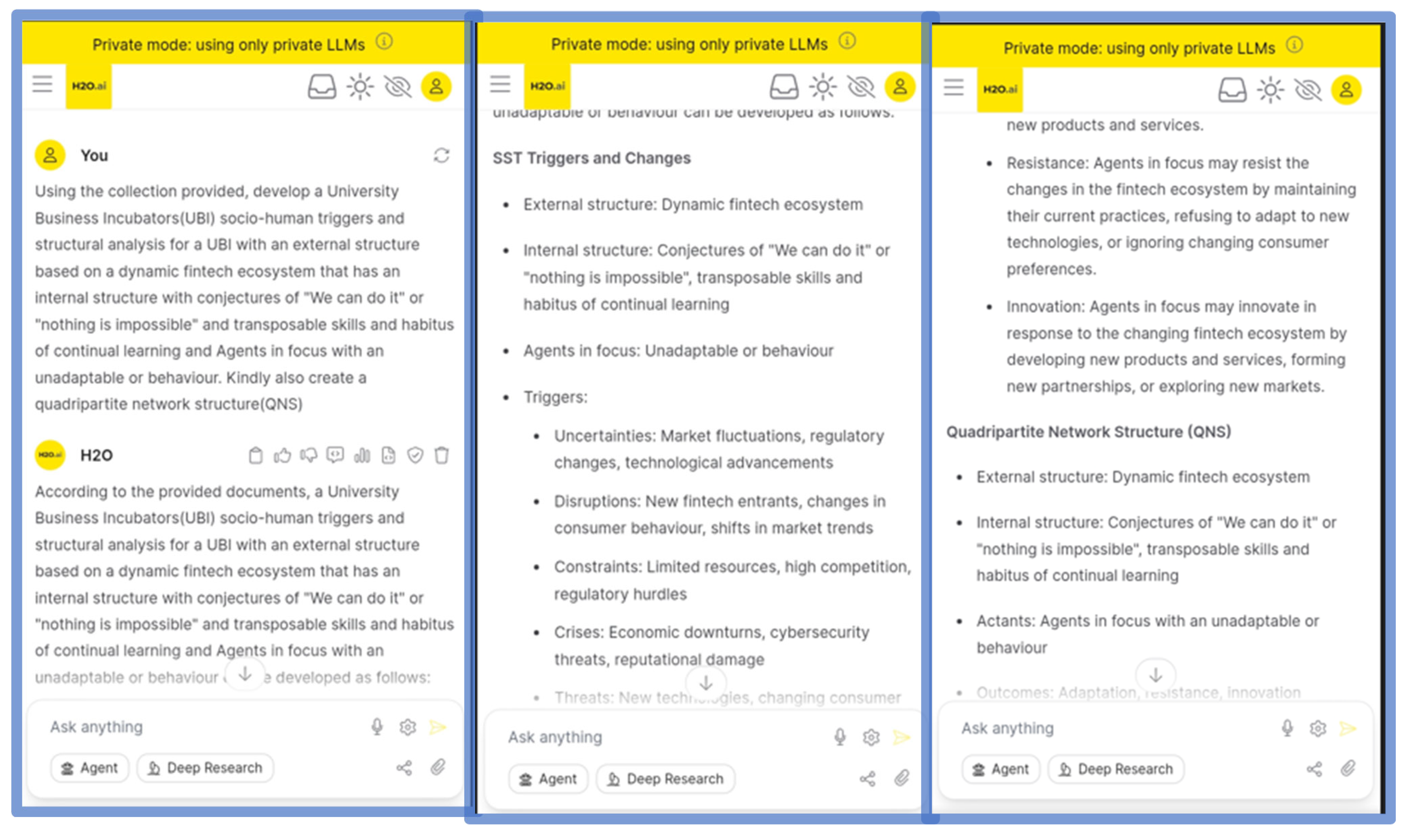
The platform establishment is intended to facilitate different UBI forms across several industries and their clusters assessement using different variables and characteristics as shown from the research. Sample platform designed via GenAI and also a GenAI based Agentic AI knowledge base configuration using RAG with the author’s private articles for dynamic capabilities, SST,Resilience and Adaptability OKRs And KPIs are also shown from Figure 27, Figure 28, Figure 29 and Figure 30.
Figure 8.
DRF model output for MedTech Clusters.
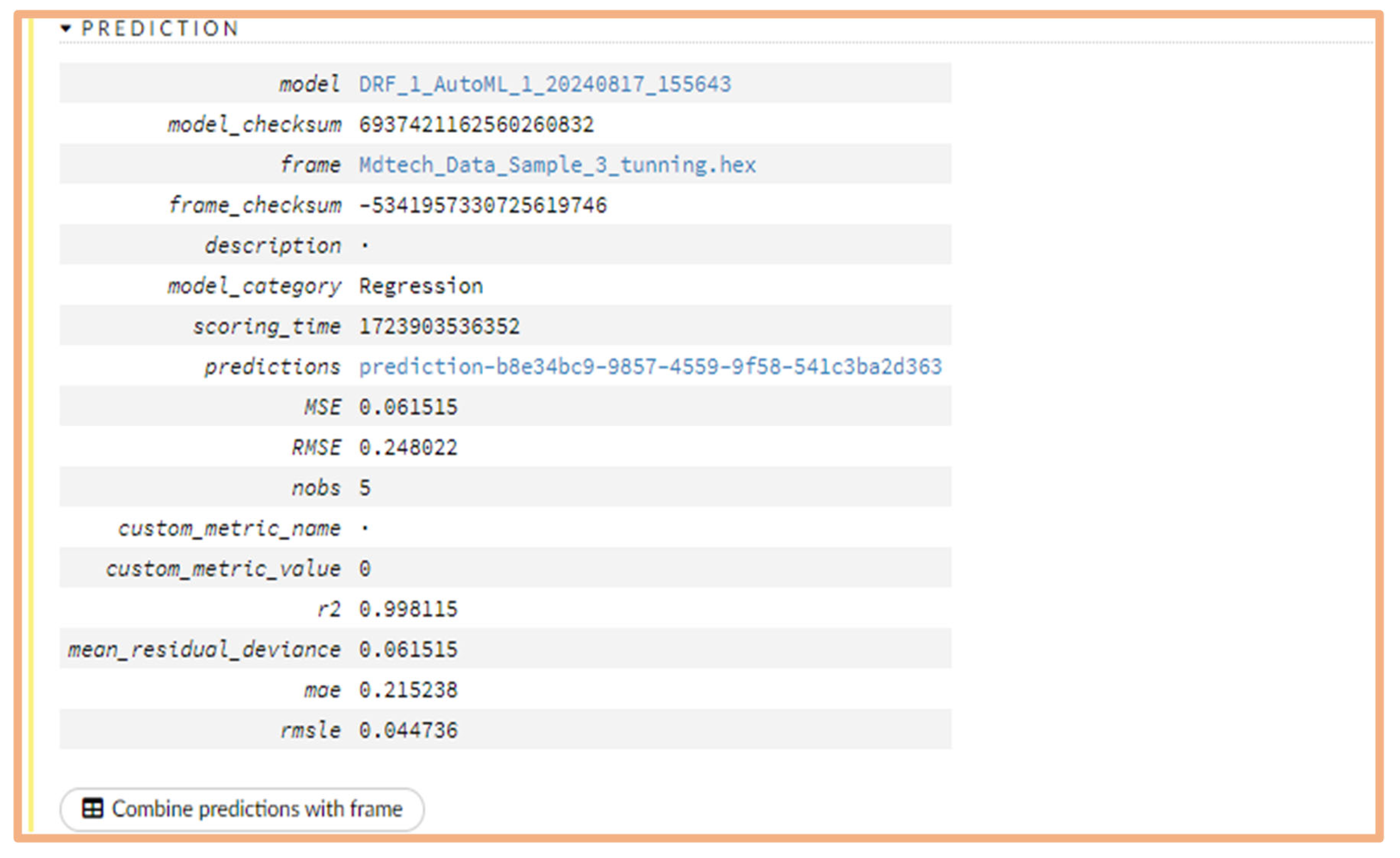
Figure 9.
GBM output for MedTech Cluster.
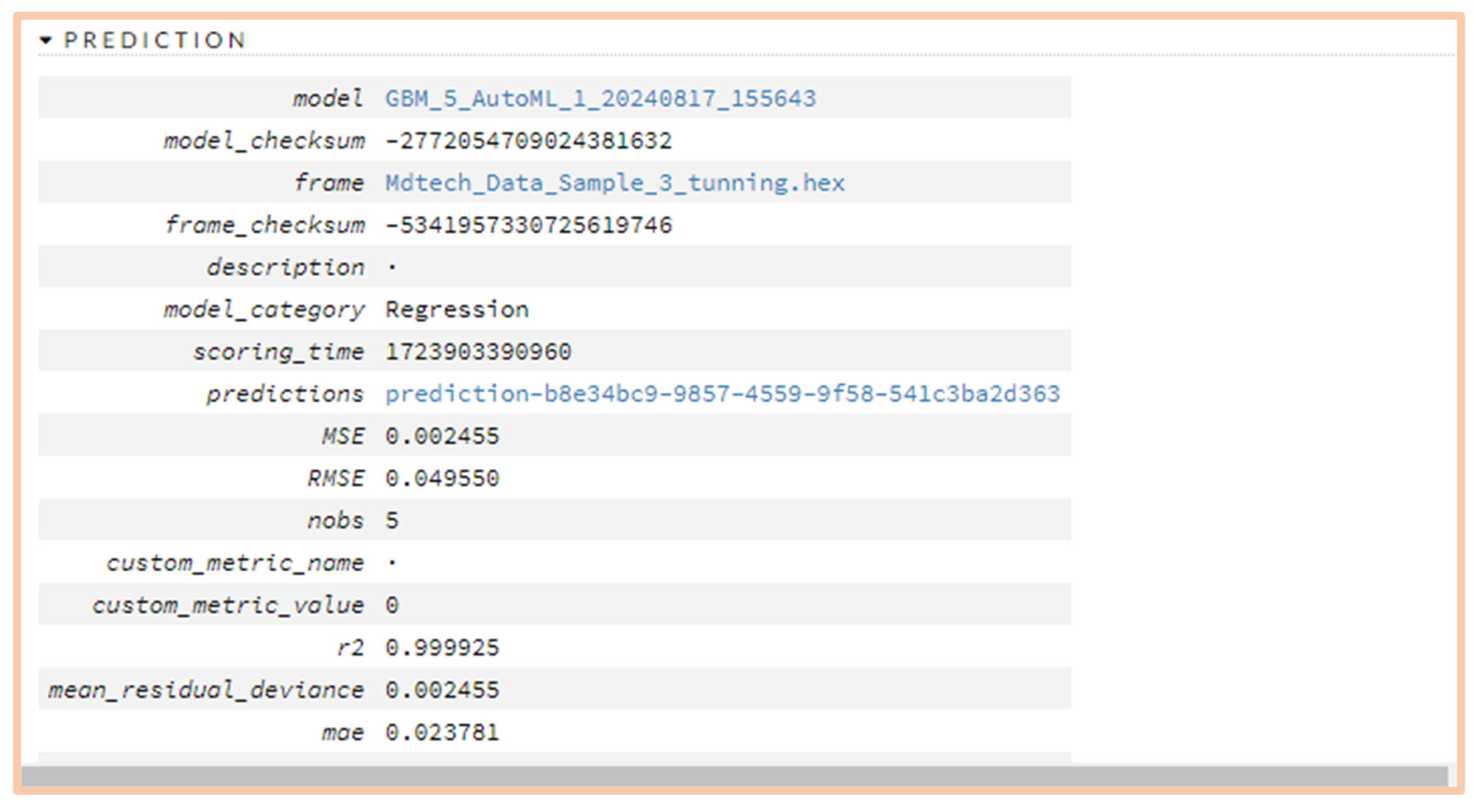
Figure 10.
XRT model training for Medtech Cluster.
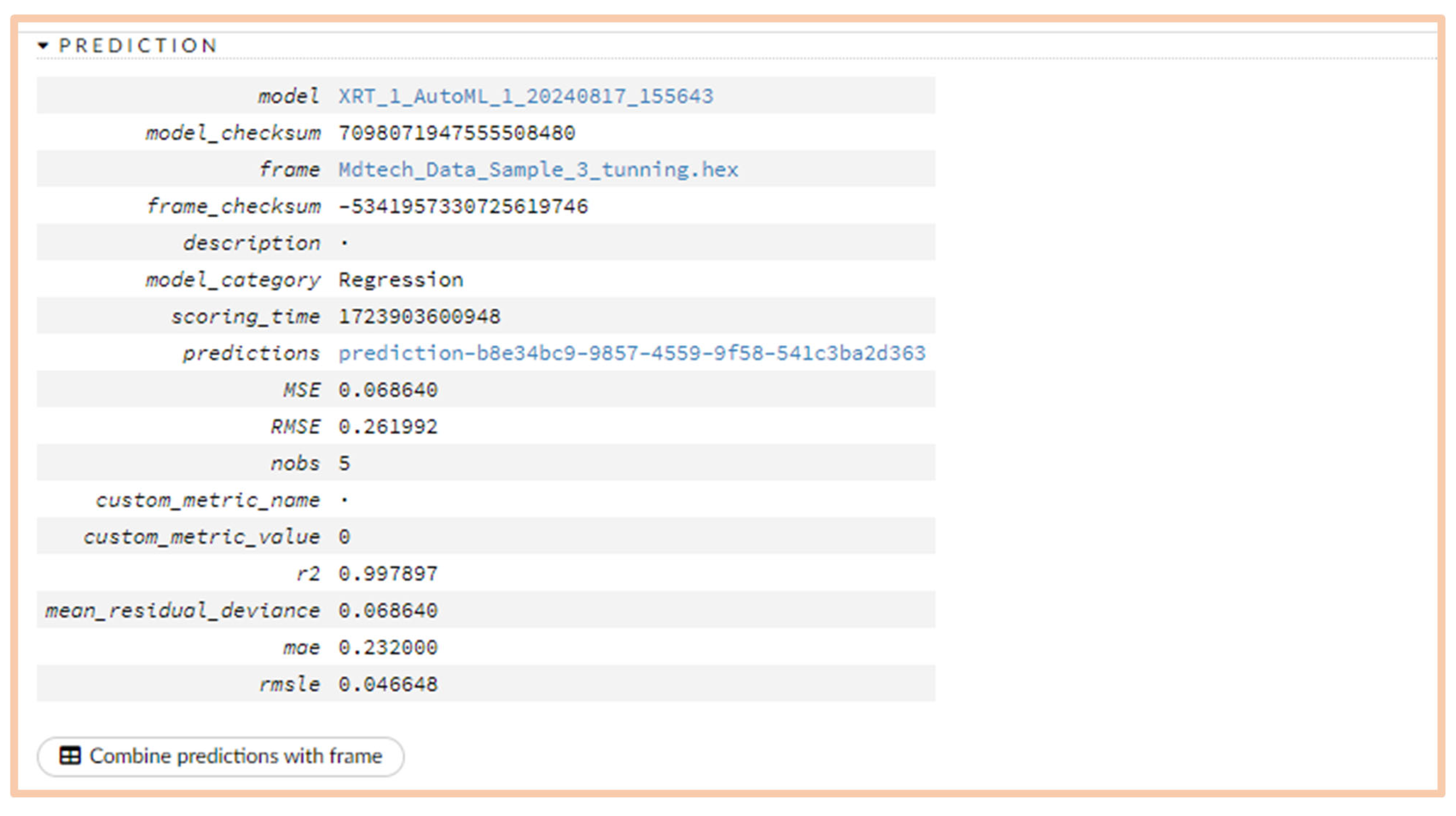
Figure 11.
Variable Importance Output Model Training for MedTech Cluster.
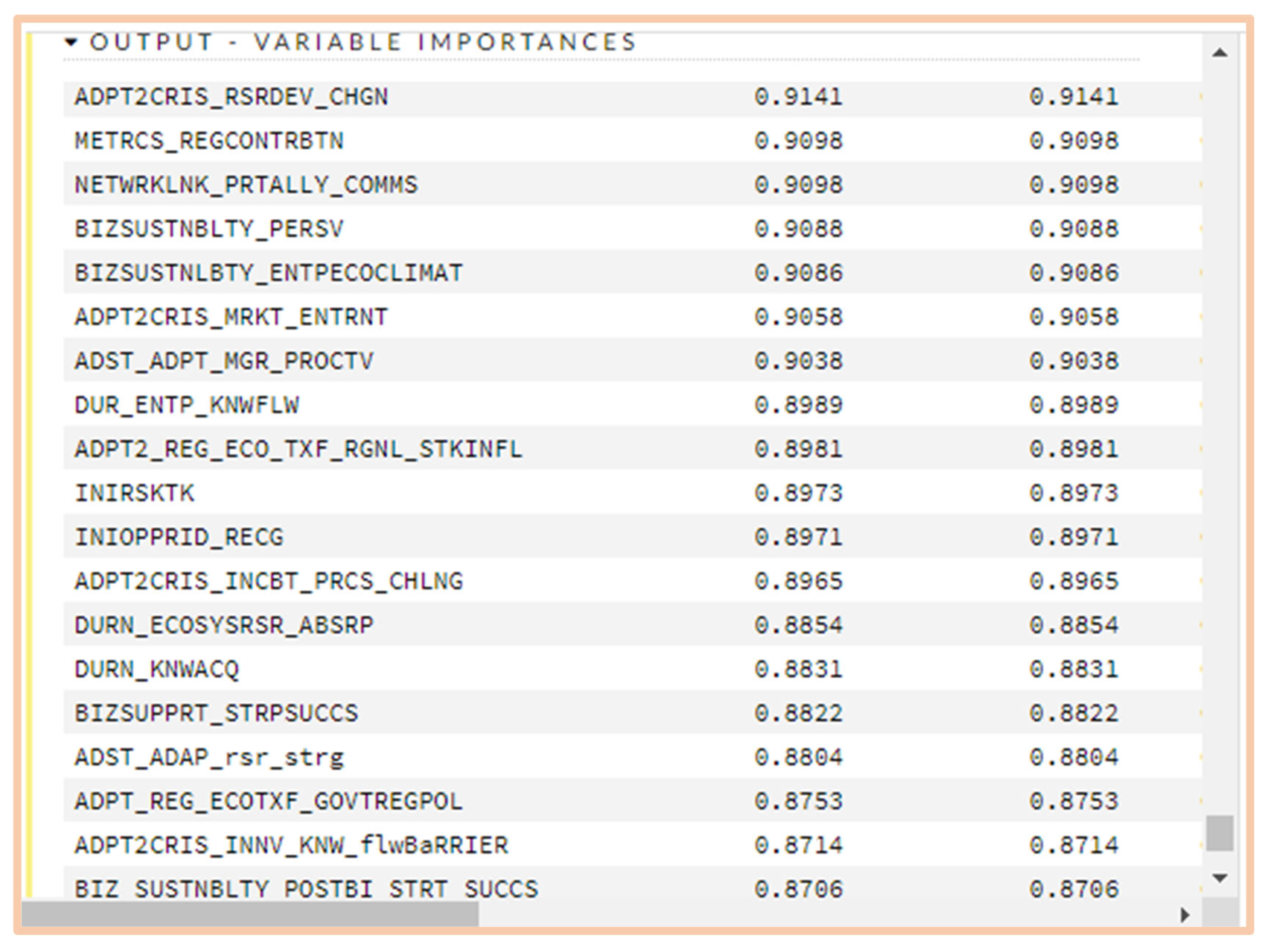
Figure 12.
Deep Learning Output training for MedTech Cluster.
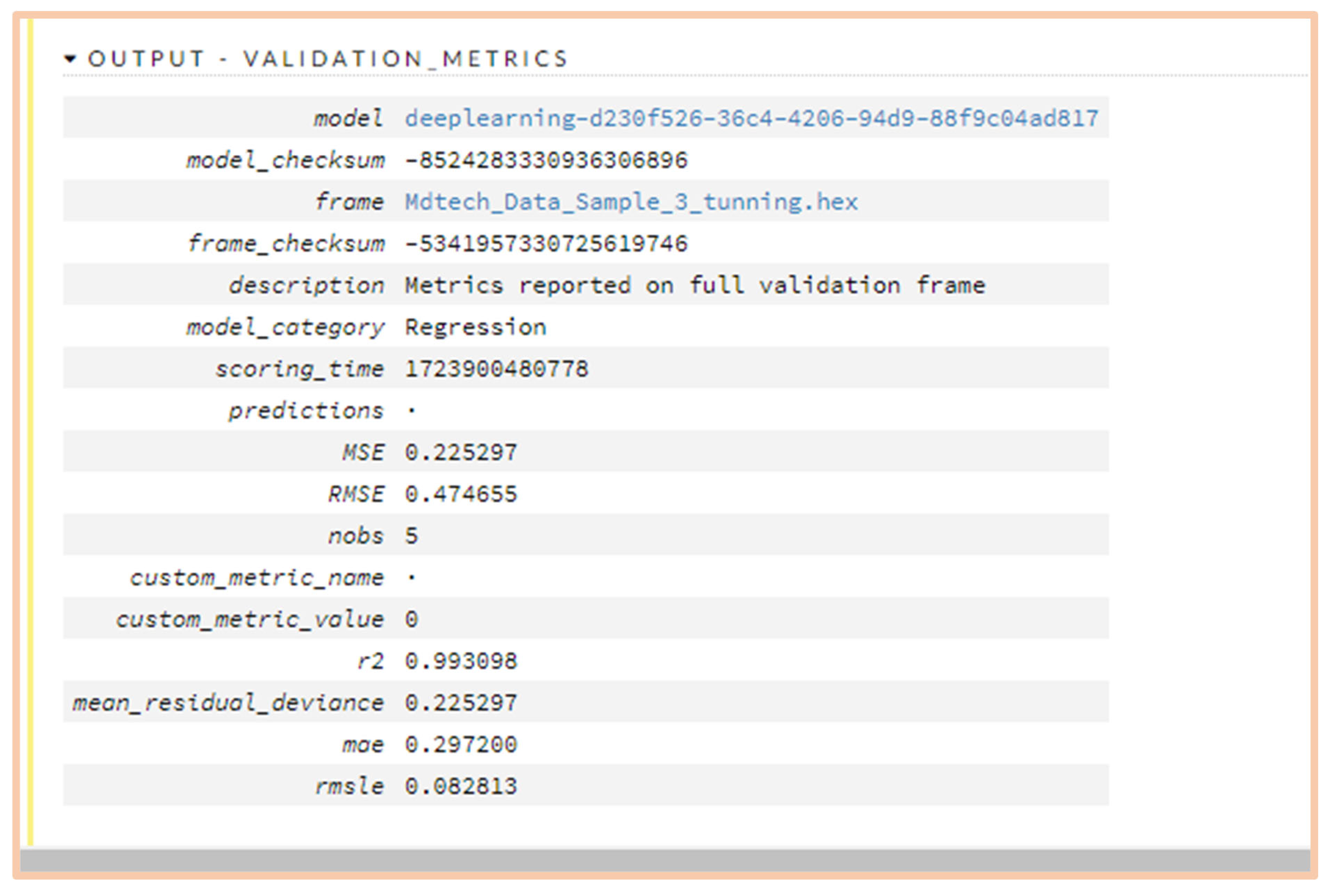
Figure 13.
DRF Model output for UBI Capabilities.
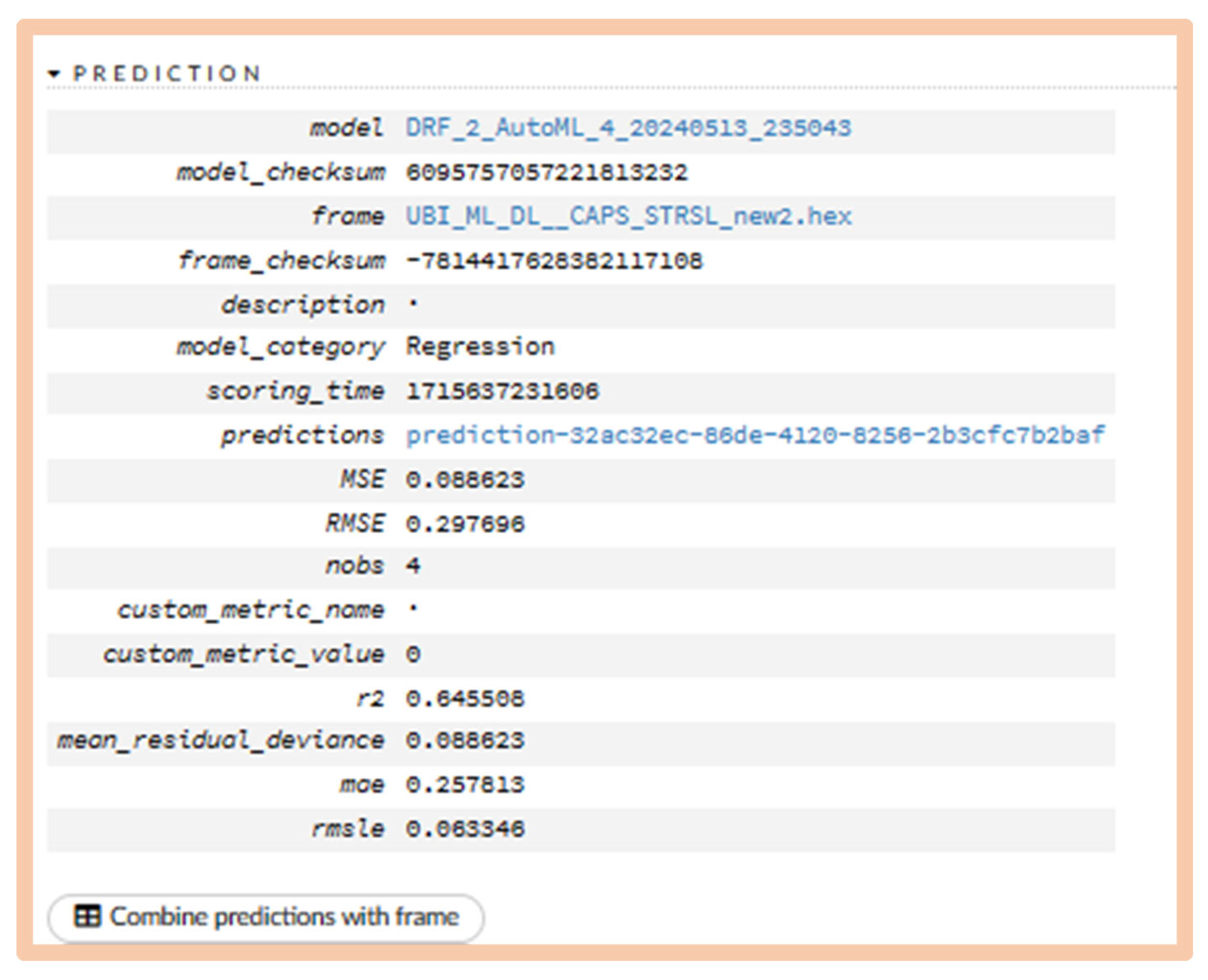
Figure 14.
UBI Capabilities Auto ML data training.
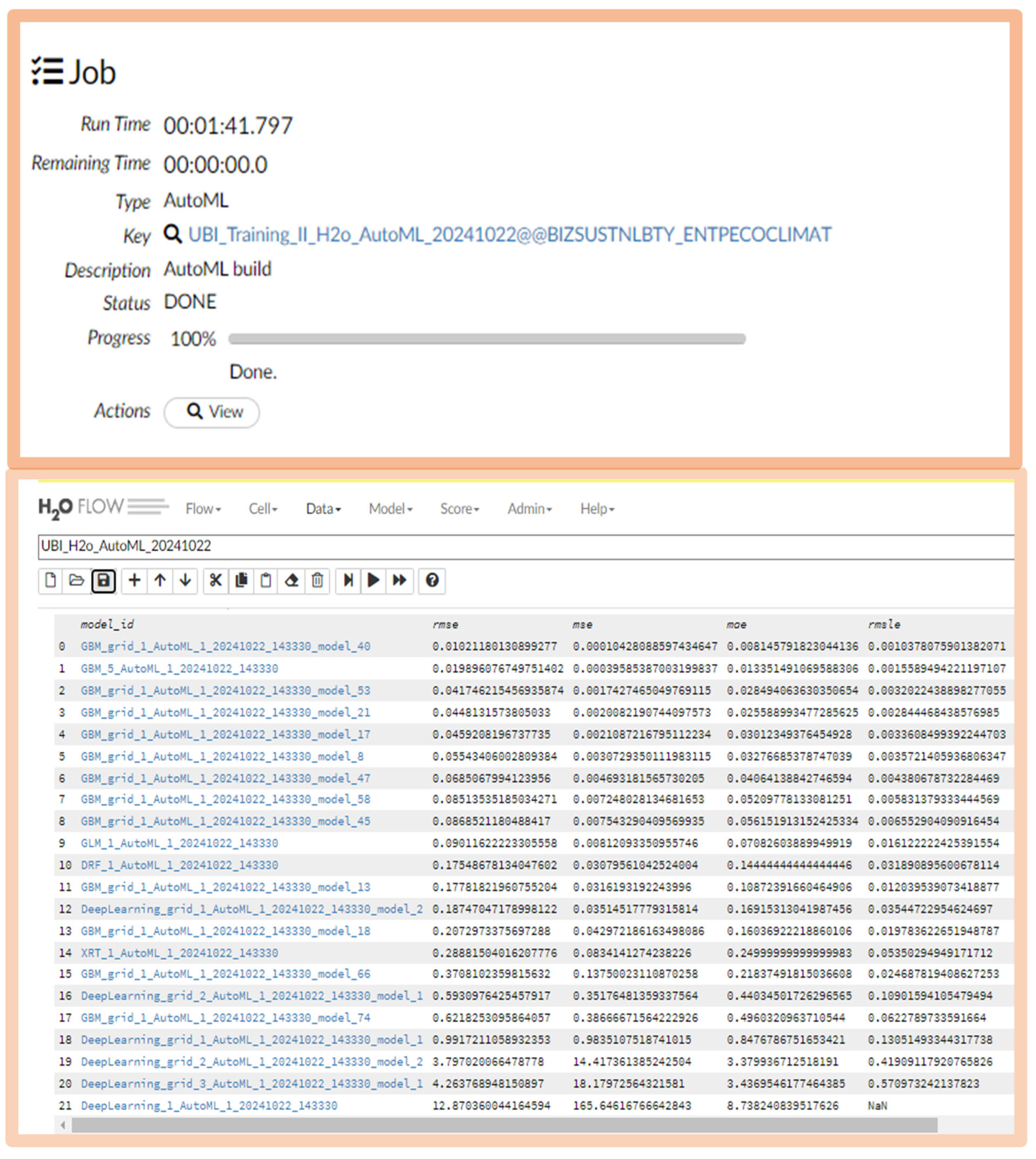
Figure 15.
Data training of AWS SageMaker.
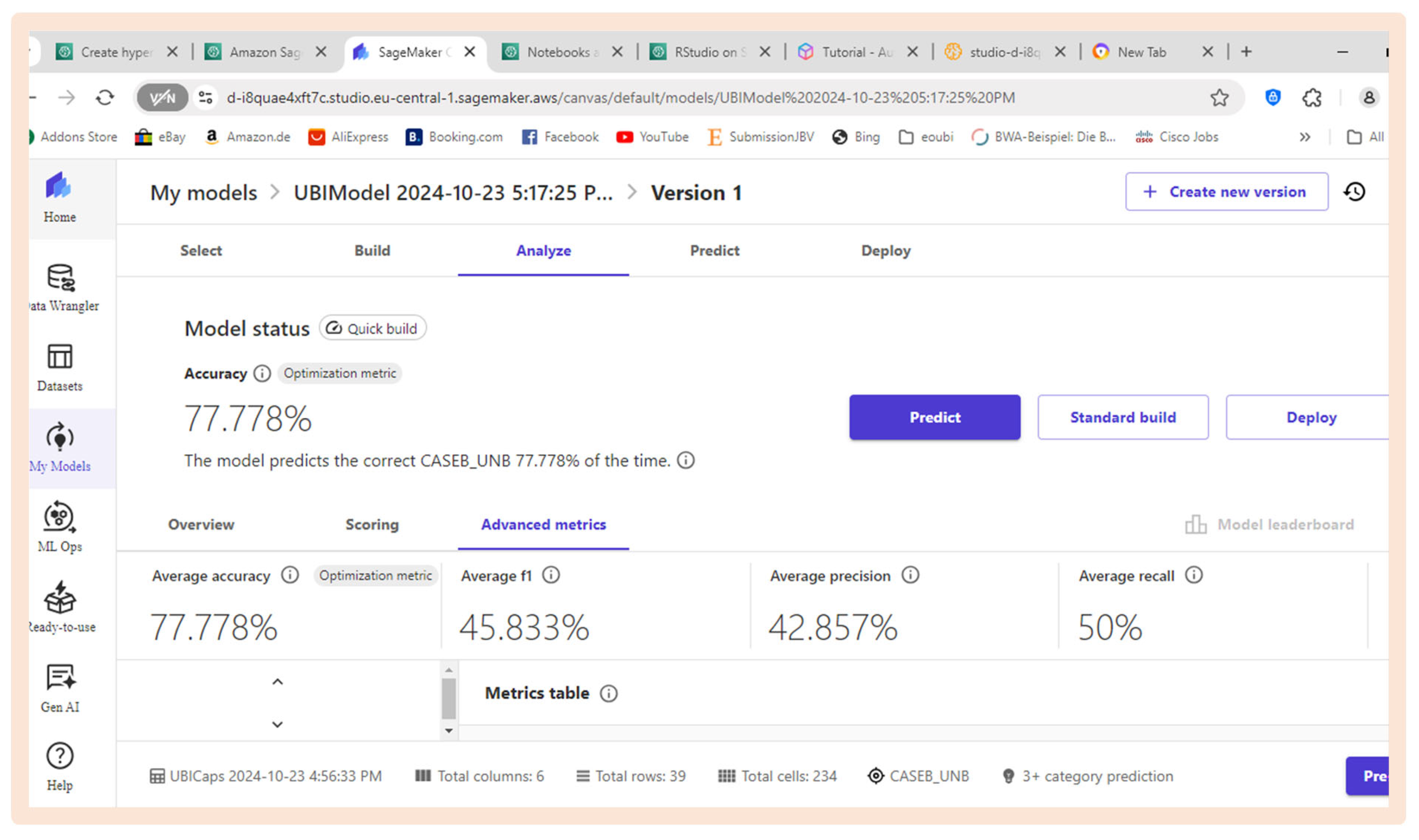
Figure 16.
Prediction Output on AWS Sagemaker for UBI Capabilities with Entrepreneurial Climate as target column.
Figure 16.
Prediction Output on AWS Sagemaker for UBI Capabilities with Entrepreneurial Climate as target column.
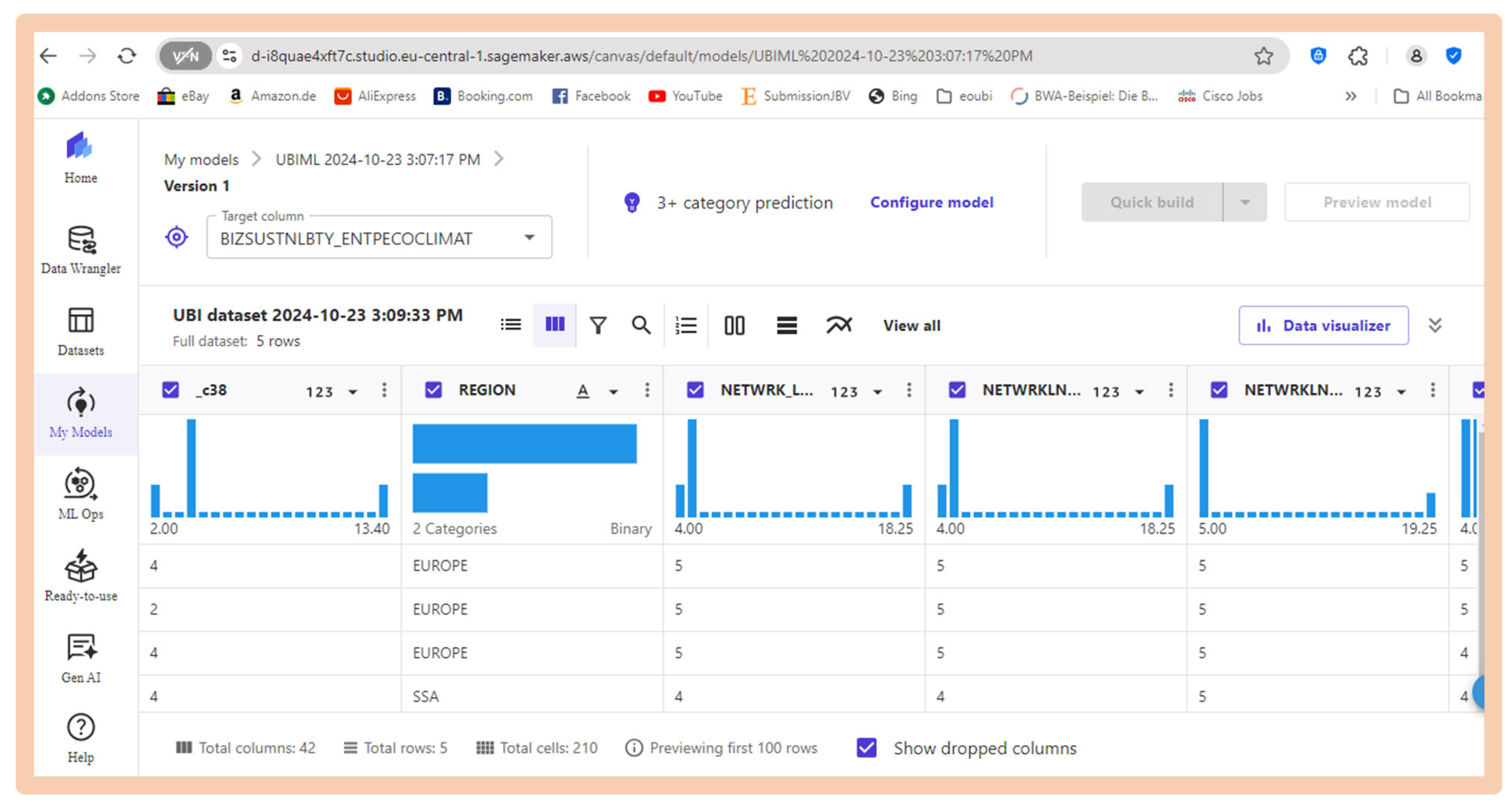
Figure 17.
Prediction and Accuracy calculation from AWS SageMaker for UBI Capabilities.
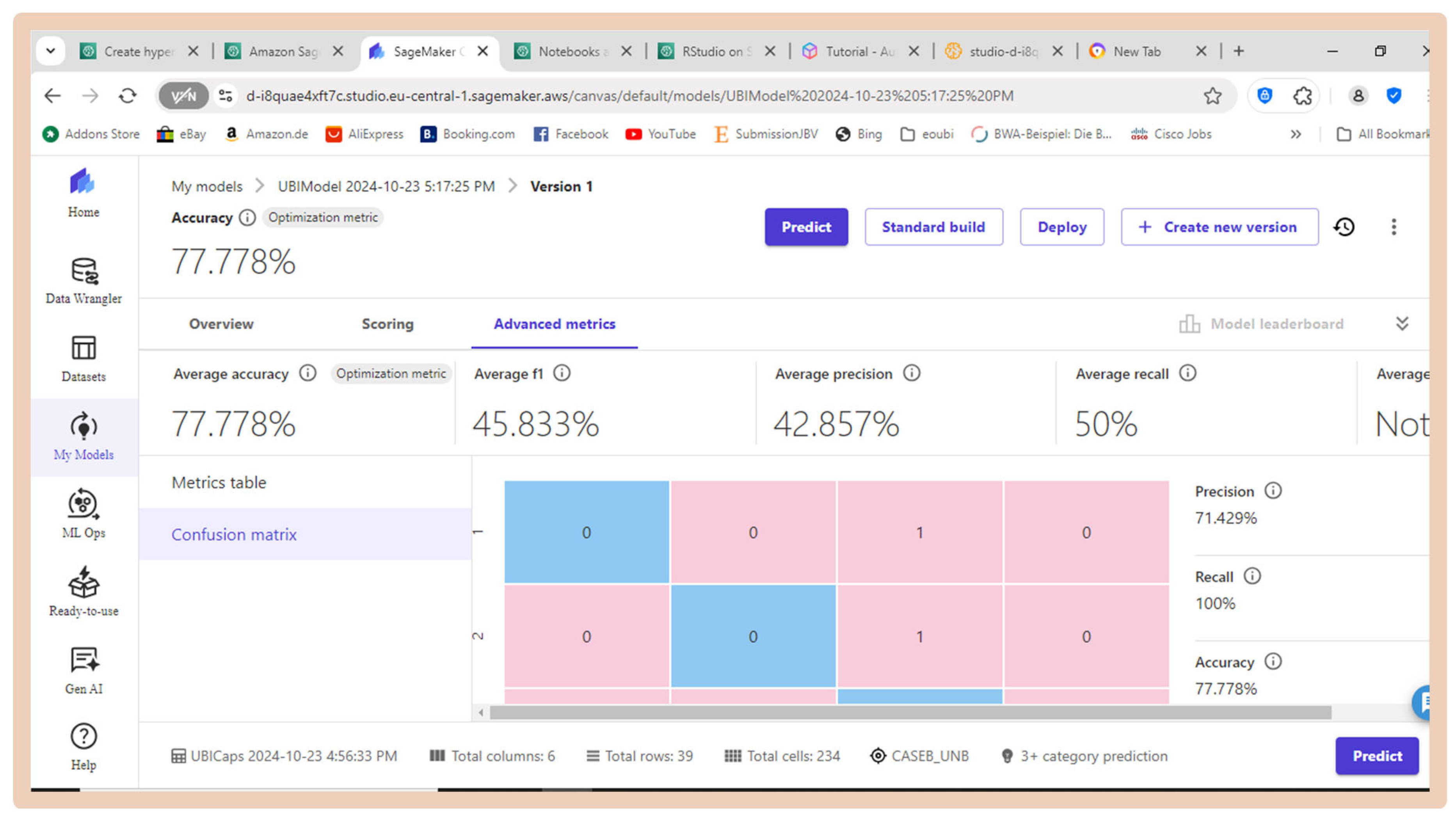
Figure 18.
Quantum Computing interface on PennyLane(Xanadu).
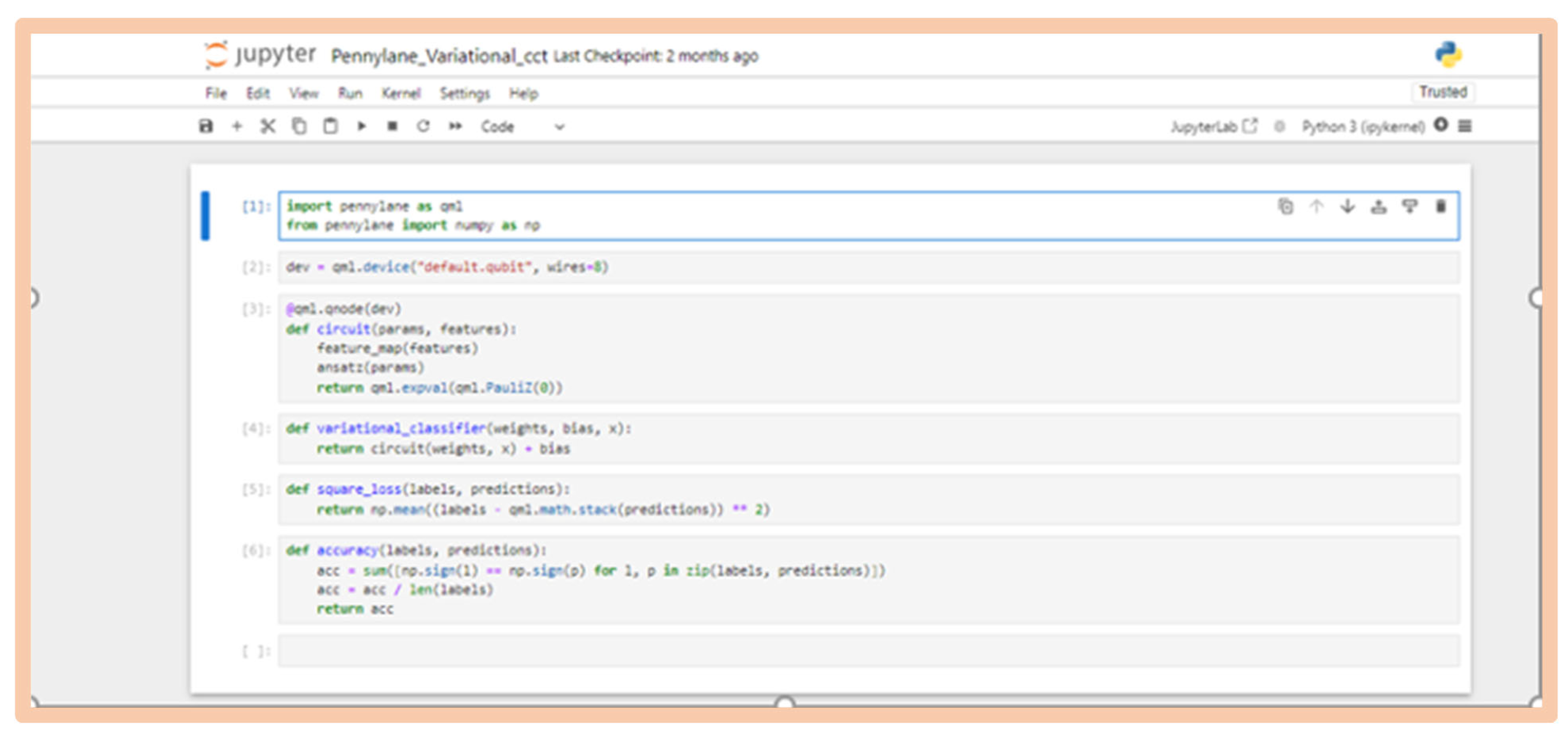
Figure 19.
Combined Integrated framework for DCAPs, SST and DSNA.
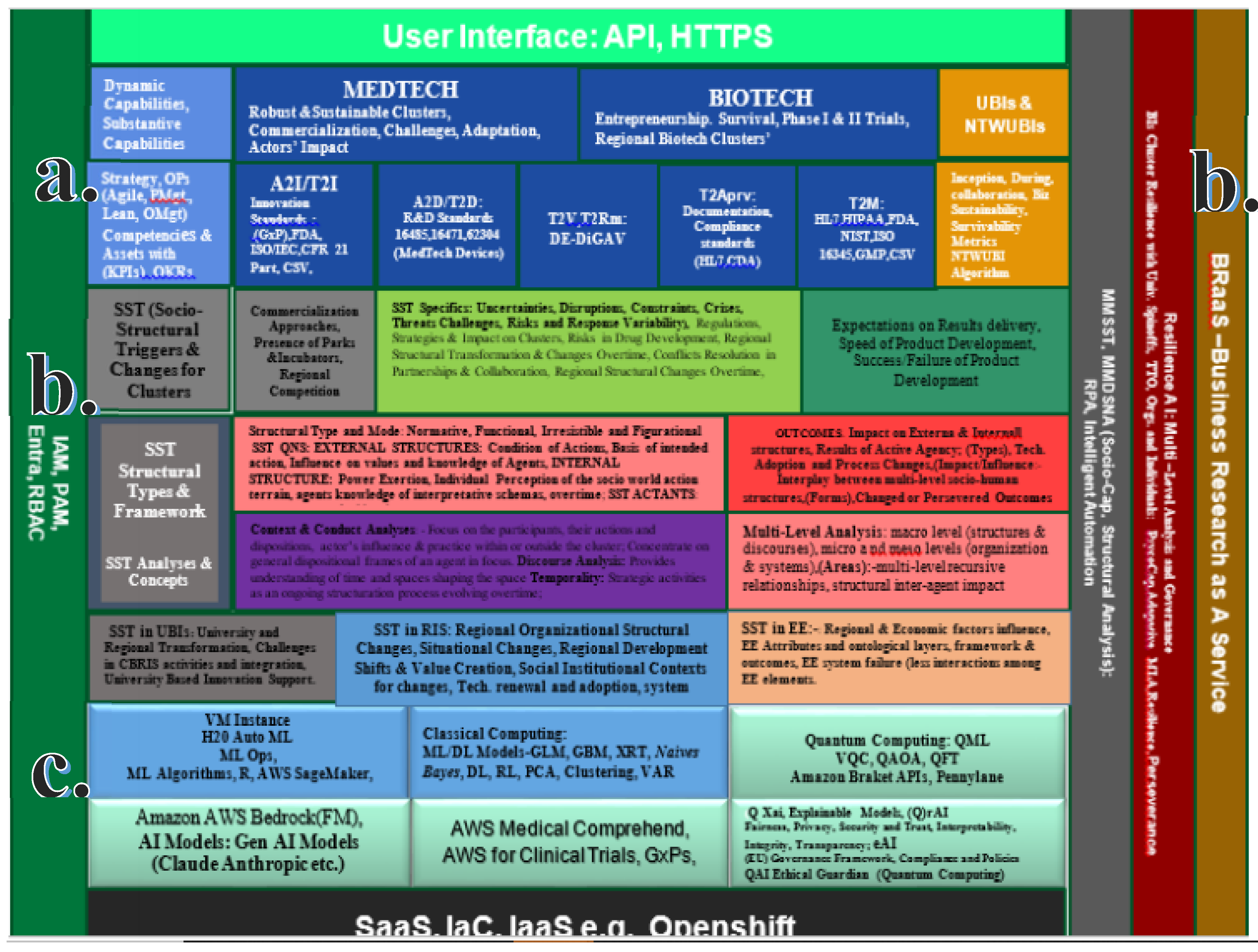
Figure 20.
(MMSST-MMDSNA with Resilience and Adaptability SSTQNS, Resilience, Adaptability and DSNA frmaework.
Figure 20.
(MMSST-MMDSNA with Resilience and Adaptability SSTQNS, Resilience, Adaptability and DSNA frmaework.
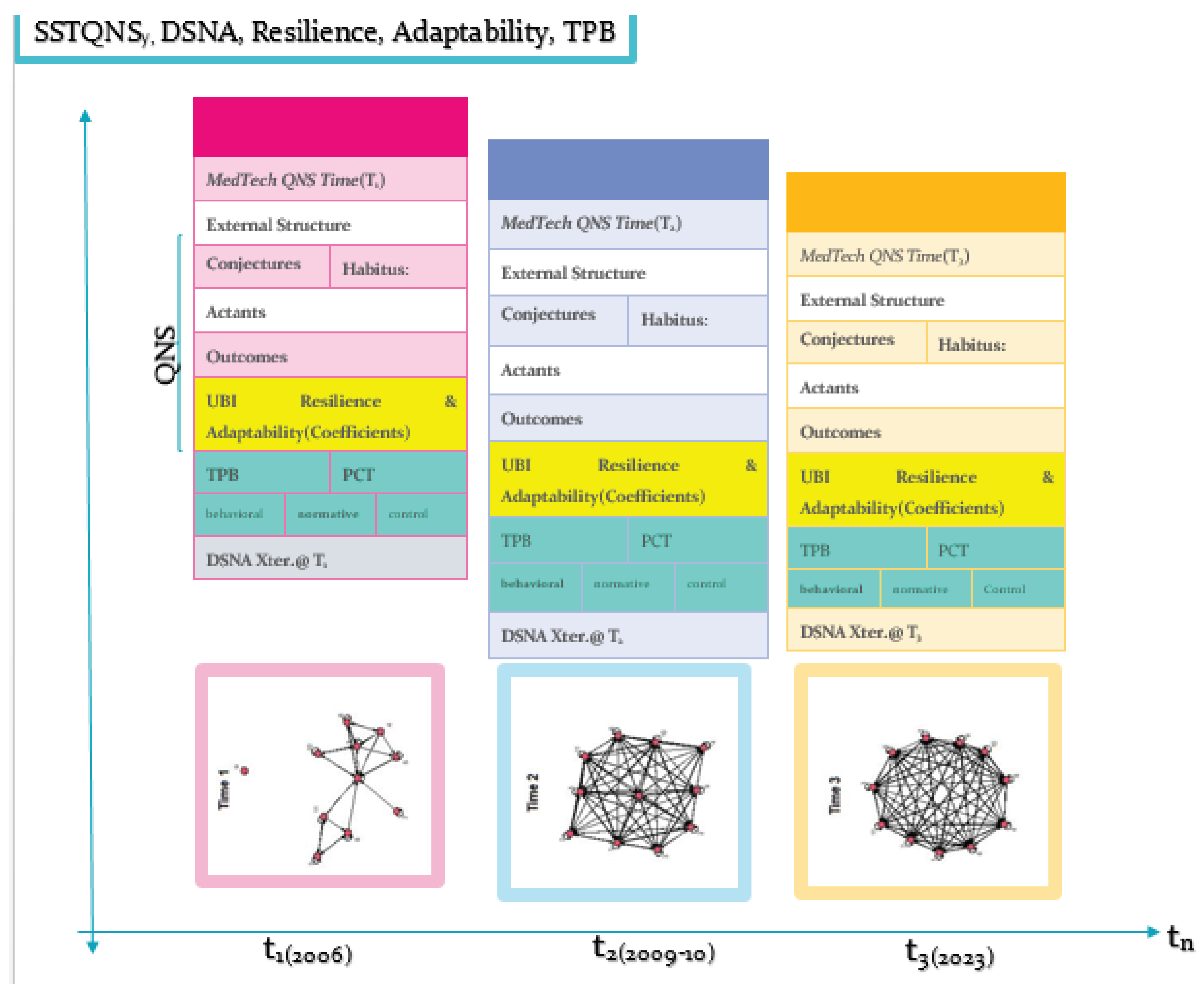
Figure 21.
Tasks,Activities and Business Process for Agentic AI for developing highly innovative University startups( as part of ensuring a Robust and Sustainable MedTech Entrepreneurial Ecosystem.
Figure 21.
Tasks,Activities and Business Process for Agentic AI for developing highly innovative University startups( as part of ensuring a Robust and Sustainable MedTech Entrepreneurial Ecosystem.
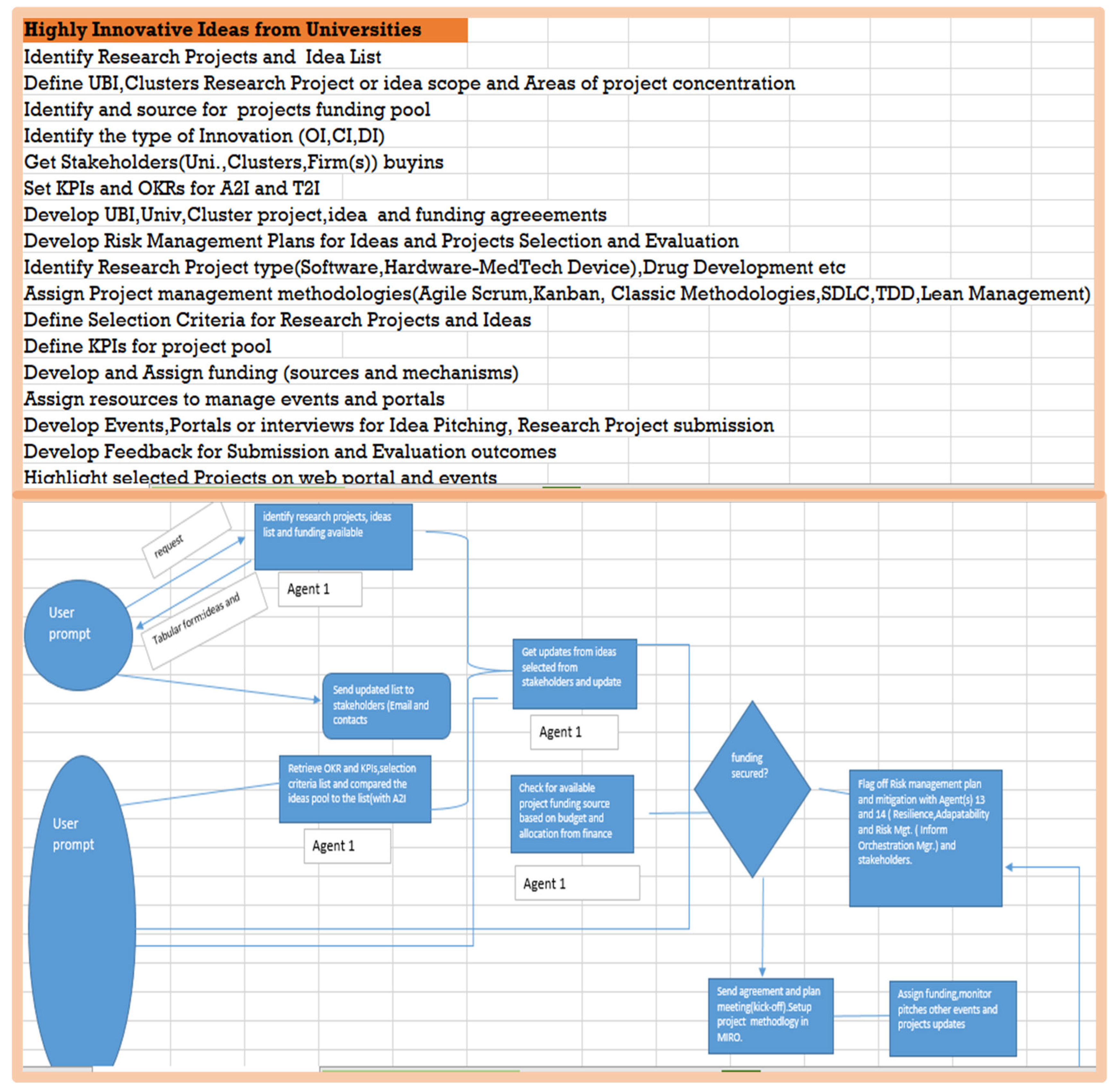
Figure 22.
Tasks,Activities and Business Process for Agentic AI for startups survival rate and IP patenting( as part of ensuring a Robust and Sustainable MedTech Entrepreneurial Ecosystem).
Figure 22.
Tasks,Activities and Business Process for Agentic AI for startups survival rate and IP patenting( as part of ensuring a Robust and Sustainable MedTech Entrepreneurial Ecosystem).
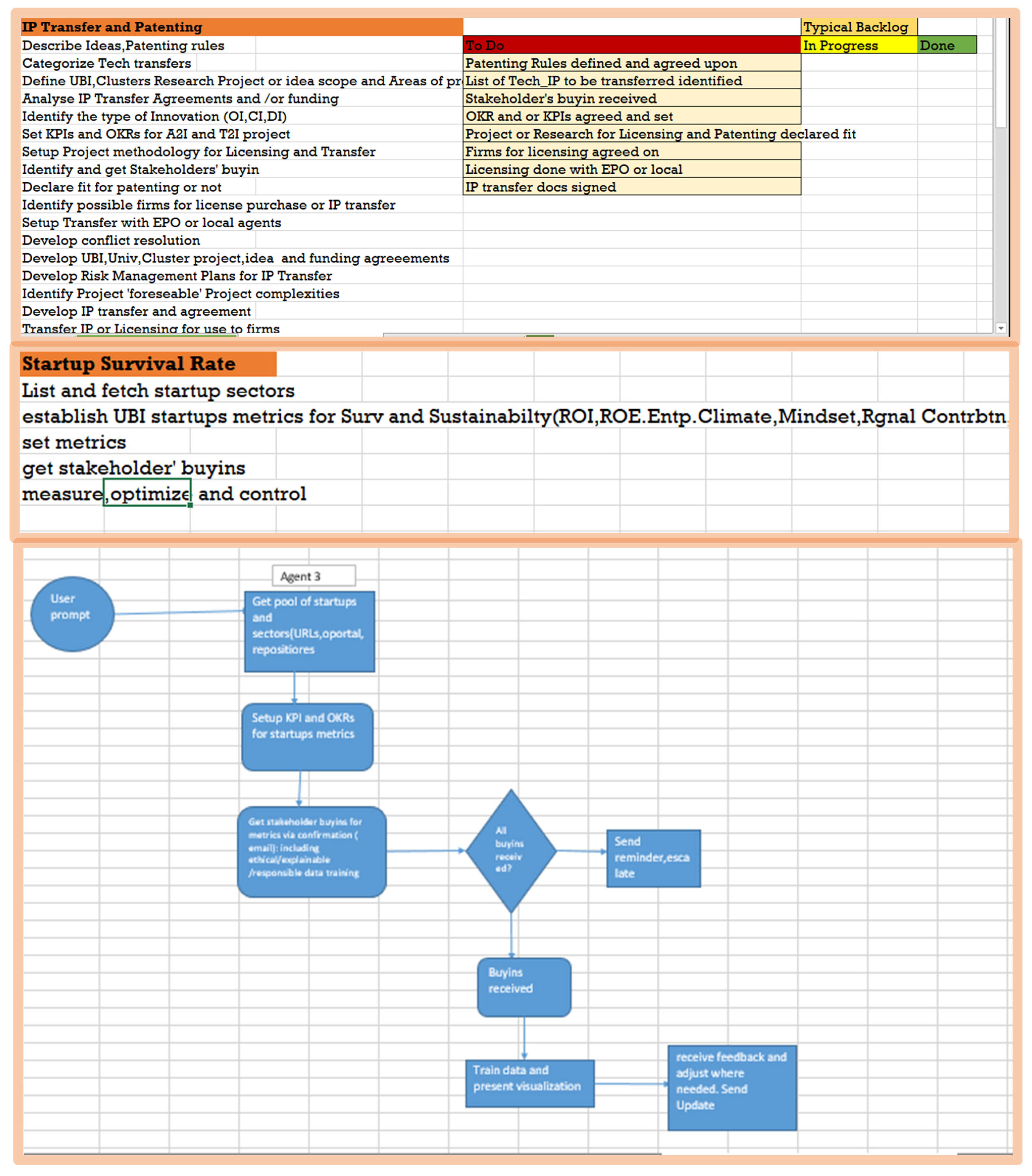
Figure 23.
a. SST Socio-Human Structural Analysis Using Business Process combined with Agentic AI Automation and UBI RAG for risk and crisis management,strategic due dilligence,UBIs mission,vision,branding,policies( as forms of normative expressions,legitimation,dominance and significance.
Figure 23.
a. SST Socio-Human Structural Analysis Using Business Process combined with Agentic AI Automation and UBI RAG for risk and crisis management,strategic due dilligence,UBIs mission,vision,branding,policies( as forms of normative expressions,legitimation,dominance and significance.
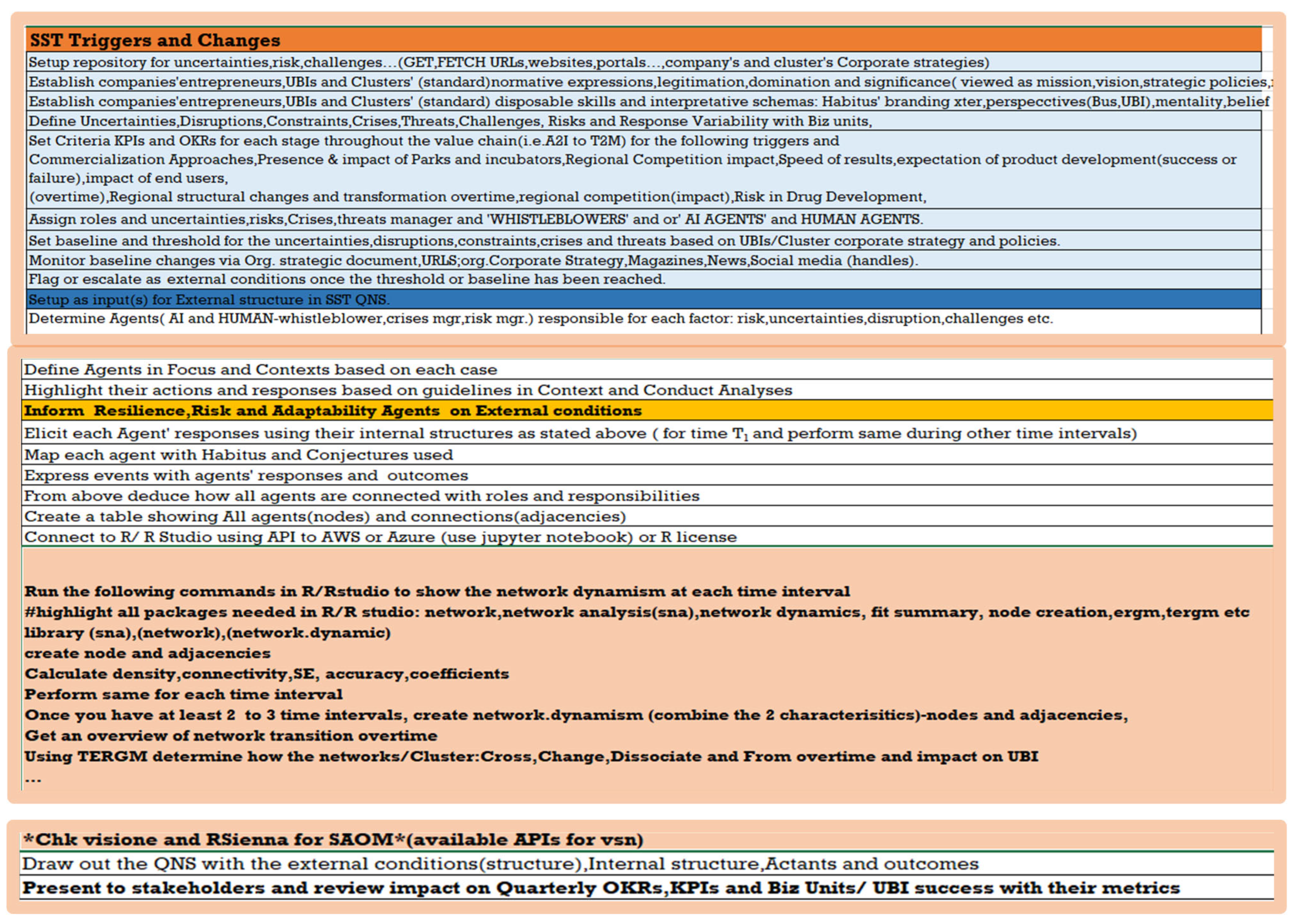
Figure 23.
b. SST Socio-Human Structural Analysis combined with Resilience,Adaptability and Socio-human triggers.
Figure 23.
b. SST Socio-Human Structural Analysis combined with Resilience,Adaptability and Socio-human triggers.
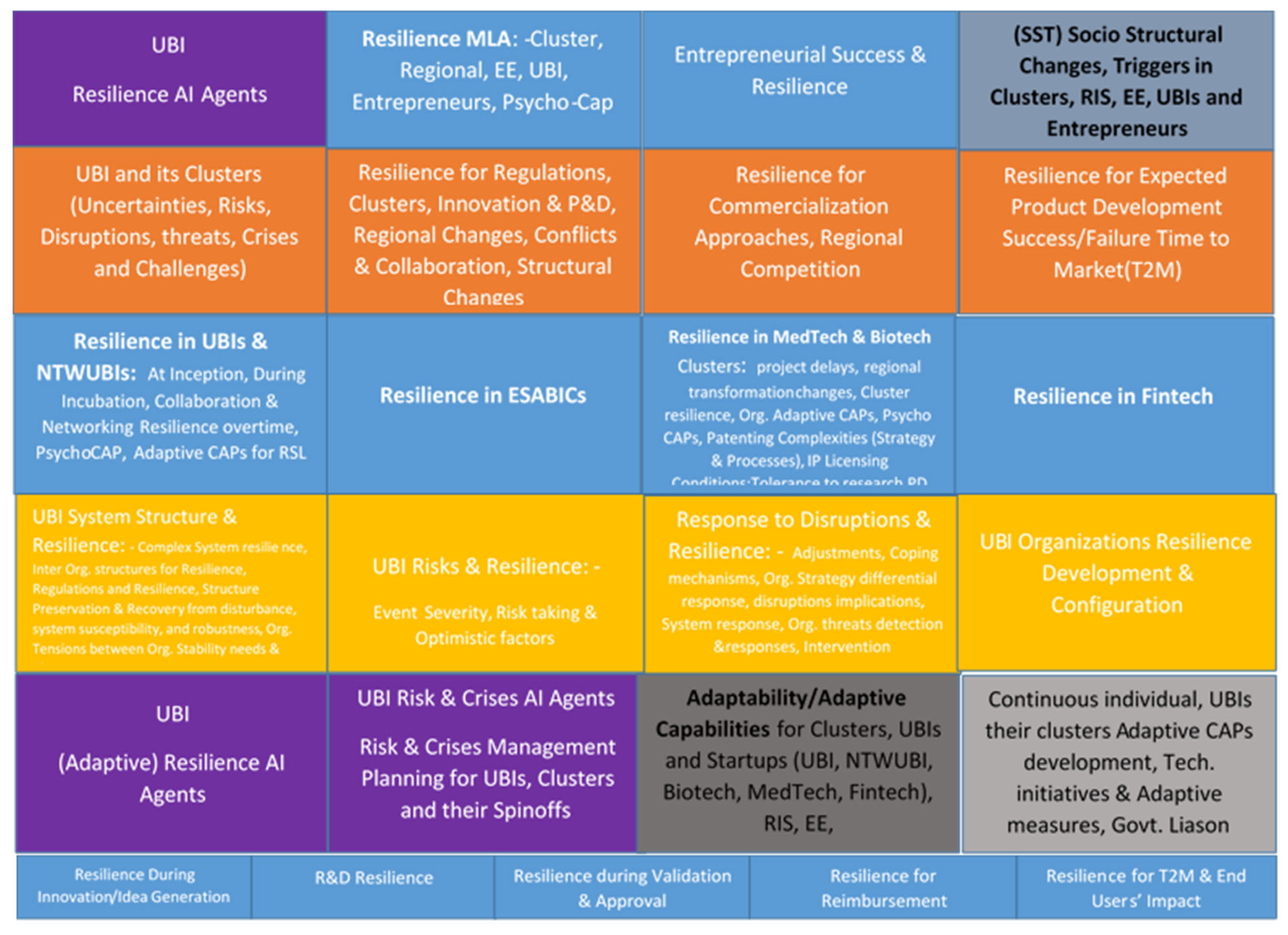
Figure 24.
SST Socio-Human Structural Analysis(MMSST-MMDSNA) Using Business Process and UBI RAG for risk and crisis management,strategic due dilligence,UBIs mission,vision,branding,policies.
Figure 24.
SST Socio-Human Structural Analysis(MMSST-MMDSNA) Using Business Process and UBI RAG for risk and crisis management,strategic due dilligence,UBIs mission,vision,branding,policies.
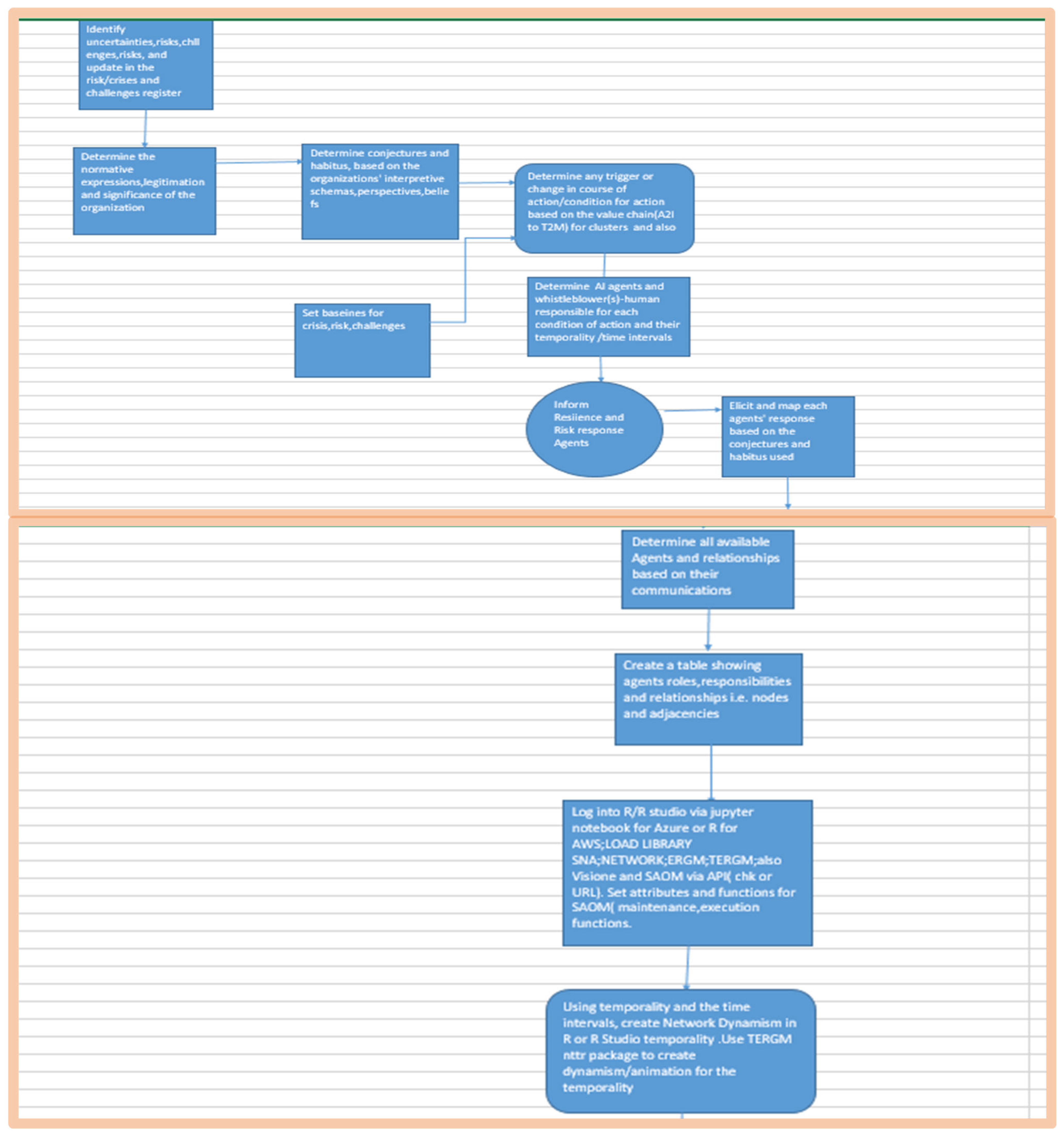
Figure 25.
A sampled Knowlegde graph creation using RAG and OpenAIGPT-4 LLM.
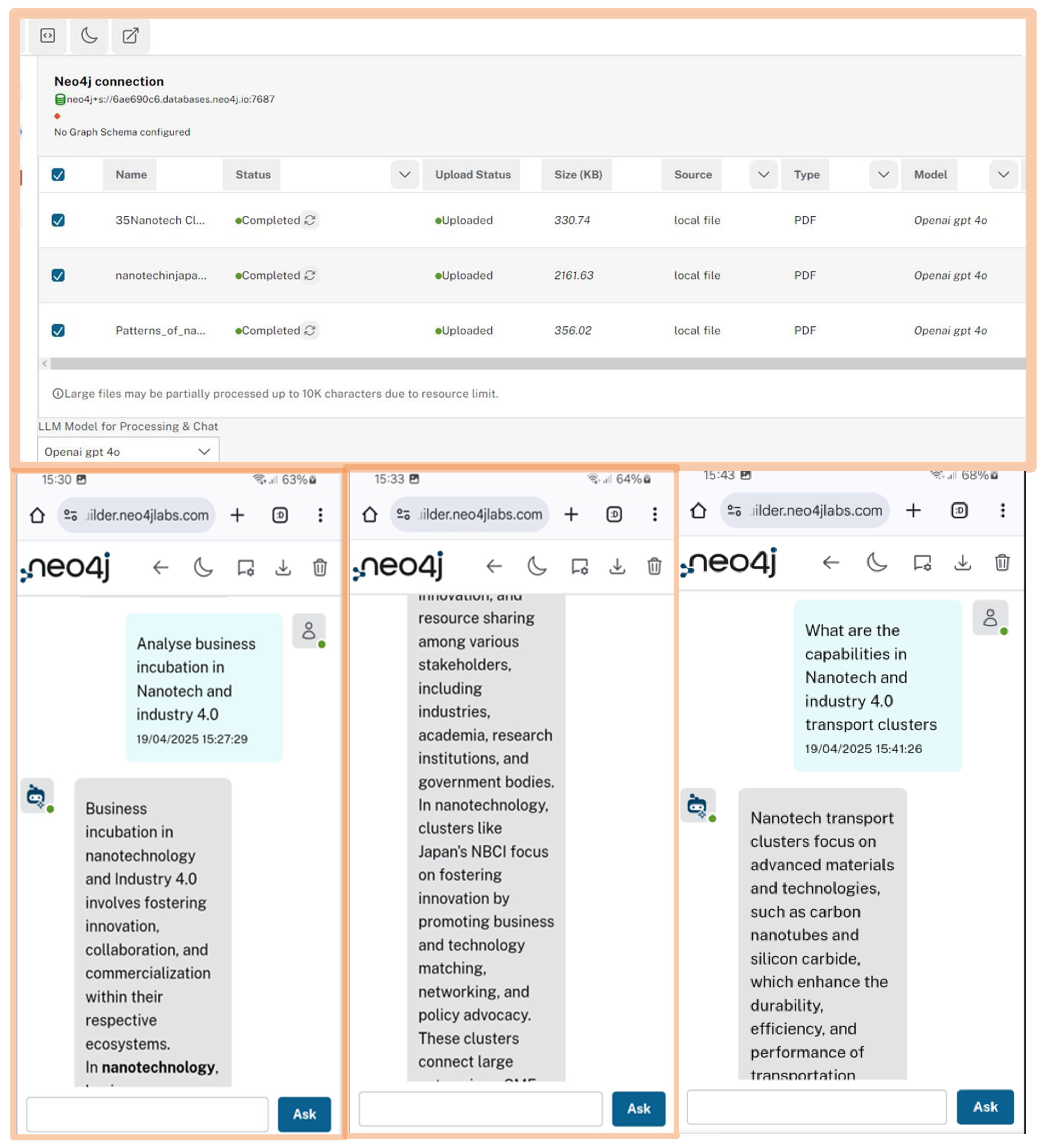
Figure 26.
A sampled Knowlegde graph with chunks,nodes and relationships extraction creation using RAG and OpenAIGPT-4 LLM.
Figure 26.
A sampled Knowlegde graph with chunks,nodes and relationships extraction creation using RAG and OpenAIGPT-4 LLM.
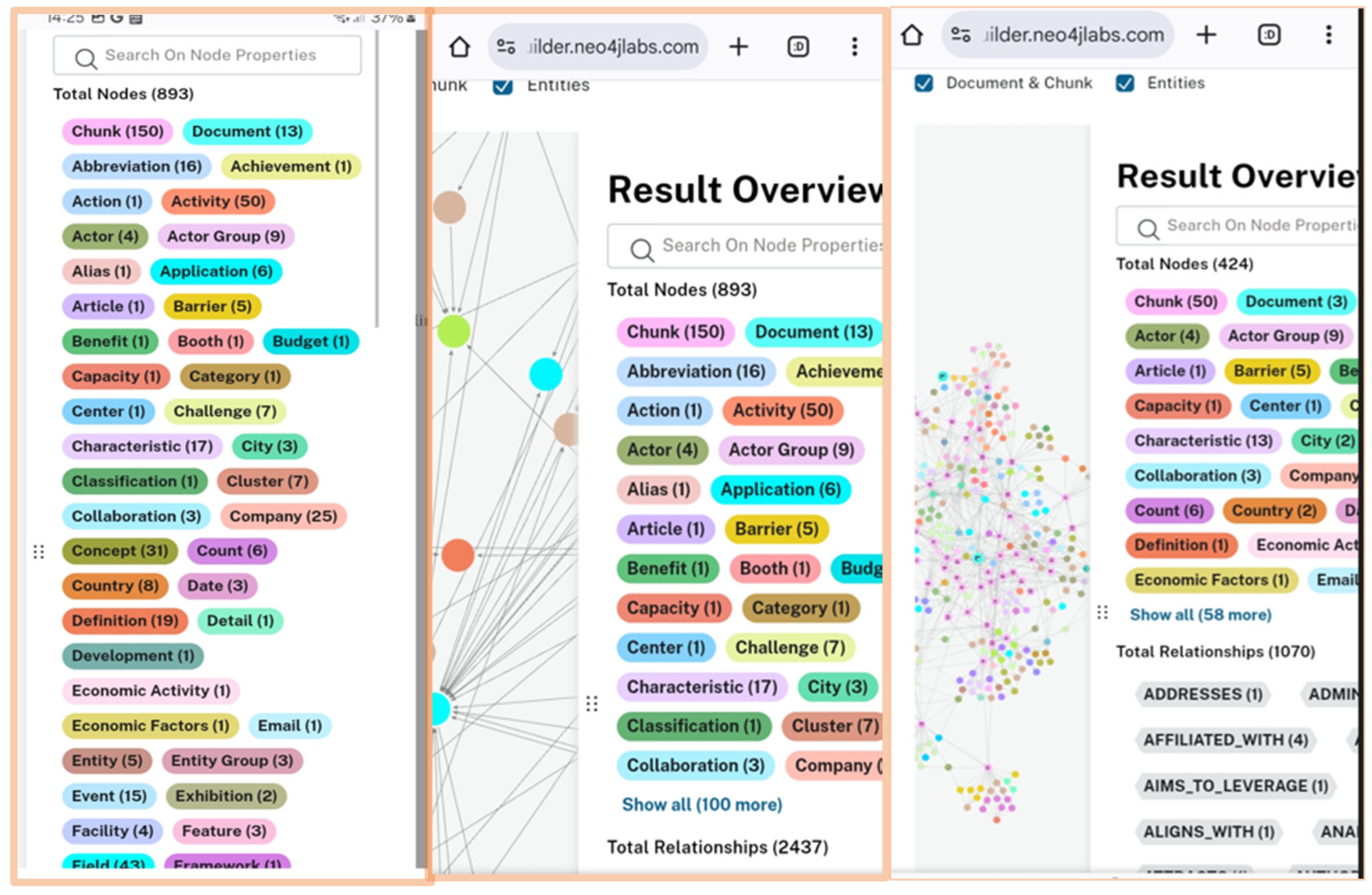
Figure 27.
A sampled Portal homepage created via GenAI Homepage (bubble.io).
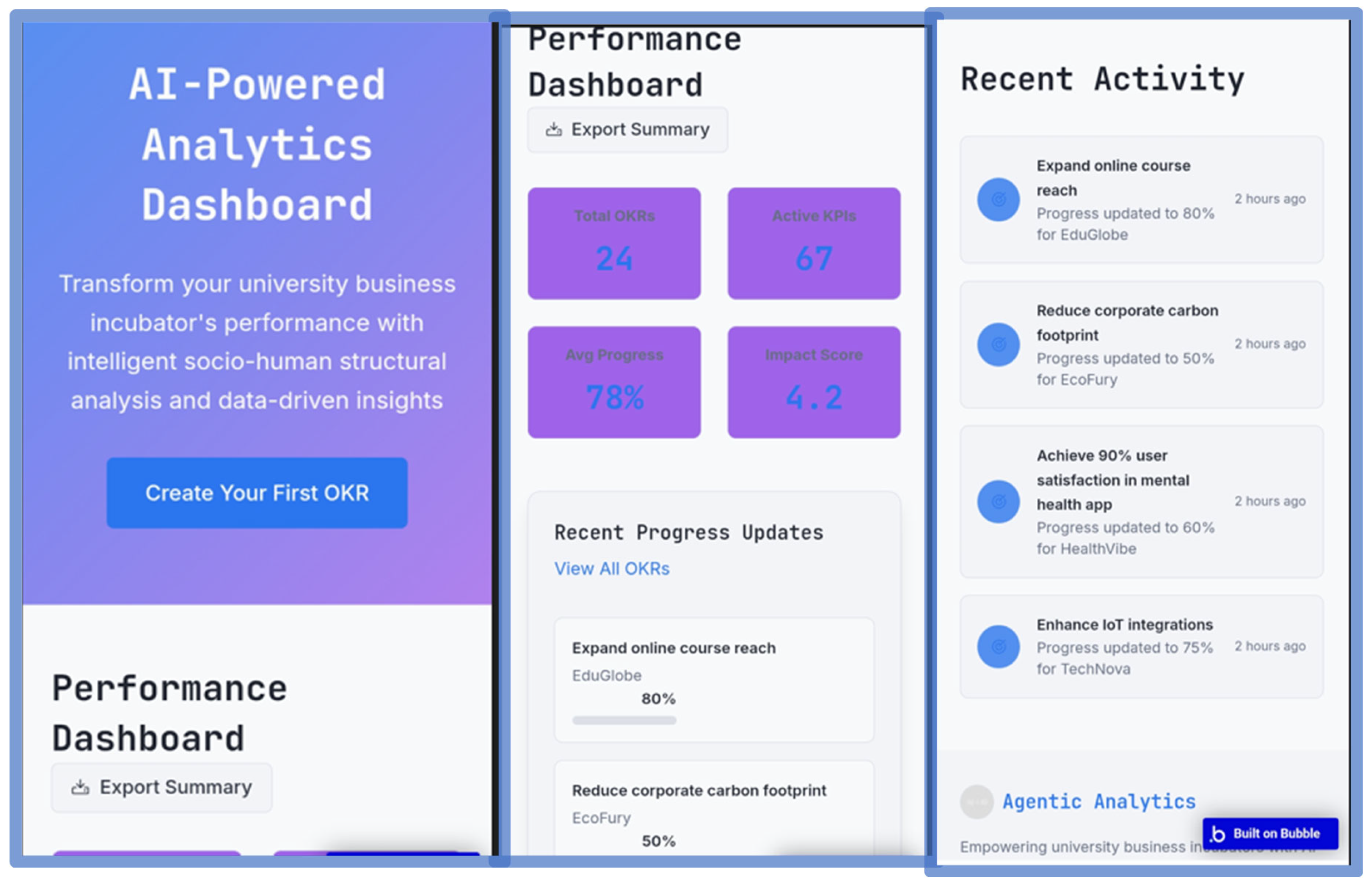
Figure 28.
UBI Clusters OKRs and KPIs created via the Agentic AI based on the knowledge database(using author’s articles) RAG using H2o.ai.
Figure 28.
UBI Clusters OKRs and KPIs created via the Agentic AI based on the knowledge database(using author’s articles) RAG using H2o.ai.
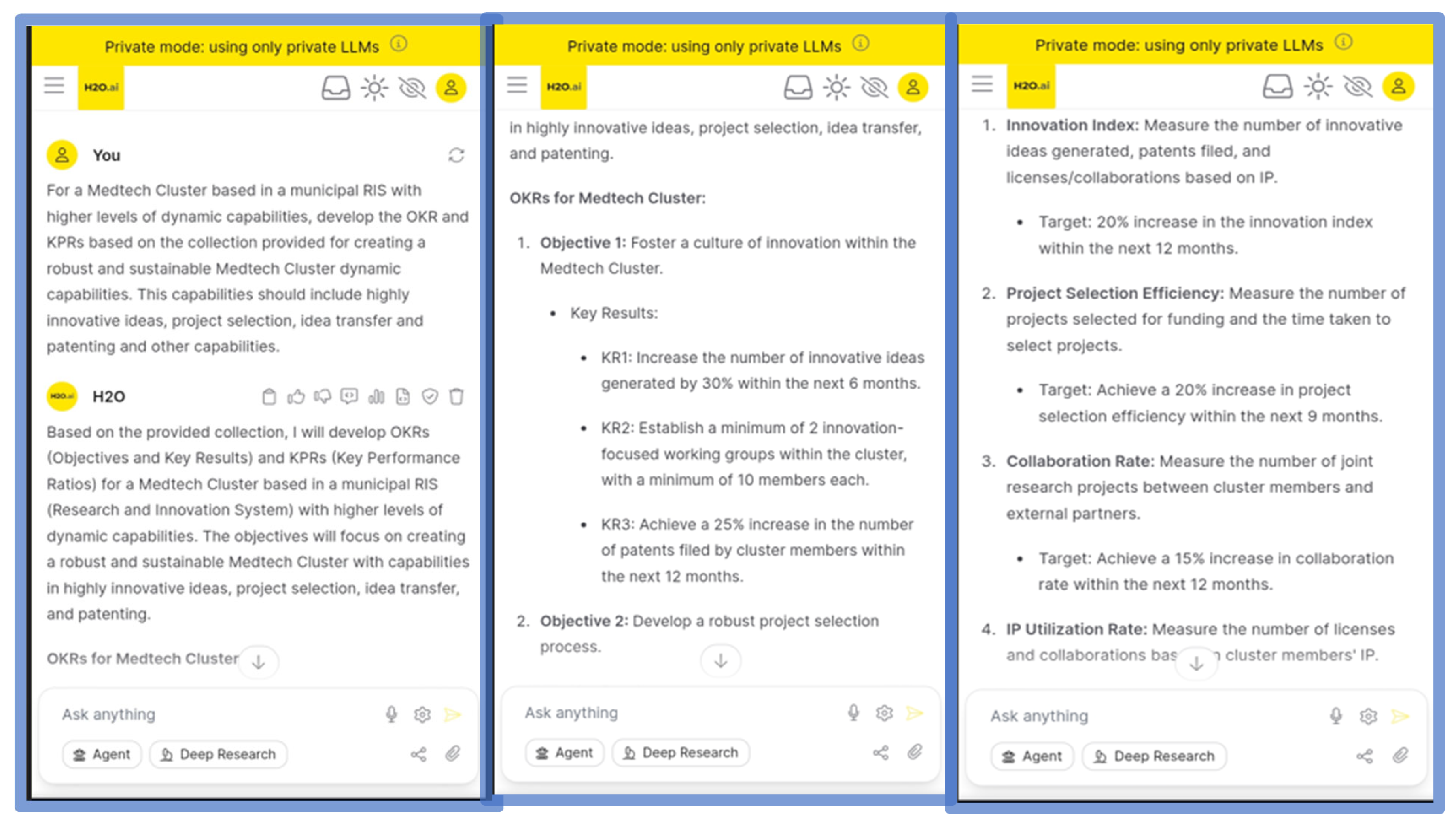
Figure 29.
UBI Clusters OKRs and KPIs or Dynamic Capabilities created via H2o.ai.
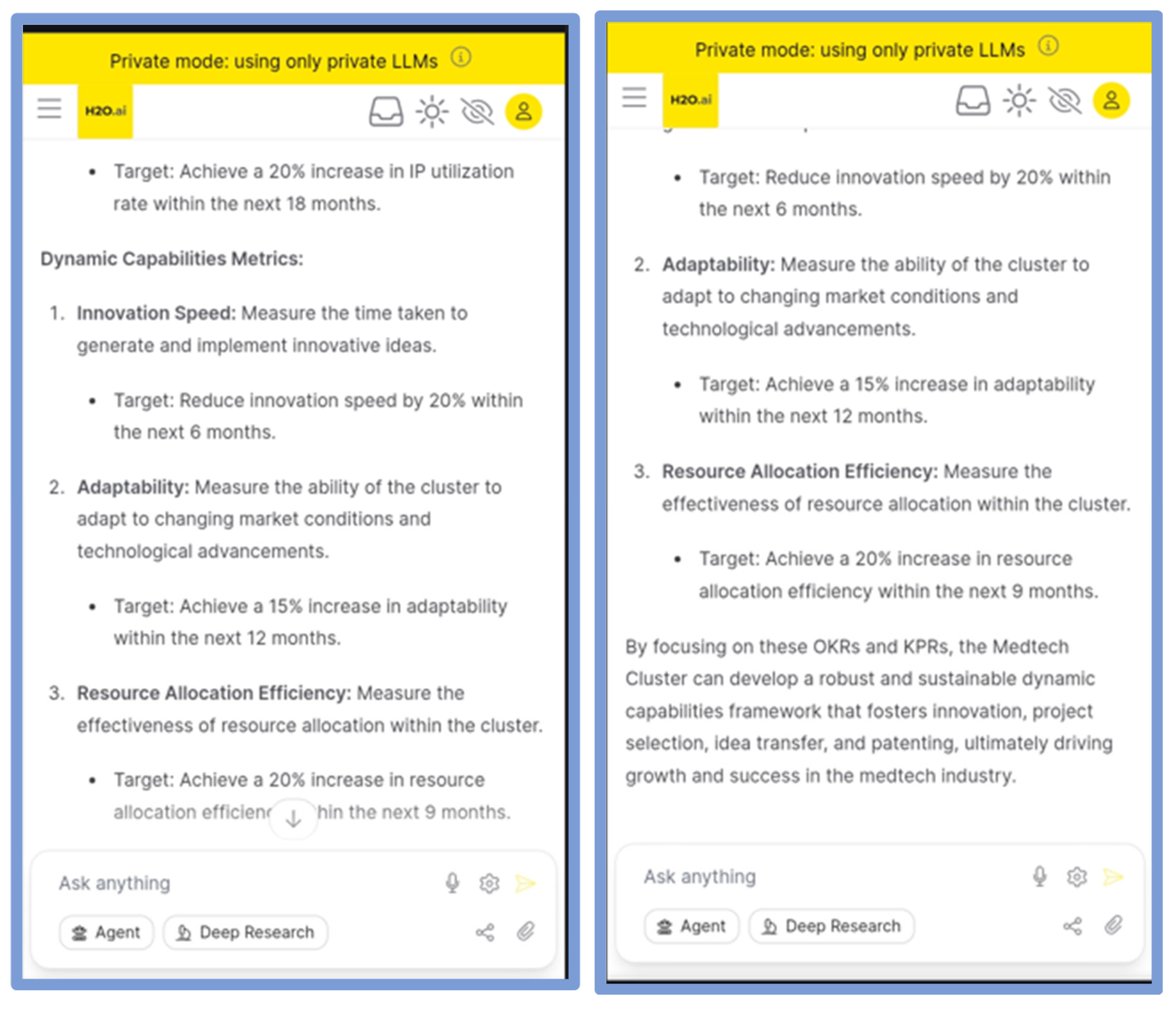
Figure 30.
UBI Clusters OKRs and KPIs or Dynamic Capabilities created via H2o.ai.
References
- Bathula, H., Karia, M., & Abbot, M. (2011). The role of university-based incubators in emergin. AIS St Helens, Centre for Research in International Education Volume 22.
- Bruneel, J., Ratinho, T., & Clarysse Bart, G. A. (2012). The Evolution of Business Incubators: Comparing demand and supply of business incubation services across different incubator generations. Technovation. [CrossRef]
- Cooke, P. (2001). Biotechnology Clusters in the UK: Lessons from Localisation in the Commercialisation of Science. Small Business Economy. [CrossRef]
- Cooper, C., Hamel, S., & Connaughton, S. (2012). Motivations and obstacles to networking in a university business incubator. The Journal of technology transfer: Volume 33 ,Pages 433-453. [CrossRef]
- Greenhalgh, T., & Stones, R. (2010). Theorising big IT programmes in healthcare: strong structuration theory meets actor-network theory. Social Science & Medicine. [CrossRef]
- Harris, J. L. (2021). Bridging the gap between ‘Fin’and ‘Tech’: The role of accelerator networks in emerging FinTech entrepreneurial ecosystems. GeoForum: Issue 122 , Pages 174 -182. [CrossRef]
- Heaton, S., Lewin, D., & Teece, D. J. (2021). Managing campus entrepreneurship: Dynamic capabilities and university leadership. Managerial and Decision Economics. [CrossRef]
- Helfat, C., & Martin, J. (2015). Dynamic managerial capabilities: Review and assessment of managerial impact on strategic change. Journal of management: Volume 41, Issue 5, Pages 1281-1232. [CrossRef]
- Inan, G., & Bititci, U. (2015). Understanding organizational capabilities and dynamic capabilities in the context of micro enterprises: a research agenda. Procedia-Social and Behavioral Sciences. [CrossRef]
- Jack, L., & Ahmed, K. (2007). Introducing strong structuration theory for informing qualitative case studies in organization, management and accounting research. Qualitative Research in Organizations and Management: An International Journal. [CrossRef]
- Lagos, D., & Kutsikos, K. (2011, January). The role of IT-focused business incubators in managing regional development and innovation. Publisher: University of Piraeus. International Strategic Management Association.
- Lee, S. S., & Osteryoung, J. (2004). A comparison of critical success factors for effective operations of university business incubators in the United States and Korea. Journal of Small Business Management. [CrossRef]
- Martinkenaite, I., & Breunig Karl, J. (2016). The emergence of absorptive capacity through micro–macro level interaction. Journal of Business Research. [CrossRef]
- McAdam, M., Miller, K., & McAdam, R. (2016). Situated regional university incubation: A multi-level stakeholder perspective. Technovation: Volume 50, Pages 69-78. [CrossRef]
- Mubarak AL-Mubaraki, H., & Busler, M. (2014). Incubator successes: Lessons learned from successful incubators towards the twenty-first century. World Journal of Science, Technology and Sustainable Development;Volume 11,Issue 1 Pages 44-52.
- Ng, B.-K., Chen, S., Wong, C.-Y., & Chandran, V. (2019). University incubation system for research commercialisation: the case of Taiwan and Malaysia. Science,Technology and Society. [CrossRef]
- Rasmussen, E., & Borch, O. (2010). University capabilities in facilitating entrepreneurship: A longitudinal study of spin-off ventures at mid-range universities. Research Policy Volume 39 Issue 5 Pages 602-612. [CrossRef]
- Somsuk, N., Punnakitikashem, P., & Laosirihongthong, T. (2010). Determining enabling factors of university technology business incubation program: Resource-based view theory. 2010 IEEE International Conference on Industrial Engineering and Engineering Management (pp. 1032-1037). IEEE. [CrossRef]
- Taheri, M., & van, G. (2011). How human capital and social networks may influence the patterns of international learning among academic spin-off firms. Papers in Regional Science.
- Taiwo, A. (2022). STRONG STRUCTURATION THEORY APPLIED TO UNIVERSITY BUSINESS INCUBATORS AND A MULTI-LEVEL ANALYSIS USING INTEGRATIVE REVIEW. Global Journal of Business and Integral Security.
- Taiwo, A., & Anna, P. (2025, May 30). A Proposed Mixed Method Strong Structuration Theory with Dynamic Social Network Analysis (DSNA): A Myth to Be Unraveled? Preprints. [CrossRef]
- Taiwo, A., & Provodnikova, A. (2025, May 30). Network Business Incubators and Their Regional Entrepreneurial Innovation Ecosystems with DIHs: Towards an Intelligent GIS and Clustering Model. Preprints. https//doi.org/10.20994/prepreints202505.2469.v1.
- Teece, D. J. (2014). A dynamic capabilities-based entrepreneurial theory of the multinational enterprise. Journal of international business studies; Volume 45,Issue 1, Pages 8-37. [CrossRef]
- Teece, D., & Leih, S. (2016). Uncertainty, innovation, and dynamic capabilities: An introduction. California management review : Volume 58,Issue 4,Pages 5-12. [CrossRef]
- Wachira, K., Ngugi, P., & Otieno, R. (2016). Role of Social Networks in University Based Business Incubators in Promoting Entrepreneurship Growth in Kenya. International Journal of Academic Research in Business and Social Sciences. [CrossRef]
- Zahra, S. A., Abdelgawad, S., & Tsang, E. (2011). Emerging multinationals venturing into developed economies: Implications for learning, unlearning, and entrepreneurial capability. Journal of management inquiry. [CrossRef]
Figure 1.
UBI Capabilities from the quantitative survey output.
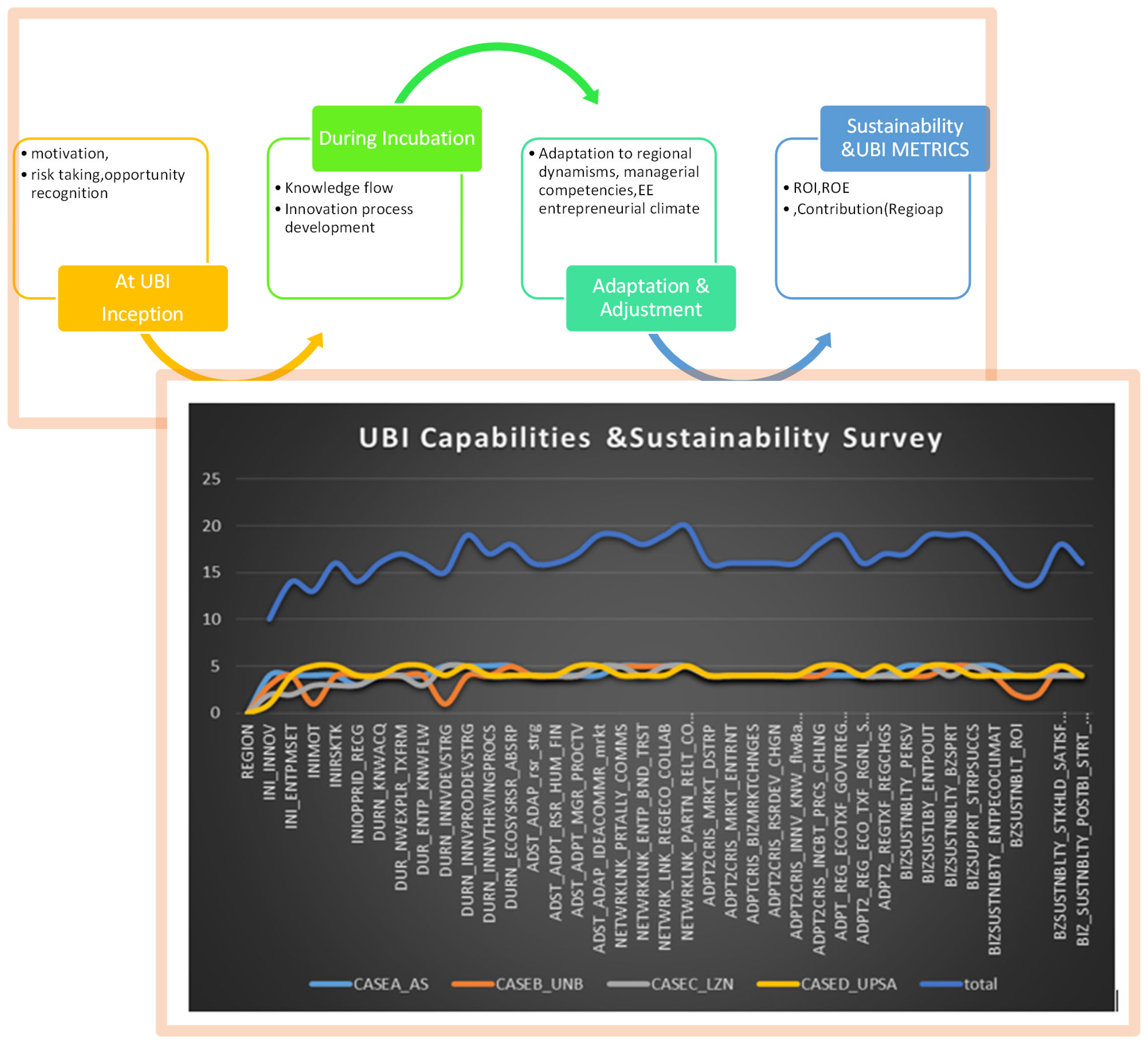
Figure 2.
MedTech Cluster Model I.
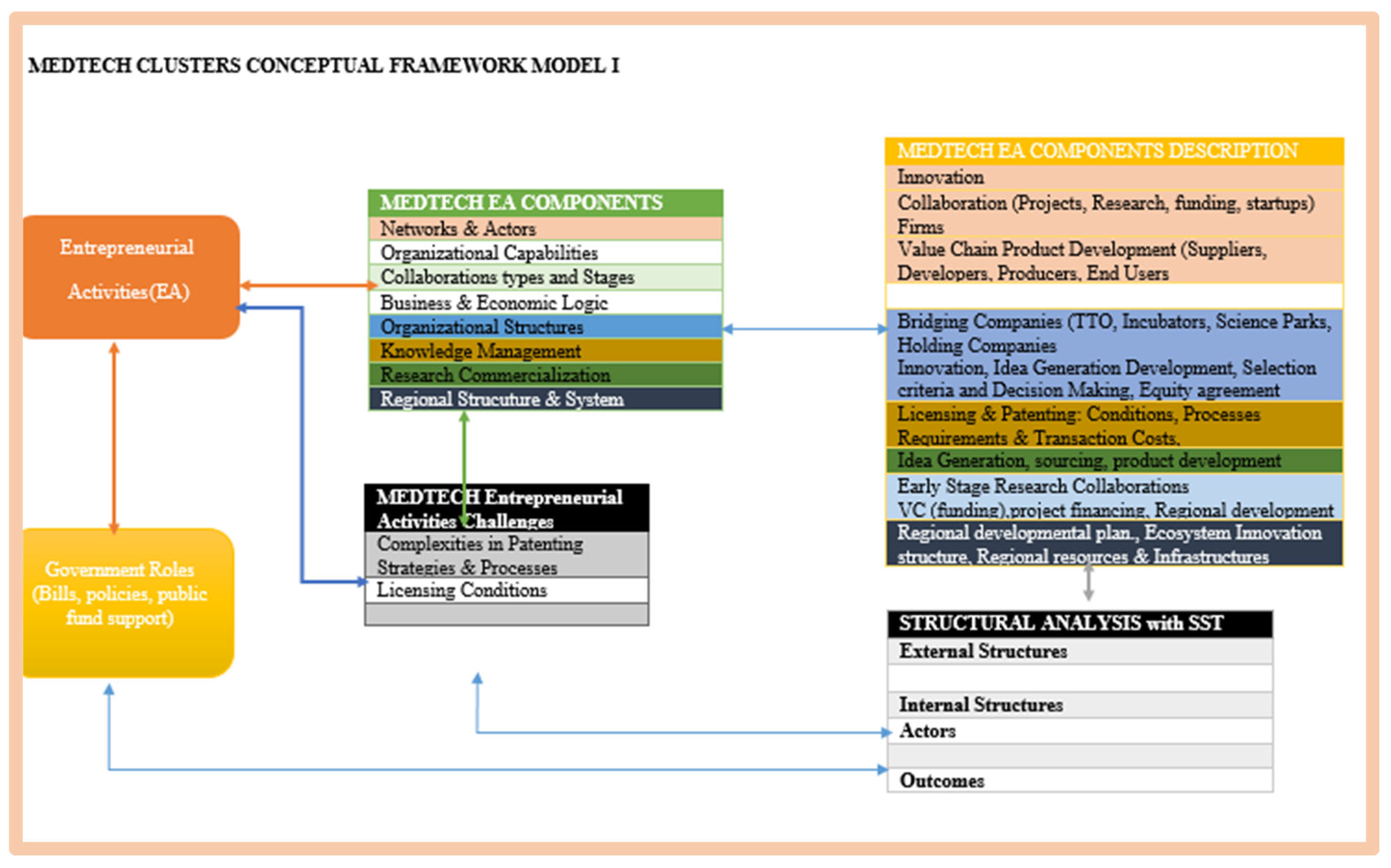
Figure 3.
MedTech Cluster Models II & III .
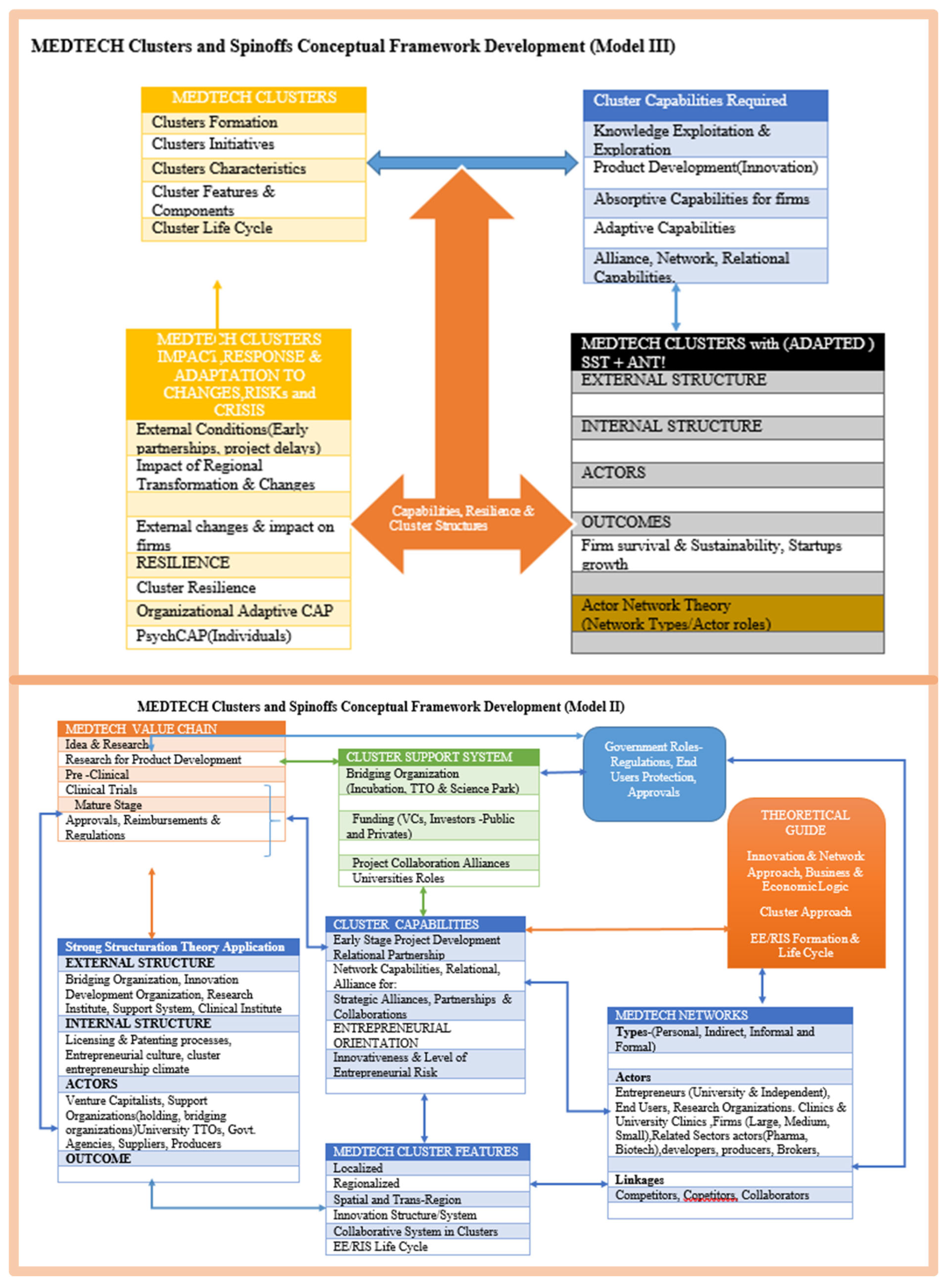
Figure 4.
MedTech Clusters Capabilities.
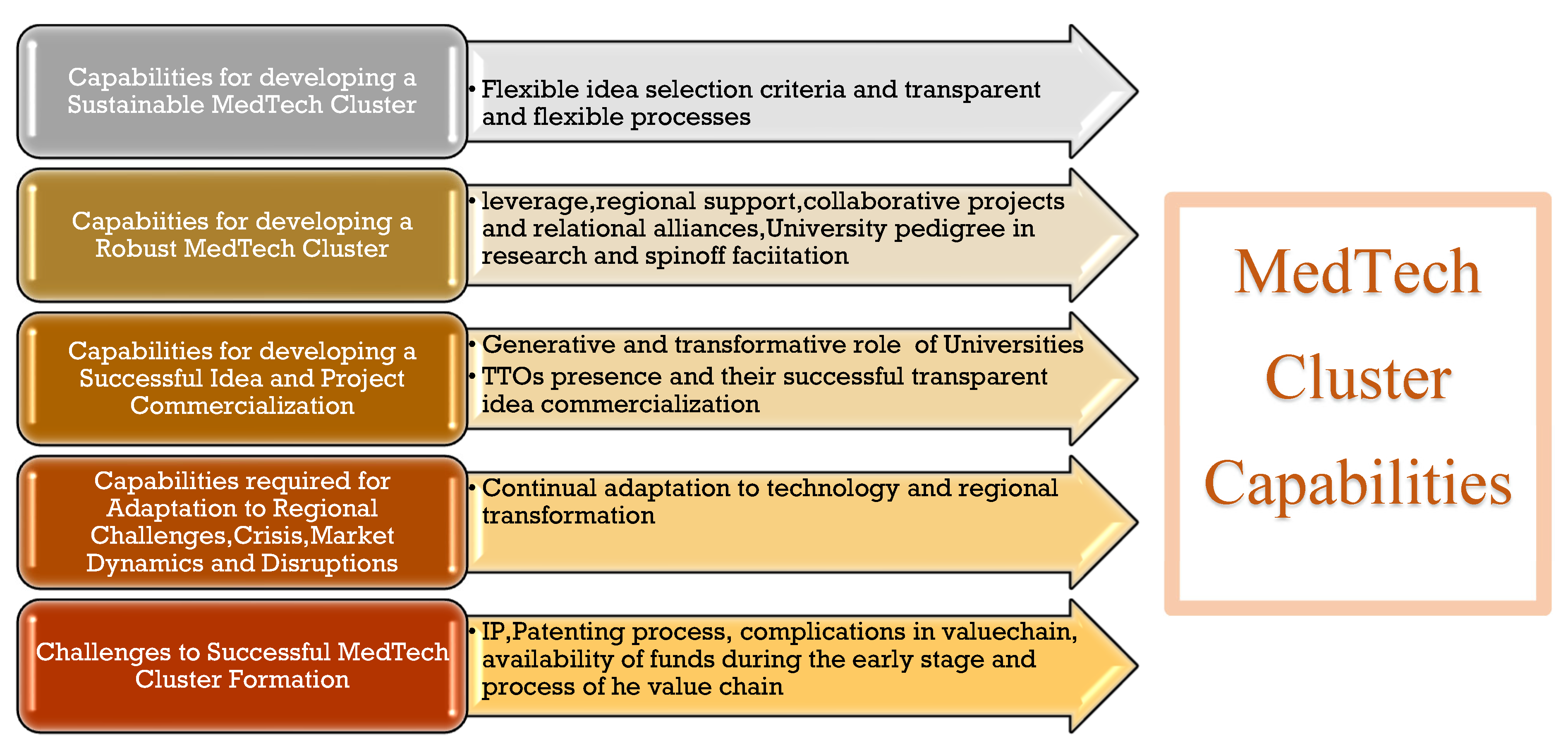
Figure 5.
ESABIC Dynamic Capabilities based on a Multi Level Analysis( MLA).
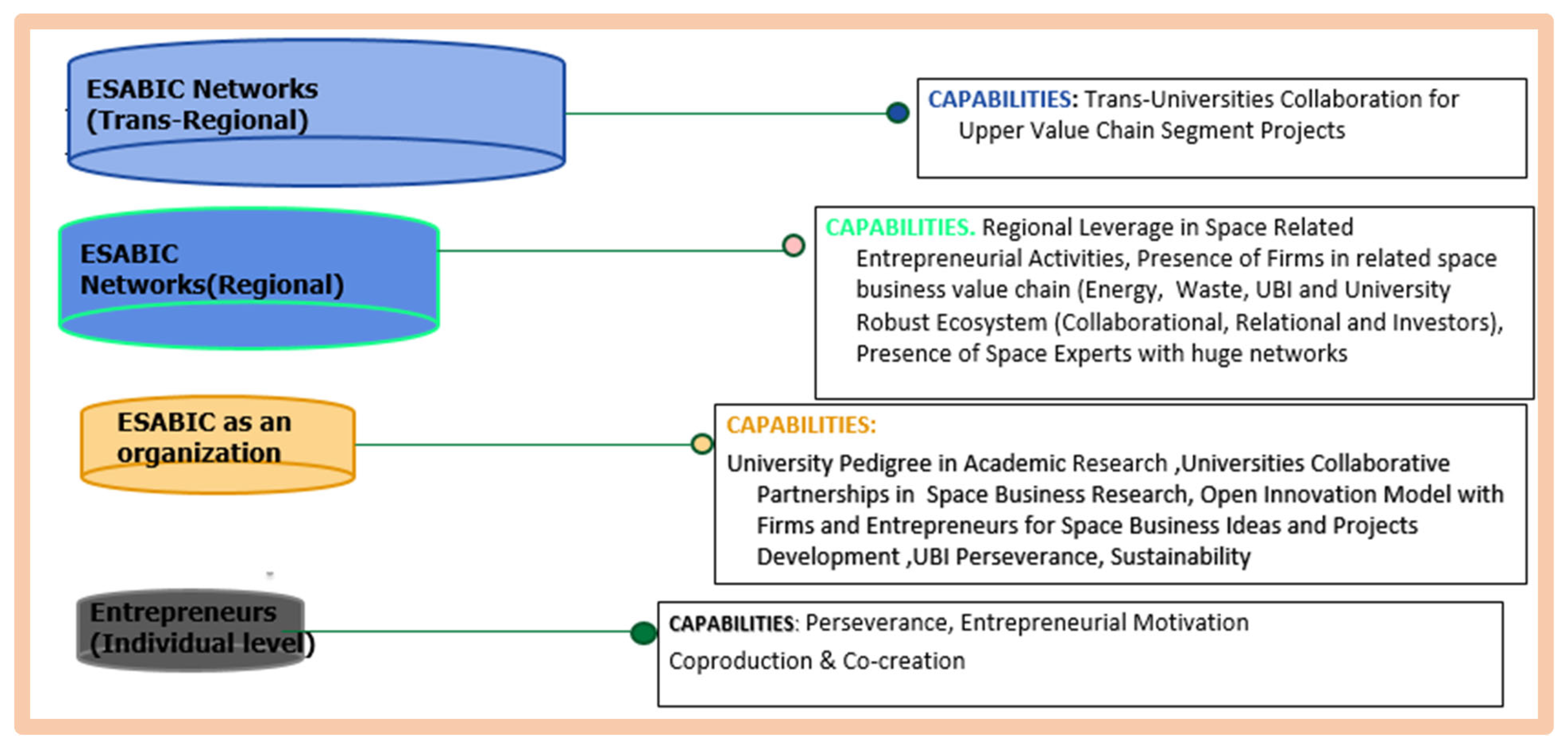
Figure 6.
Architechture for Data Training.
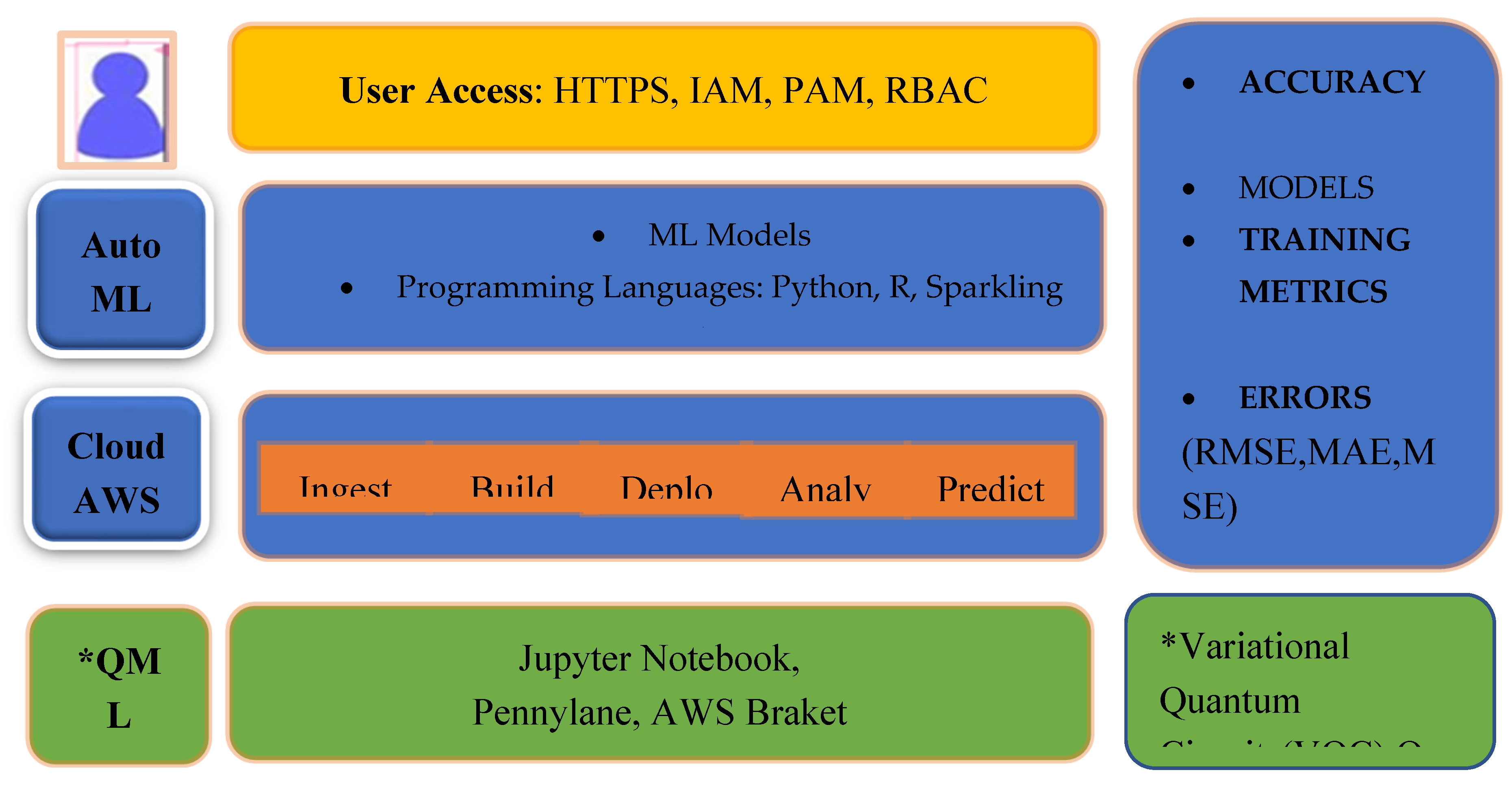
Figure 7.
Integrated Platform Framework for UBI,MedTech,Biotech,ESABIC,NTWUBI Dynamic Capabilities.
Disclaimer/Publisher’s Note: The statements, opinions and data contained in all publications are solely those of the individual author(s) and contributor(s) and not of MDPI and/or the editor(s). MDPI and/or the editor(s) disclaim responsibility for any injury to people or property resulting from any ideas, methods, instructions or products referred to in the content. |
© 2025 by the authors. Licensee MDPI, Basel, Switzerland. This article is an open access article distributed under the terms and conditions of the Creative Commons Attribution (CC BY) license (http://creativecommons.org/licenses/by/4.0/).
Copyright: This open access article is published under a Creative Commons CC BY 4.0 license, which permit the free download, distribution, and reuse, provided that the author and preprint are cited in any reuse.


