

Submitted:
01 June 2025
Posted:
02 June 2025
You are already at the latest version
Abstract
There is a growing global interest in making existing buildings more energy efficient. However, stakeholders seem to have differing views on the matter, especially in developing countries, thus raising the issue of awareness among key stakeholders at the operational stage of existing buildings. This study examined the stakeholders’ awareness of the benefits of passive energy-efficient retrofitting of residential buildings. Convergent mixed-methods approach was used to integrate data gathered from two questionnaire surveys: one completed by 118 property managers and the other by 163 owners of residential buildings, and six semi-structured interviews with government officials in Lagos State, Nigeria. Quantitative results revealed that property managers and owners had a moderately high awareness of the environmental, economic, and social benefits of passive energy-efficient retrofitting of residential buildings. However, while the property managers generally had a higher level of awareness than the owners, a significant gap was found in their awareness of environmental benefits. The qualitative analysis results, on the other hand, showed that the government officials demonstrated a strong awareness of environmental benefits (energy reduction, air quality, natural lighting) and economic advantages (cost savings, lower implementation costs). In contrast, their awareness of social benefits is limited to health improvements. Building agencies need to further reinforce their targeted awareness programs for owners who demonstrated fair awareness of environmental benefits while leveraging the intermediary role of property managers in promoting home retrofit practices. Economic benefits should also be an integral part of policy frameworks to drive wider adoption across all stakeholder groups.
Keywords:
energy efficient buildings
; fuzzy synthetic evaluation
; passive retrofitting
; residential buildings
; retrofit awareness
; Nigeria
; SDGs
1. Introduction
Approximately 40% of global energy consumption and 33% of all greenhouse gas emissions are generated by buildings, making them a major component to focus on in tackling climate change in rapidly developing countries [1,2]. Many of these countries, particularly those in the tropics, experience multiple challenges, including rising cost of living, inadequate electrical infrastructure, and extreme climatic conditions leading to reliance on inefficient cooling solutions [3].
Within this global context, Nigeria, with its tropical climate, has unique characteristics, including intense heat, which presents buildings with distinct challenges [4]. The heat from the external environment enters buildings through air gaps in the envelope, whereasinternal heat generated from occupant behaviours, design elements, and the use of home appliances further compounds thermal management challenges in buildings [5]. In densely populated areas of the country, such as Lagos, achieving a comfortable indoor space appears difficult without relying on energy-consuming cooling systems. In addition, the unreliability of electricity supply in Nigeria has made 60% of households rely on electricity from private fuel-powered generators, which are not environmentally friendly [6].
Implementing energy-efficient practices is essential for reaching net-zero emissions (NZE) and low-carbon goals within residential settings. Various initiatives and regulations exist for energy-efficient retrofitting of buildings and certification, such as the Building Energy Efficiency Code (BEEC), Building Energy Efficiency Guidelines (BEEG), Excellence in Design for Greater Efficiency (EDGE), and the National Climate Change Policy (NCCP) in Nigeria [7]. While the NCCP recommends energy-efficient retrofitting of existing buildings, the focus of other policies is more on developing new ones. However, most of the buildings that will still be around by 2050 are the ones already built, which is 80% of today’s building stock. Replacing old buildings with new ones could take more than 65 years to recover the energy loss [8,9]. This is particularly important in Nigeria, where residential buildings used around 61,416 terajoules as of 2022, which is about 53% of the total annual energy [10]. This percentage, higher than the global average of about 27% [11], raises concern about the need for energy-efficient homes in the country.
Given this high energy consumption, passive energy-efficient retrofitting presents a viable solution through non-mechanical strategies that can reduce cooling demands without increasing electricity dependence [12]. Being one of the factors critical for a successful retrofit implementation [13], studying stakeholders’ awareness of the benefits of passive energy-efficient retrofitting of existing buildings is essential for successfully implementing it, but research indicates that awareness levels vary worldwide. In Finland [14] and Italy [15], tenants, architects, HVAC engineers, and energy service companies are aware of the benefits of energy-efficient retrofitting. Rahman [16] also revealed that clients and consultants had a solid understanding of the benefits in Brunei. Substantial awareness of environmentally sustainable retrofitting benefits has been documented in Australia [17] and Israel [18]. Furthermore, Djebbar and Mokhtari [19] found that retrofit stakeholders in Algeria understand how beneficial energy-efficient retrofitting of buildings are, but many of them do not have access to expert advice on how to go about it. At the community level, Ab. Azis et al. [20] also revealed a heightened awareness of retrofitting in Malaysia. On the contrary, past studies have reported that limited awareness exists among retrofit stakeholders in different regions, such as Iraq [21] and Montenegro [22]. Additionally, building owners and professionals demonstrate poor awareness [23].
While researchers have studied awareness of sustainable building practices in Nigeria [24,25], a critical knowledge gap exists on the awareness of the benefits of passive energy-efficient retrofitting of residential buildings among property managers, owners, and government officials, whose roles are critical in decision-making regarding the implementation of passive energy-efficient retrofitting of residential buildings. The awareness of these stakeholders appears not to be comprehensively understood in the unique climatic context of Nigeria. Given the behavioural nature of this research, this study differentiates itself by adopting mixed research methods. The urgency of this study is considered in response to two converging factors: increasing heat waves that necessitate eco-friendly thermal comfort solutions in Nigeria and the country's commitment to reducing carbon emissions by 20% by 2030. To address these issues, the following research questions were answered:
- How aware are the stakeholders of the benefits of passive energy-efficient retrofitting of residential buildings in Lagos State, Nigeria?
- What dimensions of the benefits do the stakeholders consider important?
The study considers the benefits of passive energy-efficient retrofitting of residential buildings in terms of the environmental, social, and economic dimensions of Elkington’s [26] Triple Bottom Line framework, which aligns with Sustainable Development Goals (SDGs) 11 (Sustainable Cities and Communities) and 13 (Climate Action) (see [27]). The three interconnected stakeholder groups serve distinct functions in the energy-efficient retrofitting ecosystem: owners initiate retrofitting efforts motivated primarily by economic benefits [28,29]; property managers balance economic, social, and environmental considerations through professional guidance; and government agencies prioritise social and environmental impacts. Understanding awareness across them is crucial to fostering the required collaborative relationships to achieve NZE targets. The findings of the study will inform policymakers, professionals in the built environment, and researchers working to accelerate transition to energy-efficient residential buildings amid its unique challenges.
2. Literature Review
The decision on the energy-efficient retrofitting of buildings is associated with multiple benefits, which can be categorised into environmental, social, and economic benefits [30,31]. According to Zheng and Lai [32], building retrofitting should be implemented in such a way that these three benefits do not contradict one another. The following subsections provide a discussion of the benefits.
2.1. Environmental Benefits
The environmental benefits of energy-efficient retrofitting of buildings are enormous. Hirvonen et al. [33] identified that building retrofits reduce carbon emissions, enhance energy security, and improve resource management. Both Jafari et al. [34] and Kabeyi and Olanrewaju [35] also demonstrated that operational-phase retrofitting can halve carbon emissions and significantly reduce material waste through more efficient resource use. Moreover, the climate change issues are mitigated [20]. In terms of the materials, the use of high-performance insulation can lower overreliance on traditional heating and cooling systems [33,35,36].
Quantitatively, retrofitting helps to achieve 14.5 – 40% energy savings across various climates – from 40% cooling demand cuts in Mediterranean schools [37] to 27.4% net energy reductions [38] and combined 18.5% – 14.5% savings in cooling and electricity [39]. Studies such as Ahn et al. [40] and Pacheco-Torgal [41] emphasised the improvement in air quality as another significant environmental benefit of energy-efficient retrofitting of buildings. Passive measures such as green roofs can reduce energy consumption in rooms under them by 22% - 45% [42,43], and insulating ceilings can also increase a dwelling’s rating by 2.2 stars [44]. Oguntona et al. [45] and Shahdan et al. [46] argued that retrofits must align with national energy-efficiency standards to maximise environmental and comfort outcomes. However, current research has yet to adequately assess the level of awareness among key building stakeholders in Nigeria - a critical gap in the implementation of retrofit measures that support national NZE plans.
2.2. Economic Benefits
The economic benefits of energy-efficient retrofitting of buildings can be viewed from two significant perspectives: microeconomic and macroeconomic [33]. At the micro level, the energy-efficient retrofitting of buildings has emerged as a vital contributor to economic gains across various geographical contexts. Specifically, the microeconomic perspective on residential building retrofits highlights the potential for cost reductions, particularly in labour and materials, driven by market dynamics and enhanced competitiveness within the energy efficiency domain [47].
Empirical studies confirm that the direct economic benefits accruing to individual building owners are primarily realised through increased property values. Empirical studies confirm that energy-efficient retrofitting yields 6–14% property-value premiums: 13.5% for green buildings [48], 6.6% for high-efficiency labels [49], and two-star energy upgrades in the Australian Capital Territory (mandatory since 1999) raise sale and rental values [44].
In terms of payback and operating-cost savings, studies have reported rapid payback and savings: Australian ceiling insulation pays back within five years (average benefit to cost ratio = 3.9–5.6) [44], German single-family homes cut operating costs by 15–62% [50], and passive measures further lower lifecycle expenses [41,51]. Mayer et al. [50] also found that operational costs for retrofitted owner-occupied single-family homes in Germany were reduced by 15% to 62% of their original values. In pursuit of cost-effective pathways to net-zero buildings, Ferreira et al. [52] posited that selecting optimal retrofit measures can significantly reduce transition costs. This is especially relevant in the Nigerian context, where residential buildings heavily rely on fuel-powered mechanical cooling amid epileptic power supply and rising electricity costs, a mere fraction of the overall operational costs [53].
At the macro level, energy-efficient retrofitting of buildings could drive national competitiveness by boosting energy productivity and sector-wide synergies: retrofits enhance output per non-energy input [54], reduce industrial energy use and GHGs [55], and improve firms’ and nations’ competitive positioning [56]. Building retrofitting can also translate into higher disposable incomes, improved provider efficiency, lower energy prices, and reallocated public funds [33]. However, these outcomes are often supported by government policy, leading to downstream benefits such as reduced energy prices and reallocation of financial resources to other public sectors.
According to Ahn et al. [40] and Ma’bdeh et al. [57], energy-efficient retrofitting of buildings fosters energy access and affordability – increasing disposable income and thermal comfort of households. Furthermore, Hirvonen et al. [33] documented broader global impacts, where energy-importing countries reduced their dependency, while energy-exporting nations increased exports, contributing to overall GDP growth. Furthermore, Su et al. [58] compared the lifecycle costs of conventional, passive, and green buildings and concluded that, although passive and green buildings incur higher initial construction and operational costs, these are offset by significant long-term energy savings. Applying these principles to Nigeria’s residential building sector could lower energy demand, reduce environmental levies, and improve the sector’s market competitiveness.
2.3. Social Benefits
The benefits of any society initiative are often considered to surpass the financial benefits for individual investors [59]. From this perspective, the social benefits of energy-efficient retrofitting encompass better indoor thermal comfort, lower mortality rates, and reduced healthcare costs due to fewer hospital visits and less time off work due to illness [60,61,62]. It can boost tenant satisfaction and, consequently, enhance the social standing of housing projects while improving living conditions and alleviating energy poverty [63,64].
Lower energy costs from retrofitting can increase access to affordable energy in regions with limited energy availability, which in turn promotes socio-economic growth. energy-efficient retrofitting of buildings can create between 12 to 17 jobs for every €1 million invested, decreasing fuel use and generating both direct and indirect employment [36,47,65,66], thus supporting community development [67,68]. The flexibility of passive energy-efficient retrofitting strategies also fosters positive relationships between tenants and owners, encouraging active involvement in sustainable building practices [45]. Getting involved in this process is key to ensuring that retrofit projects meet both NZE goals and the SDGs.
From the foregoing discussion, it can be said that there is a need to find a balance between comfort and health benefits, particularly for low-income families who may struggle with initial costs. This is especially relevant in developing nations where there are significant socio-economic differences among investors of varying income levels. In Nigeria, the integration of energy-efficient retrofitting projects with wider development goals and SDGs could significantly enhance public awareness and encourage the uptake of these sustainable practices.
These benefits are summarised in Table 1 as follows:
3. Materials and Methods
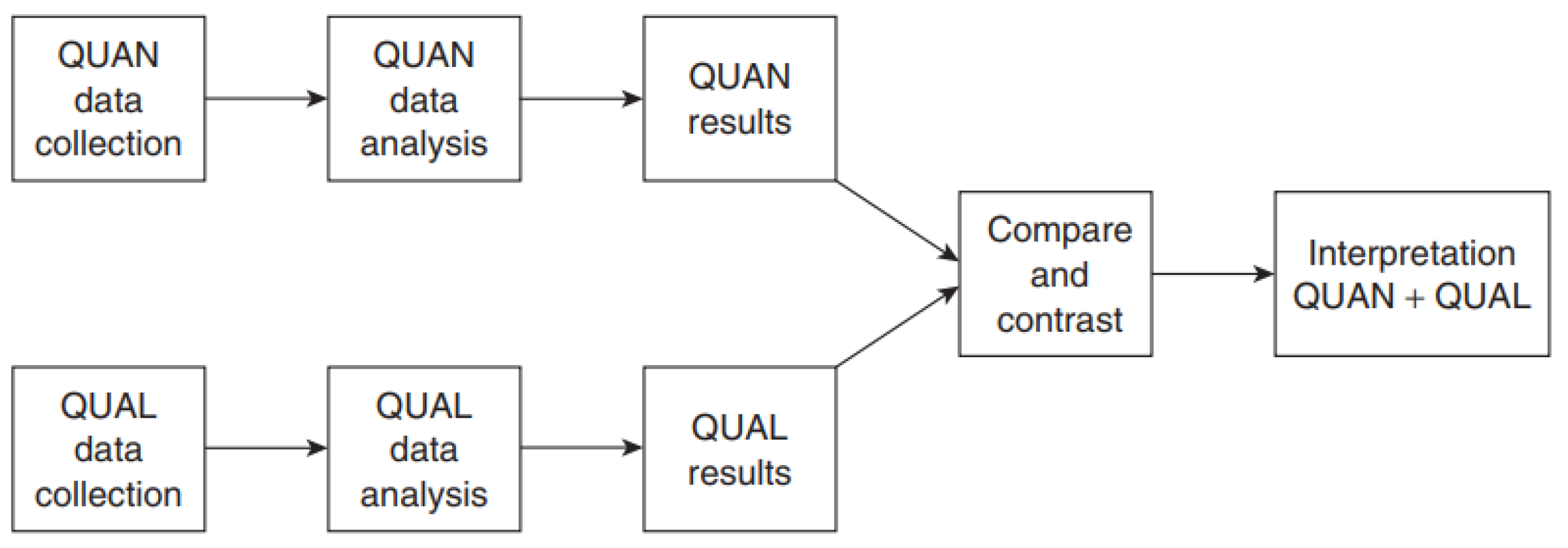
In this study, the convergent mixed-methods research design was employed. As shown in Scheme 1, the convergent mixed-methods research design allows the concurrent quantitative and qualitative data collection, separate analysis, and comparison and integration of the results to provide a comprehensive understanding of the research problem within a specific context of residential buildings in Lagos State, Nigeria (see [71]).
In this study, the mixed method approach features a combination of fuzzy synthetic evaluation (FSE) on the quantitative side and thematic analysis on the qualitative side. Details of this method for data collection and analysis are provided in the following subsections.
3.1. Data Collection
Quantitative data were gathered using two research questionnaires designed on Qualtrics, each filled out by the managers and owners of residential buildings in Lagos State. The two research questionnaires contained statements related to the stakeholders’ awareness of the benefits of passive energy-efficient retrofitting of residential buildings. The respondents were asked to rate 16 awareness statements on a Likert scale of 1 (strongly unaware) to 5 (strongly aware).
For the first research questionnaire, the sampling of the property managers involved the use of the most recent Nigerian Institution of Estate Surveyors and Valuers’ (NIESV) directory, which contained the names, telephone numbers, and email addresses of property managers (financial members of the Institution for the year 2023) operating in Lagos State was consulted (see [72]). Out of the 853 property managers documented, 813 emails were available, and the questionnaire was sent to them. It is noteworthy, however, that only 796 of the emails were delivered, and 190 started the survey. After data cleaning, 118 were complete and used for data analysis.
The second research questionnaire was administered to owners of residential buildings in Lagos State. Given the lack of a published database for the owners, convenience sampling was adopted by relying on selected Estate Surveying and Valuation Firms (ESVFs) who helped to send out the questionnaire to the residential property owners in their management portfolios. According to the updated website of the NIESV, 436 ESVFs were domiciled in Lagos State [73]. However, we selected nine of them that had a minimum of two branches in Lagos State. According to Hendriks [74], firms that manage large and geographically-dispersed clients limit distance by locating branches close to them, thus increasing their branches. A total of 235 owners filled out the questionnaire, in which 163 responses were used for data analysis. The sample sizes fall within the minimum of 30 recommended by Ott and Longnecker [75].
On the other hand, the collection of qualitative data was guided by structured interviews with government officials in Lagos State (particularly those working with Lagos State Building Control Agency - LASBCA - and the Lagos State Physical Planning Permit Authority - LASPPPA). The invitations sent were accepted by six of the officials of these government agencies. The profiles of the officials are presented in Table 2.
3.2. Data Analysis
3.2.1. FSE
Quantitative data can often involve complex personal perceptions, leading to subjectivity, ambiguity, and imprecision, which traditional statistical methods may not adequately capture [76]. The FSE is a method that uses fuzzy set theory (FST), and it provides a solution to the fuzziness of stakeholders’ awareness of the benefits of energy-efficient retrofitting of residential buildings. FSE provides a synthetic evaluation of judgement involving multiple criteria [77].
The advantage of FSE lies in dealing with complicated evaluations with multiple attributes and levels [78]. FSE is a highly effective assessment approach due to the difficulties involved with assigning significance to the level of awareness and the imprecision that accompanies judgement making (see [79]). This method has been increasingly adopted in building research to solve similar complex issues (see [77,80]).
The procedure for the FSE is explained as follows in six steps:
- Step 1: Definition of the factor set.
The factor set (U) in this study is given as
{𝑓1, 𝑓2, . . . , 𝑓𝑛},
Where: f represents the list of all the retrofit awareness statements.
Step 2: Establishment of the evaluation sets.
R = {r1, r2, r3, r4, r5},
The set of grade categories represents the scale measurement. A 5-point Likert scale was adopted for the questions relating to retrofit awareness. To reiterate, the set of grade alternatives is provided as follows: r1 is strongly unaware, r2 is not aware, r3 is neither aware nor unaware, r4 is aware, and r5 is strongly aware.
Each qualitative category is assigned a fuzzy weight from 0 to 1 for computation.
Step 3: Definition of the dimension sets.
B = {b1, b2, . . . , bm},
Where: Each bj groups thematically related awareness statements (e.g., economic, environmental, and social benefits); each dimension bj consists of a subset of awareness statements fi ∈ bj.
Step 4: Establishment of the set of criteria and dimension weights.
These weights normalise the scores so that the sum of weights for each level (criteria or dimensions) equals 1. The weights (w) for each criterion fi within a given dimension of benefits are computed using the following equation:
Similarly, the weight of each dimension bj is determined as:
Where: Ci represents criteria weight; wi is the mean score of each criterion fi; Wj is the aggregate mean score of each dimension bj; Dj is the dimension weight.
Step 5: Establishment of the membership function for criteria – Level 3.
For each awareness statement fi, the number of responses falling under each grade rj (i.e., SU to SA) is used to compute a membership vector:
MFi = (ai1/Ti, ai2/Ti, ai3/Ti, ai4/Ti, ai5/Ti)
Where: aij is the number of respondents who selected grade rj for criterion fi; Ti = represents the total number of respondents for that statement
This produces a fuzzy evaluation matrix for each criterion.
Step 6: Computation of fuzzy scores for criteria and aggregate to higher levels
a. Fuzzy score for each criterion fi.
The fuzzy score for each awareness statement fi is calculated as:
Where: sj ∈ {1,2,3,4,5} is the numerical score for grade rj.
b. Fuzzy score for each dimension bj .
Aggregate the scores of criteria under each dimension using their normalised weights:
This produces a dimension-level fuzzy score for each benefit category.
c. General awareness level (GAL) – Level 1
Finally, compute the general awareness score as the weighted sum of dimension scores:
This single scalar value reflects the general level of awareness (represented by general awareness score - GAS) of retrofit benefits among the respondents.
The analysis was completed with the aid of MS Excel®.
Decisions on the level of stakeholders’ awareness were made based on the following linguistic terms and measurement scale adapted from Pimentel [81]: not at all aware – 1.00-1.79; not aware – 1.80-2.59; fairly aware – 2.60-3.39; moderately high awareness – 3.40-4.19; and strong awareness – 4.20-5.00.
3.2.2. Thematic Analysis
Thematic analysis was used to uncover and explain themes of retrofit benefits to the passive energy-efficient retrofitting of residential buildings, following Braun and Clarke‘s [82] six-step recommendation. The following are the steps recommended by the authors: 1) Review and familiarisation with the transcript; 2) Code development and highlighting of key analytical concepts; 3) Grouping of related codes; 4) Evaluation of themes for the entire dataset and the coded data. A theme map can help to structure the research and clarify the links between subjects; 5) Name and define topics; and 6) Reporting. The analysis was done using the NVivo Software (Version 12).
4. Results and Discussion
4.1. Quantitative Results
4.1.1. Reliability of Data
The analysis was preceded by a reliability test using Cronbach’s alpha coefficients. The results indicated excellent internal consistency for both stakeholder groups examined. Cronbach’s alpha values of the responses provided by the property managers and the owners were .925 and .892, respectively, across the 16 items measured. These reliability scores exceed the .70 threshold recommended for reliable measurement instruments by Nunnally and Bernstein [83].
4.1.2. Stakeholders’ Awareness of the Benefits of Passive Energy-Efficient Retrofitting
The results of FSE reveal important patterns in how property managers in Nigeria perceive retrofit benefits across three dimensions. The awareness score of each dimension provides deeper insights into the broader patterns of passive energy-efficient retrofitting awareness.
- Environmental Dimension
While the dimension weight was the highest at .437, the awareness score of environmental benefits was a bit lower at 3.88 compared to the economic dimension. This shows that property managers also had a moderately high awareness of environmental benefits but appeared to be more interested in the economic aspect and the returns for their clients. In addition, the result confirms Alfaiz et al.'s [21] finding of large gaps in knowledge about the environmental aspect of green retrofitting in Iraq, another developing country. It seems like Nigerian property managers could use more awareness campaigns and training on sustainability. The high dimension weight assigned to environmental benefits suggests that the property managers recognise that these considerations should dominate retrofit decision-making, even if their awareness level lags slightly behind the economic aspects. This prioritisation is in line with global sustainability trends and could help Nigeria in reducing its carbon footprint.
- Economic Dimension
Although it has the lowest dimension weight (.259), the economic dimension got the highest awareness score (4.03). This moderately high awareness among property managers could be because property managers work as intermediaries between property owners and tenants, which often makes them deal more with economic issues. In Nigeria, for example, rising energy costs and stiff competition in the property market mean property managers need to know how to save money and add value. In addition, economic benefits are usually easier to measure than social or environmental ones. As Mangialardo et al. [84] pointed out, clear financial gains are often what drive retrofit projects, especially in places where money is tight.
- Social Dimension
The social dimension (with a weight of .304) had an awareness score of 3.78, suggesting that property managers had a moderately high awareness of the extent to which passive energy-efficient retrofitting of residential buildings affects social outcomes compared to economic and environmental factors. This aligns with Djebbar and Mokhtari's [19] findings that while people acknowledge the benefits of building energy retrofitting, they frequently lack access to expert guidance on its implementation. Similarly, the moderately high awareness regarding social benefits may suggest a deficiency in discussions or training about the social implications of retrofitting within Nigeria's property management industry. The disparity between awareness of the benefits (dimension weight) and having in-depth awareness of the social benefits of energy-efficient retrofitting may also highlight the fact that, unlike the economic and environmental dimensions, social benefits like enhanced relationships between owners and tenants, and community development are difficult to quantify.
The summary of the analysis results is provided in Table 3.
- General Awareness Among Property Managers
The GAS of 3.89 suggests that there is a moderately high awareness of the benefits of passive energy-efficient retrofitting of residential buildings among property managers. This corroborates Ab. Azis et al.'s [20] and Altmann's [17] findings that there is a heightened community awareness of green retrofitting benefits. However, there is still an indication that knowledge development has not been uniform across the three aspects of sustainability as the financial returns to motivate adoption are more communicated among retrofit stakeholders, while less attention is given to information regarding environmental and social benefits. A summary of these results is presented in Table 4.
4.1.3. FSE Results from Owners’ Perspective
The results presented in Table 5 indicate the perceptions of owners in Nigeria about the environmental, economic, and social dimensions of passive energy-efficient retrofitting of residential buildings. The analysis of dimensional awareness scores, rather than individual criteria mean scores, offers a more comprehensive understanding of awareness patterns among this crucial stakeholder group.
- Environmental Dimension
With an awareness score of 3.27, it could be said that there is a fair awareness of the environmental benefits of passive energy-efficient retrofitting of residential buildings among the owners. This could be because environmental aspects of sustainability are often characterised by intricate technical ideas (such as carbon emissions and energy security), which non-professionals like homeowners may not readily have full information about. This result suggests that homeowners in Nigeria recognise the growing importance of environmental issues, despite their limited understanding. Although limited awareness of environmental benefits may slow the rapid implementation of passive energy-efficient retrofitting of residential buildings, the high dimension weight suggests a willingness to engage in environmental education and incentives. This will improve the discernment of the environmental benefits of retrofitting are more likely to unfold in the long run and within broader contexts compared to economic or social advantages. The comparatively lower awareness of environmental benefits among owners aligns with findings of a limited awareness of green retrofitting advantages among stakeholders in Iraq [21] and Montenegro [22].
- Economic Dimension
While it has a lower dimension weight (.276), the economic dimension had an awareness score of 3.99 among the owners. This suggests that the owners had a moderately high awareness of the economic benefits of passive energy-efficient retrofitting of residential buildings. This could be due to their direct financial investment in their properties. As key initiators of retrofit decisions, especially in terms of finances, homeowners are inherently sensitive to decisions that could influence return on investment, property value, and operational expenses. This result supports Mangialardo et al.'s [84] finding that building owners are mostly driven by financial incentives when evaluating retrofitting projects.
- Social Dimension
The social dimension showed a dimension weight of .327 and a moderately high awareness score of 3.80; this suggests that the owners were quite aware of social benefits but placed a moderate level of importance on these factors when making decisions. This challenges the typical belief that building owners mainly prioritise financial gains while overlooking social impacts. The awareness score among the owners may have stemmed from their direct engagement with tenants and local communities. As long-term investors in properties, building owners understand that social elements - like tenant satisfaction, community growth, and health advantages - play a crucial role in the overall success and sustainability of their properties. This result partially aligns with the report by Ab. Azis et al. [20], who emphasised a heightened community awareness of green retrofitting benefits in Malaysia. The stronger awareness score among the owners reflects sociocultural responsibility in the context of property ownership in Nigeria.
- General Awareness Among Owners
The GAS of 3.64 among the owners is an indication of a moderately high awareness of passive energy-efficient retrofitting benefits, suggesting that the dissemination of information within the property sector has achieved some success. This aligns with previous studies by Zhang et al. [85], who found that awareness levels typically plateau above the midpoint of measurement scales when property owners have been exposed to energy efficiency campaigns. Table 6 contains a summary of the results.
4.2. Qualitative Results
This section discusses the results of the analysis of qualitative data collected during interviews with six respondents (LAS001 to LAS006) from the aforementioned government agencies to understand their perception of the environmental, economic, and social benefits of passive energy-efficient retrofitting of residential buildings in Lagos State, Nigeria. Questions were also asked to know how the agencies promote awareness of the benefits of passive energy-efficient retrofitting of residential buildings. The qualitative analysis has been organised into themes of environmental, social, and economic benefits, as identified in the interviews. Each category is discussed in the context of interviewees' perspectives, using NVivo-coded themes and statements made by the interviewees.
4.2.1. Environmental Benefits of Passive Energy-Efficient Retrofitting
The interview respondents were asked to answer questions regarding what they believed to be the benefits of passive energy-efficient retrofitting, and the responses they gave revealed five important benefits related to the environment. These environmental benefits include reduced energy consumption and carbon footprint, climate resilience, heat management, natural lighting and ventilation, and reduced dependence on power generators.
- Reduction in Energy Consumption and Carbon Footprint
One of the key environmental benefits emphasised by respondents was the reduction in the consumption of energy. Some of the interviewees noted that passive energy-efficient retrofitting would introduce building standards and interventions that promote efficient energy use. One respondent explained:
“Passive retrofitting would put in place standards and measures that will ensure that the energy being used in a building is efficiently utilised.”[LAS001]
This perspective aligns with empirical findings by Rahman [16] and Ürge-Vorsatz et al. [66], who reported that energy retrofits substantially reduce residential energy demand, especially when passive measures are prioritised. As LAS005 explained, “When buildings are retrofitted or renovated to be energy efficient, it reduces the energy consumption of that building.”
Energy consumption reduction was seen as a direct contributor to mitigating climate change through carbon footprint reduction. Most of the respondents highlighted this connection:
“If we can reduce the amount of energy consumed, then in turn we can reduce the carbon footprint of that building. The carbon footprint of that building is reduced because generation of electricity also contributes to carbon footprint.”[LAS005]
“You are naturally trying to have less carbon footprint just going to the atmosphere.”[LAS001]
This corroborates Wang et al. [64], who documented a measurable reduction in emissions in buildings implementing envelope insulation and solar shading. This was further reinforced by LAS005, who noted that “the carbon footprint of that building is also reduced because generation of electricity also contributes to carbon footprint.”
- Climate Resilience
The respondents suggested that retrofitted buildings would also be more resilient to climate extremes. One interviewee remarked that implementing passive solutions “would naturally help build resilience in the end.” [LAS001] This finding echoes the broader literature on climate-responsive architecture (e.g., [86]).
- Heat Management
Heat management was another key concern raised, with respondents describing how passive design strategies – particularly roofing interventions – could help manage internal heat gain. One respondent explained:
“Your roofing style. Now you want to dissipate heat quickly from your house instead of the heat affecting your room.”[LAS002]
This was complemented by further elaboration: “The heat must have been collected in your roof… the heat will now be re-radiated back into the sky instead of coming in, so that you can enjoy cooling effect within your building.” [LAS002] These insights align with research by Causone [61], Hirvonen et al. [33], and Pacheco-Torgal [41], which demonstrated that passive roof retrofits reduce indoor temperatures and improve energy efficiency in low-income housing.
- Natural Lighting and Ventilation
Respondents frequently stated natural lighting and ventilation as key retrofitting benefits. These strategies reduce dependence on artificial lighting and mechanical cooling. LAS003 appreciated the strategic placement of windows, emphasising that if “every dwelling unit is climate facing, there will be illumination and there will be aeration.” LAS001 also stated that “You could have strategically-placed window sources that allow natural light to come into the building.”
Similarly, LAS002 elaborated: “Instead of using your bulb in the day, you want to use the natural lighting to illuminate your building.” This was further reinforced by LAS003, who noted that “You don’t need to switch on light at least till nighttime,” suggesting that design interventions could lead to significant energy savings.
Cross ventilation was another focus area. LAS006 observed that “most of their buildings don’t have cross ventilation,” a design flaw that passive energy-efficient retrofitting can help correct. As LAS005 added, “When natural ventilation is improved, we may not be needing much energy for cooling.” These findings are consistent with Liang et al. [63], who emphasised the role of passive airflow in reducing cooling load and increasing tenant satisfaction.
- Reduced Dependency on Power Generator
Finally, respondents highlighted that passive energy-efficient retrofitting could lessen reliance on fuel-powered generators. This is particularly critical in Nigeria, where grid instability remains a challenge. As LAS003 noted:
“To the barest minimum, you don't need to use your power-generating sets.”
This theme supports the argument by Oyedepo [68] that energy self-sufficiency through passive design is a strategic pathway toward reducing national fossil fuel dependence.
4.2.2. Economic Benefits of Passive Energy-Efficient Retrofitting
The economic benefits of passive energy-efficient retrofitting were a central focus during discussions with government officials. The interview respondents pointed out three important aspects: lower energy expenses, decreased implementation costs, and the feasibility of scaling up passive energy-efficient retrofitting. These observations reflect a high awareness of how passive energy-efficient retrofitting can foster more economical and sustainable construction practices in Lagos and similar tropical urban environments.
- Energy Cost Savings
A majority of respondents acknowledged that a significant economic advantage of passive energy-efficient retrofitting is the reduction in operational costs, particularly in energy consumption. Elements of passive design, such as improved natural ventilation, adequate insulation, and increased natural light, were identified as crucial methods for lowering utility expenses. One of the respondents noted:
“It would go a long way in saving costs in the long run because if you are not using as much energy as you would normally.”[LAS001]
Similarly, the same respondent added: “Your costs of consumption or costs of energy or costs of living would drastically reduce.” [LAS001] Another respondent pointed out that “You want to redeem the cost of energy.” [LAS002] and “It reduces your costs on energy consumption.” [LAS002], highlighting the direct financial impact of reduced energy demand.
LAS004 described this in practical terms: “The number one advantage or benefit is that you are going to make savings on your cooling bills.” This sentiment was echoed by LAS005, who stated that “it reduces the energy consumption of that building, which in turn saves cost,” and elaborated further: “If we can save energy, it reduces cost. That's on utility bill.” The overall impact of these responses indicates a common recognition that passive energy retrofitting leads to reduced living expenses.
The respondents' views are consistent with the research by Ürge-Vorsatz et al. [66], which showed that implementing passive energy upgrades can greatly lower household energy costs, especially in regions with high cooling needs. In a similar vein, Santamouris et al. [87] noted that utilising passive cooling in hot climates can provide lasting financial benefits by reducing reliance on mechanical systems.
- Lower Implementation Costs
The respondents further asserted that passive energy-efficient retrofitting measures are more cost-effective than active systems in terms of both upfront capital and complexity. LAS003 stated:
“It’s a lot cheaper than the active measures.”
Elaborating further, the same respondent added: “It’s cheaper, it’s less cumbersome, it’s cheaper, it’s less expensive, then it’s not too sophisticated.” [LAS003] This perception was reinforced by LAS004, who noted that “Upfront cost is reduced compared to the active retrofit. It’s a lot reduced.”
This view reflects the financial accessibility of passive strategies such as shading devices, ventilated roofs, or louvre windows—solutions that typically require lower capital investment compared to installing HVAC systems or photovoltaic panels. A study conducted by Nguanso et al. [88] supports this claim, demonstrating that passive design often requires specific materials (e.g., high thermal mass, reflective surfaces) that may have higher upfront costs compared to conventional materials.
- Feasibility
The final economic subtheme explored the feasibility of implementing passive energy-efficient retrofitting measures at the level of individual homes or communities. The respondents felt that many approaches are possible given the financial and technical resources available to homeowners and community members. As one official noted:
“Many things that you’d do are within your capacity.”[LAS003]
This viewpoint regards passive energy-efficient retrofitting as a cost-effective strategy appropriate for households with middle and lower incomes, thereby enhancing the potential for expanding these initiatives throughout a varied housing sector in Nigeria. This aligns with the conclusions drawn by Mastroberti et al. [89], who posited that the effectiveness of retrofitting methods frequently hinges on their economic feasibility and their ability to adjust to regional financial circumstances.
4.2.3. Social Benefits of Passive Energy-Efficient Retrofitting
Although less frequently discussed than the environmental and economic dimensions, social benefits emerged as a noteworthy theme in the interviews. These benefits (including air quality improvement and indoor comfort and health improvement), which are increasingly recognised in sustainable building discourse, are discussed as follows:
- Air Quality Improvement and Indoor Comfort
Enhancement of indoor air quality and thermal comfort is another benefit that is widely recognised. The respondents noted that passive energy-efficient retrofitting reduces reliance on artificial cooling and ventilation, leading to better air quality. As one of them noted:
“The less time we use those artificial interventions, the better for us because of the air we will be breathing in.”[LAS003]
Indoor air pollution poses serious health risks in countries like Nigeria, where fuel-powered generators are widely used. According to LAS003, “There have been cases of people sleeping in tenements with their generator set behind their windows.” This observation underscores the relevance of passive energy-efficient retrofitting in addressing air quality and public health. This echoes Howden-Chapman et al.'s [60] finding that there is a strong link between building energy performance and reduced respiratory illness. Another respondent argued that “it will improve our air quality.” [LAS006]
The interviewees also linked passive energy-efficient retrofitting to better thermal comfort. For example, LAS006 stated, “The indoor air comfort is improved.” This finding corresponds with the conclusions of Causone [61], who noted that passive cooling strategies significantly enhance user comfort in warm climates.
- Health Improvement
Some of the respondents emphasised the connection between passive energy-efficient retrofitting and better health results, particularly regarding indoor air quality and lower exposure to harmful pollutants. One respondent noted:
“It would also promote healthy living because we're looking at reducing carbon emissions as well.”[LAS001]
This response reflects an awareness of how reducing the dependence on fossil fuel-based energy sources, particularly generators commonly used in Nigerian households, can lead to improved ambient air quality and subsequently better respiratory health outcomes.
LAS003 elaborated on this, discussing prevalent health issues associated with inadequate air quality and the use of generators:
“The less time we use those artificial interventions, the better for us because of the air we will be breathing in. Even for some cases of respiratory tract infections or respiratory issues, there have been cases of people sleeping in tenements with their generator set behind their windows. And they have reports, cases of a medical challenge that by the time they are analysed (diagnosed) in the hospital, they’d be told to shift the location of their generating sets that pollute the air they breathe in directly.”
This statement highlights the severity of the problem of indoor air pollution and its effect on occupants' respiratory health in densely populated cities characterised by the prevalence of informal housing with inadequate ventilation. This health risk can be reduced by implementing passive energy-efficient retrofitting strategies, such as natural ventilation [30,41,61].
LAS006 also recognised this relationship between housing conditions and health, stating:
“And then to make the people living there to be healthy so that they will be free from some health issues.”
This statement reflects a perceived link between building conditions and general well-being. Given Nigeria’s tropical climate, one of the respondents expressed concern over excessive indoor heat and its health consequences. One respondent shared:
“Even people that are living in my environment, some of them are complaining of that heat.”[LAS006]
The respondent’s remark highlights the increased risk of meningitis in parts of sub-Saharan Africa, particularly during the dry season. Passive energy-efficient retrofitting interventions such as shading, roof insulation, and cross-ventilation may therefore serve a preventive health function by reducing indoor heat stress and associated health risks.
The results suggest that respondents were generally aware of the environmental, social, and economic benefits of passive energy-efficient retrofitting, with more emphasis on the environmental benefits. While government agencies are making strides through policies, regulations, and public campaigns, more targeted efforts are needed to raise awareness and increase the adoption of passive energy-efficient retrofitting of residential buildings.
4.3. Promotion of Awareness
The final part of the discussion focuses on how government agencies in Lagos State promote awareness of the benefits of passive retrofitting. The interviewees provided insights into current efforts and areas for improvement. The respondents acknowledged that awareness efforts are currently in progress, though still developing. One of the respondents revealed the institutional infrastructure supporting awareness efforts, stating:
"there's a PAU unit that's in charge of advocacy and sensitisation . . . the sensitisation is still on, but it's not as expected for now" .[LAS003]
LAS006 also stated: "I think Lagos State has embarked on sensitisation and campaign . . . I think LASBCA is doing well on the campaign." However, LAS006 highlights room for improvement:
"They've a lot of campaign and since we are talking of the existing building now, I think what they are doing is just like sensitisation, education, and advocacy for now on the issue of retrofitting, and some lectures and seminars on it . . . on the issue of advocacy and seminar, they are doing well, but you know, they still need to do more."
Some of the respondents also highlighted specific initiatives already underway. One respondent mentioned,
"We did a demonstration of National Building Code for Lagos State and energy efficiency is a major focus in it" .[LAS003]
LAS002 further expressed optimism about future awareness activities, particularly as the Lagos State Building Code advances toward formal adoption: "by the time the code is passed, there will have to be sensitisation and every other thing." The same respondent anticipated that "there will be a lot of awareness concerning it, concerning the passive energy saving and efficiency."
Practical implementation approaches were also identified, with one respondent suggesting that "during the clearing of drawings, they will create it that you have to include it in your drawings" [LAS002]. Another expressed confidence that major construction projects would function as catalysts for broader awareness:
"I'm believing that by the time they commence the construction of that building, there will be lots of more awareness to be created, even within the internal stakeholders, that means the civil servants themselves, then the general public" .[LAS003]
The analysis of interview data reveals that while awareness promotion regarding passive retrofitting is progressing in Lagos State, there remains significant opportunity to strengthen these efforts as the Building Code implementation advances.
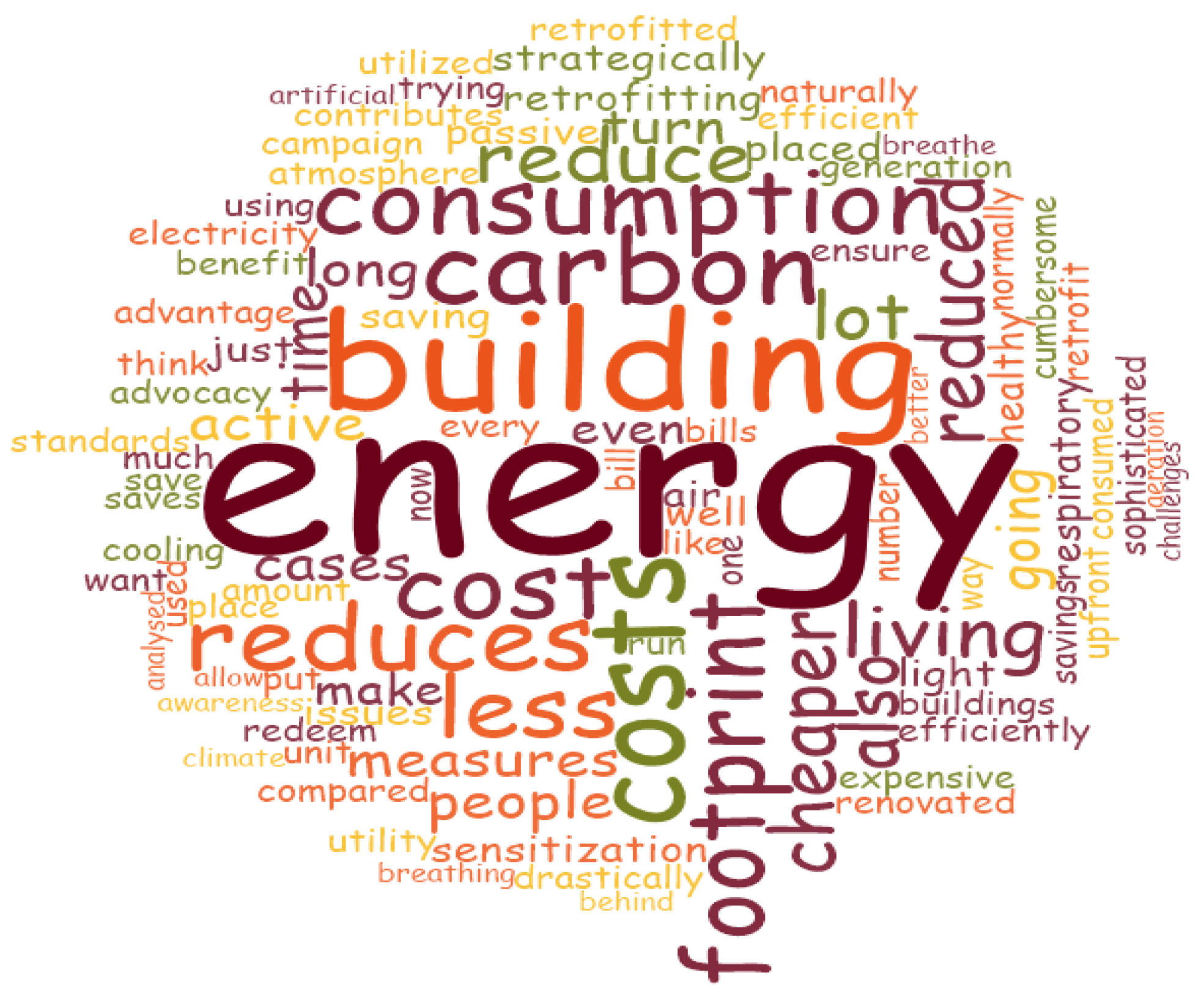
Scheme 2 represents a depiction of the data using word cloud, which shows 500 most frequent words. As shown in the Scheme, the most recurring word was energy with 31 occurrences. With 19 occurrences, buildings ranked second, while costs (15 occurrences) and carbon (14 occurrences) ranked third and fourth, respectively. Other prominent words include consumption, cost, footprint and reduces – each having 12 occurrences. These among others are the expected words, suggesting a vast understanding of the questions the respondents answered. Therefore, it can be inferred that the respondents agreed with the results of past studies such as [90] that passive retrofitting can reduce the carbon footprint of buildings and the cost of energy consumption.
A further text search was done with focus on the most recurring word “energy.” The results (see Scheme 3) show that most of the other recurring words are used in connection with energy.
4.4. Results Integration and Implications
The triangulation of quantitative and qualitative results is presented in this section. This integration is structured across the three main benefit categories (environmental, economic, and social) with emphasis on the observed stakeholders’ awareness gaps. The interviewed government officials consistently acknowledged the environmental benefits of passive energy-efficient retrofitting. However, the quantitative results reveal a notable knowledge disparity: property managers scored higher in awareness of environmental benefits (3.88) compared to the owners (3.27). This .61-point gap implies that while the government agencies work to boost the awareness of environmental benefits through seminars, inspections, and climate action programs, these initiatives may not have effectively helped in engaging private owners, pointing to communication issues. While the owners recognised the importance of environmental considerations, tailored communication strategies that translate technical environmental concepts into practical implications could help close the gap. According to Liu et al. [91], targeted knowledge development and policy instruments can enhance retrofit awareness among stakeholders.
The interview respondents unanimously emphasised the economic rationale for promoting passive energy-efficient retrofitting of residential buildings. These qualitative insights are reinforced by quantitative data, which shows moderately high awareness of economic benefits among both property managers (4.03) and owners (3.99). The narrow awareness score gap (.04) between stakeholder groups suggests that economic benefits are well understood and effectively communicated. This reflects the tangible, easily quantifiable nature of economic benefits, which government agencies promote through cost-benefit analysis tools, sensitisation, workshops, and government-led affordability campaigns. With this result, communications and incentives should build upon the awareness level, while connecting economic benefits to environmental and social outcomes. For example, as revealed by Hirvonen et al. [33] and Pacheco-Torgal [41], a deliberate emphasis on how energy efficiency measures simultaneously reduce costs, and environmental impact could help bridge the environmental awareness gap.
The social benefits of passive energy-efficient retrofitting were widely appreciated by the government officials, but the quantitative results showed a subtle division between property managers and owners. The owners had a higher awareness score for social benefits compared to the awareness of environmental benefits, whereas property managers exhibited a greater awareness of environmental benefits (3.88) than social ones (3.78). This suggests that owners are more in tune with tenant well-being and liveability, probably because of their direct engagement with resident feedback, whereas property managers seem to prioritise regulatory compliance and sustainability efforts. With a moderately high awareness of the social benefits of energy-efficient retrofitting (3.80), there’s a great chance to advocate for retrofitting as a way to bolster community ties and improve social standing—advantages that owners acknowledge, reflected in their high ratings for the statements: 'creates local jobs and drives community growth' (4.25) and 'enhances owners' social reputation' (4.15).
While the qualitative results showed a general awareness of the benefits of passive energy-efficient retrofitting among the government officials, a general awareness gap of .25 exists between the property managers and owners. The relatively high awareness among property managers could be due to higher training and agency contact fosters broader awareness. Given property managers’ stronger general awareness (3.89 versus 3.64), they could serve as effective intermediaries to enhance building owners' understanding, particularly regarding environmental benefits.
5. Conclusions
This study addressed a significant research gap in stakeholders' awareness of the benefits of energy-efficient retrofitting of residential buildings in tropical developing regions, particularly in Nigeria, where older structures significantly impact the nation's energy consumption. While previous studies have examined retrofit awareness in various areas, there has been a lack of thorough assessment of awareness among crucial decision-makers engaged in residential retrofitting, including property managers, owners, and government officials. The quantitative research focused on the first two groups of stakeholders using a convergent mixed-methods strategy that integrated FSE and thematic analysis to measure awareness levels and delve into the qualitative aspects of understanding.
The quantitative findings highlighted complex awareness trends, showing that both property managers and owners exhibited a moderately high level of GAS and all three aspects of energy-efficient retrofitting benefits. Specifically, among the dimensions, both stakeholders were more aware of the economic benefits. For the property managers, the awareness of environmental benefits was slightly lower than that of the economic benefits. This suggests that the property managers recognised the paramount importance of environmental considerations even as their detailed understanding continues to develop. Unlike the property managers for whom the awareness score for social benefits was the lowest, the awareness of social benefits among the owners was stronger than environmental benefits. This reflects their engagement with tenant relationships and community impacts. The qualitative results revealed that the government officials demonstrated a strong awareness of environmental benefits (e.g. energy reduction, natural lighting, etc.) and economic advantages (e.g. cost savings, lower implementation costs, etc.). Conversely, social benefits focused primarily on the air quality, indoor comfort, and ultimately, improvement of occupants’ health.
This study has some limitations, which prevent the generalisation of its results to other stakeholders, building types, and geographical contexts. Moreover, the study did not directly measure how awareness translates into implementation decisions or practical retrofitting outcomes. The cross-sectional nature of the study also prevented an analysis of how awareness might evolve, particularly as policy frameworks and market conditions change. In light of this, future research should investigate how awareness patterns influence actual retrofit implementation decisions and explore whether targeted educational interventions can effectively address the identified awareness gaps, particularly regarding environmental benefits among building owners. Longitudinal studies can provide valuable insights into how awareness evolves relative to policy initiatives, market dynamics, and educational programs. The examination of the awareness among other government officials could deepen the knowledge of energy-efficient retrofitting in Nigeria and potentially reveal the synergies and disconnects among different stakeholder groups. Furthermore, comparative studies in various tropical developing regions could also reveal the contextual factors that shape awareness patterns and the adoption of energy-efficient retrofitting measures, contributing to the formulation of more effective sustainability strategies for the global construction sector.
Author Contributions
Conceptualization, A.S.A., R.B.A., and RYS; Methodology, A.S.A. and R.Y.S.; Writing—original draft preparation, A.S.A., R.B.A., and R.Y.S.; Writing—review and editing, R.B.A. and R.Y.S.; Data curation – A.S.A. and R.B.A.; Visualization, A.S.A.; Supervision, R.B.A. and R.Y.S.; Project administration, A.S.A. and R.S.Y. All authors have read and agreed to the published version of the manuscript.
Funding
This research received no external funding.
Data Availability Statement
The data that support the findings of this study are available from the corresponding author upon reasonable request.
Acknowledgments
The authors have reviewed and edited the output and take full responsibility for the content of this publication.
Conflicts of Interest
The authors declare no conflicts of interest.
References
- Capeluto, I.G. The Unsustainable Direction of Green Building Codes: A Critical Look at the Future of Green Architecture. Buildings 2022, 12, 773. [CrossRef]
- Reinhart, C. Linking Energy Use to Local Climate. Nat Energy 2023, 8, 1311–1312. [CrossRef]
- Ikechukwu, N.C. Electricity Tariff Hike And Economic Implications On Nigerians. Within Nigeria. Available online: https://www.withinnigeria.com/2024/04/28/electricity-tariff-hike-and-economic-implications-on-nigerians/.
- Akinbode, O.M.; Eludoyin, A.O.; Fashae, O.A. Temperature and Relative Humidity Distributions in a Medium-Size Administrative Town in Southwest Nigeria. J Environ Manage 2008, 87, 95–105. [CrossRef]
- Petersen, S.; Svendsen, S. Method and Simulation Program Informed Decisions in the Early Stages of Building Design. Energy Build 2010, 42, 1113–1119. [CrossRef]
- Pepple, D.G. & Pokubo, D. Nigerian Households Use a Range of Energy, from Wood to Solar – Green Energy Planning Must Account for This. Available online: https://theconversation.com/nigerian-households-use-a-range-of-energy-from-wood-to-solar-green-energy-planning-must-account-for-this-237491.
- Beavor, A., Khan, S., Makarem, N., Obasiohia, B.O., Oketa, N.J., & Fernandes, P.A. Financing Net Zero Carbon Buildings in Nigeria. Available online: https://www.climatepolicyinitiative.org/wp-content/uploads/2023/10/Financing-Net-Zero-Carbon_Full-Report.pdf.
- Peiris, S.; Lai, J.H.K.; Kumaraswamy, M.M.; Hou, H. (Cynthia) Smart Retrofitting for Existing Buildings: State of the Art and Future Research Directions. Journal of Building Engineering 2023, 76, 107354. [CrossRef]
- United States Environmental Protection Agency. Smart Growth and Preservation of Existing and Historic Buildings. Available online: https://www.epa.gov/smartgrowth/smart-growth-and-preservation-existing-and-historic-buildings#:~:text=A new%2C green%2C energy-efficient office building that includes, lost in demolishing a comparable existing building. 1.
- Sasu, D.D. Amount of Electricity Consumed in Nigeria as of 2022, by Sector (in Terajoules). Available online: https://www.statista.com/statistics/1307456/electricity-consumption-in-nigeria-by-sector/.
- Quintana, D.I.; Cansino, J.M. Residential Energy Consumption-A Computational Bibliometric Analysis. Buildings 2023, 13, 1525. [CrossRef]
- Xi, T.; Sa’ad, S.U.; Liu, X.; Sun, H.; Wang, M.; Guo, F. Optimization of Residential Indoor Thermal Environment by Passive Design and Mechanical Ventilation in Tropical Savanna Climate Zone in Nigeria, Africa. Energies (Basel) 2025, 18, 450. [CrossRef]
- Adegoke, A.S.; Abidoye, R.B.; Sunindijo, R.Y. A Bibliometric Analysis and Scoping Review of the Critical Success Factors for Residential Building Energy Retrofitting. Buildings 2024, 14, 3989. [CrossRef]
- Alam, S.; Airaksinen, M.; Lahdelma, R. Attitudes and Approaches of Finnish Retrofit Industry Stakeholders toward Achieving Nearly Zero-Energy Buildings. Sustainability 2021, 13, 7359. [CrossRef]
- Gherri, B.; Cavagliano, C.; Orsi, S. Social Housing Policies and Best Practice Review for Retrofit Action - Case Studies from Parma (IT). IOP Conf Ser Mater Sci Eng 2017, 245, 082038. [CrossRef]
- Rahman, M.M. Benefits of Greening Existing Buildings. IOP Conf Ser Mater Sci Eng 2019, 615, 012033. [CrossRef]
- Altmann, E. Apartments, Co-Ownership and Sustainability: Implementation Barriers for Retrofitting the Built Environment. Journal of Environmental Policy & Planning 2014, 16, 437–457. [CrossRef]
- Friedman, C.; Becker, N.; Erell, E. Retrofitting Residential Building Envelopes for Energy Efficiency: Motivations of Individual Homeowners in Israel. Journal of Environmental Planning and Management 2018, 61, 1805–1827. [CrossRef]
- Djebbar, K.E.-B.; Mokhtari, A. Evaluation of the Level of Awareness of the Inhabitants on the Importance of the Energy Retrofitting of Buildings: Case Study of Tlemcen (Algeria). International Journal of Building Pathology and Adaptation 2025, 43, 209–256. [CrossRef]
- Ab. Azis, S.S., Sipan, I. & Sapri, M. Malaysian Awareness and Willingness towards Retrofitted Green Buildings: Community. In Proceedings of the 25th International Business Information Management Association Conference - Innovation Vision 2020: From Regional Development Sustainability to Global Economic Growth; Amsterdam, Netherlands., 2015.
- Alfaiz, S.K.; Abd Karim, S.B.; Alashwal, A.M. Critical Success Factors of Green Building Retrofitting Ventures in Iraq. International Journal of Sustainable Construction Engineering and Technology 2021, 12. [CrossRef]
- Pajek, L.; Jevrić, M.; Ćipranić, I.; Košir, M. A Multi-Aspect Approach to Energy Retrofitting under Global Warming: A Case of a Multi-Apartment Building in Montenegro. Journal of Building Engineering 2023, 63, 105462. [CrossRef]
- Kong, X.; Lu, S.; Wu, Y. A Review of Building Energy Efficiency in China during “Eleventh Five-Year Plan” Period. Energy Policy 2012, 41, 624–635. [CrossRef]
- Ojelabi, R.A.; Mohammed, T.A.; Oladiran, O.J. Awareness and Implementation Challenges of the Green Retrofitting in Building Enclosure in the Nigerian Construction Industry. IOP Conf Ser Earth Environ Sci 2024, 1342, 012023. [CrossRef]
- Oke, O.S.; Aliu, J.O.; Duduyegbe, O.M.; Oke, A.E. Assessing Awareness and Adoption of Green Policies and Programs for Sustainable Development: Perspectives from Construction Practitioners in Nigeria. Sustainability 2025, 17, 2202. [CrossRef]
- Elkington, J. Cannibals with Forks : The Triple Bottom Line of 21st Century Business.; Oxford: Capstone, 1997;
- Fei, W.; Opoku, A.; Agyekum, K.; Oppon, J.A.; Ahmed, V.; Chen, C.; Lok, K.L. The Critical Role of the Construction Industry in Achieving the Sustainable Development Goals (SDGs): Delivering Projects for the Common Good. Sustainability 2021, 13, 9112. [CrossRef]
- Fuerst, F.; McAllister, P. Green Noise or Green Value? Measuring the Effects of Environmental Certification on Office Values. Real Estate Economics 2011, 39, 45–69. [CrossRef]
- Liang, X.; Shen, G.; Guo, L. Improving Management of Green Retrofits from a Stakeholder Perspective: A Case Study in China. Int J Environ Res Public Health 2015, 12, 13823–13842. [CrossRef]
- Coyne, B.; Lyons, S.; McCoy, D. The Effects of Home Energy Efficiency Upgrades on Social Housing Tenants: Evidence from Ireland. Energy Effic 2018, 11, 2077–2100. [CrossRef]
- Jafari, A.; Valentin, V. An Optimization Framework for Building Energy Retrofits Decision-Making. Build Environ 2017, 115, 118–129. [CrossRef]
- Zheng, L.; Lai, J. Environmental and Economic Evaluations of Building Energy Retrofits: Case Study of a Commercial Building. Build Environ 2018, 145, 14–23. [CrossRef]
- Hirvonen, J.; Saari, A.; Jokisalo, J.; Kosonen, R. Socio-Economic Impacts of Large-Scale Deep Energy Retrofits in Finnish Apartment Buildings. J Clean Prod 2022, 368, 133187. [CrossRef]
- Jafari, A., Valentin, V., Howe, K., & Russell, M.M. Environmental Impact of Housing Retrofit Activities: Case Study.; World Sustainable Building (WBS): Barcelona, Spain, 2014.
- Kabeyi, M.J.B.; Olanrewaju, O.A. Sustainable Energy Transition for Renewable and Low Carbon Grid Electricity Generation and Supply. Front Energy Res 2022, 9. [CrossRef]
- Hurley, D., Takahashi, K., Biewald, B., Kallay, J., and Maslowsk, R. Costs and Benefits of Electric Utility Energy Efficiency in Massachusetts. Available online: https://www.synapse-energy.com/sites/default/files/SynapseReport.2008-08.0.MA-Electric-Utility-Energy-Efficiency.08-075.pdf.
- Crespo Sánchez, E.; López Plazas, F.; Onecha Pérez, B.; Marmolejo-Duarte, C. Towards Intergenerational Transfer to Raise Awareness about the Benefits and Co-Benefits of Energy Retrofits in Residential Buildings. Buildings 2023, 13, 2213. [CrossRef]
- Luddeni, G.; Krarti, M.; Pernigotto, G.; Gasparella, A. An Analysis Methodology for Large-Scale Deep Energy Retrofits of Existing Building Stocks: Case Study of the Italian Office Building. Sustain Cities Soc 2018, 41, 296–311. [CrossRef]
- Alkhateeb, E.; Hijleh, B.A. Potential of Upgrading Federal Buildings in the United Arab Emirates to Reduce Energy Demand. Procedia Eng 2017, 180, 61–70. [CrossRef]
- Ahn, Y.H.; Pearce, A.R.; Wang, Y.; Wang, G. Drivers and Barriers of Sustainable Design and Construction: The Perception of Green Building Experience. International Journal of Sustainable Building Technology and Urban Development 2013, 4, 35–45. [CrossRef]
- Pacheco-Torgal, F. Introduction to Cost-Effective Energy-Efficient Building. In Cost-effective Energy Efficient Building Retrofitting: Materials, Technologies, Optimization and Case Studies.; J. K. F. Pacheco-Torgal, C.G. Granqvist, B.P. Jelle, G. P Vanoli, N.B. (Eds. ), Ed.; Elsevier: Cambridge., 2017.
- Alcazar, S.S. and Bass, B. (2005). Energy Performance of Green Roofs in a Multi-Storey Residential Building in Madrid.; Green Roofs for Healthy Cities, Toronto, ON (Canada); City of Washington, DC (United States): Canada; pp. 569–582.
- Niachou, A.; Papakonstantinou, K.; Santamouris, M.; Tsangrassoulis, A.; Mihalakakou, G. Analysis of the Green Roof Thermal Properties and Investigation of Its Energy Performance. Energy Build 2001, 33, 719–729. [CrossRef]
- Insulation Council of Australia and New Zealand. The Value of Ceiling Insulation: Impacts Of Retrofitting Ceiling Insulation To Residential Dwellings In Australia. Available online: https://icanz.org.au/wp-content/uploads/2023/03/ICANZ-CeilingInsulationReport-V04-1.pdf.
- Oguntona, O.A.; Maseko, B.M.; Aigbavboa, C.O.; Thwala, W.D. Barriers to Retrofitting Buildings for Energy Efficiency in South Africa. IOP Conf Ser Mater Sci Eng 2019, 640, 012015. [CrossRef]
- Shahdan, M.S.; Ahmad, S.S.; Hussin, M.A. External Shading Devices for Energy Efficient Building. IOP Conf Ser Earth Environ Sci 2018, 117, 012034. [CrossRef]
- Clinch, J.P.; Healy, J.D. Cost-Benefit Analysis of Domestic Energy Efficiency. Energy Policy 2001, 29, 113–124. [CrossRef]
- Pivo, G. & Fisher, J. Investment Returns from Responsible Property Investments: Energy Efficient, Transit-Oriented and Urban Regeneration Office Properties in the US from 1998–2008. In Responsible Property Investing Center.; 2009.
- Brounen, D., Kok, N., & Menne, J. Energy Performance Certification in the Housing Market. Implementation and Valuation in the European Union.; European Centre for Corporate Engagement, Maastricht University, Netherlands., 2009.
- Mayer, Z.; Volk, R.; Schultmann, F. Analysis of Financial Benefits for Energy Retrofits of Owner-Occupied Single-Family Houses in Germany. Build Environ 2022, 211, 108722. [CrossRef]
- Rhoads, J. Low Carbon Retrofit Toolkit: A Roadmap to Success. Available online: https://www.betterbuildingspartnership.co.uk/sites/default/files/media/attachment/bbp-low-carbon-retrofit-toolkit.pdf.
- Ferreira, M.; Almeida, M.; Rodrigues, A.; Silva, S.M. Comparing Cost-Optimal and Net-Zero Energy Targets in Building Retrofit. Building Research & Information 2016, 44, 188–201. [CrossRef]
- Falaiye, H. Nigerians Opt for Alternative Energy Sources amid High Fuel Costs. Available online: https://punchng.com/nigerians-opt-for-alternative-energy-sources-amid-high-fuel-costs/.
- Boyd, G.A.; Pang, J.X. Estimating the Linkage between Energy Efficiency and Productivity. Energy Policy 2000, 28, 289–296. [CrossRef]
- Worrell, E.; Bernstein, L.; Roy, J.; Price, L.; Harnisch, J. Industrial Energy Efficiency and Climate Change Mitigation. Energy Effic 2009, 2, 109–123. [CrossRef]
- Proskuryakova, L.; Kovalev, A. Measuring Energy Efficiency: Is Energy Intensity a Good Evidence Base? Appl Energy 2015, 138, 450–459. [CrossRef]
- Ma’bdeh, S.N.; Ghani, Y.A.; Obeidat, L.; Aloshan, M. Affordability Assessment of Passive Retrofitting Measures for Residential Buildings Using Life Cycle Assessment. Heliyon 2023, 9, e13574. [CrossRef]
- Su, Y.; Cong, W.; Pan, S. Incremental Cost-Benefit Analysis of Passive Residence Based on Low Carbon Perspective. In Proceedings of the ICCREM 2017; American Society of Civil Engineers: Reston, VA, November 9 2017; pp. 164–171.
- Mikulić, D.; Bakarić, I.R.; Slijepčević, S. The Economic Impact of Energy Saving Retrofits of Residential and Public Buildings in Croatia. Energy Policy 2016, 96, 630–644. [CrossRef]
- Howden-Chapman, P.; Matheson, A.; Crane, J.; Viggers, H.; Cunningham, M.; Blakely, T.; Cunningham, C.; Woodward, A.; Saville-Smith, K.; O’Dea, D.; et al. Effect of Insulating Existing Houses on Health Inequality: Cluster Randomised Study in the Community. BMJ 2007, 334, 460. [CrossRef]
- Causone, F.; Pietrobon, M.; Pagliano, L.; Erba, S. A High Performance Home in the Mediterranean Climate: From the Design Principle to Actual Measurements. Energy Procedia 2017, 140, 67–79. [CrossRef]
- Payne, J. Downy, F. & Weatherall, D. Capturing the “Multiple Benefits” of Energy Efficiency in Practice: The UK Example. Available online: https://energysavingtrust.org.uk/sites/default/files/reports/1-424-15_Payne.pdf.
- Liang, X.; Peng, Y.; Shen, G.Q. A Game Theory Based Analysis of Decision Making for Green Retrofit under Different Occupancy Types. J Clean Prod 2016, 137, 1300–1312. [CrossRef]
- Wang, S.-Y.; Lee, K.-T.; Kim, J.-H. Green Retrofitting Simulation for Sustainable Commercial Buildings in China Using a Proposed Multi-Agent Evolutionary Game. Sustainability 2022, 14, 7671. [CrossRef]
- Meijer, Frits; Visscher, Henk; Nieboer, Nico; Kroese, R. Jobs Creation through Energy Renovation of the Housing Stock. Available online: https://web.archive.org/web/20171222124828/http://www.neujobs.eu/sites/default/files/publication/2013/01/Energy renovation-D14-2 19th December 2012_.pdf%0A.
- Ürge-Vorsatz, D., Tirado-Herrero, S., Fegyverneky, S., Arena, D., Butcher, A., and Telegdy, A. Employment Impacts of a Large-Scale Deep Building Energy Retrofit Programme in Hungary. Available online: http://3csep.ceu.hu/projects/employment-impacts-of-a-large-scale-deep-building-energy-retrofit-programme-in-hungary.
- Bell, C.J. Energy Efficiency Job Creation: Real World Experiences. In Proceedings of the ACEEE White Paper.; 2012.
- Oyedepo, S. Efficient Energy Utilization as a Tool for Sustainable Development in Nigeria. International Journal of Energy and Environmental Engineering 2012, 3, 11. [CrossRef]
- Sameh, S. and Kamel, B. Promoting Green Retrofitting to Enhance Energy Efficiency of Residential Buildings in Egypt. Journal of Engineering and Applied Science 2020, 67, 1709–1728.
- Tuominen, P.; Klobut, K.; Tolman, A.; Adjei, A.; de Best-Waldhober, M. Energy Savings Potential in Buildings and Overcoming Market Barriers in Member States of the European Union. Energy Build 2012, 51, 48–55. [CrossRef]
- Creswell, J. W., & Plano Clark, V.L. Designing and Conducting Mixed Methods Research; 3rd ed.; Sage Publications., 2017;
- Nigerian Institution of Estate Surveyors and Valuers (NIESV). 2023 Financial Members. Available online: https://www.niesv.org.ng/financial_list.php.
- NIESV. (2024). Firms Directory. Available online: https://www.firms.niesv.org.ng/niesv_firm_by_location.php?firm_location1=Lagos (accessed on 26 May 2024).
- Hendriks, G. How the Spatial Dispersion and Size of Country Networks Shape the Geographic Distance That Firms Add during International Expansion. International Business Review 2020, 29, 101738. [CrossRef]
- Ott, R.L. & Longnecker, M. An Introduction to Statistical Methods and Data Analysis.; Brooks/Cole, Belmont, CA., 2010;
- Corral, N.; Gil, M.Á.; Gil, P. Interval and Fuzzy-Valued Approaches to the Statistical Management of Imprecise Data. In; 2011; pp. 453–468.
- Adegoke, A.S.; Taiwo Gbadegesin, J.; Oluwafemi Ayodele, T.; Efuwape Agbato, S.; Bamidele Oyedele, J.; Tunde Oladokun, T.; Onyinyechukwu Ebede, E. Property Managers’ Awareness of the Potential Benefits of Vertical Greenery Systems on Buildings. International Journal of Construction Management 2023, 23, 2769–2778. [CrossRef]
- Xu, Y.; Yeung, J.F.Y.; Chan, A.P.C.; Chan, D.W.M.; Wang, S.Q.; Ke, Y. Developing a Risk Assessment Model for PPP Projects in China — A Fuzzy Synthetic Evaluation Approach. Autom Constr 2010, 19, 929–943. [CrossRef]
- Wang, G.; Liu, Y.; Hu, Z.; Lyu, Y.; Zhang, G.; Liu, J.; Liu, Y.; Gu, Y.; Huang, X.; Zheng, H.; et al. Flood Risk Assessment Based on Fuzzy Synthetic Evaluation Method in the Beijing-Tianjin-Hebei Metropolitan Area, China. Sustainability 2020, 12, 1451. [CrossRef]
- Nguyen, H.D.; Macchion, L. A Comprehensive Risk Assessment Model Based on a Fuzzy Synthetic Evaluation Approach for Green Building Projects: The Case of Vietnam. Engineering, Construction and Architectural Management 2023, 30, 2837–2861. [CrossRef]
- Pimentel, J.L. A Note on the Usage of Likert Scaling for Research Data Analysis. USM R & D 2010, 18, 109–112.
- Braun, V.; Clarke, V. Using Thematic Analysis in Psychology. Qual Res Psychol 2006, 3, 77–101. [CrossRef]
- Nunnally, J. C., & Bernstein, I.H. Psychometric Theory; 3rd ed.; McGraw-Hill.: New York, 1994;
- Mangialardo, A.; Micelli, E.; Saccani, F. Does Sustainability Affect Real Estate Market Values? Empirical Evidence from the Office Buildings Market in Milan (Italy). Sustainability 2019, 11, 12. [CrossRef]
- Zhang, M.; Lian, Y.; Zhao, H.; Xia-Bauer, C. Unlocking Green Financing for Building Energy Retrofit: A Survey in the Western China. Energy Strategy Reviews 2020, 30, 100520. [CrossRef]
- Zuo, J.; Read, B.; Pullen, S.; Shi, Q. Achieving Carbon Neutrality in Commercial Building Developments – Perceptions of the Construction Industry. Habitat Int 2012, 36, 278–286. [CrossRef]
- Santamouris, M.; Kolokotsa, D. Passive Cooling Dissipation Techniques for Buildings and Other Structures: The State of the Art. Energy Build 2013, 57, 74–94. [CrossRef]
- Nguanso, C.; Taweekun, J.; Dai, Y.; Ge, T. The Criteria of Passive and Low Energy in Building Design for Tropical Climate in Thailand. International Journal of Integrated Engineering 2020, 12. [CrossRef]
- Mastroberti, M., Bournas, D., Vona, M., Manganelli, B., & Palermo, V. Combined Seismic plus Energy Retrofitting for the Existing RC Buildings: Economic Feasibility. Available online: https://iris.unibas.it/handle/11563/136075.
- Elaouzy, Y.; El Fadar, A. Energy, Economic and Environmental Benefits of Integrating Passive Design Strategies into Buildings: A Review. Renewable and Sustainable Energy Reviews 2022, 167, 112828. [CrossRef]
- Liu, G.; Tan, Y.; Huang, Z. Knowledge Mapping of Homeowners’ Retrofit Behaviors: An Integrative Exploration. Buildings 2021, 11, 273. [CrossRef]
Scheme 1.
Flowchart of convergent mixed methods research design.
Scheme 2.
Cloud of most frequently used words.
Scheme 3.
Text search result of words used in connection to energy.
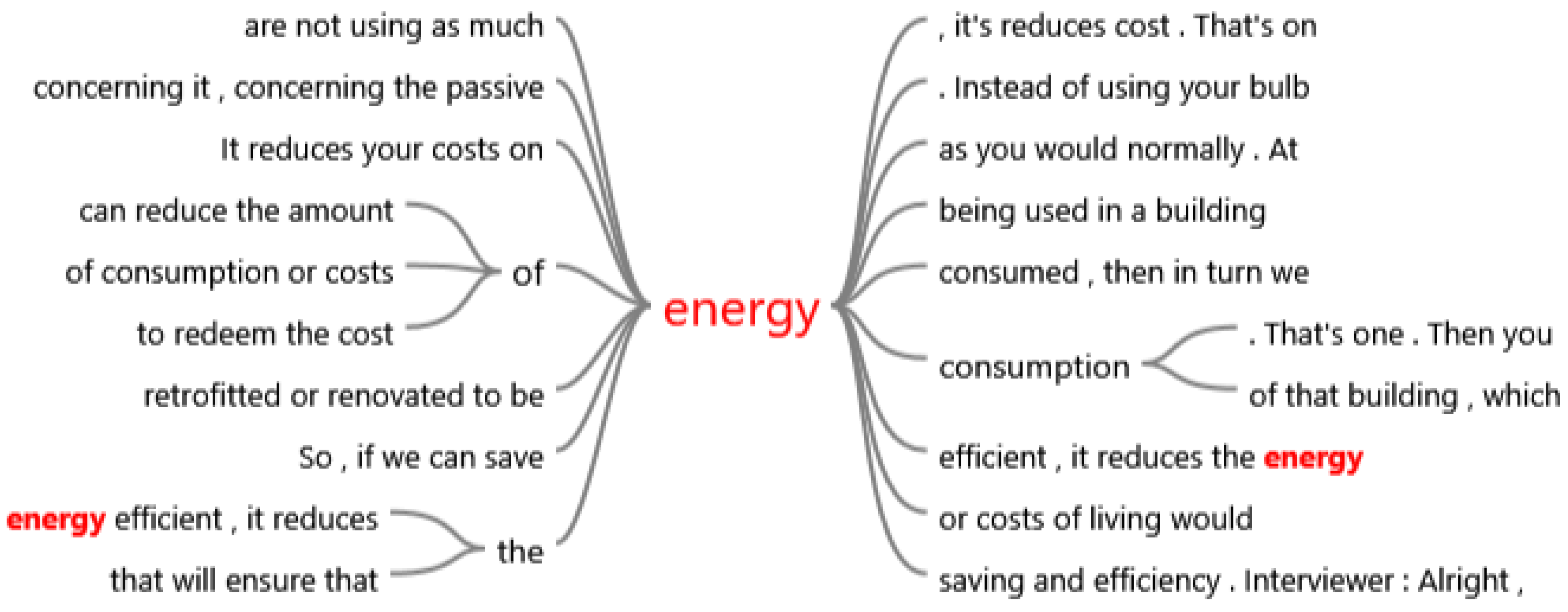

Table 1.
Summary of the benefits of energy-efficient retrofitting.
| Dimensions | Key benefits | Code | References |
| Environmental | Reduces heavy reliance on non-renewable energy consumption | Env1 | Hirvonen et al. [33], Hurley et al. [36], Kabeyi and Olanrewaju [35]. |
| Reduces carbon emissions and household energy consumption | Env2 | Ahn et al. [40], Alcazar and Bass [42], Alkhateeb and Hijleh [39], Clinch and Healy [47], Coyne et al. [30], Hirvonen et al. [33], Hurley et al. [36], Insulation Council of Australia and New Zealand [ICANZ] [44], Jafari et al. [34], Luddeni et al. [38], Niachou et al. [43]. | |
| Enhances air quality | Env3 | Ahn et al. [40], Pacheco-Torgal [41]. | |
| Mitigation of climate change | Env4 | Ab. Azis et al. [20]. | |
| Enhances energy security | Env5 | Ahn et al. [40], Oguntona et al. [45]. | |
| Increases the energy star rating of existing residential dwellings | Env6 | ICANZ [44]. | |
| Reduces solar radiation and glare | Env7 | Shahdan et al. [46]. | |
| Economic | Improves competitive positioning in the property market and attract more willing tenants | Eco1 | Ahn et al. [40]. |
| Increases property value | Eco2 | Brounen et al. [49], Hirvonen et al. [33], ICANZ [44], Pivo and Fisher [48], Sameh and Kamel [69]. | |
| Saves energy and reduces consumption cost | Eco3 | Clinch and Healy [47], Hirvonen et al. [33], Pacheco-Torgal [41], Ma'bdeh et al. [57], Mayer et al. [50], Rhoads [51], Su et al. [58]. | |
| Improves real estate’s contribution to national economic growth in the long run | Eco4 | Hirvonen et al. [33], Proskuryakova and Kovalev [56], Tuominen et al. [70]. | |
| Social | Enhances homeowners’ social reputation | Soc1 | Ahn et al. [40], Liang et al. [63], Wang et al. [64]. |
| Reduces illness and health care expenditures and guarantees good health and well-being | Soc2 | Causone [61], Clinch and Healy [47], Coyne et al. [30], Howden-Chapman et al. [60], Jafari and Valentin [31], Payne et al. [62]. | |
| Improves indoor thermal comfort, tenants’ satisfaction, and productivity | Soc3 | Causone [61], Clinch and Healy [47], Liang et al. [63], Payne et al. [62]. | |
| Creates local jobs and drives community growth | Soc4 | Bell [67], Clinch and Healy [47], Hurley et al. [36], Meijer et al. [65], Mikulić et al. [59], Oyedepo [68], Ürge-Vorsatz et al. [66]. | |
| Fosters positive tenant-owner relationship | Soc5 | Oguntona et al. [45]. |
Table 2.
Profiles of the interview respondents.
| Respondent | Profession | Agency | Years with agency |
| LAS001 | Civil Engineer | LASBCA | 5 years |
| LAS002 | Town Planner | LASBCA | 24 years |
| LAS003 | Town Planner | LASPPPA | 11 years |
| LAS004 | Architect | LASPPPA | 16 years |
| LAS005 | Civil Engineer & Geographic Information System (GIS) Analyst | LASBCA | 8 years |
| LAS006 | Architect | LASPPPA | 15 years |
Table 3.
FSE of property managers’ perception of retrofit benefits.
| Retrofit benefits |
Criteria Mean (1) |
Level 3 membership function (% of response) (2) |
Criteria weight (3) |
Dimen-sion weight (4) | Level 2 membership function (5 = 2*3) | 6 = 5/Likert scale* | Awareness scores | ||||||||||||
| SU | SLU | N | SLA | SA | SU | SLU | N | SLA | SA | SU | SLU | N | SLA | SA | |||||
| Environmental | 0.437 | 0.019 | 0.120 | 0.068 | 0.546 | 0.246 | 0.019 | 0.241 | 0.205 | 2.185 | 1.228 | 3.88 | |||||||
| Env4 | 3.96 | 0.000 | 0.102 | 0.102 | 0.534 | 0.263 | 0.1460 | ||||||||||||
| Env5 | 3.96 | 0.017 | 0.110 | 0.042 | 0.559 | 0.271 | 0.1460 | ||||||||||||
| Env2 | 3.95 | 0.034 | 0.102 | 0.042 | 0.525 | 0.297 | 0.1456 | ||||||||||||
| Env1 | 3.92 | 0.008 | 0.144 | 0.034 | 0.551 | 0.263 | 0.1445 | ||||||||||||
| Env3 | 3.92 | 0.042 | 0.068 | 0.068 | 0.568 | 0.254 | 0.1445 | ||||||||||||
| Env6 | 3.75 | 0.017 | 0.153 | 0.068 | 0.585 | 0.178 | 0.1382 | ||||||||||||
| Env7 | 3.67 | 0.017 | 0.169 | 0.127 | 0.500 | 0.186 | 0.1353 | ||||||||||||
| Economic | 0.259 | 0.021 | 0.089 | 0.075 | 0.473 | 0.342 | 0.021 | 0.177 | 0.226 | 1.891 | 1.710 | 4.03 | |||||||
| Eco2 | 4.13 | 0.008 | 0.085 | 0.059 | 0.466 | 0.381 | 0.2565 | ||||||||||||
| Eco3 | 4.12 | 0.034 | 0.059 | 0.025 | 0.517 | 0.364 | 0.2559 | ||||||||||||
| Eco4 | 3.95 | 0.025 | 0.110 | 0.110 | 0.398 | 0.356 | 0.2453 | ||||||||||||
| Eco1 | 3.9 | 0.017 | 0.102 | 0.110 | 0.508 | 0.263 | 0.2422 | ||||||||||||
| Social | 0.304 | 0.027 | 0.118 | 0.128 | 0.501 | 0.226 | 0.027 | 0.236 | 0.384 | 2.003 | 1.130 | 3.78 | |||||||
| Soc3 | 3.97 | 0.025 | 0.068 | 0.076 | 0.568 | 0.263 | 0.2102 | ||||||||||||
| Soc4 | 3.76 | 0.017 | 0.110 | 0.178 | 0.483 | 0.212 | 0.1990 | ||||||||||||
| Soc2 | 3.75 | 0.017 | 0.169 | 0.102 | 0.475 | 0.237 | 0.1985 | ||||||||||||
| Soc1 | 3.74 | 0.042 | 0.119 | 0.136 | 0.466 | 0.237 | 0.1980 | ||||||||||||
| Soc5 | 3.67 | 0.034 | 0.127 | 0.153 | 0.508 | 0.178 | 0.1943 | ||||||||||||
Note. SU = 1; SLU = 2; N = 3; SLA = 4; and SA = 5.
Table 4.
General awareness: property managers perspectives.
| Dimensions | Dimension weight (4) | Level 2 membership function (5 = 2*3) |
Level 1 membership function (7 = 4*5) |
GAS | |||||||||
| SU | SLU | N | SLA | SA | SU | SLU | N | SLA | SA | ||||
| Environmental | 0.437 | 0.019 | 0.120 | 0.068 | 0.546 | 0.246 | |||||||
| Economic | 0.259 | 0.021 | 0.089 | 0.075 | 0.473 | 0.342 | |||||||
| Social | 0.304 | 0.027 | 0.118 | 0.128 | 0.501 | 0.226 | |||||||
| 0.022 | 0.111 | 0.088 | 0.513 | 0.265 | 0.022 | 0.223 | 0.265 | 2.053 | 1.323 | 3.89 | |||
Table 5.
FSE of owners’ perception of retrofit benefits.
| Retrofit benefits |
Criteria Mean (1) |
Level 3 membership function (% of response) (2) |
Criteria weight (3) |
Dimension weight (4) | Level 2 membership function (5 = 2*3) | 6 = 5/Likert scale* | Awareness scores | ||||||||||||
| SU | SLU | N | SLA | SA | SU | SLU | N | SLA | SA | SU | SLU | N | SLA | SA | |||||
| Environmental | 0.397 | 0.101 | 0.255 | 0.072 | 0.422 | 0.151 | 0.101 | 0.509 | 0.216 | 1.686 | 0.756 | 3.27 | |||||||
| Env7 | 3.39 | 0.055 | 0.239 | 0.098 | 0.472 | 0.135 | 0.1483 | ||||||||||||
| Env6 | 3.39 | 0.055 | 0.282 | 0.080 | 0.387 | 0.196 | 0.1483 | ||||||||||||
| Env3 | 3.37 | 0.117 | 0.202 | 0.037 | 0.485 | 0.160 | 0.1474 | ||||||||||||
| Env4 | 3.28 | 0.104 | 0.245 | 0.074 | 0.423 | 0.153 | 0.1435 | ||||||||||||
| Env5 | 3.23 | 0.086 | 0.282 | 0.092 | 0.399 | 0.141 | 0.1413 | ||||||||||||
| Env2 | 3.15 | 0.135 | 0.264 | 0.061 | 0.399 | 0.141 | 0.1378 | ||||||||||||
| Env1 | 3.05 | 0.160 | 0.270 | 0.061 | 0.380 | 0.129 | 0.1334 | ||||||||||||
| Economic | 0.276 | 0.032 | 0.105 | 0.057 | 0.451 | 0.355 | 0.032 | 0.210 | 0.172 | 1.805 | 1.773 | 3.99 | |||||||
| Eco2 | 4.29 | 0.031 | 0.043 | 0.025 | 0.405 | 0.497 | 0.2703 | ||||||||||||
| Eco4 | 4.13 | 0.025 | 0.067 | 0.061 | 0.448 | 0.399 | 0.2602 | ||||||||||||
| Eco1 | 3.95 | 0.037 | 0.098 | 0.031 | 0.546 | 0.288 | 0.2489 | ||||||||||||
| Eco3 | 3.5 | 0.037 | 0.233 | 0.123 | 0.405 | 0.202 | 0.2205 | ||||||||||||
| Social | 0.327 | 0.039 | 0.124 | 0.109 | 0.450 | 0.278 | 0.039 | 0.247 | 0.327 | 1.800 | 1.389 | 3.80 | |||||||
| Soc4 | 4.25 | 0.012 | 0.049 | 0.061 | 0.429 | 0.448 | 0.2261 | ||||||||||||
| Soc1 | 4.15 | 0.018 | 0.055 | 0.067 | 0.472 | 0.387 | 0.2207 | ||||||||||||
| Soc3 | 3.77 | 0.031 | 0.135 | 0.074 | 0.558 | 0.202 | 0.2005 | ||||||||||||
| Soc5 | 3.44 | 0.031 | 0.184 | 0.233 | 0.423 | 0.129 | 0.1830 | ||||||||||||
| Soc2 | 3.19 | 0.123 | 0.233 | 0.135 | 0.350 | 0.160 | 0.1697 | ||||||||||||
Note. SU = 1; SLU = 2; N = 3; SLA = 4; and SA = 5.
Table 6.
General awareness: owners’ perspectives.
| Dimensions | Dimension weight (4) |
Level 2 membership function (5 = 2*3) |
Level 1 membership function (7 = 4*5) |
GAS | |||||||||
| SU | SLU | N | SLA | SA | SU | SLU | N | SLA | SA | ||||
| Environmental | 0.397 | 0.101 | 0.255 | 0.072 | 0.422 | 0.151 | |||||||
| Economic | 0.276 | 0.032 | 0.105 | 0.057 | 0.451 | 0.355 | |||||||
| Social | 0.327 | 0.039 | 0.124 | 0.109 | 0.450 | 0.278 | |||||||
| 0.062 | 0.171 | 0.080 | 0.439 | 0.249 | 0.062 | 0.341 | 0.240 | 1.756 | 1.243 | 3.64 | |||
Disclaimer/Publisher’s Note: The statements, opinions and data contained in all publications are solely those of the individual author(s) and contributor(s) and not of MDPI and/or the editor(s). MDPI and/or the editor(s) disclaim responsibility for any injury to people or property resulting from any ideas, methods, instructions or products referred to in the content. |
© 2025 by the authors. Licensee MDPI, Basel, Switzerland. This article is an open access article distributed under the terms and conditions of the Creative Commons Attribution (CC BY) license (http://creativecommons.org/licenses/by/4.0/).
Copyright: This open access article is published under a Creative Commons CC BY 4.0 license, which permit the free download, distribution, and reuse, provided that the author and preprint are cited in any reuse.


