

Submitted:
30 May 2025
Posted:
30 May 2025
You are already at the latest version
Abstract
Mining by-products present both an environmental challenge and a resource opportunity. This review investigates their potential application in road pavement construction, focusing on materials such as fly ash, slag, Sulphur, red mud, tailings, and silica fume. Drawing from laboratory and field studies, the review examines their roles across pavement layers—subgrade, base, subbase, asphalt mixtures, and rigid pavements—emphasising mechanical properties, durability, moisture resistance, and aging performance. When properly processed or stabilised, many of these wastes meet or exceed conventional performance standards, contributing to reduced use of virgin materials and greenhouse gas emissions. However, issues such as variability in composition, leaching risks, and a lack of standardised design protocols remain barriers to adoption. This review aims to consolidate current research, evaluate practical feasibility, and identify directions for future studies that would enable the responsible and effective reuse of mining waste in transportation infrastructure.
Keywords:
Mining waste
; Pavement construction
; Sustainable materials
; Fly ash
; Slag
; Red mud
; Silica fume
; Tailings
; Sulphur
1. Introduction
The continued expansion of global mining activities has led to the generation of over 100 billion tons of mining waste annually, making it one of the world’s most significant forms of industrial waste streams (Minerals Research Institute of Western Australia, 2024) [1]. These wastes, including fly ash, slag, red mud, tailings, and overburden, are often chemically active and volumetrically abundant, posing both disposal challenges and environmental hazards, particularly heavy metal leaching and acid mine drainage (Das et al., 2023) [2]. According to the local environmental laws and available reuse and recycling methods, these mineral wastes are stored in ponds, large dams or piles. Additionally, waste can be classified as either inert or hazardous, depending on whether it poses harmful effects to humans and the environment. In the case of hazardous waste, special treatment is required to reduce the risk (Aznar-Sánchez et al., 2018) [3]. As the world moves towards more eco-friendly practices, the impact of mining waste on the ecosystem and human health highlights the importance of managing and mitigating its effects in a sustainable manner (Yu et al., 2024) [4].
Several studies have been conducted to explore more sustainable practices for reuse and recycling, highlighting the potential of utilising mining waste as a secondary resource. For instance, mining waste can be reused as construction materials, for soil improvement, in land reclamation, and to create eco-friendly products. With the rising demand for concrete aggregate, the construction industry presents a timely opportunity to utilise mining byproducts in simple and cost-effective ways. Furthermore, certain types of mining waste, such as copper slag, have been found to enhance the strength and durability of concrete (Yu et al., 2024) [4].At the same time, the road construction industry faces increasing pressure to reduce its environmental impact and reliance on non-renewable resources. Integrating mining waste into pavement structures presents a dual opportunity: mitigating waste management burdens and reducing demand for virgin construction materials (Segui et al., 2023) [5]. Prior studies have shown encouraging results. For instance, fly ash and slag blends have significantly improved subgrade strength (Abdila et al., 2022) [6], and red mud and steel slag have enhanced durability in asphalt and rigid pavements (Giustozzi et al., 2018; Ram Kumar et al., 2025) [7,8]. However, concerns over long-term performance, environmental compatibility, and the absence of standardised design methods persist. This review critically evaluates the current state of knowledge, examining both the mechanical and environmental performance of mining waste in road pavements, and identifies the main gaps and future directions to facilitate broader and more responsible implementation.
This review employed a structured literature analysis to evaluate the use of mining waste materials in road pavement construction. Relevant peer-reviewed journal articles, technical standards, and conference papers from 2015 to 2025 were sourced using the ECU online library and academic databases such as Scopus, Web of Science, Google Scholar, and ScienceDirect. Search terms included “mining waste in pavement,” “fly ash stabilisation,” “slag in asphalt,” “red mud binder,” and “geopolymer pavement materials.” More than 80 publications were selected based on their relevance, experimental detail, and applicability to pavement engineering.
The selected studies were examined to extract data on material properties, treatment methods, application contexts, and performance indicators. Key parameters such as unconfined compressive strength (UCS), California Bearing Ratio (CBR), indirect tensile strength (ITS), Marshall stability, rutting resistance, and leachability were evaluated. Mining waste materials were categorised according to their source (e.g., fly ash, slag, red mud, tailings) and their application within subgrade, base, subbase, asphalt mixtures, or rigid pavements.
2. Types and Characteristics of Mining Waste
The type and characteristics of mine waste primarily depend on the type of mining operation and kind of mineral deposit, as well as the technology used (Damoah & Herat, 2022) [9]. Different steps in the mining process can produce various types of waste materials, each with distinct physical and chemical properties that influence their potential for reuse in road construction. A thorough understanding of types and characteristics is crucial for assessing their environmental impact and engineering performance.
2.1. Overburden and Waste Rock
These granular materials are removed during initial ore extraction and may contain varying proportions of silica, clay, and trace metals. When adequately stabilized, they can be used as base materials or structural fills. However, the presence of sulphide minerals poses a risk of acid mine drainage, requiring geochemical assessment prior to use (Das et al., 2023) [2]. Most often mining overburden contaminated with toxic heavy metal such as nickel (Ni), chromium(Cr), arsenic(AS), cadmium(Cd), copper (Cu), Zinc(Zn), manganese(Mn), and also content with high sulfur level that shows negative relation with pH value (Singh & Narzary, 2021) [10].To convert overburden and waste rocks into a secondary resource, various processes such as crushing, screening, and washing are employed, which may lead to environmental hazards that require careful management towards an environmentally friendly way (Mishra et al., 2022) [11].
2.2. Fly Ash
Fly ash is a fine, pozzolanic by-product of coal combustion, valued for its particle fineness and reactivity. It typically comprises spherical particles with sizes between 10–100 μm, lower density than Portland cement, and a specific gravity ranging from 1.6 to 2.6. Its colour varies from light tan to dark grey, depending on its lime, iron, and unburned carbon content. Fly ash is nonplastic, has a low swell index, and exhibits porosity between 30% and 65%. Notable engineering properties include high lime reactivity (1–8 MPa), a pH range of 6.0–8.0, and durability indicated by CBR (~10%), abrasion (~28%), and low permeability (~9.5 × 10⁻⁶ cm/s) (Tam et al., 2023) [12].
2.3. Silica Fume
Produced during silicon and ferrosilicon alloy production, silica fume is an ultra-fine pozzolanic material composed mostly of amorphous silicon dioxide. Its particle size is typically 0.1–0.2 μm, with more than 95% below 1 μm. With a surface area between 13,000–30,000 m²/kg and specific gravity of ~2.22, silica fume enhances the densification of concrete. It contains over 85% silica and trace oxides, including Al₂O₃, Fe₂O₃, and CaO, supporting its application in high-performance and sustainable construction (Tam et al., 2023) [12].
2.4. Sulphur
A by-product of gas refining and mining operations, sulphur is commonly used in sulphur-extended asphalt and concrete. While relatively stable, its use requires safety precautions due to thermal and environmental risks. In pavement applications, sulphur functions as a binder modifier, improving stiffness and resistance to deformation (Wagenfeld et al., 2019) [13]
2.5. Tailings
Tailings are fine-grained residues from ore processing, typically composed of silt-sized particles with some clay and sand fractions. Characterized by irregular particle shapes and a specific gravity of ~2.83, they are often poorly graded (Cu ~9.44; Cc ~0.96) and exhibit low permeability (4.4 × 10⁻⁵ cm/s). Their chemical composition includes silica, alumina, alkalis, and trace metals such as Cu, Mo, and Pb. Due to low mechanical strength and cohesion, tailings usually require stabilisation before being used in pavement layers (Panchal et al., 2018) [14]. Studies have demonstrated that the characteristics of iron ore tailings can enhance the rutting resistance and water stability when mixed into the asphalt mixture due to their fine particle size, larger specific surface area, angular and rigid shape, and rich mineral composition (Fe2O3 and SiO2) (Wei et al., 2021) [15].
2.6. Red Mud
Red mud, an alkaline by-product of aluminium extraction from bauxite ore, contains a mix of Fe₂O₃, Al₂O₃, SiO₂, TiO₂, Na₂O, and CaO. While not pozzolanic on its own, it is chemically rich in oxides that make it suitable for blending with fly ash or GGBFS. When treated, red mud improves fluidity, early strength, and mechanical performance in semi-flexible pavements (SFPs). Microscale analyses (SEM, XRD, FTIR) have confirmed its structural suitability in cementitious applications (Tan et al., 2024; Kumar, 2022) [16,17].
2.7. Slag
Slags are metallurgical by-products from ferrous and non-ferrous smelting processes. They contain oxides of calcium, silicon, magnesium, and iron, contributing to their pozzolanic activity. This review focuses on lithium, steel, and copper slags. Lithium slag is derived from lithium carbonate extraction, steel slag from steel production, and copper slag from smelting processes. Their physical and chemical characteristics are summarised below in Table 1.
3. Engineering Applications of Mining Waste in Road Construction
Pavement structures typically consist of multiple layers designed to distribute traffic loads safely and uniformly to the subgrade. These include the surface (wearing) course, base, subbase, and subgrade, and may be either flexible (asphalt-based) or rigid (cement concrete) in design (ADAA, 2012) [21] as shown in Figure 1. Given the large volume of materials required for these layers, integrating mining by-products presents an opportunity to enhance sustainability while maintaining or improving performance.
Mining wastes such as tailings, slag, red mud, fly ash, overburden, and waste rock can serve various roles across these layers. Waste materials separated early in the mining process (e.g., overburden, waste rock) often require minimal processing and are suited for aggregate applications. Finer by-products such as fly ash or red mud may require chemical activation or blending for structural applications.
However, several challenges limit the widespread use of mining waste in pavement applications. These include substandard geotechnical properties, environmental concerns like leaching of contaminants, material variability due to geological differences, and the need for thorough assessment to determine suitability. When these challenges are addressed, mining waste can enhance pavement performance while promoting sustainable waste reuse and environmental protection.
The subsections below examine how specific mining wastes are applied across different pavement layers and mix designs.
3.1. Subgrade Stabilisation
The subgrade, formed by the in-situ natural soil, often exhibits poor engineering properties such as low strength or expansive behavior, which can undermine pavement durability. Stabilising these soils using mine waste materials has been a focus of numerous studies. Processed waste rock, tailings, and slag have been used either to replace or blend with problematic subgrade soils to improve load-bearing capacity, reduce plasticity, and increase density. Pozzolanic materials like fly ash and slag can chemically react with soil constituents to form cementitious compounds that enhance soil strength.
Abdila et al. (2022) [6] evaluated the combination of ground granulated blast furnace slag (GGBFS) and fly ash for stabilising clayey soils. The blend significantly increased unconfined compressive strength (UCS) and reduced plasticity index (PI), though further study was needed to meet ASTM D4609 strength benchmarks. Zimar et al. (2022) [22] noted that Class C coal fly ash performs optimally at 10–15% content without activators, while Class F requires lime or cement addition. These additions reduce plasticity, swelling, and enhance mechanical indices like UCS, California Bearing Ratio (CBR), and resilient modulus (Mr). However, in sulphate-rich or freeze-thaw-prone soils, supplementary additives may be necessary to mitigate performance limitations.
Red mud has been assessed as a stabilising agent with moderate native properties, but its strength improves markedly with activators such as lime, gypsum, or cement kiln dust (CKD). UCS gains of up to 880% and CBR improvements exceeding 500% have been reported, with strength levels meeting road standards in India, Ireland, and Australia (Mukiza et al., 2019) [23].
Cement-treated Magnesite Mine Tailings (MMT) were studied by Shanmugasundaram and Shanmugam (2023) [24], showing performance improvements in strength and durability when mixed with 8–10% ordinary Portland cement (OPC). Although slightly weaker than cement-stabilised sand, the mix passed durability and leaching safety standards. Ahmed et al. (2024) [25] also demonstrated the effectiveness of combining GGBFS and CKD, achieving UCS values 2.9–5.9 times greater than untreated soils and reducing the PI from 7.4 to 4.8.
In Suva, Fiji, Pisini et al. (2022) [26] studied the reinforcement of subgrade soil using 20% KOBM slag and geogrid. A single geogrid layer at the CBR mould's mid-height yielded the highest CBR values. Other innovations include the use of GGBFS and brick dust waste (Abbey et al., 2023) [27], steel slag and fly ash blends with calcium carbide residue (CCR) (Zhu et al., 2024) [28], and GGBFS with polypropylene fibre for black cotton soil improvement (Kumar et al., 2023) [29].
Kanbara Reactor (KR) slag has also shown strong performance in both laboratory and field trials (Pires et al., 2019) [30], while lightweight alkali-activated systems using sodium silicate, CCR, and GGBFS demonstrated enhanced sulphate resistance (Jiang et al., 2018) [31]. In sulphate-rich environments, GGBFS–MgO mixtures effectively improved swelling control and durability (Li et al., 2024) [32].
These findings show that properly designed mixtures using mine waste can meet or exceed conventional standards for subgrade performance.
3.2. Base and Subbase Layers
The base and subbase layers serve critical functions in road structures by supporting traffic loads and ensuring proper drainage. Typically composed of granular materials, these layers can be stabilised with cement or lime to enhance stiffness and strength (ADAA, 2012) [21]. The integration of mining waste in these layers has shown potential to improve performance while advancing sustainability objectives. Untreated coal mine overburden such as murrum, topsoil, and subsoil often exhibits low CBR values, making it unsuitable without stabilisation (Mallick et al., 2017) [33]. However, studies have shown that with proper treatment, such materials can attain the required mechanical properties. For instance, Cao et al. (2025) [34] demonstrated that lithium slag stabilised with magnesium slag achieved UCS values above 2.7 MPa and immobilised over 95% of heavy metals like Pb(II) and Be(II). Similarly, Kong et al. (2024) [35] found that fine iron tailing slag mixed with fly ash, cement, calcium oxide, and a water-resistant stabiliser yielded a 7-day UCS of 1.97 MPa and an elastic modulus of 286 MPa. The blend showed microstructural densification due to gel formation.
Lithium slag also demonstrated potential as a cement substitute in cement-stabilised macadam base layers. High-content use led to improvements in compressive and splitting strength, water resistance, freeze-thaw durability, and reduced drying shrinkage. Beneficial hydration products such as C-S-H and AFt gels contributed to performance gains (Yuan et al., 2024) [18]. Karmakar et al. (2024) [36] reported that a cement-treated mix containing coal mine overburden, BOF slag, and fly ash achieved a UCS of 4.84 MPa and a soaked CBR of 136.08%. The approach reduced construction costs by 51.6% and maintained acceptable leaching levels. Biopolymer treatment using guar and xanthan gum also enhanced compressive strength and freeze-thaw resilience of red mud tailings, with peak strength at 14 days (Bonal et al., 2022) [37].
Kumar Nigam et al. (2023) [38] showed that cement-stabilised red mud exhibited increased specific gravity, reduced plasticity, and higher elasticity modulus, albeit with brittleness at higher cement dosages. Barati et al. (2020) [39] observed similar improvements in iron ore tailings treated with cement and bentonite. Sinha et al. (2022) [40] confirmed the suitability of cement-stabilised zinc tailings for structural fill applications, with UCS, CBR, and modulus values meeting pavement standards. Manjarrez and Zhang (2018) [41] explored geopolymerisation for copper mine tailings, showing UCS sensitivity to NaOH concentration and moisture content. Stabilised mine waste in base and subbase layers generally meets required mechanical thresholds while significantly reducing heavy metal leaching—often achieving immobilisation rates above 95%. These outcomes validate the technical and environmental viability of using mine waste in these pavement components.
3.3. Asphalt Mixtures
Incorporating mining waste into asphalt mixtures is an emerging practice aimed at enhancing pavement performance while addressing sustainability. Mining by-products such as red mud, sulphur, silica fume, fly ash, and iron or copper tailings have been used as mineral fillers or modifiers in both hot and cold asphalt mixes. Their pozzolanic and cementitious properties contribute to improvements in stiffness, rutting resistance, and long-term durability (Lima et al., 2020; Choudhary et al., 2020) [42,43].
For example, substituting conventional limestone filler with iron or copper tailings has yielded better high-temperature performance, improved fatigue resistance, and higher Marshall stability. Red mud, particularly in porous asphalt, has enhanced Cantabro loss values and raveling resistance, reflecting improved durability under water and traffic exposure (Giustozzi et al., 2018; Zhang et al., 2018) [7,44]. Cold mix asphalt (CMA) applications using red mud in combination with waste glass or reclaimed asphalt pavement (RAP) maintain workability at ambient temperatures, thereby reducing energy costs and emissions. Red mud also improves water resistance and rheological performance in CMA, particularly for low-volume roads in cold climates (Wang et al., 2022) [45].
In geopolymer binders and emulsified asphalt, red mud and fly ash combinations show enhanced binder elasticity, water resistance, and deformation tolerance. These systems contribute to eco-friendly cold-applied asphalt suited for maintenance and rehabilitation applications (Wang et al., 2024) [19]. Industrial by-products such as GGBFS and steel slag, with their angular texture and mechanical strength, enhance load distribution and skid resistance in high-traffic pavements. Fly ash, especially Class F, improves binder stiffness and aging resistance, while sulphur—often used with polyethylene or rubber—enhances binder crosslinking, resulting in increased stiffness, thermal stability, and rutting control (Malik et al., 2024) [46]. These modifications not only improve mechanical performance but also offer significant environmental benefits by reducing reliance on virgin materials, lowering emissions, and enabling the productive reuse of industrial waste.
3.4. Concrete Pavements (Rigid Pavements)
Mining by-products such as red mud, lithium slag, steel slag, and silica fume have shown considerable promise in rigid pavement applications, particularly as partial substitutes for cement or aggregates in roller-compacted concrete (RCC). Their inclusion enhances mechanical performance, improves durability, and supports sustainability objectives by diverting industrial waste from landfills.
Red mud and ferrochrome slag have been effectively used in RCC mixtures, producing compressive strengths exceeding 32 MPa and demonstrating improved abrasion resistance and structural integrity (Ram Kumar et al., 2025) [8]. The use of red mud in combination with reclaimed asphalt pavement (RAP) has been found to improve water absorption and abrasion resistance, further confirming its suitability for rigid pavement layers (Ram Kumar & Ramakrishna, 2022) [47].
Lithium slag, used as a partial cement replacement, enhances both compressive strength and transport properties of concrete. Its pozzolanic activity and fine particle characteristics contribute to the development of a dense microstructure and beneficial hydration products, which improve long-term performance (Amin et al., 2024) [48]. Steel slag has also been incorporated into rigid pavement applications, offering high durability, excellent load-bearing capacity, and enhanced resistance to abrasion and impact. In addition to improving mechanical properties, its use helps reduce cement demand and associate carbon emissions, contributing to more sustainable concrete solutions.
Silica fume, owing to its ultra-fine particle size and high amorphous silica content, has been widely used as a supplementary cementitious material in concrete. It reacts with calcium hydroxide released during cement hydration to form calcium silicate hydrate (C-S-H), which refines the microstructure, reduces permeability, and significantly improves compressive strength and resistance to chemical attack (Tam et al., 2023) [12].These materials offer cost-effective, performance-enhancing alternatives to conventional rigid pavement components, making them well-suited for infrastructure applications that demand strength, longevity, and environmental responsibility.
4. Performance Evaluation of Mining Waste in Road Pavements
4.1. Bitumen Binder Modified with Mining Waste
Bitumen binders modified with mining waste have demonstrated significant improvements in performance characteristics. These modifications are typically assessed through standard tests evaluating stiffness, temperature susceptibility, aging resistance, and rheological properties. Fly ash has shown consistent enhancement across rheology, viscosity, and durability parameters
Table 2 below summarises the key test methods used in the papers reviewed to assess binder characteristics, including stiffness, temperature susceptibility, and aging behaviour.
4.1.1. Penetration
Sulphur-modified binders demonstrate a slight reduction in penetration values, reflecting increased binder stiffness. This behaviour is attributed to the formation of a more interconnected matrix and the thermoplastic interaction between Sulphur and polymer or plastic additives (Ashjari & Kandomal, 2019) [49].
Fly ash, especially Class F, has shown a reduction in penetration values when combined with lime or cement, further enhancing binder stiffness and its resistance to rutting under high temperature conditions (Likitlersuang & Chompoorat 2016) [50]. Bitumen modified with red mud or fly ash typically shows reduced penetration values, indicating increased hardness and stiffness, which enhances rutting resistance and load-carrying capacity (Zhang et al., 2018; Yao et al., 2020) [51,52].
4.1.2. Softening Point (Ring and Ball)
The inclusion of Sulphur into bitumen formulations has been reported to elevate the softening point. According to Zhou et al. (2021) [53], asphalt binders modified with Sulphur and polyethylene exhibited increased softening points, indicative of greater high-temperature stability and improved deformation resistance.
Silica fumes in asphalt binders have consistently raised the softening point, thereby enhancing the thermal resistance and rutting performance of pavements in hot climates. Zhu and Xu (2021) [54] found that incorporating 6% silica fume in a composite styrene-butadiene-styrene (SBS)-modified binder resulted in optimal thermal resistance, attributed to the modified asphalt's improved molecular interaction and structural integrity. Additional studies show that such modification aids in slowing the rate of oxidative aging, thus extending the pavement lifespan under thermal stress (Zhu & Xu, 2021; Deb & Singh, 2023) [54,55]. Studies have reported that incorporating fly ash into bitumen results in a noticeable increase in softening point, similar to or greater than that observed with hydrated lime or limestone, thereby improving the binder’s ability to withstand high service temperatures (Likitlersuang & Chompoorat, 2016) [50].
The addition of silica fume, steel slag, and red mud elevates the softening point of the binder, contributing to improved thermal resistance at elevated temperatures and extending pavement life in hot climates (Adham et al., 2024; Jiang et al., 2018) [31,56].
4.1.3. Viscosity
Sulphur-modified binders increase viscosity over time due to recrystallization and chemical interactions with base bitumen components. This increase supports improved load resistance but may necessitate adjustments in mixing and compaction temperatures (Zhou et al., 2021) [53]. Fly ash increases the rotational viscosity of bitumen, often requiring slightly higher mixing temperatures. However, this increase correlates with improved resistance to flow and shear deformation, particularly in pavements subjected to heavy traffic (Saleh et al., 2025) [57]. Incorporating red mud, especially in sintered or surface-modified form, and plastic waste significantly increases bitumen viscosity. This increases mixing and compaction temperatures but improves rutting resistance and reduces susceptibility to flow at high temperatures (Yao et al., 2020; Xiao et al., 2023) [52,58].
4.1.4. Rheological Properties (from DSR Test)
Sulphur-modified bitumen binders have shown variable but promising effects on rheological properties depending on composition, Sulphur content, and curing time. DSR tests indicate that while Sulphur may initially reduce complex modulus (G*) due to plasticizing effects, prolonged curing leads to Sulphur recrystallization, enhancing binder stiffness (Zhou et al., 2021) [53]. This is evident in bio-modified rubberized binders, where G* increased significantly after 60 days of curing with Sulphur, especially in binders modified with castor and waste vegetable oil. Additionally, Sulphur reduces phase angle (δ) over time, increasing the elastic Behaviour of the binder. The most pronounced effects were seen in WVO-BMR and CO-BMR blends, suggesting enhanced performance under cyclic loading conditions (Zhou et al., 2021) [53]. When combined with polyethylene (PE) or plastic waste, Sulphur further improves elasticity and resistance to permanent deformation (Ashjari & Kandomal, 2019; Adham et al., 2024) [49,56].
Dynamic Shear Rheometer (DSR) evaluations have demonstrated that silica fume improves both stiffness (↑G*) and elasticity (↓δ), making it effective in reducing permanent deformation and rutting susceptibility. Saleh et al. (2025) [57] and Wang et al. (2024) [19] reported significant improvements in complex modulus values when silica fume was used in geopolymer blends. Zhu and Xu (2021) [54] further confirmed that silica fume enhances the rheological Behaviour of SBS-modified binders, optimizing phase angle and modulus response. These effects are more pronounced under high-temperature loading conditions, positioning silica fume as a high-performance modifier for flexible pavements.
Fly ash has demonstrated improved complex modulus (G*) and reduced phase angle (δ) values in DSR testing, especially when blended at 15% with appropriate alkaline activation. These values exceed the minimum Superpave requirement (≥1.0 kPa), confirming enhanced stiffness and rutting resistance (Mir et al., 2021; Saleh et al., 2025) [57,59]. Dynamic Shear Rheometer (DSR) tests indicate that mining waste fillers generally improve the complex modulus (G*) and reduce the phase angle (δ), leading to better elasticity and enhanced resistance to permanent deformation. For instance, red mud and geopolymer-modified binders achieved G*/sinδ values exceeding Superpave specifications, indicating excellent performance under repetitive loading (Saleh et al., 2025; Wang et al., 2024) [19,57].
Materials like red mud, fly ash, and Sulphur contribute significantly to binder stiffness and elasticity, which are crucial for resisting rutting under high temperatures and repeated loading. However, care should be taken in cold regions, as increased stiffness can sometimes reduce low-temperature flexibility, a concern typically evaluated using Bending Beam Rheometer (BBR) tests. Table 3 presents a summary of the findings on the rheological performance of mining waste-modified bitumen.
4.1.5. Aging Properties (Short-term and Long-term)
Silica fume has proven effective in improving both short- and long-term aging resistance of bituminous binders. Rolling Thin Film Oven Test (RTFOT) and Pressure Aging Vessel (PAV) assessments show that asphalt modified with silica fume exhibits lower oxidation levels, higher stiffness retention, and better resistance to thermal degradation. Zhu and Xu (2021) [54] identified that binders containing 6% silica fume had the smallest increment in carbonyl index, indicating superior protection against oxidative damage. Deb and Singh (2023) [55] found that using silica fume in cold mix asphalt not only accelerated strength gain under elevated curing temperatures but also reduced rutting depth by up to 58%, reinforcing its long-term durability advantages.
Fly ash-based binders exhibit excellent aging performance. Under RTFOT and PAV protocols, binders incorporating FA showed minimal changes in stiffness and elasticity. Performance grades improved significantly (e.g., PG 76-28) compared to neat binders (PG 58-22), indicating superior long-term resistance (Saleh et al., 2025) [57]. Bitumen modified with mining waste—especially Sulphur compounds, silica fume, and chemically treated red mud—demonstrates improved resistance to short-term (RTFOT) and long-term (PAV) aging. These materials limit oxidation and retain elasticity and ductility over time. Organic red mud formulations in particular slow ultraviolet aging and thermal degradation due to enhanced surface compatibility and barrier properties (Xiao et al., 2023; Wang et al., 2024) [19,58]. Table 4 illustrates the key findings on the aging performance of modified bitumen from mining waste. These findings confirm that several mining waste additives, particularly red mud, Sulphur, and geopolymer systems, improve the resistance of bitumen binders to both short-term thermal oxidation and long-term aging. This is essential for maintaining pavement flexibility, durability, and service life
4.2. Asphalt Mixture Modified with Mining Waste
Standard performance tests evaluate the mechanical properties of asphalt mixtures incorporating mining waste to determine their suitability for pavement applications. Table 5 below outlines the common test standards used in the papers reviewed for asphalt mixture design and analysis.
4.2.1. Rutting Resistance
The addition of mining waste materials, such as steel slag, red mud, silica fume, and fly ash, significantly improves rutting resistance under high-temperature loading. Steel slag enhances interlock and stiffness due to its angularity, while silica fume and steel slag combinations reduce rut depth by up to 58% (Choudhary et al., 2019; Adham et al., 2024) 60,56]. Sulphur-modified mixtures further increase resistance to deformation under cyclic and thermal loads (Zhou et al., 2021) [53].
4.2.2. Fatigue Resistance
The addition of mining waste fillers like silica fume, red mud, and fly ash extends the fatigue life of asphalt mixtures. These additives improve binder stiffness and adhesion, delay crack initiation, and reduce energy dissipation during loading cycles. Adham et al. (2024) [56] and Deb & Singh (2023) [55] observed that cold and warm mix asphalt with mining waste fillers had greater fatigue life, especially under repeated loading and freeze-thaw cycles.
4.2.3. Strength and Durability Properties
Red mud, fly ash, and steel slag enhanced key performance metrics such as Marshall stability, indirect tensile strength (ITS), and dynamic modulus. Ashteyat et al. (2024) [61] reported that strength increases when these wastes are blended with reclaimed asphalt pavement (RAP). In particular, fly ash improved modulus and deformation resistance, while red mud enhanced stiffness and fracture energy (Choudhary et al., 2019; Saleh et al., 2025) [57,60].
4.2.4. Moisture Susceptibility Properties
Moisture susceptibility, measured via the tensile strength ratio (TSR), improves by including treated red mud and silica fume. These materials increase adhesion between binder and aggregate and reduce water penetration. Lima et al. (2020) [42] and Zhang et al. (2018) [51] found that red mud with neutralized pH increased TSR values beyond 80%. Sulphur-modified mixtures, especially when combined with polyethylene or tire rubber, exhibited greater stripping resistance and moisture durability (Zhou et al., 2021; Adham et al., 2024) [53,56]. Table 6 and Figure 2 show the comparative performance of using mining waste in asphalt mixture.
Table 7, Table 8 and Figure 3 show in detail the comparison of performance outcome and standard requirement met of mining waste used for bitumen modification based on the review literature.
Silica fume has been shown to enhance the mechanical performance and durability of concrete pavements significantly. When added to cementitious mixtures, it reacts with calcium hydroxide to form calcium silicate hydrate (C-S-H), refining the microstructure and reducing permeability. This increases compressive strength and chemical attack resistance (Tam et al., 2023) [12].
Lithium slag has demonstrated promise as a partial cement replacement in mortar, especially at 30% substitution. Its inclusion contributes to improved compressive strength and overall durability of concrete elements used in rigid pavement applications (Yuan et al., 2024) [18].
5. Discussion
The reviewed literature demonstrates strong potential for mining waste materials to be repurposed as functional components in road pavement construction. Materials such as fly ash, steel slag, red mud, silica fume, and tailings have been shown to enhance engineering properties like strength, durability, and moisture resistance across various pavement layers. For instance, fly ash and ground granulated blast furnace slag (GGBFS), when blended, improve subgrade strength and reduce plasticity index (Abdila et al., 2022; Zimar et al., 2022) [6,22], while red mud—despite its high alkalinity—has shown excellent results in cold mix and geopolymer applications when chemically treated (Mukiza et al., 2019; Wang et al., 2024) [19,23]
However, material variability remains a major challenge. Tailings and slags differ significantly based on mineral origin and processing methods, which impacts consistency in mechanical behaviour and environmental performance (Panchal et al., 2018; Das et al., 2023) [2,14]. Additionally, concerns around heavy metal leaching—especially in materials like red mud and tailings—necessitate comprehensive geochemical assessments prior to field deployment (Kumar Nigam et al., 2023; Cao et al., 2025) [34,38].
While many studies report that modified mixtures meet or exceed conventional performance benchmarks (Choudhary et al., 2020; Saleh et al., 2025) [57,60], long-term field validation under diverse climatic and loading conditions is still limited. Furthermore, discrepancies exist regarding the ageing behaviour and compatibility of modified binders. For example, sulphur-modified asphalt mixtures show increased thermal resistance but may reduce low-temperature flexibility if improperly dosed (Zhou et al., 2021; Ashjari & Kandomal, 2019) [49,53].
Another barrier to broader adoption is the absence of standardised guidelines for mix design and testing. Many studies use different proportions, curing conditions, or performance tests, making it difficult to draw universal conclusions or compare results directly (Adham et al., 2024) [56]. In this regard, AI-supported synthesis, as applied in this review, can play a role in identifying hidden trends and standardising interpretations across studies. Overall, the findings support the technical viability of using mining waste in pavements, particularly for stabilising subgrades and enhancing asphalt binder properties. However, implementation at scale requires addressing regulatory gaps, developing robust environmental risk assessments, and validating long-term durability through pilot projects. Collaboration between researchers, industry, and policymakers is essential to translate laboratory success into sustainable infrastructure solutions.
6. Conclusions
The integration of mining waste materials into road pavement construction presents a compelling opportunity to enhance sustainability, reduce environmental impact, and improve engineering performance. Materials such as red mud, fly ash, steel slag, silica fume, and sulphur have demonstrated the ability to significantly improve mechanical properties, including Marshall stability, tensile strength, rutting resistance, and aging durability. In addition, they have shown increased resistance to moisture-induced damage and improved elasticity, stiffness, and binder’s stability.
In asphalt mixtures, these materials act effectively as mineral fillers and modifiers, while in rigid pavements and subgrade layers, they serve as cement or aggregate replacements and stabilisers. Their pozzolanic or cementitious nature supports the development of strong, durable binders and matrices, offering a viable alternative to conventional pavement materials. The consistent achievement of or improvement beyond standard performance thresholds supports their potential for mainstream application. Beyond the technical benefits, the use of mining waste supports circular economy principles by transforming industrial by-products into valuable construction materials, reducing landfill burden, conserving natural resources, and cutting greenhouse gas emissions associated with virgin material production.
Nevertheless, several research gaps must be addressed to enable broader adoption:
- Standardisation of mix design remains a challenge due to the variability in testing protocols and material properties.
- Field validation under varying climatic and traffic conditions is needed to complement laboratory findings.
- Long-term durability assessments, particularly regarding aging and freeze-thaw resilience, are still limited.
- Material compatibility, especially involving red mud or geopolymer binders with conventional asphalt and aggregates, warrants further study.
- Environmental assessments, such as full life-cycle analysis (LCA) and leachability studies, are essential to confirm the environmental safety and carbon benefits of these applications.
- Economic feasibility and policy support must be developed through cost-benefit analysis and incorporation into pavement design standards.
Future research should focus on resolving these challenges through interdisciplinary studies that combine materials science, pavement engineering, environmental impact modelling, and field performance assessment.
Author Contributions
Project leader and supervision, N.S.M.; writing—original draft, N.S.M. and S.K.; data analysis, S.K..; review and editing, C.D., A.G. and N.S.M.; resources and validation, N.S.M.; funding, N.S.M. All authors have read and agreed to the published version of the manuscript.
Funding
This research received no external funding.
Institutional Review Board Statement
Not applicable.
Data Availability Statement
No new data were created or analyzed in this study. Data sharing is not applicable to this article.
Acknowledgments
Guidance and support received from the school of engineering at Edith Cowan University is highly acknowledged.
Conflicts of Interest
The authors declare no conflicts of interest.
References
- Mineral Research Institute of Western Australia. (2024). Alternative use of tailings and waste: Turning Mine Tailings and Waste Challenge into Business and Social Opportunities. https://www.mriwa.wa.gov.
- Das, S. K. , Reddy, K. R., & Mishra, A. (2023). Potential Use of Coal Mine Overburden Waste Rock as Sustainable Geomaterial: Review of Properties and Research Challenges. Journal of Hazardous, Toxic, and Radioactive Waste, 28(1). [CrossRef]
- Aznar-Sánchez, J. A. , García-Gómez, J. J., Velasco-Muñoz, J. F., & Carretero-Gómez, A. (2018). Mining waste and its sustainable Management: Advances in worldwide research. Minerals. [CrossRef]
- Yu, H. , Zahidi, I., Chow, M. F., Liang, D., & Madsen, D. Ø. (2024). Reimagining resources policy: Synergizing mining waste utilization for sustainable construction practices. Journal of Cleaner Production. [CrossRef]
- Segui, P. , Safhi, A.e.M., Amrani, M., & Benzaazoua, M. (2023). Mining Wastes as Road Construction Material: A Review. Minerals, 13, 90. [CrossRef]
- Abdila, S. R. , Abdullah, M. M. A. B., Ahmad, R., Burduhos Nergis, D. D., Rahim, S. Z. A., Omar, M. F., Sandu, A. V., Vizureanu, P., Syafwandi, & Sanjuán, M. Á. (2022). Potential of Soil Stabilization Using Ground Granulated Blast Furnace Slag (GGBFS) and Fly Ash via Geopolymerization Method: A Review. Materials. [CrossRef]
- Giustozzi, F. , Mansour, K., Patti, F., Pannirselvam, M., & Fiori, F. (2018). Shear rheology and microstructure of mining material-bitumen composites as filler replacement in asphalt mastics. Construction and Building Materials. [CrossRef]
- Ram Kumar, B. A. V. , Ramakrishna, G. H. ( 49(1), 467–485. [CrossRef]
- Damoah, E. , & Herat, S. (2022). A review of sustainable management of mining waste. ( 29(3), 342. [CrossRef]
- Singh, K. N. , & Narzary, D. (2021). Geochemical characterization of mine overburden strata for strategic overburden-spoil management in an opencast coal mine. Environmental Challenges. [CrossRef]
- Mishra, A. , Das, S. K., & Reddy, K. R. (2022). Processing coalmine overburden waste rock as replacement to natural sand: Environmental Sustainability assessment. Sustainability, 4853. [Google Scholar] [CrossRef]
- Tam, V. W. Y. , Soomro, M., & Evangelista, A. (2023). Industrial and agro-waste materials for use in recycled concrete. Recycled Concrete: Technologies and Performance. [CrossRef]
- Wagenfeld, J.-G. , Al-Ali, K., Almheiri, S., Slavens, A. F., & Calvet, N. (2019). Sustainable applications utilizing Sulphur, a by-product from oil and gas industry: A state-of-the-art review. Waste Management. [CrossRef]
- Panchal, S. , Deb, D., & Sreenivas, T. (2018). Mill tailings based composites as paste backfill in mines of U-bearing dolomitic limestone ore. Journal of Rock Mechanics and Geotechnical Engineering. [CrossRef]
- Wei, Z. , Jia, Y., Wang, S., Li, Z., Li, Y., Wang, X., & Gao, Y. (2021). Utilization of iron ore tailing as an alternative mineral filler in asphalt mastic: High-temperature performance and environmental aspects. Journal of Cleaner Production. [CrossRef]
- Tan, Q. , Yang, Q., Ye, C., Wang, D., & Xie, N. (2024). Utilization of red mud in high-performance grouting material for semi-flexible pavement. Journal of Cleaner Production. [CrossRef]
- Kumar, P. G. , Subramaniam, K. V.L., Santhakumar, M., & Satyam, N. D. (2022). Recent advances in civil engineering: proceedings of the 2nd International Conference on Sustainable Construction Technologies and Advancements in Civil Engineering (ScTACE 2021). [CrossRef]
- Yuan, L. , Liu, L., Sun, L., Liu, Q., Li, M., & Liu, N. (2024). Feasibility study of lithium slag as cementitious material with high-content application in cement stabilized macadam bases. Construction and Building Materials. [CrossRef]
- Wang, S. , Wang, M., Liu, F., Song, Q., Deng, Y., Ye, W., Ni, J., Si, X., & Wang, C. (2024). A Review on the Carbonation of Steel Slag: Properties, Mechanism, and Application. Materials, 17(9), 2066. [CrossRef]
- Abdalla, T. A. , Alahmari, T. S., & Babafemi, A. (2024). Mechanical Strength and Microstructure Properties of Concrete Incorporating Copper Slag as Fine Aggregate: A State-of-the-Art Review. Advances in Civil Engineering, 2024. [CrossRef]
- Ash Development Association of Australia (ADAA). (2012). Pavement Construction and the Role of Coal in Combustion Products. Fly Ash Technical Note No. 5. https://www.adaa.asn.au/uploads/default/files/adaa_technical_note_5.
- Zimar, Z. , Robert, D., Zhou, A., Giustozzi, F., Setunge, S., & Kodikara, J. (2022). Application of coal fly ash in pavement subgrade stabilisation: A review. Journal of Environmental Management. [CrossRef]
- Mukiza, E. , Zhang, L., Liu, X., & Zhang, N. (2019). Utilization of red mud in road base and subgrade materials: A review. Resources, Conservation & Recycling. [CrossRef]
- Shanmugasundaram, V. , & Shanmugam, B. ( 2023). Application of cement treated magnesite mine tailings as subgrade. Construction and Building Materials, 365. [CrossRef]
- Ahmed, Z. J. , Jafer, H., & Abdul Rudha Ahmed Al-Kremy. (2024). Investigating the Impact of Ground Granulated Blast Furnace Slag (GGBS) and Cement Kiln Dust (CKD) on Fine-Grained Soil Subgrade in Al Hillah City. IOP Conference Series. Earth and Environmental Science, 1374(1), 12016. [CrossRef]
- Pisini, S. , Thammadi, S., & Nadan, M. (2022). Experimental Study on Strength Behaviour of Geogrid Reinforced Subgrade Soil. ( 1084(1), 12025. [CrossRef]
- Abbey, S. J. , Amakye, S. Y. O., Eyo, E. U., Booth, C. A., & Jeremiah, J. J. (2023). Wet-Dry Cycles and Microstructural Characteristics of Expansive Subgrade Treated with Sustainable Cementitious Waste Materials. Materials. [CrossRef]
- Zhu, J.-f. , Wang, Z.-q., Tao, Y.-l., Ju, L.-y., & Yang, H. (2024). Macro-micro investigation on stabilization sludge as subgrade filler by the ternary blending of steel slag, fly ash, and calcium carbide residue. Journal of Cleaner Production. [CrossRef]
- Kumar, D. , Sharma, A., & Singh, K. (2023). Towards Sustainable Stabilization: Utilizing Waste Material as Binder. IOP Conference Series. Earth and Environmental Science, 1110(1), 12002. [CrossRef]
- Pires, P. M. , Furieri, E. C., Sudo Lutif Teixeira, J. E., & Nepomuceno, D. V. (2019). Laboratory and Field Evaluation of KR Slag–Stabilized Soil for Paving Applications. Journal of Materials in Civil Engineering, 31(9). [CrossRef]
- Jiang, N.-J. , Du, Y.-J., & Liu, K. (2018). Durability of lightweight alkali-activated ground granulated blast furnace slag (GGBS) stabilized clayey soils subjected to sulfate attack. Applied Clay Science. [CrossRef]
- Li, W. , Kang, Y., Cheng, Y., Huang, K., Hu, Y., Liu, L., & Li, X. (2024). Dynamic Mechanical Performance of Sulfate-Bearing Soils Stabilized by Magnesia-Ground Granulated Blast Furnace Slag. Sustainability. [CrossRef]
- Mallick, S. R. , Verma, A. K., & Rao, K. U. (2017). Characterization of Coal Mine Overburden and Assessment as Mine Haul Road Construction Material. Journal of the Institution of Engineers (India): Series D: Metallurgical & Materials and Mining Engineering. [CrossRef]
- Cao, X. , Guan, B., Yu, J., Li, J., Liu, W., Zhao, H., Nian, J., Dai, L., & Huang, Z. (2025). Mechanical properties and heavy metals immobilization of lithium slag stabilized by magnesium slag as road subbase material. ( 2025). Mechanical properties and heavy metals immobilization of lithium slag stabilized by magnesium slag as road subbase material. Journal of Cleaner Production, 505. [CrossRef]
- Kong, Y. , Zhang, X., Zhang, L., Xu, J., Ji, W., Pan, L., Lu, R., Zuo, J., Ma, X., & Ma, S. (2024). Investigation on Utilization and microstructure of fine iron tailing slag in road subbase construction. ( 2024). Investigation on Utilization and microstructure of fine iron tailing slag in road subbase construction. Construction and Building Materials, 447. [CrossRef]
- Karmakar, A. , Pal, S., & Bhattacharya, K. (2024). Utilization of coalmine overburden-furnace slag and fly ash mixed cement-treated subbase/base course material for sustainable flexible pavements: mechanical performance and environmental impact. Environmental Science and Pollution Research. [CrossRef]
- Bonal, N. S. , Verma, A. K., & Prasad, A. (2022). Effect of Thermogelation Biopolymers on Geotechnical Properties of Red Mud Tailings Exposed to Freeze and Thaw. Journal of Cold Regions Engineering. [CrossRef]
- Kumar Nigam, S. , Sinha, A. K., & Madan, S. K. (2023). Characterisation of stabilised red mud waste material for road infrastructure. Materials Today: Proceedings. [CrossRef]
- Barati, S. , Tabatabaie Shourijeh, P., Samani, N., & Asadi, S. (2020). Stabilization of iron ore tailings with cement and bentonite: a case study on Golgohar mine. Bulletin of Engineering Geology and the Environment: The Official Journal of the IAEG, 4166. [Google Scholar] [CrossRef]
- Sinha, A. K. , Havanagi, V. G., Sreekantan, P. G., & Chandra, S. (2022). Geotechnical characterisation of zinc tailing waste material for road construction. Geomechanics and Geoengineering, 2004. [Google Scholar] [CrossRef]
- Manjarrez, L. , & Zhang, L. (2018). Utilization of Copper Mine Tailings as Road Base Construction Material through Geopolymerization. Journal of Materials in Civil Engineering. [CrossRef]
- Lima, M. S. S. , & Thives, L. P. (2020). Evaluation of red mud as filler in Brazilian dense graded asphalt mixtures. P. ( 2020). Evaluation of red mud as filler in Brazilian dense graded asphalt mixtures. Construction and Building Materials, 260. [CrossRef]
- Choudhary, J. , Kumar B., & Gupta A. (2020). Analysis and Comparison of Asphalt Mixes Containing Waste Fillers Using a Novel Ranking Methodology. Journal of Materials in Civil Engineering. [CrossRef]
- Zhang, H. , Li, H., Zhang, Y., Wang, D., Harvey, J., & Wang, H. (2018). Performance enhancement of porous asphalt pavement using red mud as alternative filler. ( 160, 707–713. [CrossRef]
- Wang, H. , Liu, X., Varveri, A., Zhang, H., Erkens, S., Skarpas, A., & Leng, Z. (2022). Thermal aging behaviors of the waste tire rubber used in bitumen modification. ( 38(1), 56–69. [CrossRef] [PubMed]
- Malik, M. I. , Mir, M. S., & Mohanty, B. (2024). Application of solid waste materials in cold bitumen emulsion mixtures for cleaner pavement industry: a comprehensive review. Environmental Science and Pollution Research, 8908. [Google Scholar] [CrossRef]
- Ram Kumar, B. A. V. , & Ramakrishna, G. (2022). Sustainable Use of Red Mud and Reclaimed Asphalt Pavement Wastes in Roller Compacted Concrete. ( 17(2), 291–305. [CrossRef]
- Amin, M. T. E. , Sarker, P. K., & Shaikh, F. U. A. (2024). Transport properties of concrete containing lithium slag. U. A. ( 2024). Transport properties of concrete containing lithium slag. Construction and Building Materials, 416. [CrossRef]
- Ashjari, M. , & Masoud Kandomal S. (2019). The effect of plastic waste and elemental sulfur additives on chemical and physical properties of bitumen. ( 51(3), 312–314. [CrossRef]
- Likitlersuang, S. , & Chompoorat, T. (2016). ( 9(5), 337–344. [CrossRef]
- Zhang, J. , Liu, S., Yao, Z., Wu, S., Jiang, H., Liang, M., & Qiao, Y. (2018). Environmental aspects and pavement properties of red mud waste as the replacement of mineral filler in asphalt mixture. ( 180, 605–613. [CrossRef]
- Yao, L. , Gao, W., Ma, X., & Fu, H. (2020). Properties Analysis of Asphalt Binders Containing Bayer Red Mud. Materials (Basel, Switzerland). [CrossRef]
- Zhou, T. , Xie, S., Kabir, S. F., Cao, L., & Fini, E. H. (2021). Effect of Sulfur on Bio-Modified Rubberized Bitumen. Construction and Building Materials. [CrossRef]
- Zhu, J. , & Xu, W. (2021). Aging resistance of silica fume/styrene-butadiene-styrene composite-modified asphalt. Materials, 14(21), 6536. [CrossRef]
- Deb, P. , & Singh, K. L. ( 24(2), 2057976. [CrossRef]
- Adham Mohammed Alnadish, Madhusudhan Bangalore Ramu, Kasim, N., Aawag Mohsen Alawag, & Baarimah, A. O. (2024). A Bibliometric Analysis and Review on Applications of Industrial By-Products in Asphalt Mixtures for Sustainable Road Construction. Buildings. [CrossRef]
- Saleh, A. , Saudy, M., & AbouZeid, M. N. (2025). A Cleaner Production of Asphalt Binders Incorporating FA and MK-SF Geopolymers. Arabian Journal for Science and Engineering. [CrossRef]
- Xiao, J. , Zhang, J., Zhang, H., Bi, Y., Yue, H., & Xu, R. (2023). Preparation and characterization of organic red mud and its application in asphalt modification. ( 2023). Preparation and characterization of organic red mud and its application in asphalt modification. Construction and Building Materials, 367. [CrossRef]
- Mir, M. S. , & Bhat, F. S. (2021). Investigating the Performance of Nano-Modified Asphalt Binders Incorporated with Warm Mix Additives. Journal of Materials in Civil Engineering. [CrossRef]
- Choudhary, R. , Kumar, A., & Rahman, G. (2019). Rheological and mechanical properties of bauxite residue as hot mix asphalt filler. ( 12(6), 623–631. [CrossRef]
- Ashteyat, A. M. , Obaidat, A. T., Tawalbeh, B. A., & Kırgız, M. S. (2024). 13 - Upcycling of recycled asphalt pavement aggregate and recycled concrete aggregate and silica fume in roller-compacted concrete. In Advance Upcycling of By-products in Binder and Binder-based Materials (pp. 251–276). [CrossRef]
- Abd Alhay, B. A. , & Jassim, A. K. (2020). Steel Slag Waste Applied to Modify Road Pavement. Journal of Physics: Conference Series. [CrossRef]
- Benavides, D. , Barra Bizinotto, M., López, T., & Aponte, D. (2023). Study of adhesion between steel slag aggregates and bitumen taking into consideration internal factors influencing moisture damage.Construction and Building Materials, 367. [CrossRef]
- Bulanov, P. , Vdovin, E. , Stroganov, V., Mavliev, L., Juravlev, I., & International Scientific Conference on Socio-Technical Construction and Civil Engineering Kazan, 2022 - April 29, 2022. (2022). Complex Modification of Bituminous Binders by Linear Styrene-Butadiene-Styrene Copolymer and Sulfur. In Proceedings of STCCE 2022: Selected Papers (pp. 405–413)., Russia April 28. [CrossRef]
- Tian, Y. , Sun, L., Li, H., Zhang, H., Harvey, J., Yang, B., Zhu, Y., Yu, B., & Fu, K. (2021). Laboratory investigation on effects of solid waste filler on mechanical properties of porous asphalt mixture. ( 2021). Laboratory investigation on effects of solid waste filler on mechanical properties of porous asphalt mixture. Construction and Building Materials, 279. [CrossRef]
- Naser, M. , Mu’tasim Abdel-Jaber, Al-Shamayleh, R., Ibrahim, R., Louzi, N., & AlKhrissat, T. (2023). Improving the Mechanical Properties of Recycled Asphalt Pavement Mixtures Using Steel Slag and Silica Fume as a Filler. Buildings. [CrossRef]
Figure 1.
Schematic diagram of pavement layers in a typical pavement (ADAA, 2012) [21].
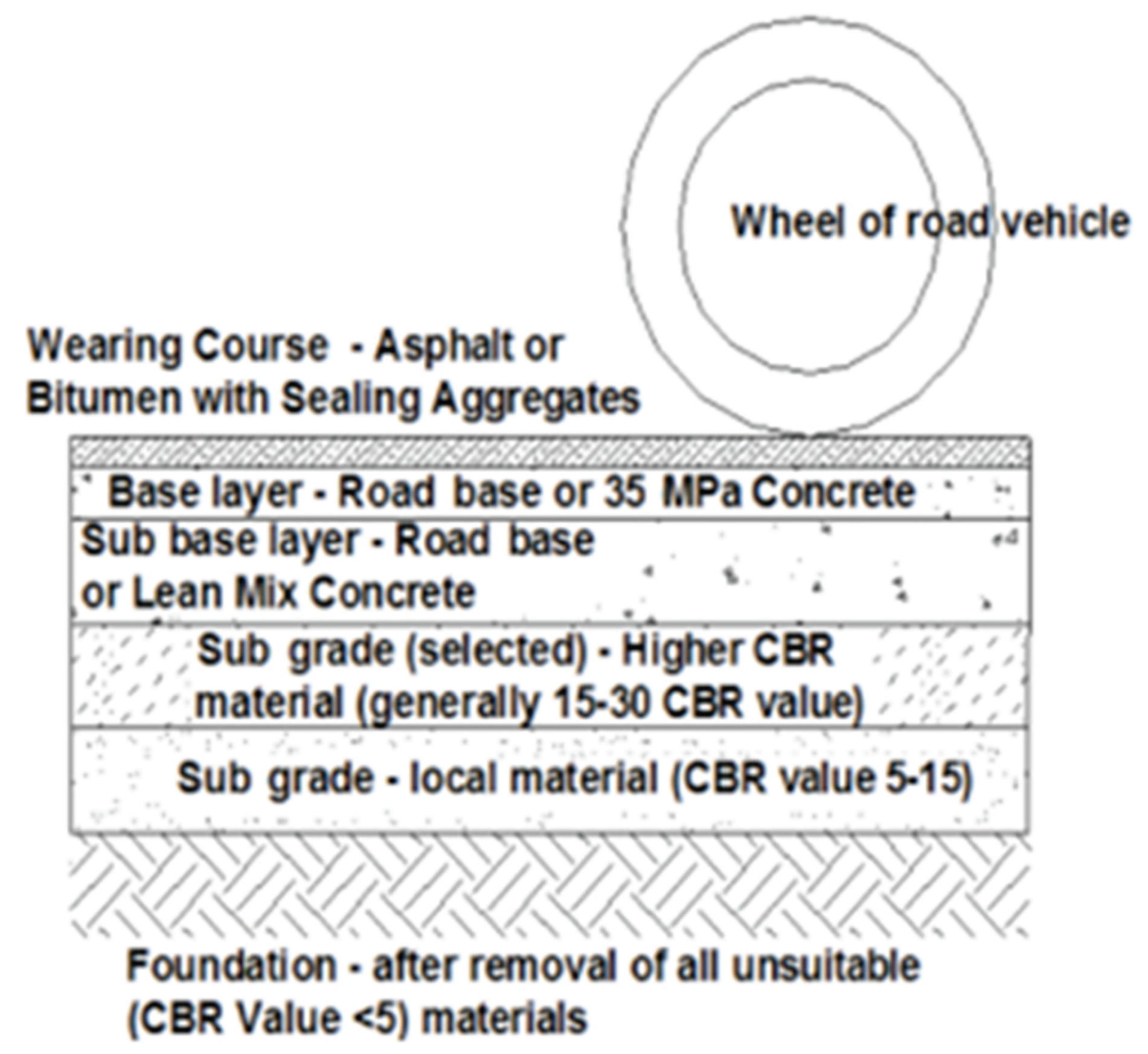
Figure 2.
Comparison of mining waste material in asphalt mixtures (Zhang et al., 2018; Deb & Singh, 2023; Zhou et al., 2021; Bulanov et al., 2022; Tian et al., 2021; Naser et al., 2023) [51,55,64,65,66].
Figure 2.
Comparison of mining waste material in asphalt mixtures (Zhang et al., 2018; Deb & Singh, 2023; Zhou et al., 2021; Bulanov et al., 2022; Tian et al., 2021; Naser et al., 2023) [51,55,64,65,66].
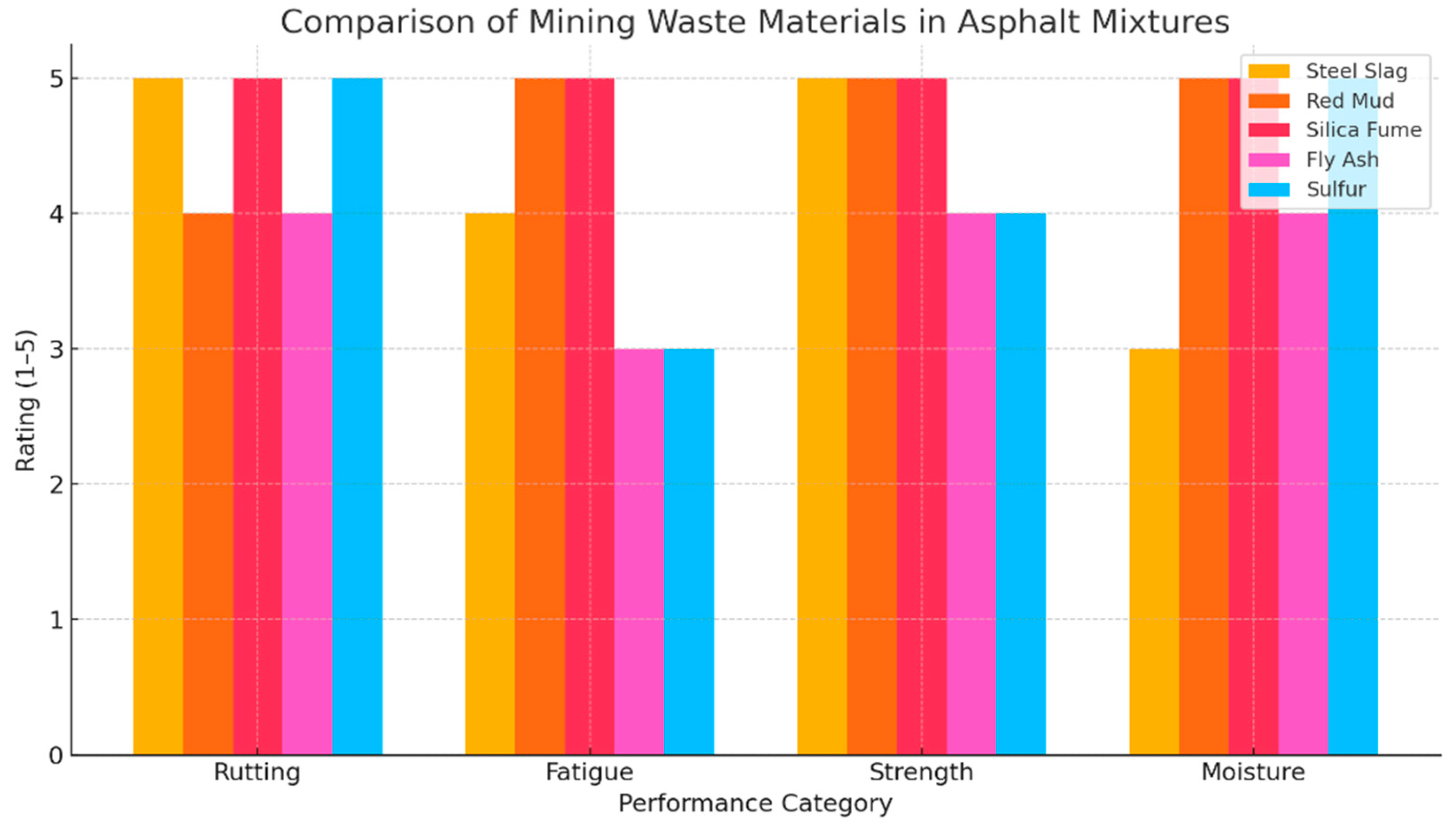
Figure 3.
Performance comparison of mining waste in asphalt mixes (Zhang et al., 2018; Deb & Singh, 2023; Zhou et al., 2021; Bulanov et al., 2022; Tian et al., 2021; Naser et al., 2023) [51,53,55,64,65,66]
Figure 3.
Performance comparison of mining waste in asphalt mixes (Zhang et al., 2018; Deb & Singh, 2023; Zhou et al., 2021; Bulanov et al., 2022; Tian et al., 2021; Naser et al., 2023) [51,53,55,64,65,66]
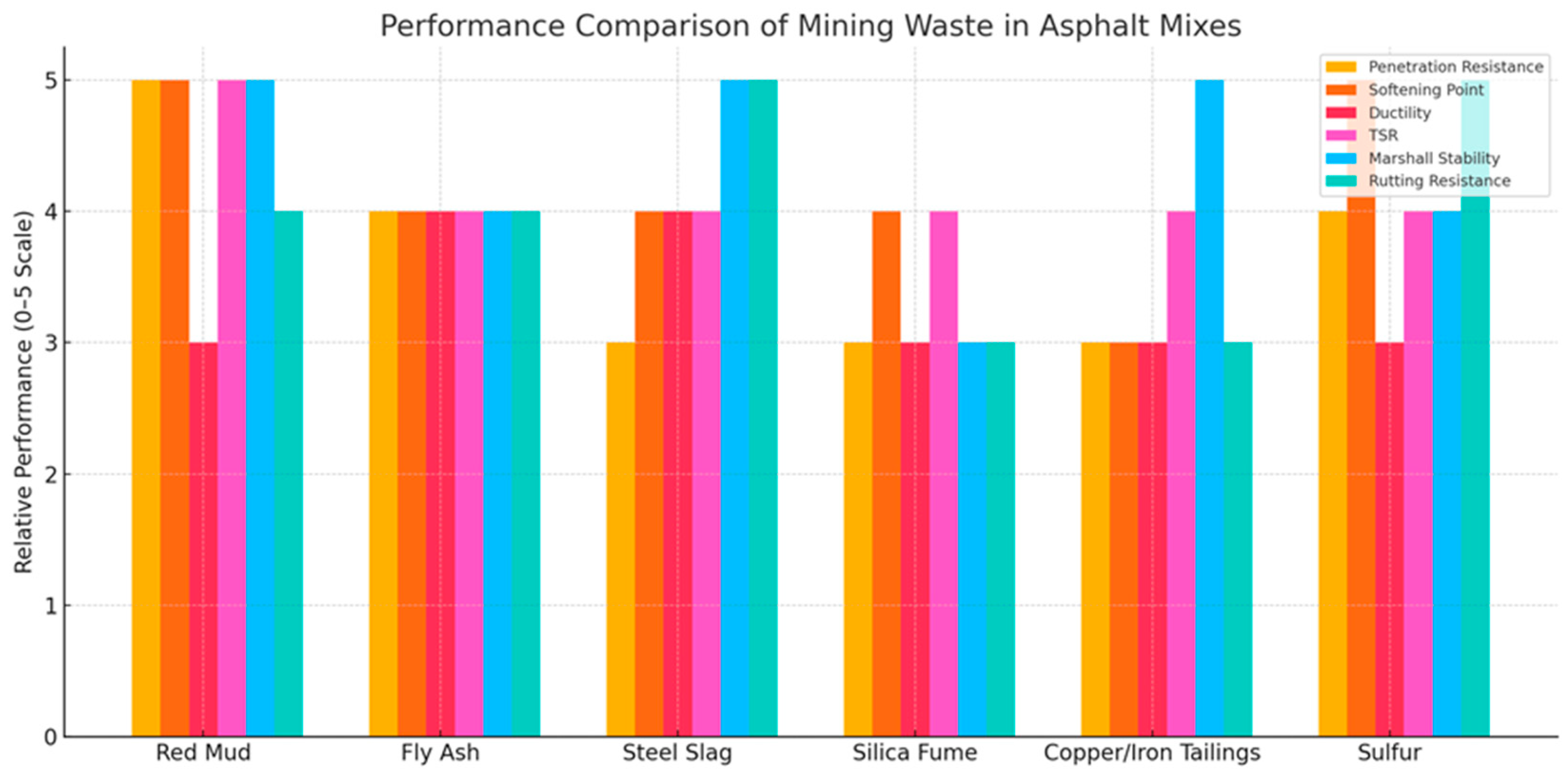

Table 1.
Physical and chemical characteristics of slag (Yuan et al., 2024; Wang et al., 2024; Abdalla et al., 2024) [18,19,20].
Table 1.
Physical and chemical characteristics of slag (Yuan et al., 2024; Wang et al., 2024; Abdalla et al., 2024) [18,19,20].
| Property | Lithium Slag | Steel Slag | Copper Slag |
|---|---|---|---|
| Origin | Lithium mica extraction | Steel manufacturing | Copper smelting |
| Colour | Brownish-yellow | Grey to dark grey | Black, blackish grey |
| Density (g/cm³) | 2.551 | ~3.4 | 3.50 |
| Specific Surface Area | 60 m²/kg | Lower than lithium slag | — |
| Particle Size | 100% < 2.36 mm; 23.3% < 0.075 mm | Coarse, angular | Majority ~150 μm; 91% > 150 μm |
| Key Components | SiO₂, Al₂O₃, K₂O, CaO, Fe₂O₃, Li₂O, etc. | CaO, SiO₂, Fe₂O₃, MgO | Fe₂O₃, SiO₂, Al₂O₃, TiO₂, etc. |
| Microstructure | Quartz, hydrated calcium sulfate, fluorite phases | Dense, angular crystalline phases | Irregular, glassy particle texture |
Table 2.
Common Test Standards for bitumen binder evaluation.
| Property | Test Method | Standard Code |
|---|---|---|
| Penetration | Needle Penetration | ASTM D5 / EN 1426 |
| Softening Point | Ring and Ball | ASTM D36 / EN 1427 |
| Ductility | Elongation | ASTM D113 |
| Viscosity | Rotational Viscosity | ASTM D4402 |
| Short-Term Aging | Rolling Thin-Film Oven Test (RTFOT) | ASTM D2872 |
| Long-Term Aging | Pressure Aging Vessel (PAV) | ASTM D6521 |
| Rheological Properties | Dynamic Shear Rheometer (DSR) | AASHTO T315 |
| Multiple Stress Recovery | Multiple Stress Creep Recovery (MSCR) | AASHTO T350 |
| Low-Temperature Stiffness | Bending Beam Rheometer (BBR) | AASHTO T313 |
Table 3.
Rheological performance of bitumen binders modified with mining waste (DSR test).
| Material | G*/sin δ (Unaged) | Interpretation | Source |
|---|---|---|---|
| Red Mud | 1.29–1.62 kPa | Exceeds Superpave requirement (≥1.0 kPa); good rutting resistance | Wang et al., 2024 [19] |
| Silica Fume | ↑ G* and ↓ δ | Improved stiffness and elasticity | Wang et al., 2024 [19] |
| Fly Ash | ↑ G*/sin δ with cement | Strong pozzolanic effect; enhanced high-temperature resistance | Adham et al., 2024 [56] |
| Sulphur + PE | ↑ G*, ↓ δ | More elastic and rut-resistant binder | Adham et al., 2024 [56] |
| Geopolymer (FA+MK-SF) | 1.4–3.4 kPa (avg.) | Excellent rutting & fatigue resistance (12% FA & 4% MK-SF blends) | Saleh et al., 2025 [57] |
Table 4.
Aging performance of bitumen binders modified with mining waste.
| Material | Aging Type | Performance Outcome | Interpretation | Source |
|---|---|---|---|---|
| Red Mud | RTFOT (Short) | Minimal penetration loss; stiffness retained | Indicates resistance to short-term oxidative aging | Wang et al., 2024 [19] |
| Red Mud | PAV (Long) | PG–22 rating achieved | Suitable for cold climates with low cracking risk | Wang et al., 2024 [19] |
| Sulphur + PE | RTFOT (Short) | Reduced Penetration Aging Ratio; increased softening pt. | Stronger thermal stability; lower oxidation rate | Adham et al., 2024 [56] |
| Sulphur + PE | PAV (Long) | High post-aging ductility and elasticity | Excellent long-term durability and flexibility | Adham et al., 2024 [56] |
| Silica Fume | PAV (Long) | Maintained stiffness and deformation control | Aging resistance supports warm mix performance | Wang et al., 2024 [19] |
| Geopolymer (FA+MK-SF) | RTFOT (Short) | Retained stiffness; low softening point loss | Effective against short-term aging degradation | Saleh et al., 2025 [57] |
| Geopolymer (FA+MK-SF) | PAV (Long) | Met PG-76 rating post-aging | Demonstrates excellent long-term resistance | Saleh et al., 2025 [57] |
Table 5.
Standards for the common test in asphalt mixture evaluation.
| Property | Test Method | Standard Code |
|---|---|---|
| Stability & Flow | Marshall Test | ASTM D6927 |
| Indirect Tensile Strength | Indirect Tensile Strength (IDT) | ASTM D6931 |
| Rutting & Moisture Susceptibility | Hamburg Wheel Tracking Test (HWTT) | AASHTO T342 |
| Stiffness & Fatigue | Dynamic Modulus Test (DM) | AASHTO T378 |
Table 6.
Comparative performance of mining waste in asphalt mixture.
| Material | Rutting Resistance | Fatigue Resistance | Strength/Durability | Moisture Susceptibility | Key References |
|---|---|---|---|---|---|
| Steel Slag | High (↑ stiffness, interlock) | Moderate–High | ↑ Marshall stability, ↑ modulus | Moderate | Abd Alhay & Jassim 2020; [62]; Benavides et al., 2023 [63] |
| Red Mud | Moderate–High | High | ↑ Fracture energy, ↑ ITS | High (>80% TSR) | Lima et al., 2020 [42]; Zhang et al., 2018 [51]; Saleh et al., 2025 [57] |
| Silica Fume | High (↓ rut depth 58%) | High | ↑ Stiffness, ↑ modulus | High | Deb & Singh, 2023 [55]; Adham et al., 2024 [56] |
| Fly Ash | Moderate–High | Moderate | ↑ Deformation resistance | Moderate–High | Likitlersuang & Chompoorat, 2016 [50]; Saleh et al., 2025 [57] |
| Sulphur | High (with PE/rubber) | Moderate | ↑ Stability | High | Zhou et al., 2021 [53]; Adham et al., 2024 [56] |
Table 7.
Comparative performance of mining waste materials in asphalt mixes.
| Mine Waste Type | Key Applications | Performance Outcomes | Meets Standards |
|---|---|---|---|
| Red Mud | Filler in dense/porous/cold asphalt, geopolymer binders | ↑ Marshall Stability, ↑ TSR, ↓ Penetration, ↑ Aging Resistance | Yes |
| Fly Ash | Filler in HMA, CMA, geopolymer binders | ↑ Binder stiffness, ↑ Aging resistance, ↑ Workability | Yes |
| Steel Slag | Coarse aggregate, mineral filler | ↑ Rutting resistance, ↑ Skid resistance, ↑ Load distribution | Yes |
| Silica Fume | Filler in CMA, warm mix, bioasphalt | ↑ Adhesion, ↑ Moisture resistance, ↑ Elastic modulus | Yes |
| Copper/Iron Tailings | Limestone filler replacement | ↑ Marshall Stability, ↑ Fatigue resistance, ↓ Thermal susceptibility | Yes |
| Sulphur | Binder modifier with plastic/rubber | ↑ Aging resistance, ↑ Thermal stability, ↑ Water resistance | Yes |
Table 8.
Comparison of test results from the literature with standard performance limits.
| Property/Test | Standard Requirement | Observed Value from Studies | Source/Material | Meets Standard? |
|---|---|---|---|---|
| Penetration | 40–100 (ASTM D5) | ↓ by 14.7 units (Sintering RM) | Red Mud Binder (Zhang et al., 2018) [51] | ✔ Yes |
| Softening Point | ≥46°C (ASTM D36) | ↑ to 77.5°C | Red Mud Binder (Zhang et al., 2018) [51] | ✔ Yes |
| Ductility | ≥75 cm (ASTM D113) | ~71.2–75.4 cm | Organic Red Mud (Zhang et al., 2018) [51] | ✔ Borderline |
| G*/sin δ (Unaged) | ≥1.0 kPa (AASHTO T315) | 1.29–1.62 kPa | Red Mud Mastic (Wang et al., 2024) [19] | ✔ Yes |
| Aging Resistance (BBR) | S ≤ 300 MPa; m ≥ 0.3 (AASHTO T313) | Met (PG –22 rating) | Red Mud Binder (Wang et al., 2024) [19] | ✔ Yes |
| Marshall Stability | ≥8 kN (ASTM D6927) | 16.68 kN | Red Mud Mix (Choudhary et al., 2019)[60] | ✔ Yes |
| Flow | 2–4 mm | Within Range | Red Mud Mix (Choudhary et al., 2019) [60] | ✔ Yes |
| Indirect Tensile Strength | 500–900 kPa | Within Range | Copper & Red Mud Mix (Choudhary et al., 2019) [60] | ✔ Yes |
| TSR (Moisture Susceptibility) | ≥80% | >85% | Red Mud Mix (Lima et al., 2020) [42] | ✔ Yes |
| Marshall Quotient (MQ) | High = Better Rutting Resistance | 5.23 kN/mm | Red Mud Mix (Giustozzi et al., 2018) [7] | ✔ Yes |
| Softening Point | ≥46°C (ASTM D36) | ↑ to 55.5°C | Silica Fume Bioasphalt (Wang et al., 2024) [19] | ✔ Yes |
| TSR (Moisture Susceptibility) | ≥80% | 82.4% | Silica Fume Mix (Wang et al., 2024) [19] | ✔ Yes |
| Marshall Stability | ≥8 kN (ASTM D6927) | 13.5–15.4 kN | Fly Ash & Steel Slag Mix (Adham et al., 2024) [56] | ✔ Yes |
| Rutting Resistance | ≤12.5 mm rut depth | Reduced rutting depth (qualitative) | Steel Slag Aggregate (Adham et al., 2024) [56] | ✔ Yes |
Disclaimer/Publisher’s Note: The statements, opinions and data contained in all publications are solely those of the individual author(s) and contributor(s) and not of MDPI and/or the editor(s). MDPI and/or the editor(s) disclaim responsibility for any injury to people or property resulting from any ideas, methods, instructions or products referred to in the content. |
© 2025 by the authors. Licensee MDPI, Basel, Switzerland. This article is an open access article distributed under the terms and conditions of the Creative Commons Attribution (CC BY) license (http://creativecommons.org/licenses/by/4.0/).
Copyright: This open access article is published under a Creative Commons CC BY 4.0 license, which permit the free download, distribution, and reuse, provided that the author and preprint are cited in any reuse.


