

Submitted:
27 May 2025
Posted:
28 May 2025
You are already at the latest version
Abstract
The rapid evolution of the Fourth Industrial Revolution has significantly transformed educational practices, necessitating the integration of advanced technologies into higher education to address contemporary sustainability challenges. This study explores the integration of interactive metaverse environments and generative artificial intelligence (GAI) in promoting the green digital economy and developing e-entrepreneurship skills among graduate students. Grounded in a quasi-experimental design, the research was conducted with a sample of 25 postgraduate students enrolled in the “Computers in Education” course at King Khalid University. A 3D immersive learning environment (FrameVR) was combined with GAI platforms (ChatGPT, Elai.io, Tome) to create an innovative educational experience. Data were collected using validated instruments, including the Green Digital Economy Scale, the E-Entrepreneurship Scale, and a digital product evaluation rubric. The findings revealed statistically significant improvements in students’ awareness of green digital concepts, entrepreneurial competencies, and their ability to produce sustainable digital products. The study highlights the potential of immersive virtual learning environments and AI-driven content creation tools in enhancing digital literacy and sustainability-oriented innovation. It also underscores the urgent need to update educational strategies and curricula to prepare future professionals capable of navigating and shaping green digital economies. This research provides a practical and replicate model for universities seeking to embed sustainability through emerging technologies, supporting broader goals such as SDG 4 (Quality Education) and SDG 9 (Industry, Innovation, and Infrastructure).
Keywords:
Generative artificial intelligence
; metaverse
; green digital economy
; e-entrepreneurship
; sustainable development
1. Introduction
The Fourth Industrial Revolution has contributed to significant developments in various areas of life, especially with regard to integrating the real world with the virtual world, through innovative artificial intelligence (AI) technologies such as virtual reality, augmented reality, the metaverse, virtual currencies, the Internet of Things, blockchain, smart robots, big data analysis technologies, and other Fourth Industrial Revolution technologies that have contributed significantly to environmental, economic, social, educational development, and other fields.
During the Corona pandemic, various educational institutions have employed the Internet in the teaching and learning processes through the use of virtual electronic platforms such as the learning management system (Blackboard), the use of the (ZOOM) platform to hold virtual meetings and meetings, and other interactive electronic systems. However, with the Metaverse environment, students and teachers will be together in an immersive digital educational environment that makes them immersed and engaged in the educational content and practicing various educational activities that stimulate the learning process and maintain the educational impact. Therefore, the Metaverse environment will become a stimulating environment for discovering the world without leaving home or educational environments.
The Metaverse is defined as a shared virtual space or collective virtual presence built through the convergence of virtual reality (VR) technologies and their integration with augmented reality (AR) [1]. It is also defined as a shared virtual space through which computer-generated environments and physical reality are combined, providing a rich and immersive experience that can be navigated with great ease [2]. [3] points out that the metaverse environment has the potential to revolutionize the way we learn and work. Through it, students can attend virtual classes and interact with their classmates and teachers in a more interactive and engaging way. They can also access a wide range of educational materials and experiences unavailable in the physical world. Likewise, employees can work remotely and collaborate with colleagues from around the world in a more interactive and effective way. Thus, the metaverse environment is a platform for social interaction, creativity, and innovation.
There is a close relationship between the AI and metaverse environments, as both benefit from each other. AI is one of the pillars upon which the metaverse will be built, both now and in the future. This begins with processing user-generated data and continues with the use of generative models that create realistic virtual environments. It also recognizes body movements and makes the metaverse experience more natural and realistic. AI will also enable the creation of digital characters that resemble users and allow users to understand each other in their own language through simultaneous speech translation. AI also helps develop metaverse applications, such as improving interaction and collaboration between learners and the virtual world, i.e., providing intelligent virtual characters capable of interaction [4].
Generative AI (GAI) can create new content such as text, graphics, video, website design, image generation, and programming code, among other things. Generative AI has great potential for innovation. It is a subset of machine learning that focuses on creating algorithms that generate new data based on patterns in existing data, which can be applied in education, design, and robotics. Therefore, organizations and individuals are increasingly interested in generative AI tools to design new content, video, graphics, code, and other electronic services [5].
One of the most important AI initiatives is UNESCO, which has developed its own deep learning library and made it open source to process the data it collects on customer views. This library serves as a recommendation engine; Amazon uses it to provide recommendations, and Facebook uses it through its People You May Know feature [6]. Generative AI platforms will improve the work environment and safety, while simultaneously increasing productivity and boosting the economy. A McKinsey report indicated that AI has the potential to increase (1.2%) to the global GDP annually, and AI is expected to contribute approximately (13) trillion dollars to the global economy over the next decade [7]. [8] confirm that generative AI can significantly increase labor productivity in all areas of the economy. Generative AI can help grow labor productivity by a rate ranging from 0.1 to 0.6% annually until 2040 AD, depending on advanced technology and redistributing workers’ time to other activities.
Modern economic growth is linked to the digital economy, by directly linking GDP growth to technology, not only through labor and capital, but also through investment in physical capital (production technologies), human capital (technical expertise), and social capital (the knowledge system). Therefore, the digital economy is the primary driver of economic growth, due to its profound impact on businesses, jobs, and individuals [9]. [10] point out that the digital economy is a branch of the knowledge economy, whose emergence was coupled with the emergence of the internet, making information and communications technology a technology used in its development and survival. It may be called the borderless economy, the internet economy, or the new economy. It is a knowledge economy that relies on the application of human knowledge to every product and its production model. Thus, knowledge becomes a fourth element of production alongside the three traditional elements: capital, labor, and natural resources.
Another type of economy has emerged linked to the digital economy: the green economy, which links the economy to the environment, including resources such as water, oil, and forests. This helps shift the concept of economic development from simply increasing the exploitation of economic resources to achieving sustainable or continuous development. The green digital economy is one of the mechanisms for achieving sustainable development by encouraging creativity, innovation, and digital leadership, opening new markets, providing job opportunities, and applying technological innovations to achieve food security and ensure rural areas have access to energy, education, clean water, and various facilities [11]. [12] focused on the importance of the green digital economy in preserving ecosystems that have been severely damaged since the Industrial Revolution, and in reducing the gap between the rich and the poor, especially in terms of a safe and clean quality of life and a higher rate of well-being. It also provides new job opportunities and new types of jobs related to green digital activities. Consequently, many institutions and countries have sought to move towards a green economy, partially or entirely.
In this regard, and to strengthen the UAE’s role as a major global center for the green economy, Dubai hosted the eighth edition of the World Green Economy Summit in September 2022, with the participation of all sectors of the green economy and sustainable development from around the world. The summit concluded with the importance of comprehensive partnerships and the need to mobilize resources to support low-emission development initiatives, improve quality of life, and encourage the transition to a green economy, in addition to empowering youth to effect positive and effective change [13].
The ChatGPT chatbot is a pre-trained generative artificial intelligence application designed for artificial chat, which could play a significant role in the green digital economy. It is used to generate texts that resemble natural human language and relies on a deep learning algorithm, which enables it to learn from the massive data it is trained on or accesses [14]. In this regard, a study by [15] concluded that the ChatGPT platform can be used to assess learning credibility and develop critical and creative thinking skills. This is achieved by having teachers create content for a specific topic, and then having students evaluate and verify the information contained therein. It can also be used to improve student writing and generate new ideas and information.
With the advancement of the Internet and artificial intelligence platforms in recent years, a new category in the field of entrepreneurship has emerged known as digital entrepreneurship. It is a social, economic, and technological phenomenon based on the digitization of operations and a focus on leveraging new digital technologies in smart ways, such as artificial intelligence platforms, smartphone applications, cloud computing, and others. The goal is to change the traditional method followed by most institutions to establish and conduct businesses in the digital age [15]. [17] identified the e-entrepreneurship skills that distinguish an entrepreneur from others in five dimensions: proactive action, a preference for innovation, self-efficacy and achievement motivation, and non-conformity. These skills raise an individual’s entrepreneurial motivation, enabling them to proactively seek opportunities and respond to challenges, obstacles, and tasks in an innovative manner. Therefore, many countries have adopted entrepreneurship education in their educational systems, in order to educate their generations on entrepreneurship as the primary driver of economic development. In the United States of America, a week has been designated each year for individuals to practice entrepreneurship, and in Japan, universities have been given independence in entrepreneurship and reducing the gap between educational outcomes and the needs of the labor market [18].
[19] study indicated that the low level of student outcomes in terms of entrepreneurial ideas or the introduction of digital entrepreneurial projects to solve daily and future problems is due to educational institutions’ lack of interest in practical aspects and solving life-related problems, as much as their focus on academic achievement. [20] study also concluded that universities are significantly less interested in instilling a culture of e-entrepreneurship among their students, and that there are no strategies to motivate creative entrepreneurial students to undertake initiatives. Furthermore, the university’s vision and mission do not encourage the idea of e-entrepreneurship among its students.
Despite the growing academic interest in metaverse technologies and generative artificial intelligence in education, the majority of studies remain theoretical and do not provide well-studied practical applications. According to a recent systematic review, a clear gap was identified related to the scarcity of research that employs these technologies in realistic educational environments to measure their actual impact on student learning, especially in fields such as the digital economy or higher education [21].
Despite the rapid growth in the use of generative AI tools in entrepreneurship, research still lacks clear theoretical and regulatory frameworks that govern this use to ensure innovation and sustainability. A recent review indicated that e-entrepreneurship research often focuses on technical capabilities without examining the regulatory or ethical aspects related to the responsible use of these tools [22].
The integration of generative AI into achieving the Sustainable Development Goals, particularly the Quality Education Goal (SDG 4), remains underutilized in current research. A recent study indicated that this type of intelligence can support personalized learning and bridge educational gaps, but it requires careful pedagogical planning and clear integration strategies within educational curricula [23].
From the above, it is clear that promoting the green digital economy and designing digital entrepreneurial projects are essential conditions for the success of educational institutions in achieving sustainable development, especially in light of the tremendous technological development in this era. However, negativity and the weakness of producing digital entrepreneurial ideas and projects that play a significant role in serving the individual and society and achieving sustainable development constitute a flattening and killing of creativity, innovation, and entrepreneurship among university students in the era of the Fourth and Fifth Industrial Revolutions.
2. Research Problem
With the increase in the number of students in universities and colleges, the consumption of significant amounts of physical and human energy has increased, along with the exacerbation of diseases, the spread of epidemics, and pollution resulting from the waste of devices used in lectures, administrative transactions, and paperwork. This has also led to daily interaction between students, staff, and faculty members, resulting in the spread of carbon dioxide and the worsening of global warming. This requires the search for alternative methods to provide an educational and administrative system that achieves the goals of the educational institution while minimizing the resulting damage [24].
Despite the rapid progress in the use of generative artificial intelligence in entrepreneurship, current research lacks clear regulatory frameworks that guide the use of these technologies to ensure innovation and sustainability. A recent systematic review indicates an urgent need to develop policies and regulations that ensure the ethical and effective use of generative artificial intelligence in entrepreneurship, with a focus on promoting innovation and sustainability [22].
Despite the significant potential of generative AI to enhance the quality of education and achieve the Sustainable Development Goals, there is a lack of research exploring how to effectively integrate these technologies into educational curricula. A recent study highlights the need to develop educational strategies that integrate generative AI to enhance personalized learning and achieve educational equity [23]. [25] note that the majority of students are interested in the social connections they make via web-based digital platforms. Although students use these tools daily, educational institutions remain slow to adopt these platforms, which could help them engage and become entrepreneurs. [26] also note that the stereotype of universities is that innovation is taught, not practiced. Furthermore, the majority of learners spend their time within the “learning as usual” framework, meaning that their ideas reside within this framework: traditional definitions, knowledge, and information, without any interest in generating innovative ideas.
The Arab Digital Economy Index 2020 emphasizes the need to transition to a green digital economy to address development challenges. This requires the Arab region to build new and innovative capabilities to address developmental and economic challenges, especially during crises [27]. In this regard, a study by [28] examined the difficulties faced by Arab university graduates when integrating into the labor market. The study concluded that the current labor market and its future prospects do not accommodate the outputs of higher education institutions. This is due to the unsuitability of these institutions’ outputs, in terms of quantity and quality, for the labor market. Universities focus on filling minds with dense knowledge and information, neglecting the skills that aim to foster innovation and entrepreneurship.
In this regard, [29] points out that Arab universities are not very interested in the field of digital entrepreneurship, focusing on knowledge specific to test-taking or the culture of depositing, rather than creativity and innovation. [30] study indicated the existence of many obstacles to innovation and digital entrepreneurship, most notably: a lack of interest in modern and exciting emerging technologies that open up a wide field for technological innovation, such as artificial intelligence, robotics, big data analysis, the Internet of Things, and others. [31] asserts that most technological products only work to transform traditional content into a digital format; as a result, learners believe they have the ability to create and innovate, but in reality, they know little. [32] study indicates that traditional technologies are not keeping pace with the times and do not encourage or facilitate the easy delivery of information to learners. Most curricula have evolved; therefore, it is necessary to develop interest in using modern technologies that contribute to increasing productivity for both teachers and learners. Learners become more effective through practice than through traditional methods.
[33] points out that the world and the labor market do not need more graduates with good grades, but rather learners with the entrepreneurial capacity to see and solve the world’s educational, economic, and industrial problems. [34] thus asserts that, with the advancement of technology, traditional teaching methods are no longer preferred; therefore, teachers must adopt a different type of classroom instruction. The metaverse is viewed as a promising tool for promoting sustainable education, but its integration into higher education faces multiple challenges, including the need for clear educational policies, teacher training, and curriculum development. A recent study suggests that achieving social sustainability through the metaverse requires complementary policies focused on education, digital literacy, and social psychology to address issues such as social isolation, digital dependency, and inequality of access [35].
To confirm the current research problem and investigate the weaknesses in integrating metaverse technologies and generative AI in promoting the green digital economy and green e-entrepreneurship, the researchers conducted an exploratory study on a sample of (29) male and female graduate students at the College of Education at King Khalid University. The results of the study showed that (83.3%) of the sample had never used any metaverse-based platform in their educational courses, and (78.5%) of them indicated that they lacked sufficient knowledge of generative AI tools such as ChatGPT, Elai.io, or Tome. (85.7%) of participants indicated that current curricula do not provide opportunities to design digital entrepreneurial projects with a sustainable environmental dimension, reflecting a weakness in the development of green digital entrepreneurship. These findings support the urgent need to develop interactive learning environments based on generative AI and metaverse technologies to meet the requirements of the modern digital economy and achieve sustainable development goals.
The researchers conducted a series of semi-structured personal interviews with a sample of (12) male and female graduate students at the College of Education at King Khalid University. These interviews aimed to examine the reality of employing metaverse technologies and generative artificial intelligence in educational curricula and their impact on promoting concepts of the green digital economy and developing green digital entrepreneurship. Student testimonies revealed a clear gap between what they learned theoretically and what they were required to apply practically using these technologies. Most participants indicated that they had never experienced educational experiences based on the metaverse and expressed a lack of practical knowledge of using generative artificial intelligence tools to design digital content or sustainable entrepreneurial projects. These field observations supported the results of the exploratory study and contributed to shaping the scientific basis for the research problem. They also emphasized the need to design a modern, interactive educational environment in which these technologies are systematically integrated to enhance students’ digital competence and sustainable innovation.
From the above, the current research problem was identified as the lack of interest in promoting the green digital economy and green digital entrepreneurship skills among university students in the Computer Science in Education course. Therefore, the current research seeks to address this weakness by integrating the metaverse environment and generative artificial intelligence, which may contribute to enhancing the green digital economy, digital entrepreneurship skills, and the production of green digital entrepreneurial businesses.
3. Research Questions
The current research attempted to answer the following questions:
- What is the impact of the integration of the interactive metaverse environment and generative artificial intelligence on promoting the green digital economy in the “Computers in Education” course for graduate students?
- What is the impact of the integration of the interactive metaverse environment and generative artificial intelligence on green e-entrepreneurship in the “Computers in Education” course for graduate students?
- What is the impact of the integration of the interactive metaverse environment and generative artificial intelligence on the production of a green digital entrepreneurial product in the “Computers in Education” course for graduate students?
4. Research Hypotheses
The current study attempted to verify the following hypotheses:
- There is a statistically significant difference at the 0.05 level between the average scores of the pre- and post-tests on the Green Digital Economy Scale in the “Computers in Education” course for graduate students, in favor of the post-test.
- There is a statistically significant difference at the 0.05 level between the average scores of the pre- and post-tests on the Green E-Entrepreneurship Scale in the “Computers in Education” course for graduate students, in favor of the post-test.
- There is a statistically significant difference at the 0.05 level between the average scores of the pre- and post-tests on the Green Digital Entrepreneurship Product Evaluation Card in the “Computers in Education” course for graduate students, in favor of the post-test.
5. Research Objectives
The current research aims to promote the green digital economy and develop green e-entrepreneurship skills in the “Computers in Education” course among graduate students through the integration of an interactive metaverse environment and generative artificial intelligence technology.
5.1. Significance of the Research
- Directing university education officials to pay attention to the need to employ three-dimensional virtual learning environments (the Metaverse) in university education.
- Directing university education officials to pay attention to the need to employ modern generative artificial intelligence applications in university education.
- Providing a smart training environment based on the integration of the Metaverse learning environment and modern artificial intelligence platforms, which can benefit those interested in sustainable development in promoting the green digital economy, as well as producing green digital entrepreneurial businesses that can benefit society and achieve environmental sustainability.
- Developing society and achieving sustainable development by encouraging students to design and produce green entrepreneurial projects and ideas.
5.2. Research Limitations
The current research was limited to the following limitations:
- The following artificial intelligence platforms: To ensure the provision of an integrated digital educational experience that supports innovation and sustainability, a group of modern digital platforms were employed that combine Metaverse and generative artificial intelligence technologies. The FrameVR platform was used to provide a 3D virtual reality learning environment that allows students to interact in an immersive way. Poe was also employed to power the ChatGPT model to support students in content generation and provide immediate assistance. In educational media production, Elai.io was used to create professional educational videos, and Tome.app to design engaging presentations. Whimsical was used to design electronic mind maps to help organize ideas, while D-ID was used to convert still images into realistic audio-supported videos. Durable was used to create professional educational websites for students’ digital projects. Finally, Tutor AI was employed to design and create interactive educational lessons that enhance learner independence and contribute to the development of advanced digital skills.
- “Computers in Education - 474 Approach-2” course.
- Green Digital Economy Skills: Digital Technology, Digital Transformation, Continuous Digital Learning, Digital Sustainability.
- Green E-Entrepreneurship Skills: Proactive Action, Innovation Preference, Self-Efficacy, Achievement Motivation, Non-Conformity, and Digital Dynamics.
6. Research Literature
6.1. First: Metaverse and Green Digital Economy
The term “metaverse” consists of two parts: “meta,” meaning “beyond,” and “verse,” which is an abbreviation for “universe,” meaning the world or universe. The word “metaverse” then means “what lies beyond the physical world.” The metaverse can be defined as a third world and a fully immersive online environment that extends between the virtual world and the real world. It is based on virtual reality, and learners interact with each other using avatars [36].
The Metaverse is a third world, extending between the virtual world and the real world. It is the third dimension of the internet. It is the next revolution in the development of the internet, based on Web 3.0, or the Semantic Web. Virtual reality will be one of its most prominent manifestations, which will significantly change our perception of the meaning and true nature of reality. The Metaverse will be a sensory, graphic space, unlike the internet, which requires login. Rather, life in it will be based on appropriate technology, which will be entirely dependent on virtual reality technologies. It will significantly change the concepts of human communication, transforming from real life to virtual reality [36].
The Metaverse is a large ecosystem encompassing all fields, such as education, economics, aviation, health, and job creation. Individuals can purchase digital products such as clothing, shoes, books, games, and more. Companies will be present in the Metaverse, and individuals will purchase digital items just as they do in the current physical environment. One of the positive benefits of the metaverse in education is its ability to stimulate learning and keep learners in a positive and happy mood. The virtual world can create a learning environment focused on collaboration and task completion. It can even make the educational institution resemble a video game, but it also contains numerous courses and educational lessons with tasks and activities that motivate learners to complete their tasks through gamification [37].
[38] also pointed out the advantages of using the metaverse in education, including its role as a virtual classroom space where students can interact with each other and their teachers and access educational materials such as videos, documents, activities, and tests. The metaverse also enables the creation of immersive learning experiences where students can explore complex subjects such as physics or history in a three-dimensional environment. The metaverse is also used for skills training, such as language learning or digital skills training, in a more interactive manner using games or simulations. The metaverse is also a platform for international collaboration and sharing. Learners from around the world can work and collaborate on various projects, share ideas, and learn from each other.
On the other hand, a study by [39] concluded that the new economy is based on the recognition that knowledge, skills, and scientific competencies, combined with innovative and creative information technologies, play a significant role in the economic development of societies. Therefore, the use of modern technologies such as virtual reality, augmented reality, the metaverse, and other modern technologies resulting from the application and economic exploitation of knowledge in various fields has led to the emergence of the term “digital economy.” Metaverse technology helps raise the level of education; it can connect people from all over the world, allowing students to see the entire world in a way that was not possible before. It also enables individuals living in distant places to learn and exchange knowledge. It is also recognized that it contributes significantly to expanding the scope of knowledge and electronic participation in various areas of life [40].
Generative Artificial Intelligence (GAI) is one of the most powerful technological innovations available to humanity today, and the biggest mistake any organization can make is to ignore it. Leaders of countries and institutions alike see the magnitude of the opportunities AI brings and the dangers of falling behind in this field. In the United States, the White House issued a document affirming the strategic importance of AI, which will open new horizons for individuals and institutions in fields such as science, medicine, communications, information, and others. Therefore, the US administration emphasizes the importance of accelerating AI research in order to lead in this vital field. China has also developed an ambitious plan to leverage AI with the goal of becoming a global leader in this field by 2030 [6].
Generative AI online platforms are based on helping learners quickly access, generate, or produce scientific content. This content can be built, modified, or adapted by the teacher or the learner. To support participation, discussion, and integration across smart platforms [41]. The importance of the green digital economy in the education sector lies in its ability to leverage the comprehensive digital transformation implemented in higher education institutions, diversifying the sector’s sources of income, and addressing the various challenges and crises facing the sector. For example, the significant role digital transformation has played in enabling the digital economy during the COVID-19 crisis. It also works to reduce reliance on budgets that support education in various societies [27].
The above demonstrates that the use of metaverse technology and generative AI can play a significant and important role in the green digital economy and, consequently, sustainable development. Students interact with this technology to obtain rapid, diverse, and in-depth information in a way that enhances their learning and engagement with others. It also allows them to access texts, graphics, images, videos, or web pages anywhere and at any time. Furthermore, the continuous feedback mechanism available on electronic brainstorming sites makes them a powerful and unique educational tool.
6.2. Second: Generative Artificial Intelligence and Education
Artificial intelligence and its various applications will change the rules and foundations of the field of education. Education and artificial intelligence can be considered two sides of the same coin. Education helps students learn and expand society’s accumulated knowledge, while artificial intelligence provides technologies and applications to understand the mechanisms behind intelligent thought and behavior [42].
By using ChatGPT, students can organize their thoughts and generate new, creative ideas and plans to enhance and develop their innovation and entrepreneurship skills. Students can also collaborate with their teachers to discuss and analyze ideas and information obtained from generative artificial intelligence platforms, thus generating insightful and useful insights and information that can significantly contribute to producing entrepreneurial ideas that serve society. Learners can also use ChatGPT to create an article on a specific topic, design a presentation followed by an audio recording and editing, generate illustrative images and design avatars on a specific topic, design integrated online lessons, and many other uses of modern AI platforms. Therefore, it can be said that ChatGPT is a platform for preparing individuals for future careers.
[43] distinguishes ChatGPT from other search engines like Google in that ChatGPT is designed to provide personalized, conversational responses based on user inquiries. While search engines provide a list of relevant web pages, ChatGPT focuses on user intent and generating responses relevant to the specific context. That is, search engines focus on showing the most relevant web pages based on the user’s search, thus presenting information in a more accessible and understandable way than search engines.
Generative AI is a type of AI technology that uses algorithms to design content such as text, images, videos, music, programming codes for websites and electronic applications, data processing, etc. Generative AI is associated with terms such as machine learning, deep learning, artificial intelligence, and supervised learning, as illustrated in Figure 1 [44].
Figure 1 illustrates that generative artificial intelligence is a subfield of deep learning that uses deep neural network techniques to simulate human ability to create or design original and innovative data or content. Deep learning is a subfield of machine learning that uses multiple hidden layers in neural networks to solve complex problems. Machine learning is a subfield of artificial intelligence focused on learning patterns from available data to make predictions or decisions based on new data without explicit programming. Artificial intelligence is a field of computer science that focuses on building systems capable of performing tasks that typically require human intelligence, such as learning, reasoning, and self-development.
There are many platforms that rely on generative AI systems and are used in the field of education, including: tracking educational data to track student behavior, as well as providing support for students at risk of dropping out of school. When analyzing a learner’s interaction with multiple-choice questions in mathematics, teachers look at the learner’s result and the grades they obtained, while AI platforms can delve deeper to learn more about the real difficulty facing the learner. AI platforms can determine whether the student is struggling with the general concept, or whether there is ambiguity in the question that is causing confusion for the student. In other words, AI applications can identify the essential step that the student missed; This helps them learn the correct method. Among the most important applications of artificial intelligence in education are the following [42]:
- 1-
- Smart Content:
The majority of e-learning platforms focus on designing smart content by transforming textbooks into smart books closely related to educational goals. An example of this is the Next Learning application, which integrates smart content with practice exercises and assessment. This allows teachers to design digital curricula and integrate them with audio and video media, with the possibility of self-assessment. Next also provides an educational cloud platform for modern workplaces, where employers can design customizable learning systems with applications, simulations, virtual courses, self-assessments, video conferencing, and other tools (Saadallah and Shatouh, 2019).
- 2-
- Smart Learning:
Given the importance of smart learning, programmers have made great efforts to innovate numerous models and fields, including adaptive learning, intelligent agents, expert systems, automatic learning, and other smart learning systems that possess significant capabilities and potential to serve the field of education. In this regard, a study by [46] concluded that an artificial intelligence-based teaching system was effective in developing a deep understanding of nuclear reactions and the ability to self-learn among secondary school students.
- 3-
- Chat GPT:
It is an artificial intelligence-powered chatbot created by OpenAI, a non-profit company. It was released on November 30, 2022. Less than a week after its launch, OpenAI founder Sam Altman announced that the number of users had surpassed one million. What distinguishes Chat GPT is its ability to mimic humans through conversation and rapid conversational responses via a free and easy-to-use web interface. Therefore, Chat GPT will become a part of our daily lives.
[46] study examined the impact of an artificial intelligence application, Chat Bots, on language teaching and learning. Students performed a series of activities, converting text to audio, and then provided feedback. The study concluded that Chat Bots are effective in language learning. [47] also wrote a comprehensive scientific paper on the user experience of Chat GPT and its effects on education. It was concluded that learning tasks and activities should be designed to integrate artificial intelligence, helping students think critically and creatively and solve real-world problems in society. [48] also concluded that Chat GPT can be used as an aid for teachers and students using the flipped classroom strategy. Students are asked to prepare for the lesson using Chat GPT, thus saving both teachers and students time and effort. The study also indicated that Chat GPT, as a virtual teacher, can support student learning by answering questions, summarizing information, facilitating online collaboration, and sharing, helping with content formulation, and providing immediate feedback. Therefore, the study recommended training teachers and students on the use of Chat GPT and ensuring the reliability of information obtained through online discussions between teachers and students to ensure academic honesty and integrity.
The global adoption of generative AI platforms in education could lead to significant changes in the teaching and learning processes. Generative AI and its various applications represent one of the methods that can help determine what learners can and cannot do. Generative AI platforms can also design adaptive online content and intelligently deliver it to learners according to their abilities and needs. Generative AI platforms then help identify each learner’s capabilities and provide assistance and clarification for any areas they don’t understand. As a result, AI platforms can help develop learners’ various capabilities with high efficiency.
6.3. Third: Green Digital Entrepreneurship
Since the launch of the technology revolution in the contemporary world, life has witnessed significant and astonishing changes across all areas of life. The field of education has garnered the lion’s share of these positive changes. It has adopted new approaches that have overcome traditional methods based on rote learning and indoctrination, which are now far removed from the developments of the digital and technological world and the applications of artificial intelligence. These have produced applications and devices that support new horizons, embracing the concept of self-learning and supporting learning based on creativity, innovation, and entrepreneurship. This has enriched students’ educational journey toward a digital future where there is no place for the traditional learner and the teacher who instructs [29].
[50] pointed out the urgent need for students to achieve entrepreneurship in studying courses offered via smart electronic platforms. Therefore, these courses must be built and designed around interaction to ensure effective student participation, engagement, and leadership. Digital engagement and leadership are important approaches to reducing student burnout during study. Student burnout rates in distance learning courses are 10-20% higher than in traditional classrooms. Therefore, those using smart electronic platforms must pay attention to selecting content and designing activities that ensure student leadership.
The Fourth Industrial Revolution, artificial intelligence, and its various applications will have a clear impact on the future job market. Some jobs will disappear, while others will emerge. This requires anticipating the future and preparing for it through knowledge, experience, and ongoing discussions. The wording of academic degree advertisements will soon change. Instead of specifications stating, “holding a certain degree with a certain grade and a certain number of years of experience,” the specifications will become a list of skills that will be tested. If they possess these skills, they will be accepted for the job, regardless of the degree they hold. Therefore, universities will face further challenges in developing the educational process so that university degrees have real value. Therefore, academic institutions must focus on updating educational content to align with artificial intelligence applications and labor market requirements [51].
The digital skills required by the labor market today are advanced digital skills, such as computer programming, artificial intelligence, big data, encryption, cybersecurity, the Internet of Things, mobile application development, and advanced design software. The labor market is likely to receive more graduates with such advanced digital skills in the coming years [52].
[30] highlighted some technical activities associated with technological innovation, the most important of which are artificial intelligence and expert systems. The development of artificial intelligence technologies related to computer science and their application in education plays an important and effective role in enhancing the educational process. Artificial intelligence applications can produce educational and training programs capable of interacting and engaging with the learner and their environment, as well as electronic platforms and innovation. Innovation is one of the most important functions of electronic platforms. The shift from the production undertaken by the research team to a broader horizon is achieved by opening up resources, utilizing them efficiently, and being open to innovation. Platforms are a system that can be adapted to needs and outlets that the original designers do not have to consider. Therefore, platforms advance towards creativity and innovation [53].
Given the importance of digital leadership in the current era, [54] study concluded that digital leadership could contribute to achieving a strategy of institutional excellence and contribute to increasing pioneering digital products that serve the labor market. [55] indicates that the philosophy of green e-entrepreneurship is to exploit available opportunities and transform them into businesses of value to others. This value can be material, cultural, or social, through creativity, innovation, and risk-taking. Therefore, the philosophy of green e-entrepreneurship is based on exploiting available opportunities with technological advancements, especially with the development of artificial intelligence platforms and the shift of various educational institutions towards smart digital transformation.
7. Methods and Procedures
7.1. Research Methodology
The current research used a quasi-experimental approach based on a single-group design with pre- and post-test performance measures.
7.2. Research Procedures
To identify the impact of the interactive metaverse environment and generative artificial intelligence on promoting the green digital economy and green e-entrepreneurship among King Khalid University students, the following was conducted:
7.2.1. First: Selecting the Research Sample
The research sample was intentionally selected from graduate students at the College of Education, King Khalid University. The sample consisted of (25) students who were taught the “Computers in Education” course using the integration of the interactive 3D metaverse environment (https://framevr.io) and generative artificial intelligence (https://poe.com/).
7.2.2. Second: Preparing Research Materials
- Designing a Learning Environment Based on the Integration of Metaverse Technology and Generative Artificial Intelligence:
To design a learning environment based on an interactive metaverse environment and generative artificial intelligence, previous studies were reviewed, such as [56] study and [32] study. The general ADDIE design model was followed as follows:
-
Phase One: Analysis: In this phase, the following procedures were carried out:
- Defining the general objectives of the training environment based on the integration of an interactive metaverse environment and generative artificial intelligence platforms. The overall objective of this environment is to promote the green digital economy and green e-entrepreneurship.
- Defining Learner Characteristics: Graduate students at the College of Education, King Khalid University, are studying the “Computers in Education - 474 Approaches-2” course in the first semester of the academic year (2023). They come from a similar environment with similar conditions, and their skills in using computers and the internet are almost identical. The research group comprised (25) students.
- Educational environment capabilities: The Metaverse platform (https://framevr.io) and the generative artificial intelligence platform (https://poe.com) were used.
- Educational material: The educational content was defined as (5) educational topics in the “Computers in Education” subject.
- Phase Two: Design Phase:
The design phase included defining the operational objectives for the learning environment based on the integration of the interactive metaverse environment and generative artificial intelligence platforms, and developing a comprehensive vision for the content, learning strategy, various appropriate activities, and assessment methods, as follows:
A- Operational objectives for the learning environment based on the integration of the metaverse and generative artificial intelligence:
- The first topic, “Computer Software,” covers the basics of understanding software and its types. It aims to enable students, upon completion, to discuss the nature of software and differentiate between its various types, with a focus on application software. Students are also expected to be able to compare these software programs in terms of function and use, and to acquire the skill of designing a professional presentation using modern digital tools that creatively reflect their understanding of the theoretical content.
- The second topic, “Computer Uses,” focuses on exploring the roles of computers in the educational process. It aims to enable students to clarify the various uses of computers in education and discuss the patterns of their employment in classroom and virtual environments. The student is also expected to acquire the ability to use available electronic content authoring tools and employ them to design interactive electronic content that supports active learning and enhances the student’s digital experience.
- The third topic, “Electronic Mind Maps,” addresses the concept of mind maps in their digital form. It aims to enable the student to discuss the nature of these maps and explain their importance in organizing ideas and enhancing the visual understanding of content. The student is also expected to develop their technical skills by designing an electronic mind map using specialized tools and to be able to publish and share it in electronic learning environments that support collaboration and interactive learning.
- The fourth topic, “The Internet and Education,” addresses the basics of internet technology and its relationship to digital education. Upon completion of this topic, the student is expected to be able to accurately define the internet and differentiate between the concepts of the internet, the intranet, and the web in terms of structure and uses. They are also expected to discuss the most important services the internet provides to support education, such as e-learning, synchronous and asynchronous learning, and access to knowledge resources. On the practical side, students must acquire the ability to design an interactive educational website that utilizes their learning to support the educational process in a creative and comprehensive manner.
- The fifth topic: E-learning focuses on understanding the theoretical and practical foundations of this type of education. It aims to enable students to discuss the nature of e-learning as a modern method of education based on digital technology. Students are also expected to be able to differentiate between its various types, such as synchronous and asynchronous learning, self-paced learning, and blended learning. They are also expected to clarify the importance of e-learning in expanding access to education and achieving flexibility in learning. On the practical level, students are required to design a professional interactive video employing appropriate digital tools that reflect their understanding of the content and contribute to enhancing the e-learning experience.
B- Learning Environment Content:
The learning environment content, based on the integration of metaverse technology and generative artificial intelligence, included the following topics:
- Topic 1: Computer Software
- Topic 2: Computer Uses
- Topic 3: Electronic Mind Maps
- Topic 4: The Internet and Education
- Topic 5: E-Learning
C- Learning strategy and activities followed in the metaverse environment and generative artificial intelligence:
In light of the procedural objectives and content of the learning environment, the learning strategy using metaverse technology and generative artificial intelligence proceeded according to the flowchart shown in Figure 2.
D- Assessment Methods:
Assessment methods varied, including pre-assessment at the beginning of each subject to assess prior learning, formative assessment throughout each course to guide student learning and provide feedback, and summative assessment, which is conducted after completing the entire educational content designed using metaverse technology and generative artificial intelligence. This assessment aims to enhance the green digital economy and develop the green e-entrepreneurship skills of the research sample.
- Phase Three: Development:
In this phase, researchers used a range of artificial intelligence platforms and modern technologies to support the digital learning environment and provide integrated and interactive educational content. The FrameVR.io platform was used to create a 3D virtual metaverse environment that simulates classrooms and allows students to interact live within an immersive digital learning space, as shown in Figure 3. The ChatGPT model was also deployed via Poe.com to support intelligent communication and generate instant text content. On the media side, Elai.io was used to produce professional educational videos, and Tome.app was used to design high-quality presentations. In the field of visual thinking, the Whimsical.com platform was used to design electronic mind maps that help organize educational concepts. Images were also converted into interactive videos using D-ID, professional educational websites were designed via Durable.co, and integrated educational lessons were created using Tutor AI. This technological integration helped promote sustainable education practices and green e-entrepreneurship.
- Phase Four: Implementation Phase:
In this phase, the electronic content of the “Computers in Education” course was implemented using the Metaverse environment and generative artificial intelligence for (25) users. The learning environment and the tasks required were explained.
- Phase Five: Evaluation Phase:
In this phase, the training content was presented to a group of specialists in the field of educational technology and information technology. Measurement tools were also applied, including the Green Digital Economy Scale, the E-Entrepreneurship Scale, and the Entrepreneurial Digital Product Evaluation Card, after studying all the educational content of the research group’s students.
7.3. Third: Preparing Research Tools
- Green Digital Economy Scale
The Green Digital Economy Scale was prepared according to the following steps:
A- Defining the Scale’s Objective:
The scale aimed to measure the green digital economy skills of graduate students at the College of Education, King Khalid University. After reviewing a number of studies, such as the study by [57] and the study by [9], the dimensions of this scale were determined, consisting of four dimensions: digital technology, digital transformation, continuous digital learning, and digital sustainability.
B- Scale Items:
The scale consisted of four dimensions: the digital technology dimension, with (9) statements; the digital transformation dimension, with (9) statements; the continuous digital learning dimension, with (8) statements; and the digital sustainability dimension, with (8) statements. Thus, the total number of statements in the scale reached (34) statements.
C - Refining the scale by:
Presenting the initial version of the scale to a group of judges: After the formulation of the scale’s vocabulary was completed, it was presented to a group of specialists in the fields of technology, business administration, and psychology. Their opinions clarified the scale’s suitability for the purpose for which it was developed, with the deletion of some phrases in the fifth dimension and the linguistic rewording of some phrases.
- Exploratory application of the scale: The scale was applied to a pilot sample of (16) graduate students at the College of Education, King Khalid University, to determine the linguistic and scientific suitability of the statements. Their responses demonstrated the linguistic and scientific suitability of the scale statements.
- Internal consistency of the scale:
A Pearson correlation coefficient matrix was created between the scale dimensions and the total score according to the following table:
| Dimension | Digital technology | Digital transformation | Continuous digital learning | Digital Sustainability |
| Digital technology | 1 | |||
| Digital transformation | 0.41 | 1 | ||
| Continuous digital learning | 0.38 | 0.70** | 1 | |
| Digital Sustainability | 0.52* | 0.66* | 0.75** | 1 |
| The scale as a whole | 0.69* | 0.88** | 0.76** | 0.78** |
It is clear from the above that the correlation coefficient of the first dimension with the scale as a whole is (0.69), the correlation coefficient of the second dimension with the scale as a whole is (0.88), the correlation coefficient of the third dimension with the scale as a whole is (0.76), and the correlation coefficient of the fourth dimension with the scale as a whole is (0.78). All of these values are statistically significant and acceptable. This indicates that the scale dimensions measure the same thing as the scale as a whole, demonstrating the validity of the scale and its dimensions.
Calculating the Average Scale Time: The scale time was calculated by finding the average of all students’ times, each according to their speed, and it was approximately (40) minutes.
Calculating the Reliability of the Scale Scores: The reliability of the scale scores was calculated using the Cronbach’s alpha equation and was found to be approximately (0.79), which is an appropriate reliability coefficient.
D- Final Form of the Scale: After formulating the scale and statistically adjusting it, the scale became valid for final application.
- 2.
- Green e-Entrepreneurship Scale:
The Green e-Entrepreneurship Scale was developed according to the following steps:
A- Defining the Scale’s Objective:
The scale aimed to measure the green e-entrepreneurship skills of graduate students at the College of Education, King Khalid University. After reviewing a number of studies, such as the study by [19] and the study by Al-Hana’i and Shahat (2022), the dimensions of this scale were determined, consisting of five dimensions: proactive behavior, preference for innovation, self-efficacy, achievement motivation, and non-conformity.
B- Scale Items:
The scale consisted of five dimensions: the proactive behavior dimension, which comprises (7) statements; the preference for innovation dimension, which comprises (7) statements; the self-efficacy dimension, which comprises (6) statements; the achievement motivation dimension, which comprises (6) statements; the non-conformity dimension, which comprises (6) statements; and the digital vitality dimension, which comprises (8) statements. Thus, the total number of statements in the scale became (40) statements.
C - Scale adjustment through: Presenting the initial version of the scale to a group of arbitrators: After completing the formulation of the scale’s vocabulary, it was presented to a group of specialists in the fields of educational technology, business administration, and psychology. Their opinions clarified the scale’s suitability for the purpose for which it was developed, with the deletion of some phrases in the third dimension and the linguistic rewording of some phrases.
Exploratory application of the scale: The scale was applied to a pilot sample of (16) graduate students at the College of Education, King Khalid University, to determine the linguistic and scientific suitability of the phrases. Their responses clarified the linguistic and scientific suitability of the scale’s phrases.
Internal consistency of the scale:
A Pearson correlation coefficient matrix was created between the scale’s dimensions and the total score according to the following table:
| Dimension | Proactive action | Preferring innovation | Self-efficacy | Achievement motivation | Non-conformity | Digital Vitality |
| Proactive action | 1 | |||||
| Preferring innovation | 0.38 | 1 | ||||
| Self-efficacy | 0.26 | 0.74** | 1 | |||
| Achievement motivation | 0.31 | 0.61* | 0.46 | 1 | ||
| Non-conformity | 0.44 | 0.47 | 0.39 | 0.43 | 1 | |
| Digital Vitality | 0.34 | 0.52* | 0.62 | 0.47 | 0.42 | 1 |
| The scale as a whole | 0.65 | 0.88** | 0.79** | 0.77** | 0.69** | 0.82** |
It is clear from the above that the correlation coefficient of the first dimension with the scale as a whole is 0.65, the correlation coefficient of the second dimension with the scale as a whole is 0.88, the correlation coefficient of the third dimension with the scale as a whole is 0.79, the correlation coefficient of the fourth dimension with the scale as a whole is 0.77, the correlation coefficient of the fifth dimension with the scale as a whole is 0.69, and the correlation coefficient of the sixth dimension with the scale as a whole is 0.82. All of these are statistically significant and acceptable values. This indicates that the scale dimensions measure the same thing as the scale as a whole, demonstrating the validity of the scale and its dimensions.
Calculating the average time for the scale: The time for the scale was calculated by finding the average time of all students, each according to their speed, and it came out to be approximately (40) minutes.
Calculating the reliability of the scale scores: The reliability of the scale scores was calculated using the Cronbach’s alpha equation, and it was found to be approximately 0.86, which is an appropriate reliability coefficient.
D- Final Form of the Scale: After formulating the scale and statistically adjusting it, the scale became valid for final application.
- 3.
- Preparing a Product Evaluation Card:
This card was prepared according to the following steps:
A- Objective of the Card:
The card aimed to evaluate the pioneering green digital product designed by graduate students at the College of Education, King Khalid University, in the “Computers in Education - 474 Approach-2” course.
B- Card Paragraphs:
After reviewing research and studies focused on the field of e-entrepreneurship, the card’s main paragraphs, totaling (15), were identified. These paragraphs varied between the general appearance of the product, its connection to solving a societal problem, the scarcity of this product in society, its compatibility with all mobile devices and all internet browsers, and its ease of use by the user.
C- Presenting the initial version of the card to a group of judges:
After completing the card’s preparation, it was presented to a group of specialists in the fields of information technology, educational technology, and psychology. Their opinions clarified the card’s suitability for the research sample, with some paragraphs being reworded and the ninth paragraph being deleted.
D- Exploratory Application of the Card:
After obtaining the opinions of the arbitrators, the card was applied to a pilot sample of (16) graduate students at the College of Education, King Khalid University, to determine the validity of the card’s linguistic formulation and its suitability for the students, as well as to calculate its reliability.
E- Calculating the Card’s Scores:
After presenting the card to a group of arbitrators and piloting it on (16) graduate students at the College of Education, King Khalid University, the card’s reliability was calculated using the Cooper equation. It was found to be approximately (0.94), which is an appropriate percentage for the card’s reliability.
P- Final Form of the Card:
After drafting the card, presenting it to a group of arbitrators, and statistically adjusting it, the card was ready for final application.
- Fifth: Pre-application of Measurement Tools:
The measurement tools, represented by the observation card, the knowledge economy skills scale, and the digital confidence building scale, were applied to the study group.
- Sixth: Implementing the Research Experiment:
After clarifying the purpose of the experiment, the researcher implemented the research experiment during the first semester of 2024 at the College of Education over a period of approximately (7) weeks. The research group consisted of (25) students who were taught the “Computers in Education” course using an integrated 3D Metaverse environment (https://framevr.io) and generative artificial intelligence (https://poe.com/).
- Seventh: Post-application of measurement tools:
After completing the research experiment, the measurement tools, namely: the Green Digital Economy Scale, the Green E-Entrepreneurship Scale, and the Green Digital Product Evaluation Card, were applied pre- and post-tested to the two research groups, corrected, and monitored.
8. Research Results and Discussion
After monitoring students’ scores in the pre- and post-tests on the Green Digital Economy Scale, the Green E-Entrepreneurship Scale, and the Green Digital Entrepreneurship Product Scorecard in the “Computers in Education” course, the research questions were answered as follows:
First: Answering the first question, which stated: What is the impact of integrating the interactive metaverse environment and generative artificial intelligence on promoting the green digital economy in the “Computers in Education” course for graduate students?
To answer this question, the following hypothesis was formulated: There is a statistically significant difference at the (0.05) level between the average scores of the pre-test and post-test on the Green Digital Economy Scale in the “Computers in Education” course for graduate students, in favor of the post-test.
To test the validity of this hypothesis, statistical analysis was performed using the Wilcoxon test for two related samples to compare the scores of the Green Digital Economy Scale in the pre- and post-tests. Table 3 shows the results of the Z-test for the significance of the difference between the pre- and post-test scores on the Green Digital Economy scale in the “Computers in Education” course.

Table 3.
Wilcoxon test results on the Green Digital Economy scale in the pre- and post-tests.
| The tool | Application | number | Average rank | Total ranks | Z value | Significance level | Significance |
|---|---|---|---|---|---|---|---|
| Green Digital Economy Barometer | Pre | 23 | 0.00 | 0.00 | -4.581** | 0.001 | Significance |
| Post | 23 | 12.00 | 23.00 |
Table 3 shows that the calculated z-value (-4.581) on the Green Digital Economy Scale is significant at the 0.05 level, indicating a statistically significant difference between the pre- and post-tests of the Green Digital Economy Scale, in favor of the higher average scores, i.e., the pre-test. Thus, the first hypothesis of the research was accepted, which stated that there is a statistically significant difference at the 0.05 level between the average scores of the pre-tests and post-tests on the Green Digital Economy Scale among graduate students, in favor of the post-tests. The researchers believe that the previous result can be attributed to the following:
The FrameVR interactive 3D platform (https://framevr.io) facilitated student learning by providing an immersive virtual learning environment that helped them overcome difficult and incomprehensible parts of the “Computers in Education” course content. This environment provided a visual and experiential approach that enabled students to interact with educational concepts directly and personally. This platform created a personalized learning environment for each student, allowing them to explore content based on their individual needs, enhancing their understanding and comprehension. Thanks to its user-friendly nature, students were able to navigate the educational environment without technical difficulties, contributing to enhanced engagement and motivation toward self-learning.
In parallel, generative AI platforms, most notably Poe, the platform for running ChatGPT (https://poe.com), helped students pose their inquiries and receive immediate AI-powered responses, helping consolidate and apply knowledge. This integration between the metaverse and generative AI has been reflected in promoting the concepts of a green digital economy by developing students’ technical skills and encouraging them to design sustainable digital learning solutions.
The educational philosophy of FrameVR’s interactive platform (https://framevr.io) and generative AI platform is based on the principle of deep content learning. These platforms provide a digital environment powered by big data that allows students to access information from multiple sources and in a variety of ways that suit their individual needs. The function of these platforms is not limited to providing information only, but they also pose directed questions to enhance critical thinking and in-depth understanding of the content, motivating students to reformulate knowledge and apply it in new situations. This integration of virtual reality technologies and smart interaction has directly contributed to enhancing the concept of the green digital economy among graduate students, by developing their abilities to use technology to produce sustainable digital educational solutions within the context of the “Computers in Education” course. This is illustrated in Figure 4.

Second: Answering the second question, which stated: What is the impact of the integration of the interactive metaverse environment and generative artificial intelligence on green e-entrepreneurship in the “Computers in Education” course for graduate students?
To test the validity of this hypothesis, statistical processing was performed using the Wilcoxon test for two related samples to compare the scores on the Green E-entrepreneurship scale in the pre- and post-tests. Table 4 shows the results of the Z-test to show the significance of the difference between the pre-test and post-test scores on the Green E-entrepreneurship scale in the “Computers in Education” course.
Table 4.
Wilcoxon test results on the e-entrepreneurship scale in the pre- and post-tests.
| The tool | Application | number | Average rank | Total ranks | Z value | Significance level | Significance |
|---|---|---|---|---|---|---|---|
| Green E-Entrepreneurship Scale | Pre | 23 | 0.00 | 0.00 | -4.214** | 0.001 | Significance |
| Post | 23 | 12.00 | 23.00 |
Table 4 shows that the calculated z-value (-4.214) on the Green E-Entrepreneurship Scale is significant at the 0.05 level, indicating a statistically significant difference between the pre- and post-test of the Green E-Entrepreneurship Scale, in favor of the higher average scores, i.e., the pre-test.
Thus, the second hypothesis of the research was accepted, which stated that there is a statistically significant difference at the 0.05 level between the average scores of the pre-test and post-test on the Green E-Entrepreneurship Scale among graduate students, in favor of the post-test. The researchers believe that the previous result can be attributed to the following:
The FrameVR interactive platform provides a set of digital tools that give students complete freedom to edit content, whether by adding or deleting, which enhances their sense of intellectual ownership of the educational content they produce. Students can also benefit from generative artificial intelligence platforms to verify the validity of new content and develop it creatively, reflecting their deep understanding of the educational material. The added value of this digital environment lies in the intellectual fluency it provides. Generative AI platforms provide a fertile environment for generating and sharing ideas, allowing students to learn from their peers’ experiences and ideas and adopt best practices. Through this ongoing cognitive interaction, graduate students have been able to develop their digital fluency and computational innovation skills, which has positively impacted their academic performance and their ability to employ technology in sustainable and creative educational contexts.
Generative AI platforms are fertile environments for generating and sharing entrepreneurial ideas. They are characterized by their ability to propose diverse and interconnected ideas on research topics, allowing students to expand their thinking horizons, pose new questions about these ideas, and discuss them within the platform itself or with colleagues. This intelligent cognitive interaction has helped generate a number of green digital initiatives and projects and has contributed significantly to the development of green digital entrepreneurship skills among the research sample students. In the same context, the FrameVR interactive platform provided students with a high level of freedom and flexibility to carry out educational tasks and activities within an easy-to-use 3D environment. This helped improve their engagement with content and enhance their ability to achieve and innovate within a modern and sustainable digital learning environment.
The ease of use of generative AI platforms contributed to increasing students’ motivation to learn, providing an encouraging interactive environment that enabled them to explore educational content in flexible and personalized ways. This contributed to fostering innovative and entrepreneurial tendencies within the “Computers in Education” course. These platforms were distinguished by their high ability to analyze and evaluate students’ responses in real-time, enabling the identification and remediation of individual weaknesses, while enhancing each learner’s strengths. These platforms also provided diverse and rich sources of ideas and information, which helped develop students’ intellectual fluency and broaden their horizons toward creative solutions. This helped develop green digital entrepreneurial skills that keep pace with the requirements of a sustainable digital economy.
Third: Answering the third question, which stated: What is the impact of the integration of the interactive metaverse environment and generative artificial intelligence on the production of a green digital entrepreneurial product in the “Computers in Education” course for graduate students?
To answer this question, the following hypothesis was formulated: There is a statistically significant difference at the level of (0.05) between the average pre- and post-application ranks on the green digital entrepreneurial product evaluation card in the “Computers in Education” course for graduate students, in favor of the post-application? To test the validity of this hypothesis, statistical processing was performed using the Wilcoxon test for two related samples to compare the scores of the green digital entrepreneurial product evaluation card application in the pre- and post-application. Table 5 shows the results of the “Z” test to indicate the significance of the difference between the pre- and post-application ranks of the observation card in the “Computers in Education” course.
Table 5.
Wilcoxon test results on the green digital entrepreneurial product evaluation card in the pre- and post-application.
Table 5.
Wilcoxon test results on the green digital entrepreneurial product evaluation card in the pre- and post-application.
| The tool | Application | number | Average rank | Total ranks | Z value | Significance level | Significance |
|---|---|---|---|---|---|---|---|
| Green Digital Entrepreneurship Product Scorecard | Pre | 23 | 0.00 | 0.00 | -4.002** | 0.001 | Significance |
| Post | 23 | 12.00 | 276.00 |
Table 5 shows that the calculated (z) value (-4.002) on the Green Digital Entrepreneurship Product Evaluation Card is significant at the (0.05) level, indicating a statistically significant difference between the pre- and post-application of the Green Digital Entrepreneurship Product Evaluation Card, in favor of the higher average ranks, i.e., the pre-application. Thus, the third hypothesis of the research was accepted, which stated that there is a statistically significant difference at the (0.05) level between the average ranks of the pre-application and post-application of the Green Digital Entrepreneurship Product Evaluation Card among graduate students, in favor of the post-application. The researchers believe that the previous result can be attributed to the following:
The FrameVR interactive platform (https://framevr.io) provided a set of advanced 3D tools that facilitated the process of sharing ideas among students within a dynamic virtual learning environment. This enabled learners to collaborate on complex educational problems and simplified any obstacles that might hinder their understanding of the content. This virtual environment also provided visual and experiential simulations that enhanced students’ ability to grasp abstract concepts. At the same time, generative AI platforms provided precise, easy-to-use, and intelligently designed tools that enabled students to produce creative digital content that reflects their understanding of the curriculum and contributes to the formation of pioneering, green, and sustainable digital products. This was clearly reflected in the learning outcomes of graduate students, by improving the quality of their digital production and developing their innovative capabilities in advanced technology-based educational environments.
Generative AI platforms provide a variety of tools designed to respond immediately to learners’ inquiries, enabling them to complete digital tasks with high accuracy and in record time. This helped accelerate the learning process and achieve effective results in producing quality digital content. In the same vein, the interactive metaverse environment, delivered through the FrameVR platform, provided a collaborative and interactive learning experience for all students, enabling them to work within collaborative teams without any pressure or restrictions, fostering a spirit of participation and facilitating the exchange of experiences. This positive interaction between students within the digital environment has honed their technical and creative skills, resulting in the production of pioneering, green digital computing businesses characterized by innovation and sustainability.
9. Practical Significance of the Research Results
Through Table 3, Table 4 and Table 5, it was possible to determine the practical or applied significance of the research results by finding the magnitude of the effect of the independent variable on the dependent variables.
Table 6 shows that the impact of the integration of the interactive metaverse environment and generative artificial intelligence platforms on promoting the green digital economy in the sample of the study was (0.96), which is a large percentage, and the remainder is due to various other factors, including: the student’s previous experience and technological skills, the student environment, peers, and other factors. The impact of the integration of the interactive metaverse environment and generative artificial intelligence platforms on green e-entrepreneurship was (0.87), which is a large percentage, and in the field of producing green pioneering digital products (0.83), which is also a large percentage. This is evident in Figure 4.
Table 6.
Scientific and applied significance of the research results.
| independent variable | dependent variable | (Z) |
Eta square |
Effect size |
|---|---|---|---|---|
| Interactive Metaverse Environment and Generative AI Platforms | Green Digital Economy | -4.581 | 0.96 | Big |
| Green e-entrepreneurship | -4.214 | 0.87 | Big | |
| Green digital products | -4.002 | 0.83 | Big |
Figure 4.
Scientific and applied significance of the research results.
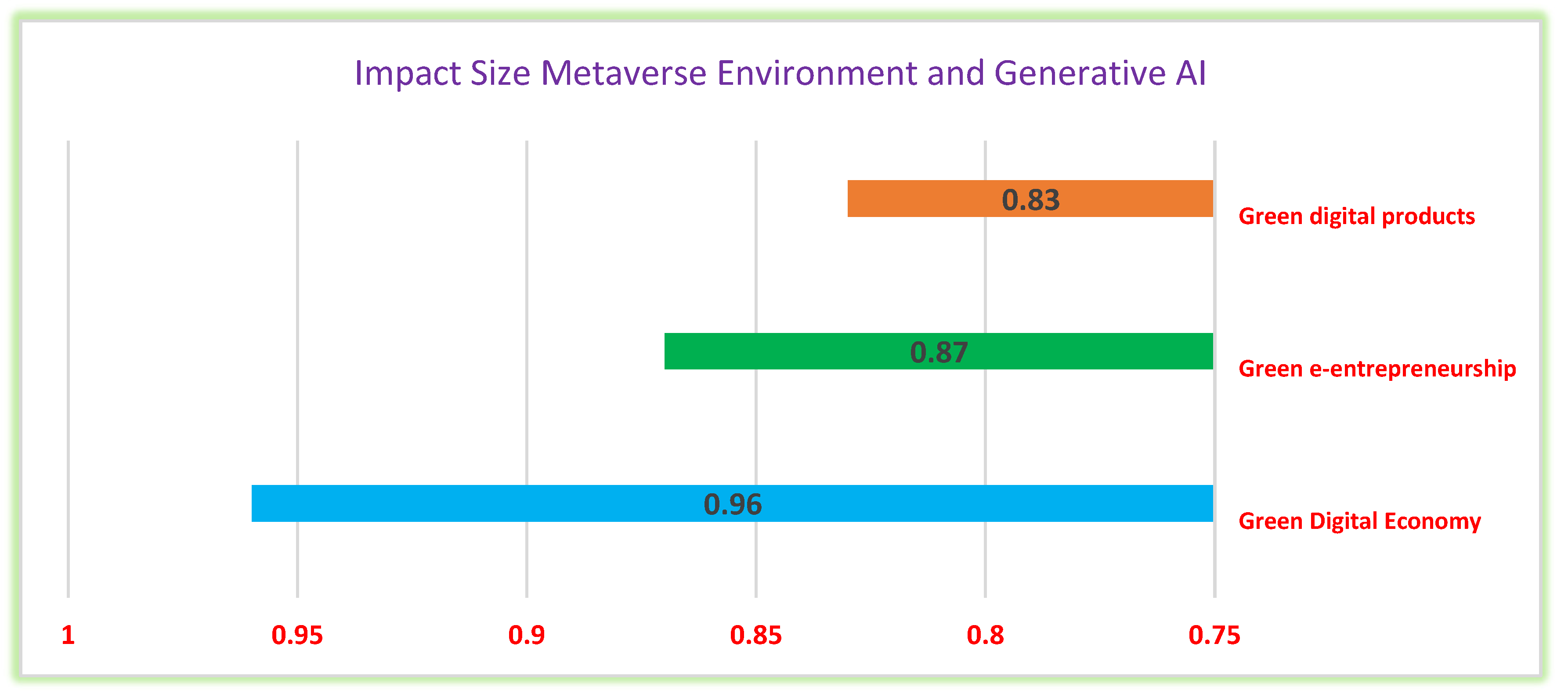
10. Discussion of Research Results
The current research aimed to enhance the skills of the green digital economy and green e-entrepreneurship among university students in the “Computers in Education” course for graduate students at the College of Education, King Khalid University. This was achieved by designing a training environment based on the integration of an interactive metaverse environment and generative artificial intelligence. The research questions were as follows:
First: What is the impact of the integration of an interactive metaverse environment and generative artificial intelligence on promoting the green digital economy among graduate students? The results showed a statistically significant difference between the average scores of the pre- and post-applications on the green digital economy scale for graduate students, in favor of the post-application. This indicates that students have greatly benefited from the metaverse environment and its integration with generative artificial intelligence technology in promoting the green digital economy. This may be due to the interactive 3D metaverse environment (https://framevr.io) and generative AI technology. These include an easy-to-use and interactive 3D user interface, as well as responsive tools through which learners can quickly and accurately access information. They can also share this information with others for discussion and interaction, thus gaining valuable insights that have helped graduate students enhance their digital economy. This result is consistent with the findings of [45,56].
Second: What is the impact of the integration of the interactive metaverse environment and generative AI on green e-entrepreneurship among graduate students? The results showed a statistically significant difference between the average scores of the pre- and post-applications on the green e-entrepreneurship scale for graduate students, in favor of the post-application. This indicates that graduate students have benefited significantly from the interactive metaverse environment and generative AI technology. This may be due to the interactive metaverse environment (https://framevr.io) and generative AI technology, which allow students freedom and flexibility, enabling them to freely generate and exchange creative ideas with others. Through this environment and its integration with big data AI technology, students were open to and benefit from others’ ideas, thus gaining access to new ideas and knowledge. This contributed to the development of green e-entrepreneurship skills among graduate students. This result is consistent with the findings of [17,19].
Third: What is the impact of the integration of the interactive metaverse environment and generative AI on the production of a green digital entrepreneurial product among graduate students? The results showed a statistically significant difference between the average scores of the pre-application and post-application on the green digital entrepreneurial product assessment card for graduate students, in favor of the post-application. This means that graduate students have greatly benefited from the integration of the interactive metaverse environment and generative AI technology. This may be due to the fact that the interactive metaverse environment (https://framevr.io) and generative AI technology provide students with easy-to-use tools that offer a high degree of precision, design, and innovation. This has helped graduate students produce pioneering digital products, such as the https://designs.ai/ platform. This platform allows students to produce logos, videos, banners, and other content quickly and efficiently. This finding is consistent with the results of [39,51] studies.
11. Conclusions
Amid the rapid digital transformations, the world is witnessing, and in light of the environmental, educational, and economic challenges facing higher education institutions, the integration of interactive metaverse technologies and generative artificial intelligence (AI) is a pivotal step toward building more efficient and innovative learning environments. The results of this research demonstrate the importance of this integration in promoting the concepts of the green digital economy and developing sustainable e-entrepreneurship skills among graduate students. This innovative educational model provides students with the opportunity to interact within immersive 3D environments and utilize AI tools to produce digital content that reflects their creative abilities while simultaneously responding to the requirements of sustainable development. The study also revealed a clear gap in awareness and prior knowledge of these technologies among a large segment of students, calling for a revision of university curricula and the systematic and purposeful integration of these applications.
The future of university education cannot be separated from accelerating technological progress, and this research confirms that the integration of the metaverse and generative AI into education not only achieves educational goals, but also contributes to achieving the green digital transformation and empowering students to contribute effectively to the knowledge economy. Hence, the study recommends investing in training academic staff and students to use these technologies and developing educational policies that support innovation and digital leadership. This will enhance higher education institutions’ future readiness and place them at the forefront of efforts to achieve the Sustainable Development Goals, particularly Goal 4 on quality education.
Author Contributions
Ahmed Sadek Abdelmagid (A.S.A.): Conceptualization, methodology, software development, formal analysis, writing—original draft preparation, project administration, and supervision. Naif Mohammed Jabli (N.M.J.): Validation, investigation, data collection, writing—review and editing, and visualization. Abdullah Yahya Al-Mohaya (A.Y.A.): Resources, data curation, supervision, and support in instructional design and educational tools alignment. Ahmed Ali Teleb (A.A.T.): Literature review, theoretical framework development, and assistance in psychometric tool design and refinement. All authors have read and agreed to the published version of the manuscript.
Funding
This work was funded by the Deanship of Scientific Research and Graduate Studies at King Khalid University through research in small groups under Grant No. (RGP1/90/1446 AH).
Institutional Review Board Statement
The study does not require ethical approval. Ethical review and approval were waived for this study, as it involved no intervention or collection of sensitive personal data. Participation was voluntary, and all participants were informed of the study’s objectives and procedures. The study complied with the institutional guidelines of King Khalid University.
Informed Consent Statement
Informed consent was obtained from all participants involved in the study. Participation was voluntary, and students were informed about the objectives, procedures, and their right to withdraw at any time without penalty.
Data Availability Statement
The data supporting the findings of this study are available from the corresponding author upon reasonable request.
Acknowledgments
The authors would like to thank the Deanship of Scientific Research and Graduate Studies at King Khalid University for funding this work through a small group research project under Grant No. (RGP1/90/1446 AH).
Conflicts of Interest
The authors declare no conflict of interest.
References
- P. Liao, “Metaverse technology and their foreseen impact on the digital economy,” Strategic Change, vol. 31, no. 1, pp. 23–31, 2022. [CrossRef]
- G. Kaur, H. Kaur, and S. Bhanot, “A comprehensive analysis of metaverse technology: A vision for the future,” Journal of Ambient Intelligence and Humanized Computing, vol. 13, no. 2, pp. 1479–1493, 2022.
- E. H. Hafez, Metaverse and the Future of Education: Educational and Learning Applications from Curricula, Cairo, Egypt: Academic Center for Publishing and Distribution, 2024.
- F. H. Amer, The Metaverse: A Digital Media Revolution, Cairo, Egypt: Al-Arabi Publishing and Distribution, 2023.
- M. A. Abdel Hadi, Student Engagement: An Approach to Quality Learning Outcomes, Amman, Jordan: Dar Al-Maseera Publishing and Distribution, 2019.
- Marr and, M. Ward, Artificial Intelligence Applications: How 50 Successful Companies Used AI and Machine Learning to Solve Problems, Translated by Aisha Yakin Haddad, Riyadh, Saudi Arabia: Obeikan Library, 2022.
- A. Dhikr Allah, “The penetration of technology as a substitute for humans and its impact on the economy,” in Post-Humanism: Virtual Worlds and Their Impact on Humans, A. Amr, Ed. Amman, Jordan: Afaaq Al-Maarifa Publishing, 2022, pp. 205–229.
- M. Chui, E. Hazan, and R. Roberts, “The Economic Potential of Generative AI: The Next Productivity Frontier,” Translated by Mohamed Mohamed El-Hadi, Journal of the Egyptian Society for Information Systems and Computer Technology, vol. 33, no. 33, pp. 33–34, 2023.
- M. Ismail, “The Effectiveness of the Green Economy in Achieving Sustainable Development,” Journal of Administrative Research, vol. 41, no. 3, pp. 1–28, 2023.
- R. Ranan and H. Ben Bair, “The Impact of Human Capital on the Digital Economy in Arab Countries: An Econometric Study for the Period 2013–2020,” Journal of Finance and Markets, vol. 9, no. 2, pp. 244–266, 2022.
- T. A. Albanna, “Developing the Geography Curriculum for First-Year Secondary Students in Light of the Concept of Green Economy to Enhance Sustainable Development Dimensions and Social Responsibility,” Journal of Education – Sohag University, vol. 112, no. 1, pp. 931–1002, 2023.
- N. K. Al-Hadrami, “The Role of University Leadership in Achieving the Green Economy in Light of Saudi Vision 2030,” Arab Studies in Education and Psychology, vol. 1, no. 120, pp. 247–276, 2020.
- Abdel Fattah, “The UAE Strengthens Its Position as a Global Center for the Green Economy,” Islamic Economy Magazine, vol. 43, no. 505, pp. 10–12, 2022.
- S. M. Al-Kalbani, Applications of Artificial Intelligence, Amman, Jordan: Konooz Al-Maarefa, 2024.
- Halaweh, “ChatGPT in education: Strategies for responsible implementation,” Contemporary Educational Technology, vol. 15, no. 2, Article ep421, 2023. [CrossRef]
- A. Omar, Introduction to Modern Entrepreneurship, Cairo, Egypt: Cultural Creativity House, 2022.
- J. Lorin, R. Karri, and N. Rossiter, “Fostering entrepreneurial drive-in business education: An attitudinal approach,” Journal of Management Education, vol. 31, no. 1, pp. 17–42, 2007.
- Z. H. Al-Hana’i and M. A. Shahat, “Content analysis of the 6th grade Omani science curriculum in light of entrepreneurship skill development requirements,” Arab Journal of Education, vol. 41, no. 1, pp. 291–332, 2022.
- A. Ayoub, “The Effectiveness of a Program Based on Practical Intelligence in Developing Entrepreneurial Skills and Solving Future Problems Among Secondary School Students,” Educational and Social Studies, vol. 21, no. 3, pp. 299–366, 2015.
- B. S. Al-Rumaidi, “Evaluating the role of Egyptian universities in developing students’ entrepreneurial culture: A proposed improvement strategy,” Journal of Financial and Business Economics, vol. 1, no. 6, pp. 372–397, 2018.
- K. Almeman, F. EL Ayeb, M. Berrima, B. Issaoui, and H. Morsy, “The integration of AI and metaverse in education: A systematic literature review,” Applied Sciences, vol. 15, no. 2, Article 863, 2025. [CrossRef]
- A. Kusetogullari, H. Kusetogullari, M. Andersson, and T. Gorschek, “GenAI in entrepreneurship: A systematic review of generative artificial intelligence in entrepreneurship research: Current issues and future directions,” Journal of Business Venturing Insights, vol. 13, Article e00321, 2025.
- P. Nedungadi, K.-Y. Tang, and R. Raman, “The transformative power of generative artificial intelligence for achieving the sustainable development goal of quality education,” Sustainability, vol. 16, no. 22, Article 9779, 2024. [CrossRef]
- W. S. Atiya, “Digital Green Education in a Virtual Environment to Impart Entrepreneurship Concepts and Improve Cognitive Agility and Future Thinking Among Education Faculty Students with High and Low Psychological Immunity,” International Journal of E-Learning, vol. 10, no. 3, pp. 11–172, 2023.
- Schrum and B. Levine, leading 21st Century Schools: Harnessing Technology for Engagement and Achievement, Translated by Ilham Abdul Karim Al-Saadoun, Riyadh, Saudi Arabia: King Saud University Press, 2018. (Original work published 2015).
- V. Bekkers, J. Edelenbos, and B. Steijn, Innovation in the Public Sector: Linking Capacity and Leadership, Translated by Bandar bin Qasim Al-Hajan, Riyadh, Saudi Arabia: Institute of Public Administration, 2019.
- S. K. Al-Hanai, O. I. Hamed, M. K. Khalaf, and A. B. S. Al-Musawi, “The green digital economy,” Journal of Educational and Psychological Sciences, vol. 7, no. 29, pp. 20–35, 2023.
- O. Ahmed and T. Wahabi, “Graduates of Educational Institutions and the Labor Market,” Mina Journal of Economic Studies, vol. 2, no. 1, pp. 159–182, 2018.
- H. Butler, E. R. Hebel, and M. Cohen, Employing Technology in Successful Classroom Teaching, Translated by Saws Musto, Riyadh, Saudi Arabia: Obeikan Library, 2018.
- G. S. Al-Shami, Curriculum Engineering and Anticipating the Future of Technological Innovation in the Digital Age, Riyadh, Saudi Arabia: Al-Rushd Library, 2020.
- M. Kagan inspired: Building Digital Products, trans. S. A. Hamdi, Amman, Jordan: Jabal Amman Publishers, 2023.
- A. M. Al-Badu, “The importance of using metaverse technology in the teaching and learning process,” Journal of Research and Education, vol. 13, no. 1, pp. 23–51, 2023.
- E. P. Clapp, J. Ross, J. Oxman Ryan, and S. Tishman, Maker-Centered Learning: Empowering Young People to Shape Their Worlds, trans. [Arabic Translator], Cairo, Egypt: Arab Nile Group, 2018.
- Anderson, Virtual Reality, Augmented Reality, and Artificial Intelligence in Special Education, Translated by Abdulaziz Abdullah Al-Othman, and Haya Mohammed Al-Askar, Majmaah, Saudi Arabia: Majmaah University Publishing and Translation Center, 2023.
- M. Isik, “Prospects and challenges of the metaverse in pursuing sustainable development,” Journal of Operations Intelligence, vol. 3, no. 1, pp. 251–261, 2025. [Online]. Available online: https://www.researchgate.net/publication/391886440.
- M. A. Khamis, Modern Trends in Educational Technology and Research Fields – Part 2, Cairo, Egypt: Arab Academic Center for Publishing and Distribution, 2023.
- K. M. Farjoun, “Metaverse Technology and the Future of Education Development,” International Journal of E-Learning, vol. 5, no. 3, pp. 53–85, 2022.
- Y. Mahmoud, Digital Transformation in Education: Culture – Skills – Strategies, Amman, Jordan: Unlimited Knowledge Publishing and Distribution, 2024.
- M. Koniagina, A. Isaeva, K. Mukhin, A. Korollov, E. Vulfovich, and A. Dochkina, “Struggle for technological leadership in the digital economy,” Revista ESPACIOS, vol. 40, no. 37, pp. 10–18, 2019.
- Doucet, G. Evers, E. Guerra, N. Lopez, M. Soskil, and K. Timmers, teaching in the Fourth Industrial Revolution: Standing at the Edge of Change, Translated by Suhair Abdulrahman Hagrass, Riyadh, Saudi Arabia: Arab Bureau of Education for the Gulf States, 2022.
- H. Harasim, Learning Theories and Their Applications in E-Learning, trans. S. M. Al-Otaibi, Riyadh, Saudi Arabia: King Saud University Press, 2020. (Original work published 2017).
- A. Mousa and A. H. Bilal, Artificial Intelligence: A Revolution in Contemporary Technologies, Cairo, Egypt: Arab Group for Training and Publishing, 2019.
- N. Mussarrat, Impact of ChatGPT & AI on University Education, 2023. [Online]. Available online: https://ulab.edu.bd/sites/default/files/CES%20ULAB_Impact%20of%20AI%20%26%20ChatGPT%20on%20Uni%20Education_Nazifa_2023.pdf.
- SDAIA, Generative Artificial Intelligence, Riyadh, Saudi Arabia: Saudi Data and AI Authority, 2023.
- O. G. Abdel Latif, Y. H. Mahdi, and S. K. Ibrahim, “The Effectiveness of an AI-Based Teaching System in Developing Deep Understanding of Nuclear Interactions and Self-Learning Ability Among Secondary School Students,” Journal of Scientific Research in Education, Faculty of Education, Ain Shams University, vol. 21, no. 4, pp. 307–349, 2020.
- L. K. Fryer, K. Nakao, and C. Thompson, “Chabot learning partners: Connecting learning experiences, interests, and competence,” Computers in Human Behavior, vol. 92, pp. 279–289, 2019. [CrossRef]
- X. Zhai, “ChatGPT user experience: Implications for education,” SSRN Electronic Journal, Dec. 27, 2022. [Online]. Available online: https://ssrn.com/abstract=4312418. [CrossRef]
- Lo, “What is the impact of ChatGPT on education? A rapid review of the literature,” Education Sciences, vol. 13, no. 4, 410, 2023. [CrossRef]
- M. Kandlhofer and G. Steinbauer, “Evaluating the impact of educational robotics on pupils’ technical and social skills and science-related attitudes,” Robotics and Autonomous Systems, vol. 75, no. 1, pp. 679–685, 2016. [CrossRef]
- M. A. H. Abdel samee, Student Engagement: An Approach to Enhancing Learning Outcomes, Amman, Jordan: Dar Al-Maseerah for Publishing, Distribution and Printing, 2019.
- M. M. El-Hady, “Generative artificial intelligence and its future,” Journal of the Egyptian Society for Information Systems and Computer Technology, vol. 32, no. 32, pp. 32–36, 2023.
- M. Q. Jadi’a, H. H. Al-Qahtani, A. A. Al-Mulhim, and I. N. Al-Mulhim, Teaching Digital Skills: Issues and Challenges, Beirut, Lebanon: Dar Al-Zahraa, 2022.
- S. Al-Suwaidi, Building Digital Platforms, Areeb Platform, 2020.
- A. Fadila, The impact of technological innovation on competitive strategies of institutions [Unpublished doctoral dissertation], University of Abou Bekr Belkaid, 2018.
- H. M. Hekal, “Requirements for e-entrepreneurship in Egyptian universities and ways to enhance them in light of the COVID-19 pandemic: A foresight study,” Journal of the Faculty of Education, vol. 1, no. 46, pp. 423–486, 2022.
- M. M. Mansour, “The effect of different AI-based collaborative learning patterns via chatbot on developing deep understanding and self-directed learning among professional diploma students,” International Journal of E-Learning, vol. 4, no. 3, pp. 357–437, 2021.
- M. El-Sayed Radi, O. M. Badr, and D. Abdelhadi, “The role of the digital economy in achieving environmental sustainability in the Arab world from 2005 to 2019 using the CO₂ index,” Journal of Commerce and Finance, vol. 43, no. 1, pp. 958–991, 2023.
Figure 1.
The relationship between generative AI, deep learning, machine learning, and artificial intelligence.
Figure 1.
The relationship between generative AI, deep learning, machine learning, and artificial intelligence.
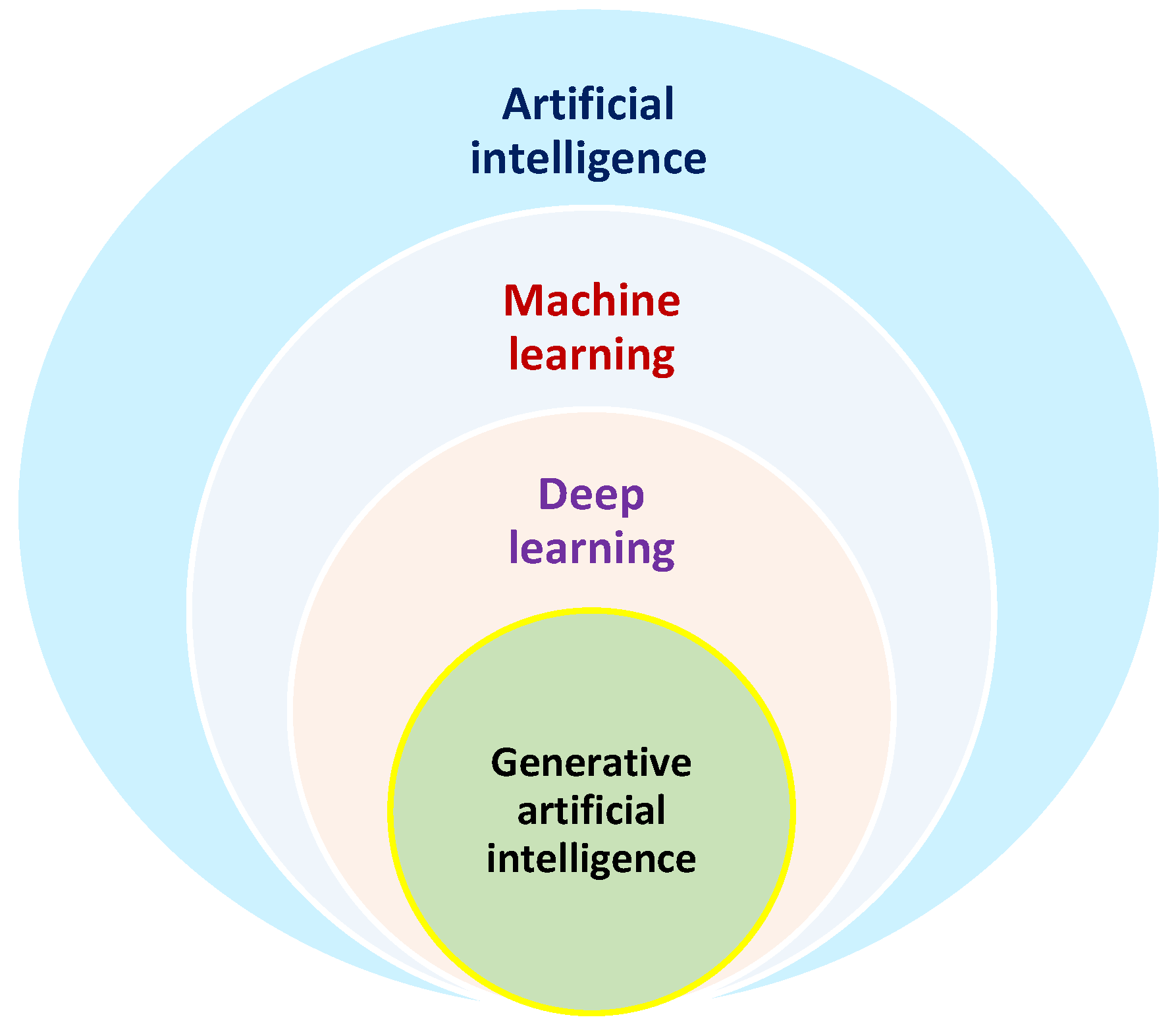
Figure 2.
Flowchart of the learning strategy using the metaverse and generative artificial intelligence.
Figure 2.
Flowchart of the learning strategy using the metaverse and generative artificial intelligence.
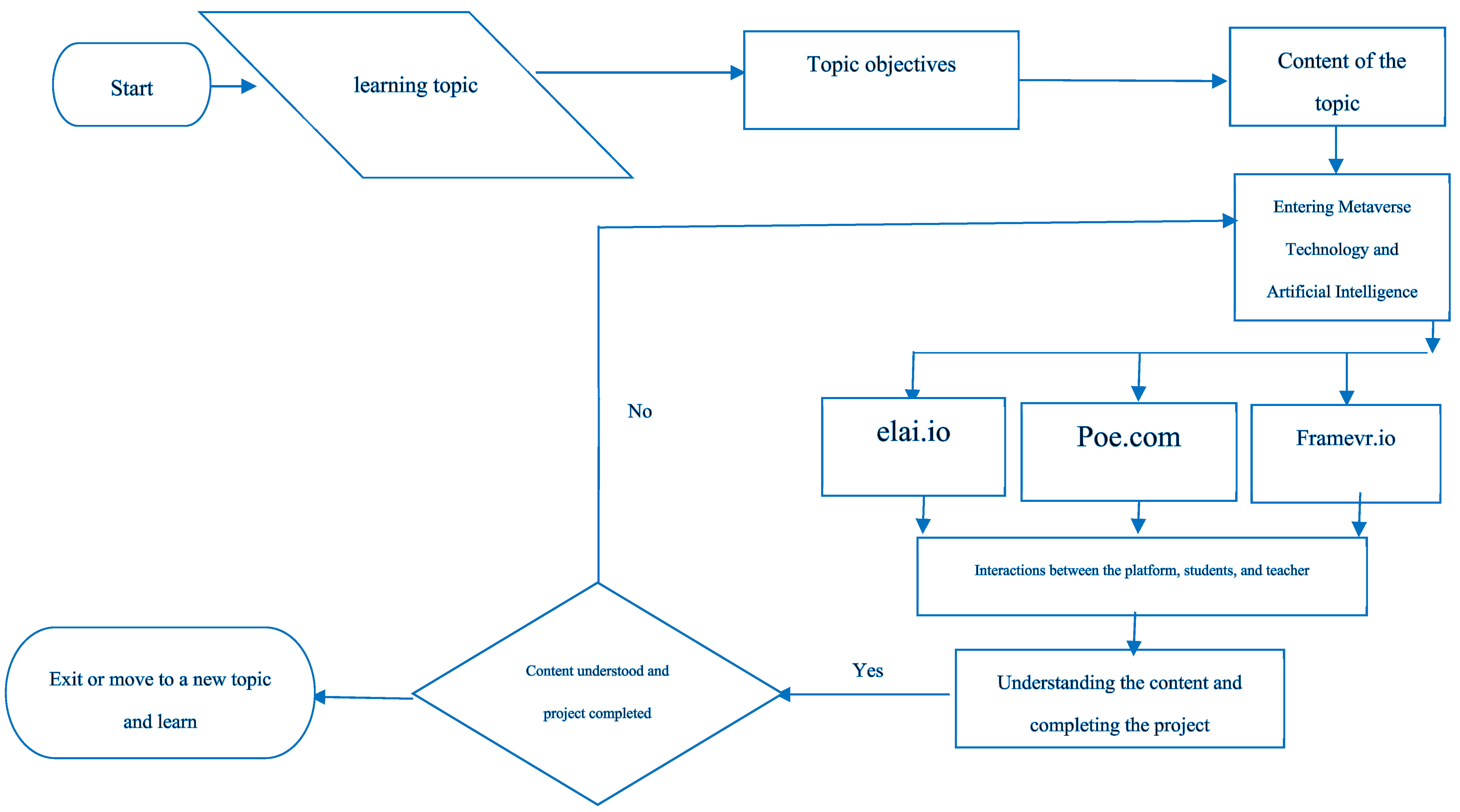
Figure 3.
The Metaverse Environment.
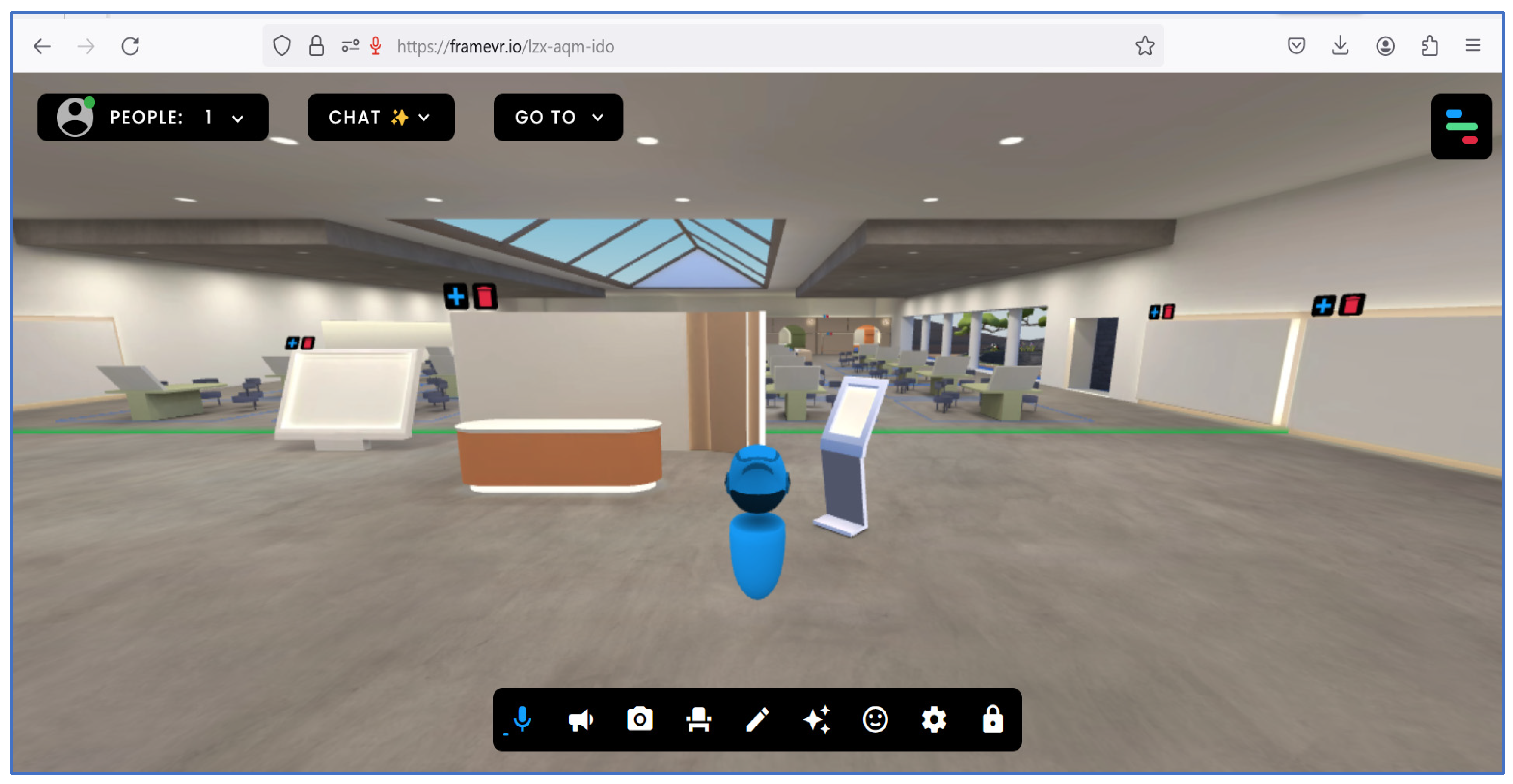
Disclaimer/Publisher’s Note: The statements, opinions and data contained in all publications are solely those of the individual author(s) and contributor(s) and not of MDPI and/or the editor(s). MDPI and/or the editor(s) disclaim responsibility for any injury to people or property resulting from any ideas, methods, instructions or products referred to in the content. |
© 2025 by the authors. Licensee MDPI, Basel, Switzerland. This article is an open access article distributed under the terms and conditions of the Creative Commons Attribution (CC BY) license (https://creativecommons.org/licenses/by/4.0/).
Copyright: This open access article is published under a Creative Commons CC BY 4.0 license, which permit the free download, distribution, and reuse, provided that the author and preprint are cited in any reuse.


