

Submitted:
22 May 2025
Posted:
22 May 2025
You are already at the latest version
Abstract
Objective: Utilizing the Health Care Access Barriers (HCAB) Theoretical Framework, this study examines latent profiles of barriers to prenatal care among pregnant women in Alabama and whether these profiles mediate or moderate the relationship between pregnancy intentionality and early prenatal care initiation. Methods: An explanatory mixed-method design was employed, integrating quantitative analysis of Alabama Pregnancy Risk Assessment Monitoring System (PRAMS) Phase 8 data (2016–2021) with qualitative insights from expert interviews. Latent class analysis (LCA) was performed to identify subgroups based on prenatal care barriers. Logistic regression models evaluated the association between pregnancy intentionality and early prenatal care initiation, controlling for demographic covariates. A Firth-penalized multivariable logistic regression model evaluated interaction effects. Results: Planned pregnancy was associated with higher odds of early prenatal care initiation (OR = 0.78, 95% CI [0.49, 1.23], p = .286), though this relationship did not reach statistical significance. Barrier profiles neither moderated nor mediated this association, and the interaction term remained non-significant (OR = 5.19, 95% CI [0.22, 828.94], p = .309). Mediation analysis also showed no significant indirect effect through latent class membership (indirect effect = 0.012, p = .518). Expert interviews highlighted persistent systemic and cognitive barriers to early prenatal care access, reinforcing the need for targeted interventions. Conclusion: While pregnancy intentionality was not a statistically significant predictor of early prenatal care initiation, expert insights highlight persistent systemic and cognitive barriers that contribute to delays in access. These findings underscore the need for multi-level strategies to address informational and logistical challenges in prenatal care. Future research should examine additional pathways that influence care-seeking behaviors.
Keywords:
prenatal care access
; latent class analysis
; pregnancy intentionality
; explanatory mixed-method design
; maternal health disparities
; health care barriers
1. Introduction
Community resource challenges and healthcare system barriers continue to influence perinatal outcomes in Alabama [1,2], exacerbating the disproportionate burden of health inequities in the state. Current literature shows that Alabama consistently ranks among the states with the highest maternal mortality and morbidity in the United States [3], with a maternal mortality rate (MMR) of 38.6 deaths per 100,000 live births in 2020 [3]. Moreover, persistent racial and geographic disparities limit timely access to obstetric care for women of reproductive age in remote and resource-scarce settings [4], heightening the urgency of challenges faced by rural communities and racial minorities in seeking, accessing, and receiving care during the perinatal period.
Importantly, inadequate access to prenatal care can undermine efforts to address gaps in the provision of risk-appropriate care for pregnant women [6], especially those considered as high-risk pregnancies. In Alabama, this challenge is evident, as 18.1% of women receive prenatal care only from the fifth month onward or attend fewer than half of the recommended visits for their infant’s gestational age [7]. Additionally, the financial burden of uninsured women of reproductive age seeking preconception, prenatal, and postpartum care remains a critical challenge, as many must pay out-of-pocket for these essential services. For families with limited financial resources, these costs can be especially access-limiting, exacerbating disparities in maternal health access. Notably, one in six women aged 18-44 in Alabama lacks health coverage, facing significant barriers to maintaining overall well-being [8].
Pregnancy intentionality plays a vital role in shaping maternal health behaviors, especially during the timing of prenatal care initiation. The prevailing perspective is that women with planned pregnancies are more likely to seek early prenatal care, ensuring timely access to screenings, risk assessments, referrals for specialty care, and other essential interventions that improve maternal and infant health outcomes [9]. In contrast, unintended pregnancies are often associated with delayed or inadequate prenatal care utilization, contributing to disparities in perinatal health [10]. Interestingly, a systematic review and meta-analysis found that women with unintended pregnancies had 1.42 times higher odds of delayed antenatal care use, and 1.64 times higher odds of inadequate care compared to those with planned pregnancies [10].
Beyond individual decision-making, systemic barriers, such as fragmented care coordination, provider shortages, and insurance limitations, further complicate access to timely prenatal services, disproportionately impacting vulnerable populations [11]. In the Southern United States, maternity care deserts and limited provider availability exacerbate these challenges, leaving many women without adequate prenatal care options [12]. Maternity care deserts is an umbrella term used to describe areas with little to no access to maternity healthcare services, which may include hospitals with obstetric care, birthing centers, and more. Access to prenatal and maternal care in Alabama remains a challenge, with limited availability of maternal care providers and ongoing concerns about care quality [13]. Altogether, these structural barriers contribute to disparities in maternal health outcomes, highlighting the need for continued efforts to enhance accessibility and care coordination.
Addressing these challenges requires a comprehensive approach that integrates pregnancy planning support with structural reforms to improve prenatal care accessibility and continuity of care. The significant proportion of women in Alabama who delay prenatal care until after the first trimester highlights an opportunity to address the underlying factors contributing to preventable adverse outcomes, such as preterm birth, low birthweight, and perinatal complications. More importantly, understanding the barriers that prevent timely access to prenatal care is essential for reducing disparities in perinatal health outcomes and fostering safer, thriving communities.
These challenges call for a structured framework for evaluating maternal healthcare barriers during the perinatal period. The Health Care Access Barriers (HCAB) Model offers a valuable perspective for examining affordability, availability, accessibility, and acceptability, essential determinants of prenatal care access. Considering the complex interplay between pregnancy intentionality and systemic care limitations, HCAB provides a robust foundation for analyzing latent barriers and informing strategies to improve perinatal health outcomes in Alabama.
1.1. Health Care Access Barriers (HCAB) Model as a Theoretical Framework
The Health Care Access Barriers (HCAB) Model offers a comprehensive framework for evaluating the factors that influence healthcare utilization. It categorizes barriers into three modifiable domains, each operating either independently or interacting to influence access to care [14]. These domains include:
- I.
- Structural barriers, which involve logistical challenges such as transportation obstacles, clinic operating hours, and provider availability. These factors significantly impact access to maternal healthcare services, particularly in resource-limited settings [15].
- II.
- Financial barriers, which encompass affordability issues, including the cost of care, insurance access, and out-of-pocket expenses. Economic constraints often dictate whether individuals can seek essential prenatal and perinatal services [16].
- III.
- Cognitive barriers, which relate to individual-level determinants such as pregnancy awareness, cultural beliefs, health literacy, and perceptions of healthcare accessibility. These elements shape care-seeking behaviors and can contribute to disparities in maternal health [14].
Collectively, these barriers highlight the need for multifaceted interventions that enhance healthcare accessibility by addressing affordability, availability, and awareness [15,16]. In the prenatal context, structural challenges such as clinic location and scheduling can limit early visits. Financial constraints, such as lack of insurance coverage, often deter women from seeking timely care. Cognitive factors, including unrecognized or unintended pregnancies, can further delay care initiation, with profound consequences on maternal and infant health outcomes.
Mapping individual women's experiences onto these three domains helps healthcare providers and policymakers to tailor interventions to local contexts, ensuring judicious allocation of resources more efficiently. This targeted approach reduces implementation gaps, strengthens care accessibility, and minimizes inefficiencies. Aligning interventions with specific barriers in the healthcare systems can optimize resource distribution and improve maternal health outcomes for diverse populations.
1.2. Rationale for Mediation and Moderation
To clarify this distinction, Figure 1 shows how the HCAB domains can function both as mediators and as moderators of the pregnancy intentionality → early care pathway.
Although the HCAB Model was initially developed to help categorize barriers to health care into financial, cognitive, and structural domains, it also implies two distinct roles that those barriers can play in shaping the relationship between pregnancy intentionality and early prenatal care initiation. First, an unplanned pregnancy may increase a woman’s likelihood of experiencing access barriers (the a-path), which subsequently reduces the odds of timely care (the b-path), demonstrating a mediation process. Second, even when pregnancy is planned or intended, the extent to which it facilitates early care initiation may depend on the barrier profile, a concept known as moderation. For instance, highly motivated women may still struggle to obtain care when confronted with severe structural challenges.
This distinction is essential because mediation suggests that eliminating the barrier disrupts the causal pathway, whereas moderation highlights the need for stratified or conditional strategies tailored to different barrier intensities. In other words, mediation implies that removing the barrier disrupts the pathway from intentionality to early care, and moderation highlights when and for whom intentionality matters most, insights that guide both barrier-targeted and stratified interventions.
Recognizing these roles allows policymakers and healthcare providers to refine interventions accordingly. Addressing mediating barriers can remove obstacles to early care, while accounting for moderating effects helps create adaptive strategies suited to different levels of healthcare access limitations. Figure 1 visually represents these relationships, with solid arrows indicating mediation pathways (a→b) and dashed arrows illustrating how barrier profiles condition the direct link between pregnancy intentionality and early prenatal care initiation (c′). Previous studies have not accounted for barrier profiles as conditional determinants, requiring this approach. Expanding on the conceptual rationale for mediation and moderation, this study empirically identifies distinct barrier profiles using latent class analysis (LCA). By systematically classifying access barriers, LCA enables a nuanced understanding of how these categories influence prenatal care-seeking behaviors.
1.3. Latent Class Analysis of Barriers
The study now turns to the latent class analysis of barrier items. This study employs latent class analysis (LCA) on 11 barrier items from the Alabama PRAMS Phase 8 survey (2016–2021) to identify distinct subgroups of women who experience overlapping barriers to prenatal care access. In analyzing co-occurring patterns, LCA moves beyond single-variable assessment to reveal meaningful subgroup distinctions that influence pregnancy intentionality and prenatal care initiation.
Unlike traditional regression methods that examine barriers in isolation, LCA empirically identifies groups with shared access challenges, offering insights into how these profiles relate to maternal healthcare-seeking behaviors. This approach ensures a more structured assessment of how systemic and individual-level obstacles converge to shape care utilization patterns.
Applying the HCAB framework within LCA allows for the classification of women into empirically derived profiles that reflect structural, financial, and cognitive barriers. Understanding these profiles contributes to evaluating how pregnancy intentionality interacts with maternal healthcare access limitations and informs policy interventions designed to mitigate these disparities.
In grouping women into statistically derived subpopulations, LCA offers a robust framework for examining disparities in maternal health access, thereby improving interventions that address pregnancy planning support and systemic healthcare barriers in the care continuum.
1.4. Study Aims and Hypotheses
Building on this framework, this study seeks to answer the research question: What latent profiles of barriers to prenatal care exist among pregnant women in Alabama, and how do these profiles influence pregnancy intentionality and early prenatal care initiation? Using data from Alabama's PRAMS Phase 8 survey (2016–2021), this study aims to:
- Identify latent barrier profiles using Alabama's PRAMS Phase 8 barrier items.
- Examine the association between pregnancy intentionality (planned vs. unplanned) and early prenatal care initiation.
- Evaluate whether barrier profiles mediate and/or moderate the relationship between intentionality and early prenatal care.
- Integrate qualitative insights from expert interviews to contextualize and validate quantitative findings.
The research hypotheses are as follows:
- H1 (Mediation): Women with unplanned pregnancies are more likely to belong to high-barrier latent profiles, which may subsequently reduce their odds of early prenatal care initiation. If mediation is present, reducing these barriers should alter the causal pathway between pregnancy intentionality and care access.
- H2 (Moderation): Even among women with planned pregnancies, early prenatal care initiation is less likely for those classified into high-barrier profiles. This suggests that pregnancy intentionality alone cannot ensure access, highlighting the need for targeted interventions to address structural and financial barriers.
- H3 (Descriptive): Expert interviews will provide critical insights into how structural, financial, and cognitive barriers manifest in Alabama’s maternal healthcare system, complementing the quantitative classifications.
In situating the analysis within Alabama’s unique sociodemographic and health care context, and using a mixed-methods explanatory sequential design, this research aims to inform state-level policies designed to reduce maternal health disparities and improve prenatal care accessibility across diverse populations in Alabama.
2. Methods
2.1. Study Design
This study utilized an explanatory mixed-methods design, integrating quantitative analyses of data from the Alabama Department of Public Health (ADPH) PRAMS Phase 8 (2016–2021) with qualitative insights from expert interviews. The quantitative phase applied latent class analysis (LCA) to identify barrier profiles and utilized multivariable logistic regression to assess relationships between pregnancy intentionality, barrier profiles, and prenatal care initiation. The qualitative phase used thematic analysis of semi-structured interviews with field experts to provide context and inform the interpretation of the quantitative results.
2.2. Data Source and Sample
The quantitative data were derived from aggregated counts in the Alabama PRAMS Phase 8 dataset collected from 2016 to 2021. The original aggregate responses for key analytic variables, as detailed in Table 1, comprised 4,416 unweighted observations. Due to the absence of respondent-level linkage, pseudo-individual-level data were simulated using the uncount() function in R, proportionally expanding the aggregate counts into case-level records based on unweighted frequencies. From this expanded dataset, a focused analytic sample of N = 596 was selected to reflect complete responses across key variables, which included pregnancy intentionality, prenatal care barriers, early prenatal care, and demographic covariates.
This sample was selected to align with the research question, study aims, and theoretical framework (HCAB Model), ensuring analytic coherence. Weighting was not applied in this analysis due to the simulated structure of the dataset and the goal of maintaining clarity and interpretability in modeling relationships. The qualitative data were obtained through semi-structured interviews with eight experts from diverse backgrounds involved in maternal and child health policy, clinical practice, public health, social services, and healthcare administration in Alabama. These expert perspectives complement the quantitative findings by providing contextual insights into the systemic and cognitive barriers influencing prenatal care access.
2.3. Study Variables and Measures
A summary of all key variables, including their definitions, coding, and data sources, is provided in Table 1.
Primary Variables
- I.
- Pregnancy Intentionality: This was categorized as planned or unplanned based on responses to PRAMS Phase 8 question 12 (Qn12).
- II.
- Early Prenatal Care Initiation: This was evaluated dichotomously as receiving prenatal care as early as desired (Yes/No), based on PRAMS Phase 8 question 20 (Qn20).
Barrier Variables in the HCAB Domains
The barrier items from PRAMS Phase 8 Question 21 (Qn21) were categorized within three domains of HCAB:
- I.
- Structural Barriers: This captures barriers relating to transportation, appointment availability, and clinic operational hours.
- II.
- Financial Barriers: This captures barriers relating to insurance status, cost, and affordability issues.
- III.
- Cognitive Barriers: This captures barriers relating to pregnancy recognition, perceived importance of care, cultural beliefs, and health literacy.
Demographic Covariates
Demographic covariates included maternal age, body mass index (BMI), insurance coverage (Qn10, Qn11), race/ethnicity, and annual household income (Qn79), with descriptive statistics presented in the Results section (see Table 2).
2.4. Statistical Analysis
The following statistical procedures were employed to examine the study’s hypotheses regarding pregnancy intentionality, latent barrier profiles, and early prenatal care initiation. Latent class analysis (LCA) was conducted using PRAMS Phase 8 barrier items to identify distinct barrier profiles among respondents empirically. Model selection was guided by the Akaike Information Criterion (AIC) and Bayesian Information Criterion (BIC), with preference given to models exhibiting lower values and more interpretable class distributions (see Table 3 in the Results section).
Note: Lower AIC and BIC values indicate improved model fit. The 3-class solution was selected based on conceptual interpretability despite a marginally higher AIC.
Multivariable logistic regression models evaluated the association between pregnancy intentionality (planned vs. unplanned) and early prenatal care initiation, adjusting for demographic covariates, such as age, BMI, race/ethnicity, and insurance status. To account for potential small-sample bias and assess interaction effects between latent barrier classes and pregnancy intentionality, Firth-penalized multivariable logistic regression was employed (see Table 4 in the Results section).
Mediation analyses using weighted least squares mean- and variance-adjusted (WLSMV) estimation assessed whether latent barrier profiles mediated the association between pregnancy intentionality and early prenatal care initiation. Direct and indirect pathways were estimated, with significance assessed via Wald statistics (see Table 5 in the Results section).
Qualitative Analyses. Semi-structured interviews were conducted with eight field experts from diverse backgrounds in maternal and child health policy, clinical care, public health, and social services in Alabama. A set of eight open-ended questions was developed in alignment with the three domains of the HCAB model: structural, financial, and cognitive barriers (see Table 6 in the Results section). These prompts were designed to elicit expert insights into systemic, informational, and logistical factors influencing early prenatal care access.
Each interview was transcribed and analyzed using a structured, deductive coding approach. The transcripts were reviewed line by line, with expert responses coded directly to the corresponding HCAB domains. Considering the descriptive aim of the qualitative phase and its alignment with a pre-established theoretical framework, formal inter-coder reliability testing was not applied. This method facilitated the structured integration of expert perspectives within the context of the quantitative findings.
Ethical Considerations. The study protocol was approved by the Institutional Review Board (IRB) at Auburn University under protocol number 24-831, with approval granted on July 11, 2024. Permission to utilize the Alabama PRAMS Phase 8 dataset was obtained from the Alabama Department of Public Health. All expert participants were informed of the study's purpose and voluntarily agreed to participate in the interviews, which constituted implied consent in accordance with IRB-approved procedures.
3. Results
3.1. Sample Characteristics
Table 2 details the demographic and clinical characteristics of the study sample (N = 596). A majority of respondents identified as Non-Hispanic White (55.9%), followed by Non-Hispanic Black (33.6%) and those of Hispanic origin (10.6%). The most common BMI classification was healthy weight (42.1%), while a substantial proportion were categorized as obese (33.4%) or overweight (22.5%). Additionally, approximately 42% of participants reported household incomes below $25,000, whereas 29.5% reported annual earnings exceeding $60,000. Readers may refer to Table 2 for a comprehensive distribution of sample characteristics.
3.2. Latent Class Analysis
Latent class analysis (LCA) was conducted on the Qn21 barrier items using pseudo-individual-level data simulated from aggregate PRAMS Phase 8 counts. Models specifying two, three, and four latent classes were estimated, with model fit assessed using the Akaike Information Criterion (AIC) and Bayesian Information Criterion (BIC), both of which balance fit quality and parsimony. Lower values indicate improved model performance.
As shown in Table 3, the two-class model yielded the lowest AIC (5940.01) but exhibited a severely imbalanced class distribution, with most cases clustering into a single class. The three-class model had slightly higher AIC (5947.22) and BIC (6100.47) values but provided a more conceptually interpretable structure aligned with the theoretical framework. The four-class solution produced even higher AIC (5955.74) and BIC (6161.52) values, indicating potential overfitting. Based on fit statistics and substantive interpretability, the three-class model was preferred.
This solution identified three distinct latent profiles of access barriers. Class 1 (Low Barriers) represented respondents with minimal endorsement of any barriers. Class 2 (Predominantly Personal Barriers) encompassed individuals who primarily faced cognitive or informational challenges, such as uncertainty about when to seek care or discomfort discussing pregnancy. Class 3 (Structural Barriers) was characterized by a high prevalence of logistical obstacles, including transportation difficulties, work conflicts, and cost concerns. Frequencies for latent class membership are presented in Figure 2, and item-level endorsement probabilities for each class are shown in Figure 3.
As shown in Figure 2, the vast majority of respondents were assigned to Class 1 (n = 517 [87.8%]), whereas only a small minority fell into Class 2 (n = 28 [4.8%]) and Class 3 (n = 44 [7.5%]). This distribution shows that most simulated individuals fell into the profile represented by Class 1, whereas only a minority exhibited the barrier patterns captured by Classes 2 and 3. Figure 3 presents the item-level endorsement probabilities that define each latent class profile.
As shown in Figure 3, all three classes exhibited high endorsement for the item, did not want care, with values approaching or exceeding 90%. Class 2 (Predominantly Personal Barriers) showed the highest endorsement for barriers related to Medicaid coverage, childcare, and privacy concerns, suggesting difficulty navigating informational and support-related aspects of care. Class 1 (Low Barriers) exhibited moderate endorsement across most items, with cost and scheduling concerns emerging more prominently than cognitive barriers. In contrast, Class 3 (Structural Barriers) displayed elevated endorsement for logistical challenges such as transportation and appointment delays but relatively lower endorsement for insurance-related items.
3.3. Firth-Penalized Multivariable Logistic Regression
A Firth-penalized multivariable logistic regression was conducted to examine whether latent barrier profile, pregnancy intentionality (planned vs. unplanned), and their interaction predicted early prenatal care initiation. The model controlled for maternal age, race/ethnicity, and BMI. This approach was chosen to mitigate potential small-sample bias and instability caused by sparse cell sizes in the interaction term.
As shown in Table 4, neither the main effect of latent class 2 (OR = 0.29, 95% CI [0.00, 2.51], p = .315) nor unplanned pregnancy (OR = 0.78, 95% CI [0.49, 1.23], p = .286) significantly predicted early prenatal care initiation. The interaction between latent class 2 and unplanned pregnancy was also not statistically significant (OR = 5.19, 95% CI [0.22, 828.94], p = .309), indicating that pregnancy intentionality did not meaningfully affect early care initiation across different barrier profiles.
Additionally, none of the demographic covariates, including maternal age, race/ethnicity, and BMI were statistically significant. These findings suggest that in this analytic sample, latent class membership, pregnancy intentionality, and their interaction did not significantly influence the likelihood of initiating prenatal care early.
3.4. Mediation Analysis
A path analysis was conducted to evaluate whether latent class membership mediated the association between pregnancy intentionality and early prenatal care initiation. The model was estimated using weighted least squares mean- and variance-adjusted (WLSMV) estimation and included direct, indirect, and total effects.
As shown in Table 5, there was no statistically significant indirect effect of pregnancy intentionality on early prenatal care initiation through latent class membership (indirect effect = 0.012, p = .518). The direct effect of intentionality on early care also remained non-significant (direct effect = 0.067, p = .221), consistent with prior multivariable logistic regression results. These findings suggest that variation in access barrier profiles does not meaningfully explain the relationship between pregnancy intentionality and early prenatal care initiation. Latent class membership did not serve as a significant mediator in this analytic model.
3.5. Qualitative Findings from Expert Interviews
Semi-structured interviews with eight maternal and child health experts provided contextual insights into barriers to early prenatal care access. The interview prompts were developed to align with each domain, as captured in Table 6.
Structural Barriers
Most experts highlighted logistical challenges as persistent structural barriers to timely prenatal care. Frequently cited concerns included inadequate transportation in rural areas, fragmented care coordination, and clinic operating hours that conflict with work schedules. Several experts emphasized that these system-level constraints disproportionately affect women with limited social support or caregiving responsibilities. One expert noted, "The system is just not designed for the realities of a working mother in a rural county."
Cognitive Barriers
Health literacy, awareness, and the perceived importance of care were frequently described as critical influences on care-seeking behavior. Misunderstandings about when to begin prenatal care and fears of judgment or stigma were common among first-time mothers and immigrant populations. Some experts also observed that provider dismissiveness or poor communication erodes trust and discourages follow-up, with one interviewee explaining, "Women don’t return when they feel unheard."
Financial Barriers
Although financial concerns were mentioned less frequently than structural and cognitive barriers, they were still considered significant by several experts. Issues cited included gaps in Medicaid enrollment, delays in coverage activation, and confusion about eligibility. One expert pointed out, "Even when the care is technically free, women do not know how to access it, or assume they cannot."
Cross-cutting Observations
Experts agreed that while individual motivation, such as pregnancy planning, is vital, often, it is overshadowed by environmental and structural constraints. They suggested that the weak mediation or moderation effects observed in the quantitative phase may reflect the complexity and contextual nature of these barriers. To address these challenges, experts recommended public health interventions such as culturally tailored patient navigation, mobile outreach, and coordinated case management. Others advocated for community-based resource directories and digital health literacy campaigns.
4. Discussion
4.1. Summary of Key Findings
This explanatory sequential mixed-methods study assessed how pregnancy intentionality and healthcare access barriers influence early prenatal care initiation. Although pregnancy intentionality was associated with higher odds of early care initiation in initial multivariable logistic regression models, this association was not statistically significant after adjusting for covariates or when modeled with interaction terms involving barrier profile membership. The mediation analysis also found no significant indirect effects through latent class membership.
However, expert interviews reinforced the importance of structural and cognitive barriers in limiting care access. One expert emphasized that “The system is just not designed for the realities of a working mother in a rural county,” highlighting the persistent logistical and scheduling issues women face. Another noted that “Women don’t return when they feel unheard,” pointing to how poor provider communication and perceived stigma reduce follow-up and trust. These perspectives align with prior findings that transportation barriers [17], low health literacy [18], and mistrust in providers are major contributors to delayed prenatal care, especially among underserved groups [19,20].
The latent class analysis (LCA) findings revealed three distinct barrier profiles among Alabama women: Low Barriers, Predominantly Personal Barriers, and Structural Barriers. These profiles align conceptually with the HCAB model. Altogether, the combined quantitative and qualitative findings emphasize that while pregnancy intentionality may influence care-seeking decisions, entrenched structural, financial, and informational barriers often override care-seeking intent, especially among marginalized populations.
4.2. Understanding Barriers Beyond the Numbers
The absence of statistically significant relationships in the adjusted models does not diminish the importance of this study’s findings. Rather, it highlights the complexities of prenatal care access, showing that individual-level variables, such as pregnancy intentionality, do not fully capture the lived experiences of pregnant women navigating healthcare systems in resource-limited contexts. Through the HCAB framework, expert interviews provide key insights into why the intent to seek early care does not always result in timely action. For instance, structural barriers, including transportation limitations [17], rigid clinic hours, and fragmented scheduling systems, remain persistent obstacles to early prenatal care initiation. These logistical challenges are very pronounced in rural areas [5], where access constraints often override the ability to seek timely care among pregnant women. As one expert noted, “The system is just not designed for the realities of a working mother in a rural county.”
Similarly, cognitive barriers, such as low health literacy [18], uncertainty about when prenatal care should begin, and perceived stigma, further discourage care-seeking behaviors. These challenges disproportionately affect first-time mothers and immigrant women, who may encounter linguistic and cultural barriers or negative past healthcare experiences. One expert emphasized, “Women don’t return when they feel unheard.” Likewise, financial barriers, though less frequently emphasized, continue to impede access to routine and risk-appropriate prenatal care. Experts described delays in Medicaid coverage activation and widespread confusion regarding eligibility, reinforcing structural exclusion from care. “Even when the care is technically free, women do not know how to access it, or assume they cannot,” one respondent explained.
Notably, although the LCA-derived barrier profiles were not significant mediators or moderators, their qualitative alignment with expert themes strengthens their practical relevance. Expert perspectives contextualized the statistically non-significant findings, emphasizing that these barriers rarely occur in isolation and that women often experience overlapping structural, cognitive, and financial challenges that collectively erode the impact of planning or intent. These insights underscore the value of integrating mixed-methods approaches to validate quantitative models and illuminate the lived realities underlying them.
Altogether, the HCAB framework provides a compelling structure for understanding how multi-level barriers interact to affect prenatal care access for pregnant women and their families. This study’s findings suggest that structural and cognitive constraints, in particular, may act as upstream suppressors of early care, even when pregnancy is intended or planned. Addressing these challenges requires interventions beyond individual behavior change, focusing instead on systems-level reforms that mitigate logistical, informational, and financial gaps.
4.3. Implications for Policy and Practice
The findings of this study highlight the urgent need for policy solutions that extend beyond individual behavior change and address the multi-level barriers pregnant women experience in accessing early prenatal care. In particular, structural barriers require robust investments in rural transportation services, expanded clinic hours, and the integration of telehealth for prenatal consultations. At both the state and local levels in Alabama, fostering partnerships with community-based organizations can facilitate patient navigation and case management systems that support women in overcoming logistical obstacles before, during, and after birth.
In addition, improving cognitive and informational access during the perinatal period requires tailored, culturally competent outreach strategies. Health departments and provider networks should embed health literacy interventions into prenatal programs, especially those targeting immigrant populations and first-time mothers. Provider training in trauma-informed, respectful communication is essential, as it can enhance trust and reduce perceived stigma that deters care-seeking.
Addressing the financial barriers requires simplifying Medicaid enrollment processes and removing bureaucratic delays, such as verification procedures and eligibility reviews. When done efficiently, these can prevent obstacles or eliminate avoidable gaps in coverage. Policymakers and health analysts should consider continuous eligibility measures for the prenatal and postpartum periods while providing clear guidance to caseworkers and patients. More generally, inter-agency collaboration among healthcare providers, social services, and public health systems is crucial for designing responsive interventions.
In health jurisdictions with regionalized perinatal systems, the evaluation and monitoring of referral and specialty coordination processes remain critical to ensuring timely transitions across levels of care. Existing best practices, such as the medical home model, may serve as a blueprint for integrating primary and specialty services, provided these systems are well-resourced and equitably distributed across diverse care settings. When aligned with HCAB-informed insights, such interventions can help reduce maternal health disparities and improve birth outcomes across varied populations.
4.4. Study Limitations
This study has some limitations that warrant discussion. First, the study’s analytic sample was constrained to 596 simulated observations due to the application of listwise deletion for records with missing responses on key variables. While this approach ensured complete data across core predictors and outcomes, it may have resulted in a reduction in sample size and diversity, potentially affecting statistical power to detect smaller effects. While the Firth-penalized logistic regression method was employed to reduce small-sample bias, some interaction effect estimates exhibited wide confidence intervals, indicating sparse data challenges. This does not undermine the validity of the approach but suggests that further research with larger respondent-linked datasets could provide more precise estimates.
Second, the absence of sampling weights limits the ability to generalize findings to Alabama’s broader maternal population. While the study offers valuable insights into prenatal care barriers, its conclusions should be interpreted taking into account this methodological constraint. Third, latent class analysis (LCA) was conducted on simulated individual-level data derived from aggregated ADPH PRAMS Phase 8 counts. Although this approach allowed for barrier profile identification, reliance on pseudo-individual records prevents direct linkage to actual maternal respondent data. As a result, generalizability may be affected, particularly regarding within-group variations that would be observable in fully respondent-linked datasets.
Despite these limitations, integrating latent class analysis and expert interviews strengthens the study’s contributions by offering a nuanced understanding of access barriers beyond individual-level predictors. Future research should examine how structural and cognitive constraints influence prenatal care-seeking behaviors across diverse populations using weighted datasets or alternative imputation methods.
5. Conclusion
This study examined how pregnancy intentionality and healthcare access barriers influence early prenatal care initiation using an explanatory sequential mixed-methods approach anchored in the HCAB model. Although statistical analyses did not reveal significant mediation or moderation effects, expert interviews provided vital context, showing how structural, cognitive, and financial barriers influence prenatal care decisions in real-world settings.
Considering the entrenched nature of these barriers, addressing disparities in maternal and perinatal outcomes requires coordinated strategies that extend beyond the prenatal period. One promising approach is the expansion of community-based doula programs, which offer emotional, educational, and logistical support to first-time mothers and adolescents. These programs help bridge gaps in health literacy, foster trust in the care process, and facilitate continuity of care before, during, and after pregnancy. Additionally, strengthening Alabama’s perinatal regionalization systems and expanding the medical home model could improve coordination across care settings. More crucially, enhancing early identification of high-risk individuals and ensuring appropriate referrals would support long-term management of chronic conditions and preexisting health issues.
Likewise, equitable maternal health outcomes depend on provider-level strategies that prioritize respectful and culturally competent care. Training in trauma-informed approaches, implicit bias awareness, and effective communication can improve patient-provider interactions, especially for historically underserved populations. Strengthening provider accountability in care coordination could encourage timely prenatal engagement with pregnant women. Beyond pregnancy, greater emphasis must be on insurance continuity, preconception health, and postpartum care. Closing gaps in coverage and care coordination throughout the reproductive continuum is essential for addressing disparities, not just during pregnancy but well before conception and beyond delivery.
Finally, in integrating structural, interpersonal, and policy-level interventions, these strategies provide a path forward in reducing maternal health inequities. When guided by HCAB-informed insights and shaped by clinical and community expertise, such reforms can help mitigate access barriers and promote early and equitable prenatal care utilization, which is the desired outcome for all.
Author Contributions
JKD: Conceptualization, methodology, data curation, formal analysis, visualization, validation, writing (original draft, review, editing), and project administration.
Funding
This study did not receive funding from government, commercial, or non-profit organizations.
Institutional Review Board Statement
The study was conducted in accordance with the Declaration of Helsinki. The study relied on de-identified, anonymized data, and the study protocol was approved by the Institutional Review Board (IRB) at Auburn University under protocol number 24-831, with approval granted on July 11, 2024. Permission to utilize the Alabama PRAMS Phase 8 dataset was obtained from the Alabama Department of Public Health. All expert participants were informed of the study's purpose and voluntarily agreed to participate in the interviews, which constituted implied consent in accordance with IRB-approved procedures.
Informed Consent Statement
All expert participants were informed of the study's purpose and voluntarily agreed to participate in the interviews, which constituted implied consent in accordance with IRB-approved procedures.
Data Availability Statement
Due to the existing data use agreement with the Alabama Department of Public Health, the complete dataset cannot be shared publicly. However, data supporting the study’s findings can be made available upon reasonable request.
Acknowledgments
Special thanks to the Alabama PRAMS Work Group and the Centers for Disease Control and Prevention for their support in providing the quantitative data used in this study.
Conflicts of Interest
The author declares no conflicts of interest.
Abbreviations
The following abbreviations are used in this manuscript:
AIC Akaike Information Criterion
ADPH Alabama Department of Public Health
BIC Bayesian Information Criterion
BMI Body Mass Index
HCAB Health Care Access Barriers
IRB Institutional Review Board
LCA Latent Class Analysis
MMR Maternal Mortality Rate
PRAMS Pregnancy Risk Assessment Monitoring System
SE Standard Error
WLSMV Weighted Least Squares Mean- and Variance-Adjusted
References
- Alabama Department of Public Health. Alabama Maternal Mortality Review Report [Internet]. 2018-2019. Available from: https://www.alabamapublichealth.gov/perinatal/assets/2018-2019_annual_mmr.pdf.
- Children’s of Alabama. 2022 Community Health Needs Assessment [Internet]. 2022. Available from: https://www.childrensal.org/sites/default/files/2022-12/CHNA-REPORT-22.pdf.
- United Health Foundation. America’s Health Rankings analysis of U.S. Department of Health and Human Services, Health Resources and Services Administration, Maternal and Child Health Bureau, Federally Available Data. 2025. Available from: https://www.americashealthrankings.org/explore/measures/maternal_mortality_c/AL.
- National Center for Health Statistics. Maternal Mortality Data (2018-2022) [Internet]. Available from: https://www.cdc.gov/nchs/maternal-mortality/mmr-2018-2022-state-data.pdf.
- Fontenot, J.; Brigance, C.; Lucas, R.; Stoneburner, A. Navigating geographical disparities: access to obstetric hospitals in maternity care deserts and across the United States. BMC Pregnancy Childbirth 2024, 24, 1–11. [Google Scholar] [CrossRef] [PubMed]
- Centers for Disease Control and Prevention. CDC Levels of Care Assessment Tool (LOCATe) [Internet]. 2025. Available from: https://www.cdc.gov/maternal-infant-health/php/cdc-locate/index.html.
- March of Dimes. 2024 March of Dimes Report Card for Alabama [Internet]. 2024. Available from: https://www.marchofdimes.org/peristats/reports/alabama/report-card.
- Clark M, Smith D. Alabama’s women need Medicaid expansion: One in six women aged 18-44 lack health coverage and face many barriers to good health. Center for Children and Families [Internet]. 2023. Available from: https://ccf.georgetown.edu/2023/06/16/alabamas-women-need-medicaid-expansion-one-in-six-women-aged-18-44-lack-health-coverage-and-face-many-barriers-to-good-health/.
- National Conference of State Legislatures. State approaches to ensuring healthy pregnancies through prenatal care [Internet]. 2023. Available from: https://www.ncsl.org/health/state-approaches-to-ensuring-healthy-pregnancies-through-prenatal-care.
- Dibaba, Y.; Fantahun, M.; Hindin, M.J. The effects of pregnancy intention on the use of antenatal care services: systematic review and meta-analysis. Reprod. Heal. 2013, 10, 50–50. [Google Scholar] [CrossRef] [PubMed]
- RVPHTC. Maternal and Infant Mortality: Barriers to Prenatal Care [Internet]. 2024. Available from: https://www.rvphtc.org/2024/05/03/maternal-and-infant-mortality-barriers-to-prenatal-care/.
- National Center for Health Statistics. Maternity Deserts and a Lack of Prenatal Care in the U.S. [Internet]. 2023. Available from: https://blog.nchs.org/lack-of-prenatal-care.
- Davis, M. Southern states offer worst access to prenatal, maternal care. ValuePenguin [Internet]. 2024. Available from: https://www.valuepenguin.com/prenatal-maternal-care-study.
- Carrillo, J.E.; Carrillo, V.A.; Perez, H.R.; Salas-Lopez, D.; Natale-Pereira, A.; Byron, A.T. Defining and Targeting Health Care Access Barriers. J. Heal. Care Poor Underserved 2011, 22, 562–575. [Google Scholar] [CrossRef] [PubMed]
- George, S.; Daniels, K.; Fioratou, E. A qualitative study into the perceived barriers of accessing healthcare among a vulnerable population involved with a community centre in Romania. Int. J. Equity Heal. 2018, 17, 41. [Google Scholar] [CrossRef] [PubMed]
- Mohsin, K.; Mula-Hussain, L.; Gilson, R. HealthCare Access Barrier (HCAB) framework for the barriers to cancer care during conflicts: perspective from Iraq. BMJ Oncol. 2024, 3, e000252. [Google Scholar] [CrossRef] [PubMed]
- Holcomb J, Patel R, Lawson T, et al. Geographic barriers to prenatal care access and their consequences. BMC Pregnancy Childbirth. 2024;24(1):6535. Available from: https://www.medschool.umaryland.edu/media/som/microsites/macsformoms/documents/Geographic-barriers-to-prenatal-care-access-and-their-consequences.pdf.
- JAMA Network Open. Association of health literacy among nulliparous individuals and maternal and neonatal outcomes. JAMA Netw Open. 2024;7(3):e2783674. Available from: https://jamanetwork.com/journals/jamanetworkopen/fullarticle/2783674.
- Wolters Kluwer Health. Racism, mistrust exacerbate psychiatric conditions in minority perinatal patients. J Psychosoc Obstet Gynaecol. 2022;43(2):221–230. Available from: https://www.wolterskluwer.com/en/news/racism-and-mistrust-exacerbate-psychiatric-conditions-in-minority-perinatal-patients.
- KFF. Racial disparities in maternal and infant health: Current status and efforts to address them. Kaiser Family Foundation Report. 2024. Available from: https://www.kff.org/racial-equity-and-health-policy/issue-brief/racial-disparities-in-maternal-and-infant-health-current-status-and-efforts-to-address-them/.
Figure 1.
Conceptual model illustrating pregnancy intentionality, barrier profiles, and early prenatal care initiation. Notes: Solid lines denote mediation paths (a→b), while dashed lines represent moderation effects (c′).
Figure 1.
Conceptual model illustrating pregnancy intentionality, barrier profiles, and early prenatal care initiation. Notes: Solid lines denote mediation paths (a→b), while dashed lines represent moderation effects (c′).

Figure 2.
Distribution of latent class membership among respondents based on LCA of Qn21 barrier items.
Figure 2.
Distribution of latent class membership among respondents based on LCA of Qn21 barrier items.
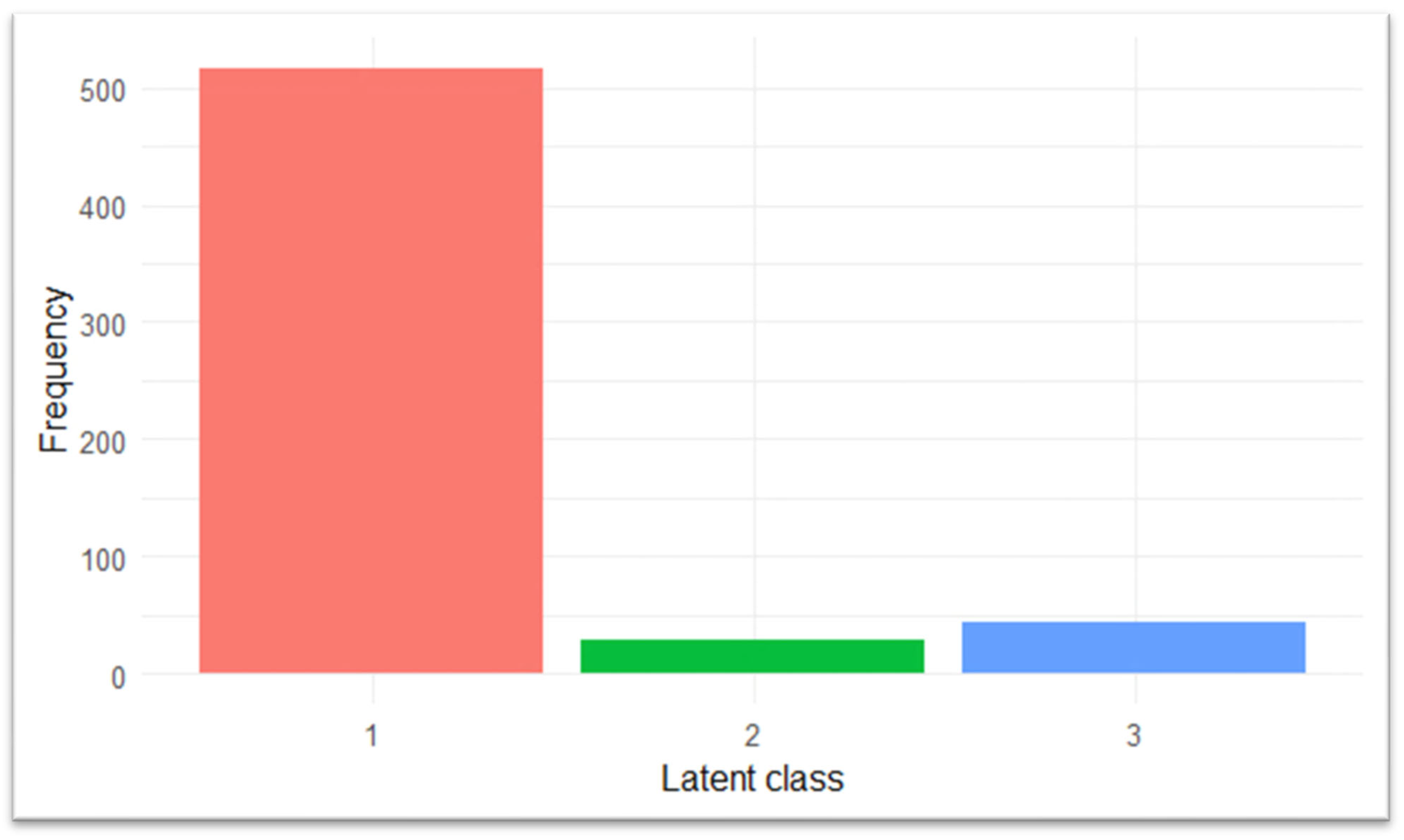
Figure 3.
Item-level endorsement probabilities for each latent class derived from Qn21 barrier items. Note: Profiles reflect distinct combinations of structural, cognitive, and financial barriers.
Figure 3.
Item-level endorsement probabilities for each latent class derived from Qn21 barrier items. Note: Profiles reflect distinct combinations of structural, cognitive, and financial barriers.
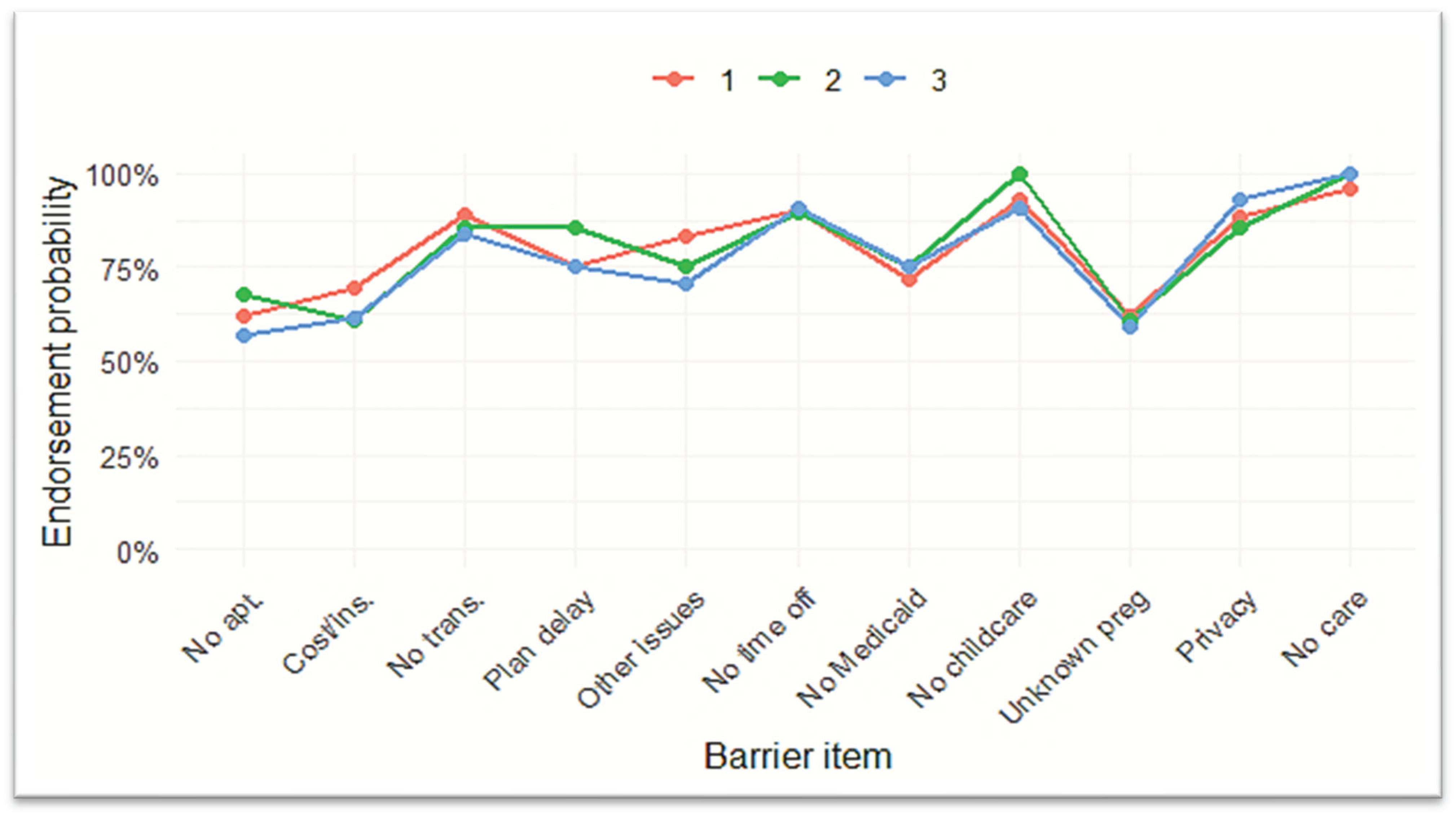

Table 1.
Operational definitions and measurement of study variables.
| Variable | Operational Definition | Coding/Measurement | Data Source |
| Pregnancy Intentionality | Whether the pregnancy was planned or unplanned | Planned (0), Unplanned (1) | ADPH PRAMS Phase 8; 2016–2021; Qn# 12 |
| Early Prenatal Care | Whether care was received as early as desired | Yes (1), No (0) | ADPH PRAMS Phase 8; 2016–2021; Qn# 20 |
| Structural Barriers | Barriers such as transportation, appointment delays, or clinic logistics | Latent class profile from LCA | ADPH PRAMS Phase 8; 2016–2021; Qn# 21 |
| Financial Barriers | Barriers related to insurance, cost, and affordability | Latent class profile from LCA | ADPH PRAMS Phase 8; 2016–2021; Qn# 21 |
| Cognitive Barriers | Barriers involving awareness, beliefs, and knowledge about prenatal care | Latent class profile from LCA | ADPH PRAMS Phase 8; 2016–2021; Qn# 21 |
| Maternal Age | Age of respondent at time of birth | Categorical: 15–19 to 40+ | ADPH PRAMS Phase 8; 2016–2021; Respondent Characteristics |
| BMI | Body Mass Index category based on pre-pregnancy weight | Underweight (n = 153), Healthy (n = 1,710), Overweight (n = 1,050), Obese (n = 1,325) | ADPH PRAMS Phase 8; 2016–2021; Respondent Characteristics |
| Race/Ethnicity | Self-identified racial or ethnic group | Hispanic (1), Non-Hispanic Black (2), Non-Hispanic White (3) | ADPH PRAMS Phase 8; 2016–2021; Respondent Characteristics |
| Insurance Status | Type of insurance coverage reported by respondent | Categorical: e.g., Job, Medicaid, Uninsured | ADPH PRAMS Phase 8; 2016–2021; Qn# 9, #10, #11 |
| Household Income | Total reported household income | 12 bracketed categories | ADPH PRAMS Phase 8; 2016–2021; Qn# 79 |
Note: All frequencies reported are unweighted and derived from aggregated ADPH PRAMS Phase 8 data (2016–2021) prior to pseudo-individual expansion using the uncount() function in R.
Table 2.
Descriptive summary of study variables.
| Variable | Category | n (%) |
| Pregnancy Intentionality | Planned | 277 (46.5%) |
| Unplanned | 319 (53.5%) | |
| Early Prenatal Care | Yes | 403 (67.6%) |
| No | 193 (32.4%) | |
| Race/Ethnicity | Non-Hispanic White | 333 (55.9%) |
| Non-Hispanic Black | 200 (33.5%) | |
| Hispanic Origin | 63 (10.6%) | |
| Body Mass Index (BMI) | Healthy Weight | 251 (42.1%) |
| Obesity Weight | 199 (33.4%) | |
| Overweight Weight | 134 (22.5%) | |
| Underweight Weight | 12 (2.0%) | |
| Annual Household Income | Low (<$25K) | 249 (41.8%) |
| Middle ($25K–$60K) | 171 (28.7%) | |
| High ($60K+) | 176 (29.5%) | |
| Maternal Age | 15–19 | 38 (6.4%) |
| 20–24 | 153 (25.7%) | |
| 25–29 | 183 (30.7%) | |
| 30–34 | 147 (24.7%) | |
| 35 or older | 75 (12.6%) |
Note: Frequencies and percentages are based on the final simulated dataset (N = 596). Intentionality was simulated using Qn13 proportional distributions. Maternal age was updated using reconciled values from Age_Group_collapsed.
Table 3.
Model fit statistics for latent class solutions (2–4 classes) using Qn21 barrier items.
| Number of Classes | AIC |
BIC |
| 2 |
5940.01 | 6040.71 |
| 3 |
5947.22 | 6100.47 |
| 4 |
5955.74 | 6161.52 |
Table 4.
Firth-penalized logistic regression predicting early prenatal care initiation with latent class × pregnancy intentionality interaction.
Table 4.
Firth-penalized logistic regression predicting early prenatal care initiation with latent class × pregnancy intentionality interaction.
| Predictor | Odds Ratio | SE | z-value | p | 95% CI |
| Main effects | |||||
| latent class 2 (vs. Class 1) | 0.287 | 1.453 | −0.86 | .315 | [0.002, 2.514] |
| PregnancyIntent Unplanned (vs. planned) | 0.779 | 0.231 | −1.08 | .286 | [0.490, 1.232] |
| Covariates | |||||
| Age 20–24 | 0.733 | 0.390 | −0.80 | .429 | [0.333, 1.585] |
| Age 25–29 | 0.674 | 0.389 | −1.01 | .313 | [0.307, 1.452] |
| Age 30–34 | 1.289 | 0.366 | 0.69 | .492 | [0.624, 2.679] |
| Age 35–39 | 1.152 | 0.365 | 0.39 | .701 | [0.557, 2.395] |
| Age 40 or older | 0.552 | 0.425 | −1.40 | .161 | [0.229, 1.262] |
| Race Non-Hispanic Black | 0.707 | 0.285 | −1.22 | .229 | [0.396, 1.243] |
| Race Non-Hispanic White | 0.981 | 0.270 | −0.07 | .943 | [0.571, 1.681] |
| BMI Obesity Weight | 0.986 | 0.323 | −0.04 | .965 | [0.516, 1.875] |
| BMI Overweight Weight | 0.897 | 0.316 | −0.35 | .732 | [0.476, 1.681] |
| BMI Underweight Weight | 0.879 | 0.315 | −0.41 | .687 | [0.467, 1.649] |
| Interaction | |||||
| latent class 2 × PregnancyIntent Unplanned | 5.185 | 1.714 | 0.96 | .309 | [0.222, 828.944] |
Note: N = 589. Firth’s penalized-likelihood multivariable logistic regression was employed to reduce small-sample bias. Odds ratios (OR) and 95% profile-penalized confidence intervals (CI) reflect the change in odds of initiating prenatal care as early as desired for a one-unit increase in the predictor (or, for categorical predictors, relative to the reference category). Reference categories were latent class 1; planned pregnancy; age < 20 years; Hispanic/other race; healthy-weight BMI. All p values > .05.
Table 5.
Mediation of unplanned pregnancy on early prenatal care via barrier-class membership.
|
Path |
B | SE | β | z | p |
| a₁. Personal barriers ← Unplanned pregnancy |
0.035 | 0.121 | .018 | 0.29 | .769 |
| a₂. Structural barriers ← Unplanned pregnancy |
0.010 | 0.214 | .005 | 0.05 | .962 |
| b₁. Early care ← Personal barriers |
–0.199 | 0.086 | –.199 | –2.31 | .021* |
| b₂. Early care ← Structural barriers |
0.242 | 0.142 | .241 | 1.70 | .089† |
| c′. Early care ← Unplanned pregnancy |
–0.111 | 0.136 | –.055 | –0.81 | .416 |
| Indirect via personal barriers (a₁×b₁) |
–0.007 | 0.024 | –.004 | –0.29 | .771 |
| Indirect via structural barriers (a₂×b₂) |
0.002 | 0.052 | .001 | 0.05 | .962 |
| Total indirect (sum of both) |
–0.005 | 0.064 | –.002 | –0.07 | .943 |
| Total effect (c′ + total indirect) | –0.115 | 0.126 | –.058 | –0.91 | .361 |
* p < .05; † p < .10. Note: N = 589. Unstandardized coefficients (B) and standard errors (SE) come from WLSMV estimation in lavaan; β are standardized estimates; z is the Wald statistic; p is two-tailed. Indirect effects are defined as aᵢ × bᵢ.
Table 6.
Expert interview questions by HCAB domain.
|
Interview Question |
HCAB Domain (s) |
| 1. What do you see as the biggest structural barriers to early prenatal care in Alabama? | Structural |
| 2. In your experience, how do financial constraints affect women’s access to timely prenatal care? | Financial |
| 3. How do knowledge, awareness, or cultural beliefs shape decisions around seeking early prenatal care? | Cognitive |
| 4. What are your observations on provider -patient communication, particularly in early pregnancy | Cognitive |
| 5. How does social support, or the lack of it, affect care-seeking behavior? | Structural |
| 6. From your experience, how do limitations in care coordination, clinic infrastructure, or provider availability affect early prenatal care access? | Structural |
| 7. What kinds of interventions or tools would help pregnant women navigate the system efficiently? | Cognitive, Structural |
| 8. Are there any groups of women, like immigrants, low-income, and rural residents, who face unique access barriers? | Structural, Financial, Cognitive |
Note: Interview prompts were aligned with the structural, financial, and cognitive domains of the HCAB model to elicit expert insight on prenatal care access challenges.
Disclaimer/Publisher’s Note: The statements, opinions and data contained in all publications are solely those of the individual author(s) and contributor(s) and not of MDPI and/or the editor(s). MDPI and/or the editor(s) disclaim responsibility for any injury to people or property resulting from any ideas, methods, instructions or products referred to in the content. |
© 2025 by the author. Licensee MDPI, Basel, Switzerland. This article is an open access article distributed under the terms and conditions of the Creative Commons Attribution (CC BY) license (https://creativecommons.org/licenses/by/4.0/).
Copyright: This open access article is published under a Creative Commons CC BY 4.0 license, which permit the free download, distribution, and reuse, provided that the author and preprint are cited in any reuse.


