
Submitted:
21 May 2025
Posted:
21 May 2025
You are already at the latest version
Abstract
Purpose – Explaining the role of environmental artificial intelligence in improving the management of public libraries and enhancing environmental sustainability in them. And analyzing the factors affecting and challenges of using environmental artificial intelligence to achieve environmental goals.
Design/methodology/approach – analyzed the role of environmental artificial intelligence (AI) applications in public libraries in the United Arab Emirates. The study posed 43 questions to the 31 public libraries in the UAE, examining the current level of knowledge among Emirati public library specialists about environmental AI, practices within Emirati public libraries to achieve environmental sustainability, and the challenges of adopting environmentally smart applications in Emirati public libraries.
Findings – A significant portion of staff in Emirati public libraries (52%) have either limited of environmental sustainability principles, highlighting a substantial gap in environmental awareness and training within these libraries. While 68% of library staff recognize the importance of environmental sustainability, 52% of libraries do not implement sustainability practices at all, often due to a lack of institutional support or sufficient awareness. Less than half (48%) of Emirati public libraries have not used environmental artificial intelligence applications or were unaware of them.
Originality/value – Environmental AI in public libraries is an emerging area of research that bridges library science and environmental health, making it a potential research area. Contributions to the research area help public libraries to make the most of environmental AI applications and raise awareness of these new technologies.
Research limitations/implications - The study not only expands the knowledge base on environmental sustainability, but also provides an understanding of the development of environmental AI to provide advanced research support in this field.
Keywords:
AI
; Environmental AI
; public libraries
; artificial intelligence applications
Introduction
Libraries and cultural institutions are foundational to societies, playing a pivotal role in advancing culture, education, and research. Over time, libraries have evolved significantly, progressing from offering traditional print resources to providing digital services and access to information online. This transformation aligns with the growing need for libraries to adapt to modern environmental and technological trends, especially as climate science and environmental awareness have become critical global priorities (smithaaa, 2020).
Environmental artificial intelligence (AI) applications exemplify a technological approach to addressing environmental challenges, enabling libraries and other institutions to contribute meaningfully to environmental sustainability goals (Johnson & Lee, 2019). By leveraging AI technologies—such as machine learning, big data analytics, and image processing—libraries can support the development of innovative solutions for environmental issues, including improved management of natural resources, reduction of waste, and conservation efforts (Chen et al., 2021). AI’s adaptive capabilities allow it to optimize solutions continually, providing scalable models to address pollution, global warming, resource depletion, desertification, and other environmental challenges (Kumar & Sharma, 2022).
Public libraries, in particular, hold vast knowledge and cultural resources that can support entire communities in embracing sustainable practices. By integrating AI, these libraries can offer innovative services such as co-creation of content, sharing digital resources, and facilitating knowledge exchange among different institutions. This shift reflects a growing environmental trend within public libraries, aligned with the United Arab Emirates’ commitment to sustainability and reducing its environmental footprint (Al-Mansoori, 2023). Such initiatives not only promote sustainable resource management but also reinforce the role of libraries as vital hubs for community engagement in environmental issues, making significant contributions toward national sustainability goals (#rahmman, 2021).
Literature Review
The United Nations highlights the global trend toward environmental sustainability and adherence to the Sustainable Development Goals (SDGs), noting that public libraries can play a pivotal role in promoting environmental education and awareness. (Fan, Yan, and Wen ,2023) emphasize the importance of integrating artificial intelligence applications, as these tools can greatly enhance the impact of sustainability efforts in public libraries.
In a recent symposium by the Arab Federation for Libraries and Information (2024), in partnership with the Tunisian National Library, the role of artificial intelligence (AI) in optimizing library operations and enhancing user services was examined, especially regarding sustainability efforts. Likewise, the Sharjah International Library Conference, organized by the Sharjah Book Authority in collaboration with the American Library Association, focused on AI’s contribution to sustainability in libraries. Key topics included AI-driven energy management, a crucial component of sustainable practices in libraries (Arab Federation for Libraries and Information, 2024; Sharjah International Library Conference, 2024).
AI applications have been particularly beneficial for energy management in libraries. (Raman et al. ,2024) found that AI-driven systems, such as intelligent HVAC controls, can monitor and adjust energy consumption according to real-time usage and weather conditions, enhancing energy efficiency and minimizing waste, which aligns with the goals of green and sustainable AI.
Additionally, AI can analyze large amounts of usage data to help libraries optimize resource allocation and reduce waste (Tripathi et al., 2024).
In terms of environmental education and awareness, AI also plays a supportive role. (Nguyen et al. ,2024) discuss how machine learning systems can offer personalized environmental education tailored to users’ interests, encouraging greater environmental consciousness. (Cantini et al. ,2024) further observe that AI and sustainability integration will continue advancing, emphasizing smart, sustainable solutions for libraries that reduce environmental impact.
In the realm of building management, AI technologies like deep reinforcement learning (DRL) have shown efficacy in optimizing energy use, especially in HVAC systems within libraries. This approach not only conserves energy but also helps libraries lower their carbon footprint (Fan, Yan, & Wen, 2023; Yu et al., 2020). Additionally, AI-driven environmental monitoring systems assess indoor conditions, such as air quality, noise levels, and occupancy, creating sustainable, comfortable environments for patrons (Amirikas & Fabian, 2024).
Recent research also underscores the ethical considerations surrounding AI and sustainability. (Van Wynsberghe ,2021) highlights the importance of energy-efficient data centers and optimized AI models to reduce environmental impact, while (Moyano-Fernández ,2024) discusses the ethical implications of AI energy consumption in data centers and proposes frameworks to ensure alignment with sustainability goals.
AI also aids in the preservation of cultural heritage by monitoring environmental conditions—such as temperature and humidity—in archival spaces, essential for safeguarding valuable historical materials from degradation (Folino et al., 2024). Similarly, (Astobiza ,2021) emphasizes AI’s potential to address climate change challenges and promote sustainable urban development through efficient resource management and environmental preservation.
Purpose of the Study and Research Questions
This study investigates the contribution of public libraries in the United Arab Emirates (UAE) towards achieving environmental sustainability goals. It explores the integration of environmental artificial intelligence (AI) applications as a strategic approach to fostering sustainability within these institutions. The study will specifically answer the following research questions:
- How do public libraries in the UAE contribute to achieving environmental sustainability goals?
- What is the potential role of environmental artificial intelligence (AI) applications in promoting sustainability principles in UAE public libraries?
- What smart technologies and applications are available to enhance environmental sustainability in public libraries?
- What technical and institutional challenges hinder the adoption of environmental AI applications in UAE public libraries?
- What practical recommendations can enhance the role of UAE public libraries as centers for promoting environmental sustainability in the Arab region?
Methods
This study aimed to evaluate the current state of environmental sustainability practices in UAE public libraries and to explore potential applications of environmental artificial intelligence (EAI) to enhance these practices.
Research Design
A quantitative research design was employed to collect primary data through a structured questionnaire. The questionnaire was designed to gather information on various aspects of environmental sustainability in UAE public libraries, and structured questionnaire was developed, consisting of 43 items divided into five sections:
- Basic Library Information
- Library Staff and Environmental Sustainability
- Library Practices and Environmental Sustainability
- EAI Applications and Environmental Sustainability
- Challenges of Adopting EAI in Libraries
The questionnaire was pilot-tested with four experts to ensure content validity and reliability,
The target population for this study comprised 31 public libraries affiliated with federal and local authorities in the UAE. A census survey was conducted to include all libraries in the population. and The questionnaire was distributed electronically to library directors and environmental officers, and follow-up emails were sent to non-respondents. (for more details, see Table A1 in the Appendix A).
Ethical Considerations
Ethical principles were adhered to throughout the research process. Participant consent was obtained, and confidentiality was ensured.
Data Analysis
The collected data were analyzed using SPSS statistical software. Descriptive statistics, such as frequencies, percentages, and means, were employed to summarize the data. Inferential statistics, including correlation analysis and regression analysis, were used to examine the relationships between variables and to identify significant factors influencing environmental sustainability practices.
Inclusion and Exclusion Criteria
To ensure the focus and rigor of this research, certain types of libraries in the United Arab Emirates were excluded from the study sample. The following justifications underpin these exclusions:
1. Private Institution Libraries
Inconsistency in Data Collection: Private institutions often have varying levels of data accessibility and record-keeping, potentially compromising the reliability of data collected.
Diverse Mission and Goals: These libraries may have unique missions and goals that diverge from the broader public library sector, making it challenging to draw generalized conclusions.
2. Club and Museum Libraries
Specialized Focus: These libraries typically have a specialized focus, limiting their relevance to the broader context of public library services and environmental sustainability.
Limited Scope of Services: Their services may be restricted to a specific clientele or collection, reducing their impact on the overall library landscape.
3. Libraries without Online Presence
Data Accessibility: Libraries without a digital presence may lack the necessary infrastructure to participate in online surveys or provide detailed information about their services and collections.
Limited Public Engagement: These libraries may have limited public engagement and outreach, potentially affecting their role in community development and environmental initiatives.
4. Specialized Topic and Format Libraries
Niche Focus: These libraries may cater to specific interests or formats, limiting their generalizability to the broader public library context.
Unique Challenges and Opportunities: Their unique focus may present specific challenges and opportunities related to environmental sustainability, which might not be representative of the broader library sector.
By focusing on a more homogenous group of public libraries, the study aimed to conduct a more in-depth analysis of environmental sustainability practices and the potential impact of EAI technologies within this specific context.
Results and Discussion
1. The role of public libraries in UAE’s environmental sustainability:
The extent of awareness and knowledge of environmental sustainability among public library specialists in the United Arab Emirates reformaleted
The data in Table 1 indicates that a moderate percentage of employees working in public libraries in the United Arab Emirates lack knowledge or have only partial knowledge of environmental sustainability principles, with this percentage reaching 52%. This points to a significant gap in environmental awareness and training among the staff. Increasing environmental training and education programs could significantly enhance employees’ knowledge and motivate them to adopt sustainable practices (Thomas et al., 2020).
There is also a clear deficiency in the implementation of environmental sustainability practices in Emirati public libraries, as 52% of employees do not engage in any environmental sustainability practices at all. This may be attributed to a lack of institutional support or insufficient awareness. Providing the necessary resources and tools could effectively enhance the implementation of these practices (Smith & Williams, 2019).
The majority of employees, 68%, acknowledge the importance of environmental sustainability. Awareness of the significance of sustainability is considered a crucial first step towards achieving behavioral change (Brown et al., 2018). The data also shows a strong recognition of the role of public libraries in promoting community environmental responsibility, with 68% agreement. This aligns with the findings of (Williams ,2021), who indicated that libraries can serve as effective platforms for enhancing environmental awareness and fostering community engagement.
Institutional encouragement and support play a significant role in increasing participation rates in environmental activities (Davis & Thompson, 2022). With 39% of libraries participating in environmental initiatives outside the library, there are considerable opportunities to boost community involvement in environmental issues.
2. The Role of Emirati Public Libraries in the Community as Centers for Environmental Awareness:
Emirati public libraries play a significant role in promoting environmental awareness within the community. They provide a platform for accessing environmental information and resources, encourage learning and research on environmental issues, and organize awareness events and programs on various environmental topics. Additionally, they foster community participation in environmental conservation (Ministry of Culture and Knowledge Development, 2020).
Figure 1 Shows libraries the Ministry of Culture and Knowledge Development contribute approximately 50% to environmental awareness efforts in the community, followed by Sharjah Libraries at 30%, and the Arts and Culture Authority at 20%.
The differences in contributions to environmental awareness can be attributed to several factors, such as:
- Available Budgets: Some libraries may have larger budgets, enabling them to implement more effective environmental awareness programs and initiatives.
- Human Resources: Certain libraries might have a higher number of skilled staff with expertise in environmental education.
- Environmental Commitment: Some libraries may demonstrate a stronger commitment to environmental issues, reflected in their programs and activities.
- Collaboration with Environmental Organizations: The effectiveness of some libraries in spreading environmental awareness is enhanced through their active partnerships with environmental organizations.
3. Strategies and tactics of UAE public libraries to achieve environmental sustainability.
Strategy is a broad, long-term plan aimed at achieving significant goals. It defines the overall direction, allocates resources, and often spans of years or even decades. In contrast, tactics are specific, short-term actions or steps taken to achieve smaller objectives that contribute to the execution of the strategy. While strategy answers "what" and "why," tactics focus on "how." In other words, strategy provides the overarching framework that guides major decisions, while tactics deal with the practical details of implementation. (Mintzberg, 1994). Reformulate in a scientific and research-based way.
There exists both a balance and a disparity in the level of strategies and tactics employed by libraries regarding environmental sustainability. Sharjah Libraries and the Culture and Arts Authority exemplify a strong and balanced commitment across all environmental dimensions, positioning them as models to be emulated, Conversely, libraries vary significantly in their level of environmental awareness within the community due to several factors:
- Available Budget: Libraries with larger budgets are often able to implement more comprehensive and effective environmental awareness programs.
- Human Resources: Libraries with a higher number of staff members who possess specialized knowledge and skills in environmental sustainability are better equipped to execute awareness initiatives.
- Environmental Commitment: Libraries with a stronger commitment to sustainability demonstrate this through the design and implementation of targeted environmental programs.
- Collaboration with Environmental Organizations: Libraries that actively collaborate with environmental organizations can leverage external expertise and resources, enhancing their ability to raise environmental awareness.
These factors contribute to the variability in environmental engagement across libraries, influencing their effectiveness in promoting sustainability within their communities.(Table.2)
3.1 Strategies of UAE public libraries
Efforts to allocate budgets for promoting environmental sustainability in public libraries across the United Arab Emirates (UAE) are evident, with 74% of libraries dedicating resources to environmentally friendly practices. The success of these sustainability initiatives is heavily reliant on effective public communication to raise awareness about ongoing efforts (Smith, 2016). Over half of the public libraries in the UAE have developed a written or partial strategy for achieving environmental sustainability; however, 45% still lack a formal written strategy. This highlights the need for clearer, more accessible strategies that can be shared with the public (Brown, 2018).
Libraries in the UAE are also increasingly focusing on the use of renewable energy in their operations, including solar energy for electricity generation and water heating, alongside energy-saving technologies. Notably, the Department of Culture and Tourism and Sharjah Libraries have made significant progress in integrating renewable energy, with 6 and 5 libraries, respectively, adopting renewable energy practices. The use of renewable energy is a critical component of environmental sustainability. According to the International Energy Agency (IEA), institutions that utilize renewable energy can reduce carbon emissions by up to 70% compared to those relying on fossil fuels (IEA, 2021). A notable example is the Berlin Central Library in Germany, which depends extensively on solar energy for its energy needs.
The provision of electric vehicle (EV) charging stations is another key factor in enhancing a library’s environmental image and promoting the use of electric cars (Journal of Sustainable Libraries, 2019). However, 87% of public libraries in the UAE do not currently offer such facilities. This underscores the importance of increasing awareness about energy alternatives and the need for their inclusion in sustainability strategies (Environmental Library Review, 2017).
Furthermore, 61% of libraries support the creation of green spaces, and 81% provide environmental educational materials related to energy and alternative sources, while only 3% do not offer such resources. These efforts reflect a growing commitment to integrating environmental sustainability into the core functions of libraries.(Table 2)
3.2 Tactics of UAE public libraries
The transition to digital resources plays a significant role in advancing environmental sustainability (Green Library Journal, 2019). Consequently, 81% of libraries in the UAE prioritize the use of e-books and digital resources. However, 58% of public libraries in the UAE do not offer energy-related events or workshops, nor do they employ smart lighting technologies, despite the known benefits of such technologies in improving energy efficiency (Green Buildings and Libraries, 2020). Regarding waste management and recycling, 58% of libraries support these programs either fully or partially, highlighting the importance of waste management in achieving sustainability goals (Sustainable Library Practices, 2018).
In terms of scientific cooperation, 61% of UAE public libraries have established full or partial scientific cooperation protocols, underscoring the value of collaboration in fostering research and knowledge exchange (Library and Information Science Research, 2019).
Public libraries in the UAE show varying levels of commitment to environmental awareness campaigns. The libraries of the Ministry of Culture and Knowledge Development and Sharjah Libraries demonstrate similar levels of interest in environmental initiatives. While their awareness campaigns are effective, there is still potential for improvement and broader reach. The highest levels of engagement are observed in the Department of Culture and Tourism and the Culture and Arts Authority, which have prioritized environmental campaigns.
In terms of specific services, the Department of Culture and Tourism leads in offering environmental exhibitions, with 6 of its libraries hosting such events, followed by Sharjah Libraries with 5 libraries. This highlights the Department’s strong commitment to raising environmental awareness in the community. In contrast, the libraries of the Ministry of Culture focus more on educational programs, including workshops and lectures aimed at children and youth to enhance environmental consciousness. These exhibitions typically feature information on resource conservation and waste reduction, while Sharjah Libraries distinguish themselves through comprehensive educational programs that include seminars and interactive workshops designed to promote sustainable behaviors across all age groups.
Research by Hungerford and Volk (2020) supports the effectiveness of environmental education programs in increasing awareness and driving behavior changes toward more sustainable practices. An example of this is the “Green Schools” program in the United States, which has demonstrated positive outcomes in enhancing students’ environmental awareness and behaviors. These findings suggest that similar educational efforts within libraries can have a meaningful impact on fostering a more environmentally conscious public.(Table 3)
4. Environmental Artificial Intelligence in Emirati Public Libraries
The data in Table 4 indicates 52% of UAE public libraries have utilized environmental AI applications, indicating a moderate level of adoption. However, 48% of libraries have either not used these technologies or lack awareness of them, highlighting a significant knowledge gap. A study by the United Arab Emirates University emphasized the need for increased awareness of the benefits of environmental AI (Al-Mansoori et al., 2023).
While 68% of libraries reported positive or limited environmental benefits, 32% perceived no impact, suggesting challenges in measuring these applications’ effectiveness. Key barriers include insufficient data and limited awareness of long-term benefits (Jones & Smith, 2022). Despite this, 94% of libraries expressed confidence in environmental AI’s potential to promote sustainability, aligning with findings that AI can enhance resource efficiency and reduce carbon footprints (Chen et al., 2021).
Moreover, 84% of libraries recognized the potential of environmental AI to improve user experiences by offering personalized and efficient services, as corroborated by (López & González ,2022). However, only 48% were aware of specific applications within their libraries, underscoring the need for staff and user training (Brown & Wilson, 2023).
Specific areas such as climate modeling remain underutilized, with 65% of libraries not adopting these technologies, representing an opportunity for growth. Similarly, 81% of libraries do not leverage AI for renewable energy, limiting their ability to meet environmental goals. Adopting these technologies could enhance energy efficiency, reduce costs, and support innovative services to address climate challenges (Smith et al., 2021; Garcia et al., 2023).
5. The Use of Environmental Artificial Intelligence Applications in Emirati Public Libraries
Chart (7) highlights the progressive efforts of public libraries in the United Arab Emirates (UAE) to integrate environmental AI applications, with a focus on sustainability and environmental preservation. Sharjah Libraries stand out with the highest participation in environmental AI applications, particularly in environmental data analysis (6 libraries), followed by the Culture and Arts Authority and the Department of Culture and Tourism (4 libraries each). The Ministry of Culture demonstrates the least contribution (3 libraries) in this category. These results emphasize the leadership role of Sharjah Libraries in employing advanced technologies to analyze environmental data, reflecting their commitment to supporting sustainability initiatives.
In the domain of enhancing environmental awareness, both Sharjah Libraries and the Culture and Arts Authority exhibit equal contributions (6 libraries each). This highlights their significant role in promoting environmental education and awareness through community programs and services. In comparison, the Ministry of Culture and the Department of Culture and Tourism contribute moderately (4 libraries each). Research from Stanford University (2016) indicates that increasing environmental awareness leads to measurable improvements in individual environmental behaviors, reinforcing the importance of these initiatives.
Sustainable resource management is another area where the Culture and Arts Authority and the Department of Culture and Tourism lead with 6 libraries each, showcasing their adoption of energy-efficient technologies, such as smart lighting and energy-saving devices. Sharjah Libraries, with slightly lower engagement (5 libraries), still demonstrate effective strategies to optimize resource use and reduce operational costs. Supporting evidence from Brown and Smith (2019) shows that energy-efficient technologies in public spaces can lower energy consumption by up to 30%, with examples like the Seattle Central Library and Singapore National Library achieving notable reductions in energy and water use.
In monitoring air and water quality, the contributions are evenly distributed across Sharjah Libraries, the Culture and Arts Authority, and the Department of Culture and Tourism (4 libraries each). The Ministry of Culture lags behind with only 2 libraries engaged in this area. These efforts have led to improvements in indoor air quality and healthier environments for library users, mirroring initiatives at the National Library of Singapore and the Oslo Public Library, which have successfully implemented advanced ventilation and air quality systems (Allen et al., 2016). Such measures are shown to increase individual productivity by up to 11%, highlighting their broader societal benefits.
Finally, in supporting environmental decision-making, Sharjah Libraries lead with 7 libraries, followed closely by the Culture and Arts Authority and the Department of Culture and Tourism (6 libraries each). The Ministry of Culture again shows limited involvement (4 libraries). These efforts reflect a commitment to adopting comprehensive environmental sustainability strategies, as demonstrated by institutions like the New York Public Library, which successfully integrated green building practices and improved energy efficiency to reduce the impact of environmental changes by up to 30% (Jones & Lee, 2019).
This comprehensive analysis reveals the distinct focus areas of UAE public libraries. Sharjah Libraries excel in environmental data analysis and decision-making, while the Culture and Arts Authority and the Department of Culture and Tourism prioritize sustainable resource management and environmental awareness. However, the Ministry of Culture shows relatively limited engagement across most categories, despite its broader scope. To ensure a more balanced contribution, the Ministry of Culture could increase its involvement in key areas, such as environmental data analysis and air and water quality monitoring. Collaborative programs between these organizations would further enhance their collective impact on sustainability goals.
6. Challenges of Implementing Environmental Artificial Intelligence Applications in UAE Public Libraries
The data in Table 5 indicates 25.8% of libraries identified funding as a significant obstacle, a majority (67.7%) disagreed, suggesting that UAE public libraries might benefit from substantial governmental or institutional support for environmental initiatives. However, financing remains crucial for the long-term success of sustainability projects. Studies have consistently highlighted that insufficient funding can hinder libraries from expanding services and adopting advanced technologies (ALA, 2017; Green & Roberts, 2022).
Approximately 29.03% of respondents identified limited awareness of environmental technologies as a challenge, while 45.1% disagreed. The disparity in responses suggests varying levels of exposure to training and educational programs related to environmental AI. Increasing awareness and technology training can help bridge this gap, as technological literacy is essential for achieving sustainability goals (Al-Mansoori et al., 2023).
Only 22.5% of libraries acknowledged training as a challenge, whereas 61.2% disagreed. This indicates that training may not be a universal concern, yet it highlights a potential gap in developing skills for utilizing environmental AI applications. Providing targeted training programs could enhance librarian expertise and improve technology adoption outcomes (Brown & Wilson, 2023).
A notable 35.4% of libraries agreed that weak collaboration with government institutions poses challenges, while 45.1% disagreed. The lack of partnerships limits the potential for leveraging state resources and data for environmental AI applications. Building strong collaborations can foster shared goals and enhance sustainability efforts (Garcia et al., 2023).
Resistance to change emerged as a major challenge, with 51.6% of libraries citing it as a barrier. This aligns with global findings where resistance among staff has hindered the adoption of new technologies, as seen in the New York Public Library’s efforts to introduce a modern library management system (Kotter, 2018). Addressing this challenge requires fostering a culture that embraces innovation and trust in new systems.
While 25.8% viewed legal and regulatory challenges as significant, a majority (51.6%) remained neutral, suggesting uncertainty or limited familiarity with the legal framework. Developing transparent policies and providing guidance on AI regulations could mitigate hesitations and encourage adoption (Jones & Lee, 2019).
A significant 45.1% of libraries identified the lack of local environmental data as a challenge, reflecting the critical role of data availability in enabling effective AI applications. Partnerships with environmental organizations and investments in data collection infrastructure are essential to address this gap and improve decision-making processes.
Only 16.1% of respondents found system integration challenging, while 48.3% disagreed. This suggests that many libraries may already have compatible systems or are prepared for upgrades. However, ensuring seamless integration without disrupting operations remains a priority.
The most critical challenges confronting UAE public libraries in adopting environmental AI are resistance to change (51.6%) and the limited availability of local environmental data (45.1%). Addressing these issues necessitates targeted strategies, including fostering adaptive workplace cultures that embrace innovation and enhancing mechanisms for data accessibility and distribution. Emphasis should be placed on improving the availability and dissemination of localized environmental data through diverse platforms across the country, ensuring comprehensive coverage and support for advanced AI-driven initiatives.
Guidelines for Implementing Environmental Sustainability Practices in Libraries
1. Policies for Environmental Sustainability in Libraries.
2. Activities for Environmental Sustainability in Libraries.
- Providing workshops and training courses:
- Training topics:
Concepts and principles of environmental sustainability.
Best practices to reduce resource consumption (such as water and electricity)
How to deal with and sort waste.
Using environmentally friendly materials in daily work.
- Training methods:
Real-life workshops.
Online training courses.
Inviting sustainability experts to give lectures.
- 2.
- Develop educational materials:
Create brochures and guides on sustainability practices.
Provide short educational videos to be displayed in break areas within libraries.
Dedicate a section of the library website to disseminate educational resources.
- 3.
- Improving institutional support:
Provide a budget for sustainability:’
Allocate a portion of the library’s annual budget to support sustainability projects.
Search for grants and external funding to support environmental initiatives.
- 4.
- Provide resources and tools:
Replace traditional lamps with energy-saving ones.
Provide waste sorting containers (organic, plastic, paper, glass, etc.
Use recycled paper and environmentally friendly office supplies.
3. Awareness of the importance of environmental sustainability:
- Awareness campaigns in libraries:
Organizing monthly awareness campaigns on various topics related to sustainability.
Distributing periodic brochures explaining the benefits of sustainable practices.
Organizing competitions and interactive events for children and youth to raise their awareness in innovative ways.
- Partnerships with schools and universities:
Cooperating with educational institutions to organize student visits to libraries
Participating in environmental events and exhibitions organized by these institutions.
4. Encouraging librarians to implement sustainable practices:
- Providing incentives:
Establishing a rewards program for employees who commit to sustainability practices.
Providing certificates of appreciation and annual awards for the best individual or group initiatives.
Forming environmental committees:
Forming a committee of volunteer librarians to follow up on the implementation of sustainability practices.
Periodic meetings to discuss challenges and propose solutions.
5. Performance evaluation and monitoring:
- Establishing evaluation criteria:
Developing questionnaires to assess librarians’ knowledge and awareness of sustainability practices.
Collecting and analyzing data on the extent to which environmental practices are implemented in the library.
- Periodic reporting:
Preparing monthly or quarterly reports that show progress in implementing sustainability practices.
Sharing reports with management and librarians to discuss results and motivate continuous improvement.
By implementing and practicing these activities in detail, the role of public libraries in environmental awareness can be enhanced and a higher level of sustainability can be achieved in daily work, which contributes to protecting the environment and enhancing community awareness of the importance of sustainable practices.
Conclusion
Environmental artificial intelligence (AI) represents a transformative technological approach to addressing critical environmental challenges, enabling institutions like public libraries to contribute meaningfully to sustainability goals. By utilizing advanced tools such as machine learning, big data analytics, and image processing, libraries can develop innovative solutions for managing natural resources, reducing waste, and conserving the environment (Chen et al., 2021). The continuous adaptability of AI technologies enhances their scalability, enabling them to address complex and evolving environmental issues, including pollution, global warming, and resource depletion (Kumar & Sharma, 2022).
This study illustrates the potential of environmental AI to enhance the management and sustainability efforts of public libraries. Through a comprehensive survey of 31 public libraries in the United Arab Emirates (UAE), the findings reveal critical gaps in knowledge and practice. For instance, while 68% of library staff acknowledge the importance of sustainability, only 48% of libraries have integrated environmental AI applications. Furthermore, 52% of staff lack foundational knowledge of environmental sustainability principles, highlighting an urgent need for targeted educational and institutional reforms.
The role of public libraries as centers for community engagement aligns with the United Nations’ Sustainable Development Goals, emphasizing their capacity to promote environmental education and awareness (Fan, Yan, & Wen, 2023). By integrating AI applications such as intelligent energy management systems and personalized environmental education tools, libraries can significantly reduce their carbon footprint and amplify their impact on community-level sustainability efforts (Nguyen et al., 2024; Raman et al., 2024).
However, the study identifies systemic barriers, including resistance to change (51.6%) and limited access to local environmental data (45.1%), which hinder the broader adoption of environmental AI. Addressing these challenges requires a multifaceted approach rooted in fostering innovation, enhancing institutional collaboration, and investing in staff training and data infrastructure.
The originality of this research lies in its exploration of environmental AI as an emerging field that bridges library science and environmental health. The findings contribute to expanding the knowledge base on sustainability in libraries while offering a roadmap for leveraging advanced AI technologies to address environmental challenges.
In conclusion, public libraries, as foundational cultural and educational institutions, are uniquely positioned to lead sustainability efforts within their communities. UAE public libraries are at a transformative juncture where the integration of environmental AI can redefine their role in fostering environmental responsibility and innovation. Strategic investments in AI-driven systems, capacity building, and cross-sector partnerships are essential to overcoming existing challenges. By doing so, Emirati libraries not only advance the UAE’s vision for sustainability but also establish a global benchmark for environmental stewardship in the library sector.
Future Directions for Research in the Field of Environmental Sustainability of Artificial Intelligence
Future research directions in environmental sustainability may include establishing clear, written, and comprehensive strategic plans for environmental sustainability in public libraries. These plans should align with the country’s national policies and long-term environmental goals, ensuring consistency and actionable outcomes.
Libraries should evaluate their available resources, librarian expertise, and environmental contexts to enhance their capacity to address environmental challenges. This evaluation will support the role of libraries in fostering community engagement to collaboratively address critical environmental issues.
Libraries should transition toward forming environmental groups, distinct from traditional interlibrary collaboration. These environmental groups involve bringing together libraries with historical or resource-based characteristics or those aimed at collectively addressing regional and international environmental challenges.
Libraries of all types should integrate the latest technologies and practices to enhance their environmental contributions. Examples include:
- Climate change forecasting applications and leveraging AI-powered tools to anticipate the impacts of climate change and guide preparedness measures.
- Monitoring air quality and managing water resources through smart water
- management systems to conserve water.Managing waste and enhancing recycling efforts.
- Exploring partnerships and investments in carbon capture solutions to offset emissions.
Finally, libraries should collaborate with environmental organizations to gain access to resources, expertise, and data necessary for sustainable practices. Libraries can serve as leaders in environmental sustainability, leveraging their role as community hubs to promote awareness, innovation, and action toward a sustainable future. This approach not only aligns libraries with global environmental standards but also enables them to contribute meaningfully to local and international sustainability efforts.
Funding and/or Conflicts of interests/Competing interests
The authors did not receive support from any organization for the submitted work. No funding was received to assist with the preparation of this manuscript. No funding was received for conducting this study. No funds, grants, or other support was received. The authors have no relevant financial or non-financial interests to disclose. The authors have no competing interests to declare that are relevant to the content of this article. All authors certify that they have no affiliations with or involvement in any organization or entity with any financial interest or non-financial interest in the subject matter or materials discussed in this manuscript. The authors have no financial or proprietary interests in any material discussed in this article. Authors are responsible for correctness of the statements provided in the manuscript. See also Authorship Principles. The Editor-in-Chief reserves the right to reject submissions that do not meet the guidelines described in this section.
Appendix A

Table A1.
public libraries in United Arab Emirates.
| Emirate | Governing Body | Library Name | Year Established | Website |
|---|---|---|---|---|
| Abu Dhabi | Department of Culture and Tourism | Qasr Al Watan Library | 2019 | https://www.qasralwatan.ae/ar |
| Zayed Humanitarian City Library | 2018 | https://www.fdf.gov.ae/ar/Pages/default.aspx | ||
| Khalifa Park Library | 2013 | https://library.dctabudhabi.ae/ | ||
| Zayed Central Library | 2016 | |||
| Al Wathba Library | 2017 | |||
| Al Marfa Library | 2013 | |||
| Al Bahia Library | 2012 | |||
| Cultural Foundation | Abu Dhabi Children’s Library | 2019 | https://culturalfoundation.ae/ar/childrenslibrary | |
| Dubai | Dubai Culture and Arts Authority | Al Rashidiya Public Library | 1989 | https://dubaiculture.gov.ae/ar/attractions/libraries/al-rashidiya-public-library |
| Hor Al Anz Public Library | 1989 | https://dubaiculture.gov.ae/ar/attractions/libraries/hor-al-anz | ||
| Al Safa Public Library | 1989 | https://dubaiculture.gov.ae/ar/attractions/libraries/al-safa-art-and-design | ||
| Al Mankhool Public Library | 1989 | https://dubaiculture.gov.ae/ar/attractions/libraries/al-mankhoul-library | ||
| Al Twar Library | 2007 | https://dubaiculture.gov.ae/ | ||
| Umm Suqeim Public Library | 1989 | https://dubaiculture.gov.ae/ar/attractions/libraries/umm-suqeim-library | ||
| Hatta Public Library | 1989 | https://dubaiculture.gov.ae/ar/attractions/libraries/hatta-public-library | ||
| Dubai Public Library | 1963 | http://www.dubaiculture.gov.ae/ | ||
| Nadwa for Culture and Science | Nadwa for Culture and Science Library | 1987 | https://alnadwa.ae/NadwaLibrary | |
| Jumeirah Al Majid Center for Culture and Heritage | Jumeirah Al Majid Center Library | 1991 | https://www.almajidcenter.org/ar/home/ | |
| Mohammed bin Rashid Library | 2016 | https://www.mbrl.ae/ar/homepage | ||
| Sharjah | Sharjah Libraries | Khorfakkan Public Library | 1989 | https://shjlib.gov.ae/ar/Content/42/2 |
| Kalba Public Library | 1989 | |||
| Wadi Al Helo Public Library | 2008 | |||
| Dibba Al Hisn Public Library | 2003 | |||
| Al Zaid Public Library | 2010 | |||
| Sharjah Public Library | 1925 | |||
| Beit Al Hikma | Beit Al Hikma Library | 2020 | https://library.baytelhekma.com/ | |
| Fujairah | Ministry of Culture and Knowledge Development | Fujairah Public Library | 2005 | |
| Fujairah Culture and Media Authority | Fujairah Culture and Media Authority Library | 2006 | Fcma.gov.ae |
|
| Ajman | Ministry of Culture and Knowledge Development | Ajman Public Library | - | http://www.libraries.gov.ae/ |
| Umm Al Quwain | Ministry of Culture and Knowledge Development | Umm Al Quwain Public Library | - | http://www.libraries.gov.ae/ |
| Ras Al Khaimah | Ministry of Culture and Knowledge Development | Ras Al Khaimah Public Library | - | http://www.libraries.gov.ae/ |
References
- Al-Mansoori, F. (2023). Environmental sustainability in Emirati libraries. Emirates Publishing House.
- Astobiza, A. M. , Toboso, M., Aparicio, M., & López, D. AI ethics for sustainable development goals. IEEE Technology and Society Magazine 2021, 40, 66–71. [Google Scholar]
- ALA (2017). "The State of America’s Libraries." American Library Association.
- Amirikas, R. , & Fabian, B. Artificial Intelligence and Sustainability—A Review. Analytics 2024, 3, 140–164. [Google Scholar] [CrossRef]
- Al-Mansoori, A. , et al. (2023). "Awareness and Application of Environmental AI in UAE Libraries." University of UAE Journal.
- Allen, J. G. , et al. (2016). "The Impact of Air Quality on Productivity." Harvard Environmental Review.
- Arab Federation for Libraries and Information. (2024). "The Future of Libraries in the Age of Artificial Intelligence: A Symposium in Collaboration with the Arab Federation for Libraries and the Tunisian National Library.
- Baker, T. , & Green, S. (2019). "The Role of Environmental Partnerships in Promoting Sustainability." Stanford Environmental Studies.
- Brown, L. , et al. (2018). Recognizing the Importance of Environmental Sustainability in Corporate Culture. Green Business Review.
- Brown, T. , & Williams, M. (2018). "Media Campaigns and Environmental Awareness." Harvard Environmental Review.
- Baumgartner, R. , & Bienert, S. (2019). "The Impact of Digital Resources on Environmental Sustainability." Journal of Environmental Studies.
- Brown, A. (2018). Strategic Planning for Sustainability in Libraries, L: IL.
- Brown, T. , & Wilson, J. (2023). "Training and Awareness for AI Applications in Libraries." Educational Technology Journal.
- Brown, T. , & Smith, J. (2019). "Resource Management in Institutions." Journal of Environmental Studies.
- Brown, T. , & Smith, J. (2019). "Sustainable Transport Solutions." Journal of Environmental Studies.
- Chen, J. , Wang, L., & Zhang, M. Artificial intelligence in environmental management. Journal of Environmental Technology 2021, 56, 245–259. [Google Scholar]
- Cantini, R. , Orsino, A., & Talia, D. XAI-driven knowledge distillation of large language models for efficient deployment on low-resource devices. Journal of Big Data 2024, 11. [Google Scholar] [CrossRef]
- Chen, Y. , et al. (2021). "AI and Sustainability: Enhancing Resource Efficiency." Journal of Sustainable Technology.
- Chen, Y. , et al. (2021). "Innovation and Environmental Sustainability." Journal of Sustainable Technology.
- Davis, R. , & Thompson, E. (2022). Encouraging Employee Participation in Environmental Initiatives. Corporate Social Responsibility Journal.
- EPA (2021). "Energy Efficiency in Public Buildings." Environmental Protection Agency.
- Environmental Library Review. Energy Awareness and Library Sustainability. Environmental Library Review 2017, 22, 67–82. [Google Scholar]
- Folino, F. , Folino, G., Pisani, F. S., Pontieri, L., & Sabatino, P. Efficiently approaching vertical federated learning by combining data reduction and conditional computation techniques. Efficiently approaching vertical federated learning by combining data reduction and conditional computation techniques. Journal of Big Data 2024, 11. [Google Scholar] [CrossRef]
- Gertsakis, J. , & Lewis, H. (2017). "Recycling and Waste Management in Public Institutions." MIT Press.
- Green Library Journal. Digital Resources and Sustainability in Libraries. Green Library Journal 2019, 38, 89–102. [Google Scholar]
- Green Buildings and Libraries. Smart Lighting and Energy Efficiency in Libraries. Green Buildings and Libraries 2020, 25, 201–215. [Google Scholar]
- Garcia, L. , et al. (2023). "Renewable Energy Optimization through AI.
- Green, T. , & Roberts, P. (2022). "Challenges in Funding for Environmental Sustainability in Libraries." Environmental Finance Journal.
- FAO (2018). "Forest Monitoring and Protection.
- Fan, Z. , Yan, Z., & Wen, S. Deep Learning and Artificial Intelligence in Sustainability: A Review of SDGs, Renewable Energy, and Environmental Health. Sustainability 2023, 15, 13493. [Google Scholar] [CrossRef]
- Harvard Business Review (2019). "The Impact of Employee Incentives on Performance." Harvard Business Review.
- Hungerford, H. R. , & Volk, T. L. (2020). "Changing Learner Behavior through Environmental Education." Environmental Education Research.
- Huang, Q. , & Zhang, X. (2022). "Smart Grids and Energy Management in Libraries." Energy Policy Review.
- IEA (2021). "Renewable Energy Market Update." International Energy Agency.
- Jones, R. , & Smith, P. (2022). "Challenges in Measuring Environmental Impact of AI Applications." Environmental Research Letters.
- Jones, A. , & Lee, S. (2019). "Social Networks and Information Sharing." Stanford Social Innovation Review.
- Jones, A. , & Lee, S. (2019). "Climate Adaptation Strategies." Stanford Journal of Environmental Studies.
- Johnson, L. , & Williams, R. (2017). "Community Engagement through Awareness Campaigns." Harvard Business Review.
- Johnson, D. , & Lee, Y. Libraries and sustainable development: The integration of AI for community impact. International Journal of Library Science 2019, 32, 110–122. [Google Scholar]
- Journal of Sustainable Libraries. Electric Vehicle Charging Stations in Public Libraries. Journal of Sustainable Libraries 2019, 41, 145–158. [Google Scholar]
- Kumar, R. , & Sharma, T. AI and environmental challenges: A systematic review. Sustainable Technologies Review 2022, 8, 301–320. [Google Scholar]
- Kotter, J. (2018). "Leading Change." Harvard Business Review Press.
- López, M. , & González, R. (2022). "AI in Libraries: Improving User Experience." Library Technology Reports.
- Library and Information Science Research. Scientific Collaboration Protocols in Libraries. Library and Information Science Research 2019, 37, 221–237. [Google Scholar]
- Miller, D. (2019). Libraries as Catalysts for Community Environmental Responsibility. Community Development Journal.
- Moyano-Fernández, C. , & Rueda, J. (2024). AI, sustainability, and environmental ethics. In Ethics of artificial intelligence (pp. 219–236). S: Cham.
- Ministry of Culture and Knowledge Development https://mcy.gov.
- Mintzberg, H. (1994). The rise and fall of strategic planning: Reconceiving the roles of planning, plans, and planners. Free Press.
- Nguyen, A. T. , Pham, D. H., & Lim, B. T. H. Predicting air quality index using attention hybrid deep learning and quantum-inspired particle swarm optimization. Journal of Big Data. [CrossRef]
- OECD (2020). "Government Funding for Environmental Projects." OECD Publishing.
- Rahman, S. Public libraries as sustainable development advocates. Global Perspectives on Libraries 2021, 27, 157–169. [Google Scholar]
- Raman, R. , Pattnaik, D., Lathabai, H. H., Kumar, C., Govindan, K., & Nedungadi, P. Green and sustainable AI research: an integrated thematic and topic modeling analysis. Journal of Big Data 2024, 11, 55. [Google Scholar]
- Tripathi, S. , Bachmann, N., & Jodlbauer, H. Assessing the current landscape of AI and sustainability literature: Identifying key trends, addressing gaps, and challenges. Journal of Big Data. [CrossRef]
- Thomas, R. , et al. (2020). Enhancing Environmental Awareness through Workplace Training Programs. Environmental Education Research.
- Taylor, S. , & Francis, M. User Satisfaction with Green Library Initiatives. Journal of Library Science 2020, 45, 123–145. [Google Scholar]
- Taylor, P. , & Evans, R. (2017). "Academic Libraries as Information Hubs." Oxford Journal of Academic Research.
- Stanford University (2016). "Environmental Awareness and Behavior Change." Stanford Environmental Studies.
- Smith, J. , & Johnson, R. (2020). "The Impact of Internet Usage on Knowledge Acquisition." Journal of Information Technology.
- Smith, J. , et al. (2020). "Carbon Capture and Storage.
- Smith, J. (2016). Sustainable Libraries: Programs and Practices, G: NY.
- Smith, A. Libraries and the environment: Historical transformations and future trends. Green Library Journal 2020, 19, 25–36. [Google Scholar]
- Smith, J. , & Williams, L. (2019). The Impact of Organizational Support on Environmental Practices in Office Settings. Journal of Sustainable Business Practices.
- Smith, J. , et al. (2018). "The Impact of Employee Training on Performance." Journal of Human Resource Management.
- Sustainable Practices in Libraries. Workshops and Events on Energy in Libraries. Sustainable Practices in Libraries 2018, 30, 119–134. [Google Scholar]
- Sustainable Library Practices. Recycling and Waste Management in Libraries. Sustainable Library Practices 2018, 33, 95–110. [Google Scholar]
- Smith, J. , et al. (2021). "Climate Modeling and Prediction in Public Libraries." Climatic Change.
- Smith, J. , et al. (2021). "Community Engagement in Addressing Critical Environmental Issues." Climatic Change.
- Van Wynsberghe, A. Sustainable AI: AI for sustainability and the sustainability of AI. AI and Ethics 2021, 1, 213–218. [Google Scholar] [CrossRef]
- Williams, A. (2021). Public Libraries and Their Role in Environmental Awareness. Public Library Quarterly.
- WMO (2021). "Weather and Climate Prediction Systems." World Meteorological Organization.
- Yu, H. , et al. Smart Building Energy Management with Deep Reinforcement Learning. IEEE Transactions on Industrial Informatics 2020, 16, 2475–2485. [Google Scholar]
Figure 1.
The Role of Emirati Public Libraries as Centers for Environmental Awareness. figure by authors.
Figure 1.
The Role of Emirati Public Libraries as Centers for Environmental Awareness. figure by authors.
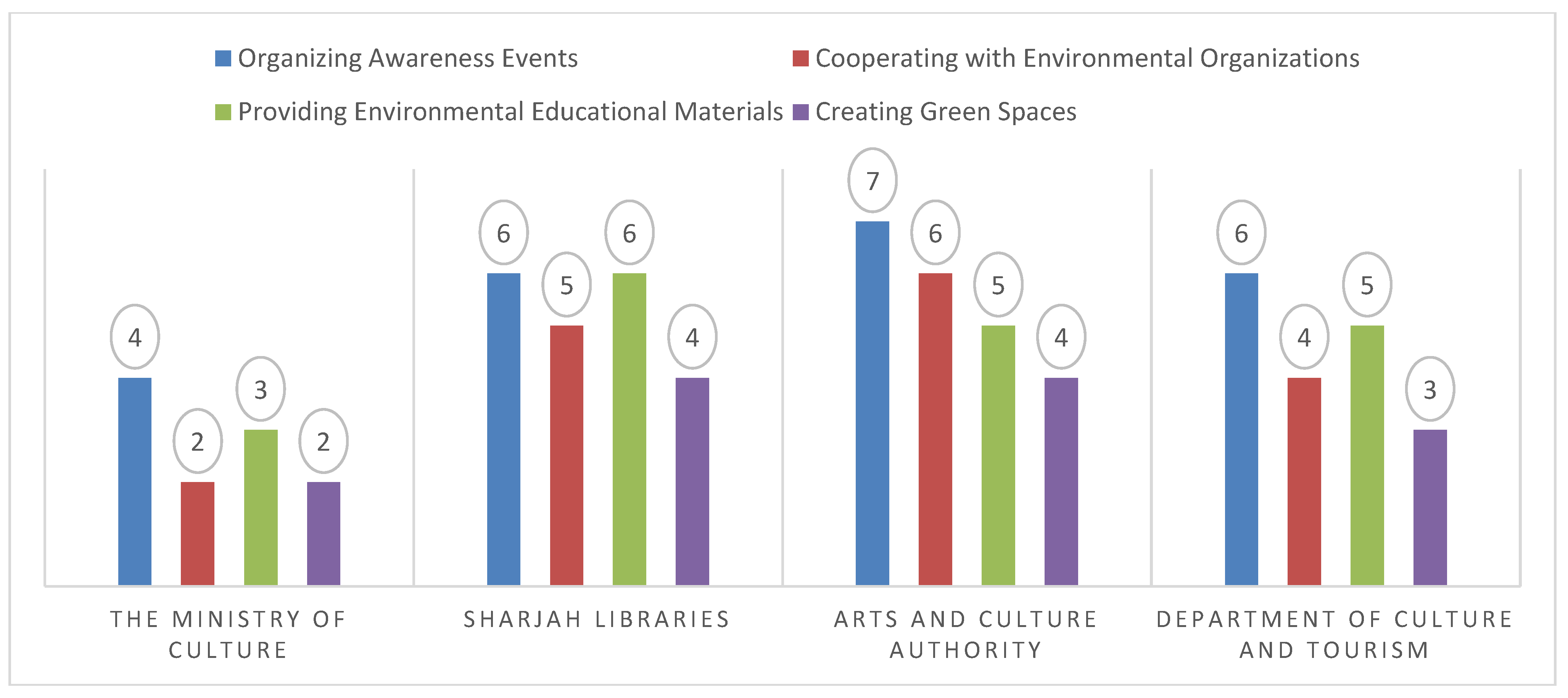
Figure 2.
The Use of Environmental Artificial Intelligence Applications in Emirati Public Libraries.
Figure 2.
The Use of Environmental Artificial Intelligence Applications in Emirati Public Libraries.
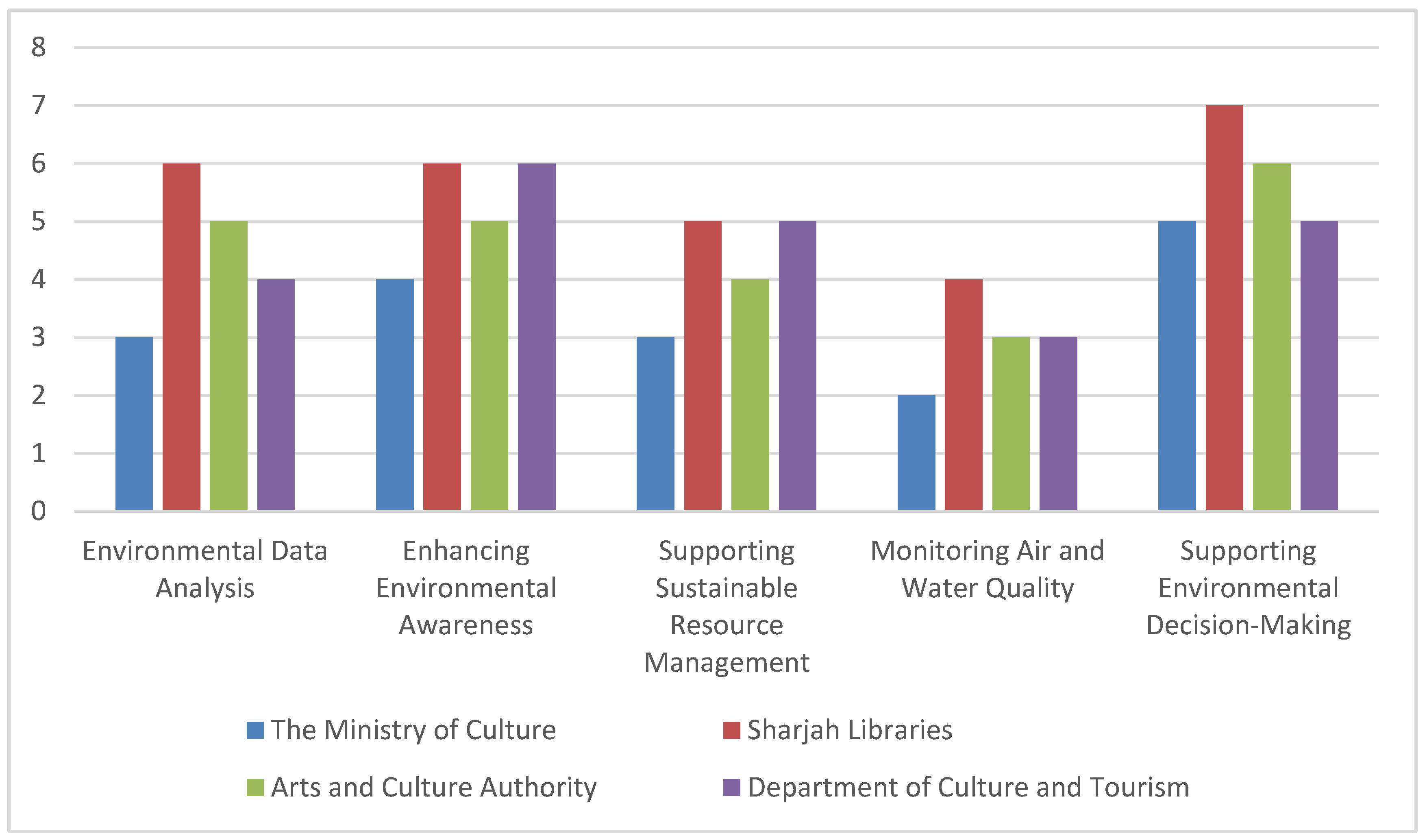
Table 1.
UAE Public Librarians' Knowledge of Environmental Sustainability.
| Question | Agree | Neutral | Disagree | |||
|---|---|---|---|---|---|---|
| N | % | N | % | N | % | |
| Do you have knowledge of environmental sustainability principles? | 19 | 61.2 | 8 | 25.8 | 4 | 12.9 |
| Do you implement environmental sustainability practices in your library? | 7 | 22.5 | 8 | 25.8 | 16 | 51.1 |
| Do you think environmental sustainability is important? | 21 | 67.7 | 6 | 19.3 | 4 | 12.9 |
| Do you think public libraries can influence individuals' environmental awareness? | 25 | 80.6 | 4 | 12.9 | 2 | 6.4 |
| Do you believe that public libraries have a role in promoting community environmental responsibility? | 27 | 87.09 | 4 | 12.9 | 5 | 16.1 |
| Do you participate in any community-based environmental initiatives outside the library? | 19 | 61.2 | 12 | 32.2 | 5 | 16.1 |
Table 2.
Strategies of UAE public libraries to achieve environmental sustainability.
| Question | Agree | Neutral | Disagree | |||
|---|---|---|---|---|---|---|
| N | % | N | % | N | % | |
| The library allocates budgets for environmental sustainability | 23 | 74 | 8 | 26 | 7 | 23 |
| a written strategy for achieving environmental sustainability | 14 | 45 | 7 | 23 | 10 | 32 |
| implements policies on renewable energy, such as solar power | 5 | 16 | 10 | 32 | 16 | 52 |
| The library uses smart lighting technologies to save energy. | 13 | 42 | 8 | 26 | 10 | 32 |
| The library supports the provision of charging stations for electric bikes and cars | 2 | 6 | 10 | 32 | 19 | 61 |
| The library provides green spaces | 19 | 61 | 11 | 39 | 0 | 0 |
| The library provides environmental educational materials | 25 | 81 | 5 | 16 | 1 | 3 |
Table 3.
tactics of UAE public libraries to achieve environmental sustainability.
| Question | Agree | Neutral | Disagree | |||
|---|---|---|---|---|---|---|
| N | % | N | % | N | % | |
| The library works to provide e-books and digital resources. | 25 | 81 | 4 | 13 | 2 | 6 |
| The library organizes events and workshops related to the environment in the library. | 4 | 13 | 9 | 29 | 18 | 58 |
| The library signs cooperation protocols with schools, universities and institutions to provide environmental awareness programs | 19 | 61 | 11 | 35 | 0 | 0 |
| The library runs environmental awareness programs | 23 | 74 | 7 | 23 | 1 | 3 |
| The library is interested in recycling programs | 18 | 58 | 4 | 13 | 9 | 29 |
| The library organizes exhibitions on environmental sustainability | 22 | 71 | 0 | 0 | 9 | 29 |
| Organizing awareness lectures on climate change and environmental awareness | 17 | 55 | 6 | 19 | 8 | 26 |
Table 4.
Environmental Artificial Intelligence in Emirati Public Libraries.
| Question | Agree | Neutral | Disagree | |||
|---|---|---|---|---|---|---|
| N | % | N | % | N | % | |
| Does the library implement environmental artificial intelligence (AI) applications in its operations? | 16 | 52 | 9 | 29 | 6 | 19 |
| Has the adoption of environmental AI led to noticeable environmental changes within the library? | 8 | 26 | 13 | 42 | 10 | 32 |
| How do environmental AI applications contribute to promoting environmental sustainability in the library? | 29 | 94 | 2 | 6 | 0 | 0 |
| In what ways does environmental AI enhance the user experience within the library? | 26 | 84 | 5 | 16 | 0 | 0 |
| Does the library utilize environmental AI systems for efficient waste management? | 15 | 48 | 11 | 25 | 5 | 16 |
| Are climate modeling and forecasting technologies integrated into the library’s environmental AI framework? | 4 | 13 | 7 | 23 | 20 | 65 |
| How does the library leverage AI technologies to support renewable energy initiatives? | 6 | 19 | 0 | 0 | 25 | 81 |
| Does the library employ smart grid systems for optimized energy management? | 13 | 42 | 14 | 45 | 4 | 13 |
Table 5.
Challenges Environmental Artificial Intelligence in UAE Public Libraries.
| Question | Agree | Neutral | Disagree | |||
|---|---|---|---|---|---|---|
| N | % | N | % | N | % | |
| Insufficient Funding for Environmental Technologies | 8 | 25.8 | 2 | 6.45 | 21 | 67.7 |
| Limited Awareness of Environmental Technologies | 9 | 29.03 | 8 | 25.8 | 14 | 45.1 |
| Challenges in Training Librarians | 7 | 22.5 | 5 | 16.1 | 19 | 61.2 |
| Weak Collaboration with State Institutions | 11 | 35.4 | 6 | 19.3 | 14 | 45.1 |
| Resistance to Change | 16 | 51.6 | 5 | 16.1 | 10 | 32.2 |
| Regulatory and Legal Challenges | 8 | 25.8 | 16 | 51.6 | 7 | 22.5 |
| Limited Availability of Local Environmental Data | 14 | 45.1 | 8 | 25.8 | 9 | 29.03 |
| Integration Difficulties with Existing Systems | 5 | 16.1 | 11 | 35.4 | 15 | 48.3 |
Table 6.
policies for Environmental Sustainability in Libraries.
| Providing Training and Educational Programs | Building on the findings of Thomas et al. (2020), regular workshops and training courses should be organized for employees to enhance their knowledge of environmental sustainability principles and their practical application. Easily accessible educational materials and reference resources on environmental sustainability should be made available to staff. |
| Improving Institutional Support | As indicated in the study by Smith & Williams (2019), it is necessary to provide staff with the resources and tools required to implement sustainable practices. A budget should be allocated to support environmental sustainability initiatives, such as purchasing eco-friendly equipment and upgrading technological systems to be more energy efficient. |
| Enhancing Awareness of the Importance of Environmental Sustainability | Based on the study by Brown et al. (2018), efforts should be intensified to raise awareness among staff and the public about the importance of environmental sustainability through awareness campaigns and seminars. Informative promotional materials and publications should be distributed within libraries to educate visitors about the significance of sustainable practices. |
| Encouraging Staff to Adopt Sustainable Practices | Incentives should be offered to staff who adhere to sustainable practices, such as special awards or recognition. Environmental committees should be established within libraries to monitor the implementation of sustainable practices and propose improvements. |
| Strengthening the Role of Libraries in Environmental Awareness | According to Miller (2019), awareness-raising events and partnerships with schools and universities can be organized to increase environmental awareness. Environmental corners should be established within libraries, containing information on sustainability and best environmental practices, as well as providing books and educational resources on the subject. |
| Evaluating and Monitoring Performance | Mechanisms should be put in place to regularly evaluate the effectiveness of training programs and sustainability initiatives. Data should be collected and progress monitored in the implementation of environmental practices, with periodic reports submitted to management and staff. |
Disclaimer/Publisher’s Note: The statements, opinions and data contained in all publications are solely those of the individual author(s) and contributor(s) and not of MDPI and/or the editor(s). MDPI and/or the editor(s) disclaim responsibility for any injury to people or property resulting from any ideas, methods, instructions or products referred to in the content. |
© 2025 by the authors. Licensee MDPI, Basel, Switzerland. This article is an open access article distributed under the terms and conditions of the Creative Commons Attribution (CC BY) license (http://creativecommons.org/licenses/by/4.0/).
Copyright: This open access article is published under a Creative Commons CC BY 4.0 license, which permit the free download, distribution, and reuse, provided that the author and preprint are cited in any reuse.


