

Submitted:
21 May 2025
Posted:
22 May 2025
You are already at the latest version
Abstract
Traditional Ecological Knowledge encompasses the experiences and practices that Indigenous peoples have developed and passed down over the years, enabling them to live in balance with the land. This paper examines how the integration of Traditional Ecological Knowledge (TEK) supports the Sustainable Development Goals (SDGs) of the United Nations, aiming to help address problems related to global sustainability. When TEK principles are compared to the SDGS, the study highlights how they can contribute to reducing poverty, ensuring food security, strengthening efforts for biodiversity conservation, and making societies more resilient to climate change. TEK focuses on solutions that align with local cultures and are environmentally friendly, in addition to utilising modern science and policy. On the other hand, the marginalization of Indigenous people, difficulties with intellectual property laws and the loss of important traditions stand in the way of applying the policies. By focusing on documentation, ensuring institutions work hand in hand, and utilising inclusive governance, TEK can play a central role in global sustainability. It makes the case for combining TEK with modern methods to build resilience, fairness and sustainable communities.
Keywords:
traditional ecological knowledge
; sustainable development goals
; indigenous knowledge
; environmental sustainability
Introduction
The United Nations’ Sustainable Development Goals (SDGs) are a comprehensive set of development targets that address numerous significant challenges faced by countries within the international community (Leal Filho et al., 2019; Georgeson & Maslin, 2018). They envision a world where people feel safe, prosperous, and sustainable by 2030. To reach these goals, adopting culturally appropriate and/or environmentally sustainable practices is crucial. Traditional Ecological Knowledge (TEK) is a vital yet underutilised resource in this regard (Das et al., 2021). Considering TEK as knowledge and practices accumulated by indigenous and local people over generations through interaction with the environment, it naturally reflects a wise understanding of the total ecological system (Saylor et al., 2017).
TEK relies on input from locals and engages in two different contexts as it adapts to changing environments and ecosystems. This system is inherently conservative, aligning well with ethology, and is based on micro- and mesocosm concepts and knowledge about sustainable practices (Harisha et al., 2016). There is a principle of ubuntu when it comes to handling components of nature, and environmentally conserved knowledge provides tested ways of preventing environmental degradation, the use of natural resources, and the creation of a broader diversity (Foggin, 2021; Van Norren, 2020). Unlike contemporary environmental science, which often overlooks the social, cultural, and spiritual aspects of human beings, TEK incorporates them into environmental management, providing a more balanced and nuanced perspective on sustainable environmental management (Nepal, 2023a; Stori et al., 2019).
The paper evaluates TEK-SDG connections by demonstrating how implementing TEK strategies at global, national, and local levels contributes to achieving the SDGs. The examination of TEK’s support for achieving each of the 17 SDGs demonstrates its capacity to address complex socio-ecological concerns and enhance community resilience in responding to global environmental change.
Linking Traditional Ecological Knowledge to Sustainable Development Goals
SDG 1 No poverty: Poverty programs usually overlook Indigenous community assets (including cultural heritage and biodiversity resources), particularly because TEK serves as the primary mechanism for sustaining local livelihoods (Mtshali et al., 2014; Sears & Steward, 2011). Indigenous communities residing in biodiverse areas rely on TEK methods to preserve resources in a sustainable manner while securing food provisions, accessing water, and generating income opportunities (Harisha et al., 2016). The multi-layered forest gardens practised in the Amazon through agroforestry systems deliver household survival benefits, along with marketable outputs, which serve as a means to eliminate poverty without damaging natural environmental stocks (Pauletto et al., 2023; Heredia-R et al., 2020). Realising TEK as an economic opportunity is possible through policies that support development, particularly addressing poverty, without threatening the biosphere’s resource base.
SDG 2 Zero Hunger: TEK plays a significant role in ensuring food security, primarily due to its support for agricultural diversity and sustainable land use. Indigenous peoples in various regions cultivate a wide range of crops and livestock that are resilient to climate change (Chanza &Musakwa, 2022; Phungpracha et al., 2016). For instance, in the Andean highlands, traditional agricultural management supports more than 4,000 types of potatoes (Lüttringhaus et al., 2021), each requiring different small-scale climate inputs (Swiderska et al., 2011). This diversity ensures stable food sources regardless of weather conditions, making TEK one of the keys to achieving zero hunger. When integrated into the enhancement of agri-food systems, such practices can further strengthen sustainability and resilience in food systems.
SDG 3 Good Health and Well-being: The nature, culture, and traditional knowledge of TEK are closely linked to health and well-being through the use of plants and medicines for healing (Isaac et al., 2018). Traditional practitioners—the local people themselves—possess knowledge of the plants and their applications in treating various diseases (Bhuker et al., 2022). For example, traditional healers in the kingdom of Bhutan utilise over 300 plant species in their healing practices, many of which are currently being researched to discover new properties for modern pharmacology (Nepal, 2023b). The TEK framework offers healthcare solutions by highlighting the interconnected nature of mental health, the environment, and physical health. Healthcare systems that integrate TEK will provide individuals in remote areas with culturally appropriate medical services and affordable treatment options (Kumar et al., 2021).
SDG 4 Quality Education: Intergenerational education manifests through TEK transmission, which requires students to maintain direct interactions with nature. The educational system equips students with valuable skills while teaching them the importance of environmental stewardship and community well-being (Kong & Jia, 2023). Children in New Zealand have experienced increased cultural awareness and environmental understanding since Māori traditional knowledge became part of formal education materials (Rameka & Stagg Peterson, 2021; Fickel et al., 2018). Mainstream education systems strengthen when they adopt TEK for two reasons: it reinforces sustainability principles among students while delivering relevant cultural learning outcomes.
SDG 5 Gender Equality: Indigenous women play a significant role in managing various aspects of TEK, including agriculture, water supply, and health. They pass on essential knowledge to communities, particularly in areas such as seed selection, crop diversity, and the use of medicinal plants to enhance community resilience (Singh et al., 2022; Aluko, 2018). In some African and South Asian countries, evidence shows that women are tasked with preserving crop varieties and ensuring food security for their households (Quisumbing et al., 2021). Recognising the role of women in TEK processes through tools such as the capability approach promotes their rights, leading to improved governance and leadership in sustainable development and the management of natural resources.
SDG 6 Clean Water and Sanitation: TEK holds best practice interventions in water considerations, trade, and utilisation, especially in water-scarce zones. Indigenous societies have developed effective methods for storing water, which are utilised for rainwater management, irrigation, and watershed management (Sawant, 2025). In India’s Rajasthan desert, there are the old baoris (step wells) and johads (minuscule earth check dams), which allowed communities to harvest the rainwater they relied on during the lean season (Joji & Jacob, 2023; Yadav, 2023). Including TEK-based water management practices in contemporary development projects will help policymakers address water supply and sanitation in a way that considers current vulnerabilities to water-related risks.
SDG 7 Affordable and Clean Energy: For many generations, indigenous communities have adopted sustainable energy methods, including biomass, wind power, and solar energy (Walters, 2003). Traditional energy use methods, such as passive solar design in construction, provide economical and sustainable energy solutions that extend beyond fossil fuels (Singh et al., 2011). Himalayan Buddhist monasteries demonstrate TEK possibilities for clean energy by utilising solar power for building heating purposes (Ngamprapasom, 2010). These energy management strategies, integrated into national energy guidelines, support both the adoption of renewable energy and culturally appropriate practices in energy solutions.
SDG 8 Decent Work and Economic Growth: TEK promotes green economic growth through jobs and activities that are compatible with environmental protection. Examples include eco-tourism, crafting traditional items, and practising sustainable farming, all linked to TEK, that help indigenous peoples earn their livelihoods (Berkes, 2017; Tengö et al., 2014). Collecting products such as Brazil nuts and rubber from the Amazon sustainably has opened economic opportunities and allowed for the protection of many animal species simultaneously (Cronkleton et al., 2011). Encouraging TEK-based companies helps create employment and fosters safe and fair economic growth.
SDG 9 Industry, Innovation, and Infrastructure: Indigenous knowledge often develops innovative methods for constructing infrastructure that can withstand local environmental challenges. Historic stilt houses and earthquake-resistant buildings crafted through traditional techniques adapt to the land they occupy and are rooted in indigenous knowledge (Kumar, 2024; Mathur et al., 2024). These solutions are environmentally friendly and honour traditional cultures. Utilising TEK in infrastructure development enhances communities’ resilience to disasters and fosters greater sustainability in projects (Nepal, 2024).
SDG 10 Reduced Inequalities: It is essential to incorporate TEK into development plans to help close the inequalities experienced by marginalised Indigenous peoples (Shawoo & Thornton, 2019). Including rights for Indigenous peoples to control land and resources can improve their lives and reduce the gap between them and the rest of society (Wilson, 2019). When governments value TEK, they can distribute development benefits more equitably, which helps mitigate both national and international inequalities (Lemi, 2019).
SDG 11 Sustainable Cities and Communities: TEK promotes sustainable living by integrating care for nature and biodiversity into traditional farming and planning practices (Rani et al., 2025). In several indigenous traditions, people construct their settlements to minimise harm to the environment and use resources wisely. For example, the villages of older Māori communities in New Zealand are strategically positioned to interact with both land and water, enabling optimal resource use and supporting the environment (Harcourt et al., 2022; King et al., 2007). Employing TEK in urban planning fosters the development of cities and communities that are both sustainable and resilient to challenges (Yli-Pelkonen & Köhl, 2005).
SDG 12 Responsible Consumption and Production: The focus of TEK is to help conserve resources and avoid waste whenever possible. Traditional and cultural economic practices within Indigenous populations involved circular economic activities, utilising, reusing, or recycling most materials (Tang & Gavin, 2010). Among the Inuit in the Arctic, every part of a hunted animal is valued and used for a specific purpose (Pearce et al., 2015). Integrating TEK into sustainable consumption and production practices has the potential to reduce environmental impacts and enhance the utilisation of available resources (Sinthumule, 2023).
SDG 13 Climate Action: TEK provides valuable insights on adapting to climate change and enhancing resilience. Due to climate shifts, Indigenous communities in Australia use fire management techniques that reduce wildfire risks and help conserve wildlife (Fernandes, 2020; McKemey et al., 2020). Similarly, Arctic Indigenous peoples have learned to respond to the impacts of climate change, including severe weather events, by tracking environmental signals to adjust their resource use (Huntington et al., 2019; Sakakibara, 2016). Incorporating TEK into climate action plans can enhance their effectiveness and ensure cultural relevance in tackling the issue of climate change.
SDG 14 Life Below Water: Indigenous coastal and marine communities possess extensive knowledge about the oceans and sustainable fishing practices. For example, Pacific Islanders utilise ra’ui systems to temporarily close fishing areas, which helps maintain both fish populations and marine life in their waters (Cohen et al., 2015; Johannes, 2002). These techniques promote sustainability and can contribute to the conservation of marine ecosystems. Employing TEK in marine conservation ensures that ocean resources are used sustainably.
SDG 15 Life on Land: TEK helps us maintain biodiversity and responsibly manage various types of land ecosystems. Through agroforestry, rotational farming, and the preservation of sacred sites, the activities of indigenous peoples sustain both biodiversity and the functionality of ecosystems. Many of these indigenous territories in the Amazon exhibit higher biodiversity, highlighting the importance of TEK in conserving life on land (Sanabria & Achury, 2022; Schmidt et al., 2021). The key to achieving SDG 15 lies in supporting and utilising indigenous land management practices.
SDG 16 Peace, Justice, and Strong Institutions: Understanding and providing access to TEK is essential for peace, fairness, and effective institutions. Indigenous people employ methods such as communal voting and collaborative problem-solving, which exemplify proper and just governance (Ludwig & Macnaghten, 2019). In Ethiopia, the Oromo people practice a traditional government system called Gadaa, which is equitable and accessible to all (Debisa, 2022; Abdurahman, 2019). Promoting indigenous governance can contribute to SDG 16, which seeks to foster open institutions and ensure that laws are upheld (Nikolakis & Nelson, 2018).
SDG 17 Partnerships: The SDGs can only be achieved through cooperation, and TEK plays a crucial role in this regard (Kumar et al., 2021). Indigenous peoples play a crucial role in conserving nature, managing resources sustainably, and preparing for climate change (Popova, 2013). Considering TEK alongside science improves the effectiveness of development programs in areas such as protected regions (Huntington, 2000). Developing partnerships with indigenous peoples is vital for establishing strong connections necessary for the successful attainment of the SDGs (Brant et al., 2023).
Utilising TEK within the SDGs framework necessitates addressing several key challenges. These include being overlooked by government organisations (Bang, 2024), the erosion of unique cultures (Ajitha et al., 2025), inconsistent regulations (Akther, 2025), and exclusion from decision-making (Bang, 2024). Many view TEK as outdated or unscientific due to difficulties in cross-language understanding (Agrawal, 995), as well as barriers related to intellectual property (Nadasdy, 999) and land tenure (Berkes, 2017). This complicates the reliance on this approach for addressing global sustainability issues.
Further studies can address these obstacles by exploring ways to integrate TEK into institutions, enhance its documentation, and foster stronger connections with scientific knowledge. The potential to incorporate TEK into sustainable development is evident in areas such as land rights, economic assessment, and the introduction of new technologies. Ensuring Indigenous youth can share TEK knowledge and establish equitable sharing schemes can help preserve, apply, and teach TEK to future generations. The SDGs necessitate accessible and collaborative methods to fully utilise TEK knowledge for development.
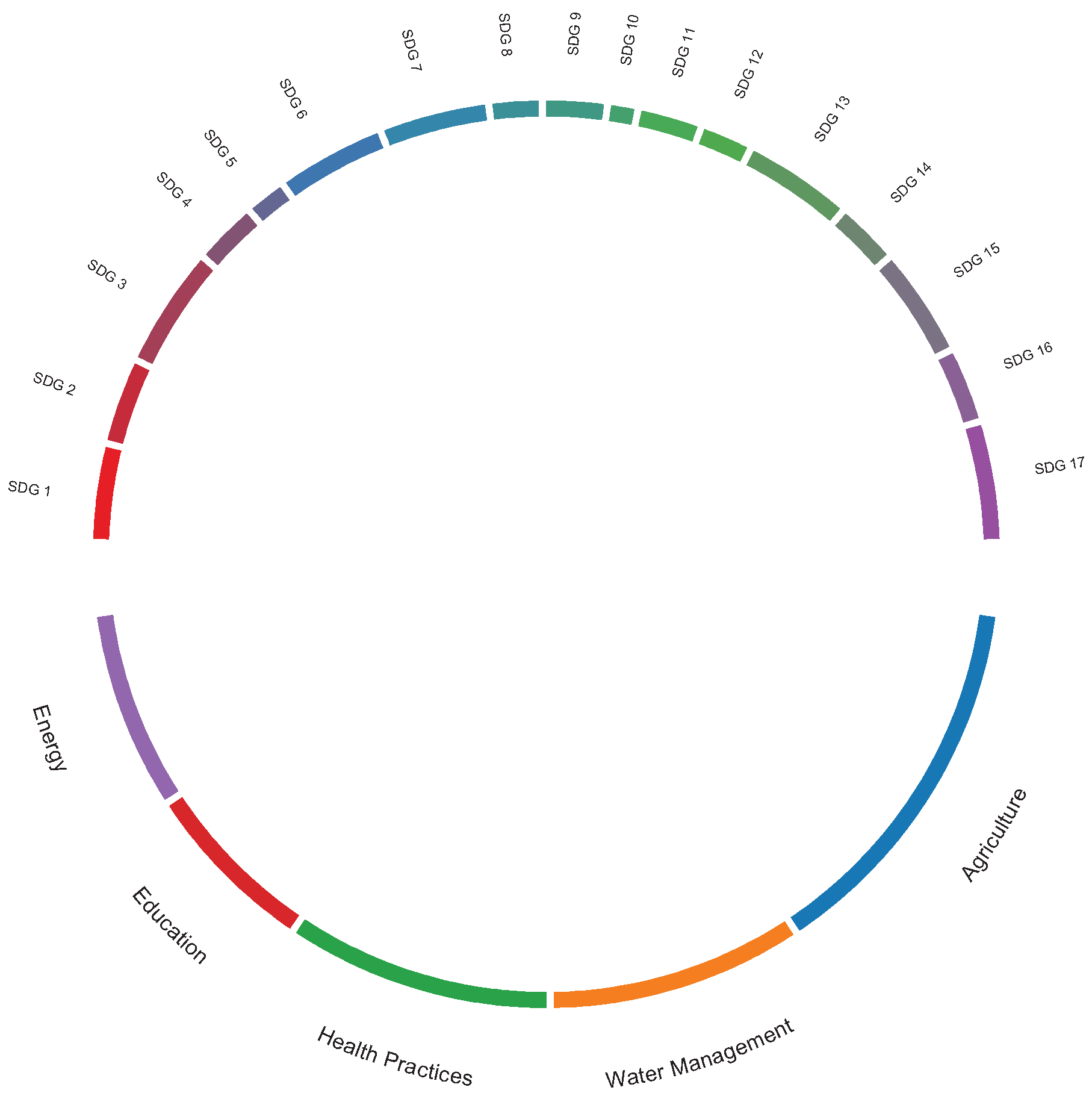
Figure 1.
The chord diagram illustrates the linkages between the Traditional Knowledge System (TKS) and the SDGs, demonstrating that TKS is a crucial component of promoting global sustainability.
Figure 1.
The chord diagram illustrates the linkages between the Traditional Knowledge System (TKS) and the SDGs, demonstrating that TKS is a crucial component of promoting global sustainability.
Conclusion
TEK plays a significant role in addressing the various issues highlighted by the SDGs. It relies on Indigenous beliefs and practices to create solutions for challenges such as poverty, ensuring food security, mitigating the effects of climate change, and combating biodiversity loss. Utilising TEK ensures that sustainability efforts consider environmental, social, and cultural aspects equally. Despite its crucial importance, TEK does not reach its full potential due to challenges such as the erosion of traditions, lack of awareness, and policies that overlook TEK. This can be achieved by promoting inclusive governance, documenting Indigenous knowledge, and integrating TEK with scientific approaches. Granting Indigenous communities rights to their lands, equitable opportunities, and access to education is essential for preserving their TEK and making it beneficial for future generations. Employing TEK fosters societies that are resilient to future challenges, equitable for all, and environmentally protected. Upholding Indigenous rights and incorporating their knowledge into public policy is vital for sustainable living at the global, national, and local levels.
References
- Abdurahman, A. (2019). The Gada system and the Oromo’s (Ethiopia) culture of peace. Skhid, 0(2(160)), 45–51. [CrossRef]
- Agrawal, A. (1995). Dismantling the divide between indigenous and scientific knowledge. Development and Change, 26(3), 413-439. [CrossRef]
- Ajitha, S., Reshma, K. J., & Huxley, S. (2025). Indigenous Knowledge and Sustainable Development: Bridging Traditional Practices with Modern Climate Solutions. In Community Climate Justice and Sustainable Development (pp. 147-180). IGI Global Scientific Publishing. [CrossRef]
- Akther, S. (2025). Bridging the Gaps: Climate Justice and SDGs Implementation in Indigenous Communities. In Community Climate Justice and Sustainable Development (pp. 369-390). IGI Global Scientific Publishing. [CrossRef]
- Aluko, Y. A. (2018). Women’s use of indigenous knowledge for environmental security and sustainable development in Southwest Nigeria. International Indigenous Policy Journal, 9(3), 1-23. [CrossRef]
- Bang, H. N. (2024). Sustainable development goals, disaster risk management, and indigenous knowledge: a critical assessment of the interlinkages. Sustainable Earth Reviews, 7(1), 29. [CrossRef]
- Berkes, F. (2017). Sacred Ecology. Routledge. [CrossRef]
- Bhuker, A., Mor, V., Raj, P., & Jakhar, S. (2022). Potential Use of Medicinal Plant Gokhru: A Review. Journal of Ayurvedic and Herbal Medicine, 8(2), 101-106. [CrossRef]
- Brant, J., Peterson, S. S., & Friedrich, N. (2023). Partnership Research with Indigenous Communities: Fostering Community Engagement and Relational Accountability. Brock Education Journal, 32(1), 99–118. [CrossRef]
- Chanza, N., & Musakwa, W. (2022). Revitalizing indigenous ways of maintaining food security in a changing climate: review of the evidence base from Africa. International Journal of Climate Change Strategies and Management, 14(3), 252-271. [CrossRef]
- Cohen, P., Evans, L., & Govan, H. (2015). Community-based, co-management for governing small-scale fisheries of the Pacific: A Solomon Islands’ case study. In Interactive governance for small-scale fisheries: Global reflections (pp. 39-59). Cham: Springer International Publishing. [CrossRef]
- Cronkleton, P., Bray, D. B., & Medina, G. (2011). Community forest management and the emergence of multi-scale governance institutions: Lessons for REDD+ development from Mexico, Brazil and Bolivia. Forests, 2(2), 451-473. [CrossRef]
- Das, A., Gujre, N., Devi, R. J., & Mitra, S. (2021). A review on traditional ecological knowledge and its role in natural resources management: North East India, a cultural paradise. Environmental Management, 72 1-22. [CrossRef]
- Debisa, N. G. (2022). Building peace by peaceful approach: The role of Oromo Gadaa system in peace-building. Cogent Social Sciences, 8(1). [CrossRef]
- Fernandes, P. M. (2020). Fire Country: How Indigenous Fire Management Could Help Save Australia. International Journal of Wildland Fire, 29(11), 1052–1052. [CrossRef]
- Fickel, L., Abbiss, J., Brown, L., & Astall, C. (2018). The importance of community knowledge in learning to teach: Foregrounding Māori cultural knowledge to support preservice teachers’ development of culturally responsive practice. Peabody Journal of Education, 93(3), 285-294. [CrossRef]
- Foggin, J. M. (2021). We still need the wisdom of Ubuntu for successful nature conservation. Ambio, 50(3), 723-725. [CrossRef]
- Georgeson, L., & Maslin, M. (2018). Putting the United Nations Sustainable Development Goals into practice: A review of implementation, monitoring, and finance. Geo: Geography and Environment, 5(1), e00049. [CrossRef]
- Harcourt, N., Awatere, S., Hyslop, J., Taura, Y., Wilcox, M., Taylor, L., Rau, J., & Timoti, P. (2022). Kia manawaroa kia puawai: Enduring Māori livelihoods. Sustainability Science, 17(2), 391-402. [CrossRef]
- Harisha, R. P., Padmavathy, S., & Nagaraja, B. C. (2016). Traditional ecological knowledge (TEK) and its importance in south India: perspective from local communities. Applied Ecology and Environmental Research, 14(1), 311-326. [CrossRef]
- Heredia-R, M., Torres, B., Cayambe, J., Ramos, N., Luna, M., & Diaz-Ambrona, C. G. (2020). Sustainability assessment of smallholder agroforestry indigenous farming in the Amazon: A case study of Ecuadorian Kichwas. Agronomy, 10(12), 1973. [CrossRef]
- Huntington, H. P. (2000). Using Traditional Ecological Knowledge in Science: Methods and Applications. Ecological Applications, 10(5), 1270–1270. [CrossRef]
- Huntington, H. P., Carey, M., Apok, C., Forbes, B. C., Fox, S., Holm, L. K., Ivanova, A., Jaypoody, J., Noongwook, G., & Stammler, F. (2019). Climate change in context: putting people first in the Arctic. Regional Environmental Change, 19(4), 1217–1223. [CrossRef]
- Isaac, G., Finn, S., Joe, J. R., Hoover, E., Gone, J. P., Lefthand-Begay, C., & Hill, S. (2018). Native American perspectives on health and traditional ecological knowledge. Environmental Health Perspectives, 126(12), 125002. [CrossRef]
- Johannes, R. E. (2002). The renaissance of community-based marine resource management in Oceania. Annual Review of Ecology and Systematics, 33(1), 317-340. [CrossRef]
- Joji, V. S., & Jacob, R. S. (2023). Traditional Rainwater Harvesting Structures. Springer. [CrossRef]
- King, D. N., Goff, J., & Skipper, A. (2007). Māori environmental knowledge and natural hazards in Aotearoa-New Zealand. Journal of the Royal Society of New Zealand, 37(2), 59-73. [CrossRef]
- Kong, X., & Jia, F. (2023). Intergenerational transmission of environmental knowledge and pro-environmental behavior: A dyadic relationship. Journal of Environmental Psychology, 89, 102058. [CrossRef]
- Kumar, A., Kumar, S., Komal, Ramchiary, N., & Singh, P. (2021). Role of traditional ethnobotanical knowledge and indigenous communities in achieving sustainable development goals. Sustainability, 13(6), 3062. [CrossRef]
- Kumar, V. (2024). Traditional and Modern Disaster Resistant House Construction Techniques. Journal of Progress in Engineering and Physical Science, 3(1), 13-22.
- Leal Filho, W., Tripathi, S. K., Andrade Guerra, J. B. S. O. D., Giné-Garriga, R., Orlovic Lovren, V., & Willats, J. (2019). Using the sustainable development goals towards a better understanding of sustainability challenges. International Journal of Sustainable Development & World Ecology, 26(2), 179-190. [CrossRef]
- Lemi, T. (2019). The role of traditional ecological knowledge (TEK) for climate change adaptation. International Journal of Environmental Sciences & Natural Resources, 18(1), 28-31.
- Ludwig, D., & Macnaghten, P. (2019). Traditional ecological knowledge in innovation governance: a framework for responsible and just innovation. Journal of Responsible Innovation, 7(1), 26–44. [CrossRef]
- Lüttringhaus, S., Pradel, W., Suarez, V., Manrique-Carpintero, N. C., Anglin, N. L., Ellis, D., ... & Gómez, R. (2021). Dynamic guardianship of potato landraces by Andean communities and the genebank of the International Potato Center. CABI Agriculture and Bioscience, 2, 1-16. [CrossRef]
- Mathur, A., Bagul, A., & Rajhans, K. (2024). Indigenous Practices for Achieving Sustainable Construction. Current World Environment, 19(2), 716.
- McKemey, M., Ens, E., Rangers, Y. M., Costello, O., & Reid, N. (2020). Indigenous Knowledge and Seasonal Calendar Inform Adaptive Savanna Burning in Northern Australia. Sustainability, 12(3), 995–995. [CrossRef]
- Mtshali, M. N. G., Raniga, T., & Khan, S. (2014). Indigenous knowledge systems, poverty alleviation and sustainability of community-based projects in the Inanda region in Durban, South Africa. Studies of Tribes and Tribals, 12(2), 187-199.
- Nadasdy, P. (1999). The politics of TEK: Power and the “integration” of knowledge. Arctic Anthropology, 1-18.
- Nepal, T. K. (2023a). The Role of Traditional Ecological Knowledge in Environmental Stewardship: Beyond Poverty and Necessity. Journal of Resources, Energy and Development, 20(2), 86-96. [CrossRef]
- Nepal, T. K. (2023b). Traditional ecological knowledge (TEK) and its importance in the Himalayan Kingdom of Bhutan. In Traditional Ecological Knowledge of Resource Management in Asia (pp. 317-332). Cham: Springer International Publishing. [CrossRef]
- Nepal, T. K. (2024). Aligning Gross National Happiness, Sustainable Development Goals, and Traditional Ecological Knowledge: A Path to Holistic Well-being. Indonesian Journal of Social and Environmental Issues (IJSEI), 5(1), 42-49. [CrossRef]
- Ngamprapasom, P. (2010). Renewable energy technology in Buddhist monasteries (Doctoral dissertation, Murdoch University).
- Nikolakis, W., & Nelson, H. W. (2018). Trust, institutions, and indigenous self-governance: An exploratory study. Governance, 32(2), 331–347. [CrossRef]
- Pauletto, D., Guerreiro Martorano, L., de Sousa Lopes, L. S., Pinheiro de Matos Bentes, M., Vieira, T. A., Gomes de Sousa Oliveira, T., Santos de Sousa, V., Fernandes da Silva, Á., da Silva Ferreira de Lima, P., Santos Tribuzy, A., & Pinto Guimarães, I. V. (2023). Plant Composition and Species Use in Agroforestry Homegardens in the Eastern Amazon, Brazil. Sustainability, 15(14), 11269. [CrossRef]
- Pearce, T., Ford, J., Willox, A. C., & Smit, B. (2015). Inuit traditional ecological knowledge (TEK), subsistence hunting and adaptation to climate change in the Canadian Arctic. Arctic, 233-245. [CrossRef]
- Phungpracha, E., Kansuntisukmongkon, K., & Panya, O. (2016). Traditional ecological knowledge in Thailand: Mechanisms and contributions to food security. Kasetsart Journal of Social Sciences, 37(2), 82-87. [CrossRef]
- Popova, U. (2013). Conservation, Traditional Knowledge, and Indigenous Peoples. American Behavioral Scientist, 58(1), 197–214. [CrossRef]
- Quisumbing, A., Heckert, J., Faas, S., Ramani, G., Raghunathan, K., & Malapit, H. (2021). Women’s empowerment and gender equality in agricultural value chains: evidence from four countries in Asia and Africa. Food Security, 13, 1101-1124. [CrossRef]
- Rameka, L., & Stagg Peterson, S. (2021). Sustaining indigenous languages and cultures: Māori medium education in Aotearoa New Zealand and Aboriginal head Start in Canada. Kōtuitui: New Zealand Journal of Social Sciences Online, 16(2), 307-323. [CrossRef]
- Rani, J., Gulia, V., Sangwan, A., Dhull, S. S., & Mandzhieva, S. (2025). Synergies of Traditional Ecological Knowledge in Biodiversity Conservation: A Paradigm for Sustainable Food Security. In Ecologically Mediated Development: Promoting Biodiversity Conservation and Food Security (pp. 27-49). Singapore: Springer Nature Singapore. [CrossRef]
- Sakakibara, C. (2016). People of the Whales: Climate Change and Cultural Resilience Among Iñupiat of Arctic Alaska. Geographical Review, 107(1), 159–184. [CrossRef]
- Sanabria, C., & Achury, R. (2022). Amazonian indigenous territories as reservoirs of biodiversity: The army ants of Santa Sofia (Amazonas—Colombia). Caldasia, 44(2), 345–355. [CrossRef]
- Sawant, V. (2025). Synergizing Artificial Intelligence and Traditional Ecological Knowledge for Water Resource Optimization. International Journal for Multidisciplinary Research, 7(2). [CrossRef]
- Saylor, C. R., Alsharif, K. A., & Torres, H. (2017). The importance of traditional ecological knowledge in agroecological systems in Peru. International Journal of Biodiversity Science, Ecosystem Services & Management, 13(1), 150-161. [CrossRef]
- Schmidt, M. V. C., Ikpeng, Y. U., Kayabi, T., Sanches, R., Ono, K. Y., & Adams, C. (2021). Indigenous Knowledge and Forest Succession Management in the Brazilian Amazon: Contributions to Reforestation of Degraded Areas. Frontiers in Forests and Global Change, 4. [CrossRef]
- Sears, R. R., & Steward, A. M. (2011). Education, Ecology and Poverty Reduction. In Integrating Ecology and Poverty Reduction: The Application of Ecology in Development Solutions (pp. 17-37). New York, NY: Springer New York. [CrossRef]
- Shawoo, Z., & Thornton, T. F. (2019). The UN local communities and Indigenous peoples’ platform: A traditional ecological knowledge-based evaluation. Wiley Interdisciplinary Reviews: Climate Change, 10(3), e575. [CrossRef]
- Singh, M. K., Mahapatra, S., & Atreya, S. K. (2011). Solar passive features in vernacular architecture of North-East India. Solar Energy, 85(9). [CrossRef]
- Singh, P., Tabe, T., & Martin, T. (2022, January). The role of women in community resilience to climate change: A case study of an Indigenous Fijian community. In Women’s Studies International Forum (Vol. 90, p. 102550). Pergamon. [CrossRef]
- Sinthumule, N. I. (2023). Traditional ecological knowledge and its role in biodiversity conservation: a systematic review. Frontiers in Environmental Science, 11, 1164900. [CrossRef]
- Stori, F. T., Peres, C. M., Turra, A., & Pressey, R. L. (2019). Traditional ecological knowledge supports ecosystem-based management in disturbed coastal marine social-ecological systems. Frontiers in Marine Science, 6, 571. [CrossRef]
- Swiderska, K., Reid, H., Song, Y., Li, J., Mutta, D., Ongugo, P., Pakia, M., Oros, R., & Barriga, S. (2011). The Role of Traditional Knowledge and Crop Varieties in Adaptation to Climate Change and Food Security in SW China, Bolivian Andes and coastal Kenya. International Institute for Environment and Development (IIED), London, United Kingdom.
- Tang, R., & Gavin, M. C. (2010). Traditional ecological knowledge informing resource management: Saxoul conservation in inner Mongolia, China. Society and Natural Resources, 23(3), 193-206. [CrossRef]
- Tengö, M., Brondizio, E. S., Elmqvist, T., Malmer, P., & Spierenburg, M. (2014). Connecting diverse knowledge systems for enhanced ecosystem governance: the multiple evidence base approach. Ambio, 43, 579-591. [CrossRef]
- Van Norren, D. E. (2020). The sustainable development goals viewed through gross national happiness, Ubuntu, and Buen Vivir. International Environmental Agreements: Politics, Law and Economics, 20(3), 431-458. [CrossRef]
- Walters, B. (2003). Indigenous Environmental Knowledge and Its Transformations: Critical Anthropological Perspectives. American Anthropologist, 105(2), 406.
- Wilson, E. (2019). What is benefit sharing? Respecting indigenous rights and addressing inequities in Arctic resource projects. Resources, 8(2), 74. [CrossRef]
- Yadav, S. (2023). Traditional rain water harvesting systems in Rajasthan: water resources conservation and its sustainable management –a review. Sustainability, Agri, Food and Environmental Research, 11(X). [CrossRef]
- Yli-Pelkonen, V., & Kohl, J. (2005). The role of local ecological knowledge in sustainable urban planning: perspectives from Finland. Sustainability: Science, Practice and Policy, 1(1), 3-14. [CrossRef]
Disclaimer/Publisher’s Note: The statements, opinions and data contained in all publications are solely those of the individual author(s) and contributor(s) and not of MDPI and/or the editor(s). MDPI and/or the editor(s) disclaim responsibility for any injury to people or property resulting from any ideas, methods, instructions or products referred to in the content. |
© 2025 by the authors. Licensee MDPI, Basel, Switzerland. This article is an open access article distributed under the terms and conditions of the Creative Commons Attribution (CC BY) license (http://creativecommons.org/licenses/by/4.0/).
Copyright: This open access article is published under a Creative Commons CC BY 4.0 license, which permit the free download, distribution, and reuse, provided that the author and preprint are cited in any reuse.


