

Submitted:
21 May 2025
Posted:
22 May 2025
You are already at the latest version
Abstract
Carbon nanomaterials (CNMs) have emerged as a revolutionary class of nanostructures with exceptional physicochemical properties, making them indispensable in environmental remediation, pollutant detection, and analytical sciences. Nanofluids, which are engineered colloidal suspensions of nanoparticles in a base fluid, have garnered significant attention due to their enhanced thermal properties compared to traditional fluids. Among these properties, viscosity plays a crucial role in determining the flow behaviour and thermal performance of nanofluids in various applications. This paper provides a comprehensive overview of the various models used to predict the viscosity of nanofluids. We discuss the significance of viscosity in nanofluids, the key factors influencing viscosity, and a comparative analysis of existing viscosity models. The paper concludes with recommendations for future research directions in this emerging field. Elastohydrodynamic (EHD) lubrication plays a crucial role in the function of synovial joints, providing necessary lubrication and reducing friction during movement. This study explores the implications of elastohydrodynamic squeeze-film interactions in synovial joints, particularly under conditions enhanced by nanofluid lubrication. The introduction of nanofluids—suspensions of nanoparticles in conventional lubricants—has shown potential in improving lubrication performance due to their unique thermal and rheological properties. This paper discusses the fundamental principles of EHD lubrication, the characteristics of synovial fluid, the mechanics of squeeze-film interactions in joint motion, and the beneficial effects of nanofluids. Additionally, the implications of these findings for joint health and potential applications in biomedical engineering are examined.
Synovial joints, such as the knee and hip, are critical components of the human musculoskeletal system, enabling smooth and efficient movement. The lubrication mechanism within these joints is essential for minimizing friction and wear, thereby maintaining joint health. This paper investigates the elastohydrodynamic squeeze-film interaction in synovial joints, focusing on the role of nanofluid lubrication. By incorporating nanoparticles into the synovial fluid, we explore how the enhanced rheological properties of nanofluids influence the lubrication performance, load-bearing capacity, and wear resistance of synovial joints. A mathematical model is developed to simulate the elastohydrodynamic squeeze-film interaction, considering the non-Newtonian behaviour of synovial fluid and the elastic deformation of articular cartilage. The results demonstrate that nanofluid lubrication significantly improves the lubrication performance, suggesting potential applications in the treatment and prevention of joint disorders such as osteoarthritis.
Keywords:
Elastohydrodynamics
; Synovial joints
; nano particles
; Carbon nanomaterials
; adsorption
; pollutant detection
; environmental remediation
; nanosensors
; functionalization
1. Introduction
Carbon nanomaterials (CNMs) have emerged as a revolutionary class of nanostructures with exceptional physicochemical properties, making them indispensable in environmental remediation, pollutant detection, and analytical sciences. Their high surface area, tunable surface chemistry, and remarkable adsorption capacity enable efficient extraction and detection of organic and inorganic pollutants at trace concentrations (ng L⁻¹ to pg L⁻¹). This review explores the structural and functional diversity of CNMs—including fullerenes, carbon nanotubes (CNTs), graphene, carbon quantum dots (CQDs), nanodiamonds, and their functionalized derivatives—for pollutant sensing and removal. We discuss recent advancements in CNM-based adsorbents, analytical devices, and sensor technologies, highlighting their mechanisms, performance, and future prospects in environmental and biomedical applications.
Synovial joints are complex structures that facilitate movement by allowing bones to articulate smoothly against each other. The lubrication mechanism within these joints is crucial for reducing friction and wear, which are primary contributors to joint degeneration and diseases such as osteoarthritis. Synovial fluid, a non-Newtonian fluid, plays a vital role in this lubrication process by forming a thin film between the articular surfaces. However, under high loads or prolonged use, the lubrication film can become insufficient, leading to increased friction and wear [1].
Recent advancements in nanotechnology have introduced the concept of nanofluid lubrication, where nanoparticles are dispersed in a base fluid to enhance its rheological properties. Nanofluids have shown promise in various engineering applications due to their improved thermal conductivity, viscosity, and lubrication performance. This paper aims to explore the potential of nanofluid lubrication in synovial joints, focusing on the elastohydrodynamic squeeze-film interaction that occurs during joint loading [2].
Synovial joints are lubricated by synovial fluid, which is composed of hyaluronic acid, lubricin, and other proteins. The fluid exhibits non-Newtonian behavior, characterized by shear-thinning viscosity and viscoelastic properties. The primary lubrication mechanisms in synovial joints include boundary lubrication, hydrodynamic lubrication, and elastohydrodynamic lubrication (EHL). EHL is particularly important under high loads, where the elastic deformation of articular cartilage and the squeeze-film effect play significant roles in maintaining the lubrication film [3].
Nanofluids are engineered colloidal suspensions of nanoparticles in a base fluid. The addition of nanoparticles, such as TiO2, Al2O3, or graphene, can significantly alter the fluid's viscosity, thermal conductivity, and lubrication properties. In tribological applications, nanofluids have been shown to reduce friction and wear, making them a promising candidate for enhancing synovial joint lubrication [4].The rapid industrialization and urbanization of modern society have led to the widespread contamination of air, water, and soil by hazardous pollutants, including heavy metals, organic dyes, pharmaceuticals, pesticides, and industrial chemicals. Conventional remediation techniques often suffer from inefficiency, high cost, and secondary pollution, necessitating the development of advanced materials for selective and sensitive pollutant detection and removal. Carbon nanomaterials (CNMs) have garnered significant attention due to their unique structural and electronic properties, including:
- High specific surface area (e.g., graphene: ~2630 m² g⁻¹)
- Exceptional mechanical and thermal stability
- Tunable surface chemistry via functionalization
- Electrical conductivity (e.g., CNTs, graphene)
- Biocompatibility (e.g., CQDs, nanodiamonds)
These properties make CNMs ideal for adsorption-based pollutant extraction, electrochemical/optical sensing, and catalytic degradation. This paper reviews the latest developments in CNM-based adsorbents and detection systems, emphasizing their role in environmental and analytical sciences.
The elastohydrodynamic squeeze-film interaction occurs when two surfaces approach each other under load, causing the fluid between them to be squeezed out. In synovial joints, this interaction is critical during activities such as walking or running, where the joint experiences cyclic loading. The elastic deformation of the articular cartilage and the non-Newtonian behavior of the synovial fluid influence the squeeze-film dynamics, affecting the lubrication performance and load-bearing capacity [5].
Nanofluids were first introduced by Choi in 1995, and they have since been recognized for their potential in improving heat transfer processes in a range of applications, including cooling systems, heat exchangers, and electronic devices. The incorporation of nanoparticles into base fluids can significantly enhance thermal conductivity and reduce thermal resistance. However, the flow behavior, characterized by viscosity, is critical for the efficient design and operation of systems utilizing nanofluids. Understanding how the addition of nanoparticles affects the viscosity of these fluids is essential for optimizing their performance [6].
Below is a table summarizing various nanofluids, their base fluids, nanoparticle types, and corresponding viscosities based on available literature. Note that the viscosity of nanofluids can vary depending on factors such as nanoparticle concentration, size, temperature, and shear rate. This table provides a snapshot of the diverse range of nanofluids and their viscosities, highlighting their potential for various applications, including synovial joint therapy [7].
As seen in Table 1:
1. Viscosity Enhancement: The addition of nanoparticles generally increases the viscosity of the base fluid. The extent of this increase depends on the type, size, and concentration of nanoparticles.
2. Temperature Dependence: Viscosity tends to decrease with increasing temperature, but the presence of nanoparticles can mitigate this effect to some extent.
3. Biomedical Applications: Nanofluids with lower viscosity (e.g., water-based or hyaluronic acid-based) are more suitable for synovial joint applications, as they mimic the natural properties of synovial fluid.
4. Industrial Applications: Higher viscosity nanofluids (e.g., silicone oil or engine oil-based) are used in industrial lubrication and thermal management systems.
Synovial joints are critical components of the musculoskeletal system, facilitating movement and load-bearing activities. The synovial fluid, which fills the joint cavity, serves as both a lubricant and a nutrient medium for cartilage cells. Effective lubrication is essential to minimize friction and wear in articulating surfaces. Traditional understanding of lubrication in synovial joints has been based on hydrodynamic principles; however, elastohydrodynamic effects can significantly alter the behaviour of lubricants in situations involving high contact pressures and rapid motion. As the demand for enhanced performance in joint lubrication rises, so does the exploration of advanced lubricants such as nanofluids [8].
The increasing prevalence of joint-related disorders, coupled with the aging population, has intensified research into effective joint lubrication strategies. By introducing nanoparticles into traditional lubricants, it is possible to modify the physical and chemical properties of the lubricating fluid. This study aims to explore how nanofluids can enhance elastohydrodynamic squeeze-film interactions in synovial joints, potentially leading to improved joint function and longevity [9]. Figure 1 presents Schematic of the problem.
Flowchart shown in Figure1 b description for Squeeze-Film Interaction in Synovial Joints in 8 steps is
- Input: Compressive Load Applied to Join: Joint Surfaces Move Closer Together
- Joint Surfaces Move Closer Together: Synovial Fluid Squeezed Out
- Synovial Fluid Squeezed Out: Pressure Gradient Forms in Fluid
- Pressure Gradient Forms in Fluid: Resistance to Compression (Load Support)
- Resistance to Compression (Load Support): Hydrodynamic Lubrication
- Hydrodynamic Lubrication: Reduced Friction and Wear
- Reduced Friction and Wear: Protection of Cartilage
- Protection of Cartilage: Smooth Joint Motion
Squeeze-film interaction in synovial joints refers to the phenomenon where synovial fluid between articulating surfaces of joints (such as in knees, hips, or shoulders) generates pressure and lubrication effects under compressive loading. This mechanism is crucial for joint lubrication, load distribution, and minimizing wear. Table 2 Below is a table summarizing key aspects of squeeze-film interaction in synovial joints:
Synovial joints, such as knees, hips, and shoulders, are complex structures that facilitate movement and bear mechanical loads. These joints are lined with synovial fluid, a viscous substance that lubricates the joint, reduces friction, and provides nutrients to the cartilage. However, conditions like osteoarthritis (OA), rheumatoid arthritis (RA), and traumatic injuries can degrade synovial fluid and cartilage, leading to pain, inflammation, and reduced mobility. Recent advancements in nanotechnology have introduced the concept of nanofluids—engineered fluids containing nanoparticles—as a potential solution to enhance the performance of synovial fluid and treat joint-related disorders. This review explores the current state of research on nanofluids in synovial joints, focusing on their lubrication properties, therapeutic potential, and biocompatibility [10].
Nanofluids are colloidal suspensions of nanoparticles (typically 1–100 nm in size) dispersed in a base fluid. Common nanoparticles used in biomedical applications include metals (e.g., gold, silver), metal oxides (e.g., titanium dioxide, zinc oxide), and carbon-based materials (e.g., graphene, carbon nanotubes). The unique properties of nanofluids, such as enhanced thermal conductivity, viscosity, and lubrication, make them promising candidates for biomedical applications, including synovial joint lubrication [11].
- Lubrication Mechanisms: Nanoparticles in synovial fluid can improve lubrication by reducing friction and wear between cartilage surfaces. Studies have shown that nanoparticles can form protective layers on cartilage, mimicking the function of natural lubricants like hyaluronic acid and lubricin.
- Rheological Properties: The addition of nanoparticles can alter the viscosity and shear-thinning behavior of synovial fluid, which is critical for maintaining joint functionality under varying loads and speeds.
One of the primary applications of nanofluids in synovial joints is to improve lubrication in degenerative joint conditions. For example:
- Graphene Oxide Nanofluids: Researches [12,13] demonstrated that graphene oxide nanoparticles significantly reduce friction and wear in artificial joint models, suggesting their potential for treating OA.
- Hyaluronic Acid-Based Nanofluids: Hyaluronic acid, a natural component of synovial fluid, has been combined with nanoparticles to create hybrid nanofluids that enhance lubrication and provide anti-inflammatory effects [14]. Nanofluids can serve as carriers for targeted drug delivery within synovial joints. Nanoparticles can be functionalized with therapeutic agents, such as anti-inflammatory drugs or growth factors, to treat joint diseases [15].
- Gold Nanoparticles: Studies have shown that gold nanoparticles loaded with dexamethasone (a corticosteroid) can effectively reduce inflammation in arthritic joints [16].
- Magnetic Nanofluids: Magnetic nanoparticles can be guided to specific areas of the joint using external magnetic fields, enabling localized drug delivery.
Nanofluids have also been explored for their potential to promote cartilage regeneration [17]. For instance:
- Cerium Oxide Nanoparticles: These nanoparticles exhibit antioxidant properties that protect cartilage from oxidative stress and promote tissue repair.
- Calcium Phosphate Nanoparticles: These nanoparticles can stimulate the growth of new cartilage by providing essential minerals for tissue regeneration.
The use of nanofluids in synovial joints raises concerns about biocompatibility and long-term safety [18]. Key considerations include:
- Toxicity: Some nanoparticles, such as silver and carbon nanotubes, have been associated with cytotoxicity and inflammatory responses. Careful selection of materials and surface modifications are necessary to minimize toxicity.
- Clearance: Nanoparticles must be small enough to avoid accumulation in the joint and surrounding tissues. Biodegradable nanoparticles, such as those made from polylactic acid (PLA), are preferred for biomedical applications.
- Immune Response: The interaction between nanoparticles and the immune system must be carefully evaluated to prevent adverse reactions. Despite the promising potential of nanofluids in synovial joints, several challenges remain:
- Optimization of Nanoparticle Properties: The size, shape, and surface chemistry of nanoparticles must be optimized to achieve the desired therapeutic effects while minimizing side effects.
- Clinical Translation: Most studies on nanofluids in synovial joints have been conducted in vitro or in animal models. Clinical trials are needed to evaluate the safety and efficacy of these technologies in humans.
- Regulatory Hurdles: The regulatory approval process for nanofluid-based therapies is complex and requires rigorous testing to ensure patient safety.
Future research should focus on developing multifunctional nanofluids that combine lubrication, drug delivery, and tissue regeneration capabilities. Additionally, advanced imaging techniques and computational models can be used to study the behavior of nanofluids in synovial joints under dynamic conditions [19].Table 3. Presents the Synovial Fluid properties.
Table 4 presents applications in Pollutant Removal. Besides CNMs are categorized based on dimensionality and structural configuration:
1. Zero-Dimensional (0D) Carbon Nanomaterials Fullerenes (C₆₀, C₇₀): Spherical molecules with high electron affinity, used in photocatalytic degradation. Carbon Quantum Dots (CQDs): Fluorescent nanoparticles for optical sensing of heavy metals (Hg²⁺, Pb²⁺). Nanodiamonds: Biocompatible, used in drug delivery and electrochemical sensors.
2. One-Dimensional (1D) Carbon Nanomaterials : Carbon Nanotubes (CNTs): Single-walled (SWCNTs) and multi-walled (MWCNTs) variants exhibit strong π-π interactions for organic pollutant adsorption.
Carbon Nanofibers (CNFs): High mechanical strength, used in composite adsorbents.
3. Two-Dimensional (2D) Carbon Nanomaterials: Graphene & Graphene Oxide (GO): Ultra-high surface area, oxygen-rich functional groups for heavy metal chelation.Reduced Graphene Oxide (rGO): Enhanced conductivity for electrochemical sensors.
4. Three-Dimensional (3D) Carbon Nanostructures
Aerogels, Foams: Macroporous networks for large-scale wastewater treatment.
As well we have three mechanism of Adsorption :
- Physisorption: Van der Waals forces, π-π stacking (e.g., CNTs for aromatic compounds).
- Chemisorption: Covalent bonding via functional groups (–COOH, –OH, –NH₂).
- Electrostatic interactions: GO for cationic dyes/metals.
As well CNM-Based Sensors for Pollutant Detection are
1. Electrochemical Sensors : CNT-modified electrodes: Detect heavy metals (As³⁺, Cu²⁺) via stripping voltammetry. Graphene biosensors: Enzyme-functionalized for pesticide detection.
2. Optical Sensors : CQD fluorescence: Selective Hg²⁺ detection at ppb levels. Surface-enhanced Raman spectroscopy (SERS): Graphene-Au hybrids for dye analysis.
3. Portable & Wearable Devices : CNT-based gas sensors for volatile organic compounds (VOCs). Paper-based GO sensors for on-site water testing.
2. Mathematical Model
To model the elastohydrodynamic squeeze-film interaction in synovial joints with nanofluid lubrication, we consider the following governing equations:
Reynolds Equation: Modified to account for the non-Newtonian behavior of the synovial fluid and the presence of nanoparticles. Elastic Deformation Equation: Describes the deformation of the articular cartilage under load. The effective viscosity of the nanofluid is modelled using the Krieger-Dougherty equation. Elastohydrodynamics combines the principles of fluid dynamics and solid mechanics to describe the behavior of lubricants in thin film conditions, particularly under high pressures. Key principles include:
The Reynolds equation describes the pressure distribution in a lubricating film. In elastohydrodynamic lubrication, the film thickness is dependent not only on the load and viscosity of the lubricant but also on the elastic deformation of the surfaces in contact.
When surfaces come into contact, they deform elastically, affecting the thickness of the lubricant film. The compliance of the surfaces can be characterized using the Hertzian contact theory, which describes the relationship between applied load and surface deformation.
During the initial stages of joint movement (squeeze phase), the lubricant is displaced, leading to transient pressure spikes. This interaction must be analyzed to understand the lubrication regime fully.
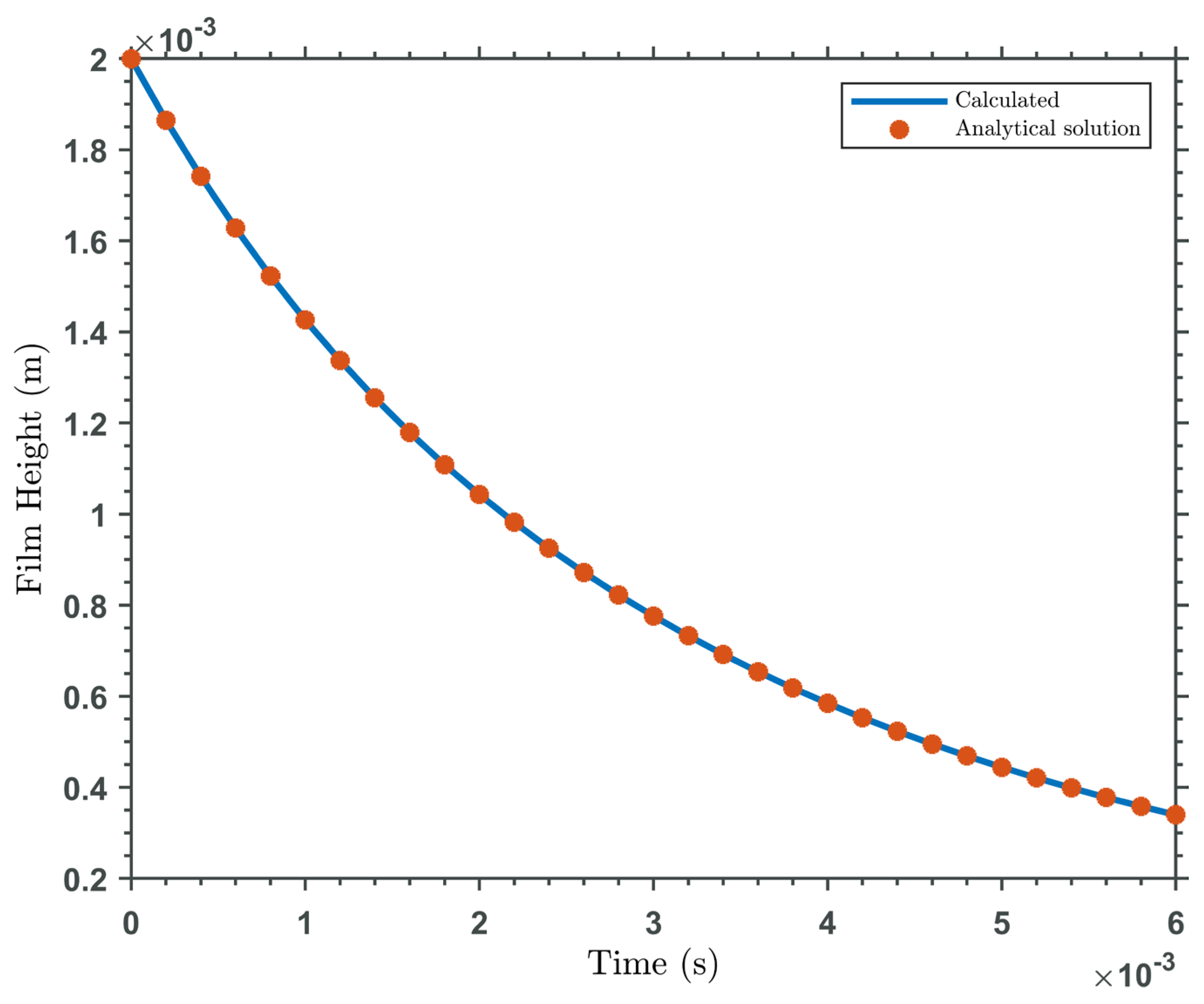
As an extension to the knee case, this paper includes elastic deformation and stresses on the contacting wall. This is when a solid joint interacts with a wall separated by a lubricant film. An external force pushes a solid knee toward a solid knee wall in the model. As the knee approaches, the lubricant layer is squeezed, increasing its pressure. Analytical solutions are compared with calculated maximum lubricant pressure and film height over time. The fluid continuity is:
where the symbol v denotes the velocity of the lubricant with the unit of [m/s]. Equation (1) is for the stationary flow of bio-fluids around the bones in the joint. This equation is valid only for incompressible, time-independent but not valid for the compressible time depended (not-stationary) problem and squeeze film problem which this paper described. Assuming fully flooded conditions, laminar flow, Newtonian rheology, smooth surfaces and isothermal, steady-state regime, the lubricant equation is
where is the density of the fluid with the unit of [kg/m3]. Fluid flow over the panel painting following a thin film equation:
For non-slip boundary conditions at the wall and the base, the Reynolds equation takes the form of Eq. (3) where the symbol denotes the average velocity of the lubricant relative to the top and bottom surfaces with the unit of [m/s] and it calculates from:
where μ is the viscosity, pf (is the dependent variable) is the pressure developed because of the flow, and h is the film thickness,
with two components of the wall
and base
as well the pressure composed of
In three-dimension equilibrium bone solid material is modeled as follows:
where the solid stress tensor S [N/m2], u is displacement variable, is body force (volume force ), and velocity deformations of solid particles u[m/s] are related by tensor symbol Div (not Nabla). Moreover, on the left hand, the derivative du/dt is substantial (not a local derivative). Proper Constitutive equations are:
where is a strain
and C is a constant tensor:
where S is Cauchy stress tensor, ε0 is Initial strain, εth thermal strain, εhs is Hygroscopic strain, εpl is Plastic strain, εcr is Creep strain, εvp is viscoelastic strain, S0 is Initial stress tensor, Sext is External stress tensor, Sq is extra stress due to viscous damping, Sad is deviatoric stress, ε is linear strain-displacement. Εel is elastic strain, represents the total strain minus initial and inelastic strains, such as thermal strains.
The boundary condition of stress transfer across the fluid-solid surface is expressed as:
The external force, F, is counterbalanced by the pressure in the lubricant. This is imposed as a constraint. The behavior of lubricants under pressure is most significant when there are concentrated contacts (a large normal force over a small, usually distorted, area), Barus showed how the lubricant viscosity varies with pressure at a constant temperature. The pressure field of fluid was then used to predict the viscosity change in the fluid according to the Barus equation:
Viscosity is a measure of a fluid’s resistance to deformation and flow. In nanofluids, viscosity not only affects the pumping power required to circulate the fluid but also influences the heat transfer characteristics. An increase in viscosity can lead to a higher pressure drop in flow systems, which may counteract the benefits gained from enhanced thermal conductivity [21,22,23,24,25,26,27].
Several factors influence the viscosity of nanofluids, including:
- Particle Concentration: Higher concentrations of nanoparticles generally lead to increased viscosity due to particle interactions.
- Nanoparticle Size and Shape: The size, shape, and material properties of nanoparticles play a significant role in determining the overall viscosity of the fluid.
- Base Fluid Properties: The viscosity of the base fluid, its temperature, and its molecular structure also impact the viscosity of the resulting nanofluid.
- Temperature: Viscosity is typically temperature-dependent, and the thermal behaviour of both the base fluid and the nanoparticles must be considered.
Several models have been proposed to predict the viscosity of nanofluids. These models can be broadly classified into empirical, semi-empirical, and theoretical approaches. Empirical models are based on experimental data and correlations derived from observations [26]. Some widely used empirical models include:
A model provides a simple correlation for the viscosity of nanofluids based on the volume fraction of nanoparticles and is commonly used for metal and metal oxide nanofluids. Another Model by including the effects of temperature and particle size. Semi-empirical models incorporate both experimental data and theoretical considerations [25]. These models often provide a more comprehensive understanding of the underlying physics. Some Model accounts for the interaction between nanoparticles in the fluid and is based on the idea of an effective volume fraction [20], correlation that considers the effects of particle shape and size distribution on viscosity [21], Theoretical models aim to provide a fundamental understanding of the mechanisms affecting viscosity at a microscopic level such as Dilute Suspension Theory which uses classical suspension theory to predict viscosity based on particle interactions and concentration [24]. As well Brownian Motion Models consider the impact of Brownian motion of nanoparticles on the effective viscosity of the fluid, particularly in low-concentration regimes [22].
Computational Fluid Dynamics (CFD): With advancements in computational power, CFD simulations are increasingly being used to study the flow characteristics of nanofluids and predict their viscosity under various conditions [23]. While numerous models have been developed, their applicability can vary based on factors such as nanoparticle type, concentration, and fluid dynamics. A comparative analysis of these models reveals:
- Accuracy: Some empirical models are accurate for specific types of nanoparticles but may not generalize well to all systems.
- Complexity: Theoretical models often provide a deeper understanding but may require more complex calculations and assumptions.
- Applicability: The choice of model depends on the specific application and the parameters involved, including temperature and particle concentration.
3. Results and Discussions
Validation
In figure 3, Comparison between calculated and analytical values of maximum change in film height is presented.
Figure 2.
Comparison between calculated and analytical values of maximum change in film height.
Synovial fluid is a complex biofluid comprised mainly of hyaluronic acid, lubricin, and various electrolytes. Its viscosity and rheological properties are critical for providing effective lubrication. The viscoelastic nature of synovial fluid allows for the formation of a stable lubricant film, even under varying shear rates and pressures during joint movement. The interplay between viscosity, shear thinning, and elasticity must be considered in the analysis of fluid behavior. Nanofluids are engineered colloidal suspensions featuring nanoparticles between 1-100 nm. When applied to synovial fluid, they can:
Nanoparticles improve the thermal conductivity of the base fluid, facilitating heat dissipation during mechanical loading, thereby preventing thermal degradation. Nanofluids often exhibit non-Newtonian behavior, which can adapt to varying pressure and shear conditions encountered in synovial joints, enhancing lubrication under dynamic conditions.
The presence of nanoparticles can reinforce the lubricant film, increasing the load-bearing capacity of the fluid and enhancing its protective properties against wear. The squeeze-film interaction in synovial joints is influenced by dynamic loading, surface roughness, and the characteristics of the lubricating film. Key points include:
As the joint surfaces approach one another during compression, the fluid in the contact area is squeezed out, generating high localized pressures. These pressures can lead to a rapid increase in the film thickness, impacting the frictional response.
Nanofluids’ rheological properties can significantly alter the pressure profile during the squeeze phase, creating a more stable and thicker lubricant film, which enhances wear protection and reduces friction.
The application of nanofluid lubrication in synovial joints presents several advantages:
Improved lubrication can reduce the wear of cartilage and other joint structures, potentially delaying the onset of degenerative joint diseases such as osteoarthritis.
As shown, Figure 3 presents (a) Pressure distribution in the lubricant. (b) von Mises stress plot on the boundaries of the elastic solid. Nanofluids, which are fluids containing nanometer-sized particles, have shown potential in various biomedical applications, including reducing wear in mechanical systems and potentially in biological tissues like cartilage. Here’s how nanofluids might contribute to reducing cartilage wear:
1. Enhanced Lubrication: Nanofluids can improve the lubrication properties of synovial fluid, the natural lubricant in joints. The nanoparticles in the fluid can fill in the microscopic imperfections on the cartilage surface, creating a smoother interface and reducing friction during joint movement.
2. Improved Load Distribution: The nanoparticles can help distribute the load more evenly across the cartilage surface. This reduces the stress on any single point, thereby minimizing wear and tear.
3. Thermal Properties: Nanofluids often have better thermal conductivity compared to base fluids. In the context of cartilage, this could help in dissipating heat generated due to friction, thereby reducing thermal degradation of the cartilage tissue.
4. Biocompatibility and Drug Delivery: Some nanoparticles are biocompatible and can be engineered to release drugs or therapeutic agents that promote cartilage repair and reduce inflammation. This dual function of lubrication and therapeutic delivery can be highly beneficial in managing cartilage wear.
5. Reduction of Oxidative Stress: Certain nanoparticles have antioxidant properties that can mitigate oxidative stress in the joint environment. Oxidative stress is known to contribute to cartilage degradation, so reducing it can help preserve cartilage integrity.
6. Enhanced Viscoelastic Properties: The addition of nanoparticles can alter the viscoelastic properties of the synovial fluid, making it more effective at absorbing shocks and impacts, which in turn protects the cartilage from mechanical wear.
While the potential benefits are promising, the use of nanofluids in biomedical applications, including cartilage wear reduction, is still an area of active research. Key considerations include:
- Biocompatibility: Ensuring that the nanoparticles are non-toxic and do not elicit an adverse immune response.
- Long-term Effects: Understanding the long-term impact of nanoparticles on joint health and overall physiology.
- Optimization: Determining the optimal size, concentration, and type of nanoparticles for effective cartilage protection without negative side effects.
In summary, nanofluids hold promise for reducing cartilage wear through enhanced lubrication, improved load distribution, thermal management, and potential therapeutic benefits. However, further research and clinical trials are necessary to fully realize their potential and ensure safety in medical applications.
Figure 4 shows the Lubrication cases to describe the knee joint tribology (a) film heigh (b) maximum pressure. The increased viscosity and improved flow characteristics of nanofluids may promote better nutrient transport to cartilage and other avascular tissues, supporting health and repair processes.
Nanofluids can be engineered to include anti-inflammatory or regenerative compounds, offering a therapeutic approach to joint disorders.
Nanofluids can potentially enhance nutrient transport to cartilage through several mechanisms, leveraging the unique properties of nanoparticles suspended in a base fluid. Cartilage is an avascular tissue, meaning it lacks blood vessels, and relies on diffusion from the surrounding synovial fluid for nutrient supply and waste removal. Here’s how nanofluids might improve this process:
1. Enhanced Diffusion and Permeability
- Nanoparticle Size and Surface Area: The small size and high surface area of nanoparticles can increase the effective diffusion of nutrients through the synovial fluid and into the cartilage matrix. Nanoparticles can act as carriers, facilitating the transport of nutrients like glucose, amino acids, and growth factors.
- Improved Permeability: Nanoparticles can interact with the extracellular matrix of cartilage, potentially altering its permeability and allowing for more efficient nutrient uptake.
2. Targeted Delivery
- Functionalized Nanoparticles: Nanoparticles can be engineered to target specific areas within the cartilage tissue. By functionalizing the surface of nanoparticles with specific ligands or antibodies, they can be directed to bind to cartilage cells (chondrocytes) or extracellular matrix components, ensuring localized delivery of nutrients.
- Controlled Release: Nanoparticles can be designed to release nutrients in a controlled manner, providing a sustained supply that matches the metabolic needs of chondrocytes.
3. Improved Synovial Fluid Properties
- Viscoelastic Modifications: The addition of nanoparticles can alter the viscoelastic properties of synovial fluid, potentially enhancing its ability to transport nutrients. A more efficient fluid can better distribute nutrients throughout the joint space.
- Reduced Aggregation: Nanoparticles can prevent the aggregation of macromolecules in the synovial fluid, maintaining a more homogeneous solution that facilitates nutrient diffusion.
4. Enhanced Mechanical Stimulation
- Joint Movement: The presence of nanoparticles in the synovial fluid can improve lubrication, reducing friction and wear during joint movement. Enhanced movement can promote the circulation of synovial fluid, thereby improving nutrient transport to the cartilage.
- Microenvironment Modulation: Nanoparticles can interact with the cartilage matrix, potentially creating microcurrents or altering the mechanical environment in a way that promotes nutrient influx.
5. Anti-inflammatory Effects
- Reduced Inflammation: Some nanoparticles have anti-inflammatory properties that can reduce synovial inflammation. Lower inflammation levels can improve the overall health of the joint environment, facilitating better nutrient transport and uptake by cartilage cells.
6. Thermal Effects
- Thermal Conductivity: Nanofluids often have higher thermal conductivity, which can help maintain an optimal temperature in the joint. Proper thermal regulation can enhance metabolic activity and nutrient transport processes.
While the potential benefits are promising, several factors need to be considered:
- Biocompatibility: Ensuring that nanoparticles are non-toxic and do not elicit adverse immune responses.
- Optimization: Determining the optimal size, concentration, and type of nanoparticles for effective nutrient transport without negative side effects.
- Long-term Effects: Understanding the long-term impact of nanoparticles on joint health and overall physiology.
In summary, nanofluids can promote nutrient transport to cartilage through enhanced diffusion, targeted delivery, improved synovial fluid properties, mechanical stimulation, anti-inflammatory effects, and thermal regulation. However, further research and clinical trials are necessary to fully realize their potential and ensure safety in medical applications.
The results in Figure 5 indicate that the incorporation of nanoparticles into the synovial fluid significantly enhances the lubrication performance. The nanofluid exhibits higher effective viscosity, which improves the load-bearing capacity and reduces the squeeze-film thinning rate. This leads to a more stable lubrication film, even under high loads. The load-bearing capacity of the synovial joint is increased with nanofluid lubrication. The enhanced viscosity and elastic deformation of the cartilage contribute to a more uniform pressure distribution, reducing the risk of localized stress concentrations that could lead to cartilage damage. Nanofluid lubrication also improves the wear resistance of the articular surfaces. The nanoparticles act as a protective layer, reducing direct contact between the cartilage surfaces and minimizing wear. This is particularly beneficial in preventing the progression of osteoarthritis.
The figure 5 a demonstrates the ch”nge ’n film height (m) over time (s) for different materials, including Cu (copper), Al₂O₃ (alumina), TiO₂ (titania), CNT (carbon nanotubes), and FG-CNT (functionalized graphene-carbon nanotube composites). Notably, CNT and FG-CNT exhibit superior performance compared to Cu, Al₂O₃, and TiO₂, as evidenced by their more stable and controlled changes in film height over time. This superiority arises from the unique structural and mechanical properties of carbon nanotubes, including their high aspect ratio, exceptional tensile strength, and flexibility, which enable them to maintain film integrity under stress. Additionally, the functionalization of CNTs with graphene (FG-CNT) further enhances their performance by improving interfacial adhesion and load distribution, preventing abrupt changes in film height. These characteristics make CNT-based materials ideal for applications requiring precise film thickness control, such as in coatings, sensors, and nanoelectromechanical systems (NEMS), where traditional materials like Cu or ceramics (Al₂O₃, TiO₂) may fail due to deformation or brittleness. The data underscores the advantages of CNTs in achieving both stability and performance in thin-film applications.
The figure 5 b Illustrates the max”mum ’Ilm pressure (Pa) as a function of time (s) for various materials, including Al₂O₃, TiO₂, CNT (carbon nanotubes), and FG-CNT (functionalized graphene-carbon nanotube composites). Notably, CNT and FG-CNT demonstrate superior performance compared to Al₂O₃ and TiO₂, particularly in maintaining higher film pressure over time. This superiority can be attributed to the exceptional mechanical strength, high surface area, and enhanced interfacial interactions of carbon-based nanomaterials. FG-CNT, in particular, exhibits the highest film pressure, likely due to the synergistic effects of graphene’s structural integrity and CNTs’ reinforcing properties, which improve load distribution and stress resistance. These results highlight the potential of CNT-based materials, especially FG-CNT, for applications requiring robust and durable thin-film performance, such as protective coatings, lubrication systems, or advanced composites in high-stress environments. The data underscores the advantages of carbon nanomaterials over traditional ceramic materials (Al₂O₃, TiO₂) in terms of both stability and functional efficiency.
4. Conclusions
The exploration of elastohydrodynamic squeeze-film interactions in synovial joints, particularly in conjunction with nanofluid lubrication, offers a promising avenue for advancing joint health and function. The unique properties of nanofluids can enhance the lubrication performance in terms of friction reduction, wear protection, and even regenerative capabilities. Further research is warranted to fully understand the implications of these advanced lubricants in both clinical and biomechanical applications. Despite their potential, CNMs face limitations: Aggregation (Reduced active sites in aqueous media, Toxicity concerns 9 Long-term environmental impact of CNTs), and Scalability (High-cost synthesis of defect-free graphene).
The viscosity of nanofluids is a critical factor influencing their performance in thermal applications. A wide range of models exists to predict viscosity, each with its advantages and limitations
Nanofluids represent a promising frontier in the treatment of synovial joint disorders. By enhancing lubrication, delivering therapeutic agents, and promoting tissue regeneration, nanofluids have the potential to revolutionize the management of conditions like osteoarthritis and rheumatoid arthritis. However, significant research is needed to address challenges related to biocompatibility, safety, and clinical translation. With continued advancements in nanotechnology and biomaterials, nanofluids may soon become a cornerstone of joint therapy, offering hope to millions of patients worldwide.
This study demonstrates the potential of nanofluid lubrication in enhancing the elastohydrodynamic squeeze-film interaction in synovial joints. The incorporation of nanoparticles into the synovial fluid improves the lubrication performance, load-bearing capacity, and wear resistance, suggesting a promising approach for the treatment and prevention of joint disorders. Future research should focus on the biocompatibility of nanoparticles and their long-term effects on joint health.
Carbon nanomaterials represent a transformative approach to pollutant detection and remediation, offering unparalleled efficiency, sensitivity, and versatility. Continued research into functionalization, scalable production, and eco-friendly applications will solidify their role in sustainable environmental management. Future Directions are Green synthesis of CNMs using biomass, Machine learning for optimizing adsorption kinetics, and Hybrid composites (e.g., CNT-MOFs) for enhanced selectivity
Data Availability Statement
The data that support the findings of this study are available from the corresponding author upon reasonable request.
References
- Buongiorno, J. (2005). Convective transport in nanofluids. Journal of Heat Transfer, 128(3), 240–250. [CrossRef]
- Prasher, R. , Song, D., Wang, J., & Phelan, P. (2006a). Measurements of nanofluid viscosity and its implications for thermal applications. Applied Physics Letters, 89(13). [CrossRef]
- Prasher, R. , Song, D., Wang, J., & Phelan, P. (2006b). Measurements of nanofluid viscosity and its implications for thermal applications. Applied Physics Letters, 89(13). [CrossRef]
- Murshed, S., Leong, K., & Yang, C. (2007). Investigations of thermal conductivity and viscosity of nanofluids. International Journal of Thermal Sciences, 47(5), 560–568. [CrossRef]
- Chen, H., Ding, Y., & Tan, C. (2007). Rheological behaviour of nanofluids. New Journal of Physics, 9(10), 367. [CrossRef]
- Xian-Ju, W. , & Xin-Fang, L. (2009). Influence of pH on nanofluids’ viscosity and thermal conductivity. Chinese Physics Letters, 26(5), 056601. [CrossRef]
- Zhao-Zhi, Z. (2011). Experimental study on nano-fluids viscosity in low-temperature phase transition storage. Chemical Engineering & Machinery. https://en.cnki.com.cn/Article_en/CJFDTOTAL-HGJX201104008.
- Bhadauria, B. S., & Agarwal, S. (2011). Convective Transport in a Nanofluid Saturated Porous Layer With Thermal Non Equilibrium Model. Transport in Porous Media, 88(1), 107–131. [CrossRef]
- Kaviani, F. , & Mirdamadi, H. R. (2012). Influence of Knudsen number on fluid viscosity for analysis of divergence in fluid conveying nano-tubes. Computational Materials Science, 61, 270–277. [CrossRef]
- Patel, R. (2012). Effect of temperature on rotational viscosity in magnetic nano fluids. The European Physical Journal E, 35(10). [CrossRef]
- Yiamsawas, T. , Dalkilic, A. S., Mahian, O., & Wongwises, S. (2013). Measurement and Correlation of the Viscosity of Water-Based Al2O3and TiO2Nanofluids in High Temperatures and Comparisons with Literature Reports. Journal of Dispersion Science and Technology, 34(12), 1697–1703. [CrossRef]
- Tripathi, D. , & Bég, O. A. (2013). A study on peristaltic flow of nanofluids: Application in drug delivery systems. International Journal of Heat and Mass Transfer, 70, 61–70. [CrossRef]
- Akbar, N. S., Raza, M., & Ellahi, R. (2015). Influence of induced magnetic field and heat flux with the suspension of carbon nanotubes for the peristaltic flow in a permeable channel. Journal of Magnetism and Magnetic Materials, 381, 405–415. [CrossRef]
- Kasaeian, A. , & Nasiri, S. (2015). Convection Heat Transfer Modeling of Nano- fluid Tio2 Using Different Viscosity Theories. International Journal of Nanoscience and Nanotechnology, 11(1), 45–51. http://www.ijnnonline.net/article_12362_b0ba7d8eaabdb63dfe71272d721b9bc1.
- Ibrahim, W. , & Makinde, O. D. (2015). Magnetohydrodynamic Stagnation Point Flow and Heat Transfer of Casson Nanofluid Past a Stretching Sheet with Slip and Convective Boundary Condition. Journal of Aerospace Engineering, 29(2). [CrossRef]
- Afrand, M. , Toghraie, D., & Ruhani, B. (2016). Effects of temperature and nanoparticles concentration on rheological behavior of Fe 3 O 4 –Ag/EG hybrid nanofluid: An experimental study. Experimental Thermal and Fluid Science, 77, 38–44. [CrossRef]
- Sekhar, T. , Nandan, G., Prakash, R., & Muthuraman, M. (2018). Investigations on Viscosity and Thermal Conductivity of Cobalt oxide- water Nano fluid. Materials Today Proceedings, 5(2), 6176–6182. [CrossRef]
- Hamza, M. F. , Soleimani, H., Merican, Z. M. A., Sinnathambi, C. M., Stephen, K. D., & Ahmad, A. A. (2019). Nano-fluid viscosity screening and study of in situ foam pressure buildup at high-temperature high-pressure conditions. Journal of Petroleum Exploration and Production Technology, 10(3), 1115–1126. [CrossRef]
- Voß, J. , & Wittkowski, R. (2022). Acoustic propulsion of nano- and microcones: dependence on the viscosity of the surrounding fluid. Langmuir, 38(35), 10736–10748. [CrossRef]
- 20 - Farooq, U. , Hussain, M., & Farooq, U. (2023). Non-similar analysis of chemically reactive bioconvective Casson nanofluid flow over an inclined stretching surface. ZAMM - Journal of Applied Mathematics and Mechanics / Zeitschrift Für Angewandte Mathematik Und Mechanik, 104(2). [CrossRef]
- McCutchen, C. W. (1950). The Theory of Lubrication. The Journal of Applied Mechanics.
- Bhushan, B. , and Gupta, B. K. (1991). Introduction to Tribology. Wiley.
- Dowson, D. (1967). Elastohydrodynamic Lubrication: The Fundamentals of Roller and Gear Lubrication. Pergamon Press.
- Hamrock, B. J. , & Dowson, D. (1981). Ball Bearing Lubrication: The Elastohydrodynamics of Elliptical Contacts. Wiley.
- Wang, X. , & Xu, X. (2002). Thermal Conductivity of Nanoparticle-Fluid Mixture. Journal of Thermophysics and Heat Transfer, 16(4), 474-480.
- Zhang, Y., & Craster, R. V. (2005). Theoretical Studies of Elastohydrodynamic Lubrication in Synovial Joints. Journal of Biomechanics 2005, 38, 1015–1023.
- Murshed, S. M. S. , & de Castro, C. A. N. (2012). Nanofluids: Synthesis, Properties, and Applications. Nova Science Publishers.
Figure 1.
Schematic of the problem (a) 3D view (b) Flowchart Description: Squeeze-Film Interaction in Synovial Joints.
Figure 1.
Schematic of the problem (a) 3D view (b) Flowchart Description: Squeeze-Film Interaction in Synovial Joints.
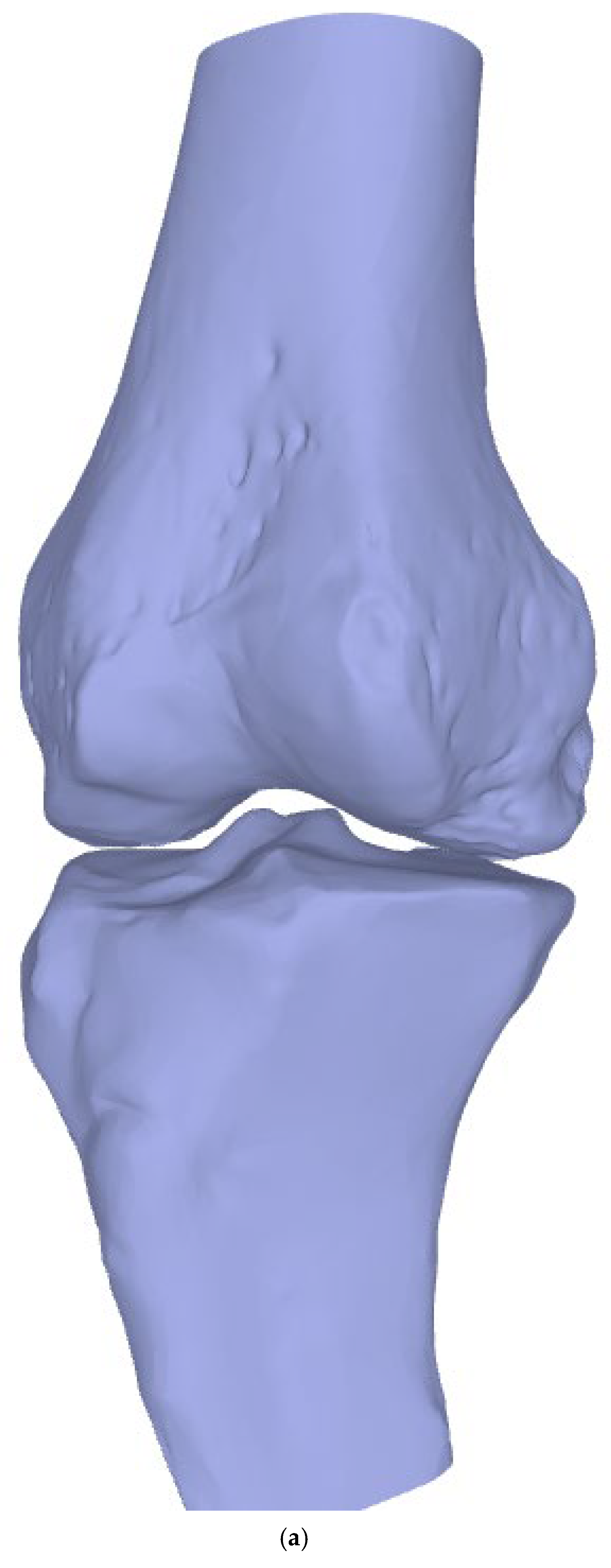

Figure 3.
(a) Pressure distribution in the lubricant. (b) von Mises stress plot on the boundaries of the elastic solid.
Figure 3.
(a) Pressure distribution in the lubricant. (b) von Mises stress plot on the boundaries of the elastic solid.
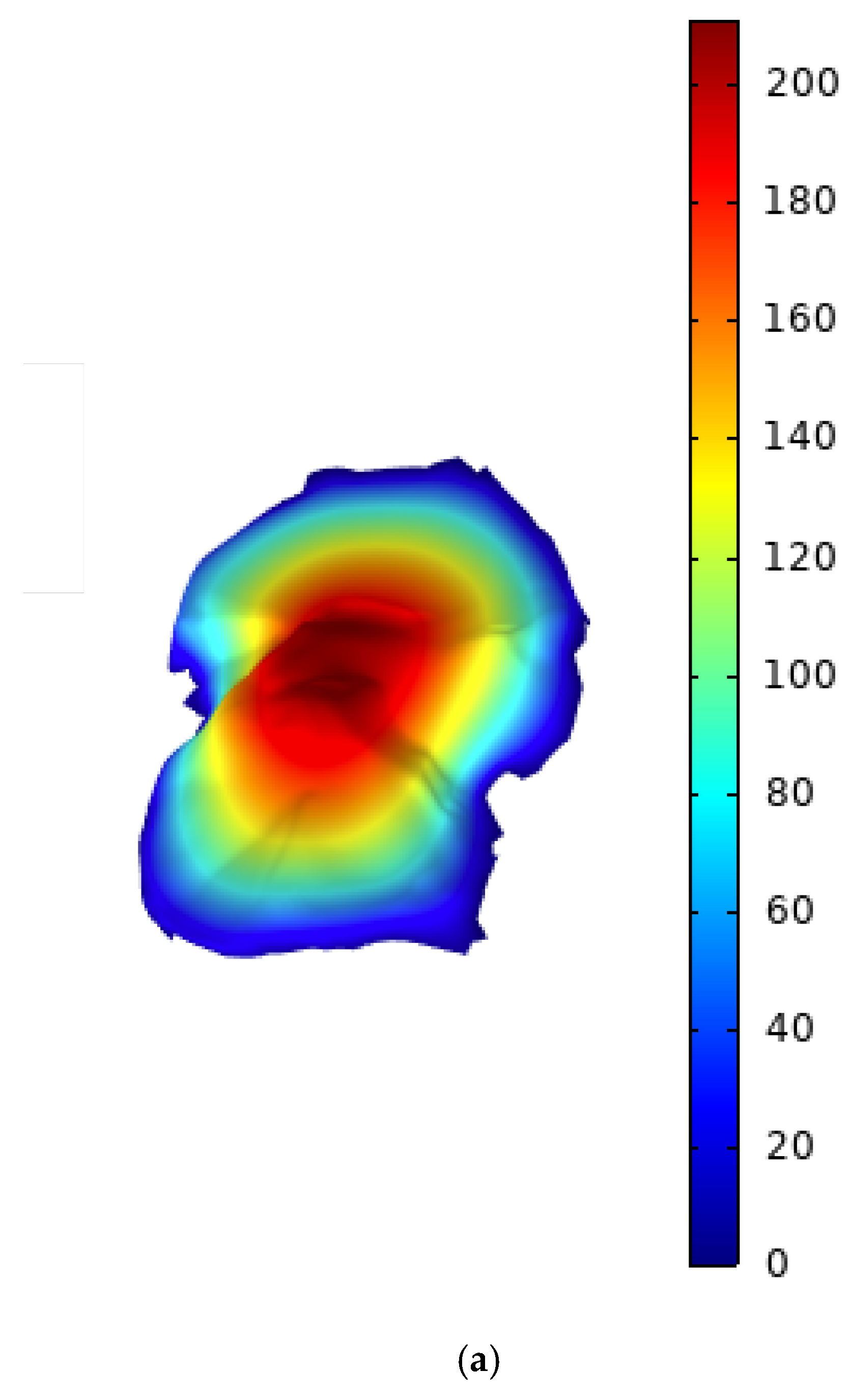
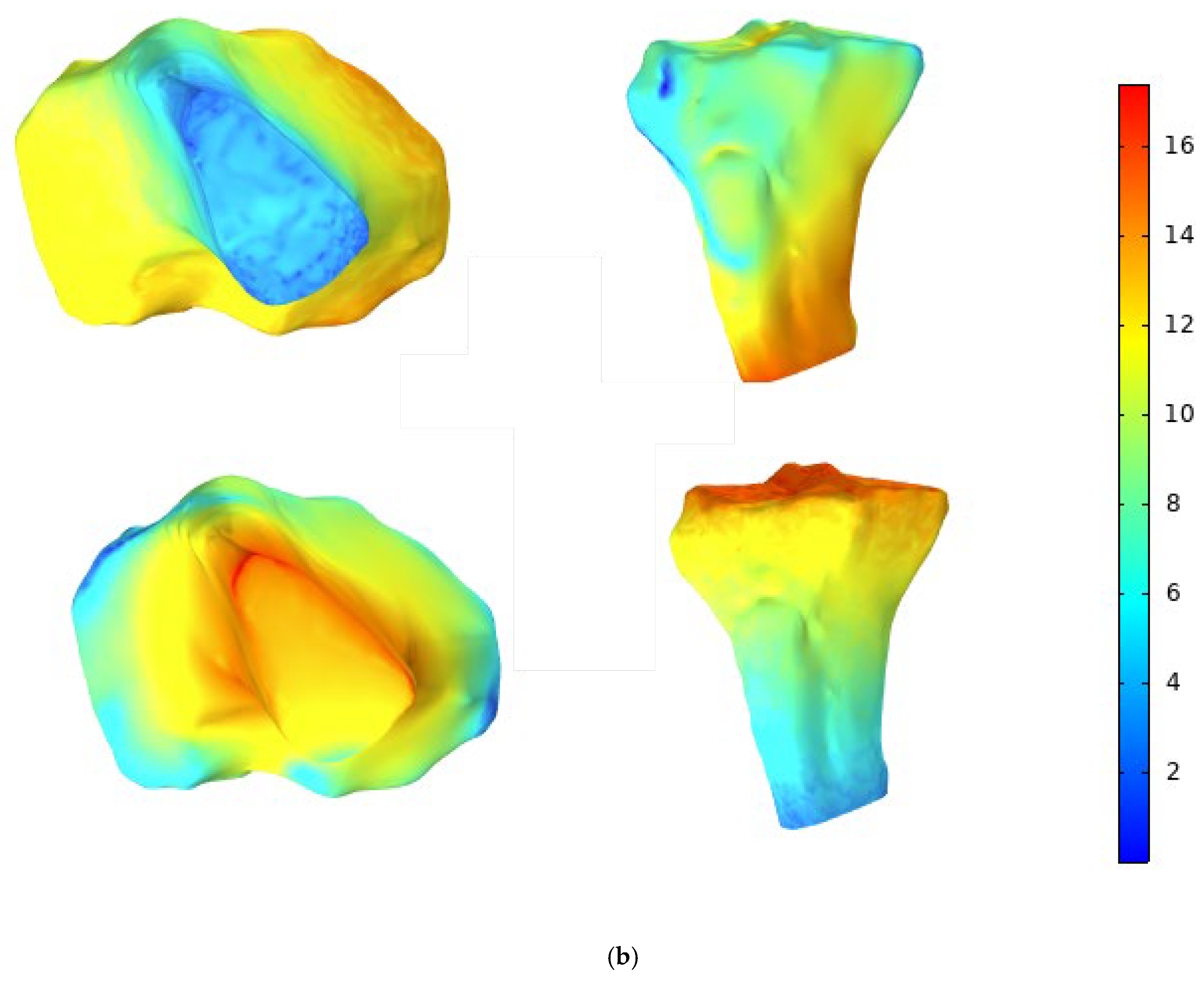
Figure 4.
Lubrication cases to describe the knee joint tribology (a) film heigh (b) maximum pressure.
Figure 4.
Lubrication cases to describe the knee joint tribology (a) film heigh (b) maximum pressure.
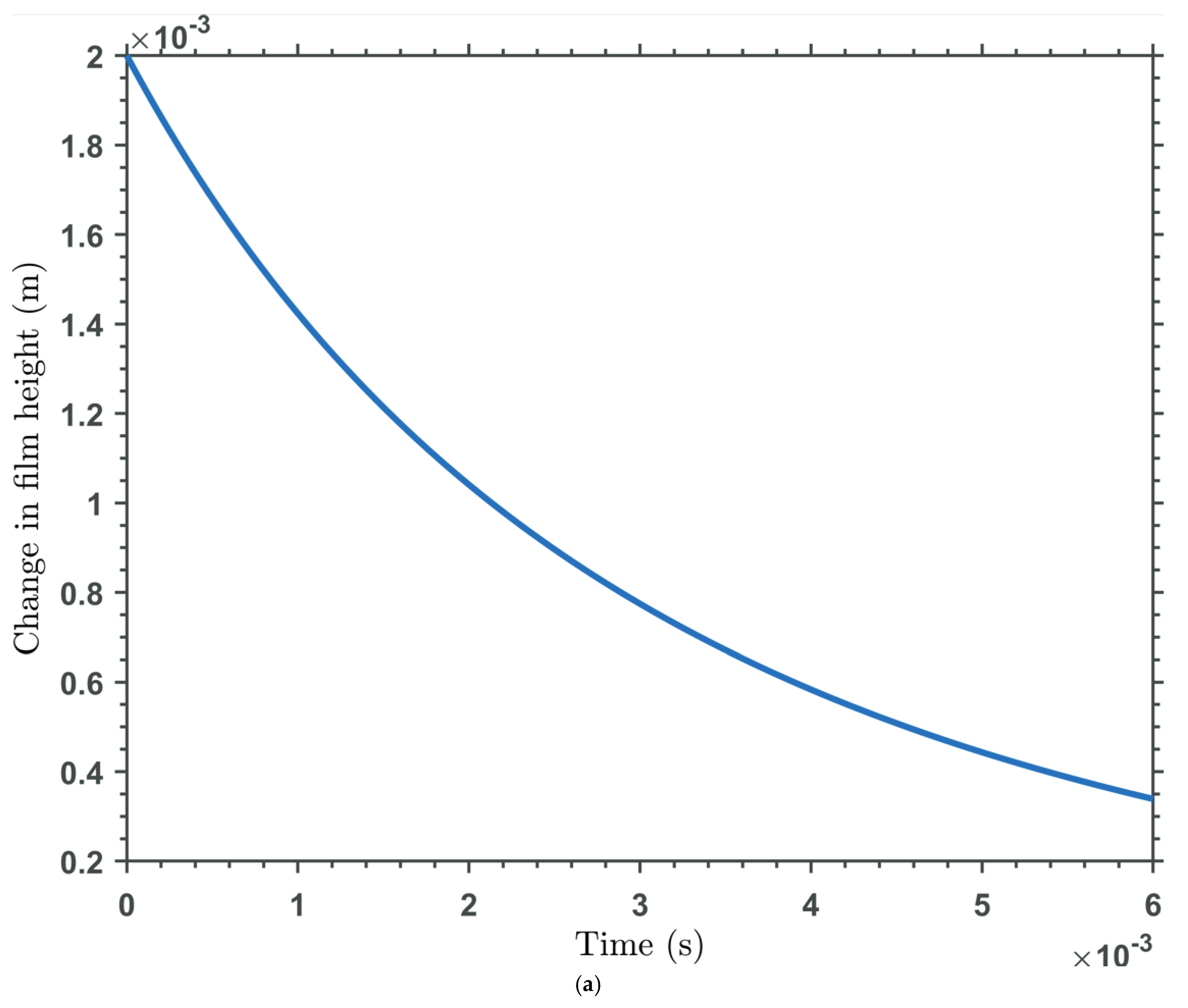
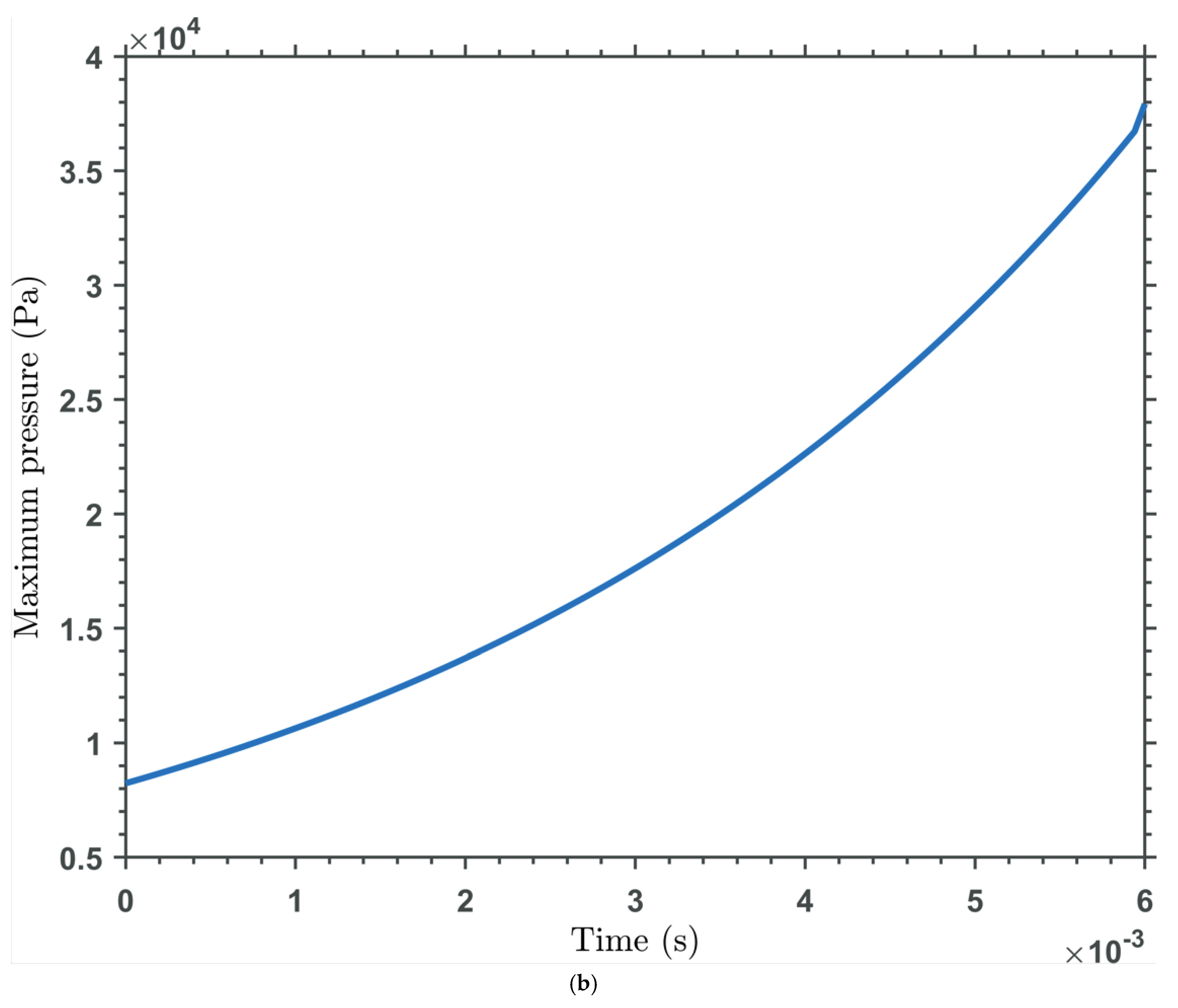
Figure 5.
Comparison between various nanofluid material (a) change in film height (b) maximum pressure.
Figure 5.
Comparison between various nanofluid material (a) change in film height (b) maximum pressure.
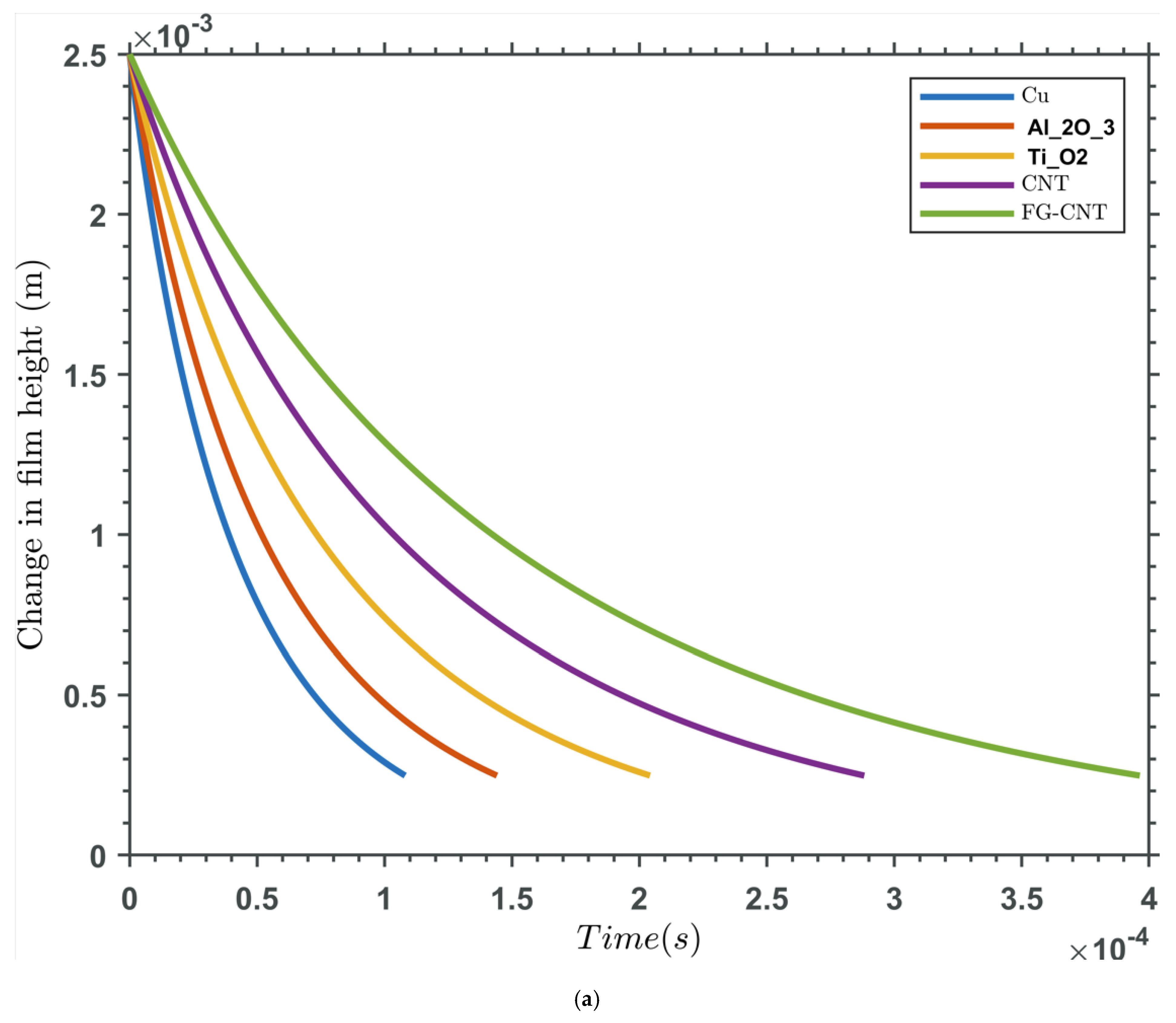
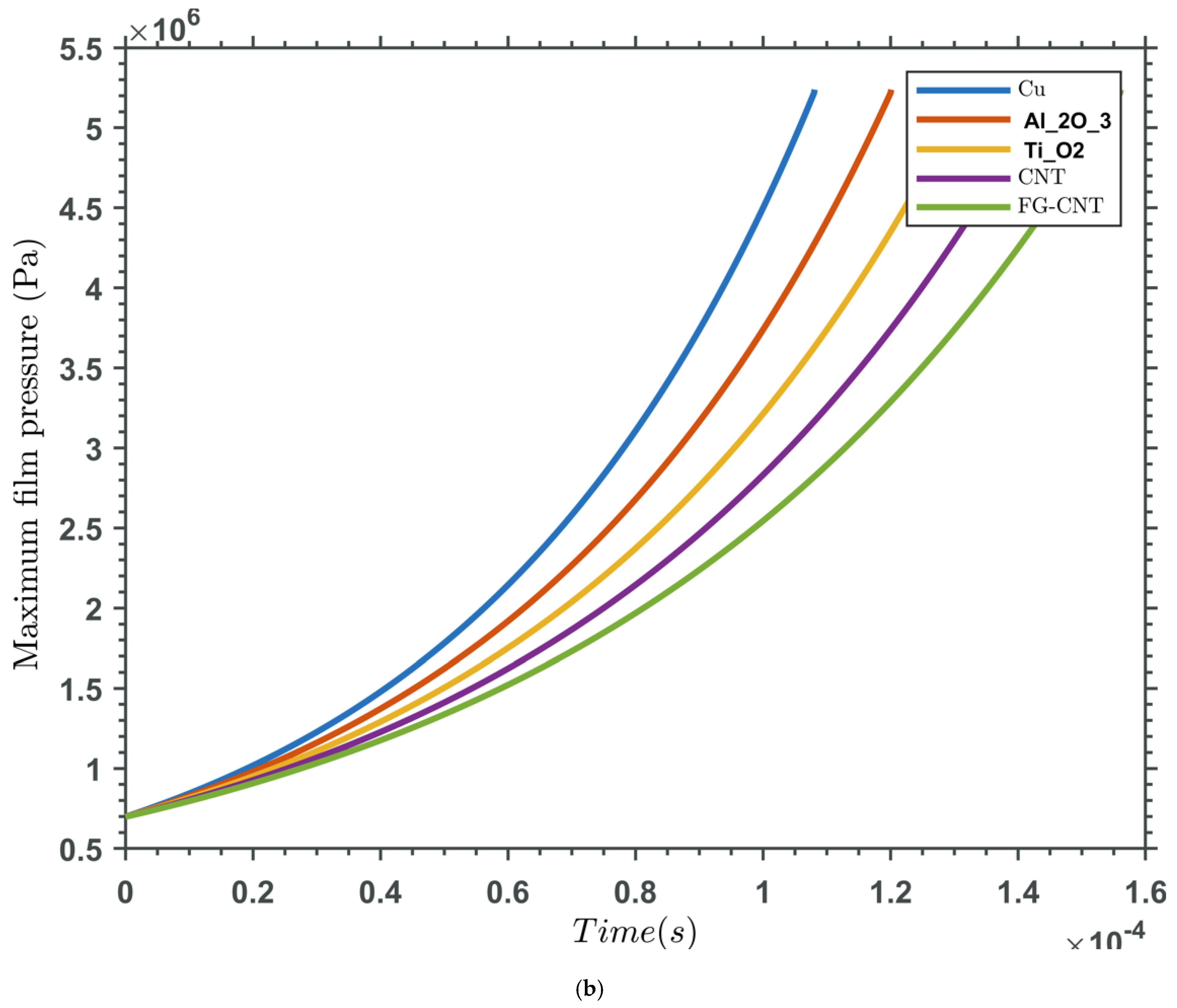

Table 1.
Common nanofluids, their base fluids, nanoparticle types, and corresponding viscosities.
| Base Fluid | Nanoparticle Type | Nanoparticle Concentration | Viscosity (mPas) | Temperature (oC) | Reference/Notes |
|---|---|---|---|---|---|
| Water | Al₂O₃ (Alumina) | 1% vol. | 0.96 | 25 | Enhanced viscosity due to nanoparticle addition. |
| Water | TiO₂ (Titanium Dioxide) | 2% vol. | 1.1 | 30 | Viscosity increases with higher concentration. |
| Ethylene Glycol | CuO (Copper Oxide) | 0.5% vol. | 16.5 | 40 | Significant viscosity enhancement in glycol-based fluids. |
| Engine Oil | SiO₂ (Silica) | 0.1% vol. | 120 | 50 | Improved lubrication properties for industrial applications. |
| Water | Graphene Oxide | 0.2% wt. | 1.05 | 25 | Excellent lubrication for biomedical applications. |
| Hyaluronic Acid | Au (Gold) | 0.01% wt. | 12 | 37 | Biocompatible nanofluid for synovial joint applications. |
| Polyethylene Glycol | Fe₃O₄ (Iron Oxide) | 0.5% vol. | 8.2 | 37 | Magnetic nanofluid for targeted drug delivery. |
| Water | ZnO (Zinc Oxide) | 1% vol. | 1.02 | 25 | Antibacterial properties with moderate viscosity increase. |
| Silicone Oil | CNT (Carbon Nanotubes) | 0.3% wt. | 450 | 30 | High viscosity for specialized lubrication. |
| Water | CeO₂ (Cerium Oxide) | 0.1% wt. | 0.98 | 25 | Antioxidant properties for tissue regeneration. |
Table 2.
Key aspects of squeeze-film interaction in synovial joints.
| Aspect | Description |
|---|---|
| Definition | The generation of fluid pressure in synovial fluid between joint surfaces under compressive loading, leading to lubrication and load support. |
| Mechanism | As joint surfaces move closer together, synovial fluid is squeezed out, creating a pressure gradient that resists the compression and lubricates the joint. |
| Fluid Involved | Synovial fluid, a viscous, non-Newtonian fluid with properties like shear-thinning and elasticity. |
| Key Parameters | - Fluid viscosity |
| - Gap height between surfaces | |
| - Loading rate | |
| - Surface geometry | |
| Role in Joint Lubrication | Provides hydrodynamic lubrication, reducing friction and wear between cartilage surfaces. |
| Time Dependency | Squeeze-film effects are time-dependent, with pressure decaying as fluid is expelled over time. |
| Applications | - Understanding joint mechanics |
| - Designing prosthetics | |
| - Diagnosing joint disorders | |
| Mathematical Modeling | overned by Reynolds equation for thin-film lubrication, incorporating fluid viscosity and surface motion. |
| Challenges | - Complex fluid behavior (non-Newtonian) |
| - Dynamic loading conditions | |
| - Surface roughness and deformation | |
| Biological Significance | Protects cartilage from damage, distributes loads evenly, and ensures smooth joint motion. |
Table 3.
Synovial Fluid properties.
| Parameter | Nominal Value | Description |
|---|---|---|
| Synovial Fluid Viscosity | 0.01 – 5 Pa·s (shear-dependent) | Viscosity of synovial fluid, which is non-Newtonian and shear-thinning. |
| Cartilage Thickness | 1 – 6 mm | Thickness of articular cartilage covering the bone surfaces in the joint. |
| Joint Gap Height | 0.01 – 0.1 mm (under load) | Distance between articulating surfaces during joint movement or loading. |
| Load on Joint | 1 – 10 times body weight (e.g., 700 – 7000 N) | Compressive forces experienced by joints during activities like walking or running. |
| Synovial Fluid Film Thickness | 1 – 100 µm | Thickness of the fluid film between cartilage surfaces during lubrication. |
| Pressure in Synovial Fluid | 0.1 – 10 Mpa | Fluid pressure generated during joint loading and movement. |
| Cartilage Elastic Modulus | 0.5 – 20 Mpa | Stiffness of articular cartilage, which deforms under load. |
| Poisson’s Ratio of Cartilage | 0.4 – 0.5 | Measure of cartilage’s compressibility. |
| Shear Rate in Synovial Fluid | 10 – 10,000 s⁻¹ | Rate of deformation of synovial fluid during joint motion. |
| Joint Surface Roughness | 0.1 – 10 µm | Roughness of cartilage surfaces, affecting lubrication and friction. |
| Synovial Fluid pH | 7.2 – 7.4 | Slightly alkaline pH of synovial fluid. |
| Temperature in Joint | 32 – 34°C | Temperature within the joint cavity, slightly lower than core body temperature. |
| Hydraulic Permeability of Cartilage | 10⁻¹⁵ - 10⁻¹³ m² | Ability of cartilage to allow fluid flow through its porous structure. |
| Lubricin Concentration | 0.1 – 1 mg/mL | Concentration of lubricin, a key boundary lubricant in synovial fluid. |
| Hyaluronic Acid Concentration | 2 – 4 mg/mL | Concentration of hyaluronic acid, which contributes to synovial fluid viscosity. |
Table 4.
Applications in Pollutant Removal.
| CNM | Target Pollutant | Adsorption Capacity | Mechanism |
|---|---|---|---|
| Graphene Oxide | Pb²⁺, Cd²⁺ | 500–1200 mg g⁻¹ | Chelation, ion exchange |
| MWCNTs | Bisphenol A, Dyes | 200–800 mg g⁻¹ | π-π stacking, H-bonding |
| CQDs | Hg²⁺, Cr(VI) | Fluorescence quenching | Surface complexation |
| Nanodiamonds | Pharmaceuticals | 150–400 mg g⁻¹ | Hydrophobic interactions |
Disclaimer/Publisher’s Note: The statements, opinions and data contained in all publications are solely those of the individual author(s) and contributor(s) and not of MDPI and/or the editor(s). MDPI and/or the editor(s) disclaim responsibility for any injury to people or property resulting from any ideas, methods, instructions or products referred to in the content. |
© 2025 by the authors. Licensee MDPI, Basel, Switzerland. This article is an open access article distributed under the terms and conditions of the Creative Commons Attribution (CC BY) license (http://creativecommons.org/licenses/by/4.0/).
Copyright: This open access article is published under a Creative Commons CC BY 4.0 license, which permit the free download, distribution, and reuse, provided that the author and preprint are cited in any reuse.


