

Submitted:
19 May 2025
Posted:
20 May 2025
You are already at the latest version
Abstract
DFT calculations at B3LYP/aug-cc-pVDZ level of theory on some aromatic substrates showed that in the HOMO of nitrobenzene the atomic coefficients are not in agreement with the meta directing behavior of this compound. The atomic coefficients are the same in ortho and in meta position. The HOMO (or NHOMO in the case of benzaldehyde) is not in agreement with the experimental results when deactivating, meta orienting compounds are considered. Mulliken charges sometimes are not able to explain the observed reactivity. Hirshfeld charges allow to predict the orientation of the attack of an electrophile on the aromatic ring with the exception of nitrobenzene. Both HOMO atomic coefficients and charges are in agreement with the experimental results when deactivating, ortho-para orienting and activating compounds are tested.
Keywords:
Aromatic compounds
; electrophilic substitution
; frontier orbitals control
; Mulliken charges
; Hirshfeld charges
1. Introduction
Electrophilic aromatic substitution has been the object of an extensive work in the history of organic chemistry [1]. Koerner (Figure 1), a student of Cannizzaro in Palermo, studied in detail the electrophilic aromatic substitution reaction. Already in a first article published in 1869 [2], Koerner identified the equivalence of the carbon atoms present in the benzene ring.
This work will find its maximum expression a few years later in a monumental article published by Koerner in the Gazzetta Chimica Italiana [3]. In this article Koerner prepares hundreds of aromatic compounds derived from benzene at different degrees of substitution. Beyond the preparative aspect, in itself relevant, Koerner at the end of the article tries to draw some conclusions. Let us re-trace them using his words: «1. If chlorine, bromine, iodine or nitric acid act on chloro-, bromo-, or iodobenzene, on aniline, phenol or toluene, in such a way as to replace a single hydrogen atom in the aforementioned bodies, thus generating a bisubstituted derivative, a derivative belonging to the 1,4 series is always formed as the main derivative and at the same time a derivative of the 1,2 series originates as a secondary product. 2. Where the group already existing in the petrol is of an acid na-ture, being constituted by the residues COOH; NO2; SO3H, the action of the same agents […] results as the main derivative a body belonging to the 1,3 series […].» [3]. Koerner therefore identifies the correct orienting effect of the substituents. He does not limit himself to this. He tries to explain the reasons for this reactivity. To do this, Koerner uses a model of the non-planar benzene molecule, a structure he had already proposed in his 1869 article (Figure 2) [2,3]. In this structure, carbon atom 1 is directly bonded to carbons 2, 4 and 6. When carbon 1 is substituted, the substituent will influence the reactivity of the ortho and para carbons. The reason for the meta orientation is less clear.
It is obvious to note that the structure proposed by Koerner did not have a great future, also because we know that it is not realistic.
What remains of this great work over the following years? We have only been able to consult some teaching texts dating back to around the 1920s. The first is Parravano's lectures on General Chemistry There is a section in these lectures dedicated to organic chemistry. The orienting effect of substituents in the electrophilic aromatic substitution reaction is described, but no interpretative hypothesis is ventured. Another text that I was able to consult, Holleman's treatise on organic chemistry, translated into Italian by Plancher based on a text from the beginning of the twentieth century, with a preface by Ciamician (from 1905), is from 1927 [4]. Also in this case, the orienting effects of substituents in the electrophilic aromatic substitution reaction are described. However, also in this case, no interpretative hypothesis of the reactivity of aromatic compounds is reported.
In those same years, things seem to change radically. Around the 1920s, Lapworth and Robinson formulated a first theory used to justify the progress of chemical reactions: the theory of alternating polarity [5,6,7]. This theory marks the birth of studies on reaction mechanisms. What are the bases of this theory? The most electronegative atom induces a polarization of the bond that propagates to ad-jacent atoms (Figure 3).
This type of approach has also been used in the case of electrophilic aromatic substitution reactions, as described in a book of organic chemistry written by Paul Karrer in 1942 but which had a certain success also in the following years [8]. The Italian translation in our possession is from 1965; we can reasonably think that this text had a wide diffusion in the fifties of the twentieth century.
In accordance with this theory, the carbon atoms of the benzene ring are positively and negatively charged in alternation as a function of the electronegativity of the atoms bonded to it. If the benzene ring contains ortho-para orienting substituents, the carbon atoms in ortho and para are negatively charged: this will cause the electrophile to attack mainly in those positions (Figure 4a).
If the ring contains meta-directing substituents, the negative charge will be found essentially on the carbon atoms in meta (Figure 4b). In this case, therefore, the electrophile will attack mainly in the meta position. It is worth noting that there is no correspondence with the results obtained using modern computational techniques. Furthermore, this theory is not able to explain the activating or deactivating nature of the substituents. On the other hand, at that time the kinetic studies of the reactions had not yet been done.
In 1942 Wheland proposed, on the basis of quantum mechanical calculations, the formation of an arenium ion as an intermediate in electrophilic aromatic substitution reactions (Figure 5) [9]. On the basis of the different stability of this intermediate, preceded or not by the formation of π complexes and/or by single-electron transfers, in relation to the substitution model present in the molecule, it was possible to interpret the reactivity of various aromatic compounds. The formation of the arenium ion has been demonstrated in some cases both via NMR [10,11,12] and by trapping reactions [13,14].
We move from a "static" to a "dynamic" theory. The formation of the arenium ion (or σ complex) is generally the slow stage of the reaction. This species has a high energy compared to the reagents, since it is not aromatic. It can be thought, on the basis of Hammond's postulate, that the factors that stabilize the σ complex also stabilize the transition state of the slow stage of the reaction. Therefore, all the isomers can be formed, and the respective reactions are in competition with each other: the factors that preferentially stabilize a transition state make this reaction faster than the others. The groups -OH, -OR, -NR2 are all activating groups. The atom bonded to the ring is more electronegative than carbon: this makes these substituents electron-withdrawing, and therefore deactivating, by inductive effect. They also have a conjugative effect (Figure 6), which, instead, is electron-donating and, therefore, activating. All these substituents, in fact, have a lone pair that they can share with the ring. The two effects are in contrast with each other; However, the conjugative effect is much more important than the inductive effect; overall, therefore, these substituents are electron donors and activators of electrophilic aromatic substitution. As we can see in Figure 6, the attack in the ortho and para positions leads to intermediates that can be stabilized by resonance, through the formation of an additional resonance structure. These substituents are, therefore, all activating and ortho-para orienting.
A still different case occurs when the substituent is a halogen. The halogen is clearly more electronegative than carbon: by the inductive effect, the halogen is an electron withdrawer. However, since all halogens have lone pairs, they are electron donors by the conjugative effect. Also in this case we have two contrasting effects: unlike the -OH group, however, in halogens the inductive effect prevails. Overall, halogens are electron withdrawing and, therefore, deactivating with respect to electrophilic aromatic substitution. Since the conjugative effect can stabilize the complex intermediates deriving from ortho-para attack more than that deriving from meta attack, these substituents are ortho-para orienting (Figure 7).
Other substituents such as -CONR2, -CO2R, -SO3H, -NO2 have the characteristic that the atom directly bonded to the ring has at least a partial positive charge. These substituents are inductively electron withdrawing; the conjugative effect is also electron withdrawing, since these substituents, being deficient in electrons on the atom bonded to the ring, will tend to attract them from the ring and are able, given their structure, to host the excess of electrons (Figure 8). The two effects are consistent and both define these substituents as electron withdrawers and deactivators of electrophilic aromatic substitution.
This description of the reactivity of aromatic compounds is not free from limitations. It does not allow to distinguish the reactivity of benzofuran and indole. If the resonance structures of the respective σ complexes are written, no substantial difference between the two compounds is observed and both should orient the electrophilic substitution in the α position, while indole essentially gives the β substitution product. Furthermore, the approach followed to describe the electrophilic aromatic substitution does not assign any role to the electrophile: often in the graphics it is not specified at all which electrophile is being used and, in any case, no role of the entering group in the stabilization of the complex is assumed: this assumption is different from reality where significant variations can also be observed depending on the type of reaction to which the substrate is subjected. The role of the electrophile has been explained, more recently, by admitting that, with reactive electrophiles, the transition state is reached in an initial state (early). In this way the transition state will not present a real positive charge on the ring and therefore will not be affected by the presence of substituents: the result will be a poor selectivity in the reaction. On the contrary, when the electrophile is not very reactive, the transition state will be reached when the bond of the electrophile on the aromatic ring is almost formed, the positive charge on the ring will be clear, and the reaction will be greatly affected by the presence of substituents, with a consequent increase in selectivity.[15]
During 1952 Fukui proposed frontier orbitals control in the aromatic substitution reactions [16,17,18]. A few decades ago, a theoretical hypothesis was formulated that allows us to describe the energy variation of a reaction along the reaction coordinate. The equation that describes energy variation is called the Klopman-Salem equation [19,20,21]. In 2016, Domingo proposed the Molecular Electron Density Theory, where the changes in the electron density are responsible for the reactivity of organic molecules [22]. The mechanism of aromatic substitution has been discussed by using DFT calculation [23,24]. In 2014, charges were considered as the determining factor in ortho/para and meta directing effects in aromatic substitutions [25].
In this article, we want to discuss the role of frontier orbitals and charges in some monosubstituted aromatic compounds, with particular attention to compounds showing deactivating properties.
2. Materials and Methods
Gaussian09 has been used for discussions about computed geometries [26]. All the computations were based on the Density Functional Theory (DFT) by using the B3LYP hybrid xc functional [27,28]. Geometry optimizations from the Gaussian09 program have been obtained at the B3LYP/aug-cc-pVDZ level of approximation. Geometry optimizations were performed with default settings on geometry convergence (gradients and displacements), integration grid and electronic density (SCF) convergence. Redundant coordinates were used for geometry optimization as produced by the Gaussian09 program. Analytical evaluation of the energy second derivative matrix w.r.t. Cartesian coordinates (Hessian matrix) at the B3LYP/aug-cc-pVDZ level of approximation confirmed the nature of minima on the energy surface points associated to the optimized structures.
3. Results
Nitrobenzene is a compound deactivated towards electrophilic aromatic substitution and meta orienting compound. Nitration of nitrobenzene gave the following results: ortho-dinitrobenzene 0.81%, meta-dinitrobenzene 90.1%, and para-dinitrobenzene 1.7% [29]. Chlorination of nitrobenzene gave ortho-chloronitrobenzene 24.1%, meta-choronitrobenzene 68.7%, para-chloronitrobenzene 7.1% [30]. We performed DFT calculations at B3LYP/aug-cc-pVDZ level of theory on Gaussian09 and the HOMO was found at -7.90 eV (Figure 9). The atomic coefficients are not in agreement with the meta directing behavior of this compound. The atomic coefficients are the same in ortho and in meta position.
The analysis of Mulliken charges gave the distribution of charges represented in Figure 10. All the atoms have a positive charge and this result is not in agreement with the possibility to have an electrophilic substitution reaction.
However, the smallest charges on the ring are those in meta position, in agreement with the experimental results. It is noteworthy that also para position on the ring has the same positive charge than the carbon atoms in meta position. This result is not in agreement with the experimental results. However, recently Mulliken charges have not considered appropriate in discussing properties [31]. On the contrary, Hirshfeld charges describes well reactivities of aromatic compounds [32]. If we consider Hirshfeld charges, all the carbon atoms have negative charges, the highest charges are in meta position, in agreement with the experimental results. However, the difference between the charges in ortho and in meta position is very small.
Therefore, on the basis of these data, the observed reactivity of nitrobenzene when it is subjected to a nitration reaction can be explained considering a charge effect. Nevertheless, the increase of percent yields in the ortho substituted product observed when a chlorination reaction was performed could be explained assuming a role for the HOMO in the reaction considering that the atomic coefficient in ortho and meta position are the same. However, the observed increase of the yields for the para substitued product (o-chloronitrobenzene) in comparison with those observed for the formation of o-dinitrobenzene cannot be explained considering the absence of the atomic coefficient in para position in the HOMO of nitrobenzene.
Benzonitrile showed the same behavior of nitrobenzene. Nitration of nitrobenzene gave 16% o-nitrobenzonitrile, 80% m-nitrobenzonitrile, and 4% p-nitrobenzonitrile [33,34] On the other hand, chlorination of benzonitrile gave 34% o-chlorobenzonitrile, 55% m-chlorobenzonitrile, and 11% p-chlorobenzonitrile [34]. The HOMO of benzonitrile has been observed at -7.59 eV (Figure 11). These data are not in agreement with the experimental results. In fact, the HOMO favored the ortho-para substitution. The highest atomic coefficients and the highest electronic density are in para position.
The distribution of the Mulliken charges confirms this behavior (Figure 12a). All the carbon atoms show positive charges, and the smallest charges are in ortho-para position. In conclusion, both frontier orbital control and charge control of the reaction cannot explain the observed behavior. On the contrary, Hirshfeld charges are in agreement with the experimental results (Figure 12b). All the carbon atoms have negative charges and the highest charges are in meta position. The increase of ortho and para substituted derivatives when chlorination was performed could be due to the contribution of the HOMO in determining the substitution sites in the reaction.
Some other deactivating meta directing compounds have been examined. Nitration of benzaldehyde gave m-nitrobenzaldehyde in 80% yields [35]. Nitration of benzoic acid gave 22% o-nitrobenzoic acid, 76% m-nitrobenzoic acid, and 2% p-nitrobenzoic acid [36]. Nitration of methylbenzoate gave methyl m-nitrobenzoate in 81% yields [37]. Chlorination of benzoic acid gave 50% m-chlorobenzoic acid [38] while bromination of methyl benzoate afforded methyl m-bromobenzoate in 85% yields [39].
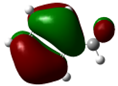
The results of calculations are reported in Table 1. The HOMO of the benzaldehyde is a n orbital and, then, it is not involved in the aromatic substitution. The next HOMO is a p orbital. However, the atomic coefficients and electronic densities in ortho and para are the same. These data are not in agreement with the experimental results where the main reaction occurs in meta position. Mulliken charges do not allow to have a better criterion able to explain the chemical behavior of this compound. All the carbon atoms show positive charges, and the smallest charges are in ortho and para position. Only Hirshfeld charges gave results that could justify the observed behavior. In fact, all the carbon atoms show negative charges, and the highest charges are in meta position.
The HOMO of benzoic acid showed that both the highest atomic coefficients and electronic densities are in ortho and meta position. Clearly, the HOMO does not allow to justify the meta directing property of this compound. Considering Mulliken charges, all the carbon atoms show positive charges, and the smallest charges are in ortho and para position. Also Mulliken charges cannot be used to justify the orientation of benzoic acid substitution. On the contrary, Hirshfeld charges allow us to justify the observed results. In fact, all the carbon atoms show negative charges and the highest ones are in meta position, in agreement with the experimental results.
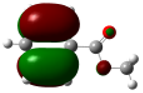
Methyl benzoate gave a HOMO where the highest atomic coefficients and electronic densities are in ortho and meta position, showing a potential chemical behavior not in agreement with the experimental results. On the contrary, both Mulliken and Hirshfeld charges are in agreement with the observed behavior. In fact, considering Mulliken charges, all the carbon atoms show positive charges, and the smallest one is in meta position. Furthermore, considering Hirshfeld charges, all the carbons atoms in the aromatic ring show negative charges, and the highest ones are in meta position.
Bromobenzene is a deactivating compound towards electrophilic substitution. However, it is ortho-para orienting compound. Thus, nitration gave 37% o-nitrobromobenzene, 1% meta-nitrobromobenzene, and 62% p-nitrobromobenzene. Chlorination gave 39% o-chlorobromobenzene, and 61% p-chlorobromobenzene [34].
The HOMO of bromobenzene (-6.90 eV) is represented in Figure 13. Both the atomic coefficients and electronic densities are in agreement with the formation of the ortho-para bisubstituted compounds. In fact, highest atomic coefficients are in ortho and para position.
Mulliken and Hirshfeld charges in this case are in agreement with the observed behavior (Figure 14). Considering Mulliken charges, all the carbon atoms show positive charges, and the smallest ones are in ortho and para position, while, considering Hirshfeld charges, all the carbon atoms show negative charges, and the highest one are in the same positions.
This section may be divided by subheadings. It should provide a concise and precise description of the experimental results, their interpretation, as well as the experimental conclusions that can be drawn.
Finally, we tested our approach on the basis of DFT calculations on an activating ortho-para orienting compound, anisole. Nitration of anisole gave 44% o-nitroanisole an 56% p-nitroanisole. Chlorination gave 21% o-chloroanisole and 79% p-chloroanisole [34].
The HOMO of anisole was found at -6.92 eV (Figure 15). The highest atomic coefficients and electronic densities are in ortho-para position, in agreement with the experimental results. Mulliken charges are not in agreement with experimental behavior (Figure 16). Considering Mulliken charges, all the carbon atoms show positive charges and the smallest is in para. Considering Hirshfeld charges, all the carbon atoms in the aromatic ring show a negative charges, and the highest one are in ortho-para position. Furthermore, the increase of para isomer when chlorination had been performed clearly indicates a significant role of the HOMO in this reaction. In fact, the Hirshfeld charges are the same in ortho and para, while the atomic coefficient in para position is very different from that in ortho.
In conclusion, our analysis of the electrophilic aromatic substitution showed that, when activating, ortho-para directing or deactivating, ortho-para directing substrates are considered, the description of the reaction using Hirshfeld charges when hard electrophile (nitronium ion) is used works well. When a softer electrophile is used (chlorine) a role of the HOMO has to be considered. On the contrary, in the presence of deactivating, meta directing substrates are considered, both frontier orbital and charges approaches failed, sometimes for one factor, sometime for another.
Supplementary Materials
The following supporting information can be downloaded at the website of this paper posted on Preprints.org, Z matrix of optimized structures.
Author Contributions
Conceptualization, M.D.; data curation, L.E..
Funding
This research received no external funding.
Conflicts of Interest
The authors declare no conflicts of interest.
References
- Crampton, M. R. In Organic Reaction Mechanisms (Knipe, A. C.; Moloney, M. G., Eds), Wiley, New York, 2020, pp. 213-295.
- Koerner, W. Fatti per servire alla determinazione del luogo chimico nelle sostanze aromatiche. Giornale di Scienze Naturali ed Economiche 1869, 5, 212-256.
- Koerner, W. Studi sull’isomeria delle così dette sostanze aromatiche a sei atomi di carbonio. Gaz. Chim. Ital. 1874, 4, 305-446.
- Holleman, A. F. Trattato di Chimica Organica, Società Editrice Libraria, Milano, 1927.
- Kermack, W. O.; Robinson, R. An explanation of the property of induced polarity of atoms and an interpretation of the theory of partial valencies on an electronic basis. J. Chem. Soc. Trans. 1922, 121, 427-440. [CrossRef]
- Lapworth, A. A theoretical derivation of the principle of induces alternate polarities. J. Chem. Soc. Trans. 1922, 121, 416-427. [CrossRef]
- Saltzman, M. Arthur Lapworth. J. Chem. Ed. 1972, 49, 750-752.
- Karrer, P. Trattato di Chimica Organica, Sansoni, Firenze, 1965.
- Wheland, G. W. A quantum mechanical investigation of the orientation of substitution in aromatic molecules. J. Am. Chem. Soc. 1942, 64, 900-908. [CrossRef]
- Olah, G. A. Stable carbonium ions. IX. Methylbenzenonium hexafluoroantimonates. J. Am. Chem. Soc. 1965, 87, 1103-1108. [CrossRef]
- Olah, G. A.; Kiovsky, T. E. Stable carbonium ions. LI. Fluorobenzenonium ions. J. Am. Chem. Soc. 1967, 89, 5692-5694. [CrossRef]
- Olah, G. A.; Schlosberg, R. H.; Richard, D.; Porter, R. D.; Mo, Y. K.; Kelly, D. P.; Mateescu, G. D. Stable carbocations. CXXIV. Benzenium ion and monoalkylbenzenium ions. J. Am. Chem. Soc. 1972, 94, 2034-2043. [CrossRef]
- Corey, E. J.; Barcza, S.; Klotmann, G. Directed conversion of the phenoxy grouping into a variety of cyclic polyfunctional systems. J. Am. Chem. Soc. 1969, 91, 4782-4786. [CrossRef]
- Hahn, R. C.; Strack, D. L. Ipso nitration. II. Novel products and true positional selectivities in nitration of p-cymene. J. Am. Chem. Soc. 1974, 96, 4335-4337. [CrossRef]
- Carey, F. A.; Sundberg, R. J. Advanced Organic Chemistry, Part A: Structure and Mechanisms, Springer, New York, 2008.
- Fukui, K.; Yonezawa, T.; Shingu, H. A molecular orbital theory of reactivity of aromatic hydrocarbons. J. Chem. Phys. 1952, 20, 722-725. [CrossRef]
- Seeman, J. I. Kenichi Fukui, Frontier Molecular Orbital Theory, and the Woodward-Hoffmann Rules. Part II. A Sleeping Beauty in Chemistry. Chem. Rec. 2022, 22, e202100300.
- Elliott, R. J.; Sackwild, V.; Richards, W. G. Quantitative frontier orbital theory: Part I. Electrophilic aromatic substitution. J. Mol. Struct. 1982, 86, 301-314. [CrossRef]
- Klopman, G. Chemical reactivity and the concept of charge- and frontier-controlled reactions. J. Am. Chem. Soc. 1968, 90, 223-234.
- Salem, L. Intermolecular orbital theory of the interaction between conjugated systems. I. General theory. J. Am. Chem. Soc. 1968, 90, 543-552. [CrossRef]
- Salem, L. Intermolecular orbital theory of the interaction between conjugated systems. II. Thermal and photochemical cycloaddition. J. Am. Chem. Soc. 1968, 90, 553-566. [CrossRef]
- Domingo, L. R. Molecular Electron Density Theory: A Modern View of Reactivity in Organic Chemistry. Molecules 2016, 21, 1319. [CrossRef]
- Stuyver, T.; Danovich, D.; De Proft, F.; Shaik, S. Electrophilic aromatic substitution reactions: mechanistic landascape, electrostatic and electric-field control of reaction rates, and mechanistic crossovers, J. Am. Chem. Soc. 2019, 141, 9719-9730-.
- Galabov, B.; Nalbantova, D.; von R. Schleyer, P.; Schaefer, H. F. III, Electrophilic aromatic substitution: new insighta into an old class of reactions. Acc. Chem. Res. 2016, 49, 1191-1199.
- Liu, S. Where does the electron go? The nature of ortho/para and meta group directing in electrophilic aromatic substitution. J. Chem. Phys. 2014, 141, 194109. [CrossRef]
- Gaussian 09, Revision A.1, M. J. Frisch, G. W. Trucks, H. B. Schlegel, G. E. Scuseria, M. A. Robb, J. R. Cheeseman, G. Scalmani, V. Barone, B. Mennucci, G. A. Petersson, H. Na-katsuji, M. Caricato, X. Li, H. P. Hratchian, A. F. Izmaylov, J. Bloino, G. Zheng, J. L. Son-nenberg, M. Hada, M. Ehara, K. Toyota, R. Fukuda, J. Hasegawa, M. Ishida, T. Nakajima, Y. Honda, O. Kitao, H. Nakai, T. Vreven, J. A. Montgomery, Jr., J. E. Peralta, F. Ogliaro, M. Bearpark, J. J. Heyd, E. Brothers, K. N. Kudin, V. N. Staroverov, R. Kobayashi, J. Nor-mand, K. Raghavachari, A. Rendell, J. C. Burant, S. S. Iyengar, J. Tomasi, M. Cossi, N. Re-ga, J. M. Millam, M. Klene, J. E. Knox, J. B. Cross, V. Bakken, C. Adamo, J. Jaramillo, R. Gomperts, R. E. Stratmann, O. Yazyev, A. J. Austin, R. Cammi, C. Pomelli, J. W. Ochterski, R. L. Martin, K. Morokuma, V. G. Zakrzewski, G. A. Voth, P. Salvador, J. J. Dannenberg, S. Dapprich, A. D. Daniels, O. Farkas, J. B. Foresman, J. V. Ortiz, J. Cioslowski, and D. J. Fox, Gaussian, Inc., Wallingford CT, 2009.
- Parr, R. G.; Yang, W. Density Functional Theory of Atoms and Molecules, Oxford Universi-ty Press, Oxford, UK, 1989.
- Becke, A. D. Density-functional thermochemistry. III. The role of exact exchange J. Chem. Phys. 1993, 98, 5648–5652.
- Pounder, F. E. The nitration of nitrobenzene. PhD Thesis, Durham University, 1935.
- Baciocchi, E.; Cacace, F.; Ciranni, G.; Illuminati, G. Isomeric distributions and relative reactivities in the uncatalyzed chlorination of benzonitrile, nitrobenzene, and benzotrifluoride. The directive effects of electron-withdrawing substituents as a function of reagent and solvent. J. Am. Chem. Soc. 1972, 94, 7030-7034. [CrossRef]
- Heidar-Zadeh, F.; Ayers, P. W.; Verstraelen, T.; Vinogradov, I.; Vöhringer-Martinez, E.; Bultinck, P. Information-theoretic approaches to atoms-in.molecules: Hirshfeld family of partitioning schemes. J. Phys. Chem. A 2018, 122, 4219-4245. [CrossRef]
- Liu, S. Quantifying reactivity of electrophilic aromatic substitution reactions with Hirshfeld charge. J. Phys. Chem. A 2015, 119, 3107-3111. [CrossRef]
- Johnstone, J. F.; Ridd, J. H.; Sandall, J. P. B. The borderline between the classical and the electron transfer process in nitration by the nitronium ion. Chem. Commun. 1989, 244-246. [CrossRef]
- Brown, J. J.; Cockroft, S. L. Aromatic reactivity revealed: beyond resonance theory and frontier orbitals. Chem. Sci. 2013, 4, 1772-1780. [CrossRef]
- Davey, W.; Gwilt, J. R. The preparation of mononitrobenzaldehdes. J. Chem. Soc. 1950, 204-208.
- Stock, L. M. Aromatic Substitution Reactions. Prentice-Hall, Englewood Cliffs, New Jersey, USA, 1968, p. 63.
- Kamm, O.; Segur, J. B. Methyl m-nitrobenzoate. Org. Synth. 1923, 3, 71-72.
- Yee, H. Y.; Boyle, A. J. The chlorination of benzoic acid in aqueous system by use of oxidizing acids. J. Chem. Soc. 1955, 4139-4140. [CrossRef]
- Pearson, D. E.; Stamper, W. E.; Suthers, B. R. The swamping catalyst effect. V. The halogenation of aromatic acid derivatives. J. Org. Chem. 1963, 28, 3147-3149. [CrossRef]
Figure 1.
Wilhelm Koerner.
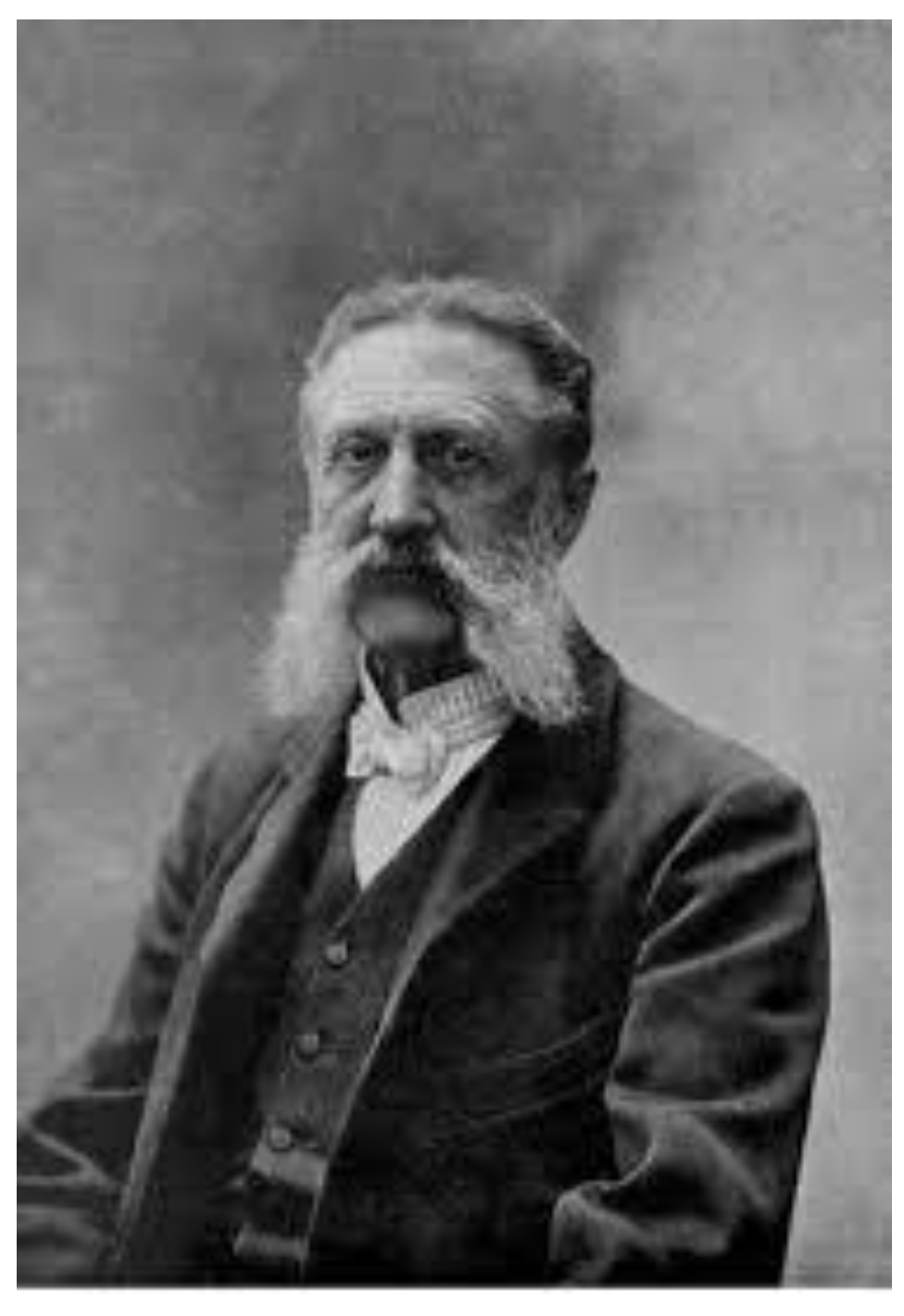
Figure 2.
Structure of benzene proposed by Koerner.
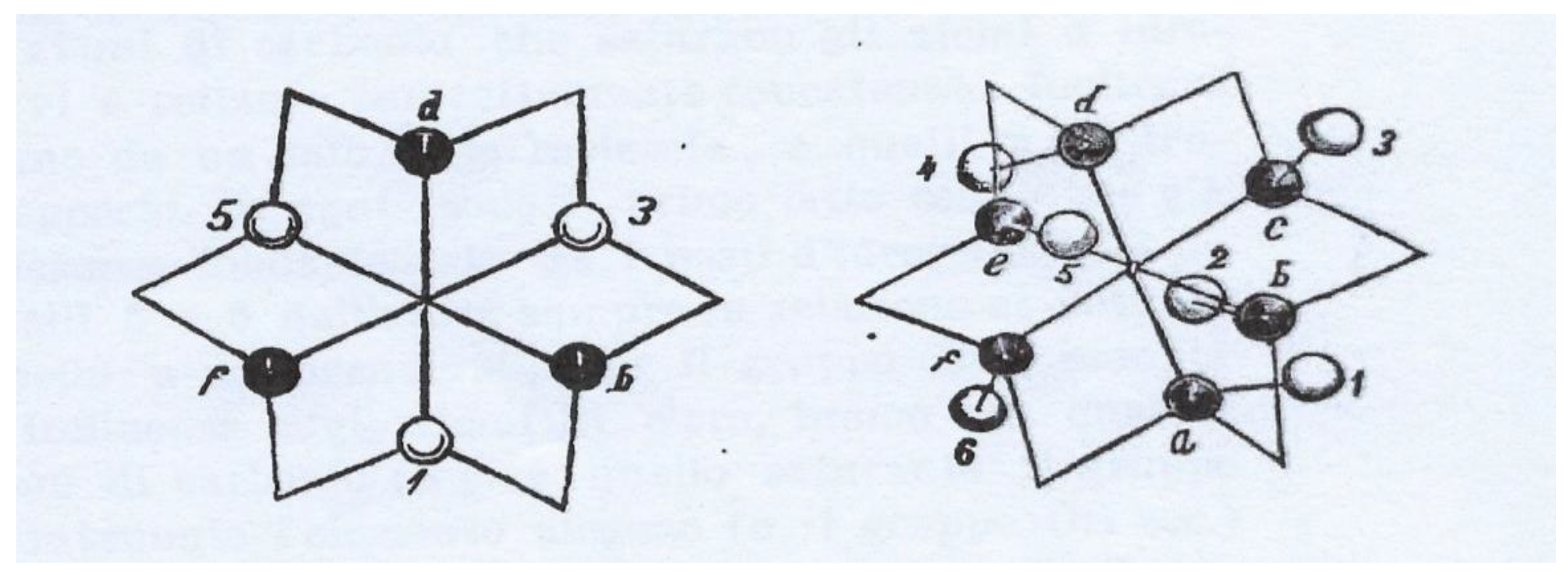
Figure 3.
Example of application of the theory of alternating polarity.
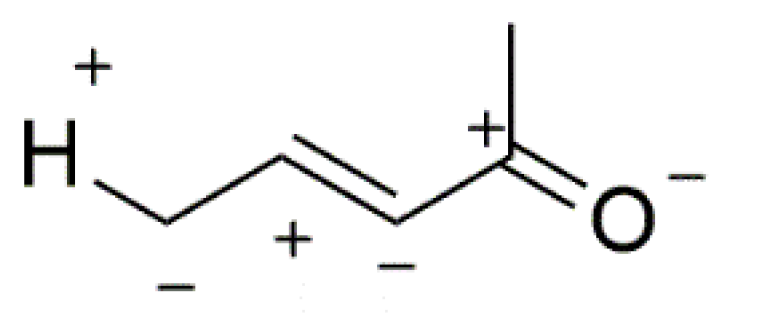
Figure 4.
Application of the principle of alternating polarity to electrophilic aromatic substitutions. (a): molecule with electron-donating substituent; (b): molecule with electron-withdrawing substituent.
Figure 4.
Application of the principle of alternating polarity to electrophilic aromatic substitutions. (a): molecule with electron-donating substituent; (b): molecule with electron-withdrawing substituent.
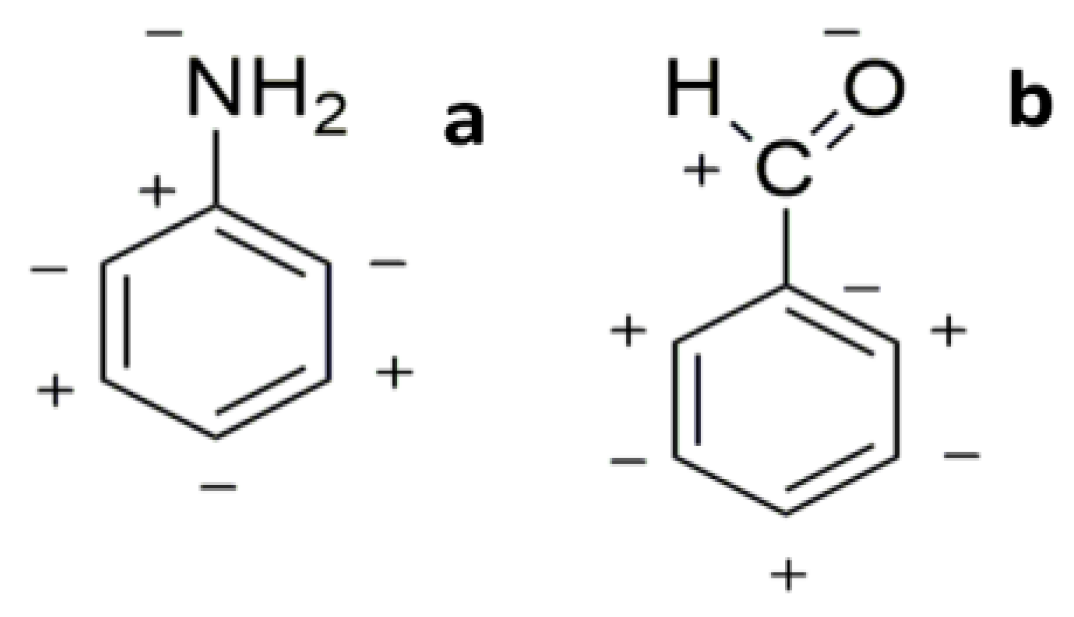
Figure 5.
Formation of the arenium ion.
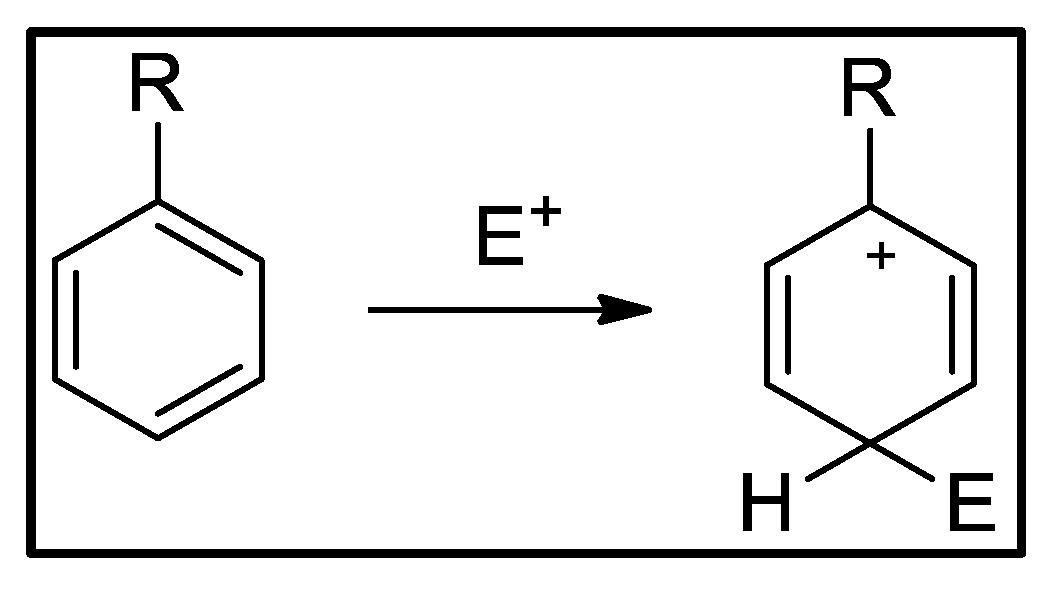
Figure 6.
Conjugative effect on σ complexes deriving from substrates with ortho-para orienting activating substituents.
Figure 6.
Conjugative effect on σ complexes deriving from substrates with ortho-para orienting activating substituents.
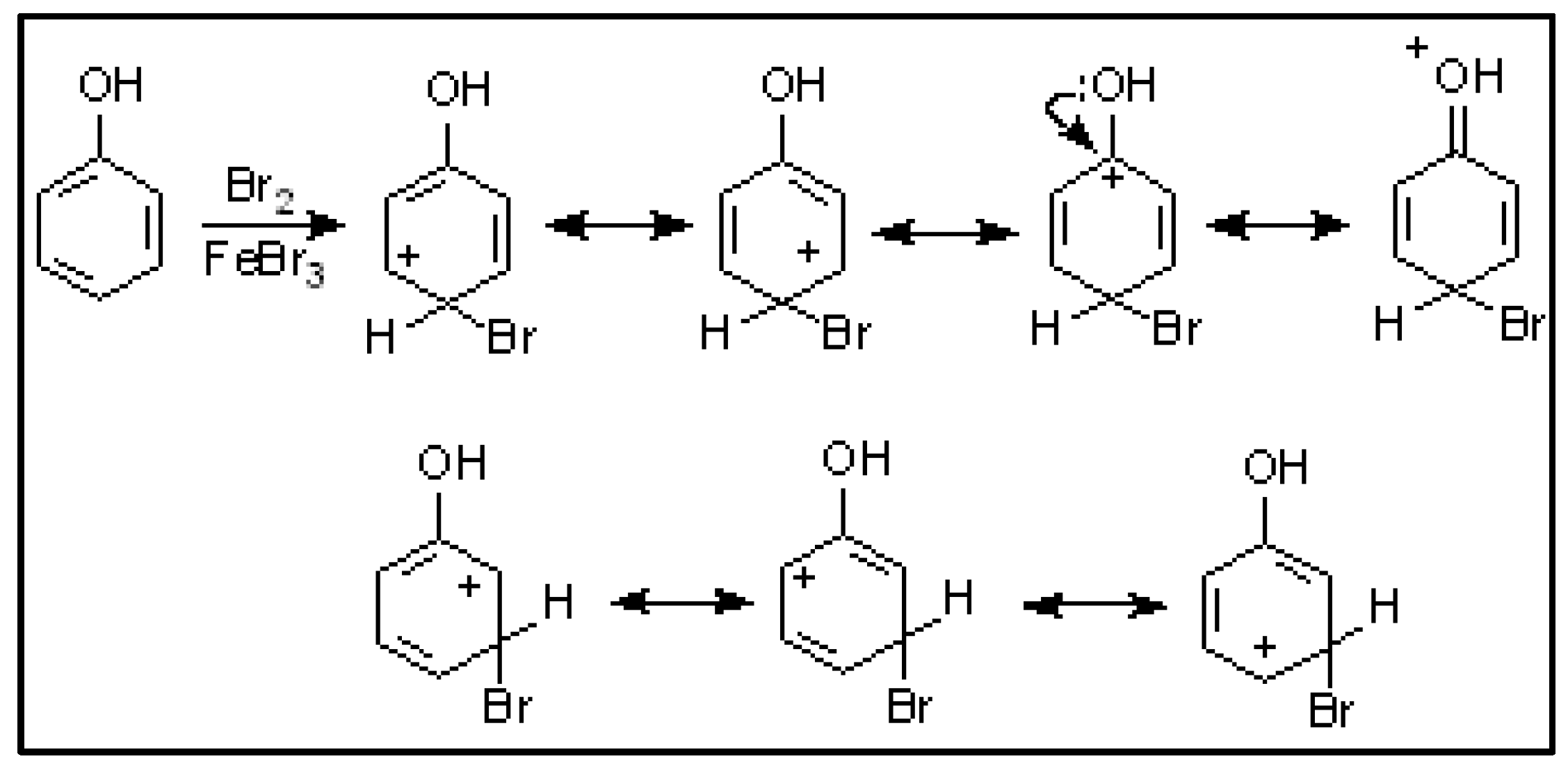
Figure 7.
Conjugative effect on σ complexes deriving from halogenated substrates.
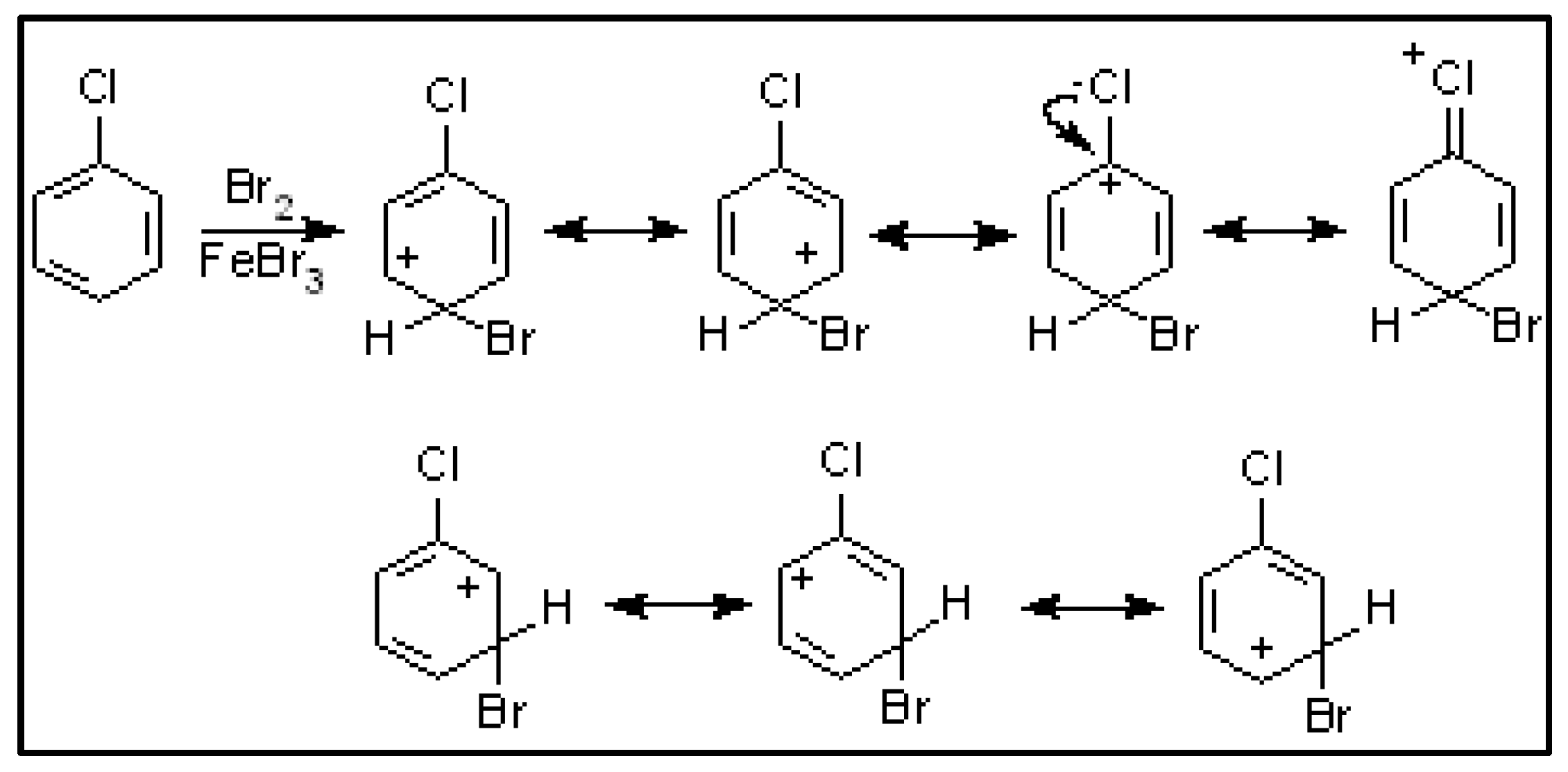
Figure 8.
Conjugative effect on σ complexes derived from substrates bearing meta-directing deactivating substituents.
Figure 8.
Conjugative effect on σ complexes derived from substrates bearing meta-directing deactivating substituents.
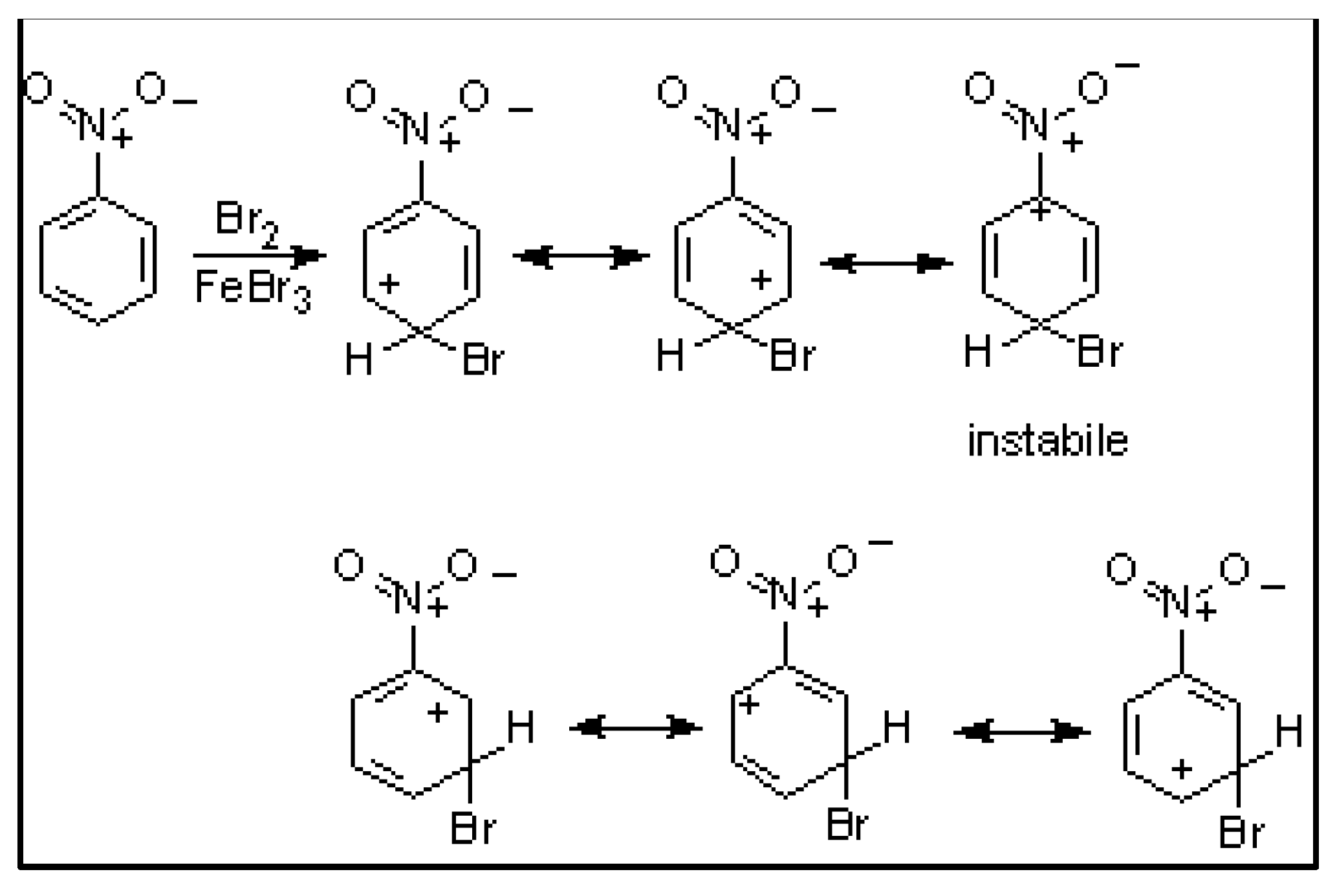
Figure 9.
HOMO of nitrobenzene. In parenthesis the electronic density (|ci|2|).
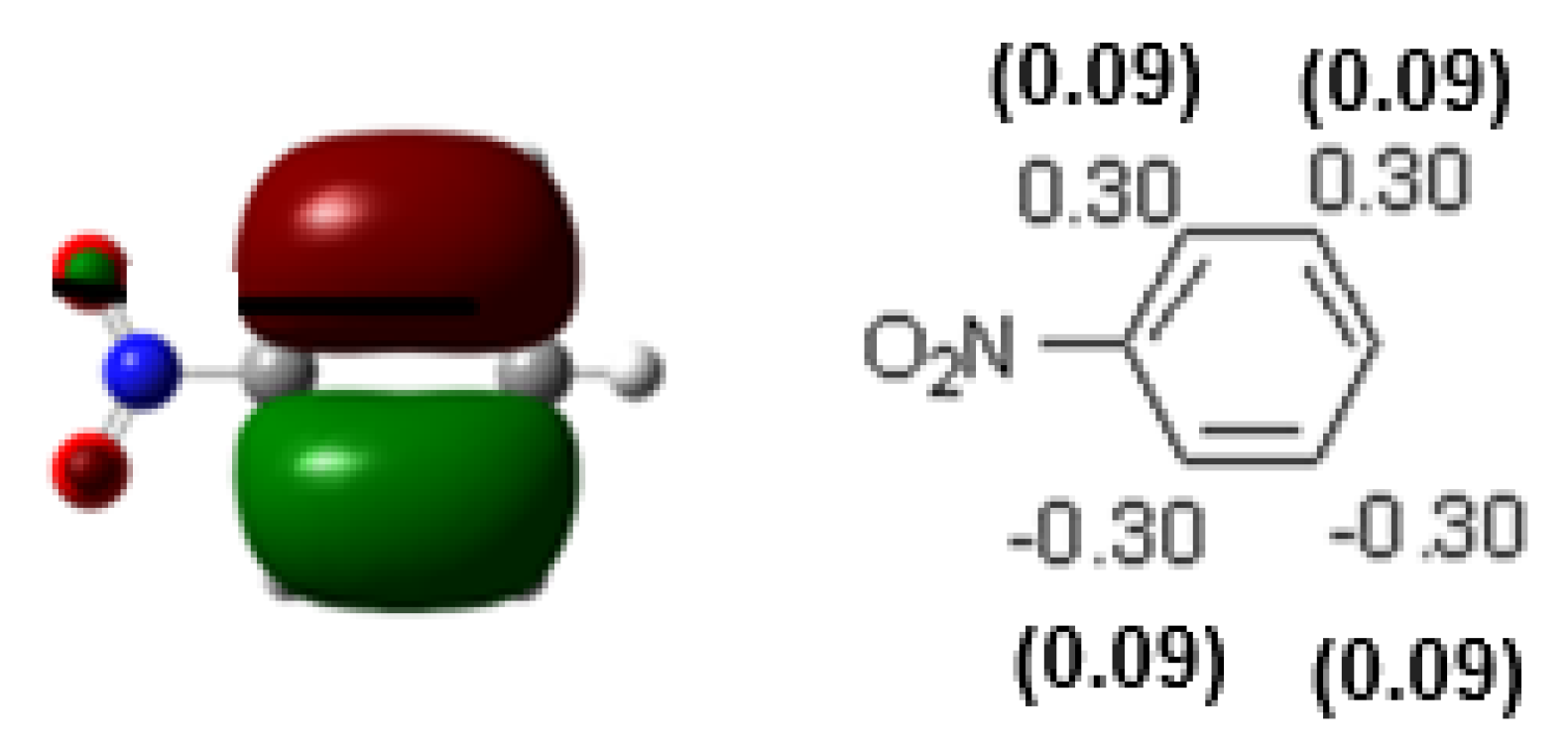
Figure 10.
Mulliken (a) and Hirshfeld (b) charges on nitrobenzene.
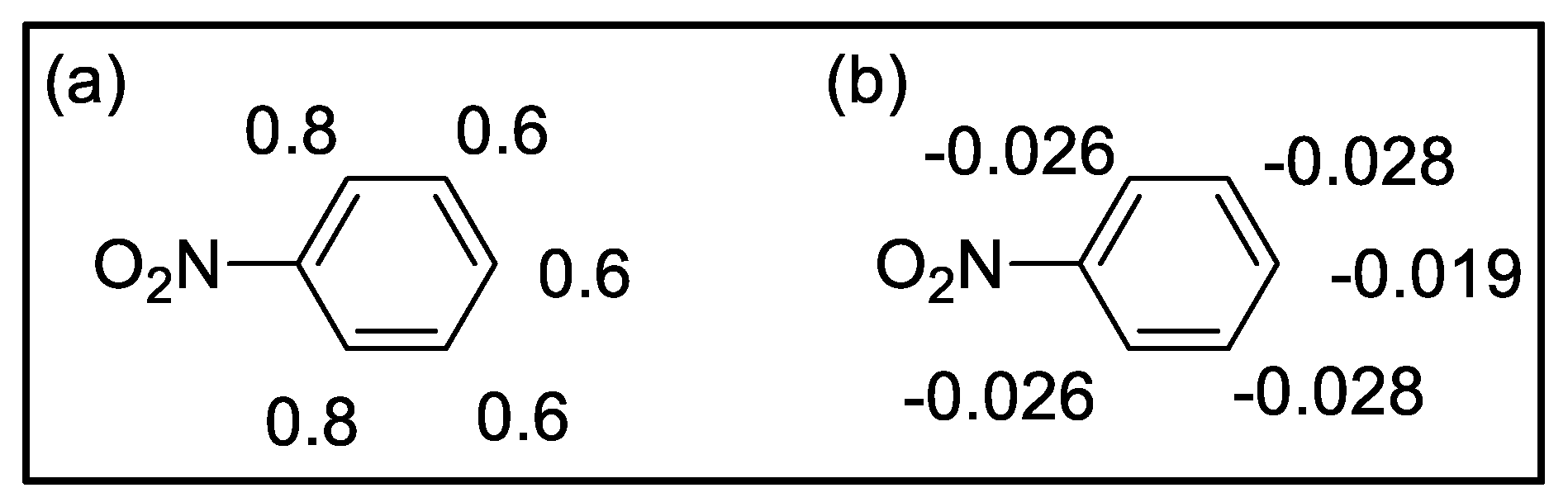
Figure 11.
HOMO of benzonitrile. In parenthesis the electronic density (|ci|2|).
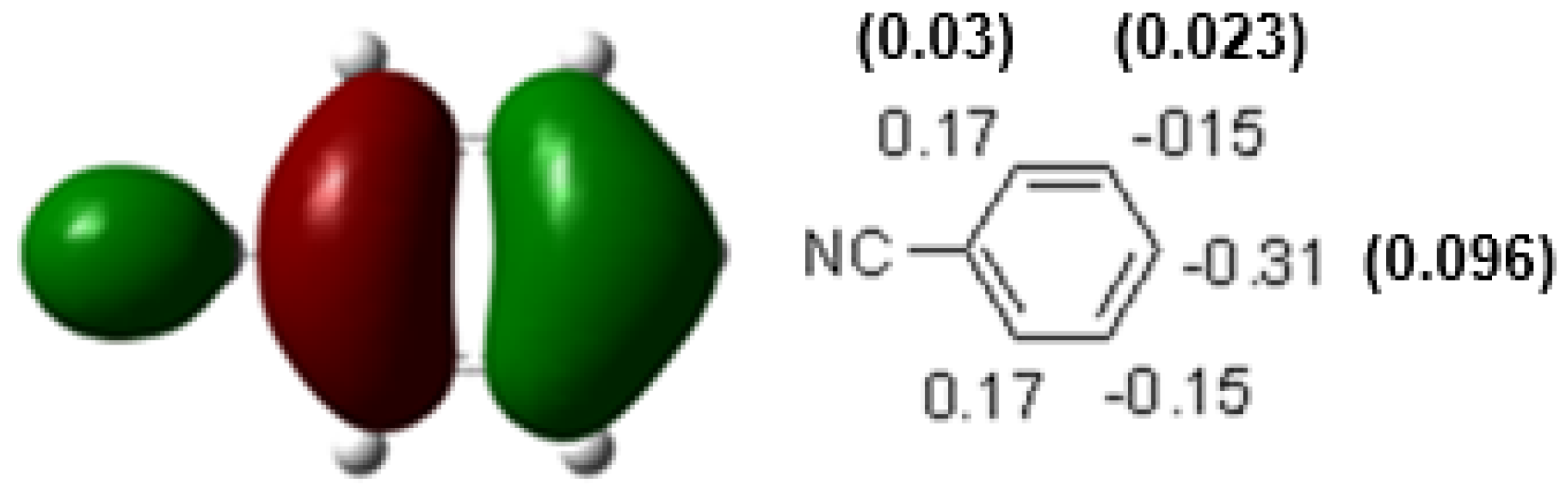
Figure 12.
Mulliken (a) and Hirshfeld (b) charges in benzonitrile.
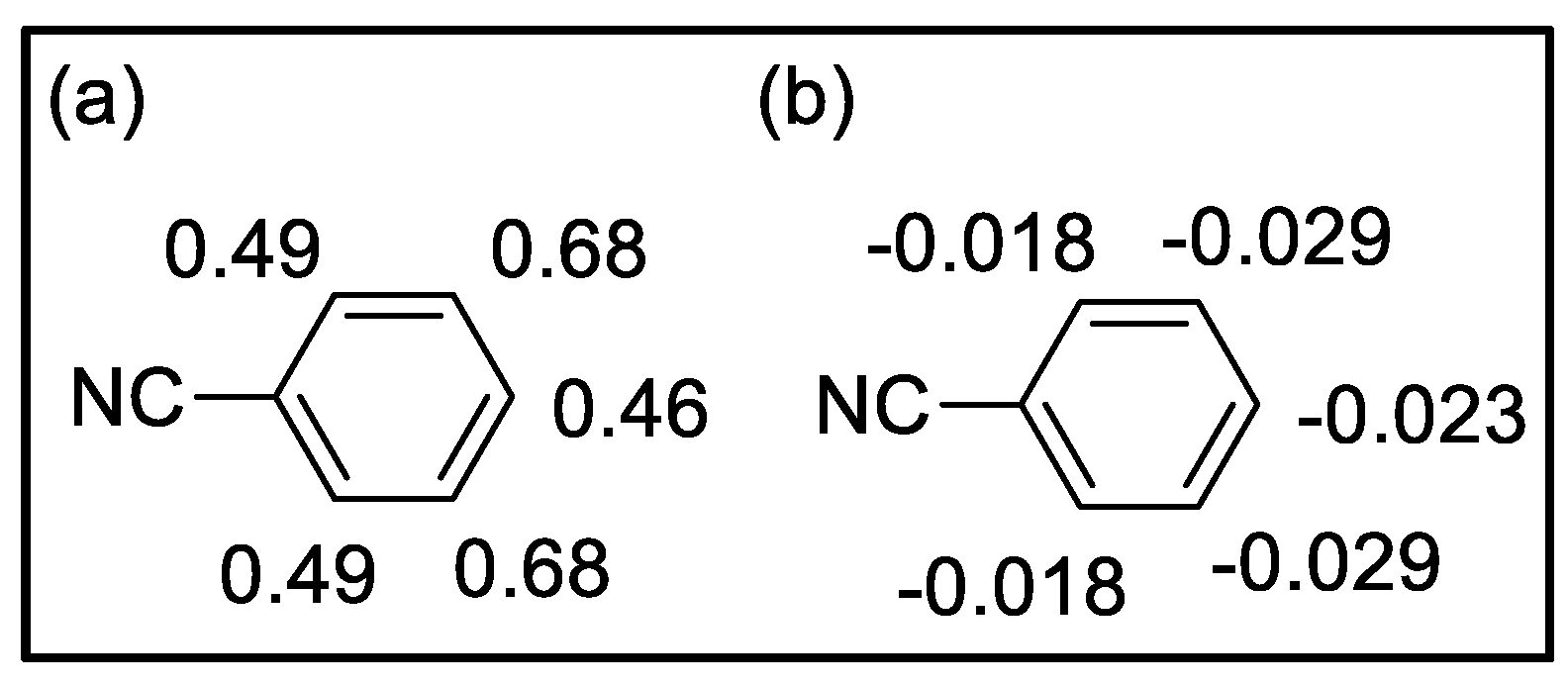
Figure 13.
HOMO of bromobenzene. In parenthesis the electronic density (|ci|2|).
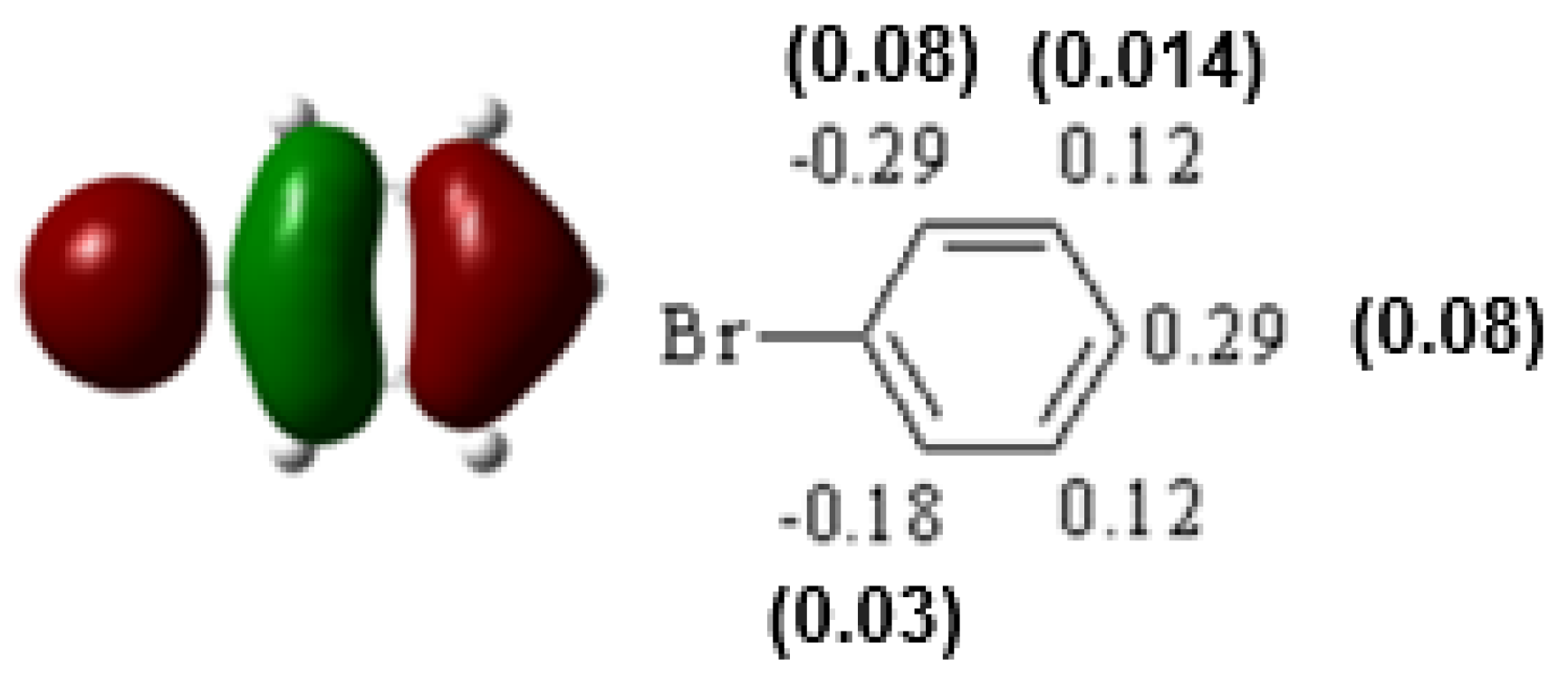
Figure 14.
(a) Mulliken charges on bromobenzene; (b) Hirshfeld charges on bromobenzene.
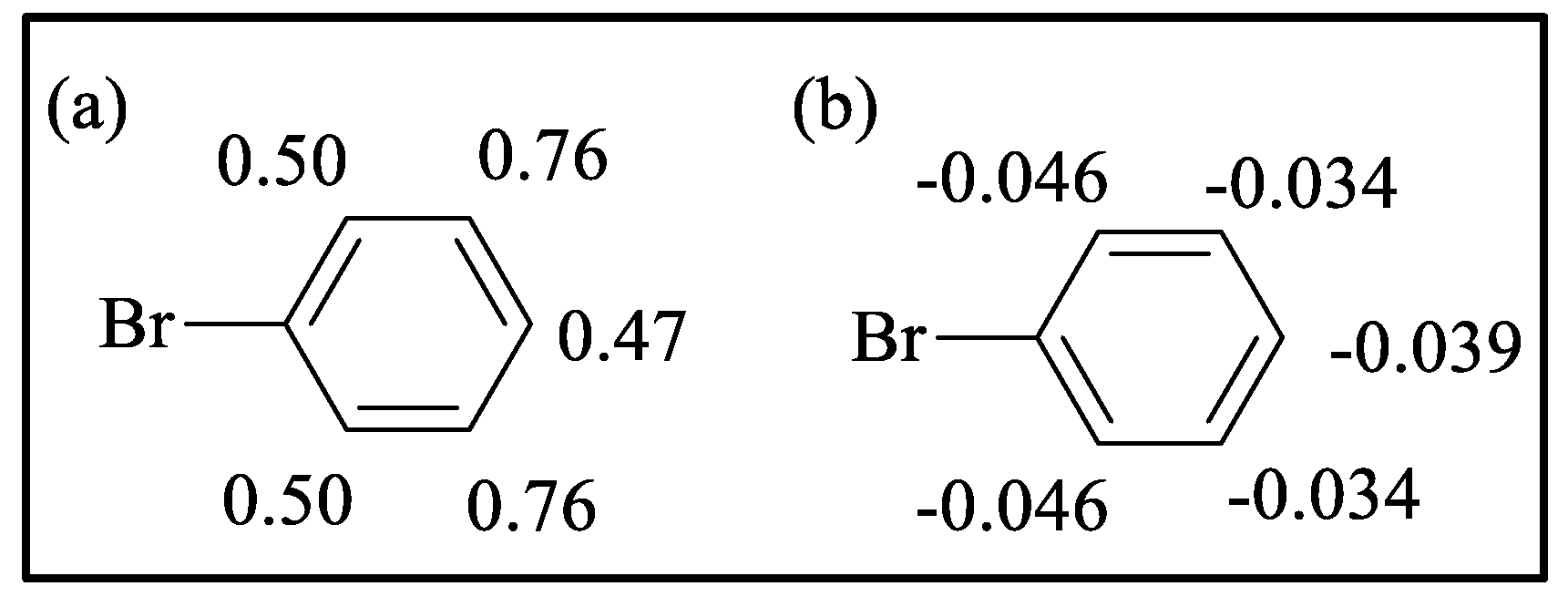
Figure 15.
HOMO of anisole. In parenthesis the electronic density (|ci|2|).
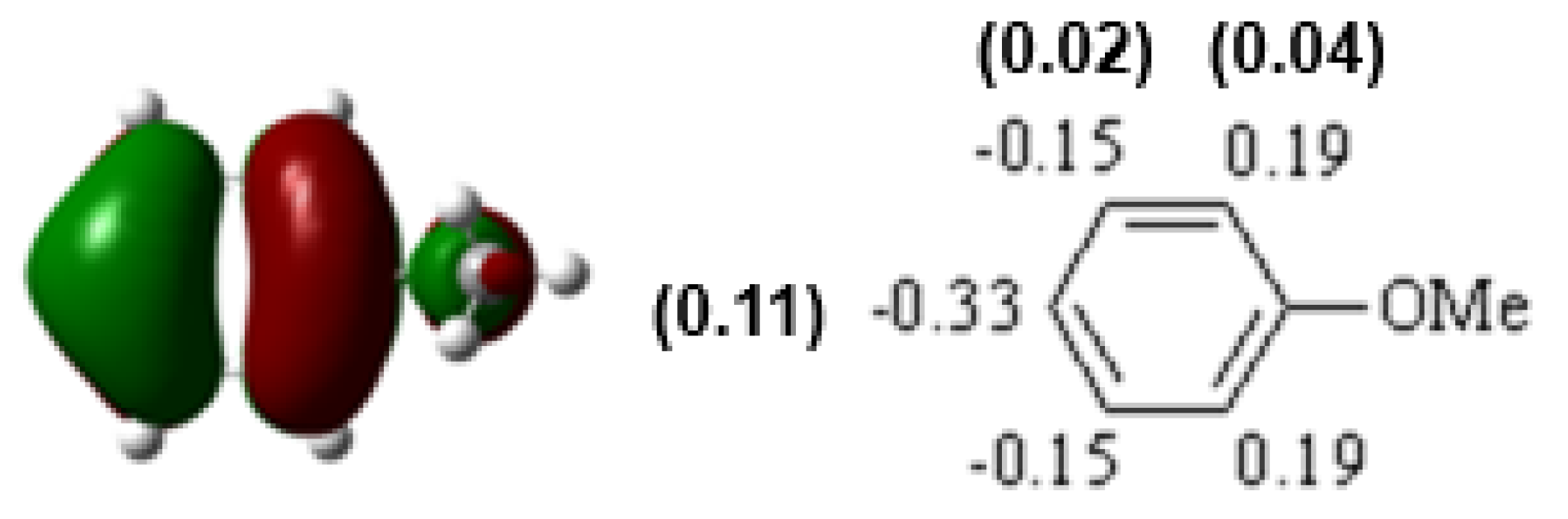
Figure 16.
(a) Mulliken charge on anisole; (b) Hirshfeld charges on anisole.
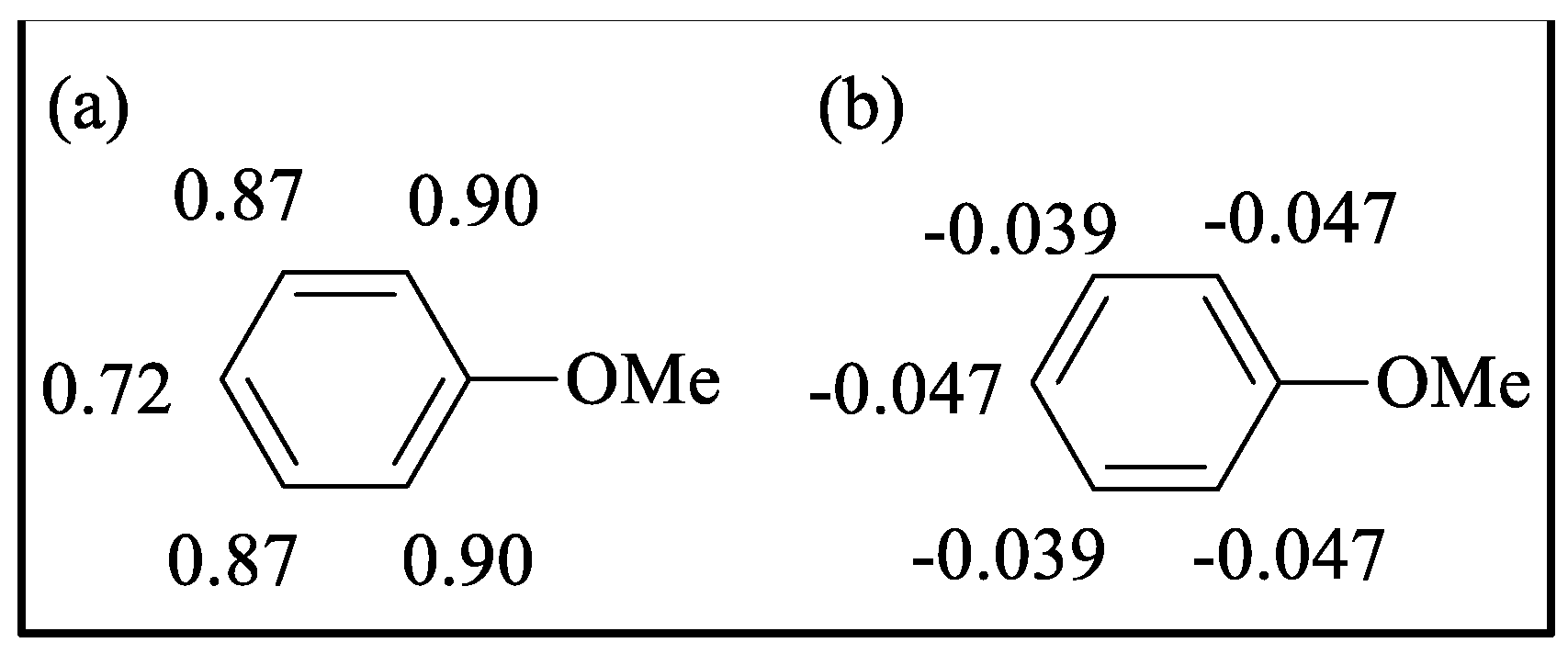

Table 1.
Atomic coefficients and electronic densities on HOMO and NHOMO, Mulliken charges, Hirshfeld charges for benzaldehyde, benzoic acid, and methyl benzoate.
Table 1.
Atomic coefficients and electronic densities on HOMO and NHOMO, Mulliken charges, Hirshfeld charges for benzaldehyde, benzoic acid, and methyl benzoate.
| Compound | HOMO | NHOMO | Energy [eV] |
Atomic coefficients (Electronic density) |
Mulliken charges | Hirshfeld charges | ||||||
| ortho | meta | para | ortho | meta | para | ortho | meta | para | ||||
| Benzaldehyde | 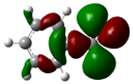 |
7.36 | 0.55 0.45 |
0.63 0.58 |
0.42 | -0.022 -0.031 |
-0.033 -0.037 |
-0.026 | ||||
 |
7.49 | 0.34 (0.12) -0.14 (0.02) |
0.15 (0.02) -0.34 (0.12) |
-0.19 (0.04) |
||||||||
| Benzoic acid | 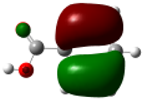 |
7.48 | -0.28 (0.08) 0.32 (0.10) |
-0.32 (0.10) 0.28 (0.08) |
-0.04 (0.002) |
0.58 0.45 |
0.52 0.64 |
0.49 | -0.028 -0.022 |
-0.034 -0.035 |
-0.027 | |
| Methyl benzoate |
 |
7.40 | 0.31 (0.10) -0.29 (0.08) |
0.29 (0.08) -0.31 (0.10) |
-0.02 (0.0004) |
0.49 0.78 |
0.55 0.33 |
0.58 | -0.024 -0.030 |
-0.036 -0.036 |
-0.029 | |
Disclaimer/Publisher’s Note: The statements, opinions and data contained in all publications are solely those of the individual author(s) and contributor(s) and not of MDPI and/or the editor(s). MDPI and/or the editor(s) disclaim responsibility for any injury to people or property resulting from any ideas, methods, instructions or products referred to in the content. |
© 2025 by the authors. Licensee MDPI, Basel, Switzerland. This article is an open access article distributed under the terms and conditions of the Creative Commons Attribution (CC BY) license (http://creativecommons.org/licenses/by/4.0/).
Copyright: This open access article is published under a Creative Commons CC BY 4.0 license, which permit the free download, distribution, and reuse, provided that the author and preprint are cited in any reuse.


