

Submitted:
15 May 2025
Posted:
16 May 2025
You are already at the latest version
Abstract
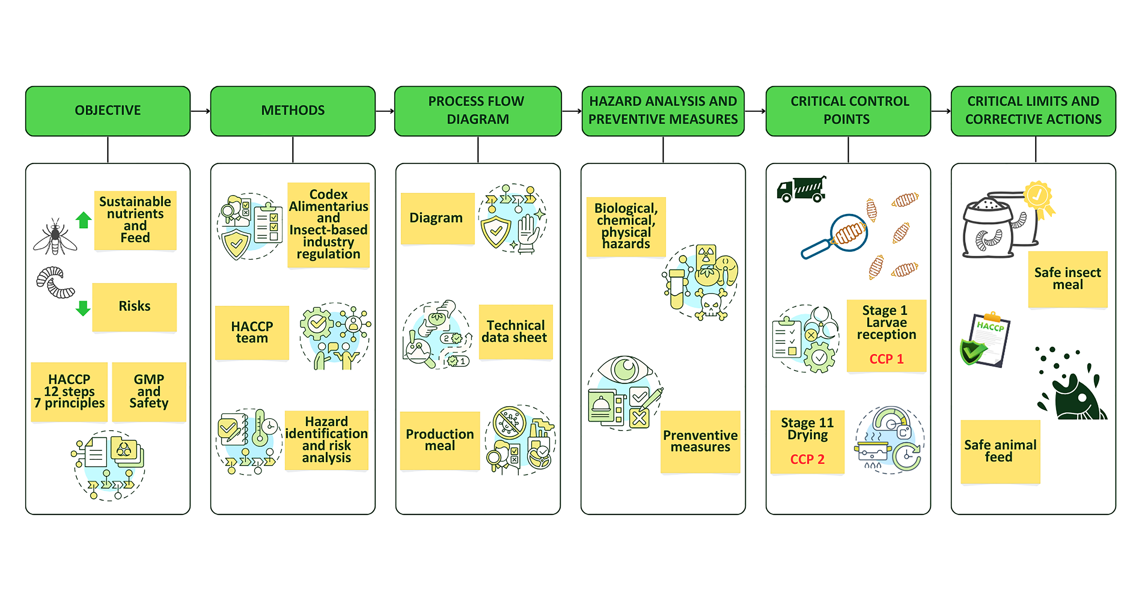
Black soldier fly (Hermetia illucens) larvae meal (BSFLM) offers a promising solution for sustainable animal feed. However, its safe adoption requires robust quality assurance systems. This study applies the Hazard Analysis and Critical Control Points (HACCP) plan to identify and evaluate biological, chemical, and physical hazards throughout the BSFLM production process. Key risks included microbial contamination, allergens, and chemical contaminants. Preventive strategies and specific processing steps were defined to mitigate these risks. Critical control points (CCPs), along with their associated limits, monitoring protocols, and corrective actions, were established to ensure product safety. The results underscore the importance of structured risk management to enable the safe integration of insect meals into animal nutrition and support the development of a sustainable insect-based feed sector.
Keywords:
insect-based feed
; risk assessment
; food safety
; critical control points (CCPs)
; insect farming
; sustainable animal nutrition
; good manufacturing practices (GMPs)
1. Introduction
Insect production as a protein source for animal and human consumption has gained increasing attention over the past decade due to its potential to meet global food demand while reducing pressure on conventional agricultural systems [1]. Insect farming offers several advantages, including high feed conversion efficiency, minimal space and water requirements, and a substantially lower environmental footprint compared to traditional livestock production [2,3]. Among the most promising species is the black soldier fly (Hermetia illucens), whose larvae are rich in protein, lipids, and essential minerals, making them a sustainable and functional alternative for animal feed [4].
However, using insects for food and feed presents significant challenges regarding product safety and quality. Insects are typically reared on substrates composed of agro-industrial residues, organic by-products, and recycled materials, which can introduce microbiological and chemical contamination risks [5,6]. Common hazards include pathogenic microorganisms (e.g. Salmonella, Listeria monocytogenes), heavy metal accumulation (lead, cadmium, arsenic), mycotoxins, pesticides, and allergens from chitin and other natural compounds [2,7]. These risks may be exacerbated in artisanal or small-scale systems with less stringent substrate and process control [8].
In response, regulatory bodies have begun to establish frameworks to ensure safety in insect production. In 2015, the European Food Safety Authority (EFSA) published a technical report on the risks of using insects for food and feed, emphasizing the need for specific industry regulations [9]. The European Commission authorized the use of insect protein in aquaculture feed in 2017, followed by approval for poultry and pig feed [8]. According to the International Platform of Insects for Food and Feed (IPIFF), European insect producers have marketed over 5,000 tonnes of insect-derived products since 2017, and the market is expected to reach 3 million tonnes by 2030 [8]. In contrast, Latin America still lacks robust regulation in this area, underscoring the need for targeted scientific data and policy frameworks to support local control measures and facilitate insect use as feed and food ingredients [10].
To address these risks and ensure product safety, the Hazard Analysis and Critical Control Points (HACCP) system has been widely adopted in the food industry [11] and is increasingly recommended for insect production [10,12,13]. HACCP enables the identification and assessment of physical, chemical, and biological hazards along the production chain, defining critical control points (CCPs) and parameters to mitigate risks [7]. Structured into 12 steps and 7 principles, HACCP provides a preventive framework that includes operational practices, control measures, and evidence-based verification, as recommended by the Codex Alimentarius Commission [11].
Producers and processors are strongly encouraged to address these hazards through good agricultural practices (GAP), good manufacturing practices (GMP), and preventive approaches based on HACCP, thus promoting safety management across the supply chain, in line with IPIFF guidance [8]. This methodology is particularly relevant for facilities involved in processing, transforming, and marketing insects beyond primary production, for both human and animal nutrition [13].
This study aims to explore the application of the HACCP plan to black soldier fly (Hermetia illucens) larvae meal (BSFLM) production, drawing on the literature and on previous and ongoing research at the Centre for Terrestrial Arthropod Research (CINAT), Universidad Nacional de Colombia. Biological, chemical, and physical hazards were assessed along the production chain, and CCPs were identified to ensure product safety. The analysis includes preventive strategies, control parameters, and corrective actions aimed at improving production and minimizing risk. A similar approach was previously applied to Tenebrio molitor meal, where HACCP was used to identify critical hazards and recommend control strategies to processors [10]. That experience provided a useful framework to strengthen food safety practices for Hermetia illucens and to extend these methods to other insect-based products.
2. Materials and Methods
2.1. Study Context and Data Sources
This study was conducted at the Centre for Terrestrial Arthropod Research (CINAT), Universidad Nacional de Colombia. The insect meal to be used as animal feed was produced from Hermetia illucens larvae reared on a mixed organic waste diet. Some processing steps differed slightly from those described in the literature, reflecting specific conditions applied at CTAR. This work does not present the details of BSFLM production but only the information relevant to the application of HACCP. The hazard analysis incorporated microbiological and toxicological data obtained in the meal produced.
2.2. HACCP Team Formation
The team was established in accordance with Codex Alimentarius recommendations [11,13,14]. It was multidisciplinary, including professionals in animal production (specifically Hermetia illucens farming), veterinary medicine, food science and technology, and quality management systems. All members contributed to each stage of analysis and recommendations.
2.3. Review of HACCP Prerequisites
The CINAT laboratory currently meets more than 50% of the Good Manufacturing Practices for Animal Feed (GMPAF), which are considered prerequisite programs (PRPs). These PRPs were assessed based on the Colombian Resolution 061252 of 2020, which establishes national guidelines for GMPAF [15].
2.4. Product Identification, Intended Use, and Process Description
A technical specification sheet was developed for black soldier fly larvae meal (BSFLM), detailing expected quality control parameters. Laboratory analyses were performed to obtain information on the compositional, microbiological and toxicological characteristics of the BSFLM. Information on the intended use was compiled, considering the target sector (animal feed), potential forms of commercialization, recommended labelling instructions, and guidelines for preparation or pre-processing. Relevant regulatory frameworks were consulted [13]. Additionally, a process flow diagram for BSFLM production at CINAT was also constructed. Each stage of the production process was defined, and key control variables were identified.
2.5. Hazard Identification, Risk Analysis, and Preventive Measures
Hazard analysis was carried out for each stage of the production process, based on an extensive literature review and data from ongoing research at CINAT BioInsectonomy Project (unpublished data). Hazard evaluations (i.e. cause and likelihood of occurrence) were informed by the HACCP team’s expertise, while severity (i.e. potential consequence) was determined using literature reports for each hazard. A five-level risk matrix was used to estimate hazard relevance by multiplying the probability of occurrence by the assigned severity score, reflecting potential impacts on product safety or animal health. Control measures were defined through team discussions, aiming to minimise the occurrence of each hazard through the application of GAP, GMP, PRPs, and risk management strategies, following Codex Alimentarius recommendations [10,11,16].
2.6. Identification of Critical Control Points, Critical Limits, Monitoring System, and Corrective Actions
Critical control points (CCPs) were identified using the Codex Alimentarius decision tree approach [8,10,16]. For each CCP, critical limits were established alongside a monitoring system. Then, corrective actions were defined to address deviations from control, following international recommendations [11,13,16].
2.7. Validation of Control Measures and Verification of the HACCP System
2.8. Documentation and Record-Keeping
Finally, the HACCP team developed a list of the minimum documents and records that should be maintained to support decisions made under the HACCP plan in accordance with Codex Alimentarius and Food Safety and Inspection Service (FSIS) recommendations [18].
3. Results
3.1. Final Product Description
(Table 1) provides a comprehensive technical overview of BSFLM, incorporating data generated under the BioInsectonomy Project.
3.2. Flow Diagram to Produce BSFL Meal
Figure 1 illustrates the processing stages to produce BSFLM and the variables to be controlled at each step. The flow diagram was reviewed and validated by the HACCP team in accordance with the established processing steps at CINAT.
3.3. Hazard Analysis and Preventive Measures
The hazard analysis (Table 2) identified the highest risks in the early processing stages, particularly during larval reception and substrate handling. Microbial contaminants such as Aspergillus spp., Escherichia coli, and Bacillus cereus, along with chemical residues including pesticides, heavy metals, and allergenic proteins, were classified as moderate to high risk. In subsequent steps such as sieving, blending, and drying, the nature of the hazards shifted toward cross-contamination, pathogen survival, and physical risks introduced by processing equipment, notably metal fragments from worn blades or damaged trays. These risks were mitigated through the implementation of good manufacturing practices, strict sanitation protocols, equipment inspection before and after use, and time and temperature controls. Additional actions such as larval surface cleaning, improved ventilation in drying areas, and the use of natural antimicrobial compounds like organic acids contributed to enhanced microbial safety.
Later stages of the process, including grinding, packaging, and storage, presented lower but still relevant risks. Potential hazards such as bisphenol migration from packaging materials and microbial viability during storage under freezing conditions were managed by using food-grade, BPA-free containers, hermetic sealing, reduction of moisture content below 10 percent, and continuous environmental monitoring. Across all processing steps, the integration of prerequisite programs, comprehensive staff training, and systematic hygiene and environmental controls supported a robust and reliable food safety system.
3.4. Identification of CCPs
The CCPs results revealed that while many hazards were effectively managed through existing preventive measures and PRPs, a limited number required formal CCP designation (Table 3). In the early stages of the process, particularly during larval reception and substrate sourcing, met the criteria to be CCPs. These findings underscore the importance of stringent supplier selection, substrate quality assurance, and routine laboratory testing at the point of raw material intake.
Further along the process, drying stage was established as a CCP. Despite upstream measures to reduce microbial loads, the drying step represents the final and most critical barrier for microbial inactivation. To be effective, the process must consistently maintain validated time and temperature combinations (at least 60 °C for 21 hours) across all batches. This step is essential to control residual pathogens such as Salmonella spp., Escherichia coli, and Staphylococcus aureus, which may remain viable after rearing or blending.
Other hazards such as the presence of Aspergillus spp., aerobic mesophilic bacteria, metal splinters, or bisphenol residues were deemed sufficiently controlled through robust PRPs, equipment inspections, facility hygiene, and handling protocols.
3.5. Establishment of Critical Limits, Monitoring System, and Corrective Actions
Table 4 presents the proposed critical limits for each identified CCP, as well as the monitoring system and corrective actions tailored to the capacities of small- and medium-scale BSFLM producers, based on CINAT’s experience and HACCP team input.
3.6. Validation and Verification of HACCP System
Table 5 proposes potential validation strategies for small-scale insect processors to demonstrate that one or more control measures, when properly implemented, effectively control a specific hazard. Although validation was not conducted in the BioInsectonomy study, these recommendations aim to help artisanal or low-tech processors approach validated safety conditions and improve market access.
Table 6 outlines the proposed verification system for the HACCP plan. Verification should be conducted by individuals not responsible for daily monitoring to ensure that all HACCP procedures are being followed. Strategies, frequency, and methods may vary by facility, and in some cases, a validation strategy may also serve as a verification method [11].
3.8. Required Documentation for HACCP Implementation
Proposed documents must demonstrate proper implementation of the HACCP plan, enable process traceability, facilitates regulatory audits and allow timely consultation of CCPs and critical parameters. It should also support verification and validation activities. The recommended records include: (1) operational records generated during the HACCP system’s operation; (2) a summary of the hazard analysis, including justifications for hazard identification and control measures; (3) the complete HACCP plan covering the 12 implementation steps; (4) all documents related to the validation of the HACCP plan; and (5) records of internal audits, corrective actions taken, and continuous improvement processes applied to each step.
4. Discussion
4.1. Product Technical Specification
The proximate composition of BSFLM (Table 1) revealed a slightly lower protein content than previously reported [64], while the lipid content exceeded the values documented by other authors [4,65]. Microbiological analyses confirmed an acceptable profile for animal feed use, except for aerobic mesophiles, which reached 15,000 CFU/g, above the threshold suggested by IPIFF <10,000 CFU/g [12,66]. This may be due to specific handling or processing conditions in the laboratory and can be effectively managed by strengthening hygiene practices, staff training, and prerequisite programs. Similar microbial results have been reported by other authors [67] which indicates that it is possible to achieve acceptable microbiological results with the thermal process applied to BSFLM.
4.2. Interpretation of the Results of the Hazard Analysis
The main hazards were concentrated in the first two processing stages, larvae reception and sieving (Table 2), due to the use of agro-industrial residues as substrates, which often contain various contaminants and are difficult to trace. These initial stages have been identified as critical control points for biological risks, as larvae typically retain microbial loads from the substrate environment in which they develop [33,41,46,47]. Certain studies have reported the presence of pathogenic bacteria and fungi during these phases, highlighting the importance of substrate monitoring and early intervention [48,57]. However, other research has shown that the larvae’s natural bioconversion activity may contribute to reducing microbial contamination during rearing. Some studies observed a decrease in microbial load associated with larval digestion, although this is not sufficient for complete decontamination [28,33]. The effect is more consistent when pretreated or heat-processed substrates are used, improving microbial safety outcomes [58,68].
Preventive measures should include strengthening supplier control programs and ensuring infrastructure that protects the product from cross contamination while allowing hygienic handling from larval manipulation to final processing. On the other hand, allergens classified as chemical hazards from larvae or some from substrates can be controlled by treating the substrate, fasting the larvae and reporting their presence on the product label. During the BioInsectonomy project, the CINAT laboratory implemented more than 50% of the prerequisite programs and was undergoing structural improvements. This context led to a long list of potential hazards that could likely be avoided in better equipped facilities with developed GMP systems.
It is therefore recommended that insect producers implement robust supplier control programs and formulate diets using pretreated substrates, such as fermented or heat-treated materials, to ensure safety prior to larval consumption. Fermentation may help reduce microbial loads and improve digestibility [69]. In addition, the sieving stage, often performed outdoors and without controls in small scale systems, should ideally be conducted in enclosed, controlled environments to prevent contamination during handling and exposure.
In this study, a final sieving step was not applied after grinding, as the fine powder texture obtained using the high-speed blender made it unnecessary. The HACCP team determined that under these specific conditions, using a high-performance new device, the risk of metal fragments was minimal. Nonetheless, it is advisable to include this step in other settings to reduce physical hazards such as metal particles from grinders or residual substrate contaminants, as noted in previous studies [70].
In all cases, it is essential that insect meal producers apply HACCP methodology to assess whether a hazard is likely to occur depending on the specific conditions of their production system. As previously mentioned, the HACCP team identified the main CCPs (Table 3) under these conditions in the larval reception and production stages (mainly for chemical hazards such as heavy metals, mycotoxins, pesticides, and allergens), and in the drying stage (for the control of biological hazards). Applying adequate controls at these points ensures that BSFLM complies with safety standards for animal feed. Other hazards can be controlled or reduced to acceptable levels through the implementation of the preventive measures proposed at each step (Table 2).
The minimum and maximum limits for control variables (Table 4) were defined based on routine sample analysis for chemical hazards and temperature monitoring for biological hazards. Although this type of control may be difficult to implement for small-scale or subsistence producers due to cost limitations, robust GMPs remain essential to reduce risk and manage most hazards effectively. During the validation phase, HACCP guidelines recommend evaluating the adequacy of CCPs, critical limits, and monitoring procedures to ensure pathogen reduction [71]. This validation may rely on scientific evidence, expert judgment, pilot-scale trials, or lab simulations, followed by internal data collection [17,18]. In this study, the HACCP team proposed strategies such as the use of regulated, fungus-free, or pretreated substrates, supplier control, and staff training to reduce biological risks in the early stages of production. These measures require a proper sampling plan and experimental design, ideally a completely randomized setup, to confirm hazard control effectiveness with statistical confidence exceeding 95%.
4.3. Effectiveness of the HACCP System and Challenges in Implementation
The implementation of control measures at CCPs, such as time and temperature monitoring during drying, proved effective in reducing biological hazards, as confirmed by microbiological results. However, the process also revealed operational challenges and the need to strengthen other control measures that remained insufficient. For instance, substrate variability and environmental conditions affected the reliability of control during the reception stage, where hazard probability remained high.
Studies on BSFL production and derivatives have shown that consistency in substrate composition and controlled environmental conditions significantly improve product quality. Nutrient balance, particle size, and substrate texture also play a key role in larval nutrition and contribute to a differentiated nutritional profile in the final product [72].
The establishment of control measures and CCPs through HACCP offers a solid technical basis to support regulation and the safe trade of insect derived products [13]. Implementing HACCP in small and medium scale BSFL production can help define quality and safety standards that facilitate exports, open access to international markets, and improve producer competitiveness. These findings may also inform national regulatory frameworks and help simplify HACCP adoption and food safety oversight for insect-based products.
It is essential to implement training and monitoring programs to ensure HACCP effectiveness and compliance with international regulations [10]. A continuous review of the literature will help identify the best practices and tailor risk management strategies to local production systems. Further research should address emerging risks such as antimicrobial resistance and toxin accumulation and explore methods to improve the accuracy and specificity of HACCP systems. Enhancing hazard classification and control can support the production of high-quality insect meals that meet strict safety requirements [28].
5. Conclusions
The implementation of the HACCP system for BSFL meal production enabled a systematic hazard assessment, the definition of CCPs, and the establishment of monitoring systems and critical limits suitable for the CINAT context. However, it also revealed the challenges of applying this system rigorously in small scale settings, where limited resources may hinder adequate control at each stage. This experience showed that most local producers will need to redesign their prerequisite programs to achieve effective hazard prevention.
Supplementary Materials
Not applicable.
Author Contributions
Conceptualization, S.V. and K.B.; methodology, K.T., M.M., H. A., S.V. and K.B.; analysed the data, K.T., M.M., H. A., S.V. and K.B.; writing—original draft preparation, K.T., M.M., H. A., S.V. and K.B.; writing, review and editing, K.T., M.M., H. A., S.V. and K.B. All authors have read and agreed to the published version of the manuscript.
Funding
This study was supported by the Ministry of Science, Technology and Innovation of Colombia (MinCiencias) through the BioInsectonomy project, under the Bioeconomy International 2020 call (contract No. 455-2021).
Data Availability Statement
The original contributions presented in this study are included in the article. Further inquiries can be directed at the corresponding author.
Acknowledgments
We thank the colleagues and students at the Centre for Terrestrial Arthropod Research (CINAT), Universidad Nacional de Colombia, for their valuable contributions and technical support. Their ongoing commitment to sustainability in agri-food systems through insect research enriched this work. We also thank the reviewers for their time and constructive feedback.
Conflicts of Interest
The authors declare no conflict of interest.
Abbreviations
The following abbreviations are used in this manuscript:
| BSFLM | Black soldier fly larvae meal |
| HACCP | Hazard Analysis and Critical Control Points |
| CCP | critical control points |
| FSIS | Food Safety and Inspection Service |
| PPR | Prerequisite Program |
| EFSA | European Food Safety Authority |
| CINAT | Centre for Terrestrial Arthropod Research (Spanish acronym) |
| IPIFF | International Platform of Insects for Food and Feed |
| GMPAF | Good Manufacturing Practices for Animal Feed |
| BPM | Good Manufacturing Practices |
References
- Van Huis, A. , Van Itterbeeck J., Klunder H., Mertens E., Halloran A., Muir G., Vantomme P. Edible insects: Future prospects for food and feed security. FAO; /: from: https, 3253. [Google Scholar]
- Bosch, G. , Fels-Klerx H., Rijk T., Oonincx D. Aflatoxin B1 Tolerance and Accumulation in Black Soldier Fly Larvae (Hermetia illucens) and Yellow Mealworms (Tenebrio molitor). Toxins 2017, 9, 185. [Google Scholar] [CrossRef] [PubMed]
- Rumpold, B.A. , Schlüter, O.K. Potential and challenges of insects as an innovative source for food and feed production. Innov. Food Sci. Emerg. Technol. 2013, 17, 1–11. [Google Scholar] [CrossRef]
- Zulkifli, N.F.N.M. , Seok-Kian, A.Y., Seng, L.L., Mustafa, S., Kim, Y.S., Shapawi, R. Nutritional value of black soldier fly (Hermetia illucens) larvae processed by different methods. PLoS One 2022, 17, e0263924 Available from:. [Google Scholar] [CrossRef]
- Poma, G. , Cuykx, M., Amato, E., Calaprice, C., Focant, J.F., Covaci, A. Evaluation of hazardous chemicals in edible insects and insect-based food intended for human consumption. Food Chem. Toxicol. 2017, 100, 70–79 Available from:. [Google Scholar] [CrossRef]
- Grau, T. , Vilcinskas, A., Joop, G. Sustainable farming of the mealworm Tenebrio molitor for the production of food and feed. Z. Naturforsch. C 2017, 72, 337–349. [Google Scholar] [CrossRef]
- Kooh, P. , Jury, V., Laurent, S., Audiat-Perrin, F., Sanaa, M., Tesson V., et al. Control of Biological Hazards in Insect Processing: Application of HACCP Method for Yellow Mealworm (Tenebrio molitor) Powders. Foods 2020, 9, 1528–8. [Google Scholar] [CrossRef]
- International Platform of Insects for Food and Feed (IPIFF). Guide on good hygiene practices for European Union producers of insects as food and feed [Internet]. Brussels: IPIFF; 2022 [cited 2025 ]. Available from: https://ipiff. 12 May.
- EFSA Scientific Committee. Risk profile related to production and consumption of insects as food and feed. EFSA J. 2015, 13, 4257. [Google Scholar] [CrossRef]
- Arévalo, H.A. , Menjura Rojas, E.M., Barragán Fonseca, K.B., Vásquez Mejía, S.M. Implementation of the HACCP system for production of Tenebrio molitor larvae meal. Food Control, Available from, 1090. [Google Scholar] [CrossRef]
- FAO, WHO. General principles of food hygiene. Codex Alimentarius Code of Practice No. CXC 1-1969. Rome: Codex Alimentarius Commission; 2023. Available from. [CrossRef]
- International Platform of Insects for Food and Feed (IPIFF). Guide on Good Hygiene Practice. 2022. Available from: https://ipiff.org/wp-content/uploads/2019/12/IPIFF-Guide-on-Good-Hygiene-Practices.
- International Platform of Insects for Food and Feed (IPIFF). Guide on Good Hygiene Practice: For European Union (EU) producers of insects as food and feed. 2024.
- Wallace, C. A. , & Mortimore, S. E. Chapter 3 - HACCP. Lelieveld, H., Holah, J. and Gabrić, D. In Handbook of Hygiene Control in the Food Industry. 2016. A volume in Woodhead Publishing Series in Food Science, Technology and Nutrition Second Edition. Elsevier Ltd. [CrossRef]
- Instituto Colombiano Agropecuario - ICA. Resolución 061252 de 2020. 2020. Available from: https://www.ica.gov. 2020.
- Codex Alimentarius Commission. Section 2 - Recommended international code of practice - General principles of food hygiene. Fao.org. /: from: https, 8088.
- Codex Alimentarius Commission. Directrices para la validación de medidas de control de la inocuidad de los alimentos cac/GL 69-2008. Editing changes in 2013. Available from: https://www.fao.
- Food Safety and Inspection Service (FSIS), United States Department of Agriculture (USDA). Compliance guideline: HACCP systems validation. Washington (DC): FSIS; /: Available from: https.
- Kamau, E. , Mutungi, C., Kinyuru, J., Imathiu, S., Tanga, C., Affognon, H., et al. Moisture adsorption properties and shelf-life estimation of dried and pulverized edible house cricket Acheta domesticus (L.) and black soldier fly larvae Hermetia illucens (L. ). Food Research International 2018, 106, 420–427. [Google Scholar] [CrossRef]
- Unión Europea. Reglamento (UE), 3: del Parlamento Europeo y del Consejo. Available from: https://eur-lex.europa.eu/legal-content/ES/ALL/?uri=CELEX, 3201.
- Caligiani, A. , Marseglia, A., Sorci, A., Bonzanini, F., Lolli, V., Maistrello, L., et al. Influence of the killing method of the black soldier fly on its lipid composition. Food Res. Int. 2018, 116, 276–282. [Google Scholar] [CrossRef]
- Danieli, P.P. , Lussiana, C., Gasco, L., Amici, A., Ronchi, B. The Effects of Diet Formulation on the Yield, Proximate Composition, and Fatty Acid Profile of the Black Soldier Fly (Hermetia illucens L.) Prepupae Intended for Animal Feed. Animals 2019, 9, 178–8. [Google Scholar] [CrossRef]
- Heuel, M. , Kreuzer, M., Sandrock, C., Leiber, F., Mathys, A., Gold, M., et al. Transfer of Lauric and Myristic Acid from Black Soldier Fly Larval Lipids to Egg Yolk Lipids of Hens Is Low. Lipids 2021, 56, 423–435. [Google Scholar] [CrossRef] [PubMed]
- Kroeckel, S. , Harjes, A.G., Roth, I., Katz, H., Wuertz, S., Susenbeth, A., et al. When a turbot catches a fly: Evaluation of a pre-pupae meal of the Black Soldier Fly (Hermetia illucens) as fish meal substitute. Growth performance and chitin degradation in juvenile turbot (Psetta maxima). Aquaculture, Available from. [CrossRef]
- Klunder, H.C. , Wolkers-Rooijackers, J., Korpela, J.M., Nout, M.J.R. Microbiological aspects of processing and storage of edible insects. Food Control 2012, 26, 628–631. [Google Scholar] [CrossRef]
- Rawski, M. , Mazurkiewicz, J., Kierończyk, B., Józefiak, D. Black Soldier Fly Full-Fat Larvae Meal Is More Profitable Than Fish Meal and Fish Oil in Siberian Sturgeon Farming: The Effects on Aquaculture Sustainability, Economy and Fish GIT Development. Animals 2021, 11, 604–4. [Google Scholar] [CrossRef]
- Awasthi, M.K. , Liu, T., Awasthi, S.K., Duan, Y., Pandey, A., Zhang, Z. Manure pretreatments with black soldier fly Hermetia illucens L. (Diptera: Stratiomyidae): A study to reduce pathogen content. Sci. Total Environ. 2020, 737, 139842. [Google Scholar] [CrossRef]
- Bessa, L.W. , Pieterse, E., Marais, J., Dhanani, K., Hoffman, L.C. Food Safety of Consuming Black Soldier Fly (Hermetia illucens) Larvae: Microbial, Heavy Metal and Cross-Reactive Allergen Risks. Foods 2021, 10, 1934. [Google Scholar] [CrossRef]
- Bose, U. , Broadbent, J.A., Juhász, A., Karnaneedi, S., Johnston, E.B., Stockwell, S., et al. Comparison of protein extraction protocols and allergen mapping from black soldier fly Hermetia illucens. J. Proteomics 2022, 269, 104724–4. [Google Scholar] [CrossRef]
- Brulé, L. , Misery, B., Baudouin, G., Yan, X., Guidou, C., Trespeuch, C., et al. Evaluation of the Microbial Quality of Hermetia illucens Larvae for Animal Feed and Human Consumption: Study of Different Type of Rearing Substrates. Foods 2024, 13, 1587–7. [Google Scholar] [CrossRef]
- Cacchiarelli, C. , Fratini, F., Puccini, M., Vitolo, S., Paci, G., Mancini, S. Effects of different blanching treatments on colour and microbiological profile of Tenebrio molitor and Zophobas morio larvae. LWT 2022, 157, 113112–2. [Google Scholar] [CrossRef]
- Camenzuli, L. , Dam, R.V., Rijk, T.D., Andriessen, R., Van Schelt, J. Tolerance and Excretion of the Mycotoxins Aflatoxin B1, Zearalenone, Deoxynivalenol, and Ochratoxin A by Alphitobius diaperinus and Hermetia illucens from Contaminated Substrates. Toxins 2018, 10, 91–1. [Google Scholar] [CrossRef]
- De Smet, J. , Wynants, E., Cos, P., Van Campenhout, L. Microbial Community Dynamics during Rearing of Black Soldier Fly Larvae (Hermetia illucens) and Impact on Exploitation Potential. Appl. Environ. Microbiol. from. [CrossRef]
- Delfino, D. , Prandi, B., Calcinai, L., Ridolo, E., Dellafiora, L., Pedroni, L., et al. Molecular Characterization of the Allergenic Arginine Kinase from the Edible Insect Hermetia illucens (Black Soldier Fly). Mol. Nutr. Food Res. from. [CrossRef]
- Diener, S. , Zurbrügg, C., Tockner, K. Bioaccumulation of heavy metals in the black soldier fly, Hermetia illucens and effects on its life cycle. J. Insects Food Feed 2015, 1, 261–270. [Google Scholar] [CrossRef]
- Erickson, M. C. , Islam, M., Sheppard, C., Liao, J., Doyle, M.P. Reduction of Escherichia coli O157:H7 and Salmonella enterica Serovar Enteritidis in Chicken Manure by Larvae of the Black Soldier Fly. J. Food Prot. 2004, 67, 685–690. [Google Scholar] [CrossRef] [PubMed]
- Fan, M. , Liu, N., Wu, X., Zhang, J., Cai, M. Tolerance and Removal of Four Polycyclic Aromatic Hydrocarbon Compounds (PAHs) by Black Soldier Fly (Diptera: Stratiomyidae). Environ. Entomol. 2020, 49, 667–672. [Google Scholar] [CrossRef]
- Gorrens, E. , Van Looveren, N., Van MolL., Van Deweyer, D., Lachi, D., De Smet, J., et al. Staphylococcus aureus in Substrates for Black Soldier Fly Larvae (Hermetia illucens) and Its Dynamics during Rearing. Gralnick JA, editor. Microbiol. Spectr. from. [CrossRef]
- Grabowski, N.T. , Klein, G. Microbiology of processed edible insect products – Results of a preliminary survey. International Food Microbiol. 2017, 243, 103–107. [Google Scholar] [CrossRef]
- Grisendi, A. , Defilippo, F., Lucchetti, C., Listorti, V., Ottoboni, M., Dottori, M., et al. Fate of Salmonella enterica Typhimurium and Listeria monocytogenes in Black Soldier Fly (Hermetia illucens) Larvae Reared on Two Artificial Diets. Foods 2022, 11, 2208–8. [Google Scholar] [CrossRef]
- Guzmán, C. E. , Taipe, G. L. Inocuidad de Biomasa de Larva de Mosca para uso Pecuario Sostenible. Ecuador. Universidad Técnica de Cotopaxi; 2019. Available from: https://repositorio.utc.edu. 5621. [Google Scholar]
- Hafez, H.H. , EL- A, Hamed, G.H. Studies on the effect of aluminum, aluminum foil and silicon baked cups on aluminum and silicon migration in cakes. Egypt. J. Agric. Res. 2018, 96, 565–574. [Google Scholar] [CrossRef]
- Konieczna, A. , Rutkowska, A., Rachoń, D. Health risk of exposure to Bisphenol A (BPA). Rocz. Panstw. Zakl. Hig. /: Available from: https, 2581. [Google Scholar]
- Kwon, Y. Potential Pro-Tumorigenic Effect of Bisphenol A in Breast Cancer via Altering the Tumor Microenvironment. Cancers 2022, 14, 3021–1. [Google Scholar] [CrossRef]
- Larouche, J. , Deschamps, M.H., Saucier, L., Lebeuf, Y., Doyen, A., Vandenberg, G.W. Effects of Killing Methods on Lipid Oxidation, Colour and Microbial Load of Black Soldier Fly (Hermetia illucens) Larvae. Animals 2019, 9, 182–2. [Google Scholar] [CrossRef]
- Liu, H. , Yang, X., Mai, L., Lin, J., Zhang, L., Wang, D., et al. Comparative Proteomic Analysis of Bacillus subtilis and Aspergillus niger in Black Soldier Fly Co-Fermentation. Fermentation 2022, 8, 593–3. [Google Scholar] [CrossRef]
- Moyet, M. , Morrill, H., Espinal, D.L., Bernard, E., Alyokhin, A. Early Growth Patterns of Bacillus cereus on Potato Substrate in the Presence of Low Densities of Black Soldier Fly Larvae. Microorganisms 2023, 11, 1284–4. [Google Scholar] [CrossRef]
- Niermans, K. , Van Hoek, E.F., Van de Fels, H.J., Loon, J.J.A. The role of larvae of black soldier fly and house fly and of feed substrate microbes in biotransformation of aflatoxin B1. Ecotoxicol. Environ. Saf. 2024, 279, 116449–9. [Google Scholar] [CrossRef]
- Park, K. , Kwak, S., Nam, J., Choi, H., Lee, H., Kim, H. Antibacterial activity of larval extract from the black soldier fly Hermetia illucens (Diptera: Stratiomyidae) against plant pathogens. J Entomol Zool Stud. 2015, 3, 176–179. [Google Scholar]
- Peguero, D.A. , Mutsakatira, E.T., Buckley, C.A., Foutch, G.L., Bischel, H.N. Evaluating the Microbial Safety of Heat-Treated Fecal Sludge for Black Soldier Fly Larvae Production in South Africa. Environ. Eng. Sci. 2021, 38, 331–339. [Google Scholar] [CrossRef]
- Sánchez, J. , Correa, M., Castañeda-Sandoval, L.M.. Bacillus cereus un patógeno importante en el control microbiológico de los alimentos. Rev Fac Nac Salud Pública, from. [CrossRef]
- Saucier, L. , M’ballou, C., Ratti, C., Deschamps, M.H., Lebeuf, Y., Vandenberg, G.W. Comparison of black soldier fly larvae pre-treatments and drying techniques on the microbial load and physico-chemical characteristics. J. Insects Food Feed 2022, 8, 45–64. [Google Scholar] [CrossRef]
- Shelomi, M. , Wu, M.K., Chen, S.M., Huang, J.J., Burke, C.G. Microbes Associated With Black Soldier Fly (Diptera: Stratiomiidae) Degradation of Food Waste. Environ. Entomol. 2019, 49, 405–411. [Google Scholar] [CrossRef]
- Son, J. , Park, S.H., Jung, H.J., You, S.J., Kim, B.G. Effects of Drying Methods and Blanching on Nutrient Utilization in Black Soldier Fly Larva Meals Based on In Vitro Assays for Pigs. Animals 2023, 13, 858. [Google Scholar] [CrossRef]
- Tigreros, J.A. , Parra, S., Martínez, Girón, J., Eduardo, L. Diferentes métodos de escaldado y su aplicación en frutas y verduras. Rev Colomb Investig Agroind. 2021, 8, 50–63. [Google Scholar] [CrossRef]
- Van der Fels-Klerx, H.J. , Meijer, N., Nijkamp, M.M., Schmitt, E., Van Loon, J.J.A. Chemical food safety of using former foodstuffs for rearing black soldier fly larvae (Hermetia illucens) for feed and food use. J Insects Food Feed. 2020, 6, 475–488. [Google Scholar] [CrossRef]
- Van Kessel, K. , Castelijn, G., Meijer, N. Investigation of Bacillus cereus growth and sporulation during Hermetia illucens larval rearing. Heliyon 2024, 10, e40912 Available from:. [Google Scholar] [CrossRef]
- Van Looveren, N. , Verbaet, L., Frooninckx, L., Van Miert, S., Van Campenhout, L., Vandeweyer, D. Effect of heat treatment on microbiological safety of supermarket food waste as substrate for black soldier fly larvae (Hermetia illucens). Waste Manag. 2023, 164, 209–218. [Google Scholar] [CrossRef]
- Vitenberg, T. , Opatovsky, I. Assessing fungal diversity and abundance in the black soldier fly and its environment. J Insect Sci. Available from. [CrossRef]
- Wang, Y.S. , Shelomi, M. Review of black soldier fly (Hermetia illucens) as animal feed and human food. Foods 2017, 6, 91. [Google Scholar] [CrossRef]
- ICONTEC. NTC 3687. Alimentos para animales. Alimento completo para gatos. 2018. Available from: https://tienda.icontec.org/gp-alimentos-para-animales-alimento-completo-para-gatos-ntc3687-2018.
- European Union. Regulation (EC) No 2002/32 of the European Parliament and of the Council of 7 May 2002 on undesirable substances in animal feed. Off J Eur Union. 7 May.
- European Union. Commission Regulation (EU) 2021/1317 of 9 August 2021 amending Regulation (EC) No 1881/2006 as regards maximum levels of lead in certain foodstuffs. Off J Eur Union. 9 August.
- Food and Agriculture Organization of the United Nations (FAO). Worldwide regulations for mycotoxins in food and feed in 2003 [Internet]. Rome: FAO; 2004 [cited 2025 ]. Available from: https://www.fao.org/3/y5499e/y5499e02. 7 May.
- Zozo, B. , Wicht, M.M., Mshayisa, V.V., van Wyk, J. The nutritional quality and structural analysis of black soldier fly larvae flour before and after defatting. Insects 2022, 13, 168. [Google Scholar] [CrossRef] [PubMed]
- EFSA Statement on the requirements for whole genome sequence analysis of microorganisms intentionally used in the food chain. EFSA Journal, Available from. [CrossRef]
- Santori, D. , Gelli, A., Meneguz, M., Mercandino, S., Cucci, S., Sezzi, E. Microbiological stability of Hermetia illucens meal subjected to two different heat treatments. J. Stored Prod. Res. 2024, 109, 102440–0. [Google Scholar] [CrossRef]
- Kuznetsova, T.A. , Vecherskii, M.V., Khayrullin, D.R., Stepankov, A.A., Maximova, I.A., Kachalkin, A.V., et al. Dramatic effect of black soldier fly larvae on fungal community in a compost. J. Sci. Food Agric. 2021, 102, 2598–2603. [Google Scholar] [CrossRef] [PubMed]
- Dallaire-Lamontagne, M. , Lebeuf, Y., Saucier, L., Vandenberg, G.W., Lavoie, J., Prus, J.M.A., et al. Optimization of a hatchery residue fermentation process for potential recovery by black soldier fly larvae. Poult. Sci. 2025, 104, 104946–6. [Google Scholar] [CrossRef]
- Gałęcki, R. , Bakuła, T., Gołaszewski, J. Foodborne Diseases in the Edible Insect Industry in Europe New Challenges and Old Problems. Foods 2023, 12, 770. [Google Scholar] [CrossRef]
- International Association for Food Protection. Validation of Antimicrobial Interventions for Small and Very Small Processors: A How-to Guide to Develop and Conduct Validations. Food Prot Trends 2013, 33, 95–104. [Google Scholar]
- Kieβling, M. , Franke, K., Heinz, V., Aganovic, K. Relationship between substrate composition and larval weight: a simple growth model for black soldier fly larvae. J. Insects Food Feed 2023, 9, 1027–1036. [Google Scholar] [CrossRef]
Figure 1.
Flow diagram of the BSFLM production process. Adapted from the CINAT production system and informed by selected literature sources [21,22,23,24,25,26].
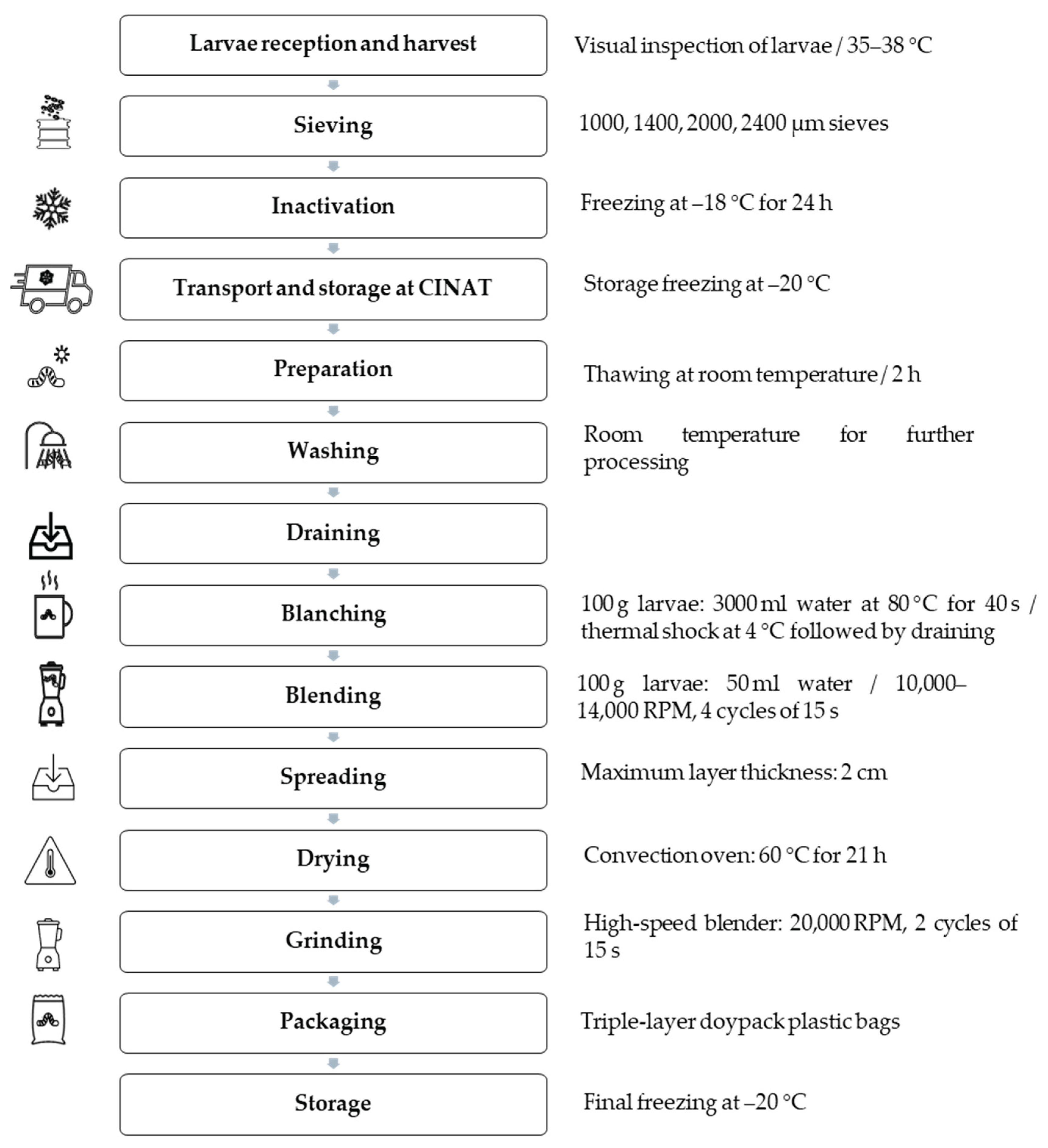

Table 1.
General product description and inputs used in the production of BSFLM.
| Item | Description |
|---|---|
| Product name | Black Soldier Fly Larvae Meal (Hermetia illucens) |
| Raw materials (origin) | Final-instar larvae and prepupae of H. illucens provided by Insect Farming Technologies – EntoPro (La Miel Farm, Ibague municipality, Tolima, Colombia), reared on a substrate of cassava waste, carrot waste, guava flour, wheat bran, and coffee cherry. |
| Ingredients and additives | Citric acid (5%) added as an antioxidant during the blending stage. No other additives were used. IPIFF has not yet approved specific additives for insect feed. |
| Inputs | Food-grade plastic packaging. |
| Proximate composition (% dry matter) | Moisture (%): 7.0 ± 1.7 Dry matter (%): 93.0 ± 0.1 Gross energy: 5966.7 ± 1 kcal/kg Crude protein: 40.7 ± 0.8 Non-protein nitrogen (NPN): 6.5 ± 0.8 Ether extract: 32.7 ± 1.2 Crude fibre: 7.2 ± 4 Ash: 8.4 ± 5 |
| Heavy metal (mg/kg) | Lead (Pb): Not detected * Chromium (Cr) <1.0 Mercury (Hg) <0.02 |
| Microbiological characteristics | Aerobic mesophiles (CFU/g): 15,000 Moulds and yeasts (CFU/g): <100 Sulphite-reducing Clostridium (CFU/g): <10 Coagulase-positive S. aureus (CFU/g): <100 Total coliforms (CFU/g): 340 Escherichia coli (CFU/g): <10 Salmonella spp: Absent |
| Processing and Packaging | Produced via separation, washing, inactivation, blanching, emulsification, laminating, drying, and packaging. These steps enhance physicochemical properties, reduce compaction, and limit microbial contamination. See flow diagram for details. |
| Shelf Life | Under good manufacturing practices (GMP), expected shelf life is 7 months at 25 °C with 5% moisture and 80 μm polyethylene film. At 35 °C, cricket meal shelf life drops 3–4 times, and BSFL powder becomes unsuitable [19]. No shelf-life tests were conducted in the BioInsectonomy project. |
| Preservation | In the BioInsectonomy project, BSFL meal was frozen at –21 °C in triple-layer plastic bags with oxygen barrier and hermetic seal. |
| Regulations | EU Regulation 2015/2283 on novel foods [20]. IPIFF Hygiene Guide (Feb 2024) [13]. Colombia Resolution 061252 (2020) on feed manufacturing/import requirements [15]. |
| Intended Use | Ingredients for balanced animal diets (e.g., feed, pellets); in BioInsectonomy project, used for fish feed. |
*Not detected indicates levels below the detection limit of the respective analytical method.
Table 2.
Hazard analysis and control measures in BSFLM production.
| Stage | Hazards | Description | Probability | Severity | Risk | Preventive Control Measures Implemented at CINAT |
|---|---|---|---|---|---|---|
| Stage 1. Larvae Reception | Biological | Aspergillus spp. | 5 | 4 | High (20) | Use high-quality substrates and potable water throughout. Train personnel in hygiene and handling. Apply strict cleaning and disinfection routines. Remove substrate residues and organic waste to prevent mould growth. Apply thermal treatment at any stage to control fungal contamination. Ensure substrates are mycotoxin-free before processing. |
| Bacillus cereus | 3 | 4 | High (12) | Implement good production (GAP) and manufacturing practices (GMP) from rearing to packaging. Control temperature and humidity. Use high-quality ingredients. Apply thermal treatment during processing. | ||
| Faecal coliforms | 1 | 2 | Low (2) | Maintain strict hygiene and quality control. Ensure potable water, robust cleaning, pest control, and well-maintained facilities. Use quality ingredients. Train personnel in GMP. Conduct regular lab testing. Apply thermal treatment to reduce contamination. | ||
| Total coliforms | 5 | 2 | Moderate (10) | Strict quality and hygiene controls from larval rearing to final packaging. Maintain robust cleaning/disinfection routines, pest control, potable water, and facility integrity. Use high-quality ingredients, reinforce GMP training for staff, and conduct routine lab testing. Apply heat treatment at some processing stage. | ||
| Enterococcus | 3 | 2 | Moderate (6) | Use clean, controlled-origin substrates to reduce initial microbial load. Avoid high-risk substrates like untreated manure. Enforce strict cleaning protocols in the reception area. Apply heat treatment at some stage to control the microorganism. | ||
| Escherichia coli – Shiga toxin | 1 | 5 | Moderate (5) | Ensure optimal hygiene from larval handling to final processing. This includes equipment and surface cleaning, and continuous staff training. Substrates (e.g., manure-based) must be pre-treated or controlled. Perform routine microbiological testing. | ||
| Escherichia coli | 3 | 4 | High (12) | Clean all equipment and surfaces in contact with larvae to prevent recontamination. Use clean, controlled substrates to reduce microbial load. Enforce strict cleaning in the reception area. Implement sorting to discard visibly contaminated larvae. Apply heat treatment to control microorganisms. | ||
| Listeria monocytogenes | 1 | 5 | Moderate (5) | Use substrates from controlled sources, free from known Listeria contamination. Apply pretreatments such as fermentation or thermal methods. Enforce rigorous cleaning protocols for facilities, equipment, and tools. Train staff in safe handling. Conduct frequent microbiological tests on incoming material and finished product. | ||
| Sthapylococcus aureus | 2 | 4 | Moderate (8) | Strengthen operator hygiene and biosecurity. Improve cleaning protocols during larval packaging and transport. Train staff in good handling practices. Implement strict sanitation routines for equipment and facilities. Use physical pest control methods and avoid chemical contamination. Ensure potable water use. Apply thermal treatment. Perform routine microbiological analyses. | ||
| Chemical | Mineral oil hydrocarbons, dioxins, PCBs, and PAHs | 3 | 3 | Moderate (9) | Use only feed-grade substrates free from chemical contaminants and additives. Locate rearing and processing facilities away from industrial or high-traffic areas. Ensure trays, containers, and tools in contact with larvae are made of food-grade materials that do not release chemical residues. | |
| Heavy metals | 2 | 3 | Moderate (6) | Use regulated, low-risk plant-based substrates. Locate facilities away from industrial/agricultural pollution. Conduct regular heavy metal analyses. Implement strict supplier control and traceability systems. Rotate substrates periodically to avoid accumulation. | ||
| Mycotoxins | 2 | 4 | Moderate (8) | Use fungus-free agro-industrial by-products (e.g., free of Aspergillus, Fusarium). Inspect substrates for mould or abnormal odour. Keep processing areas dry and dust-free. | ||
| Pesticides and insecticides | 3 | 4 | High (12) | Enforce strict supplier control. Ensure careful substrate selection to avoid chemical residues. | ||
| Allergens (tropomyosin, arginine kinase, chymosin) | 5 | 2 | Moderate (10) | Train staff on allergen handling and prevention of cross-contamination. Apply thermal blanching to reduce allergenicity. Enforce strict cleaning protocols between batches. Including allergen risk in labelling. | ||
| Physical | Small metal particles | 2 | 3 | Moderate (6) | Establish daily cleaning and inspection of sieves and screens. Train staff to detect wear or corrosion. Replace worn parts. Use high-grade stainless-steel materials | |
| Gravel, stones | 2 | 3 | Medio (6) | Perform visual and tactile checks and fine mesh sieving to remove coarse particles before larval feeding. Establish SOPs for substrate inspection upon entry. Train reception staff in identifying/removing physical contaminants. Maintain equipment (e.g., grinders, conveyors, sieves) regularly. | ||
| Insect parts, pest insects | 2 | 2 | Low (4) | Conduct visual/tactile checks and fine mesh sieving to remove insect parts. Establish SOPs for substrate inspection. Train reception staff to identify and remove physical contaminants. Inspect larvae at reception for pest contamination. | ||
| Plastic fragments and microplastics | 2 | 3 | Moderate (6) | Separate plastic waste from larval feed inputs. Train staff to spot foreign particles. Sieve and inspect substrates. Use approved gloves/aprons that don’t degrade. Regularly inspect tools and facilities for plastic debris. Use filtered water. Avoid single-use plastics. | ||
| Stage 2. Sieving | Biological | Aerobic mesophilic bacteria | 3 | 2 | Moderate (6) | Use substrates from trusted sources. Apply strict cleaning and disinfection protocols in processing areas. |
| Moulds and yeasts | 3 | 2 | Moderate (6) | Maintain clean production areas. Use airtight packaging to avoid moisture. Prefer modified atmosphere or desiccants. Store in cool, cross-contamination-free areas. | ||
| Aspergillus spp. | 3 | 4 | High (12) | Train staff on hygiene and handling to prevent contamination. Use clean work clothing and hand sanitisation (e.g., antibacterial gel). Clean equipment, surfaces, and facilities regularly. Remove organic waste and feed residues to prevent mould growth. | ||
| Total coliforms | 2 | 2 | Low (4) | Use substrates with low microbial load. Apply GMPs and strict hygiene. Ensure robust cleaning/disinfection, access control, and staff training. Dry the meal at high temperatures (>60 °C). Keep humidity low in processing/storage areas. Ensure proper ventilation and apply disinfectant sprays. | ||
| Staphylococcus aureus | 3 | 4 | High (12) | Strengthen worker hygiene and biosecurity. Reinforce cleaning and disinfection protocols in larval packaging and transport. Strict pest control: seal cracks, install air curtains, use mesh barriers, insect traps, and monitoring devices. | ||
| Chemical | Pesticides (insecticides, herbicides) | 3 | 4 | High (12) | Install physical barriers (closed walls and ceilings) around the sieving area to minimise contamination from neighbouring crop pesticide use. | |
| Physical | Metal fragments and particles | 2 | 3 | Medium (6) | Establish daily cleaning and inspection protocols for sieves. Train staff to visually detect mesh damage. Regularly inspect sieves for wear, corrosion, or breakage. Use stainless steel mesh. Inspect product for metal contamination. | |
| Stage 3. Inactivation | Biological | Non identified | ||||
| Chemical | Non identified | |||||
| Physical | Non identified | |||||
| Stage 4. Transport and Storage at CINAT | Biological | Non identified | ||||
| Chemical | Non identified | |||||
| Physical | Non identified | |||||
| Stage 5. Thawing | Biological | Aerobic mesophilic bacteria | 3 | 3 | Medium (9) | Use substrates from reliable sources. Implement strict cleaning and disinfection protocols for all areas. Maintain constant control of temperature, humidity, and ventilation to avoid bacterial proliferation. |
| Moulds and yeasts | 1 | 2 | Low (2) | Keep production areas clean and with low humidity. Regularly disinfect equipment to avoid contamination. Use pretreated substrates to reduce microbial load. Ensure final moisture content of meal is below 10% to inhibit microbial growth during storage. Apply heat treatment and hermetic packaging in later stages. | ||
| Chemical | Non identified | |||||
| Physical | Non identified | |||||
| Stage 6. Washing | Biological | Sthapylococcus aureus | 1 | 4 | Low (4) | Apply good handling practices, ensuring potable water at all processing sites. Provide robust food safety training to all staff. Reinforce operator biosecurity and hygiene protocols. |
| Chemical | Heavy metals | 2 | 3 | Medium (6) | Install specialised filters (e.g. activated carbon with resin or reverse osmosis). If water quality is uncertain, use distilled, demineralised or purified water for washing. Regularly inspect strainers and utensils for wear or corrosion; replace with stainless steel equipment. | |
| Physical | None identified | |||||
| Stage 7. Draining | Biological | Non identified | ||||
| Chemical | Non identified | |||||
| Physical | Non identified | |||||
| Stage 8. Blanching | Biological | Survival of microorganisms from previous stages | 2 | 3 | Medium (6) | Keep scalding water at 85 °C; calibrate thermometers regularly. Continuously monitor scalding temperature. Ensure cold shock water stays at 4 °C and is clean. Filter or treat water to reduce microbial load. Train staff on time-temperature controls during scalding and chilling. |
| Chemical | None identified | |||||
| Physical | None identified | |||||
| Stage 9. Blending | Biological | Staphylococcus aureus | 2 | 4 | Medium (8) | Train personnel in proper handling of larvae and equipment sanitation during blending. Clean and disinfect blender and tools before each use with effective disinfectants (e.g., hydrogen peroxide or quaternary ammonium). Apply heat treatment afterwards. |
| Salmonella spp. | 3 | 5 | High (15) | Avoid using larvae from animal faeces or faecal-contaminated waste. Train personnel in safe handling and disinfection procedures. Thoroughly clean and disinfect the blender, tools, surrounding surfaces, and nearby equipment before use to prevent cross-contamination. | ||
| Chemical | None identified | |||||
| Physical | Metal fragments and splinters | 1 | 3 | Low (3) | Establish a cleaning and inspection protocol for the blender before and after each production day. Train staff to visually detect blade damage. Regularly inspect blender blades for wear, corrosion, or cracks. Replace blades before reaching critical wear. Use high-quality stainless-steel blades. Conduct regular product inspections to detect metal contamination. | |
| Stage 10. Spreading | Biological | Moulds and yeasts | 1 | 2 | Low (3) | Keep production areas clean and dry. Disinfect equipment regularly. Use hygienic or pretreated substrates to lower initial microbial load. Ensure meal moisture content remains below 10% to inhibit growth. Apply heat treatment afterwards. |
| Chemical | None identified | |||||
| Physical | Aluminium foil particles | 1 | 2 | Low (2) | Avoid using aluminium foil to cover trays. Use food-safe materials like stainless steel trays that are easy to clean and do not shed particles. Prefer non-stick coated trays. Visually inspect foil before each cycle; if damaged, replace with suitable materials. | |
| Stage 11. Drying | Biological | Survivors of previously mentioned microorganisms | 2 | 4 | Medium (8) | Ensure previous steps reduce microbial load: use substrates free of spores, thoroughly clean larvae, maintain strict hygiene in processing areas to prevent cross-contamination, improve air quality in drying area with ventilation, and use additional treatments such as powdered natural antimicrobials, lactic or citric acid. |
| Chemical | Traces of sodium aluminate and aluminium phosphate | 3 | 2 | Medium (6) | Perform strict visual inspection of tray-lining materials before each use to ensure no contamination or damage (e.g., flaking aluminium foil). | |
| Physical | Aluminium foil particles | 2 | 2 | Low (4) | Use non-stick coated trays instead of foil. Inspect trays to ensure no damage or loose materials that may shed during drying. Confirm trays and foil are in good condition (no tears or breaks). Perform a visual inspection before drying to remove any visible contaminants. | |
| Stage 12. Grinding | Biological | Moulds and yeasts | 1 | 2 | Low (2) | Keep production areas clean and dry. Regularly disinfect equipment. Use hygienic or pretreated substrates to lower microbial load. Ensure final meal moisture is below 10% to inhibit growth. Apply heat treatment to eliminate microorganisms without affecting product quality. Use hermetic, moisture- and air-resistant packaging (e.g., modified atmosphere). Store in dry, cool, contamination-free areas. |
| Chemical | None identified | |||||
| Physical | Metal fragments and splinters | 2 | 3 | Medium (6) | Check the blender’s container, blades, screw fittings, and base before each batch. Conduct maintenance of every fixed number of usage hours (e.g., every 20 hours or 30 batches). Replace blades according to the manufacturer’s lifespan recommendations. Control grinding time and batch load to avoid motor strain and excessive vibrations. Use fine sieves or filters after grinding to capture any metal particles. | |
| Stage 13. Packaging | Biological | Moulds and yeasts | 1 | 2 | Low (2) | Keep production areas clean and dry. Regularly disinfect equipment. Ensure the meal is dried to below 10% moisture. Use hermetic packaging that prevents moisture and air entry. Store product in dry, cool areas, free from cross-contamination. |
| Chemical | Bisphenols | 1 | 4 | Low (4) | Ensure packaging materials are BPA-free and food-grade. Avoid contact with old, reused, or deteriorated plastics. Store BSF meal in cool, dry conditions. | |
| Physical | Foreign particles or metal fragments | 1 | 3 | Low (3) | Conduct regular product inspections for metallic contamination. Install a metal detector at the end of the packaging line if possible. | |
| Stage 14. Storage | Biological | Microorganisms viable at freezing temperatures | 1 | 3 | Low (3) | Use high-precision sensors for continuous freezing temperature monitoring. Establish SOPs to prevent fluctuations. Conduct preventive maintenance on freezing equipment and ensure proper function. |
| Chemical | None identified | |||||
| Physical | None identified |
Table 3.
Decision tree analysis for Critical Control Point (CCP) identification in BSFLM production*.
Table 3.
Decision tree analysis for Critical Control Point (CCP) identification in BSFLM production*.
| Stage | Hazard Type | Hazard Description | Significance | Q1 | Q2 | Q3 | Q4 | Decision |
|---|---|---|---|---|---|---|---|---|
| 1. Larvae reception | Biological | Aspergillus spp. | High | No | Yes | Yes | No | PRP |
| Bacillus cereus | High | No | Yes | Yes | No | PRP | ||
| Total coliforms | Medium | No | Yes | Yes | No | PRP | ||
| Enterococcus | Medium | No | Yes | Yes | No | PRP | ||
| E. coli – Shiga toxin | Medium | No | Yes | Yes | No | PRP | ||
| E. coli | High | No | Yes | Yes | No | PRP | ||
| Listeria monocytogenes | Medium | No | Yes | Yes | No | PRP | ||
| Staphylococcus aureus | Medium | No | Yes | Yes | No | PRP | ||
| Chemical | Mineral oil hydrocarbons, dioxins, PCBs, PAHs | Medium | Yes | — | — | — | PRP | |
| Heavy metals | Medium | No | Yes | No | Yes | CCP | ||
| Mycotoxins | Medium | No | Yes | No | Yes | CCP | ||
| Pesticides and insecticides | High | No | Yes | No | Yes | CCP | ||
| Allergens (tropomyosin, arginine kinase, chymosin) | Medium | No | Yes | No | Yes | CCP | ||
| Physical | Metal fragments/splinters | Medium | Yes | — | — | — | PRP | |
| Gravel, stones | Medium | Yes | — | — | — | PRP | ||
| Plastic/microplastics | Medium | No | Yes | Yes | No | PRP | ||
| 2. Sieving | Biological | Aerobic mesophiles | Medium | No | No | Yes | No | PRP |
| Moulds and yeasts | Medium | No | Yes | Yes | No | PRP | ||
| Aspergillus spp. | High | No | Yes | Yes | No | PRP | ||
| Staphylococcus aureus | High | No | Yes | Yes | No | PRP | ||
| Chemical | Pesticides | High | No | Yes | No | No | PRP | |
| Physical | Metal particles | Medium | Yes | — | — | — | PRP | |
| 5. Thawing | Biological | Aerobic mesophiles | Medium | Yes | — | — | — | PRP |
| 6. Washing | Chemical | Heavy metals | Medium | Yes | — | — | — | PRP |
| 8. Blanching | Biological | Microorganism survival | Medium | No | Yes | Yes | — | PRP |
| 9. Blending | Biological | Staphylococcus aureus | Medium | No | Yes | Yes | No | PRP |
| Salmonella spp. | High | No | Yes | Yes | No | PRP | ||
| 11. Drying | Biological | Surviving microorganisms | Medium | No | Yes | No | Yes | CCP |
| Chemical | Sodium aluminate/phosphate traces | Medium | Yes | PRP | ||||
| 14. Grinding | Physical | Metal fragments and splinters | Medium | Yes | — | — | — | PRP |
*PRP = The hazard is controlled by a Prerequisite Program. Q1–Q4 refer to the decision tree questions applied to determine CCPs during HACCP.
Table 4.
Critical limits, monitoring system, and corrective actions for BSFLM production.
| Stage | Hazard Type | Critical limits | Monitoring | Corrective actions | |||
|---|---|---|---|---|---|---|---|
| Min | Max | What | How | When | |||
| Stage 1. Larvae reception | Heavy metals | Absence | 0.50 (for crustaceans) Cd: 2 ppm Pb: 10 ppm Hg: 0.1 ppm |
Concentrations of Pb, Cd, Hg, As in mg/kg | Send samples to a laboratory for detection tests | Random batches according to the sampling plan | Reject the affected batch and prevent its use or distribution. Notify the supplier immediately, conduct an audit, and re-evaluate the supplier to ensure compliance with quality and safety standards. Increase the stringency of quality sampling protocols for future batches. |
| Mycotoxins | Absence |
Aflatoxin: 0.02 ppm Ochratoxin A: 5 ppm |
Mycotoxin analysis in substrates (HPLC or ELISA) | Reject the batch and confirm contamination with a secondary analysis. Determine whether the product can be reprocessed or must be destroyed. Investigate the root cause and update preventive measures in the HACCP plan. | |||
| Pesticides and insecticides | Absence | 0.01 mg/kg DDT: 0.2 mg/kg Glyphosate: 300 mg/kg Endosulfan: 0.1 mg/kg Chlorpyrifos: 0.05 mg/kg |
Pesticide residue analysis (GC or HPLC) | Reject the batch, perform confirmatory testing, and decide on reprocessing or destruction. Identify contamination sources and strengthen control strategies in the HACCP plan. | |||
| Allergens (Tropomyosin, Arginine kinase, and Chymosin) | Absence | Gluten: 20 ppm) | Allergen detection tests (ELISA) | If distributed, notify authorities and consider a product recall. Revalidate the allergen control program, evaluate labelling effectiveness, and apply fasting to larvae to reduce allergen levels. Improve the product recall system. | |||
| Stage 11. Drying | Microorganisms identified in hazard analysis and surviving this process | 60°C / 21 hours | 63°C / 21 hours | Process temperature verification | Using a thermocouple installed in the drying oven, connected to monitoring software. Alarm system in place | Each batch | Segregate the batch, test for microbial load, and adjust drying parameters as needed. If the maximum temperature was exceeded, assess product quality. Calibrate thermal equipment to ensure process reliability. |
Table 5.
Suggested validation strategies for CCPs and control measures in BSFLM production.
| CCP | Hazard | Control measure | Critical parameters | Validation factors | Logistical considerations |
|---|---|---|---|---|---|
| Larvae reception | Heavy metals (Pb, Cd, Hg, As) | Use of regulated substrates and supplier control | Concentrations of Pb, Cd, Hg, As (mg/kg) | Substrate type; analysis frequency | Accredited laboratories; cost considerations |
| Mycotoxins (Aflatoxins, Ochratoxin A) | Use of fungus-free substrates; visual inspection and frequent testing | Mycotoxin levels (µg/kg) | Substrate type; storage conditions | Environmental control; visual inspection | |
| Pesticides and insecticides | Supplier control; proper substrate selection | Residue levels (mg/kg) | Substrate type; agricultural history | Substrate history; supporting documentation | |
| Allergens | Staff training; proper cleaning between batches; labelling | Presence/absence or ppm level | Allergen types; cleaning effectiveness | Kit availability; staff training | |
| Drying | Microbiological control through thermal processing (60°C for 21 h) | Pre-processing reduction of microbial load; larval cleaning; hygienic processing conditions; ventilation; use of natural antimicrobials and organic acids before drying | Log reduction of pathogens (e.g., Salmonella, E. coli) | Drying temperature/time; use of additional treatments | Temperature and humidity control; equipment availability; staff training |
* This proposal assumes low-volume and/or intermittent production. It is recommended to use a completely randomized design for testing to ensure sample representativeness and statistical validity of the results.
Table 6.
Verification strategies for the implementation of the HACCP plan in BSFLM production.
| Stage | Hazard | Type | What is verified | How | When | Responsible |
|---|---|---|---|---|---|---|
| Larvae reception | Chemical | Heavy metals | Presence/absence of heavy metals | Randomly select samples from different batches and send them to an accredited lab for testing. Conduct an internal audit programme to review the full HACCP system, including prerequisite programmes, staff training, food safety policies, and food safety culture. |
Quarterly | Quality assistant |
| Mycotoxins (Aflatoxins, Ochratoxin A) | Mycotoxins | Presence/absence of aflatoxins and ochratoxins | Substrate type; storage conditions | Monthly | Quality assistant | |
| Pesticides and insecticides | Pesticides and insecticides | Presence/absence of pesticide and insecticide residues | Substrate type; agricultural history | Quarterly | Quality assistant | |
| Allergens | Allergens (tropomyosin, arginine kinase, chymosin) | Presence/absence of specific allergens | Allergen types; cleaning effectiveness | Monthly | Quality assistant | |
| Drying | Biological | Microorganisms (as identified in hazard analysis) | Proper functioning of the drying oven to eliminate microbial hazards | Drying temperature/time; use of additional treatments | Weekly | Quality assistant and laboratory |
Disclaimer/Publisher’s Note: The statements, opinions and data contained in all publications are solely those of the individual author(s) and contributor(s) and not of MDPI and/or the editor(s). MDPI and/or the editor(s) disclaim responsibility for any injury to people or property resulting from any ideas, methods, instructions or products referred to in the content. |
© 2025 by the authors. Licensee MDPI, Basel, Switzerland. This article is an open access article distributed under the terms and conditions of the Creative Commons Attribution (CC BY) license (http://creativecommons.org/licenses/by/4.0/).
Copyright: This open access article is published under a Creative Commons CC BY 4.0 license, which permit the free download, distribution, and reuse, provided that the author and preprint are cited in any reuse.


