

Submitted:
12 May 2025
Posted:
13 May 2025
You are already at the latest version
Abstract
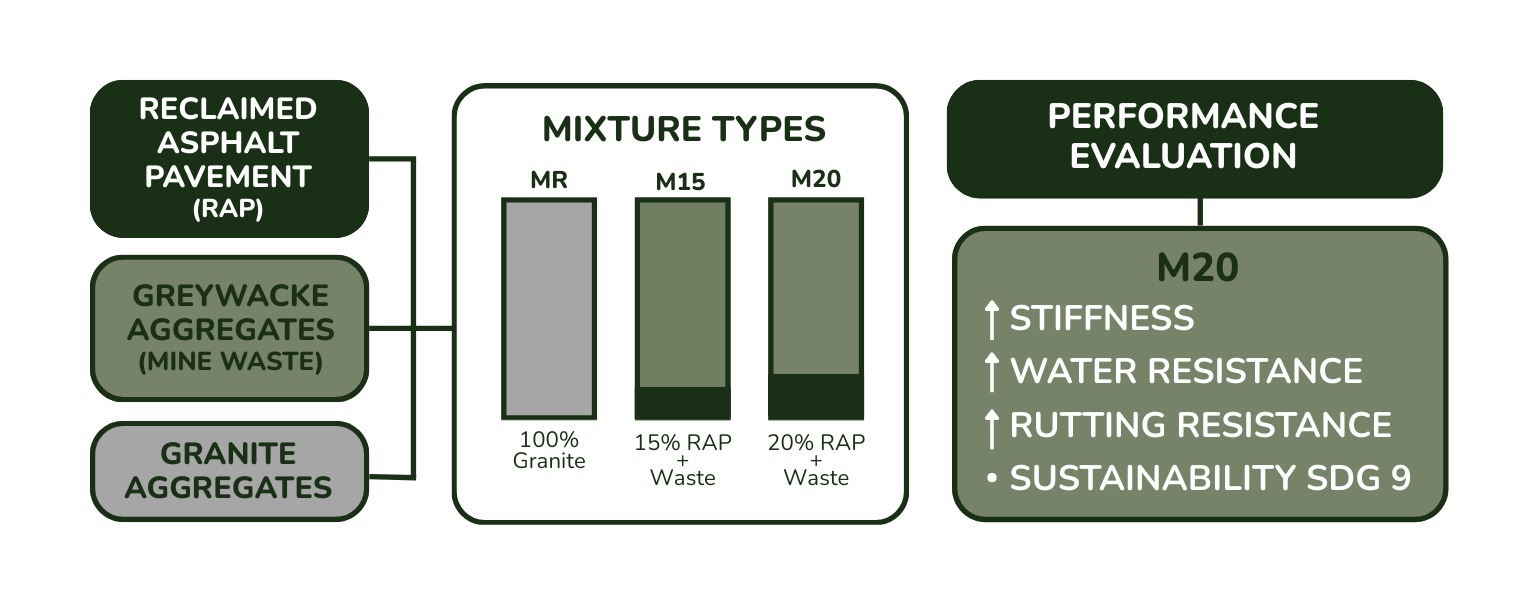
The asphalt pavement industry is seeking sustainable and cost-effective alternatives to mitigate environmental impacts. The incorporation of Reclaimed Asphalt Pavement (RAP) and Panasqueira mine waste into hot mix asphalt (HMA) mixtures offers a substitute for virgin aggregates while supporting UN Sustainable Development Goal 9. This study produced a reference mixture (MR) using granite aggregates and two mixtures incorporating Panasqueira greywacke aggregates and 15% (M15) and 20% (M20) RAP. Laboratory tests, including Marshall stability, water sensitivity, stiffness, and permanent deformation resistance, evaluated the mixtures' performance. Results showed that RAP and mine waste mixtures meet Portuguese specifications, with M20 demonstrating superior mechanical performance and sustainability, confirming its viability for resilient pavement construction.
Keywords:
Hot Mix Asphalt
; Reclaimed Asphalt Pavement (RAP)
; Mining Waste Aggregates
; Sustainable Pavement Materials
; Performance Evaluation
1. Introduction
Industrial waste is generated as a by-product from various industrial activities, including manufacturing, mining, energy production, and construction. It encompasses solid, liquid, or gaseous forms, with examples such as ash, dust, slag, sludge, and unwanted chemicals [1,2,3]. The versatility of recycled industrial materials makes them a valuable resource for reuse in pavement manufacturing, contributing to the enhancement of physic-mechanical properties of bituminous mixtures. However, due to alterations in their original properties, these recovered materials differ significantly from natural aggregates [4].
The utilization of industrial waste in pavement construction presents a sustainable alternative to conventional non-renewable materials, such as natural aggregates, bituminous binders, Portland cement, hydraulic lime, and other additives [5,6]. Numerous studies have reported the positive effects of these materials on the mechanical performance of bituminous mixtures, highlighting their role as effective modifiers [1,7,8,9].
The construction and maintenance of road infrastructure demand significant quantities of natural resources, raising environmental concerns. In response, several countries, including Canada, have been promoting the use of recyclable materials in pavement applications [10]. The adoption of recycled materials throughout the pavement lifecycle—from design and production to construction and maintenance—supports circular economy principles and sustainable consumption patterns. These practices align with the United Nations’ Sustainable Development Goal 9: “Build resilient infrastructure, promote inclusive and sustainable industrialization, and foster innovation” [11].
In recent decades, sustainable technologies have been increasingly integrated into pavement construction and maintenance. Recycling materials for use in bituminous mixtures not only minimizes waste generation and landfill use but also reduces energy consumption and greenhouse gas emissions, significantly contributing to climate change mitigation. [12] highlighted extensive research on pavement recycling across various regions, including Europe (Belgium, Finland, Italy, the Netherlands, Portugal), Africa (Nigeria), Asia (Malaysia, Saudi Arabia), Australia, and South America (Brazil, Colombia).
Reclaimed Asphalt Pavement (RAP) consists of materials recovered during road maintenance or renewal operations. Although the binder and aggregates within RAP have aged, they retain functional properties that allow for their reuse in new bituminous mixtures [13]. Recycling RAP involves incorporating it into new bituminous mixtures after appropriate treatment, rather than discarding it. This practice offers significant environmental and economic advantages, reducing the need for new materials and minimizing waste. RAP is also cost-effective, reducing the reliance on virgin materials while supporting environmentally sustainable practices [14,15,16,17].
The proportion of RAP incorporated into bituminous mixtures significantly affects their mechanical performance [18,19,20]. The Superpave Expert Task Group (1997) recommended RAP contents of up to 25% without modifying mixture characteristics. For RAP contents between 25% and 30%, a reduction by 6°C in production temperature is advised, and for contents above 30%, further assessments are necessary to ensure the quality of the final mixture [21,22,23].
According to the European Asphalt Pavement Association [24], sixteen European countries reported the availability of 40.6 million tonnes of recycled asphalt, with Germany leading in quantity, followed by Italy, France, the Czech Republic, and Spain. Figure 1 shows the amount of available RAP in different countries.
However, only 63% of this material is reused in asphalt mixtures, 12% recycled for other uses, and 25% remains underutilized or disposed of, as shown in Figure 2.
It is crucial to distinguish between the “reuse” and “recycling” of RAP: reuse refers to the direct reintegration of RAP into new mixtures, while recycling often involves employing RAP in secondary applications where the original function of the material is altered [24].
The first step in using RAP is to obtain the material, which is then subjected to a process where it is classified and impurities are removed, ensuring the required quality according to specifications. Once this procedure is completed, the material is crushed and fractionated, reducing the particle size, facilitating its use, and ensuring uniform distribution in the production of new bituminous mixtures [25]. Subsequently, the crushed material undergoes a granulometric analysis, an essential step bituminous mixture design. The process ensures uniform distribution in the mixture and guarantees the high quality of the final product [26,27].
The use of mining waste in pavement applications offers another sustainable alternative. Mining operations generate waste from the extraction of materials such as coal, iron, copper, and tungsten. Waste rock, particularly coarse-grained material, is considered suitable for road construction due to its minimal physical or chemical processing [28]; (Taha, Benarchid, & Benzaazoua, 2021). Nonetheless, the mechanical and chemical properties of mining waste are highly dependent on the type of extracted rock, requiring prior detailed characterisation [29].
The Panasqueira mine, located in Portugal, is part of the Hesperia Massif, within the “Schist-Greywacke Complex” of the Central Iberian Zone (ZCI), and is one of Europe’s largest tungsten producers [30,31,32].
This study aims to advance the understanding of RAP and mining waste incorporation in hot mix asphalt mixtures. A reference mixture (MR) with granite aggregates and two mixtures containing Panasqueira mine waste (greywacke aggregates) and varying RAP contents (M15 and M20) were produced. Laboratory tests evaluated density, porosity, stability, water sensitivity, stiffness, and permanent deformation resistance to determine the optimal mixture design for sustainable and durable pavement construction.
2. Materials and Methods
The experimental methodology followed a systematic approach to the characterization, design, and performance evaluation of asphalt mixtures incorporating recycled and mining waste materials. Initially, material properties were characterized in accordance with Portuguese Standard NP EN 933-1. Subsequently, asphalt mixture designs were developed, integrating varying percentages of Panasqueira greywacke aggregates, RAP, and hydraulic lime. The mechanical performance of the produced mixtures was assessed through a series of laboratory tests, including Marshall stability, water sensitivity, stiffness modulus, and permanent deformation resistance, ensuring compliance with Portuguese road specifications. This rigorous methodology aimed to determine the most effective design that guarantees long-term durability, strength, and environmental sustainability in pavement applications.
2.1. Materials
This study evaluated three asphalt mixtures: a reference mixture (MR) composed of conventional granite aggregates and two modified mixtures (M15 and M20) containing Panasqueira mine waste (greywacke aggregates) and RAP.
2.1.1. Bitumen
A 35/50 penetration grade bitumen supplied by Cepsa Petróleos, S.A. was used. Suitable for surface course applications, this bitumen requires mixing temperatures between 162°C and 166°C and compaction temperatures between 152°C and 156°C. The bitumen was characterized through the penetration test (according EN 1426) and the softening point test (according EN 1427), yielding results of 46 × 10-1 mm and 50.8ºC, respectively.
2.1.2. Reclaimed Asphalt Pavement (RAP)
The RAP used in this study was sourced from the A23 highway located in Castelo Branco, Portugal. The aged bitumen content was determined following the EN 12697-1 standard. Penetration and softening point tests were conducted in accordance with EN 1426 and EN 1427 standards, respectively. Characterization tests revealed a 5.6% aged bitumen, with a penetration value of 11 x 10⁻¹ mm and a softening point of 77,8°C, indicating significant binder ageing. The RAP gradation is presented in Table 1.
2.1.3. Natural and Waste Aggregates
Granite aggregates (stone dust and gravel 8/16) were used for the MR mixture. Greywacke aggregates from Panasqueira Mine (stone dust, gravel 2/10, and gravel 8/14), as shown in Figure 3, were employed in M15 and M20 mixtures. The addition of hydraulic lime in all mixtures improved the adhesion between bitumen and aggregates, enhancing pavement durability and resistance to permanent deformation [33]. Aggregate grading was determined according to NP EN 933-1 and is presented in Table 1. The composition of the asphalt mixtures is presented in Table 2.
2.2. Methods
This section describes an initial preliminary study to determine the optimal bitumen content using the Marshall test. Subsequently, several tests were conducted to analyses the physical and mechanical characteristics of the asphalt mixtures, including the stiffness test by indirect tension, water sensitivity test, and permanent deformation test.
2.2.1. Optimum Bitumen Content
The initial bitumen content (Pb), expressed as a percentage of the total aggregates weight, was calculated using the Asphalt Institute (1986) design method (Equation 1):
where Pb is the initial bitumen content, relative to the total weight of the mixture (%); “A” represents the aggregates retained on the 2.36 mm sieve (%); “B” represents the aggregates passing through the 2.36 mm sieve and retained on the 0.075 mm sieve (%); “C” represents the aggregates passing through the 0.075 mm sieve (%); K is a constant depending on the amount of material passing through the 0.075 mm sieve, with values: K= 0.15 for 11 - 15%; K=0.18 for 6 - 10%; K= 0.20 for ≤ 5%; F is the absorption factor of the aggregates, ranging from 0 - 2%. In the absence of specific data, F = 0.7% is assumed. This approach considers the gradation and absorption properties of the aggregates. A constant K=0.18 was adopted, based on the percentage of fine particles (6–10%) present in all mixtures.
For mixtures incorporating RAP (M15 and M20), the aged binder content was also taken into account, and the amount of new binder (PbN) was adjusted accordingly using Equation 2.
where PbN is the new bitumen content (%); Pb is the original bitumen content (%); PbRAP is the RAP bitumen content (aged bitumen) (%); TR is the recycling rate (%).
Following these calculations, M15 and M20 mixtures were produced with three different bitumen contents: 3.4%, 3.9%, and 4.4%. The optimum content was identified based on Marshall stability and porosity values, ensuring compliance with Portuguese specifications [34].The reference mixture (MR) used a standard bitumen content of 5.2% for traditional surface courses.
All aggregates and RAP materials were pre-dried at 110°C ± 5°C for at least 24 hours. Mixtures were prepared at 165°C and compacted at 155°C. A total of 28 cylindrical specimens (100 mm diameter) were produced, with four replicates for each bitumen content. The specimens were tested 36 hours post-production after immersion in a 60°C water bath for 50 minutes. Marshall stability and flow were measured following EN 12697-34. According to national road requirements [34], AC14 Surf BB mixtures intended for surface courses must achieve Marshall stability values between 7.5 and 15 kN and flow values between 2- and 4-mm. Table 3 summarizes the mechanical and volumetric properties of the MR, M15, and M20 mixtures relative to these benchmarks. Based on the results, the optimal bitumen content for M15 and M20 was determined to be 4.4%.
2.2.2. Stiffness Modulus
Stiffness modulus was determined in accordance with EN 12697-26 (Annex C), using indirect tensile testing on cylindrical specimens with optimal bitumen content. Five specimens per mixture were tested along two perpendicular diameters using the Nottingham Asphalt Tester (NAT). The results as shown in Table 3.
Tests were conducted at 20°C with a Poisson’s ratio of 0.35, a load rise time of 124 milliseconds, and a maximum horizontal deformation of 5 μm. A series of preloading cycles preceded the main loading [35]. The modulus was calculated using Equation 3:
where is the measured stiffness modulus (MPa); F is the peak value of the applied vertical load (N); z is the amplitude of the horizontal deformation obtained during the load cycle (mm); h is the mean thickness of the specimen (mm) and ϑ is the Poisson’s ratio.
2.2.3. Water Sensitivity
Water sensitivity was evaluated using the indirect tensile strength ratio (ITSR), following EN 12697-12. Thirty specimens were produced: ten for each mixture (MR, M15, M20), all compacted with their respective optimum bitumen contents.
Specimens were divided into two groups: one stored dry at 20°C and another subjected to vacuum saturation and immersion at 40°C for 72 hours, followed by conditioning at 15°C. Dimensional stability was confirmed to ensure no specimen exceeded a 2% volume increase. The ITS was then measured using diametral compression (EN 12697-23) at a loading rate of 50 mm/min. ITSR was calculated by comparing the wet and dry ITS values using Equation 4:
where ITSR is the indirect tensile strength ratio (%); ITSw is the average indirect tensile strength of the wet group (kPa) and ITSd is the average indirect tensile strength of the dry group (kPa)
2.2.4. Resistance to permanent deformation
The resistance to permanent deformation was assessed using the wheel tracking test (EN 12697-22, Procedure B). Prismatic slabs (30 × 30 × 4 cm) were produced for each mixture and tested at 60°C under a wheel pressure of 600 ± 30 kPa.
The test concluded after 10,000 load cycles or upon reaching 20 mm rut depth. Two parameters were evaluated: rut depth (RD) and wheel tracking slope (WTS), the latter calculated between 5,000 and 10,000 cycles using Equation 5:
where WTS is the wheel-tracking slope (mm/103 cycles); d5000 and d10000 is the rut depth after 5 000 load cycles and 10 000 load cycles (mm).
These indicators provide insight into the mixtures’ deformation behaviour under repeated traffic loading and elevated temperatures.
3. Results
3.1. Stiffness Modulus
Table 4 presents the average stiffness modulus for the three asphalt mixtures evaluated. The reference mixture (MR) exhibited the lowest stiffness modulus (7195 MPa), indicating greater flexibility but reduced resistance to permanent deformation. In contrast, mixtures M15 and M20 demonstrated significantly higher stiffness values (11343 MPa and 11739 MPa, respectively), attributed to the presence of aged RAP binder, which exhibits lower penetration and elasticity. This increase in stiffness contributes to enhanced load-bearing capacity, particularly under repeated traffic loads.
3.2. Water Sensitivity
Table 4 presents the average stiffness modulus for the three asphalt mixtures evaluated. The reference mixture (MR) exhibited the lowest stiffness modulus (7195 MPa), indicating greater flexibility but reduced resistance to permanent deformation. In contrast, mixtures M15 and M20 demonstrated significantly higher stiffness values (11343 MPa and 11739 MPa, respectively), attributed to the presence of aged RAP binder, which exhibits lower penetration and elasticity. This increase in stiffness contributes to enhanced load-bearing capacity, particularly under repeated traffic loads.
3.3. Resistance to Permanent Deformation
The wheel tracking test results are summarized in Table 5. The M20 mixture achieved the best performance, with the lowest rut depth (3.3 mm) and the smallest wheel tracking slope (0.19 mm/10³ cycles). Compared to MR (5.9 mm rut depth) and M15 (9.6 mm), M20 exhibited 44% and 65% improvements, respectively. This enhanced rutting resistance is attributed to the increased RAP content, which introduces a higher amount of stiff aged binder, effectively improving resistance to plastic deformation. Additionally, the wheel tracking slope values indicate that M20 sustains less deformation over repeated cycles, confirming its robustness under high-temperature and heavy-load conditions.
Collectively, these findings demonstrate that incorporating Panasqueira mine waste and RAP not only maintains compliance with national specifications but also improves key mechanical properties. In particular, the M20 mixture presents a highly durable, moisture-resistant, and deformation-tolerant solution suitable for sustainable road surface applications.
4. Discussion
This study evaluated the performance of asphalt mixtures incorporating Panasqueira mine waste and Reclaimed Asphalt Pavement (RAP) as a complete replacement for natural aggregates. The experimental work conducted led to the following conclusions:
- (1)
- Stiffness Modulus: The incorporation of RAP significantly increased the stiffness of asphalt mixtures compared to the reference mixture (MR), due to the aged bitumen’s lower penetration and reduced elasticity.
- (2)
- Water Sensitivity: The addition of RAP improved the indirect tensile strength (ITS) under both dry and wet conditions. This enhancement indicates better moisture resistance and overall mechanical integrity of the RAP-modified mixtures.
- (3)
- Permanent Deformation: The M20 mixture demonstrated the lowest rut depth and wheel tracking slope values, showing the best resistance to permanent deformation among the mixtures tested.
- (4)
- Optimal Design: Among the evaluated mixtures, M20 emerged as the most promising solution in terms of mechanical performance, water resistance, and dimensional stability, fully complying with Portuguese road specifications.
Overall, the results support the incorporation of RAP and Panasqueira mine waste (Greywacke aggregates) a technically viable and environmentally beneficial strategy for sustainable pavement construction. These findings contribute to the advancement of circular economy practices in the road construction sector and reinforce the role of recycled materials in developing resilient and resource-efficient infrastructure.
References
- J. Choudhary, B. Kumar and A. Gupta, “Utilization of solid waste materials as alternative fillers in asphalt mixes: A review,” Construction and Building Materials, vol. 234, p. 117271, 2020.
- A. Raposeiras, D. Movilla, O. Muñoz and M. Lagos, “Production of asphalt mixes with copper industry wastes: Use of copper slag as raw material replacement,” Journal of Environmental Management, vol. 293, p. 112867, 2021.
- Y. Sun, X. Zhang, J. Chen, J. Liao and C. Shi, “Mixing design and performance of porous asphalt mixtures containing solid waste,” Case Studies in Construction Materials, vol. 21, 2024.
- M. G. López Domínguez, A. Pérez Salazar e P. Garnica Anguas, “Estado del arte sobre el uso de residuos y sub productos industriales en la construcción de carreteras,” Instituto Mexicano del Transporte ISSN 0188 - 7297, 2014.
- P. Kumar Gautam, K. Pawan, A. Singh Jethoo, R. Agrawal e H. Singh, “Sustainable use of waste in flexible pavement: A review,” Construction and Bulding Materials, nº 180, pp. 239 - 253, 2018.
- W. Victory, “A review on the utilization of waste material in asphalt pavements,” Environmental Science and Pollution Research, vol. 29, p. 27279–27282, 2022.
- H.-H. Chu, A. Almohana, G. QasMarrogy, S. Almojil, A. Alali, K. Almoalimi and A. Raise, “Experimental investigation of performance properties of asphalt binder and stone matrix asphalt mixture using waste material and warm mix additive,” Construction and Building Materials, vol. 368, no. 130397, p. 130397, 2023.
- A. Mahpour, S. Alipour, M. Khodadadi, A. Khodaii and J. Absi, “Leaching and mechanical performance of rubberized warm mix asphalt modified through the chemical treatment of hazardous waste materials,” Construction and Building Materials, vol. 366, no. 130184, p. 130184, 2023.
- K. Zhang, W. Zhang, W. Xie, Y. Luo and G. Wei, “Investigation of mechanical properties, chemical composition and microstructure for composite cementitious materials containing waste powder recycled from asphalt mixing plants.,” Journal of Building Engineering, vol. 96, p. 110362, 2024.
- L. Riberito de Reznede, L. Ramos da Silveira, W. Lima de Araújo e M. Pereira da Luz, “Reuse of Fine Quarry Wastes in Pavement: Case Study in Brazil,” Materials in Civil Engineering, vol. 26, nº 8, 2013.
- M. O. Marques, N. L. Cunha and L. R. Rezende, “The use of non-conventional materials in asphalt pavements base,” Road Materials and Pavement Design, vol. 16, pp. 799-814, 2015.
- J. Neves and A. Freire, “Special Issue “The Use of Recycled Materials to Promote Pavement Sustainability Performance”,” MDPI, vol. 7, p. 12, 2022.
- W. Zhao e Q. Yang, “Life-cycle assessment of sustainable pavement based on the coordinated application of recycled asphalt pavement and solid waste: Environment and economy,” Clener Production, 2023.
- M. Barral, J. A. Navarro, A. García Siller e M. Cembrero, “Experiencia en obra con una mezcla bituminosa reciclada templada con alta tasa de material de fresado,” CEPSA, 2023.
- M. Dinis-Almeida, J. Gomes, C. Sangiorgi, S. Zoorob and M. Afonso, “Performance of Warm Mix Recycled Asphalt containing up to 100% RAP,” Construction and Building Materials, vol. 112, pp. 1 - 6, 2016.
- D. -. H. Kang, S. Gupta, A. Z. Ranaivoson, J. Siekmeier e R. Roberson, “Recycled Materials as Substitutes for Virgin Aggregates in Road Construction: I. Hydraulic and Mechanical Characteristics,” Soil Science Society of America Journal, vol. 75, pp. 1265-1275, 2011.
- Y. Yao, J. Yang, J. Gao, M. Zheng, J. Xu, W. Zhang and L. Song, “Strategy for improving the effect of hot in-place recycling of asphalt pavement,” Construction and Building Materials, vol. 366, p. 130054, 2023.
- P. N. Khosla, H. Nair, B. Visintine e G. Malpass, “Effect of Reclaimed Asphalt and Virgin Binder on Rheological Properties of Binder Blends,” International Journal of pavement research and technology, vol. 5, nº 5, pp. 317-325, 2012.
- J. Oliver, “The Influence of the Binder in RAP on Recycled Asphalt Properties,” Road Materials and Pavement Design, vol. 2, pp. 311-325, 2001.
- H. Zhong, W. Huang, C. Yan, Y. Chang, Q. Lv, L. Sun and L. Liu, “Investigating binder aging during hot in-place recycling (HIR) of asphalt pavement,” Construction and Building Materials, vol. 276, p. 122188, 2021.
- K. Kaur, A. Krishna and A. Das, “Constituent Proportioning in Recycled Asphalt Mix with Multiple RAP Sources,” Procedia - Social and Behavioral Sciences, vol. 104, pp. 21-28, 2012.
- R. Karlsson and U. Isacsson, “Material-Related Aspects of Asphalt Recycling—State-of-the-Art,” Journal of Materials in Civil Engineering, vol. 18, 2006.
- Y. Liu, H. Wang, S. Tighe, D. Pickel and Z. You, “Study on impact of variables to pavement preheating operation in HIR by using FEM,” Construction and Building Materials, vol. 243, p. 118304, 2020.
- EAPA, “EAPA Asphalt in Figures 2022,” 2022.
- M. Nandal, H. Sood e P. Kumar Gupta, “A review study on sustainable utilisation of waste in bituminous layers of flexible pavement,” Case Studies in Construction Materials, vol. 19, 2023.
- Y. Chen, Z. Chen, Q. Xiang, W. Qin and J. Yi, “Research on the influence of RAP and aged asphalt on the performance of plant-mixed hot recycled asphalt mixture and blended asphalt,” Case Studies in Construction Materials, vol. 15, 2021.
- G. Masi, A. Michelacci, S. Manzi and M. Bignozzi, “Assessment of reclaimed asphalt pavement (RAP) as recycled aggregate for concrete,” Construction and Builgind Materials, vol. 341, p. 127745, 2022.
- G. Blight, “Chapter 5 - Mine Waste: A Brief Overview of Origins, Quantities, and Methods of Storage,” Waste, pp. 77 - 88, 2011.
- P. Segui, A. Mahdi, M. Amrani and M. Benzaazoua, “Mining Wastes as Road Construction Material: A Review,” MDPI, vol. 13, p. 90, 2023.
- P. Ávila, E. Ferreira, A. Salgueiro and J. Jarinha, “Geochemistry and Mineralogy of Mill Tailings Impoundments from the Panasqueira Mine (Portugal): Implications for the Surrounding Environment,” Mine Water and the Environment, pp. 210 - 224, 2008.
- C. Marignac, M. Cuney, M. Cathelineau, E. Carocci and F. Pinto, “The Panasqueira Rare Metal Granite Suites and Their Involvement in the Genesis of the World-Class Panasqueira W–Sn–Cu Vein Deposit: A Petrographic, Mineralogical, and Geochemical Study,” MDPI - Minerals, p. 562, 2020.
- Museu Nacional de História Natural e da Ciência, “Jóias da Terra: o minério da Panasqueira,” 2004. [Online]. Available: https://museus.ulisboa.pt/joias-da-terra-o-o-minerio-da-panasqueira.
- M. Maia, M. Dinis-Almeida and F. Martinho, “The Influence of the Affinity between Aggregate and Bitumen on the Mechanical Performance Properties of Asphalt Mixtures,” MDPI - Materials, vol. 14, 2021.
- Estradas de Portugal, S.A., “Caderno de Encargos Tipo Obra (CETO), 14.03 - Pavimentação Características dos materiais,” 2014. [Online]. Available: https://servicos.infraestruturasdeportugal.pt/pdfs/infraestruturas/14_03_set_2014.pdf. [Accessed 8 August 2024].
- M. Dinis-Almeida and M. Afonso, “Warm Mix Recycled Asphalt – a sustainable solution,” Journal of Cleaner Production, vol. 107, pp. 310-316, 2015.
Figure 1.
Available RAP for the asphalt industry, adapted from (EAPA, 2022).
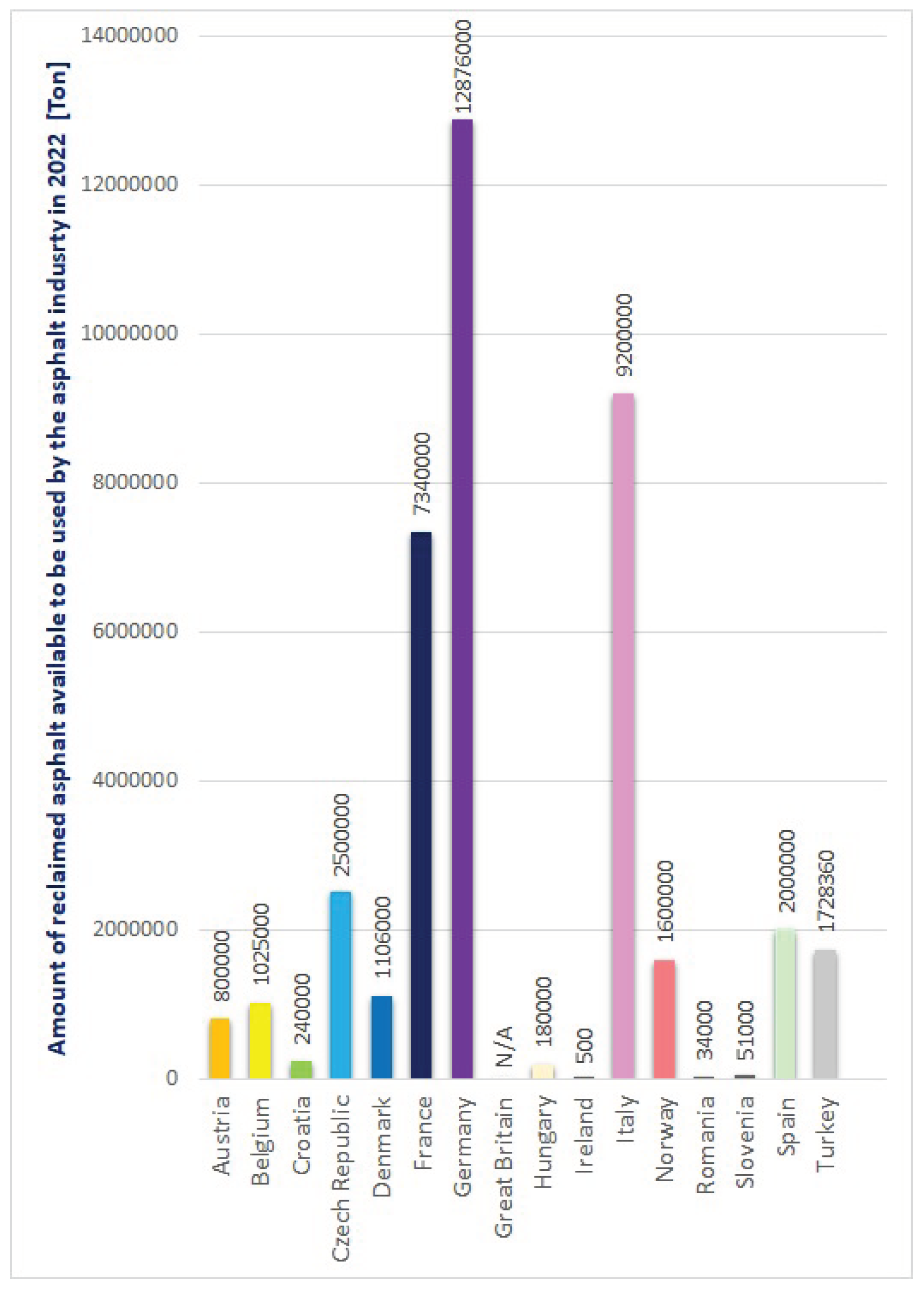
Figure 2.
RAP usage by type, adapted from (EAPA, 2022).
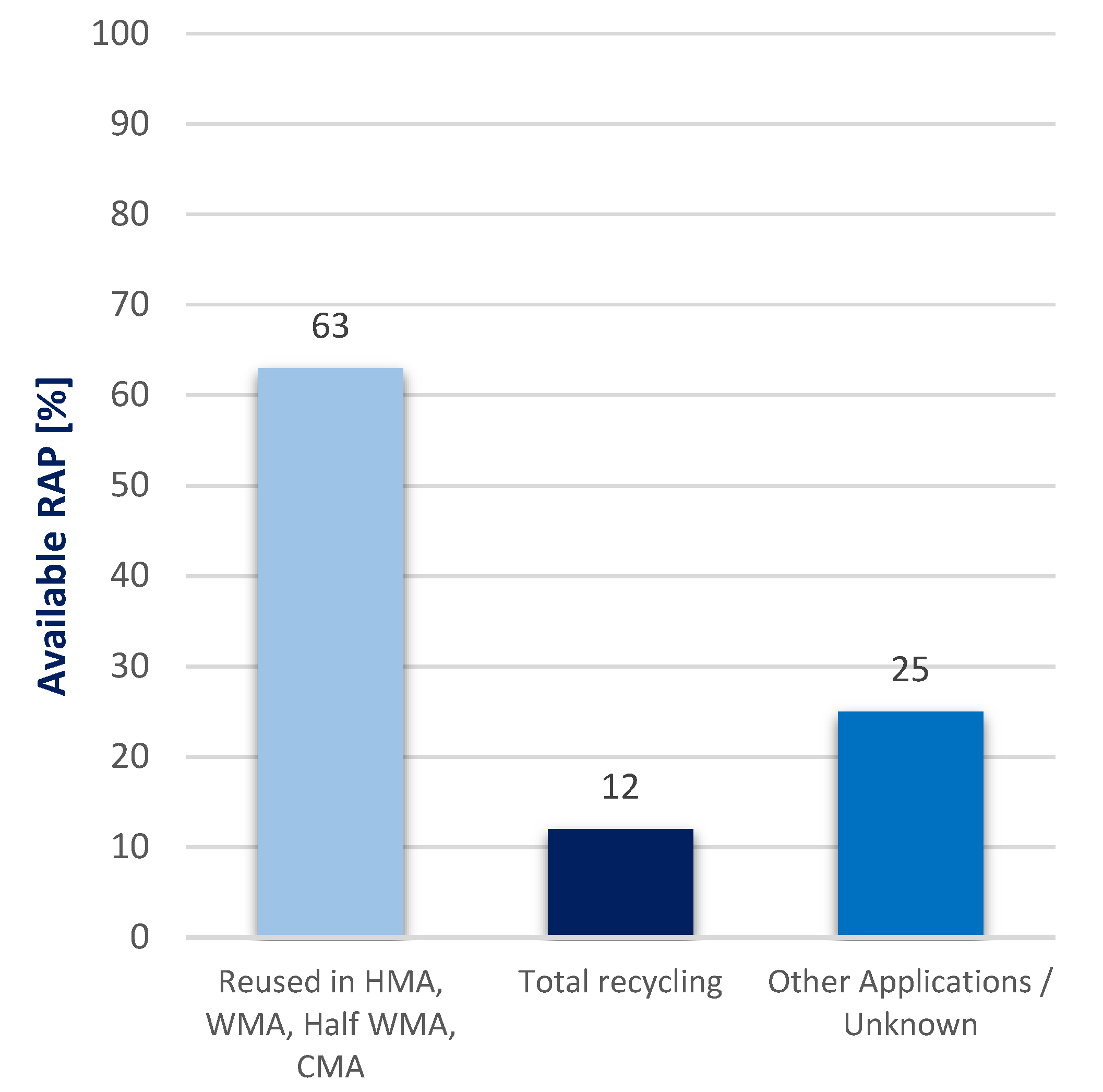
Figure 3.
Greywacke aggregates from the Panasqueira Mine: (a) Stone Dust, (b) Gravel 2/10, (c) Gravel 8/14.
Figure 3.
Greywacke aggregates from the Panasqueira Mine: (a) Stone Dust, (b) Gravel 2/10, (c) Gravel 8/14.
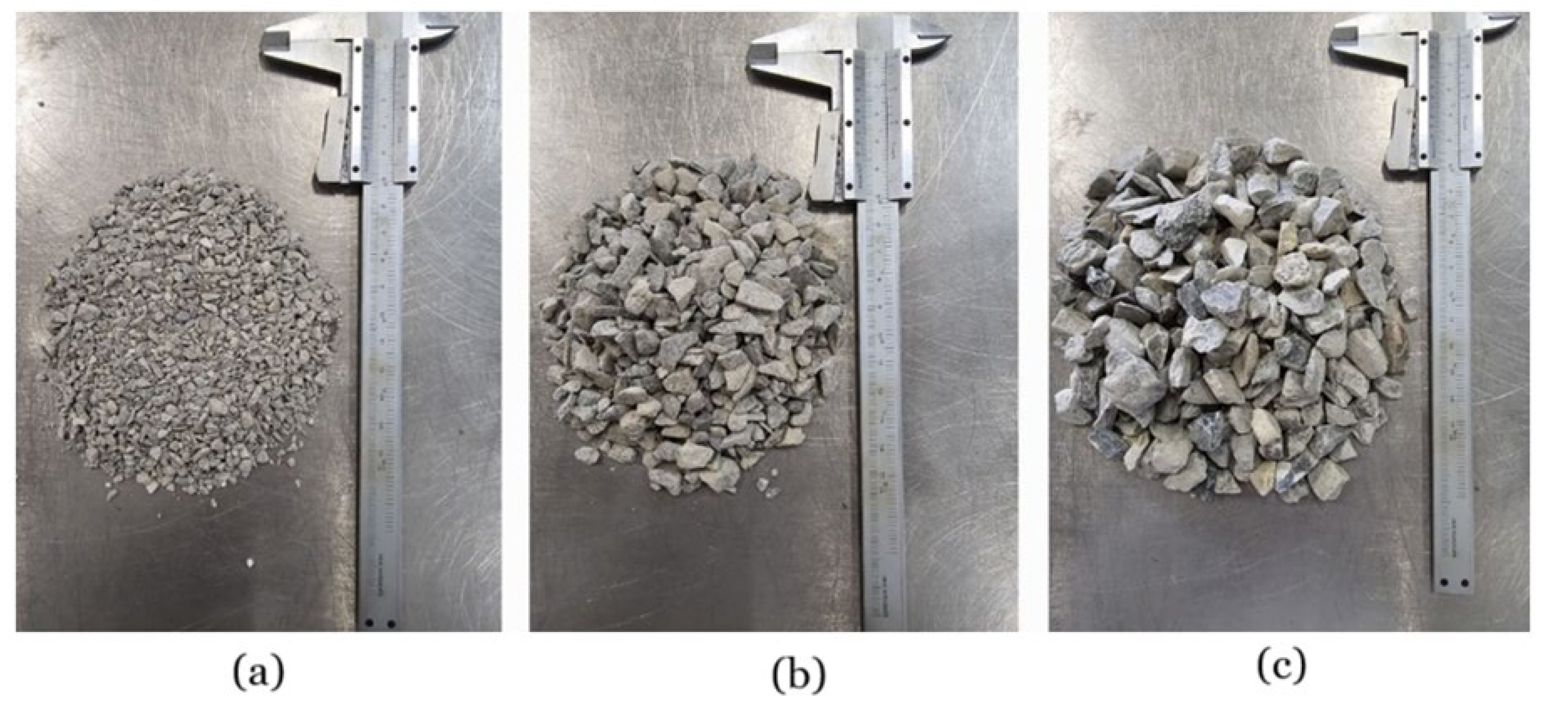
Figure 4.
Water sensitivity test: ITS (kPa) and ITSR (%) (average of 3 specimens).
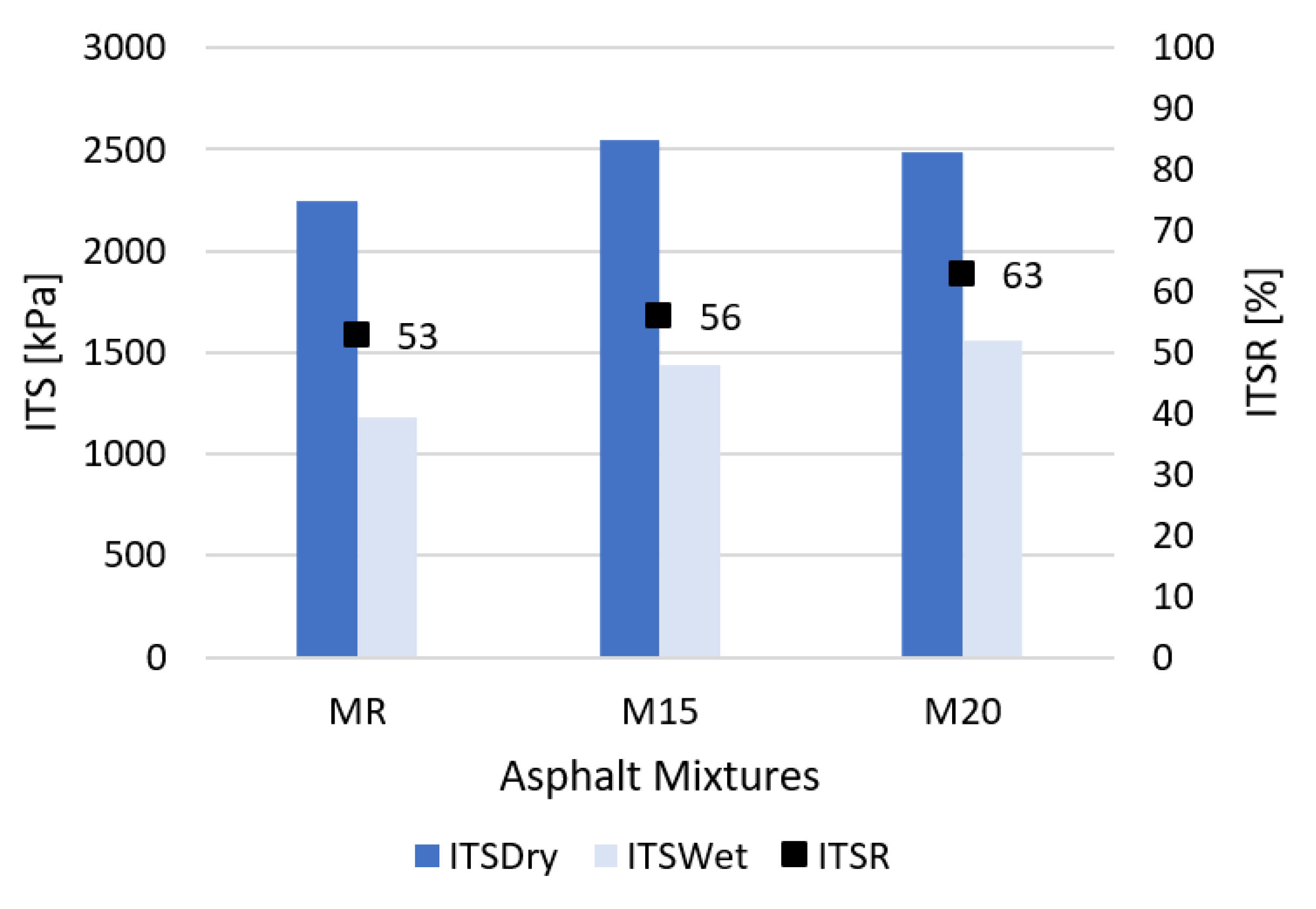

Table 1.
Gradation of natural aggregates, greywacke aggregates and RAP.
| Sieve size [mm] |
Cumulative Passing [%] | ||||||
|---|---|---|---|---|---|---|---|
| Granite aggregates | Greywacke aggregates | RAP | Hydraulic lime | ||||
| Stone Dust | Gravel 8/16 | Stone Dust | Gravel 2/10 |
Gravel 8/14 | |||
| 20 | 100 | 100 | 100 | 100 | 100 | 100 | 100 |
| 14 | 100 | 96 | 100 | 100 | 96 | 98 | 100 |
| 10 | 100 | 61 | 100 | 96 | 37 | 91 | 100 |
| 4 | 100 | 7 | 93 | 17 | 1 | 74 | 100 |
| 2 | 85 | 5 | 41 | 3 | 1 | 56 | 100 |
| 0,5 | 44 | 1 | 6 | 2 | 1 | 21 | 100 |
| 0,125 | 14 | 0 | 1 | 1 | 0 | 5 | 100 |
| 0,063 | 5 | 0 | 0 | 0 | 0 | 0 | 100 |
* The gradation values represent cumulative percentages passing through each sieve size, determined according to NP EN 933-1.
Table 2.
Asphalt mixtures composition [%].
| Aggregate | MR | M15 | M20 |
|---|---|---|---|
| Natural Stone Dust | 35 | - | - |
| Natural Gravel 8/16 | 62 | - | - |
| Greywacke stone dust | - | 28 | 20 |
| Greywacke Gravel 2/10 | - | 16 | 17 |
| Greywacke Gravel 8/14 | - | 35 | 35 |
| Hydraulic lime | 3 | 6 | 8 |
| RAP | - | 15 | 20 |
* Values indicate percentage by weight of each component in the asphalt mixtures.
Table 3.
Mechanical and volumetric properties of the different mixtures.
| Bituminous mixtures | Bitumen [%] | Bulk density [kg/m3] | Marshall Stability [kN] | Marshall flow [mm] |
Marshall quotient [kN/mm] | VMA [%] |
Porosity [%] |
|---|---|---|---|---|---|---|---|
| MR | 5,2 | 2340 | 17,1 | 3,1 | 5,6 | 16,9 | 5,1 |
| M15 | 4,4 | 2448 | 13,7 | 4,3 | 3,2 | 15,3 | 4,8 |
| 3,9 | 2430 | 14,2 | 3,0 | 4,8 | 16,6 | 6,4 | |
| 3,4 | 2393 | 12,1 | 2,9 | 4,2 | 18,6 | 8,4 | |
| M20 | 4,4 | 2464 | 12,6 | 2,7 | 4,6 | 14,2 | 3,7 |
| 3,9 | 2450 | 13,1 | 3,3 | 4,0 | 15,5 | 5,0 | |
| 4,9 | 2475 | 11,7 | 3,7 | 3,2 | 13,1 | 2,5 | |
| Portuguese road requirements | - | - | 7,5 – 15 | 2 – 4 | >3 | Min 14 | 3 – 5 |
* The mechanical and volumetric properties of the MR, M15, and M20 mixtures were evaluated according to EN 12697-34, in line with Portuguese specifications for surface course mixtures (AC14 Surf BB).
Table 4.
Stiffness Modulus (average of 5 specimens).
| Bituminous mixtures | % Bitumen | Stiffness Modulus [MPa] |
|---|---|---|
| MR | 5,2 | 7195 |
| M15 | 4,4 | 11343 |
| M20 | 4,4 | 11739 |
* Stiffness modulus values were determined for each mixture to assess their resistance to deformation under repeated loading conditions.
Table 5.
Wheel Tracking Test results (average of 2 specimens).
| Asphalt mixtures | Bitumen [%] | RD [mm] | WTS [mm/103 cycles] |
|
|---|---|---|---|---|
| MR | 5,2 | 5,9 | 0,31 | |
| M15 | 4,4 | 9,6 | 0,80 | |
| M20 | 4,4 | 3,3 | 0,19 |
* Wheel tracking tests were conducted to evaluate the rutting resistance of each asphalt mixture under high temperature and repeated loading conditions.
Disclaimer/Publisher’s Note: The statements, opinions and data contained in all publications are solely those of the individual author(s) and contributor(s) and not of MDPI and/or the editor(s). MDPI and/or the editor(s) disclaim responsibility for any injury to people or property resulting from any ideas, methods, instructions or products referred to in the content. |
© 2025 by the authors. Licensee MDPI, Basel, Switzerland. This article is an open access article distributed under the terms and conditions of the Creative Commons Attribution (CC BY) license (http://creativecommons.org/licenses/by/4.0/).
Copyright: This open access article is published under a Creative Commons CC BY 4.0 license, which permit the free download, distribution, and reuse, provided that the author and preprint are cited in any reuse.


